5 Things You Need to Know About Feng Shui and Your Home’s Front-Facing Direction
A home’s facing direction is one of the few feng shui concepts formal enough that a real, peer-reviewed academic paper has attempted to model it mathematically, and it turns out real building science cares about orientation too, for a completely different, checkable reason.


Never miss an update — choose FarmFoodFamily as your preferred source on Google.
How it works: Tap the button below to open Google’s settings page, then check the box next to FarmFoodFamily.
Tap the checkbox to turn it blue — that’s how you know it’s set.
Kartar Diamond, founder of Feng Shui Solutions™, treats a home’s facing direction as one of the foundational calculations in a real feng shui assessment, more structural and less symbolic than most of the decor-level advice covered elsewhere in the tradition.
Here are the five things worth actually understanding, including a genuine academic treatment of the concept and the real energy-science reason orientation matters regardless of what you believe about qi.
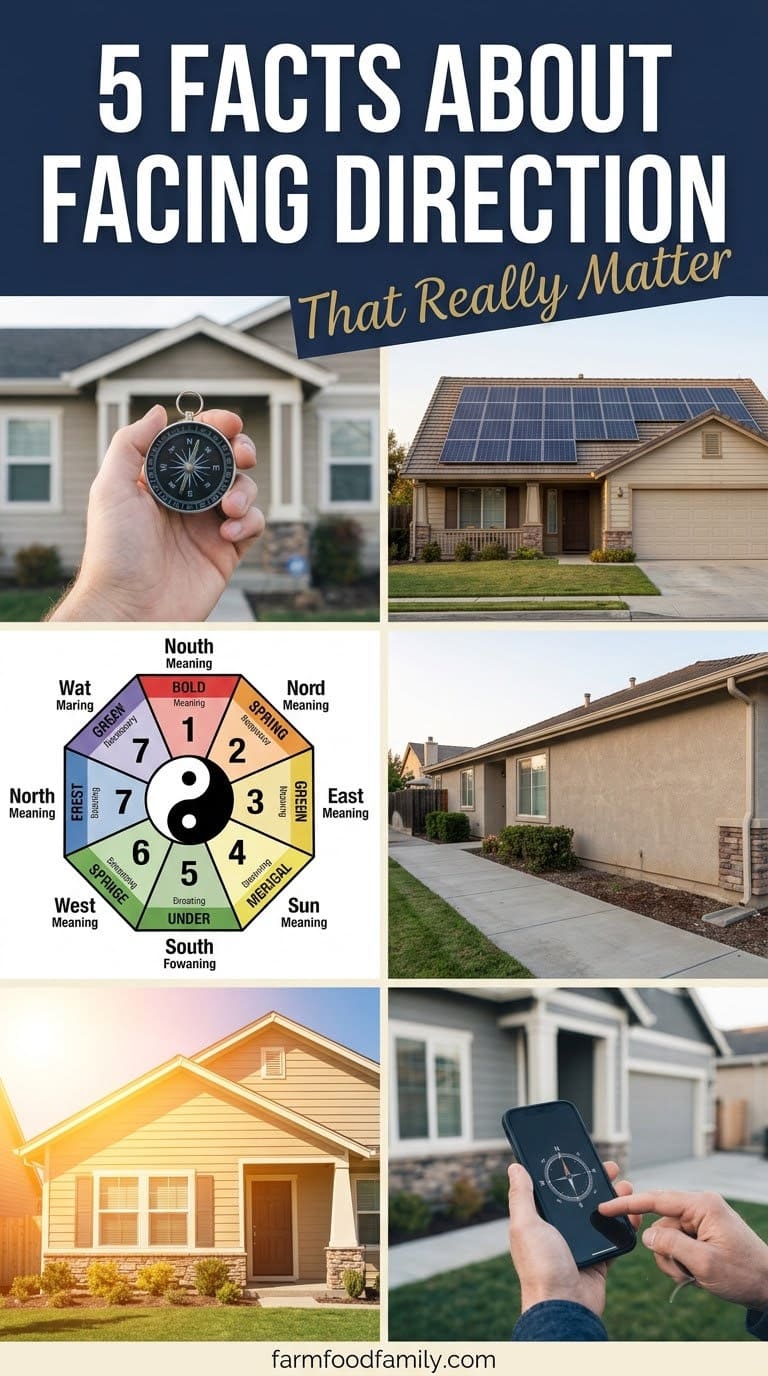
1. Your home’s “facing direction” isn’t the same as your front door’s direction

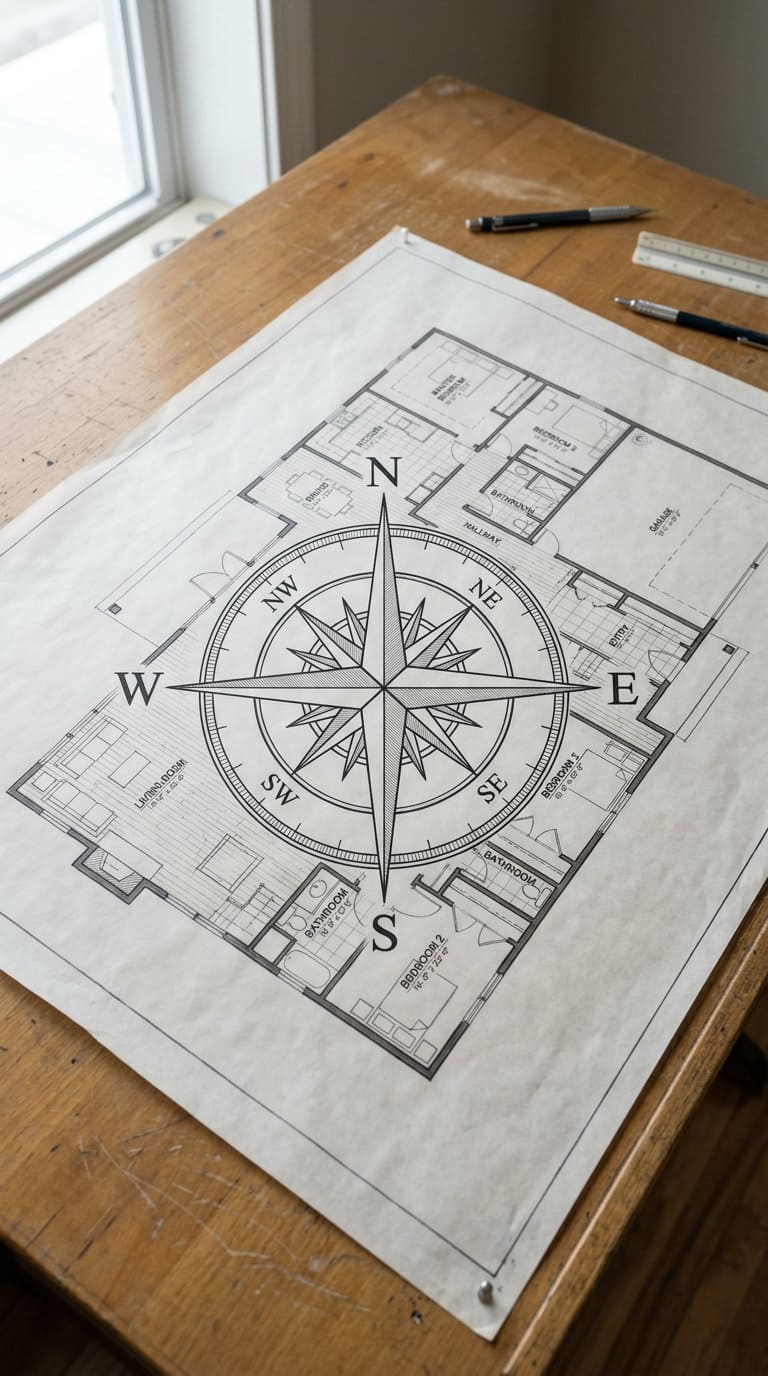
This is the most commonly confused point, and it’s worth getting right before anything else. For a standalone house, the facing direction is the side of the home oriented toward the street, not necessarily wherever the front door happens to be cut into that wall.
For an apartment or a home with a less obvious street-facing side, it’s generally described as the side that’s most “open” or “yang,” where the most light and activity naturally enter.
A physical compass reading taken from multiple points near the entrance, not just a phone app glanced at once, is the standard way to get an accurate bearing.



2. Your Kua number splits you into an East or West group, and it’s based on birth year and gender
A Kua number is a single digit from 1 to 9, calculated from your birth year and gender. People fall into one of two groups: East Group (Kua numbers 1, 3, 4, 9) or West Group (Kua numbers 2, 6, 7, 8).
Each Kua number is associated with four generally favorable directions and four generally unfavorable ones, tied to different aspects of life (career, health, relationships, stability).
3. Your house’s own Kua matters more than your personal Kua when they conflict
This is a real hierarchy worth knowing before you rearrange a room based on your personal Kua alone: a home itself has a Kua classification (based on its facing direction, sorted into one of eight house types), and that house-level Kua takes precedence over an individual occupant’s personal Kua number.
If a bedroom sits in a generally favorable sector according to the house’s own Kua, it’s considered a good spot, largely regardless of whether that same sector happens to be unfavorable for one specific resident’s personal Kua.
4. There’s a real, peer-reviewed academic paper that formalizes this exact question

This is the gap in every popular feng shui source checked for this piece, and it’s a genuinely interesting one: a real academic paper, “Unraveling Feng-Shui” by S-C Chiou and R. Krishnamurti, published in the peer-reviewed journal Environment and Planning B: Planning and Design (1997) through Carnegie Mellon University’s Department of Architecture, formally studied feng shui’s traditional site-orientation principles and built a computational model to calculate “fortunate orientation for a building site” using the same underlying logic this article covers.
It’s not proof that facing direction affects luck, but it is proof that the underlying methodology is structured and rule-based enough to be formally modeled academically, a different category of legitimacy than most decor-level feng shui advice.
5. Does your home’s facing direction actually affect your energy bill?

This is the second major gap in every feng shui source checked, and it’s a genuinely practical one if you’re building or choosing a home.
Real building science, per the U.S. Department of Energy and the American Solar Energy Society, confirms that orientation measurably affects a home’s real energy consumption: a home oriented within about 30 degrees of true south, with roughly 40 to 50 percent of its total glass area on the south-facing side, can draw 20 to 90 percent of its space heating directly from the sun, and efficiency-focused passive solar design can cut heating and cooling energy use by around 25 percent.

Directly supports rule #1's accurate facing-direction measurement with a real compass, not a phone app
Shop NowThis post contains affiliate links. We may earn a commission on qualifying purchases at no extra cost to you.
This is entirely independent of feng shui symbolism, but it’s worth noting that both traditions land on broadly similar territory: south-facing orientation is favored in a lot of feng shui guidance too, for entirely different reasons that happen to point the same direction in many climates.
The 5 things at a glance
| Fact | Real-world backing |
|---|---|
| Facing direction ≠ front door direction | Measure the street-facing wall with a physical compass |
| Kua number (East/West group) | Calculated from birth year and gender |
| House Kua beats personal Kua when they conflict | Standard hierarchy in the tradition |
| Academically modeled | Chiou & Krishnamurti, “Unraveling Feng-Shui,” 1997, CMU, peer-reviewed |
| Real energy-bill effect | DOE/ASES: south-facing orientation can cut heating/cooling energy ~25% |
What we learned the hard way
The facing-direction-versus-front-door confusion is the mistake that undermines everything downstream. Calculating a Kua-based recommendation off the wrong reference direction (using the front door’s angle instead of the home’s actual street-facing wall) means every subsequent recommendation is working from an incorrect starting point, worth double-checking with a real compass before trusting any Kua-based advice.
The energy-efficiency angle is the thing people planning new construction or a major renovation often overlook entirely, treating orientation as purely a feng shui or view-based decision.
A home oriented for real passive solar benefit can mean a measurably lower utility bill for the life of the building, a concrete, financial outcome that has nothing to do with whether you believe in qi at all.
FAQs
How do I find my home’s real facing direction if it’s not obvious from the street? Take a compass reading from multiple points near your entrance (a physical compass is more reliable than a phone app for this), and identify which side of the home is most oriented toward the street or, for less obvious layouts, which side receives the most light and activity.
What if my personal Kua favors a direction my house’s Kua doesn’t? The house’s own Kua classification is generally treated as the more important factor when the two conflict, per the standard hierarchy in this tradition.
Is the academic paper proof that feng shui “works”? No, it’s proof that feng shui’s traditional site-orientation principles are structured enough to be formally modeled computationally, a statement about the methodology’s internal logic, not a claim about outcomes.
Should I choose a house’s orientation based on feng shui or energy efficiency? They’re not mutually exclusive, and in many climates they point in a similar direction (south-facing orientation is favored by both traditions, for different reasons). If they genuinely conflict for your specific site and climate, the real, measurable energy-cost impact is worth weighing seriously alongside the symbolic considerations.

Related reading on farmfoodfamily.com: for how facing direction connects to a practical decision like door color, see our front door colors and their meaning guide, and for a broader look at architectural styles and orientation, see our types of houses guide.
Related Posts
- Front Door Colors and Their Meaning
- Types of Houses
- Front Door Colors for Gray Houses
- Front Door Colors for Brick Houses
- Green Front Door Meaning
- Red Front Door Meaning
Products We Recommend
This post contains affiliate links. We may earn a commission on qualifying purchases at no extra cost to you.
SUUNTO A-10 Recreational Compass
Directly supports rule #1's accurate facing-direction measurement with a real compass, not a phone app
Shop Now

KESPEN Heat-Control Window Film
A practical fix for a south-facing home managing real solar heat gain from rule #5
Shop NowNever miss an update — choose FarmFoodFamily as your preferred source on Google.
How it works: Tap the button below to open Google's settings page, then check the box next to FarmFoodFamily.
Tap the checkbox to turn it blue — that's how you know it's set.