6 Sinister Plants You Should Never Plant Next to Blueberry Bushes
Blueberries need acidic soil and shallow-root breathing room, and these six common garden neighbors quietly work against both.

Never miss an update — choose FarmFoodFamily as your preferred source on Google.
How it works: Tap the button below to open Google’s settings page, then check the box next to FarmFoodFamily.
Tap the checkbox to turn it blue — that’s how you know it’s set.
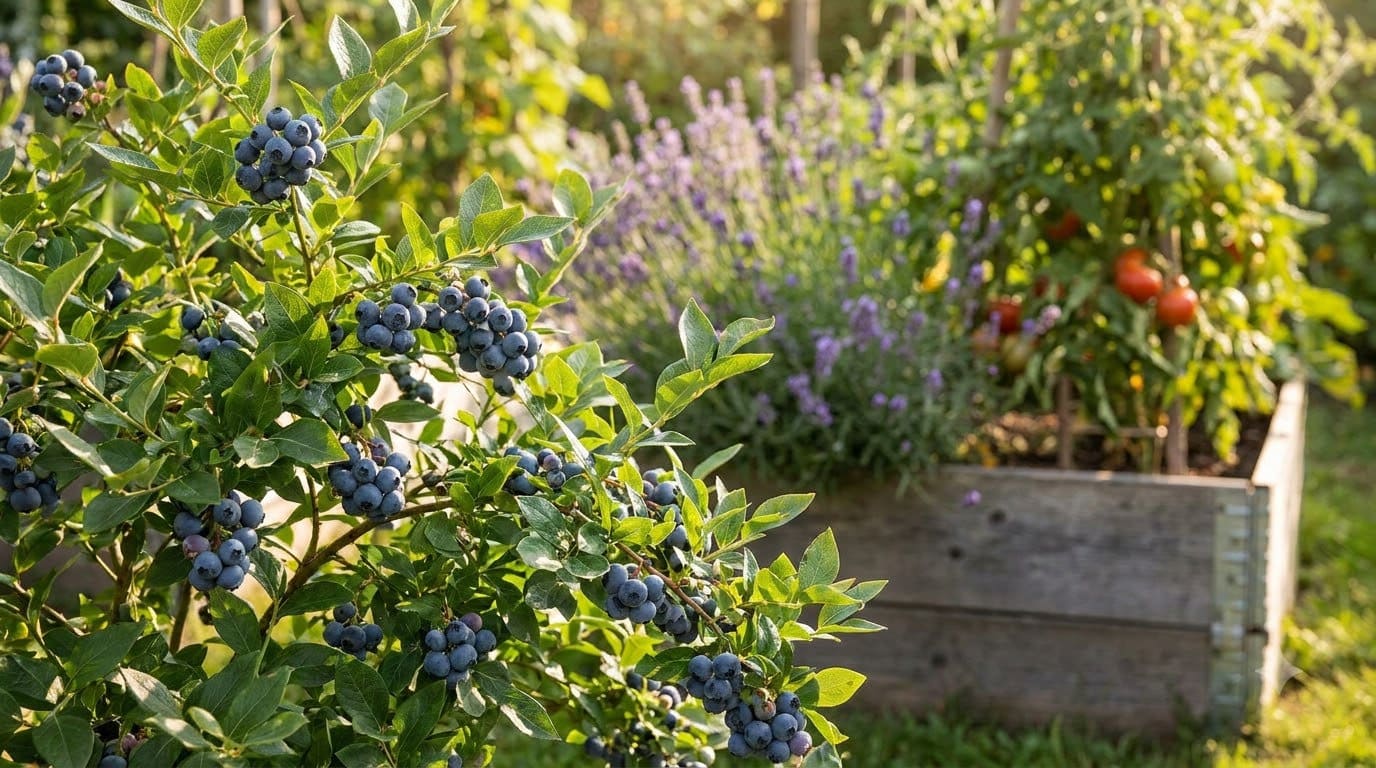
Blueberries are some of the pickiest fruit shrubs in a home garden, not because they’re fragile, but because their two biggest needs (acidic soil and undisturbed shallow roots) put them at odds with a surprising number of otherwise normal garden plants.
According to Jon Traunfeld, Extension Specialist at University of Maryland Extension, blueberries need soil pH “in the 4.5-5.5 range” and have “a shallow, fibrous root system” with few root hairs, which makes them unusually sensitive to competition and disturbance.
Plant the wrong thing close by, and you’re not just risking a little competition, you’re actively fighting the plant’s core chemistry.
This guide covers the six plants that cause the most real damage when planted too close to blueberries, the actual mechanism behind each one (not just “they don’t get along”), a real minimum safe distance, and what to do if you’ve already made the mistake.
Quick Answer
Blueberries need acidic soil with a pH between 4.5 and 5.5, according to University of Maryland Extension, and their root system is shallow and fibrous, concentrated in the top 10 to 24 inches of soil. That combination rules out several common garden neighbors.
Black walnut trees release juglone, a toxin that harms blueberries within roughly 50 to 60 feet of the trunk, per The Morton Arboretum. Tomatoes, potatoes, peppers, and eggplant prefer a near-neutral pH of 6.2 to 6.8, the opposite of what blueberries need.
Answer 4 quick questions and get matched to the exact fix for your yard — drainage, budget, layout, or something else entirely.
Take the Free QuizLilacs and lavender also want neutral-to-alkaline soil. Mint spreads through aggressive rhizomes that invade blueberry’s shallow root zone, while asparagus and sweet corn are heavy feeders that compete hard for the same nutrients. Keep these six away from blueberry beds, or give them real distance, to protect both the soil chemistry and the fruit harvest.
Why Does Blueberry Placement Actually Matter?
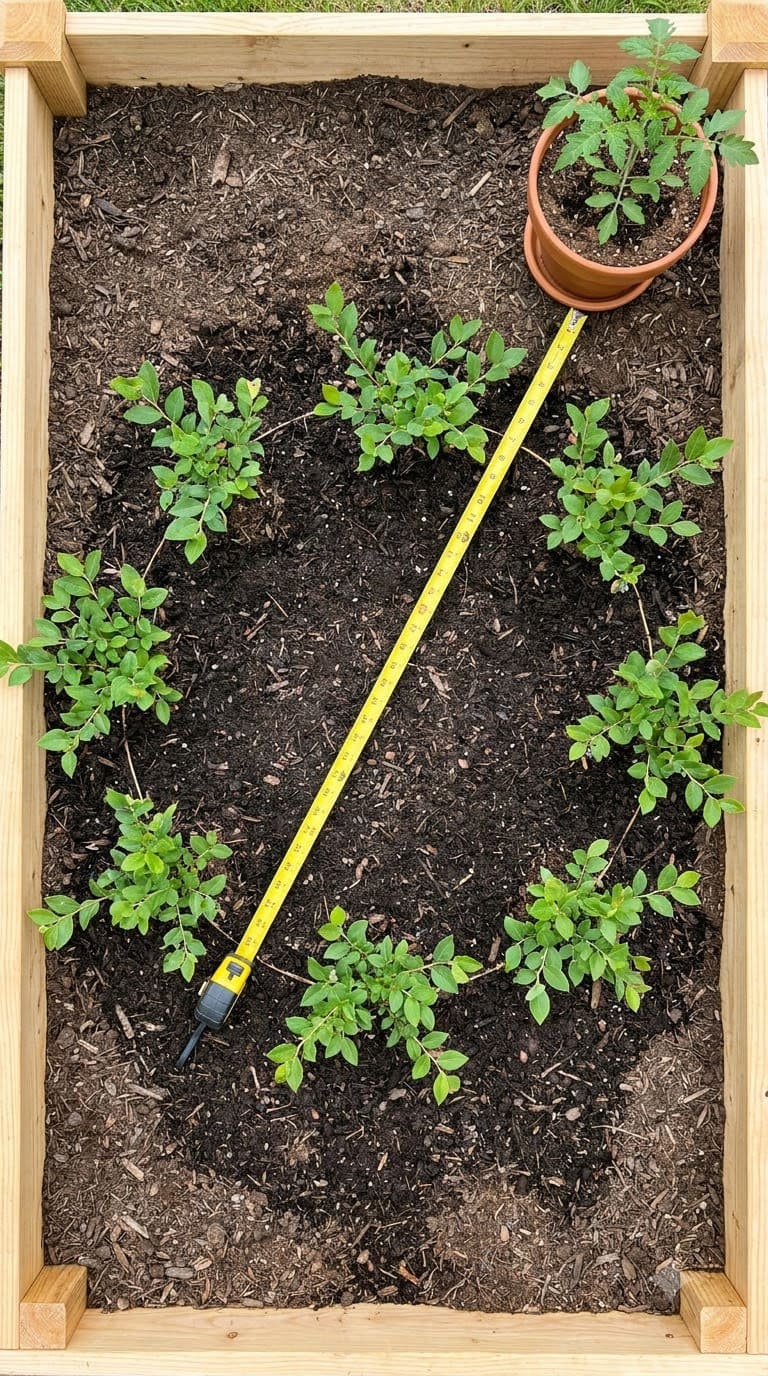
Most “don’t plant these together” garden advice is vague, but blueberries have three specific, real mechanisms working against a bad neighbor, and knowing which one applies to a given plant changes how you fix it.
Soil pH conflict. Blueberries are one of the few common garden plants that genuinely need acidic soil, 4.5 to 5.5, while most vegetables and ornamentals prefer a near-neutral 6.0 to 7.0. If you lime or amend the soil near a blueberry bed to make a neighboring plant happy, you’re actively pushing blueberries out of their comfort zone, and the two amendments can’t really coexist in the same root zone.
Root competition and physical disturbance. Roughly half to two-thirds of a blueberry’s roots sit in the top foot of soil, and the roots themselves are about the width of a human hair, fine and fragile. An aggressive spreader or a heavy feeder with a dense root mass close by doesn’t just compete for water and nutrients, it can physically crowd out or damage those delicate roots.
Allelopathy, or actual chemical toxicity. This is different from competition. A small number of plants, most notably black walnut, release compounds into the soil that are directly toxic to sensitive species. This isn’t about who “wins” a competition for resources, it’s a one-way chemical hazard.
The 6 Plants at a Glance
| Plant | Mechanism | Severity | Minimum Safe Distance |
|---|---|---|---|
| Black walnut | Allelopathy (juglone toxin) | Severe | 50-60 ft (root zone) |
| Tomatoes & nightshade relatives | Soil pH conflict | Moderate-High | 8-10 ft or separate beds |
| Lilac & lavender | Soil pH conflict | Moderate | 6-8 ft or separate beds |
| Asparagus | Heavy feeder + pH conflict | Moderate | 6-8 ft |
| Mint | Root competition (rhizome spread) | Moderate | Containerize, or 3+ ft with a barrier |
| Sweet corn | Heavy feeder + root competition | Low-Moderate | 4-6 ft |
1. Black Walnut: The One Real Toxin on This List
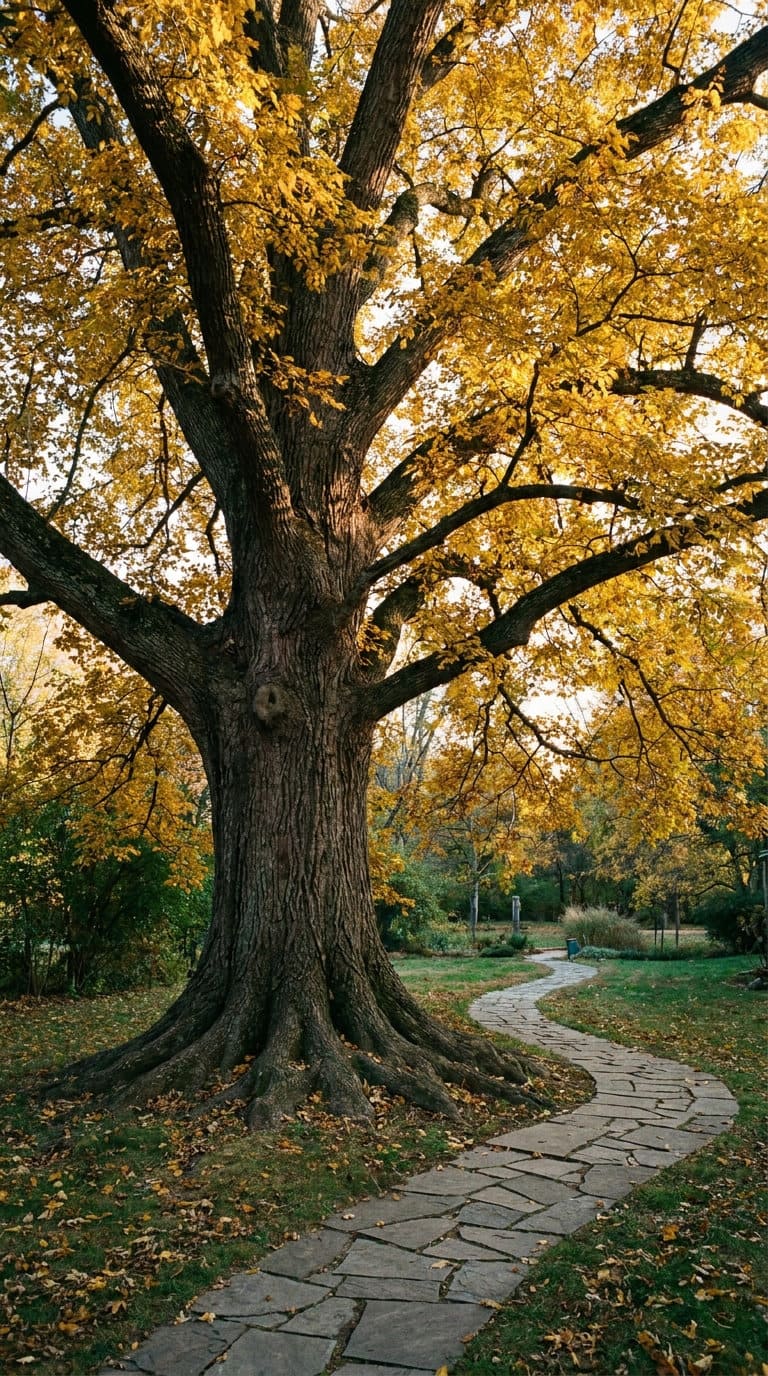
Black walnut trees produce juglone, a compound that isn’t a nutrient thief, it’s an actual respiration inhibitor that interferes with how sensitive plants generate energy at the cellular level.
According to The Morton Arboretum, toxicity symptoms typically show up within the walnut’s root zone, “an average of 50 to 60 feet from the trunk of a large tree,” and blueberry is specifically named among the shrubs considered sensitive to it.
Most yard problems trace back to one specific, fixable cause. Find yours in 4 quick questions.
Take the Free Quiz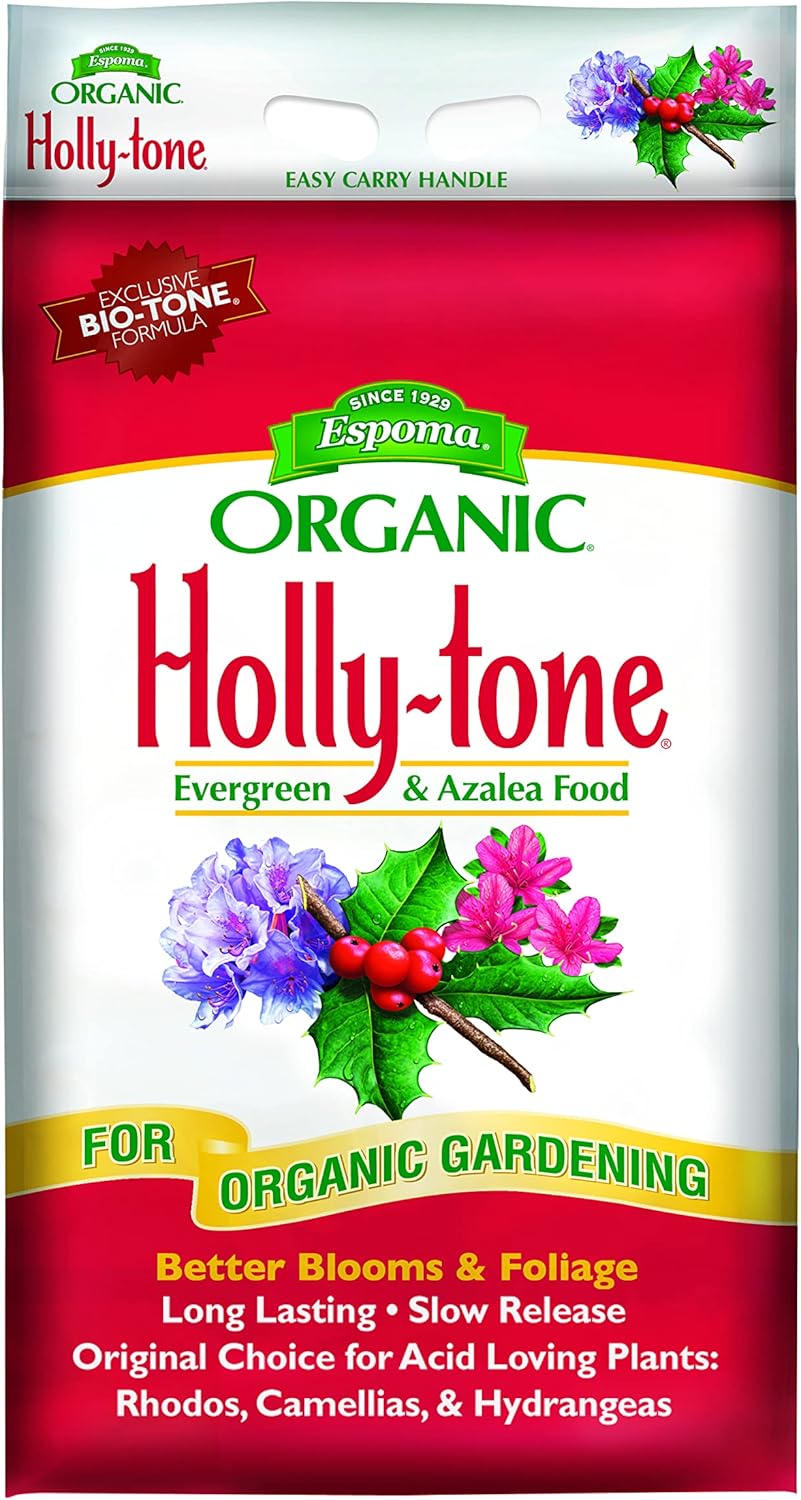
Purpose-built organic fertilizer for acid-loving plants including blueberries, applied around the drip line in early and late spring
Shop NowThis post contains affiliate links. We may earn a commission on qualifying purchases at no extra cost to you.
That 50-60 ft figure is an average, not a hard line. A mature, large walnut with a wide root spread can push juglone further, and root zones aren’t perfectly circular, they follow wherever the roots actually grow, which is often further downhill or toward moisture than the canopy would suggest.
If you’re not sure whether the tree in question is even a true black walnut, our breakdown of common walnut tree varieties can help you confirm before you commit to a planting spot, since not every walnut relative produces juglone at the same concentration.
If you’ve already planted too close: there’s no soil additive that neutralizes juglone reliably at scale. The realistic fix is relocating the blueberry bed, which costs nothing but labor if the bushes are young (under 2-3 years) and still small enough to transplant bare-root in early spring or fall.
Older, established bushes are a tougher call, sometimes it’s cheaper and less risky to accept a shorter-lived planting or build a raised bed lined with a root barrier than to try to move a mature shrub.
2. Tomatoes and Their Nightshade Relatives (Potatoes, Peppers, Eggplant)
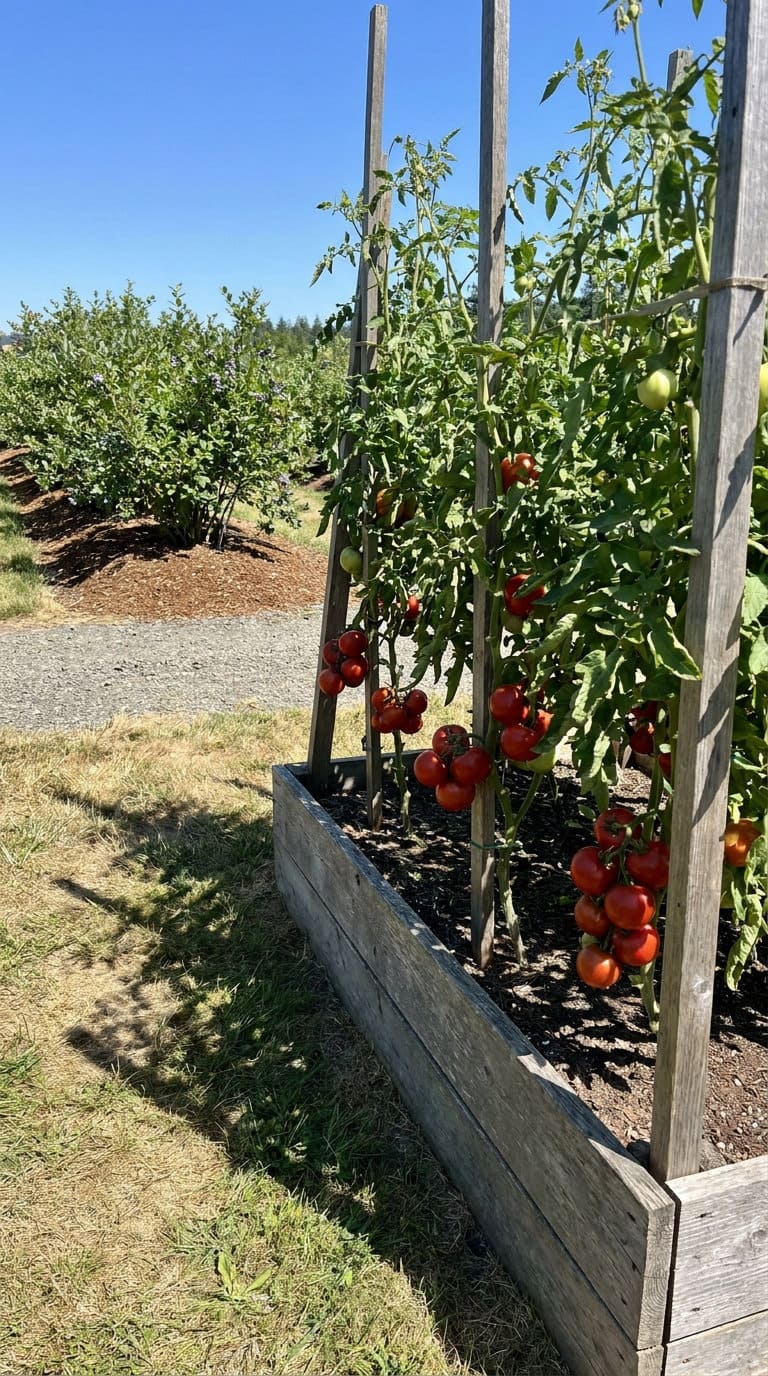
This is the pH conflict in its purest form. Tomatoes grow best in soil with a pH around 6.2 to 6.8, well outside blueberry’s 4.5-5.5 range, and potatoes, peppers, and eggplant sit in a similar neutral-to-slightly-acidic band.
Plant them in the same bed or share a fertilizer/lime routine, and you’ll end up compromising both, tomatoes struggling in soil too acidic for vigorous fruiting, blueberries showing the classic signs of a pH creeping too high (more on that below).
There’s a second, quieter issue with potatoes specifically: their tubers grow and are harvested by digging into the soil, which is exactly the kind of physical disturbance blueberry’s shallow, hair-fine roots don’t recover from quickly.
The fix, if this pairing already exists: you don’t need to give up growing tomatoes, just give them a genuinely separate bed, at minimum 8-10 feet away or, more reliably, a raised bed with its own soil so the two amendment routines never mix.
This is a near-zero-cost fix if you’re planning a new season, and a one-time raised-bed build (roughly $50-150 in lumber for a basic 4×8 frame) if you’re retrofitting an existing yard.
The average homeowner spends $616/year on yard fixes that don't address the real problem. Find out what yours actually is — before you spend another dollar.
Take the Free QuizOur guide on growing tomatoes successfully covers the neutral-pH setup they actually want, which makes the contrast with blueberry’s needs clearer.
3. Lilac and Lavender: The Alkaline-Loving Ornamentals
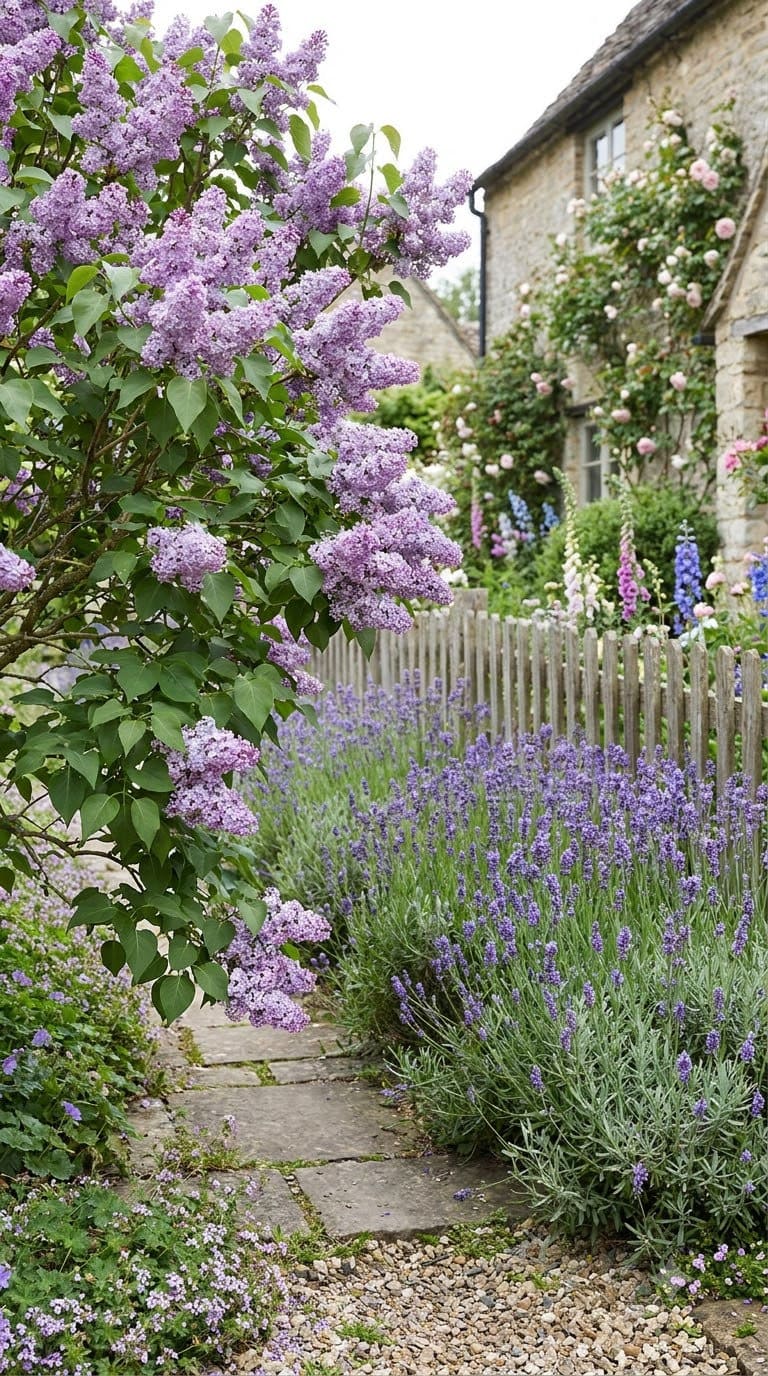
Lilac and lavender are two of the most commonly recommended “cottage garden” shrubs, and both are exactly wrong next to blueberries for the same reason: they thrive in neutral to slightly alkaline soil and actively dislike the acidic conditions blueberries need.
Lavender in particular tends to develop root rot and weak growth in consistently acidic, well-watered soil, the same conditions a healthy blueberry bed is kept in.
This pairing shows up a lot in real gardens because both plants get recommended as “easy” or “low-maintenance” without anyone flagging the soil conflict, they just don’t get planted with blueberries in mind specifically.
The fix: keep lilac and lavender in a separate bed or border, ideally uphill or upslope from blueberries so irrigation and any soil amendment runoff doesn’t drift toward the acidic bed.
If lavender is already in, moving it is usually the lower-cost option since lavender transplants reasonably well when young; established lilac shrubs are harder to relocate and may be worth leaving in place while simply keeping any lime or wood-ash amendments away from the blueberry side of the yard. For more on lavender’s actual soil and drainage needs, see our tips for growing lavender.
4. Asparagus: A Heavy Feeder with the Wrong pH Preference
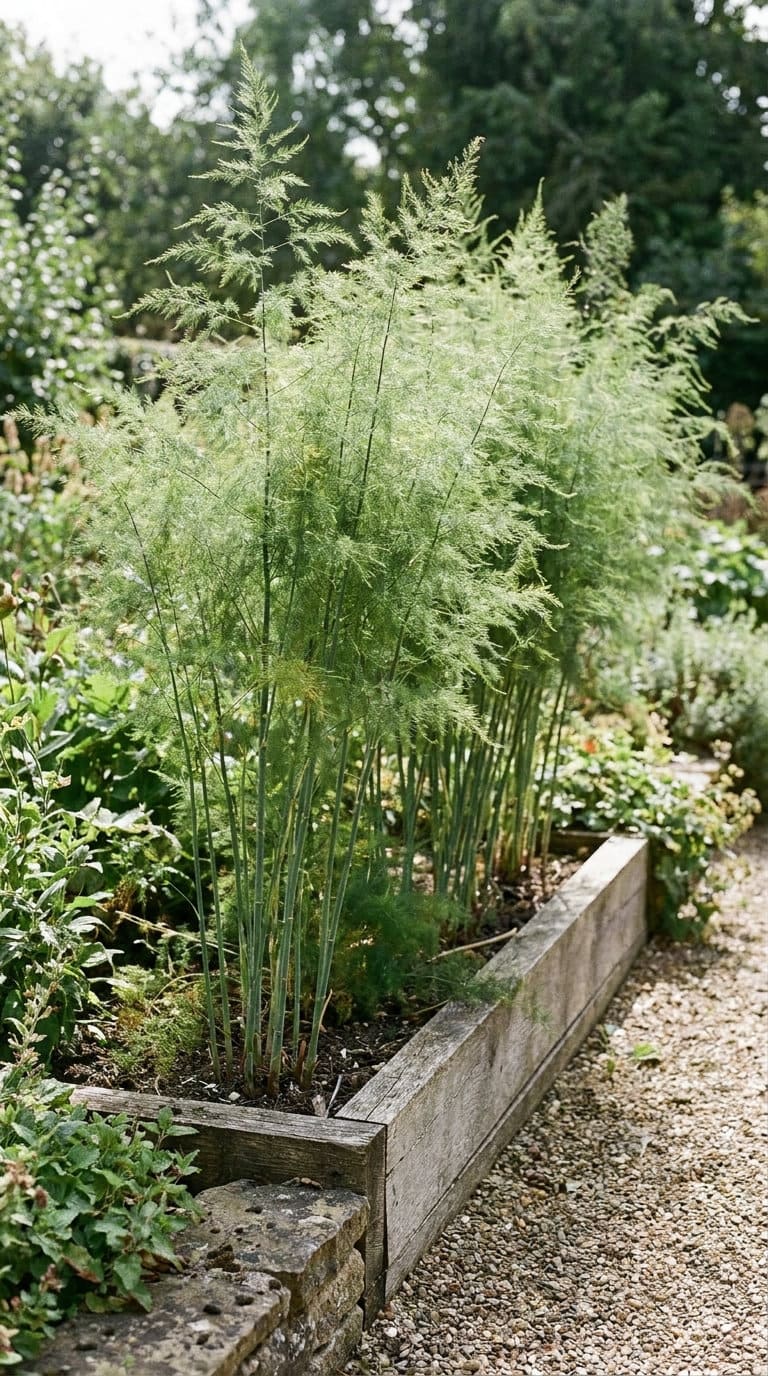
Asparagus is a stealth conflict because it doesn’t look aggressive, it’s a slow-growing perennial that sits quietly in one spot for 15-20 years once established. But it’s also a genuinely heavy feeder that wants neutral to slightly alkaline soil (roughly 6.5-7.5), and its permanent crown and deep, wide-spreading root system compete hard for nutrients and water in whatever bed it’s in.
Eric Hanson, Emeritus Professor at Michigan State University and longtime MSU Extension berry-crop specialist, notes that blueberry nitrogen needs actually scale up significantly as the plant matures, from around 15 pounds of nitrogen per acre for a 2-year-old planting to roughly 65 pounds per acre by year 8. That’s a real, ongoing fertility demand, and a nearby asparagus bed pulling from the same soil, with a completely different pH target, makes it harder to hit either plant’s needs.
The fix: treat asparagus as a permanent-bed decision from day one, since it’s not something you casually relocate once established. Give it its own dedicated 4×8 or larger bed at least 6-8 feet from any acid-loving planting, with its own liming schedule.
If you’re retrofitting a yard where the two are already too close, it’s usually more practical to leave the asparagus (given how long it takes to re-establish, up to 2-3 years before a full harvest) and instead move or contain the blueberries, timed around the light seasonal pruning covered in our guide on when shrubs actually need cutting back so you’re not stressing the bush twice in one year.
5. Mint: The Root Invader
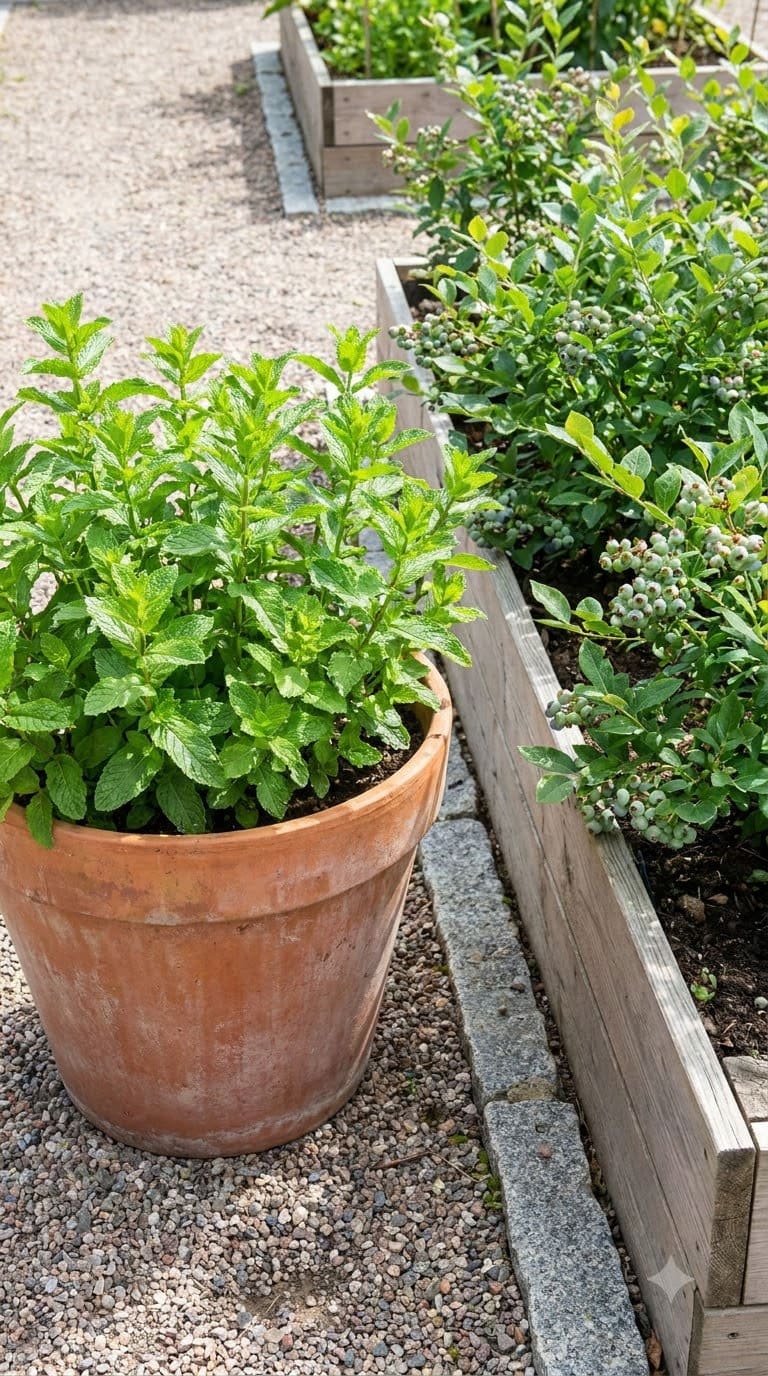
Mint is the plant most people already know is aggressive, but it’s still one of the most common accidental blueberry-bed mistakes because it doesn’t look threatening when you first plant it.
True mint spreads through underground rhizomes that can extend a foot or more from the parent plant in a single growing season, and that horizontal spread happens right in the same shallow soil layer where blueberry’s fine, hair-width roots are trying to establish.
The result isn’t usually outright plant death, it’s a slow decline: reduced vigor, smaller berries, and a root zone so tangled with mint runners that it becomes difficult to weed or mulch the blueberry bed without disturbing both plants at once.
The fix: mint should essentially never go in-ground anywhere near blueberries. Keep it in a container, even a large one sunk partway into the ground for aesthetics, or install a rhizome barrier at least 12-18 inches deep if you want it in a bed nearby.
If mint has already spread into a blueberry bed, expect to spend a season on manual removal (pulling visible runners and any root fragments, since mint regrows from small pieces left behind) rather than a one-time fix.
Our guide to different types of mint is worth a look if you want mint somewhere else in the yard instead, since some varieties spread more aggressively than others.
6. Sweet Corn: A Nitrogen-Hungry Root Competitor
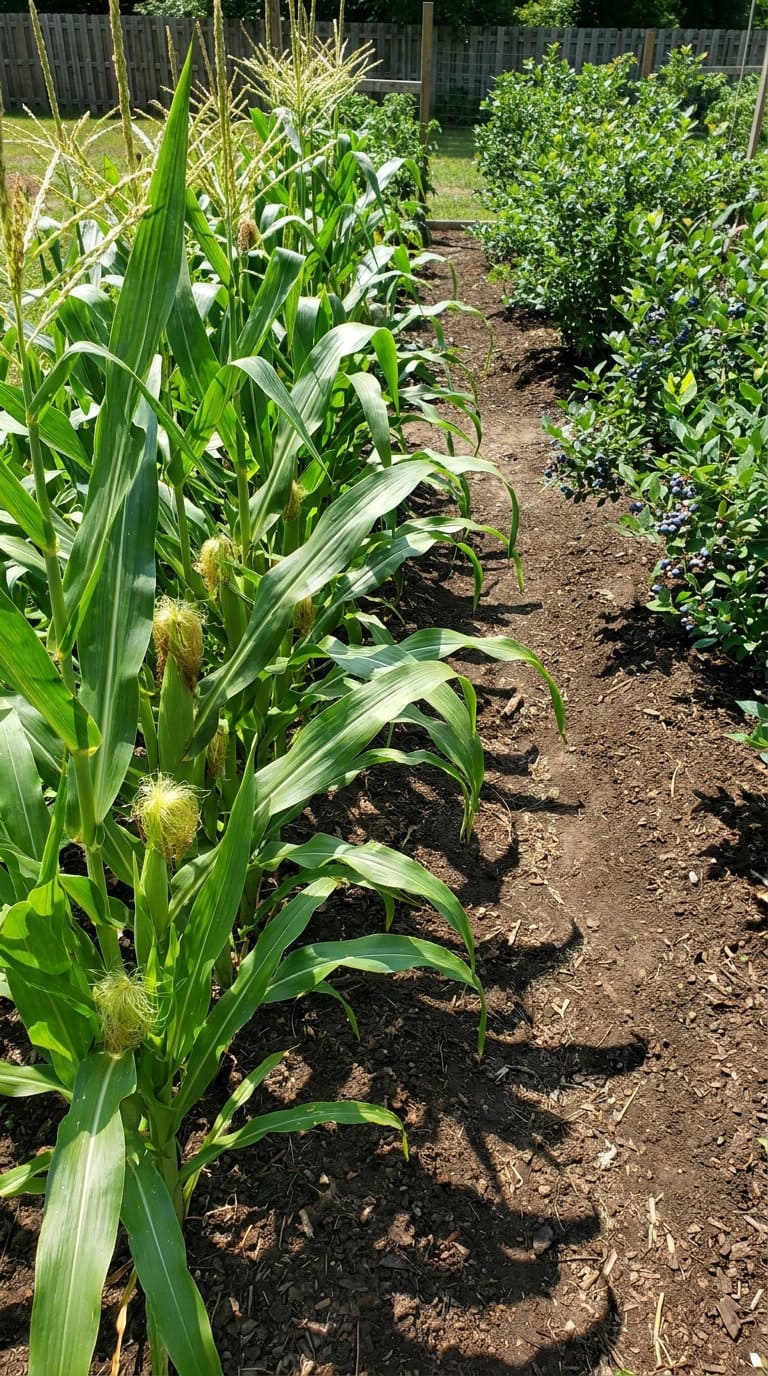
Corn doesn’t get flagged as often as tomatoes or walnut, but it’s a genuinely heavy nitrogen feeder with a dense, fibrous root system that spreads wide and shallow, competing directly in the same top-foot soil layer where blueberries do most of their feeding.
Corn planted too close can pull enough nitrogen and moisture from that shared zone to visibly slow blueberry growth and reduce fruit set, especially in a smaller home garden bed where the two aren’t given real separation.
There’s also a practical shading issue: corn grows tall fast, and a dense stand on the sunny side of a blueberry bed can cut into the six-plus hours of direct sun blueberries need for good fruit production.
The fix: keep corn in the vegetable garden proper, at least 4-6 feet from any blueberry planting, and pay attention to which side of the bed it’s on relative to the sun’s path.
If corn is already planted too close for a single season, it’s a low-cost fix, corn is an annual, so simply relocating next year’s planting solves it without disturbing the blueberry bush at all.
A crowded bed of any kind also tends to invite the same insects that show up on our list of the most common problem insects in a home garden, so the extra spacing pays off twice.
Are Yellow Blueberry Leaves Caused by a Bad Plant Neighbor?
Often, yes, indirectly. One of the most common real questions gardeners run into isn’t “what should I avoid planting,” it’s “why did my blueberry leaves suddenly turn yellow.”
According to research from University of Georgia Cooperative Extension, uniformly yellow leaves in blueberries usually point to a nitrogen deficiency, but yellowing with the veins staying dark green (a pattern called interveinal chlorosis) is the classic sign of an iron deficiency, and iron deficiencies in blueberries commonly show up “when the pH is above 5.3 or when calcium or phosphorus levels are too high in the soil.”
That’s the direct link back to this article: if a nearby lilac bed, tomato patch, or asparagus row is getting limed or amended toward neutral, and the amendments drift or the beds aren’t truly separated, the blueberry’s soil pH can creep upward without anyone directly fertilizing the blueberry at all. The plant isn’t starving, it’s chemically locked out of absorbing iron it needs.
A basic pH test of the blueberry bed’s actual soil, not just an assumption based on what you originally amended it to, is the fastest way to confirm this before reaching for a fertilizer that won’t fix the real problem.
What We Learned the Hard Way
The lilac mistake is the one that catches people off guard the most, because lilac gets recommended constantly as a classic, hardy, low-maintenance shrub, nobody warns you it’s fighting your blueberries’ entire soil chemistry from six feet away.
The giveaway isn’t dead blueberry bushes, it’s a slow, confusing decline over a season or two: smaller berries, leaves that look a little pale even though you’re fertilizing on schedule, and a soil test that comes back higher than you remember setting it up.
Mint is the other classic. It looks completely harmless in a 4-inch nursery pot, and by the time the rhizomes have worked their way a foot into the blueberry bed, they’re tangled enough with the shallow root mass that pulling them out risks pulling out blueberry roots too.
If there’s one thing worth doing differently from the start, it’s assuming any mint variety is going in a container, full stop, no exceptions for “just this one corner.”
And the walnut question comes up more than you’d expect from people who didn’t plant a walnut tree themselves, it was already there, sometimes for decades, before they added a blueberry bed.
Measuring the actual distance from the trunk (not eyeballing it from the edge of the shade) before committing to a bed location saves a much more expensive mistake later, since juglone sensitivity, per the Morton Arboretum’s research, isn’t something a soil amendment can undo once symptoms show up.
FAQs
How far does a blueberry bush need to be from a black walnut tree? The Morton Arboretum’s research puts the average juglone toxic root zone at 50 to 60 feet from the trunk of a mature walnut, though a very large tree’s root spread can extend that further. Measure from the actual trunk, not the edge of the canopy.
Can I plant blueberries and tomatoes in the same raised bed? Not in the same bed if you want both to thrive. Tomatoes want a pH around 6.2-6.8 and blueberries need 4.5-5.5, close enough that trying to split the difference leaves both plants in soil neither actually prefers. Separate beds, even a few feet apart, work fine.
Is it safe to grow mint anywhere in a yard that also has blueberries? Yes, as long as the mint is contained. Growing it in a pot or with a deep rhizome barrier keeps its rhizome spread from ever reaching the blueberry’s shallow root zone. The risk is specifically in-ground mint planted within a few feet, not mint anywhere in the yard.
Why did my blueberry leaves turn yellow even though I’m fertilizing? It’s often not a fertilizer problem at all. Yellowing with the leaf veins staying green usually points to iron deficiency caused by soil pH drifting above roughly 5.3, frequently from a nearby bed being limed or amended for a different plant. A soil pH test, not more fertilizer, is the right next step.
Do I need to worry about corn or asparagus the same way I worry about walnut? No, they’re a different category of problem. Corn and asparagus are resource-competition issues (nutrients, root space, sometimes sunlight), not toxicity. Giving them a real distance (4-8 feet depending on the plant) solves it; there’s no chemical hazard the way there is with black walnut’s juglone.
Related Posts
- How to Grow Organic Blueberry Plants
- Vegetable Garden Layouts
- Herbs That Control Vegetable Garden Pests
Products We Recommend
This post contains affiliate links. We may earn a commission on qualifying purchases at no extra cost to you.
Espoma Organic Holly-Tone 4-3-4 Fertilizer, 18 lb
Purpose-built organic fertilizer for acid-loving plants including blueberries, applied around the drip line in early and late spring
Shop Now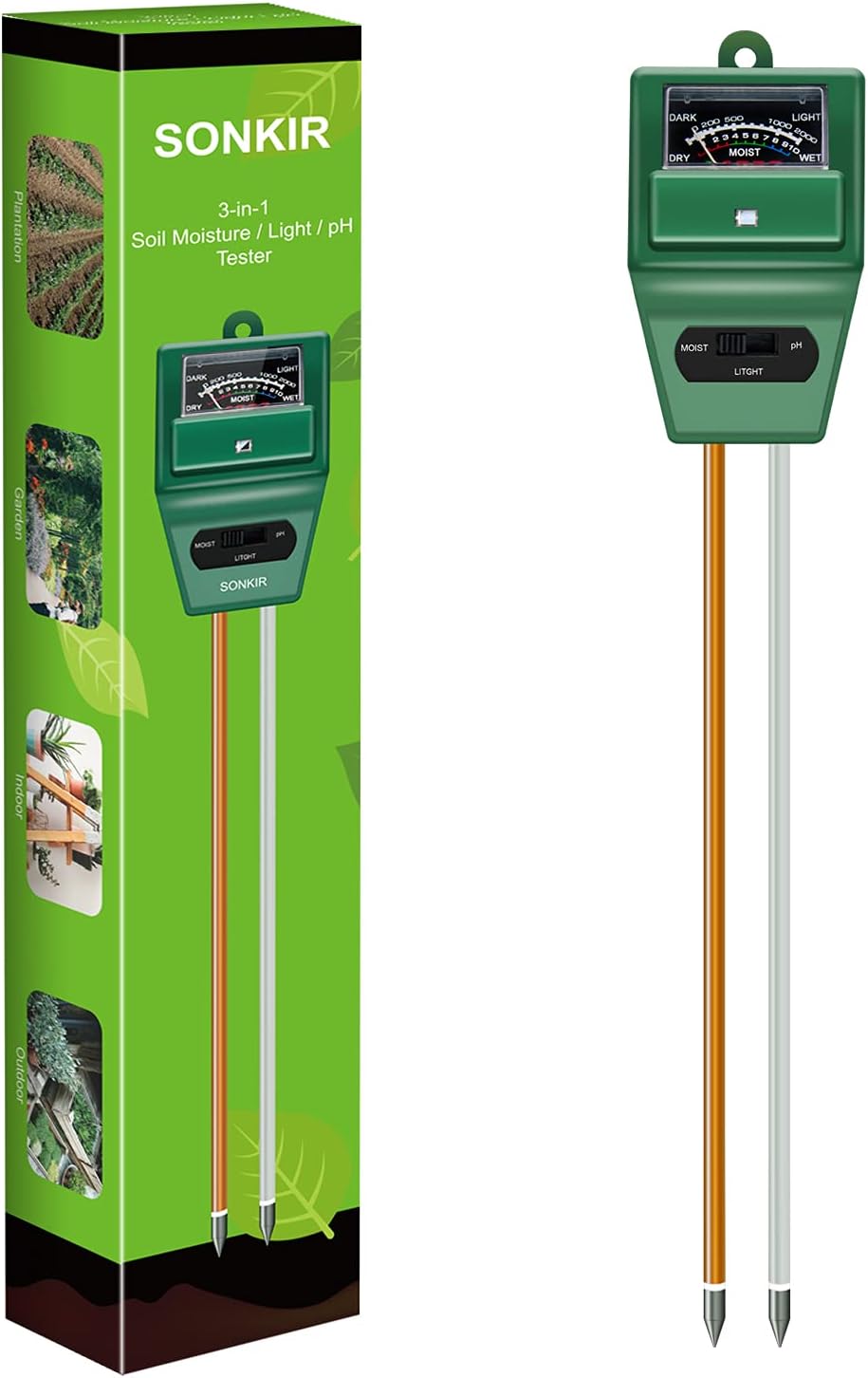
SONKIR Soil pH Meter, MS02 3-in-1
No-battery soil pH/moisture/light tester, the fastest way to confirm whether a blueberry bed's pH has actually drifted before assuming it's a nutrient problem
Shop Now
Espoma Organic Soil Acidifier (elemental sulfur), 6 lb
Lowers soil pH gradually for blueberries and other acid-loving plants when a test confirms the pH has crept upward
Shop NowNever miss an update — choose FarmFoodFamily as your preferred source on Google.
How it works: Tap the button below to open Google's settings page, then check the box next to FarmFoodFamily.
Tap the checkbox to turn it blue — that's how you know it's set.