20+ Charming Rustic Driveway Ideas to Boost Your Curb Appeal
My neighbor put up a pair of stone pillars at the end of her driveway last year, gorgeous things, thick fieldstone with a timber crossbeam. Six months later the county made her move them back four feet because they were blocking sightlines for anyone backing out onto the road. That’s honestly not a story you’ll…

Never miss an update — choose FarmFoodFamily as your preferred source on Google.
How it works: Tap the button below to open Google’s settings page, then check the box next to FarmFoodFamily.
Tap the checkbox to turn it blue — that’s how you know it’s set.
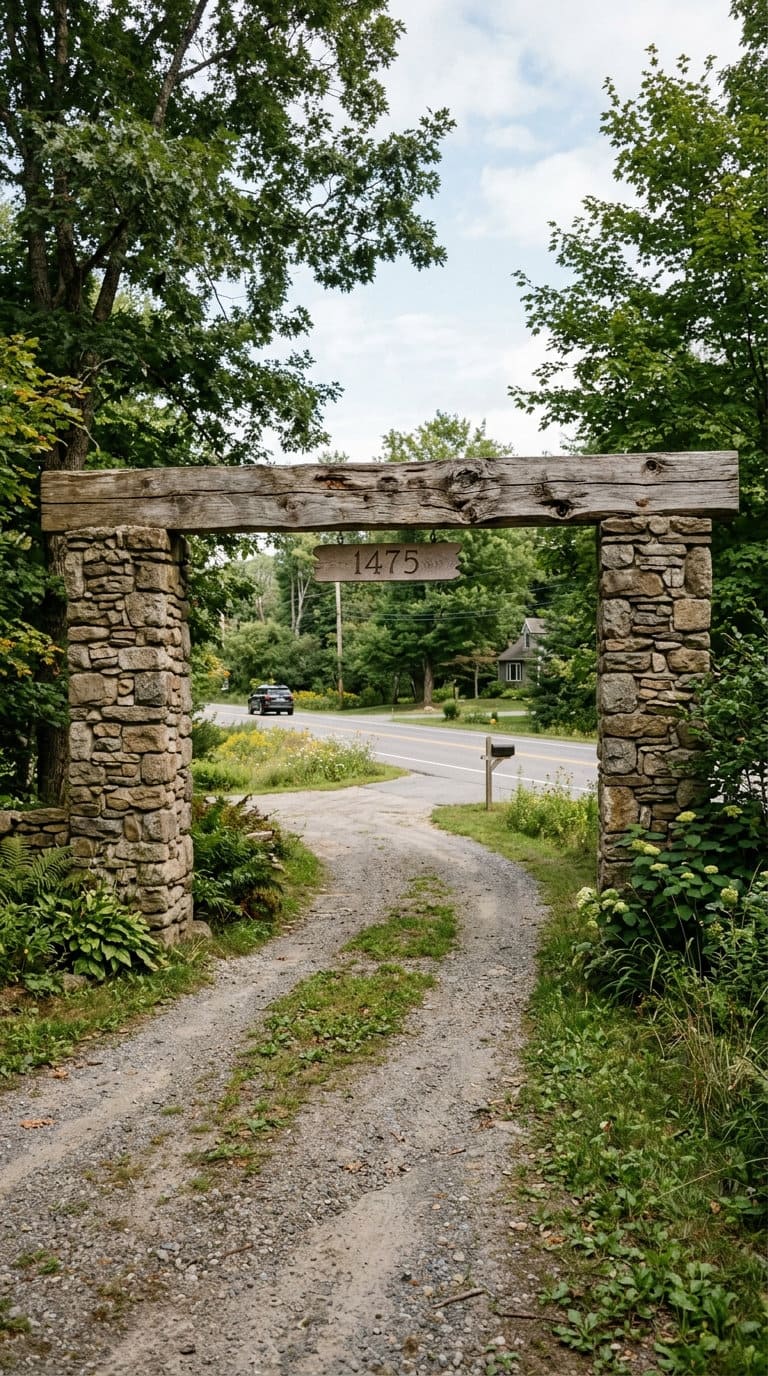
My neighbor put up a pair of stone pillars at the end of her driveway last year, gorgeous things, thick fieldstone with a timber crossbeam. Six months later the county made her move them back four feet because they were blocking sightlines for anyone backing out onto the road.
That’s honestly not a story you’ll find in most rustic driveway roundups, everyone shows you the pretty finished pillars, nobody mentions the setback rules that determine where they’re actually allowed to go.
“A rustic wooden gate framed by stone pillars stands as the handshake to your home,” says Brad Smith, Senior Interior Designer (NCIDQ Certified) at Omni Home Ideas. It’s a good line, and it’s true, but a handshake still needs to happen somewhere the mail carrier and every driver on your street can actually see coming.
Before you build: check your sightlines
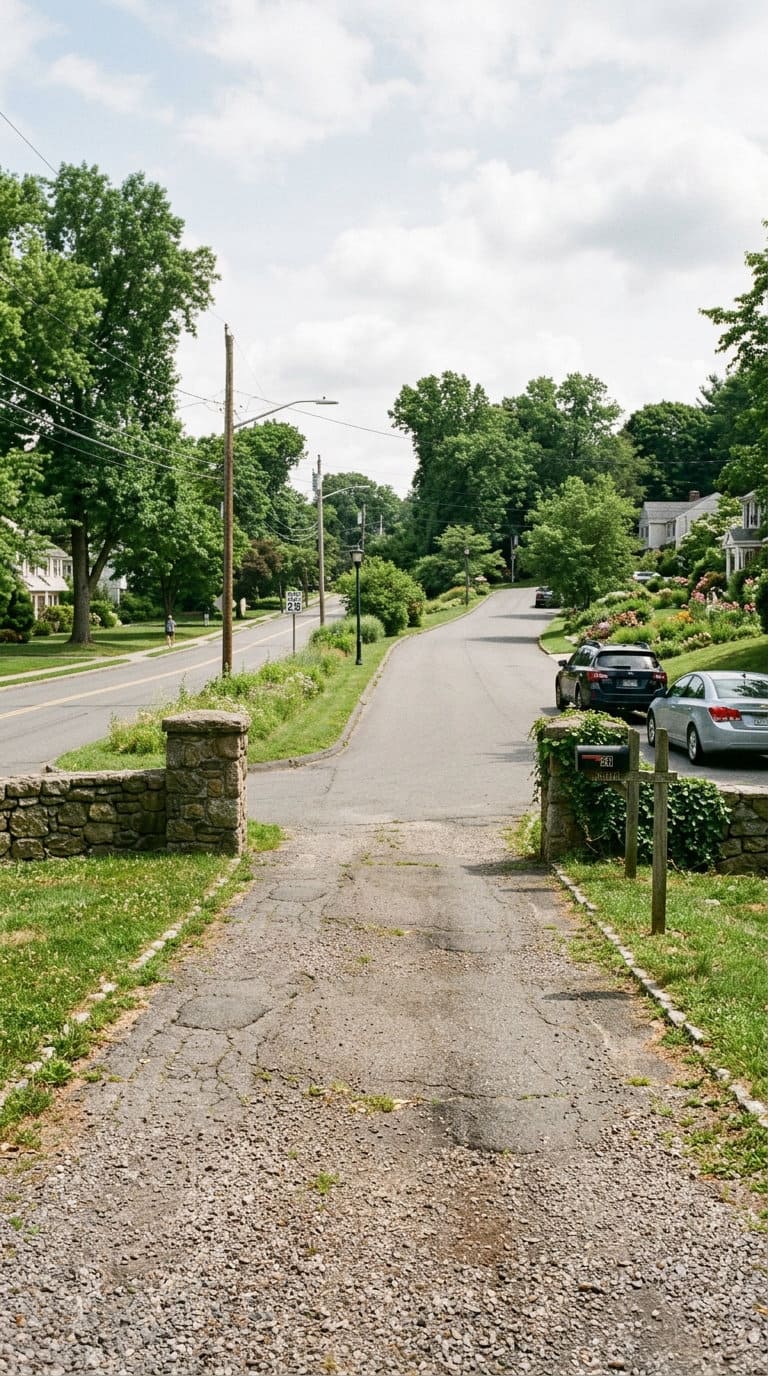
Anything solid near the road, stone pillars, a timber archway, a heavy iron gate, can become a real visibility problem if it’s placed too close to where your driveway meets the street.
Many municipalities require gate posts or pillars to sit back 20 to 30 feet from the roadway specifically so a car can fully clear the street before stopping to open a gate, and general sightline-distance guidance from AASHTO’s Policy on Geometric Design of Highways and Streets puts the minimum clear-sightline distance at roughly 14.5 feet for a driveway approach.

None of that means you can’t build any of the ideas below. But it does mean calling your local planning or public works department before you set posts in concrete is worth the five-minute phone call.
Answer 4 quick questions and get matched to the exact fix for your yard — drainage, budget, layout, or something else entirely.
Take the Free Quiz20 Stunning Rustic Driveway Ideas That Will Transform Your Entrance
1. Timber Log Archways
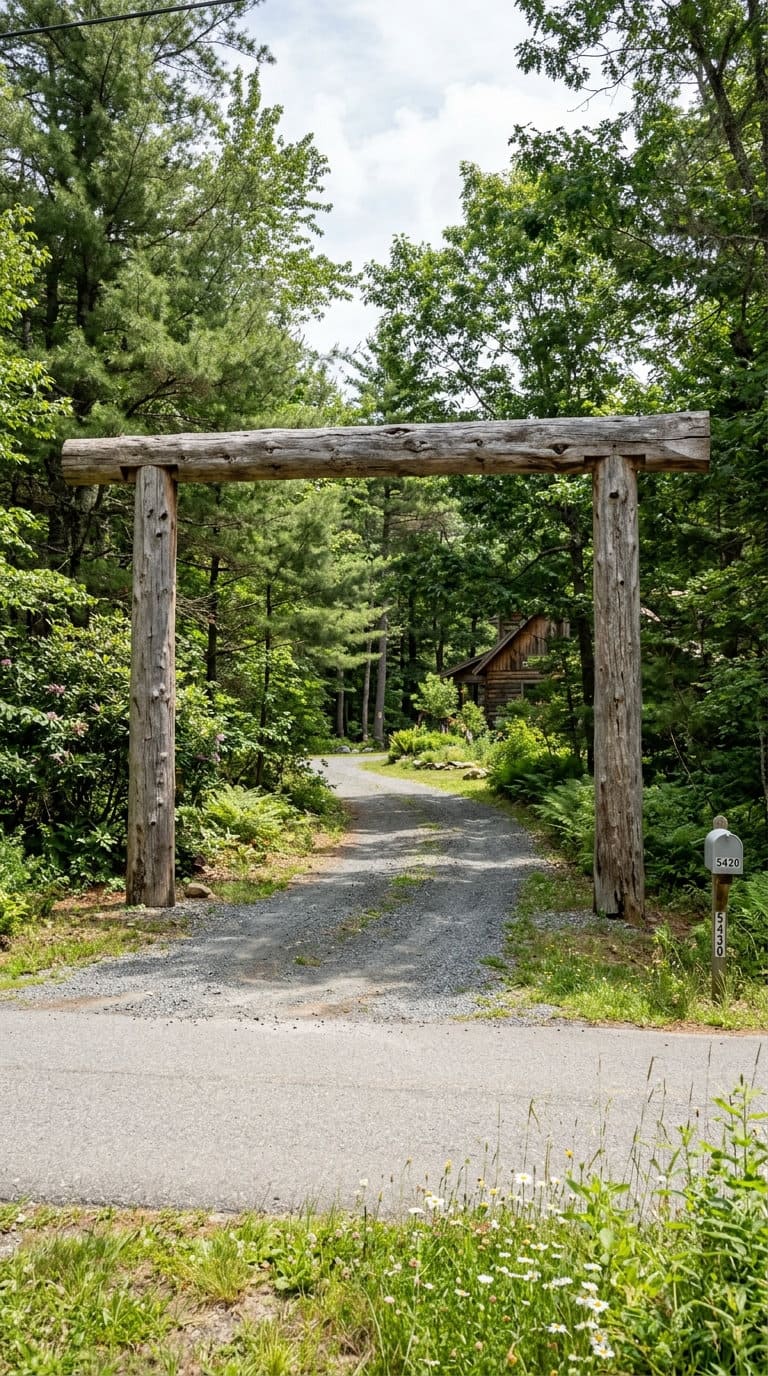
A true log archway uses two upright posts (cedar and pressure-treated pine both hold up well against ground moisture) with a horizontal log or beam spanning the top, sometimes with a carved or routed family name.
Keep the archway’s vertical posts back from the road per the sightline note above, and set posts at least 2 feet into concrete footings for stability against wind load on the crossbeam.
2. Stacked Stone Pillars
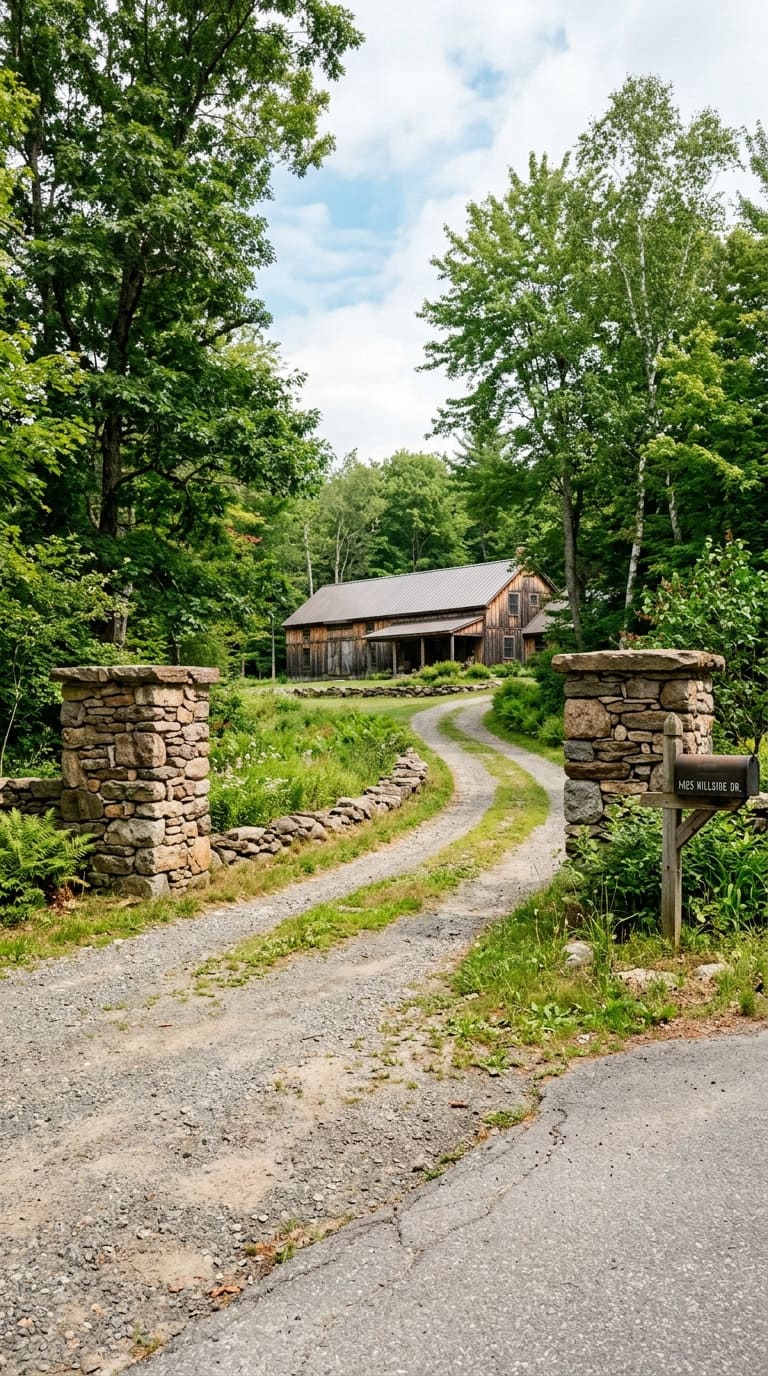
Dry-stacked or mortared fieldstone pillars flanking the entrance run $1,300 to $3,000 per pillar on average, with solid natural stone (rather than a stone veneer over a block core) running as high as $5,000 per pillar.
Veneer-over-block construction costs significantly less and is structurally sound for a driveway pillar’s height, most homeowners don’t need solid stone to get the look. Whichever you choose, keep both pillars back from the road per the sightline guidance above.
3. Wagon Wheel Accents
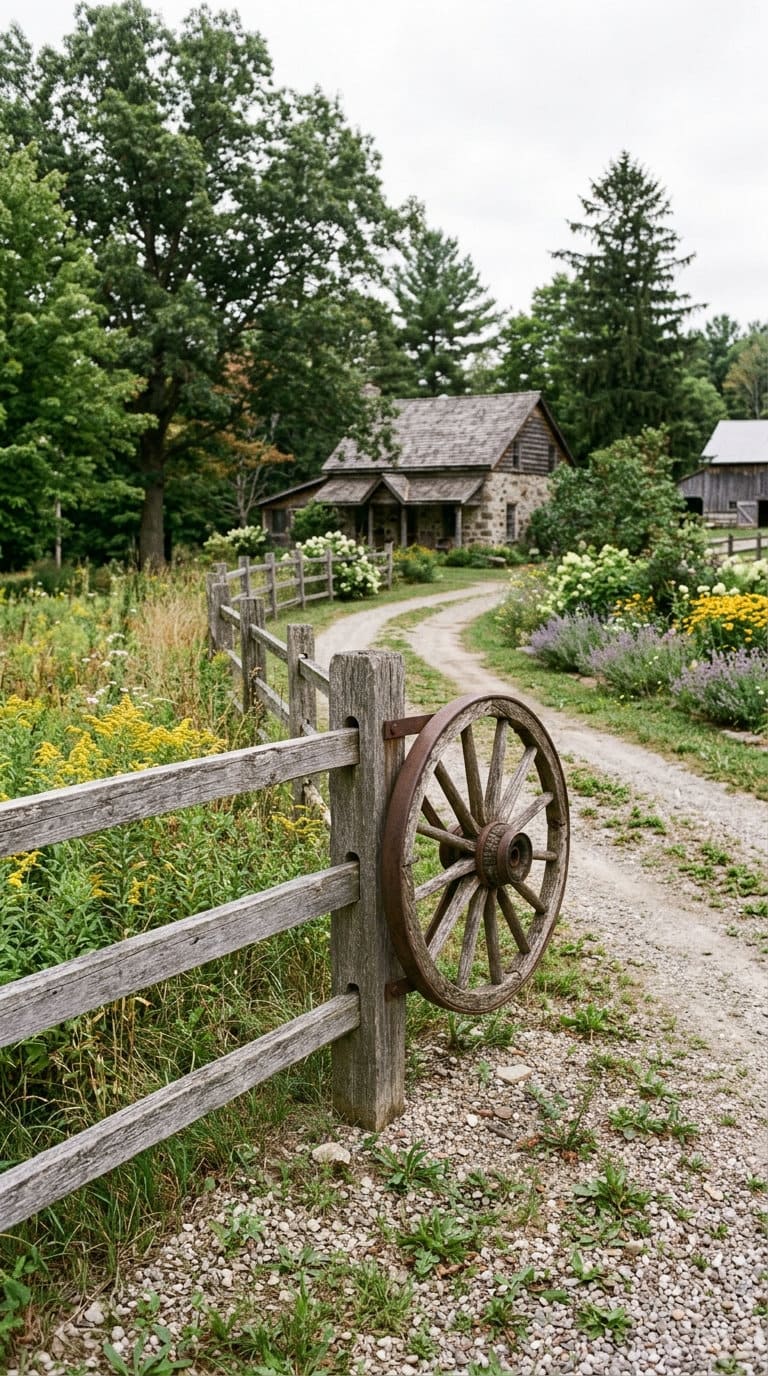
An old wagon wheel mounted flat against a fence or gate post, or leaned decoratively beside the entrance, adds instant visual history without any real safety concerns since it’s not a solid barrier.
Original antique wheels vary widely in price depending on condition and size, a salvage yard find in rough shape costs far less than a well-preserved piece from an antique dealer, and reproduction wheels are widely available if authenticity matters less than the look.
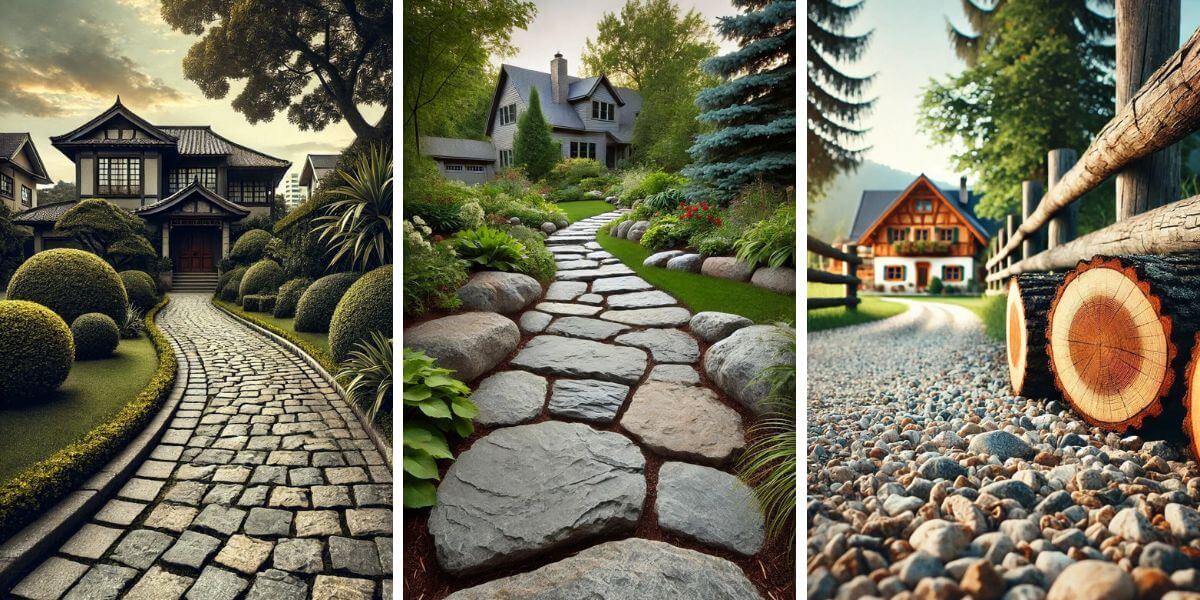
4. Gravel Driveway with Log Borders
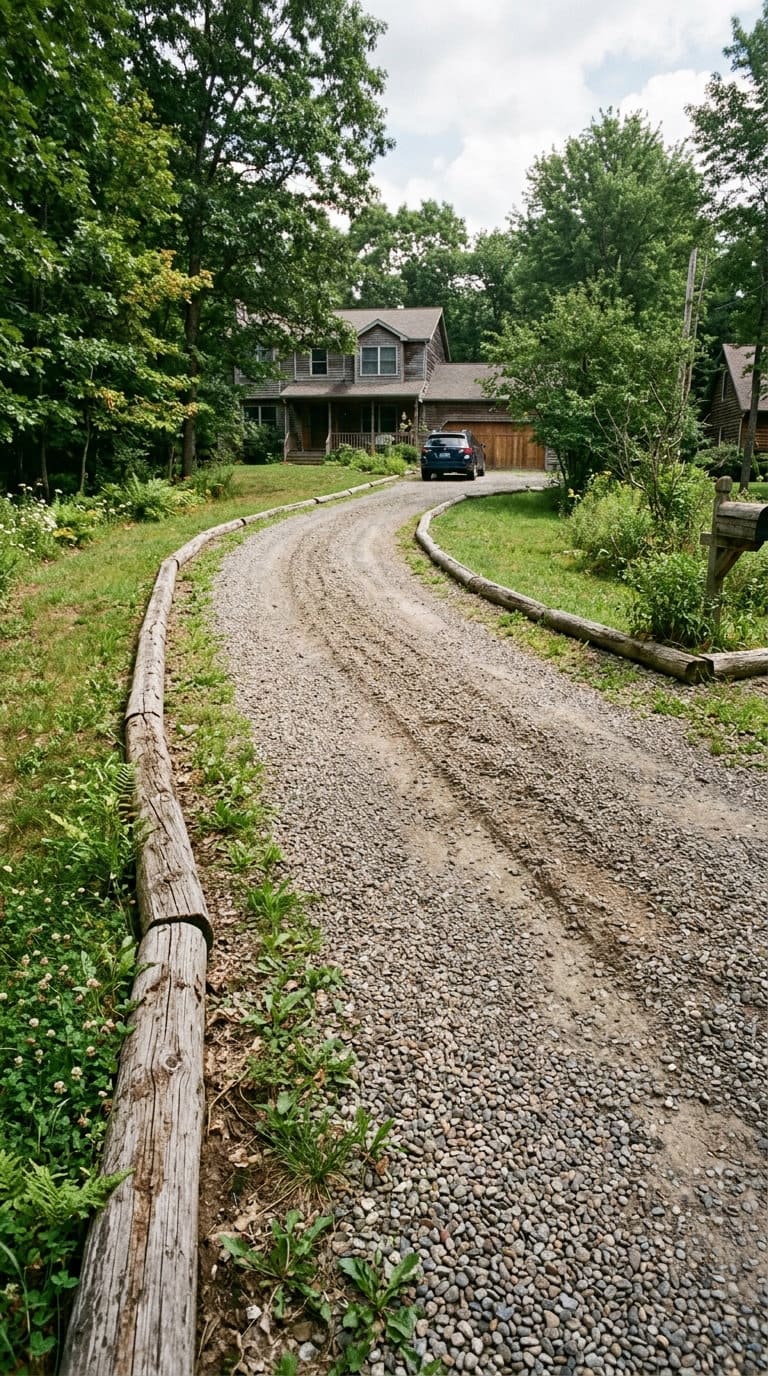
Skip concrete or asphalt entirely: a gravel driveway costs $1 to $5 per square foot installed, with most full residential projects averaging $500 to $3,500 depending on length and gravel depth.
Most yard problems trace back to one specific, fixable cause. Find yours in 4 quick questions.
Take the Free QuizLine the edges with half-buried logs (locust and cedar resist rot longest in ground contact) to keep the gravel contained and define the driveway’s edge visually. See our types of gravel article for material options beyond basic crushed stone.
5. Rustic Wooden Barriers
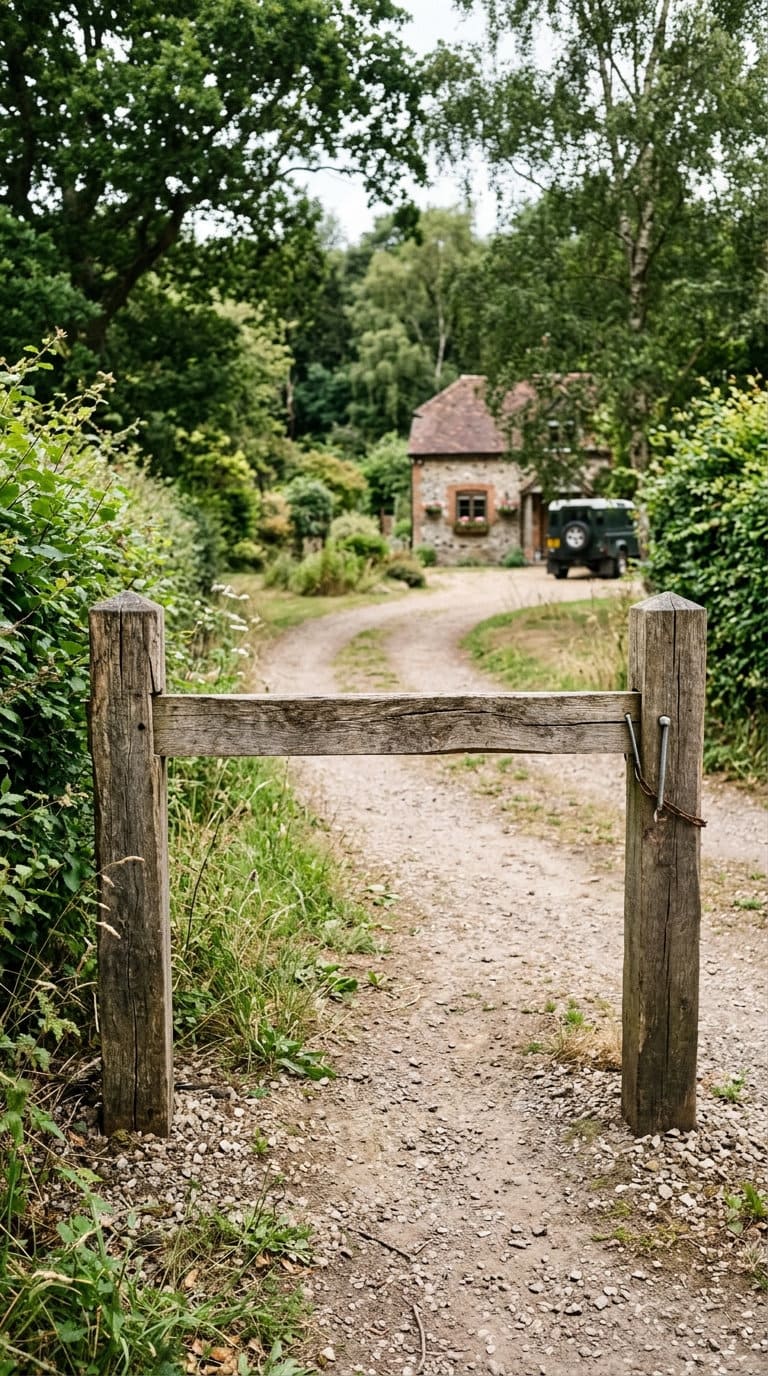
A simple wooden gate or barrier, even just two posts with a removable horizontal rail, adds a rustic visual cue without the cost of a full iron gate.
This works well as a lower-commitment first step if you’re not ready to invest in the stone pillar and iron gate combination, and it’s easy to upgrade later without redoing the whole entrance. See our driveway gate ideas article for more gate styles and build options.
6. Iron-Forged Gates
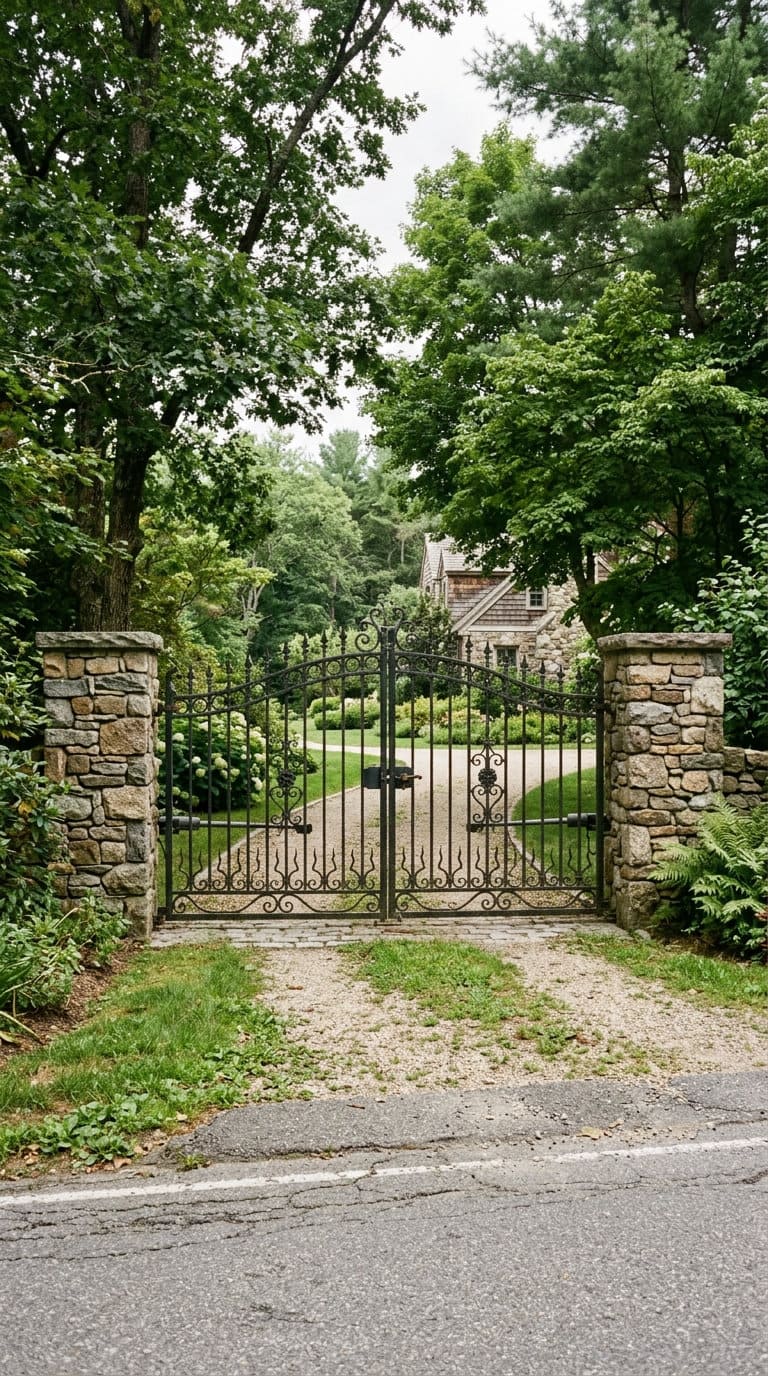
A custom wrought-iron gate blends rustic and elegant, especially paired with the stone pillars in idea #2, but it’s also the heaviest, most solid structure on this list, meaning it needs the most attention to the sightline setback guidance above.
Automated gates specifically often require their own permit in many jurisdictions, separate from the general construction permit, confirm this before ordering one.
7. Cobblestone Lined Pathway
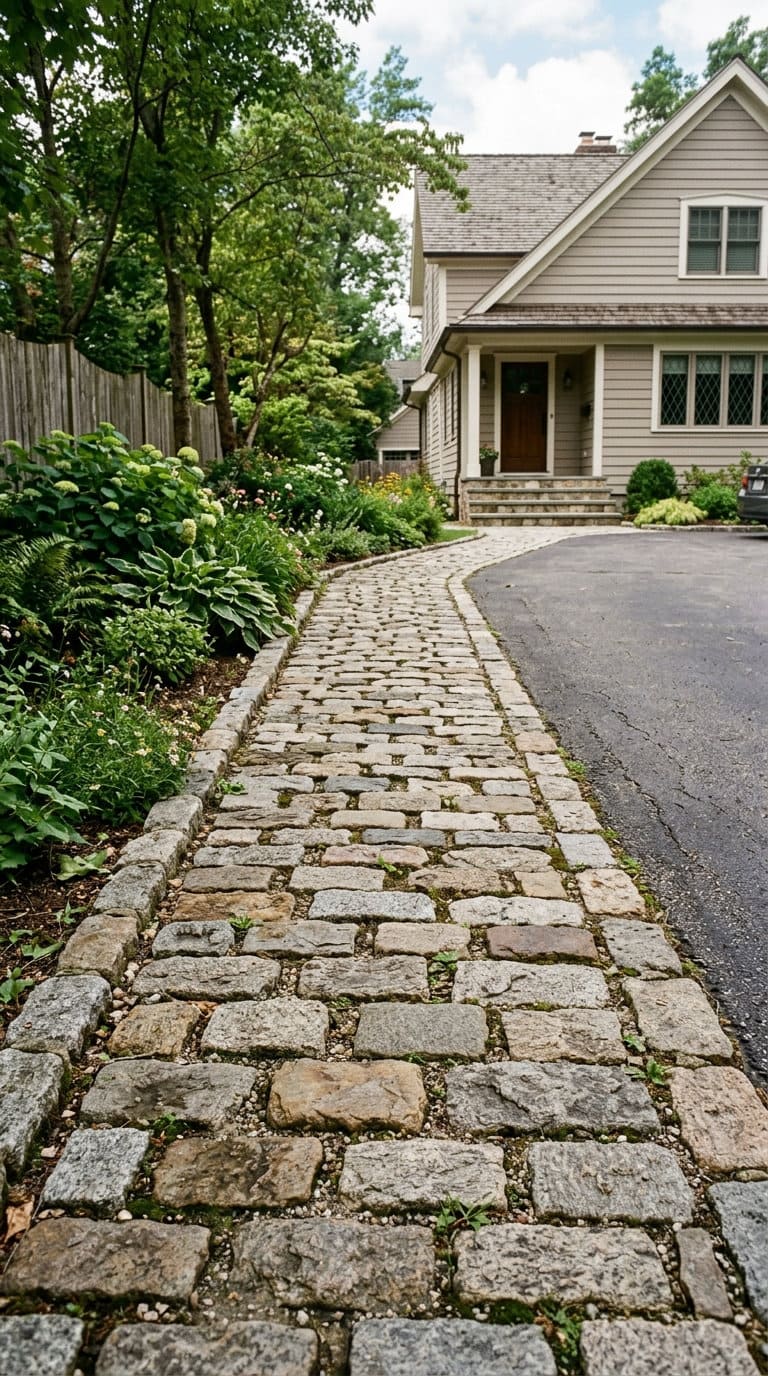
Real cobblestone (as opposed to a stamped-concrete imitation) lining a walkway beside the driveway adds genuine old-world texture, though it’s a labor-intensive install since each stone gets hand-set rather than poured.
A stamped and colored concrete alternative gets a similar look for meaningfully less cost if the walkway is long.
8. Rope and Post Fence
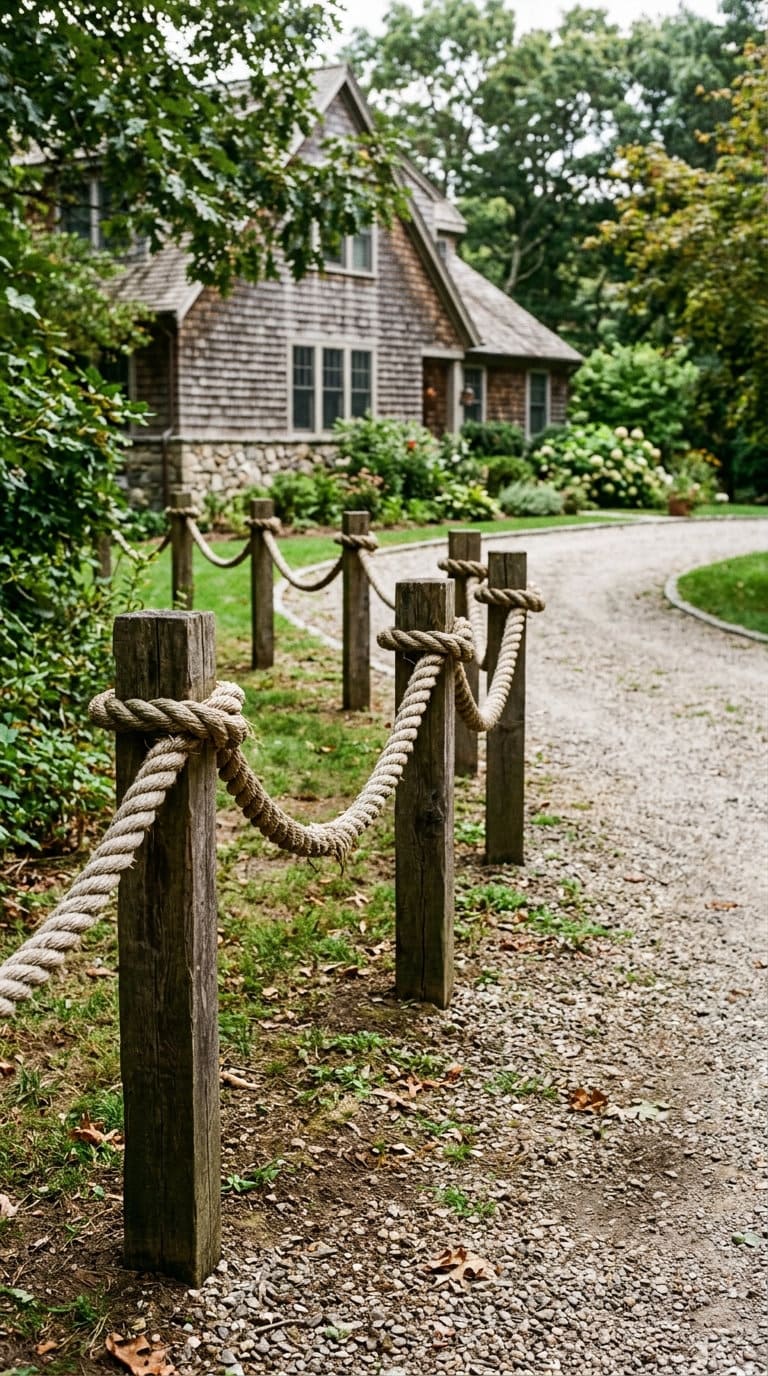
Thick nautical-style rope strung between simple wood posts marks a boundary without blocking any sightlines at all, since rope offers no real visual obstruction, making it one of the safer options on this list from a visibility standpoint.
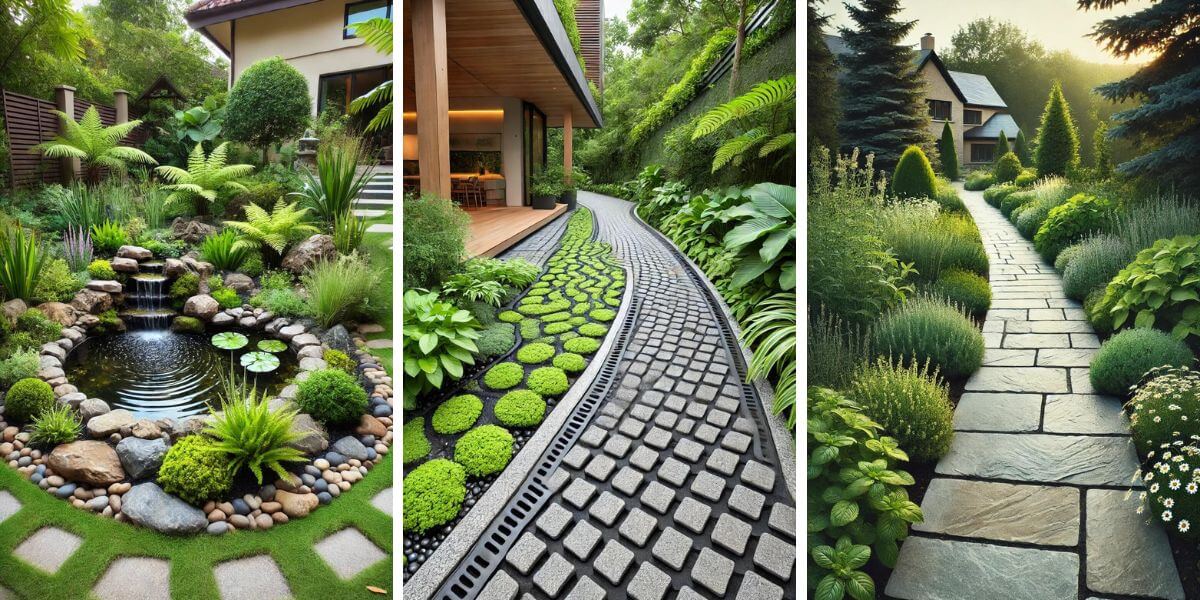
It’s decorative rather than a real barrier, so don’t rely on it to actually stop a vehicle or keep pets contained.
9. DIY Wooden Signs
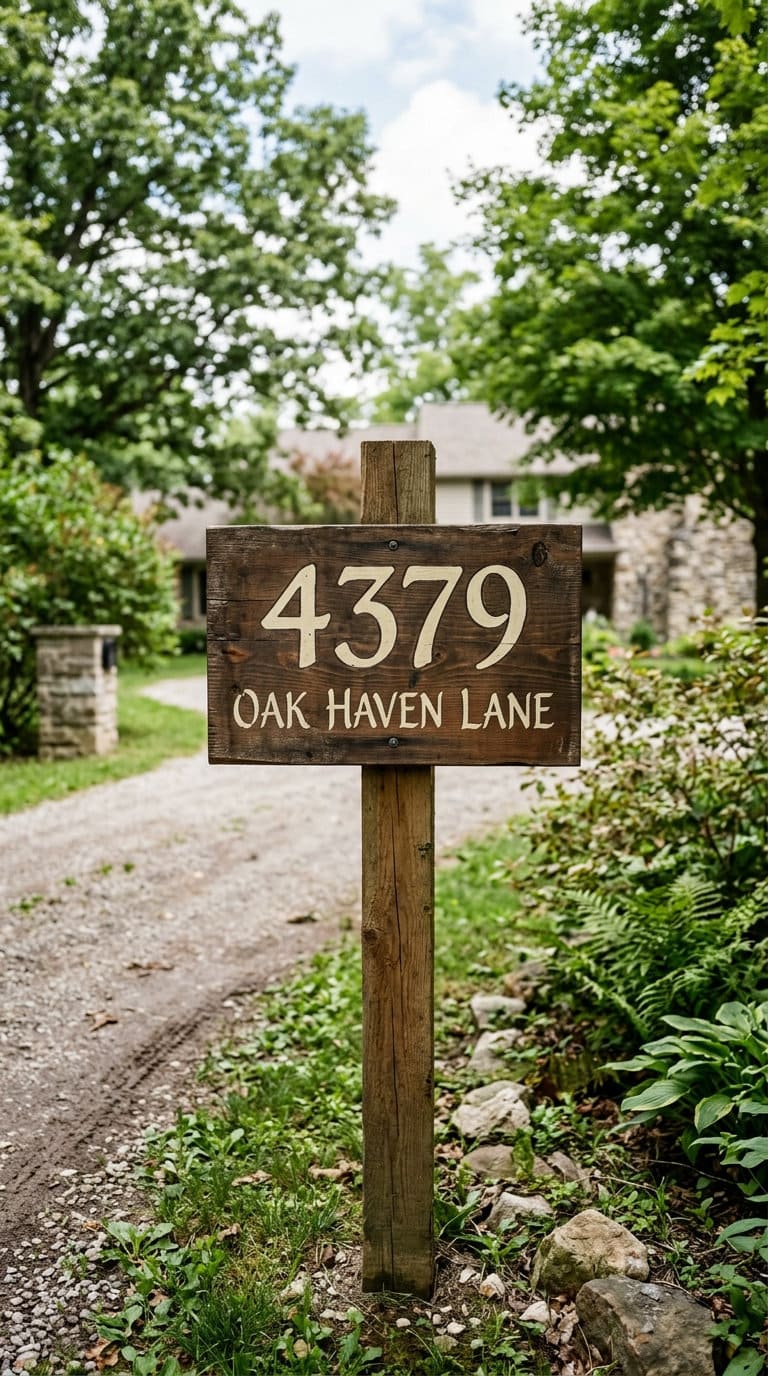
A hand-routed or hand-painted address or family-name sign mounted on a single post is one of the cheapest ideas on this list, most of the cost is just a piece of solid wood and some exterior-rated stain or paint.
Route or paint the numbers deep enough to stay legible after a few seasons of weathering, shallow painted lettering fades fastest.
The average homeowner spends $616/year on yard fixes that don't address the real problem. Find out what yours actually is — before you spend another dollar.
Take the Free Quiz10. Lantern-Lit Walkways
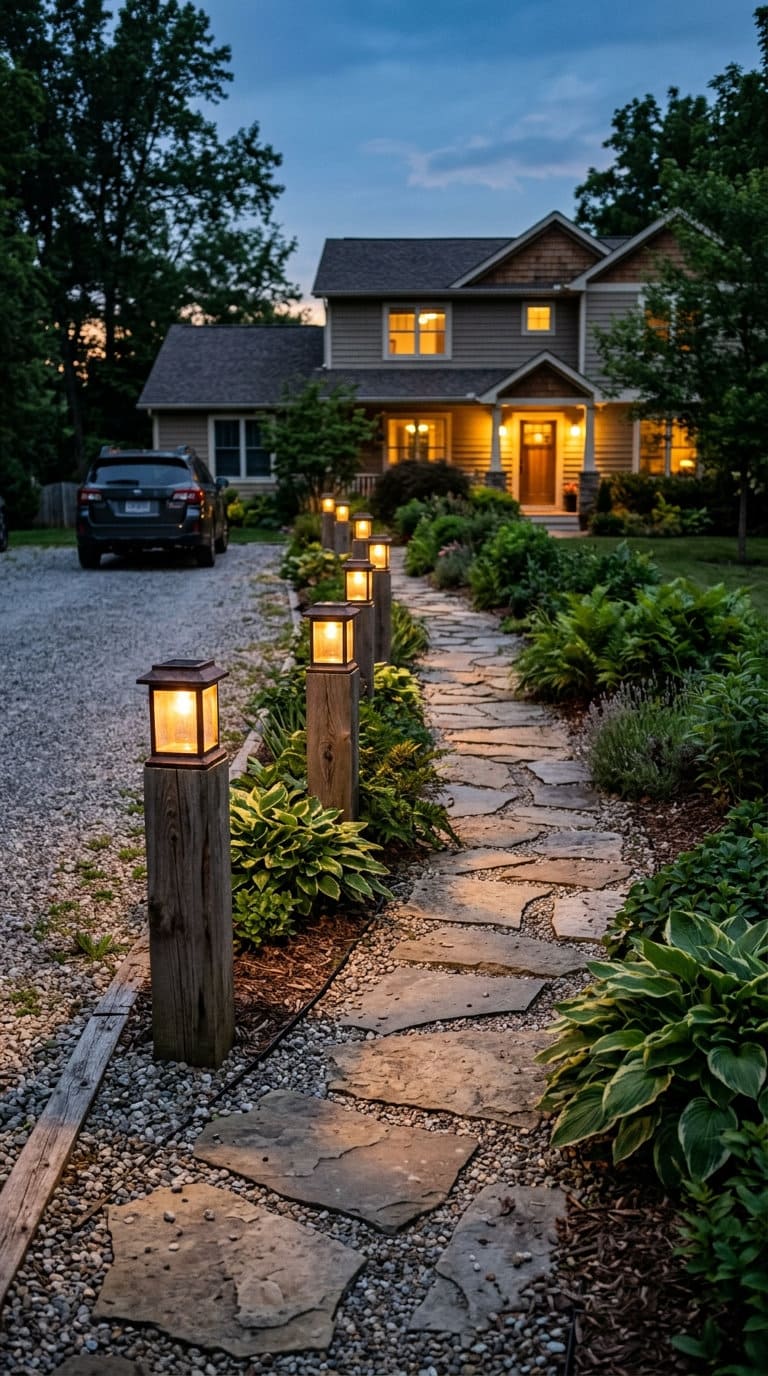
Solar or low-voltage LED lanterns mounted atop short wooden posts along the driveway’s edge add real nighttime function, not just decoration, since a lit path genuinely helps anyone walking in after dark.
Solar avoids running wiring entirely, low-voltage wired systems cost more upfront but give more consistent brightness through winter months with less sun.
11. Recycled Barrel Planters
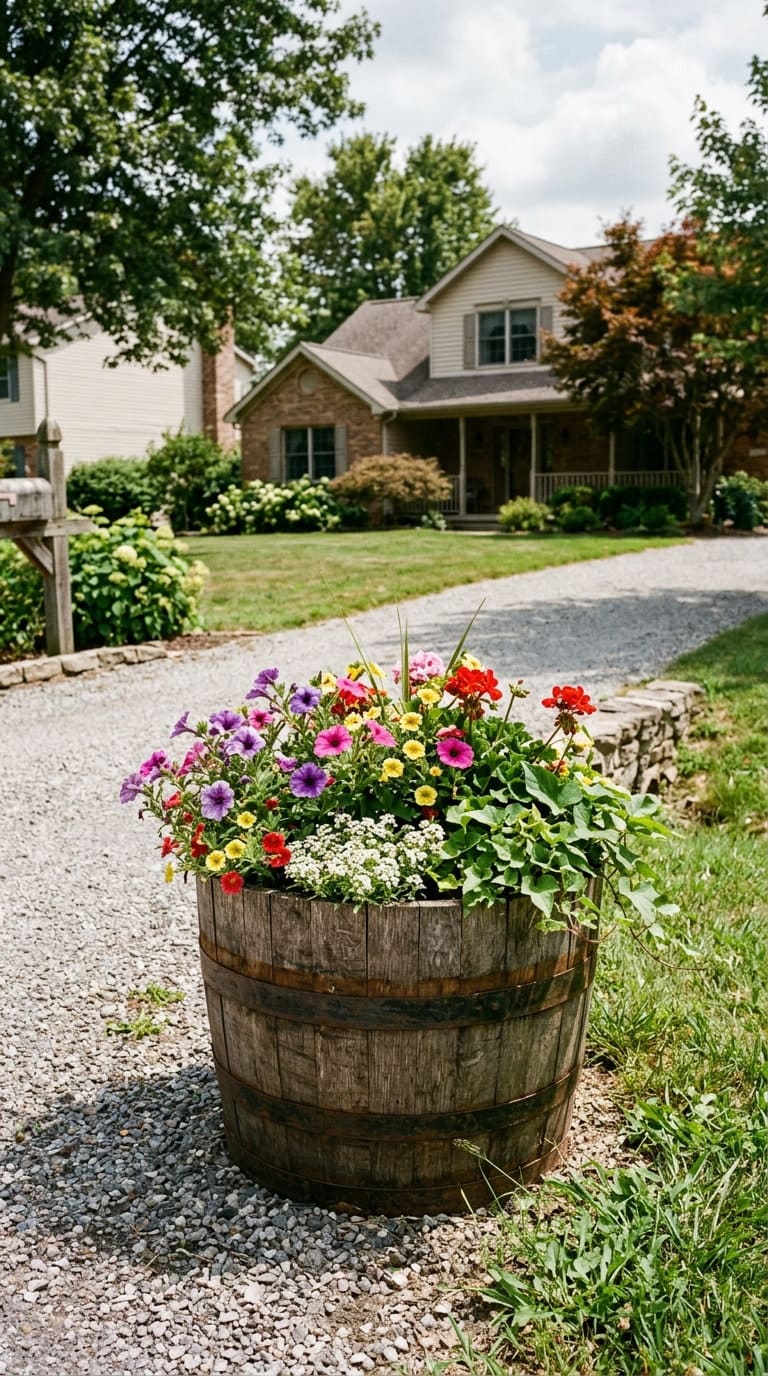
An old wooden or metal barrel, cut in half and drilled for drainage, makes a genuinely sturdy planter that won’t blow over or crack the way a lightweight plastic planter can.
Wood barrels need a liner or sealant to slow rot from constant soil moisture, and metal barrels need drainage holes drilled carefully to avoid rust-prone sharp edges.
12. Rough Stone Walkway
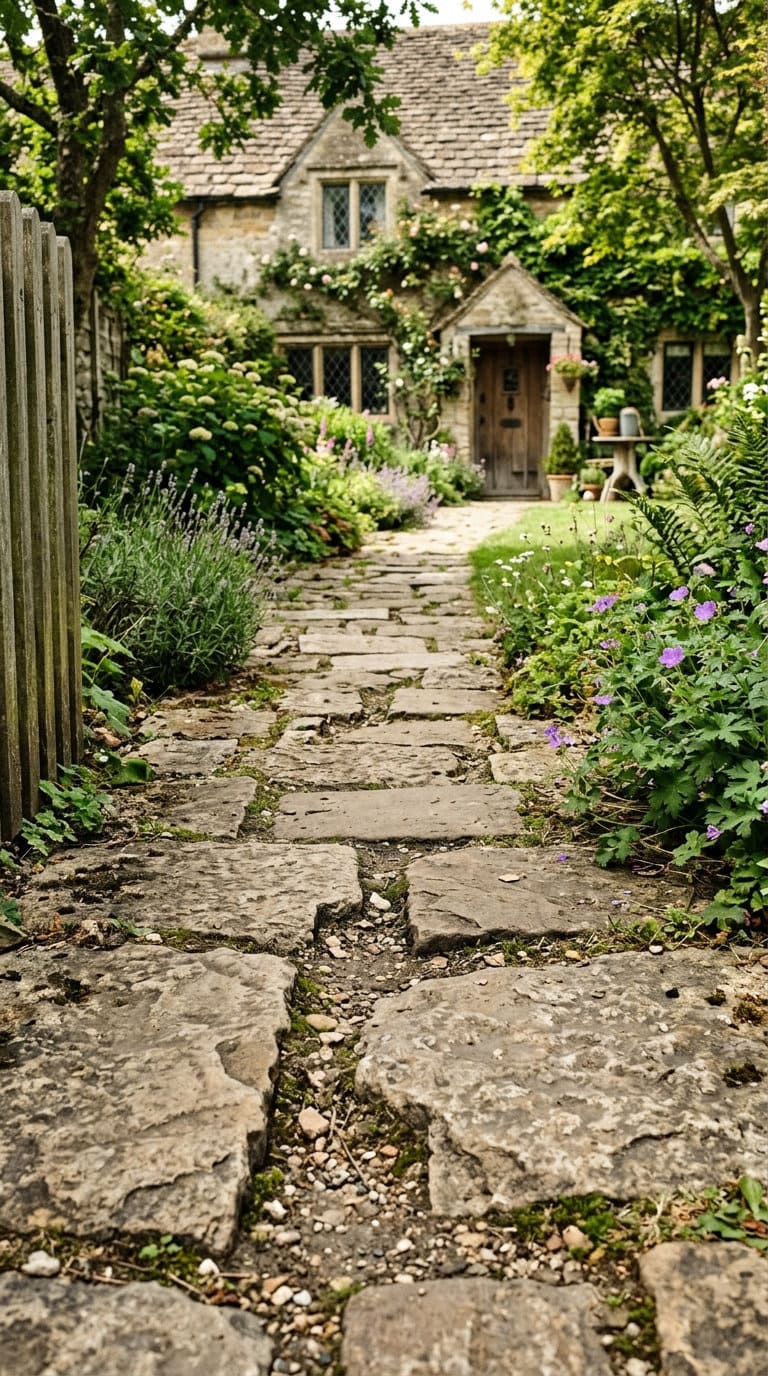
Naturally uneven flagstone or fieldstone, set with wider gaps than a formal patio, complements a rustic entrance far better than a perfectly leveled paver path would. Set each stone on a compacted gravel base rather than directly on soil, direct-on-soil stones shift and become a trip hazard within a season or two.
13. Vintage Bicycle Decor
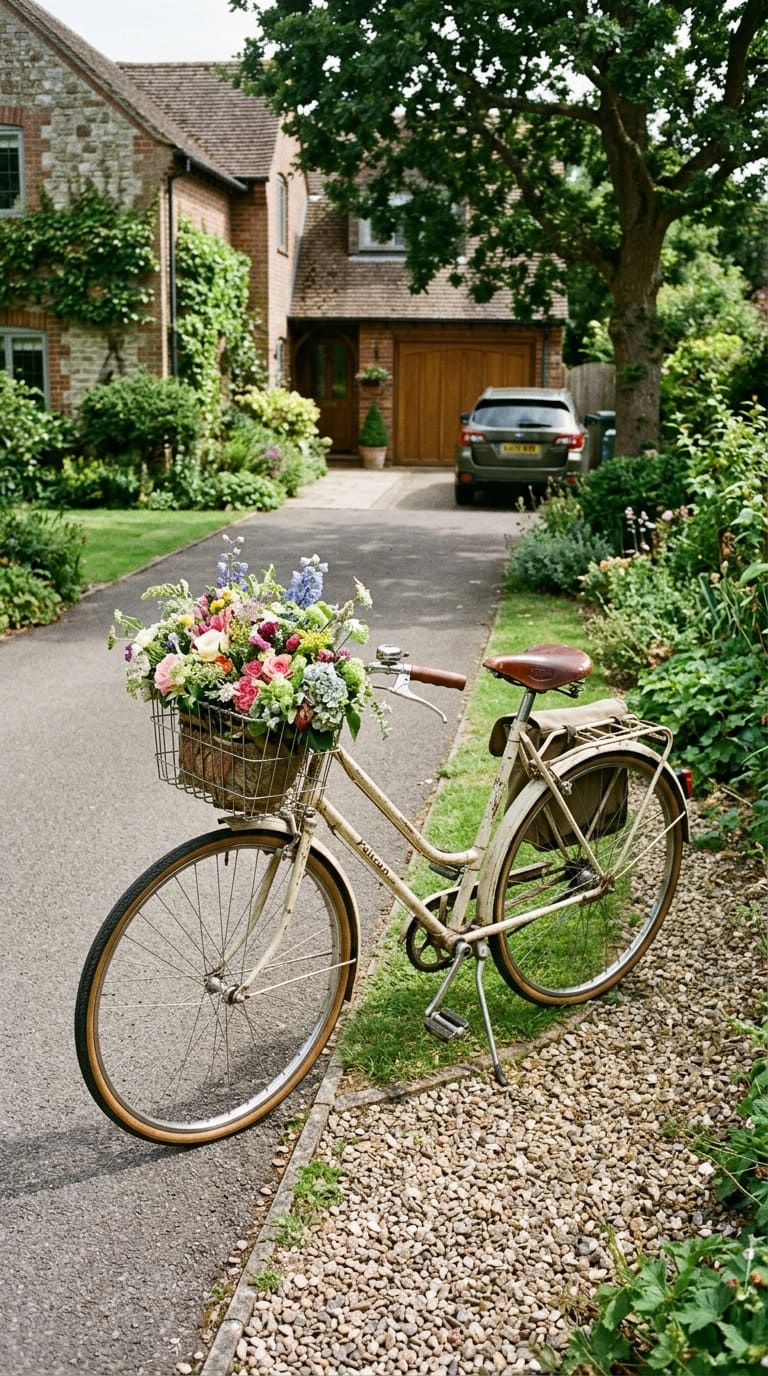
An old bicycle, planted with trailing flowers in the basket and possibly the frame itself, works as a charming, low-cost focal point near the entrance (not blocking it).
Rust-proof the frame with a clear sealant if you want it to last multiple seasons outdoors, otherwise expect visible rust within a year or two, which some homeowners actually prefer for the look.
14. Wooden Wheelbarrow Planter
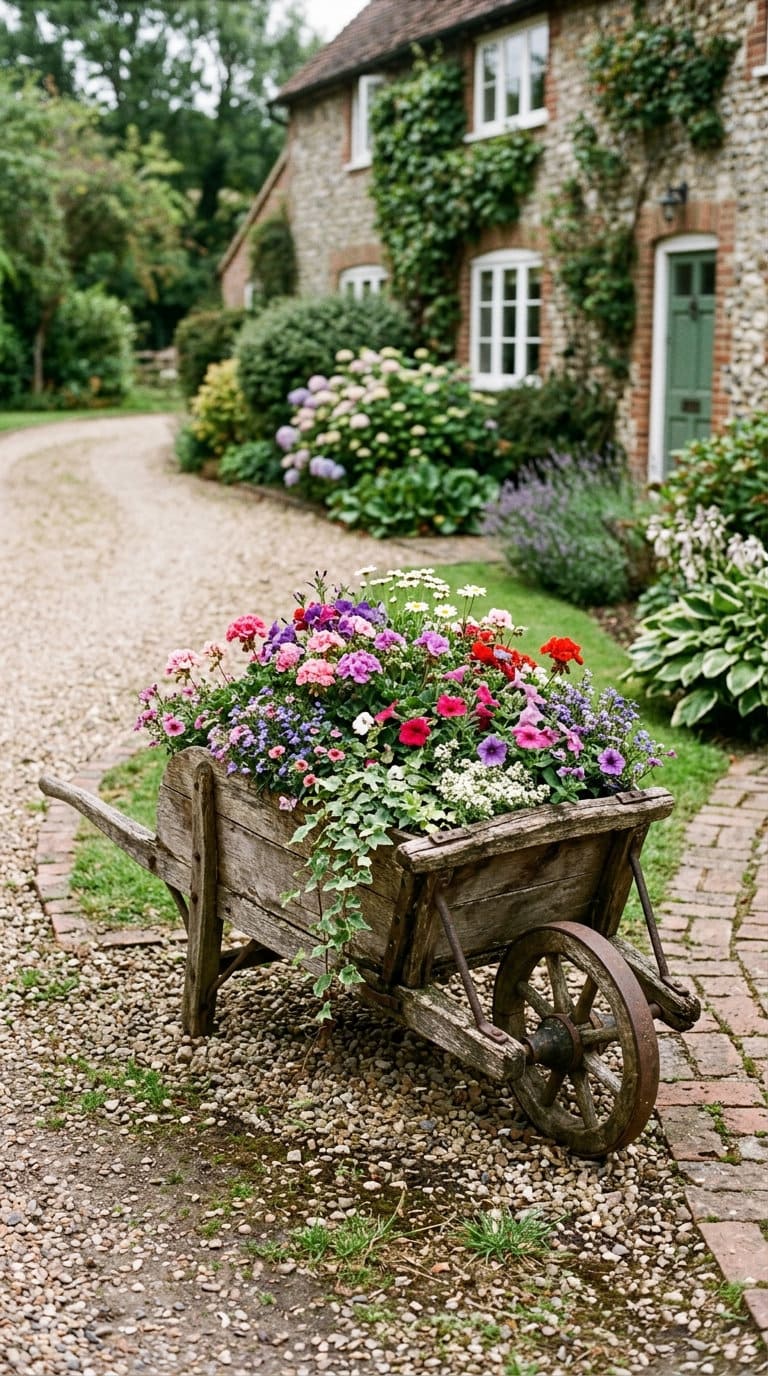
Similar to the barrel planter idea, an old wooden wheelbarrow, drilled for drainage, makes a mobile planter you can reposition seasonally, which is the real advantage over a fixed barrel planter.
Metal wheelbarrows work too but rust faster than wood rots, so wood is the more common choice specifically for this application.
15. Hanging Wooden Planters
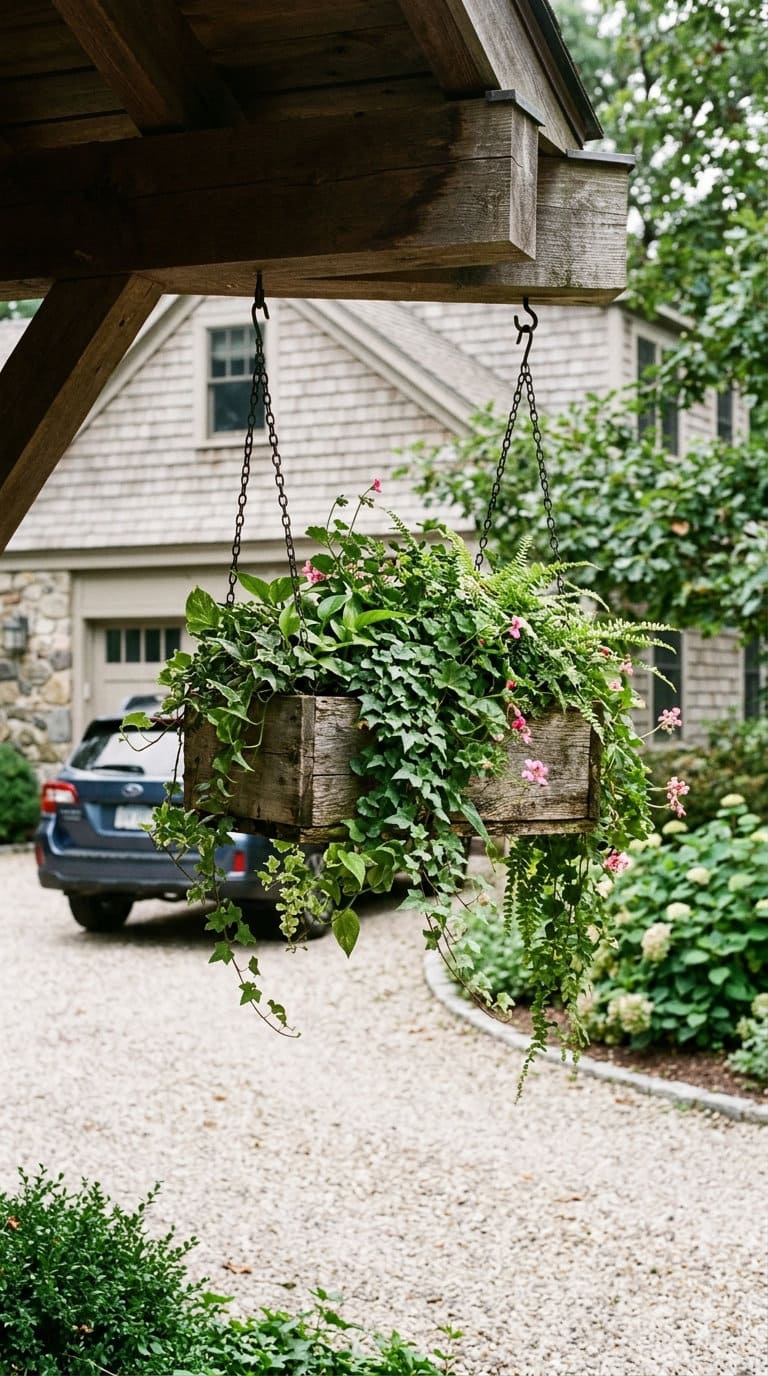
Wooden planter boxes hung from a tree branch, a fence post, or a horizontal beam (like the archway from idea #1) add height and layering to the entrance without taking up any ground space.
Use galvanized or stainless hardware for the hanging chain or rope, standard steel hardware rusts and can stain the wood underneath within a season of exposure.
16. Birdhouse Collection
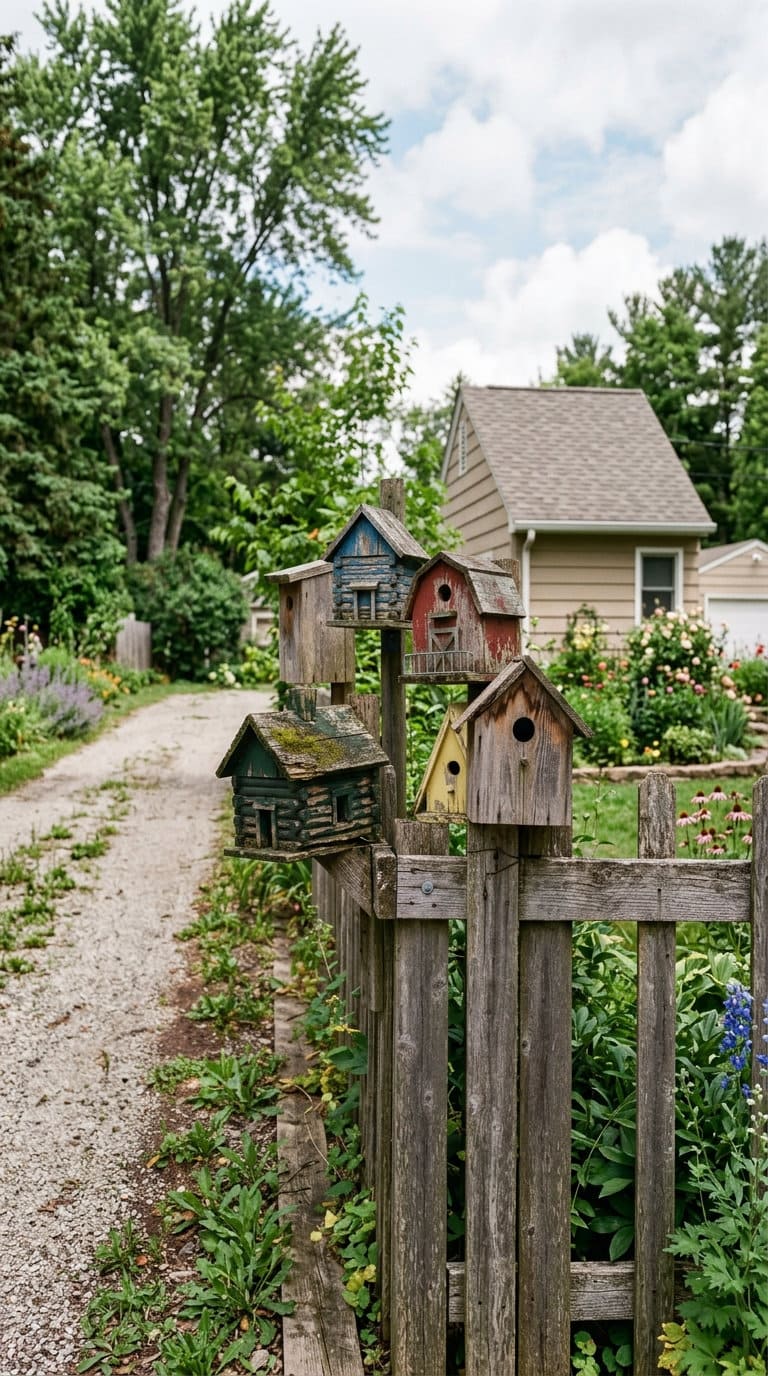
A cluster of mismatched, weathered birdhouses mounted on posts or a fence line adds whimsy and genuinely attracts birds if at least a few are properly sized and ventilated for actual nesting rather than purely decorative.
Space real functional birdhouses at least several feet apart if you want more than one species to actually use them, birds are territorial about nest spacing.
17. Mason Jar Lights
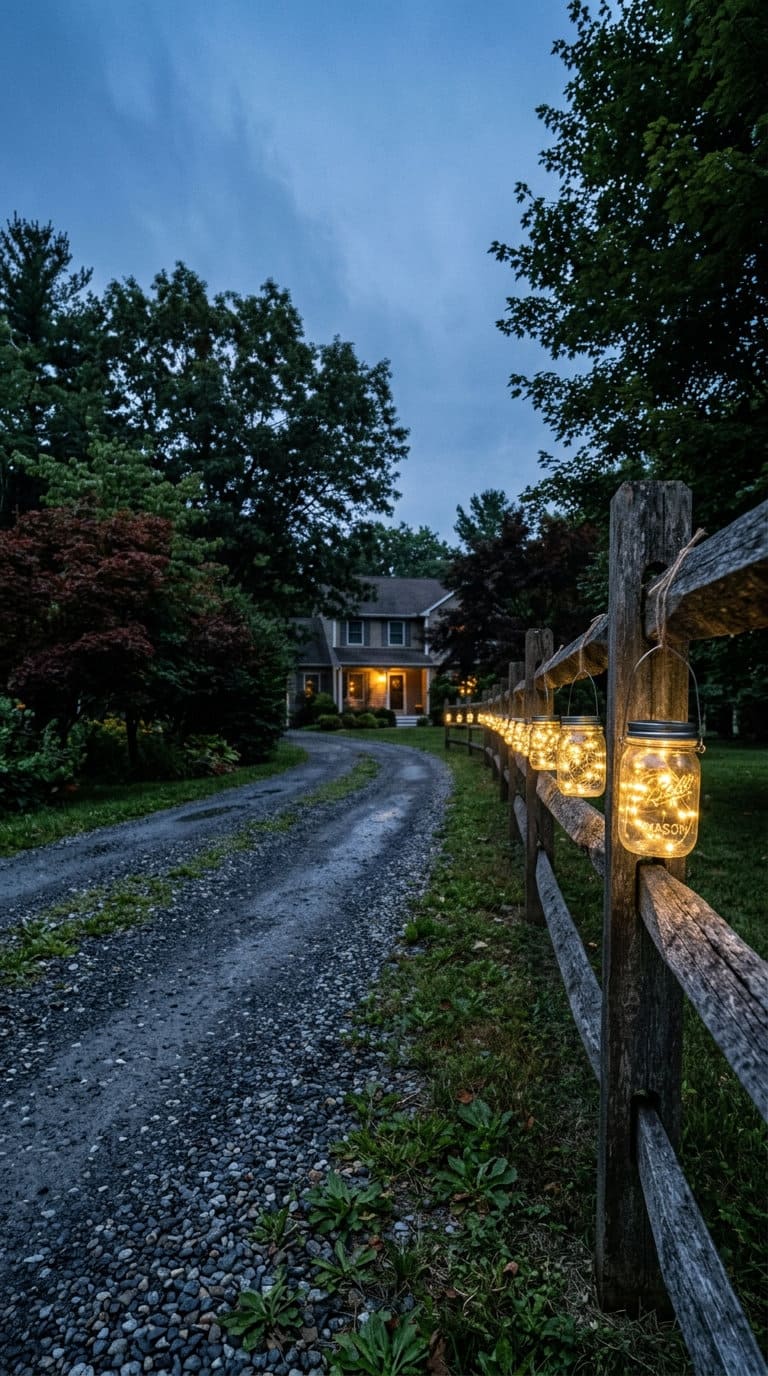
Mason jars with a solar light insert or a low-voltage bulb, hung from posts or strung along a fence line, give soft, warm lighting that reads as more rustic than a standard string light.
Choose jars with wide mouths for easier bulb/insert access when it eventually needs replacing, narrow-mouth jars make maintenance genuinely annoying.
18. Rustic Rock Sculptures
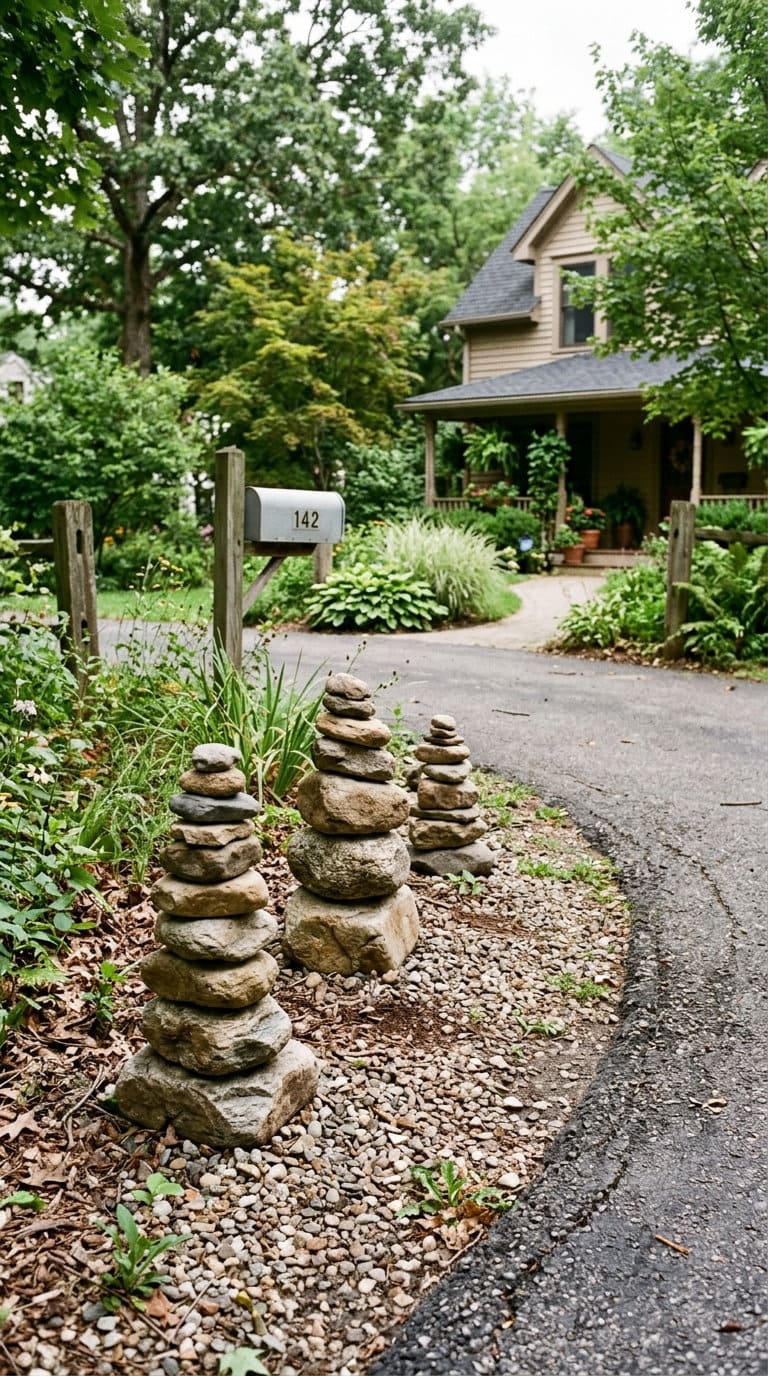
Small stacked-stone cairns using stones gathered on-site (or purchased if your property doesn’t have naturally occurring rock) add a natural, low-cost accent.
Keep stacks under about knee height and on stable, flat ground, taller stacks near a driveway are both a tipping hazard and more likely to get knocked over by a car door or a kid running past.
19. Burlap and Twine Details
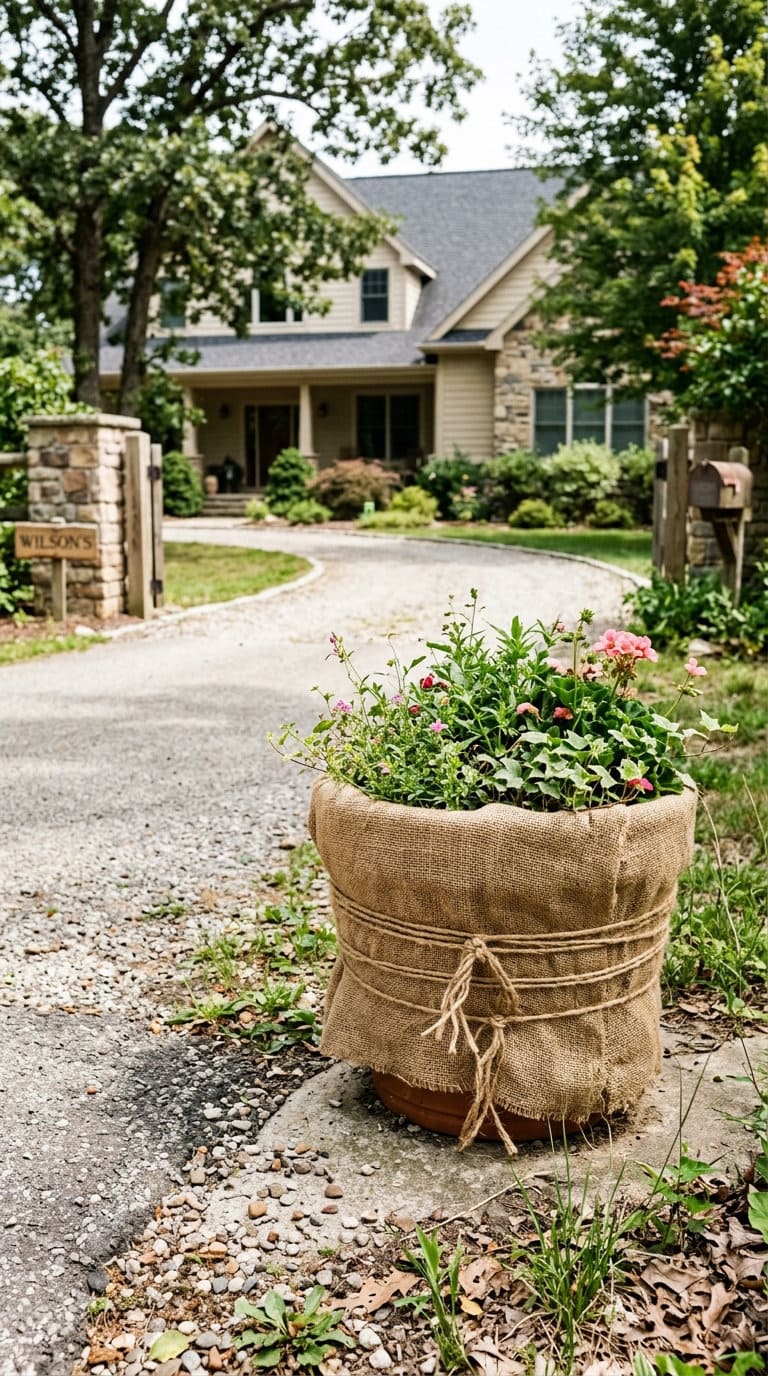
Burlap wrapped around planter pots or twine-tied bundles attached to a mailbox post or sign are simple, inexpensive rustic accents, genuinely one of the lowest-cost ideas on this entire list.
Both materials weather quickly outdoors (expect a season, maybe two, before replacement), so treat this as a seasonal refresh rather than a permanent installation.
20. Antique Farm Equipment
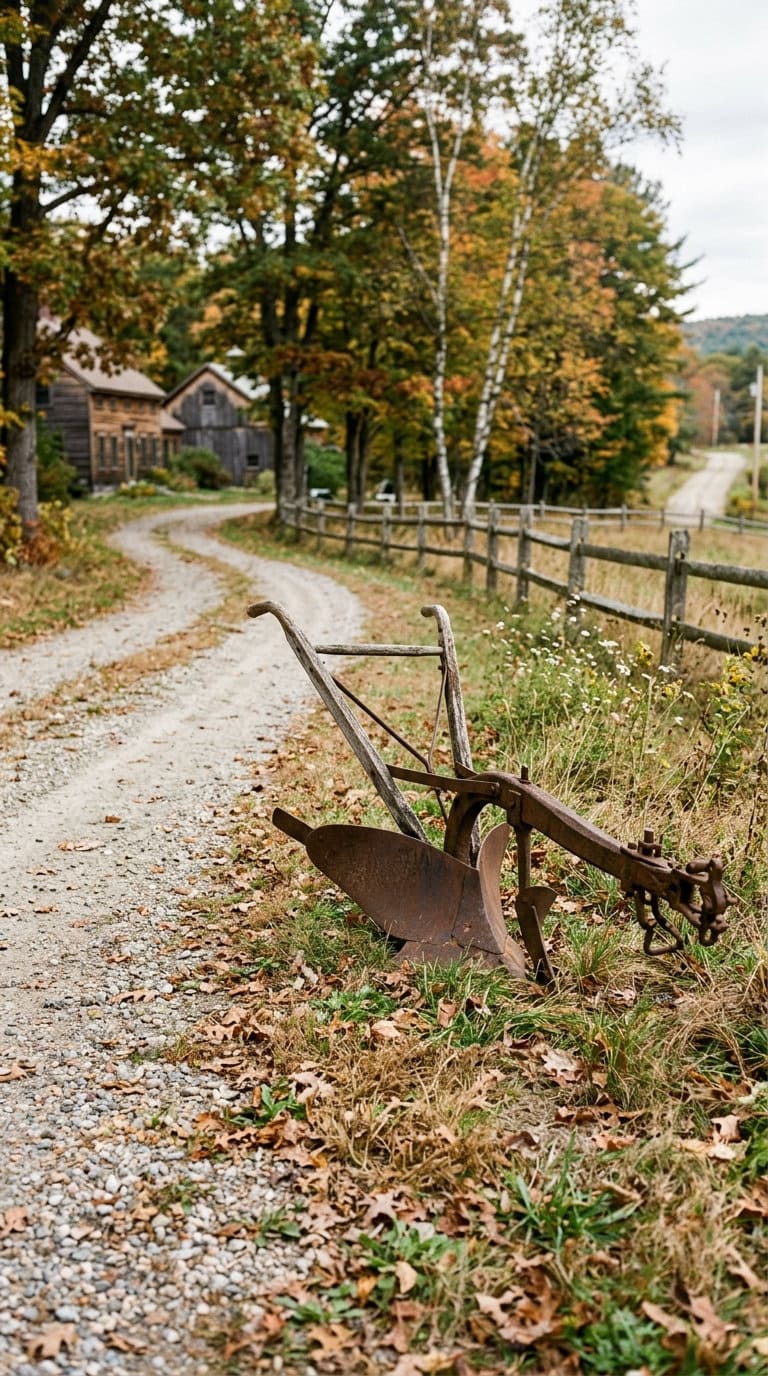
An old plow, a cream separator, or a piece of horse-drawn equipment displayed near the entrance makes a genuine conversation-starting focal point, provided it’s positioned well clear of the driveway itself and the sightline zone discussed above.
Check that any moving parts (wheels, blades) are secured so they can’t shift or become a hazard to kids climbing on what looks like a fun antique to play on.
FAQs about rustic driveway entrances
What are the best materials for a rustic driveway entrance?
Natural stone, rough-sawn or weathered wood, and hand-forged or wrought iron are the three material categories that read as genuinely rustic rather than a decorative imitation. Within those, cedar and locust are the most rot-resistant wood choices for anything in ground contact (posts, archway uprights), and fieldstone reads more authentic than a uniform, quarried stone veneer.
How should I maintain a gravel driveway?
Rake it regularly to redistribute stone that migrates toward the edges and fill in low spots before they become ruts. Add fresh gravel as needed, typically every 1-2 years for a driveway with regular vehicle traffic, and pull weeds along the edges before they establish, since an established weed root system is much harder to remove than a young sprout.
Can I afford rustic driveway upgrades?
Depends entirely on which ideas you pick. A gravel driveway runs $1 to $5 per square foot ($500-$3,500 for most full projects), and stone pillars run $1,300 to $3,000 each ($5,000 for solid stone rather than veneer). On the other end, ideas like a DIY wooden sign, burlap and twine details, or a repurposed barrel planter cost little beyond basic materials, especially if you’re starting from something you already have or can find secondhand. Most homeowners mix a few low-cost accents with one or two bigger structural pieces rather than doing everything on this list at once.
Do gate pillars or archways affect street visibility?
They can, and it’s worth checking before you build rather than after. Many municipalities require gate posts or pillars to sit back 20 to 30 feet from the roadway so a vehicle can fully clear the street before stopping, and general sightline guidance from AASHTO’s Policy on Geometric Design of Highways and Streets puts the minimum clear-visibility distance at roughly 14.5 feet. Call your local planning department to confirm your specific setback before setting any posts in concrete.
Conclusion
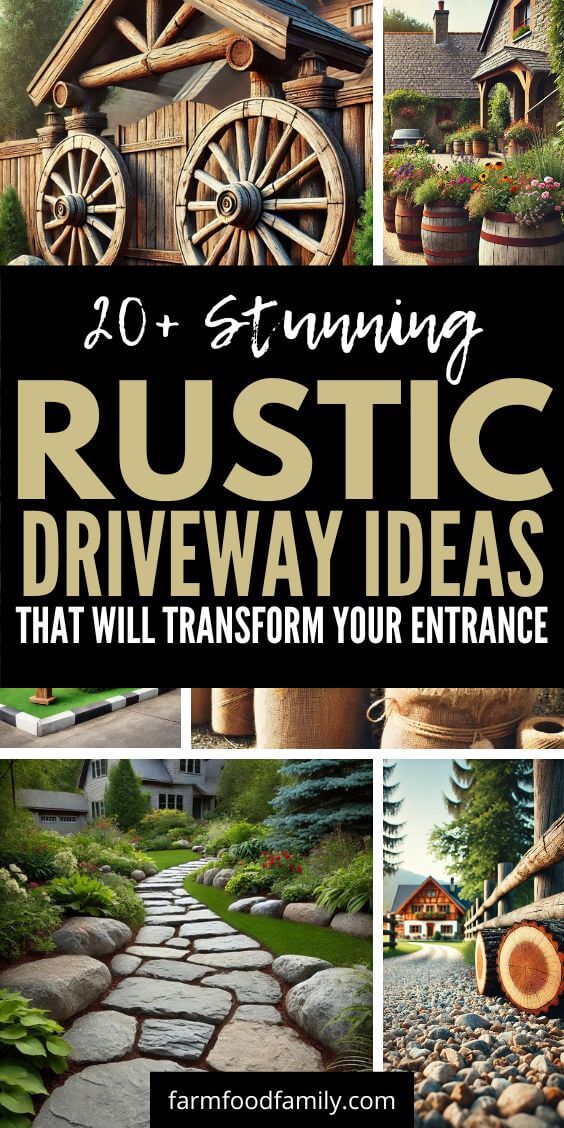


Embracing rustic style for your driveway entrance means welcoming the natural and nostalgic. Whether you go for small touches or major features, there’s something for every homeowner eager to infuse rustic charm into their entryway. Why wait? Start your transformation today!
Never miss an update — choose FarmFoodFamily as your preferred source on Google.
How it works: Tap the button below to open Google's settings page, then check the box next to FarmFoodFamily.
Tap the checkbox to turn it blue — that's how you know it's set.