10 Smart Driveway Paint Ideas That Look Great and Hold Up Under Tires
A painted driveway can lift your curb appeal for very little money, but only if the surface is concrete, the prep is thorough and the color suits your sun and your tires.

Never miss an update — choose FarmFoodFamily as your preferred source on Google.
How it works: Tap the button below to open Google's settings page, then check the box next to FarmFoodFamily.
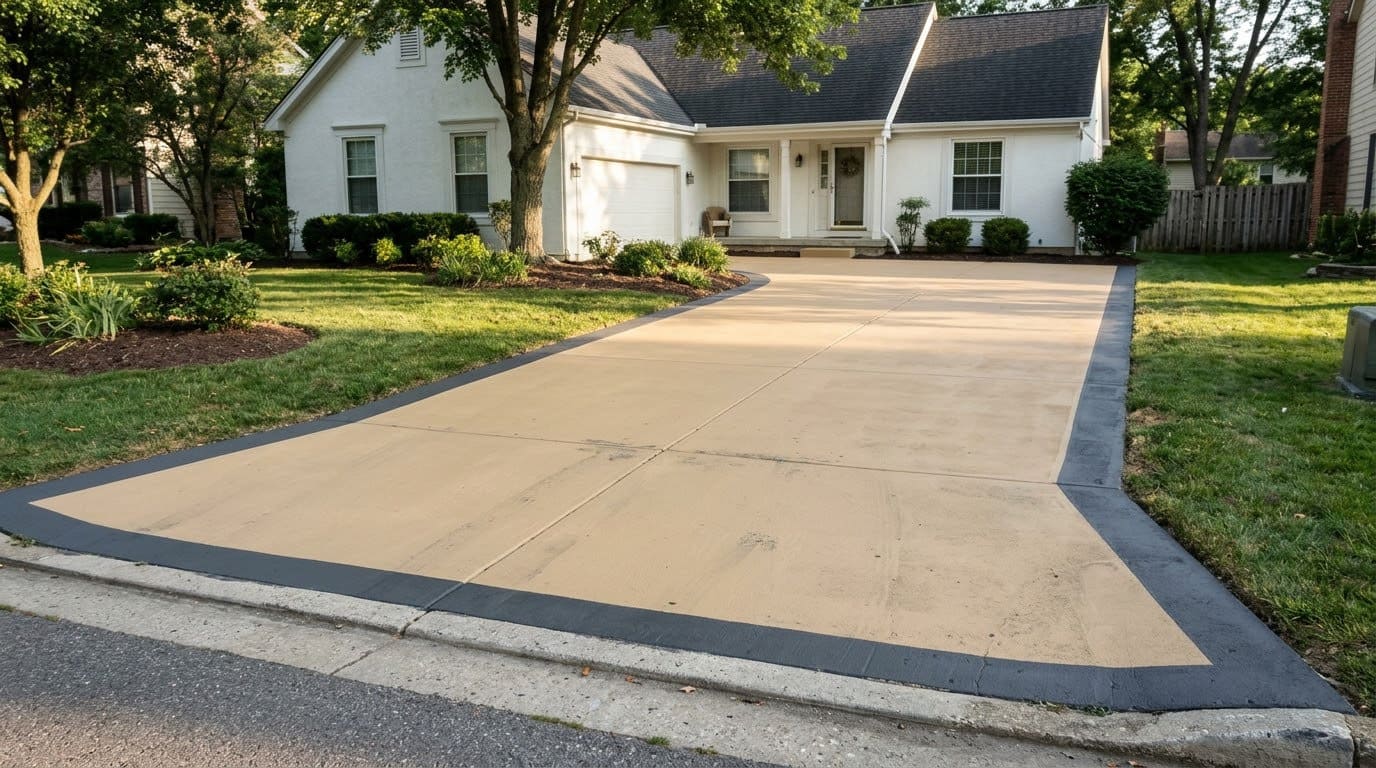
Tap the checkbox to turn it blue — that's how you know it's set.
A painted driveway can lift your curb appeal for very little money, but only if the surface is concrete, the prep is thorough and the color suits your sun and your tires.
Products We Recommend
This post contains affiliate links. We may earn a commission on qualifying purchases at no extra cost to you.

Rust-Oleum Anti-Skid Additive, Aluminum Oxide Formula
A grit additive mixed into the final coat for a slip-resistant finish. Check that your paint maker allows additives, and follow the label for the mix ratio.
Shop Now
SIKA Sikaflex Self-Leveling Concrete Joint Sealant, Gray, 10.1 oz
A self-leveling polyurethane sealant for control and expansion joints. It is meant for joints, so use a crack filler for wider damage and let it cure before painting.
Shop Now
FrogTape Multi-Surface Painter's Tape, 0.94 in x 60 Yds
Green painter's tape for crisp border and grid lines. Test it on a small spot first, since rough concrete can let paint seep under it.
Shop NowA painted driveway can change the whole front of a house. It’s one of the cheapest big upgrades you can make. It’s also one of the easiest to get wrong.
The problem isn’t the color. The problem is the surface and the prep. Paint that sits on dirty, damp or oily ground peels in a season, and tires are hard on any coating.
This guide covers what to paint, how to prep, and 10 ideas that suit everyday driveways. If you’re still choosing a surface, see our concrete driveway ideas.
Answer 4 quick questions and get matched to the exact fix for your yard — drainage, budget, layout, or something else entirely.
Take the Free QuizQuick Answer
Paint concrete, not asphalt. Concrete takes a coating made for concrete. Asphalt needs a sealer made for asphalt, because regular paint peels off it.
Clean the driveway, fill the cracks, etch it and test it for moisture before you coat. Then roll two thin coats in mild weather, between 50 and 80°F, with no rain for a day.
Pick a mid-tone color, a pattern with a stencil or tape, or a simple border. Add an anti-slip additive, and wait about a week before driving on it.
But don’t paint a new slab too soon. Let new concrete cure for about 30 days first.

Last, plan the week. You’ll need two mild, dry days to coat it and about a week without cars. Park on the street, tell the household, and you’ll protect all that work.
Most yard problems trace back to one specific, fixable cause. Find yours in 4 quick questions.
Take the Free QuizCan You Paint Any Driveway?
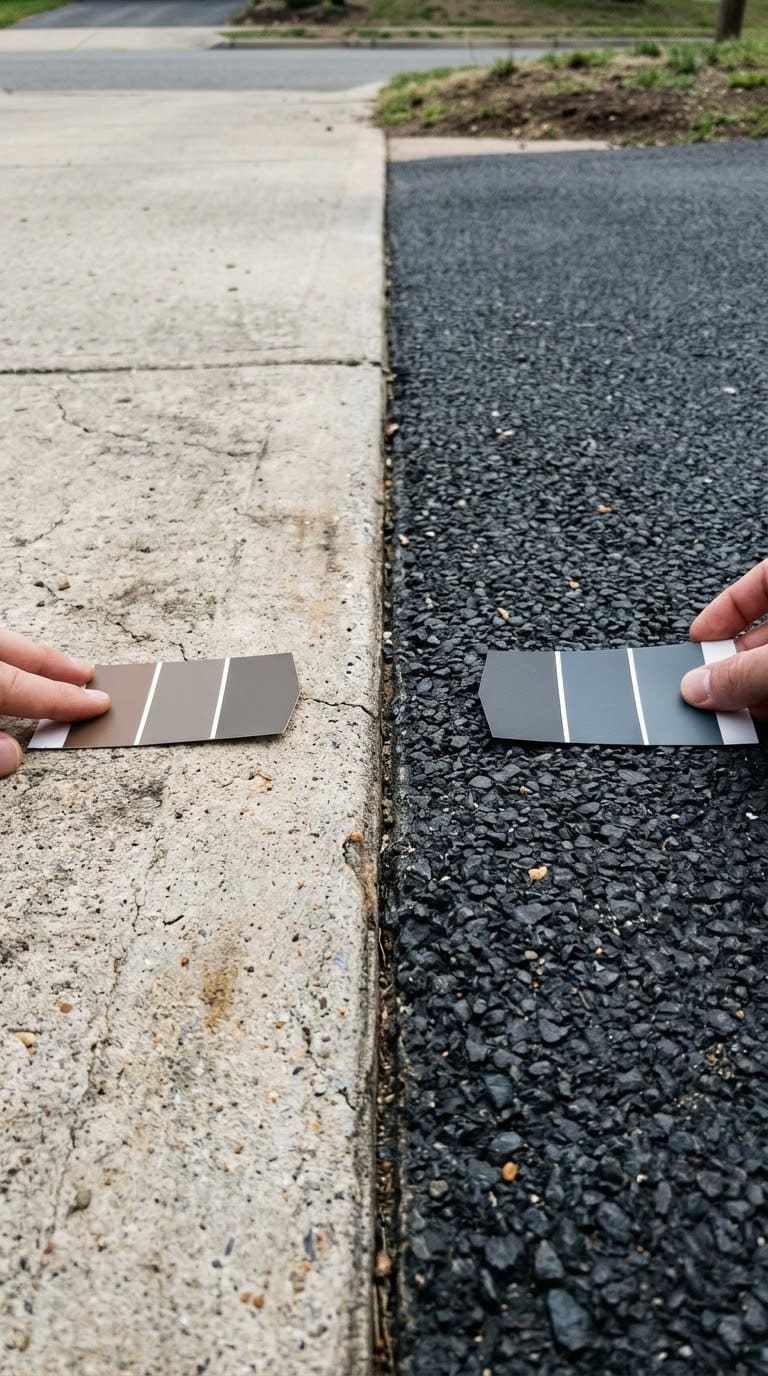
No. This is the question to answer before you buy anything. The surface decides everything.
| Surface | Can you paint it? | What to use instead |
|---|---|---|
| Concrete | Yes, with the right prep | Coating made for concrete |
| New concrete | Not yet | Wait about 30 days |
| Asphalt | No, regular paint fails | Clear or tinted asphalt sealer |
| Pavers | Possible but fussy | Cleaning and joint sand, or sealer |
| Gravel | No | Edging and fresh stone |
Hunker’s guide on asphalt by Ryan Lawrence is blunt. In How to Paint an Asphalt Driveway, he says asphalt is oil-based and resists paint, and that latex or oil-based paint will chip and peel. He recommends a clear or tinted asphalt sealer instead.
Our take: if you have asphalt and want color, use a tinted sealer and accept a subtle shift. Painting it is a short road to a flaky mess.
How Long Should New Concrete Cure Before Painting?
New concrete needs time to dry out. ConcreteNetwork’s Anne Balogh explains the timing in her driveway guide. You can usually drive on a slab about seven days after it is placed, but wait at least 28 days for RVs and heavy trucks.
She says 30 days is a good time to seal, because enough time has passed for extra mix water to evaporate. Concrete cures best above 50°F, and cold weather can slow or stop the process.
So treat 30 days as the earliest start for a paint project on a new slab. Wait longer if the weather has been cold or wet.
What Prep Does a Concrete Driveway Need?
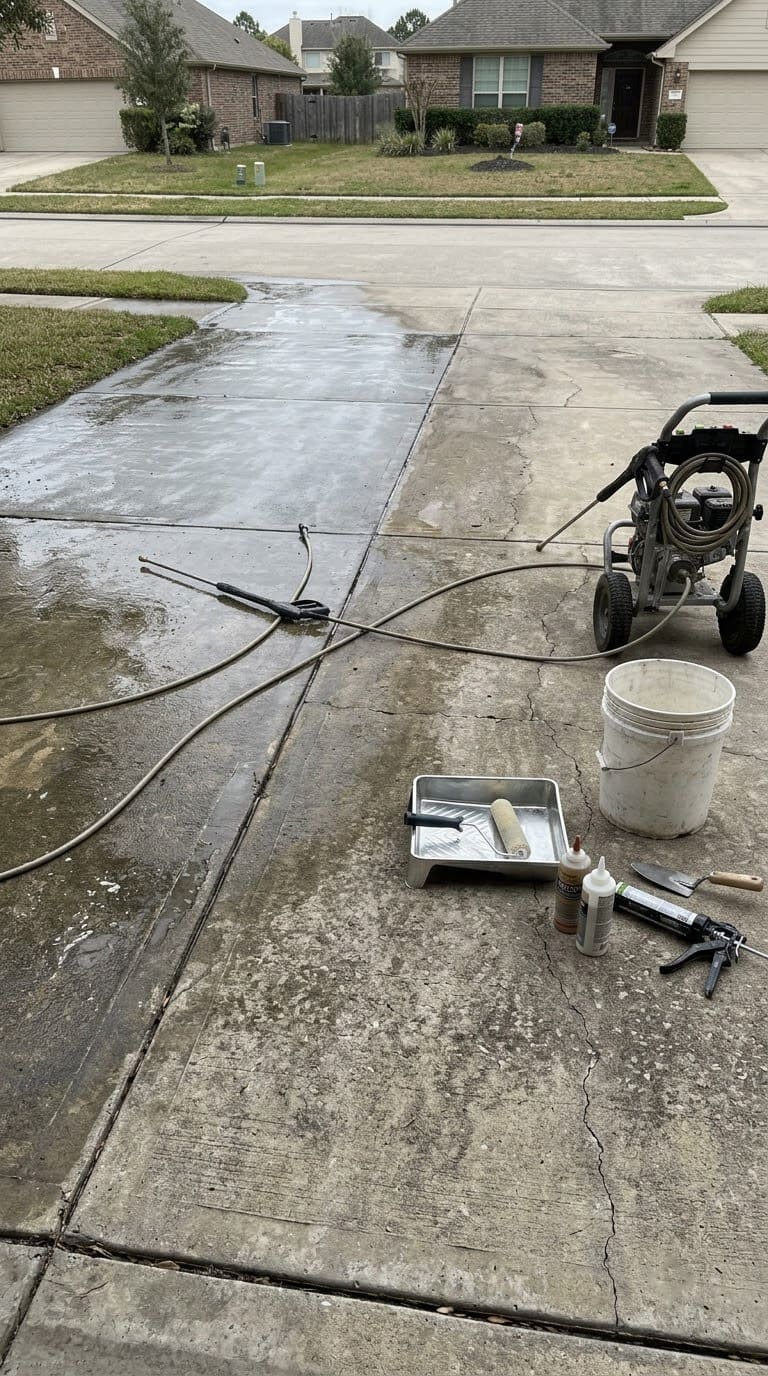
Prep is 80% of the job in our view. A painted driveway fails from the bottom up, so the work you can’t see matters most.
A grit additive mixed into the final coat for a slip-resistant finish. Check that your paint maker allows additives, and follow the label for the mix ratio.
Shop NowThis post contains affiliate links. We may earn a commission on qualifying purchases at no extra cost to you.
The coatings maker DRYLOK lists the main steps in its guide to painting a concrete driveway. It starts with a high-pressure wash to remove dirt, oil and stains, then filling cracks and potholes, then etching so the paint can grip.
Here is the order we’d follow.
The average homeowner spends $616/year on yard fixes that don't address the real problem. Find out what yours actually is — before you spend another dollar.
Take the Free Quiz- Step 1: Sweep and pressure wash the whole drive, using a degreaser on oil spots.
- Step 2: Fill cracks and potholes with a masonry crack filler and let it dry.
- Step 3: Etch the surface with a concrete etching product, following the label.
- Step 4: Rinse well and let the slab dry completely.
- Step 5: Test for moisture before you coat.
For the moisture test, tape a 12 by 12 inch piece of plastic or foil to the slab for 24 hours. If the underside is damp, wait and test again, as another DRYLOK guide on preparing concrete for paint explains. It also says to stay at or below 1,750 PSI if you use a pressure washer.
Our take: skipping the moisture test is the mistake we’d least want to make. A damp slab pushes paint off from underneath.
When Is the Best Time to Paint a Driveway?
Weather matters more than most people think. Apply between 50 and 80°F, with low to moderate humidity. Avoid direct sun, and make sure no rain is forecast for at least 24 hours.
An overcast, mild day in spring or fall is ideal. Hot sun can dry the paint too fast, and cold slows the cure.
Plan a clear window. You’ll want two dry days for coats and several days with no cars. Park on the street and tell the household.
Solid Color Ideas
A solid color is the simplest way to start. It also hides the most prep flaws.
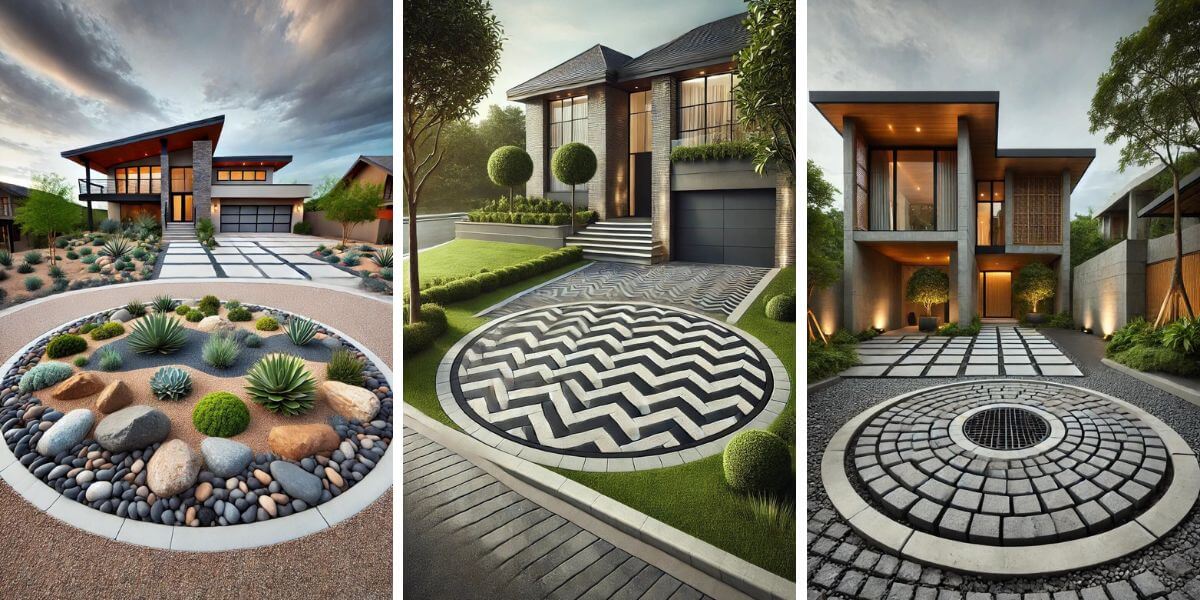
1. Charcoal Gray
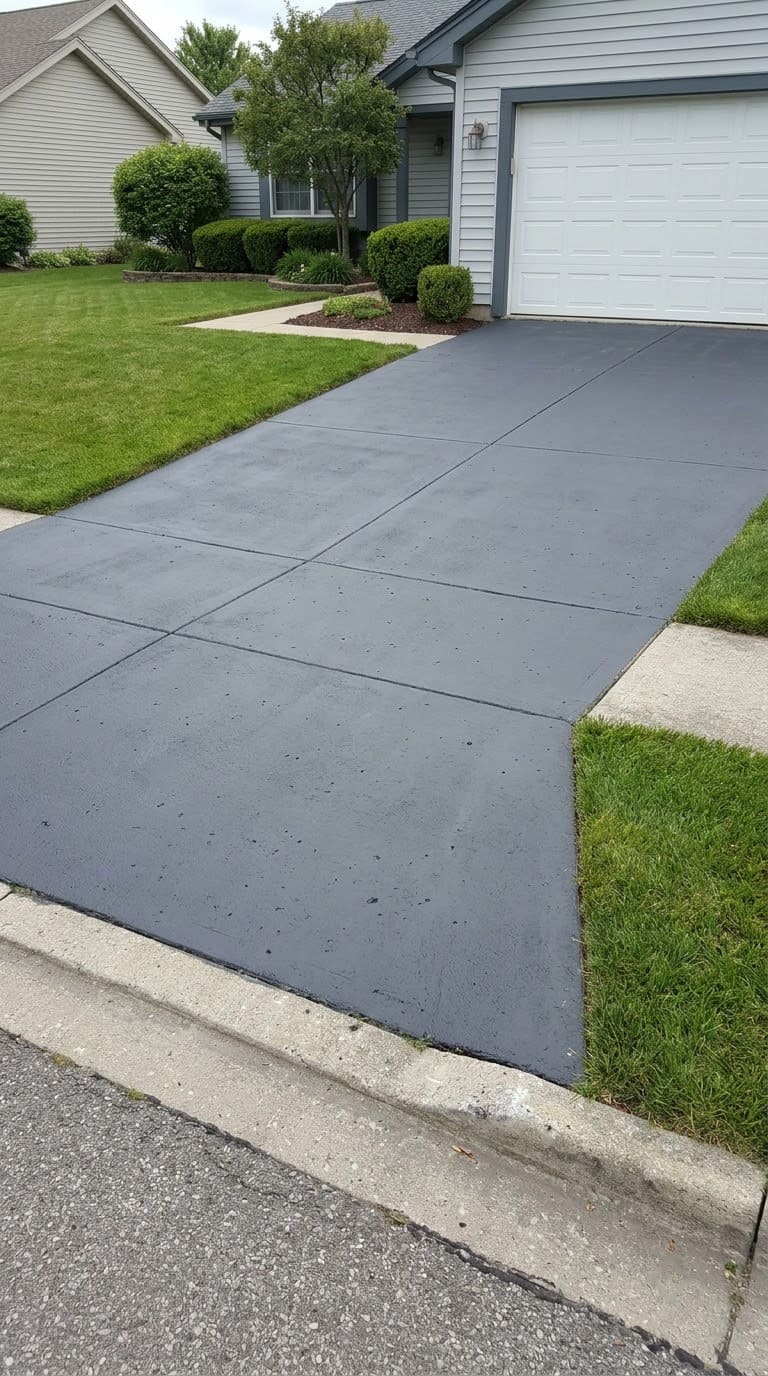
Charcoal is our favorite starter color. It looks sharp against almost any house and hides dirt and tire marks better than a light shade.
The tradeoff is heat. A dark driveway gets hot in full sun, and it can show chalky wear. If your drive gets all-day sun, pick a medium charcoal instead of near-black.
Use a satin or low-sheen finish with a non-skid additive. Our take: pair it with a lighter border for a modern look. See our modern driveway ideas.
- Time: 2 days plus cure.
- Cost: low to medium.
- Best for: modern homes, white or gray houses.
2. Warm Sand or Light Gray
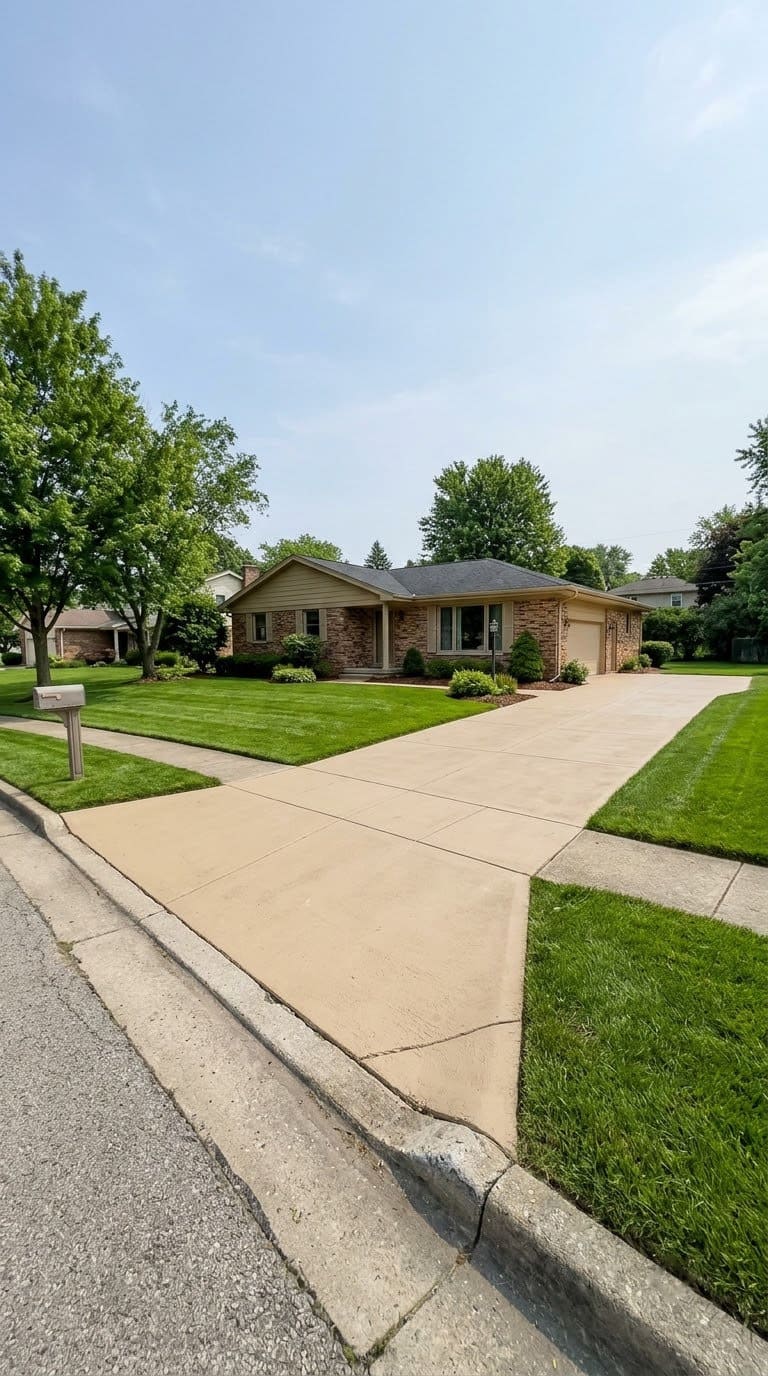
Light colors stay cooler in the sun, and they brighten a dark yard. Warm sand is a natural match for brick, tan and cream houses.
The tradeoff is dirt. Oil and rust show quickly on pale paint. Sweep often and spot clean spills the same day.
Our take: choose warm sand over bright white. White glares in the sun and shows every tire mark.
- Time: 2 days plus cure.
- Cost: low to medium.
- Best for: sunny lots, brick and stucco homes.
3. Terracotta or Clay
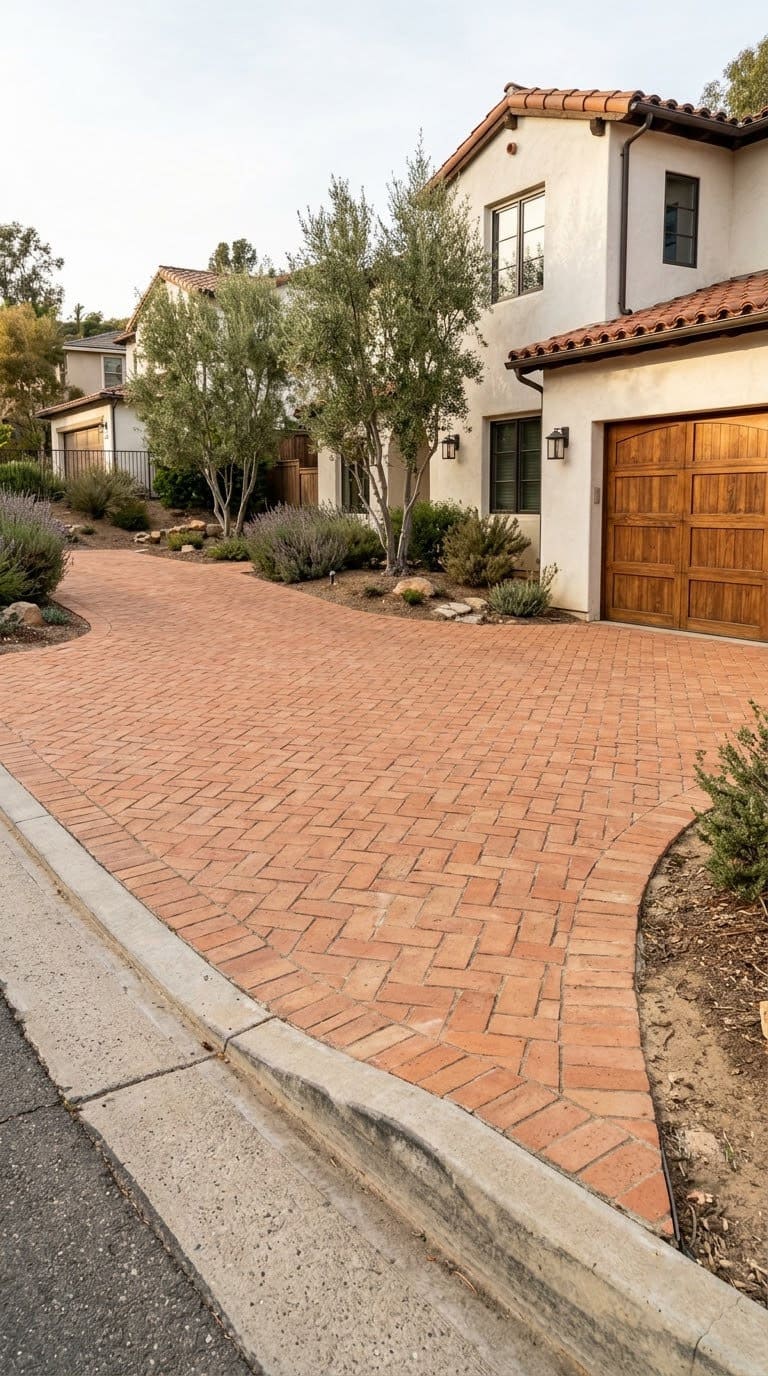
Terracotta feels warm and a little rustic. It suits stucco, Mediterranean and farmhouse styles.
Pick a muted clay, not a bright orange. A flat clay shade fades gracefully, while a bright orange looks loud and dates quickly.
Add green plants beside it. Our take: this color needs plants, or it can feel like a solid block of rust.
- Time: 2 days plus cure.
- Cost: low to medium.
- Best for: stucco, Spanish and farmhouse homes.
Pattern Ideas
Patterns add personality, but they take more time and care.
4. A Painted Border Band
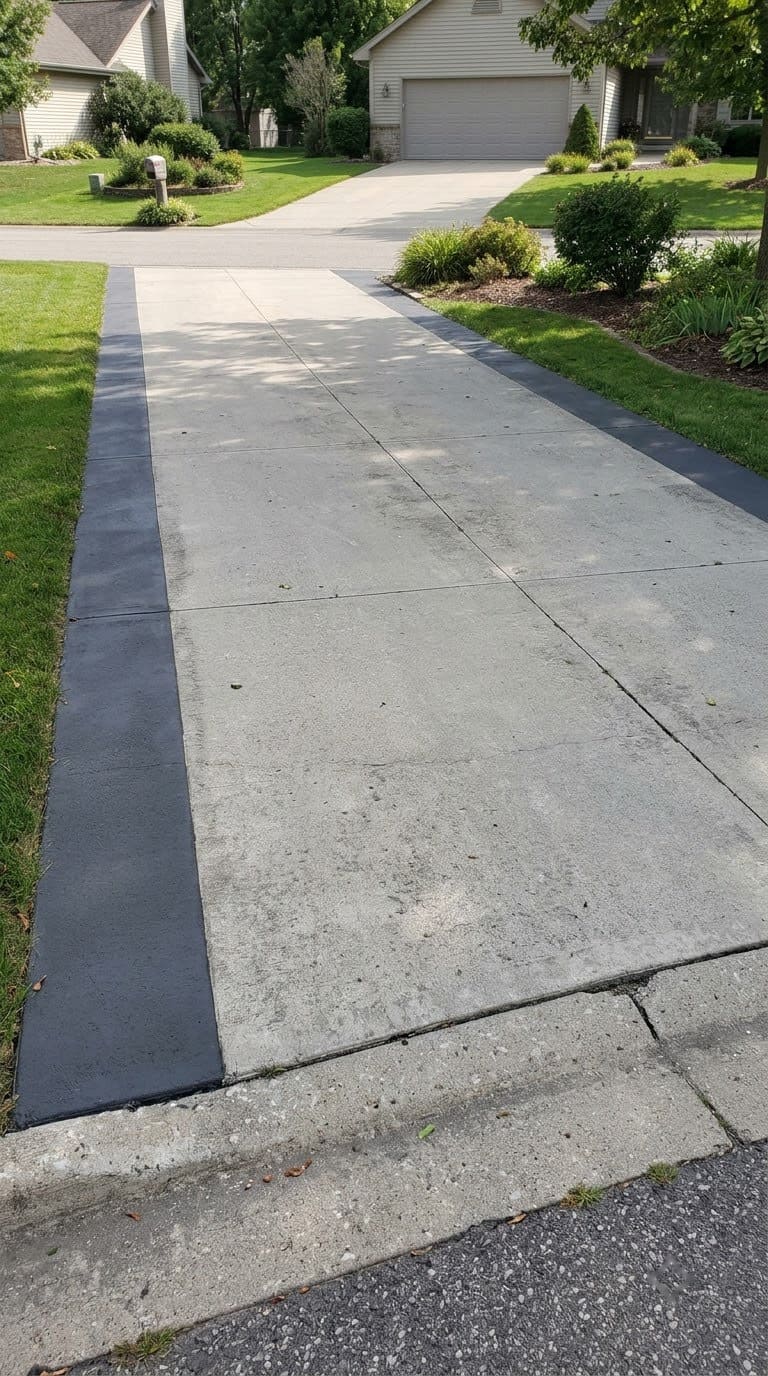
A border is the easiest pattern. Tape off a band along each edge, about a foot wide, and paint it a darker or lighter color than the center.
It frames the drive like a rug frames a room. It also hides edge wear and ties into landscaping.
Use painter’s tape rated for outdoor use, and pull the tape while the paint is still slightly wet. Our take: this is the best pattern for a first project.
- Time: 2 days plus cure.
- Cost: low to medium.
- Best for: long driveways, modern homes.
5. A Stenciled Mosaic
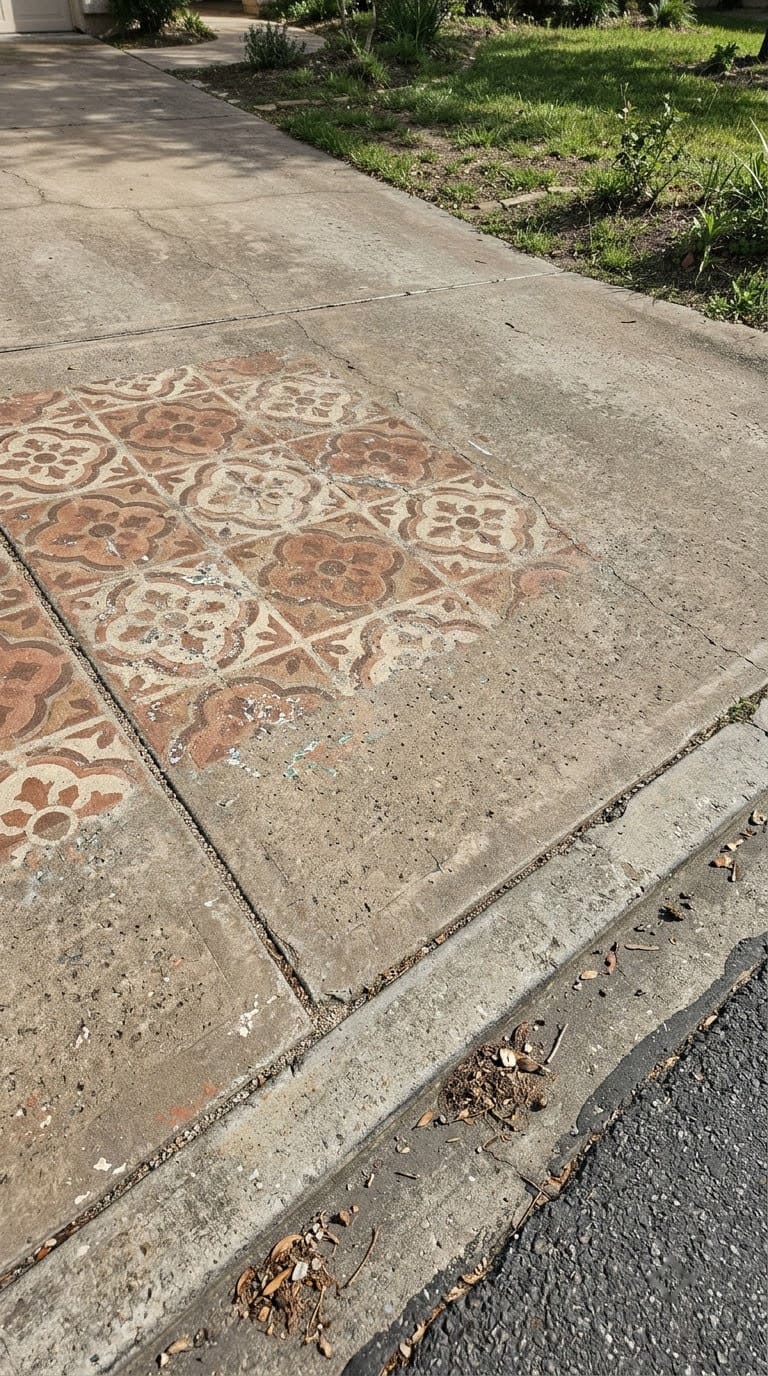
A stenciled mosaic gives the look of tile for a fraction of the cost. Use a large stencil or a stamp, and earthy colors like cream, clay and brown.
Stay with two or three colors. Too many colors make the pattern look busy and it fades unevenly.
Apply the stencil lightly and brush paint on thin to avoid bleed. Our take: use the pattern only in the center. Tire paths wear faster than the middle.
- Time: 3 days plus cure.
- Cost: medium.
- Best for: courtyards, short driveways.
6. A Checkerboard or Diamond Grid
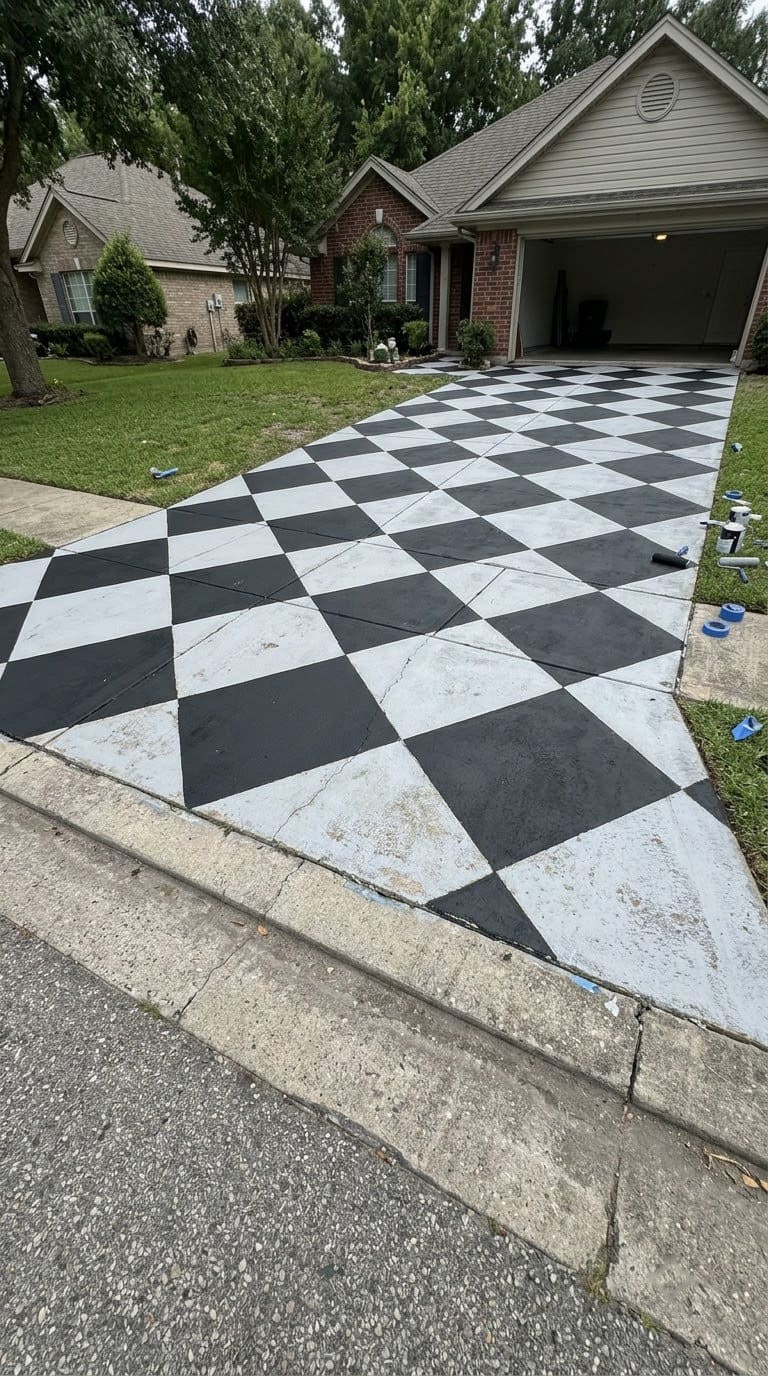
A grid is a bold choice. Use tape to mark squares or diamonds, then paint every other one.
Measure carefully. A crooked grid looks worse than no pattern. Snap chalk lines first, then lay the tape.
Our take: keep the pattern small, such as a pad at the front door, not the whole driveway. A full checkerboard dominates the whole house.
- Time: 3 days plus cure.
- Cost: medium.
- Best for: small entry pads, modern or retro homes.
7. A Speckled Terrazzo Finish
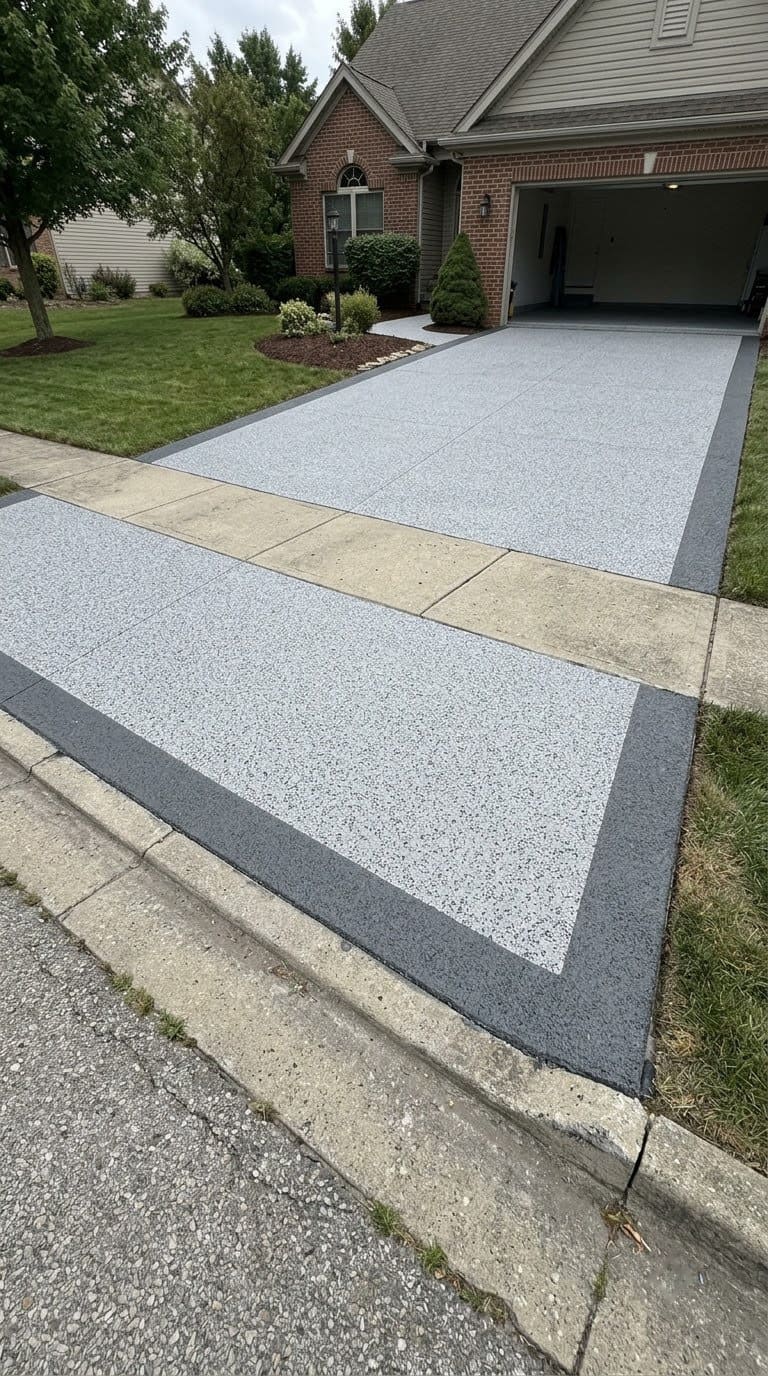
Speckled flakes give a terrazzo look and hide small flaws. Broadcast flakes into the wet paint, then seal.
The texture also adds grip. It’s practical and pretty at the same time.
Our take: pick flakes in a color that matches your house trim. The result looks planned and keeps dirt from showing.
- Time: 3 days plus cure.
- Cost: medium to high.
- Best for: homeowners who want a durable, textured finish.
Function-First Ideas
These ideas solve a problem as well as look good.
8. A Painted Parking Pad Outline
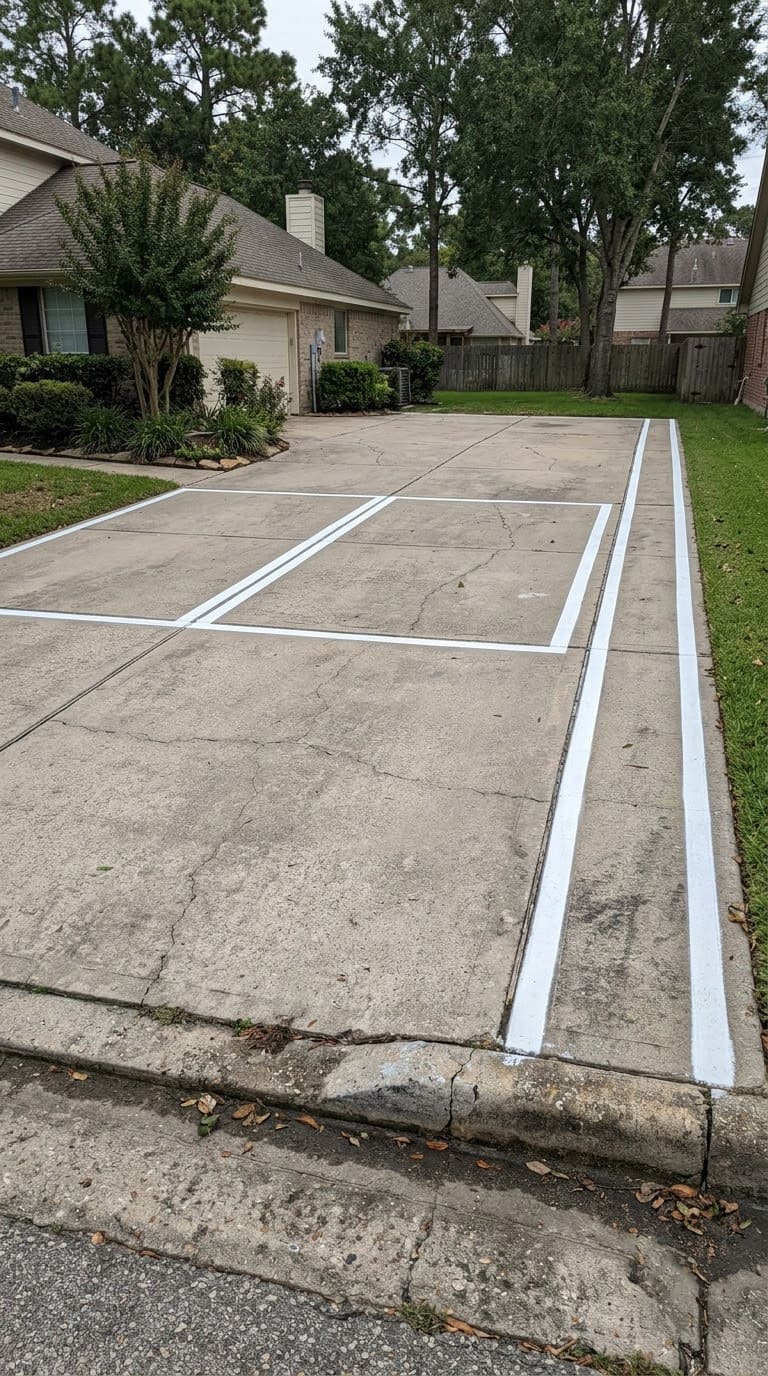
Painted lines make a wide driveway easier to use. Outline two parking spots and a narrow walking strip.
It helps guests park straight and keeps the lawn edge clear. Use a color that contrasts with the base.
Keep lines crisp with tape. Our take: it looks tidy, and it shows you care about the details.
- Time: 1 day plus cure.
- Cost: low.
- Best for: wide driveways, shared drives.
9. Glow Markers at the Edges
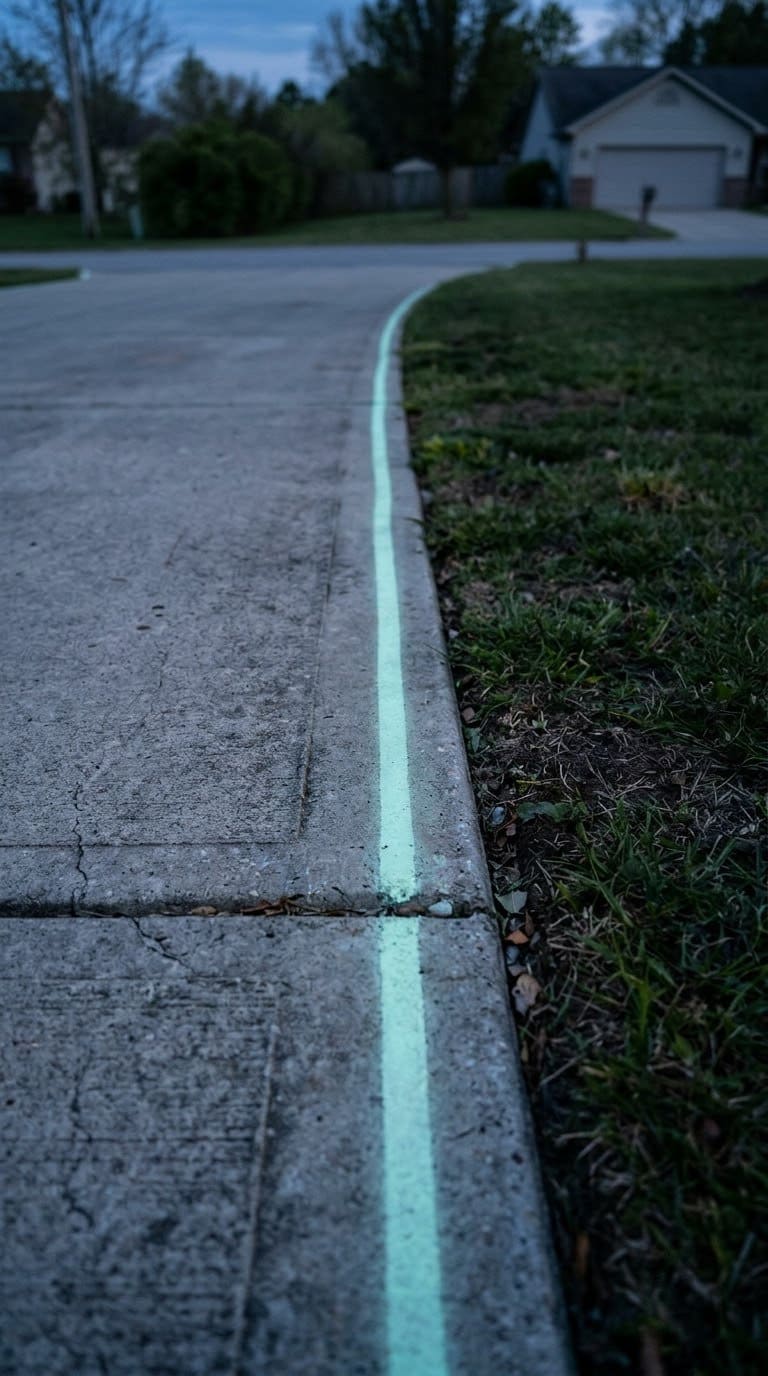
Glow paint works best in small doses. Use it for thin stripes along the edges or around steps, not on the tire path.
It charges in daylight and glows softly at dusk. That helps guests see the edge in the dark.
Expect it to wear faster than regular paint. Our take: treat it as a fun accent that needs a touch-up each season.
- Time: 1 day plus cure.
- Cost: low.
- Best for: edges, steps, sloped yards.
10. A Chalkboard Panel for Kids
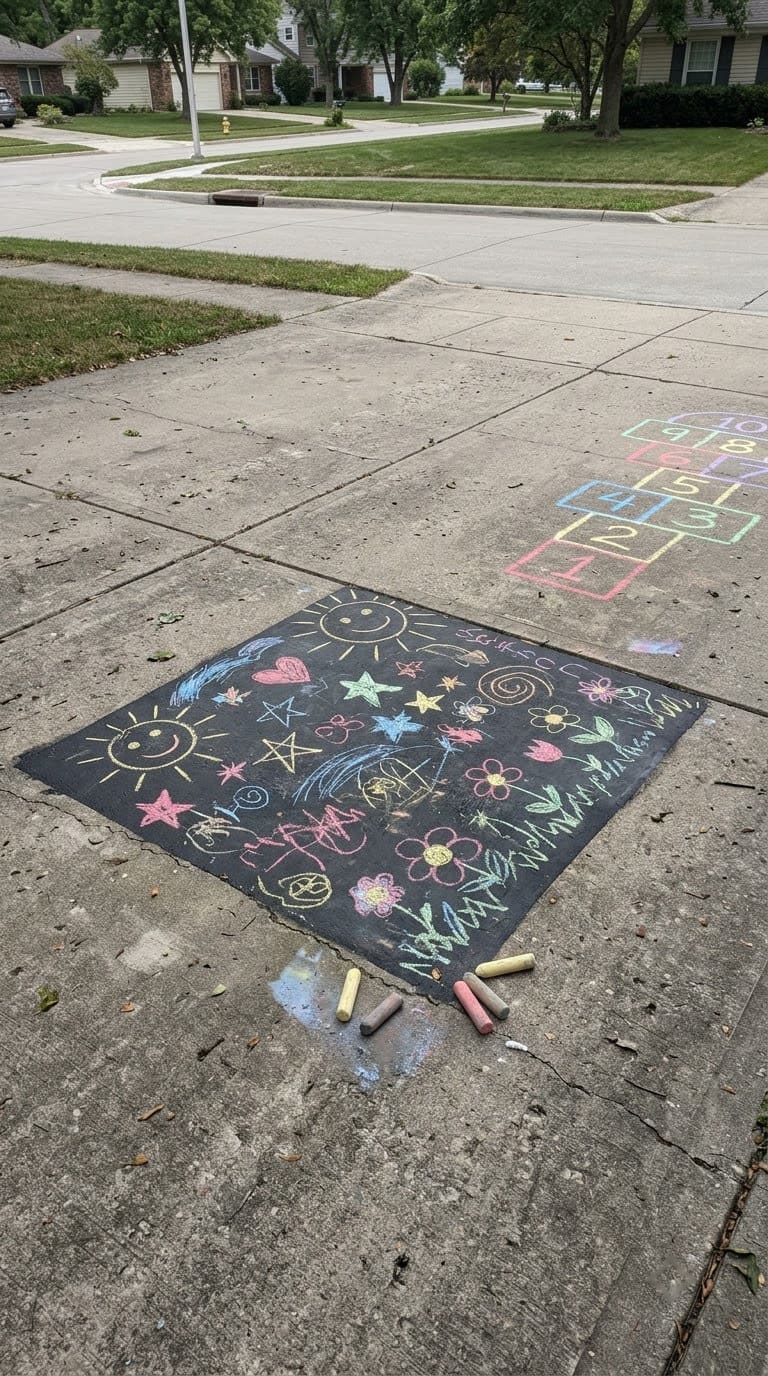
A small chalkboard panel is a safe, fun add-on. Paint a four-foot square near the garage, away from the car path.
Kids can draw on it all summer. Chalk washes off with a hose.
Keep it small so you can recoat it easily. Our take: put it next to the garage wall, not the center of the drive.
- Time: 1 day plus cure.
- Cost: low.
- Best for: families with young kids.
How Do You Keep a Painted Driveway Safe and Slip-Resistant?
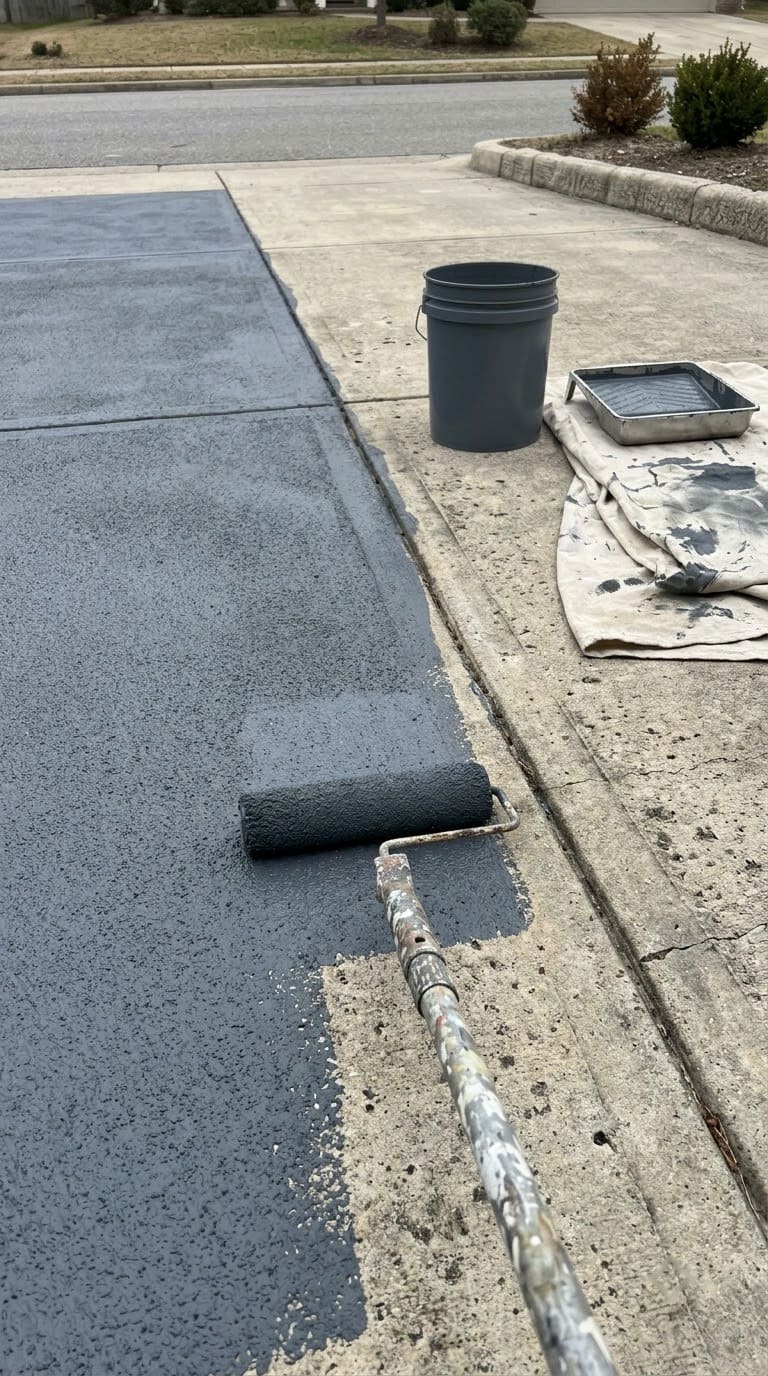
Paint can be slippery when wet. A smooth film has less grip than bare concrete, so add traction.
You can add a non-skid texture additive to the coating for a safer finish. Mix it as directed, usually into the final coat. If your driveway slopes, ask the paint maker about gradient limits before you rely on an additive.
Our take: add grip every time, even on a flat drive. Rain, frost and a dropped grocery bag all find the slick spots.
How Long Until You Can Drive on It?
Wait before you use your driveway. Allow 24 to 48 hours before light use and up to a week before vehicles. Cold weather lengthens the wait.
Don’t park a hot car on new paint. Hot tires can pull at paint that hasn’t fully cured. Wait the full week, and longer in cool weather.
Park on the street during the wait. Put up a sign or cones so nobody forgets.
How Do You Maintain a Painted Driveway?
Painted driveways need care. Sweep and wash them regularly, touch up chips and fade, and expect to reapply a urethane sealer every two to three years, depending on traffic and weather.
That schedule comes from a coatings maker, so treat it as a guide. Check yours after the first winter.
Keep a small can for touch-ups. Our take: a fast spot repair each spring is easier than a full repaint in five years.
Is Painting a Driveway Worth It?
| Pros | Cons |
|---|---|
| Low cost compared with paving | Needs careful prep |
| Quick color change | Tires wear it |
| Hides stains and cracks | Slippery when wet without grip |
| Easy to try patterns | Needs touch-ups |
Our take: it’s worth it for a sound, clean concrete drive, and not worth it for a cracked or damp one. Fix the slab first.
We’d also check neighborhood rules before you start. Some HOAs limit driveway colors. A quick email can save a repaint.
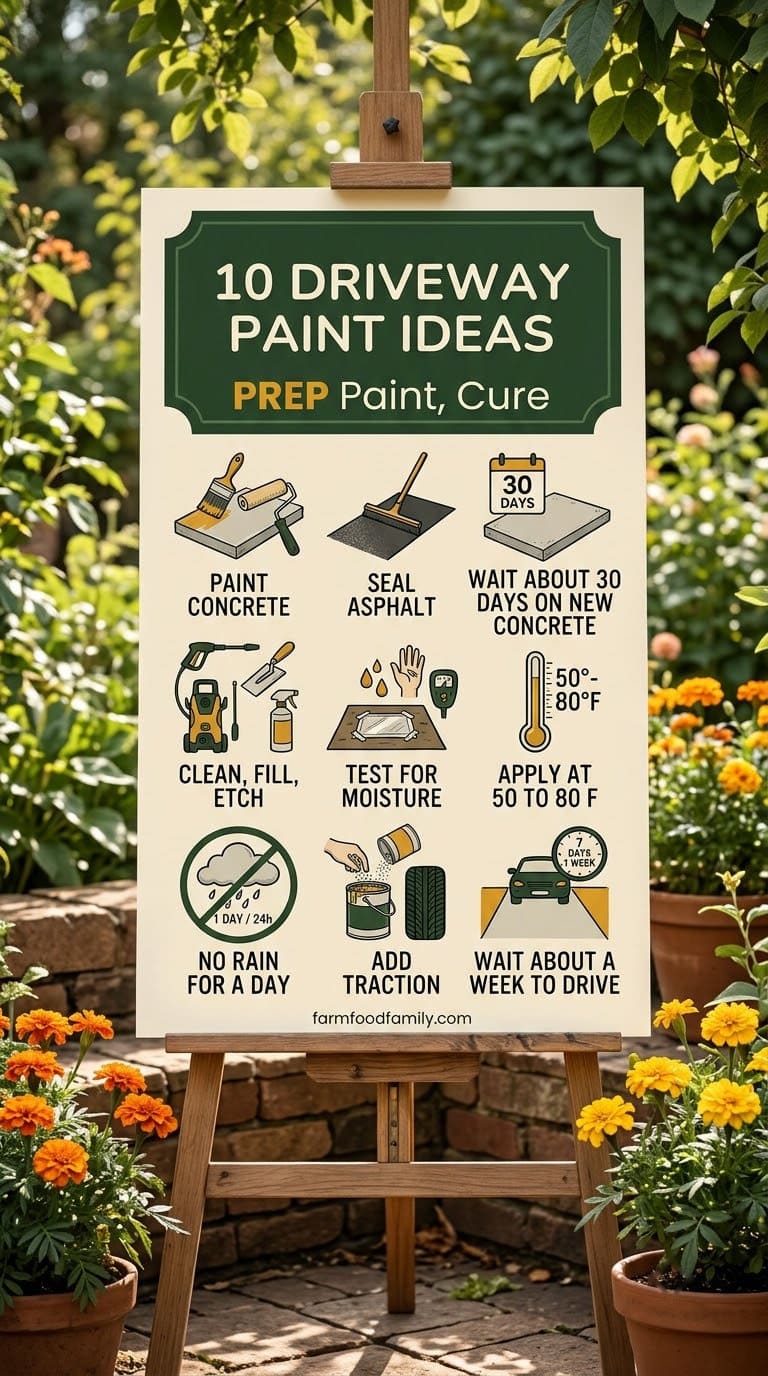
Common Mistakes to Avoid
- Painting asphalt. Paint peels. Use a sealer made for asphalt.
- Skipping the moisture test. Damp slabs push paint off.
- Coating too soon. Wait about 30 days on new concrete.
- Painting in the wrong weather. Aim for 50 to 80°F with no rain for a day.
- Forgetting traction. Add a non-skid additive.
- Driving too early. Wait about a week for vehicles.
Frequently Asked Questions
Can driveway paint last a long time?
It can, with the right prep and coating. A manufacturer suggests resealing every two to three years, so plan for upkeep.
Can I paint my driveway myself?
Yes, if it’s concrete and you do the prep. Hire a pro for large or complex patterns.
Can I paint over oil stains?
Clean them first. On asphalt, oil keeps breaking the surface down under paint, so use a degreaser and a sealer made for asphalt.
What weather is best for painting a driveway?
Mild, dry days between 50 and 80°F, with no rain for at least 24 hours.
How long before I can drive on a painted driveway?
Allow up to a week, longer in cool weather.
Your Weekend Plan
- Friday: check the surface, test for moisture and pick your color.
- Saturday: wash, repair and etch, then let it dry.
- Sunday: roll the first coat, then add the second coat after it dries.
Start with a border band. It’s the easiest, and it looks great.
Never miss an update — choose FarmFoodFamily as your preferred source on Google.
How it works: Tap the button below to open Google's settings page, then check the box next to FarmFoodFamily.
Tap the checkbox to turn it blue — that's how you know it's set.