10 Elegant Kitchen Cabinet Colors for Gray Walls, From Warm White to Teal
Gray walls pair with many cabinet colors, but the gray’s undertone and your kitchen’s light decide which ones look right.

Never miss an update — choose FarmFoodFamily as your preferred source on Google.
How it works: Tap the button below to open Google's settings page, then check the box next to FarmFoodFamily.
Tap the checkbox to turn it blue — that's how you know it's set.
Gray walls pair with many cabinet colors, but the gray's undertone and your kitchen's light decide which ones look right.
Products We Recommend
This post contains affiliate links. We may earn a commission on qualifying purchases at no extra cost to you.

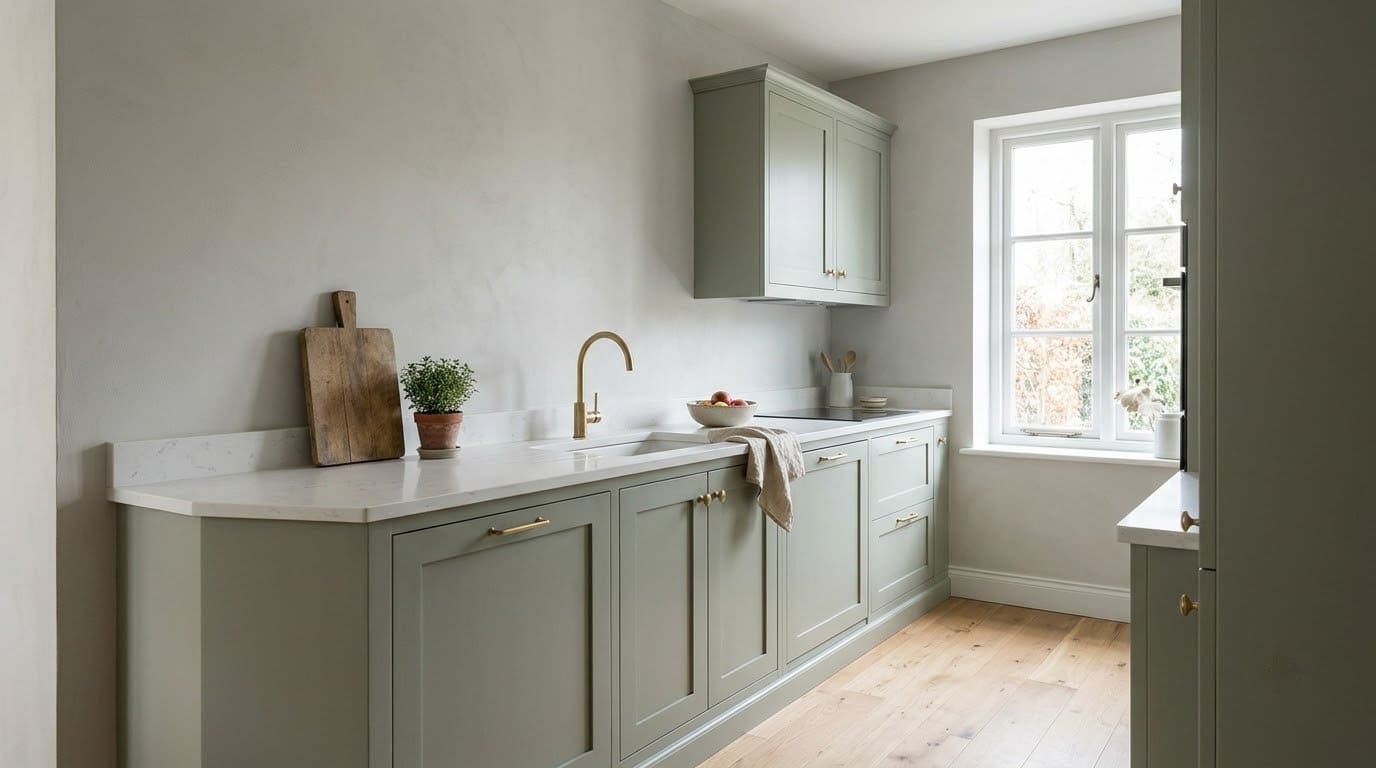
Spray Nine Heavy-Duty Cleaner and Degreaser, 32 oz
A spray degreaser for the greasy film cabinet doors collect near the stove. Rinse and let doors dry fully before sanding or priming.
Shop Now
3M Pro Grade Precision 3-in-1 Sanding Sponge, 220 Grit Fine, 2 Pack
Washable sponges for a light scuff between primer and coats. Fine grit leaves doors smooth, but check your paint label for its own prep steps.
Shop Now
HBL 30 Pack Matte Black Cabinet Pulls, 3 Inch Center to Center
Stainless steel pulls in matte black that sharpen cool gray and white schemes. Measure your current hole spacing first, since 3 inches must match.
Shop NowGray walls are a calm, flexible backdrop. That’s the good news. The tricky part is that gray is never just gray, and the wrong cabinet color can make it look cold or flat.
This guide helps you read your gray first. Then it covers 10 cabinet colors in three groups: quiet, moody and colorful. It also covers how to paint cabinets so the finish lasts.
If your cabinets are gray and you need a wall color, see our guide to wall colors for gray cabinets.
Quick Answer
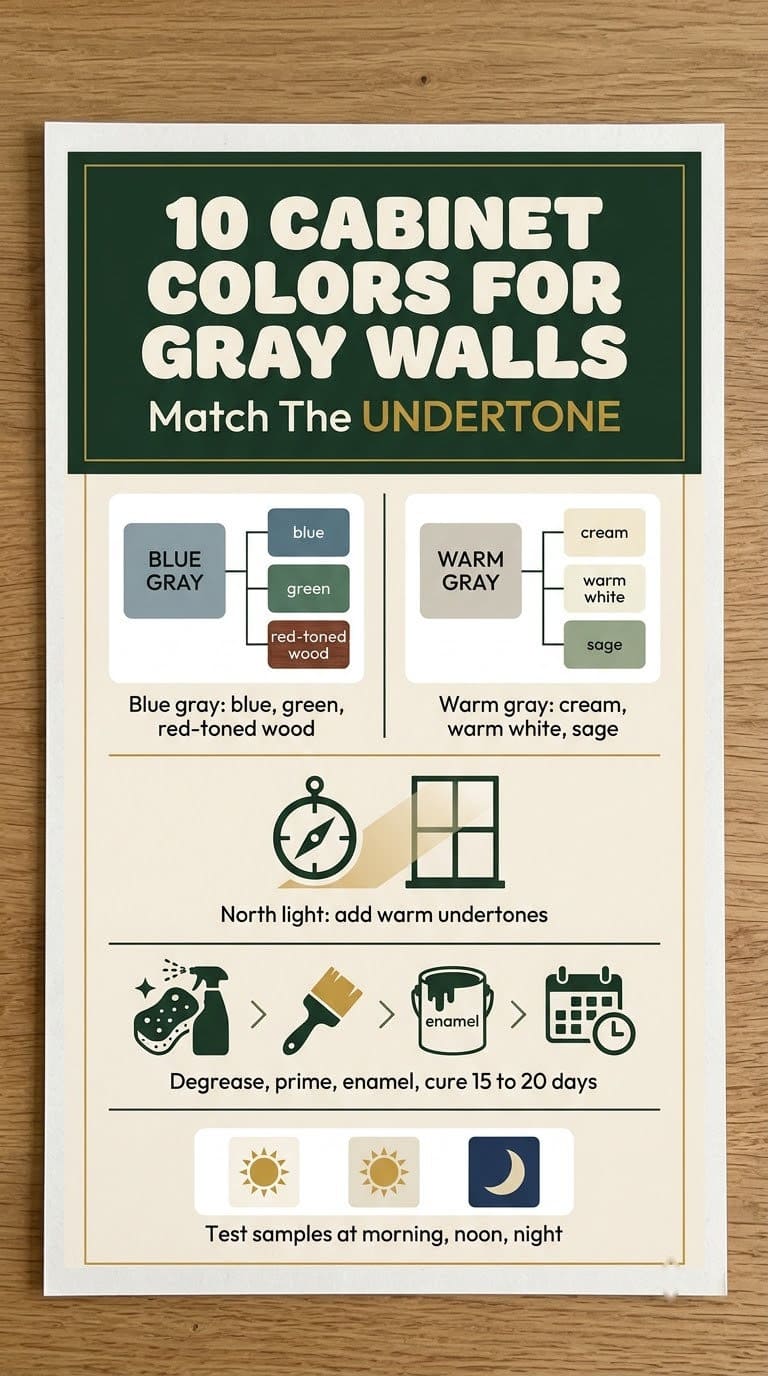
Match the cabinets to the undertone of your gray walls. Blue-toned grays pair with blue, green or purple cabinets, or with red-toned wood for contrast. Warm grays and greiges pair with cream, warm white and sage.
If you want a quiet kitchen, go for warm white, cream or light oak. If you want drama, try navy, black or walnut. For color, try sage, olive or teal.
Check your kitchen’s light before you choose. North-facing rooms look cooler, so add warm undertones. South-facing rooms look warmer, so cooler shades read as neutral.
But don’t skip a sample. Test it on your wall at morning, noon and night, and hold it next to your countertop and floor. A color that looks right on a chip can change completely once it covers a whole wall of doors.

How Do You Read Your Gray Wall?
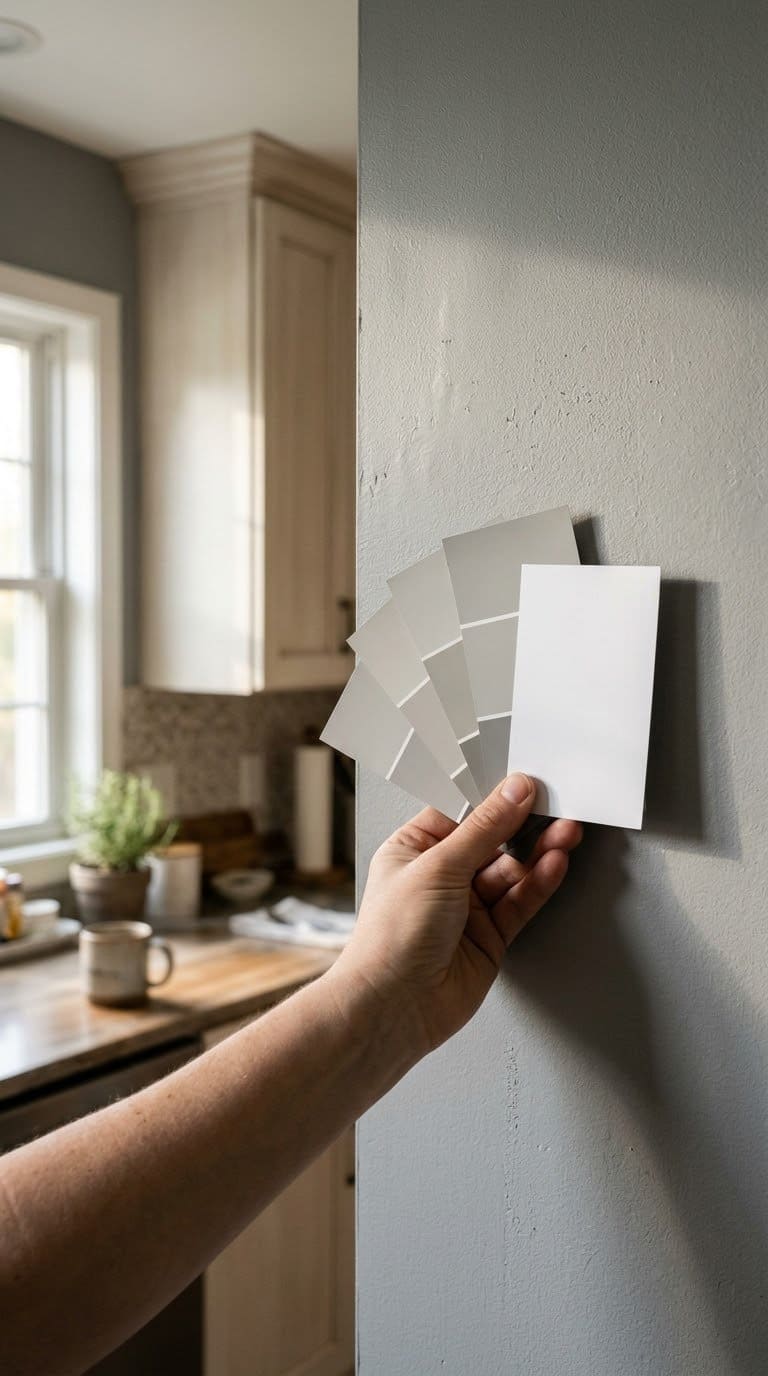
Gray walls come in many tones. Some look steely blue. Others look like warm putty.
Chelsey Preuss, an interior designer and cabinetry dealer quoted in Hunker’s guide, says to match the gray’s undertone. Her example is a blue-toned gray. It pairs with blue, green or purple cabinets, or with mustard yellow or red-toned wood for contrast.
Rozit Arditi of Arditi Design, quoted in the same guide, adds a second question. Do you want the cabinets to blend in or stand out?
Use these steps to find your gray.
- Step 1: Hold a plain white card against the wall in daylight.
- Step 2: Ask if the gray looks blue, green, purple or beige.
- Step 3: Check it again at night under your kitchen lights.
Then use the table to find your direction.
| Your gray looks | It is | Cabinet direction |
|---|---|---|
| Steel blue | Cool gray | Blue, green, red-toned wood |
| Green or olive | Green gray | Sage, cream, light wood |
| Putty or beige | Warm gray or greige | Cream, warm white, sage |
| Very dark | Charcoal | Warm white, light oak |
Does Your Kitchen’s Light Change the Answer?
Yes. Helen Shaw, Director of Color Marketing at Benjamin Moore, says natural light affects paint more than anything else. Her quote appears in Homes and Gardens.
Ruth Mottershead, Creative Director at Little Greene, says north-facing rooms look flatter and cooler. South-facing light is warmest and makes colors look more yellow.
Use this table as a guide.
A spray degreaser for the greasy film cabinet doors collect near the stove. Rinse and let doors dry fully before sanding or priming.
Shop NowThis post contains affiliate links. We may earn a commission on qualifying purchases at no extra cost to you.
| Kitchen faces | Light feels | What helps with gray walls |
|---|---|---|
| North | Cool, flat | Warm undertones, gray-green, semi-gloss on cabinets |
| South | Warm, bright | Cooler shades read neutral, rich blues instead of gray |
| East | Warm morning, cool afternoon | Neutrals with a cool green or blue undertone |
| West | Cool morning, amber evening | Blue tones, like a navy cabinet with a mid-gray wall |
Shaw suggests semi-gloss or high-gloss on cabinets in darker north-facing kitchens. The shine adds reflection and depth.
For a west-facing kitchen, she names Benjamin Moore Hale Navy HC-154 on the cabinets with a mid-gray wall. Gray-green is her pick to warm a north-facing room.
Quiet Cabinet Colors
These colors keep the gray calm. They suit most kitchens, and they’re the ones we’d steer a first-timer toward.
1. Warm White
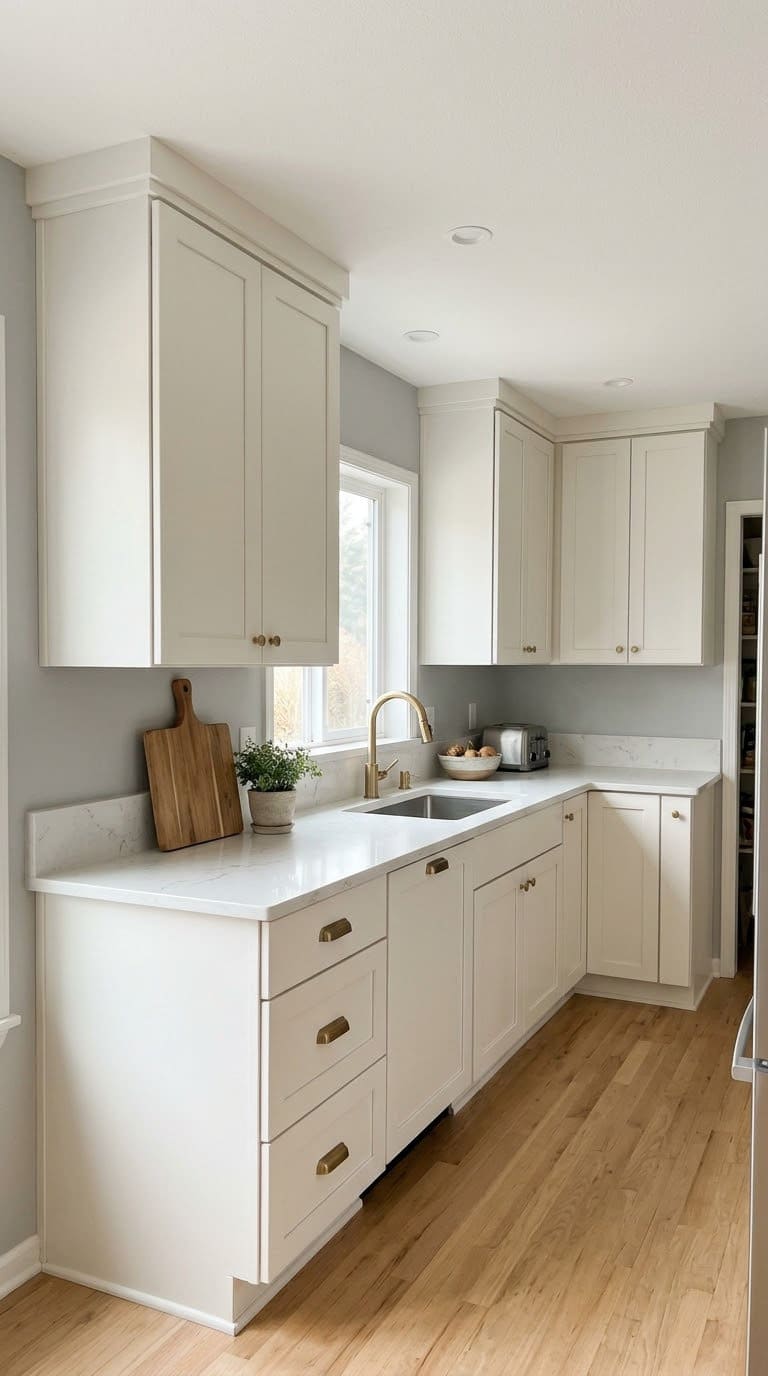
Warm white is our first pick for most gray kitchens. It brightens the room without the cold edge a crisp white can have beside gray. We’d choose one with a drop of cream so it stays friendly.
Paint the walls one or two shades deeper than the cabinets. That small gap gives the doors a soft outline. Add warm wood stools or brass pulls so the room doesn’t feel clinical.
Our white kitchen cabinet ideas cover finishes in depth. Here is the palette we’d build around it.
- Walls: a warm gray or greige.
- Counters: white stone with soft gray veining, or butcher block.
- Backsplash: white or pale gray tile.
- Hardware: brass for warmth, or matte black for contrast.
- Accent: a light oak island and a few green plants.
Our take: skip a bright, blue-leaning white against a steel-blue wall. That mix looks stark, and it’s the easiest mistake to make.
2. Cream
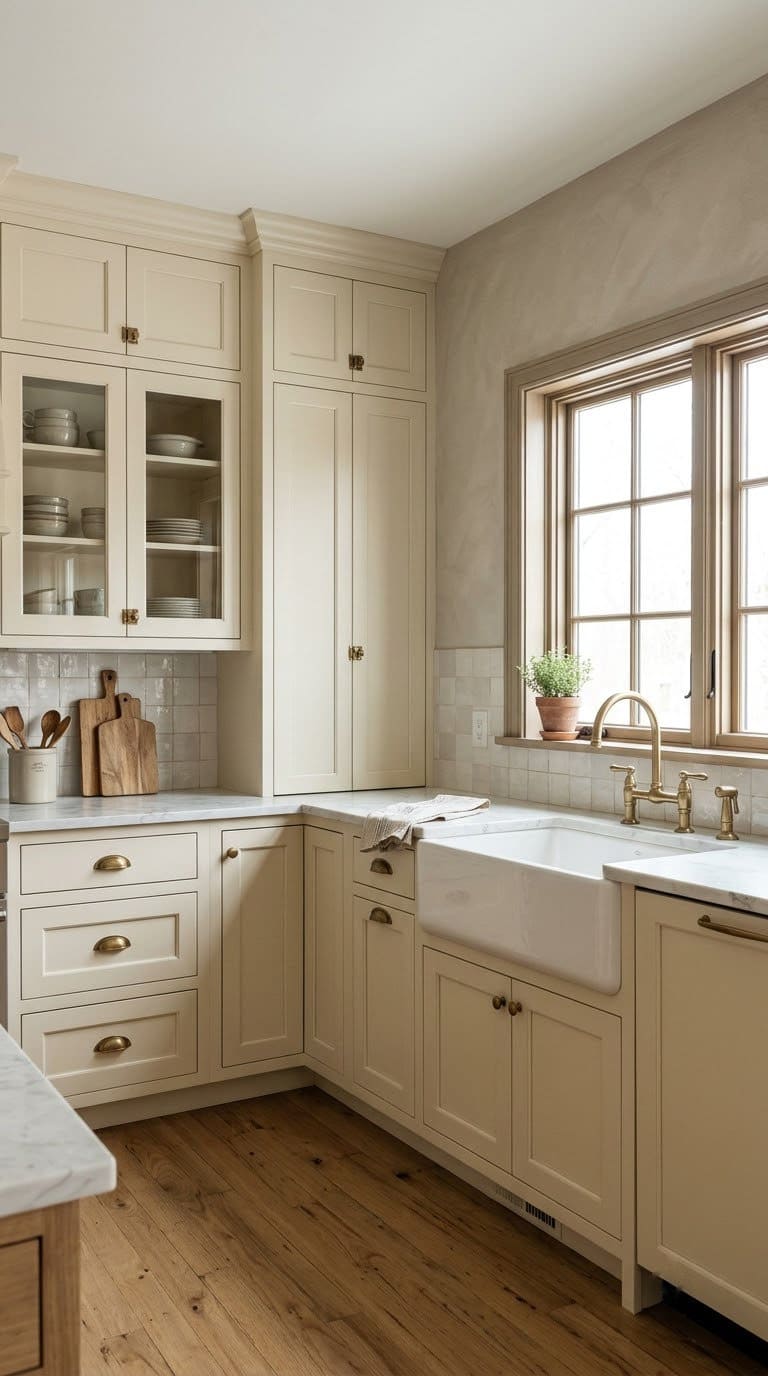
Cream is the color we’d pick if you want the kitchen to feel lived in. It’s warmer and more traditional than white. It also softens a cool gray in a way white can’t.

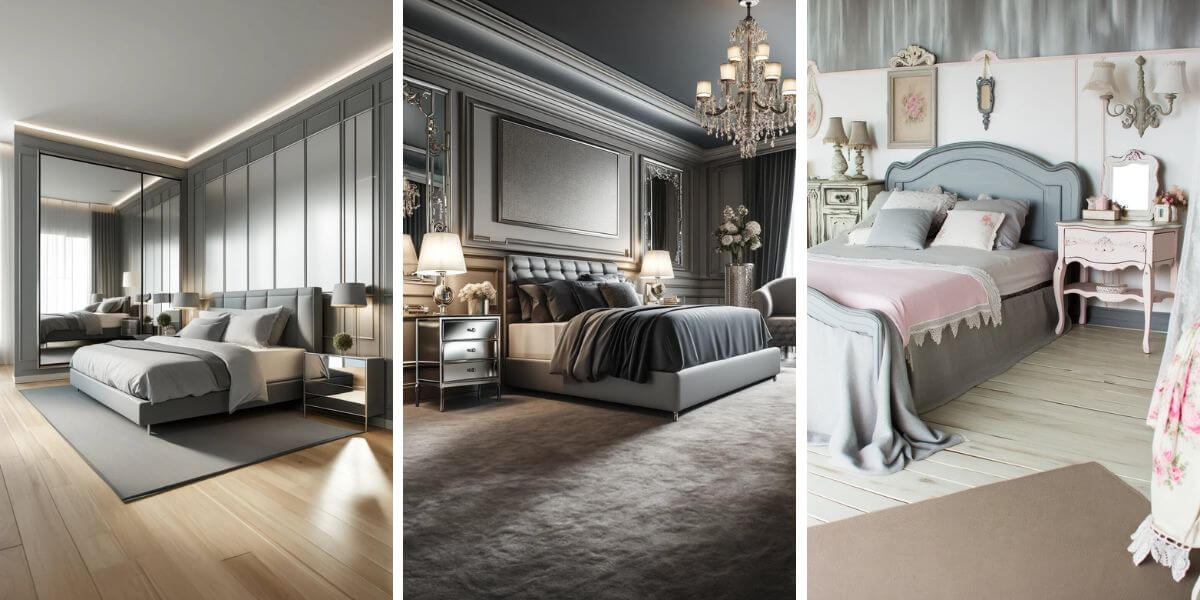

It works best against a warm gray or greige wall. On a steel-blue wall, cream can drift yellow. Always test it beside your countertop, since a bright white counter can make cream look dingy.
- Walls: warm gray. Avoid a steel-blue gray.
- Counters: honed stone, butcher block, or a warm white quartz.
- Backsplash: off-white, beige-gray or a soft stone tile.
- Hardware: aged brass, bronze or oil-rubbed finishes.
- Accent: sage, muted navy linen or warm wood.
Our take: greige walls, cream cabinets, a butcher block island and bronze pulls make the most relaxed version of this kitchen. It reads traditional but not dated.
3. Tonal Gray, Deeper Than the Walls
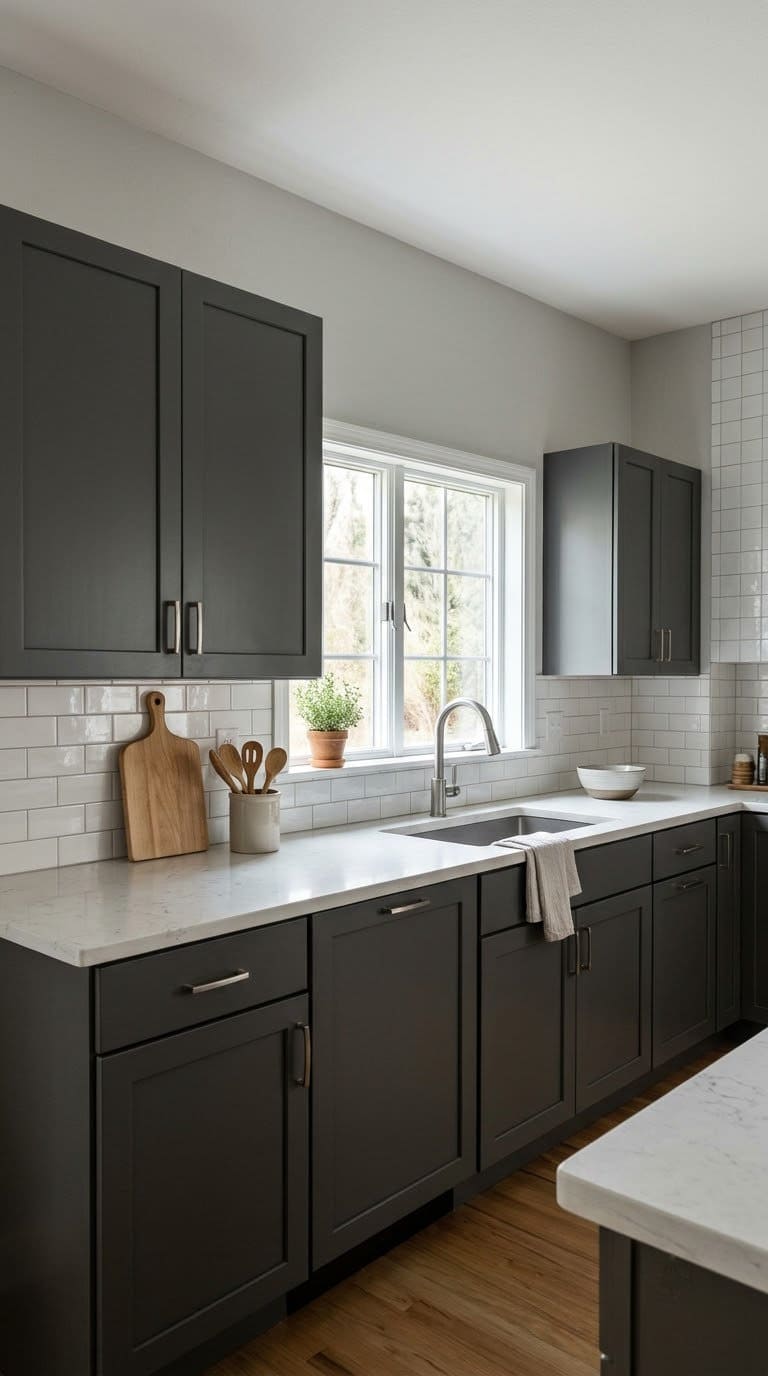
Gray cabinets on gray walls look sleek, but only if there’s enough contrast. We’d go at least two shades deeper than the walls. Anything closer starts to look like a mistake instead of a choice.
Keep the undertones the same. Warm walls call for a warm charcoal cabinet. Cool walls call for a cool slate.
- Walls: a pale gray.
- Counters: white or very light stone, so the cabinets get the attention.
- Backsplash: white subway tile or a pale marble look.
- Hardware: brass or matte black, depending on the undertone.
- Accent: wood cutting boards, a wood stool, warm bulbs.
Still unsure whether the cabinets should blend in or stand out? Ask if you want a quiet room or one people comment on. Similar colors make it quiet, and darker colors make it a statement.
4. Light Oak or Natural Wood
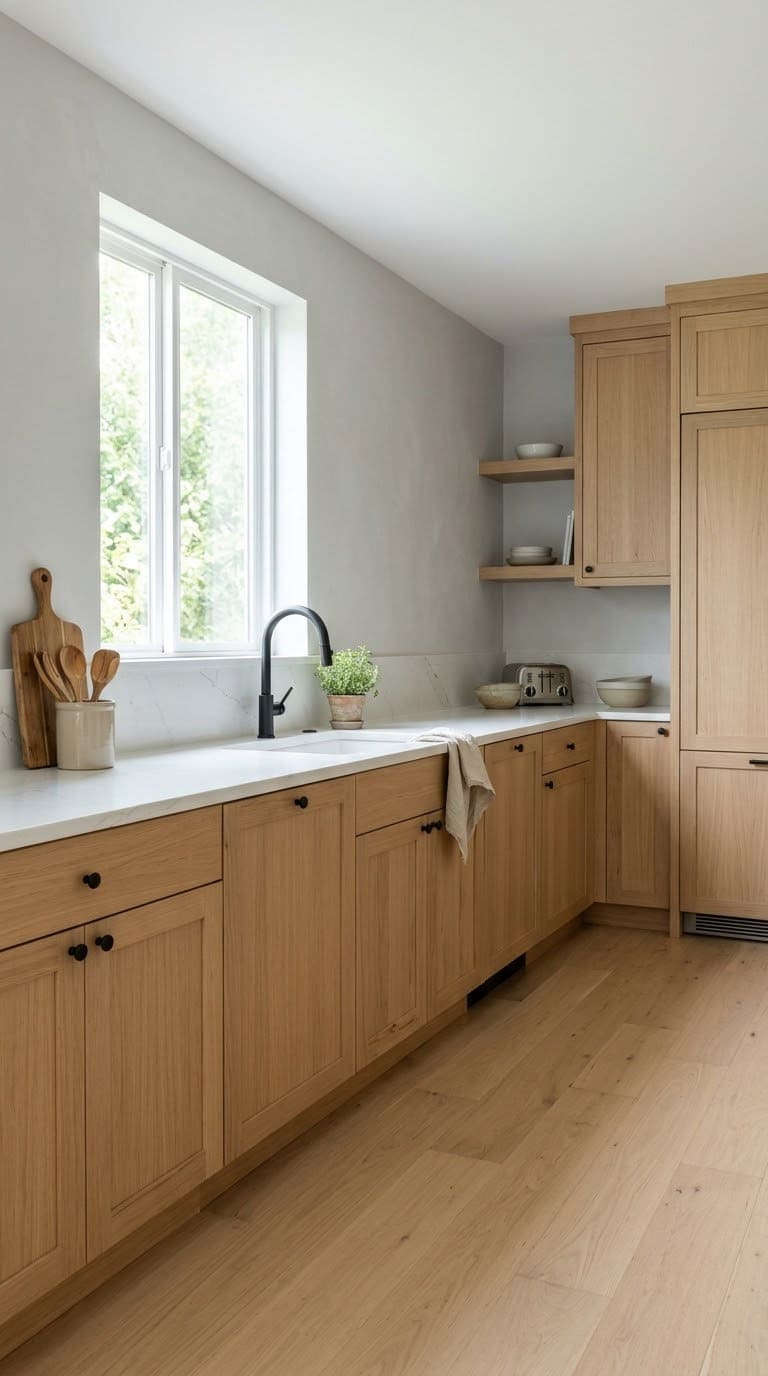
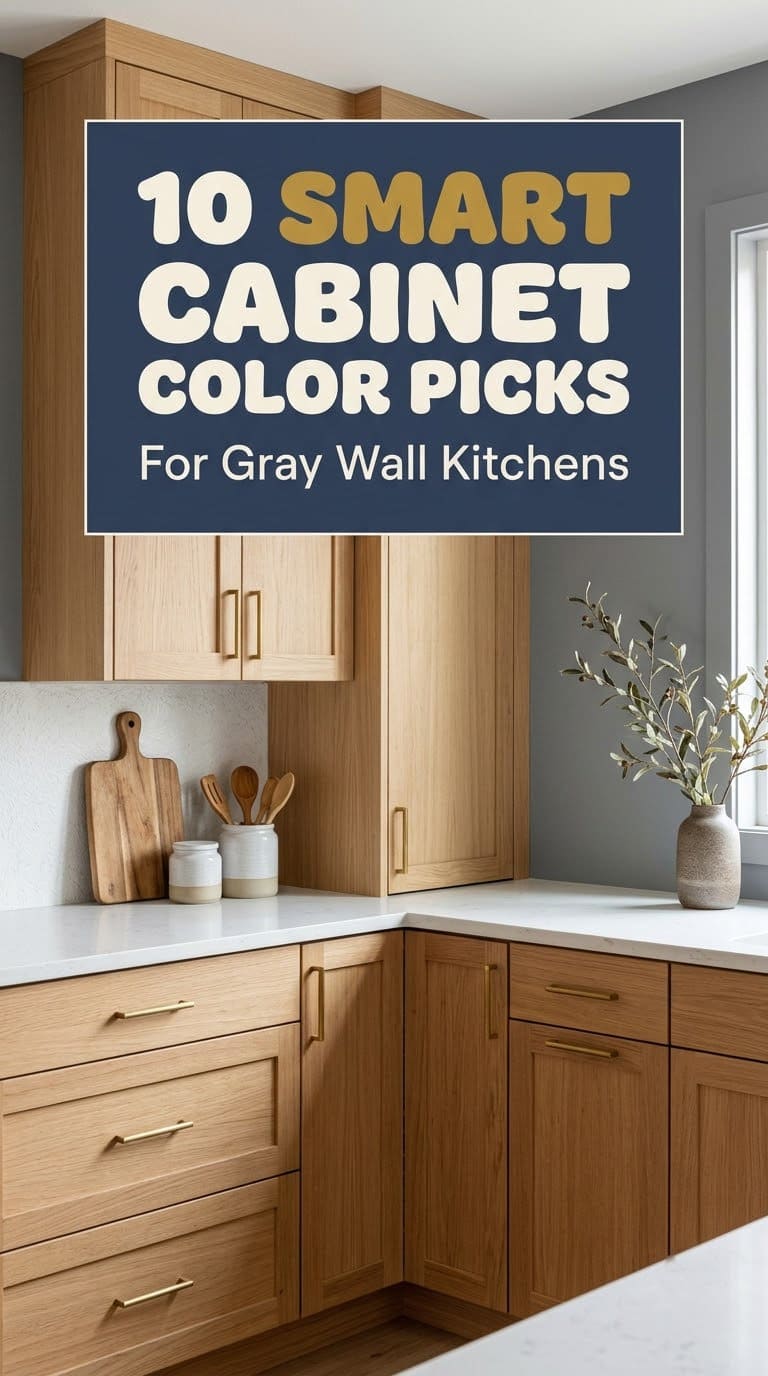
Light oak is the warmest option in this group. We like it because it keeps a gray kitchen from feeling like a showroom. The grain adds texture that paint can’t copy.
Check the oak’s undertone against your gray. A red or gold oak suits a blue-toned gray well. A yellow oak can look muddy on a warm gray wall.
- Walls: a pale to mid gray.
- Counters: white or light gray. Dark counters can make the oak look orange.
- Backsplash: simple white tile.
- Hardware: matte black or brushed nickel.
- Accent: charcoal stools or a black pendant light.
Our take: this is the best choice for a small kitchen that needs warmth, because it adds color without adding darkness.
Moody Cabinet Colors
Dark cabinets add depth. They also demand good light, so be honest about how bright your kitchen is.
5. Matte Black
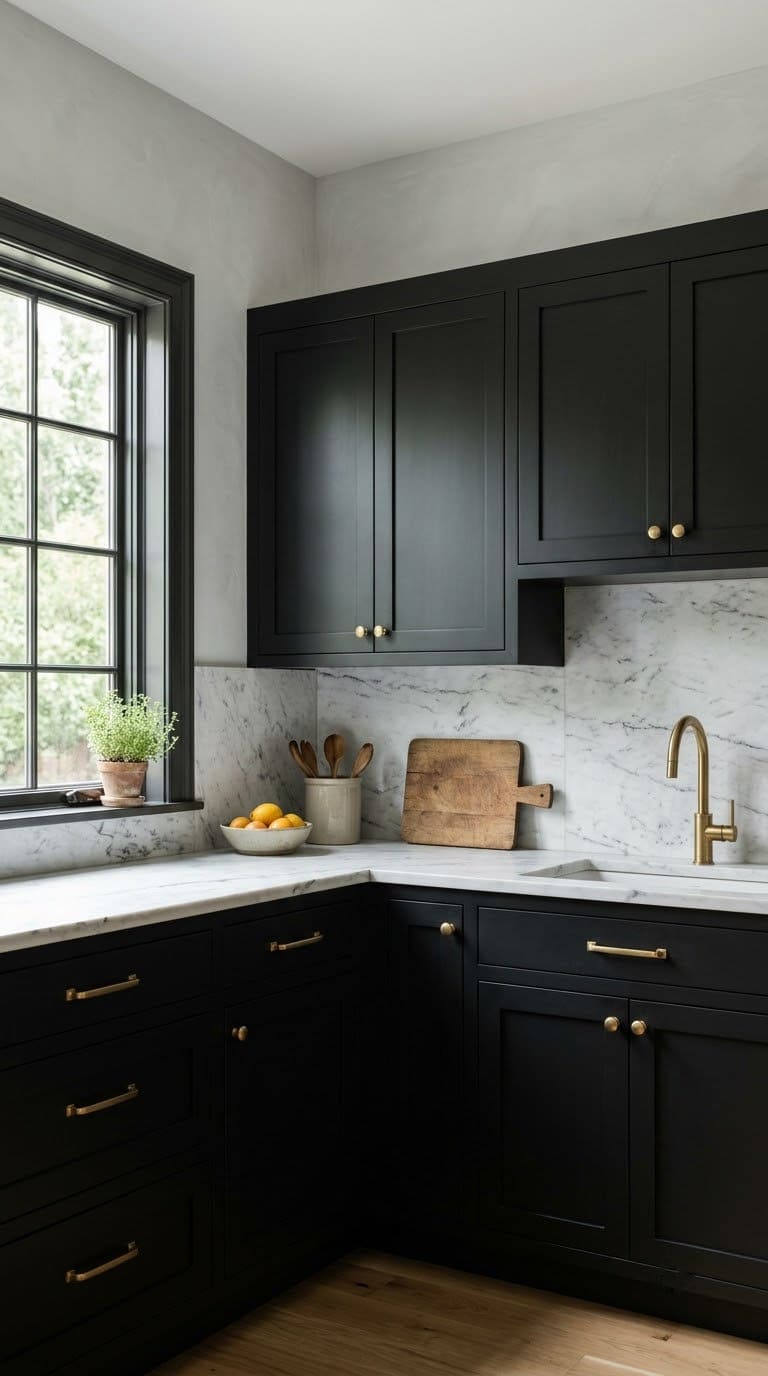
Matte black is the boldest quiet statement you can make. Against light gray walls it reads like a graphic line. We love it in a big, bright kitchen and we’d avoid it in a small, dim one.
Light surfaces are what make it work. Without them, the room has nowhere to rest the eye.
- Walls: a light gray, never dark charcoal in a small kitchen.
- Counters: white or light stone with gray veining.
- Backsplash: white tile, flat or glossy to bounce light.
- Hardware: warm brass, so the black doesn’t look flat.
- Floor and accent: a lighter wood floor and open wood shelves.
Our black kitchen cabinet ideas show finishes and hardware. Our take: avoid black cabinets with dark walls, dark counters and a dark floor all at once.
6. Navy or French Blue
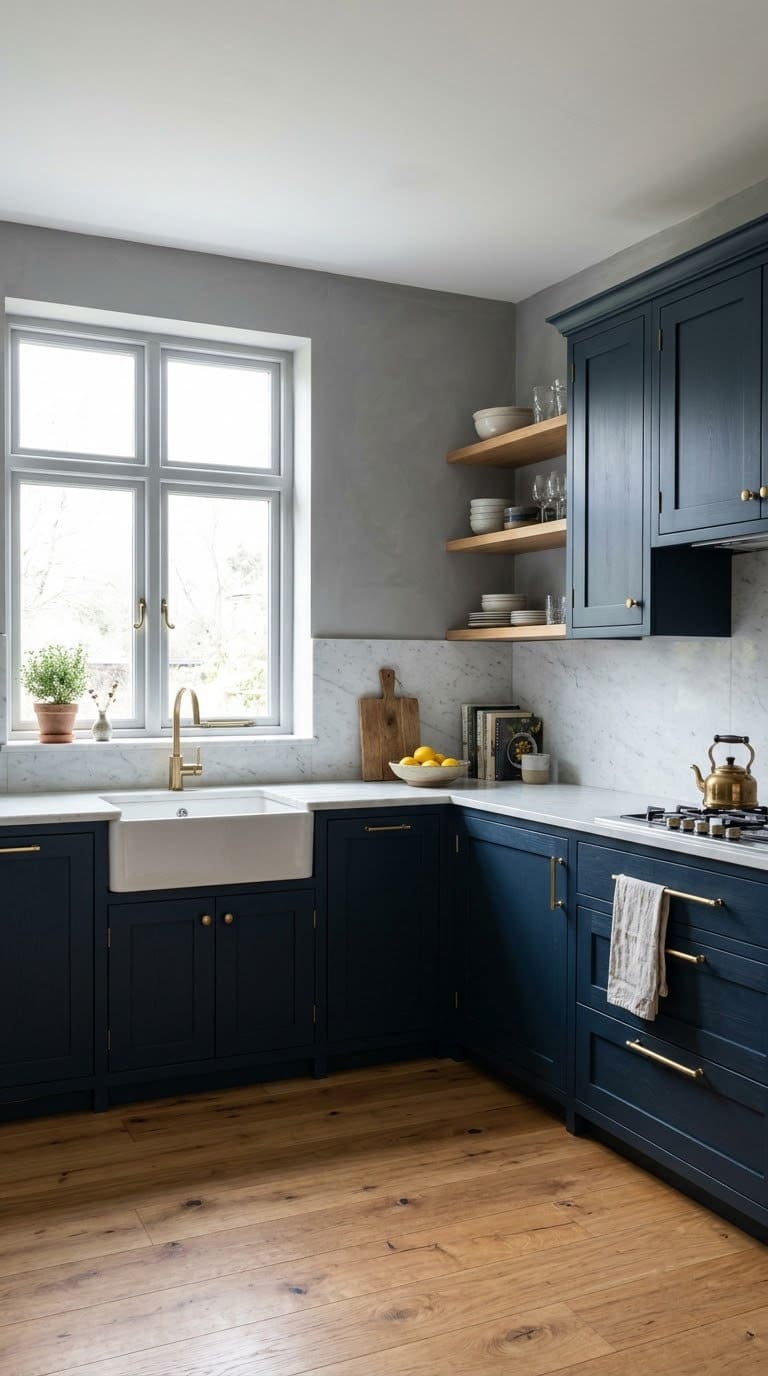
Navy is our favorite moody choice. It looks rich beside gray and it hides daily wear better than black. French blue is softer, and cobalt is the playful option.
Blue wants cool partners. Pair it with a cool or neutral gray, and keep the surfaces around it light so the navy stays the star.
- Walls: a mid-gray with a cool tone.
- Counters: white or very light stone.
- Backsplash: white subway tile.
- Hardware: brass, brushed gold or nickel.
- Accent: warm wood stools and a cream or white pendant light.
Our blue kitchen cabinet ideas go deeper. Our take: test your gray carefully. A warm yellow-gray can turn muddy next to navy, and a cool or neutral gray keeps it crisp.
7. Walnut With Charcoal Walls
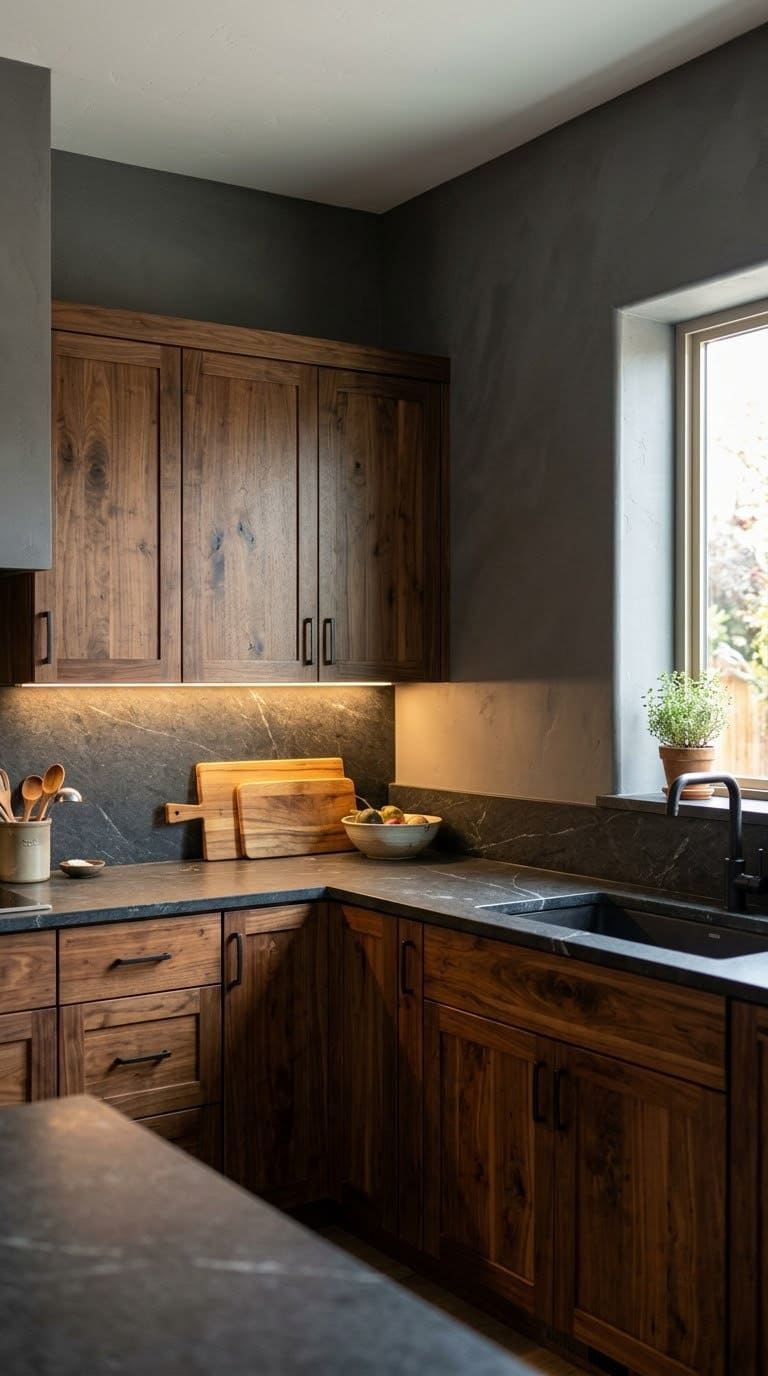
This is the moodiest recipe in the guide. Deep walnut against charcoal walls makes a cozy, den-like kitchen. We’d only recommend it where daylight is strong.
Light surfaces are what rescue it. Without them, walnut and charcoal both absorb light and the kitchen turns into a cave.
- Walls: charcoal or deep gray, with plenty of daylight.
- Counters: white, cream or a pale stone, to bounce light up.
- Backsplash: glossy white or cream tile.
- Hardware: brass or bronze.
- Lighting: warm under-cabinet strips and warm bulbs.
Our take: skip dark counters here. Pick one dark surface for the cabinets and let everything else be light.
Colorful Cabinet Choices
Gray makes color pop. Keep the shade muted, not bright, and give the color a job.
8. Sage, Olive or Avocado Green
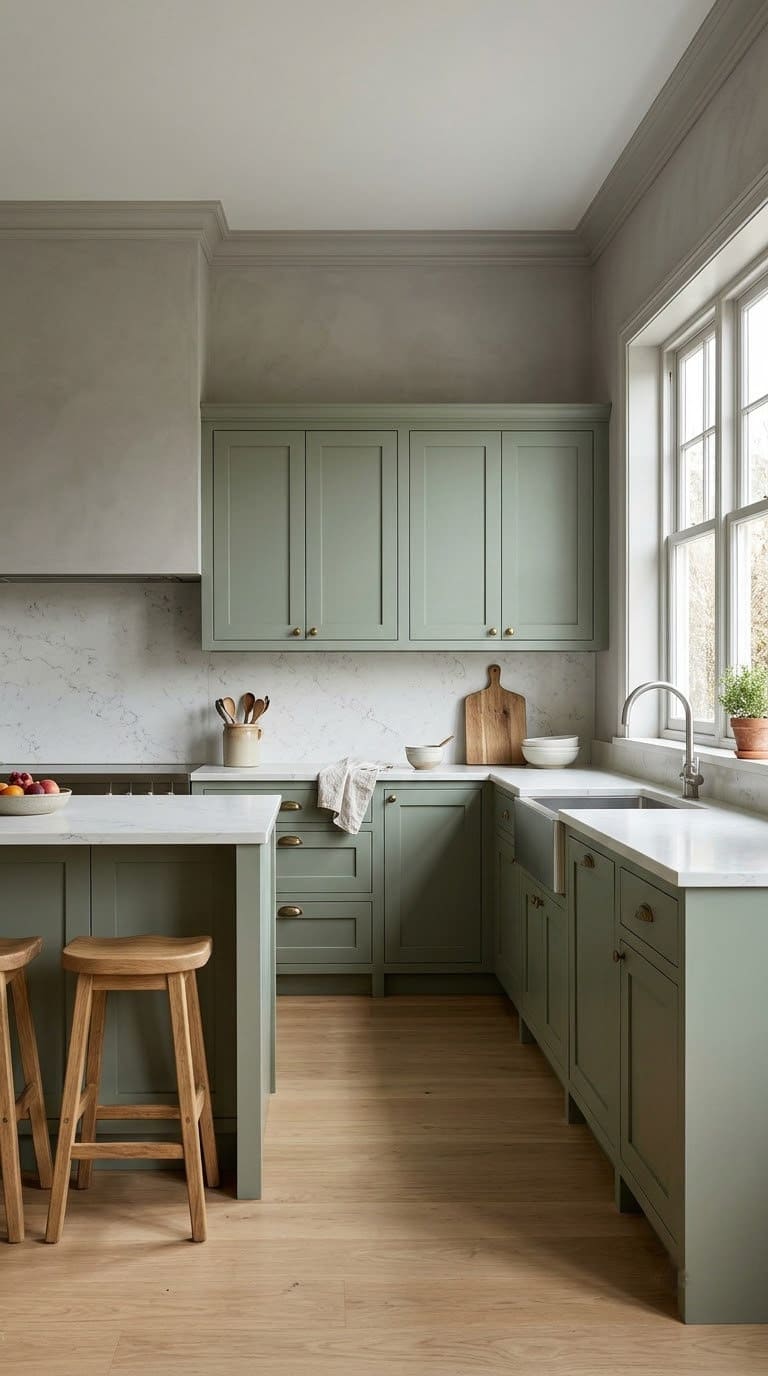
Sage is the color we recommend most often for people who want a little color without a big risk. It sits close to gray on the color wheel, so it feels calm. It also warms a cool kitchen, since the green lifts cool light.
It works best when the gray has a green or yellow lean. Light to medium grays are the sweet spot.
- Walls: a light to medium gray with yellow or green undertones.
- Counters: white, or butcher block for a natural look.
- Backsplash: cream, white or a soft stone tile.
- Hardware: brass or matte black.
- Accent: warm wood, cream linen and a few plants.
Our sage green kitchen ideas show how to style it. Our take: if your wall is a steel-blue gray, test the sage first. It can look flat beside a very cool wall.
9. Teal
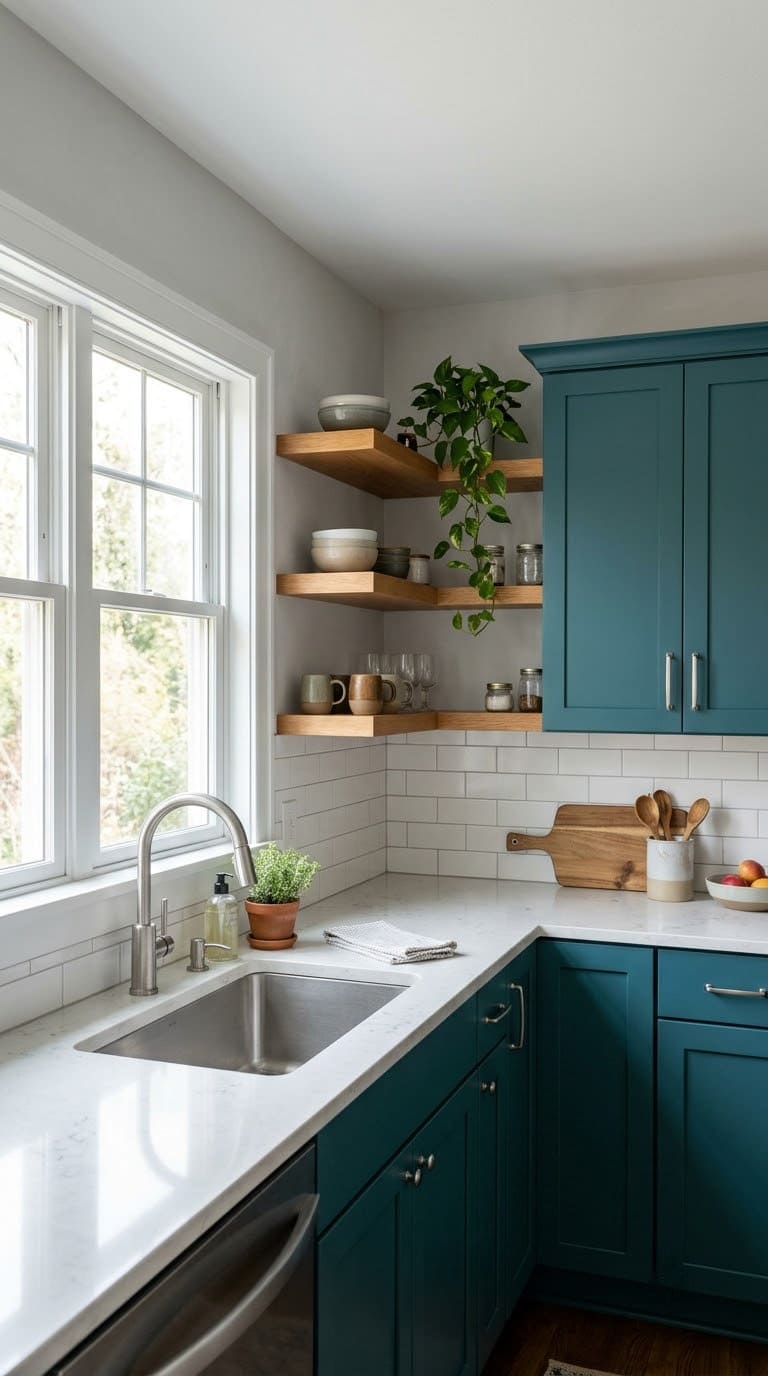
Teal is bold, so we’d keep everything around it quiet. It’s cool and strong, and it needs warm wood and white or silver to balance it. Without those, it can feel heavy.
Pair it with a cool-toned gray. Then add one warm element, like a wood shelf, so the room doesn’t turn icy.
- Walls: a cool-toned gray.
- Counters: white stone or quartz.
- Backsplash: white tile.
- Hardware: silver or brushed nickel.
- Accent: warm wood shelves.
Our take: try a two-tone version. Teal on the lowers, white or pale gray on the uppers, and a wood shelf between. It gives you the color without the weight.
10. Dusty Rose, Coral or Mustard
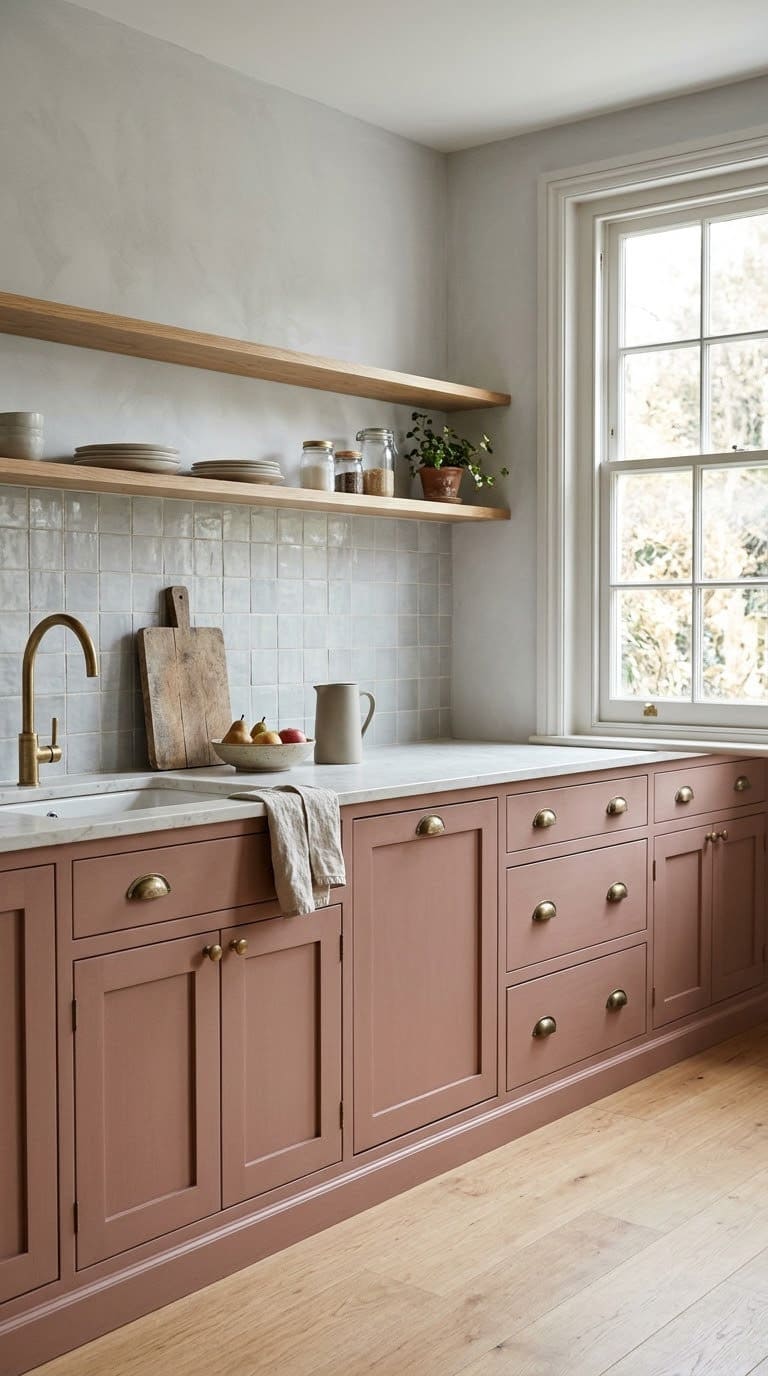
These are the colors we’d use as accents, not as the main show. Muted dusty rose and coral look lively against pale gray. Mustard looks good beside gray tile.
They’re bold, so we’d paint only an island or a run of lower cabinets. If you love the color, repeat it once in a small item like a runner or a bowl.
- Walls: a pale gray.
- Counters: white or a veined stone.
- Backsplash: gray tile for mustard, white tile for dusty rose.
- Hardware: brass for rose, black for mustard.
- Accent: a wood island top and a few cream details.
Our take: skip bright red, orange and hot pink on cabinets. They shout against gray, and they date fast.
What Countertops, Backsplash and Hardware Go With Them?
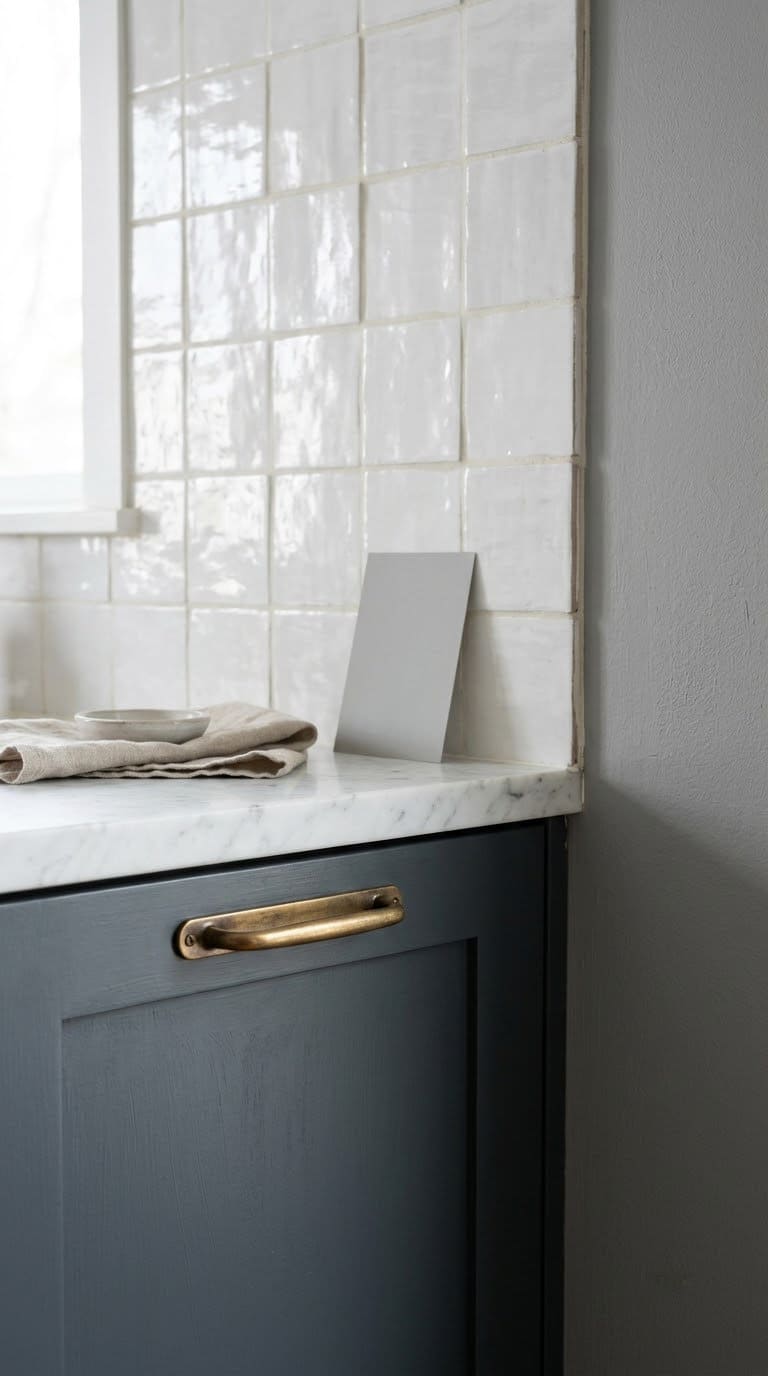
Cabinets don’t work alone. One extra material can balance a bold color, like warm wood beside teal or gray tile beside mustard.
Keep the backsplash quiet when the cabinets are bold. White subway tile lets navy, black or teal stand out. If the cabinets are quiet, you can add a patterned tile.
Pick one metal. Brass warms cool gray, matte black sharpens it, and silver suits teal and navy. Our cabinet hardware ideas show sizes and finishes.
Color Combination Cheat Sheet
Use this table to build a full palette fast. Each row gives one workable set. It is our pairing guide, built on the designer advice above.
| Cabinet | Wall gray | Counter | Backsplash | Hardware |
|---|---|---|---|---|
| Warm white | Warm gray or greige | White stone, butcher block | White or pale gray | Brass or black |
| Cream | Warm gray | Honed stone, wood | Off-white, beige-gray | Aged brass |
| Tonal gray | Pale gray | White or light | White subway | Brass or black |
| Light oak | Pale to mid gray | White or light gray | White | Black or nickel |
| Black | Light gray | White or light | White | Brass |
| Navy | Cool mid-gray | White | White subway | Brass or nickel |
| Walnut | Charcoal | Cream or white | Glossy white | Brass or bronze |
| Sage | Gray with green or yellow lean | White, wood | Cream or white | Brass or black |
| Teal | Cool gray | White | White | Silver |
| Rose or mustard | Pale gray | White, veined | Gray or white | Brass or black |
How Do You Balance Three Colors in a Gray Kitchen?
A simple rule keeps a gray kitchen from feeling random. Use about 60% of a quiet color, about 30% of a second color, and about 10% of an accent. This 60-30-10 ratio is a common design guide, not a hard rule.
In a gray-walled kitchen, the walls and big surfaces often take the 60%. The cabinets take the 30%. Hardware, stools, plants and small items take the 10%.
Now see what that looks like in three complete kitchens.
- Calm and warm: greige walls, cream cabinets, butcher block island, aged brass pulls, sage towels.
- Crisp and modern: pale gray walls, matte black cabinets, white counters, brass pulls, wood shelves.
- Rich and moody: charcoal walls, walnut cabinets, cream counters, bronze pulls, warm under-cabinet light.
Pick the recipe closest to your style. Then adjust it with your own gray and your own light.
Which Cabinet Color Suits Your Kitchen?
| If your kitchen is | Pick | Why |
|---|---|---|
| Small or narrow | Warm white, cream, light oak | Light colors keep it open |
| Large and bright | Navy, black, walnut | Room for drama |
| North-facing | Gray-green, warm cream | Warms cool light |
| West-facing | Navy, blue-gray | Balances amber light |
| Traditional | Cream, walnut | Warm and classic |
| Modern | Black, tonal gray | Sleek and graphic |
How Do You Paint Cabinets So the Finish Lasts?
If you’re repainting, prep matters. Contractor Karl Kardel, quoted in Apartment Therapy, says to always wash cabinets with a degreaser first. You’ll be shocked how greasy they are, he says.
He also says cabinets feel dry in 24 hours but need 15 to 20 days to cure. Don’t believe one-coat claims. Prime first and use an enamel made for cabinets.
Follow these steps.
- Step 1: Degrease the doors and boxes, and let them dry.
- Step 2: Prime with a cabinet-grade primer.
- Step 3: Apply the first coat of cabinet enamel.
- Step 4: Sand lightly, then apply a second coat.
- Step 5: Let the paint cure for 15 to 20 days before heavy use.
Kardel says latex enamels aren’t appropriate for cabinets. They’re softer and need more touch-ups.
Interior designer Alicia Bailey also notes a budget paint job isn’t a lifetime fix. It can last a couple of years.
What Does Feng Shui Say About Gray Walls?
Feng shui is a tradition, not a science. It still offers a handy frame. Anjie Cho, an architect and feng shui expert, links gray, white and metallic colors to the metal element.
She also ties metal to circular shapes. A round pendant light or round knobs can bring that in.
Warm wood cabinets or a green cabinet add balance to all that metal. That’s the traditional idea, and it fits the design advice above.
How Do You Test Colors in Your Kitchen?
- Step 1: Buy samples of two or three finalists.
- Step 2: Paint a large patch or board and prop it next to the wall.
- Step 3: Check it in the morning, at noon and under evening lights.
- Step 4: Hold the sample next to your countertop and backsplash.
- Step 5: Leave it up for a few days.
Paint your samples on paper and view them in different parts of the kitchen at different times. Tones change from natural to artificial light and from sun to cloud.
Common Mistakes to Avoid
- Ignoring the gray’s undertone. Match it, or the pairing will feel off.
- Gray on gray with no contrast. Go at least two shades deeper.
- Skipping degreasing. Cabinets are greasier than you think, and paint won’t stick.
- Using latex wall paint on cabinets. Soft paint scuffs. Use enamel made for cabinets.
- Choosing by one light. Light direction changes the color all day.
- Going dark in a small kitchen. Dark cabinets can make a small room feel closed in.
Frequently Asked Questions
What color cabinets look best with gray walls?
Warm white, cream, navy, sage and light oak are safe picks. Match the cabinet to your gray’s undertone.
Can I have gray cabinets with gray walls?
Yes, if there’s enough contrast between them. Make the cabinets at least two shades deeper.
What color cabinets go with dark gray walls?
Light colors keep the room open. Light oak, warm white and cream all work.
Should kitchen cabinets be lighter or darker than the walls?
Either works if the contrast is clear. Similar colors give a monochrome look, and darker colors stand out.
How long do painted cabinets last?
It depends on prep and paint. Plan on 15 to 20 days to cure, and expect a budget job to last a couple of years.
Your Weekend Plan
- Friday: do the white card test and note your kitchen’s light.
- Saturday: buy samples and paint a large board.
- Sunday night: check it under your lights, then choose.
Start with the lower cabinets or an island if you want a lower-risk try.
Never miss an update — choose FarmFoodFamily as your preferred source on Google.
How it works: Tap the button below to open Google's settings page, then check the box next to FarmFoodFamily.
Tap the checkbox to turn it blue — that's how you know it's set.