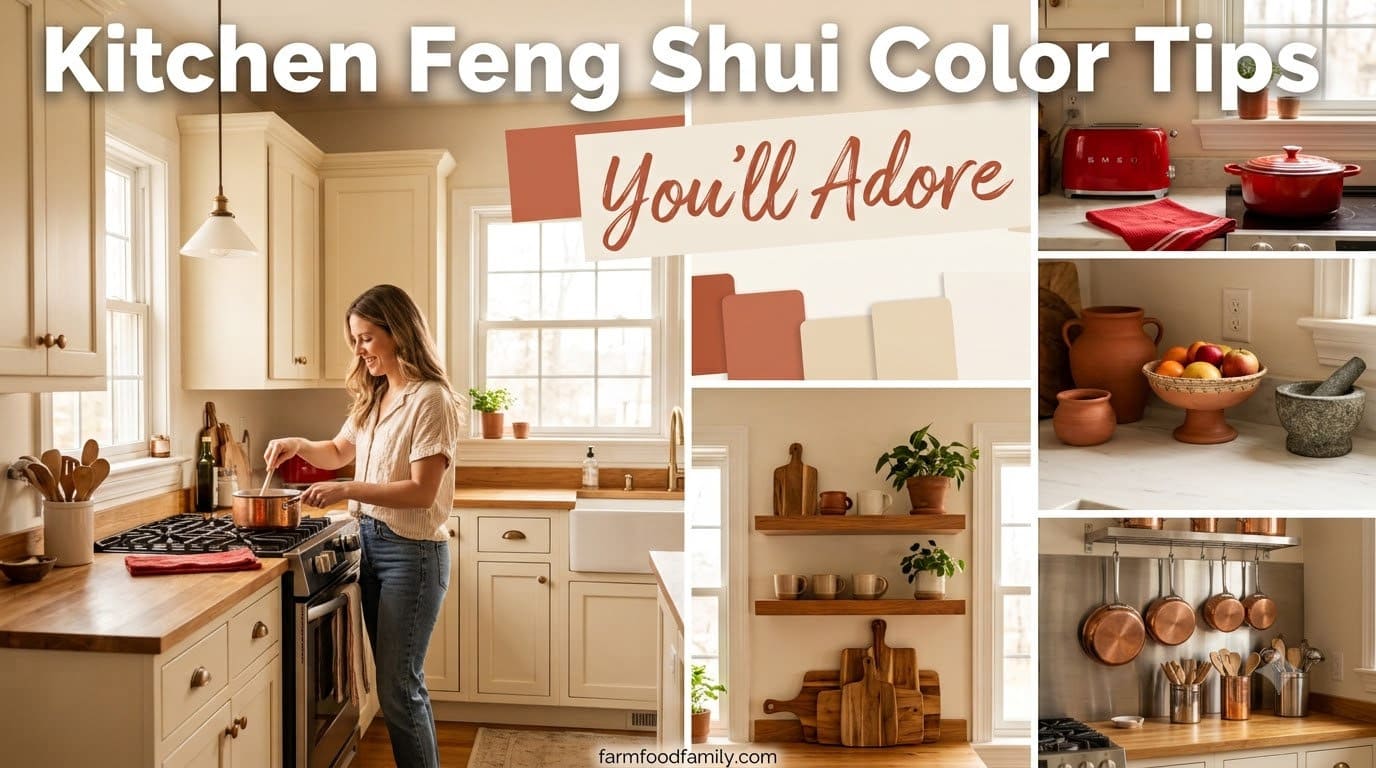
These Colors Are Good for Your Kitchen, According to Feng Shui — It’s All About Balancing the Five Elements
The kitchen is the one room in feng shui that’s said to contain all five elements at once, ruled by fire (your stove), and real color-appetite research backs up more of this than you’d expect, for reasons that have nothing to do with energy.

Never miss an update — choose FarmFoodFamily as your preferred source on Google.
How it works: Tap the button below to open Google’s settings page, then check the box next to FarmFoodFamily.
Tap the checkbox to turn it blue — that’s how you know it’s set.
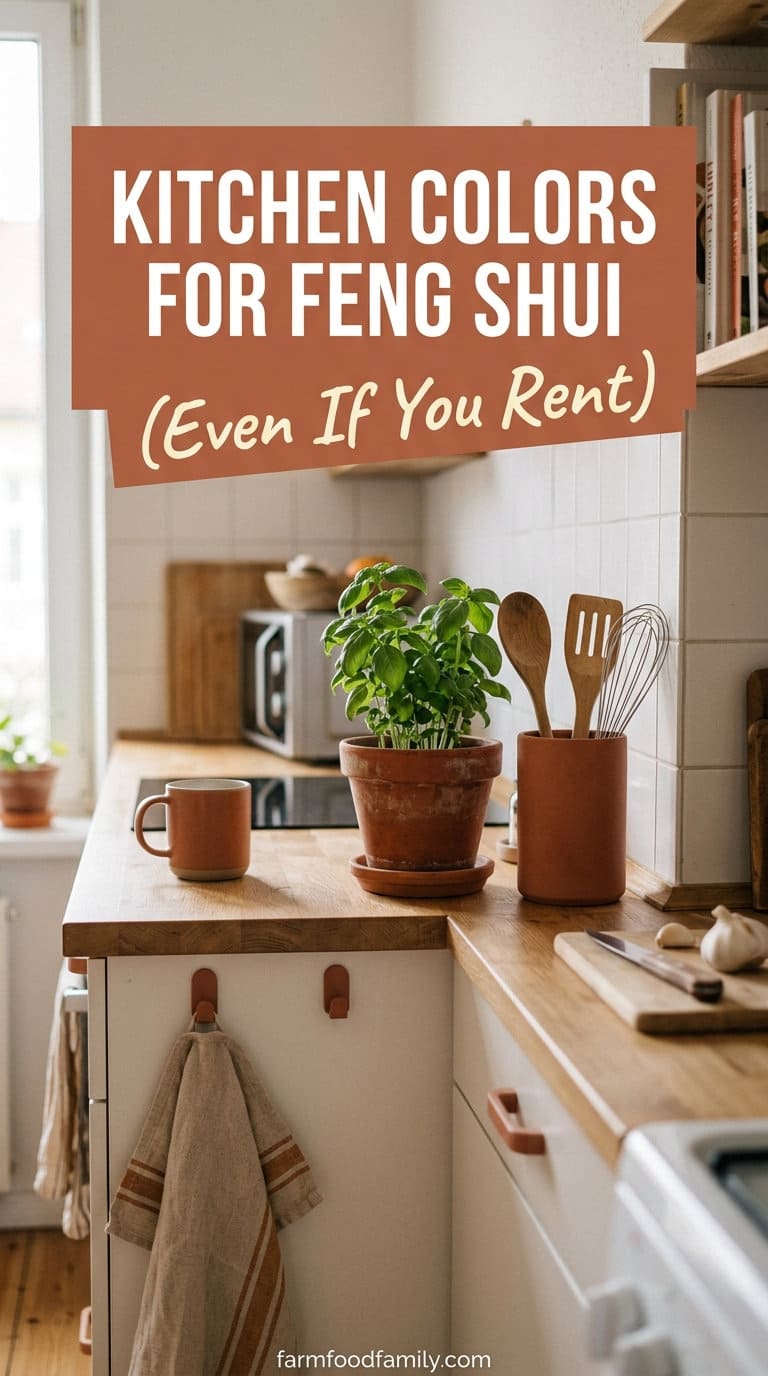
Zoë Vita James, a feng shui consultant and co-host of the podcast “Feng Shui: The Real Thing,” treats the kitchen’s color palette as a balancing act: the stove already brings intense fire energy into the room, and the surrounding colors are meant to support that energy without overwhelming it.
Here’s how each element translates into real color choices, and the real science that backs up more of this than pure symbolism.
Fire element: warm reds, oranges, and corals, used as accents
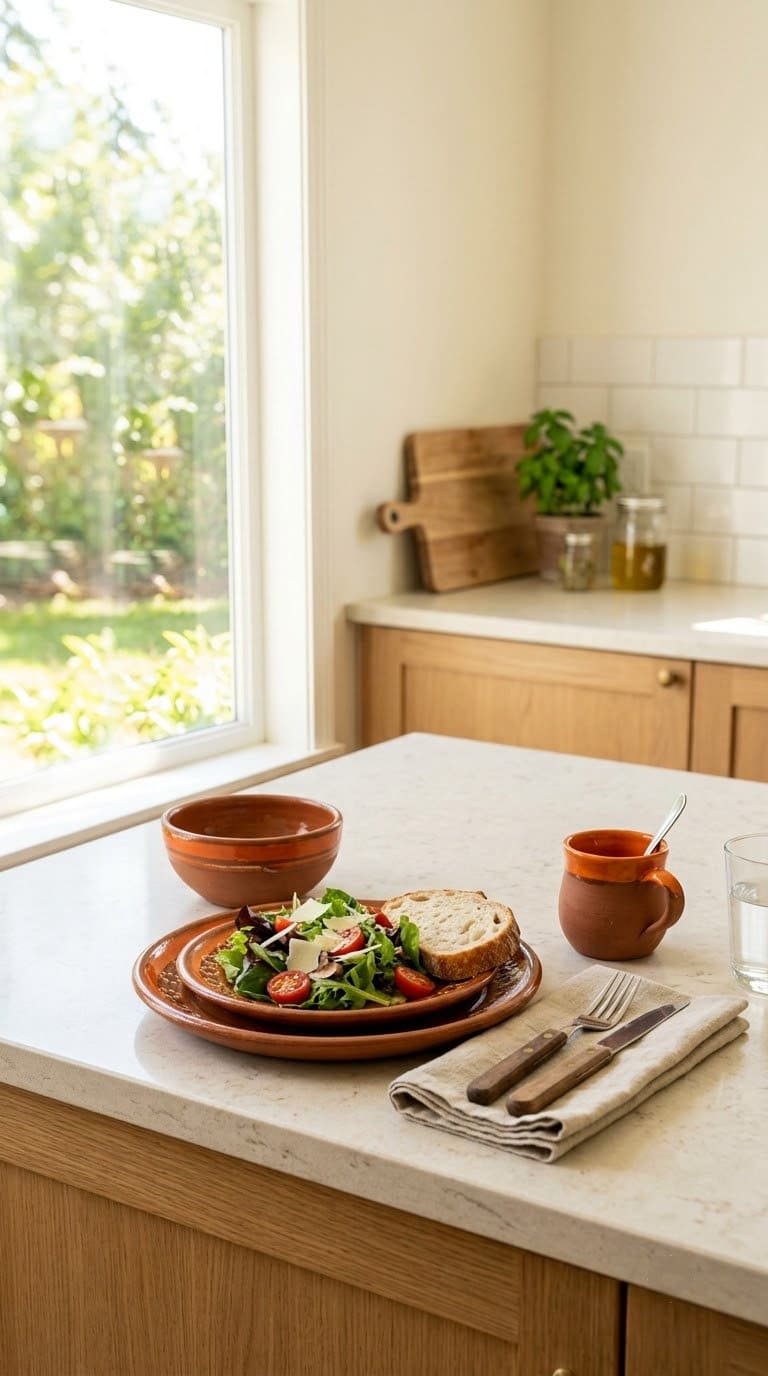
Fire is already present in the kitchen through the stove itself, so feng shui treats additional red and orange as something to use in moderation rather than avoid entirely, a few warm accents (a runner, dishware, an accent wall) rather than an all-red room.
There’s real, documented color psychology behind why this works when used moderately: red and orange genuinely increase appetite and arousal in real research, tied to associations with ripe fruit and fresh meat and a measurable increase in heart rate. This is the same effect fast-food chains lean on deliberately.
Used as an accent, this is a real, appetite-supporting choice; used as the dominant color of an entire kitchen, the same research shows the effect can tip into “agitating” or even trigger unhealthy-food associations, which likely explains why one competitor source recommends red/orange in moderation while another recommends avoiding it outright, the real research suggests dosage is the actual variable, not a flat yes-or-no.


Earth element: soft yellows, beiges, and warm neutrals
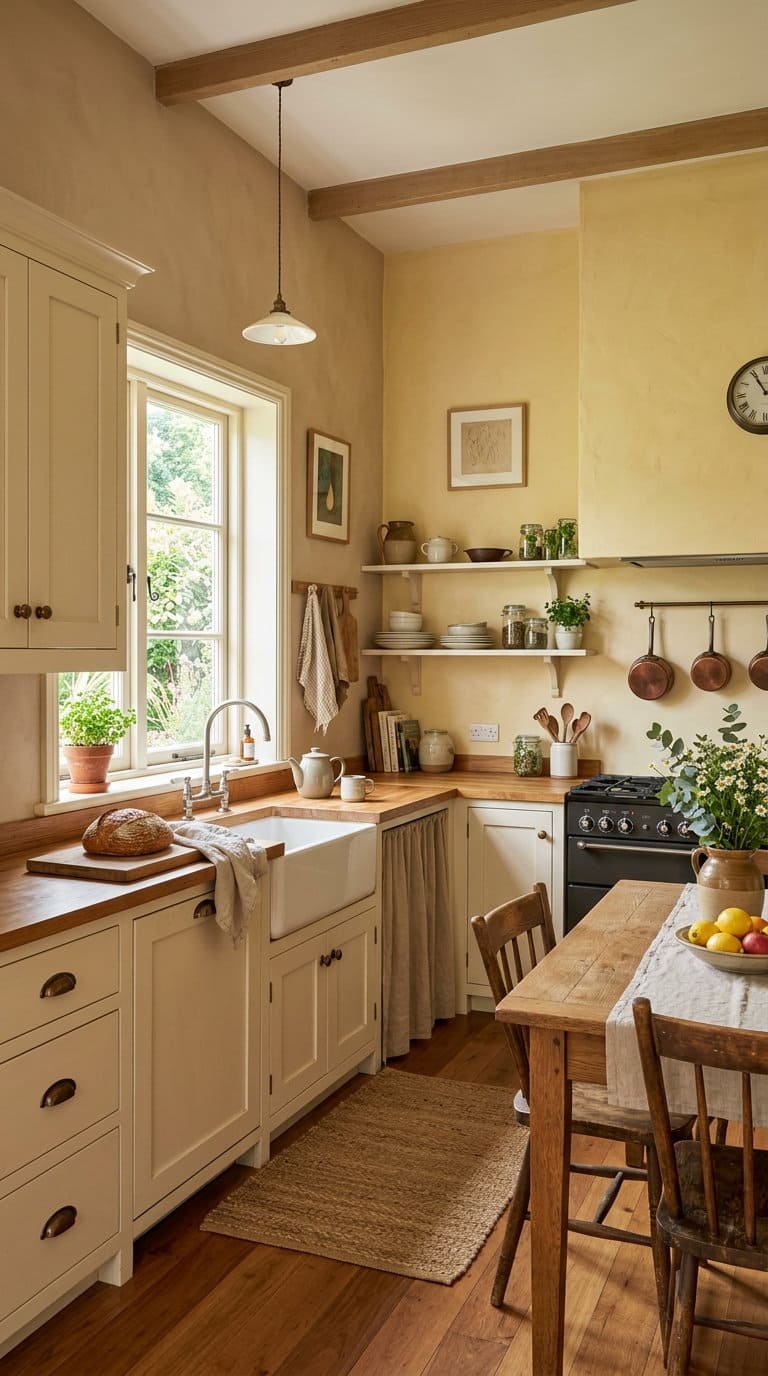
Yellows, beiges, and warm browns are consistently favored across every source, tied to health, relationships, and a grounding, welcoming feel.
Earth tones are considered a stabilizing counterweight to the kitchen’s dominant fire energy, warm without adding more heat to the room’s energetic balance.
Wood element: sage and muted greens
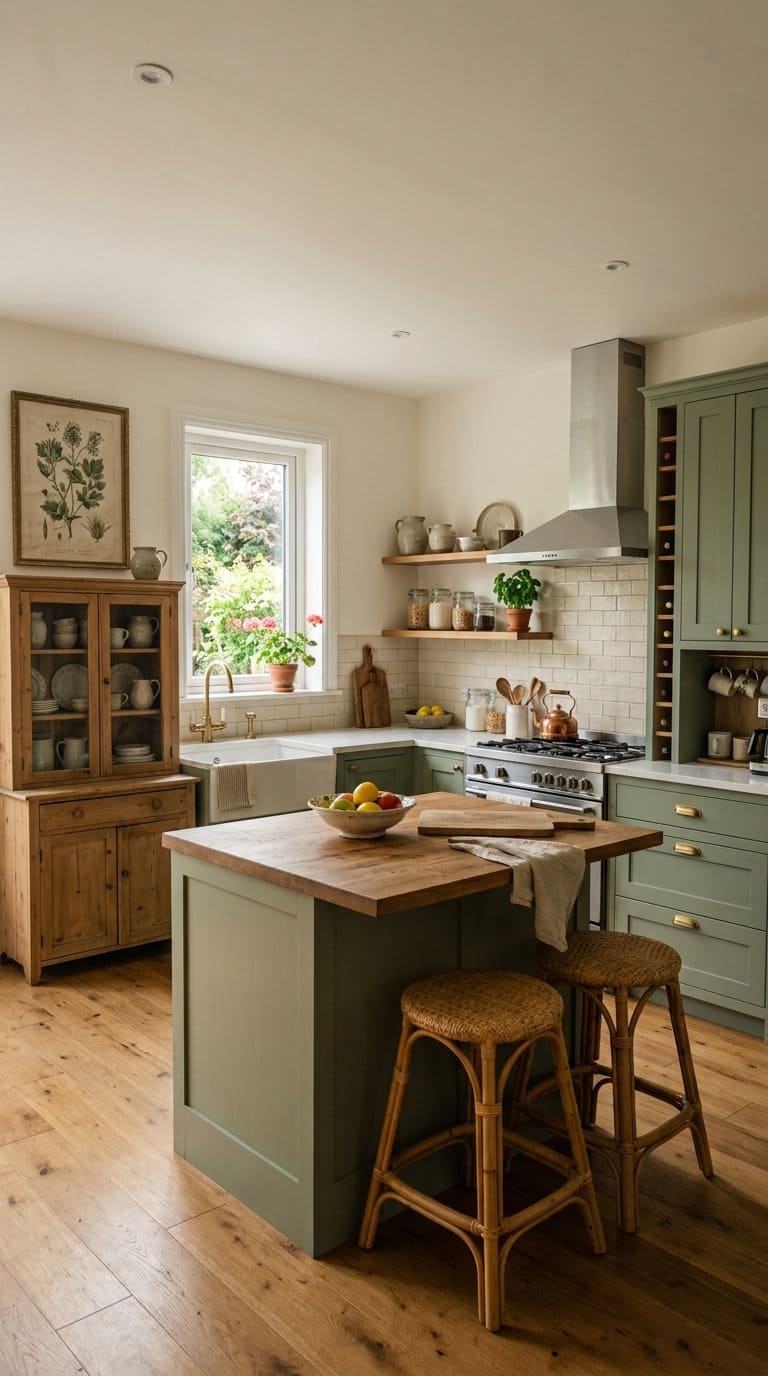
Green is favored to “feed” the fire element in the traditional five-element production cycle (wood fuels fire), while also bringing a calming, natural quality to a room that can otherwise feel intense.
Our sage green kitchen ideas guide has real examples of this exact palette done well.
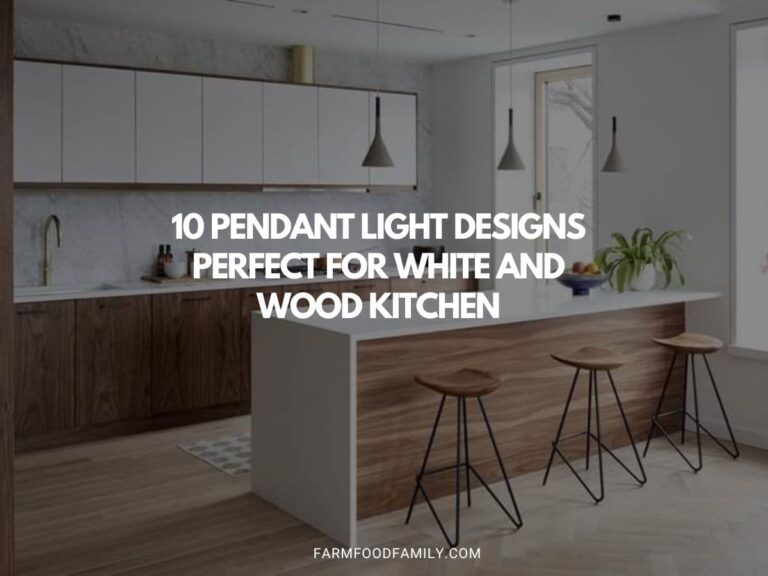
Metal element: whites, light grays, and soft silvers
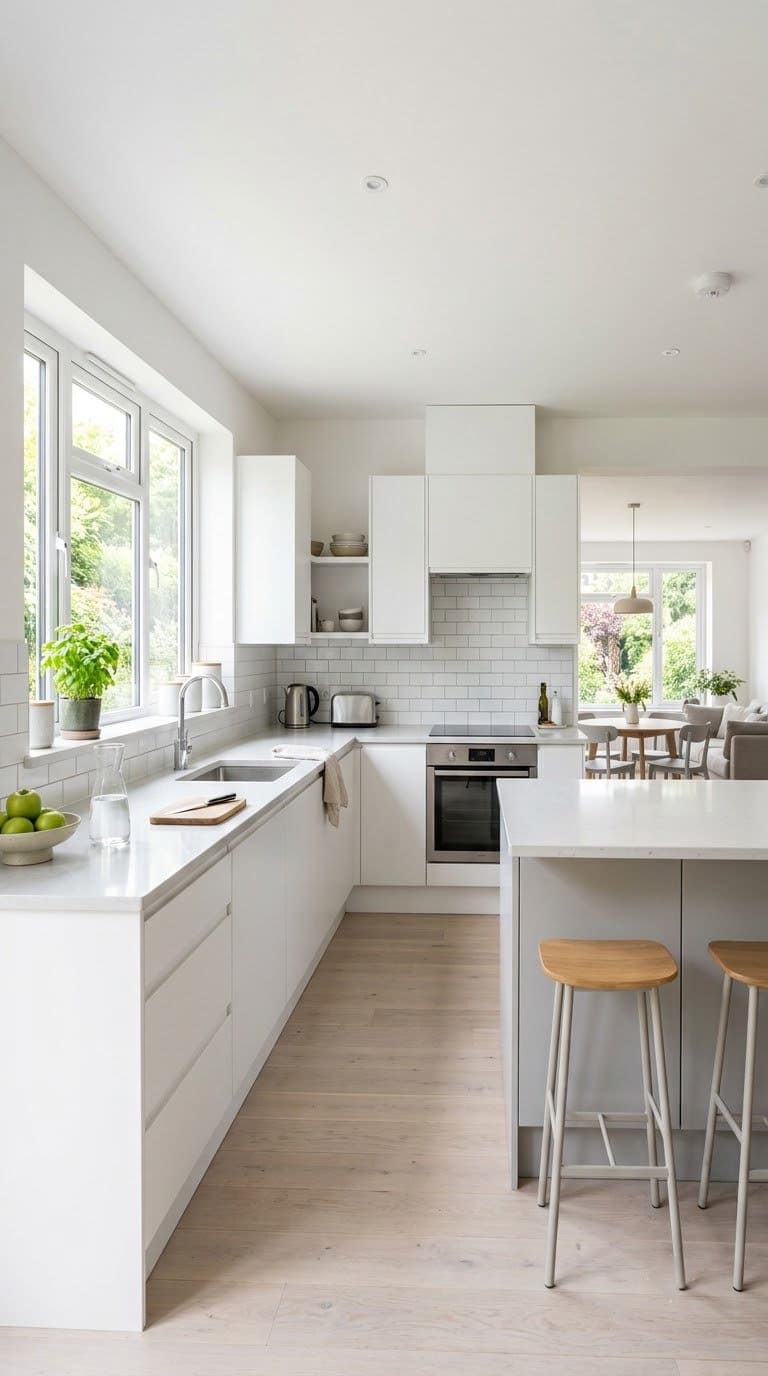
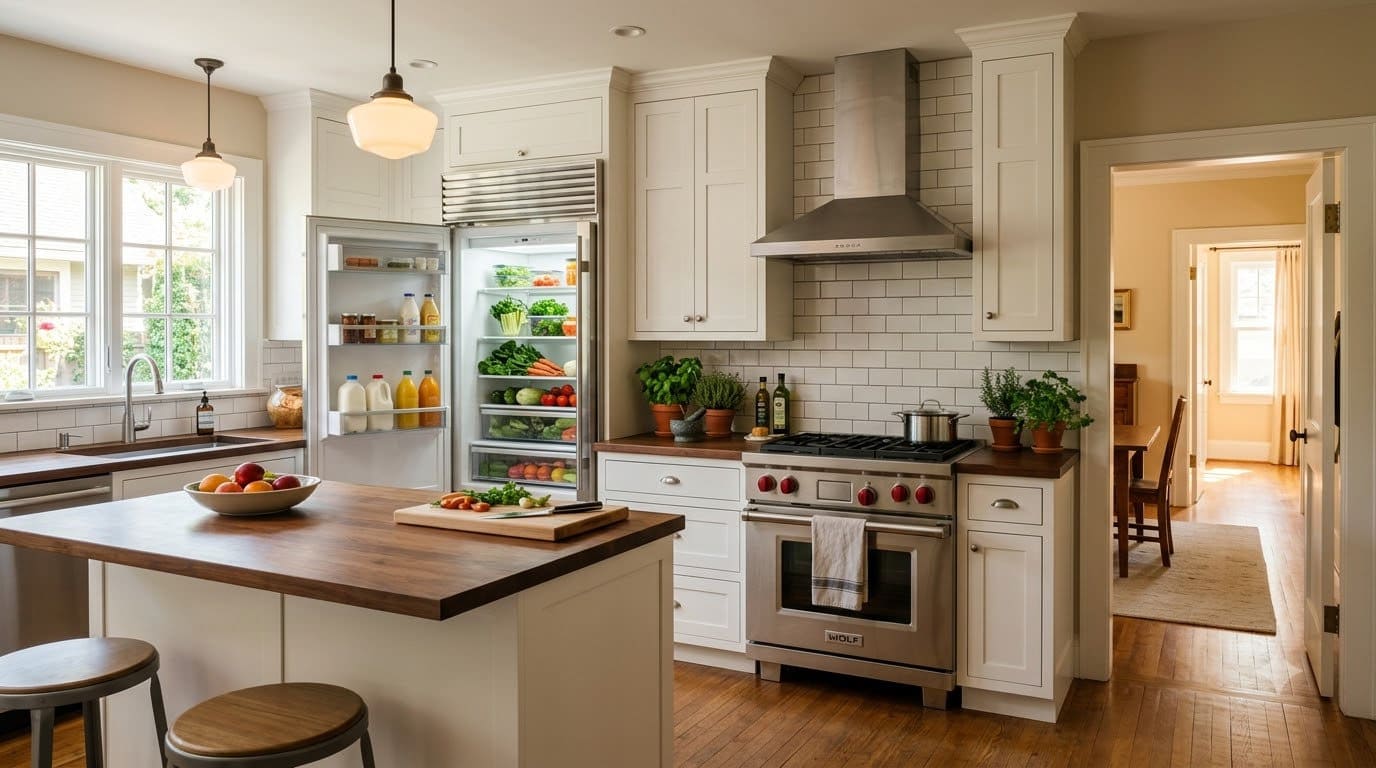
White is treated as the safest, most versatile kitchen color choice in feng shui, associated with purity and clarity, and it pairs well with the genuinely practical need for a kitchen to read as clean.
Our best white kitchen cabinet ideas guide covers this palette in more depth, along with types of kitchen cabinets if you’re deciding on cabinetry alongside wall color.
Water element: navy and deep blues, used sparingly and deliberately
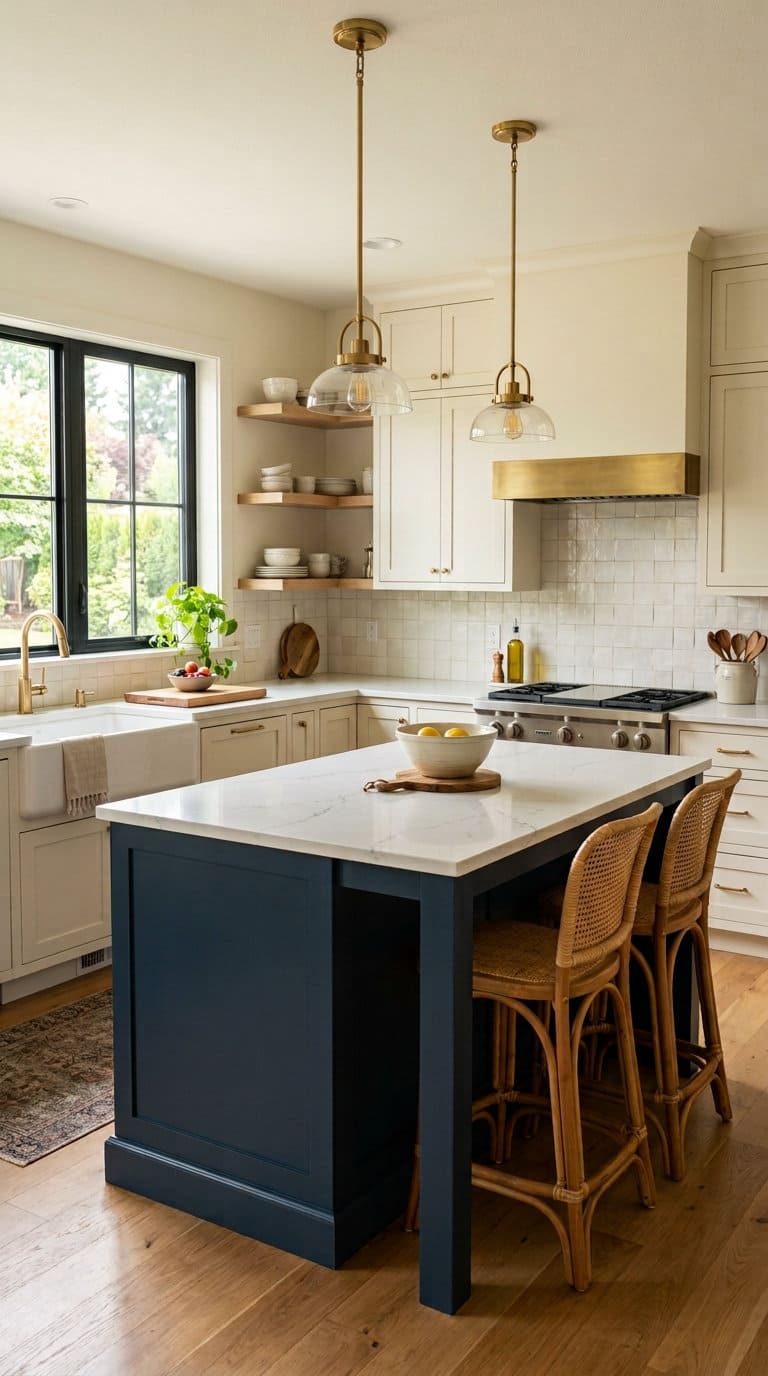
This is the most debated color in feng shui kitchen guidance, one source recommends navy for kitchens used for social gathering (tied to connection and wisdom), while another treats blue with more caution given water and fire’s clashing relationship in the five-element system.
The real appetite-psychology research actually supports the more cautious take: blue and purple tend to suppress appetite in documented research, the opposite effect of the fire-element reds and oranges.
A small navy accent, a runner, dishware, a single accent wall, is unlikely to meaningfully affect appetite, but an entire kitchen dominated by cool blue tones is working against the room’s basic function in a way that’s measurable, not just symbolic.
The five elements at a glance
| Element | Colors | Real-world backing |
|---|---|---|
| Fire | Warm reds, oranges, corals (accents only) | Increases appetite/arousal in moderation; agitating as a dominant color |
| Earth | Soft yellows, beiges, warm neutrals | Consistently favored, low-risk grounding tone |
| Wood | Sage and muted greens | Calming, “feeds” the fire element |
| Metal | Whites, light grays, soft silvers | Reads as clean and versatile |
| Water | Navy, deep blues (used sparingly) | Suppresses appetite in documented research |
The paint safety layer no feng shui color guide mentions
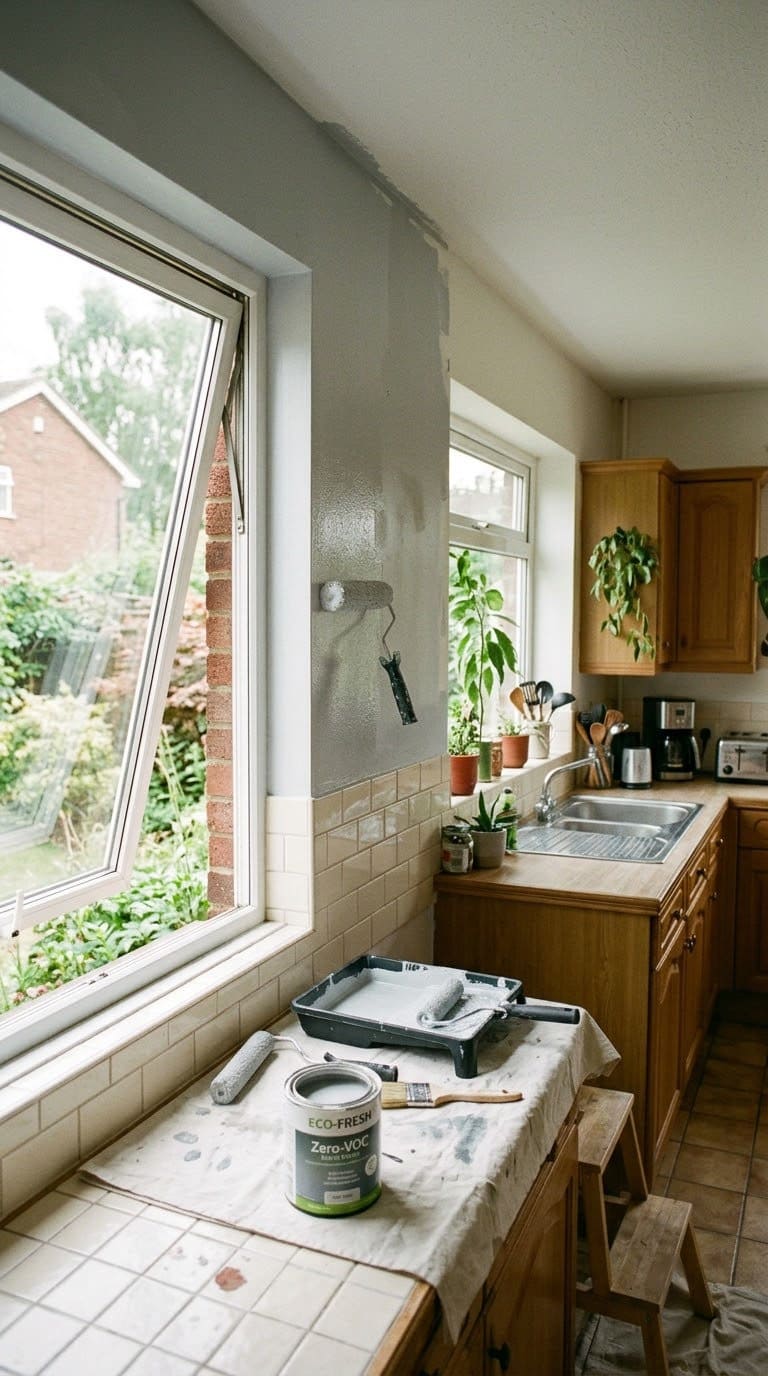
Whatever color you land on, how you apply it matters for a real reason neither feng shui source raises: a freshly painted room can spike VOC (volatile organic compound) concentrations to as much as 1,000 times background indoor air levels for several hours after painting, according to real air-quality research.
The EPA’s Indoor AirPlus guidance recommends third-party certified low- or zero-VOC paints, and specifically recommends zero-VOC semi-gloss finishes for kitchens, both for moisture resistance and for easier cleaning around food-prep surfaces.
If you’re repainting to hit one of the color goals above, checking the VOC rating on the can matters more than the shade itself.
What we learned the hard way
The red-or-not contradiction between different feng shui sources trips people up more than any other color decision on this list. Treating it as a dosage question, a warm accent yes, an entire room no, resolves the apparent disagreement and matches what the real appetite research actually shows.
The VOC timing mistake is the other thing people don’t plan around. Repainting a kitchen right before a big gathering or moving in furniture and food immediately afterward means dealing with peak off-gassing at the worst possible time, waiting the recommended 48 to 72 hours before heavy use, especially with sensitive household members, avoids this entirely.
FAQs
Is red really good or bad for a kitchen’s feng shui? Both, depending on dosage. A warm accent is broadly supported and has real appetite-science backing; an entire kitchen dominated by red risks feeling agitating, which is likely why sources disagree.
What’s the single safest color choice if I don’t want to overthink this? Soft earth tones (warm beige, buttery yellow) are the most consistently recommended across every source checked, low-risk both symbolically and in terms of general appeal.
Do I need zero-VOC paint specifically, or is low-VOC good enough? Low-VOC is a meaningful improvement over standard paint, but zero-VOC is specifically recommended for kitchens given food-prep proximity and typically more limited ventilation flexibility than other rooms.
Can I use navy or dark blue in my kitchen at all? Yes, as an accent (an island, a runner, dishware) rather than the dominant wall color, this keeps the appetite-suppressing effect minimal while still incorporating the color if you like it.
Related reading on farmfoodfamily.com: for the placement and safety side of kitchen feng shui beyond color, see our 5 Feng Shui Kitchen Rules for Better Health and Abundance.
Related Posts
- Sage Green Kitchen Ideas
- Best White Kitchen Cabinet Ideas
- Types of Kitchen Cabinets
- Two-Tone Kitchen Ideas
- Blue Kitchen Cabinet Ideas
- Choosing Kitchen Cabinets
Never miss an update — choose FarmFoodFamily as your preferred source on Google.
How it works: Tap the button below to open Google's settings page, then check the box next to FarmFoodFamily.
Tap the checkbox to turn it blue — that's how you know it's set.