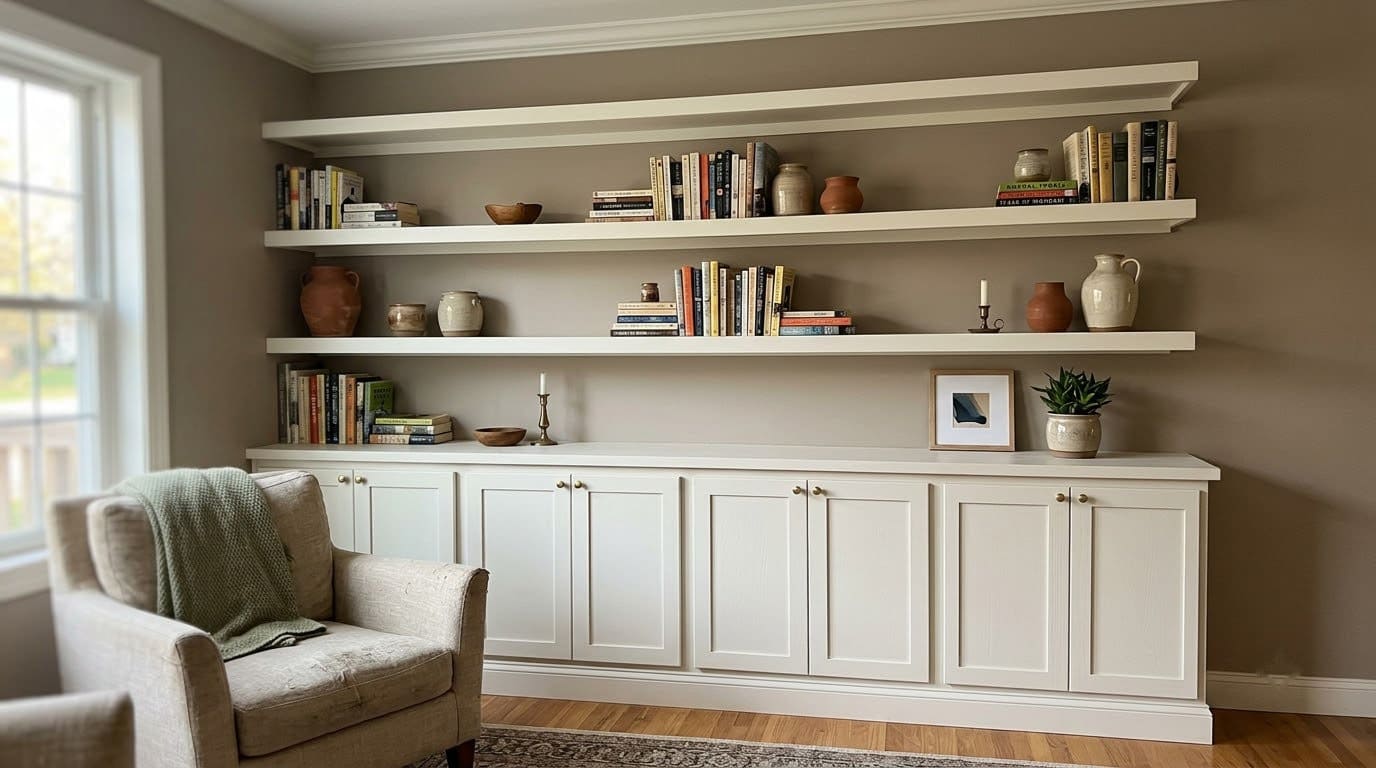
6 Feng Shui Rules for Exposed Beams You Should Know Before You Renovate
Feng shui has always treated an exposed beam as a real weight pressing down on whoever sits or sleeps beneath it, and it turns out there’s a genuine, peer-reviewed psychology study explaining why a lowered ceiling actually changes how you think, not just how you feel.


Never miss an update — choose FarmFoodFamily as your preferred source on Google.
How it works: Tap the button below to open Google’s settings page, then check the box next to FarmFoodFamily.
Tap the checkbox to turn it blue — that’s how you know it’s set.
Kartar Diamond, founder of Feng Shui Solutions™, treats exposed beams as one of the more consequential structural features a home can have, capable of creating what’s called “Sha Qi,” downward-pressing energy that’s thought to disturb sleep, thinking, and even relationships depending on where the beam falls.
Here are the six rules that matter most, paired with the real science and renovation safety facts that back several of them up beyond symbolism.
1. Never sleep directly under a beam, especially one running crosswise over the bed
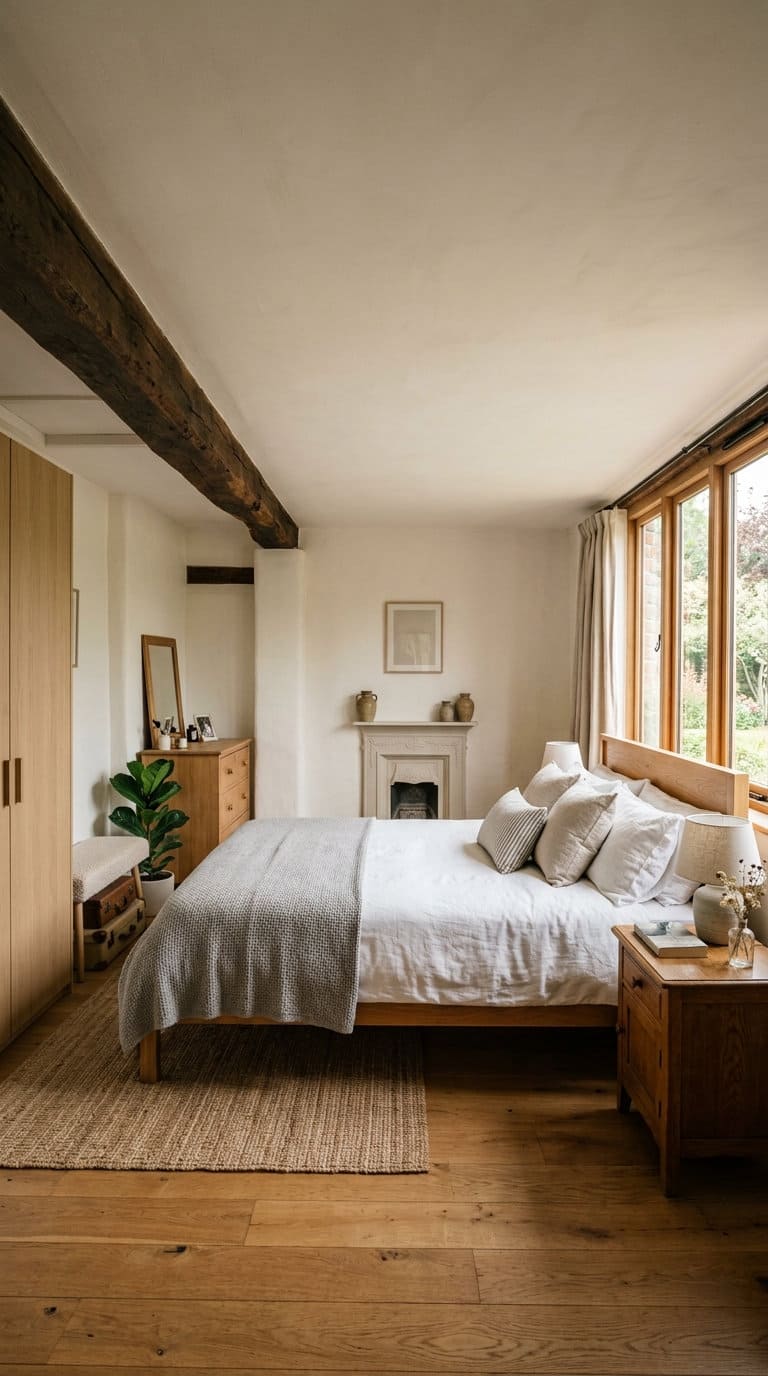
This is the most serious exposed-beam rule in feng shui: a beam running lengthwise across the middle of a bed is considered to symbolically divide a couple, an “invisible curtain” splitting the connection between two people sleeping beneath it.
A beam directly overhead more generally is associated with migraines, sleeplessness, and confused thinking.
The most effective fix, consistently recommended across sources, is simply repositioning the bed so it’s no longer directly under the beam at all, removing you from the concern entirely rather than trying to soften it in place.


2. Avoid placing a desk or favorite seat directly beneath a beam
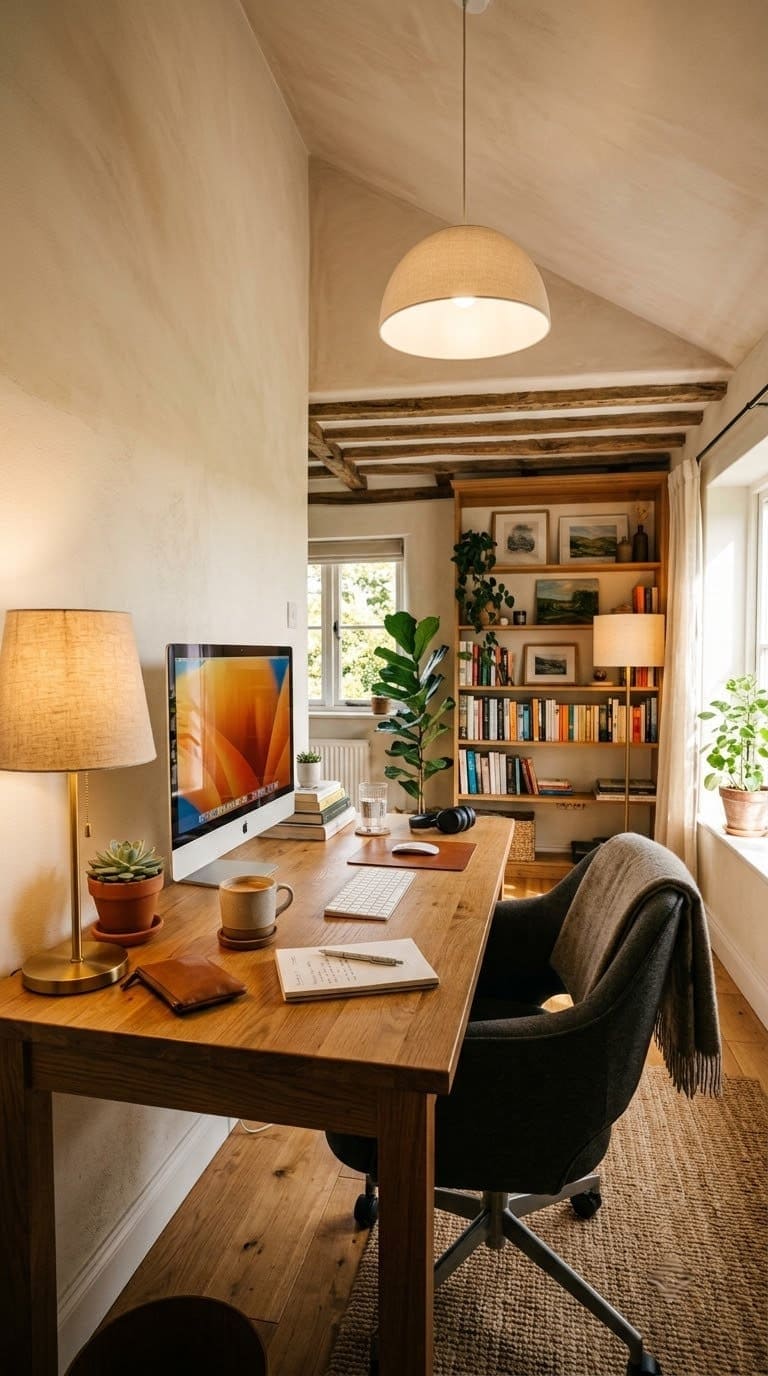
The same downward-pressure concern applies to any spot where you spend extended time, a home office desk, a reading chair, a dining seat. Feng shui treats sustained time under a beam as cumulative, the longer you’re stationary beneath it, the more the effect is thought to compound.
Our home renovation checklist covers planning considerations like this before you commit to a room layout around existing beams.
3. If you can’t move the furniture, soften the beam with fabric
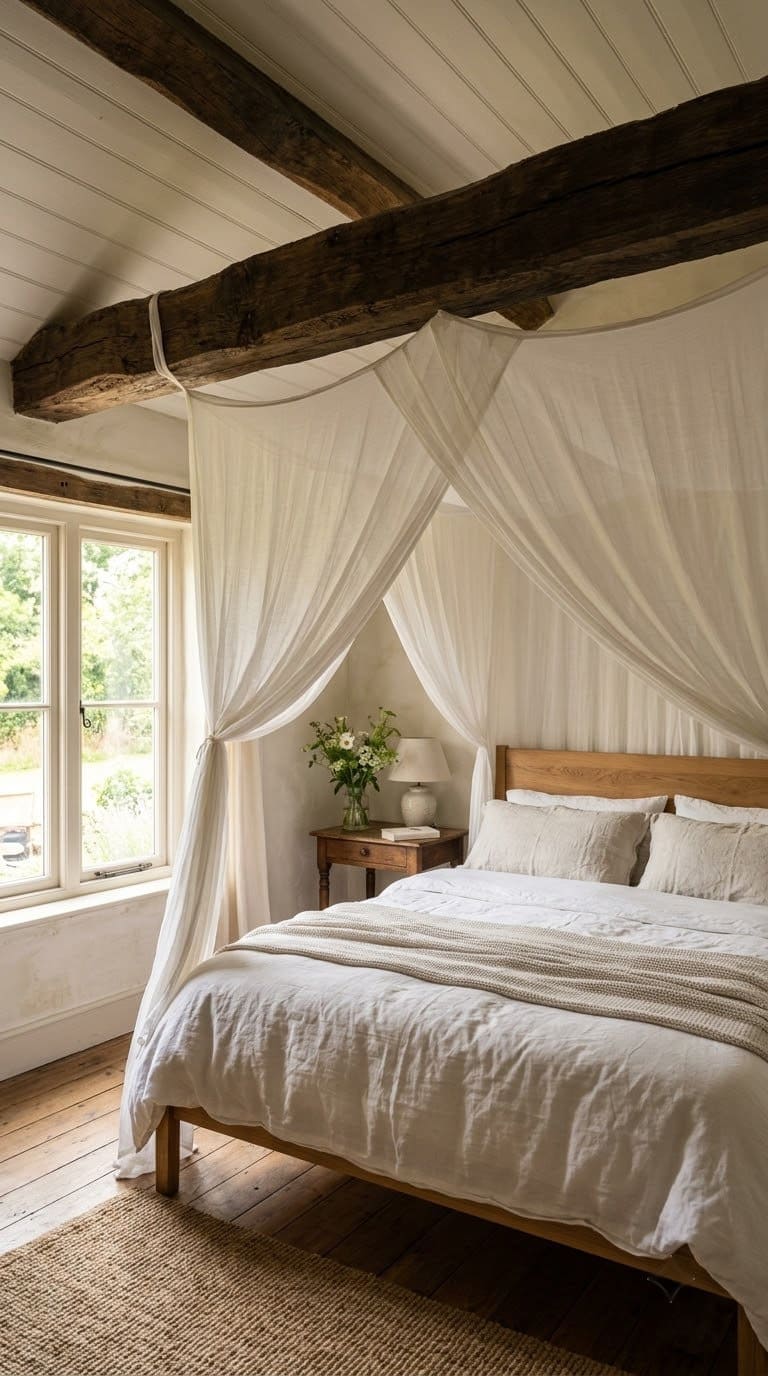
A canopy over a bed, using a light, drapable fabric like muslin or netting (sometimes doubled for more coverage), is the standard remedy when repositioning isn’t realistic.
The goal is visual softening, breaking up the beam’s hard, linear presence rather than leaving it as an unbroken structural line directly overhead.
4. Orient furniture parallel to the beam, not crosswise
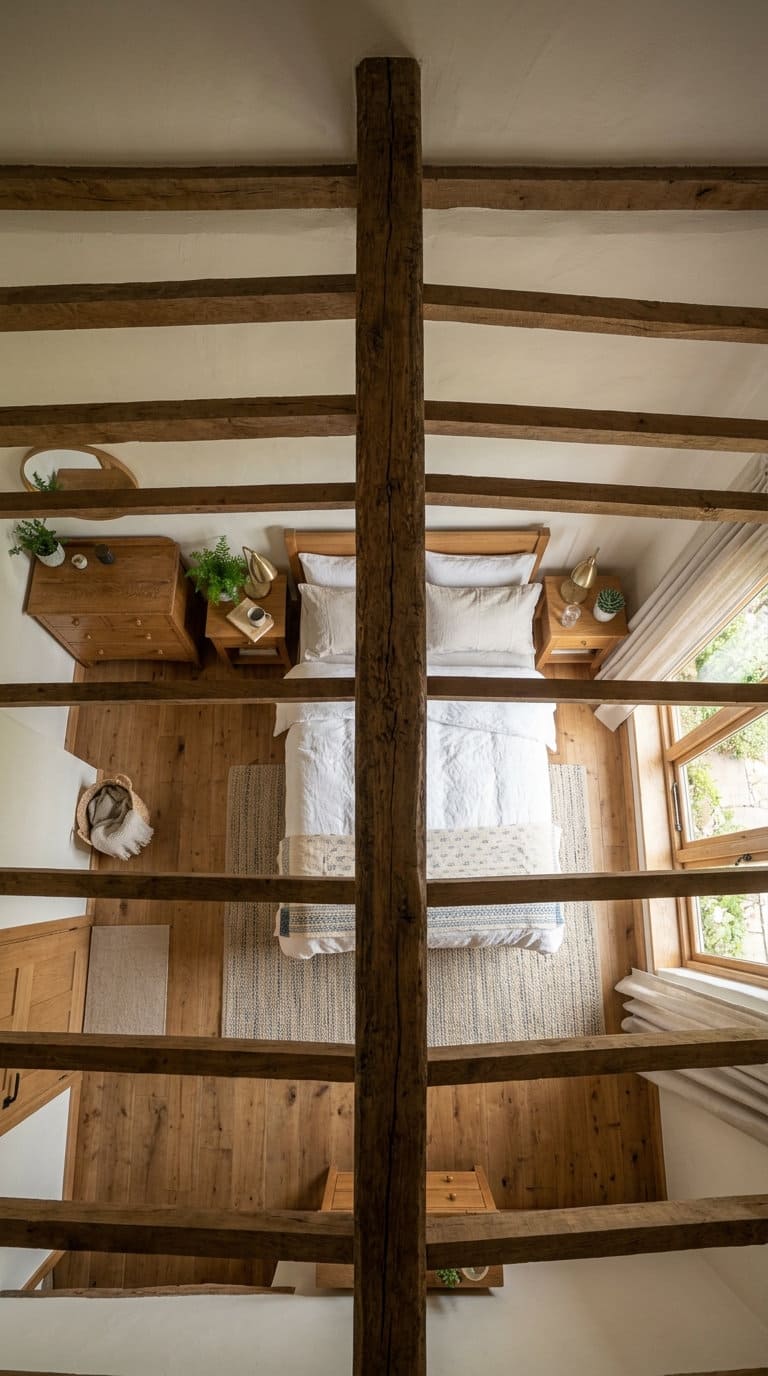
When a beam can’t be avoided entirely, positioning a bed or major furniture piece so it runs parallel to the beam’s long axis (rather than perpendicular, crossing under it) is considered a meaningfully better compromise.
The concern is strongest when a beam crosses directly over the center of where a body lies or sits; running parallel reduces how much of that direct crossing actually occurs.
5. Is there a real psychological reason a beam feels oppressive, or is that just symbolism?
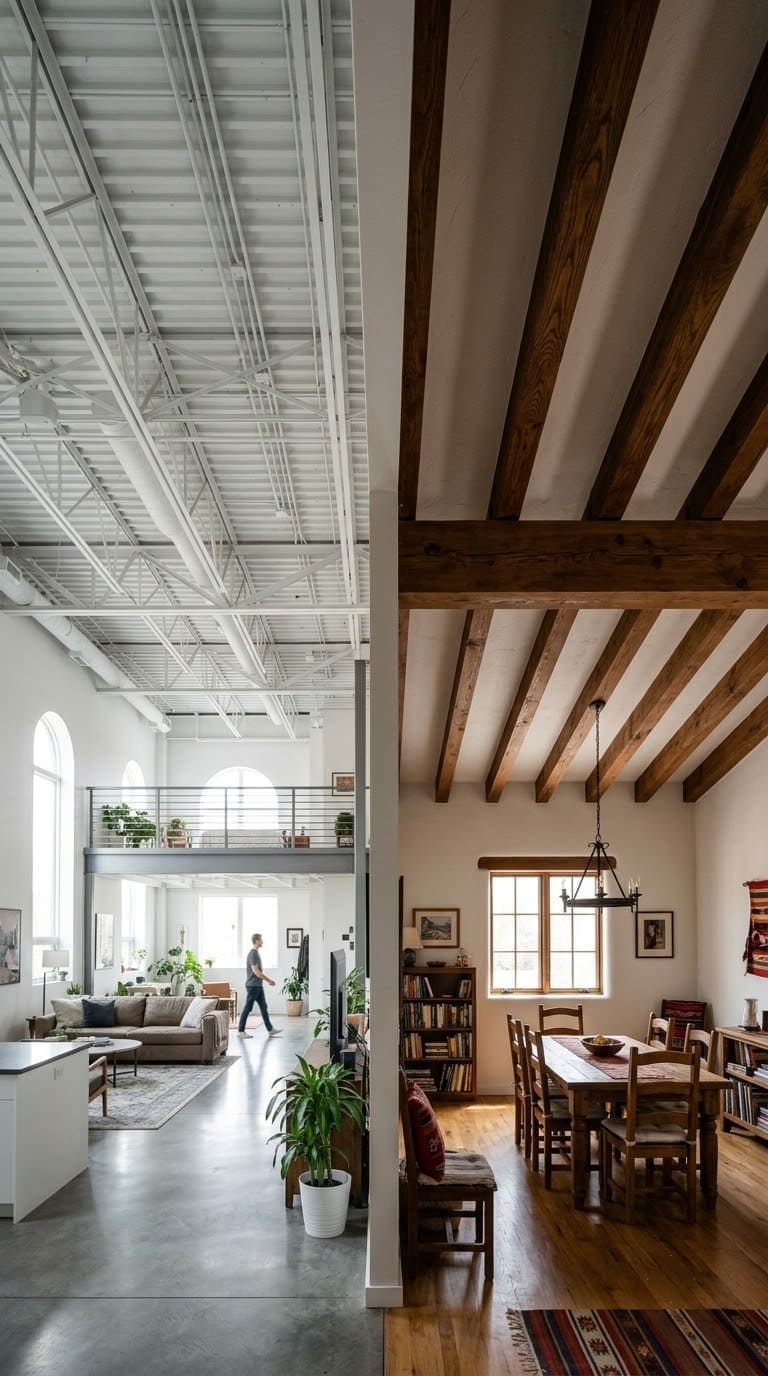
This is the gap in every feng shui source checked for this piece, and it’s genuinely fascinating on its own. Real, peer-reviewed research by Joan Meyers-Levy, a professor of marketing at the University of Minnesota, published in the Journal of Consumer Research (2007), found that ceiling height actually primes different types of thinking: people in rooms with 10-foot ceilings engaged in more abstract, relational processing, while those in rooms with 8-foot ceilings defaulted to more concrete, confined thinking.
This effect, sometimes called the “cathedral effect,” means an exposed beam that visually lowers a room’s perceived ceiling height isn’t just symbolically oppressive, it’s priming a real, measurable shift toward more constrained, narrow thinking in anyone spending time beneath it.
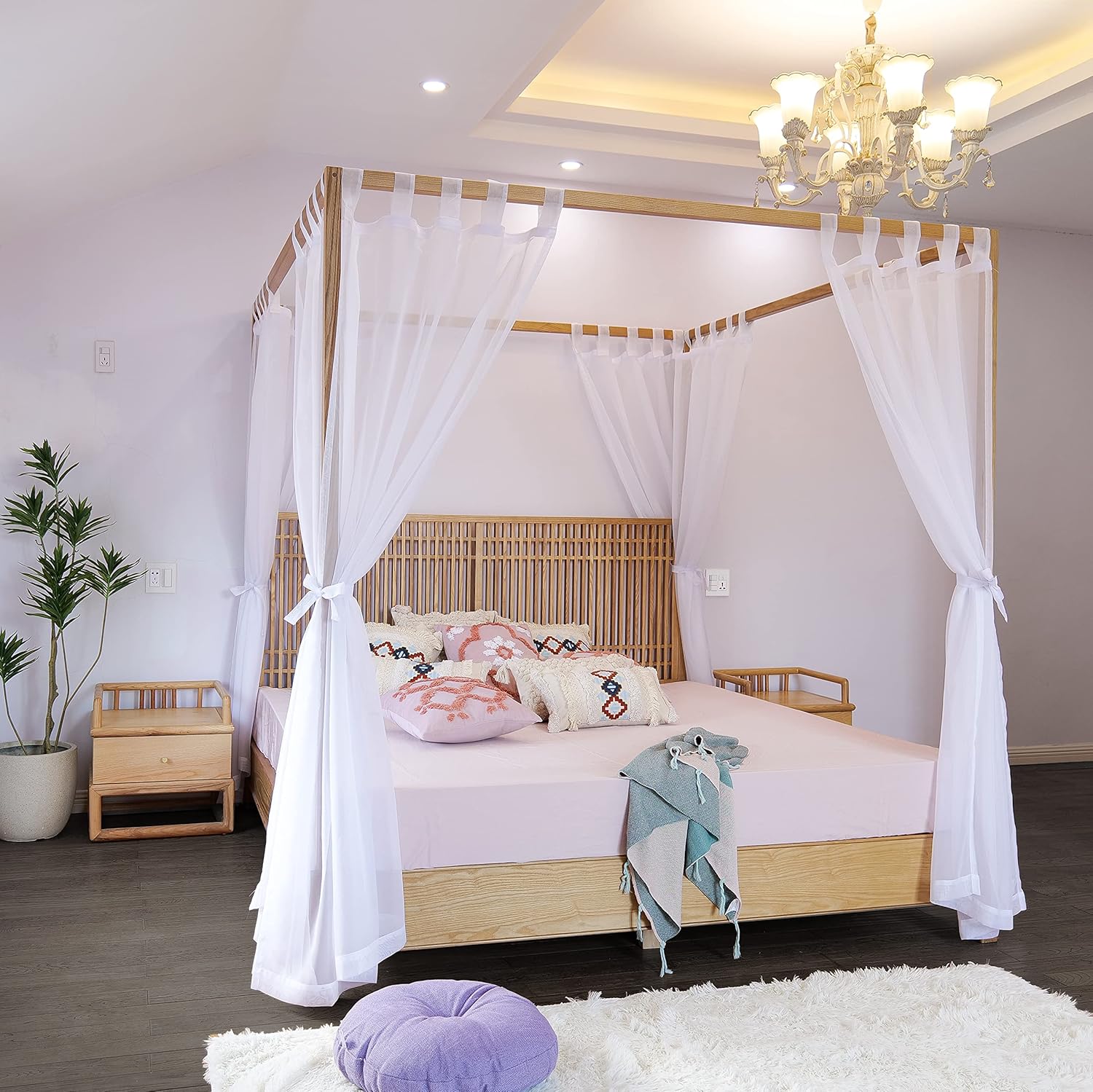
Directly covers rule #3's fabric-softening remedy
Shop NowThis post contains affiliate links. We may earn a commission on qualifying purchases at no extra cost to you.
Feng shui’s instinct that beams cause “confused thinking” turns out to have a genuine, independently documented psychological mechanism behind it.
6. Never alter or remove a beam without a structural engineer and a permit

This is the single most important rule if you’re actually renovating, and it’s the one every feng shui source checked entirely ignores in favor of purely symbolic remedies.
If a beam is structural (load-bearing, which many exposed ceiling beams are), any alteration, notching it, boxing it in structurally, drilling through it, or removing it, requires a licensed structural engineer’s calculations and a building permit in virtually every U.S. jurisdiction.
Skipping this step isn’t a feng shui risk, it’s a genuine structural safety risk to the entire building. Before you plan any renovation involving an exposed beam, confirm with a structural engineer whether it’s load-bearing before deciding between the fabric/repositioning remedies above and a genuine structural change.
The 6 rules at a glance
| Rule | Real-world backing | Fastest fix |
|---|---|---|
| Never sleep directly under a beam | Traditional “invisible curtain” concern | Reposition the bed entirely |
| Avoid desks/seating beneath a beam | Effect compounds with time spent stationary | Move the desk/chair out from under it |
| Soften with fabric | Standard remedy when repositioning isn’t possible | Muslin or netting canopy |
| Orient furniture parallel, not crosswise | Reduces direct crossing over the body | Rotate furniture to run with the beam’s axis |
| Real psychology behind the effect | Meyers-Levy’s 2007 “cathedral effect” study | Awareness alone; consider ceiling height in room use |
| Never alter without an engineer/permit | Structural safety risk if load-bearing | Confirm load-bearing status before any change |
What we learned the hard way
The “just remove it” instinct is the one that gets people into real trouble. A homeowner frustrated by a beam’s feng shui concern, or simply its look, sometimes considers removing or notching it without realizing it’s load-bearing, a mistake that can compromise the structure above and is a far more expensive problem to fix after the fact than before.
The parallel-positioning workaround is the other thing people underestimate how much it actually helps.
It sounds like a minor furniture-orientation detail, but in a room where a beam genuinely can’t be avoided, it’s a meaningfully better compromise than most people assume before trying it.
FAQs
How do I know if my exposed beam is load-bearing? You generally can’t tell just by looking. A structural engineer or a qualified contractor can assess this, and it’s a necessary step before any alteration, not an optional precaution.


Is a canopy bed really an effective fix, or just decorative? It’s the standard feng shui remedy when repositioning isn’t possible, and it does genuinely soften the beam’s hard visual line, though it doesn’t change the real ceiling height or the cognitive “cathedral effect” the way an actual structural change would.
My whole living room has exposed beams, do I need to avoid sitting under all of them? Prioritize your most-used, longest-duration seating (a favorite reading chair, a desk) over occasional-use spots. Complete avoidance of every beam in an open, beamed ceiling usually isn’t realistic, and isn’t the standard expectation.
Can I paint a beam to reduce the feng shui concern? Lighter colors are sometimes suggested to reduce a beam’s visual heaviness, but it’s a secondary consideration compared to placement and the furniture-orientation fixes above.
Related reading on farmfoodfamily.com: if your home has sloped or low ceilings beyond just a beam, see our sloped ceiling bedroom ideas and best lighting options for sloped ceilings guides for related layout solutions.
Related Posts
- Home Renovation Checklist
- Sloped Ceiling Bedroom Ideas
- Sloped Ceiling Living Room Ideas
- Best Lighting Options for Sloped Ceilings
- Guide to Flawless Drywall
- Sloped Ceiling Wardrobe Ideas

Products We Recommend
This post contains affiliate links. We may earn a commission on qualifying purchases at no extra cost to you.


Never miss an update — choose FarmFoodFamily as your preferred source on Google.
How it works: Tap the button below to open Google's settings page, then check the box next to FarmFoodFamily.
Tap the checkbox to turn it blue — that's how you know it's set.