5 Reasons Your Narrow Side Yard Is Wasted Space (And the One Layout Change That Fixes It)
Your side yard isn’t ugly, it’s just never had a job, and one layout change is usually all it takes to give it one.

Never miss an update — choose FarmFoodFamily as your preferred source on Google.
How it works: Tap the button below to open Google’s settings page, then check the box next to FarmFoodFamily.
Tap the checkbox to turn it blue — that’s how you know it’s set.
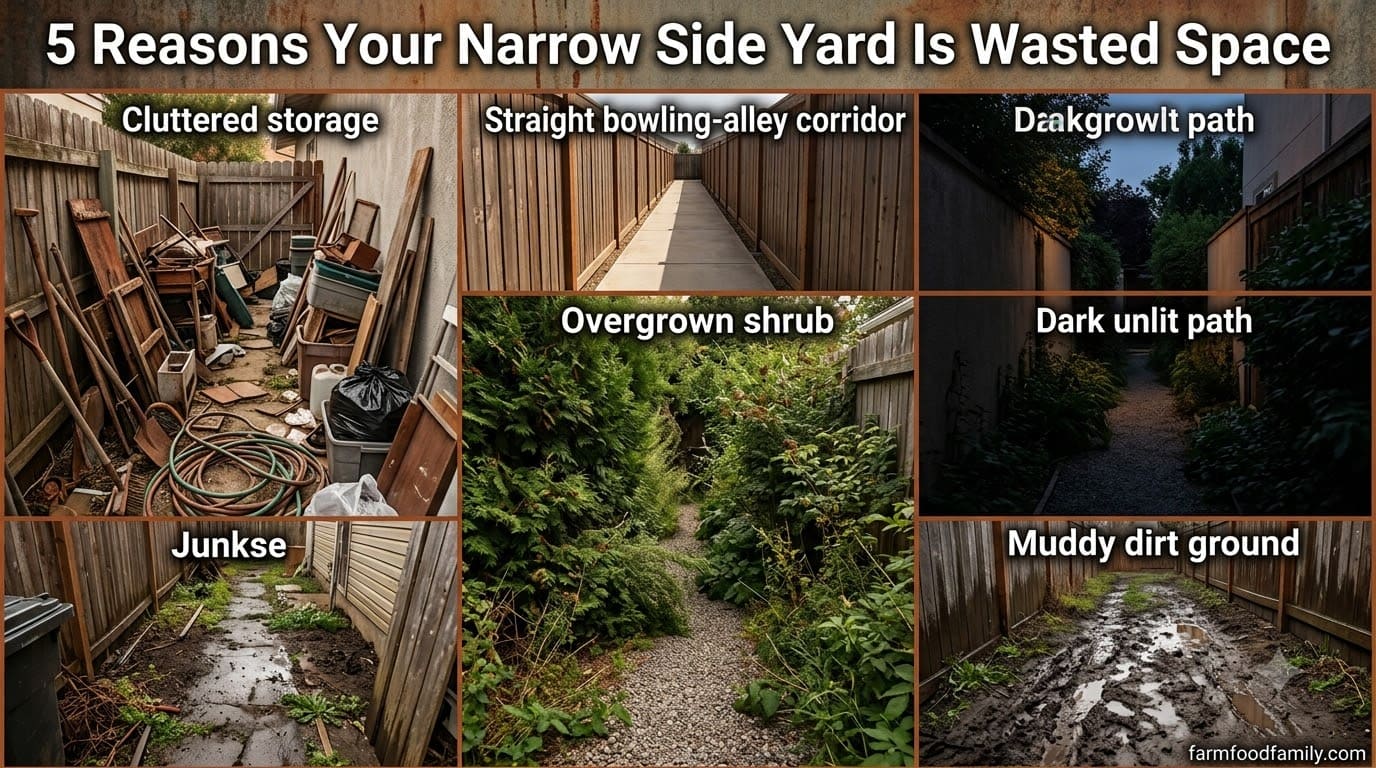
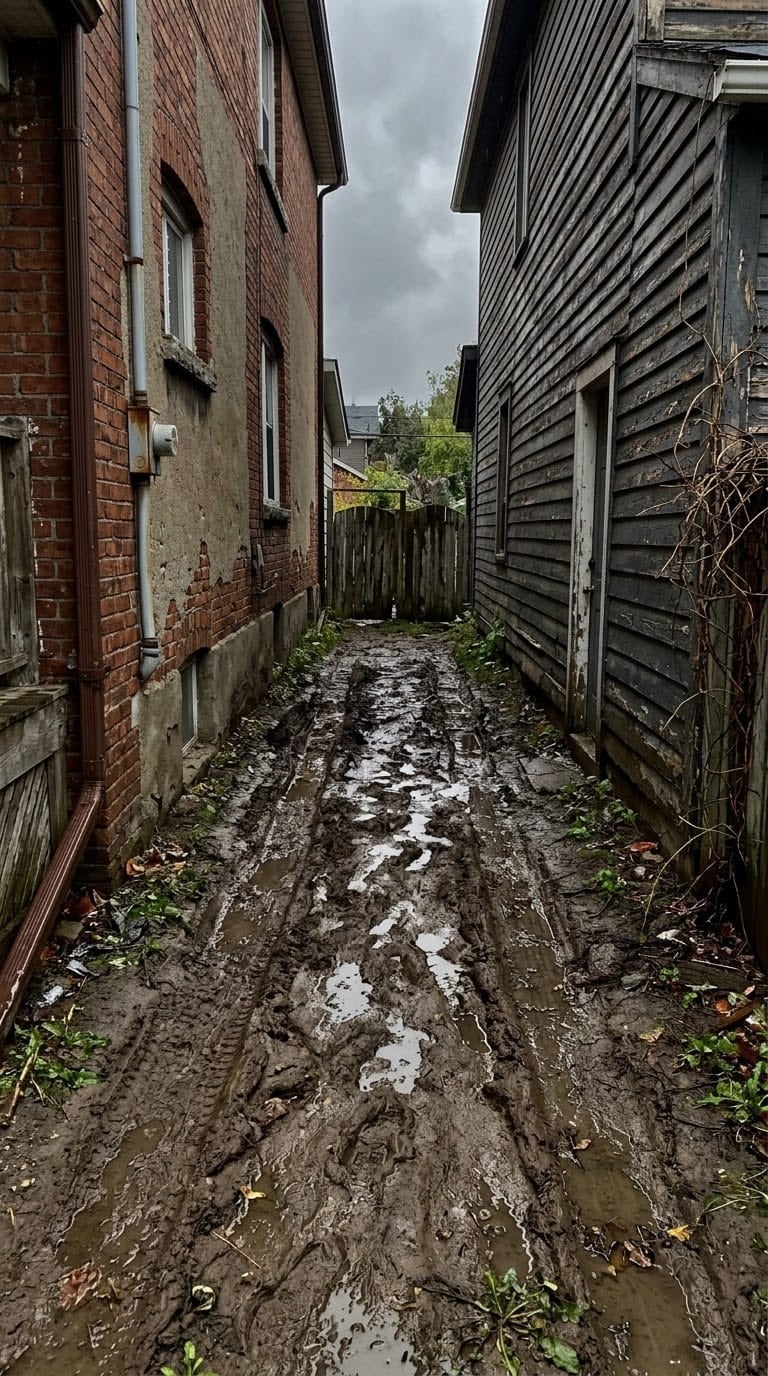
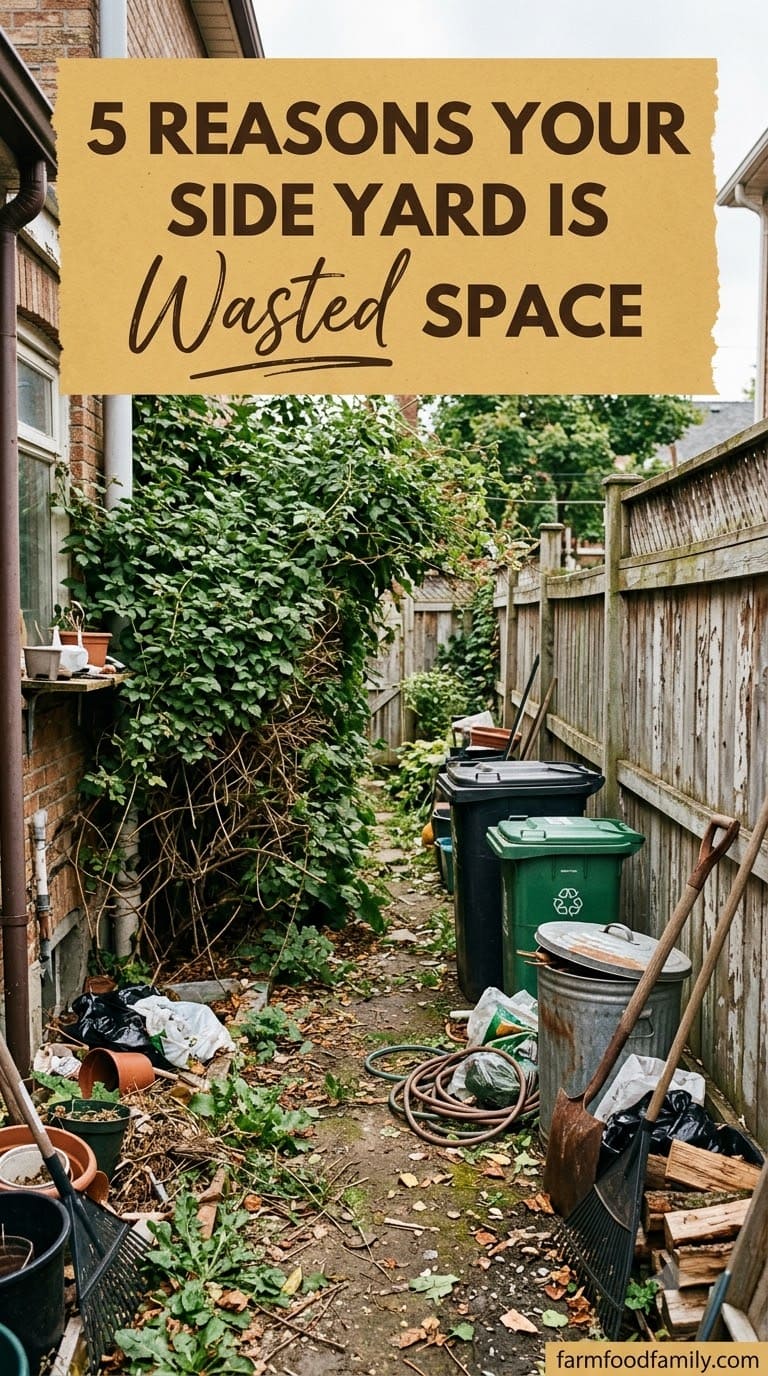
If you’re like most homeowners, your side yard is where the trash cans live. The hose gets dumped there. The AC unit hums away behind a half-dead shrub nobody planted on purpose. You walk through it to get somewhere else. You never stop there.
That’s not a design flaw you’re stuck with. It’s five specific mistakes, and almost all of them trace back to the same root cause: the space was never actually designed. It was just left over.
Quick Answer: Narrow side yards get wasted for five reasons. They’re used as storage, not real space. They read as a straight “bowling alley” with nothing to look at. The plants are too big for the width. There’s no lighting, so half the day is unusable. And the ground is 100% pavement or 100% bare dirt, with no clear path. Designer Brad DeVries has the fix: stop treating the strip as leftover space. Design it as one path with small stops along the way, a plant, a light, a place to set something down. Not one flat run from gate to gate. Even a yard just 3 to 4 feet wide can hold this layout and still feel open.
At a Glance: The 5 Reasons vs. The Fix
| Reason It’s Wasted | Why It Happens | The Fix |
|---|---|---|
| Used as storage only | No assigned purpose, so bins/hoses fill it | Give it one real function first, then hide storage around it |
| Reads as a “bowling alley” | One straight line, one focal point (or none) at the far end | Break the run into a sequence of small moments |
| Oversized plants | Foundation shrubs meant for open yards, not 3-4 ft strips | Swap to narrow-profile, dwarf, or columnar varieties |
| Unused after dark | No lighting installed since “it’s just a walkway” | Low-voltage path lights plus one accent light |
| No defined path | 100% hardscape or 100% dirt, no edge to follow | One continuous path material, minimum 3 ft wide |
Reason #1: It’s Being Used as Storage, Not a Space
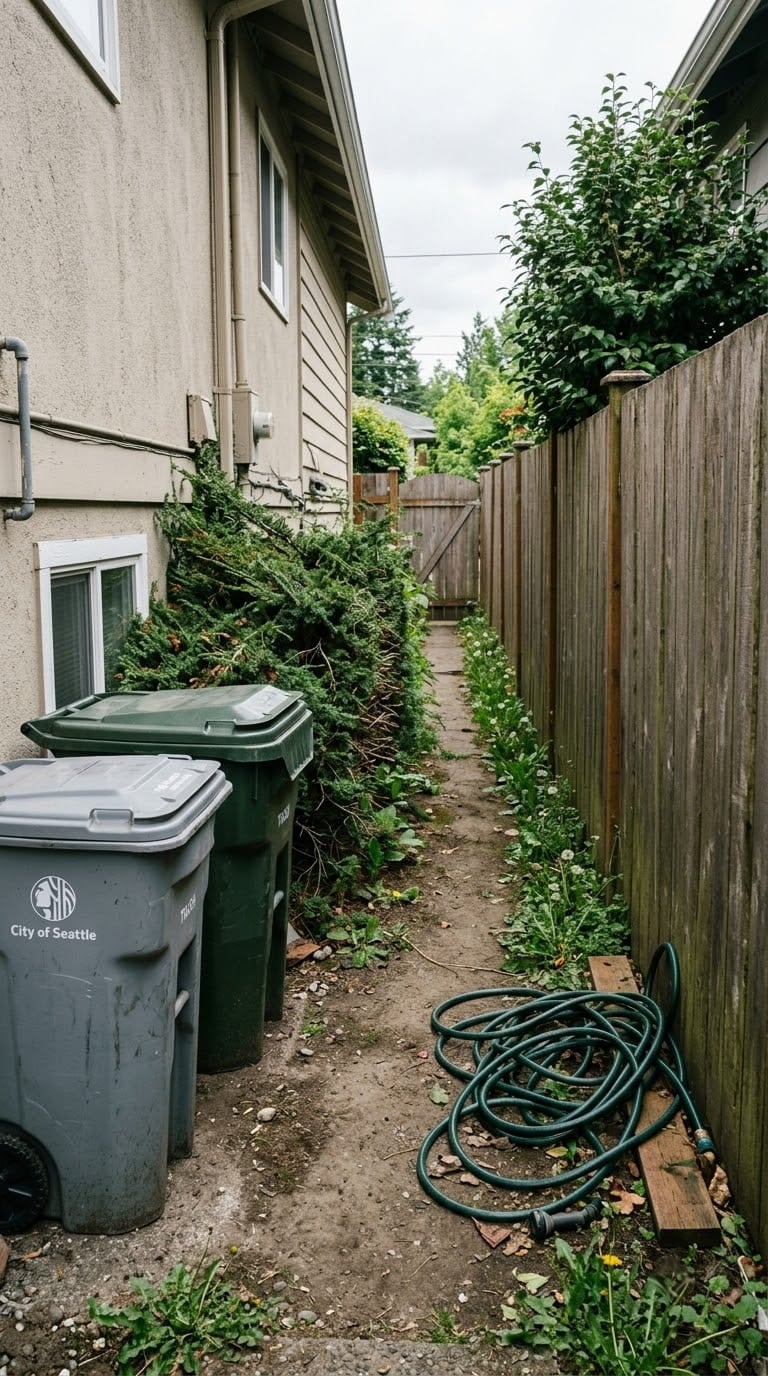
Ask yourself what your side yard’s job actually is. If the honest answer is “trash can parking,” that’s the first problem. A space with no assigned function becomes the default dumping ground for anything that doesn’t have a home elsewhere in the yard.
This isn’t a style problem. It’s a planning gap. Give the side yard a real job, a compost spot, a dog run, or just the cleanest route to the backyard. Once it has one, the clutter tends to sort itself out. Everything left over finally looks out of place.

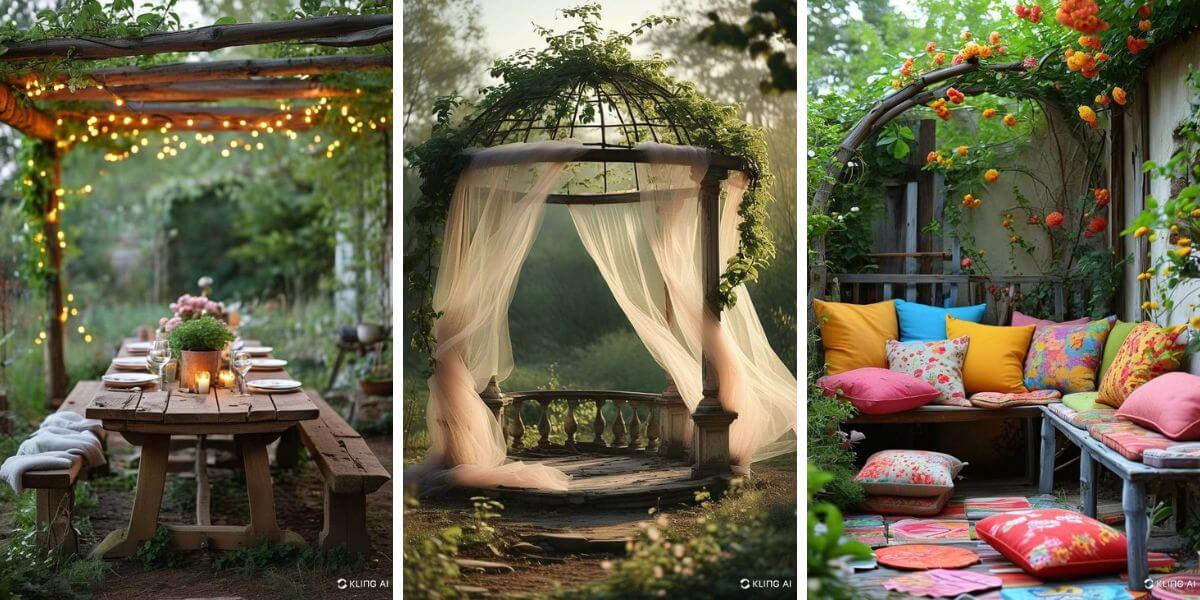
Quick tip: Write the job down before you touch a single plant or paver. A one-line note taped to the back door, “this is the route to the compost bin,” sounds silly but works. It gives you an actual test for every new item that shows up in the side yard afterward: does it belong to that job, or is it drifting in because there was room. Anything that fails the test gets moved, not tolerated.
Answer 4 quick questions and get matched to the exact fix for your yard — drainage, budget, layout, or something else entirely.
Take the Free QuizReason #2: It Reads Like a Bowling Alley
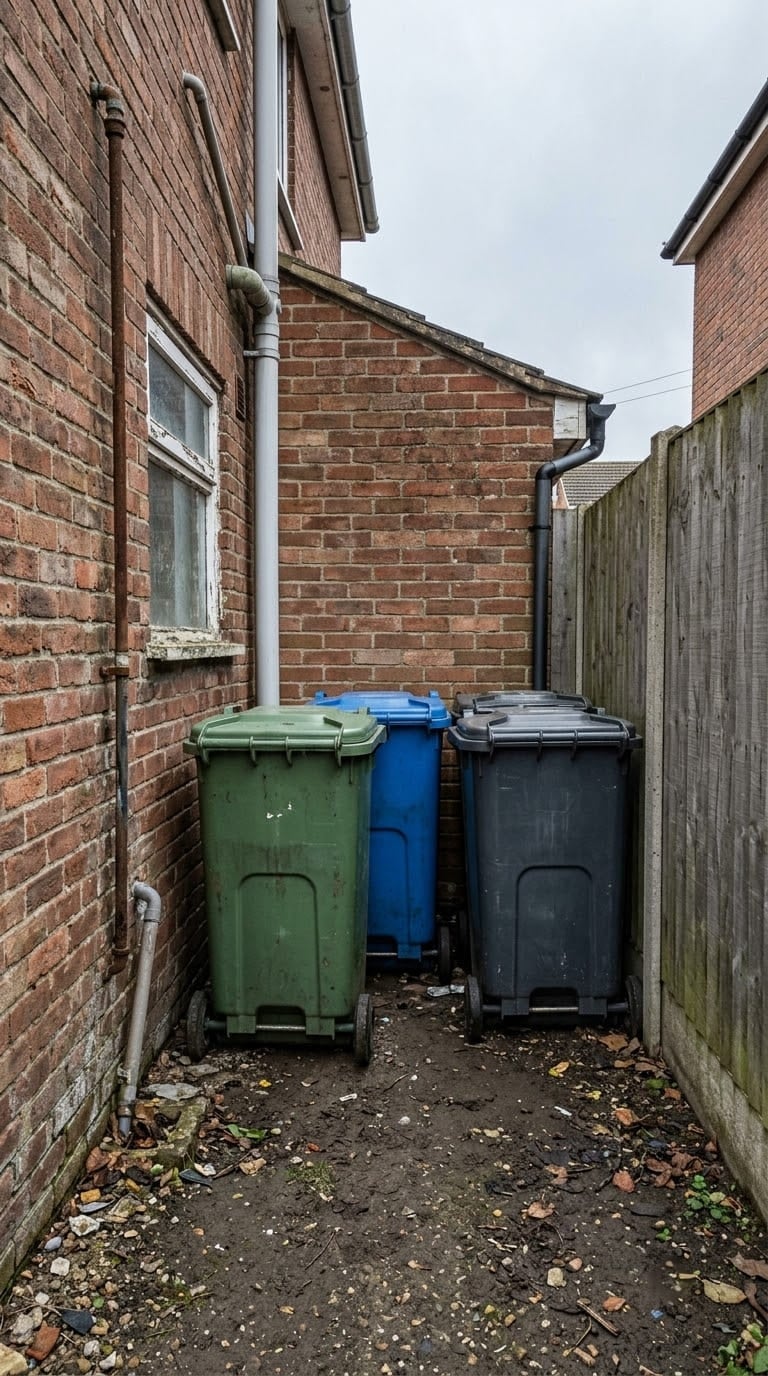
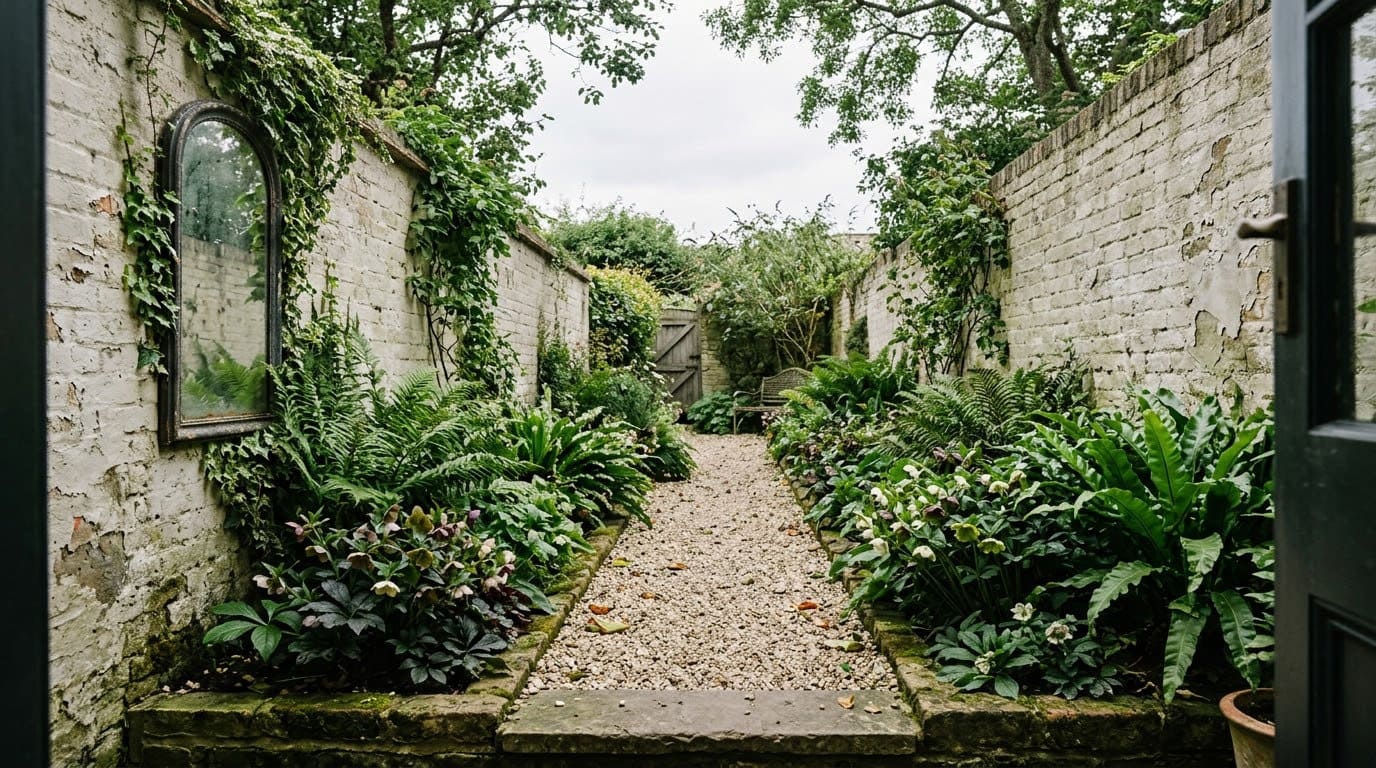
Los Angeles designer Brad DeVries recommends “creating a series of views, rather than just one focal point at the end” of a narrow side space. He’s naming what he calls the “bowling alley effect.” One long straight run with nothing at the far end reads as a hallway, not a place. And hallways are exactly what people rush through.
The instinct is to fix this with one big feature at the end: a statue, a fountain, a bright pot. But that makes the problem worse. It just moves the one focal point further away instead of removing it. The real fix is three or four smaller moments spaced along the run, not one big one at the end.
Quick tip: Walk the side yard slowly and mark every 4 to 6 feet with a stake or a chalk line. Each mark is a candidate spot for one small moment, a plant, a light, a hook for tools. You don’t need to fill every mark on day one, but seeing the run broken into segments on paper (or on the ground) makes it much easier to resist the urge to save everything for one big feature at the far end.
Reason #3: The Plants Are the Wrong Scale
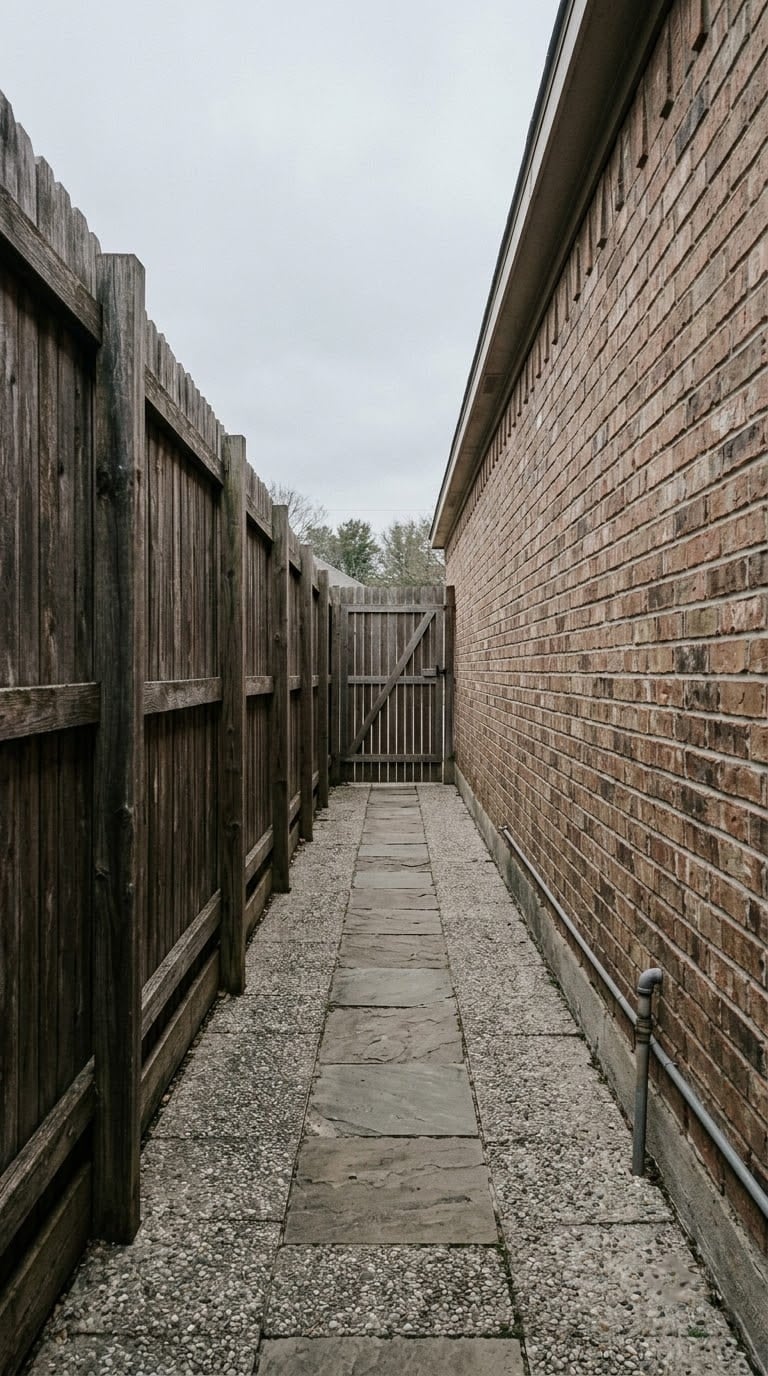
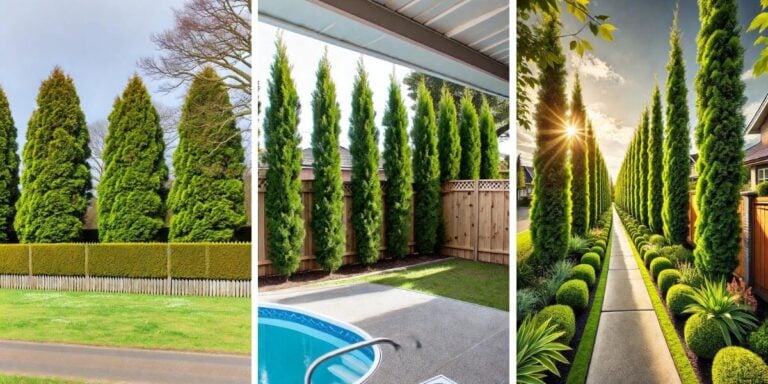
A shrub or small tree that looks perfectly reasonable in a 20-foot-wide front bed will physically eat a 3-to-4-foot side yard alive within a couple of growing seasons. You end up ducking branches or losing a foot of already-scarce width to something that was never sized for the space.
Los Angeles designer Shirley Bovshow recommends trees with a “narrow profile” trunk for tight spots. Keep the lowest limbs above 7 feet, so an average-height adult can walk under without ducking. The same rule applies to shrubs. Dwarf and columnar versions exist for almost every popular plant, because narrow-space planting is that common.
Quick tip: Before buying anything, look up the plant’s mature spread, not its size in the nursery pot. A shrub labeled as reaching “4 to 6 feet wide” at maturity needs at least 2 to 3 feet of clearance from the path on its own, even in a yard that’s only 4 feet wide total. If the math doesn’t leave room to actually walk past it in five years, it’s the wrong plant for that spot, no matter how good it looks today.
Reason #4: Nobody Designed It to Work After Dark
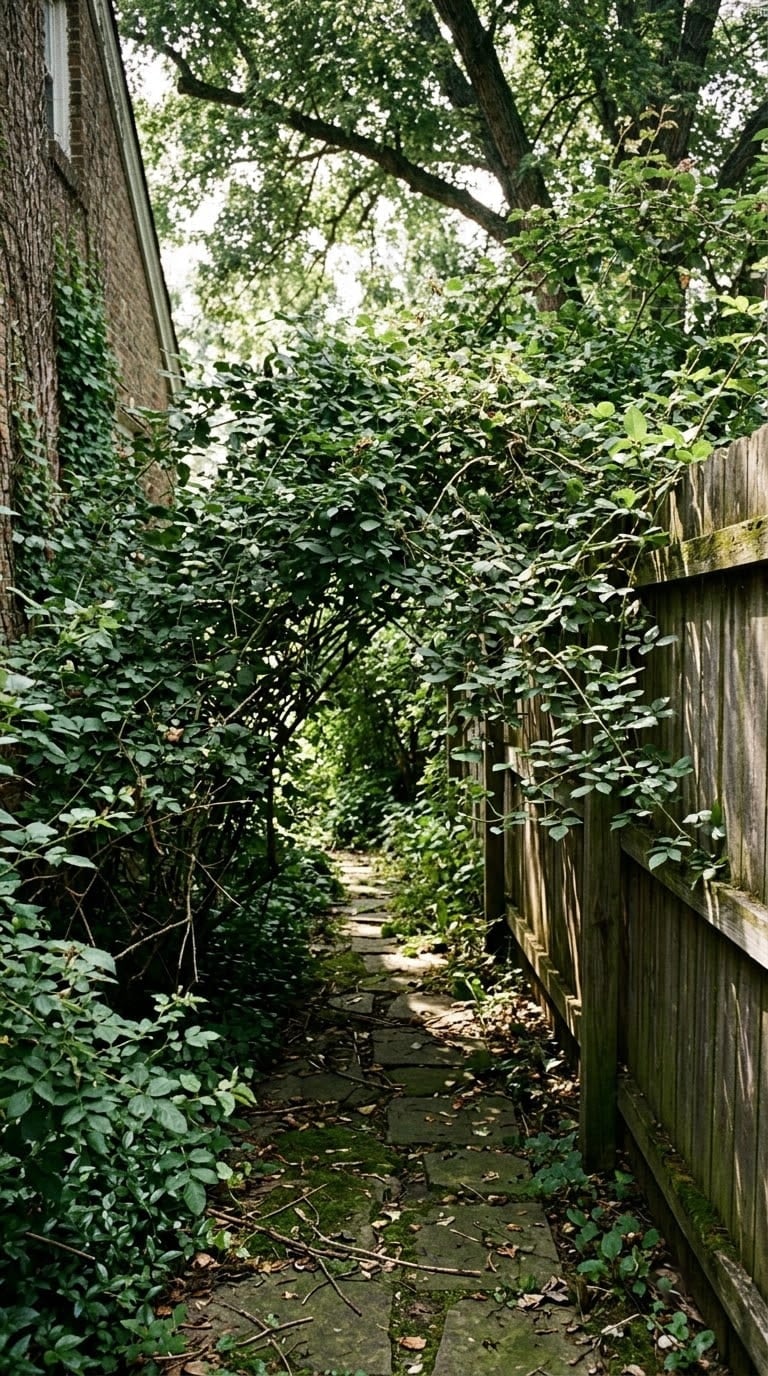
A side yard with zero lighting is only usable for however many daylight hours you happen to be outside, which for most households is close to none on a weekday. It also becomes the one stretch of the property that feels genuinely unsafe to walk after sunset, especially if it’s the route to a side gate or trash cans.
Most yard problems trace back to one specific, fixable cause. Find yours in 4 quick questions.
Take the Free Quiz
Directly solves Reason #4 (no after-dark lighting) with a simple stake-in install along the path
Shop NowThis post contains affiliate links. We may earn a commission on qualifying purchases at no extra cost to you.
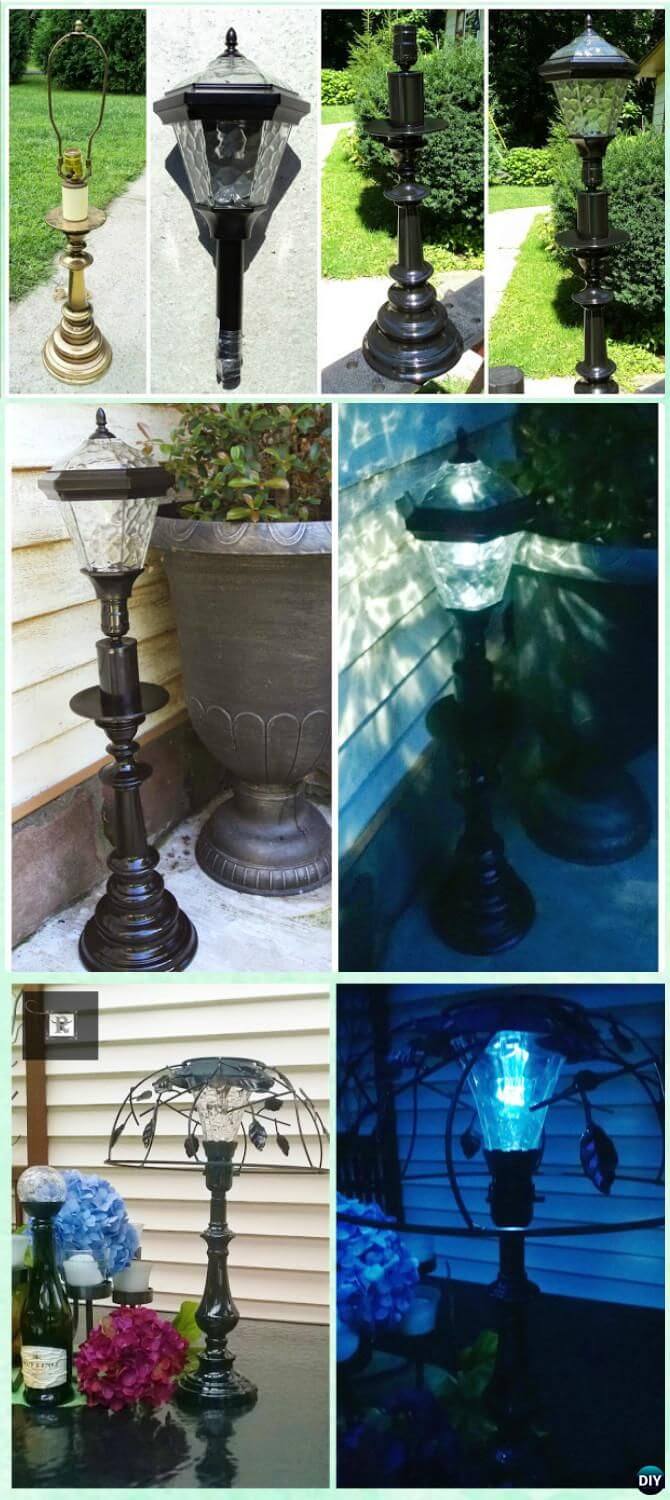
The same fix from Reason #2 helps here too: a side yard “should generally have a path, plants and lighting.” It should connect to the rest of the yard, not sit forgotten in between. Low-voltage path lights along the route, plus one brighter accent light at a gate or pause point, is usually enough. That’s the difference between a no-go-after-dark strip and a space you’d actually walk through at night.
Quick tip: Solar stake lights are the easiest starting point since they need no wiring, but check the yard’s real sun exposure first. A side yard is often shaded most of the day by the house on one side and a fence on the other, and a solar light that never gets direct sun won’t hold a charge past 9 p.m. If your side yard is genuinely shaded, a low-voltage plug-in kit is the more reliable choice even though it takes an extra afternoon to install.
Reason #5: There’s No Defined Path, Just Pavement or Dirt
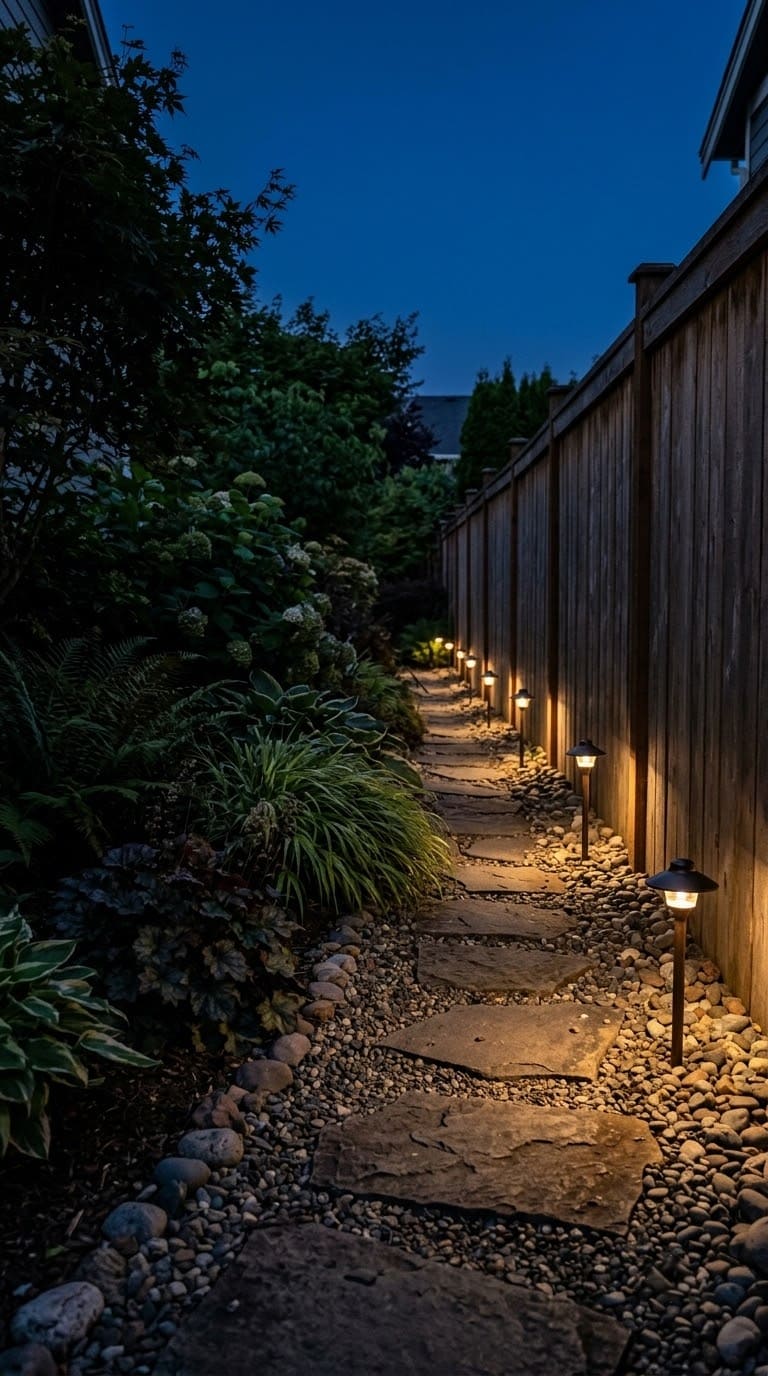
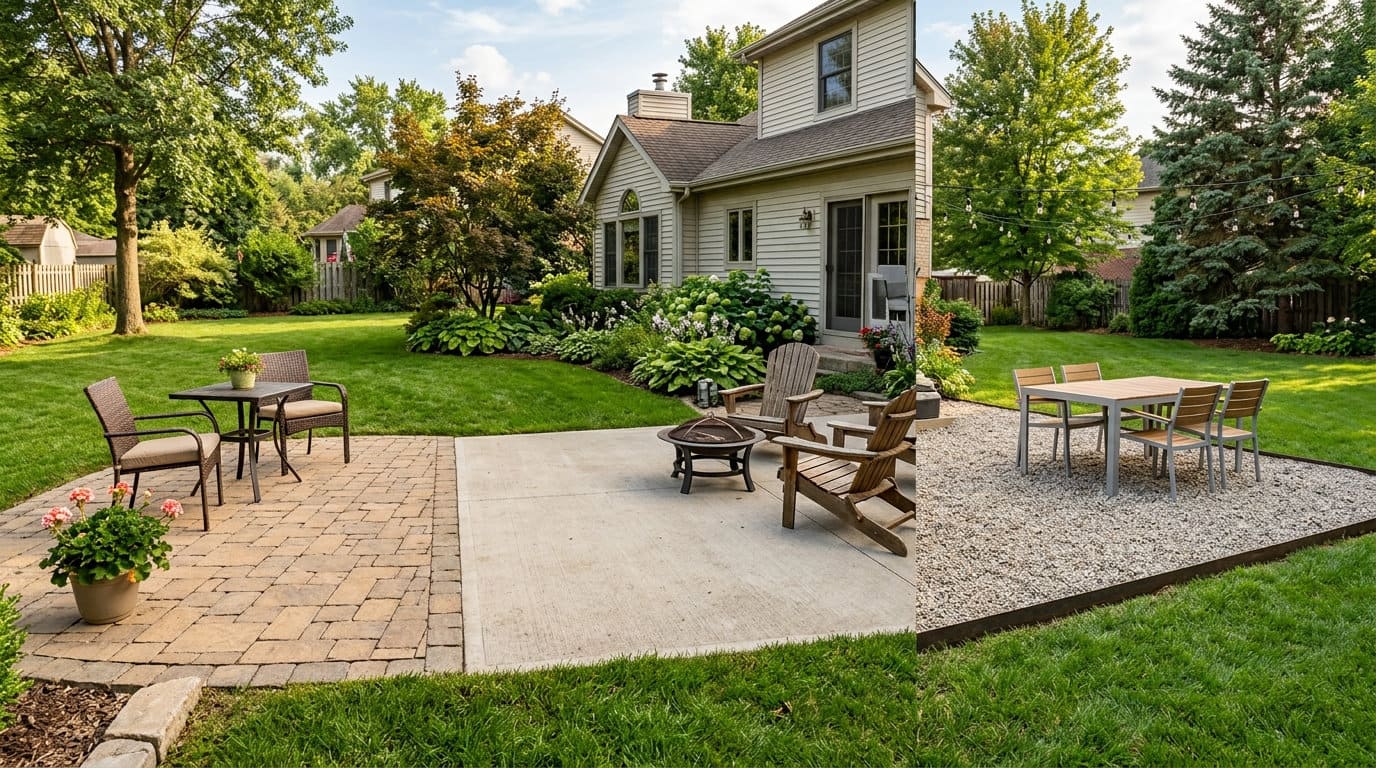
San Diego designer Navid Mostatabi warns against paving a side yard 100% wall to wall. He recommends materials that let water through instead, like 3/8-inch pea gravel, or planting backed with mulch. That keeps the ground from turning into a slick chute during storms. The opposite mistake is just as common: no defined surface at all, so the strip turns to bare mud every time it rains.
Either extreme has the same root problem. There’s no single, deliberate walking surface. A narrow side yard needs one path material running its full length, with planting kept to the edges, not spilling into the walkway.
Quick tip: If you’re choosing between pea gravel and a solid material like pavers, think about how the side yard drains during a heavy storm before you think about looks. A side yard that channels runoff from the roof or a downspout needs a permeable surface, gravel over compacted base, or planting with mulch, or you’ll end up redirecting that water straight toward your foundation. A quick way to check: stand in the yard during the next real rain and see where the water actually collects.
A Weekend-by-Weekend Order to Tackle This In
You don’t have to fix all five reasons at once, and trying to usually means nothing gets finished. Here’s a realistic order if you’re doing this over a few weekends instead of one big push.
Weekend one: clear it out and decide the path line. Pull everything without an assigned spot, mark where the continuous path will actually run, and rough out its width with stakes or spray paint. This is the cheapest weekend and the one that makes every later step easier, since you’re no longer working around clutter.
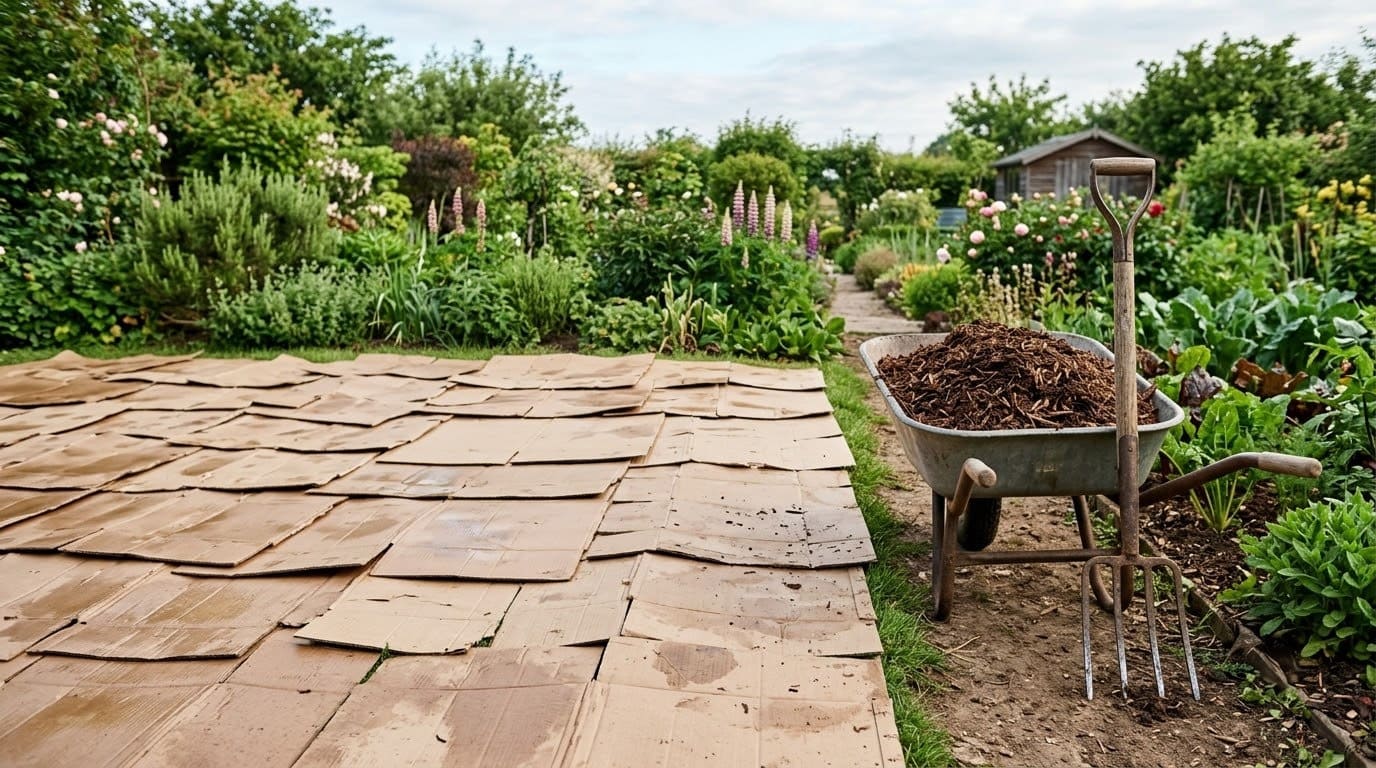
Weekend two: lay the path material. Whether that’s gravel, pavers, or stepping stones, this is usually the single biggest cost on the list, so it’s worth doing once, correctly, rather than laying something temporary now and redoing it later.
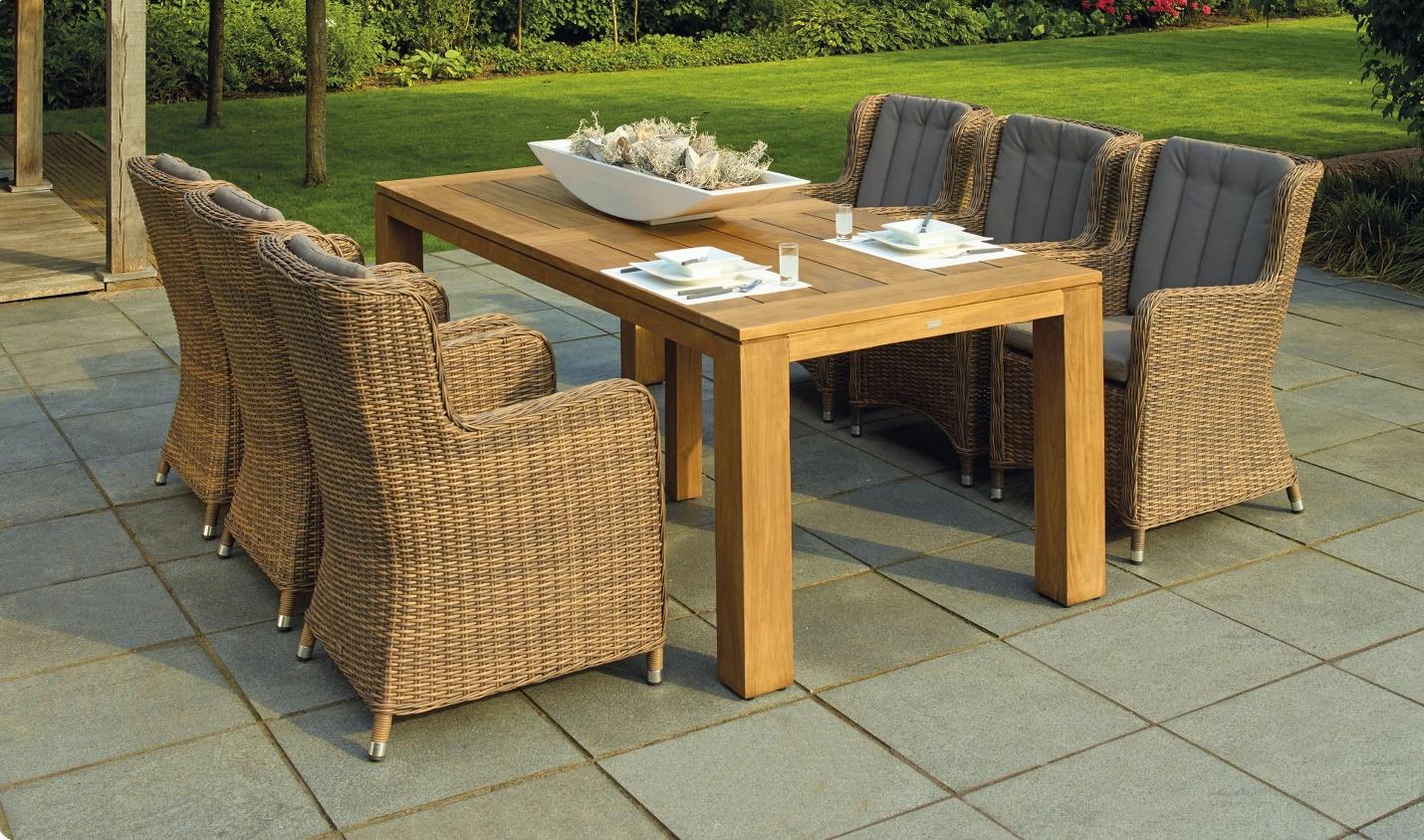

Weekend three: lighting and one planting pause. Add the low-voltage or solar lighting from Reason #4, and plant the first narrow-profile shrub or grouping from Reason #3 at one of the moments you marked earlier.
The average homeowner spends $616/year on yard fixes that don't address the real problem. Find out what yours actually is — before you spend another dollar.
Take the Free QuizWeekend four: the rest of the rhythm. Add the remaining planting pauses, a second light if needed, and whatever small feature, an arbor, a gate, a piece of garden art, marks the transition point from Reason #2. By this point the storage problem from Reason #1 has usually solved itself, since there’s finally an obvious wrong place to leave a trash can.
The One Layout Change That Fixes All Five
Every one of the five reasons above comes back to the same missing piece: the side yard was never designed as one continuous space with a single, deliberate path through it. The fix isn’t five separate projects. It’s one layout decision.
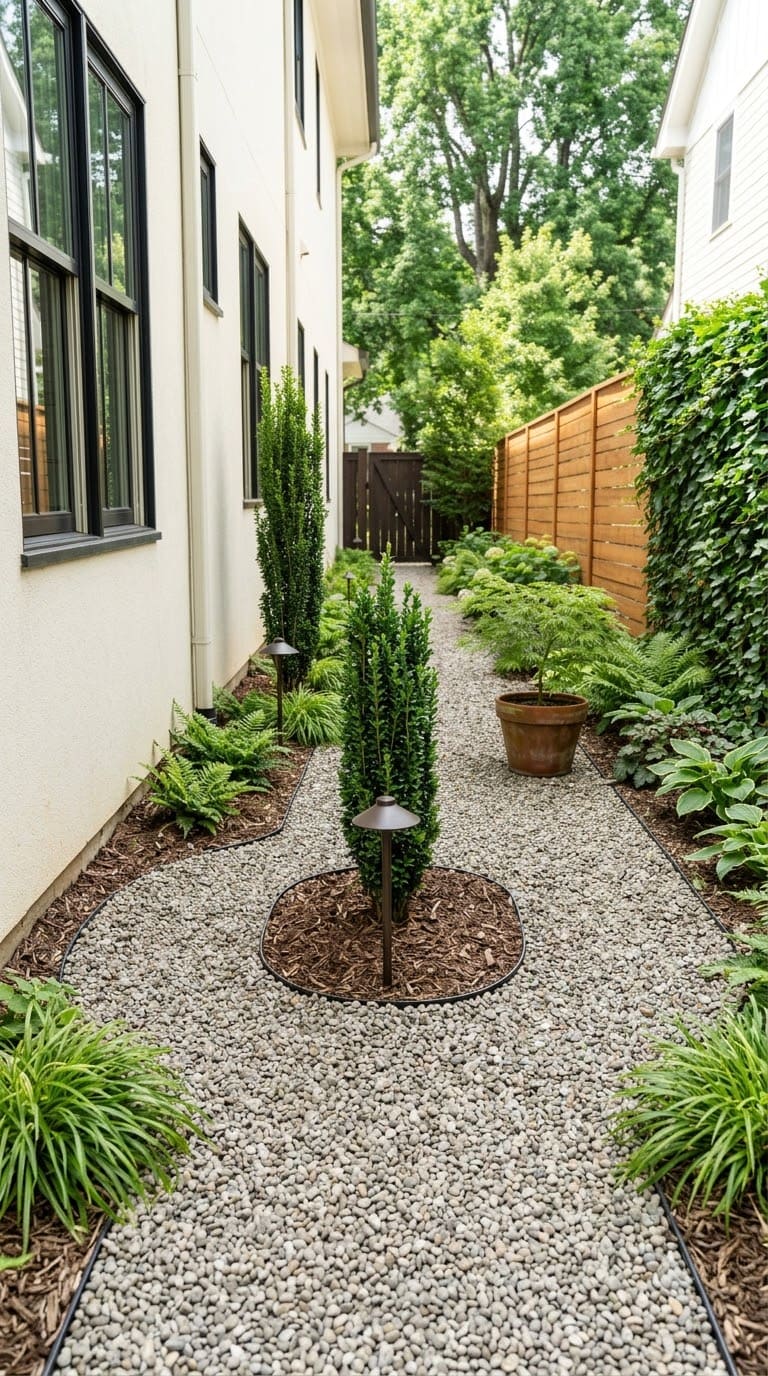
Lay out one continuous path, a minimum of 3 feet wide (4 feet if you want to pass another person or roll a wheelbarrow through). Run it the full length of the yard in one material. Then break it into three or four small moments along the way, instead of leaving it flat and uninterrupted. A narrow planting cluster. A low-voltage light. A spot for one container or a piece of garden art. A gate or arbor marking a transition. That’s DeVries’ “series of views” in practice. It turns a corridor into a room you experience, not a gap you rush through.
Everything else gets solved as a side effect of that one path: the storage, the plant sizing, the lighting, the ground surface. Once there’s a real walking surface with real edges, there’s an obvious wrong place to leave a trash can. And an obvious right place instead: off the path, screened, out of the sightline you just built.
What We Learned Redoing Our Own Side Yard
We put off our side yard for two full seasons because it felt like the least important 4 feet of the property. The AC unit lived there, the recycling bins lived there, and a builder-grade juniper we never planted on purpose slowly swallowed half the walking space.
The thing that actually changed it wasn’t a big budget project. It was laying one gravel path the full length of the yard and moving the bins to one end, behind a simple screen, instead of letting them drift wherever there was room. Within a weekend it stopped looking like storage and started looking like a path that happened to also store two bins. That’s the whole trick: design the path first, and let the storage adapt to it instead of the other way around.
Frequently Asked Questions
How wide does a side yard path need to be?
Three feet is the practical minimum for one person to walk comfortably. Go to 4 feet if you need to pass another person, roll a wheelbarrow, or wheel out a trash can without scraping the fence or a planting bed on either side.
Can I still fit plants in a 3-foot-wide side yard?
Yes, but scale matters more than in any other part of the yard. Stick to dwarf or columnar shrub varieties and vertical elements like trellises or wall-mounted planters, which add greenery without eating into the walking width the way a standard-sized shrub will.
Should I pave the whole side yard for low maintenance?
No. Paving 100% of a narrow side yard sheds rainwater fast and can send it straight toward your foundation or a neighbor’s yard. A single defined path plus permeable material like pea gravel or mulched planting on either side handles foot traffic without the runoff problem.
What’s the cheapest way to fix a wasted side yard this weekend?
Move anything without an assigned spot (hoses, spare pots, tools) to one end behind a simple screen, then define the walking route with something as simple as stepping stones or a strip of gravel. That single move, giving the path an edge, does more visually than most one-day projects.
Related Posts
Products We Recommend
This post contains affiliate links. We may earn a commission on qualifying purchases at no extra cost to you.
BITPOTT Bright Solar Pathway Lights, 8 Pack
Directly solves Reason #4 (no after-dark lighting) with a simple stake-in install along the path
Shop Now
FANTIAN 3/8-Inch Pea Gravel, 10 lb
The exact permeable material Navid Mostatabi recommends over full paving for Reason #5
Shop Now
ArdeFentium 3-Panel Metal Privacy Screen, 42"H x 38"W
Solves Reason #1 by giving storage one defined, screened spot instead of letting it drift into the walkway
Shop NowNever miss an update — choose FarmFoodFamily as your preferred source on Google.
How it works: Tap the button below to open Google's settings page, then check the box next to FarmFoodFamily.
Tap the checkbox to turn it blue — that's how you know it's set.