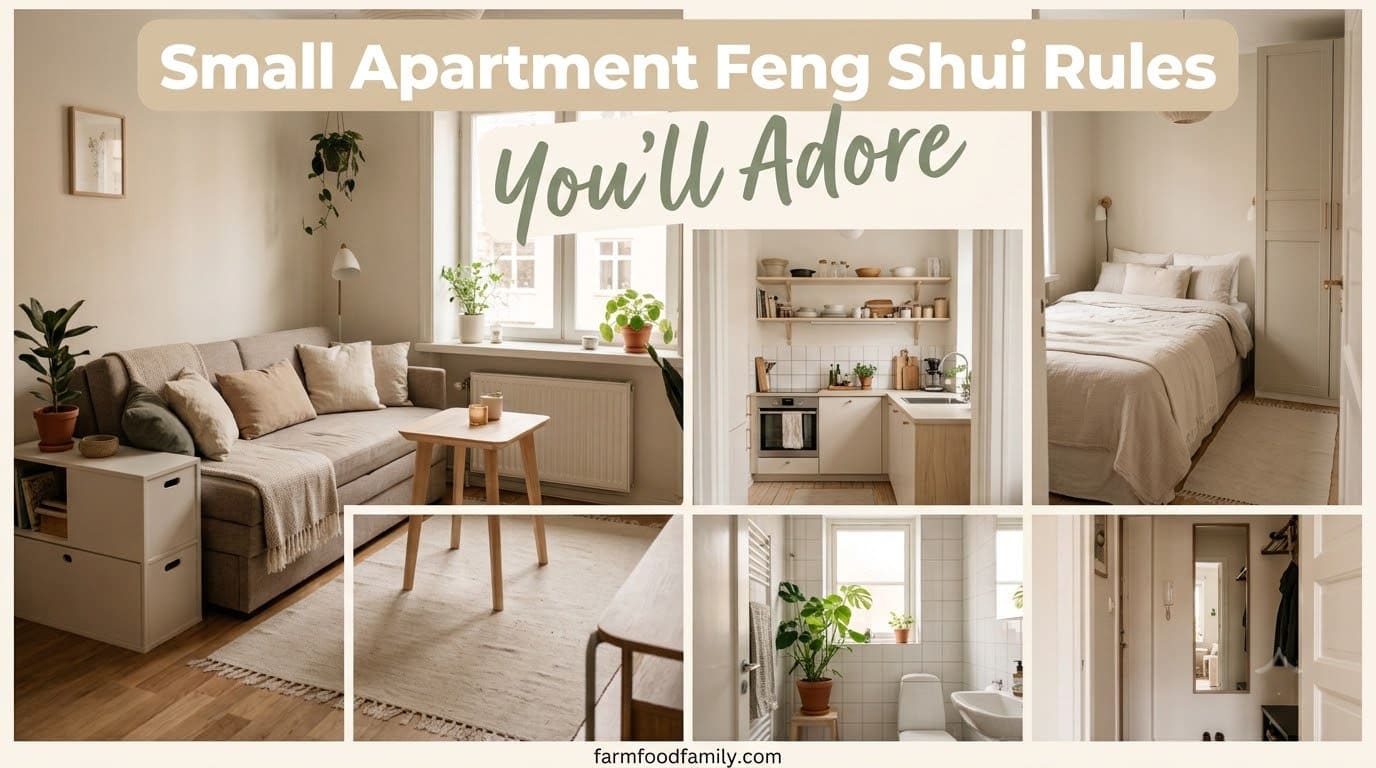
5 Feng Shui Rules for Small Apartments You Can Still Apply, Even If You Rent
Every rule here is filtered through one real constraint most feng shui guides skip entirely: whether it’s actually reversible enough not to cost you part of your security deposit.

Never miss an update — choose FarmFoodFamily as your preferred source on Google.
How it works: Tap the button below to open Google’s settings page, then check the box next to FarmFoodFamily.
Tap the checkbox to turn it blue — that’s how you know it’s set.
Erin Ratliff, a Certified Feng Shui Practitioner and founder of Synergetic Spaces, treats small apartments as genuinely workable feng shui spaces, the core principles don’t require square footage, they require intentional arrangement of whatever you’ve got.
Here are the five rules that matter most for a rental specifically, with the real lease and design-science considerations most guides leave out.
1. Get the command position through furniture placement, not structural change
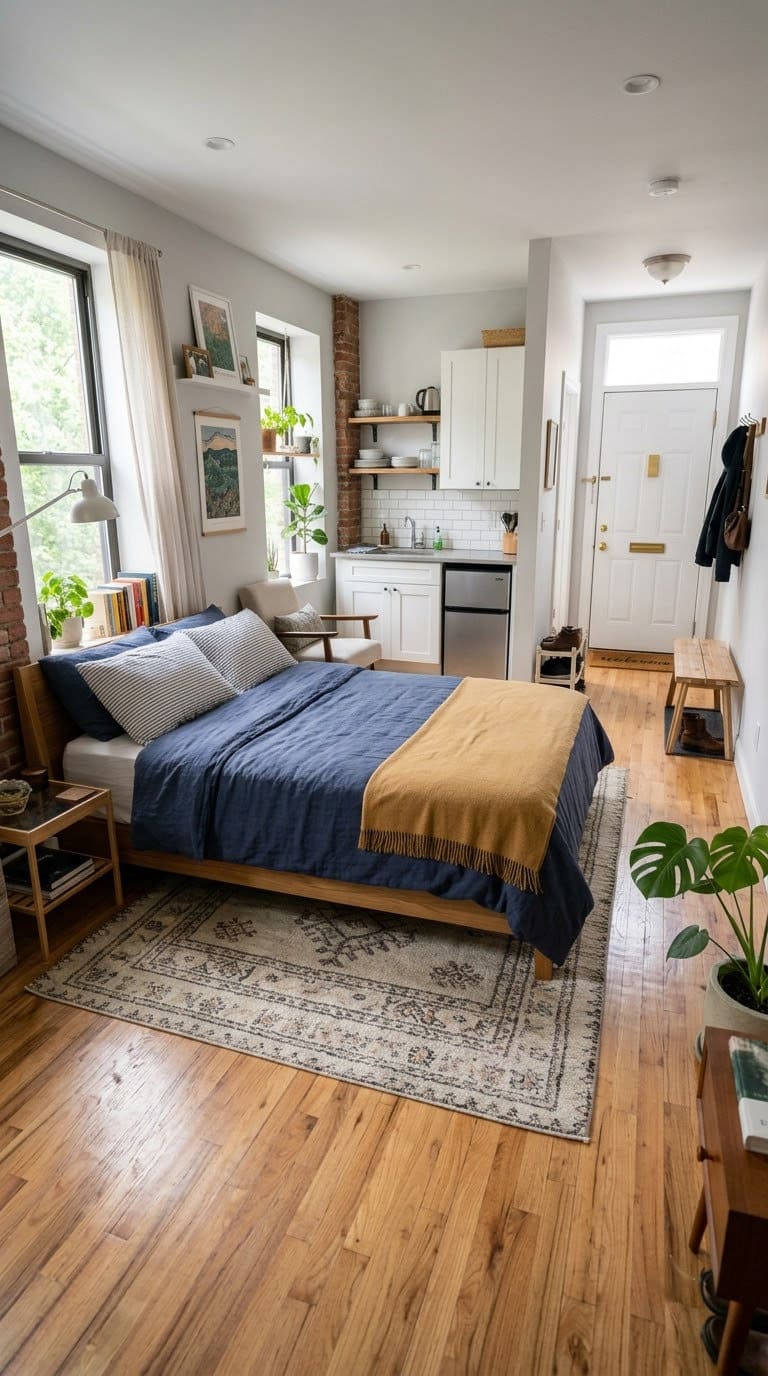
The core rule, positioning your bed, desk, or main seating so you can see the door without sitting directly in line with it, doesn’t require moving walls or anything permanent.
In a small studio or one-bedroom, this usually means arranging furniture diagonally across from the entrance rather than pushed flush against the nearest wall, a rearrangement, not a renovation.
2. Buffer your entrance and kitchen sightline with removable solutions
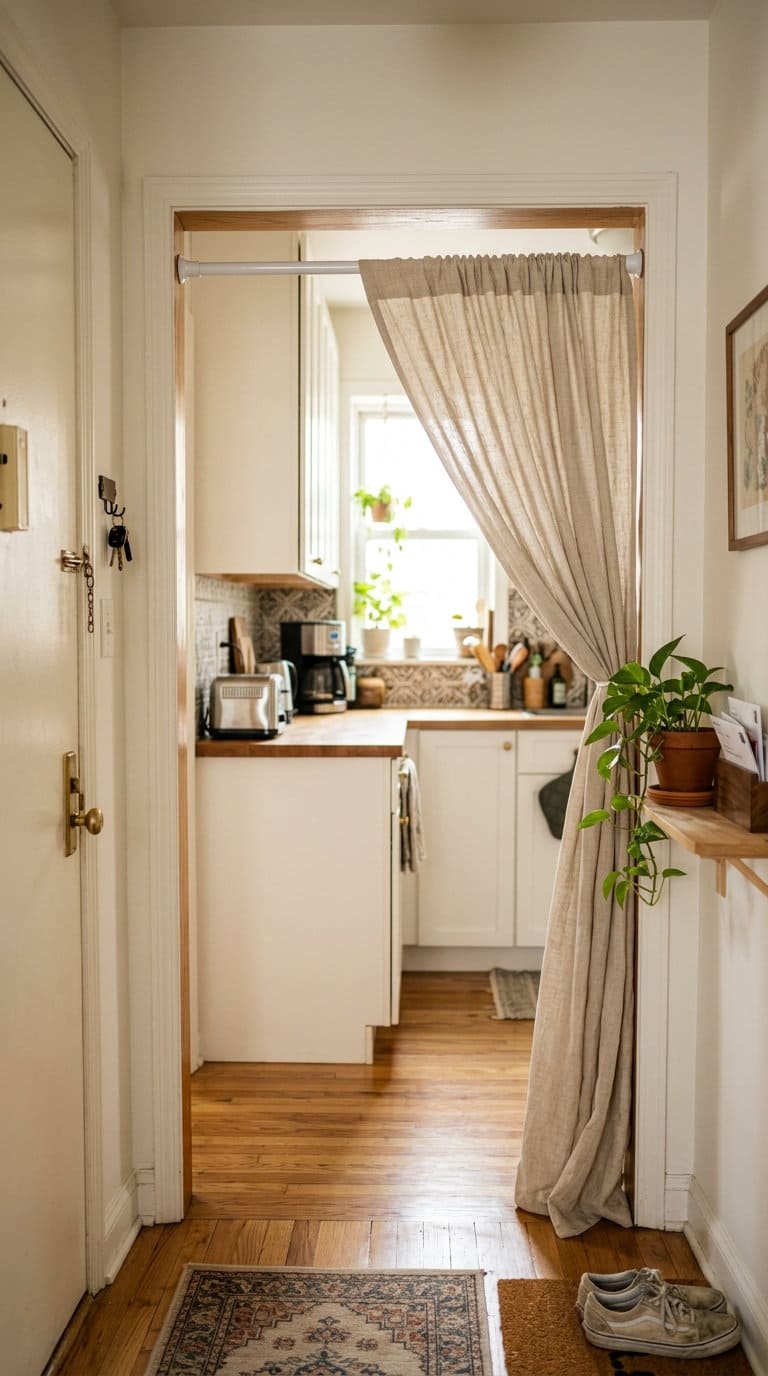
If your kitchen is visible directly from the front door (extremely common in small apartments), a closed kitchen door handles this in a house, but many small rentals don’t have one.
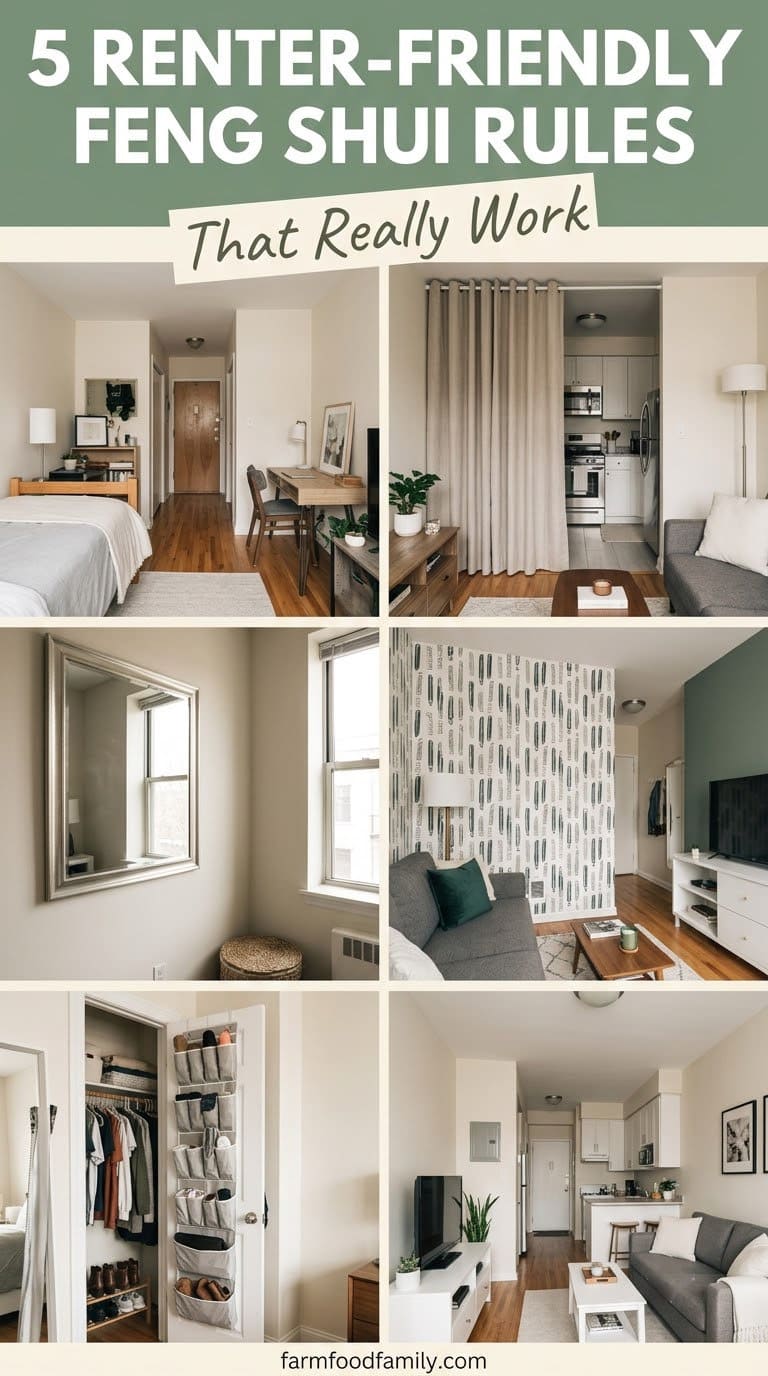
A tension-rod curtain, a folding screen, or a tall furniture piece positioned as a visual buffer accomplishes the same sightline break without installing anything permanent, and all three come down instantly at move-out.
3. Use mirrors and light colors, and know the real reason they work
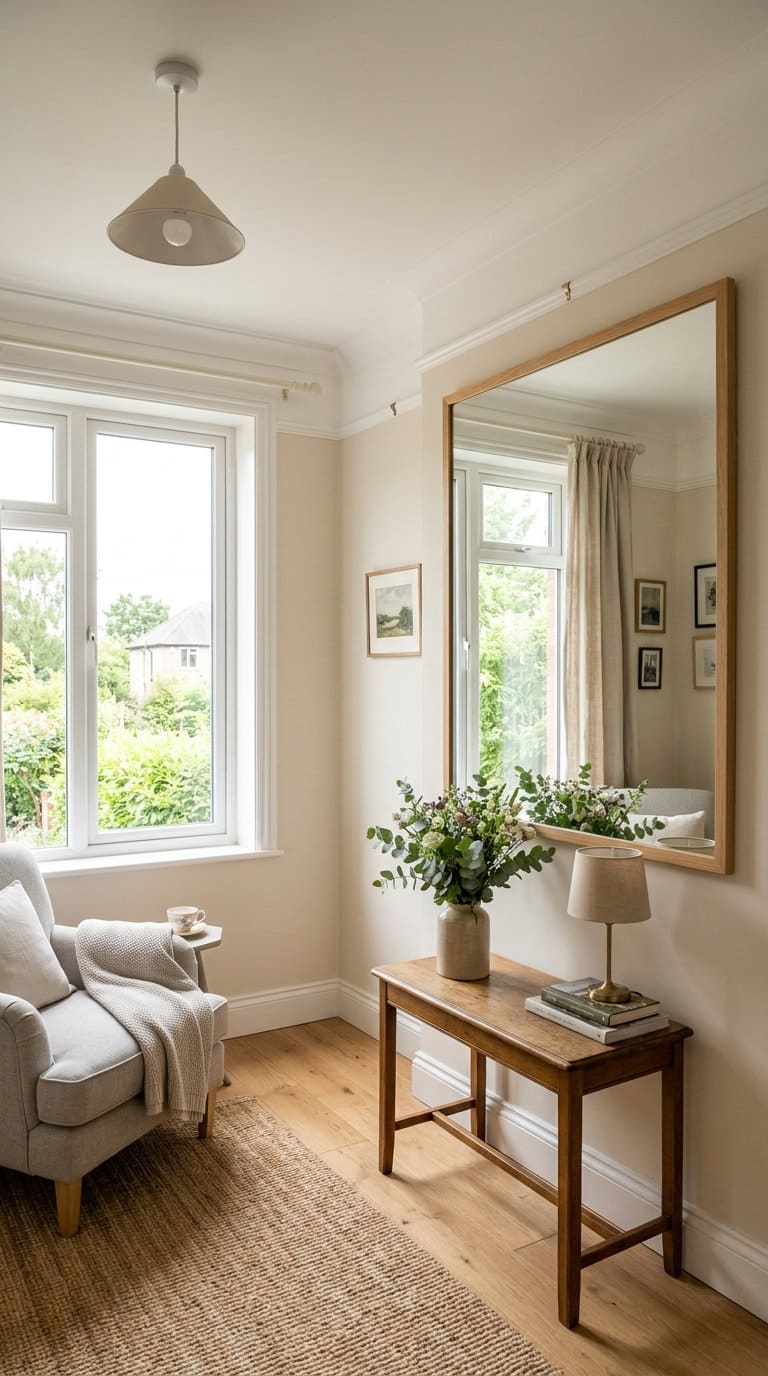
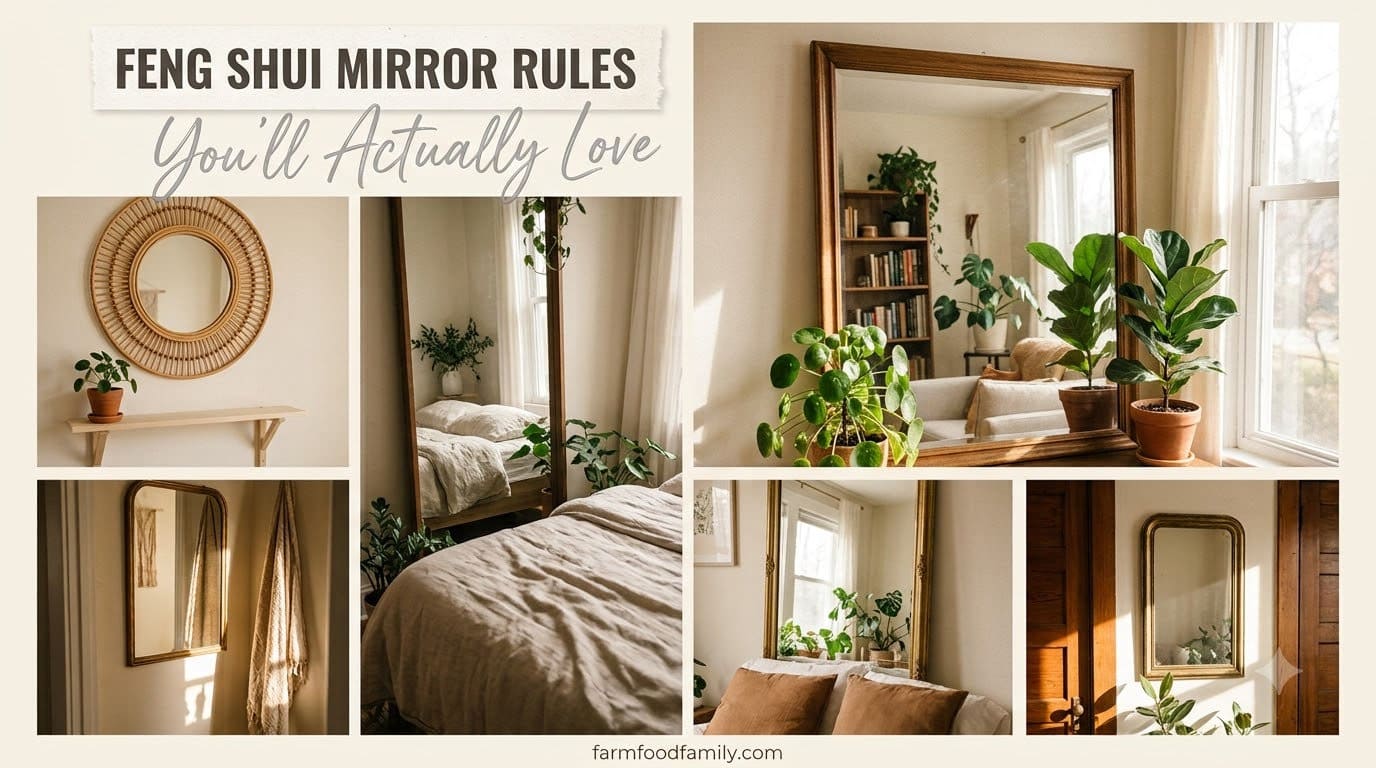
Mirrors positioned to reflect light or a pleasant view (not clutter, not directly opposite the door, not over a bed) are a favored small-space fix, along with generally lighter wall and furniture colors.
There’s a real, documented reason this isn’t just feng shui symbolism: lighter colors reflect more available light and are a well-established interior-design principle for making a room feel visually larger, and a mirror placed to reflect light or extend a sightline genuinely increases a space’s perceived depth.
This is real visual-perception science, not just energetic theory, which is likely why it’s one of the most consistently recommended small-space fixes across design advice generally, feng shui or otherwise.
4. Will repainting for feng shui actually cost you your security deposit?
This is the gap in every feng shui small-apartment source checked for this piece, and it’s the one with real financial stakes specific to renting.
In most U.S. jurisdictions, a landlord can legally deduct from your security deposit for damage that exceeds normal wear and tear, and unauthorized painting or other permanent alterations are a commonly cited, real example of a deductible category, tenants are often required to restore a unit to its original condition before move-out.
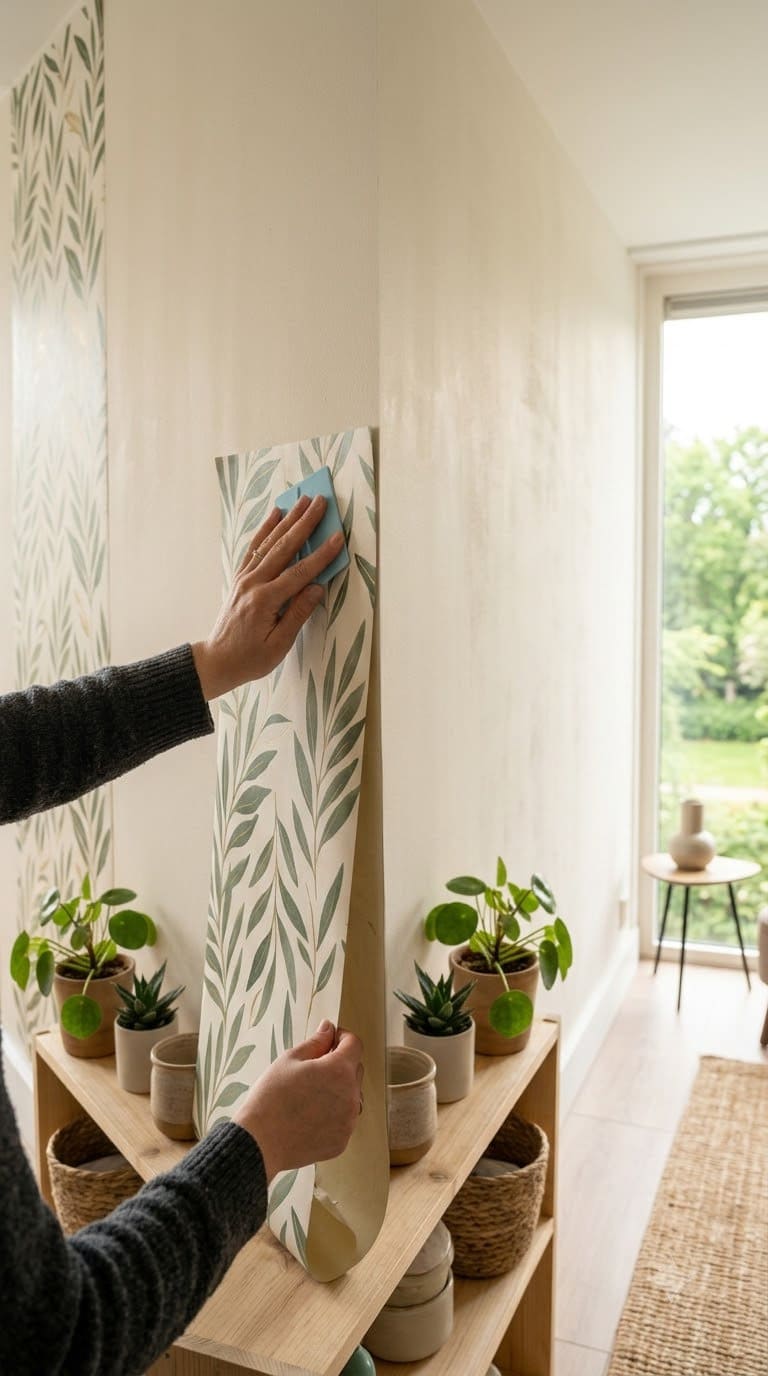
Before repainting a wall for feng shui color reasons, check your lease terms and get written permission if required, or lean on genuinely reversible alternatives: removable wallpaper, large framed art in the color you want, or textiles (curtains, rugs, throws) that deliver the same color psychology without touching the walls at all.
5. Keep clutter minimal using vertical, not permanent, storage
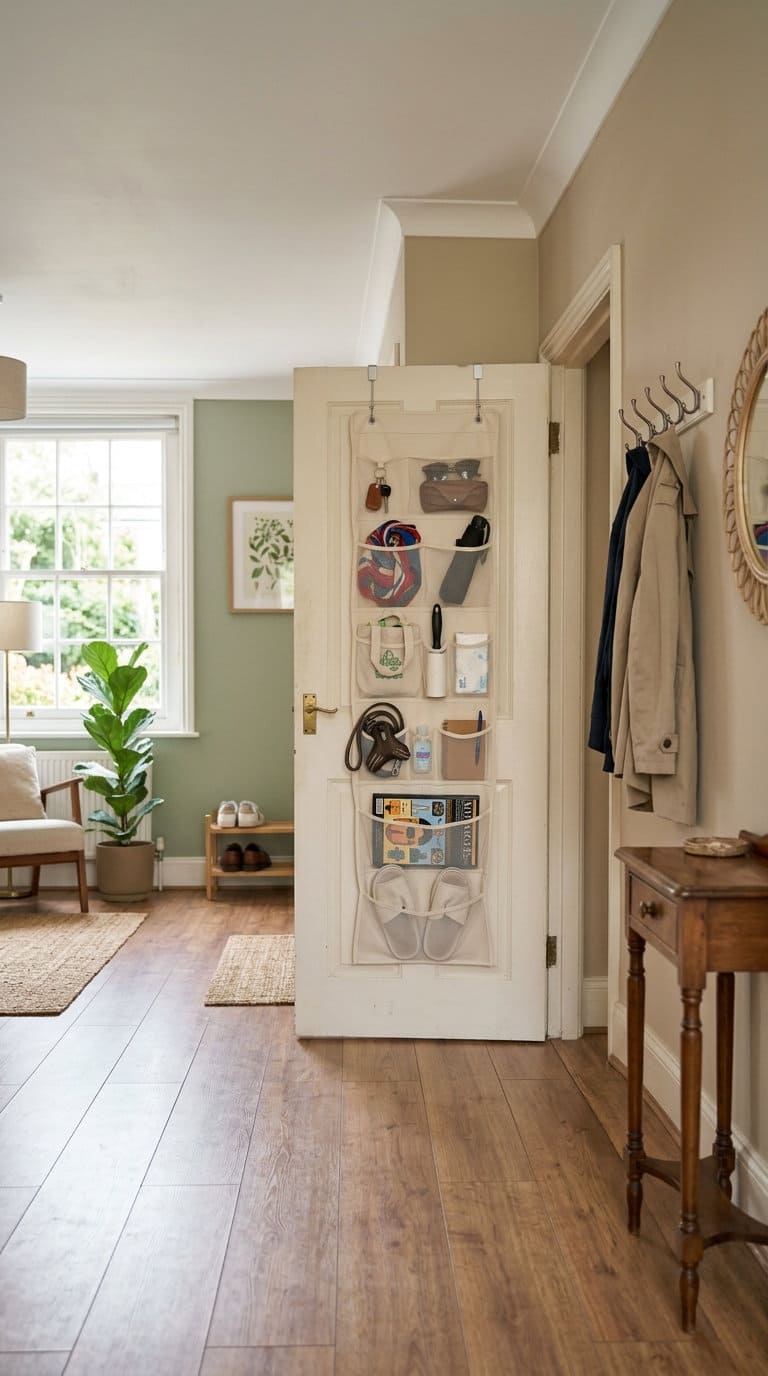
A cluttered small space reads as chaotic energy the same way it does in a larger home, just with less room to hide it.
The renter-friendly fix is vertical storage, over-the-door organizers, stackable bins, wall-mounted shelving on removable hardware, rather than built-ins that require drilling or aren’t yours to take when you move.
The 5 rules at a glance
| Rule | Real-world backing | Fastest fix |
|---|---|---|
| Command position via furniture | No structural change needed | Arrange diagonally across from the entrance |
| Buffer entrance/kitchen sightline | No door in many small rentals | Tension-rod curtain or folding screen |
| Mirrors and light colors | Real visual-perception science, not just symbolism | Mirror reflecting light, not clutter |
| Reversible changes only | Landlords can deduct unauthorized paint from deposits | Removable wallpaper, textiles, framed art |
| Vertical, non-permanent storage | Keeps clutter down without drilling | Over-the-door organizers, stackable bins |
What we learned the hard way
The unauthorized-paint mistake is the one with the clearest real cost attached. Repainting a rental wall without checking the lease first, then getting hit with a repainting charge at move-out, is a completely avoidable expense if you check the reversibility question before the color question.
The mirror-placement detail is the other thing people get backwards in a small space. It’s tempting to hang a mirror in whatever spot has room, but a mirror reflecting clutter or a wall instead of light or a pleasant sightline doesn’t deliver the same visual-expansion effect, placement matters as much as simply having one.
FAQs
My lease doesn’t mention paint at all. Am I safe to repaint? Not necessarily, silence in a lease doesn’t always mean permission. Get explicit written approval from your landlord before repainting, even a small accent wall, to avoid a move-out dispute.
What’s a genuinely reversible way to add feng shui-favorable color without painting? Textiles (curtains, a large area rug, throw pillows), removable wallpaper, and large framed art all deliver real color psychology without altering the wall itself.
Do I need an actual door to buffer my kitchen from the entrance? No, a tension-rod curtain, a folding screen, or a strategically placed tall bookshelf all break the direct sightline without installing anything permanent.
Is command position really achievable in a studio apartment with only one real furniture arrangement option? Usually yes with some flexibility, even a small studio typically has more than one wall configuration available. If truly only one layout works, the mirror workaround (reflecting the door from the bed or desk, never reflecting the bed itself) is the standard fallback.
Related reading on farmfoodfamily.com: for the deeper structural rules behind bed placement and mirror rules referenced here, see our bed placement feng shui and mirror feng shui guides, and for more small-space layout ideas, see our small apartment living room ideas guide.

Related Posts
- Small Apartment Living Room Ideas
- Small Apartment Balcony Ideas
- Renter-Friendly Backyard Ideas
- Popular Designs for Small Apartments
- Apartment Patio Decorating Ideas
- Cube Storage Ideas
Never miss an update — choose FarmFoodFamily as your preferred source on Google.
How it works: Tap the button below to open Google's settings page, then check the box next to FarmFoodFamily.
Tap the checkbox to turn it blue — that's how you know it's set.