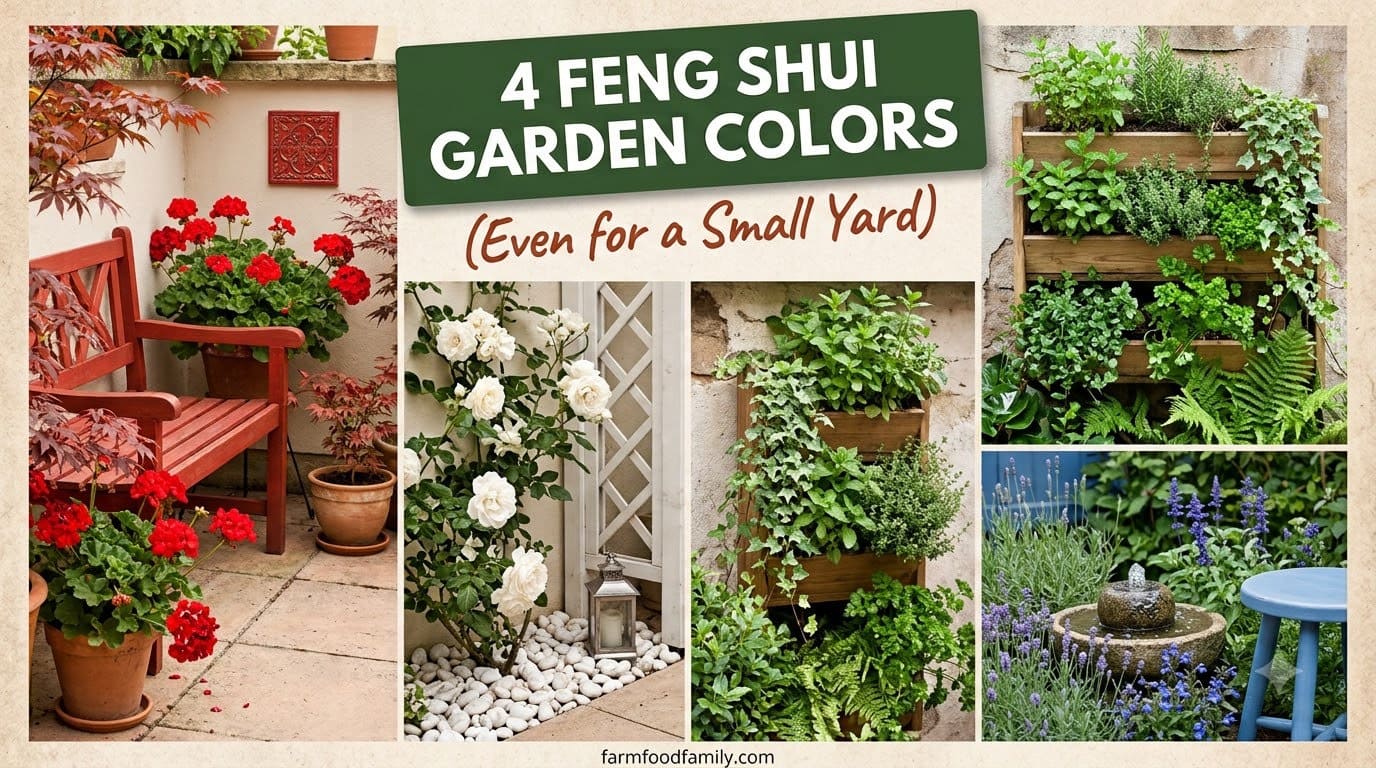
4 Feng Shui Colors Your Garden Needs to Balance the Five Elements
Your garden already has the wood element covered, that’s what all the actual plants are, these are the 4 accent colors feng shui says to add on top, and each one has a real, checkable fact behind it that has nothing to do with chi.

Never miss an update — choose FarmFoodFamily as your preferred source on Google.
How it works: Tap the button below to open Google’s settings page, then check the box next to FarmFoodFamily.
Tap the checkbox to turn it blue — that’s how you know it’s set.
Anjie Cho, architect and feng shui educator, co-founder of the Mindful Design Feng Shui School, treats color as one of the most direct, low-cost ways to bring a specific element’s energy into a space, a garden included.
A garden’s living greenery already supplies the wood element by default, so here are the four additional colors feng shui recommends layering in in to reach real five-element balance, paired with the real horticultural, thermal, and ecological facts that back several of them up beyond symbolism.
1. Red (and orange), for the fire element
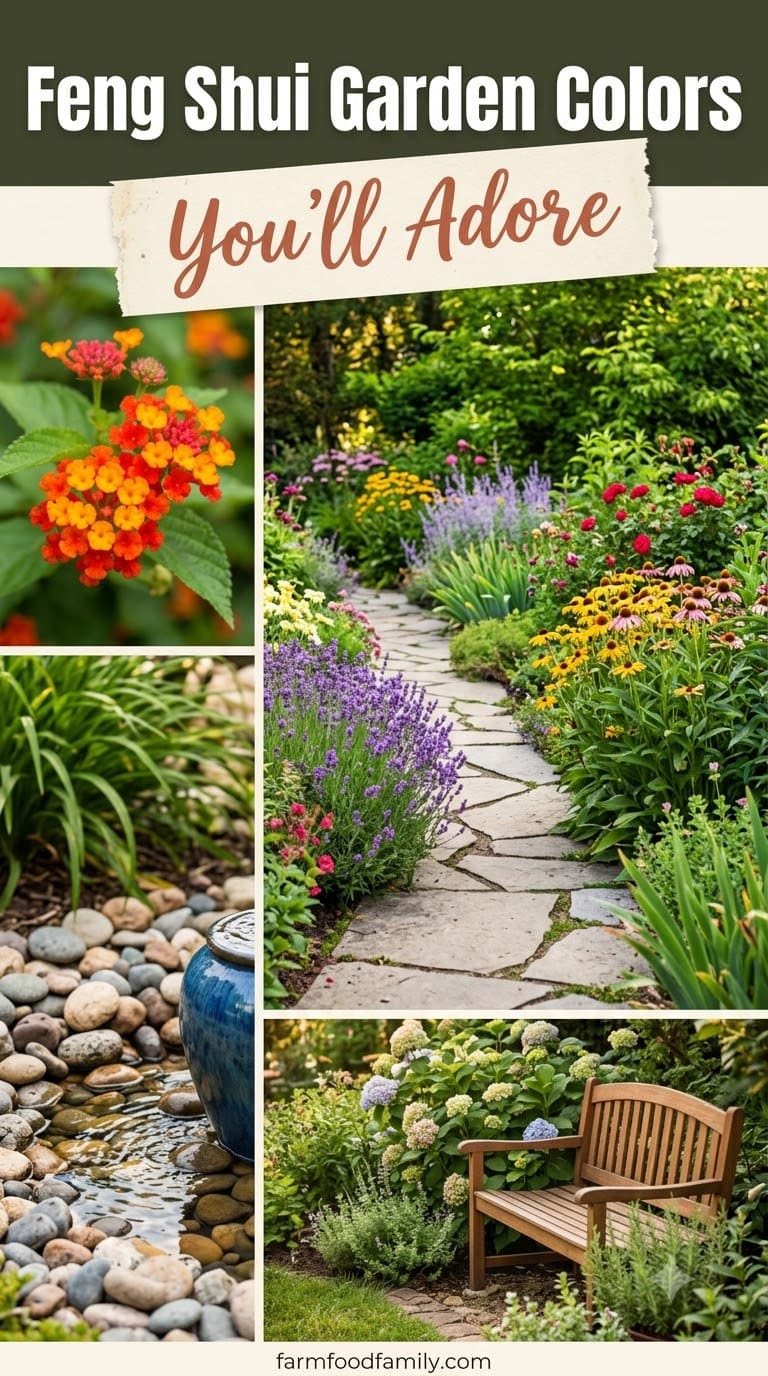
Red and orange, through flowers, an accent wall, garden furniture, or a fire pit, are the classic fire-element additions, meant to bring warmth, joy, and active energy to a garden that would otherwise feel entirely passive and green.
Real fact worth knowing: there’s a genuine biological mechanism behind red specifically that has nothing to do with symbolism.
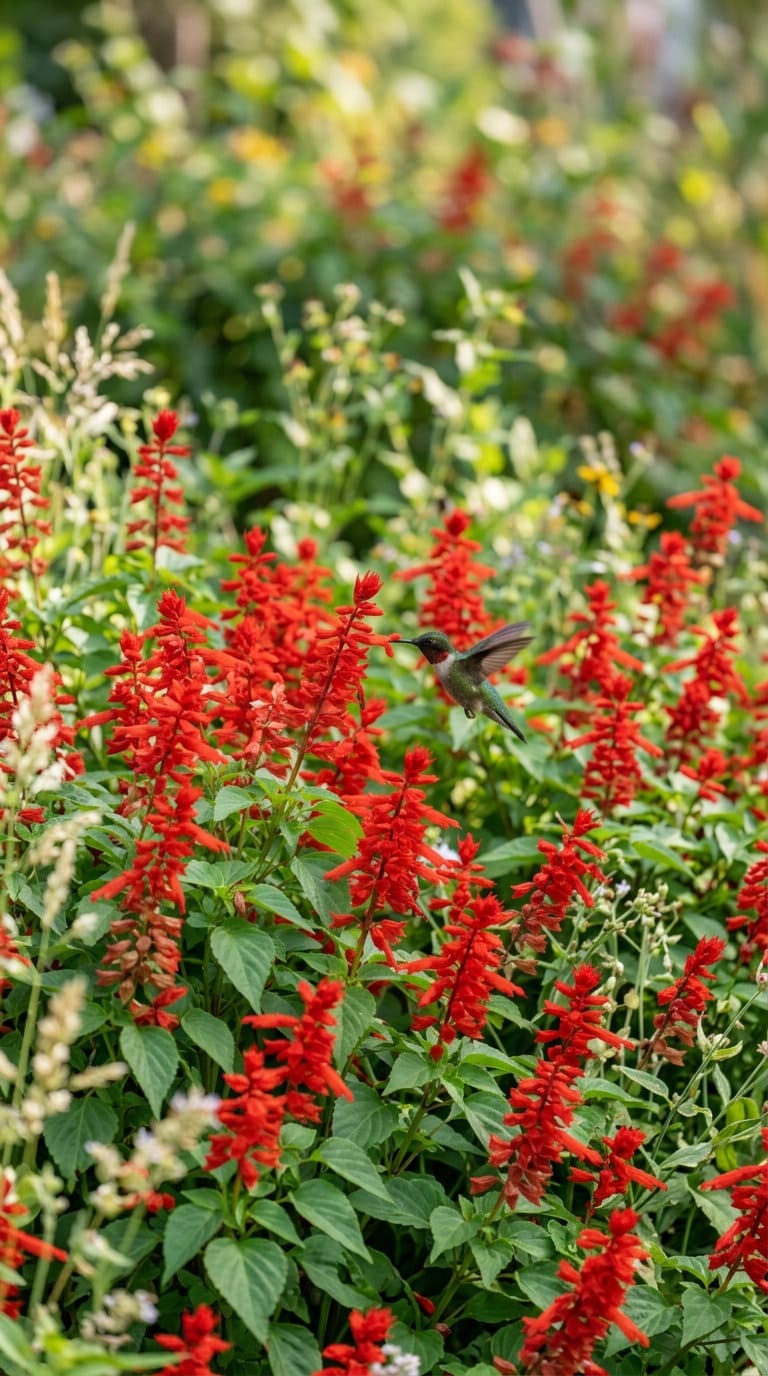
Hummingbirds’ retinas prioritize red and yellow tones over cooler colors like blue, and because bees, their main competition for nectar, don’t see red well, hummingbirds have evolved to key in on red, tubular flowers specifically as a reliable, less-contested nectar source.
A red-heavy planting bed isn’t just adding “fire energy,” it’s a genuinely effective way to attract real pollinators to a garden.
Answer 4 quick questions and get matched to the exact fix for your yard — drainage, budget, layout, or something else entirely.
Take the Free Quiz2. Brown, for the earth element
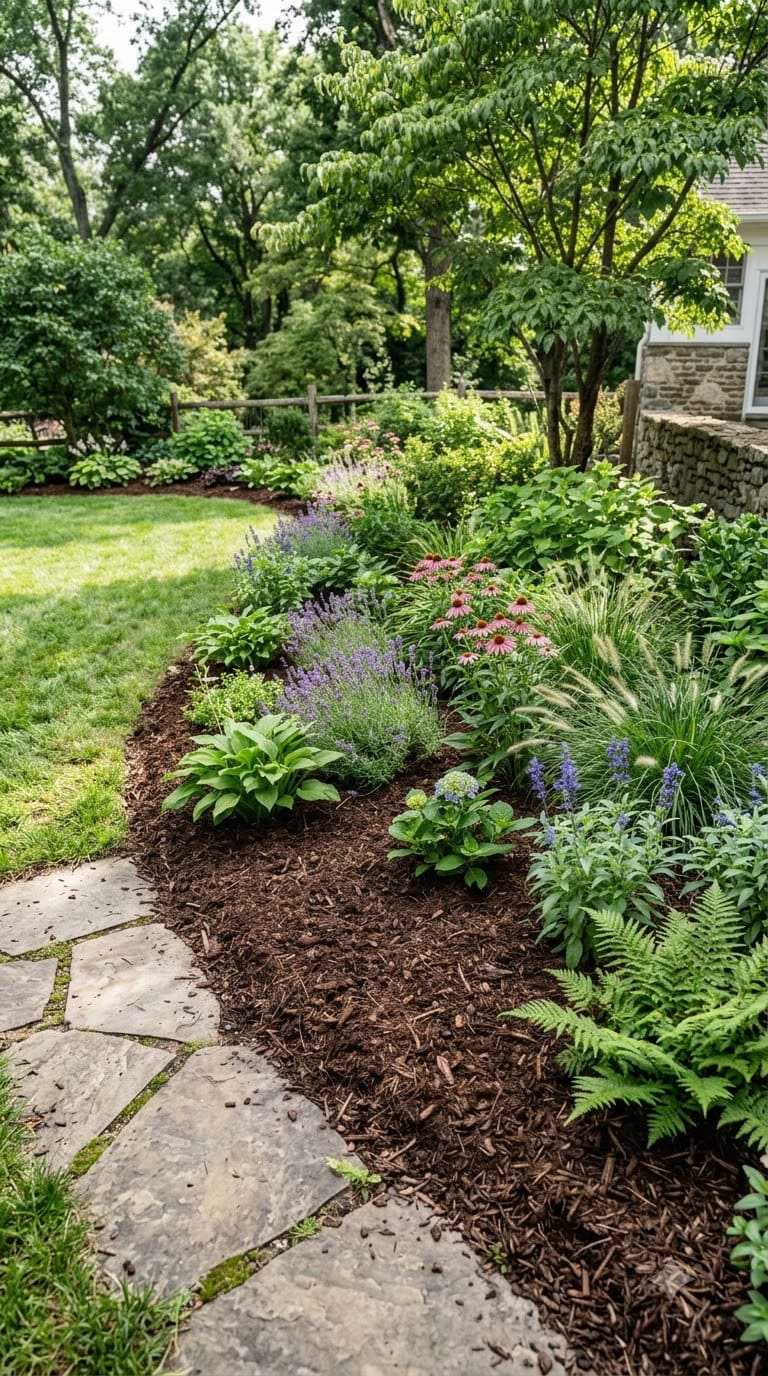
Brown, through clay pots, natural stone, bark mulch, or wood furniture, is the standard earth-element addition, meant to ground a garden and support stability, security, and health.
Real fact worth knowing: the material you choose to deliver “brown” matters more than the color itself. Organic bark mulch genuinely improves soil moisture retention and slowly enriches soil as it breaks down, a real, ongoing horticultural benefit beyond the color.
Rubber mulch, sometimes chosen for its brown or black color and low-maintenance reputation, is a different story: real research, including a Washington State University review, found rubber mulch leaches heavy metals like zinc, along with other tire-manufacturing chemicals, into surrounding soil as it degrades, with high enough zinc levels documented to damage or kill some mulched plants.
If you want the earth-element look, organic mulch delivers the same color with none of that risk.
3. White and silver, for the metal element
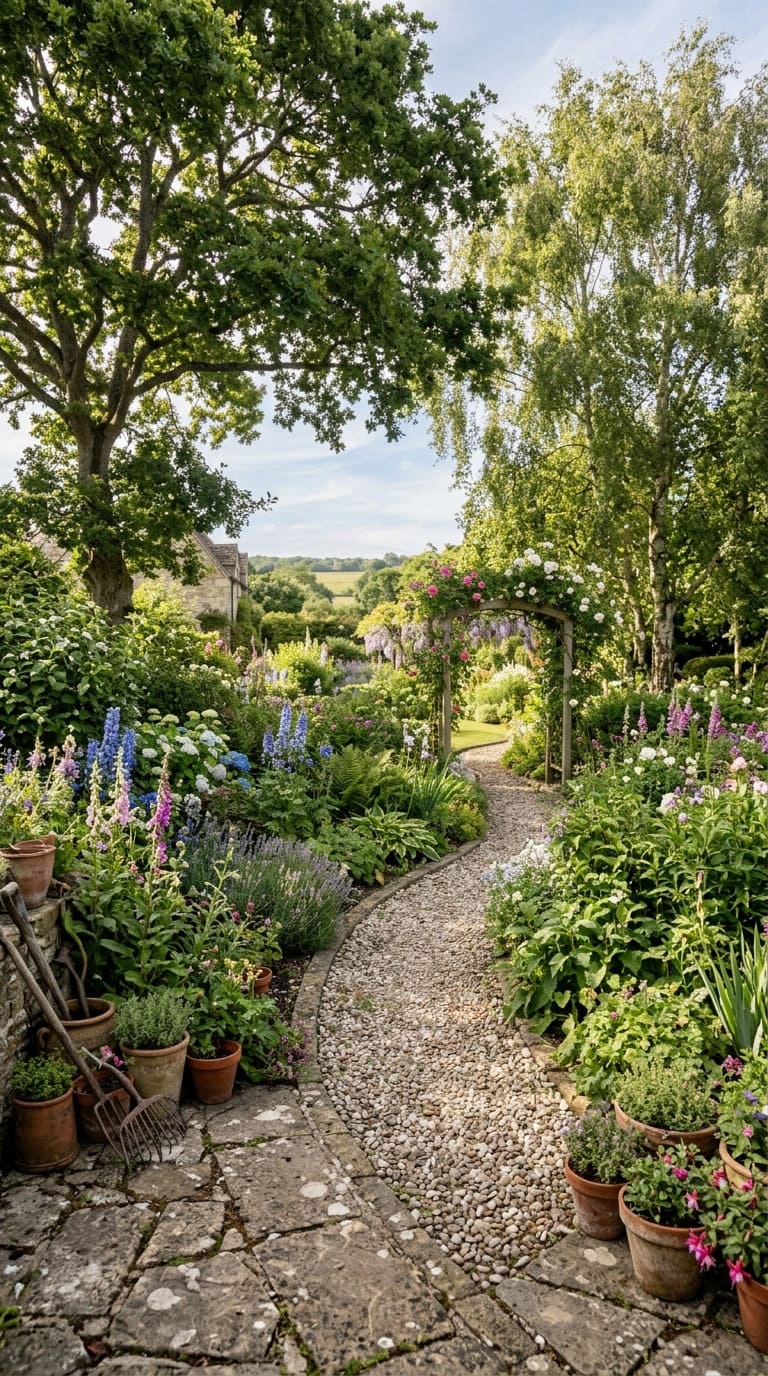
White and silver, through pale flowers, metal sculptures, wind chimes, or light-colored gravel and stone, are the standard metal-element additions, associated with clarity, precision, and a sense of order in a garden’s layout.
Real fact worth knowing: light-colored hardscape material has a real, measurable reflectance difference from darker options, per the Illuminating Engineering Society, surface reflectance values range from roughly 5% for dark mulch up to 70% for light-colored stone.
That reflected light and heat is a genuine double-edged fact: it benefits heat-loving plants like lavender and sedum planted nearby, but it can create real glare and added heat stress for shade-preferring plants like hostas or ferns positioned too close, and enough glare on a sunny day to be genuinely uncomfortable to look at directly.
Most yard problems trace back to one specific, fixable cause. Find yours in 4 quick questions.
Take the Free Quiz
Covers rule #2's organic, non-rubber mulch recommendation, Amazon's Choice, 4.3 stars/187 ratings
Shop NowThis post contains affiliate links. We may earn a commission on qualifying purchases at no extra cost to you.
Positioning white gravel with some distance from shade-loving plants, or adding a plant or structure to break up the glare, gets the metal-element look without the real downside.
4. Black, for the water element
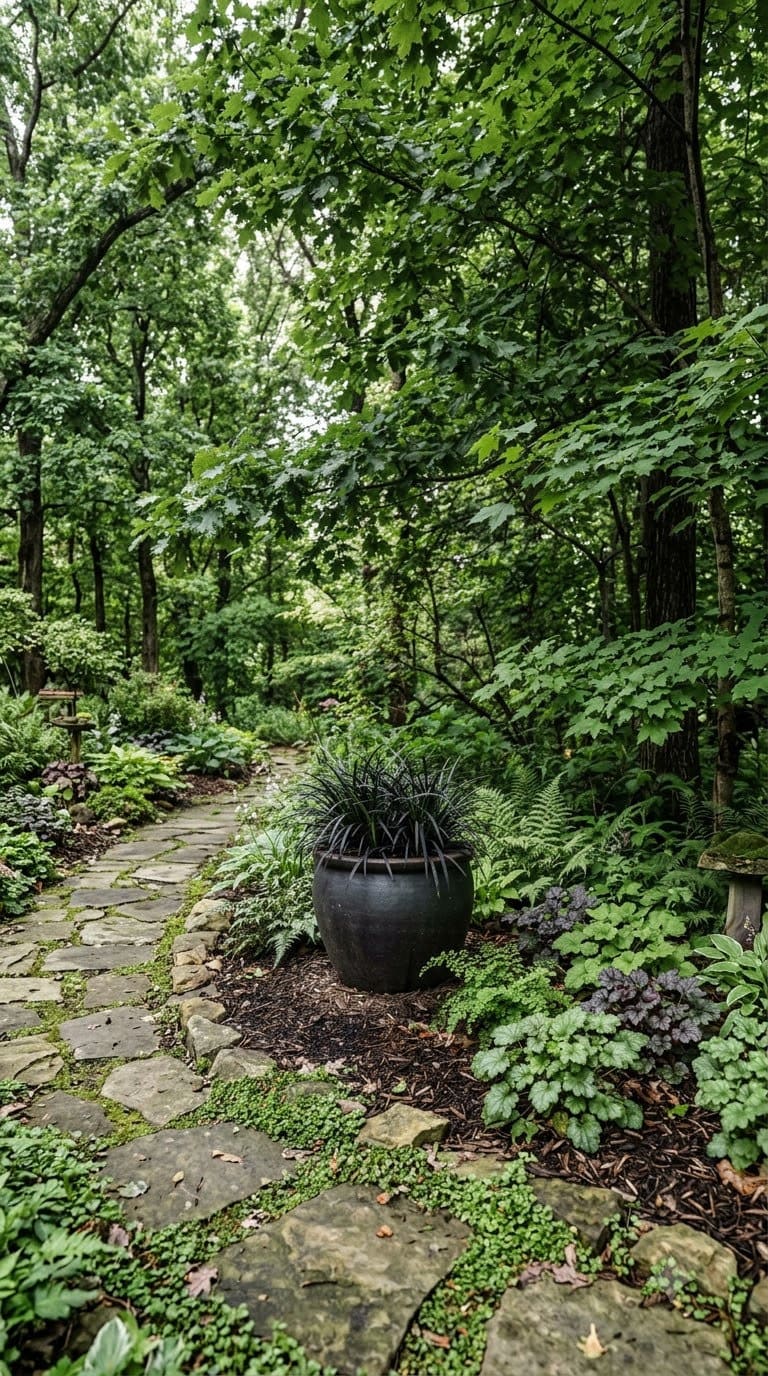
Black, through dark pots, black bamboo, black mondo grass, or dark-colored stone, is the standard water-element addition, tied to depth, mystery, and stillness in a garden’s palette.
Real fact worth knowing: this is the color on the list with the clearest real safety stake attached. Dark-colored hardscape absorbs far more solar radiation than light-colored material, up to 95% of it, according to real surface-temperature research, meaning dark pavers or asphalt-style surfaces can reach 140 to 160°F on a hot, sunny day, well above the threshold for a first- or second-degree skin burn on contact within seconds.
A dark garden feature underfoot, a path, a patio surface, isn’t just a design choice, it’s a real barefoot- and paw-burn risk in direct summer sun.
Reserve black for planters, furniture accents, or shaded garden features rather than a wide-open, sun-exposed walking surface if kids or pets go barefoot in the yard.
The 4 colors at a glance
| Color | Element | Real-world backing |
|---|---|---|
| Red/orange | Fire | Hummingbirds key in on red flowers over other colors |
| Brown | Earth | Organic mulch enriches soil; rubber mulch leaches heavy metals |
| White/silver | Metal | IES: light stone reflects up to 70% vs. ~5% for dark mulch, real glare/heat tradeoff |
| Black | Water | Dark surfaces can reach 140-160°F in direct sun, a real burn risk underfoot |
What we learned the hard way
The rubber mulch decision is the one people regret without realizing why for a full season. A rubber mulch bed chosen for its brown, low-maintenance look can quietly stunt or kill nearby plants from zinc buildup in the soil, a slow, easy-to-miss cause that gets blamed on watering or sun exposure long before anyone checks the mulch itself.
The dark-paver mistake is the other one with real, immediate stakes. A black or charcoal-colored patio surface chosen purely for the water-element look can become a genuine barefoot hazard by early afternoon on a hot day, worth testing with your own bare foot before assuming a shaded corner will stay cool once the sun moves.
FAQs
Do I need all 4 colors in my garden to achieve balance? No, feng shui treats this as a spectrum, not a checklist. Adding even one or two accent colors beyond the default green (wood) genuinely shifts a garden’s balance; you don’t need equal parts of all five elements everywhere.

Is rubber mulch always bad, or just in some situations? The heavy-metal leaching concern is most relevant for vegetable beds and delicate ornamentals over time. If you’re using it purely for a walkway or a non-planting area, the plant-toxicity risk is less relevant, though the real heat-absorption concern (dark colors run hot) still applies.
The average homeowner spends $616/year on yard fixes that don't address the real problem. Find out what yours actually is — before you spend another dollar.
Take the Free QuizHow do I get the metal element’s look without the glare problem? Use light-colored stone in moderation, position it away from shade-loving plants, and break up large expanses with plantings or structures rather than covering an entire sun-exposed bed in solid white gravel.
Is a black garden feature ever safe for bare feet? Yes, in shaded areas or on surfaces that don’t sit in direct sun for extended periods. The real risk is specifically dark, hardscape surfaces in full, direct summer sun, not black used as an accent color on furniture or planters.
Related reading on farmfoodfamily.com: for the same five-element color framework applied indoors, see our kitchen colors feng shui guide, and for the garden lighting layer that pairs with these color choices after dark, see our garden lighting feng shui guide.
Related Posts
- Kitchen Colors Feng Shui
- Garden Lighting Feng Shui
- 7 Feng Shui Plants That Bring Wealth and Luck to Any Backyard
Products We Recommend
This post contains affiliate links. We may earn a commission on qualifying purchases at no extra cost to you.
Brut Organic Aspen Mulch (10 QT)
Covers rule #2's organic, non-rubber mulch recommendation, Amazon's Choice, 4.3 stars/187 ratings
Shop Now
Scarlet Sage Live Plants (Salvia coccinea, 3-Pack)
A real, hummingbird-attracting red flower for rule #1
Shop Now
White Pea Gravel (40 lb)
Covers rule #3's light-colored, high-reflectance decorative stone option, 5.0 stars
Shop NowNever miss an update — choose FarmFoodFamily as your preferred source on Google.
How it works: Tap the button below to open Google's settings page, then check the box next to FarmFoodFamily.
Tap the checkbox to turn it blue — that's how you know it's set.