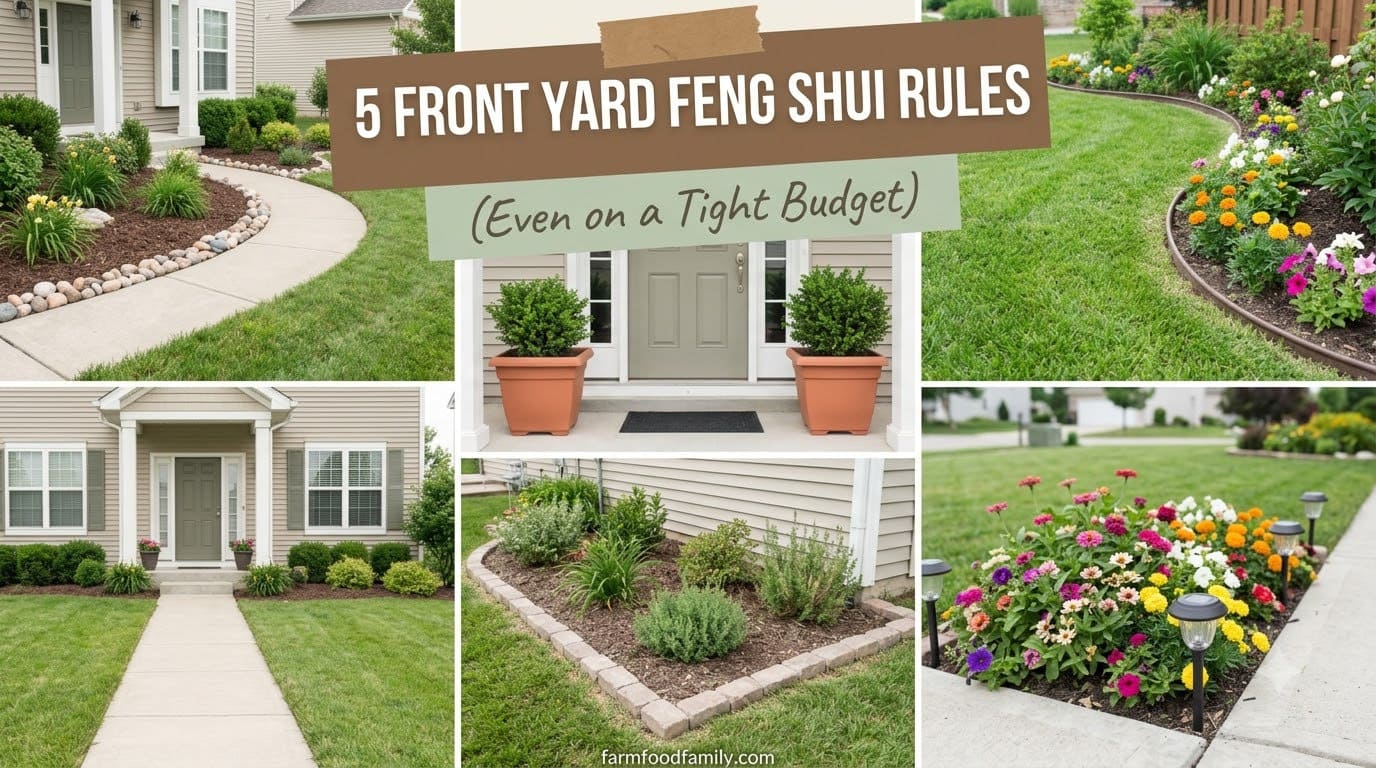
5 Front Yard Feng Shui Rules That Invite Better Energy Into Your Home
Your front yard is the first thing chi, and every visitor, encounters, and a couple of the “energy” reasons behind these rules turn out to have real acoustic science and resale data standing right behind them.

Never miss an update — choose FarmFoodFamily as your preferred source on Google.
How it works: Tap the button below to open Google’s settings page, then check the box next to FarmFoodFamily.
Tap the checkbox to turn it blue — that’s how you know it’s set.
Jayme Barrett, best-selling author of “Feng Shui Your Life” (over 150,000 copies sold, a Los Angeles Times bestseller), treats the front yard as the single highest-leverage space on a property, more consequential to a home’s overall feel than almost any interior room, because it’s the first thing chi, and every visitor, actually encounters.
This project already covers several front-yard features in real depth, garden pathways, driveways, mailbox placement, house-facing direction, so here are the five broader rules that tie the whole space together, plus the real acoustic and resale data most feng shui front-yard guides never mention.
1. Keep the whole entrance open, not just the path
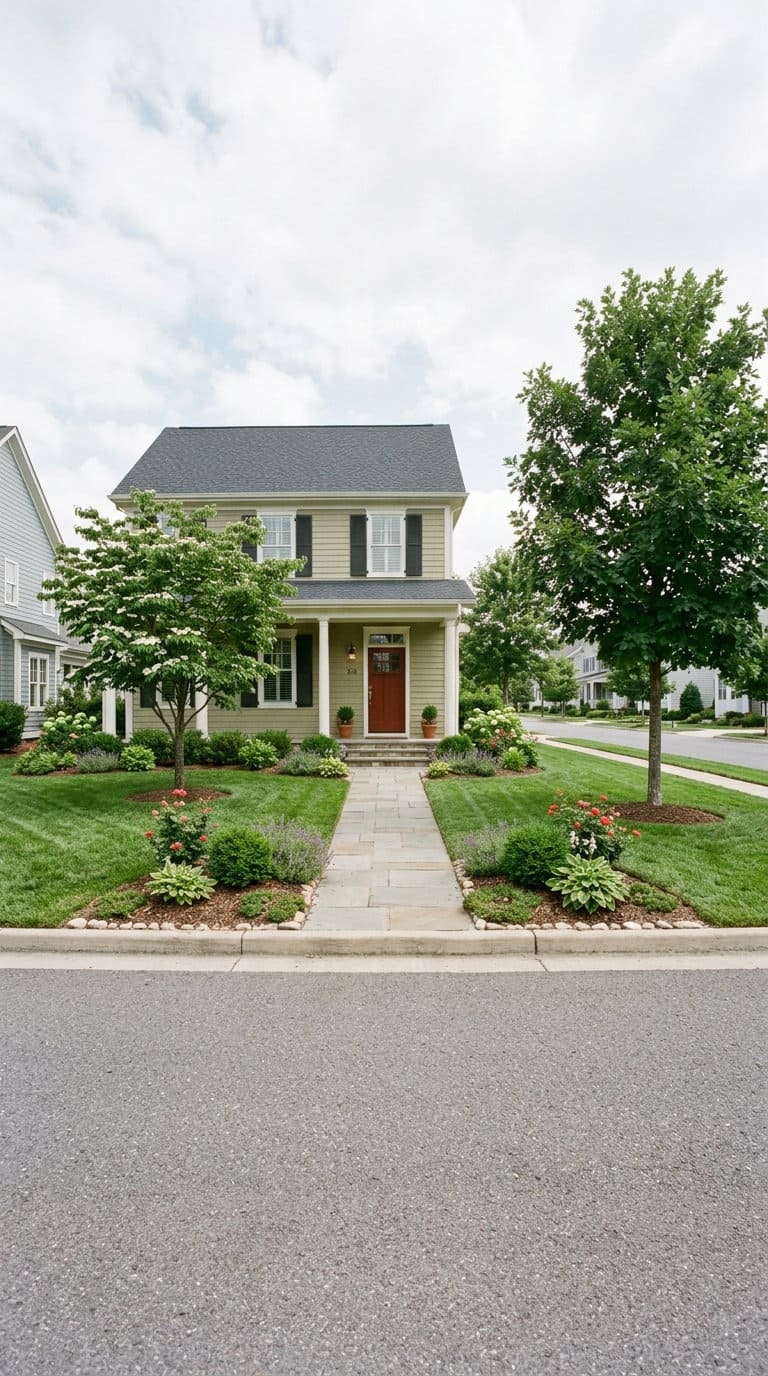
The front yard’s entrance, the gate, the walkway opening, the general approach from the street, is treated as a portal chi passes through on the way inside.
A yard where oversized shrubs, parked equipment, or bulky furniture crowd the actual approach is thought to restrict how much energy (and how easily visitors) can actually get in, regardless of how well the pathway itself curves.
For the specific “curve versus straight” pathway question, see our garden pathway feng shui guide, this rule is about the wider approach, not just the paving.

2. Balance both sides of the entrance symmetrically
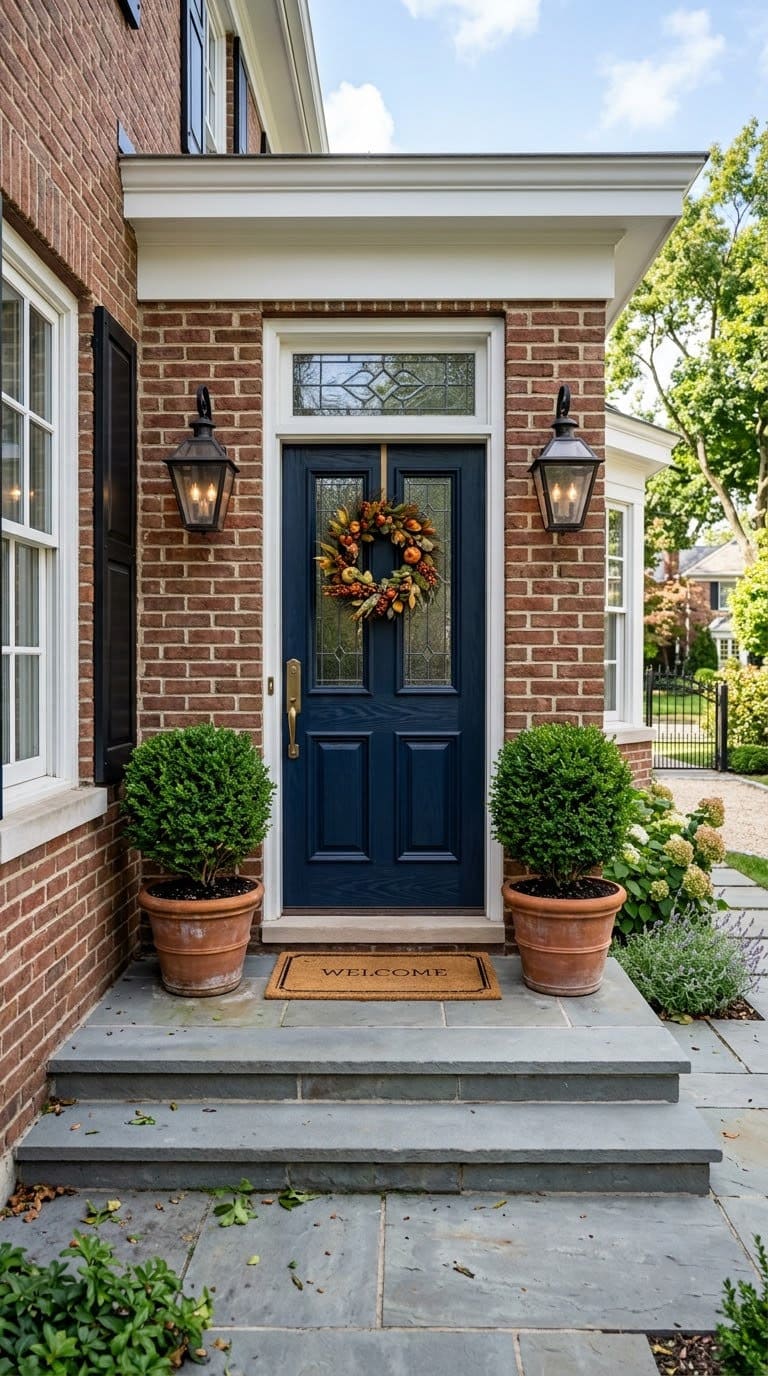
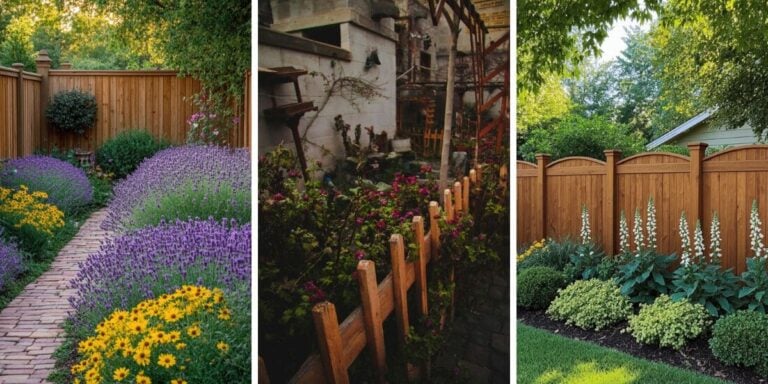
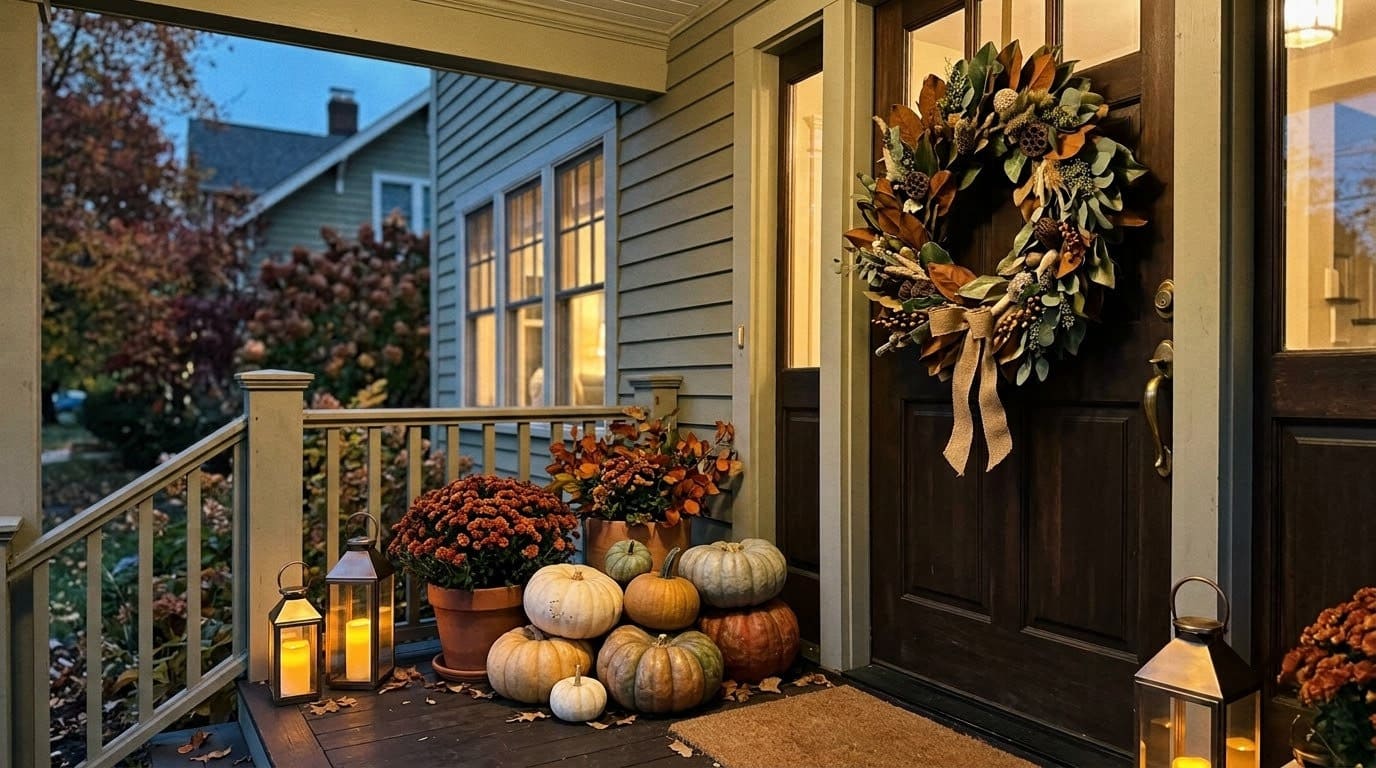
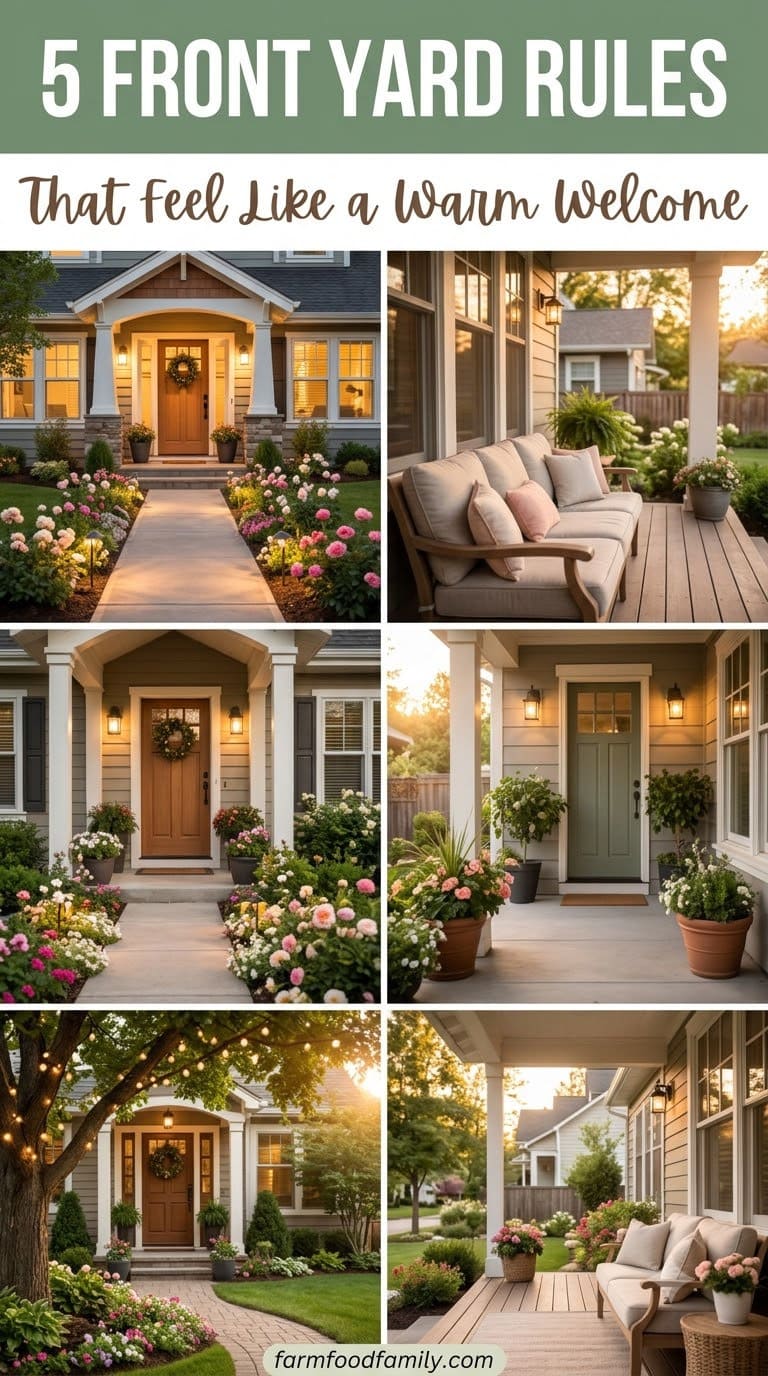
Jayme Barrett’s guidance is specific here: pairs of matched plants, matched lighting, or matched decor on either side of a front door or gate create a settled, balanced feeling, while a lopsided approach, one side landscaped and the other bare, one lantern lit and the other dark, reads as visually and energetically unresolved.
Answer 4 quick questions and get matched to the exact fix for your yard — drainage, budget, layout, or something else entirely.
Take the Free QuizThis is a genuinely low-cost rule to apply: two matching planters or two matching sconces cost the same as one of each, just distributed evenly instead of concentrated on one side.
3. Use a fence or dense planting to soften what the street brings in
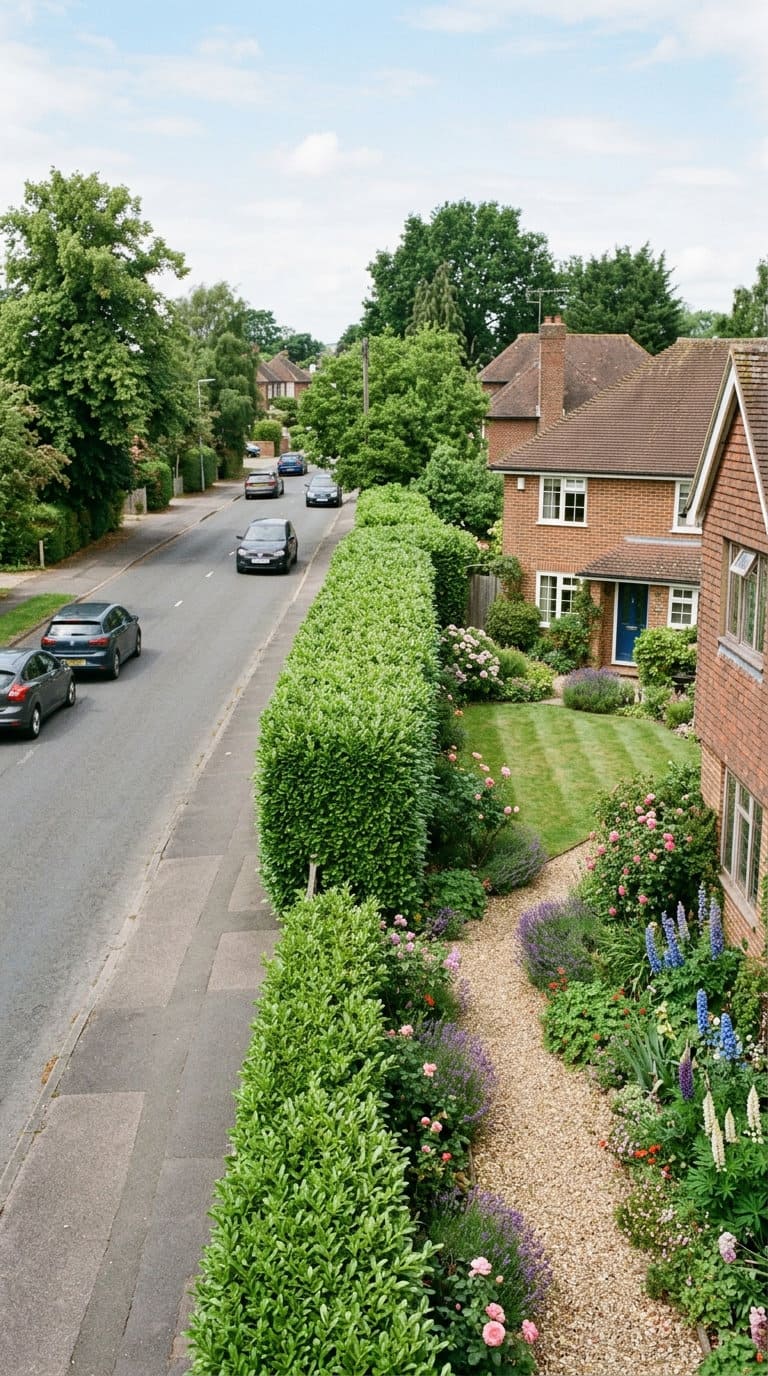
Feng shui treats a busy road as a source of “sha chi”, fast, aggressive energy that a front yard needs some buffer against, especially on a corner lot or a home close to a main road. A fence, hedge, or dense planted border along the street-facing edge is the standard remedy.
There’s a real acoustic mechanism behind this beyond symbolism. A well-built barrier fence, once it’s tall enough to break the direct line of sight to the road, typically delivers a real 5 to 15 decibel reduction in traffic noise in actual outdoor settings, roughly what most people perceive as cutting the loudness of a sound in half, though how much you get depends heavily on height, mass, and how few gaps the fence has.
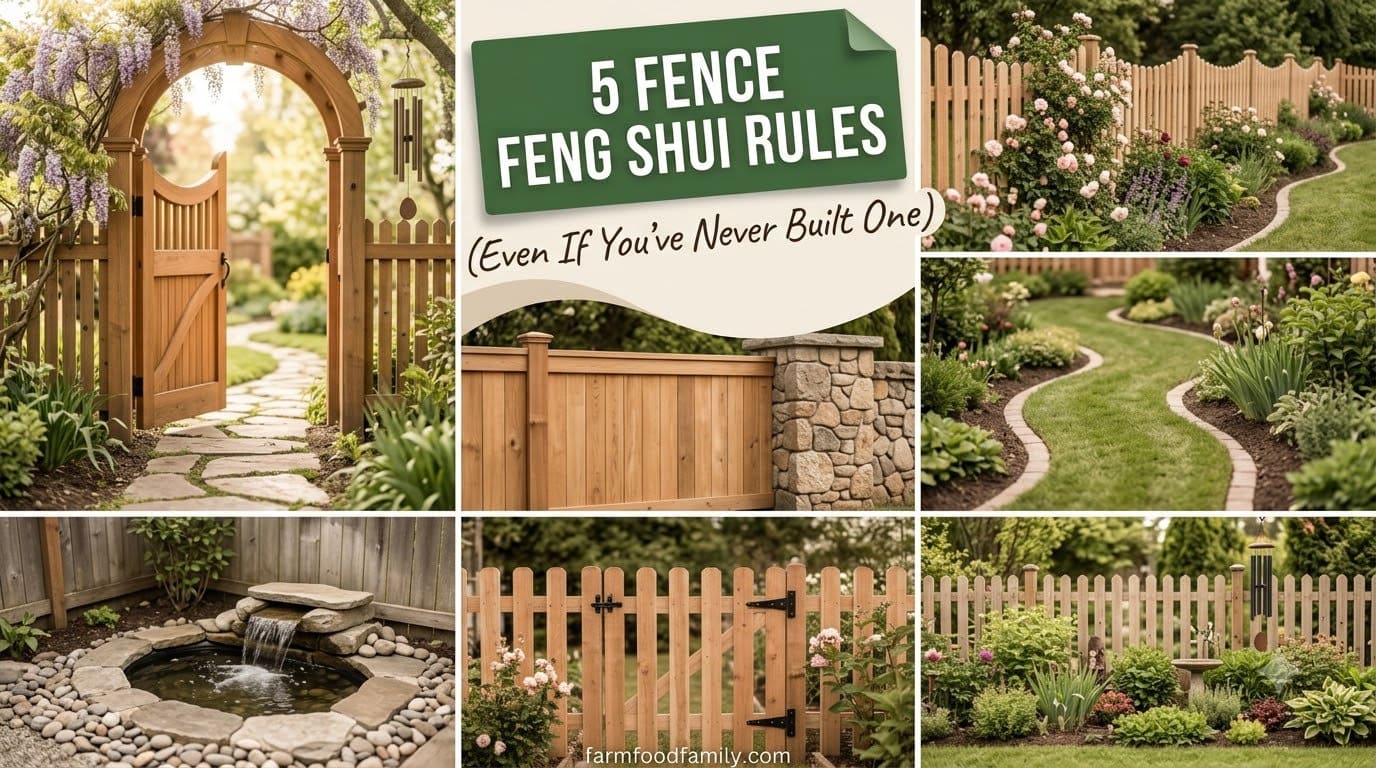
A solid or densely-layered barrier at least 8 feet tall, positioned as close to the noise source as your property line allows, gets meaningfully more real sound reduction than a short picket fence with gaps between the slats, even if the picket fence “looks” like a boundary from the street.
4. Keep the whole yard genuinely maintained, not just the entrance
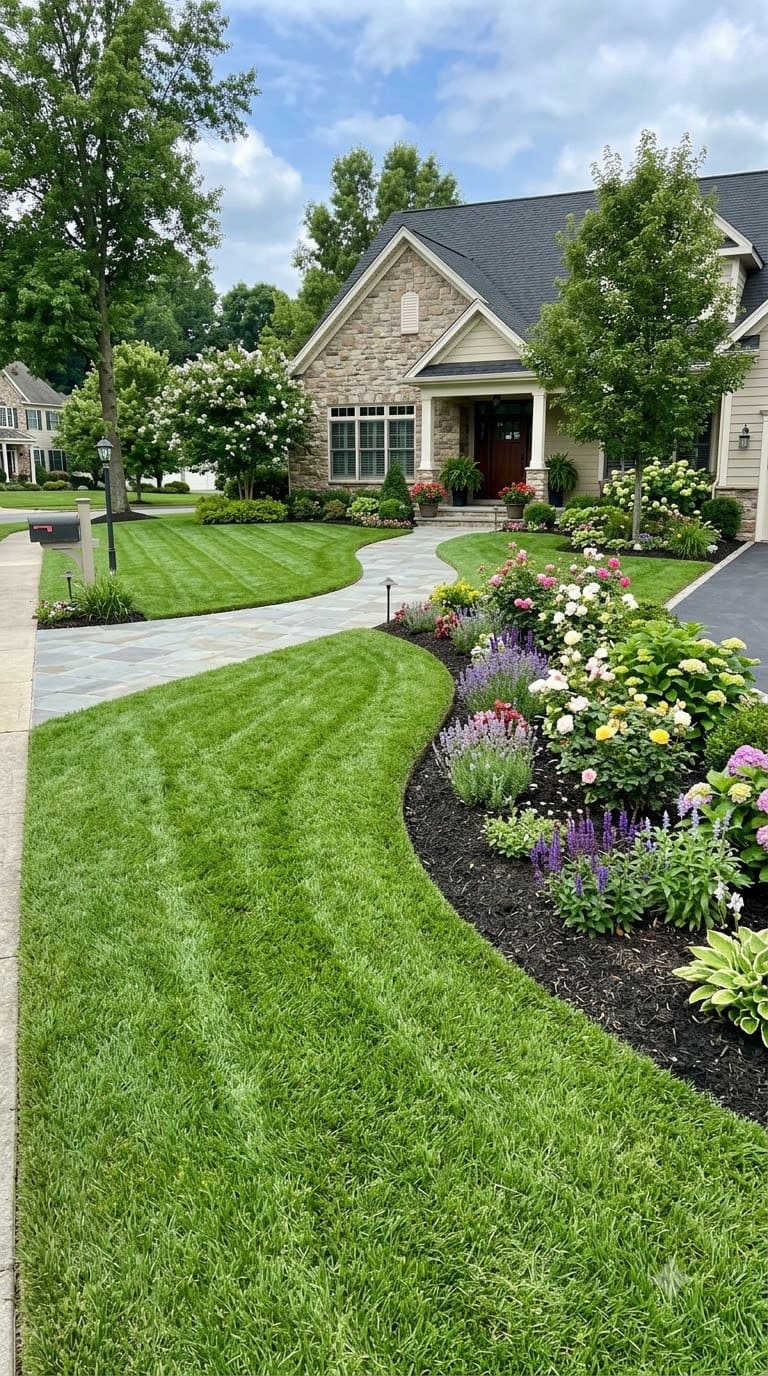
A patchy, overgrown, or neglected lawn is treated the same way a peeling front door or a cracked walkway is elsewhere in feng shui, a visible sign of decline undercutting whatever else is done right.
This is one of the clearest overlaps between symbolism and real financial stakes on this whole list: per the National Association of Realtors, a standard lawn care program delivers roughly a 217% return on investment at resale, and a well-maintained yard overall can add 5 to 15 percent to a home’s resale value, with curb appeal alone accounting for up to 7 percent of a sale price.
Whatever you believe about chi, a genuinely maintained lawn is one of the highest-ROI things you can do to a property, feng shui or not.
Most yard problems trace back to one specific, fixable cause. Find yours in 4 quick questions.
Take the Free Quiz5. Get the front door itself right, it’s the summary of everything else
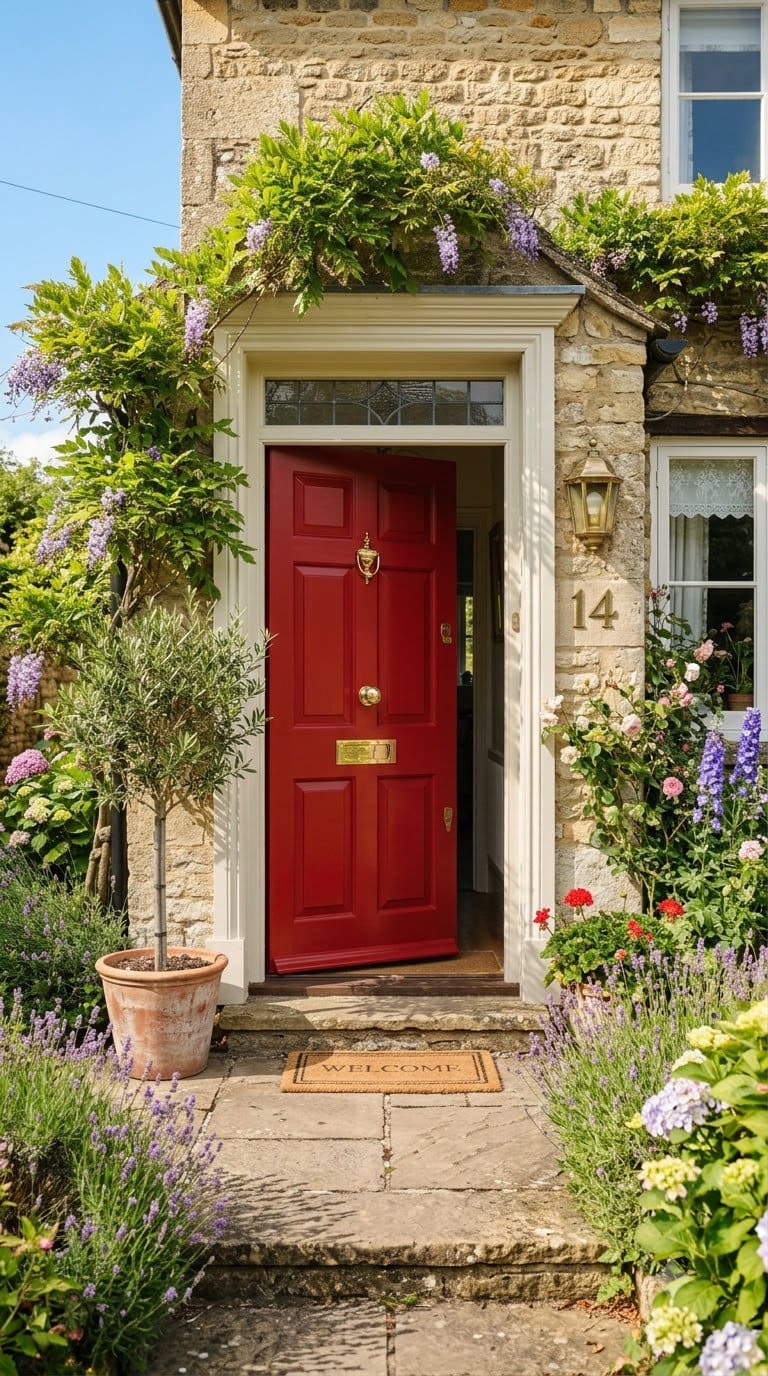
Every rule above is, in a real sense, building up to the front door, feng shui’s “mouth of chi.” A door that’s clean, in good repair, and painted a color aligned with its compass direction pulls the whole approach together.
Our front door colors and their meaning guide covers the color side of this rule in full depth, the short version here: a well-kept, deliberately colored door is the payoff for getting the open approach, the balanced sides, the buffered boundary, and the maintained lawn all right at once.
The 5 rules at a glance
| Rule | Real-world backing | Fastest fix |
|---|---|---|
| Open entrance approach | Physical access mirrors energetic access | Clear bulky items from the direct walkway |
| Symmetrical sides | Jayme Barrett’s paired-plant/paired-light guidance | Buy planters/fixtures in matched pairs |
| Fence/hedge buffer | Real 5-15 dB traffic noise reduction with an 8ft+ solid barrier | Prioritize height and minimal gaps over material choice |
| Whole-yard maintenance | NAR: 217% ROI on lawn care; up to 7% of sale price from curb appeal | Regular mowing/edging beats an occasional deep clean |
| Front door color and condition | Summarizes every other rule on this list | See our front door colors guide for the compass-direction match |
What we learned the hard way
The symmetry rule is the one people skip because it feels like a small detail compared to bigger landscaping decisions.
A yard that’s otherwise well-designed but visibly lopsided at the one spot every visitor’s eye lands on, the front door, undercuts the effect of everything else, and it’s one of the cheapest fixes on this entire list to correct.
The fence-height assumption is the other thing people get wrong. A homeowner who installs a decorative picket fence purely for the “boundary” look, expecting real noise reduction as a bonus, is often disappointed, gaps between pickets let sound straight through, and a fence has to actually break the sightline to the road before it starts doing real acoustic work, not just visual work.
FAQs
Do I need a fence if my street isn’t that busy? Not necessarily, the sha-chi buffering concern scales with how busy and close the road actually is. A quiet residential street with light traffic doesn’t carry the same urgency as a home on a main road or a corner lot.
What’s the cheapest rule on this list to actually fix? Symmetry, matching what’s already on one side of your entrance to the other side costs little to nothing if you’re just rearranging existing plants or fixtures, and it’s one of the most visually noticeable fixes.
Does lawn care really affect resale value that much, or is that an exaggeration? It’s a real, frequently cited figure from NAR’s own realtor surveys, a 217% ROI on standard lawn care is genuinely one of the highest-return home improvements measured, ahead of many interior remodels.

My front door already meets the compass-color guidance. Is there anything else to prioritize? Yes, the approach, symmetry, and yard maintenance rules on this list matter just as much as the door itself, since the door is really the summary of everything leading up to it, not a standalone fix.
Related reading on farmfoodfamily.com: for the pathway-specific curve rule referenced in rule #1, see our garden pathway feng shui guide, and for the door color rule referenced in rule #5, see our front door colors and their meaning guide.
Related Posts
Never miss an update — choose FarmFoodFamily as your preferred source on Google.
How it works: Tap the button below to open Google's settings page, then check the box next to FarmFoodFamily.
The average homeowner spends $616/year on yard fixes that don't address the real problem. Find out what yours actually is — before you spend another dollar.
Take the Free QuizTap the checkbox to turn it blue — that's how you know it's set.