13 Compost Pile Mistakes Sabotaging Your Garden’s September Reset
September dumps a season’s worth of garden debris on your pile all at once, and that’s exactly when a small compost mistake turns into a slimy, smelly one.

Never miss an update — choose FarmFoodFamily as your preferred source on Google.
How it works: Tap the button below to open Google’s settings page, then check the box next to FarmFoodFamily.
Tap the checkbox to turn it blue — that’s how you know it’s set.
Quick Answer: Most compost trouble comes down to one of three root causes: the wrong carbon-to-nitrogen ratio, not enough oxygen, or the wrong stuff going in altogether. Cornell Waste Management Institute’s troubleshooting guide traces a rotten-egg smell to a wet, airless pile and an ammonia smell to too much nitrogen relative to carbon. LSU AgCenter puts the ideal ratio at about 30 parts carbon to 1 part nitrogen. University of Nebraska-Lincoln Extension adds that most home piles never sustain the 140-150°F needed to kill weed seeds and pathogens everywhere inside them, and that harvesting compost before it’s fully dark, crumbly, and earthy-smelling can actually rob your soil of nitrogen instead of feeding it. Fix the ratio, keep the pile turned and moist (not wet), and hold off on the finished stuff until it’s genuinely finished, dark, crumbly, and earthy-smelling, not just cooled down and quiet.
Fall dumps more material into a compost pile than any other season, spent vegetable plants, bagged leaves, the last mow of the year, and most of it lands in a bin or heap that’s already halfway to a mess. September is the month to catch that before winter sets in and the pile just sits there, half-broken-down, until spring.
I’ve killed at least two piles this way myself, once by dumping a wheelbarrow of wet grass clippings on top and walking away for three weeks, and once by ignoring a pile that had gone bone dry under a heat wave. Neither is complicated to fix. Both are avoidable if you know what you’re actually looking at.
Symptom, likely cause, and fix at a glance
| Symptom | Likely Cause | Fix |
|---|---|---|
| Rotten-egg or sulfur smell | Pile too wet, no oxygen (anaerobic) | Turn it, mix in dry browns like leaves or straw |
| Sharp ammonia smell | Too much nitrogen (greens), not enough carbon | Add browns until it’s roughly 2-3x the volume of greens |
| Pile is damp but stays cold | Not enough nitrogen, or pile too small | Add greens, or bulk up the pile to at least 3x3x3 feet |
| Nothing seems to be breaking down | Pieces too large, pile too dry | Chop material smaller, water it like a wrung-out sponge |
| Rodents or raccoons visiting | Exposed food, meat/dairy in the mix | Bury scraps under browns, keep animal products out entirely |
| Compost still has recognizable weeds or seeds | Pile never got hot enough at the seedy material’s location | Don’t compost seed-heavy weeds at home, bag them for municipal pickup instead |
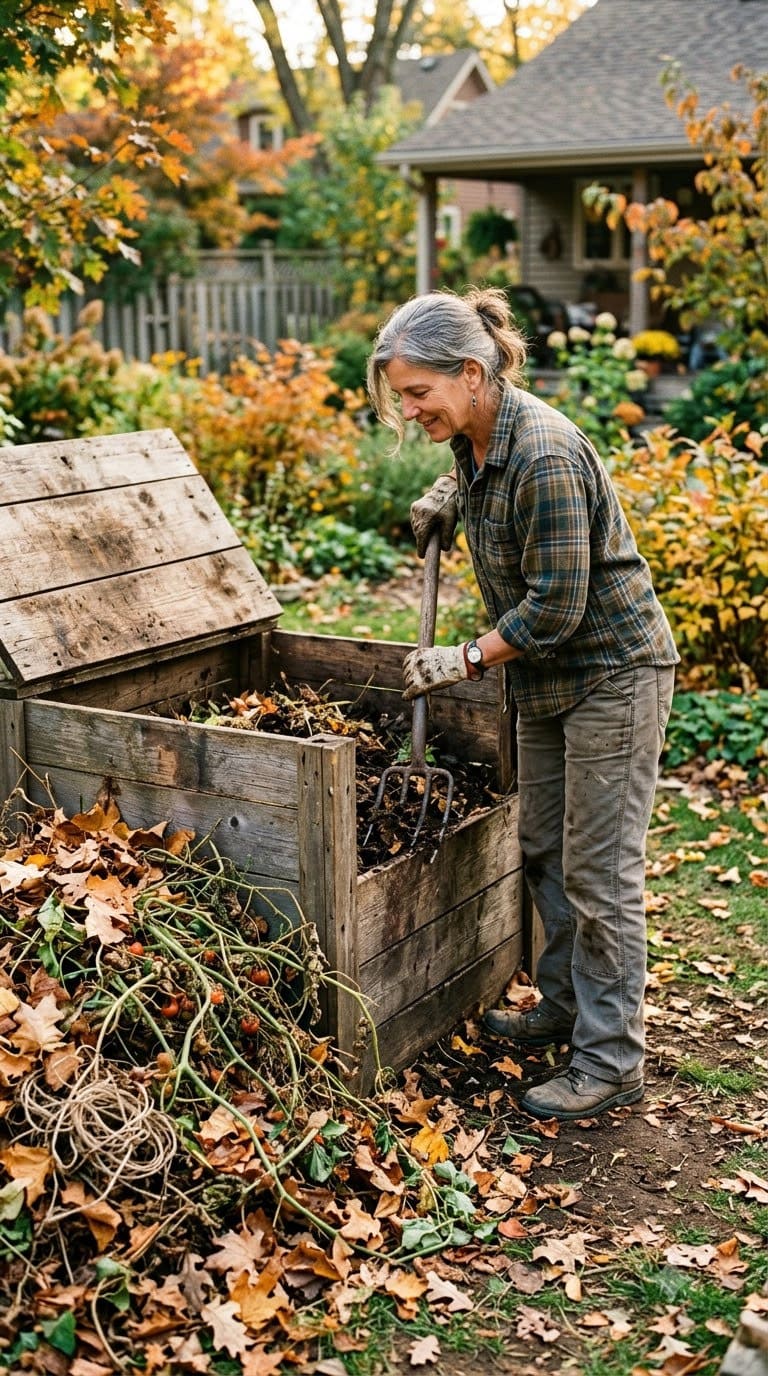
Mistake 1: Getting the carbon-to-nitrogen ratio wrong
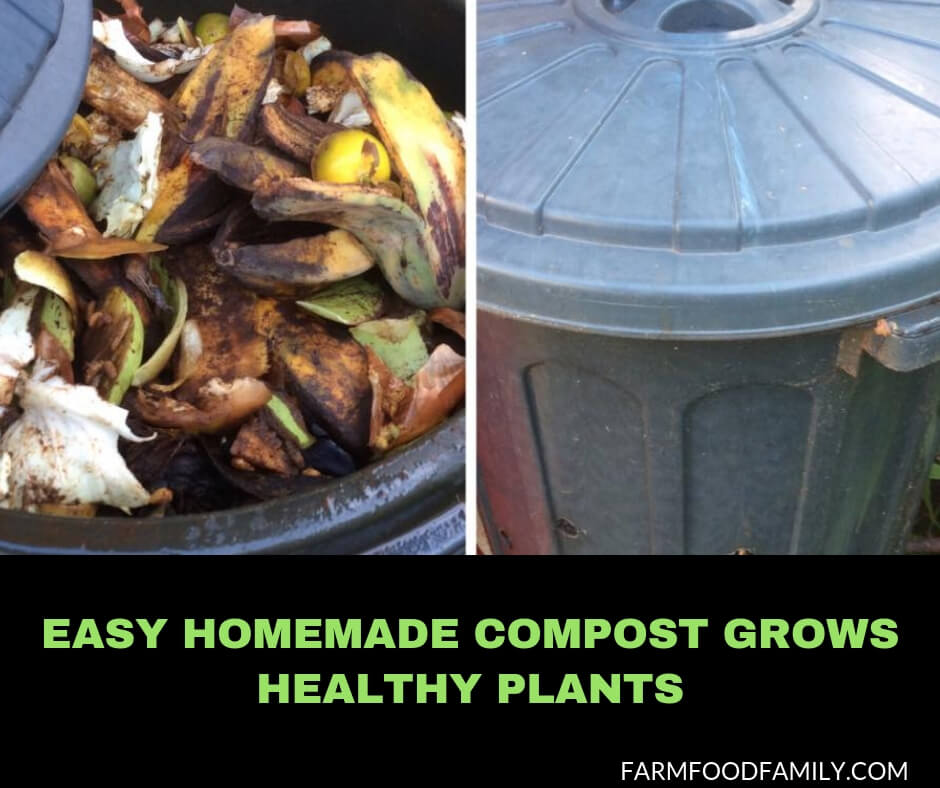
Every compost pile runs on a rough recipe: carbon-rich “browns” (dead leaves, cardboard, straw) and nitrogen-rich “greens” (grass clippings, food scraps, fresh plant trimmings). LSU AgCenter puts the target at about 30 parts carbon to 1 part nitrogen by weight, which in practical bin terms usually looks like roughly two to three times as much brown material as green.
Too much carbon and the pile stays cool, dry, and barely moves for months. Too much nitrogen, which is the far more common September mistake once people start dumping grass clippings and kitchen scraps in without adding leaves to match, and the excess nitrogen gets released as ammonia gas instead of feeding the microbes. That’s the sharp, eye-watering smell.
Answer 4 quick questions and get matched to the exact fix for your yard — drainage, budget, layout, or something else entirely.
Take the Free QuizThe fix is almost always to add more browns, not less greens. Keep a bag of dry leaves or shredded cardboard next to the bin specifically so you can layer in browns every time you add a scoop of kitchen scraps.
Is a smelly compost pile always too wet?
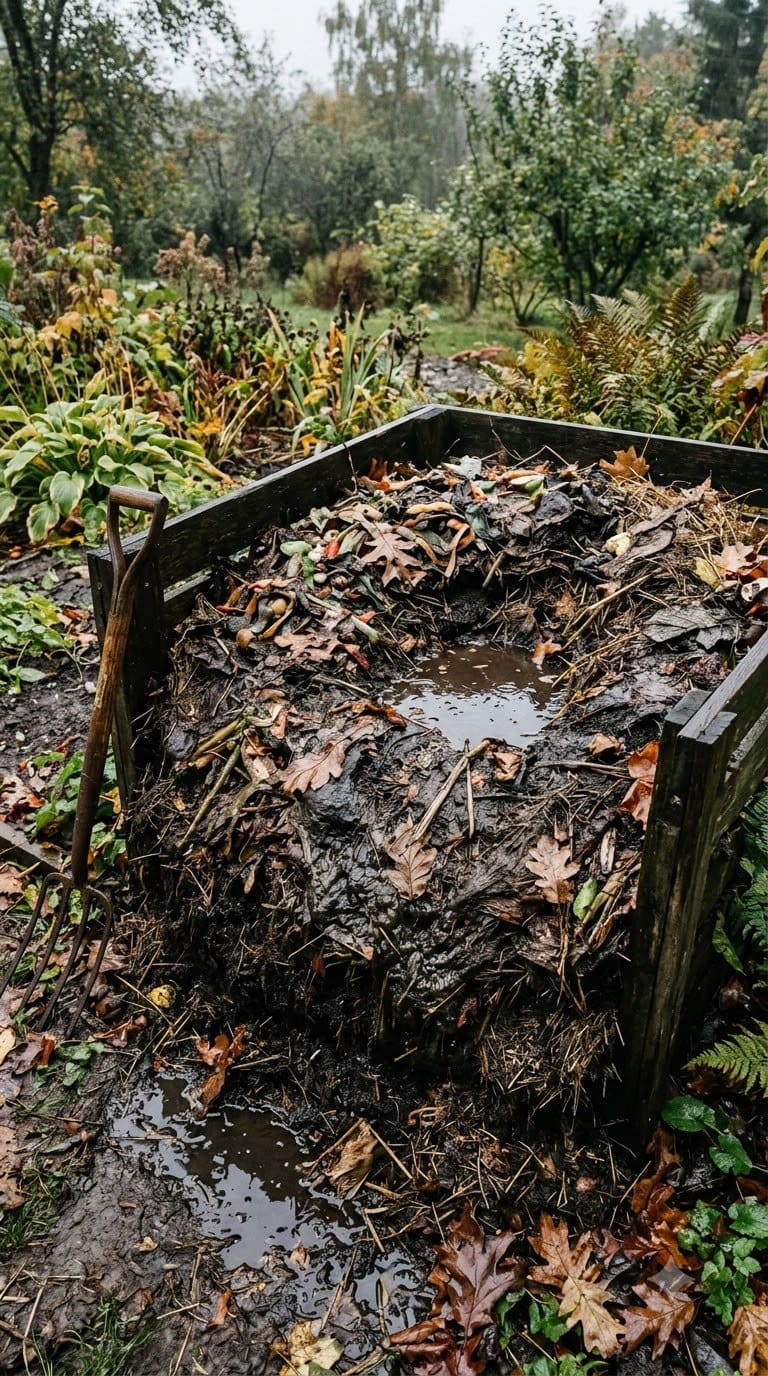
Usually, yes. Cornell Waste Management Institute’s troubleshooting guide describes a wet, airless pile as smelling like “a mixture of rancid butter, vinegar, and rotten eggs,” caused by insufficient aeration, excess moisture, and excess nitrogen working together.
Here’s the mechanism. Water fills the air pockets between particles that oxygen-loving (aerobic) microbes need to survive. Once those pockets flood, different microbes take over, the anaerobic kind.
They produce hydrogen sulfide and other sulfur compounds as a byproduct. That’s the rotten-egg smell, not a sign of “too much decomposing,” but a sign of the wrong kind of decomposing entirely.
Squeeze a handful from the middle of the pile. If water runs out between your fingers, it’s too wet.
Turn the pile to reintroduce air, and mix in dry browns like straw or shredded leaves to soak up the excess moisture. A tarp over the pile during a rainy September stretch prevents this from becoming a repeat problem.
Mistake 3: Letting the pile go too dry
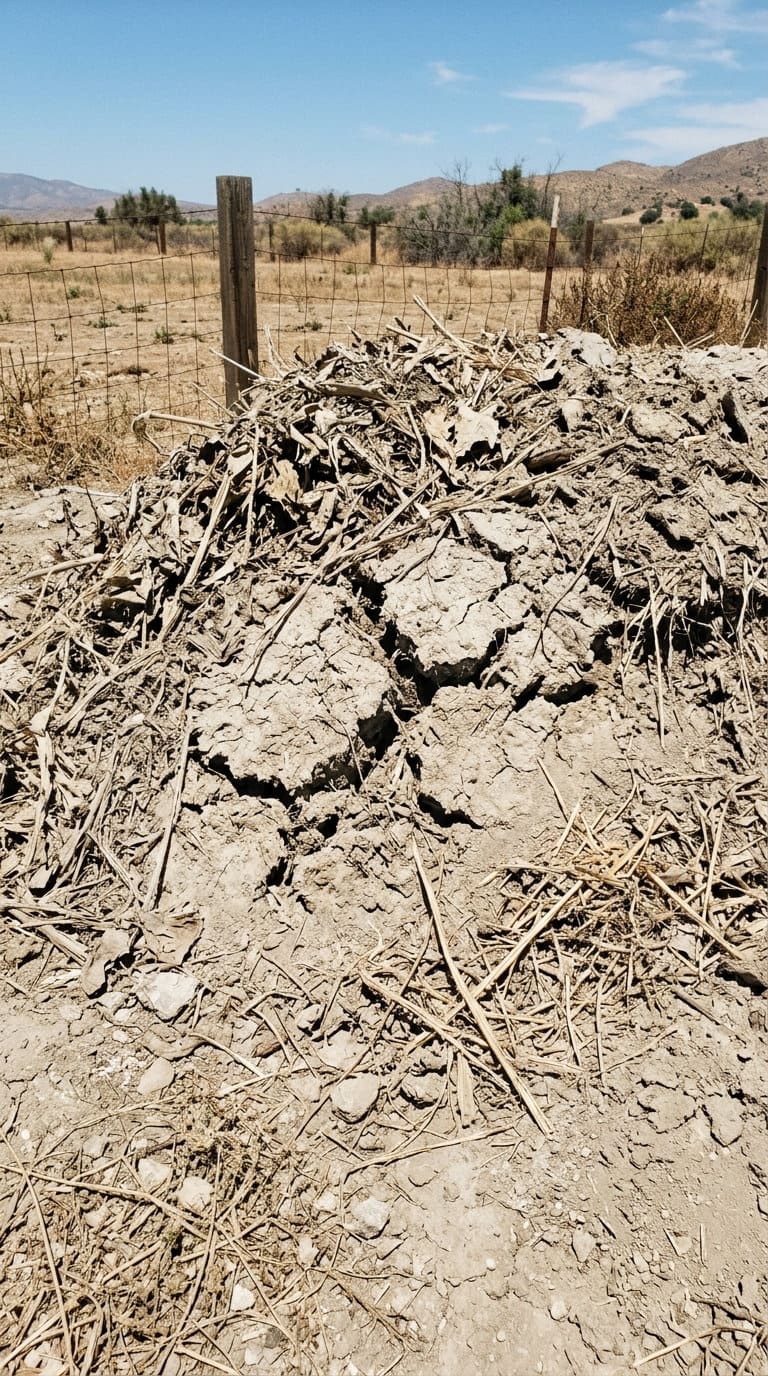
The opposite mistake gets less attention, but it stalls a pile just as effectively. Microbes doing the actual composting work need moisture to survive, and a bone-dry pile essentially puts them into dormancy. Nothing rots, nothing heats up, and the pile just sits there looking the same for weeks.
Most yard problems trace back to one specific, fixable cause. Find yours in 4 quick questions.
Take the Free Quiz
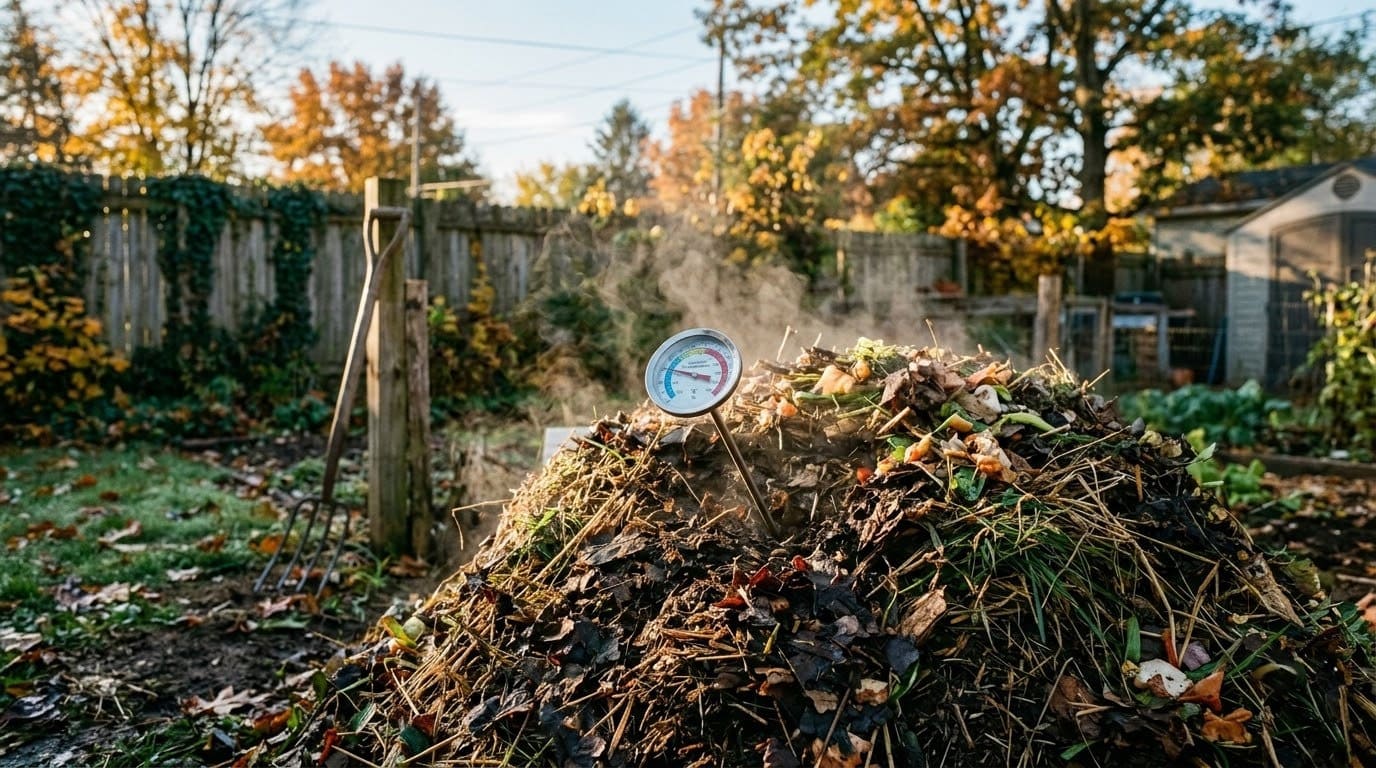
Long-stem thermometer for checking the 140-150°F core heat that Mistakes 8 and 13 depend on, so you know if a pile is actually hot enough to kill weed seeds or truly finished
Shop NowThis post contains affiliate links. We may earn a commission on qualifying purchases at no extra cost to you.
This one’s easy to miss because a dry pile doesn’t smell bad, it just doesn’t do anything. The target texture is a wrung-out sponge, damp enough that you can just barely squeeze out a drop or two, not dripping and not dusty.
Water the pile directly when you turn it, especially during a hot, dry September stretch. If your climate runs arid, consider a lid or cover that still lets rain in but cuts down on evaporation between waterings.
Mistake 4: Tossing in whole or oversized pieces
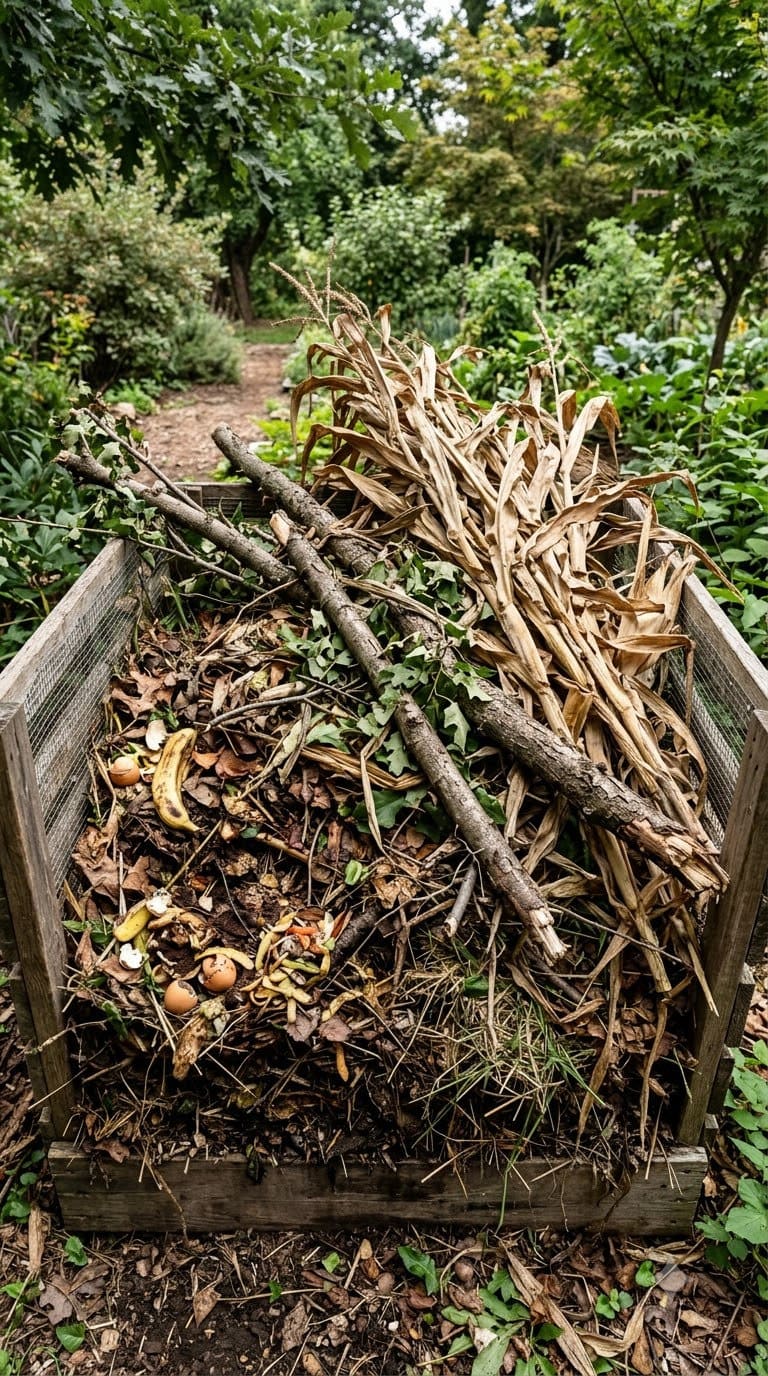
Microbes break down organic material from the surface in. A whole corn stalk or a thick branch has a tiny surface area relative to its volume, so it can sit there for a year while everything around it finishes composting.
Chop or shred anything bigger than about an inch or two across before it goes in. A machete, a lawn mower run over a pile of leaves, or a cheap chipper all work. It’s tedious, honestly, but it’s the single biggest lever for speeding up a slow pile short of buying equipment.
Smaller pieces also pack together more evenly, which helps avoid the compaction problem covered further down this list.
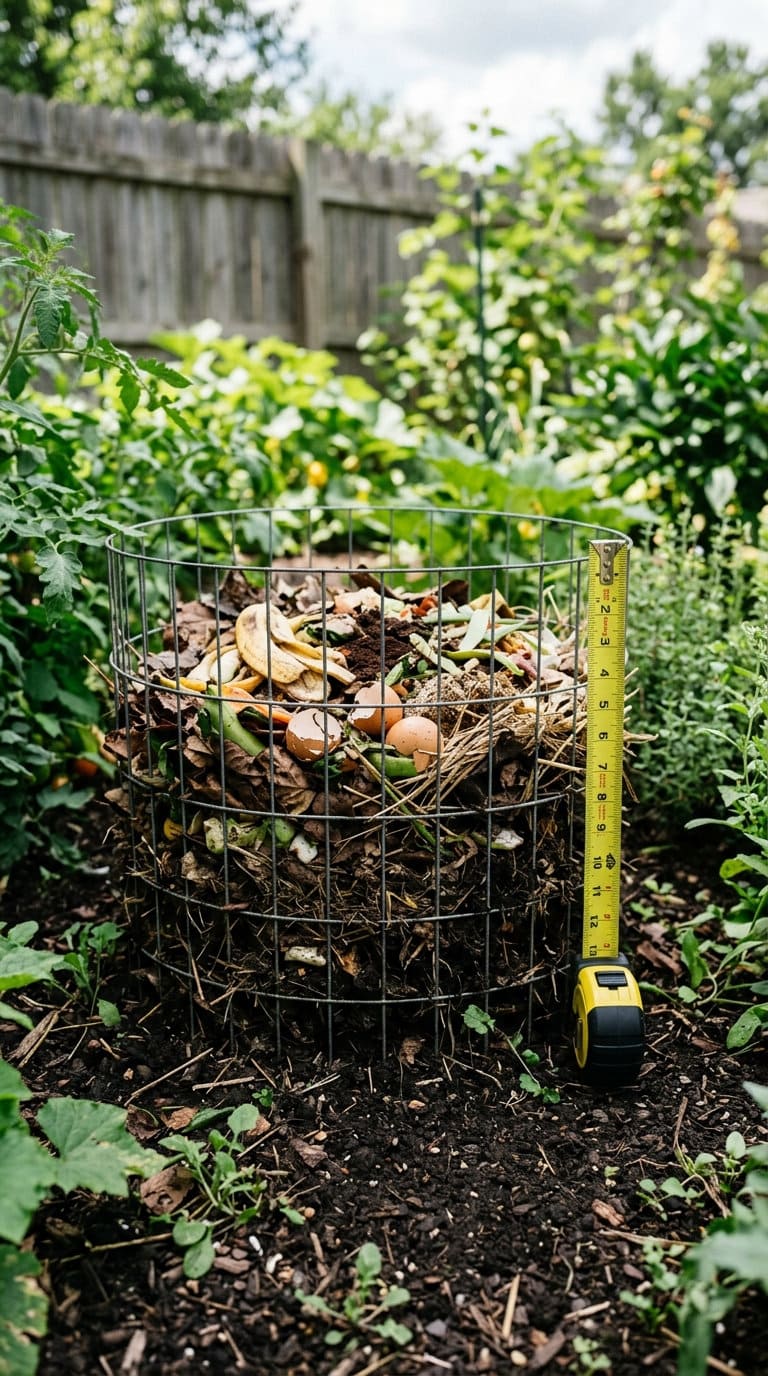
Mistake 5: Building a pile too small to heat up
A compost pile generates its own heat through microbial activity, but that only works at a large enough scale to hold the heat in. Cornell’s troubleshooting guide lists pile size as a direct cause when a pile fails to heat up at all, alongside insufficient moisture.
Roughly 3 feet by 3 feet by 3 feet is the usual minimum for a hot pile that can hit the temperatures needed to break down tough material and knock back pathogens. Anything smaller loses heat to the surrounding air faster than the microbes can generate it, so it stays at ambient temperature and decomposes slowly, the same way a compost bin does.
If your bin is small by design, that’s fine, just adjust expectations. A small, cool bin composts, it just does it slowly and won’t reliably kill weed seeds or disease the way a properly sized hot pile can.
Mistake 6: Never turning the pile
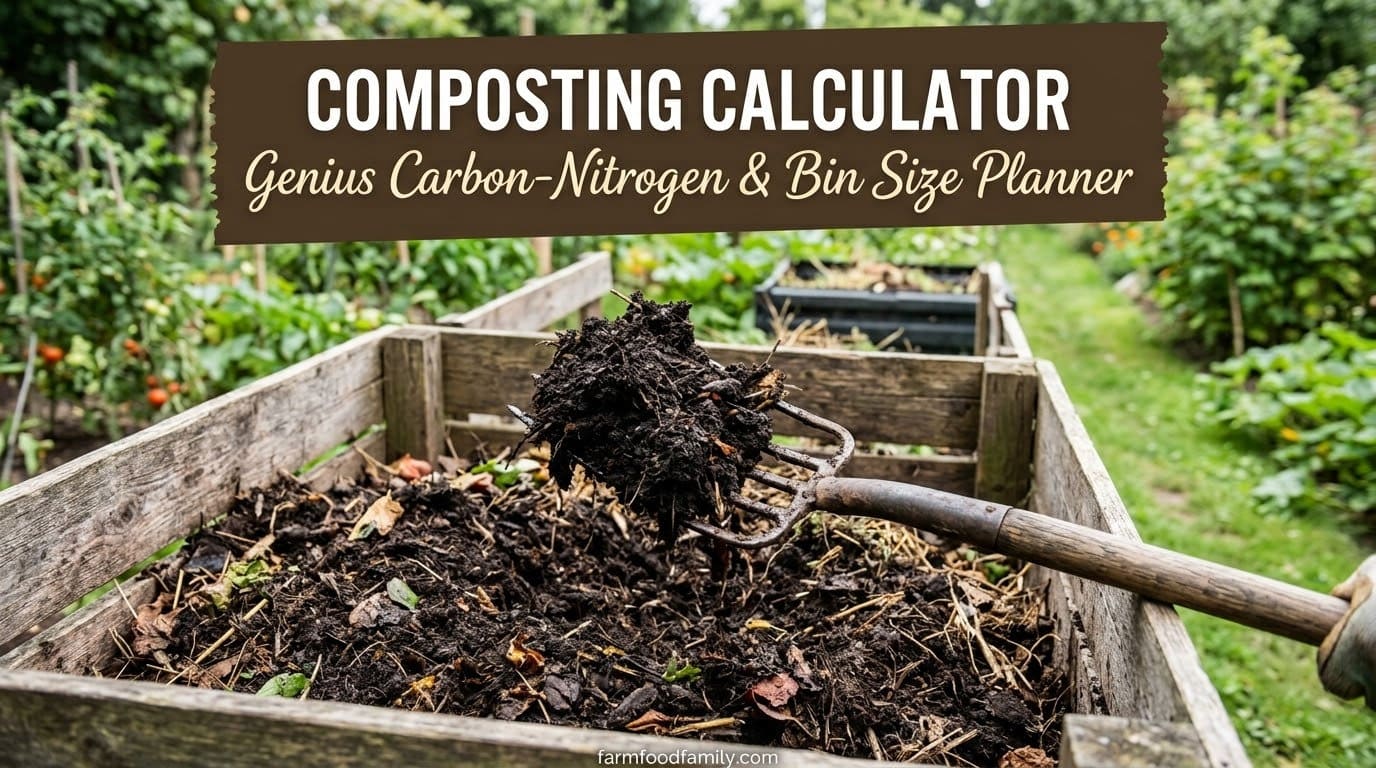
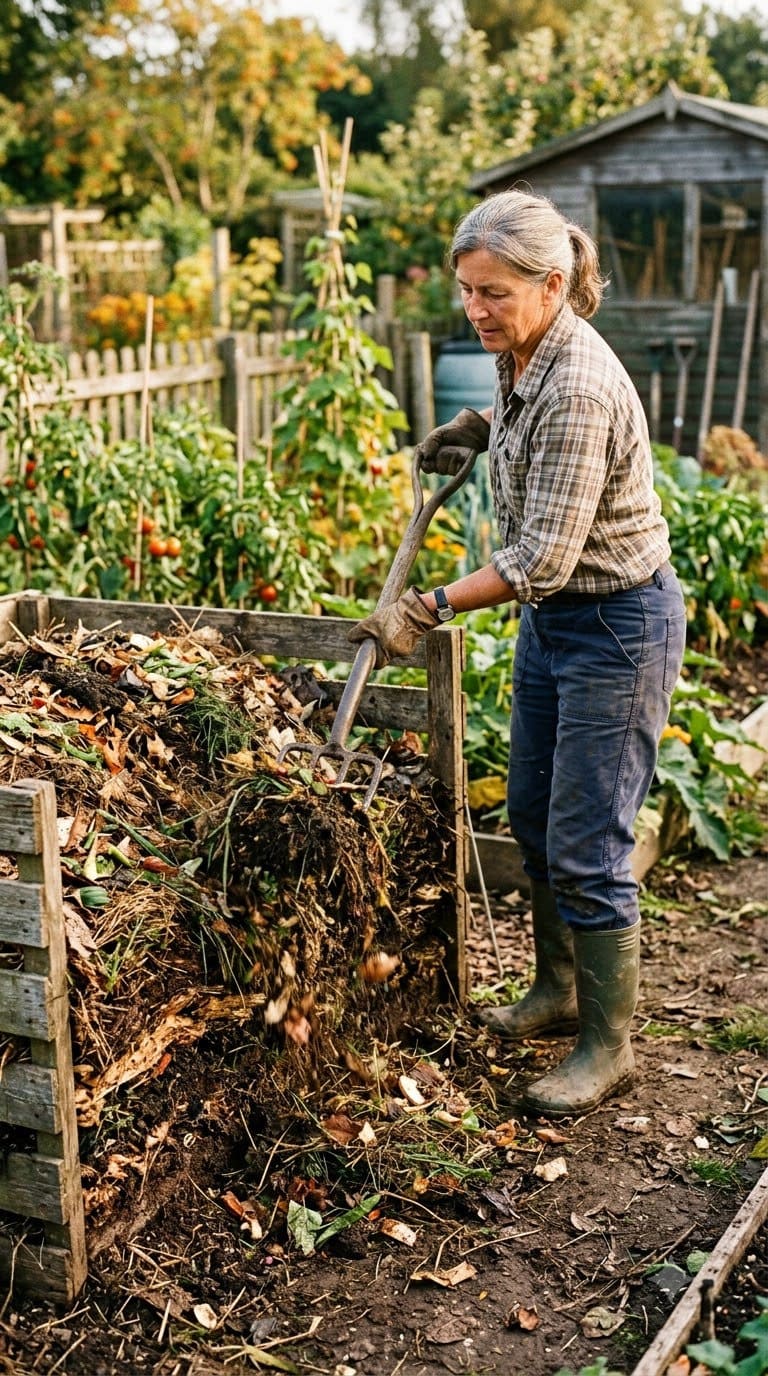
A pile that never gets turned develops cold spots and compacted zones where oxygen can’t reach, even if the overall moisture level looks fine from the outside. University of Nebraska-Lincoln Extension’s guidance is to turn material back to the center roughly every 7 to 14 days, moving the outer material that hasn’t heated up into the hot core.
The average homeowner spends $616/year on yard fixes that don't address the real problem. Find out what yours actually is — before you spend another dollar.
Take the Free QuizTurning does three things at once: it adds oxygen back into compacted zones, it evens out moisture, and it makes sure every part of the pile eventually spends time at the hot center where breakdown happens fastest. Skip it and you get a pile that’s actively composting in the middle while the outer few inches barely change all season.
On that same regimen, UNL’s guide notes finished compost in about four to six weeks. Skip turning entirely and that timeline can stretch to a year or more, with no real hot phase at all.
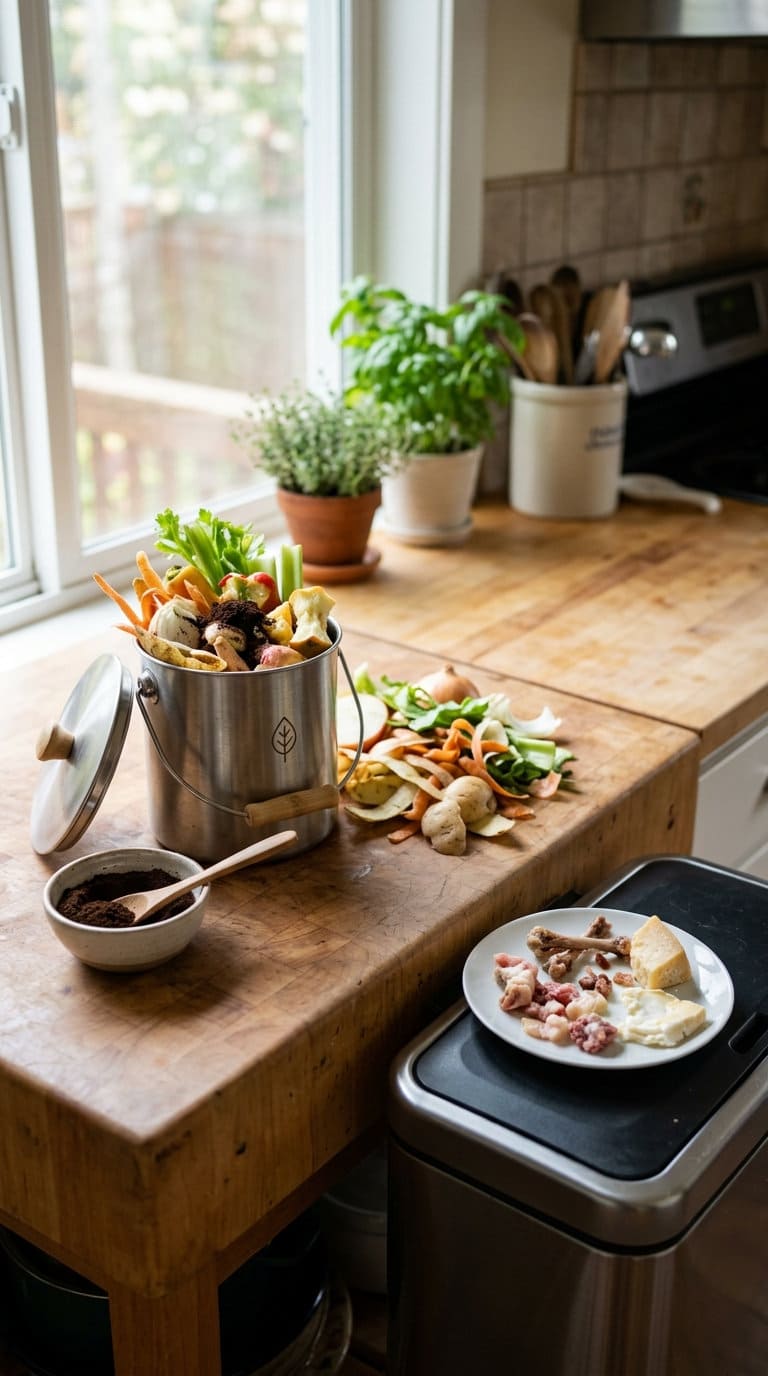
Mistake 7: Adding meat, dairy, or greasy food scraps
This is the mistake most likely to bring wildlife into your yard. Cornell’s guide is direct about it: meat and animal products should stay out of a backyard pile because they attract wildlife and don’t break down cleanly the way plant material does.
Fat and grease coat other material and slow down decomposition broadly, on top of the odor and pest problem. A little cheese or butter isn’t going to summon a raccoon overnight, but a habit of scraping dinner plates into the bin adds up fast, especially once cooler September nights have wildlife foraging harder before winter.
Keep meat, dairy, bones, and oily leftovers out entirely. Vegetable scraps, coffee grounds, and eggshells (crushed, not whole) are the safe, pest-neutral version of kitchen composting.
Should you compost diseased plants or weeds that have gone to seed?
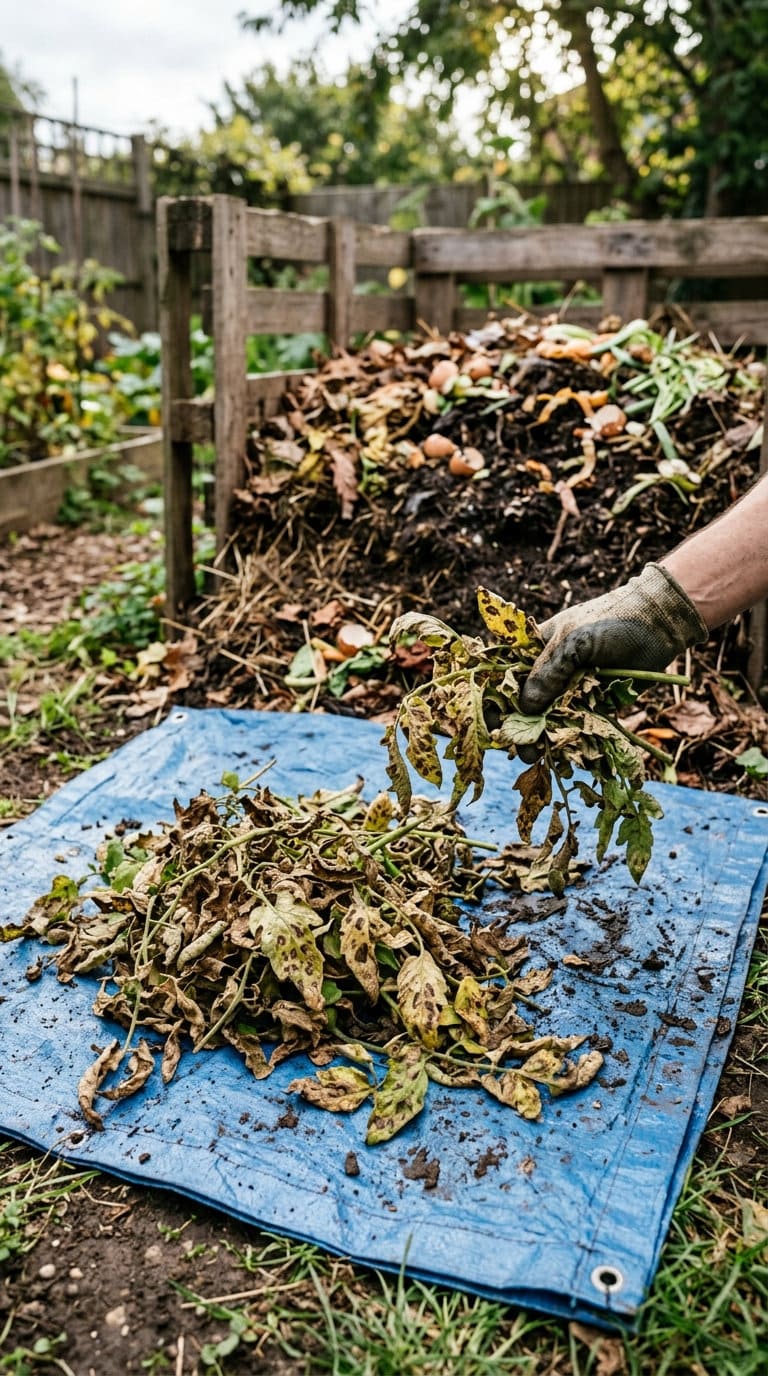
Generally, no, and this is the mistake that comes back to bite people the following spring. University of Nebraska-Lincoln Extension notes that plant disease organisms and weed seeds are only reliably destroyed when the center of the pile reaches 140 to 150°F. The catch is that “in most compost piles, it is impossible to mix efficiently enough to bring all wastes to the center,” meaning plenty of material never actually gets hot enough, even in a pile that’s technically cooking.
Toss in blighted tomato vines or crabgrass that’s already dropped seed, and there’s a real chance some of that survives the whole process and gets spread right back into your beds when you use the finished compost. It’s a frustrating way to reinfect a garden with the exact problem you were trying to clean up.
The safer call for anything visibly diseased or heavily seeded is to bag it for municipal yard-waste pickup (most municipal facilities run hotter and more consistently than a backyard bin) or burn it where that’s legal, rather than gamble on your home pile’s hot zone reaching every last piece.
Mistake 9: Adding pet or human waste
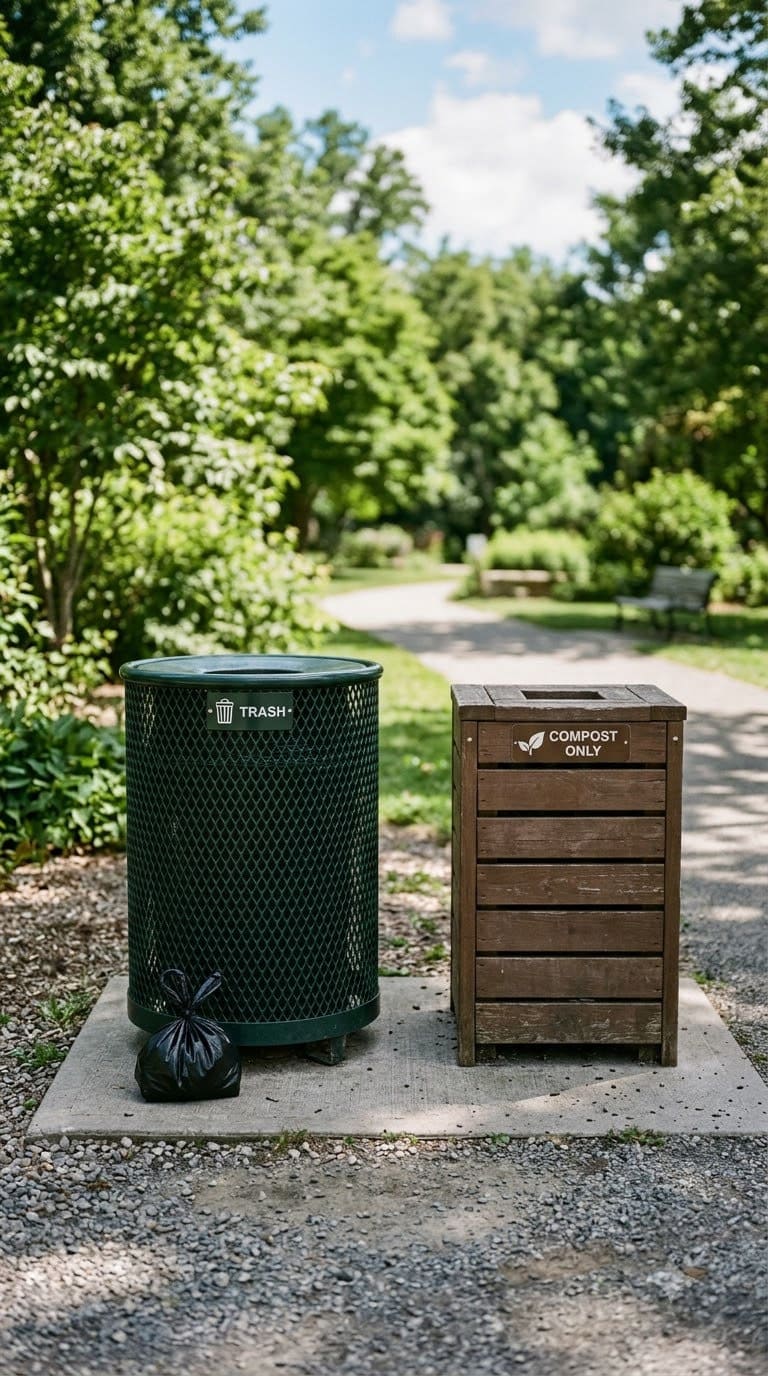
Pet waste, cat litter, and anything from a litter box carry pathogens (parasites like Toxoplasma, plus various bacteria) that a typical backyard pile’s heat can’t be counted on to fully kill, for the same reason weed seeds sometimes survive: the center of the pile is the only zone that reliably gets hot enough, and mixing never guarantees every particle passes through it.
This one’s a genuine health risk, not just a nuisance like an ammonia smell. Compost that’s going anywhere near a vegetable garden should never include pet waste, litter (including “compostable” litter marketed for home use, most brands still carry the same pathogen risk), or diapers.
If you want to compost pet waste specifically, that requires a dedicated, separate system built for it, kept well away from any pile whose output touches food crops. It’s not a September fix, it’s a different project entirely.
Mistake 10: Letting the pile compact under dense, wet material
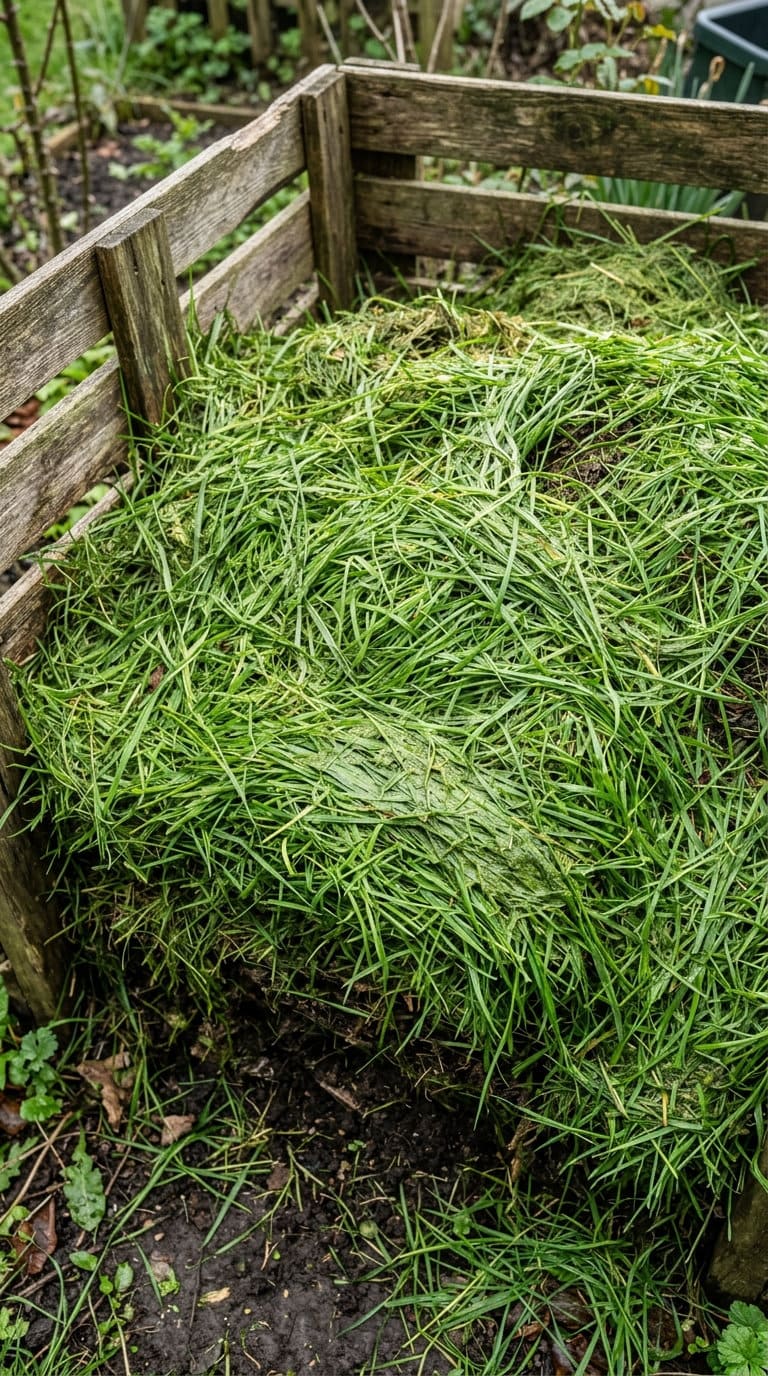
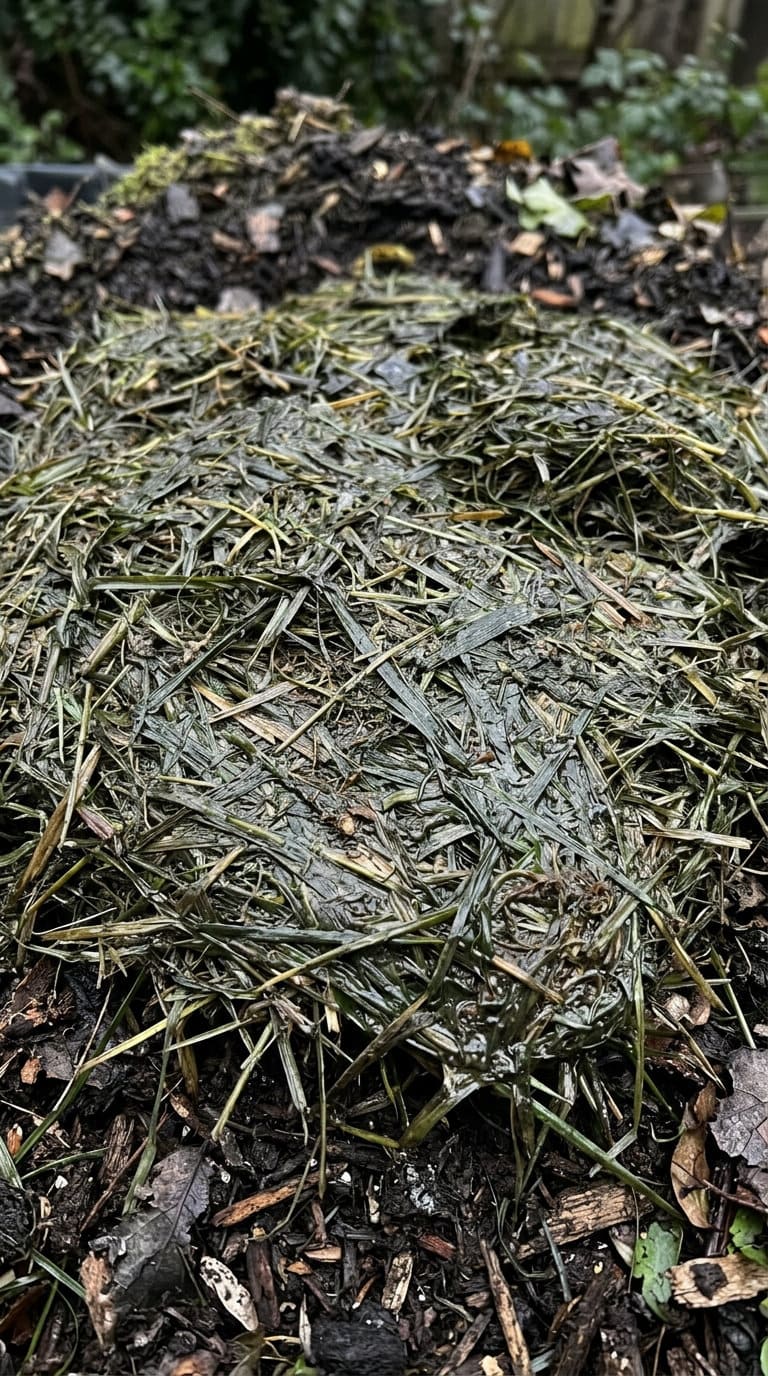
This is a sneakier version of the wet-pile problem, because the overall pile might not be soaking wet, it’s just that one dense layer, usually a big dump of mowed grass or wet fallen leaves, mats down flat and squeezes the air pockets out of that section specifically. September lawn mowing and the first leaf drop are exactly when this shows up.
A thick, matted layer of grass clippings can go anaerobic and slimy within days, even while the rest of the pile is fine. It’s a localized version of the same oxygen-starvation mechanism, just caused by physical density instead of overall moisture.
Break up any big dump of grass clippings or wet leaves before adding it, mix it with drier material rather than laying it on in one thick sheet, and turn the pile soon after adding anything dense and wet rather than waiting for the next scheduled turn.
Mistake 11: Leaving food scraps exposed on top
Pests aren’t actually drawn to compost in general, they’re drawn to the smell of exposed, fresh food sitting right on the surface where it’s easy to get to. Cornell’s fix is simple: cover all food scraps with brown material such as leaves, wood chips, or finished compost, every time you add them, and enclose the pile in something like quarter-inch hardware cloth if animal pressure is a recurring problem.
Bury the scraps a few inches under browns rather than tossing them on top and calling it done. It takes maybe ten extra seconds per addition and it’s the difference between a pile raccoons ignore and one they visit nightly.
Choosing a spot at least 20 to 30 feet from your house, fences, or bird feeders (which drop seed that draws rodents on its own) cuts down on animal traffic before it starts, on top of the covering habit.
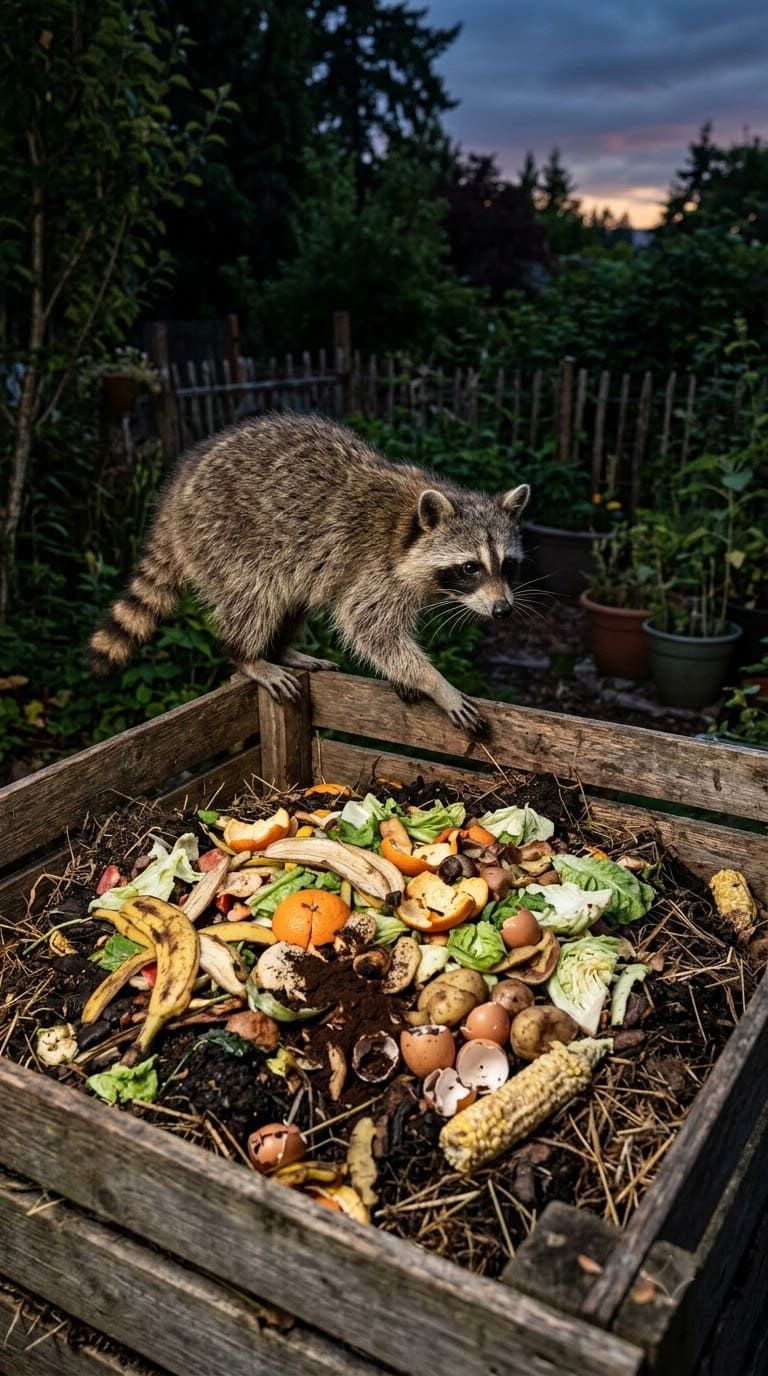
Mistake 12: Siting the pile in the wrong spot
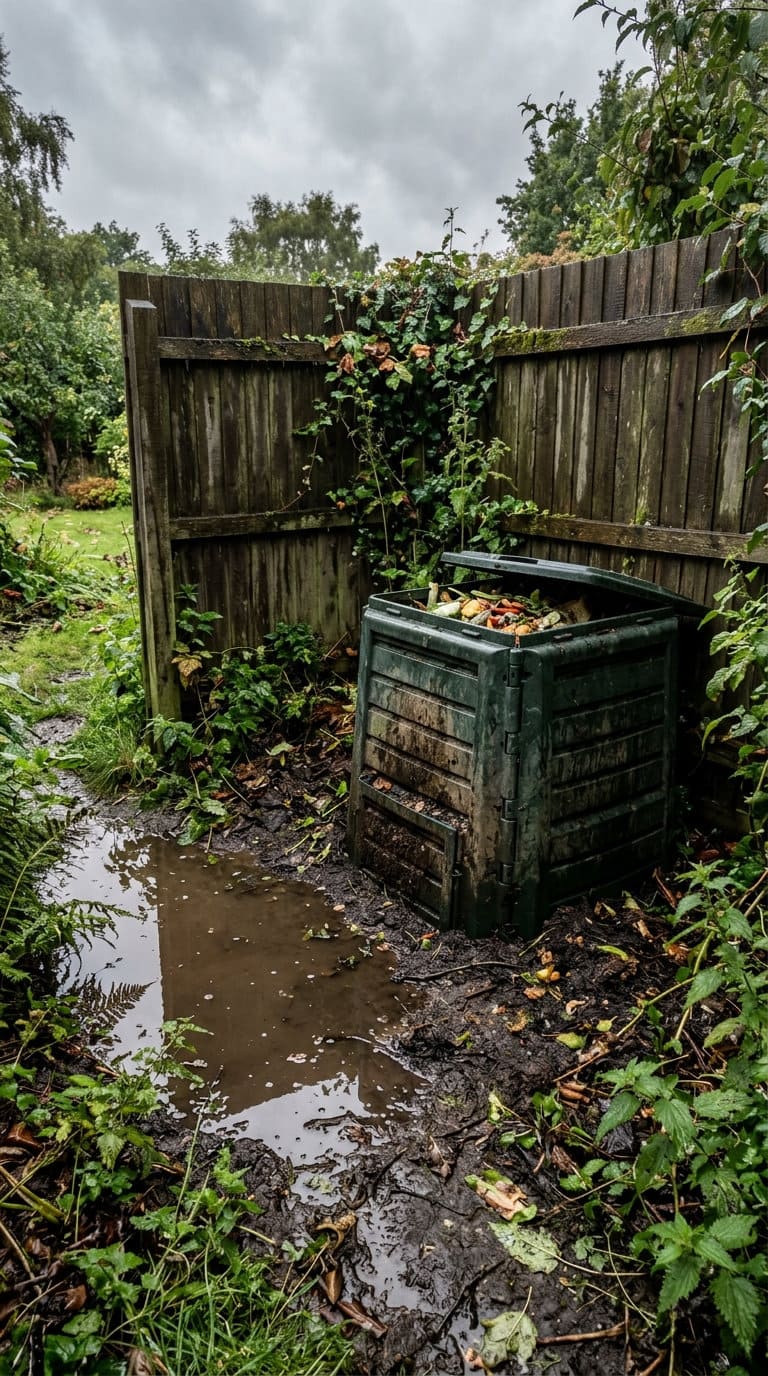
Where you put the bin matters more than most people assume. A shady, poorly drained corner keeps the pile cooler and wetter than it should be, slowing decomposition and pushing it toward the anaerobic, smelly end of the spectrum described above. A spot too close to the house or a fence line also gives rodents an easy, sheltered travel route straight to your kitchen scraps.
A sunny to partly sunny spot with decent drainage, set on bare soil or a hardware-cloth base rather than concrete, gives the pile both warmth and access to the soil organisms that help break material down. Placing it on a solid surface like pavers with a hardware-cloth liner underneath is the standard extension-office recommendation for blocking rodent tunneling from below, without sacrificing drainage.
If your only realistic spot is shady, that’s not a dealbreaker, just budget for a slower pile and be more diligent about turning and moisture, since the pile won’t be doing you any favors on its own.
Can you use compost that’s not fully finished?
Technically yes, but it’s usually a mistake. University of Nebraska-Lincoln Extension explains that adding partially decomposed compost to soil can actually reduce the nitrogen available to plants, because the decomposer bacteria still working through that unfinished material pull nitrogen from the surrounding soil to keep going, competing directly with whatever you just planted.
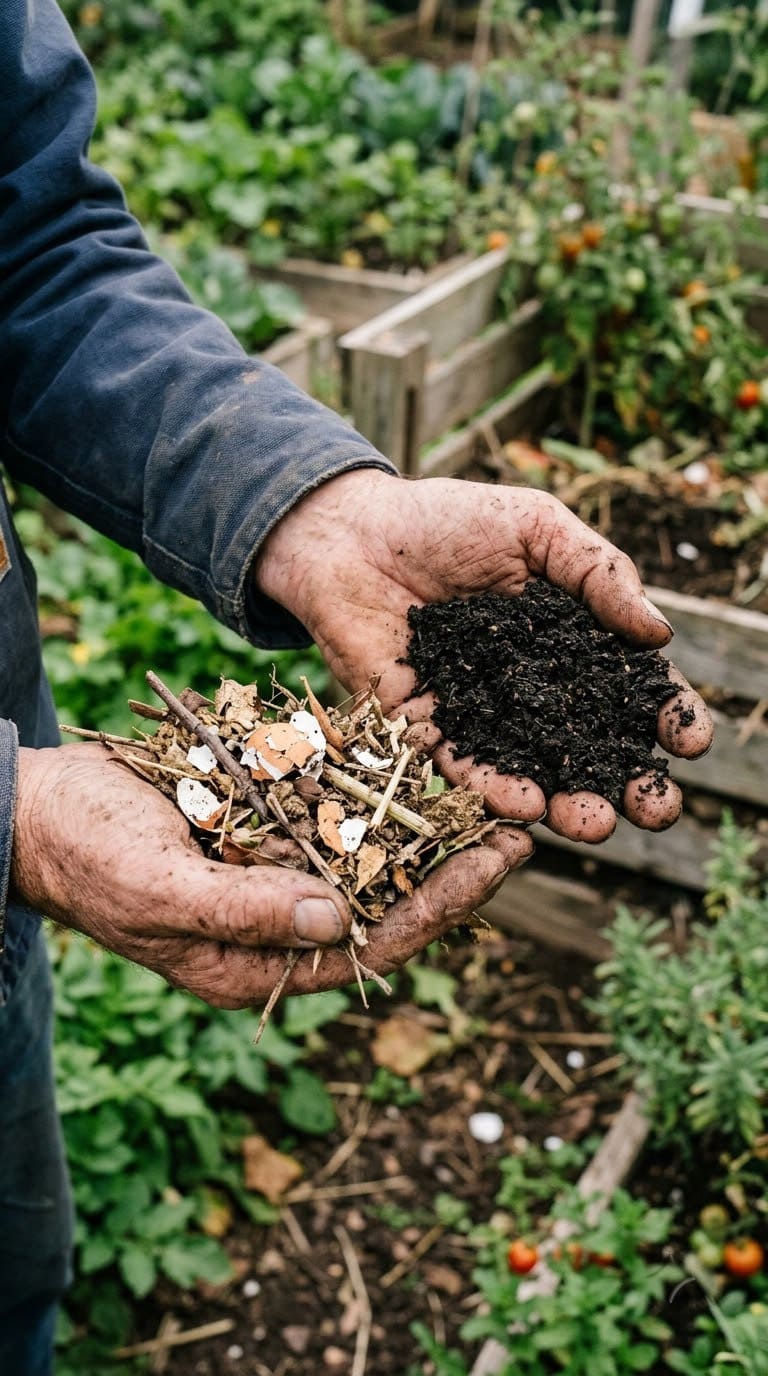
Finished compost looks and smells distinct: dark brown, crumbly, and earthy, with no recognizable scraps of what went in. If you can still identify eggshells, twigs, or a chunk of banana peel, it’s not done, even if it’s stopped smelling and cooled down.
September’s a tempting time to harvest early since fall planting and bed prep are in full swing, but give it the extra few weeks if it’s not there yet. Curing a batch a little longer costs you patience, using it too early costs your plants nitrogen they actually need.
A real September pain point: the “just dump it and hope” pile
I get it, by mid-September there’s a wheelbarrow of spent squash vines, a lawn’s worth of clippings, and the first bag of fallen leaves all competing for the same bin, and the easy move is to just dump everything in and walk away. That’s basically how I killed my second pile, a heat wave hit right after I’d added a huge batch of dry cornstalks with zero water, and I didn’t check it again for almost a month.
By the time I did, it hadn’t moved an inch. Bone dry, cold, exactly the “nothing’s happening” pile described above. Turned out I’d made two mistakes at once, pieces too big and moisture too low, and either one alone probably would’ve been forgivable.
The lesson that actually stuck: treat every big addition as its own small decision, not just one more scoop onto the pile. Chop it if it’s chunky, water it if it’s dry, cover it if it’s food, and turn the pile within a day or two of anything dense going in. That’s basically the whole system, applied consistently instead of occasionally.
None of these fixes are expensive or complicated on their own. Building a bin from scratch if you don’t already have one, and following a real step-by-step composting process instead of winging it, solves most of this before it starts.
If you’re mainly dealing with smell and pest complaints rather than a slow pile, FarmFoodFamily’s rundown of common compost problems is a good companion troubleshooting reference alongside this list. And once the finished compost is ready, spreading it correctly along a border makes sure all that effort actually reaches your plants’ roots instead of sitting in a pile forever.
FAQs
How often should I turn my compost pile in September?
Roughly every 7 to 14 days under normal conditions, per University of Nebraska-Lincoln Extension’s guidance, and sooner than that if you’ve just added a dense, wet layer like fresh grass clippings.
Why does my compost smell like ammonia instead of rotten eggs?
Ammonia points to too much nitrogen relative to carbon, an imbalanced C:N ratio, while rotten egg or sulfur smells point to a wet, oxygen-starved pile. Both get fixed by adding dry browns, but they’re different root causes worth telling apart.
Can I put fall leaves straight into my compost pile?
Yes, and they’re one of the best browns available in September, but shred them first if you can. Whole leaves mat down into a dense layer that can block airflow the same way wet grass clippings do.
Is it safe to compost weeds that have already gone to seed?
Only if you’re confident your pile reliably reaches 140-150°F throughout, which most backyard piles don’t guarantee. When in doubt, bag seeded weeds for municipal pickup instead of risking reintroducing them to your beds.
How do I know if my compost is actually finished?
It should be dark brown, crumbly, and smell like earth, with none of the original materials still recognizable. If you can spot an eggshell or a twig, give it more time.
Related Posts
Products We Recommend
This post contains affiliate links. We may earn a commission on qualifying purchases at no extra cost to you.
REOTEMP 20 Inch Celsius Backyard Compost Thermometer
Long-stem thermometer for checking the 140-150°F core heat that Mistakes 8 and 13 depend on, so you know if a pile is actually hot enough to kill weed seeds or truly finished
Shop Now
Sewiden Compost Turning Tool, Corkscrew Aerator
Spiral turning tool for Mistake 6 (never turning the pile), works the pile's core without full pitchfork-style lifting
Shop Now
Miracle-Gro Dual Chamber Compost Tumbler, 2x18.5 Gal
Dual-chamber tumbler that solves Mistake 5 (pile too small to heat) and Mistake 10 (compaction) at once, cure one side while loading the other
Shop NowNever miss an update — choose FarmFoodFamily as your preferred source on Google.
How it works: Tap the button below to open Google's settings page, then check the box next to FarmFoodFamily.
Tap the checkbox to turn it blue — that's how you know it's set.