7 Foolproof Steps to a Thicker, Greener Lawn by Spring (Do This in September)
Follow this exact 7-step September sequence, in order, and a patchy, tired lawn can come back thick enough by spring that the neighbors ask what you did differently.

Never miss an update — choose FarmFoodFamily as your preferred source on Google.
How it works: Tap the button below to open Google’s settings page, then check the box next to FarmFoodFamily.
Tap the checkbox to turn it blue — that’s how you know it’s set.
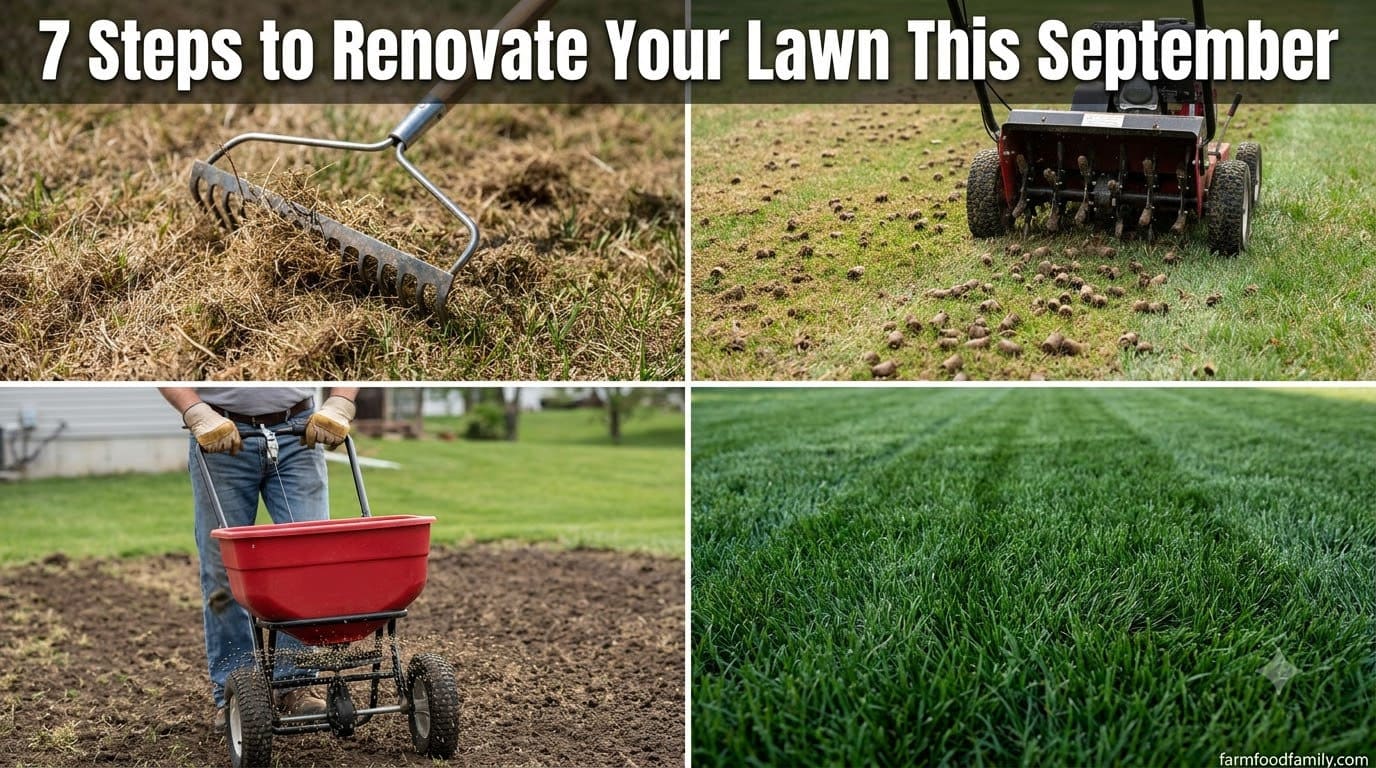
Quick Answer: Renovating a lawn in September works because it follows one non-negotiable order: dethatch and test soil first, then core aerate, then overseed within 24-48 hours while the holes are still open, then topdress with a thin compost layer, then apply a starter fertilizer (never regular high-nitrogen food yet), then water lightly twice a day for two weeks before tapering off, and finally wait for grass to hit 3-3.5 inches before the first mow. Bruce Spangenberg of UW-Madison Division of Extension says late August through September beats spring because soil is still warm from summer while air temperatures cool, giving new grass a head start on weeds before winter. University of Maryland Extension recommends about 4 lbs of tall fescue seed per 1,000 square feet for overseeding. Skip a step or do them out of order, and seed either dries out on bare soil or gets smothered under old thatch.
Every fall I do this same walk around my own yard with a rake in one hand and a bag of seed I bought too much of, honestly, and I still find one more thin patch I missed the year before. That’s kind of the point though. Lawn renovation isn’t a one-and-done fix, it’s a sequence you run every September until the whole yard catches up, and it’s a different project than the lighter touch-ups covered in our summer lawn action plan.
September works because cool-season grass (fescue, ryegrass, Kentucky bluegrass) actually prefers germinating when soil is still warm from summer but air temps have backed off. Do this in spring instead and you’re racing summer heat and crabgrass before roots ever get established. Do it too late in fall and frost kills seedlings before they’re mature enough to survive winter.
Why the order of these steps actually matters
Skip ahead and you waste the whole project. Seed a lawn you haven’t aerated and most of it lands on compacted soil or a thatch layer and just… sits there, doesn’t germinate. Fertilize before you seed with a regular high-nitrogen lawn food and you push the existing weak grass and weeds to grow faster while doing nothing for the new seed.
Each step below sets up the one after it. Follow them in this order and you’re working with the plant’s biology instead of against it.


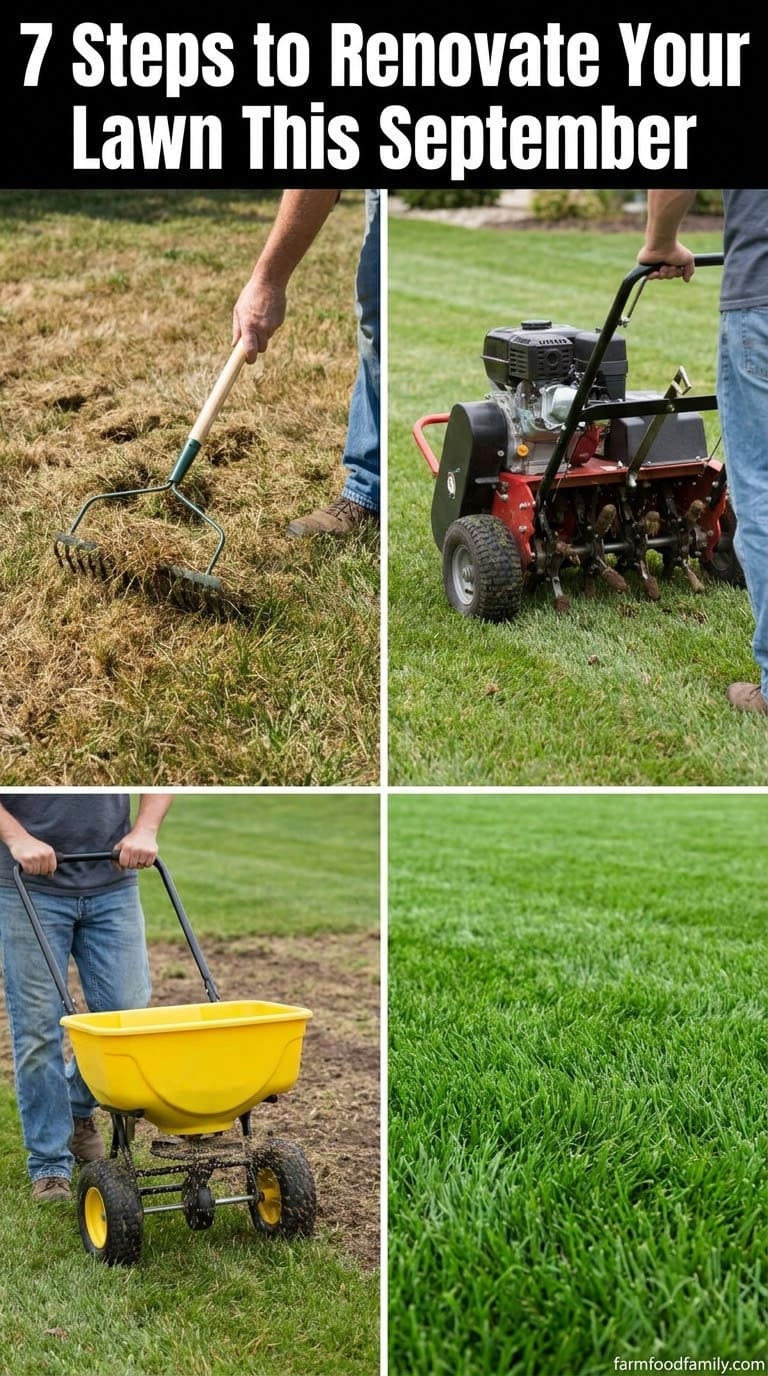
Step 1: Test your soil and dethatch (start 2-3 weeks before seeding)
Grab a soil test kit or send a sample to your local extension office, most run $15-20 and take about two weeks to come back. You want to know pH and whether you actually need lime before you spend money on seed and fertilizer.
Answer 4 quick questions and get matched to the exact fix for your yard — drainage, budget, layout, or something else entirely.
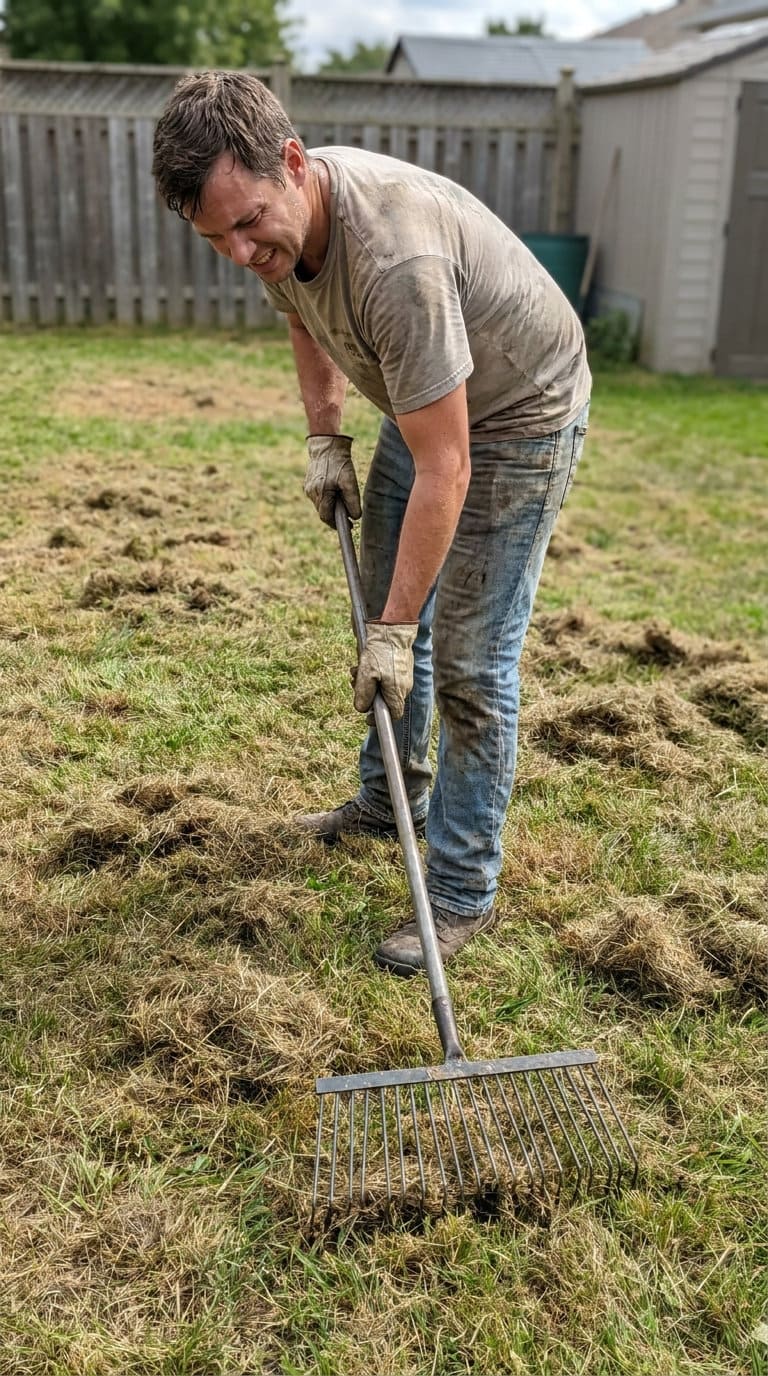
Take the Free QuizWhile you wait on results, dethatch. Thatch is that spongy brown layer of dead grass stems between the soil and the green blades. A little thatch (under half an inch) is fine, more than that and water, air, and eventually seed can’t reach the soil underneath.
Rent a power dethatcher or use a stiff dethatching rake for smaller lawns. Bruce Spangenberg, Horticulture Outreach Specialist with UW-Madison Division of Extension, recommends starting total renovation work by eliminating persistent weeds first with a nonselective herbicide about two weeks out if the lawn is more weeds than grass.
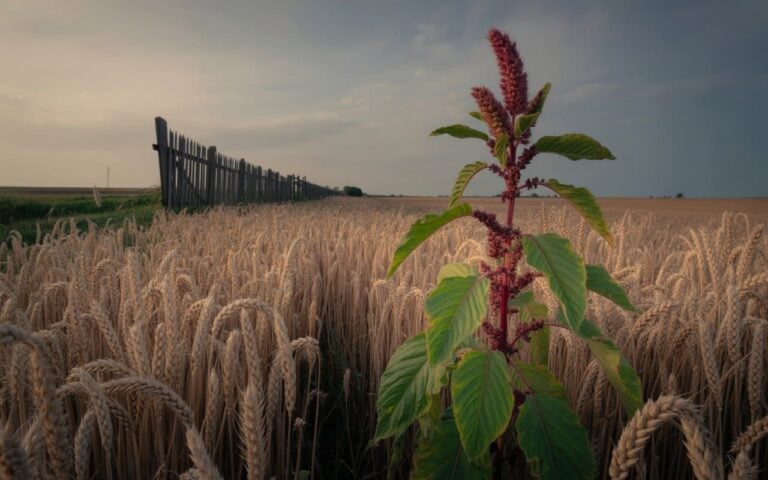
If it’s mostly grass with thin patches, skip the herbicide and go straight to dethatching. If you’re not sure whether what’s growing out there even counts as grass, it’s worth a quick check since some weeds look almost identical to grass until they flower.
Why this comes first: everything after this step depends on seed actually reaching soil. Skip dethatching and you’re aerating and overseeding on top of a mat that blocks both.
Step 2: Mow short and core aerate
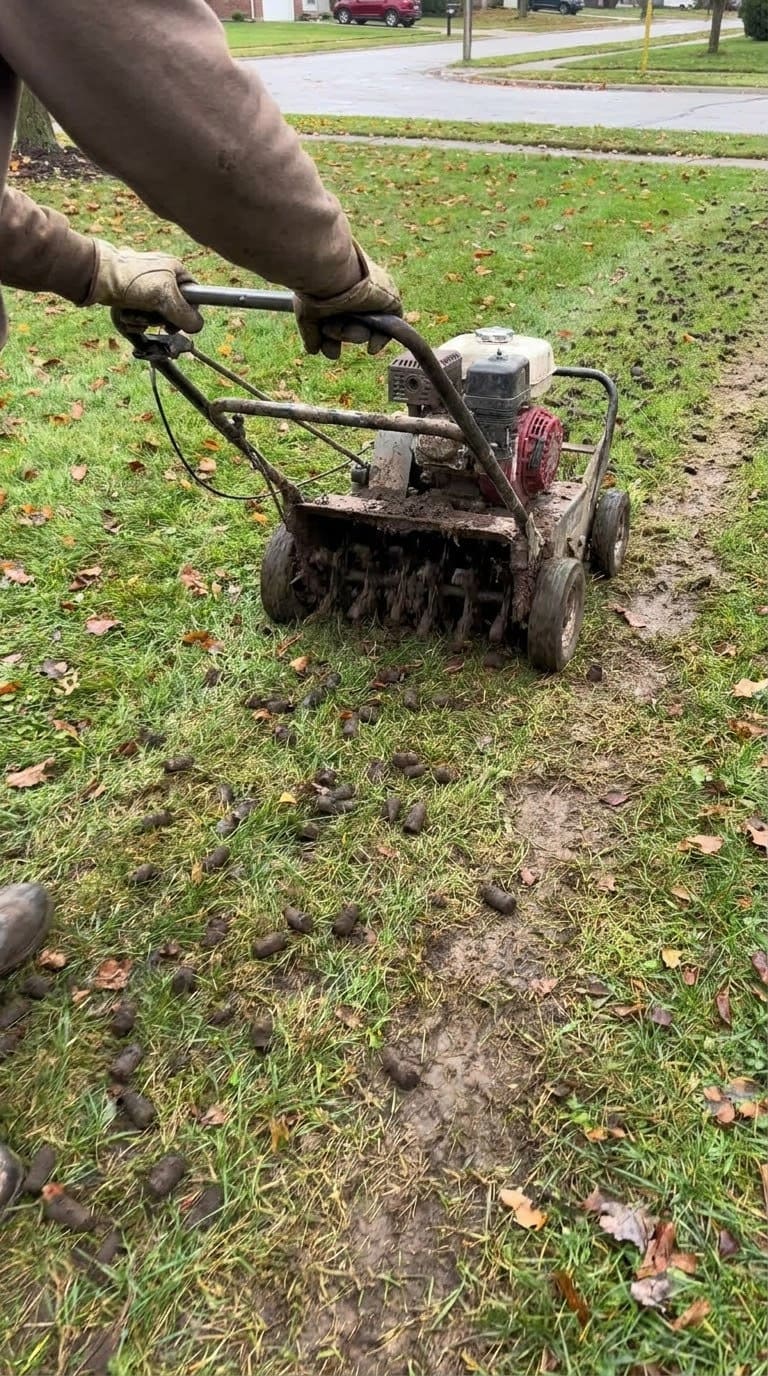
Mow the lawn shorter than usual, down to about 1.5-2 inches, a few days before aerating. Shorter grass means the aerator’s hollow tines can actually punch through to soil instead of getting hung up in leaf blades.
Then core aerate the whole lawn, ideally with two passes in different directions (up-and-down, then side-to-side). A core aerator pulls real plugs of soil, 2-3 inches deep, and leaves them on the surface to break down. Don’t use spike aerators, they just poke holes and compact the soil around them further, the opposite of what you want. Our full lawn aeration guide covers renting equipment and core vs. spike aerators in more depth if this is your first time.
Before you start, mark sprinkler heads and call 811 to flag any buried utility lines. Colorado State University Extension’s Alison O’Connor, quoted in a 7-step aeration prep guide, also recommends a quick irrigation audit with a few uniform cups scattered on the lawn before you water, so you actually know how evenly your sprinklers are covering the yard instead of guessing.
Most yard problems trace back to one specific, fixable cause. Find yours in 4 quick questions.
Take the Free Quiz
Step 2, pulls real soil plugs instead of just poking spike holes
Shop NowThis post contains affiliate links. We may earn a commission on qualifying purchases at no extra cost to you.
Why this comes second, not first: aerating breaks up the compaction that’s been suffocating roots all summer and creates the open holes seed needs in step 3. Aerate too early relative to dethatching and you’re just pulling plugs through a mat of dead grass.
Step 3: Overseed with the right cool-season blend, right away
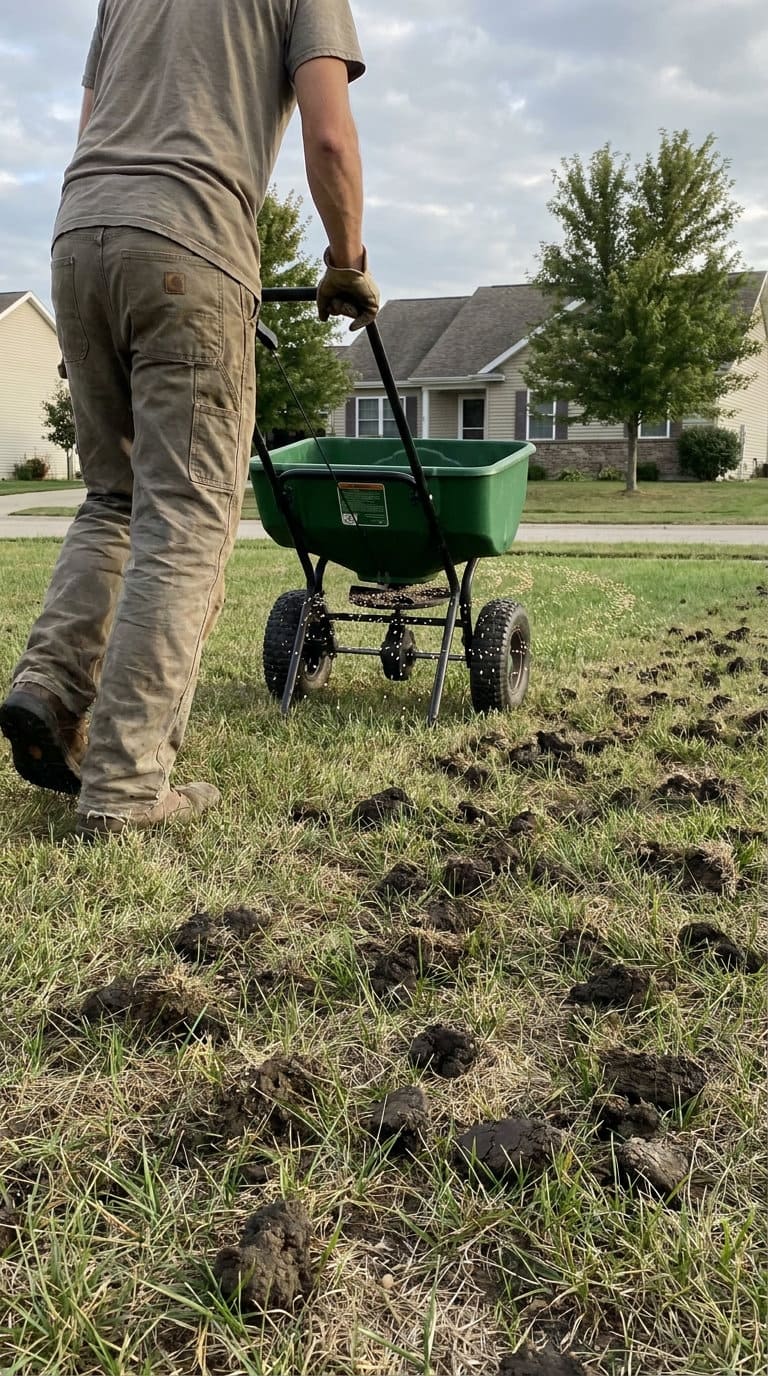
Seed within 24 to 48 hours of aerating, while those holes are still open. Seed that lands in an aeration hole is protected, shaded, and in contact with soil on three sides. Wait a week and the holes have already started closing back up.
Pick a blend suited to your actual sun exposure, not just whatever bag is on sale. A tall fescue blend handles both sun and part shade and tends to be the most forgiving choice for renovation work. Kentucky bluegrass spreads on its own via rhizomes and fills in bare spots over a couple seasons but needs more sun and more water. Perennial ryegrass germinates fastest, often within 5-10 days, which is genuinely satisfying if you’re impatient like me, but it doesn’t spread laterally the way bluegrass does.
For seeding rate, University of Maryland Extension puts overseeding tall fescue at about 4 lbs per 1,000 square feet, and Kentucky bluegrass around 2 lbs per 1,000 square feet for overseeding an existing lawn, roughly half the rate you’d use to start a lawn from bare dirt. More isn’t better here. Overcrowded seedlings compete with each other for light and water and you end up with weaker grass, not thicker grass.
Use a broadcast or drop spreader for even coverage, and go over bare or thin patches a second time by hand. If you’re starting a section completely from bare dirt rather than overseeding existing grass, lawn seeding for beginners walks through the from-scratch version of this same step.
Why this comes third: it has to follow aeration (step 2) so seed actually reaches soil, and it has to precede topdressing (step 4) because the compost layer is what locks the seed into those holes.
Step 4: Topdress with a thin layer of compost
Right after seeding, spread a thin layer, about a quarter inch, of screened compost or a topdressing mix over the whole area. Use the back of a rake to work it in lightly, you’re not burying the seed, just tucking it in.
This layer holds moisture against the seed so it doesn’t dry out between waterings, and it improves the soil structure right where new roots will be growing for the next several months. Skip this step and germination rates drop noticeably in anything but perfectly consistent watering conditions, which, let’s be honest, most of us don’t manage every single day. Understanding why grass seed germinates unevenly in the first place makes this step click a lot faster.



Why this comes fourth: topdressing before seeding would just bury it too deep to germinate. It has to come after seed is down and before fertilizer, since fertilizer applied on bare soil (rather than through the compost layer) washes off with the first heavy rain.
The average homeowner spends $616/year on yard fixes that don't address the real problem. Find out what yours actually is — before you spend another dollar.
Take the Free Quiz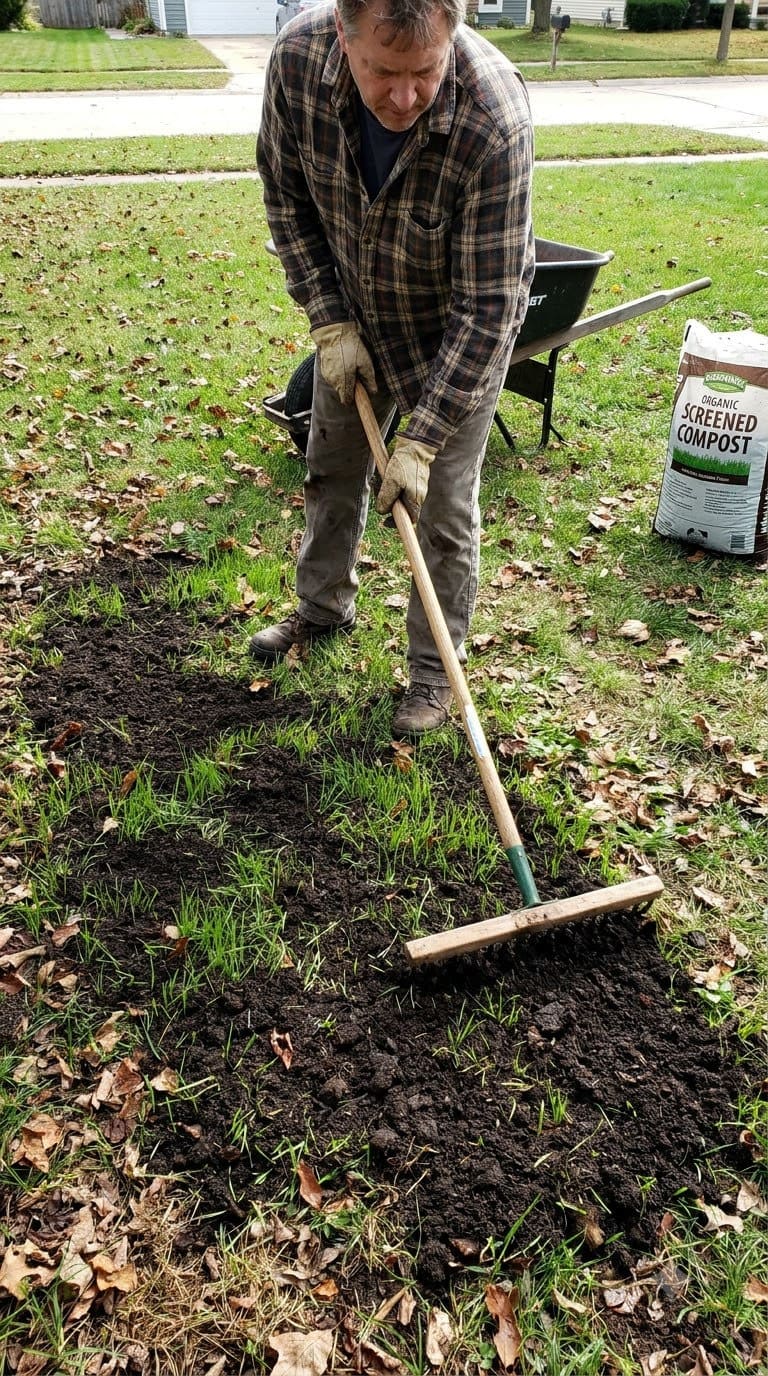
Step 5: Apply a starter fertilizer, not your regular lawn food
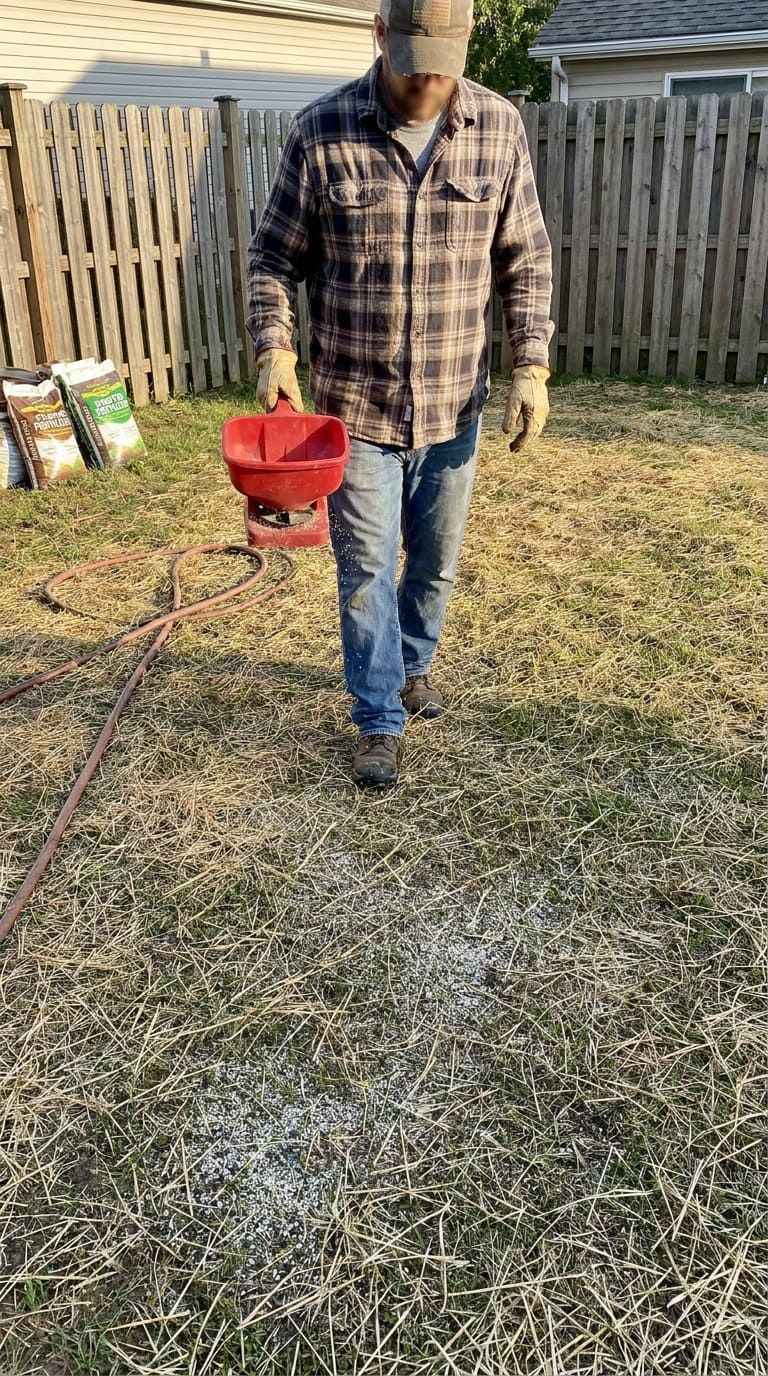
This is the step people mess up most. Grab a starter fertilizer, something with a higher middle number like an 18-24-6 or similar, high in phosphorus specifically because phosphorus drives root development in new seedlings. Your regular high-nitrogen summer lawn food is the wrong tool here, it pushes green top growth at the expense of the root system a new lawn actually needs before winter.
Apply it right after topdressing, following the bag’s rate for new seeding, not the established-lawn rate.
Why this comes fifth, not earlier: apply fertilizer before seeding and it mostly feeds the weeds and whatever old grass is still there. Apply it after seed and compost are down and it’s feeding exactly what you want it to feed.
How much should you water new grass seed?
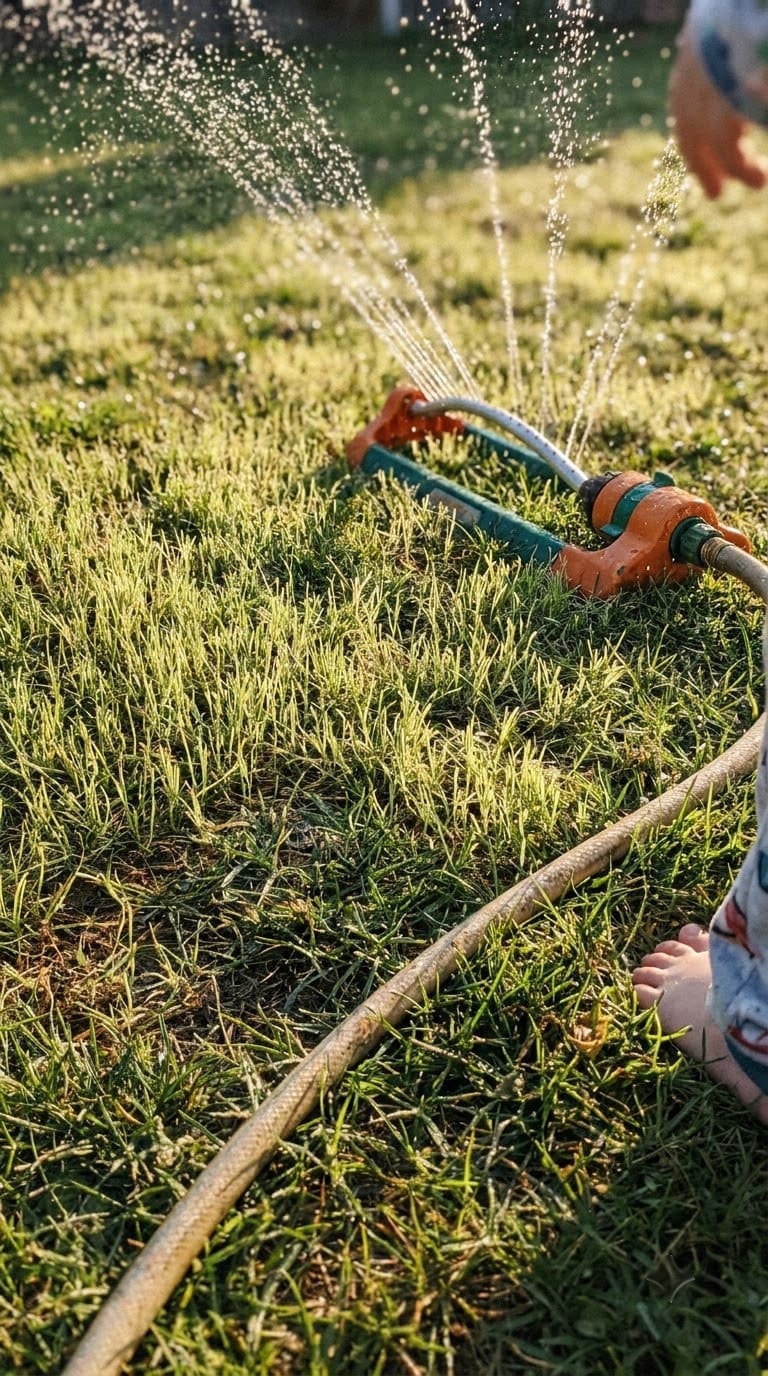
Water lightly, twice a day, enough to keep the top inch of soil consistently damp but not soggy, for the first two weeks while seed is germinating. Morning and early afternoon works better than evening, since grass sitting wet overnight is more prone to fungal issues.
Once you see consistent green growth, usually around week two to three, taper down to once a day, then by week four move to a deeper, less frequent schedule, about an inch of water once or twice a week, the same as an established lawn. This pushes roots to grow down looking for water instead of staying shallow.
Why watering strategy changes over time instead of staying constant: shallow, frequent watering is exactly right for a seed that hasn’t rooted yet, and exactly wrong for a lawn that has. Keep watering lightly forever and you train the roots to stay near the surface, which makes the lawn less drought-tolerant going into next summer.
When can you mow a newly renovated lawn?
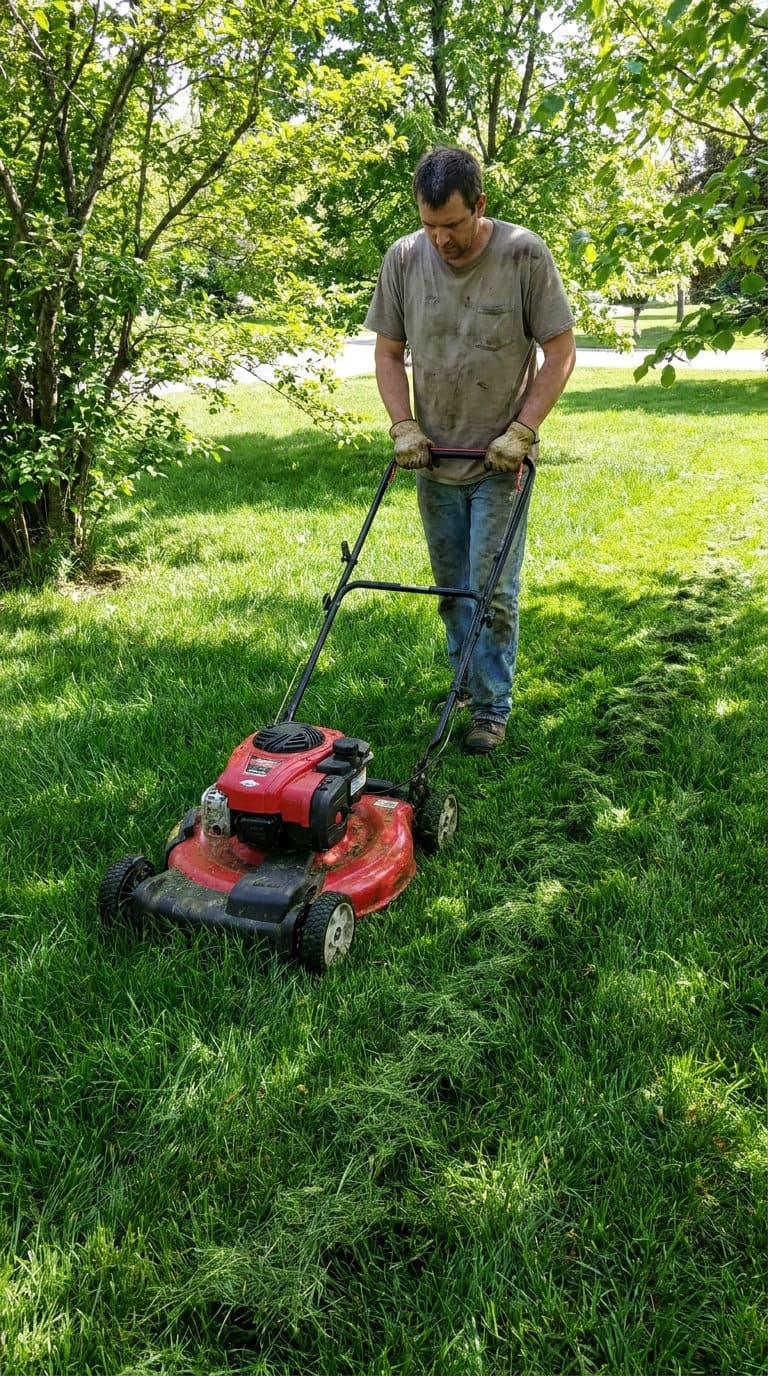
Wait until the new grass reaches about 3 to 3.5 inches tall, which usually lands 3-4 weeks after seeding depending on your blend and weather. Mow with a sharp blade only, a dull blade tears seedlings out of loosely rooted soil instead of cutting them cleanly.
Cut no more than a third of the blade height in that first mow, so if grass is at 3.5 inches, take it down to around 2.5, not lower. And don’t bag the clippings this first time if they’re short, they break down fast and return some nitrogen to the soil. Once this renovation is behind you, our guide to getting a lawn ready for winter covers everything that comes after that first cut.
Why timing the first mow matters as much as the seeding itself: mow too early and you rip out roots that haven’t anchored yet, undoing weeks of work in one pass. This is genuinely the step I’ve messed up myself, out mowing too early because the lawn just looked ready, and losing patches I’d have kept if I’d waited another week.
The 7-step September lawn renovation timeline
| Step | Timing | What it accomplishes | Skip it and… |
|---|---|---|---|
| 1. Soil test + dethatch | 2-3 weeks before seeding | Confirms pH/lime needs, clears the mat blocking seed from soil | Seed sits on dead thatch and rots instead of germinating |
| 2. Mow short + core aerate | 1-2 days before seeding | Opens compacted soil, creates protected microsites for seed | Seed lands on hard, sealed soil with nowhere to root |
| 3. Overseed correct blend | Same day or next day after aerating | Gets seed into open holes while they’re still open | Holes close within days, seed-to-soil contact drops sharply |
| 4. Topdress with compost | Immediately after seeding | Holds moisture, improves soil structure at root zone | Seed dries out between waterings, germination drops |
| 5. Starter fertilizer | Right after topdressing | Feeds root development, not top growth | Weak root system heading into winter dormancy |
| 6. Water correctly | Weeks 1-4, tapering | Germination, then trains roots to grow deep | Shallow roots, drought-prone lawn next summer |
| 7. First mow at 3-3.5″ | 3-4 weeks after seeding | Encourages lateral thickening without uprooting seedlings | Early mowing tears out shallow-rooted new grass |
Cool-season seed blend comparison
| Blend | Germination speed | Best for | Water needs |
|---|---|---|---|
| Tall fescue | 7-14 days | Sun to part shade, most forgiving for renovation | Moderate, deep roots once established |
| Kentucky bluegrass | 14-21 days | Full sun, self-repairing via rhizomes over time | Higher, shallower roots |
| Perennial ryegrass | 5-10 days | Quick cover, often blended with fescue or bluegrass | Moderate |
A real September, patchy-lawn-to-thick-lawn story
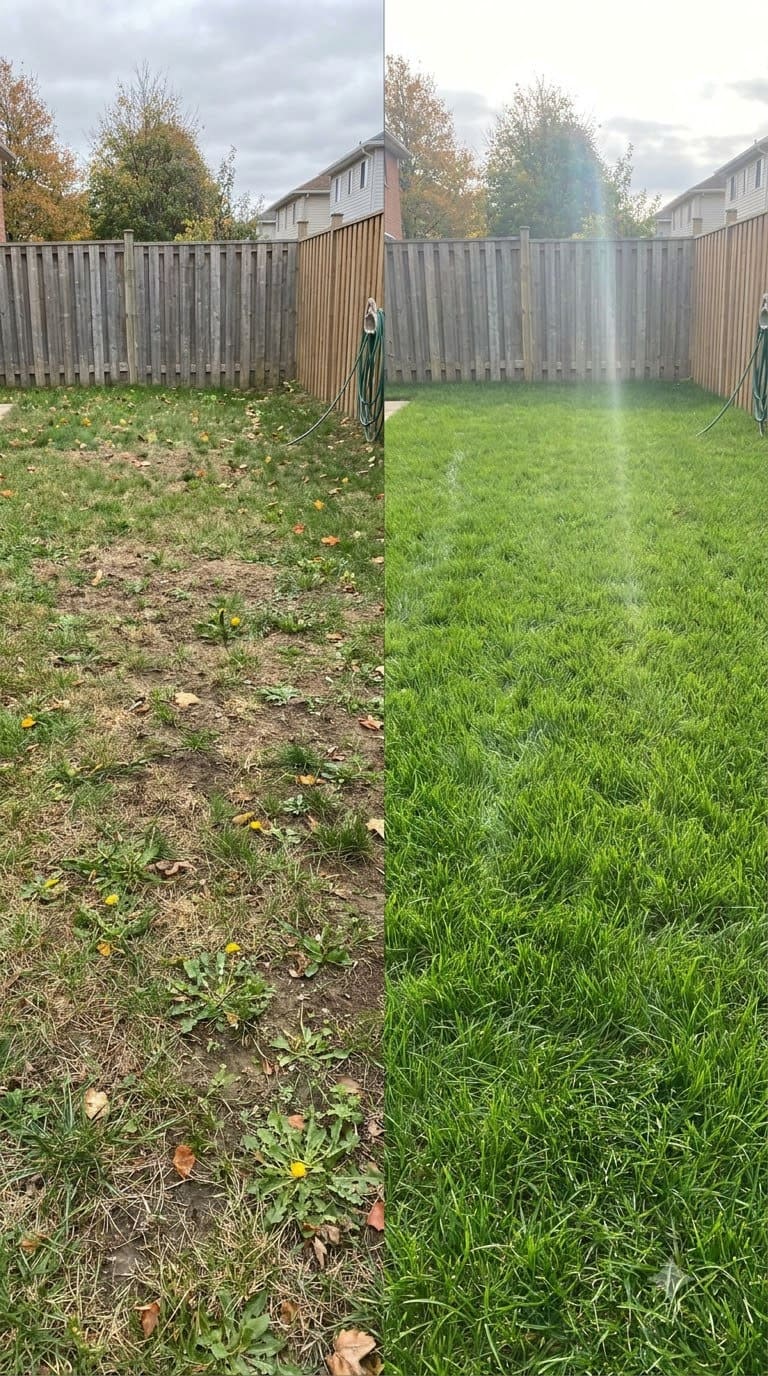
Two Septembers ago about a third of my backyard was more dirt and creeping weeds than grass, mostly from a summer of letting the kids’ trampoline sit in one spot too long. I ran this exact sequence, dethatch, aerate, overseed with a tall fescue blend, topdress, starter fertilizer, careful watering.
By the following May the trampoline patch was indistinguishable from the rest of the yard. Not perfect, there’s still a slightly thinner ring right where the trampoline legs sat, but genuinely thick and green where it used to be bare dirt and clover.
The part nobody tells you: it’s not really about any single step being magic. It’s that skipping one step, even one, breaks the chain the other six depend on. I learned that the hard way the first time I tried this and fertilized before I aerated, wasted a whole bag of starter fert basically feeding weeds.
FAQs
Can I renovate my lawn in October instead of September?
You can, but you’re cutting it close. Bruce Spangenberg’s UW-Madison Extension guidance points to late August through September specifically because seedlings need enough time, generally 6-8 weeks, to mature before the first hard frost. Seed in October in a colder climate and young grass may not survive its first winter.
Do I really need to aerate before overseeding, or can I just seed?
You can seed without aerating, plenty of people do. But if your lawn has any compaction or thatch, most of that seed never reaches soil. Aerating first is the difference between seed that germinates in the open holes and seed that dries out sitting on top of dead grass.
Is topdressing with compost really necessary?
It’s the step most likely to get skipped, and it’s the one I’d fight hardest to keep if you’re only cutting one corner. It’s not required in the sense that grass will grow without it, but germination rates and how evenly the lawn fills in both improve with that thin compost layer holding moisture against the seed.
How do I know which cool-season seed blend to buy?
Match it to your actual sun exposure and how patient you are. Tall fescue is the most forgiving all-around choice for a renovation. If your yard gets full sun and you’re willing to wait a couple seasons for it to spread and self-repair, Kentucky bluegrass fills in nicely on its own after that.
Related Posts
Products We Recommend
This post contains affiliate links. We may earn a commission on qualifying purchases at no extra cost to you.
LawnVigor Manual Core Aerator (3 Hollow Tines)
Step 2, pulls real soil plugs instead of just poking spike holes
Shop Now
Jonathan Green Black Beauty Ultra Grass Seed, 7 lb
Step 3, tall fescue/Kentucky bluegrass/perennial ryegrass blend built for late-August to mid-October seeding
Shop Now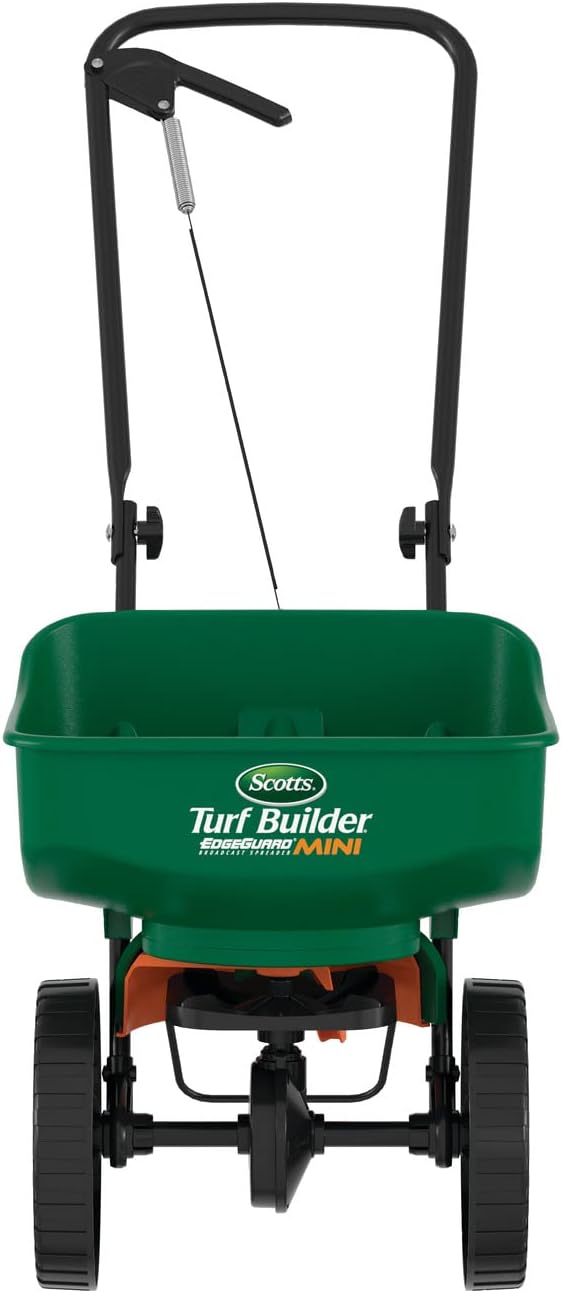
Scotts Turf Builder EdgeGuard Mini Broadcast Spreader
Step 3, even seed coverage plus doubles as the starter-fertilizer spreader in step 5
Shop NowNever miss an update — choose FarmFoodFamily as your preferred source on Google.
How it works: Tap the button below to open Google's settings page, then check the box next to FarmFoodFamily.
Tap the checkbox to turn it blue — that's how you know it's set.