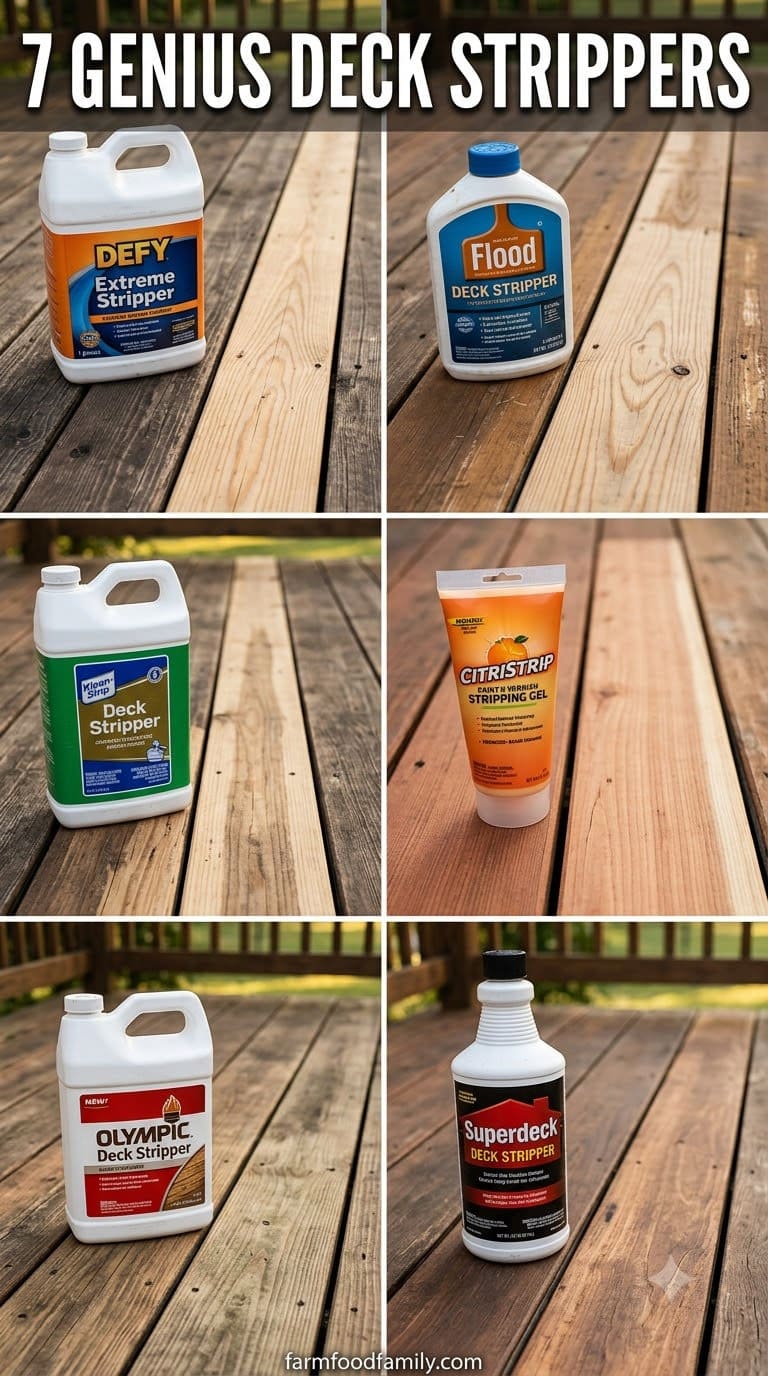
7 Genius Deck Strippers That Actually Get Old Stain Off Without a Sander
If your deck stripper is drying into a crusty film before you can scrape it, you’re using the wrong chemistry for what’s actually on your wood, and these 7 picks fix that.

Never miss an update — choose FarmFoodFamily as your preferred source on Google.
How it works: Tap the button below to open Google’s settings page, then check the box next to FarmFoodFamily.
Tap the checkbox to turn it blue — that’s how you know it’s set.
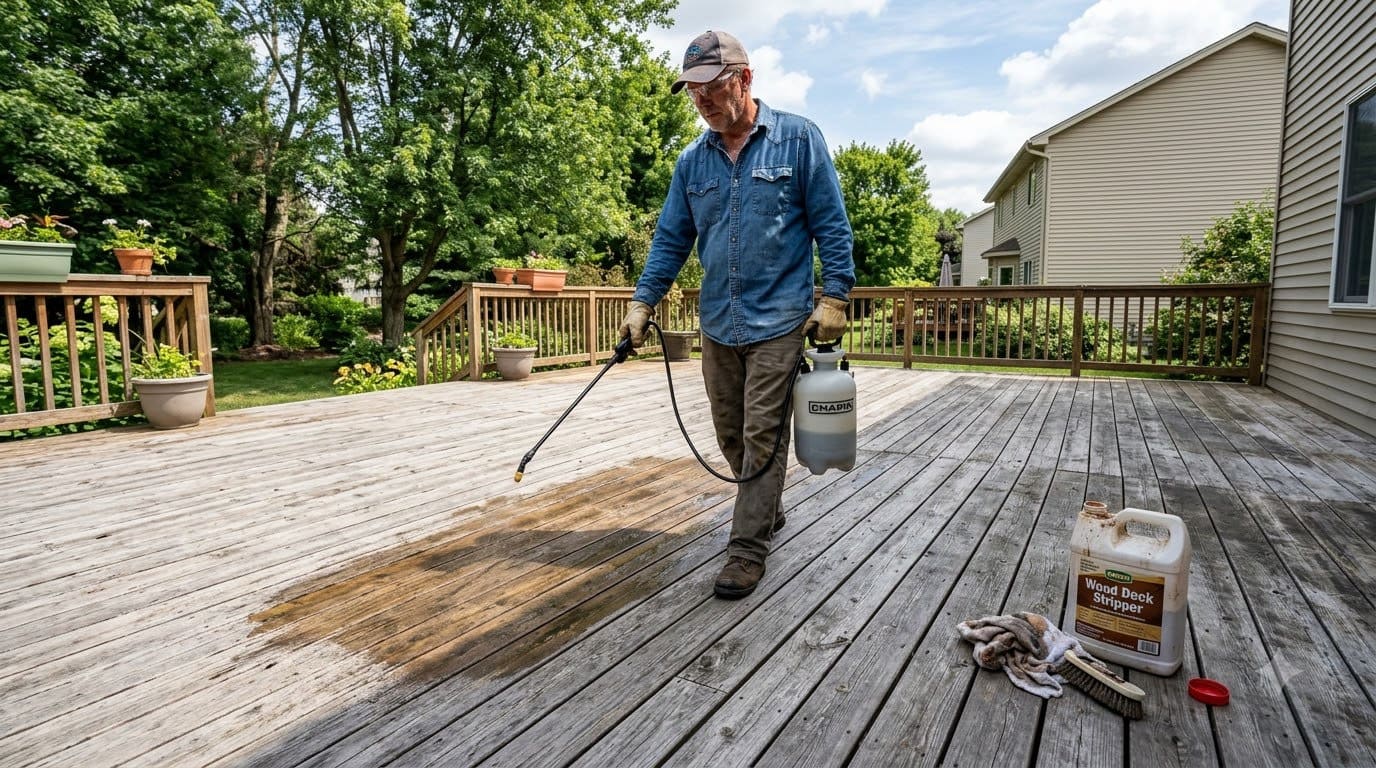
I stripped my own deck two summers ago on a 90-degree Saturday, which is exactly the mistake everyone tells you not to make. The gel skinned over in about twenty minutes, I ended up scraping half-dried goop off the boards with a putty knife, and I had to do the whole back third of the deck twice. Lesson learned the expensive way: the product matters less than most buying guides admit, but it still matters a lot, and which one you pick depends entirely on what’s actually on your wood.
Deck stripper is not one product. It’s three different chemistries pretending to be one category, and picking the wrong one for your situation is the single biggest reason people end up renting a floor sander after wasting a full weekend and a $40 gallon of stripper.
Quick answer
For most decks with a few years of semi-transparent or clear stain buildup, a liquid alkaline stripper like SaverSystems’ #1 Deck Wood Stain Stripper covers ground fast and cheaply, but it will not touch solid-color paint. For a deck with multiple coats of old solid stain or paint, go with a heavier gel formula like Max Strip’s Deck Coating Remover, which is built to grip vertical grain and hold moisture longer.
If you want a low-odor, biodegradable option safe to use near a vegetable bed, CitriStrip’s citrus gel skips the harsh solvents and still lifts several layers of paint in under an hour. And if your “deck” is actually composite, skip chemical stripping altogether, most formulas here are wood-only and will damage or discolor composite boards, sometimes voiding the manufacturer’s warranty in the process.
The Best Deck Strippers Of 2026

CitriStrip Stripping Gel 40 oz. + Stripper Brush
Jump to Review ↓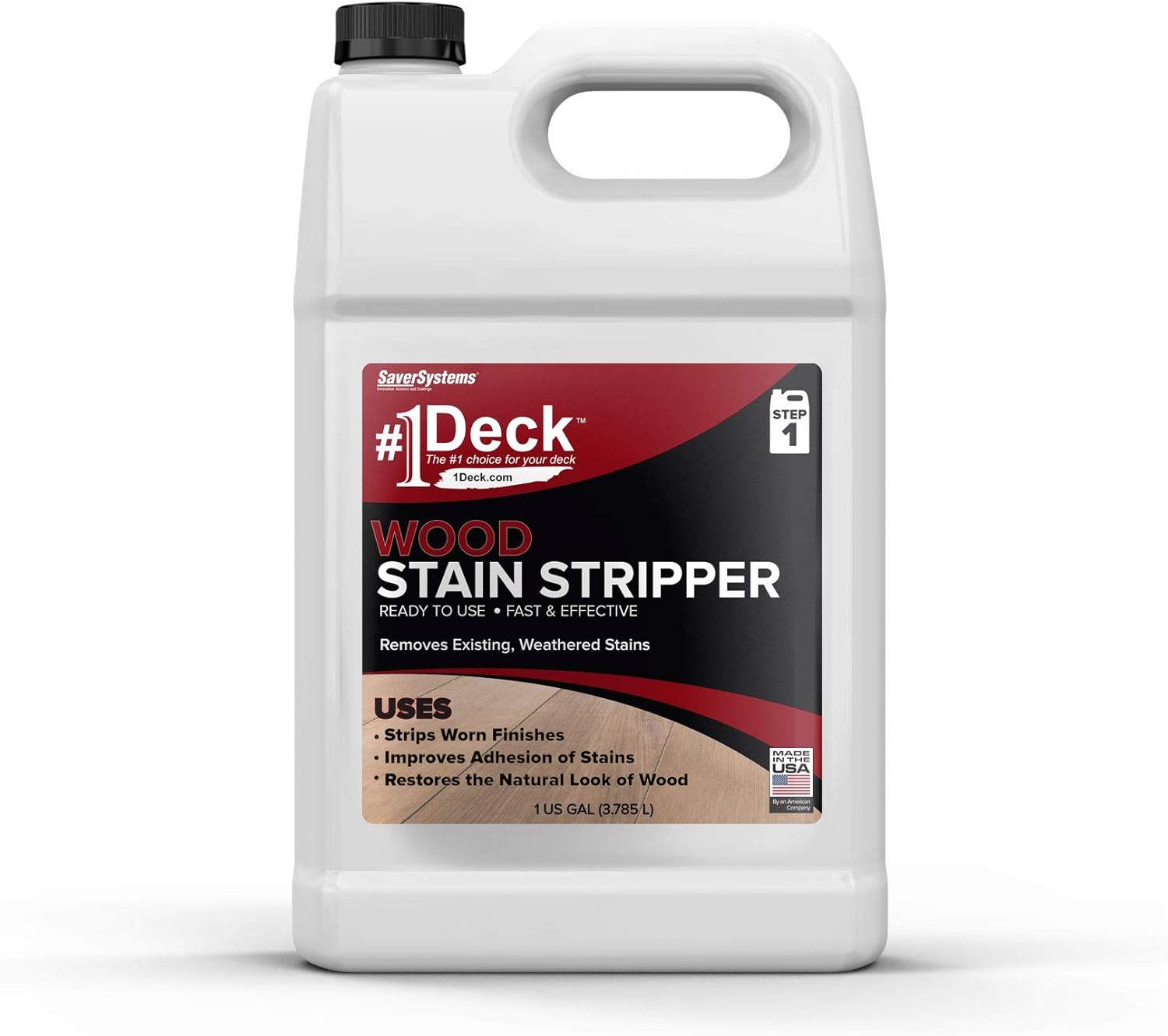
#1 Deck Wood Stain Stripper, 1 Gallon (also sold as a 4-pack)
Jump to Review ↓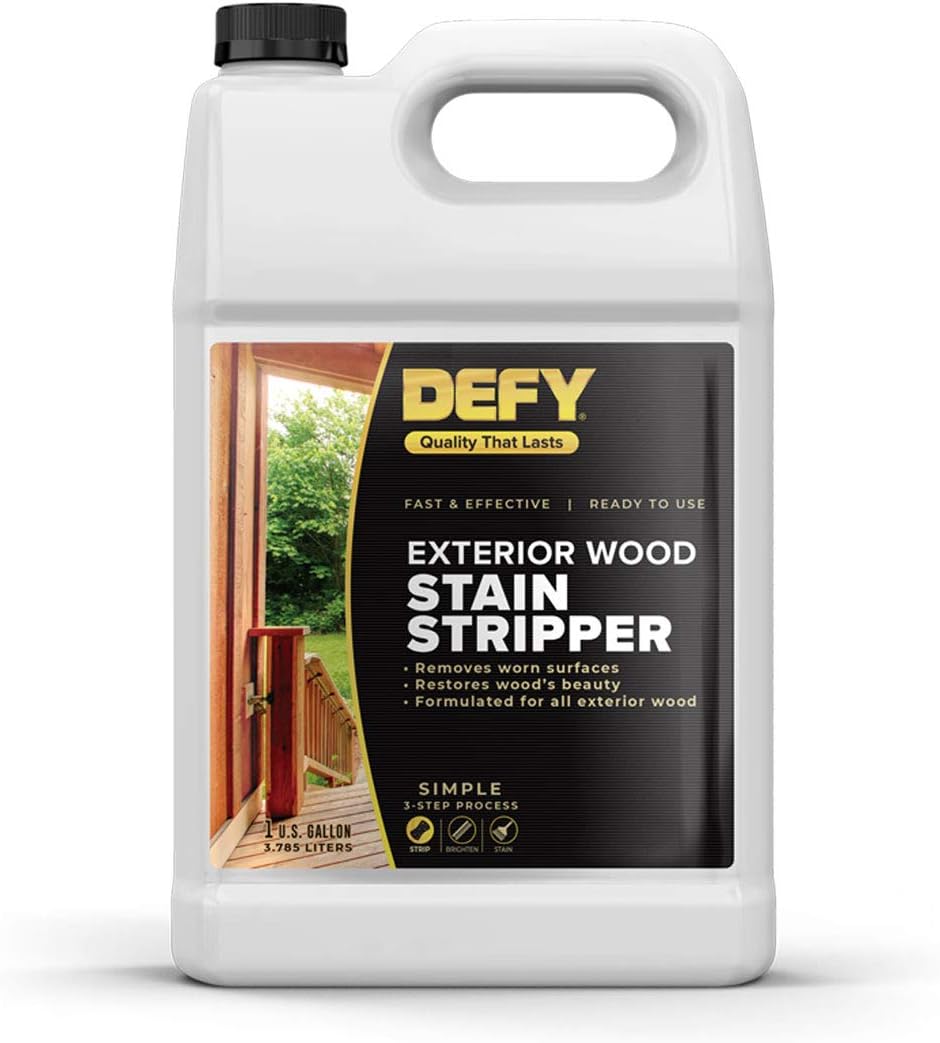
DEFY Exterior Wood Stain Stripper, 1 Gallon
Jump to Review ↓
Sunnyside 657G1A Multi-Strip Advanced Paint & Varnish Remover
Jump to Review ↓Why deck stripper trips people up more than it should
Head over to r/Decks and you’ll find the same handful of complaints on repeat. One popular thread is literally titled “Deck stripper didn’t get solid stain off,” and the top reply is a single sentence: sanded the whole deck, sucked. Another homeowner spent a whole weekend on a 30-year-old deck asking whether they should “keep going and hope stripper will take off the rest” after power washing barely made a dent.
The pattern that shows up again and again is a mismatch between the product and the coating. Most strippers only claim two of three things: clear sealers, transparent stains, or semi-transparent stains. Solid-color opaque stain and old paint are a different animal entirely, and a huge share of the frustration on Reddit traces back to someone buying a general-purpose stripper for a job that needed a gel formula built for solid coatings.



The other recurring complaint is drying time. One deck cleaner thread is titled flat out “cleaner dried too quickly and left splotchy results.” Liquid strippers, especially the cheaper alkaline ones, skin over fast in direct sun, and once that happens the chemical stops working and just sits there as a crust you have to re-wet or scrub off by hand.
Power washer strength is its own separate rabbit hole. In one r/HomeImprovement thread, a homeowner running two coats of stripper and a 2,300 PSI washer still couldn’t get old deck paint to budge, and the top reply was blunt: bump up to 3,500 PSI or rent a heavier unit from an equipment place. Someone else in the same thread pushed a used pump to 3,700 PSI and got the paint off, but replaced a couple of boards that had already rotted from age, a reminder that more pressure isn’t free of risk on older wood.
Answer 4 quick questions and get matched to the exact fix for your yard — drainage, budget, layout, or something else entirely.
Take the Free QuizDisposal comes up too, just less often than dwell time. Over in r/arborists, a homeowner asked whether deck-cleaner runoff would hurt the trees growing up through their deck, and even a “Safer Choice”-labeled product got a lukewarm answer: the poster’s own follow-up research found no actual soil or root test data behind the marketing bullet points, and the practical advice was to flood the treated area with plain water afterward to dilute whatever’s left before it reaches the roots.
The 7 best deck strippers
1. Max Strip Deck Coating Remover, 1 Gallon
Max Strip Deck Coating Remover, 1 Gallon

- Thick gel formula stays wet longer than thin liquid strippers
- Marketed specifically for multi-layer paint and solid stain removal
- No methylene chloride or NMP in the formula
- Works on vertical surfaces without sliding off
- Slower than lighter-duty strippers on a single thin coat
- Some reviewers needed a second application on very old buildup
- Pricier per gallon than the basic liquid options
We earn a commission, at no additional cost to you.
Max Strip’s gel is built specifically for stubborn deck coatings: old paint, polyurethane, shellac, and acrylic sealers layered on top of each other. It’s a thick no-drip formula, which matters because it clings to the surface instead of running off before it has time to work. The company markets it as free of methylene chloride and NMP, the two harshest solvents that older paint strippers used to rely on.
Real buyer reviews describe it working well on decks with two or three stacked coats, though several people note it takes a full application and a decent dwell period rather than a five-minute miracle. A handful of reviewers found it needed a second pass on the thickest buildup, which tracks with the Reddit pattern of multi-coat jobs needing more than one round no matter which stripper you pick.
It’s made by EZ Strip USA and rated 3.1 out of 5 across 88 verified buyers as of this writing, which is lower than the other picks on this list, and reading the actual complaints explains why. One reviewer with a 15×12 deck said a full $40 bottle only covered about a third of the surface, more like 60 square feet than the square footage some buyers expect from a gallon. Another applying it on a 65-degree day still had it dry white on the boards before scraping, and switched to spreading the gel under plastic bubble wrap to buy more working time, a fix that several other reviewers on this list also landed on independently.
One buyer removing a thick Behr DeckOver-style coating found it needed 6 to 8 hours of dwell time under plastic to bubble up properly, far past the quick-scrape expectation the label photos suggest. That’s useful context if you’re stripping a solid deck coating rather than a thinner stain, budget the whole afternoon, not an hour.
2. CitriStrip Stripping Gel 40 oz. + Stripper Brush: Best Biodegradable, Low-Odor Formula
CitriStrip Stripping Gel 40 oz. + Stripper Brush
- Stays workable for up to 24 hours, solving the classic dry-out complaint
- Low odor compared to solvent-based strippers
- Includes a stainless steel stripper brush in the bundle
- No methylene chloride or NMP
- Smaller container means more reapplications on a full-size deck
- A couple of reviewers reported it needed more than one round on thick buildup
- Citrus scent still lingers a bit during application
We earn a commission, at no additional cost to you.
Most yard problems trace back to one specific, fixable cause. Find yours in 4 quick questions.
Take the Free QuizCitriStrip is the name most non-professionals already recognize, and the deck-specific selling point is real: it stays wet and workable for up to 24 hours instead of skinning over in twenty minutes. That solves the exact drying-out problem showing up across Reddit threads. It’s citrus-scented rather than chemical-smelling, and the company states it contains no methylene chloride or NMP.
The bundled Warner stainless steel stripper brush is a genuinely useful add, since scraping a gel-based stripper works better with stiff bristles than a flat putty knife on textured wood grain. One verified reviewer used it on cabinets and noted it worked “without a horrible smell,” which lines up with why this pick suits anyone stripping near a patio or living space.
The manufacturer’s own claim is that it removes 5 layers of dried latex paint in under an hour, and one verified buyer’s honest counterpoint was that results were “meh” even after several separate 24-hour dwell rounds on a tougher job, a reminder that the 24-hour stay-wet window is a ceiling for how long you can leave it, not a guarantee it’ll fully clear a heavy multi-coat deck in one shot.
A separate Reddit thread outside this product’s Amazon reviews warned that letting CitriStrip dry into open wood grain, uncovered, makes it far harder to fully clean out afterward, reinforcing the same plastic-wrap-while-it-works advice that shows up across nearly every product on this list.
Worth knowing before you buy: a few reviewers mentioned finding the same CitriStrip formula cheaper at a local Home Depot or Menards, so it’s worth a quick price check locally if you’re not in a rush for delivery.
3. #1 Deck Wood Stain Stripper, 1 Gallon (also sold as a 4-pack)
#1 Deck Wood Stain Stripper, 1 Gallon (also sold as a 4-pack)
- Best per-gallon coverage on this list at 100-150 sq ft
- Works on both water- and oil-based semi-transparent finishes
- Available as a single gallon or a 4-pack for whole-deck jobs
- Straightforward spray-scrub-rinse process
- Will not remove solid-color paint or opaque stains
- Dries out fast in direct sun, needs an overcast day or shaded timing
- A couple of reviewers reported the wood discolored slightly after stripping and sanding
We earn a commission, at no additional cost to you.
SaverSystems’ stripper is a ready-to-use liquid rated to cover 100 to 150 square feet per gallon, which is the kind of coverage math that matters once you’re pricing out a 400-square-foot deck instead of a small landing. It’s explicitly labeled as removing weathered, semi-transparent stains and sealers, and just as explicitly says it will not remove paint, so this is the pick for the “my old stain is finally giving up” job, not the “someone painted my deck” job.
Real buyer reviews mirror the Reddit pattern closely. One reviewer specifically wrote that it “dries too quick” but still works as described, and another described applying it in direct sun and having to spread it thinner than they wanted because they underestimated coverage on a large deck. The takeaway buried in almost every review: apply on an overcast day, keep it wet, and pressure-wash it off rather than relying on a garden hose.
It’s made by SaverSystems, the same Richmond, Indiana manufacturer behind the DEFY line, and one reviewer’s specific numbers are worth repeating: a 16×20 deck (320 square feet) took 2 full gallons rather than the roughly 2.5 gallons the label math implies, applied with a pump sprayer and rinsed off with a 2,700 PSI power washer through a 40-degree spray nozzle to avoid gouging the wood. Another buyer restoring a 14-year-old deck used the same 40-degree nozzle approach after a 30 to 45 minute dwell and called the result “brand new,” which lines up with SaverSystems’ own 15-25 minute dwell window before the first scrub.
One safety note buried in a review deserves repeating: a reviewer reported the product “began to eat” their concrete driveway within 30 seconds of an accidental spill, so keep it off concrete, brick, and anything you’re not actively stripping, and rinse any splash immediately.


4. DEFY Exterior Wood Stain Stripper, 1 Gallon
DEFY Exterior Wood Stain Stripper, 1 Gallon
- Purpose-built for old, weathered oil-based and semi-transparent stain
- Biodegradable formula
- Pairs directly with DEFY's own brightener and restain products
- Straightforward 15-minute dwell time before rinsing
- Same "will not remove paint" limitation as most liquid strippers
- Needs a power washer for best results, a garden hose alone underperforms
- Pump-sprayer application takes longer to set up than a pour-and-brush gel
We earn a commission, at no additional cost to you.
The average homeowner spends $616/year on yard fixes that don't address the real problem. Find out what yours actually is — before you spend another dollar.
Take the Free QuizDEFY is a sister brand to the well-known DEFY wood stains, and this stripper is built specifically to break down weathered, clear, and semi-transparent finishes, the kind that have been baking in the sun for five-plus years and have gone chalky and gray. It’s biodegradable and designed to be sprayed on with a pump sprayer, left to sit for about 15 minutes, then rinsed with a power washer.
The 100-150 square foot per gallon coverage matches SaverSystems’ product almost exactly, which makes sense since both are liquid alkaline formulas competing in the same category. The difference in practice is that DEFY’s own product line pairs it directly with a matching brightener and stain, which matters if you’re planning to restain with the same brand afterward for color consistency.
DEFY is also made by SaverSystems out of their Richmond, Indiana facility, and it’s rated 3.9 out of 5 across 400 verified buyers, the largest review sample on this list. One detailed review put real numbers behind the coverage claim: a 540-square-foot deck with old semi-transparent stain took 5 full gallons rather than the roughly 4 gallons label math would suggest, once spot-retreating splotchy areas was factored in. A different reviewer working through 14 gallons on a large ramp project confirmed a big job means budgeting real money here, not just a single trip to the store.
The manufacturer’s own directions call for a 20 to 30 minute dwell before scrubbing, and one detailed review method that reviewers repeatedly credited with strong results: wet the boards first, spray the stripper, scrub at the 10-minute mark while it’s still wet, then rinse thoroughly before a second application if needed. On the downside, a different reviewer using a pressure washer at close range to rinse off the residue ended up flaking and splintering some board surfaces, meaning a light sanding pass before restaining.
5. Sunnyside 657G1A Multi-Strip Advanced Paint & Varnish Remover
Sunnyside 657G1A Multi-Strip Advanced Paint & Varnish Remover
- Rated for up to 15 layers of paint and varnish
- Light coat lifts 1-4 layers relatively fast
- No methylene chloride, non-caustic, non-flammable
- Also handles epoxy and urethane, unusual for a deck stripper
- One of the pricier options per gallon on this list
- Heavier coats needed for deep buildup take longer to work through
- Strong product for a light single-coat job, somewhat overkill
We earn a commission, at no additional cost to you.
Sunnyside’s Multi-Strip is one of the few products here rated to pull up to 15 layers of paint and varnish, which sounds excessive for a deck until you remember some decks have been painted, stripped halfway, and repainted over multiple owners. A lighter coat lifts one to four layers fairly quickly, and it’s genuinely versatile, handling epoxy and urethane coatings that most wood-specific strippers won’t touch.
It’s biodegradable and non-flammable, with no methylene chloride and no caustic ingredients, which is unusual for a product this aggressive. Real buyer reviews consistently mention it works on stubborn multi-layer buildup where other strippers stalled out, matching the brand’s own claim that it out-performs typical single-layer removers.
Manufacturer coverage numbers put this one at 60-100 square feet per gallon with a 30-minute activation time, according to Sunnyside’s own comparison chart against its sister products. It’s rated 4.0 out of 5 across 935 verified reviews, and the recurring complaint isn’t effectiveness, it’s how far the low-odor claim actually holds up.
One reviewer working in a detached garage with doors open and a fan running still found the smell overwhelming on a breezy 70-degree day, and another reported the odor lingering in the house for four days afterward, soaked into an HVAC filter and clothing. If you’re stripping railings or a section near an open window, plan for more ventilation than the label implies.
On multi-coat jobs, reviewers again lean on the plastic-covering trick to stretch dwell time past the 30-minute starting point, since a heavier coat on old paint can take overnight under plastic to fully lift, and one buyer used 3/4 of a gallon just finishing both sides of a single stripped door, useful math if you’re pricing out a whole deck’s worth of railings and posts rather than one flat surface.
6. Max Strip Paint & Varnish Stripper Gel, 1 Qt
Max Strip Paint & Varnish Stripper Gel, 1 Qt
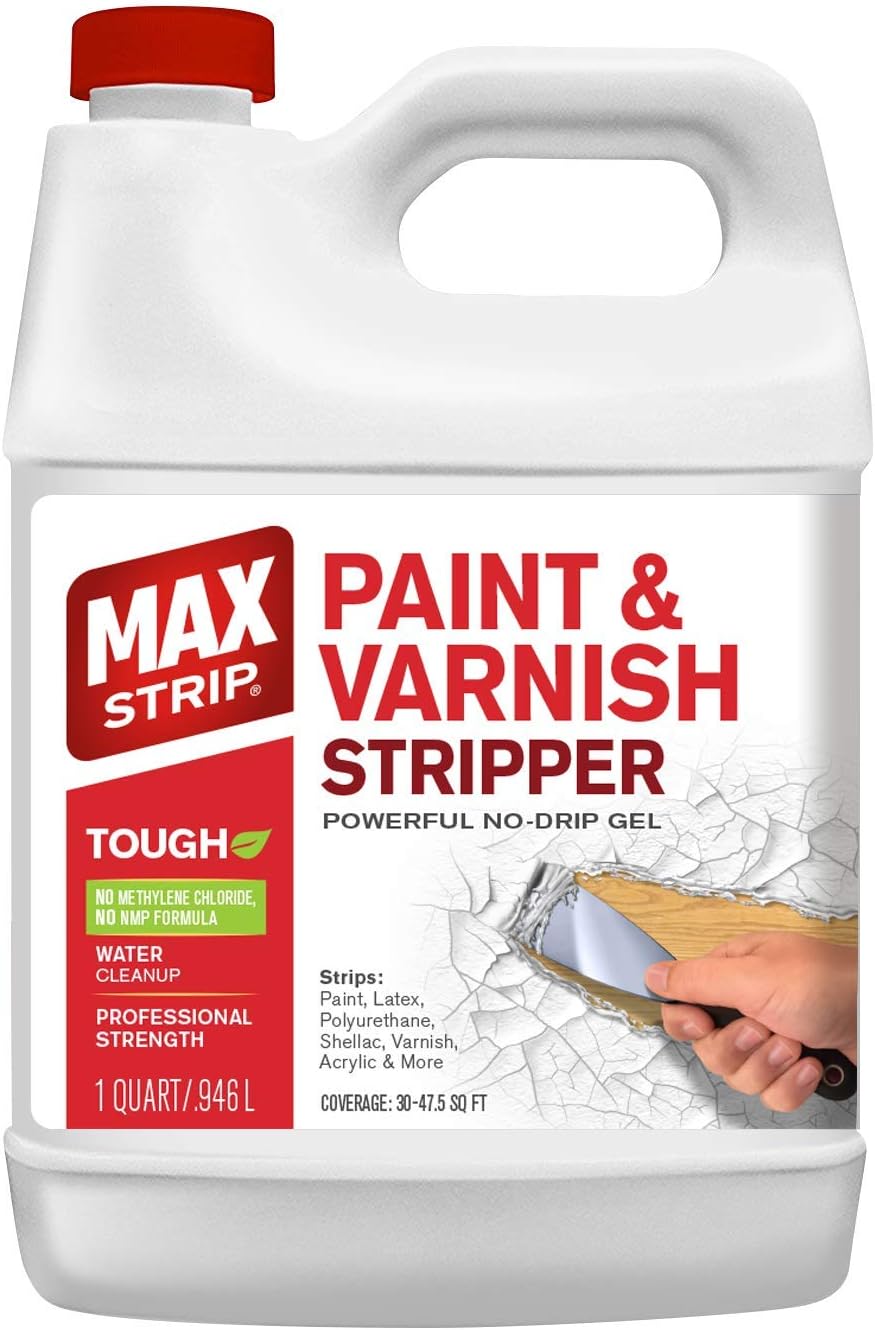
- No-drip gel formula stays put on vertical surfaces
- Water-based, lower odor than solvent gels
- Works on wood, metal, and brick
- Smaller quart size is easy to control for spot jobs like railings
- 1-quart size is too small for a full deck floor
- Not marketed for heavy multi-coat paint removal
- A minority of reviewers wanted a longer dwell time on tougher spots
We earn a commission, at no additional cost to you.
Every deck has vertical surfaces, railings, posts, skirting, where a runny liquid stripper just drips off before it can work. This water-based Max Strip gel is built to cling, which is exactly what a spindle railing or a fascia board needs. It’s rated for wood, metal, and brick, so it does double duty on metal railing brackets and any masonry steps attached to the deck.
One real reviewer who used SaverSystems’ stripper noted it “worked better on horizontal surfaces… than on the vertical surfaces of the railings and posts,” which is a direct illustration of why a dedicated gel matters for the vertical parts of a job rather than assuming one stripper handles the whole deck equally well.
It’s also made by EZ Strip USA, same manufacturer as the Deck Coating Remover higher on this list, and it’s explicit on one point competitors gloss over: the label states plainly that this formula is not designed for factory-finished or baked-on coatings like automotive paint or powder coat, so it’s staying in its lane as a wood, metal, and masonry stripper rather than trying to be everything. Directions call for a minimum 15-30 minute dwell covered in plastic film, and the label adds a specific warning to avoid direct sunlight during application, which matches exactly the sun-drying complaint that keeps showing up across every liquid and gel stripper on this list.
One buyer’s detailed technique for tricky detail work: dampen a paper towel, lay it over the applied gel, then tape plastic wrap over that to hold moisture on vertical or carved surfaces for a full hour before scraping, useful for ornate railing spindles where a flat sheet of plastic won’t sit flush.
7. Restore-A-Deck Wood & Deck Stain Stripper
Restore-A-Deck Wood & Deck Stain Stripper

- Makes 5 gallons per container, genuinely cost-effective on a large deck
- Covers 500-1,000 square feet per container
- Pairs with a matching brightener for a complete two-step system
- Powder ships lighter and more compact than jugs of liquid
- Requires mixing with water before use, an extra step versus ready-to-use liquids
- Will not remove solid-color stains, paint, or heavy polyurethane
- Several reviewers still needed real scrubbing effort, not a spray-and-walk-away process
We earn a commission, at no additional cost to you.
This one ships as a powdered concentrate you mix with water yourself, which sounds like extra work until you see the math: one container makes 5 liquid gallons, enough to strip 500 to 1,000 square feet, at under $13 a gallon once mixed. It’s marketed as an eco-safe formula and is step one of a three-step Restore-A-Deck system that pairs it with a neutralizing brightener.
Reviewers describe results that split cleanly along one line: people who followed the directions closely, kept the surface damp, and used a power washer afterward got results they called fantastic, while a few who tried it on solid or poly-type coatings (which the label explicitly says it won’t remove) came away disappointed. One reviewer called it “great… but very caustic,” a reminder that “eco-safe” doesn’t mean skip the gloves.
It’s a small-business brand rated 4.0 out of 5 across 136 verified buyers, and one detailed real-world case study lines up closely with the coverage math on the label: a 14×20 cedar deck (280 square feet), stripped and rinsed with an old power washer, needed a second light pass the following day to fully clear a blotchy older finish before the matching brightener went on. The manufacturer’s own directions note that rinse residue won’t harm nearby plants, but full-strength product contacting foliage directly will burn it, and one reviewer confirmed killing some grass despite following the label.
For genuinely stubborn multi-coat jobs, the label allows mixing at up to a 3-to-1 water-to-powder ratio rather than the standard dilution, which stretches the same container further but concentrates the chemistry, worth knowing if a single pass at normal strength isn’t cutting it on old, weathered stain.
Top picks at a glance
| Product | Best for | Price |
|---|---|---|
| Max Strip Deck Coating Remover, 1 Gal | Multiple Paint Coats | ~$39.99 |
| CitriStrip Stripping Gel 40 oz + Brush | Biodegradable, Low-Odor Formula | ~$22.62 |
| #1 Deck Wood Stain Stripper, 1 Gal | Large Deck Surfaces / Best Value | ~$24.99 |
| DEFY Exterior Wood Stain Stripper, 1 Gal | Old, Weathered Oil-Based Stain | ~$30.08 |
| Sunnyside 657G1A Multi-Strip Advanced | Fast-Acting Formula | ~$46.93 |
| Max Strip Paint & Varnish Stripper Gel, 1 Qt | Railings & Vertical Surfaces | ~$20.79 |
| Restore-A-Deck Wood & Deck Stain Stripper | Gentlest, Eco-Safe Concentrate | ~$40 (makes 5 gal) |
What to look for when buying a deck stripper
Chemistry type
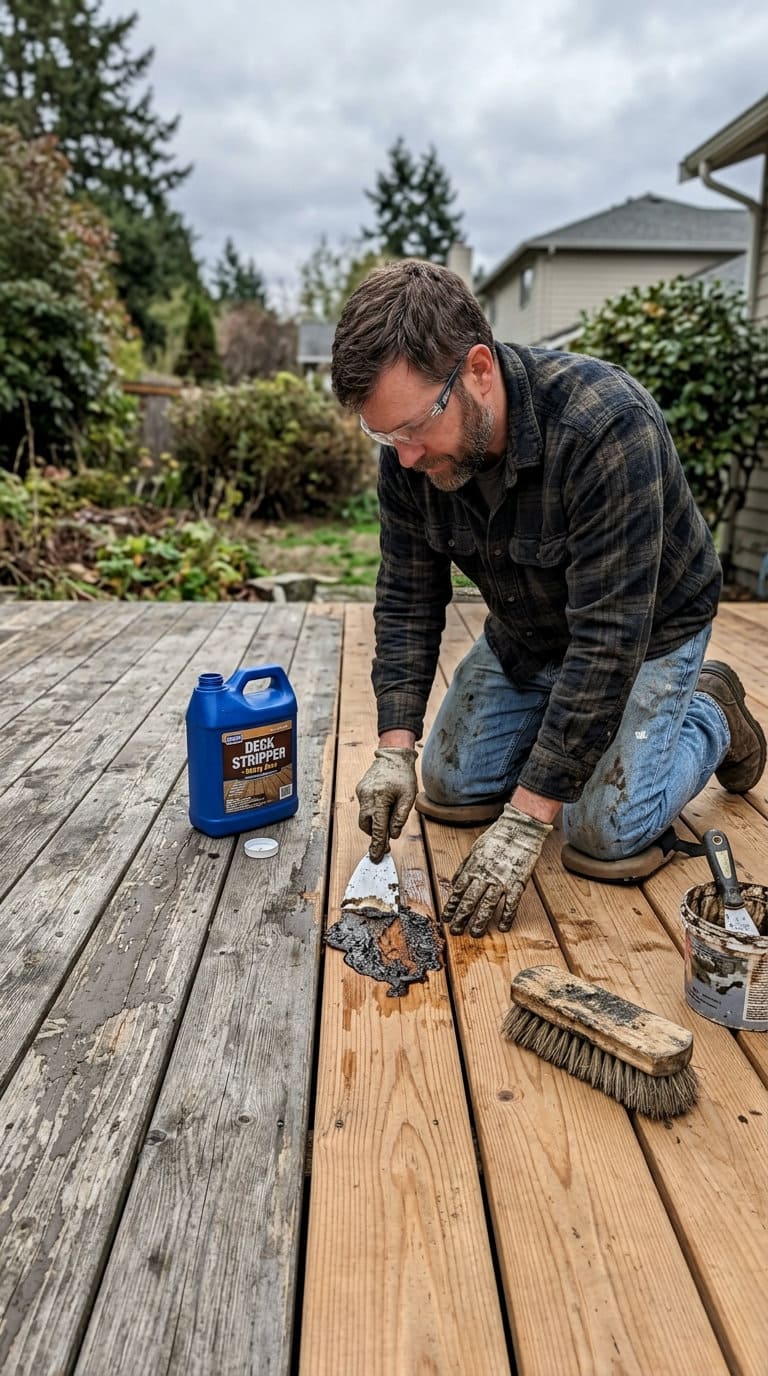
Caustic (lye/sodium hydroxide) strippers are fast and aggressive, usually working in 15 minutes to an hour, but they’re rough on skin, grass, and metal fasteners. Solvent-based gels grip vertical surfaces well and handle multiple paint layers. Citrus or soy-based biodegradable formulas are gentler and lower-odor but often need longer dwell time, sometimes hours, to do the same job.
The EPA’s Safer Choice program evaluates every intentionally added ingredient in a product, so a “Safer Choice” label on a stripper is a real signal, not just marketing language. That said, a Safer Choice label isn’t the same as a guarantee that runoff won’t affect nearby tree roots or foliage, since the program evaluates the product’s ingredients, not site-specific soil or plant impact.
Dwell time and drying
Every stripper needs to stay wet to keep working. Thin liquids dry out fast in sun or wind, which is exactly the “dried too quickly, splotchy results” complaint that keeps showing up on Reddit. If you’re stripping on a hot, breezy day, a thicker gel that clings and stays wet longer will save you a second trip to the hardware store.
The chemistry behind that isn’t complicated. A stripper only breaks down a finish while it’s still liquid and in contact with the coating, so the moment sun and wind evaporate the carrier, the reaction stops cold and whatever’s left behind hardens into a crust. That crust is often harder to remove than the original stain, which is why Amazon reviewers for nearly every product on this list mention covering their work with plastic sheeting.
Covering isn’t a nice-to-have step, it’s what lets a 20-minute label dwell time stretch to the hour or more that a real multi-coat job usually needs. Aggressiveness varies a lot between the three chemistries too. Caustic, sodium-hydroxide-based strippers work fastest, often in 15 to 30 minutes, because they chemically break down the finish’s bond to the wood rather than just softening it.
Solvent-based gels work more like a swelling agent, loosening layered paint and varnish so it can be lifted rather than dissolved, which is why they cling to vertical surfaces better. Citrus and soy formulas are the gentlest and slowest of the three, sometimes needing hours or an overnight dwell under plastic to match what a caustic stripper does in half an hour. They’re also the least likely of the three to burn skin or kill nearby grass on contact.
Reapplication math for multi-coat jobs
Manufacturer coverage numbers assume a single thin coat lifting a single layer. Real decks with two or three stacked coats of solid stain or paint routinely need a second full application, and sometimes a third, which means budgeting two to three times the gallons the label’s square-footage math implies.
One Amazon reviewer stripping an old semi-transparent finish off a 540-square-foot deck used 5 gallons of a stripper rated for 100 to 150 square feet per gallon, nearly triple the “single coat” estimate, once spot-retreating and a vinyl-siding overspray area were factored in.
Single-coat vs. multi-coat strength
Read the label closely. “Removes weathered stain” and “removes multiple layers of paint” are two different jobs, and using the wrong one is the single most common reason people end up sanding.
Once the wood is bare, browse deck color ideas before you pick a new stain.
Safety and ventilation
According to the U.S. Consumer Product Safety Commission’s guidance on paint strippers, work in a well-ventilated outdoor area, wear gloves and eye protection, and never mix different stripping products together. Caustic formulas can burn skin and kill nearby grass or plants on contact, so wet down or cover landscaping before you start.
Wood only, not composite
This is the one buyers skip most often. Chemical strippers are formulated for real wood fiber, and composite decking is a wood-plastic blend. Most manufacturers explicitly warn against caustic or solvent strippers on composite boards, since the chemicals can discolor or degrade the plastic binder and void your warranty.
If you’re working on composite, look for a dedicated composite-safe stain remover instead of anything on this list, and see our guide to power washing composite decking for the safer cleaning route.
Disposal
Rinse water from stripping carries chemical residue and paint solids. Keep runoff away from storm drains, ponds, and vegetable beds, and check your local rules before rinsing near a well or septic field.
Even products marketed as eco-safe aren’t guaranteed harmless to tree roots or foliage on direct contact, so wet down nearby plants first and flood the area with clean water after rinsing to dilute anything left behind.
How long to wait before restaining
Rushing this step is its own recurring complaint. Restore-A-Deck’s own instructions note the deck needs to be fully dry before the follow-up brightener and stain go on, and several Amazon reviewers who stripped and restained on the same day ended up back-brushing damp wood.
If your deck stripping happened on a humid or overcast day, which is exactly when the chemistry works best, give the wood at least 24 to 48 hours of genuine dry weather before staining, longer if the boards still feel cool or dark when you press a hand flat on them.
How we picked these deck strippers
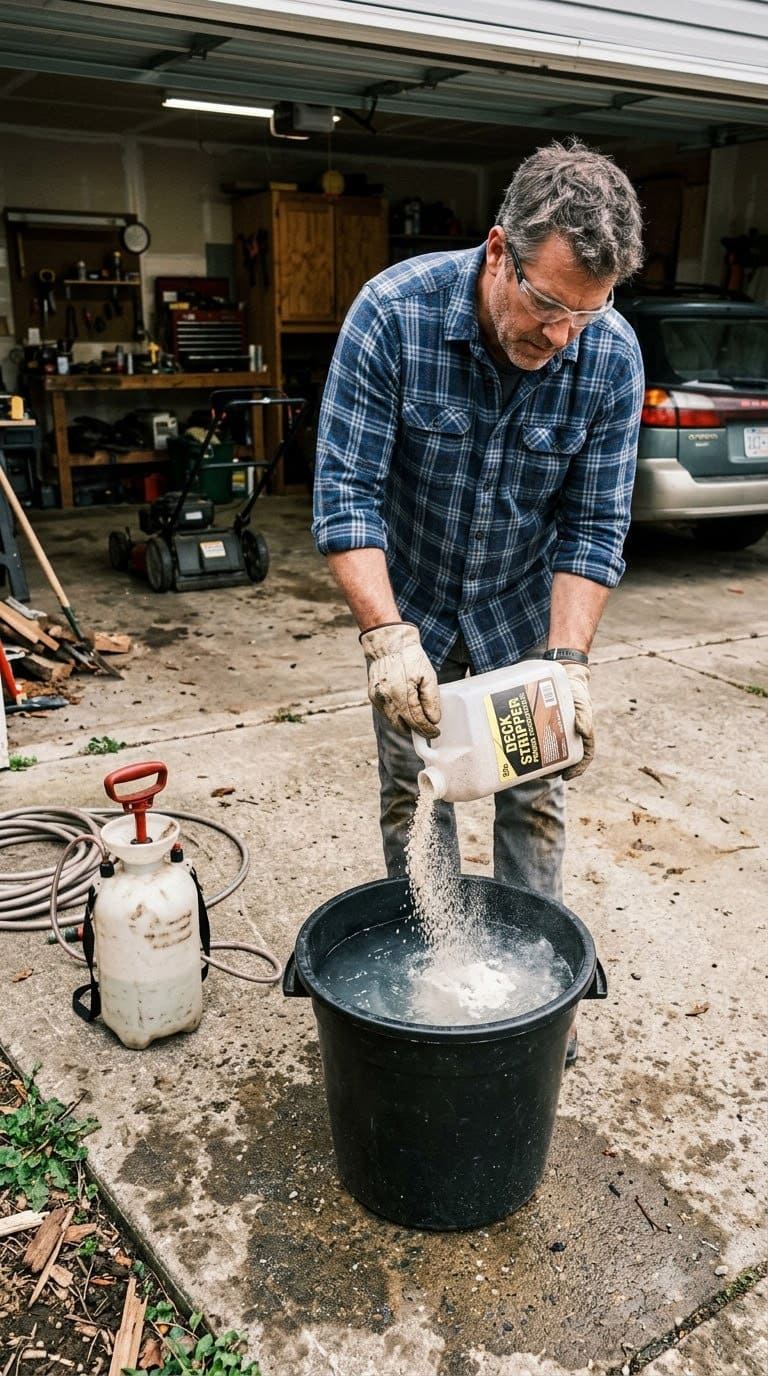
We started by pulling the actual product pages for a dozen or so deck-specific strippers on Amazon and cross-checking real spec sheets: active chemistry, coverage per gallon, dwell time, and whether the label explicitly says it strips paint or only stain. We also read a stack of real Amazon buyer reviews per product to catch the honest failure modes, not just the marketing copy.
On top of that, we went digging in r/Decks, r/Home, and r/HomeMaintenance for real homeowner threads about what actually goes wrong with deck stripping, and those pain points shaped both the picks below and the “what to look for” section. Nobody on this list paid for placement, and nothing here was chosen because it topped a star-rating sort.
How we evaluated each pick
This is a desk-research roundup, not a hands-on lab test. We didn’t strip seven decks ourselves. What we did do is read every product’s real manufacturer spec sheet and ingredient disclosure, then cross-reference that against a wide sample of verified Amazon buyer reviews looking for consistent patterns, not cherry-picked five-star quotes.
We weighted four things per product: stripping power against the coating type it’s marketed for, how long it stays workable before drying out (dwell time), how safe the chemistry is for the people and plants around the project, and whether the price reflects real coverage per square foot rather than just a small bottle with a big price tag. Those four factors are what feed the Rating Details box under each product above.
What we learned the hard way (real pain points from real deck owners)
Reading through dozens of r/Decks and r/Home threads while researching this list, a few patterns showed up so often they’re worth calling out directly, since they’ll save you more time than any single product recommendation.
If you’re stripping a deck as prep for a full redesign rather than just a re-stain, it’s worth browsing deck design ideas before you commit to what goes back on.
Multiple coats are genuinely harder than the bottle implies. The Reddit thread asking for help with “multiple layers of stain & paint” got a top answer recommending a rented floor sander instead of a stripper at all, and that’s not an outlier opinion. If your deck has been painted or solid-stained more than once, budget for either a heavier gel stripper and a second round, or accept that sanding may be the realistic fallback.
Drying out mid-job is the single most repeated complaint. Whether it’s called “dried too quickly and left splotchy results” or just “dries too quick” in a five-star review with an asterisk, thin liquid strippers on a hot or windy day are working against you. Plan to strip on an overcast morning, or reach for a thicker gel that’s built to stay wet longer.
And the coating type matters more than the brand. “Deck stripper didn’t get solid stain off” shows up as its own standalone complaint because solid-color stain behaves almost like paint chemically, and a lot of the mid-tier liquid strippers are honest on their own labels that they won’t touch it. Read the “will not remove” line on the label before you buy, not after.
Frequently asked questions
How long does deck stripper need to sit before scraping?
It varies by chemistry. Caustic and alkaline liquid strippers typically need 15 to 60 minutes, while citrus-based gels like CitriStrip stay workable for up to 24 hours. Check the specific product label, since dwell time is the single biggest factor separating fast strippers from slow ones.
Can I use deck stripper on composite decking?
Generally no. Most chemical deck strippers, including every product on this list, are formulated for real wood fiber and can discolor or degrade composite boards. Composite manufacturers commonly warn against caustic or solvent-based stripping products, and using one can void your warranty.
Do I need a power washer after stripping?
Not always required, but strongly recommended. Several real buyer reviews specifically credit a pressure washer with removing loosened stain that a garden hose left behind. If you don’t own one, our pressure washer surface cleaner guide covers attachments that make rinsing faster.
Will deck stripper remove paint, not just stain?
Only some formulas will. Many liquid strippers explicitly state they remove weathered stain and sealers but not paint. If your deck has old paint on it, look for a product marketed specifically for paint and varnish removal, like a multi-layer gel formula.
Is deck stripper safe for the plants and grass around my deck?
Caustic and solvent-based strippers can burn foliage and grass on contact. Wet down or cover nearby plants before starting, and keep rinse water from running directly into garden beds.
Related posts
- Composite Decking vs. Wood Decking: Which Is Actually Better for Your Yard
- Ways to Extend the Life of Your Deck
- Oil-Based vs. Water-Based Stain: What’s Actually Different
Never miss an update — choose FarmFoodFamily as your preferred source on Google.
How it works: Tap the button below to open Google's settings page, then check the box next to FarmFoodFamily.
Tap the checkbox to turn it blue — that's how you know it's set.