6 Trendy Plants From Social Media That Die Within a Month (And What Actually Killed Them)
These six plants look unreal on your feed and sell out fast, but most of them are quietly failing before you get them home, and a few small changes are the difference between a month and a year.

Never miss an update — choose FarmFoodFamily as your preferred source on Google.
How it works: Tap the button below to open Google’s settings page, then check the box next to FarmFoodFamily.
Tap the checkbox to turn it blue — that’s how you know it’s set.
You saw the plant on your feed. It looked glossy and full and perfect. You bought one, and three weeks later it’s dropping leaves, going crispy, or turning to mush.
You’re not bad at this. Most trendy-plant deaths aren’t neglect. They’re a predictable mismatch between where the plant was grown and where it lives now.
The plant you bought was finished in a bright, humid commercial greenhouse. Your living room has a fraction of that light and a fraction of that humidity.
Some plants shrug that off. But the six below do not.
Here’s each one, why it went viral, the actual mechanism that kills it, and what to do if you already have one on life support.



Quick Answer
Trendy plants die fast because of where they were grown, not just how you water them. Your plant was finished in a commercial greenhouse under very high light and humidity, with watering on a timer. University of Missouri Extension says that no matter how bright a room looks, “it pales in comparison” to production light. It adds that leaf drop shows up “several weeks after a plant has been moved” to poorer light. That’s the one-month mark. The six worst offenders are the fiddle leaf fig, calathea, maidenhair fern, string of pearls, nerve plant, and alocasia. Each fails for a specific reason: light crash, fluoride in tap water, a single dry-out, root rot from over-watering, low humidity, and spider mites or dormancy. The fix is to match the plant to your real light and humidity, or pick an easier lookalike.
Answer 4 quick questions and get matched to the exact fix for your yard — drainage, budget, layout, or something else entirely.
Take the Free QuizWhy do trendy plants die so fast after you buy them?
The plant peaked the day you bought it. That’s not cynicism, it’s biology.
Commercial growers finish plants under light levels a home can’t come close to. When the plant lands in your window, it can no longer support all its leaves.
So it drops the old ones and grows new “shade leaves” that work in lower light. University of Missouri Extension explains that shade leaves have “lower light compensation points than do sun leaves.” That is the plant re-tooling itself for your house.
Humidity is the second gap. Most homes sit well below 30 percent relative humidity, especially with heating or air conditioning running. Clemson Cooperative Extension points out that home air is “usually too low” for fine, thin-leafed tropical plants, which then brown at the edges.
Then people make it worse. A plant looks sad, so its owner waters it more.
The roots are already stressed, so the wet soil rots them on top of the light shock. More on that spiral is in our guide to why houseplants fail.
None of this means you can’t grow these plants. It means the first month is an adjustment period, not a verdict.
Most yard problems trace back to one specific, fixable cause. Find yours in 4 quick questions.
Take the Free Quiz
A small indoor gauge so you can see the real humidity where a plant will live before you buy it, instead of guessing.
Shop NowThis post contains affiliate links. We may earn a commission on qualifying purchases at no extra cost to you.
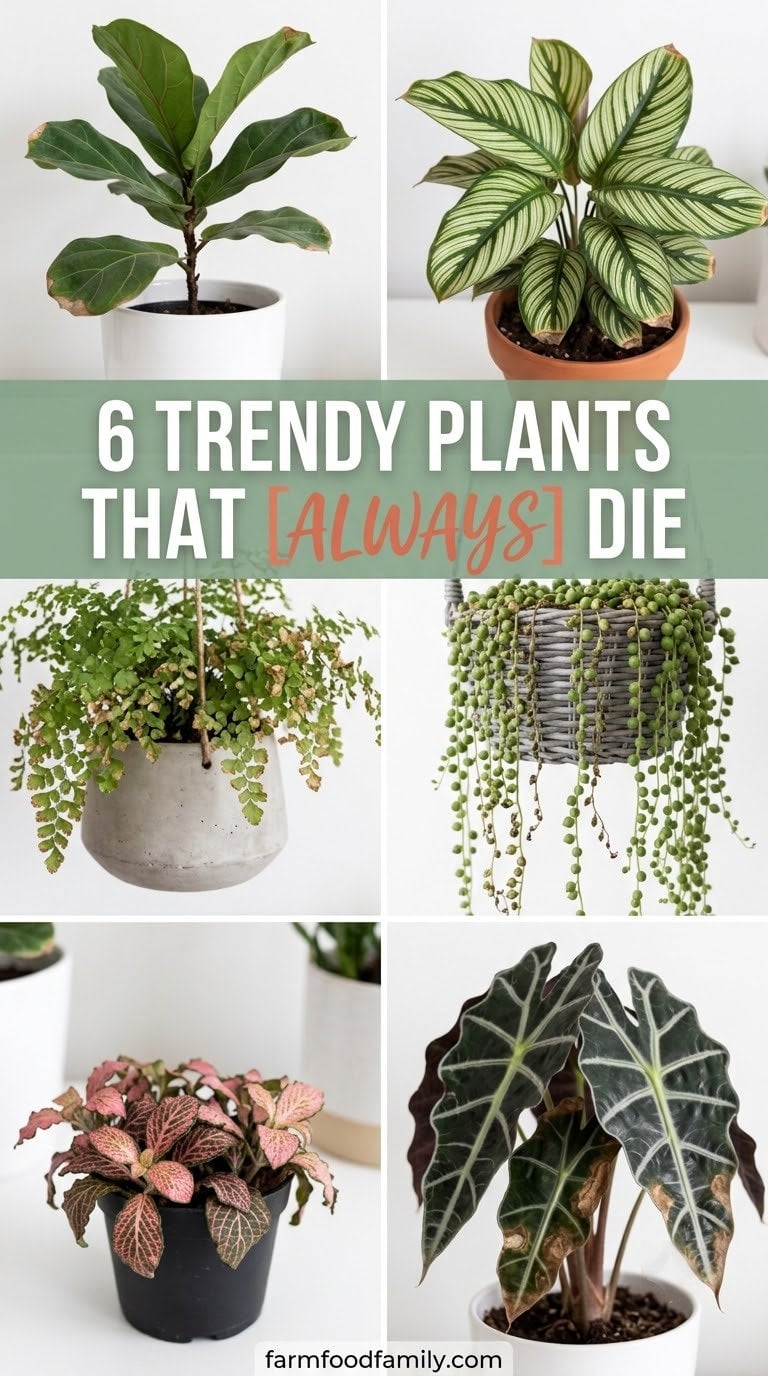
The 6 plants at a glance
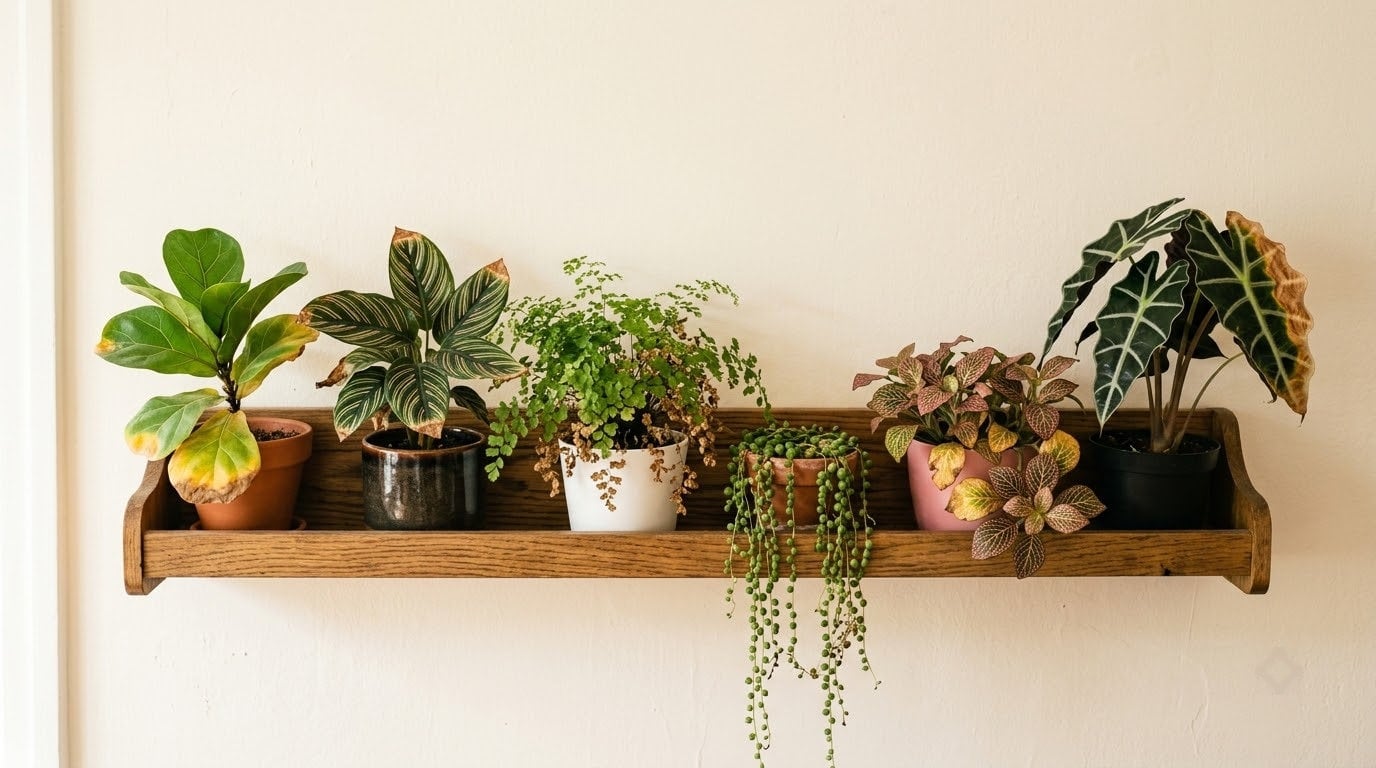
| Plant | Why it went viral | What actually kills it | Easier lookalike |
|---|---|---|---|
| Fiddle leaf fig | The “it” tree in every styled room | Light crash, cold drafts, moving it around | Rubber plant (Ficus elastica) |
| Calathea | Leaves that fold up at night, painted patterns | Fluoride in tap water, dry air | Chinese evergreen (Aglaonema) |
| Maidenhair fern | Delicate, lacy, terrarium-perfect | One complete dry-out, low humidity | Bird’s nest fern |
| String of pearls | Cascading strands on a shelf | Watered like a tropical, so it rots | String of hearts |
| Nerve plant | The “fainting plant” that revives on camera | Low humidity, then over-watering to fix it | Peperomia |
| Alocasia ‘Polly’ | Dramatic ribbed arrow leaves | Spider mites, winter dormancy, tuber rot | Chinese evergreen (Aglaonema) |
1. Fiddle leaf fig (Ficus lyrata)
The fiddle leaf fig is the plant that launched the trend. The hashtag has well over 100,000 posts, and for years it appeared in nearly every furniture ad and design blog.
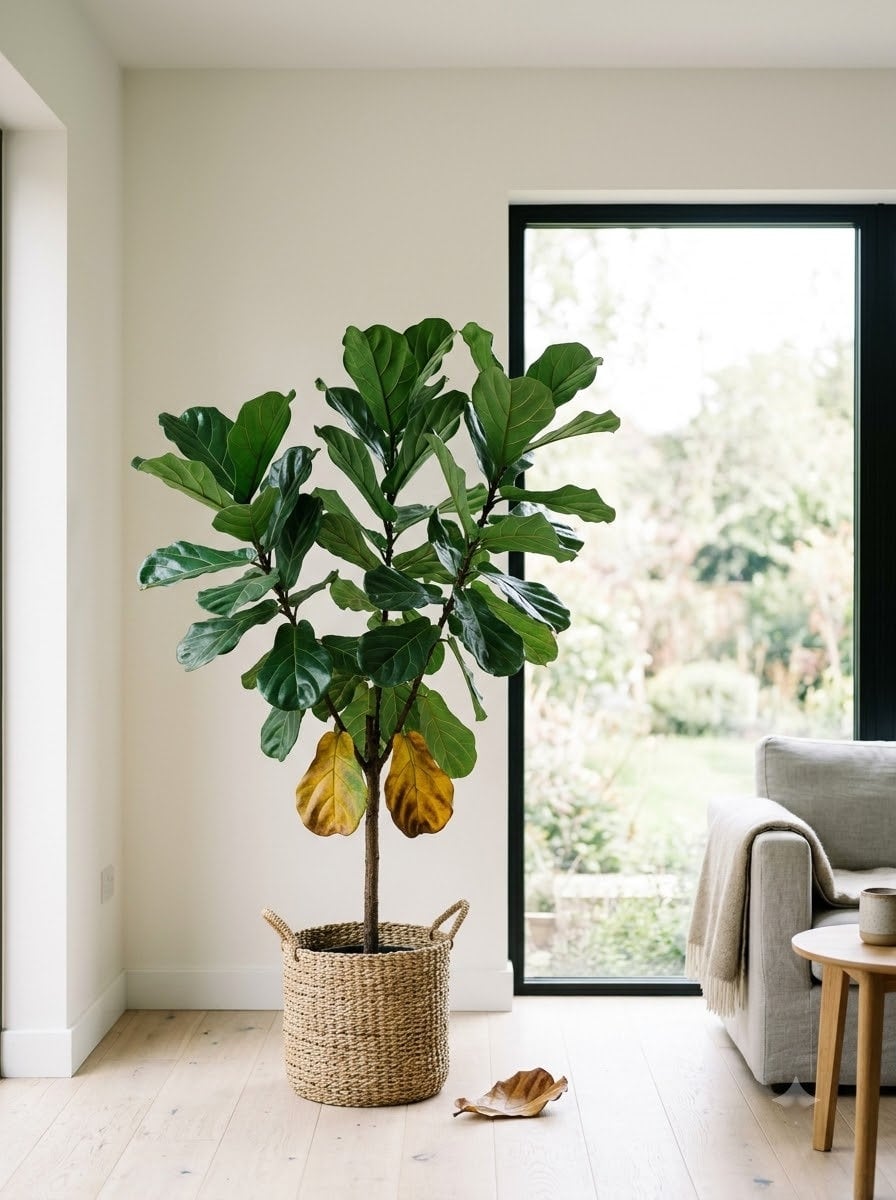
It’s also the plant most likely to punish a move. NC State Extension says it’s “sensitive to overwatering,” performs best “with a temperature greater than 55 degrees F,” and gets brown spots near heating and cooling vents. Both too much water and too little water make it drop leaves.
Worse, it hates change. Bring it home, move it to a new room, or turn the pot, and it often sheds leaves while it adjusts. Owners see the drop and assume they’ve killed it, so they start watering more, which rots the roots.
If you already have one: put it in the brightest spot you have and then leave it there. Don’t move it, don’t rotate it, and check the soil with your finger instead of watering on a schedule.
Give it a month before you decide anything. Our guide to a fiddle leaf fig dropping leaves walks through the specific causes.
Buy this instead: a rubber plant. Same bold, glossy, tree-shaped look, far more tolerant of lower light and irregular watering.
2. Calathea (prayer plant)
Calatheas went viral for two reasons. The leaves look hand-painted, and they fold up and down each day, which makes for a satisfying time-lapse.
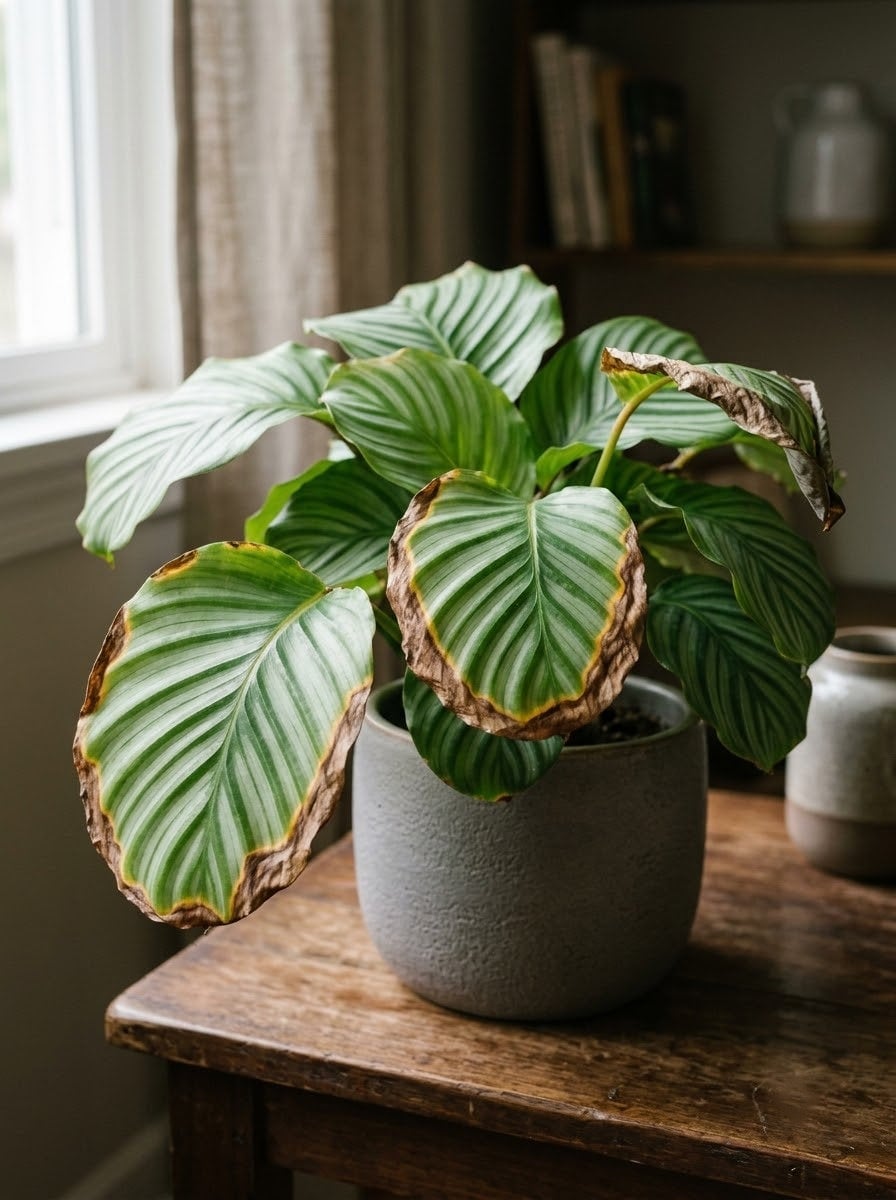
The crispy brown edges that everyone complains about usually come from your tap water. The Pacific Northwest Pest Management Handbooks call fluoride “an accumulative poison in plant foliage.” It moves up the plant and builds up in the leaf margins. The result is “marginal and tip necrosis that spread inward.”

Many municipal water systems add fluoride at about 1 part per million. That is enough to damage sensitive plants, and calatheas are on that list.
The average homeowner spends $616/year on yard fixes that don't address the real problem. Find out what yours actually is — before you spend another dollar.
Take the Free QuizDry air is the other half. These plants want humidity around 50 to 60 percent, and most homes are far below that, so the edges brown and the leaves curl.
If you already have one: switch to distilled water, rainwater, or filtered water. Run a humidifier nearby, keep it out of drafts, and trim dead edges with scissors.
Some leaf scarring won’t reverse, so judge new growth, not old. Our calathea care guide covers watering and light in detail.
Buy this instead: a Chinese evergreen. It has similar patterned leaves, tolerates normal tap water, and doesn’t need a humidifier.
3. Maidenhair fern (Adiantum)
With its soft, lacy fronds, the maidenhair fern is the plant that makes a bathroom or a terrarium look like a fairy tale. It photographs beautifully.
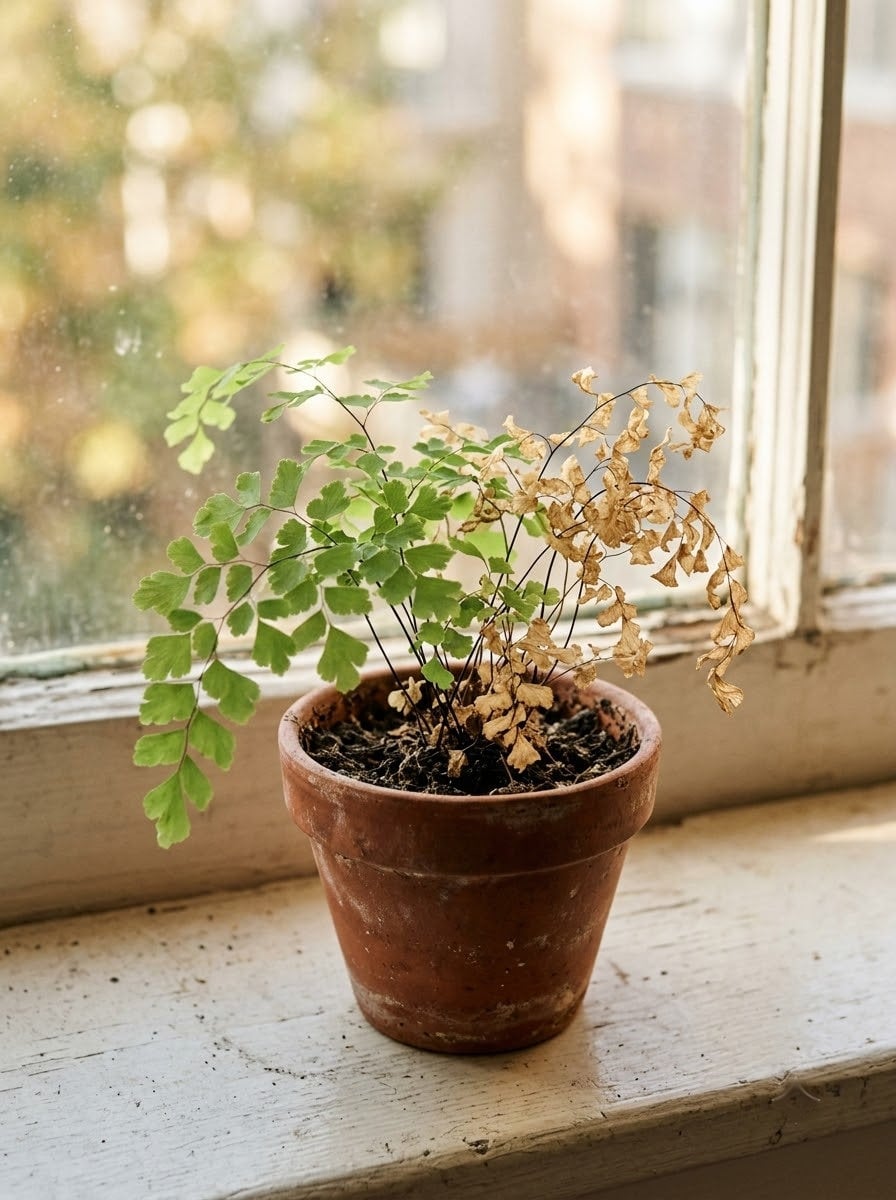
It’s also the fastest to collapse. NC State Extension flatly calls it “high maintenance” and says “the roots should not be allowed to dry out.”
Let the soil go fully dry one time and the thin fronds crisp up. They don’t recover once they’ve shriveled.
Humidity is the deeper problem. Clemson Extension notes that home air is “usually too low” for fine, thin-leafed ferns, which “develop brown leaves or leaflets at low humidity.”
Maidenhairs want about 50 percent humidity. They do best in a bathroom, a terrarium, or under a glass cloche.
If you already have one: cut every crispy frond right down to the base. Keep the soil lightly moist and the roots alive, raise the humidity with a cover or a pebble tray, and new fronds usually push up within a few weeks. Our guide to a fern turning brown has the full recovery steps.
Buy this instead: a bird’s nest fern or a holly fern. Both have tougher, leathery fronds that handle normal room air.
4. String of pearls (Curio rowleyanus)
Those trailing strands of green beads spilling off a shelf are pure social-media candy. It’s one of the most photographed hanging plants there is.
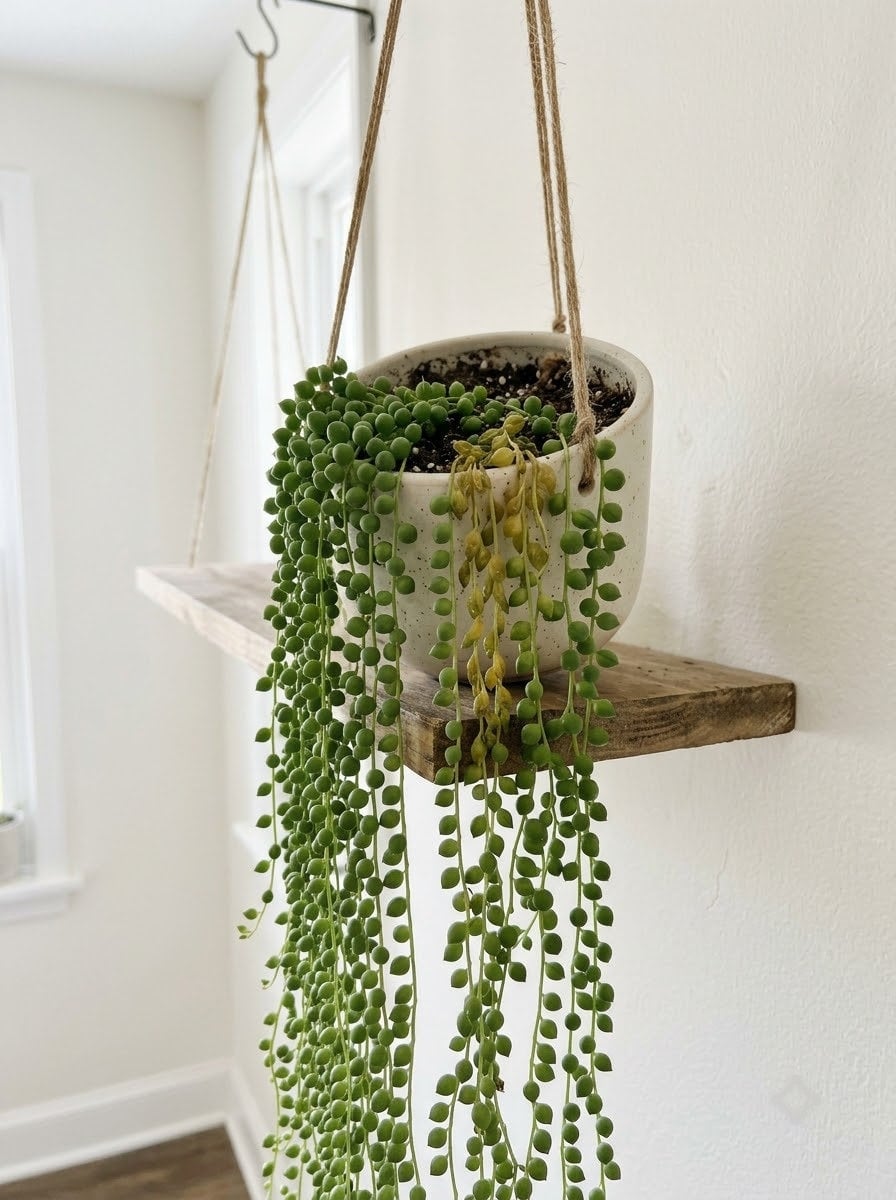
Here’s the catch most people miss: it’s a succulent. NC State Extension warns that “soggy wet soil will result in root rot and the plant’s demise.” It recommends a cactus mix, or potting soil cut with sand or perlite.
People treat it like a leafy tropical, water it weekly, and rot it from the roots up.
The roots are also shallow and fragile, and the stems snap easily. Moving the plant around, which people do a lot when styling a shelf, knocks beads off and stresses it.
If you already have one: repot it into gritty cactus mix in a pot with a drainage hole. Water only when the pearls look slightly soft, and snip off any mushy strands.
Give it bright indirect light so it doesn’t stretch. Our string of pearls care guide covers watering frequency by season.
Buy this instead: string of hearts. Similar trailing look, much more forgiving about water and light.
5. Nerve plant (Fittonia)
The nerve plant is famous for one trick. Let it get dry and it faints dramatically, then springs back within an hour of watering. That collapse-and-revive clip does numbers online.
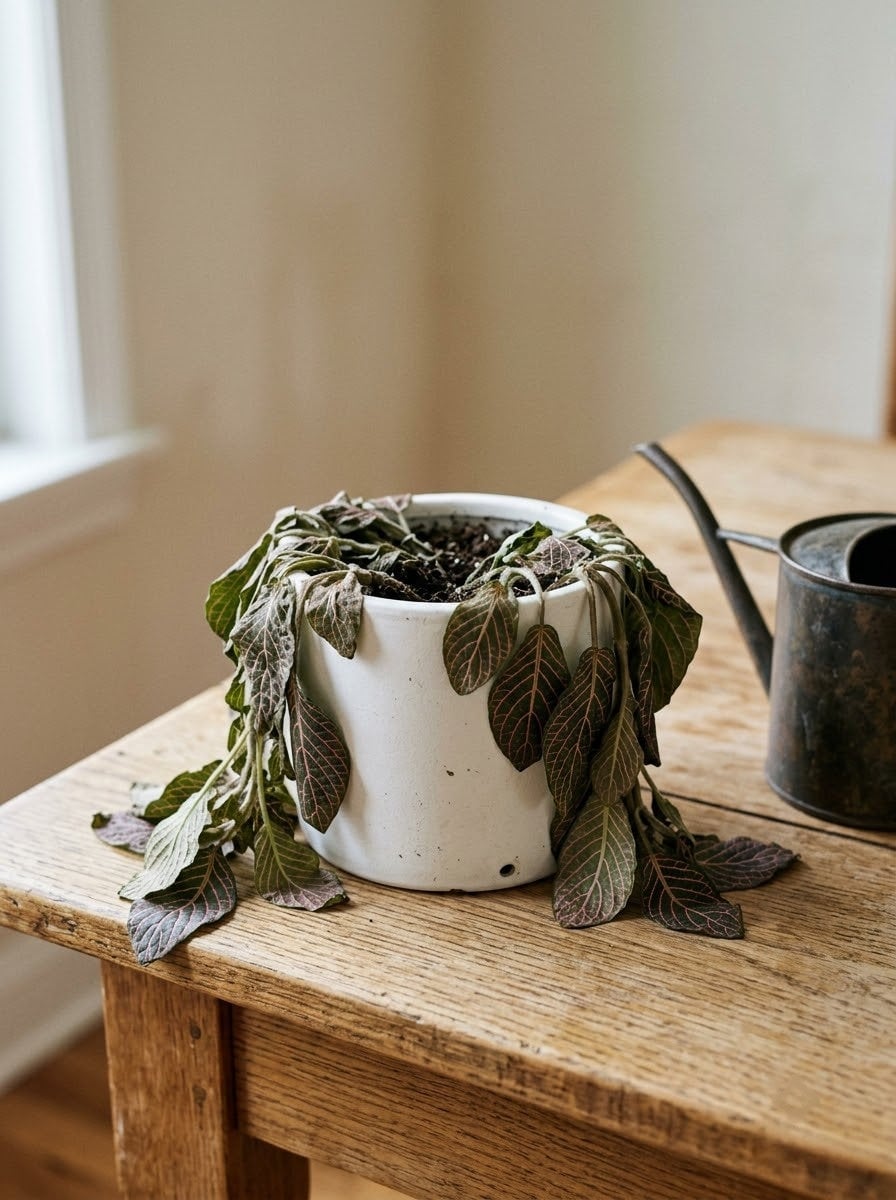
Every one of those faints costs the plant something. NC State Extension says “leaves will shrivel and fall off in dry air, drafts, or direct sun,” and that the plant wilts hard whenever it dries out.
So the owner overcorrects and keeps the soil wet. Then “yellowing leaves” signal over-watering and root rot, because the safe zone between too dry and too wet is narrow.
Low household humidity keeps the whole cycle going, because the plant dries out faster than you expect.
If you already have one: grow it in a terrarium, a glass jar, or under a cloche where the humidity stays high on its own. Water when the top of the soil is just barely dry, ideally from the bottom, and keep it out of direct sun and heating vents. Our roundup of common houseplant care mistakes covers the watering habits that trip people up.
Buy this instead: a peperomia. Similar small, colorful, tabletop scale, without the fainting act.
6. Alocasia ‘Polly’ (African mask plant)
The ribbed, arrow-shaped leaves with pale veins look almost fake, which is exactly why the alocasia blew up. It’s a statement plant in a small pot.
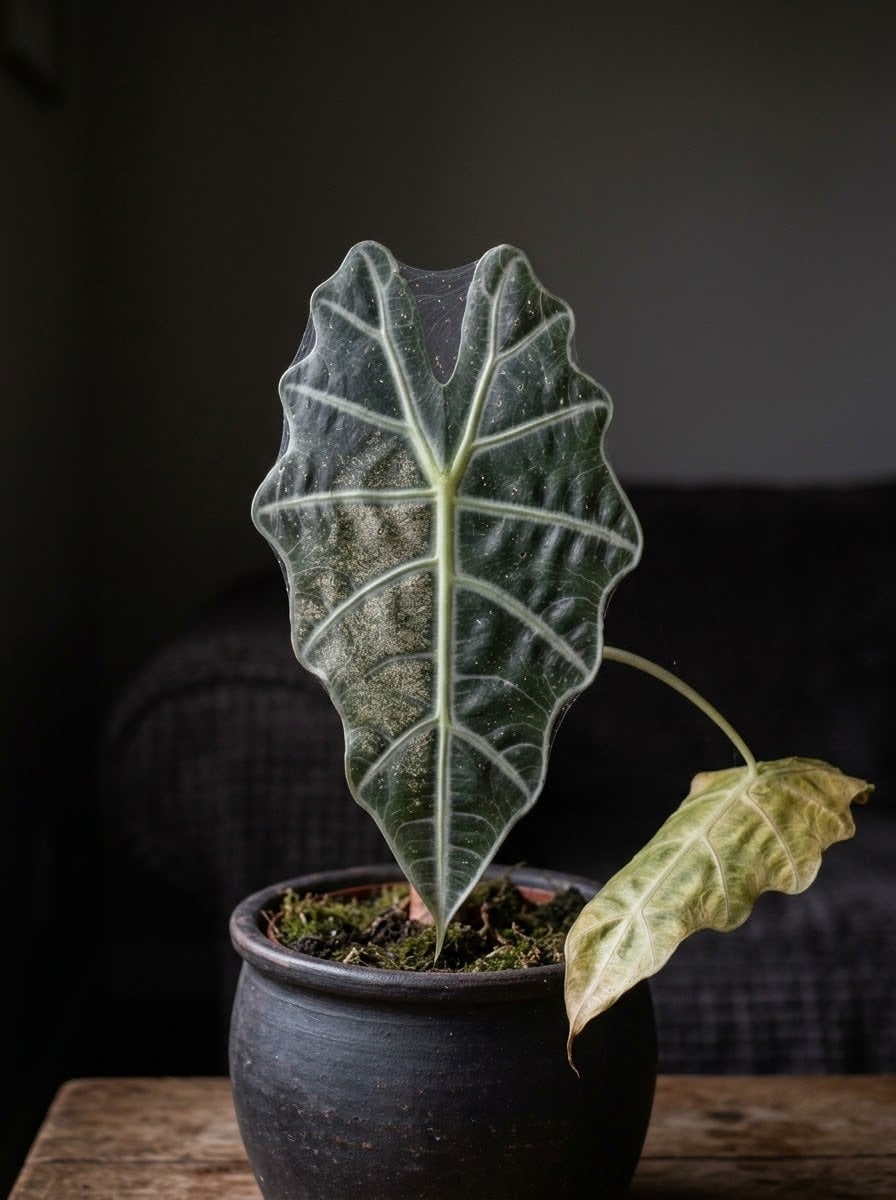
Two things kill it in the first month. The first is spider mites, which love the dry air around the plant. NC State Extension says to “monitor for spider mites, mealybugs, and aphids,” and by the time you see fine webbing there’s usually a heavy infestation.
The second is a misread. Alocasia goes dormant when light and temperature drop, and it can drop every single leaf. NC State Extension notes that “watering should be reduced” before dormancy and that it shouldn’t sit below 60 degrees Fahrenheit.
Owners see a bare pot, assume it’s dead, and throw out a tuber that would have re-sprouted. Over-watering that same tuber causes “root rot and bacterial stem rot.”
If you already have one: check the leaf undersides for mites weekly and wipe or spray them at the first sign. Keep it warm and bright, and don’t bin a bare tuber in winter.
Keep the soil barely moist, wait, and it usually returns in spring. Our alocasia Polly care guide and our guide to getting rid of spider mites both help here.
Note that every part of this plant is toxic, so keep it away from pets and kids.
Buy this instead: a Chinese evergreen. You get an upright, dramatic leaf shape without the mites and the dormancy scare.
How long until a new plant is out of the danger zone?
The first month is when most trendy plants are lost, so it helps to know what is normal at each stage and when to actually worry.
| Timeframe | What’s normal | When to worry |
|---|---|---|
| Week 1 | A few older leaves yellow or drop, slight wilting after the move | Many leaves collapsing at once, a sour smell from the soil |
| Weeks 2 to 3 | Slow or no new growth, some crispy tips on humidity-sensitive plants | Fast-spreading brown patches, mushy stems, visible webbing |
| Weeks 4 to 6 | Small new leaves at the growing tip, the plant looks stable | Still dropping leaves with no new growth, soil never drying out |
| Month 2 and on | Steady new growth adapted to your light | Ongoing decline despite correct light and water, likely root rot |
The single most useful habit is to do nothing but water correctly for the first three to four weeks. Skip repotting, skip fertilizer, and skip moving the plant around. Let it adjust, then reassess.
What to buy instead: trendy look, beginner care
You don’t have to give up the aesthetic. Each of these swaps gets you close to the same look with a much wider margin for error.
| Instead of | Try | Why it’s easier |
|---|---|---|
| Fiddle leaf fig | Rubber plant (Ficus elastica) | Handles lower light, tolerates missed waterings, doesn’t drop leaves when moved |
| Calathea | Chinese evergreen (Aglaonema) | Patterned leaves, fine with tap water, no humidifier needed |
| Maidenhair fern | Bird’s nest fern | Leathery fronds cope with normal room humidity |
| String of pearls | String of hearts | Trailing strands, far more forgiving about water and light |
| Nerve plant | Peperomia | Small and colorful, no dramatic wilting |
| Alocasia ‘Polly’ | Chinese evergreen (Aglaonema) | Bold leaf shape, resists spider mites, no dormancy panic |
More options are in our list of houseplants that are hard to kill.
Before you buy another trendy plant: a 60-second reality check
We’ve killed our share of these, and the pattern was always the same. We bought the plant we saw online, not the plant our apartment could actually support.
Here’s what we’d do differently.
Measure your light and humidity first. Put a cheap hygrometer where the plant will live and look at it for a week. If you’re at 20 percent humidity and low light, a maidenhair fern is a money-losing decision before you even buy it.
Buy for your conditions, not your feed. A north-facing room with dry winter air is a snake plant and pothos room. That’s not a downgrade. Those plants look great and they live for years.
Give a new plant three to four weeks before you “fix” anything. Some leaf drop and a few crispy edges are normal acclimation, exactly what University of Missouri Extension describes. Resist the urge to repot, fertilize, and move it.
That’s usually what turns a rough adjustment into a dead plant. Our houseplant buying guide covers what to check before you bring one home.
A dropped leaf is not a dead plant. Check the stem and the roots. Firm and green means wait, and mushy and brown means act.
Panic watering has killed more trendy plants than neglect ever has.
Frequently asked questions
Why do my plants always die a few weeks after I buy them?
Because the plant was grown under far more light and humidity than your home provides. It takes several weeks to drop its old leaves and grow new ones suited to lower light.
University of Missouri Extension calls this acclimatization. Keep the plant in one bright spot, water only when the soil needs it, and wait it out before making changes.
Is my tap water killing my calathea?
Often, yes. Calatheas are sensitive to fluoride, which many water systems add at about 1 part per million.
It builds up in the leaf margins over time and causes brown, crispy edges that don’t heal. Switch to distilled water, rainwater, or filtered water.
Can a fiddle leaf fig recover after dropping all its leaves?
Usually, if the stem is still firm and green. Scratch the bark lightly to check for green underneath.
Put it in bright light, water only when the top few inches of soil are dry, and stop moving it. New growth typically appears from the top within a few weeks once conditions are stable.
Do I really need a humidifier for these plants?
For the calathea, maidenhair fern, and nerve plant, a humidifier or an enclosed setup like a terrarium makes the difference between struggling and thriving. The fiddle leaf fig, string of pearls, and alocasia care more about light, water, and temperature than about humidity.
My alocasia lost every leaf. Is it dead?
Probably not. Alocasia goes dormant in low light and cool temperatures and can drop all its foliage.
Gently feel for a firm tuber under the soil. If it’s solid, keep the soil barely moist and warm, and it usually sends up new leaves in spring.
What is the easiest trendy-looking plant for a beginner?
A pothos or a Chinese evergreen. Both have full, attractive foliage, both tolerate low light and missed waterings, and neither needs special water or humidity. A rubber plant is the easy stand-in if you want the tall, tree-shaped fiddle leaf fig look.
Related Posts
Products We Recommend
This post contains affiliate links. We may earn a commission on qualifying purchases at no extra cost to you.
TempPro TP50 Digital Hygrometer and Thermometer
A small indoor gauge so you can see the real humidity where a plant will live before you buy it, instead of guessing.
Shop Now
MEGAWISE 1.5L Quiet Cool Mist Humidifier
Raises humidity around a calathea, maidenhair fern, or nerve plant toward the 50 percent range they need to stop browning.
Shop Now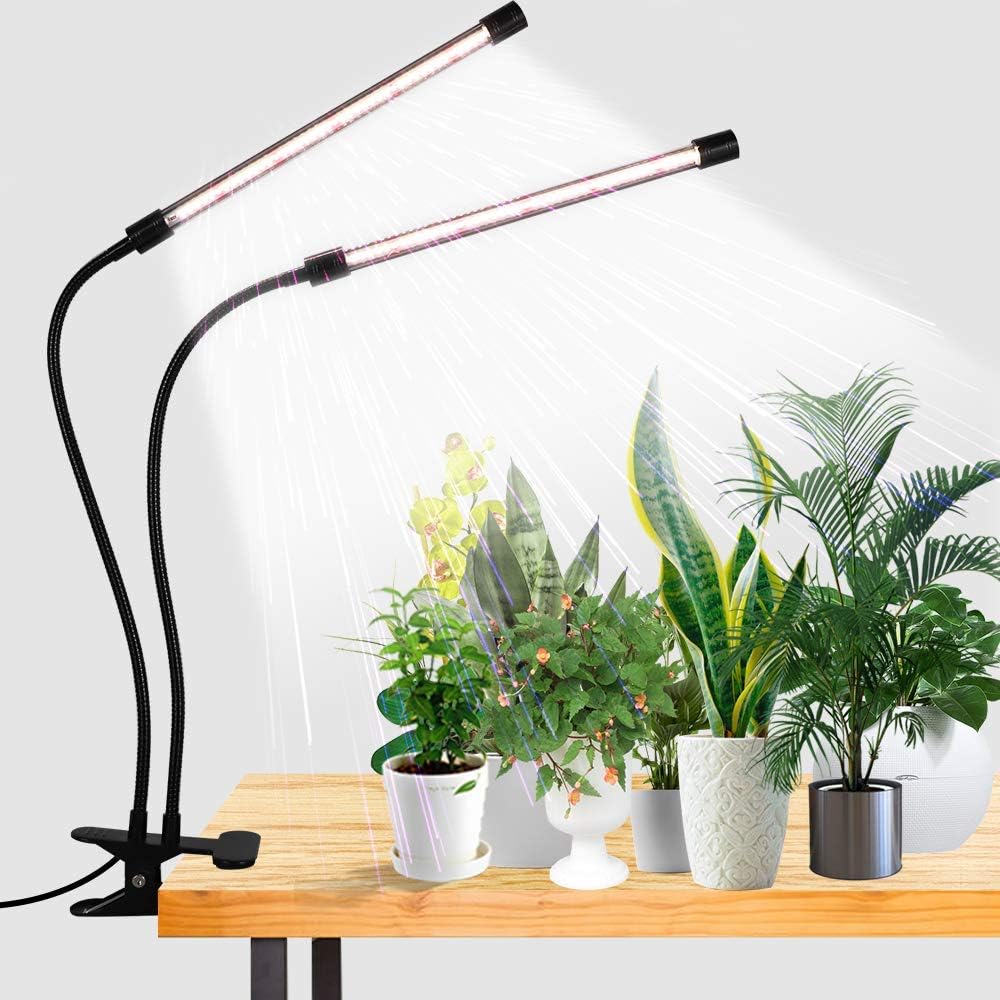
GooingTop 6000K Full Spectrum LED Grow Light
A clamp-on gooseneck light to close the gap between a bright-looking room and the light a fiddle leaf fig or alocasia actually needs.
Shop NowNever miss an update — choose FarmFoodFamily as your preferred source on Google.
How it works: Tap the button below to open Google's settings page, then check the box next to FarmFoodFamily.
Tap the checkbox to turn it blue — that's how you know it's set.