8 Proven Companion Planting Pairs That Protect Each Other
Most companion planting lists mix a few real pairs with a lot of folklore. These 8 have a documented mechanism behind them, and a couple of the famous ones only work if you do them the right way.

Never miss an update — choose FarmFoodFamily as your preferred source on Google.
How it works: Tap the button below to open Google’s settings page, then check the box next to FarmFoodFamily.
Tap the checkbox to turn it blue — that’s how you know it’s set.
Companion planting has a credibility problem. Half the charts online tell you to scatter marigolds among your tomatoes and expect a bug-free garden, and that specific advice doesn’t hold up in trials.
But some pairs really do protect each other, and researchers have measured how. A flower feeds the predator that eats your aphids.
A herb’s scent throws a moth off the trail. And one plant takes the pest hit so another doesn’t.
Here are 8 pairs with a real mechanism and a source behind each one. Two of them, the famous marigold and carrot-onion combinations, come with a catch that most guides leave out.
Quick Answer
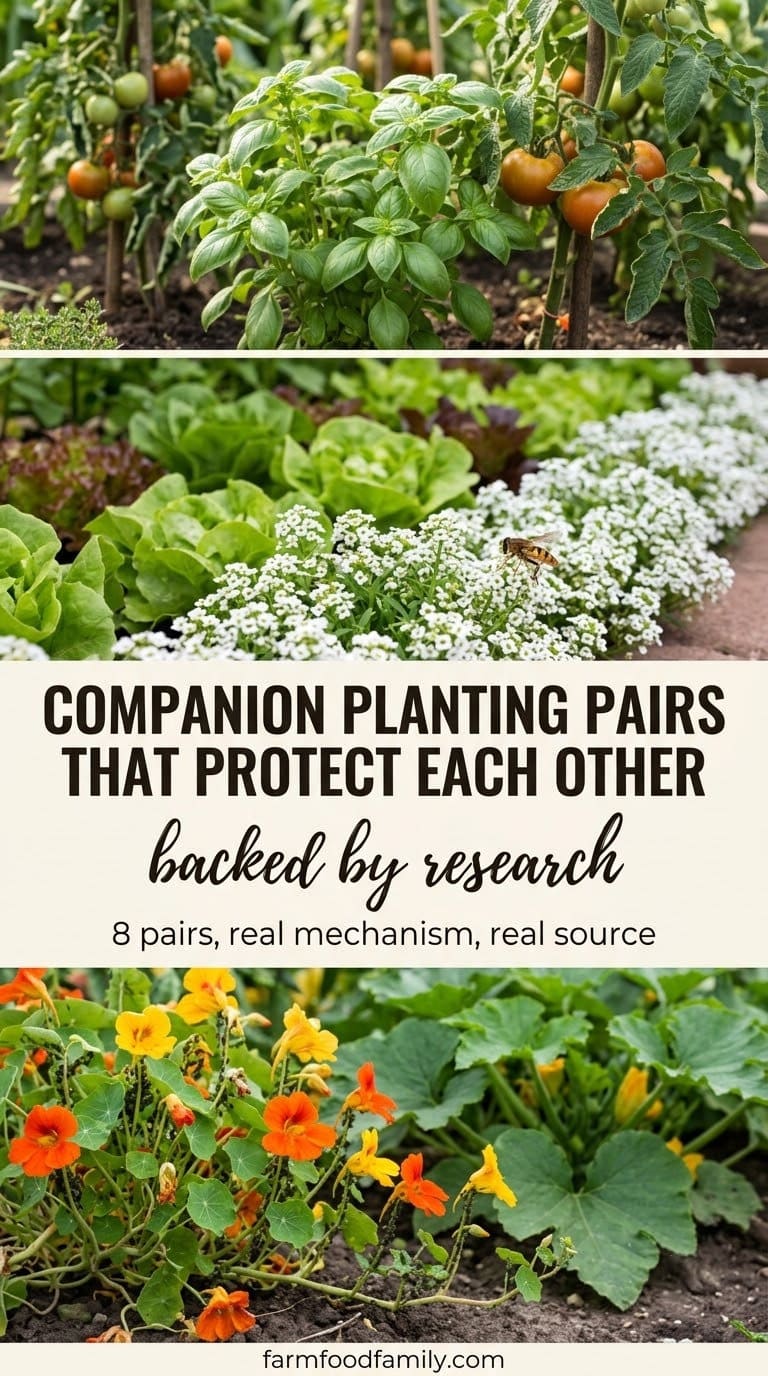
The best-evidenced protective pairs are lettuce plus sweet alyssum, a French marigold pre-crop before a nematode-prone bed, and tomatoes plus basil. Alyssum flowers feed hoverflies whose larvae eat aphids, and UC research found “more hoverfly larvae and fewer aphids” in lettuce grown with it. University of Florida IFAS Extension reports that French marigold roots release alpha-terthienyl, which “inhibits the hatching of nematode eggs.” And University of Minnesota Extension says basil cuts thrips on tomatoes “in both field and greenhouse conditions.”
The Three Sisters, corn with pole beans and squash, is the classic mutual-support trio.
Answer 4 quick questions and get matched to the exact fix for your yard — drainage, budget, layout, or something else entirely.
Take the Free QuizTwo famous pairs have rules. French marigold only works grown as a dense stand two months before the crop, not scattered among it. Carrots and onions work by disrupting the fly’s landing pattern at close spacing, not by masking each other’s scent.
What does “protect each other” actually mean?
Four mechanisms cover all 8 pairs. Knowing which one is at work tells you how to set the pair up.
Confusing the pest’s search. Some plants release volatile compounds that interfere with how an insect finds its host plant. Basil does this to thrips and whiteflies on tomatoes, and thyme does it to the cabbage moth.
Feeding the predators. Small-flowered plants like sweet alyssum and dill provide the pollen and nectar that adult hoverflies, parasitic wasps, and lacewings need. Their young then hunt aphids and caterpillars on the crop.
Taking the hit. A trap crop is more attractive to a pest than the vegetable you care about. Nasturtium pulls aphids and squash bugs onto itself, away from the squash.
Changing the conditions. A tall plant shades a heat-sensitive one. A legume feeds a hungry neighbor nitrogen, and a sprawling vine shades out weeds.
This is the least glamorous mechanism, and often the most reliable.
Most yard problems trace back to one specific, fixable cause. Find yours in 4 quick questions.
Take the Free Quiz
The pair-8 fix in a roll, hung on the sunny side of a summer lettuce or spinach row to drop the leaf temperature and delay bolting.
Shop NowThis post contains affiliate links. We may earn a commission on qualifying purchases at no extra cost to you.
The 8 pairs at a glance
| Pair | Protects against | The mechanism | Evidence |
|---|---|---|---|
| Tomatoes + basil | Thrips, whiteflies, hornworm | Basil volatiles disrupt host-finding | UMN Extension, field and greenhouse |
| Brassicas + thyme or sage | Cabbage moth, diamondback moth, loopers | Herb aroma disrupts moth host-finding | UMN Extension, Iowa broccoli study |
| Squash, cucumbers + nasturtium | Aphids, squash bugs, cucumber beetles | Trap crop, plus draws predators | UMN Extension, listed as supported |
| Three Sisters (corn, beans, squash) | Weeds, nutrient stress, no trellis | Structure, nitrogen, living mulch | Indigenous polyculture, WVU Extension |
| Lettuce or brassicas + sweet alyssum | Aphids | Flowers feed aphid-eating hoverflies | UC research, “fewer aphids” measured |
| Nematode-prone bed + French marigold pre-crop | Root-knot and lesion nematodes | Roots release alpha-terthienyl | UF IFAS Extension |
| Carrots + onions or leeks | Carrot rust fly, onion fly | Mixed dense planting disrupts landings | 1984 study, up to 65% fewer attacks |
| Summer greens + a tall crop | Bolting from heat | Afternoon shade drops leaf temperature | Widely recommended, temperature-based |
1. Tomatoes and basil
The kitchen pairing is also a garden one, and it’s one of the better-tested combinations.
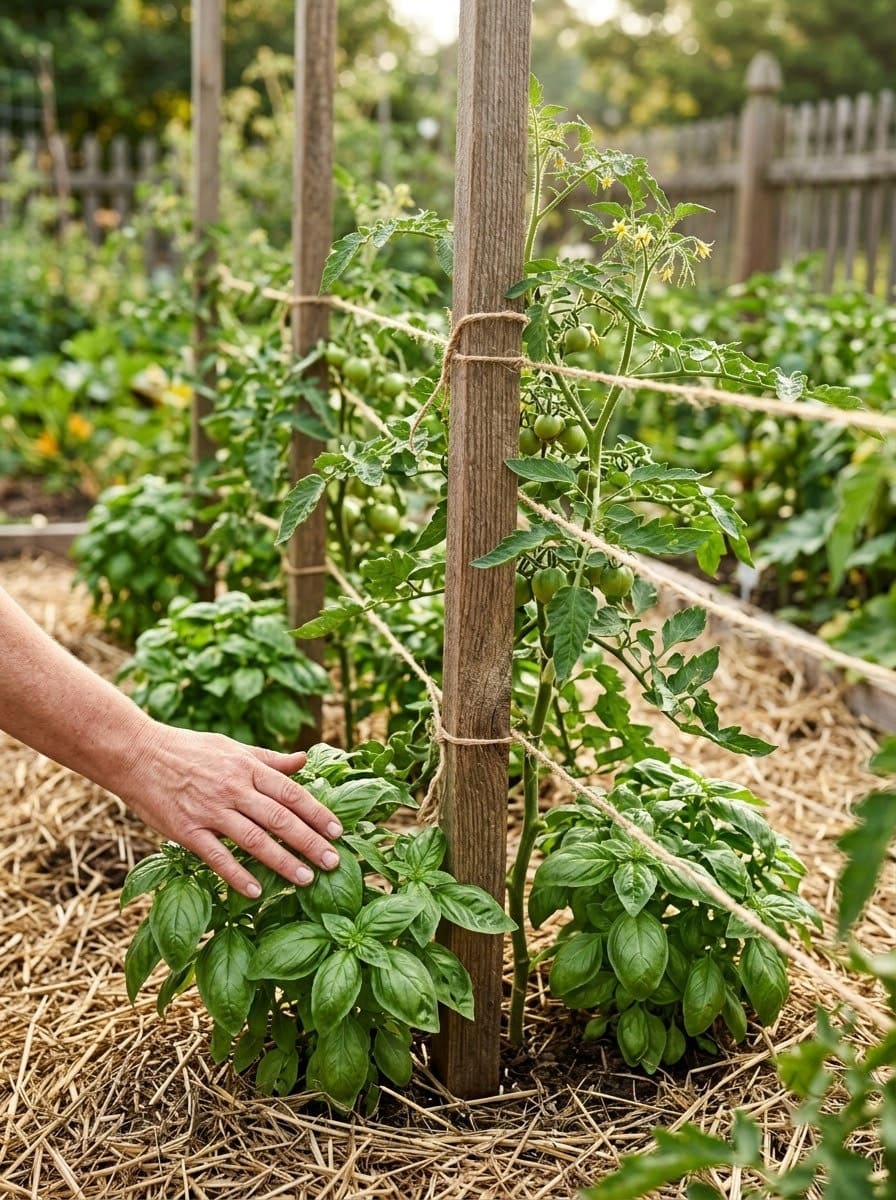
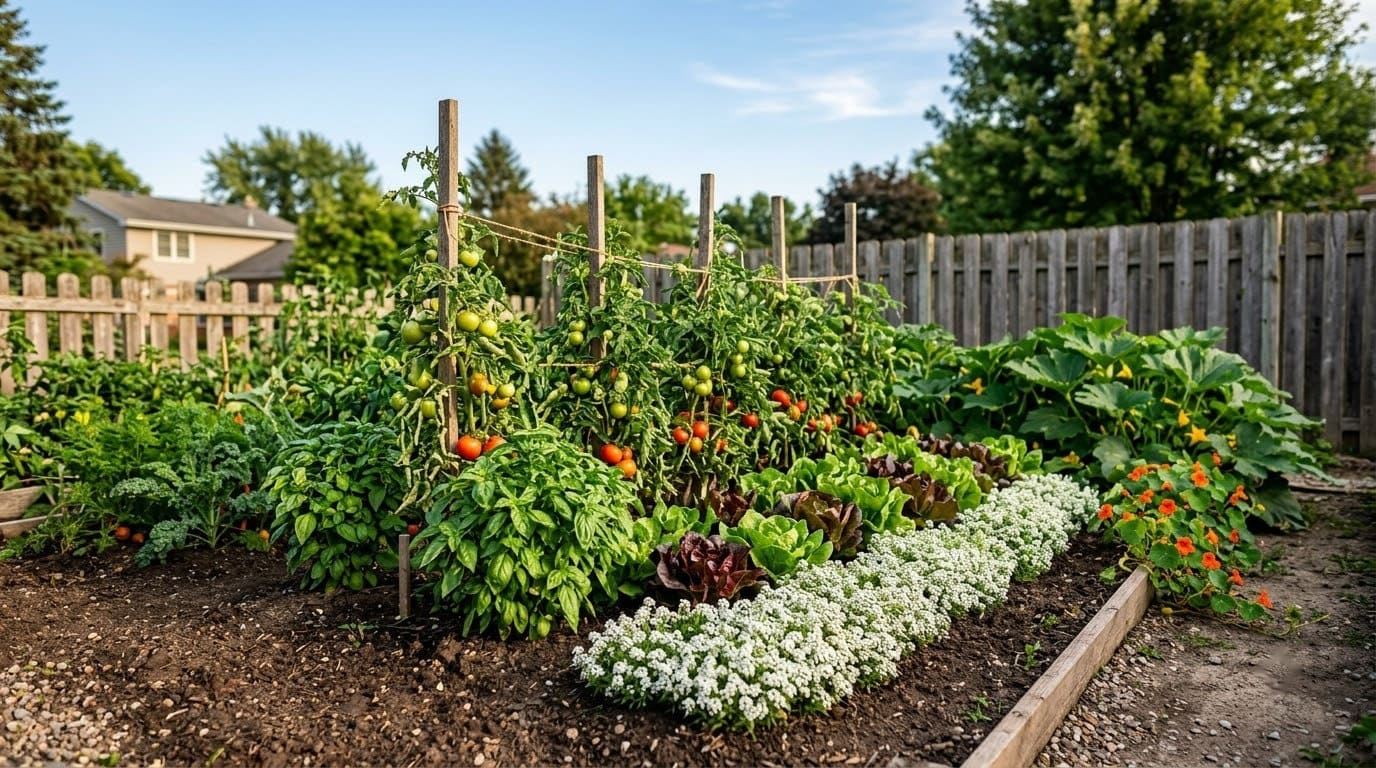
Basil gives off strong volatile compounds, and those compounds interfere with how thrips and whiteflies locate a tomato plant. University of Minnesota Extension’s review of the research says basil “can be effective at reducing thrip populations in tomatoes in both field and greenhouse conditions,” and notes that interplanting with basil may even help the tomato grow.
Basil is also traditionally credited with putting tomato hornworm moths off, though that one has less hard data behind it.
How to do it right: plant two or three basil plants around the base of each tomato, close enough that the scent is in the same airspace. Keep pinching the basil so it stays bushy and keeps releasing oils.
The catch: basil wants the same water and rich soil as a tomato, so it’s a real companion, not a low-maintenance edge plant. The tomato shades it through the hottest part of the day, which basil likes. Our tomato growing guide covers spacing so the basil isn’t crowded out.
2. Cabbage-family crops and thyme or sage
Aromatic herbs are the cabbage patch’s best defense, and thyme has the research to back it.
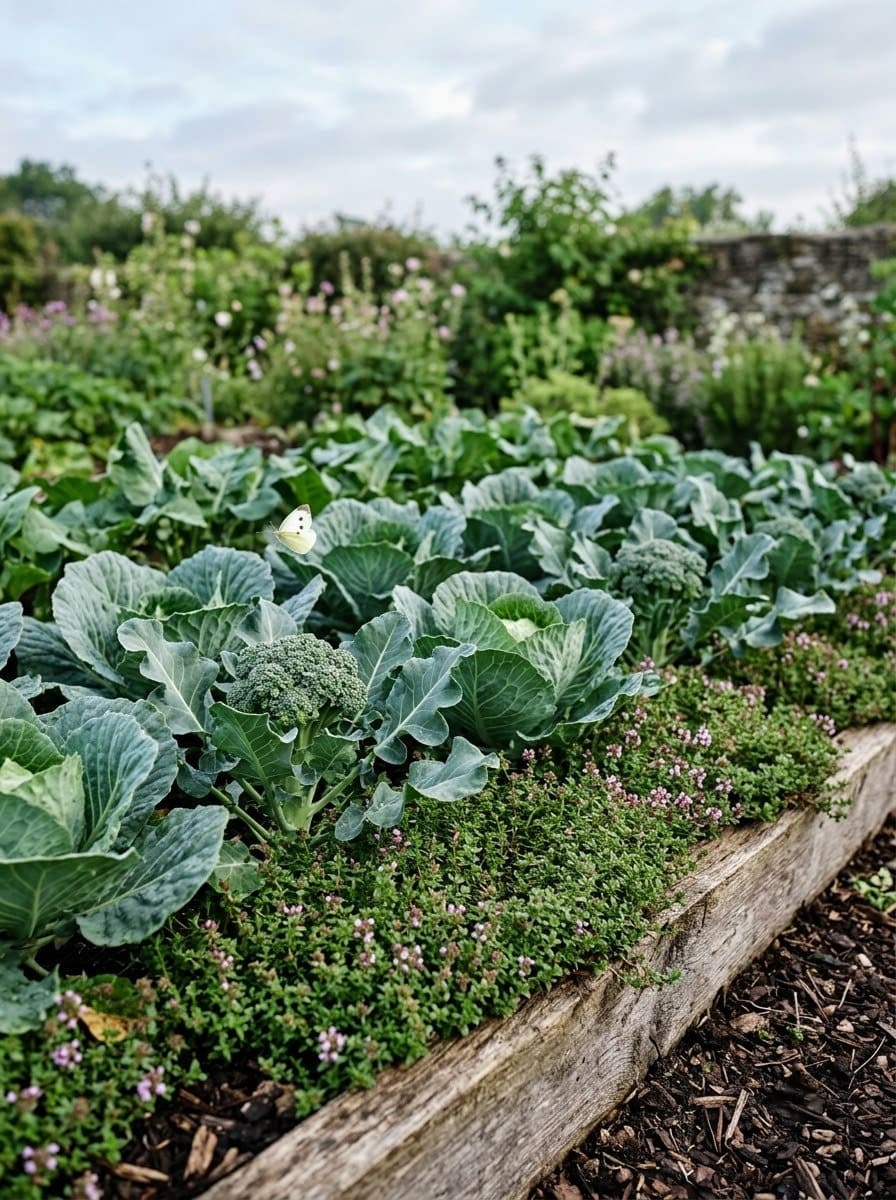
The cabbage white butterfly and the diamondback moth find their host plants partly by smell. A strong-scented herb in the same bed muddies that signal. University of Minnesota Extension reports that thyme aroma repels cabbage moths, and that sage and thyme together reduced diamondback moth numbers on Brussels sprouts in a greenhouse trial.
An Iowa study went further. It found that thyme, onion, and nasturtium together “helped to reduce cabbage looper and imported cabbageworm damage in broccoli.”
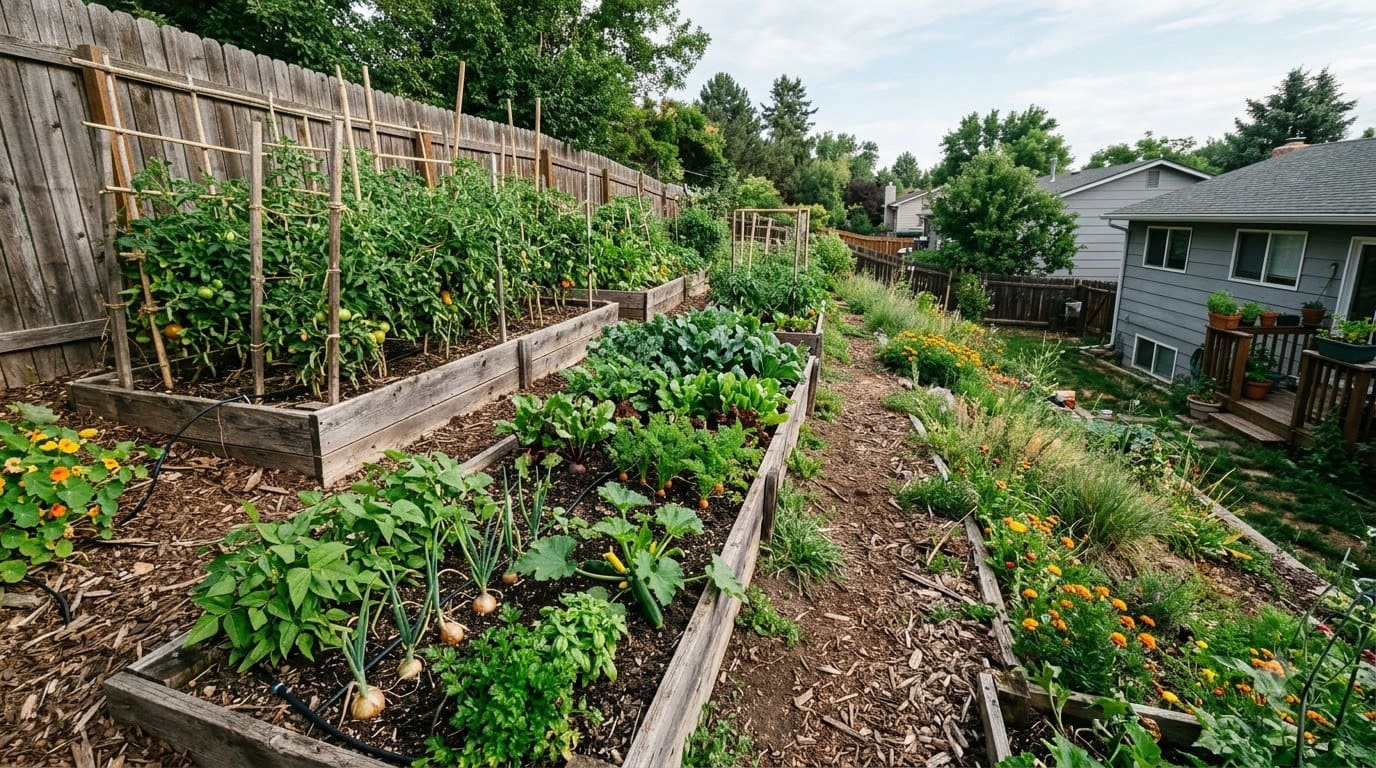
How to do it right: grow low creeping thyme as a living mulch between the brassicas and along the bed edge, or tuck in sage plants every few feet. The herbs need to be established and aromatic before the moths arrive in spring.
The average homeowner spends $616/year on yard fixes that don't address the real problem. Find out what yours actually is — before you spend another dollar.
Take the Free QuizThe catch: thyme is slow to fill in from seed, so start with plants. And sage gets big, so give it room. More on the herbs is in our thyme growing guide.
3. Squash and cucumbers with nasturtium
Nasturtium is the classic trap crop, and it earns the reputation.
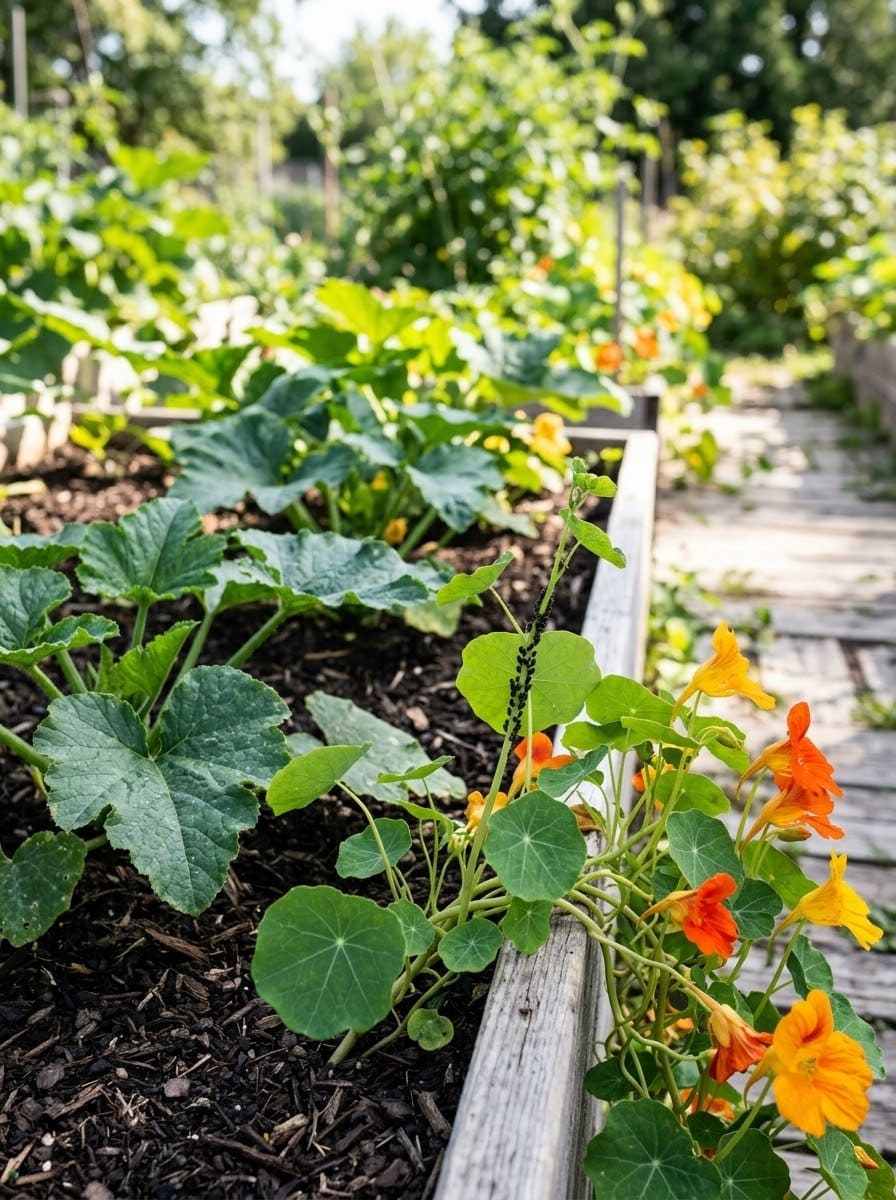
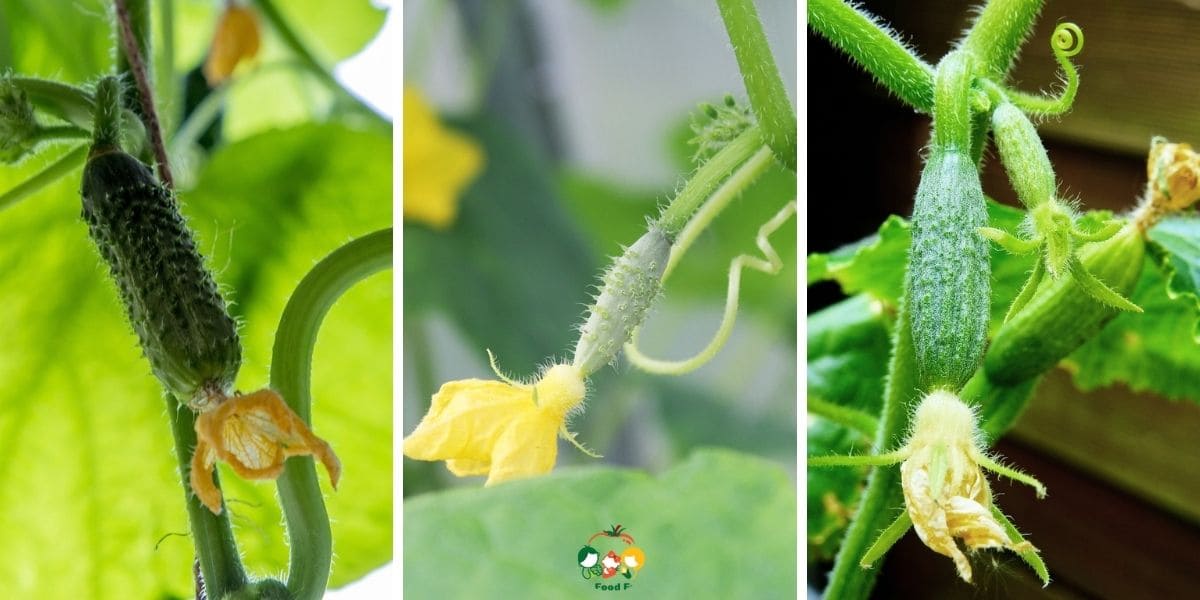
Aphids, squash bugs, and cucumber beetles find nasturtium more attractive than the crop, so they land on it instead. University of Minnesota Extension lists squash with nasturtium among the pairs the research supports. The heavily colonized nasturtium also draws in ladybugs and hoverflies, which then move onto the squash and clean up what’s left.
How to do it right: plant nasturtium at the corners and edges of the squash or cucumber bed, a couple of weeks ahead of the crop so it’s established. Check it weekly, and if a stem is coated in aphids, cut it off and bag it.
The catch: a trap crop only works if you actually remove the pests it catches. Left alone, a nasturtium full of aphids just becomes a breeding ground. Our rundown of what not to plant with cucumbers covers the neighbors to avoid on the other side.
4. The Three Sisters: corn, pole beans, and squash
This is the oldest documented mutual-protection planting, and every part of it has a job.
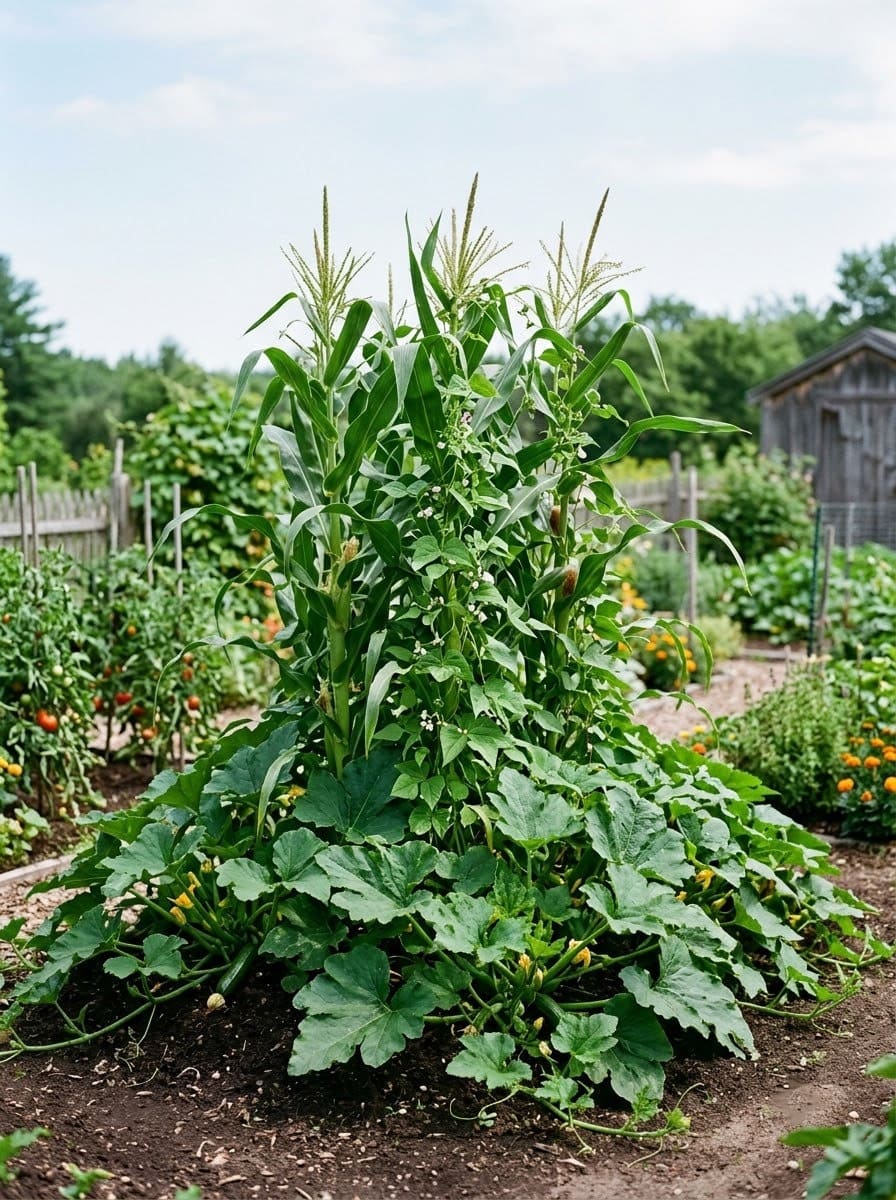
The corn is a living trellis for the beans, so you build no support. The beans host nitrogen-fixing bacteria on their roots, adding nitrogen to the soil over the season.
That feeds the hungry corn and squash. The squash sprawls across the ground as a living mulch, shading out weeds and holding moisture. West Virginia University Extension notes that squash roots run shallow while corn roots go deep, so the three compete less than you’d expect.
The bristly squash leaves and vines are also uncomfortable for raccoons and deer to push through, which gives the corn some cover.
How to do it right: plant the corn first in a block, not a single row, so it pollinates. Add the beans when the corn is knee-high, and the squash around the outside a week later. Grow pole beans, not bush, and a vining squash, not a compact bush type.
The catch: the timing matters. Beans planted with the corn seed will outrun it and pull the stalks over. Give the corn a head start.
5. Lettuce or brassicas with sweet alyssum
This is the pair with the strongest modern research, and the mechanism is worth understanding.
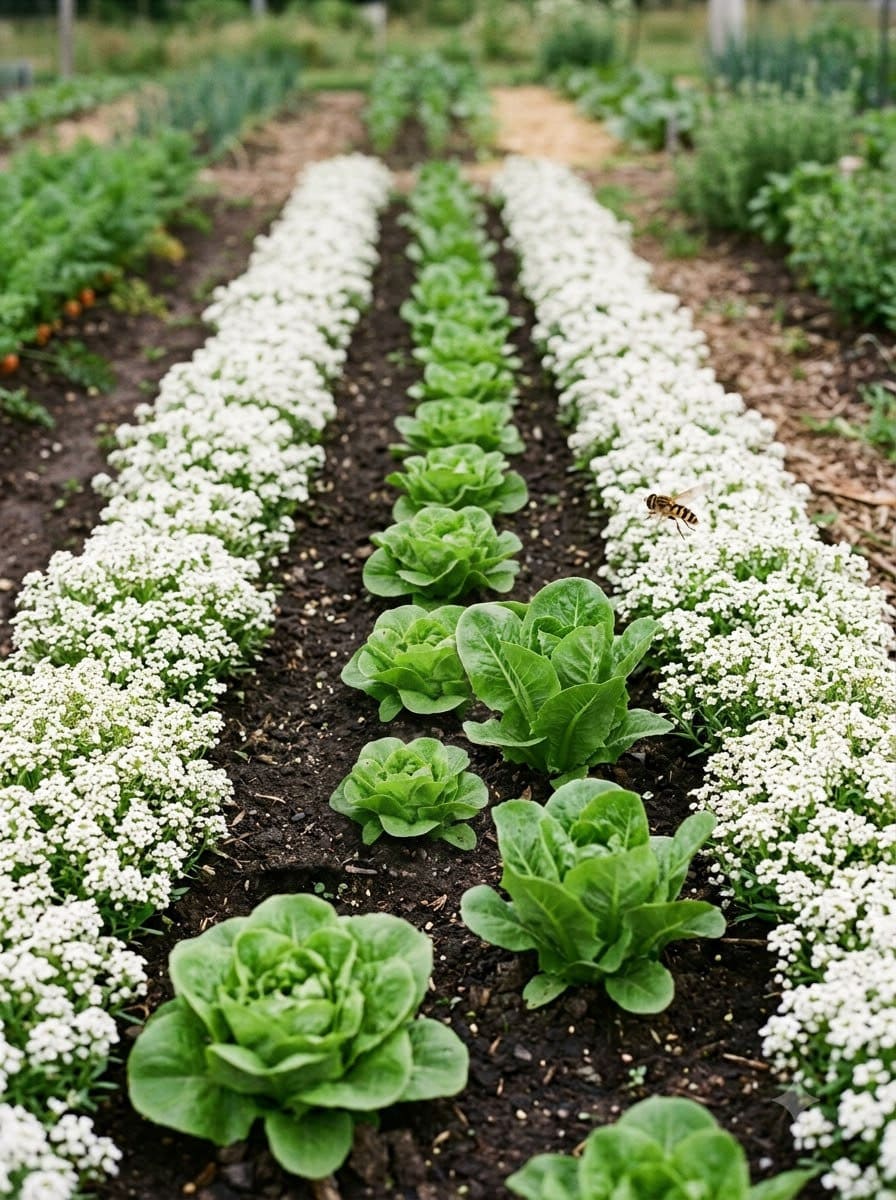
Hoverflies, also called syrphid flies, look like small bees and their larvae are voracious aphid predators. But the adult females need pollen to produce eggs, and lettuce doesn’t provide any. Sweet alyssum does.
University of California research on lettuce found that adding alyssum “significantly enhanced hoverfly egg production, resulting in more hoverfly larvae and fewer aphids,” with “fewer aphids inside lettuce heads from fields with sweet alyssum.” It’s now a standard practice on organic lettuce farms in California.
How to do it right: sow a continuous ribbon of alyssum along the edges of the lettuce or brassica bed, or every few feet within it, and let it flower. The flowers are the entire point, so don’t shear it back.
The catch: alyssum is at its best in cool weather and can fade in midsummer heat, so resow or cut it back hard to force new bloom. It self-seeds freely, which is a feature here.
6. A nematode-prone bed and a French marigold pre-crop
Marigolds against nematodes is real science, but almost every garden article gets the method wrong.

French marigold roots, Tagetes patula, release a compound called alpha-terthienyl. University of Florida IFAS Extension calls it “one of the most toxic naturally occurring compounds found to date,” and says its presence “inhibits the hatching of nematode eggs.” Grown correctly, a marigold crop can knock down a root-knot or lesion nematode population before you plant a susceptible vegetable there.
Grown incorrectly, it does nothing. UF IFAS is blunt: “Intercropping marigold with other crops to reduce plant-parasitic nematodes does not appear to be effective,” and “interplanting marigold and susceptible crops is very risky,” because the nematodes just breed on the vegetable roots anyway.
How to do it right: plant French marigolds as a solid stand across the whole bed, rows and plants less than 7 inches apart, at least two months before the vegetable crop goes in. Then cut them down and plant into that ground.
The catch: this ties up a bed for a season, and it only works on root-knot and lesion nematodes. Per UF IFAS, French marigolds are actually susceptible to sting, awl, and stubby-root nematodes.
Marigolds also do not deter Colorado potato beetle, despite the common claim, so don’t plant them expecting that. Our marigold growing guide covers the varieties.
7. Carrots and onions or leeks
The famous pair works, but not for the reason your grandmother told you.
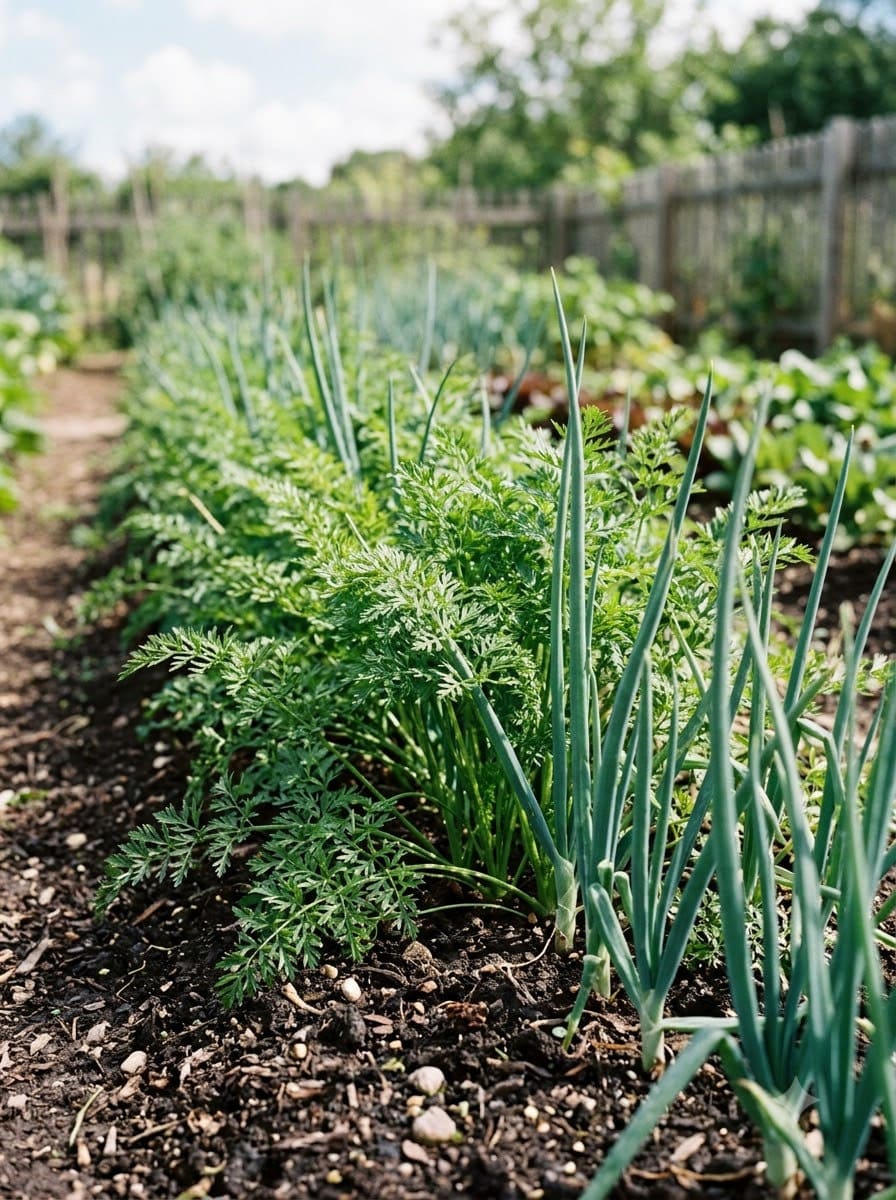
The story is that the onion smell masks the carrot scent so the carrot rust fly can’t find it, and vice versa for the onion fly. Careful trials have poked holes in that. Researchers at Horticulture Research International found no evidence that aromatic odours actually repel these flies.
What the trials do show is that a mixed, dense planting reduces attacks anyway. A 1984 study recorded up to a 65 percent drop in carrot fly damage in intercropped plots. The current explanation is that these flies need a run of correct landings on a host plant to commit to laying eggs, and a bed full of the wrong plant interrupts that pattern.
How to do it right: plant the carrots and onions right in together, alternating within the same row or in a checkerboard, close spacing. Tidy separate blocks of each crop don’t get the effect.
The catch: the two crops have different harvest times, so you’ll be pulling onions from among growing carrots. Space it so that’s manageable. Our onion growing guide covers the timing.
8. Summer lettuce and spinach with a tall crop for shade
The simplest protective pair on the list is also one of the most dependable.
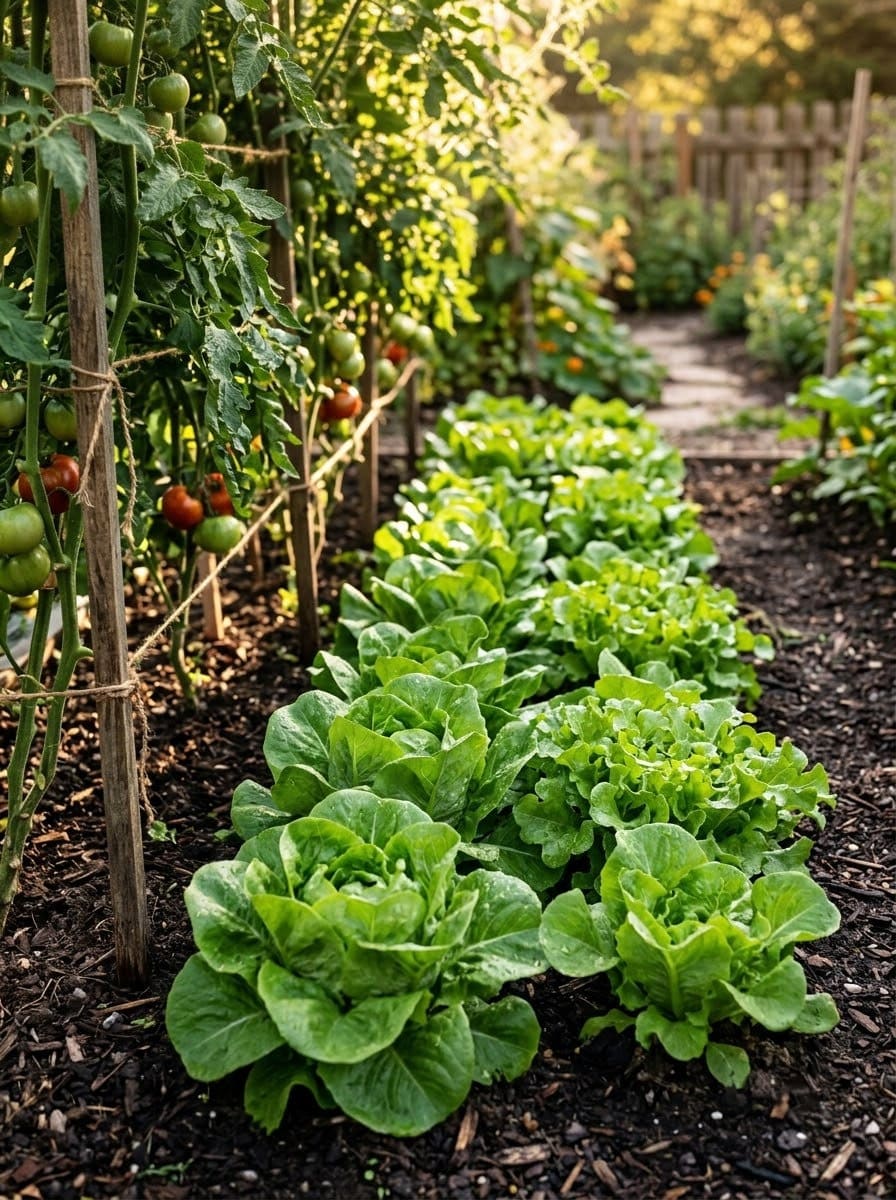
Lettuce and spinach are cool-season crops. They switch from growing leaves to sending up a bitter flower stalk when the weather turns hot, generally once days reach the 80s Fahrenheit and nights stay above the mid-60s. A few degrees of shade delays that switch.
A tall neighbor provides that shade for free. Plant the greens on the east side of staked tomatoes, trellised pole beans, corn, or a row of sunflowers, so they get morning sun and afternoon shade.
How to do it right: time it so the tall crop is already up and casting shade when you sow the summer lettuce. The greens go on the side that shades in the afternoon, not the morning.
The catch: too much shade and the lettuce gets leggy and slow. You want dappled afternoon shade, not deep shade all day. Heat-tolerant varieties help, and a cut-and-come-again lettuce planting in that spot stretches the season further.
What companion planting can’t do
Companion planting is a useful tool, not a force field. It’s worth being clear about the limits.
It won’t fix a soil disease. If your bed has Verticillium wilt or allium white rot, no companion plant clears that, and you need clean ground and rotation instead.
It won’t replace crop rotation, and it won’t carry a heavy pest year on its own. Most of these pairs cut damage by something like 20 to 60 percent, which is real and worth having, but it’s not zero.
The broader point holds up better than any single pair. A mixed, diverse planting resists pests better than a solid block of one crop. If you want the full picture of which neighbors actively work against each other, our guides on what not to plant near tomatoes, strawberries, and onions and garlic cover the other side.
What we’d do differently: real talk from the research
Grow the marigolds a season ahead, in a block, or skip them. The single most common companion-planting disappointment is a gardener who tucked a few marigolds among the tomatoes and saw no change. That’s exactly what UF IFAS says will happen.
If you have a real nematode problem, give a bed over to a dense marigold crop for two months first. If you don’t, plant marigolds because they’re cheerful, not because you expect them to guard anything.
Let the alyssum and the dill flower. The flowers are the working part. People plant dill as a tomato companion, then harvest it young for the kitchen and wonder why no beneficial insects showed up. Grow a second patch you leave alone to bloom.
Mix the carrots and onions right in together. Separate tidy rows of each is how most people plant this pair, and it’s the version that doesn’t work. Alternate them plant by plant, close.
Don’t expect a force field. These are modest effects stacked together. A diverse bed with a few of these pairs in it will have fewer pest problems than a monoculture, but you’ll still be squashing the occasional caterpillar. That’s normal.
Frequently asked questions
Does companion planting actually work?
Some of it, with a measurable effect. Pairs like lettuce with sweet alyssum, tomatoes with basil, and a French marigold pre-crop for nematodes have research behind them.
Many traditional pairings have never been tested, or have been contradicted in trials. The reliable general principle is that a mixed, diverse planting resists pests better than a single-crop block.
Do marigolds keep bugs away from tomatoes?
Not the way most guides suggest. French marigolds suppress root-knot nematodes in the soil, but only when grown as a dense stand for two months before the crop, not scattered among tomatoes. Per University of Florida IFAS Extension, interplanting them is “very risky.” And controlled studies show marigolds do not deter Colorado potato beetle.
What is the best companion plant for pest control?
Sweet alyssum has the strongest evidence. Its flowers feed hoverflies, whose larvae are major aphid predators, and University of California research measured fewer aphids in lettuce grown with it. Dill, cilantro, and other small-flowered plants do the same job for parasitic wasps and ladybugs.
Do carrots and onions really protect each other?
Yes, but by disrupting the fly’s landing pattern, not by masking scents. A 1984 study found up to 65 percent less carrot fly damage in carrot-onion intercrops.
The key is close, mixed spacing. Separate blocks of each crop don’t get the benefit.
What can I plant to attract ladybugs and hoverflies?
Small, open flowers they can feed from: sweet alyssum, dill, cilantro, fennel, yarrow, and buckwheat. Let them bloom and leave a patch uncut. The adults feed on the pollen and nectar, then lay eggs near aphid colonies on your crops.
What should you not plant together?
Fennel suppresses most of its neighbors, mint overruns any bed, and black walnut is toxic to a long list of vegetables. Nightshades and strawberries share soil diseases, and cucurbits share the cucumber beetle. Our guide to herbs that fight each other covers the worst pairs in detail.
Related Posts
- Vegetable Garden Layouts
- The Worst Garden Pests and How to Beat Them
- How to Fertilize Soil for a Vegetable Garden
Products We Recommend
This post contains affiliate links. We may earn a commission on qualifying purchases at no extra cost to you.
40% Shade Cloth with Grommets, 10 ft x 20 ft
The pair-8 fix in a roll, hung on the sunny side of a summer lettuce or spinach row to drop the leaf temperature and delay bolting.
Shop Now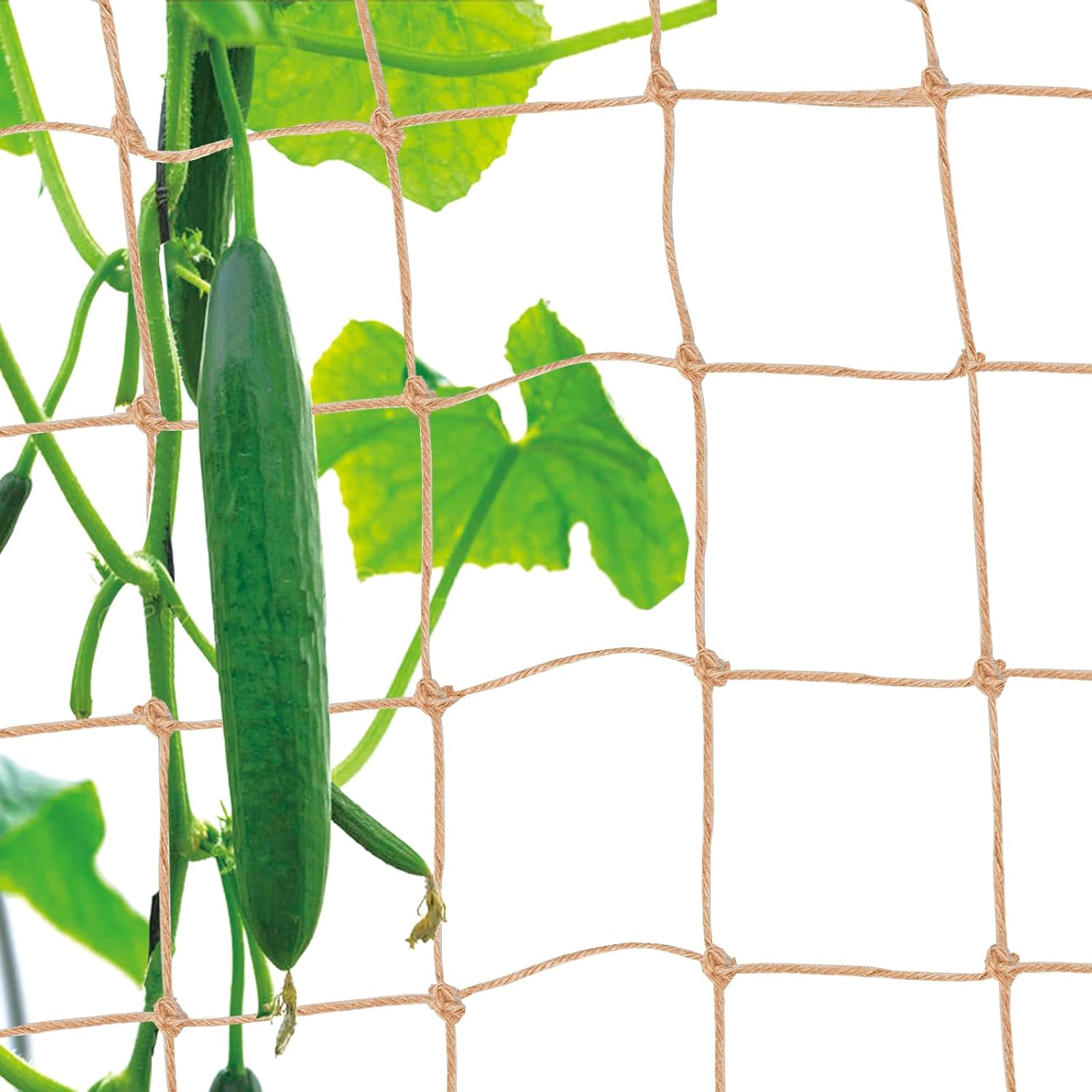
Jute Trellis Netting for Climbing Plants
Support for the pole beans in a Three Sisters bed, or for nasturtium and climbing crops trained away from the vegetables they protect.
Shop Now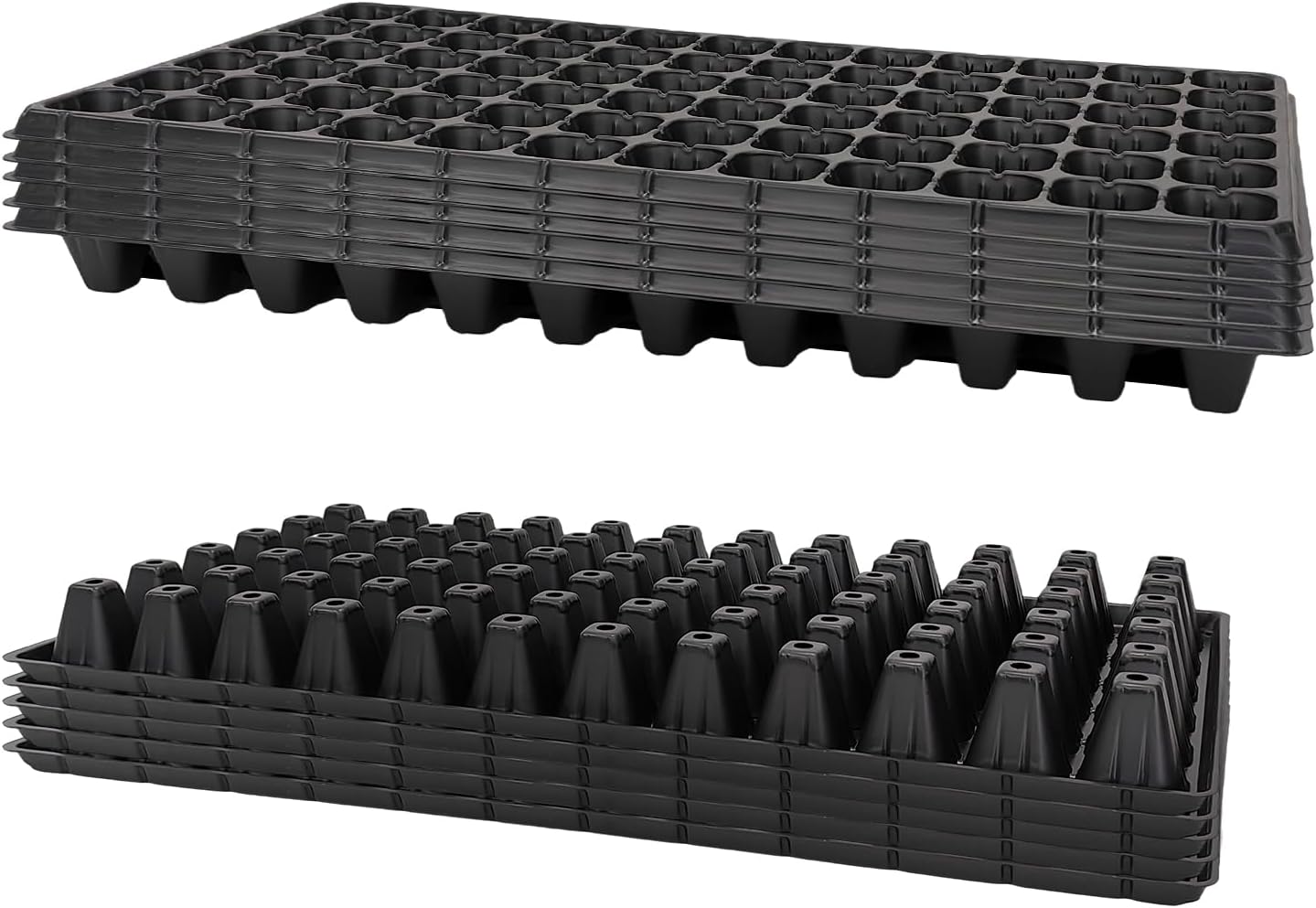
RooTrimmer 72-Cell Seed Starting Trays, 10-pack
For getting basil, thyme, alyssum, and marigold plants going early, so they are aromatic and flowering before the pests arrive.
Shop NowNever miss an update — choose FarmFoodFamily as your preferred source on Google.
How it works: Tap the button below to open Google's settings page, then check the box next to FarmFoodFamily.
Tap the checkbox to turn it blue — that's how you know it's set.