15 Clever Unusual Christmas Tree Decorating Ideas That Still Feel Like Christmas
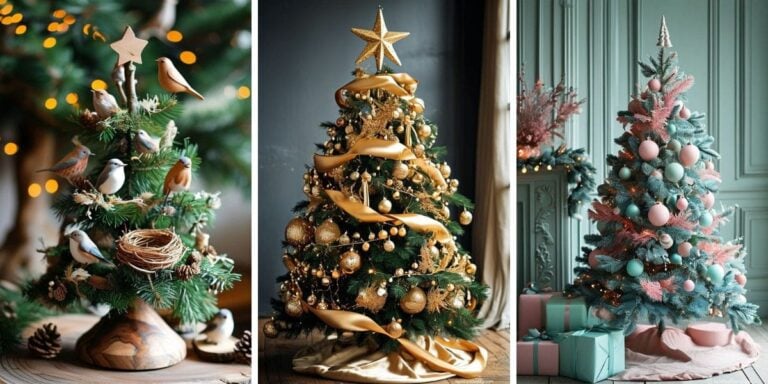
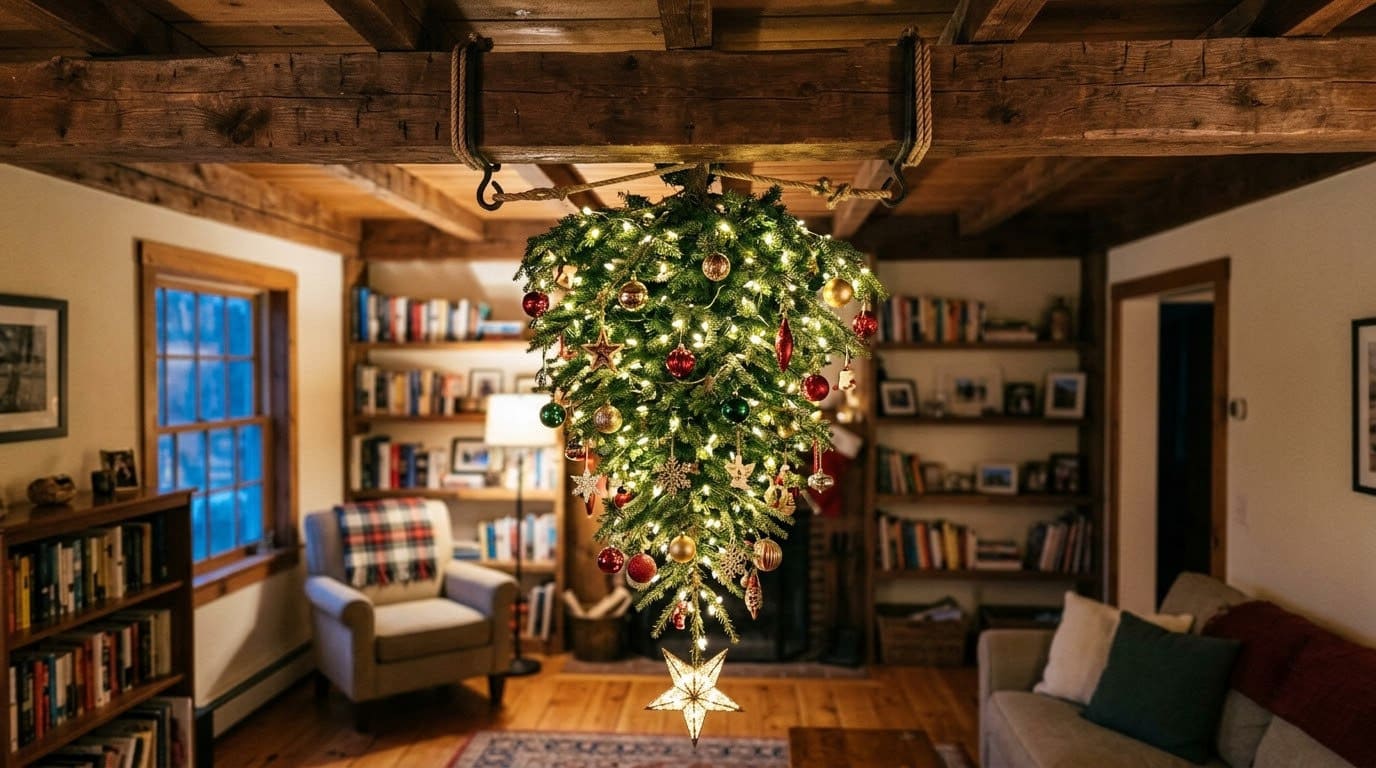
An unusual tree only works when it keeps one traditional cue, like lights, a star, or an evergreen shape. Then guests read “Christmas tree” first, and “wait, what is that” second.

Never miss an update — choose FarmFoodFamily as your preferred source on Google.
How it works: Tap the button below to open Google’s settings page, then check the box next to FarmFoodFamily.
Tap the checkbox to turn it blue — that’s how you know it’s set.
Most “unusual tree” roundups just show you a photo. They skip the part where the tree has to actually stand up, or hang safely, or survive a curious toddler.
Below are 15 unusual Christmas tree ideas with real build notes: what holds it up, what it costs, and where it can go wrong. Some flip the tree upside down. Others are not made of pine at all.
If you want a more traditional palette instead, there is a longer run of tree decorating tips for every theme on the site. This one is for the tree that starts a conversation instead.
Quick Answer
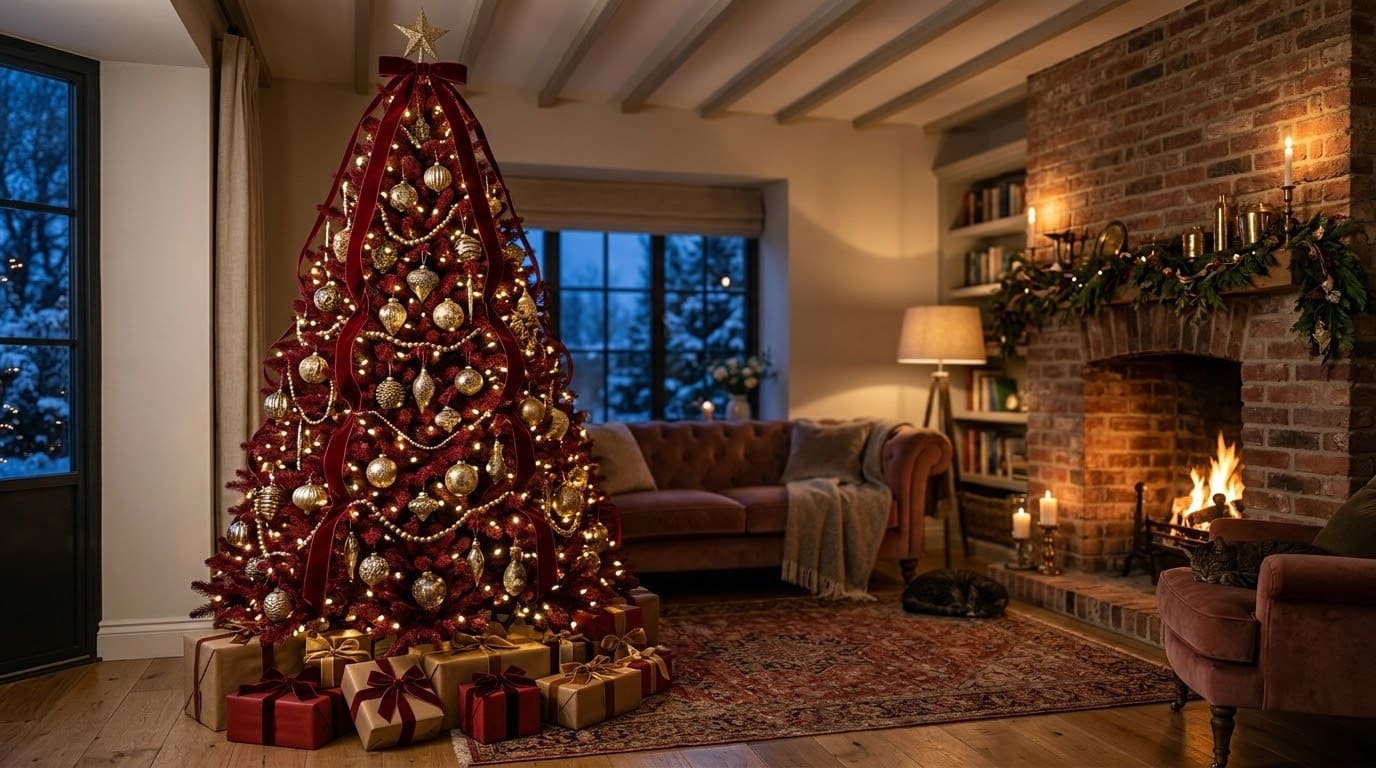
The best unusual Christmas trees keep one traditional signal, like string lights, a star topper, or a triangular shape. That way the idea still reads as a Christmas tree, not a random object with ornaments on it.
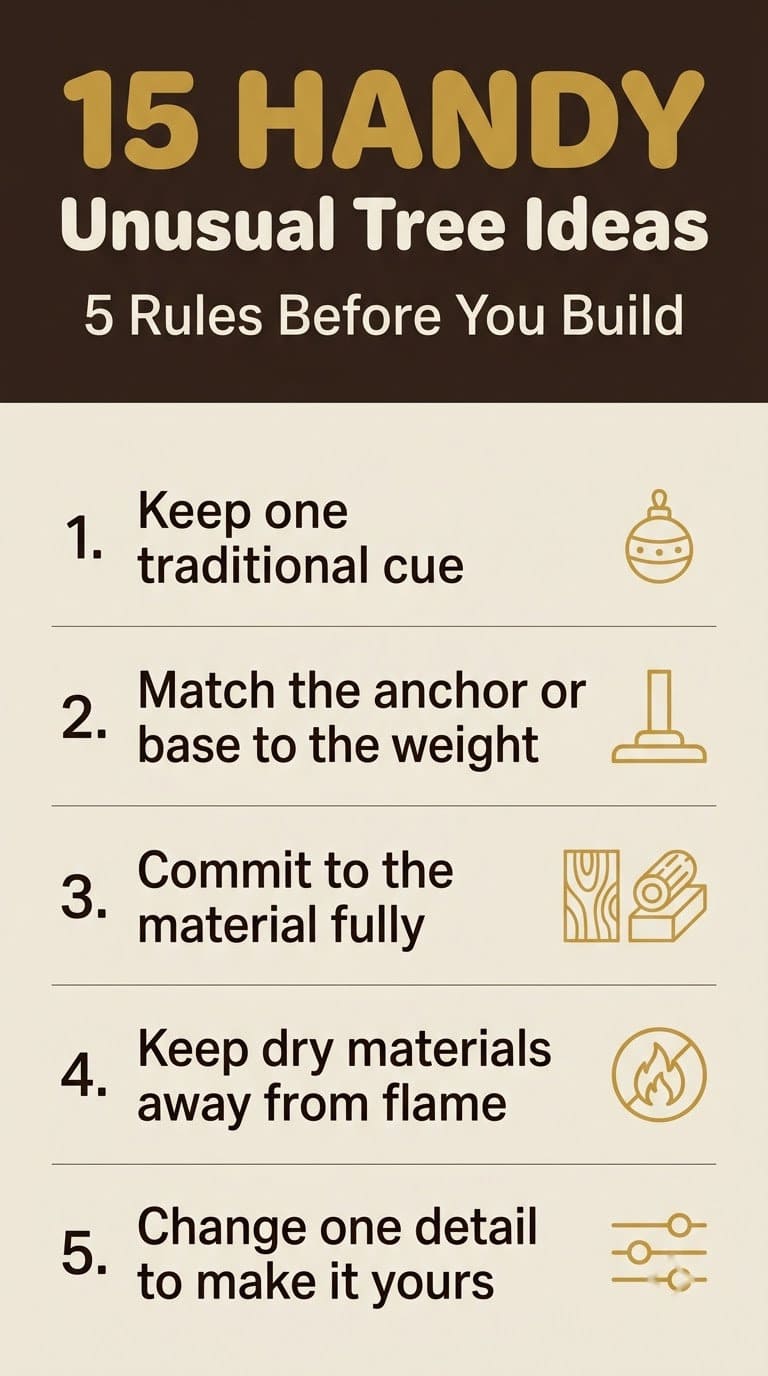
Weight and safety decide which ideas are realistic. An upside-down tree needs a ceiling anchor rated for several times its weight, not just a hook in drywall. A driftwood or bike-wheel tree needs a rod and a heavy base so it does not tip.

Budget varies more than with a normal tree. A pool noodle tree costs under $30, and a driftwood tree costs nothing but a weekend of beachcombing. A feather tree replica can run over $100.
Pick one idea and commit to it fully. A tree that is half traditional and half stunt reads as unfinished, not unusual.
Why Do Most “Unusual Tree” Ideas Fall Flat?
Because the build gets skipped. A photo of a tumbleweed tree or a ladder tree looks easy. Then the ladder wobbles, or the tumbleweeds fall apart on the drive home.
The other reason is commitment. A single quirky ornament on an otherwise normal tree is not an unusual tree. It is a normal tree with one joke on it.
| Problem | What it looks like | The fix |
|---|---|---|
| No traditional cue at all | Reads as random object, not a tree | Keep lights, a star, or a triangle shape |
| Weak base or anchor | Tips over or falls from the ceiling | Match the anchor and base to the material’s real weight |
| Half committed | Looks unfinished | Pick one idea and decorate it fully |
| Wrong material near heat | Fire risk | Keep dry materials like feathers, paper, and tumbleweeds away from candles and heaters |
| Copied without adapting | Looks like someone else’s photo | Change one material or color to make it yours |
None of the 15 ideas below need power tools you do not already own, except the driftwood tree’s drill.
Do Unusual Trees Cost More or Less?
Usually less, and that is part of the appeal. Several of these use materials you already have, like books, wine corks, or a pool noodle.
| Idea | Typical cost | Why |
|---|---|---|
| Pool Noodle Tree | Under $30 | Dollar-store noodles and garland |
| Driftwood Branch Tree | Free to $20 | Beachcombing plus a rod and base |
| Book Page Tree | Free to $10 | One old paperback |
| Wine Cork Tree | $0 to $15 | Saved corks or a bag from a craft store |
| Ladder Tree | $20 to $60 | A basic wooden or metal ladder |
| Bike Wheel Tree | $0 to $30 | Old wheels from a garage or thrift store |
| Vinyl Record Tree | $10 to $40 | Thrifted records, cheaper than new decor |
| Cactus Tree | $15 to $50 | A potted cactus plus mini lights |
| Wire Skeleton Tree | $30 to $150 | Pre-made metal trees cost more than DIY wire |
| Feather Tree | $40 to $150+ | A specialty reproduction, priced like decor, not a toy |
| Upside-Down Tree | Cost of your normal tree | Plus a rated ceiling anchor |
| Tumbleweed Tree | Free to $20 | If you can source real tumbleweeds locally |
| Rotating Musical Tree Stand | $40 to $100 | The stand, not the tree |
| Topiary Spiral Tree | Cost of a live topiary plant | Or shears and patience on one you own |
| Naked Tree | Cost of your normal tree | Skip the ornaments, so you spend less |
These are our own estimates based on typical retail and thrift prices, not quotes from a single seller.

A drywall-rated anchor kit for idea 1's upside-down tree. Still find a joist with a stud finder first, since a real Christmas tree calls for hardware rated well above its weight
Shop NowThis post contains affiliate links. We may earn a commission on qualifying purchases at no extra cost to you.
15 Unusual Christmas Tree Decorating Ideas
1. The Upside-Down Christmas Tree
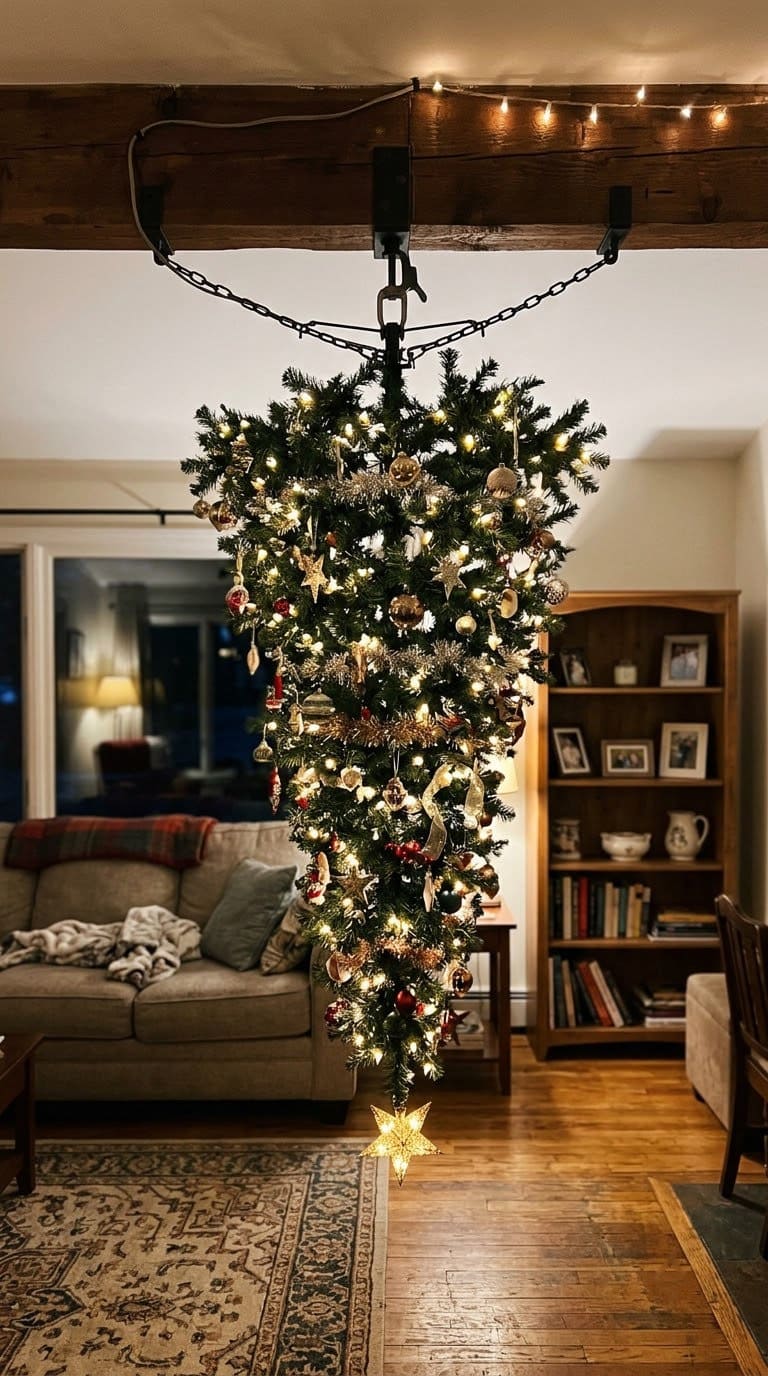
Hang the tree from the ceiling, trunk up, branches down. The idea is centuries old.
Accounts trace it to Eastern Europe in the 1500s. One legend even credits a Benedictine monk named Boniface with an early version in the 7th or 8th century, per 1-800-Flowers.
By the 1800s it became practical. In cramped rooms, hanging the tree freed up floor space. It also kept small children and pets away from low-hanging ornaments.
That safety logic still works today. Ornaments face outward and down, so they catch more light and stay out of reach of a curious cat.
The hard part is the ceiling. This Old House says “as a rule, anchors should be able to hold four times the weight of the object you’re hanging.” A drywall toggle is not enough for a real tree.
Find a ceiling joist with a stud finder, and use a rated eye bolt or screw hook driven into it.
Budget: the cost of your usual tree, plus a real ceiling anchor. Do not skip the anchor to save $10.
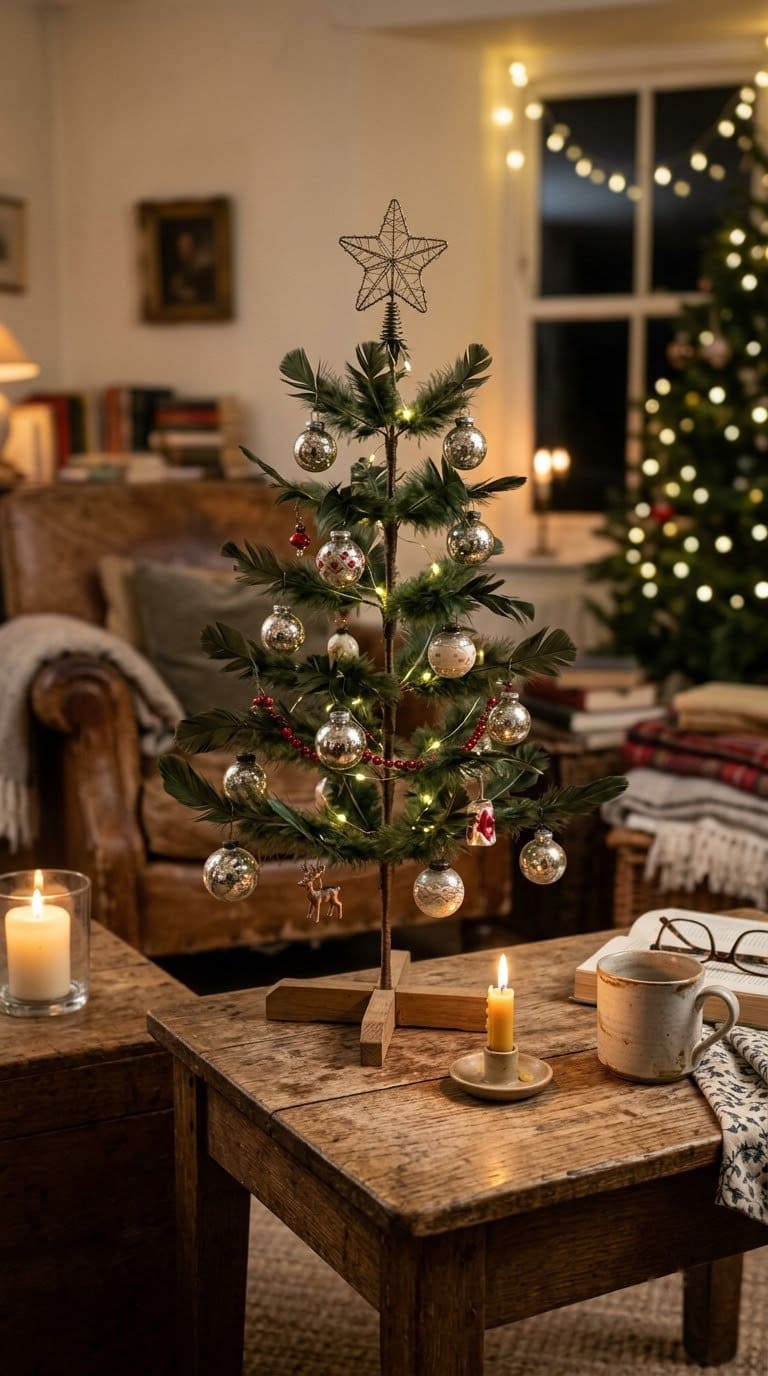
2. The Feather Tree (Federbaum)
A historical German design, not a modern trend. Feather trees were invented in Germany as early as 1845. Overcutting young fir tops for tabletop trees had led to conservation laws, and the “Federbaum” was the fix.

Wire branches wrapped in dyed goose, turkey, or ostrich feathers stood in for real fir. The wide, sparse branch spacing was deliberate, styled after the open branches of German white pine.
Reproductions are sold today by specialty sellers, usually 17 to 55 inches tall. They suit a mantel or a side table more than a full-size floor tree.
Keep it away from candles and heaters. Feathers are dry, and old designs were a real fire risk back in their candlelit era. Budget: $40 to $150-plus for a well-made reproduction.
3. The Nearly-Naked Tree
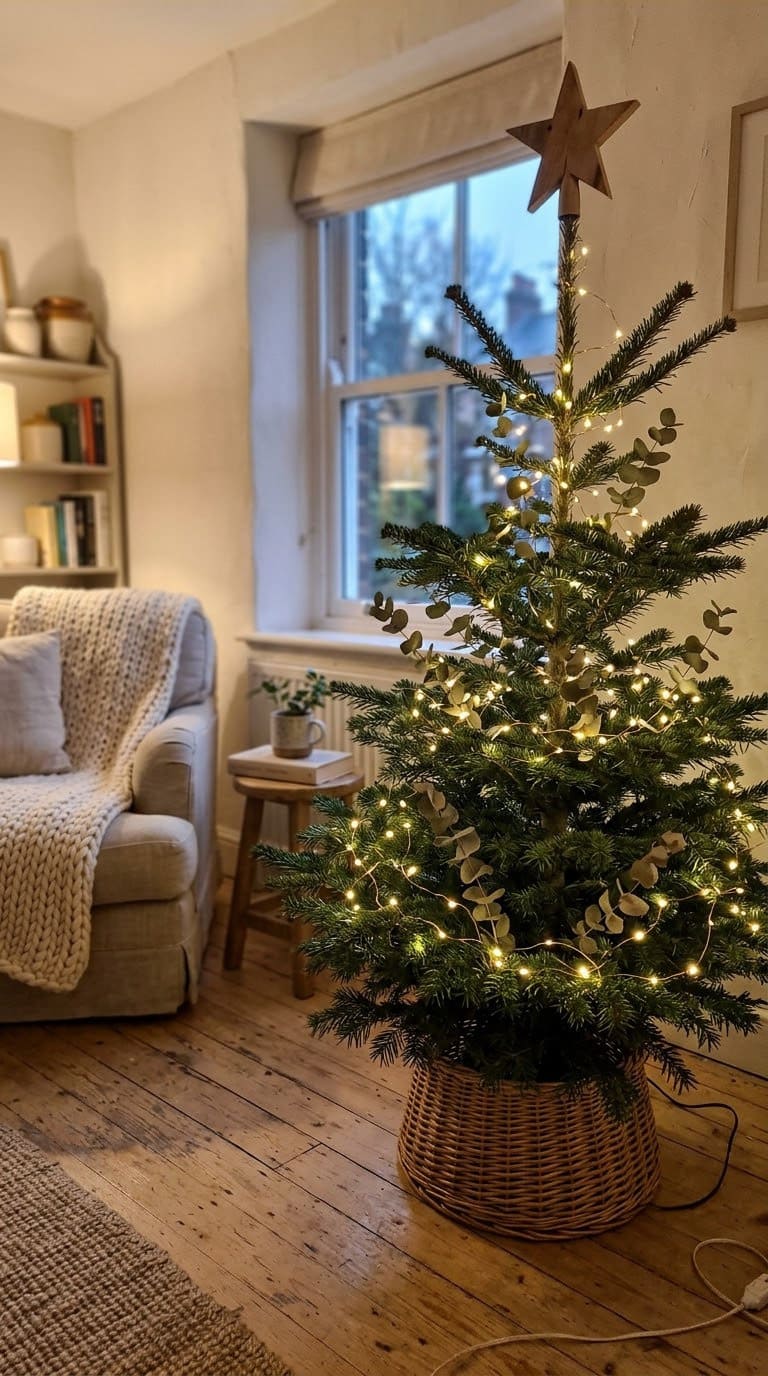
Skip most of the ornaments. Keep the shape, the lights, and a little greenery, and let the branches do the work.
The trend has been worn by Julianne Moore, Michelle Pfeiffer, and Victoria Beckham. Designer Rose Uniacke styled Beckham’s flagship store tree this way. Living Etc called it one that “still oozes festive style though it’s flaunting just lights and rugged foliage.”
Drape lights loosely instead of wrapping them tight, so the branch lines stay visible. Living Etc also suggests eucalyptus stems, since the light green “will stand out from the pine tree green.”
This is the cheapest idea on the list if you already own a tree. You are buying fewer ornaments, not more. Budget: the cost of your usual tree, minus most of the ornament budget.
4. The Cactus Christmas Tree
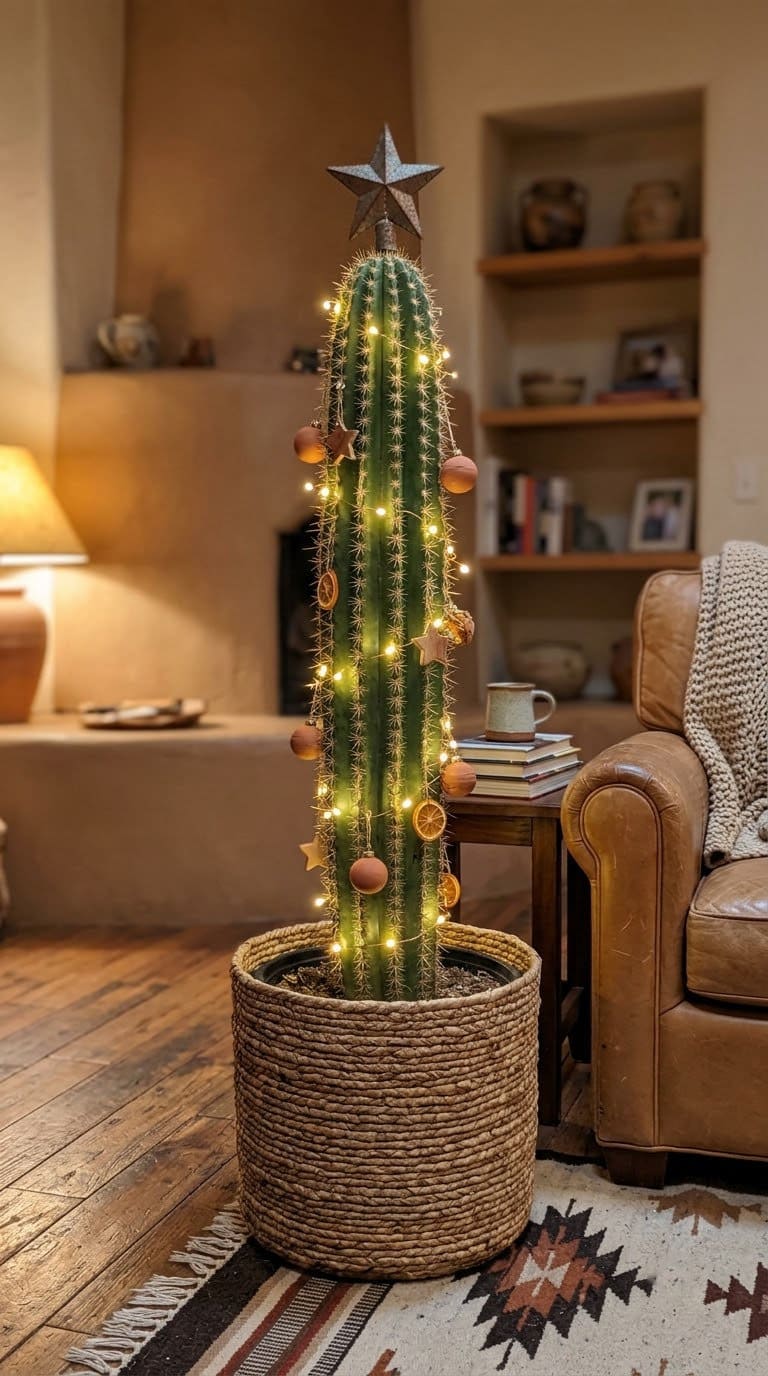
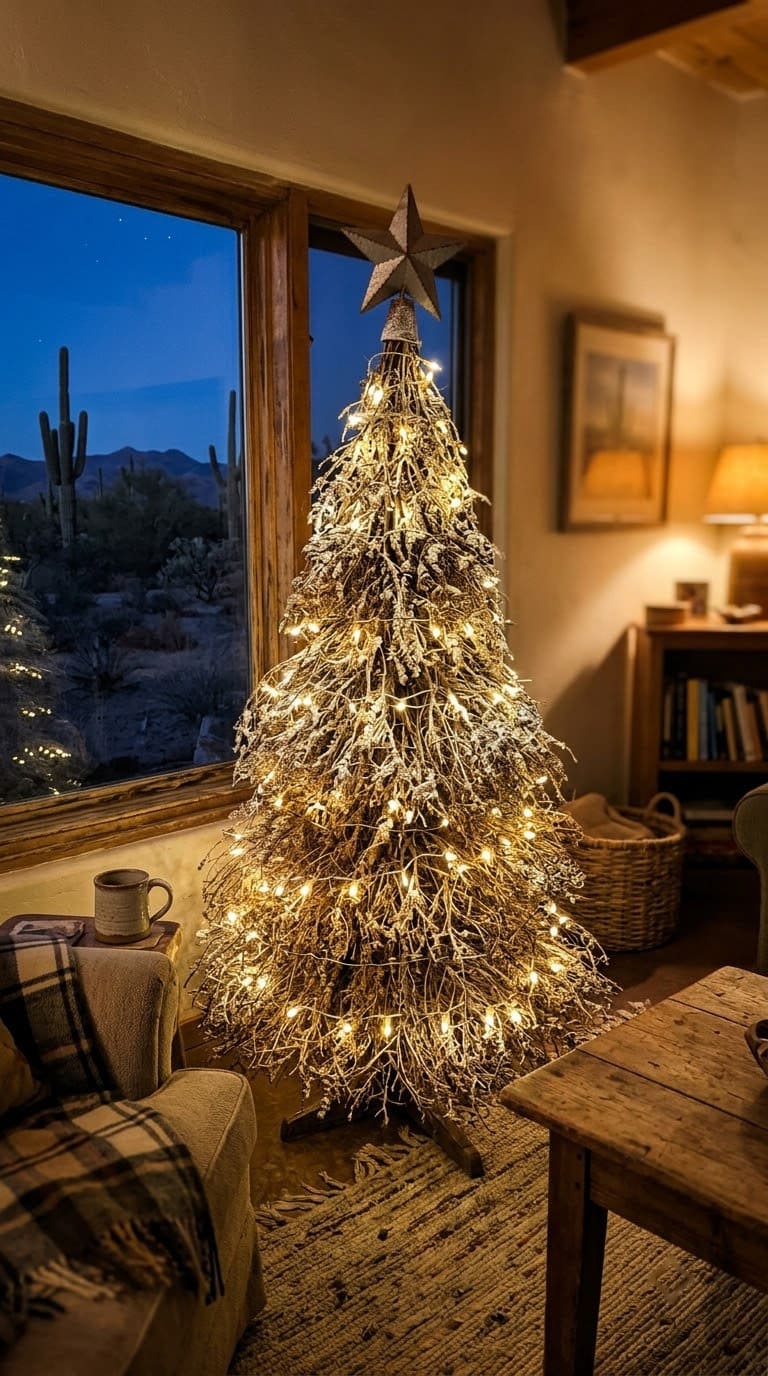
For a desert climate or a Southwest-style home. Use a tall potted cactus, real or faux. Treat it exactly like a small tree: lights, a star or angel topper, and a few lightweight ornaments.
A faux cactus is the safer choice with kids or pets in the house, since a real one keeps its spines. Use warm or amber string lights to echo a desert sunset. Skip anything heavy that could snap a real cactus arm.
Set the pot in a woven basket or a Talavera-style ceramic pot instead of a plastic tree stand. It hides the base and finishes the look. Budget: $15 to $50 depending on the cactus size.
5. The Tumbleweed Tree
A real small-town tradition, not a craft blog invention. Chandler, Arizona built its first Tumbleweed Tree in 1957, after the city needed new holiday decor.
The City of Chandler explains why: “since pine branches were not exactly abundant in the area, they settled on tumbleweeds.”
That first tree stood 30 feet tall.
For a home version, wire dried, cleaned tumbleweeds around a cone-shaped wire form: smallest at the top, largest at the bottom. That is the same order Chandler’s crews use at scale.
Spray them white or silver if you want a snow-dusted look, and add warm lights woven through. Keep the finished tree away from any flame, since dried tumbleweed is essentially kindling. Budget: free if you can source tumbleweeds locally, plus a wire form.
6. The Wine Cork Tree
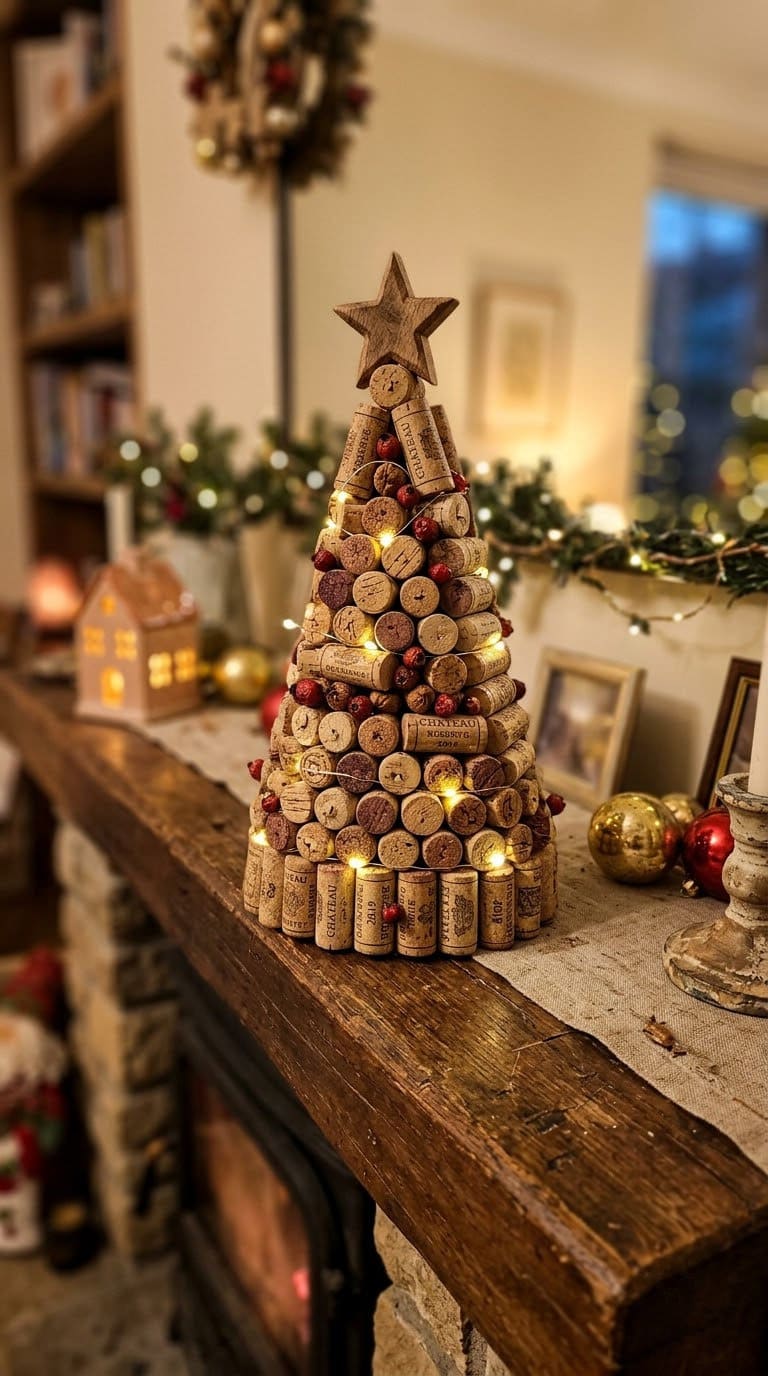
A practical way to use a wine cork collection. Start with a foam cone base and hot-glue corks from the bottom up. Cut some corks to fill small gaps, so the foam never shows.
Angle each cork slightly as you move up the cone, the same way real branches taper. Fill any larger gaps with a few dried berries or small pom-poms.
This works as a tabletop piece, not a full floor tree, since foam cones only come so large. Budget: free if you have saved corks, or $10 to $15 for a bag from a craft store.
7. The Vinyl Record Tree
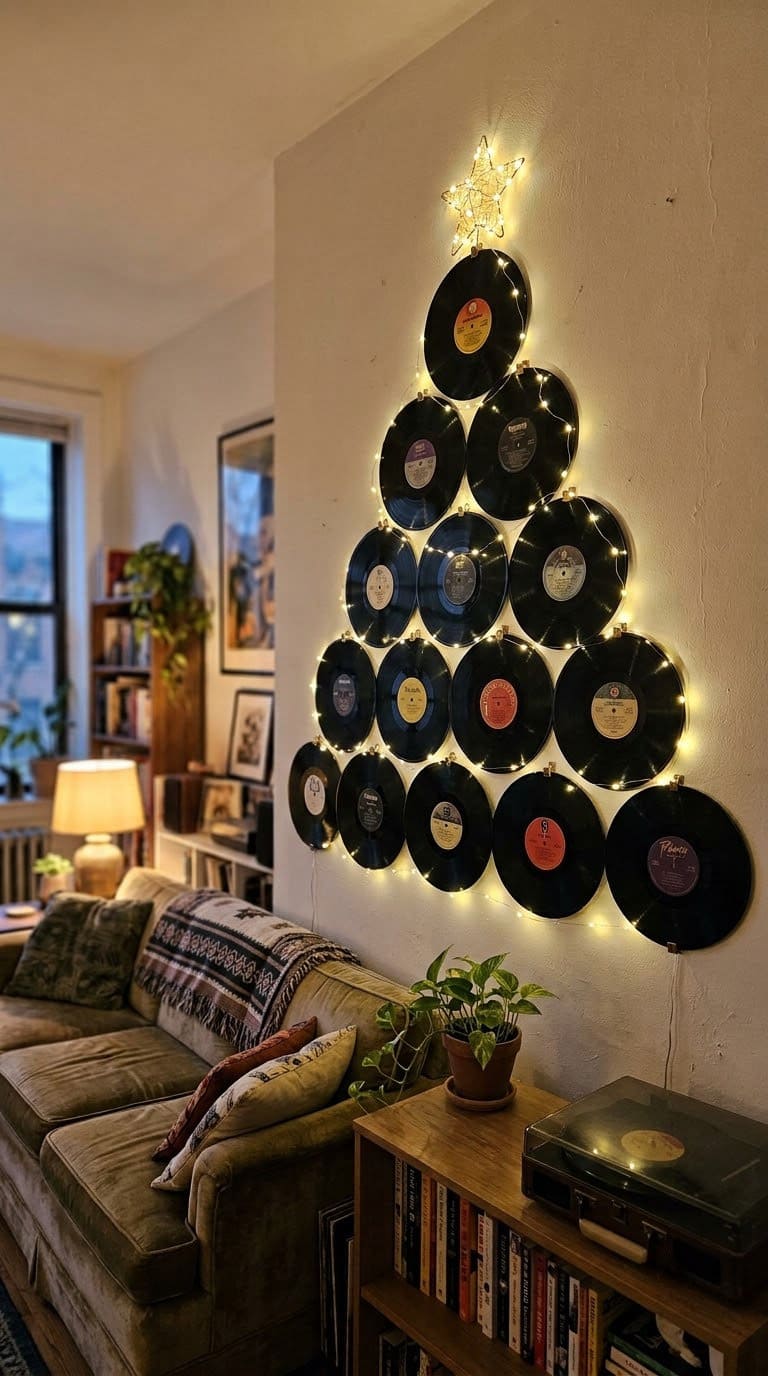
For a music lover, built two ways. The floor version arranges records in a stacked triangle: five at the base, then four, three, two, and one at the top. A vintage-style record player stands in as the “trunk,” finished with a star topper.
The wall version hangs the same triangle shape flat against a wall, which suits a small apartment with no floor space. Use only records you do not plan to play again, since stacking and taping can warp them.
Spray paint them gold before assembly for a decorative finish instead of the plain black vinyl. Budget: $10 to $40 for thrifted records, often cheaper than buying decor.
8. The Ladder Christmas Tree
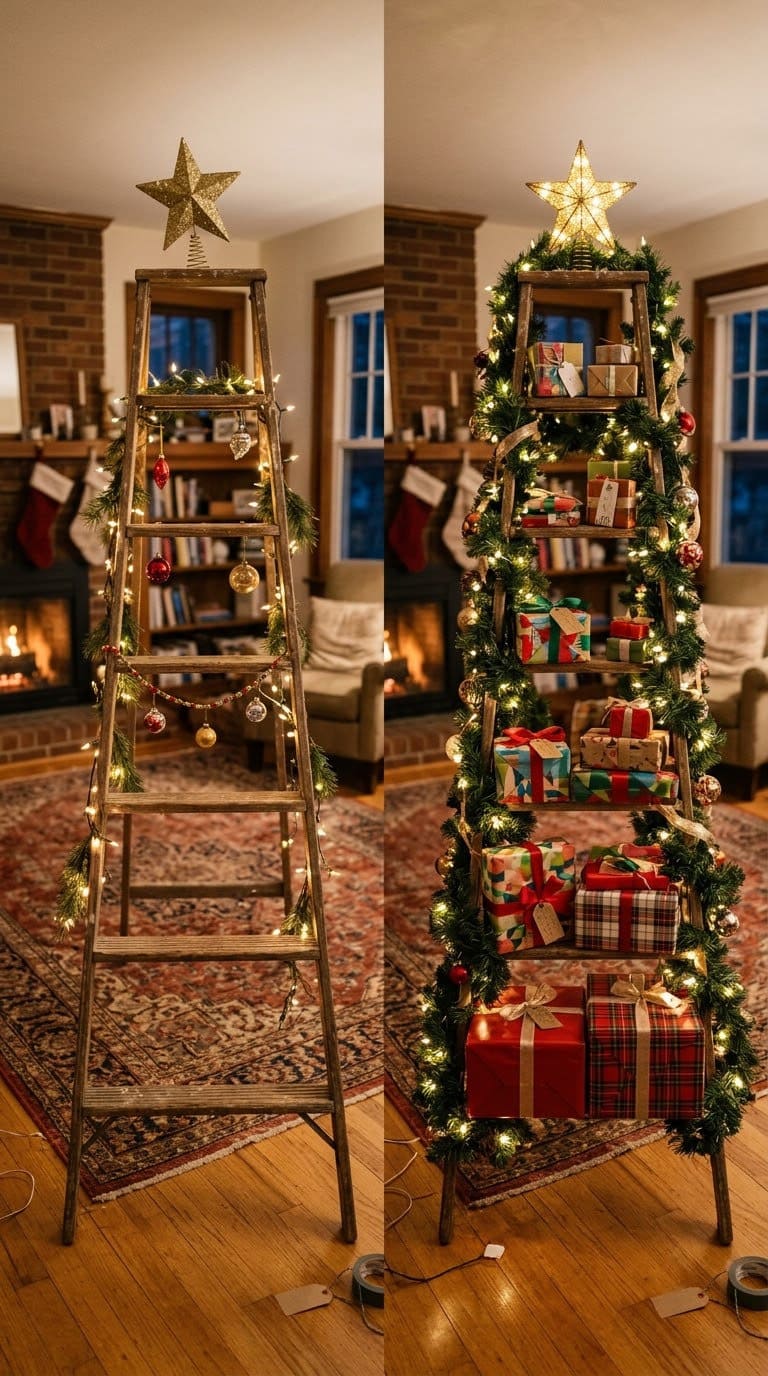
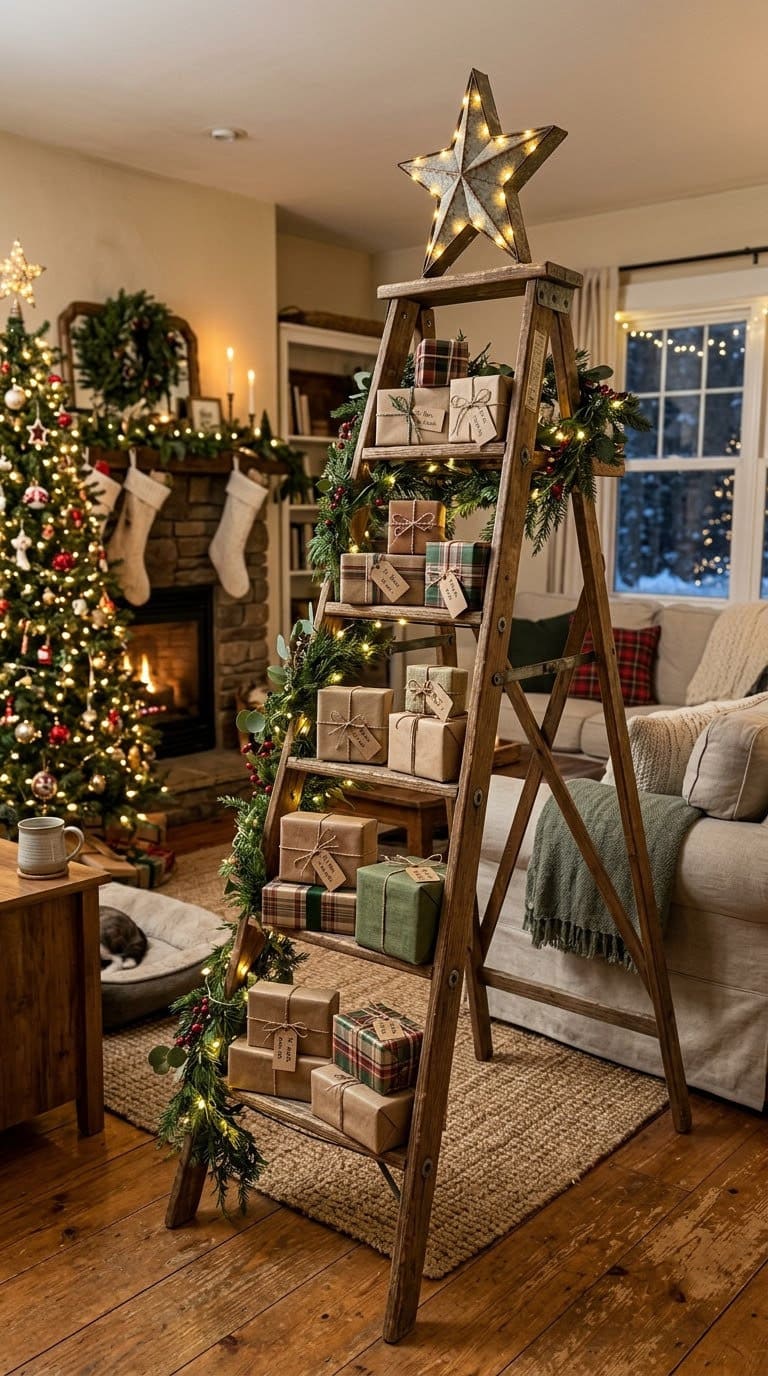
A wooden or metal ladder, decorated to suggest a tree’s tiers. Drape evergreen garland and warm string lights over the rungs for a rustic farmhouse look.
For a display version, rest boards across the rungs. Cut each board shorter than the one below it, and use the shelves for a Christmas village or wrapped gifts. A tiered ladder decorated this way stacks gifts in a tree-like silhouette, with a star topper finishing the top rung.
A-frame ladders are steadier than a straight ladder leaned against a wall. Budget: $20 to $60 for a basic ladder if you do not already own one.
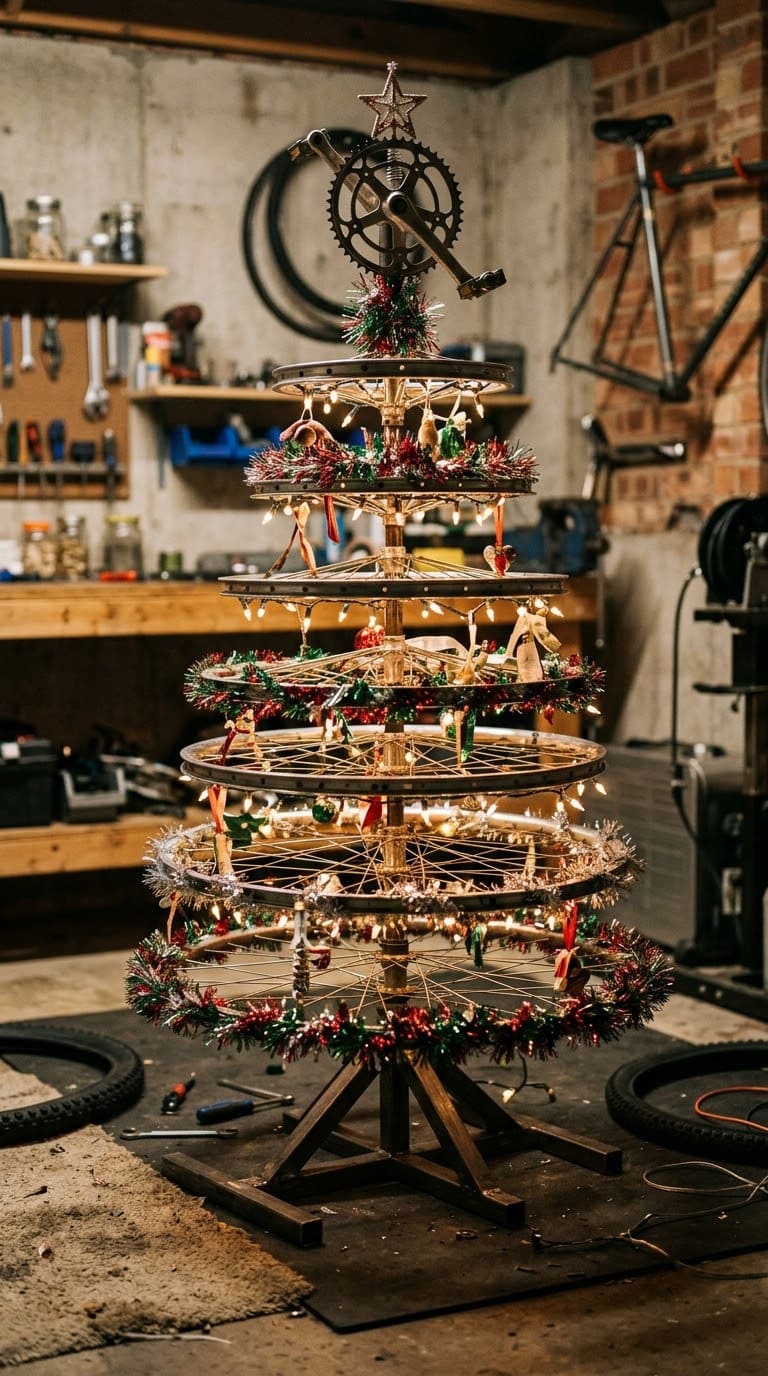
9. The Bike Wheel Tree
Built from stacked bike wheel rims. Cycling UK instructs to “stack the rims in order, smallest at the top, largest at the bottom,” with the hubs removed first. Then run a bamboo stick through the center to hold them in place.
Space the rims apart using old toilet paper rolls slid onto the stick. Then tie the rims together with ribbon or string for support, per the same guide. Tape an old crank or cog to the top as a star stand-in, and wrap tinsel and lights through the spokes.
A bike shop or garage sale is the cheapest source for mismatched rims. Budget: free to $30, since most of the parts are otherwise scrap.
10. The Wire Skeleton Tree
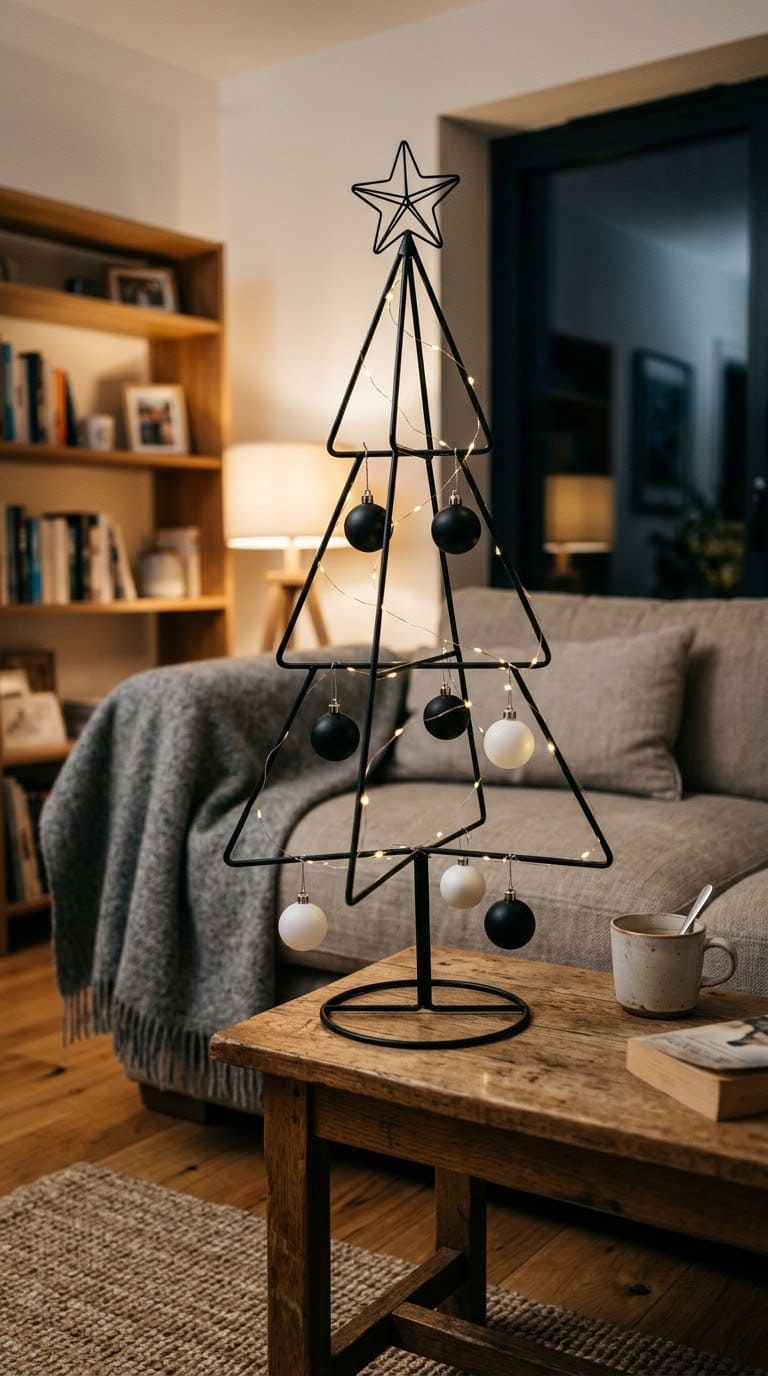
A minimal metal tree, built from bent wire or rods instead of branches. These rely on shape and shadow rather than foliage. A well-built one also lasts decades, instead of degrading like real or PVC greenery.
Hang a handful of round ornaments in black, white, or one accent color. A busy wire tree loses its clean silhouette fast. Add small warm bulbs along the main lines rather than a full string, so the wire shape stays visible after dark.
This suits a modern or minimalist room better than a traditional one. Budget: $30 for a small DIY wire form, up to $150 for a pre-made metal tree.
11. The Driftwood Branch Tree
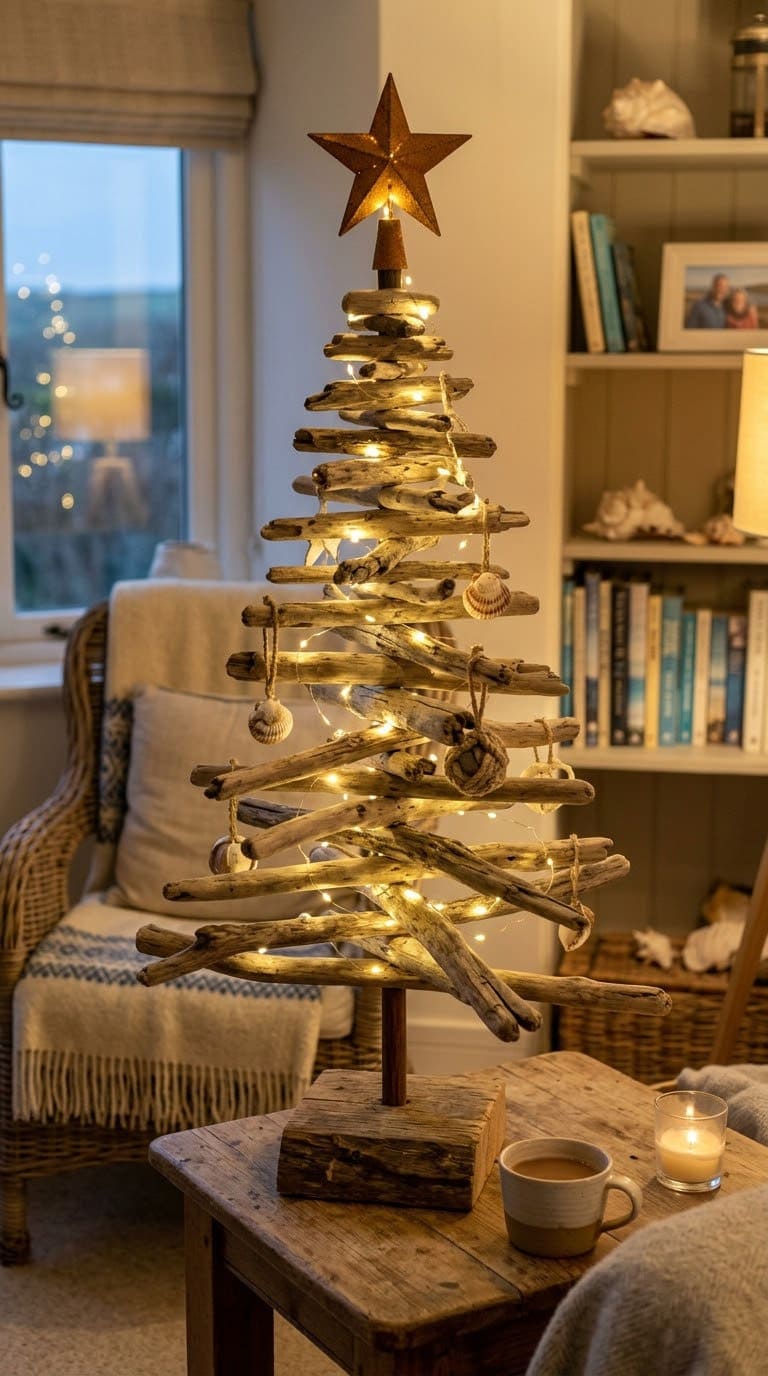
Real technique, not just stacked sticks. Sort driftwood pieces from widest to narrowest. Drill a hole through the midpoint of each one, sized to fit a center rod like a length of rebar.
Slide the pieces onto the rod from widest at the bottom to narrowest at the top. Rotate each piece 30 to 60 degrees from the one below it. That twist is what makes the shape read as a tree, not a pile of wood.
Leave the pieces unglued if you want to break the tree down for storage each year.
Mount the rod in a heavy, weighted base so the top-heavy stack cannot tip. Budget: free from beachcombing, plus $10 to $20 for the rod and base hardware.
12. The Book Page Tree
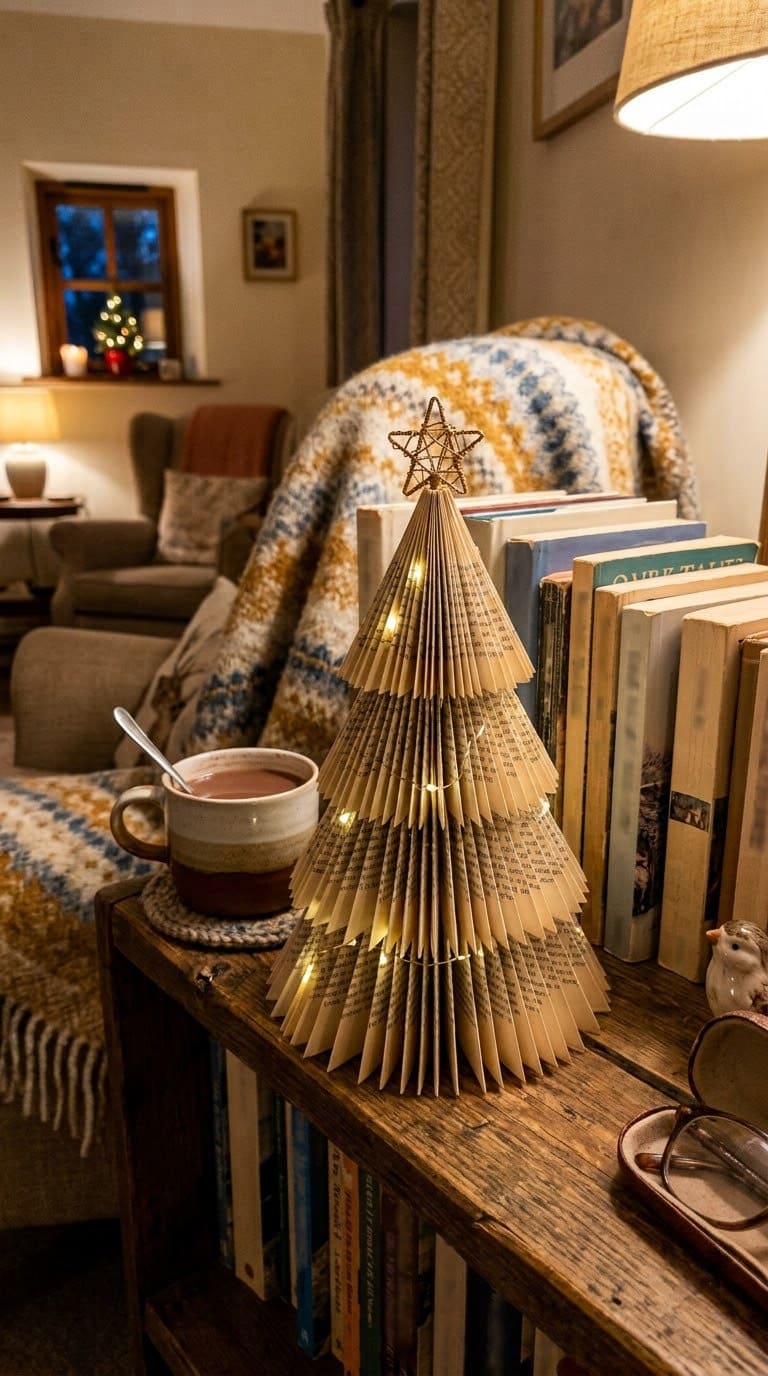
Made from a single old paperback. Fold selected pages inward at an angle, working from the back of the book toward the front. The folded edges fan out into a cone shape once the book stands upright.
A simpler version cuts squares of book pages. Thread them onto a bamboo skewer stuck into a wood round base, largest squares at the bottom. Add a small star or twine wrap at the top for a finished look.
This is one of the few ideas on this list that costs almost nothing. Budget: free if you have an old paperback, or under $10 for glue and a base.
13. The Pool Noodle Tree
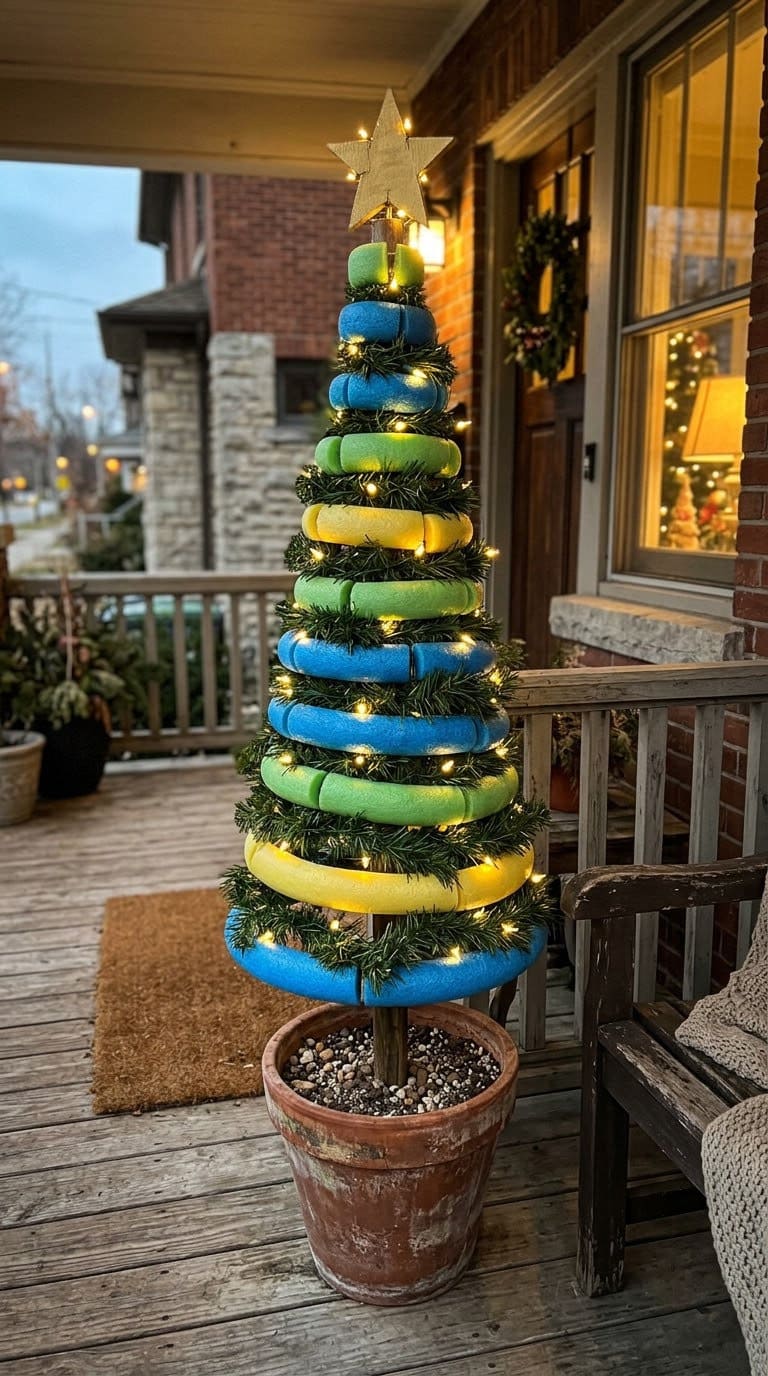
A budget, kid-friendly build, and one of the few unusual trees rated for outdoors. Cut pool noodles into rings of decreasing size and hot-glue them to a large planter, widest ring at the bottom.
Fill gaps with evergreen garland, which one guide found for about $1.25 per 15 feet at Dollar Tree, wound between the foam rings. The water-resistant foam holds up in cold, damp weather, unlike paper or fabric versions.
Weight the planter with decorative rocks so it does not blow over outdoors. Budget: under $30, and reusable for several seasons.
14. The Rotating Musical Tree
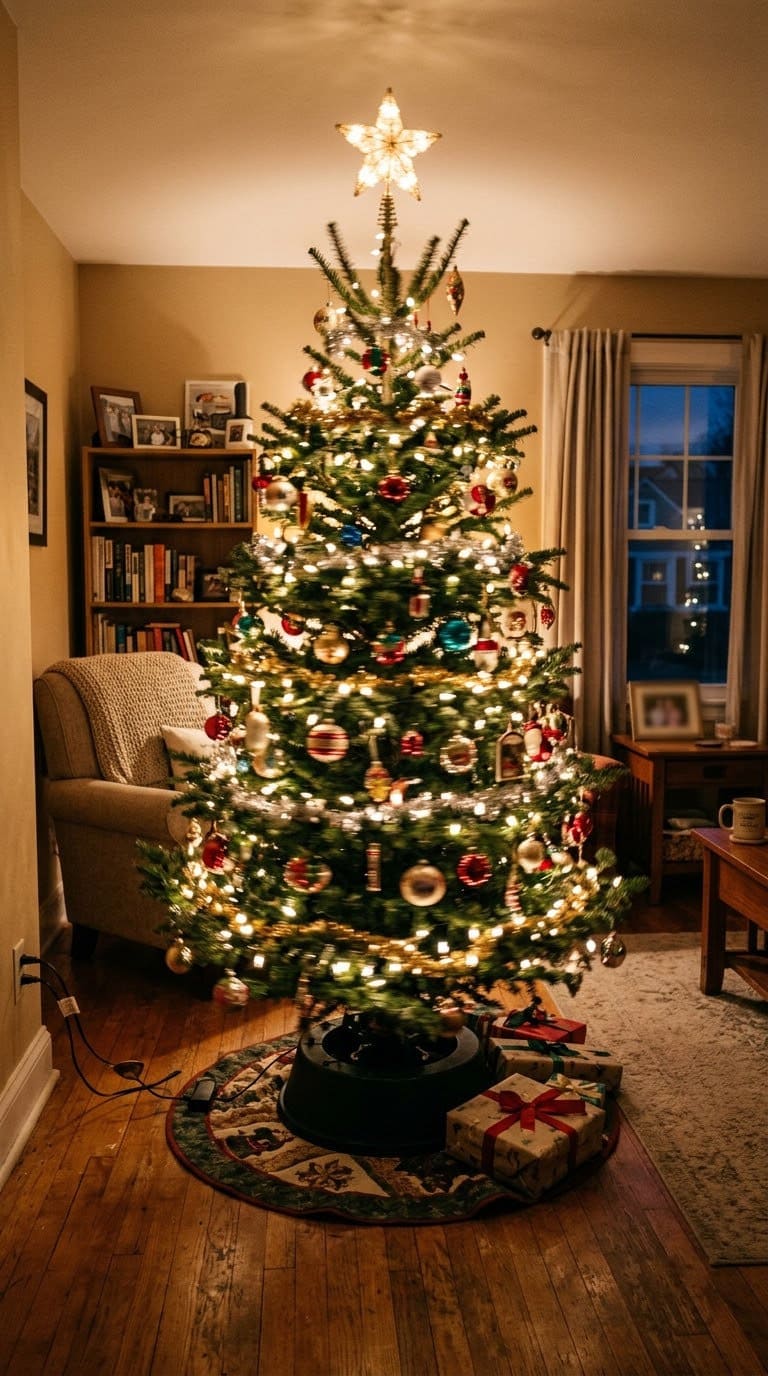
Not a shape change, a motion change. A motorized stand turns your existing tree slowly, and some models play a short loop of carols as they spin. A typical full rotation takes around a minute and a half.
Look for a stand rated for your tree’s actual weight. A dual-bearing or anti-tilt design keeps a heavier artificial tree from wobbling as it turns. A remote control lets you turn off the motor without unplugging the lights.
This idea does not change how you decorate at all, only how the finished tree is experienced. Budget: $40 to $100 for the stand.
15. The Spiral Topiary Tree
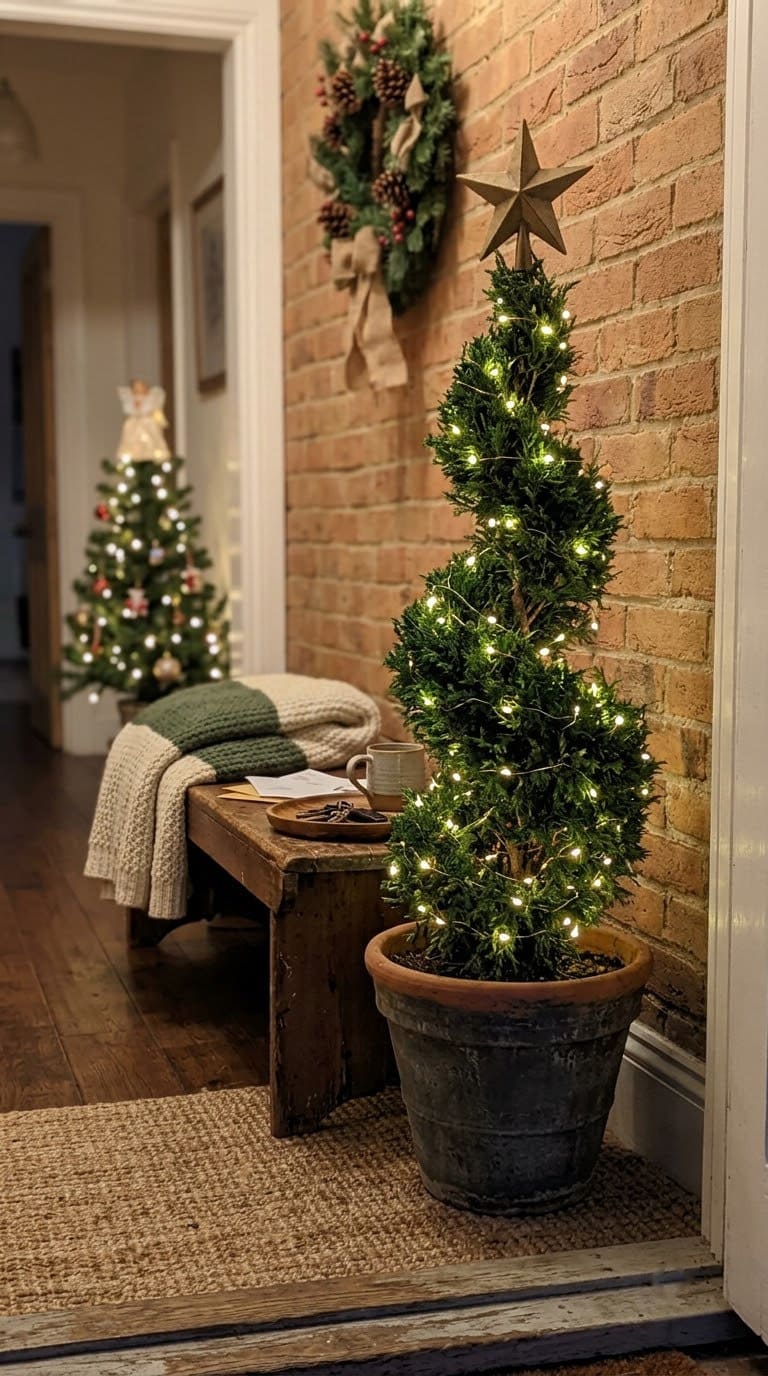
For a live potted evergreen, shaped rather than hung with ornaments. Tie a wide ribbon to the top of the plant, then wind it in a spiral down to the base, starting shallow and getting steeper near the bottom.
Use that ribbon line as your cutting guide.
Trim along the ribbon line with shears, working from the top down in small, precise cuts. Junipers, cypress, boxwood, and cedar all hold a spiral shape well, since they have an upright central stem to start from.
Trim it two to three times a year rather than once. Frequent light trims hold the spiral shape far better than one big annual cut. Budget: the cost of the live topiary plant, which you can keep and reshape every year.
How Do You Pick the Right One for Your Home?
Match the idea to the room, not just to the photo you liked. A wire skeleton tree suits a modern apartment.
A tumbleweed or cactus tree suits a desert climate. A ladder or driftwood tree suits a farmhouse or coastal home.
Think about who else lives there too. A pet that climbs will test an upside-down tree’s anchor.
A toddler will pull on low bike-wheel spokes. Pick the idea that fits your household, not just your feed.
And keep one traditional cue no matter which you choose. Lights, a star, or the classic triangle shape tell a guest’s eye “this is a Christmas tree.” They notice the material second.
What Most People Get Wrong
The biggest mistake is skipping the anchor or base math. An upside-down tree needs a rated ceiling anchor, and a driftwood tree needs a weighted base. Skip either, and it is a hazard, not a design choice.
The second is going halfway. One quirky ornament does not make an unusual tree. Commit to the material or the shape fully.
The third is copying the photo exactly. Change one material, one color, or one proportion, and the tree becomes yours instead of someone else’s Pinterest board.
Your Two-Weekend Plan
Weekend one is sourcing and safety. Gather materials, find your ceiling joist or weight your base, and test that the structure holds before you decorate it.
Weekend two is the build. Assemble the frame first, then lights, then ornaments, working the same top-down order you would use on a normal tree.
Take a photo before you add the final layer. If it still reads as a Christmas tree at that point, the idea is working.
Frequently Asked Questions
Are upside-down Christmas trees safe?
Yes, if the ceiling anchor is rated for several times the tree’s weight and driven into a joist, not just drywall. A stud finder and a rated eye bolt or screw hook are the minimum.
What is the cheapest unusual Christmas tree idea?
The book page tree and the wine cork tree can both cost nothing if you already have the materials. The pool noodle tree is close behind at under $30.
Can I put an unusual tree outdoors?
Some hold up outdoors, like the pool noodle tree and the tumbleweed tree, since they use water-resistant or naturally dry materials. Paper, feather, and book-page trees belong indoors only.
Is a feather tree the same as an artificial pine tree?
No. A feather tree is a specific historical German design from the 1840s. It uses wire branches wrapped in dyed feathers, styled after the open branch spacing of German white pine.
How do I keep an unusual tree from looking unfinished?
Keep one traditional cue, like lights, a star topper, or the classic triangle shape. Then decorate the chosen material fully instead of partway.
Do unusual trees work with pets in the house?
Some are safer than a traditional tree. An upside-down tree keeps ornaments out of a cat’s reach. A wire skeleton tree has fewer small parts to chew.
How long does a driftwood Christmas tree last?
Indefinitely if stored unglued and reassembled each year. Glued versions last just as long but store as one bulky piece instead of flat pieces.
What is the easiest unusual tree for a beginner?
The nearly-naked tree. It uses a normal tree you likely already own. The only change is fewer ornaments and looser lights.
Related Posts

Products We Recommend
This post contains affiliate links. We may earn a commission on qualifying purchases at no extra cost to you.
Hillman Extra Heavy Duty MegaHook Kit, 75 lbs
A drywall-rated anchor kit for idea 1's upside-down tree. Still find a joist with a stud finder first, since a real Christmas tree calls for hardware rated well above its weight
Shop Now
LI&HI Premium Recycled Corks, 100 Count
Real reused wine corks for idea 6's cork tree, sized for gluing onto a foam cone from the bottom up. Enough for one full tabletop tree with extras for gap-filling
Shop Now
Kathfly 12 Pc Solid Foam Pool Noodles, White
Solid (not hollow) foam for idea 13's pool noodle tree, which holds a clean cut ring better than a hollow noodle. Twelve noodles builds a full-size cone with rings to spare
Shop NowNever miss an update — choose FarmFoodFamily as your preferred source on Google.
How it works: Tap the button below to open Google's settings page, then check the box next to FarmFoodFamily.
Tap the checkbox to turn it blue — that's how you know it's set.