12 Charming Pink and Green Christmas Tree Decorating Ideas That Feel Fresh, Not Candy-Coated
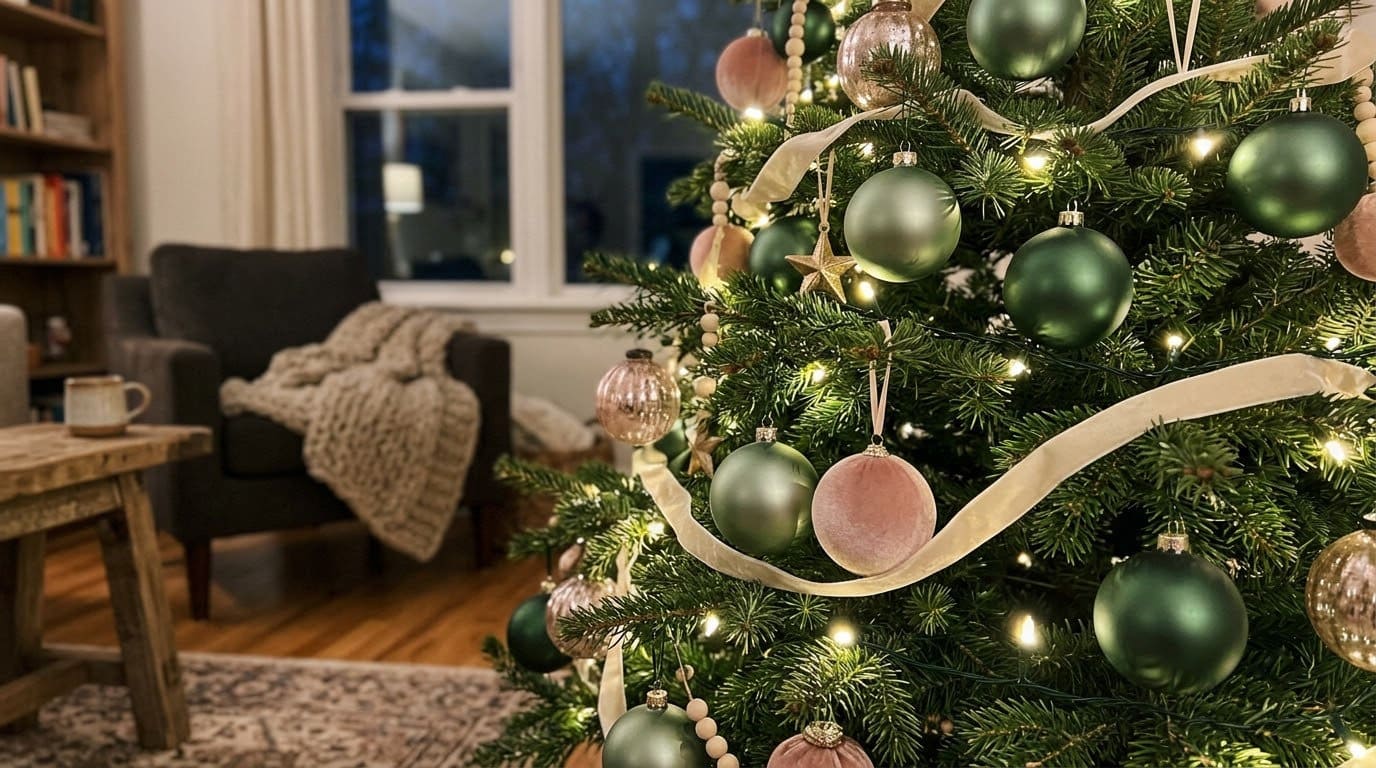
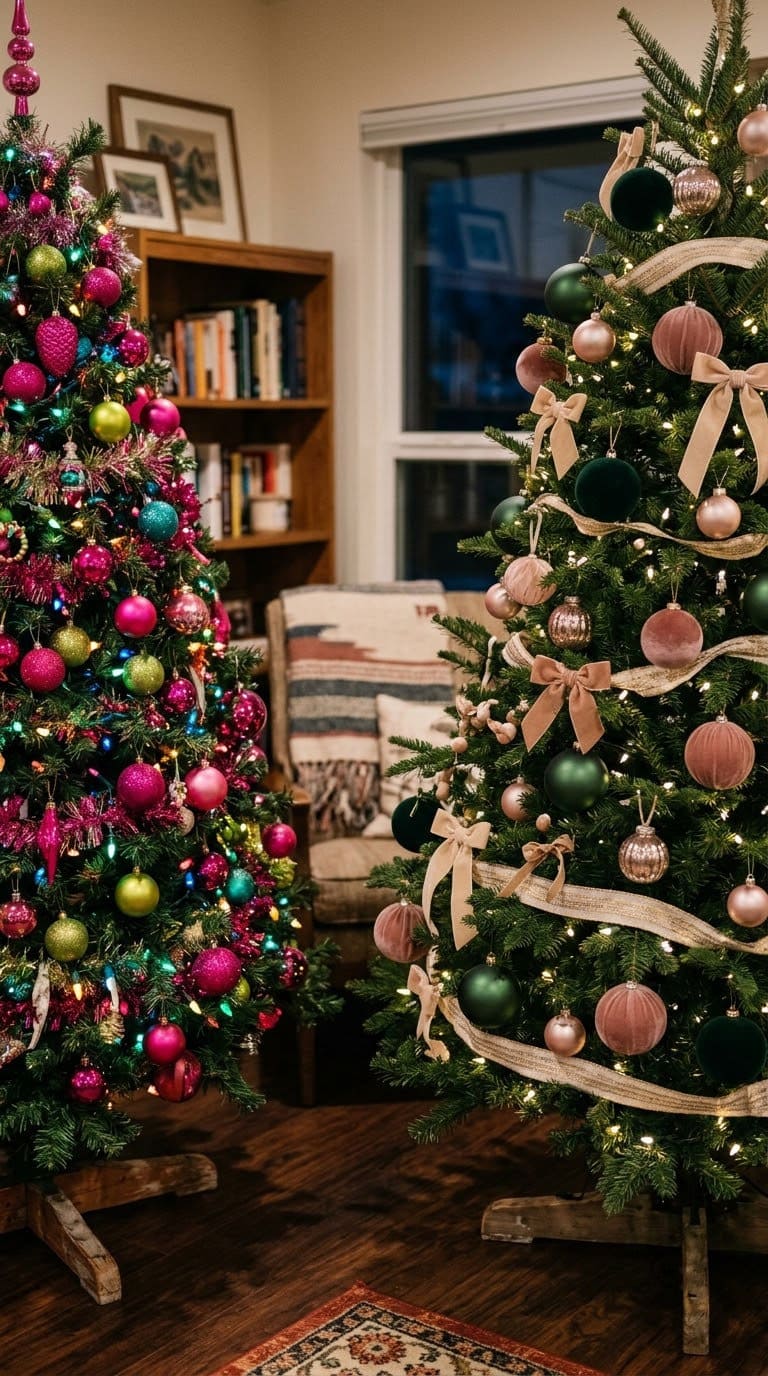
Pink and green sit opposite each other on the color wheel, so this tree works when green leads, pink stays in a supporting role, and a third neutral keeps it calm.

Never miss an update — choose FarmFoodFamily as your preferred source on Google.
How it works: Tap the button below to open Google’s settings page, then check the box next to FarmFoodFamily.
Tap the checkbox to turn it blue — that’s how you know it’s set.
Pink and green feels like a sweet idea on paper. Then you hang it, and the tree tips into candy land.
The fix is not fewer ornaments. It is a plan for which color leads, which shade of each you pick, and where the pink goes.
Below are 12 pink and green tree ideas with ornament counts, ribbon tips, and budget notes. We also cover lights, a small tree, and how to tie the tree into the rest of the room.
If you want the wider menu first, there is a longer run of tree decorating tips for every theme on the site. If you only want pink, our guide to pink Christmas trees that still look grown-up covers the whole color.
Quick Answer
To keep a pink and green tree grown-up, let green lead and use pink as the accent. A green tree already supplies the green, so pink only needs to fill about a third of the decor.

Pick a blush or dusty rose pink and pair it with a grounded green like sage or eucalyptus. Benjamin Moore suggests you “pair a blush pink with a grounded green for beautiful balance.”
Add a third color as a bridge, such as cream, gold, or white, and stop there. Kelley Gordon of Nielsen Norman Group says to “limit your palette to three colors.” That advice comes from screen design, but it works on a tree too.
Save hot pink and lime for a bold, playful tree, and keep everything else simple so it does not read as candy land.
Why Do Pink and Green Work Together?
They sit opposite each other on the color wheel. Benjamin Moore explains that “‘complementary’ colors is the term for hues that sit opposite of each other on the color wheel,” and it points to the green family when you want a match for pink.
That is paint advice, so the tree version is our own reading. But the logic carries over. Opposites make each other look brighter, which is why pink looks fresh against green.
It also explains the risk. Two strong opposites side by side can get loud fast.
| Problem | What it looks like | The fix |
|---|---|---|
| Pink and green in equal amounts | Busy, like a party store | Let green lead, pink at about a third |
| Hot pink with a mid-tone green | Harsh, a little cheap | Soften the pink or brighten the green on purpose |
| No neutral | Two colors fighting | Add cream, gold, or white |
| Every branch filled | You cannot see the tree | Leave gaps and let green show |
| Too many pink shades | Muddy, mismatched | Pick one pink family |
None of this needs a bigger budget. It needs a firmer plan.

The soft pink lead for idea 1 and idea 7, in a matte velvet finish that reads grown-up instead of glittery. Shatterproof, so it is safer near children and pets
Shop NowThis post contains affiliate links. We may earn a commission on qualifying purchases at no extra cost to you.
How Much Pink, How Much Green?
Start with green in charge. Kelley Gordon of Nielsen Norman Group gives a 60, 30, 10 split for a three-color palette: 60 percent for the main color, 30 for the second, and 10 for an accent.
On a green tree, the branches already do most of the green work. So the pink becomes your 30 and a neutral becomes your 10.
| Color | Share | Ornaments on a 7 foot tree (about 60) |
|---|---|---|
| Green (the tree, plus a few sage pieces) | 60% | Tree plus about 6 |
| Pink | 30% | About 18 |
| Neutral (cream, gold, white) | 10% | About 6 |
Those are our own planning numbers, not a standard. If the tree still feels sweet, cut pink first.
Should You Go Soft Pink or Hot Pink?
It depends on how much you want to notice. A soft pink whispers, and a hot pink shouts.
Brandy Martin, co-owner of The Avenue and Lex & King, told the University of Georgia’s news service that “pink kind of naturally goes with red and green.” Martin’s tip is to “start with a few pink-accented ornaments on the tree for a touch that doesn’t overpower.”
That is a good rule for a first pink and green tree. Start small, then add more if you like it.
Go hot pink and lime only if you want the tree to be the party. Then keep the room around it quiet.
Do You Need a Green Tree?
No, but it helps. A green tree gives you the green for free, so your money goes to pink.

A white flocked tree, a pink tree, or a black tree all work too. Then the green has to come from ornaments, picks, and ribbon, which costs more.
If you go with a white or pink tree, use more green than you think. Green stems, ribbon, and glass are what keep the tree from reading as all sugar.
What Do Viewers Say About Pink and Green Trees?
Under one popular pink and green tree video, viewers used the same words again and again. One said it gave “vibes from the land of sweets.” Another said their “immediate thought” was “candyland.” A third wrote, “Love that whimsical whoville tree.”
They meant it kindly, but the pattern is clear. When the tree is full of pink and green, people see candy.
One viewer put it bluntly: “when you can’t even see the tree bc of all the ornaments.” That is the line to keep in mind while you hang things. Leave room for the branches.
12 Pink and Green Christmas Tree Decorating Ideas
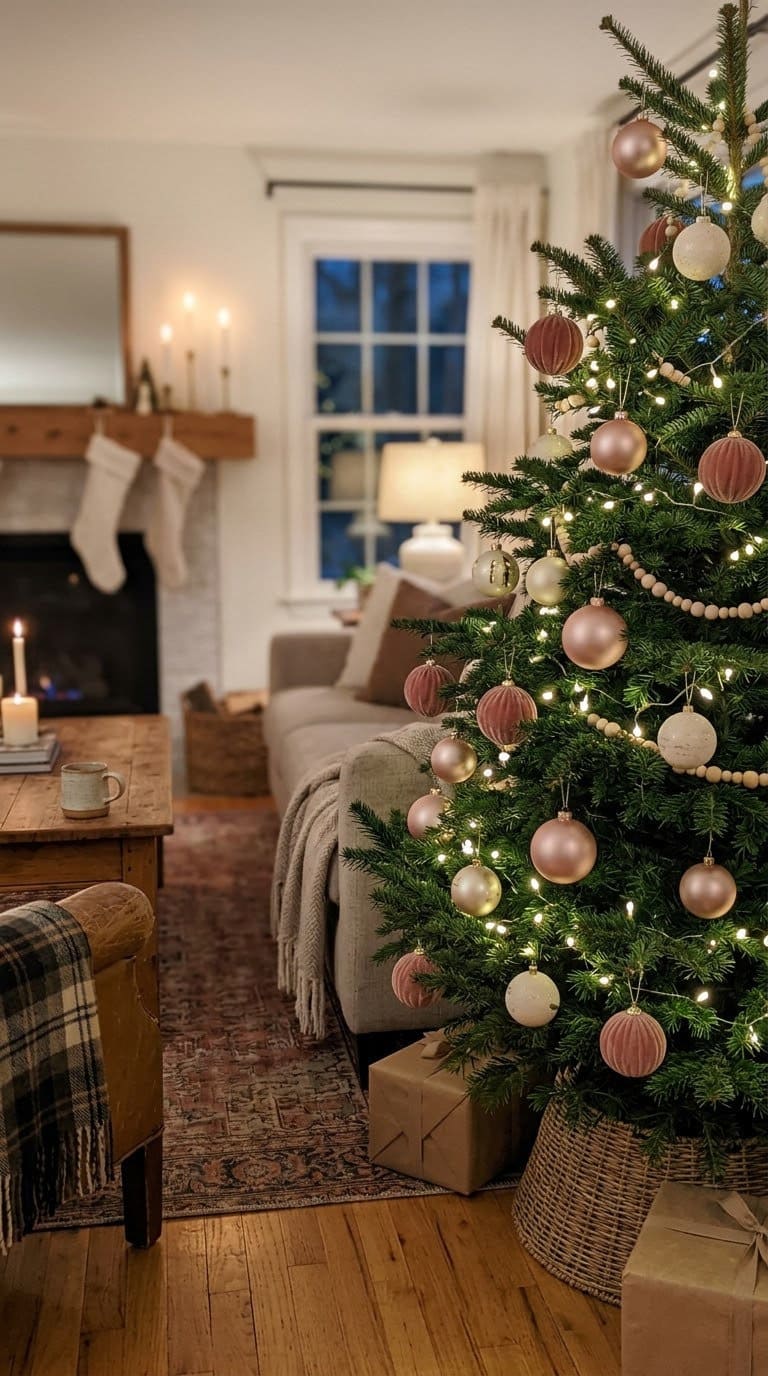
1. Blush Pink Ornaments on a Green Tree
The safest start. Use about 18 blush pink balls in 3 and 4 inch on a green 7 foot tree, spread evenly, with 6 cream or gold balls as the neutral.
This follows Brandy Martin’s advice to keep pink to a few pieces. Budget: low. Our Christmas ornament roundup has more shapes to collect.
Keep the pink matte and satin, not glittery, so it reads soft.
2. Sage Green and Blush on a White Flocked Tree
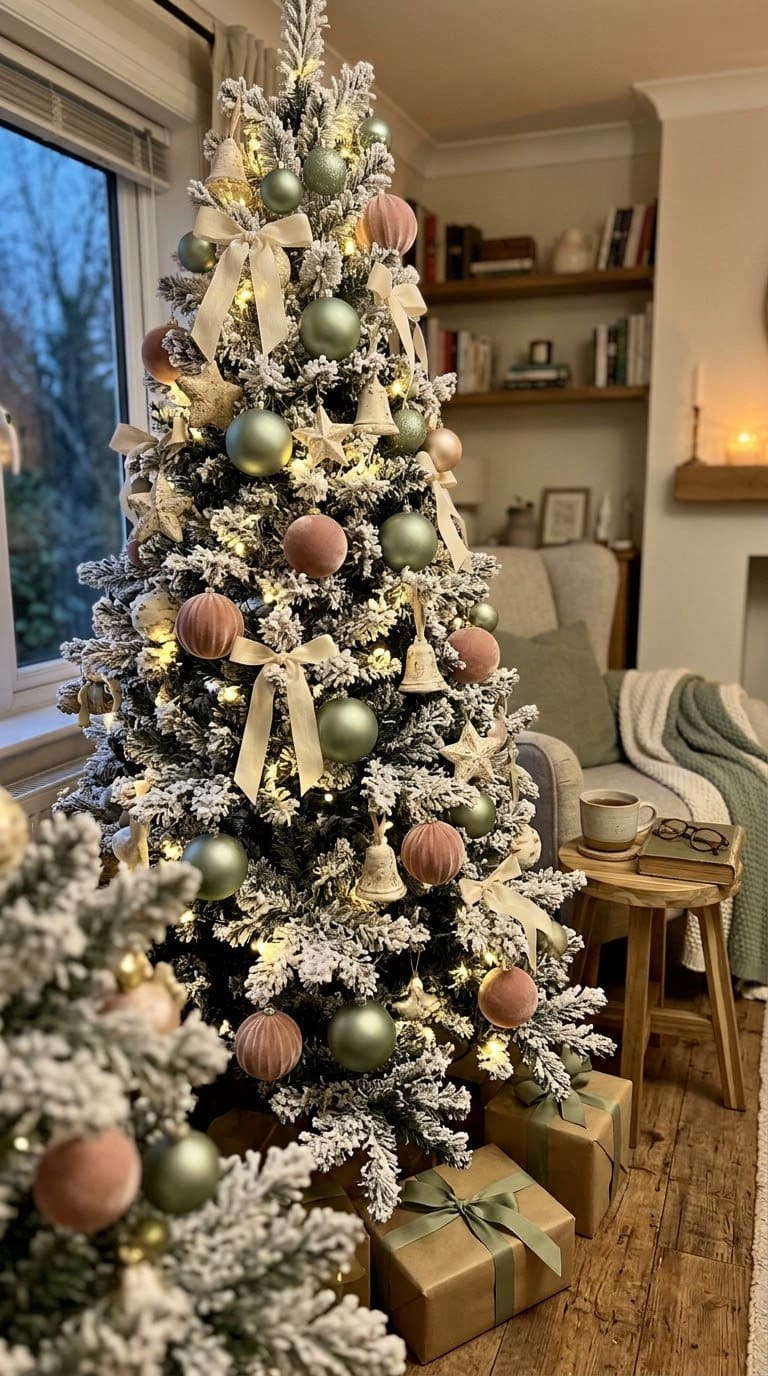
A flocked tree is the neutral, so sage and blush are the only colors. Use about 15 blush pieces and 15 sage pieces in 3 to 4 inch.
Benjamin Moore’s “grounded green” is the idea here. Sage is muted enough to hold up next to a soft pink.
Set the tree over a sheet, since flocking sheds most on the first fluff. Budget: mid to invest.
3. Fuchsia and Lime Candy Tree
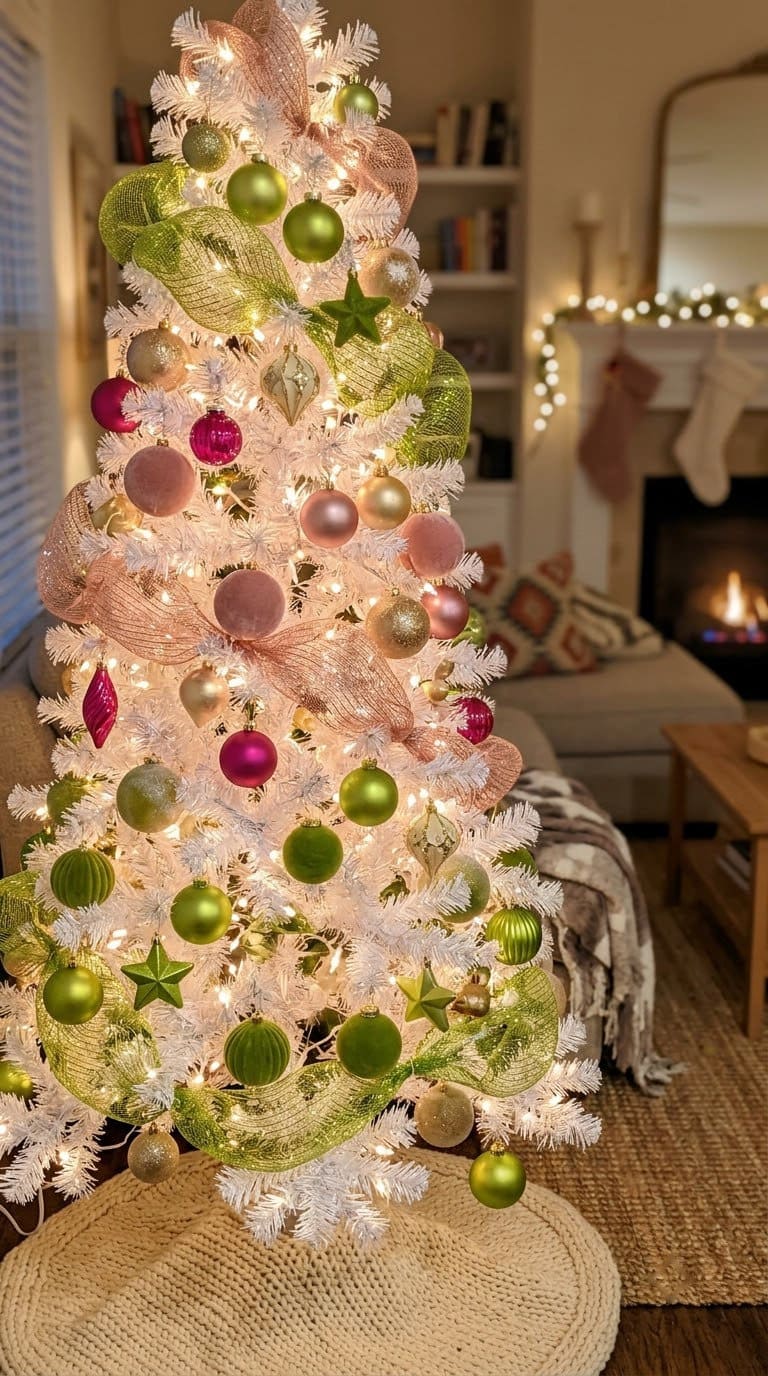
The loud one, done on purpose. The site From House to Home built a fuchsia and lime tree on a white pre-lit tree with 34 small and 12 larger 4 inch pink balls, plus 12 silk 3.15 inch and 24 smaller 2.5 inch green ones.
It also used two rolls of 10 inch deco mesh, one fuchsia and one lime, wound loosely at opposite angles for a poofed look. Their tip is to “tuck a few balls into the tree branches” for extra light and dimension.
Budget: mid to invest. Keep the room quiet so the tree can be the party.
4. Pink Ornaments and Eucalyptus Stems
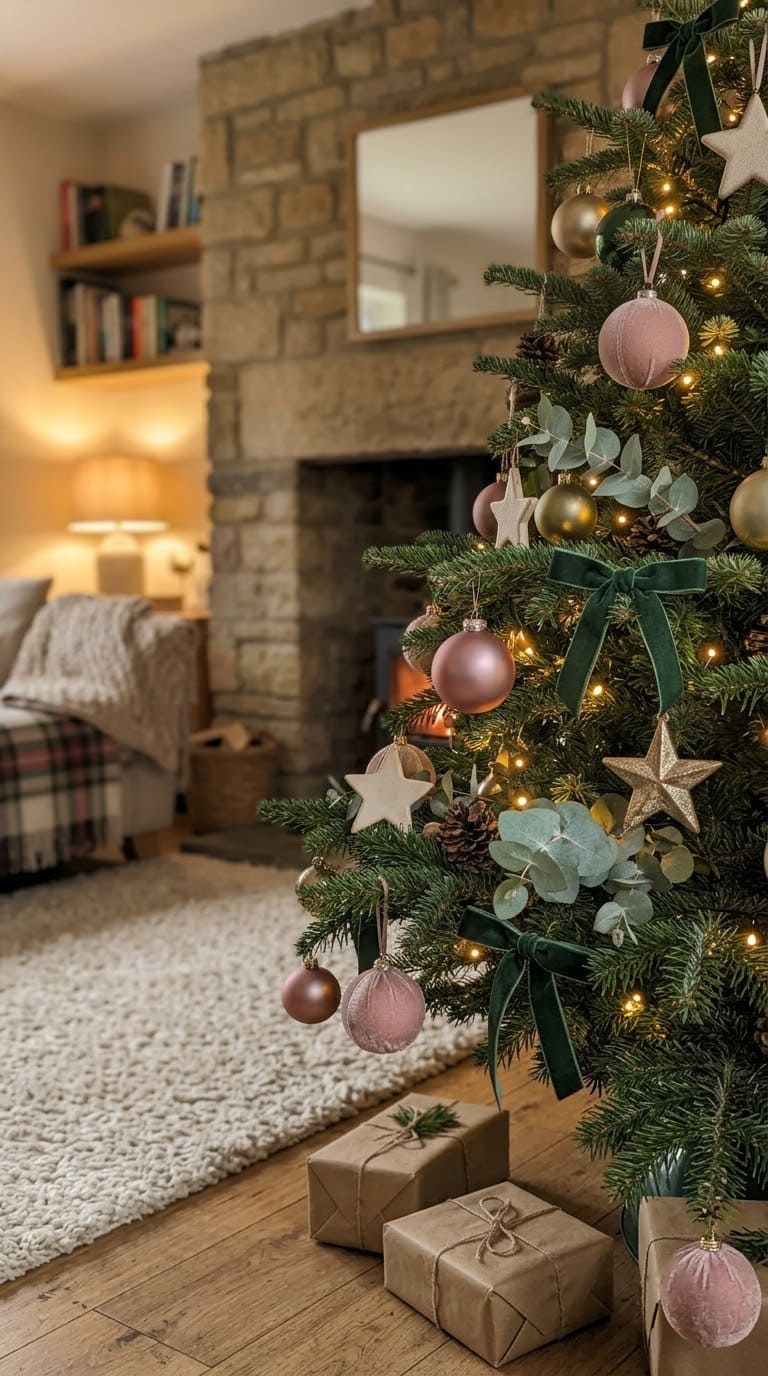
Fresh, a bit botanical. Use about 15 dusty rose balls and 10 to 12 eucalyptus stems, either faux or dried, pushed deep into the branches.
Eucalyptus is a cool, silvery green, which suits dusty rose. Budget: low to mid, and stems are one of the cheapest ways to add volume.
Vary the stem lengths by a few inches so they look like they grew there.
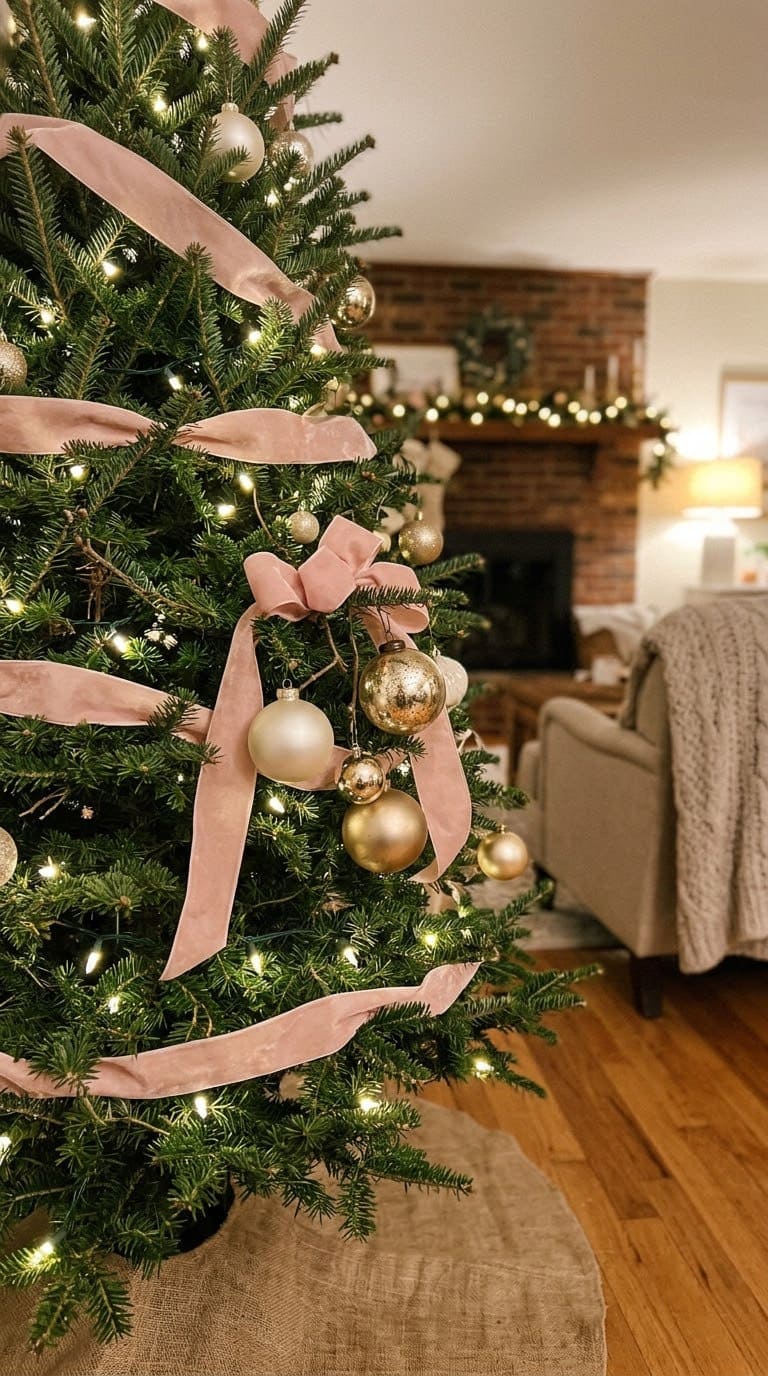
5. Pink Velvet Ribbon on a Green Tree
The ribbon does the pink work, so the ornaments can stay neutral. Use 4 inch wired blush velvet ribbon and tuck it in staggered lengths instead of spiraling one long piece.
Add about 20 cream and gold balls and nothing else pink. Budget: low to mid, and count rolls before you buy, since a full tree takes several.
This is the easiest way to look planned without buying lots of ornaments.
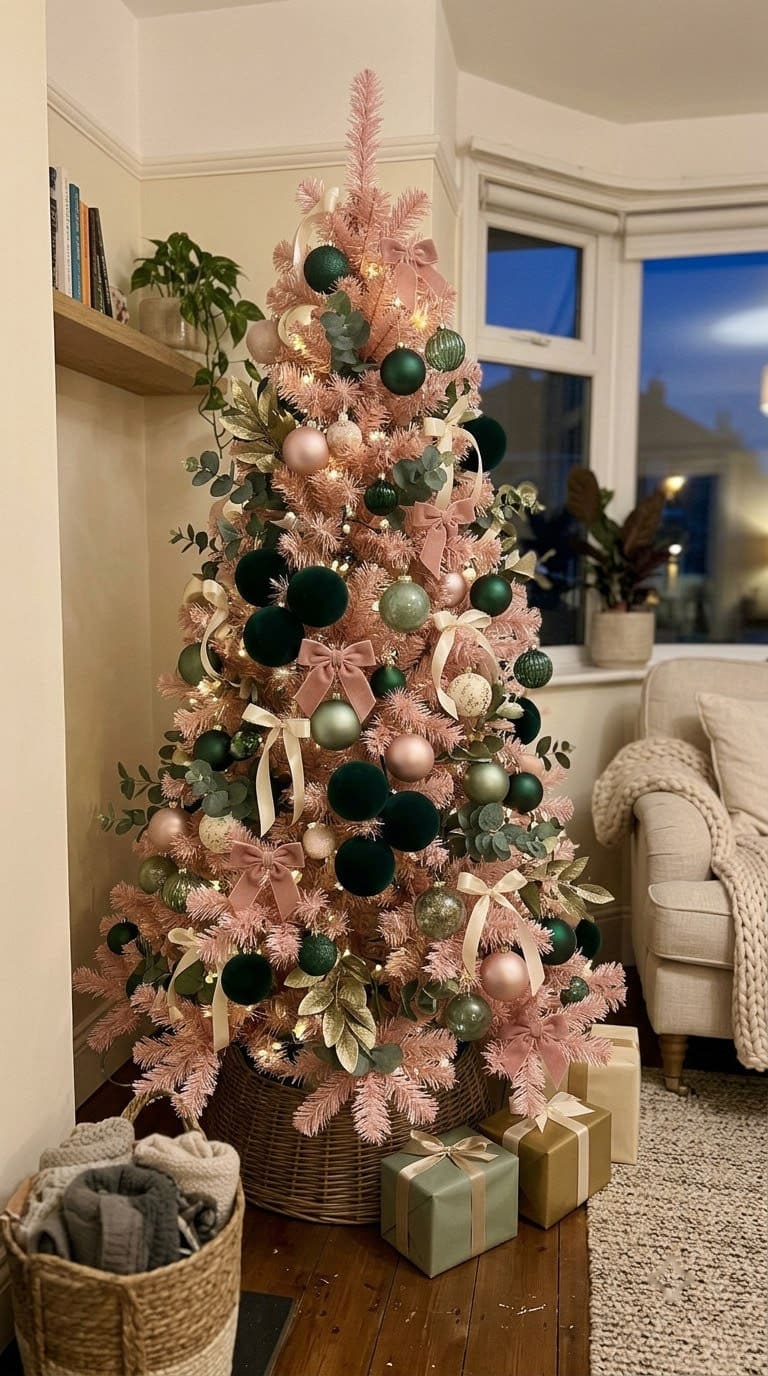
6. Pink Tree With Green Accents
Flip it. A pink artificial tree is the lead, and green is the support.
Use about 12 emerald or sage ornaments and green picks, and keep the rest cream. Budget: mid to invest, because pink trees cost more.
Choose a soft pink tree if you can. A hot pink tree wants a bolder green.
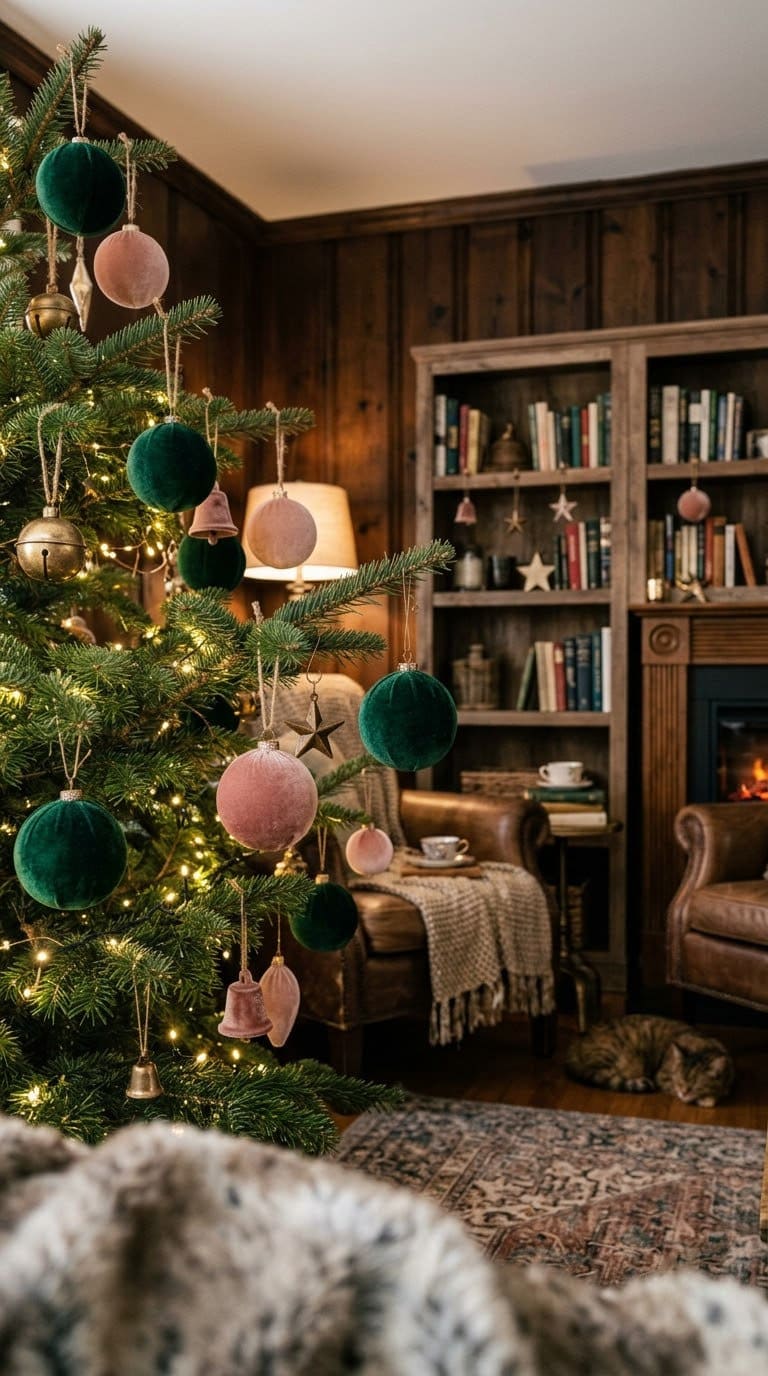
7. Dusty Rose and Emerald
The jewel-toned take. Deep emerald is richer than sage and makes dusty rose look warm and grown-up.
Use about 18 dusty rose and 12 emerald balls with 6 brass ones as the neutral. Budget: mid.
Velvet and matte finishes help here, since shiny emerald and shiny pink together lean holiday-store.
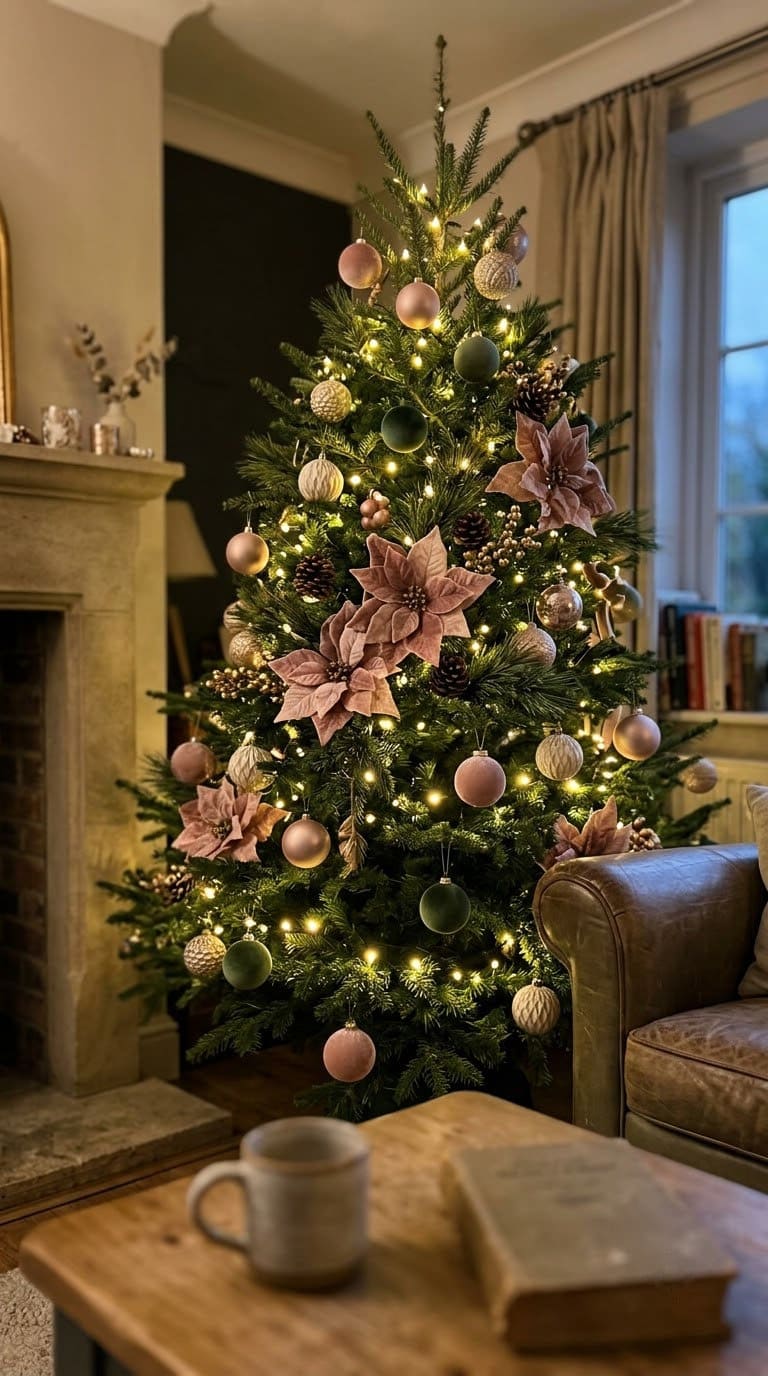
8. Pink Poinsettias and Pine Picks
Botanical and traditional. Use 8 to 10 blush poinsettia picks with 8 to 10 pine or holly picks, pushed deep.
The flowers echo the pink and the pine echoes the green, so the tree feels seasonal. Budget: low to mid.
Mix pick lengths by a few inches. It reads as branches, not decoration.
9. Mint and Pink Retro
Vintage sweetness. Mint green sits close to a powder pink, and both look right on a silver or white tree.
Use about 15 mint and 15 pink pieces, some in older shapes like teardrops and finials. Budget: low, since thrifted glass is often cheaper than new. Our guide to 90s Christmas trees covers more retro shapes.
Keep glass off windowsills. Dorset & Wiltshire Fire and Rescue Service warns that curved glass ornaments can focus sunlight onto flammable things.
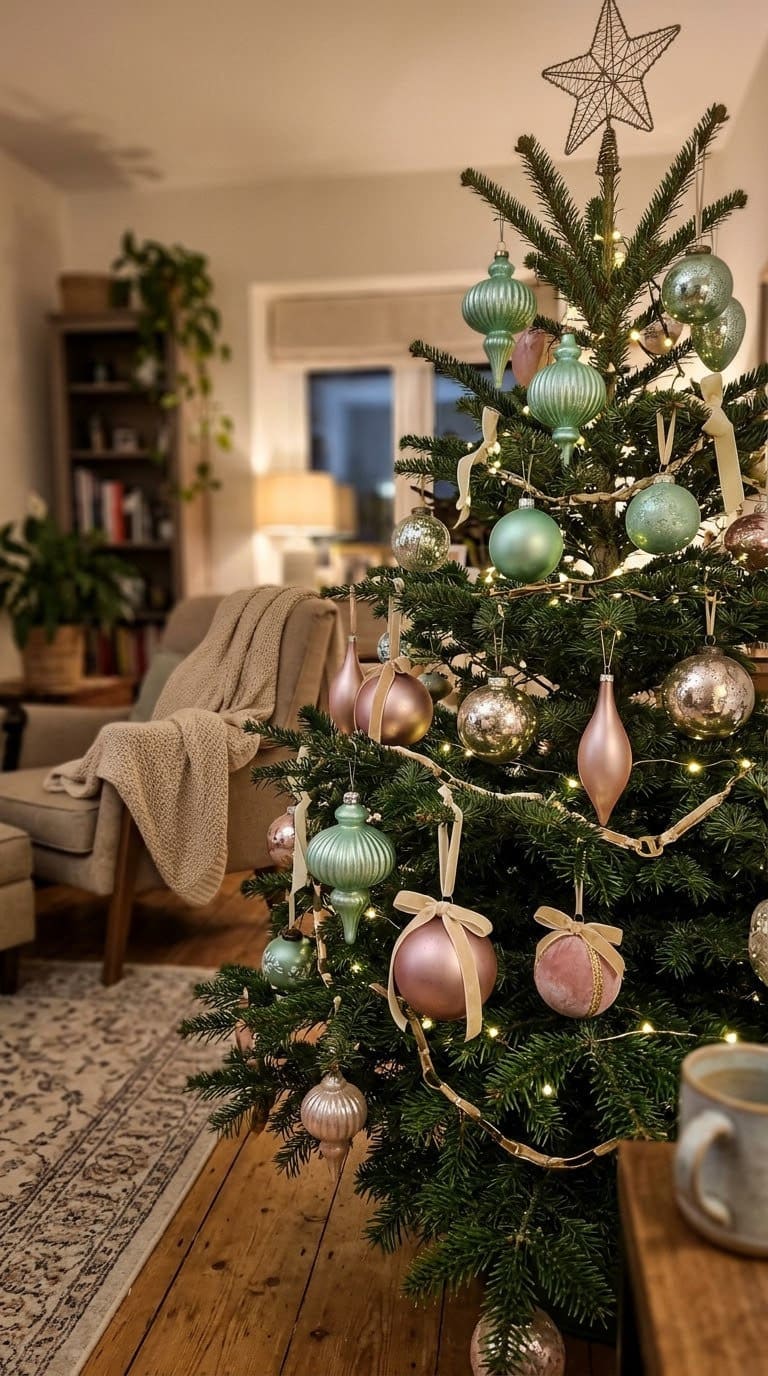
10. Pink Lights on a Green Tree
The lighting idea. Use pink or warm white lights, so the pink glows instead of looking flat.
Mind the safety basics. Do not connect more than three strands of mini lights at a time, and keep the tree at least 3 feet from heat sources, per the Electrical Safety Foundation International.
Budget: low. Our roundup of Christmas light ideas covers the other rooms.
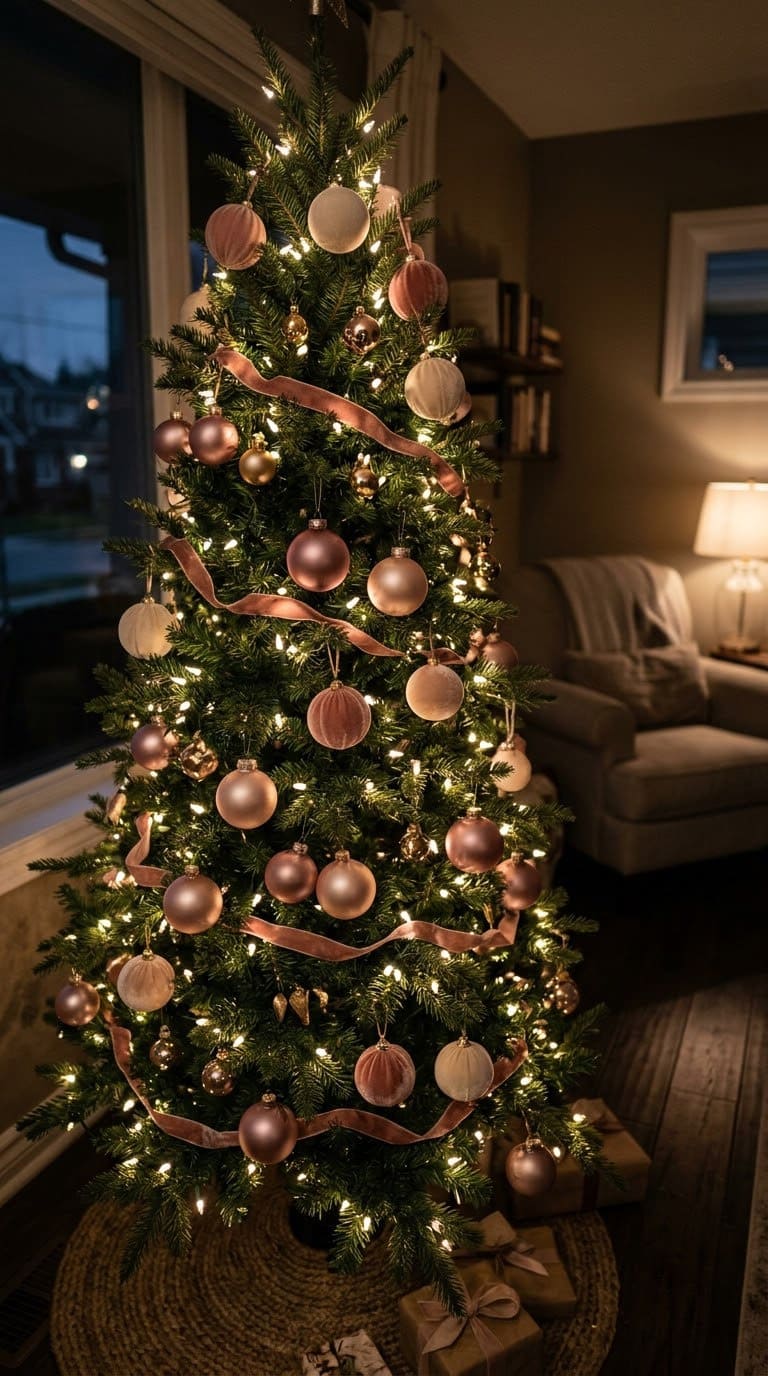
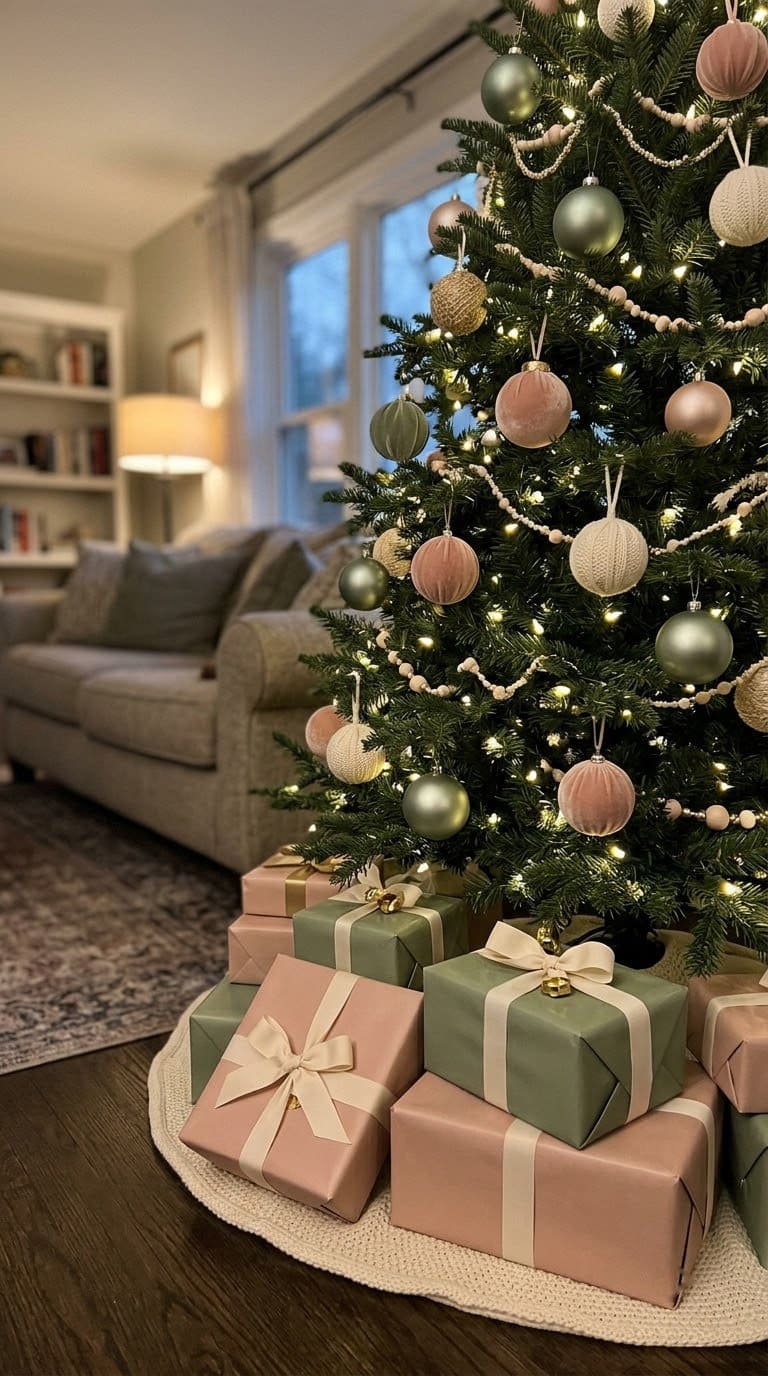
11. Tie the Tree to Pink and Green Gifts
The presents finish the tree. From House to Home wrapped gifts in coordinating pink and green paper to carry the colors down to the floor.
Use one pink and one green paper, with cream ribbon. Budget: low.
Add a tree skirt in the same family, and the whole corner looks planned.
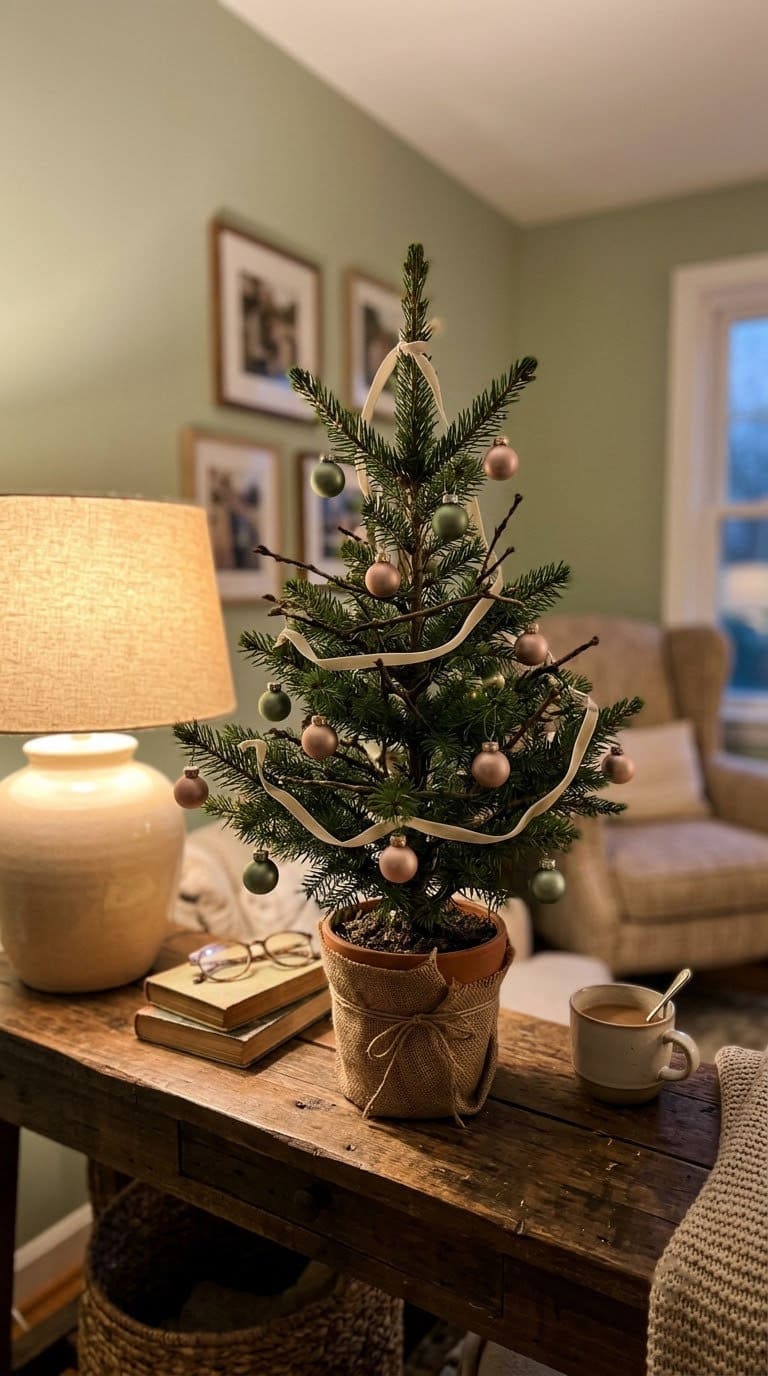
12. Tabletop Pink and Green Tree
Everything above at a quarter of the size. Use a 2 to 3 foot tree, 2 inch balls only, about 15 of them, and one narrow ribbon.
Small trees fill up fast, so leave gaps. Budget: low.
Good for renters, offices, and shelves. Keep glass balls off windowsills.
How Do You Keep It From Looking Like Candy Land?
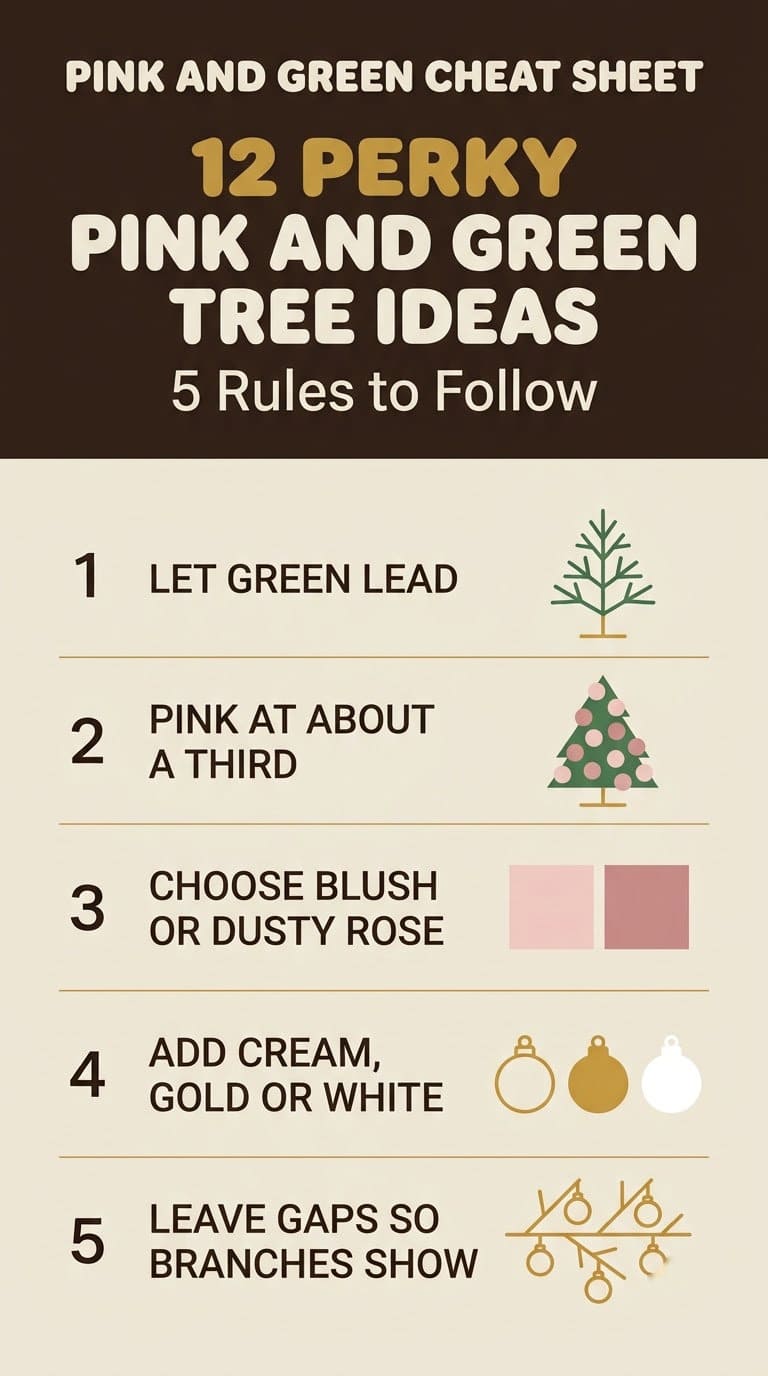
Three moves do most of the work. Let green lead, keep pink to about a third, and add one neutral.
Then look at the shade. Blush and dusty rose read grown-up, and bubblegum reads sweet. If the tree still feels loud, swap the brightest pink pieces for a softer one.
And leave gaps. Branches showing through is what tells the eye this is a tree and not a wall of ornaments.
How Do You Match the Room to the Tree?
The room decides how sweet the tree can be. A quiet room can carry a loud tree, and a busy room cannot.
If your walls are white or greige, a fuchsia and lime tree becomes the one bold thing in the space. That works well. If your room already has patterned rugs and colorful art, choose the soft version, like idea 1 or idea 5.
Look at your sofa and curtains too. A sage tree sits happily beside natural linen and wood. A blush tree looks best near warm neutrals.
One more check helps. Stand at the doorway and squint at the tree.
If pink jumps out first, add green. If the tree looks flat, add a little pink.
How Do You Do This on a Budget?
Spend on ribbon and picks first. They add volume for the least money.
Buy one pink family, not three. Mixing shades costs more and looks worse.
Shop after Christmas for pink glass. Muted pinks are often marked down.
What Most People Get Wrong
The big one is an even split. Half pink and half green looks like a party store.
The second is the pink itself. Hot pink next to a mid-tone green can look harsh, so soften one of them.
The third is skipping the neutral. Without cream, gold, or white, the two colors have nothing to rest on.
And the fourth is filling every branch. Leave some green showing.
Your Two-Weekend Plan
Weekend one is testing. Buy two pinks, hold them against your tree, and pick the softer one. Then test warm white against pink lights on a bare section for an evening.
Write down your split, because it slips in the store.
Weekend two is the build. Lights first, then ribbon, then green, then pink, then the neutral, working from the top down.
Take a photo after each layer. If the photo looks sweet, drop pink and let green show.
Frequently Asked Questions
Do pink and green go together on a Christmas tree?
Yes. They sit opposite each other on the color wheel, and Benjamin Moore suggests pairing a blush pink with a grounded green for balance.
What shade of pink goes best with green?
Blush and dusty rose pair well with sage or eucalyptus. Hot pink works with lime if you want a playful tree.
How much pink should I use?
About a third of the decor is a good ceiling. Let green lead, and add a neutral for the rest.
Do I need a green tree?
No, but a green tree gives you the green for free. A white or pink tree needs more green ornaments, ribbon, and picks.
How do I stop a pink and green tree from looking like candy?
Keep pink to about a third, pick a softer shade, add cream or gold, and leave gaps so branches show.
What color lights go with pink and green?
Warm white or soft pink lights work well. Keep the tree at least 3 feet from heat sources.
Can I do pink and green on a small tree?
Yes. Use 2 inch balls, one narrow ribbon, and leave gaps.
How many ornaments do I need for a 7 foot tree?
Our own plan is about 60 in all, roughly 18 pink, 6 sage, and 6 neutral, plus the green tree, ribbon, and picks.
Is pink and green only for a girl’s room?
No. A muted sage and blush tree works in any living room. Keep the shades soft and the finishes matte.
Related Posts
Products We Recommend
This post contains affiliate links. We may earn a commission on qualifying purchases at no extra cost to you.
DecorbyHannah 9ct 3.15 Inch Pink Velvet Shatterproof Ball Ornaments
The soft pink lead for idea 1 and idea 7, in a matte velvet finish that reads grown-up instead of glittery. Shatterproof, so it is safer near children and pets
Shop Now
Daynight 120 Pc Artificial Mixed Eucalyptus Stems
The cool silvery green for idea 4, in five stem styles and lengths from about 12 to 20 inches. Push them deep and vary the lengths so they read as branches
Shop Now
LaRibbons 4 Inch Pink Velvet Wired Ribbon, 10 Yards
The pink for idea 5, where the ribbon does the pink work. Tuck it in staggered lengths, and count rolls before you buy since a full tree takes several
Shop NowNever miss an update — choose FarmFoodFamily as your preferred source on Google.
How it works: Tap the button below to open Google's settings page, then check the box next to FarmFoodFamily.
Tap the checkbox to turn it blue — that's how you know it's set.