8 Gentle Nursery Decor Ideas That Stay Safe, Soft and Easy to Clean
A nursery can look calm and styled from day one, as long as the crib stays bare, the furniture is anchored and the paint is checked first.

Never miss an update — choose FarmFoodFamily as your preferred source on Google.
How it works: Tap the button below to open Google's settings page, then check the box next to FarmFoodFamily.
Tap the checkbox to turn it blue — that's how you know it's set.
A nursery can look calm and styled from day one, as long as the crib stays bare, the furniture is anchored and the paint is checked first.
Products We Recommend
This post contains affiliate links. We may earn a commission on qualifying purchases at no extra cost to you.

Furniture Anchors, 10 Pack, Anti-Tip Straps
Wall anchor straps with hardware for dressers and bookcases, for idea 3.
Shop Now
Hestia Cordless Blackout Roller Shades, 30 x 72 inch
Cordless blackout shade for naps, for idea 4.
Shop Now
Merelax 5x8 Non Slip Rug Pad
Thick felt pad with silicone backing that keeps a rug in place, for idea 7.
Shop NowMost nursery photos look sweet. But some of them break the basic safe-sleep rules.
A crib full of pillows and a mobile hanging low looks great in a photo. It’s not what the safety agencies advise.
These eight ideas keep the look and add the checks. Each one lists what the sources say and where the advice is our own.
Quick Answer
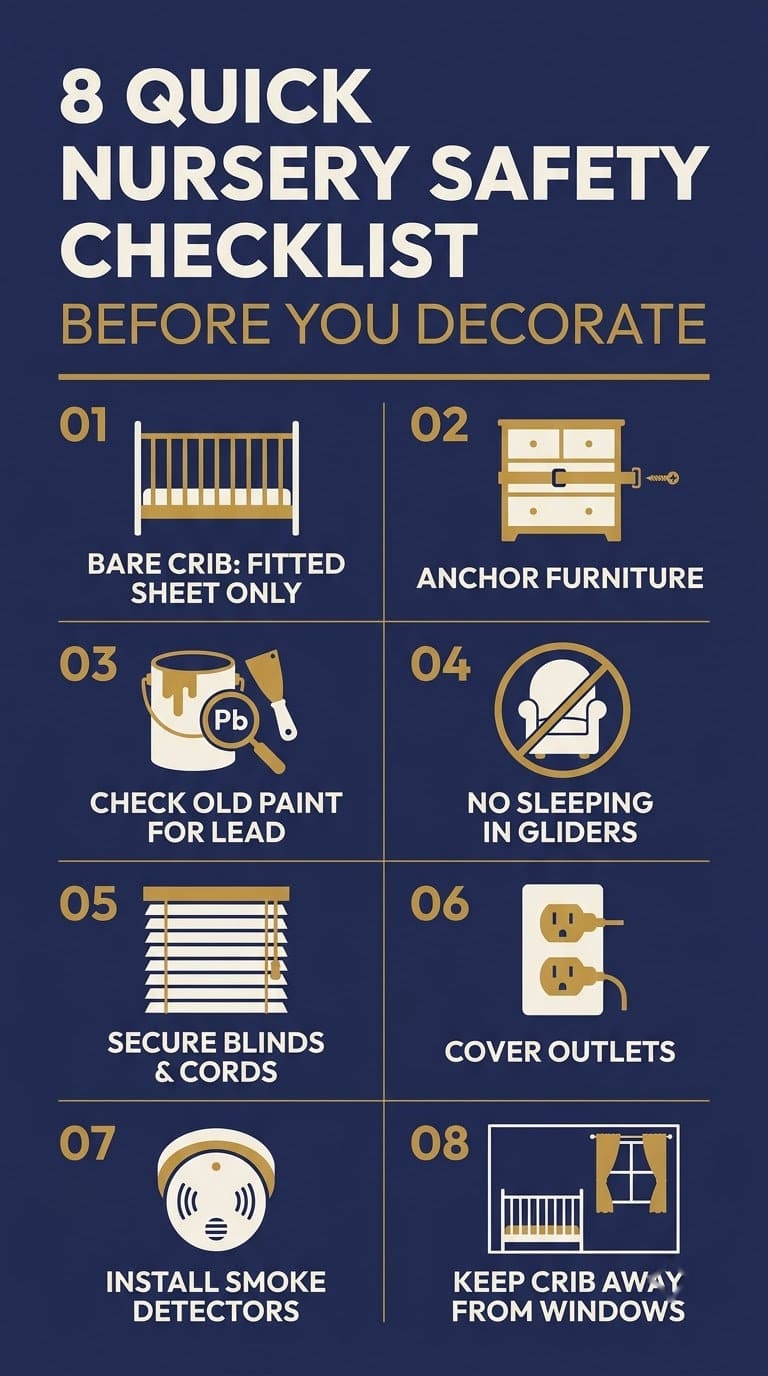
Keep the crib bare. The CPSC says the sleep space should hold only a fitted sheet, with no pillows, blankets or bumpers. It also says rockers, gliders and swings tilted over 10 degrees should never be used for infant sleep.
Anchor every tall piece. CPSC’s Anchor It data counts 459 child tip-over deaths from 2000 to 2018, and 93 percent involved children five and under.
Check the walls before you paint. The EPA says about three-quarters of pre-1978 U.S. homes still contain some lead paint.
Put the style on the walls, the floor and the window, not in the crib. Check your crib and glider for recalls at SaferProducts.gov.

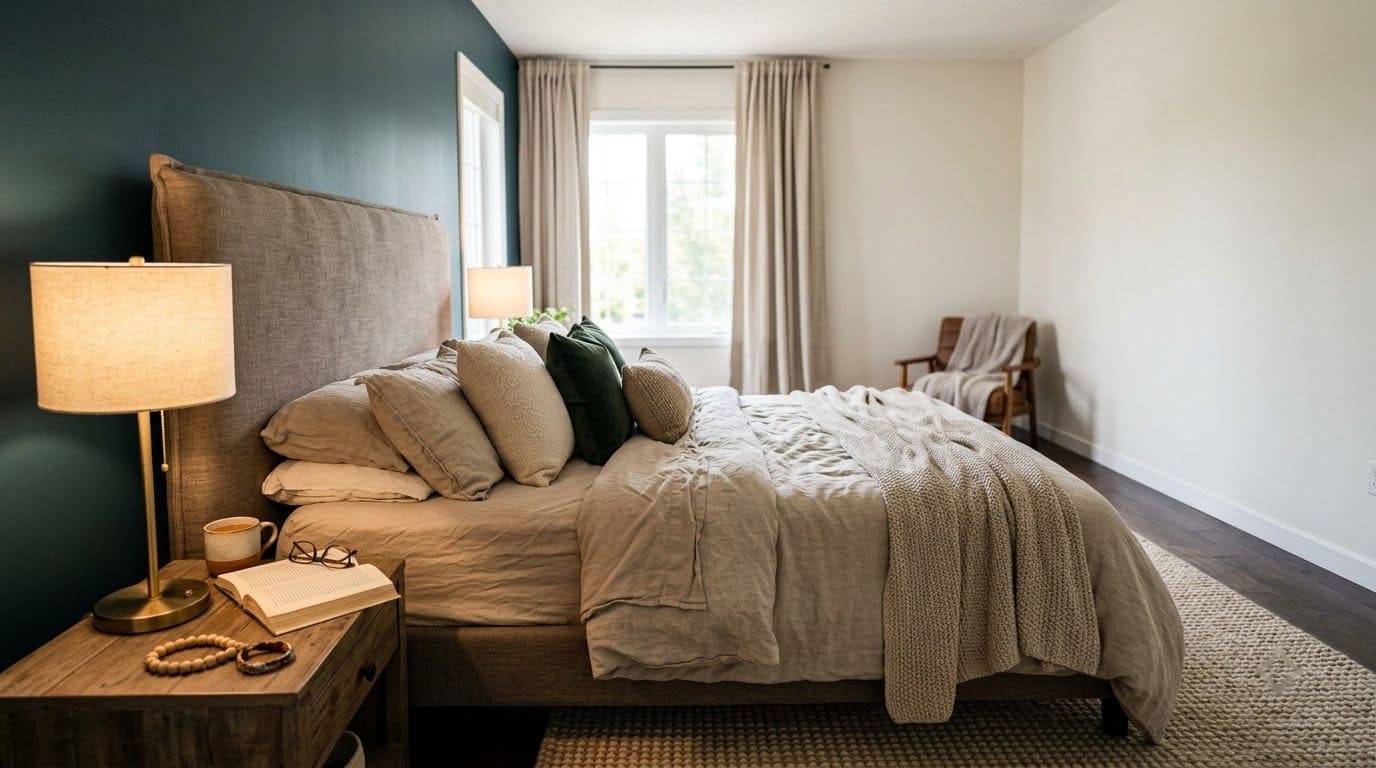

And control the light. Domino suggests blackout-lined curtains or shutters for naps. The CPSC advises low-cost anchoring devices for tall furniture, so use them on the dresser and the bookcase.
Which Idea Fits You?
Pick by your room and your plans. This table sorts the eight ideas below.
| Idea | Best for | Budget tier | Skill | Main risk |
|---|---|---|---|---|
| 1. Bare crib corner | Every nursery | Low | Beginner | Soft items sneaking in |
| 2. Art above, not inside | Style on a budget | Low | Beginner | Falling frames |
| 3. Anchored dresser-changer | Small rooms | Mid | Intermediate | Tip-over |
| 4. Blackout light control | Daytime naps | Low to mid | Beginner | Window cords |
| 5. Dimmable warm lighting | Night feeds | Low to mid | Electrician | Bright bulbs |
| 6. Accent wall | Big impact | Low to mid | Beginner | Lead paint, fumes |
| 7. Washable rug | Floor play | Low to mid | Beginner | Slipping |
| 8. Glider nook | Feeding | Mid | Beginner | Used for sleep |
Before You Start: What Stays Out of the Crib
Decor goes outside the crib. The sleep space itself follows a short list.
What does the CPSC say belongs in a crib?
The CPSC’s “Bare is Best” rule is simple. Use a crib, bassinet or play yard that meets federal requirements, and put only a fitted sheet in it.
Its “don’t” list includes pillows, blankets, weighted blankets and weighted swaddles. It lists bumpers among soft objects that can pose a suffocation risk, since many young babies can’t lift their heads to pull away.
How do you plan around it?
Put the style where the baby isn’t sleeping. Use the walls, the floor, the window and the furniture around the crib.
The CPSC also says to check recalls at SaferProducts.gov. Do it for your crib and your glider before you buy.
1. A Bare Crib Corner
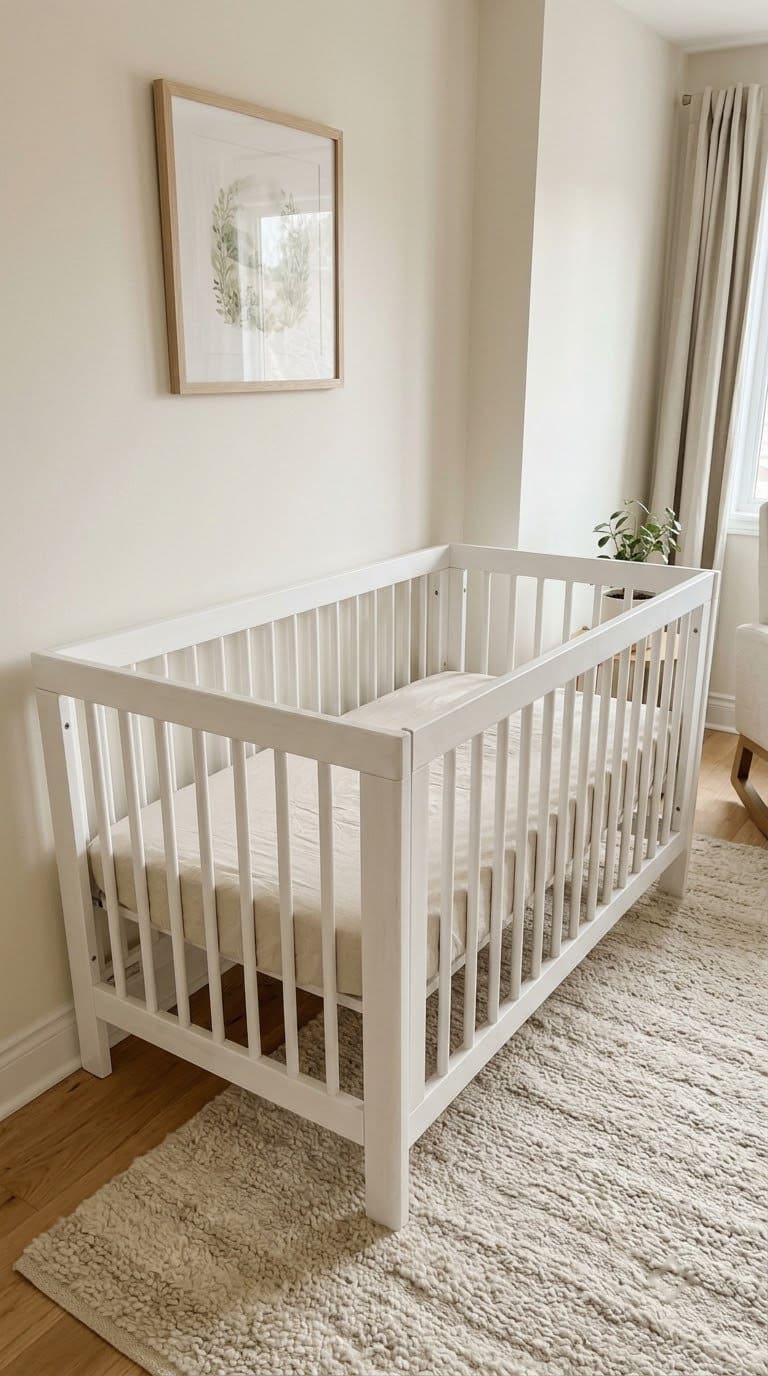
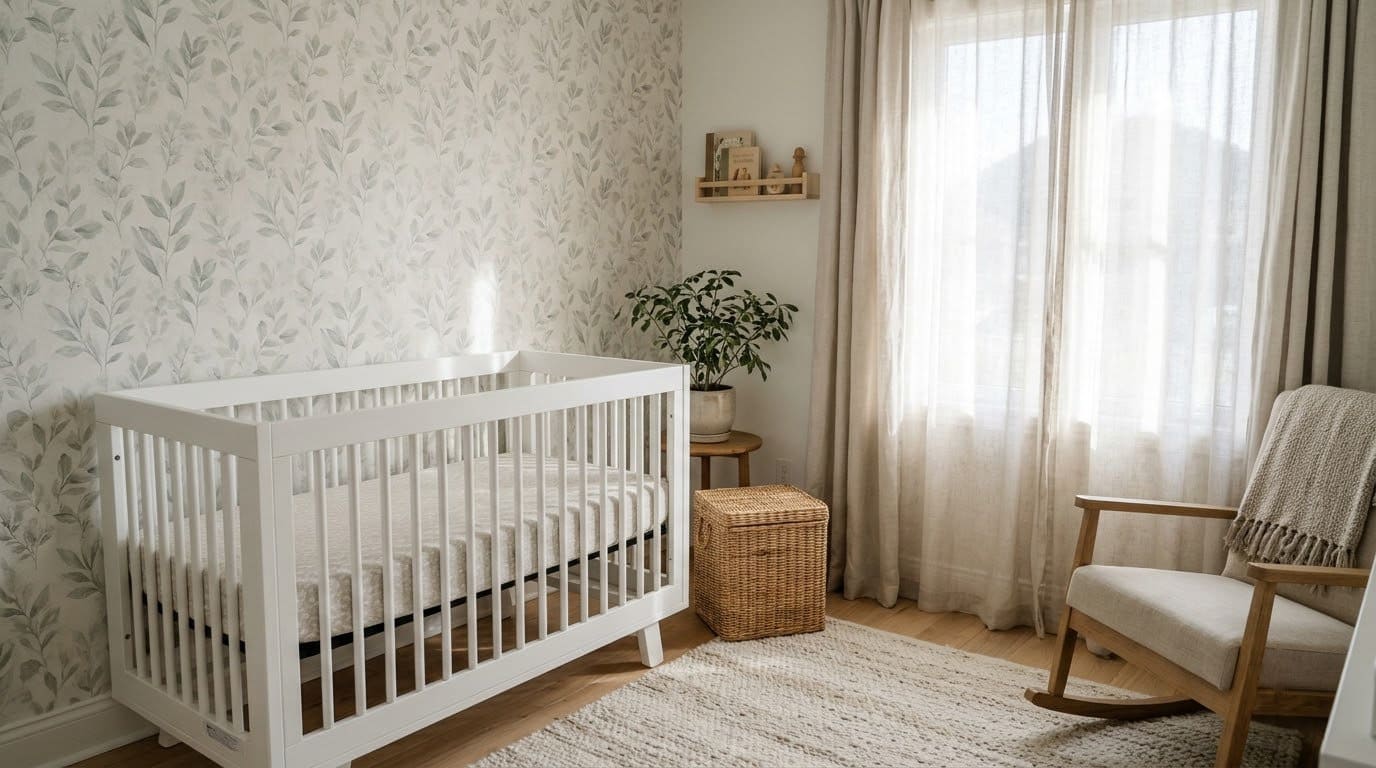
The crib is the focal point, so keep it clean and simple. A bare white or wood crib looks calm and modern.
Wall anchor straps with hardware for dressers and bookcases, for idea 3.
Shop NowThis post contains affiliate links. We may earn a commission on qualifying purchases at no extra cost to you.
The CPSC says to use only a fitted sheet in the crib. Skip bumpers, pillows and blankets, even as decor.
Add style outside the crib. Put a pattern on the sheet, a color on the wall behind and a texture on the rug below. A crib sheet in a soft print adds color without adding risk.
Keep it away from the window. We suggest placing the crib away from window cords and electrical cords. For more room ideas, see our space-saving kids bedroom furniture ideas.
Quick tip: Choose a crib sheet in a soft print and wash it before first use. That’s an easy way to add color inside the crib without adding anything loose.
Check the fit. The mattress should sit snugly against every side of the crib, with no gaps. Press down on the mattress and run a hand around the edge to feel for a loose spot.
Pick the crib spot. Place the crib on a wall without a window, if you can. That keeps it away from blinds, curtains and drafts. Keep it clear of shelves and framed art above the sleep space.
Dress the sleep space last. Wash the fitted sheet, fit it tight, and leave the crib at that. Add all the extra decor to the walls, the floor and the furniture around it.
Budget: low. Skill: beginner.



2. Art Above, Not Inside
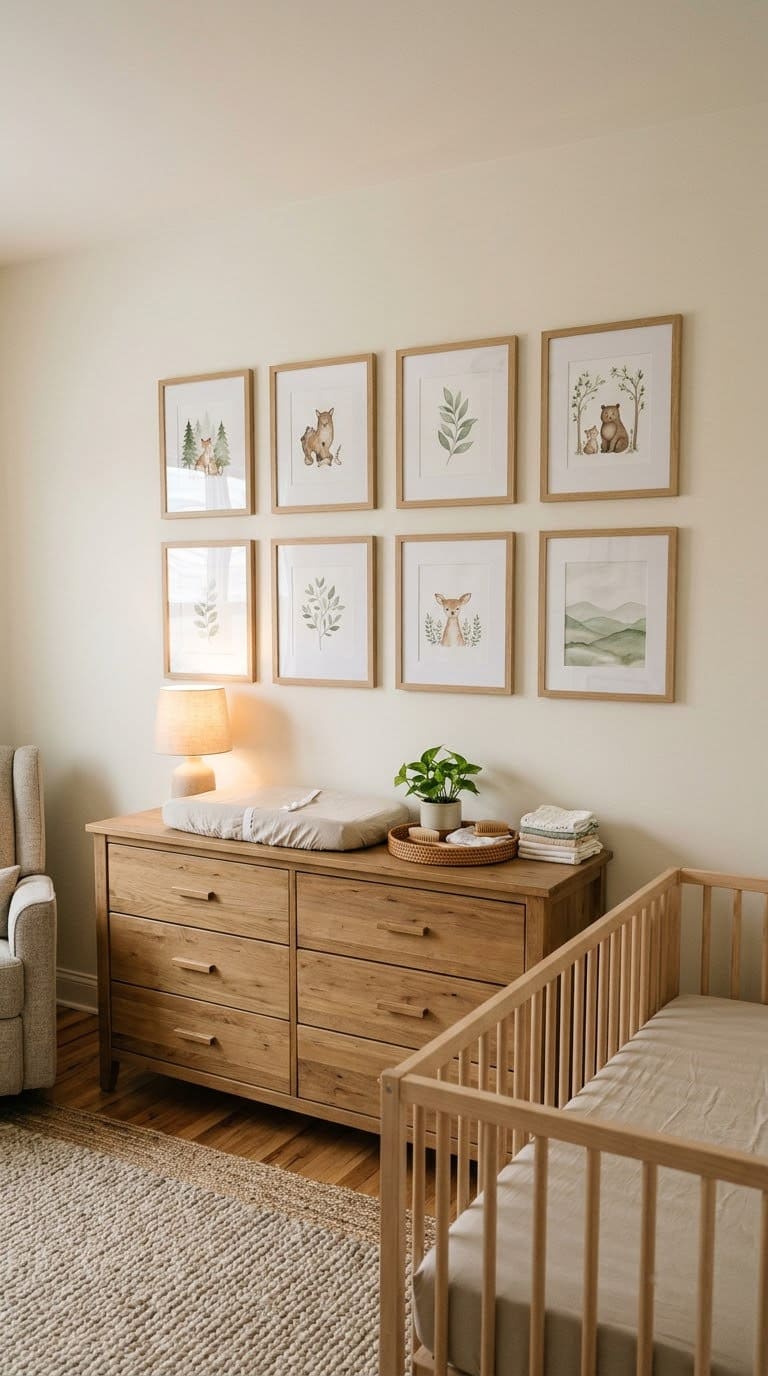
Wall art is the easiest way to add personality. It also keeps decor out of the crib.
Hang lightweight prints high on the wall, away from the crib. Use a secure hanging system so a frame can’t fall into the sleep space.
Think about mobiles. Keep anything above the crib out of reach, and take it down when your baby can reach for it. When in doubt, hang the mobile on the wall instead, where it adds style and stays clear of the sleep space.
Our rattle-free crochet patterns for baby have soft handmade pieces you can display on a shelf.
Hang it the safe way. Use a stud finder and screw heavier frames into studs. Use adhesive hanging strips only for very light prints. Pick acrylic or plastic glazing instead of glass, so a fall doesn’t shatter.
Plan the layout. Lay the prints on the floor first and move them around. When you like the pattern, trace each frame on paper, tape the paper to the wall and mark the nails through it.
Keep it high. Hang the gallery above the dresser, not above the crib. Aim for a spot where you can see it from the glider.
Budget: low. Skill: beginner.
3. An Anchored Dresser-Changer Combo
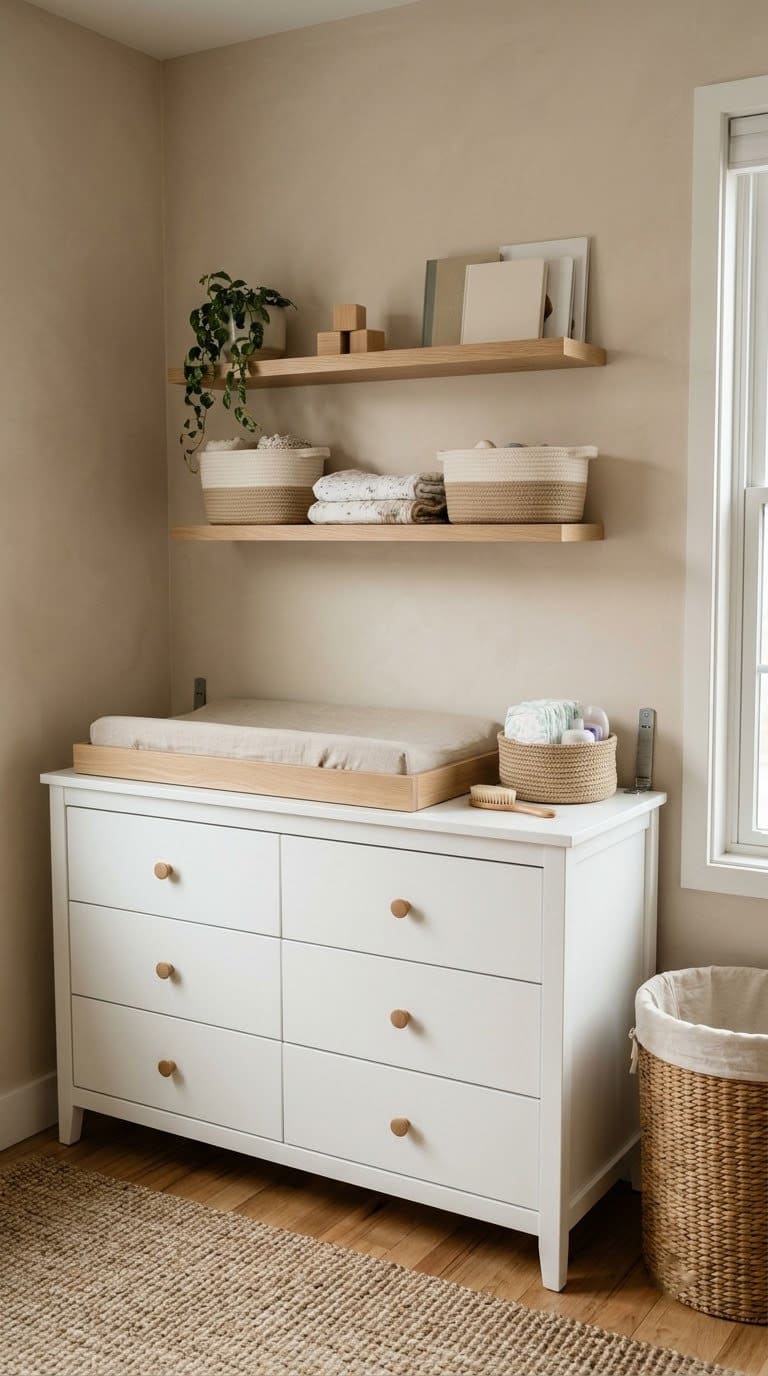
Small nurseries do best with furniture that does two jobs. Domino’s nursery guide highlights a dresser and changing-table combo in place of a separate changing table.
It also suggests shelves raised out of the direct sightline for toys and books. That keeps the room open and the clutter hidden.
Anchor everything. The CPSC counts 459 tip-over deaths of children 17 and under from 2000 to 2018. It advises anchoring furniture to the wall with low-cost devices.
If you can’t anchor a TV, the CPSC says to put it on a sturdy low base and push it back. About 11,000 children a year go to the ER for tip-over injuries, it says.
Use the anchors that come with the dresser or buy a low-cost kit. Fix them into a wall stud where you can.
Anchor it step by step. Find a stud behind the dresser’s top back edge. Screw the wall bracket into the stud.
Attach the strap to the dresser and tighten it until the dresser can’t tilt. Pull on the top of the dresser to test it.
Use the top safely. Put a firm, strapped changing pad on top, and keep everything you need within arm’s reach. Never turn away from your baby on a changing surface.
Keep heavy things low. Store heavy items in the bottom drawers and light ones in the top. That lowers the dresser’s center of gravity.
Check the TV rule. If a TV sits on the dresser, anchor it too, or move it to a wall mount. The CPSC says to place unanchored TVs on a sturdy low base, pushed back.
Budget: mid. Skill: intermediate.
4. Blackout Light Control
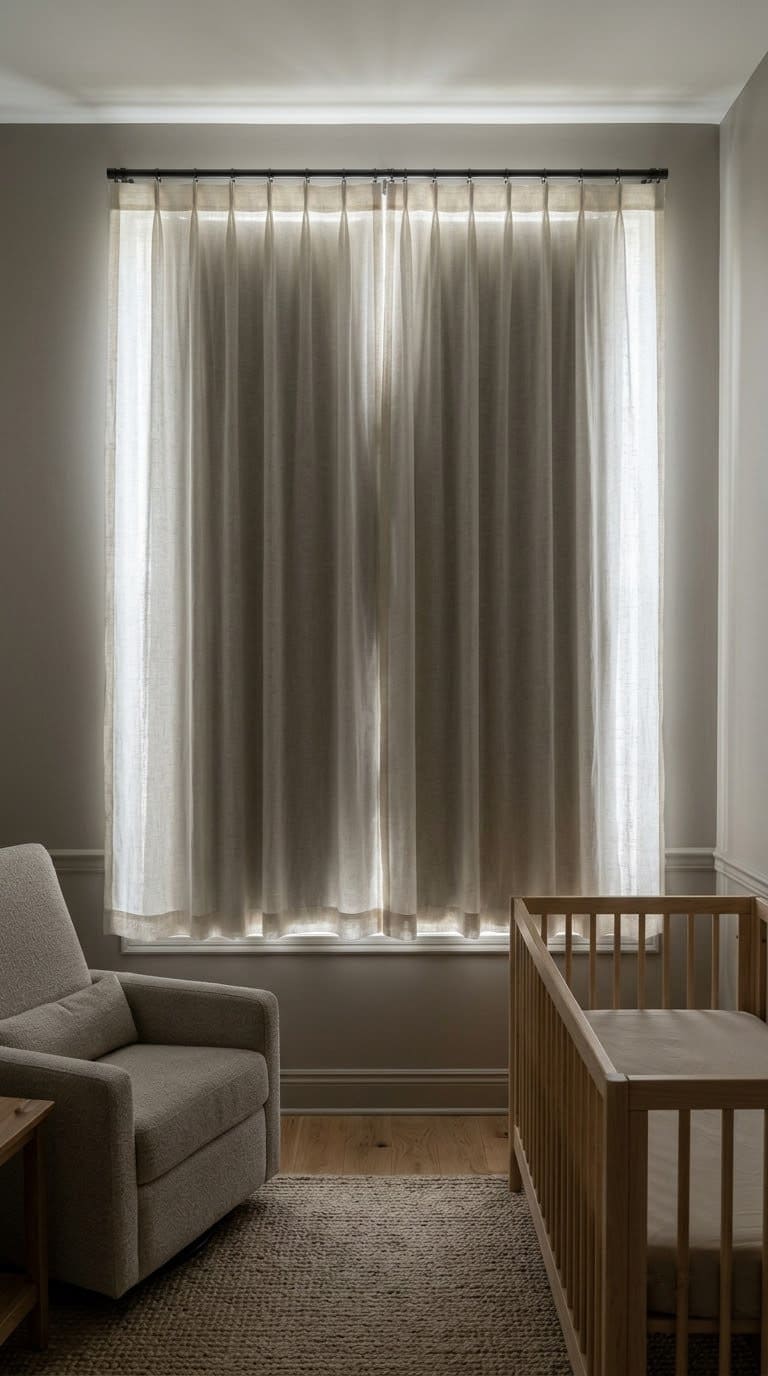
Naps go better in a dark room. Domino’s nursery guide suggests interior window shutters or blackout-lined curtains to control light.
Choose a sheer layer over a blackout one if you want a softer look by day. Fix the rod a few inches above the window so no light leaks over the top.
Check the cords. Choose cordless shades or blinds. If you already have corded ones, keep the cords high and well away from the crib.
Hang the curtains right. Mount the rod a few inches above the window frame and as wide as the frame plus extra on each side. That way the fabric covers the window when closed and doesn’t block light when open.
Layer them. Hang a blackout-lined curtain on the inner rod for naps. Add a sheer curtain on a second rod for daytime softness.
Test the dark. Close the curtains at midday and look for light at the edges. If light leaks, add a returns rod or a wider panel.
Handle the cords. Choose cordless shades, or wrap any cord around a cleat mounted high on the wall.
If a sibling will share the room later, our shared boys bedroom ideas show how to plan for two. Budget: low to mid.
5. Dimmable, Warm Lighting
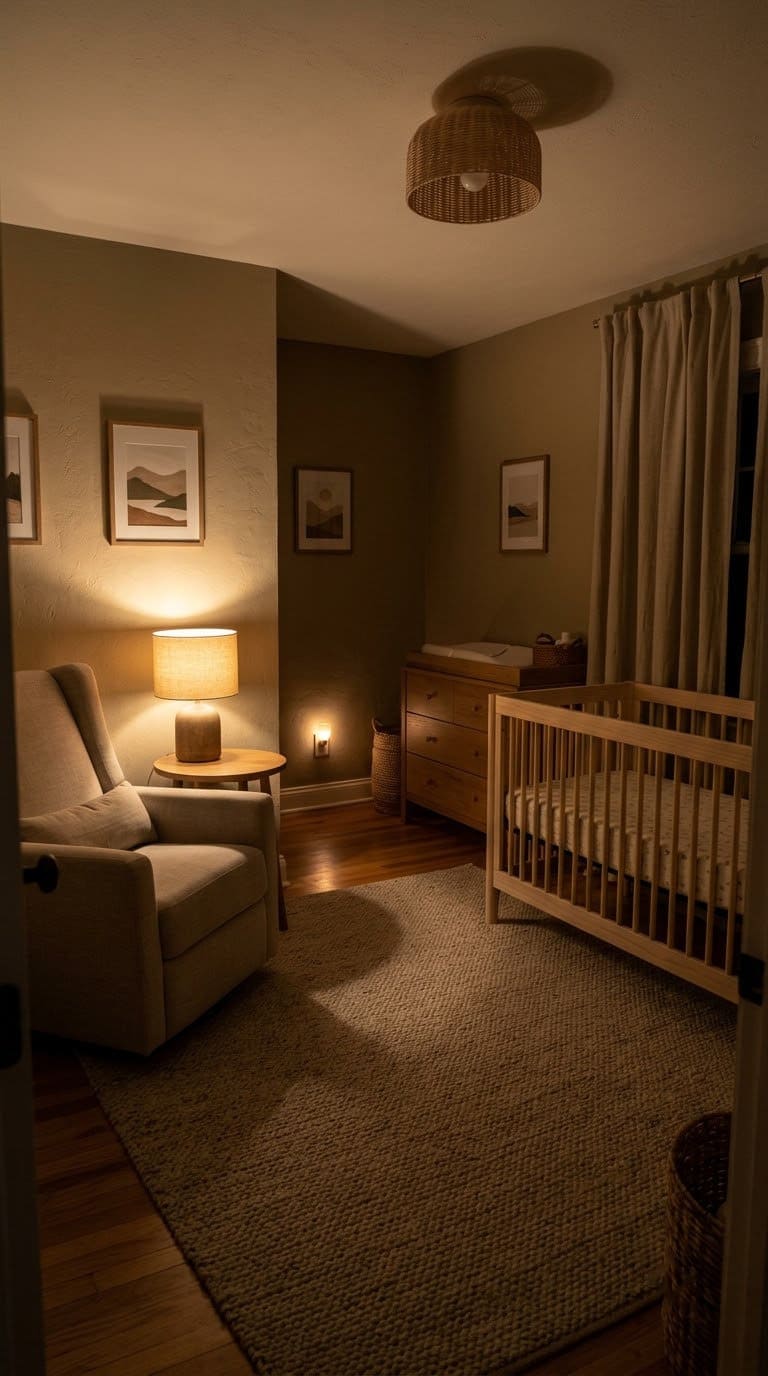
Night feeds need a gentle light. A bright overhead bulb wakes everyone up.
Use a dimmable ceiling light, a warm lamp near the glider and a small night light. Choose warm white bulbs, since they feel softer than cool white at night.
Pick the order. Dim the ceiling light first, then switch on the lamp. Your eyes adjust faster than you’d think.
Put it on a dimmer. A dimmer lets you keep the room low during a midnight wake-up. Ask an electrician if you need a new dimmer switch.
Our baby monitor guide covers monitor options. Keep monitor cords behind furniture and out of the crib’s reach.
Plan the switches. Decide where the light switch and the night light go before you buy furniture. Put the main switch on a dimmer near the door, so you never have to flip a bright light on.
Place the lamp well. Put the lamp beside the glider, on a stable table, with the cord behind the furniture.
Put the night light low. Place a small night light in an outlet near the floor, away from the crib. It lets you walk in at night without waking the baby.
Test it at night. Sit in the glider in the dark and turn on each layer. Adjust until you can see well without glare.
Budget: low to mid. Skill: electrician for the switch.
6. An Accent Wall
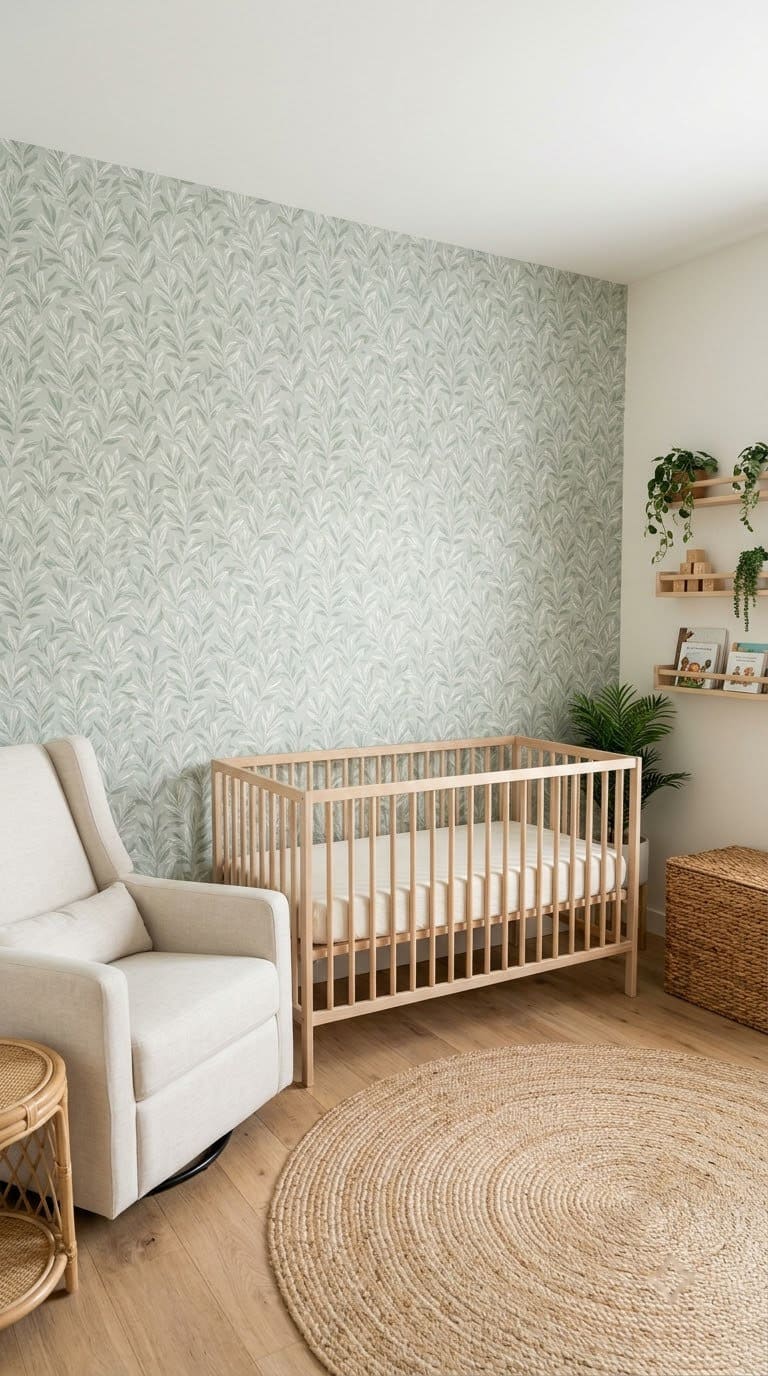
One accent wall gives big impact for a small cost. Domino’s guide features a bold tree wallpaper and suggests a wallpaper accent wall as a lower-commitment option.
Pick a soft color or a gentle pattern. Put it on the wall behind the crib, not the wall by the door.
Check for lead first. The EPA says lead paint was banned for homes in 1978, and about three-quarters of older U.S. homes still have some. It says painting and renovation can create lead dust.
The EPA’s rule generally doesn’t cover homeowners who work on their own home. But it recommends hiring a lead-safe certified contractor, and it applies if you rent part of your home or run a child care business there.
Check for lead first. If your home was built before 1978, use a lead test kit or hire a certified inspector before you sand or scrape. The EPA recommends a lead-safe certified contractor.
Prep the wall. Fill holes, wipe the wall and prime it. A smooth wall makes paint or wallpaper look better and last longer.
Pick a low-odor paint. Choose a paint labeled low-VOC and ventilate the room while you paint. Finish the job well before the baby sleeps in the room, so the smell fades.
Apply wallpaper in order. Start at the corner, match the pattern at the seams and smooth out air bubbles with a smoothing tool. Removable wallpaper is an easy choice if you may move.
For wall color and pattern ideas, see our nursery accent wall ideas and sage green nursery ideas. Budget: low to mid. Skill: beginner.
7. A Soft, Washable Rug
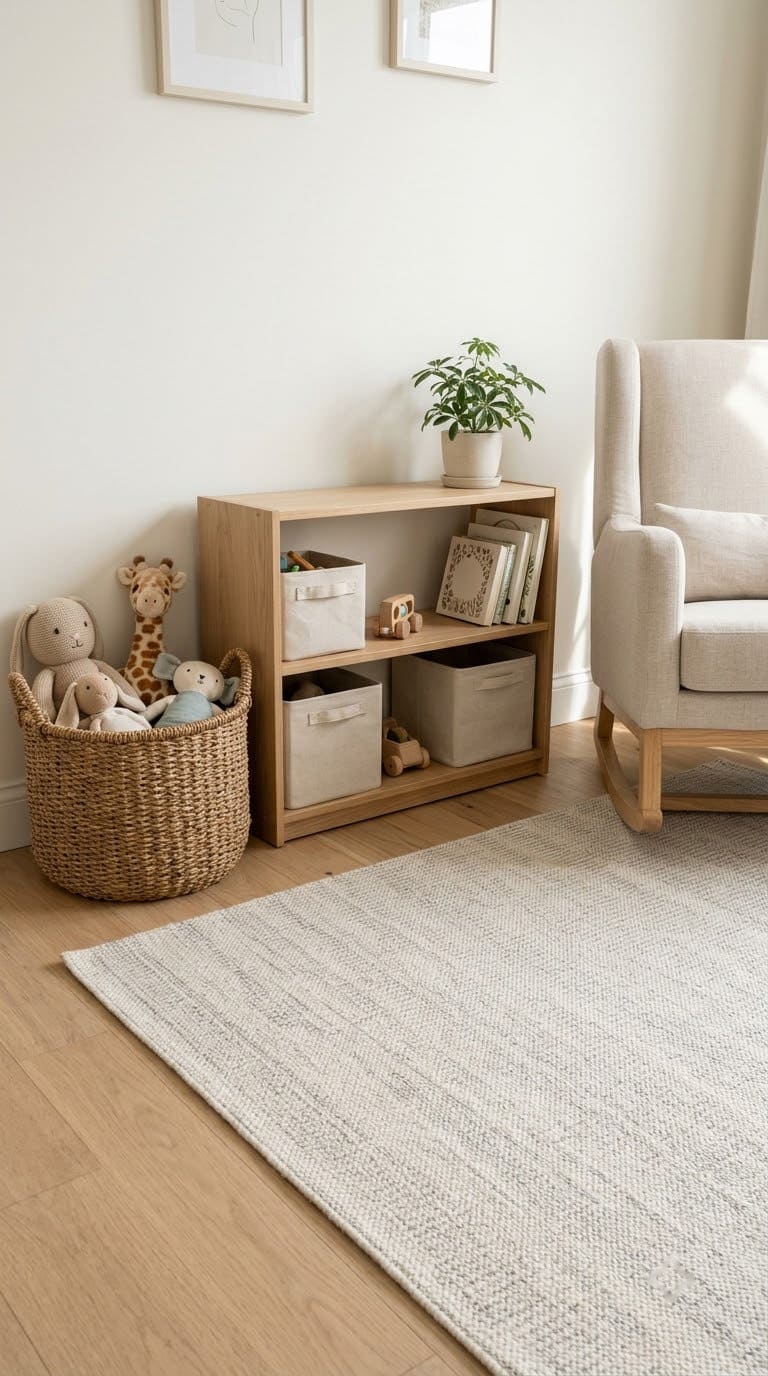
A rug softens the floor and gives you a place for tummy time. Pick one you can wash.
Choose a rug made from cotton or wool. A tightly woven flat rug is easy to vacuum and easier to wash than a thick shag.
Stop the slip. Add a rug pad so the rug stays put under a crawling baby. A rug that slides is a trip risk for you, too, when you carry the baby at night. Check the label for a washable or machine-wash rating.
Measure the space. Place the rug under the glider and let it extend a little past the front, so your feet land on it. A rug that is too small looks like an island.
Use a pad. A thin non-slip pad under the rug stops it sliding and adds a little cushion. Check that it’s the right size for your rug.
Wash it before use. Follow the care label. A washable flat-weave rug goes in the machine or can be hosed outdoors and dried flat.
Budget: low to mid. Skill: beginner.
8. A Glider Nook
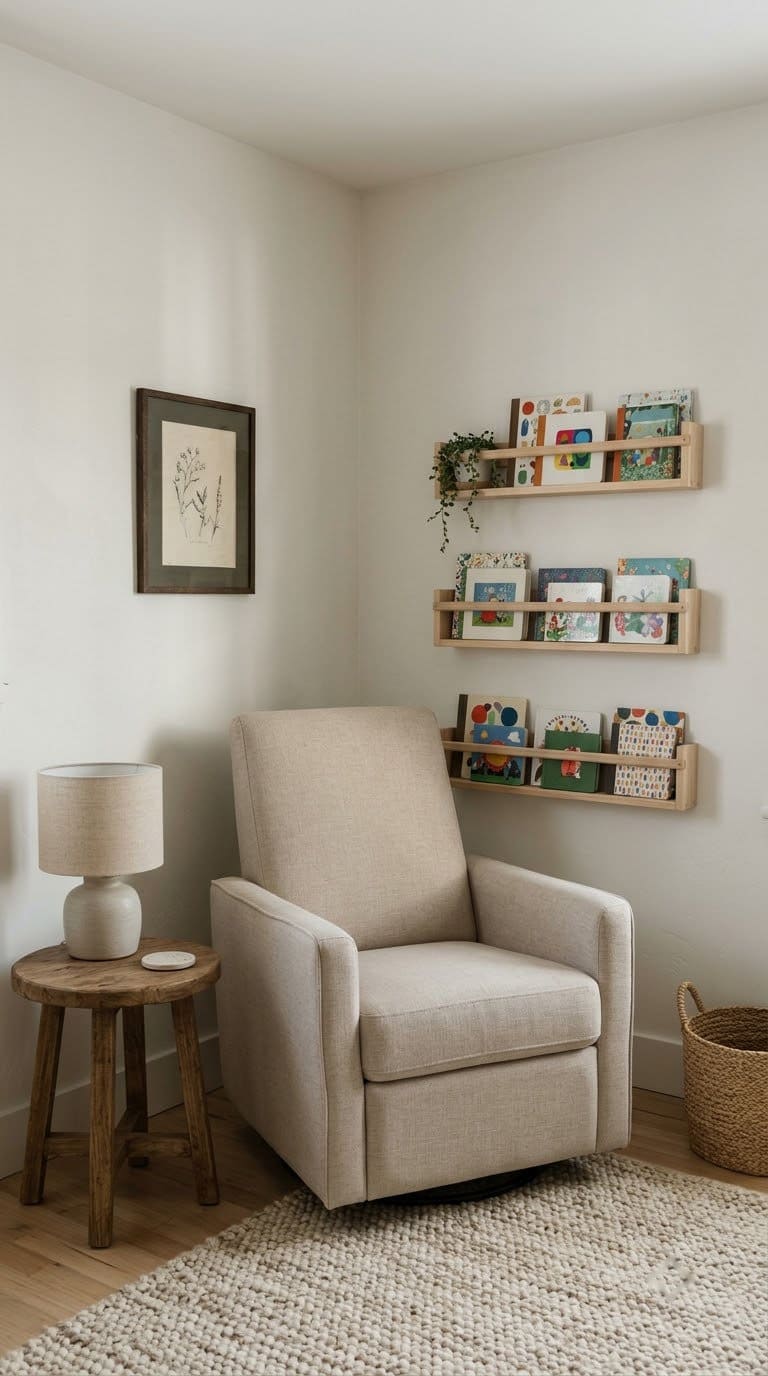
A glider is where most night feeds happen. Give it a nook with a lamp, a side table and a shelf.
Pick a glider that fits your corner without crowding the room. Measure the corner, then measure the glider’s width and how far it swings back.
Don’t let the baby sleep in it. The CPSC says rockers and gliders inclined over 10 degrees should never be used for infant sleep. Move the baby to a crib when they fall asleep.
Light the nook. Put the lamp beside the glider, not behind it. That way you can read or feed in a soft pool of light without waking the baby.
Do a glide test. Sit in the glider and rock. Check that it moves smoothly and that the arms don’t hit the wall or the dresser. Leave room behind it for the back swing.
Lock it for sleep time. The CPSC says inclined rockers and gliders should never be used for infant sleep. If your baby falls asleep in the glider, move them to the crib.
Add a side table. A small table within reach holds a drink, a burp cloth and a lamp. Pick one with a lip, so things don’t slide off.
Keep the cords out of reach. Run the lamp cord behind the table or the glider and use a cord clip.
Budget: mid. Skill: beginner.
A Nursery Setup Timeline
Spread the work over several weeks. This order keeps the big jobs first.
Start early. Check the walls for lead if your home is old. Do the painting, the wallpaper and any electrical work. Let the smell fade before you bring in furniture.
Mid-way. Assemble the crib and anchor the dresser. Hang the curtains and the art, and set up the lighting.
Last. Lay the rug, set up the glider and stock the changing station. Wash the sheets and the soft goods and put them away.
Nursery Safety Walkthrough
Do this walkthrough once the room is set up. Stand at the door, then at the crib, then at the glider.
| Check | What you should see |
|---|---|
| Crib | Only a fitted sheet, and no soft items |
| Dresser and bookcase | Anchored to the wall |
| Window | Cordless treatment or cords out of reach |
| Cords and wires | Tucked away behind furniture |
| Lighting | Dimmable, with a low night light |
| Floor | Rug with a non-slip pad |
| Glider | Used for feeding, not for sleep |
Which Palette Works for Any Baby?
The old way to decorate was pink for girls and blue for boys. These days many parents pick a palette that suits the room instead.
Soft greens, warm whites and sand tones work for any baby and for the next baby, too. They also pair well with natural wood and a washable rug.
Pick one main color, one soft accent and one natural texture. Repeat each one in two or three places around the room.
The wall and color guides linked in idea 6 go deeper on green and on accent walls.
How Should You Spend the Budget?
Spend first on what keeps the room safe, then on what makes it pretty.
Put money into the crib, the anchors and the window treatment. Save money on the art, the sheets and the small decor, which are easy and cheap to swap.
If you’re short on cash, a paint color and a few prints do more than new furniture. Hand-me-down furniture is fine if you anchor it and check recalls at SaferProducts.gov.
Which Setup Fits Your Home?
Your home decides the plan. Here’s how we’d sort it.
Older homes. Test for lead before you paint, and hire a certified pro if the paint is peeling. Use removable wallpaper for the accent wall.
Small rooms. Choose a dresser-changer combo, a wall shelf and a compact glider. Keep the center of the room open.
Renters. Skip permanent changes. Use peel-and-stick wallpaper, a rug and clip-on art lights. The EPA rule can apply to a landlord who disturbs paint in an older rental.
How Do You Keep It All Clean?
Babies make messes. Plan for it from the start.
Pick fabrics you can wash. That means crib sheets, curtains, rug covers and basket liners. Wipe wood and painted surfaces with a damp cloth.
Dust the shelves and the top of the dresser each week. Vacuum the rug often, too. A clean room is easier to keep safe, because you spot loose items fast.
Wash anything new before first use. Check the care label on each piece before you buy.
What to Do First
Start with the safety checks, then add the style. This order saves you from redoing work.
First, check the paint if your home is old. Second, anchor the dresser and bookcase.
Then set up the crib, the window treatment and the lighting. Last, add the rug, the art and the glider.
Common Mistakes to Avoid
Most nursery mistakes come from a short list of habits.
Decorating the crib. The CPSC says to keep the sleep space bare, with a fitted sheet only.
Skipping the anchor. The CPSC says to anchor furniture to the wall. Tip-overs killed 459 children from 2000 to 2018.
Painting before the lead check. The EPA says painting in an older home can create lead dust.
Letting baby sleep in the glider. The CPSC says inclined rockers and gliders should never be used for infant sleep.
FAQ
What should be in a crib?
The CPSC says only a fitted sheet. No pillows, blankets or bumpers.
Do I need to anchor a nursery dresser?
Yes, the CPSC advises it. It says to anchor furniture to the wall with low-cost anchoring devices.
Is it safe to paint a nursery in an older home?
Check for lead first. The EPA says about three-quarters of pre-1978 U.S. homes still contain some, and recommends a lead-safe certified contractor.
Can my baby sleep in a glider?
No. The CPSC says inclined rockers and gliders should never be used for infant sleep.
How soon should I set up the nursery?
Start in the weeks before the due date. Do the painting and the lead check first, then the furniture, then the soft goods. Finish with the safety walkthrough above.
What should I buy first?
Buy the crib, the anchors and the window treatment first. Those affect safety. Add the rug, the art and the decor afterwards.
Can I use hand-me-down furniture?
Yes, if you anchor it and check for recalls at SaferProducts.gov. The CPSC lists recall checks as part of safe sleep.
Related Posts
Never miss an update — choose FarmFoodFamily as your preferred source on Google.
How it works: Tap the button below to open Google's settings page, then check the box next to FarmFoodFamily.
Tap the checkbox to turn it blue — that's how you know it's set.