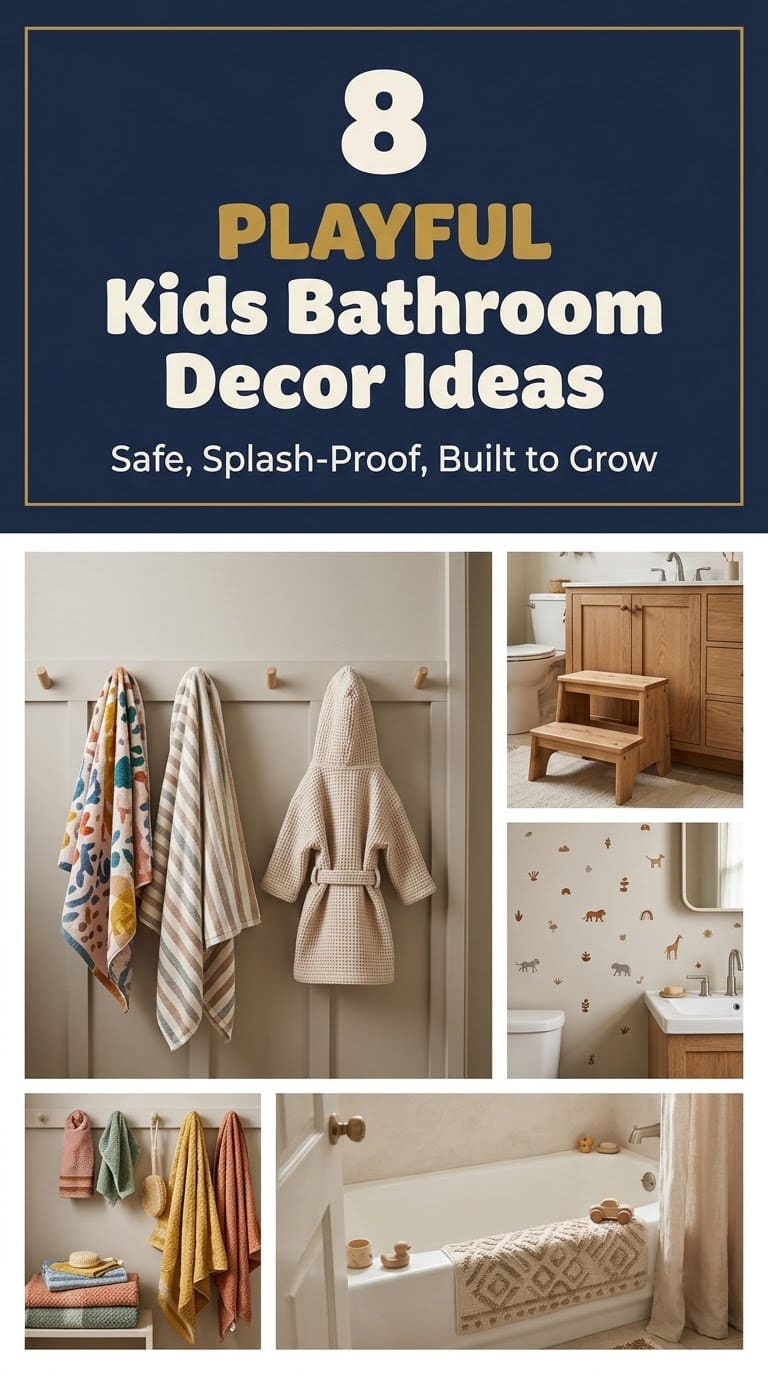
8 Playful Kids Bathroom Decor Ideas That Are Safe, Splash-Proof and Built to Grow
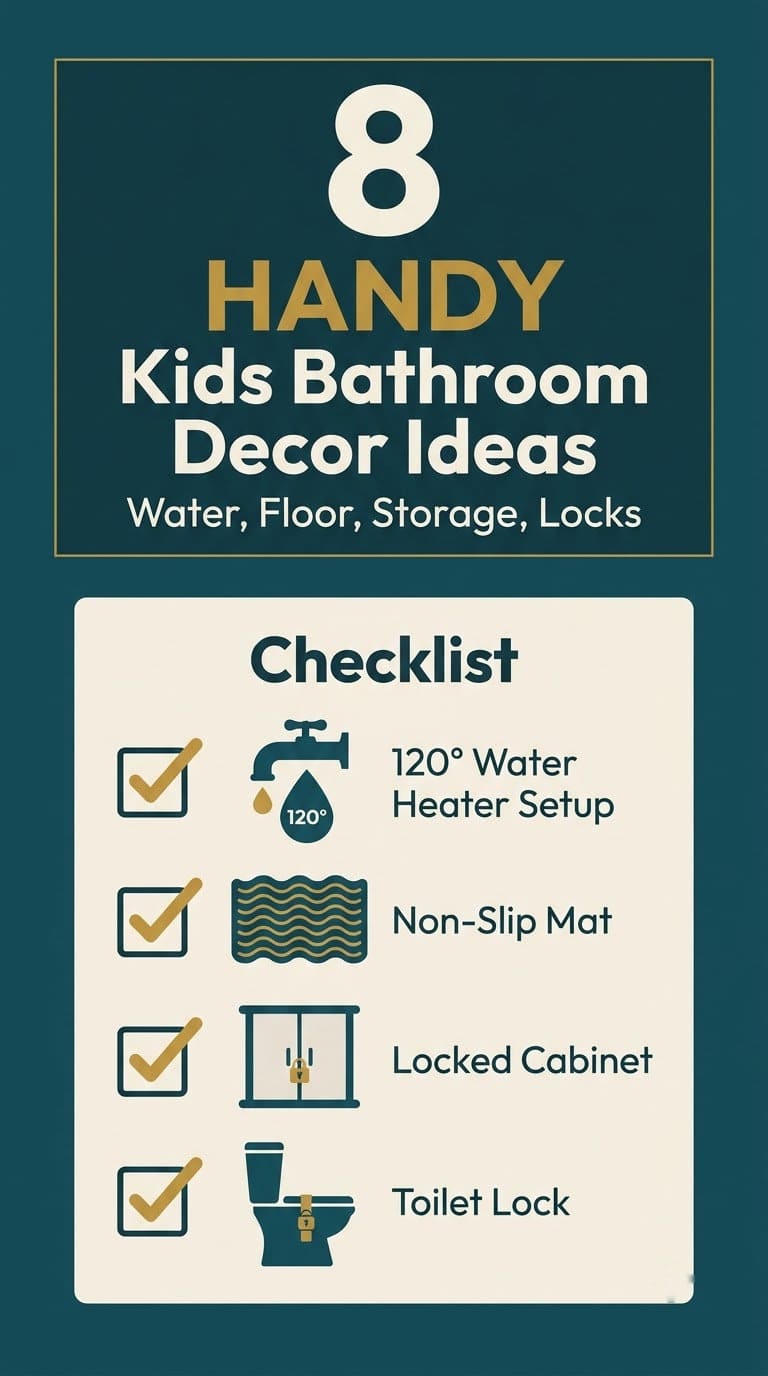
A kids bathroom can be fun and still keep little ones safe, as long as you set the water heater to 120°F, use non-slip surfaces and choose decor you can swap as they grow.

Never miss an update — choose FarmFoodFamily as your preferred source on Google.
How it works: Tap the button below to open Google's settings page, then check the box next to FarmFoodFamily.
Tap the checkbox to turn it blue — that's how you know it's set.
A kids bathroom can be fun and still keep little ones safe, as long as you set the water heater to 120°F, use non-slip surfaces and choose decor you can swap as they grow.
Products We Recommend
This post contains affiliate links. We may earn a commission on qualifying purchases at no extra cost to you.

TEMIR Non Slip Bathtub Mat With Suction Cups
A machine-washable tub mat with suction cups and quick-drain holes, a fit for the AAP's no-slip advice.
Shop Now
Toilet Locks Baby Proof, 2-Pack
A lid lock that attaches with 3M adhesive and needs no tools. Test it often, since locks can fail.
Shop Now
2 Step Stool for Kids, Non-Slip
A two-step stool for reaching the sink or toilet. Check the legs and non-slip feet regularly.
Shop NowKids bathrooms get decorated around a theme. A whale, a dinosaur, a princess. Then the child turns ten and the theme turns embarrassing.
They also get decorated around looks, and safety gets forgotten. A slick floor, a hot tap or an open medicine cabinet can hurt a child faster than any theme can charm them.
These eight ideas put safety under the fun. Each one lists the materials, the sizes and the mistakes to avoid.
Quick Answer
Set the water heater so the hottest faucet water is no more than 120°F. The American Academy of Pediatrics at HealthyChildren.org says so, and KidsHealth says 140°F tap water can cause a third-degree burn in 3 seconds.
Never leave a young child alone in the bath. And use no-slip strips on the tub bottom. The AAP says children can drown in only a few inches of water, and bath seats and rings don’t prevent it.
Lock medicines high up, as the AAP advises. Decorate with swappable pieces. Yousef Mansuri of CP Hart, quoted at Livingetc, suggests a neutral base with color in towels and accessories.
Skip wallpaper, since DesignCafe says it isn’t moisture-resistant and can peel or grow mold. Test every child lock, because the CPSC recalled toilet and cabinet locks that children could open.
Which Idea Fits You?
Pick by age, budget and the problem you want to fix. This table sorts the eight ideas below.
| Idea | Fixes | Age | Budget tier | Main risk |
|---|---|---|---|---|
| 1. Neutral base, swappable color | Themes that date | Any | Low | None |
| 2. Decals and waterproof art | Bare walls | 2 to 10 | Lowest | Peeling in steam |
| 3. Non-slip floor and mats | Slips | Any | Low | Mats that slide |
| 4. Color on fixtures | Plain look | Any | Mid | Cost |
| 5. Low hooks and a step stool | Mess, reach | 3 and up | Lowest | Tipping stools |
| 6. Kid-height bins, high locked cabinet | Clutter, poisons | Any | Low to mid | Unlocked cabinets |
| 7. Toilet lid lock and faucet cover | Toilet play, bumps | Toddlers | Lowest | Failed locks |
| 8. Anti-scald taps | Burns | Any | Mid to high | Wrong install |
Before You Start: Five Safety Rules
Decor sits on top of safety. Set these up before you pick a color.
What does the AAP say to do first?
The AAP lists five basics for infants and young children. Keep the bathroom closed unless an adult is present, and put a latch at adult height. Any door lock should open from the outside.
Take your child with you if you have to answer the door or phone, wrapped in a towel. Drain the tub when it’s not in use.
How hot should the water be?
The AAP says the hottest faucet water should be no more than 120°F (48.9°C). Test it with your wrist or elbow, and teach older children to start the cold water first.
KidsHealth adds that children under 5 are at higher risk because their skin is thinner.
Where should medicines go?
The AAP says to store all medicines and cosmetics high up in a locked cabinet. It stresses that safety caps are child-resistant, not childproof.
A machine-washable tub mat with suction cups and quick-drain holes, a fit for the AAP's no-slip advice.
Shop NowThis post contains affiliate links. We may earn a commission on qualifying purchases at no extra cost to you.
Keep toothpaste, soap and shampoo in a separate hard-to-reach cabinet with a latch or lock. It also says to unplug hair dryers and razors after use and store them in a locked cabinet.
The AAP adds that an electrician can install GFCI (ground-fault circuit interrupter) outlets, which reduce the risk of electrical injury if an appliance falls in water.
1. A Neutral Base With Swappable Color
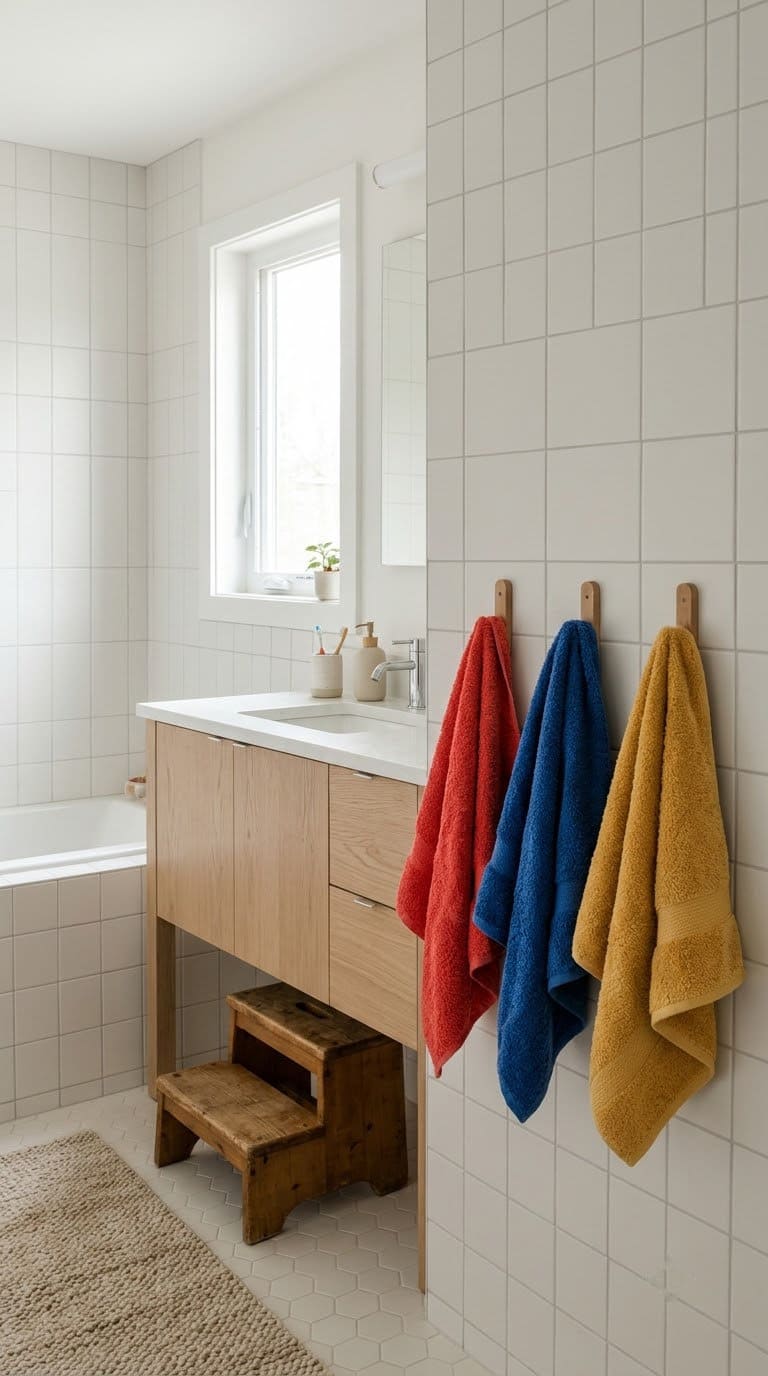
This is the idea that survives growing up. Mansuri says the bathroom should feel fun without being babyish, so a child still likes it at 15.
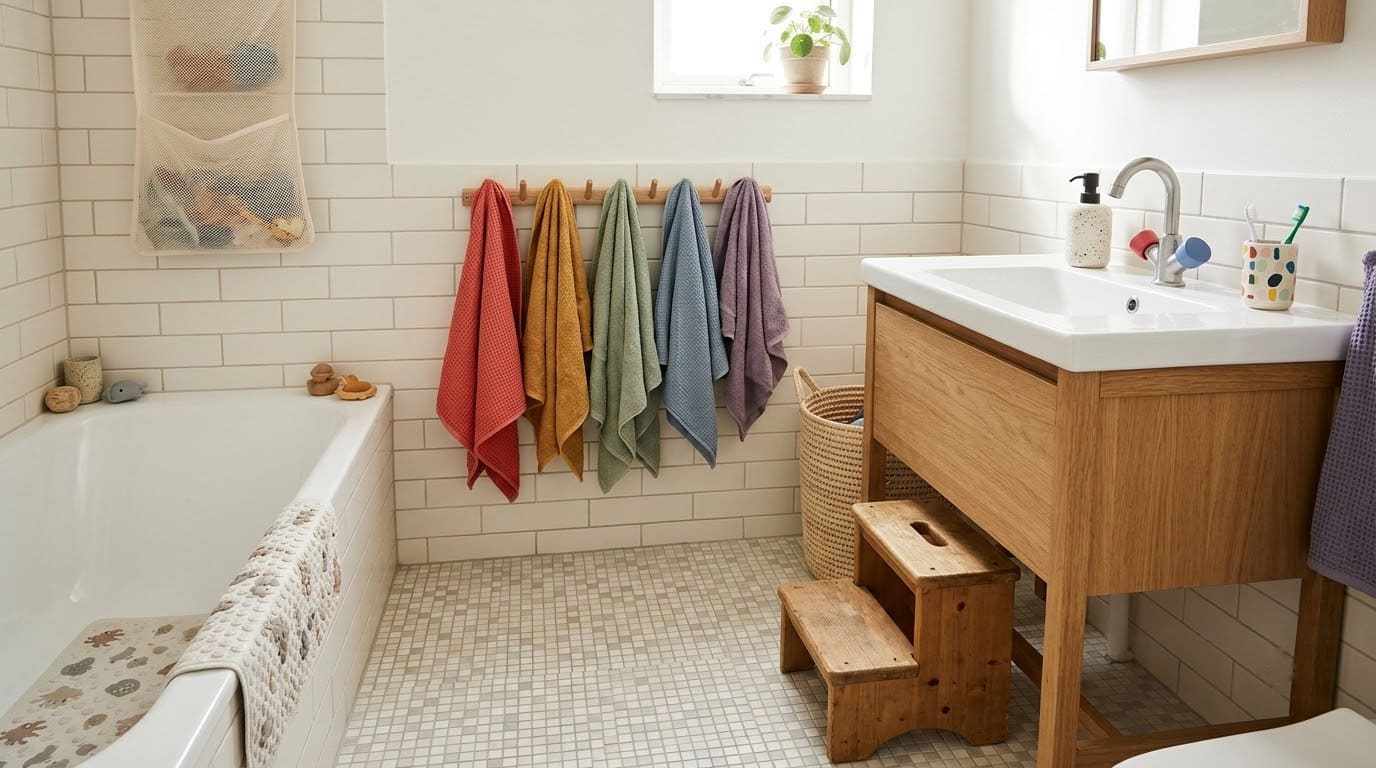
Keep the base calm. He suggests a mostly neutral base, with color added through towels and accessories you can swap or upgrade.
DesignCafe agrees. Its author, Pooja Dara, says to install decor that can easily change as your child’s needs change.
Pick one theme item, such as a shower curtain, and let towels carry the color. Then swap each piece when your child’s tastes change.
Our bathroom shower curtain ideas page has playful, wipeable options. Budget: low.
2. Decals and Waterproof Art
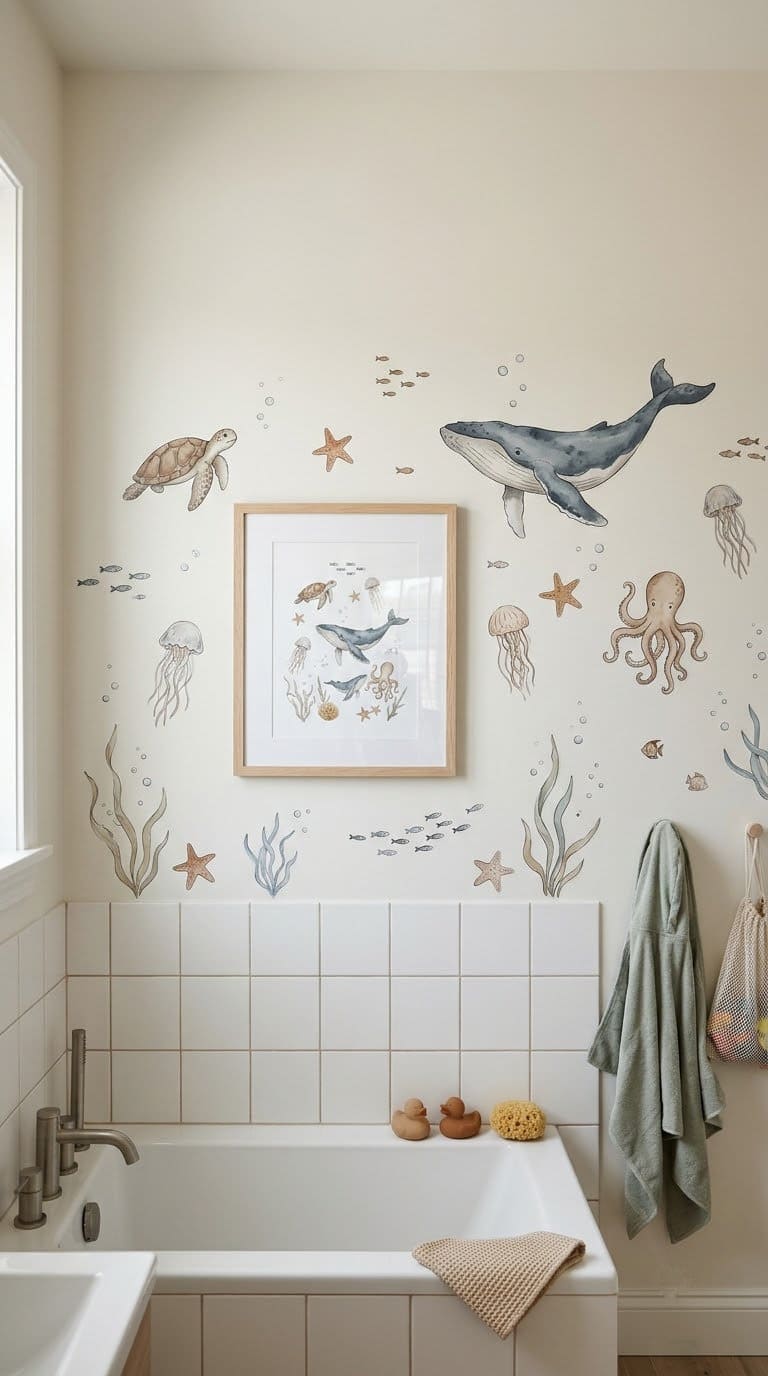
Wall decals let a child change the look without a repaint. The old version of this page suggested stickers, decorative tiles, wallpaper and waterproof pictures.


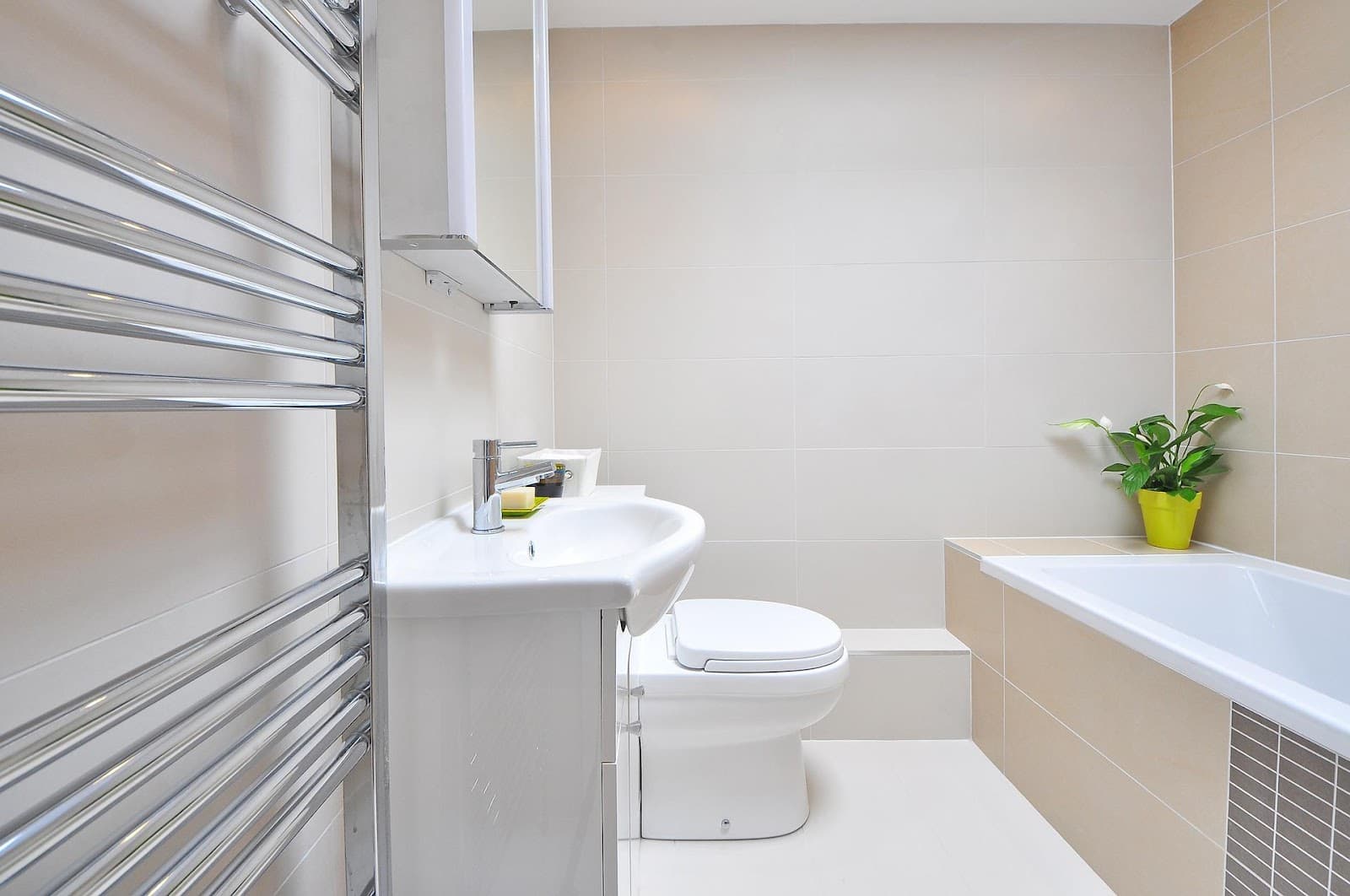
Skip the wallpaper. DesignCafe says wallpaper isn’t moisture-resistant and can peel or grow mold. It recommends smooth ceramic tiles, which resist dents and scratches.
Keep themes light. Dara says to keep theme decor subtle so the room doesn’t look crowded. Cartoon patterns can go on walls, cabinets and towels.
For art that tolerates steam, see our bathroom art ideas. Budget: lowest.
3. A Non-Slip Floor and Tub Mat
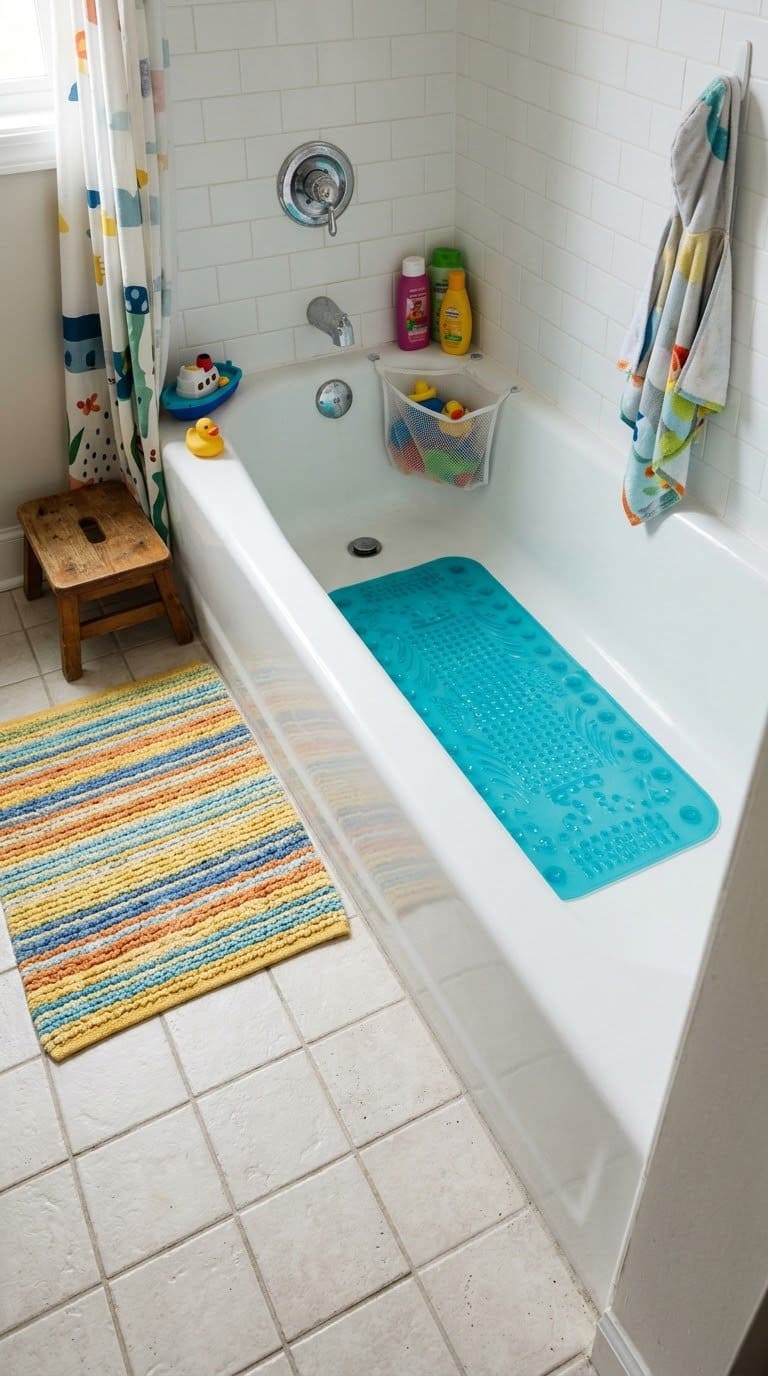
Wet floors and tubs are slippery. The AAP says to install no-slip strips on the tub bottom.
KidsHealth suggests anti-skid strips or a plastic bath mat that sticks to the tub. It also says to wipe up water spills from the tub, sink or toilet promptly.
Pick the floor. DesignCafe recommends non-slip flooring and anti-slip mats near the toilet. It says to avoid marble, since acidic liquids can etch it.
Check the mats. A rug with a slippery backing is a hazard, so look for grip on the bottom. See our bathroom rug ideas for options. Budget: low.
4. Color on Fixtures and Lighting
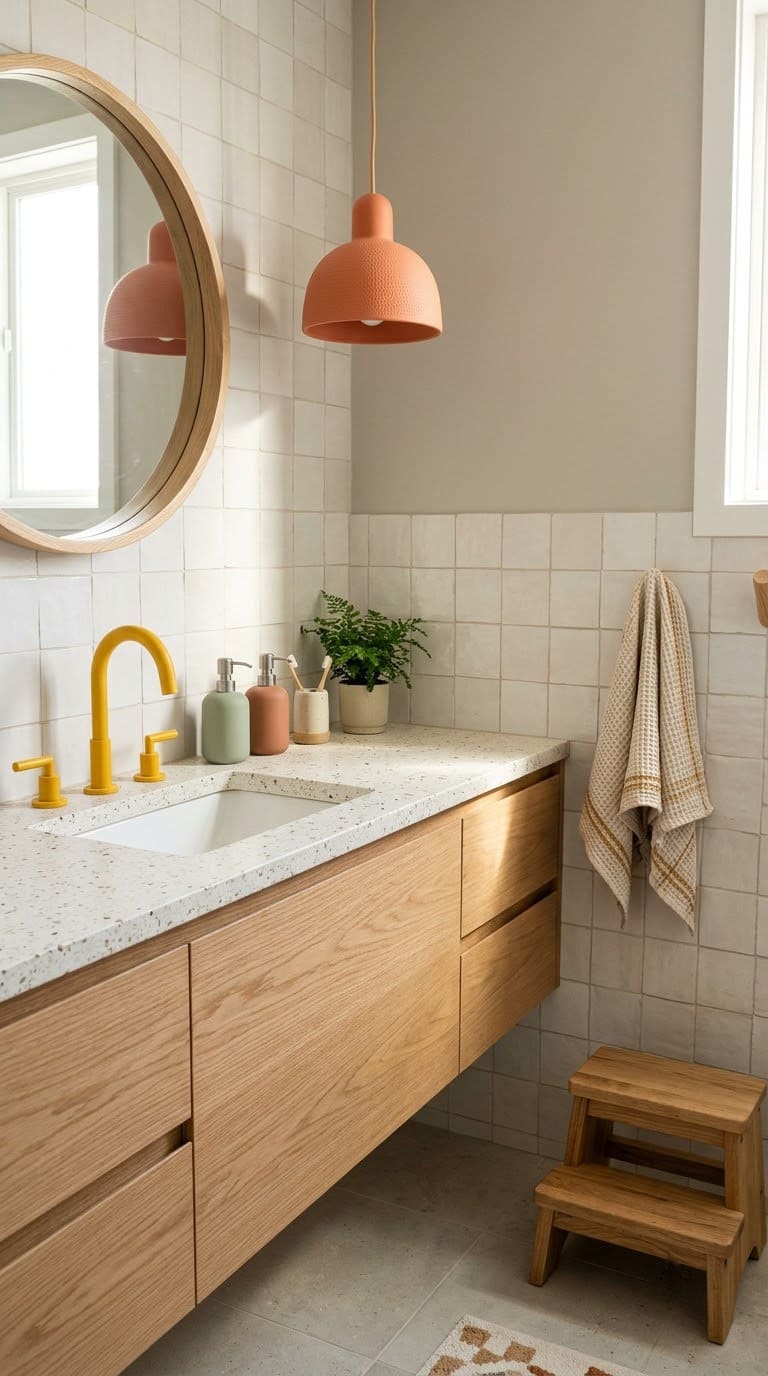
Color doesn’t have to cover the walls. Livingetc describes a scheme by Frederick Tang Architecture that puts color on taps, pipework, lighting and accessories.
Barbara Reyes, the firm’s director of design, calls the lighting and accessories playful accents in a crayon-like palette.
Keep it removable. Colored towels, cups and soap pumps swap easily. Colored taps cost more and are harder to change.
Choose durable items. James Lentaigne of Drummonds recommends buying the best quality you can afford, so pieces last. Budget: mid.
5. Low Hooks and a Step Stool
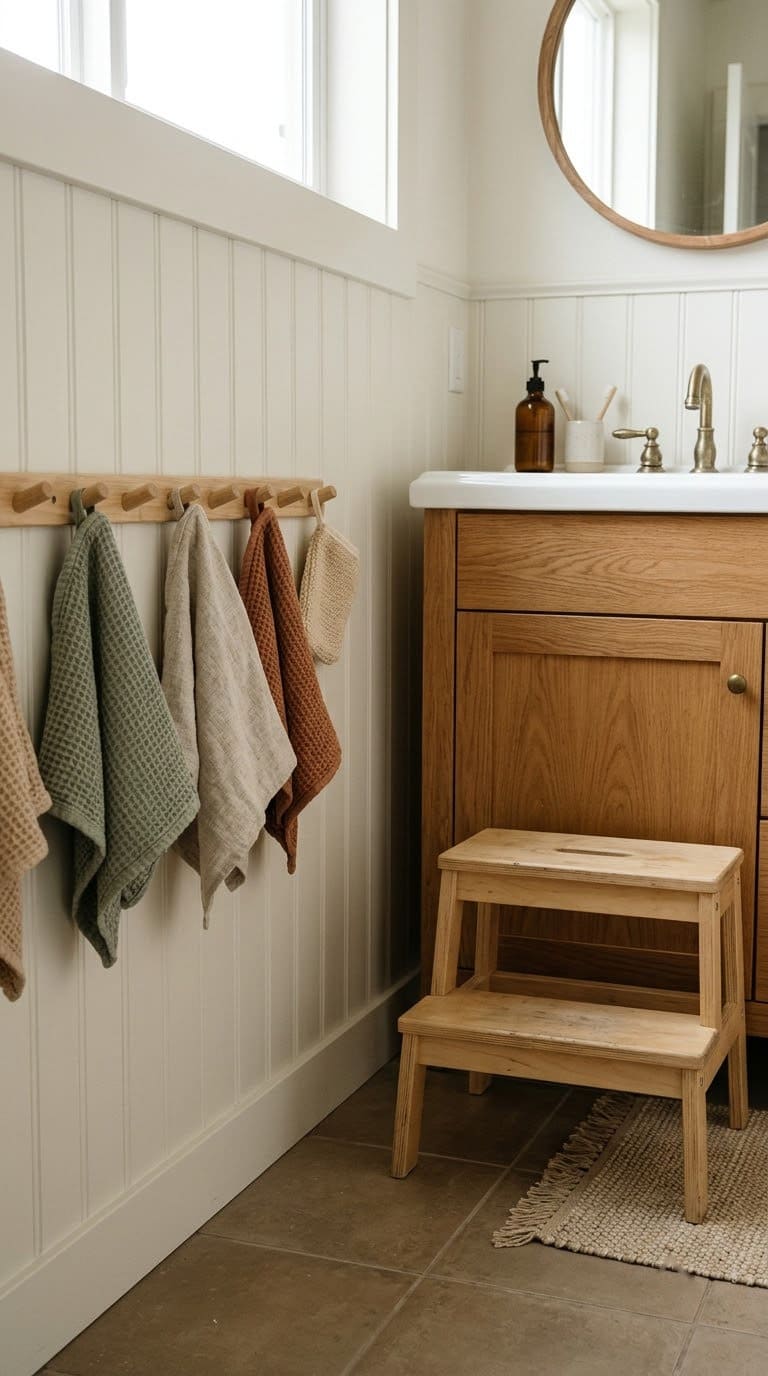
Kids use what they can reach. DesignCafe says to keep washbasins, towel rails and cabinets at a child-reachable height, or use step stools.
Mount hooks low. Search results suggest giving each child their own hooks at their height.
Pick a stable stool. A wobbly stool is a fall risk. Choose a wide base with a non-slip top. Check it every few months for loose legs.
Our bathroom towel rack ideas page has more hook styles. Budget: lowest.
6. Kid-Height Bins and a High Locked Cabinet
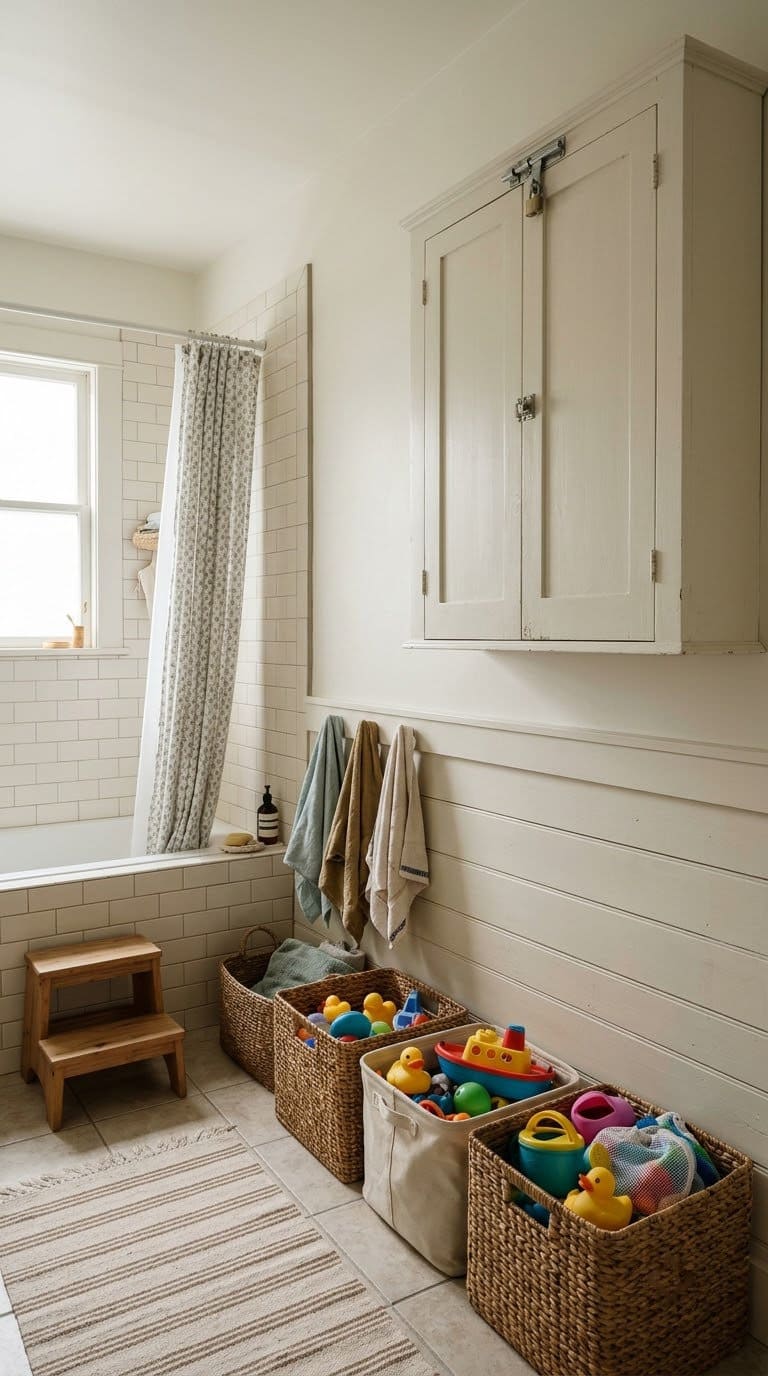
Split storage by who reaches it. DesignCafe says to use low wall shelving and lower cabinets so children can reach daily items.
Use open bins. Put washcloths, bath toys and a toothbrush cup in kid-height bins.
Lock the rest. The AAP says to store medicines and cosmetics high up in a locked cabinet, and toiletries in a separate latched cabinet.
Our bathroom storage ideas guide covers cabinets and shelves. Budget: low to mid.
7. A Toilet Lid Lock and Faucet Cover
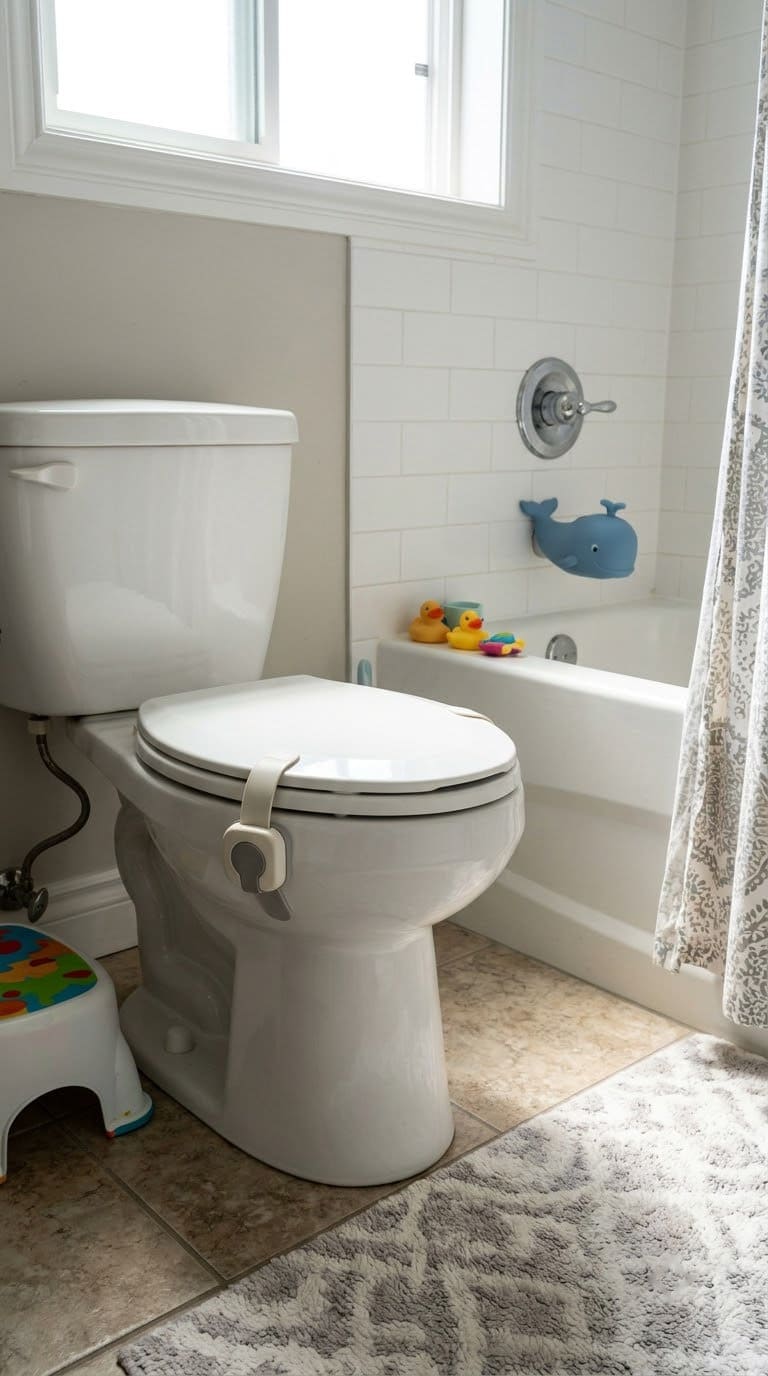
Toilets draw small children. The AAP says to keep the lid closed and use a toilet lid lock. KidsHealth recommends the same.
Test the lock. In 2012 the CPSC recalled about 183,000 Safety 1st toilet locks and 685,000 cabinet locks. It had 110 reports of toilet locks that didn’t hold the lid, including 8 reports of children under two who disengaged or broke the lock.
Cover the faucet. The AAP suggests a cushioned cover on the faucet to reduce bump injuries. KidsHealth says a rubber cover or a washcloth works.
The old page suggested covering a hot faucet with pink toweling to mark it. Use a faucet cover from a baby-safety line instead, and set the heater to 120°F. Budget: lowest.
8. Anti-Scald Taps and Valves
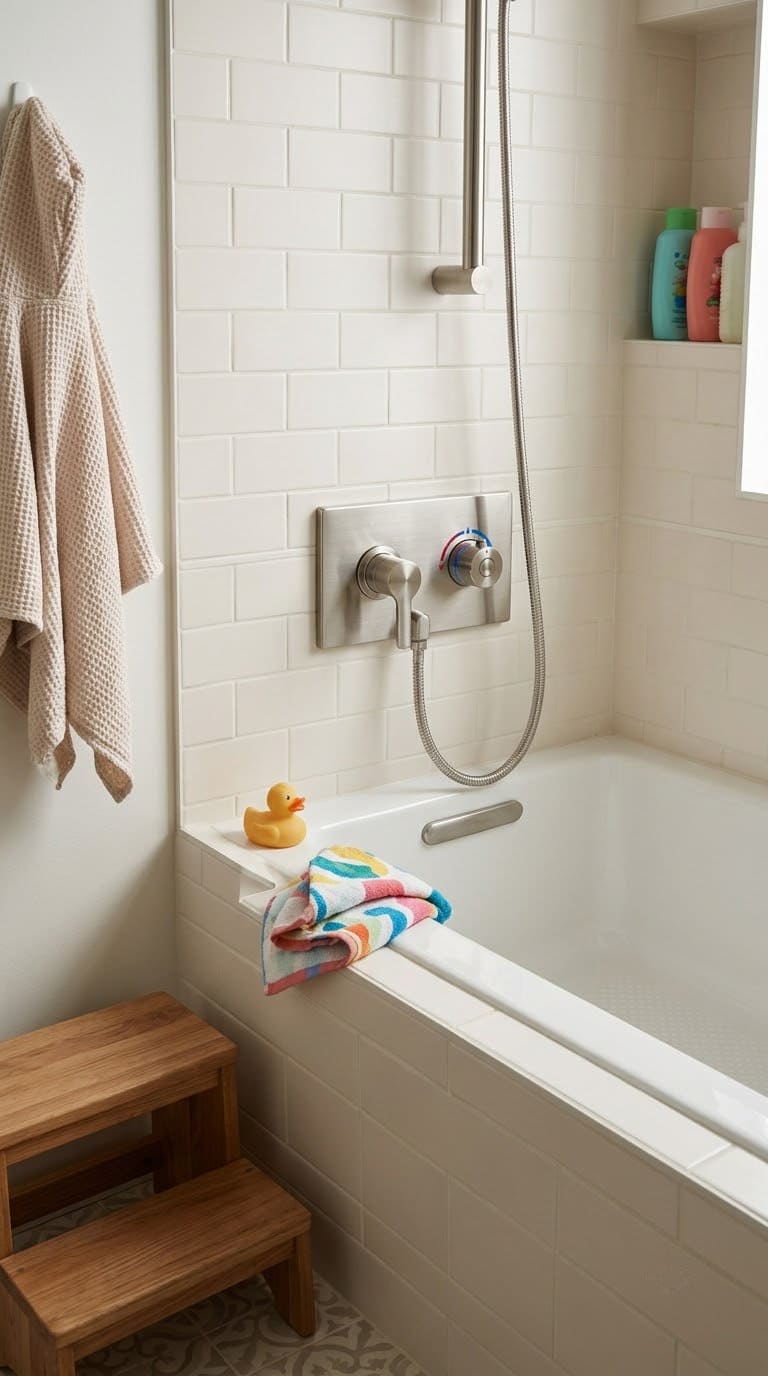
This is the safest upgrade. DesignCafe says to install anti-scald devices on faucets and bath or shower valves.
UF Health, seen in search results, says an anti-scald valve can prevent water from going above 120°F.
Install it right. Have a plumber fit the valve, and ask them to confirm its maximum temperature setting. The AAP’s advice still applies: set the heater to 120°F and test the water by hand.
Budget: mid to high.
Which Wall and Floor Surfaces Work?
DesignCafe’s advice is the clearest on surfaces. Here is how its picks compare.
| Surface | Verdict | Why |
|---|---|---|
| Smooth ceramic tile | Good | Resists dents and scratches |
| Wallpaper | Skip | Not moisture-resistant, can peel or mold |
| Marble floor | Skip | Acidic liquids can etch it |
| Non-slip flooring | Good | Cuts slip risk |
| Anti-slip mats near the toilet | Good | Extra grip where kids stand |
Search results also say semi-gloss or satin paint resists scrubbing and moisture better than flat paint.
What Colors Should You Pick?
DesignCafe says to use bright shades such as blue, orange, green and yellow rather than muted tones. It notes yellow is the most popular color among kids.
But Mansuri’s neutral-base idea still wins for longevity. Put the bright color in towels, cups and a shower curtain, and keep walls and tile calm.
That way a child can pick a new color every year without a remodel.
What Does It Cost?
Costs vary by region and by whether you hire a plumber. None of the sources gave totals, so use these tiers.
| Tier | Ideas |
|---|---|
| Lowest | Decals, low hooks, lid lock and faucet cover |
| Low | Neutral base, non-slip floor and mats, bins |
| Mid | Color on fixtures |
| Mid to high | Anti-scald valves |
Common Mistakes to Avoid
Most failures trace back to a few habits.
Hot water above 120°F. The AAP and KidsHealth both flag scald risk.
Leaving a child alone in the tub. The AAP says bath seats don’t prevent drowning.
Choosing wallpaper. DesignCafe says it peels and molds.
Trusting a lock without testing it. The CPSC recall shows locks can fail.
Keeping medicines in the vanity. The AAP says to lock them up high.
FAQ
What water temperature is safe for a kids bathroom?
The AAP says the hottest faucet water should be no more than 120°F, and to test it with your wrist or elbow.
How do I make a kids bathroom less slippery?
Use no-slip strips on the tub bottom, per the AAP, and non-slip flooring and mats, per DesignCafe.
Should I put wallpaper in a kids bathroom?
DesignCafe says no, because it isn’t moisture-resistant and can peel or mold.
How do I keep a toddler out of the toilet?
The AAP says to keep the lid closed and use a toilet lid lock. Test it, since locks can fail.
How do I keep a kids bathroom from looking babyish later?
Use a neutral base and swap color through towels and accessories, as Mansuri suggests.
Related Posts
Never miss an update — choose FarmFoodFamily as your preferred source on Google.
How it works: Tap the button below to open Google's settings page, then check the box next to FarmFoodFamily.
Tap the checkbox to turn it blue — that's how you know it's set.