22+ Creative DIY Backyard Games For Kids
These 22 DIY backyard games turn any yard into the block’s go-to hangout for under an afternoon of work, as long as you respect the safety clearances around the ones that involve throwing something.

Never miss an update — choose FarmFoodFamily as your preferred source on Google.
How it works: Tap the button below to open Google’s settings page, then check the box next to FarmFoodFamily.
Tap the checkbox to turn it blue — that’s how you know it’s set.
A backyard full of good games is the difference between kids asking to go inside after twenty minutes and a whole afternoon nobody wants to end.
These 22 games are grouped by type, each with real materials, real technique, and a budget tag so you’re not guessing whether a project is a quick Saturday build or a full weekend project.
A few of these came from old family cookouts and reader favorites, a few are newer additions worth trying this year.
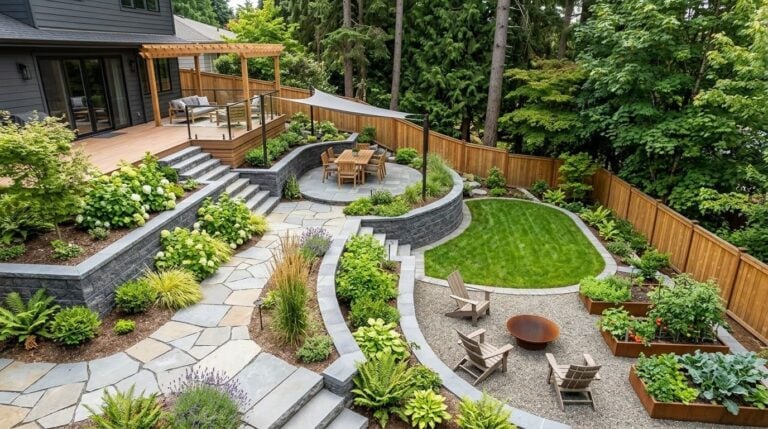
If you’re setting these up around a bigger structure rather than just loose in the grass, our backyard landscaping ideas guide covers laying out the space itself before you start staking anything down.

Before You Start: Budget, Age, and Safety Basics
Not every game on this list costs the same or fits every age group, so here’s the honest breakdown before you scroll.


Budget.
Most of these games run one of three ways: DIY-cheap (stuff you likely already have, pool noodles, cans, chalk, a few dollars in paint), moderate (a trip to the hardware store for lumber, rope, or paint, usually under an hour of shopping), or bigger investment (real lumber cuts, a saw, and an afternoon of actual building, like the Giant Jenga or Mini Putt Course). We tag every game below so you know what you’re signing up for before you start.
Answer 4 quick questions and get matched to the exact fix for your yard — drainage, budget, layout, or something else entirely.
Take the Free QuizAge.
A 4-year-old and a 14-year-old don’t play the same way, and pretending otherwise is how someone gets hurt. Games with soft, oversized pieces (pool noodles, sponges, bean bags) work fine for toddlers with supervision.
Anything involving a thrown object with real weight or a hard edge (cans, glass-adjacent bottles, wooden dominoes) is better suited to kids six and up who can actually follow a “stand behind the line” rule. We flag this per game.
If you’re building this list out for a bigger event rather than casual afternoons, our backyard birthday party ideas piece has more on layout and timing for a full gathering.
Safety clearance.
According to the CPSC’s Public Playground Safety Handbook, residential play equipment needs a fall zone of at least 6 feet in every direction, and swings need clearance equal to twice the height of the pivot point front and back.
That’s built for swing sets and climbers, but the same logic applies to yard games with a throwing motion: give a ring toss, bowling lane, or dart board at least 6 feet of clear space on every side, away from windows, parked cars, and where a toddler might wander into the arc without warning.
It’s also worth knowing that thrown-object games have a real, ugly history. The CPSC banned the sale of metal-tipped lawn darts in 1988 after they were linked to child deaths and an estimated 670 injuries a year, most in kids under 15.
Nobody’s suggesting a bean bag toss is a lawn dart. But it’s the reason every “safety version” note on the dart and ring games below isn’t just legal boilerplate, it’s there because this exact category of game has a documented bad history when the projectile has real weight or a point.
Most yard problems trace back to one specific, fixable cause. Find yours in 4 quick questions.
Take the Free Quiz
3.5-inch solid pine dice, set of 6, with scoreboard and carrying bag. If you'd rather skip cutting your own lumber for idea 5's Giant Yard Dice, this is a verified, live, 4.6-star (486 ratings) pre-built version.
Shop NowThis post contains affiliate links. We may earn a commission on qualifying purchases at no extra cost to you.
Classic Lawn Games
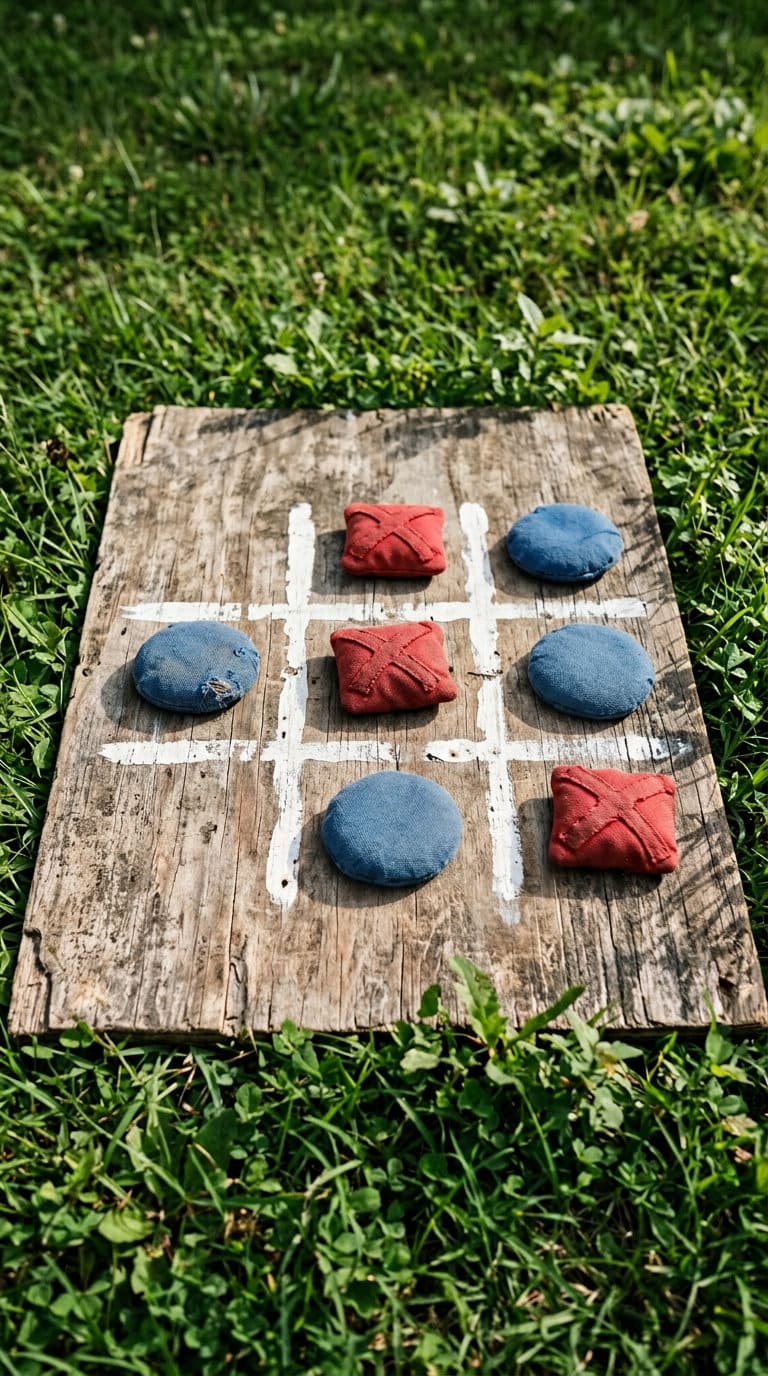
1. Backyard Tic-Tac-Toe

source: tatertotsandjello.com
Paint a 3×3 grid directly onto a scrap of plywood, an old tarp, or just chalk it onto the patio, then use bean bags in two colors (or paint river rocks) as the X’s and O’s. Budget: DIY-cheap.
Ages: all, works for a 5-year-old just as well as adults after a couple drinks. The trick most people skip: seal the plywood grid with a coat of exterior polyurethane if it’s staying outside all summer, unsealed paint fades and chips within a few weeks of sun exposure.
Pairs well with idea 21’s Giant Outdoor Scrabble Tiles if you want a “yard game station” corner with more than one option.
2. Giant Lawn Dominoes
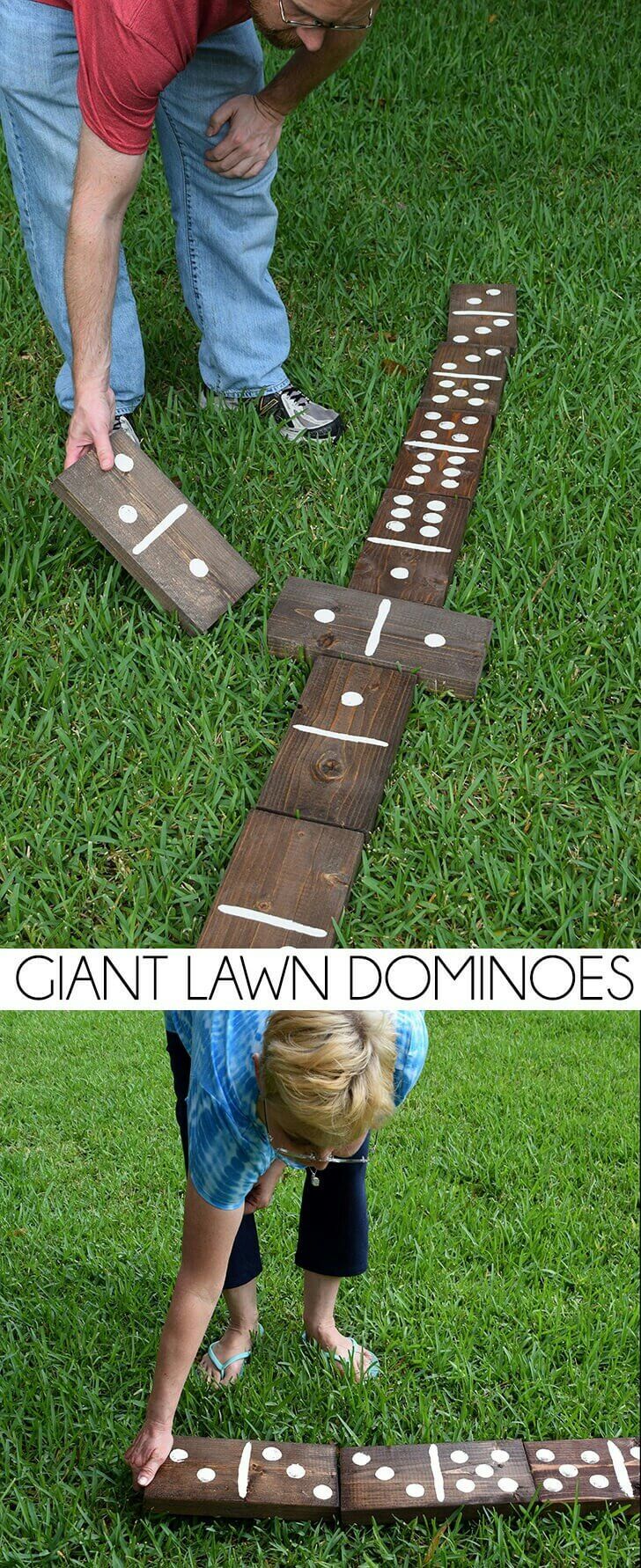
source: dreamalittlebigger.com
Cut 2×8 lumber into rectangles roughly 3.5 x 7 inches, sand every edge (splinters are the number one complaint with any DIY wood yard game), and paint or stencil dot patterns on both halves.
A set of 28 tiles covers a full domino game. Budget: moderate (lumber plus paint, a couple hours of cutting and sanding).

Ages: 6 and up for setup and play, since standing dominoes on end takes some patience younger kids don’t have yet. Store them in a canvas bag or bucket, wood left out in rain warps.
The average homeowner spends $616/year on yard fixes that don't address the real problem. Find out what yours actually is — before you spend another dollar.
Take the Free Quiz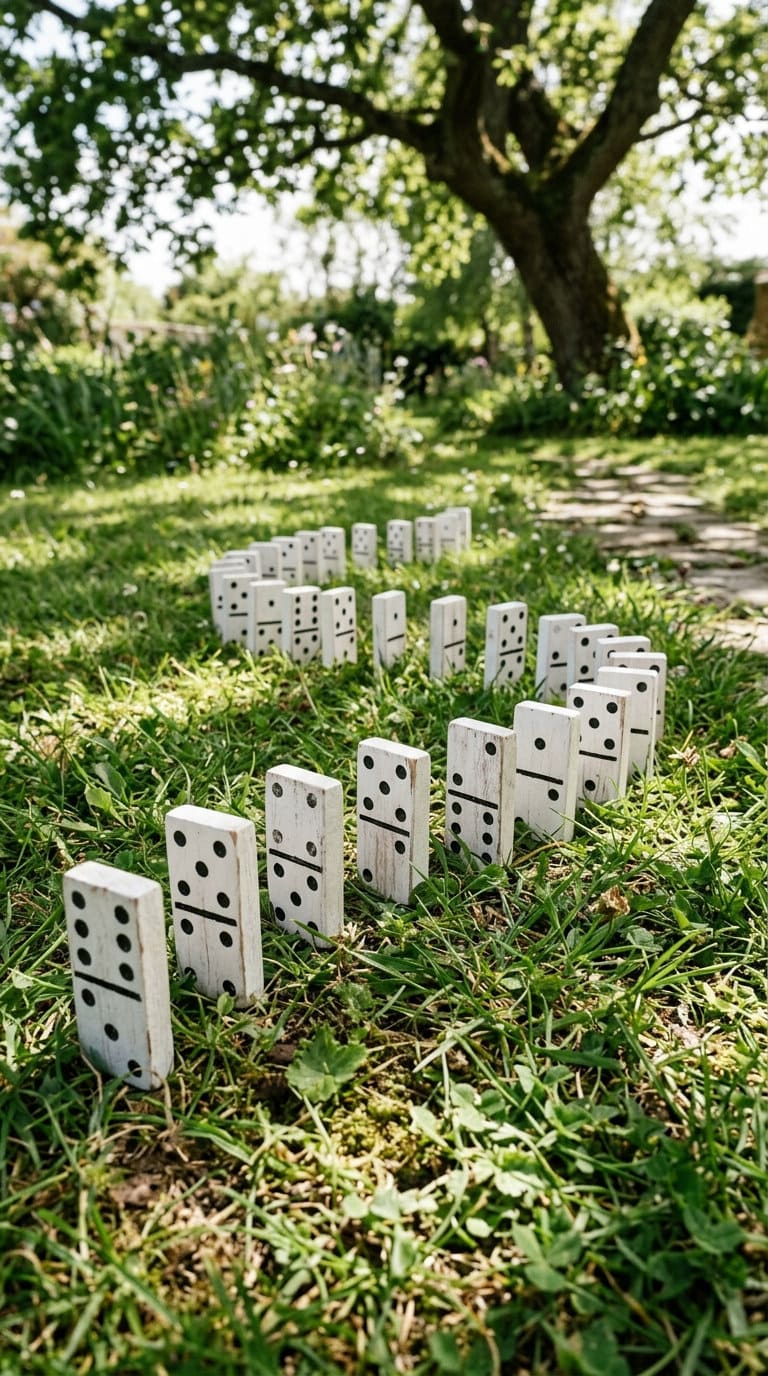
3. Koob (Kubb)

source: lets-get-together.com
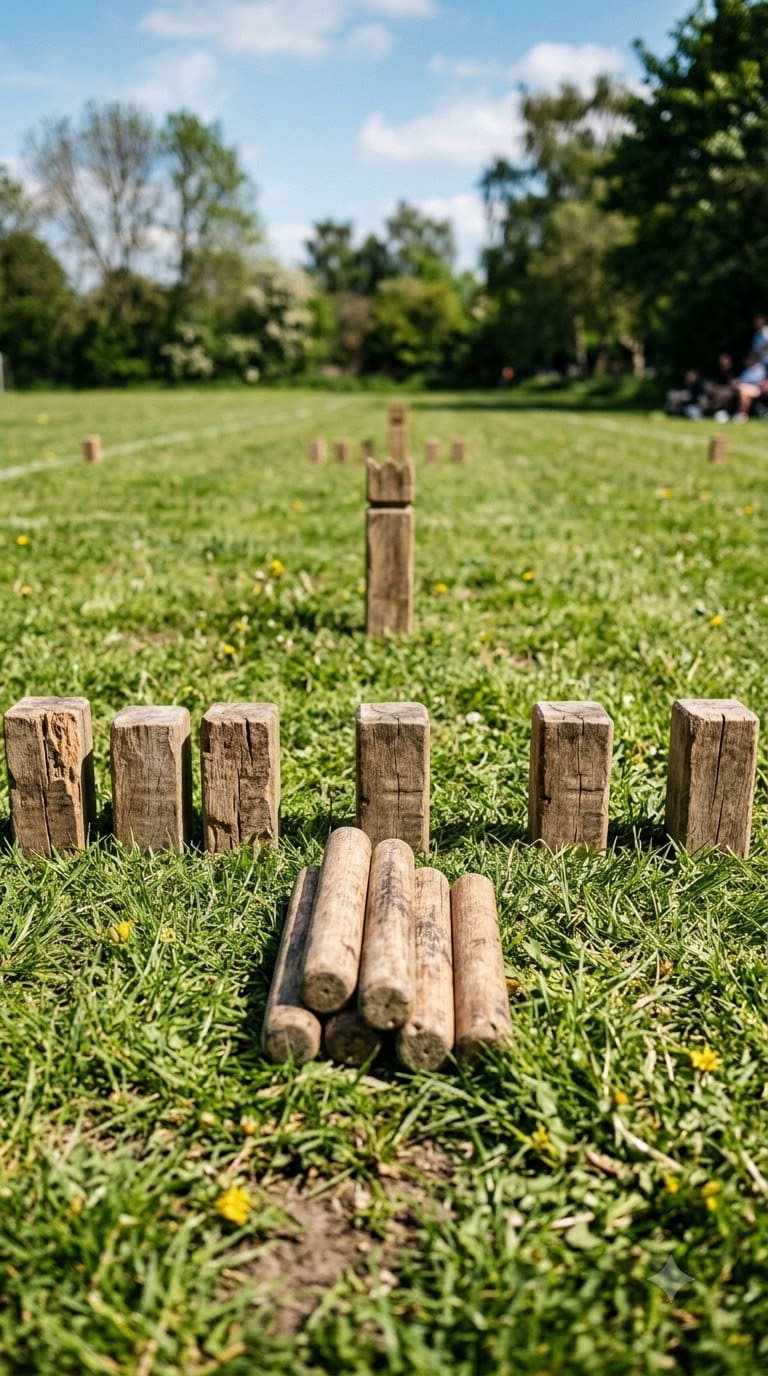
Kubb, sometimes called “Viking chess,” uses wooden blocks and batons thrown to knock over the opposing team’s blocks before toppling a “king” piece in the center.
Cut 6 blocks per side from 4×4 lumber (about 6 inches tall), 6 batons from 1×2 dowel (about a foot long), and one taller king block.
Budget: moderate to bigger investment depending on how much lumber you already have on hand.
Ages: 8 and up, this one takes real hand-eye coordination and patience with the rules, not a toddler game. It plays fast once people learn it, most rounds run under 20 minutes.
4. Washer Toss
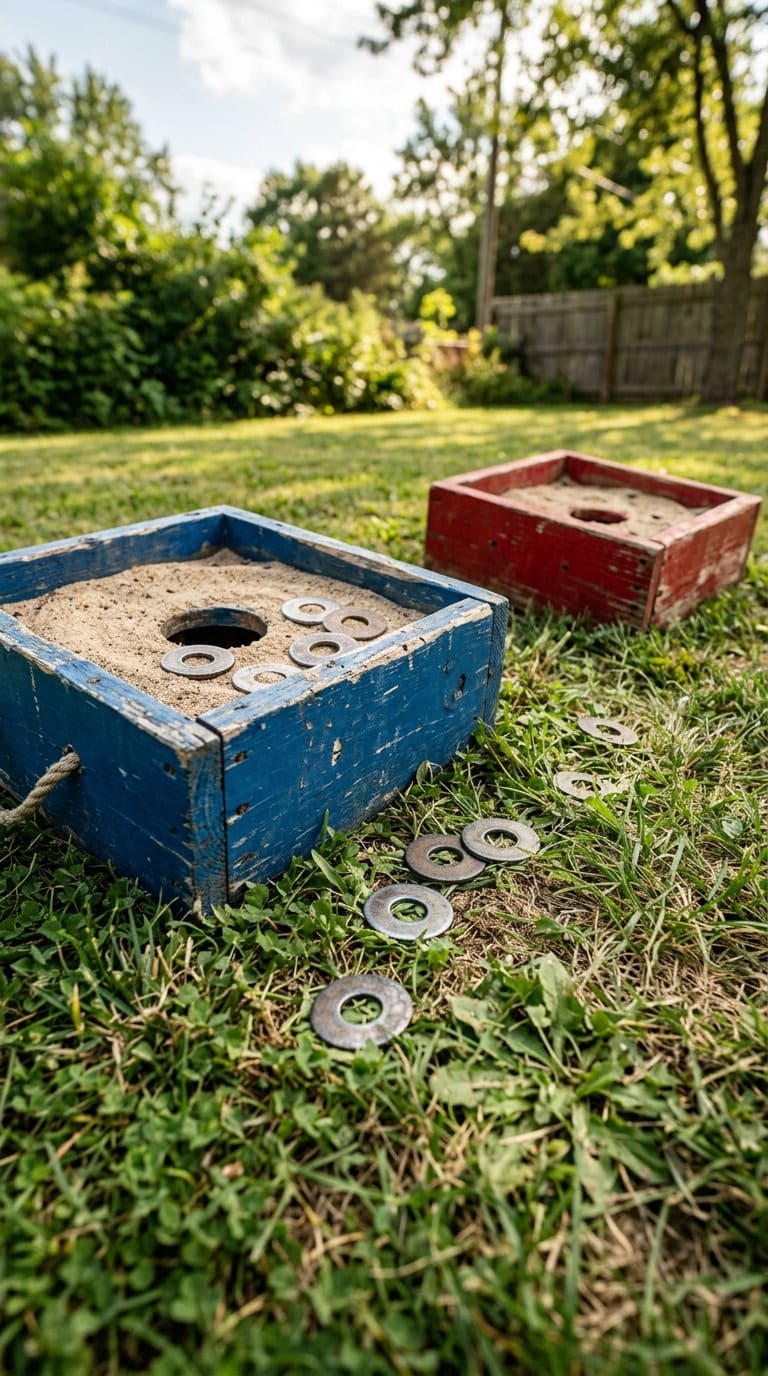
Basically horseshoes with metal washers and a wood box instead of stakes. Build two 2×2-foot boxes with a hole cut in the center, fill with sand or gravel, and toss large metal washers (2.5-inch works well) trying to land them in the hole.
Budget: DIY-cheap if you have scrap wood, moderate if buying washers new.
Ages: 6 and up, washers have real weight and hard edges.
Set the boxes at least 15 feet apart and keep the throwing lane clear, this is a good candidate to apply idea 3’s clearance habit to as well, since it’s a genuine thrown-object game.
5. Giant Yard Dice
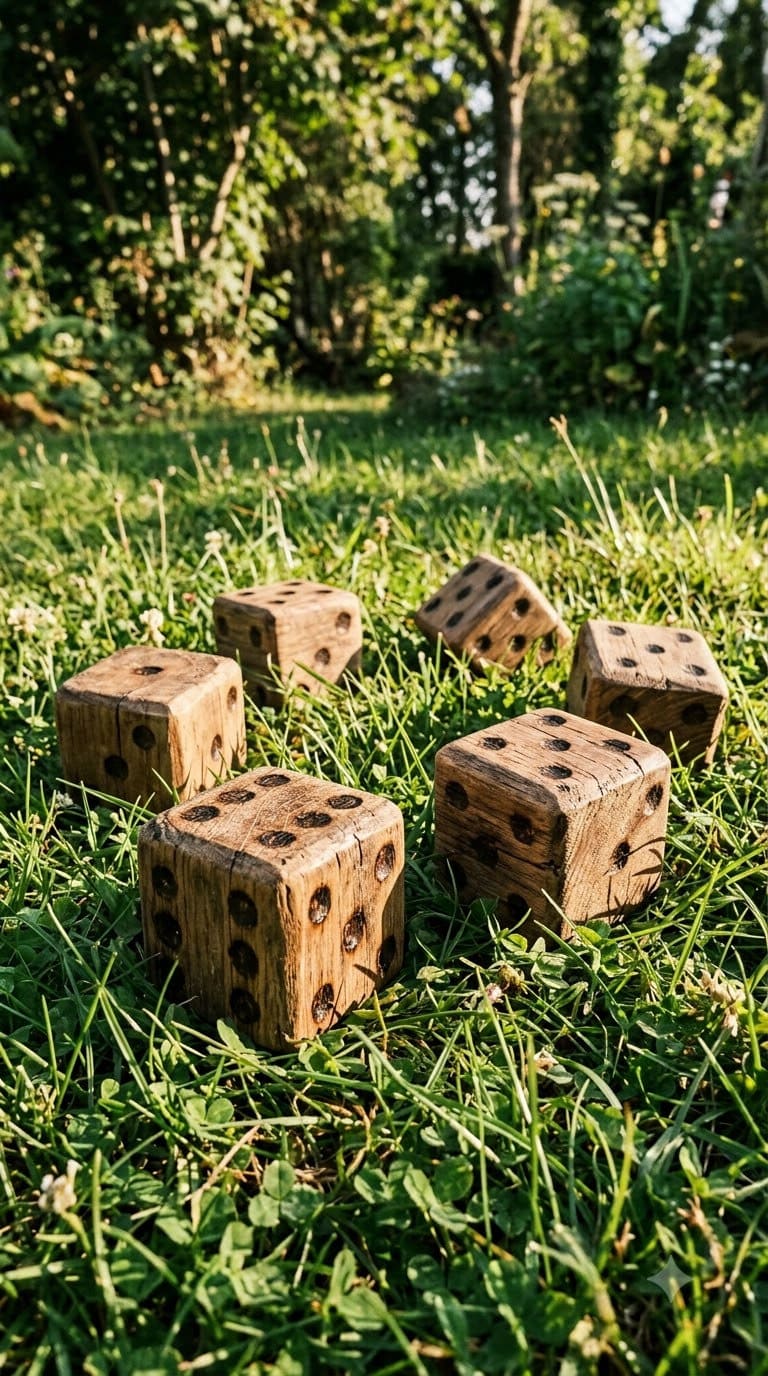
Build your own oversized dice from 4×4 lumber cut into cubes (roughly 3.5 inches per side), sand smooth, and paint or burn dot patterns on each face. Six dice covers Yardzee, Farkle, or any dice game you already know how to play.
Budget: moderate (this needs a saw that can handle 4×4 stock cleanly, not a beginner cut).
Ages: all, once made these are genuinely safe to hand a toddler, they’re heavy and blunt, not a projectile game.
This is the one idea in this article that replaces a section our old post had lifted nearly whole from another blog; this version is a from-scratch build, not a copy.
6. Ball-in-Basket Toss
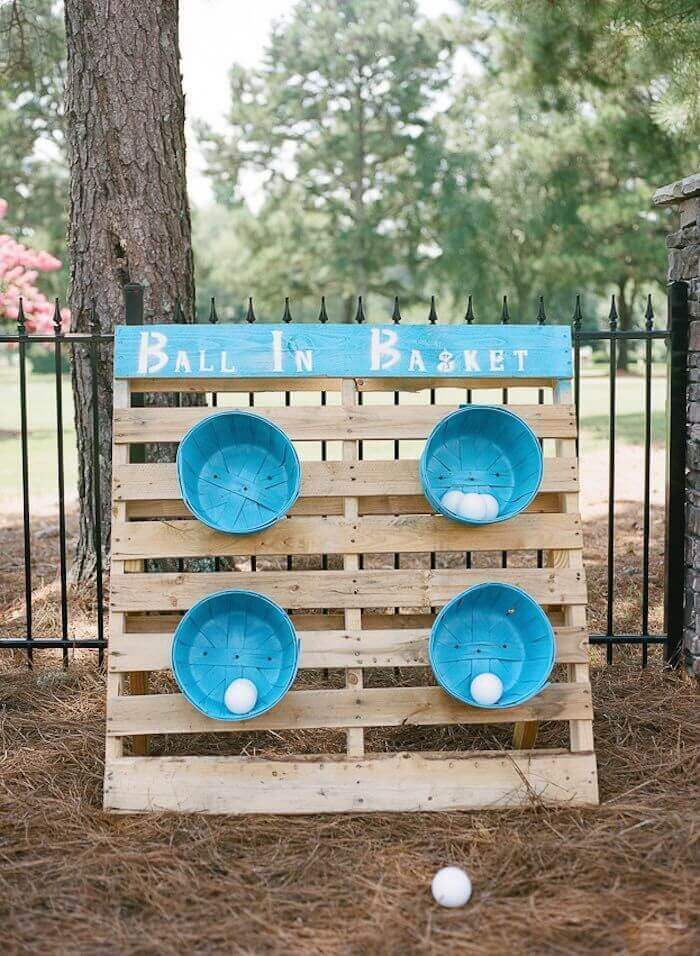
source: karaspartyideas.com
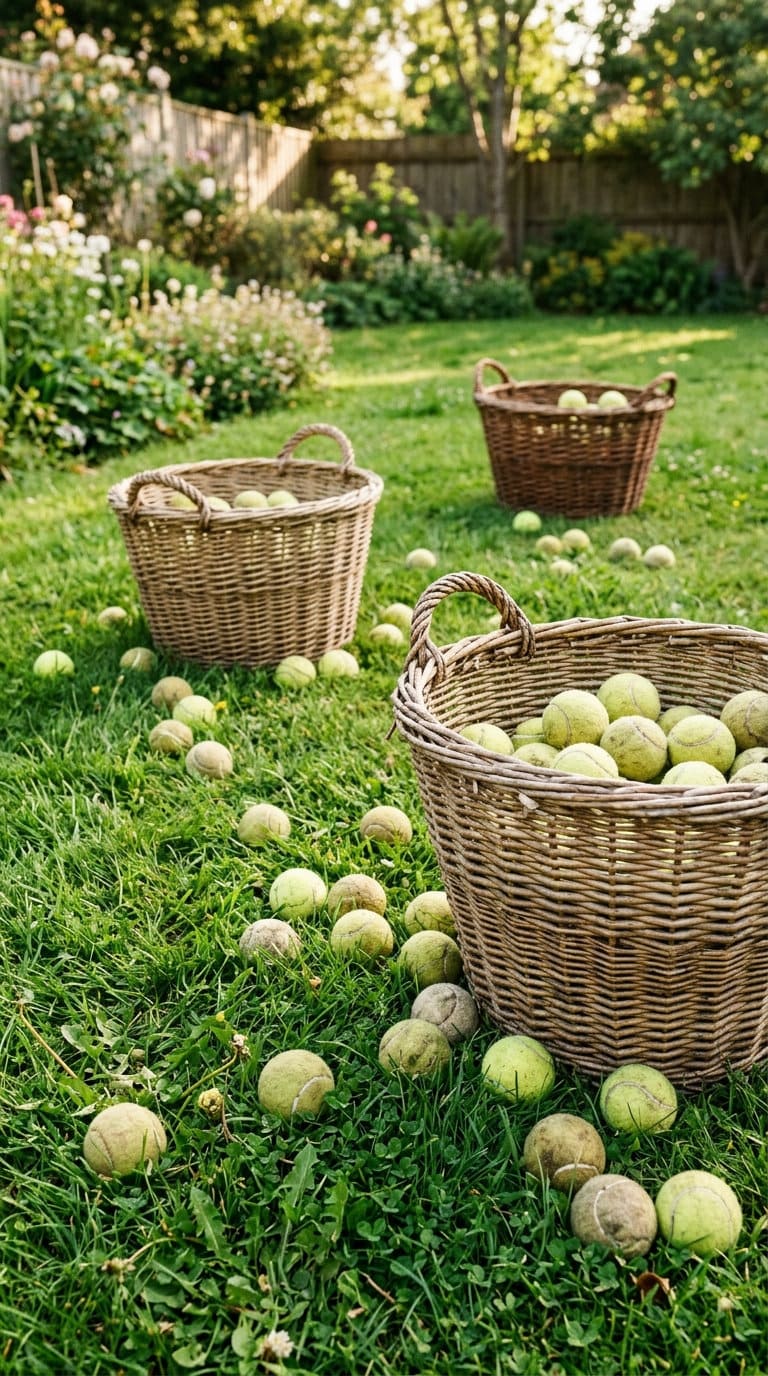
Mount a few laundry baskets or 5-gallon buckets at staggered distances, toss tennis balls or bean bags in, and assign point values by distance (closer basket worth less, farther worth more).
Budget: DIY-cheap, most households have the baskets and balls already.
Ages: all, this is one of the few games on this list that genuinely works for a 3-year-old and a grandparent in the same round. Pairs naturally with idea 1 for a low-key “backyard arcade” setup that doesn’t need much space.
Water and Summer Games
7. Squirt Gun Painting
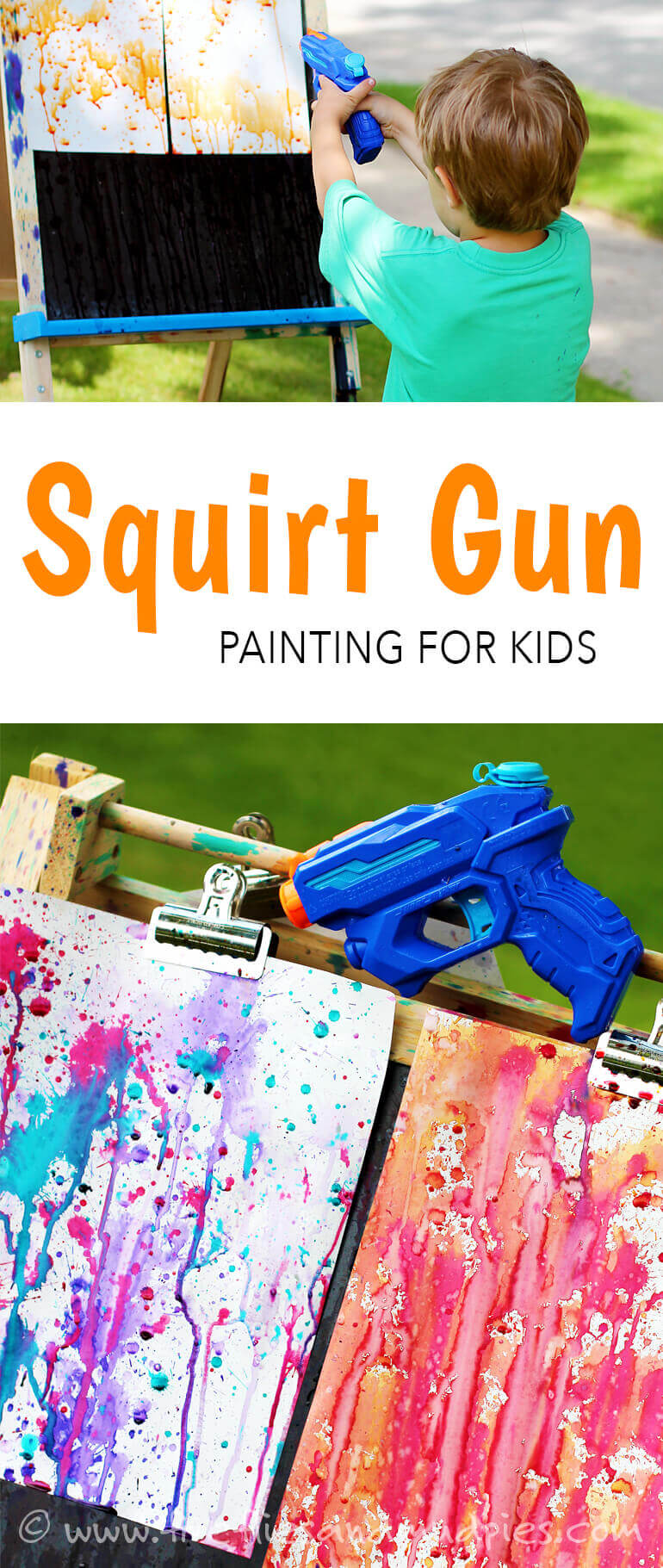
source: firefliesandmudpies.com
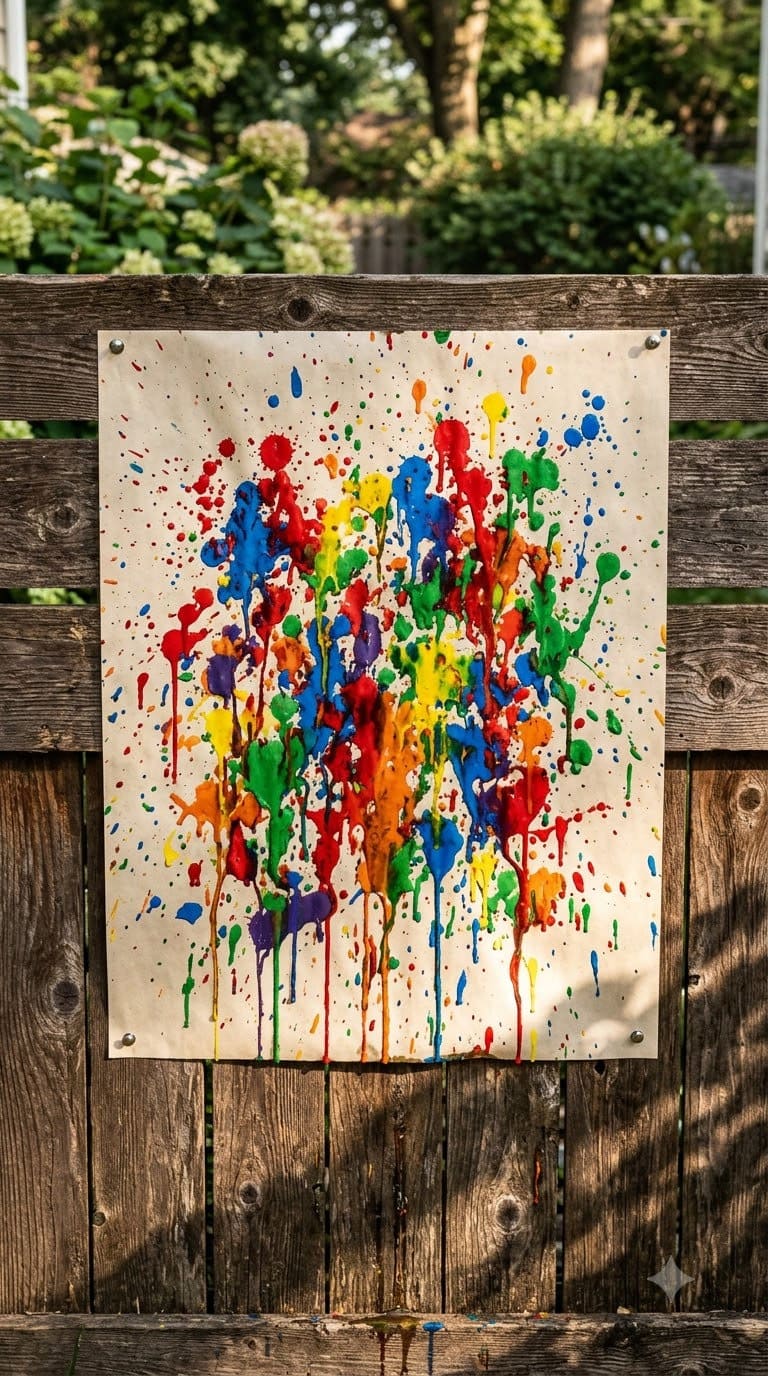
Fill squirt guns or spray bottles with diluted washable paint (roughly 1 part paint to 3 parts water so it doesn’t clog the nozzle) and let kids “paint” a large sheet of butcher paper or an old bedsheet pinned to a fence.
Budget: DIY-cheap.
Ages: 4 and up, younger kids struggle with the trigger mechanism on smaller guns. Use washable paint only, not craft acrylic, or you’ll be repainting the fence too.
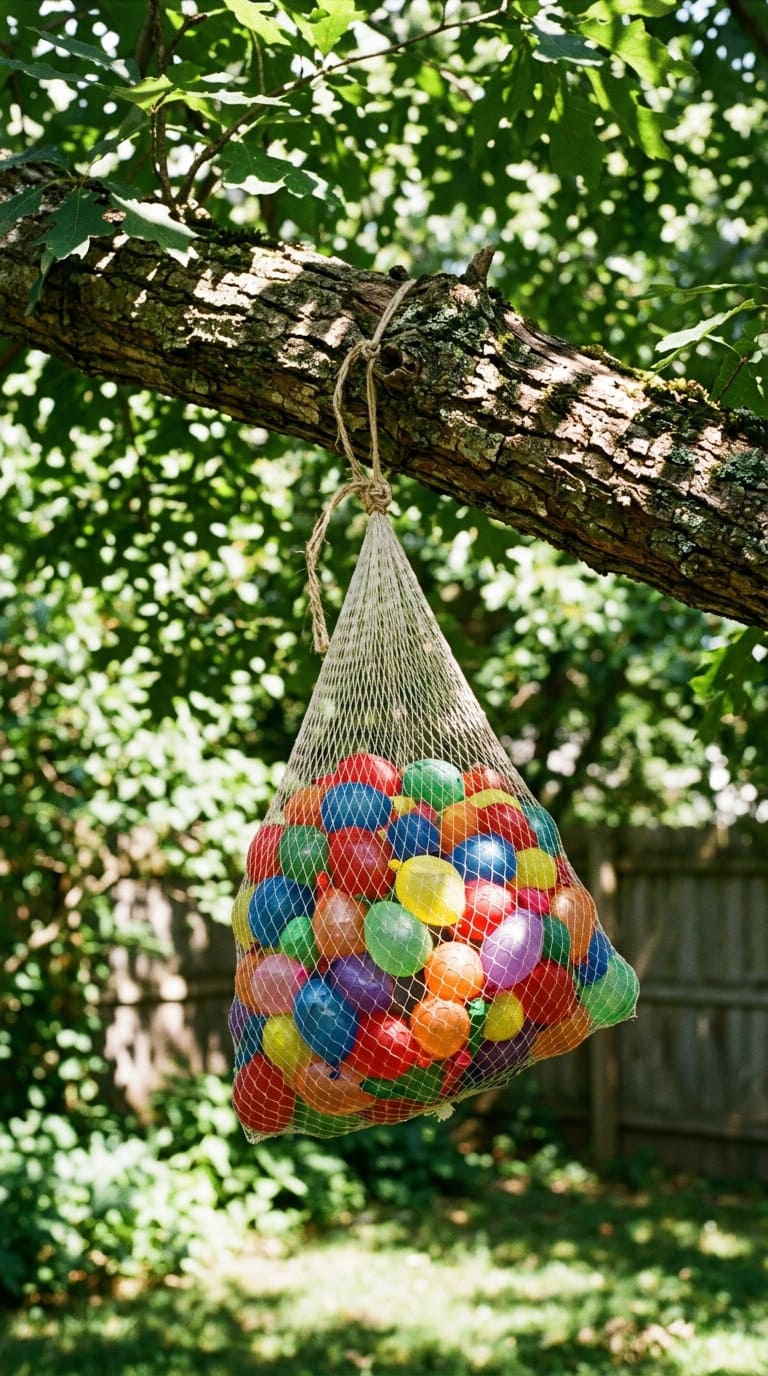
8. Water Balloon Piñata
Fill a mesh laundry bag or old pillowcase with water balloons, hang it from a tree branch, and let kids take turns swinging (gently) at it with a foam pool noodle instead of a real bat.
Budget: DIY-cheap. Ages: 5 and up, and this genuinely needs one adult standing close by, a swung pool noodle near other kids is exactly the kind of “obviously fine until it isn’t” situation the clearance guidance above is really about.
Give the swinger a clear 6-foot circle same as any other swing-motion game.
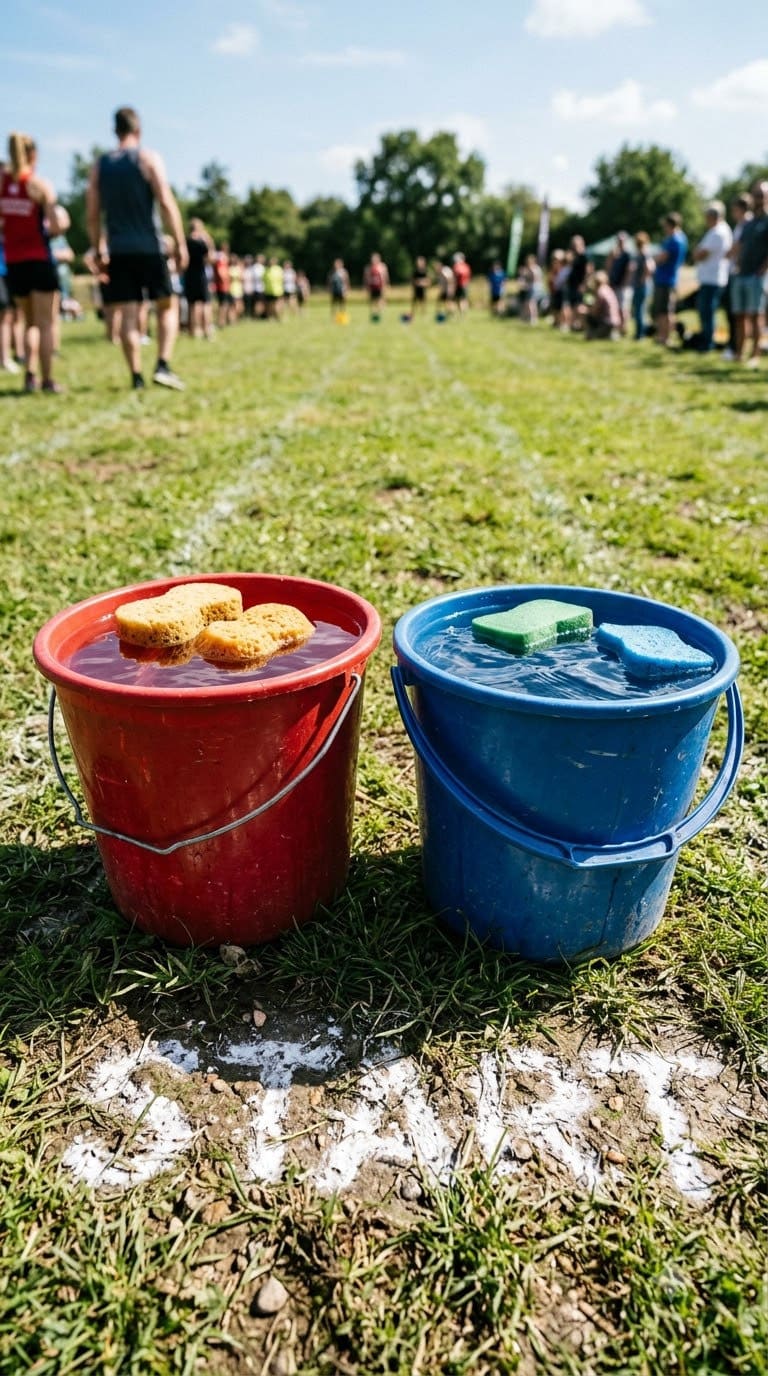
9. Sponge Relay Race
Two teams, two buckets of water at the start line, two empty buckets at the finish. Players soak a sponge, run, squeeze it into the empty bucket, and run back, first team to fill their bucket to a marked line wins.
Budget: DIY-cheap. Ages: all, easy to scale the running distance up or down for younger kids. This is the single best “hot day, zero setup” option on this list.
10. Giant Bubble Wands
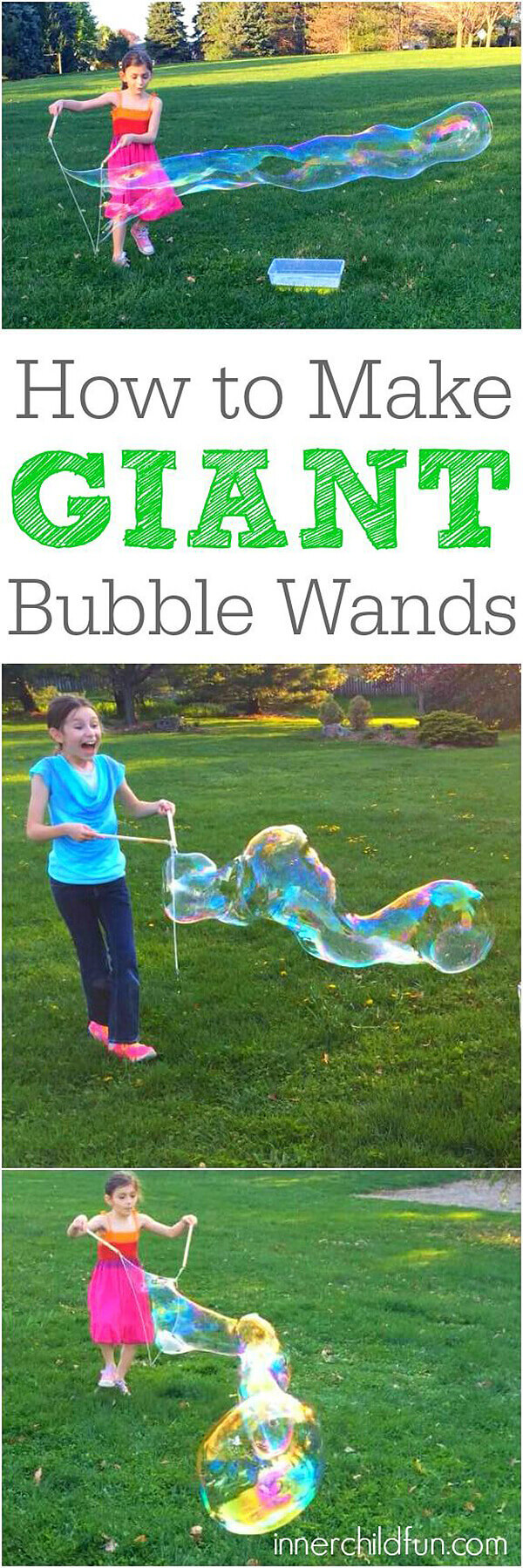
source: innerchildfun.com
Bend wire coat hangers or dowels lashed with cotton rope into large circles, dip in a mix of dish soap, water, and a spoonful of glycerin (the glycerin is what makes the bubbles last more than a few seconds instead of popping instantly). Budget: DIY-cheap.
Ages: all, though younger kids need help dipping and swinging a larger wand without smacking a sibling. Do this one on grass, not concrete, soap residue makes pavers slick.

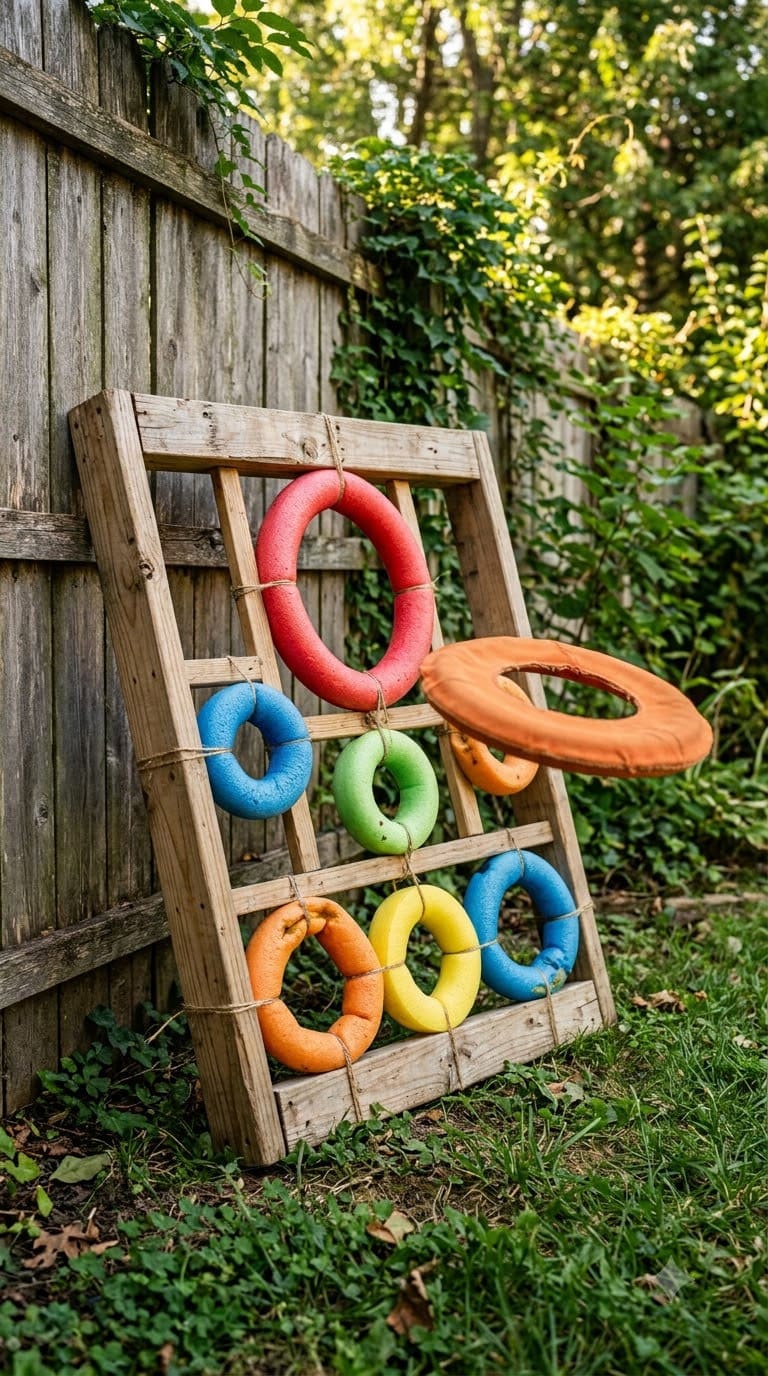
11. Pool Noodle Frisbee Target
Slice a pool noodle into rings and stack a few, then set up a simple wooden or PVC frame target with different-sized openings worth different points, toss beanbags or soft frisbees through the gaps.
Budget: DIY-cheap to moderate depending on whether you build a frame or just lean noodles against a fence.
Ages: all, since the “projectile” here is deliberately soft. Pairs well with idea 6’s basket toss for a two-station target-game corner.
Precision and Target Games
12. Pool Noodle Ring Toss
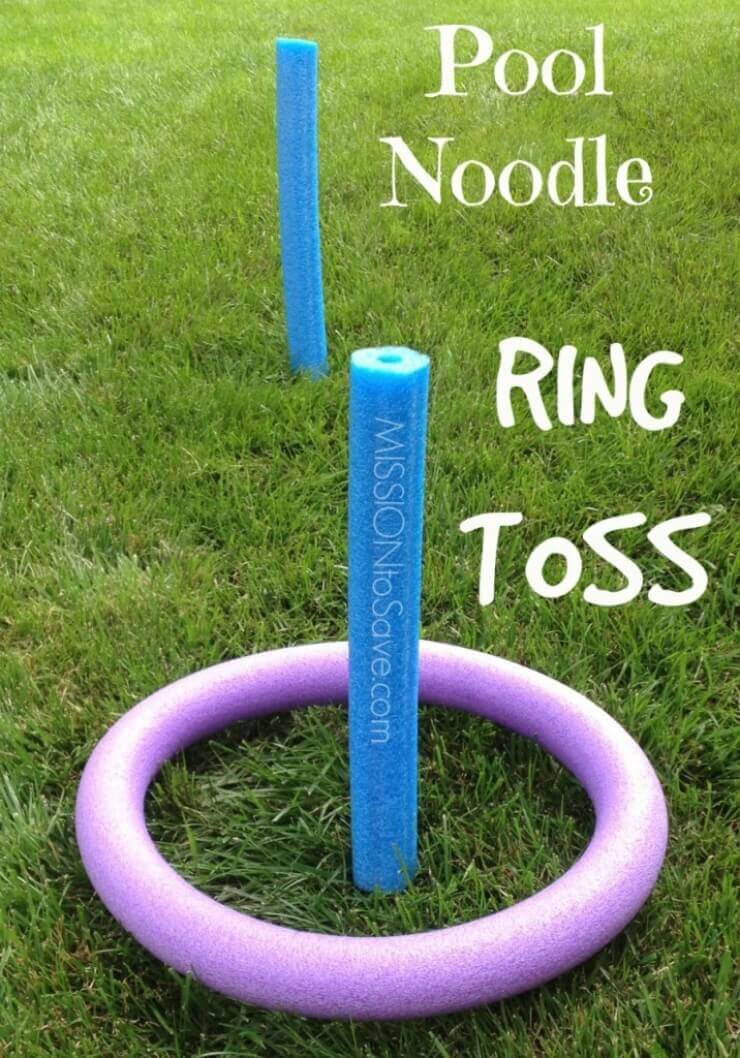
source: missiontosave.com
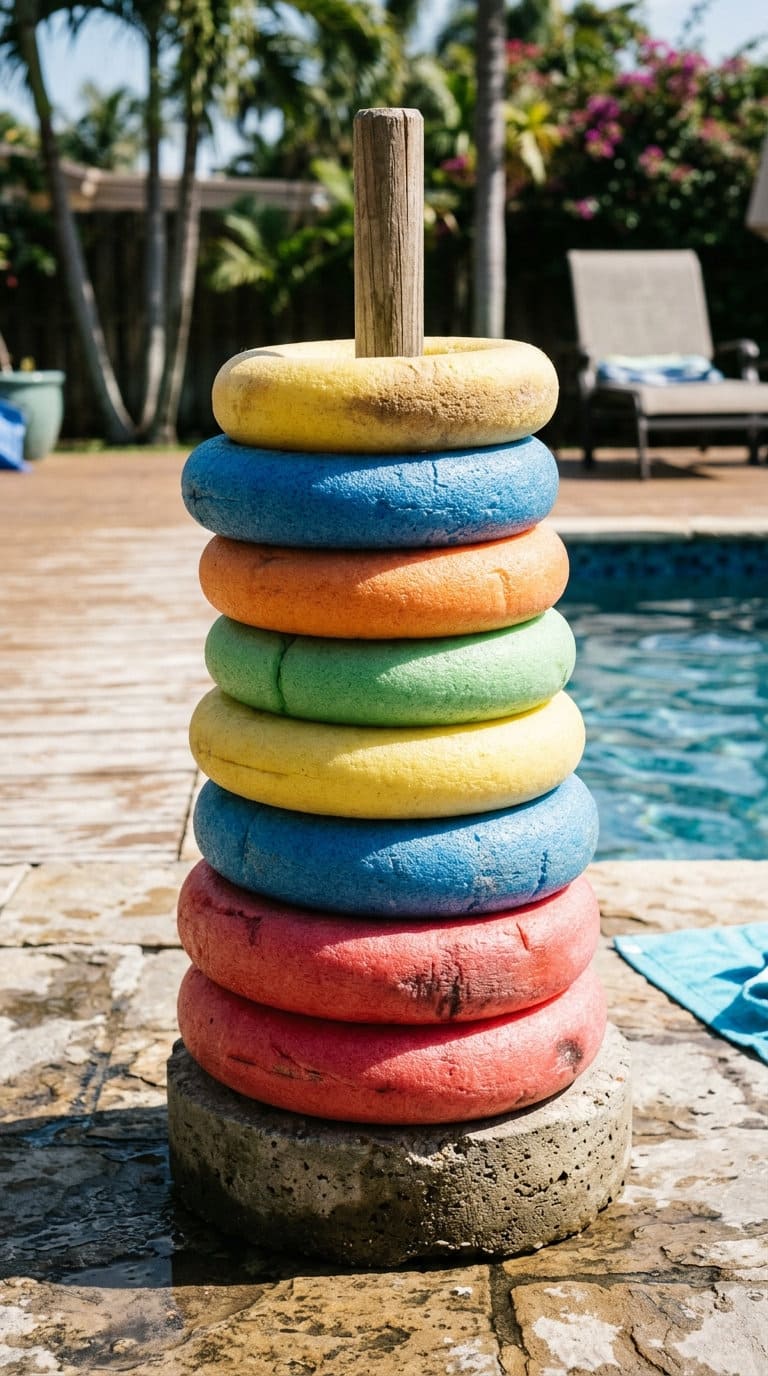
Cut pool noodles into rings about 4-6 inches thick, stand a few wooden dowels or old broomsticks in a weighted base, and toss the rings on. Budget: DIY-cheap, this is the single lowest-cost build on the whole list.
Ages: all, since a foam ring hitting anyone doesn’t hurt. Good starter project if you’re building your first backyard game station.
13. Flamingo Ring Toss

source: buildingourstory.com
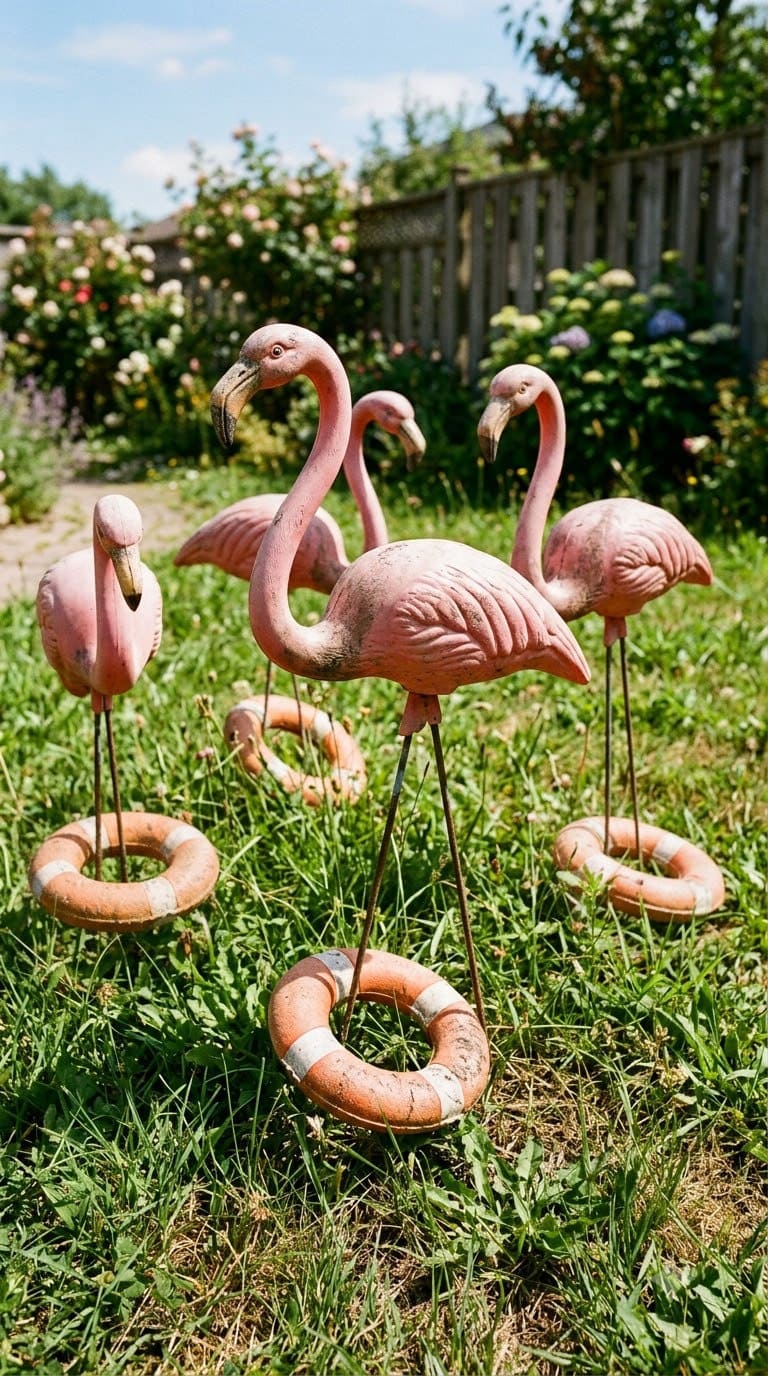
Same mechanic as above but stake plastic lawn flamingos (or any tall lawn ornament you already own) into the ground as the toss targets instead of dowels. Budget: DIY-cheap if you already own the flamingos, otherwise a small purchase.
Ages: all. This is purely a styling variant on idea 12, worth doing as a themed backyard-party version rather than a separate build from scratch.
14. Tin Can Bowling

source: agirlandagluegun.com
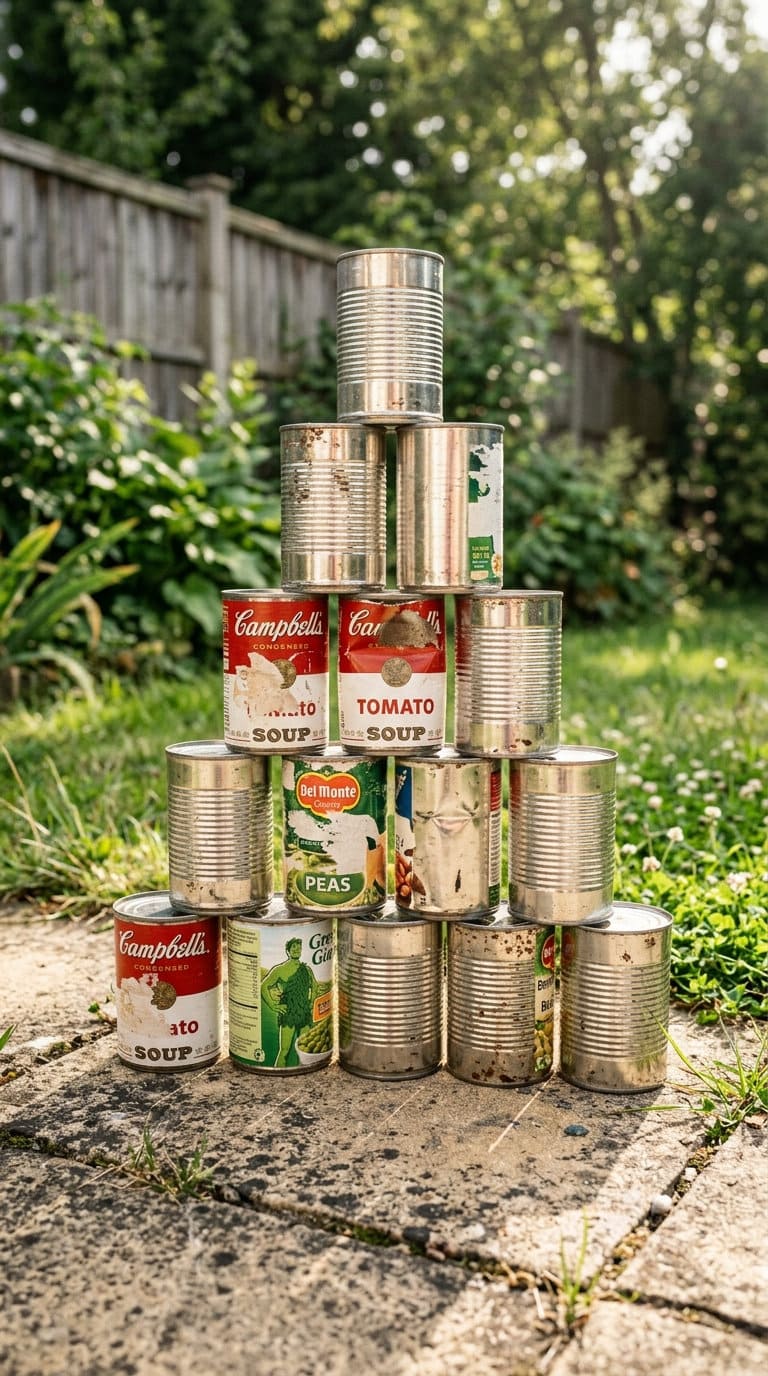
Wash and stack 6-10 empty tin cans (soup or vegetable cans work best, they’re heavier and stack more stable than thin cans) into a triangle, roll a tennis ball or small rubber ball to knock them down. Budget: DIY-cheap, essentially free if you’re already eating canned food this week.
Ages: all, though check for sharp lid edges before handing cans to younger kids, a quick pass with a file or sandpaper on the rim fixes this. Set at least 10 feet of rolling lane.
15. Soda Bottle Bowling
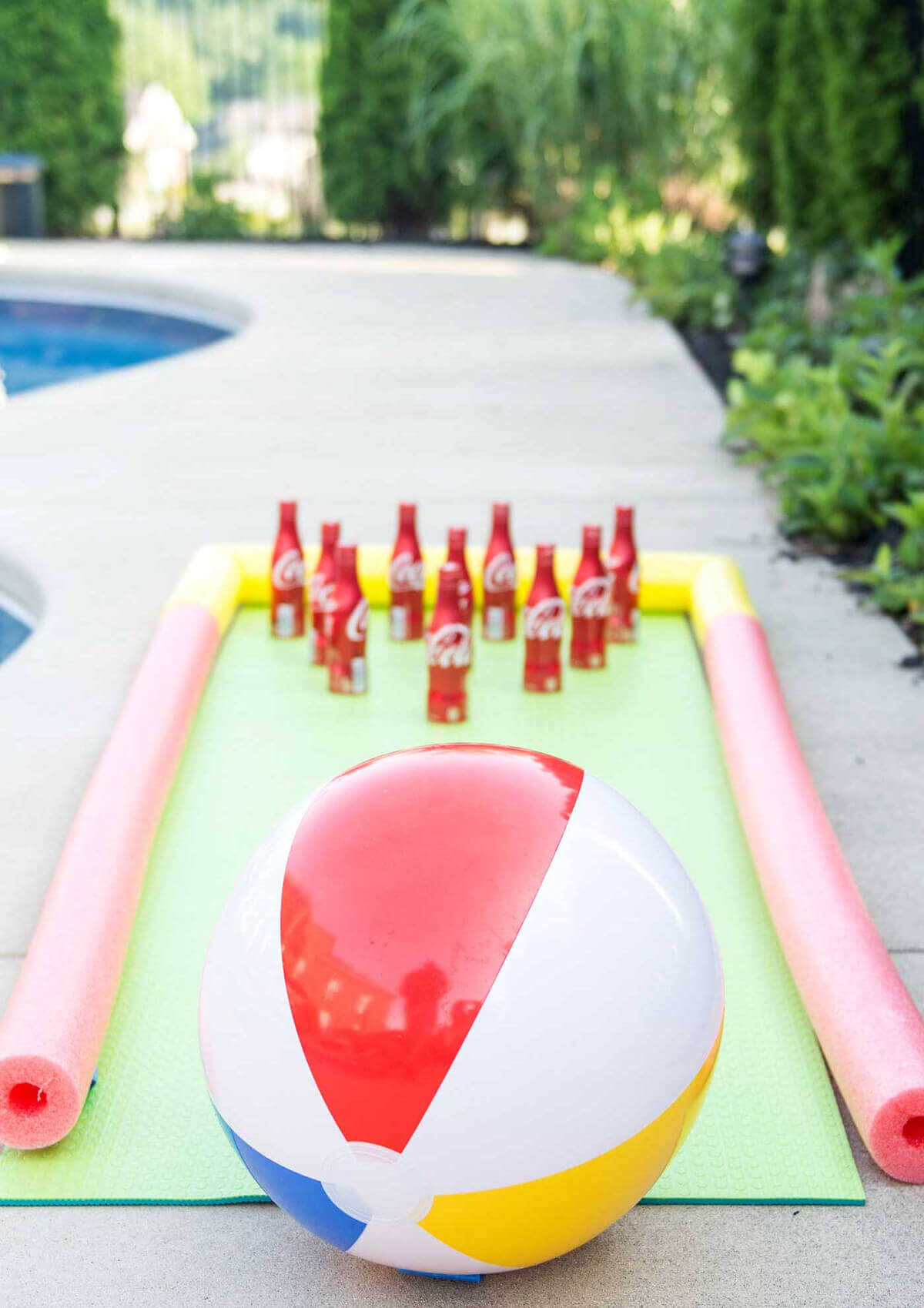
source: polkadotchair.com
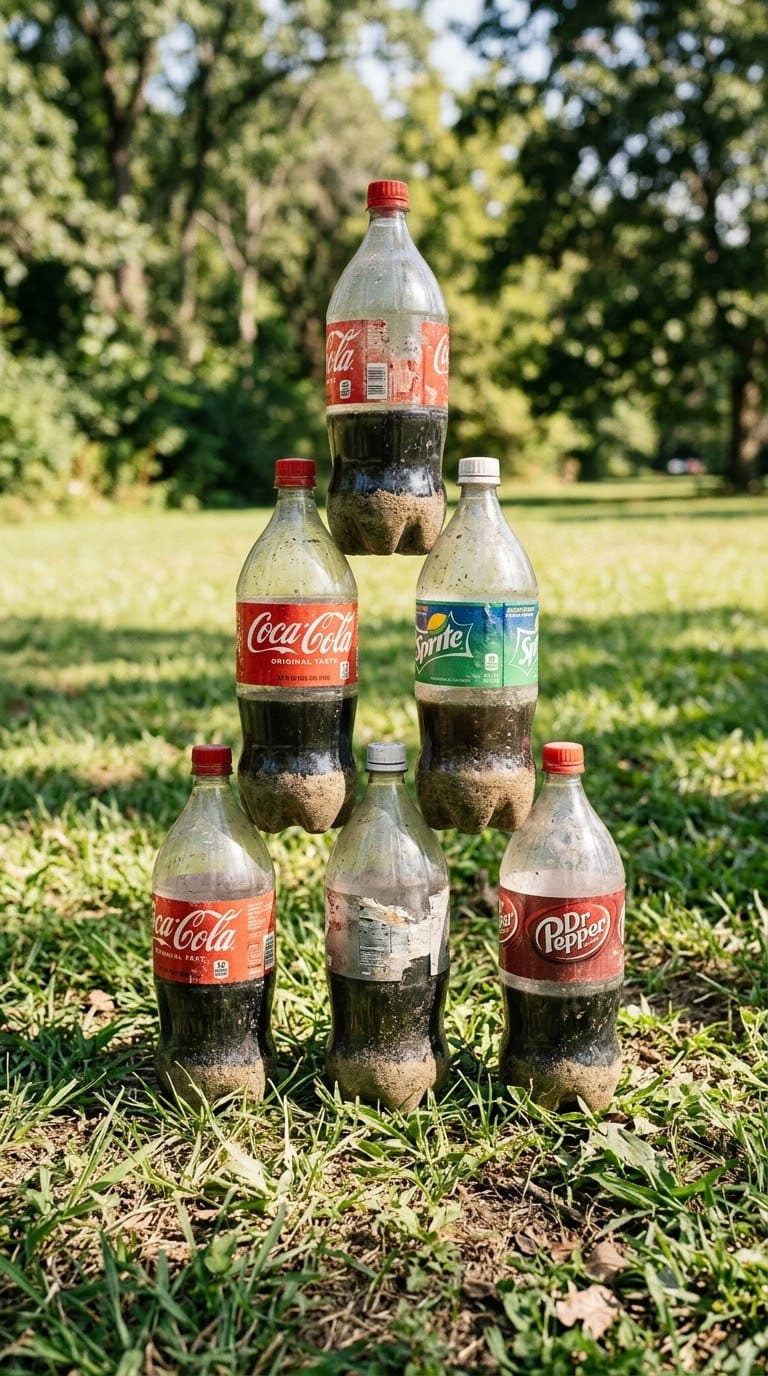
Same idea as tin can bowling but with empty 2-liter soda bottles, optionally weighted with a couple inches of sand or water in the bottom so they don’t blow over in a breeze. Budget: DIY-cheap.
Ages: all. The weighted-bottle trick is the one real upgrade over tin cans, it makes the game playable on a slightly breezy day instead of the pins tipping over on their own.
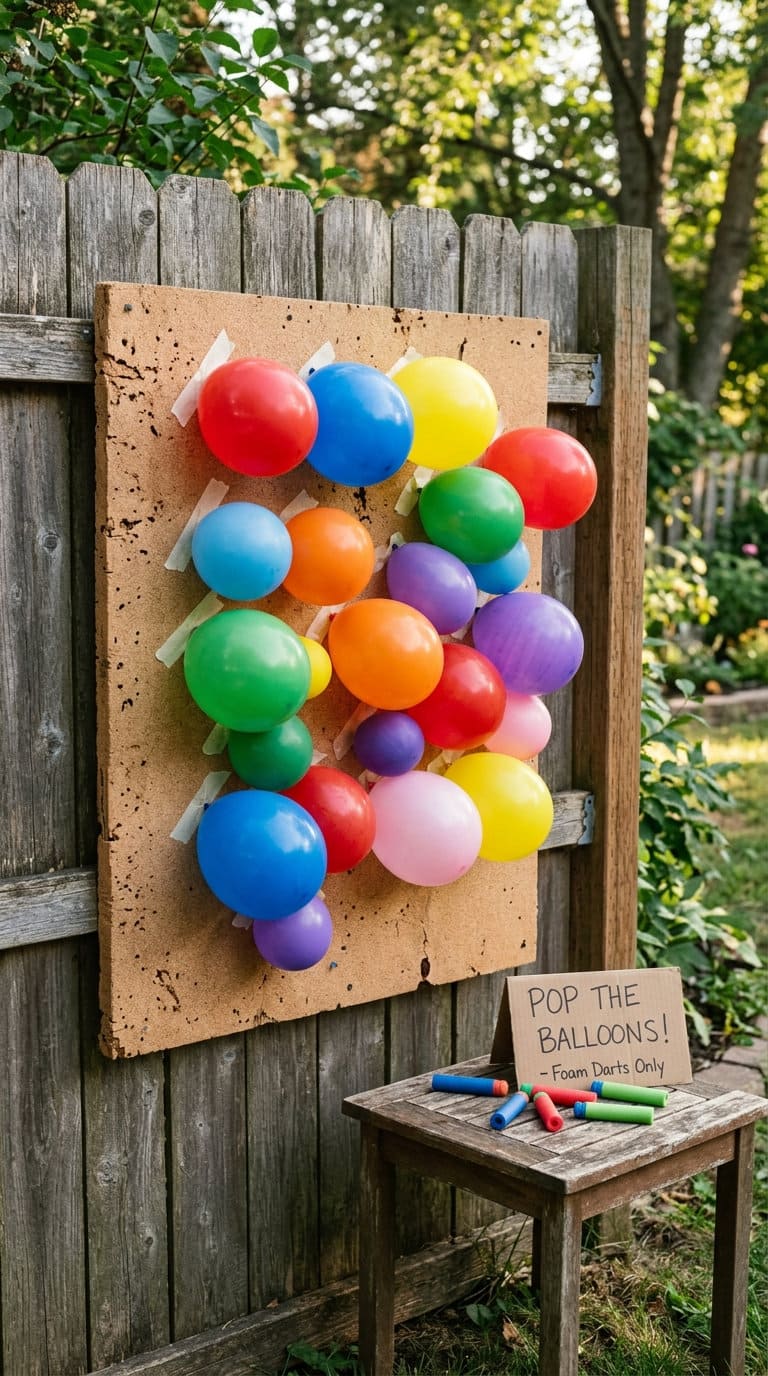
16. Safety Balloon Dart Board
Tape balloons to a piece of corkboard or foam board and use soft-tip darts (the kind sold for kids’ dart sets, blunt rubber or foam tips, never a metal point) to pop them. Budget: DIY-cheap.
Ages: 6 and up, and this is the one game on the whole list where using an actual metal-tipped dart set instead of a soft-tip kids’ set is a genuine mistake, not just an overcautious note, given CPSC’s own history with thrown-object injuries mentioned above.
Always supervise, and set it against a fence or wall with the 6-foot clearance rule in front.
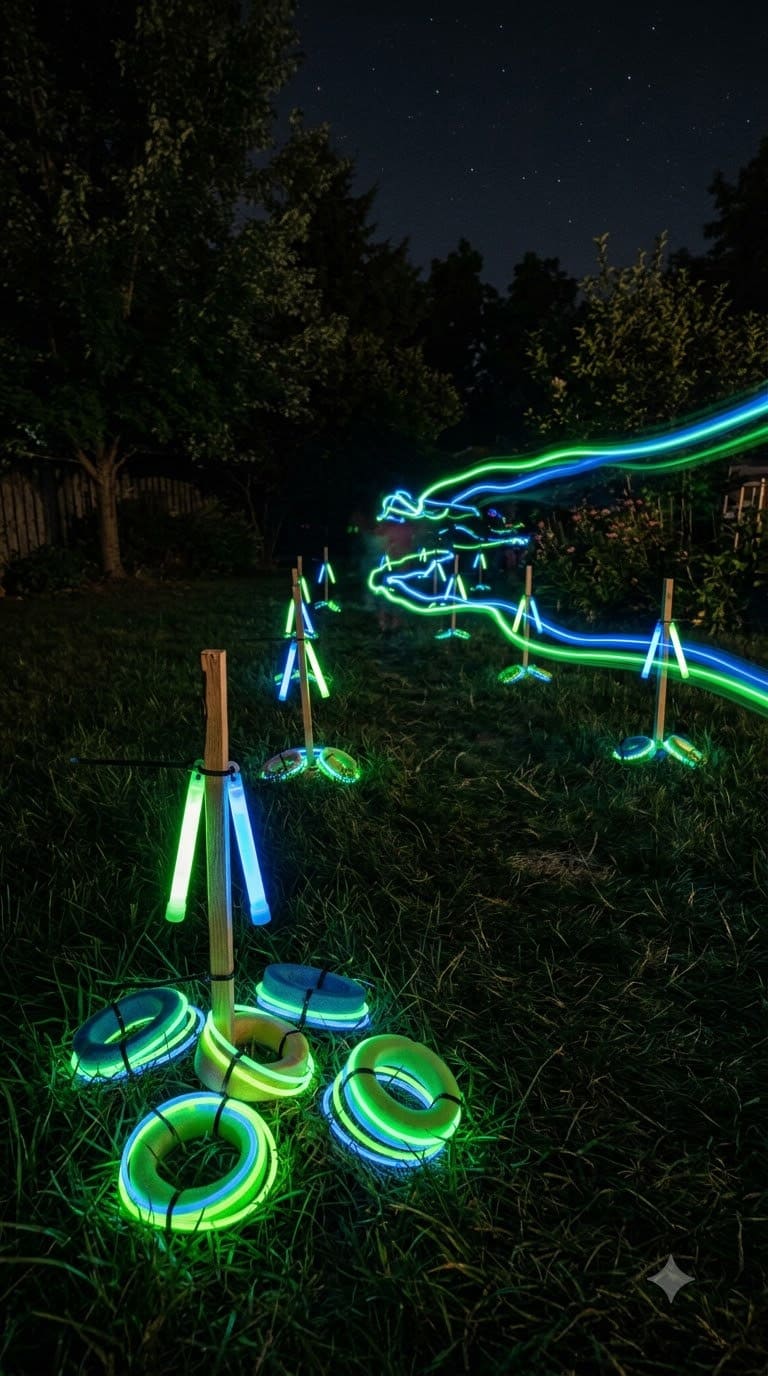
17. Glow-in-the-Dark Ring Toss
Same build as idea 12, but use glow bracelets zip-tied to the rings and glow sticks marking the target stakes so the game works after dark. Budget: DIY-cheap to moderate depending on how many glow sticks you buy for a full evening of play.
Ages: all, and this is genuinely one of the better “keep the party going past sunset” upgrades on the list, especially paired with the water balloon or sponge games earlier since kids are already wet and don’t mind the grass at night.
Build-It Games
18. Giant Jenga
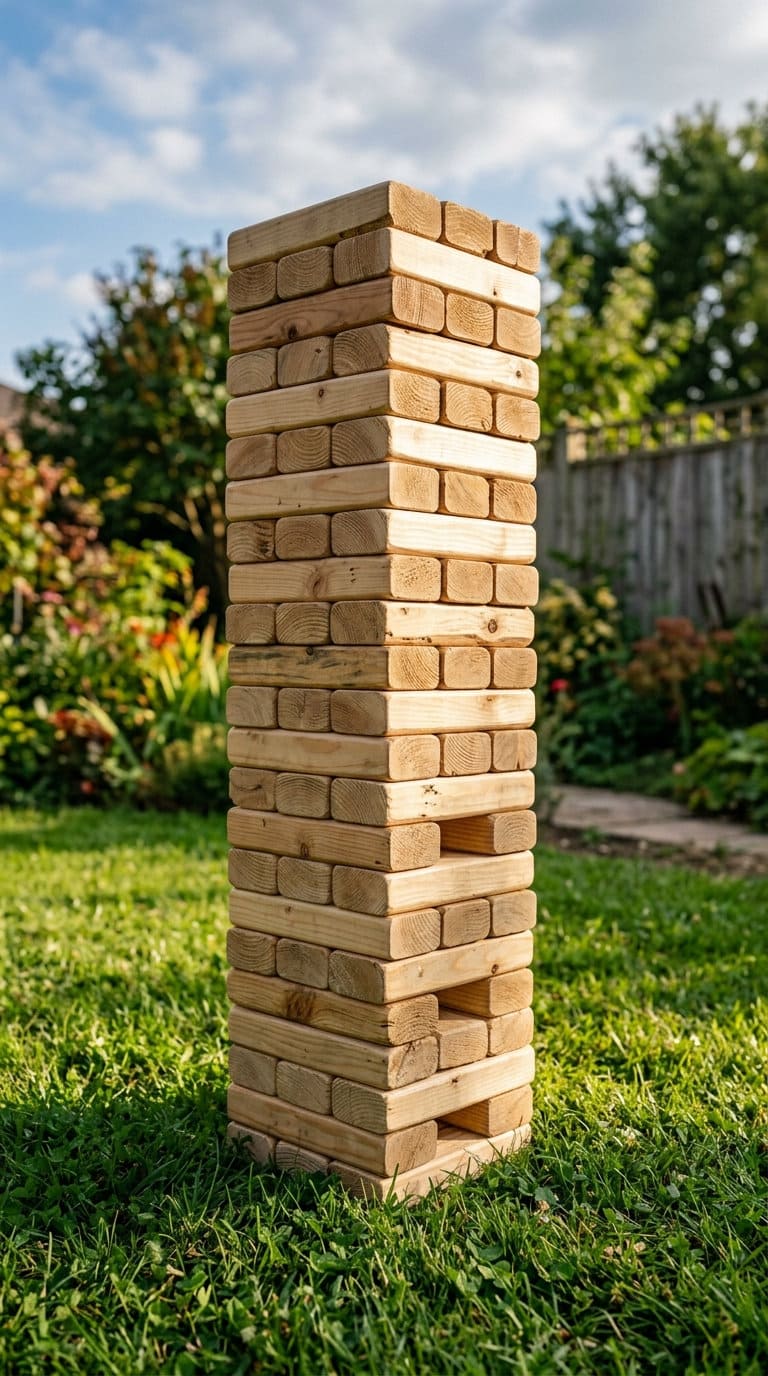
Cut 2×4 lumber into 54 blocks, each about 10.5 inches long, sand every edge and corner smooth (this is the step people skip, and it’s the difference between a fun game and a bunch of splinters), then stack 3 blocks per layer, 18 layers, rotating each layer 90 degrees.
Budget: moderate to bigger investment, this needs a chop saw or a hardware store willing to make the cuts for you, plus real sanding time.
Ages: 6 and up to play, adult supervision recommended for the actual cutting. This is the build most readers ask about first, and it’s worth doing right rather than rushing, since undersanded blocks are the single most common complaint about this kind of build across every retailer’s reviews.
19. Mini Putt Course
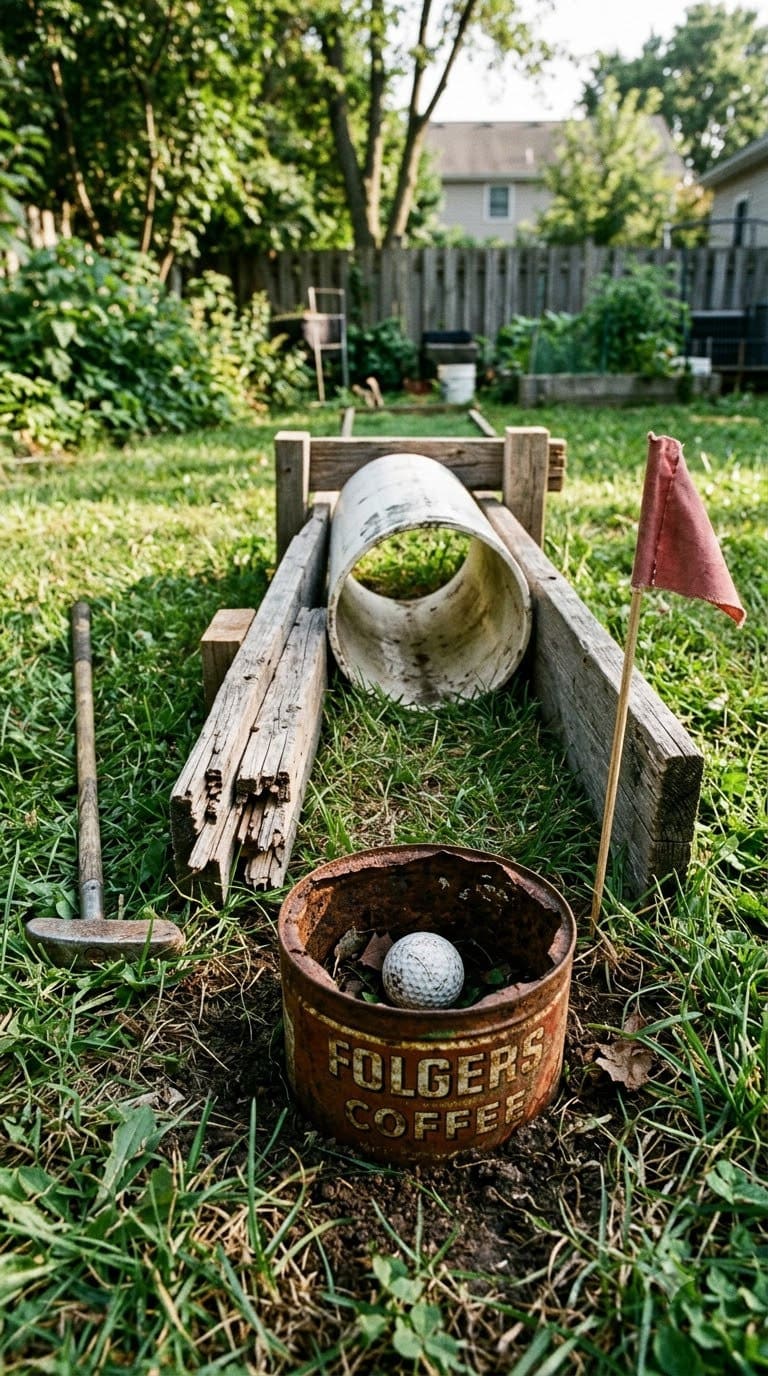
Build 3-6 simple obstacles from scrap wood, PVC pipe, and an old coffee can sunk into the ground as the hole, laid out across the yard as a mini course.
Budget: bigger investment, this is the most involved build on the list if you want more than one or two holes.
Ages: all, but expect to walk younger kids through each hole rather than letting them play unsupervised the first time.
Pairs naturally with idea 5’s giant dice as a “yard game weekend” if you’re already committing to a full afternoon of building.
20. DIY Cornhole
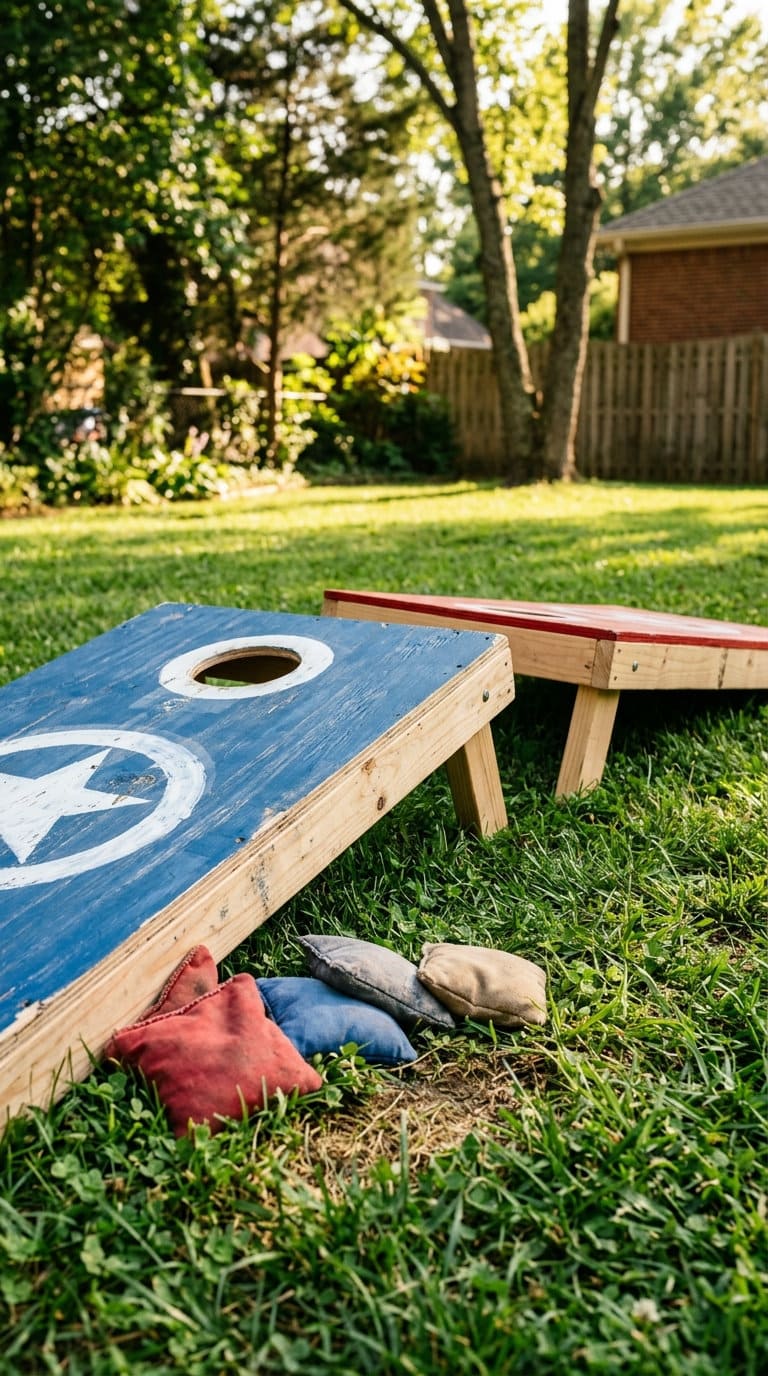
Build two 2×4-foot plywood boards with a 6-inch hole cut 9 inches from the top, mounted on a simple angled frame, and sew (or buy) 8 bean bags.
Budget: bigger investment if building the boards from scratch, moderate if you buy pre-cut boards and just paint them.
Ages: 6 and up for real play, younger kids can toss from closer range. This is consistently the most-requested game at any backyard gathering that already has other adults there, worth the extra build time if you only pick one bigger project from this list.
21. Giant Outdoor Scrabble Tiles
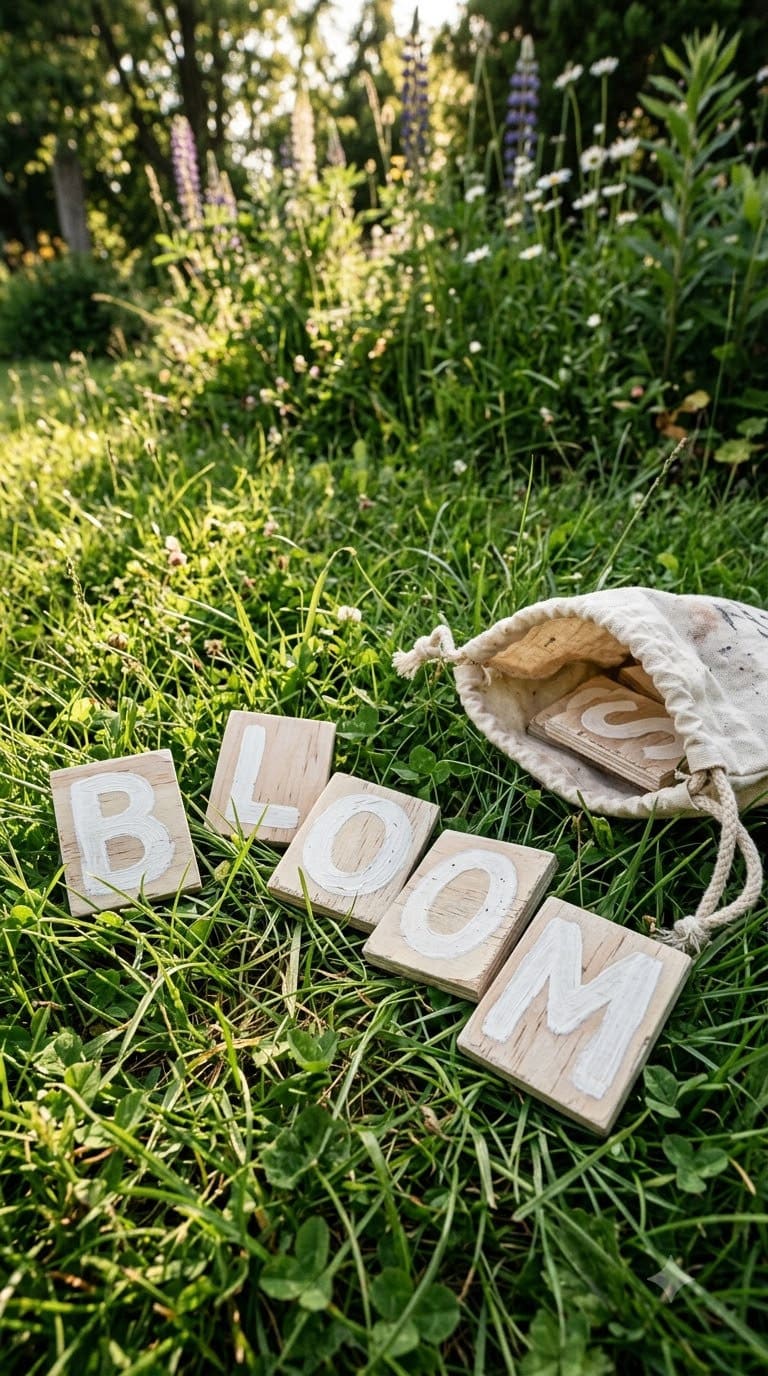
Cut plywood squares (about 4×4 inches), paint or stencil letters and point values on each, and store in a large canvas bag. Play directly on the grass or a tarp.
Budget: moderate, this one takes more painting time than most since a full usable set needs at least 60-80 tiles.
Ages: 8 and up to actually play Scrabble rules, younger kids can still use the tiles for simple spelling games. Seal with clear coat if these are staying outside for the season.
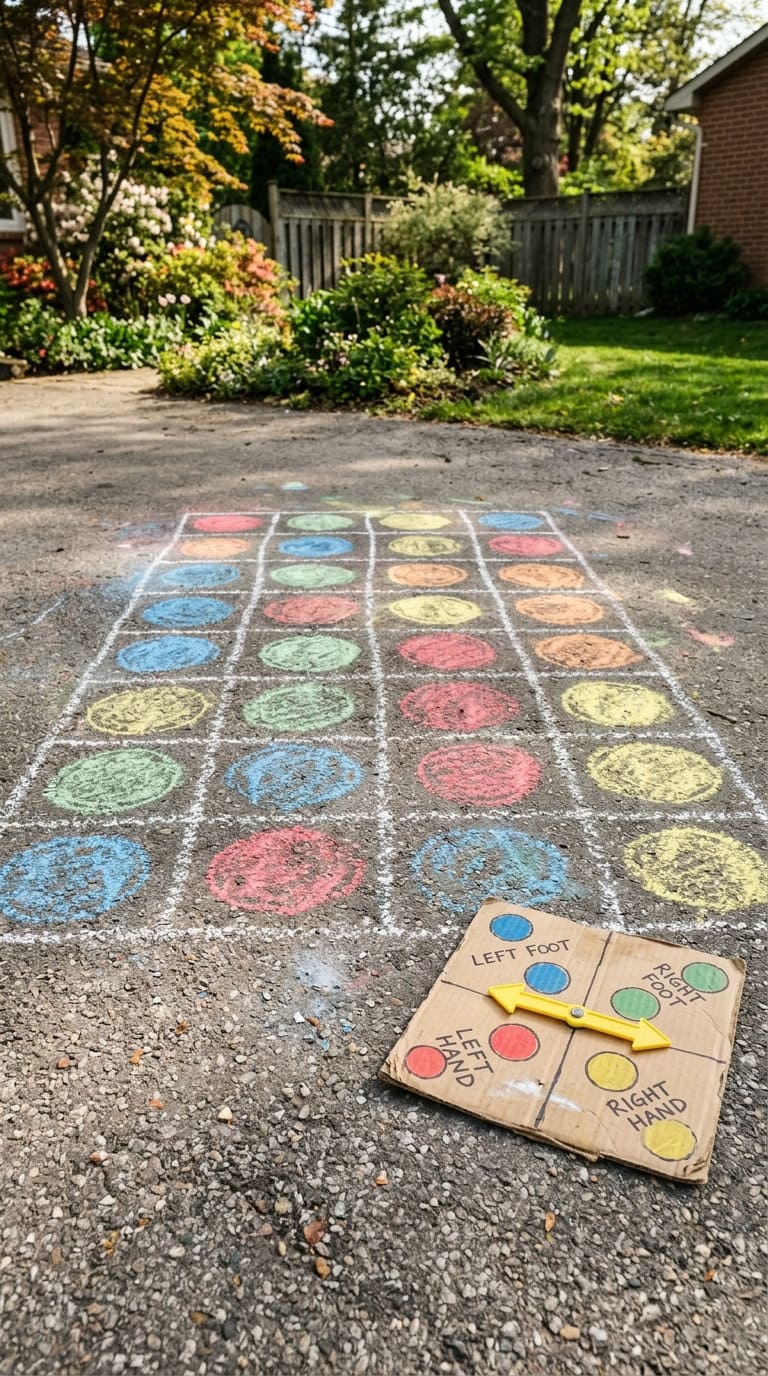
22. Sidewalk Chalk Twister
Chalk a large grid of colored dots directly onto the driveway or patio, spin a homemade cardboard spinner (or just call out colors and limbs), and play standard Twister rules. Budget: DIY-cheap, this is essentially free.
Ages: all, and it’s one of the few games on this list where flexibility matters more than age, so mixed adult-and-kid groups genuinely compete on equal footing.
Good closing game for a party since it doesn’t need cleanup beyond a hose-down.
What We Learned the Hard Way
The lawn dart history above isn’t just a random safety footnote we tacked on. It’s the reason we rewrote the dart board section (idea 16) three times before settling on “soft-tip only, no exceptions.” A metal-tipped dart set still shows up at yard sales and in old garages, and the temptation to just use what’s already sitting in a bin is real. Don’t. CPSC banned that exact product category for a documented reason, and a homemade version with real weight behind the tip carries the same risk, not a smaller one just because you built it yourself.
The other mistake we kept seeing across the games that use cut lumber (Giant Jenga, dominoes, washer toss boxes): skipping the sanding step because it “looks fine.” It doesn’t feel fine two rounds in, once someone’s palm has picked up a dozen small splinters from an edge that looked smooth from three feet away. Budget the sanding time as its own step, not an afterthought at the end of a cutting session when everyone’s ready to just start playing.
And on clearance: it’s tempting to set up a ring toss or bowling lane wherever there happens to be open grass, without thinking about what’s actually within that 6-foot zone the National Program for Playground Safety recommends checking around any active-play area. We’ve watched a tossed bean bag go wide and land a couple feet from a toddler who wandered over mid-game because nobody was watching the edges of the play area, only the game itself. One person assigned to just watch the perimeter, not play, fixes this in about thirty seconds of planning and costs nothing.
Last one, and it’s less about safety and more about not wasting a Saturday: don’t build all the “bigger investment” games in one weekend expecting to finish. Giant Jenga alone, done properly with real sanding, eats a full afternoon. We tried to knock out Jenga, cornhole, and the mini putt course in one weekend once. We finished Jenga, half-finished cornhole, and the putt course sat as cut lumber in the garage for another month before it got assembled.
FAQs
Is it safe to build dart or projectile-based backyard games for kids?
Yes, with real limits. Stick to soft-tip darts, bean bags, or foam projectiles, never a metal-tipped or hard-pointed object, and follow the CPSC’s 6-foot clearance guidance around the throwing lane. The agency’s 1988 lawn dart ban exists specifically because a weighted, pointed thrown object caused real injuries, and that risk doesn’t disappear just because a version is homemade.
What surface is safest for backyard games?
Grass or a soft lawn beats concrete or a hard patio for almost every game on this list, since it cushions falls during more active games like water balloon or bowling-style games. If you’re building anything with real height (a mini putt obstacle, a raised target), the National Program for Playground Safety’s surfacing guidance is a useful reference even though it’s written for playground equipment, not backyard games specifically.
How much does it typically cost to set up a full backyard game station?
It depends entirely on which games you pick. A station built from three or four DIY-cheap games (ring toss, tic-tac-toe, ball-in-basket) can cost close to nothing if you’re using stuff already in the garage. Add one bigger-investment build like cornhole or Giant Jenga and you’re looking at a real lumber and hardware trip, still meaningfully cheaper than buying a pre-made set of the same games. ASTM International’s home playground equipment safety spec (F1148) is worth a glance too if you’re building anything with real structural height, like the mini putt obstacles, since it covers hardware and surfacing recommendations, not just cost.
What age is too young for these games?
There’s no single cutoff, it depends on the game. Soft, no-projectile games (bubble wands, sponge relay, ball toss with soft balls) work for toddlers with supervision. Anything with a thrown object that has real weight (washers, tin cans, wooden dominoes) is better suited to kids six and up who can reliably follow a “stay behind the line” instruction.
Products We Recommend
This post contains affiliate links. We may earn a commission on qualifying purchases at no extra cost to you.
ApudArmis Giant Wooden Yard Dice Set
3.5-inch solid pine dice, set of 6, with scoreboard and carrying bag. If you'd rather skip cutting your own lumber for idea 5's Giant Yard Dice, this is a verified, live, 4.6-star (486 ratings) pre-built version.
Shop Now
Amazon Basics Portable Cornhole Set
Two wood boards with a solid-wood base, 8 bean bags, and a carrying case. A ready-made alternative to building idea 20's DIY Cornhole from scratch, verified live, 4.5 stars (2,556 ratings).
Shop Now
Liliful 20-Piece LED Glow Ring Toss Set
LED ground plugs, glow rings, and horseshoe lights in 4 colors, ready to use for idea 17's Glow-in-the-Dark Ring Toss without sourcing your own glow sticks. Verified live, 4.4 stars (28 ratings).
Shop NowNever miss an update — choose FarmFoodFamily as your preferred source on Google.
How it works: Tap the button below to open Google's settings page, then check the box next to FarmFoodFamily.
Tap the checkbox to turn it blue — that's how you know it's set.