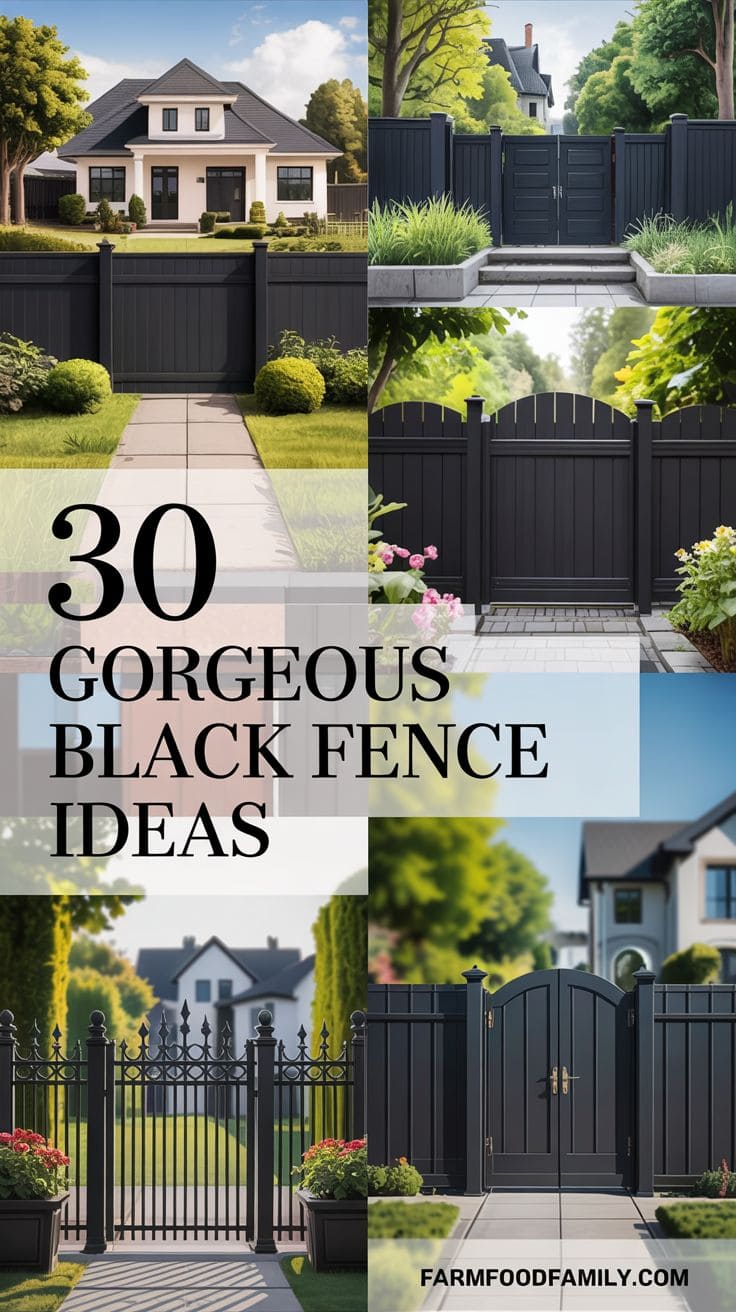
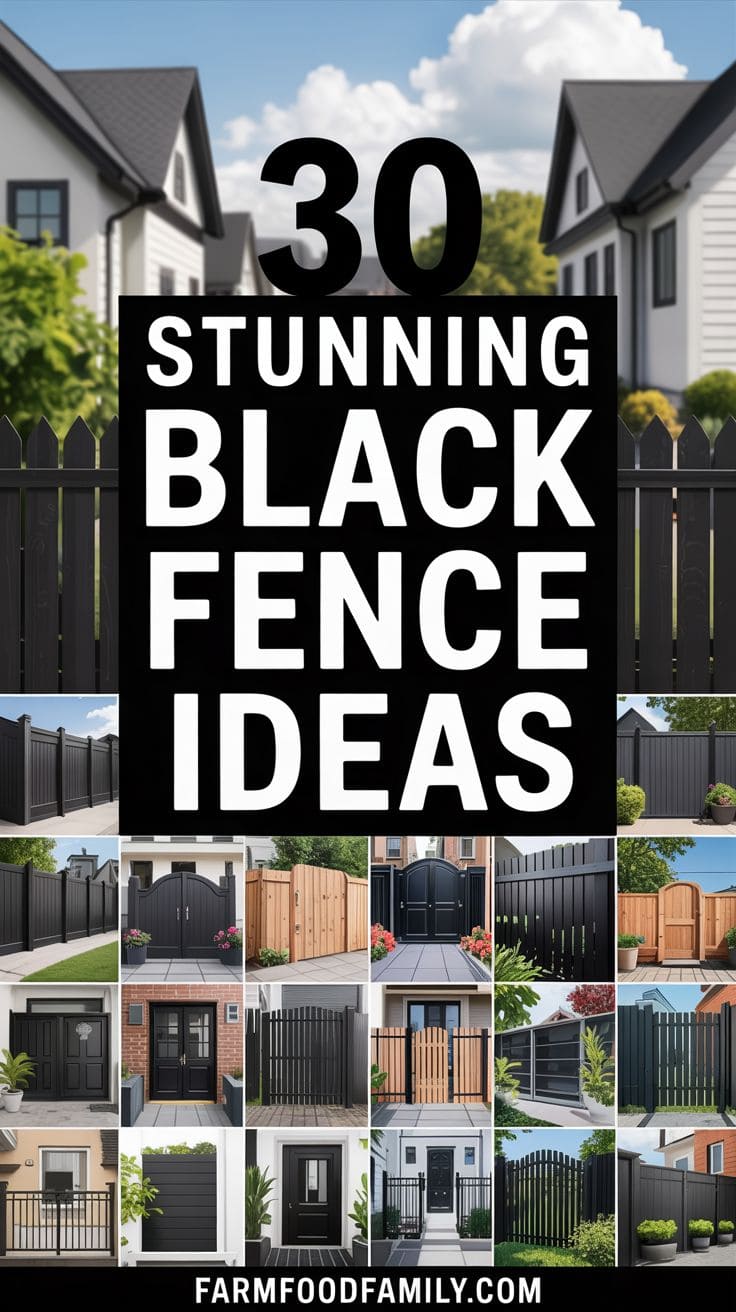
24 Black Fence Ideas That Won’t Fade or Rust in a Year
Every black fence article shows you the same thing: moody photos, dramatic contrast against green plants, done. Almost none of them mention that black fencing behaves differently than any other color once it’s actually installed in your yard, it gets hotter, it fades differently depending on the coating, and a small scratch turns into a…

Never miss an update — choose FarmFoodFamily as your preferred source on Google.
How it works: Tap the button below to open Google’s settings page, then check the box next to FarmFoodFamily.
Tap the checkbox to turn it blue — that’s how you know it’s set.
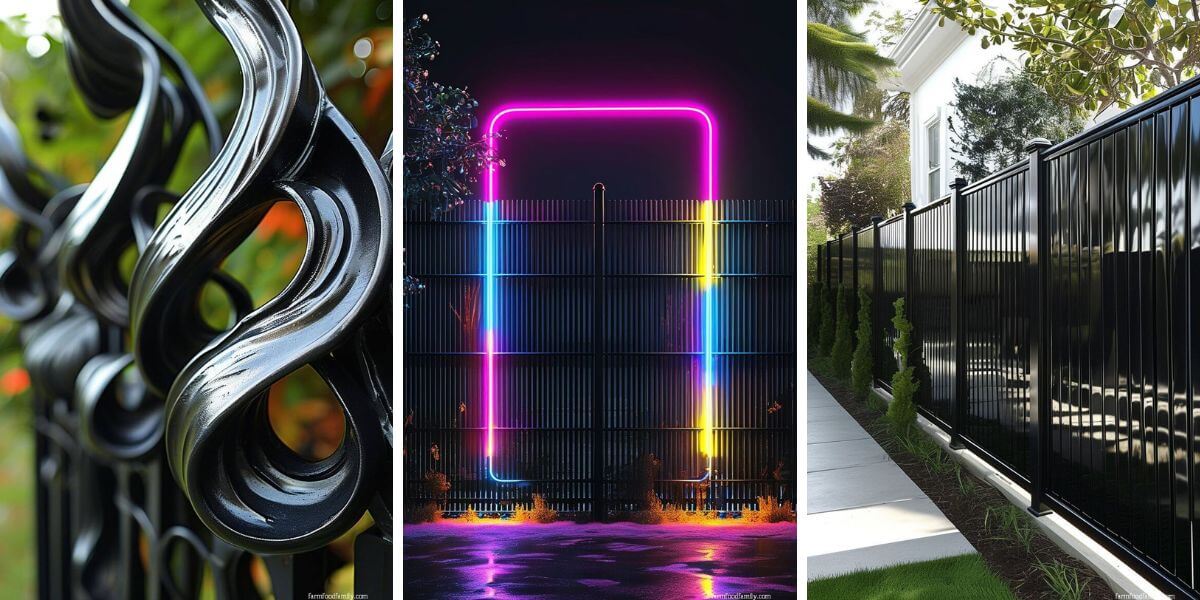
Every black fence article shows you the same thing: moody photos, dramatic contrast against green plants, done. Almost none of them mention that black fencing behaves differently than any other color once it’s actually installed in your yard, it gets hotter, it fades differently depending on the coating, and a small scratch turns into a real problem faster than you’d think.
So before the 23 styles below, here’s what actually happens to a black fence over time.
1. What actually fades, rusts, and overheats
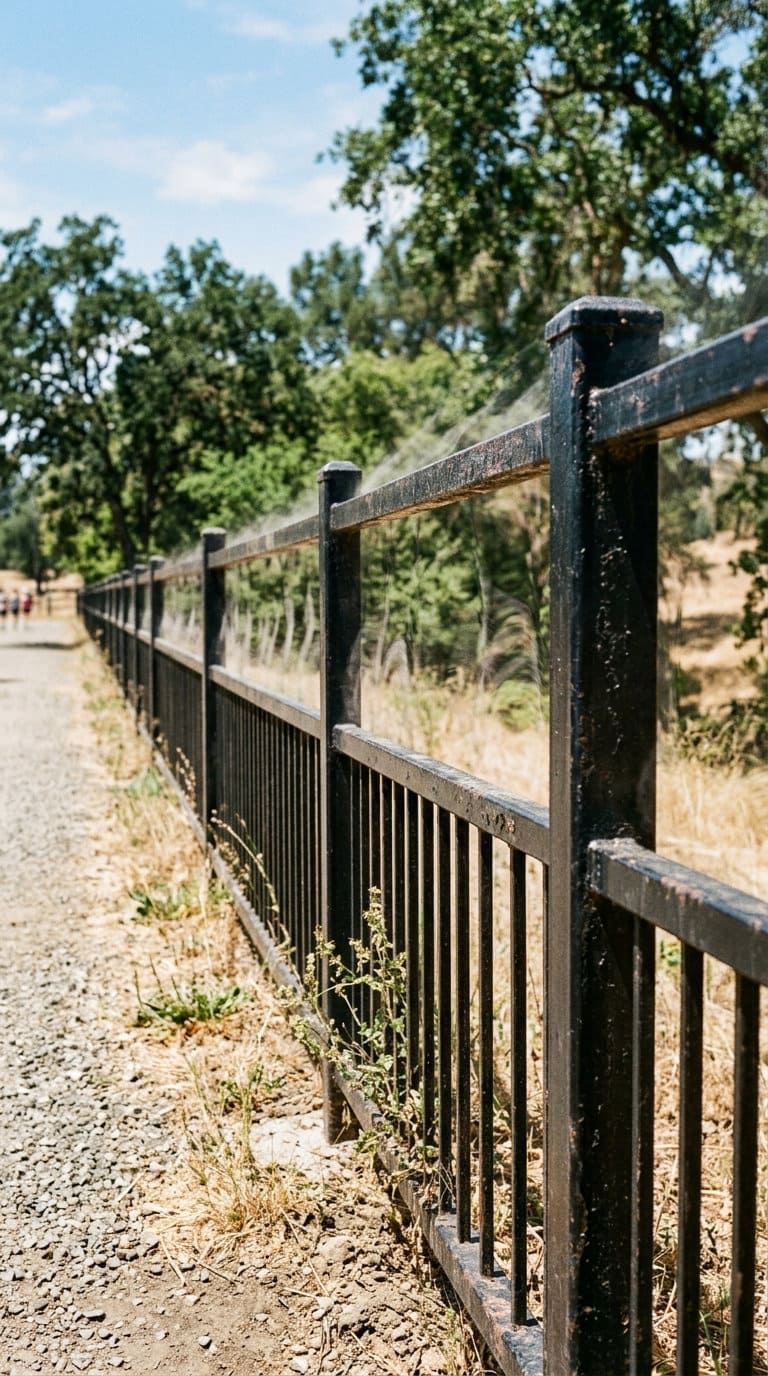
Black metal fencing gets genuinely hot in direct sun, a dark-painted railing can reach around 140°F on a 95°F day, and metal holds that heat for hours after the sun moves on. Worth knowing if the fence runs along a path where people or pets might brush against it, or right next to plants that don’t love a hot microclimate.
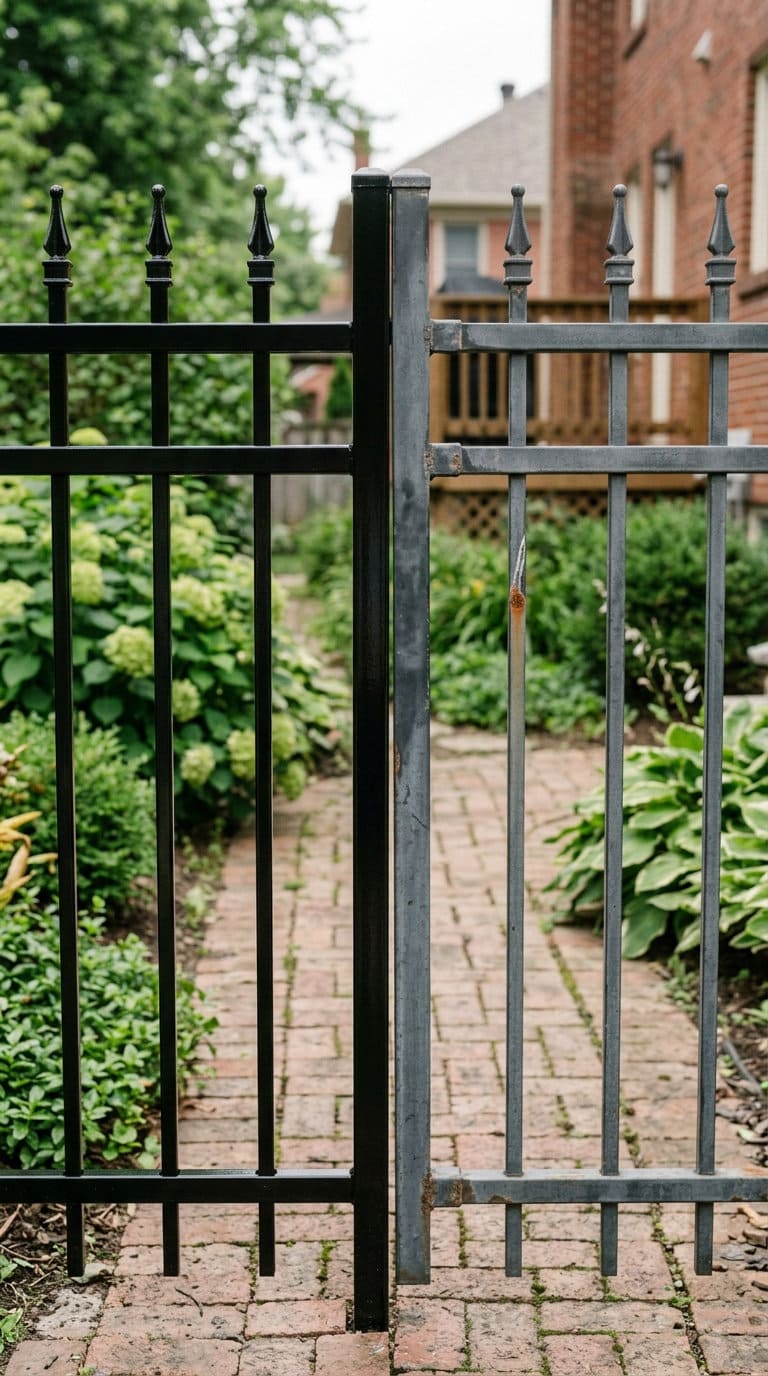
Fading is real too, but it depends entirely on the coating. Black powder coating chalks toward gray over time as UV breaks down the resin binder, even while the coating itself stays structurally intact. The distinction that actually matters, per Modern Fence & Deck’s coating breakdown: epoxy powder coat isn’t UV-stable and shouldn’t be used outdoors at all, polyester powder coat is UV-stabilized and the standard choice for fencing, and premium AAMA 2605 fluoropolymer coatings resist fading the longest, for a modest cost bump. Ask which type you’re getting before you commit to a black metal fence, not after it’s already turned gray in year three.
Rust is the other real risk, and it moves fast. A chip in black paint no bigger than a pencil eraser can grow into a 6-inch rust bloom within about a year if it’s left alone, because bare metal starts corroding almost immediately once it’s exposed. Catch small chips early: clean the spot, sand back to bare metal, prime, then touch up with color-matched paint, rather than waiting until it’s a visible problem.

On the HOA question, black is usually one of the safer color choices, not a riskier one. FenceAdvisors notes that black, brown, and other neutral tones are typically on the approved list, bright or mismatched colors are what actually draws pushback. That said, approval still generally takes a couple weeks to a month or more through your HOA’s CC&R submission process, so don’t skip that step just because black feels like a safe bet.
Answer 4 quick questions and get matched to the exact fix for your yard — drainage, budget, layout, or something else entirely.
Take the Free QuizIf you’re deciding between powder coating and regular paint for a metal fence, powder coating is thermally bonded rather than just surface-adhered, and typically lasts 15 to 20 years versus 3 to 5 years before a painted fence needs redoing. It costs more upfront, but the lifecycle cost usually favors powder coating if you’re planning to stay in the house a while.
And on the aesthetic question people don’t expect: a dark fence in a small yard doesn’t necessarily make the space feel smaller. Because dark colors visually recede rather than advance, a black fence can read more like a shadowed backdrop than a solid wall, which some designers argue actually makes a small yard feel bigger, the opposite of the usual “light colors open up a space” advice.
2. Black Wrought Iron Fence with an Elegant and Traditional Look
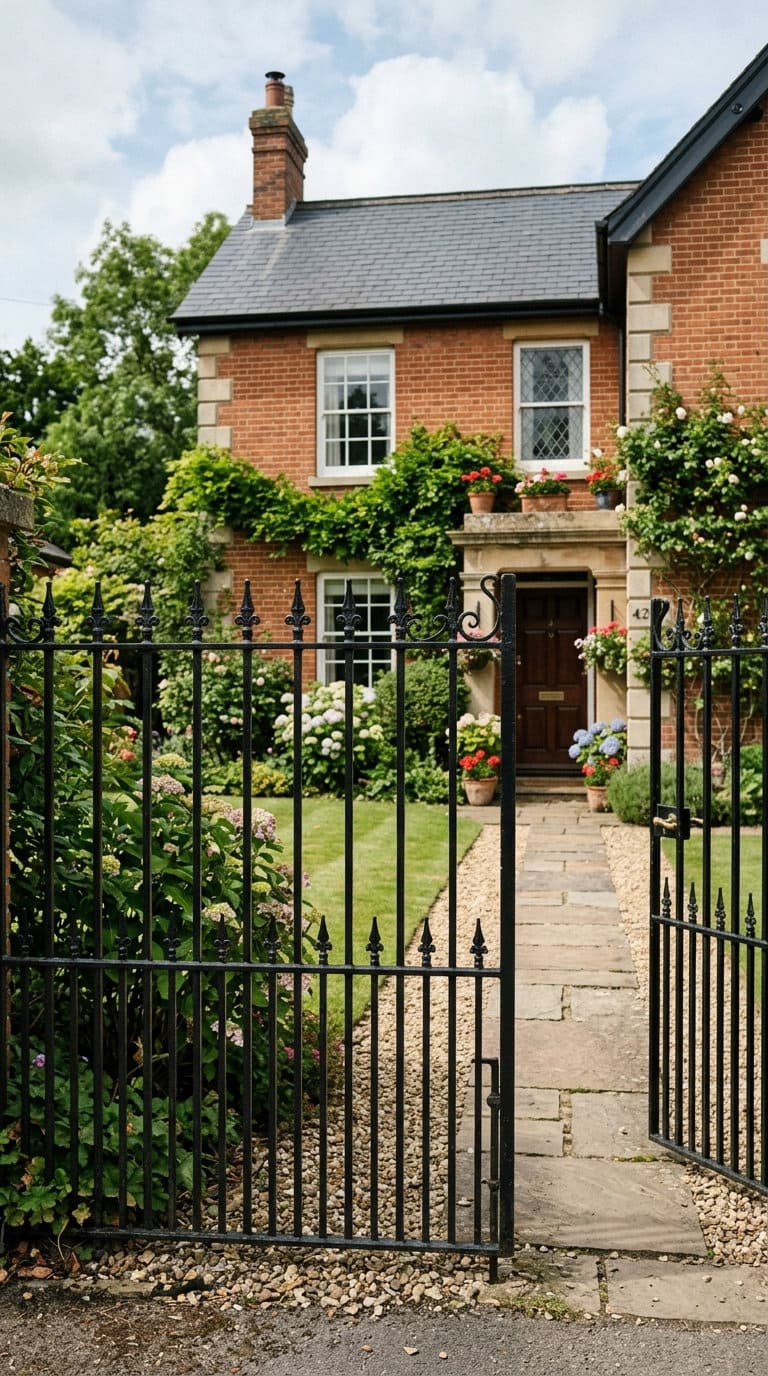
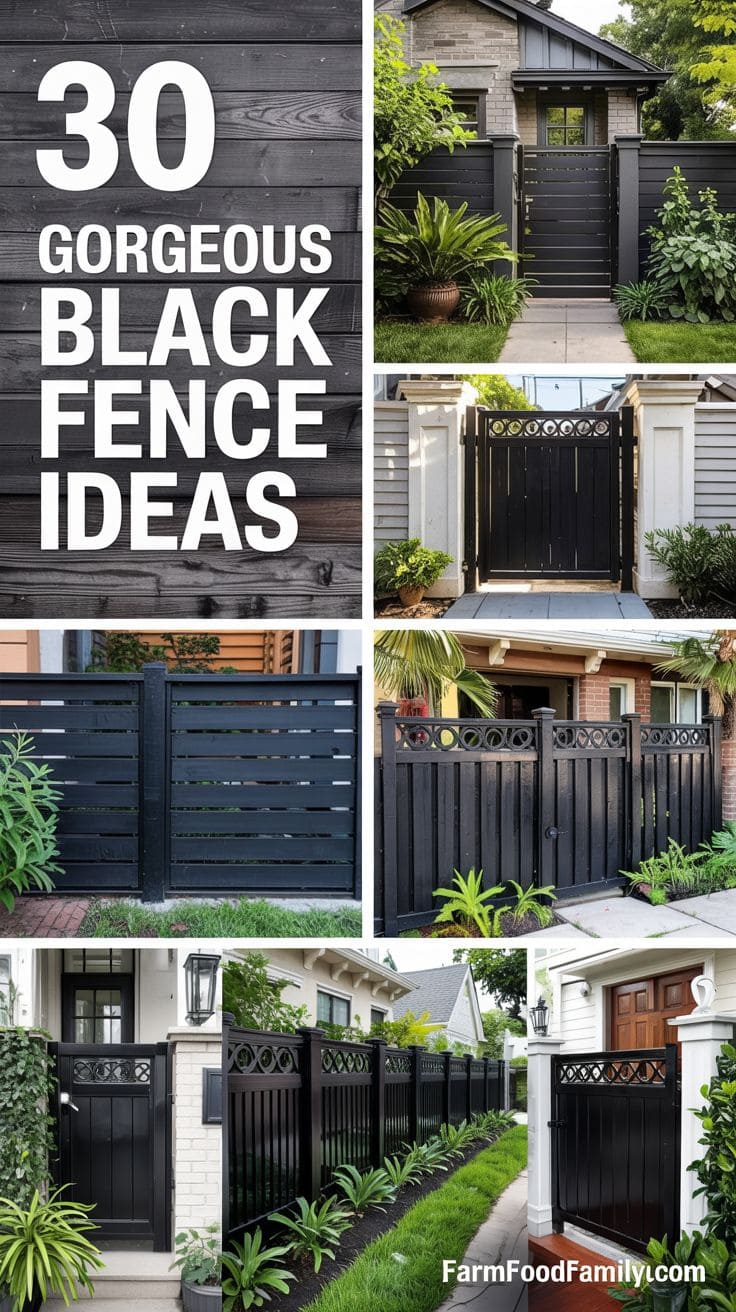
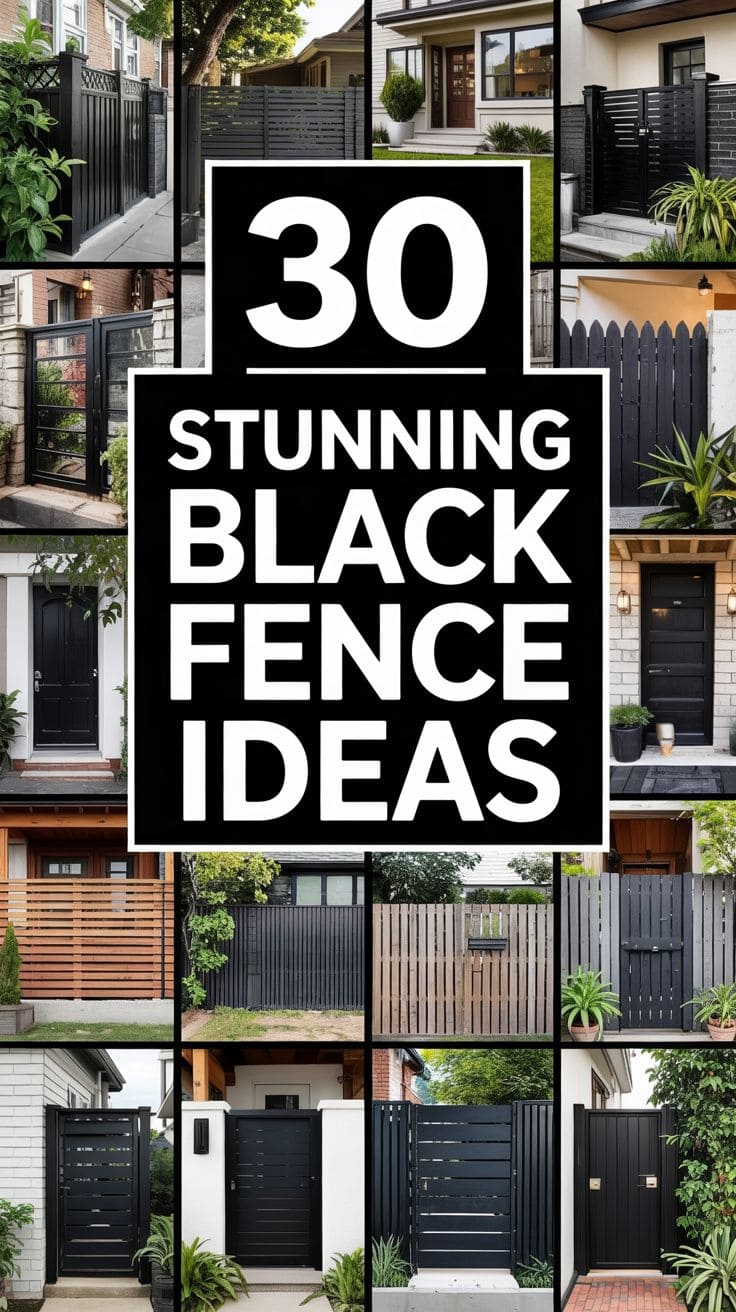
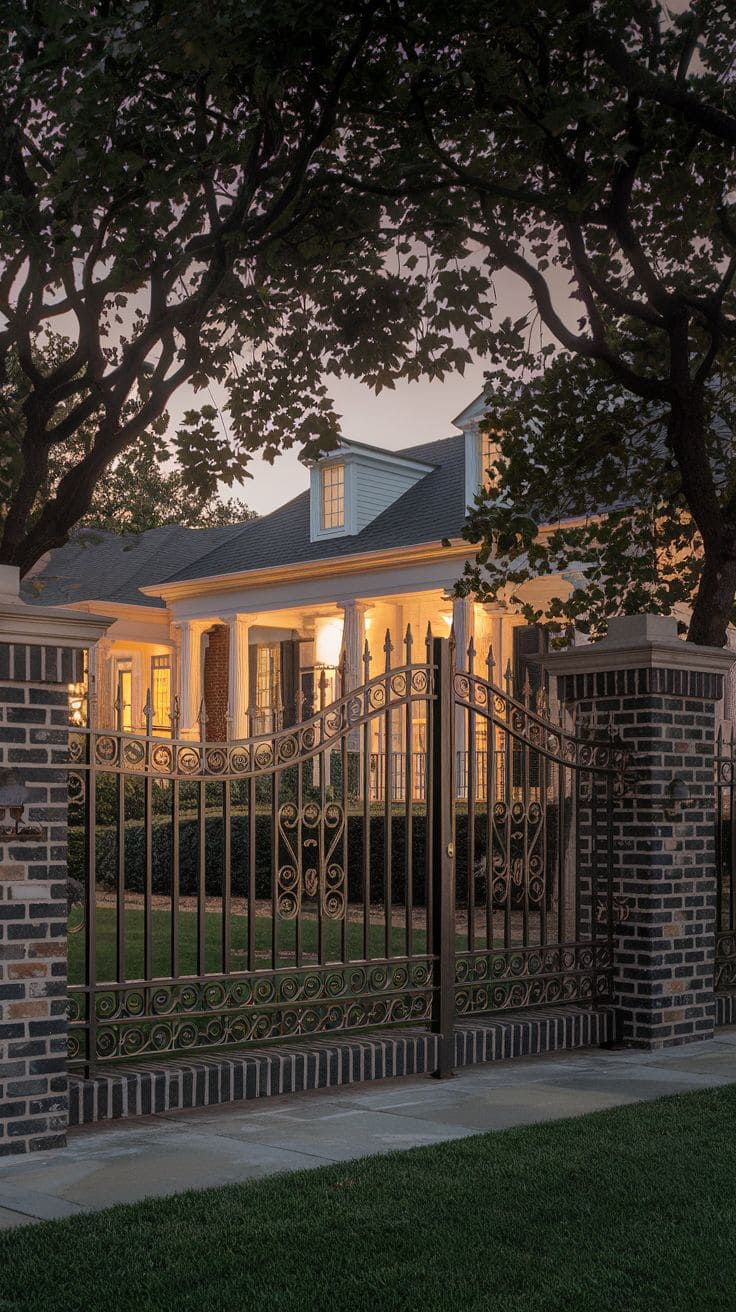
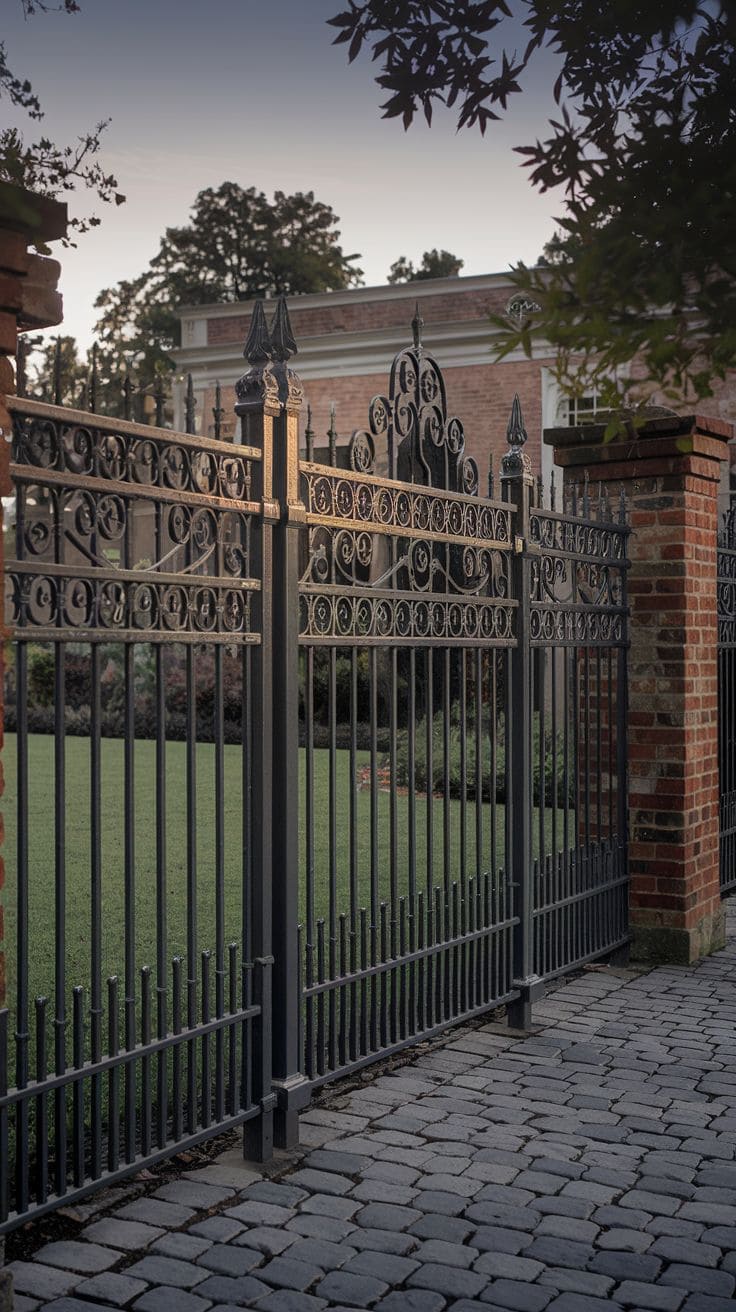
Wrought iron is the classic black fence material for a reason, the vertical picket-and-rail structure reads as formal and traditional without feeling heavy, and it pairs well with almost any architectural style from colonial to modern.
Ornamental finials or scrollwork at the top of each picket dress it up further if you want something closer to a period-appropriate historic look.
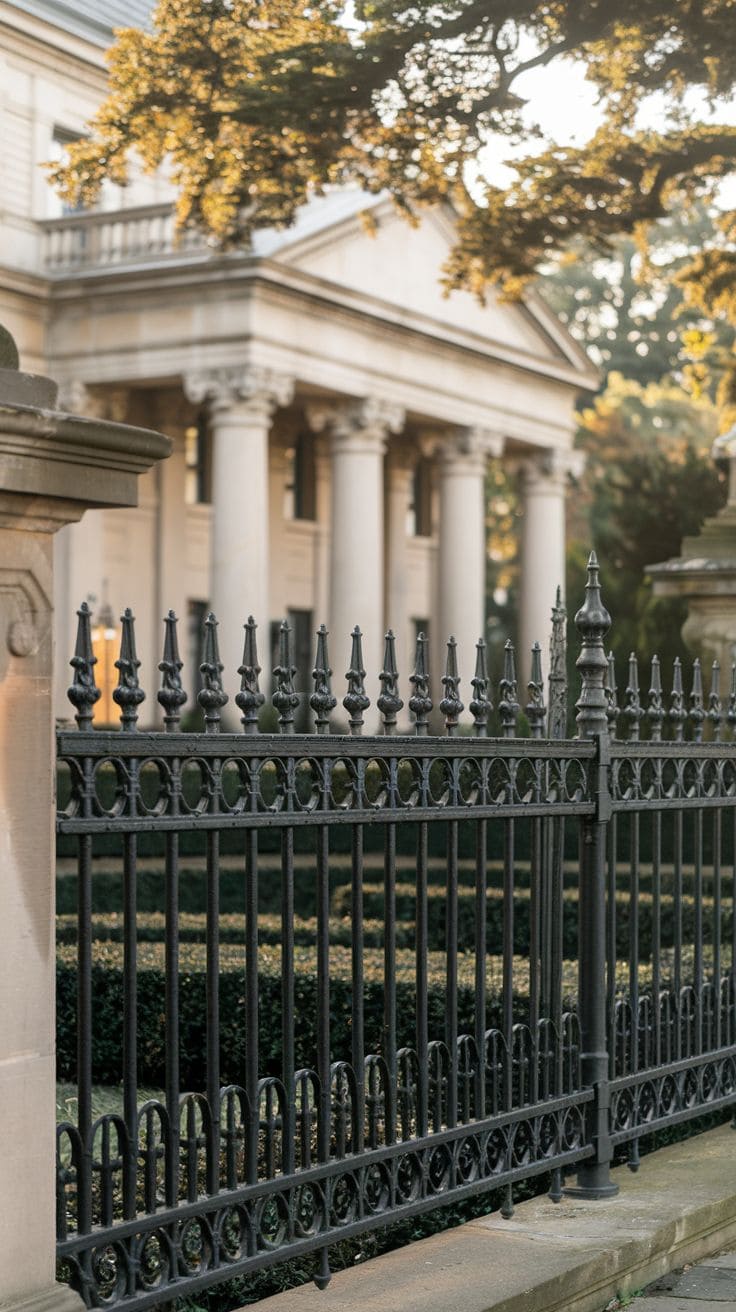
Wrought iron fences in black embody everlasting elegance. They provide structure, sophistication, and security while yet allowing light and air through. These fences work well with historic or grand homes, formal gardens, and traditional landscaping styles.
Whether surrounding a front yard or enclosing a large garden, the wrought iron design is both sophisticated and inviting.
You may also combine it with stone or brick columns to create a layered, architectural look.
Most yard problems trace back to one specific, fixable cause. Find yours in 4 quick questions.
Take the Free QuizA fresh black polish enhances the exquisite craftsmanship and gives depth to the surrounding foliage.
This type of fence not only defines your yard, but it also enhances the overall appearance of your property and can last for decades with regular care.
3. Black Lattice Fence for Soft Privacy and Visual Texture
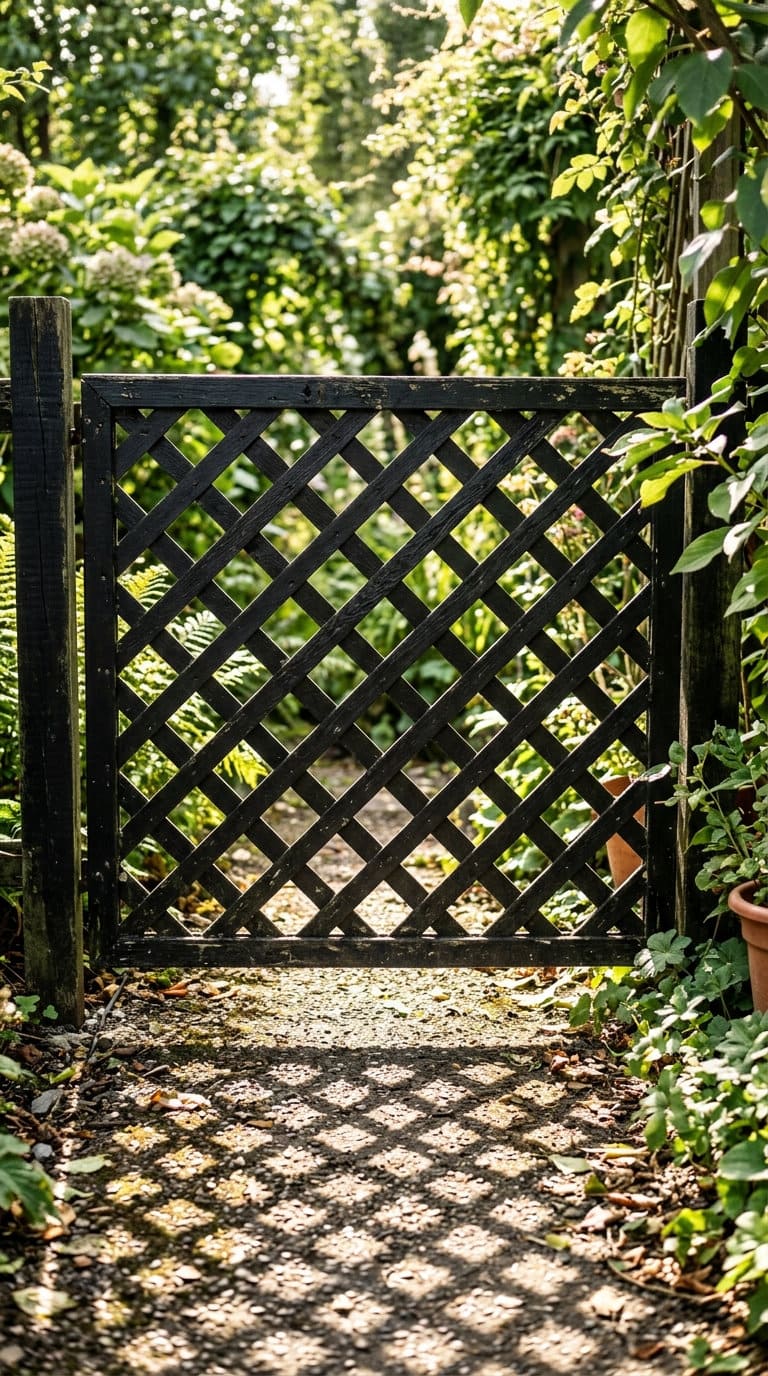
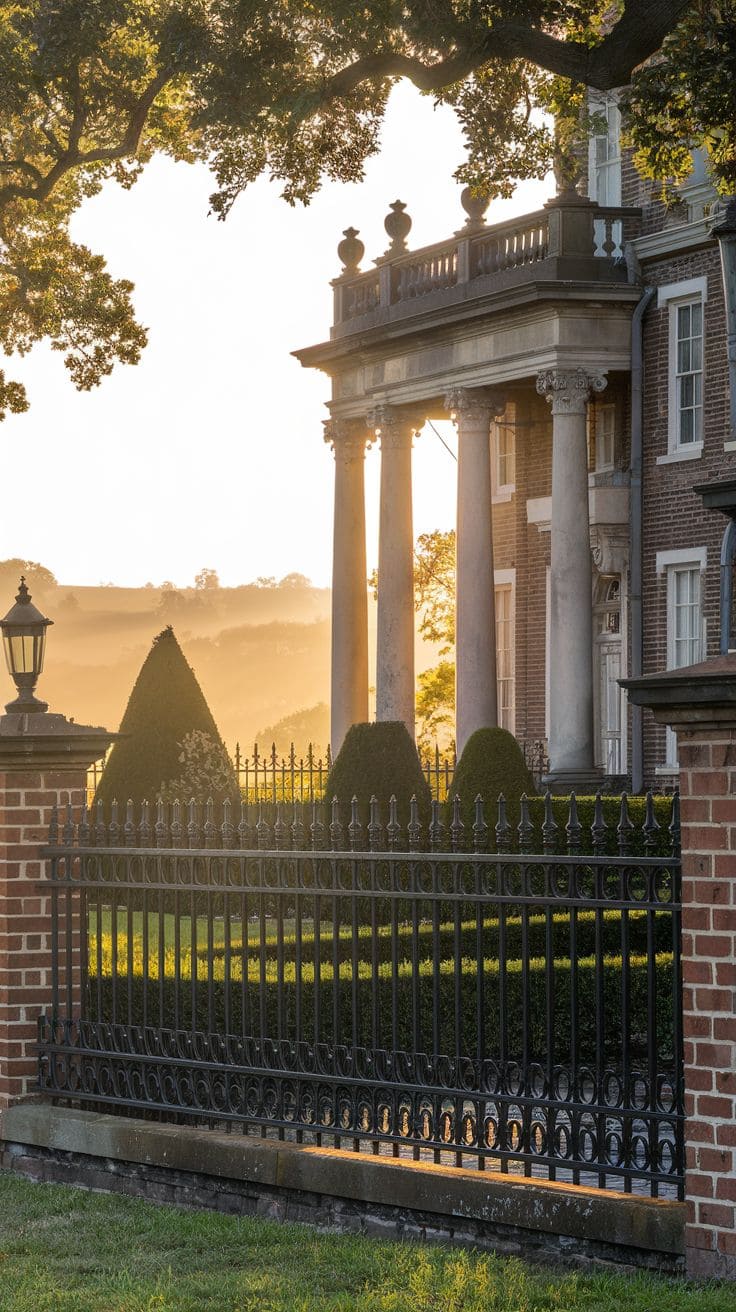
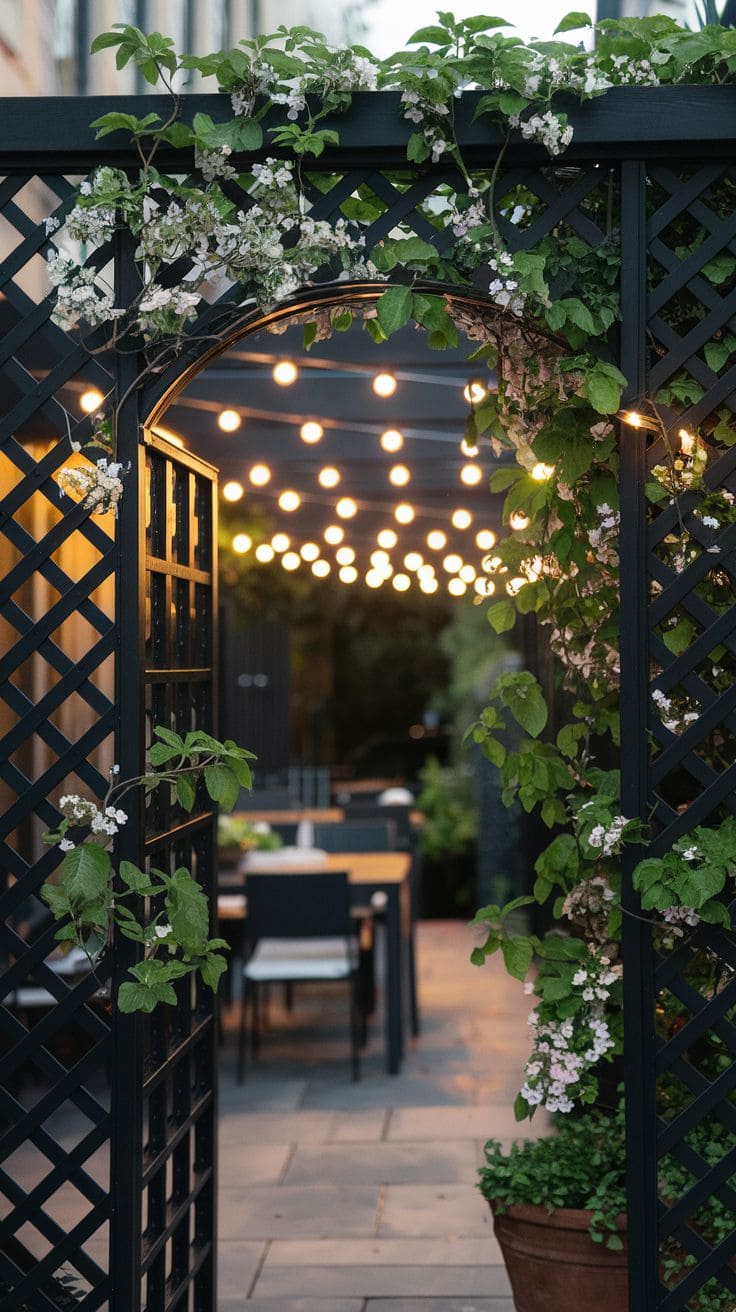
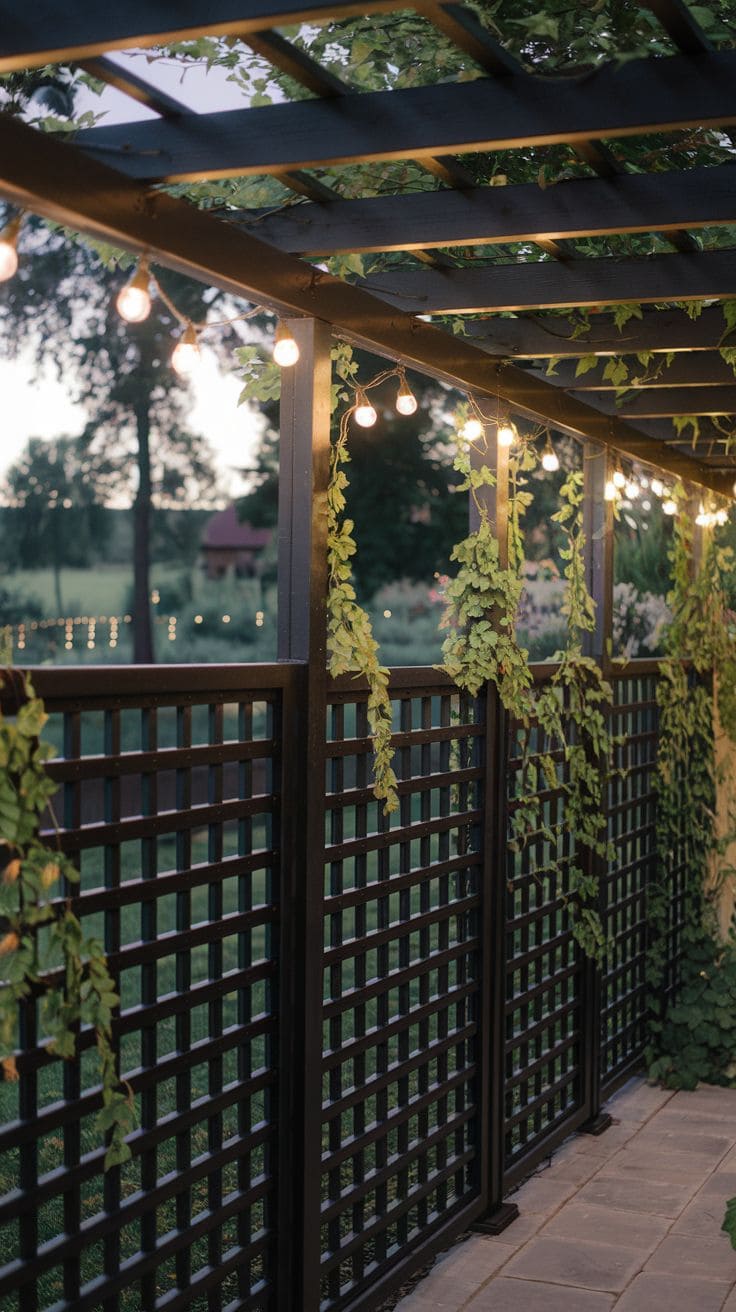
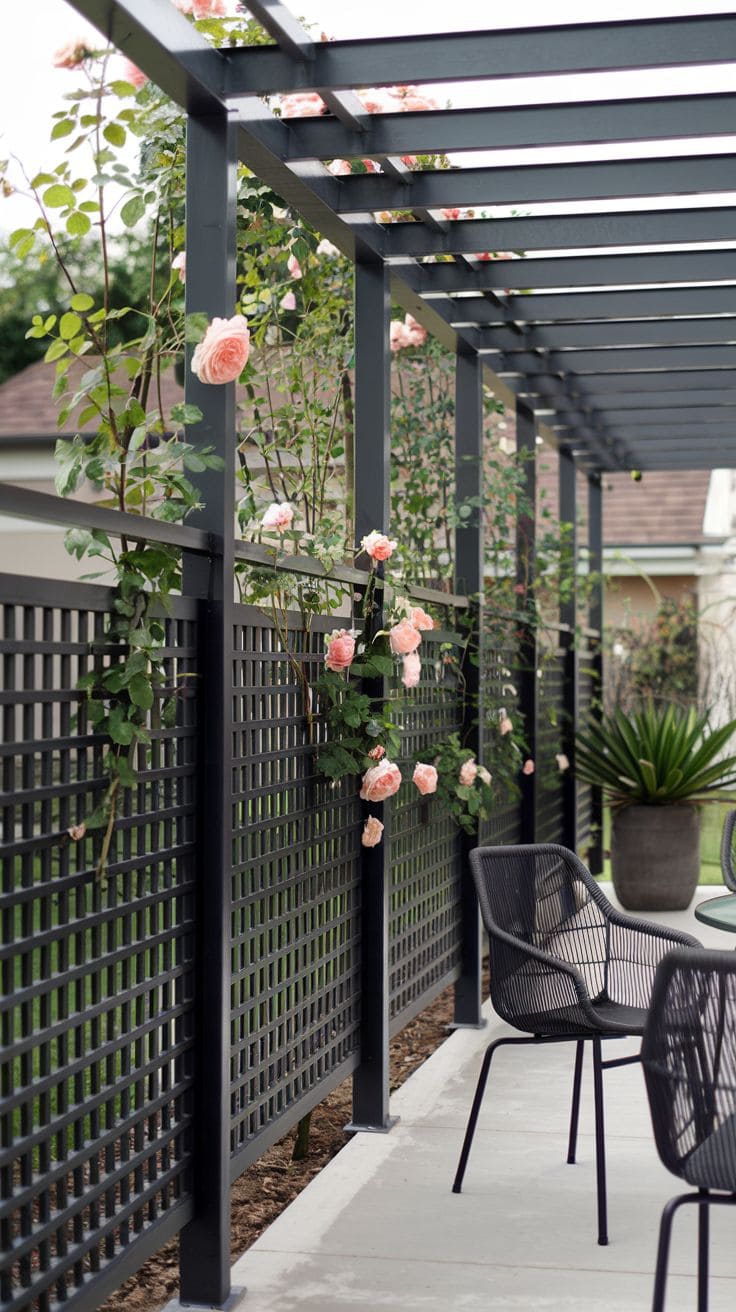
A lattice pattern gives partial privacy and visual interest without the solid, boxed-in feeling of a full privacy fence. Light and air pass through the gaps, which also makes it a natural support structure for climbing plants if you want greenery worked into the design later.
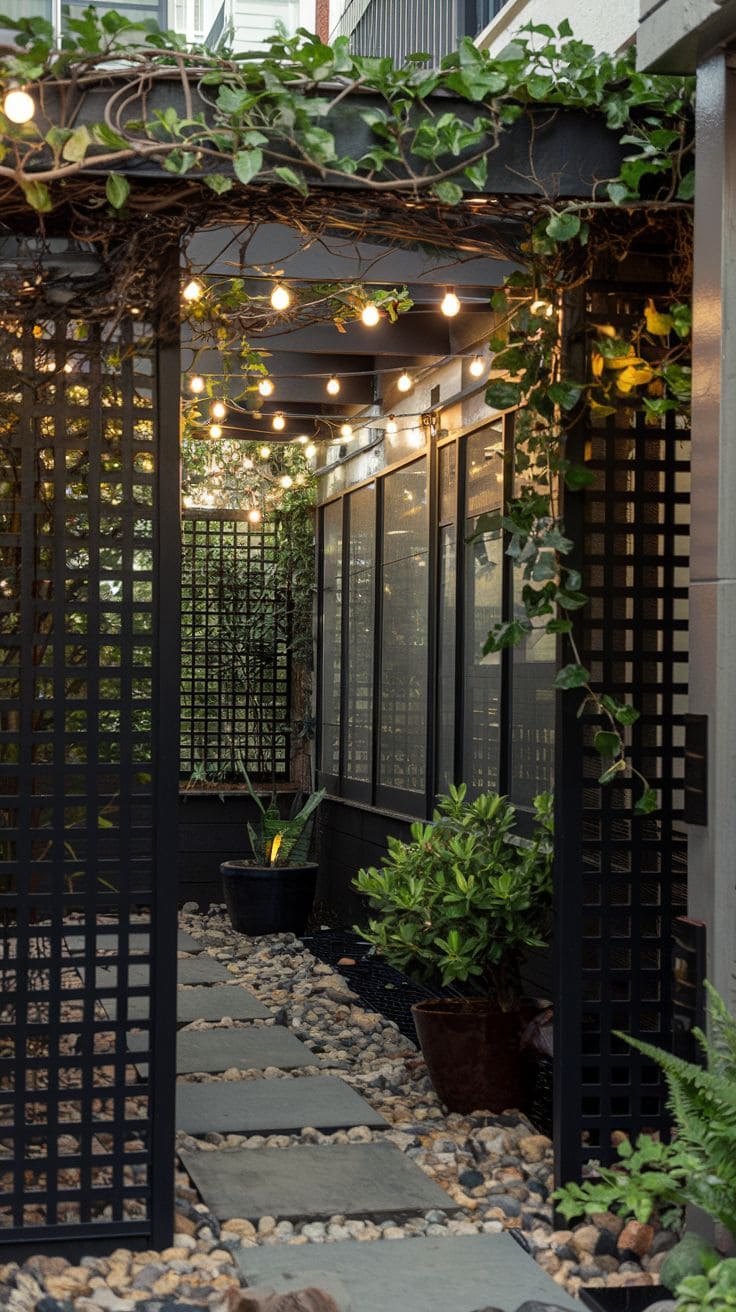
A black lattice fence provides a unique combination of lightness and privacy, making it ideal for transitional styles.
The crisscross design adds visual interest without confining the space, allowing vines or climbing plants to meander through for a garden-inspired look.
Painting the lattice black adds depth and refinement, making it a decorative element rather than just a support component.
It looks great as a garden screen, along patios, or even as a fashionable way to frame a porch.
The open weave lets ventilation and dappled light to pass through, making your yard seem snug without feeling cramped.

Add pots or a pergola above for more dimension.
4. Black Composite Fence for Low-Maintenance Durability
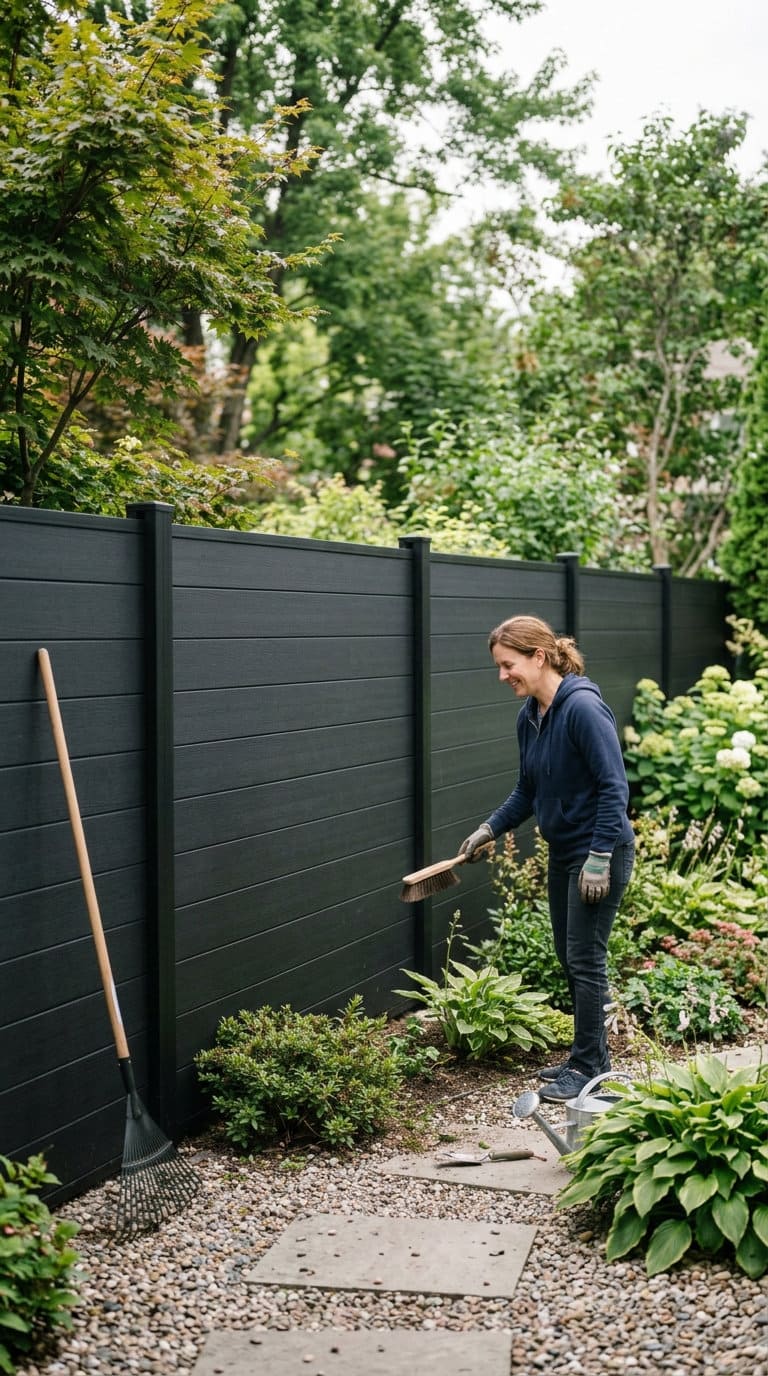
Composite fencing (a blend of wood fiber and recycled plastic) skips the repainting and staining cycle entirely, the color is baked into the material rather than sitting on top of it, so UV fading and chipping are far less of a concern than with painted wood or metal.
It costs more upfront than wood, but the section 1 maintenance math (repainting cycles, chip touch-ups) tends to favor composite over a long enough timeline.
The average homeowner spends $616/year on yard fixes that don't address the real problem. Find out what yours actually is — before you spend another dollar.
Take the Free Quiz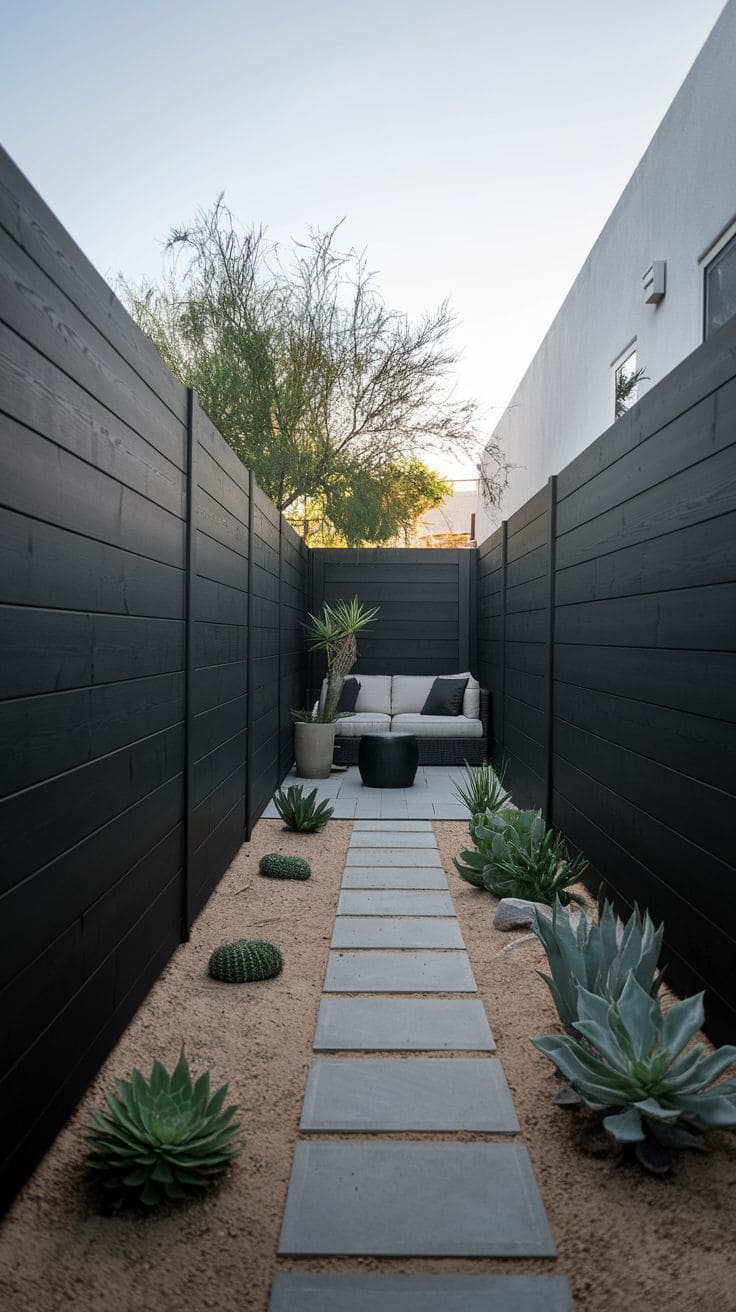
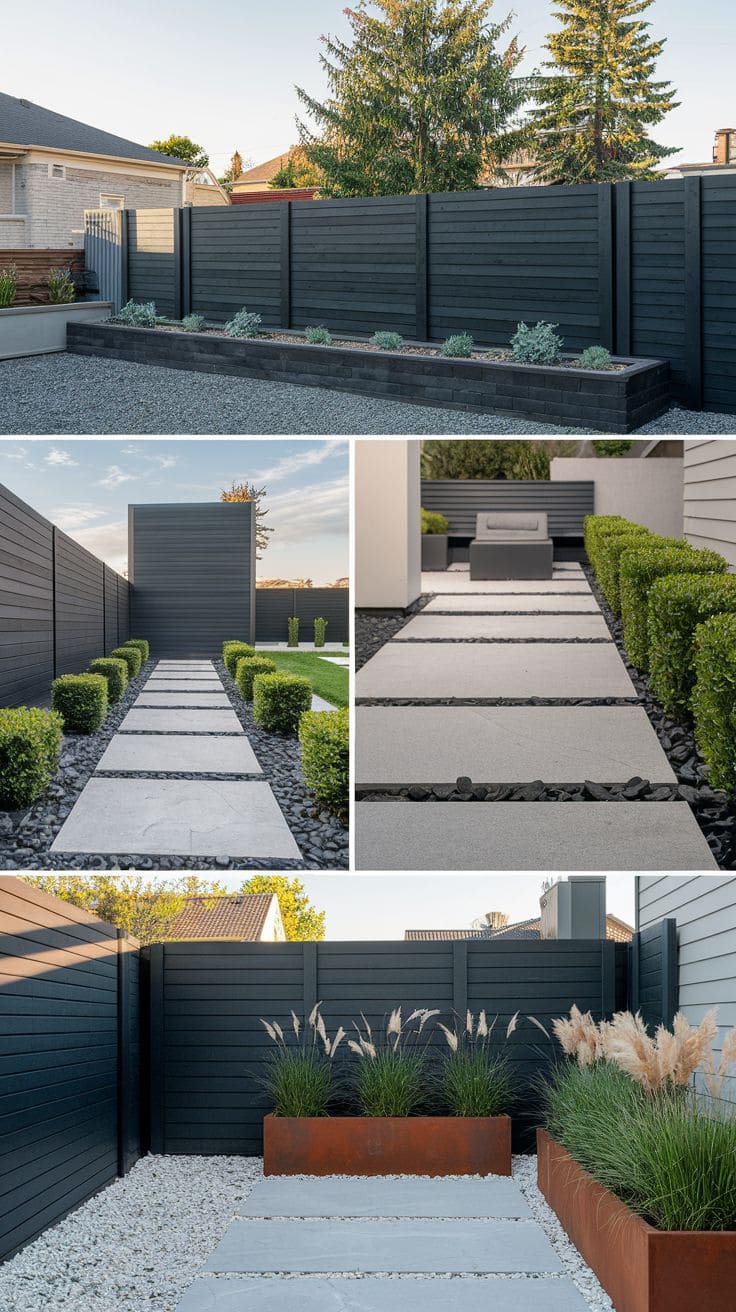
Black composite fencing is an ideal choice for people seeking a streamlined design with low care.
Composite materials appear like wood but do not warp, decay, or require painting, making them perfect for busy homes or harsh climates.
In black, these fences appear extremely refined and sophisticated. Choose between vertical and horizontal layouts, or choose for a paneled design for further seclusion.
Composite fences look great with stone pavers, crushed gravel, and simple landscaping.
This type of fence is especially beneficial in tiny yards when visual clutter needs to be reduced, since its uniform color and smooth texture maintain the space feeling neat and intentional.
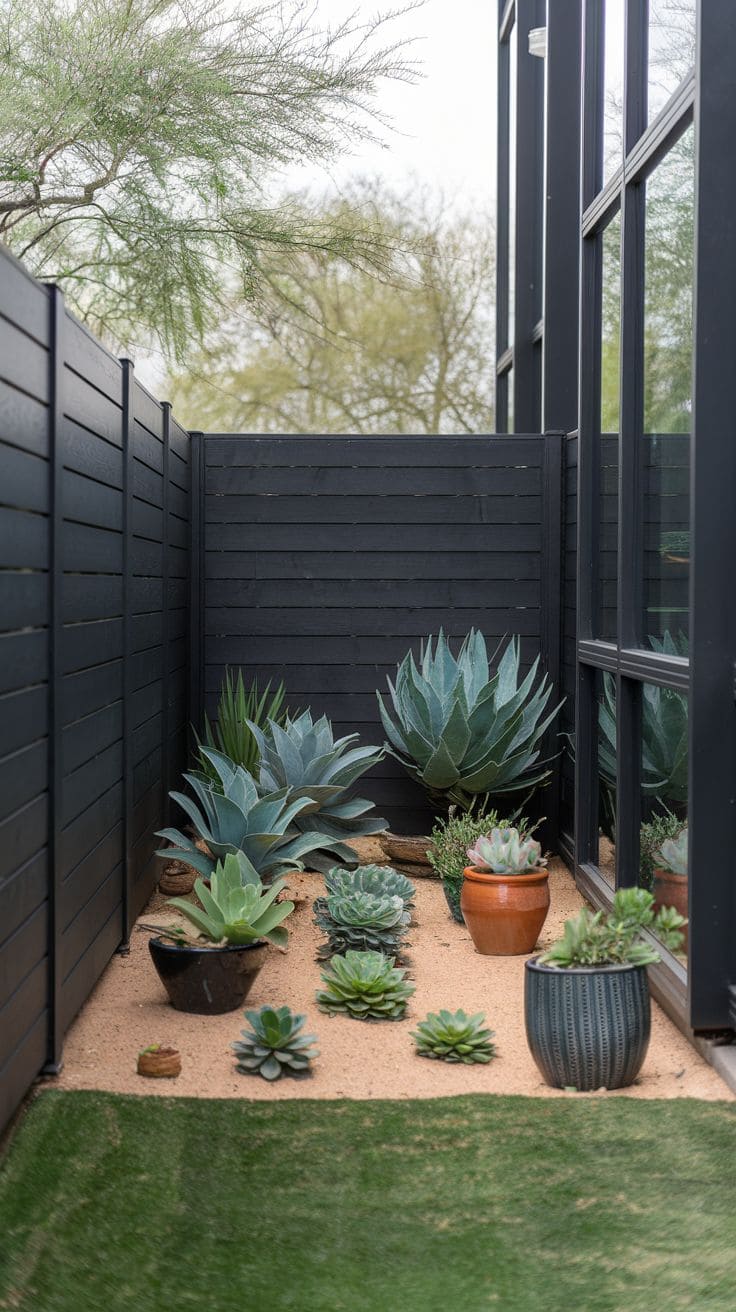
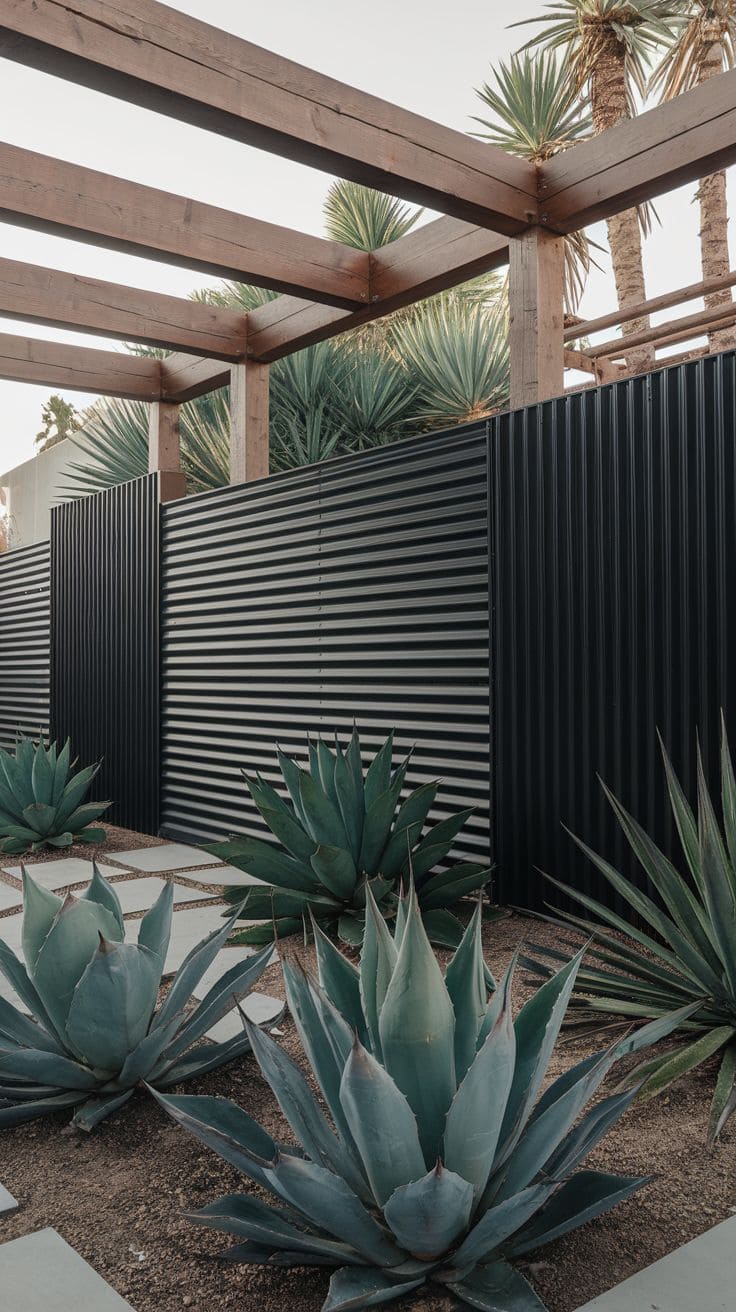
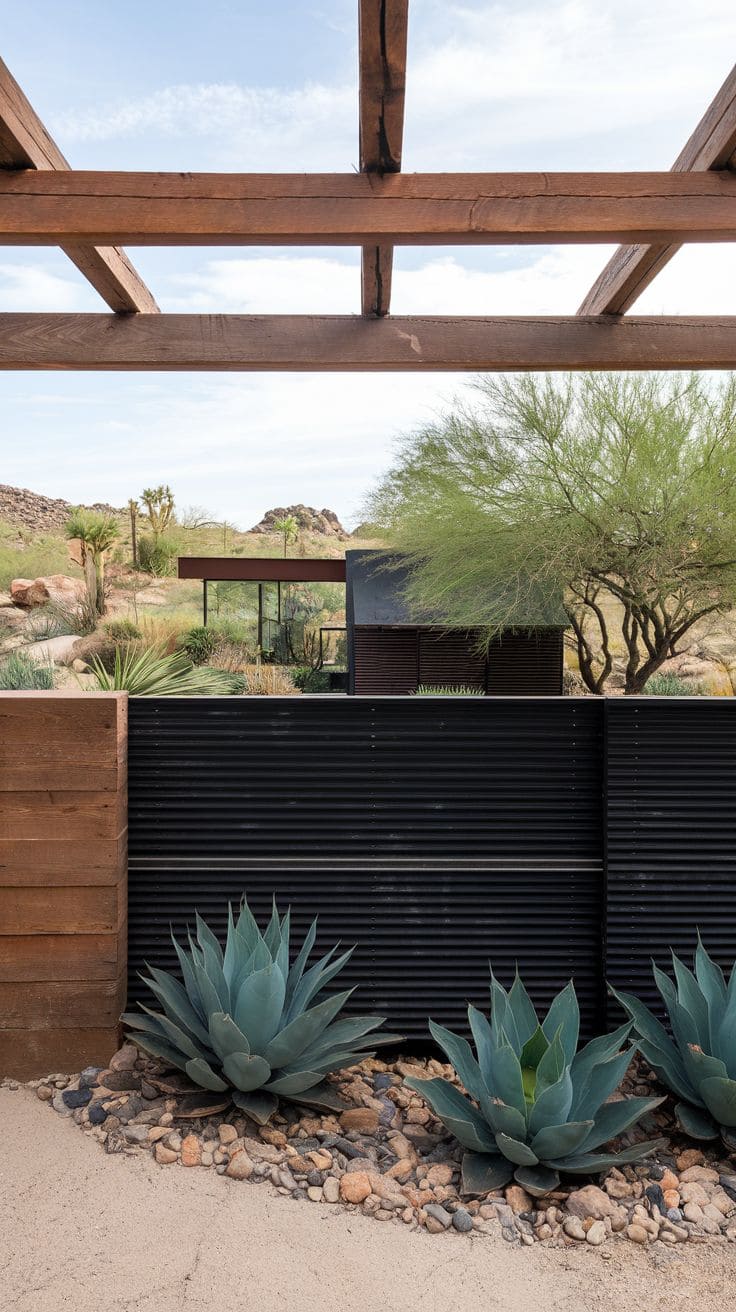
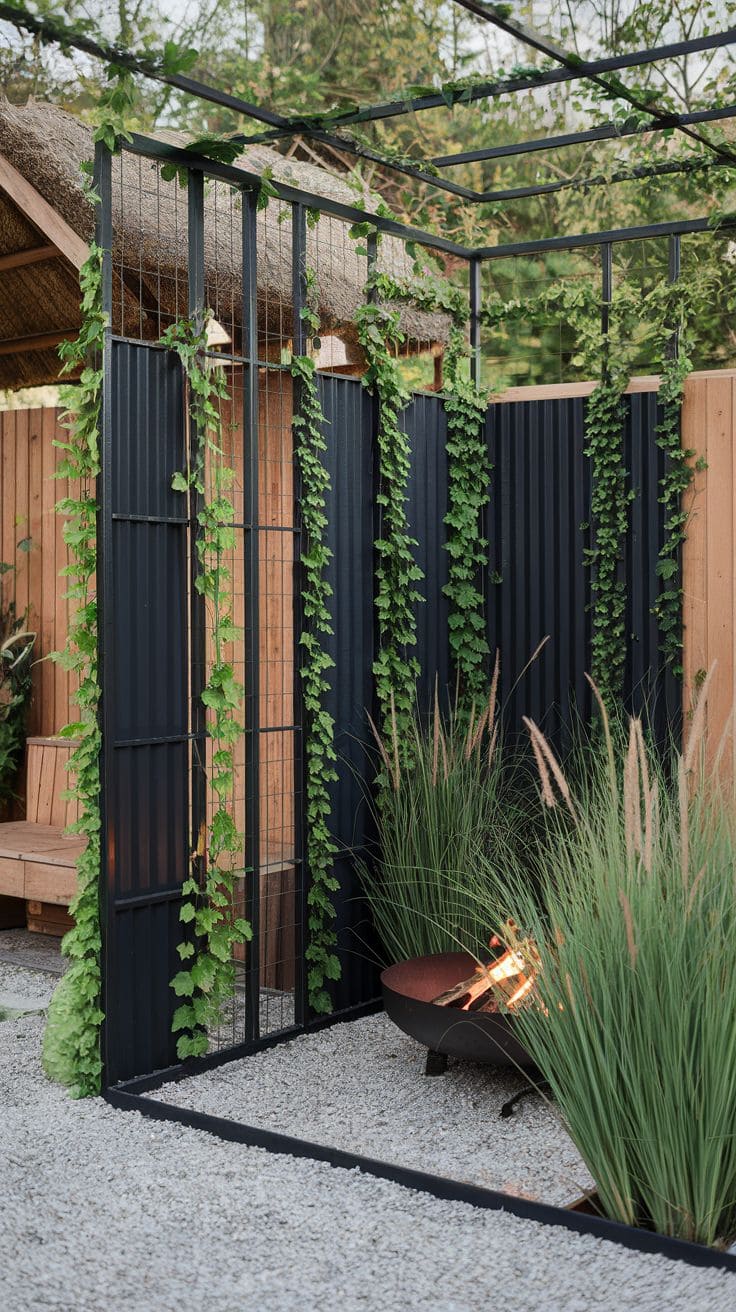
5. Corrugated Metal Fence Painted in Black for that Industrial Feel
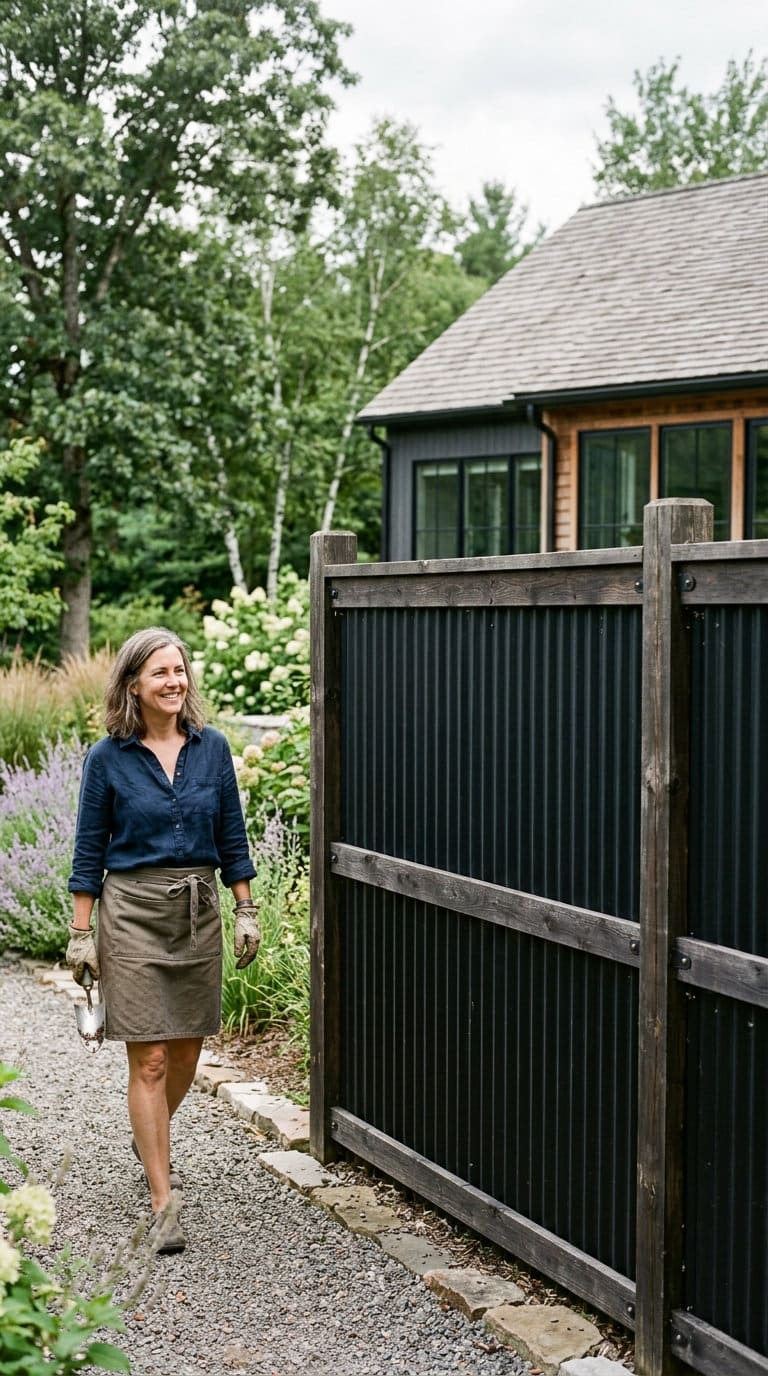
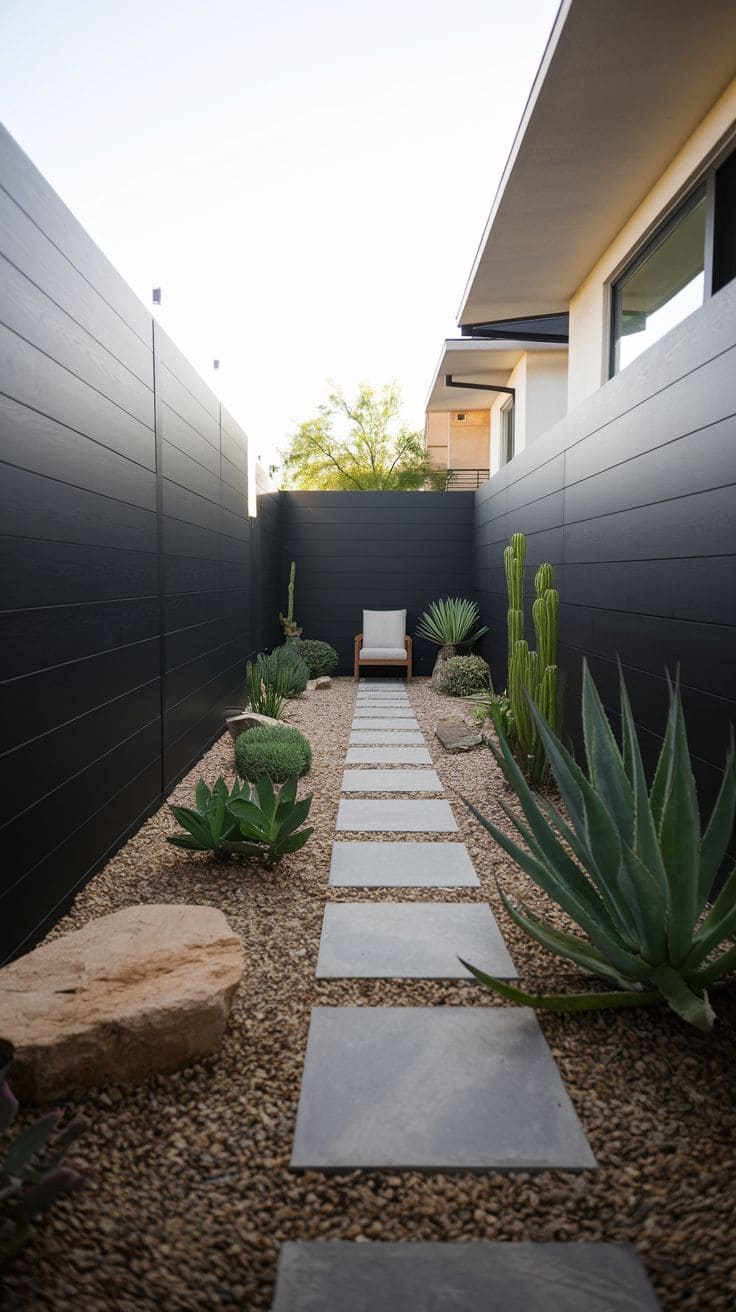
Corrugated metal panels give a black fence a distinctly industrial, modern-farmhouse edge, the ridged texture catches light differently than a flat panel and reads as more architectural than a standard privacy fence.
This is a case where the coating-type advice from section 1 matters directly, corrugated metal has more surface area exposed to sun and weather than flat pickets, so a UV-stable polyester or fluoropolymer coating is worth the upcharge here specifically.
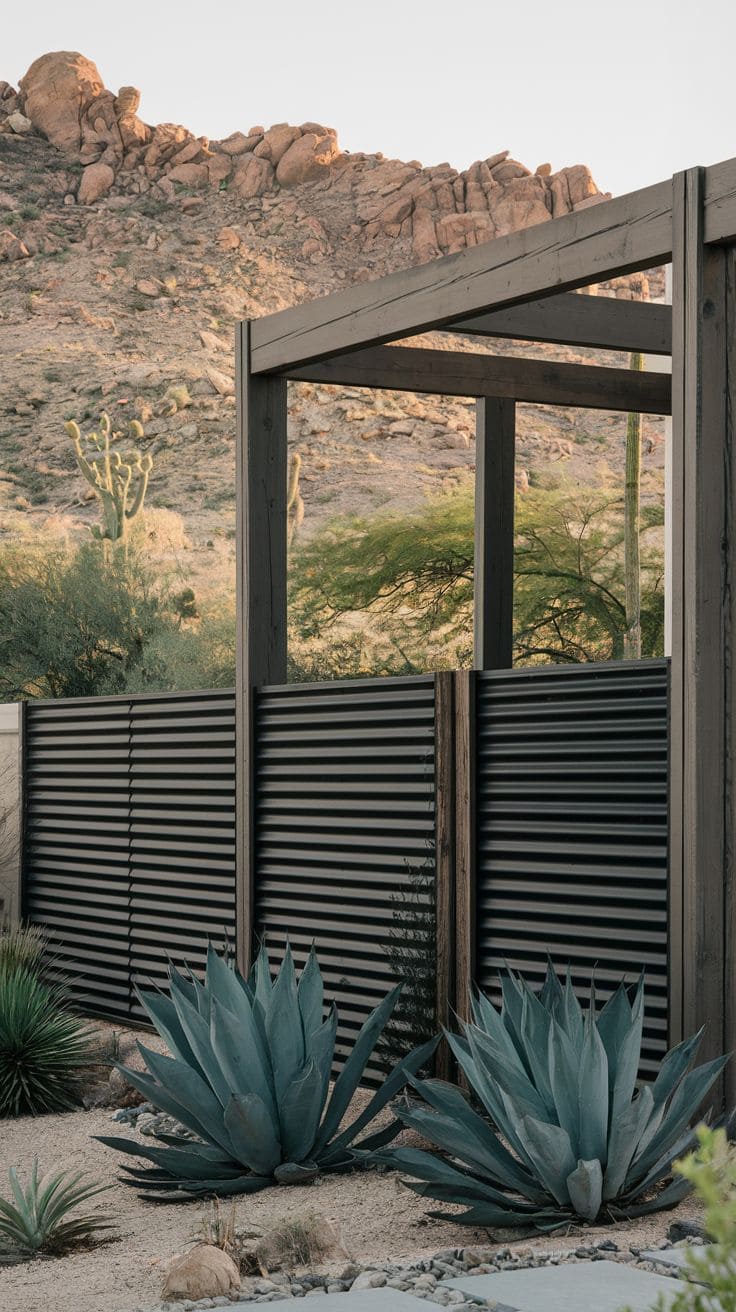
Corrugated metal may sound practical, but in black, it makes a striking, textured statement.
This design complements industrial, desert-inspired, or ultra-modern environments.
The ridged surface shifts between light and shade throughout the day, while the dark color optically grounds it.
To soften the effect, frame the metal panels with wood or use hanging pots and climbing plants.
This fence provides good privacy and durability while being resistant to weather and wear.
It’s a striking choice that instantly sets the tone for your outdoor space without trying too hard.
6. A Chic Twist on a Black Chain Link Fence
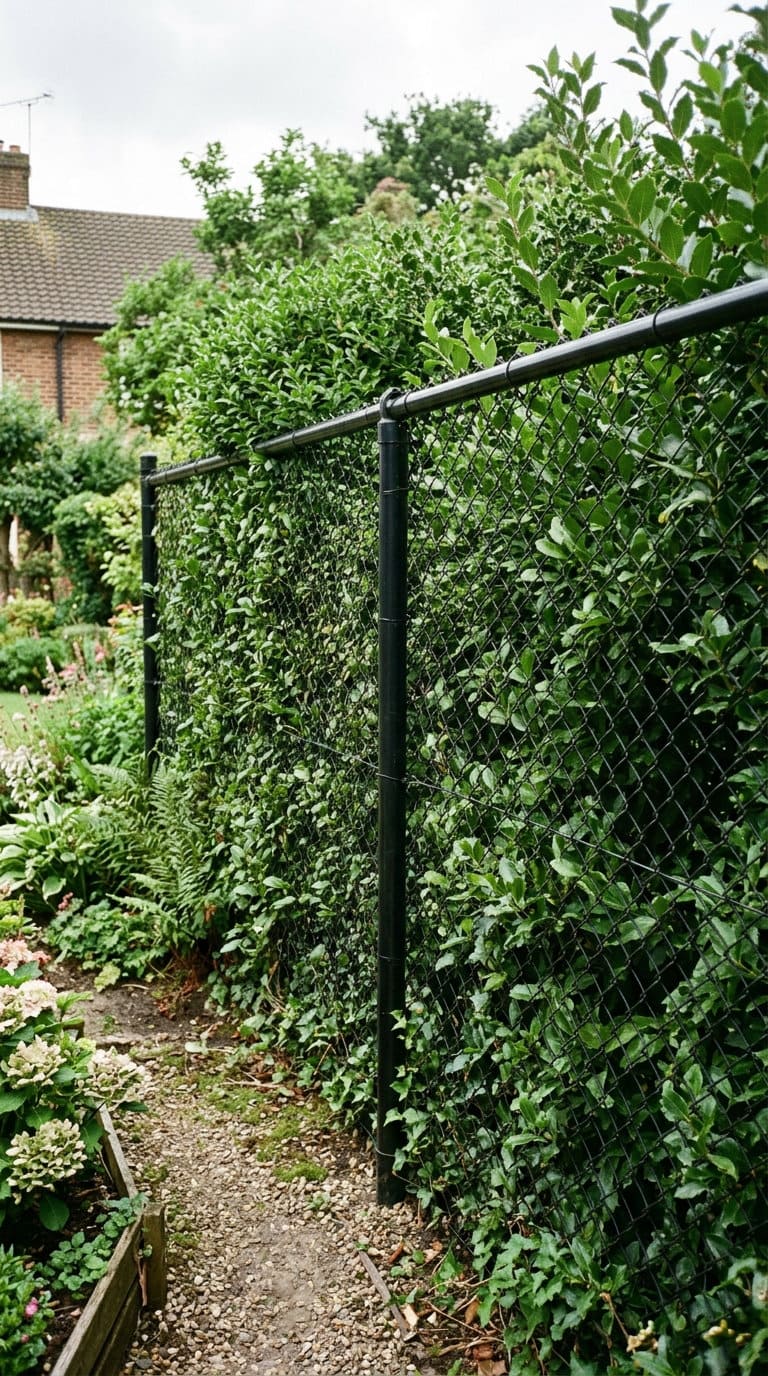
Standard chain link reads as utilitarian, but a black powder-coated version disappears visually against greenery far more than the usual galvanized silver, it recedes into the background instead of standing out as “the chain link fence.”
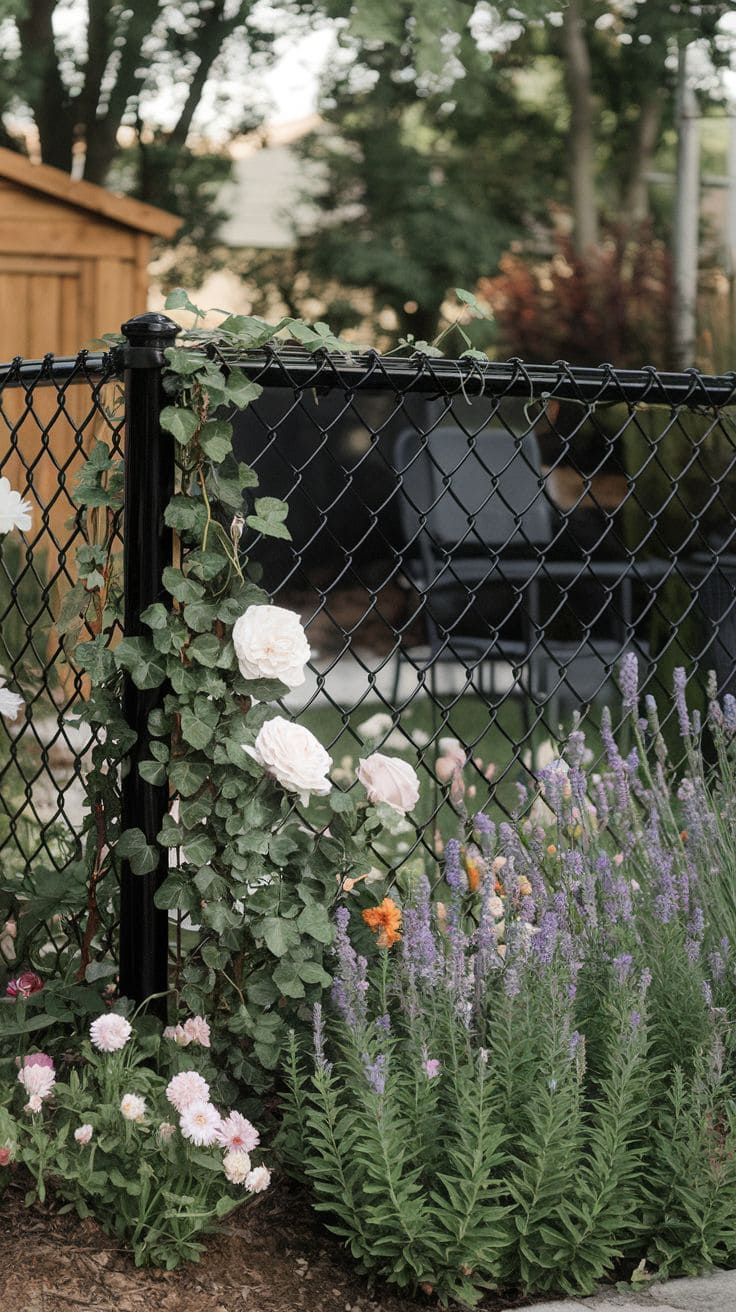
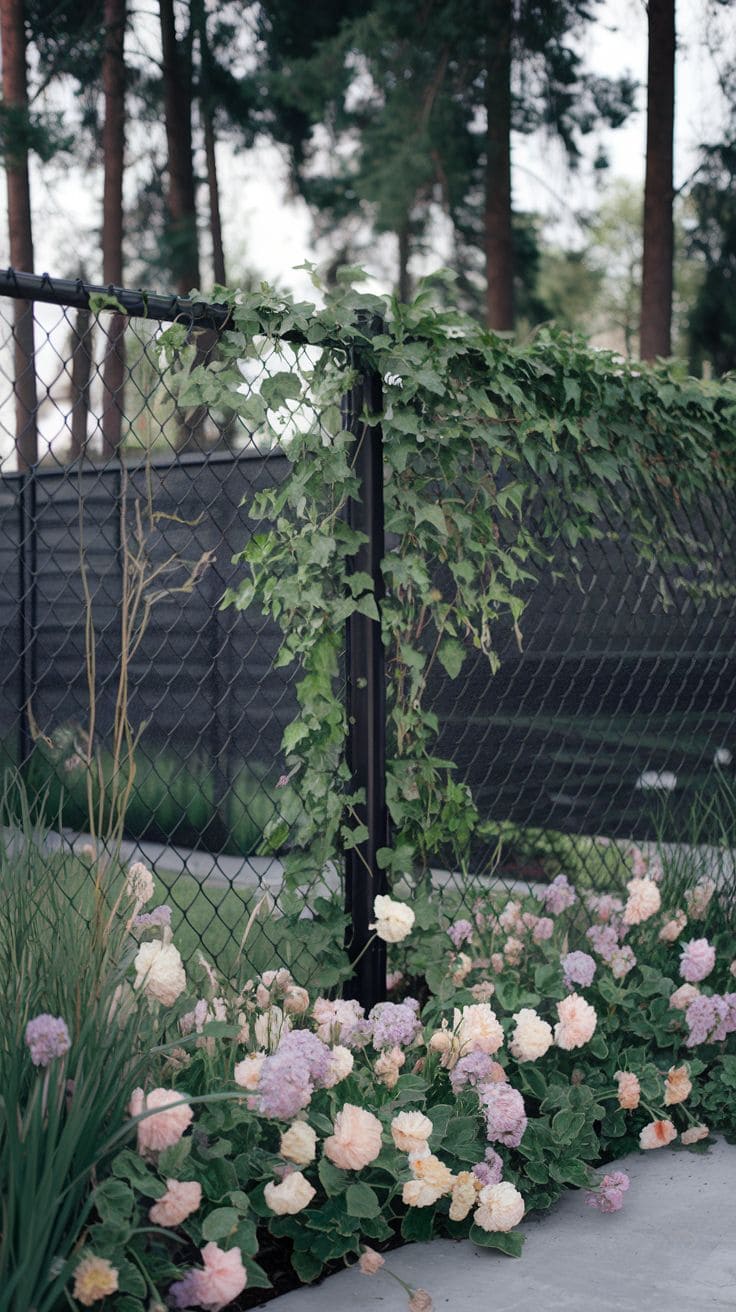
Pair it with climbing vines worked through the mesh for a fence that reads as intentional landscaping rather than a budget privacy solution. For more chain link-specific ideas, chain link fence ideas covers other treatments beyond the black powder-coat approach.
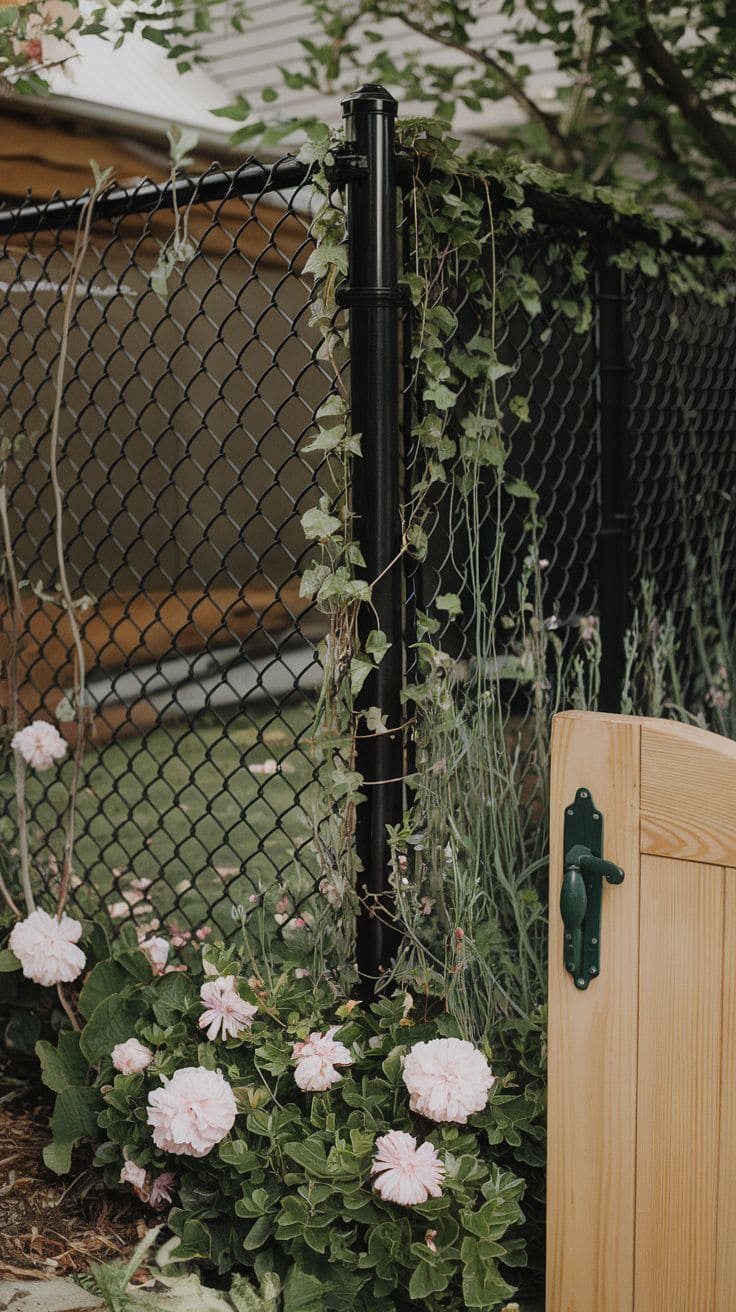
While chain link fencing is commonly seen as solely practical, painting it black or utilizing black vinyl-coated chain link considerably improves its appearance.
It merges well with landscapes, appearing less industrial and more planned.
Combine it with lush flora, privacy slats, or climbing vines to make it even more visually appealing.
It is also one of the most cost-effective and low-maintenance solutions, particularly for enclosing big areas.
This solution is ideal for pet owners or anyone who requires a firm boundary without a significant visible presence.
7. Classic Matte Black Wood Fence
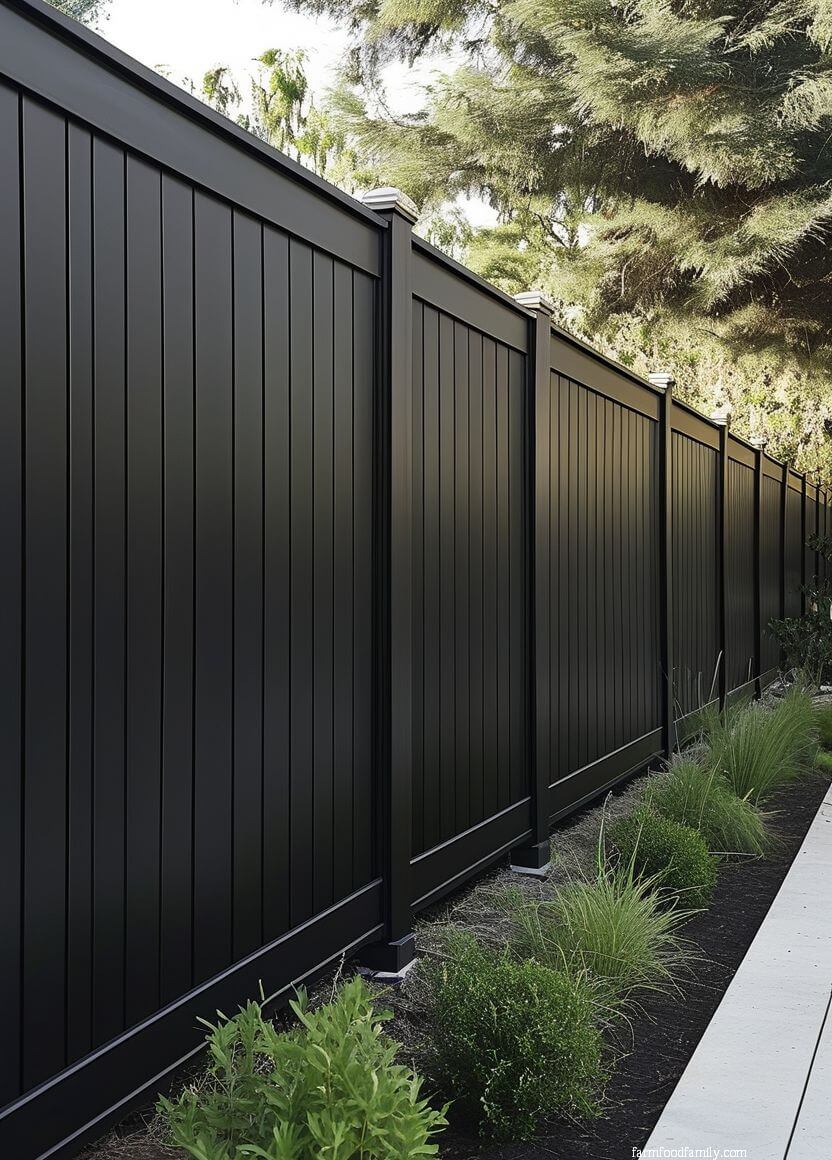
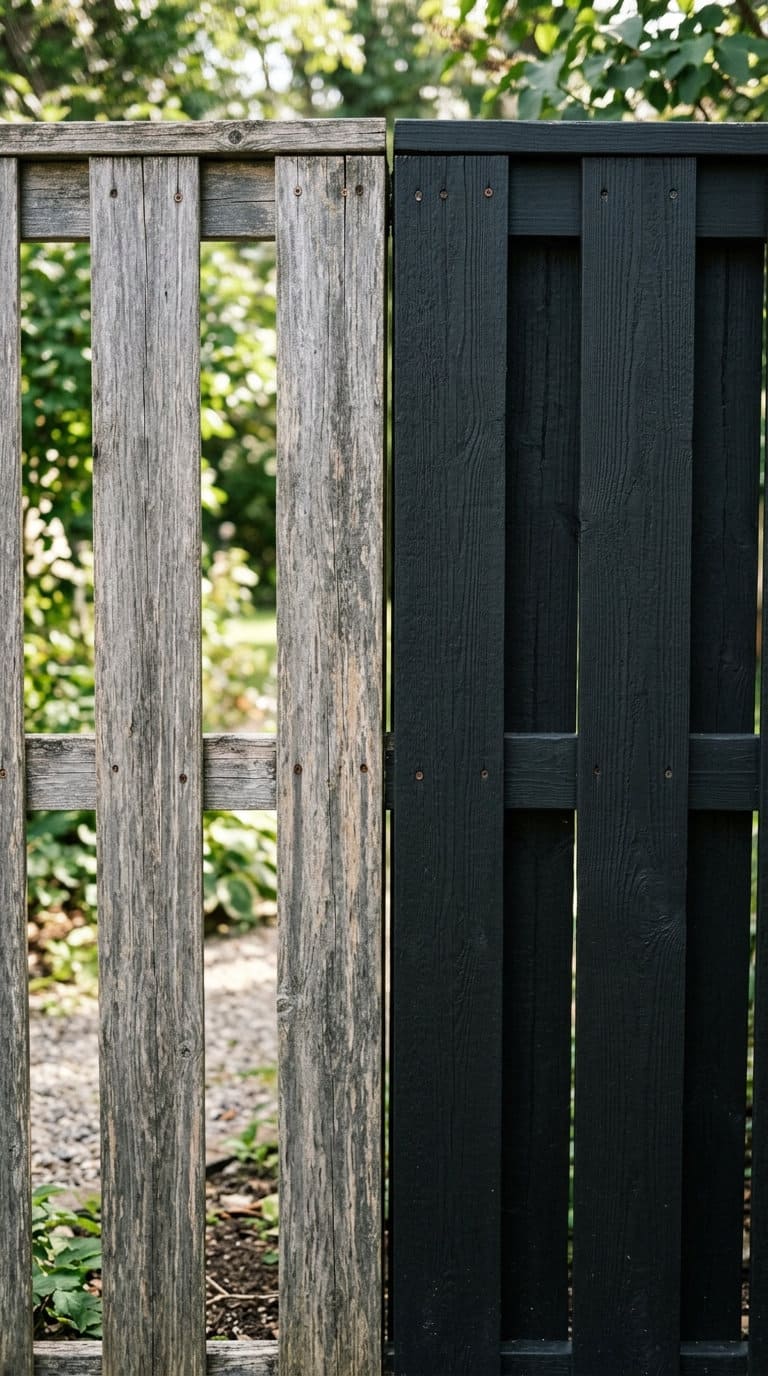
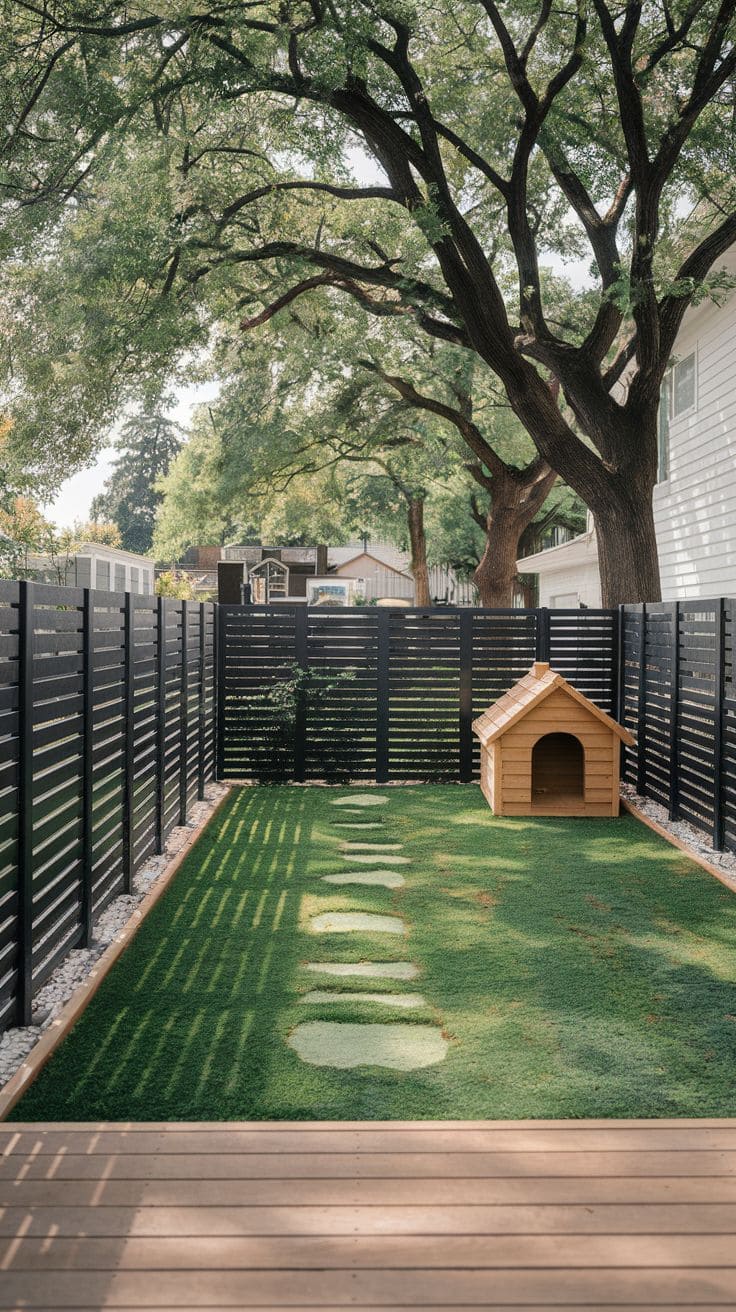
A matte black stain on a standard wood picket or board fence gives a clean, contemporary look without the cost of metal or composite. Matte finishes also hide the natural grain texture less than a glossy stain would, which some homeowners prefer for a more understated look.
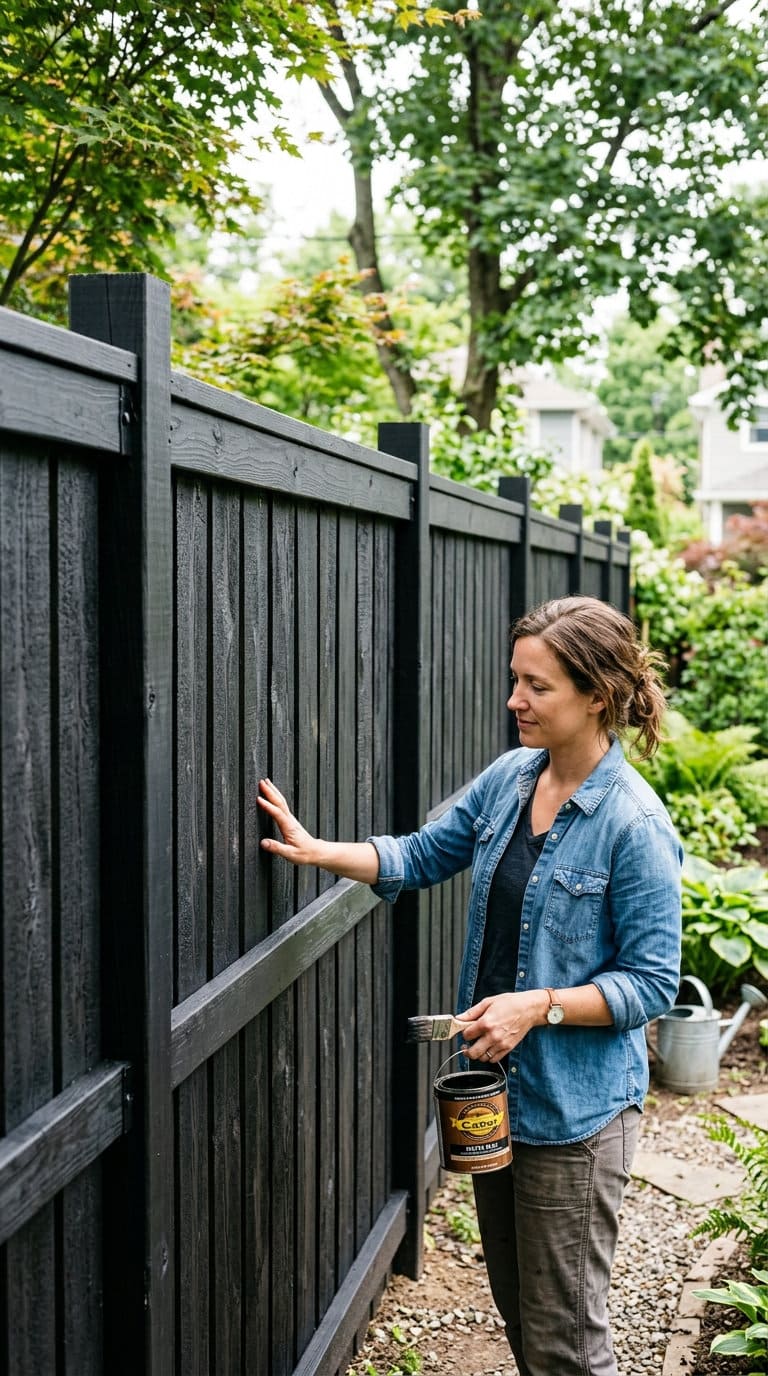
Wood needs more frequent maintenance than composite or metal, expect to restain every few years depending on sun and weather exposure, which is the real tradeoff for the lower upfront cost.
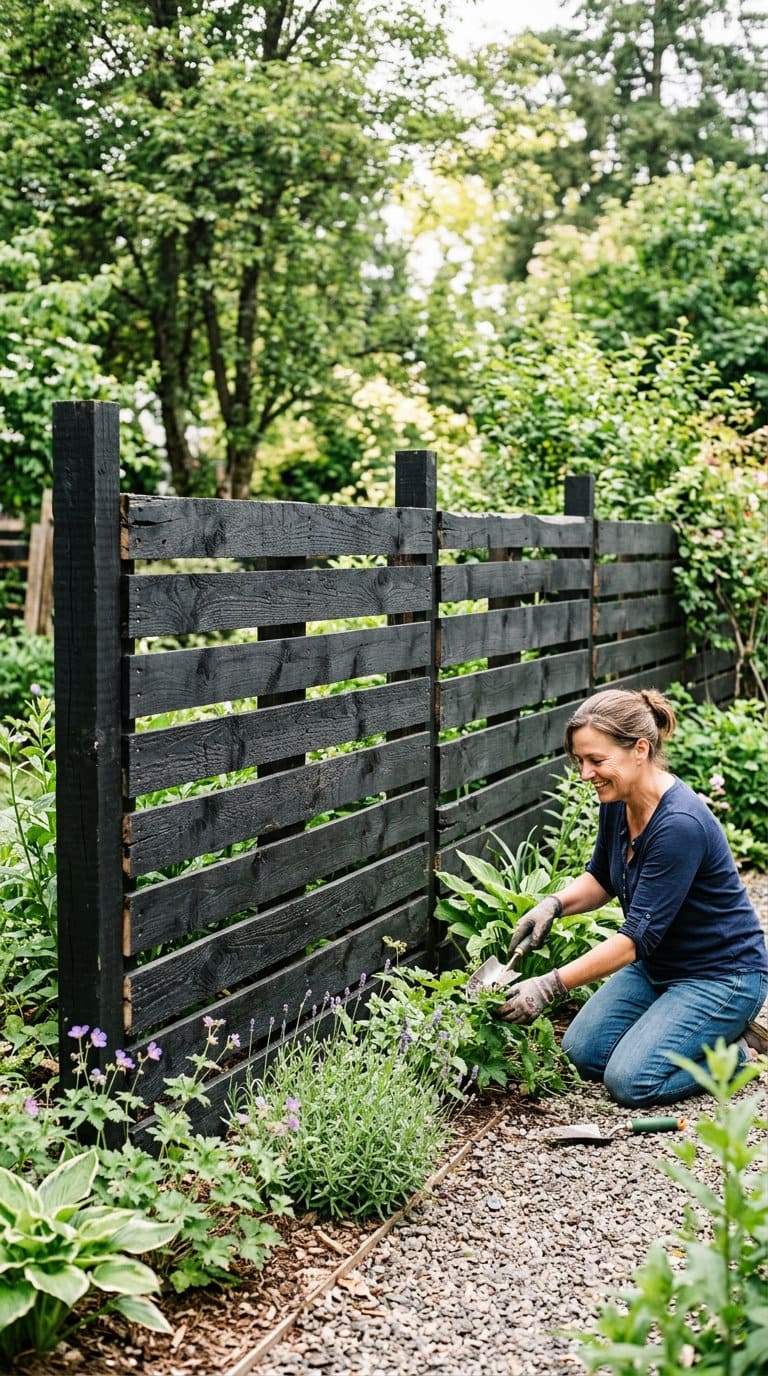
8. Horizontal Slats
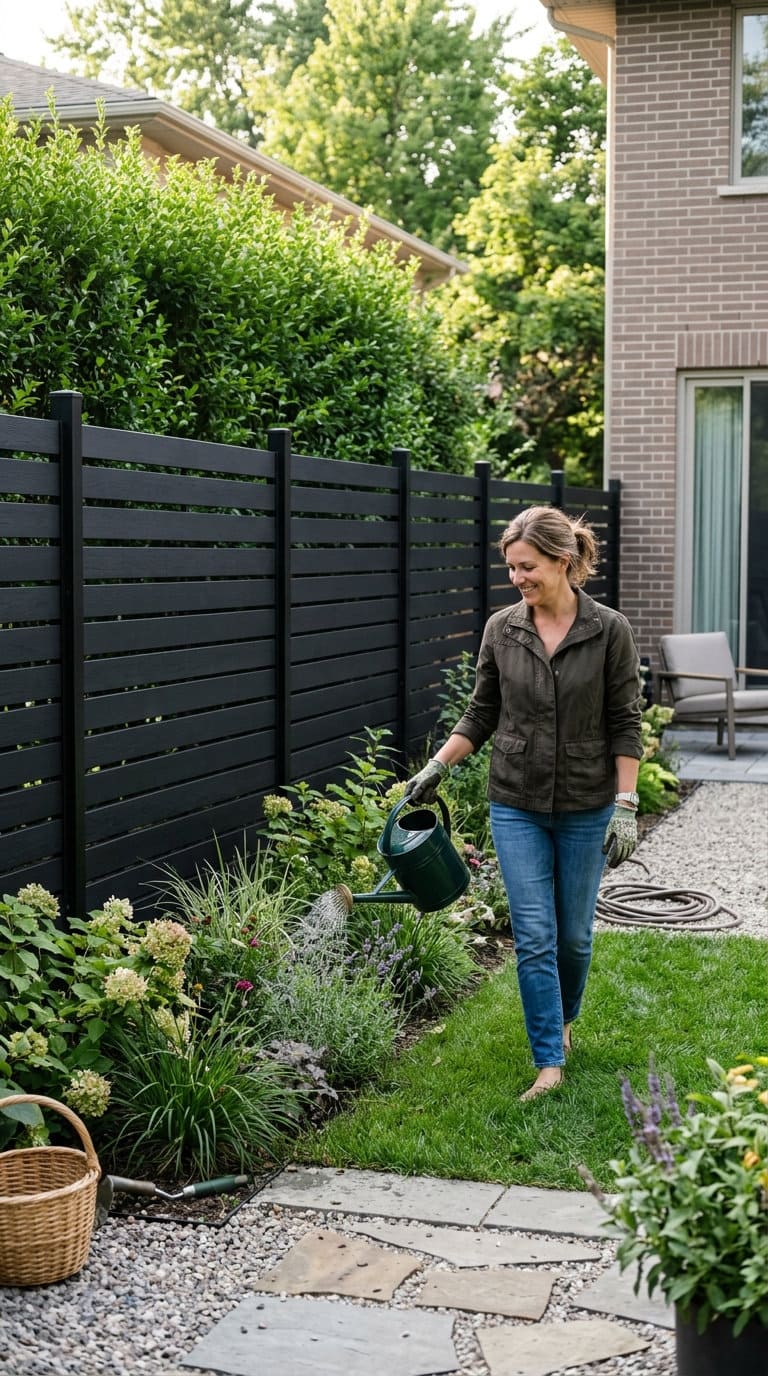
Horizontal boards instead of vertical pickets read as distinctly more modern, the linear, low-profile look is a common choice for contemporary and mid-century-style homes specifically.
Gap spacing controls the privacy level, tight gaps block sightlines almost completely, wider gaps let more light and airflow through while still screening the space.
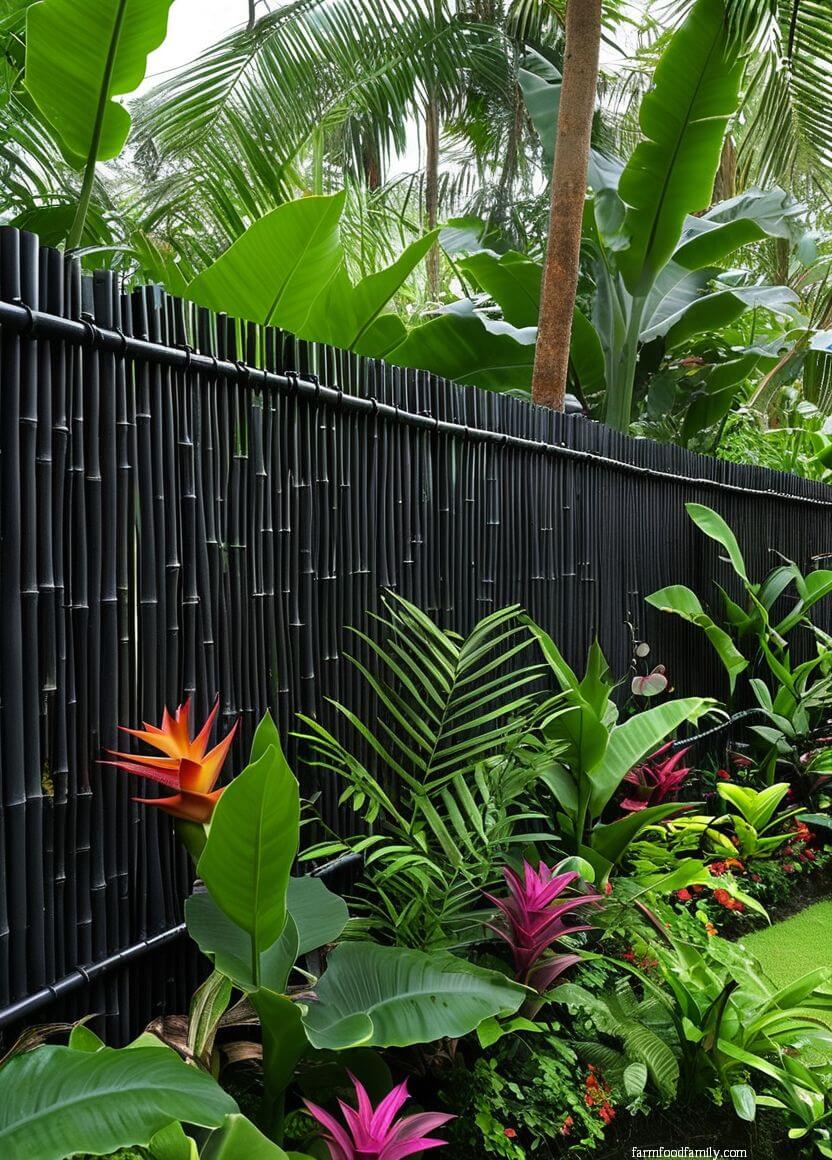
9. Black bamboo fence for a twist
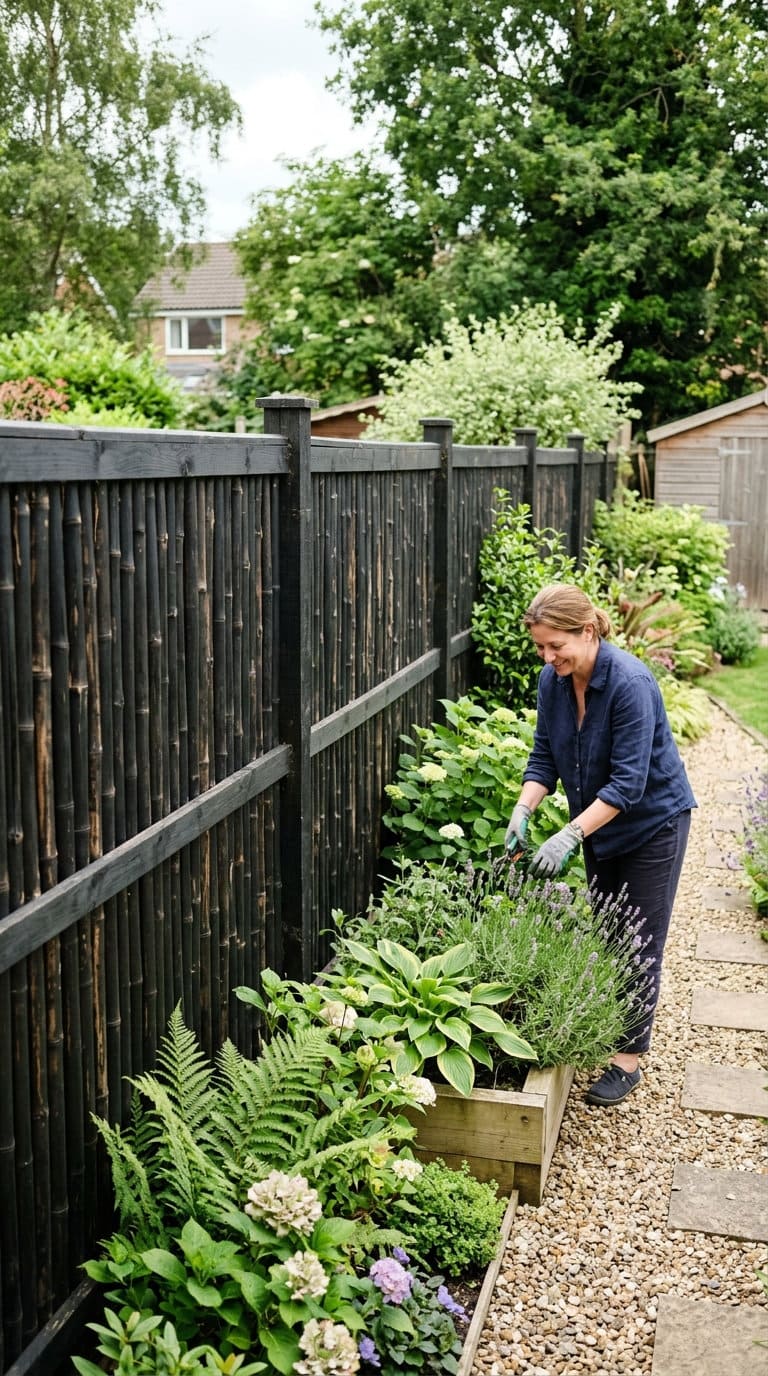
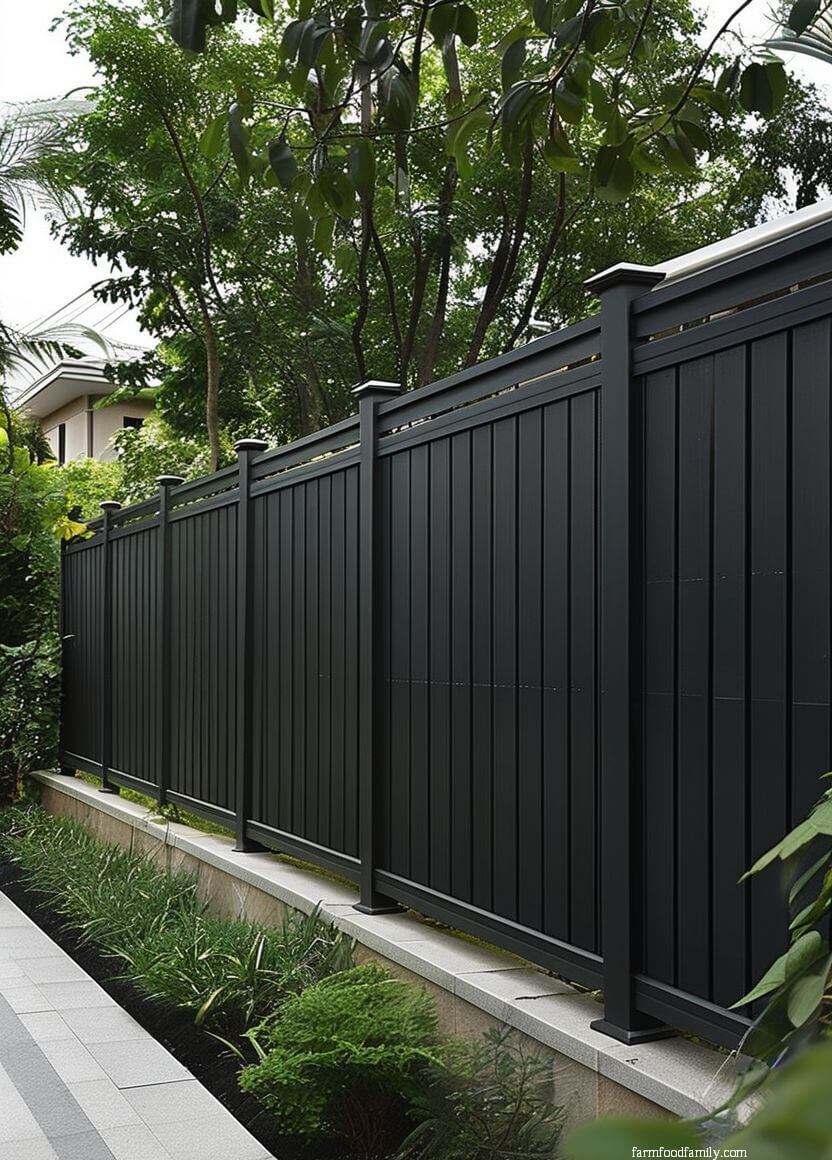
Stained or painted black bamboo is an unusual but genuinely available option, it brings natural texture and a slightly more organic look than milled lumber while still reading as intentionally dark and modern rather than rustic.
Bamboo needs a sealant suited to its specific fiber structure, standard wood stain doesn’t always penetrate or adhere the same way, worth confirming with the supplier before assuming a wood-fence finishing process will work the same here.
10. Black vinyl, low maintenance and high style
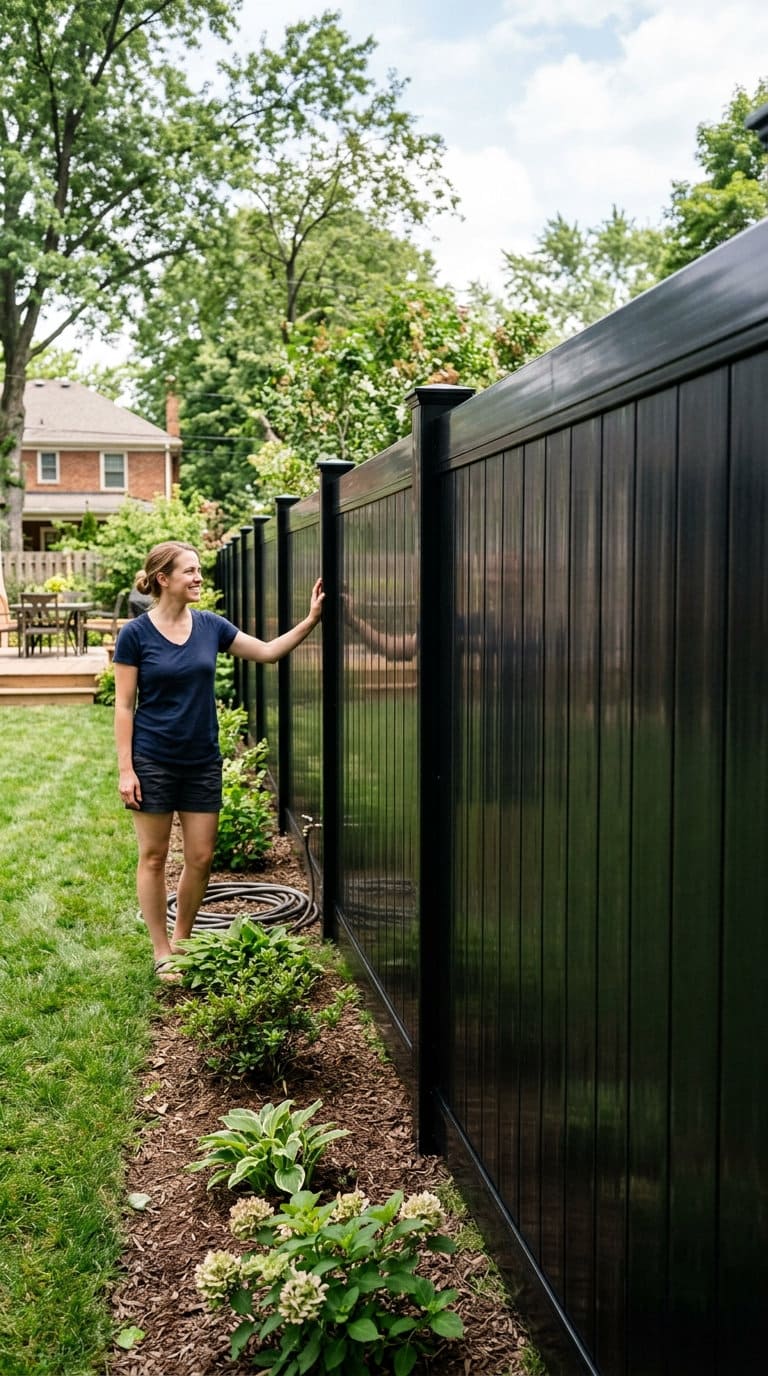
Vinyl fencing in black skips painting entirely, similar to composite, the color is molded into the material. It’s also one of the more weather-resistant options against moisture and rot specifically, since vinyl doesn’t absorb water the way wood does.
The tradeoff is repair difficulty, a cracked vinyl panel usually needs full replacement rather than a patch or touch-up the way wood or metal can often be spot-repaired.
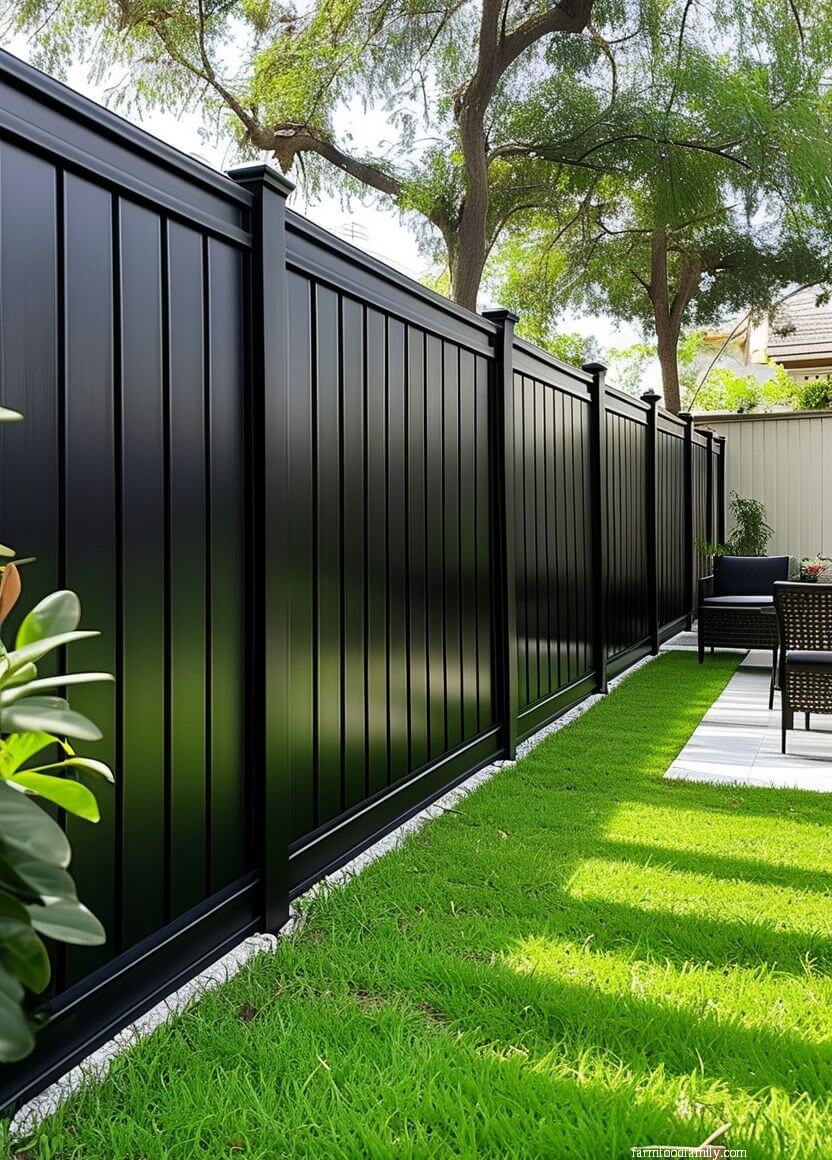
11. Black Fence with Integrated Lighting
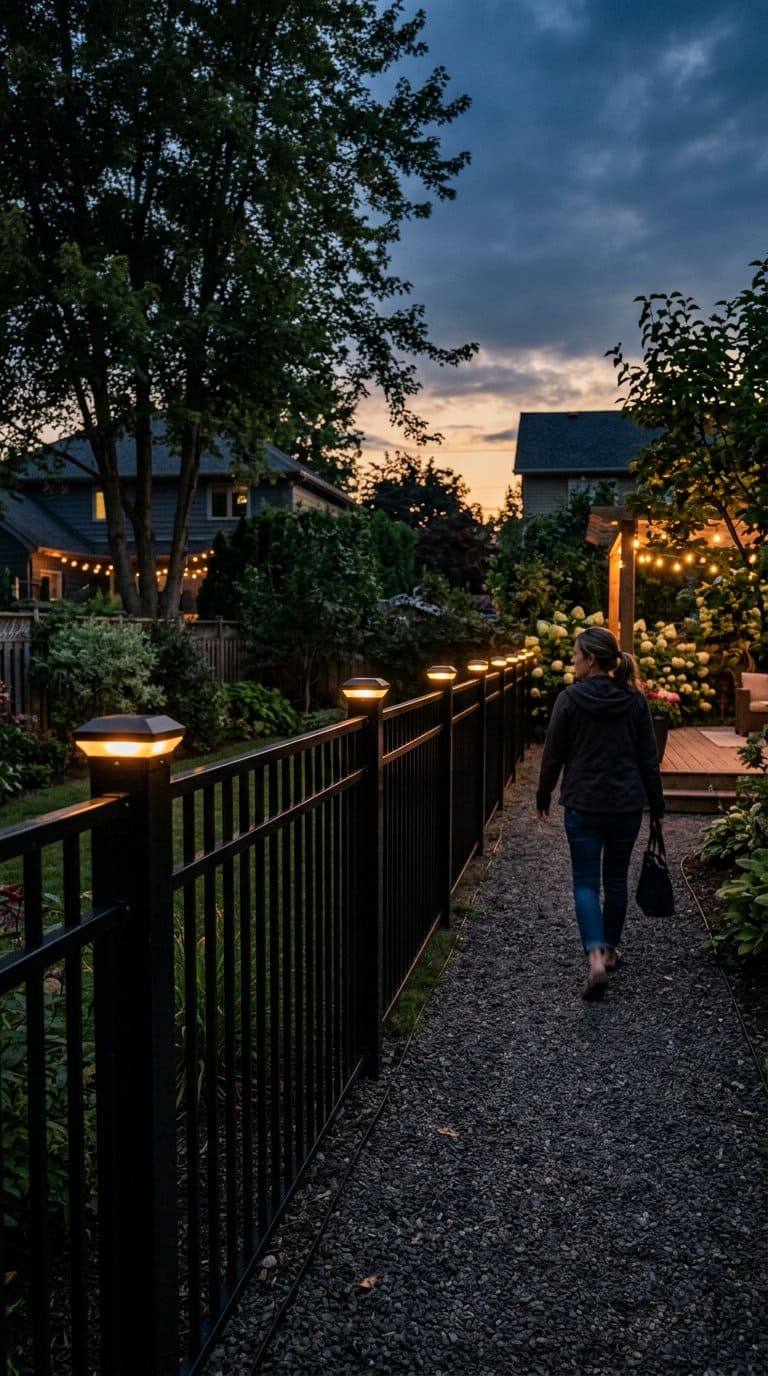
Built-in low-voltage lighting along fence posts or cap rails does double duty, marking the property line after dark and adding a design detail that a plain fence doesn’t have. It reads as more finished and intentional than adding string lights or standalone fixtures later.
Run wiring during the initial installation rather than retrofitting it later, fishing wire through finished posts after the fact is a much bigger job. For more on this specific pairing, fence lighting ideas covers fixture types and placement in more depth.
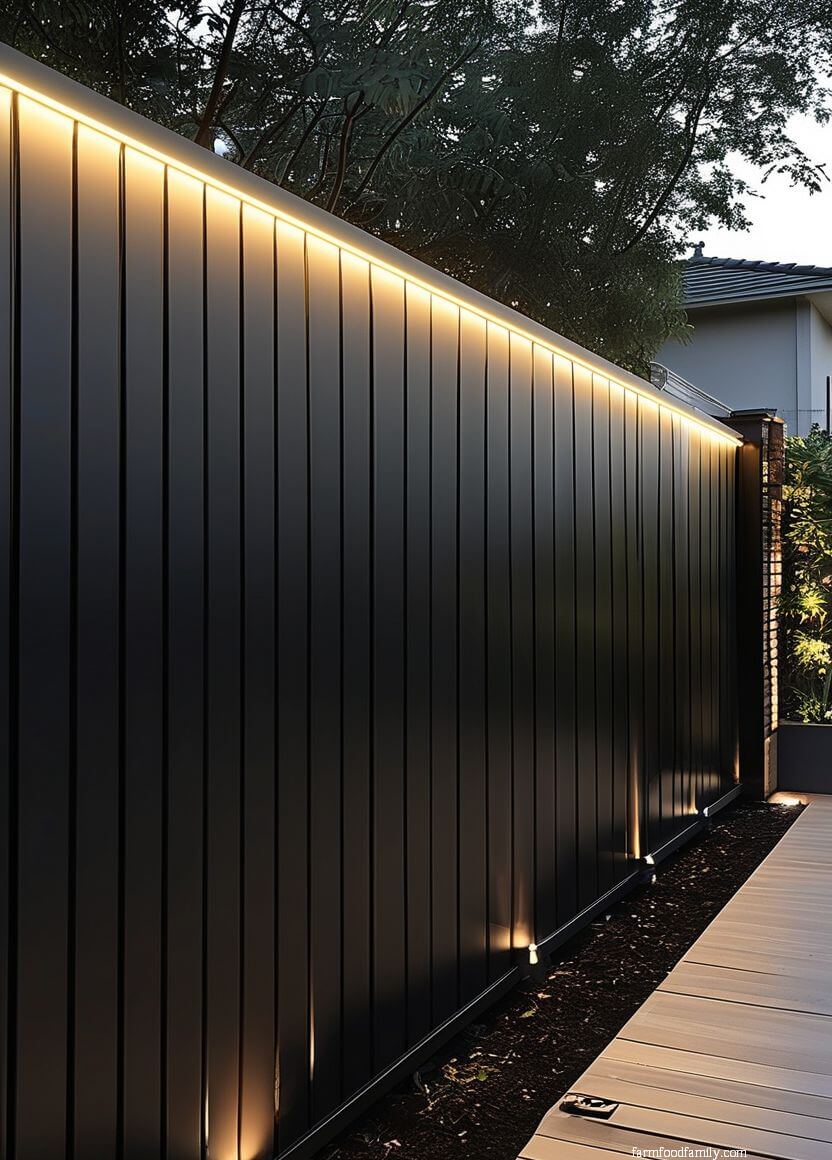
12. Black mesh and concrete combination
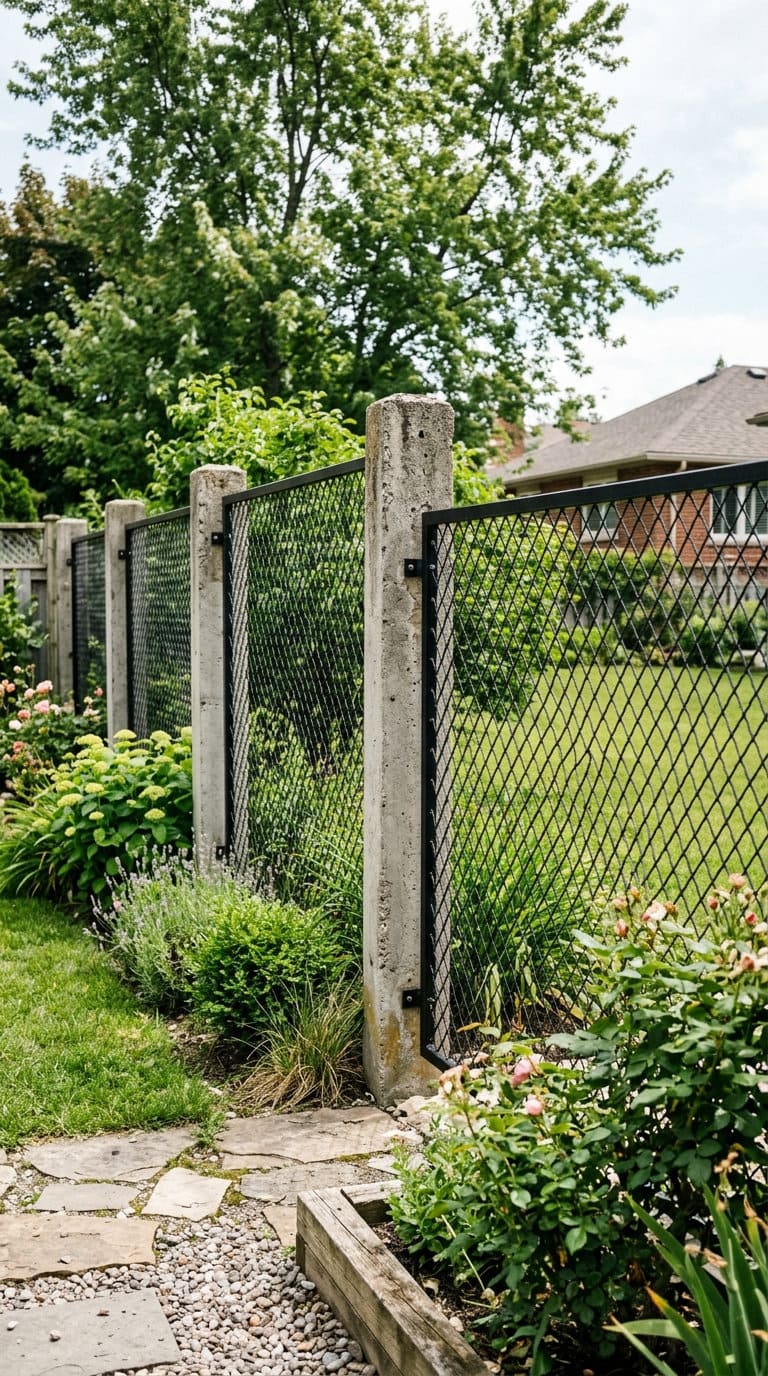
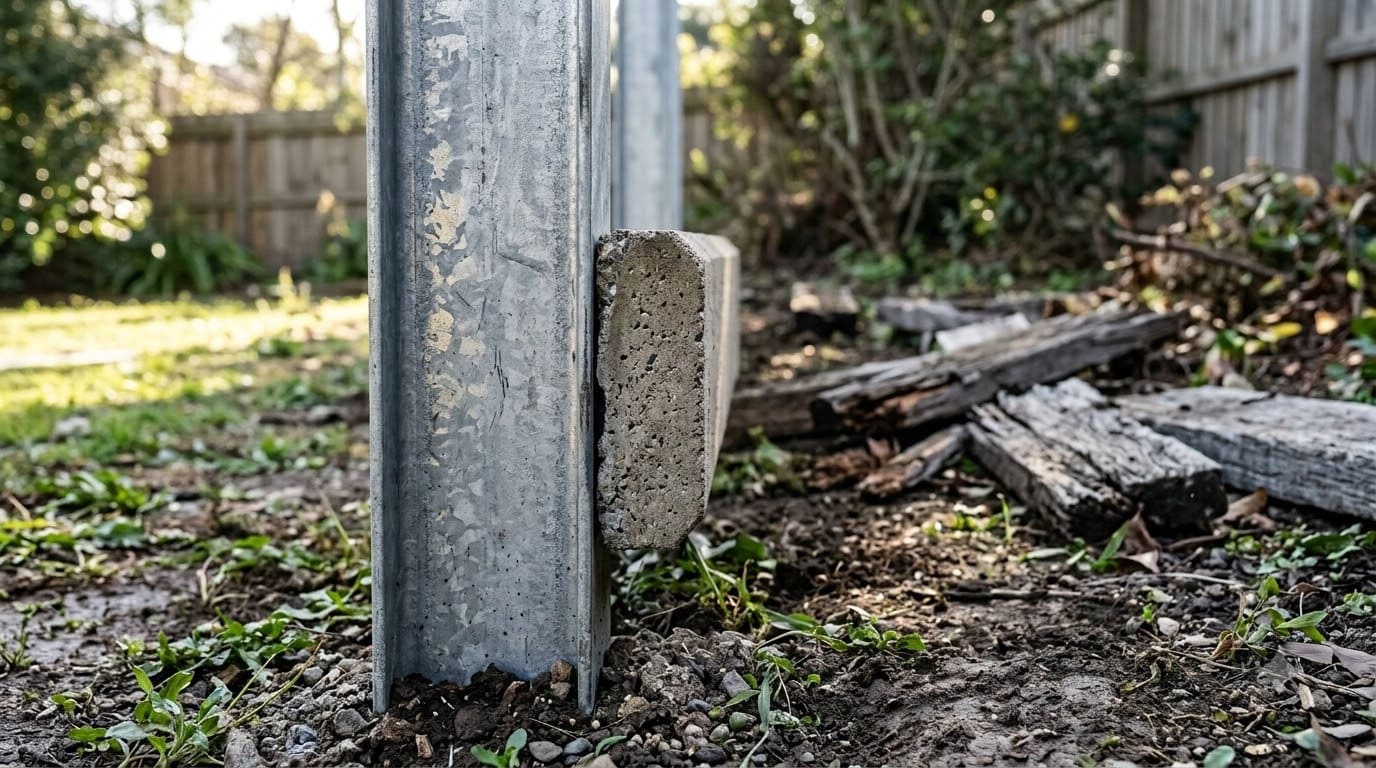
Black metal mesh panels set into concrete or masonry posts give a fence real structural presence without going fully solid, the mesh keeps sightlines open while the concrete posts anchor the whole thing visually and physically.
This combination handles wind load better than an all-mesh or all-panel fence of the same height, worth considering if the property sees regular strong wind.
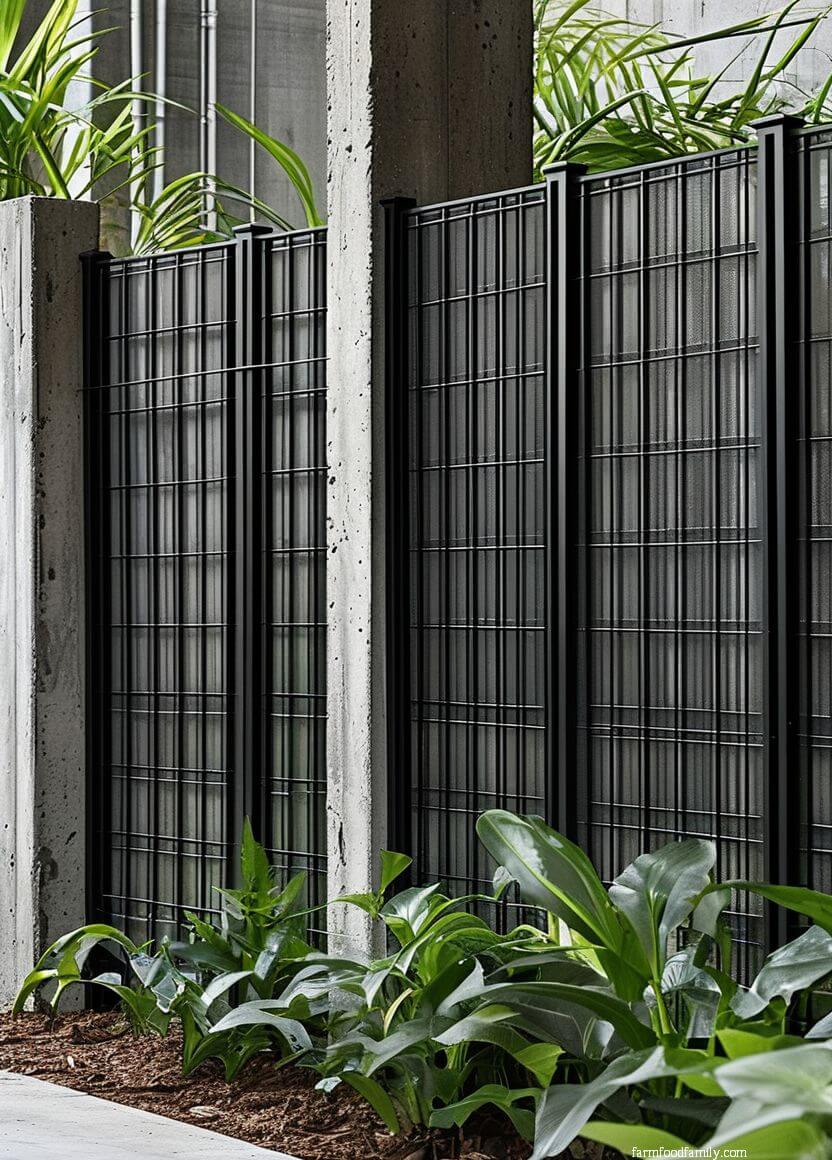
13. Geometric and chevron patterns
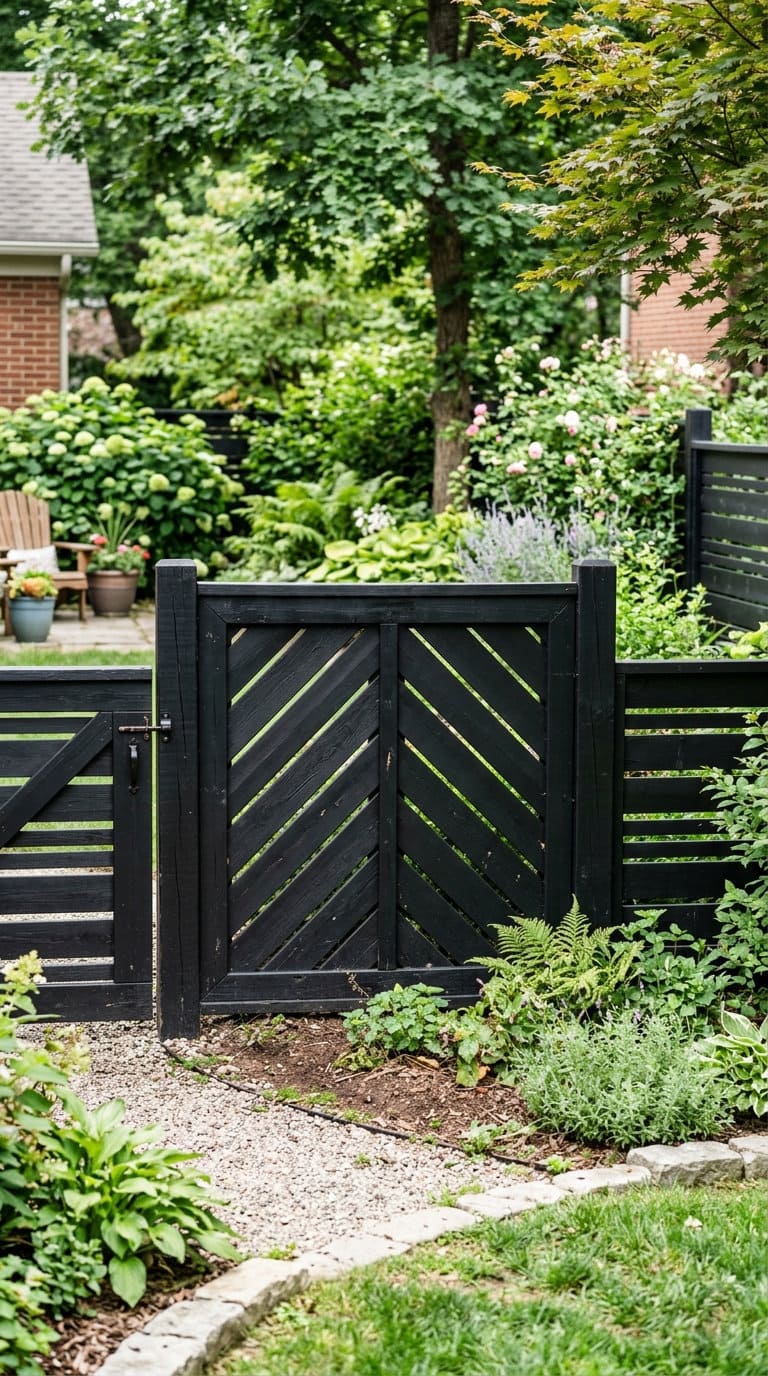
Angled slats arranged in a chevron or other geometric pattern turn a fence into a genuine design feature rather than a plain boundary line.
This works especially well as a focal-point section, a gate surround or a single accent panel, rather than running the pattern across an entire fence line where it can start to feel busy.
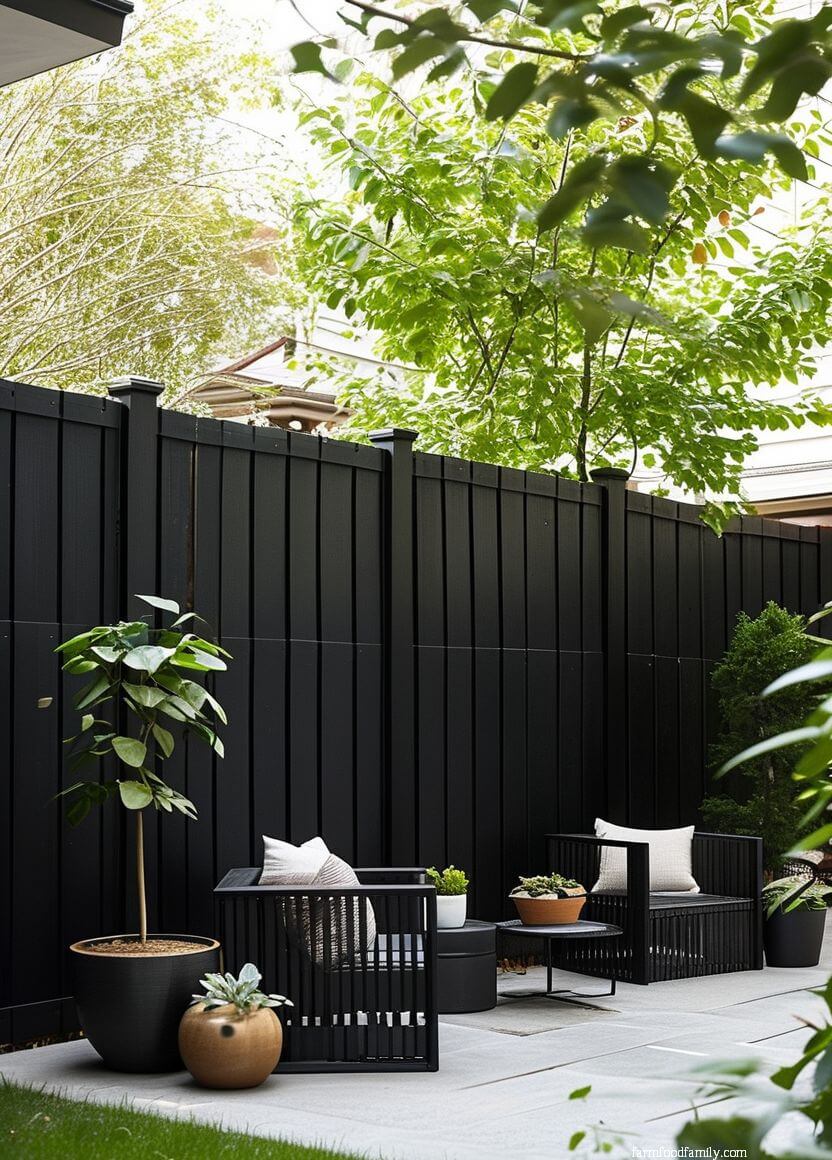
14. Black Fence with Mirrored Panels
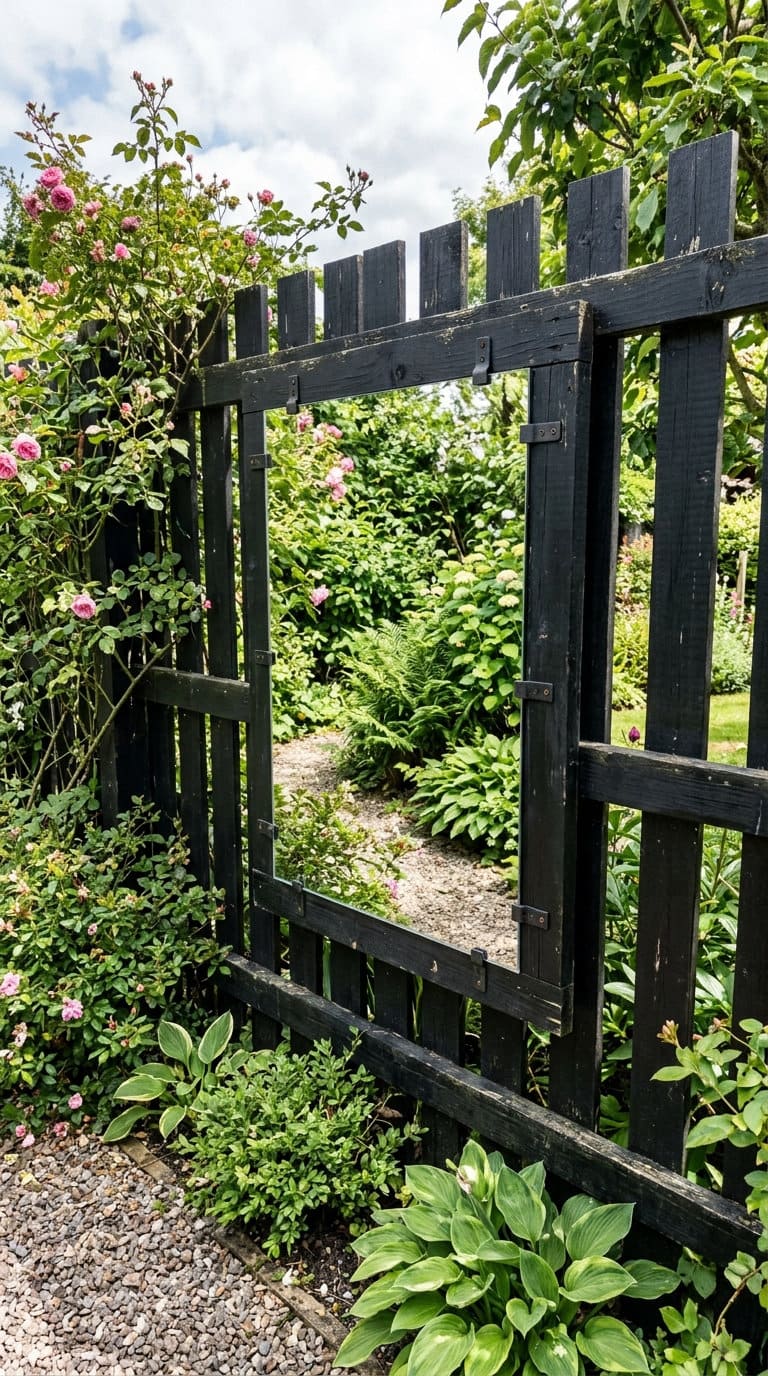
A small mirrored panel or two worked into a black fence line is a real, if unusual, landscape design trick, positioned right, a mirror reflects greenery back into the yard and makes a small space feel like it extends further than it actually does.
This works best as an accent, not the whole fence, a fence that’s entirely mirrored reads as a novelty rather than a design choice, and mirrors need weatherproof mounting hardware rated for outdoor exposure.
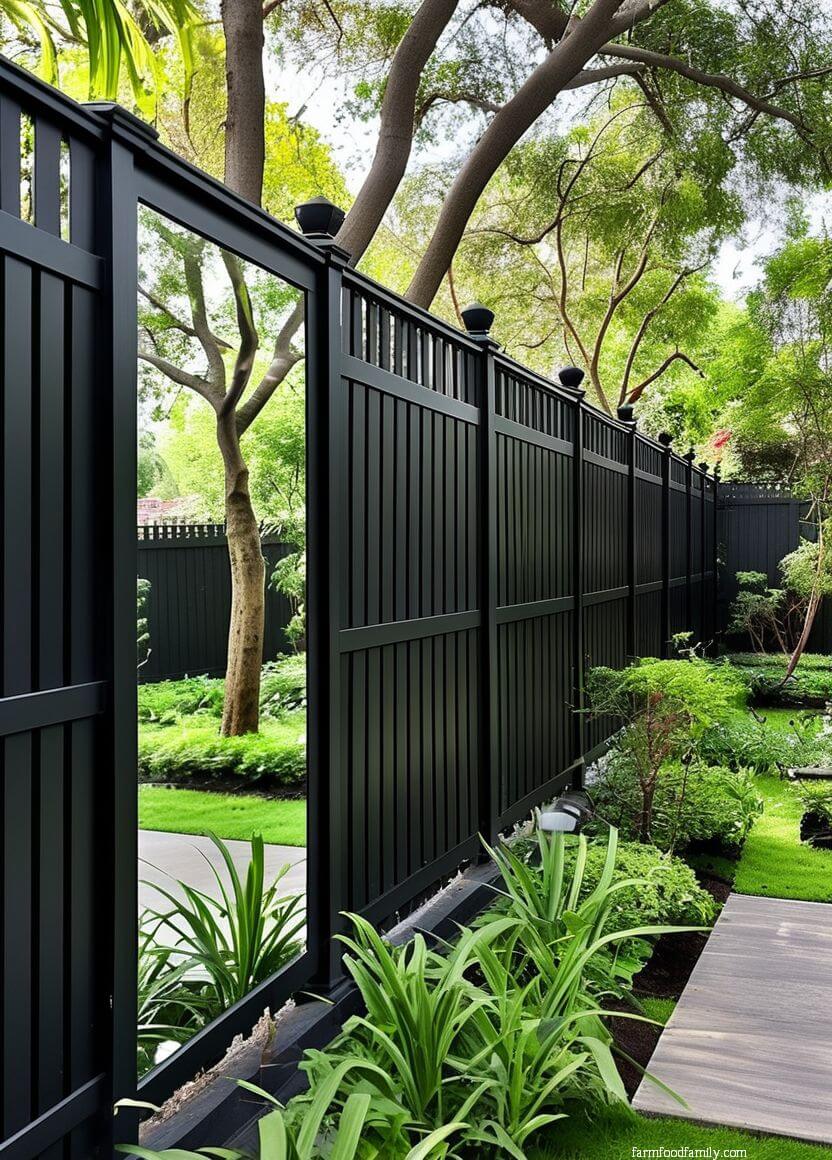
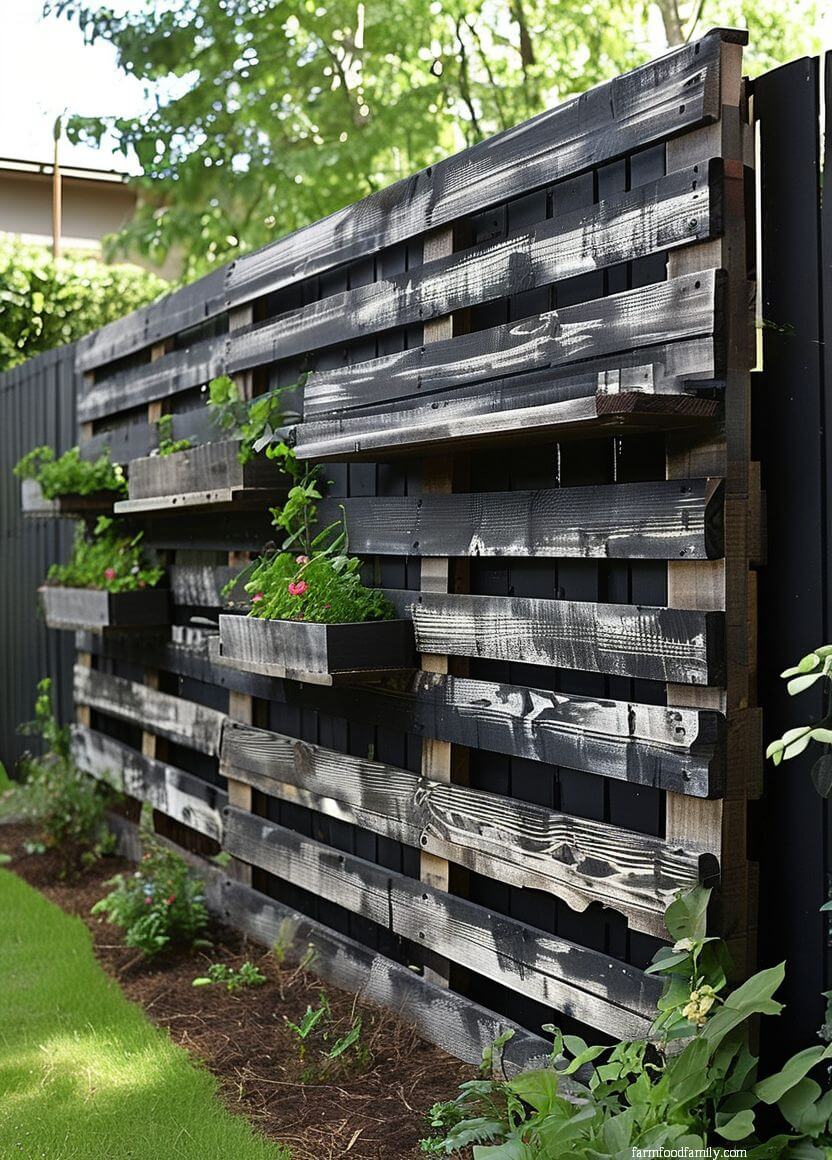
15. Rustic black pallet fence
Reclaimed wood pallets, stained or painted black, give a budget-friendly, textured look that reads as intentionally rustic rather than improvised, especially if the boards are arranged with consistent spacing rather than left however the pallets originally were.
Check reclaimed pallets for chemical treatment markings before using them outdoors, some are treated with chemicals not meant for long-term outdoor or garden-adjacent exposure.
16. Black fence with copper accents
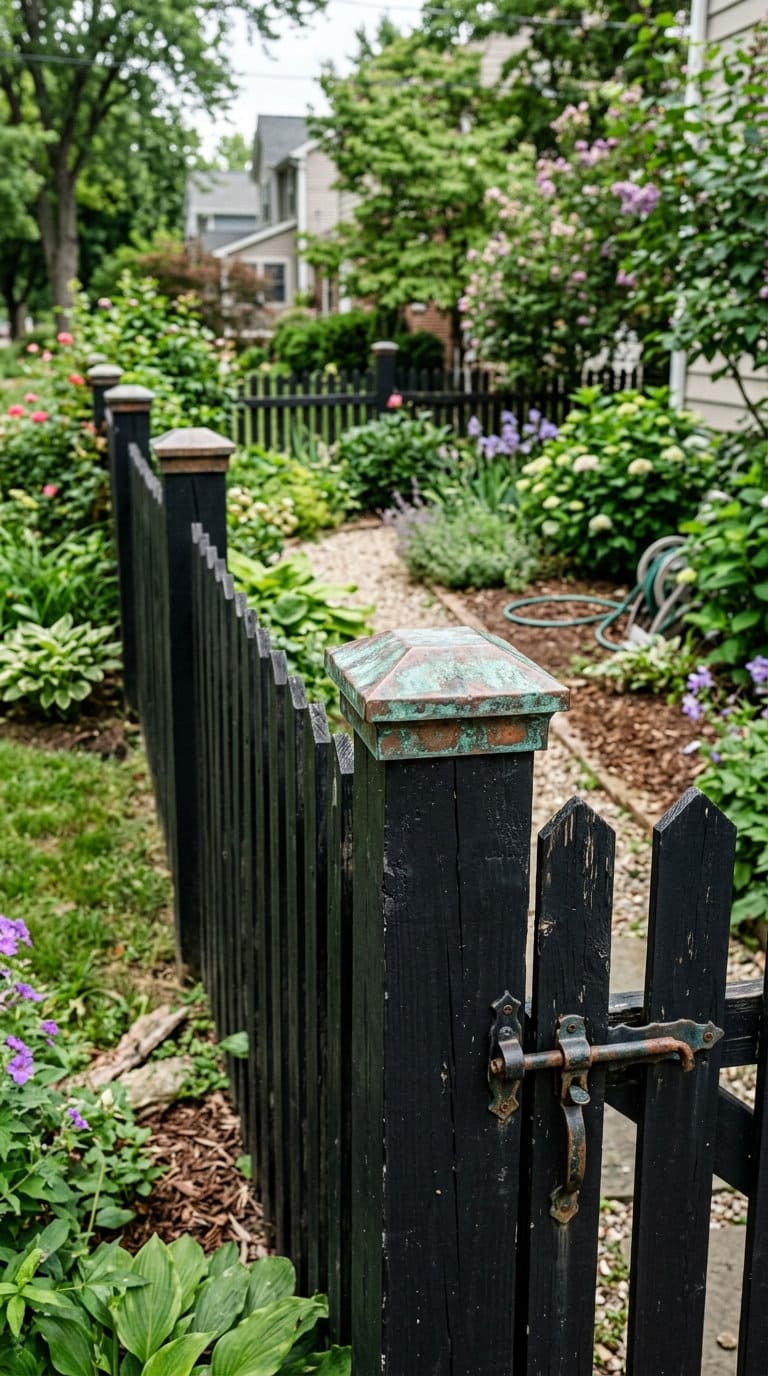
Copper hardware, post caps, or thin accent strips against black fencing give a warm metallic contrast that ages into a real patina over time, unlike black paint, copper’s color shift is a feature, not a maintenance problem.
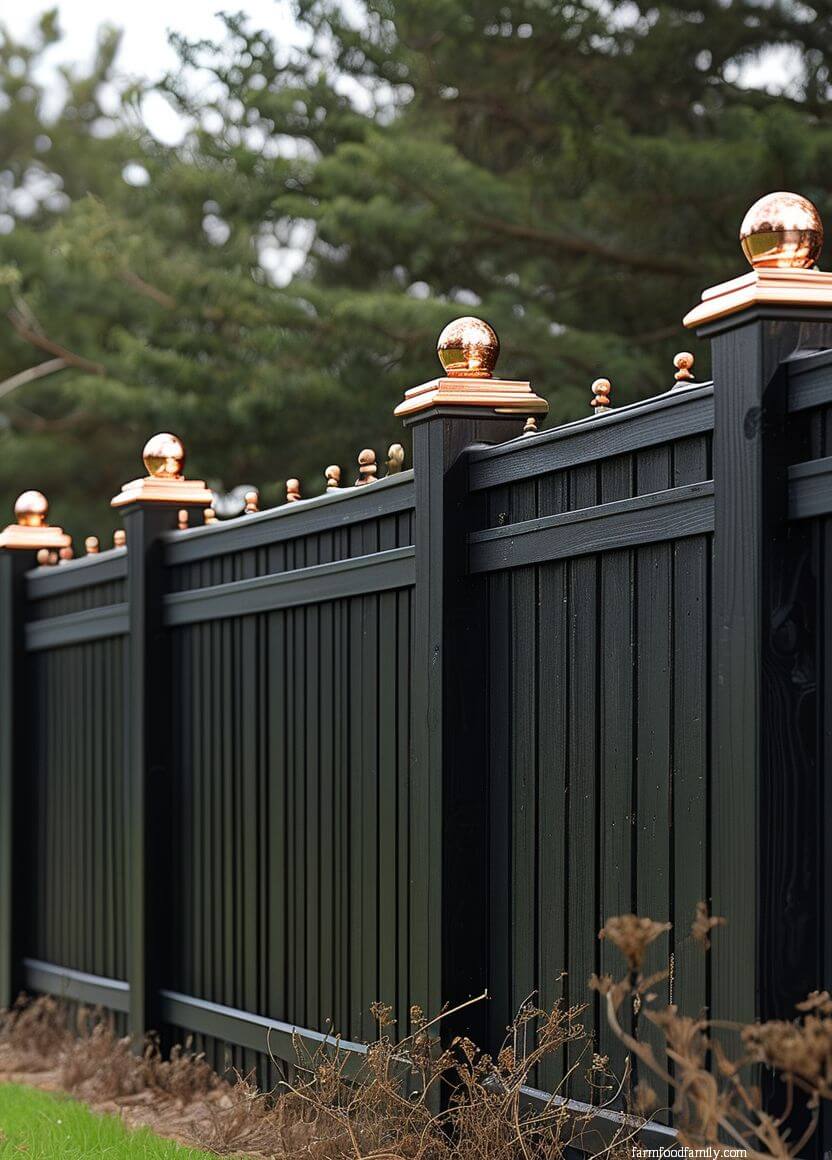
17. High-gloss black finish for a luxe look
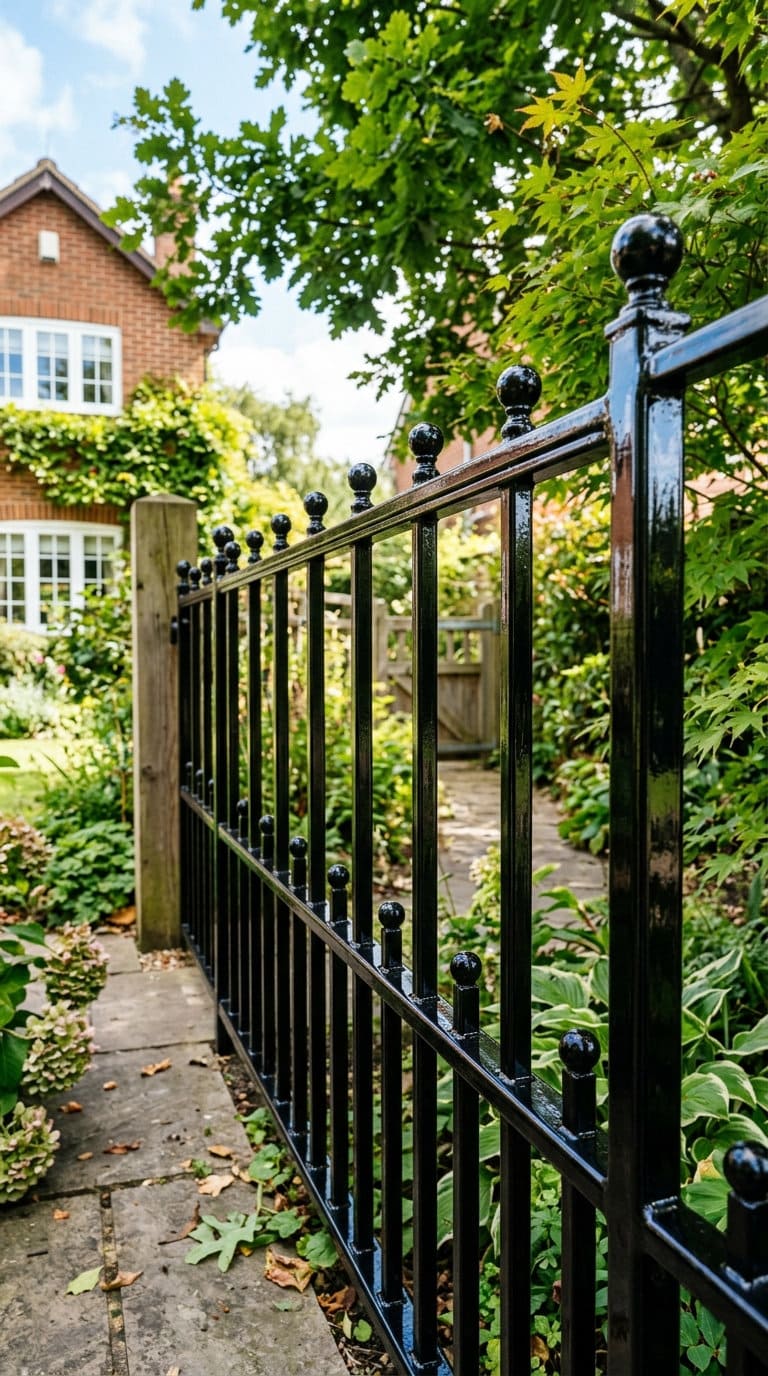
A high-gloss black finish, most common on wrought iron or aluminum, reads as more formal and polished than a matte finish, closer to a lacquered look than a standard exterior paint job.
Gloss finishes show scratches and dust more visibly than matte, worth factoring in if the fence line sees a lot of foot traffic, pets, or lawn equipment nearby.
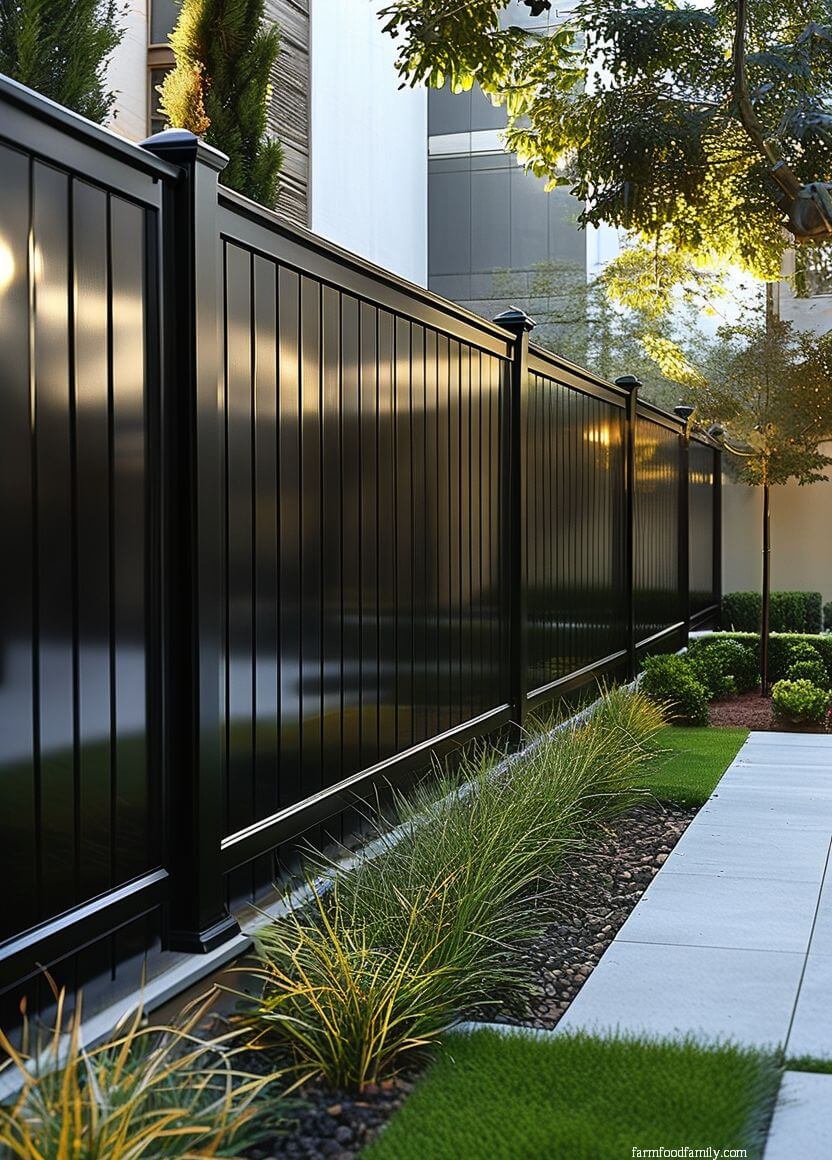
18. Black metal sheets for full privacy
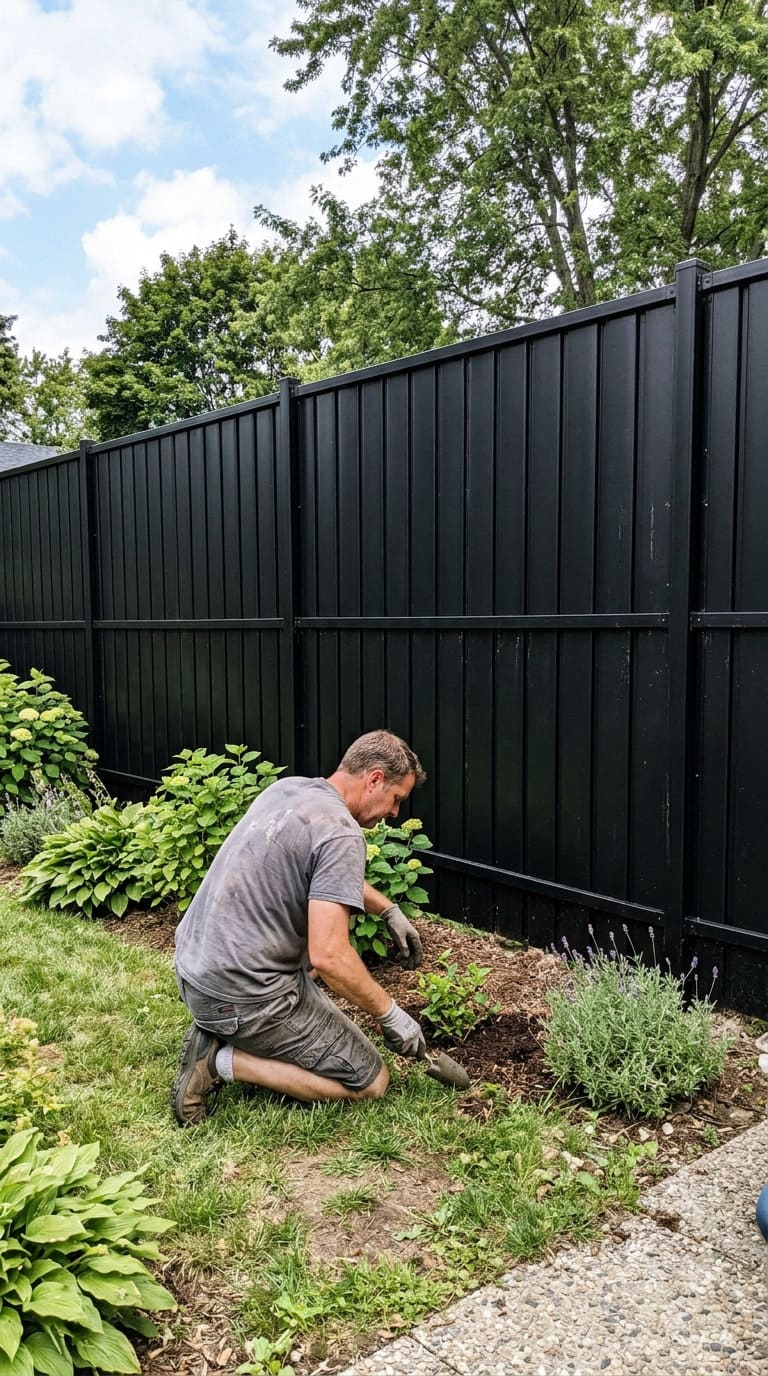
Solid black metal panels (steel or aluminum sheet, not mesh or pickets) give the most complete privacy of any option on this list, no gaps, no sightlines, full screening.
This is also where the heat point from section 1 matters most, a solid metal surface has no gaps for airflow, so it holds heat more than any slatted or mesh option nearby.
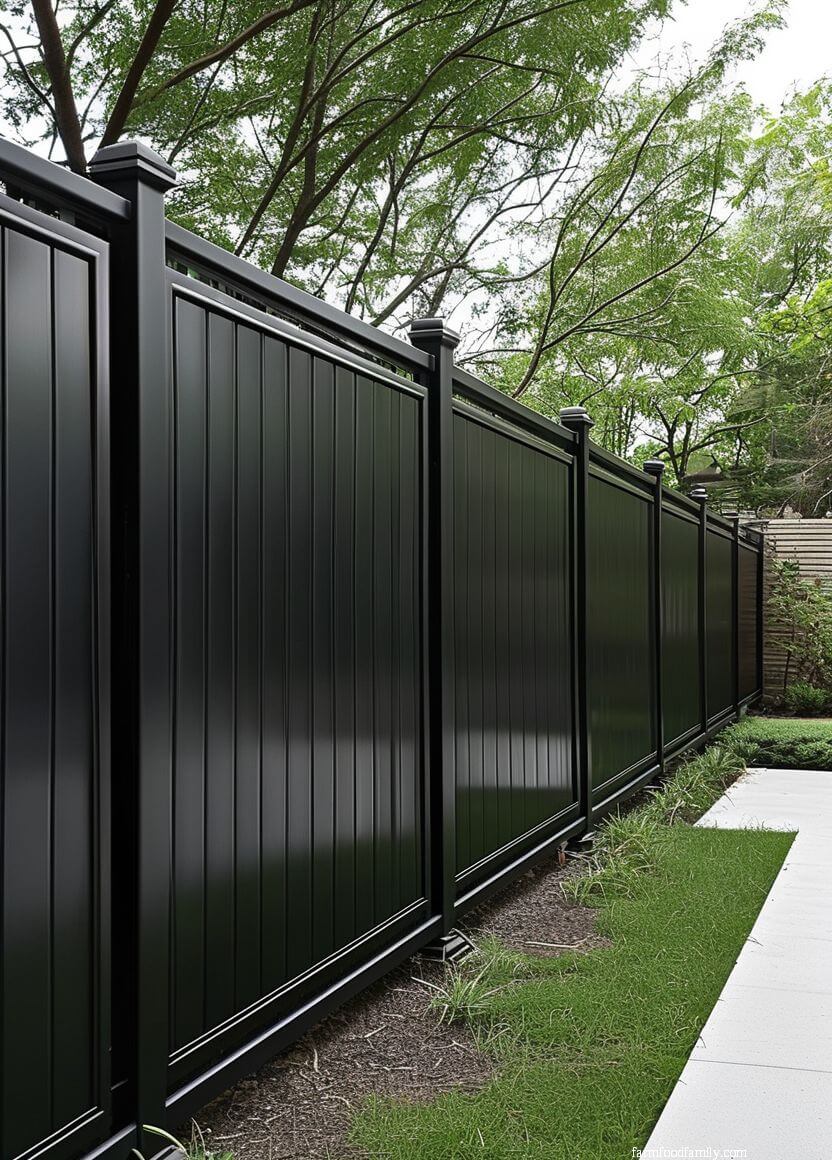
19. Picket fence, gone goth
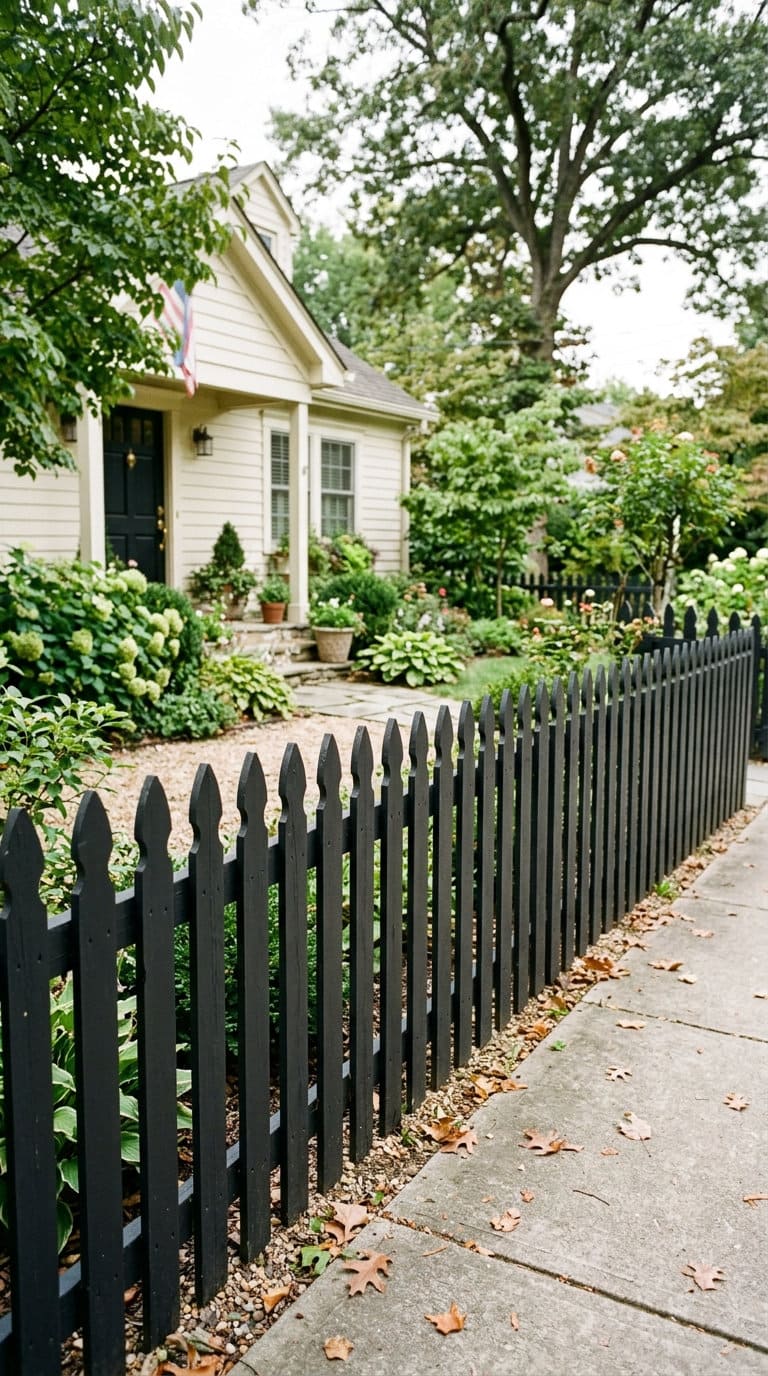
A traditional picket silhouette, the pointed-top pickets and even spacing everyone recognizes, painted black instead of white or natural wood reads as a deliberate, slightly moody twist on a familiar suburban shape.
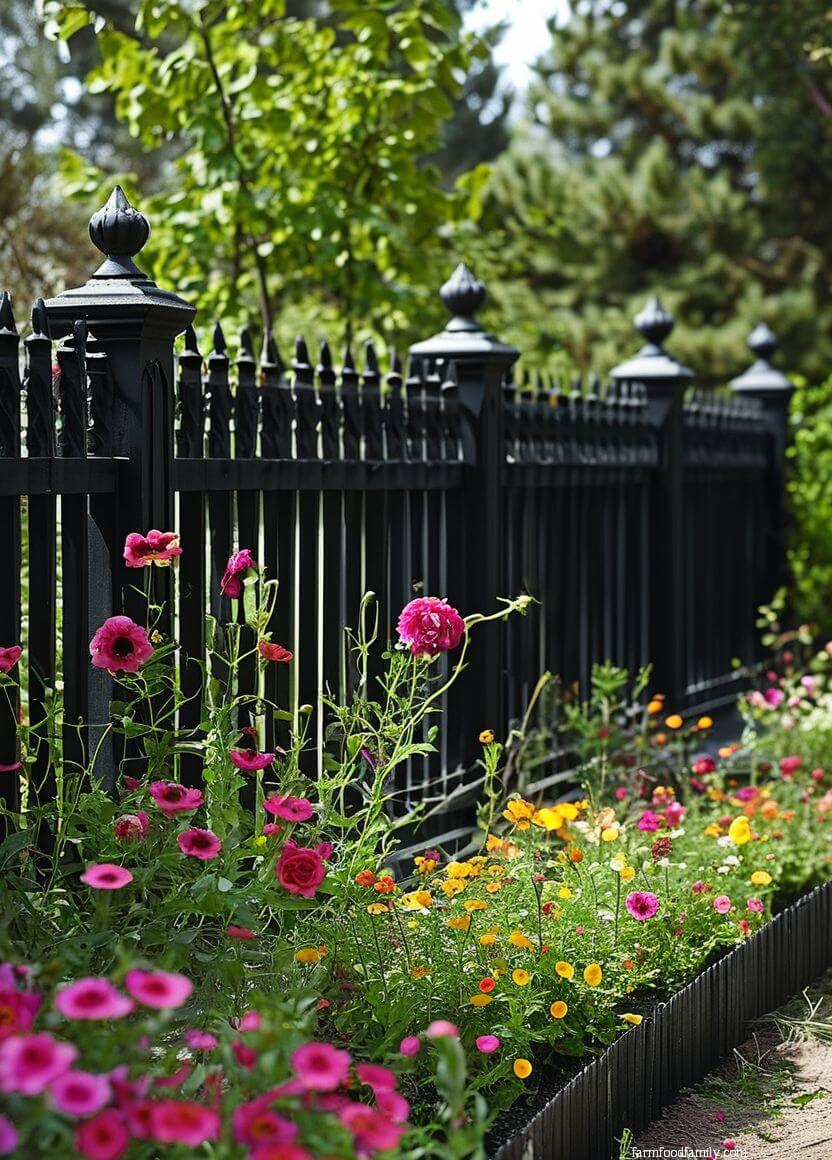
20. Black acrylic or frosted glass panels
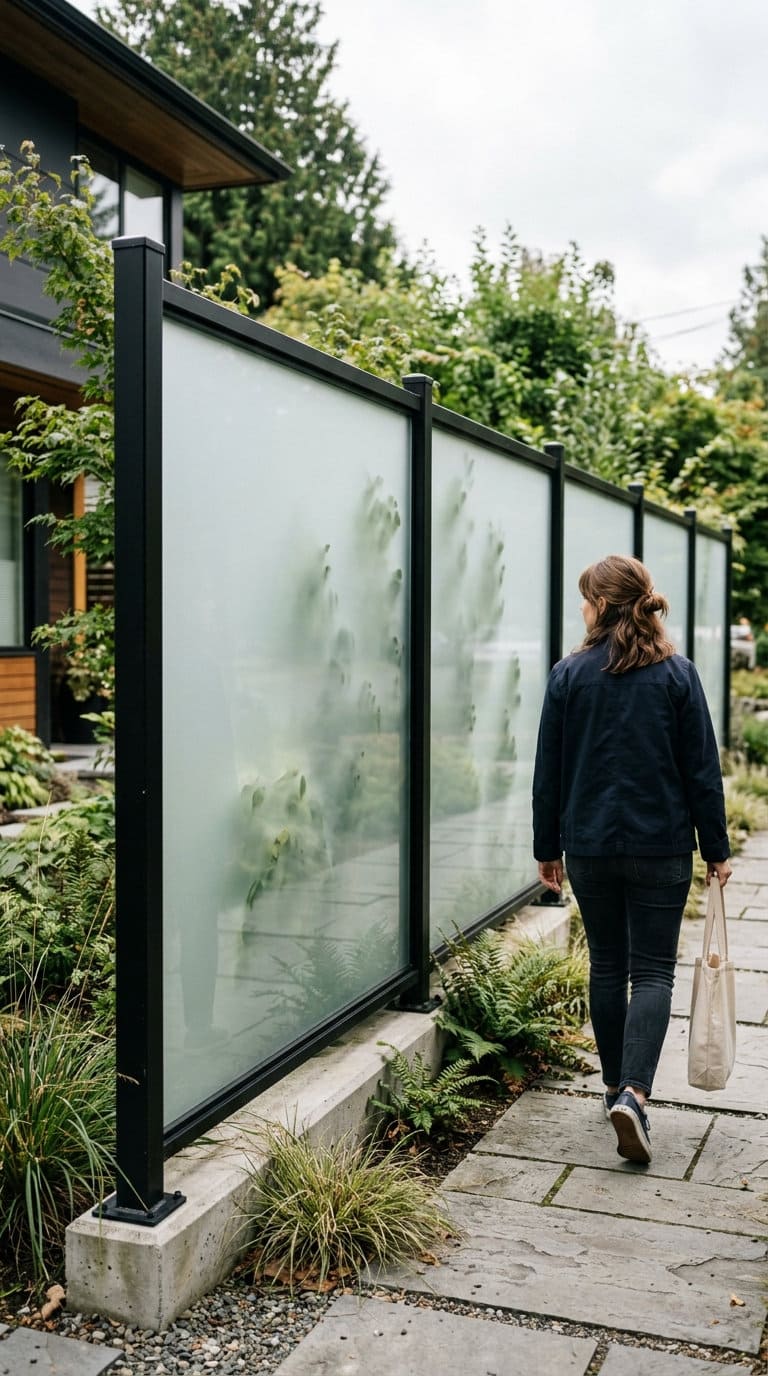
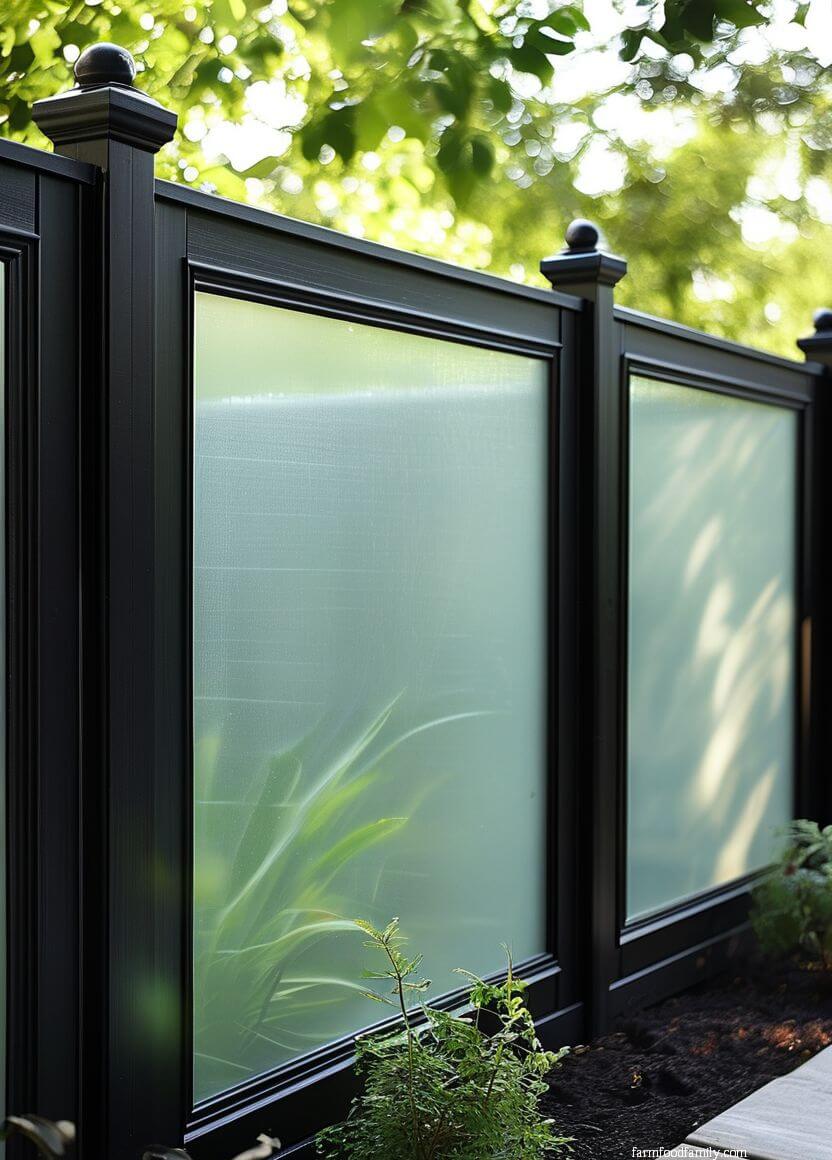
Both acrylic and frosted glass panels bring a genuinely modern, architectural look to fencing, translucent rather than fully opaque, they let diffused light through while still blocking direct sightlines. Framed in black metal, the panels read as a cohesive design element rather than a mismatched material swap.
Both materials need to be rated for outdoor UV and impact exposure specifically, not every acrylic or glass product sold for interior use is appropriate for a fence line.
21. Black stone fence
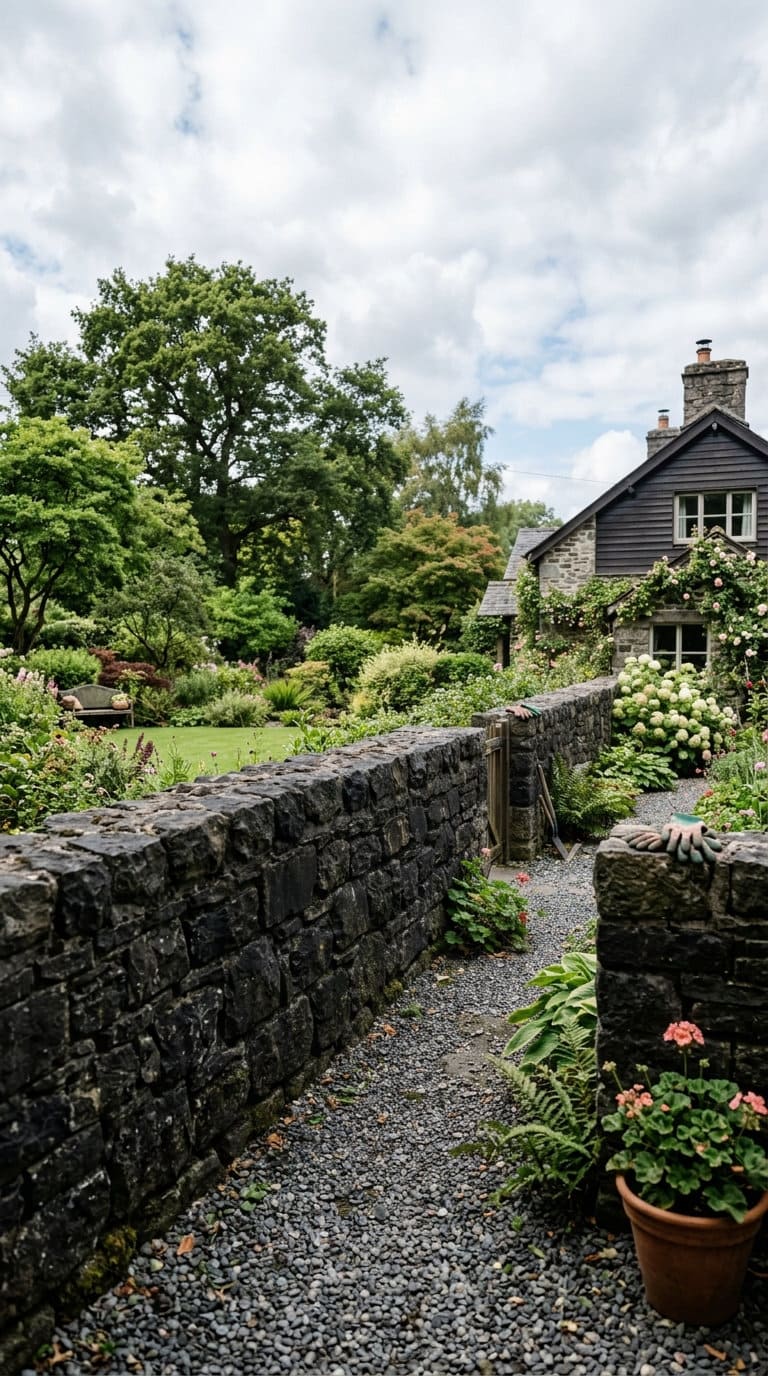
A dark stone wall, whether natural dark-toned stone or a stone veneer with a black-toned finish, gives the most permanent, substantial-feeling option on this list. It functions more like a low wall than a traditional fence in terms of both cost and installation complexity.
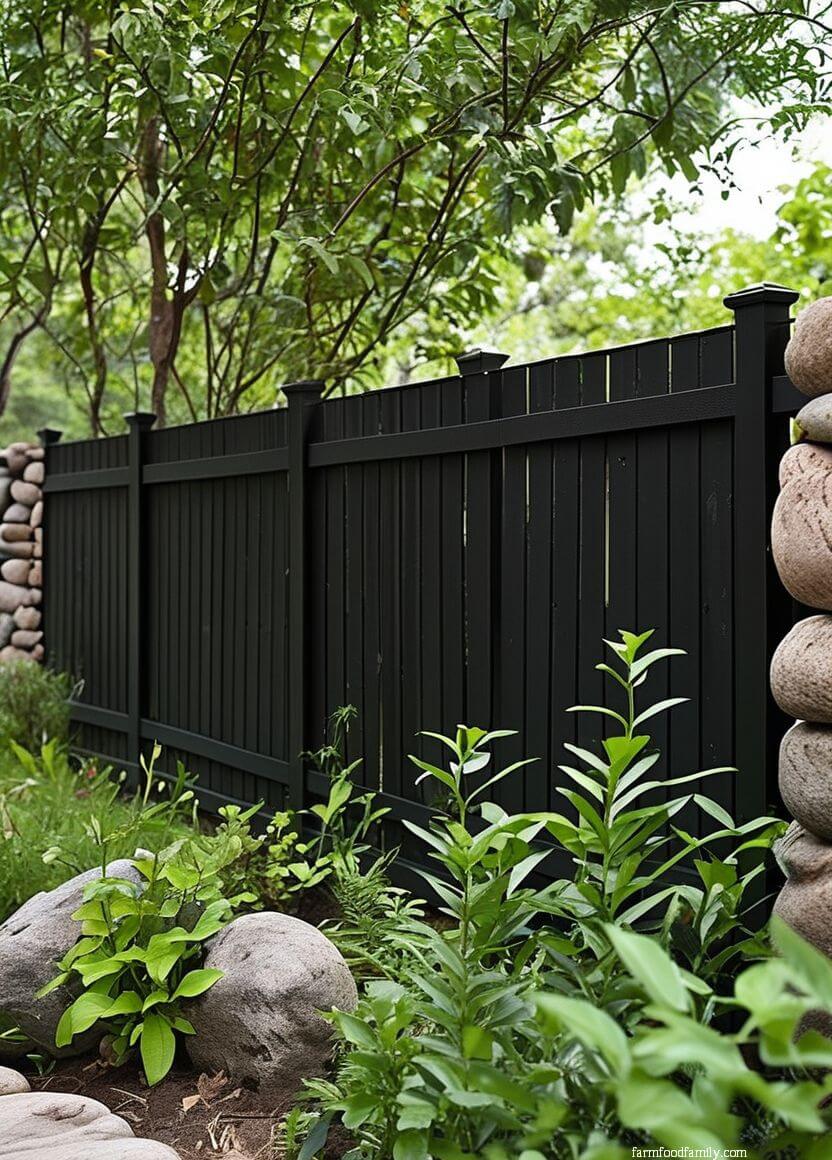
22. Black fence with white highlights
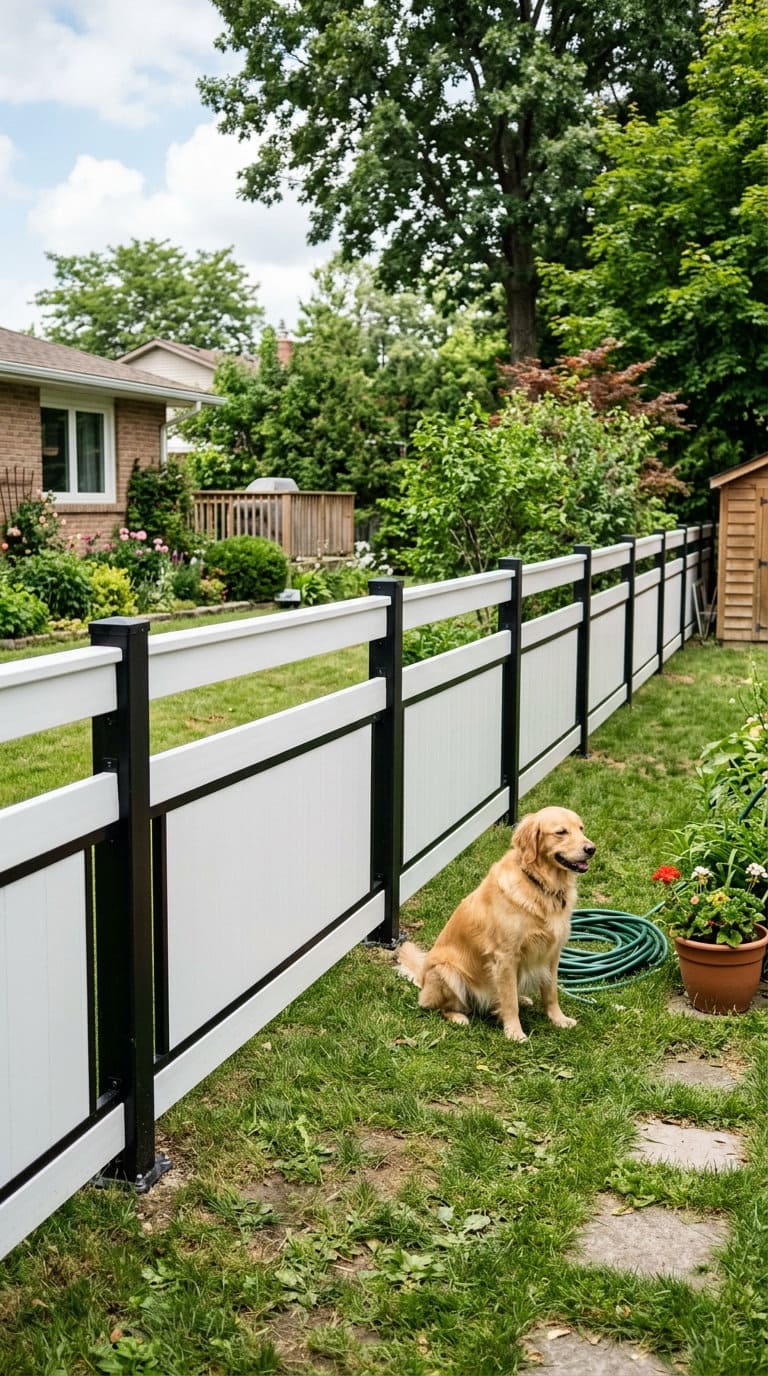
Two-tone black-and-white fencing, black posts with white rails, or a black frame around white panel inserts, breaks up a fully black fence line and adds visual rhythm without losing the overall dark, intentional look.
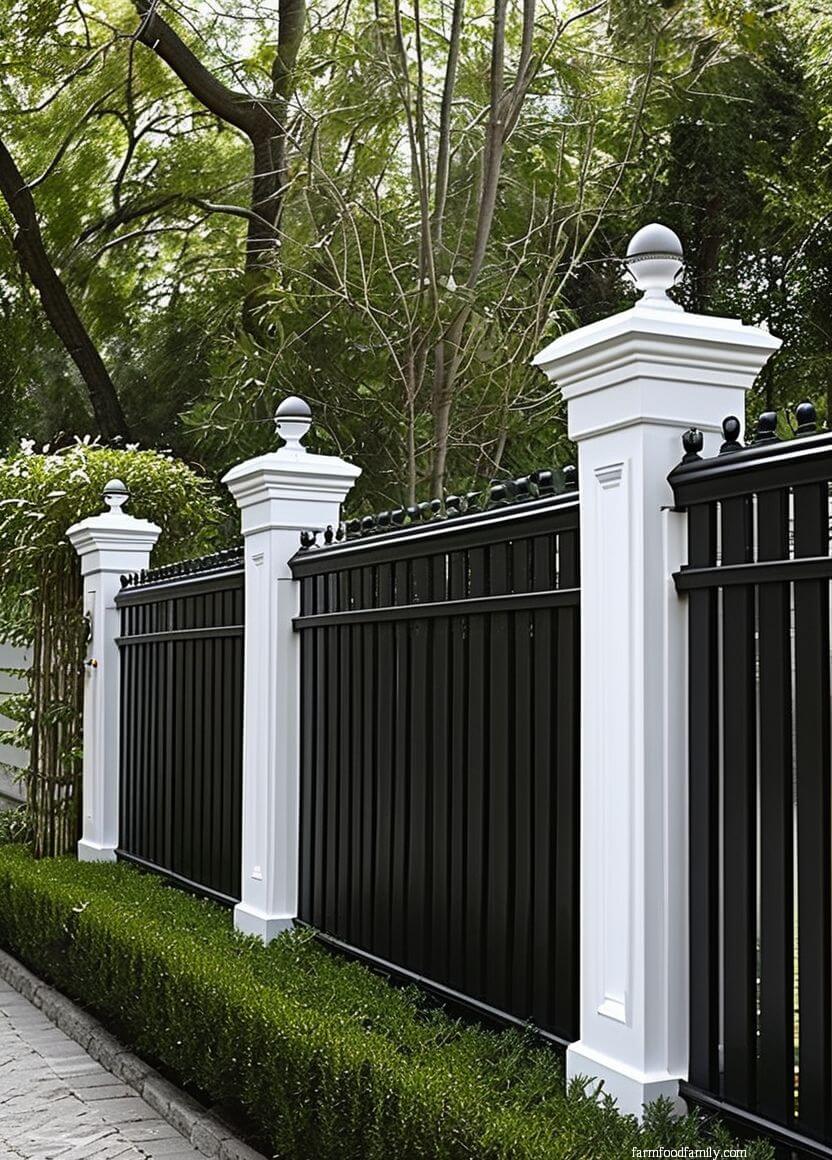
23. Farm-style black wooden fence
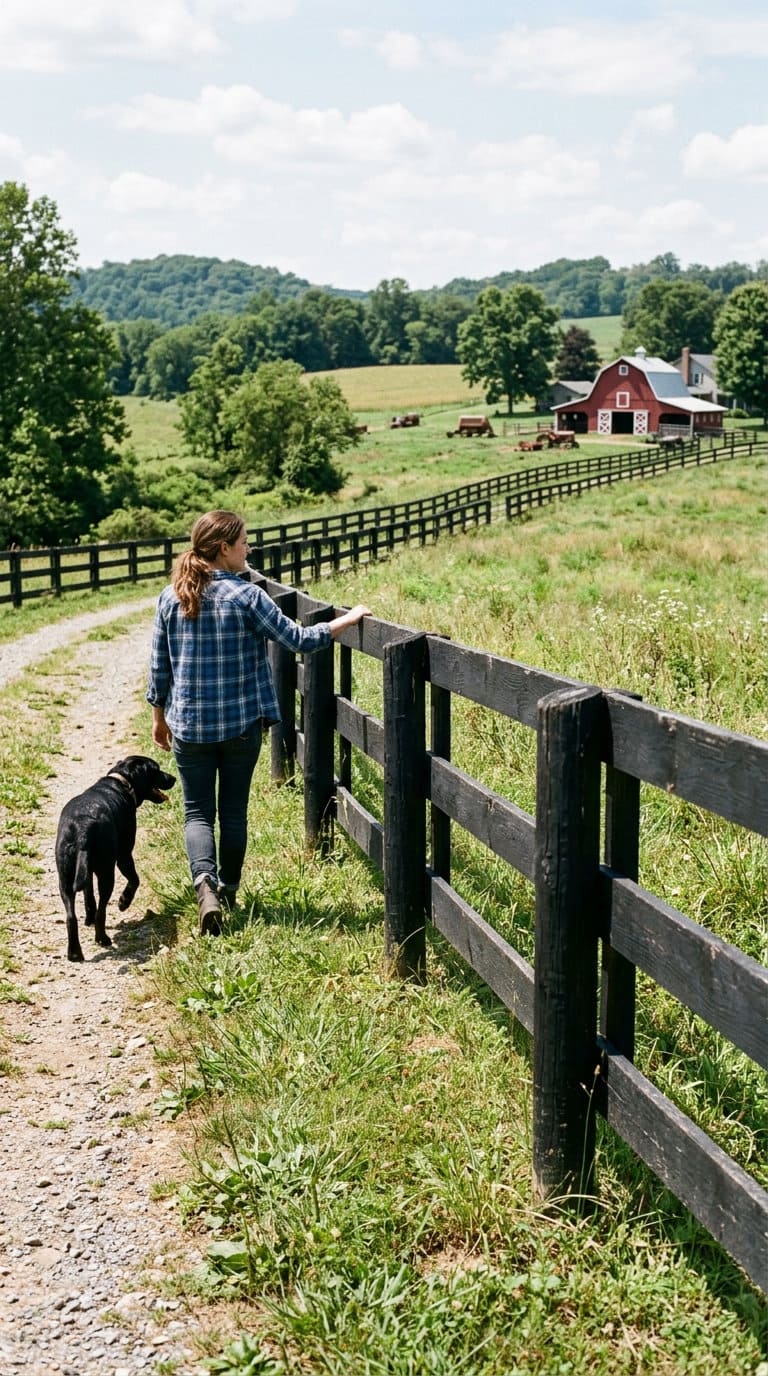
A classic three-rail or post-and-rail farm fence, stained black instead of the usual natural wood or white, keeps the open, ranch-style silhouette while reading as more current and less traditional-farmhouse.
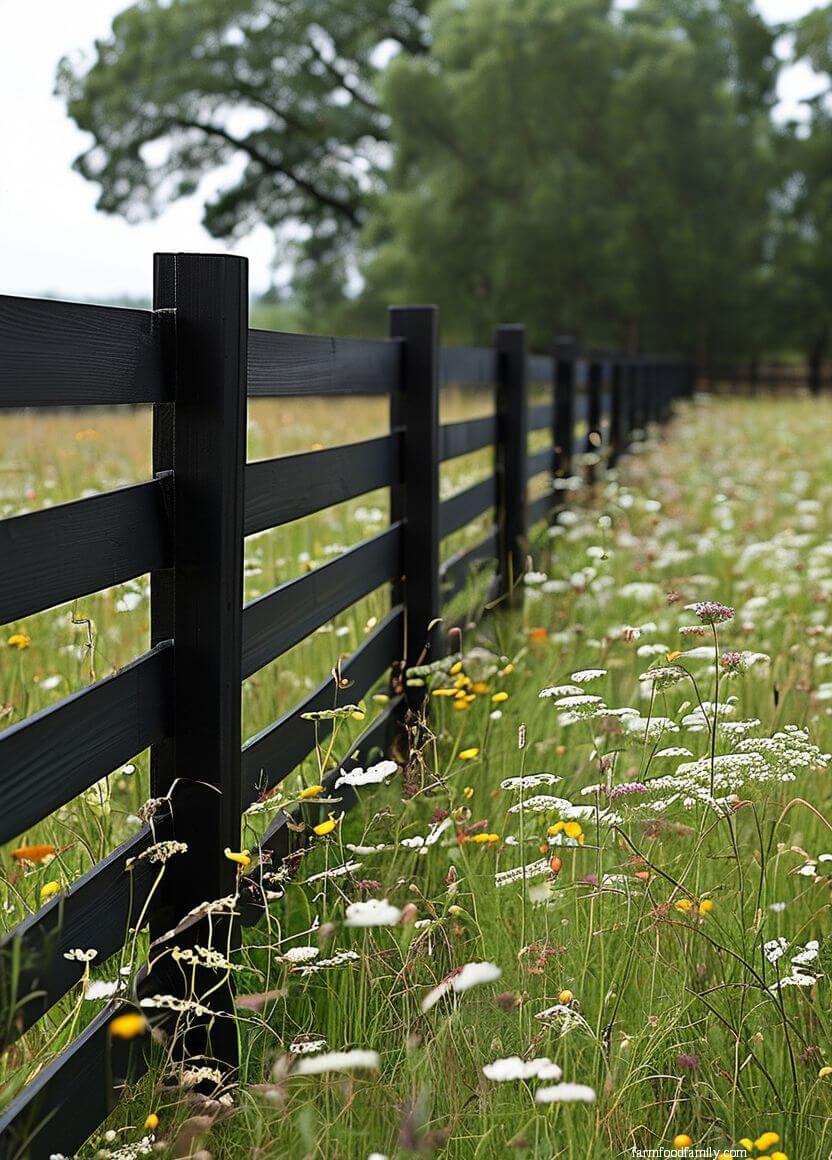
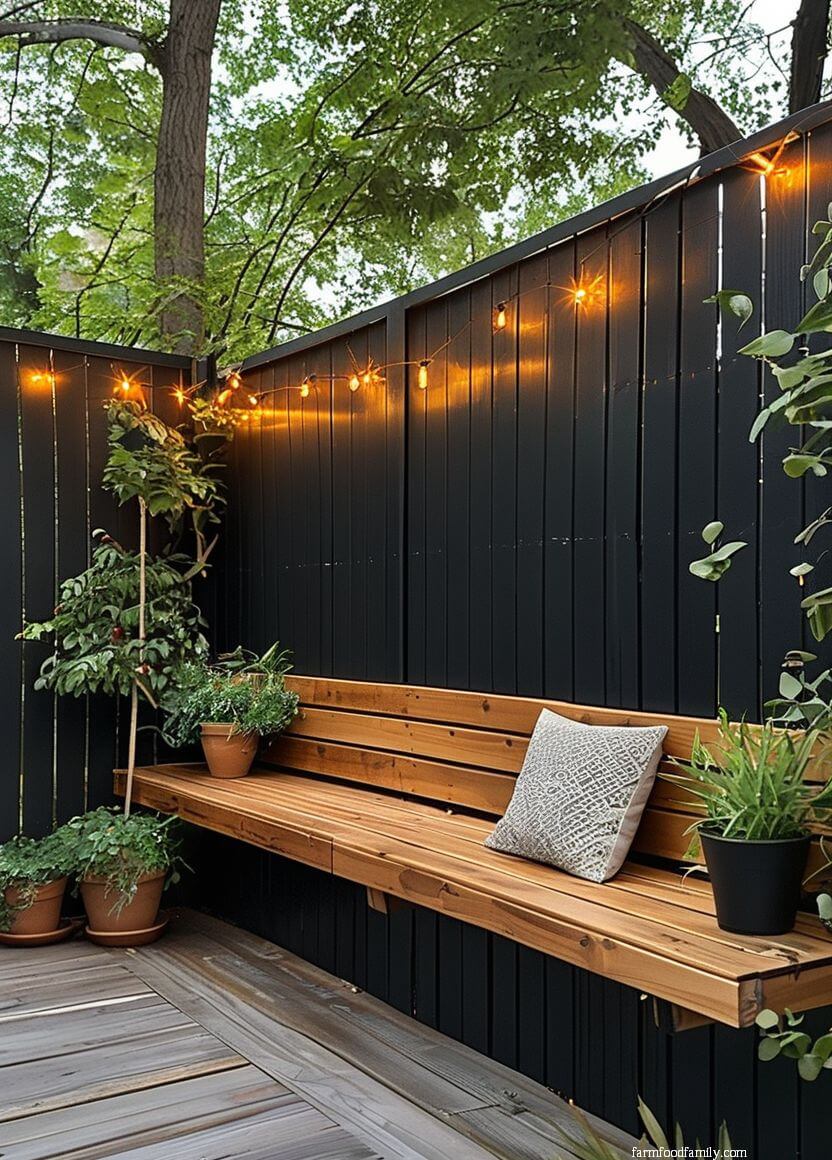
24. Black fence with built-in benches

Working a bench directly into a section of fence line turns a boundary marker into functional seating, useful along a patio-adjacent fence run or anywhere the yard could use extra seating without adding separate furniture.
A few more things worth planning around
If you’re deciding on paint versus a different finish approach entirely, fence painting ideas covers the broader painting process beyond just color choice. And since a black fence’s biggest visual payoff comes from what’s planted against it, landscaping along a fence is worth a look for pairing greenery with the contrast a dark fence line creates.
FAQ
Does a black fence get hotter than a lighter-colored one?
Yes, noticeably. A dark-painted metal fence can reach around 140°F on a 95°F day, and metal holds that heat for hours after direct sun exposure ends. This matters most for solid metal panels and anywhere people, pets, or heat-sensitive plants might be in direct contact with the fence.
Will a black fence fade or turn gray over time?
It depends on the coating. Per Modern Fence & Deck’s coating guide, epoxy powder coat isn’t UV-stable and shouldn’t be used outdoors at all; polyester powder coat is UV-stabilized and the standard choice for fencing; premium AAMA 2605 fluoropolymer coatings resist fading the longest. Ask which coating type you’re getting before installation, not after it’s already chalked toward gray.
Do HOAs usually allow black fences?
Generally, yes. Black, brown, and other neutral tones are typically on the approved list for most HOAs, bright or mismatched colors are what actually draws pushback. That said, approval still usually takes a few weeks through the standard CC&R submission process, so check before installing or repainting rather than assuming black is automatically fine.
Conclusion
Black fences offer a stylish foundation for any outdoor space, adapting to a range of aesthetics from classic and rustic to ultra-modern and artistic. They ground your yard with visual depth and create striking contrast against natural greenery, architecture, and flowers.
With countless ways to personalize your design, a black fence can become the defining element that transforms your outdoor environment into something truly unforgettable. If this list has given you the perfect idea, comment your thoughts below and share this article with your friends.
Never miss an update — choose FarmFoodFamily as your preferred source on Google.
How it works: Tap the button below to open Google's settings page, then check the box next to FarmFoodFamily.
Tap the checkbox to turn it blue — that's how you know it's set.