10 Dining Room Feng Shui Rules for a Warmer, More Inviting Space
A dining room is one of the few rooms in the house built entirely around nourishment and connection, feng shui treats getting it wrong as a real drain on both, and in a couple of these rules, so does actual injury data.

Never miss an update — choose FarmFoodFamily as your preferred source on Google.
How it works: Tap the button below to open Google’s settings page, then check the box next to FarmFoodFamily.
Tap the checkbox to turn it blue — that’s how you know it’s set.
Feng shui gives the dining room outsized importance because it’s where a household’s health, wealth, and relationships are all symbolically (and literally) fed at once.
Jan Cisek, a Feng Shui Society Accredited (FSSA) consultant with an MSc in Environmental Psychology and more than 40 years in the field, treats the dining room’s layout, material, and condition as directly shaping how comfortable and “fed” a household actually feels.
Here are the ten rules that matter, paired with the real ergonomic and safety facts that back several of them up beyond symbolism.
1. Choose a round or oval table over sharp corners
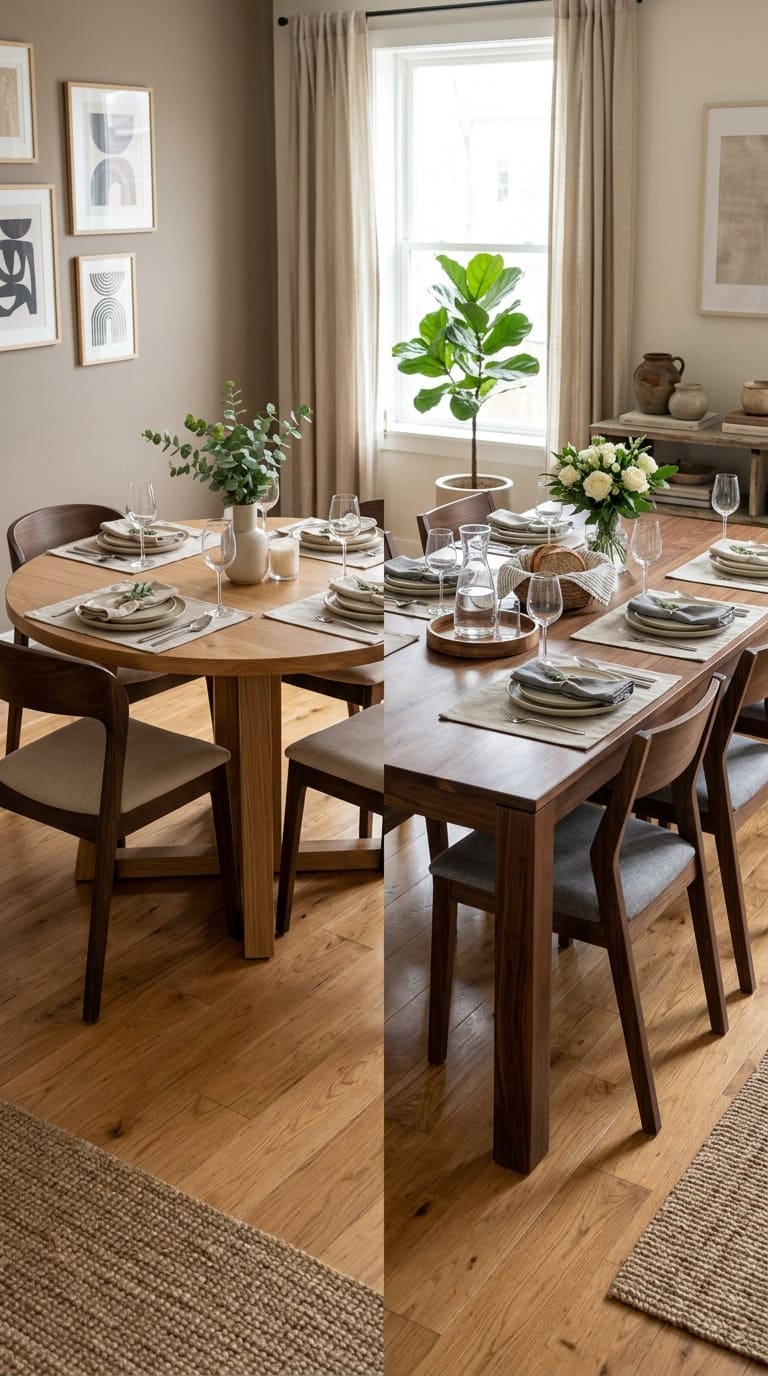
Round and oval tables are the most consistently recommended shape across every real source: they let chi circulate smoothly around the group instead of being interrupted or “cut” by a corner, and they naturally put everyone at an equal distance from the center, which is read as supporting equality among diners.
Square or rectangular tables aren’t forbidden, but a corner pointed at a regularly-used seat is treated the same as any other feng shui “poison arrow.”

If you already have a rectangular table and a reshape isn’t realistic, seating people away from the direct corner line, or softening the corners with a table runner that rounds the visual edge, are the standard workarounds. Our types of dining chairs guide has options that pair well with either shape.
2. Is a glass dining table actually bad feng shui, or just a safety risk?
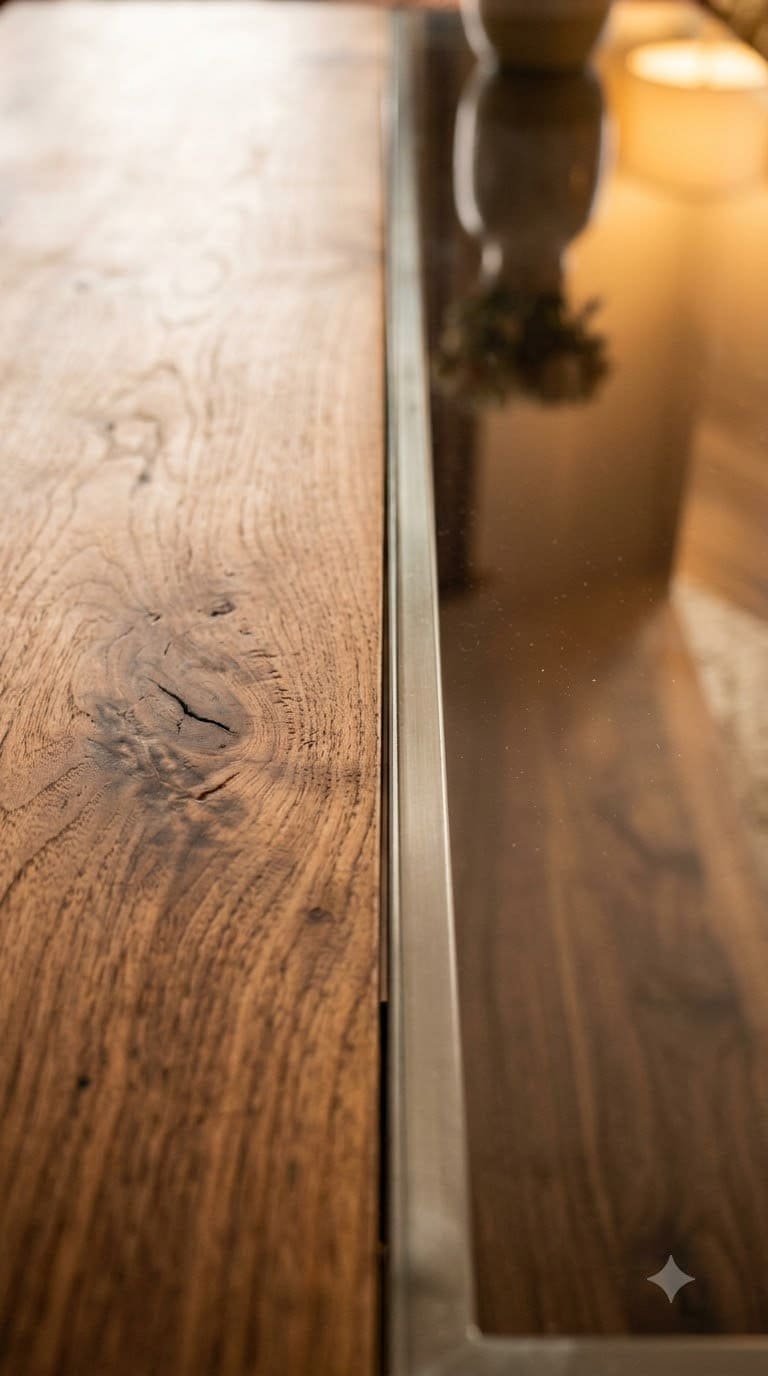
Wood is the favored dining table material in feng shui: it’s associated with growth and warmth, and it grounds the room in a way glass, stone, or metal don’t.
Glass tabletops specifically draw a consistent warning across sources, both for their sharp visual edges and for a “cold,” ungrounded feeling.
There’s a real safety fact behind the glass warning that no feng shui source mentions: the U.S. Consumer Product Safety Commission’s Tempered Glass Safety Alert documents an estimated 20,700+ emergency-room injuries a year tied to glass table breakage, and while a voluntary ASTM standard exists requiring tempered glass on tabletops, it isn’t mandatory the way it is for shower doors.
If you’re set on a glass table anyway, confirm it’s genuinely tempered before you buy, don’t assume it is.
If you’re choosing new furniture, our extendable dining table buying guide and things to consider before buying a dining room set both cover material tradeoffs in more depth.
3. Seat an even number of chairs, ideally 6 to 8
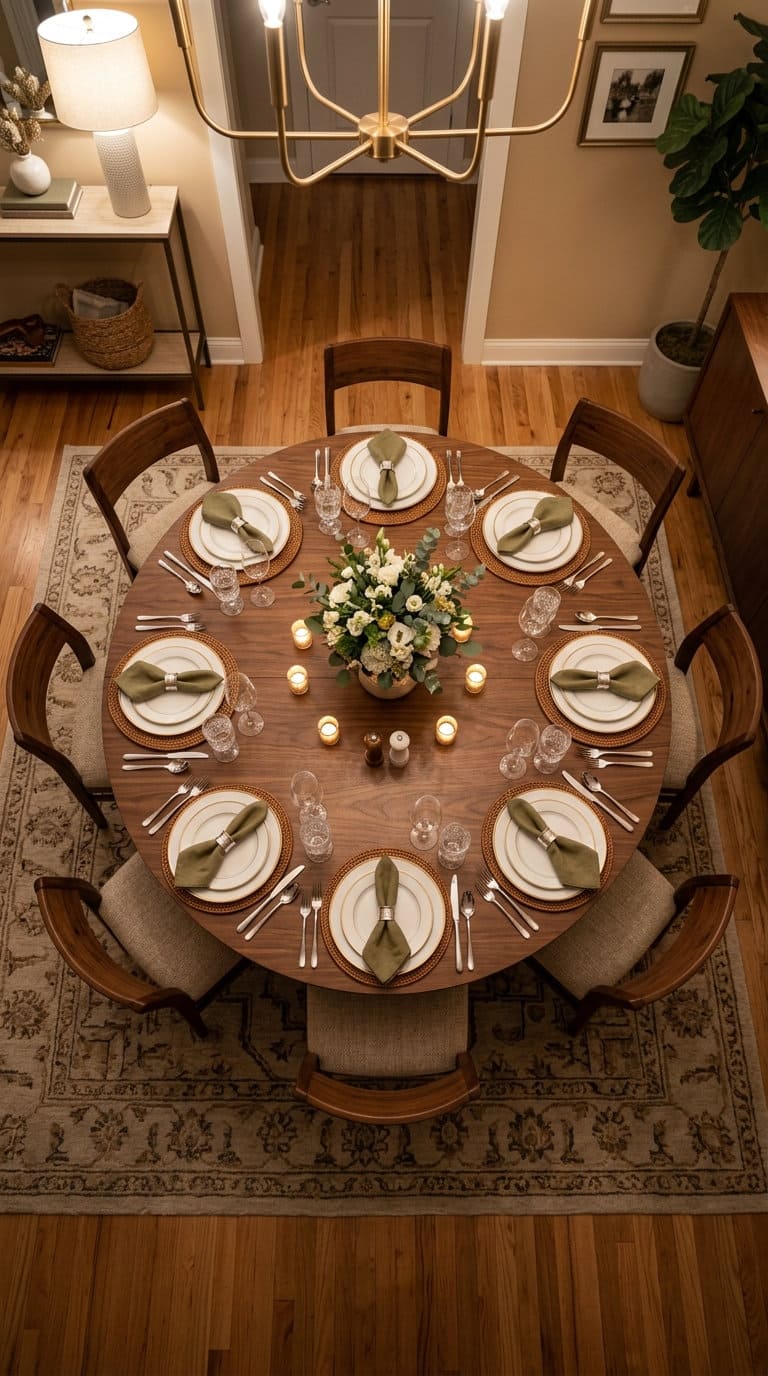
An even number of chairs is considered balanced and harmonious, while an odd number is thought to create a subtly uncomfortable, unbalanced feeling for guests. Eight is the most specifically favored count, its pronunciation in Chinese sounds close to the word for “prosperity.”
This isn’t purely numerology: an even count also just naturally fits standard rectangular and round table proportions (two per side, or evenly spaced around a circle), so the feng shui-favored number and the practically comfortable number tend to be the same thing.

Covers rules #1 and #2 directly, shape and material in one purchase
Shop NowThis post contains affiliate links. We may earn a commission on qualifying purchases at no extra cost to you.
4. Give the table real breathing room, not just “some space”
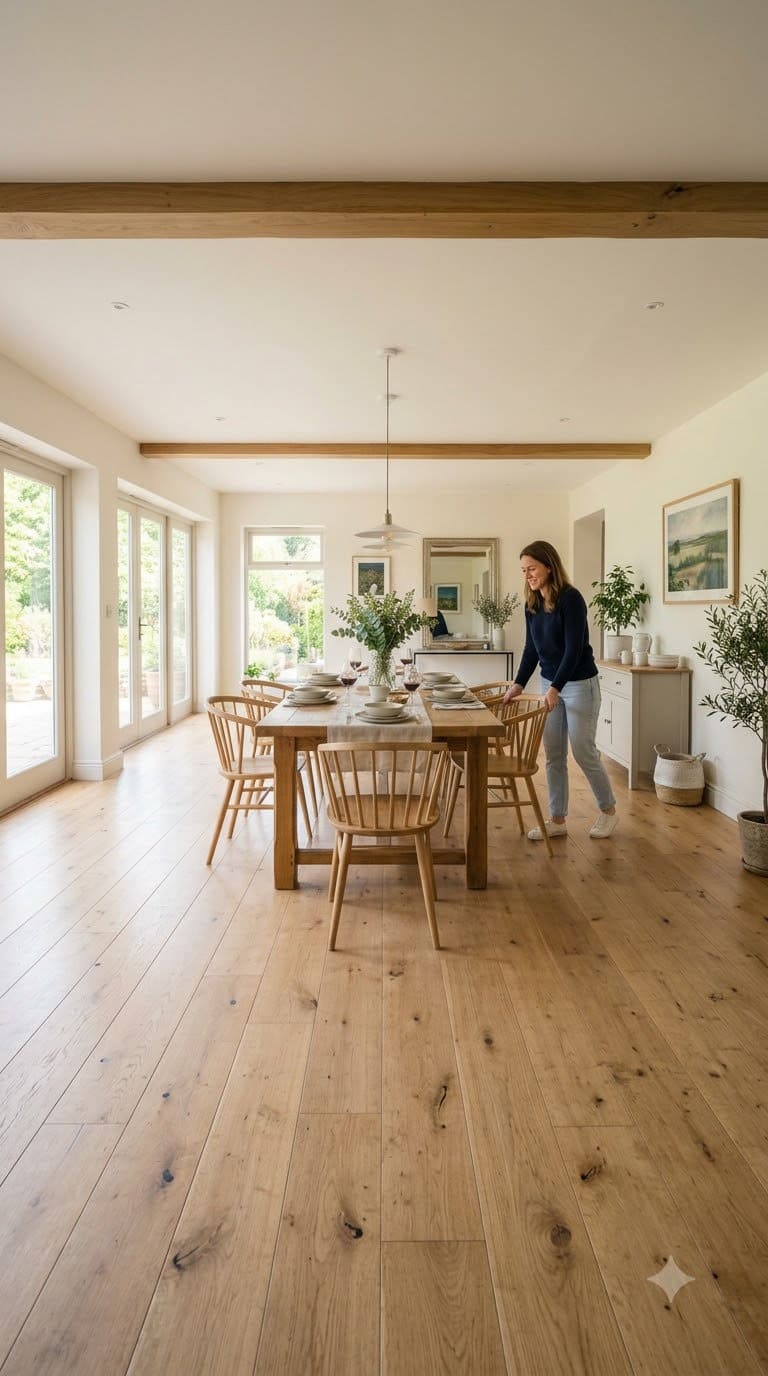
Feng shui calls for ample space around the table so chi (and people) can move freely, but rarely puts a number on what “ample” means.
Real furniture ergonomics guidance fills that gap: aim for a minimum of 36 inches of clearance from the table edge to the nearest wall or obstruction (enough for a pushed-in chair plus room to stand), and 42 to 48 inches if you want people to comfortably walk behind a seated guest.
Per place setting, 20 to 24 inches of table width keeps elbows from bumping, and chairs should sit roughly 10 to 12 inches below the tabletop for comfortable knee clearance.
A cramped dining room isn’t just bad feng shui, it’s the specific, measurable thing that makes a table feel crowded even when it technically “fits.”
5. Position the table in the command position
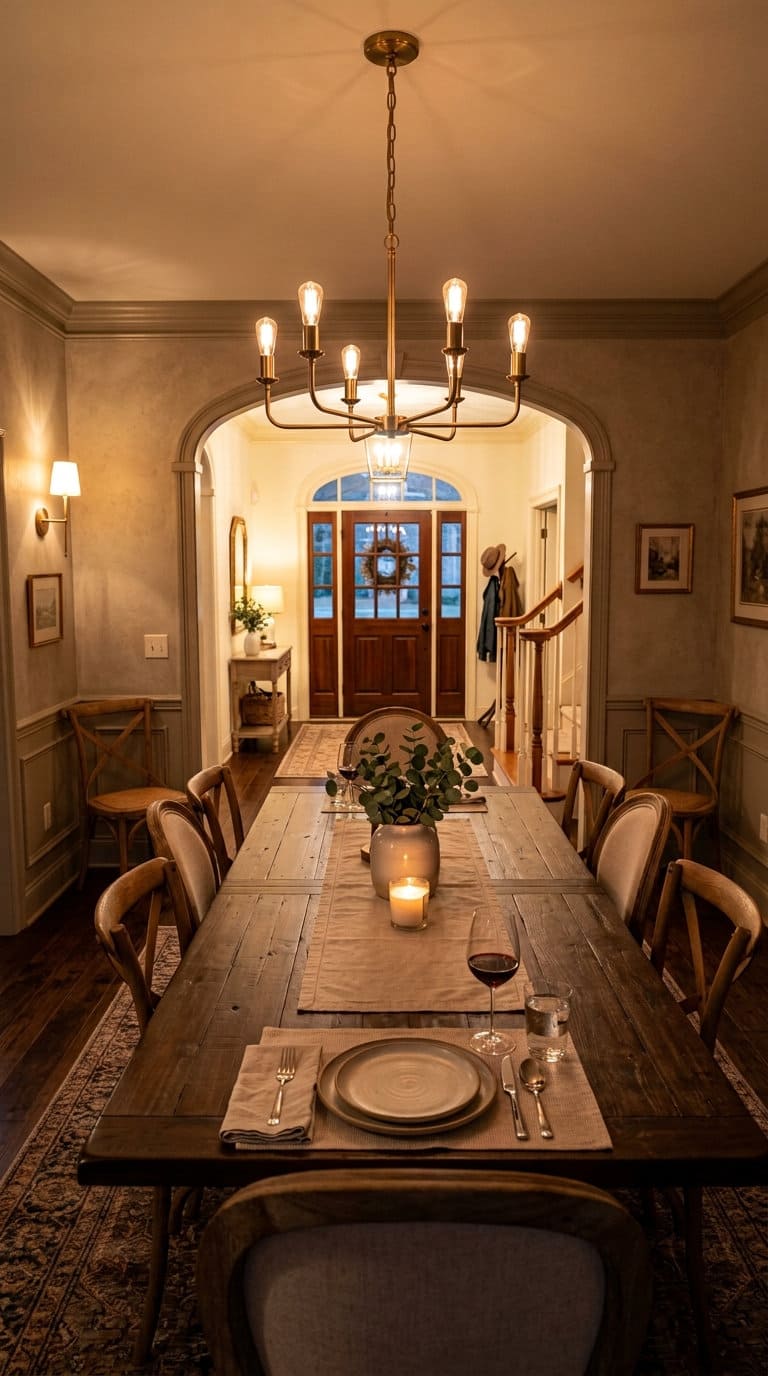
The table should be placed so diners can see the room’s entrance without sitting directly in line with the door, the same “command position” logic applied to beds and desks elsewhere in feng shui.
Backs to a solid wall rather than an open doorway are considered more supportive and secure than a seat facing away from the entrance.
Avoid lining the table up directly with the front door or the kitchen door specifically, both are thought to let energy “rush” through the dining space too quickly to nourish it, the same straight-line concern covered in other feng shui guides on pathways and staircases.
6. Add a mirror that reflects the table, not clutter
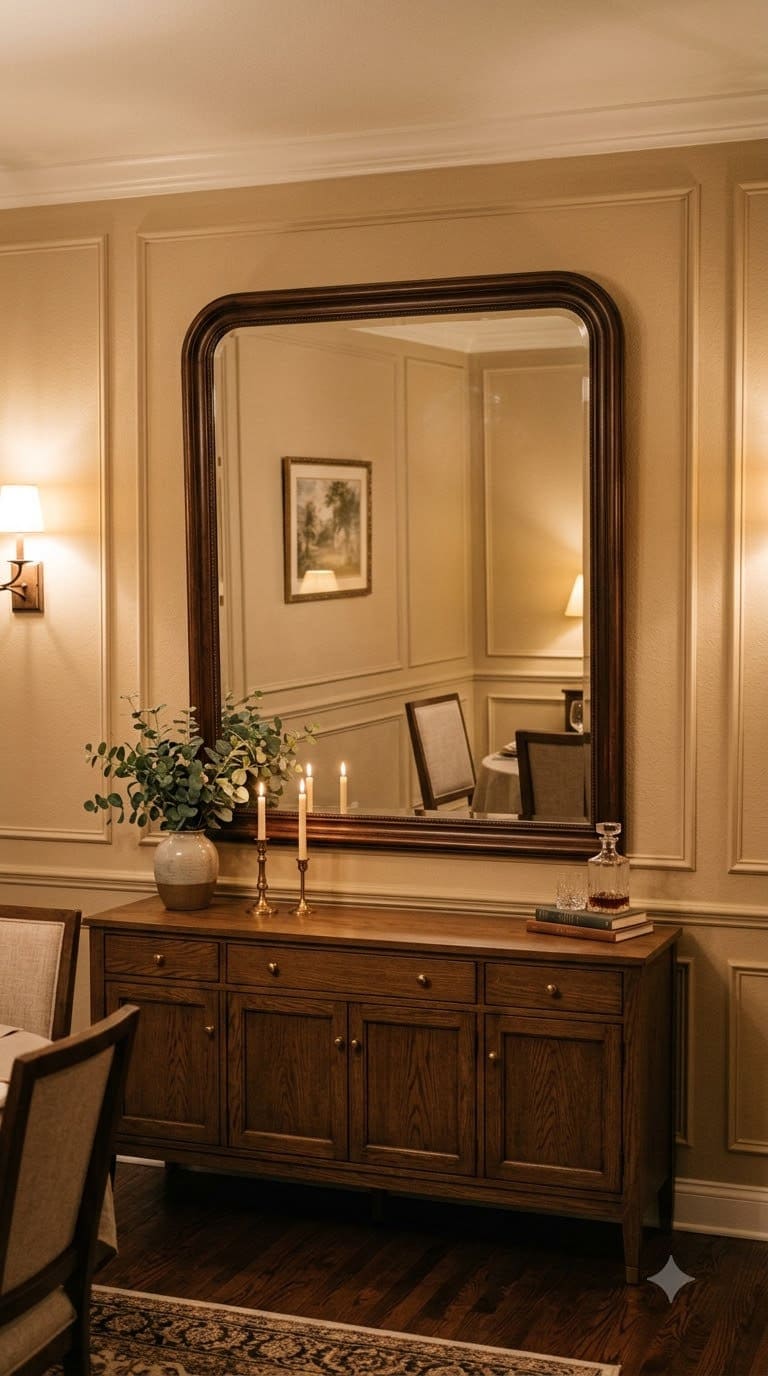
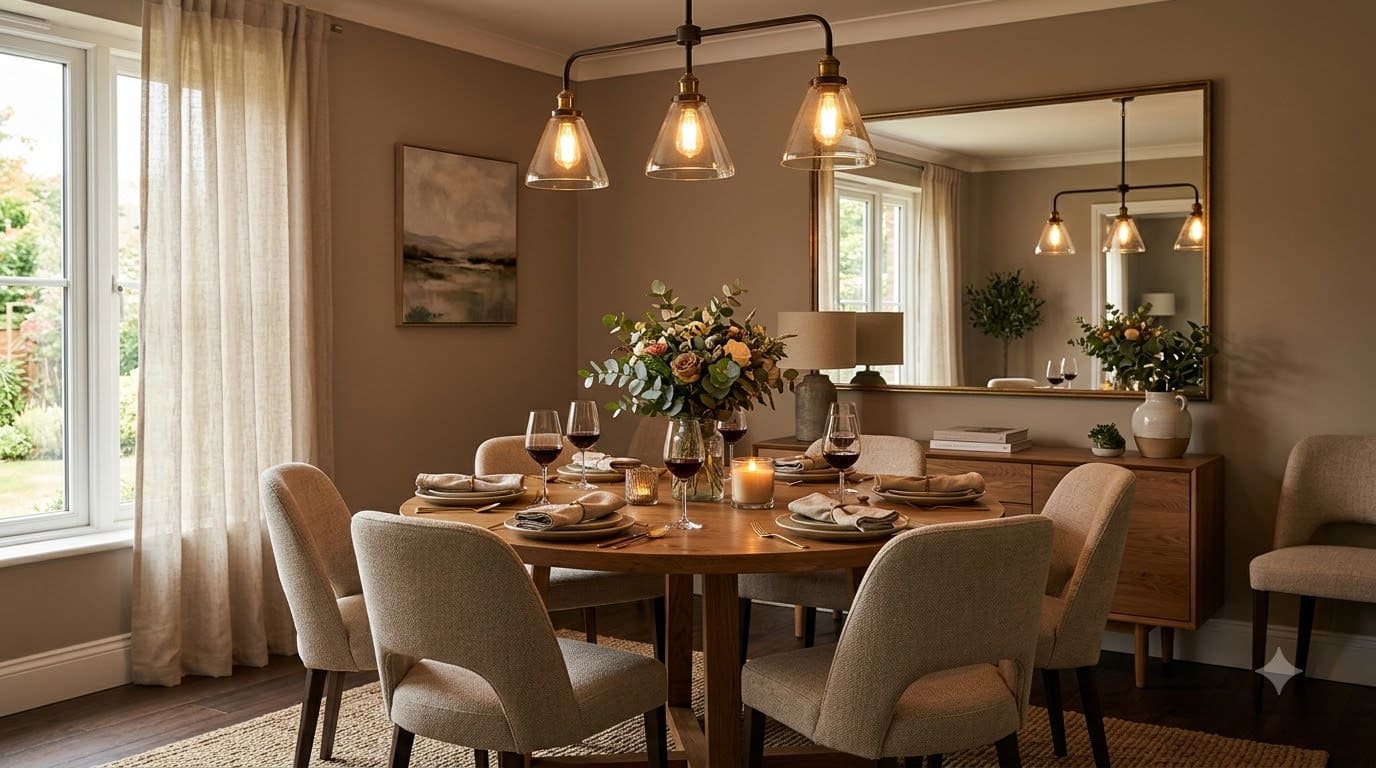
A mirror positioned to reflect the dining table is one of the most popular feng shui dining room additions, the doubled reflection of food on the table is read as doubling abundance and nourishment.


The mirror needs to be clean, unbroken, and hung at a height that captures the full table, not cropped, and it should reflect the table and food, not a cluttered counter or a sharp corner elsewhere in the room. Our dining room mirror ideas guide has real placement examples that get this right.
7. Keep the space genuinely clutter-free
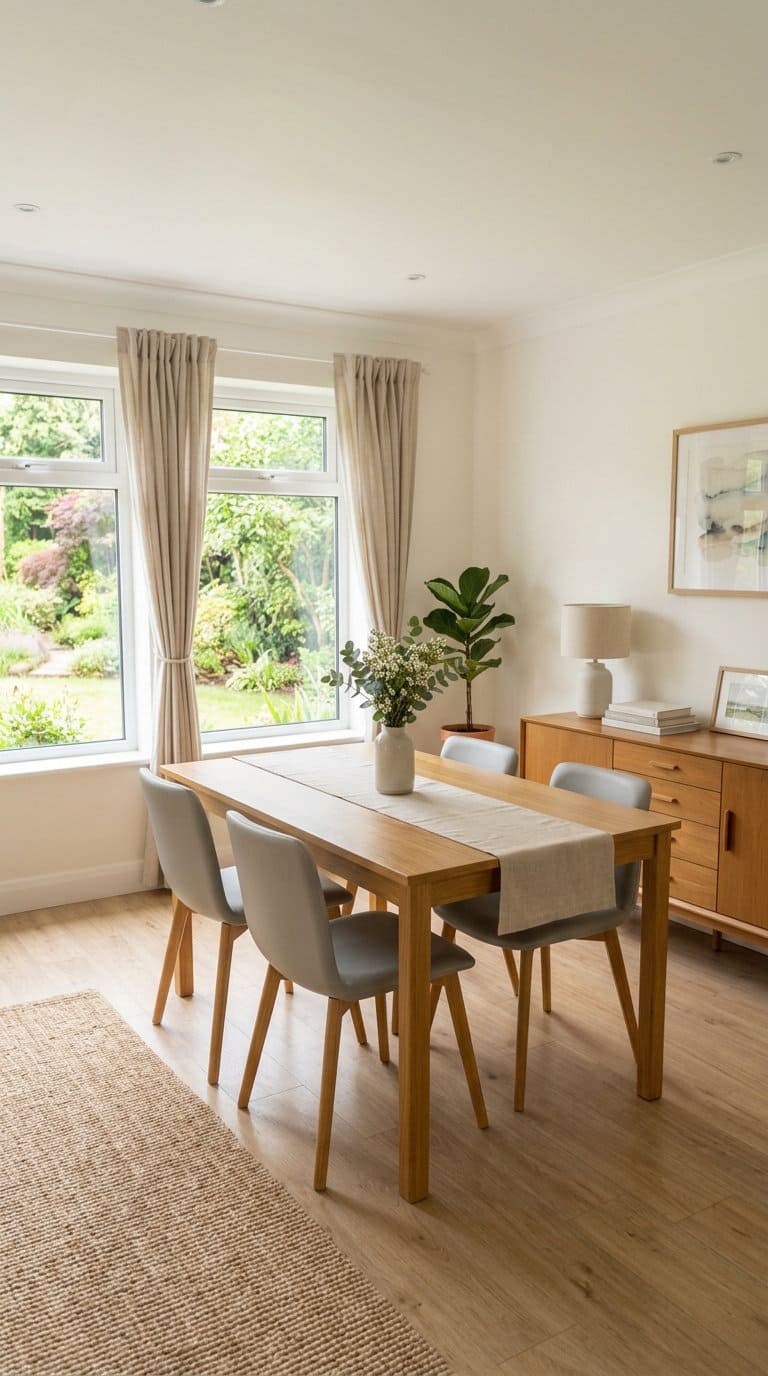
Unused chairs, stacks of mail, or anything broken sitting in or near the dining area is treated as blocking the free flow of chi the same way physical clutter blocks foot traffic.
This is one of the lowest-effort, highest-impact rules on the list: a clear table and an uncluttered sideboard do more for the room’s feel than most decor purchases would.
8. Light it warmly, not harshly
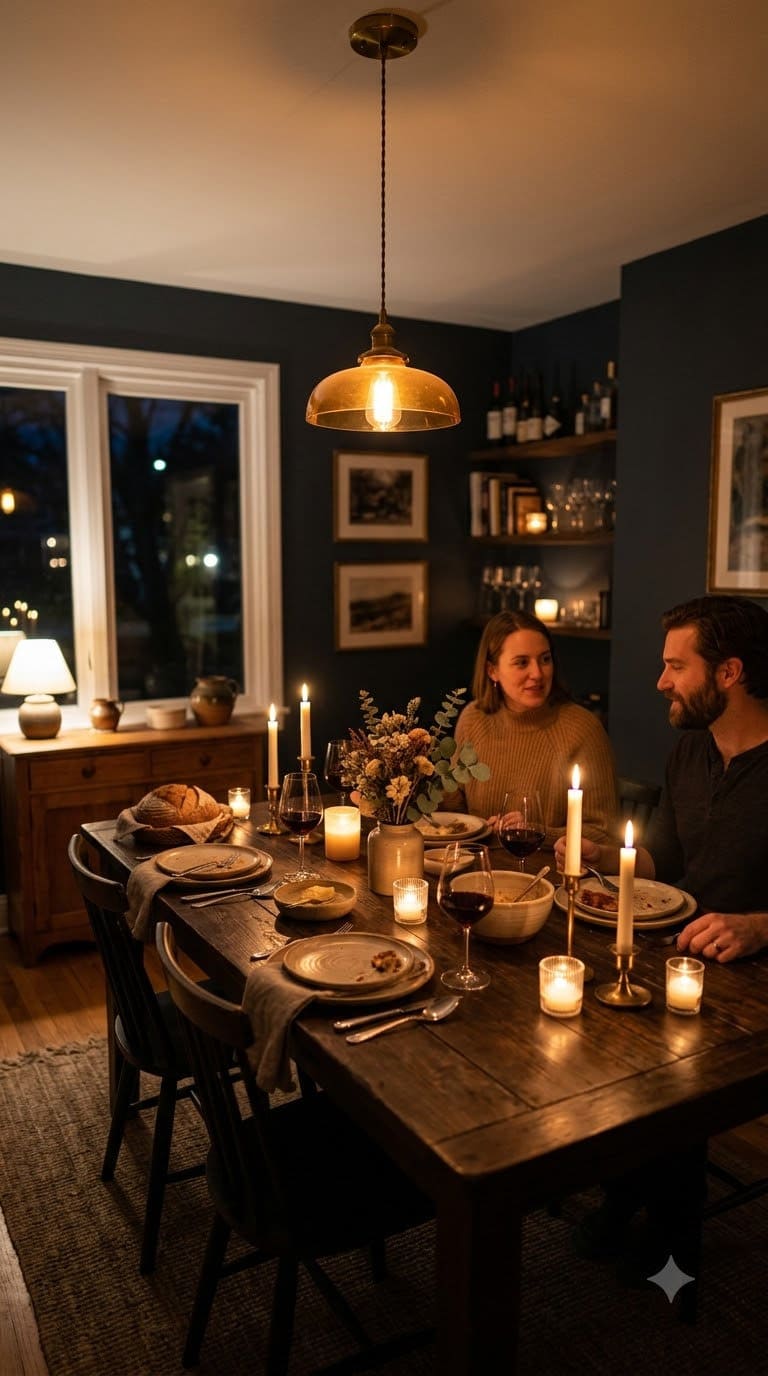
Warm, soft lighting supports a nourishing, welcoming energy, while harsh overhead lighting is treated as the opposite, cold and clinical rather than inviting.
A dimmer switch, a warm-toned pendant over the table, or candles for everyday use (not just special occasions) all satisfy this rule without a renovation.
9. Keep a fresh centerpiece, not a wilted one
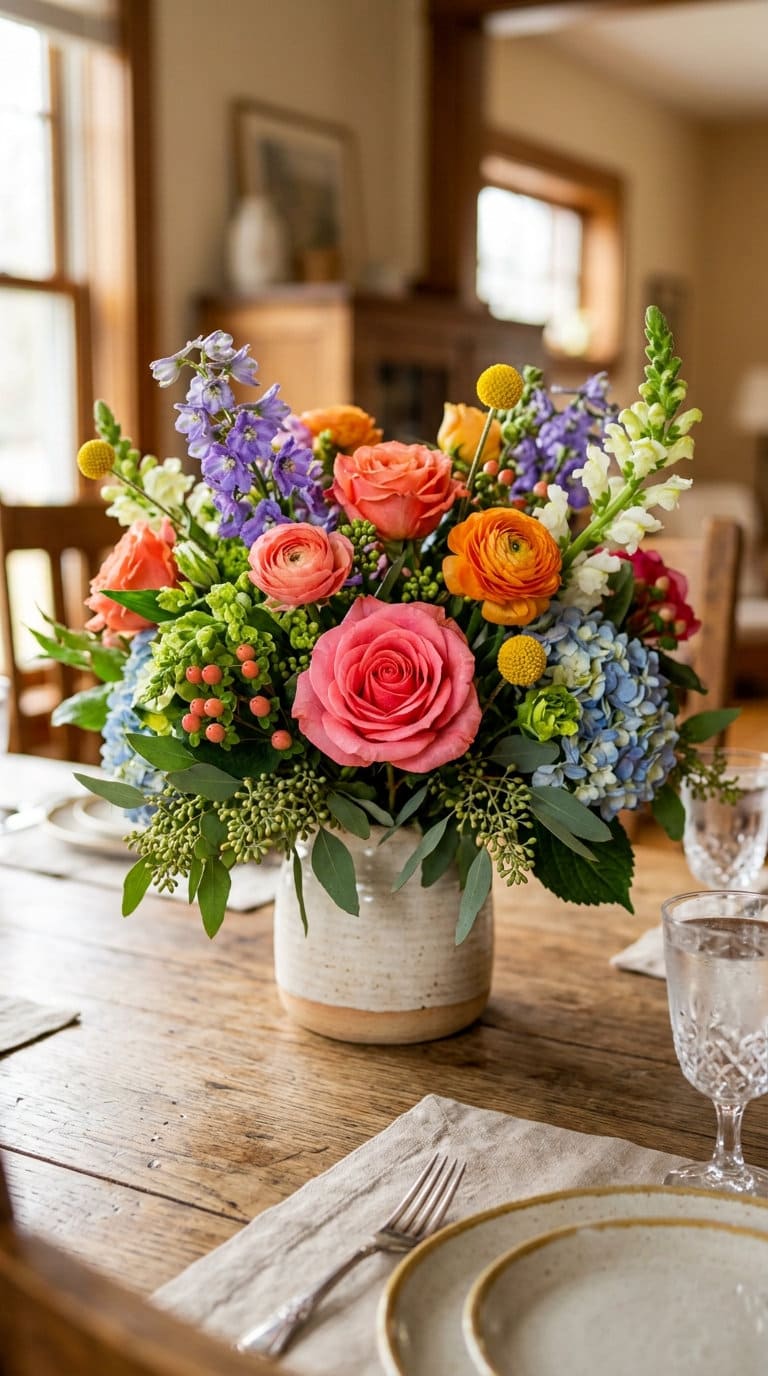
A centerpiece is meant to represent living, vibrant energy at the heart of the table, which means a wilted arrangement or dusty dried flowers work against the room rather than for it.
Fresh flowers, a bowl of real fruit, or a well-maintained plant all keep this rule satisfied without needing to be elaborate.
Pair this with real color choices from our tips for painting your dining room table or a look at how color and finish influence the look of a dining room table if you’re refreshing the table itself, not just the centerpiece.
10. Bring in a living plant for real energy, not just decor
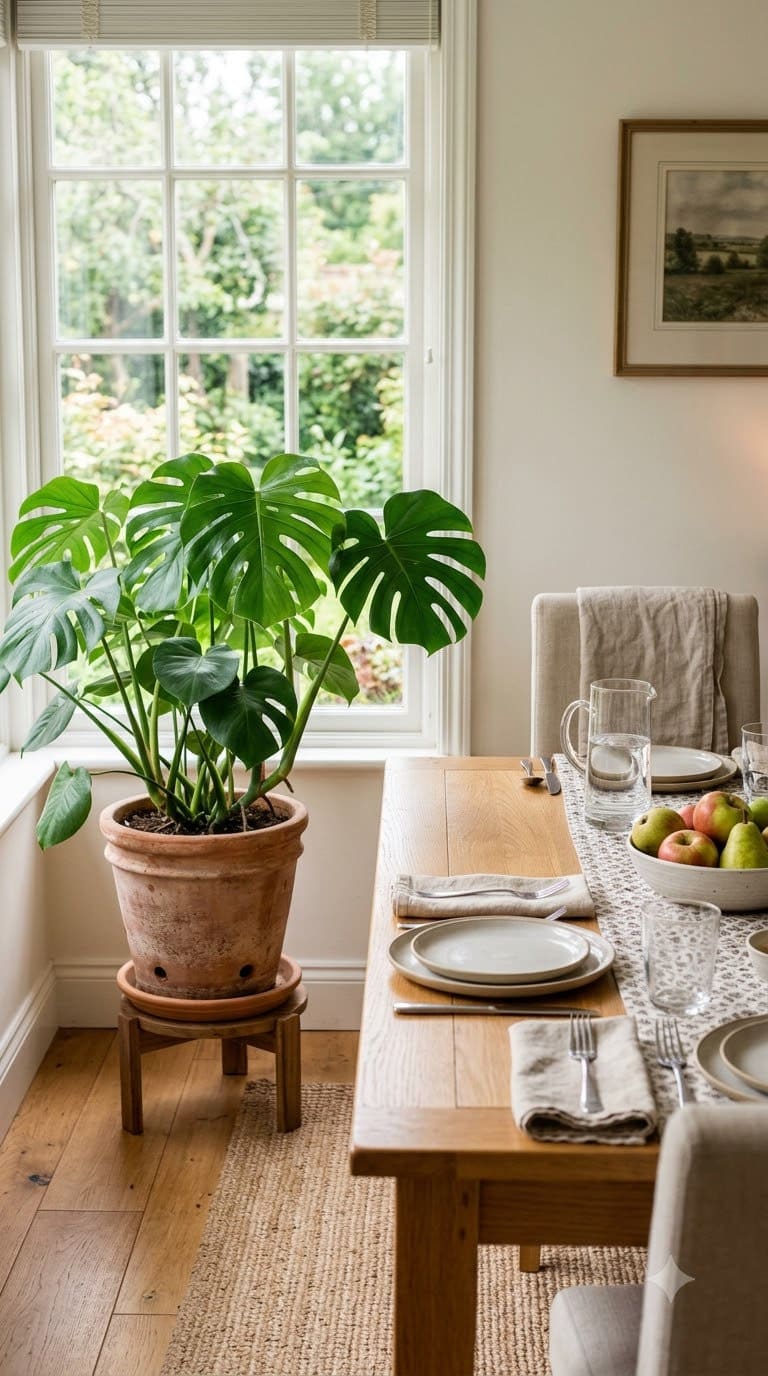
A houseplant nearby introduces the wood element and genuine living energy to a room that’s otherwise mostly furniture and food.
This is a small addition compared to some of the others on this list, but it’s consistently included because it’s the easiest way to add real, growing life to a room built around consumption.
The 10 rules at a glance
| Rule | Real-world backing | Fastest fix |
|---|---|---|
| Round/oval table | Avoids the poison-arrow corner concern | Table runner to soften a rectangular table’s edge |
| Wood over glass | CPSC: 20,700+ ER injuries/year from glass table breakage | Confirm genuinely tempered glass before buying |
| Even chair count (6-8) | Fits standard table proportions naturally | Any even number, 8 is most favored |
| Real breathing room | 36-48″ clearance, 20-24″ per place setting | Measure before buying a table |
| Command position | Same logic as bed/desk placement | Seat with a view of the entrance, back to a solid wall |
| Mirror reflecting the table | Doubles the symbolic abundance | Hang at a height that captures the full table |
| Clutter-free | Lowest-effort, highest-impact rule | Clear the table and sideboard |
| Warm lighting | Cold light reads as clinical | Dimmer switch or warm-toned pendant |
| Fresh centerpiece | Wilted arrangements work against the room | Real flowers, fruit, or a healthy plant |
| Living plant | Adds the wood element | Any low-maintenance houseplant |
What we learned the hard way
The glass-table decision is the one people regret most, and not for feng shui reasons. Buyers who assume any glass tabletop is automatically tempered sometimes find out otherwise only after a chip or crack, since the tempered standard is voluntary, not every glass table on the market actually meets it. Ask directly before buying, don’t assume.
The clearance measurements are the second thing people underestimate until they’re hosting a full table.
A dining set that looked fine in a showroom can feel genuinely cramped once real chairs are pushed back and people are trying to get up mid-meal, measure your actual room before committing to a table size, not just the table’s own footprint.
FAQs
I only have room for a rectangular table. Is that automatically bad feng shui? No, rectangular tables are fine as long as no regularly-used seat sits directly in line with a sharp corner. Rounding the visual edge with a table runner or seating arrangement resolves most of the concern.
Does the mirror really need to reflect the whole table? For the strongest version of this rule, yes, a cropped reflection is considered to symbolically “cut off” part of the abundance the mirror is meant to double. If your space only allows a partial reflection, it’s still better than no mirror at all.
Is a glass dining table ever a good idea? It can be, but confirm it’s genuinely tempered glass before buying, the safety standard for tabletops is voluntary, not mandatory, so this isn’t guaranteed just because it’s glass.
How many chairs should I actually buy if 8 doesn’t fit my room? Any even number works for the feng shui balance principle, 8 is simply the most symbolically favored count. Prioritize the real clearance measurements in rule #4 over hitting an exact chair count that doesn’t comfortably fit your space.
Related reading on farmfoodfamily.com: for full room design inspiration once the feng shui fundamentals are in place, see our farmhouse dining room design ideas, whimsical dining room ideas, and dining room accent wall ideas.
Related Posts
- Dining Room Mirror Ideas
- Dining Room Wall Decor Ideas
- Should You Put a Rug Under a Dining Table?
- Types of Dining Chairs
- Extendable Dining Table Buying Guide
- Things to Consider Before Buying a Dining Room Set
Products We Recommend
This post contains affiliate links. We may earn a commission on qualifying purchases at no extra cost to you.
Acacia Alma Round Solid Wood Dining Table
Covers rules #1 and #2 directly, shape and material in one purchase
Shop Now

Never miss an update — choose FarmFoodFamily as your preferred source on Google.
How it works: Tap the button below to open Google's settings page, then check the box next to FarmFoodFamily.
Tap the checkbox to turn it blue — that's how you know it's set.