6 Staircase Feng Shui Rules That Keep Your Home’s Chi Flowing Right
A staircase is the one structure in your home that literally moves energy, and people, between floors, feng shui treats it as high-stakes for a reason, and in a few of these rules, so does the actual building code.

Never miss an update — choose FarmFoodFamily as your preferred source on Google.
How it works: Tap the button below to open Google’s settings page, then check the box next to FarmFoodFamily.
Tap the checkbox to turn it blue — that’s how you know it’s set.
Stairs carry more symbolic weight in feng shui than almost any other structural feature, they’re the physical channel connecting your home’s different levels, and by extension, different phases of your life and finances.
Helen Ye Plehn, founder of Helen Creates Beauty and a third-generation Feng Shui master, treats staircase placement and condition as directly tied to how energy, and by extension wealth and stability, moves through a home.
Here are the six rules that matter most, paired with the real structural facts that back up why several of them hold up beyond symbolism.
1. Does a staircase facing your front door actually matter for feng shui?
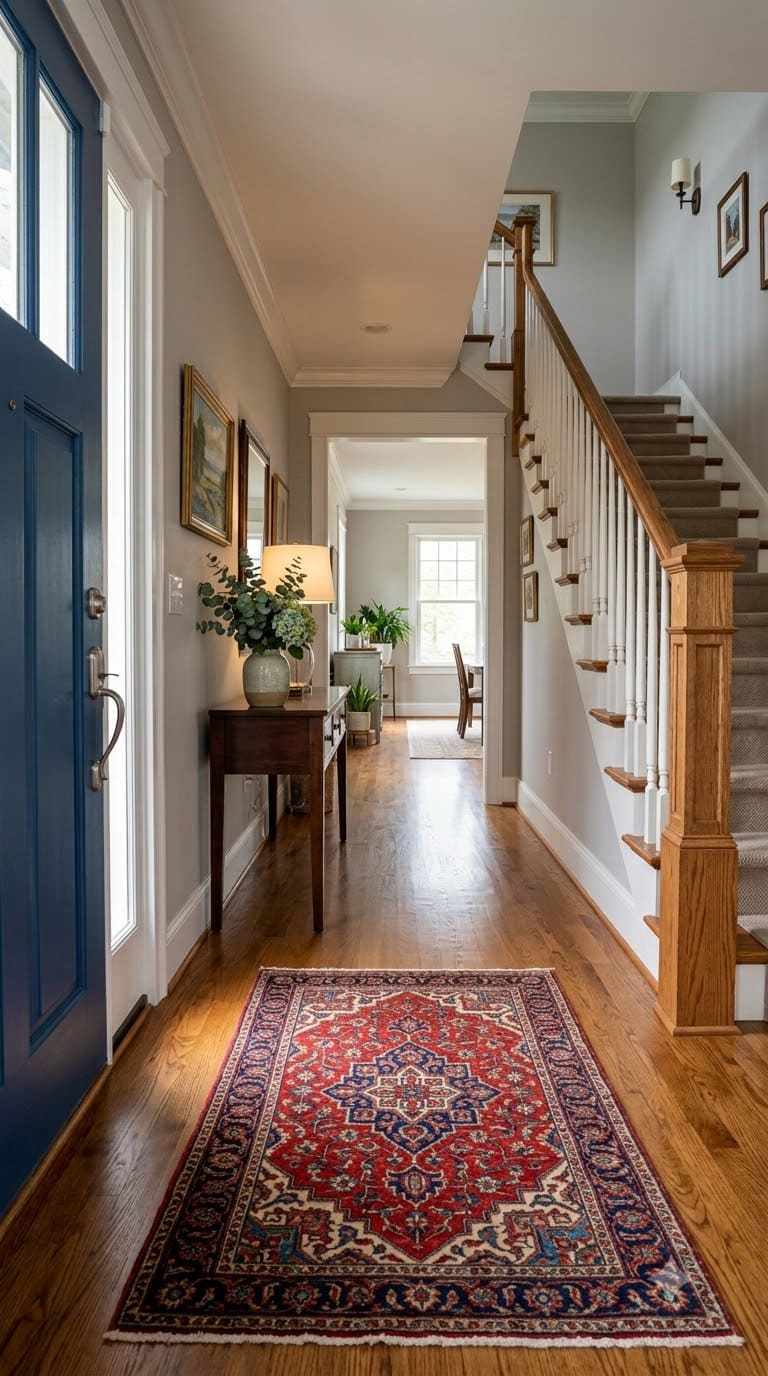
A staircase facing the front door is thought to let energy rush straight out before it has a chance to settle into the home, described as wealth getting “flushed” or “burned away” depending on whether it’s paired with a bathroom or kitchen sightline instead.
The fix if you can’t relocate the stairs (a common reality in existing homes): a visual barrier partway up, a runner rug, a piece of furniture, or a folding screen at the base, breaks the direct sightline without any structural work.

2. Keep the stairs in genuinely good repair, not just symbolically
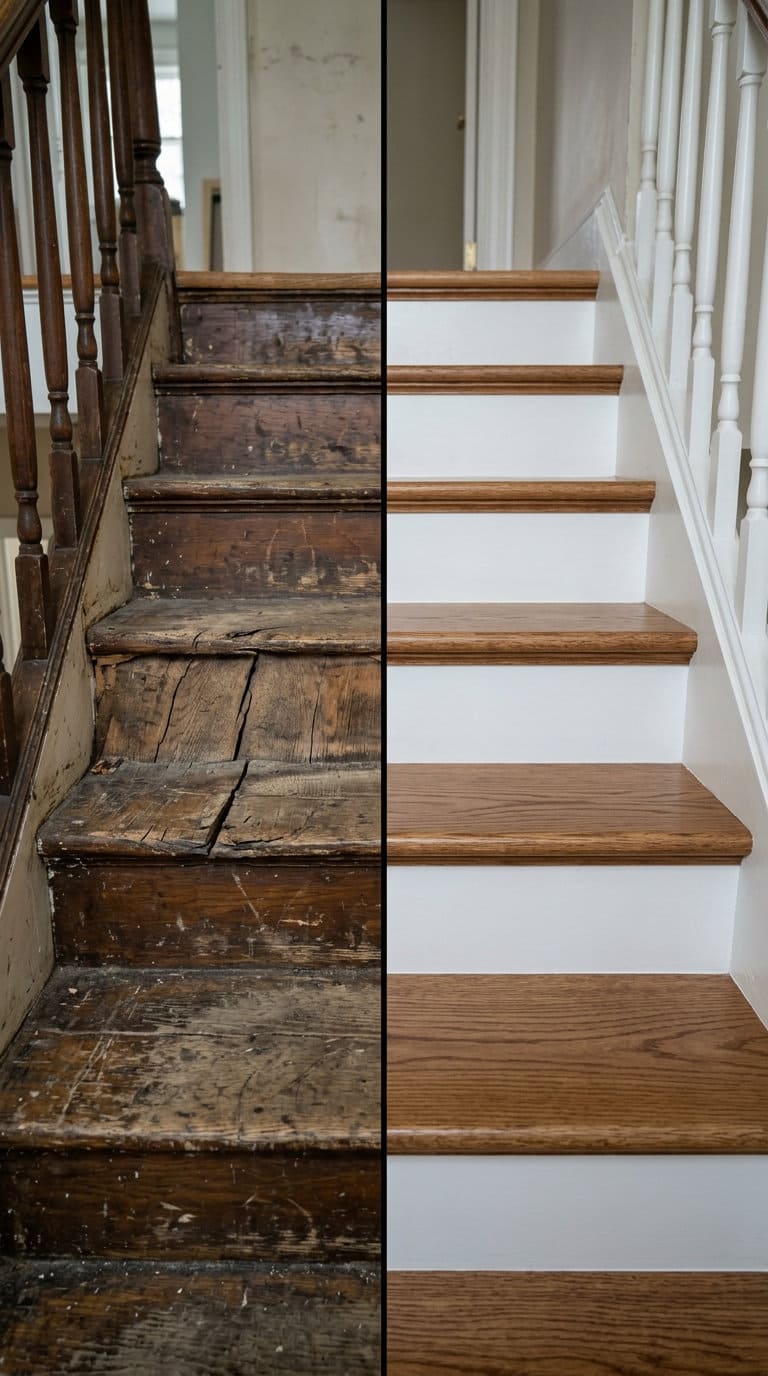
This is the rule with the clearest real-world stakes on the whole list. Feng shui treats cracked steps or a broken railing as a disruption to energetic flow, symbolizing obstacles or emotional strain in the household.
The U.S. Consumer Product Safety Commission (CPSC) puts a harder number on the same concern: stairway falls account for more than 1 million injuries and roughly 12,000 fatalities in the U.S. each year, making stairs the second-leading cause of injury after motor vehicle accidents.
A wobbly step or loose handrail isn’t just bad feng shui, it’s a real, statistically significant hazard, and it’s the single cheapest fix on this entire list to actually resolve.
Our tips to make your staircase look better guide covers exactly this kind of low-cost repair-and-refresh project.
3. Avoid open risers, or add a visual “floor” beneath them
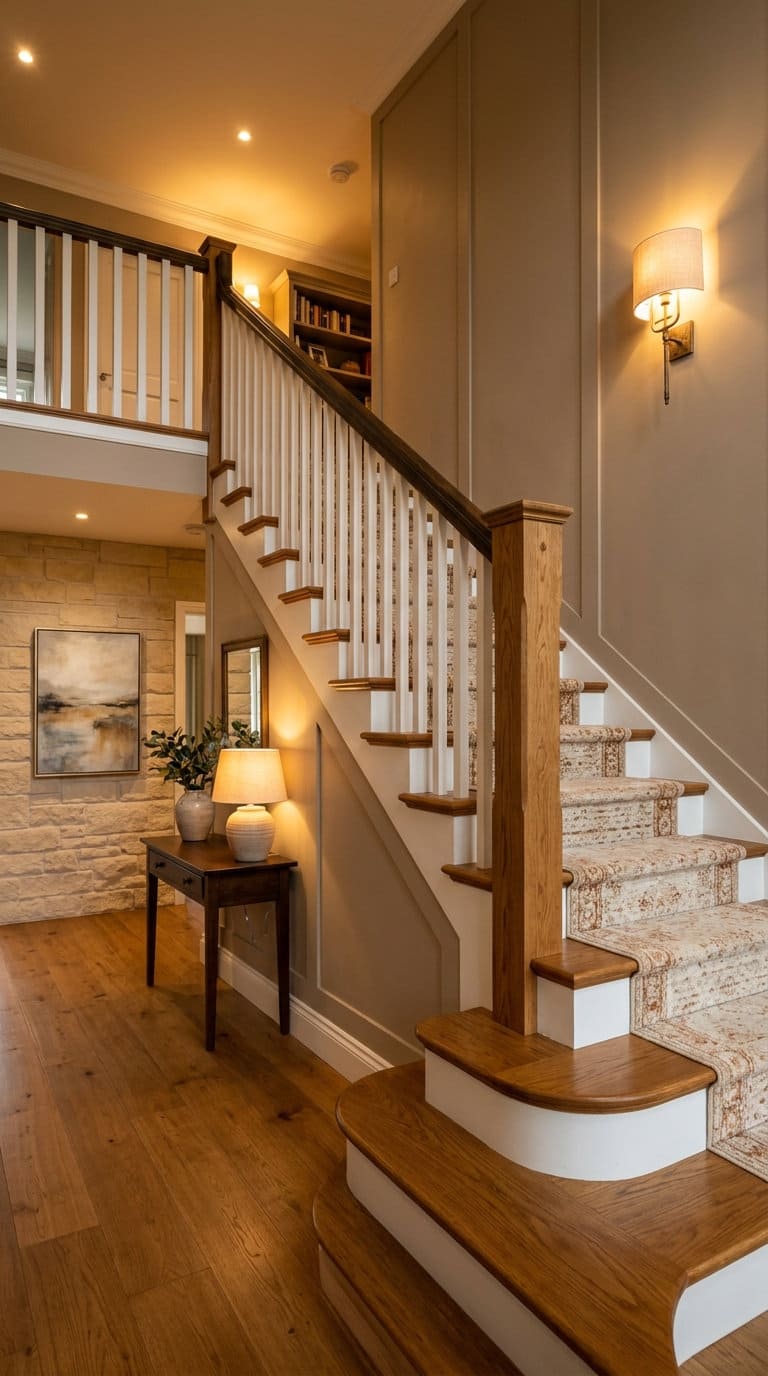
Open-riser stairs (the kind with gaps between each step instead of a solid vertical panel) are read in feng shui as a “sieving” effect, wealth and energy leaking through the gaps instead of accumulating as you climb.
If Earth-element decor (plants, solid wood accents nearby) isn’t enough to offset an existing open-riser staircase, adding solid risers is a real remodel option, not just a symbolic fix.
There’s a practical echo here too: open risers are a documented real hazard for small children and pets, who can slip a foot or paw through the gap, which is exactly why many jurisdictions’ building codes now limit the maximum gap size on open-riser stairs even where they’re otherwise permitted.
4. Choose a gentle curve over a sharp angle, and skip the spiral if you can
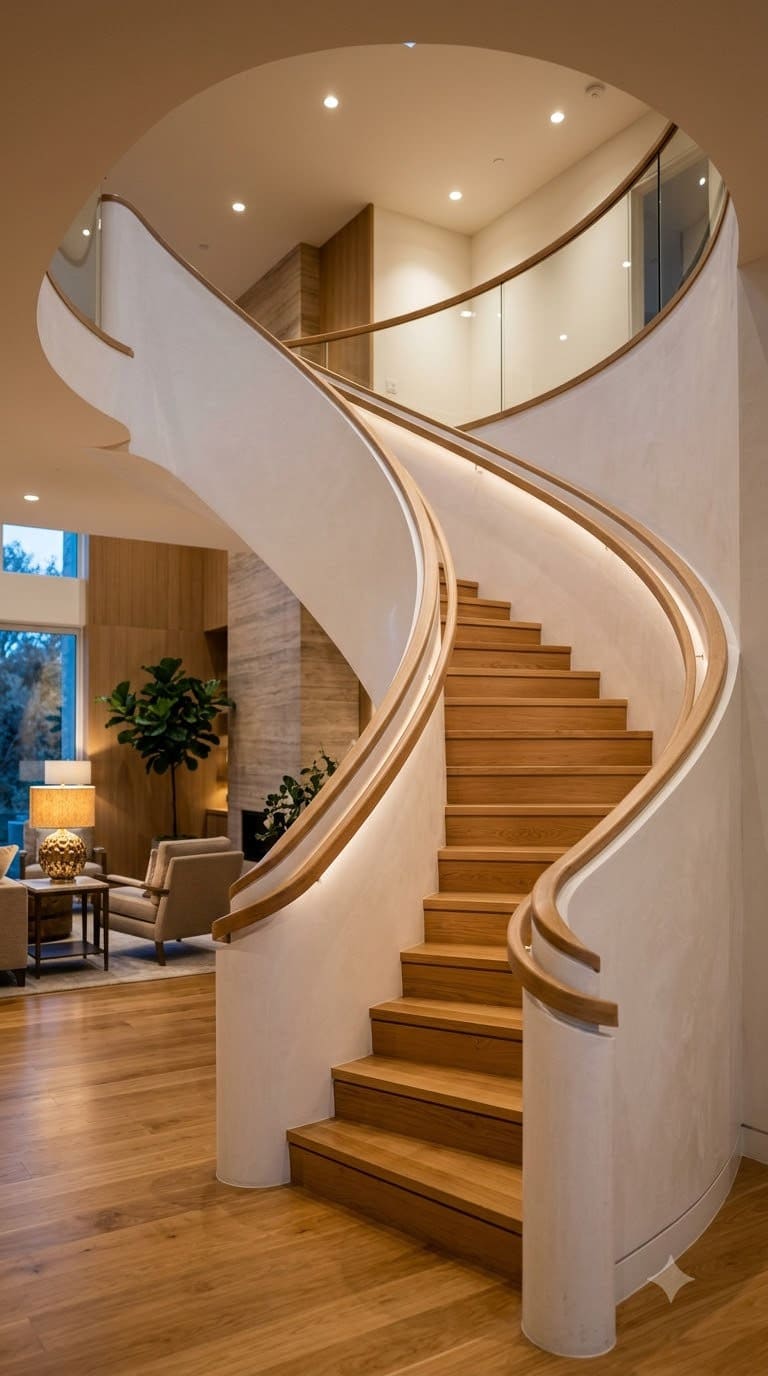
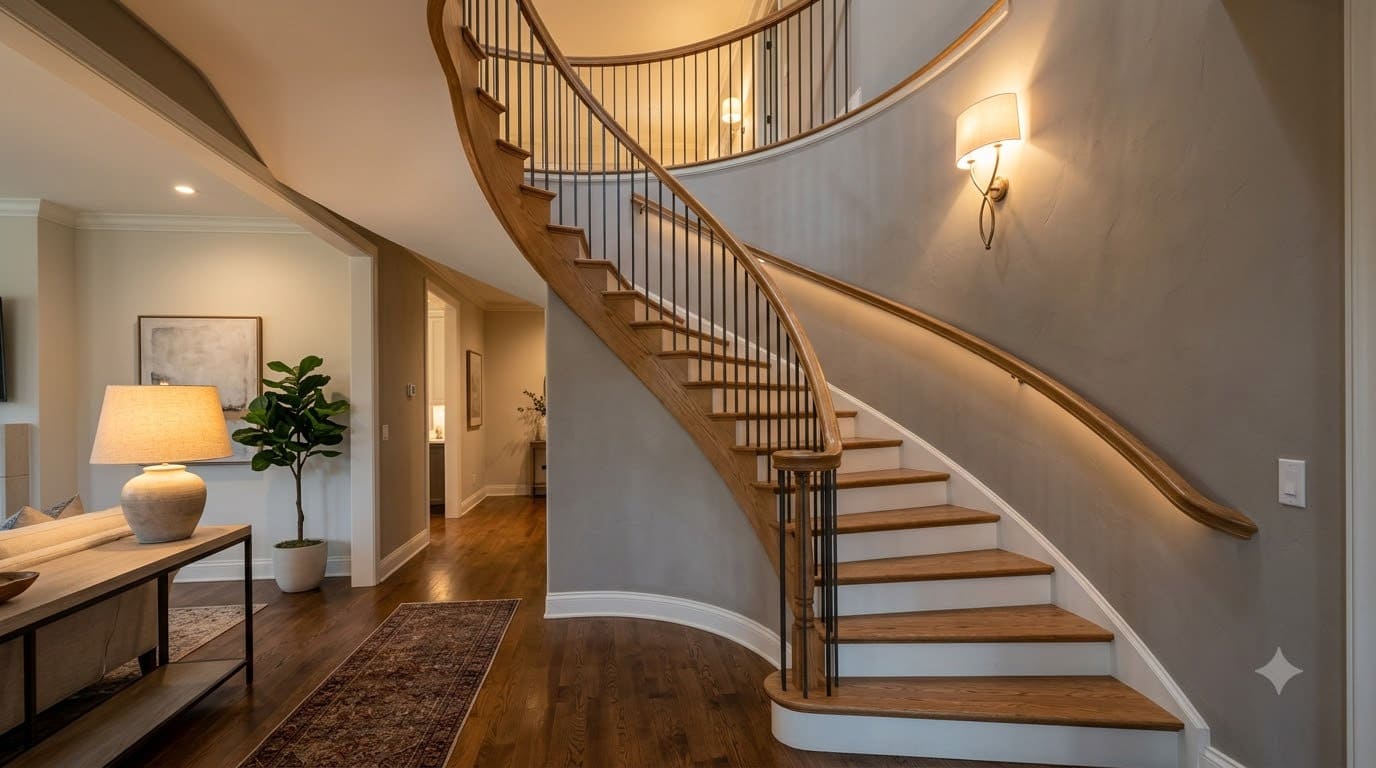
Curved staircases are considered to let chi flow gracefully, the way water moves around a bend, while sharp angular turns are thought to cut through energy abruptly.

Directly addresses rule #2 and #5's real safety concern, cheap and fast to install
Shop NowThis post contains affiliate links. We may earn a commission on qualifying purchases at no extra cost to you.
Spiral staircases draw the strongest warning: the tight, continuous rotation is described as acting like a drill through the home’s energy, concentrated and disruptive rather than gently guided.
If a spiral staircase is already installed (common in tight floor plans where it’s the only option that fits), the traditional remedy is placing amethyst or selenite crystals at the top and bottom rather than removing it entirely, a genuinely lower-cost option than a full stair replacement.
For inspiration on curved and other staircase styles, see our impressive staircase designs roundup.
5. Light it well, both for the symbolism and for the same safety reason CPSC cares about
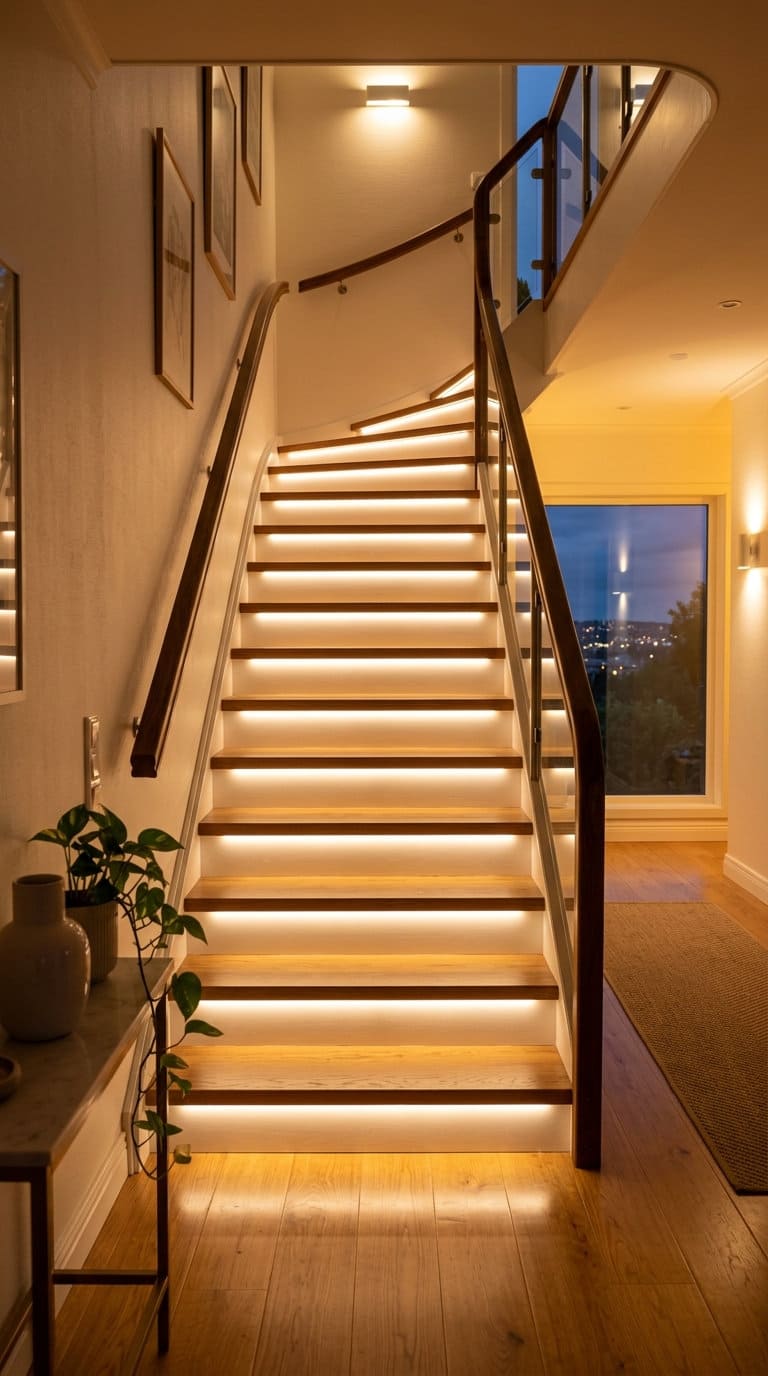
Well-lit stairs are considered to attract and support positive chi, dim or shadowed stairwells are treated as stagnant, unwelcoming energy.
This is another rule where the feng shui guidance and the real safety data point the same direction: poor stairway lighting is a documented contributing factor in fall injuries, particularly for older adults, who are disproportionately represented in CPSC’s stairway injury data.
A simple upgrade, brighter bulbs, a motion-sensor light at the base, or a small sconce partway up on a longer flight, satisfies both the symbolic and the practical concern at once, our foyer lighting ideas gallery has real fixtures that work well at the base of a staircase.
6. Never put a bedroom or home office directly underneath the stairs
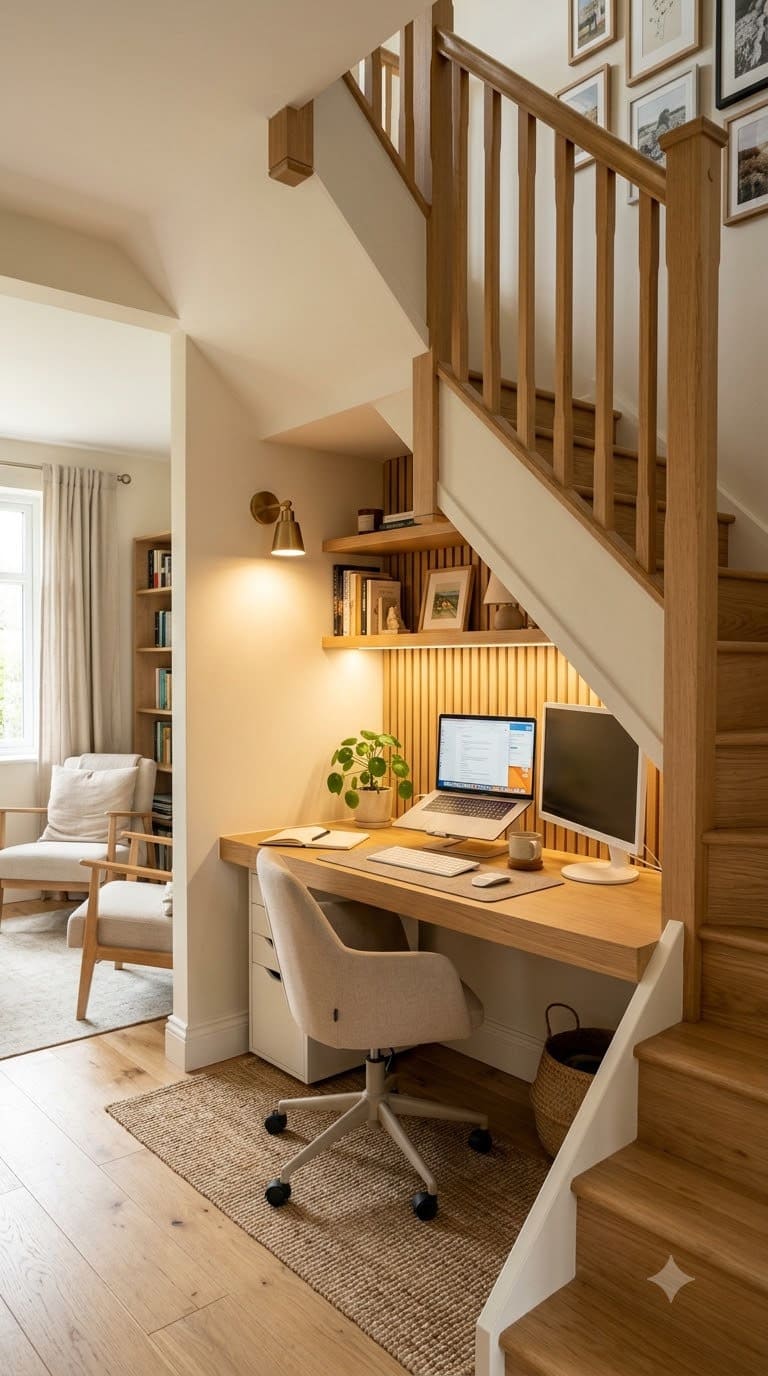
The compressed, angled ceiling space under a staircase is thought to weigh down and constrain the energy of anyone spending extended time there, described as leading to restlessness rather than rest or focus.
If the space under your stairs is your only option for a home office or a child’s bedroom nook, light colors, a raised or vaulted section of ceiling where possible, and keeping the lowest-clearance section clear of the desk or bed rather than tucked into the tightest corner, are the traditional offsets, see our basement stair ideas for real examples of making the most of tight headroom.

The 6 rules at a glance
| Rule | Real-world backing | Fastest fix |
|---|---|---|
| Not facing door/bathroom/kitchen | Traditional “flushed wealth” concern | Rug, furniture, or screen to break the sightline |
| Good repair | CPSC: 1M+ injuries, ~12,000 fatalities/year from stairway falls | Fix loose handrails and wobbly steps first |
| No open risers | Building codes limit gap size for child/pet safety | Add solid risers or Earth-element decor |
| Curved over sharp/spiral | Spiral described as most disruptive | Amethyst/selenite at top and bottom if replacement isn’t realistic |
| Well lit | CPSC links poor lighting to fall injuries, especially in older adults | Brighter bulbs or a motion-sensor light |
| No bedroom/office underneath | Compressed ceiling reads as restrictive | Light colors, keep low-clearance zone clear of furniture |
Building code: what actually makes stairs “well-built,” not just feng shui-correct
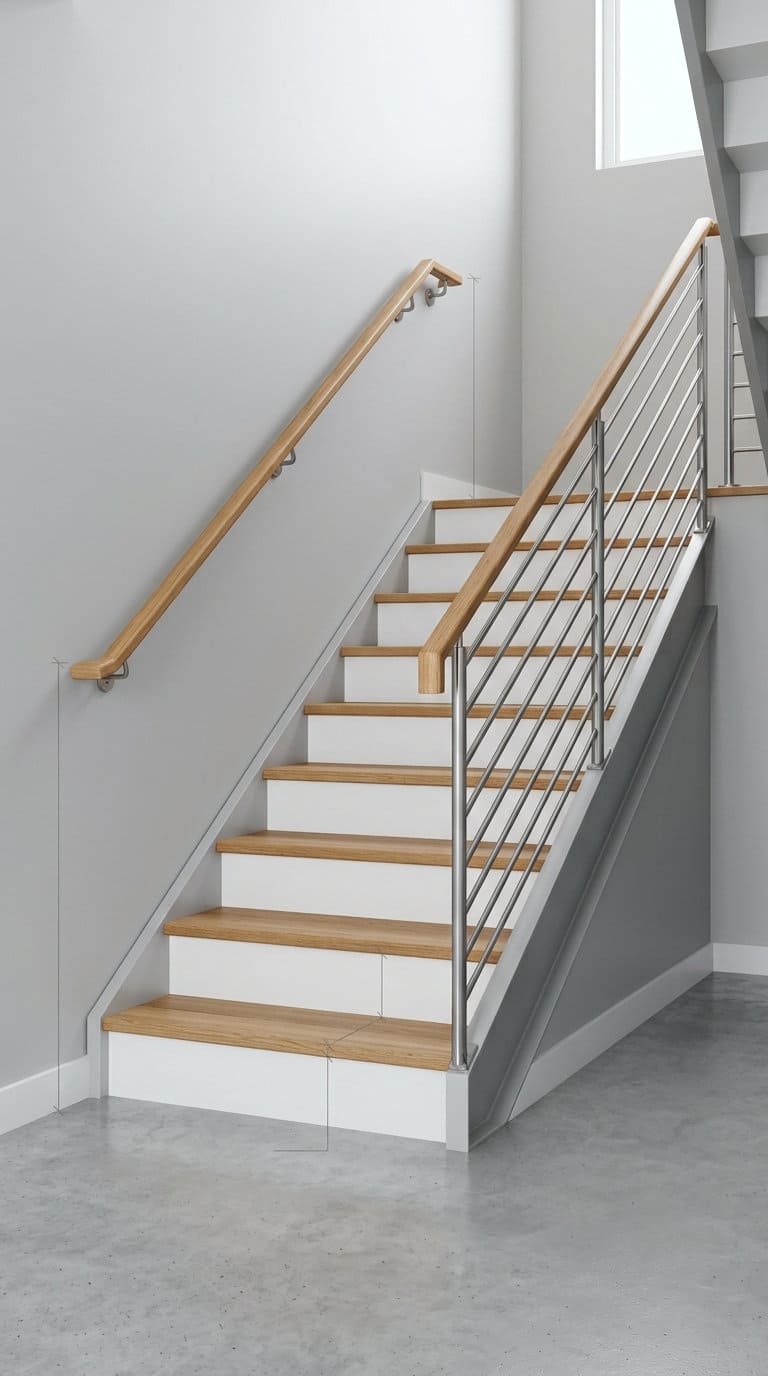
If you’re planning new stairs or a stair remodel rather than just working around an existing flight, the International Residential Code (IRC) sets real, specific dimensions behind what “well-built” actually means: maximum riser height of 7¾ inches, minimum tread depth of 10 inches, handrail height between 34 and 38 inches, a minimum 6-foot-8-inch headroom clearance, and a minimum stairway width of 36 inches.
A staircase built within these real parameters is, in practice, exactly the kind of stable, safe, well-proportioned structure feng shui is describing in more symbolic language, not a coincidence so much as both systems converging on what actually works.
What we learned the hard way
The “keep it in good repair” rule is the one people put off longest, specifically because it doesn’t feel urgent until it is.
A loose handrail or a slightly uneven step is easy to mentally file as “we’ll get to it,” right up until CPSC’s own numbers on stairway falls stop being an abstraction. This is genuinely the cheapest, fastest fix on this entire list, and the one with the most real consequence for delaying it.
The under-stairs bedroom or office conversion is the other thing people regret after the fact, not for feng shui reasons but a practical one: low headroom that felt fine during a quick walkthrough can feel genuinely oppressive after months of daily use, worth spending real time in the space at different times of day before committing to a full build-out.
FAQs
My staircase already faces my front door and I can’t move it. What can I do? Add a visual barrier, a rug, a piece of furniture, or a folding screen, partway up or at the base to break the direct sightline. You don’t need to relocate the structure itself.
Is a spiral staircase always bad feng shui? It’s the strongest caution on this list, but not an absolute rule, especially in a small floor plan where it’s the only structural option. Crystal placement at the top and bottom is the traditional remedy if replacement isn’t realistic.
What’s the single most important rule if I can only fix one thing? Repair, not replace: a wobbly step or loose handrail is both the cheapest fix on this list and the one with real, CPSC-documented safety stakes behind it, prioritize that over any of the more symbolic remedies.
Do I need a permit to change my staircase’s riser type or add risers to an open staircase? Often yes, especially for a structural change rather than cosmetic decor. Check with your local building department, and use the IRC dimensions above as a starting reference for what a compliant staircase needs to meet.
Related reading on farmfoodfamily.com: for the related question of what kind of door works best at the top of a staircase, see our door at the top of the stairs guide.
Related Posts
- Can You Put a Door at the Top of the Stairs? Safety or Danger?
- 77+ Beautiful Entryway & Foyer Lighting Ideas and Designs
- White Color and Color Combinations with White in Feng Shui
- Impressive Staircase Designs
- Tips to Make Your Staircase Look Better
- Basement Stair Ideas
Products We Recommend
This post contains affiliate links. We may earn a commission on qualifying purchases at no extra cost to you.
COSY HOMEER Non-Slip Stair Treads (15pc)
Directly addresses rule #2 and #5's real safety concern, cheap and fast to install
Shop Now
Dual Motion Sensor LED Stair Light Strip
Covers rule #5's lighting recommendation for both symbolic and real fall-safety reasons
Shop Now
Anti-Slip Rubber Grip Tape for Handrails
A low-cost fix for rule #2's "good repair" concern on an aging or slippery handrail
Shop NowNever miss an update — choose FarmFoodFamily as your preferred source on Google.
How it works: Tap the button below to open Google's settings page, then check the box next to FarmFoodFamily.
Tap the checkbox to turn it blue — that's how you know it's set.