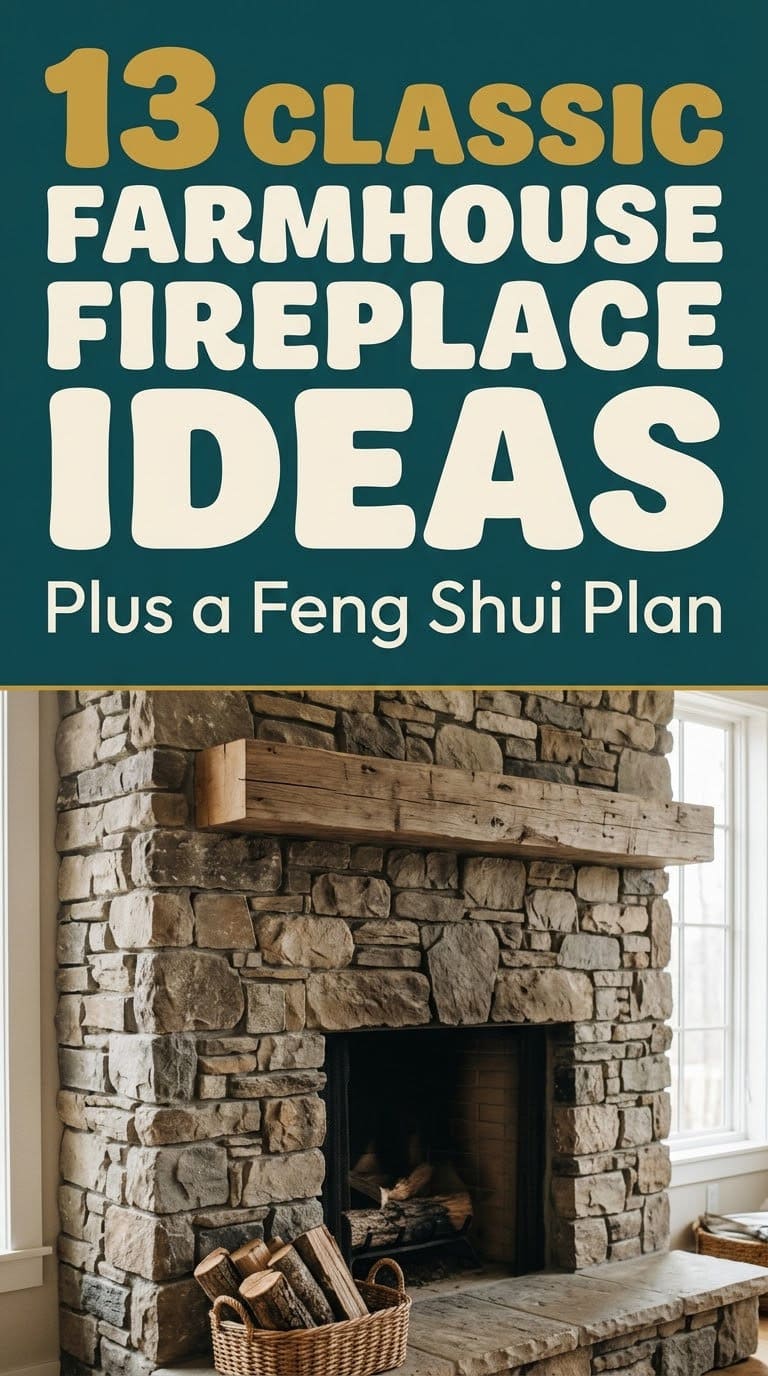
13 Timeless Farmhouse Fireplace Ideas, Built Layer by Layer From Hearth to Mantel
A farmhouse fireplace comes together layer by layer, as long as the mantel, trim and TV sit at safe distances from the fire.

Never miss an update — choose FarmFoodFamily as your preferred source on Google.
How it works: Tap the button below to open Google's settings page, then check the box next to FarmFoodFamily.
Tap the checkbox to turn it blue — that's how you know it's set.
A farmhouse fireplace comes together layer by layer, as long as the mantel, trim and TV sit at safe distances from the fire.
Products We Recommend
This post contains affiliate links. We may earn a commission on qualifying purchases at no extra cost to you.

FEED GARDEN 3 Panel Fireplace Screen, 48" W x 29" H
Black wrought iron foldable spark guard with mesh panels, made for wood, gas and electric fireplaces. Pairs with idea 2.
Shop Now
Fire Beauty Folding Firewood Rack, Log Holder
Black steel folding rack for indoor or outdoor firewood storage. Keeps one evening of wood off the floor.
Shop Now
Fire Beauty Wrought Iron Log Rack With 4 Fireplace Tools
Two-tier black iron rack that comes with a four-piece tool set for the hearth.
Shop NowA farmhouse fireplace works when you pick one honest material, add one warm wood, and keep the mantel calm. Whitewashed brick, stacked stone, shiplap or plain white tile all fit the look. That one choice does most of the work, so pick the one that suits the fireplace you already have today.
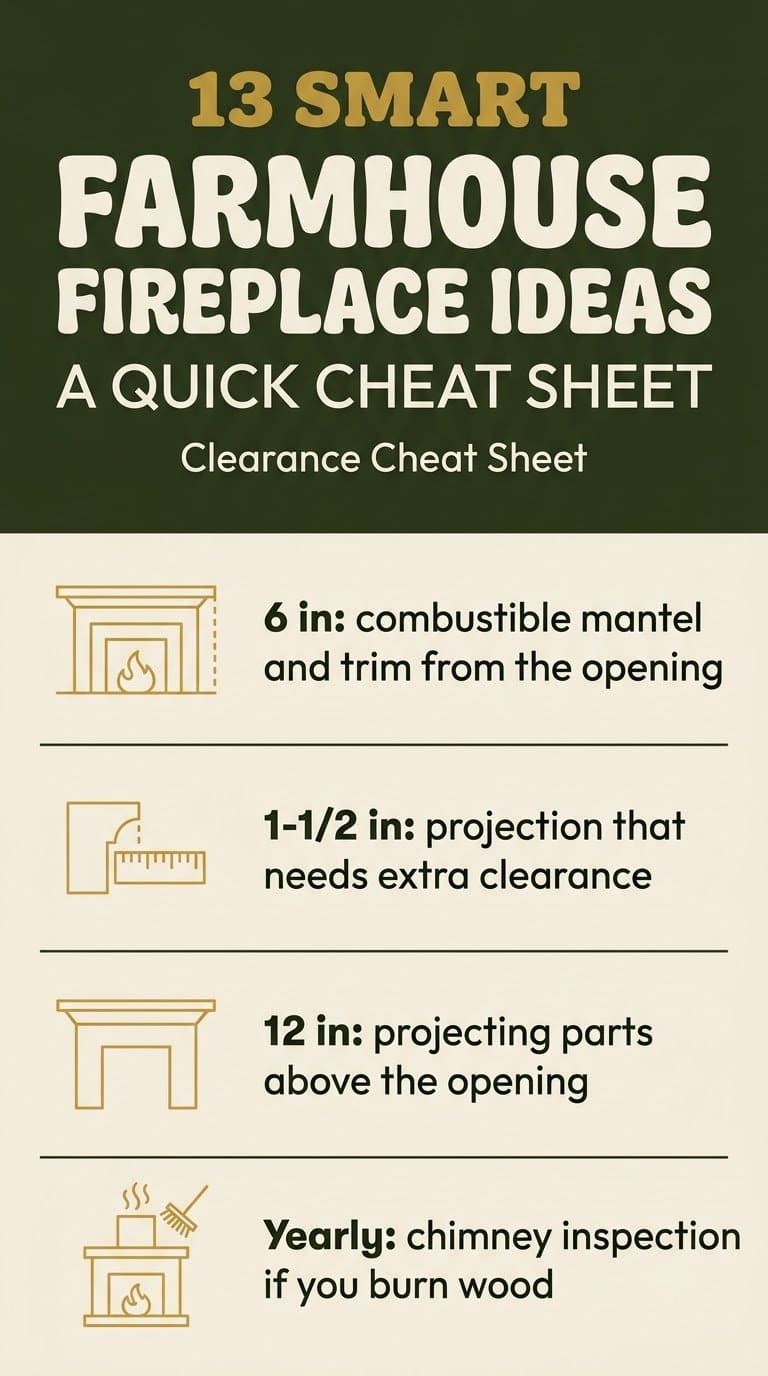
Safety shapes the design more than style does. Common code language keeps combustible mantels and trim at least 6 inches from the opening.
Parts that stick out more than 1-1/2 inches need extra room. Anything above the opening should sit at least 12 inches up.
Check your appliance manual and local code before you build. Then book a yearly chimney inspection if you burn wood. This guide follows the same order: hearth first, then surround, mantel, and what goes above and beside.
How This Guide Works
We built this list by layer because most farmhouse fireplace posts mix styles, materials and fireplace types in one pile. That makes it hard to decide what to do first. Work from the bottom up and each choice gets easier.
Which Fireplace Do You Have?
What you can change depends on the fireplace type. A renter with an electric insert has different options.
So does an owner with an old masonry fireplace. Start here, then jump to the layer you need.


| Fireplace type | Safe to paint or wash | Safe to cover or build around | Check first |
|---|---|---|---|
| Masonry (brick or stone) | Yes, with heat-rated masonry paint or a mineral wash | Noncombustible surround only close to the opening | Local code, chimney inspection |
| Factory-built wood or gas | Trim yes, firebox no | Only what the manual allows | Appliance manual clearances |
| Gas insert | Surround yes | Noncombustible materials near the unit | Manual, vent and glass temperature |
| Electric insert | Anything on the wall | Most materials, since it runs cooler | Plug and wall load |
If you don’t have a working fireplace, a faux fireplace can give you the same farmhouse look. And if you’re not sure which type you own, this breakdown of fireplace types helps you tell them apart.
What Are the Safe Clearances for a Farmhouse Mantel?
Rustic wood mantels are the heart of the farmhouse look. They’re also the part most likely to sit too close to the fire. Keep these numbers handy before you buy lumber.
| Rule | Distance | Applies to |
|---|---|---|
| Combustible mantel and trim from the opening | At least 6 in | Masonry fireplaces |
| Side parts that project more than 1-1/2 in | Extra clearance equal to the projection | Mantel legs, corbels, trim |
| Parts above the opening that project more than 1-1/2 in | At least 12 in above the opening | Mantel shelf |
| Trim within 12 in of the opening | No more than 1/8 in of projection per 1 in of distance | Surround trim |
Rockford Chimney Supply calls these common code language. It sends readers to NFPA 211, the International Residential Code, the maker and the local authority for the final word.
Treat the table as a starting point. Your appliance manual and your inspector win every time.
Layer 1: Hearth and Firebox
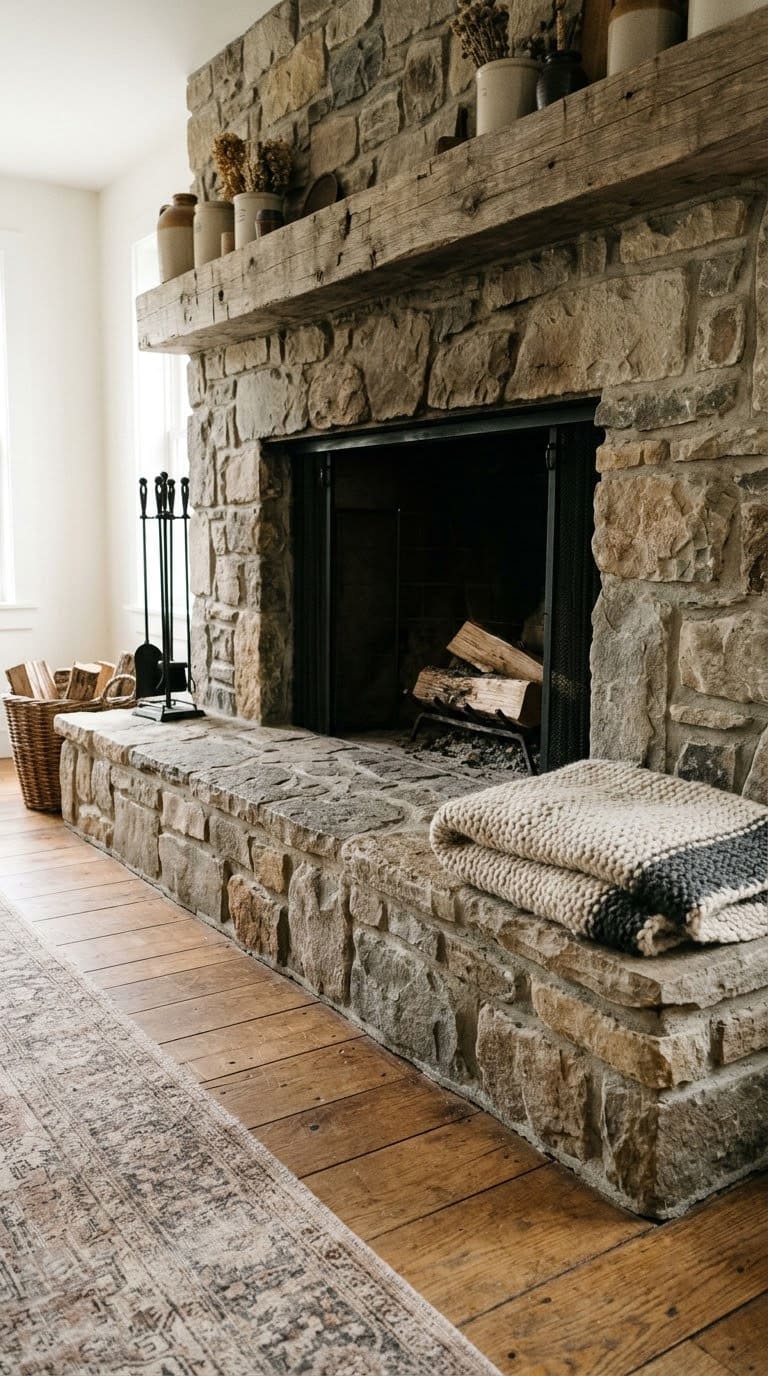
1. A Wide, Raised Stone Hearth
A deep hearth makes a farmhouse fireplace feel built in, not stuck on. It also gives you a seat, a place to stack wood and a safe landing zone for sparks. Use honed fieldstone, slate or tumbled limestone so it looks worn, not polished.
Measure the hearth extension your local code requires before you pick a size. Then go wider than the opening on each side so the fireplace looks grounded. Pairs well with the stacked stone surround in idea 5.
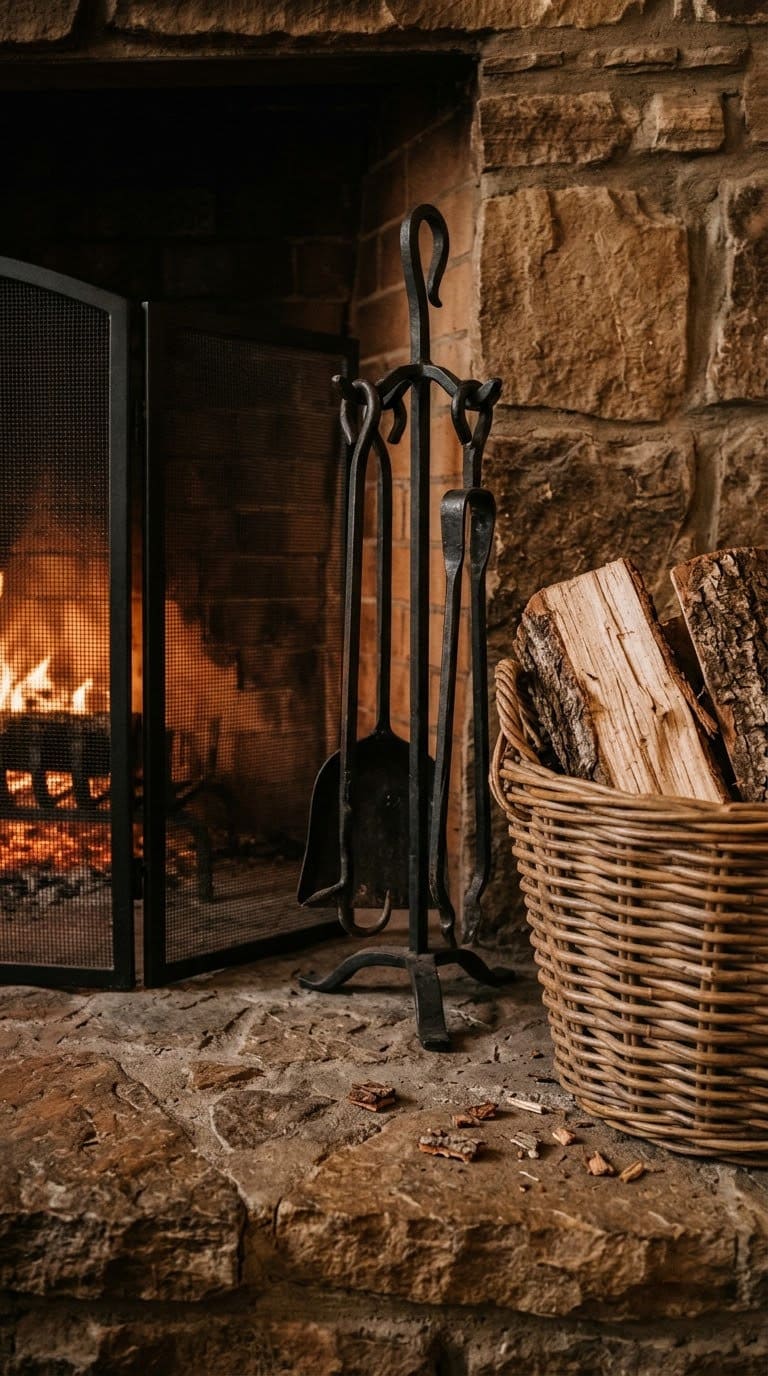
2. Black Iron Screen, Tools and a Log Basket
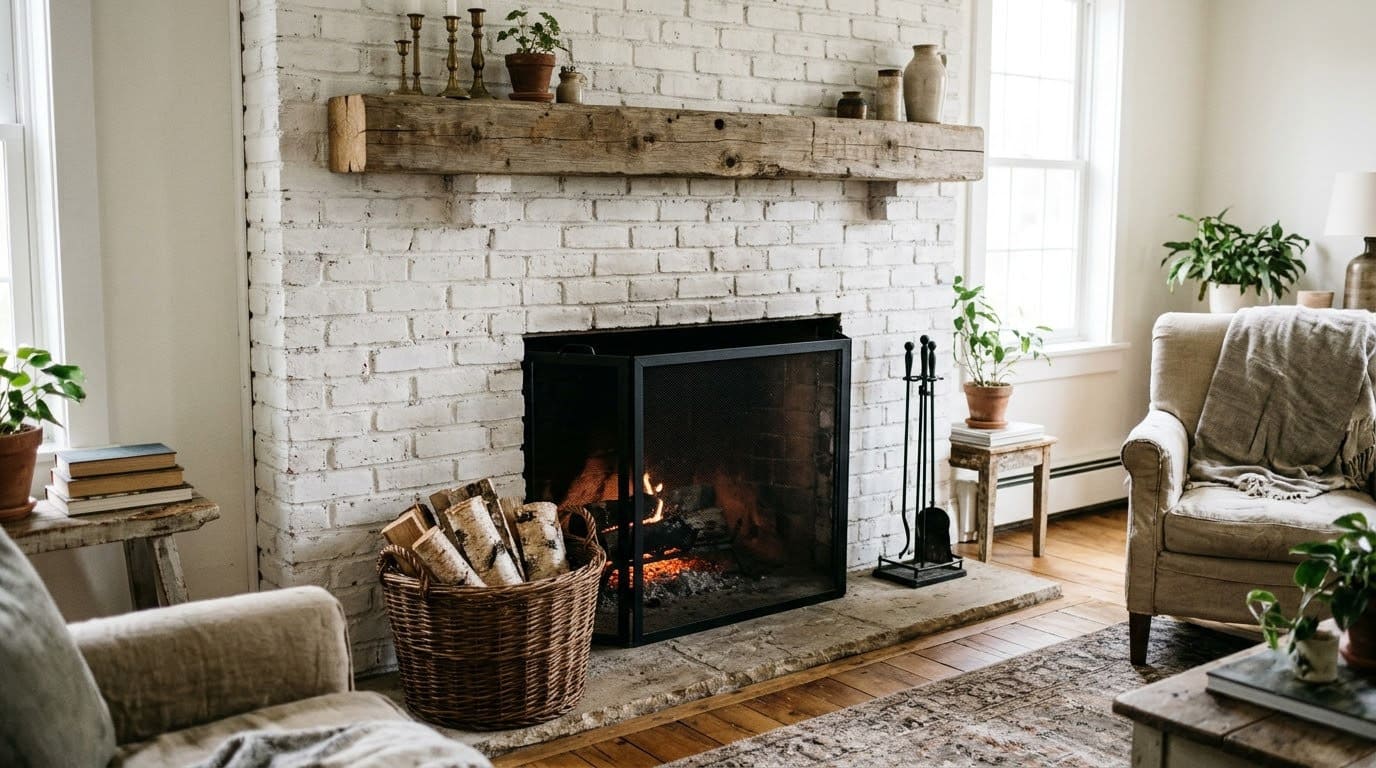
Matte black iron is the cheapest way to make any fireplace read as farmhouse. A mesh screen, a poker set and a woven or iron log basket do the job in an afternoon. Choose a screen that covers the whole opening so sparks stay in.
Keep the basket a few feet from the opening and never use it as a shelf for kindling. Stack only a small amount of firewood indoors, enough for one evening. See more ideas for styling mantels and hearths if you want to carry the iron into your mantel decor.
Black wrought iron foldable spark guard with mesh panels, made for wood, gas and electric fireplaces. Pairs with idea 2.
Shop NowThis post contains affiliate links. We may earn a commission on qualifying purchases at no extra cost to you.
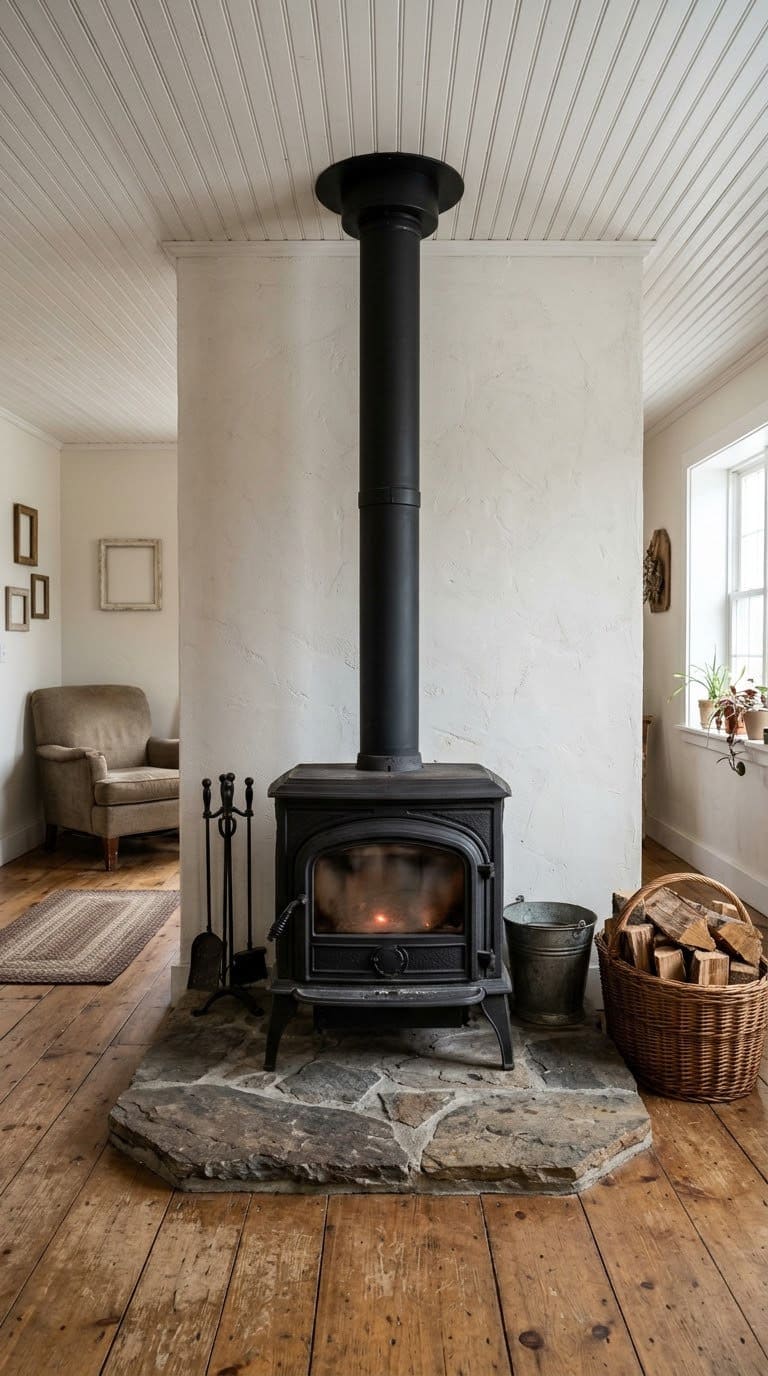
3. The Wood-Stove Look
A black wood stove with exposed pipe is the most honest farmhouse fireplace of all. The pipe runs straight to the ceiling and the stove sits on a noncombustible pad. It reads as practical, not decorative.
Stoves and pipes have their own clearance rules, and they’re stricter than a masonry opening’s. Follow the stove’s manual, and ask a certified sweep or installer to check the setup. If you want the look without the burn, a faux fireplace or electric stove gives you the same shape.
Layer 2: The Surround
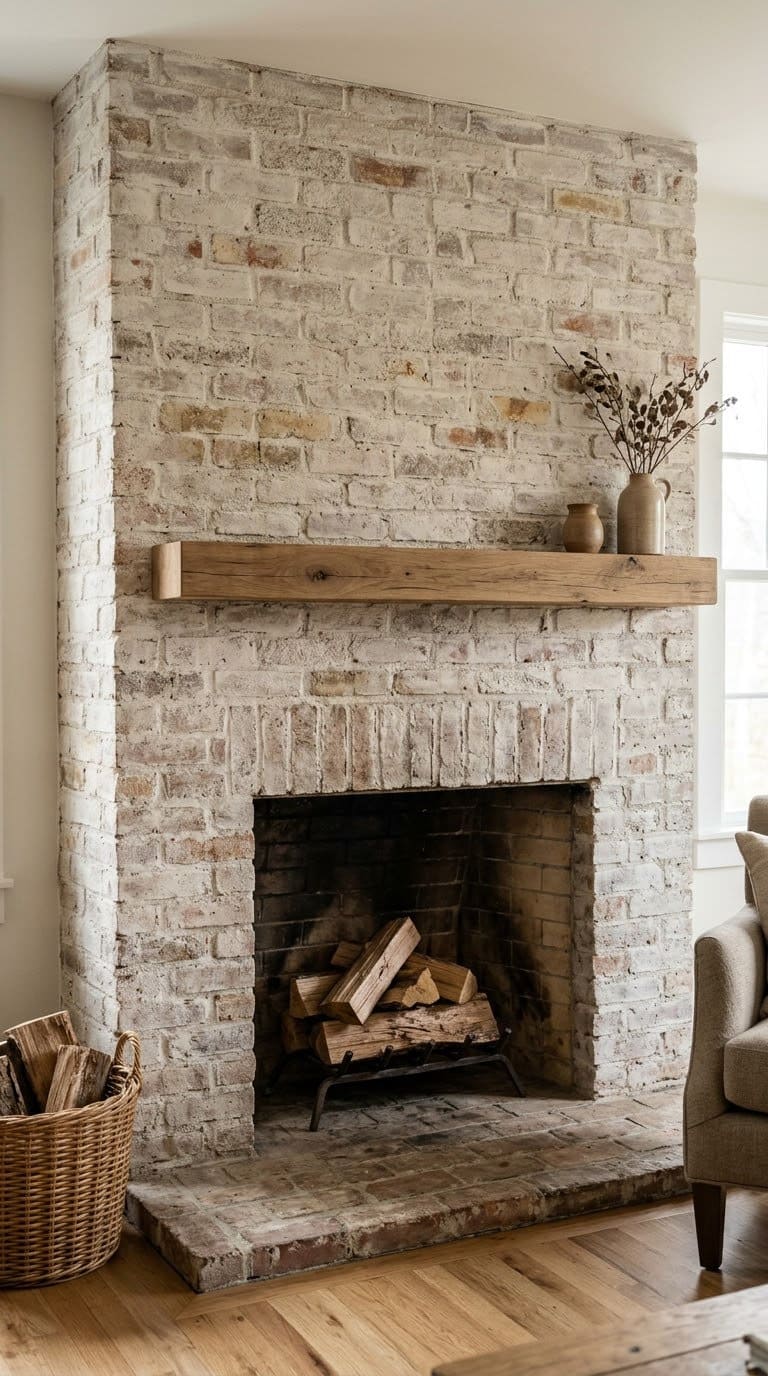
4. Whitewashed or Limewashed Brick
Brick is already farmhouse. You don’t need to hide it, only calm it down. A thin white wash lets the brick texture show through, which looks far more natural than a solid coat.
Use heat-rated masonry paint or a mineral wash made for brick, not standard wall latex. Test a small patch low on the wall first, since brick soaks up color unevenly.
Painted brick can go flat fast. One blogger found slate blue felt too dark.
Stay with warm whites and soft creams. Our guide to painting a brick fireplace covers the steps in detail.
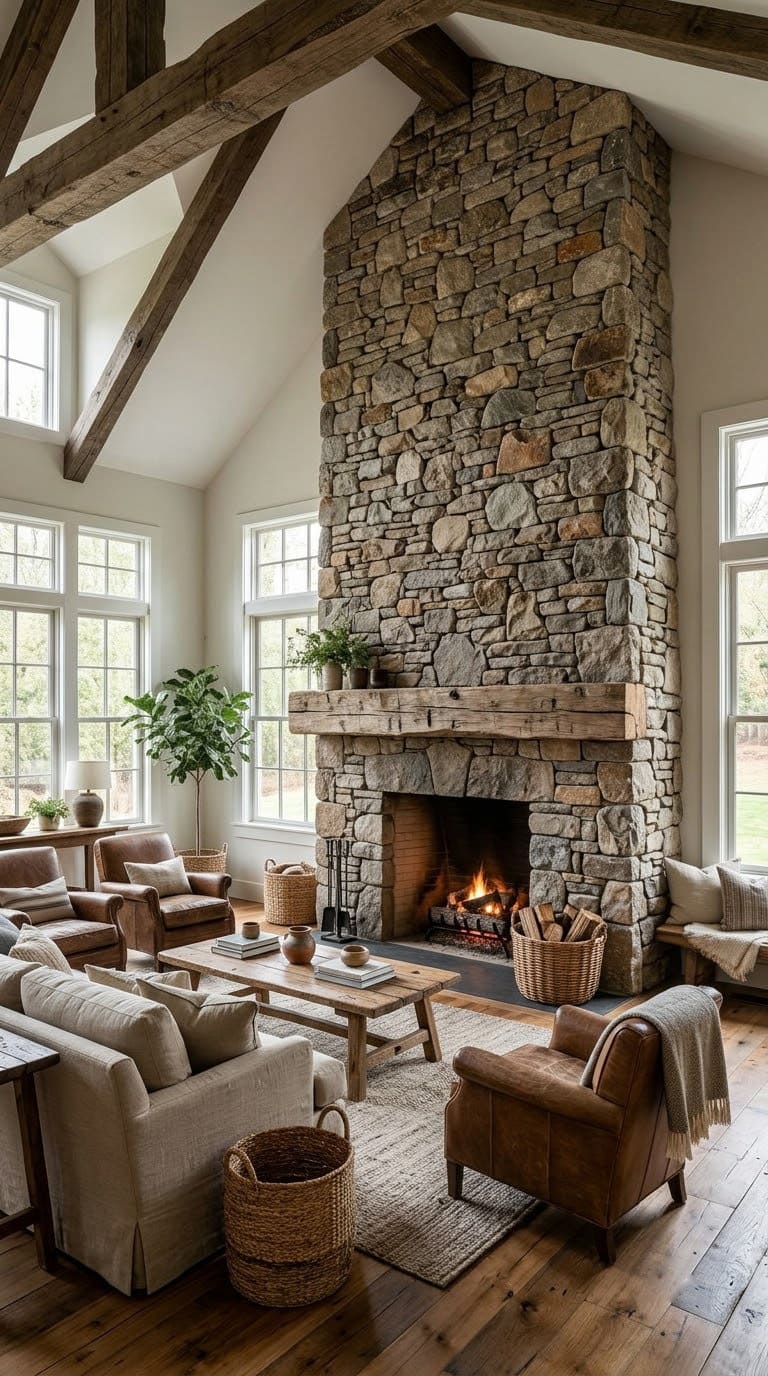
5. Stacked Fieldstone
Stacked stone brings texture and a warm gray-brown palette that pairs with almost any wood. It suits big rooms and tall chimneys especially well. Keep the stones irregular so it looks quarried, not manufactured.
Real stone is heavy, so ask a mason about footing and support for a full-height build. Veneer works for lighter jobs on a rated backer. If stone is the direction you want, this stone fireplace guide shows more styles and patterns.

6. A Shiplap Surround
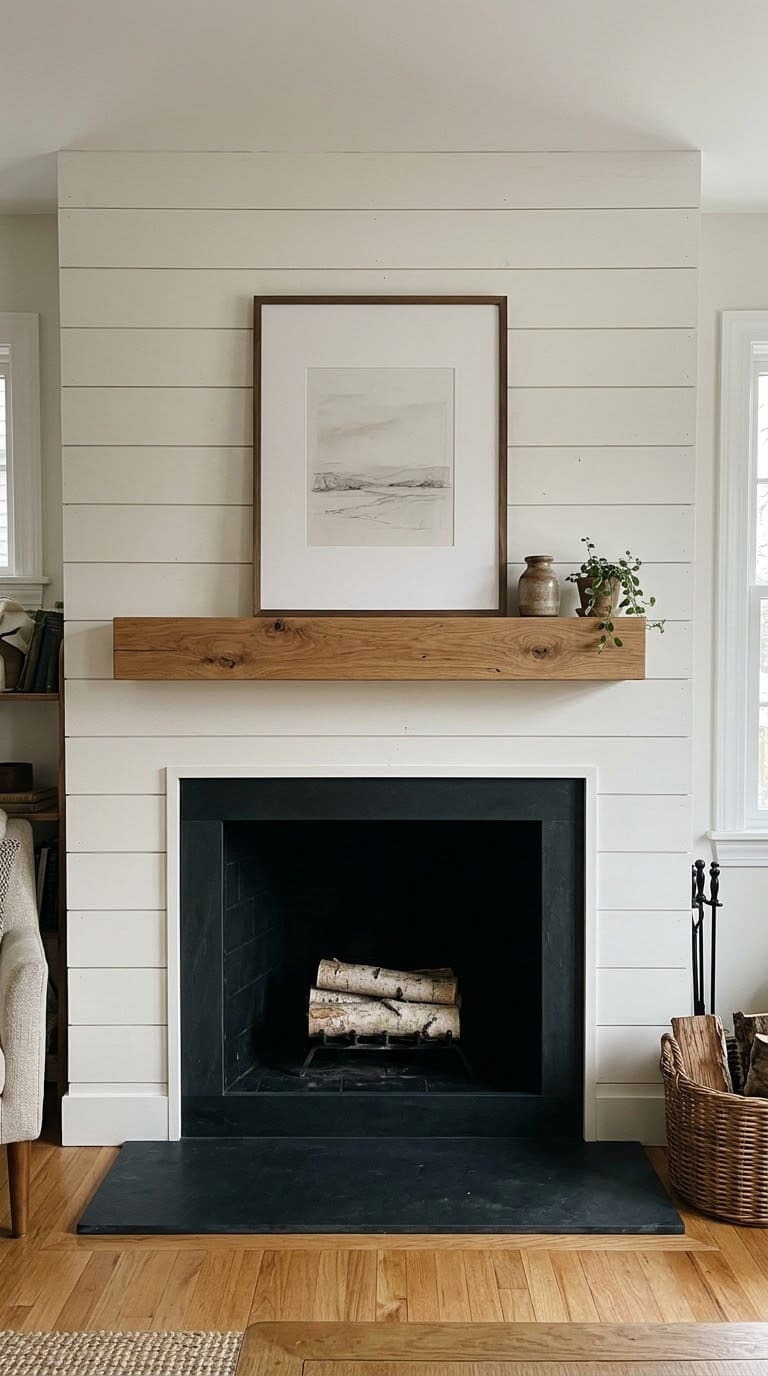
Shiplap gives a flat, modern-farmhouse backdrop. Keep the face near the opening noncombustible.
Start the wood beyond the clearance zone. Run the boards horizontally for width or vertically for height.
Remove the old mantel and any supports before you start, since a bump-out makes shiplap look patchy. Plan your mantel height first, because a low mantel limits what you can style on it. Browse fireplace surround ideas to compare shiplap with other finishes.
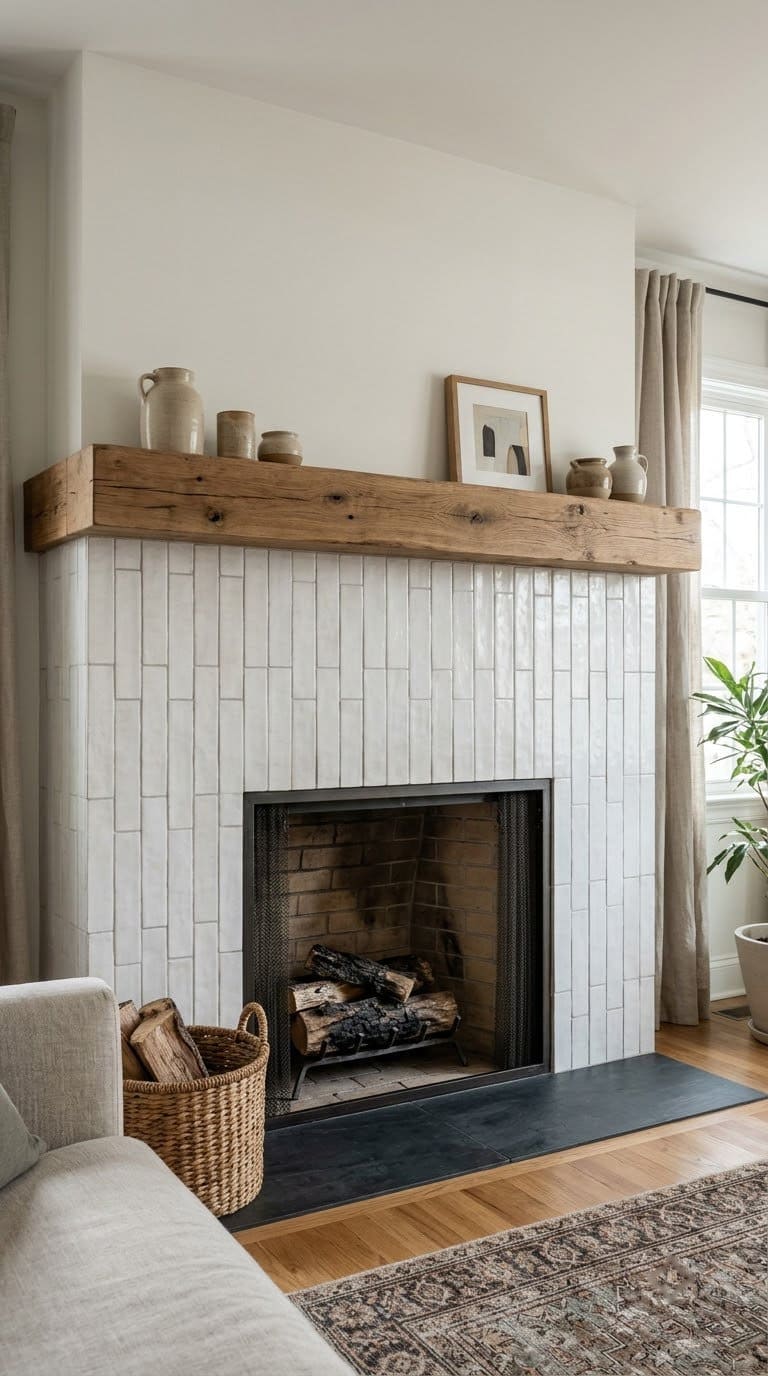
7. White Subway or Handmade Tile
Plain white tile reads clean and a little vintage. A vertical running bond adds height, and a grout color one shade off the tile keeps the look soft. Skip glossy tile with stark white grout, which feels more kitchen than farmhouse.
Use tile rated for the heat near a firebox, and ask the tile supplier or installer before you buy. For pattern and color options, our fireplace tile ideas page is a good next stop.
Layer 3: The Mantel
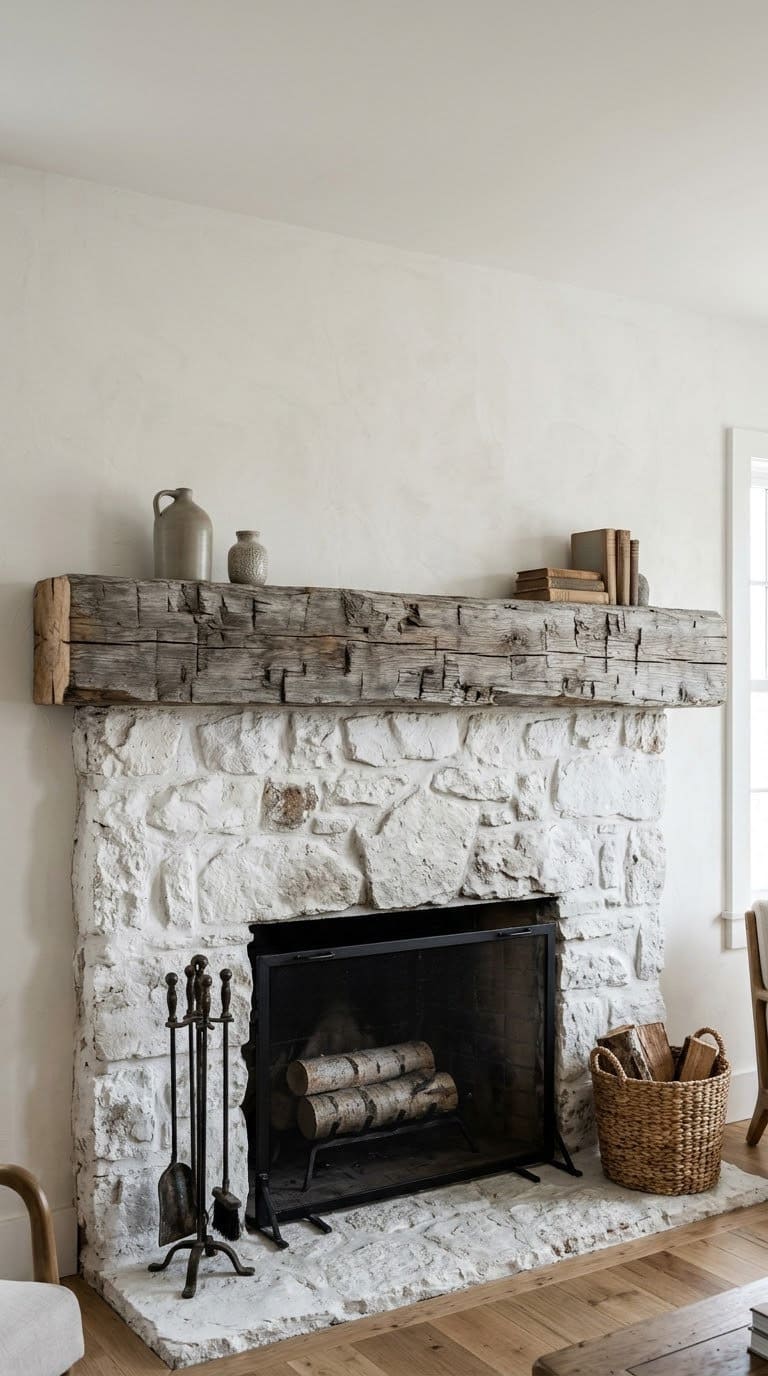
8. A Reclaimed Beam Mantel
A thick reclaimed beam is the classic farmhouse mantel. Look for axe marks, nail holes and a weathered face. Seal it with a matte finish so it stays natural and doesn’t shine.
Beams and brick can fight. One writer found a thick beam over red brick looked top-heavy.
Match the beam’s weight to the fireplace. Then check the 6 inch and 12 inch rules above before you hang it. Use the 6 and 12 inch numbers as your guide.
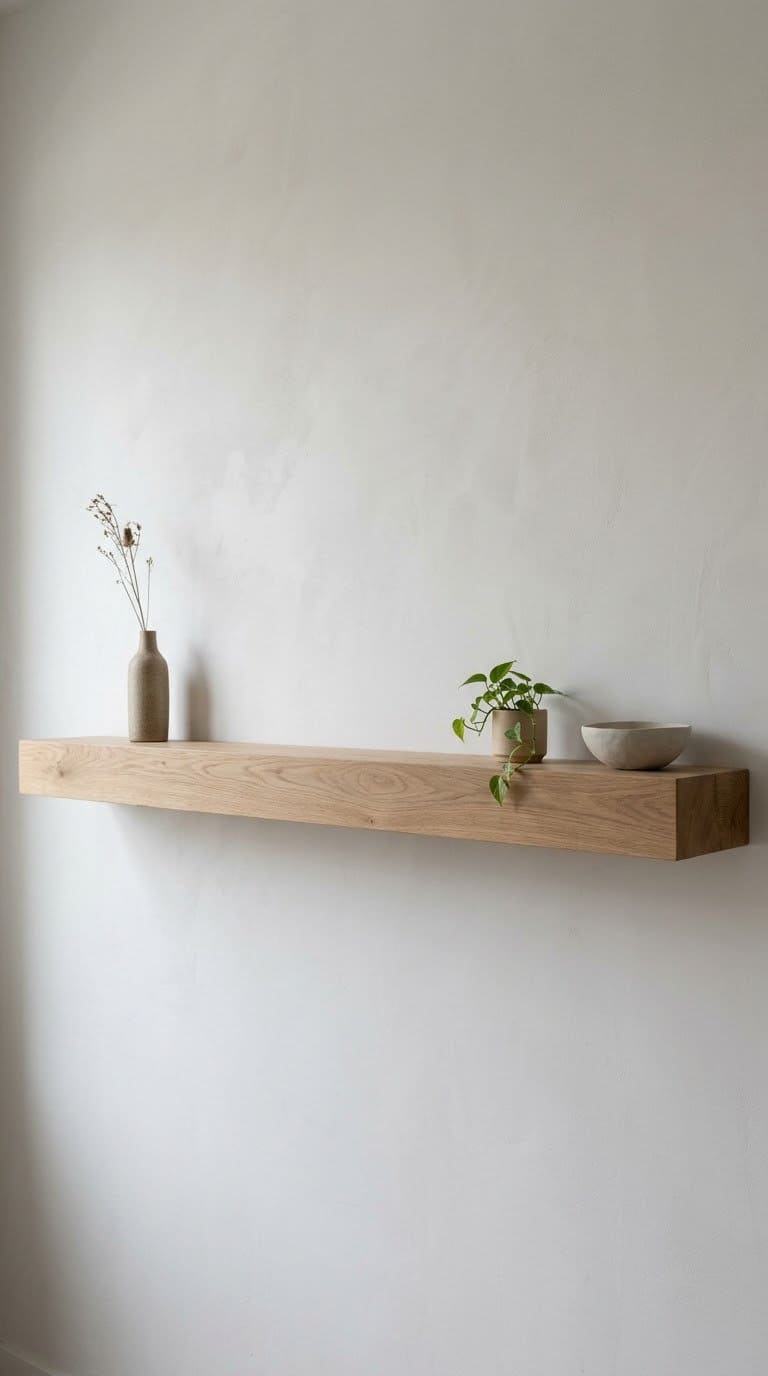
9. A Floating Oak Shelf With Sparse Styling
A simple oak shelf feels lighter than a beam and suits a modern farmhouse room. Style it with three things: one tall piece, one low piece and one living piece, like a small plant. Leave air between them.
Feng shui advice says to keep family photos off the mantel. Fire energy can feel intense around them.
Direct Fireplaces also warns against overloaded mantels and cable clutter. Less really does look better here.
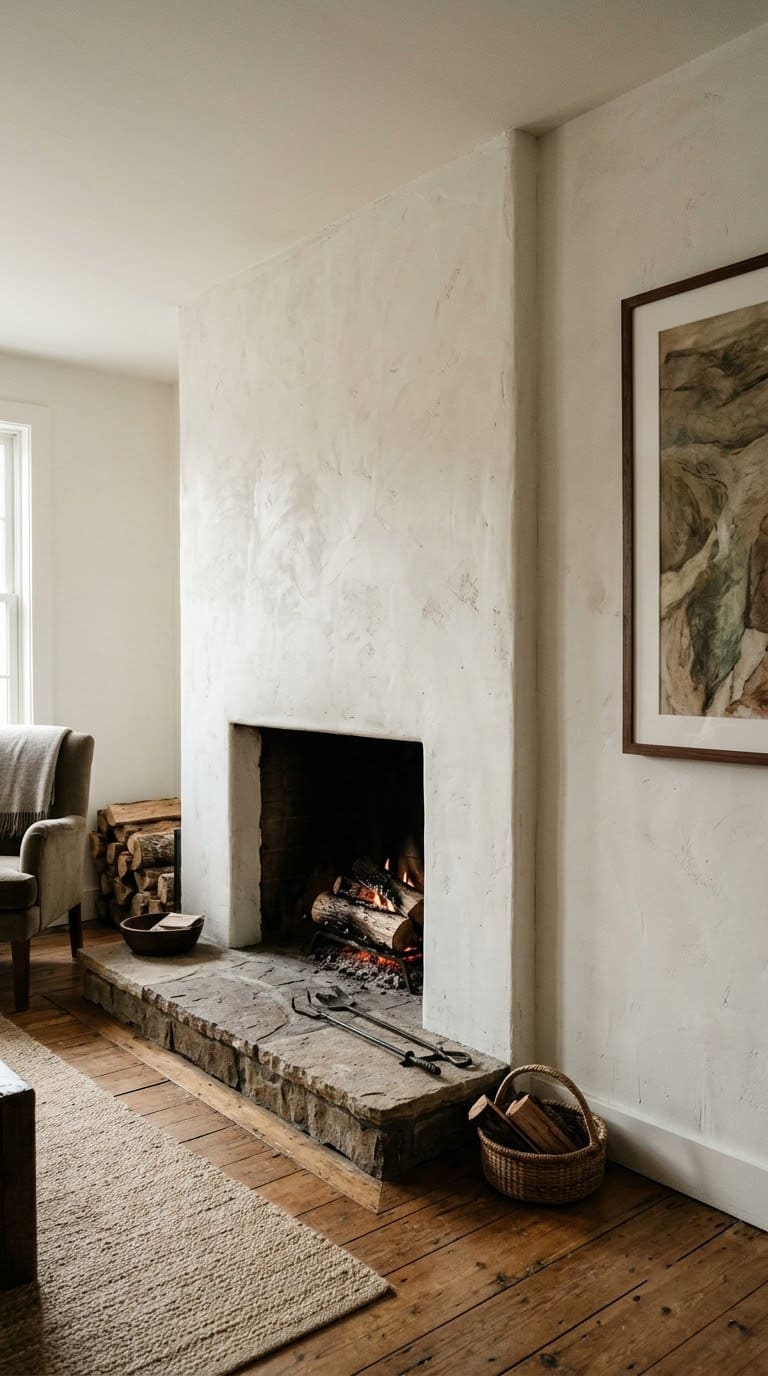
10. No Mantel at All
A plaster or lime-washed surround with no shelf is quiet and old-world. The wall becomes the feature, and nothing sits near the fire. It’s also the safest option if your clearances are tight.
Hand-troweled plaster looks best with a soft, uneven finish. Add art on the wall beside it, not above, if heat is a concern. Pairs nicely with the stone hearth in idea 1.
Layer 4: Above and Beside
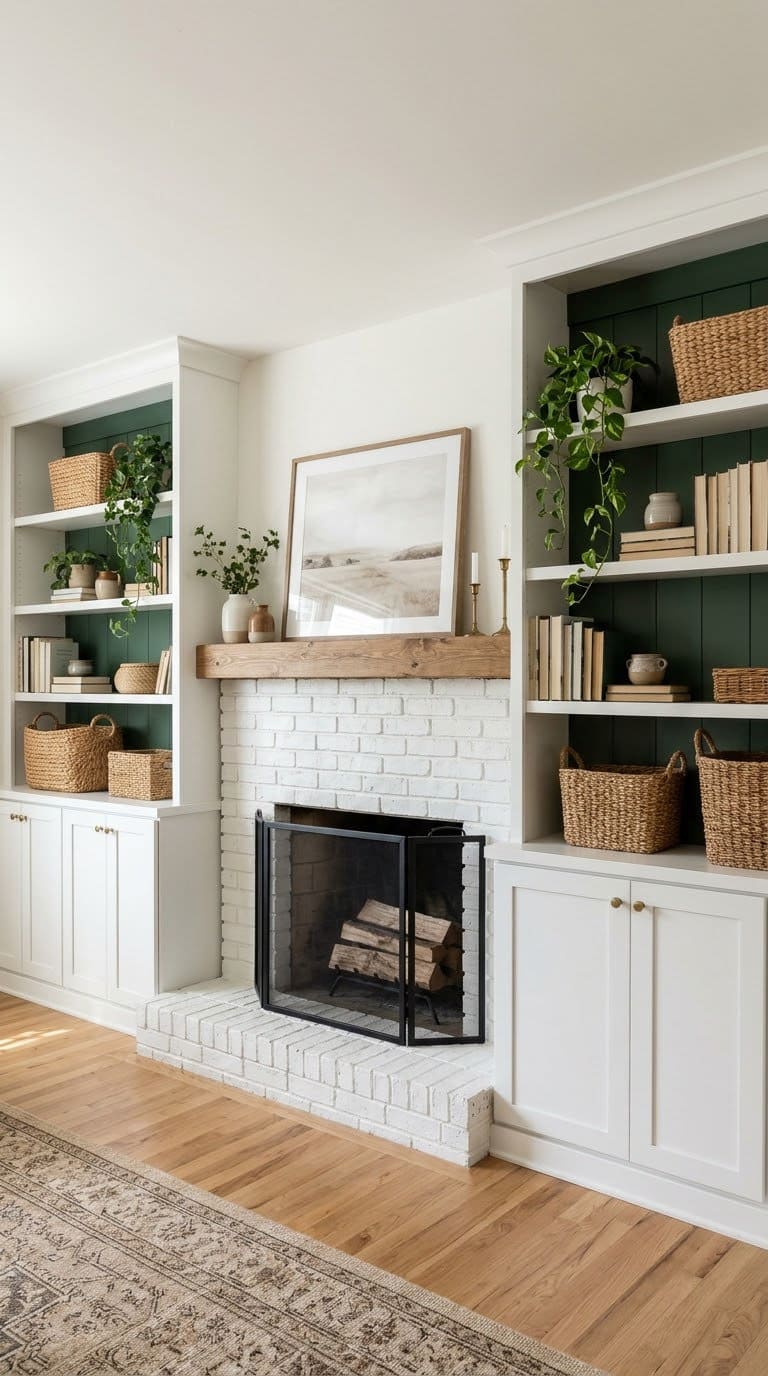
11. Built-In Cabinets and Shelves
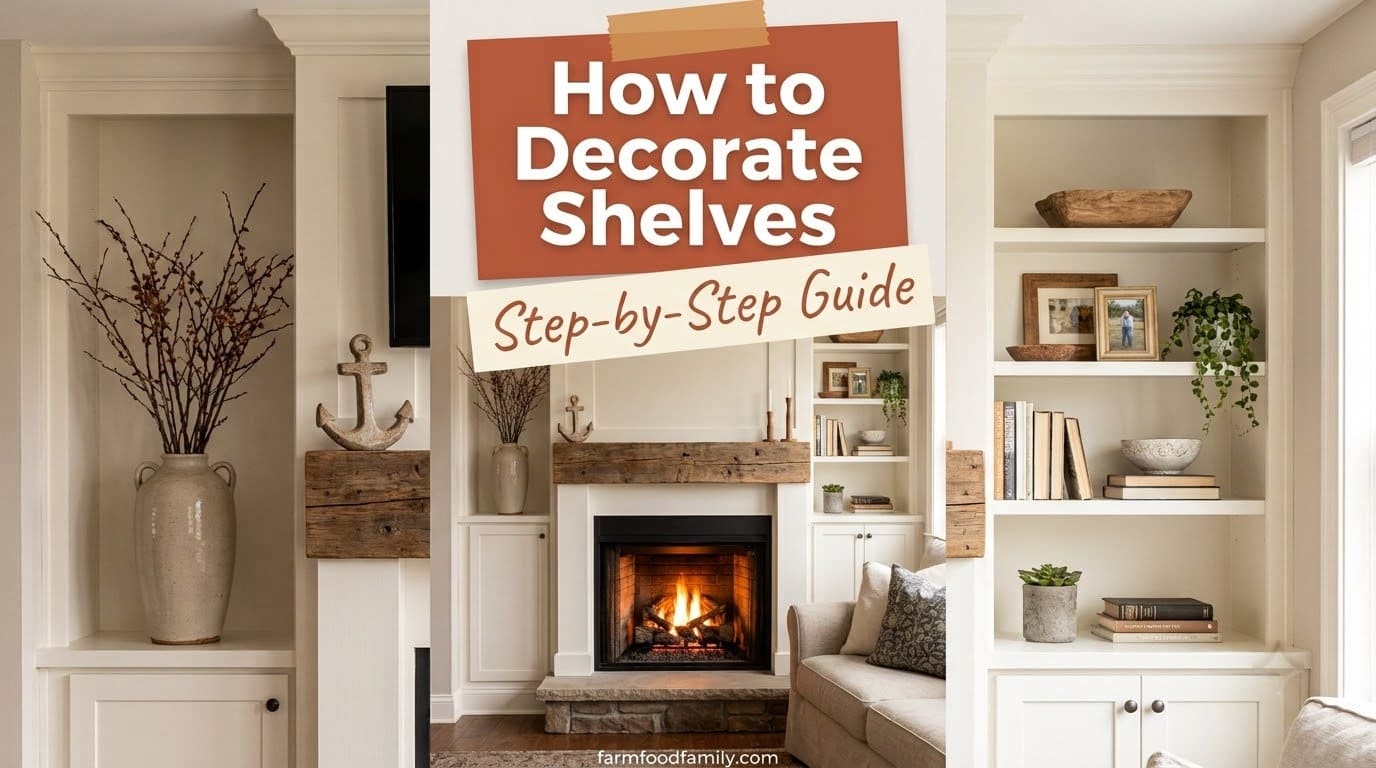
Built-ins on both sides make the fireplace feel like part of the house. Paint the shelf backs a deeper color, like navy or forest green.
Your books will stand out. Use shiplap or beadboard on the cabinet doors.
Keep the cabinet frames outside the clearance zone. Use noncombustible material right at the opening.
Store books and baskets, not matches or lighter fluid, near the fire. See mantel shelf ideas for ways to style the shelves.
12. A TV Above the Fireplace
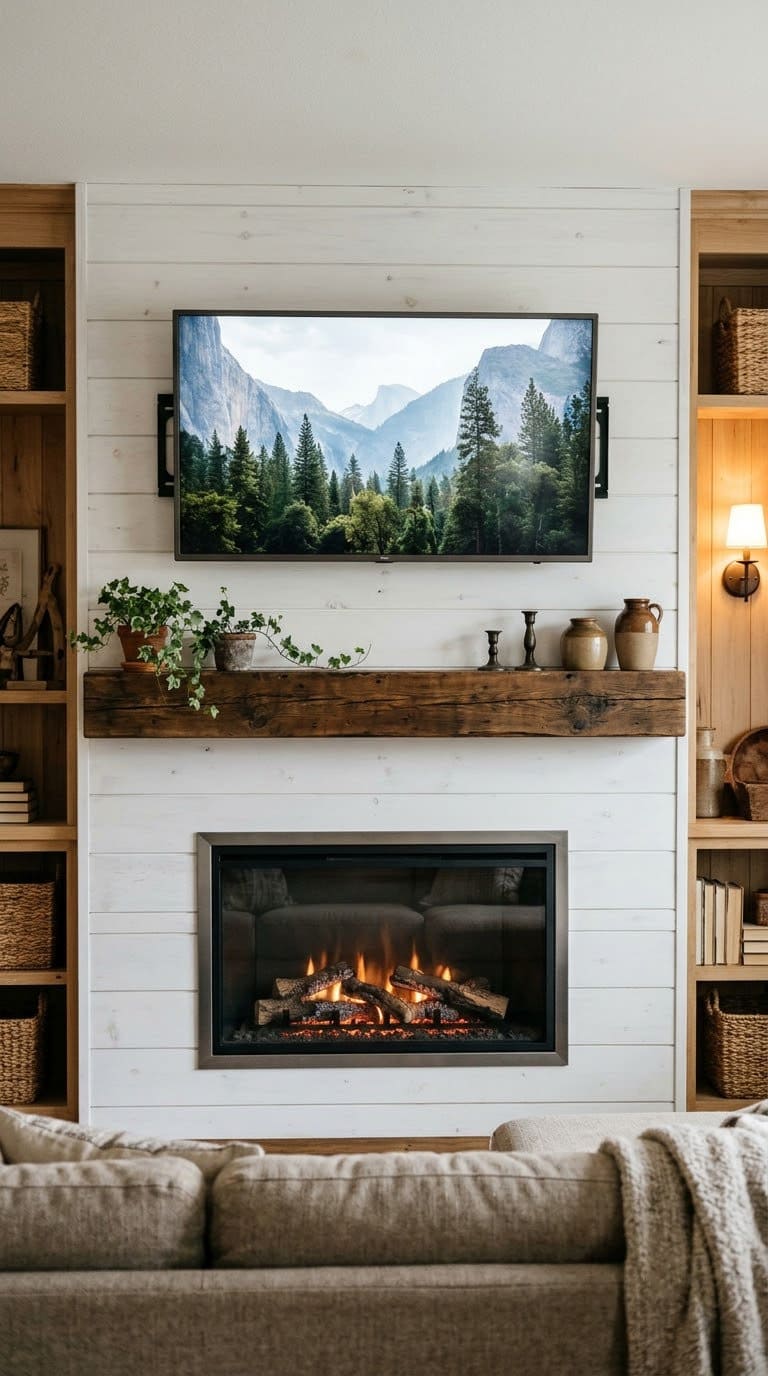
Many farmhouse living rooms put the TV over the fireplace. Bob Vila notes that heat rises and can reach a TV above the fireplace.
Heat damage can void a warranty. A deep mantel helps by deflecting heat, and electric units run cooler than wood or gas.
Check the TV’s heat limits and the fireplace manual before you mount. A tilting or pull-down mount fixes the neck strain from a high screen. Our guide to living rooms with a fireplace and TV covers layouts that avoid the problem.
13. A Bench or Window Seat Beside the Hearth
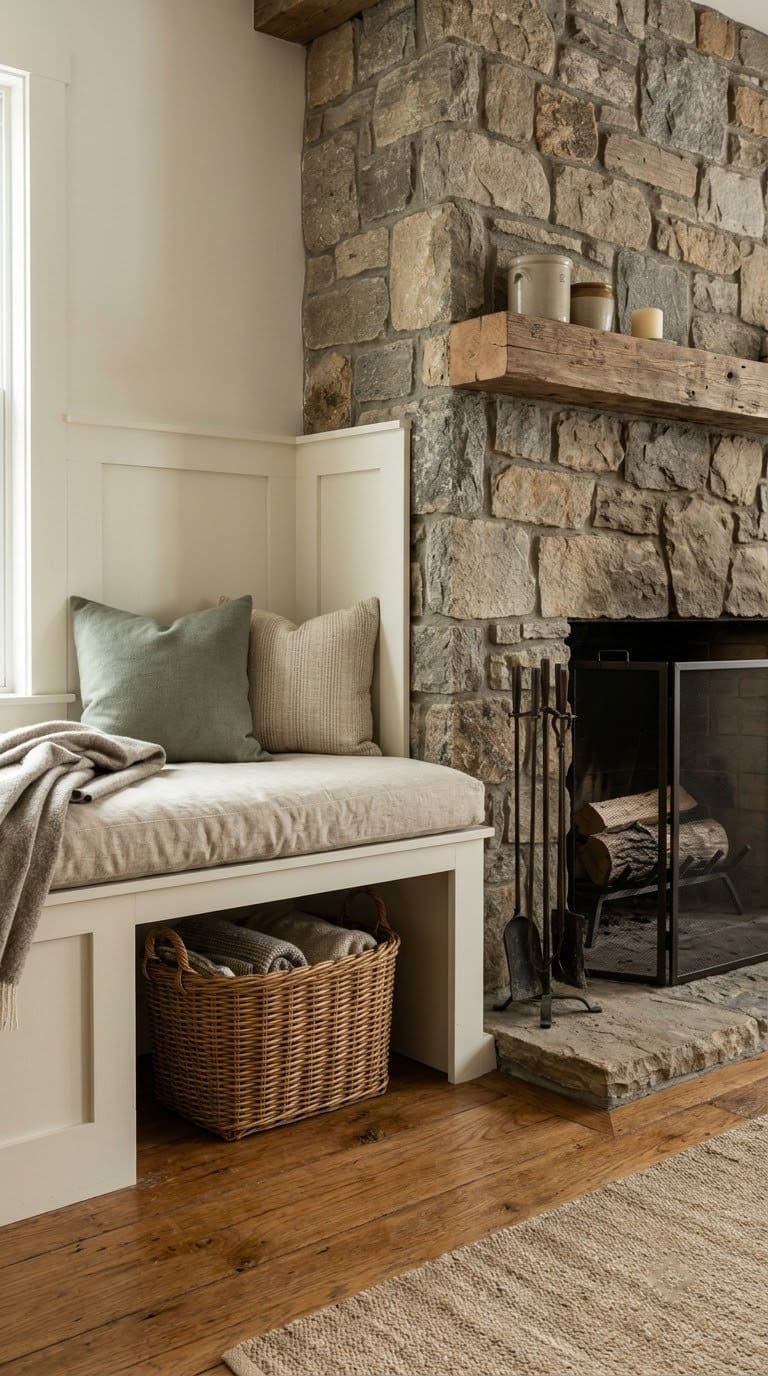
A built-in bench beside the fireplace gives you the coziest seat in the house. Extend it a little past the hearth’s edge so it frames the fire. Use a washable cushion with a firm, fire-retardant insert.
Keep the seat well away from the opening and out of the clearance zone. Never store foam or loose cushions on the hearth itself. Add a basket underneath for blankets.
Which Idea Fits Your Home?
Not every idea suits every room. Match your situation to the layer that gives the biggest change for the least risk.
| Your situation | Start with | Why |
|---|---|---|
| Renter with an electric insert | Ideas 2, 9 and 12 | No masonry work, and electric units run cooler |
| Dated red brick, tight budget | Idea 4, then 8 | A thin wash and one beam change the whole look |
| Low mantel, small room | Idea 10 | No shelf means no clearance problem |
| Big room, tall chimney | Ideas 5 and 11 | Stone and built-ins fill the height |
| TV wall | Idea 12, plus a deep mantel | The mantel shields the screen from rising heat |
If two rows fit you, pick the cheaper one first. Live with it for a season before you take on the next layer.
Farmhouse Fireplace Feng Shui
Feng shui treats a fireplace as the fire element of the room. That’s a tradition, not science, but it’s a handy design lens.
Anjie Cho writes that lighting and candles represent the fire element. She says fiery objects should be clean and well cared for.
She also notes that plants represent the wood element, which feeds fire. That makes a living plant a good mantel partner. Direct Fireplaces adds water, wood and earth as balancers, so a mirror, a plant and stone or ceramics all help.
Try these small moves:
- Face seating toward the hearth so the fire becomes the center of the room.
- Keep the front of the fireplace clear of bulky furniture.
- Add one plant and one stone or ceramic piece to the mantel.
- Hide tangled cables and keep the mantel from overloading.
- Style a switched-off TV and fireplace with a lamp or plant so they don’t become a dark hole.
What Will It Cost, and How Long Will It Take?
Prices swing too much by region to quote one number. Use these tiers instead.
| Tier | What it covers | Typical time |
|---|---|---|
| Swap and style | Screen, tools, basket, mantel styling, plant | An afternoon |
| One weekend | Whitewash or limewash, new mantel, paint trim | 1 to 2 days plus drying |
| Hire a pro | Stone or tile surround, stove install, built-ins, gas work | Days to weeks |
Gas lines, chimney work and stove installs always need a licensed pro. Start with the cheap tier, live with it for a season, then decide whether to go bigger.
Common Mistakes to Avoid
Putting the mantel too close. Wood that sits inside the clearance zone can dry out and burn more easily over time. Measure from the top and sides of the opening, and confirm the numbers with your inspector.
Using the wrong paint on brick. Regular wall latex isn’t made for heat. Use masonry paint rated for fireplaces and test a small patch first.
Skipping the yearly sweep. The Chimney Safety Institute of America cites NFPA 211. It calls for inspection at least once a year. CSIA also says to sweep masonry fireplaces at about 1/8 inch of sooty buildup, or sooner if there’s any glaze.
Mounting a TV without checking heat. Test your setup against the manuals first. A mantel between the fire and the screen helps, but it’s not a guarantee.
FAQ
Can I paint a brick fireplace farmhouse white? Yes, with heat-rated masonry paint or a mineral wash. Test a small patch first and keep the coat thin so the brick texture shows.
How far should a wood mantel sit from a fireplace opening? Common code language says at least 6 inches for combustible mantels and trim. Projecting parts above the opening need at least 12 inches. Always confirm with your manual and local code.
Is shiplap safe around a fireplace? It’s wood, so keep it outside the clearance zone and use a noncombustible face near the opening. Ask your inspector about your specific fireplace.
Can I put a TV over a farmhouse fireplace? Often yes, but heat is the risk. A deep mantel and an electric unit help. The manuals for the TV and the fireplace decide the rest.
How often should I have the chimney inspected? CSIA, citing NFPA 211, recommends at least once a year for wood-burning systems.
Related Posts
Never miss an update — choose FarmFoodFamily as your preferred source on Google.
How it works: Tap the button below to open Google's settings page, then check the box next to FarmFoodFamily.
Tap the checkbox to turn it blue — that's how you know it's set.