25 Stunning Garden Wall Ideas (Plus the Real Engineering Behind Them)
A garden wall does more than mark a boundary. The right one holds back a slope, blocks a chunk of street noise, breaks a harsh wind, or just gives you somewhere to sit with a coffee. The tricky part is that a few of these jobs, retaining soil, cutting noise, blocking wind, come with real…

Never miss an update — choose FarmFoodFamily as your preferred source on Google.
How it works: Tap the button below to open Google’s settings page, then check the box next to FarmFoodFamily.
Tap the checkbox to turn it blue — that’s how you know it’s set.
A garden wall does more than mark a boundary. The right one holds back a slope, blocks a chunk of street noise, breaks a harsh wind, or just gives you somewhere to sit with a coffee.
The tricky part is that a few of these jobs, retaining soil, cutting noise, blocking wind, come with real technical rules behind them, and getting those wrong is why some garden walls fail while others last decades.
Here are 25 ways to use a garden wall, organized by what’s actually driving the choice, plus the real substance behind the ones that need it.
Material-based Ideas
1. Natural Stone Walls:
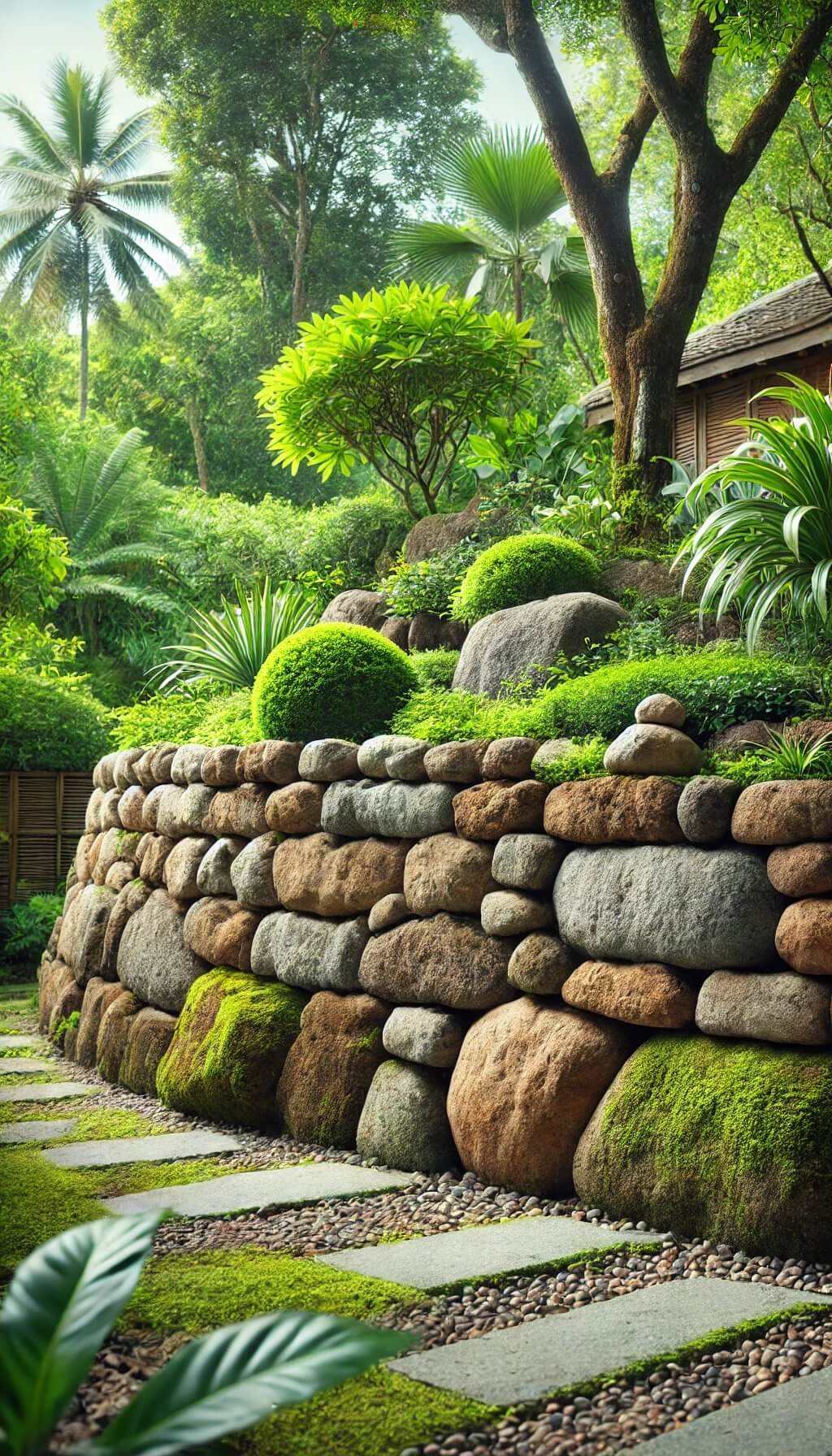
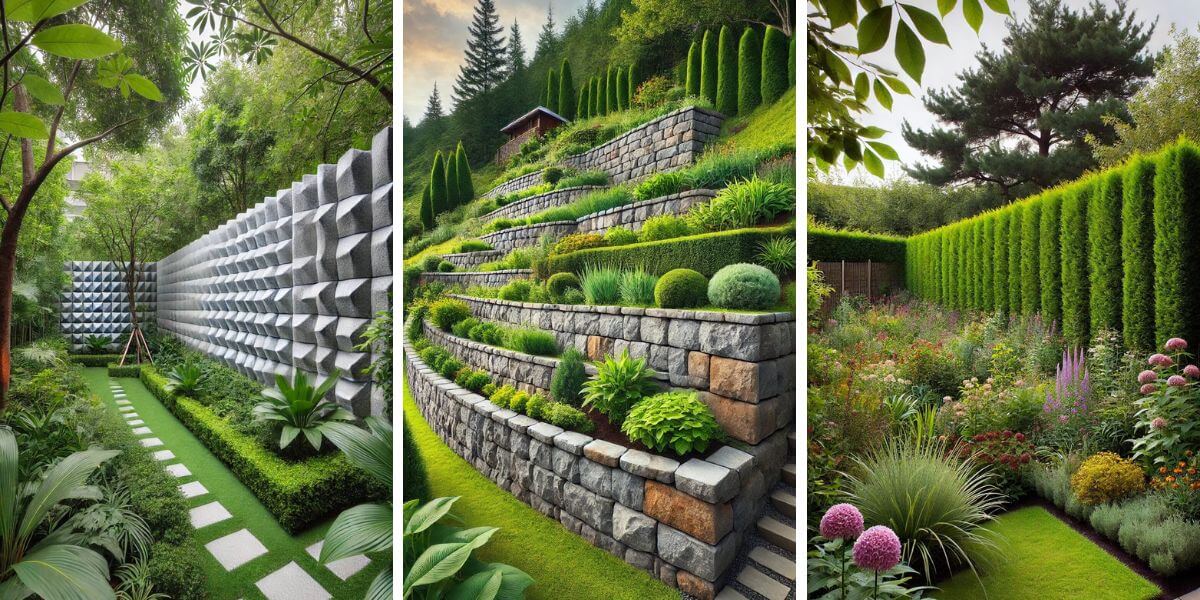
Sturdy as they come, natural stone walls endure through all sorts of weather with essentially no upkeep beyond an occasional rinse.
Dry-stacked fieldstone gives the most rustic, informal look, while cut and fitted stone reads more polished and intentional.

The tradeoff is cost and labor, natural stone is one of the more expensive garden wall materials per linear foot, and a well-built dry-stacked wall takes real skill to keep stable without mortar. If the stone-and-texture look appeals to you generally, stone fence ideas has more variations worth comparing.
Answer 4 quick questions and get matched to the exact fix for your yard — drainage, budget, layout, or something else entirely.
Take the Free Quiz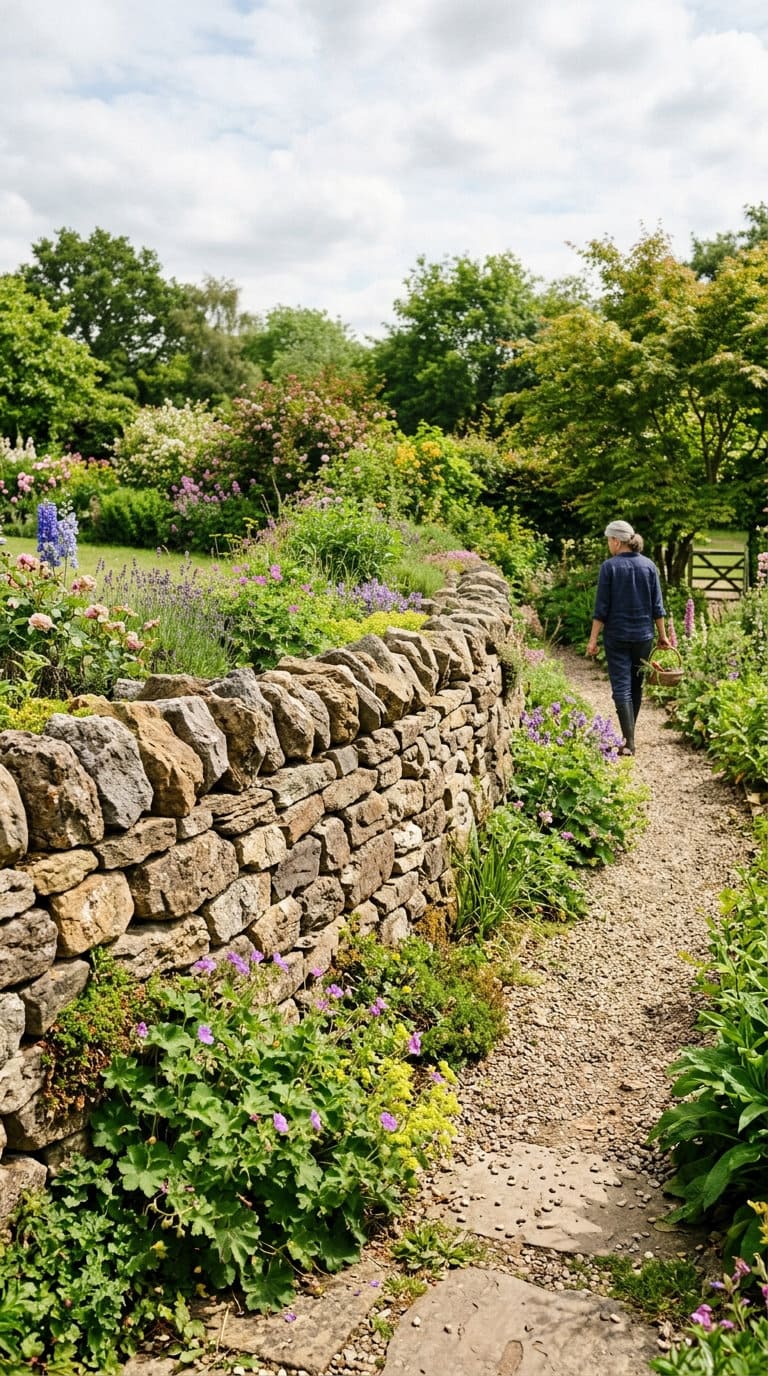
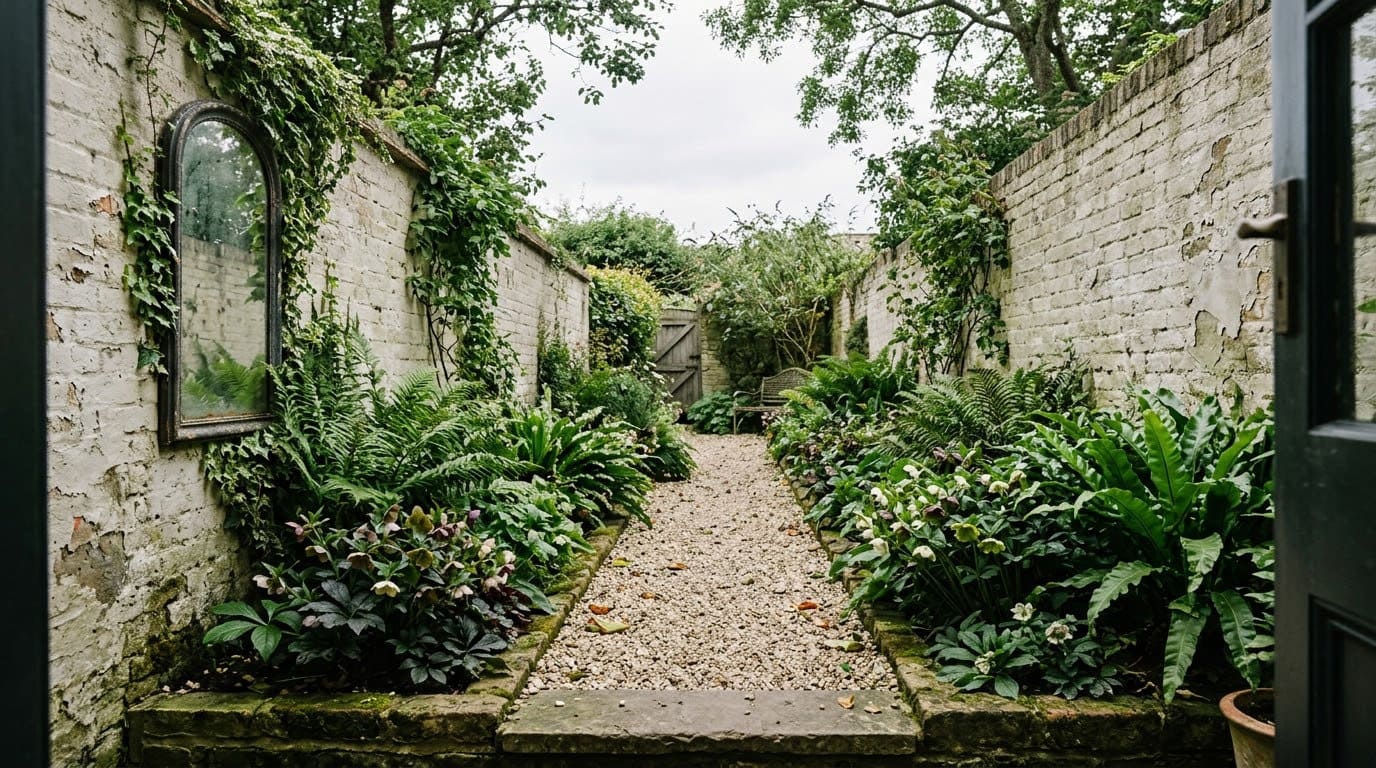
2. Brick Garden Walls:
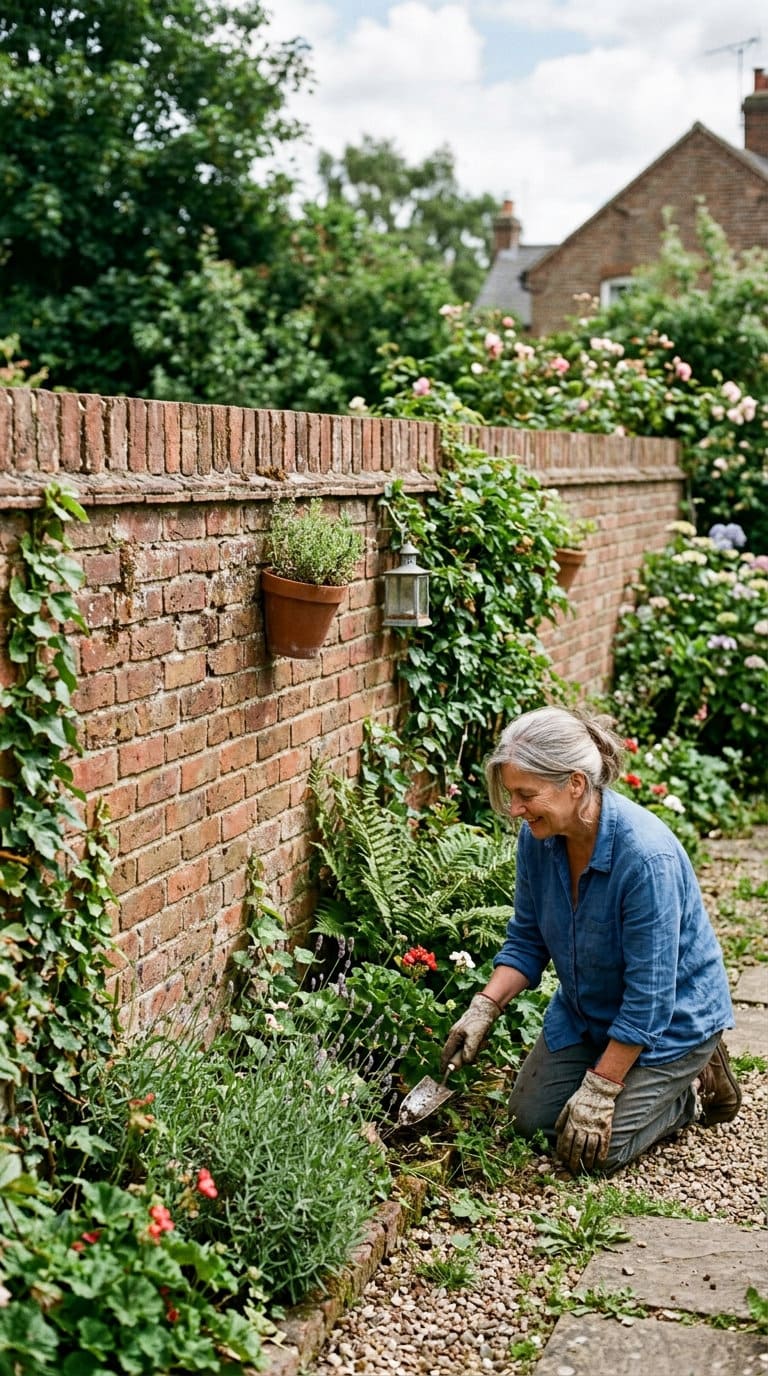
Old-school brick has a charm that doesn’t fade, and it’s genuinely one of the most durable common wall materials, a well-built brick wall can easily outlast the house next to it.
A running-bond pattern (bricks offset by half a brick per row) is the standard for strength, and a soldier course on top (bricks turned vertically) sheds water better than a flat cap.
Fancy a colonial look or something more contemporary, brick adapts to both depending on the mortar color and cap detail you choose.
3. Wooden Barrier Walls
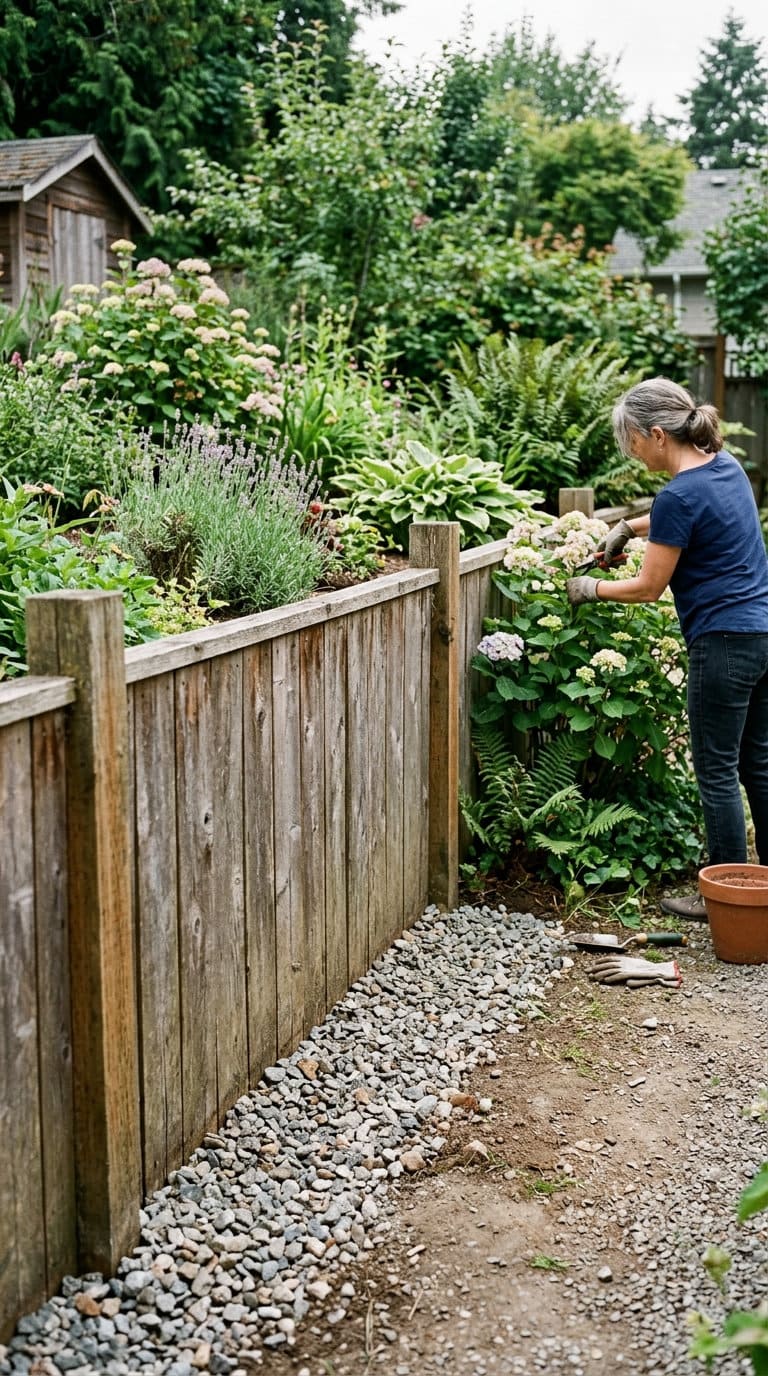
A wood wall brings warmth and a more organic feel than stone, brick, or metal, and it’s usually the fastest and cheapest of the common materials to build.
Cedar and redwood resist rot naturally without chemical treatment, which matters since a wood wall in constant ground contact is the part most likely to fail first, use a gravel or concrete footing to keep the wood’s base off wet soil.
Reclaimed wood bumps up the character and keeps usable material out of a landfill. For more variations on this material, wood fence ideas is worth a look.
4. Metal Accents in Garden Walls
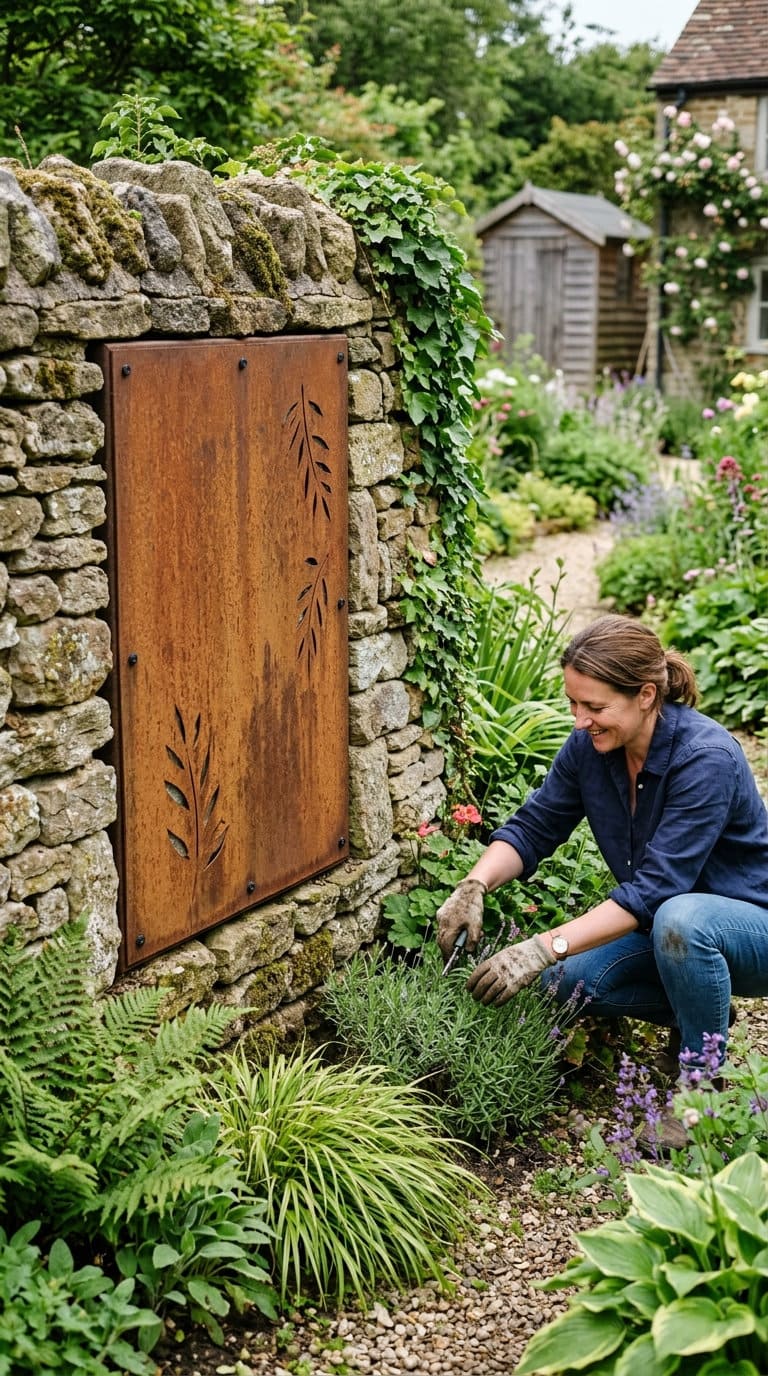
If modern’s your thing, weathering steel (Cor-Ten) panels or perforated metal screens sharpen up a plain wall with a clean, industrial edge.
Most yard problems trace back to one specific, fixable cause. Find yours in 4 quick questions.
Take the Free QuizWeathering steel develops a stable rust-colored patina on purpose, it’s not a defect, and that patina actually protects the metal underneath from further corrosion once it fully forms.
Metal accents work especially well as a contrast material against stone or brick rather than as a full wall on their own, since a full metal wall can get uncomfortably hot to the touch in direct summer sun.
5. Mixed Material Walls
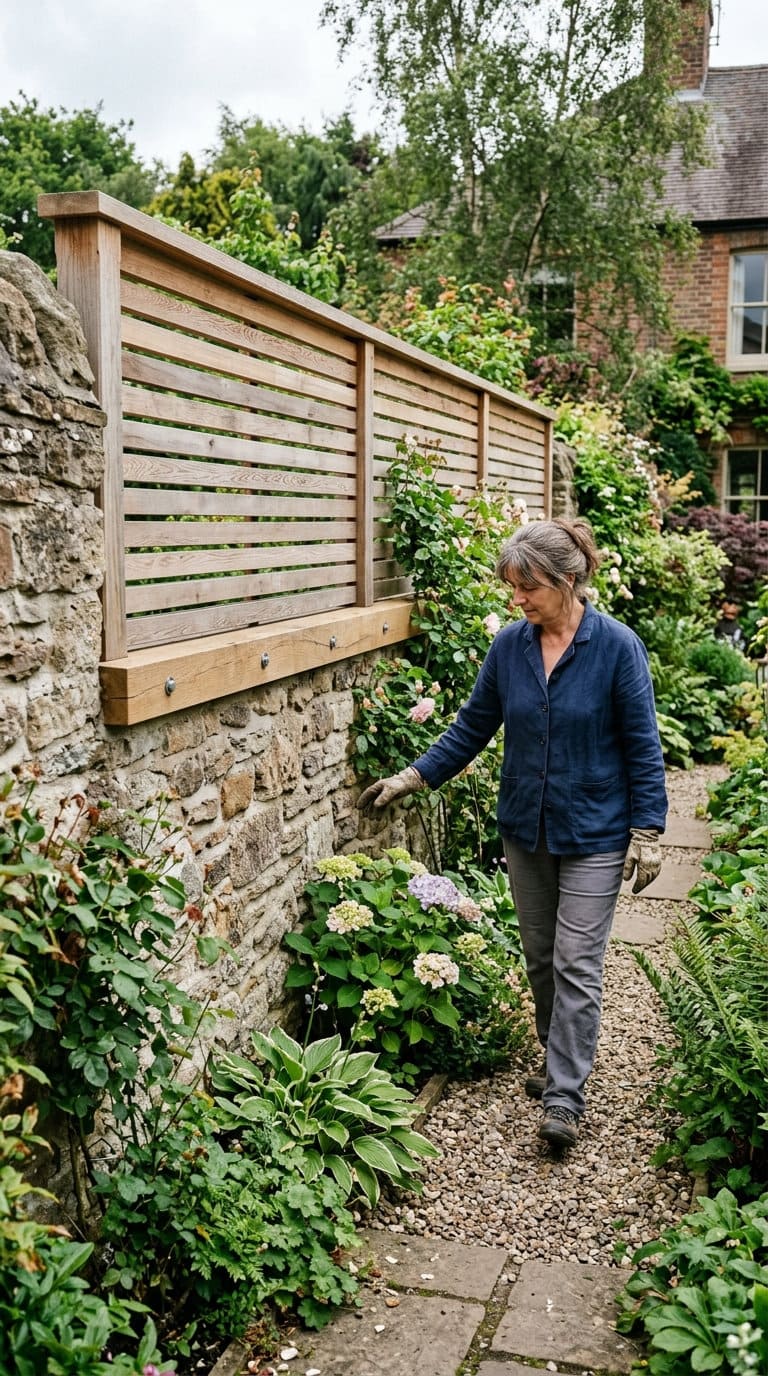
Why stick to one material when you can combine them? A common approach pairs a solid stone or block base (for structural strength and weather resistance) with a lighter material on top, wood slats, glass panels, or metal screening, for visual interest and reduced cost versus building the whole wall from the premium material.
The transition point between materials is the detail to get right, a clean cap or trim piece where they meet reads as intentional, while a rough, unfinished seam reads as a mistake. For more ideas combining hard materials, concrete fence wall ideas covers a related approach.
Style-based Ideas
6. Curved Walls
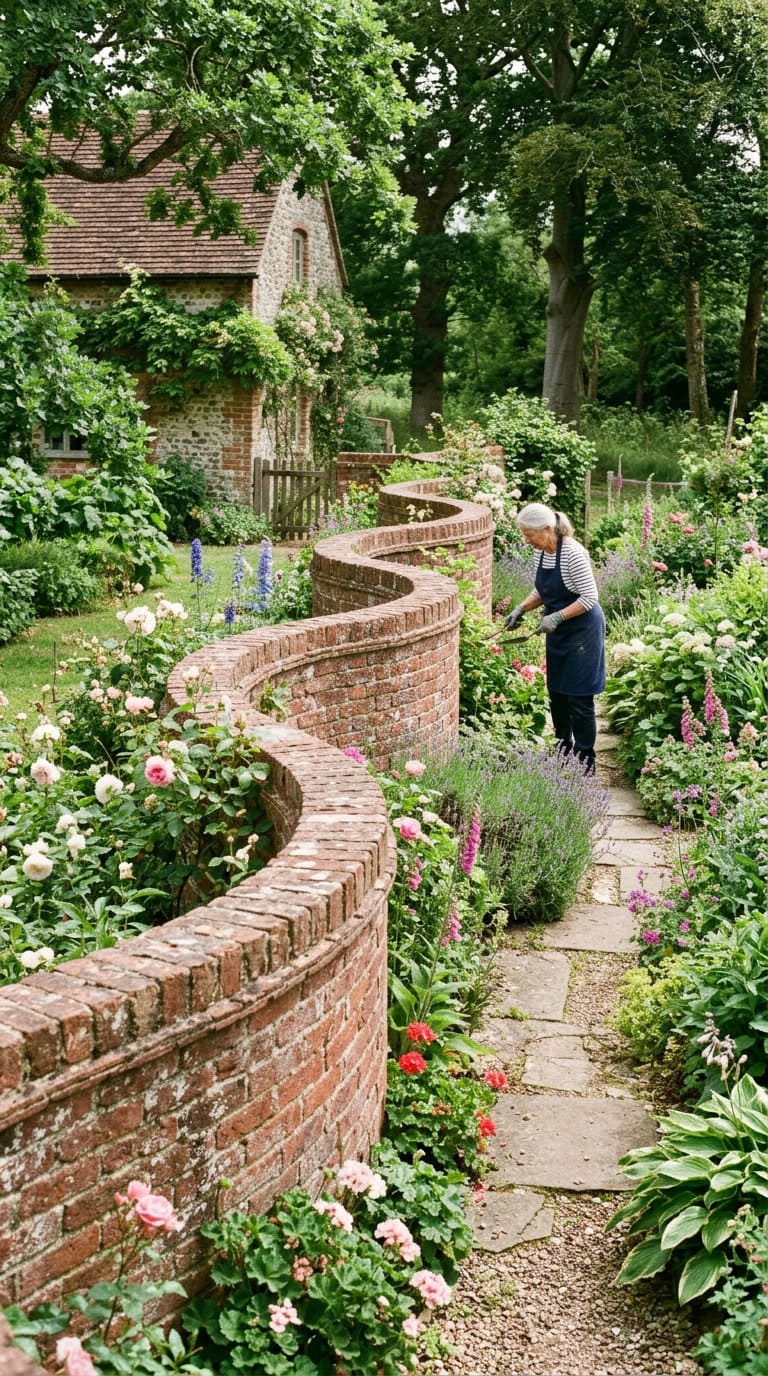
A curved wall isn’t just a design choice, it’s genuinely a structural advantage. A curved wall is actually stronger than a straight wall of the same height and thickness without any buttressing at all, because the curve converts lateral force (wind, soil pressure) into compressive force distributed along the arch, the same principle that makes an arch stronger than a flat beam.
The classic historic example is the English “crinkle crankle wall,” an S-curved brick wall built thinner than an equivalent straight wall would need to be, precisely because the curve itself does the structural work a buttress would otherwise have to do.
Beyond the engineering, a curve also gently steers foot traffic through a garden rather than cutting it in a straight line.
7. Tiered Garden Walls
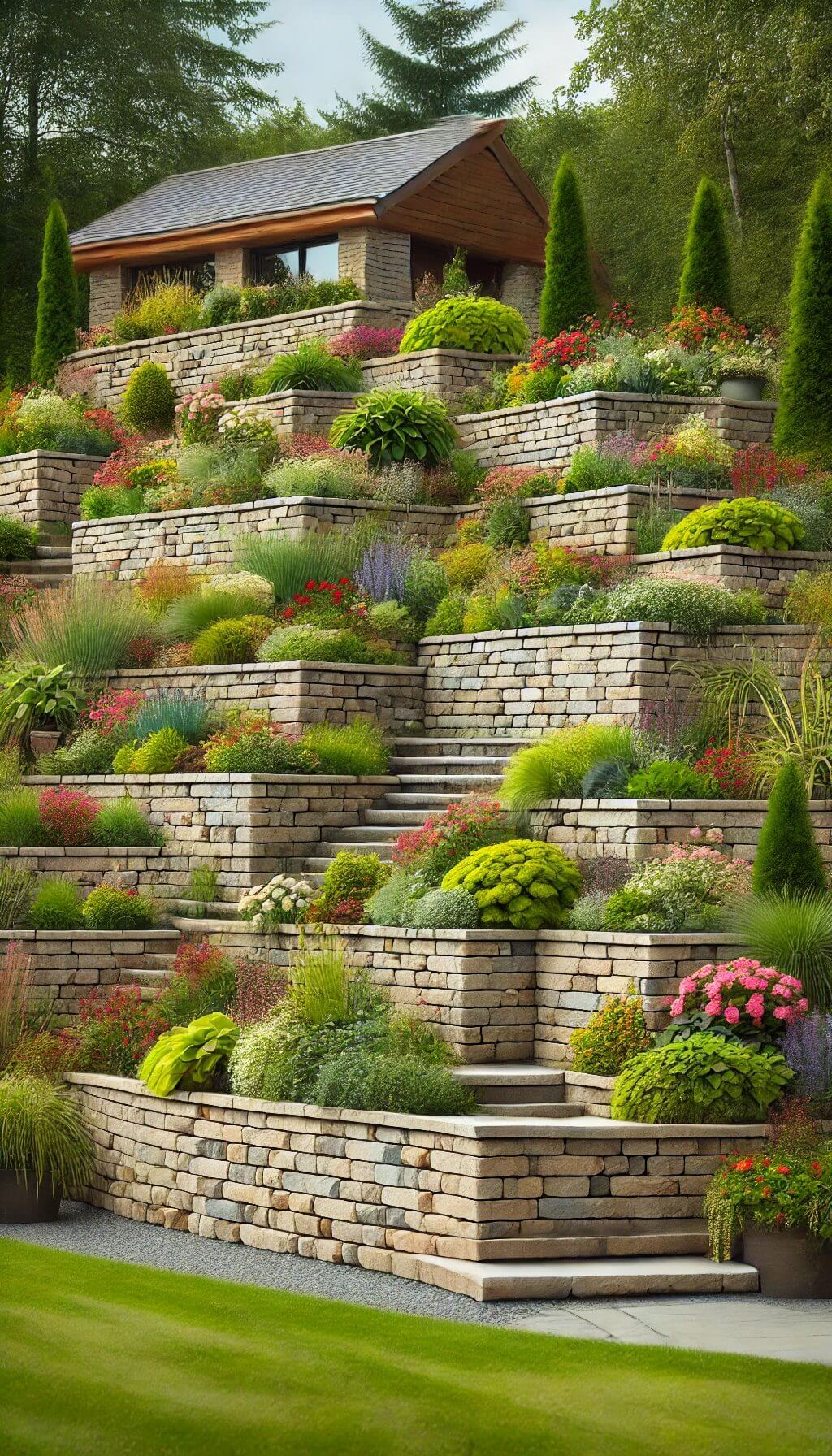
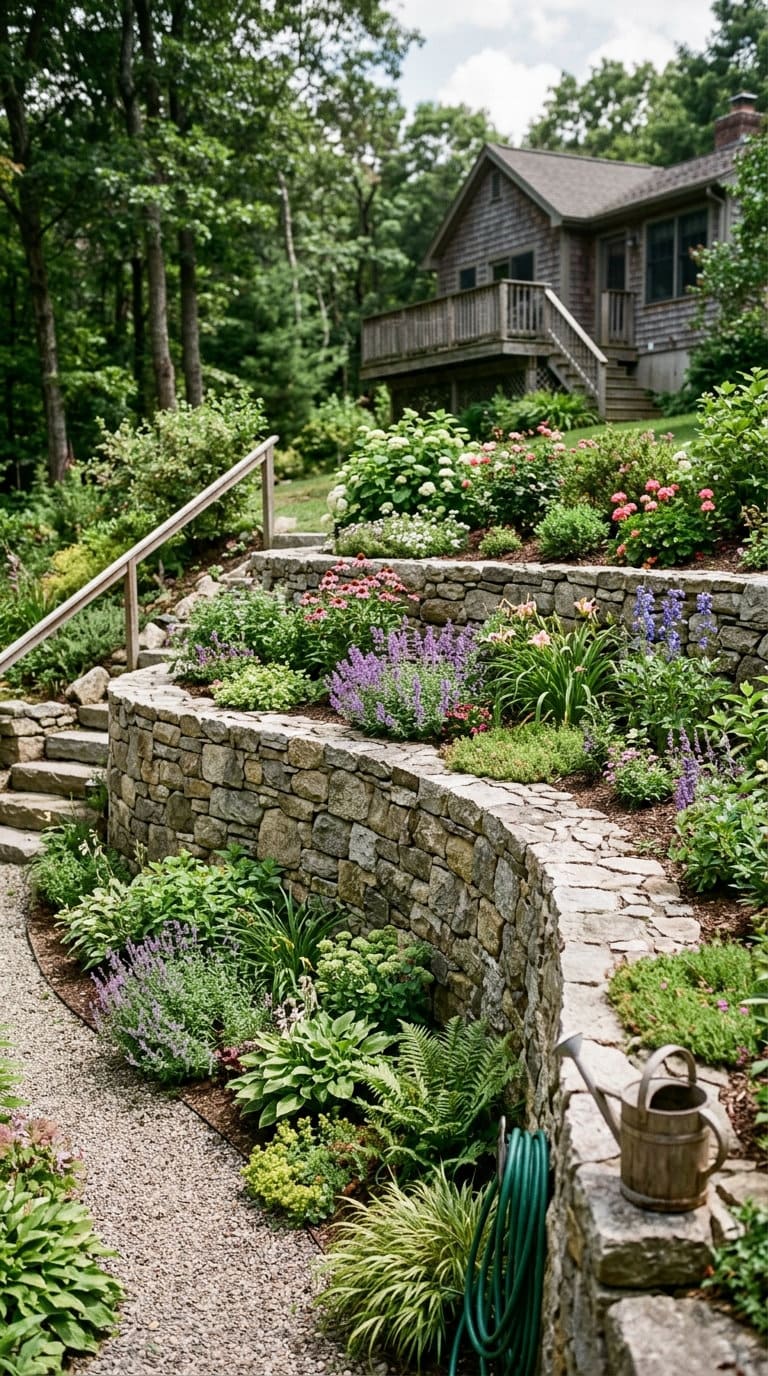
On a sloped yard, tiered walls break one tall retaining problem into several shorter, easier, and often cheaper-to-build walls, while adding visual layers and planting opportunities at each level.
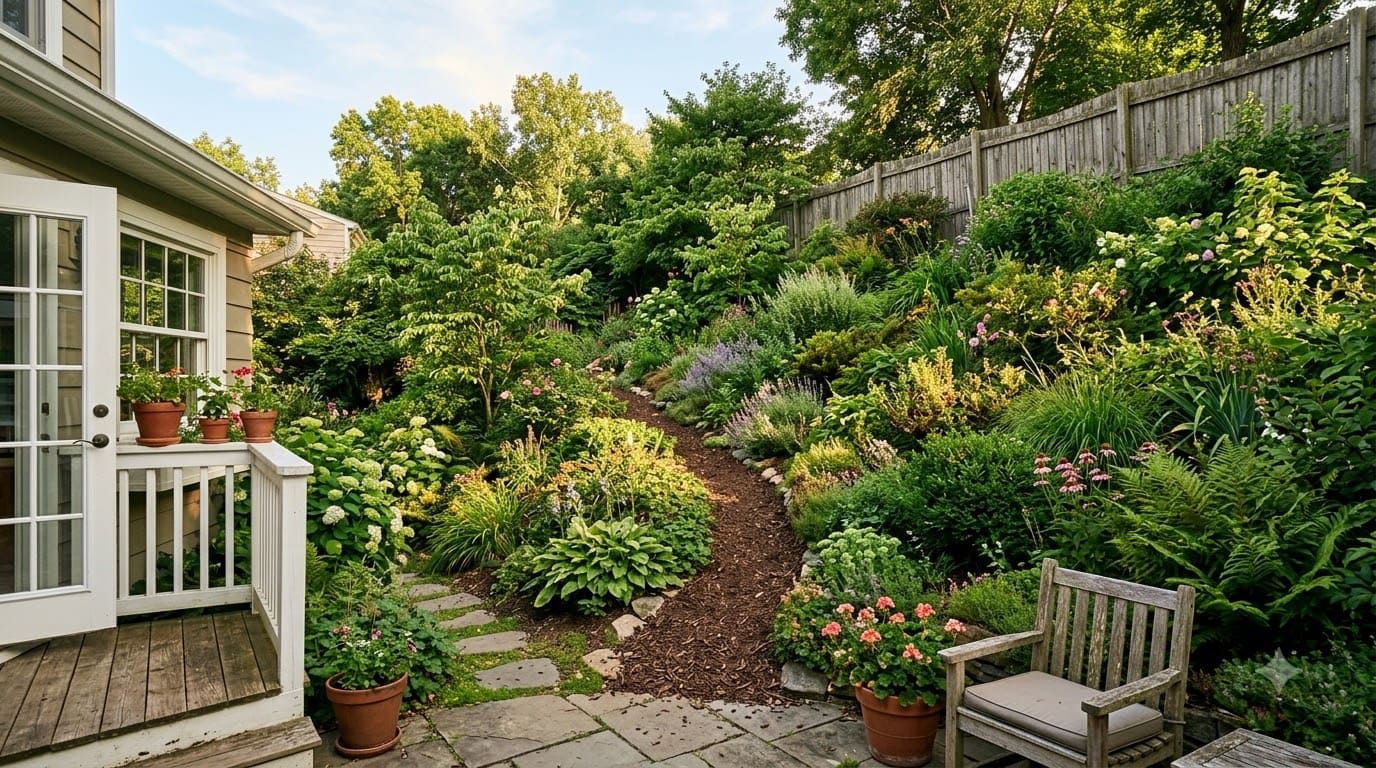
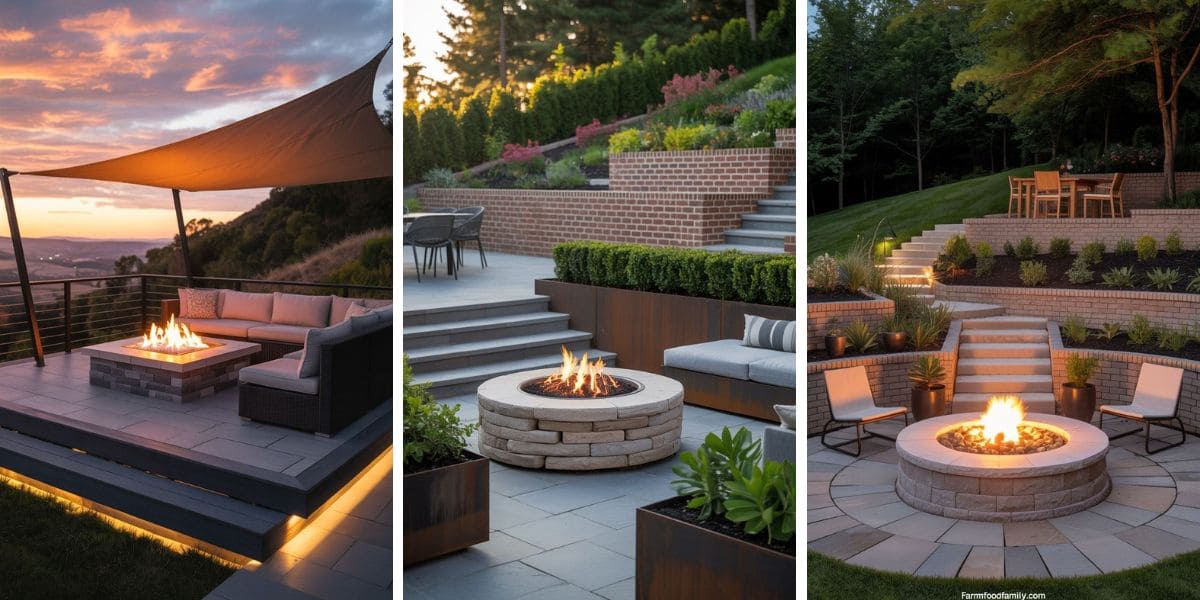
Each tier functions as its own retaining wall and needs its own proper drainage behind it (see idea 13 below), stacking tiers without addressing drainage at each level just multiplies the number of places water pressure can build up and cause a failure.
The curved-wall strength principle from idea 6 applies here too, a tiered wall built with a gentle curve at each level needs less structural reinforcement than a straight-run equivalent.
8. Low Walls as Seating Options

A wall built to double as a bench does real double duty, defining a garden space while giving people somewhere to sit without adding furniture.
The average homeowner spends $616/year on yard fixes that don't address the real problem. Find out what yours actually is — before you spend another dollar.
Take the Free QuizKeep the seat height in the 17 to 19 inch range, comparable to a standard chair, and cap it with a flat, smooth material (finished stone, capped brick, a wood plank top) rather than leaving a rough or uneven material as the sitting surface.
A width of at least 12 to 16 inches on top makes it comfortable to actually sit on rather than just perch.
9. Decorative Mosaic Walls
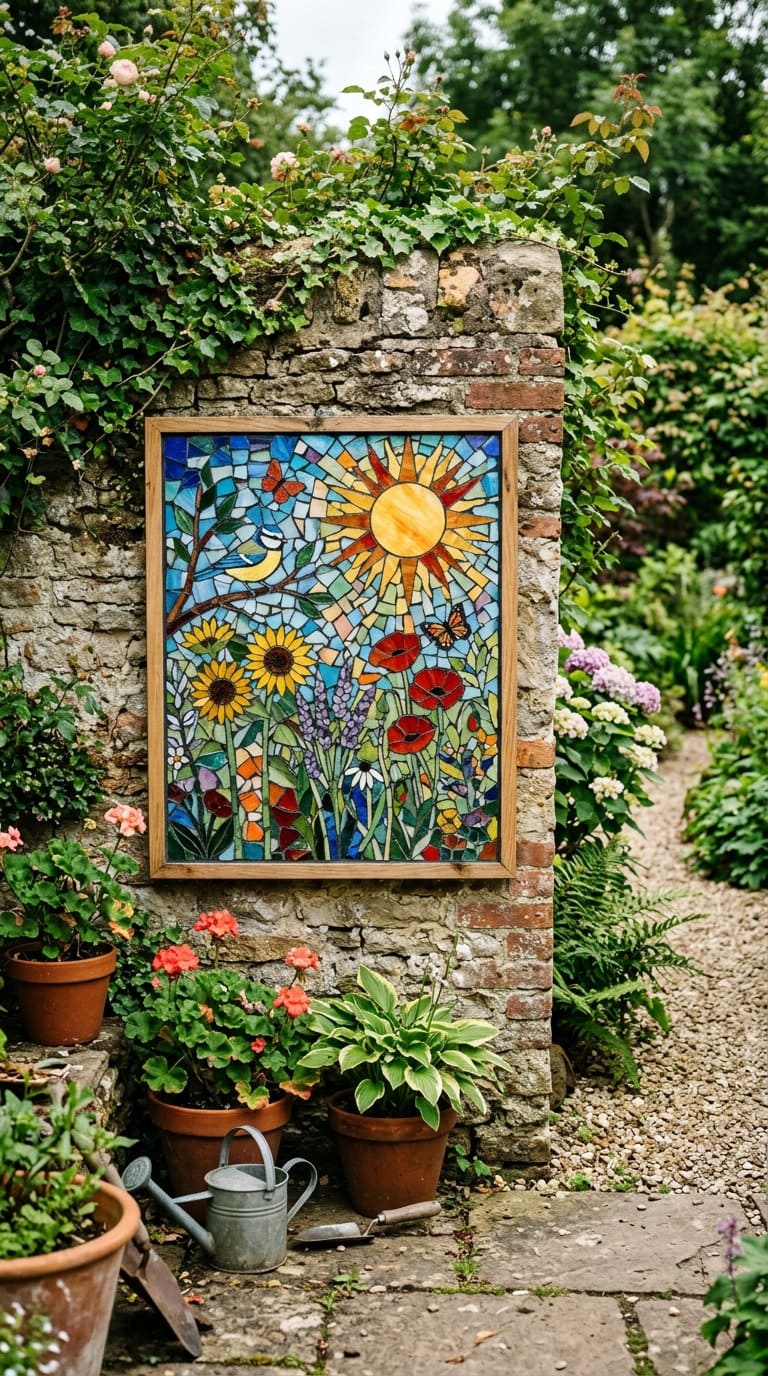
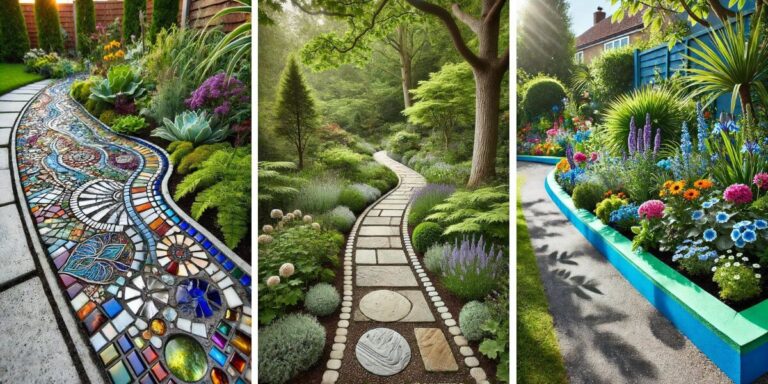
Mosaic tile, glass, or ceramic fragments set into mortar or applied over an existing wall surface turn a plain wall into a genuine art piece, whether it’s a professionally tiled design or a weekend DIY project using broken tile and leftover glass.
Exterior-rated tile and a weatherproof, frost-resistant mortar or adhesive matter here specifically, tile meant for interior use can crack or pop loose after a freeze-thaw cycle outdoors.
Grout color makes a bigger visual difference than most people expect, a dark grout reads as bold and graphic, while a grout matched to the tile color makes the whole pattern blend into a softer, more painterly effect.
10. Illuminated Garden Walls
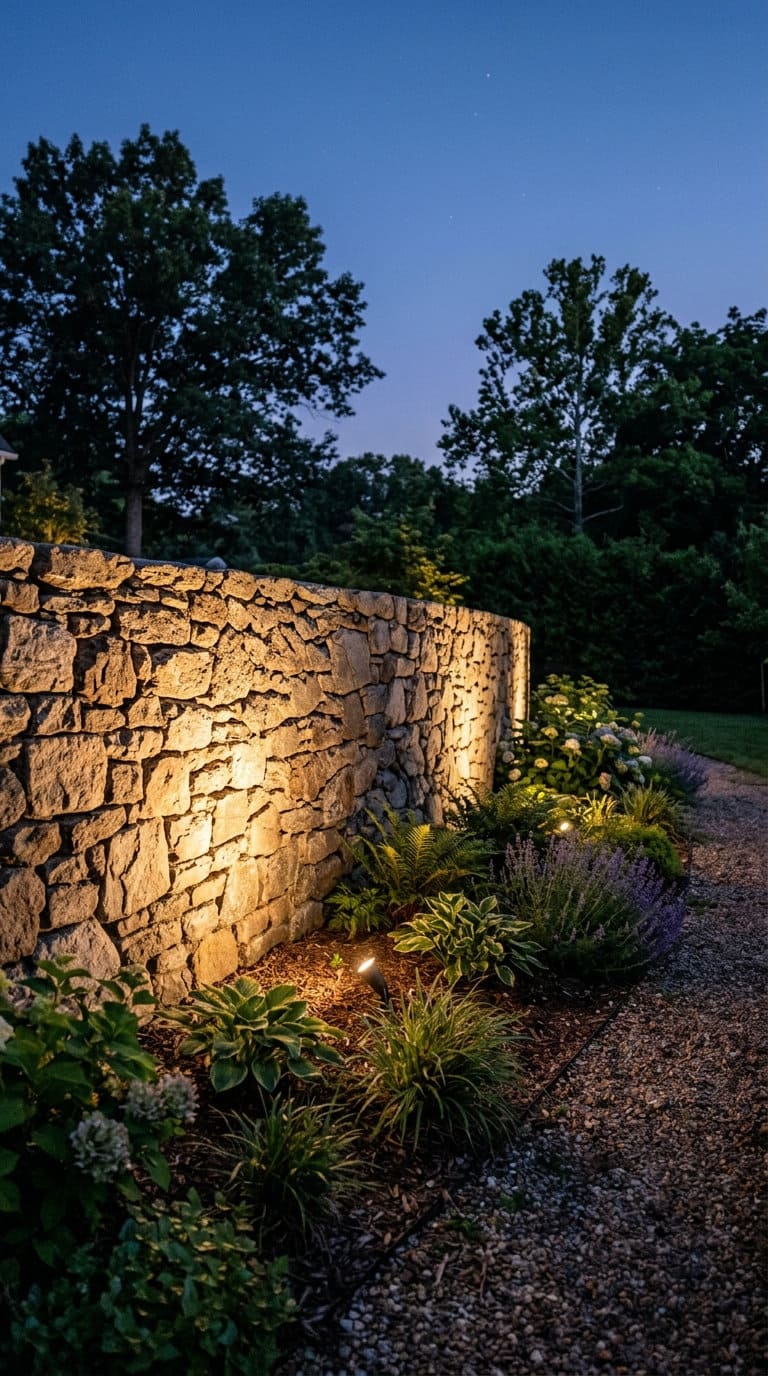
Lighting built into or aimed at a garden wall extends how much of the evening you actually get to enjoy the space. Uplighting (fixtures at the base aimed upward) emphasizes texture, great for stone or brick where you want the shadows from the surface to show.
Downlighting or integrated cap lighting reads softer and more ambient, better for a wall meant as a backdrop rather than a feature. Solar fixtures keep the ongoing cost near zero, though they’re genuinely less reliable through several consecutive cloudy days than a low-voltage wired system.
Purpose-driven Ideas
11. Privacy Walls
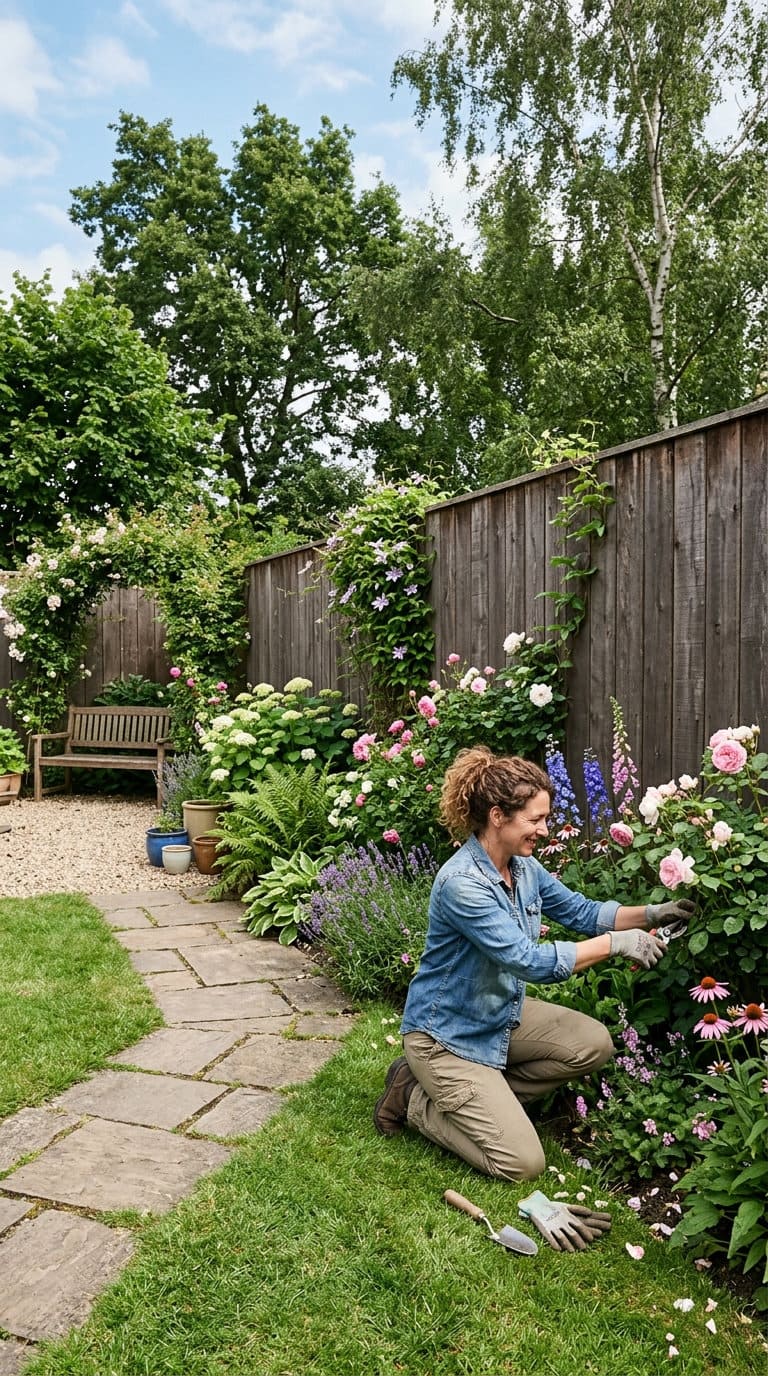
A solid privacy wall in a crowded neighborhood turns a garden into a genuinely private space, no gaps, no sightlines, unlike a fence with pickets or slats.
Height is the main variable, most residential privacy walls run 6 to 8 feet, though local fence and wall height ordinances often cap this, check before committing to a height and design.
Unlike a windbreak wall (see idea 12), a solid design is actually the right call here, since blocking sightlines completely is the whole point, and the wind-turbulence tradeoff that matters for a windbreak isn’t really the priority for a privacy wall.
12. Windbreak Walls
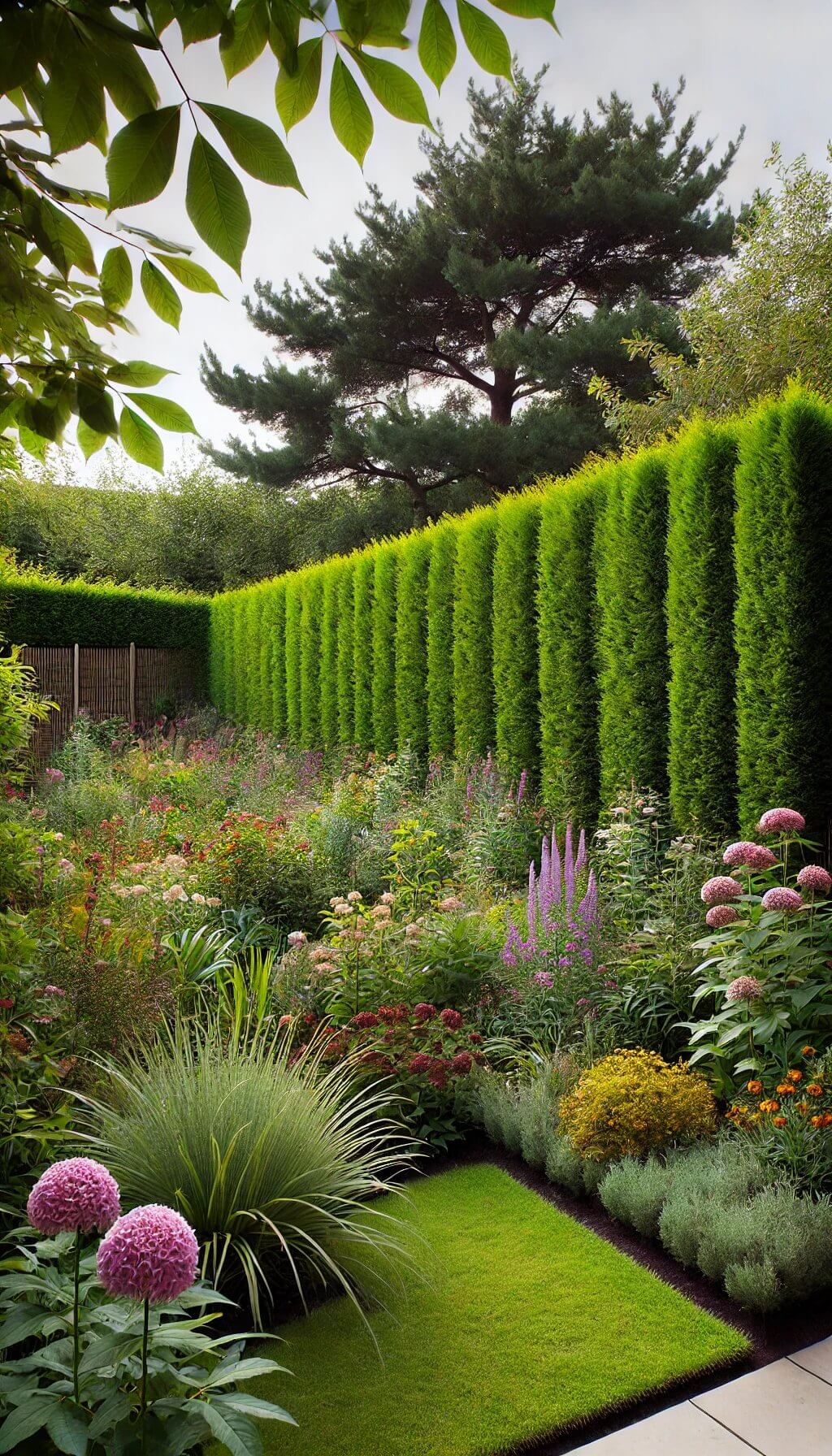
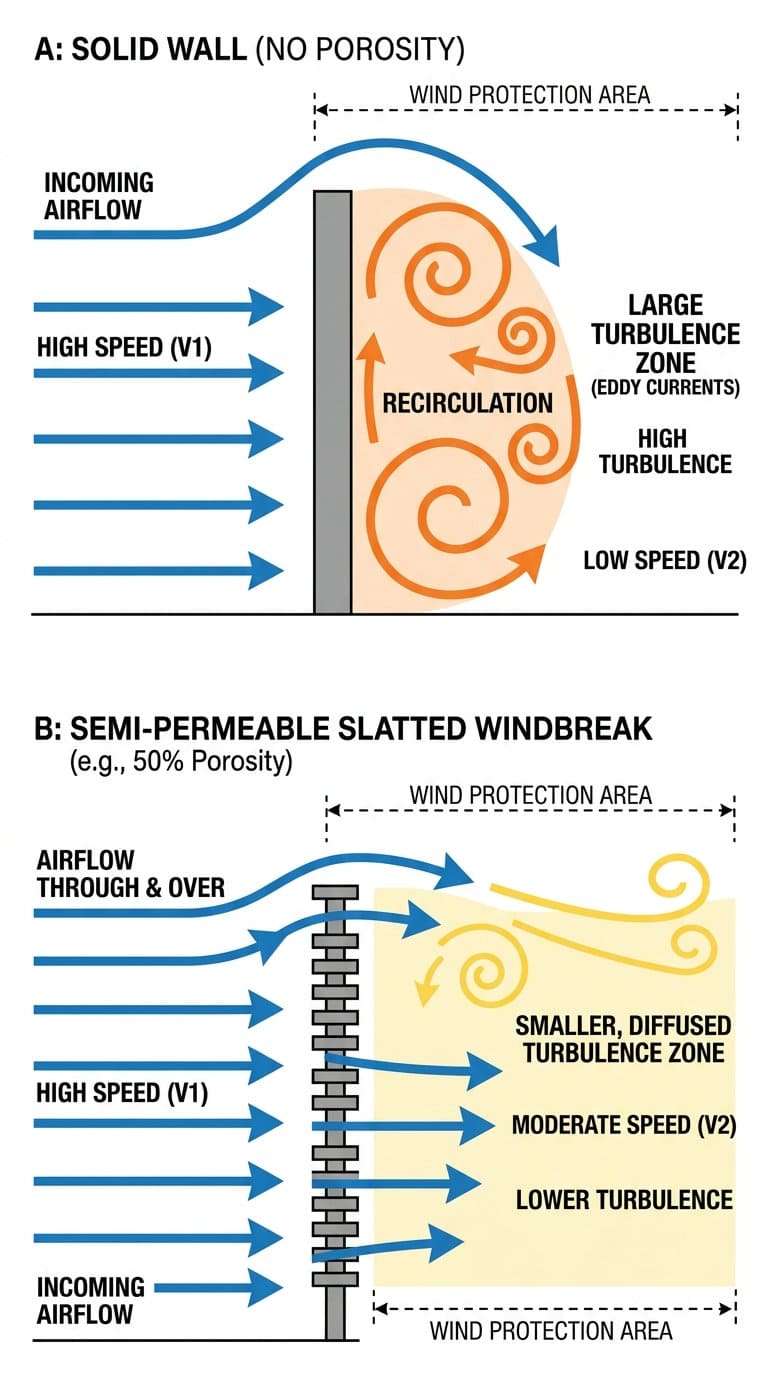
This is the one idea on this list where the intuitive choice, a solid wall, is actually the wrong one. A fully solid wall forces wind up and over it creating a pressure vacuum and real turbulence on the sheltered side, sometimes making conditions worse than having no barrier at all.
A semi-permeable wall or fence roughly 50 to 60 percent solid, actually reduces wind speed and turbulence more effectively than a fully solid wall, since letting some wind pass through breaks up the pressure difference that causes the vacuum effect on the leeward side.
If you want a wall specifically to cut wind rather than block a view, a slatted, louvered, or perforated design is genuinely the better-performing choice, not just a cheaper one.
13. Retaining Walls
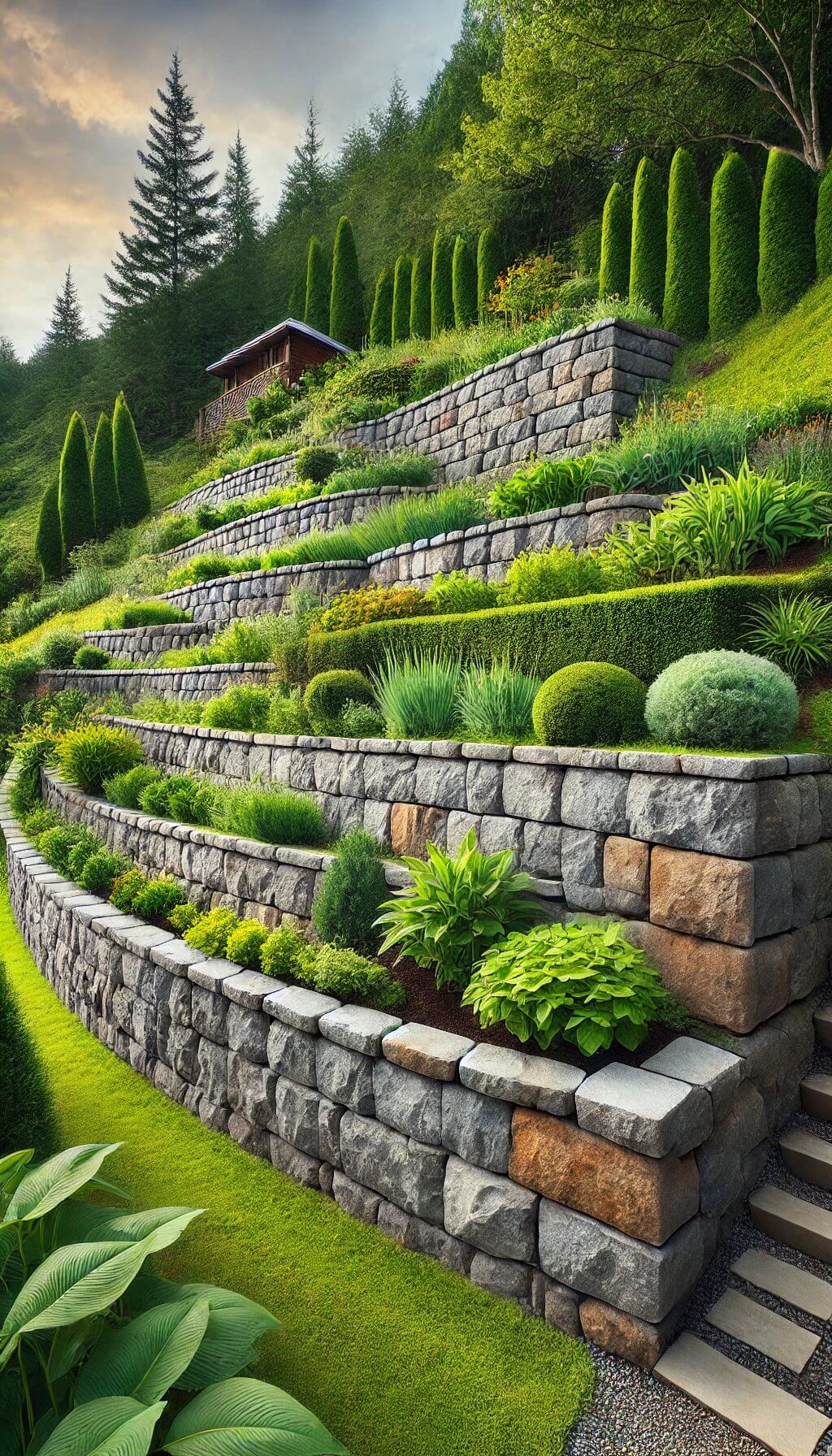
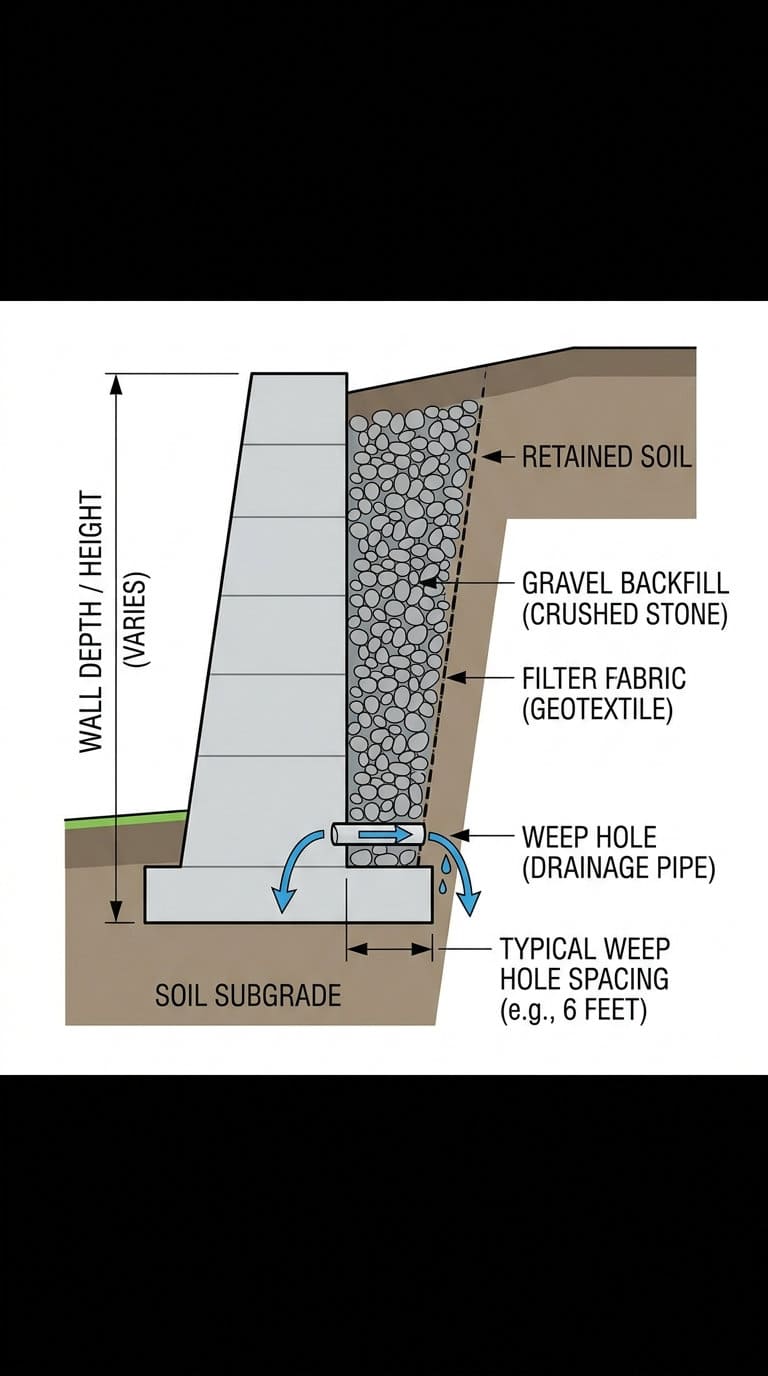
These walls are essential for sloping spots, and getting them right matters more than any other idea on this list, a failed retaining wall isn’t just an eyesore, it can be a real safety hazard. Roger Cook, This Old House’s longtime landscape contractor puts the real cause of most failures plainly: “Walls don’t fail because of the way the stone is stacked.
They fail because of bad preparation,” describing wet, poorly drained soil as the real enemy of a stone retaining wall. Proper drainage, weep holes spaced roughly every 3 to 7 feet plus free-draining gravel backfill behind the wall, matters more to long-term stability than the wall’s mass or thickness.
On permits, many jurisdictions require one once a wall reaches roughly 3 to 4 feet in height (measured from the footing to the top), and some require it regardless of height if the wall supports a load or sits on a property line, check your local building department before starting. For more retaining wall designs specifically, retaining wall ideas and, for a sloped yard in particular, retaining wall ideas for sloped backyards both go deeper.
14. Acoustic Barrier Walls
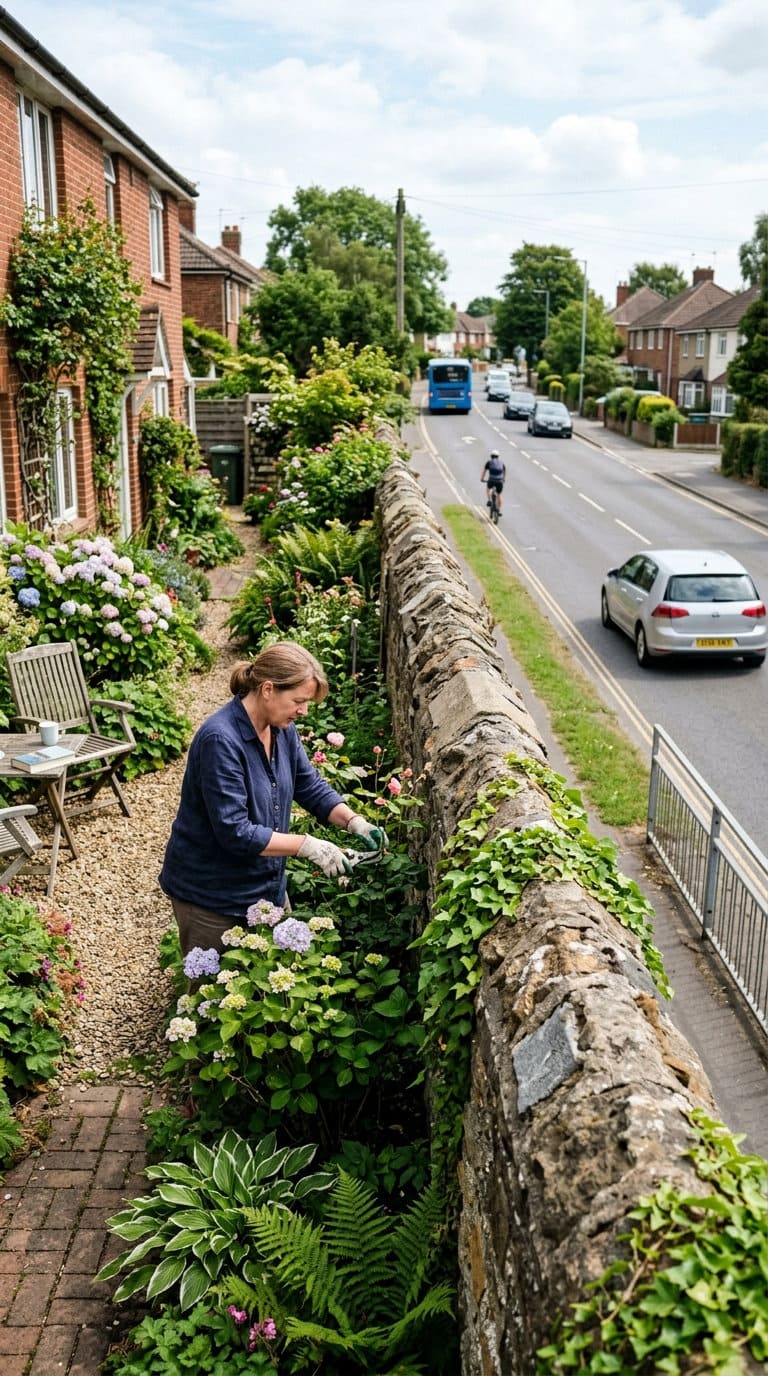
Drown out the din of traffic or noisy neighbors, but it’s worth knowing honestly what a garden wall can and can’t actually do here.
Simply blocking direct line-of-sight to a noise source typically cuts perceived noise by around 5 decibels, while dedicated highway noise walls, engineered specifically for the purpose, target 7 to 10 decibels.
The wall material needs real mass roughly 4 pounds per square foot at minimum, to meaningfully block sound, and any gap or crack largely defeats the effect, sound leaks through the smallest opening the same way light leaks through a gap in an otherwise dark room.
This is genuinely useful, just don’t expect a garden wall alone to fully silence a busy street, it noticeably softens the noise rather than eliminating it.
15. Garden Walls with Integrated Planters
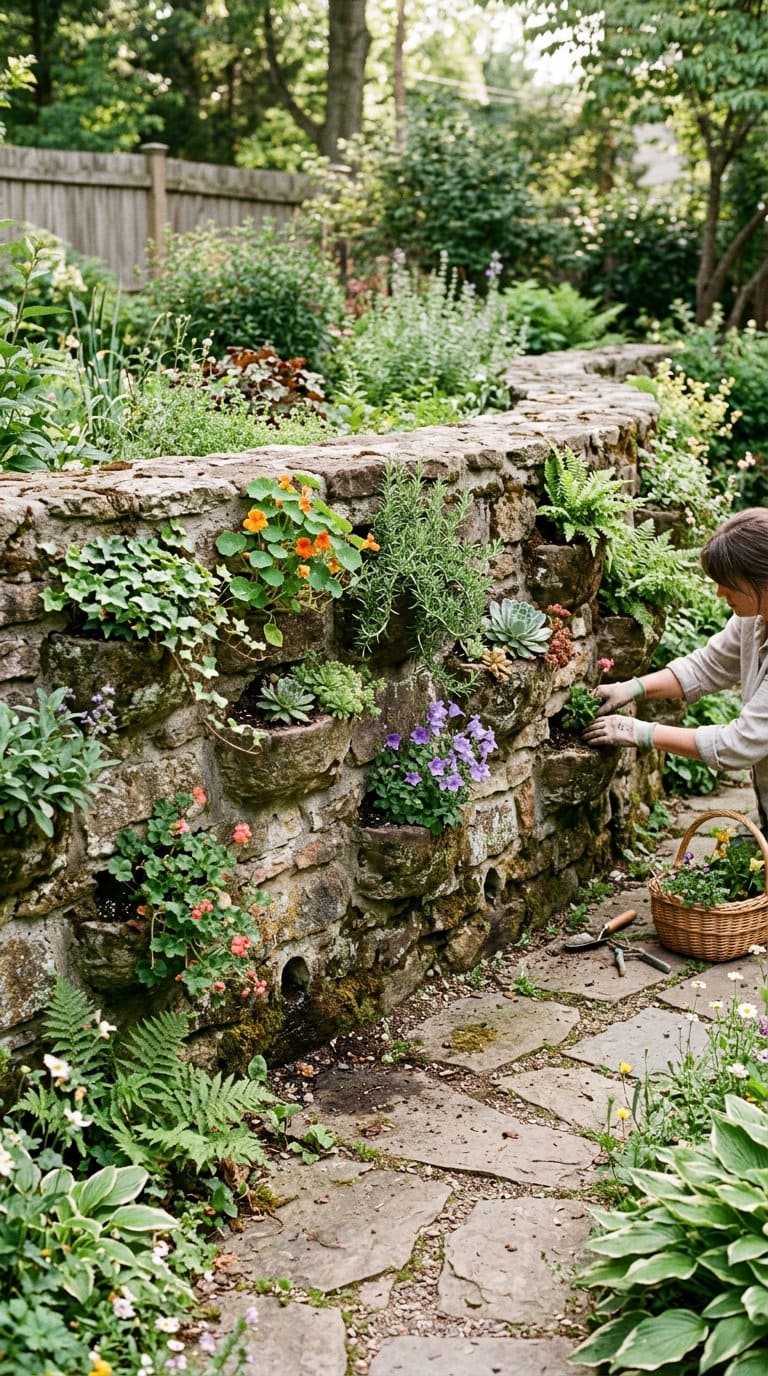
Short on space? Walls with built-in planter boxes or pockets make the most of what you’ve got, turning a flat vertical surface into functional planting area without taking up any ground footprint.
Make sure integrated planters have real drainage, a gravel layer or drainage holes at the bottom of each pocket, since a planter built into a wall with nowhere for excess water to go will waterlog roots and can also drive moisture into the wall structure itself over time.
This is especially useful in a small yard or balcony situation, worth a look alongside apartment gardening ideas for more compact-space approaches.
Thematic Ideas
16. Tropical Wall Gardens
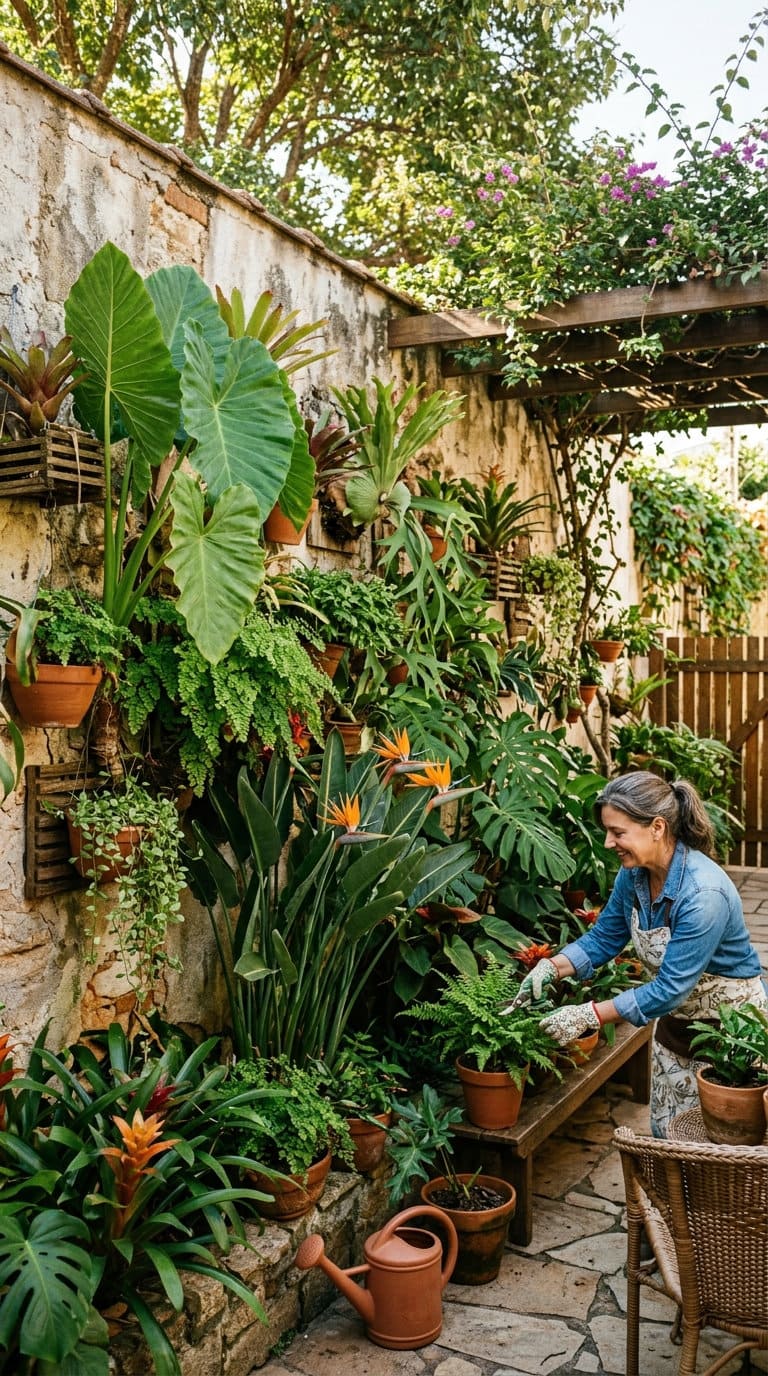
Pick vibrant, broad-leafed plants, elephant ear, bird of paradise, philodendron, and bright tropical blooms to give a garden wall a lush, escapist feel.
This works best in a warm climate where these plants can live outdoors year-round, in a colder climate, plan on treating the display as seasonal or using containers you can move indoors before frost.
17. Herb Garden Walls:
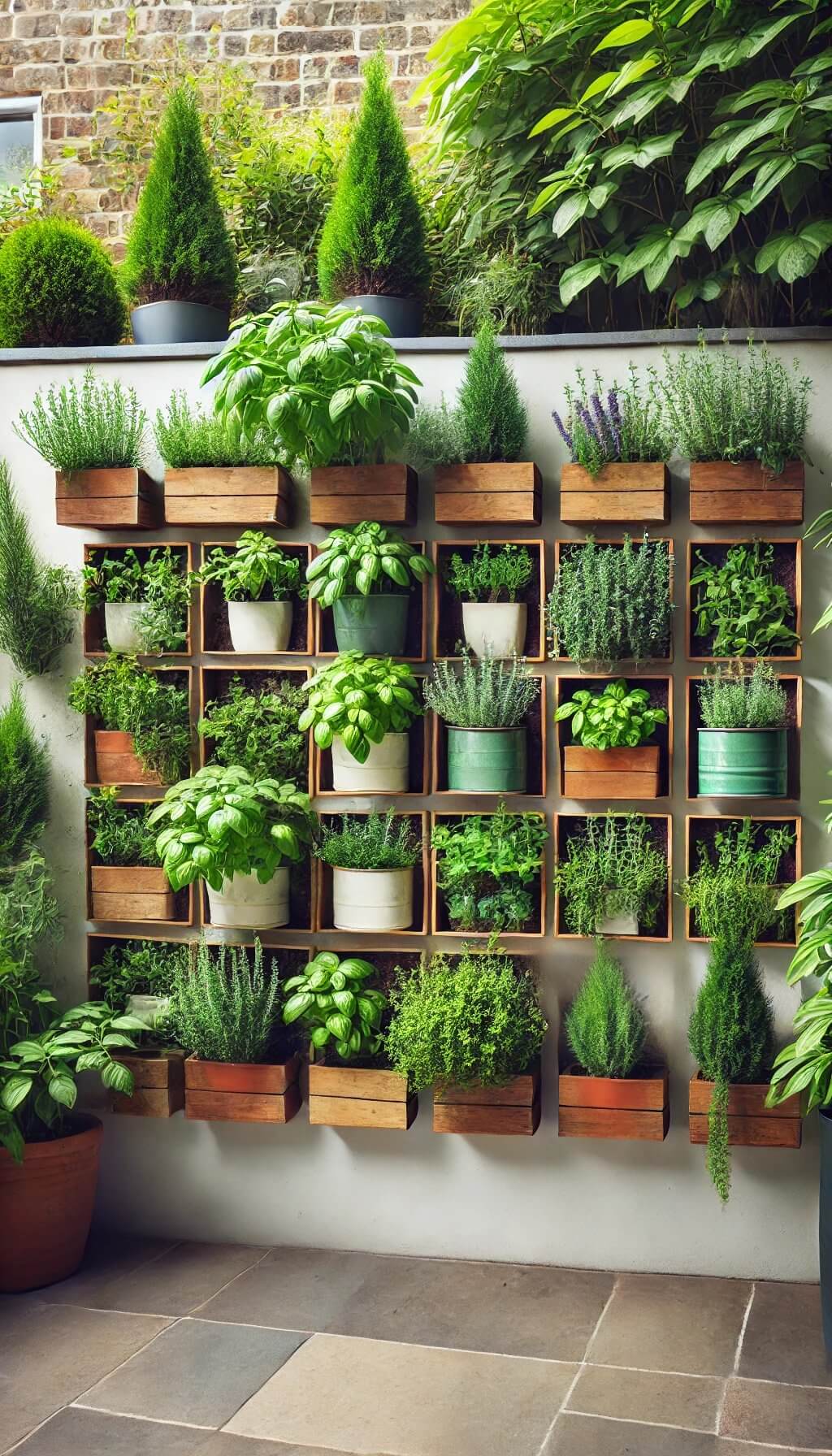
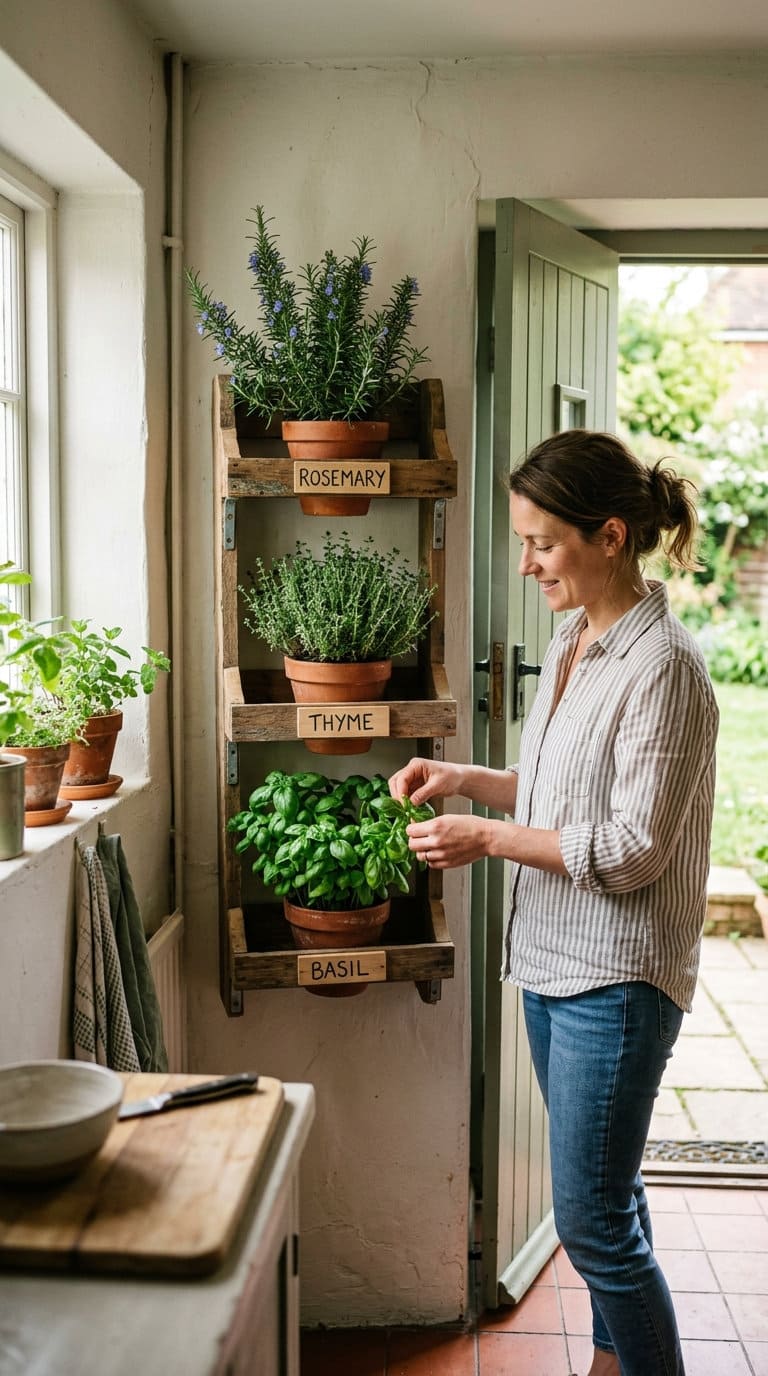
A wall-mounted or pocket-planted herb garden puts fresh rosemary, thyme, basil, and mint within arm’s reach of the kitchen door, genuinely more convenient than a garden bed across the yard.
Herbs generally want more sun and less water than ornamental plants, so if you’re combining an herb section with other planting on the same wall, group the herbs together rather than mixing their watering needs with thirstier neighbors.
18. Succulent Wall Displays:
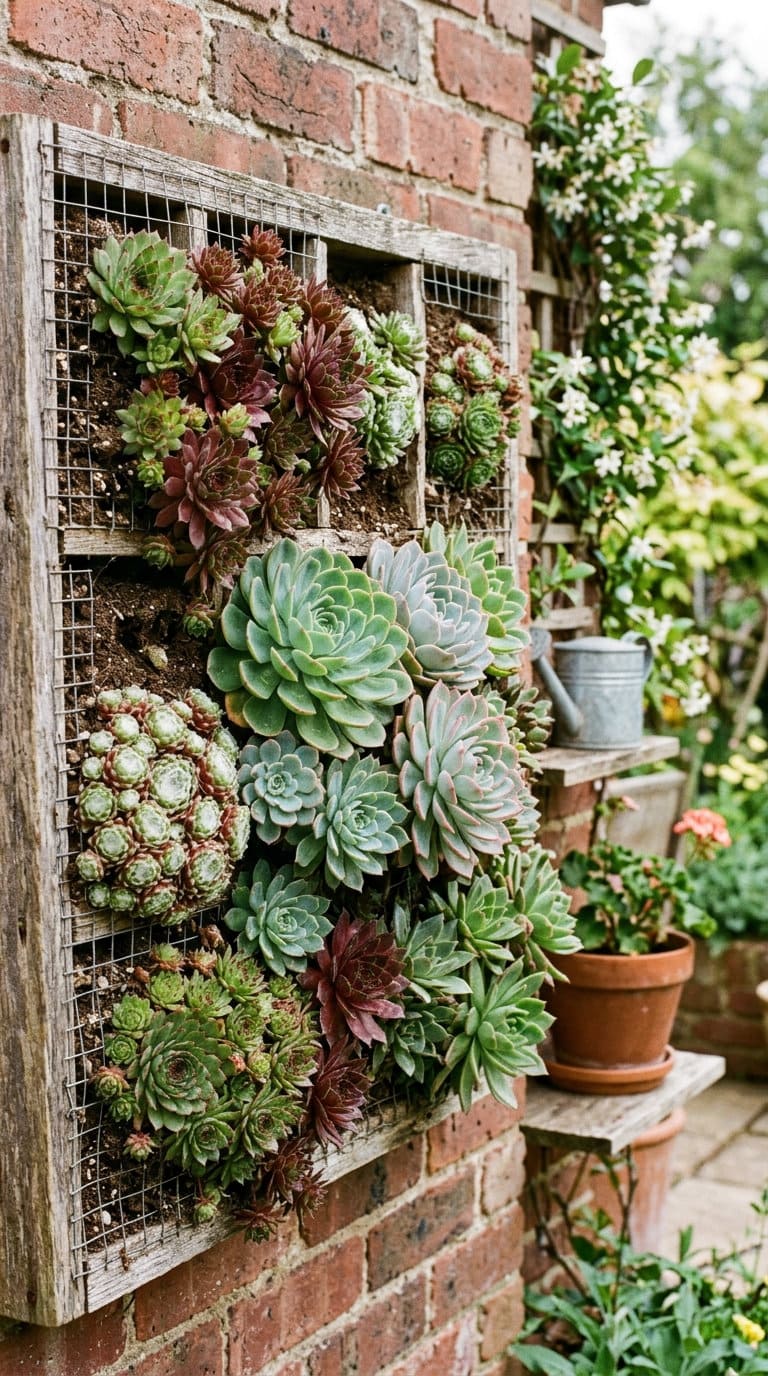
Succulents are one of the lowest-maintenance choices for a wall display specifically because they need little to no supplemental irrigation once established, a real practical advantage over the true living wall systems in idea 19, which typically need daily watering.
Hen-and-chicks, sedum, and echeveria all tolerate the shallow soil pockets a wall-mounted planter provides better than most other plants would. If the stone-and-texture look from idea 1 appeals to you, pairing succulents with a stone wall backdrop is a natural combination, rock garden ideas has more on that pairing.
19. Vertical Garden Walls:
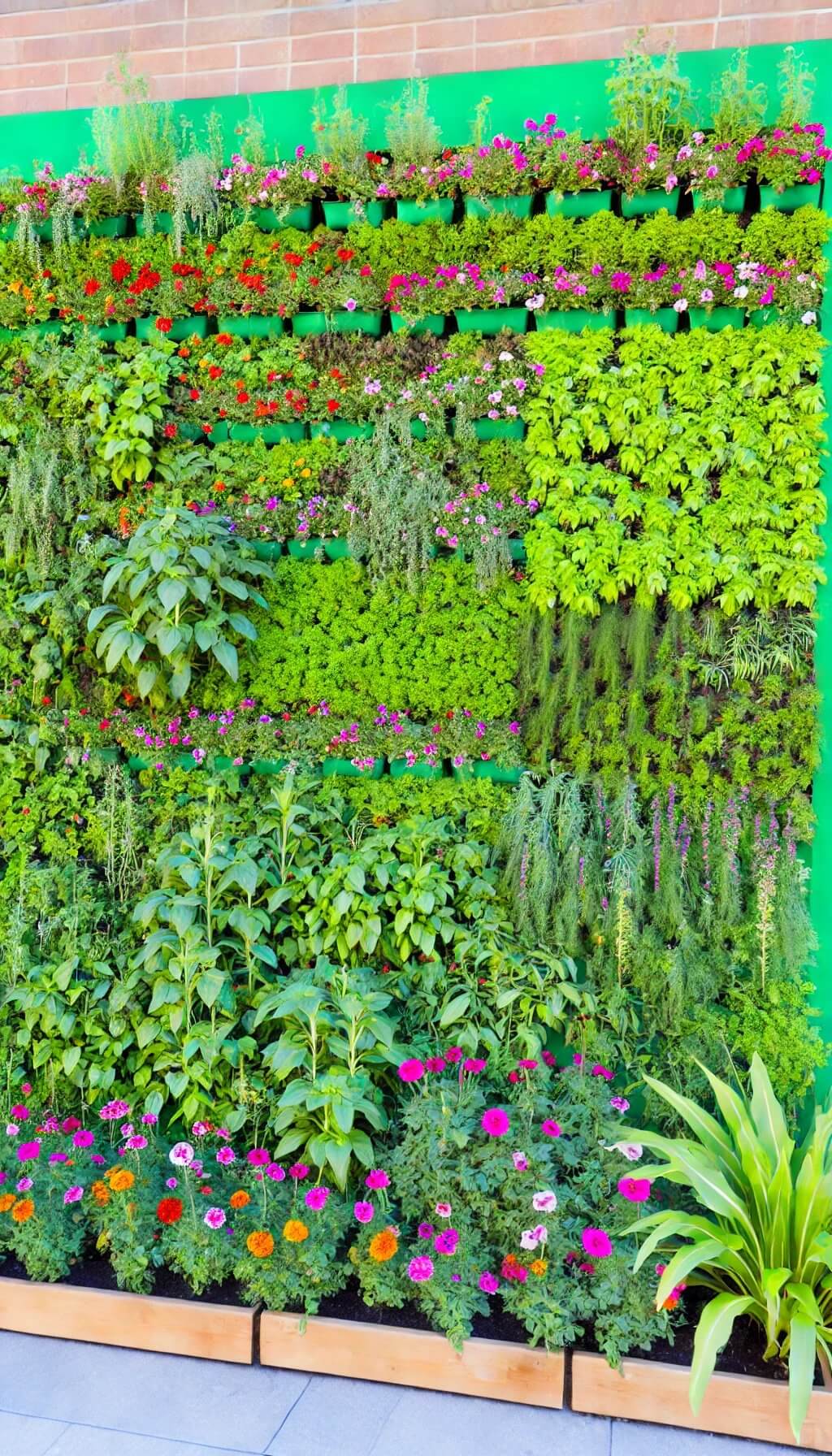
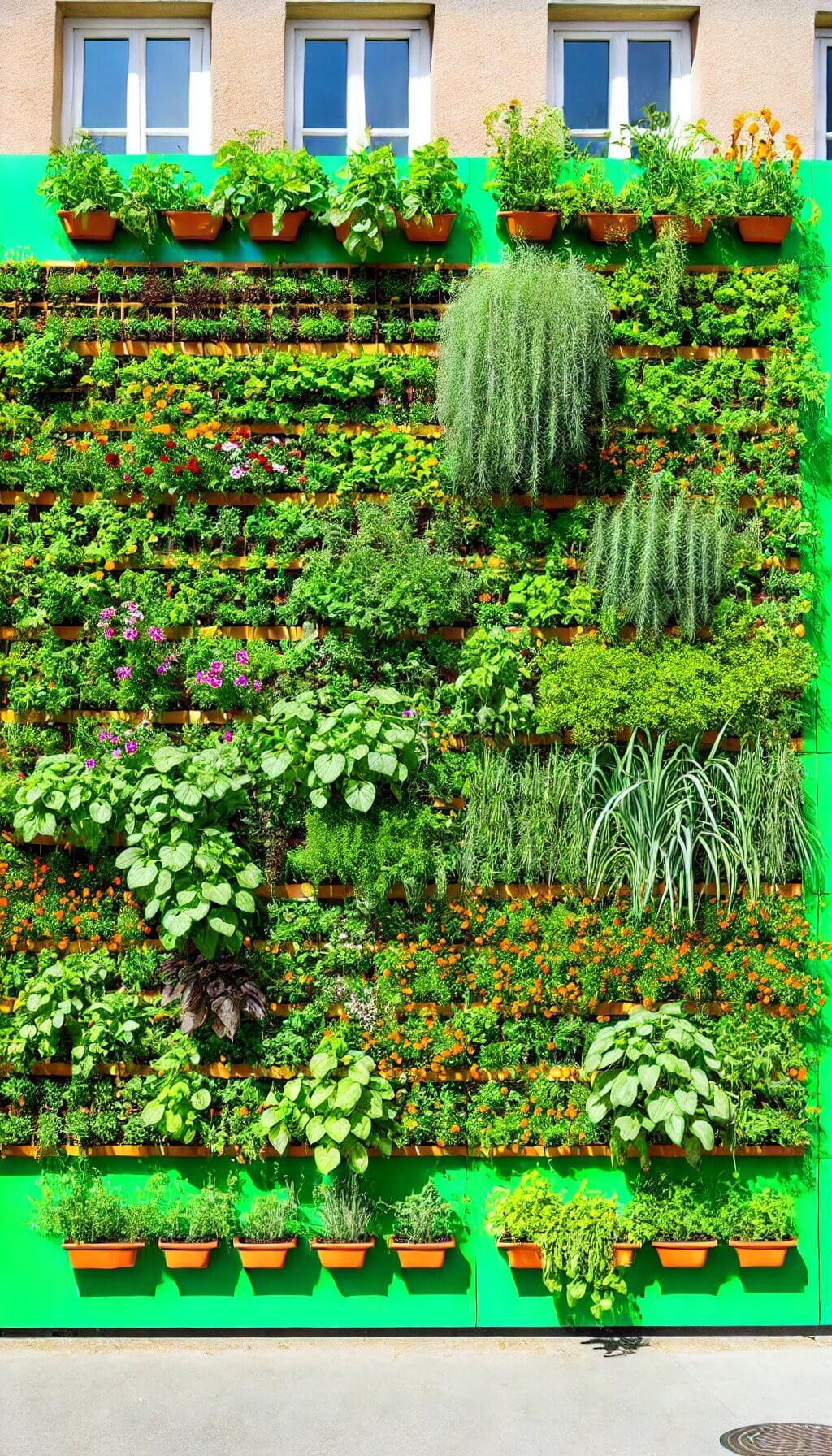
Build up, not out, a true vertical garden wall system can host anything from flowers to a working vegetable patch on a fraction of the ground footprint a bed would need.
Worth knowing before committing to a full system: a saturated living wall panel runs roughly 12 to 25 pounds per square foot under normal conditions, and can exceed 40 pounds per square foot if overwatered or poorly drained, a single 4×8 foot section can top 800 pounds, a genuine structural mounting consideration, not a trivial one.
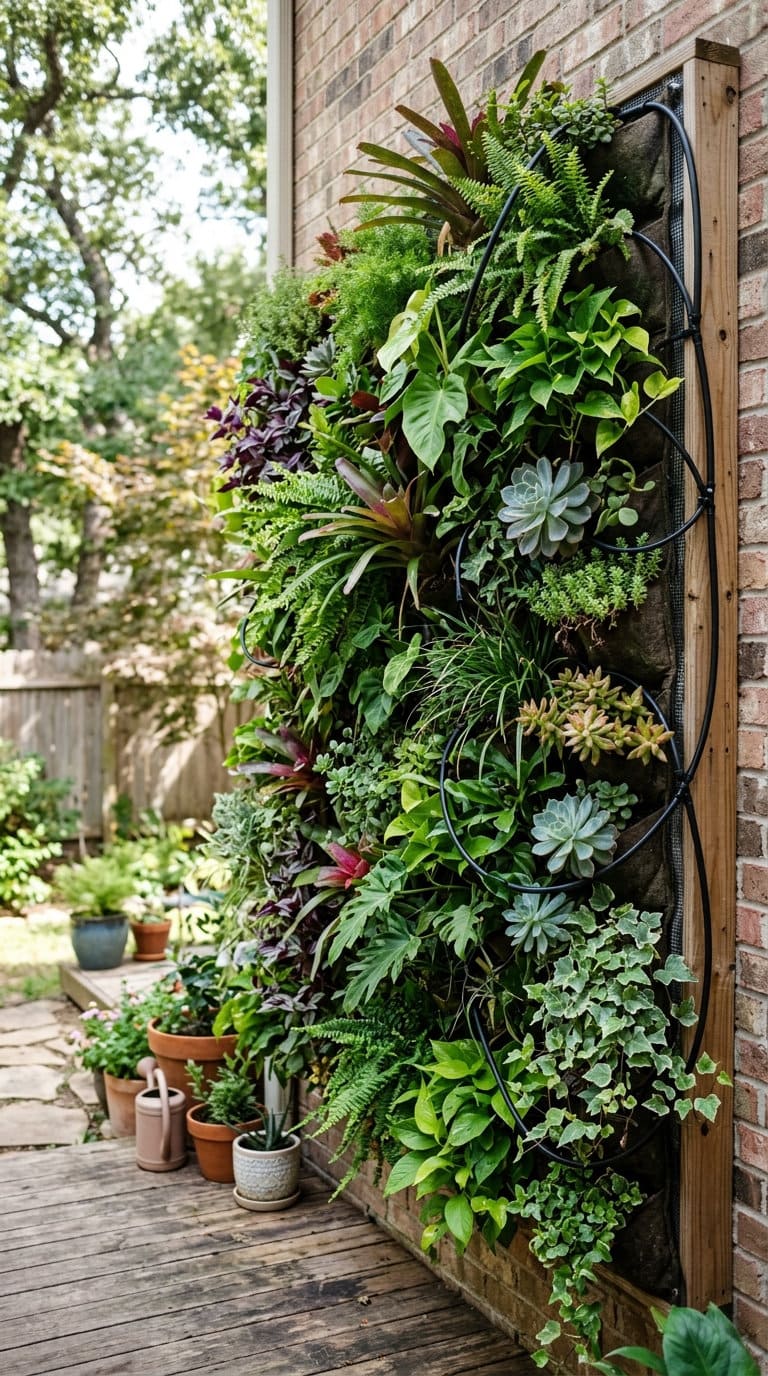
Drip irrigation on a timer is close to essential for a system like this, commonly around 4 waterings a day depending on height and climate, which is the real tradeoff against the low-maintenance succulent option in idea 18.
20. Children’s Garden Walls:
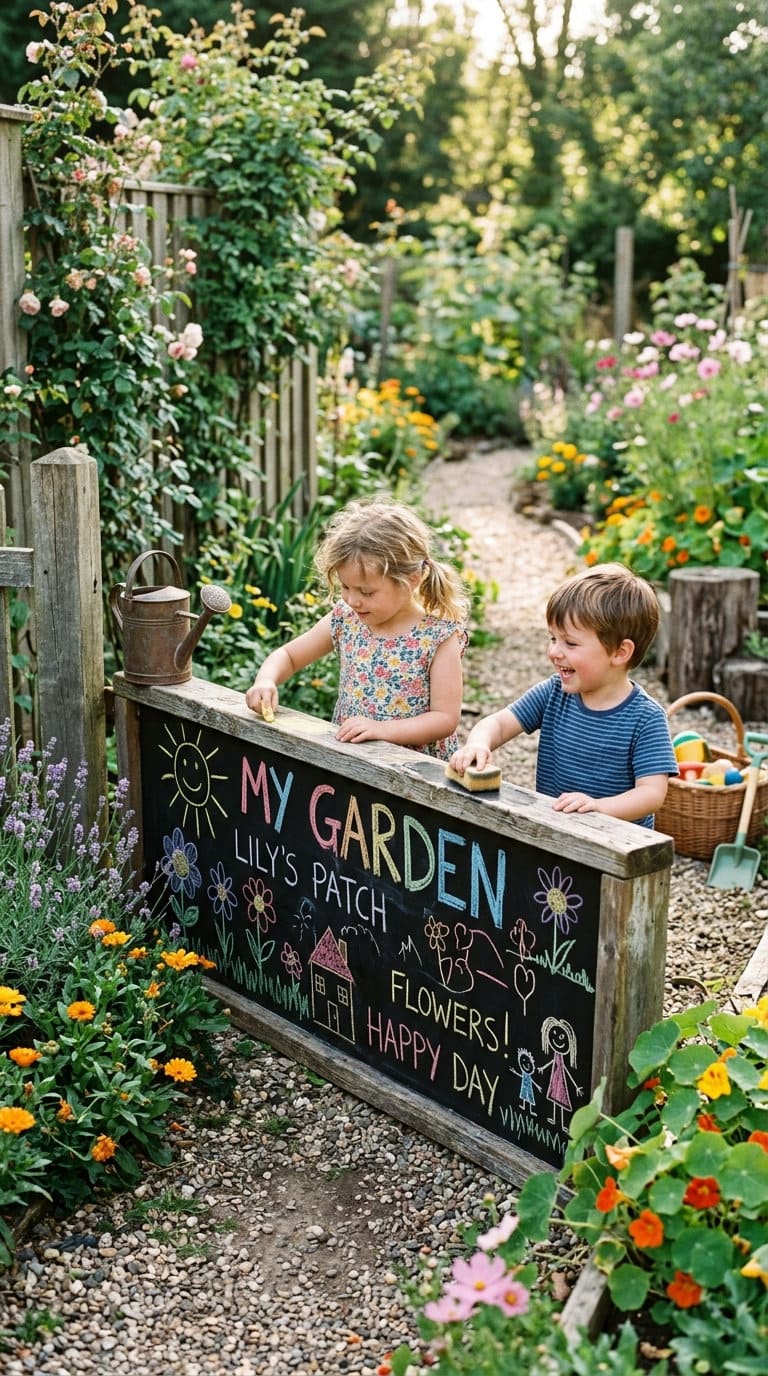
Make it fun for the little ones with a low section of wall finished in chalkboard paint, magnetic paint, or a mounted whiteboard panel, a genuinely durable, weatherproof alternative to a chalkboard or easel that has to come inside every time it rains.
Keep this section at a child-appropriate height, roughly 3 to 4 feet, rather than matching the height of the rest of the wall.
Innovative Ideas
21. Recycled Material Walls:
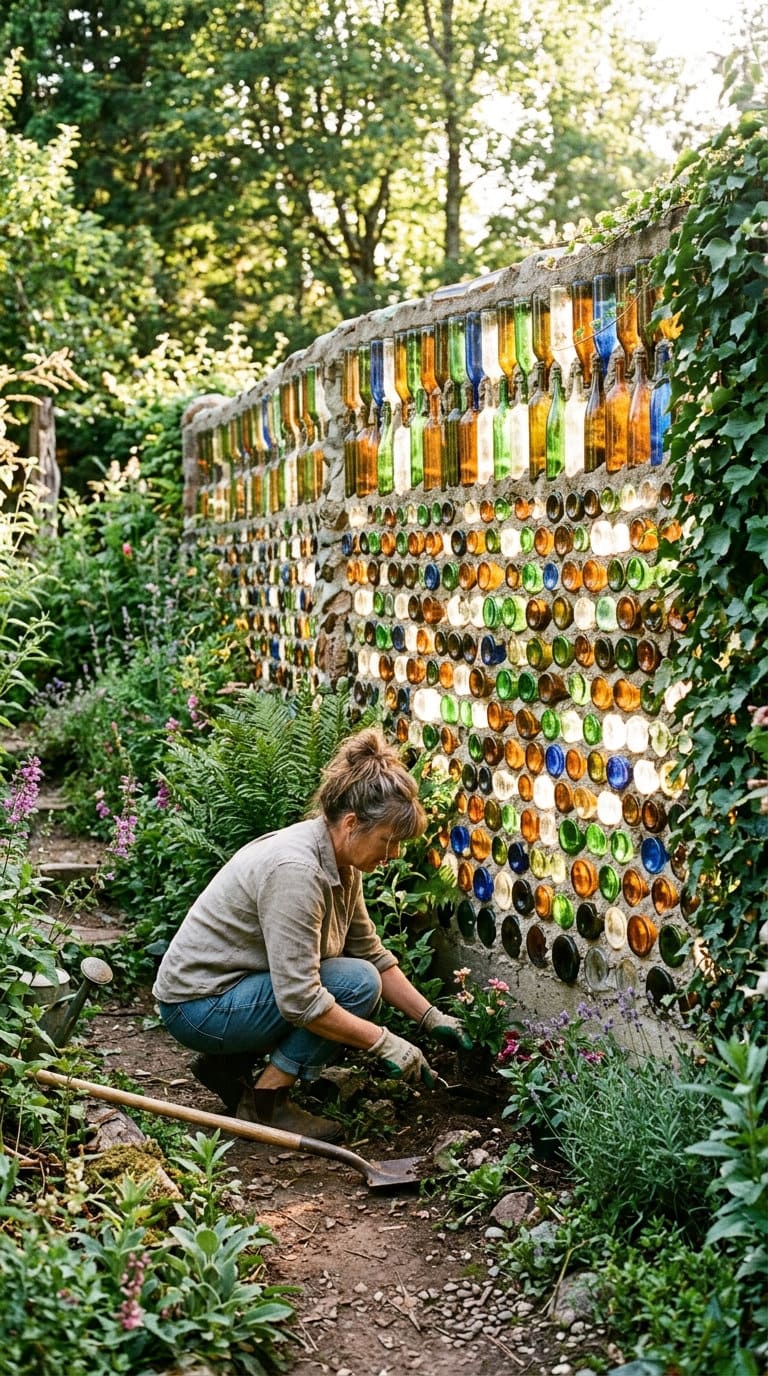
Turn old tires, glass bottles, or broken ceramics into a genuinely eco-smart garden wall feature. Tires stacked and filled with rammed earth are a real, documented earthbag-style building technique, though they work best as a low retaining or accent wall rather than a full-height structural wall without additional engineering.
Glass bottle walls (bottles laid sideways in mortar, ends facing out) create a genuinely striking translucent effect when backlit or in direct sun. For more recycled-material project ideas generally, DIY recycled old tire furniture ideas covers a related approach with the same materials.
22. Interactive Walls with Climbing Holds:
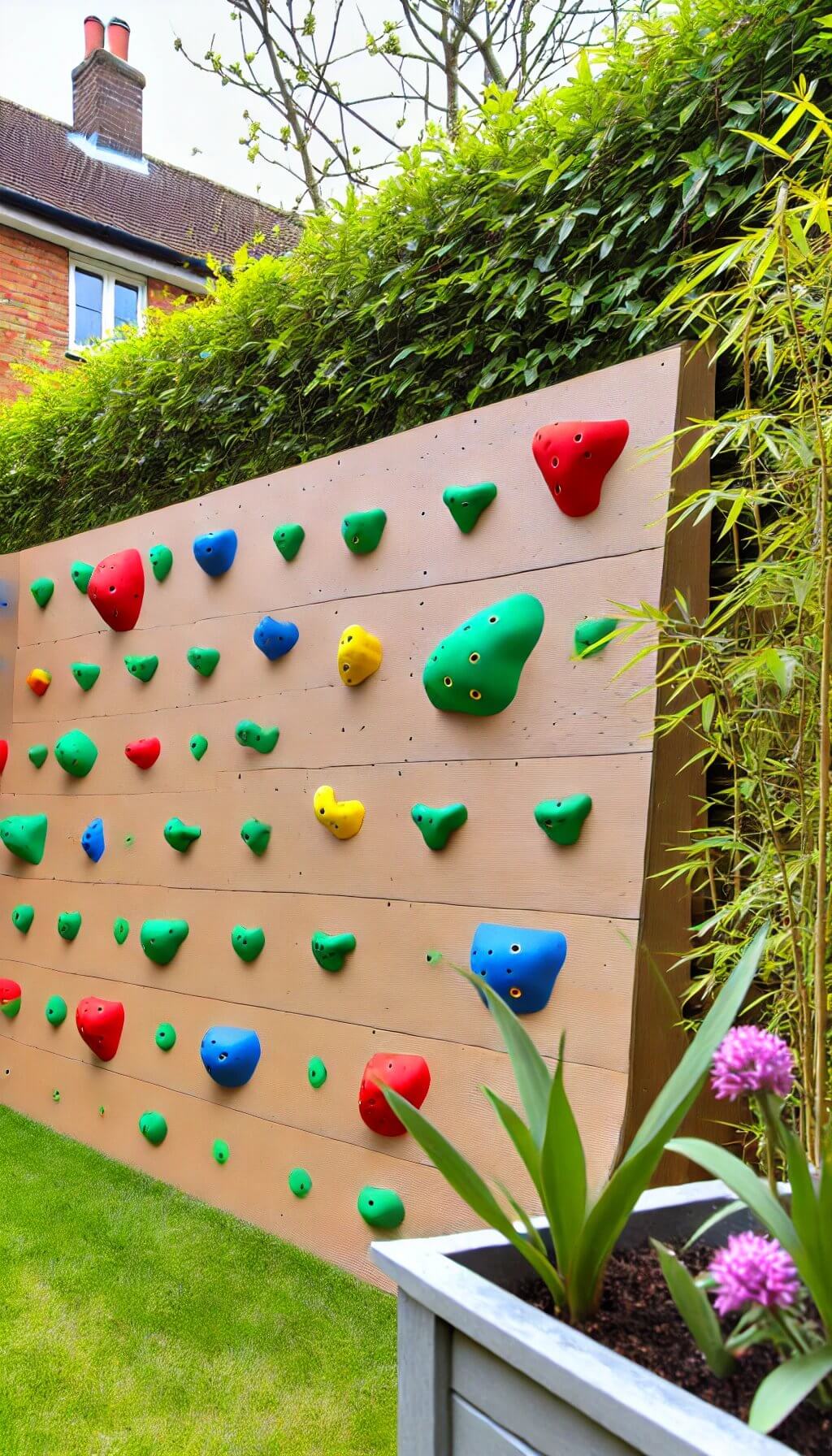
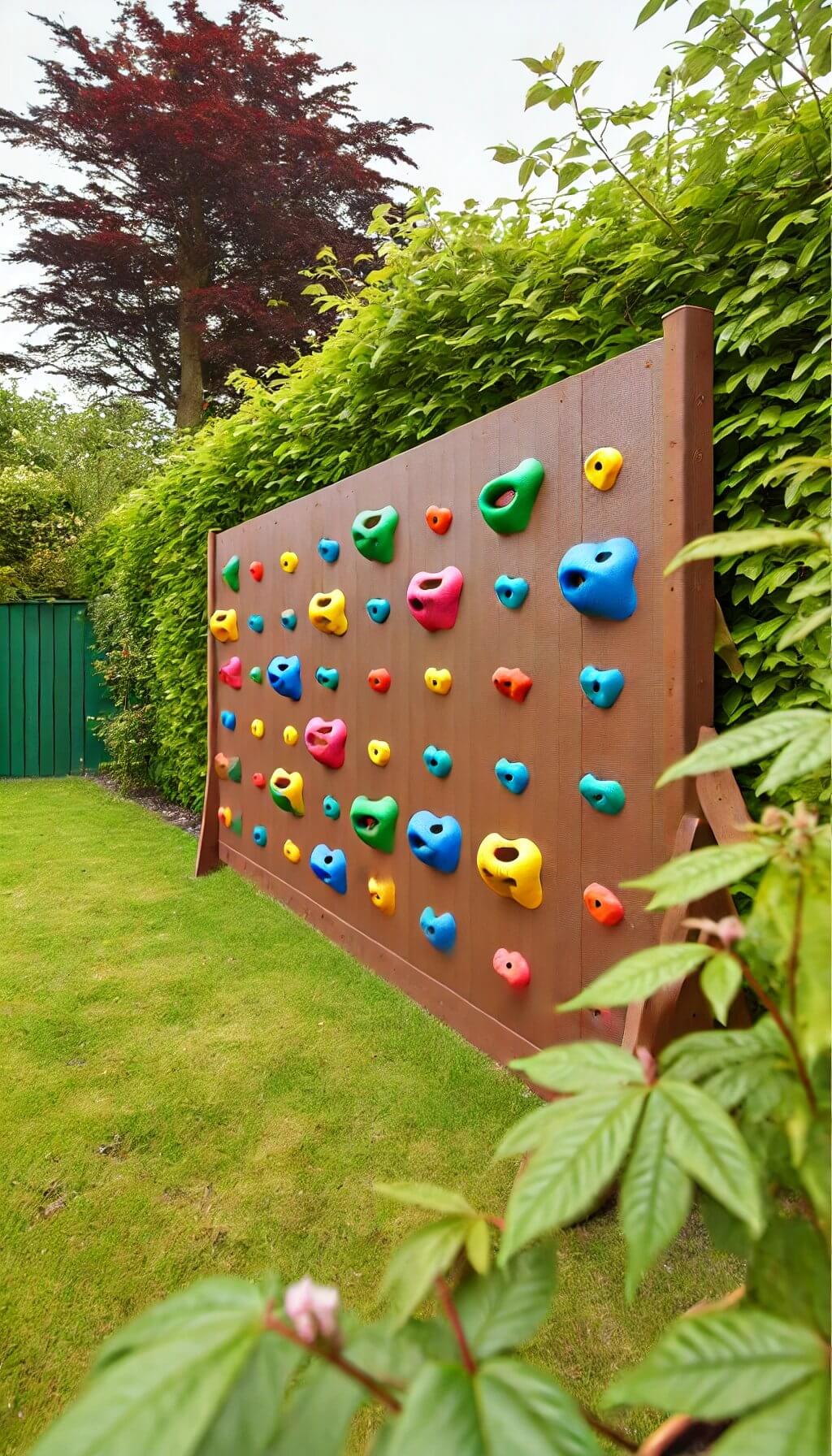
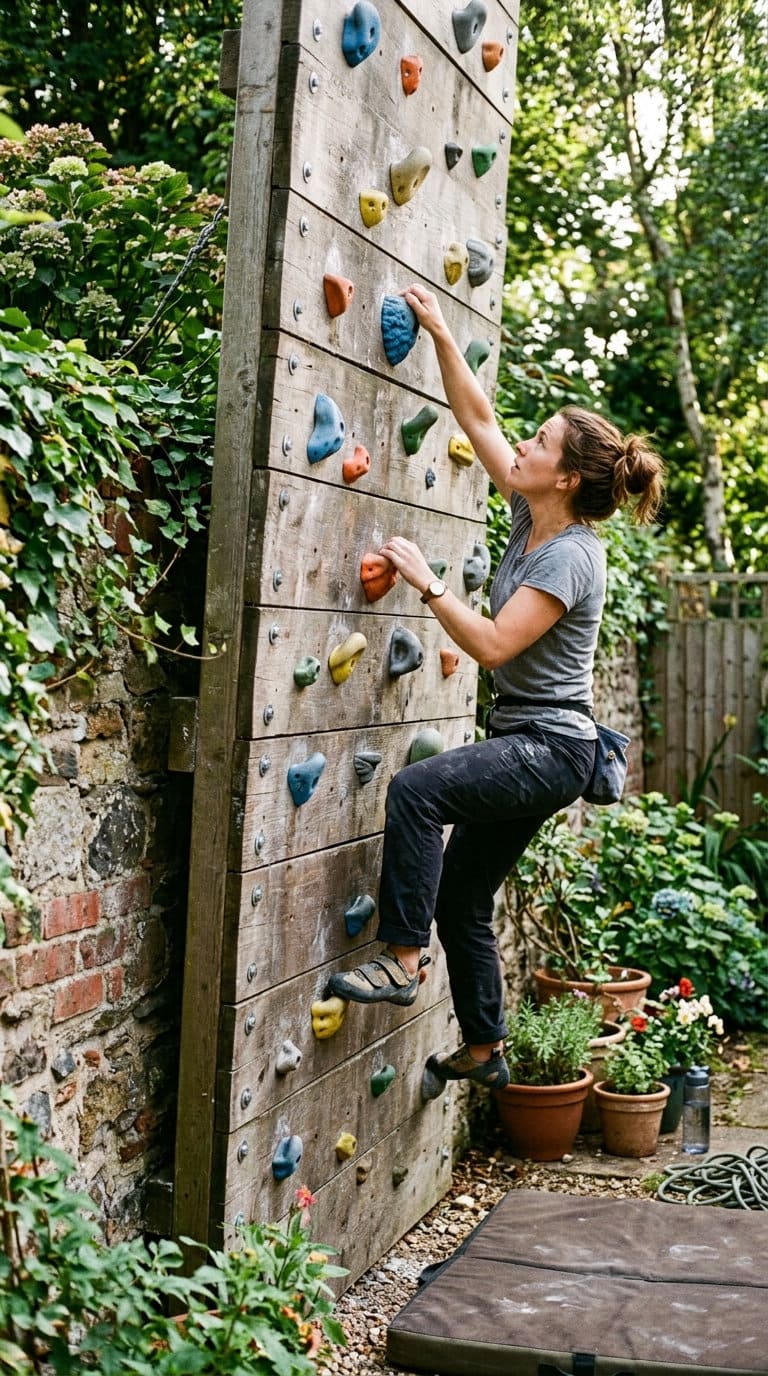
A wall that doubles as a climbing feature, with real rock-climbing holds bolted to a properly reinforced wall face, turns a plain vertical surface into something genuinely fun for kids and adults alike.
This needs real structural backing behind the surface material, climbing holds put concentrated pulling force on their mounting points, a wall built for this purpose should have proper backing (plywood sheathing behind the surface material at minimum) rather than relying on a thin veneer or unreinforced panel.
23. Water Feature Walls:
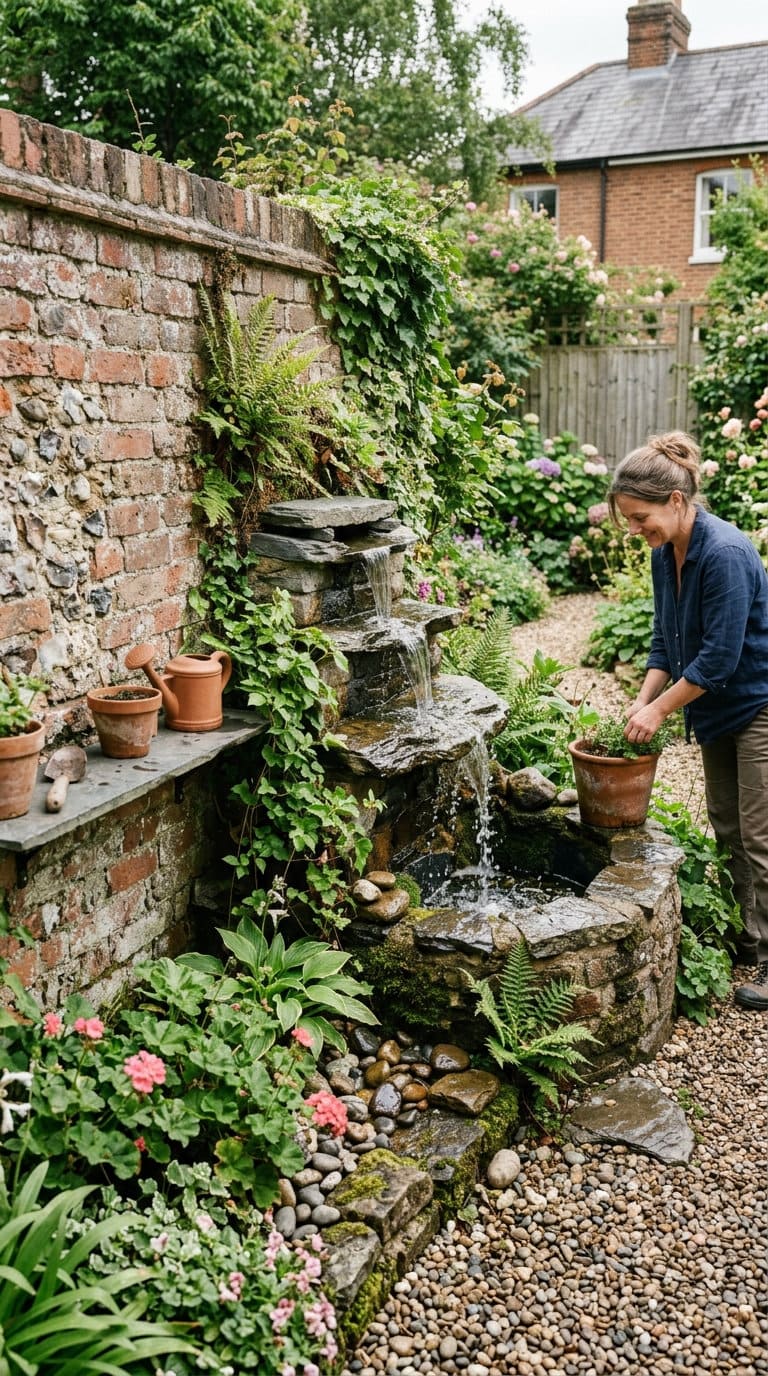
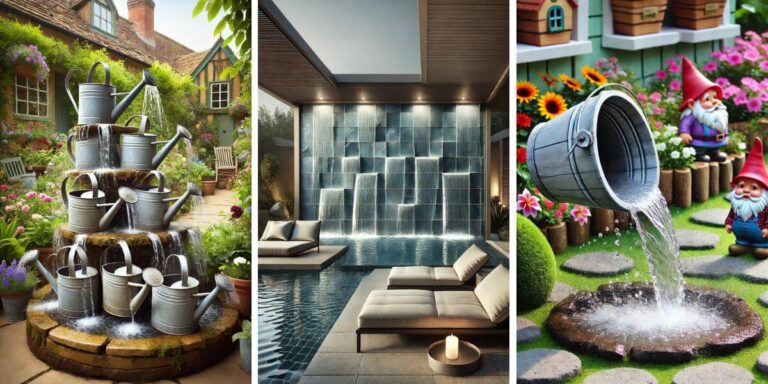
Add a small waterfall or fountain built into or against a wall for a genuinely calming ambient sound and visual focal point.
A wall-mounted water feature needs a hidden reservoir and recirculating pump, and the sound of the water itself is worth considering as a practical bonus, moving water at a modest volume can help mask some background noise the way the acoustic wall in idea 14 does more directly. For more standalone water feature designs to pair with a wall backdrop, small ponds with waterfalls has more options.
24. Seasonal Theme Walls:
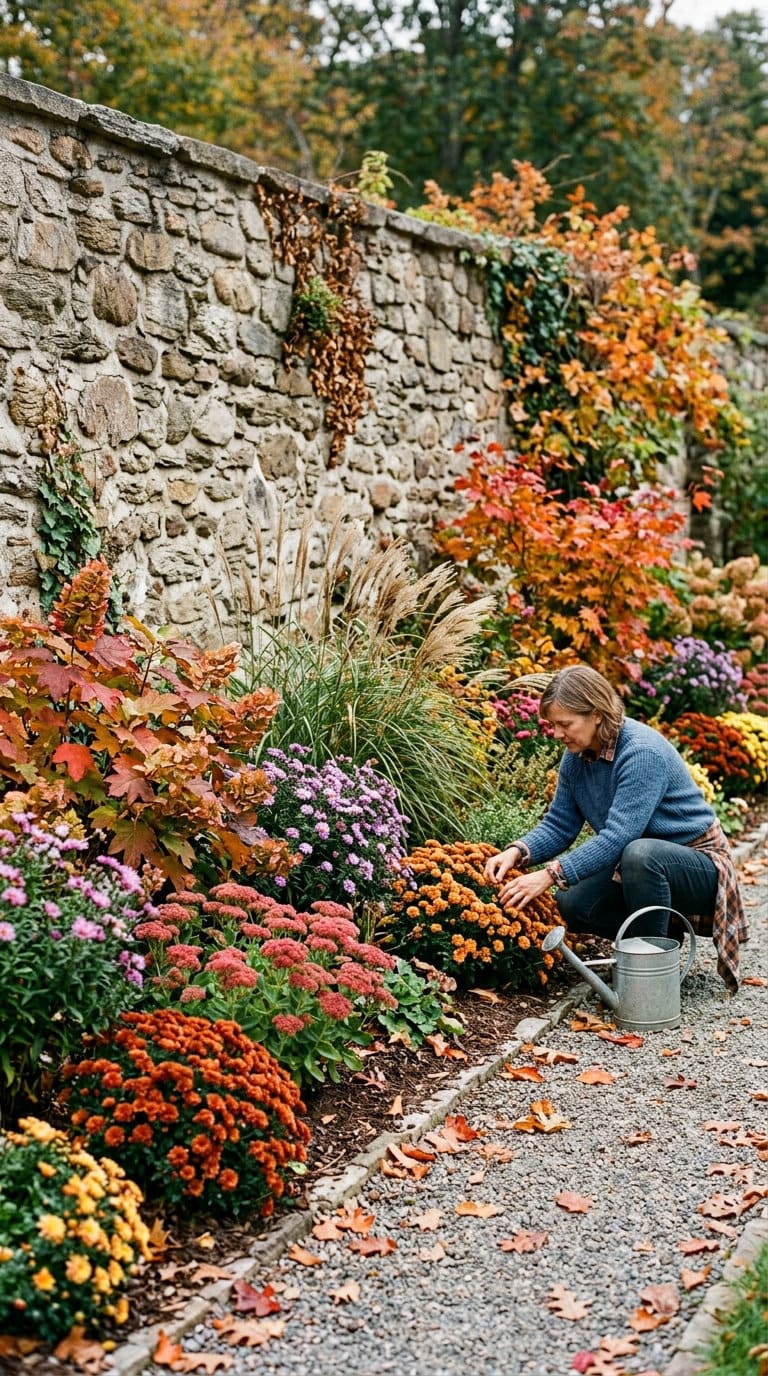
Switch up a wall’s look with the seasons, spring bulbs and pastels, summer’s full bloom, fall foliage tones, winter evergreen and lights, keeping the garden visually fresh all year rather than static.
This works best when the wall itself is a neutral backdrop (plain stone, brick, or painted surface) so the seasonal plantings and decor in front of it do the visual work, rather than competing with an already-busy wall design.
25. Fragrant Garden Walls:
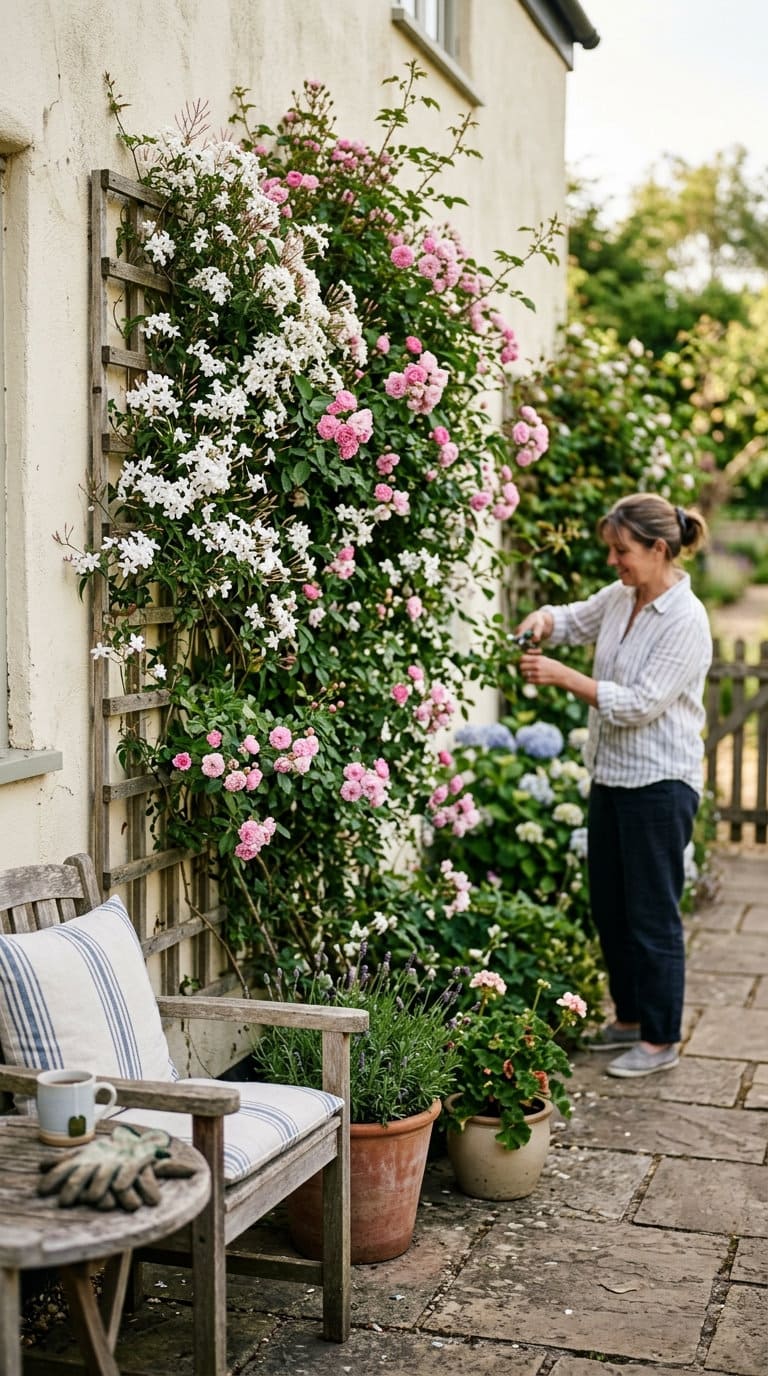
Mix in fragrant plants, jasmine, honeysuckle, lavender, climbing roses, specifically along a wall that sits near a patio, walkway, or window where the scent actually reaches people rather than drifting away in an open part of the yard.
Climbing, vining fragrant plants also get a real structural benefit from a wall, most need something to climb, and a wall with a trellis or wire support system attached gives them exactly that.
FAQ
Can I DIY a garden wall?
Absolutely, especially for simpler designs like a low seating wall or a planted wall. But for anything with real engineering stakes, a retaining wall over a few feet tall which often needs a permit and a properly engineered drainage system behind it, it’s worth bringing in a professional rather than learning the hard way.
What are the best materials for a low-maintenance garden wall?
Stone and brick are the most low-fuss and durable, both can go decades with essentially no upkeep beyond an occasional rinse. For a sleeker, more contemporary look with similarly low maintenance, treated metal panels or composite materials are worth a look, just keep metal as an accent rather than a full sun-facing wall, since it can get uncomfortably hot in direct summer sun.
How do I pick the right garden wall style for my home?
Match the wall’s material and style to your home’s existing architecture rather than treating it as a totally separate design decision, brick and stone tend to suit a traditional or colonial-style home, while metal accents and clean geometric lines read better against a modern one. If you’re also solving a specific problem (noise, wind, privacy, a slope), let that functional need narrow the choice first, then pick the style within whatever materials actually solve the problem.
Does a garden wall actually reduce outside noise?
Yes, but modestly, not dramatically. Simply blocking direct line-of-sight to the noise source typically cuts perceived noise by around 5 decibels, while a wall specifically engineered for sound blocking can reach 7 to 10 decibels. The wall needs real mass and no gaps to work, a thin or gappy wall won’t deliver much of a reduction at all.
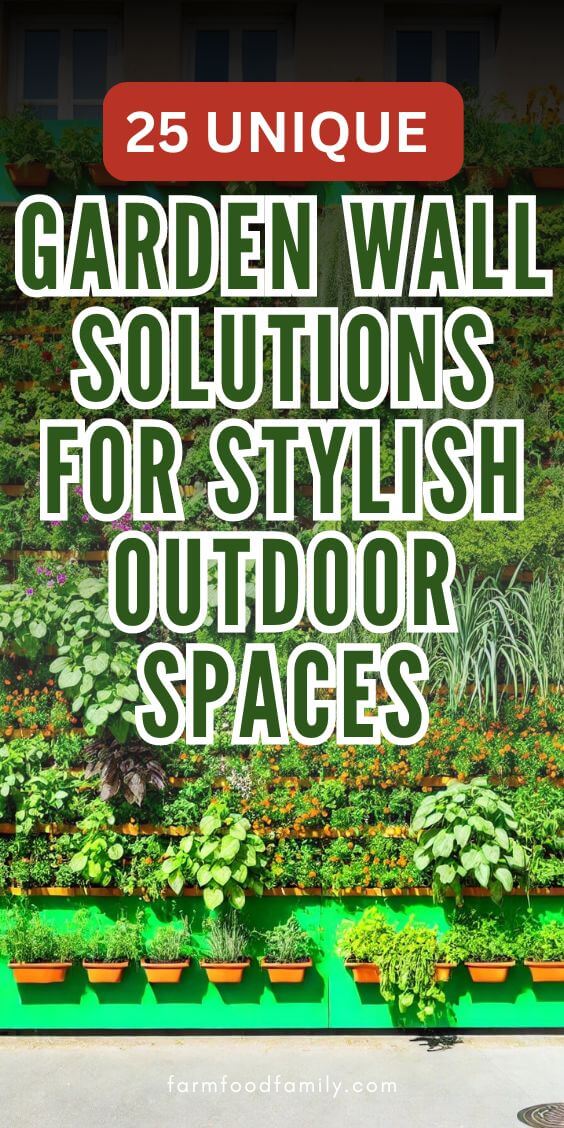

Embrace these garden wall ideas to boost both the function and flair of your outdoor space. Here’s to more vibrant, versatile gardens where you can kick back and enjoy!
Never miss an update — choose FarmFoodFamily as your preferred source on Google.
How it works: Tap the button below to open Google's settings page, then check the box next to FarmFoodFamily.
Tap the checkbox to turn it blue — that's how you know it's set.