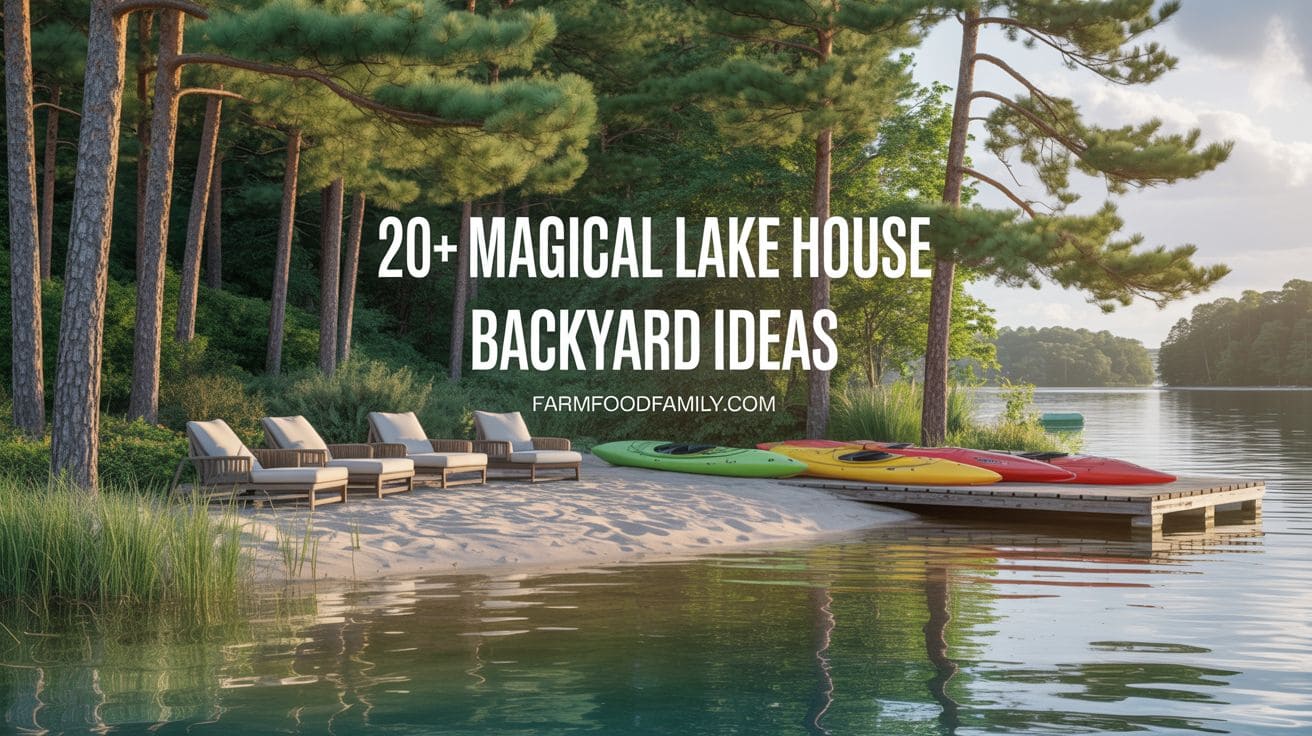
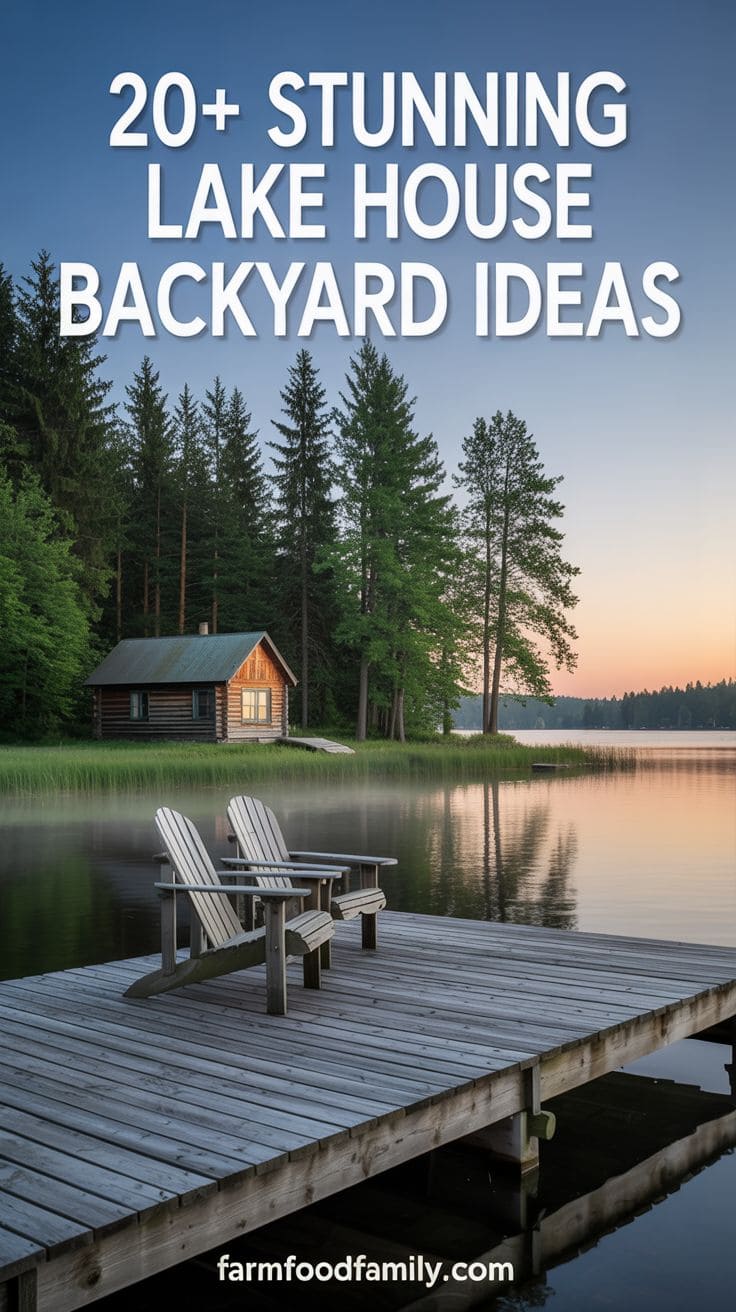
10+ Real Lake House Backyard Ideas That Actually Work by the Water
A lake house backyard has one job the rest of your yard doesn’t: it has to work with the water, not just look good near it. That means slope, erosion, bugs, permits, and whatever the HOA decided last year all show up before the first paver goes down. I’ve spent way too many evenings on…

Never miss an update — choose FarmFoodFamily as your preferred source on Google.
How it works: Tap the button below to open Google’s settings page, then check the box next to FarmFoodFamily.
Tap the checkbox to turn it blue — that’s how you know it’s set.
A lake house backyard has one job the rest of your yard doesn’t: it has to work with the water, not just look good near it. That means slope, erosion, bugs, permits, and whatever the HOA decided last year all show up before the first paver goes down.
I’ve spent way too many evenings on other people’s docks asking “wait, did you need a permit for that?” and the answer is almost always more complicated than people expect. So before we get into the ten ideas below, one honest note: if you’re planning anything that touches the shoreline itself, terracing near the water, a planting bed right at the waterline, a path down to a swimming spot, check with your local shoreline or wetland authority first.
The Michigan Natural Shoreline Partnership, a Michigan State University Extension program focused specifically on lakefront management, notes that shoreline work is regulated in most states because it affects water quality and erosion for the whole lake, not just your property. It’s a two-minute call to your county office and it can save you a fine or a redo later.
With that out of the way, here are ten ideas that come from real lakefront projects, real Reddit threads from people who actually own lake houses, and a couple of professionals who do this for a living. Not a padded list dressed up to look bigger than it is.
How to Plan a Lake House Backyard Before You Pick an Idea
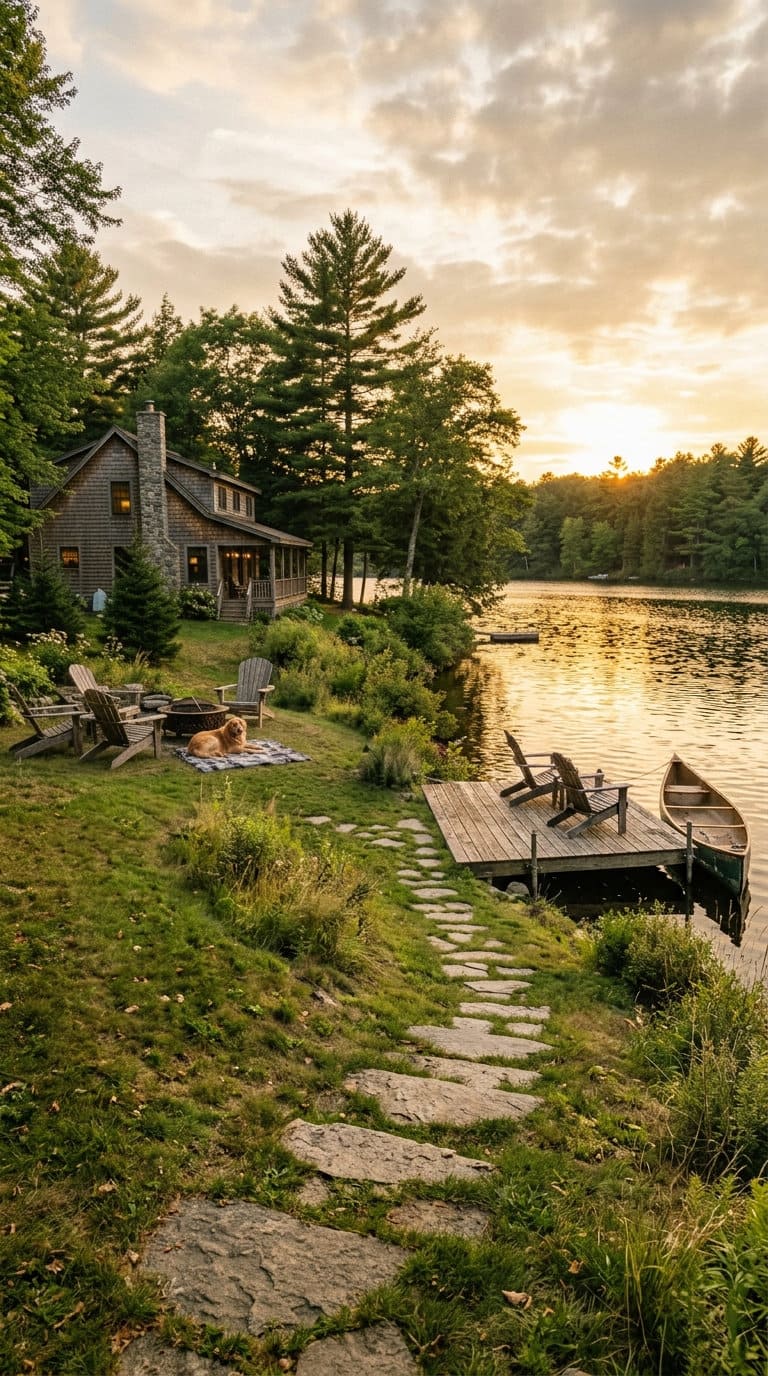
Before you fall in love with a specific idea below, walk your yard and answer four questions honestly. It takes fifteen minutes and it’ll save you from building the wrong thing first.
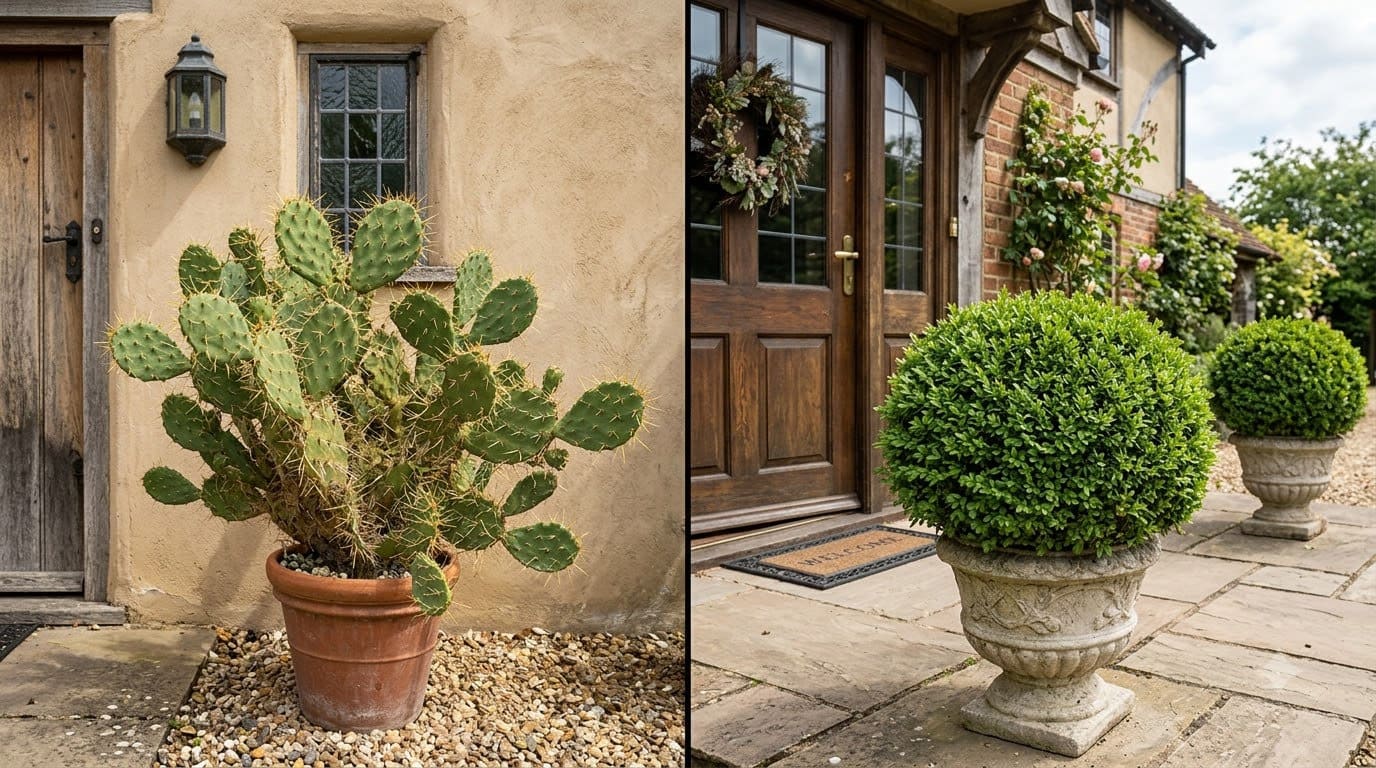


What’s the slope doing? A flat lot and a steep drop to the water call for completely different starting points, terracing (idea #1) only makes sense if you actually have grade to work with. If your yard is basically flat, skip straight to ideas that don’t need retaining walls, the fire pit, the hammock grove, the birdwatching nook.
Answer 4 quick questions and get matched to the exact fix for your yard — drainage, budget, layout, or something else entirely.
Take the Free QuizDo you have deeded water access, and is a dock even allowed? Some lakefront lots come with a dock already, some are governed by an HOA or a state shoreline permit that says no, and some just don’t have the right bottom conditions for one. Know which situation you’re in before you plan anything that assumes dock access, that’s the difference between idea #3 (dockside shower) and idea #7 (the no-dock alternative).
Is your bank actively eroding, or just exposed? Stand at the waterline after a storm and look for bare soil, small collapses, or roots hanging in open air. If you see that, you’re in the “needs a fix this year” category (lean toward the hard stabilization option in idea #6). If the bank looks stable and just bare, you have time to go the slower, cheaper native-planting route.
What’s your actual budget range for this season? Not the dream number, the real one. Every idea below lists a rough budget tier so you can match ambition to what you’re willing to spend right now, then come back for the bigger builds next year.
Once you’ve got honest answers to those four, the rest of this list is a lot easier to use, you’ll skip past ideas that don’t fit your lot and go straight to the ones that do.
1. Terraced Seating with Native Plants
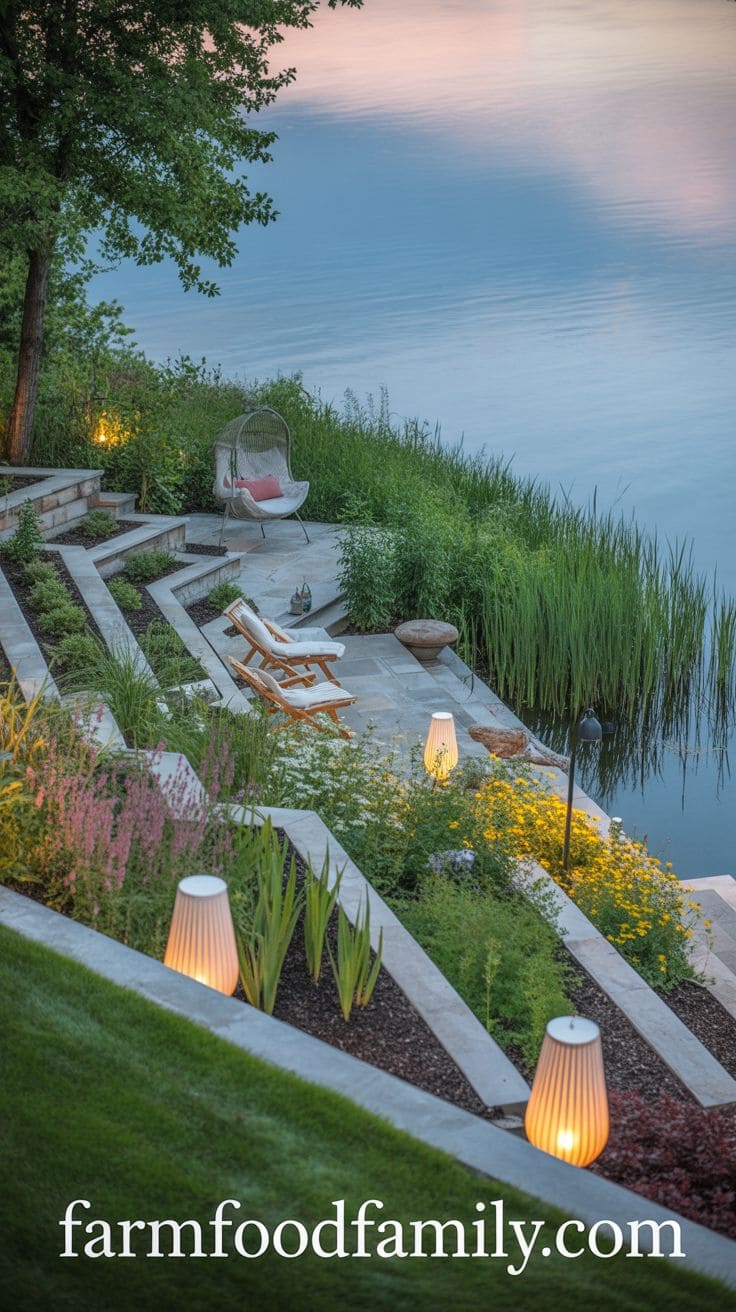
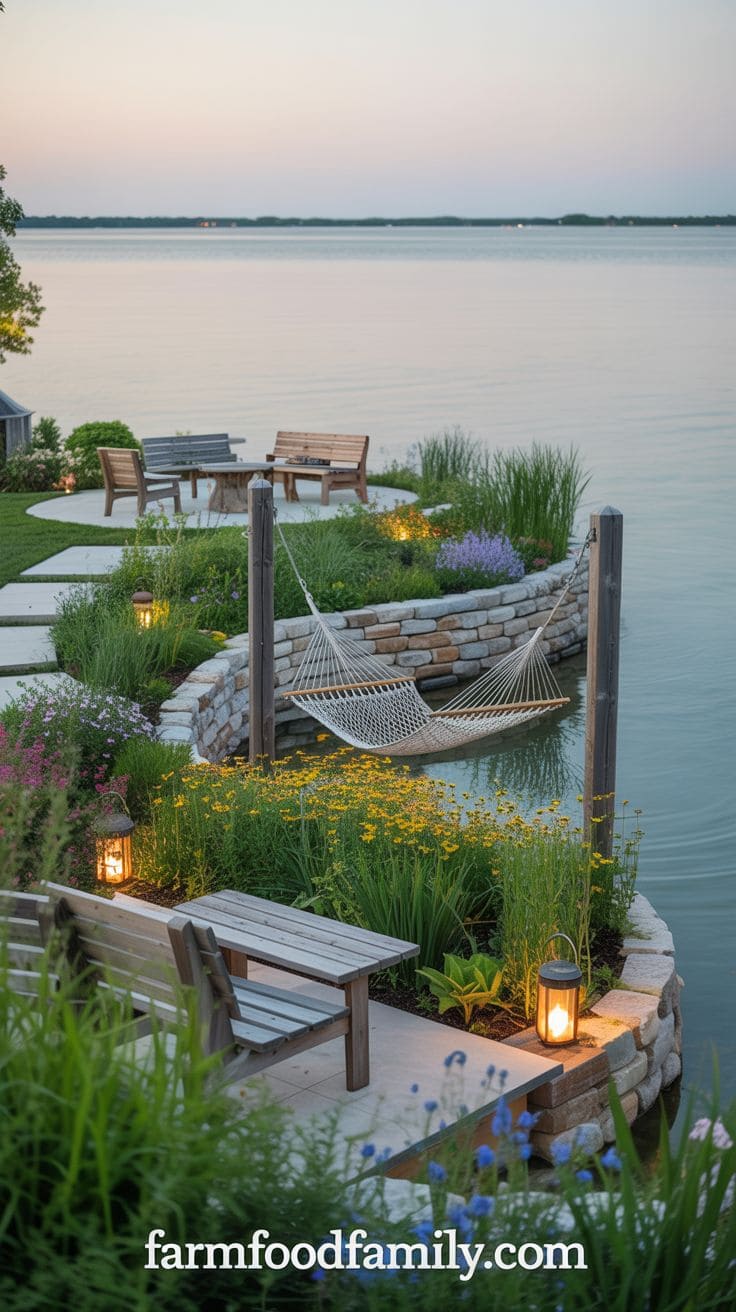
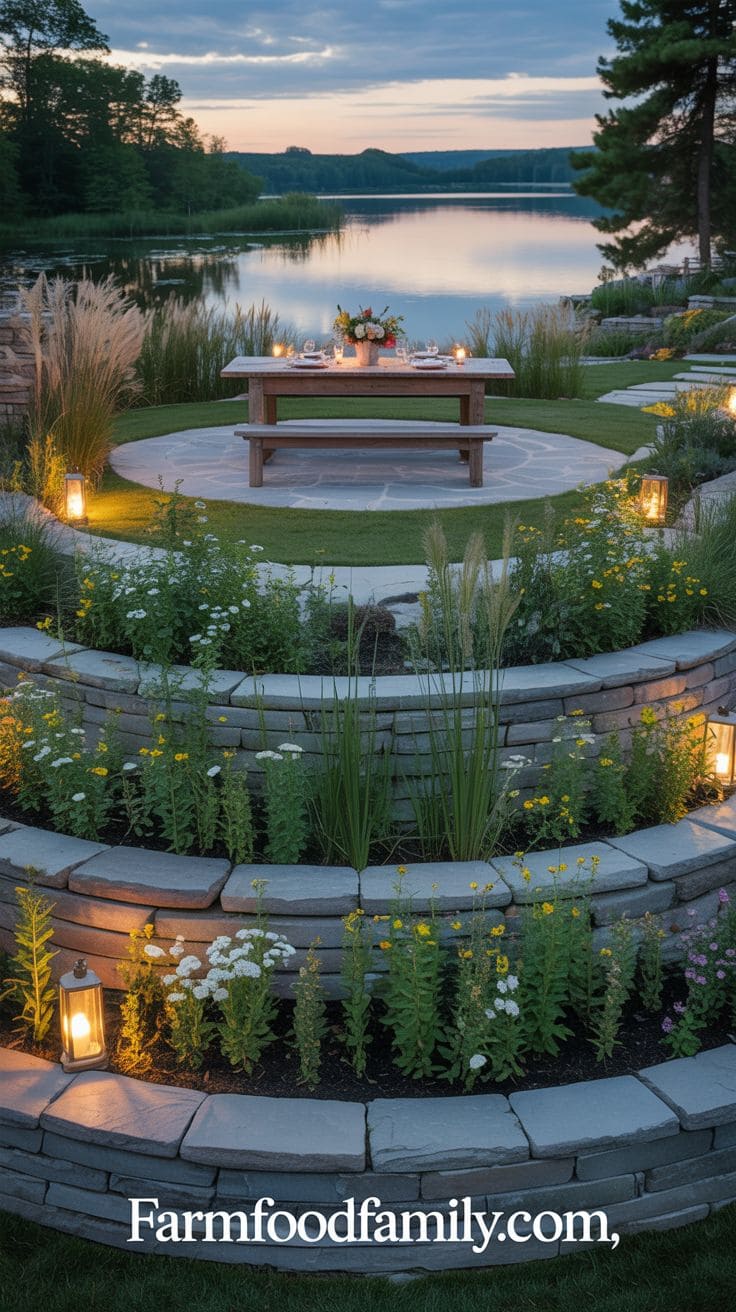
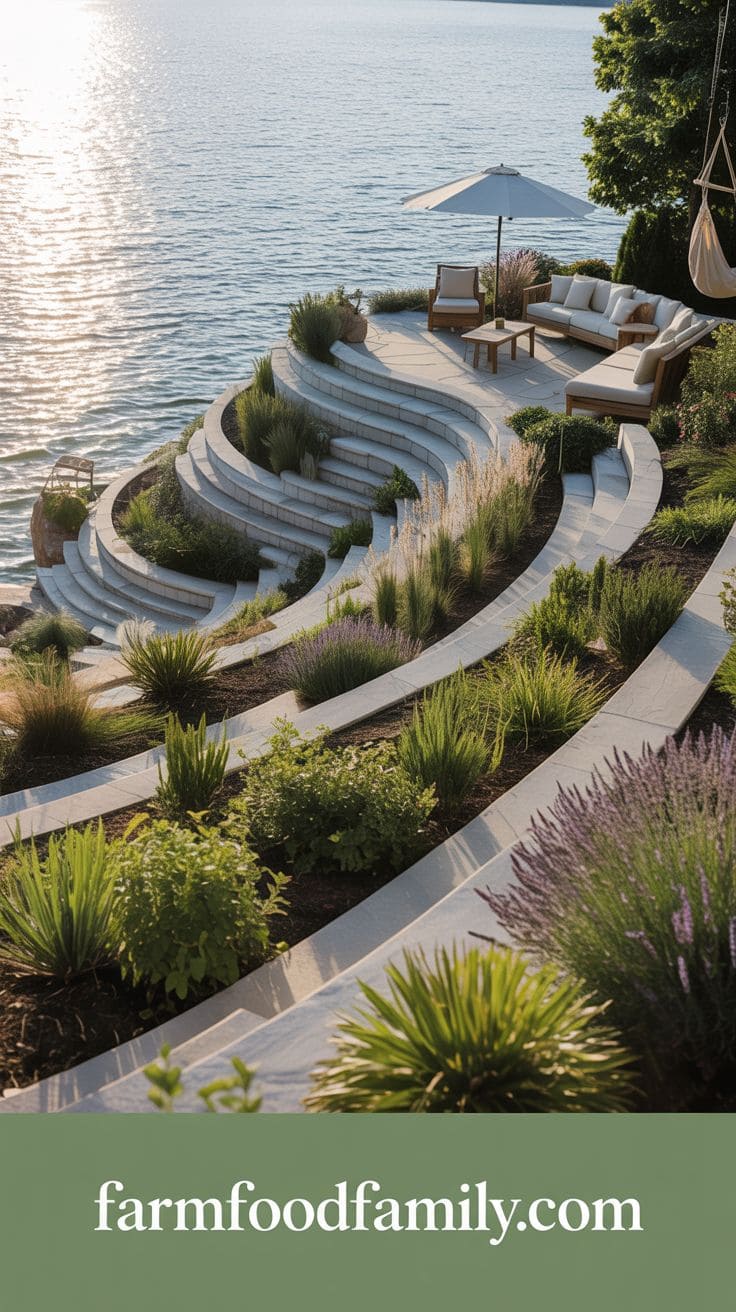
Build a series of terraces that step down from the back of the house to the water’s edge. Use natural stone retaining walls to hold each level, and put seating on every tier, lounge chairs on one, a dining table on another, maybe a couple of hammocks tucked into a lower level.
Terracing does two things at once. It controls a steep slope so you’re not fighting gravity every time you carry drinks down to the dock, and it gives each level its own angle on the lake, which matters more than people think until they’ve actually sat on three different terraces and noticed the view changes.
For the planting between and around the terraces, native species aren’t just the “eco-friendly” choice, they’re doing real work. The Michigan Natural Shoreline Partnership recommends a buffer zone of native vegetation extending 25 to 50 feet from the shoreline where possible, though even 10 to 15 feet provides meaningful erosion control and water-quality benefit. Deep-rooted natives hold soil in a way that turf grass just doesn’t.
Most yard problems trace back to one specific, fixable cause. Find yours in 4 quick questions.
Take the Free Quiz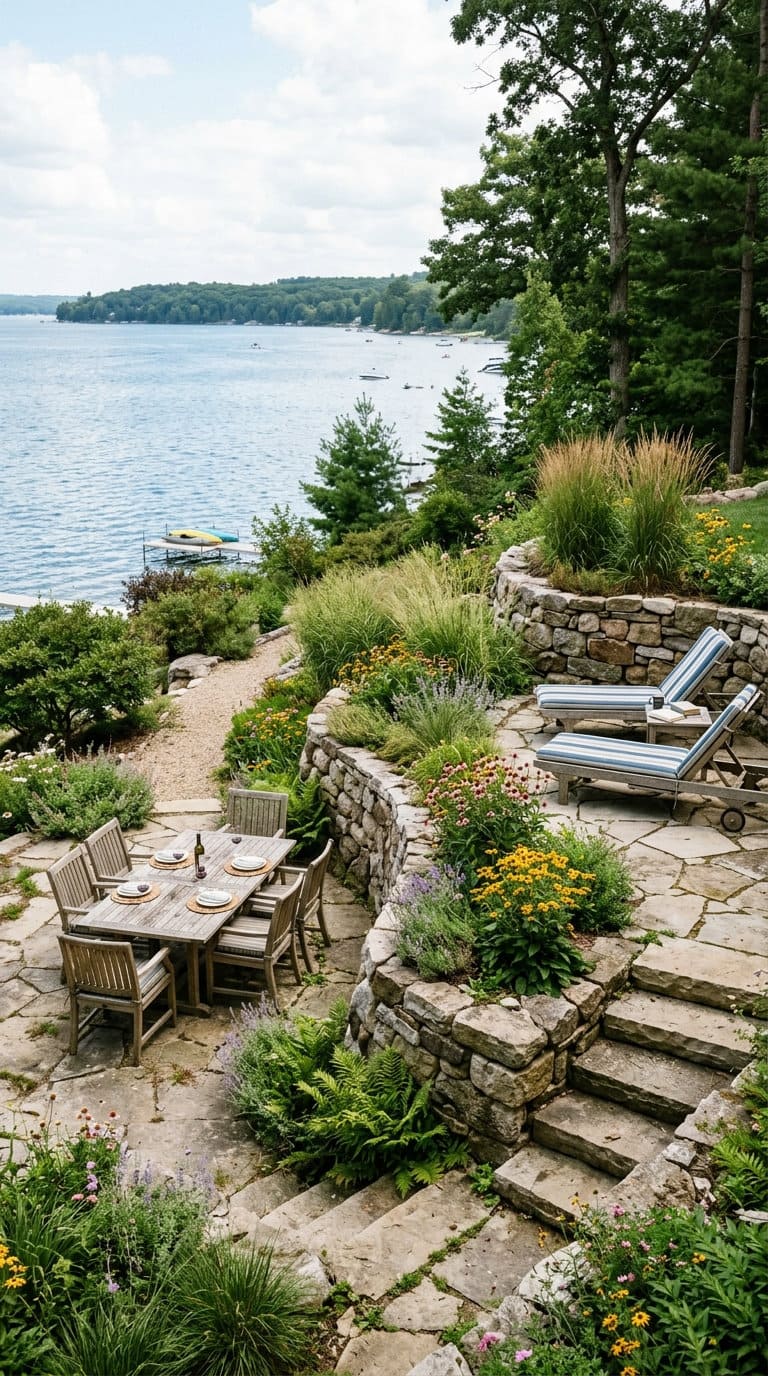
Budget-wise, this is one of the pricier ideas here, natural stone and retaining wall construction usually means hiring a contractor unless you’re genuinely experienced with grading. It’s the right call for a sloped lakefront where you’re planning to stay for years, not a quick weekend fix.
2. Fire Pit Overlooking the Water, Placed So the Smoke Doesn’t Ruin Your Pergola
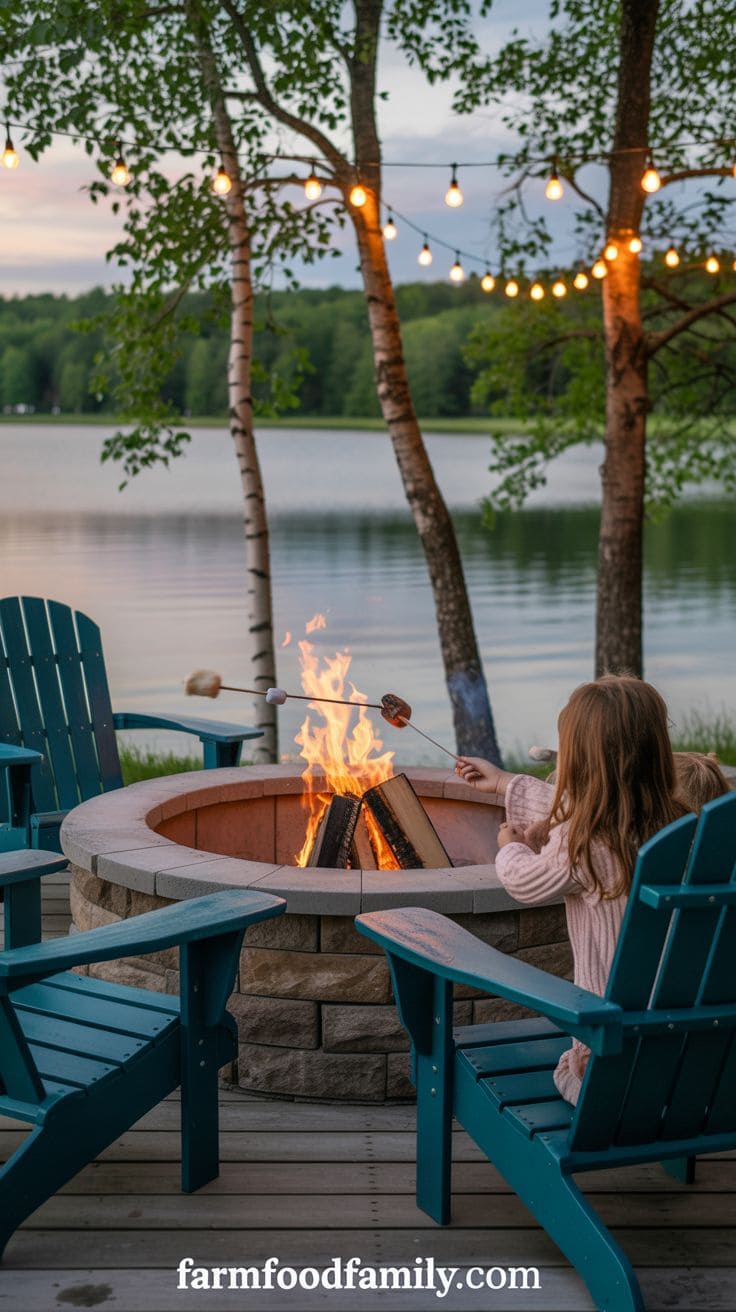
A lakeside fire pit is one of those ideas everybody already knows they want. The part nobody plans for is smoke drifting into a covered structure and leaving soot on the underside of the roof, which is a real complaint I’ve seen more than once from people who built their fire pit first and figured out the wind pattern later.
A few things actually fix this. Site the pit downwind of any pergola, gazebo, or covered porch based on your yard’s prevailing evening breeze, not just wherever looks nicest on paper. If a covered structure is unavoidably close, a gas fire pit produces far less soot and smoke than a wood-burning one, worth the tradeoff in ambiance if staining is a real concern. And keep distance in mind regardless: fire safety guidance from the National Fire Protection Association generally calls for wood-burning fire pits to sit well back from structures and combustible material, with gas fire pits able to sit somewhat closer, though the exact distance varies by source and by local code, so it’s worth a quick check with your fire marshal’s office for the number that actually applies to your property.
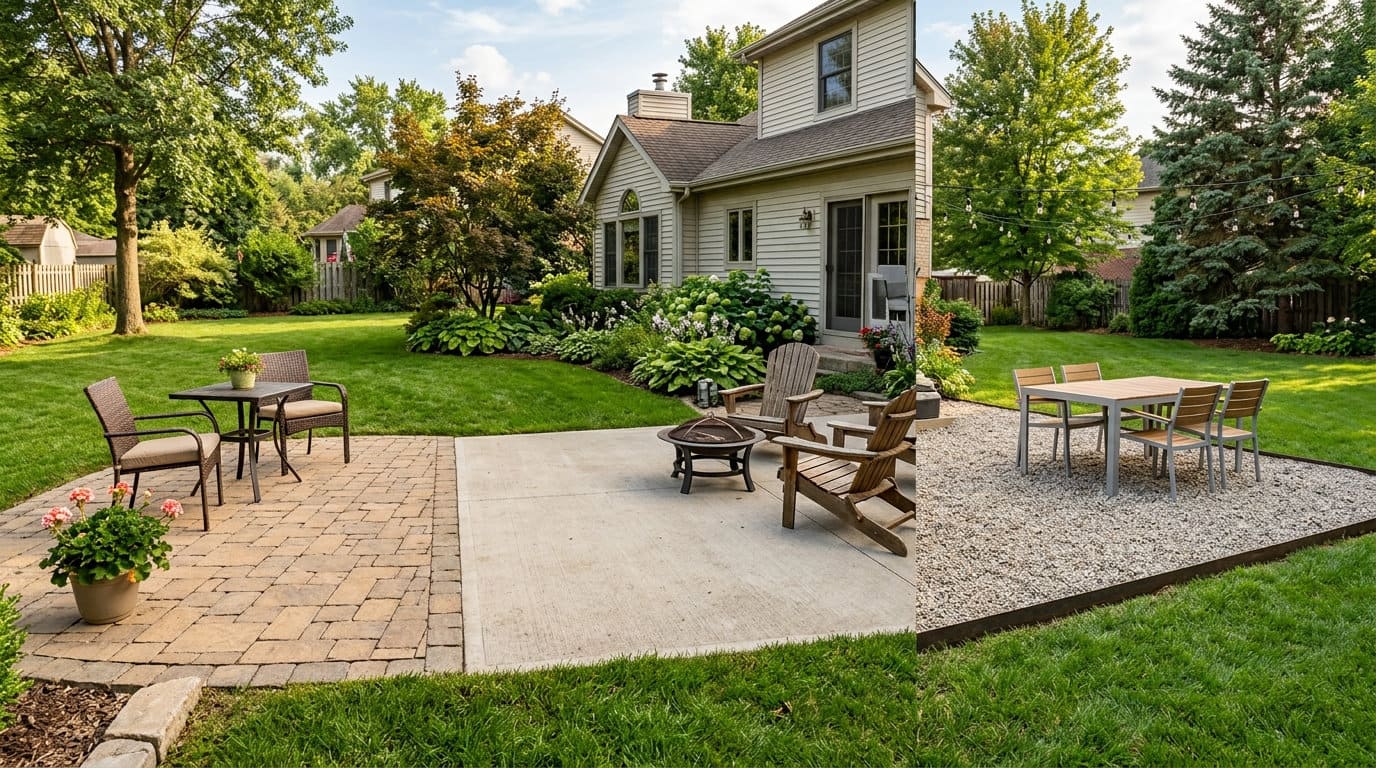
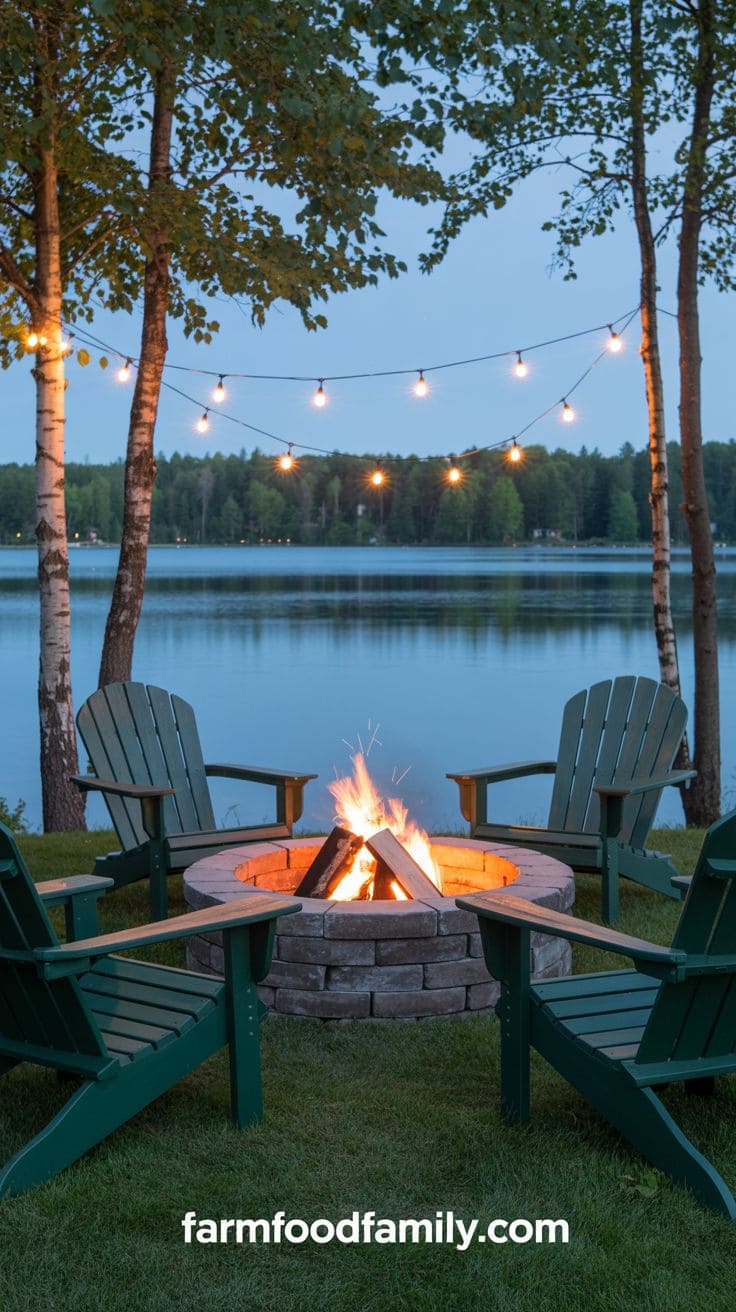
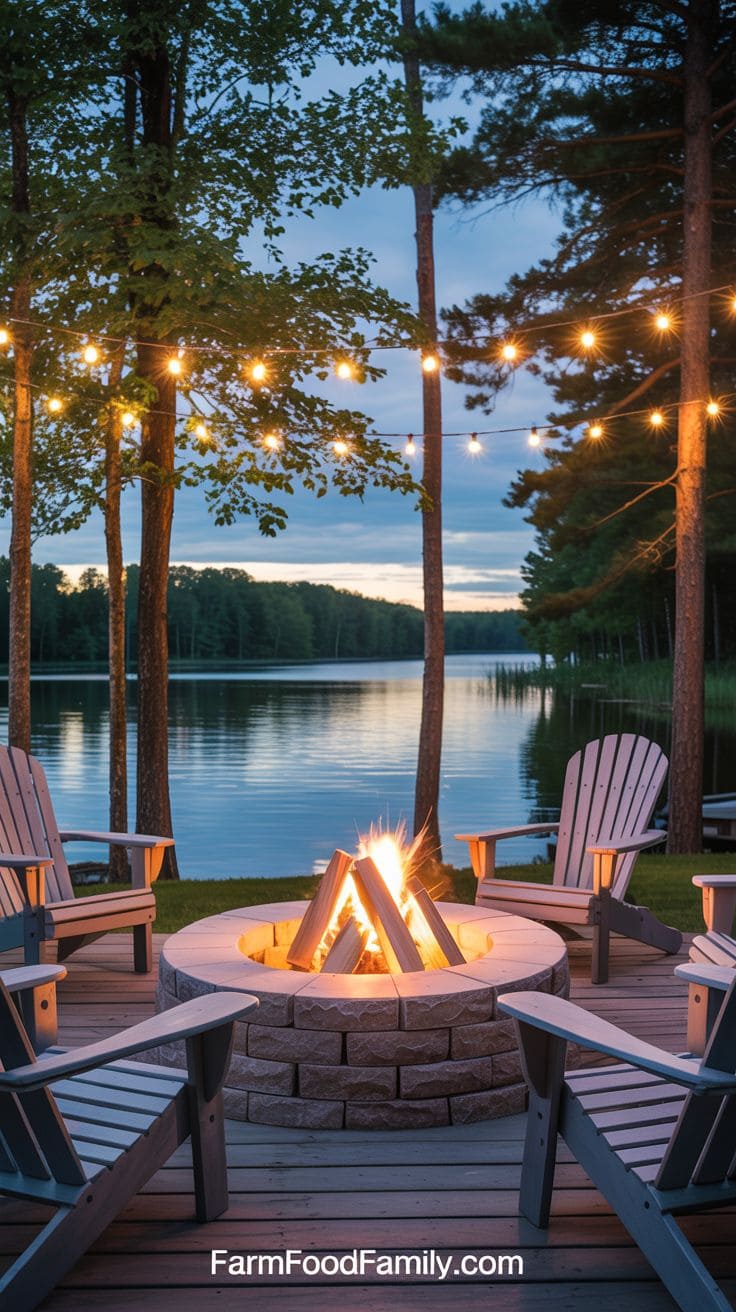
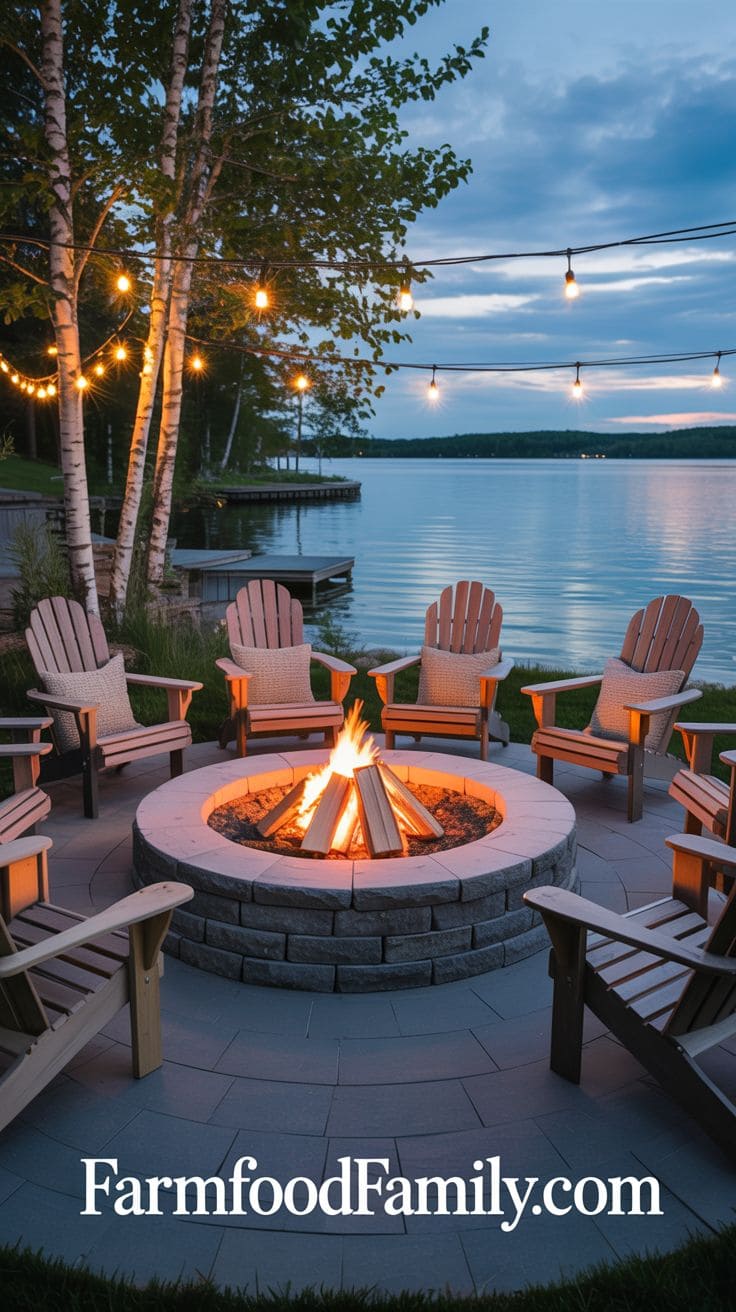
Define the pit area with gravel or decomposed granite so it doesn’t turn into a muddy patch every spring, circle it with low stone or built-in benches, and add a couple of Adirondack chairs for overflow seating.
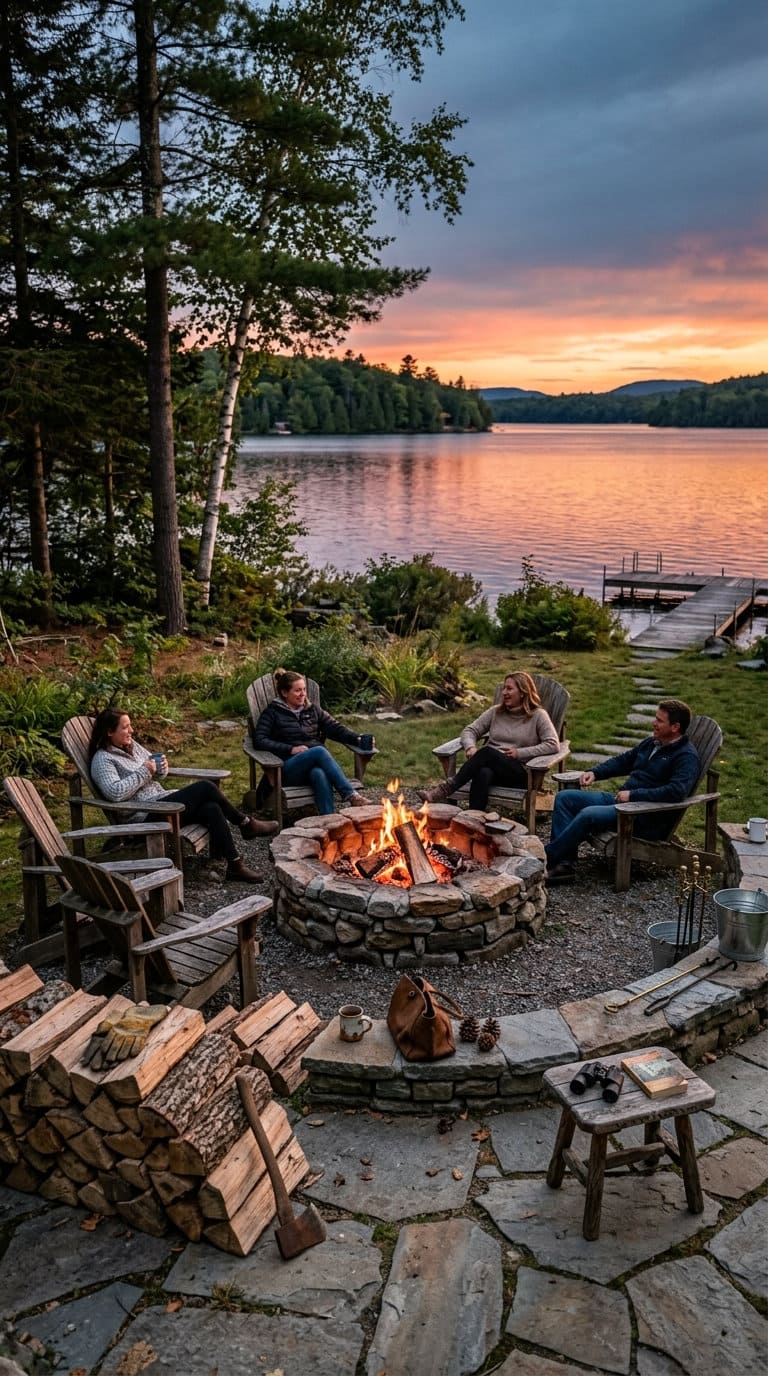
Budget lands in the middle here. A basic gravel-and-stone pit is a doable DIY weekend project; a built-in gas fire feature with plumbing runs a lot higher and usually needs a professional. Either way, this idea works for pretty much any lakefront yard, it’s the one thing almost every visitor asks to sit around after dark.
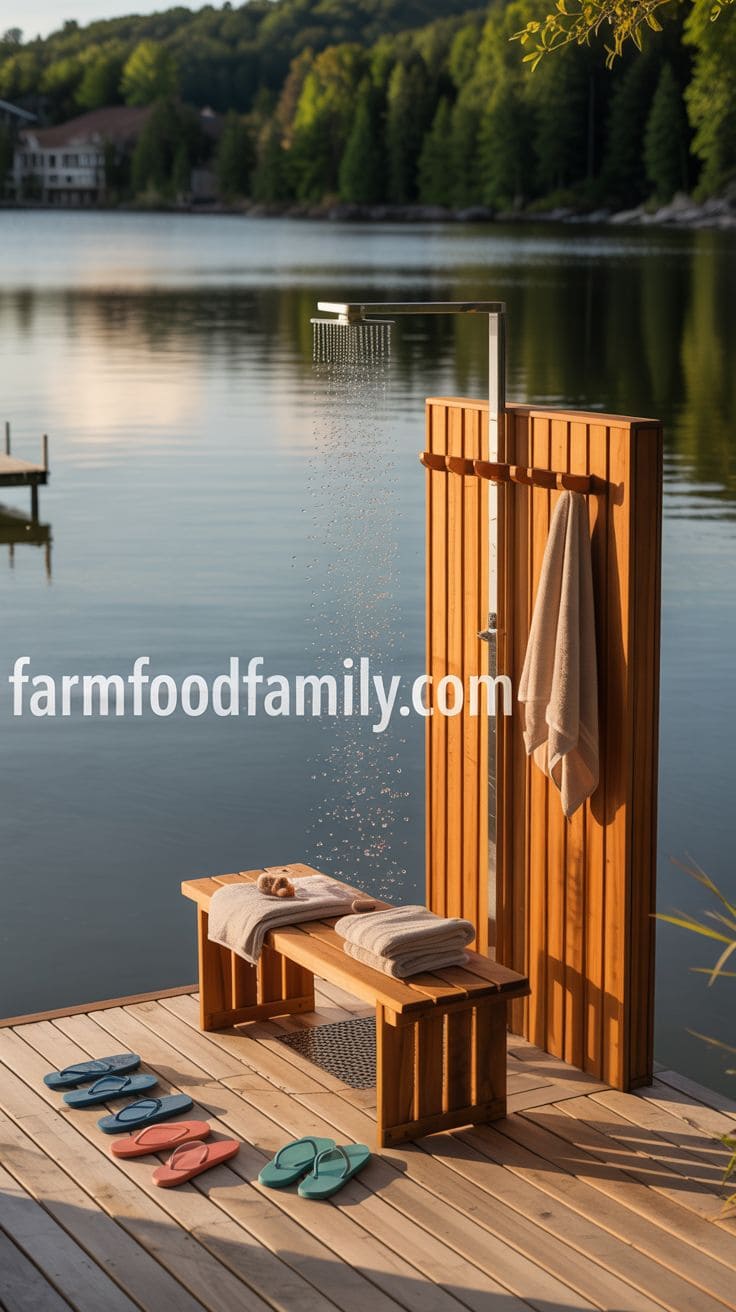
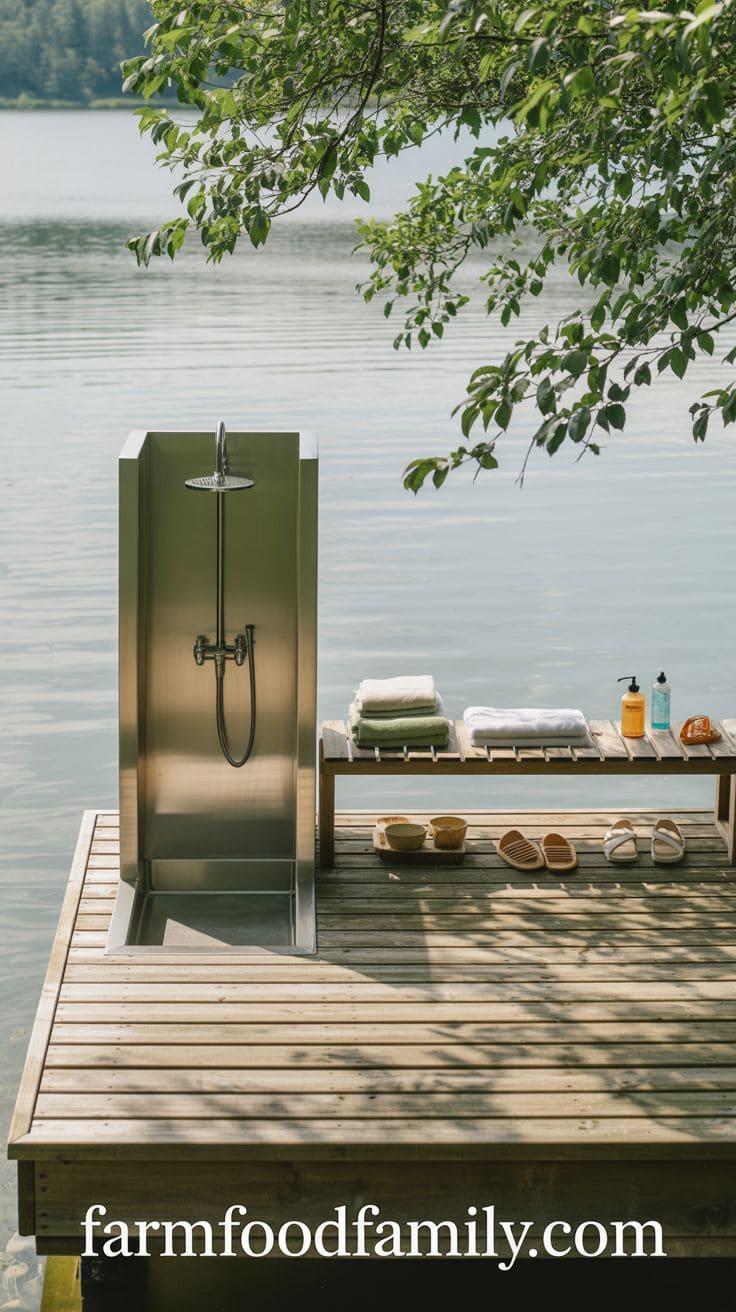
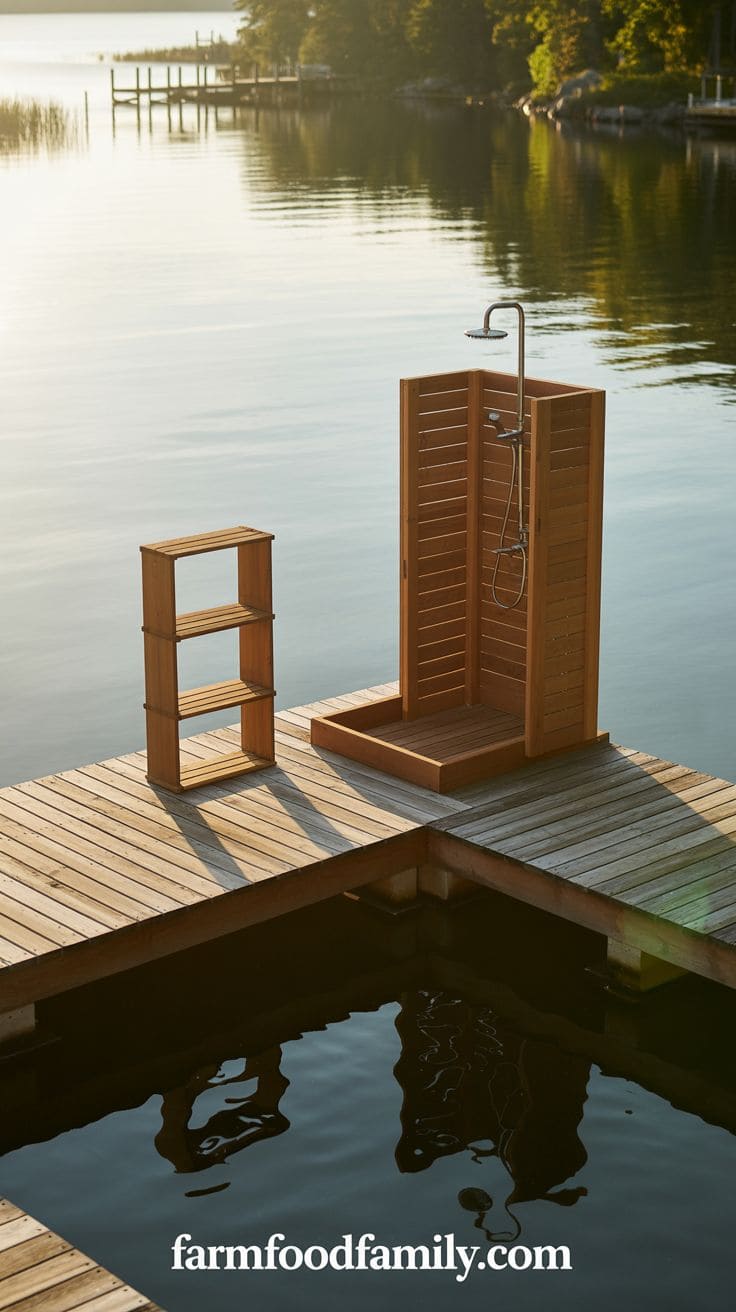
3. Dockside Outdoor Shower and Towel Station
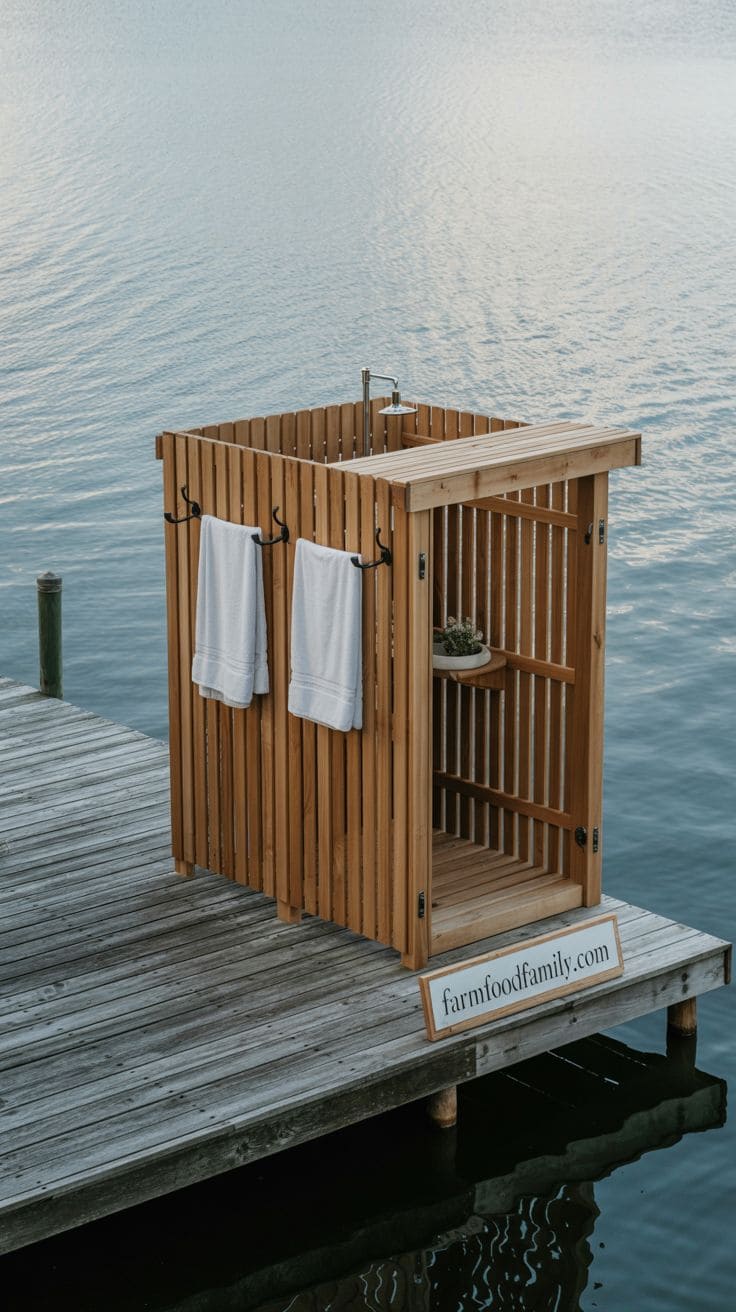
If you already have a dock, this one’s an easy add. A rustic outdoor shower built right on or near the dock lets everyone rinse off lake water, sand, and sunscreen before they track it into the house.
Cedar or teak slats keep the enclosure looking like it belongs by the water rather than in a gym locker room, and a few hooks plus a small shelf handle towels, flip-flops, and the sunscreen bottle that always goes missing.
It sounds like a small thing until you’re the one mopping up a wet, sandy hallway for the third time in a weekend. And honestly, there’s something genuinely nice about an outdoor rinse-off after a swim, cold water, open air, no rush to get back inside.
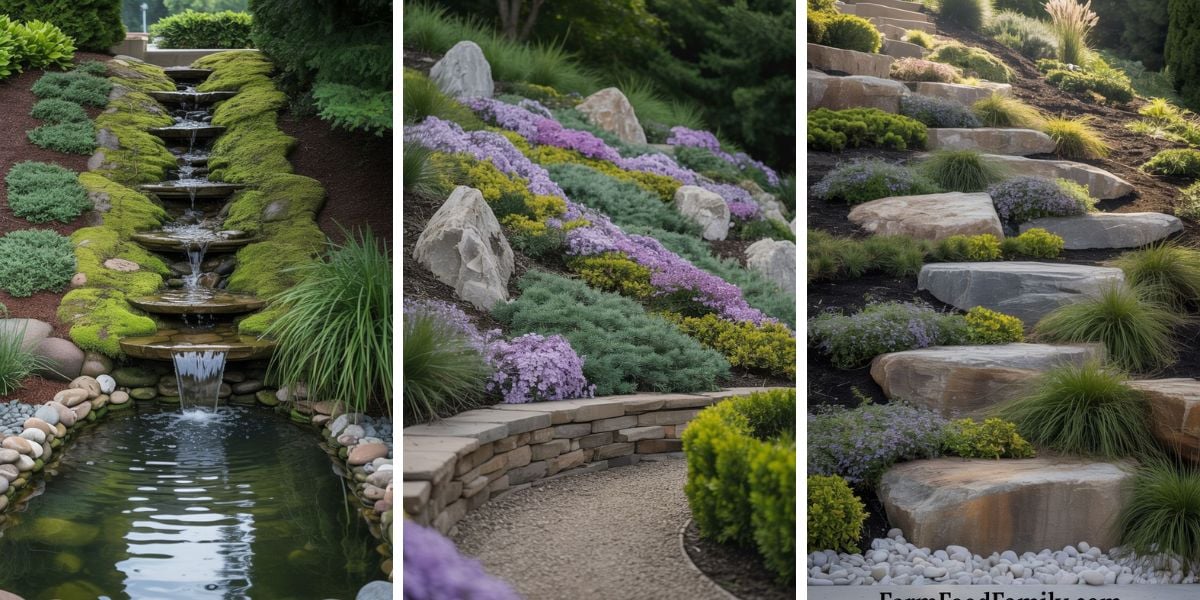
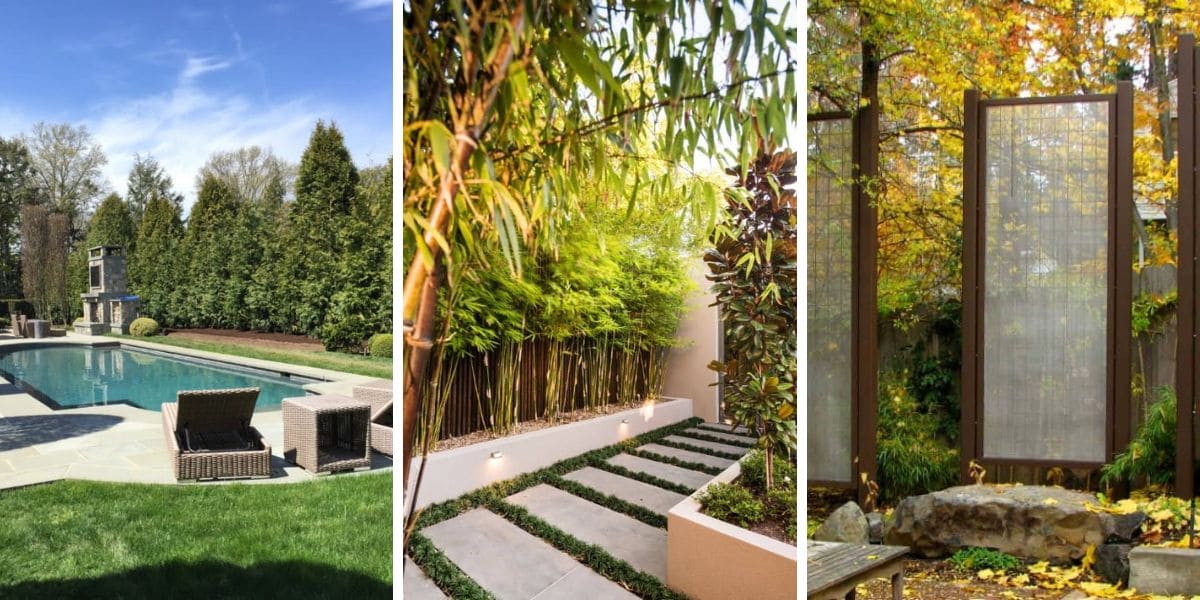
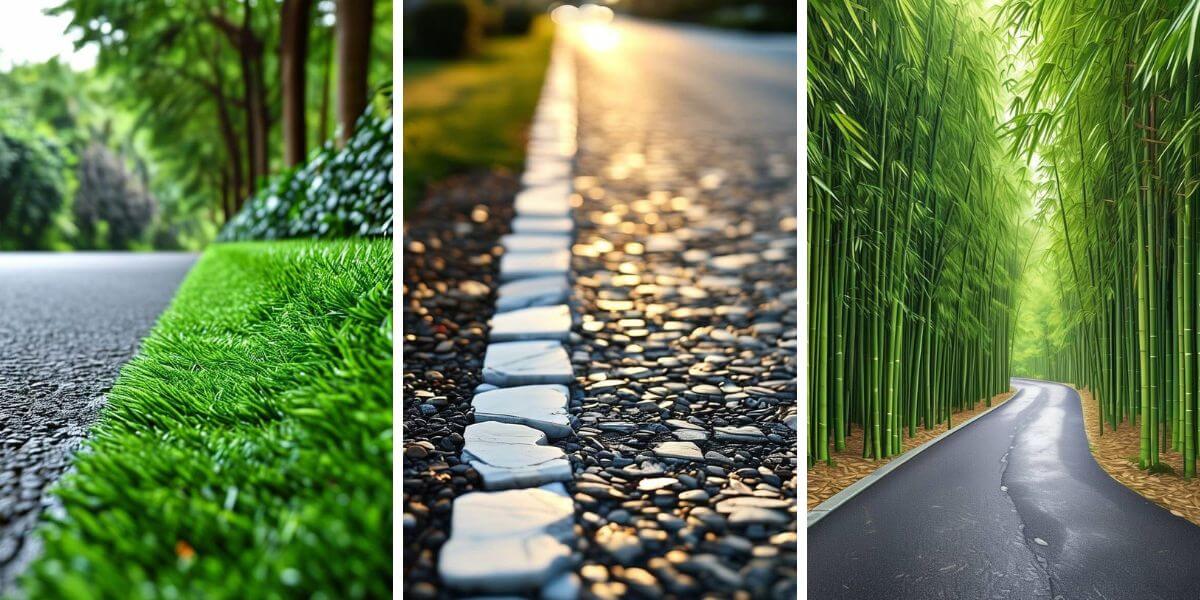
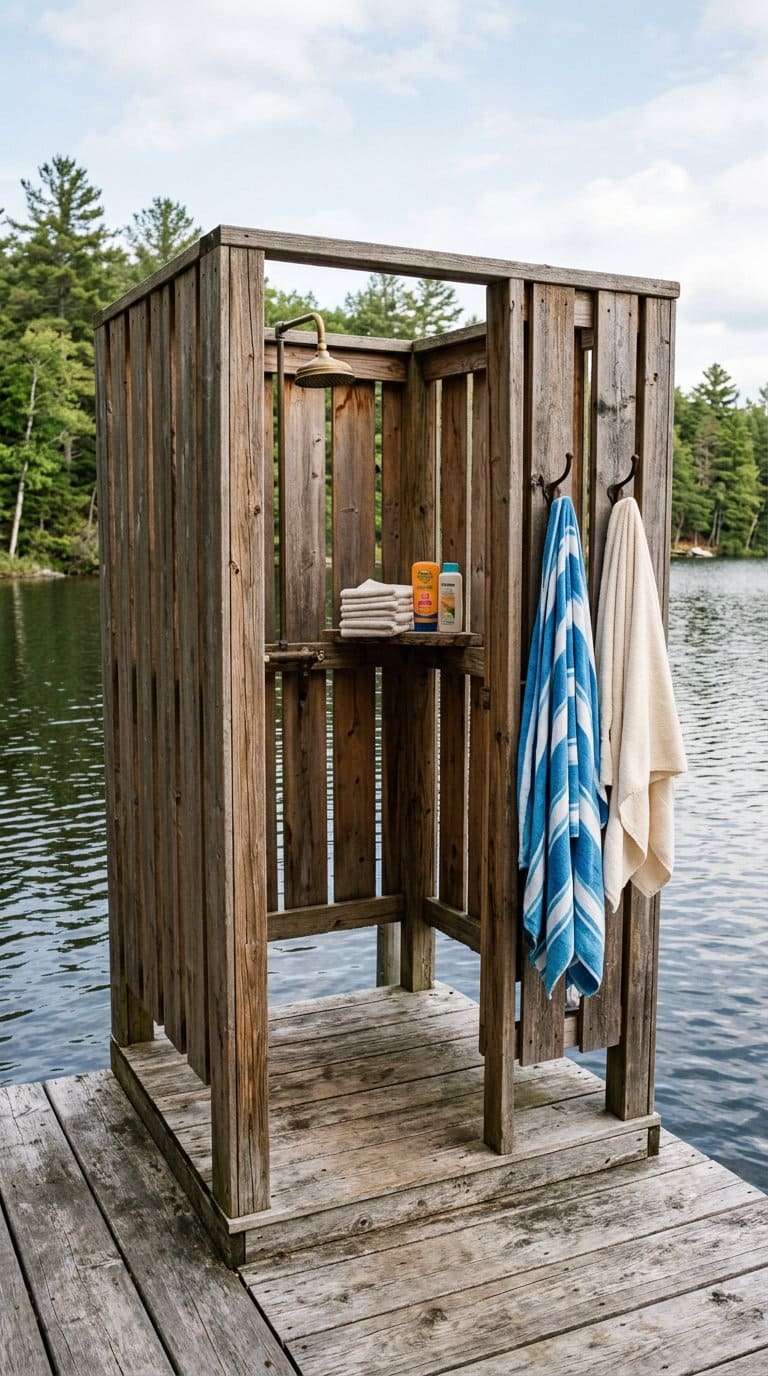
Budget is low. This is one of the cheaper, more DIY-friendly projects on this list, plumbing hookup is the main cost if you don’t already have a water line near the dock. Obviously it only makes sense if your property actually has a dock or a similarly fixed swim access point.
4. Hammock Grove Under the Trees
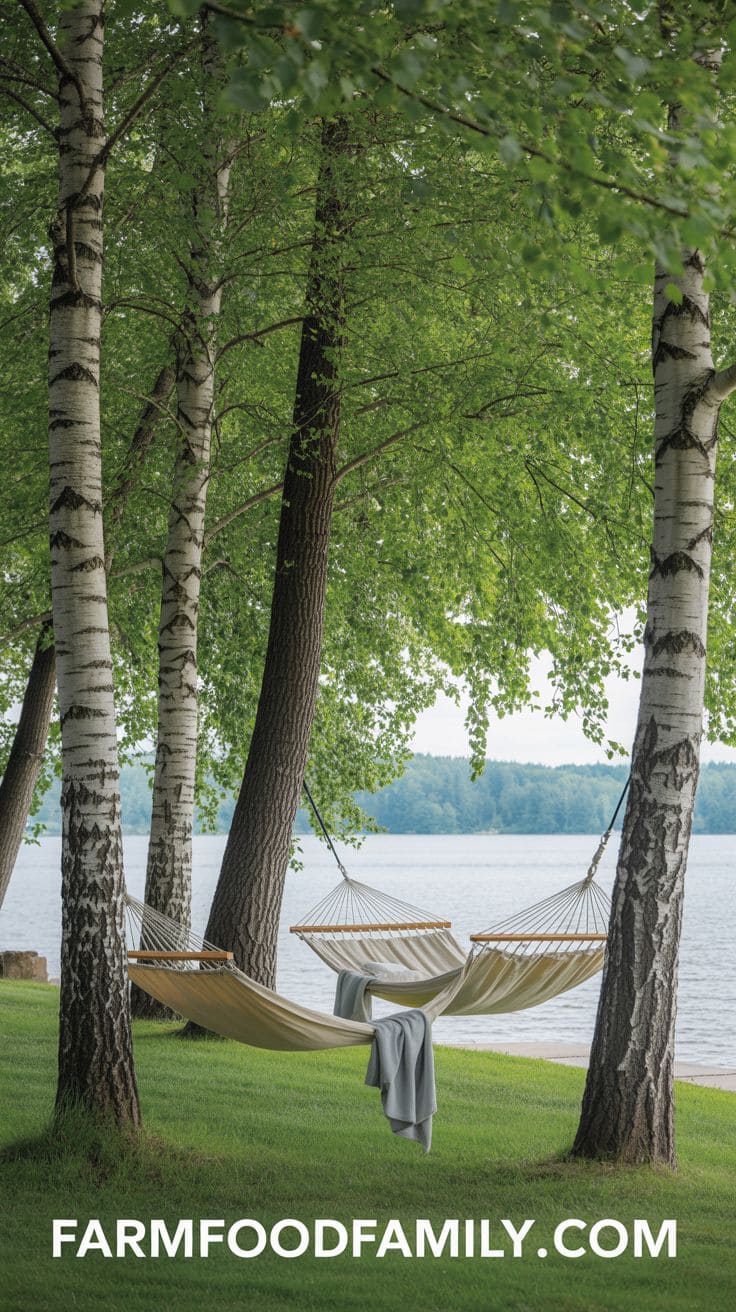
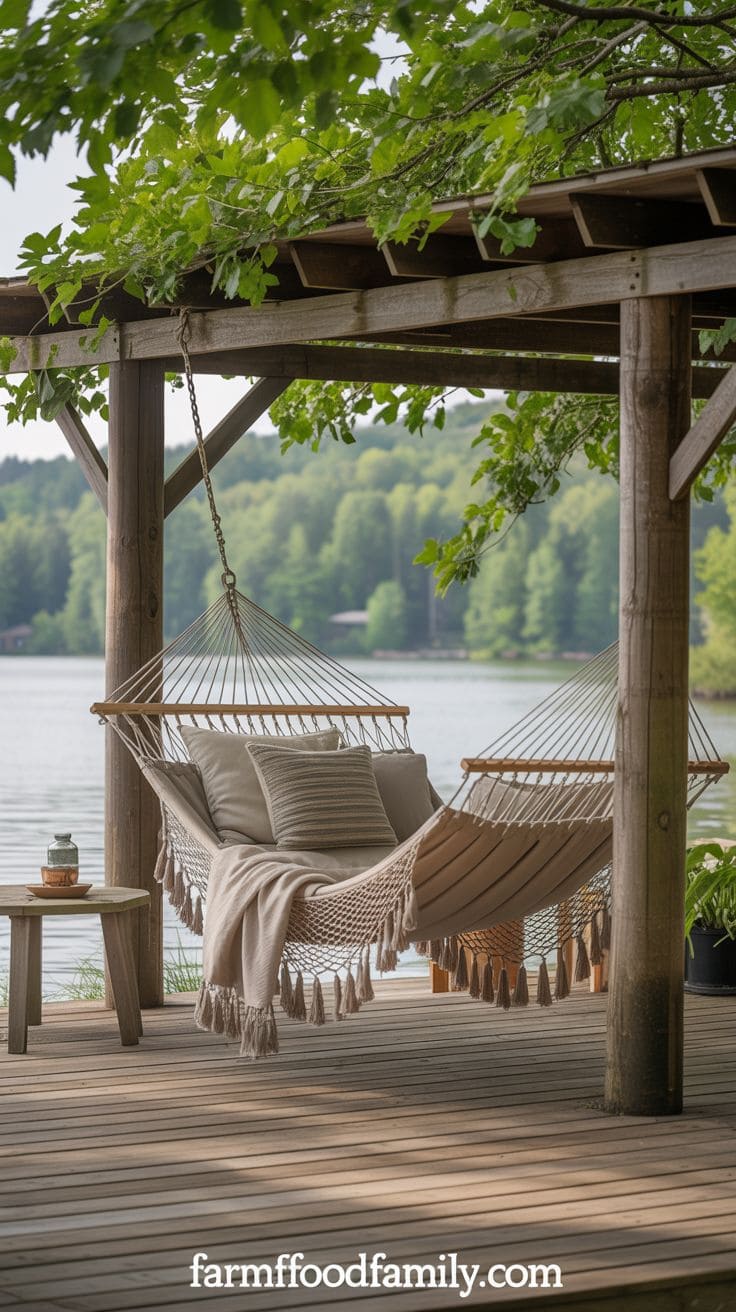
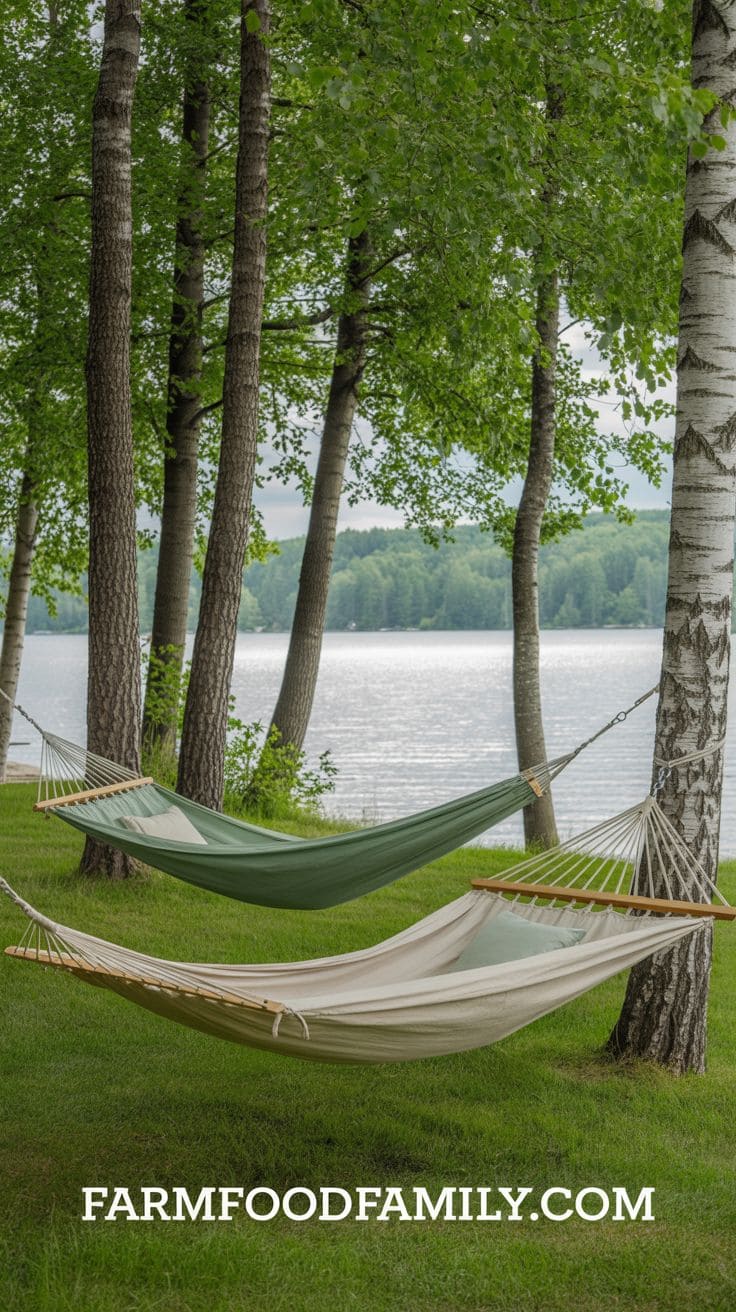
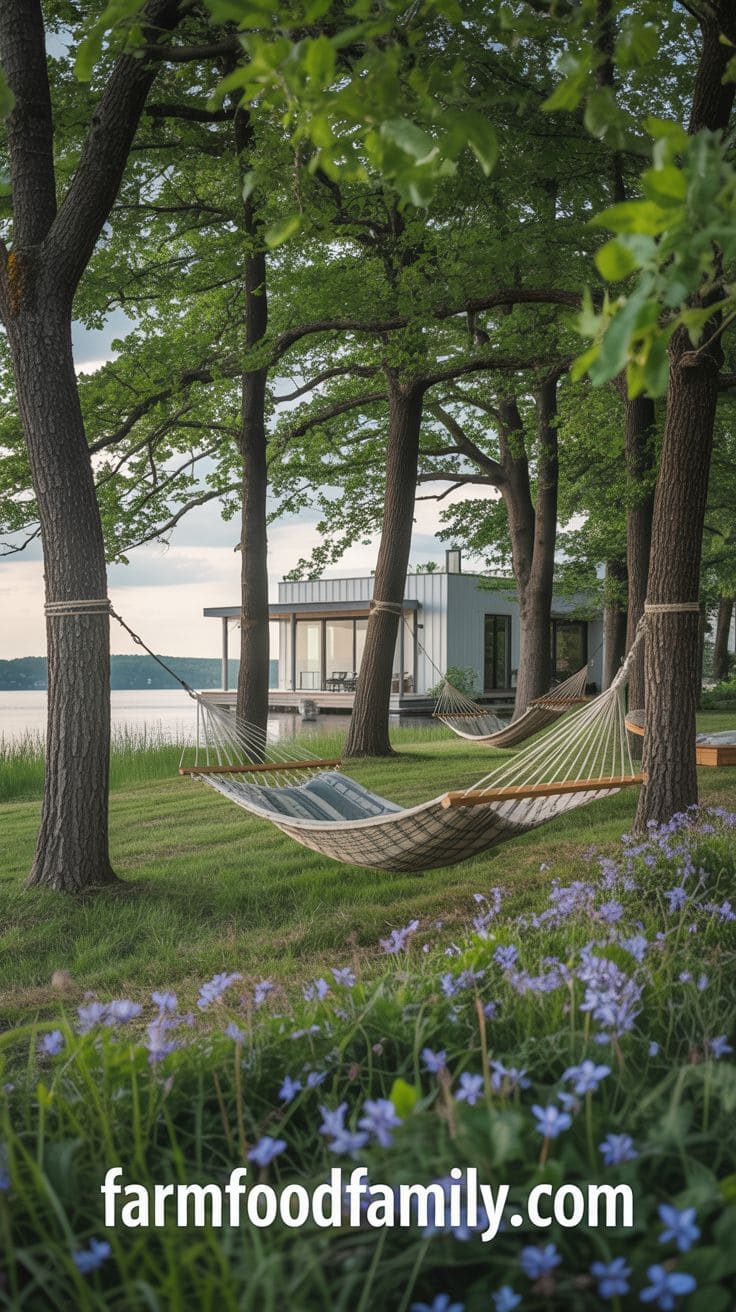
Find the shadiest corner of the yard and hang two or three hammocks at different heights and angles between the trees, or between a few sturdy wooden posts if you don’t have the right trees for it.
Stick to soft, natural-toned fabric and layer in a couple of outdoor pillows. Ferns and wild violets planted underneath keep the whole area feeling grown-in rather than staged.
The average homeowner spends $616/year on yard fixes that don't address the real problem. Find out what yours actually is — before you spend another dollar.
Take the Free Quiz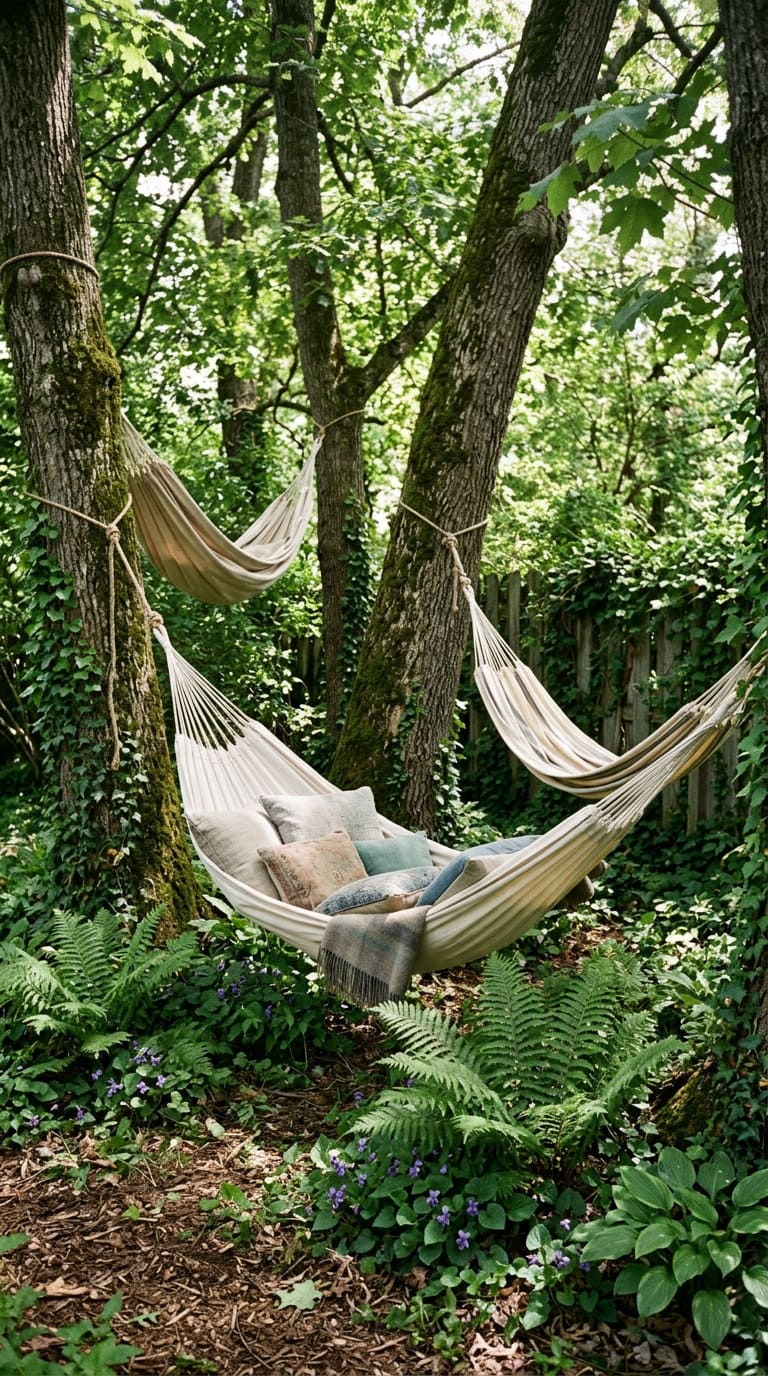
This is one of the cheapest ideas on the whole list. No permits, no contractor, just rope, hardware, and an afternoon. It’s also, in my experience, the spot everyone actually fights over by the second day of a lake weekend, more than the fire pit, more than the dock. Funny how the simplest thing wins.
A dedicated hammock setup works for literally any budget or property size, which makes it an easy first move if you’re just getting started on the backyard.
5. Stone Path to a Private Swimming Spot
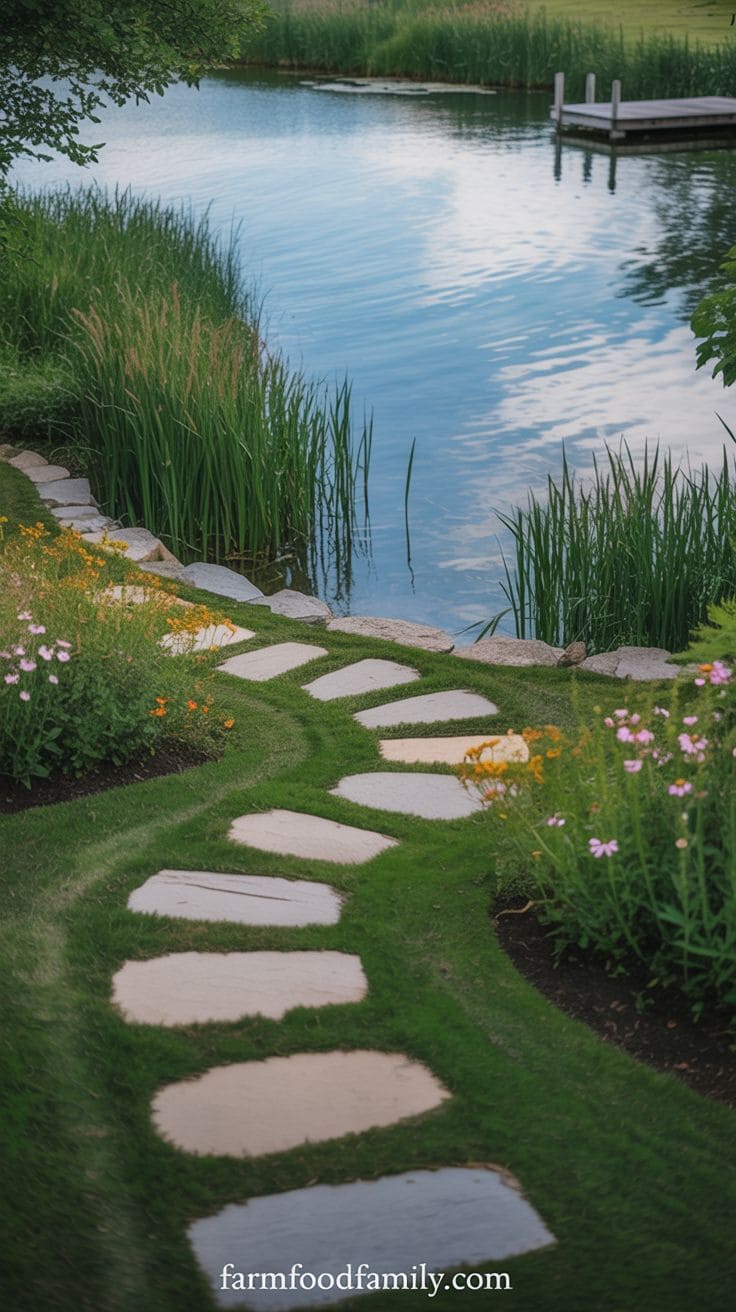
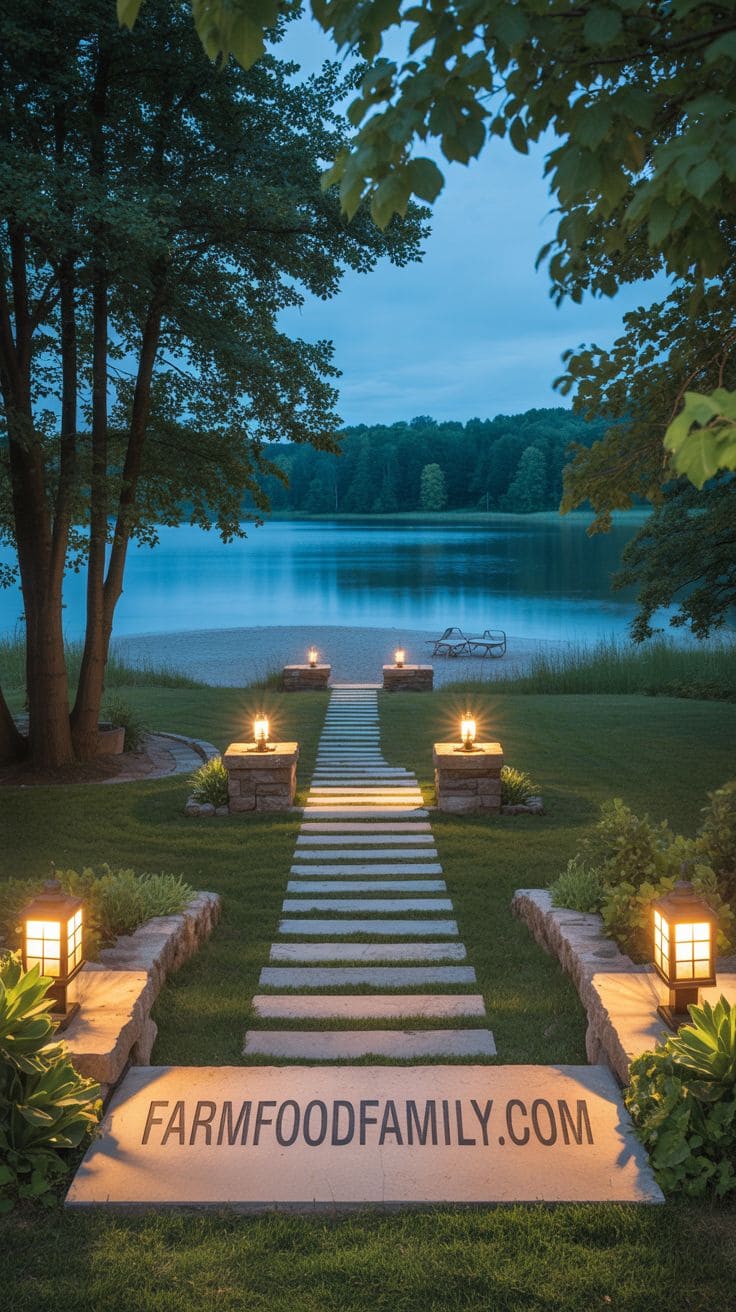
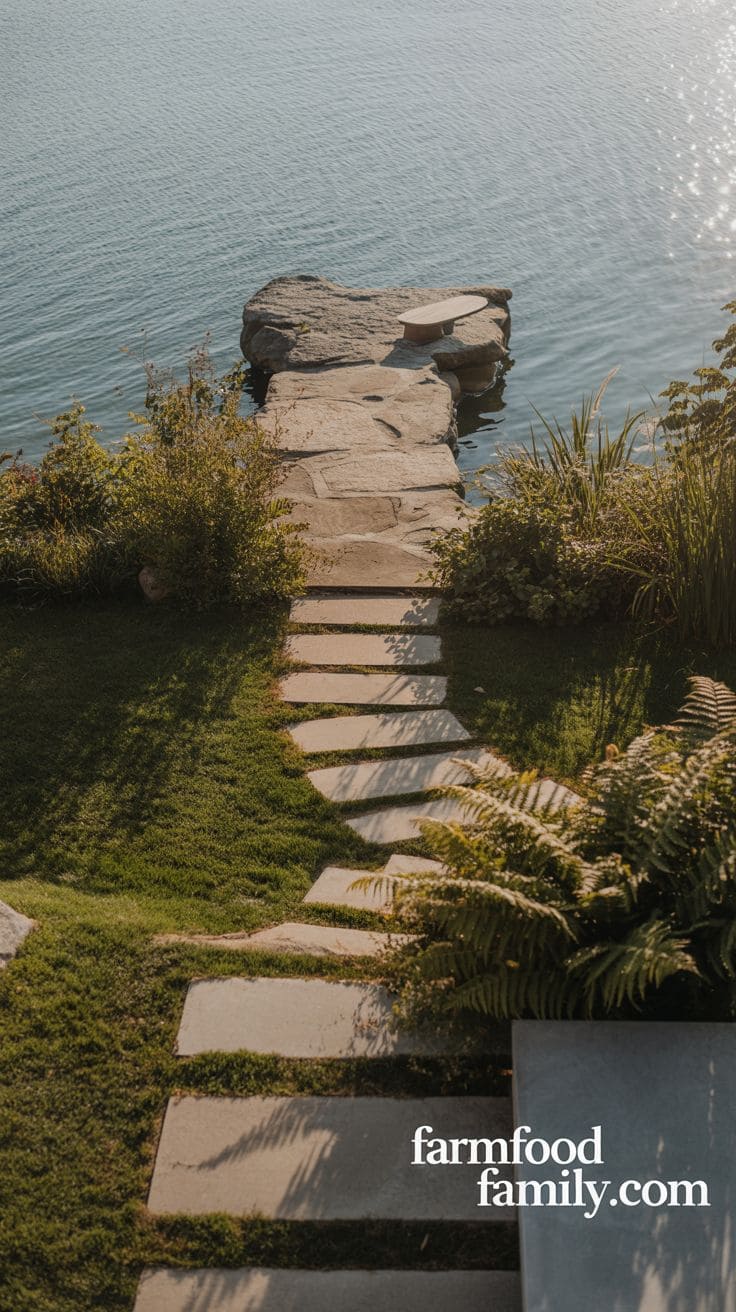
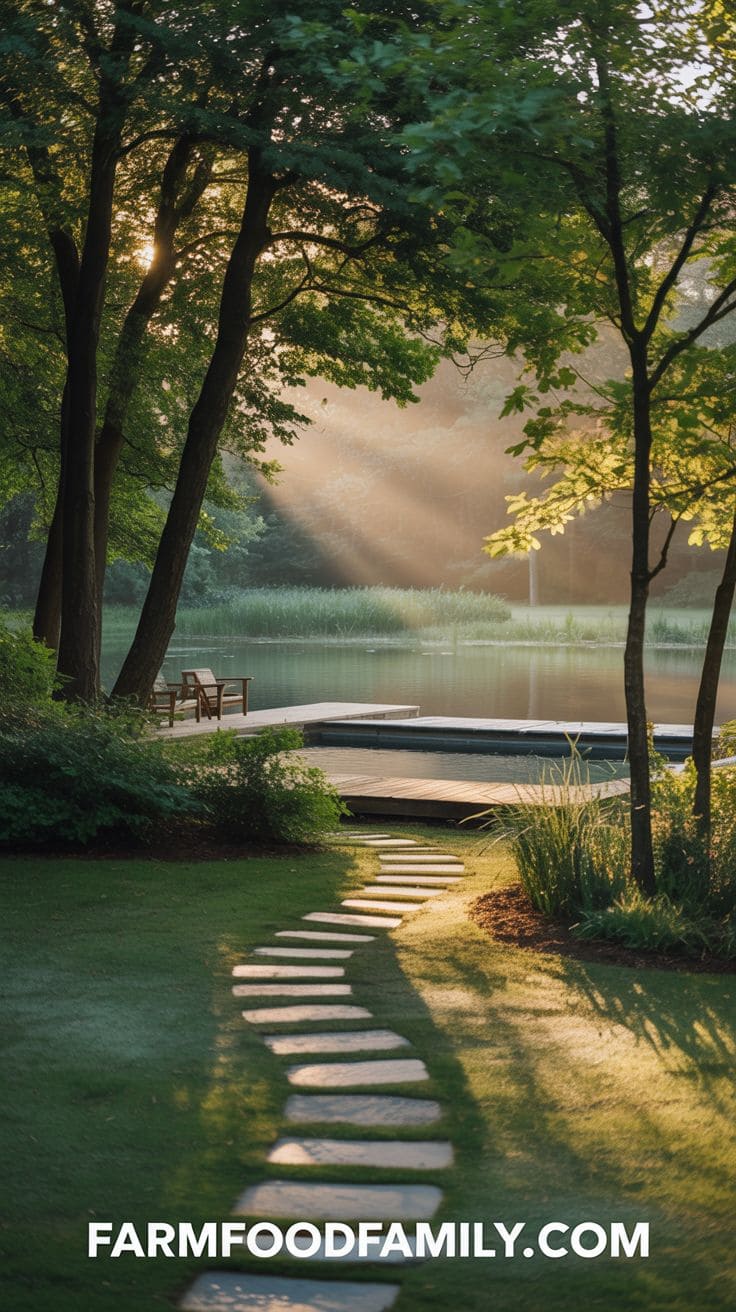
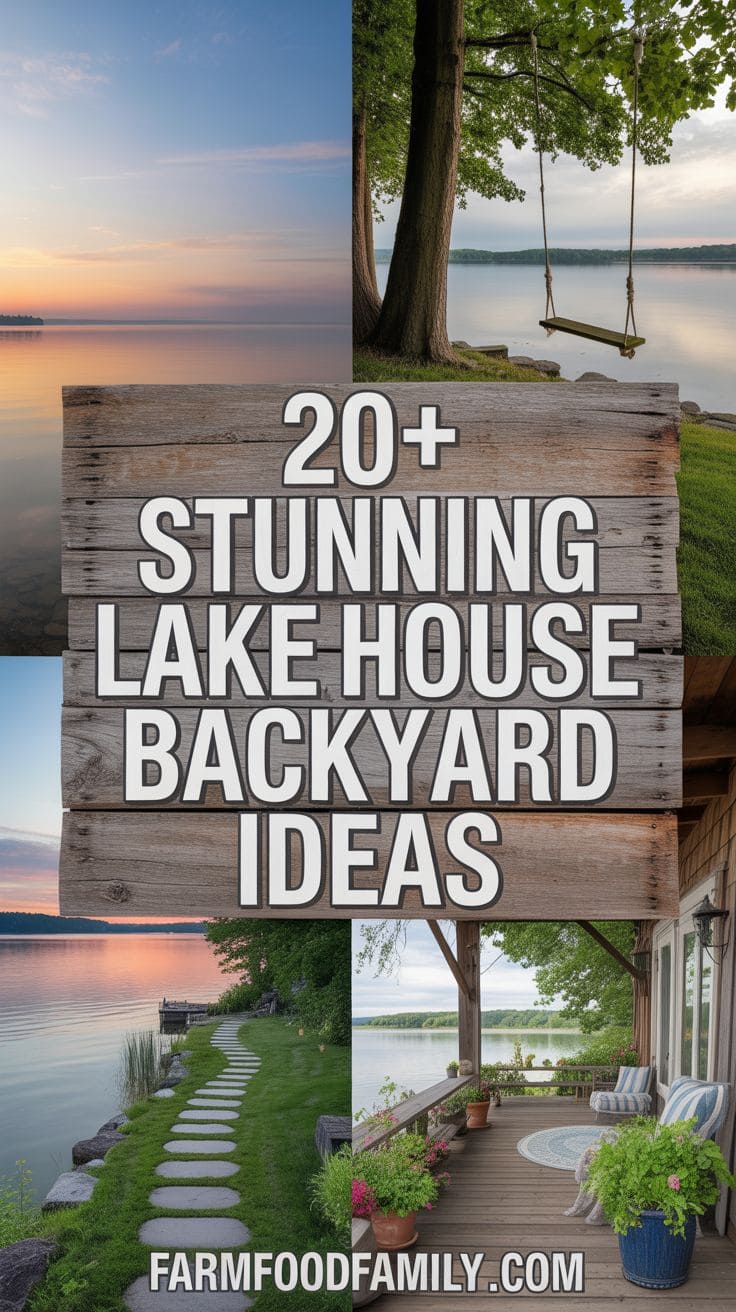
A winding flagstone or fieldstone path leading from the yard down to a sandy patch, a private dock, or a flat rock that doubles as a natural diving spot turns a plain walk to the water into part of the experience. Line it with solar lanterns and let low plants grow in around the edges rather than keeping it razor-clean and formal.
Because this path sits right at the shoreline transition, it’s worth building it the way a professional would rather than just laying stones on bare dirt. Eric Buck, a landscape architect with Terrain Planning who specializes in lakefront shoreline stabilization, notes that shoreline erosion is one of the more specialized problems in landscaping precisely because it needs the right base preparation and drainage, not just attractive materials on top. A path that looks great for one season and washes out the next isn’t actually saving you money.
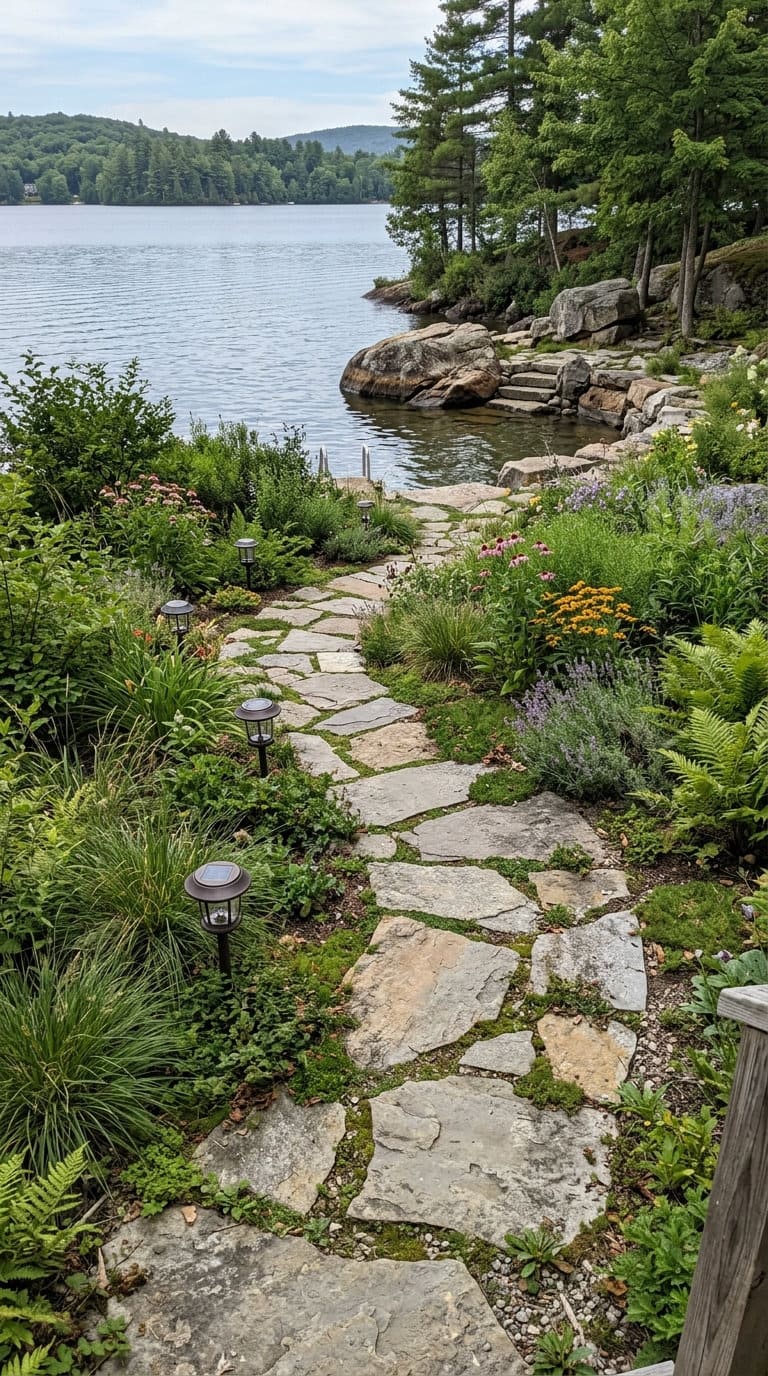
Keep it well-lit and stable underfoot, wet stone gets slick fast, and nobody wants a twisted ankle on the way to a swim.
Budget sits in the middle, DIY-able for a short, flat path, but worth hiring a pro if the grade down to the water is steep or if erosion is already a visible problem on your property.
6. Native Shoreline Buffer Bed, and the Real Tradeoff Nobody Mentions
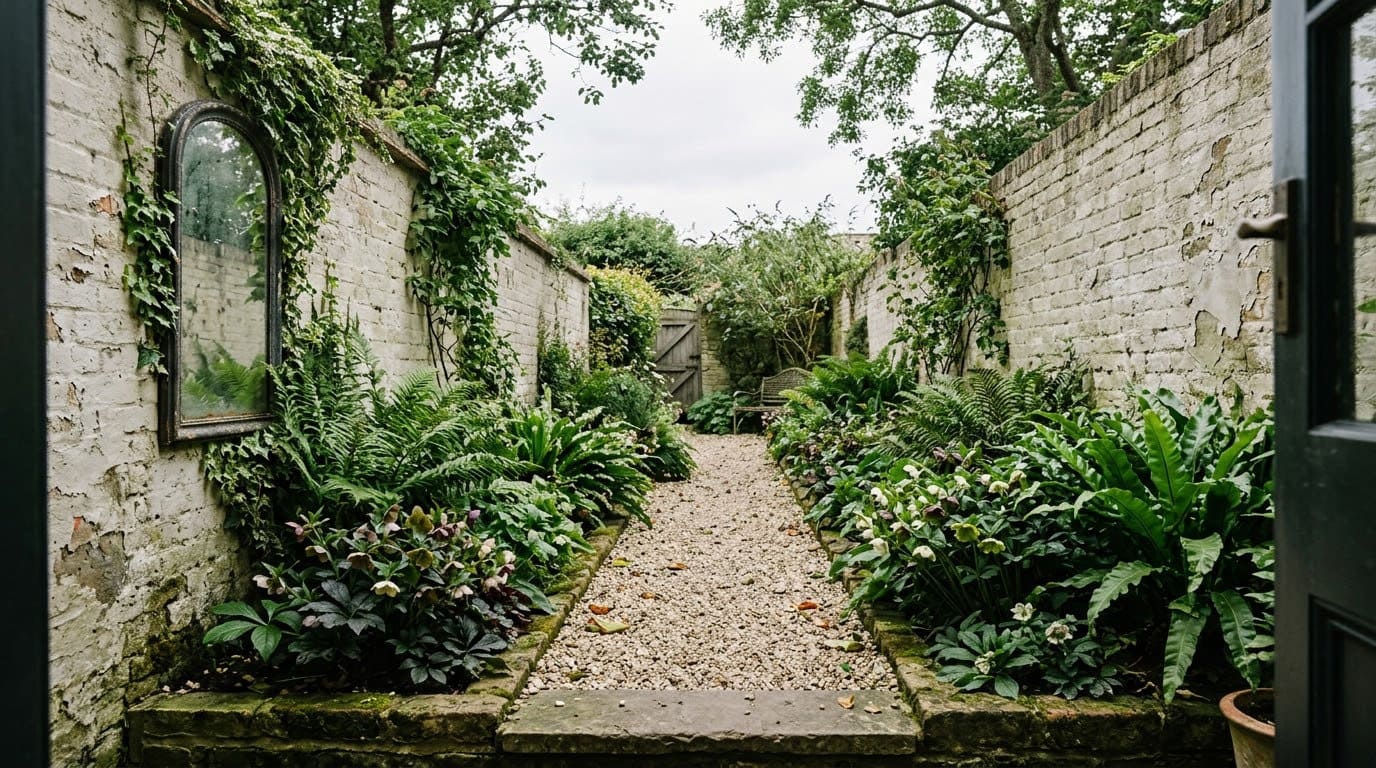
This is different from the terraced planting in idea #1, this is a dedicated buffer bed right at the waterline, and it’s worth its own section because there’s a genuine decision to make here, not just one right answer.
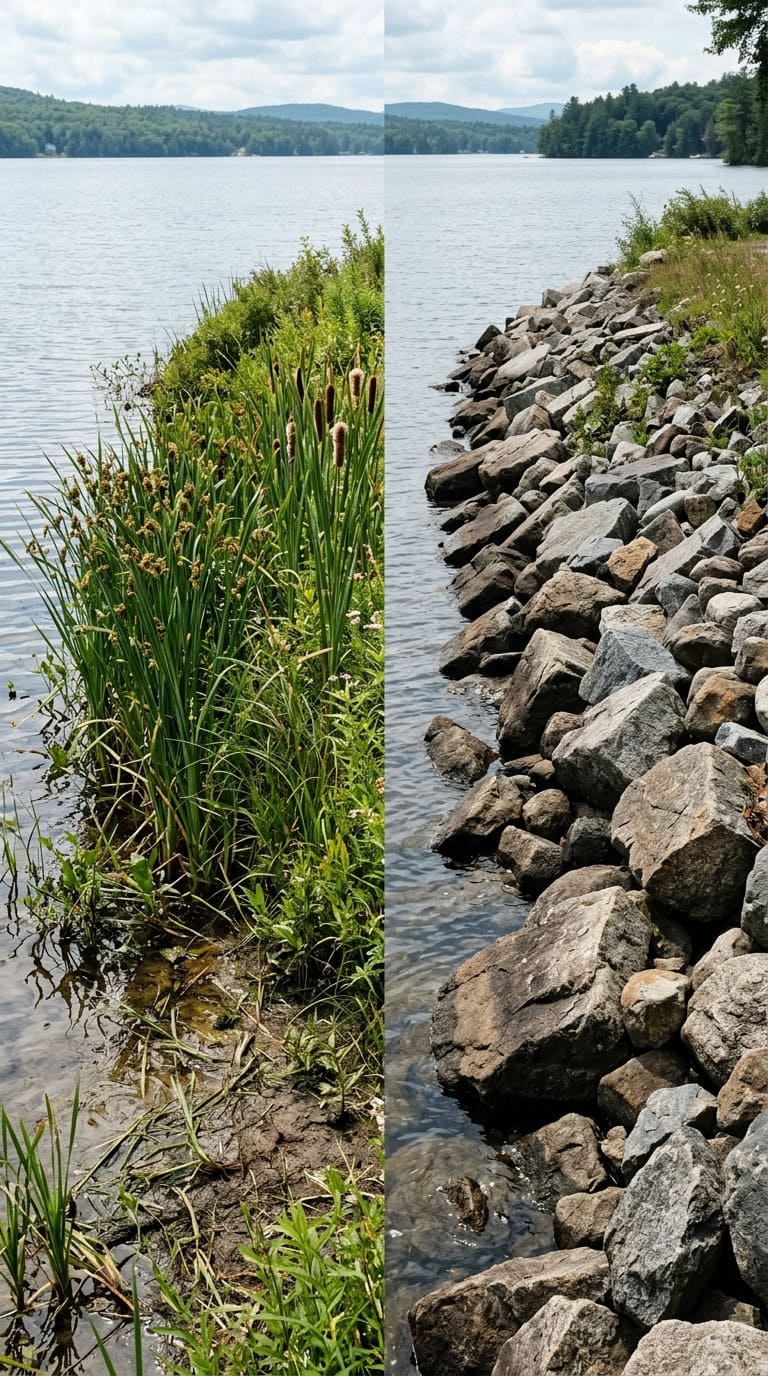
The soft approach: a planted buffer using native species like bulrush, lake sedge, or cattail along the immediate shoreline. The Michigan Natural Shoreline Partnership calls this “lakescaping,” and it works by using deep root systems to intercept runoff and reduce wave energy before it erodes the bank. It’s cheaper, better for water quality, and better for the fish and birds that use the shallows. The catch: it takes a season or two for the roots to really establish, so it’s not an instant fix if your bank is actively washing away right now.
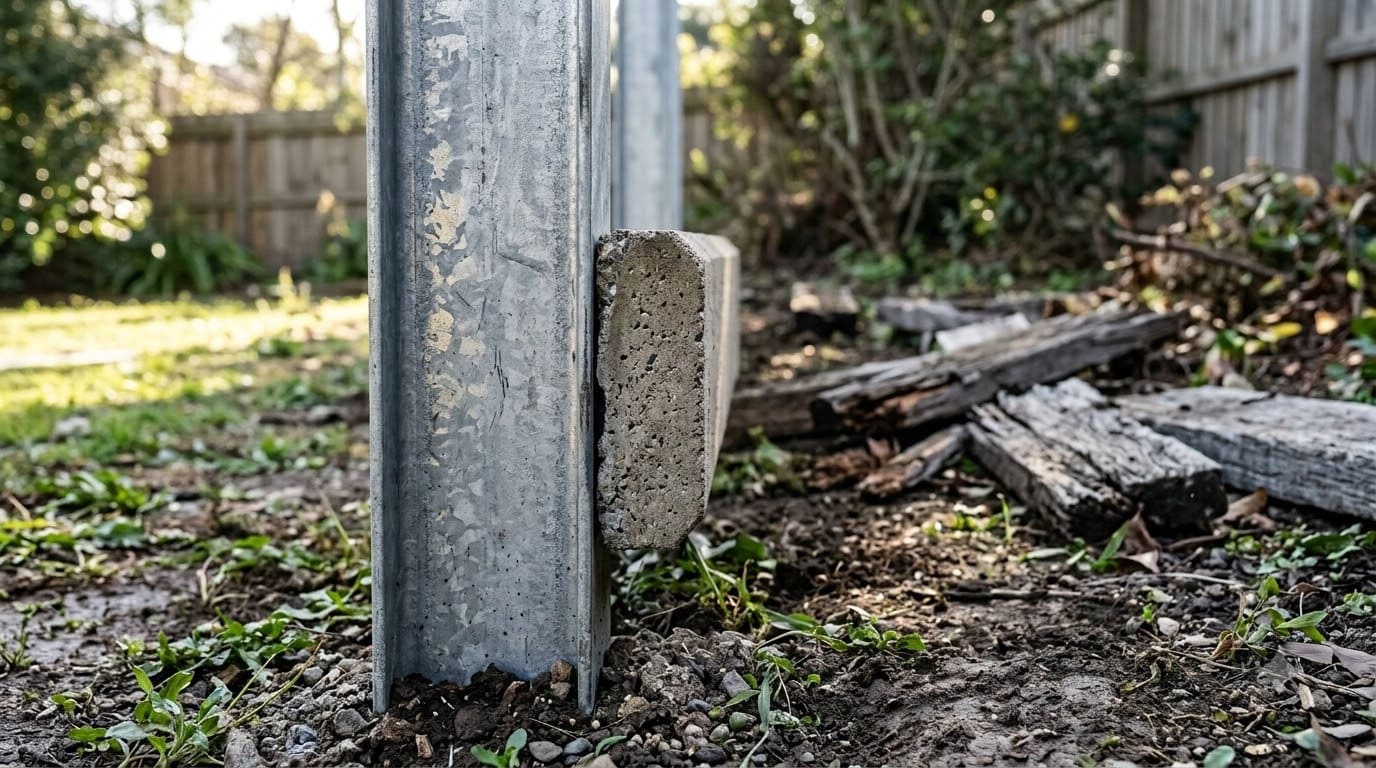
The hard approach: rock riprap or retaining structures, what one lake-house owner I saw discussing this online called “heavier dead men blocks along the lake front,” meaning large buried anchor blocks that hold a wall permanently in place. It’s immediate and it’s tough, no waiting for roots to grow. It’s also more expensive, more disruptive to install, and, depending on your state, may need a stricter permit because hard shoreline structures affect the lake’s ecology more directly than plantings do.
Neither one is wrong. If your bank is stable and you have time, go native and soft. If you’re already losing yard to erosion this season, a hard solution buys you time, and you can always add native plantings on top of it later.
Budget: soft buffer plantings are relatively affordable and often DIY-able for smaller stretches of shoreline; hard stabilization work is a bigger investment and typically needs a specialized contractor, this is not a regular landscaper’s job.
7. No-Dock Water-Adjacent Lounge Deck
Not every lakefront property gets to have a dock. HOA rules, local regulations, or the shape of the shoreline itself rule it out for plenty of owners, and that’s a real gap in most lake house content, which tends to assume everyone’s starting from a private dock.
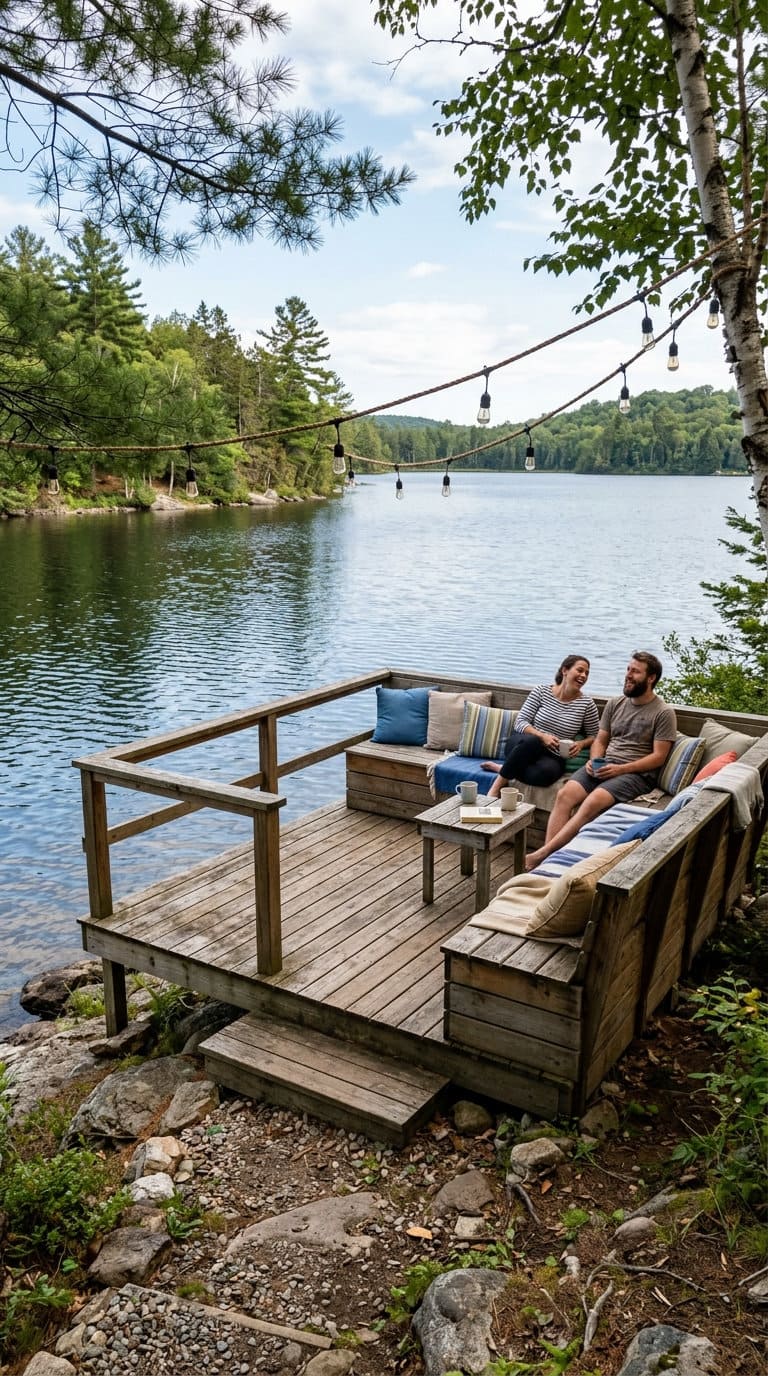
The fix is a lounge deck built on solid ground right at the water’s edge instead of over the water. Think a small raised platform with built-in or freestanding seating, positioned to catch the same view a dock would give you, just without extending over the lake itself. Add a fire feature or a simple gravel surround nearby and it does almost everything a dock does for entertaining, minus the swimming access.
One thing worth trying if mini golf or a bigger novelty feature crossed your mind (and based on a few real lake-owner threads, it crosses more minds than you’d guess): a small putting green section built into the deck’s edge planting is a genuinely fun, low-stakes add-on for a no-dock yard that still wants a “wow” feature.
Budget runs low to moderate for a simple platform deck, higher if you’re adding built-in seating, lighting, or a fire feature. This idea exists specifically for the HOA-restricted or permit-limited property, if you already have dock access, you probably don’t need this one.
8. Screened Gazebo or Porch for Bug-Free Evenings
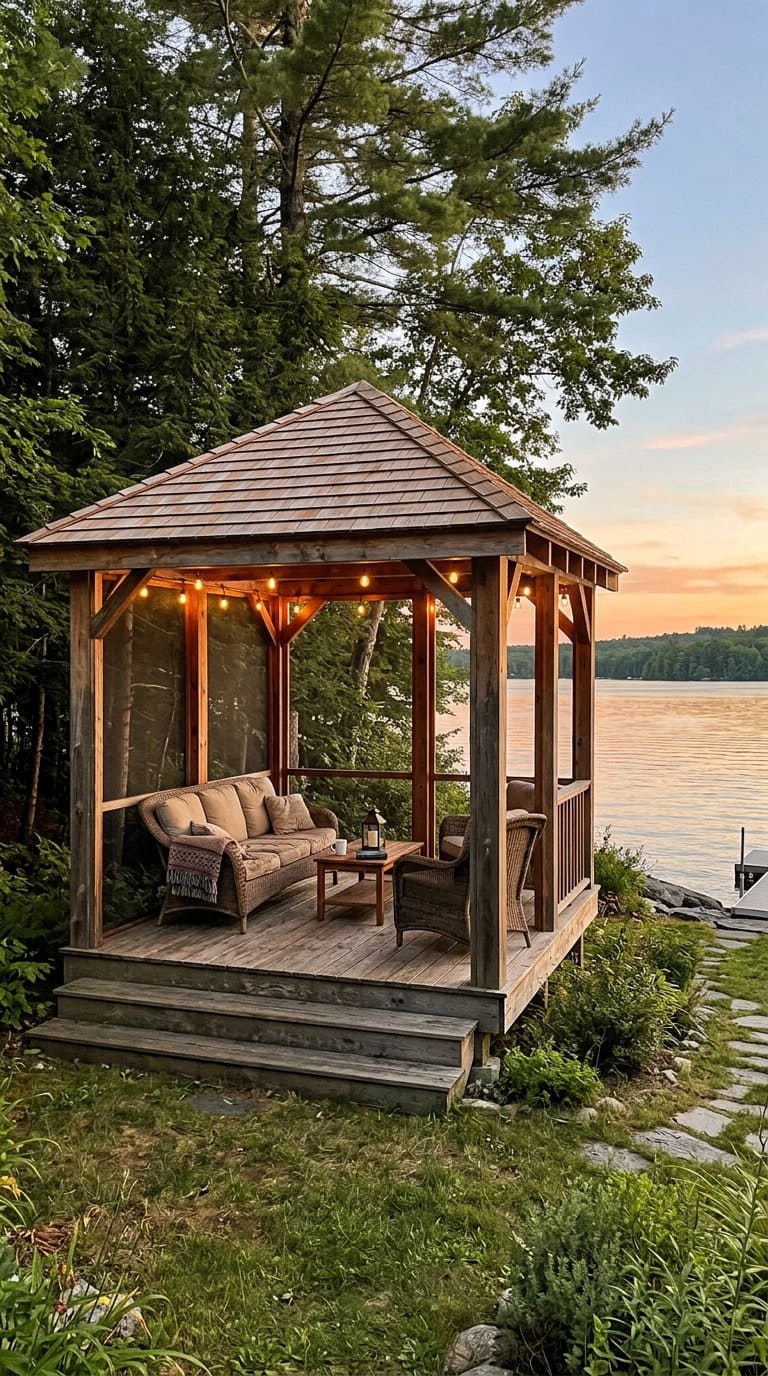
Nobody puts this on a lake house wish list until their first mosquito-heavy July evening, and then it becomes the only thing anyone wants. A screened gazebo or a screened porch addition gives you a spot to actually sit outside after dusk without spending the whole time swatting at your ankles.
Cedar or pressure-treated framing with fine-mesh screening keeps the structure from feeling like a cage, especially if you leave one or two sides more open toward the water view and screen mainly the sides facing dense trees or standing water, which is usually where mosquito pressure comes from in the first place.
This is a bigger build than most of the ideas above, real framing, a roof, screen installation, so budget accordingly. It’s worth it specifically if your property backs onto wooded terrain, a marshy inlet, or anywhere bug pressure is already a known problem, ask your neighbors, they’ll tell you honestly.
9. Outdoor Kitchen or Bar Zone
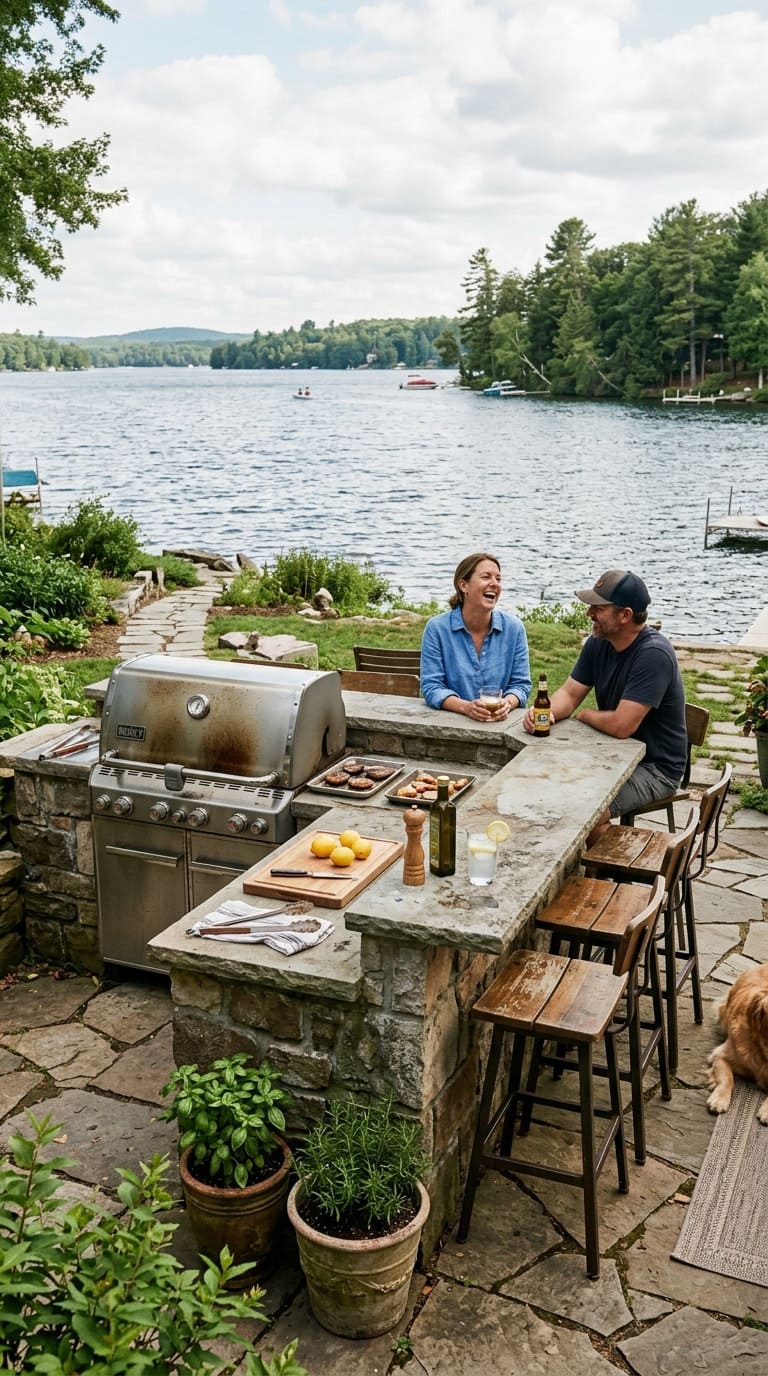
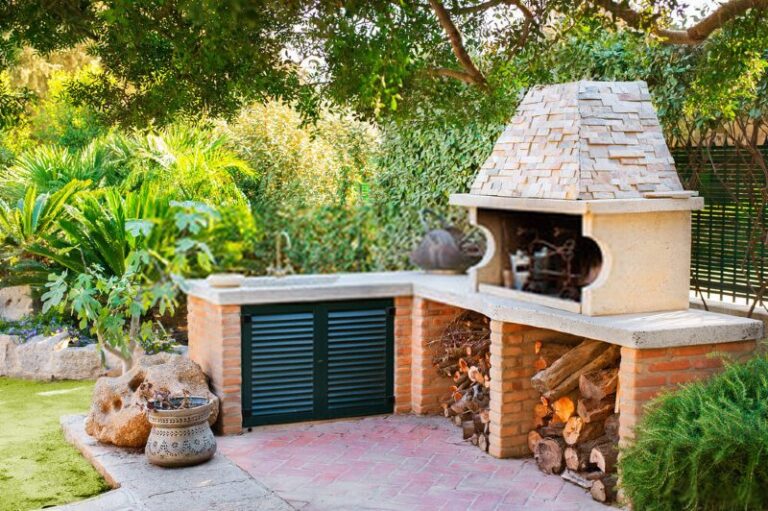
This is the one gap that shows up across almost every competing lake house article except, oddly, the version of this one that existed before. An outdoor kitchen or bar area, built-in grill, some counter space, a small bar fridge, maybe a pizza oven if you’re feeling ambitious, turns the backyard into the actual hub of a weekend instead of a walk-through on the way to the water.
You don’t need the full built-in version to get the benefit. A weatherproof cart-based setup with a grill and a drink station covers most of what people actually use, and it’s a fraction of the cost of running gas and water lines to a permanent structure.
Budget is genuinely wide open here, from a few hundred dollars for a solid cart setup to five figures for a full built-in kitchen with plumbing and electrical. It earns its spot for anyone who regularly hosts groups at the lake; if it’s mostly just you and a partner most weekends, it’s probably overkill.
10. Birdwatching Nook with a View
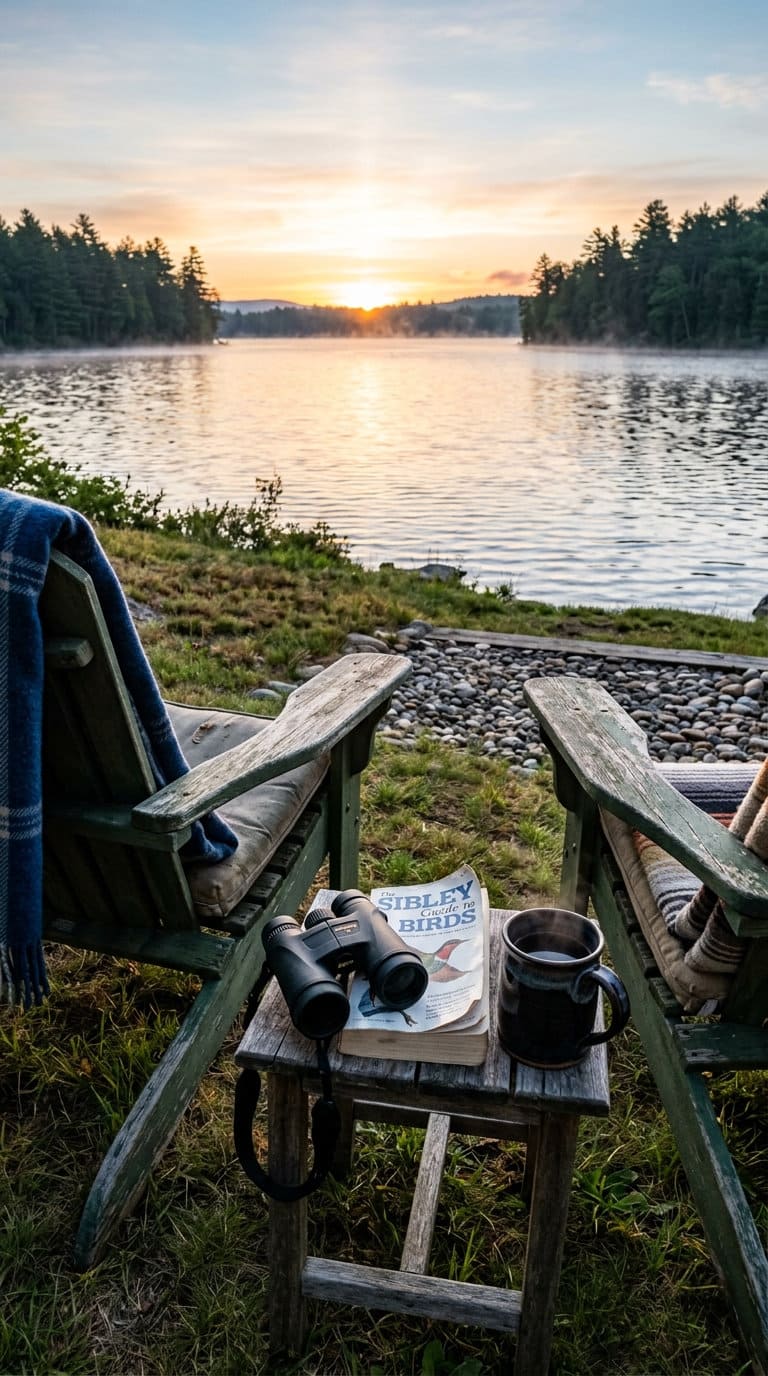
This one came straight out of a real thread of lake house owners answering the question “what do you actually need at a lake house,” and the answer that stuck with me was refreshingly unglamorous: binoculars and a bird field guide. Not a boat, not a hot tub. Binoculars.
A birdwatching nook doesn’t need to be complicated. A couple of comfortable chairs angled toward a stretch of shoreline or open water where herons, loons, or ducks tend to show up, maybe a small side table for a field guide and a mug of coffee, and you’ve got a spot that gets used almost every single morning, quietly, before anyone else is up.
It’s the cheapest idea on this entire list, arguably cheaper than the hammock grove, and it’s the one I’d actually recommend building first if you’re not sure where to start. Not every part of a lake house backyard needs to be built for entertaining twelve people. Some of it should just be built for you, with coffee, at six in the morning.
Bringing It Together
A lake house backyard works when it respects the water first and the entertaining second, not the other way around. The ten ideas above range from a free-afternoon hammock setup to a five-figure outdoor kitchen, and honestly, most real lakefronts end up as some mix of two or three of these rather than all ten at once.
Start with whichever idea answers your yard’s actual problem right now, too much sun, no bug protection, an eroding bank, no dock access, rather than whatever looks best in a photo. And if any of it touches the shoreline itself, make that one call to your local authority before you dig. It’s cheap insurance against a much more expensive redo.
If you’ve built any of these at your own lake place, drop a comment, I’d genuinely like to know which one gets used the most once the novelty wears off.
FAQs
Do I need a permit to landscape near my lake shoreline?
Often, yes, more often than most homeowners expect. Work that touches the water’s edge, terracing, planting beds right at the waterline, retaining walls, riprap, is frequently regulated at the state or county level because it affects water quality and erosion for the whole lake, not just one property. The Michigan Natural Shoreline Partnership and similar state programs exist specifically because this gets missed so often. Call your local shoreline or wetland authority before you dig, it’s a short conversation and it’s free.
How far should a fire pit be from my house or pergola?
Further than you’d probably guess. General guidance from the National Fire Protection Association calls for meaningful clearance from any structure or combustible material for wood-burning fire pits, with gas fire pits able to sit closer, but the specific distance varies by source and local fire code, so confirm the number with your local fire marshal rather than eyeballing it. If a covered structure is unavoidably close, choosing gas over wood cuts down on the smoke and soot that tends to build up on pergolas and porch ceilings over time.
What’s the cheapest lake house backyard idea on this list?
The birdwatching nook (idea #10) and the hammock grove (idea #4) are both essentially free beyond basic furniture, no permits, no contractor, no shoreline work. They’re also, in practice, two of the most-used spots once the novelty of the bigger builds wears off.
Can I still have a great lakefront yard without a dock?
Yes. A no-dock lounge deck built on solid ground at the water’s edge (idea #7) gives you most of the same view and entertaining value as a dock without needing the permit or the HOA approval that a true dock often requires.
Should I plant native species or use rock/riprap to stop shoreline erosion?
It depends on how urgent the erosion is. Native buffer plantings are cheaper, better for water quality, and better for local wildlife, but they take a season or two to fully establish. Rock riprap or built retaining structures work immediately but cost more and usually need a stricter permit. If your bank is actively collapsing this season, lean hard; if it’s just bare and stable, lean native.
Never miss an update — choose FarmFoodFamily as your preferred source on Google.
How it works: Tap the button below to open Google's settings page, then check the box next to FarmFoodFamily.
Tap the checkbox to turn it blue — that's how you know it's set.