20+ Stunning Metal Pergola Patio Ideas (Plus the Wind Rating Most Buyers Miss)
Most metal pergola articles are pure style inspiration. Nobody mentions that a lot of budget pergolas ship with a wind rating well below what your region’s actual building code requires, and one Reddit thread proved it in real time: a buyer in Wisconsin considering a pergola rated for only 49 mph got told directly, “49…

Never miss an update — choose FarmFoodFamily as your preferred source on Google.
How it works: Tap the button below to open Google’s settings page, then check the box next to FarmFoodFamily.
Tap the checkbox to turn it blue — that’s how you know it’s set.
Most metal pergola articles are pure style inspiration. Nobody mentions that a lot of budget pergolas ship with a wind rating well below what your region’s actual building code requires, and one Reddit thread proved it in real time: a buyer in Wisconsin considering a pergola rated for only 49 mph got told directly, “49 mph is not enough.
Design wind loads in Wisconsin are more like 100 mph, depending on exactly where you are.” This one covers that gap, plus real footing guidance, before getting into the design ideas.
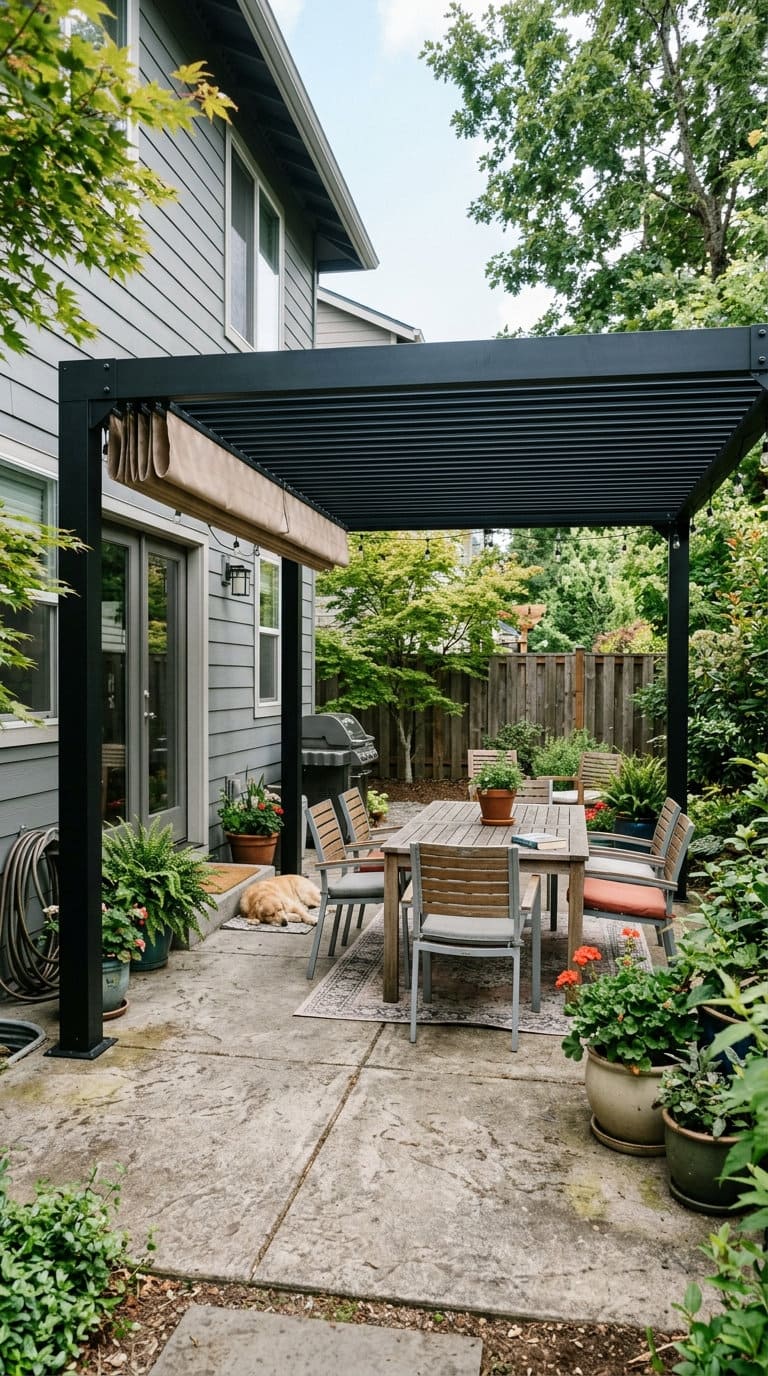
Metal Pergola Patio Ideas
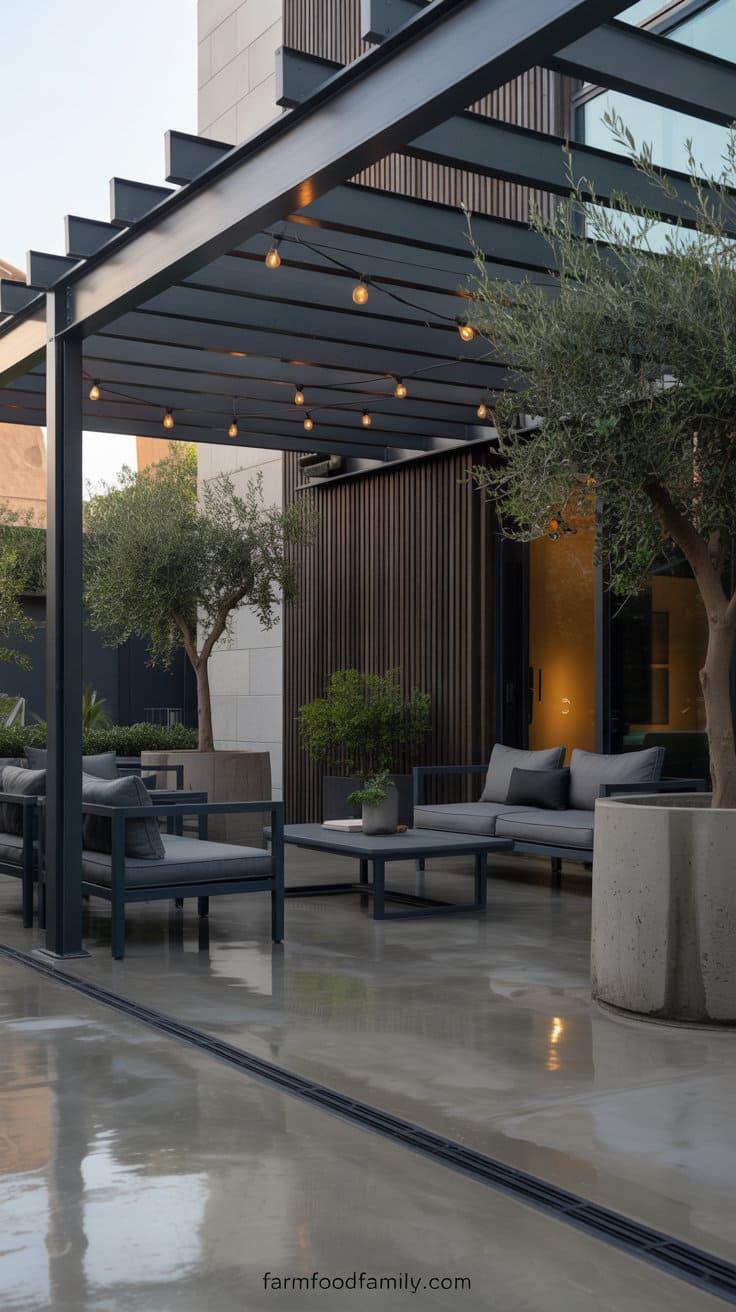
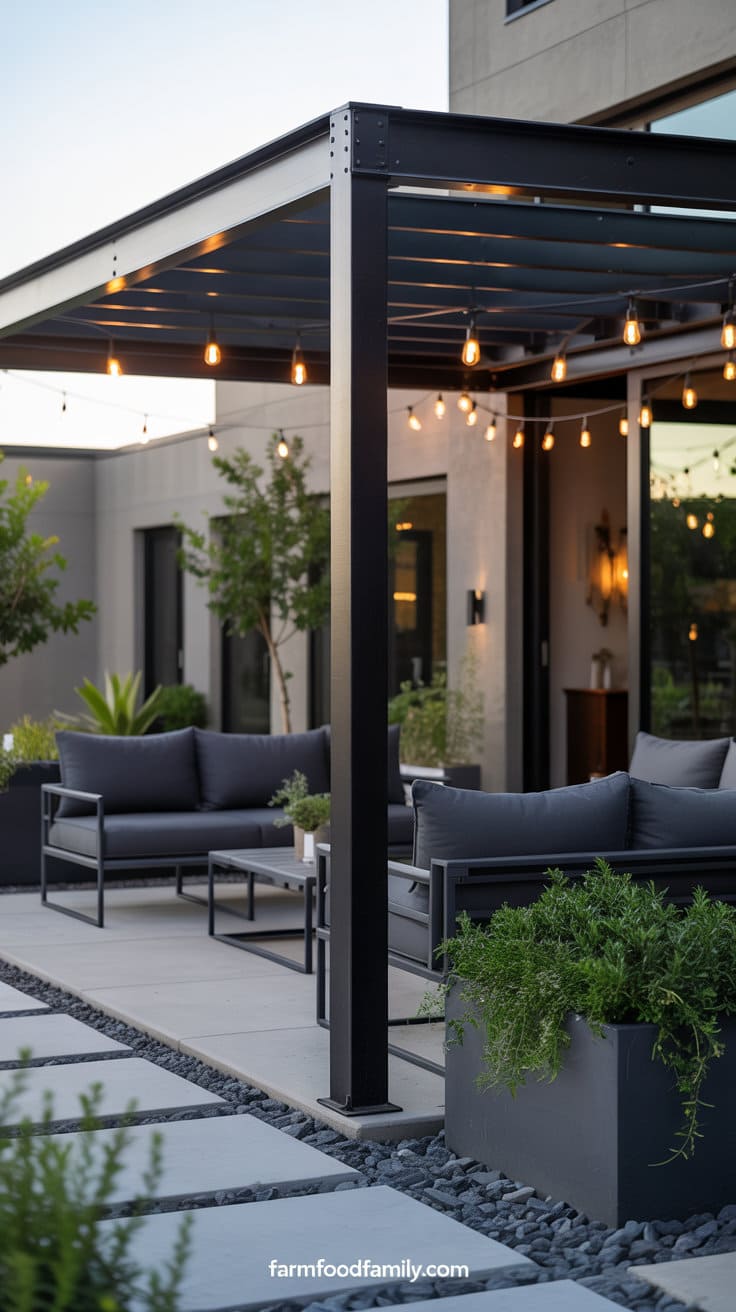
1. Industrial Elegance with Black Steel and Concrete Accents
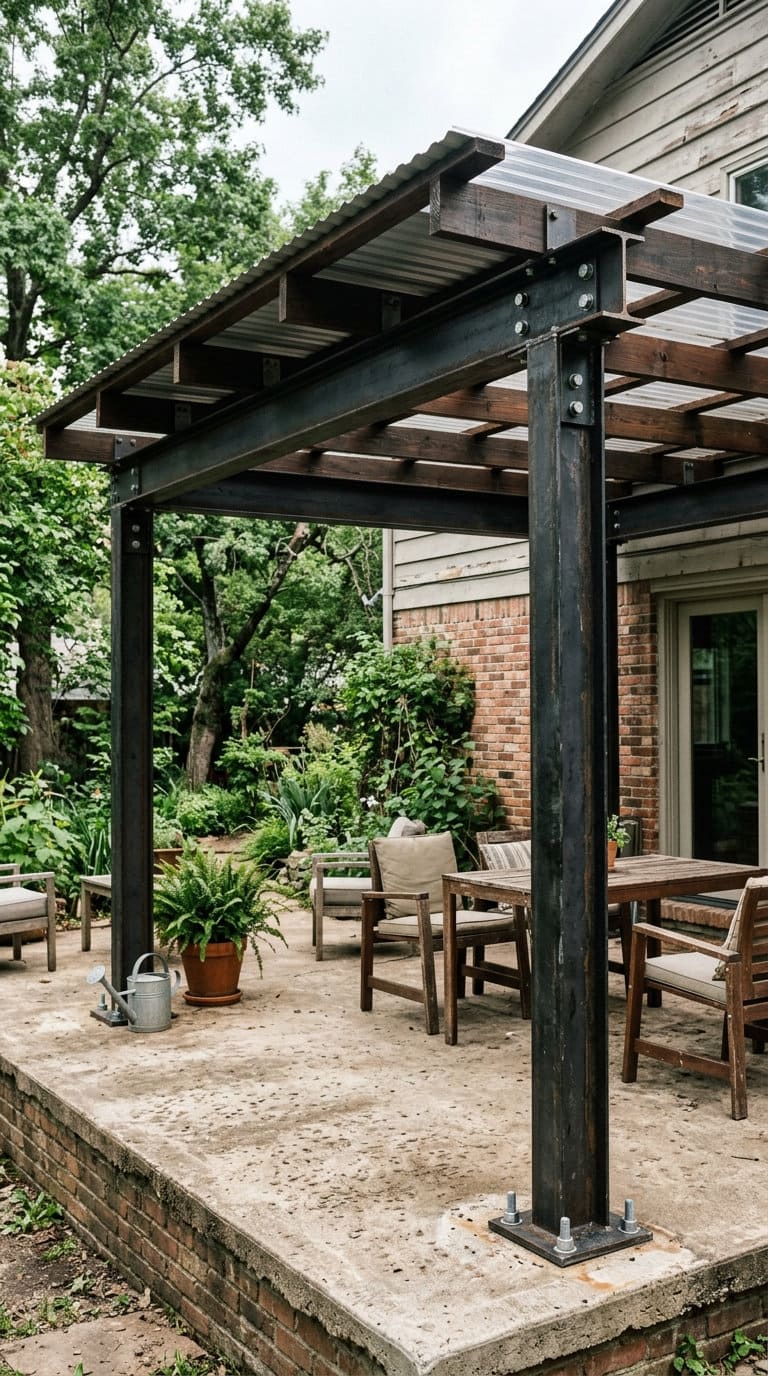
Raw steel or blackened aluminum framing with exposed structural bolts and clean rectilinear lines gives a patio a genuine architectural presence rather than a decorative add-on.
It pairs well with concrete pavers and minimal planting, letting the frame itself be the visual statement.
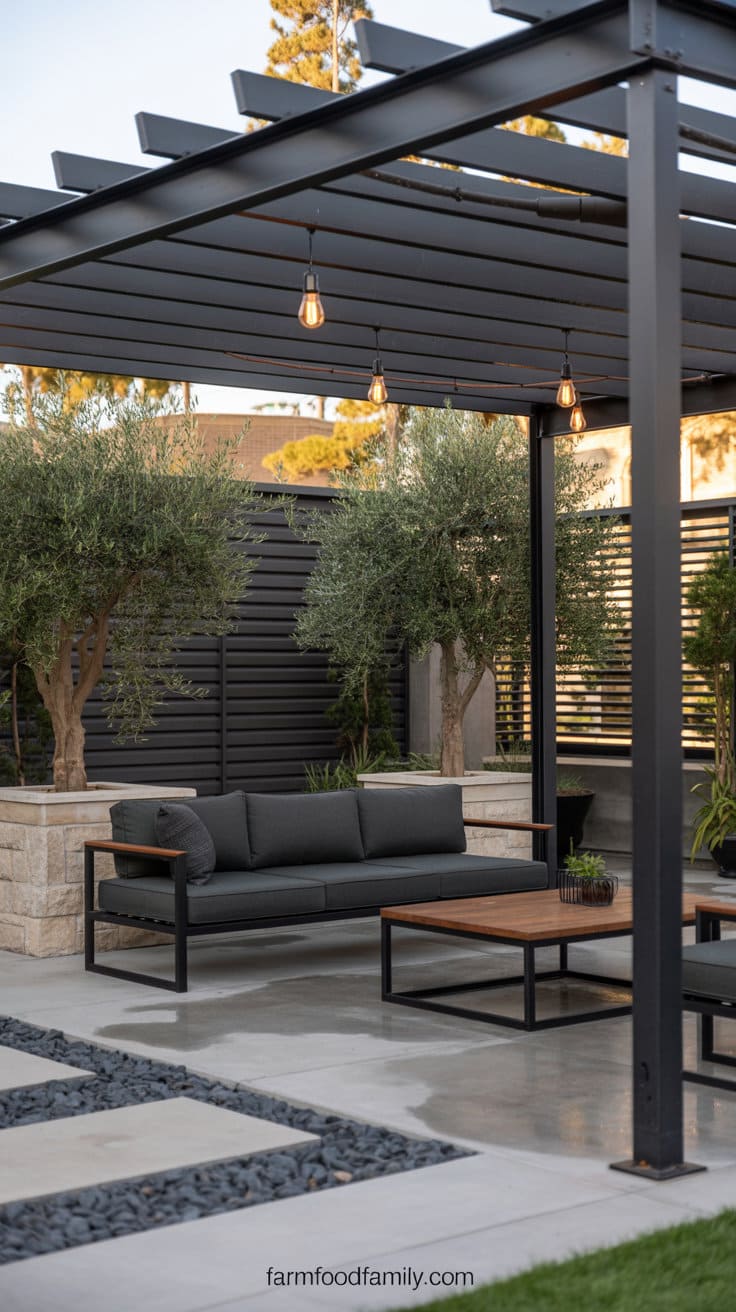
Combine a matte black steel pergola and a polished concrete patio floor to create a modern outdoor lounge with an industrial vibe.
The pergola’s clean, angular lines contrast wonderfully with rough textures such as exposed gravel or stone planters.
Choose low-profile furniture, such as charcoal couches, wood-and-metal side tables, and minimalist lighting fixtures like Edison bulb pendants draped from pergola beams.
A horizontal slatted privacy wall on one side can help block wind and give definition, while potted olive trees or structural plants in concrete containers soften the area without detracting from its modern feel.
Answer 4 quick questions and get matched to the exact fix for your yard — drainage, budget, layout, or something else entirely.
Take the Free Quiz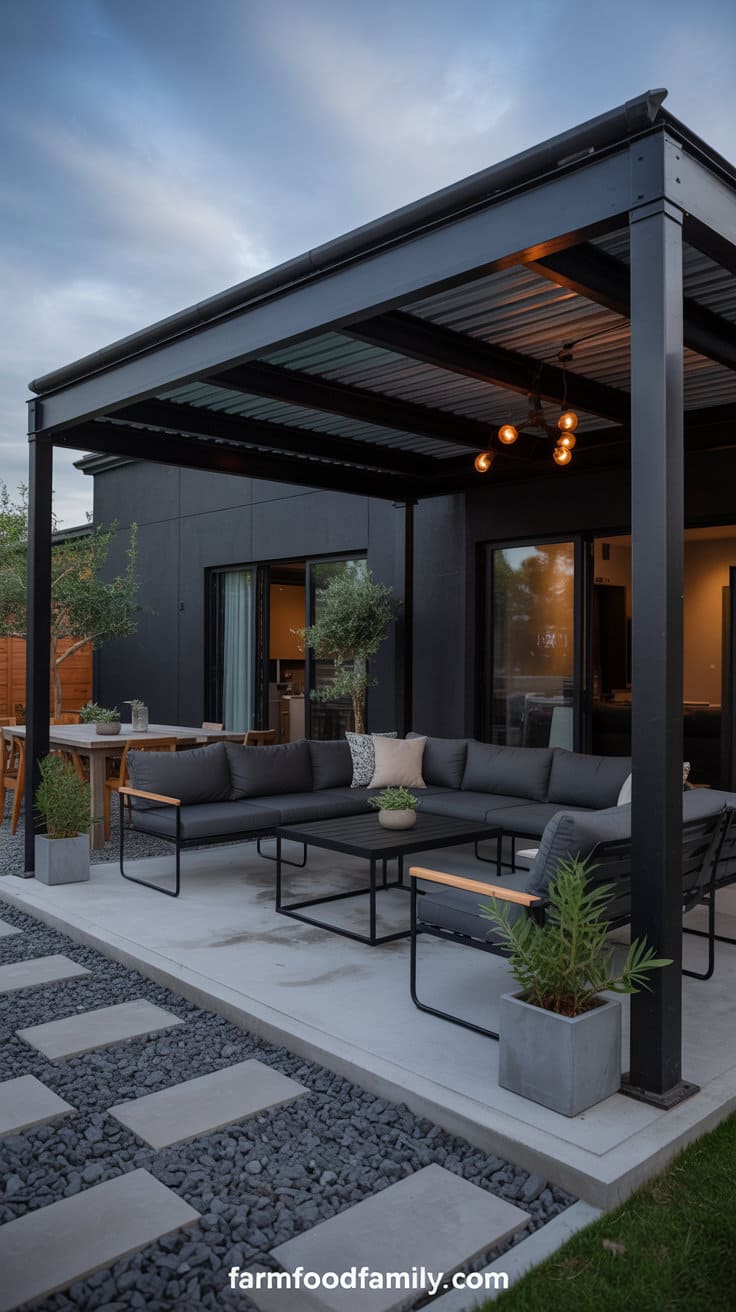
Balanced and Refined
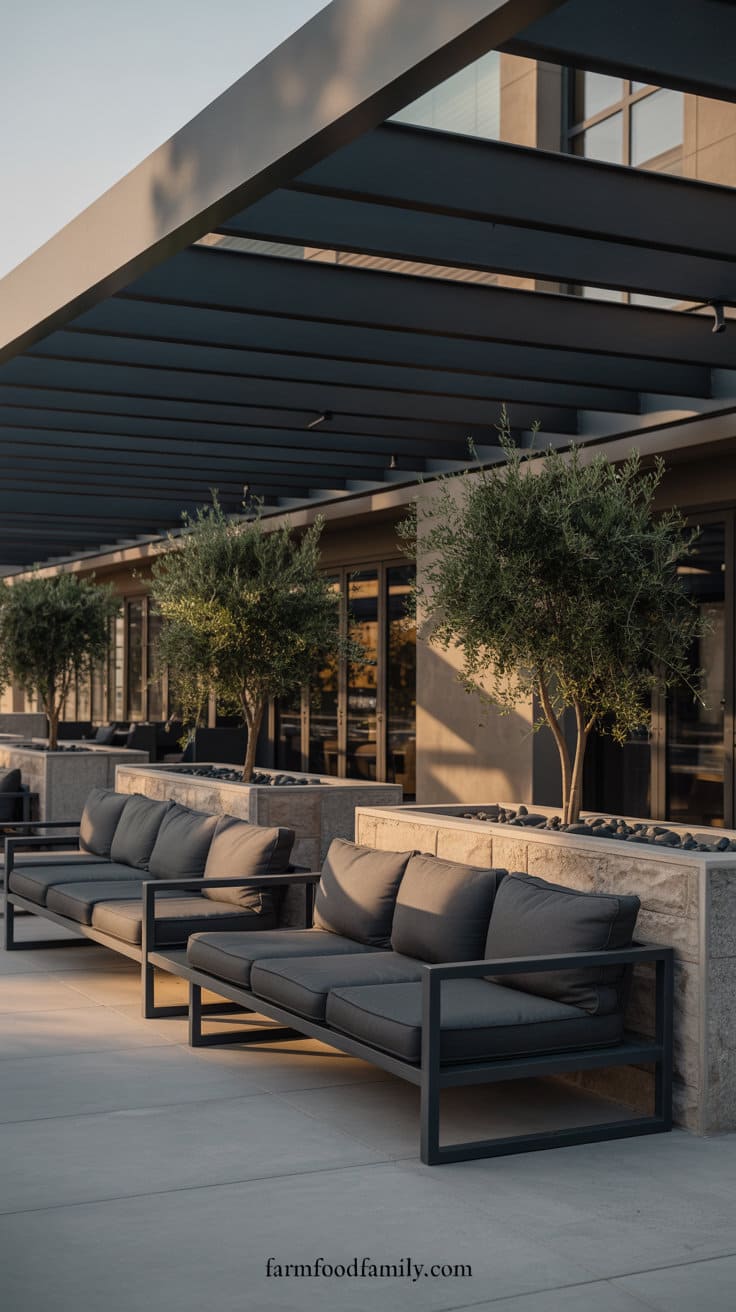
This design strikes a balance between form and function, resulting in a room that seems both robust and sophisticated. It is especially effective in urban backyards, rooftop terraces, and minimalist homes that require an outside space with visual weight and longevity.
The idea balances the bold industrial design of black steel and concrete with the tenderness of natural vegetation and organic textures.
The contrast between the metal and the furniture generates visual balance, while subtle touches like warm lighting add an inviting atmosphere.
Designing a patio with this idea in mind guarantees that the space does not feel excessively frigid or rustic.
The end result is a polished, livable outdoor lounge that combines structure and comfort with subtle, contemporary elegance.
2. Mediterranean Escape with Climbing Vines
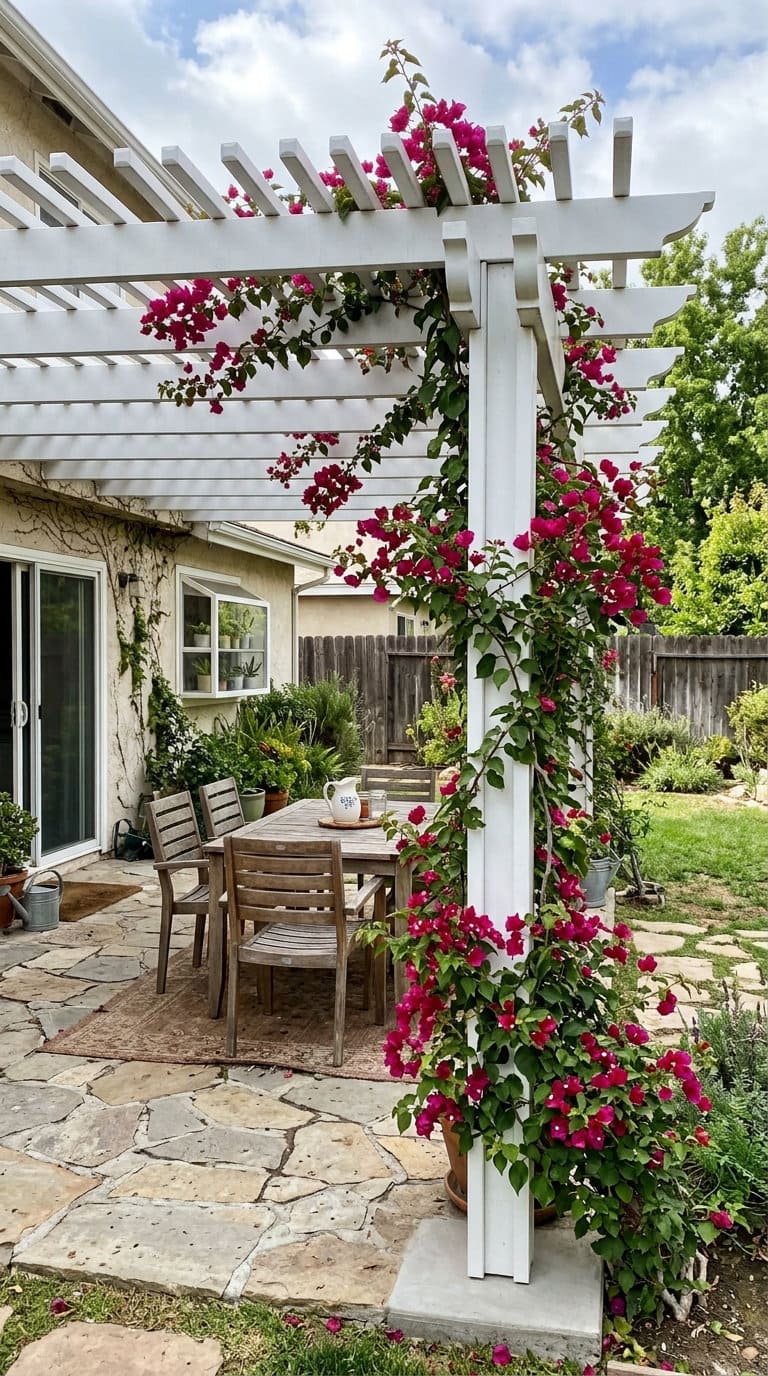
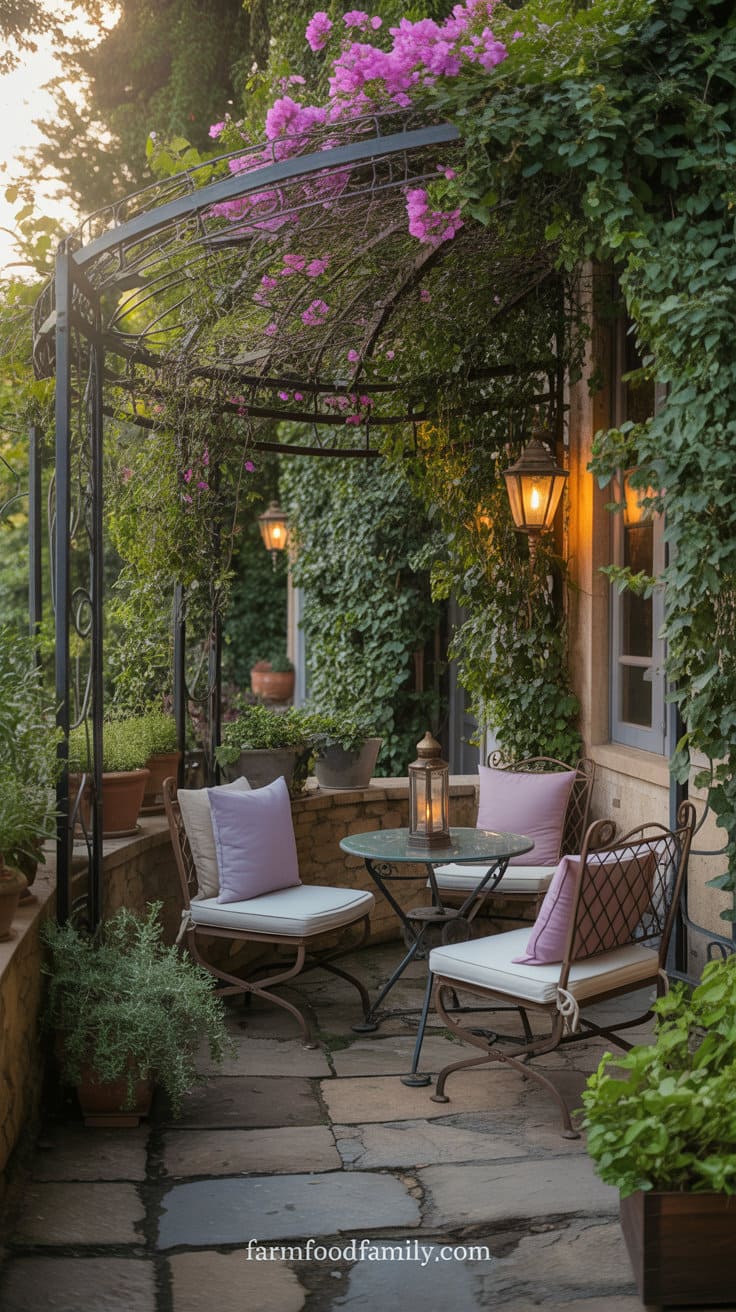
A white or cream powder-coated metal frame with climbing vines, bougainvillea or jasmine, trained up the posts softens the structure’s hard lines and brings real seasonal color and fragrance without needing a wood frame’s maintenance.
Most yard problems trace back to one specific, fixable cause. Find yours in 4 quick questions.
Take the Free QuizThe metal frame actually helps here, since it gives climbing plants a permanent, rot-proof structure to establish on over years.
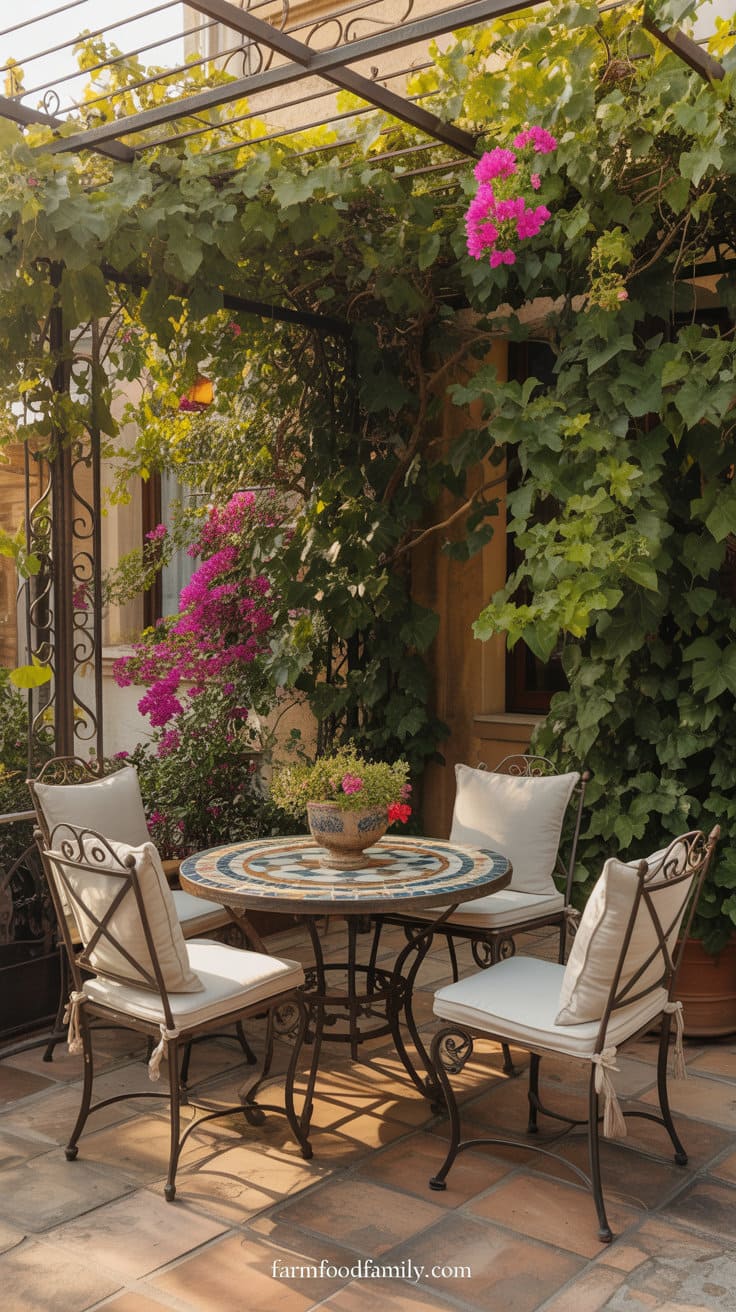
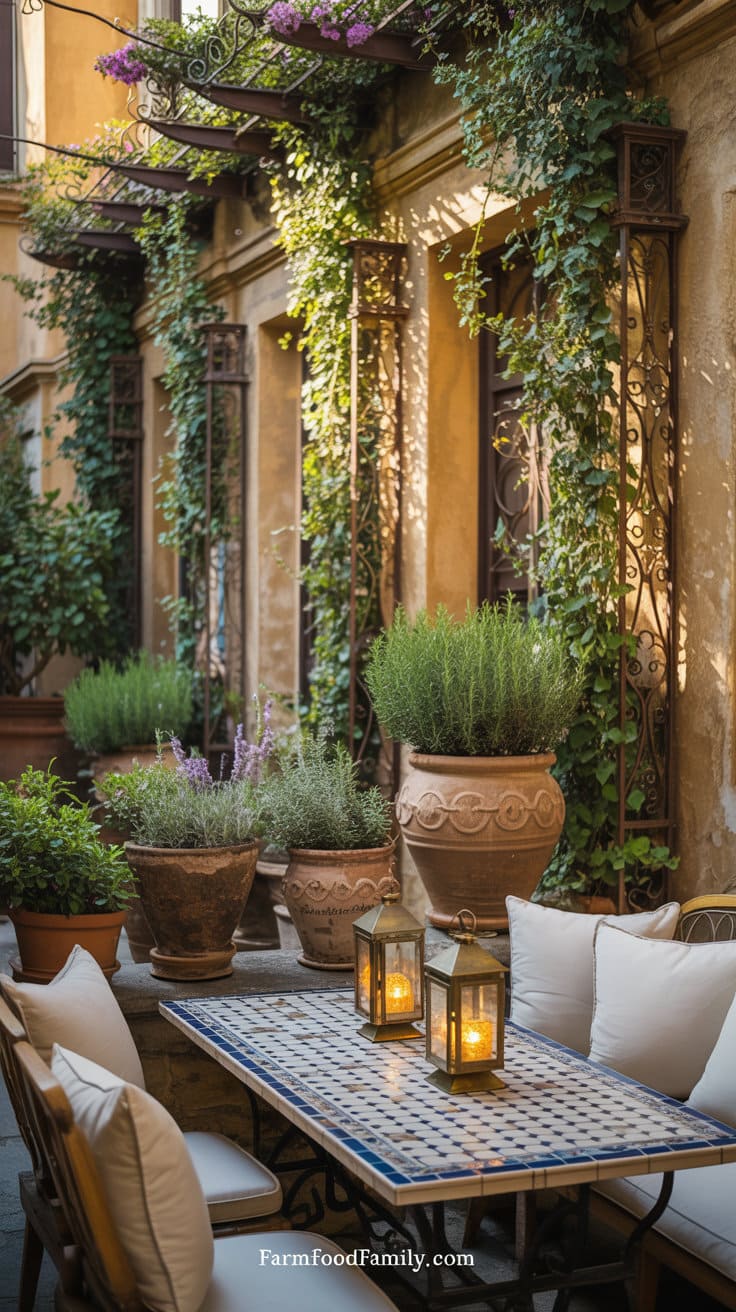
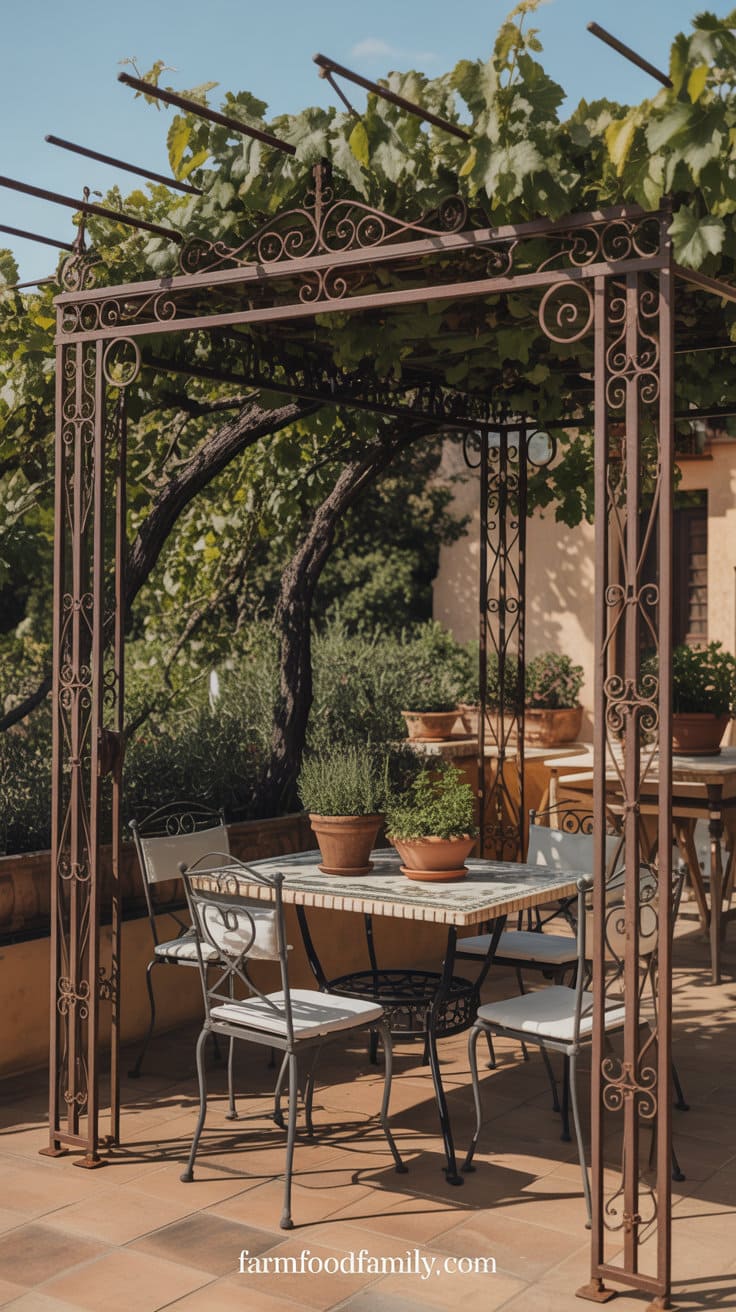
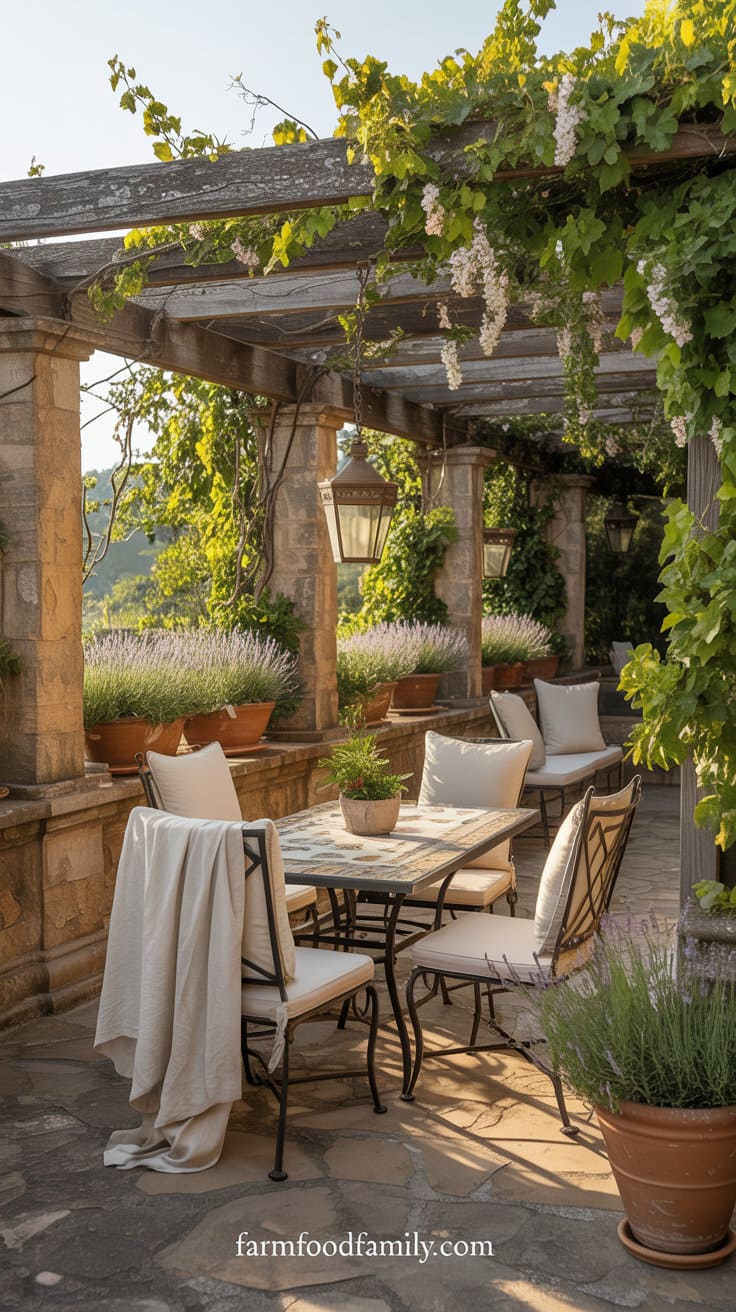
A metal pergola with elaborate scrollwork or bending lines will give you a sun-drenched Mediterranean vibe.
Anchor it to a terracotta or natural stone patio and train grapevines, bougainvillea, or jasmine to grow along the beams.
The combination of beautiful metal structures and lush vegetation lends a dreamlike, old-world feel.
Below the pergola, there is bistro-style seating with mosaic-topped tables, aged iron lanterns, and pale-colored linen cushions.
Terracotta pots packed with lavender or rosemary enhance the sensory experience, urging you to stay.
This style is reminiscent of romantic patios in southern Europe and works well in warm weather or gardens with classical landscaping components.
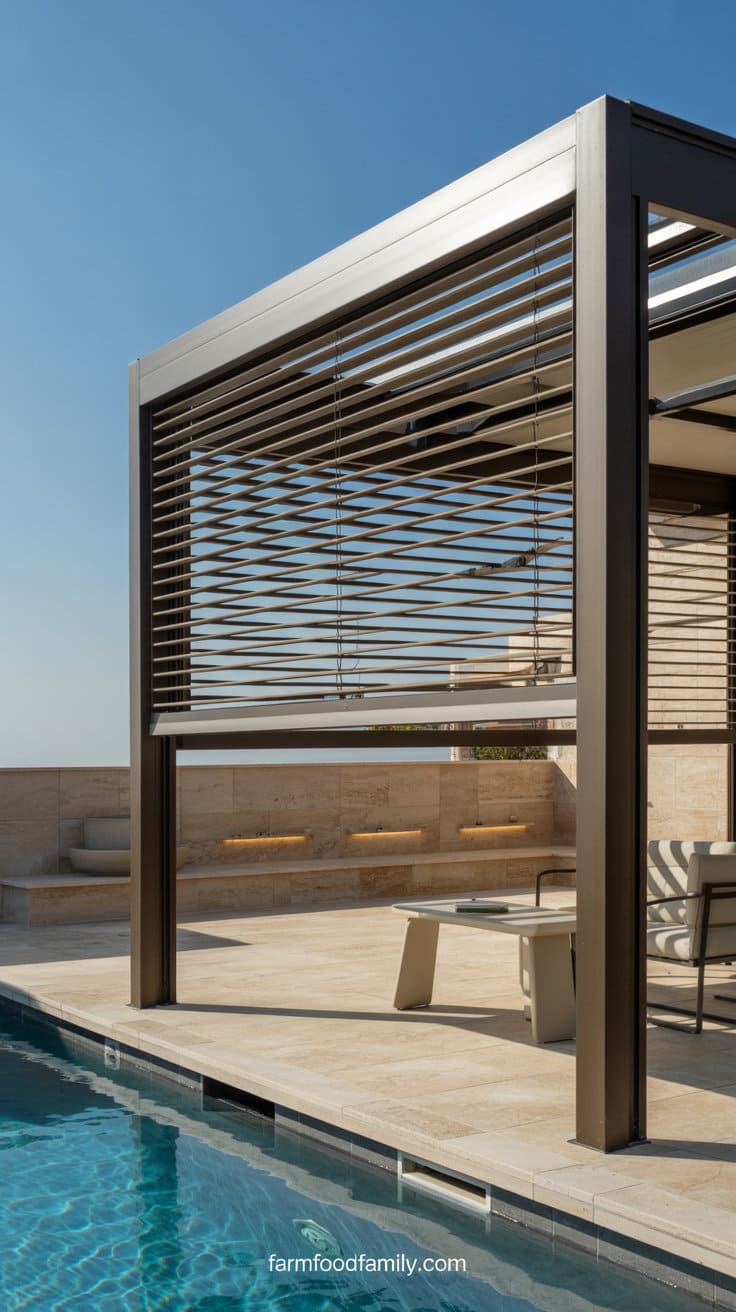
3. Sleek Poolside Shade Structure with Aluminum Louvers
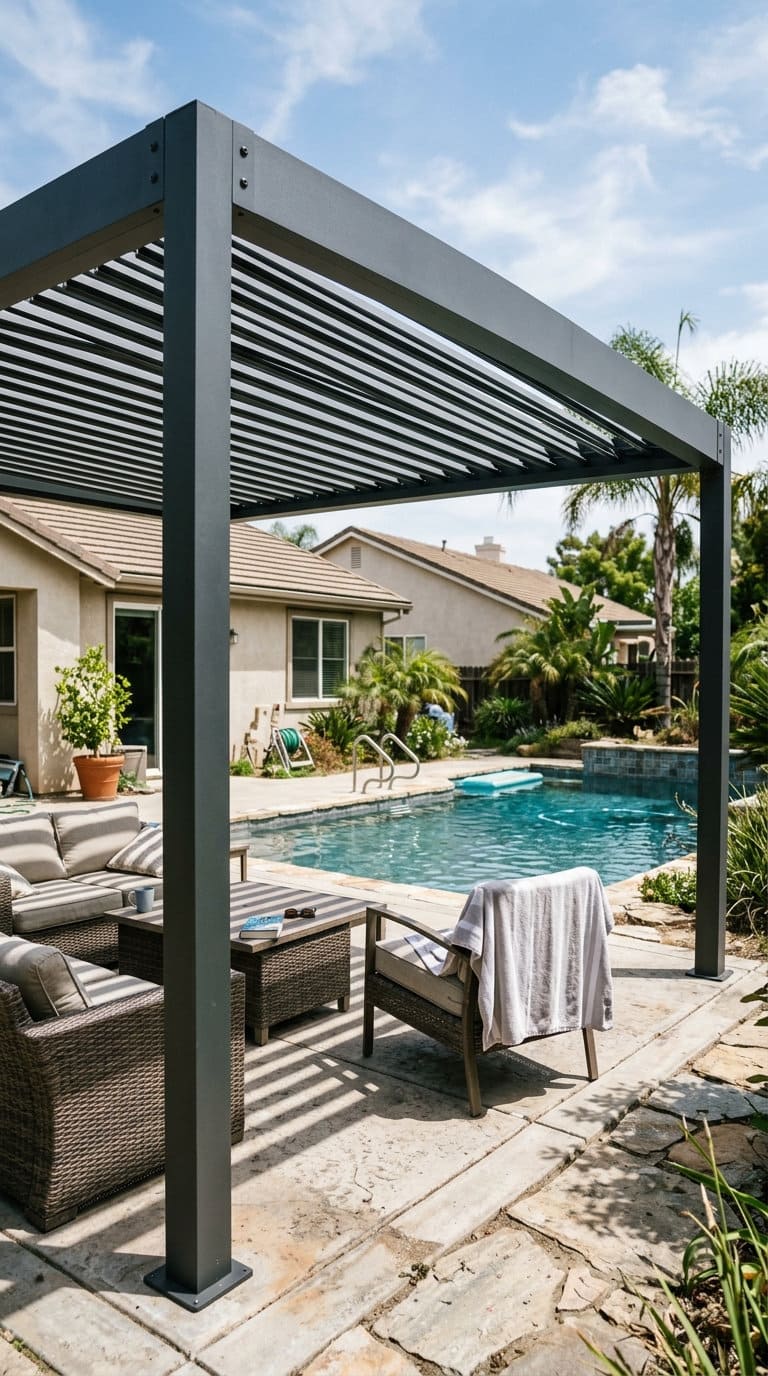
Adjustable louvered roof panels over a pool deck let you dial in exactly how much shade and airflow you want without moving furniture or hauling out an umbrella.
Aluminum specifically makes sense here since it won’t corrode from pool chemical splash or humidity the way untreated steel eventually can.
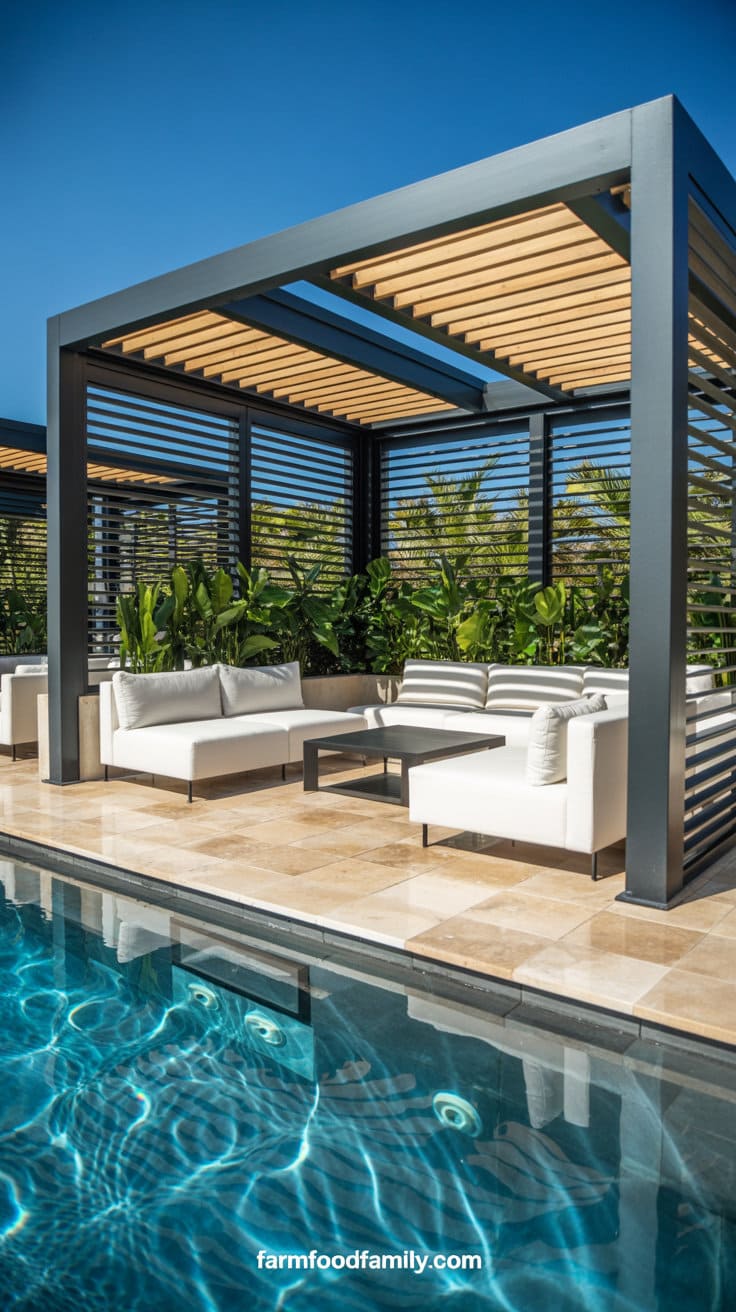
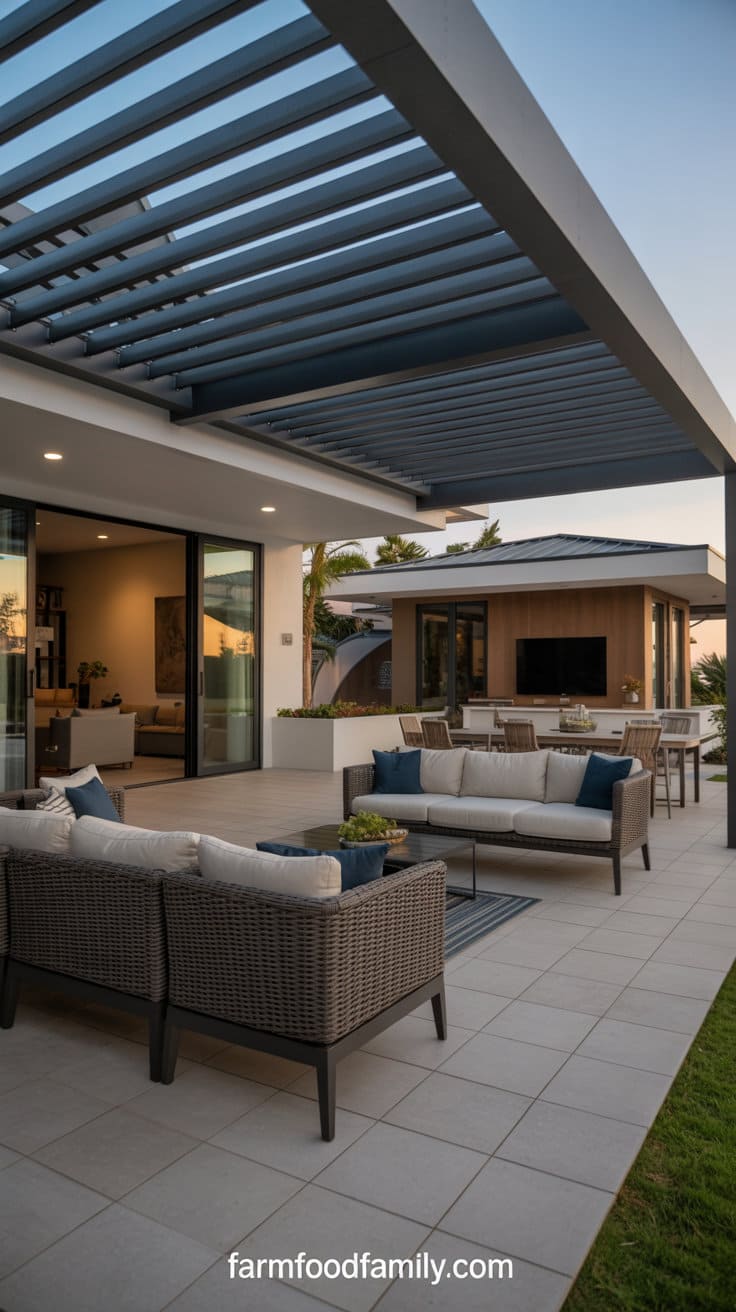
For poolside patios, choose a modern aluminum pergola with adjustable louvers that open and close depending on sun exposure.
These systems enable you to enjoy full sun when desired or create full shade with the touch of a button.
The average homeowner spends $616/year on yard fixes that don't address the real problem. Find out what yours actually is — before you spend another dollar.
Take the Free QuizTravertine or porcelain tile flooring, as well as white or grey modular outdoor sofas, will complete the elegant style.
To create the atmosphere of a luxury resort, add integrated lighting, built-in planters, and water-resistant sound systems.
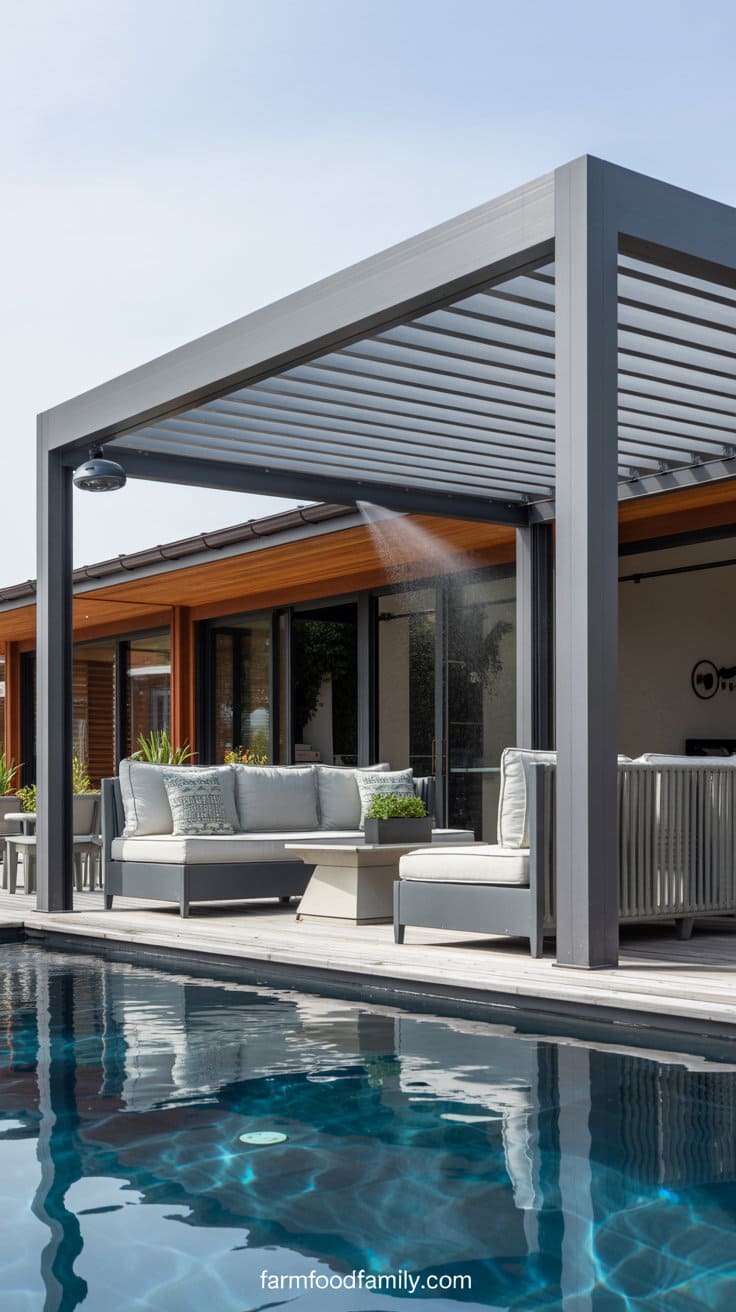
A misting fan put beneath the pergola provides comfort on hot days.
An aluminum pergola’s sleek lines and functionality are ideal for modern backyards where convenience and design must coexist.
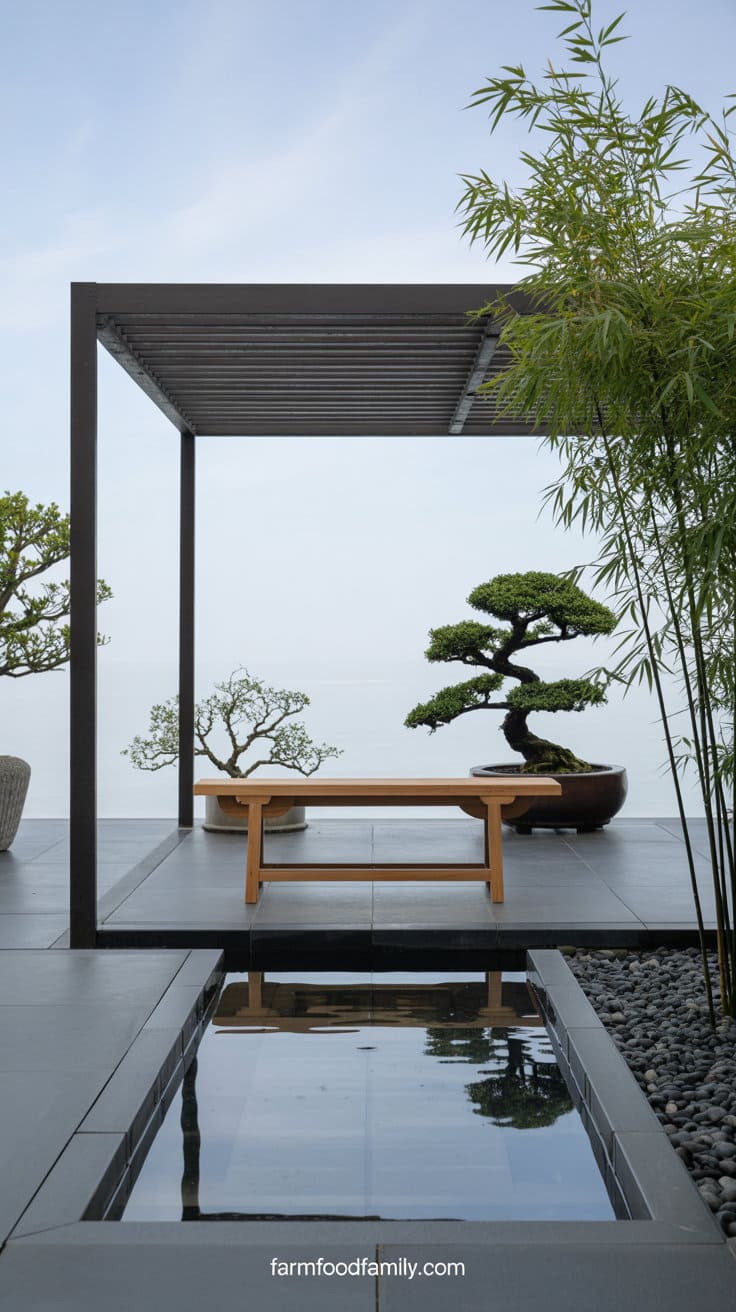
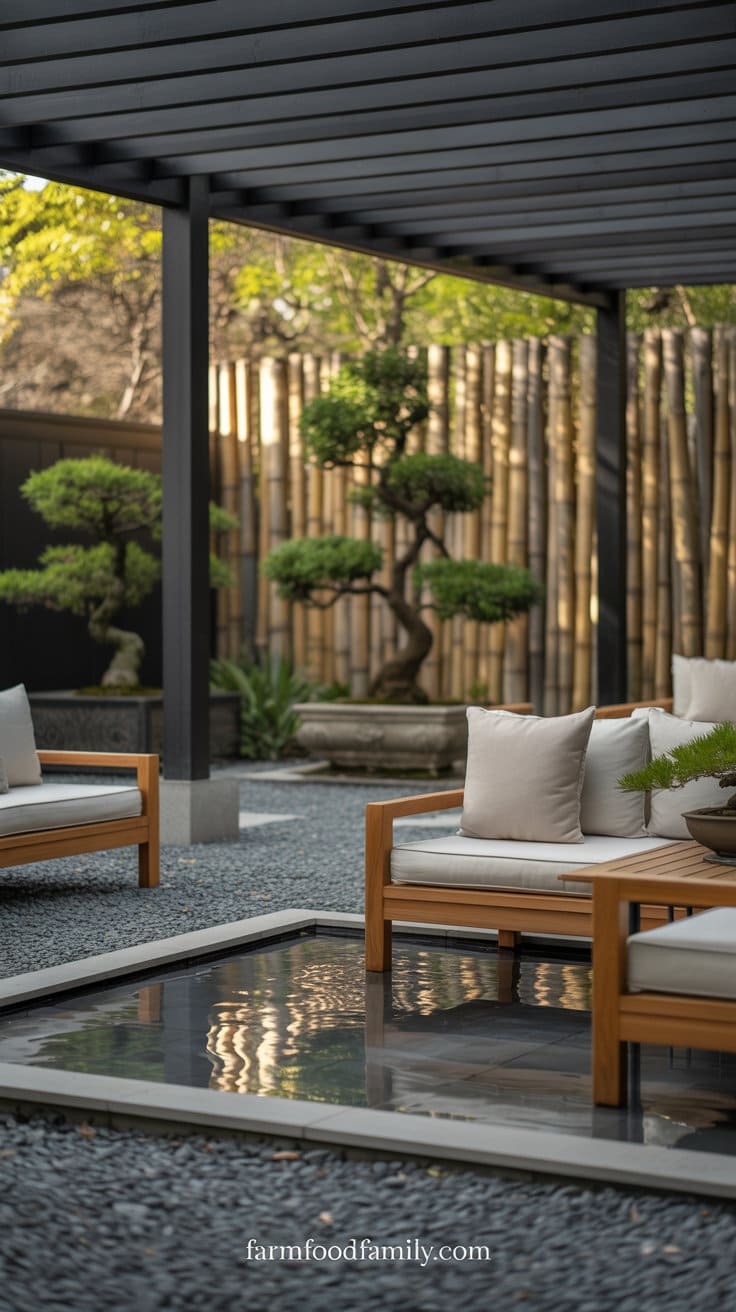
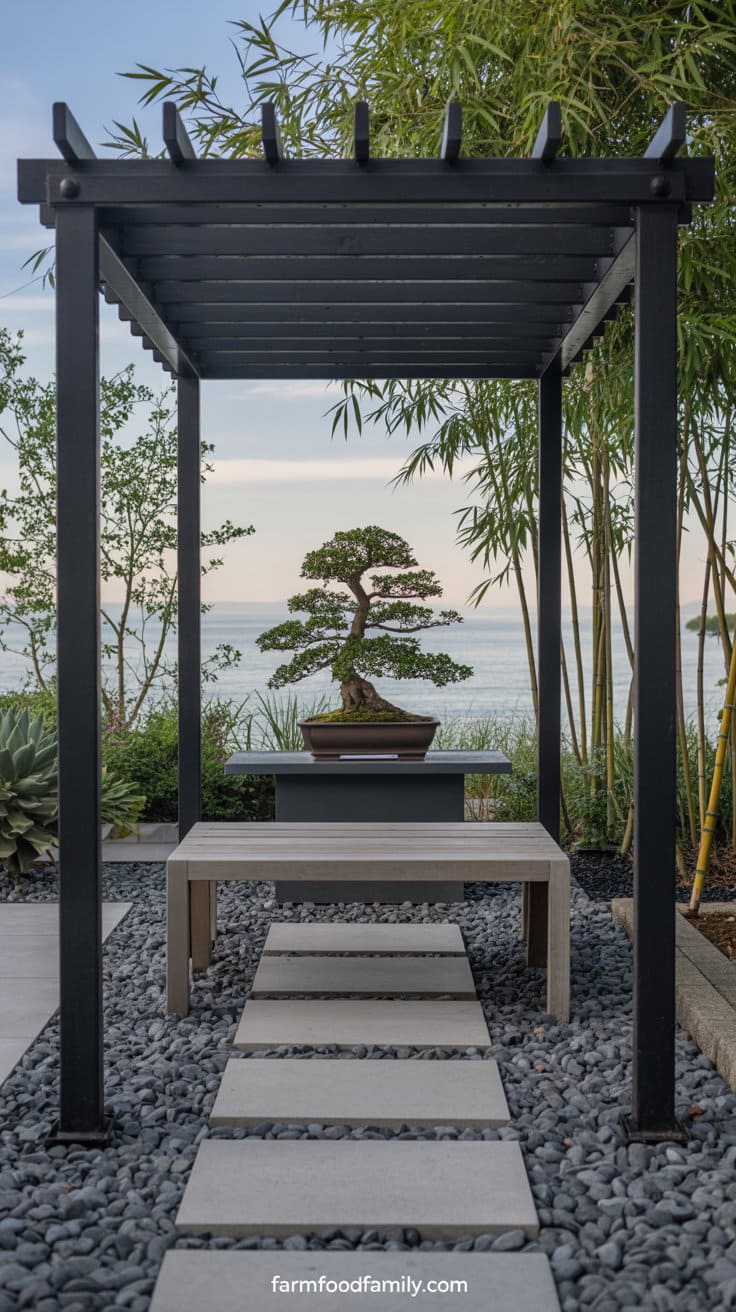
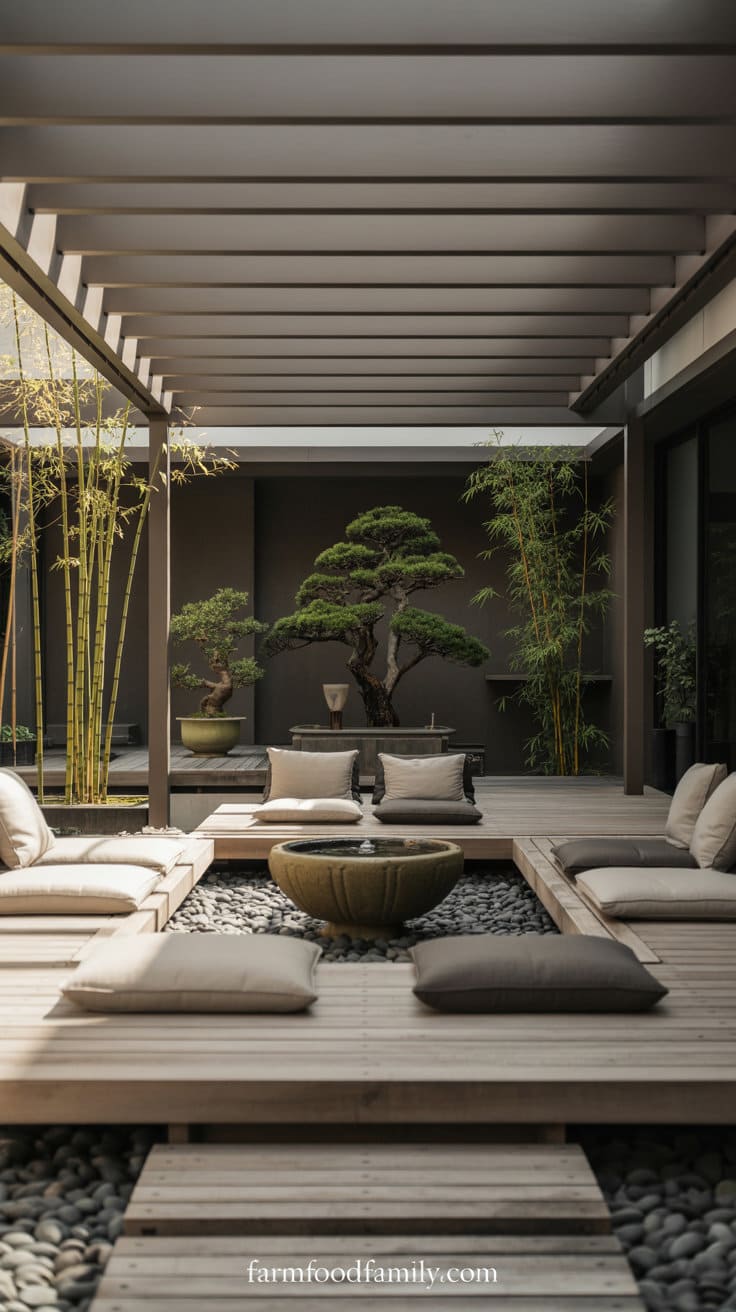
4. Japanese Zen-Inspired Pergola with Minimalist Touches
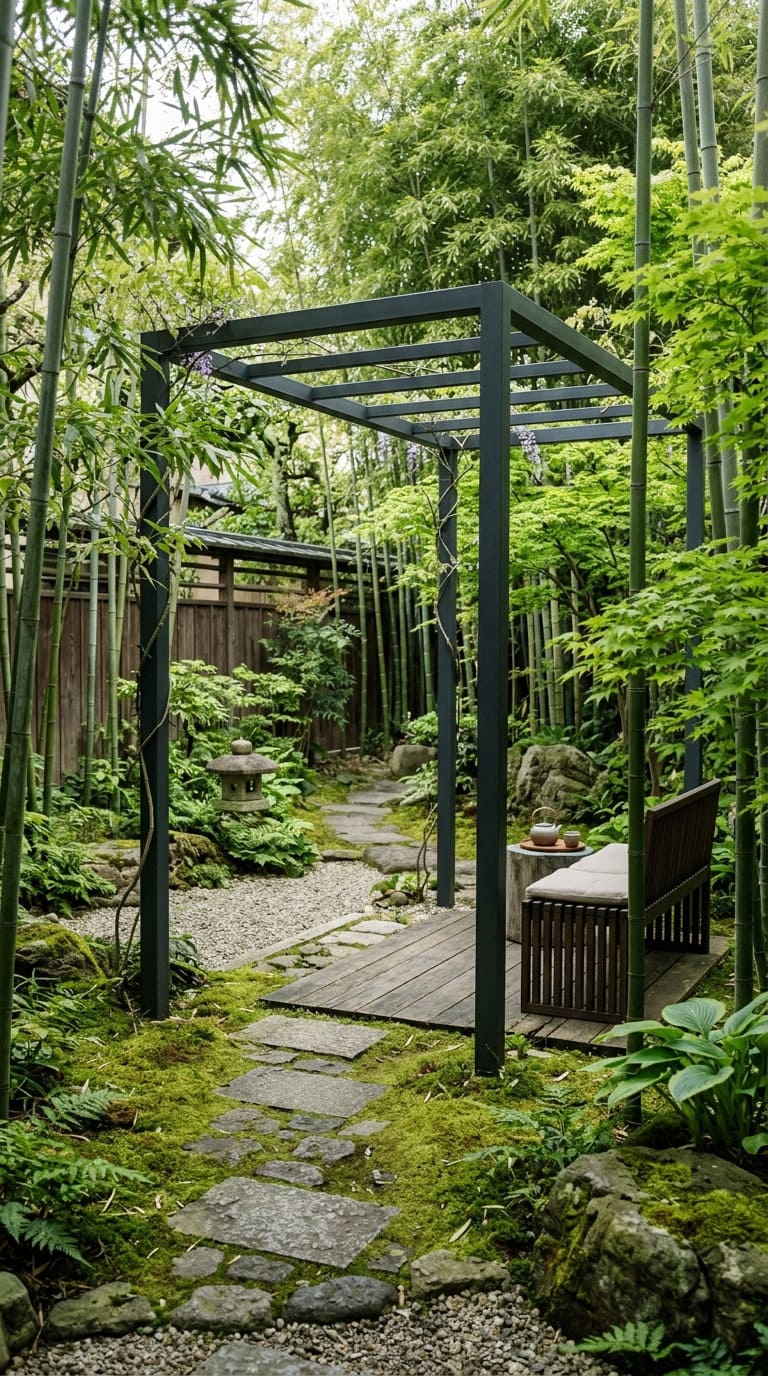
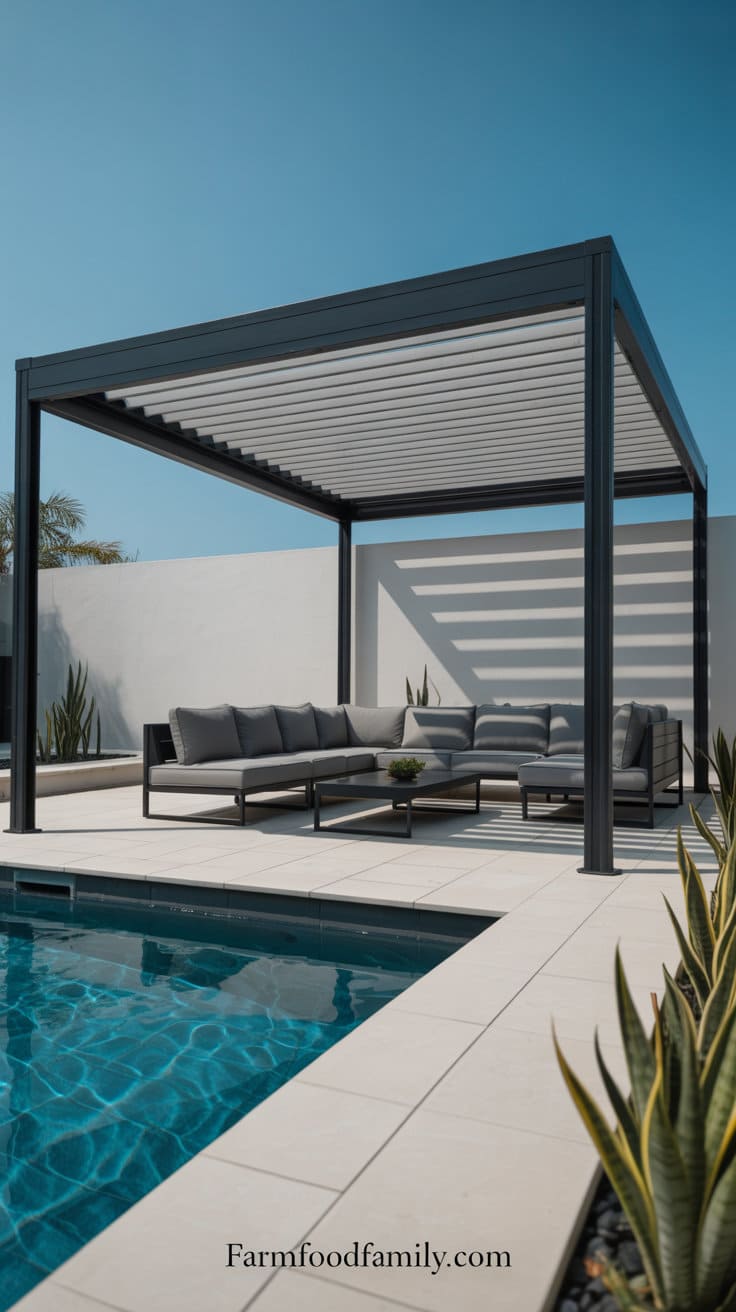
A minimal metal frame in a dark, low-profile finish paired with restrained planting, bamboo, moss, one or two structural elements, creates a quiet, deliberate space rather than a busy one. Keep the frame genuinely simple here, the restraint is the point.
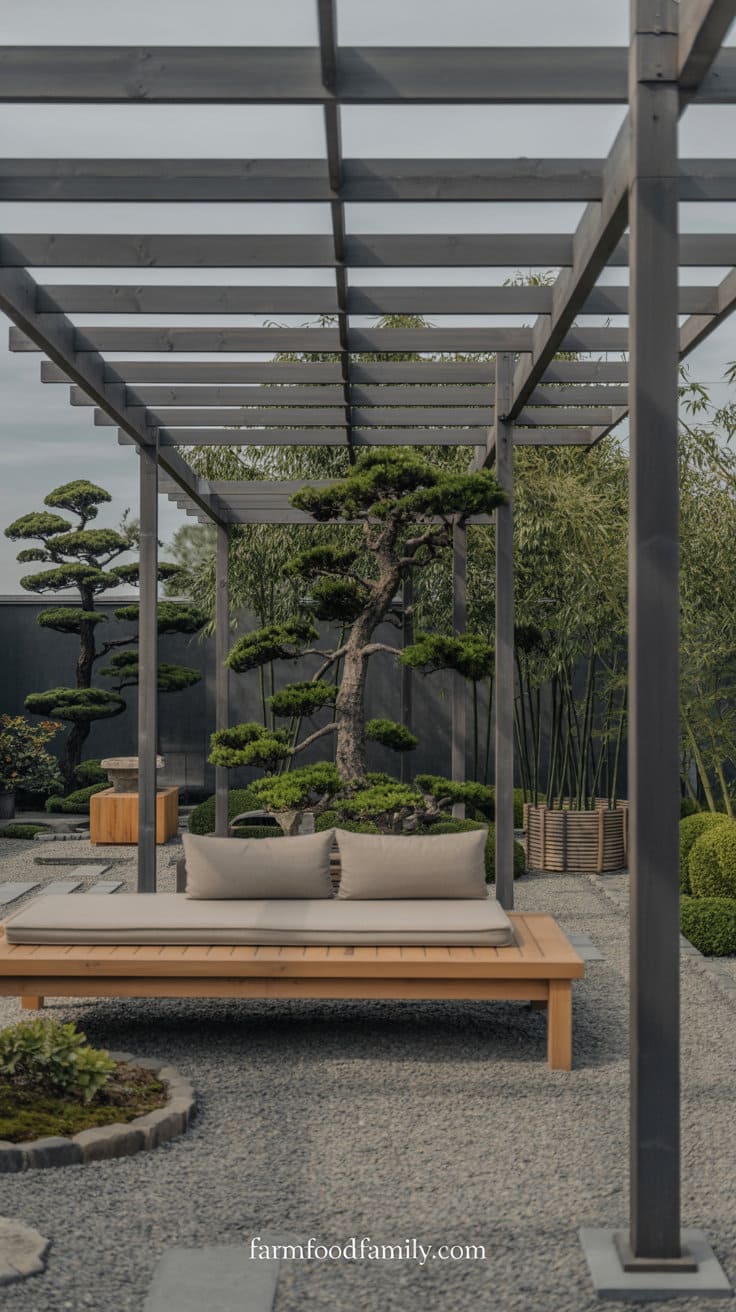
Embrace tranquility and harmony with a minimalist black or brushed metal pergola inspired by Japanese garden aesthetics.
Leave the construction open and simple, with equally spaced beams and a level top.
Ground the space with gravel or smooth stone flooring, then add a low teak bench and neutral-colored cushions.
Include bamboo planters, miniature bonsai trees, and a shallow water basin or fountain for a peaceful atmosphere.
This modest approach emphasizes balance, shape, and nature.
The metal pergola serves as a tranquil backdrop for your calm retreat, perfect for introspection, tea ceremonies, or simply enjoying a moment of stillness in your backyard.
5. A louvered adjustable-roof system
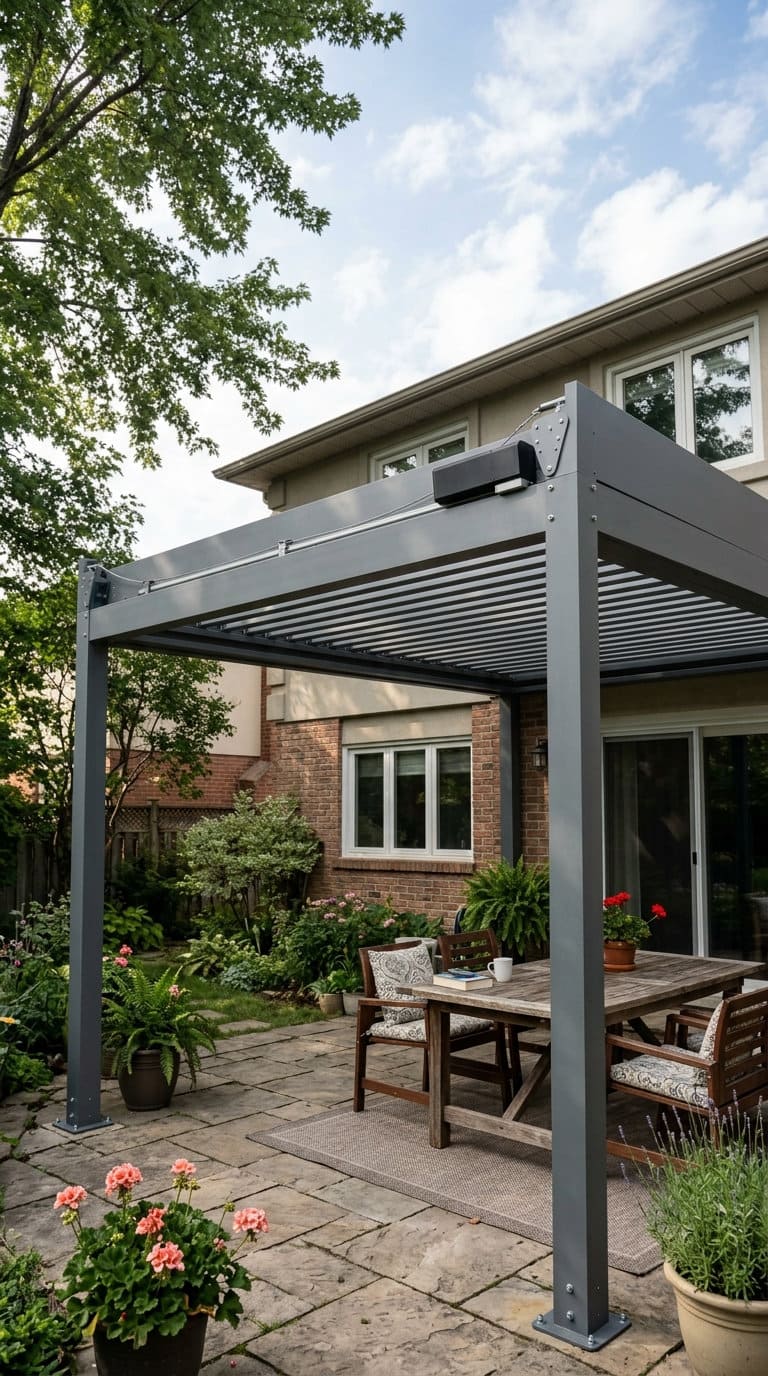
This is the clearest premium trend in metal pergolas going into 2026, motorized aluminum louvers that close for rain, open for full sun, and tilt halfway for filtered light, all from a switch or app rather than a fixed roof you’re stuck with.
Real 2026 installed pricing averaged around $82 per square foot for a 200 square foot system, meaningfully more than a fixed-roof pergola, but it’s the option that actually adapts to weather instead of just tolerating it.
6. Matte black modern minimalist
A tight matte black frame, wide-spanning beams with no mid-posts breaking up the sightline, and a restrained material palette (concrete, natural wood, black metal) is the single most common aesthetic direction in current metal pergola design.
It reads as architecture rather than a garden accessory, which is exactly the point for a lot of buyers moving away from a more traditional wood-and-lattice look.
Check the wind rating before you buy
This is the part almost no metal pergola article covers, and it’s the one that actually matters. A real Reddit thread made the problem concrete: someone in Wisconsin was looking at a pergola rated for 49 mph winds, and multiple people pushed back hard. “Design wind loads in Wisconsin are more like 100 mph, depending on exactly where you are.
Those low priced pergolas don’t meet specs.” Another added real regional context: “we have run of the mill thunderstorms with 60-70 mph winds multiple times a summer in the midwest.” A third explained the actual mechanism: building codes set design wind speeds based on the probability of a wind event, commonly a 1-in-500-year event, which in much of the continental US lands somewhere in the 90 to 130+ mph range depending on location, meaning a structure rated for a mild, routine storm can genuinely fail in conditions that aren’t even rare for that region.
The Engineering Team at Western Timber Frame, a pergola-focused structural engineering company with 18 years and over 7,000 structures across all 50 states, frames the single most important question to ask any seller before buying: “What wind speed is this structure designed to resist, and how is that documented?” Don’t accept a marketing headline number at face value, ask for the documented, stamped wind rating and compare it to your actual regional design wind load, not just whatever number sounds impressive on the product page.
Footing and anchoring
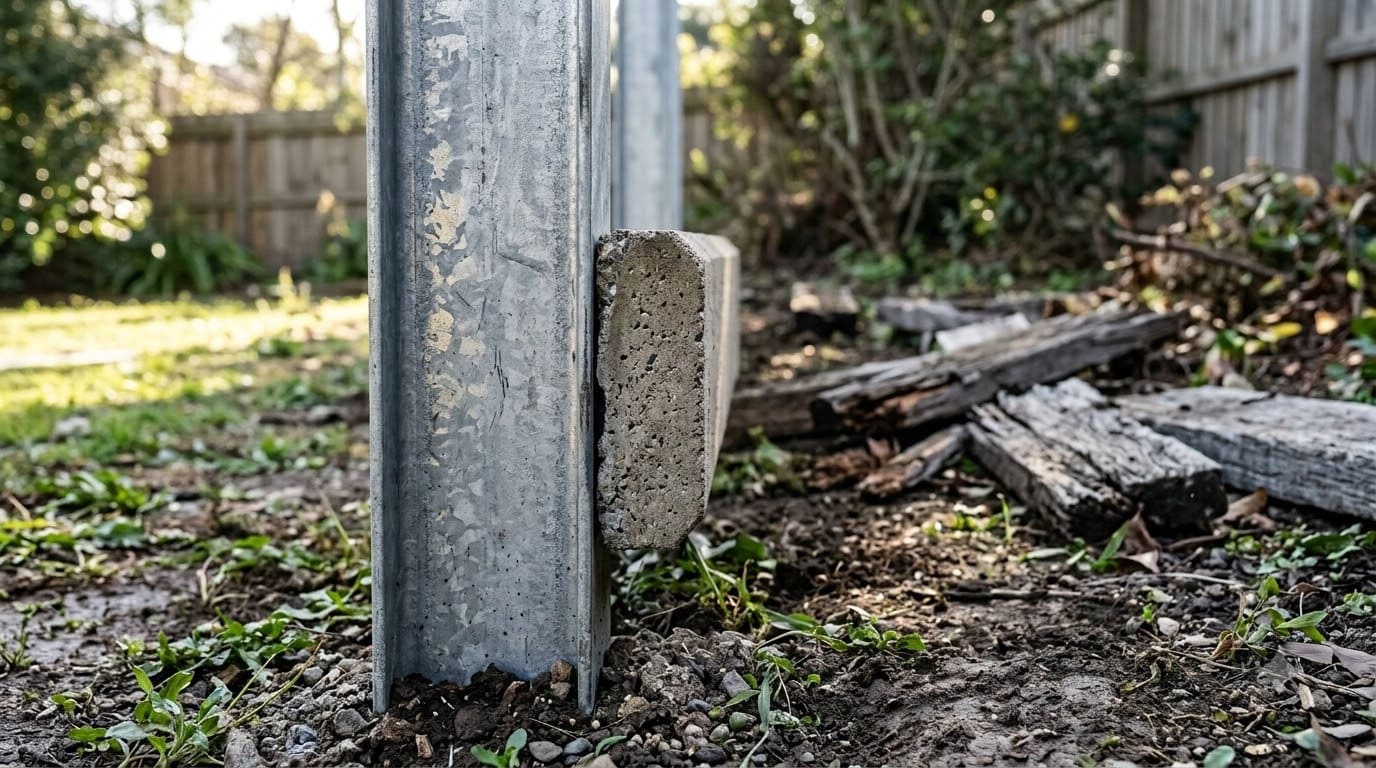
Exterior footings for a metal pergola typically need to sit at least 12 inches below undisturbed grade and below your local frost line, whichever requires more depth, frost depth varies significantly by region and is worth confirming with your local building department rather than assuming a standard number. In genuinely challenging soil, expansive clay or loose sand, a deeper foundation system like helical piles sometimes replaces a standard footing entirely.
If you’re anchoring into an existing concrete slab rather than pouring new footings, know the real distinction: cast-in anchors get placed during a fresh pour, post-installed anchors get drilled into cured concrete, and both need to meet embedment depth and edge-distance requirements to avoid cracking the slab.
One real, avoidable planning mistake worth flagging directly: a real installer post described getting “too close to the concrete edge and the house to drill the outer anchor bolts” after the pergola’s footprint was already finalized. Measure your actual anchor bolt clearance from both the slab edge and the house before you commit to a footprint, not after the frame arrives.
FAQ
What wind rating do I need for a metal pergola? Check your region’s actual building-code design wind load, not just a product’s marketing number. Design wind loads commonly run 90 to 130+ mph across much of the continental US depending on location, while some budget pergolas are rated well below that, as low as 49 mph in real cases. Ask the seller for a documented, stamped wind rating and compare it directly to your local requirement.
How deep should pergola footings be? At least 12 inches below undisturbed grade and below your local frost line, whichever is deeper. Frost depth varies significantly by region, confirm the exact number with your local building department rather than assuming a standard depth applies everywhere.
Is aluminum or steel better for a pergola? Aluminum is lighter, genuinely rust-resistant, and lower maintenance, making it the better choice near a pool or in humid climates. Steel is stronger for the same gauge and can carry more load, but needs powder-coating or paint maintained over time to prevent corrosion, touch up chips promptly rather than letting them spread.
Metal pergolas offer an ideal combination of visual impact, durability, and versatility for your patio design. These ideas show how thoughtful styling can turn a pergola into the centerpiece of your outdoor living experience.
With the right concept, your metal pergola patio becomes a true extension of your home as it’s ready for relaxation, entertaining, and lasting enjoyment. Leave a comment below and share this list with friends if it helped you out.
Never miss an update — choose FarmFoodFamily as your preferred source on Google.
How it works: Tap the button below to open Google's settings page, then check the box next to FarmFoodFamily.
Tap the checkbox to turn it blue — that's how you know it's set.