15+ Stunning Front Yard Fountain Ideas (Plus What Fountain Ownership Actually Involves)
Most “fountain ideas” articles show you pretty photos and stop there. Nobody mentions what actually owning one involves, winterizing it, keeping the water from turning green, dealing with mosquitoes, or the fact that it’s going to attract every bird (and possibly deer) in the neighborhood. This one covers both: real design ideas, and the honest…

Never miss an update — choose FarmFoodFamily as your preferred source on Google.
How it works: Tap the button below to open Google's settings page, then check the box next to FarmFoodFamily.
Tap the checkbox to turn it blue — that's how you know it's set.
Most “fountain ideas” articles show you pretty photos and stop there. Nobody mentions what actually owning one involves, winterizing it, keeping the water from turning green, dealing with mosquitoes, or the fact that it’s going to attract every bird (and possibly deer) in the neighborhood. This one covers both: real design ideas, and the honest maintenance reality most guides skip.
Front Yard Fountain Ideas
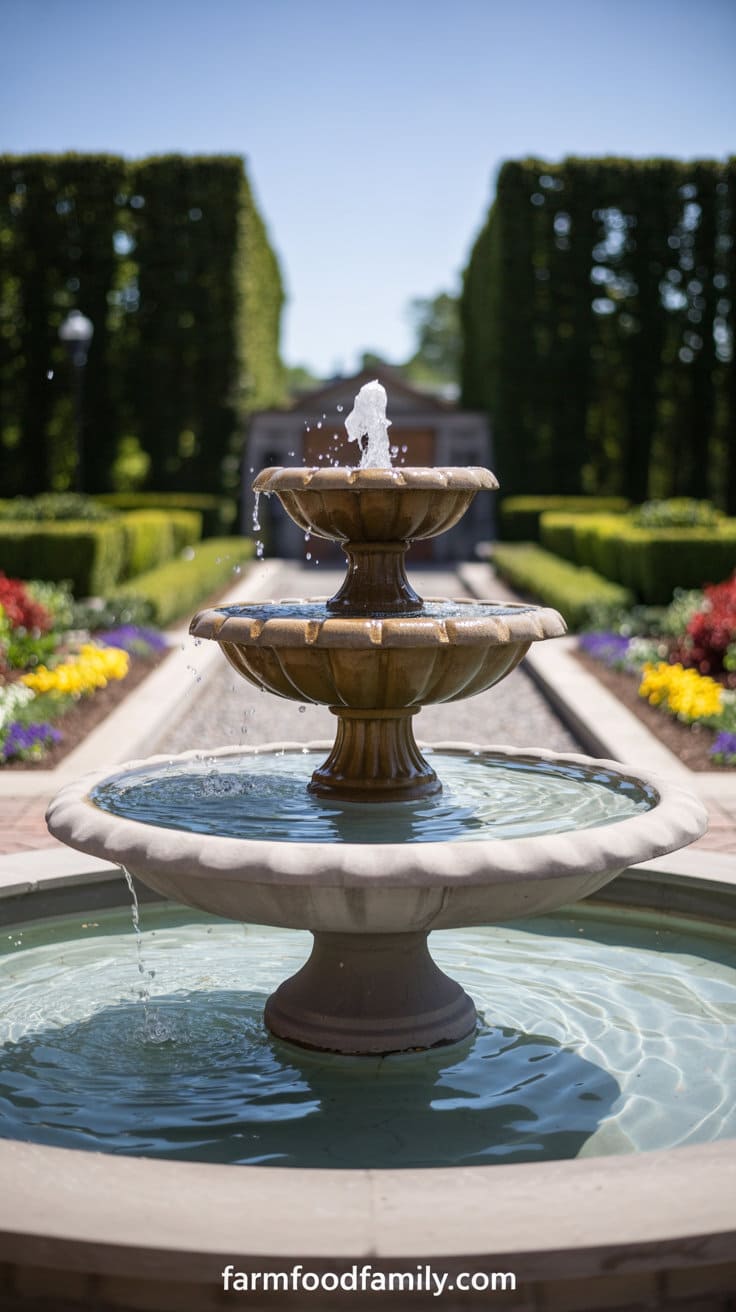
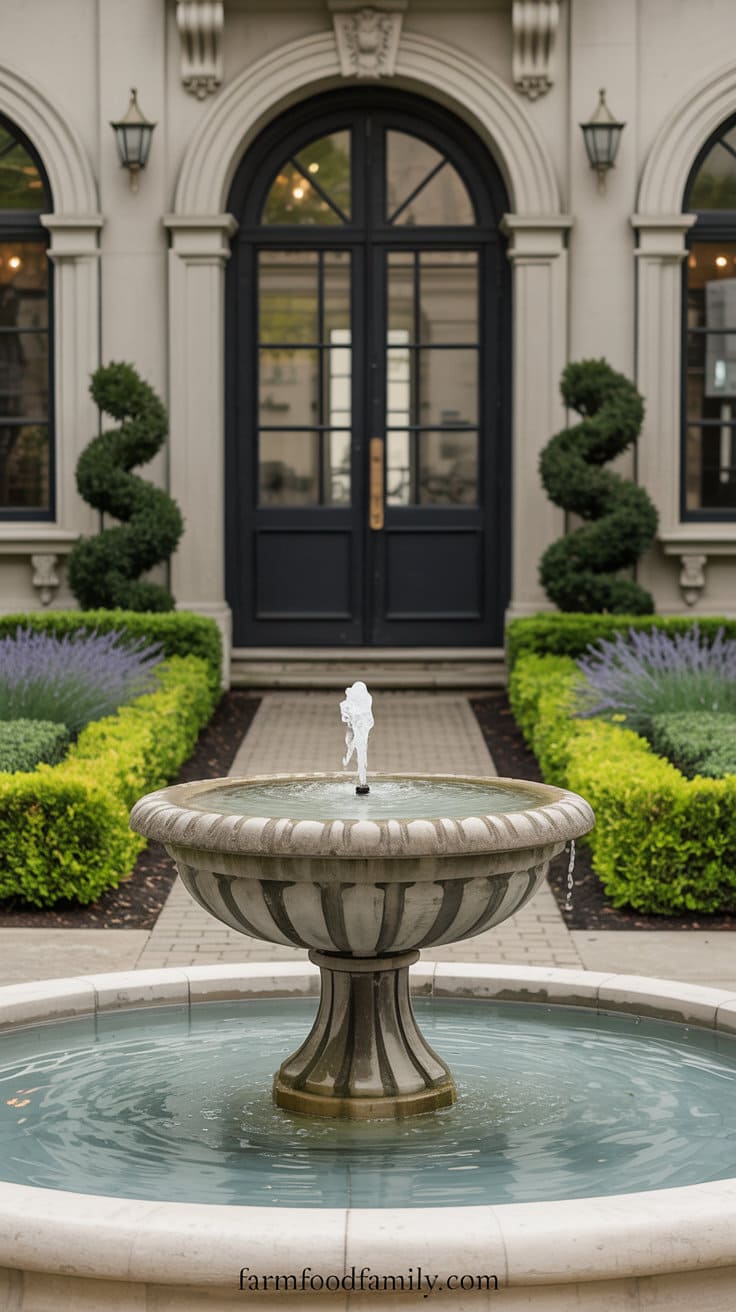
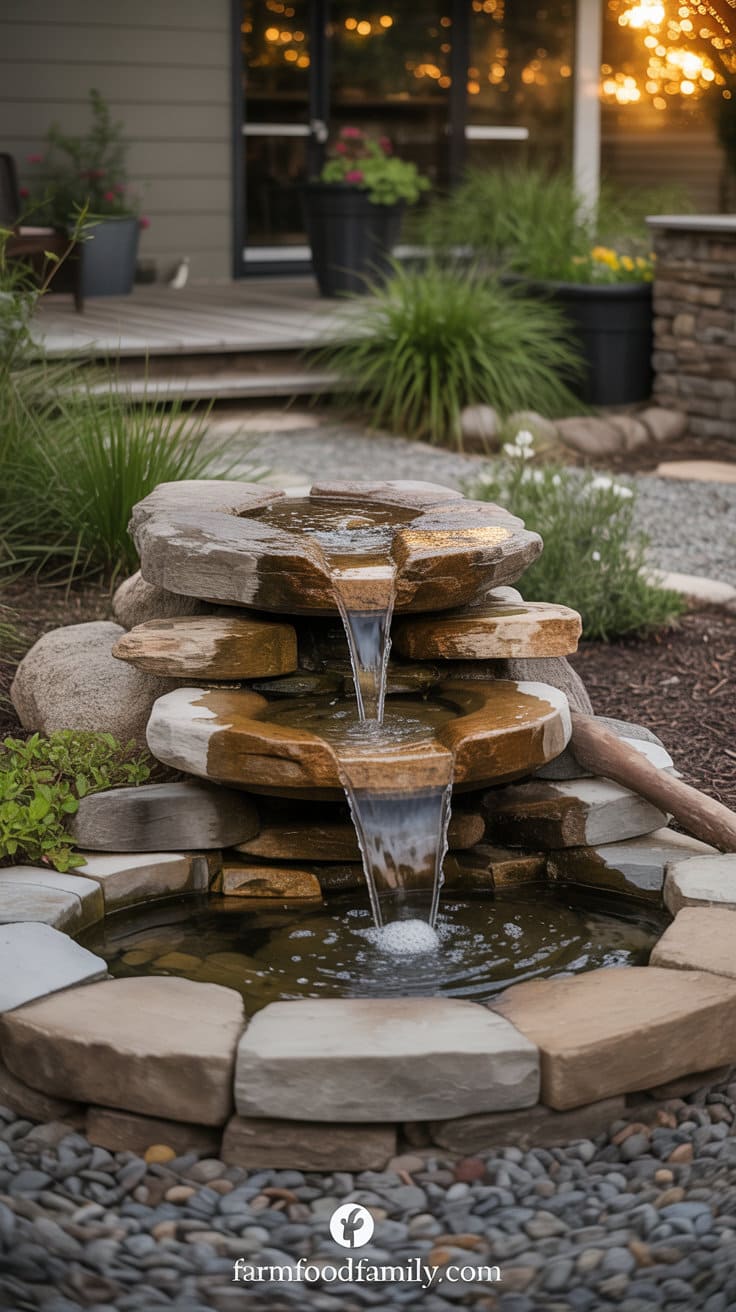
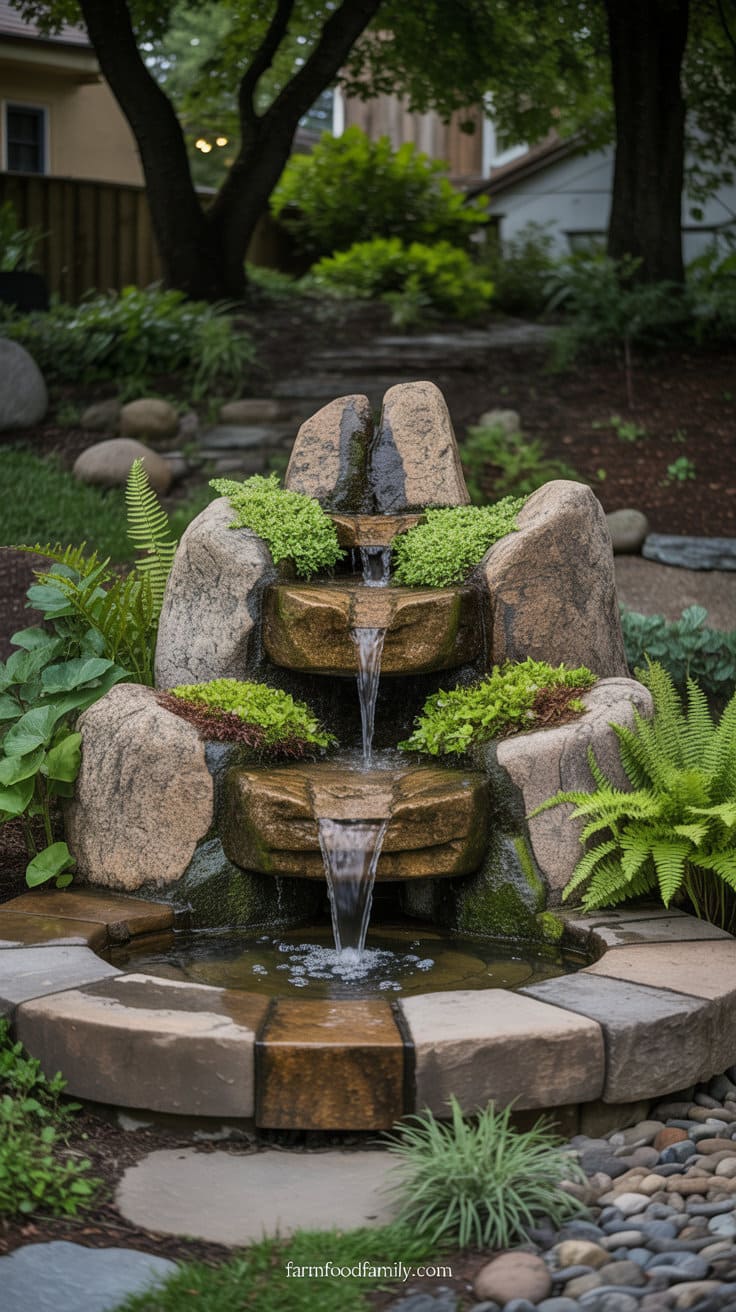
1. Tiered Classical Pedestal Fountain
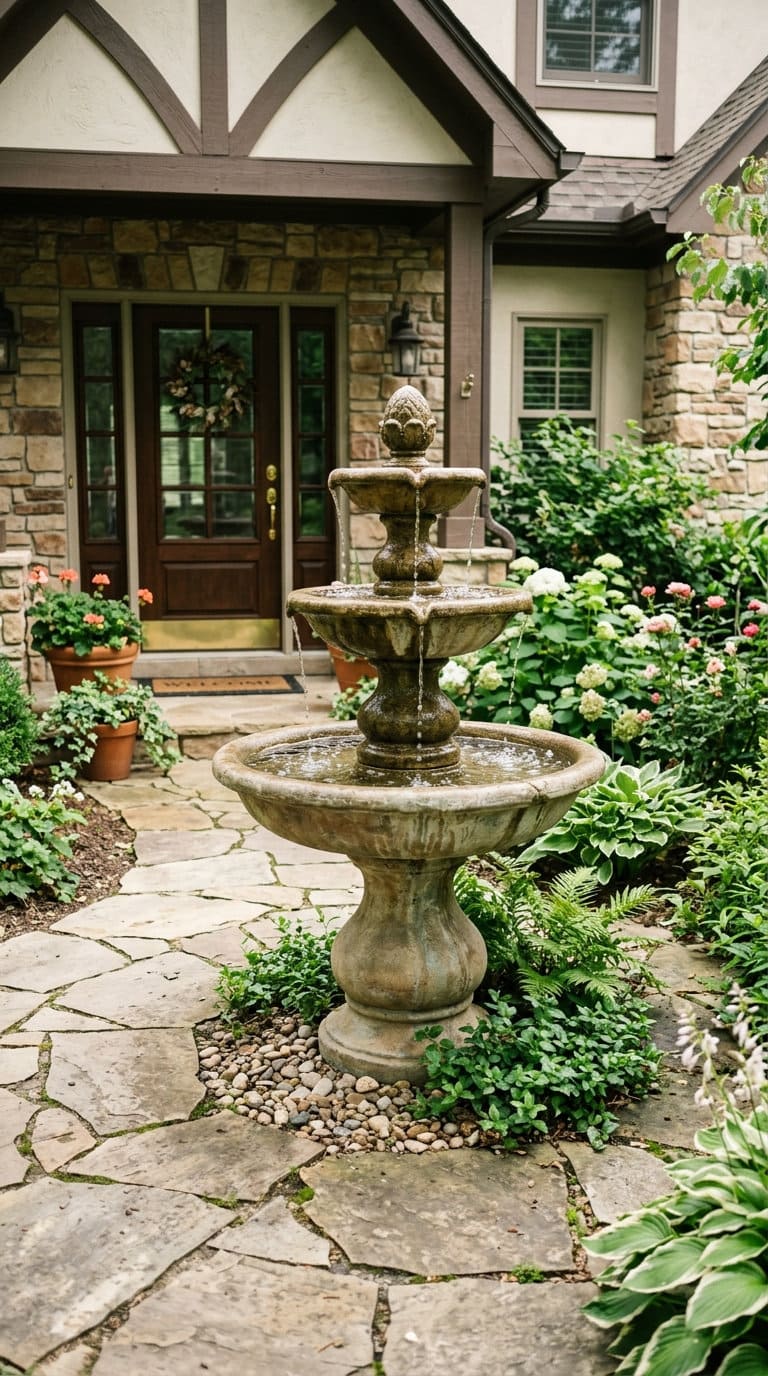
A multi-tier pedestal fountain, water cascading from a top bowl down through two or three levels, is still the most timeless option for a front entry. Naomi Sanders, a landscape designer based in Los Angeles, frames the underlying design principle well: “the front yard is your home’s calling card.
Every element should be in proportion to your home’s architecture and to each other.” A tiered pedestal fountain works best when its scale actually matches the house, oversized on a small entry looks like an afterthought bought too big, undersized on a large facade disappears.

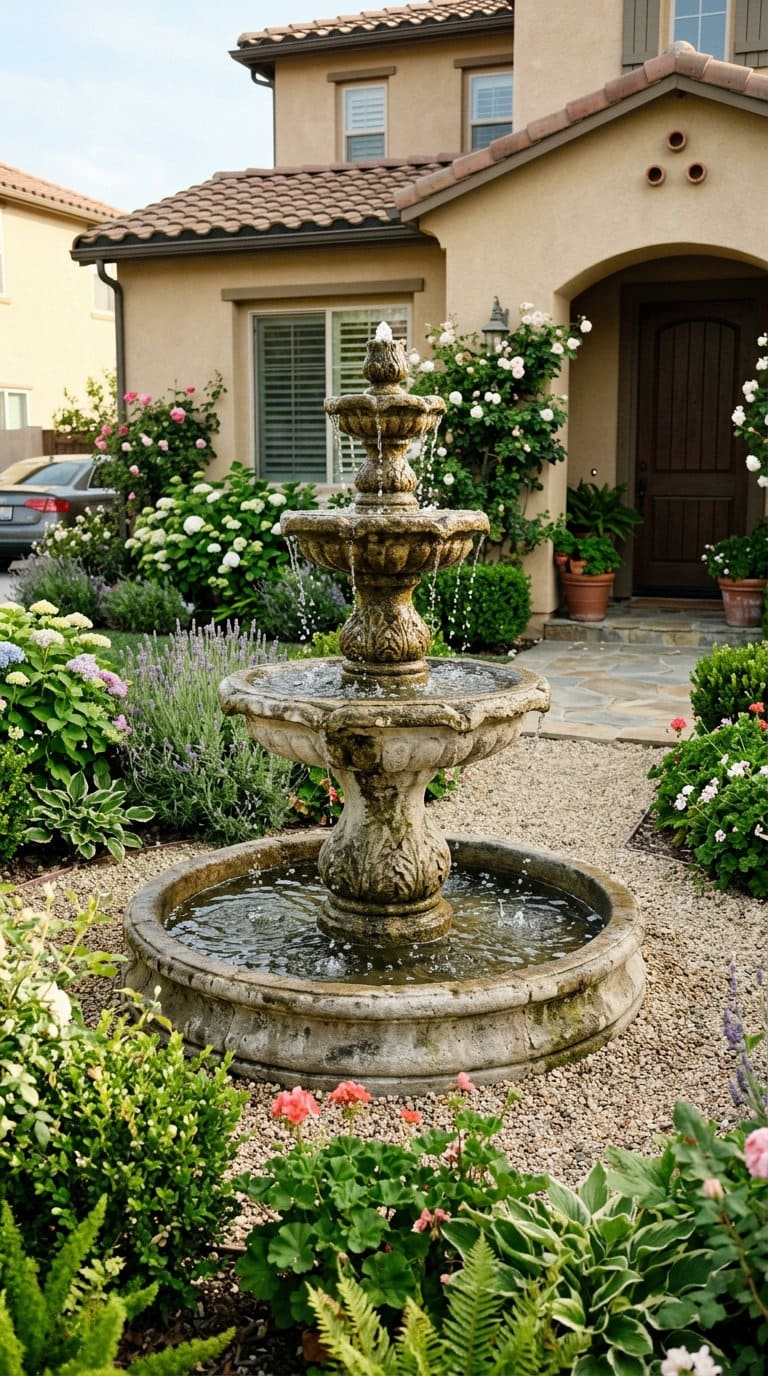
A tiered pedestal fountain exudes old-world elegance and is ideal for colonial, Mediterranean, or formal homes.
This form, which is typically composed of stone, concrete, or fiberglass, consists of many water-catching basins placed vertically, with water softly falling from top to bottom.
Position it in the center of a circular drive or at the intersection of a symmetrical walkway arrangement for maximum impact.
Answer 4 quick questions and get matched to the exact fix for your yard — drainage, budget, layout, or something else entirely.
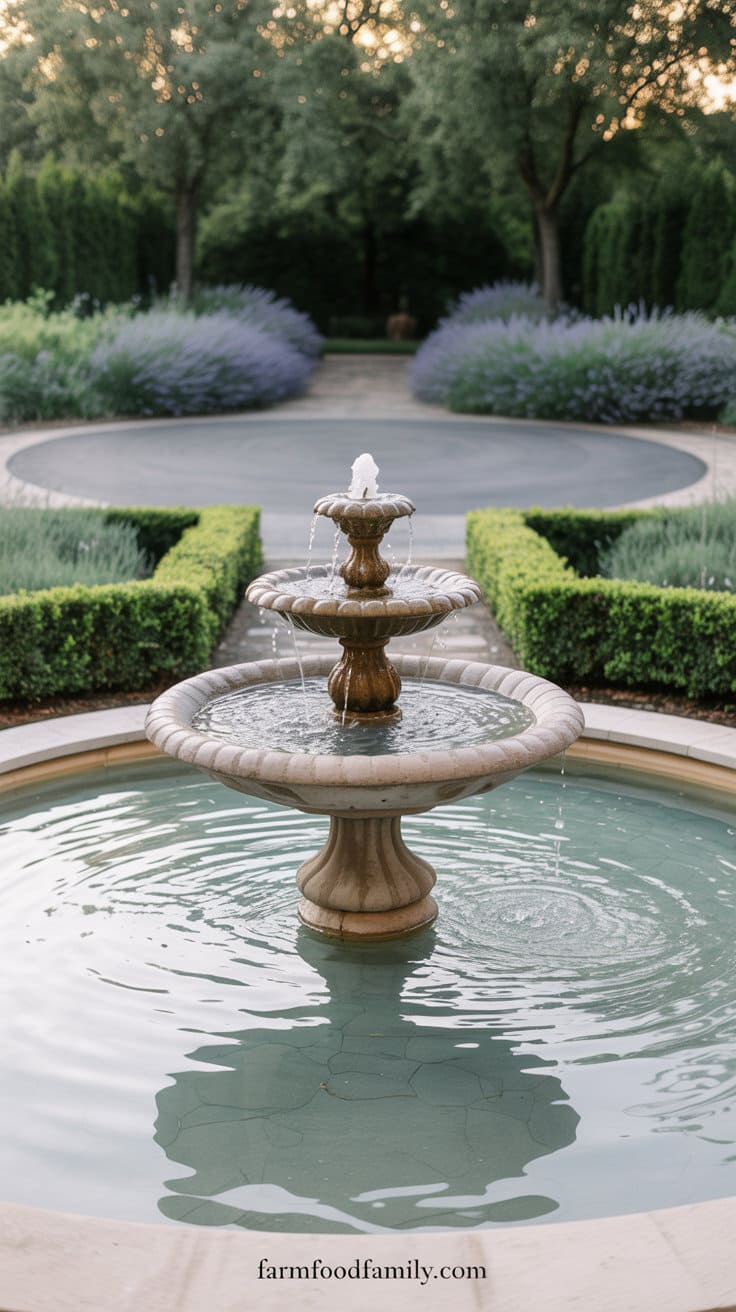
Take the Free QuizTo add formality and seasonal aroma, surround the base with boxwood hedges or carefully clipped lavender.



You could even use upward-facing lights to let the fountain cast romantic shadows on its own curved surfaces. This type of look will surely catch the eye of visitors and passersby alike.
Sophisticated and Calm

This sort of fountain physically and audibly anchors the front yard, greeting visitors with a subtle trickle while also providing a calming buffer from street noise.
It looks especially good when combined with architectural aspects, creating an undeniable feeling of sophistication.
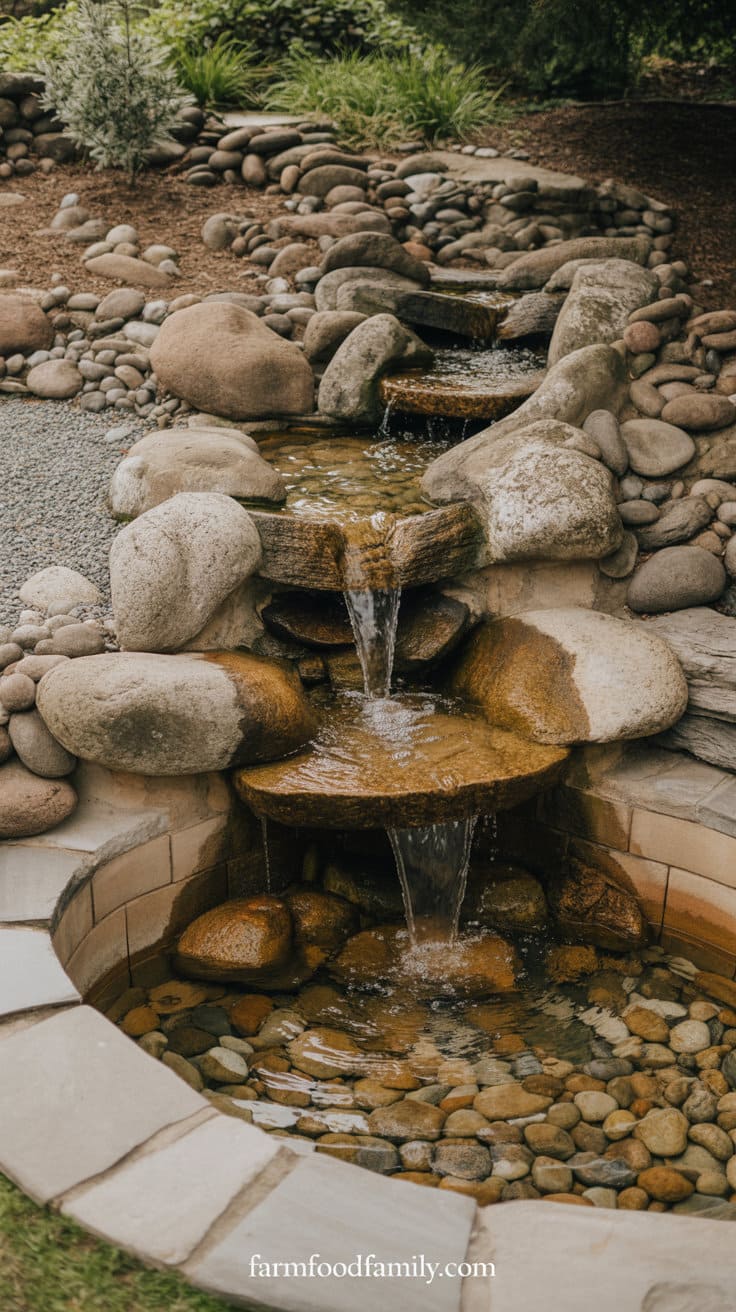
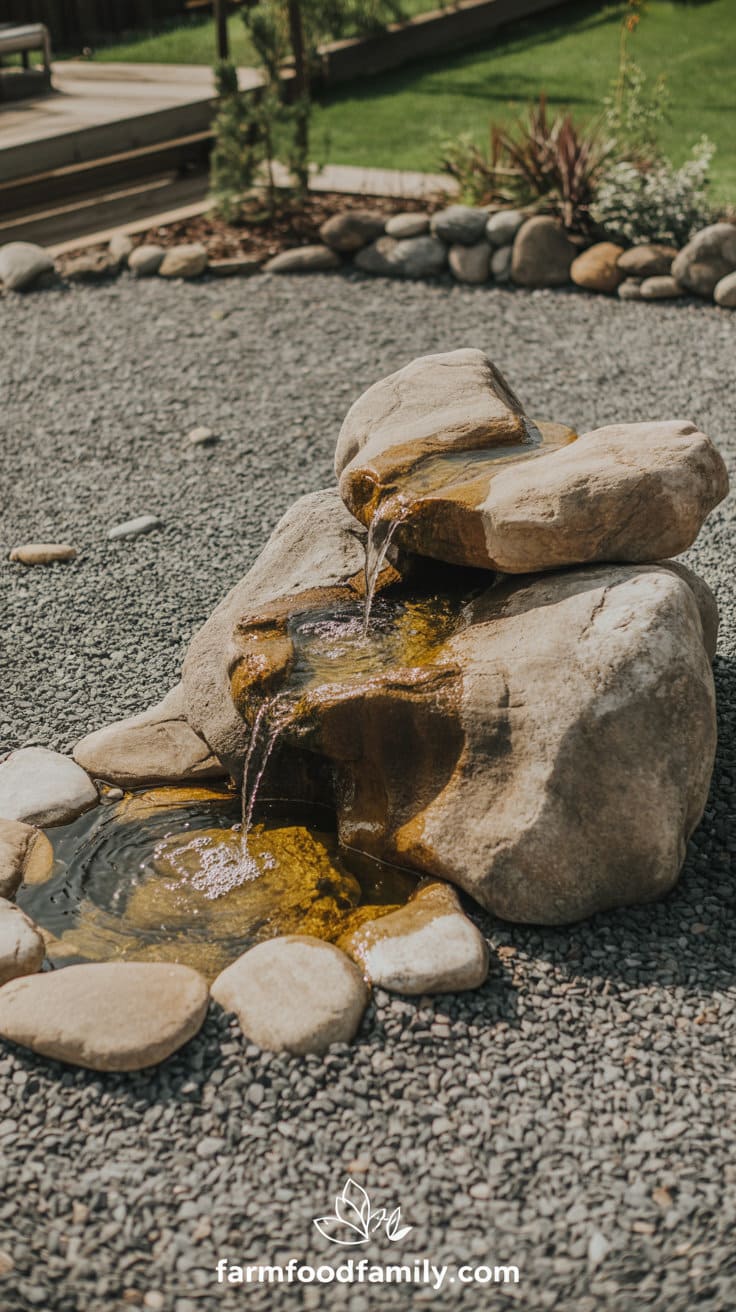
2. Rustic Boulder Fountain Cluster
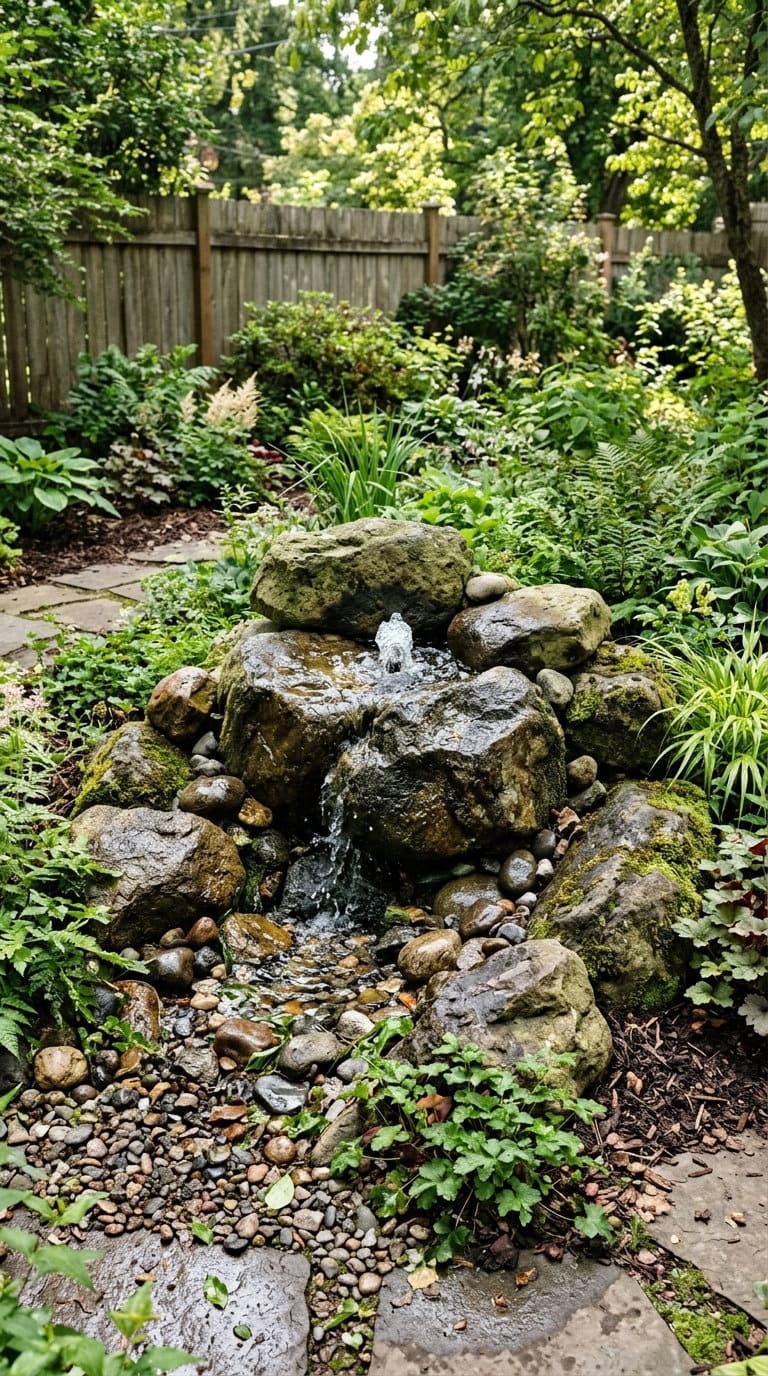
A cluster of natural boulders with water bubbling up through the gaps reads as far more organic than a manufactured basin, and it tucks naturally into an existing planting bed instead of standing apart from it.
It’s also more forgiving to place off-center near a walkway, since it doesn’t rely on symmetry the way a pedestal fountain does.
Most yard problems trace back to one specific, fixable cause. Find yours in 4 quick questions.
Take the Free Quiz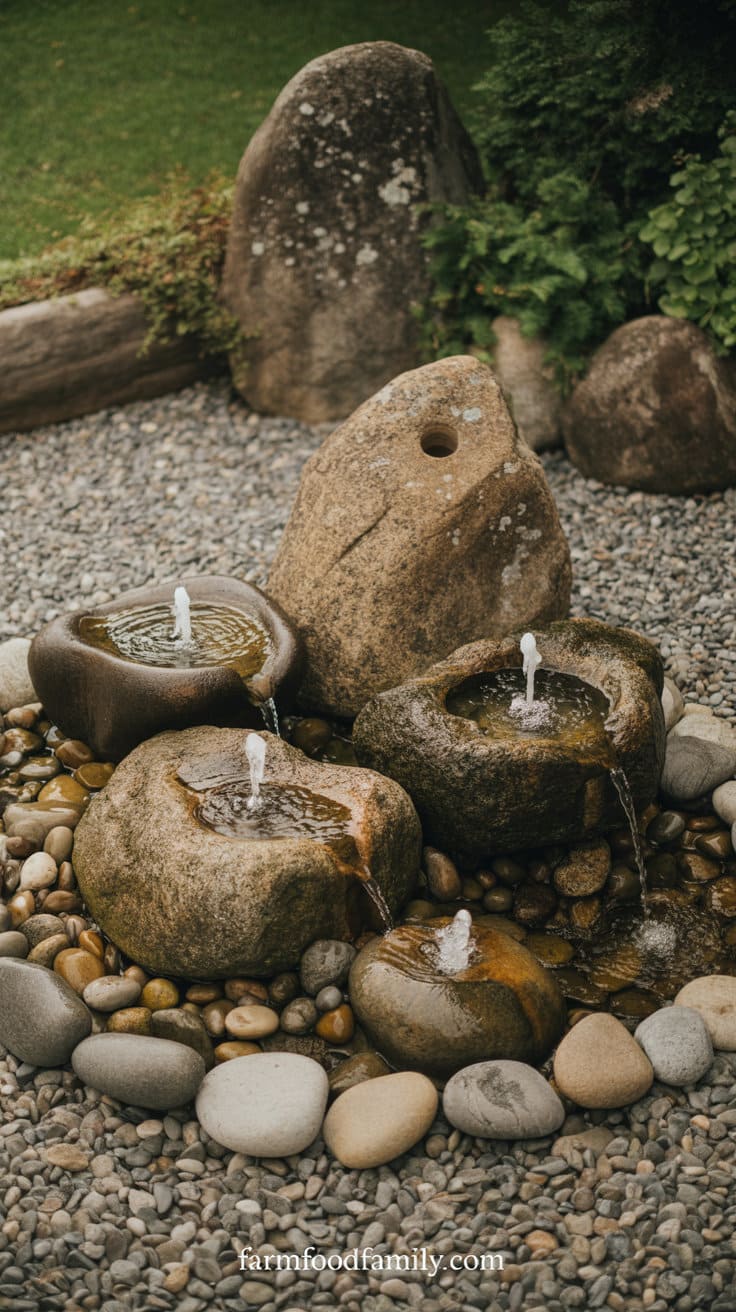
A rustic boulder fountain is both naturalistic and tactile, making it an earthy yet elegant front yard element.
Use two or three huge natural stones with holes drilled through the middle to allow water to bubble up and flow down uneven surfaces.
To drain the rocks, set them in a gravel bed or shallow sunken basin filled with river stones. Moss and lichens may grow on the stones over time, adding to their old appearance.
Place this fountain in a rustic setting to enhance the area’s beauty and sensory appeal.
Because the water runs smoothly over irregular surfaces, the fountain produces a relaxing and diverse sound.
It’s low-profile but richly textured, making it excellent for people looking for a more natural integration of water into the environment that avoids rigid lines and symmetry.
3. Japanese-Inspired Bamboo Fountain
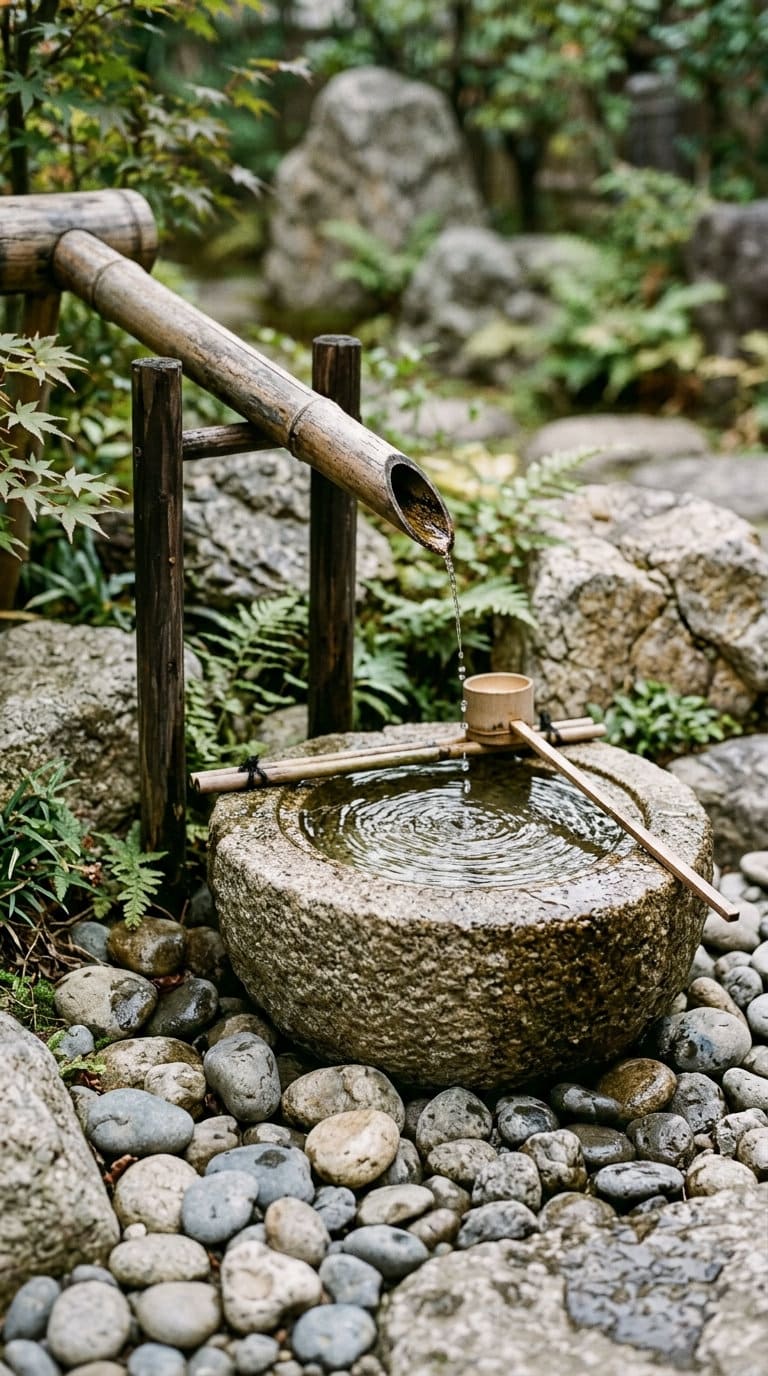
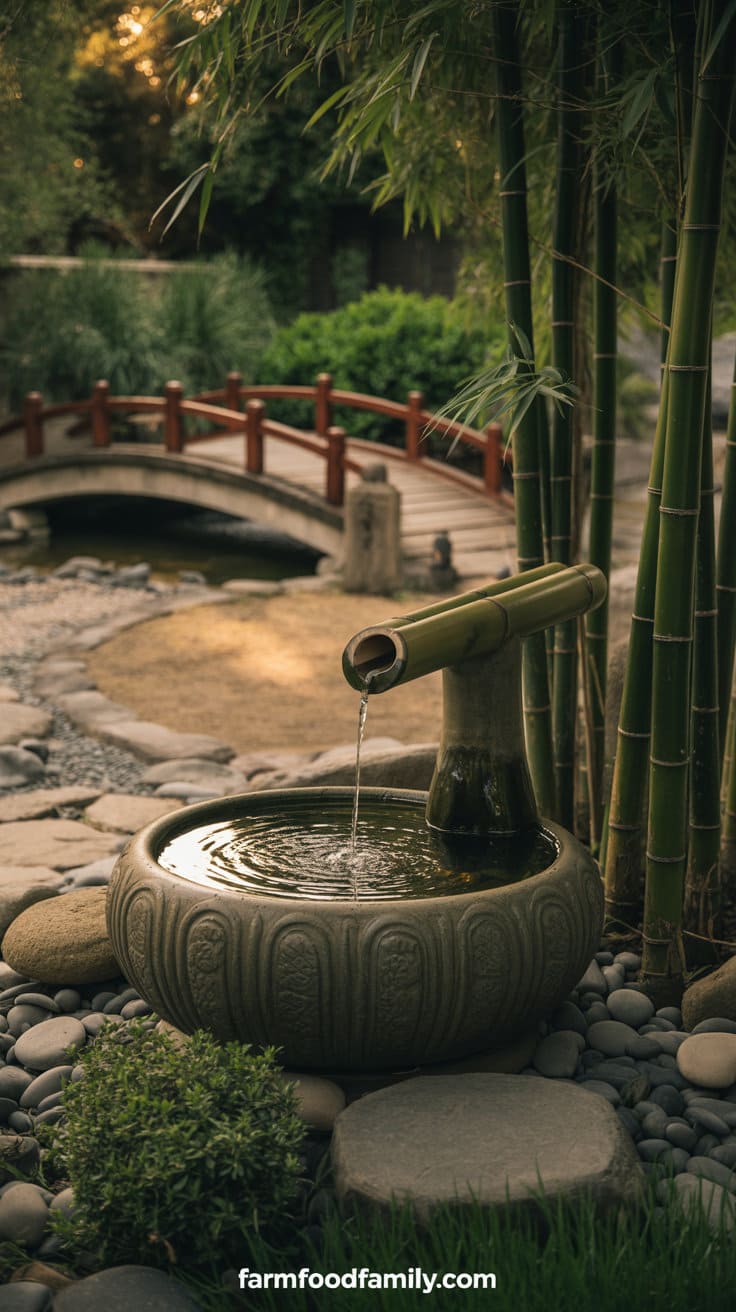
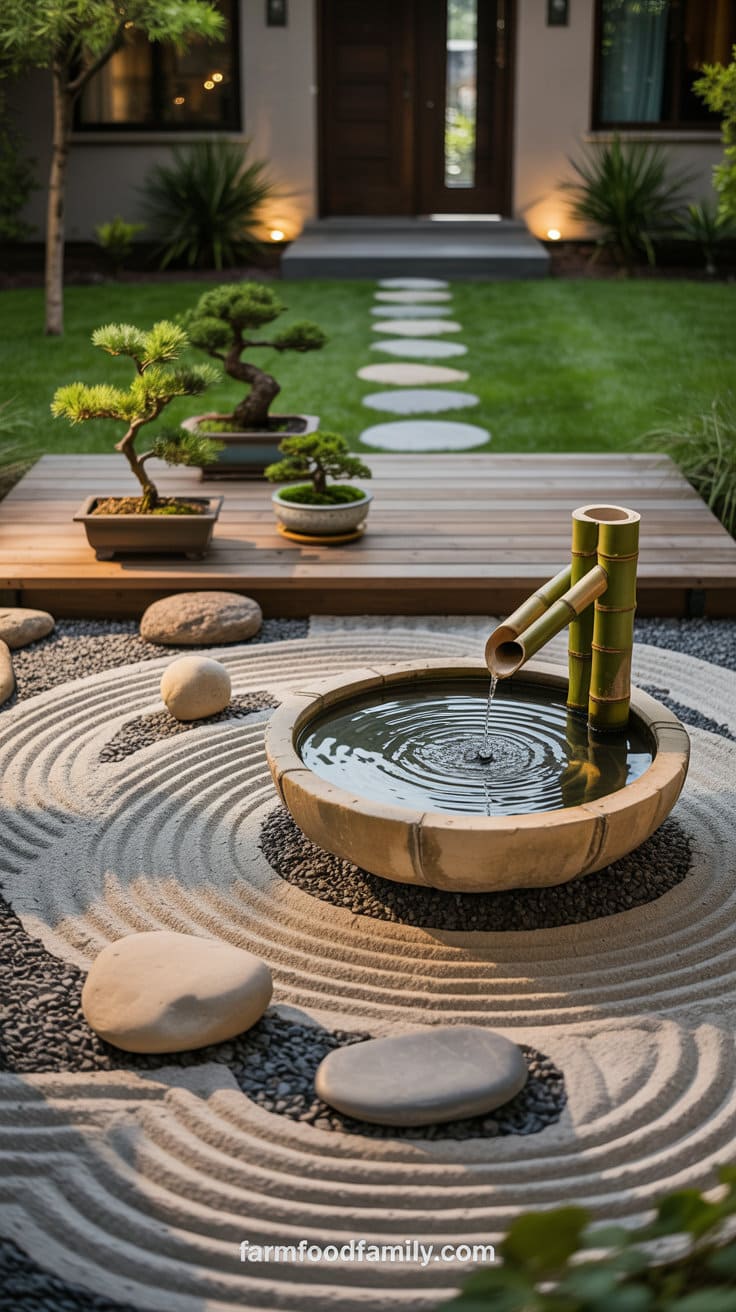
A bamboo spout (shishi-odoshi style) dripping into a stone basin brings a quiet, deliberate sound rather than constant rushing water, a real point of difference if you want ambiance without the fountain becoming the loudest thing in the yard.
It pairs naturally with minimal planting, moss, smooth river stone, one or two structural plants, rather than a full flower bed.
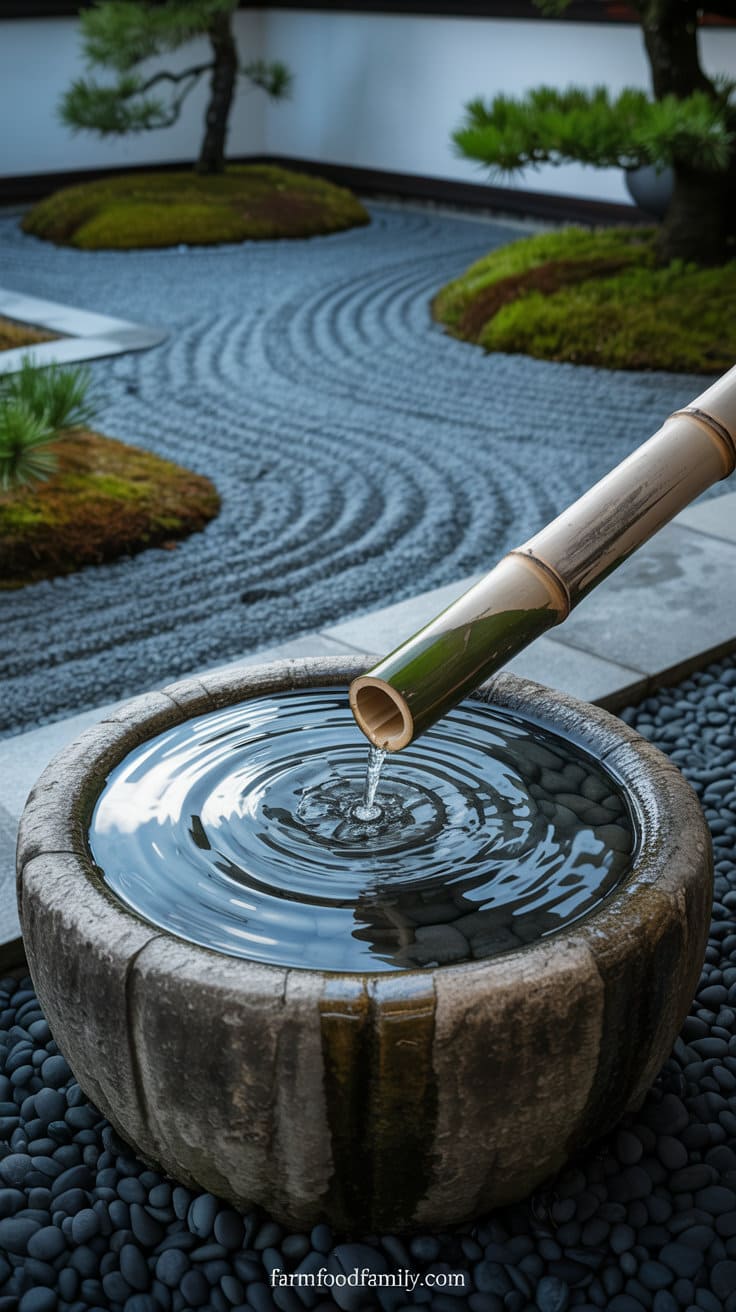
Consider adding a Japanese-style bamboo fountain, also known as a shishi-odoshi, to your front yard for a peaceful vibe.
Water slowly streams into a rotating bamboo tube, which tips when full and finally settles with a satisfying clang.


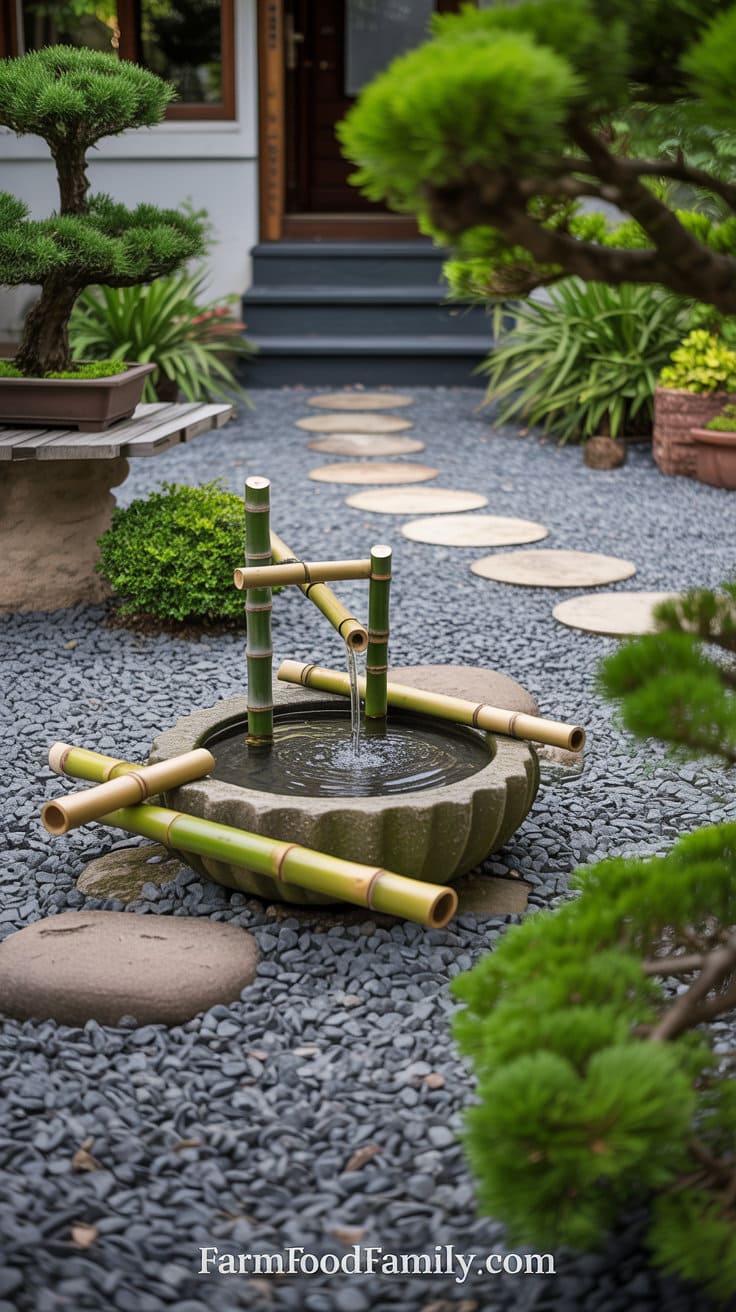
The repetitive sound it produces is very relaxing and helps to drown out noise. Frame the bamboo feature with small evergreens or bonsai in a bed of scraped gravel or black pebbles.
The average homeowner spends $616/year on yard fixes that don't address the real problem. Find out what yours actually is — before you spend another dollar.
Take the Free QuizUse stepping stones to guide your visitors toward the entrance for a tranquil journey.
If there is enough room, you can combine it with a tiny dry stream bed or bridge. This approach works well with modern homes, Asian-inspired architecture, or minimalist landscapes where simplicity and atmosphere are important.
Peaceful but Playful
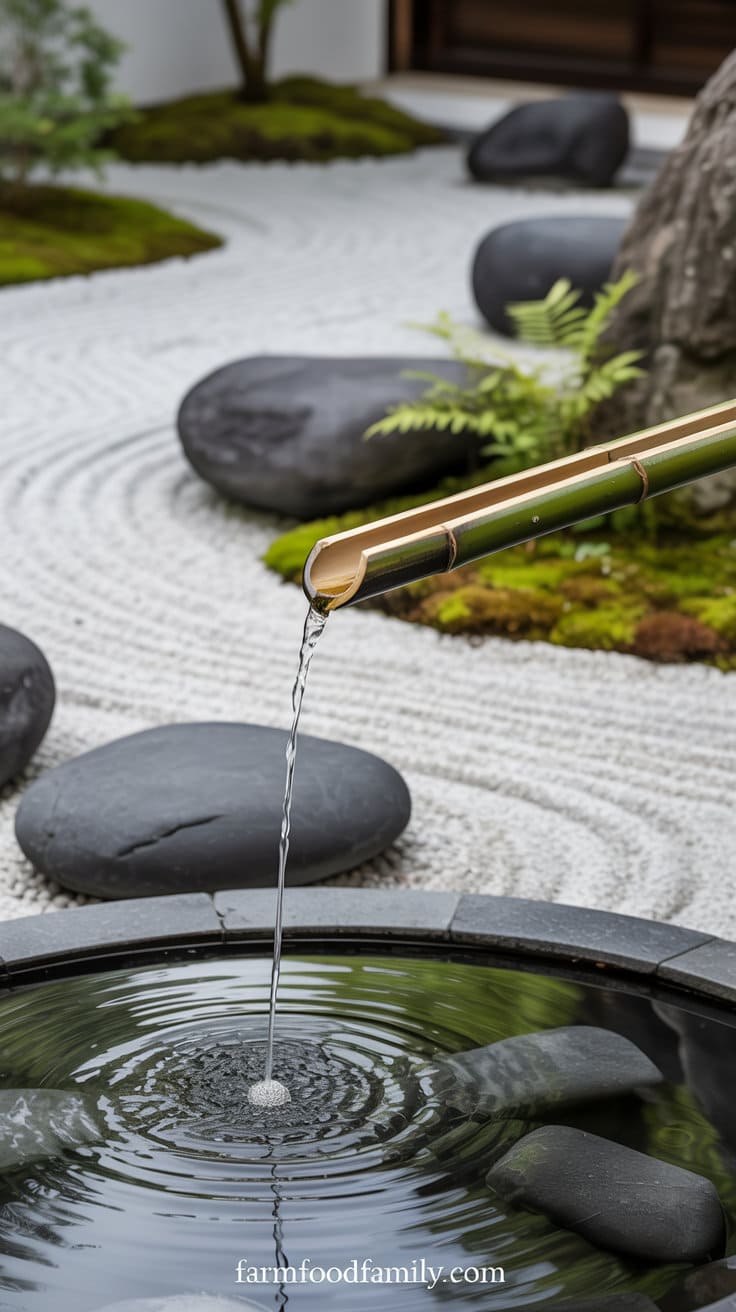
The fluid action of the tipping bamboo breathes vitality and humor into the design while preserving a deep sense of calm. It is great for homeowners who want to add peace and craftsmanship to their curb appeal.
4. Modern bowl-style fountain
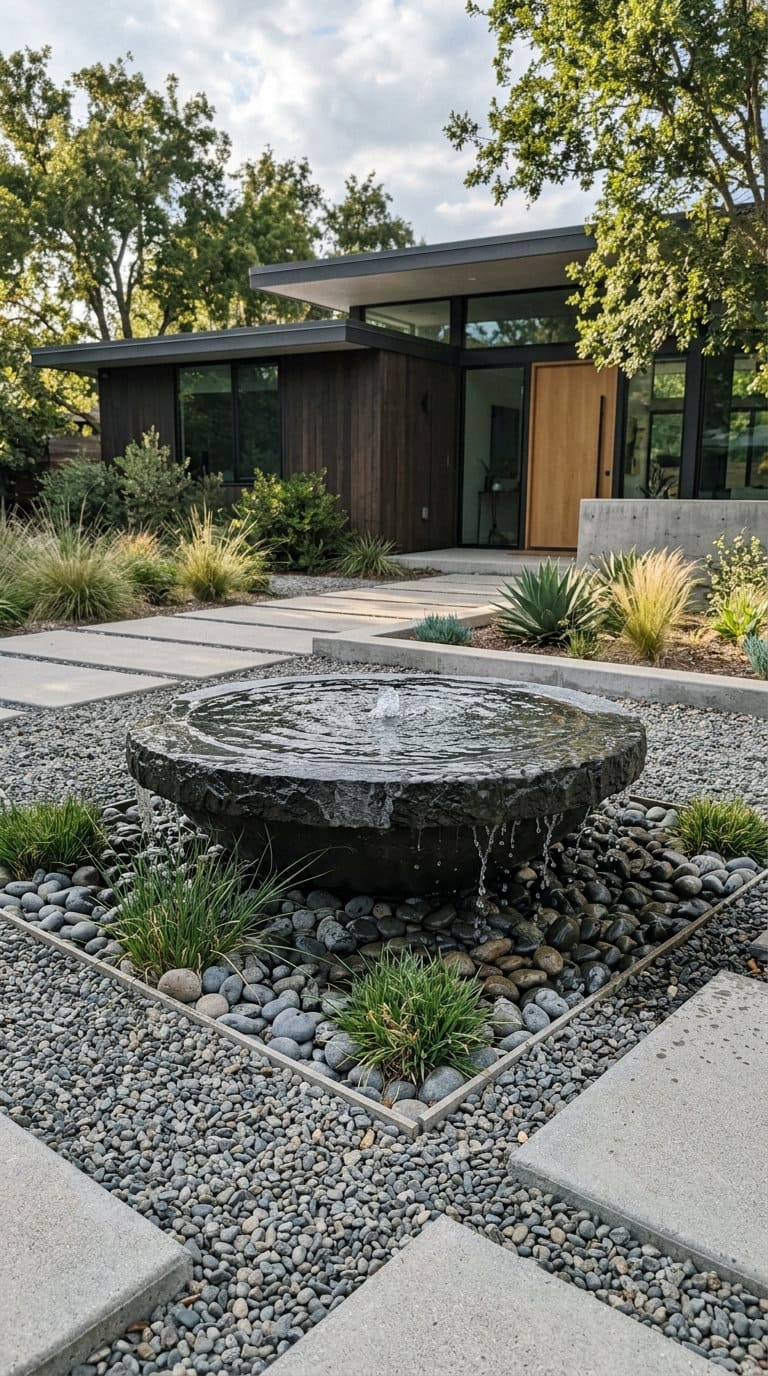
A wide, shallow circular basin where water spills gently over the rim, minimal, geometric, monochromatic, is one of the clearest 2026 design directions for front yard water features. It reads as calm and architectural rather than ornamental, which suits a modern or transitional home better than a classical tiered design would.
5. Vertical wall fountain
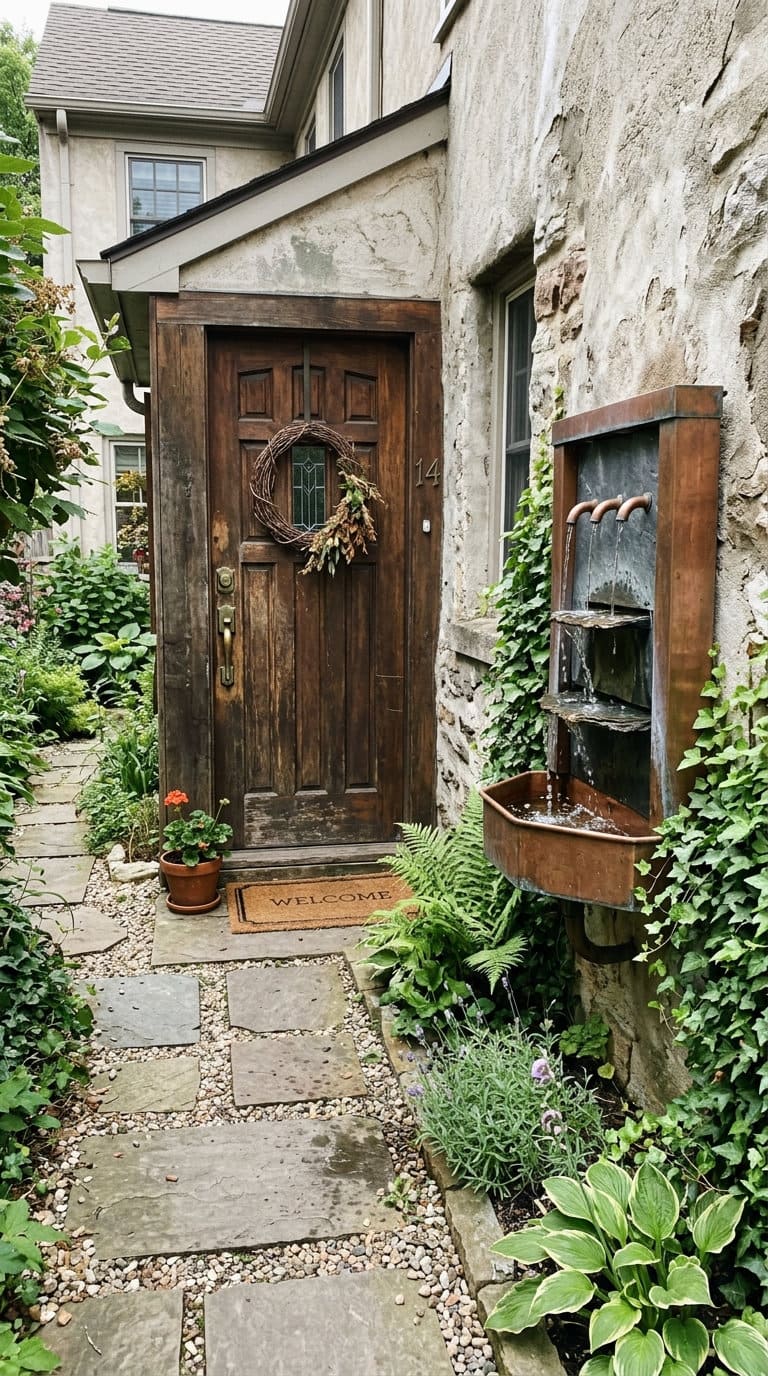
If floor space is tight, a wall-mounted fountain delivers the same sound and visual interest without taking up any planting or walkway space at all. It works especially well flanking a front door in a narrow entry garden where a freestanding fountain would crowd the path.
6. Budget DIY half-barrel fountain
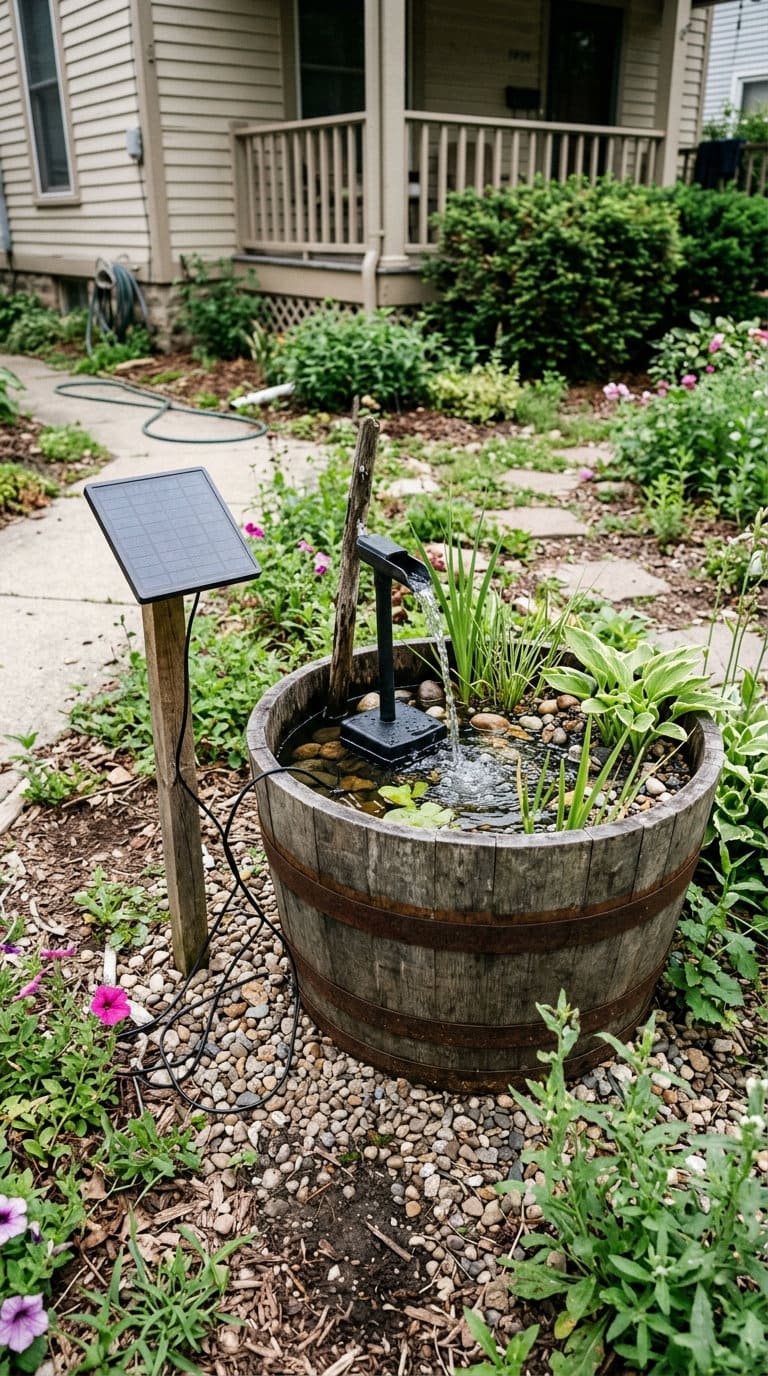
A half-barrel, a liner, and a small solar-powered pump make a genuinely functional fountain for well under $100 in parts, no electrician, no permanent plumbing. It won’t have the presence of a full pedestal or boulder installation, but it’s a real, low-commitment way to test whether you actually like having a water feature before spending more.
7. Placed against a wall for noise-masking
Alan D. Holt, a licensed landscape architect with over 30 years of experience and more than 3,500 completed projects, used exactly this trick on a real Mediterranean-style project: “the fountain in the motor court creates white noise that is reflected from the stucco walls of the house, covering any noise from the adjacent street.”
Positioning a fountain a few feet from a flat exterior wall lets the sound bounce back toward the yard instead of dissipating outward, genuinely useful if street noise is part of why you want a fountain in the first place, not just the visual.
What fountain ownership actually involves
This is the part most fountain articles skip entirely, and it came up immediately when a real homeowner asked strangers online whether to install one. If you live somewhere that freezes, you’ll need to drain and likely cover the fountain every winter, skipping that step is how basins crack. Expect to refill the water regularly and add an algaecide or similar treatment on a schedule, otherwise it turns green faster than you’d expect, especially in direct sun.
Mosquitoes are a real concern for any standing water feature, mosquito dunks (a BTI tablet that kills larvae without harming other wildlife) are the standard fix, and there’s a genuinely real folk trick worth knowing: pre-1982 US pennies are 95% copper, and copper ions are toxic to mosquito larvae, so a few dropped in the basin can help alongside dunks, not instead of them.
And be honest with yourself about the tradeoff nobody markets: a front yard fountain becomes a wildlife watering hole. Expect birds, and in deer-heavy areas, expect deer. Birds bathing is part of the charm for a lot of owners, but it also means occasional mess on nearby surfaces, worth knowing before you place one two feet from a window you look out of every day.
Electrical safety

Any electrically powered fountain needs GFCI (Ground Fault Circuit Interrupter) protection, an outlet that cuts power instantly if it senses a current imbalance, the standard safety requirement for anything electrical near water. A GFCI outlet itself runs roughly $17 to $40, a modest premium over a standard outlet.
If you don’t already have a suitable outdoor outlet near the fountain’s location, having a licensed electrician install a dedicated GFCI-protected circuit typically runs $300 to $800 depending on wiring distance. Keep cords and connections above ground and away from standing water, and don’t run a permanent extension cord as a long-term power solution, that’s a fire and shock risk regardless of how tidy it looks tucked into mulch.
FAQ
Do I need a GFCI outlet for an outdoor fountain? Yes, any electrically powered outdoor fountain needs GFCI protection, it’s the standard safety requirement for electrical equipment near water. A GFCI outlet runs roughly $17 to $40, and a professionally installed dedicated outdoor circuit typically costs $300 to $800 if you don’t already have one nearby.
How do I keep my front yard fountain from getting mosquitoes? Mosquito dunks, a BTI tablet that kills larvae without harming other wildlife, are the standard fix for any standing water feature. Pre-1982 US pennies (95% copper) are a real folk trick worth adding alongside dunks, copper ions are toxic to mosquito larvae, though dunks alone are usually sufficient.
Do I need to winterize my fountain? If you live somewhere temperatures drop below freezing, yes. Drain the fountain and cover it for winter, skipping this step is a common way basins crack from ice expansion. Check your specific fountain material’s cold-weather guidance, since stone, concrete, and resin all handle freezing differently.
Pick two or three of these that fit your entry’s actual scale and your appetite for upkeep, and don’t skip the winterization and GFCI steps just because they’re less exciting than picking a style. A cracked basin or an ungrounded outlet turns a nice feature into a real problem fast.
A front yard fountain does more than simply decorate as it also invites. It creates calm, enhances curb appeal, and adds a multisensory experience that enriches daily life.
Whether you go for formal, rustic, or traditional, each one turns your yard into something meaningful.
These ideas show that fountains aren’t one-size-fits-all; they can be tailored to suit your home’s architecture, your garden’s tone, and your lifestyle’s rhythm.
They serve as focal points, guides, and accents, harmonizing natural sound with visual beauty.
Embrace the elegance of water and let it breathe new life into the first impression your home makes.
If these ideas were to your liking, comment your thoughts below and share the list with family and friends!
Never miss an update — choose FarmFoodFamily as your preferred source on Google.
How it works: Tap the button below to open Google's settings page, then check the box next to FarmFoodFamily.
Tap the checkbox to turn it blue — that's how you know it's set.