21 Stunning Short Fence Ideas (Plus the Height Rules)
A short fence sounds like the easy option, low commitment, low cost, no permit hassle. What most “short fence ideas” roundups skip is that height comes with real rules attached, and a fence that’s technically legal in your backyard might not be legal in your front yard, and a fence that looks like it’s containing…

Never miss an update — choose FarmFoodFamily as your preferred source on Google.
How it works: Tap the button below to open Google’s settings page, then check the box next to FarmFoodFamily.
Tap the checkbox to turn it blue — that’s how you know it’s set.
A short fence sounds like the easy option, low commitment, low cost, no permit hassle. What most “short fence ideas” roundups skip is that height comes with real rules attached, and a fence that’s technically legal in your backyard might not be legal in your front yard, and a fence that looks like it’s containing your dog might not actually be tall enough to do that.
So before the 20 ideas below, here’s what “short” actually means in practice.
What “short” actually gets you
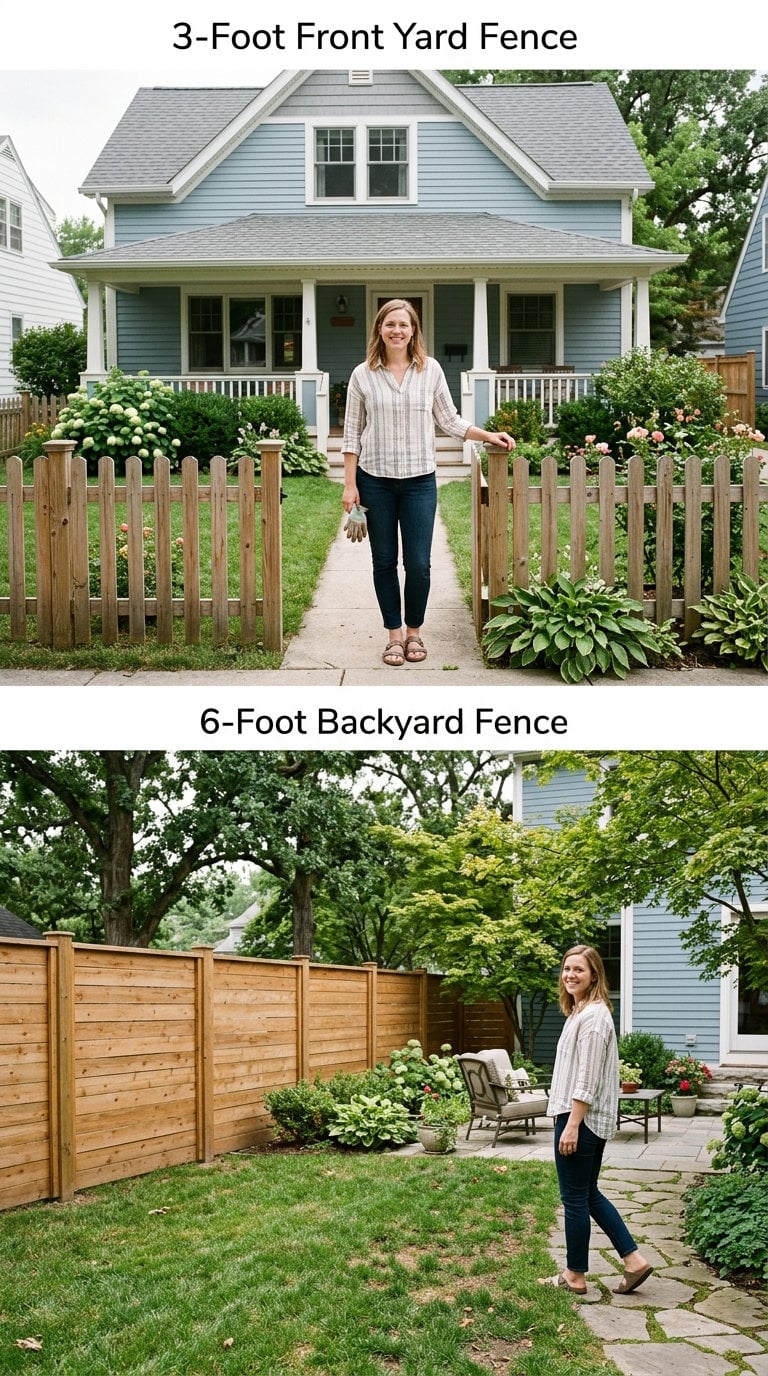
Front-yard fences are commonly capped lower than backyard fences, and it’s a real, if not universal, rule. Most municipal codes cap front-yard fence height around 3 to 4 feet while allowing 6 feet, sometimes more with grade differences, in backyards or side yards, and the reasoning is sightlines, not privacy, a tall fence at the street blocks the view drivers and pedestrians need.
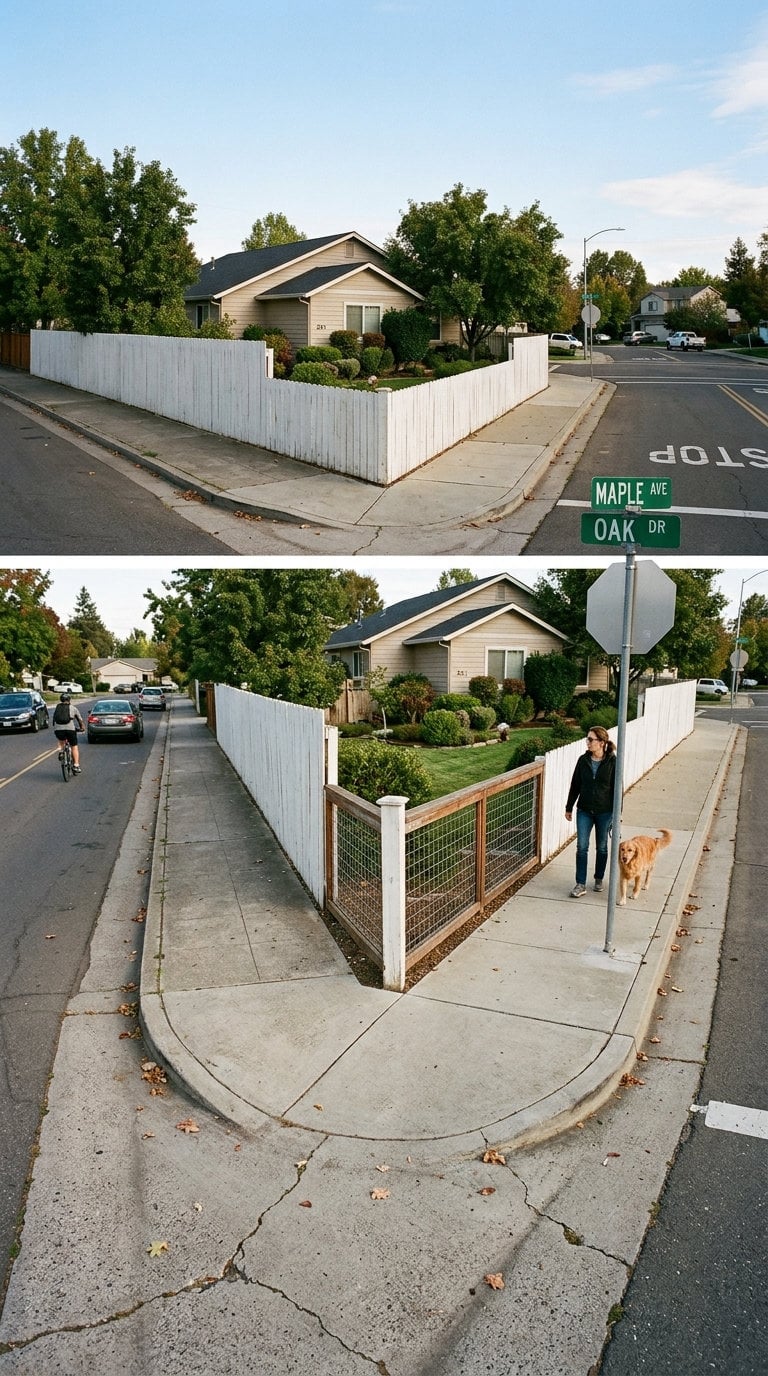
Corner lots often add a second, stricter layer on top of that. Within roughly 25 to 46 feet of a street corner, height often drops to about 3 feet regardless of the general front-yard cap, a “visibility triangle” rule meant to keep sightlines clear at intersections. If your HOA’s rules and your city’s code disagree, the stricter one wins, not whichever one you’d prefer.
On containment, here’s the honest math most short-fence articles skip entirely: fence height should run roughly twice a dog’s shoulder height to actually contain it. Small breeds need about 3 to 4 feet, medium breeds 4 to 5 feet, large breeds 5 to 6 feet minimum, and known jumpers like Border Collies, Huskies, or Dobermans need 6 feet or more, add roughly another foot if the dog isn’t spayed or neutered. That means most fences under 4 feet are a boundary marker, not real containment, for anything but a small or genuinely calm dog.


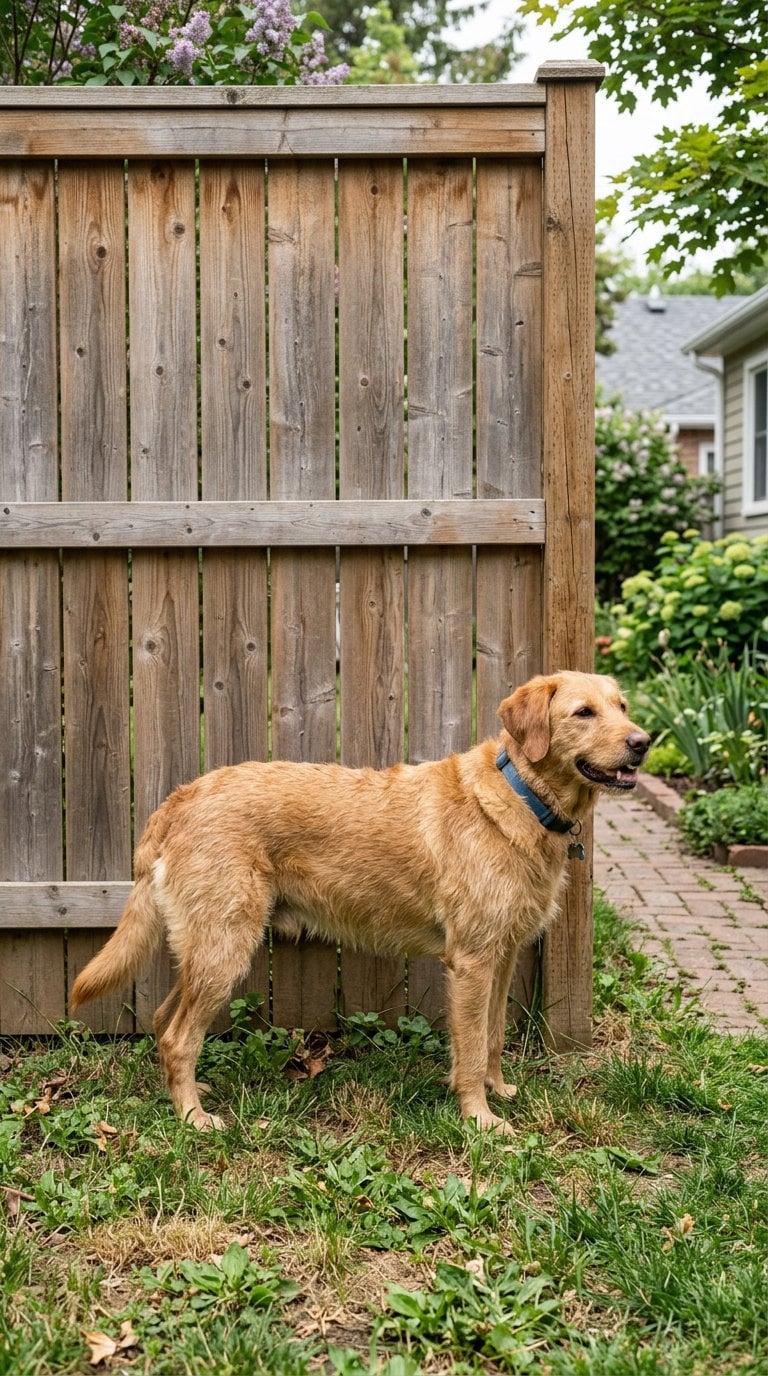
One safety detail worth stating plainly rather than burying: vertical picket-top fences carry a real strangulation risk for a dog that jumps and gets a loose collar caught between the pickets. If containing an active dog is the actual goal, a flat-top or closely-spaced picket design is the safer choice over widely-spaced vertical points.
Answer 4 quick questions and get matched to the exact fix for your yard — drainage, budget, layout, or something else entirely.
Take the Free QuizProperty line disputes are common even over short, purely decorative fences, mostly because people build off memory or an old marker instead of a current survey. A professional survey typically runs $330 to $670, more for a complex or large property, and it’s cheap insurance against a dispute that could otherwise drag on for years. Mediation with the neighbor is the recommended first step, long before anything legal.
On cost, a common assumption is that material choice matters less on a short fence since there’s less of it. That’s only partly true. Per-linear-foot costs run roughly $15-30 for wood, $20-35 for vinyl, and $30-60 for metal, and those are flat per-foot rates that don’t shrink with height. On a short run the total dollar gap between materials does shrink, but the ratio between them, metal costing roughly twice what wood does, stays about the same.
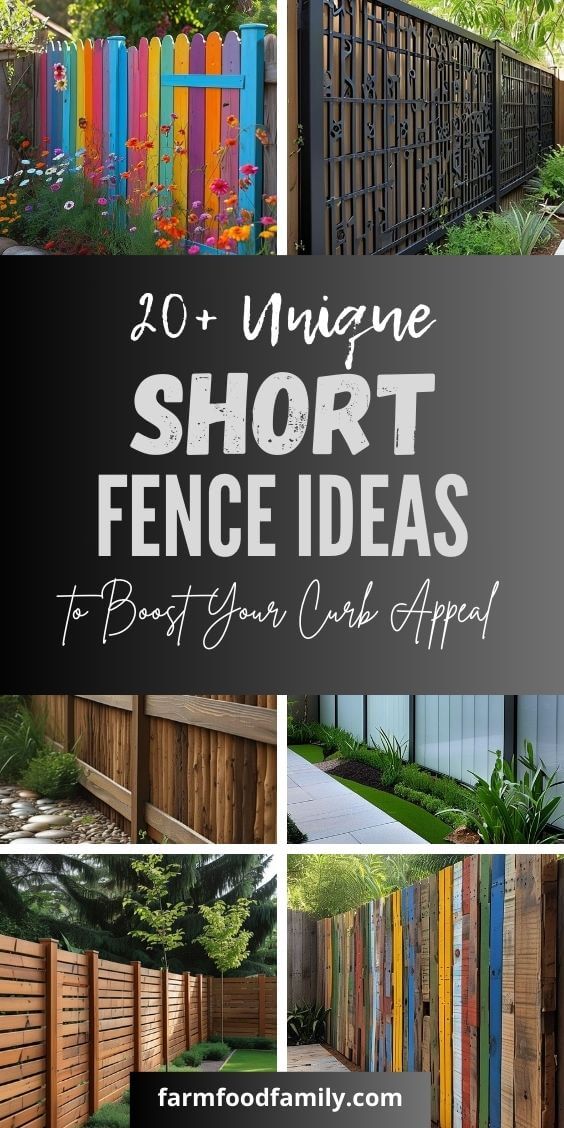
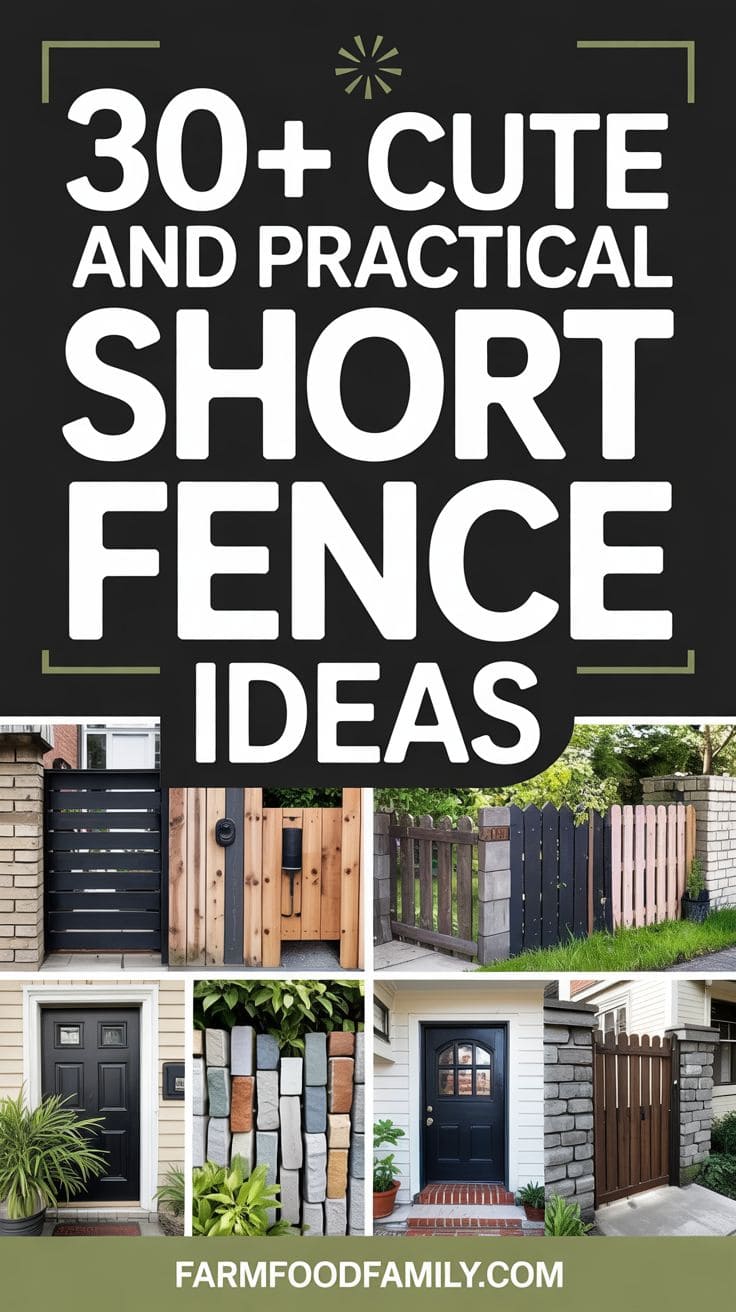
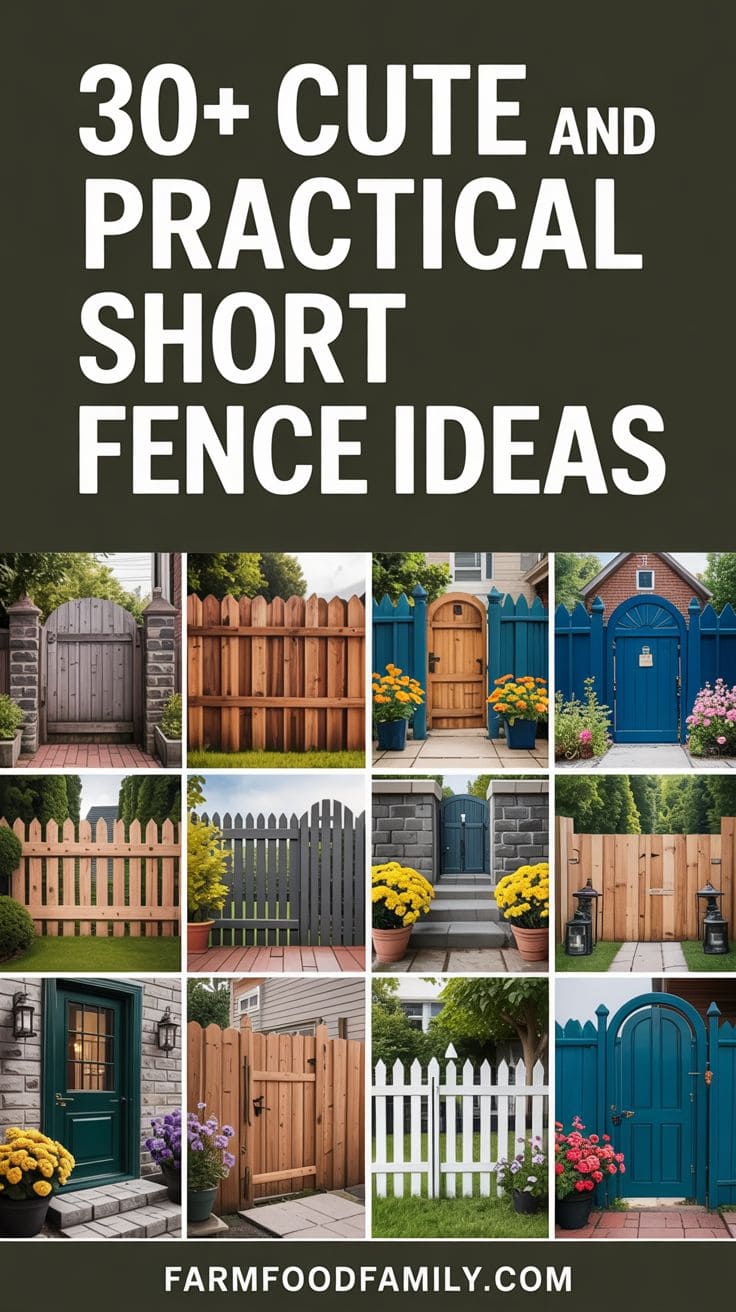
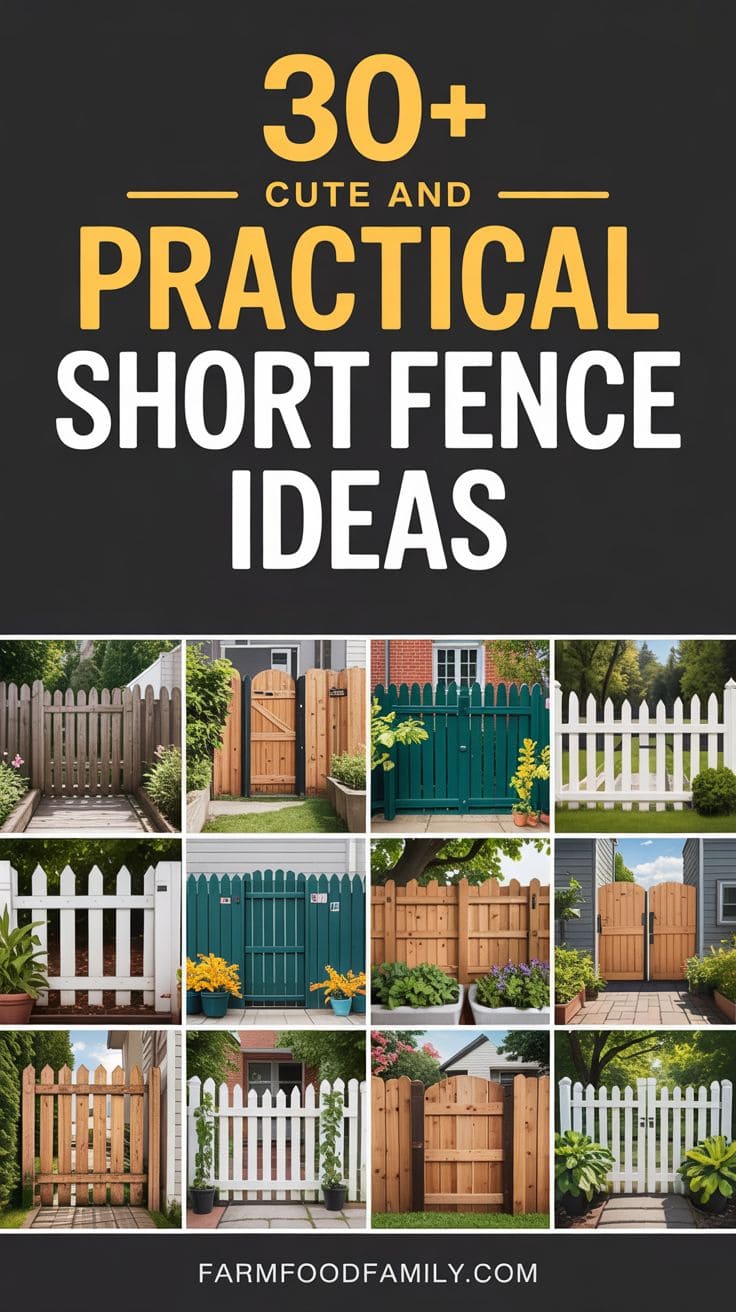
30 Short Fence Ideas for Your Home and Garden
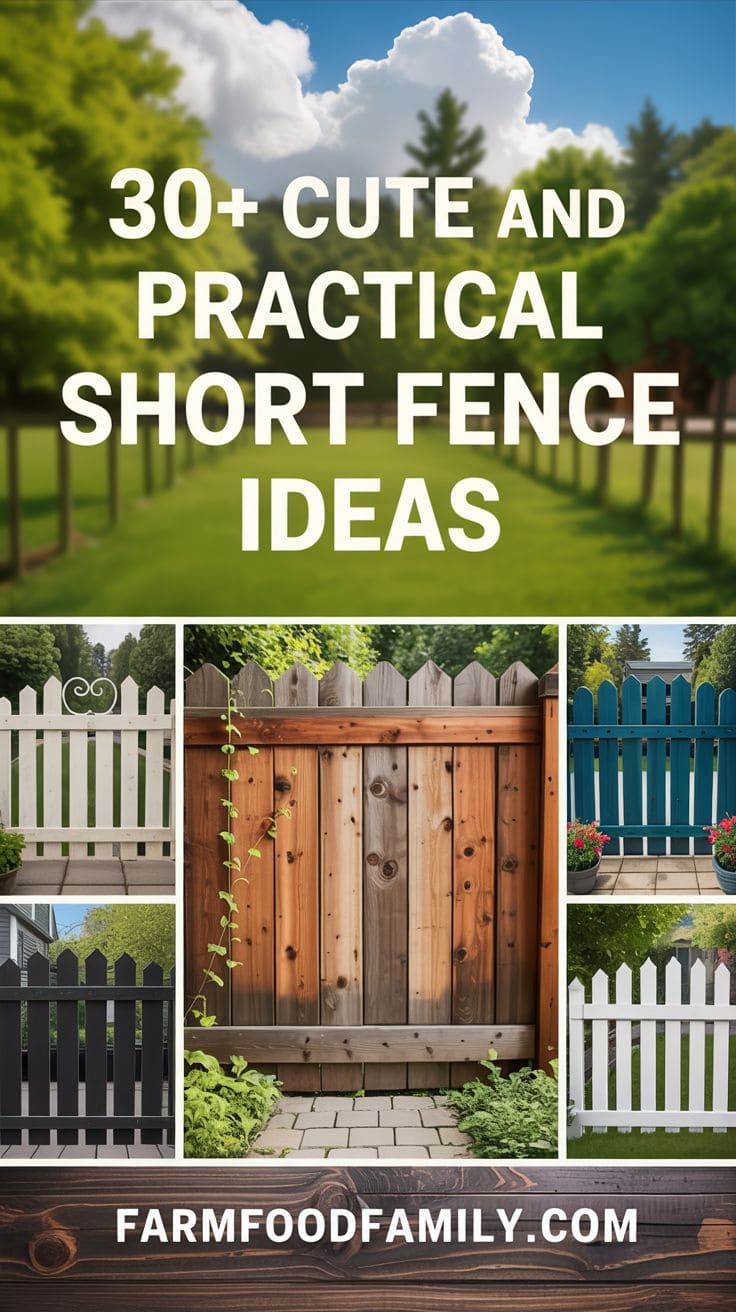
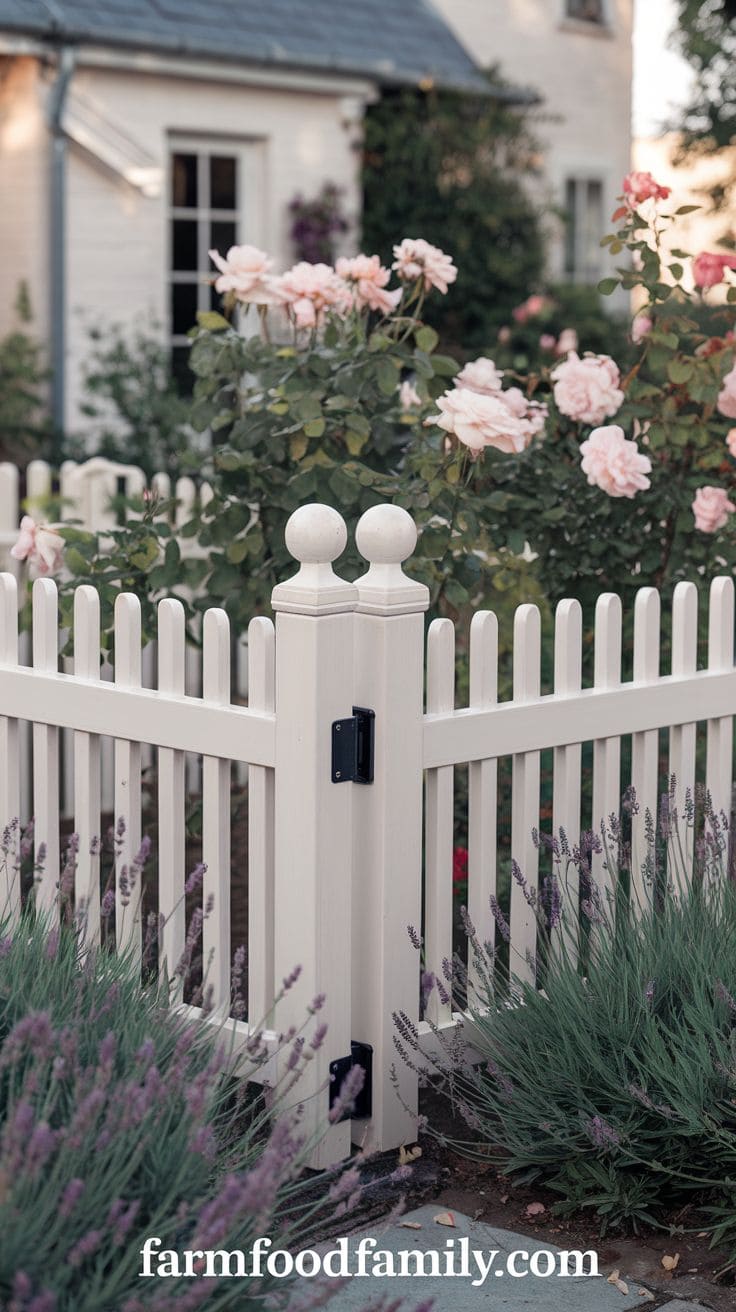
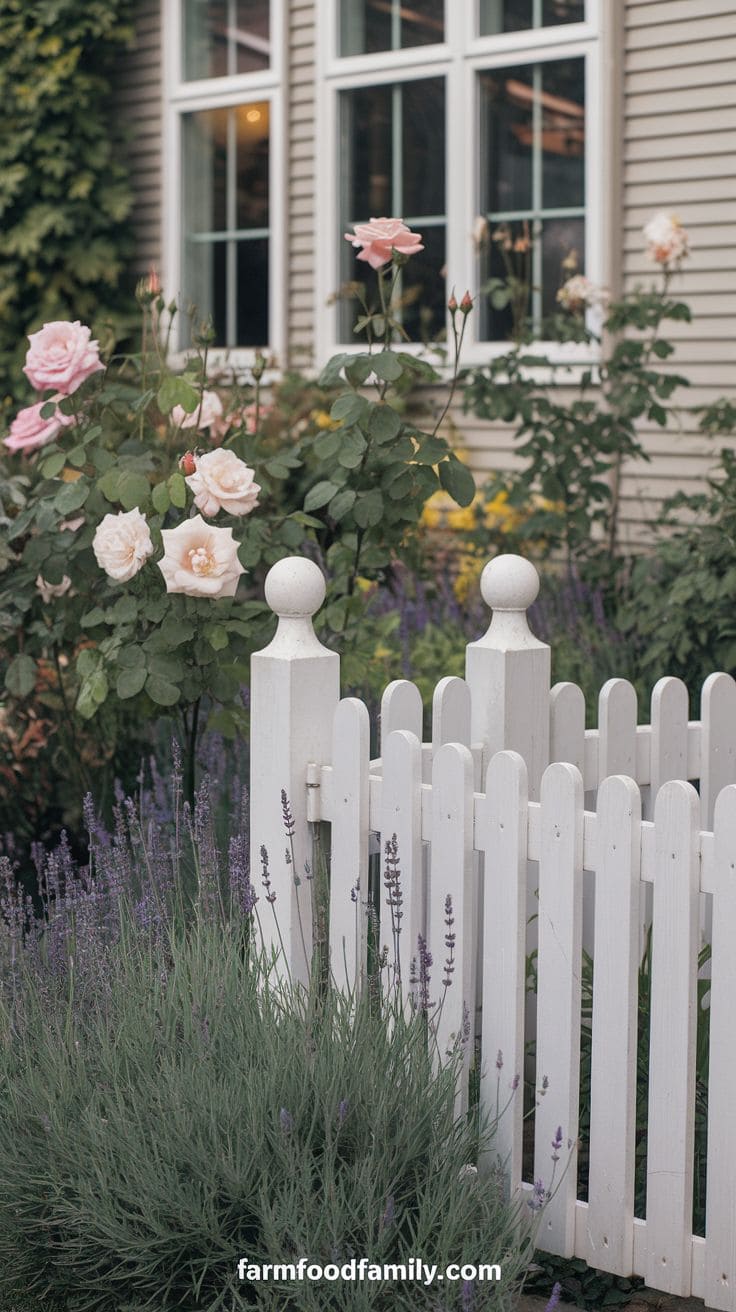
1. White Picket Fence with Rounded Tops for a Classic Flair
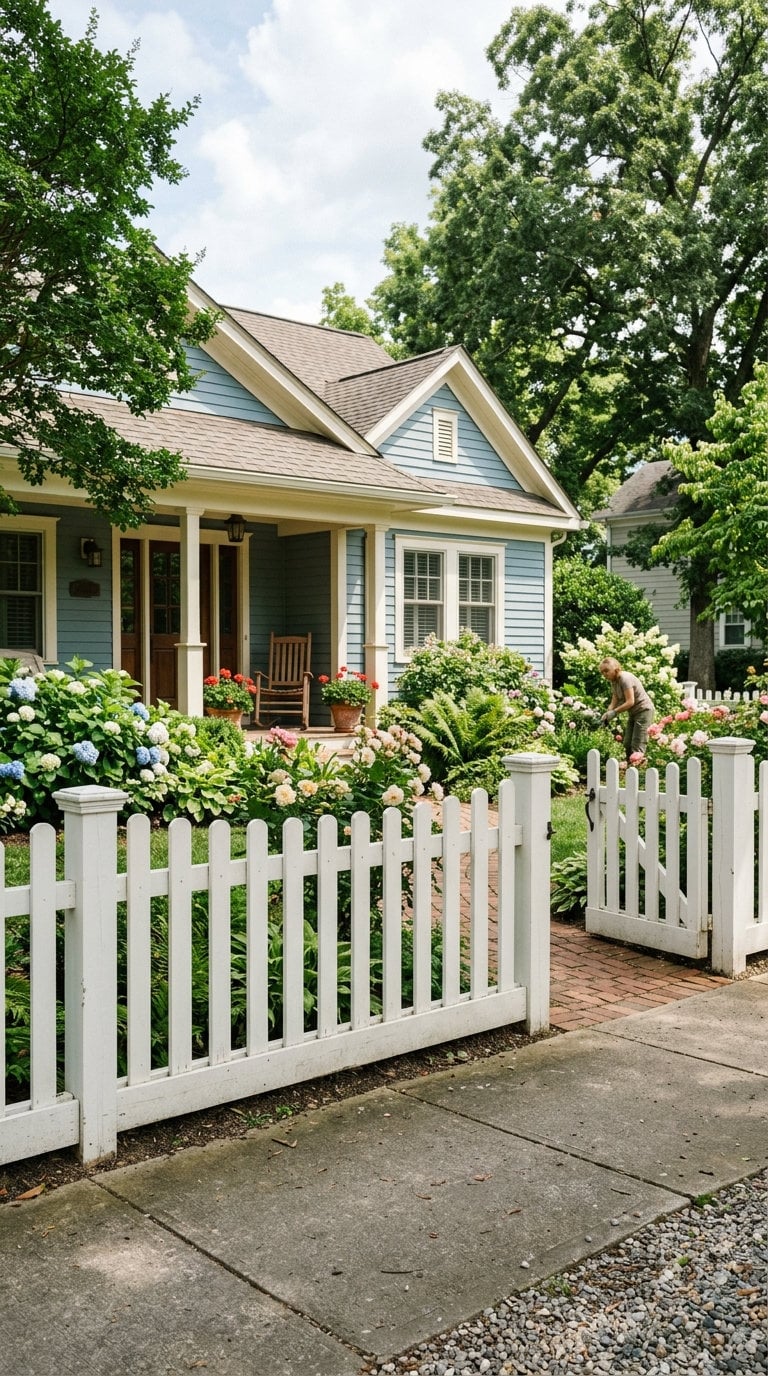
Rounded picket tops soften the classic white picket look without losing the style entirely, and they’re a genuinely safer choice than pointed pickets if pets or kids are around the fence line regularly.
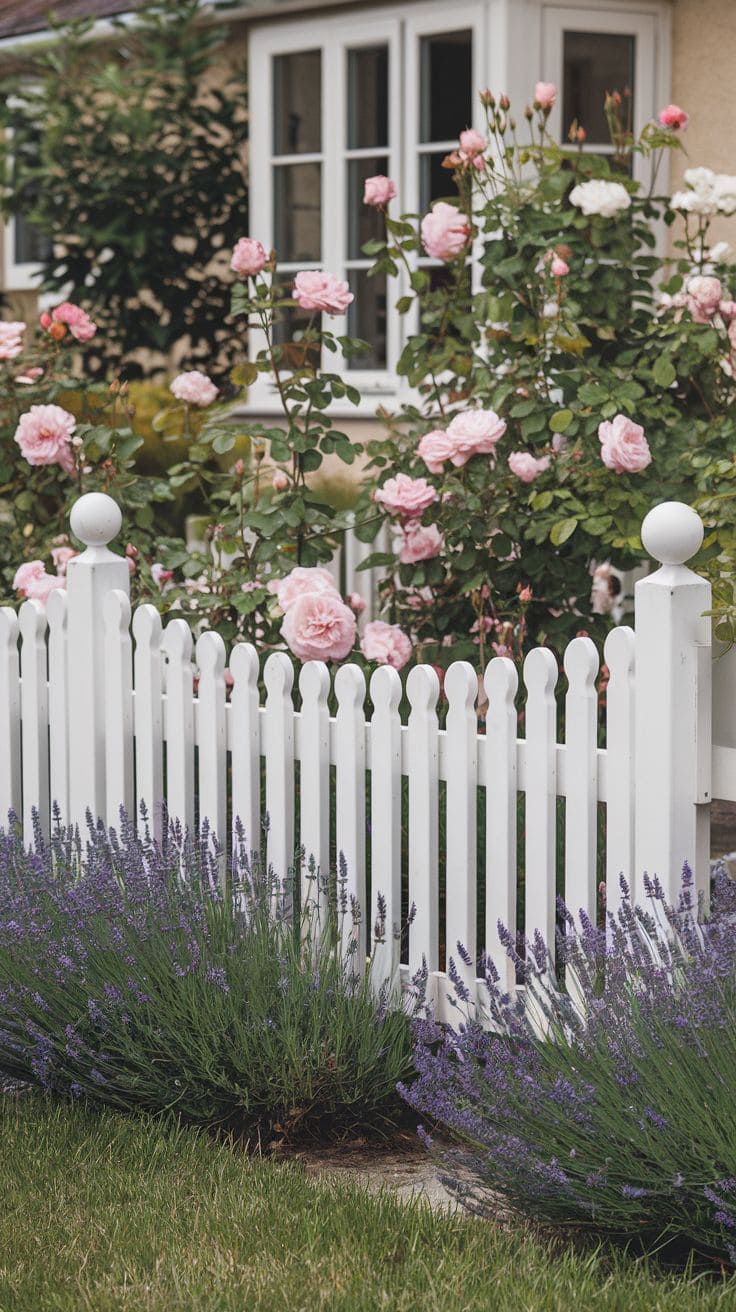
A short white picket fence instantly creates a pleasant, nostalgic atmosphere and looks well in cottage gardens or suburban front yards. Choose rounder tops over sharp points to soften the design and provide a welcoming vibe.
This pattern complements rose bushes, lavender borders, and vibrant perennial beds, creating a great frame for your flower-filled landscape.
A gate in the same style adds further beauty, especially if it leads to a winding garden walk.
While only waist-high, this type of fence provides a discrete boundary without visually blocking off the space.
Most yard problems trace back to one specific, fixable cause. Find yours in 4 quick questions.
Take the Free QuizIt works especially well in places where you want to keep things open and neighborly while still having some structure around your yard.
2. Rustic Split Rail Fence for Natural Landscapes
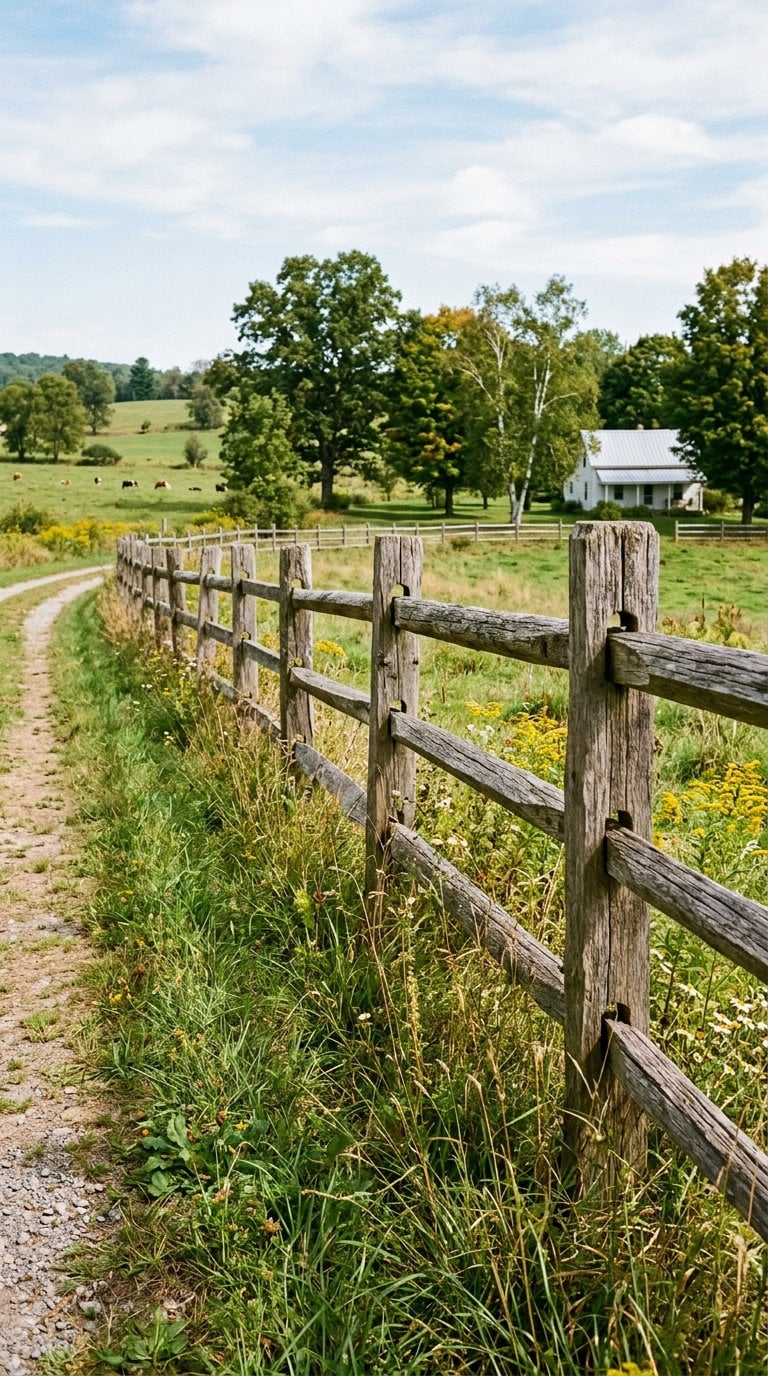
Two or three horizontal rails between simple posts, no pickets at all, gives a rural, low-key boundary marker that reads as intentional rather than unfinished. This is purely a decorative or property-line marker design, per section 1, don’t count on it for containment of anything beyond the smallest pet.
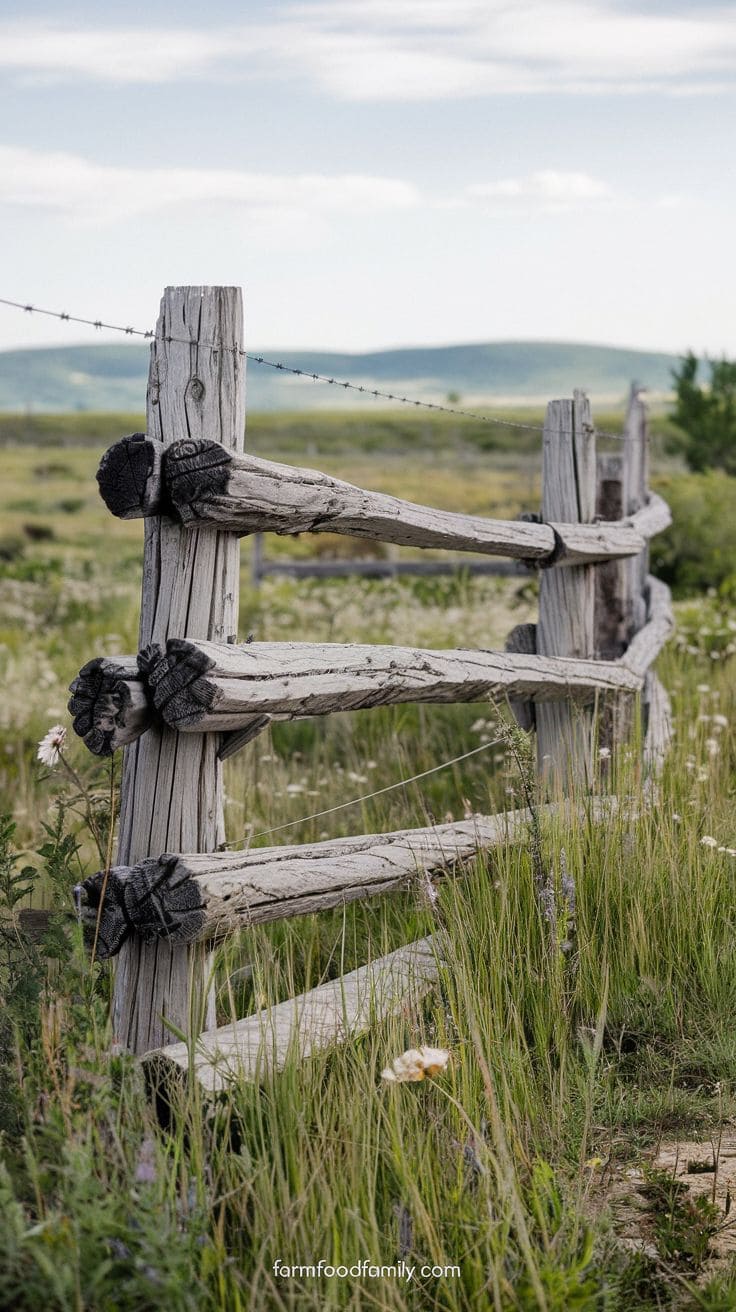
A rustic split rail fence is a timeless choice for a short fence that feels effortless and blends in with the natural surroundings. These fences, which are often no taller than 3 feet, are ideal for larger yards, rural areas, or homes with an organic or farmhouse feel.
The open design provides complete views of your garden or property while maintaining a moderate buffer from the road or surrounding locations.
They work nicely with native grasses, wildflowers, and even as backdrops for low stone borders.
Split rail fences also need little material and work to erect, making them an affordable option to define space with style.
Regardless of what your fence encloses, this fence style gives a rustic whisper of personality without being overwhelming.
3. Short brick wall fence topped with ornate iron
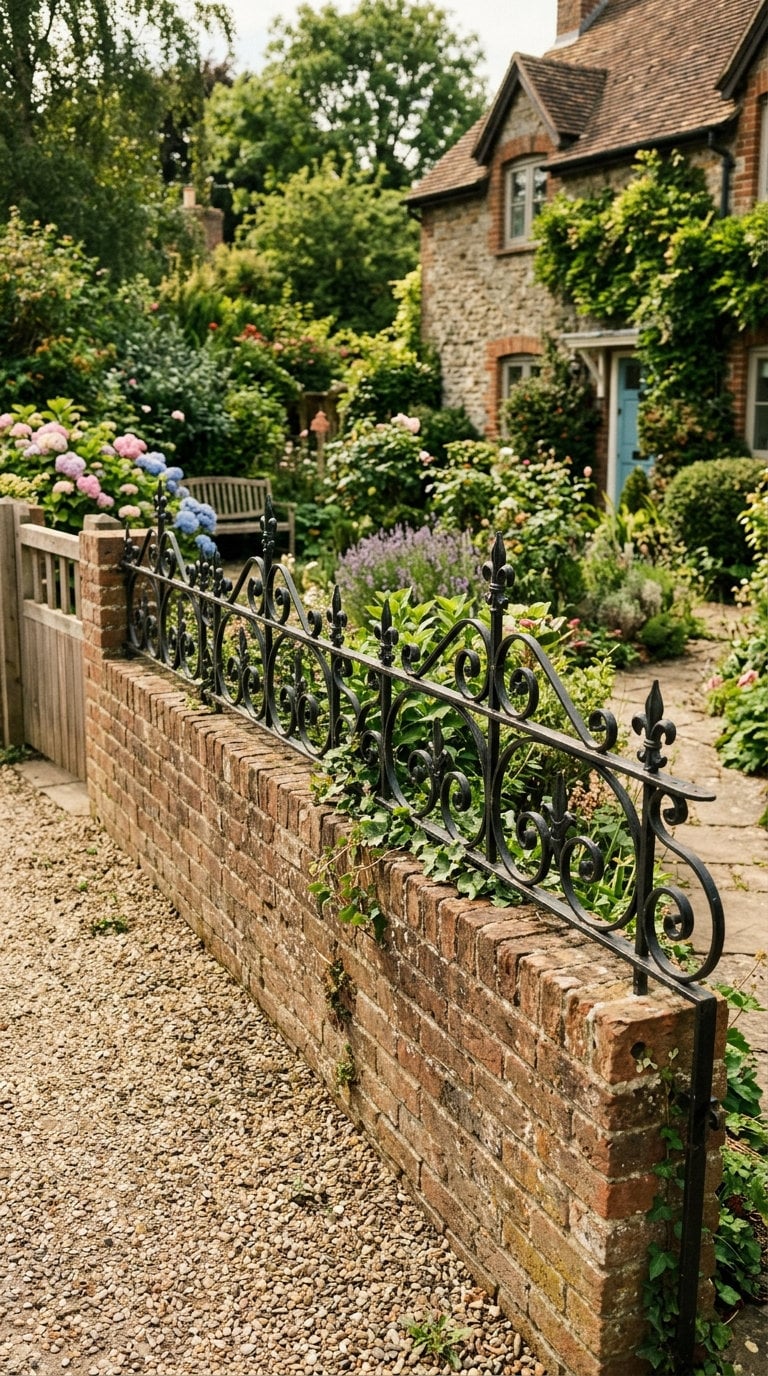
A low brick wall base with an iron rail or picket top on top gives a fence real substance and permanence at a modest height, common on older or more formal properties. The brick base alone often satisfies a height cap that a taller all-iron design wouldn’t.
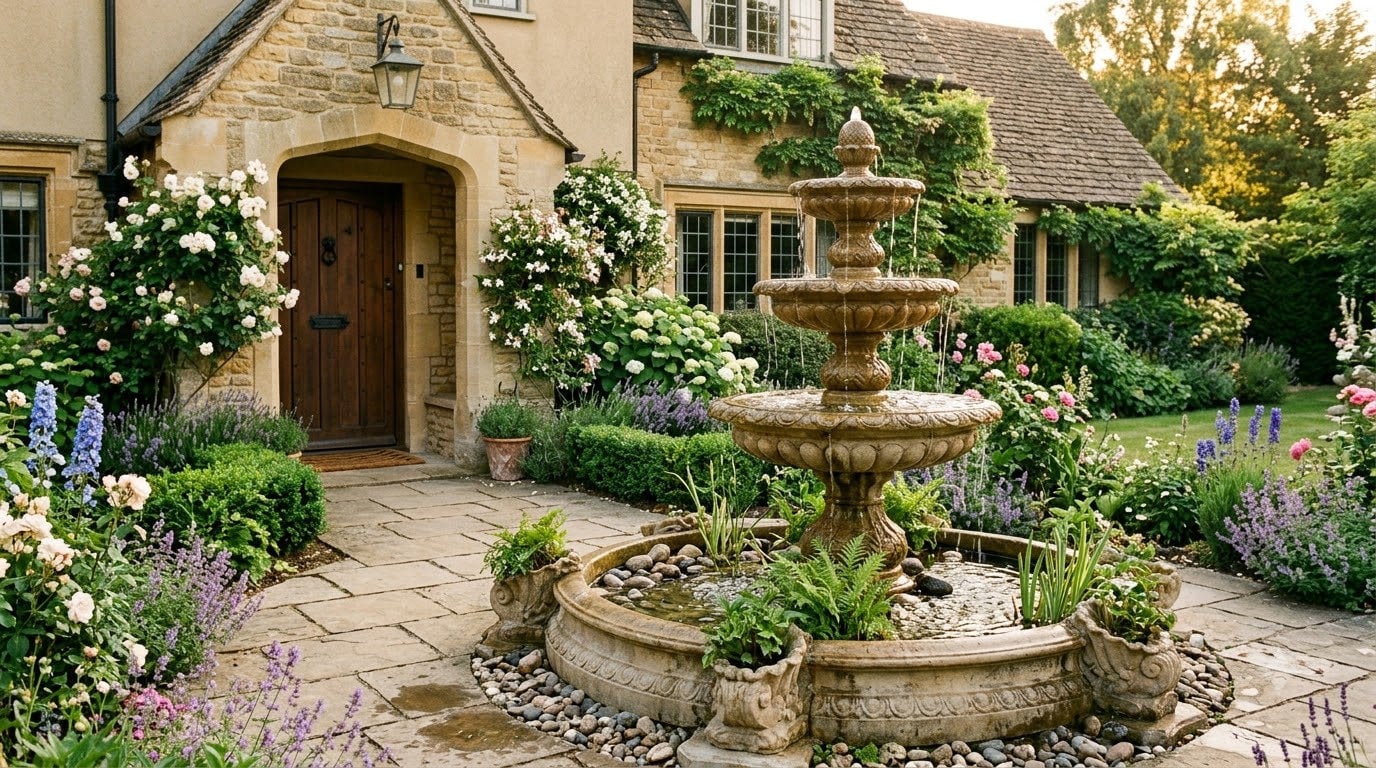
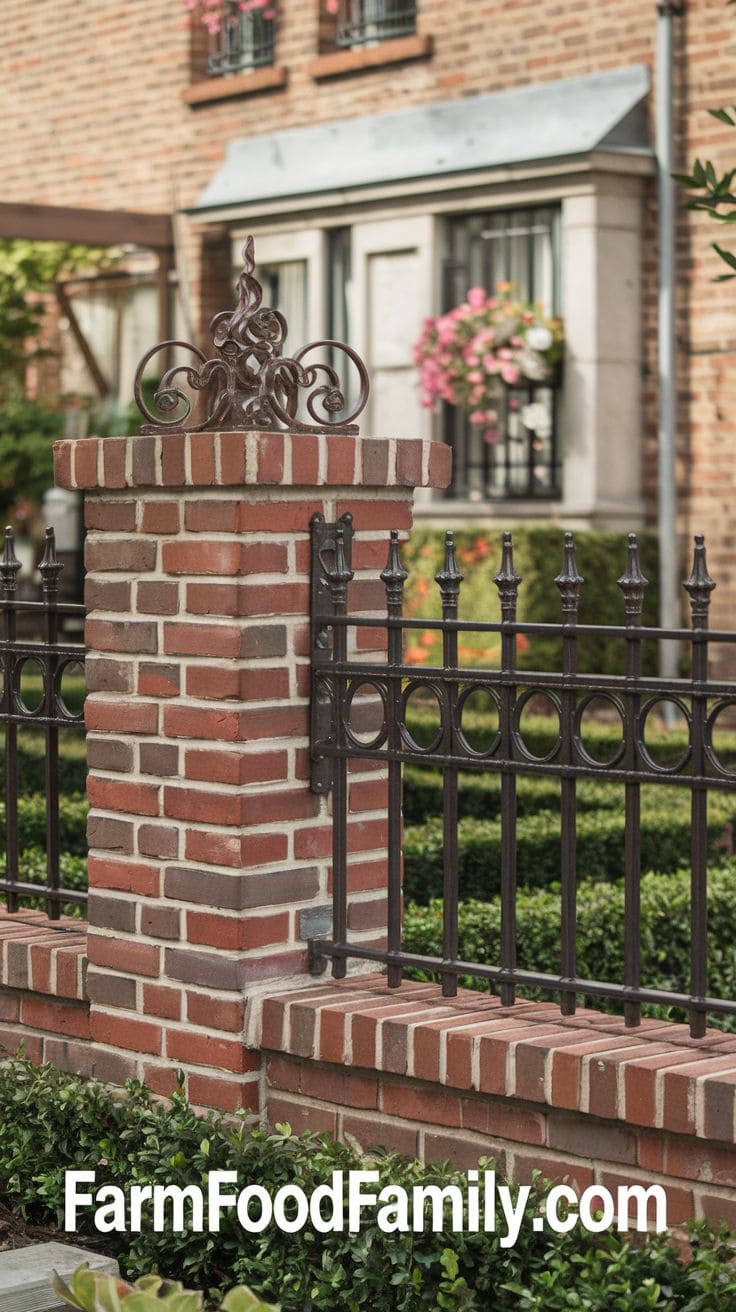
A low brick wall topped or interrupted with ornate ironwork makes for a short fence that adds durability, permanence, and a classic touch.
A height of roughly 2-3 feet is sufficient to create distinction without completely obscuring views, particularly in front yard applications.
The brick provides grounding and warmth, while the wrought iron elements create an elegant, artistic contrast.
The average homeowner spends $616/year on yard fixes that don't address the real problem. Find out what yours actually is — before you spend another dollar.
Take the Free QuizThis style complements traditional, European, or vintage-style homes, especially when combined with climbing roses, boxwood hedges, or urn pots along the walkway.
Brick fences have the added benefit of being low maintenance and weather-resistant for decades. It’s an option that provides classic sophistication in a little package, adding structure without overwhelming your landscape.
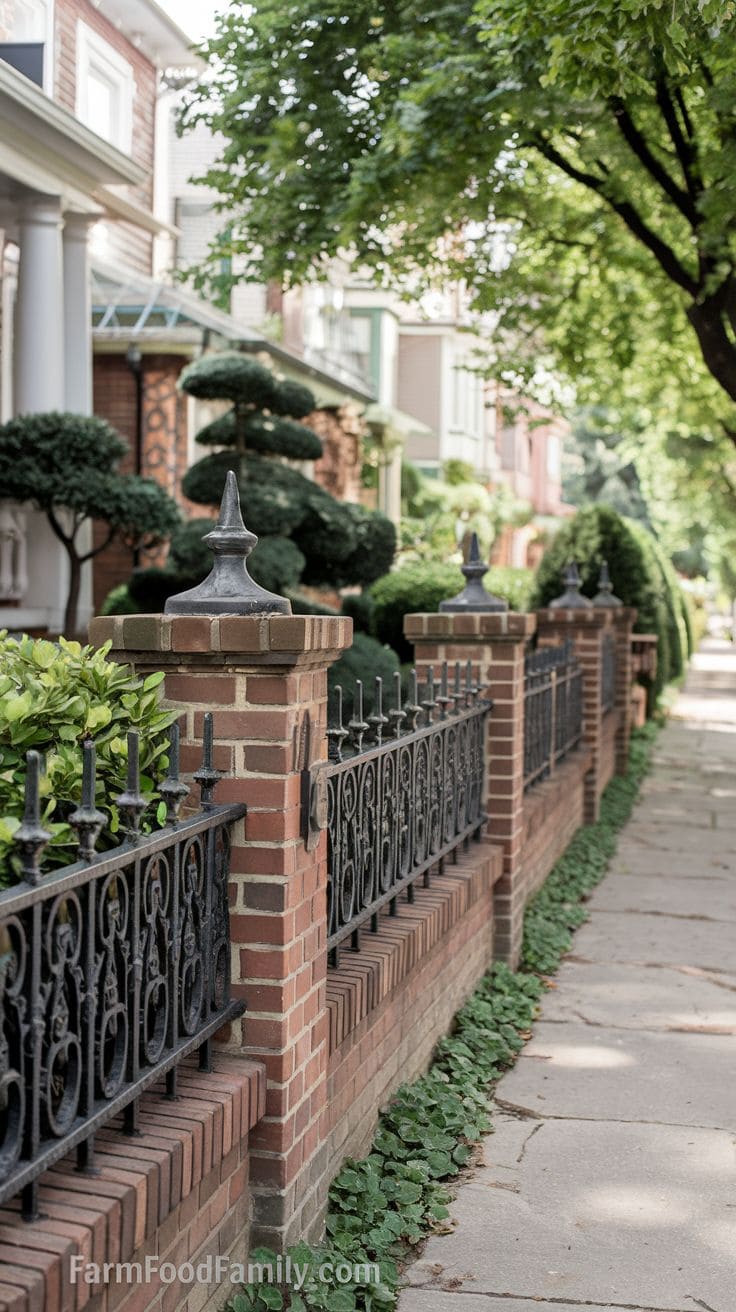
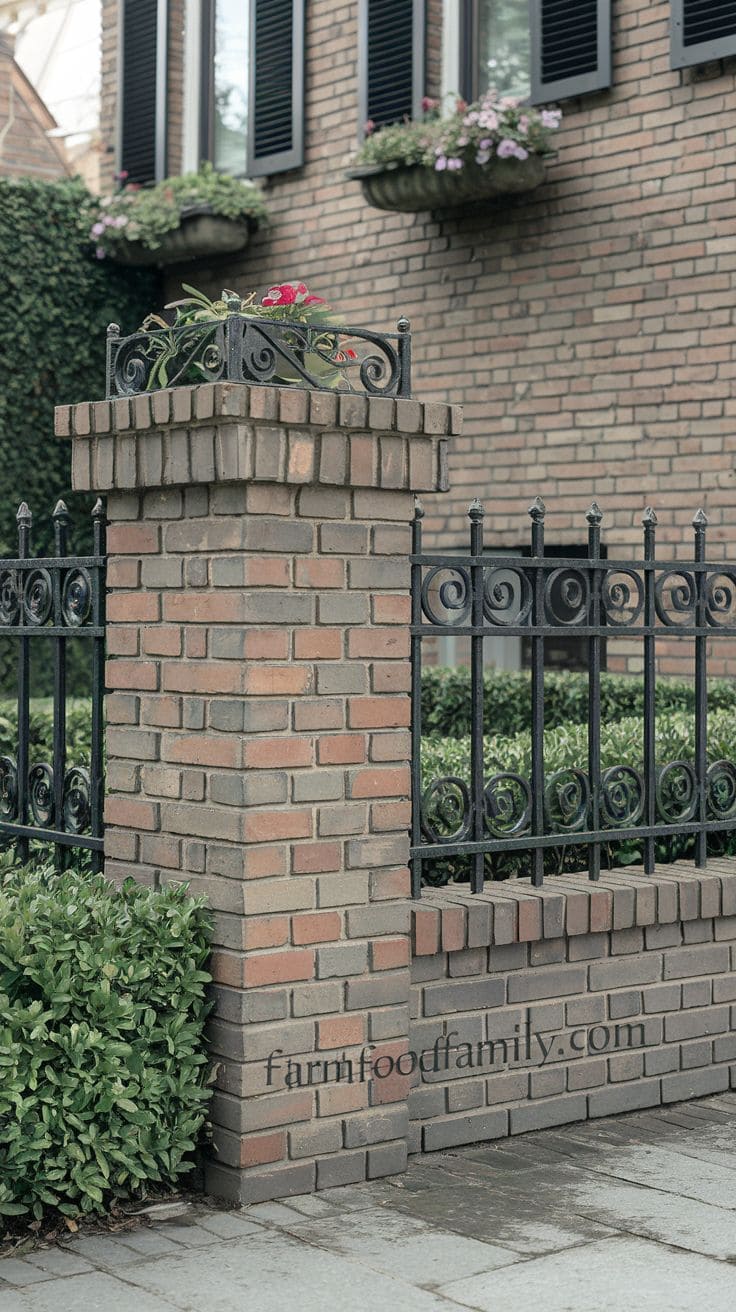
4. Decorative finials on short black metal fencing
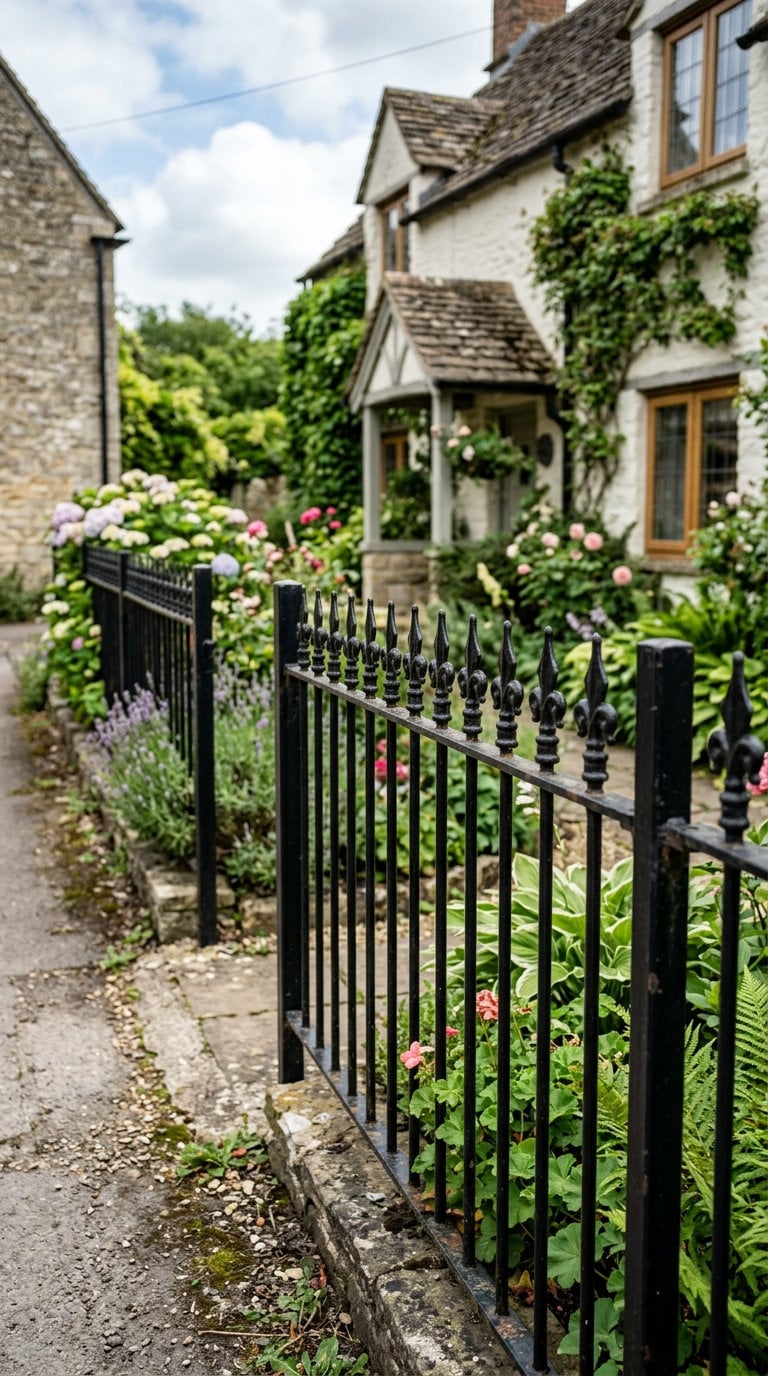
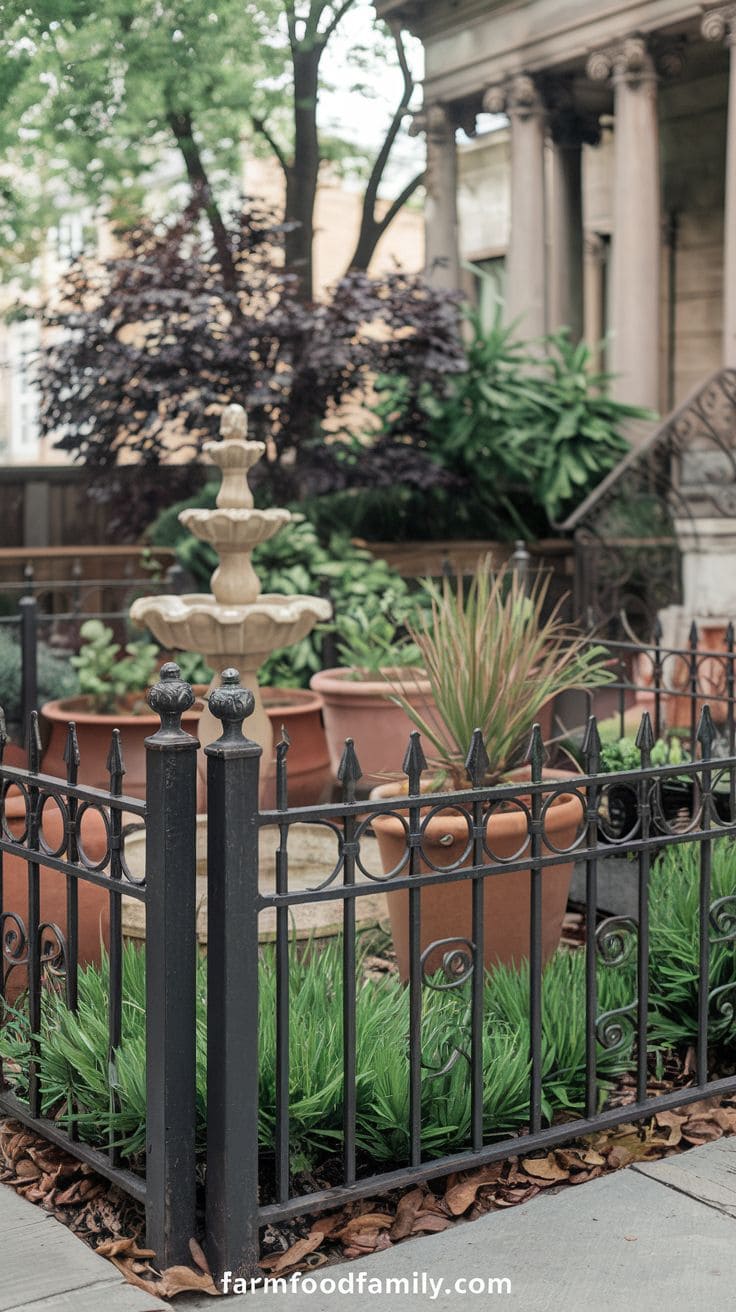
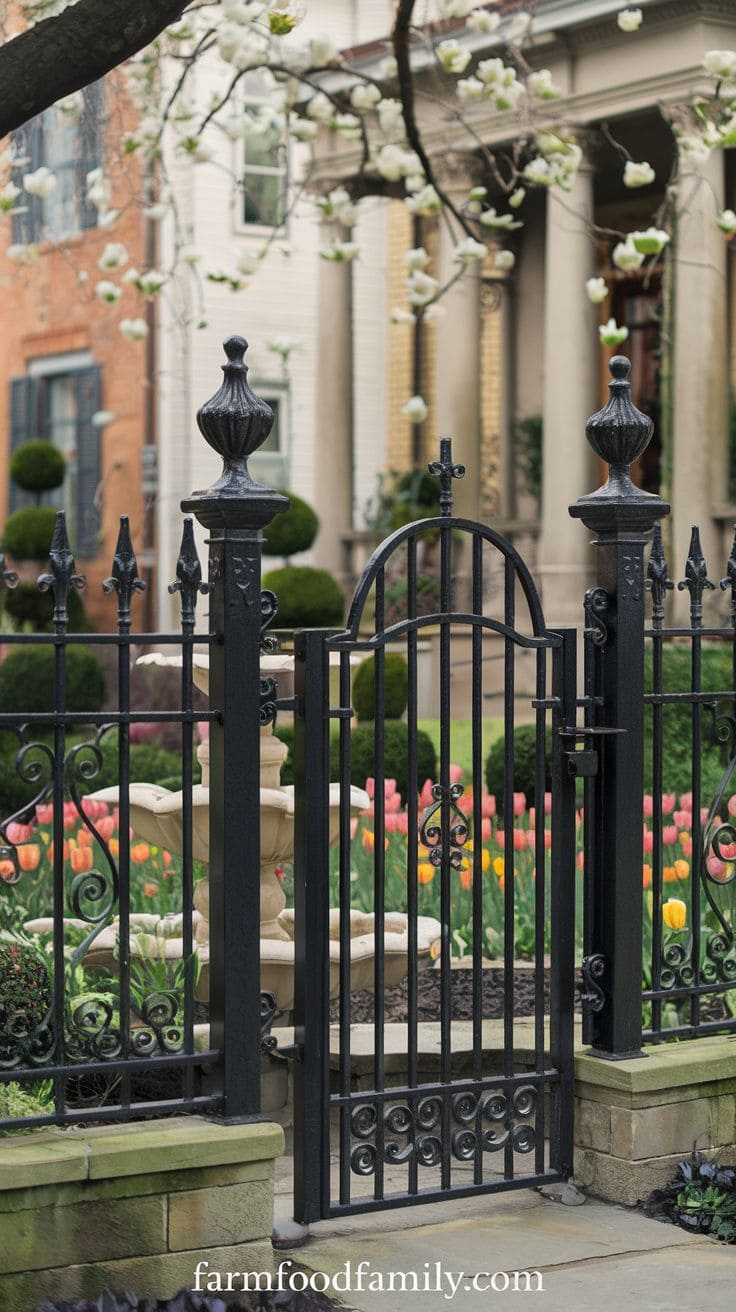
Ornamental finials, arrow tips, spearpoints, or ball caps, at the top of black metal pickets dress up an otherwise plain metal fence without adding real height. This works well specifically because the decorative element sits above the functional fence line rather than extending it.
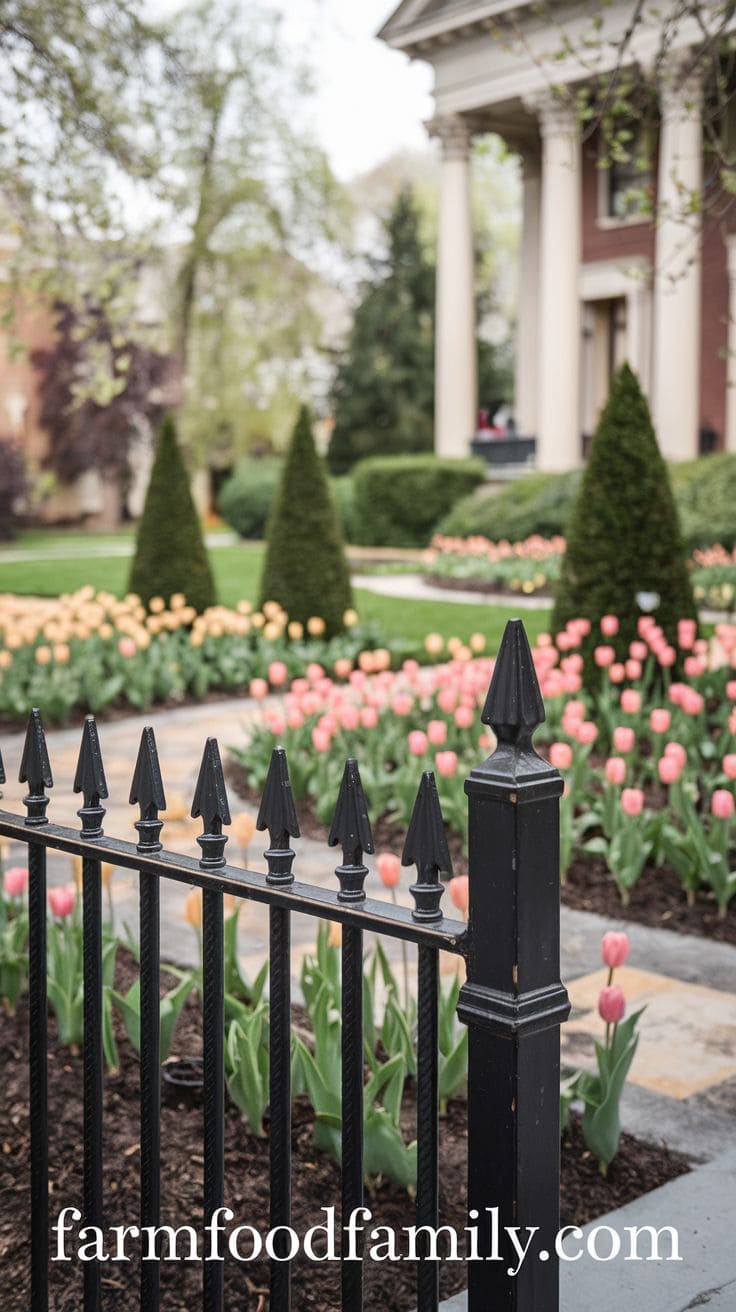
If you prefer a more formal appearance, a short metal fence with finials or scrollwork is an exquisite way to define your territory. These iron or aluminum fences, commonly used to border historic homes or city front yards, add sophistication even at a low height.
They are matte black and form a dramatic visual frame around your scene while yet allowing views through their bars.
For a very polished appearance, place them around walkways, entry gardens, or around a fountain or statue.
Though they do not give seclusion, these short fences are ideal for keeping pets in or establishing boundaries without blocking the view. Furthermore, they are simple to maintain and can survive for years with little care.
5. Decorative lattice fence for a flower garden
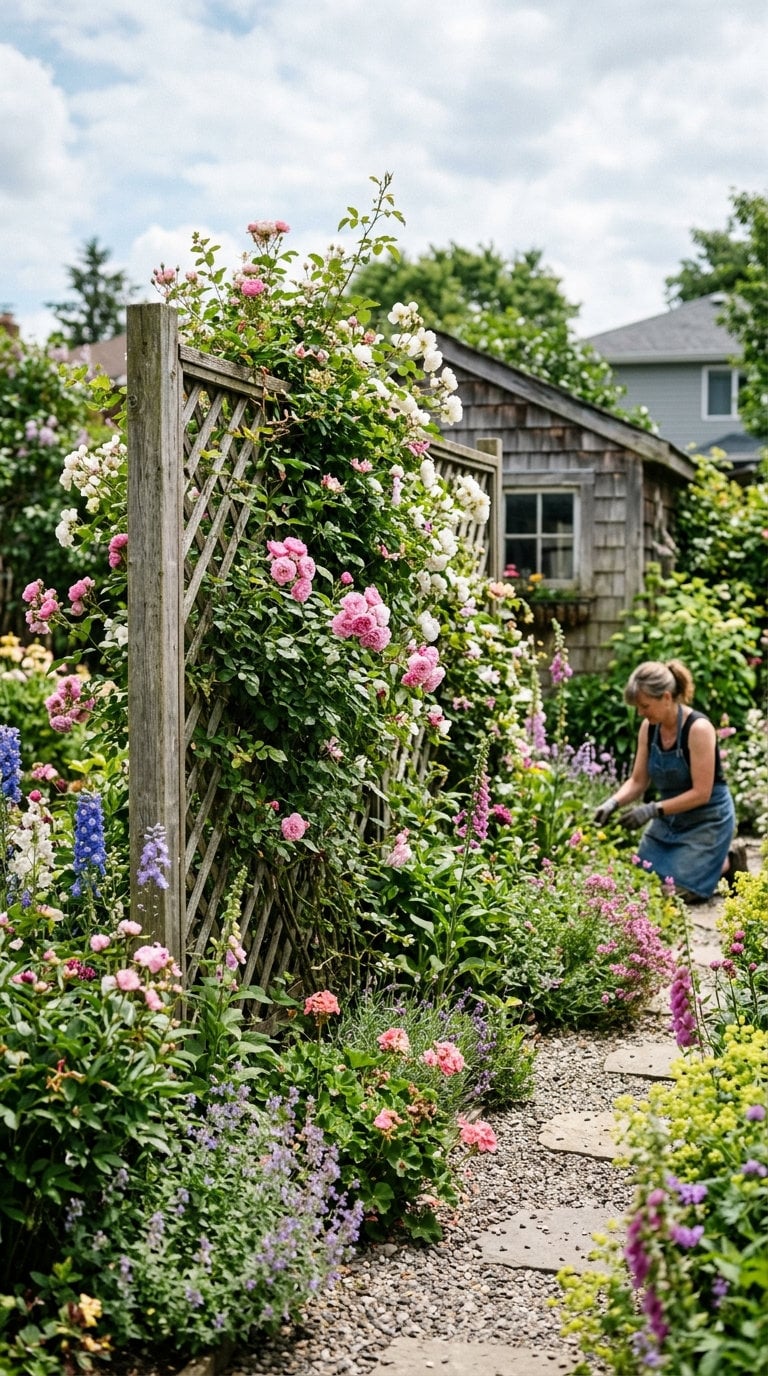
A lattice panel fence at garden-bed height gives climbing plants something to grow on while marking the bed’s edge, more a planting structure than a real boundary fence. Pair it with roses or clematis for a design that fills in and softens over a season or two.
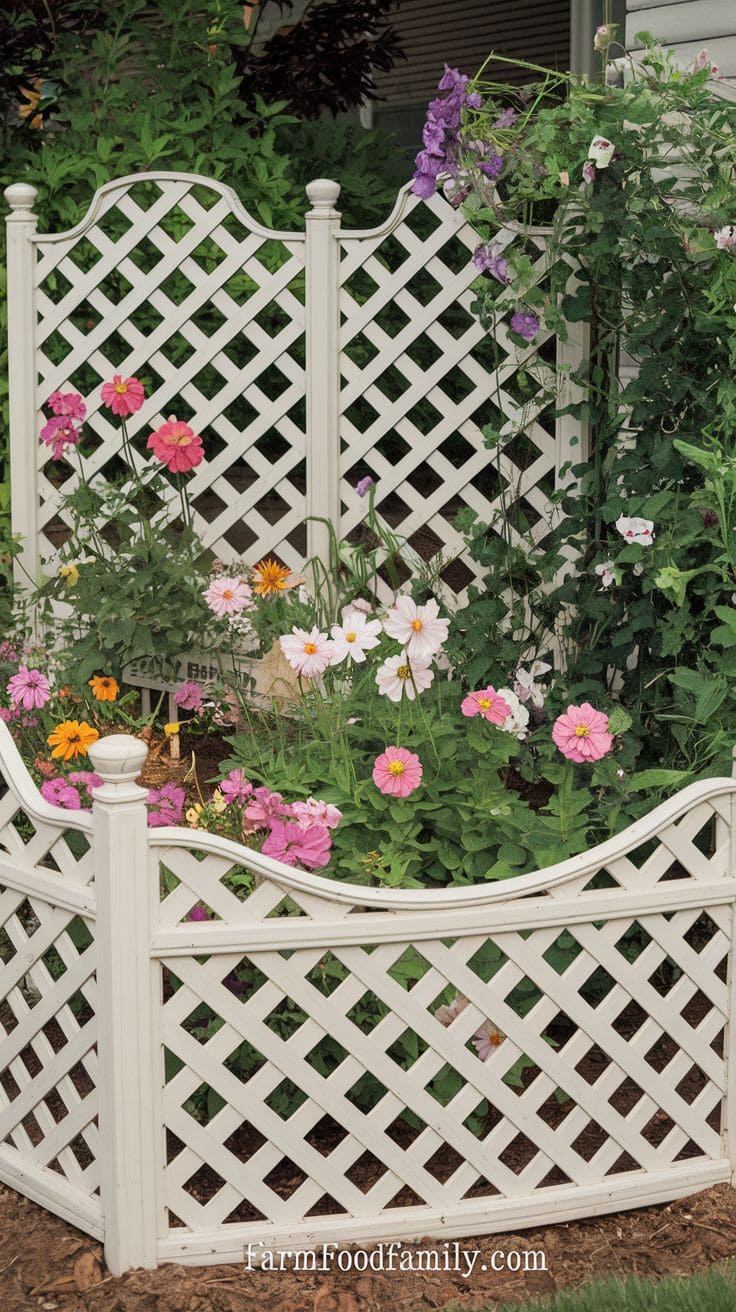
Lattice panels create an airy yet structured small fence, particularly when combined with colorful plant beds. You may complement the aesthetic of your yard or home by using white, natural wood, or even painted hues.
They are lightweight, affordable, and visually open, making them ideal for displaying flowers while also delineating space.
You can add climbing plants like morning glories or sweet peas for seasonal drama, or leave them alone to frame the vista.
These fences are normally 2-3 feet tall and can be configured in curved or straight lines based on the garden arrangement.
A lattice fence adds elegance and adaptability to your landscape while providing just enough enclosure.
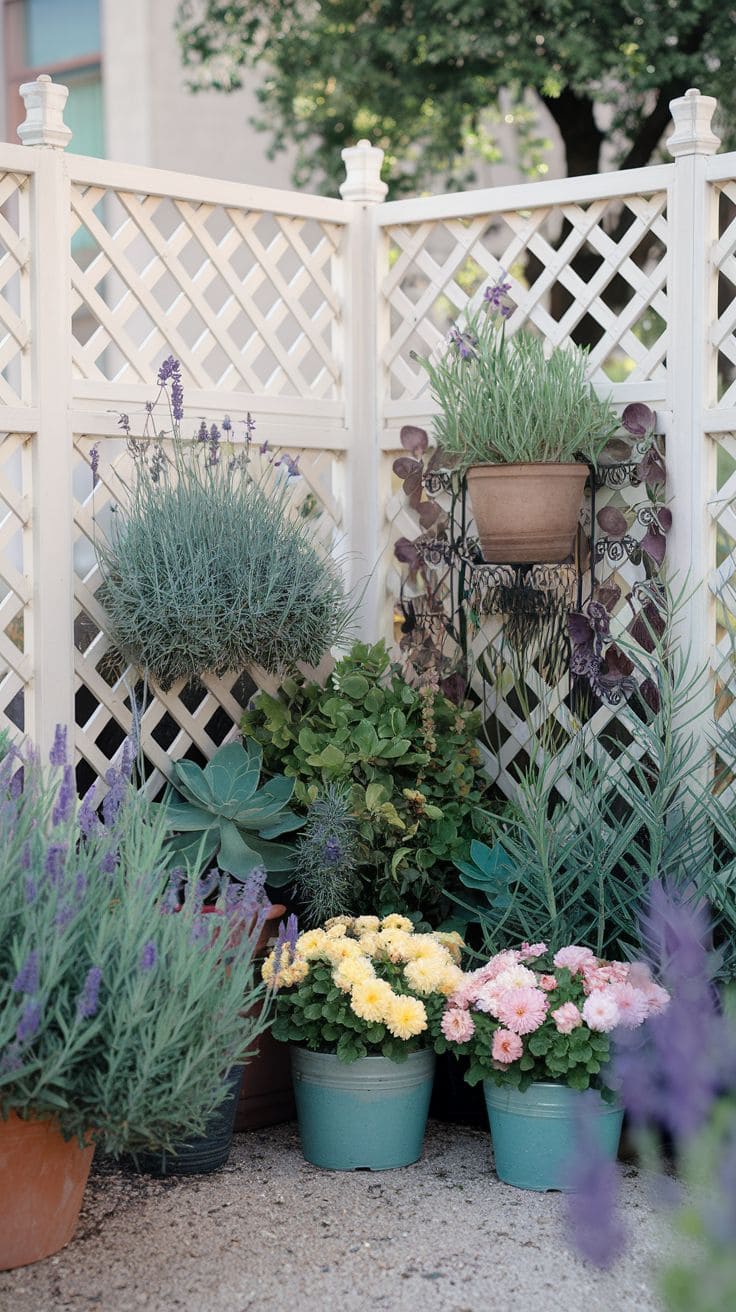
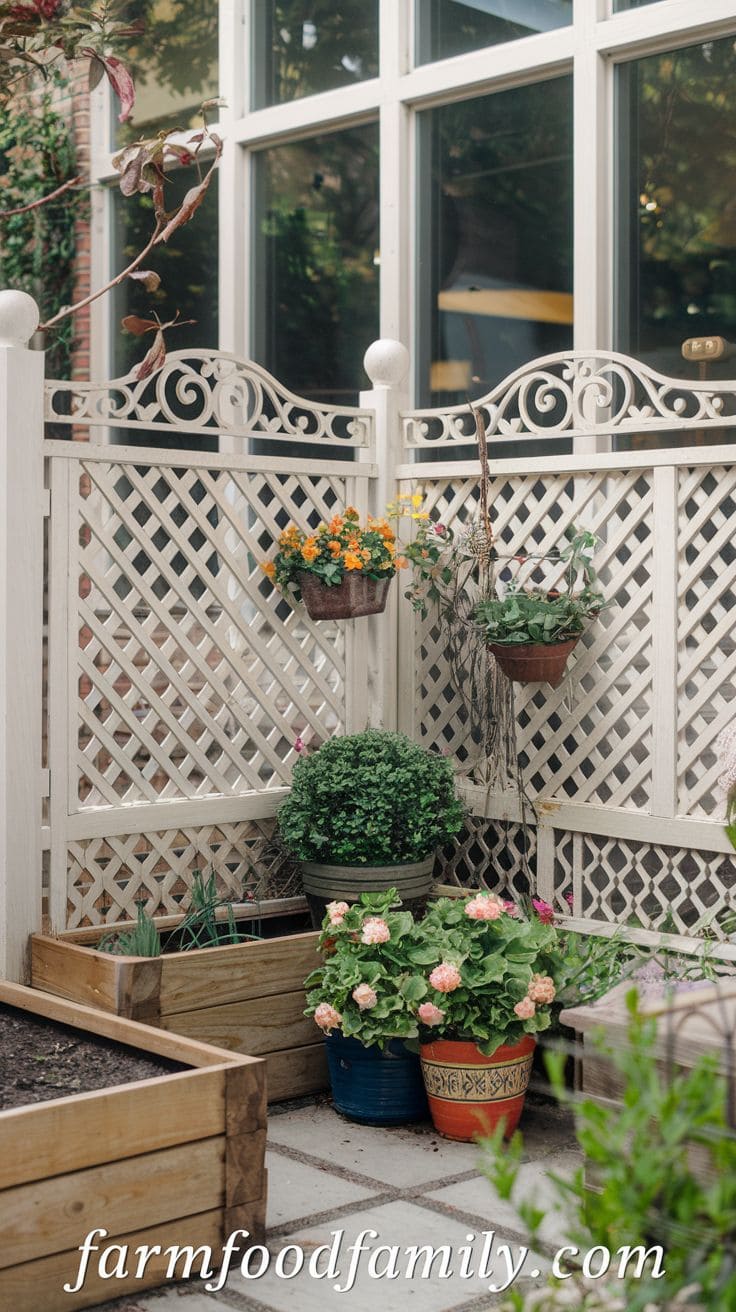
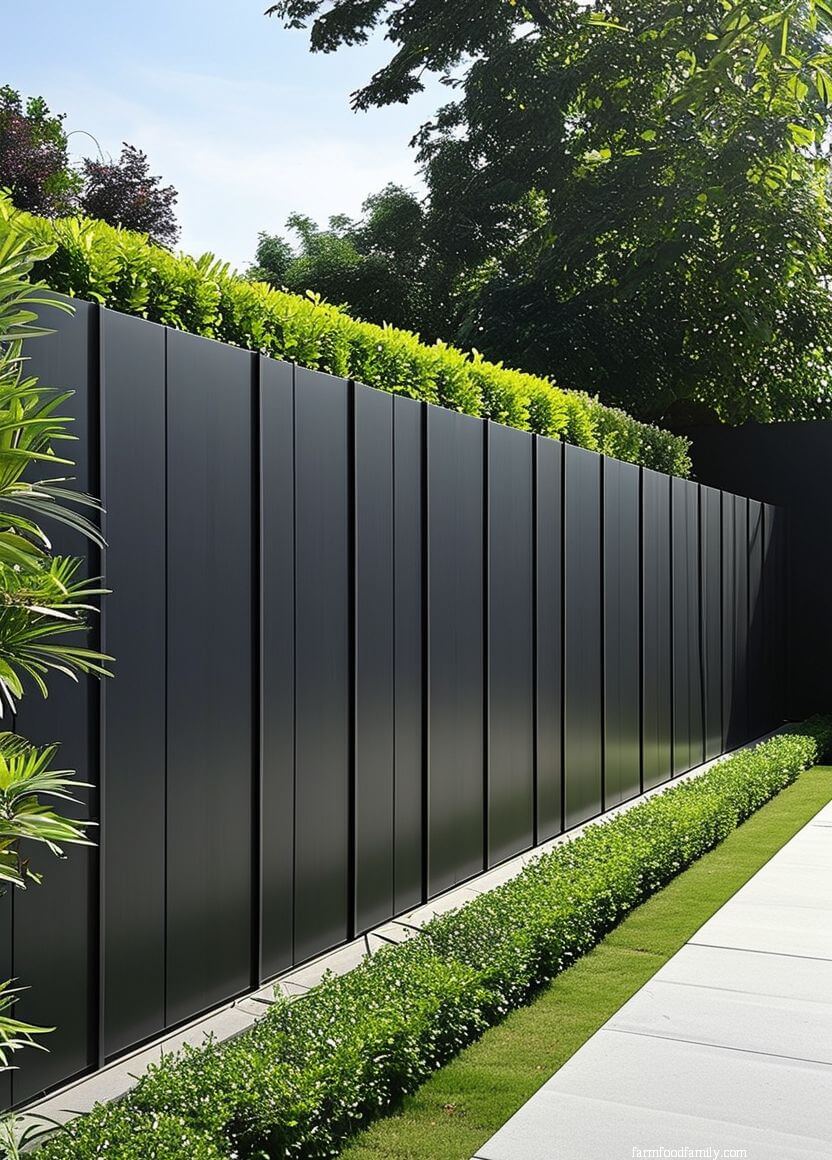
6. Modern metal panels
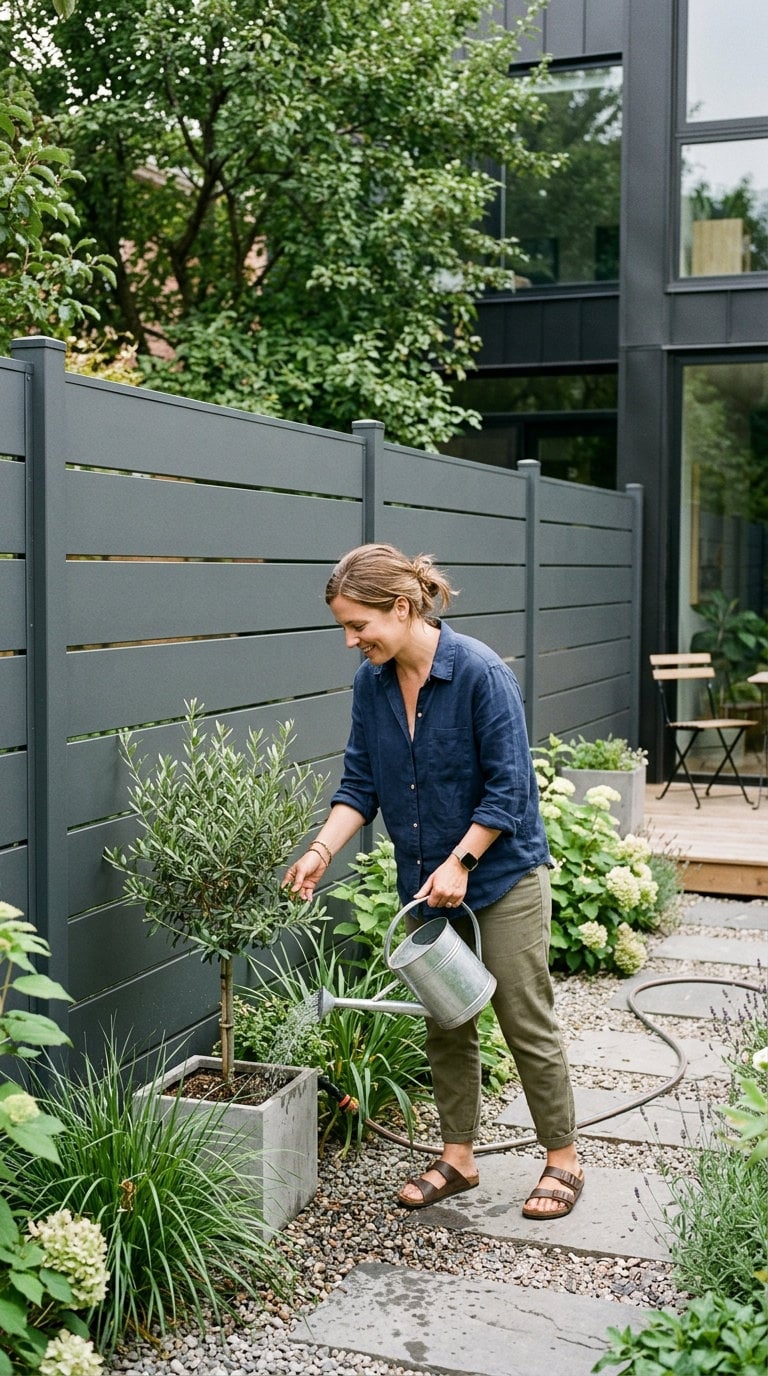
Flat, powder-coated metal panels in a low horizontal run read as clean and contemporary, a good fit for a modern or minimalist home exterior where a traditional picket style would clash.
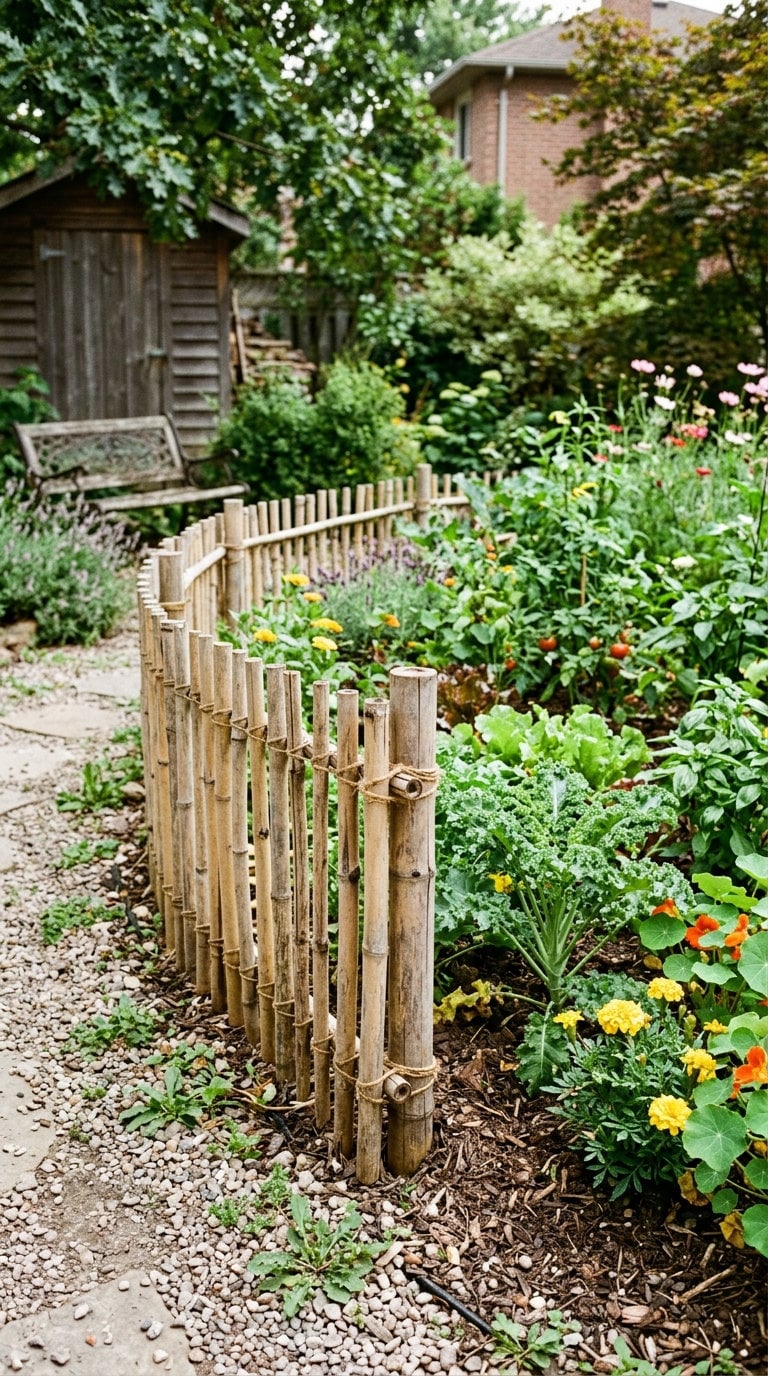
7. Bamboo sticks
Natural bamboo poles wired or lashed together in a short run bring an organic, low-cost texture, and work especially well as a low border for a garden bed rather than a full yard boundary.
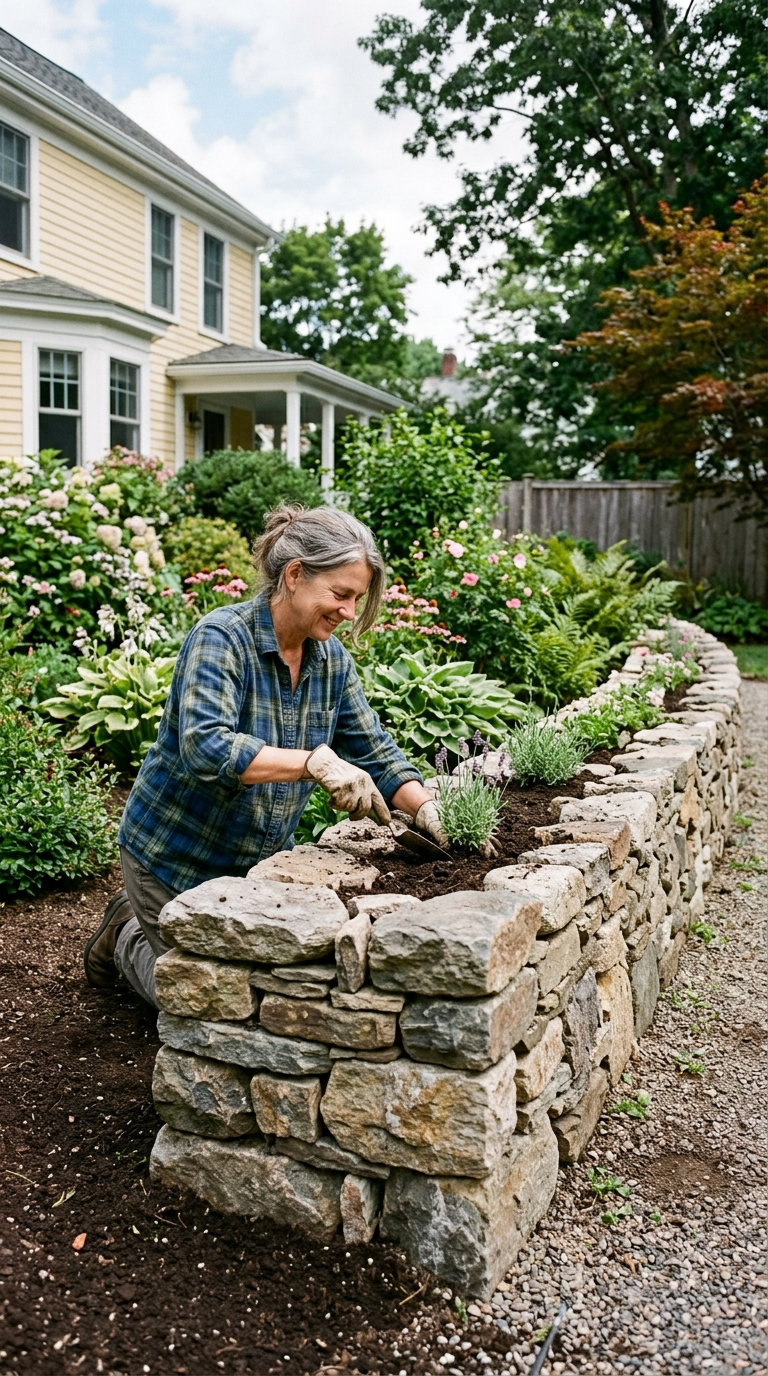
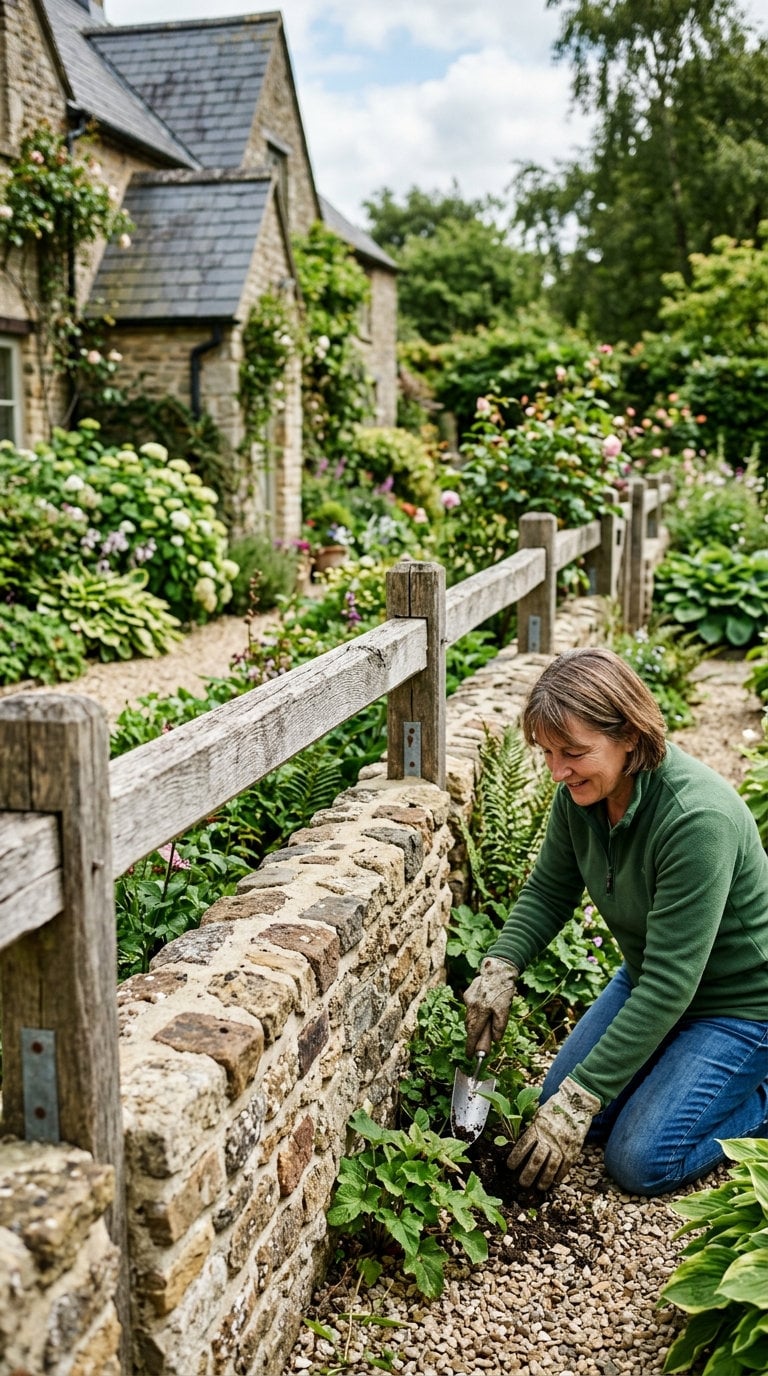
8. Stone wall
A dry-stacked or mortared low stone wall gives the most permanent, substantial option on this list at a modest height, functions more like a garden wall than a fence, and needs no maintenance cycle the way wood does.
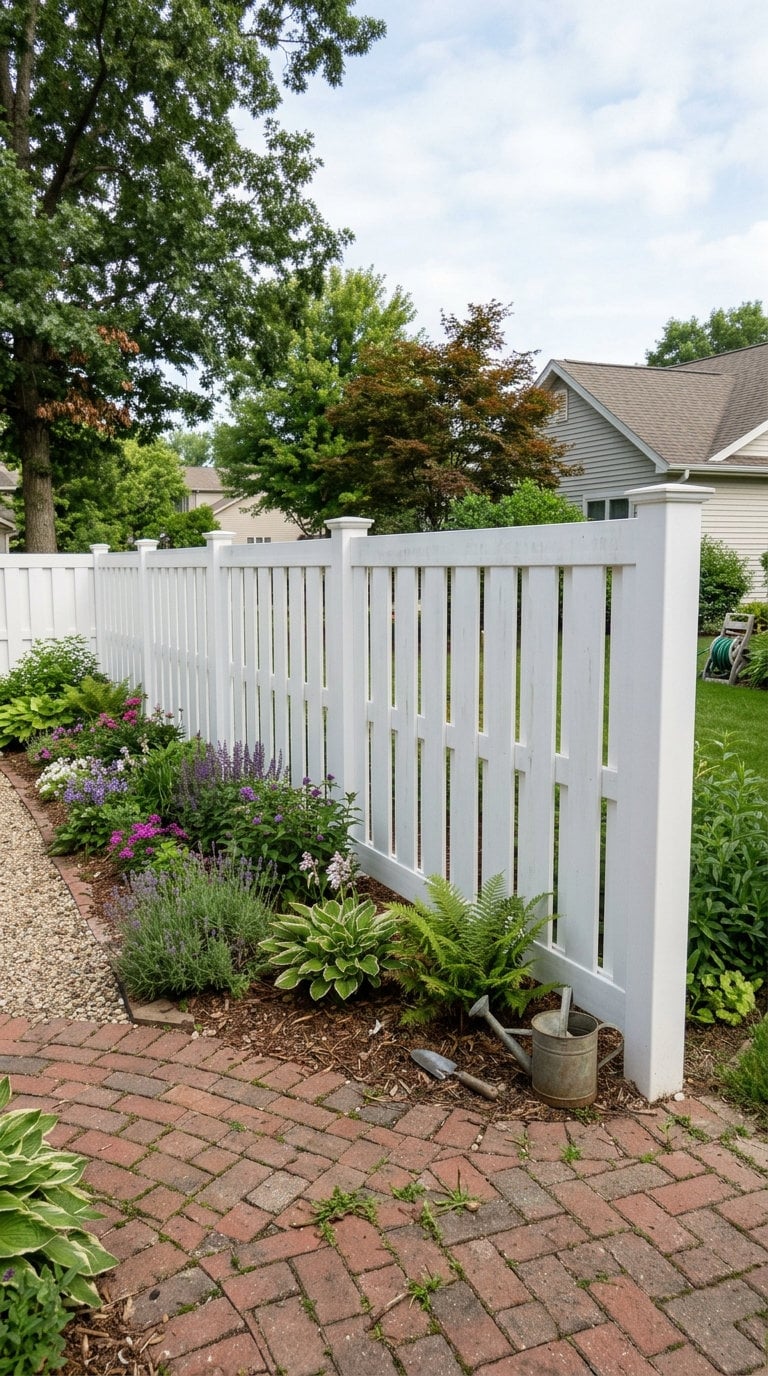
9. Vinyl Shadowbox
Shadowbox construction alternates boards on either side of the rail, giving a finished look from both sides of the fence, a detail worth having at a height where the fence is viewed from both the yard and the street equally.
10. Pallet Fence
Reclaimed pallet wood, cut down and reassembled at a low height, gives a budget, rustic look and keeps usable wood out of a landfill. Check pallets for chemical treatment markings before using them anywhere near edible garden plants.
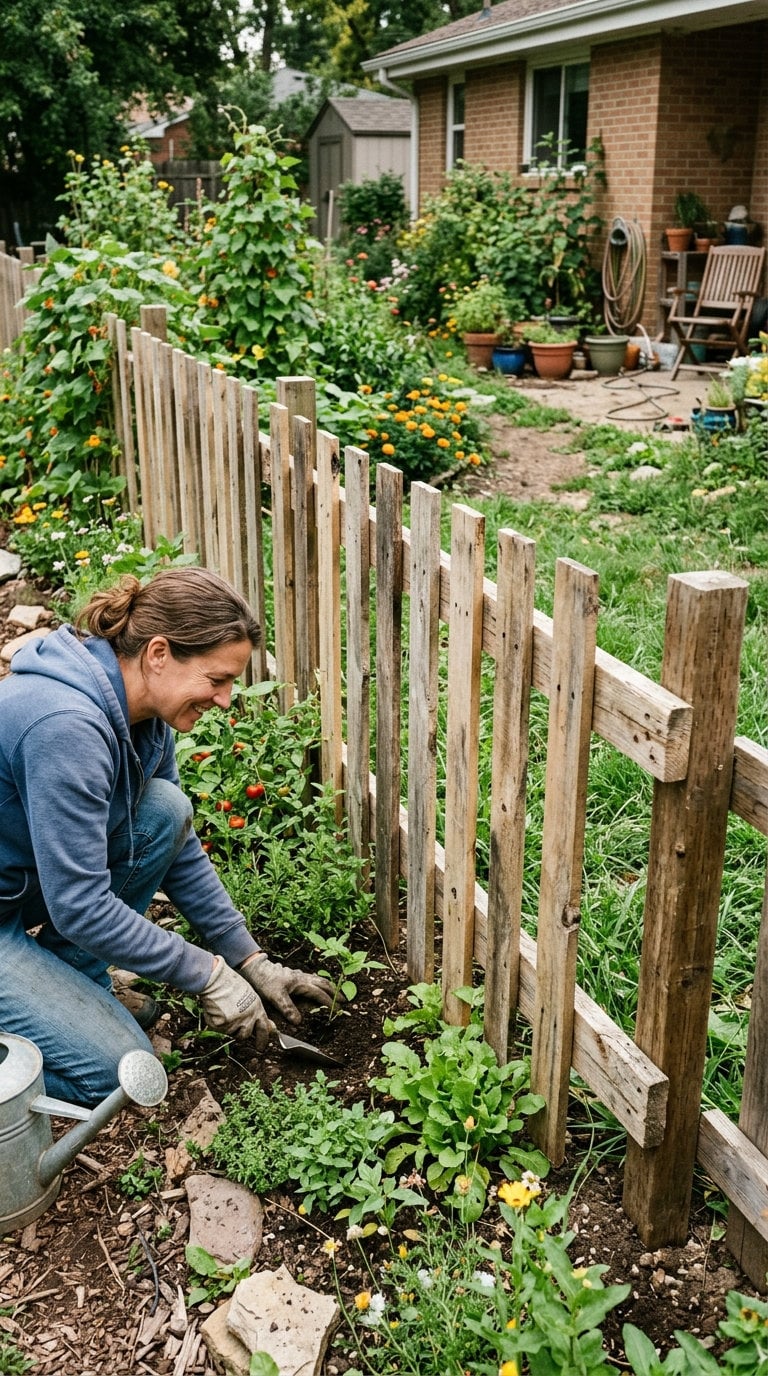
11. Horizontal slats
Thin horizontal boards with small gaps between them read as more modern than a standard picket design, and at a short height work well as a garden bed border that still lets light and air through.
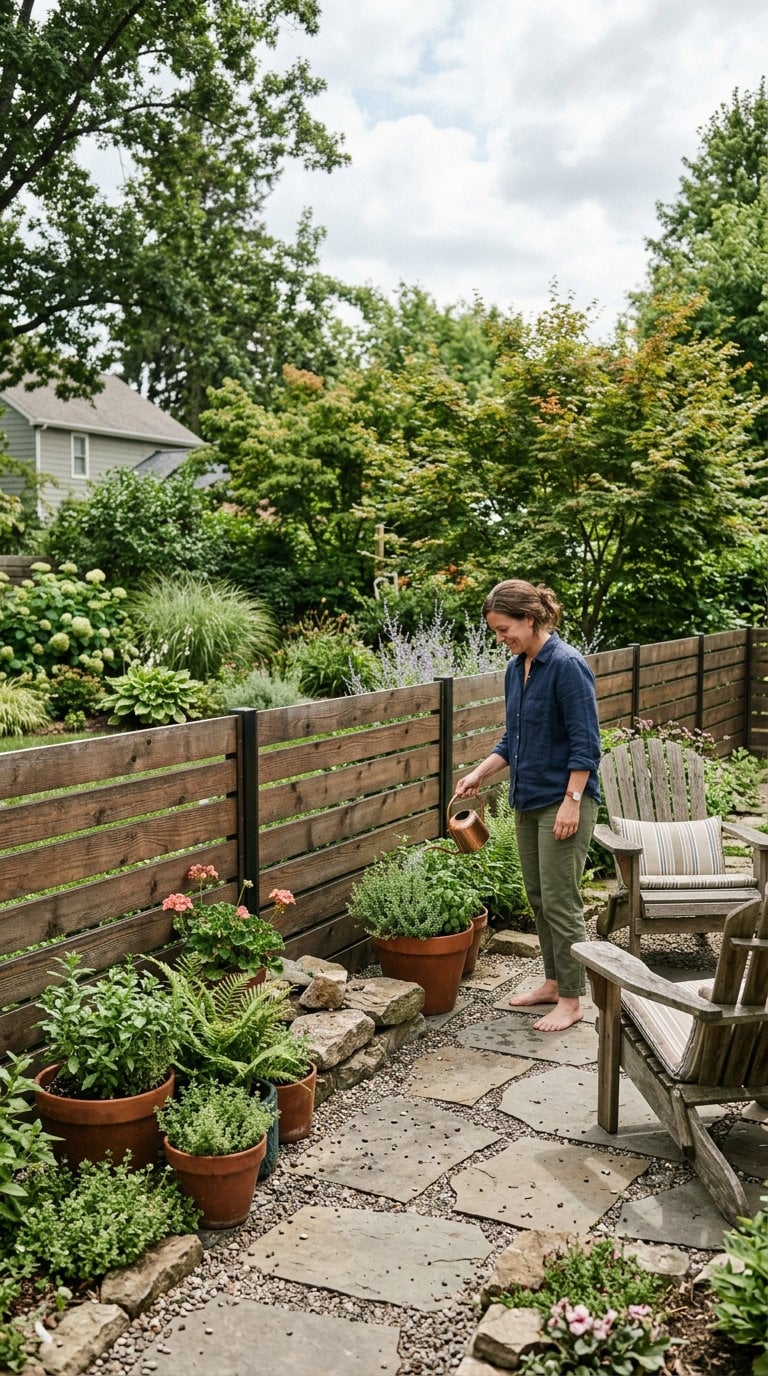
12. Corrugated metal
Corrugated metal panels at a low height bring an industrial or modern-farmhouse texture, and hold up to weather with very little maintenance compared to wood at the same height.
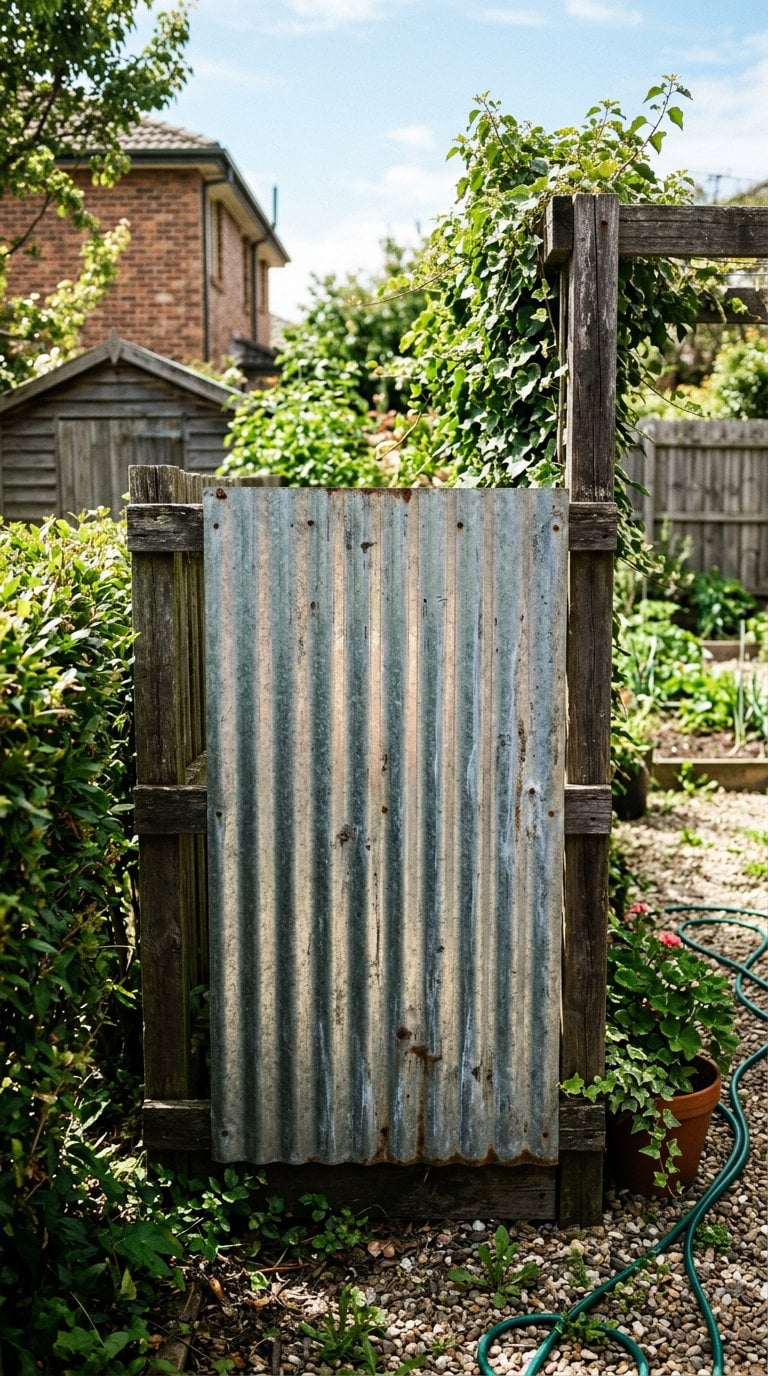
14. Garden Mesh
Wire or metal mesh at a low height keeps small pests or rabbits out of a garden bed without visually blocking the plants behind it, function over form, but genuinely functional for that specific job.

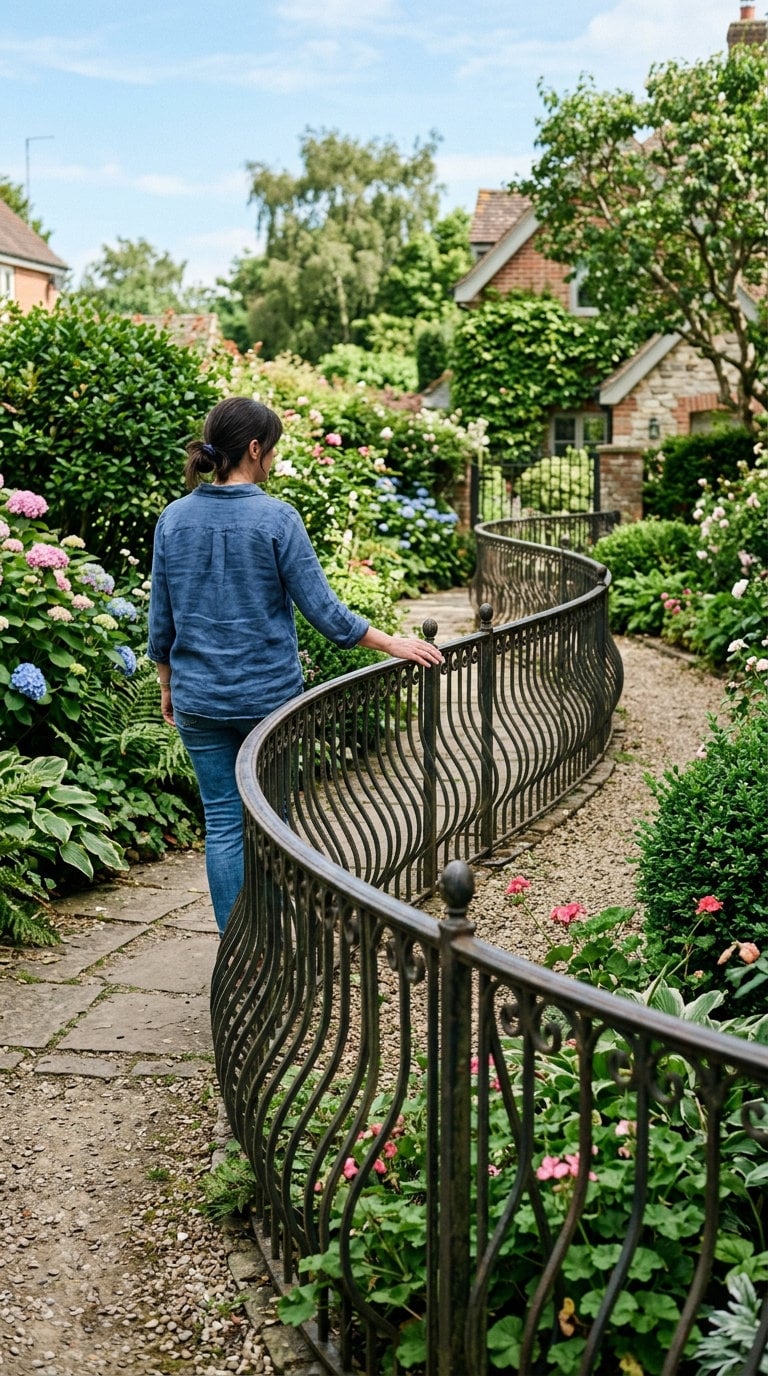
15. Curved Metal Bars
Metal bars bent into a gentle arc rather than run in a straight line give a short fence visual interest without adding height, useful for softening a straight-line boundary along a curved walkway or bed edge.
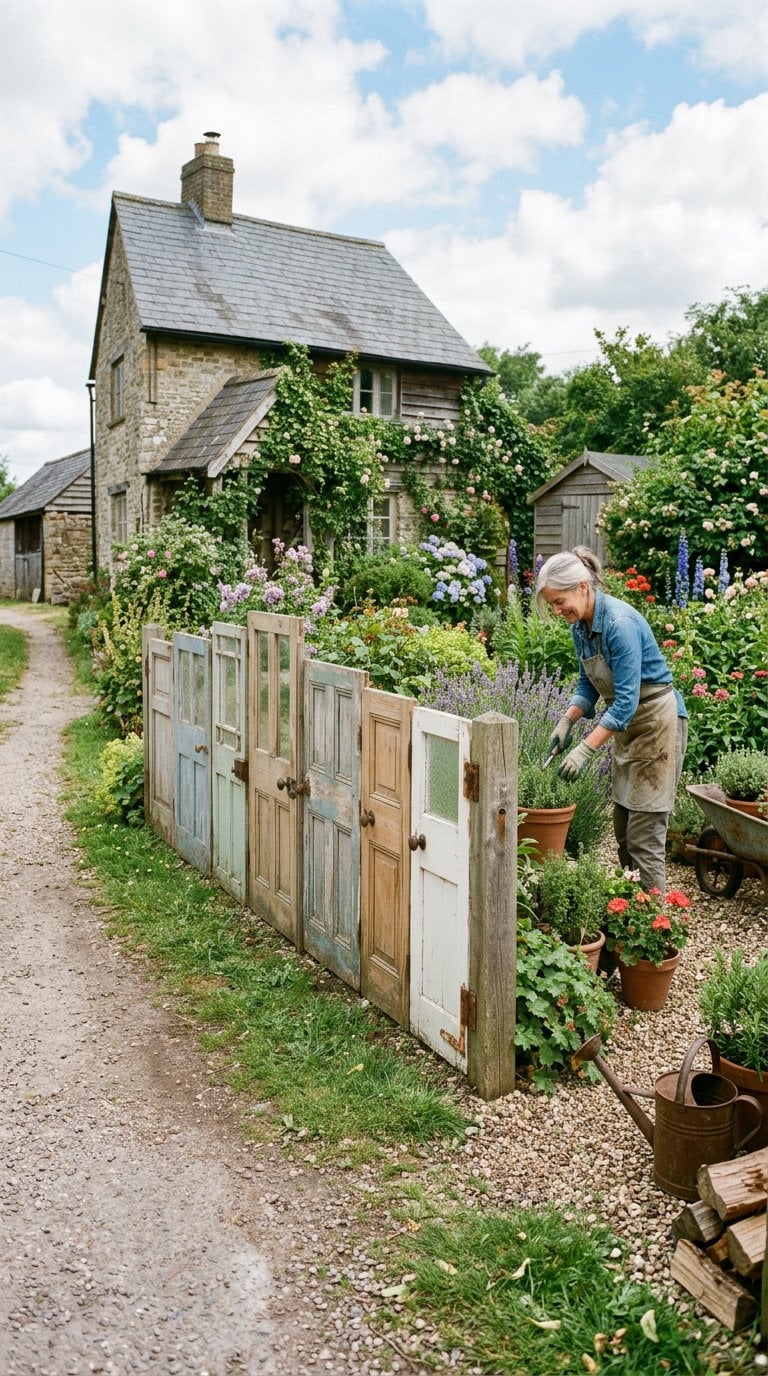
16. Repurposed doors
Old doors set on their sides or upright as short fence panels give a genuinely unique, salvage-style look, best suited to an informal or eclectic garden rather than a front-facing formal yard.
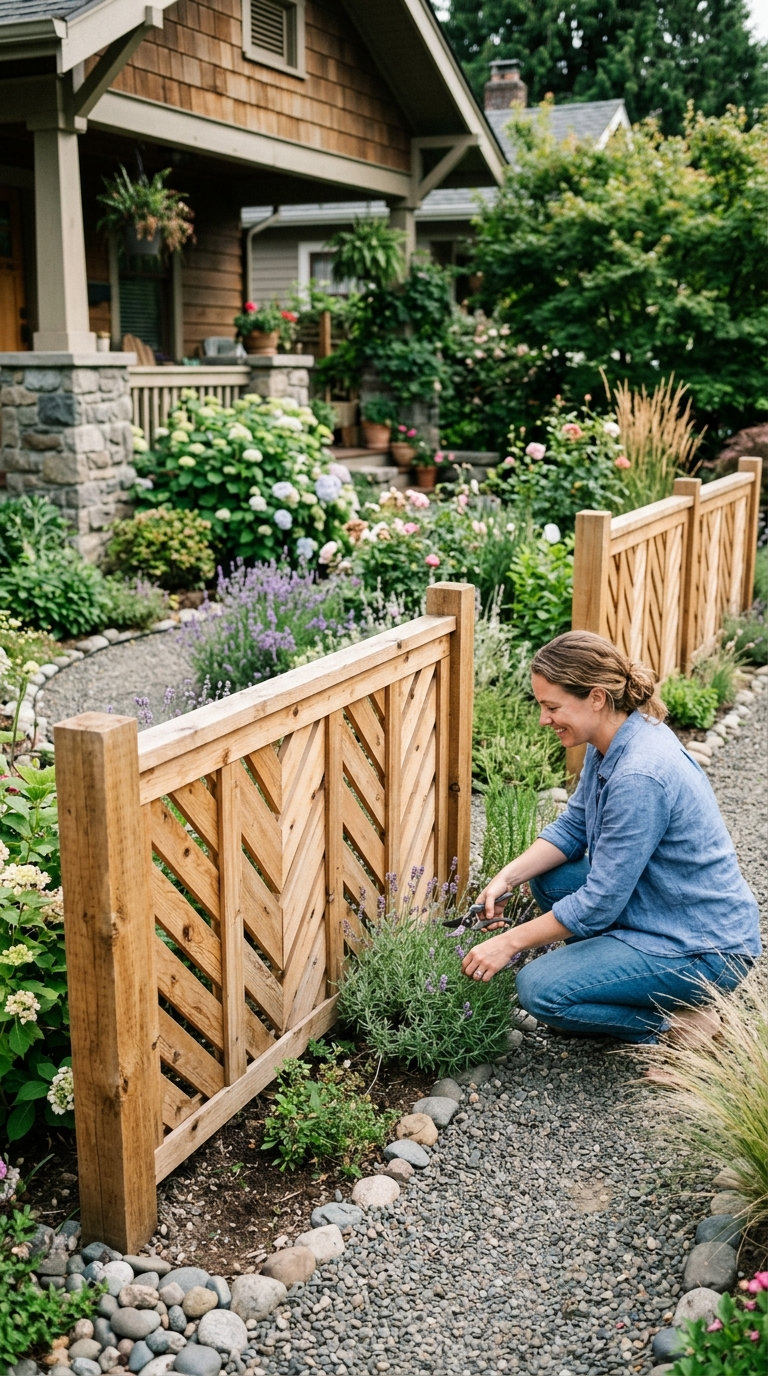
17. Geometric wooden fence
Angled or geometric wood patterns (chevron, diamond cutouts) turn a short fence into a design feature rather than a plain boundary line, most effective as an accent section rather than a full yard perimeter.
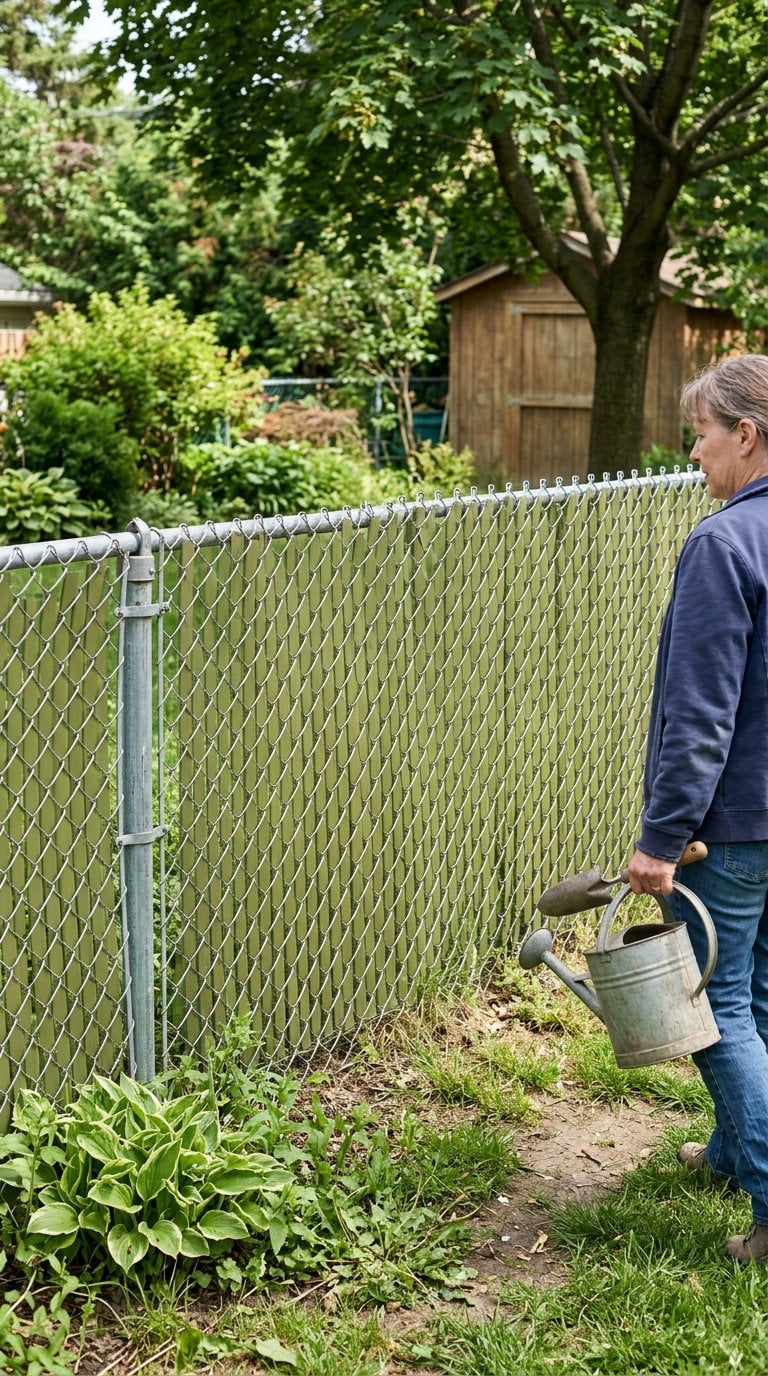
18. Chain link with privacy slats
Woven privacy slats through standard chain link add a partial screen at a low height, a budget way to get some visual privacy without the cost of a solid fence, though slats don’t fully block sightlines the way a solid panel would.
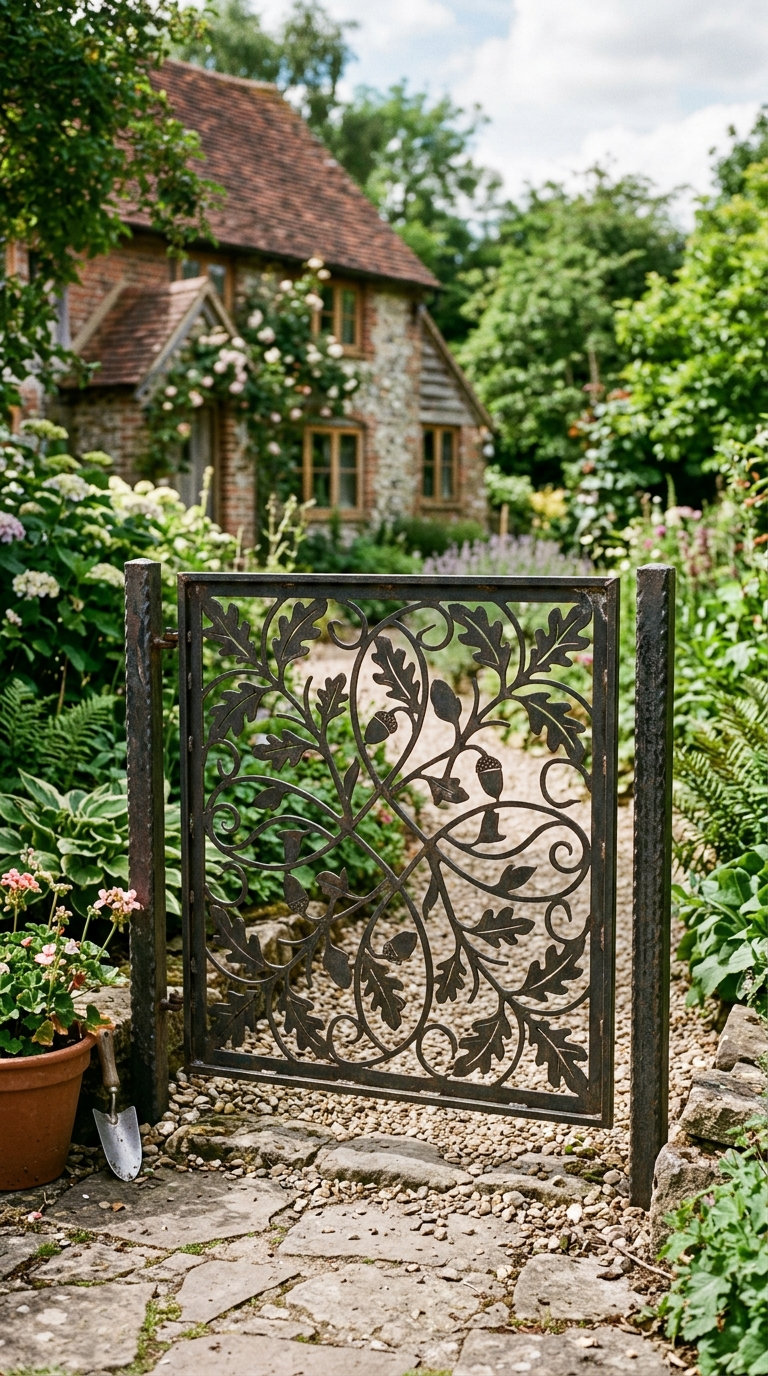
19. Cut-out metal designs
Laser-cut or plasma-cut metal panels with decorative patterns (leaves, geometric shapes, silhouettes) give a short fence a genuinely artistic focal point, more expensive than plain panels but distinctive in a way flat metal isn’t.
20. Cobblestone and wood
Combining a low cobblestone base with a wood picket or rail top on it mixes material textures in one run, similar logic to the brick-and-iron idea above but with a more rustic, textured base material.
21. Acrylic panels
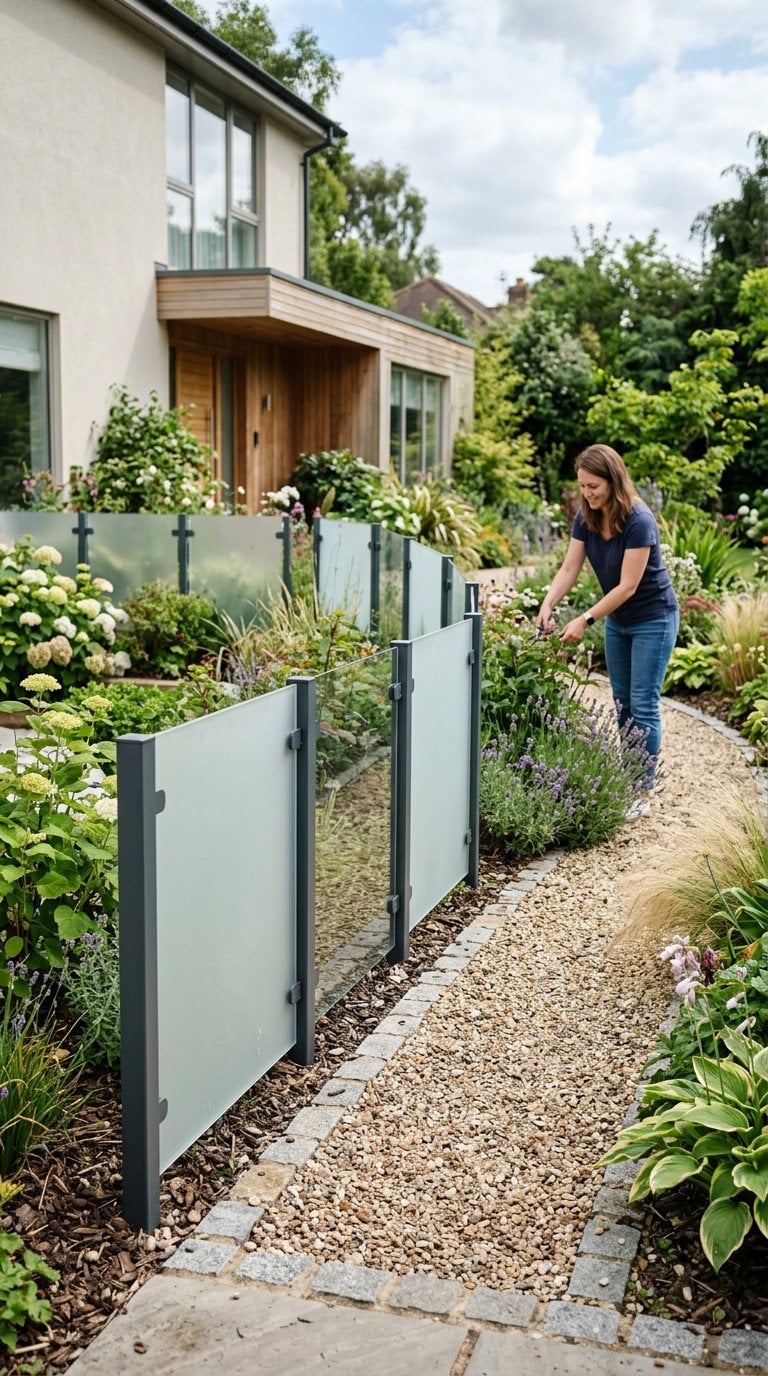
Clear or frosted acrylic panels at a low height mark a boundary without blocking any view at all, an unusual but genuinely modern option for a spot where you want a defined edge with zero visual obstruction.
A few more things worth planning around
For the color side of this decision, black fence ideas covers the maintenance and HOA considerations specific to dark-toned fencing, useful if you’re picking a finish alongside the height decisions covered here. Corrugated metal fences: pros and cons goes deeper on that specific material if idea 13 caught your eye. If your property includes a corner lot, corner fence ideas covers the visibility-triangle point from section 1 in more depth. And for material selection more broadly, cedar fence ideas is worth a look.
FAQs
How tall can my front-yard fence legally be?
It varies by municipality, but a common range caps front-yard fences at 3 to 4 feet while allowing 6 feet or more in backyards. Corner lots often add a stricter visibility-triangle rule on top of the general cap, roughly 3 feet within 25 to 46 feet of the corner. Check your local building department and HOA covenant, since when the two disagree, the stricter rule applies.
Will a short fence actually keep my dog in the yard?
It depends heavily on the dog. Fence height should run roughly twice a dog’s shoulder height to actually contain it, small breeds need about 3 to 4 feet, medium breeds 4 to 5, large or athletic breeds 5 to 6 feet or more. A fence under 4 feet is a boundary marker for most dogs, not real containment, unless the dog is small or genuinely low-energy.
Do I need a survey before installing a short decorative fence?
Not legally required in most places, but it’s real cheap insurance. A professional survey typically costs $330 to $670, and property line disputes happen often even over purely decorative fences, since most people build off memory or an old marker rather than a current survey. Mediating with the neighbor first is the recommended step before anything legal if a dispute does come up.
Conclusion
Short fences prove that you don’t need height to make a big impact. With the right design, materials, and a touch of creativity, these compact boundaries can add personality, charm, and structure to any outdoor space.
Short fences deliver style and substance without ever feeling closed off. If this list helped you, leave a comment and make sure to share it with family and friends!
Never miss an update — choose FarmFoodFamily as your preferred source on Google.
How it works: Tap the button below to open Google's settings page, then check the box next to FarmFoodFamily.
Tap the checkbox to turn it blue — that's how you know it's set.