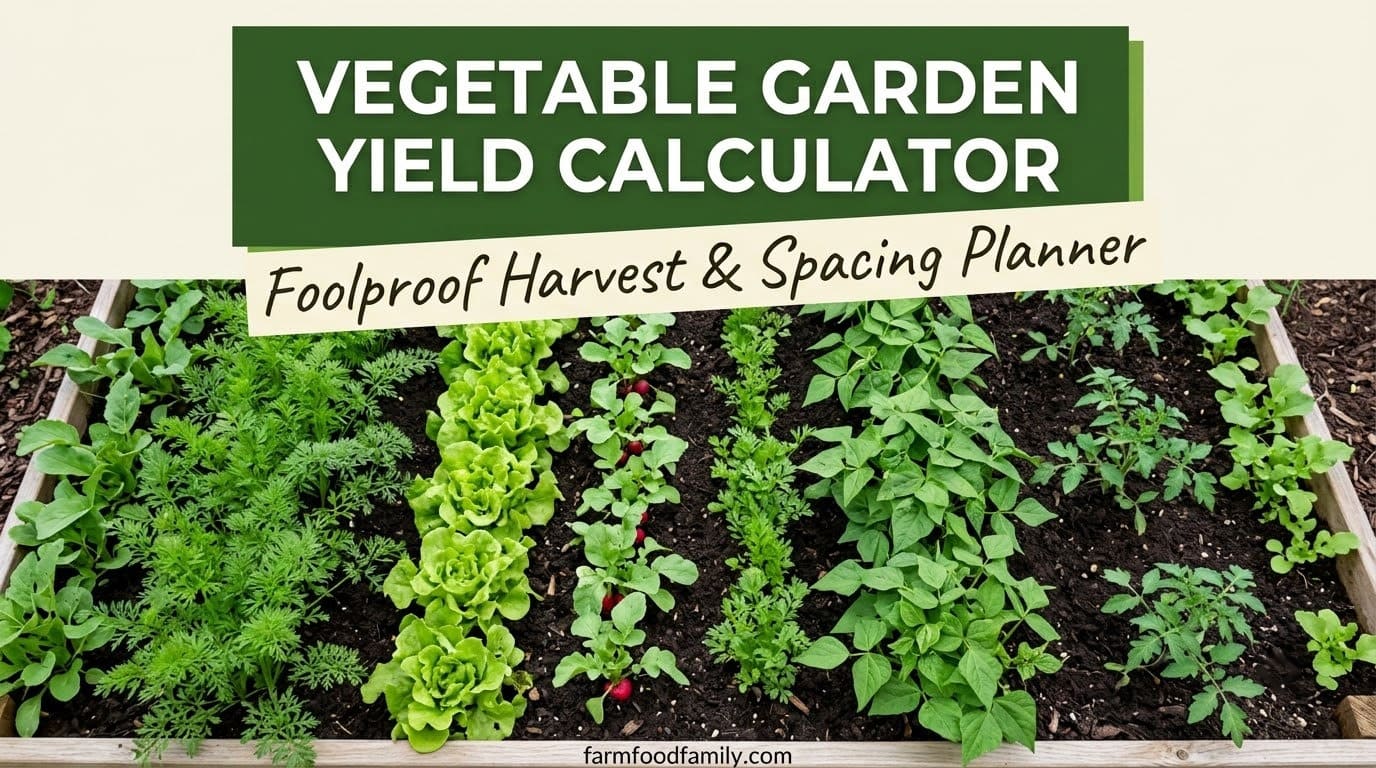
Vegetable Garden Yield Calculator: Foolproof Harvest & Spacing Planner
Find out exactly how many plants to grow and how much food they’ll actually produce, before you buy a single seed packet.

Never miss an update — choose FarmFoodFamily as your preferred source on Google.
How it works: Tap the button below to open Google’s settings page, then check the box next to FarmFoodFamily.
Tap the checkbox to turn it blue — that’s how you know it’s set.
A vegetable garden yield calculator estimates how much food you’ll harvest by combining three things: how many plants fit in your space, how much each plant typically produces, and a realistic loss factor for pests, weather, and imperfect germination.
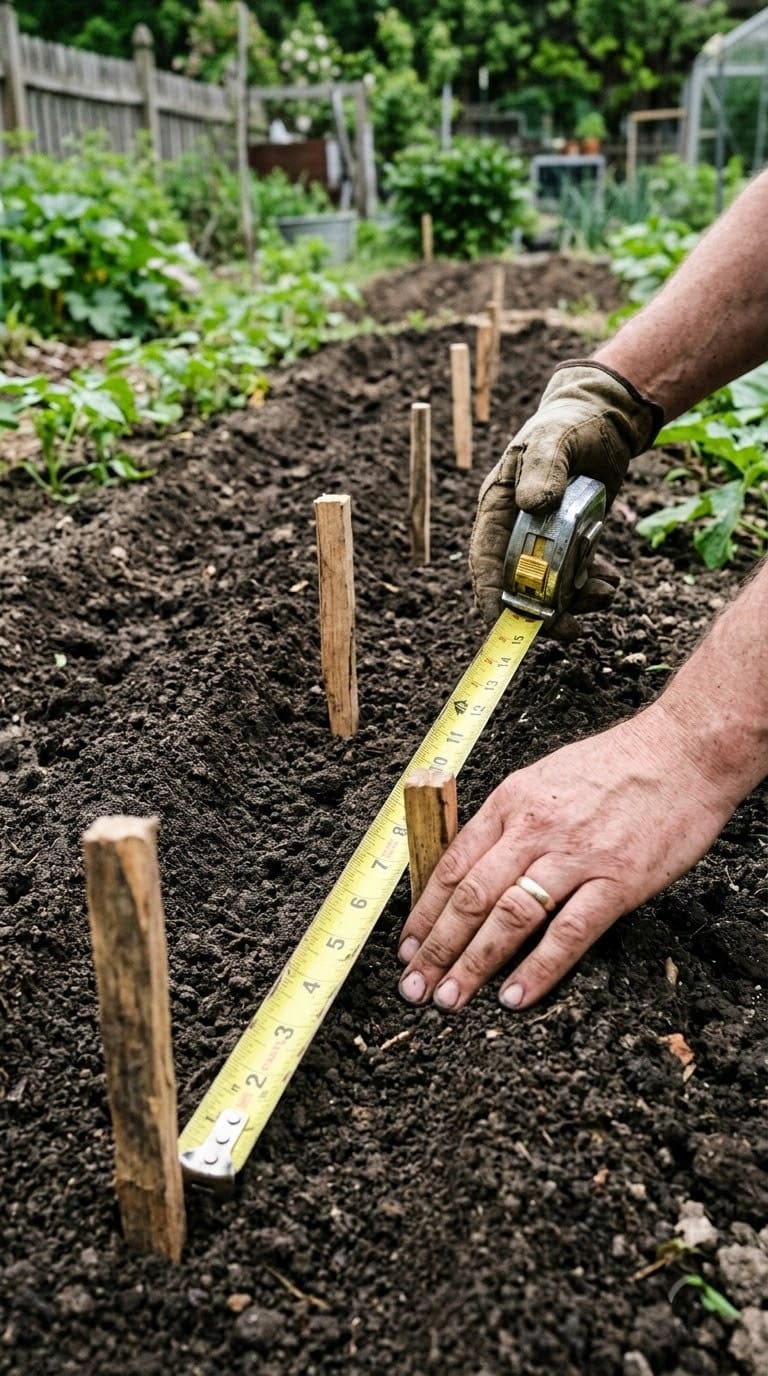
For row gardens, spacing usually runs 12 to 60 inches between rows depending on the crop, with 6 to 48 inches between plants in the row. Square-foot gardening packs beds more tightly, from 1 plant per square foot for tomatoes down to 16 per square foot for carrots and radishes.
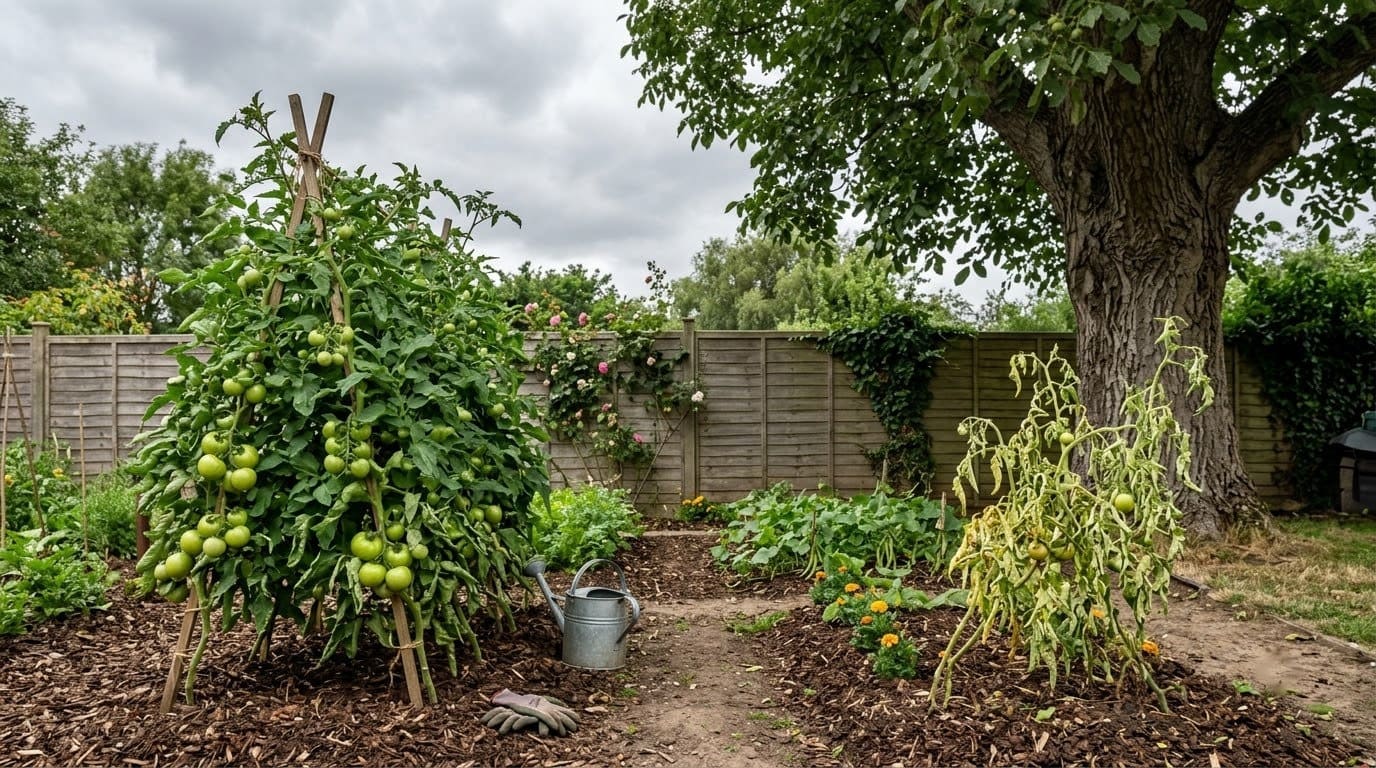
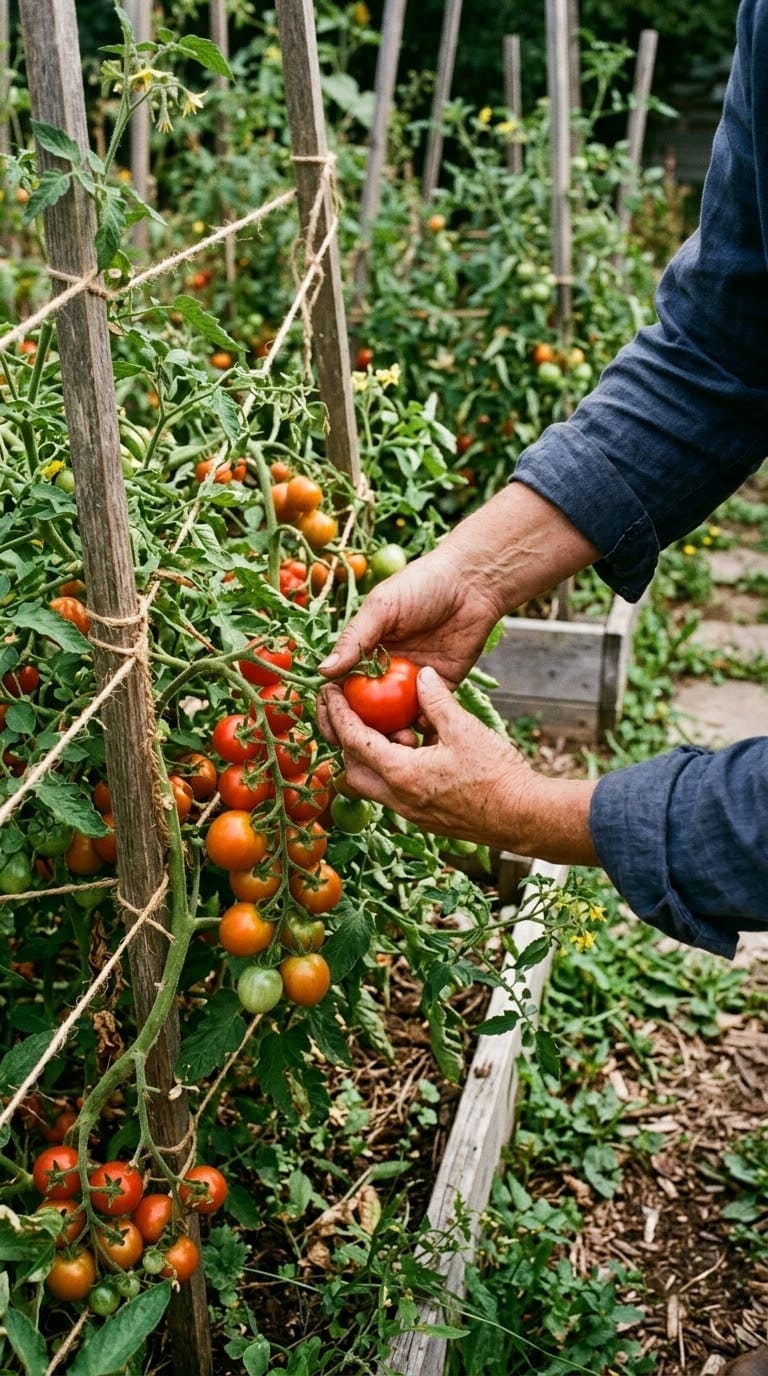
A single staked tomato plant can produce 10 to 20 pounds over a season, while one zucchini plant often produces enough for an entire household. Building in a 10 to 20 percent loss allowance, rather than assuming textbook-perfect yield, gives a far more trustworthy planting plan.
Vegetable Garden Yield Calculator
Add every crop you’re planting, choose row spacing or square-foot gardening for each, and get sourced yield, plant-count, and estimated-servings totals for your whole garden.
Garden Totals
| Crop | Plants | Yield | Days to maturity |
|---|
Servings use USDA Food Buying Guide per-pound data where available (converted to a standard 1-cup portion), and a general estimate of 2.5 servings per pound for crops without published USDA data. Crops harvested by count (ears, bulbs, bunches, fruit) are shown in their own unit and excluded from the servings total since they don’t convert to weight cleanly.
Spacing and yield-per-row data sourced from Cornell Cooperative Extension’s “Recommended Spacing and Expected Yield for Garden Vegetables in New York.” Days-to-maturity and planting-method data from University of Georgia Cooperative Extension Bulletin 577. Servings conversions derived from the USDA Food Buying Guide for Child Nutrition Programs. Crops marked “estimate” in the info line use industry-standard figures where no single university source was found (kale, basil, garlic days-to-maturity). This tool is an estimate, not a guarantee — actual yield depends on variety, soil, weather, and pest pressure.
Why Most Yield Estimates Fall Apart in the Real Garden
Most free planning tools stop at one number: plant count. They tell you how many tomato plants fit in a 4-by-8 bed and leave the rest to guesswork.
That gap is where overplanting happens. A gardener plants four zucchini because “more is better,” not realizing one healthy plant already produces more squash than most families can eat fresh.
Answer 4 quick questions and get matched to the exact fix for your yard — drainage, budget, layout, or something else entirely.
Take the Free QuizThe opposite mistake is just as common. Someone eyeballs a “family of four” garden, skips the math on vining crops like winter squash or pumpkins, and finds their pumpkin vines have swallowed the pepper bed by July.
This calculator ties spacing, per-plant yield, and a harvest-loss buffer together in one pass. You get a plant count and a pound (or count) total that accounts for the fact that gardens rarely perform at their theoretical best.
How the Yield Math Actually Works
The calculator starts from a sourced number: how much a 10-foot row of a given crop typically yields, based on standard in-row spacing. From there, it derives a per-plant yield, then scales that by however many plants your actual space holds.
Step 1: Convert spacing into a plants-per-row-foot figure. Divide 12 inches by the crop’s in-row spacing in inches. Carrots spaced 2 inches apart in the row work out to 6 plants per row-foot.
Step 2: Derive yield per plant. Take the published yield for a 10-foot row and divide it by the number of plants that fit in that same 10 feet. Cornell Cooperative Extension lists carrots at about 8 pounds per 10-foot row, and 2-inch spacing puts 60 plants in that row, so each carrot plant contributes roughly 0.13 pounds.
Step 3: Scale to your actual plant count. Multiply per-plant yield by however many plants your row length or bed area supports. A 20-foot row of carrots at that spacing holds about 120 plants, for a raw yield near 16 pounds.
Step 4: Apply a harvest-loss buffer. Real gardens lose some yield to pests, disease, weather, and seeds that never germinate. The calculator defaults to a 15 percent reduction, adjustable from 0 to 40 percent, so the final number reflects a garden that behaves like a garden instead of a laboratory.
Most yard problems trace back to one specific, fixable cause. Find yours in 4 quick questions.
Take the Free Quiz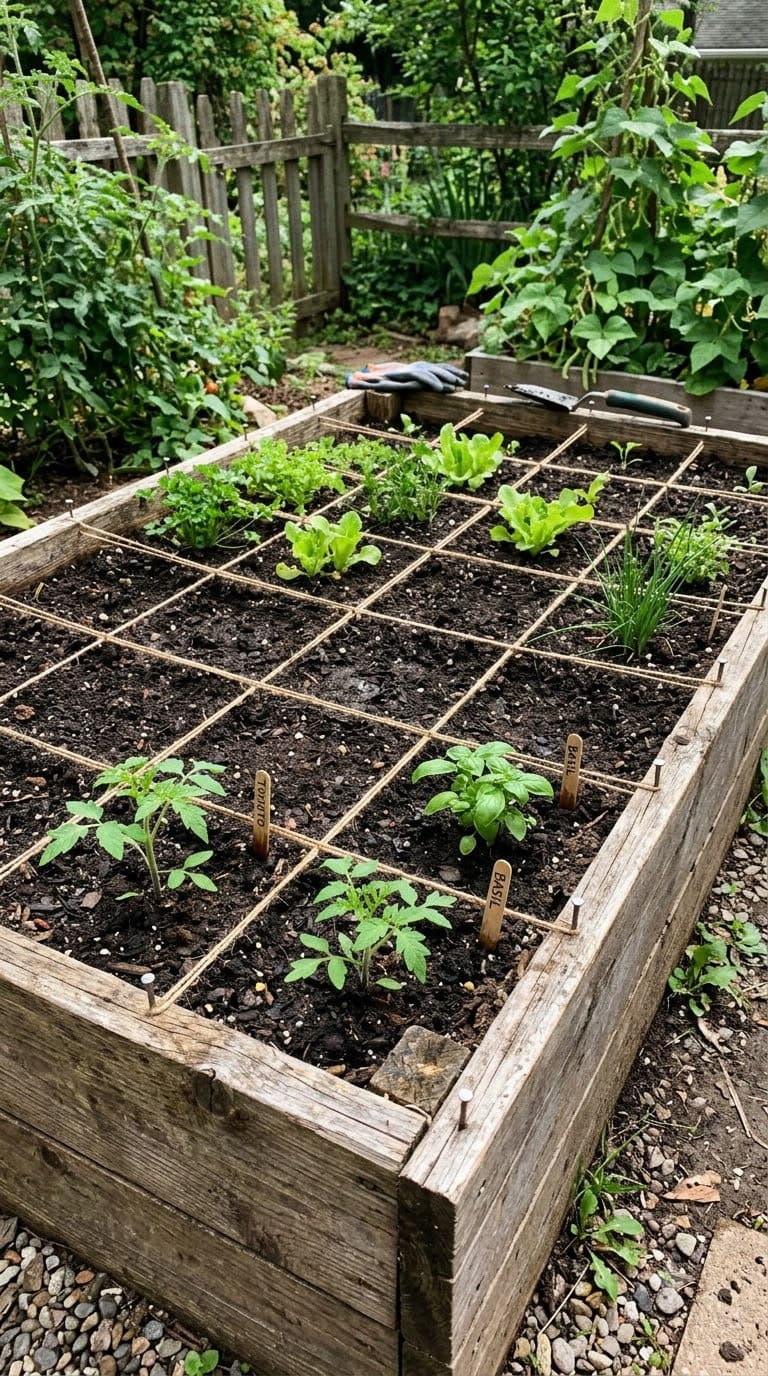
Row Gardening vs. Square-Foot Gardening: Which Spacing Should You Use?
Seed packets and most extension charts assume traditional row gardening, with wide aisles for a hoe or tiller to pass through. That spacing wastes space in a raised bed, where you never walk between rows anyway.
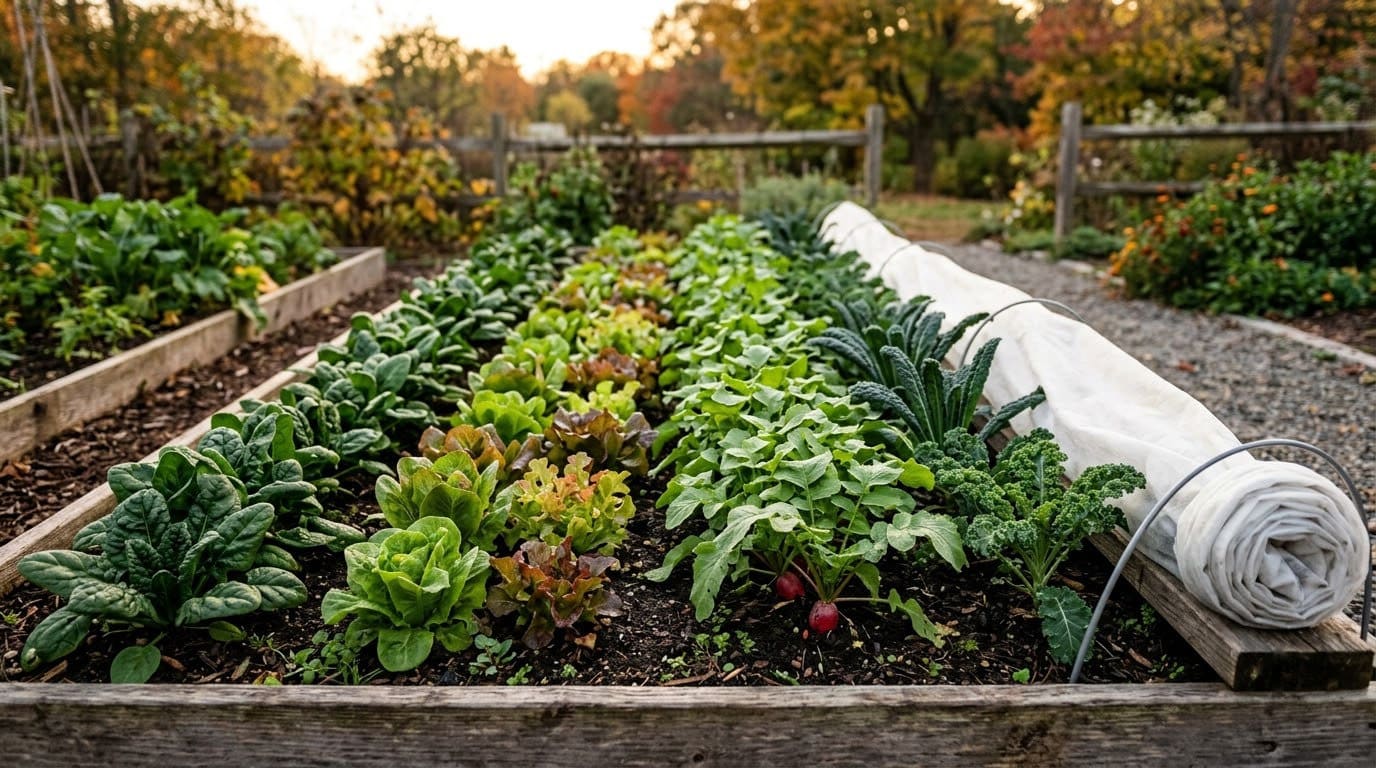
Square-foot gardening, developed by Mel Bartholomew, packs beds more intensively. A tomato still needs its own square foot, but carrots, radishes, and onions can go 9 to 16 per square foot since there’s no walking aisle to leave open.
The calculator lets you toggle between the two per crop, not just for the whole garden. That matters because not every crop translates cleanly to square-foot spacing. Vining crops like pumpkins, winter squash, sweet potatoes, and standard zucchini need real room to run, often 4 to 10 feet per plant, so the calculator locks those to row mode and shows a space warning instead of letting you cram four pumpkin vines into a 4-by-4 bed.
Reference Table: Spacing, Yield, and Timing by Crop
| Crop | Row spacing | In-row spacing | Yield per 10-ft row | Days to maturity |
|---|---|---|---|---|
| Tomato (staked) | 48″ | 18″ | ~105 lbs | 70–85 |
| Pepper | 36″ | 18″ | ~30 lbs | 65–80 |
| Cucumber (trellised) | 24″ | 6″ | ~80 fruit | 60–65 |
| Zucchini / summer squash | 48″ | 24″ | ~22 fruit | 50–55 |
| Winter squash | 60″ | 48″ | ~20 lbs | 85–90 |
| Beans, bush | 24″ | 3.5″ | ~8 lbs | 50–60 |
| Beans, pole | 36″ | 4.5″ | ~16 lbs | 65–75 |
| Carrots | 12″ | 2″ | ~8 lbs | 70–80 |
| Beets | 12″ | 2.5″ | ~12 lbs | 55–65 |
| Broccoli | 24″ | 15″ | ~12 lbs | 60–80 |
| Cabbage | 24″ | 15″ | ~15 lbs | 65–80 |
| Onion (bulb) | 6″ | 3.5″ | ~35 bulbs | 100–120 |
| Potato | 36″ | 12″ | ~25 lbs | 70–90 |
| Sweet corn | 24″ | 8″ | ~15 ears | 70–90 |
Full data for all 25 crops, including radishes, spinach, kale, garlic, sweet potato, and eggplant, is built into the calculator above.
The One-Season Trap: Why Zucchini and Pumpkin Overwhelm New Gardeners
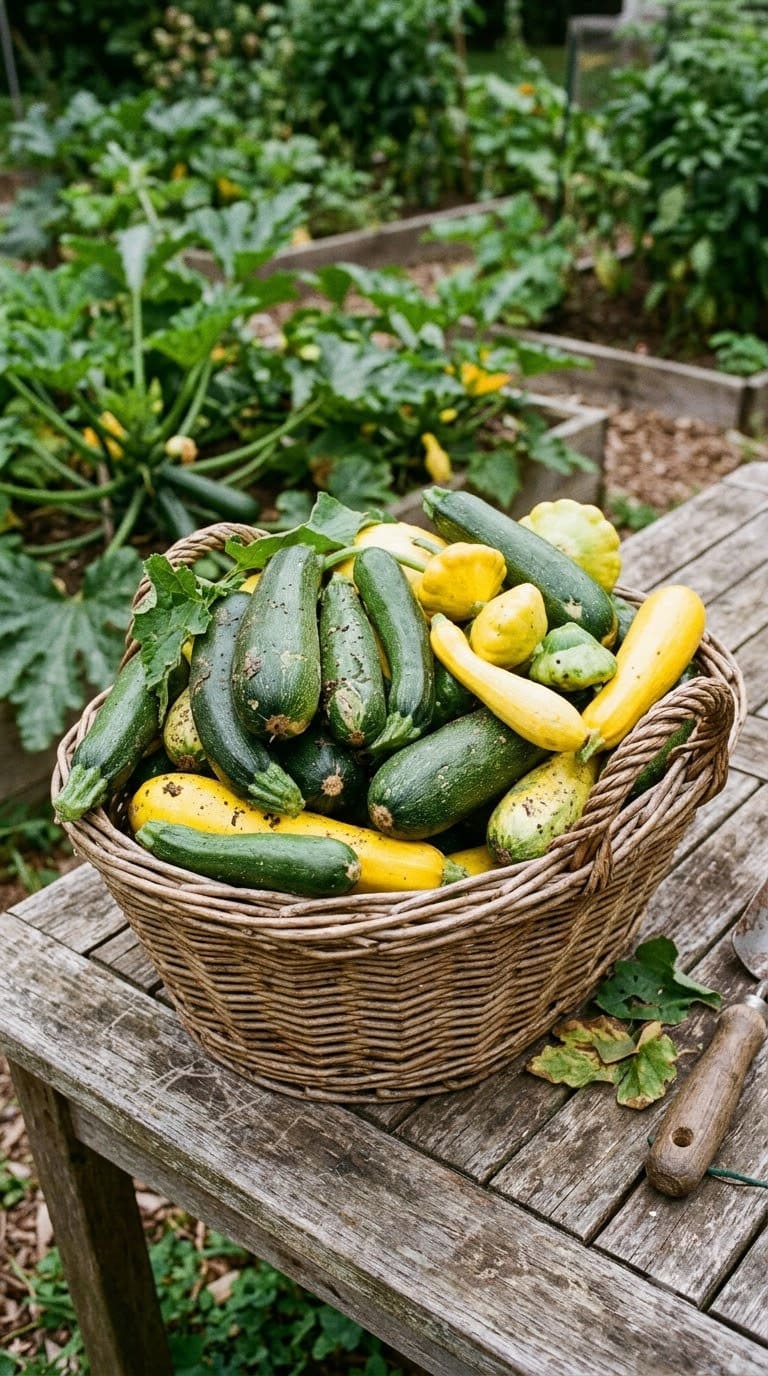
Zucchini is the crop most likely to make a new gardener regret their spacing choices. One healthy plant, given its recommended 24 inches of in-row space, produces roughly 6 to 10 pounds of squash across a season, arriving in waves that can hit two or three fruits a day at peak.
Multiply that by the four or six plants a beginner often starts with, and the result isn’t abundance. It’s a garden that’s actively fighting for space against everything planted nearby, plus a kitchen counter that never clears.
Winter squash and pumpkins carry a different version of the same trap. Their yield per plant looks modest on paper, but the vines themselves can run 10 to 20 feet, swallowing walkways and shading out shorter crops planted too close.
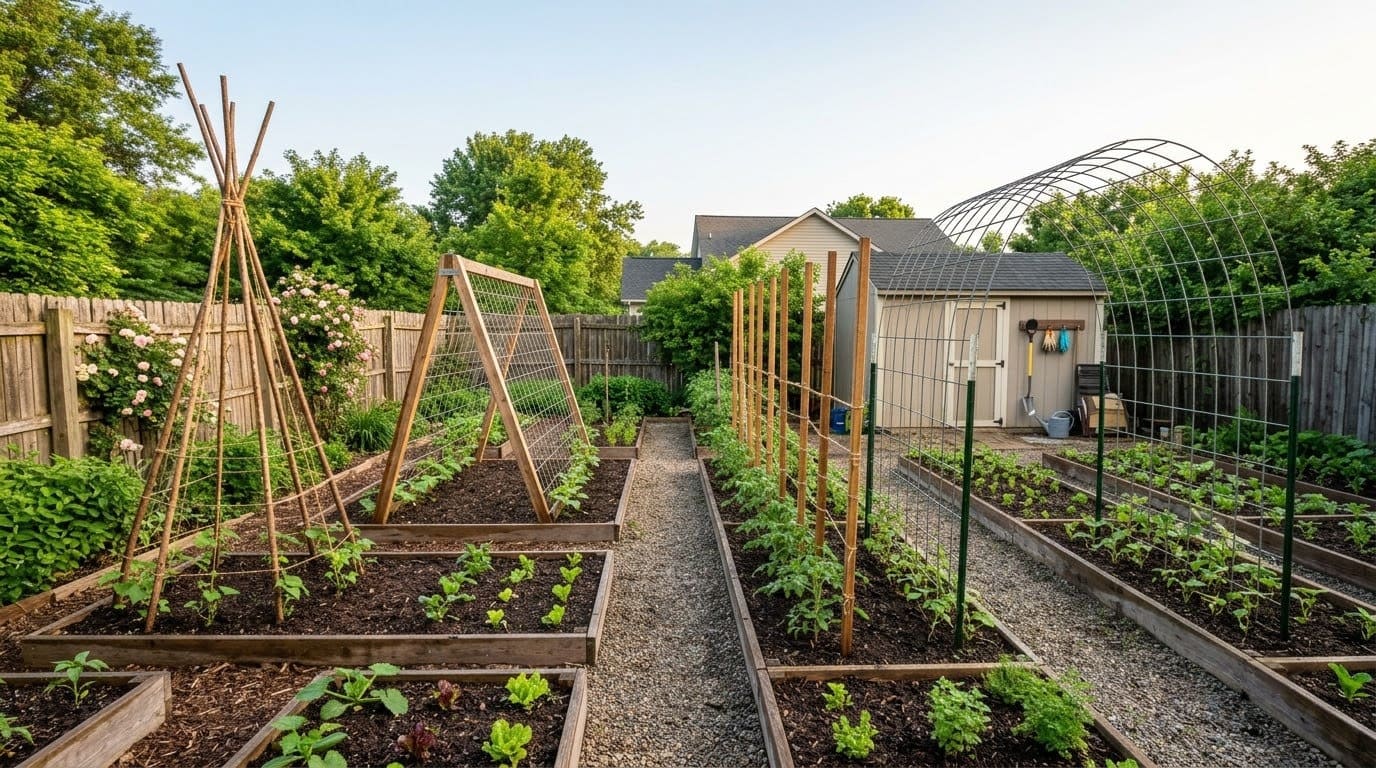
The calculator flags every crop in this category with a direct warning: most home gardens only need one to three plants, not a full row. That single flag prevents the most common space-planning mistake in home vegetable gardening.
What “Servings” Actually Means in a Yield Estimate
Turning pounds of produce into “servings” sounds simple. It isn’t.
There’s no single agreed-upon standard for a home garden. The best public reference is the USDA Food Buying Guide for Child Nutrition Programs, which turns a pound of many raw or cooked vegetables into a standard portion size.
This calculator uses that USDA data for every crop it covers: peppers, cucumbers, green beans, carrots, beets, broccoli, cauliflower, cabbage, onions, potatoes, and more. Each figure is converted to a familiar 1-cup serving. For crops without a specific USDA number, it uses a general estimate of 2.5 servings per pound, and that estimate is always labeled as such.
The average homeowner spends $616/year on yard fixes that don't address the real problem. Find out what yours actually is — before you spend another dollar.
Take the Free QuizCrops harvested by count instead of weight, like corn ears, garlic bulbs, or radish bunches, are shown in their own unit and left out of the servings total. Forcing an ear of corn into a “cup” conversion would just trade honesty for a tidier-looking number. This calculator doesn’t make that trade.
Planning for a Full Season: Days to Maturity and Succession Planting
Every crop in the calculator lists a typical days-to-maturity range, based mainly on University of Georgia Extension planting charts. That range tells you two things: when a crop is ready, and how many rounds you can fit into one season.
Fast crops leave room for more than one planting. Radishes take just 25 to 30 days. Leaf lettuce takes 45 to 55.
Both leave enough season for a second or third round in the same space. Planting these every 2 to 3 weeks, instead of just once in spring, raises your total yield without adding a single square foot of garden.
Slower crops work differently. Garlic goes in the ground in fall and isn’t ready until the next summer, close to 240 days later. Sweet potatoes need 90 to 120 days of warm soil, which rules out a second round in most climates but rewards an early, well-timed start.
Does Garden Soil Actually Change These Yield Numbers?
Every number in this calculator assumes decent, well-drained soil. Hard clay, thin sandy soil, or a bed that’s never been fed will pull your real yield below these estimates. Sometimes by a lot.
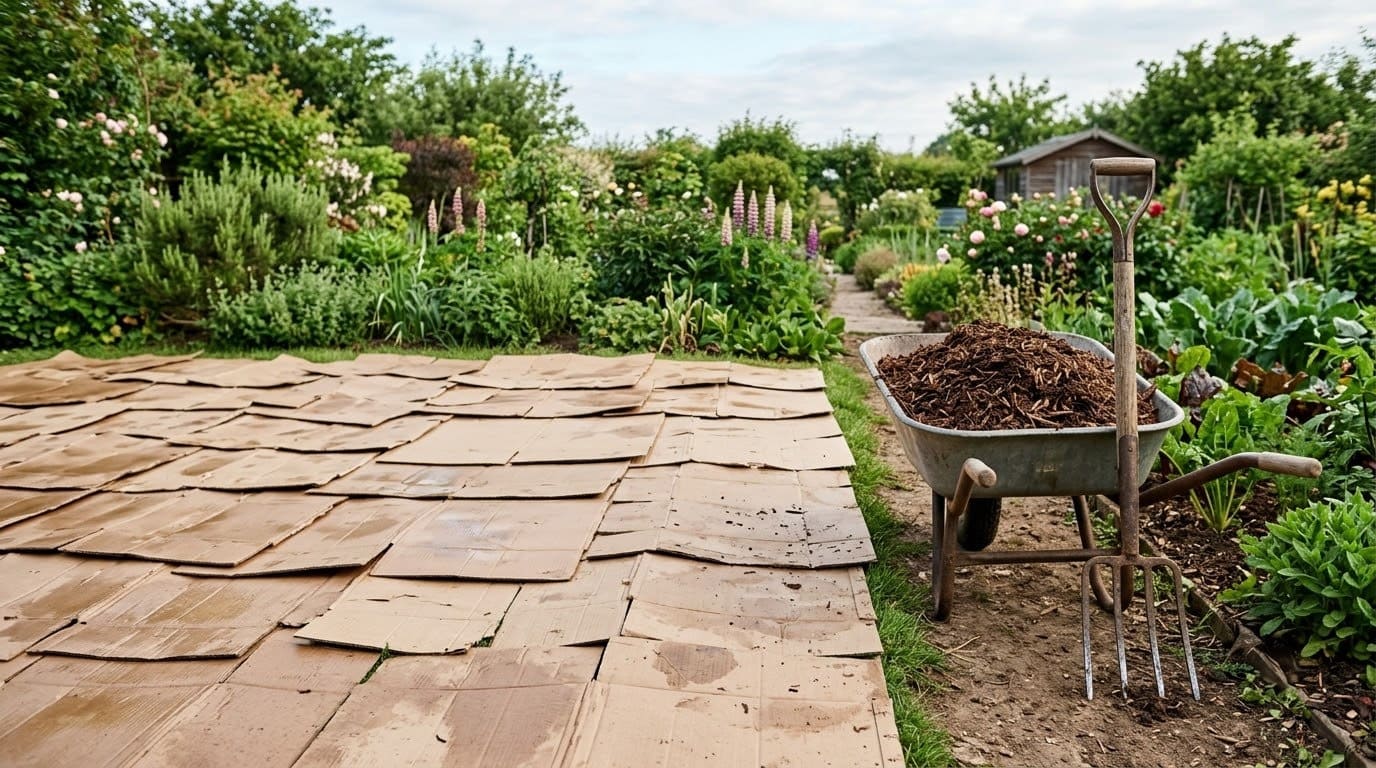
Garden soil preparation that builds up organic matter helps push your harvest above the average, not below it. Soil isn’t a small detail here. It can be the difference between a tomato plant giving you 10 pounds or 20.
A soil test before the season starts helps close that gap. So does proper fertilizing. Fertilizing a vegetable garden the right way, with one feeding before planting and a second boost mid-season, is one of the best steps you can take to hit the numbers this calculator shows you.
Choosing a Garden Layout That Matches Your Yield Goals
This calculator can tell you how many plants fit and what they’ll produce. It can’t lay out your actual yard. That’s a separate step worth doing first.
Planning vegetable garden layouts ahead of time, instead of planting crop by crop as seed packets arrive, stops you from running out of space halfway through spring. It also makes it easier to group plants by sun, water, and size.
Starting from scratch? Read through how to set up a vegetable patch first. It helps you confirm the space, sun, and water access you’re really working with before you plug numbers into this calculator.
Raised Beds Change the Spacing Math
Raised beds are where square-foot gardening really pays off. A framed bed holds good soil in one tight space, so the closer square-foot spacing numbers actually work in real life.
Size your bed around the crops you plan to grow, not the other way around. Looking through raised garden bed ideas before you build gives you a clearer sense of how much space a crop mix really needs. Those numbers plug straight into this calculator’s square-foot mode.
Crop-Specific Notes Worth Knowing
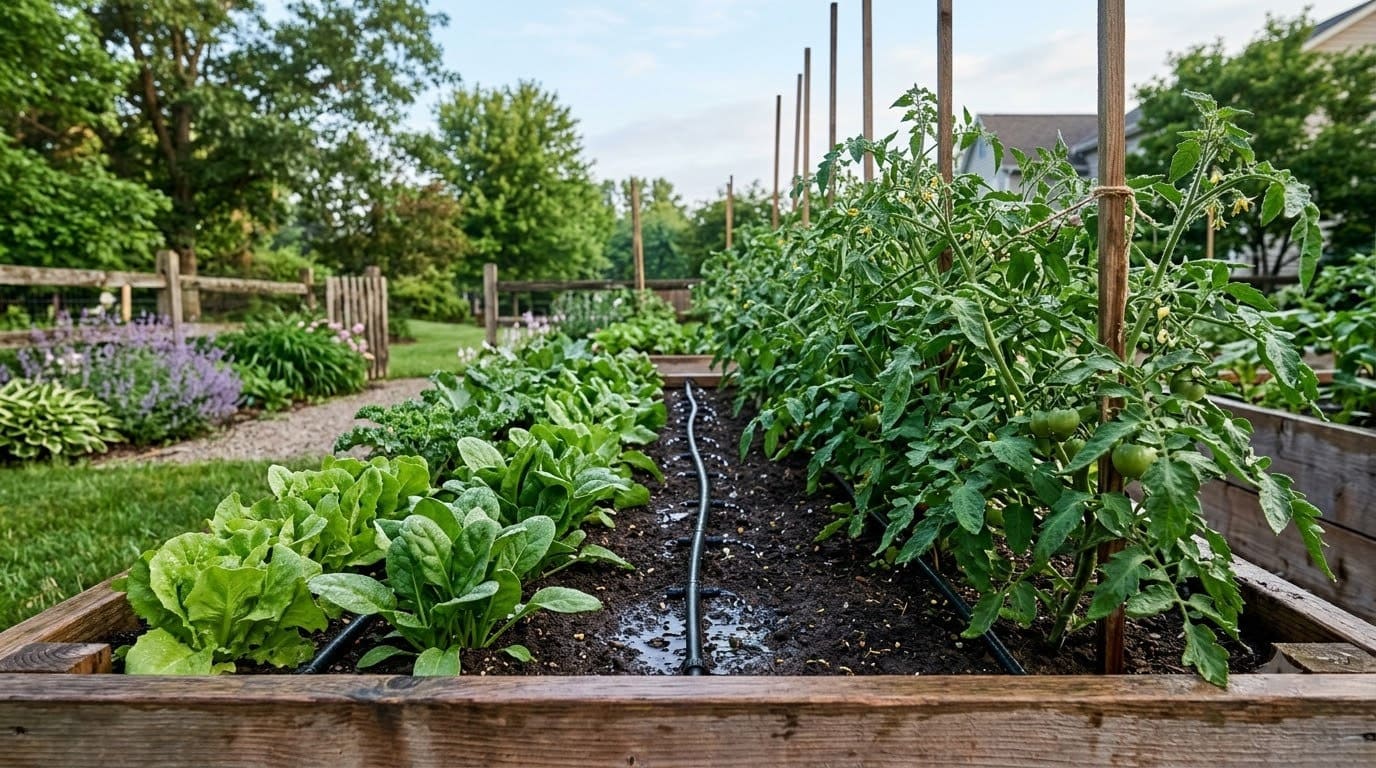
Tomatoes give you more food per plant than almost anything else in a home garden. Staking or caging them keeps them inside the tighter spacing this calculator assumes. For more on picking varieties and support methods, see how to grow tomatoes.
Garlic is the one crop here that runs fall to summer instead of spring to fall. Its planting and harvest windows don’t match anything else in the list, so it’s worth planning on its own. Growing garlic at home covers clove selection, fall planting timing, and curing after harvest.
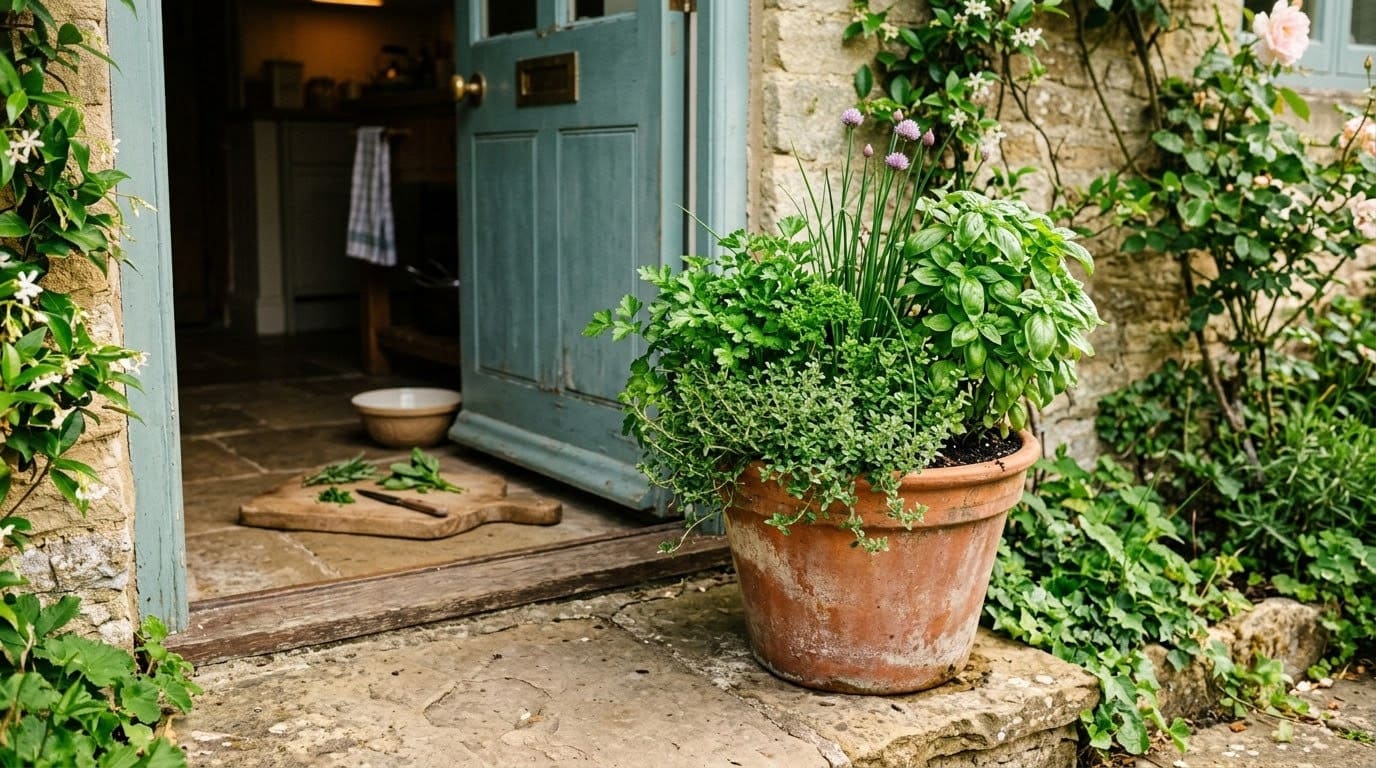
Basil is here for spacing and planning, but its yield is tracked in ounces of fresh leaves, not pounds. There’s no solid university data on basil’s weight yield per plant the way there is for row crops like carrots or beans.
Frequently Asked Questions
How accurate is a vegetable garden yield calculator? It’s an estimate, not a guarantee. This calculator uses sourced spacing and yield data from Cornell Cooperative Extension and University of Georgia Extension, plus a built-in loss allowance, which gets you meaningfully closer to real-world results than a raw textbook number. Actual yield still depends on your soil, climate, variety, and how well pests and disease are managed that season.
What’s the difference between row spacing and square-foot gardening? Row spacing assumes open aisles for foot traffic and equipment, so plants sit farther apart. Square-foot gardening assumes you never walk between plants in a raised bed, so it packs many crops 4 to 16 per square foot instead of one every foot or two.
Why can’t I use square-foot spacing for zucchini or pumpkins? Vining and sprawling crops need real physical room to run, often 4 to 10 feet or more per plant, regardless of how the bed is organized. Square-foot gardening’s tight grid only works for crops that stay compact, so this calculator locks vining crops to row mode.
How many tomato plants does a family of four need? Based on this calculator’s data, 3 to 4 staked tomato plants typically produce 30 to 60 pounds over a season after accounting for harvest loss, which comfortably covers fresh eating and some preserving for most households. Adjust upward if you’re planning to can or freeze in bulk.
Why does the calculator include a harvest-loss percentage? Published yield figures assume close to ideal conditions. Real gardens lose some yield to pests, disease, poor germination, and weather, so building in a 15 percent default (adjustable from 0 to 40 percent) produces a number you can actually plan a kitchen and pantry around.
Can I use this calculator for a garden I’ve already planted? Yes. Enter your actual row length or bed square footage for each crop already in the ground, and the calculator will estimate what that planting should produce, which is useful for planning preservation, storage, or how much to share or sell.
Why does garlic show such a long days-to-maturity number? Most garlic varieties are planted in fall and harvested the following summer, spending roughly eight months in the ground rather than growing in a single spring-to-fall season like most other crops in this calculator.
Should I round my square footage or row length up or down when entering it into the calculator? Measure as precisely as you reasonably can. Rounding down slightly is safer than rounding up, since it keeps the plant-count estimate from suggesting more plants than your space can actually support without crowding.
Glossary
Days to maturity: The typical number of days from planting (seed or transplant) until a crop is ready for first harvest.
Determinate vs. indeterminate: Determinate tomato varieties grow to a set size and ripen most of their fruit in a shorter window; indeterminate varieties keep growing and producing until frost.
Direct seed: Planting seed straight into the garden soil, rather than starting it indoors and transplanting a seedling later.
Harvest loss: The portion of a crop’s theoretical yield lost to pests, disease, poor weather, or incomplete germination.
In-row spacing: The distance left between individual plants within the same row.
Row spacing: The distance left between one row of plants and the next.
Square-foot gardening: A raised-bed planting method that divides a bed into 1-foot squares, each holding a set number of plants based on that crop’s mature size.
Succession planting: Planting the same crop multiple times across a season, spaced a few weeks apart, to extend or increase the total harvest from one bed.
Sources & References
- Cornell Cooperative Extension: Recommended Spacing and Expected Yield for Garden Vegetables in New York
- University of Georgia Cooperative Extension, Bulletin 577: Vegetable Garden Planting Chart
- USDA Food Buying Guide for Child Nutrition Programs: Vegetables Yield Table
Never miss an update — choose FarmFoodFamily as your preferred source on Google.
How it works: Tap the button below to open Google's settings page, then check the box next to FarmFoodFamily.
Tap the checkbox to turn it blue — that's how you know it's set.