Concrete Calculator: Slabs, Footings, Bags, and PSI in One Tool
Enter your slab or footing dimensions. Get exact cubic yards, premix bags, the right PSI strength, and a frost-depth check most calculators skip entirely.

Never miss an update — choose FarmFoodFamily as your preferred source on Google.
How it works: Tap the button below to open Google’s settings page, then check the box next to FarmFoodFamily.
Tap the checkbox to turn it blue — that’s how you know it’s set.
Concrete volume is simple math. Multiply length by width by thickness, all in feet, to get cubic feet. Divide by 27 to get cubic yards, since that’s how ready-mix concrete is sold.
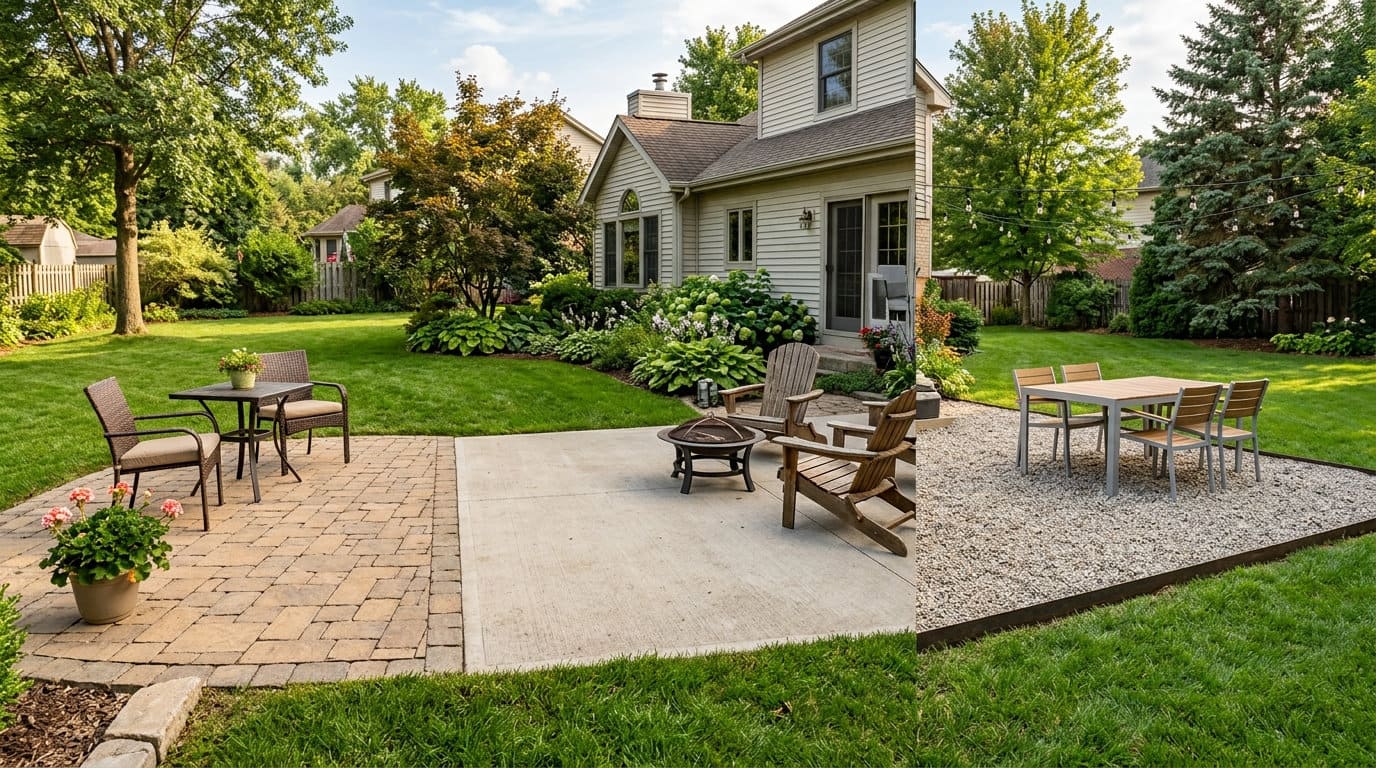
A 12×10 ft patio slab at 4 inches thick needs about 1.63 cubic yards, or roughly 98 bags of 60 lb premix. A footing needs the same math, just with depth instead of thickness.
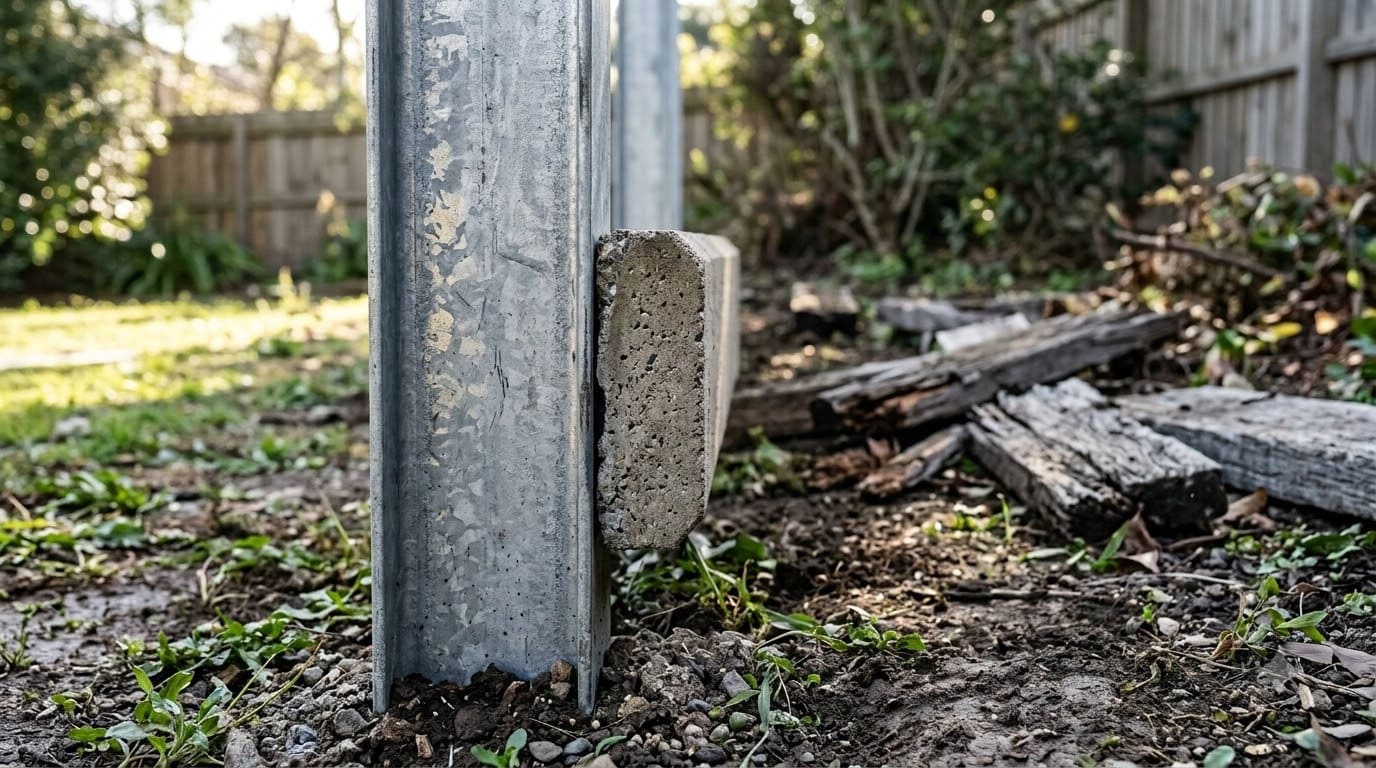
Depth matters more for footings than slabs. Building codes require footings to sit below your local frost line, not just below grade. Skip that step and the footing can heave and crack over a hard winter.
The calculator below handles both slabs and footings in one tool. It auto-fills the right thickness and PSI strength for your project type, converts the result to premix bags or ready-mix cubic yards, and flags footing depths that may not clear your local frost line.
Concrete Calculator (Slab & Footing)
Calculate concrete volume, bags, and cost for slabs, driveways, and footings. Auto-sets thickness and PSI strength by project type, and flags footing depths that may sit above your local frost line.
1. Project type & units
2. Area to pour
3. Waste & concrete source
4. Pricing (optional)
Results
Why This Calculator Covers More Than the Others
Most concrete calculators do one job well. Some handle slabs but ignore footings. Others handle footings but skip strength requirements entirely.


We couldn’t find a single calculator online that connects footing depth to frost line risk. Most just ask for a depth number and calculate volume, with no mention of the one factor that determines whether a footing actually holds.
This tool covers slabs, strip footings, and isolated pier footings in one place. It auto-fills thickness and PSI strength by project type, based on the same ranges contractors reference from ACI 332, the residential concrete standard. Then it converts everything to bag count or ready-mix cubic yards, with cost estimates for both.
Answer 4 quick questions and get matched to the exact fix for your yard — drainage, budget, layout, or something else entirely.
Take the Free QuizHow Concrete Volume Is Actually Calculated
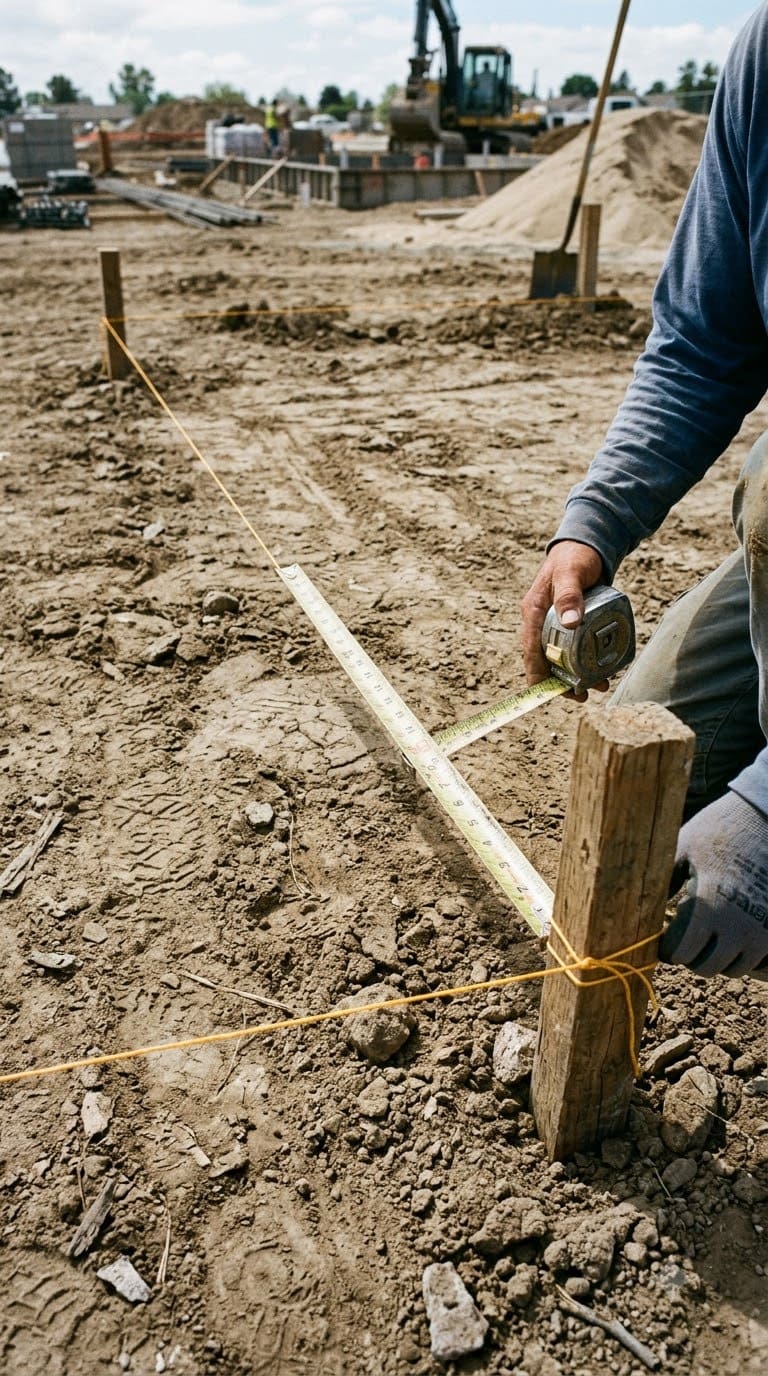
The formula never changes, no matter what you’re pouring.
Cubic feet = Length (ft) x Width (ft) x Thickness or depth (ft)Cubic yards = Cubic feet / 27For a slab, thickness is usually expressed in inches, since most slabs run 3.5 to 6 inches. Divide by 12 to convert to feet before running the math.
For a strip footing, like one under a fence or a low wall, the same formula applies with the footing’s width and depth in place of a slab’s area and thickness.
For an isolated pier footing, like the ones under deck posts, use the area of a circle instead of a rectangle.
Pier footing (cubic feet) = pi x (Diameter / 2)^2 x DepthMultiple piers just multiply by the count. The calculator adds this up automatically if you’re pouring more than one.
Slab Thickness and PSI by Project Type
| Project | Typical thickness | Recommended strength |
|---|---|---|
| Patio, walkway | 4 in | 2,500-3,000 PSI (3,500-4,000 in freeze-thaw climates) |
| Driveway | 5-6 in | 3,000-4,000 PSI |
| Garage floor | 4 in (up to 6 in for heavy vehicles) | 3,500-4,000 PSI |
| Strip or pier footing | Set by local code, not by project type | 2,500-3,000 PSI (2,500 PSI minimum per IRC) |
These ranges come from ACI 332, the American Concrete Institute’s residential concrete standard, and the International Residential Code’s minimum footing strength requirement. If you’re in a climate with regular freeze-thaw cycles, ask your supplier for air-entrained concrete at the higher end of the PSI range. Air-entrained mix resists the cracking that comes from water freezing and expanding inside the slab.
Footing Depth and the Frost Line: The Step Everyone Skips
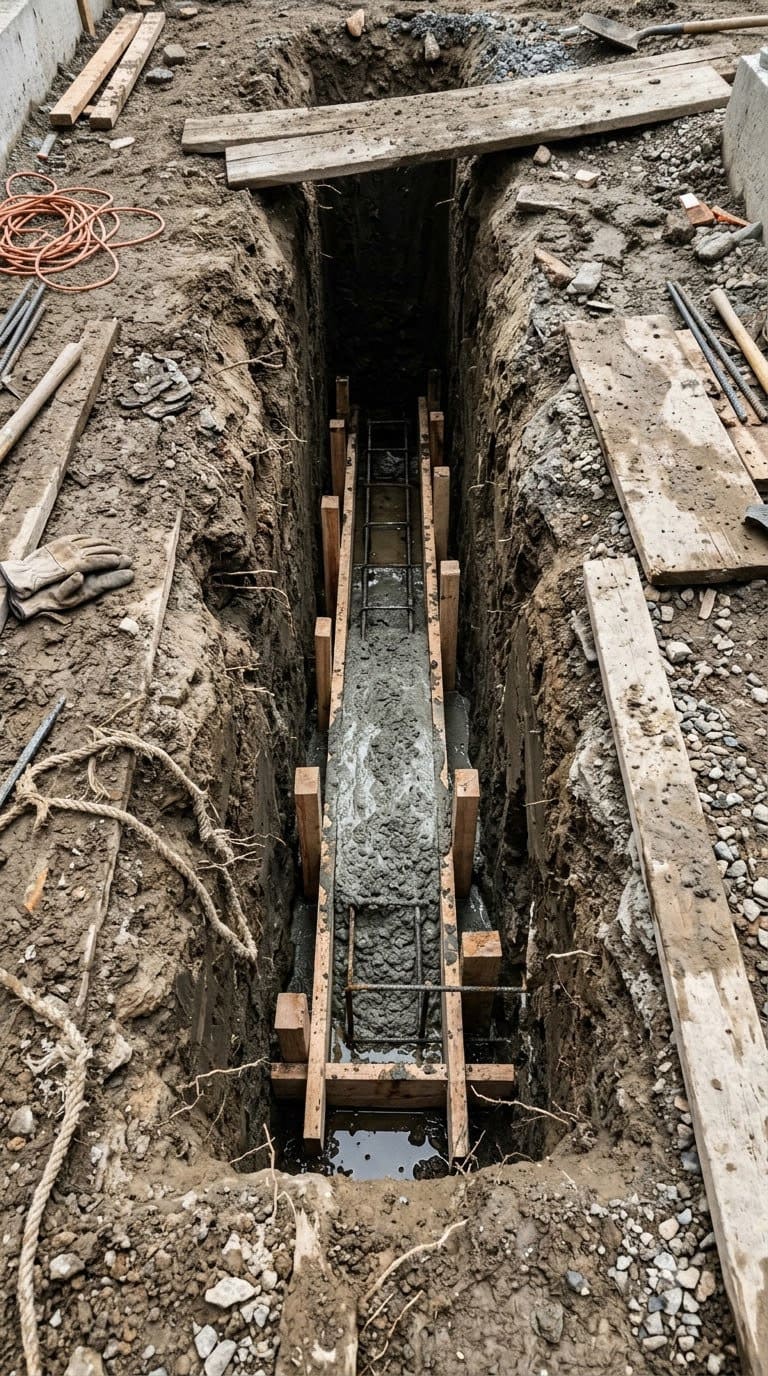
Here’s the part almost no calculator mentions. A footing that’s too shallow doesn’t just risk being weak, it risks moving.
Most yard problems trace back to one specific, fixable cause. Find yours in 4 quick questions.
Take the Free QuizWhen the ground freezes, water in the soil expands. That expansion can lift a footing that sits above the frost line, a problem called frost heave. Over a few winters, that movement cracks the footing and whatever it supports.
The International Residential Code requires footings to extend at least 12 inches below grade, and below the frost line for your area. Frost line depth varies enormously by climate. It’s commonly around 12 inches across the Deep South, but can run 36 to 48 inches or deeper across northern states and higher elevations.
There’s no single number that works everywhere, which is exactly why we don’t hardcode one. Check your local building department or your area’s IRC frost-depth table before you dig, especially for anything structural like a deck post or a wall footing.
Reading Bag Yield Correctly
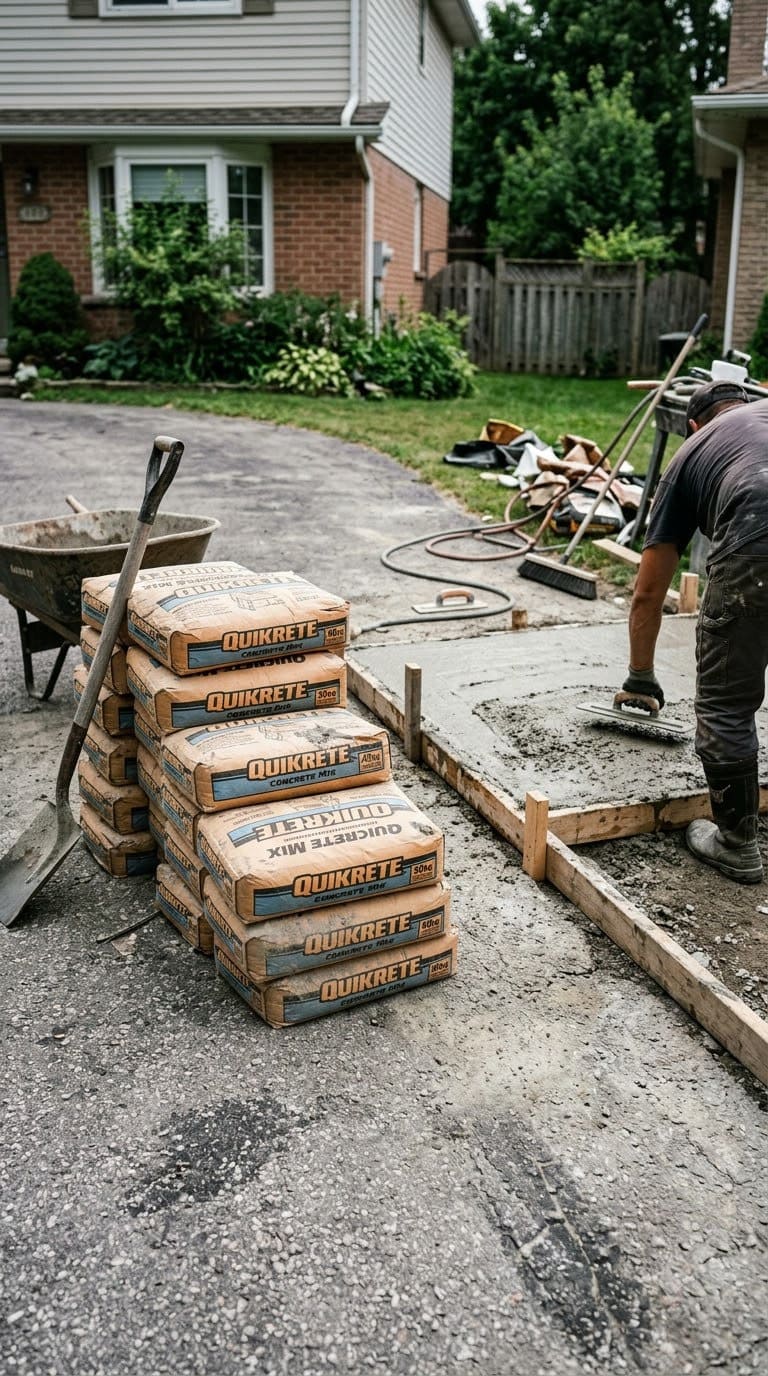
Premix bags list their weight, not their yield, on the front. That’s an easy place to under-order.
40 lb bag = about 0.30 cu ft60 lb bag = about 0.45 cu ft80 lb bag = about 0.60 cu ftThese figures come from published manufacturer spec sheets, not a rough guess. An 80 lb bag isn’t twice a 40 lb bag despite the weight difference suggesting otherwise, it’s exactly twice the yield, which happens to track closely with the weight ratio in this case. That won’t always hold across every bag size, so always check yield on the bag rather than assuming it scales with weight.
Buying the wrong bag size costs more than most people expect. A pallet of 40 lb bags for a driveway-sized pour means dozens of extra trips to the truck and back, compared to fewer, heavier 80 lb bags covering the same volume. For anything past a small footing, the larger bag size is almost always the better trade against a bit more weight per lift.
Ready-Mix vs. Bags: Which Makes Sense
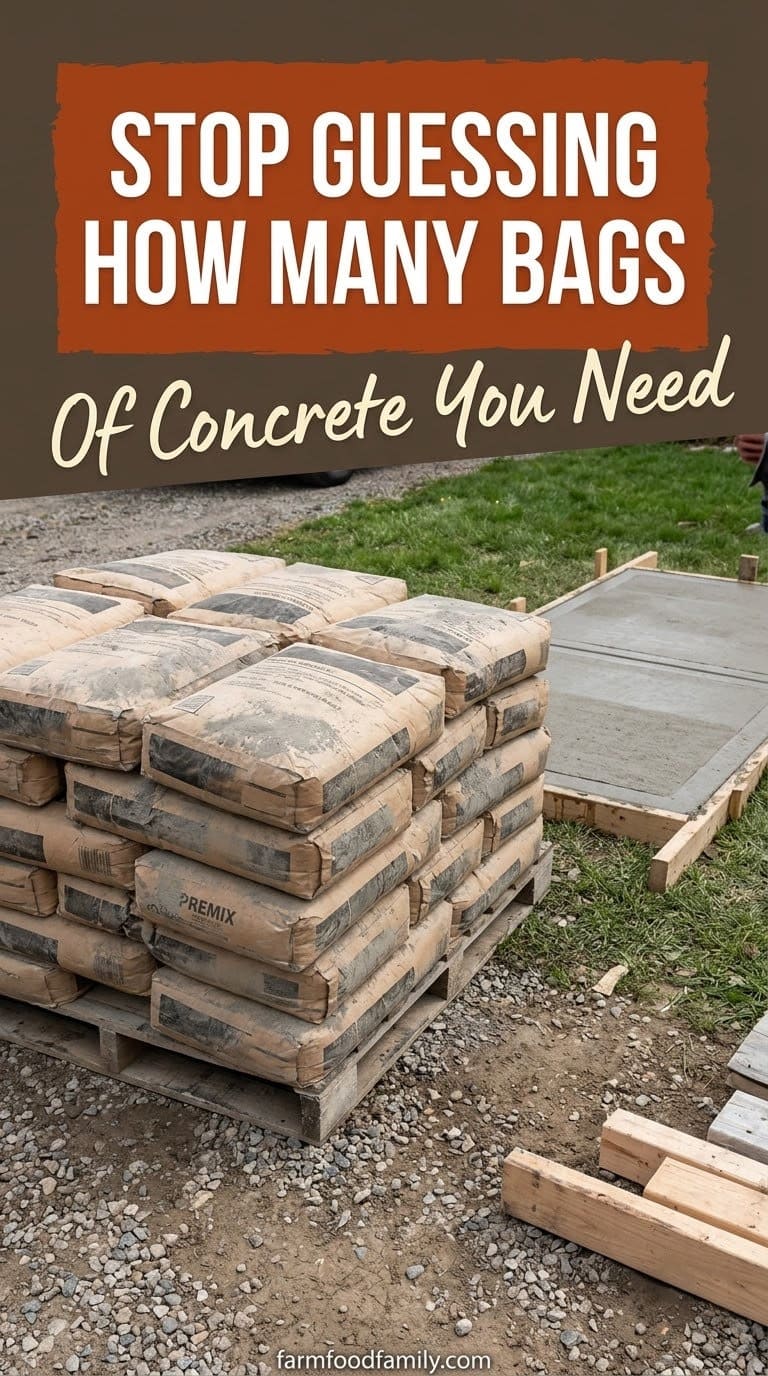
The break-even point between bagged concrete and a ready-mix truck usually falls around 1 cubic yard, sometimes a bit lower.


Below that, bags are almost always the simpler choice. You’re not paying a delivery minimum, and there’s no rush to place concrete before a truck’s load starts to set. A small footing or a single fence post base rarely justifies calling a supplier.
Above roughly 1 to 1.5 cubic yards, bags get expensive fast, and the labor of mixing dozens of them by hand adds up. A driveway, a full patio, or several footings poured together usually make more sense as a ready-mix order, even with a delivery minimum.
Check your local supplier’s minimum order before deciding. Some require as little as 1 cubic yard, others set the bar closer to 3, which can tip a mid-size project back toward bags even when the math looks close.
How to Measure an Irregular Slab
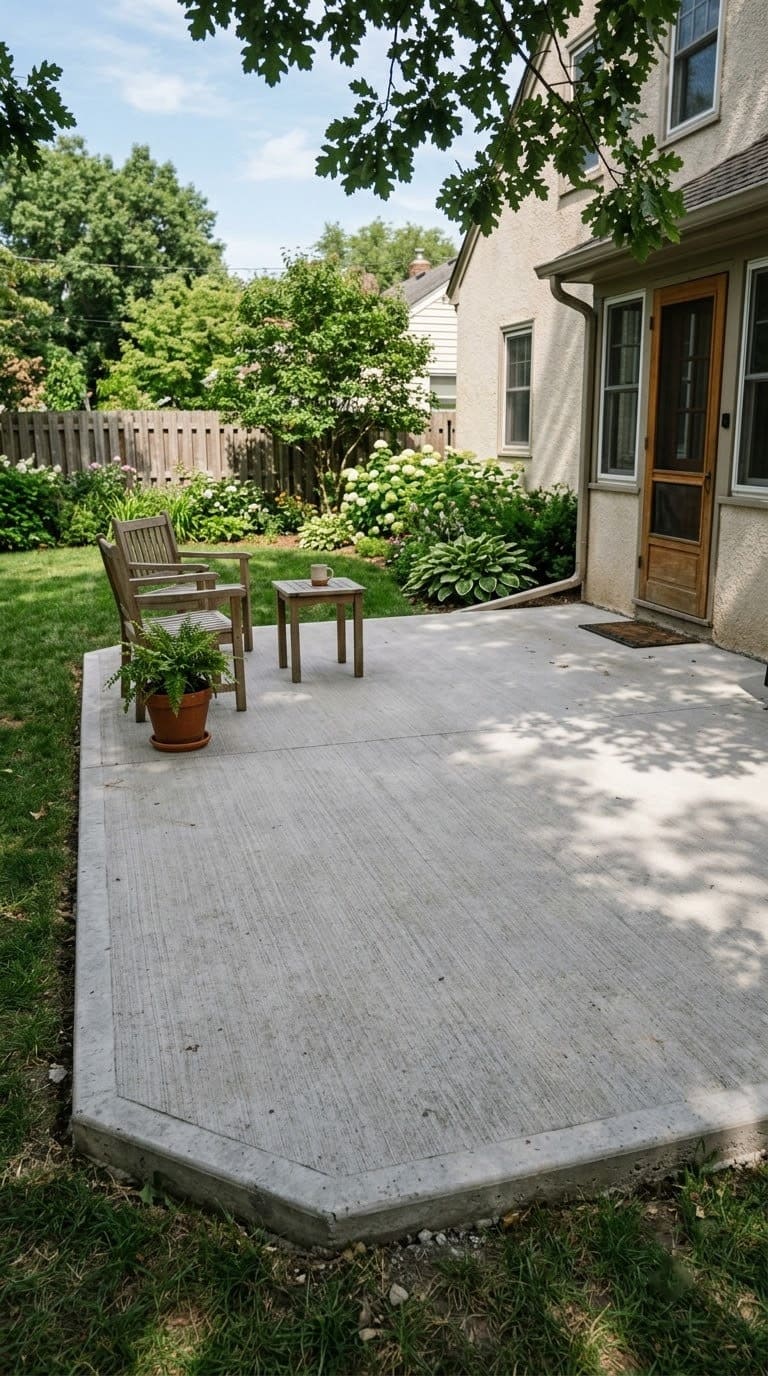
Not every slab is a clean rectangle. An L-shaped patio, a slab with a curved edge, or a walkway that widens near a door all need a bit more measuring care.
The average homeowner spends $616/year on yard fixes that don't address the real problem. Find out what yours actually is — before you spend another dollar.
Take the Free QuizBreak the space into simple shapes the same way you would for a paver patio. An L-shaped area is two rectangles. A curved edge can be approximated as a rectangle plus a half-circle.
Measure and enter each section as its own area, and the calculator adds the totals together automatically.
For a footing that isn’t a straight run, like one that turns a corner around a shed, measure and calculate each straight segment separately, then add the volumes. Corners have some overlap where two segments meet, but for ordering purposes that small overlap is well within a standard waste allowance.
Common Mistakes That Weaken a Pour
A few mistakes show up constantly in DIY concrete projects, beyond just getting the volume wrong.
Pouring too thin. Saving a bit of concrete by shaving down thickness is one of the most common ways a slab cracks early. Stick to the ranges above, or go thicker, never thinner.
Skipping a gravel base. Concrete poured straight onto bare soil moves with the ground underneath it. A compacted gravel base, similar to what’s used under pavers, gives the slab a stable, well-drained foundation.
Adding too much water. Extra water makes concrete easier to pour, but it weakens the final cure significantly. Follow the water ratio on the bag or your ready-mix supplier’s spec, not your own judgment on “workable” consistency.
Finishing too early or too late. Concrete needs to reach the right firmness before floating and troweling. Working it too soon traps bleed water at the surface. Working it too late tears the surface instead of smoothing it.
FAQs
How much concrete do I need for a 10×10 slab? At the common 4-inch thickness, a 10×10 ft slab needs about 1.37 cubic yards before waste, or roughly 1.5 cubic yards with a 10% buffer. That’s about 92 bags of 60 lb premix.
How deep should a footing be for a fence post? It depends on your local frost line and the post height, but a common residential range is 24 to 36 inches for a fence post footing. Deeper posts resist wind load better and sit below frost heave risk in most climates.
Can I mix concrete by hand for a small footing? Yes, for small pours under about a half cubic yard, hand-mixing bags in a wheelbarrow is common and manageable. Beyond that, a rented mixer or a ready-mix delivery saves significant time and gives a more consistent mix.
What’s the difference between concrete and cement? Cement is one ingredient in concrete, the binding powder that reacts with water. Concrete is the finished mix of cement, sand, gravel, and water. Premix bags already combine all four, ready to add water.
How long does concrete need to cure before use? Concrete reaches enough strength to walk on within 24 to 48 hours, but full design strength takes about 28 days. Avoid heavy loads, like parking a car on a new driveway, until at least a week has passed, longer in cold weather.
Do I need rebar in a concrete slab? For a standard patio or walkway, rebar or wire mesh isn’t always required, but it helps control cracking as the slab settles. For a driveway, garage floor, or any footing carrying real structural load, reinforcement is standard practice and often required by local code.
Why does my slab calculator show a different number than my contractor’s quote? Contractors often round up more aggressively for site conditions, formwork loss, and same-day availability minimums many suppliers set. This calculator gives you the material math. Your contractor’s number may include a safety margin on top of it.
Glossary
- PSI: Pounds per square inch, the standard unit for concrete’s compressive strength. Higher PSI concrete resists more load and weather stress.
- Frost line: The depth to which the ground freezes in winter, which varies by climate and determines minimum footing depth.
- Air-entrained concrete: Concrete mixed with tiny air bubbles that give freezing water room to expand, reducing crack risk in cold climates.
- Curing: The chemical hardening process concrete undergoes over about 28 days, distinct from simply drying.
- Frost heave: Ground movement caused by freezing water expanding in the soil, which can lift and crack a footing set too shallow.
Sources & References
- American Concrete Institute (ACI). ACI 332, Residential Code Requirements for Structural Concrete.
- International Code Council. International Residential Code, Section R403 (footings).
- Quikrete. Manufacturer bag yield specifications for premixed concrete.
For real-world projects, see our concrete slab design ideas and concrete patio ideas. If you’re planning a driveway, our concrete driveway ideas guide covers design options, and our guide on prolonging your concrete driveway’s lifespan covers what happens after the pour.
Never miss an update — choose FarmFoodFamily as your preferred source on Google.
How it works: Tap the button below to open Google's settings page, then check the box next to FarmFoodFamily.
Tap the checkbox to turn it blue — that's how you know it's set.