9 Sneaky Plants That Shouldn’t Grow Next to Onions and Garlic
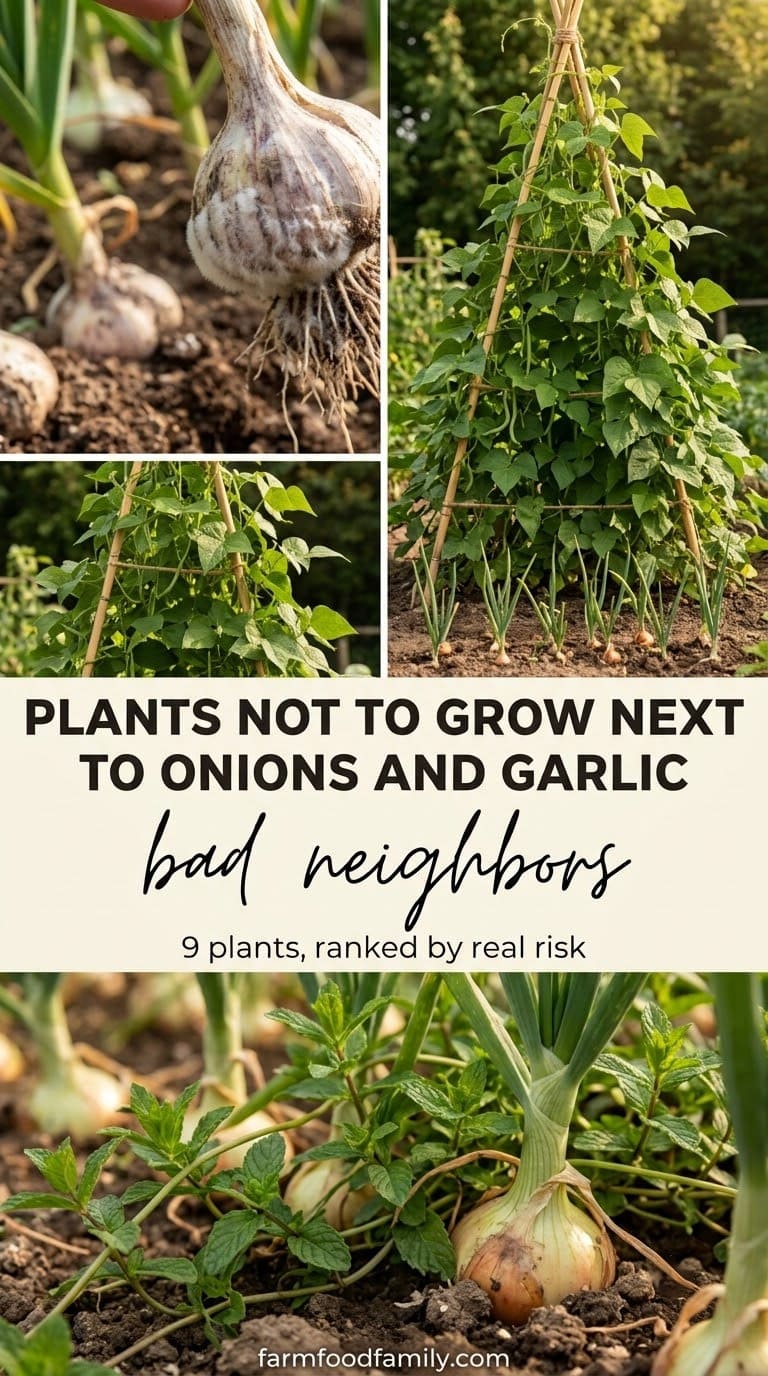
Onions and garlic are the pushovers of the vegetable garden, so most of this list is just bigger plants shading them out. The one real threat is a soil disease you can’t see or cure, and it comes from planting your alliums too close together.

Never miss an update — choose FarmFoodFamily as your preferred source on Google.
How it works: Tap the button below to open Google’s settings page, then check the box next to FarmFoodFamily.
Tap the checkbox to turn it blue — that’s how you know it’s set.
Onions and garlic don’t fight for anything. They grow slowly, they root shallow, and their thin upright leaves cast no shade of their own.
So nearly every bad-neighbor problem is the same story. A taller or wider plant grabs the light and the nutrients, and the onion quietly stays small.
You’ll also read that onions and garlic release chemicals that poison beans and peas. That one is mostly folklore.
But there is a real danger to an allium bed. It’s a soil fungus called white rot, and the fastest way to invite it is to crowd all your onions, garlic, leeks, and chives into one spot.
Quick Answer
Onions and garlic are among the weakest competitors in the garden. UC Statewide IPM Program calls them “slow-growing and shallow-rooted,” with “narrow, upright leaves” that “do not compete well with weeds.”
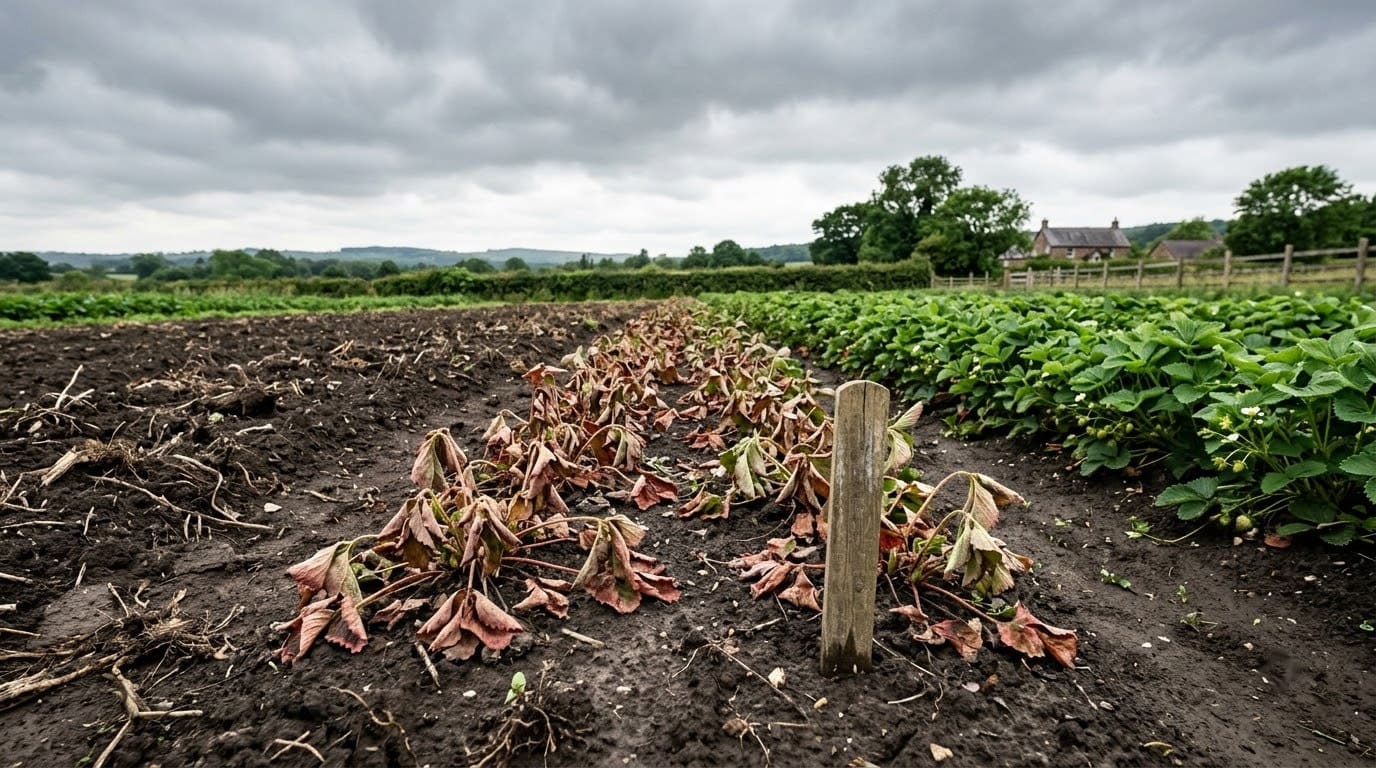
So beans, peas, corn, and sprawling squash all shade and starve them. They don’t poison them, and the popular “onions kill bean bacteria” claim isn’t backed by trials.
Answer 4 quick questions and get matched to the exact fix for your yard — drainage, budget, layout, or something else entirely.
Take the Free QuizThe one serious threat is allium white rot, a soil fungus. Per University of Maine Extension, it can “render a field unusable for garlic or onion production for as long as 40 years,” and there are “no chemical or cultural controls” and no resistant varieties.
So spread your onions, garlic, leeks, shallots, and chives out rather than massing them. Keep fennel and mint well away. Give alliums full sun, a thin mulch, and their own weeded patch.
Why is almost nothing a good neighbor for onions and garlic?
Three things explain the whole list. Once you know which one applies, the fix is obvious.
They’re the weakest competitors in the garden. UC IPM puts it plainly: slow to grow, shallow-rooted, and skinny on top. An onion can’t out-race a bean, shade out a weed, or reach water a deeper root got to first. Anything vigorous next to it wins.
The allium pest and disease cluster. Onions, garlic, leeks, shallots, and chives all feed the same problems: onion maggot, thrips, downy mildew, pink root, Fusarium basal rot, and white rot. Plant them in one dense block and you build all of it up at once.
The universal offenders. Fennel chemically suppresses its neighbors, and mint runs over any bed it can reach.
Dry-soil herbs want the opposite of what an onion wants. These plants hurt almost everything, and alliums are no exception.
Most yard problems trace back to one specific, fixable cause. Find yours in 4 quick questions.
Take the Free Quiz
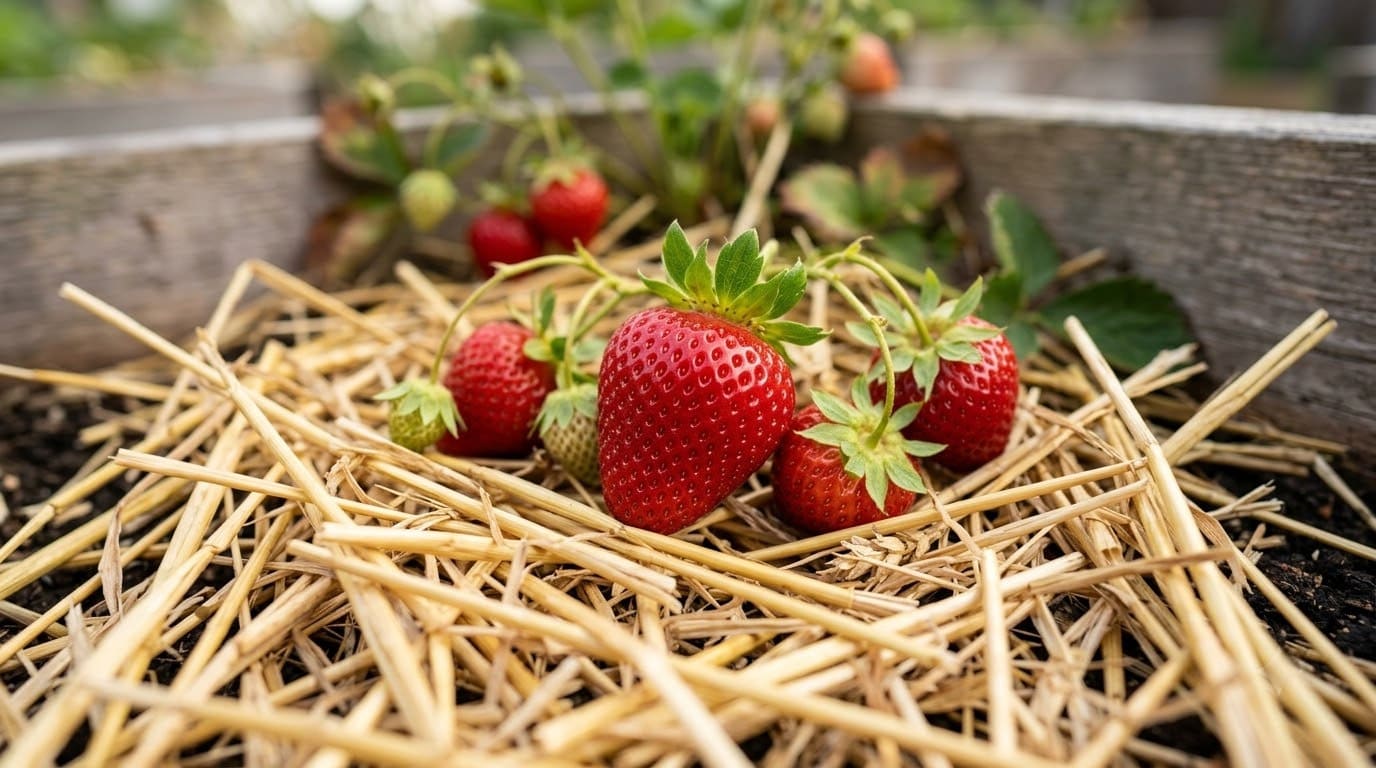
A thin layer keeps weeds off a bed of poor-competitor onions and garlic without piling moisture against the necks.
Shop NowThis post contains affiliate links. We may earn a commission on qualifying purchases at no extra cost to you.
The bean and pea myth, cleared up
Almost every companion chart says the same thing. Onions and garlic release sulfur compounds or phenolic acids that stunt legumes and kill the Rhizobium bacteria that fix nitrogen on their roots.
The trouble is that garden and field trials haven’t reliably shown it. Clover, beans, and peas nodulate normally when they’re interplanted with onions. The claim keeps getting copied from list to list without a study behind it.
Here’s what actually happens. A pole bean or a pea trellis grows fast and tall, and it throws shade over the onion row all summer.
The onion, already a poor competitor, gets less light and sizes down. It looks like the onion was harmed, so people blame chemistry.
The honest verdict: interplant beans and peas with onions if you want to. Just keep the climbing types on the north side so they don’t shade the alliums, and give the onions their own sunny strip. If your soil is genuinely low on nitrogen, the beans and peas nearby are quietly helping the onions, not hurting them.
The 9 plants at a glance
| Plant | Main mechanism | Risk level | The fix |
|---|---|---|---|
| Other alliums in a block | White rot and pest concentration | High | Spread them out, rotate, use clean stock |
| Beans | Shade and competition, not chemistry | Low to moderate | Keep climbers on the north side |
| Peas | Shade and early-season competition | Low to moderate | Same, or grow peas before the onions size up |
| Asparagus | Permanent deep root competition | Moderate | Never in or beside the asparagus bed |
| Sage, rosemary, thyme | Water and soil mismatch | Low to moderate | Separate dry bed or pots |
| Fennel | Allelopathy | High | Its own bed, well away |
| Mint | Rhizome takeover, traps moisture | Moderate to high | Buried container only |
| Corn | Tall shade, heavy nitrogen feeder | Moderate | Opposite side of the garden |
| Squash, pumpkins, melons | Vines sprawl over and bury the row | Moderate | Trellis the vines, or grow alliums elsewhere |
1. Other onions, garlic, leeks, shallots, and chives
This is the one that can cost you the ground for decades. Massing all your alliums together concentrates every pest and disease they share.
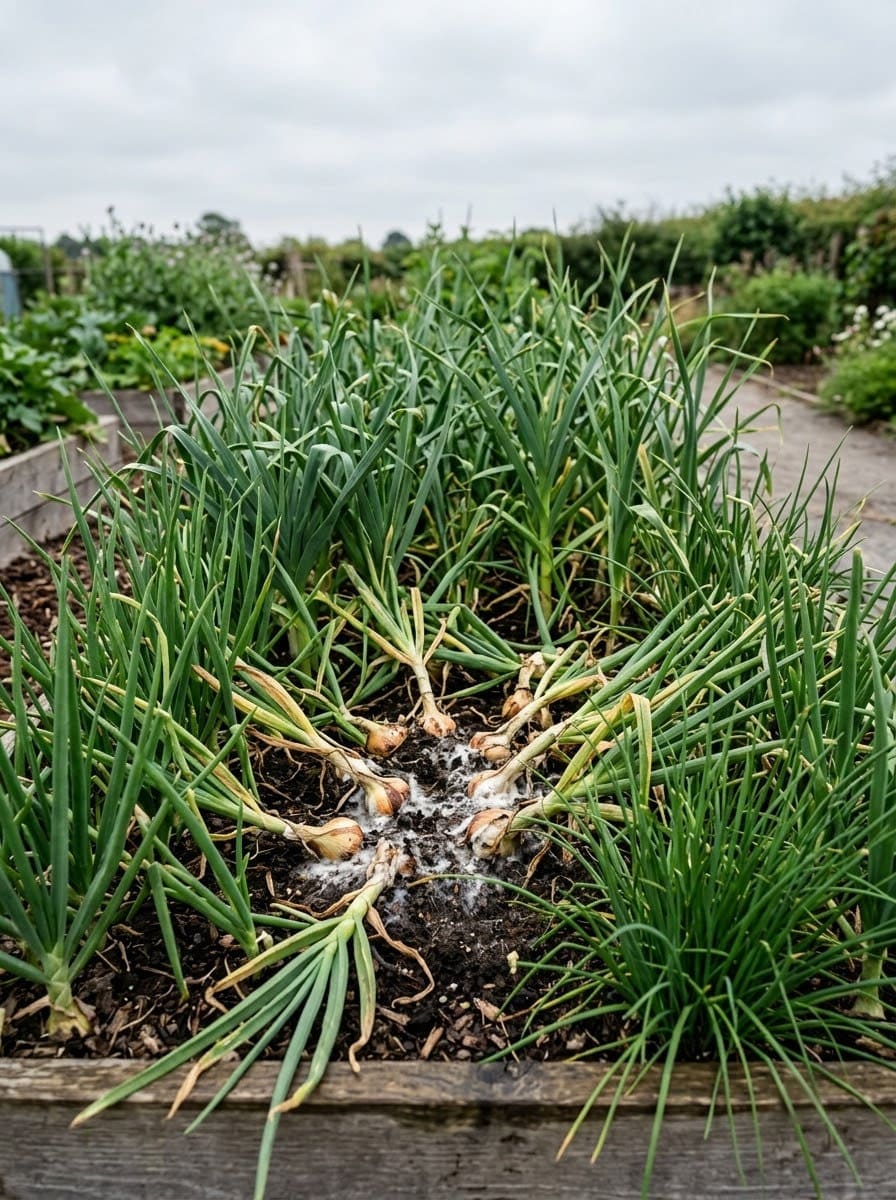
The worst of them is white rot. University of Maine Extension names the fungus Stromatinia cepivorum and says “all Allium-family plants can be infected.” It forms tiny black resting bodies, about the size of a poppy seed, that sit in the soil and wait.
They wait a long time. Per Maine Extension, white rot can “render a field unusable for garlic or onion production for as long as 40 years,” and “crop rotation is of limited use” because the resting bodies last so long. There’s no fungicide for home gardeners and no resistant variety.
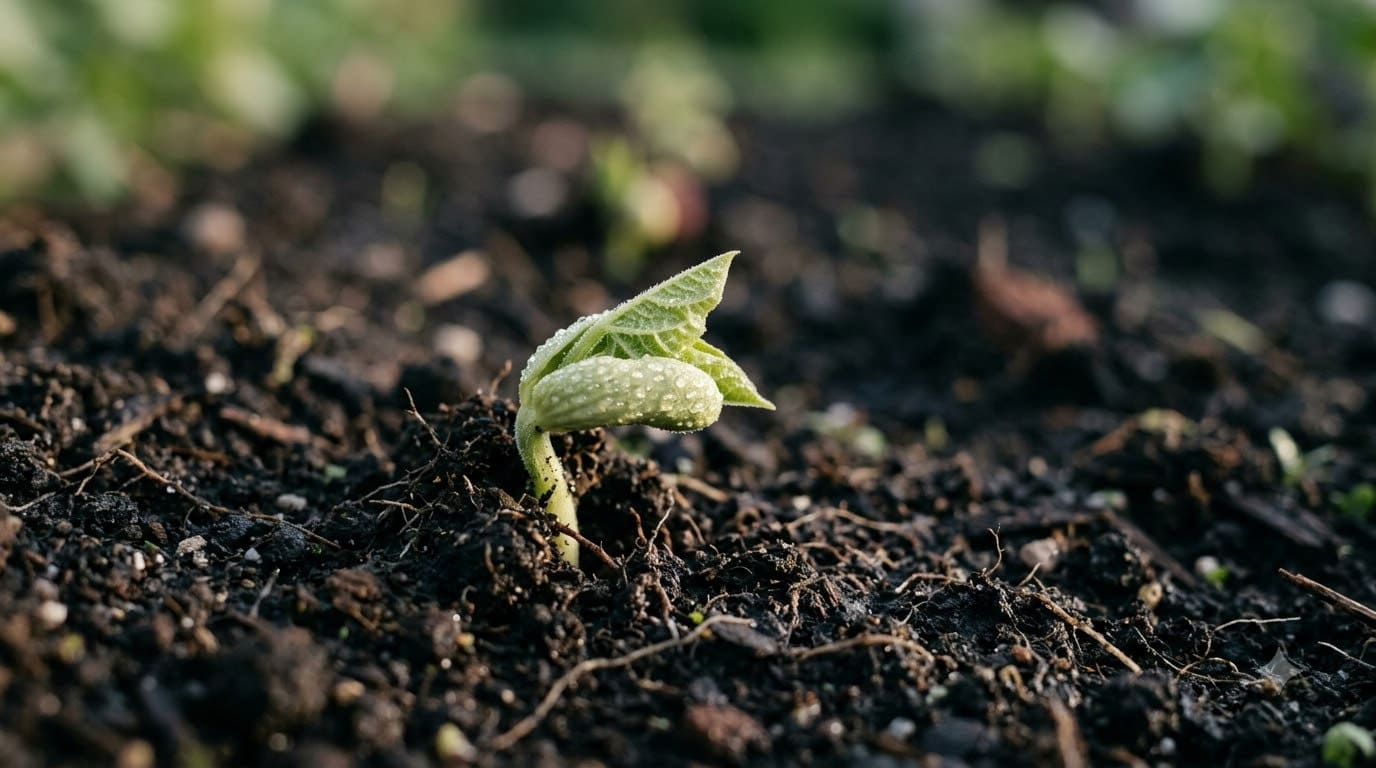
A dense allium block also feeds onion maggot, thrips, downy mildew, pink root, and Fusarium basal rot, all of which spread faster the closer the plants sit.
The average homeowner spends $616/year on yard fixes that don't address the real problem. Find out what yours actually is — before you spend another dollar.
Take the Free QuizThe fix: don’t grow your entire allium collection in one bed. Spread onions, garlic, leeks, and chives across the garden, rotate the spots every year, and only ever plant clean, certified sets and seed garlic.
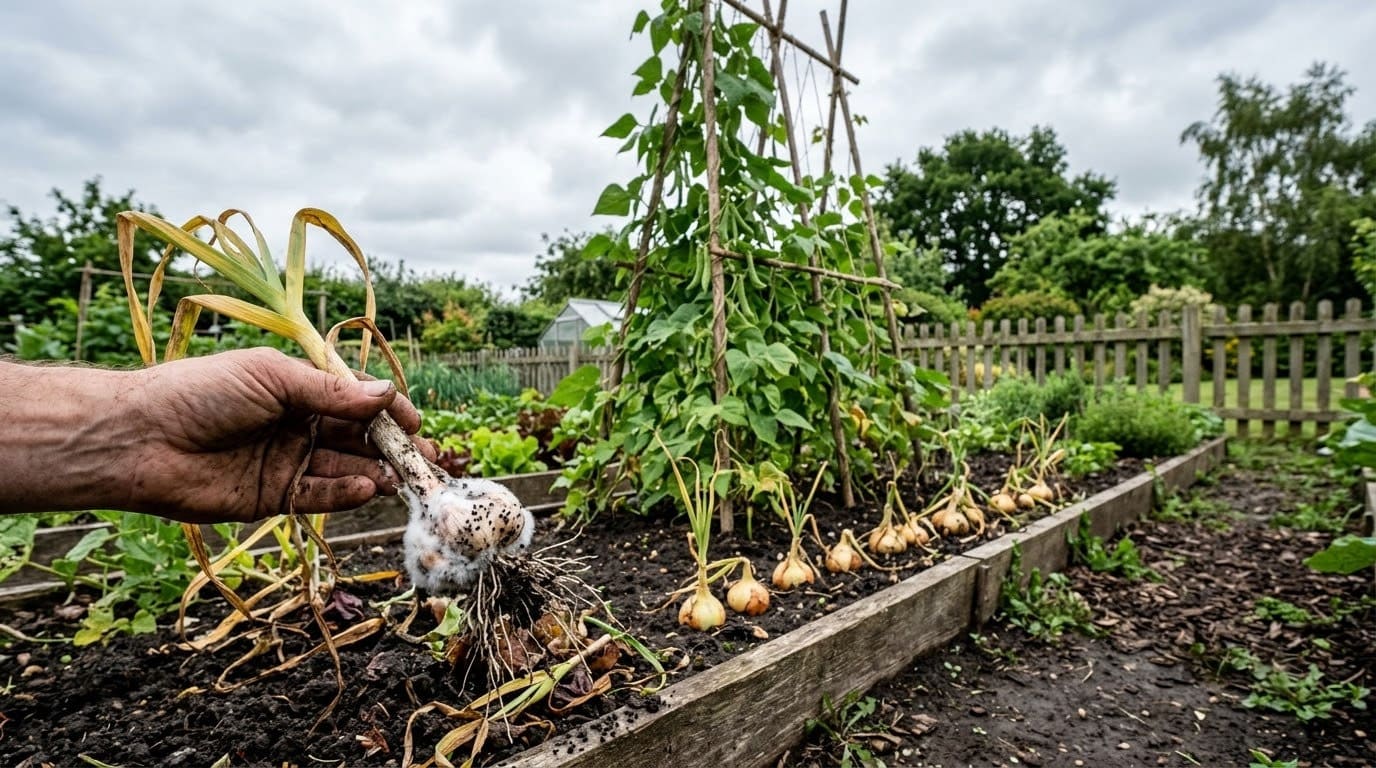
Already planted: if bulbs are rotting at the base with white fluffy growth, that’s white rot, and that soil is compromised for alliums for years. Pull and bag every affected plant, clean your tools, and move future alliums to a bed that’s never grown them. Planting garlic starts with sourcing disease-free cloves.
2. Beans
Beans and onions are the classic “never plant together” pairing, and the usual reason given is wrong.
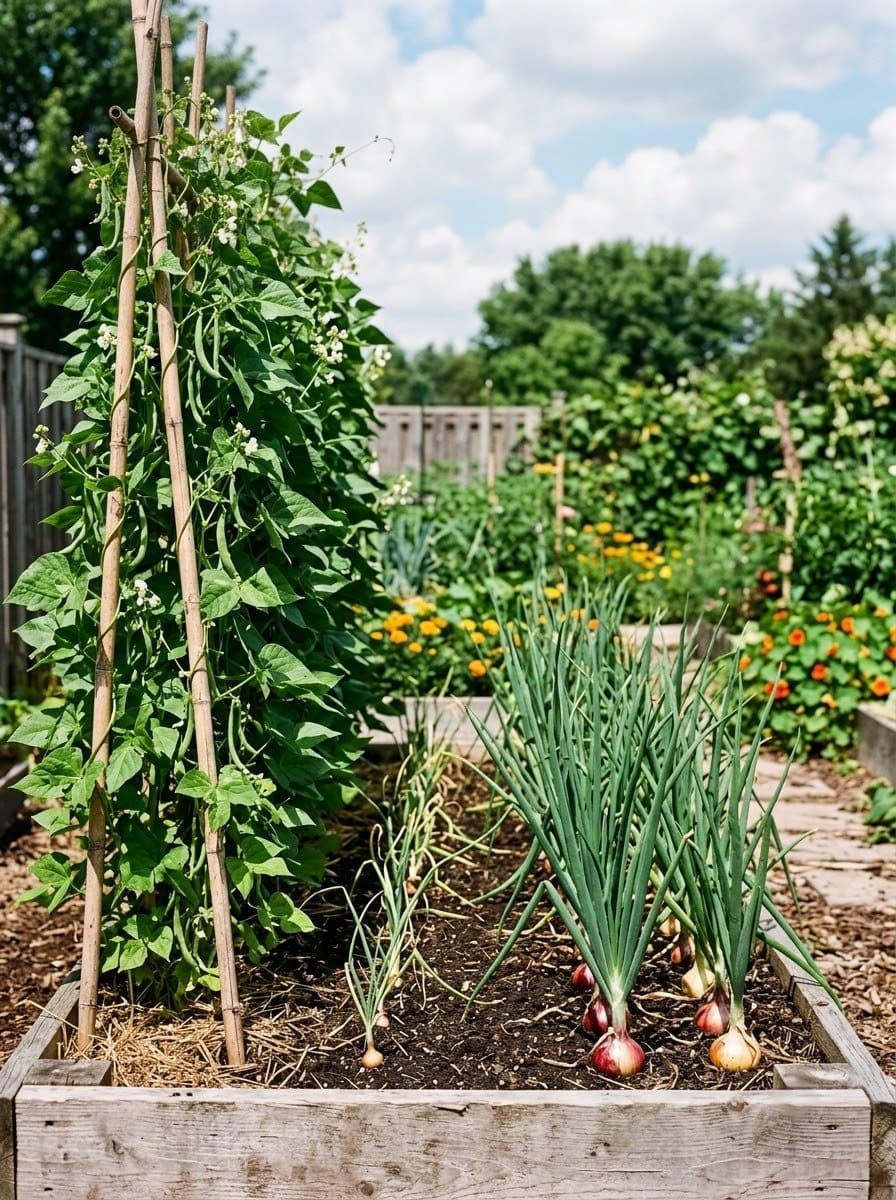
The old claim is that onions release compounds that kill the nitrogen-fixing bacteria on bean roots. Trials haven’t backed that up, and beans nodulate fine next to onions in practice.
What does happen is shade. A pole bean grows several feet in a season and blocks the sun from a low onion row. Bush beans are less of a problem, but a solid block of them still crowds the shallow onion roots.
There’s also a harvest-timing issue. Garlic and overwintered onions are often ready in early to midsummer, right when beans are hitting full size, so you’re trampling bean plants to lift bulbs from underneath them.
The fix: if you want beans and onions in the same bed, grow bush beans, not pole beans, and put any climbing beans on the north side so their shadow falls away from the alliums. A single row of bush beans a foot or two off the onion strip does no real harm.
Already planted: it’s not an emergency, and nothing is poisoning anything. If the onions near a bean tower are small, move next year’s beans or next year’s onions so the alliums get full sun.
3. Peas
Peas carry the same myth as beans, and the same real issue on a shorter clock.
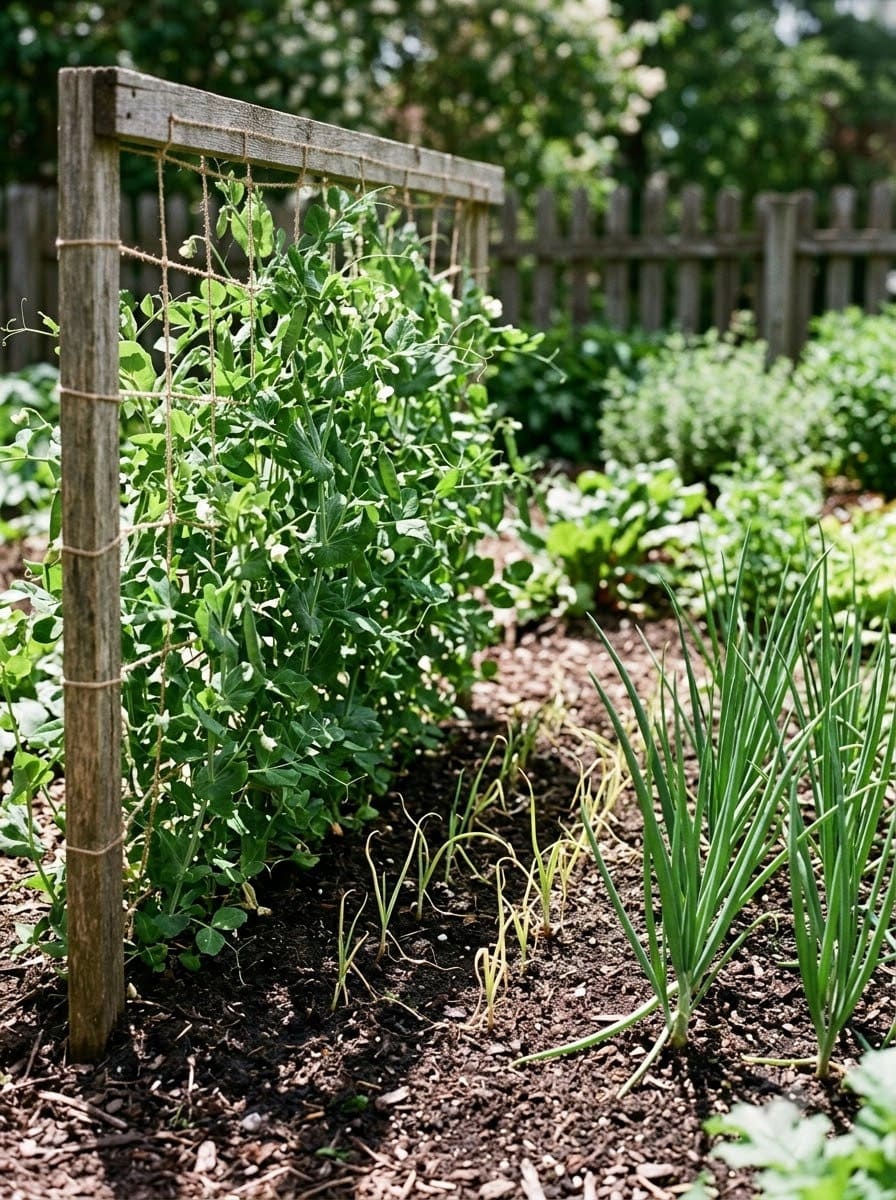
Peas are a cool-season crop, so they’re up and climbing early, right when spring-planted onions are trying to establish. The pea trellis shades the onion bed during the weeks the onion most needs light to build leaf area.
There’s no evidence peas suffer any chemical harm from the onions either way.
The fix: grow peas on a trellis set well clear of the onion row, or time it so the peas finish and come out before the onions hit their main growth. Pea trellis setups that run north to south shade the least.
Peas actually make a decent pre-crop for a bed you’ll plant with garlic in fall. They fix a little nitrogen, they’re gone by late summer, and the garlic goes in with a clean start.
Already planted: pull the pea vines once they’re done cropping to open the light back up for the onions. The alliums can still catch up if it’s early enough in the season.
4. Asparagus
Asparagus is a problem because it’s permanent, hungry, and rooted deep and wide.
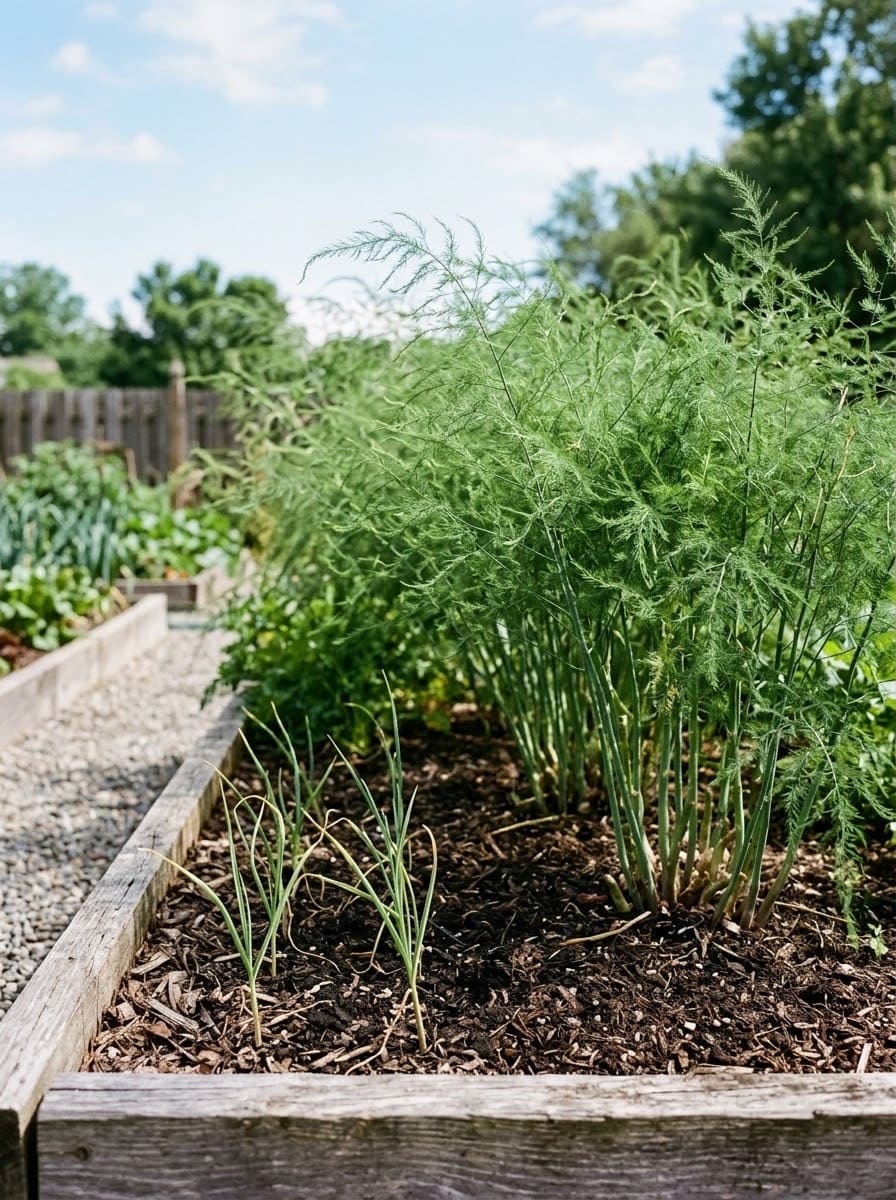
An asparagus crown sends roots several feet down and out, and it feeds heavily every year. Garlic and onions planted in or beside that bed are competing for water and nutrients in the same top layer, against a plant that was there first and isn’t going anywhere.
You also can’t rotate alliums out of an asparagus bed, which matters given the white rot risk.
The fix: keep onions and garlic out of the asparagus bed entirely, and don’t run an allium row right along its edge where the crown’s roots reach.
Already planted: move the alliums to an open bed of their own this season. A garlic plant in an asparagus root zone rarely sizes up. Growing asparagus works best as a dedicated permanent bed anyway.
5. Sage, rosemary, and other Mediterranean herbs
Sage and rosemary aren’t a disease or pest threat to alliums. They just want a different kind of soil.
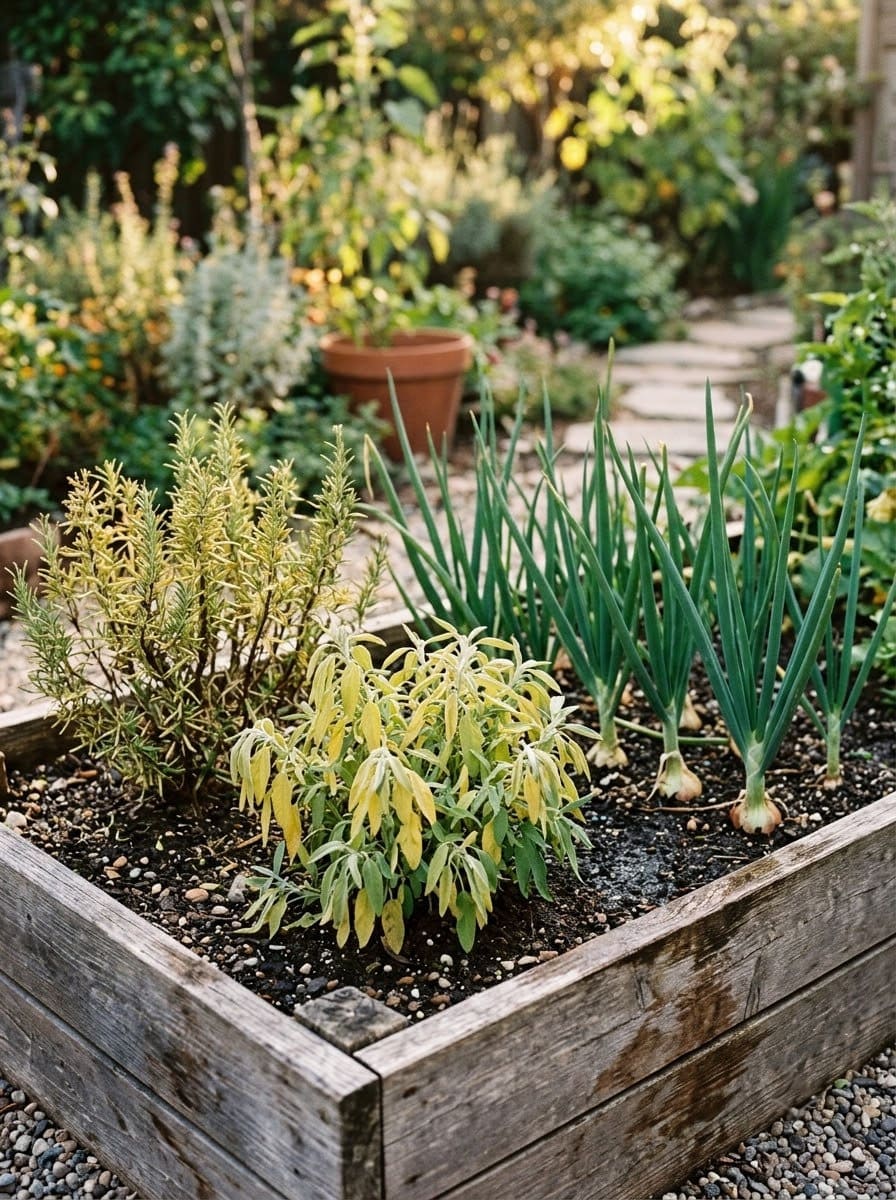
Onions and garlic want steady moisture and fertile ground, especially while the bulbs are swelling. Sage, rosemary, thyme, and lavender want lean, gritty soil that dries between waterings. Water the bed for the onion and the herbs sit wet and rot at the root.
The fix: keep the woody Mediterranean herbs in their own dry, sharply drained bed or in pots. Carrots and beets are far better low companions for an onion row.
Already planted: if the rosemary looks yellow and limp in a well-watered onion bed, it’s drowning. Lift it into gritty soil. This is the same water clash we covered with rosemary in the herb garden.
6. Fennel
Fennel is the herb that chemically suppresses whatever grows near it, alliums included.
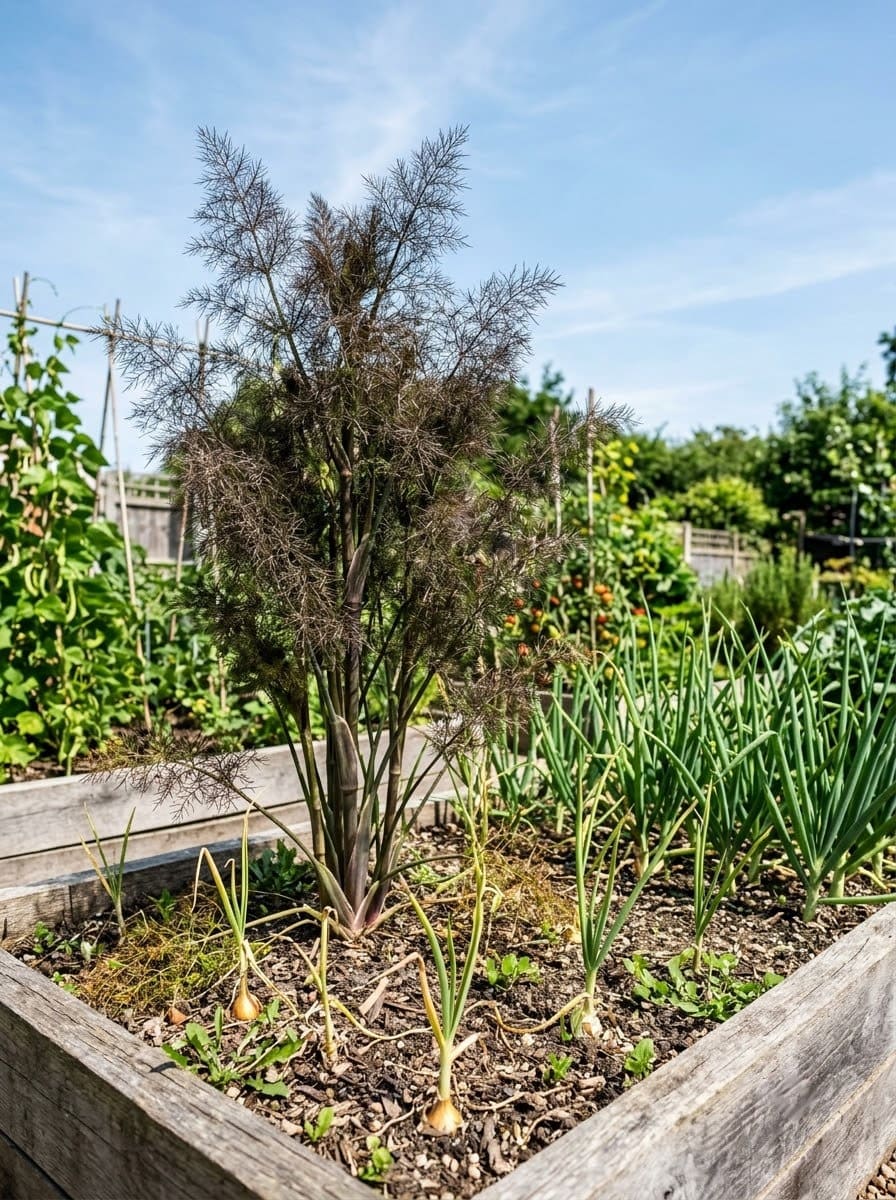
Fennel releases allelopathic compounds through its roots and its decaying leaves. A study on the allelopathic potential of fennel found its extracts sharply cut germination and seedling growth, with crop plants more sensitive than the weeds tested.
A poor competitor like an onion has no way to shrug that off.
The fix: grow fennel in its own bed or a large container, as far from the onion and garlic rows as your garden allows.
Already planted: move one of the two. Don’t spend weeks adjusting water and feed first. Our fennel guide covers the container-versus-bed call, and fennel earns a solo spot on almost every companion list for a reason.
7. Mint
Mint overruns any bed it can reach, and a shallow-rooted onion can’t hold its ground.
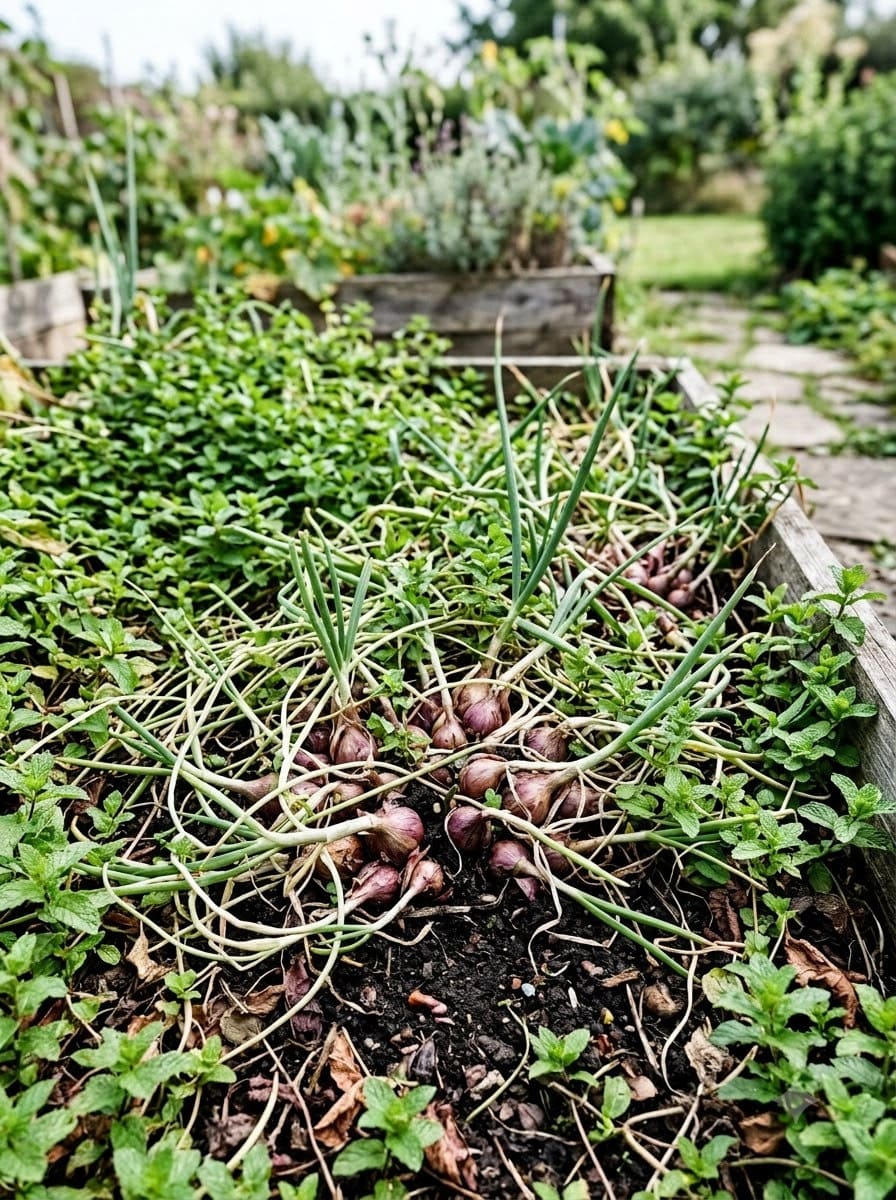
Mint spreads by rhizomes, underground stems that push sideways and root wherever they land. Utah State University Extension says containing it takes a barrier “3 to 4 inches above and 10 to 15 inches below the soil surface.” Mint also holds moisture at the surface, and a damp, crowded onion base is where neck rot and bulb rot start.
The fix: never plant mint in the ground near vegetables. Grow it in a container on a hard surface, since runners escape through drainage holes.
Already planted: plan on a full season of pulling every mint runner and root piece, because mint regrows from fragments. Growing mint properly means potting it from the start.
8. Corn
Corn does to an onion bed what a pole bean does, only bigger and for longer.
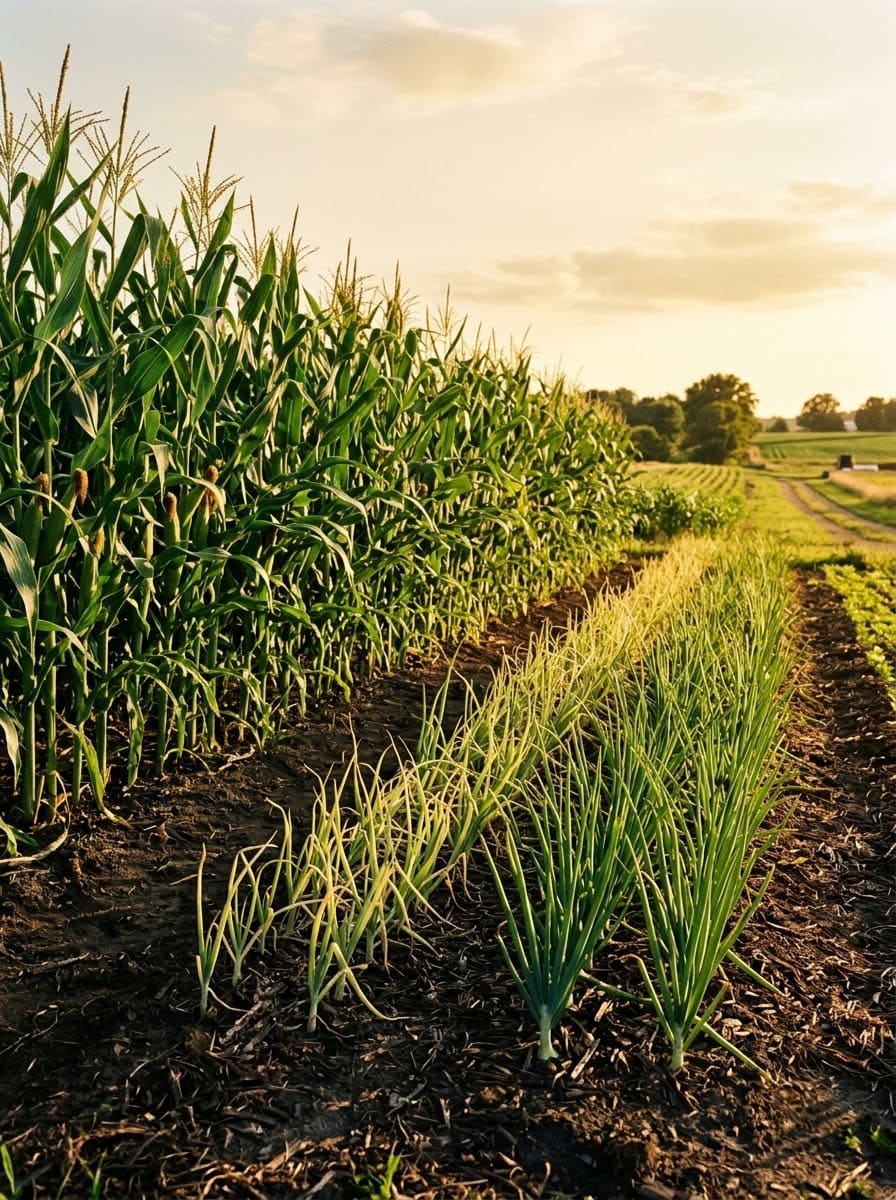
Corn grows tall fast and holds that height for months, shading anything short beside it. It’s also a heavy nitrogen feeder, pulling from the same soil an onion needs to build leaves and a bulb.
The fix: grow corn on the opposite side of the garden from the alliums, or at least far enough that its afternoon shadow never crosses the onion row.
Already planted: if the onions along a corn block are small and stretched, the shade is why. Note it for next year’s layout. There’s nothing to fix on the current crop except to keep the onions watered and weeded.
9. Squash, pumpkins, and melons
Sprawling vines don’t compete with an onion so much as they bury it.
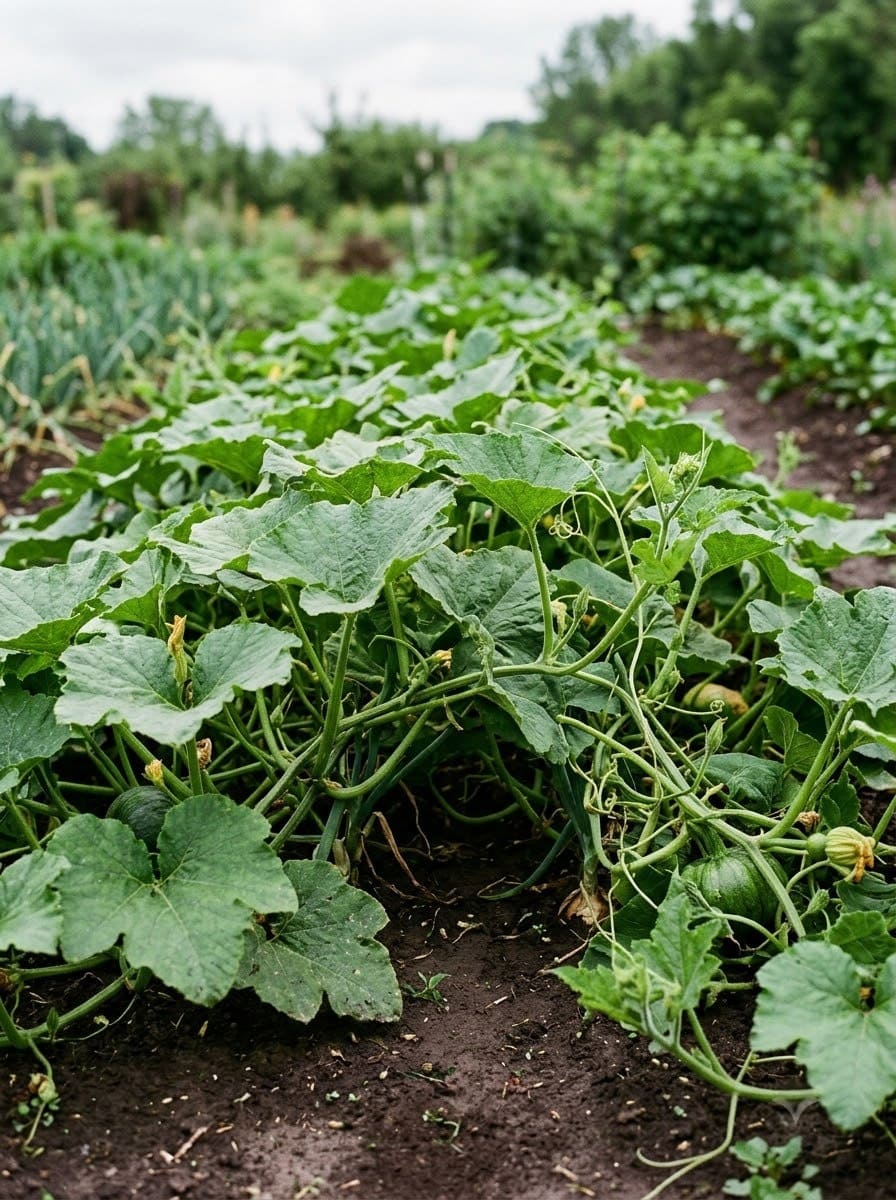
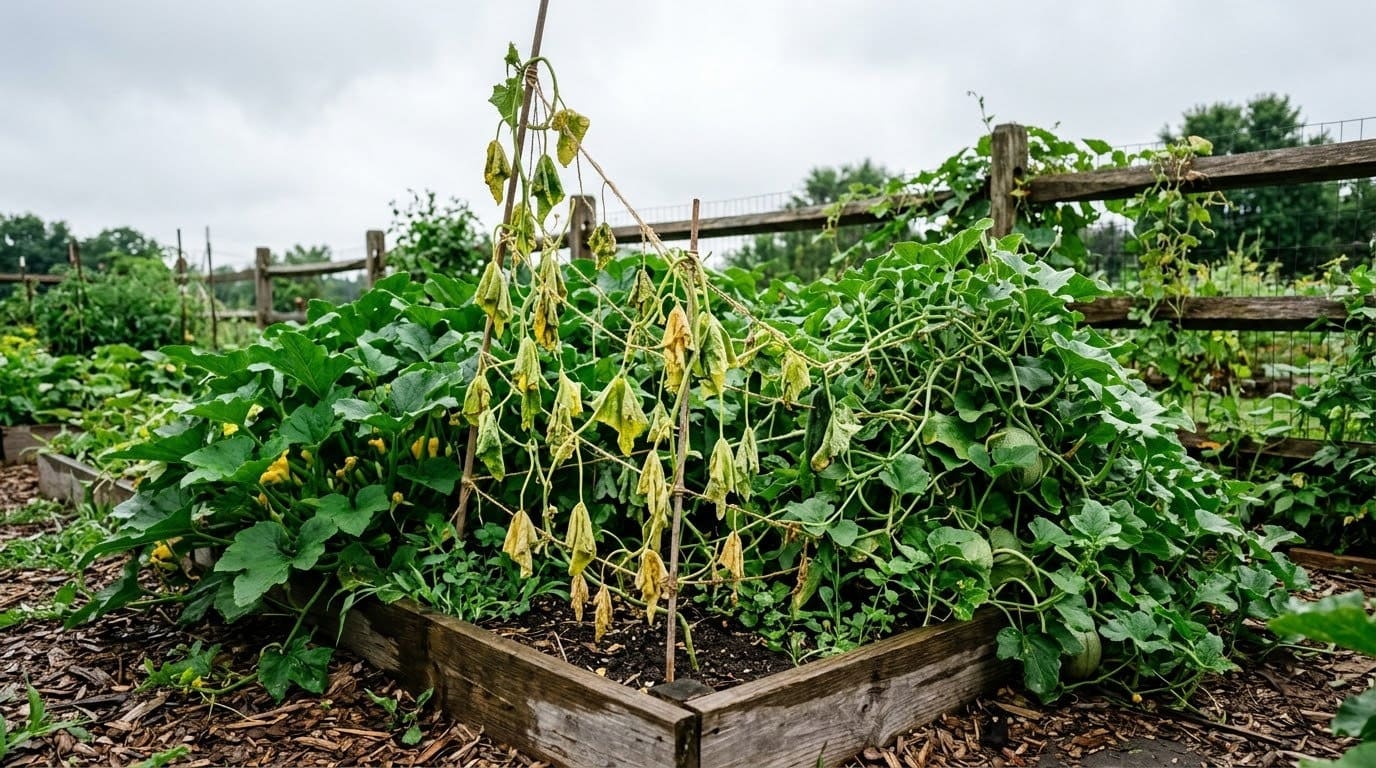
A squash or pumpkin vine can run 10 feet or more, and it lays a solid blanket of big leaves over everything in its path. An onion or a garlic plant underneath gets no light at all, and it can’t grow tall enough to reach past the leaves.
The fix: grow squash, pumpkins, and melons on a trellis or in a bed with room to sprawl away from the alliums. Keep the onion and garlic rows on the upwind edge where vines aren’t heading.
Already planted: lift the vines and redirect them off the onion row, or trellis them. The onions may recover if you catch it before the bed is fully covered. Our rundown of what not to plant with cucumbers covers the same sprawl problem from the cucurbit side.
What to plant with onions and garlic instead
Onions and garlic do have neighbors that work, mostly low, quick crops that don’t shade them.
| Plant | Why it works |
|---|---|
| Carrots | The classic pairing, each one’s scent confuses the other’s root fly |
| Beets and lettuce | Shallow and quick, harvested before garlic bulbs up |
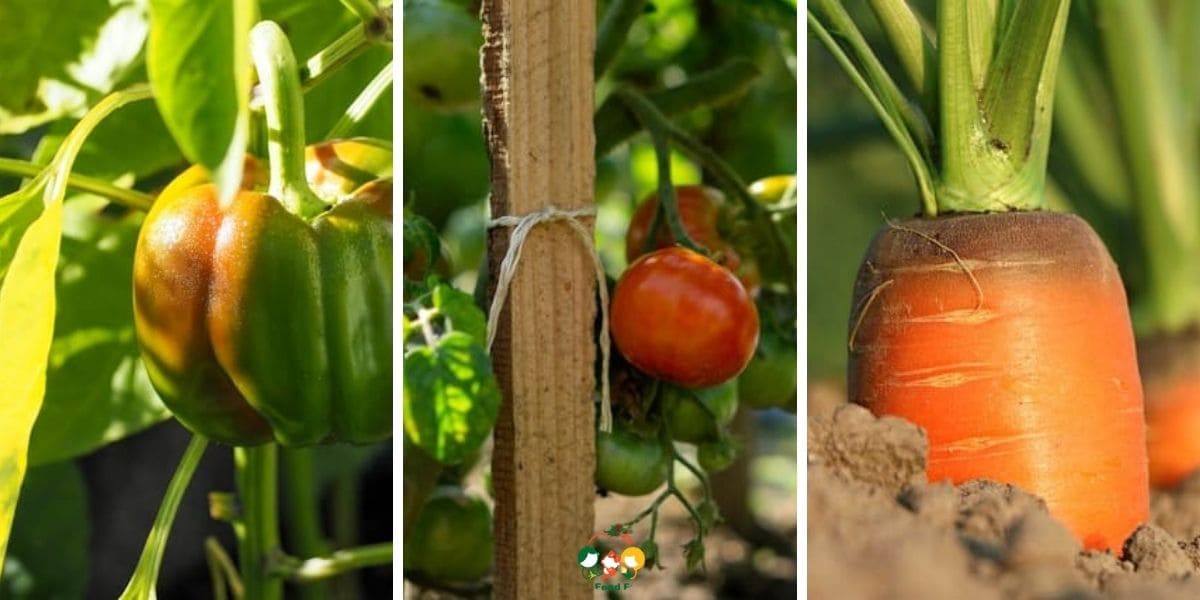
| Tomatoes and peppers | Upright, cast little shade on a low row, and onions deter some of their pests |
| Strawberries | Alliums are said to deter aphids and spider mites off strawberry plants |
| Chamomile and summer savory | Old companions said to improve onion flavor and vigor |
| Cabbage family | Onions may help mask brassicas from cabbage pests, though the evidence is mixed |
What we’d do differently: real talk from the research
Spread the alliums out. This is the one that actually matters. We used to grow all the garlic, onions, and leeks in a single tidy block, and it worked fine until the year white rot showed up.
Now that bed is off limits for alliums, and Maine Extension’s 40-year figure is not an exaggeration. Small clumps in several beds, rotated every year, is the safer system.
Beans and peas didn’t poison your onions. They shaded them. Every time we’ve seen a small onion blamed on a nearby legume, the legume was a tall climber and the onion was in its shadow. Keep the climbing stuff on the north side and the problem goes away.
Never let mint or a squash vine near an onion row. An onion has no defense against either one. A squash vine covers it in a week, and mint takes the whole bed in a season. Both need to be somewhere the alliums aren’t.
Mulch thin and stay on the weeding. UC IPM is blunt that onions lose badly to weed competition. A thin layer of straw and a quick shallow hoe every week or two is the difference between a real onion and a golf ball. Don’t pile mulch against the necks though, since that traps the moisture that starts bulb rot.
Frequently asked questions
Do onions really stop beans from fixing nitrogen?
Probably not. The claim is repeated on nearly every companion chart, but garden and field trials haven’t reliably shown alliums damaging legume nodulation, and beans nodulate normally next to onions in practice. The real reason a bean can hurt an onion is shade, since a tall climbing bean blocks the light from a low, slow-growing allium.
What is the worst thing to plant near garlic?
More garlic, or any other allium, in a dense block. It concentrates white rot, a soil fungus that per University of Maine Extension can make ground unusable for onions and garlic for up to 40 years, with no fungicide and no resistant variety. Fennel and mint are the next worst.
Can I plant onions and garlic in the same bed?
A small mixed clump is fine. A large dense block of every allium you grow is the risk, because it builds up white rot, onion maggot, thrips, and pink root all at once. Better to spread onions, garlic, leeks, and chives across several beds and rotate them yearly.
Why did my garlic rot at the base?
If the bulb went soft with white fluffy mold and small black specks in it, that’s white rot, and there’s no cure. Pull and bag every affected plant, sanitize your tools, and never plant alliums in that soil again.
Bulbs that rot without the white growth are usually Fusarium basal rot or storage Botrytis, often from a bed that stayed too wet or from mulch piled against the necks.
What can I plant with onions and garlic?
Carrots first, since the two scents confuse each other’s root flies. Beets and lettuce work as quick shallow neighbors, and upright crops like tomatoes and peppers cast little shade. Chamomile and summer savory are traditional companions.
How far apart should onions and beans be?
Far enough that the bean’s shade never falls on the onion row, which usually means a few feet and the beans on the north side. There’s no chemical reason for a buffer, only a light one, so bush beans can sit closer than pole beans.
Related Posts
- Vegetable Garden Layouts
- Herbs That Control Vegetable Garden Pests
- The Worst Garden Pests and How to Beat Them
Products We Recommend
This post contains affiliate links. We may earn a commission on qualifying purchases at no extra cost to you.
Natural Wheat Straw Mulch, compressed bale
A thin layer keeps weeds off a bed of poor-competitor onions and garlic without piling moisture against the necks.
Shop Now
Walensee Stirrup / Hula Hoe, 14-inch
Shallow weekly cultivation is the UC IPM recommendation for onions, which lose badly to weeds, and a hula hoe skims weeds without disturbing the shallow bulbs.
Shop Now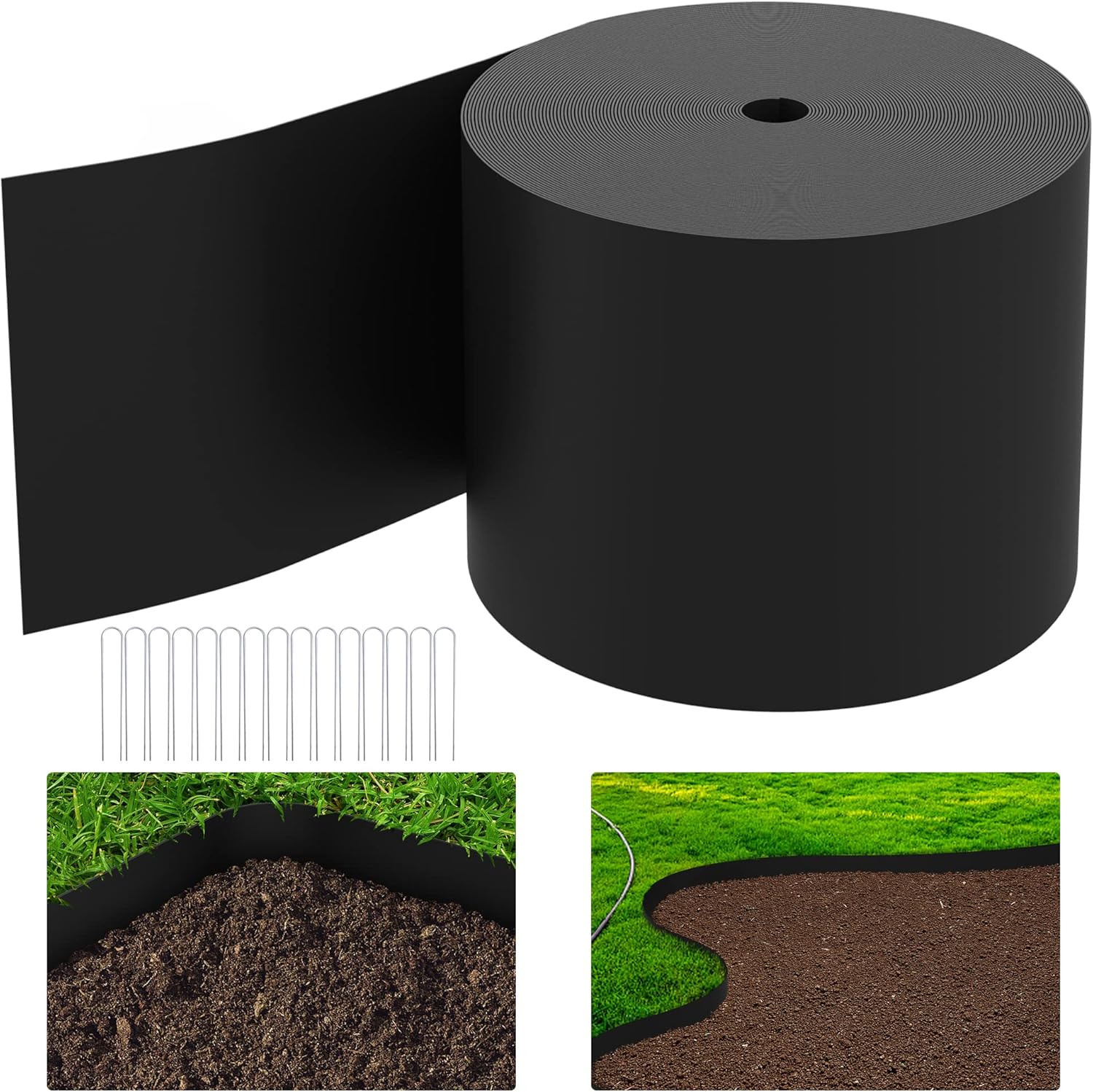
Grass Barrier Landscape Edging Coil, 50 ft, 5-inch depth
A buried barrier along the bed edge to stop mint, running grass, and squash vines from invading a row of alliums that cannot defend themselves.
Shop NowNever miss an update — choose FarmFoodFamily as your preferred source on Google.
How it works: Tap the button below to open Google's settings page, then check the box next to FarmFoodFamily.
Tap the checkbox to turn it blue — that's how you know it's set.