18 Affordable Horizontal Fence Ideas (Plus Why They Sag If You Get the Spacing Wrong)
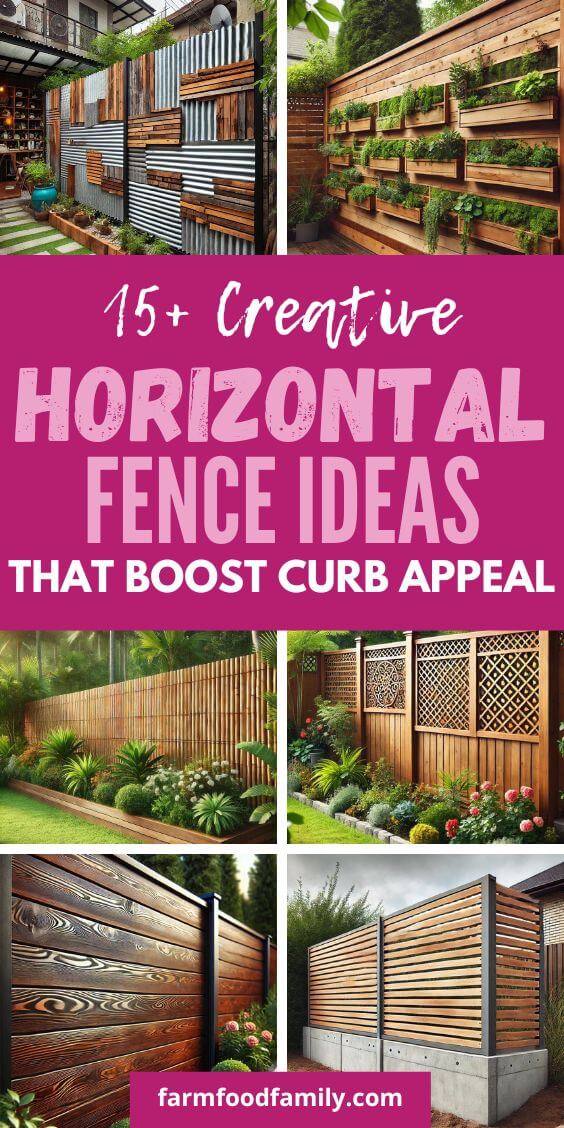
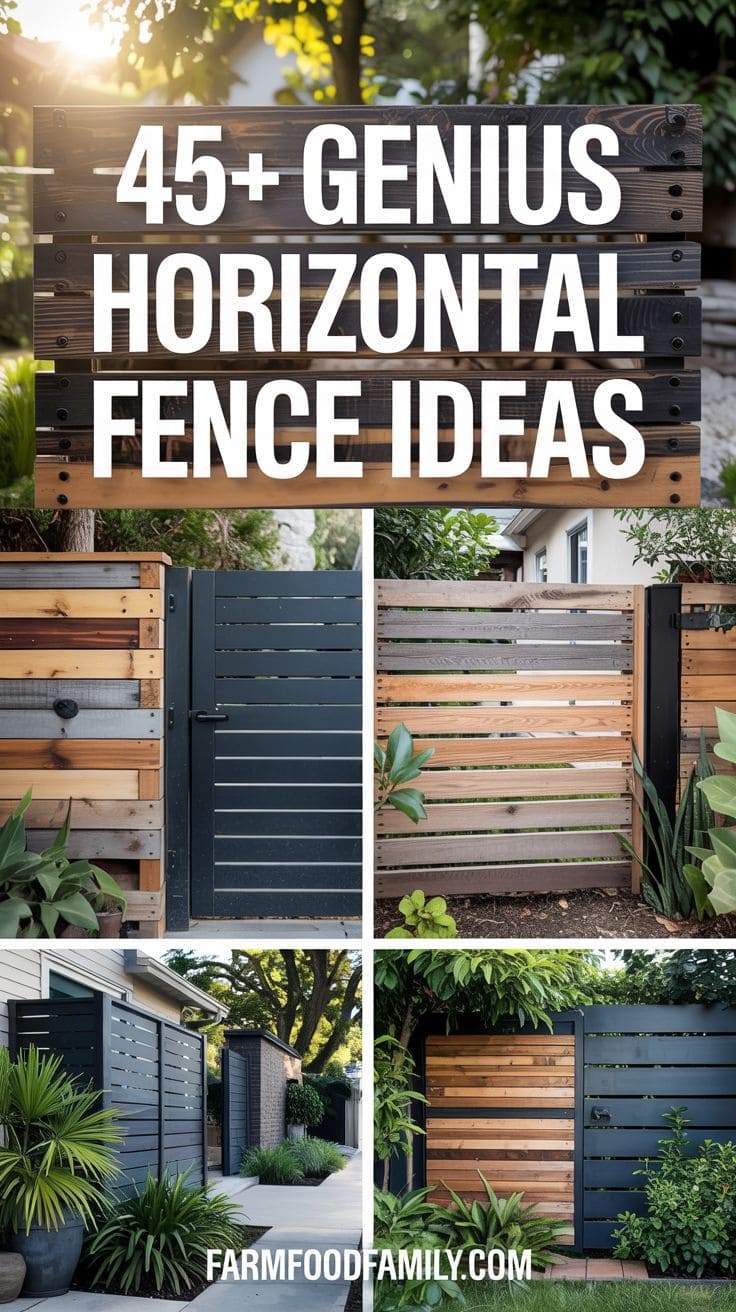
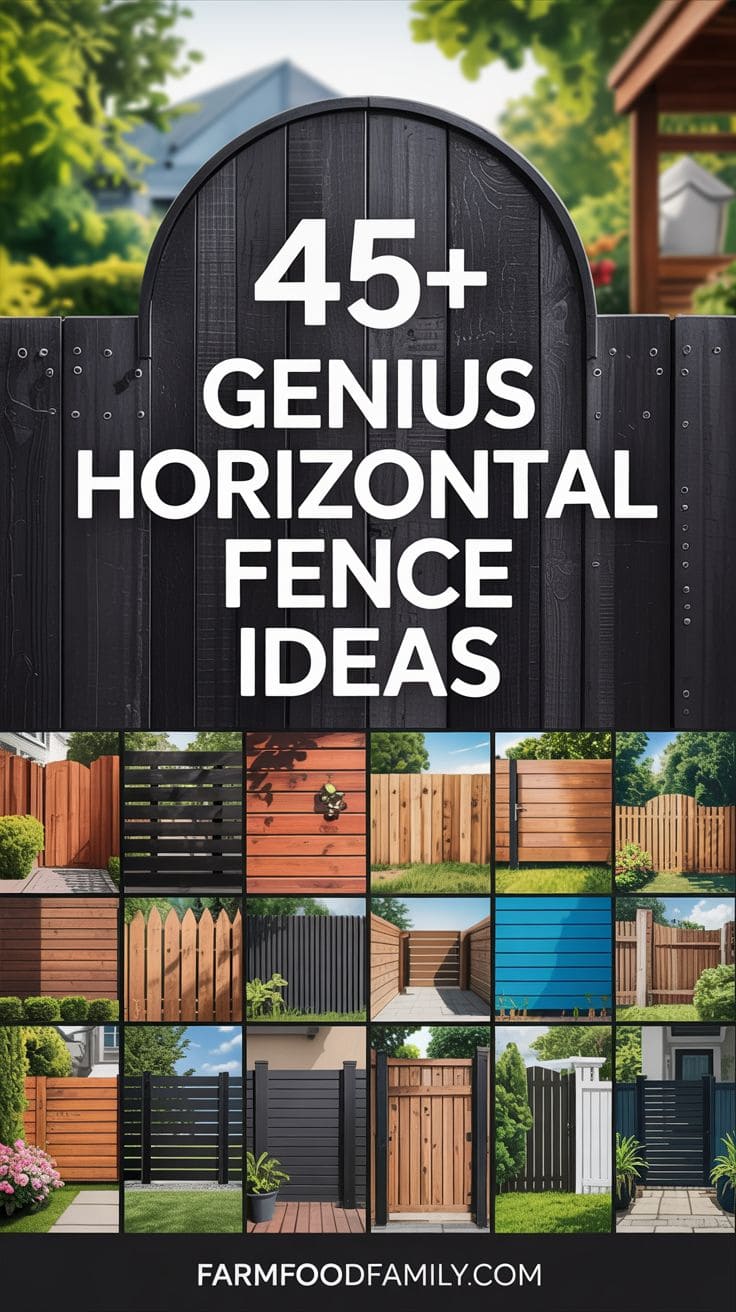
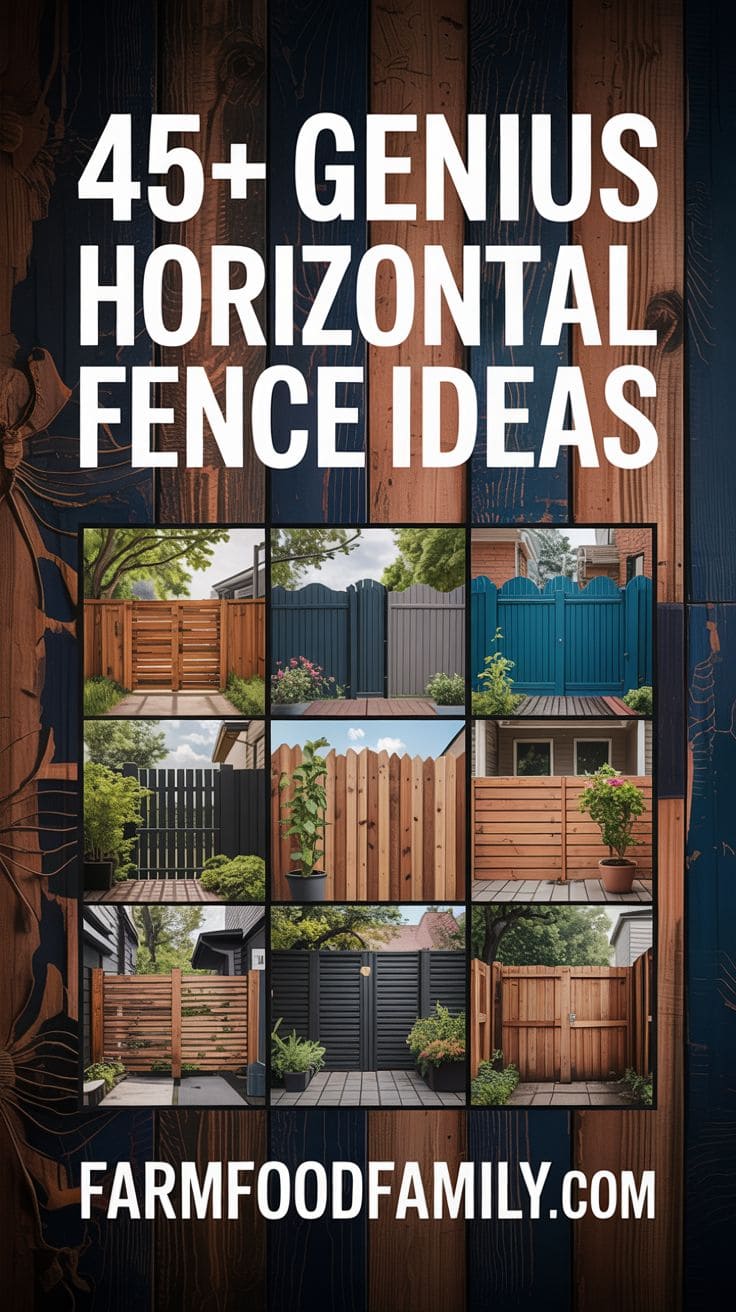
Horizontal fences have become a go-to choice for homeowners seeking a modern, streamlined look that also feels warm and grounded. Their linear layout naturally draws the eye across the yard, making outdoor spaces feel wider and more expansive. Horizontal fences are a favorite for blending privacy with beauty, offering structure without feeling too closed off….

Never miss an update — choose FarmFoodFamily as your preferred source on Google.
How it works: Tap the button below to open Google’s settings page, then check the box next to FarmFoodFamily.
Tap the checkbox to turn it blue — that’s how you know it’s set.
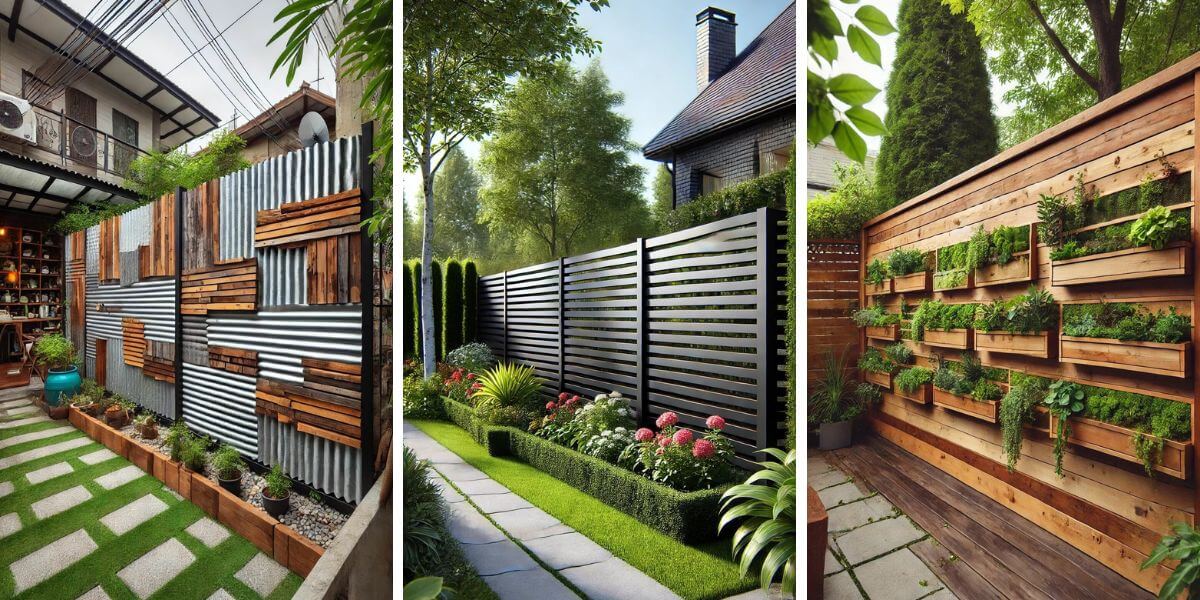
Horizontal fences have become a go-to choice for homeowners seeking a modern, streamlined look that also feels warm and grounded.
Their linear layout naturally draws the eye across the yard, making outdoor spaces feel wider and more expansive.
Horizontal fences are a favorite for blending privacy with beauty, offering structure without feeling too closed off.
These horizontal fence ideas can be customized with various materials, finishes, and design elements to suit your home’s overall vibe and color palette.
1. Why horizontal fences sag (and how to stop it)
A vertical picket fence holds its shape because each board hangs from top and bottom rails, and those rails carry the load straight down through the posts. A horizontal board fence works completely differently: each board spans unsupported between posts, carrying its own weight and wind load across that whole span, the same way a shelf sags in the middle if the brackets are too far apart.

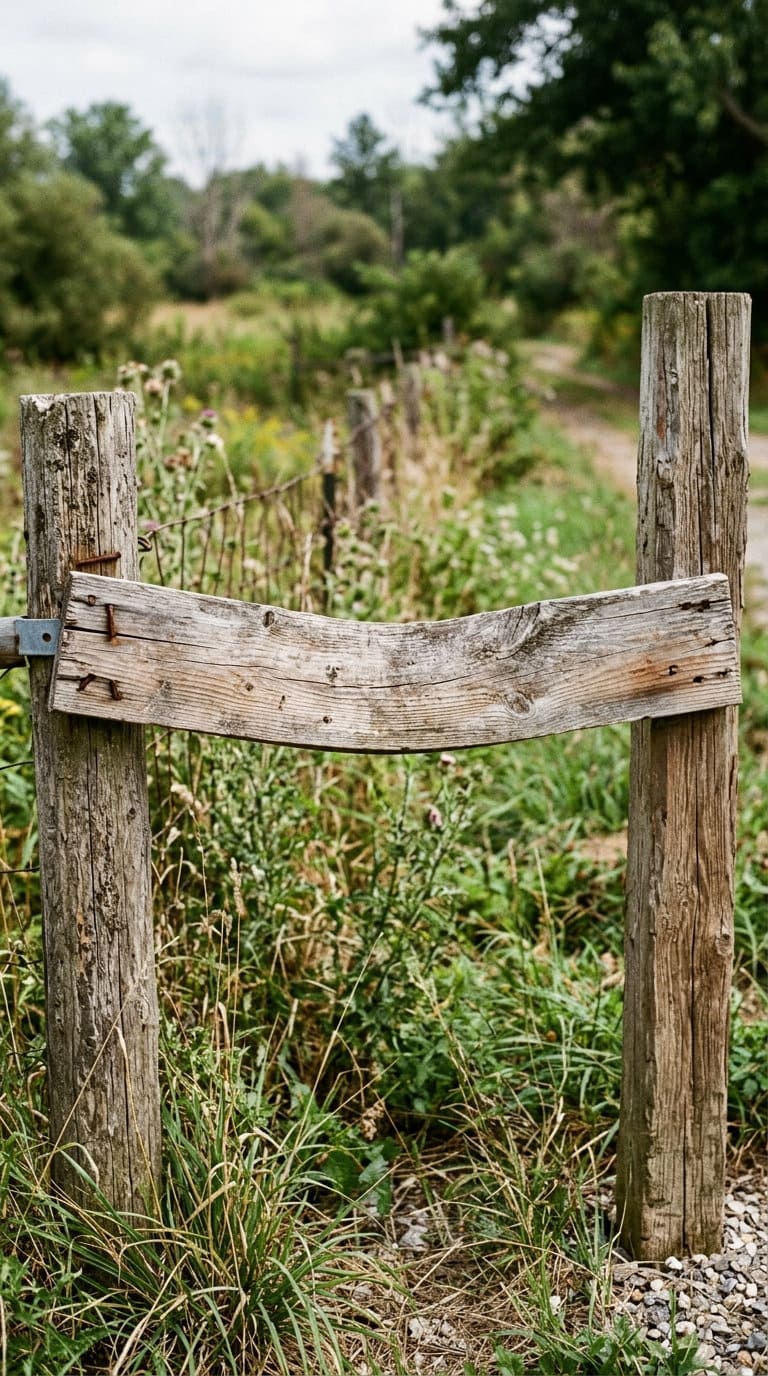
That’s why post spacing has to be tighter for a horizontal fence than a vertical one, roughly 4 to 6 feet, up to 6 to 8 feet at the outside, versus the 6 to 9 feet that’s normal for vertical fence posts. One real lumberyard-cited comparison: an 8-foot span of 1×6 cedar develops a visible sag within six months. Drop that same board to a 6-foot span and it stays straight for the life of the fence. That’s not a small difference, it’s the whole ballgame.
Answer 4 quick questions and get matched to the exact fix for your yard — drainage, budget, layout, or something else entirely.
Take the Free Quiz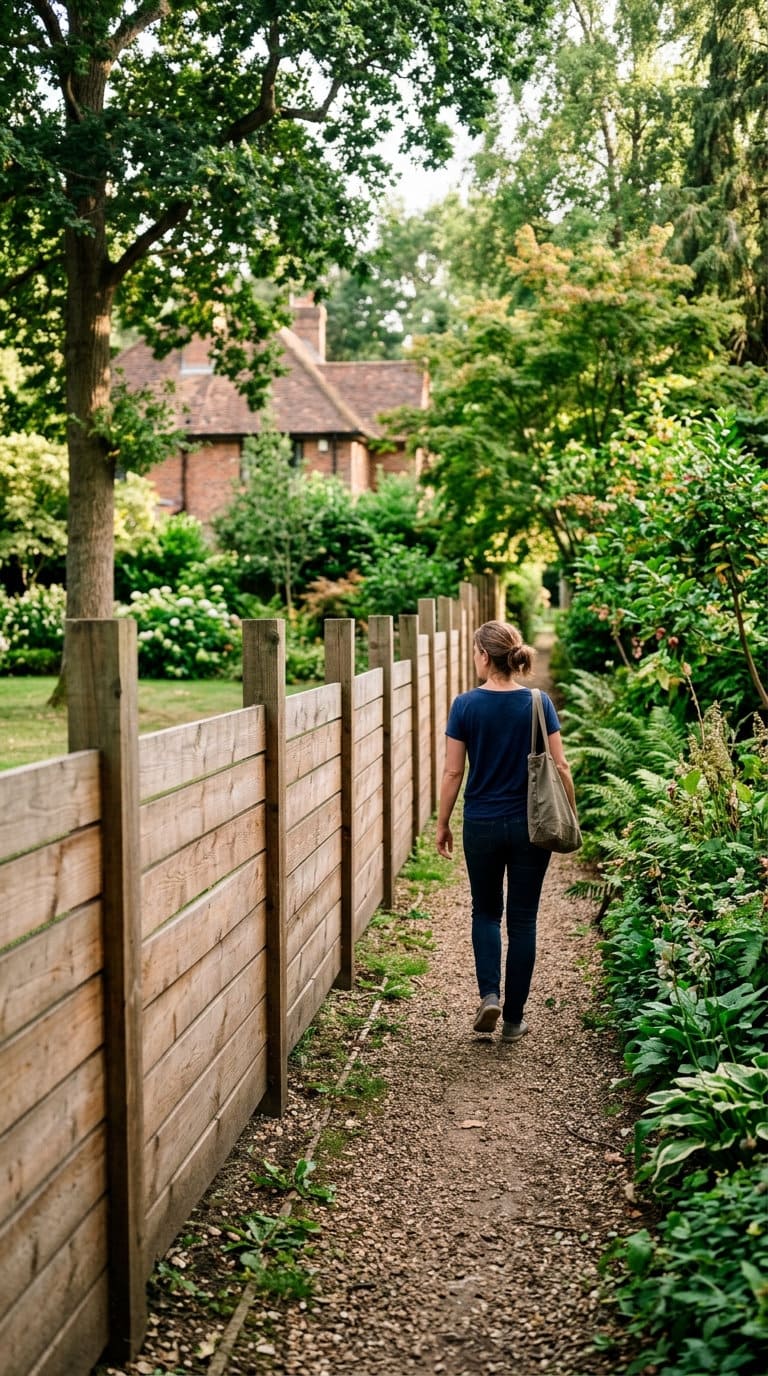
Wood movement adds a second failure mode specific to horizontal runs. Boards absorb moisture and expand, then dry out and contract, and on a horizontal top face, condensation actually builds up and accelerates rot, especially through repeated freeze-thaw cycles, a different problem than the side-to-side gap movement a vertical fence deals with.
Lumber choice matters more here too. Pressure-treated Southern Pine graded No. 1 or No. 2 is the standard reference for wet-service conditions, and it’s worth stepping up to thicker 2×6 stock instead of thin 1x pickets specifically because of the longer unsupported spans a horizontal design requires.
All of this adds real cost. Horizontal fencing typically runs 10 to 20% more than vertical, driven by the heavier lumber grade and the more exacting labor, every board has to be leveled and gapped precisely, since a horizontal line makes any misalignment immediately obvious in a way vertical pickets forgive more easily.
One more thing worth knowing if you’re in an HOA community: horizontal fencing sometimes runs into pushback not because it performs worse, but because older HOA standards simply don’t define it, it isn’t explicitly banned, it’s just unfamiliar. Worth checking your CC&Rs and asking directly rather than assuming either way.
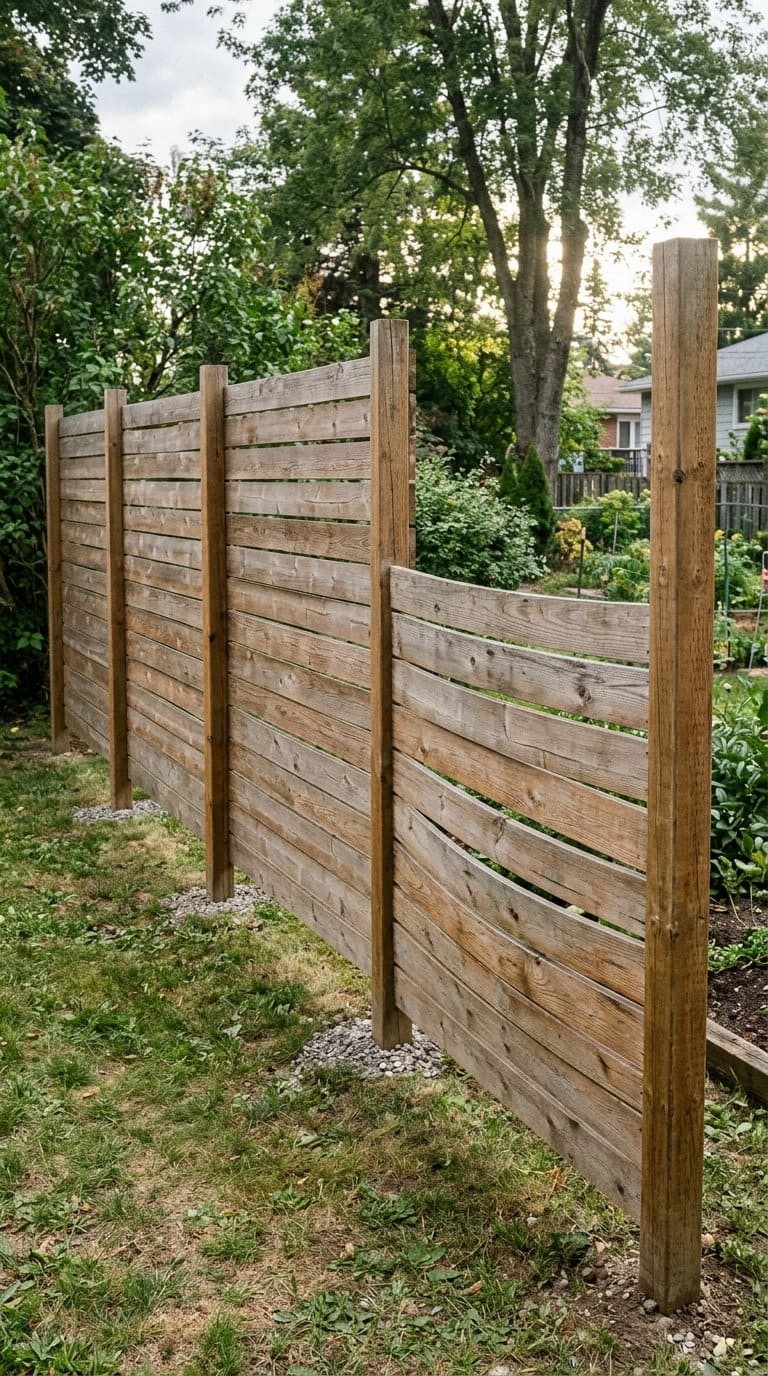
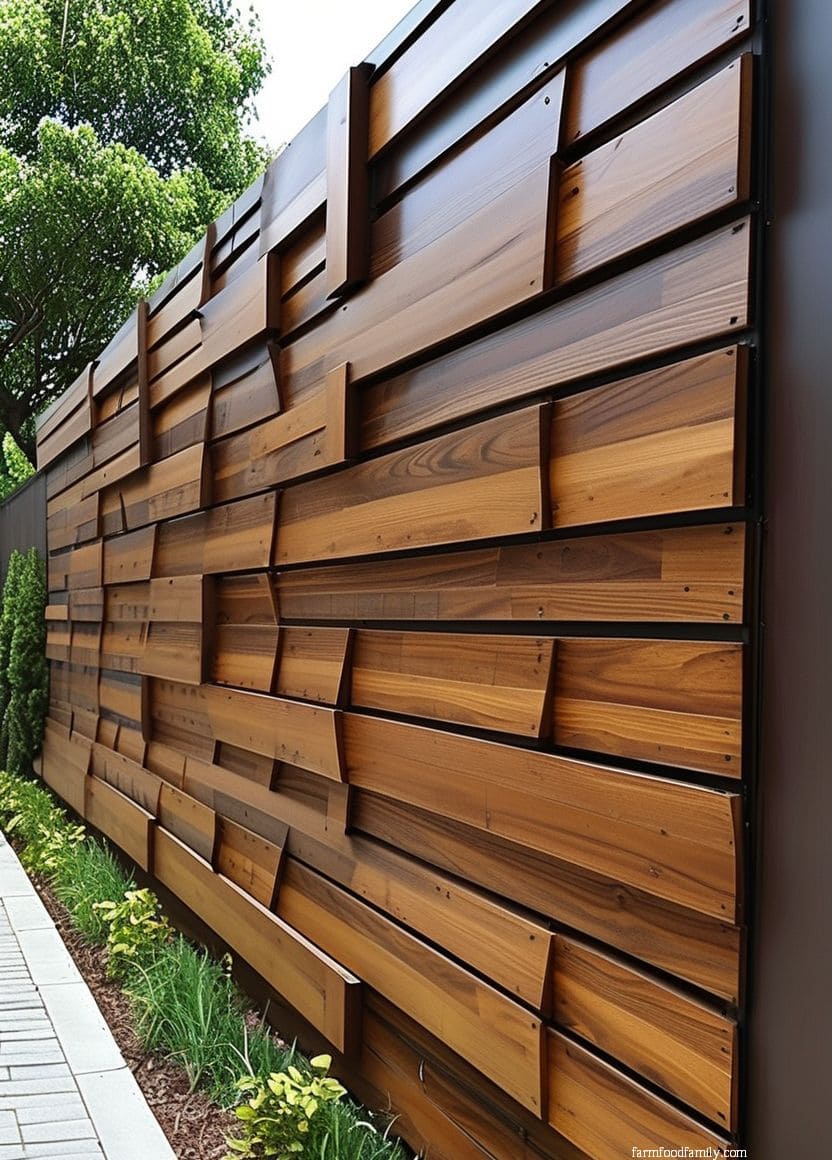
2. Staggered Horizontal Boards to Provide Airflow and Texture
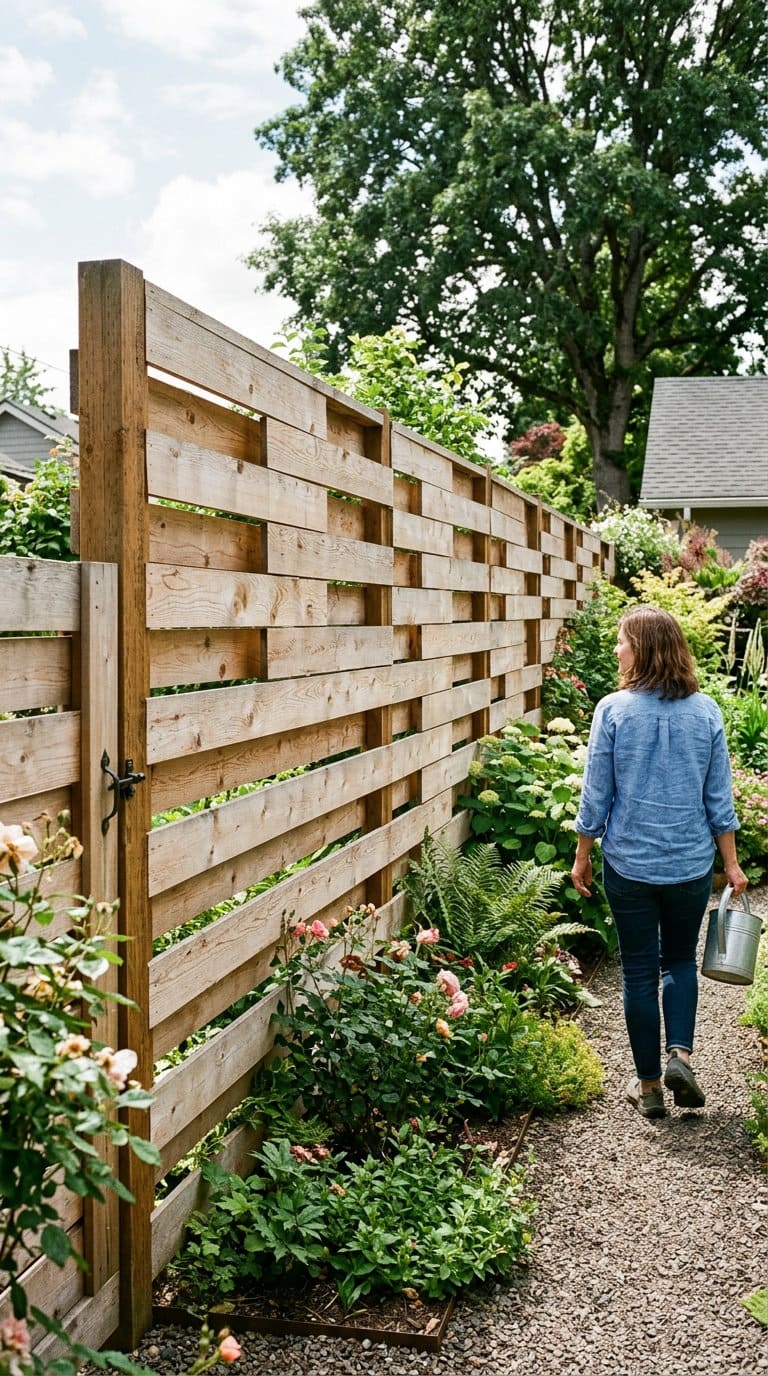
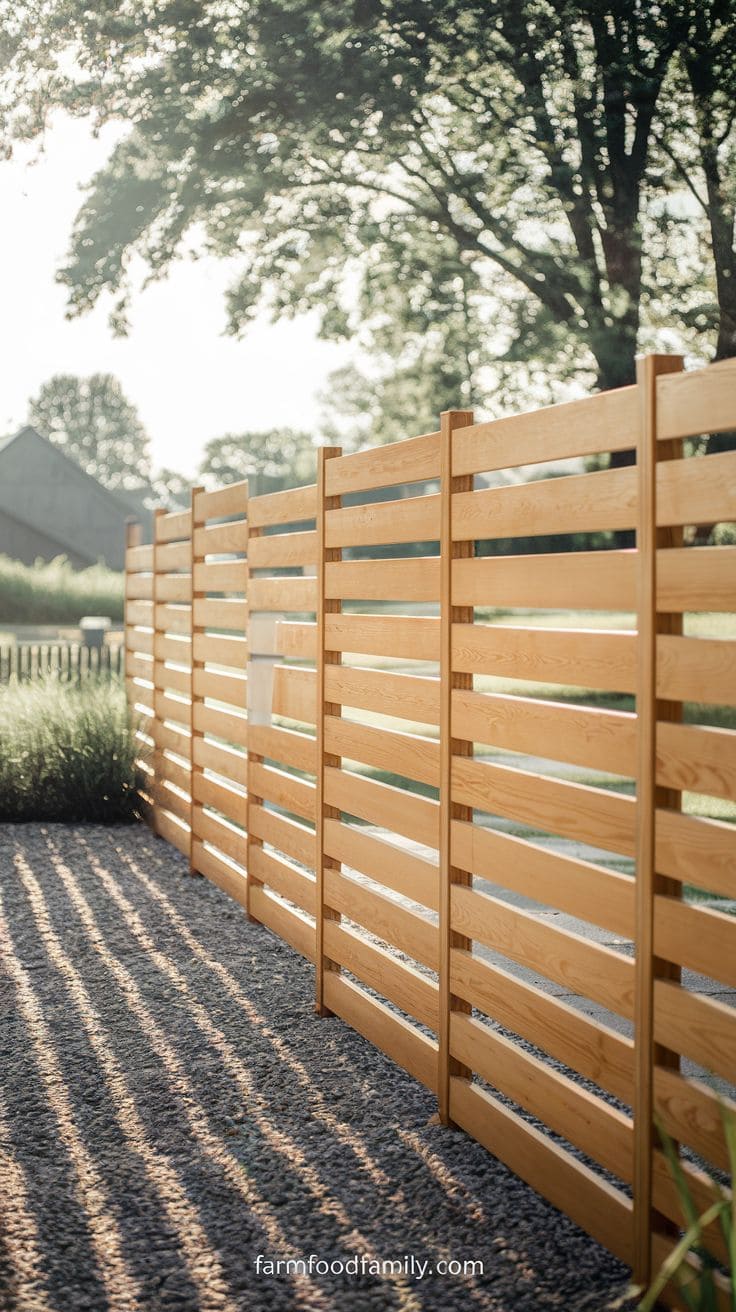
Alternating boards front-to-back in a staggered pattern lets air and partial light through while still blocking direct sightlines, a middle ground between a solid privacy fence and an open slat design.
The stagger also adds real visual texture, from an angle you see the depth of the offset boards, straight on it reads as a clean, continuous line.
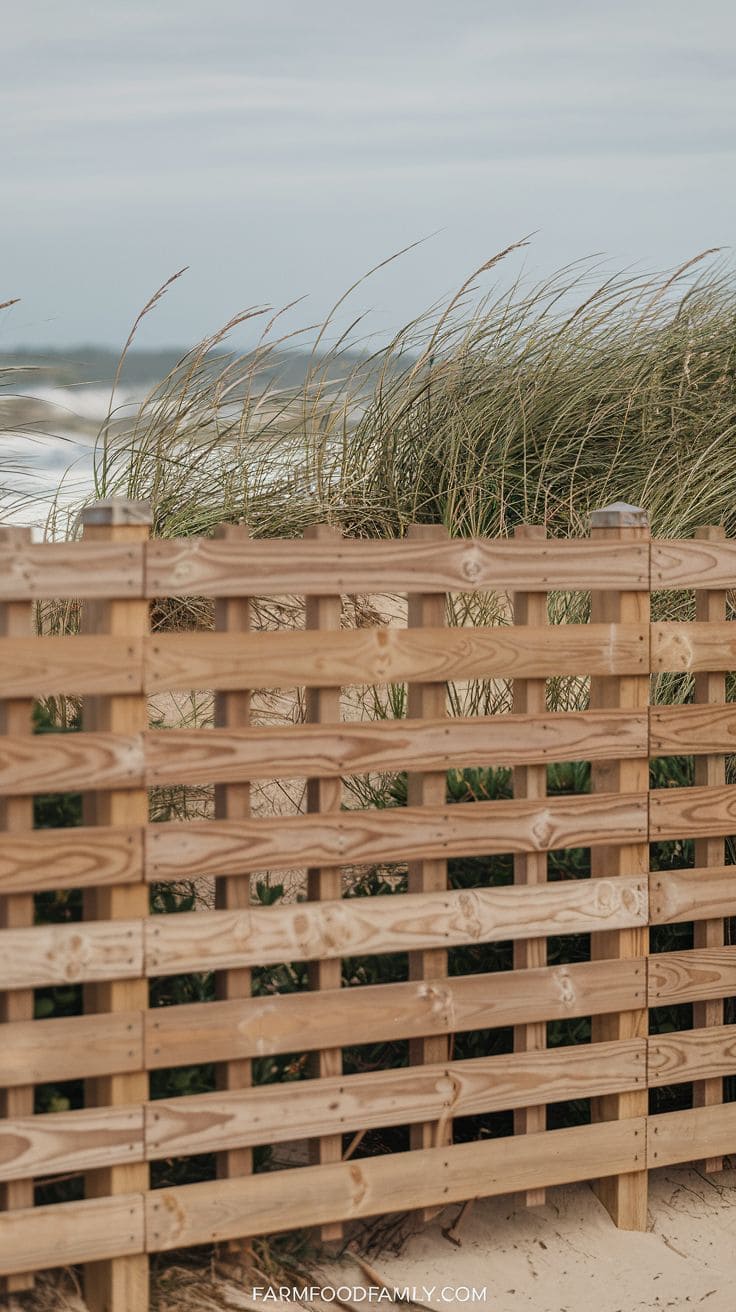
Staggered horizontal boards with tiny gaps between them can give a more organic, dynamic aspect.
Most yard problems trace back to one specific, fixable cause. Find yours in 4 quick questions.
Take the Free QuizThis design allows air to flow through, which is extremely handy in windy places or when you want a fence that doesn’t look too hefty.
It offers solitude without completely obscuring the surroundings. This form looks great in natural or seaside environments where light and movement are part of the appeal.
A semi-transparent wood stain can give it a sun-washed appearance that is ageless and breezy.
You can experiment with different board widths to create texture and complexity, resulting in a fence that appears crafted rather than produced.
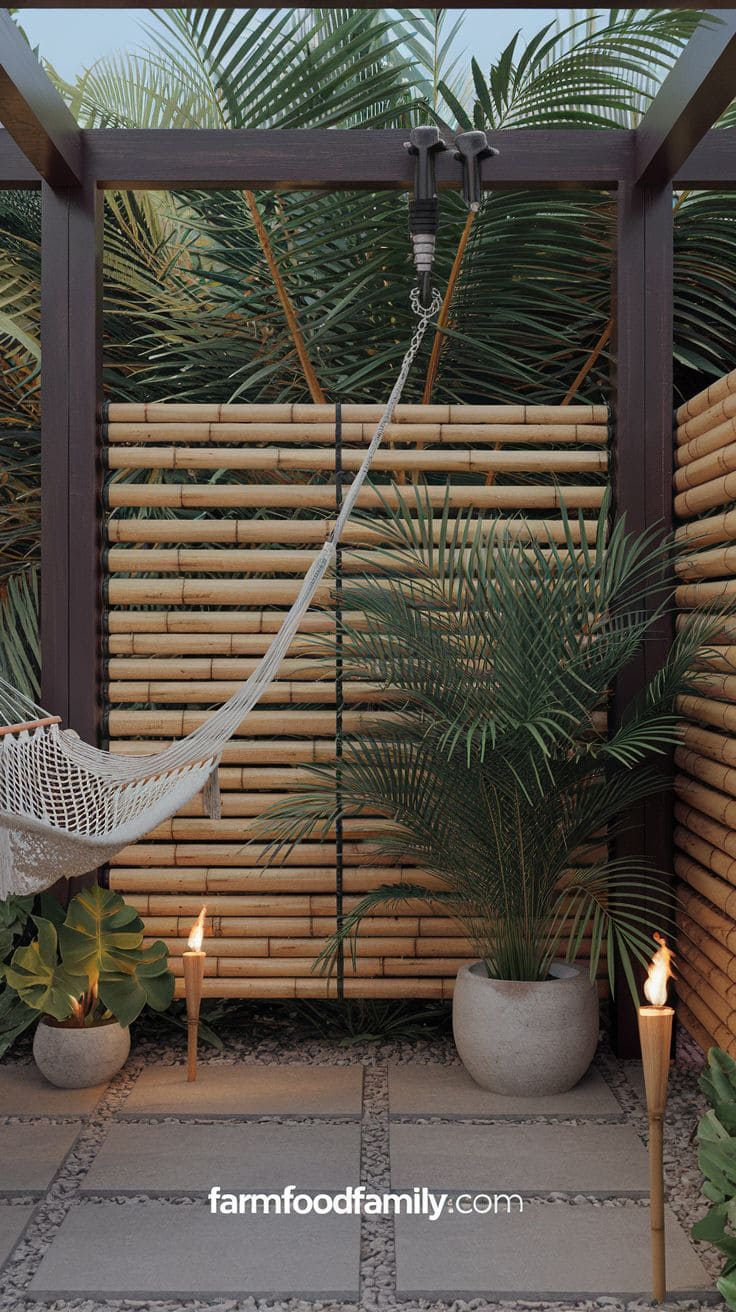
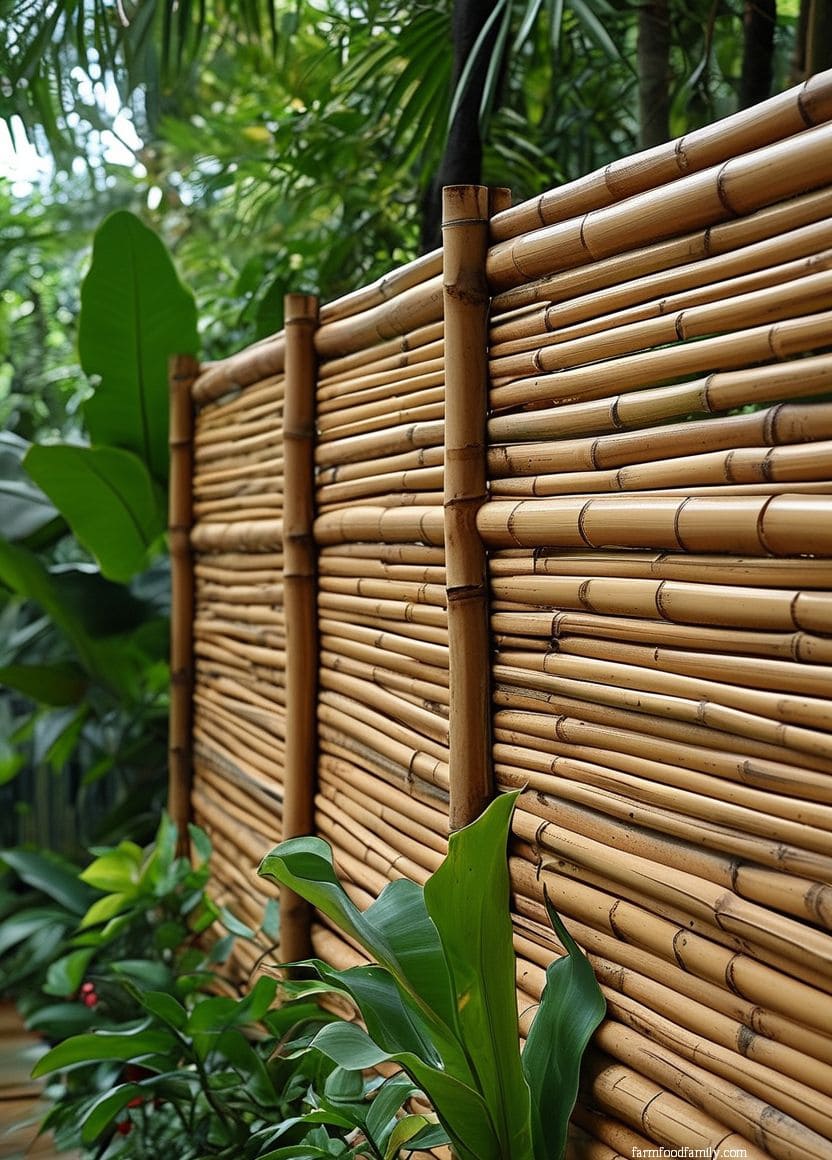
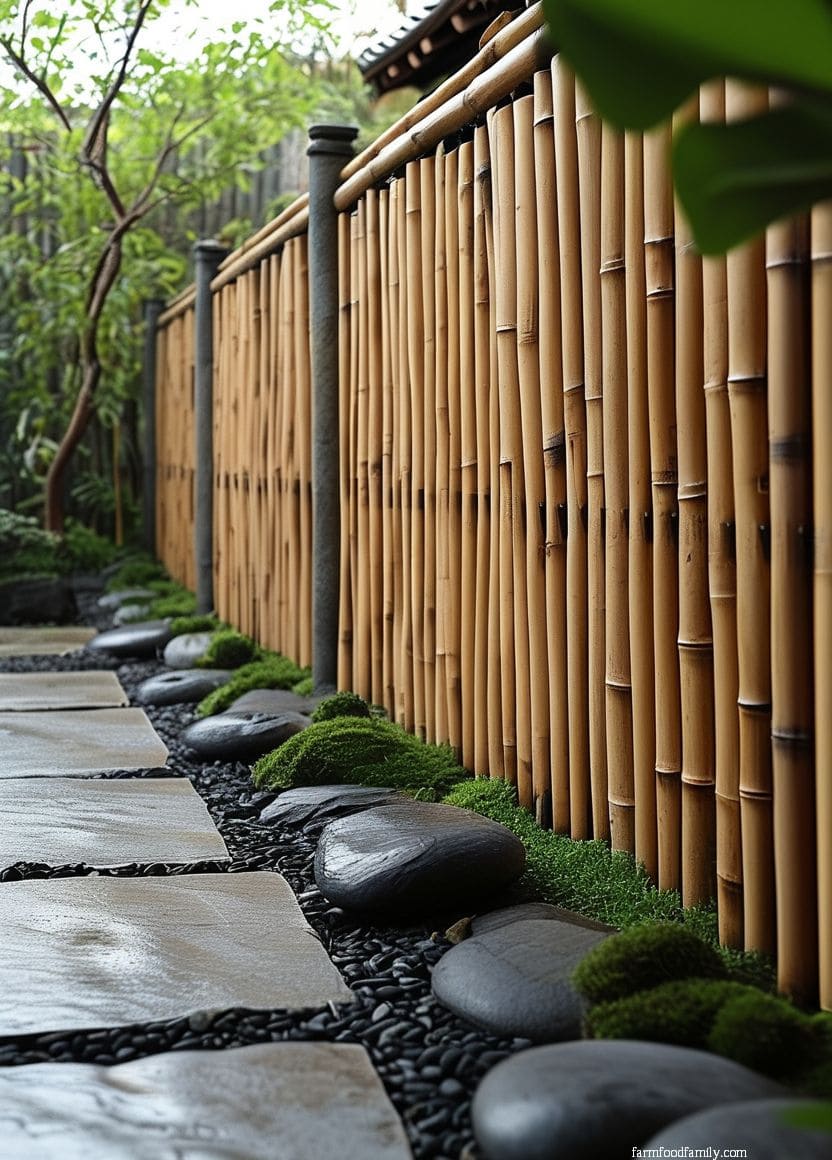
3. Horizontal Bamboo Fencing for a Tropical Look
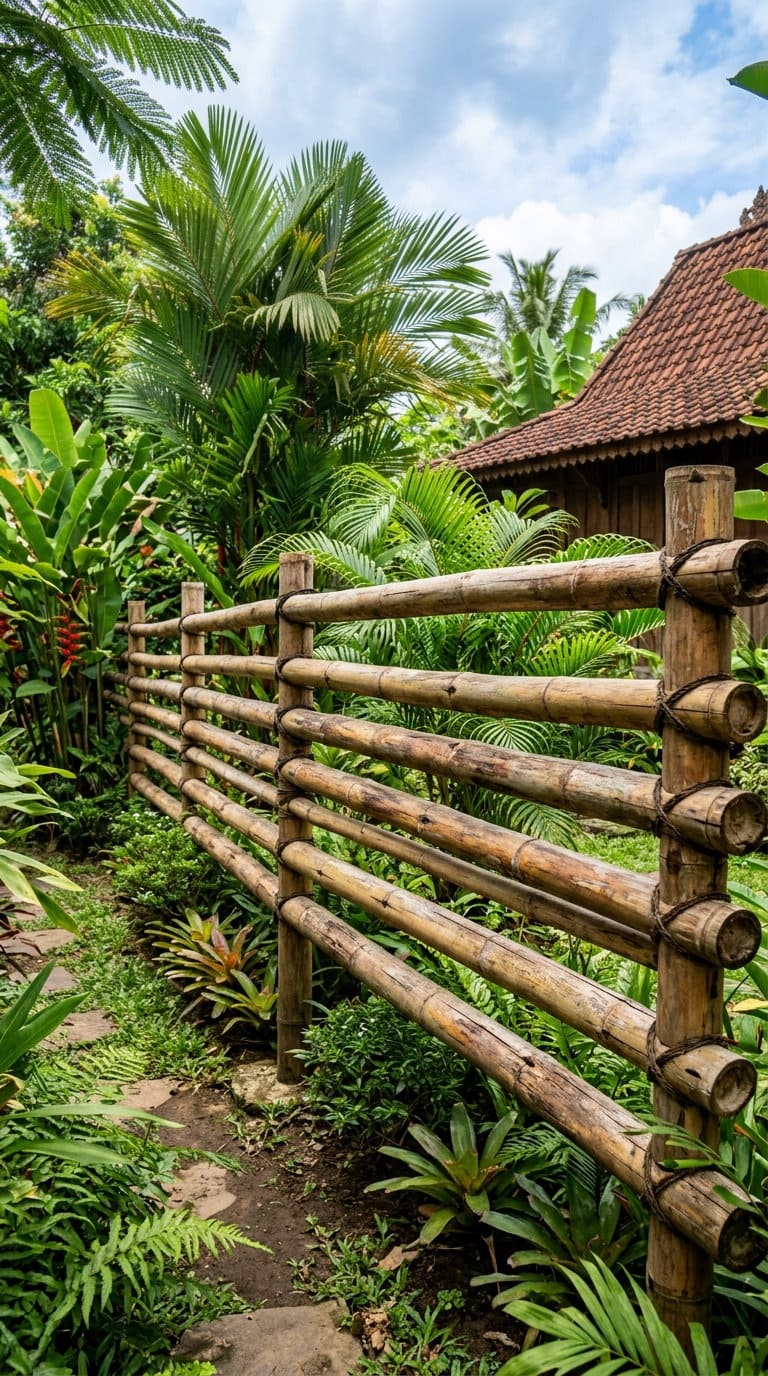
Bamboo laid horizontally brings a distinctly tropical, natural texture that milled lumber can’t replicate, the visible node rings and slight color variation between poles read as organic rather than manufactured.
Bamboo needs its own sealant suited to its fiber structure rather than a standard wood stain, confirm with your supplier before assuming a lumber-finishing process transfers directly.
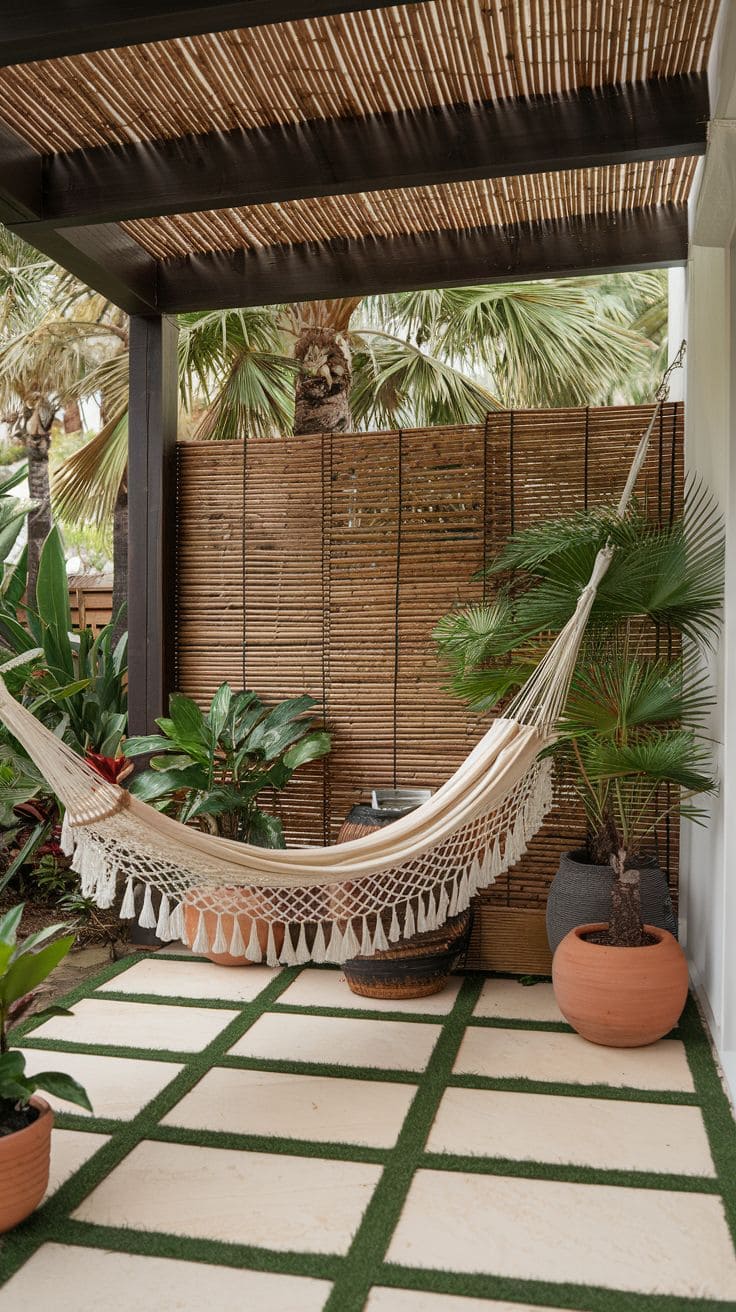
If you want to create a relaxing, tropical backyard oasis, horizontal bamboo fencing will help you get there. Smooth bamboo canes are laid out horizontally and fixed between wooden or steel frames.
It goes well with palm palms, tiki torches, and lush tropical vegetation.
Bamboo is inherently weather-resistant and environmentally benign, and its golden hue lends warmth and richness to any landscape.
This sort of fence is ideal for spa-like patios or tiny, secluded garden areas.
If left untreated, the bamboo will weather to a light silvery tone over time, adding to its natural appeal.
The average homeowner spends $616/year on yard fixes that don't address the real problem. Find out what yours actually is — before you spend another dollar.
Take the Free Quiz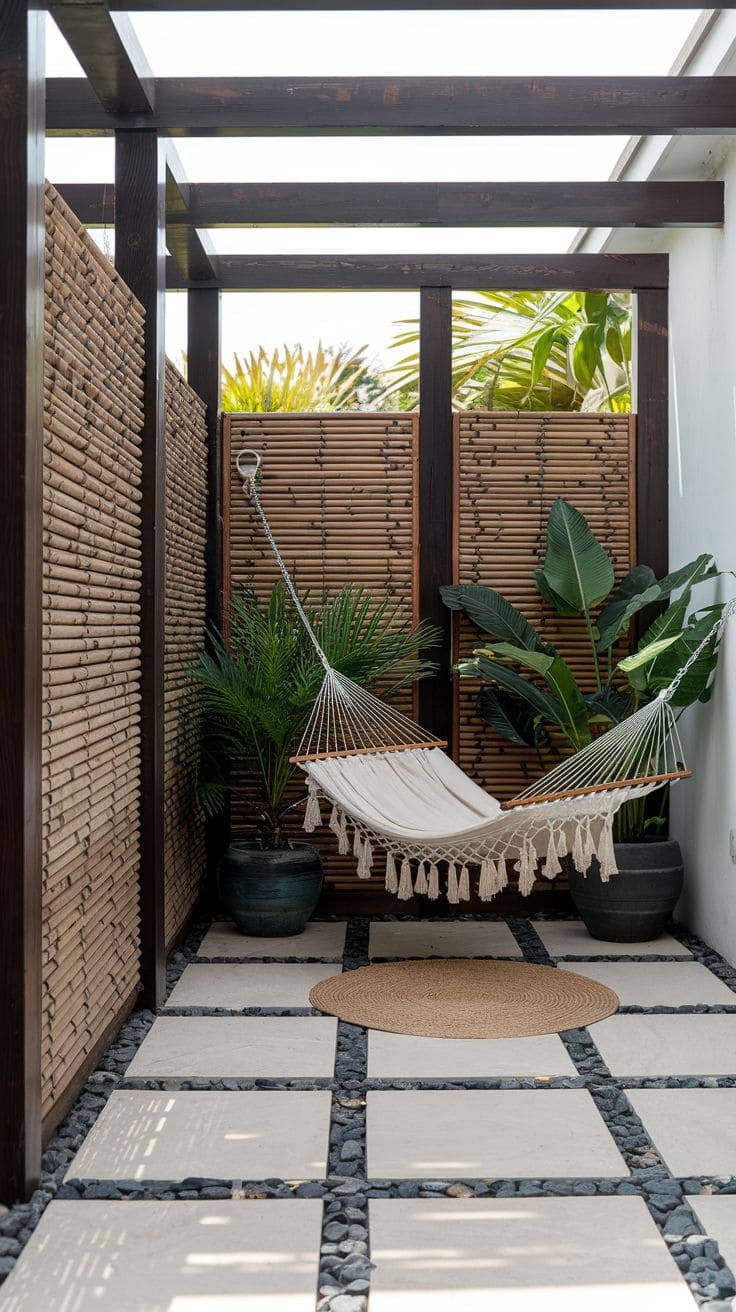
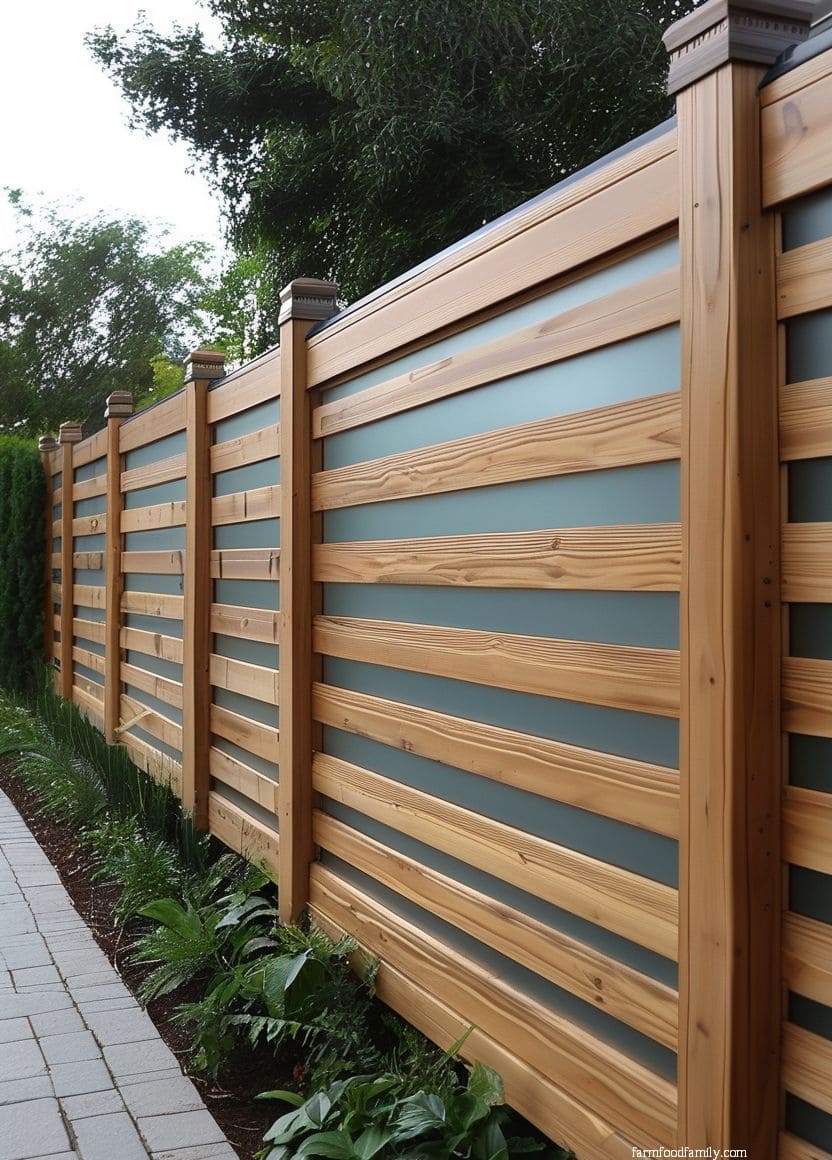
4. Board-on-Board Horizontal Fence for Increased Privacy
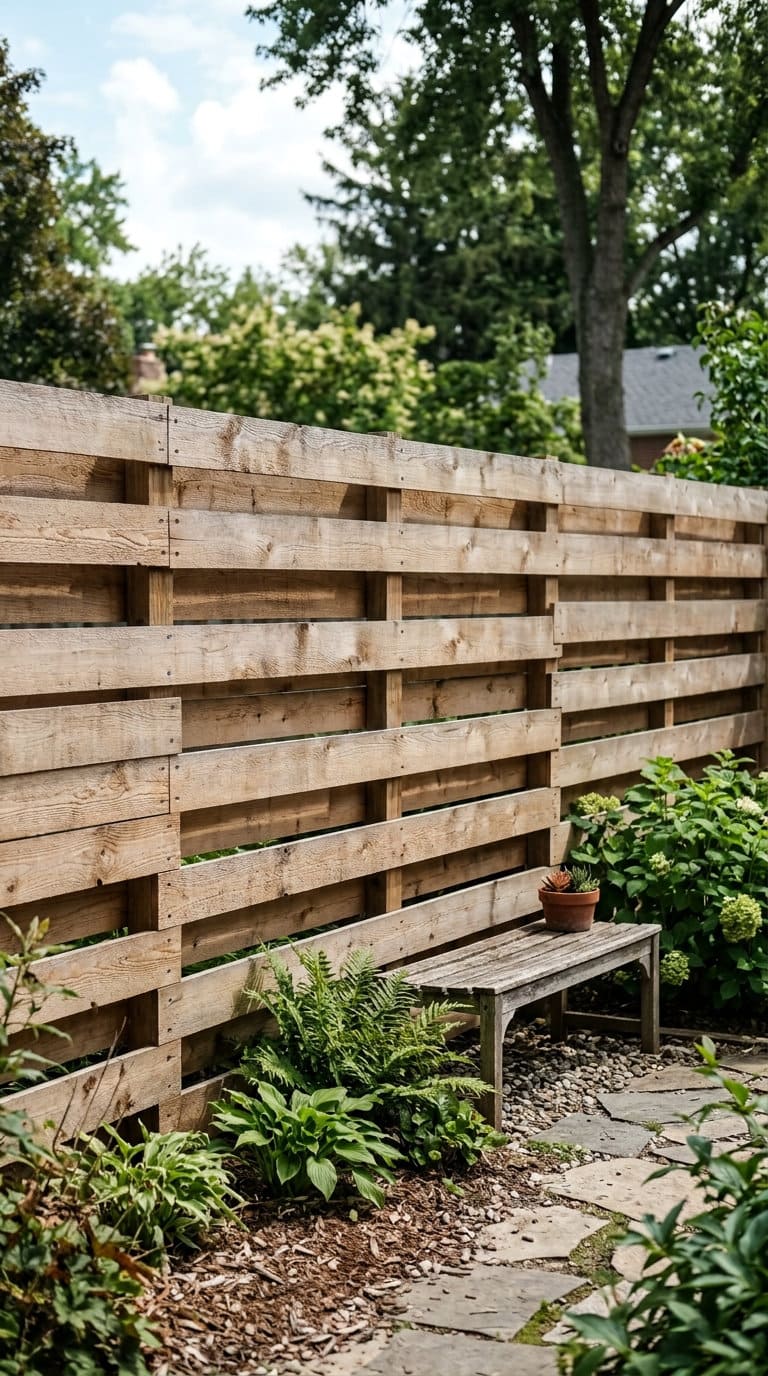
Board-on-board construction overlaps boards on alternating sides of the rail, closing every sightline gap while still allowing some airflow through the small offset, full privacy without the completely sealed feel of a true solid panel.
This uses noticeably more lumber than a single-layer horizontal design, worth factoring into the section 1 cost math if privacy is the priority.
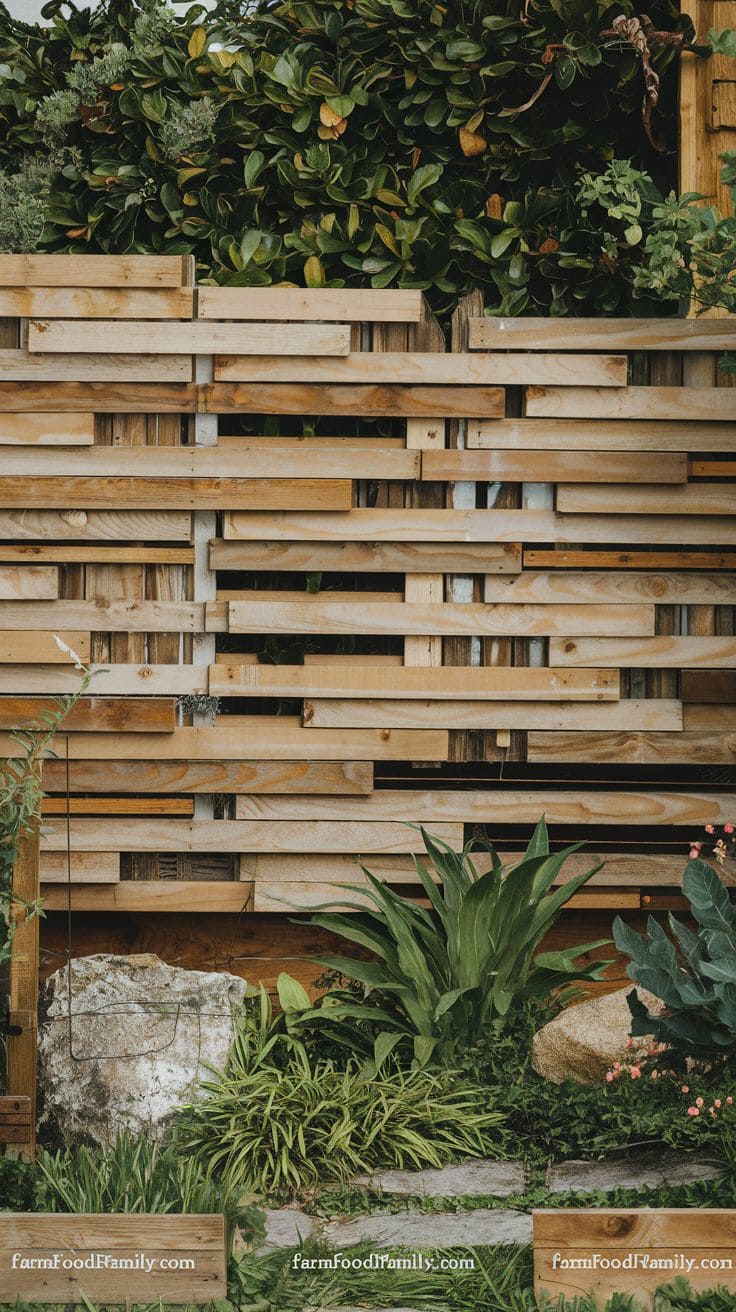
If privacy is important, consider a board-on-board horizontal configuration.
This overlapping technique avoids gaps between planks, resulting in a complete coverage screen that nevertheless appears fitted and attractive.
It’s an excellent choice for urban yards, patios, or areas near to neighbors.
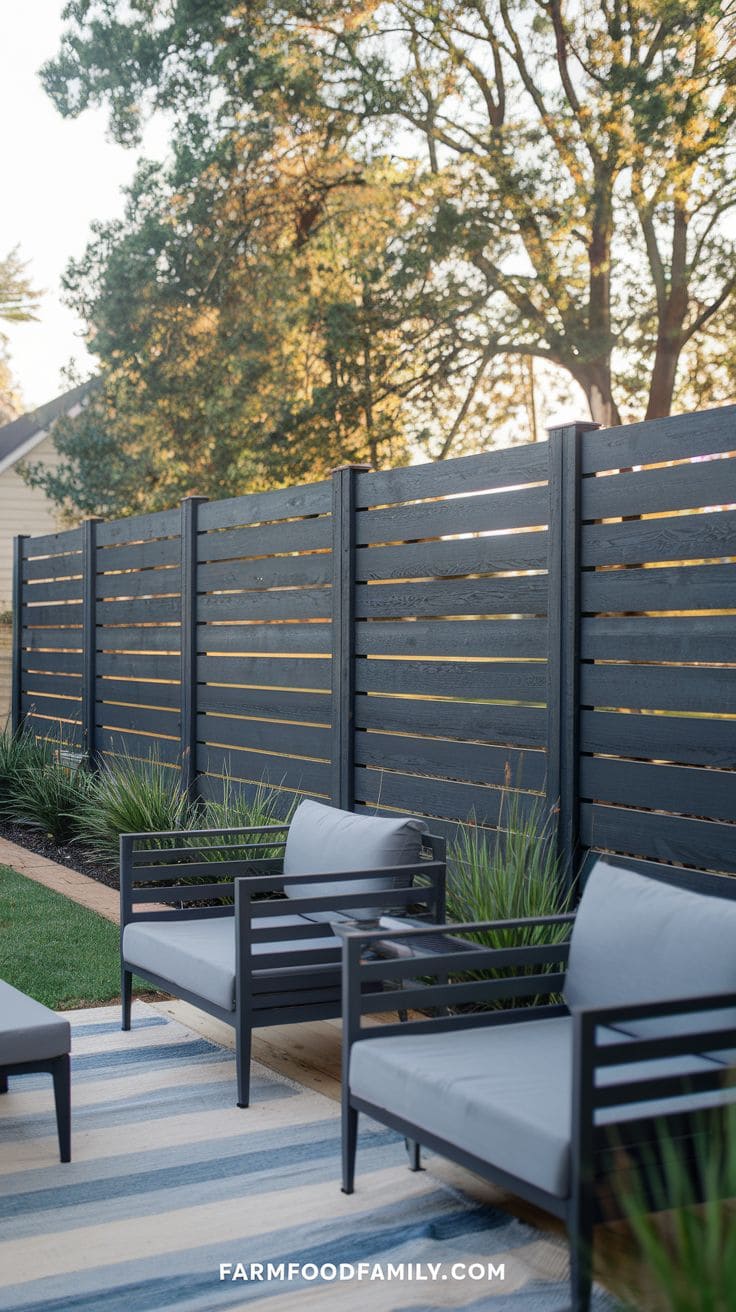
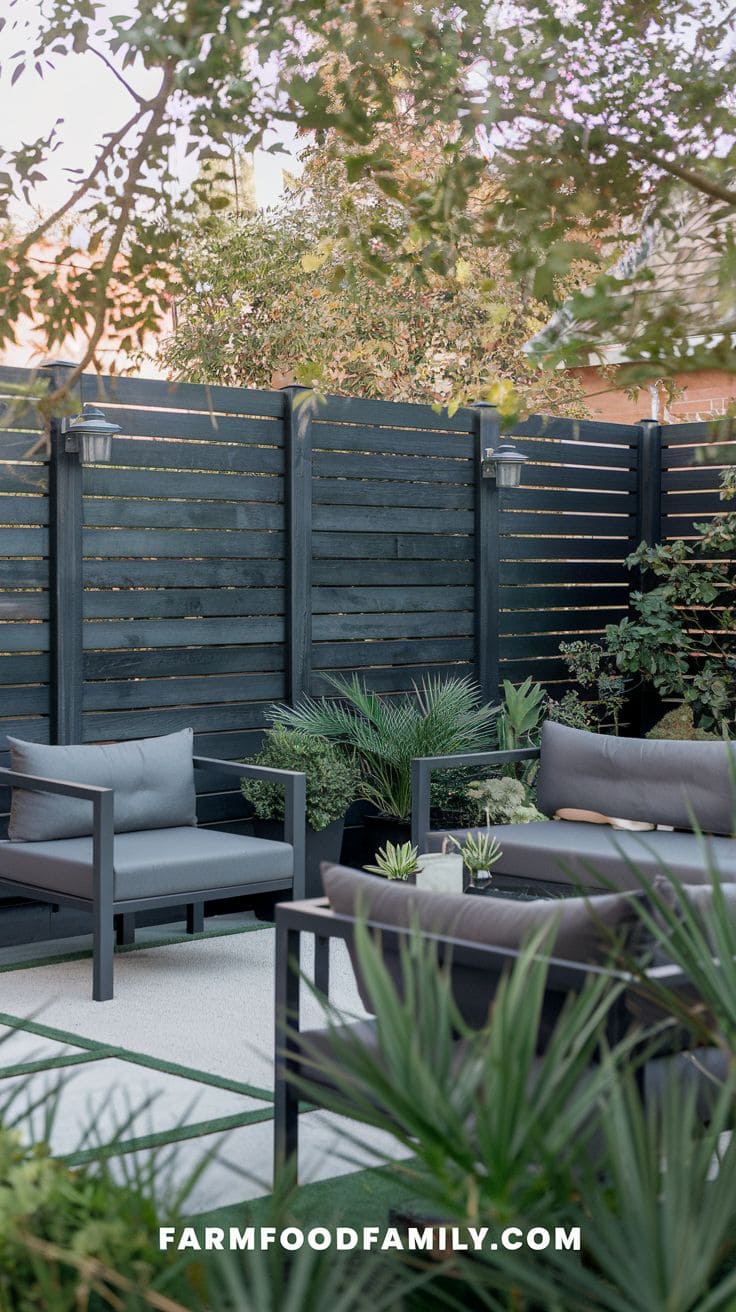
You can make it tall for optimum privacy or keep it short and layer in vegetation to soften the edges. Adding a dark wood stain or painting it in bold charcoal can transform the design into a sleek standout piece.
This approach will help to reduce noise while also making it practical and beautiful. As a result, it is the ideal horizontal fence for establishing a pleasant, peaceful sanctuary at home.
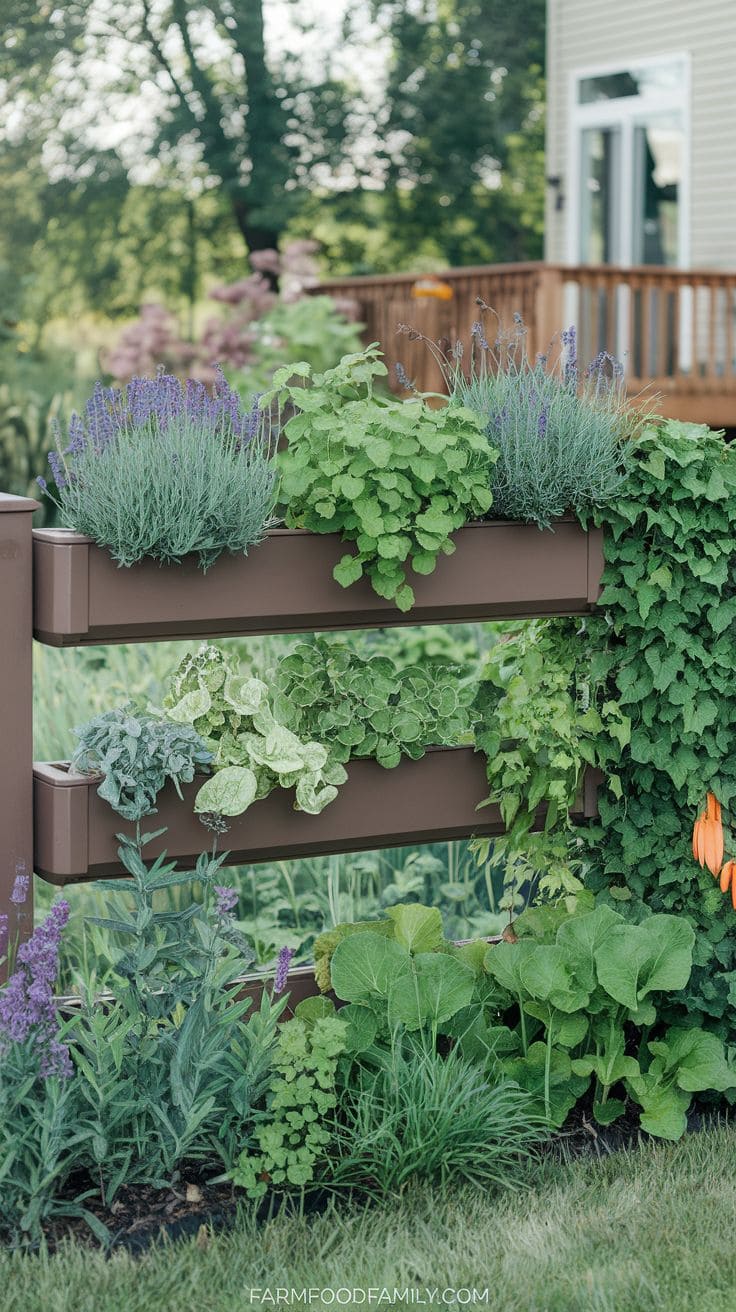
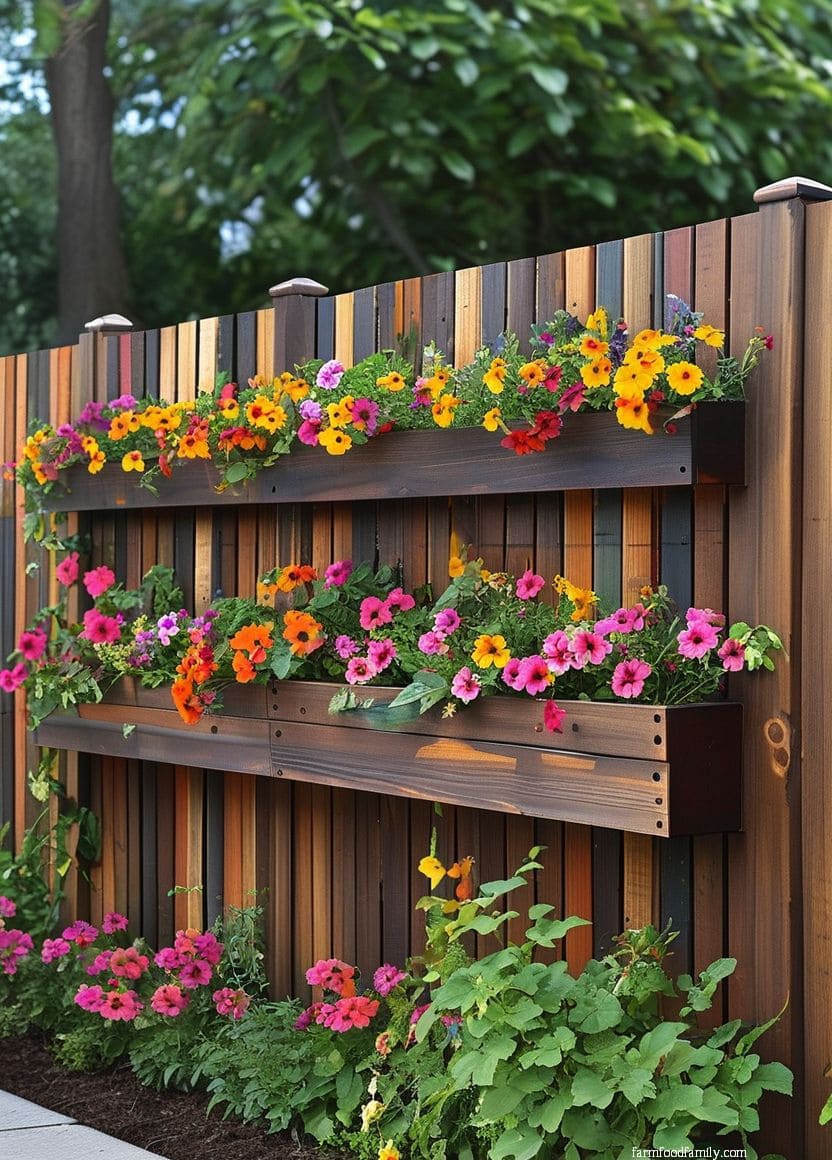
5. Horizontal Fence with Built-in Planter Boxes

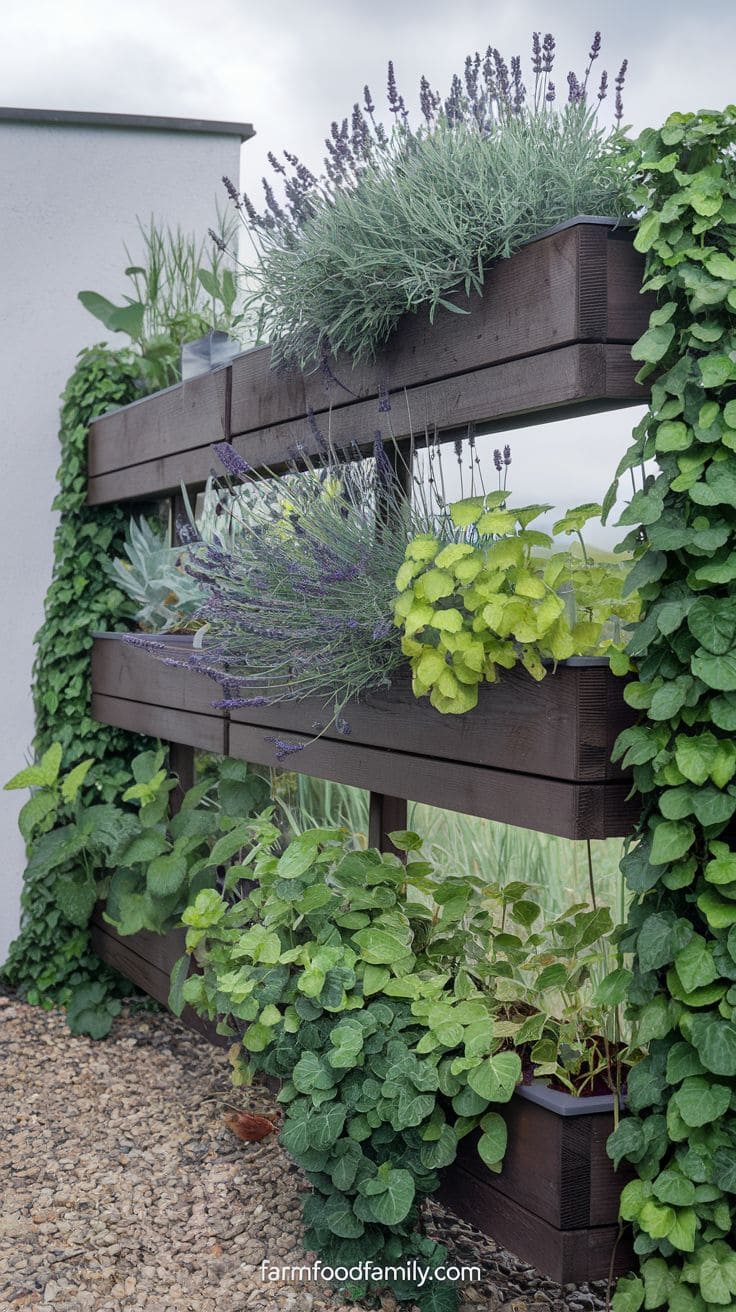
Working planter boxes directly into a horizontal fence line turns a boundary into usable growing space, herbs, trailing flowers, or small vegetables right at the fence instead of a separate garden bed taking up yard space.
Make sure planter boxes are mounted independently of the fence’s structural posts where possible, the added weight and moisture from soil and watering is exactly the kind of load section 1’s post-spacing math doesn’t account for by default.
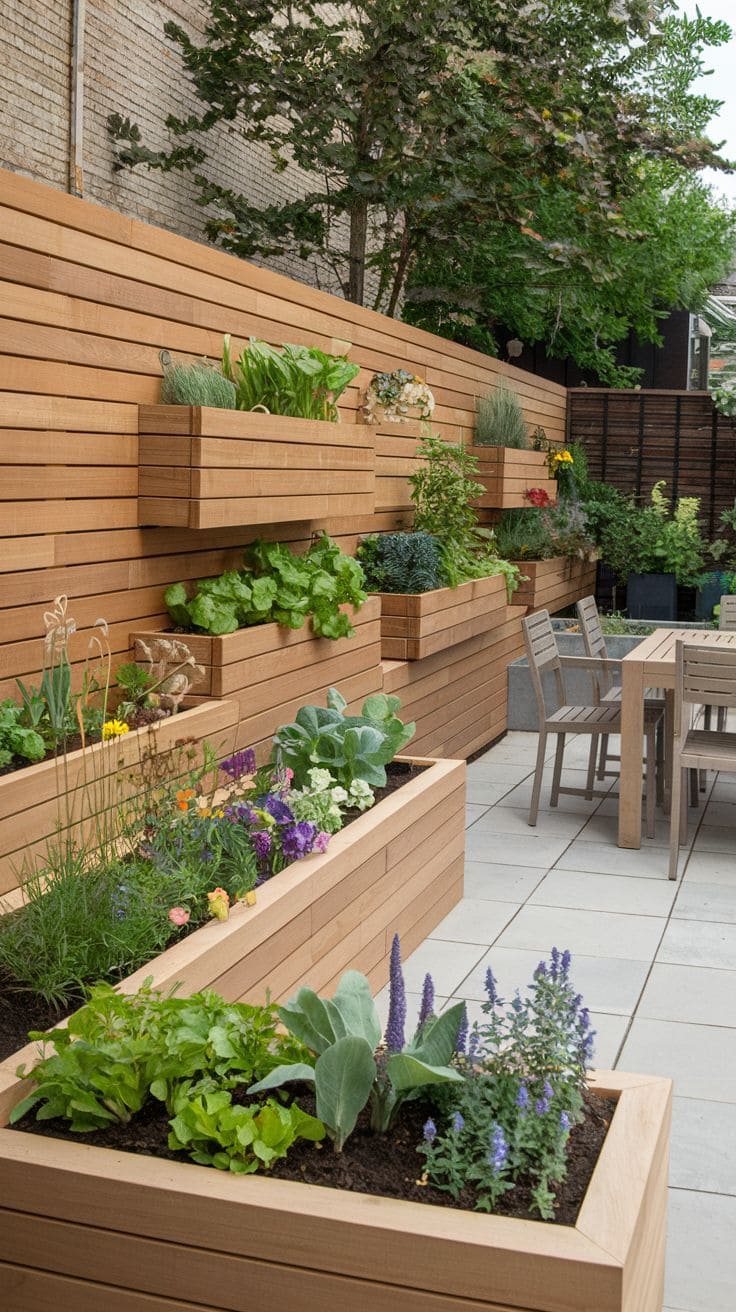
A fence that also serves as a garden? Yes, please. Adding built-in planter boxes or shelves to your horizontal fence makes it a living wall. Choose a few rows toward the middle or top of the fence that will support herbs, succulents, or cascading flowers.
It’s very beautiful in small urban yards or apartment patios with limited space.
The horizontal slats provide adequate structure to hold planter brackets and hooks. It transforms into both a privacy feature and a rich, ornamental element.
Choose treated wood or composite materials to ensure they can withstand moisture from plants and soil over time.
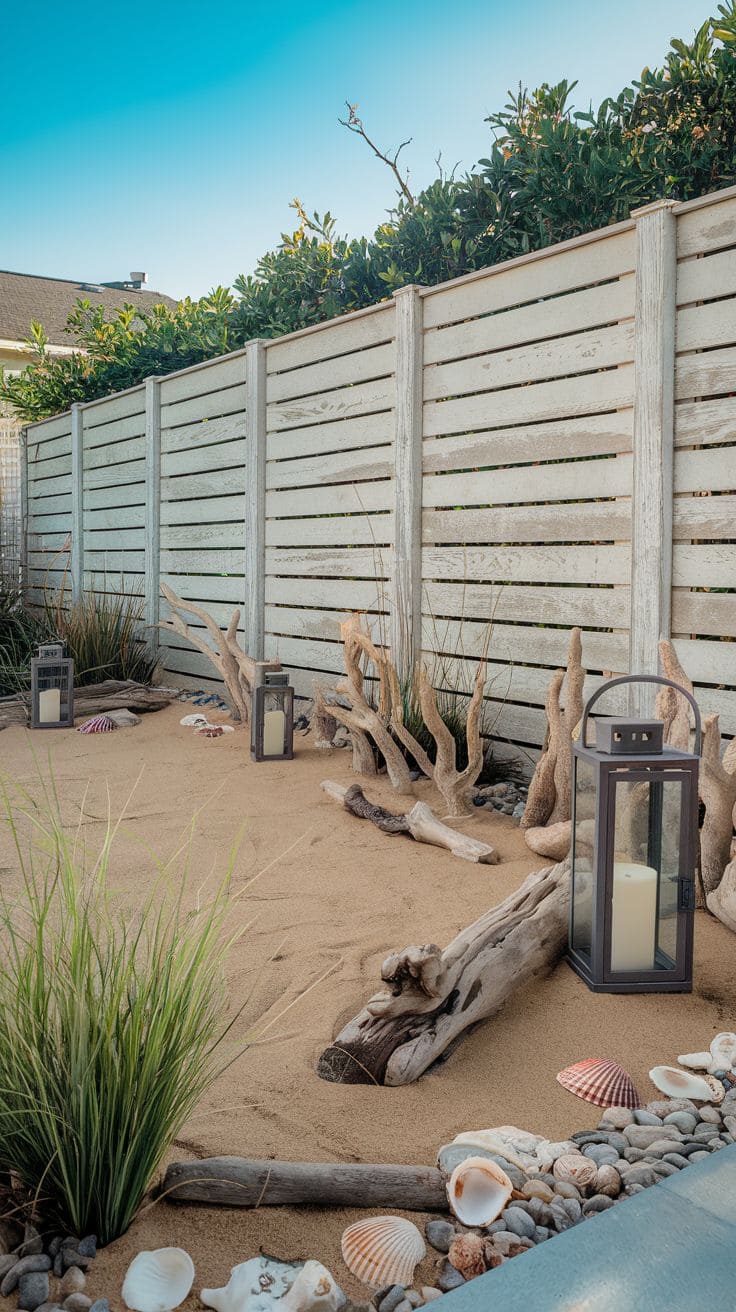
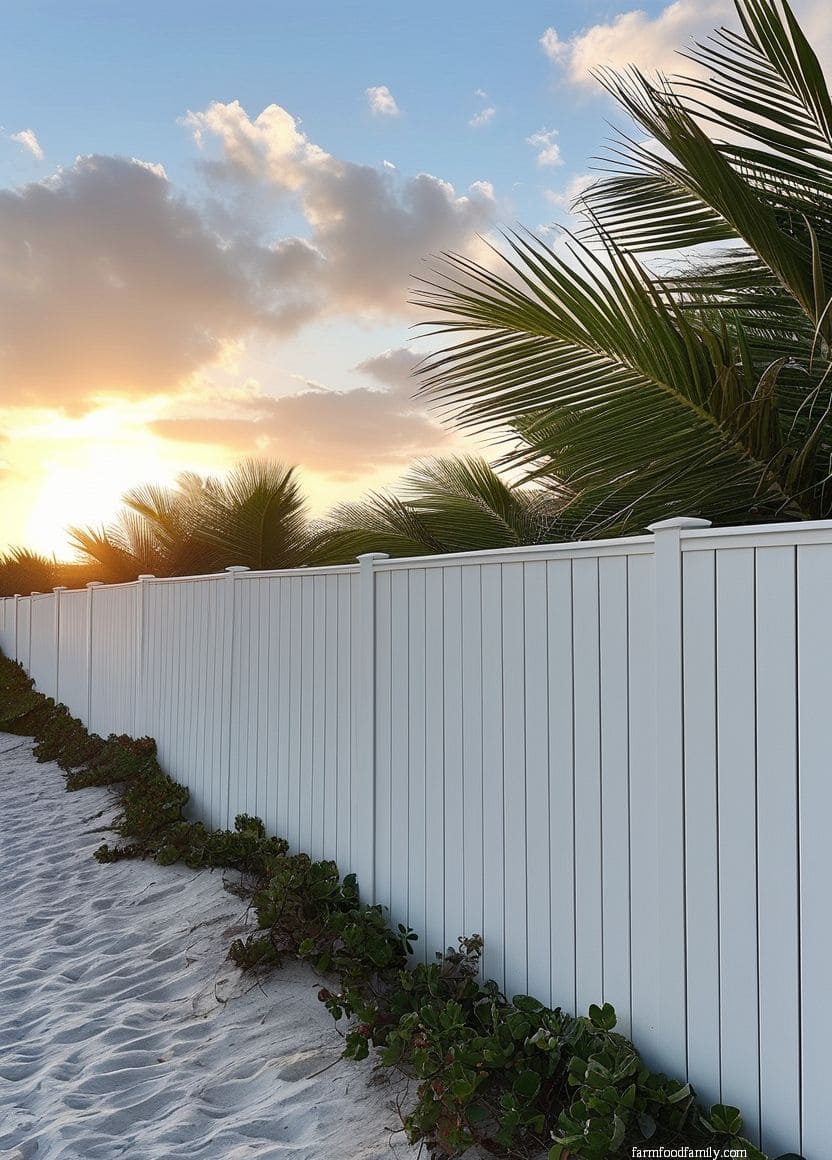
6. White Horizontal Fence with a Coastal Look
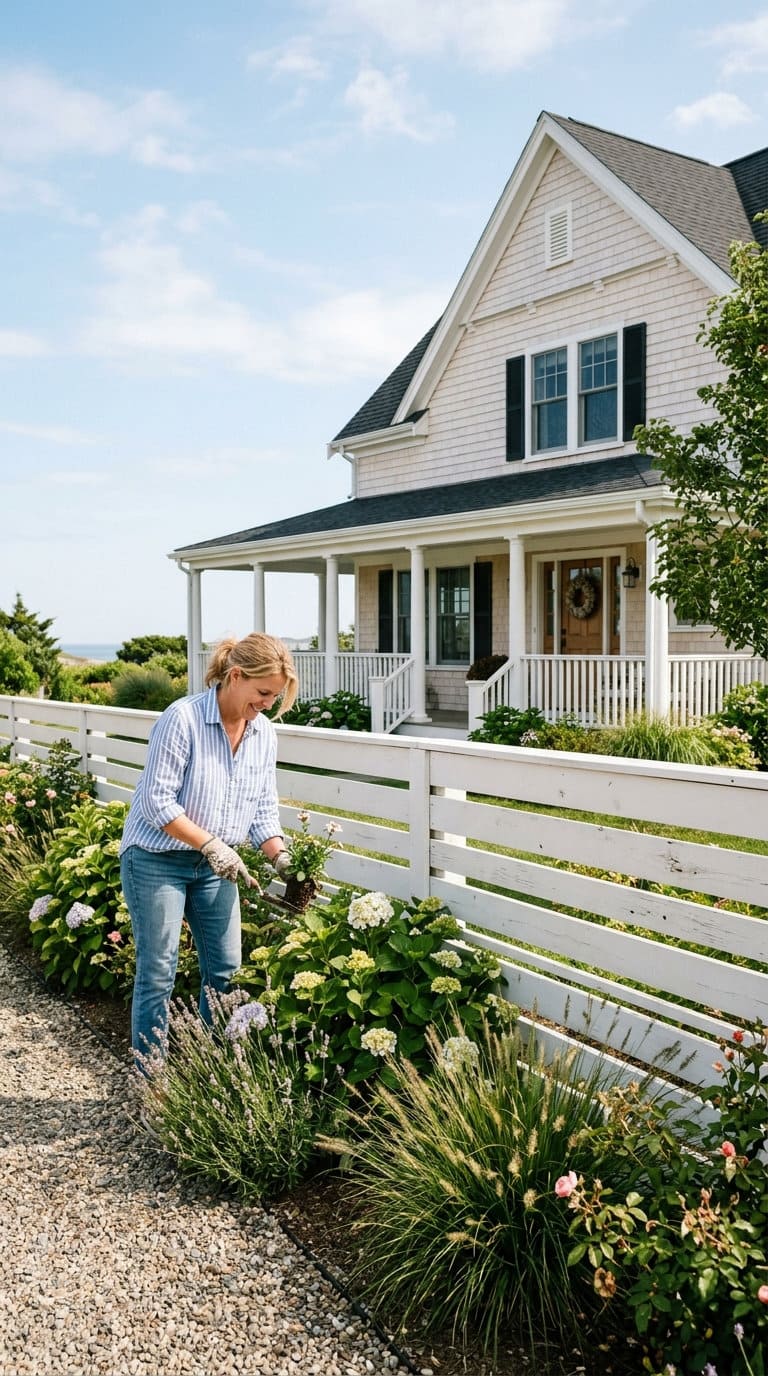
A crisp white finish on horizontal boards reads as coastal or Hamptons-style rather than the more industrial look black or natural wood tends toward, a good fit for a beach house or a yard leaning into a bright, airy palette.
White shows dirt and mildew more visibly than darker finishes, factor more frequent cleaning into the maintenance expectations if you go this route.
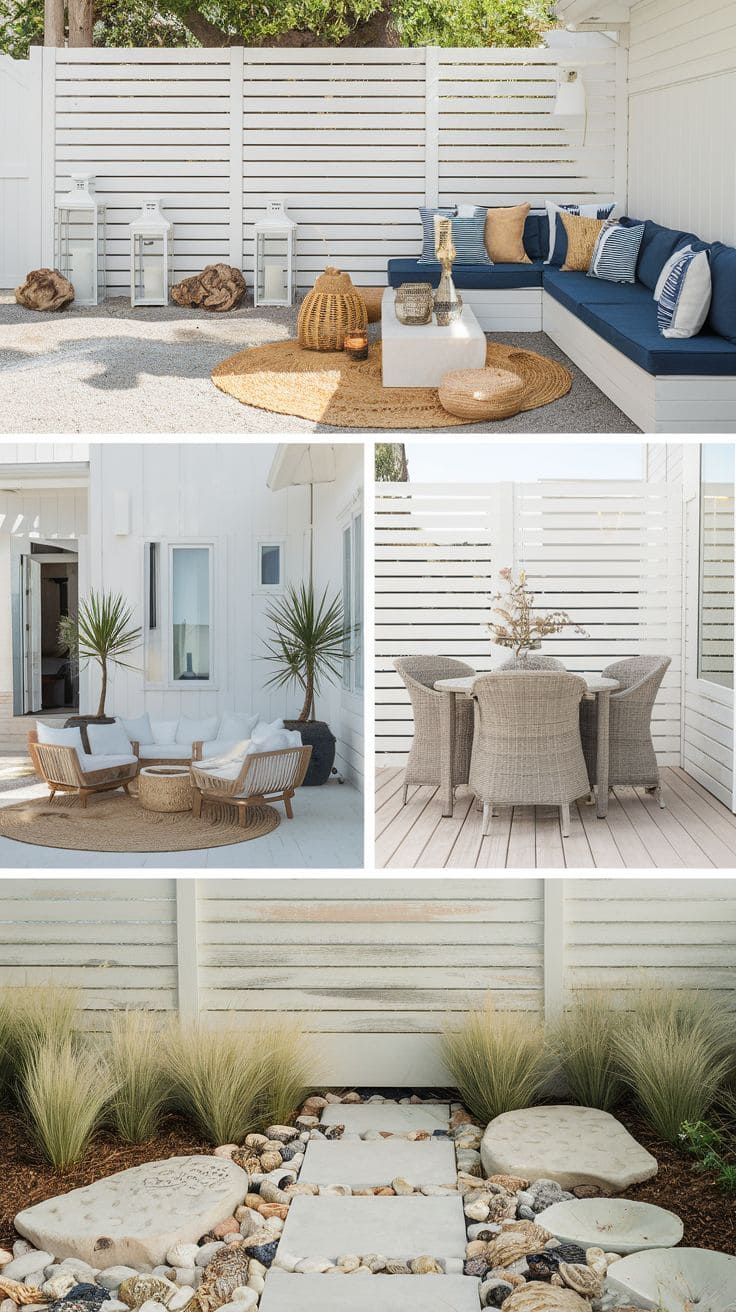
A white or light gray wood treatment will provide a breezy, coastal vibe. The horizontal lines, along with this gentle hue, result in a fence that feels airy, open, and at home in beachy or minimalist outdoor environments.
The slightly worn finish provides character while maintaining the overall appearance fresh and tidy.
This is ideal for backyards with sand-colored gravel, seashell accents, and low-maintenance grasses. It can also brighten up little areas or side yards that do not receive much sunlight.
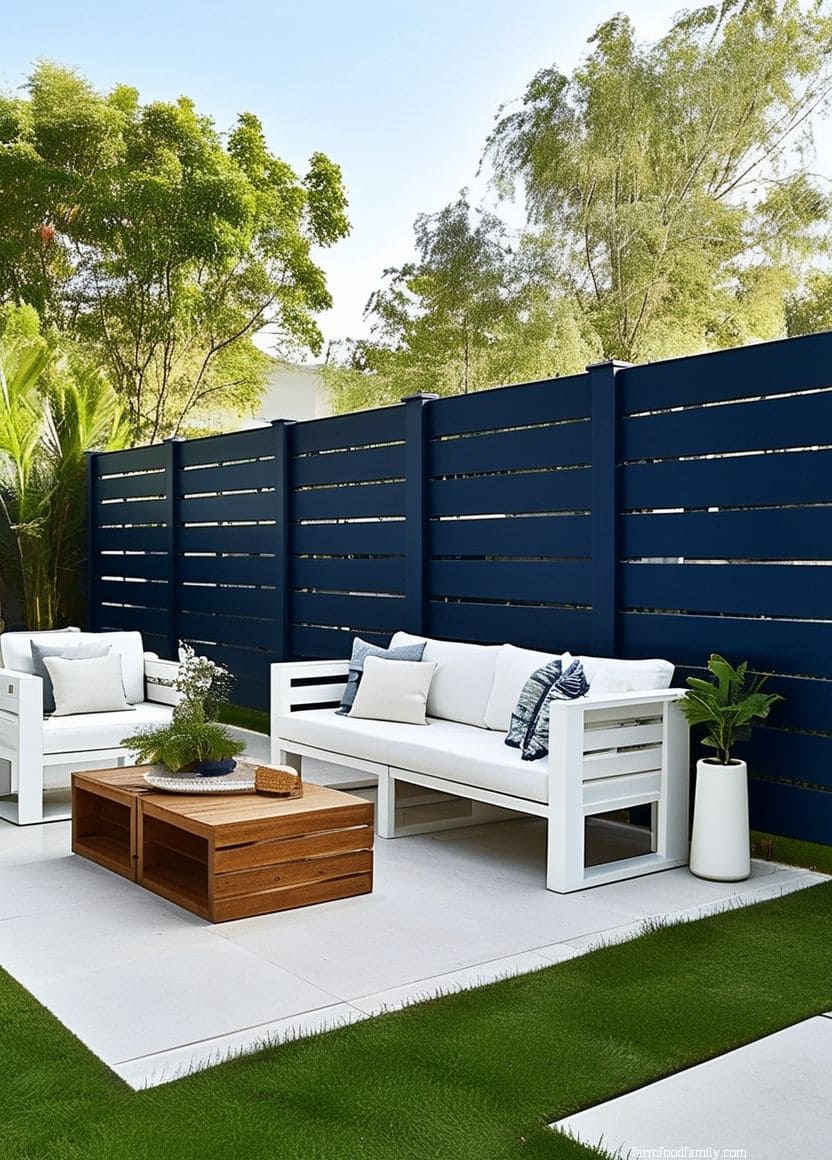
Whitewashed horizontal fences look well with patio furniture in navy, cream, or driftwood tones for a peaceful nautical look.
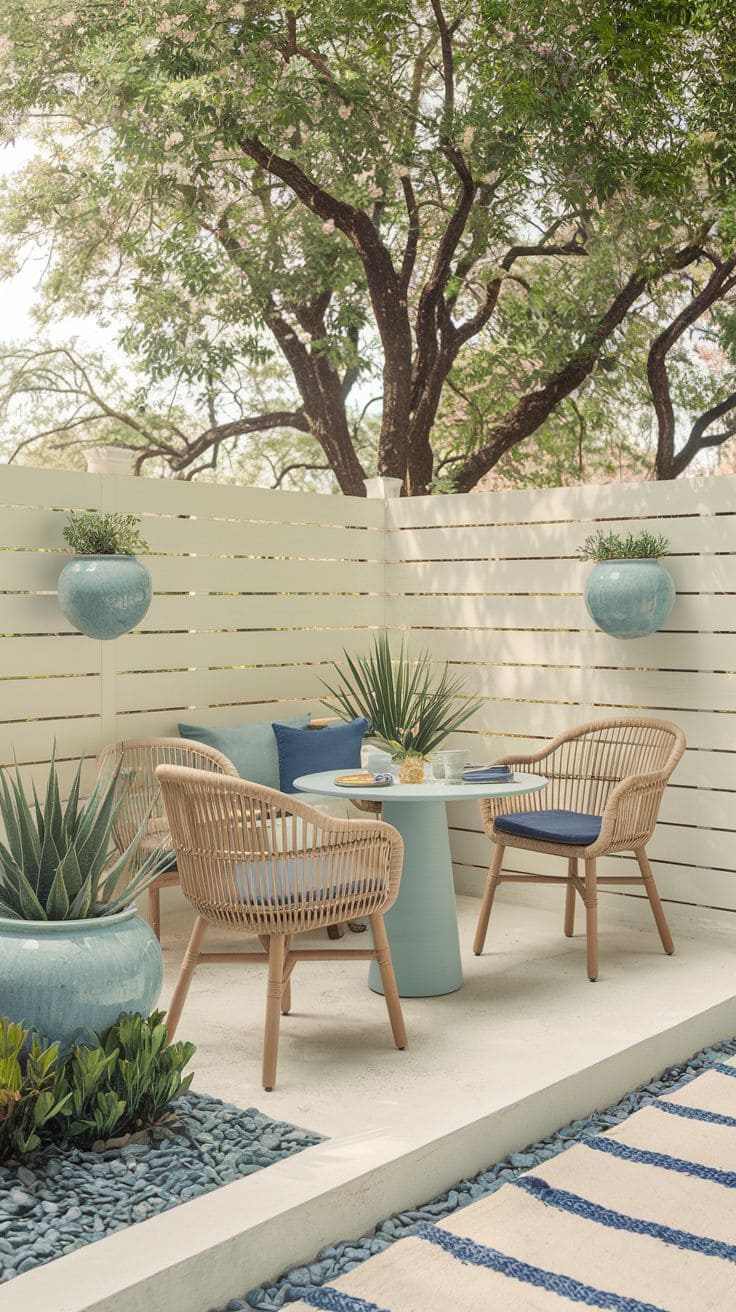
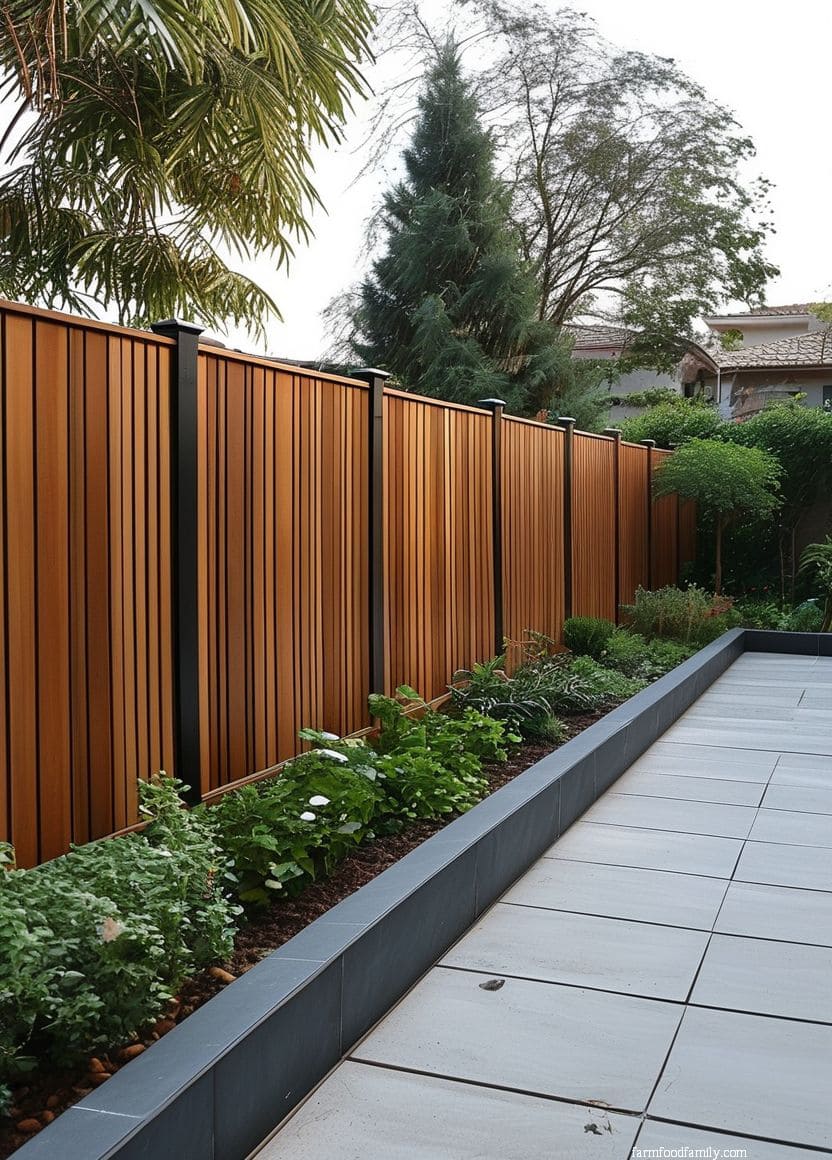
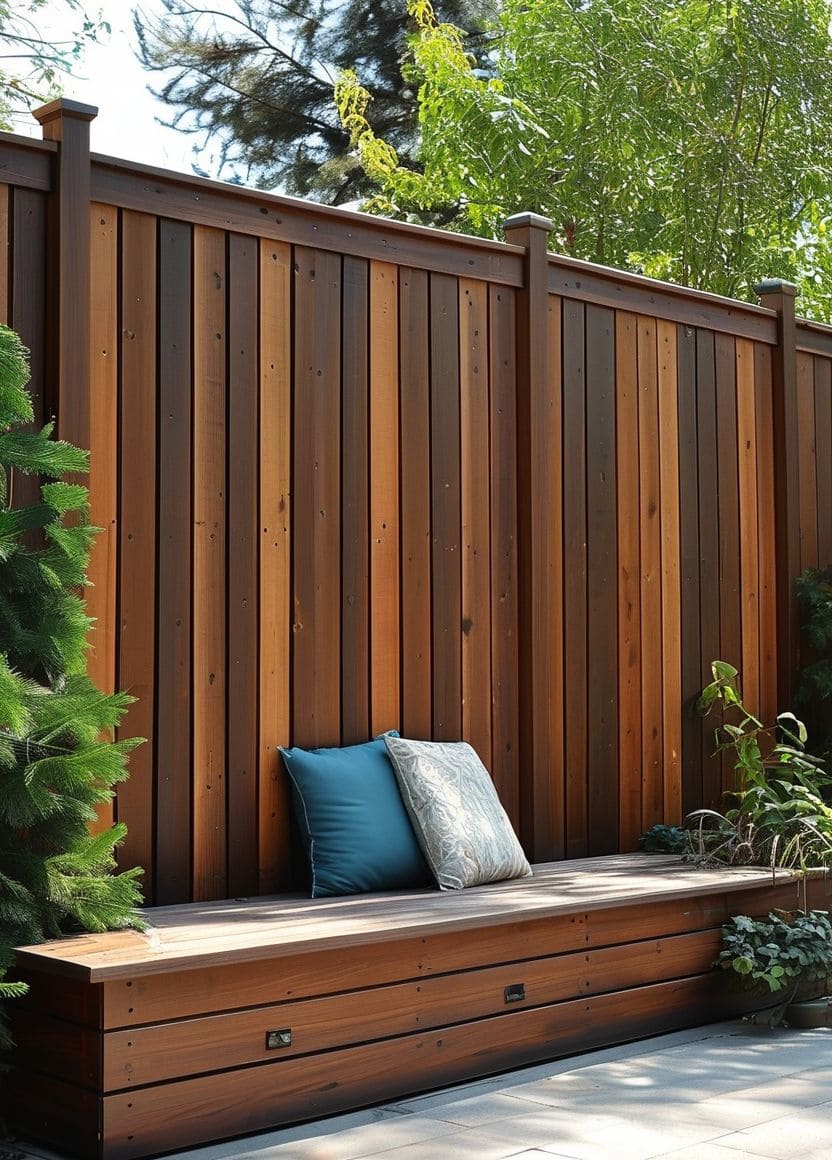
7. Simple Cedar Slats
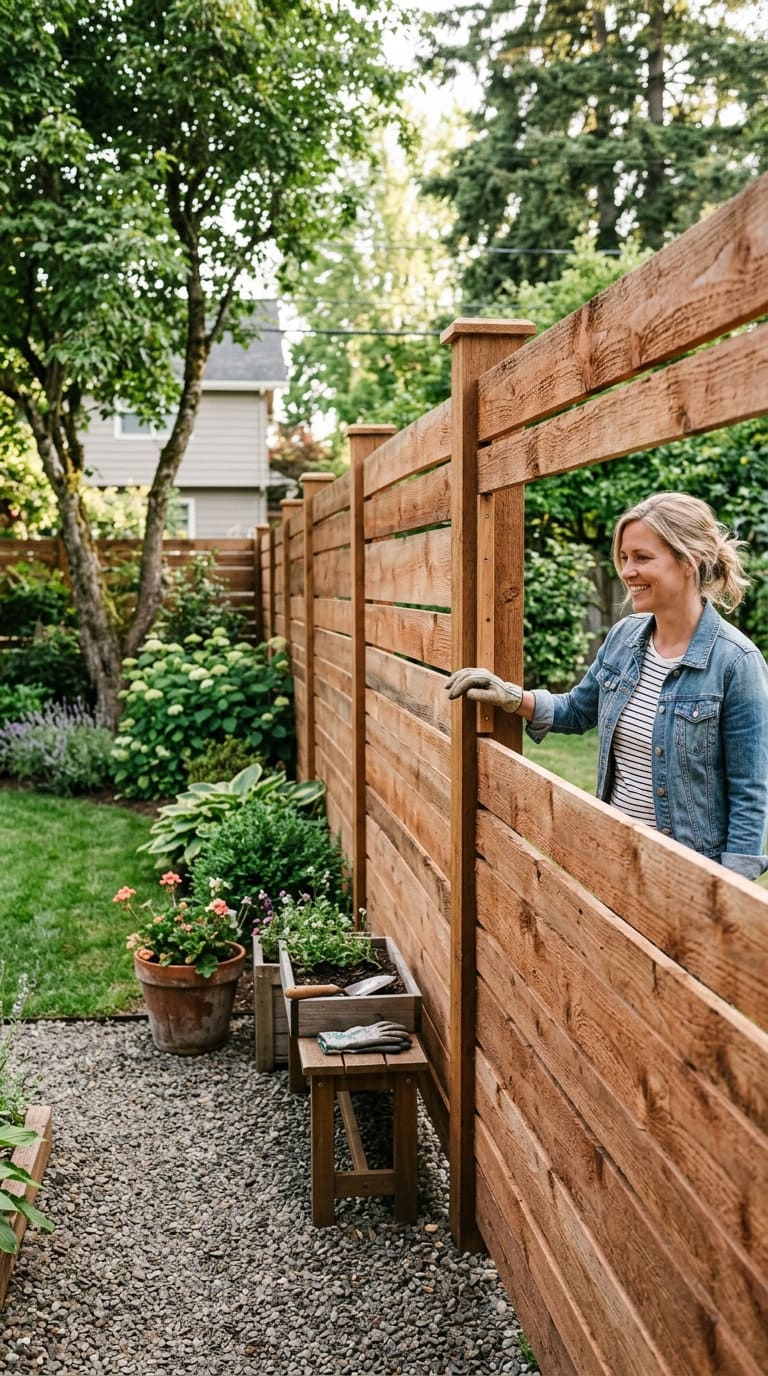
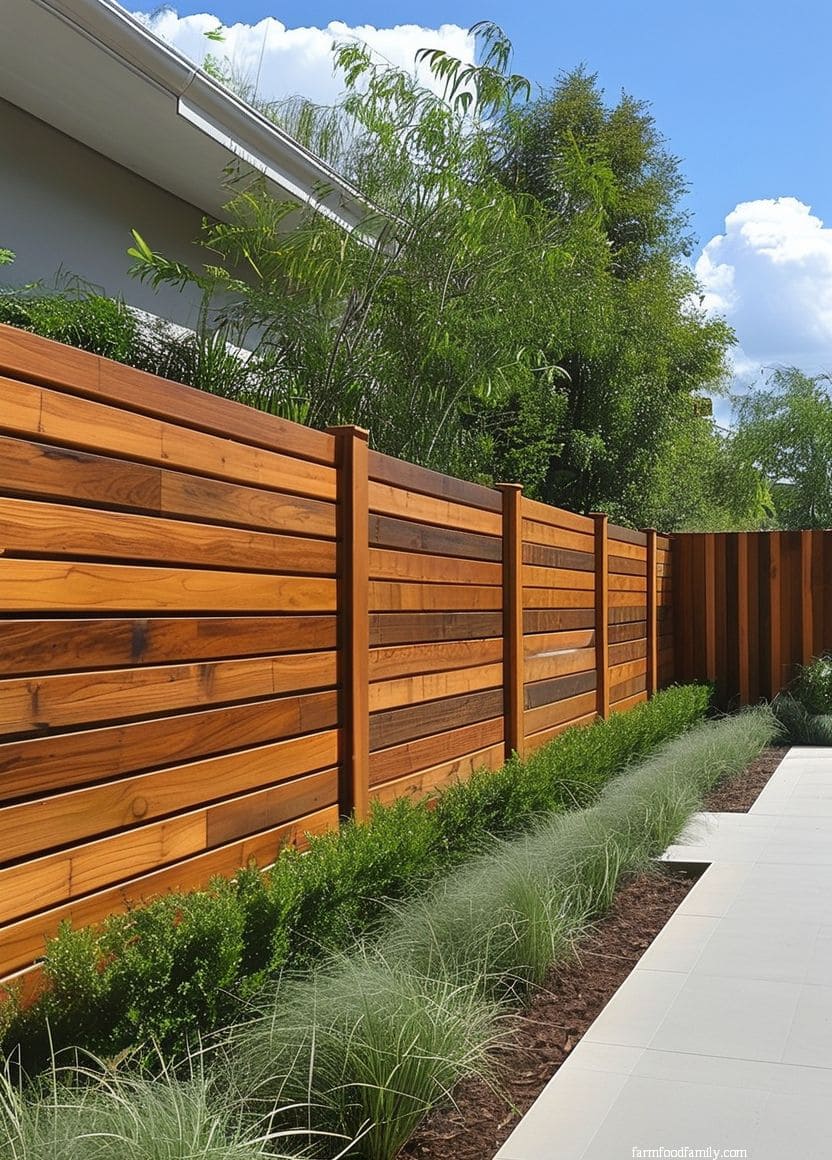
Unstained, unpainted cedar slats let the wood’s natural reddish-brown tone and grain carry the whole design, no finish to maintain beyond an occasional sealant application to slow the fade to silvery gray that untreated cedar develops outdoors.
Cedar’s natural rot and insect resistance make it one of the more forgiving wood choices for the horizontal spans discussed in section 1, though it still needs the same post-spacing discipline as any other wood.
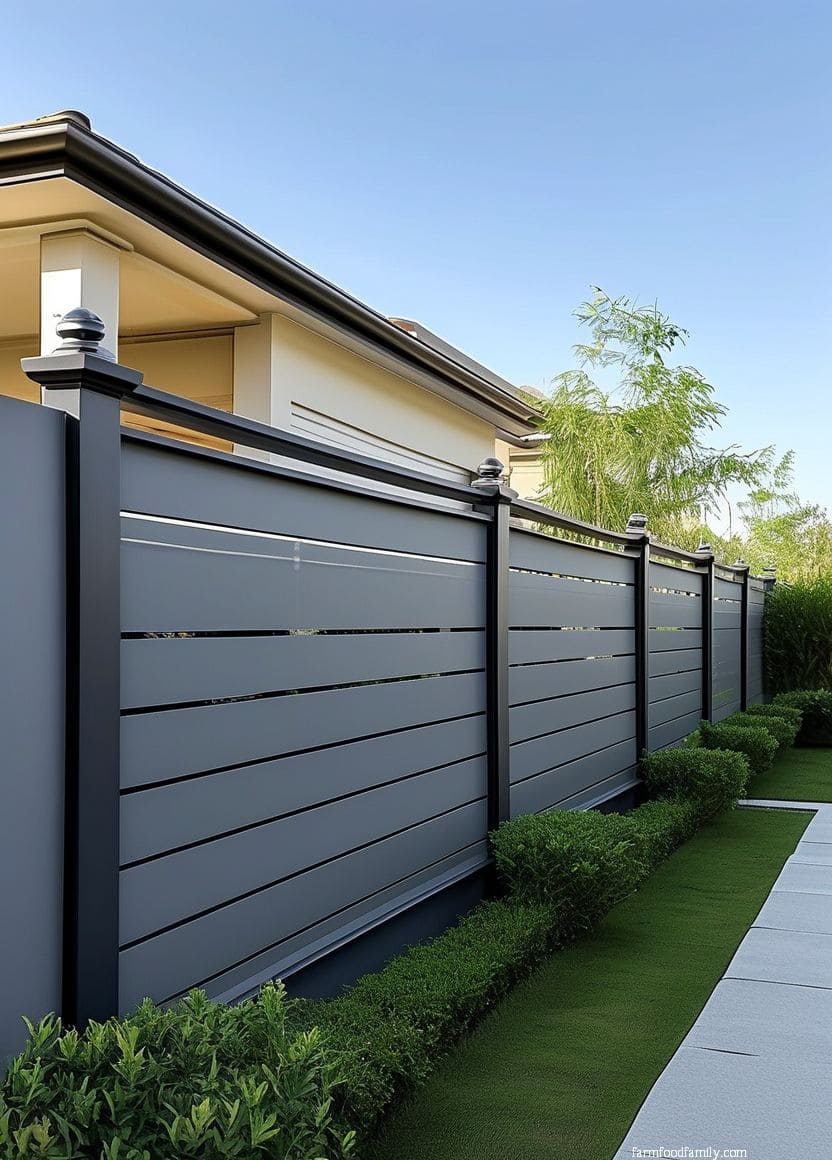
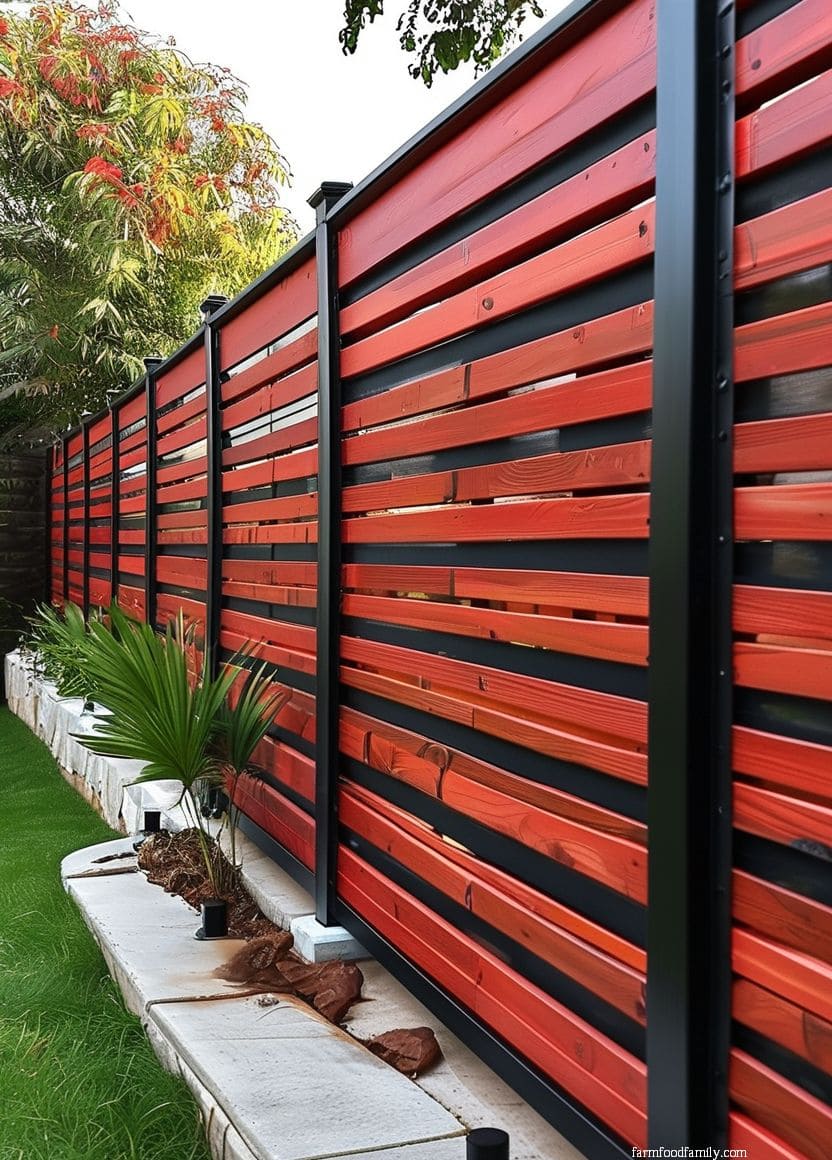
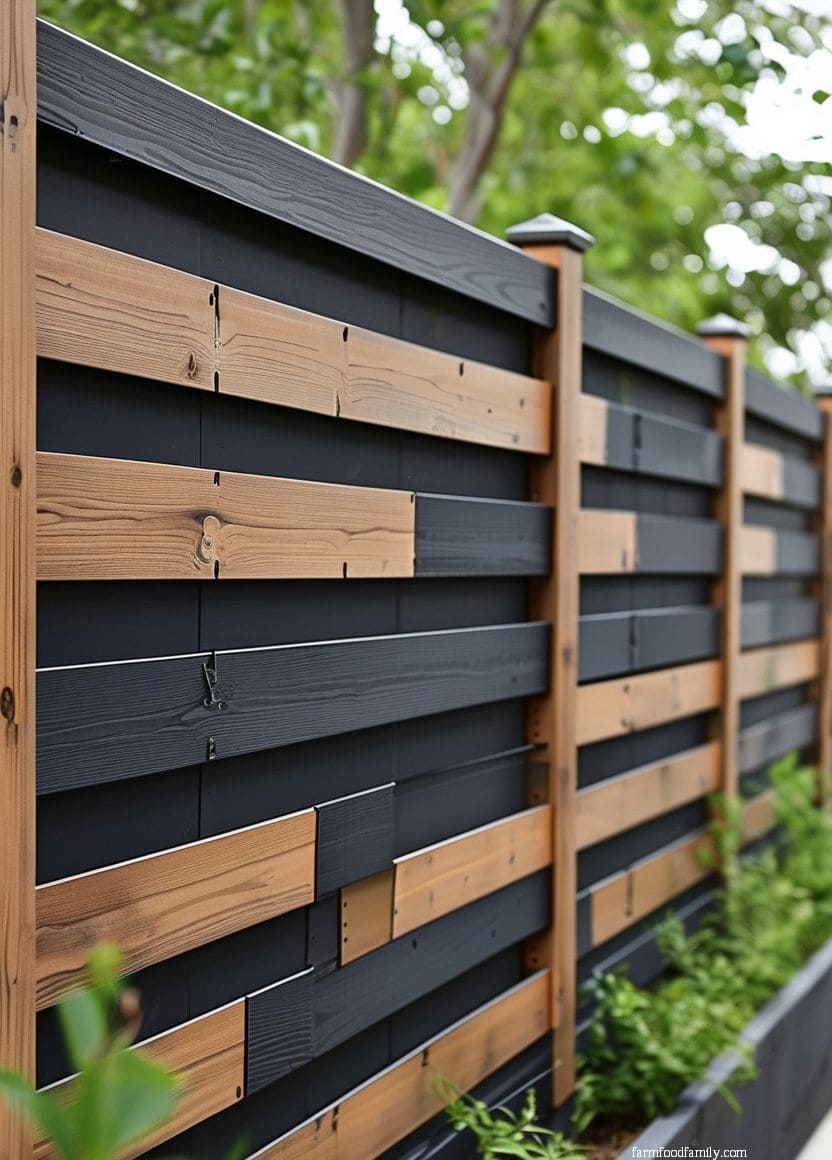
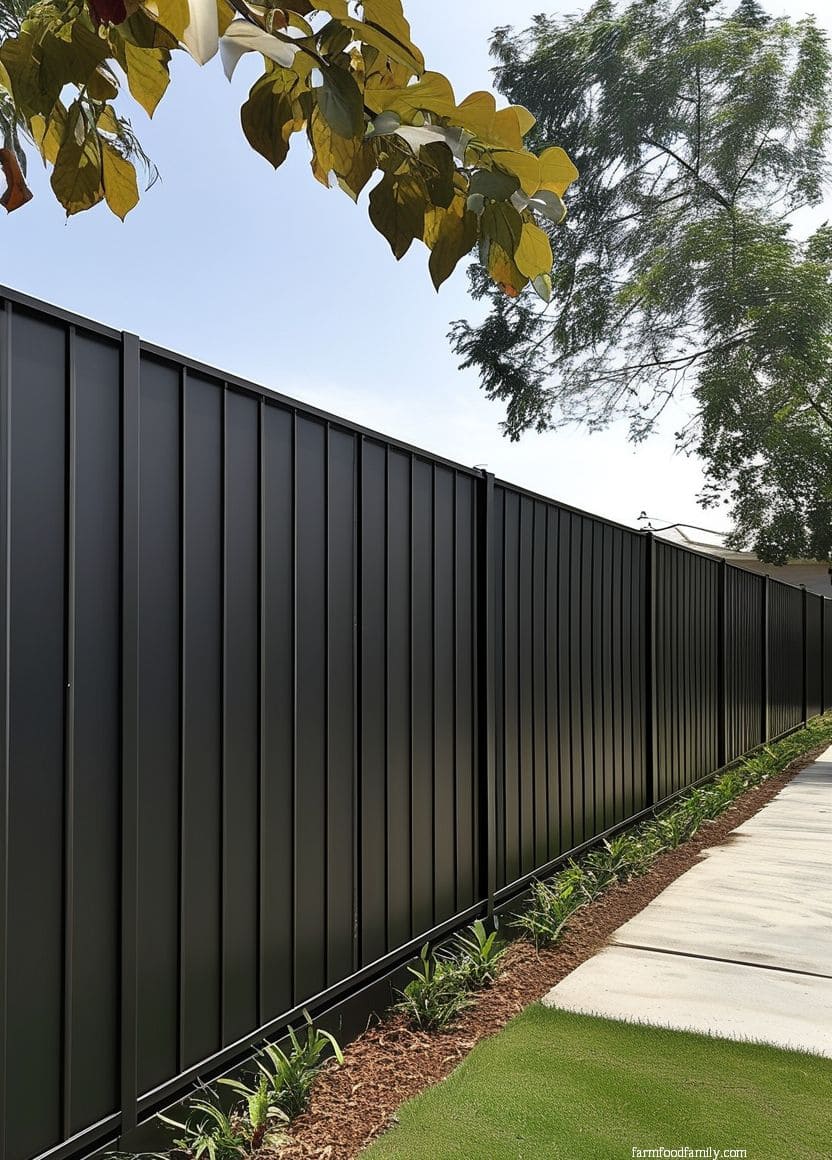
8. Modern Black Horizontal Fence
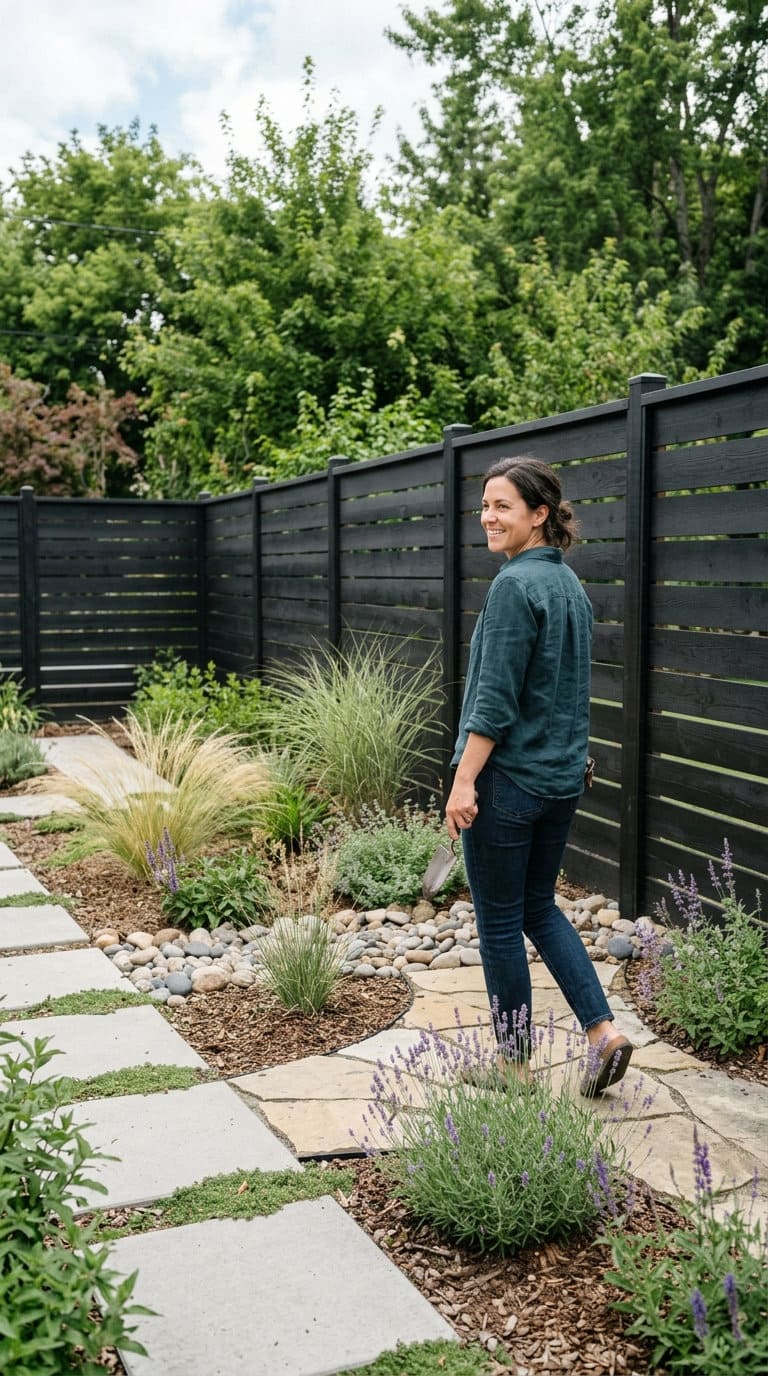
A black-stained or painted horizontal fence is one of the most common “modern” fence requests, the dark tone reads as architectural and deliberate against most landscaping. For the full rundown on black-fence-specific maintenance, heat, and UV-fade considerations, black fence ideas covers that ground in depth.
9. Horizontal fence with a concrete base
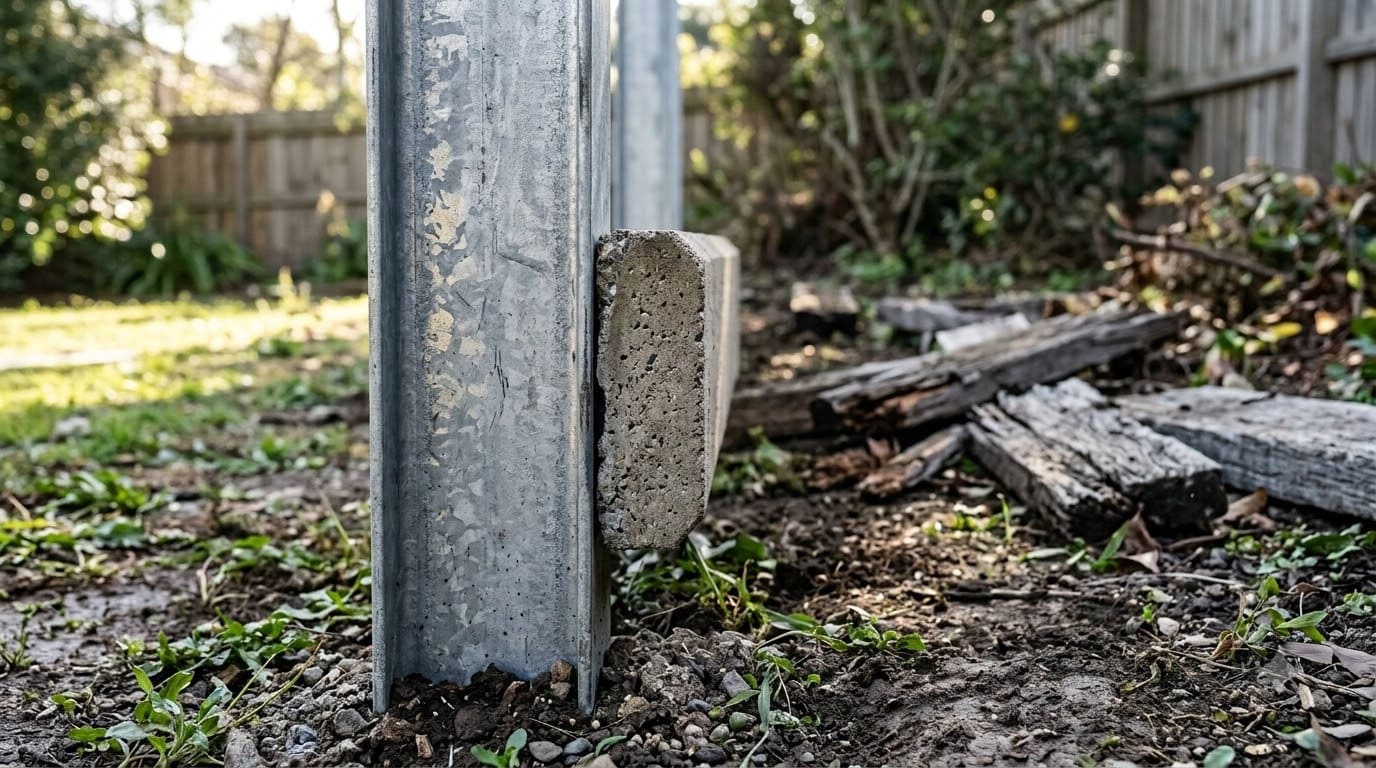
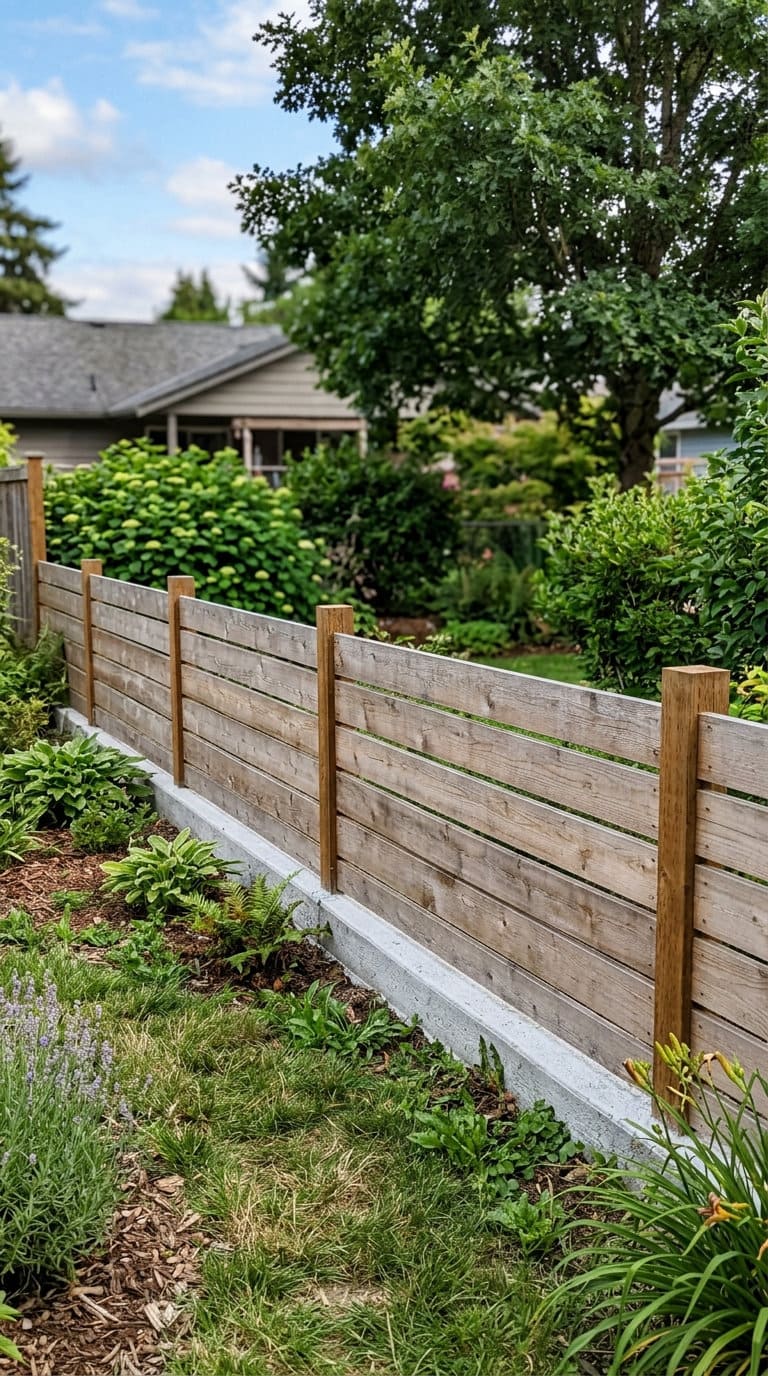
A poured concrete base beneath a horizontal wood fence keeps the bottom boards clear of direct soil contact, the single biggest cause of rot in a wood fence, while giving the whole structure a more finished, grounded look.
This is worth the extra upfront cost specifically in yards with poor drainage or a slope where water tends to pool against the fence line.
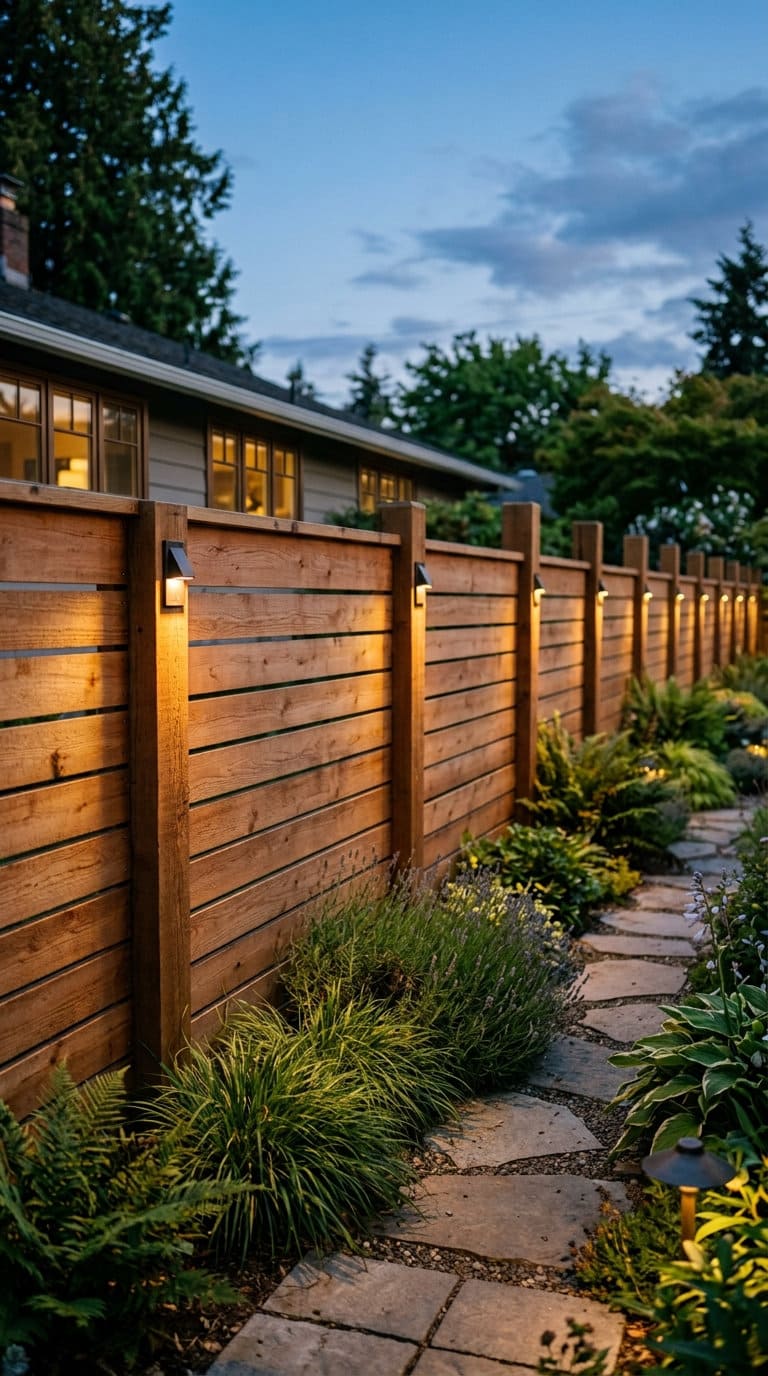
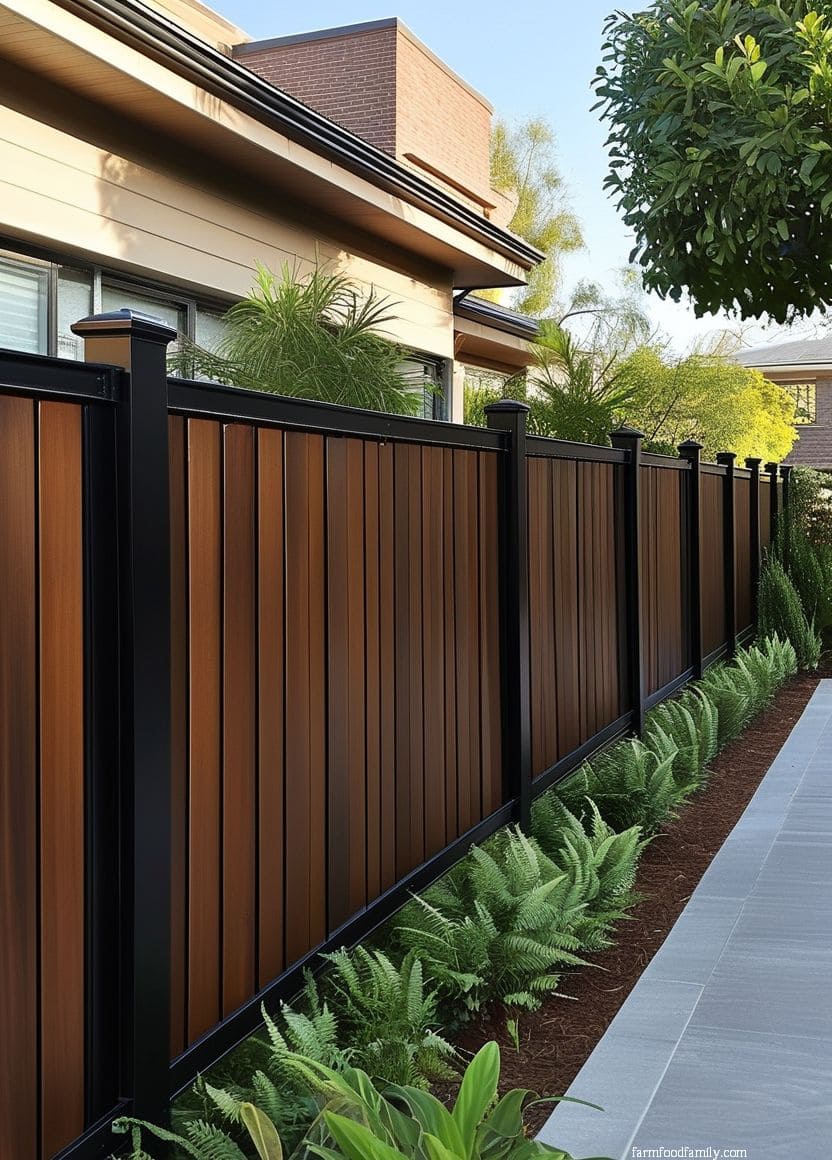
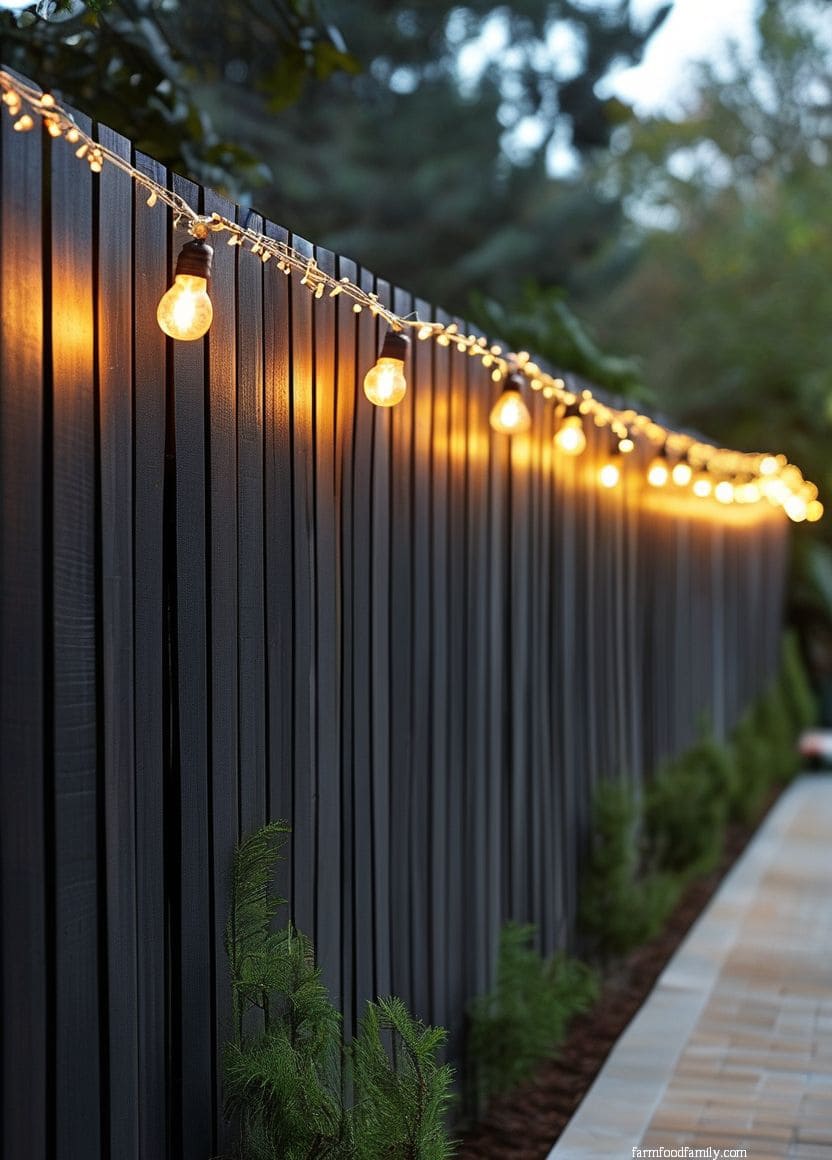
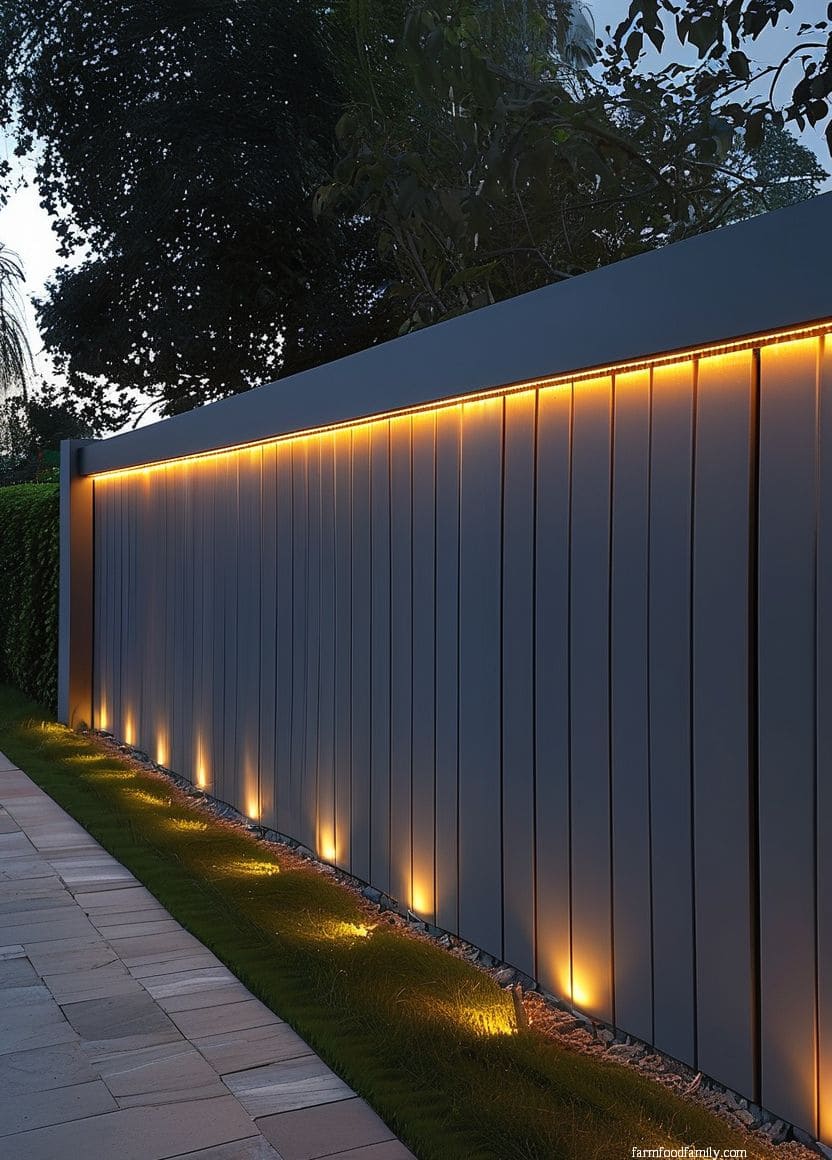
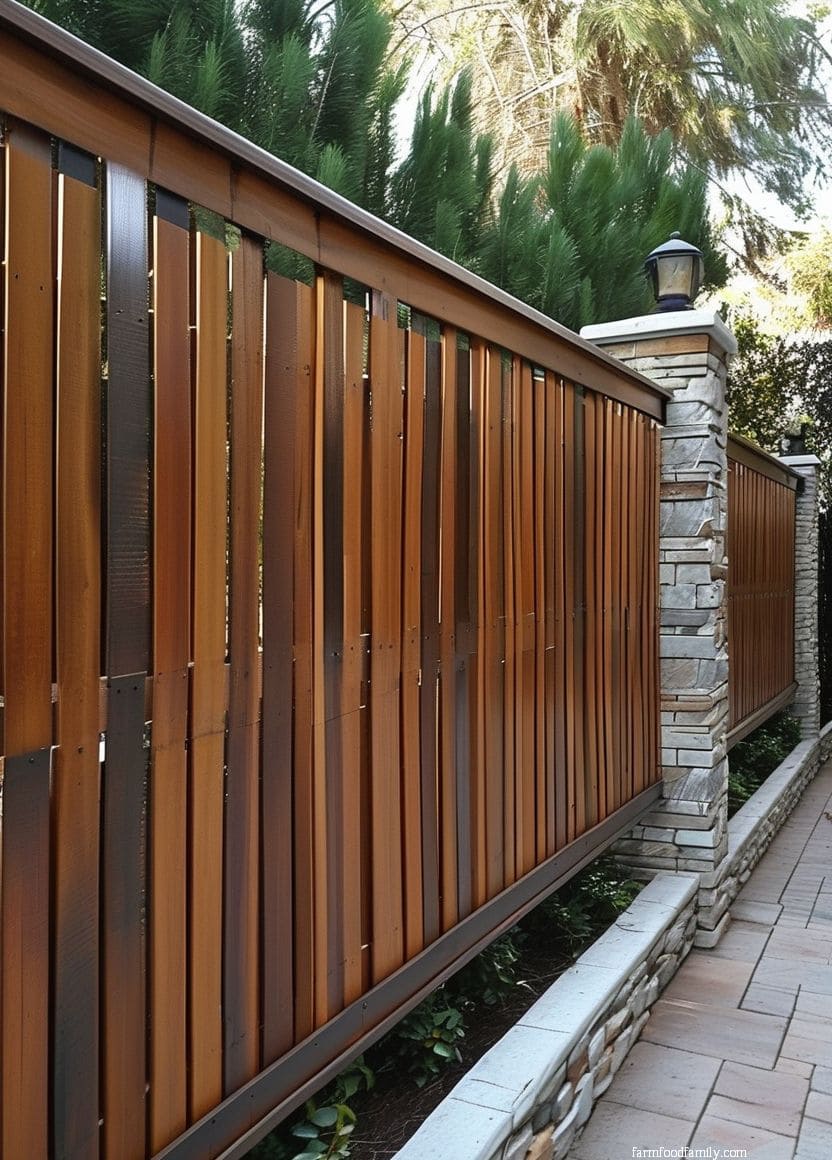
10. Warm wood fence with integrated lighting
Low-voltage lighting built into the fence posts or along the top rail adds usable evening light along the property line without the look of add-on string lights or standalone fixtures.
Run the wiring during initial construction, not after, retrofitting wiring through finished horizontal boards is a significantly bigger job than doing it before the boards go up.
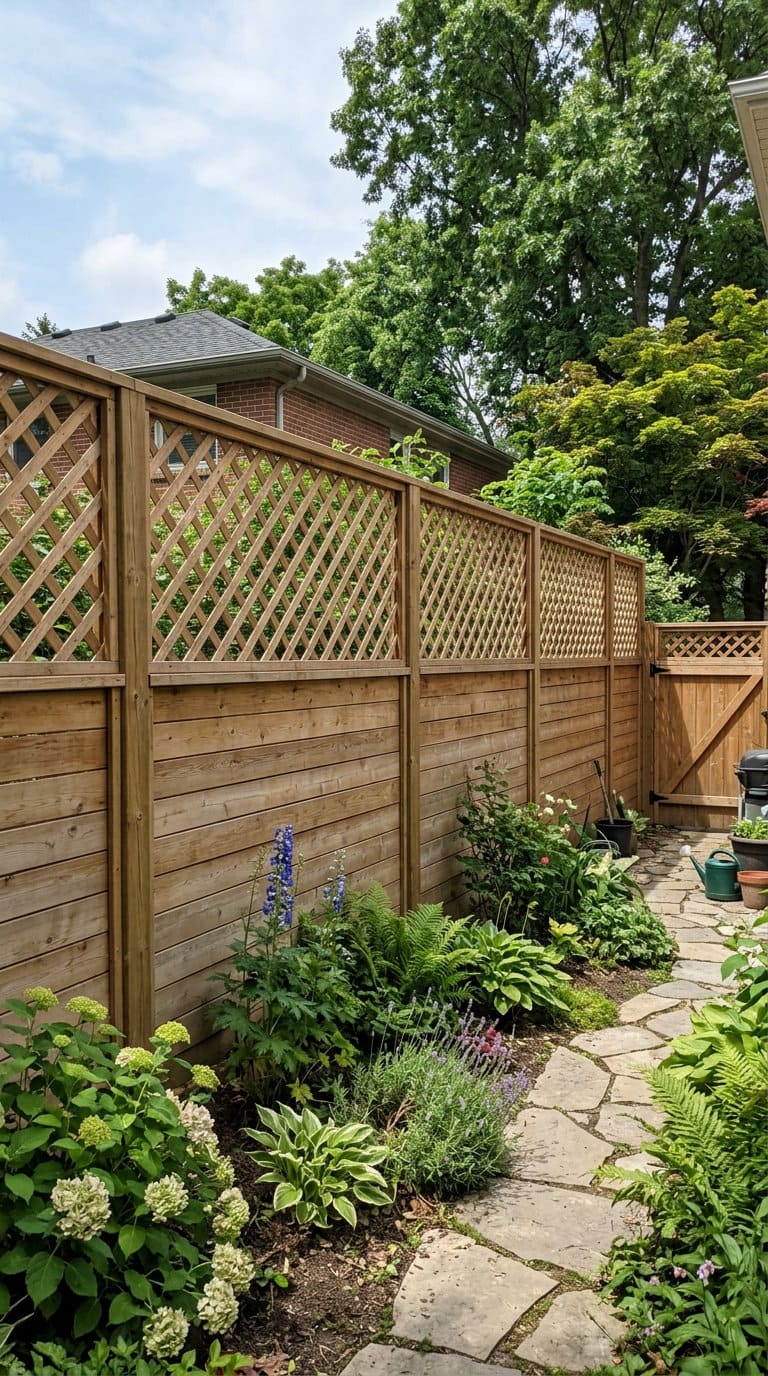
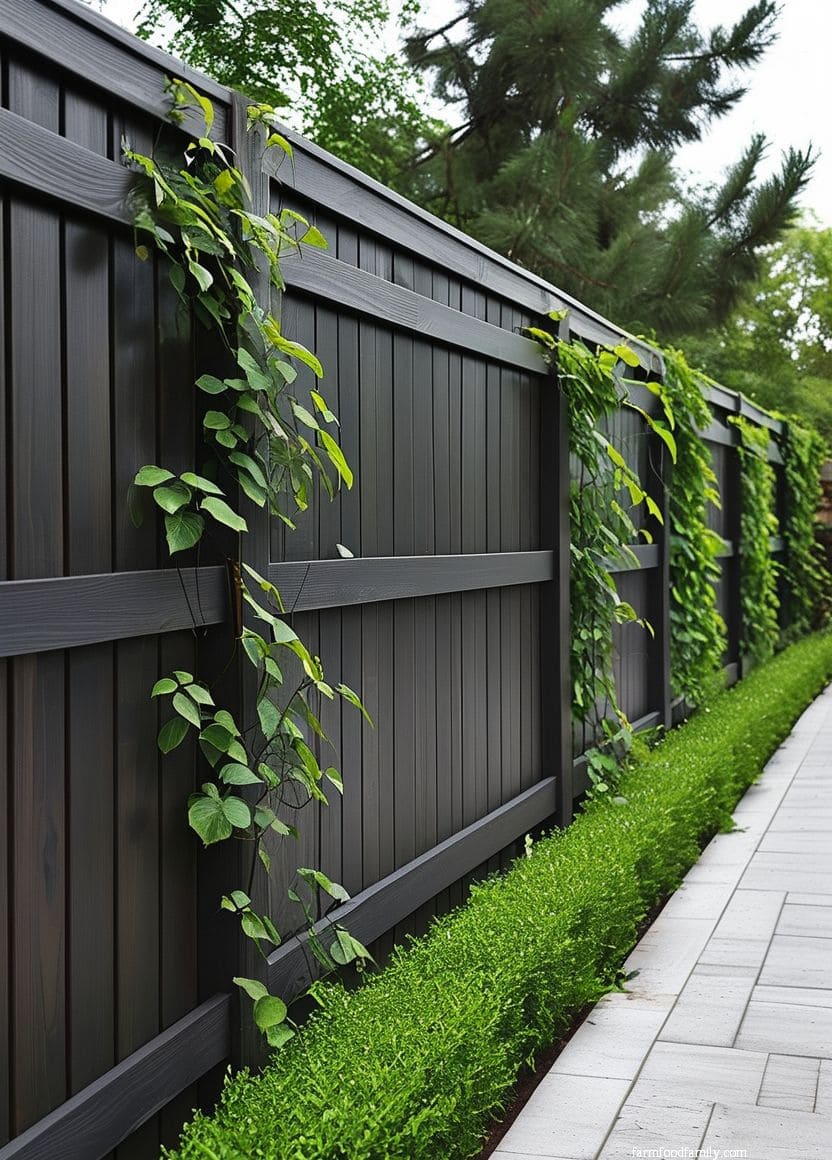
11. Lattice-top horizontal fence
Adding a lattice section above a solid horizontal base extends fence height for extra privacy or screening without the heavy, walled-off look a fully solid fence that tall would create.
The lattice top also gives climbing plants something to grow on, useful if you want greenery worked into the design without changing the fence’s core structure.
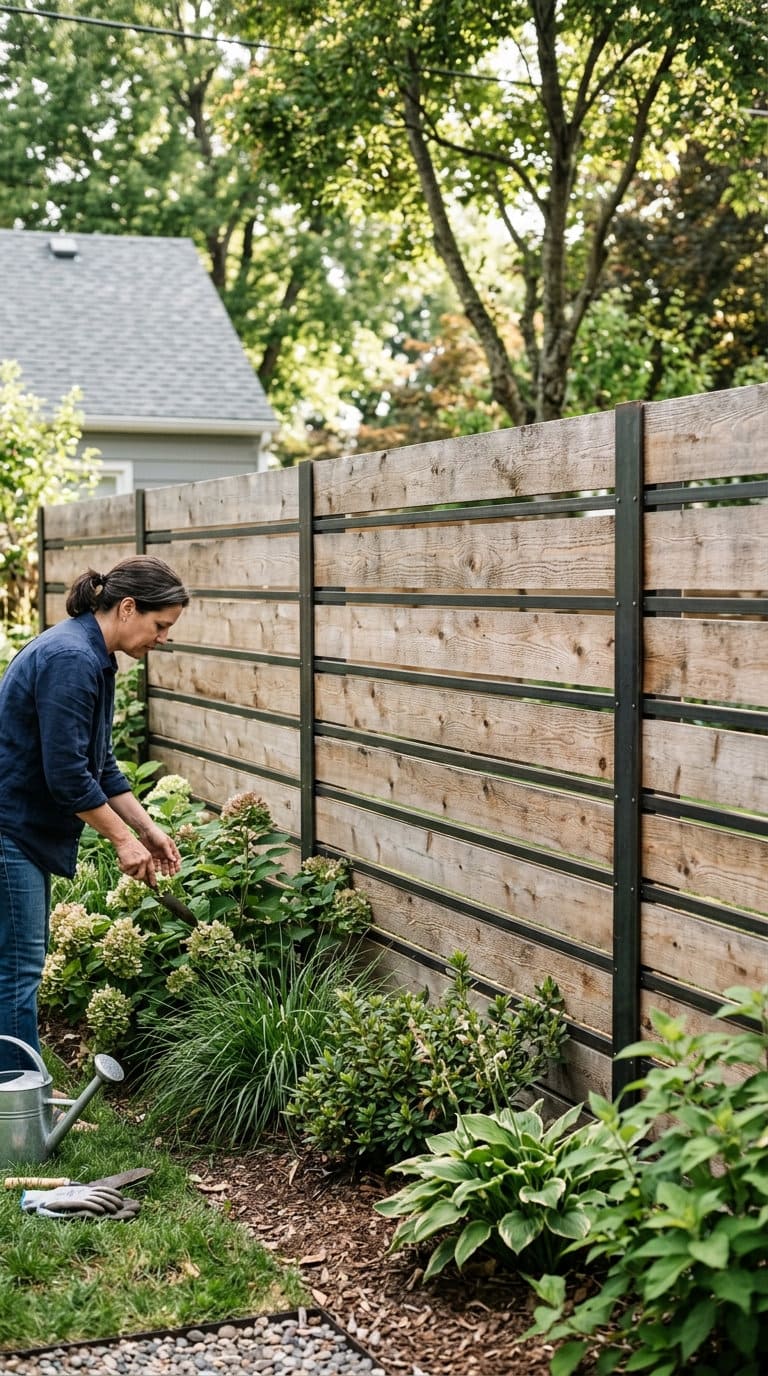
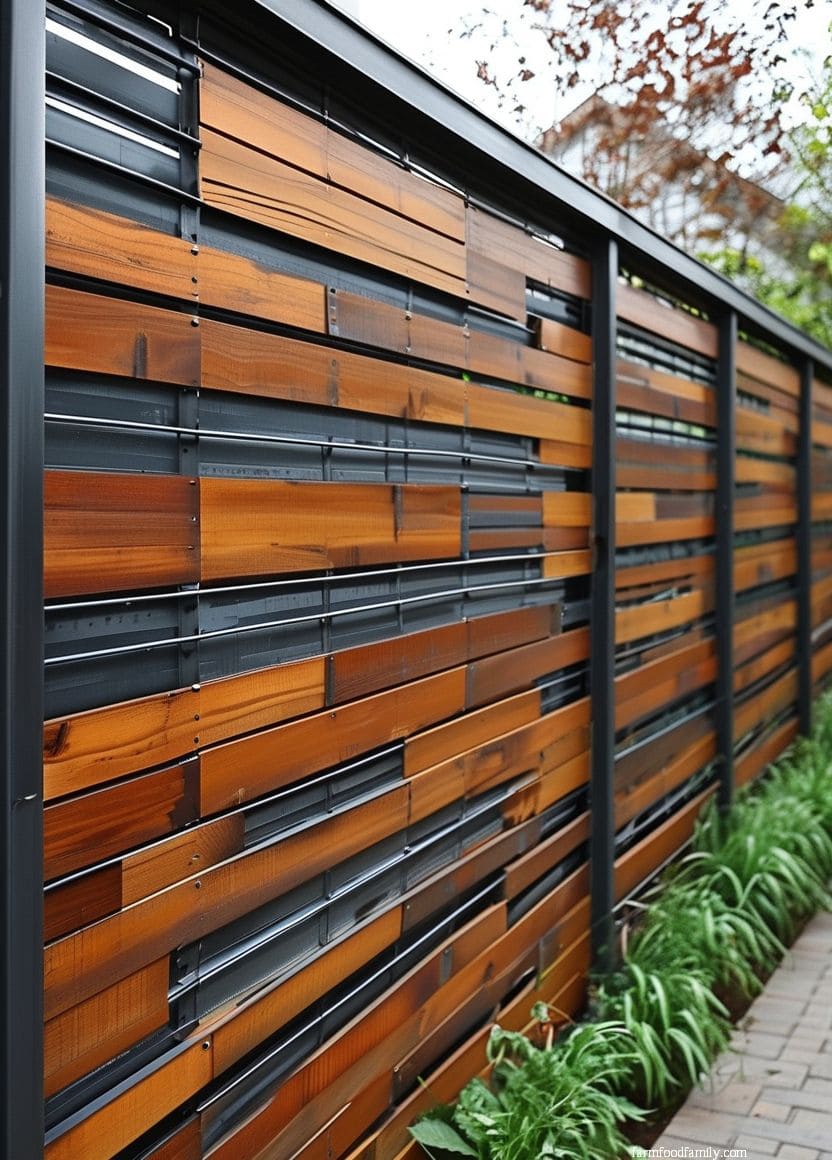
12. Horizontal fence with metal accents
Thin metal strips or brackets between horizontal wood boards break up an all-wood look and add a bit of industrial contrast, a detail that reads as intentional rather than a repair patch if it’s planned into the design from the start.
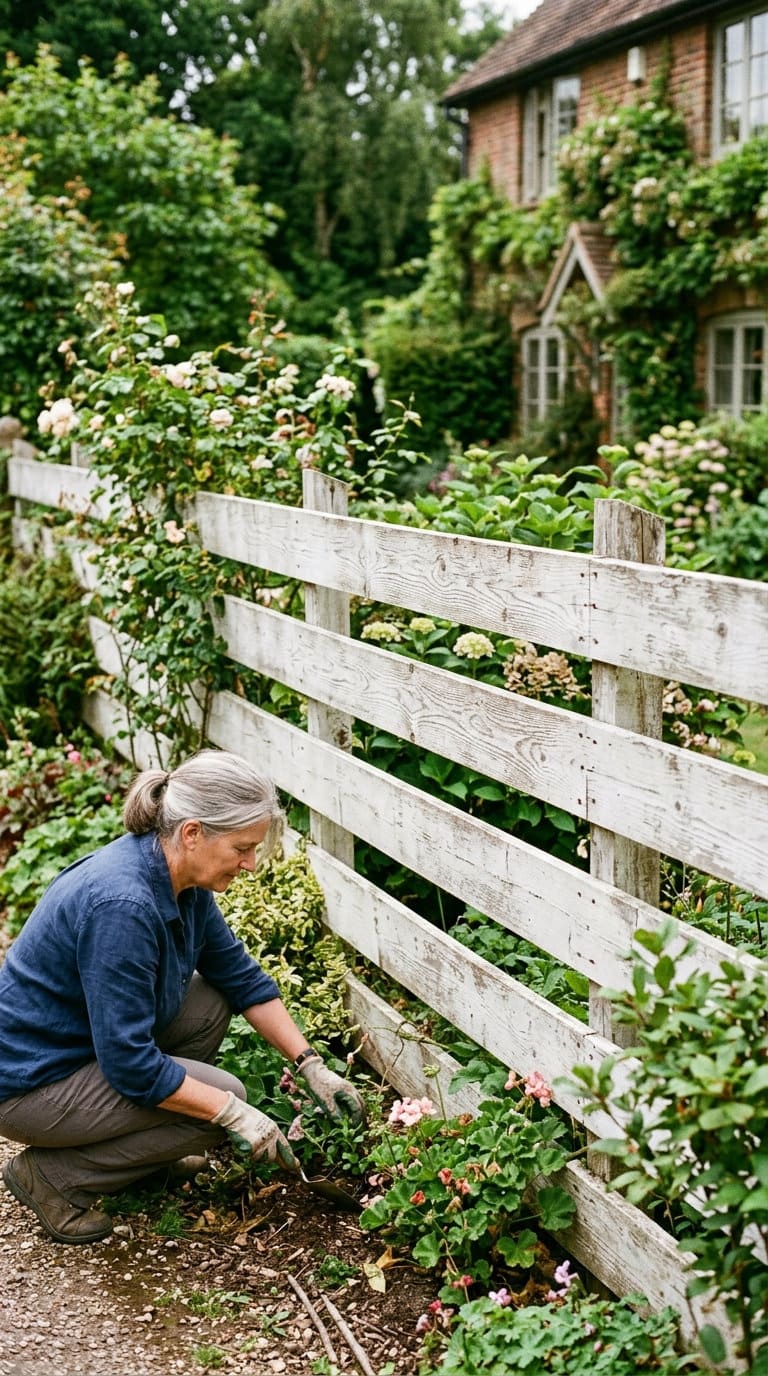
13. White-washed wood finish
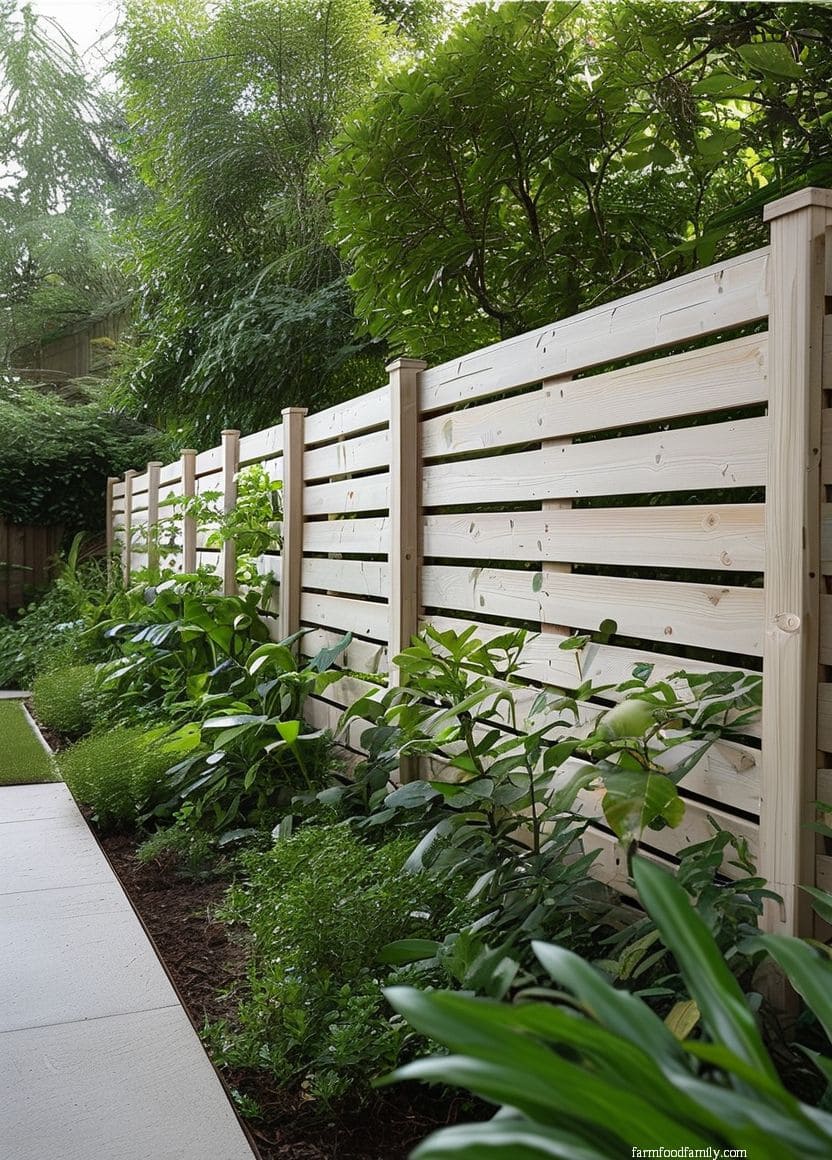
A white wash lets the wood grain show through, unlike solid paint, while still lightening the overall tone, a middle option between raw natural wood and a fully opaque white paint job.
White wash needs reapplication more often than solid paint since it’s a thinner, more porous finish, expect a shorter maintenance cycle than idea 6’s fully painted white option.
14. Naturally stained horizontal fence
A semi-transparent or solid stain in a warm brown or gray tone protects the wood while keeping some grain visible, a middle ground between raw wood (idea 7) and a fully opaque paint finish.
Stain needs reapplication on a shorter cycle than paint, typically every 2-3 years depending on sun exposure, worth factoring into the long-term maintenance picture alongside the structural upkeep from section 1.
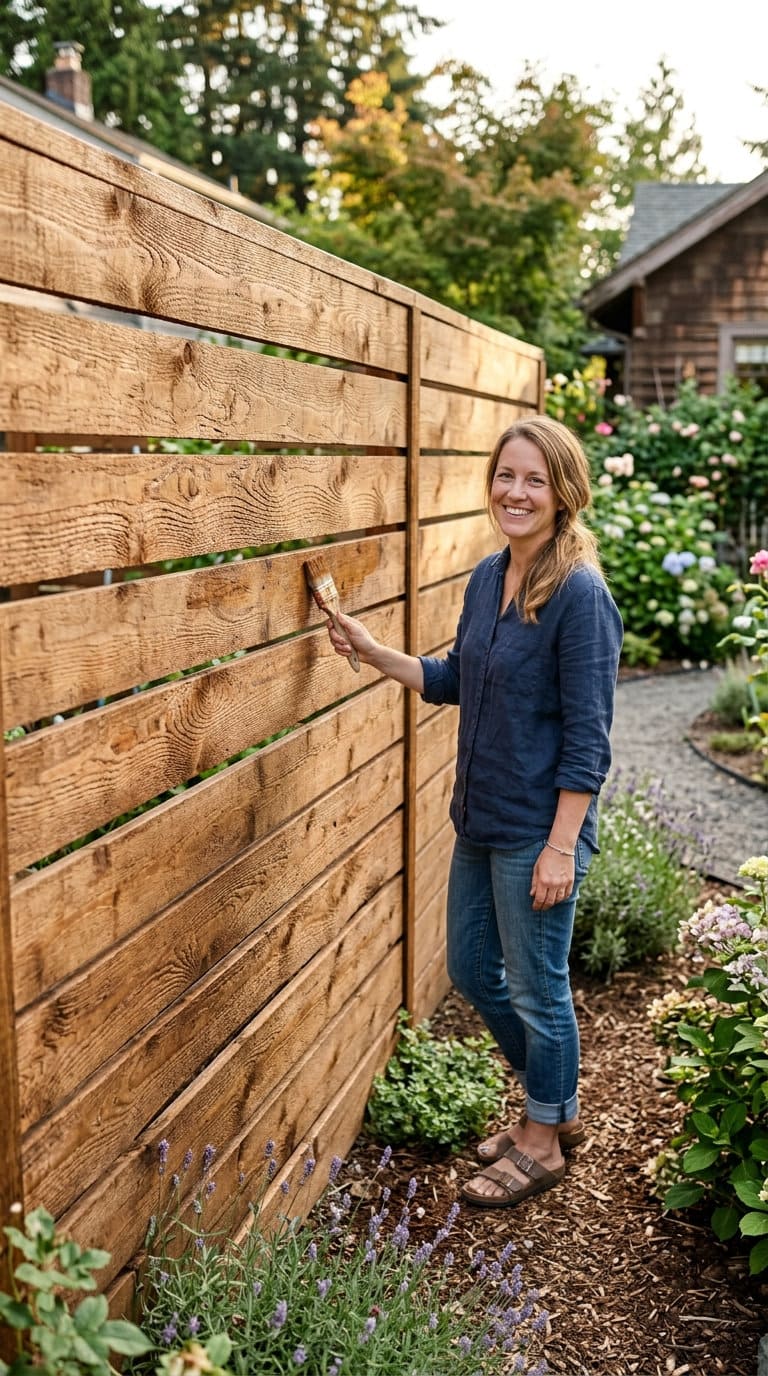
15. Solid privacy panels
Unlike board-on-board’s overlapping-board technique, solid panel construction uses continuous sheet material, engineered wood panels or tongue-and-groove boards milled to fit together with no gaps at all, for complete privacy in a single flat plane.
This is the heaviest, most rigid horizontal option on this list, and correspondingly the one where section 1’s post-spacing and lumber-grade advice matters most, a solid panel puts the most continuous load on the shortest allowable span.
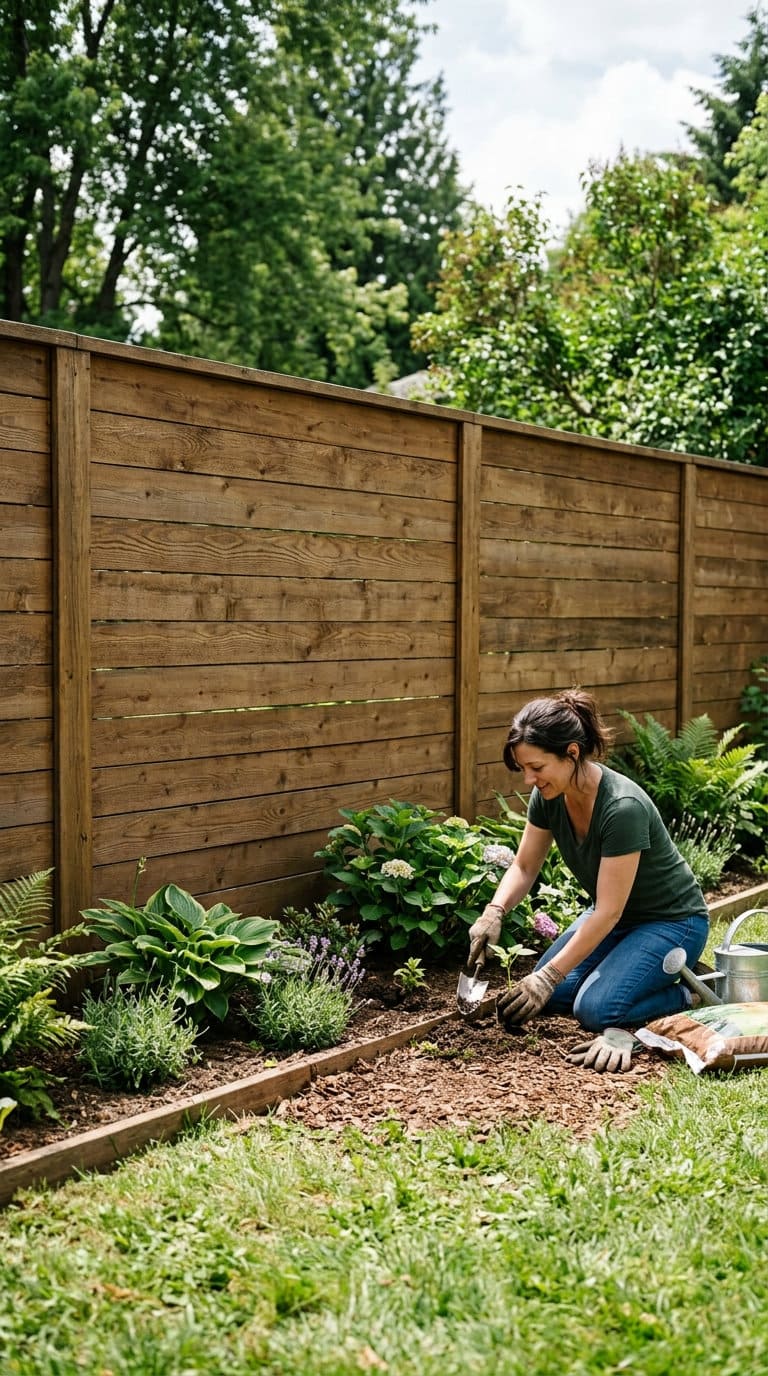
16. Mixed-material horizontal fence
Combining horizontal wood with metal, stone, or composite sections breaks up a long fence run visually and lets you use the strongest material where it matters most, concrete or stone at the base, wood for the visible horizontal run above it.
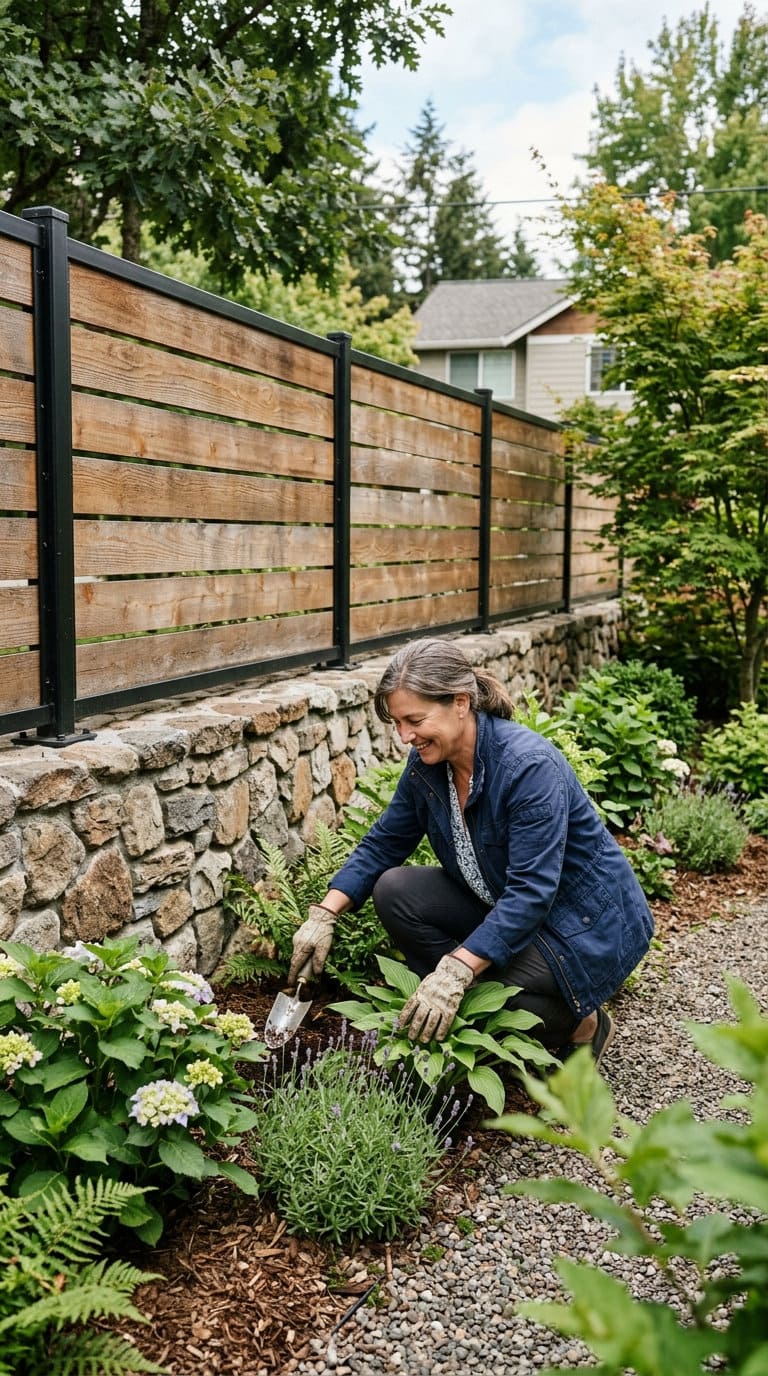
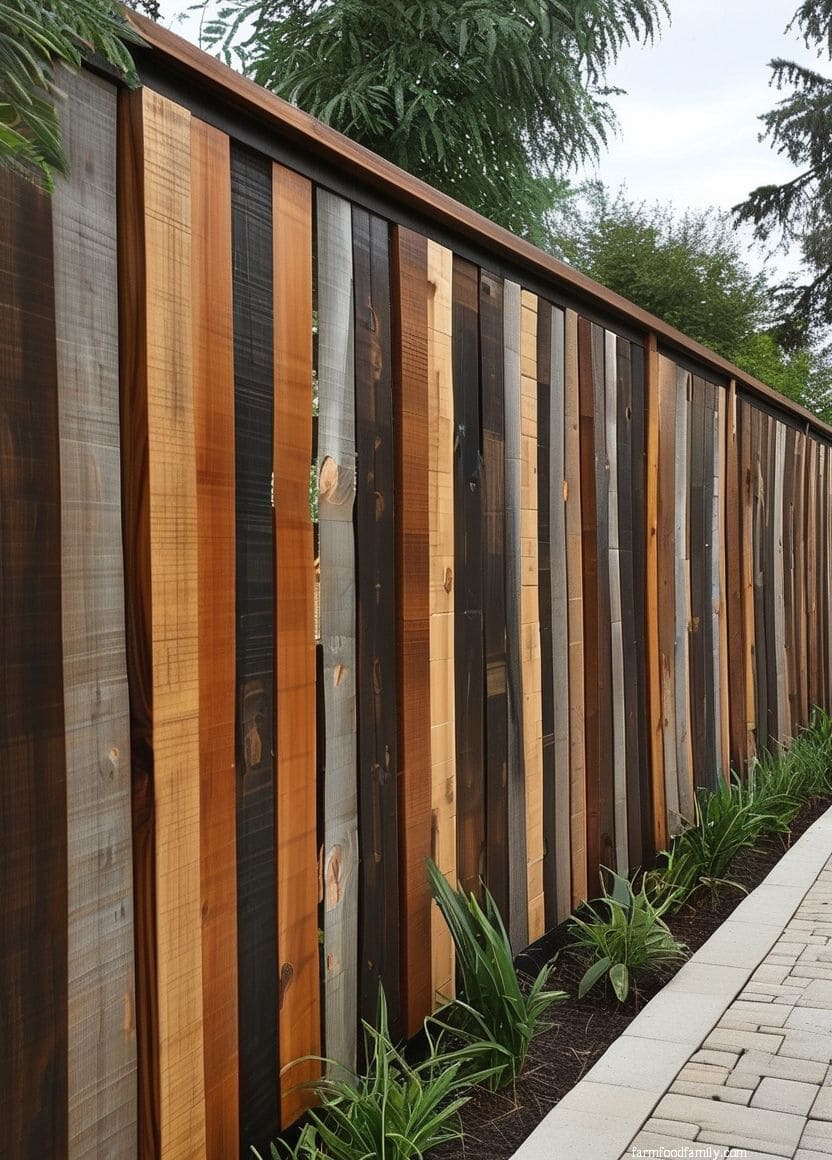
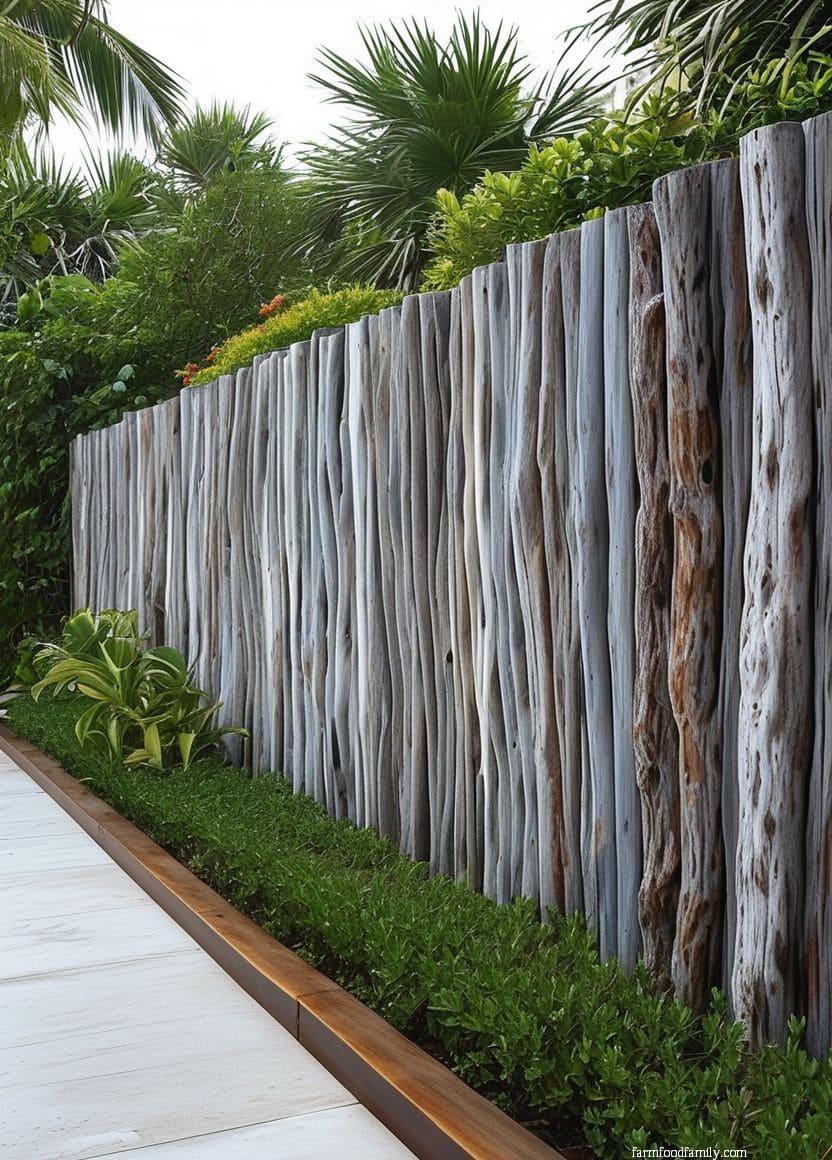
17. Reclaimed wood “eco wall” fence
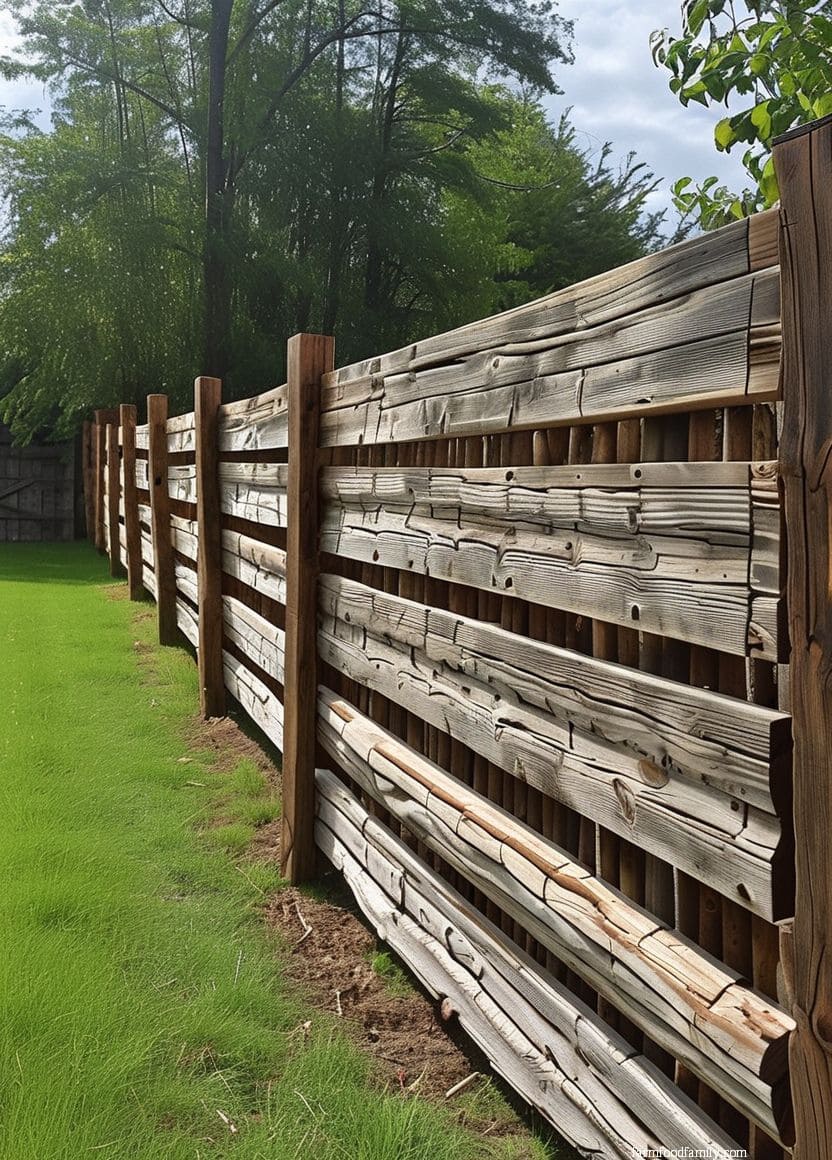
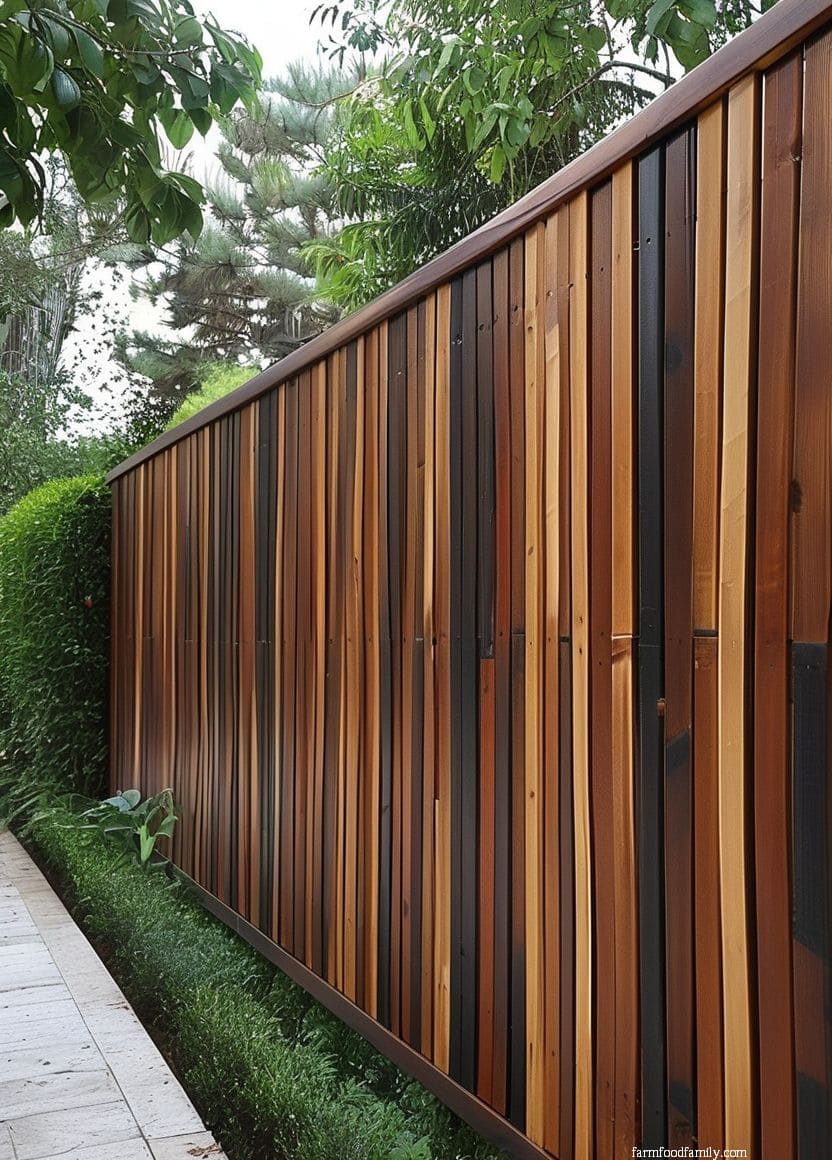
Reclaimed lumber, salvaged from old barns, pallets, or demolition projects, gives a horizontal fence real weathered character while keeping usable wood out of a landfill. The mismatched tones and textures between boards are the actual appeal here, not a flaw to hide.
Check reclaimed material for chemical treatment markings before using it outdoors or near plants, older reclaimed wood sometimes carries treatments not meant for garden-adjacent, long-term outdoor exposure.
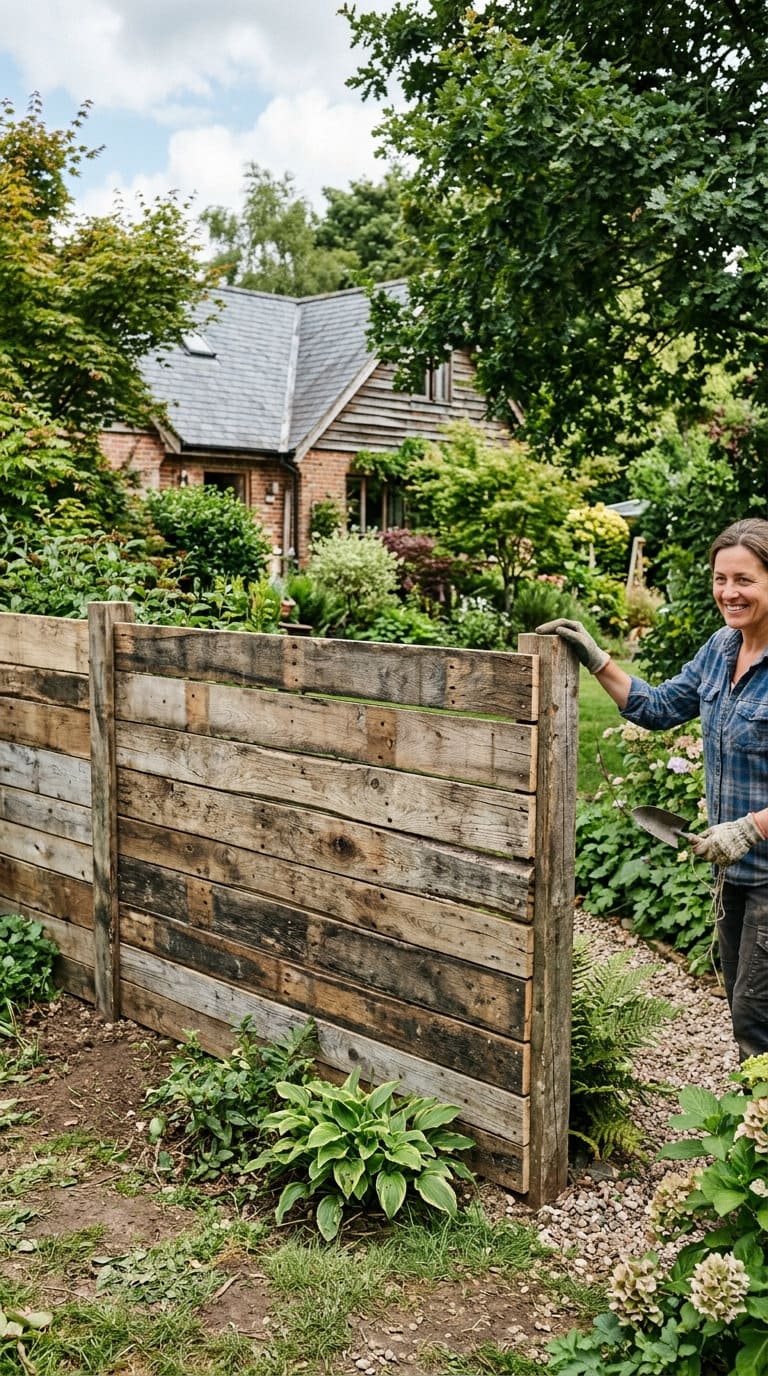
18. Sleek minimalist screening
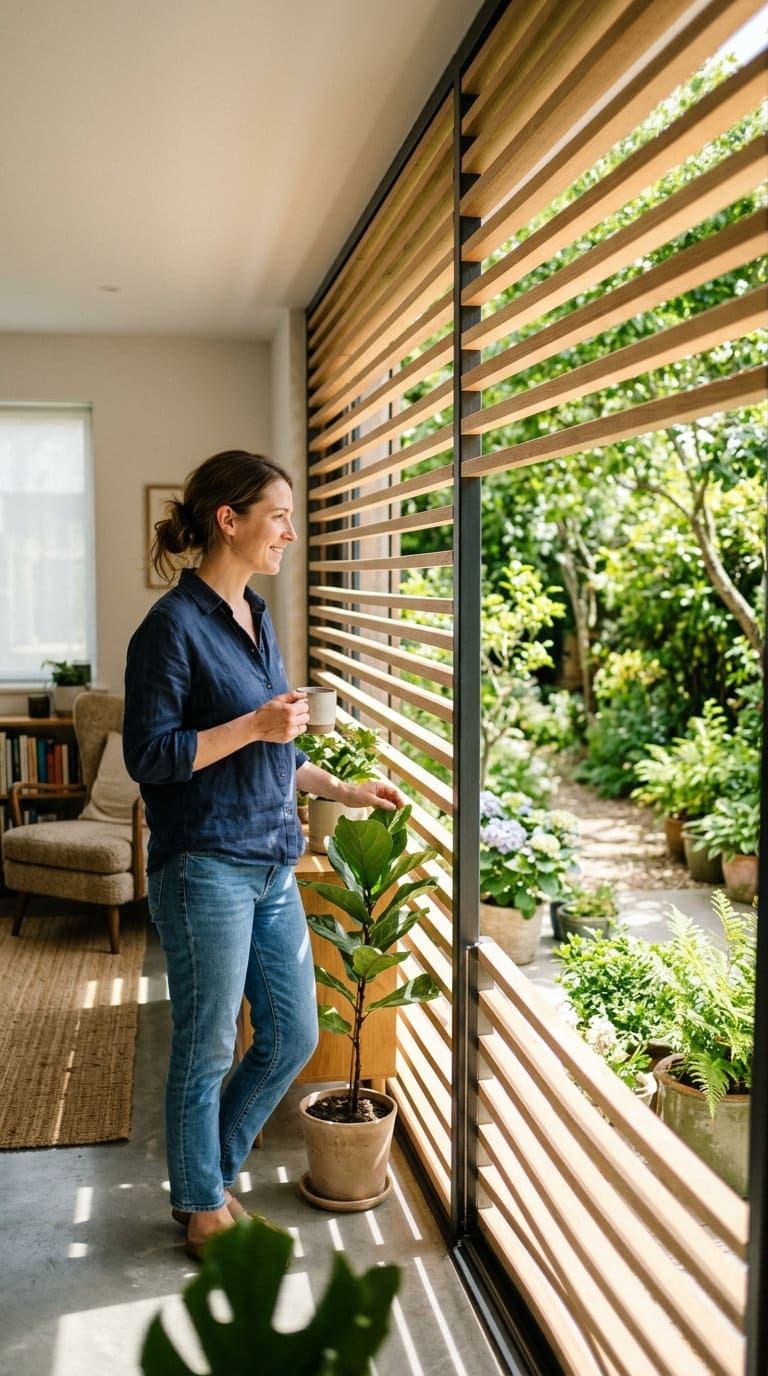
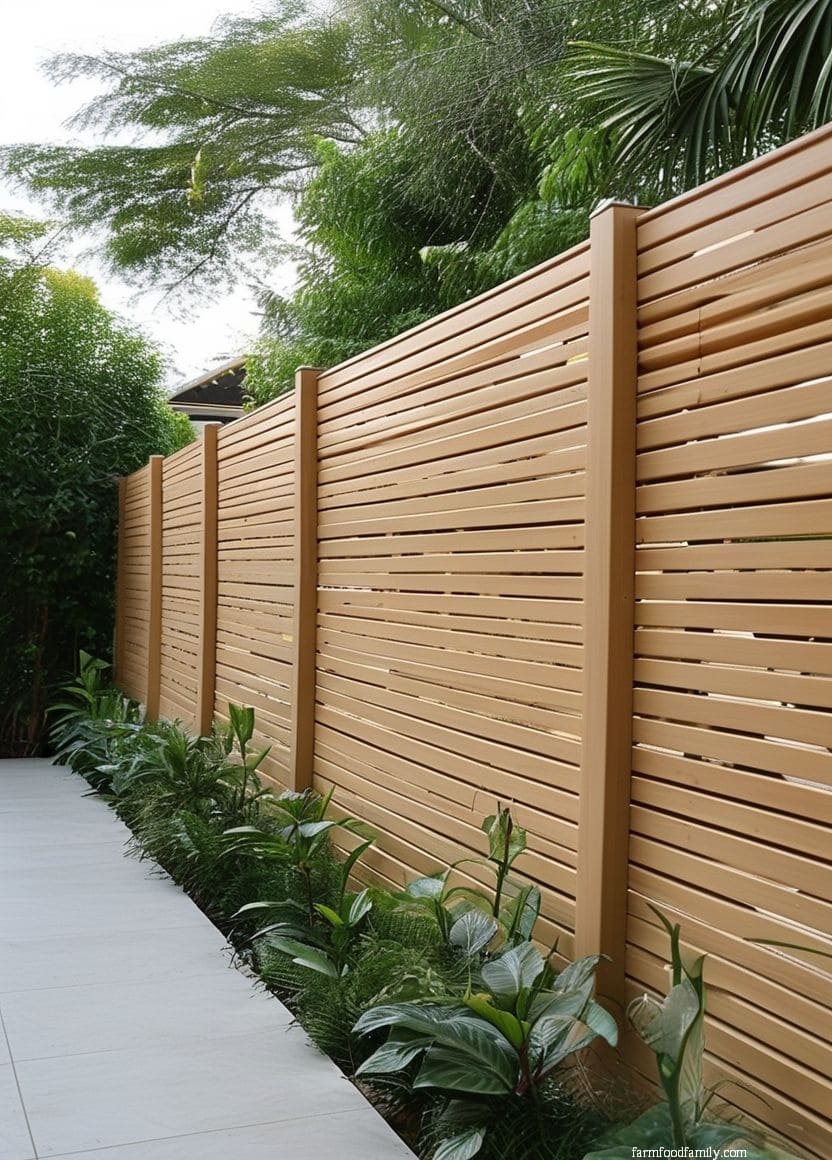
Thin, evenly spaced horizontal slats with generous gaps between them create a minimalist screen that filters views and light without fully blocking either, a common choice for a modern courtyard or a side-yard utility screen rather than a full privacy fence.
A few more things worth planning around
If bamboo specifically caught your eye, bamboo fence ideas goes deeper into that material beyond the single horizontal application covered here. For material selection more broadly, wood fence ideas and cedar fence ideas cover options beyond horizontal-specific designs.
FAQ
Why do horizontal fences sag more than vertical ones?
Horizontal boards span unsupported between posts, carrying their own weight and wind load across that span, the same way a shelf sags between brackets set too far apart. Vertical boards hang from top and bottom rails instead, which carry the load straight down through the posts rather than across an open span.
How far apart should posts be for a horizontal fence?
Roughly 4 to 6 feet, up to 6 to 8 feet at the outside, tighter than the 6 to 9 feet typical for vertical fence posts. A wider spacing on a horizontal design significantly increases visible sagging within the first year.
Is a horizontal fence more expensive than a vertical one?
Usually, yes. Horizontal fencing typically runs 10 to 20% more than vertical, mainly from the heavier lumber grade needed for the longer spans and the more precise labor required to keep every board level and evenly gapped.
Conclusion
Horizontal fences offer an incredible mix of style, flexibility, and practicality.
Whether you prefer sleek modern lines, boho charm, or something totally custom, there’s a horizontal design out there that can match your taste and your space.
Keep experimenting, mixing natural elements with thoughtful design, and your fence can be just as captivating as what it surrounds.
If this list helped you out, leave a comment below and please share it with your family and friends.
Never miss an update — choose FarmFoodFamily as your preferred source on Google.
How it works: Tap the button below to open Google's settings page, then check the box next to FarmFoodFamily.
Tap the checkbox to turn it blue — that's how you know it's set.