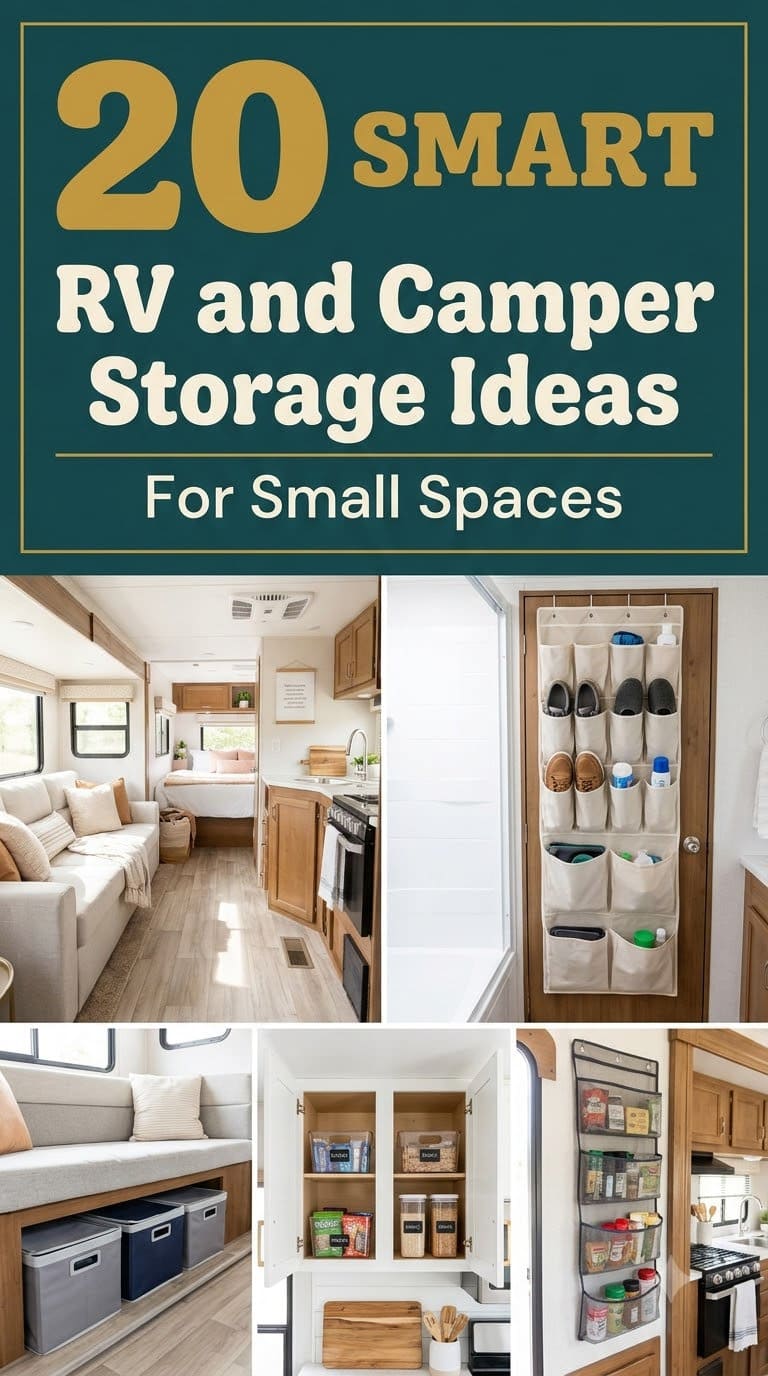
20 Smart RV and Camper Storage Ideas for Small Spaces
The best camper storage uses doors, walls and hidden corners, and keeps propane, magnets and safety gear handled the right way.


Never miss an update — choose FarmFoodFamily as your preferred source on Google.
How it works: Tap the button below to open Google's settings page, then check the box next to FarmFoodFamily.
Tap the checkbox to turn it blue — that's how you know it's set.
The best camper storage uses doors, walls and hidden corners, and keeps propane, magnets and safety gear handled the right way.
Products We Recommend
This post contains affiliate links. We may earn a commission on qualifying purchases at no extra cost to you.

ULG Over Door Organizer, 5 Large Pockets + 10 Mesh Pockets
Listed at a 44 lb capacity, with a clear window and sold for RV and camper use. It suits idea 1. Rated 4.6 stars from 9,038 ratings.
Shop Now
Collapsible Storage Bin With Lid and Handle, 30L
A foldable bin with a flat wooden lid, sold for RV and camping use. It suits ideas 2 and 17. Rated 4.2 stars from only 84 ratings.
Shop Now
Safe-T-Alert 35 Series Dual LP/CO Alarm
A 12V DC flush-mount alarm for propane and carbon monoxide. It suits idea 19. Rated 4.6 stars from 965 ratings.
Shop NowA camper has no spare corner. Every cabinet is full by the second day, and anything loose slides when you hit the first bump.
We rebuilt this list around the problems RV owners actually have: not enough room, things that rattle, and safety details that are easy to miss. Most ideas come with a practical tip and a catch to know before you buy. For storing the rig itself between trips, see our garage storage ideas.
In this article
Answer 4 quick questions and get matched to the exact fix for your yard — drainage, budget, layout, or something else entirely.
Take the Free QuizQuick Answer
Camper storage works when you use the spaces nobody sees: the backs of doors, the gap under the bed and the walls above the bench. Start there before you buy any new furniture.
Give every item one home, and secure it so it stays put on the road. Collapsible bins, door organizers and magnetic strips handle most of the small stuff.
But storage isn’t only about space. Keep propane tanks ventilated, never run fuel-burning appliances in closed storage compartments, and keep strong magnets away from children. Measure your cabinets first so bins and racks fit, and do a quick walk-through before every drive.
Below are 20 ideas for small campers and big RVs, from a quick door organizer to a safe place for the fire extinguisher. Pick the two that fix your biggest annoyance and start there.
Before You Start
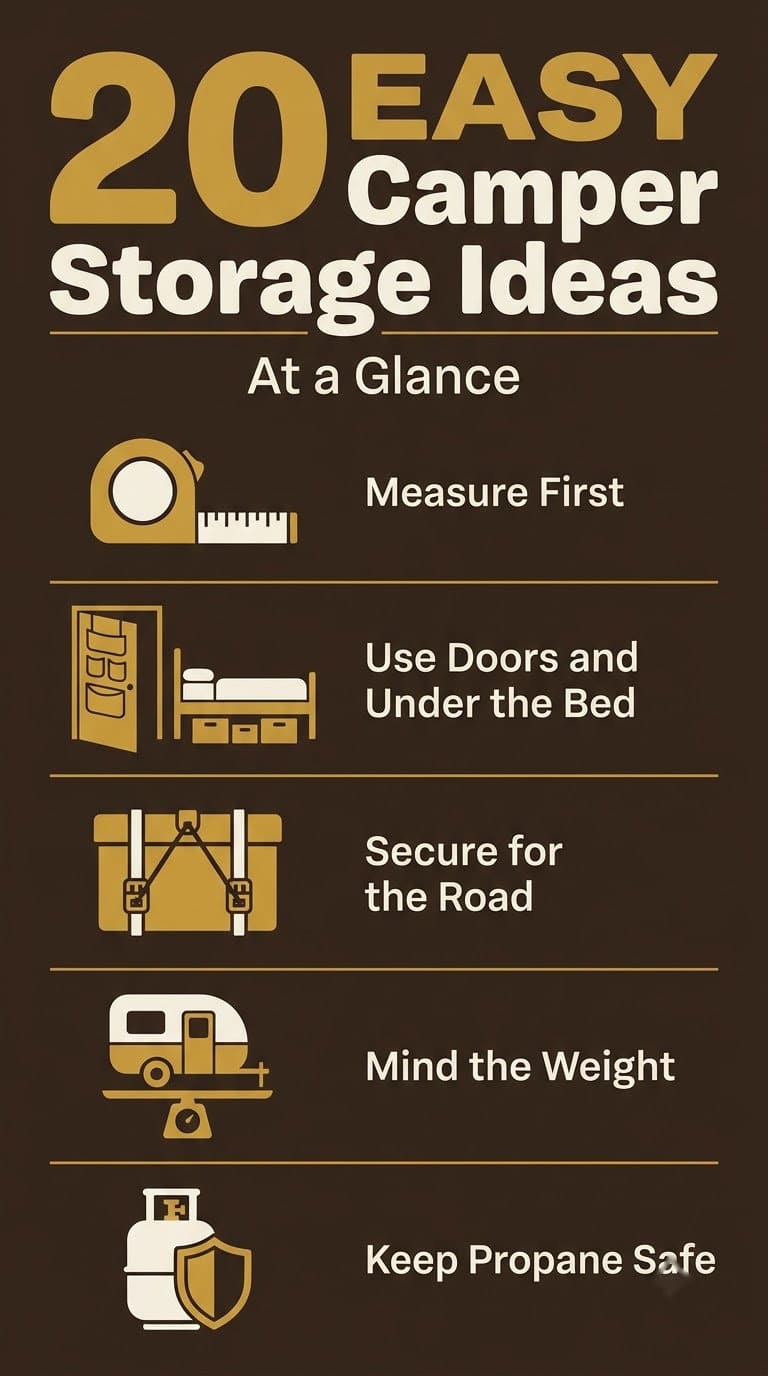
Measure first. Write down the depth and width of each cabinet, the gap under the bed and the space behind each door. A bin that’s an inch too big goes straight back to the store.

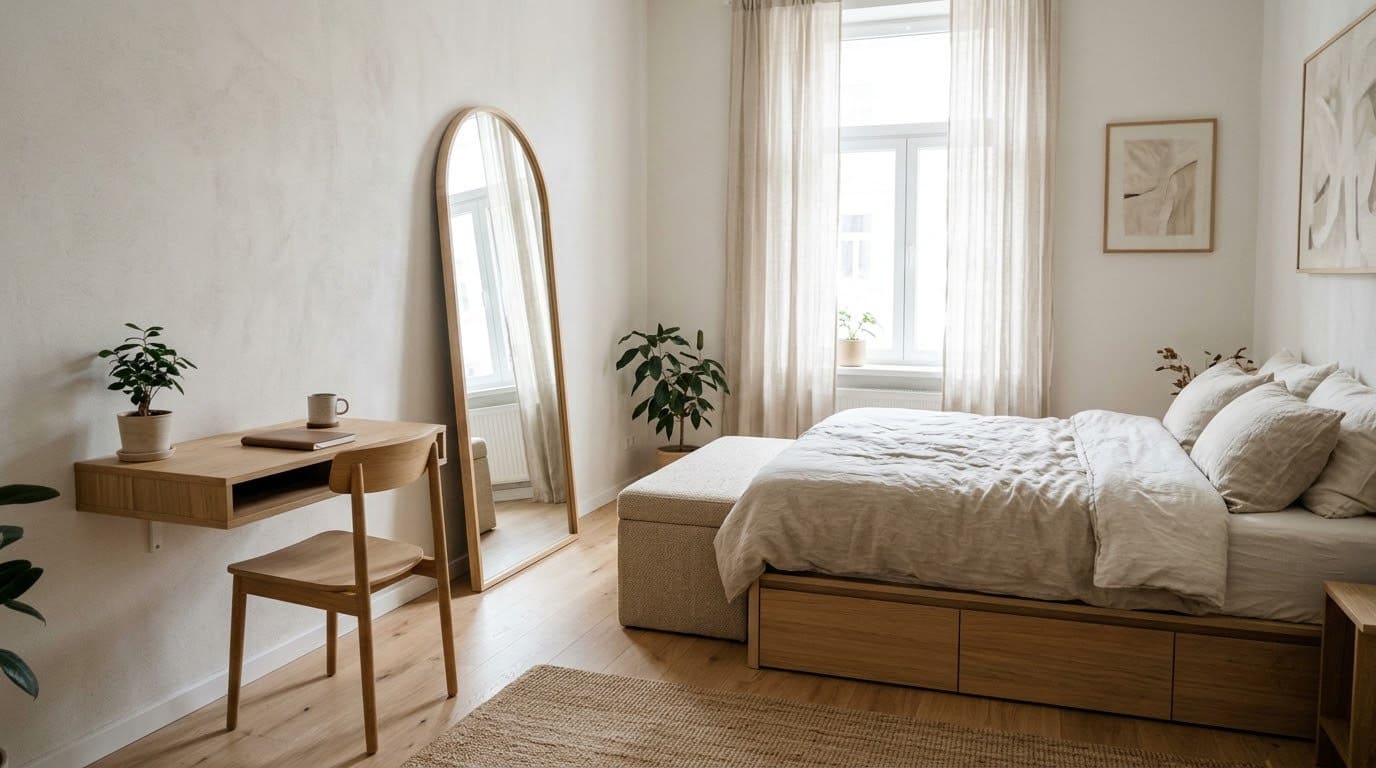
Next, weigh what you carry. Stay within the weight ratings on your RV’s label and your tow vehicle’s label, and put heavy items low and near the axle. Check your owner’s manual for the limits on your model.
Most yard problems trace back to one specific, fixable cause. Find yours in 4 quick questions.
Take the Free QuizThen think about safety. The New Jersey Division of Fire Safety says never to run fuel-burning appliances in closed areas, including bathrooms, bedrooms and storage compartments. That rule shapes where you can put gear.
Here’s how we’d scale it by budget.
| Level | What you do | Good for |
|---|---|---|
| Renter or rental RV ($) | Over-the-door organizers, tension rods, adhesive hooks, collapsible bins | Short trips, no drilling |
| Refresh ($$) | Slide-out pantry, cabinet-door racks, under-bed organizers | Full-timers and frequent travelers |
| Build ($$$) | Custom cabinetry, lift beds with gas struts, a hitch carrier | Long-term owners |
For ideas that work in any small home, see our storage ideas for small spaces and space-saving ideas for rental apartments.
20 RV and Camper Storage Ideas
1. Over-the-Door Organizer
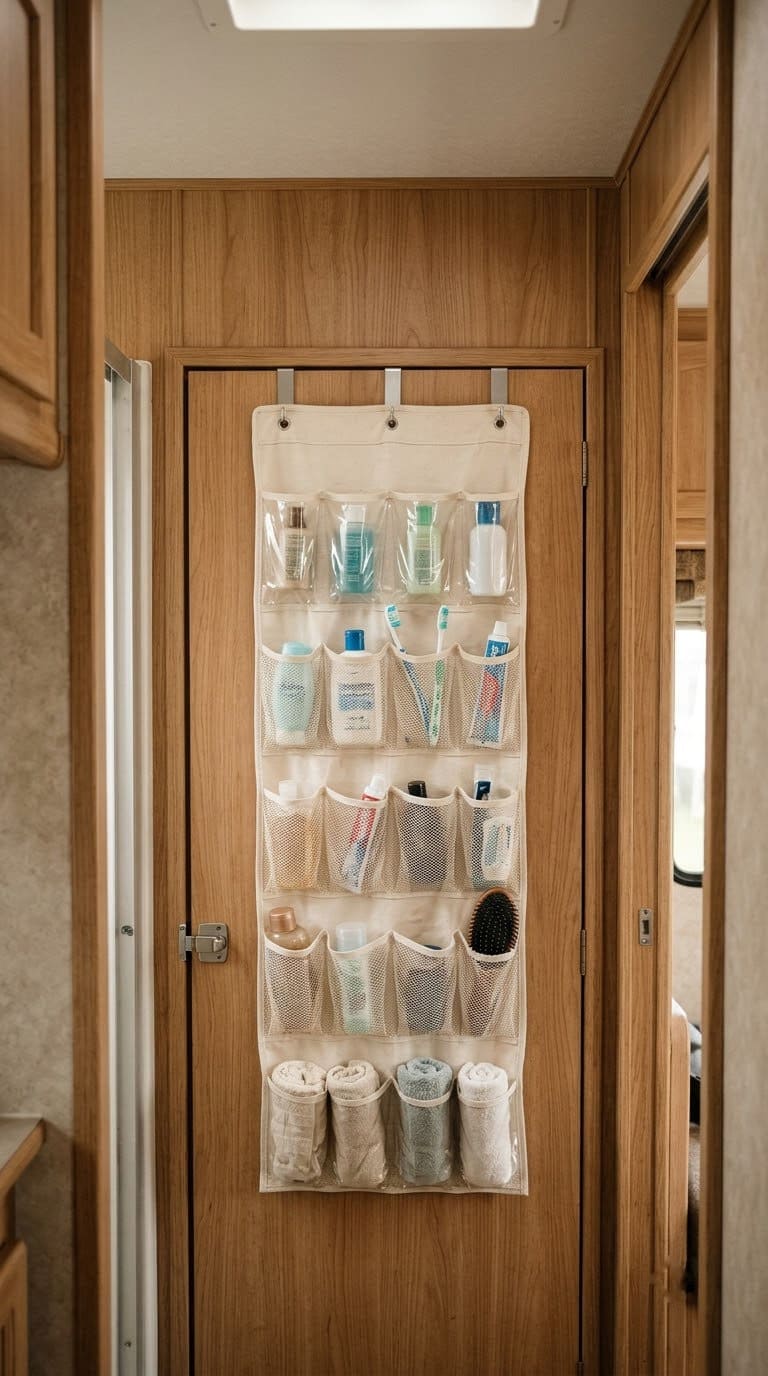
The back of a door is free storage. A pocketed organizer holds shoes, small electronics, kitchen tools and toiletries without using any counter space.
Hang one on a cabinet door, the bathroom door or the back of the entry door. Clear or mesh pockets let you see what’s inside at a glance.
Watch the weight, since a loaded organizer can strain a thin door. Our product pick lists a 44 lb capacity, but check your door first.
Put heavier items in the bottom pockets so the organizer hangs straight.
Listed at a 44 lb capacity, with a clear window and sold for RV and camper use. It suits idea 1. Rated 4.6 stars from 9,038 ratings.
Shop NowThis post contains affiliate links. We may earn a commission on qualifying purchases at no extra cost to you.
2. Collapsible Bins
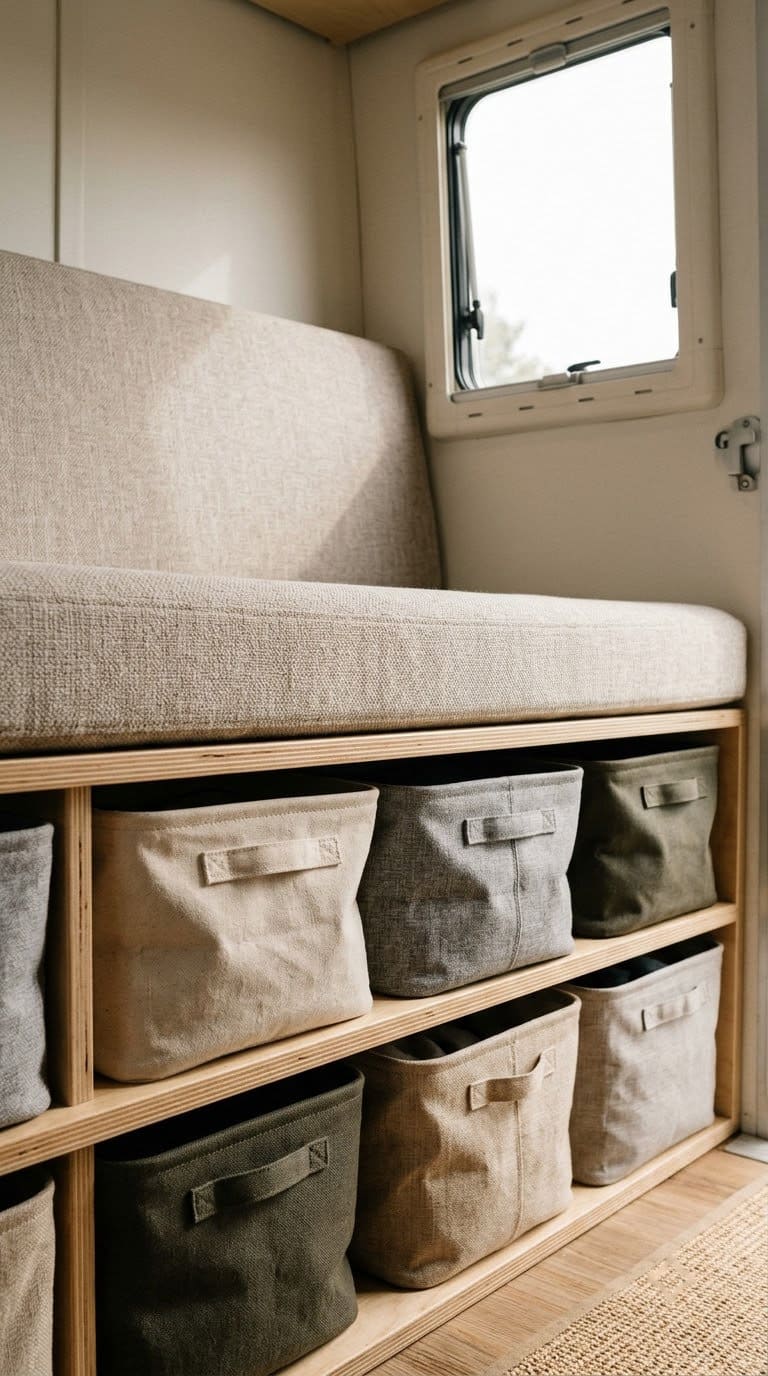
Bins that fold flat give you flexible storage. Use them for food, clothing, cleaning supplies and outdoor gear, and fold them away when empty.
Place them on shelves, under benches or inside cupboards. Labels or color coding save you from digging.
The average homeowner spends $616/year on yard fixes that don't address the real problem. Find out what yours actually is — before you spend another dollar.
Take the Free QuizA lid keeps dust off and stops items from flying out in a sudden stop. Pick bins with lids or zip closures.
Fold the empty ones and tuck them behind the seat cushions for the next trip.
3. Magnetic Strips
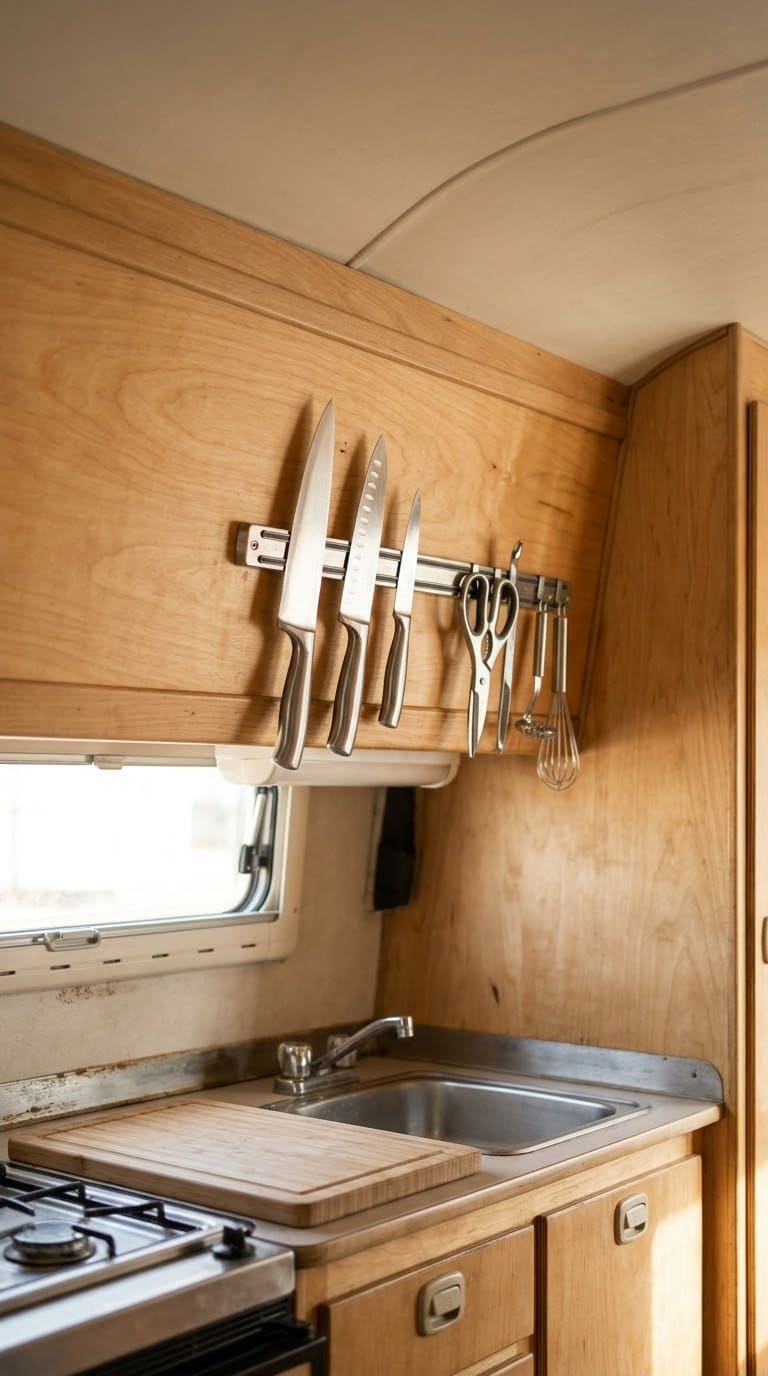
A magnetic strip keeps metal tools off the counter. In the kitchen, it can hold knives and utensils, and in the bathroom, tweezers and nail clippers.
Choose a sturdy strip so items stay put while the camper moves. Mount it inside a cabinet door if you want it out of sight.
Be careful with small magnets. The CPSC warns that strong magnets can seriously injure or kill children who swallow them, and that they can pull together inside the body.
Keep loose magnets away from kids, and mount any strip out of a toddler’s reach.

4. Slide-Out Pantry
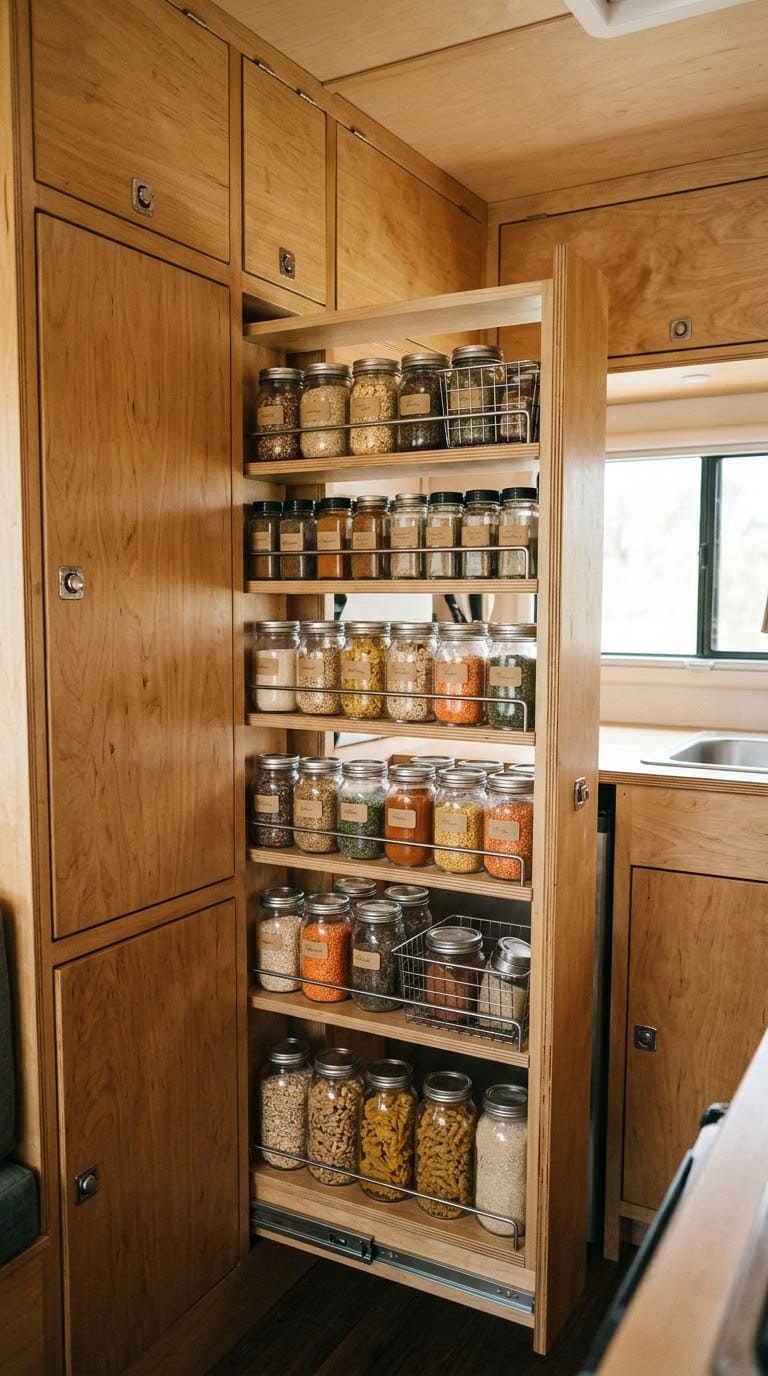
A narrow pull-out pantry uses the gap between cabinets. It stores dry food, spices and snacks within easy reach.
Adjustable shelves let you fit tall jars and short cans. Use labeled containers to keep things sorted.
The catch is installation. A slide-out needs a secure mount and smooth runners, so check the weight rating and screw into solid framing.
Measure the gap before you buy. Add a latch so the drawer stays shut on the road.
5. Under-Bed Storage
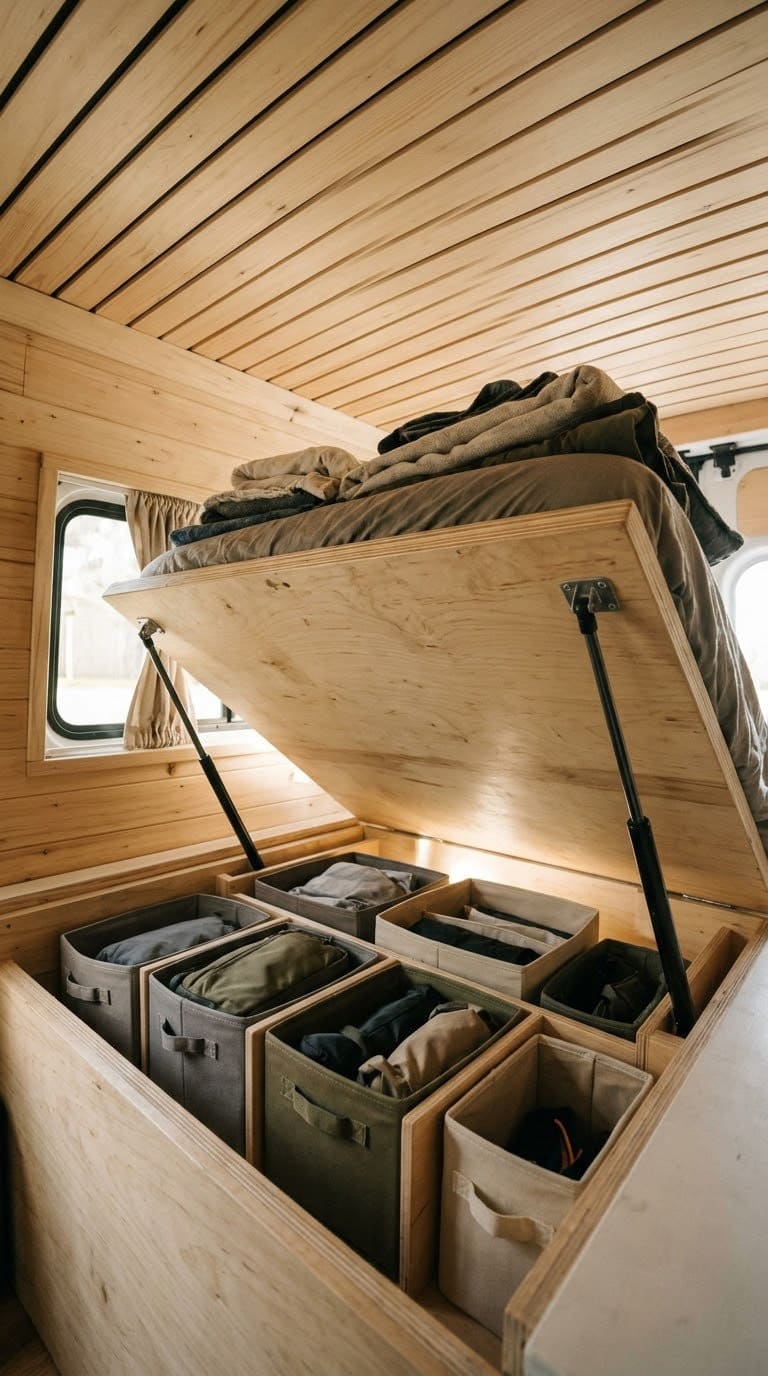
The space under the bed is the biggest hidden room in most campers. It suits bulky items like spare bedding, seasonal clothes and outdoor gear.
Use low-profile bins, vacuum-sealed bags or rolling containers. A sectioned organizer keeps you from digging.
If the bed lifts, gas struts make access much easier. Fit them to the weight of the platform and mattress, and follow the maker’s instructions.
Keep damp items out of this space. Moisture trapped under a mattress can lead to mildew.
6. Multipurpose Furniture
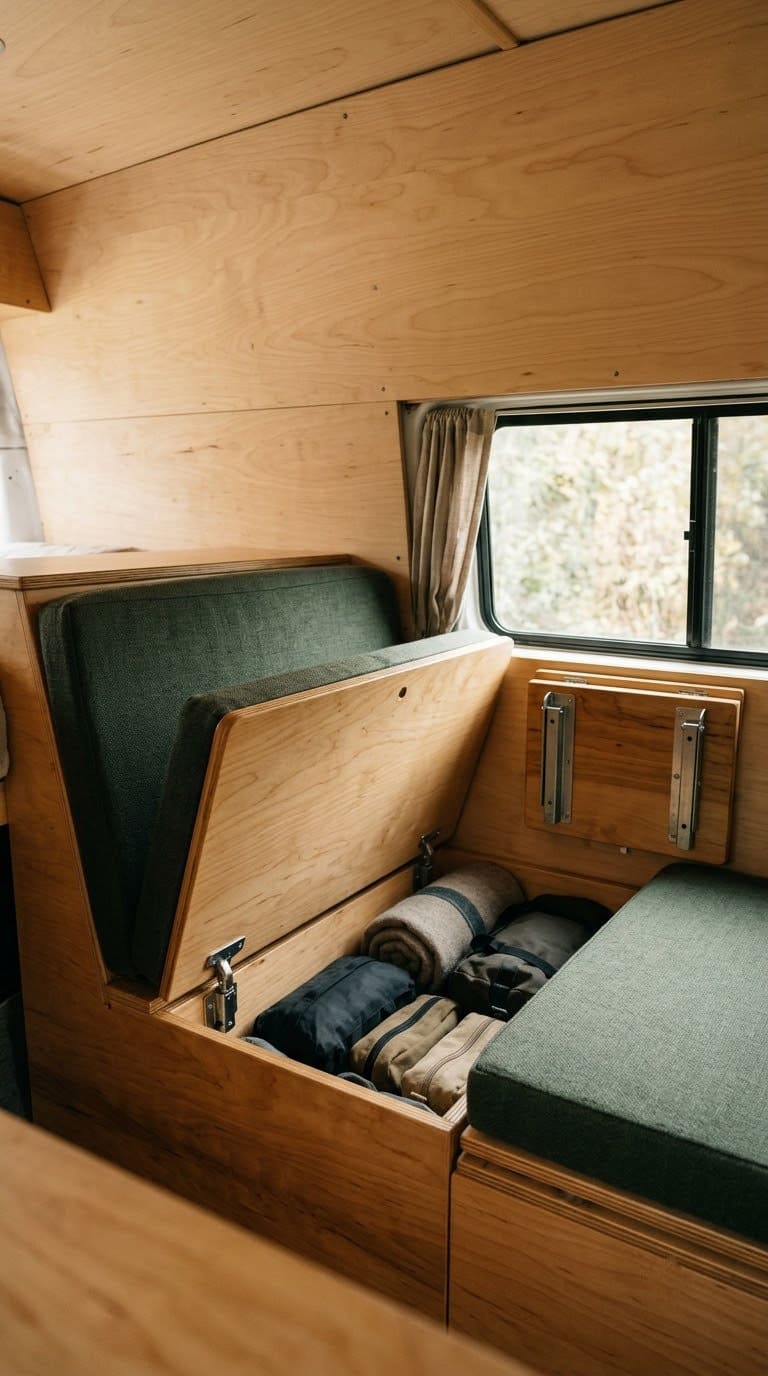
Furniture that does two jobs earns its place. A bench with a hinged lid, an ottoman with storage or a fold-down table all help.
Choose pieces that fit your floor plan and don’t block the door. A lighter piece is easier to move and better for towing.
The catch is weight. Solid wood furniture adds pounds, so check it against your cargo limit.
Use the storage inside for items you need less often, and keep the top clear.
7. Pet Storage
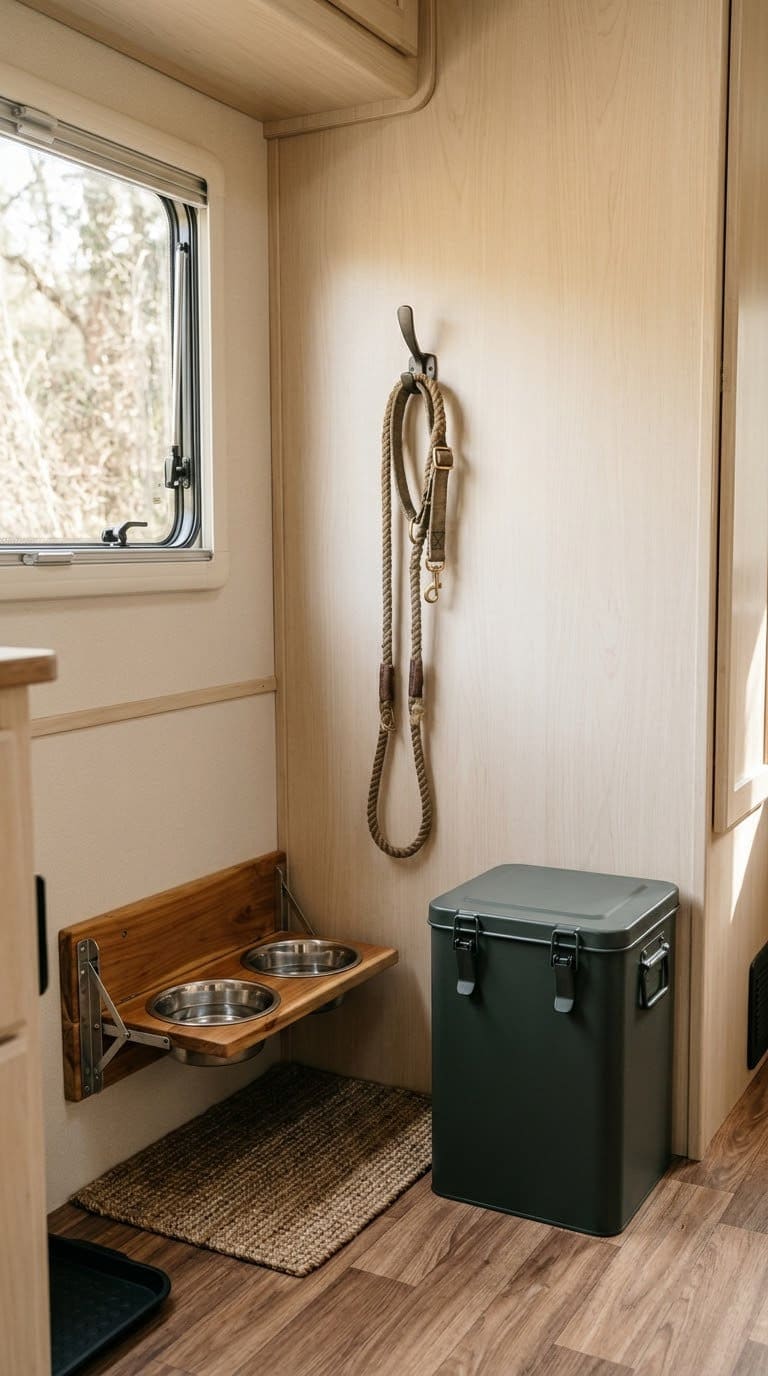
Pets add gear: food, bowls, leashes, towels and waste bags. Give them one bin and one hook, and keep the setup in one corner.
Store pet food in a sealed container to keep pests away. A hook by the door holds leashes.
The catch is smell and mess. Wipe up spills right away, and wash bowls daily.
Keep pet medicines out of reach of both pets and children.
8. Hidden Storage
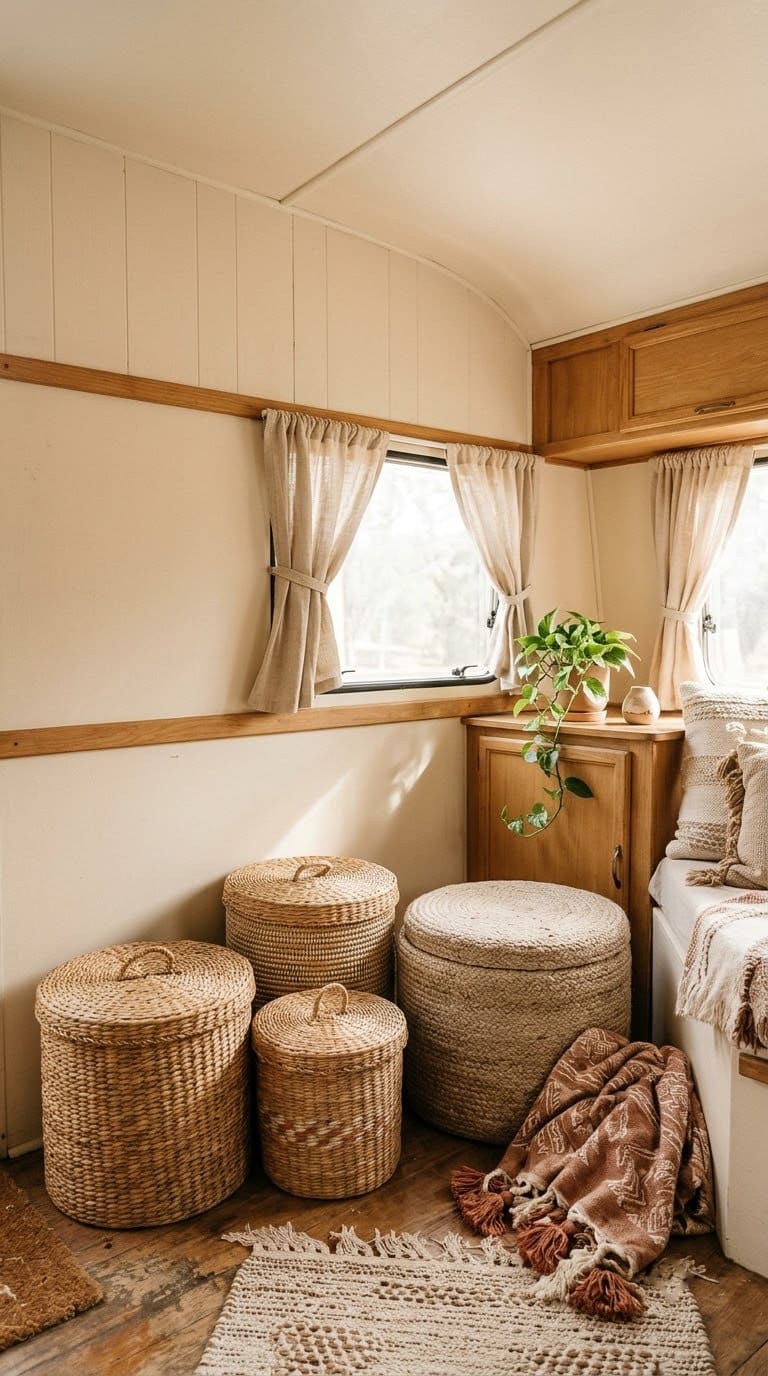
If you want your camper to feel like home, hidden storage helps. Woven baskets, storage ottomans and curtains over open shelves hide clutter.
Use baskets with lids or fabric liners. Secure open ones with elastic cords so they don’t tip.
The catch is that decor can add weight and rattle. Choose soft, light pieces and tie them down before you drive.
Hang a curtain on a tension rod for a quick cover. It comes down in a second.
9. A One-In, One-Out Rule
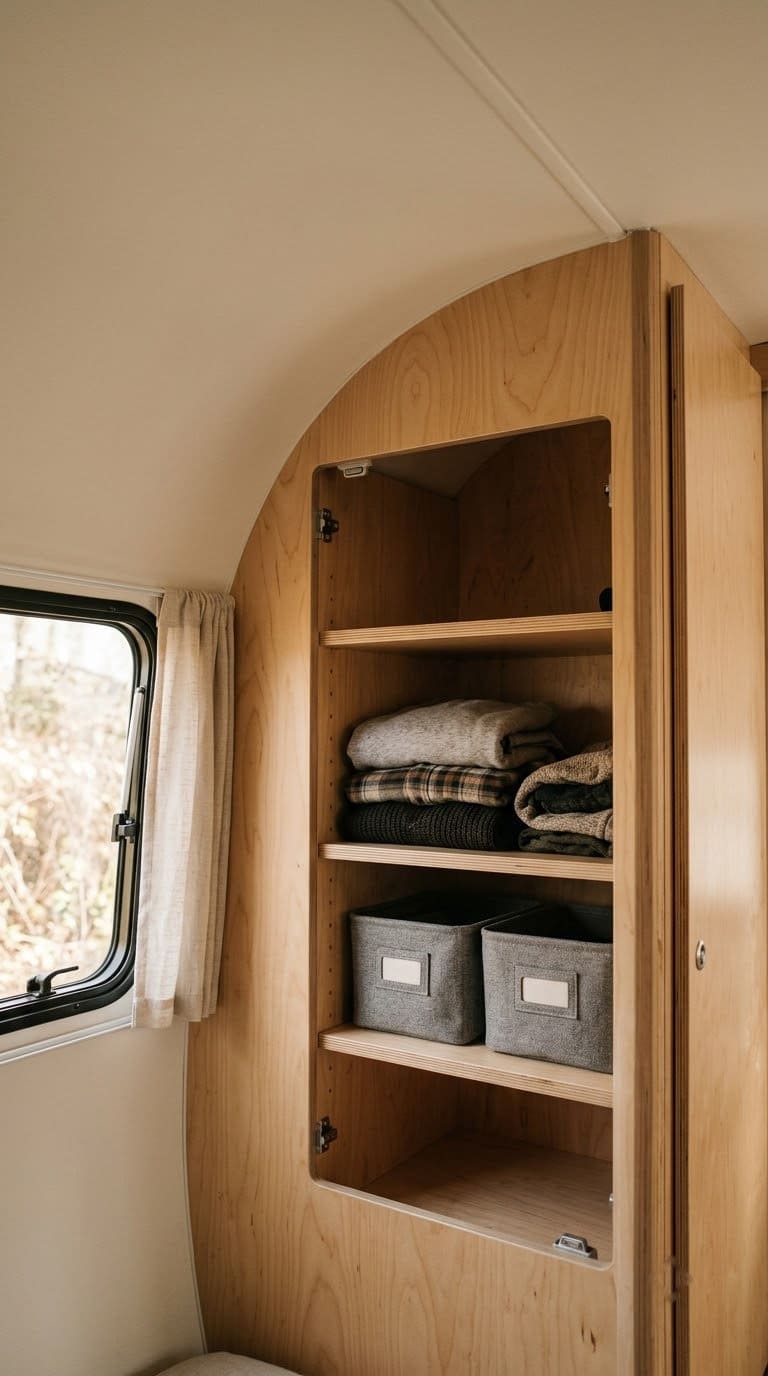
The simplest storage trick is to own less. For every new item that comes in, one leaves.
Pack a capsule wardrobe of pieces that mix and match. Choose one set of dishes per person.
The catch is habit. A rule only helps if you stick to it, so check your cabinets at the end of every trip.
Keep a donation bag in a bin. It makes it easy to let things go.
10. Wall Hooks and Rails
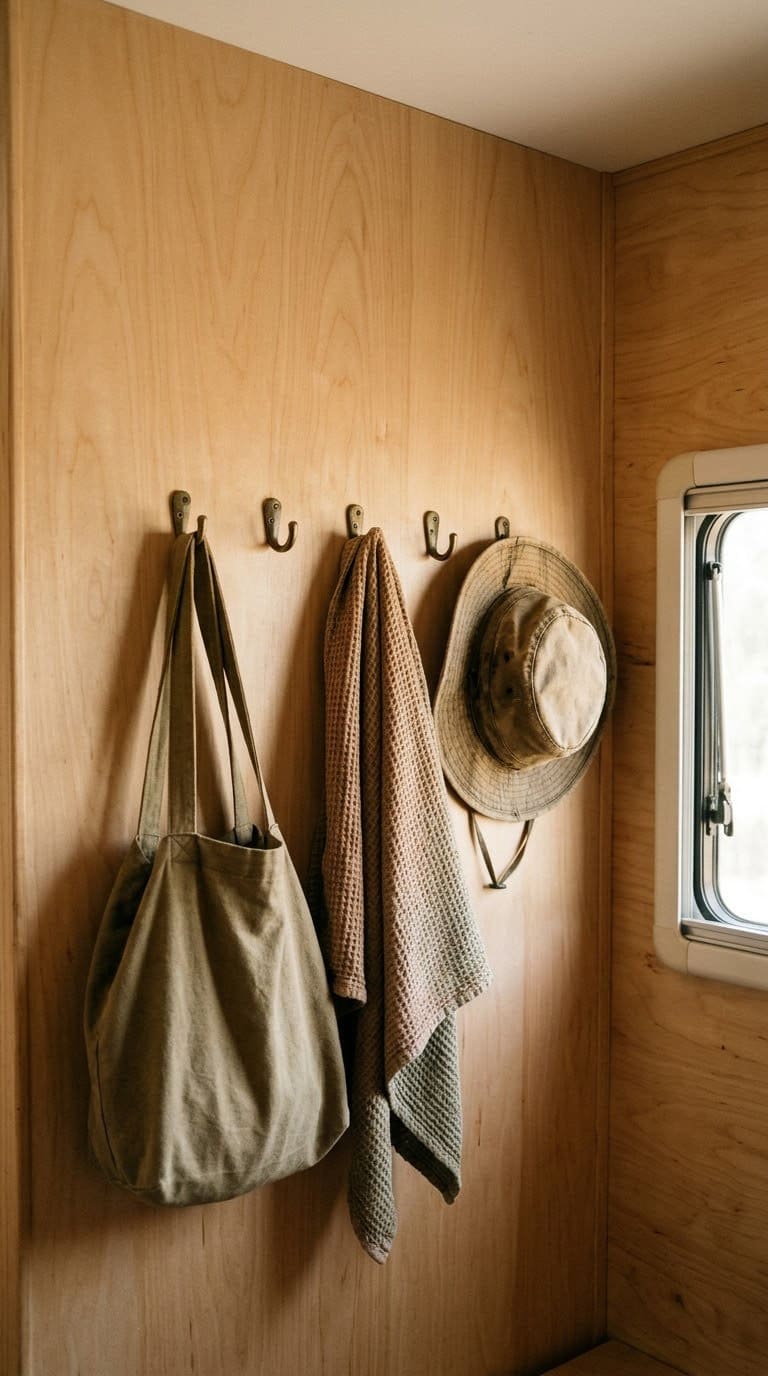
Hooks turn a bare wall into storage. Hang bags, towels, hats and keys.
Pick hooks with a lip or a latch so items stay on while you drive. Adhesive hooks work for light items.
The catch is the wall itself. Camper walls can be thin, so check what’s behind them before you drill.
Space hooks a few inches apart so items don’t tangle.
11. Cabinet Door Organizers
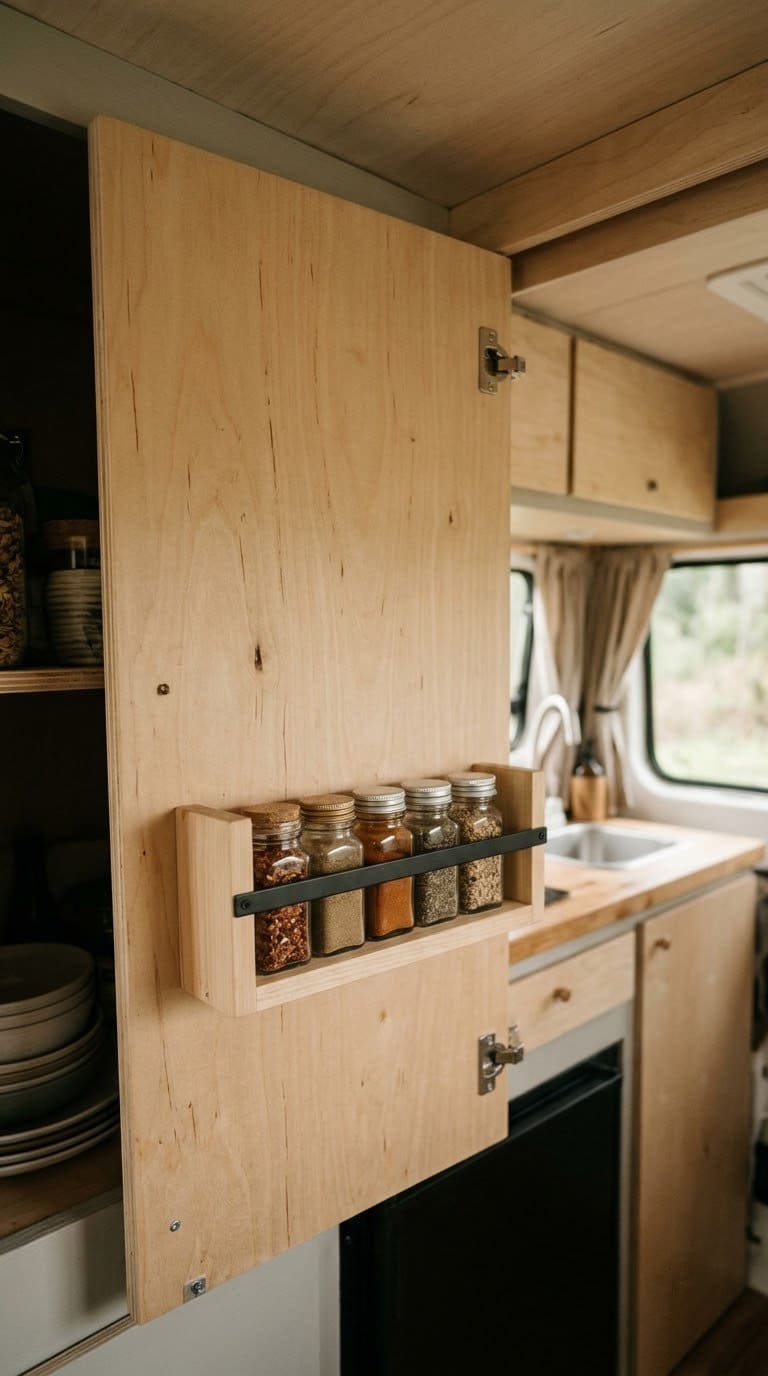
The inside of a cabinet door is easy to use. A small rack holds spices, foil, wraps or cleaning supplies.
Pick racks that clip or mount with screws. Add a rail so items don’t slide.
The catch is clearance. A rack that’s too deep can stop the door from closing, so measure the space behind it.
Put the heaviest items on the lowest shelf of the rack.
12. Tension Rods
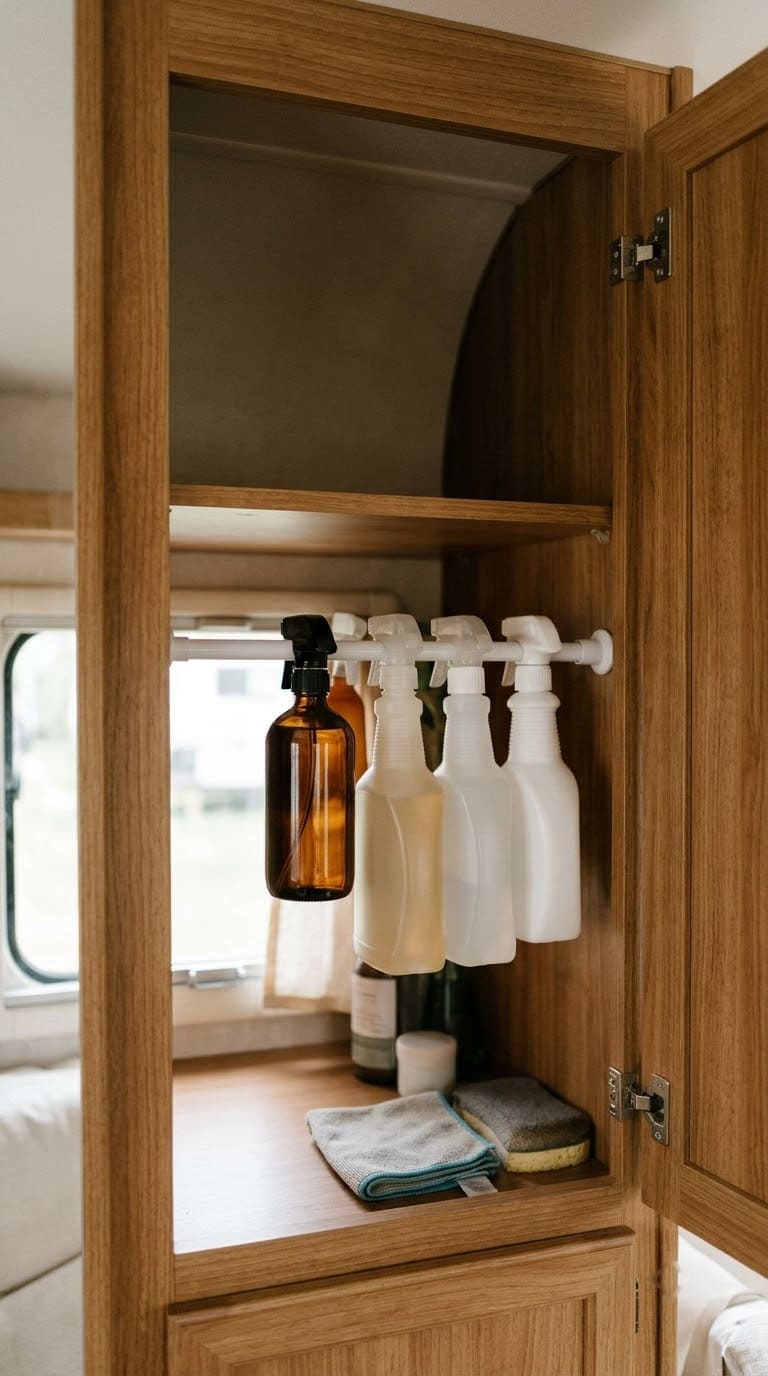
A tension rod needs no tools. Use one under the sink to hang cleaning bottles, or in a closet to double the hanging space.
Choose a rod rated for the load and wipe its ends so it grips. A spring-loaded rod resists the bumps of the road better than a plain one.
The catch is slipping. A heavy load can pull a rod down, so keep it for light items.
Test it by shaking it hard before you rely on it.
13. Overhead Net or Shelf Lip
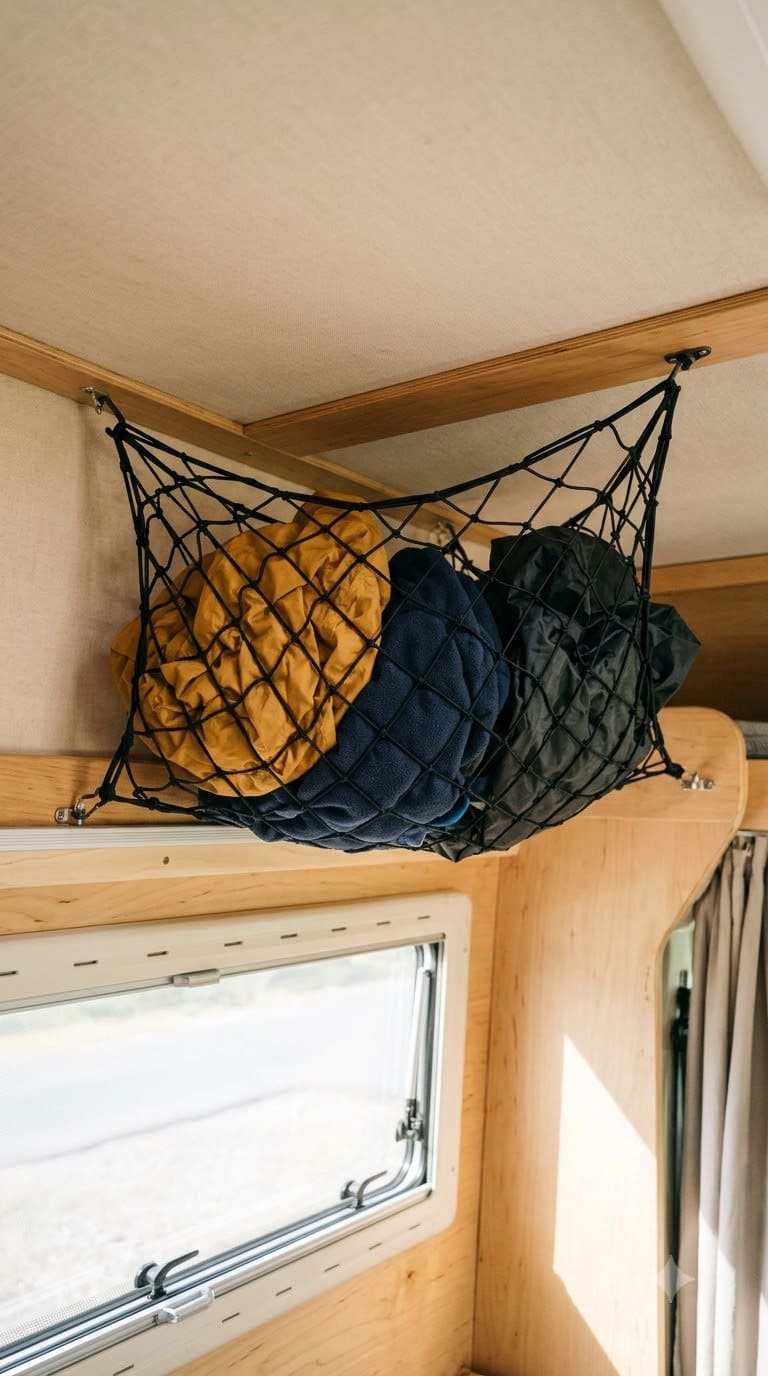
An overhead net or an elastic cord across an open shelf keeps light items in place. It suits jackets, hats and pillows.
Install it where you can reach it. Hook the ends to solid anchors.
The catch is heavy items. A net can sag under weight or drop things when you brake, so keep it for light, soft items.
Use a shelf lip, which is a raised edge, on open shelves to stop items from sliding.
14. Under-Sink Organization
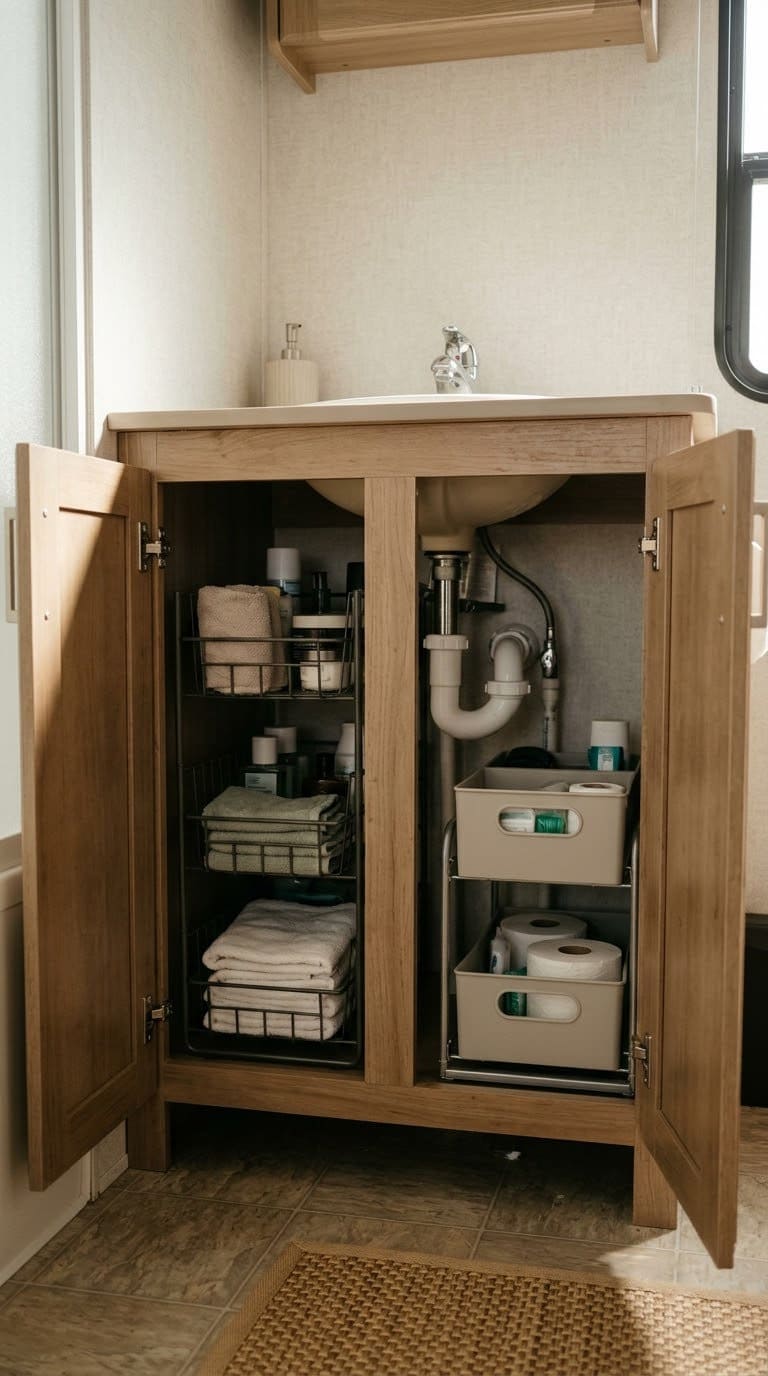
The space under a sink is awkward because of the pipes. A tiered organizer or small bins work around them.
Use bins that you can pull out. Keep cleaning products in their original containers and latch the cabinet.
The catch is leaks and moisture. Check the pipes now and then, and use a tray to catch spills.
Keep cleaners and chemicals out of reach of children. Our bathroom towel rack ideas help with the rest of the bathroom.
15. Hitch Cargo Carrier
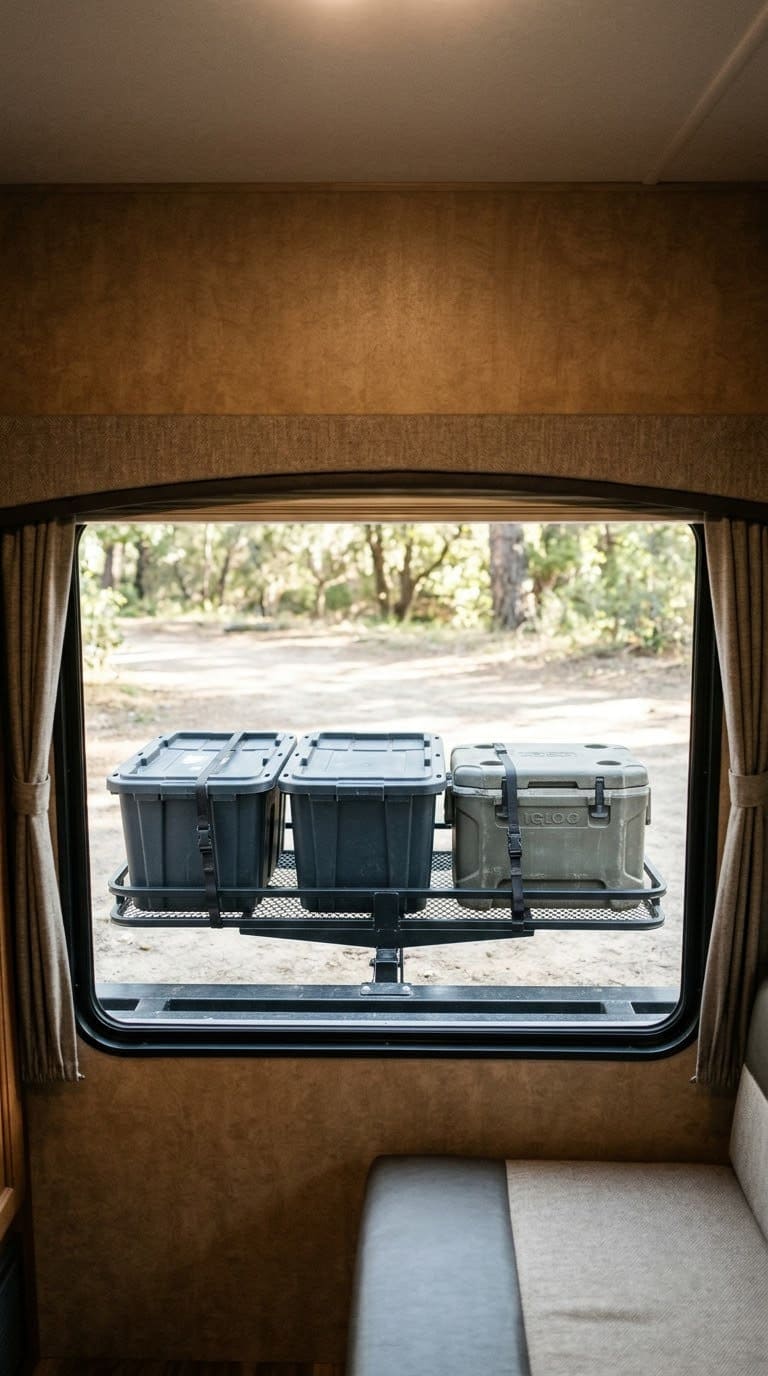
A hitch carrier adds outside space for bulky, dirty gear. It suits coolers, firewood and muddy boots.
Check the weight rating of the carrier, the hitch and your vehicle. Stay within the limits on their labels and in the owner’s manual.
The catch is tongue weight and braking. A heavy rear load changes how the rig handles, so keep it light and load it evenly.
Cover loose gear with a net or a tarp so nothing falls out.
16. Exterior Bay Bins
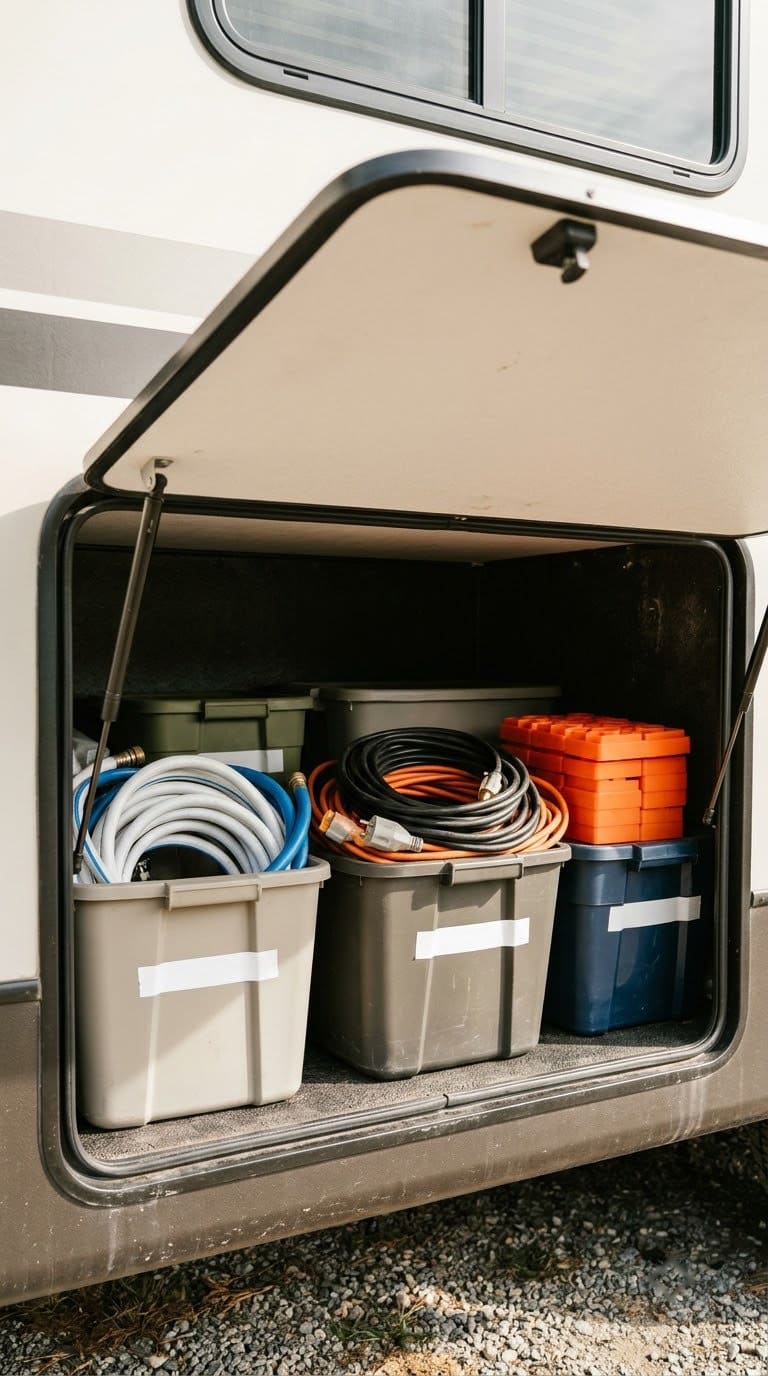
If your RV has an outside storage bay, treat it like a small garage. Use bins for hoses, cords, leveling blocks and tools.
Group by job: water, power and leveling. Label each bin.
The catch is moisture and dirt. Use bins with lids and check them after rain.
Check your owner’s manual for what may be stored in a closed bay.
17. A Camp Kitchen Tote
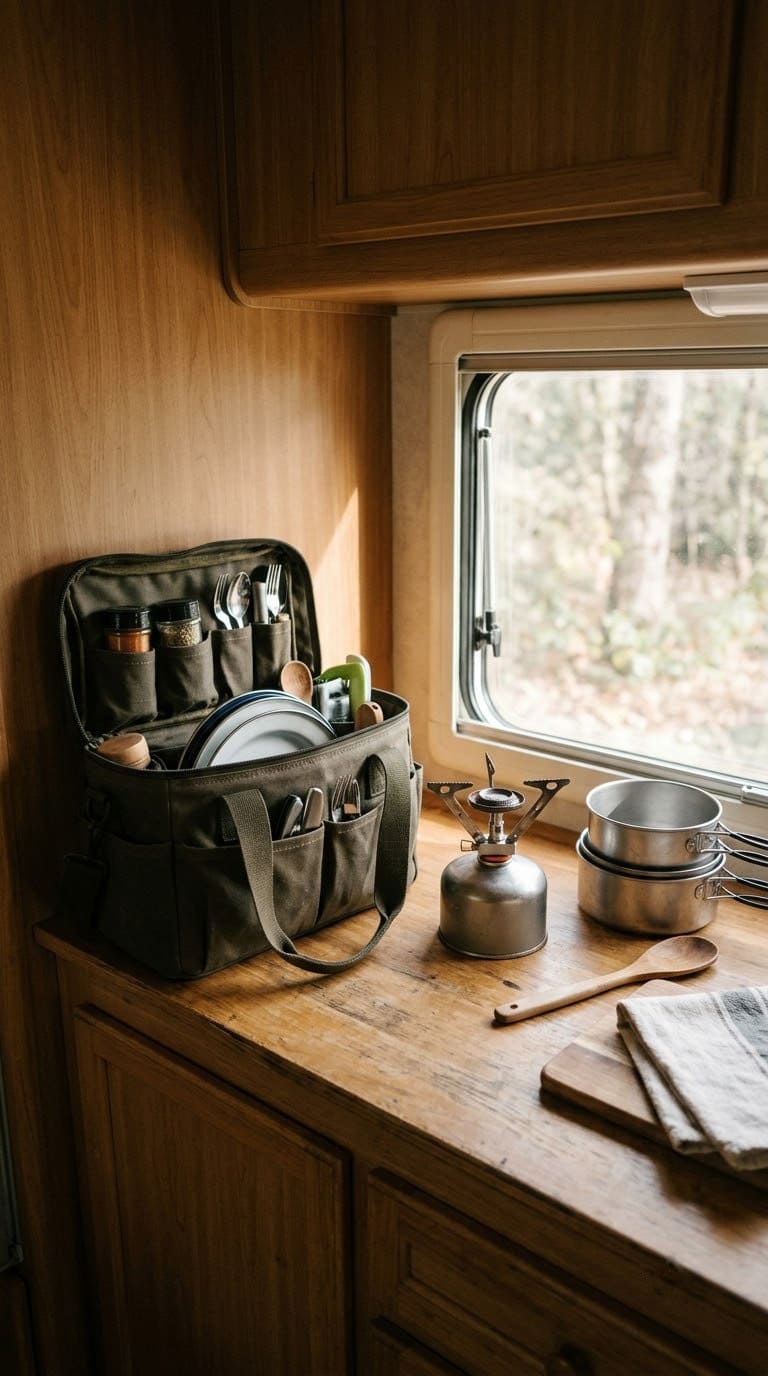
Pack your outdoor cooking gear in one tote. A stove, pots, utensils and a spice kit all live together.
Choose a sturdy tote with a lid and keep it by the door. You grab one box and go.
The catch is weight. A full tote is heavy, so use two smaller ones if lifting is hard.
Restock it after every trip so it’s ready for the next one.
18. Propane Tank Handling and Storage
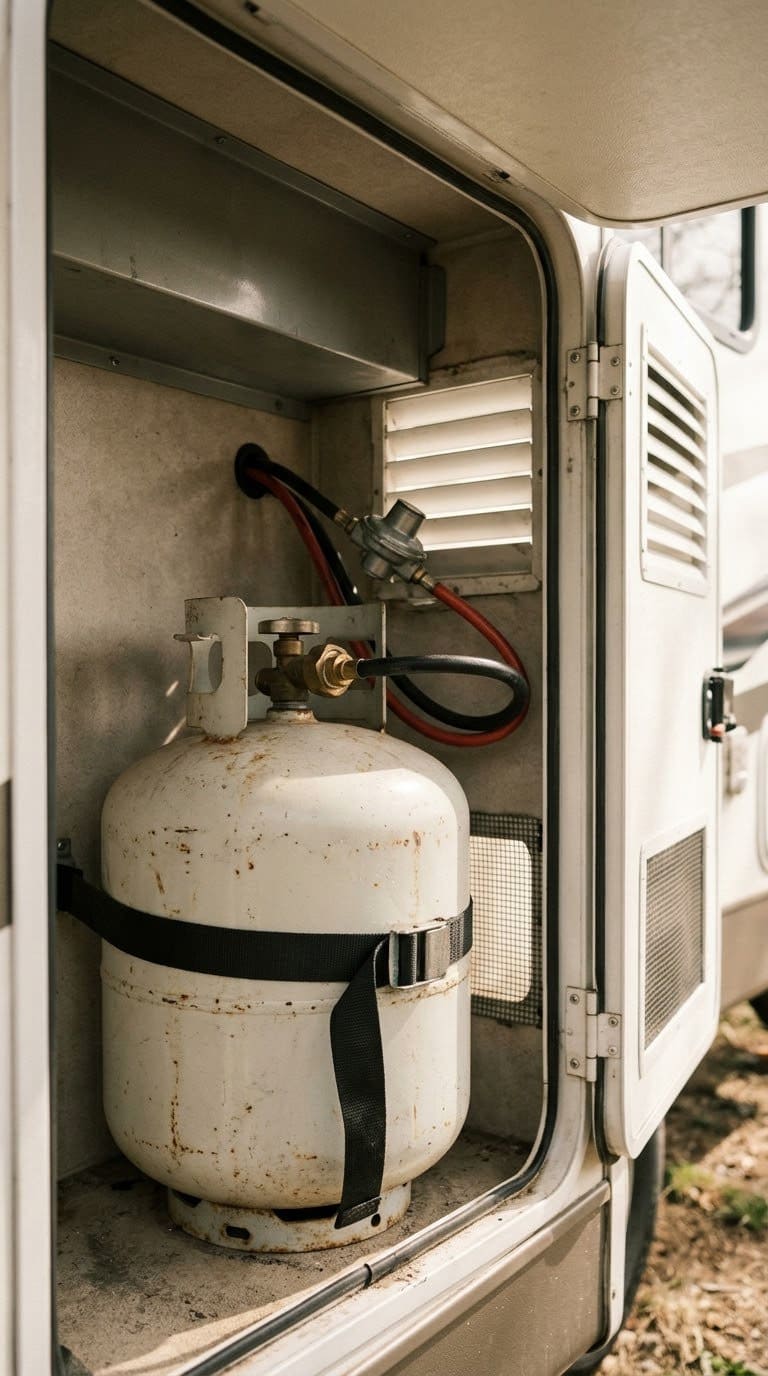
Propane needs its own rules. The New Jersey Division of Fire Safety says to store tanks upright, ventilated and away from heat, and to shut them off when not in use.
It also says to inspect tanks and lines regularly and to have the system professionally inspected yearly. If you smell a leak, shut off the gas and leave.
The catch is that this is not a DIY shortcut zone. Don’t tuck a tank into a closed, unventilated space, since the state says tanks should be ventilated.
Follow your RV maker’s instructions for tank placement and venting.
19. Safety Gear Within Reach
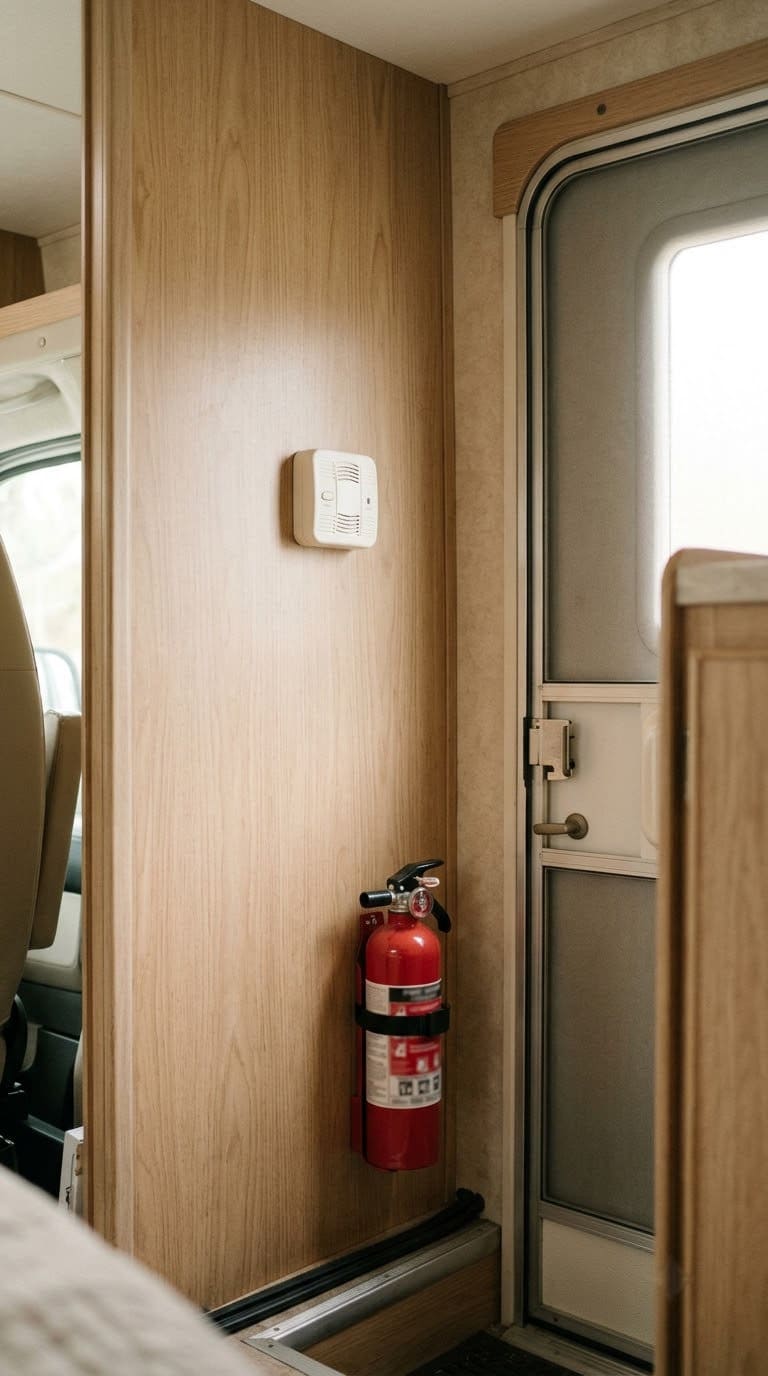
Put your safety gear where you can grab it. The New Jersey Division of Fire Safety says to keep a fire extinguisher within easy reach, such as near the door, and to know how to use it.
It also recommends a carbon monoxide detector in each sleeping area, tested monthly, with batteries replaced yearly. Identify two exits and keep them clear.
The catch is clutter. Don’t let storage bins block the extinguisher or the exits.
Practice the escape plan with everyone aboard. It takes five minutes.
20. A Pre-Trip Secure Check
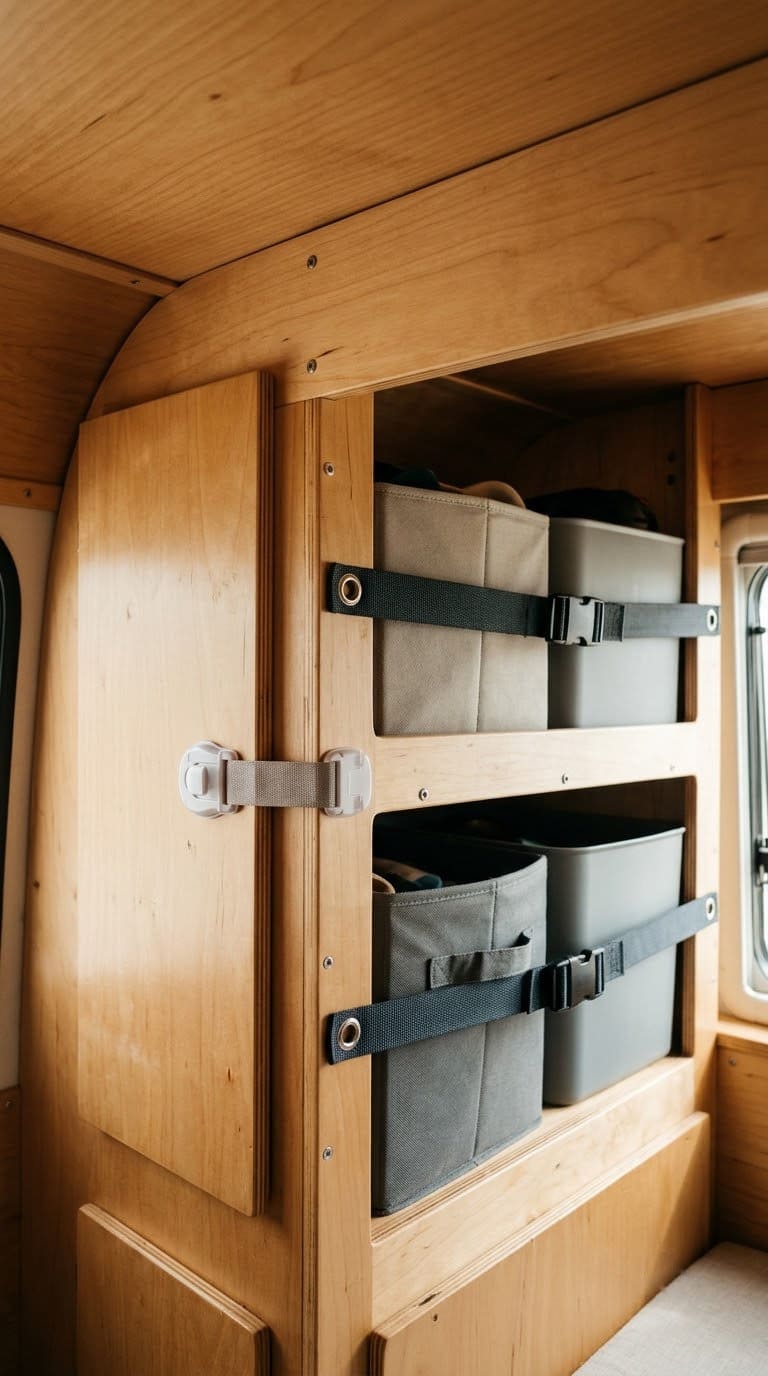
Before you drive, walk the camper and secure everything. Latch the cabinets, lock the fridge door and put loose items in bins.
Check the top shelves and the bathroom. Heavy items go low.
The catch is time. A rushed check misses things, so keep a short list taped inside a cabinet.
Do the same walk-through at the end of the trip, before you put the camper away.
What Goes Wrong (and What We’d Do Differently)
Most camper storage fails in one of three ways.
The first is the rattle. Items slide, fall or bang on the road. We’d secure every shelf with a lip, a latch or an elastic cord.
The second is weight. A heavy bin on a high shelf or a loaded hitch carrier can change how the rig handles. Check the labels and manuals for your RV and tow vehicle.
The third is safety. Propane in the wrong place or a blocked extinguisher is a real risk. If there’s one thing worth doing differently, it’s following the fire-safety basics before you decorate.
Pick the Right Idea
| If your problem is… | Try ideas | Renter or rental RV | Needs tools |
|---|---|---|---|
| No counter space | 1, 3, 11 | Yes | Little |
| Bulky items | 5, 6, 15 | Partly | Some |
| Rattling on the road | 2, 13, 20 | Yes | No |
| Pets | 7 | Yes | No |
| Safety | 18, 19 | Yes | No |
Camper Storage FAQs
Where is the best hidden storage in a camper?
Under the bed, behind doors and inside benches. These spaces are usually free and out of sight.
How do I stop things from rattling while I drive?
Use bins with lids, shelf lips, elastic cords and latches. Do a quick walk-through before every trip.
Is it safe to store propane inside a camper?
Follow your RV maker’s instructions. The New Jersey Division of Fire Safety says to store tanks upright, ventilated and away from heat, and never to run fuel-burning appliances in closed storage compartments.
Are magnetic strips safe in a camper?
They’re fine when mounted properly, but the CPSC warns that strong magnets are dangerous if swallowed. Keep loose magnets away from children.
How much can I carry on a hitch carrier?
Check the rating of the carrier, the hitch and your vehicle. Stay within the lowest limit.
Never miss an update — choose FarmFoodFamily as your preferred source on Google.
How it works: Tap the button below to open Google's settings page, then check the box next to FarmFoodFamily.
Tap the checkbox to turn it blue — that's how you know it's set.