7 Places You Should Never Put a Backyard Water Feature (Plus the Safety Check Everyone Skips)
Most water feature guides tell you what to buy, a pump, a liner, a nice stone basin, and leave the actual placement as an afterthought. That’s backwards. Where you put a pond or fountain determines almost everything about whether it stays clear, quiet, and running, or turns into a green, clogged mess by August. Here…

Never miss an update — choose FarmFoodFamily as your preferred source on Google.
How it works: Tap the button below to open Google’s settings page, then check the box next to FarmFoodFamily.
Tap the checkbox to turn it blue — that’s how you know it’s set.
Most water feature guides tell you what to buy, a pump, a liner, a nice stone basin, and leave the actual placement as an afterthought. That’s backwards.
Where you put a pond or fountain determines almost everything about whether it stays clear, quiet, and running, or turns into a green, clogged mess by August.
Here are 7 real places to avoid, plus the electrical safety check and the permit question almost nobody brings up.
1. Directly under trees
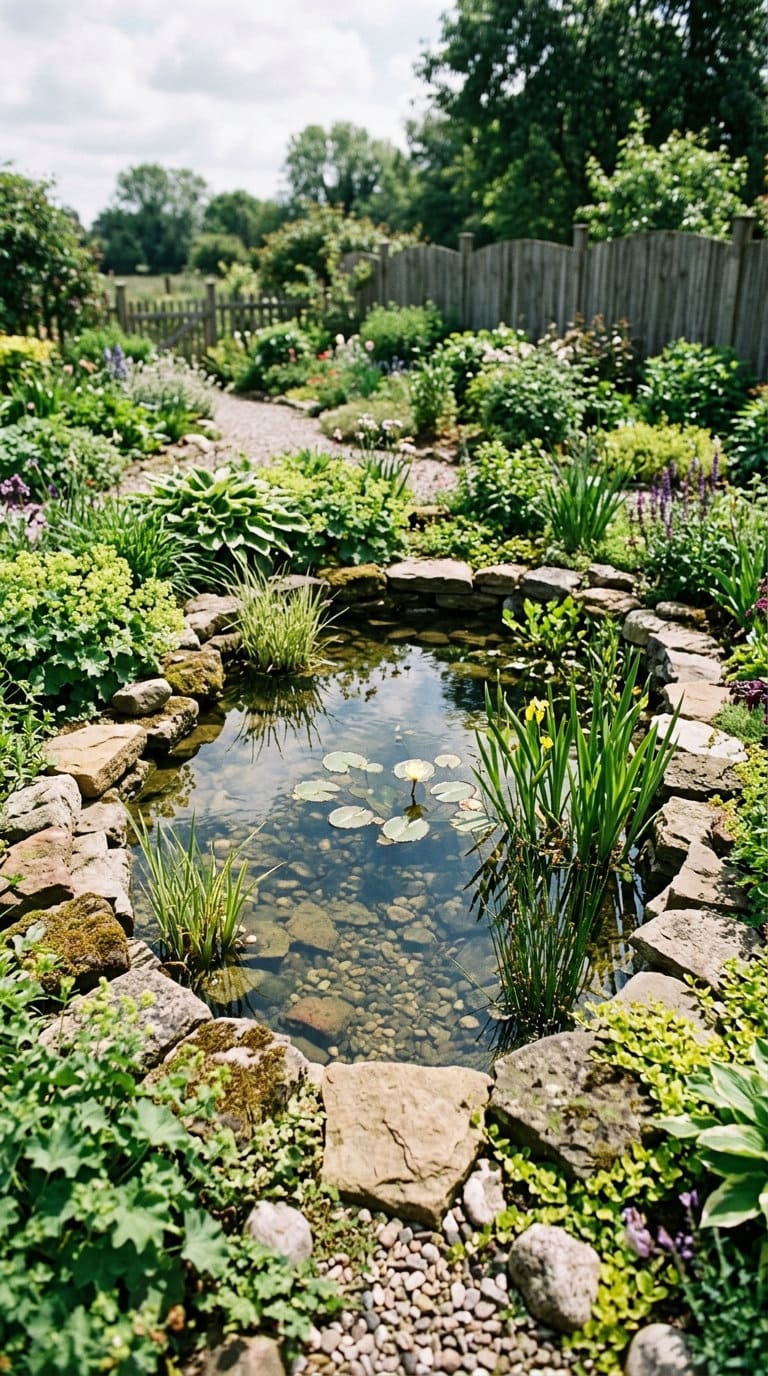
It looks natural, shade, dappled light, maybe even a nice reflection. In practice it’s one of the worst spots.
According to Manoj Malde, a Hertfordshire-based garden designer and Chelsea Flower Show medalist, falling leaves clog filtration systems fast, and tree roots can damage liners and pump housing over time as they spread.



Some trees make it worse than others, walnut in particular releases compounds that are genuinely toxic to aquatic life, so a water feature under or near one is a real problem, not just a maintenance headache.
Answer 4 quick questions and get matched to the exact fix for your yard — drainage, budget, layout, or something else entirely.
Take the Free Quiz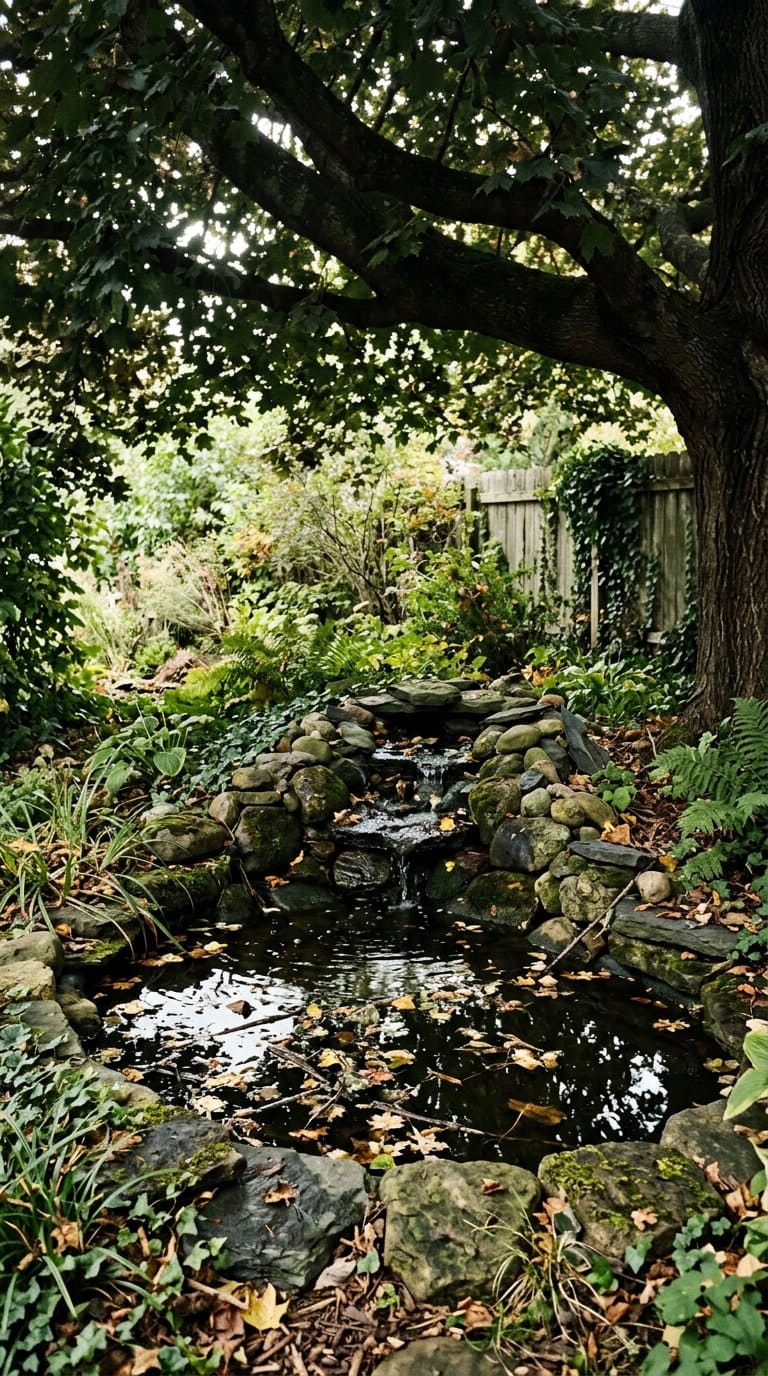
2. Shady, north-facing spots
Aquatic plants need real sun, generally 4 to 6 hours a day, to stay healthy. Malde points out that still water sitting in a shady, north-facing spot without that sun exposure grows algae and blanket weed fast.
A pond that looks clear in April can be a green soup by July if it never gets direct light.
3. Exposed, windy spots
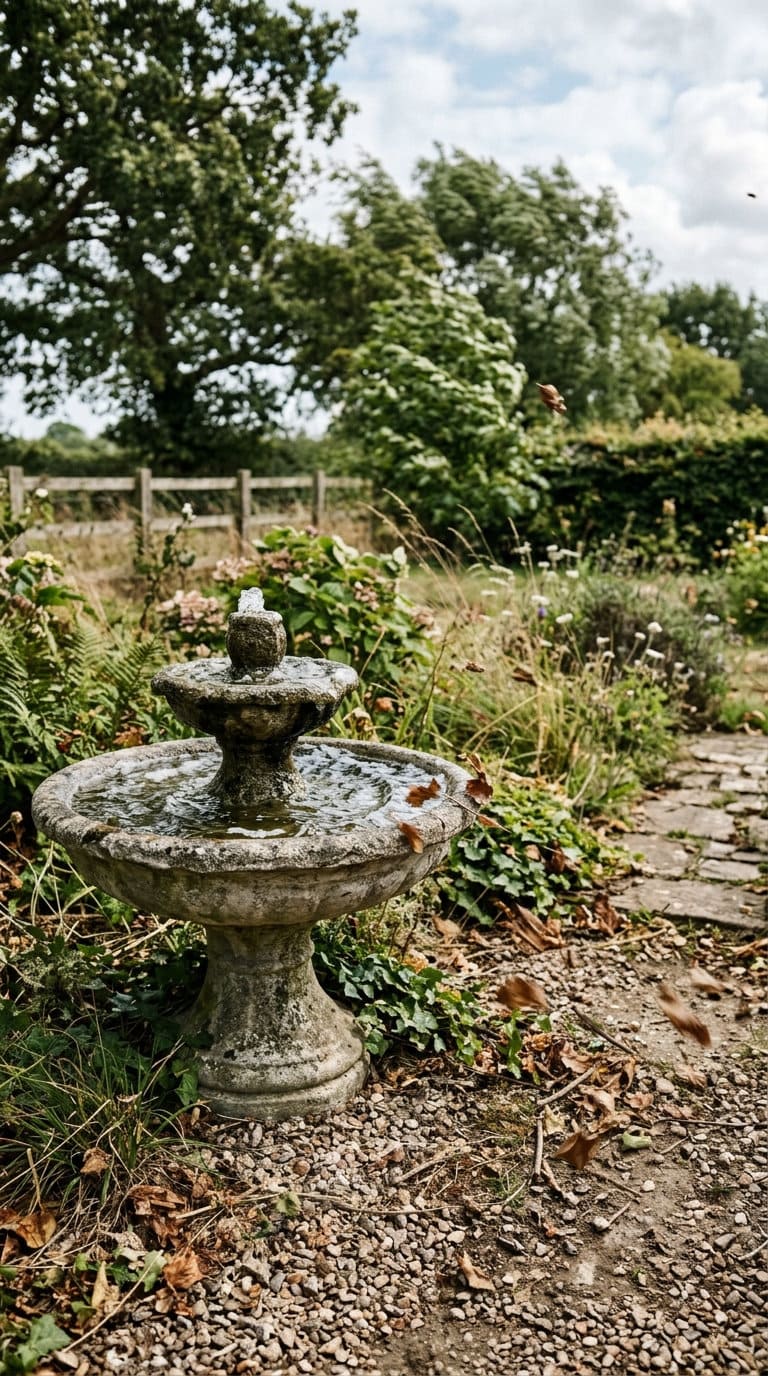
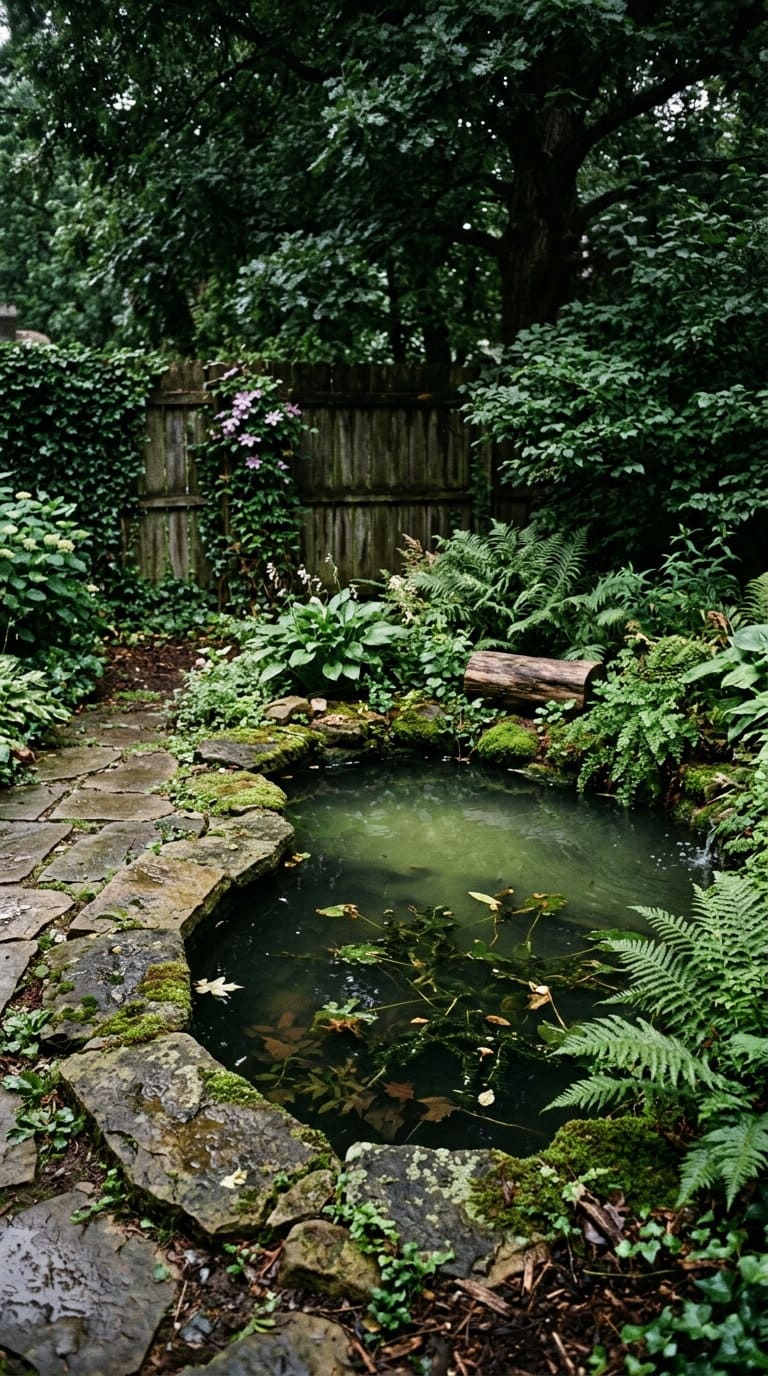
Wind does two things to a water feature, and neither is good. Garden designer Harry Holding, whose gardens have shown at RHS Chelsea multiple times, points out that wind speeds up evaporation and, for formal reflecting pools specifically, wrecks the still, mirror-like surface the whole design depends on. It also just blows debris straight into the water.
4. Full-sun traps with no shade balance
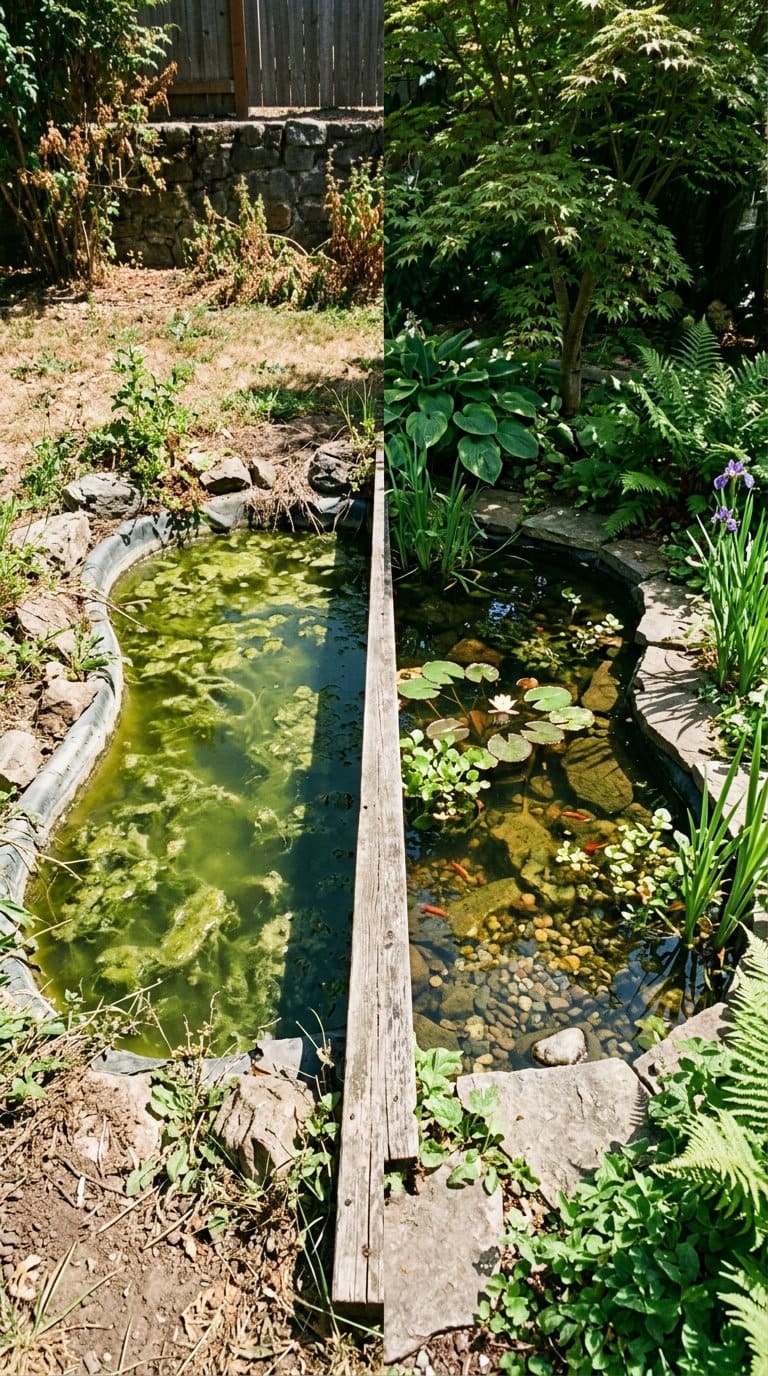
This sounds like it contradicts idea #2, but it doesn’t, the issue is balance. Holding notes that a spot with intense, unbroken sun and zero shade lets water temperatures swing hard and heat up too much, which, like the shady scenario, ends in algae and poor water quality. The goal is real sun exposure, not an all-day heat trap.
5. Hidden, out-of-sight corners
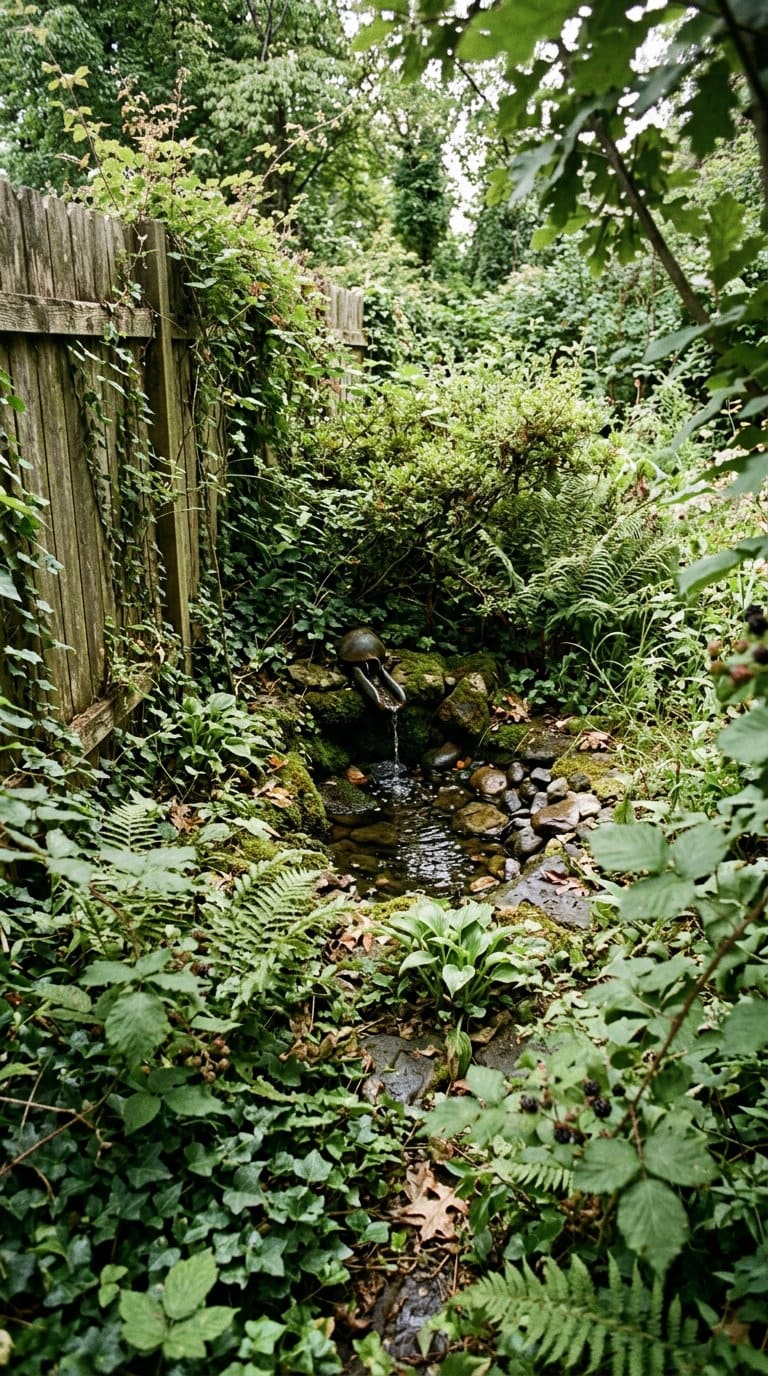
A water feature tucked into a corner nobody actually sees defeats its own purpose. Sophie Bertrand, Head of Design at Rosebank Landscaping in London, puts it plainly: it should sit in a prominent position, visible from the house and from wherever people actually sit outside, not hidden away where its only audience is the fence.
6. Low spots that collect runoff
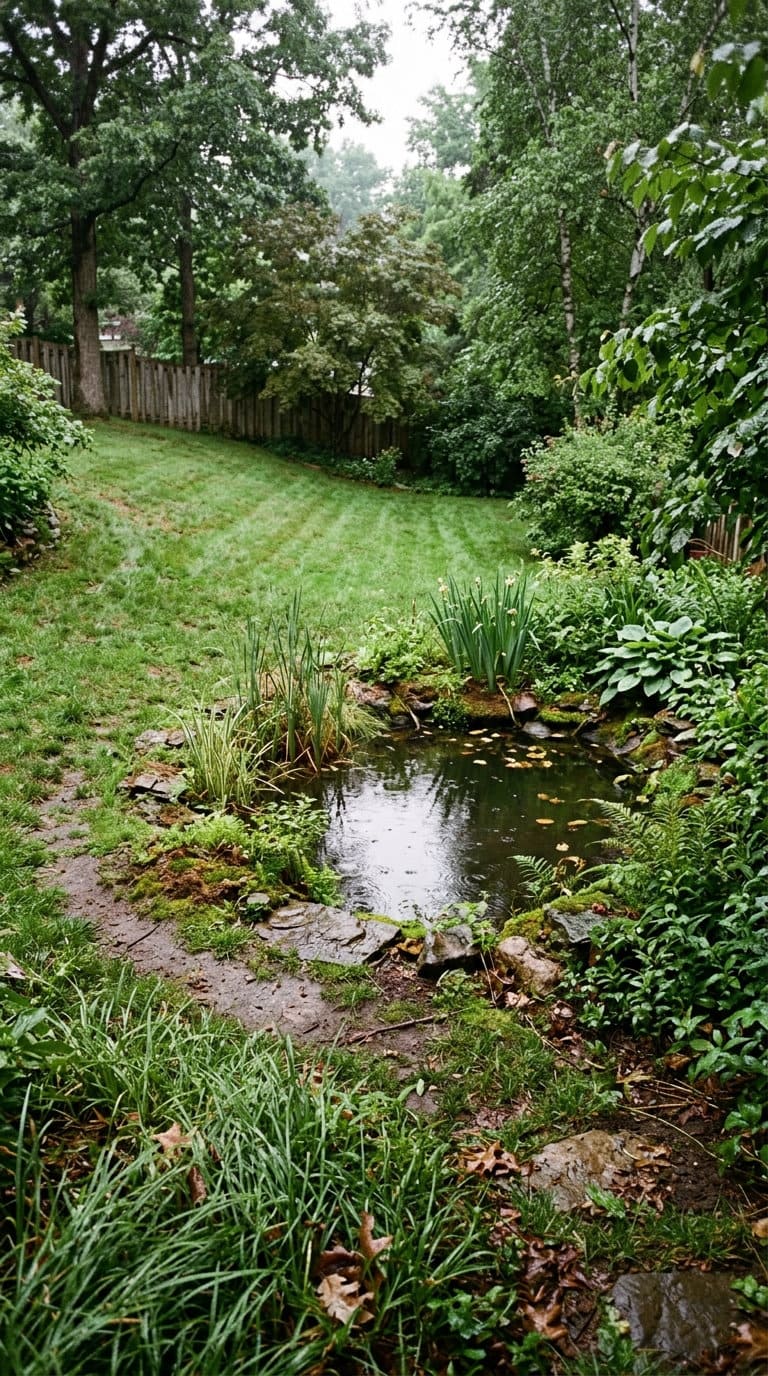
Here’s one that doesn’t get mentioned nearly enough: a low corner of the yard that naturally collects rainwater runoff also collects whatever’s in that runoff, fertilizer residue, pesticide overspray, general yard debris.
Put a pond there and you’re fighting a water-quality problem before the feature’s even finished settling in. A slightly elevated or level spot, not the lowest point in the yard, avoids this entirely.
Most yard problems trace back to one specific, fixable cause. Find yours in 4 quick questions.
Take the Free Quiz
The safety check the article points to directly, a fast way to confirm an outdoor outlet powering a water feature pump is actually GFCI-protected.
Shop NowThis post contains affiliate links. We may earn a commission on qualifying purchases at no extra cost to you.
7. Right next to a bedroom or home-office window
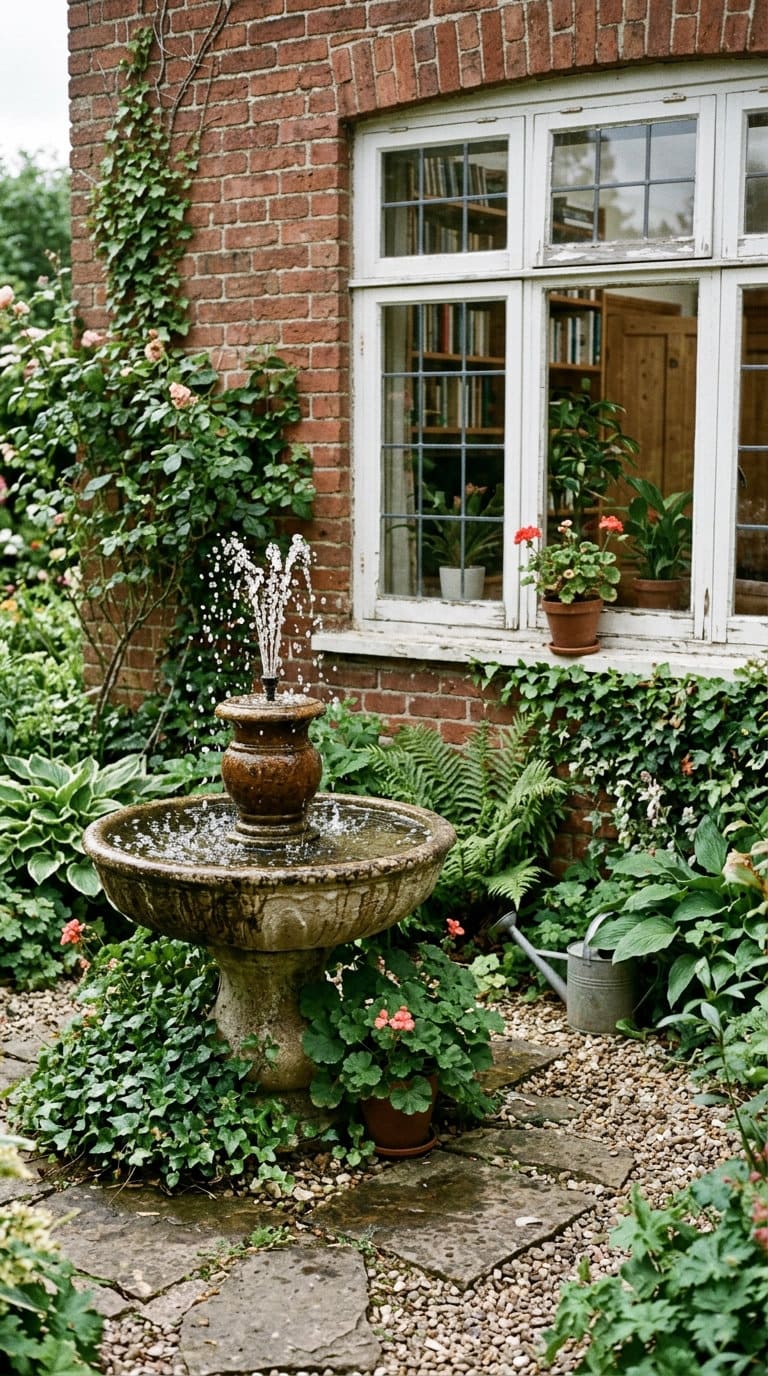
Splashing water sounds great from a patio chair. It sounds very different at 2am through a bedroom window a few feet away, or during a work call through an office window.
Worth actually standing at the proposed spot and listening at the volume you’re planning before committing, moving a fountain a few extra feet from the house solves a problem most people don’t realize exists until after installation.
The safety check almost nobody mentions
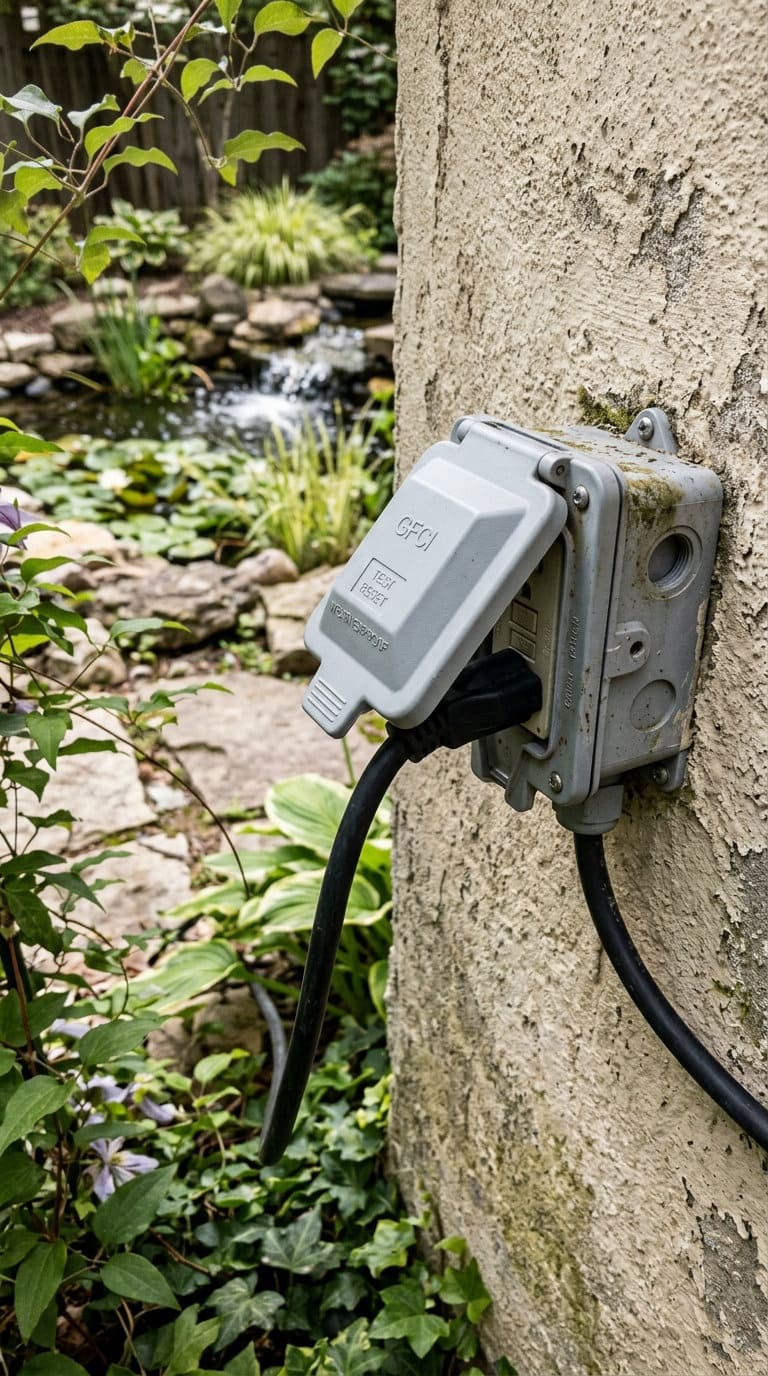
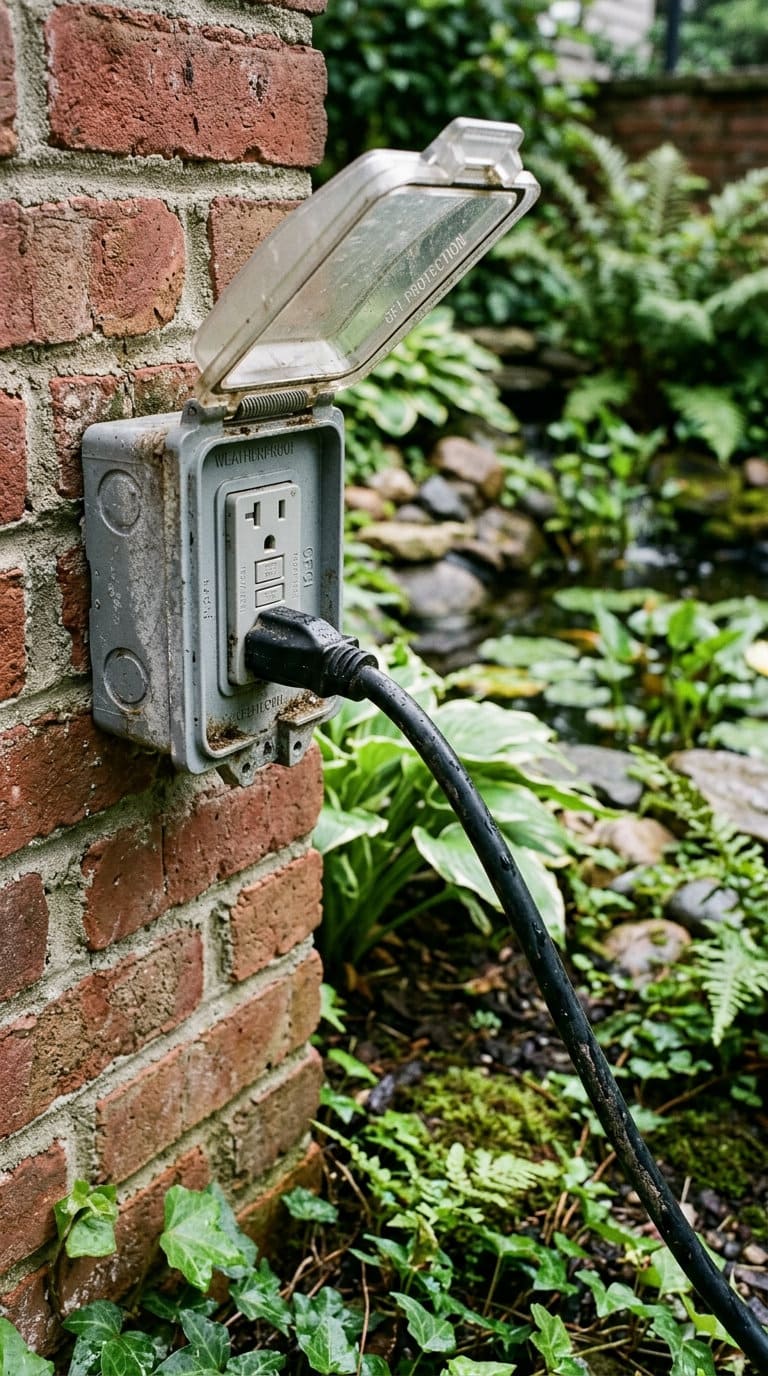
Every pump-driven water feature needs power, and outdoor electrical near standing water isn’t a spot to improvise. Per NEC-referenced guidance on fountains and similar installations, outlets powering fountains and similar water features need GFCI (ground-fault circuit interrupter) protection, the same kind of protection required around pools.
A GFCI outlet cuts power instantly if it detects current going somewhere it shouldn’t, through water or a person, rather than just tripping a regular breaker eventually. If you’re not sure whether an existing outdoor outlet is GFCI-protected, it’s a five-minute check with a plug-in tester, and cheap insurance against a genuinely dangerous failure mode.
The other thing nobody brings up: depth and liability. Many jurisdictions treat a pond past a certain depth, commonly somewhere around 18 to 24 inches, similar to a pool for fencing or permit purposes, especially relevant if there are kids in the house or next door. The exact threshold varies by city and county, so this is worth a quick call to the local building department before digging, not an assumption either way.
Where to actually put it
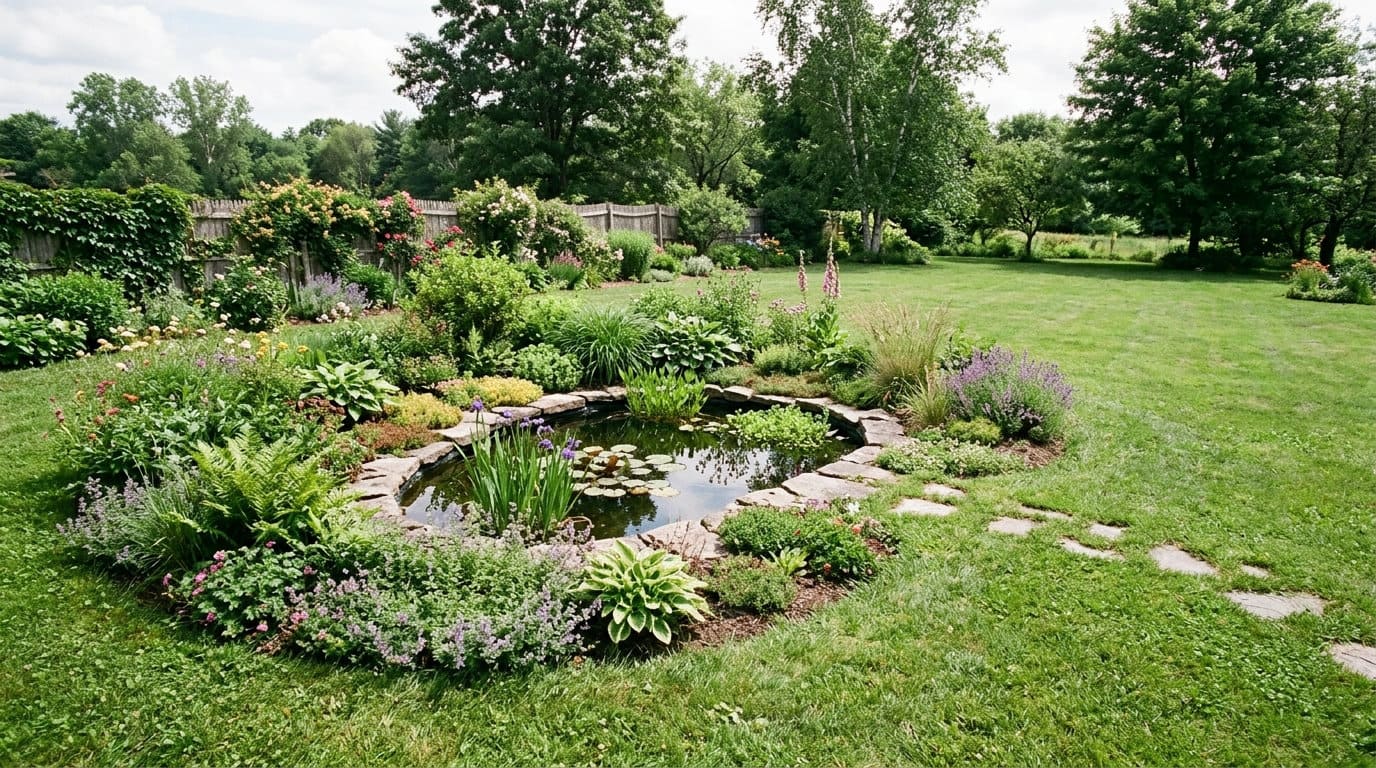
Flip all 7 warnings above and the ideal spot is straightforward: open, reasonably level ground, partial sun (that 4-6 hour window), away from tree roots and canopy, visible from the house or main seating area, and not the lowest, wettest corner of the yard. If you’re still deciding what kind of feature fits that spot, this DIY water feature guide covers build options from simple container fountains to full koi ponds, and this backyard pond roundup goes deeper on pond-specific planning if that’s the direction you’re leaning.
FAQs
How deep can a pond be before I need a permit or fence?
There’s no single nationwide number, it depends on your city or county. A commonly cited rough threshold is somewhere around 18 to 24 inches deep, past which some jurisdictions start applying pool-like fencing or permit rules. Check with your local building department before digging rather than assuming either way.
Does a water feature need a GFCI outlet?
Yes. Any outlet powering a pump for a fountain, pond, or similar water feature should be GFCI-protected, the same standard applied around pools. It’s a cheap, fast thing to verify with a plug-in tester if you’re not sure about an existing outdoor outlet.


Can I put a water feature under a tree if I just clean it more often?
Depends on the tree. Regular cleanup can offset some of the debris problem from an ordinary shade tree, but it doesn’t solve the root-damage risk to liners and pump housing, and it does nothing about a tree like walnut that releases compounds toxic to aquatic life. For those specific trees, skip the spot entirely regardless of how often you’re willing to clean.
The average homeowner spends $616/year on yard fixes that don't address the real problem. Find out what yours actually is — before you spend another dollar.
Take the Free QuizThe Right Spot Does Most of the Work
A water feature in the right spot mostly takes care of itself, clear water, quiet operation, no fighting algae every other weekend. Get the placement wrong and no amount of pump upgrades or chemical treatment fully makes up for it. Check the sun, check the wind, check what’s actually underneath and around the spot before anything gets dug.
Products We Recommend
This post contains affiliate links. We may earn a commission on qualifying purchases at no extra cost to you.
Fluke ST120+ GFCI Socket Tester with Audible Beeper
The safety check the article points to directly, a fast way to confirm an outdoor outlet powering a water feature pump is actually GFCI-protected.
Shop Now
VIVOSUN 800GPH Submersible Fountain Pump
A standard pump for the kind of feature this article is helping readers place correctly, relevant regardless of which build option they land on.
Shop Now
POYEE 14x14ft Pond Netting (Leaf and Debris Cover)
Useful even for a well-placed feature that's still within reach of some nearby tree debris, a lighter-weight fix than relocating an established pond.
Shop NowNever miss an update — choose FarmFoodFamily as your preferred source on Google.
How it works: Tap the button below to open Google's settings page, then check the box next to FarmFoodFamily.
Tap the checkbox to turn it blue — that's how you know it's set.