The Surprising Reasons Stone Patios Turn Dark So Fast (and the Real Fix)
A stone patio doesn’t turn dark by accident, moisture, algae, and old dirt all get trapped in the same porous surface, and the real fix is sealing it before the first heavy rain, not scrubbing it after.

Never miss an update — choose FarmFoodFamily as your preferred source on Google.
How it works: Tap the button below to open Google’s settings page, then check the box next to FarmFoodFamily.
Tap the checkbox to turn it blue — that’s how you know it’s set.
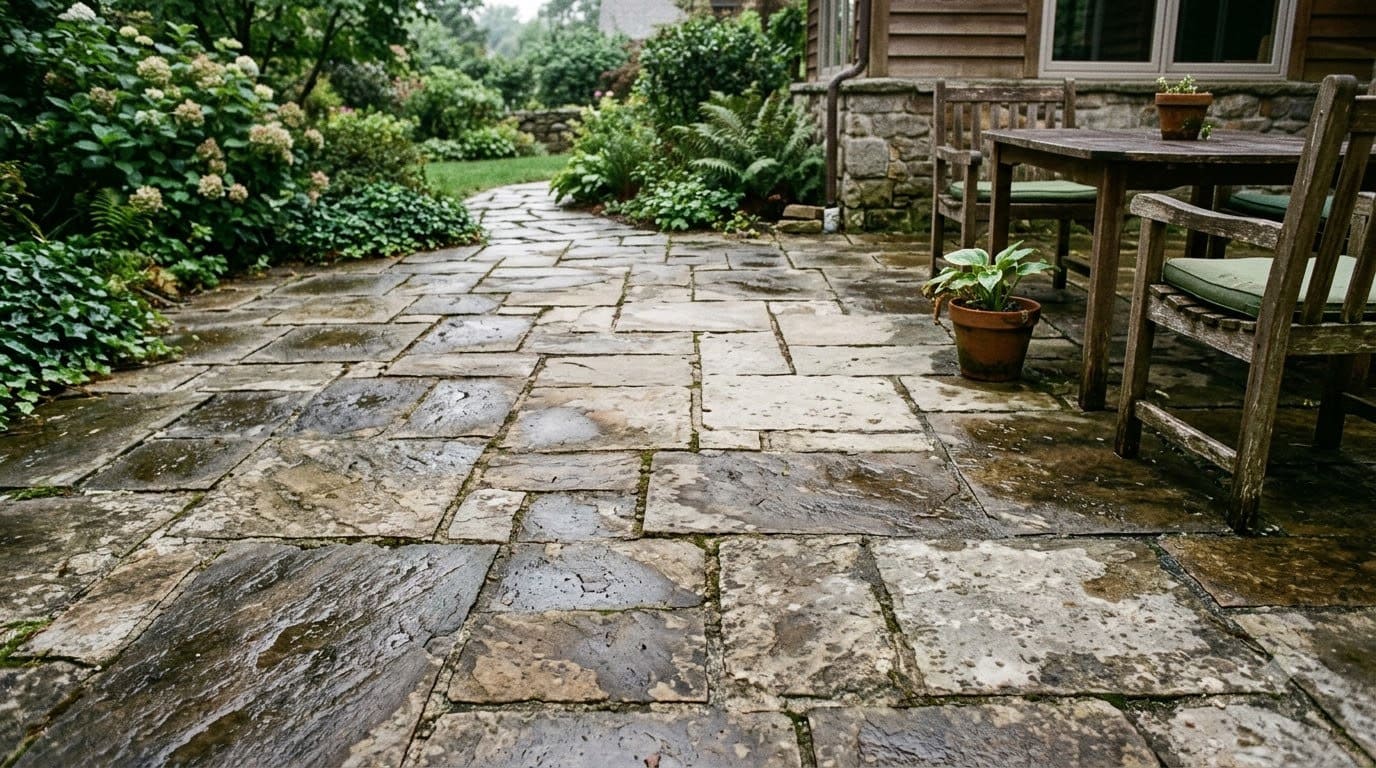
You clean your patio, step back to admire it, and for about three days, it looks fantastic. Then the rain comes back, the corners go green again, and the slabs somehow end up looking older than the house itself.
It’s not a lost cause. Once you understand why this happens, keeping a stone patio looking clean through regular rain gets a lot more manageable.
Moisture Is the Root Cause
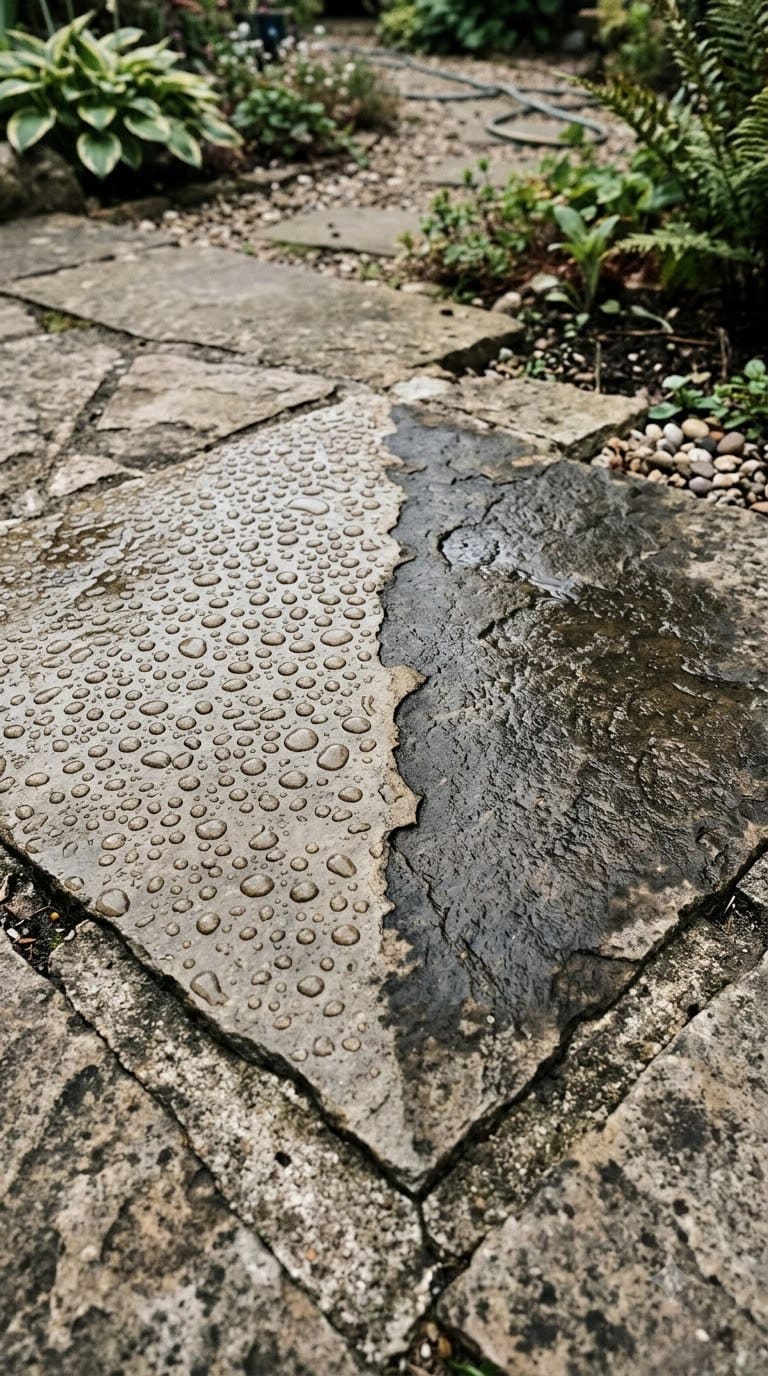
A slab of Indian sandstone or limestone looks solid, but it actually behaves like a heavy-duty sponge. When it rains, water sinks into the stone’s natural pores. Once that moisture is inside, it creates a damp environment where grime, mold, and airborne dirt can settle in and stay.
Over time, that repeated cycle of absorbing water and drying out slowly darkens the stone from the inside, stripping away its original color.
The fix is a penetrating sealer, not a topical one. The Natural Stone Institute is explicit on this distinction: sealing products used in the stone industry are technically “impregnators,” not sealers in the paint-on sense, they don’t sit on top of the stone, they work down into the pores and repel water from inside them.
A topical sealer that sits on the surface instead can trap moisture underneath it and make the darkening worse, not better. Miracle Sealants’ 511 Porous Plus, a penetrating sealer built specifically for patios and pool decks, is one real example of the category this section is describing, deep pore penetration rather than a surface film.


Algae and Moss Follow the Moisture
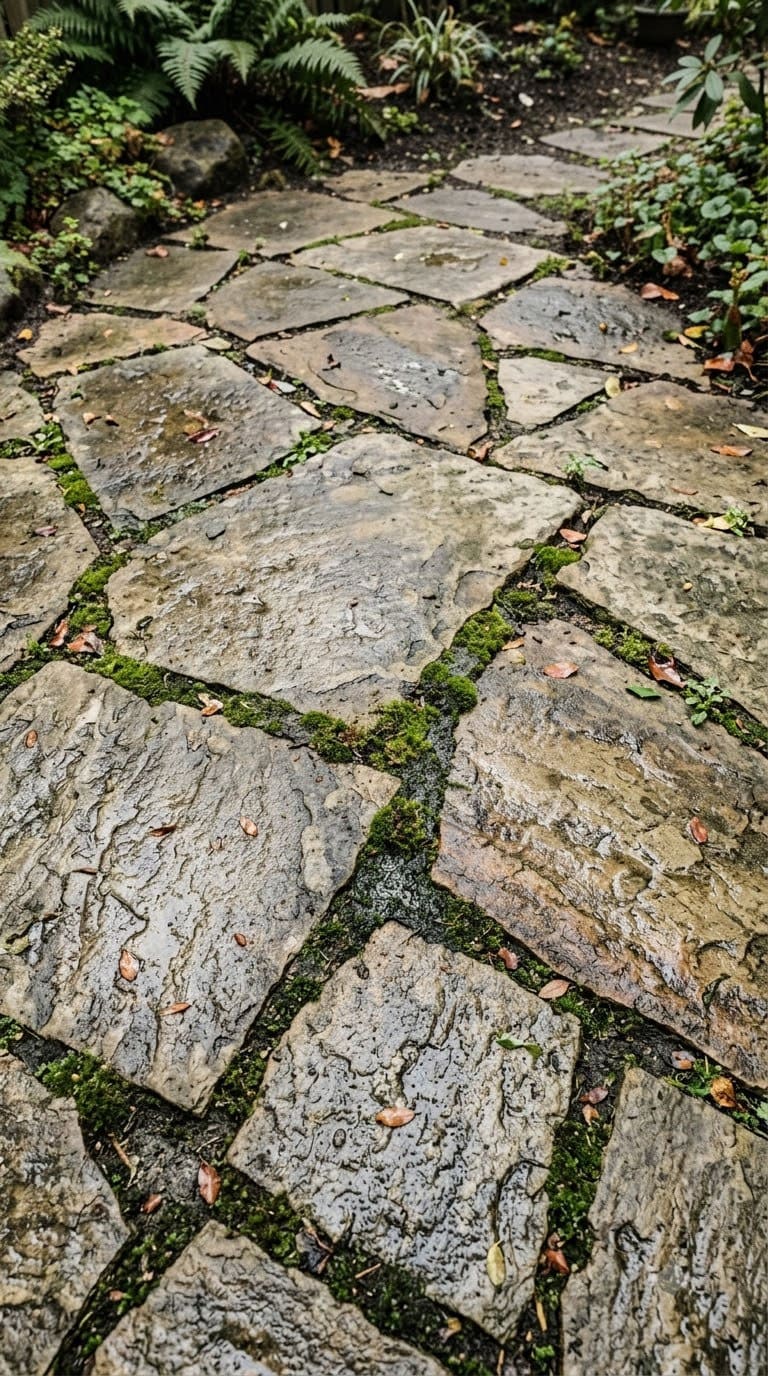
Once water is trapped inside the stone, algae and moss usually follow. Constant dampness is exactly what these growths need, and in a climate with frequent rain, that dampness is rarely in short supply.
The bigger issue is safety, not just appearance. Moss and algae can make a patio or deck genuinely slippery, and it doesn’t take much, a light drizzle is enough to turn a short walk to the garden shed into a real fall risk.
Answer 4 quick questions and get matched to the exact fix for your yard — drainage, budget, layout, or something else entirely.
Take the Free QuizA professional-grade moss and algae remover applied every few months keeps this from building up. If moss has already spread over a large area, a pressure washer will clear it, but keep the nozzle at a safe distance and angle so it doesn’t blast out the mortar joints along with the growth.
Old Dirt Works Its Way In
Outdoor stone needs texture so it isn’t dangerously slick when wet, but that same texture is what traps dirt, dust, and leaves. It doesn’t look like much of a problem at first. But foot traffic, dragging chairs, and moving planters around grind that loose debris deeper into the surface until a quick rinse with the hose barely touches it anymore.
A stiff brush over the surface once or twice a week keeps embedded dirt from ever building up to that point. It takes a few minutes and saves a much longer scrubbing job later.
Wet Leaves Leave Real Stains
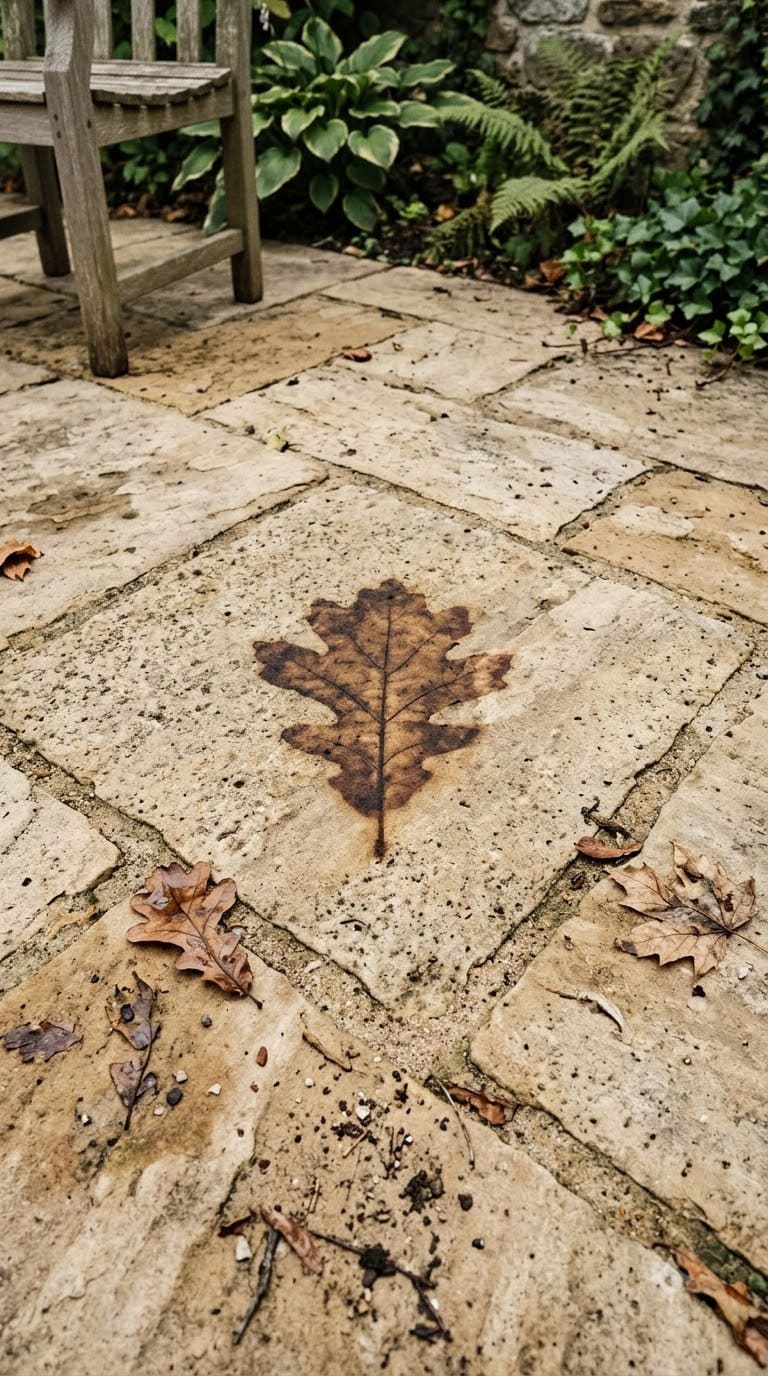
Wet leaves left sitting for a few days start breaking down and releasing tannins into the stone underneath them, the same compounds that give tea its dark color. On light-colored paving like sandstone or pale limestone, a single wet leaf can leave a stain distinct enough to notice from across the yard.
Clearing leaves with a blower or rake every few days, rather than letting them pile up into a wet mat, is the difference between no stain and a mark that can take months to fade.
Pollution and Airborne Grime
A patio doesn’t need overhanging trees or standing water to darken. Homes near a busy road or in a dense residential area pick up traffic pollution and airborne grime that settles into the stone’s pores the same way moisture does, gradually turning the surface gray over time.

The exact penetrating (not topical) sealer category the "Moisture Is the Root Cause" section describes, dries invisible, rated for stone, tile, and grout.
Most yard problems trace back to one specific, fixable cause. Find yours in 4 quick questions.
Take the Free QuizThis post contains affiliate links. We may earn a commission on qualifying purchases at no extra cost to you.
A high-performance stone cleaner or a pressure washer strips this film back off. Don’t want to spend a rare sunny weekend wrestling with a noisy machine? Fair enough. Fortunately, you can hand the job over to the experts. When it comes to services that specialize in pressure washing, Chiswick has no shortage of providers you can reach out to.
Grease and Oil Stains
A drip from the grill, a splash of olive oil, or dropped salad dressing doesn’t look like much at first, but because natural stone is porous, oil and grease sink in almost immediately. The stain becomes more obvious once the rest of the surface dries around it, and the contrast is sharper on lighter stone like sandstone or limestone.
Blot the excess immediately, then use a degreaser or a stone poultice to draw the oil back out before it fully sets. This isn’t a stain that gets easier to remove by waiting.
Sunlight Damage
UV exposure is usually associated with faded cushions or curtains, but direct sun affects stone too, and the result isn’t always an even fade. When certain stone types face intense sun for months or years, UV exposure can bleach out natural pigments unevenly, which makes shadier, protected sections look noticeably darker by comparison rather than the sunny sections looking lighter.
A sealant with built-in UV inhibitors slows this fading process and helps the stone hold its color longer in direct sun. In a yard that gets full sun most of the day, choosing a stone type rated for heat and UV exposure from the start is worth considering over trying to protect a poor match after installation.
Harsh Cleaning Products Make It Worse
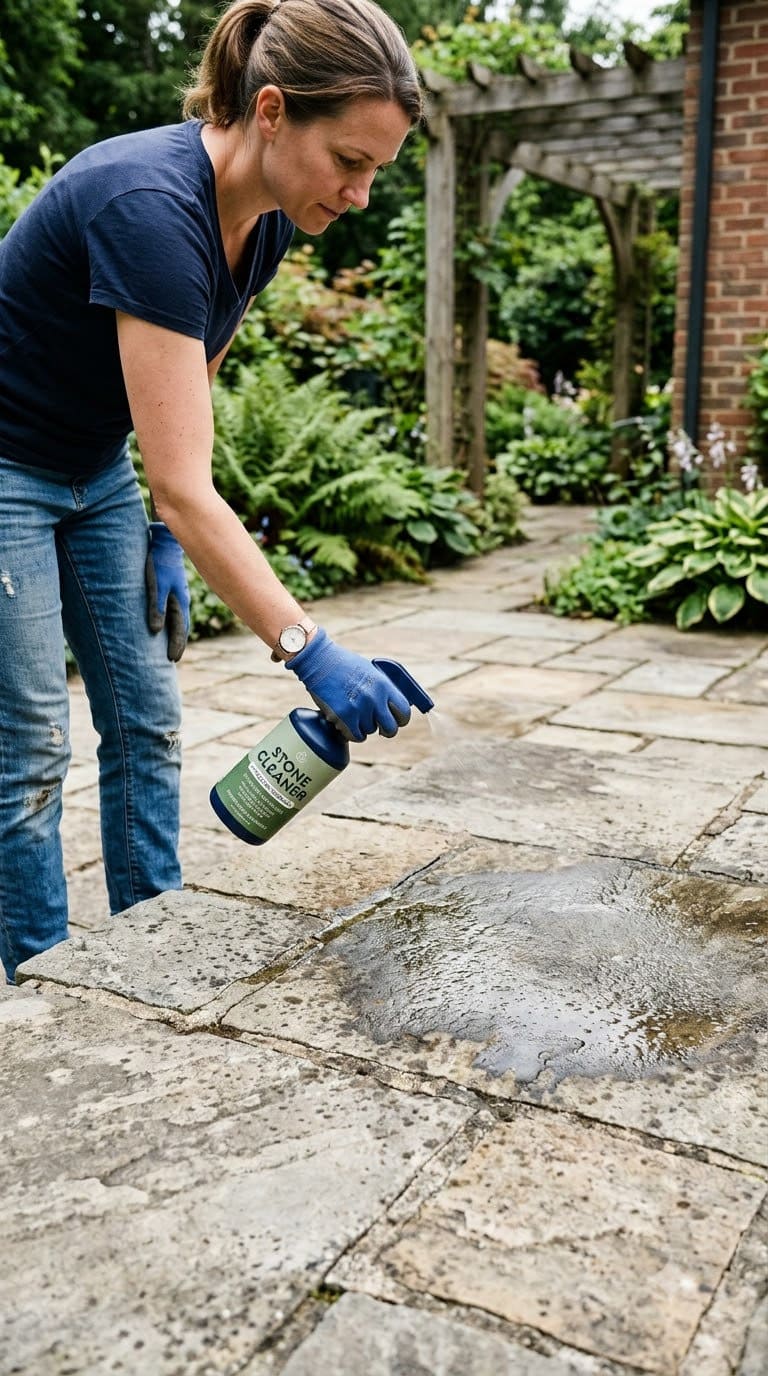
It’s tempting to grab the strongest chemical under the kitchen sink when a patio looks dirty, but harsh, acidic cleaners strip away the stone’s natural protective minerals and make it more absorbent, not less. That means the next stain, even a small one, has a better chance of becoming permanent.
Acid-based cleaners used on Indian sandstone specifically can react with the natural iron deposits inside the stone, leaving behind bright orange rust-colored spots that weren’t there before cleaning. The Natural Stone Institute’s cleaning product guidance recommends pH-neutral cleaners made specifically for natural stone instead, they break down grease and organic stains without eating into the stone’s surface the way an acidic or highly alkaline product will.
Frequently Asked Questions
What’s the difference between a penetrating sealer and a topical sealer? A penetrating sealer soaks into the stone’s pores and repels water from below the surface, while a topical sealer sits on top like a film. For outdoor stone that needs to handle regular rain, a penetrating sealer is the safer choice, since a topical film can trap moisture underneath it.


How often should I reseal a stone patio? This depends on the sealer and how much foot traffic and weather exposure the patio gets, some penetrating sealers are rated for several years of protection. Check the specific product’s guidance rather than assuming a fixed timeline.
Can I use a pressure washer on stone patios? Yes, for clearing algae, moss, and pollution buildup, but keep the nozzle at a safe distance and angle. Too close or too direct can blast the mortar out of the joints between stones.
The average homeowner spends $616/year on yard fixes that don't address the real problem. Find out what yours actually is — before you spend another dollar.
Take the Free QuizIs it safe to use bleach or vinegar on a stone patio? No. Both are acidic or highly alkaline and can strip the stone’s protective minerals, making it more absorbent to future stains. Use a pH-neutral cleaner made for natural stone instead.
Pick up a penetrating sealer, grab a stiff brush, and set aside a weekend for the clean you’ve been putting off. A few small, regular habits are what actually keep a stone patio looking like it did the day it was installed.
Products We Recommend
This post contains affiliate links. We may earn a commission on qualifying purchases at no extra cost to you.
Miracle Sealants 511 Impregnator Penetrating Sealer
The exact penetrating (not topical) sealer category the "Moisture Is the Root Cause" section describes, dries invisible, rated for stone, tile, and grout.
Shop Now
30 Seconds Outdoor Cleaner (Moss and Algae)
Professional-grade moss and algae cleaner for patios, decks, and fences, a direct match for the "Algae and Moss Follow the Moisture" section's recommendation.
Shop Now
Marble and Granite Daily Stone Cleaner (pH7 Neutral)
Ready-to-use pH-neutral stone cleaner, the exact category the "Harsh Cleaning Products Make It Worse" section recommends over acidic or alkaline cleaners.
Shop NowNever miss an update — choose FarmFoodFamily as your preferred source on Google.
How it works: Tap the button below to open Google's settings page, then check the box next to FarmFoodFamily.
Tap the checkbox to turn it blue — that's how you know it's set.