7 Feng Shui Rules for Your Backyard Pool You Should Know Before You Swim
A pool is the biggest single water feature most homes will ever have, in feng shui that means it can either be the best thing you add to your property or the thing quietly draining its luck, and either way, real safety codes apply the moment you fill it.


Never miss an update — choose FarmFoodFamily as your preferred source on Google.
How it works: Tap the button below to open Google’s settings page, then check the box next to FarmFoodFamily.
Tap the checkbox to turn it blue — that’s how you know it’s set.
Water is the feng shui element most tied to wealth, but it’s also the one that punishes bad placement the hardest. A pool done right is supposed to “embrace” the house and hold luck close.
A pool done wrong, wrong shape, wrong spot, wrong distance, is treated as actively working against you.

Most feng shui pool guides stop at the symbolism, though, and skip the part where a backyard pool is also a real, regulated structure with real drowning and electrocution risks attached. Here are the seven rules that cover both halves honestly.
1. Put it to the side, never dead-center behind the house
Kathryn Weber, publisher of the Red Lotus Letter and a working feng shui consultant, places pools at the sides of a yard rather than centered directly behind the house.
A pool sitting dead-center, especially close to a back door, is treated as unbalanced, all the yard’s water energy concentrated in one spot instead of distributed.

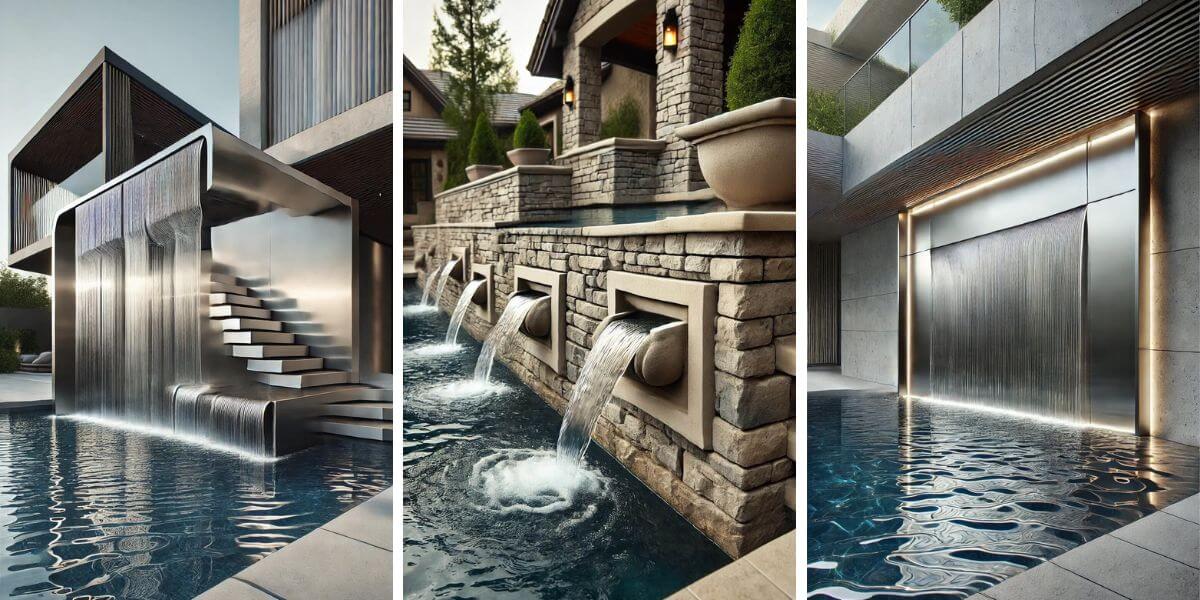

If you’re building new: this costs nothing extra, it’s a siting decision, and if you have the yard for it, browse our front yard pool ideas for layouts that naturally avoid the dead-center trap.
Answer 4 quick questions and get matched to the exact fix for your yard — drainage, budget, layout, or something else entirely.
Take the Free QuizIf your pool’s already centered: you’re not repouring concrete over a placement rule. Balance it instead with a planted border on the opposite side of the yard (adds the wood element) or a defined paved patio zone (adds earth) so the water isn’t the only element present.
2. Choose a curved shape over sharp corners
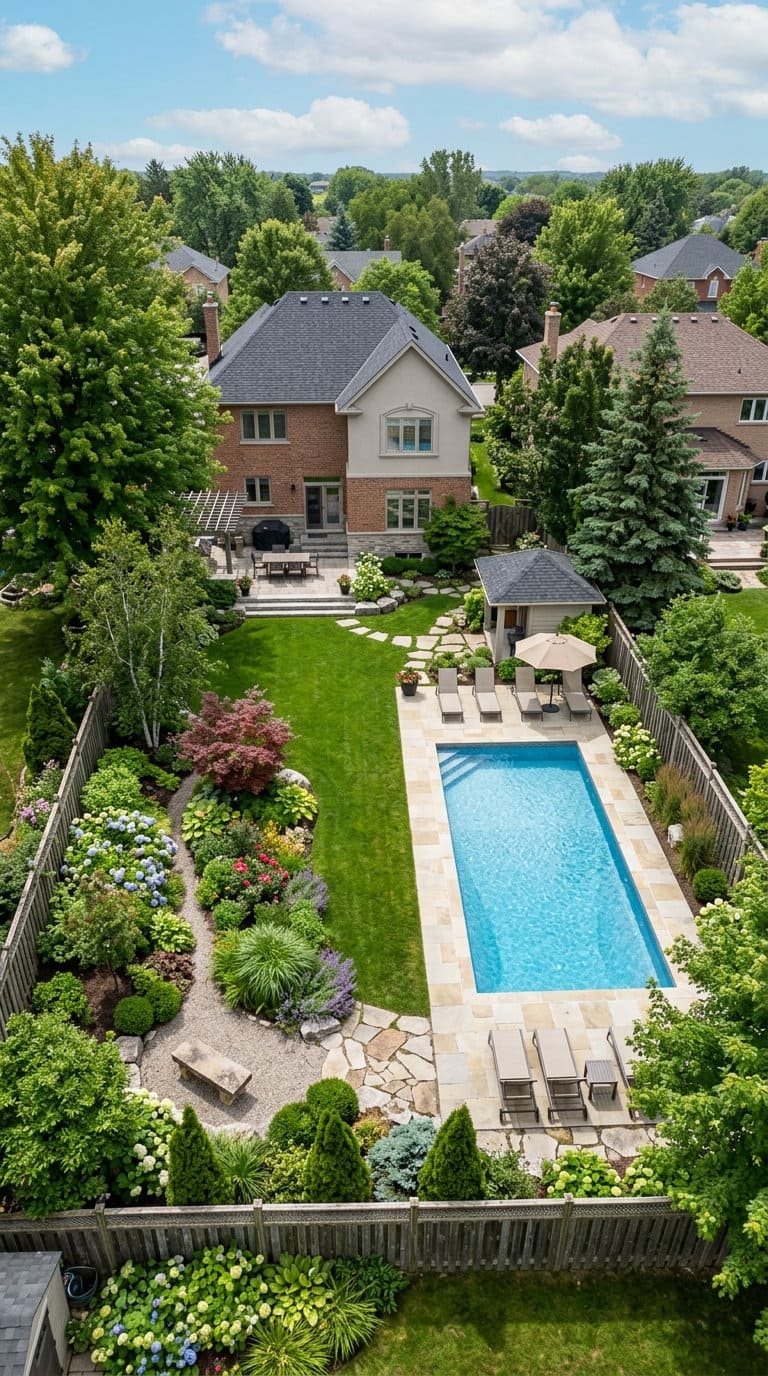
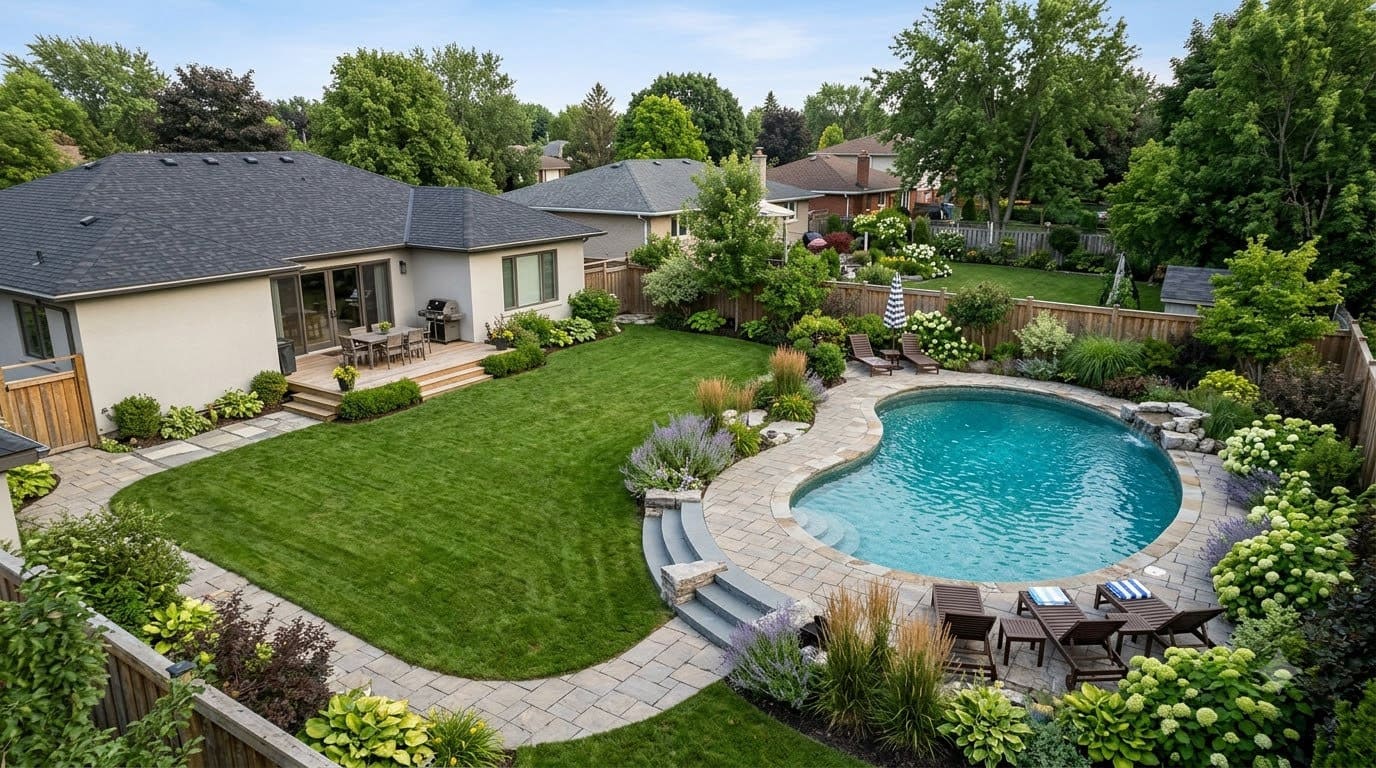
This is the most repeated feng shui pool rule, and both major competing guides get it right: oval, kidney, or curved pools are favored because chi flows smoothly around them.
Square or rectangular pools, especially with a corner pointed at the house, are read as “poison arrows,” the same sharp-edge concept that applies to buildings and furniture.
The real fix if you already have a rectangular pool (most in-ground pools built before this became a design trend are square or rectangular, and re-shaping one is a five-figure remodel, not a weekend project): soften the corners with large potted plants or dense landscaping at each hard angle.
This is the softening technique both fengshuitricks.com and Platinum Pools recommend, and it’s genuinely the standard fix, not a compromise.
3. Keep real distance between the pool and your house
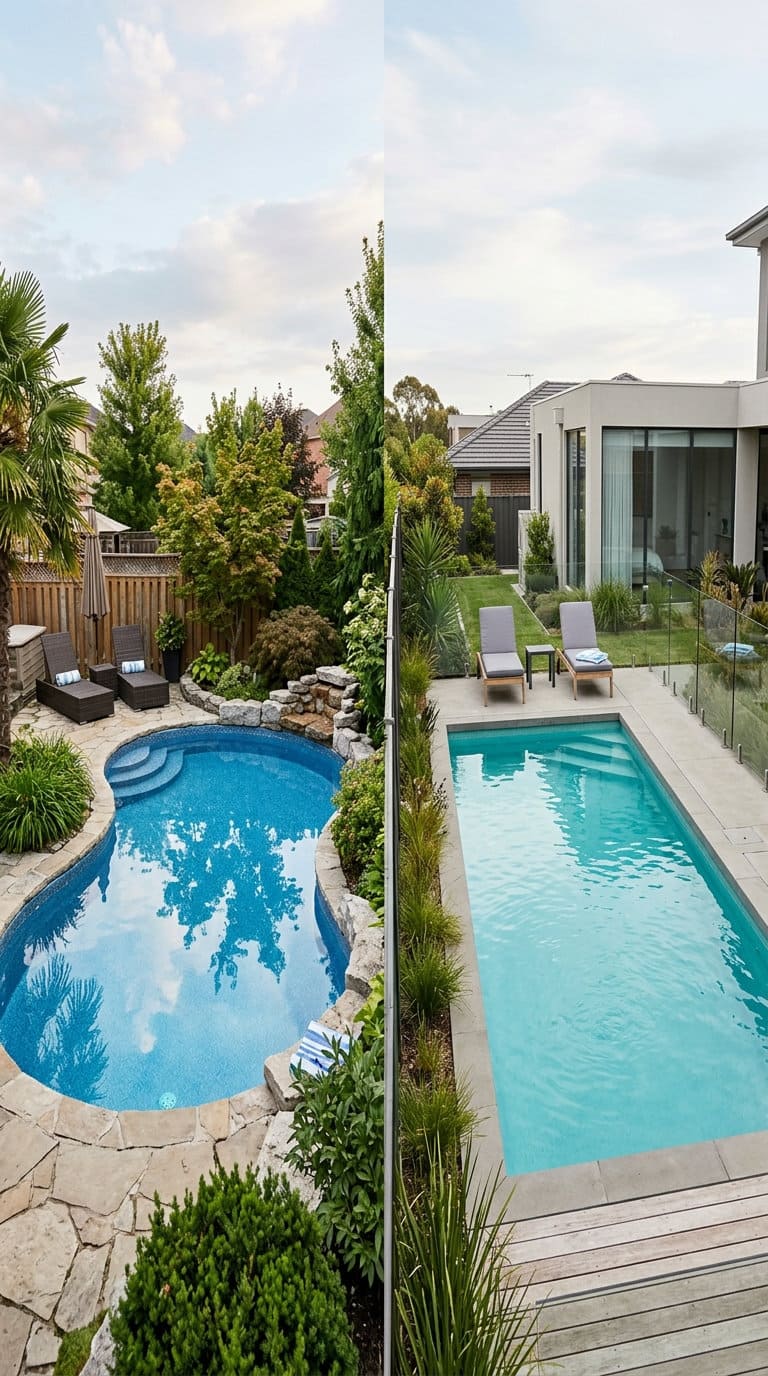
Feng shui wants “enough space for energy to circulate freely” between the water and the structure, not a pool crammed right up against the foundation.
There’s a practical overlap here too: most local codes already require a minimum setback between a pool and a structure for structural and drainage reasons, so this rule rarely conflicts with what a permit office will require anyway.
Most yard problems trace back to one specific, fixable cause. Find yours in 4 quick questions.
Take the Free Quiz
Covers rule #6's safety layer as a second layer of protection alongside a code-compliant fence
Shop NowThis post contains affiliate links. We may earn a commission on qualifying purchases at no extra cost to you.
Budget note: if your lot is tight and you can’t get meaningful distance, a defined transition zone, a paved patio strip or a low planted buffer between pool edge and house wall, does double duty as both a feng shui fix and a practical splash/drainage buffer, see our pavers around pool ideas for real transition-zone examples.
4. Match the size to your yard, not your ambition
Kathryn Weber is direct about this: an oversized pool doesn’t read as luxurious in feng shui terms, it reads as “overwhelming” the property, and can tip the water element out of balance with everything else in the yard.
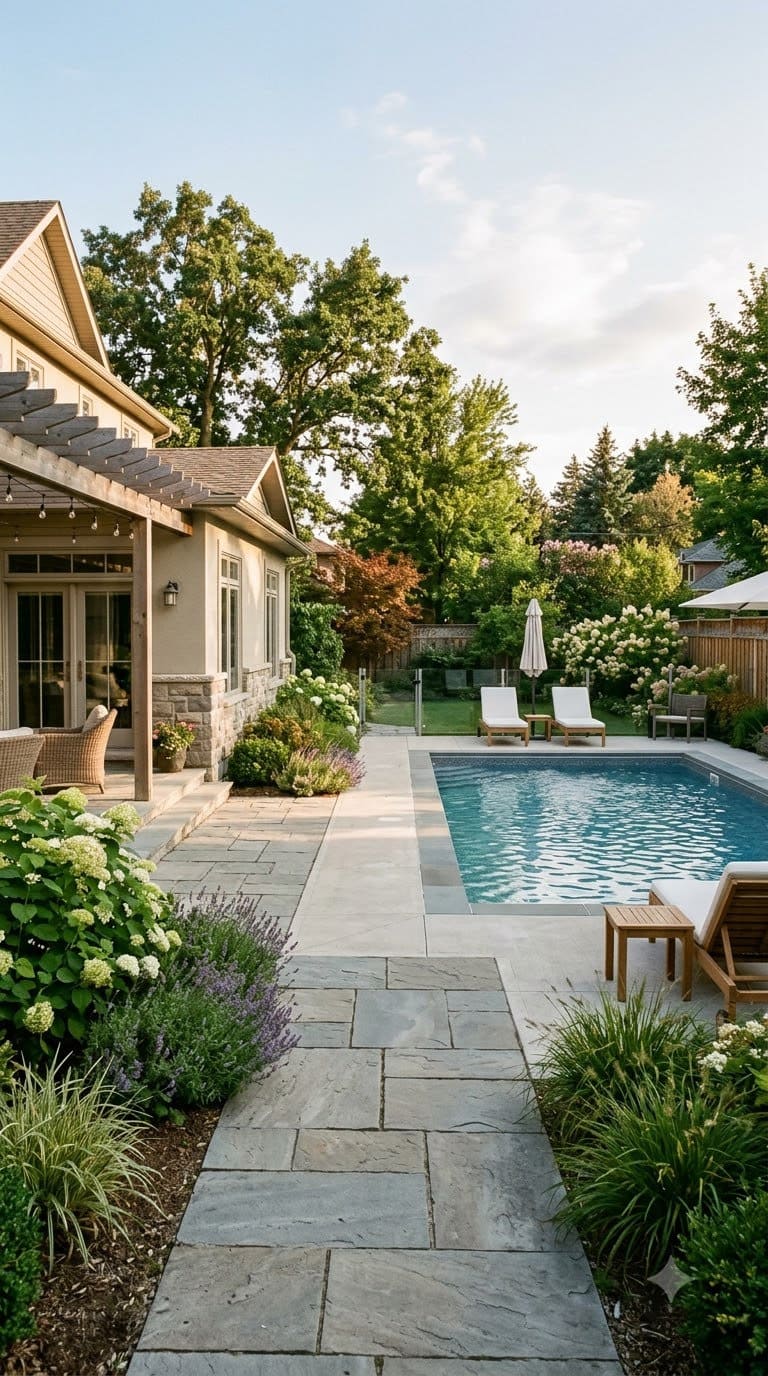
A pool that’s proportionate to the house and lot, roughly, one that still leaves clear yard space around it rather than eating the whole backyard, keeps the elements in balance.
This one has a real-world payoff too: an oversized pool is also the single biggest driver of ongoing maintenance cost and chemical/water bills, so the feng shui advice and the practical budget advice point the same direction here.
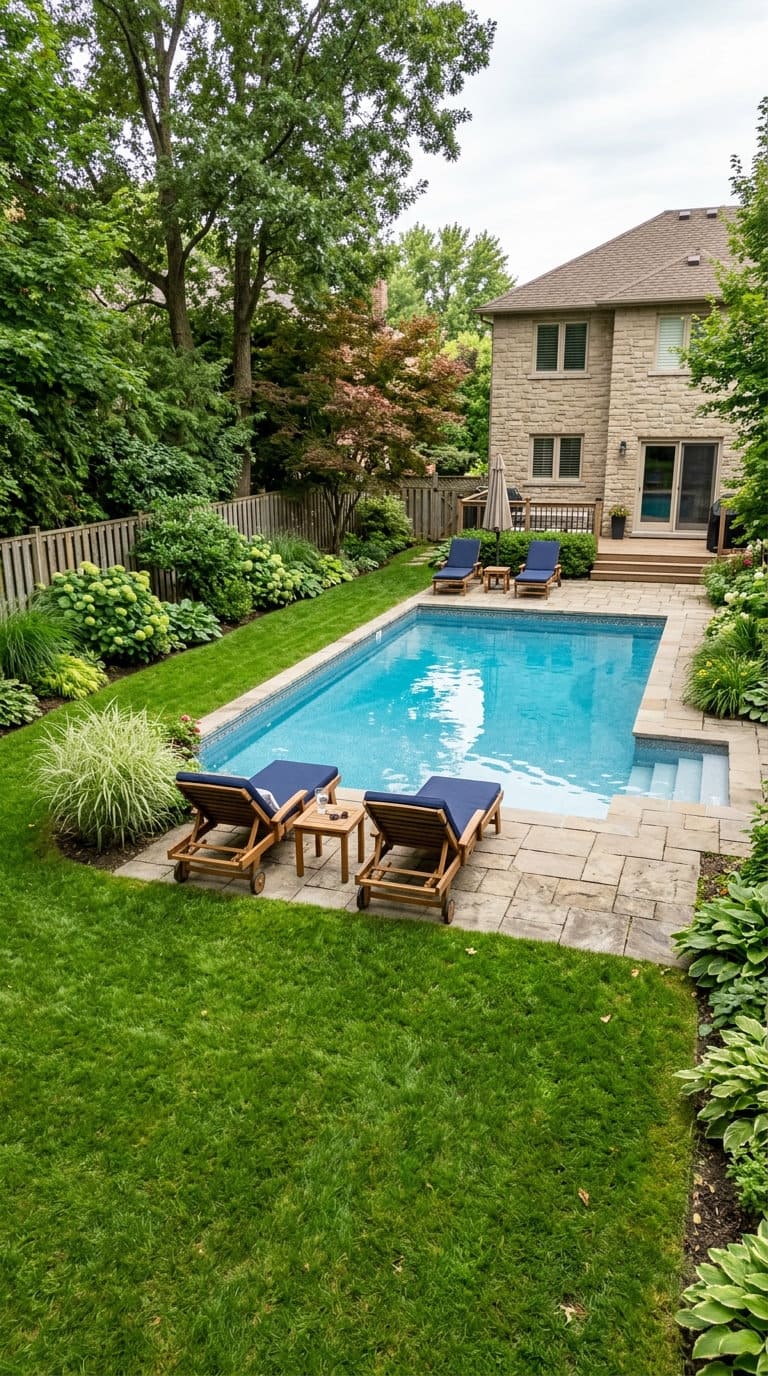
5. Never install an infinity edge that drains away from your home
Infinity pools are visually dramatic, but in feng shui terms the water is quite literally flowing away from the house instead of embracing it, symbolically draining wealth off the property instead of holding it. This is one of the more specific, less-obvious rules and it’s consistent across every real source checked for this piece.
If you already have one and aren’t tearing it out, the standard mitigation is the same “hold the energy in” logic used elsewhere: add a strong grounding element on the opposite (non-draining) side of the pool, dense planting, a solid patio, or a wall, so there’s something substantial “catching” the energy rather than an open, unobstructed view straight past the edge.

6. What’s the real safety code you need to know before you build a pool?
This is the layer every feng shui pool article this piece competed against leaves out entirely, and it’s the part that actually matters most before anyone gets in the water.
Fencing: The U.S. Consumer Product Safety Commission reports an average of roughly 379 fatal pool-or-spa drownings a year among children under 15, about 75% of them under age 5, and most had been out of sight for five minutes or less. CPSC’s Safety Barrier Guidelines set the widely adopted baseline: a fence at least 48 inches tall, no gaps wider than 4 inches, non-climbable material, and a self-closing, self-latching gate that swings away from the pool with the latch at least 54 inches up. “Build a fence” isn’t optional advice, it’s the single highest-leverage thing on this whole list.
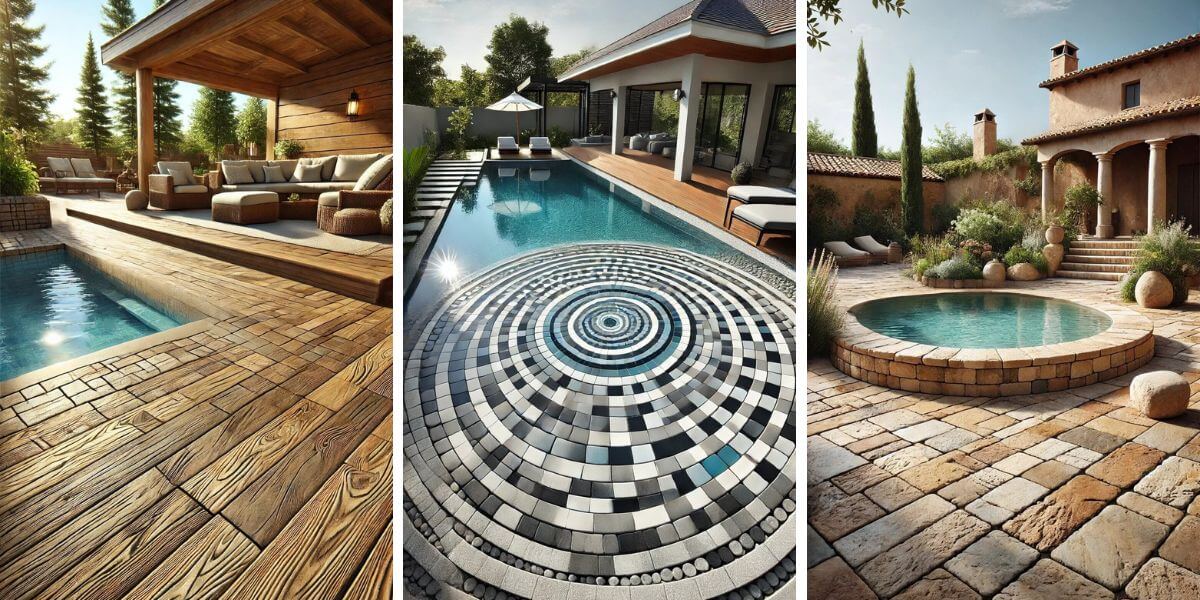

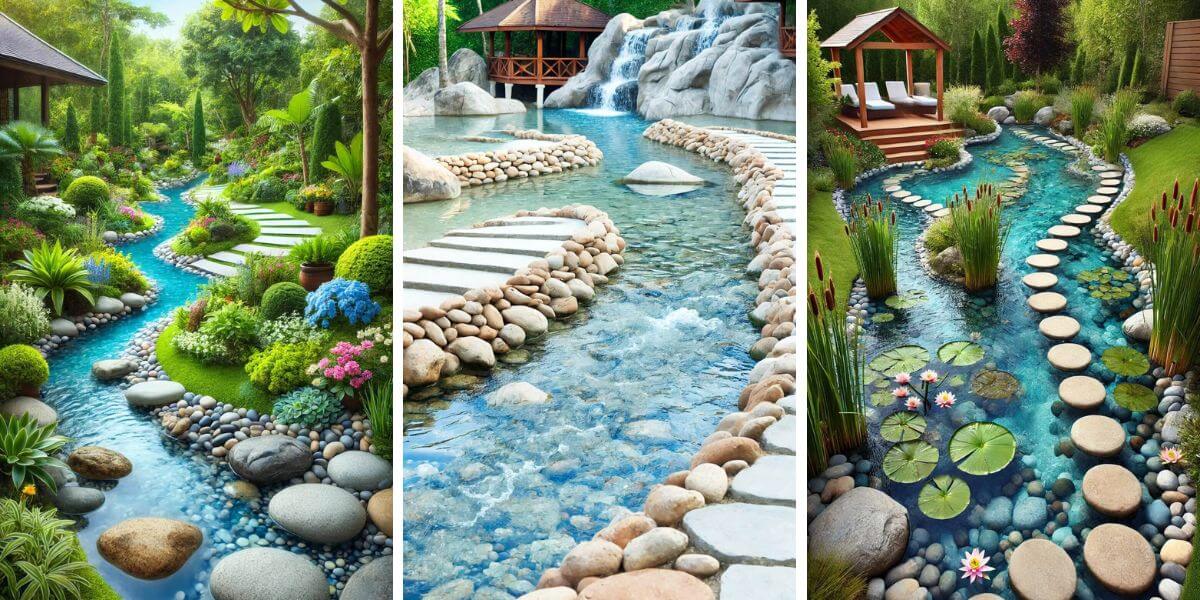
Electrical: Pools carry real electrocution risk from underwater and nearby lighting, pumps, and metal fixtures. NFPA 70 (the National Electrical Code), Section 680.26, requires an equipotential bonding grid, all metal parts within 5 feet of the pool tied together with a bonding conductor, to eliminate dangerous voltage differences in and around the water. This is licensed-electrician work, not a DIY step, and it’s required by code in the U.S. regardless of what your feng shui plan says about lighting placement.
The average homeowner spends $616/year on yard fixes that don't address the real problem. Find out what yours actually is — before you spend another dollar.
Take the Free QuizPermits: A backyard pool almost always requires a building permit (structural) and an electrical permit (bonding, GFCI protection) in the U.S. Skipping this isn’t just a legal risk, it’s a real resale problem: unpermitted pools routinely surface as a red flag in home inspections and can complicate a future sale.
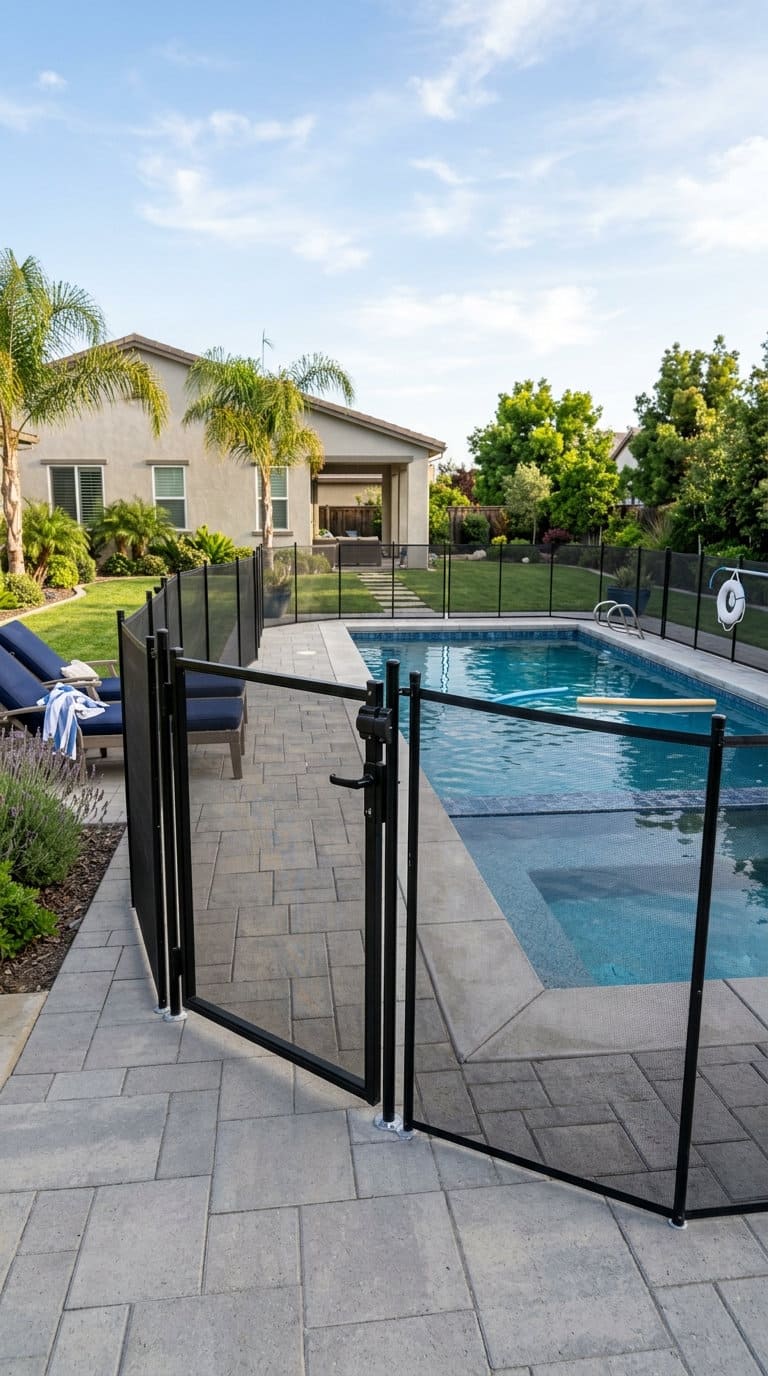
7. Keep the water moving and the surroundings maintained
Stagnant water is treated as trapped, stagnant energy in feng shui, and it’s also just a real algae and mosquito-breeding problem.
A running pump, a working filter, and (where budget allows) a small waterfall or pool water feature keep the water “alive” in both the symbolic and the literal sense.
On the maintenance side: trim back trees that shed heavily over the pool, decaying leaf matter is what clogs filters and turns water cloudy, and cloudy, neglected water is bad feng shui and a real chemical-balance headache at the same time.
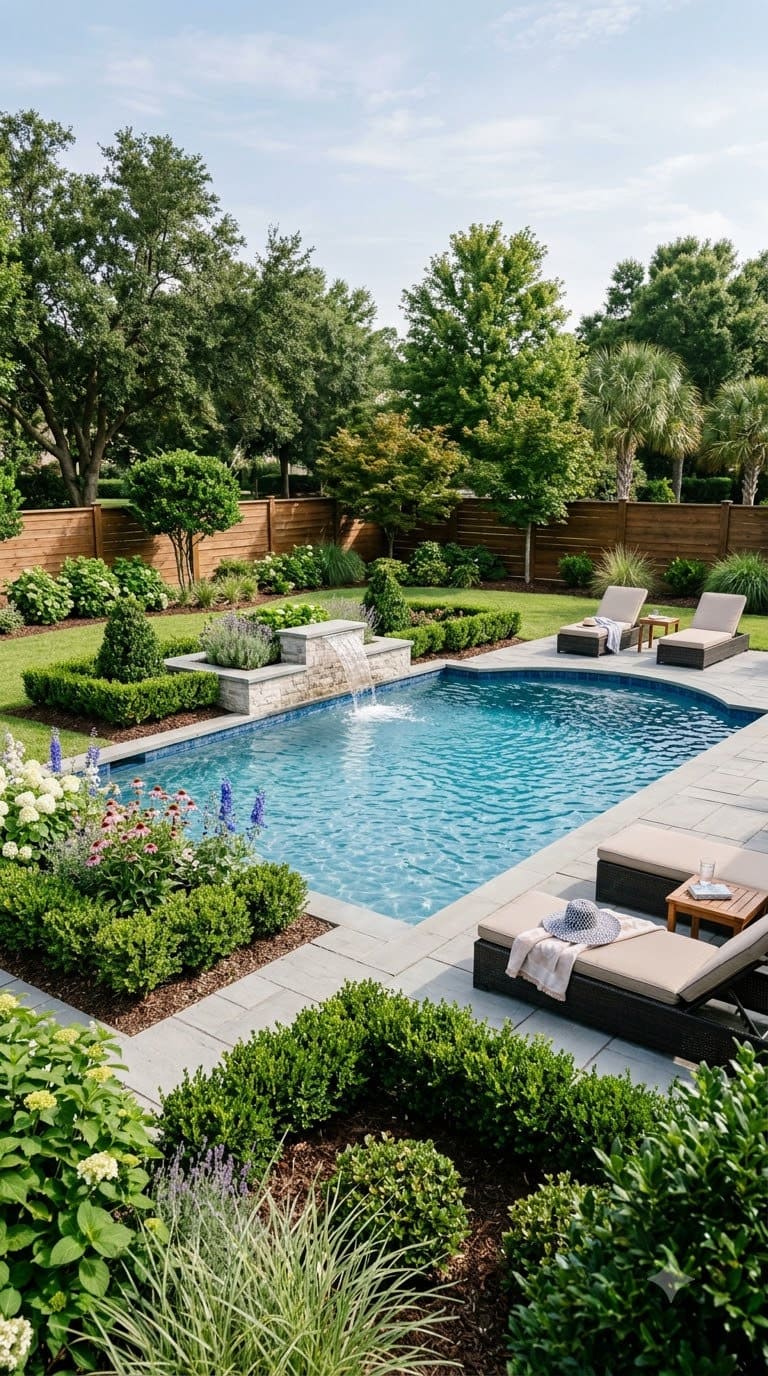
The 7 rules at a glance
| Rule | Real-world backing | Fastest fix |
|---|---|---|
| Placement (side, not centered) | Balances water element across the yard | Planted border or patio zone on the opposite side |
| Curved shape over sharp corners | Softening is the standard trade remedy per fengshuitricks.com and Platinum Pools | Dense planting at each hard angle |
| Distance from the house | Overlaps with local pool-setback code | Paved transition strip or low planted buffer |
| Size proportionate to the lot | Oversized pools drive higher maintenance/chemical costs | Keep clear yard space around the pool |
| No draining infinity edge | Consistent across every source checked | Grounding element (planting, patio, wall) on the non-draining side |
| Safety code (fencing, bonding) | CPSC: ~379 fatal child drownings/year; NFPA 70 Section 680.26 bonding requirement | 48″+ self-latching fence, licensed electrician for bonding |
| Moving, maintained water | Stagnant water breeds algae/mosquitoes | Running pump/filter, trim overhanging trees |
What we learned the hard way
Permits catch more people off guard than anything else on this list. Homeowners who treat a pool build as “just landscaping” and skip the permit step often find out the hard way during a home sale years later, when an inspector flags unpermitted structural or electrical work and the buyer’s lender wants it resolved before closing.
The infinity-edge decision is a real point of regret for some owners too, not for feng shui reasons but a practical one: infinity edges cost meaningfully more to build and maintain (a second catch basin, more pump capacity) than a standard edge, so the feng shui advice to skip one and the budget advice happen to agree.
And the “just fence it eventually” mistake is the one with real stakes attached. CPSC’s own data point, most drowning victims were out of sight for five minutes or less, means a fence installed after move-in, during “the first free weekend,” is a genuine window of risk that a lot of families don’t think about until the pool is already full of water.
FAQs
My pool is already rectangular and centered behind the house. Do I need to redo it? No. Soften the corners with dense planting or large potted plants, and add a grounding element (a planted border, a patio zone) on the side opposite the pool to rebalance the yard. A full reshape is rarely worth the cost purely for feng shui reasons.
What’s the single most important rule if I can only follow one? The safety code layer (#6), not because feng shui says so but because it’s the difference between a real hazard and a manageable one: a compliant fence with a self-closing gate is the highest-leverage change you can make, feng shui or not.
Does an infinity pool really count as bad feng shui? Yes, consistently, across every real source checked for this piece. The water visually draining away from the house is read as wealth leaving the property. If you already have one, add a strong grounding feature on the non-draining side rather than tearing it out.
Do I actually need a permit for a backyard pool? In almost every U.S. jurisdiction, yes, both a building permit and an electrical permit for the required bonding work. Check with your local building department before you dig; skipping this step is a real problem at resale, not just a technicality.
Related reading on farmfoodfamily.com: if space is tight, our plunge pool ideas guide covers a smaller-footprint option that makes several of these rules (size, distance, budget) easier to satisfy from the start.
Related Posts
- 40+ Half-Acre Backyard Ideas to Maximize Your Yard
- 95+ DIY Garden Path and Walkway Ideas
- Pavers Around Pool Ideas
- Pool Water Feature Ideas
- Plunge Pool Ideas
- Front Yard Pool Ideas
- Feng Shui in the Bathroom: How to Create Good Luck in a Home
Products We Recommend
This post contains affiliate links. We may earn a commission on qualifying purchases at no extra cost to you.
Floating Pool Safety Alarm (110dB, wave-sensing)
Covers rule #6's safety layer as a second layer of protection alongside a code-compliant fence
Shop Now
Safetech TopKlik Self-Closing Gate Hinges
Directly meets the CPSC self-closing, self-latching gate requirement from rule #6
Shop Now
Solar-Powered Robotic Pool Skimmer
Keeps water moving and debris-free for rule #7 without adding to your electric bill
Shop NowNever miss an update — choose FarmFoodFamily as your preferred source on Google.
How it works: Tap the button below to open Google's settings page, then check the box next to FarmFoodFamily.
Tap the checkbox to turn it blue — that's how you know it's set.