20 Cat-Friendly Backyard Ideas (Plus the Plants and Fences That Actually Matter)
Twenty real ways to make your backyard safe and genuinely enjoyable for a cat, plus the toxic plants and fence specs most “cat-friendly yard” guides gloss over.

Never miss an update — choose FarmFoodFamily as your preferred source on Google.
How it works: Tap the button below to open Google’s settings page, then check the box next to FarmFoodFamily.
Tap the checkbox to turn it blue — that’s how you know it’s set.
Letting a cat outside unsupervised is a real gamble, cars, predators, toxic plants, and a fence that looks secure but isn’t.
The good news: a backyard can be genuinely cat-safe without turning into a giant cage, if you get a few specific details right that most decor-focused galleries never mention.
Is My Cat Actually a Good Candidate for an Outdoor Space?
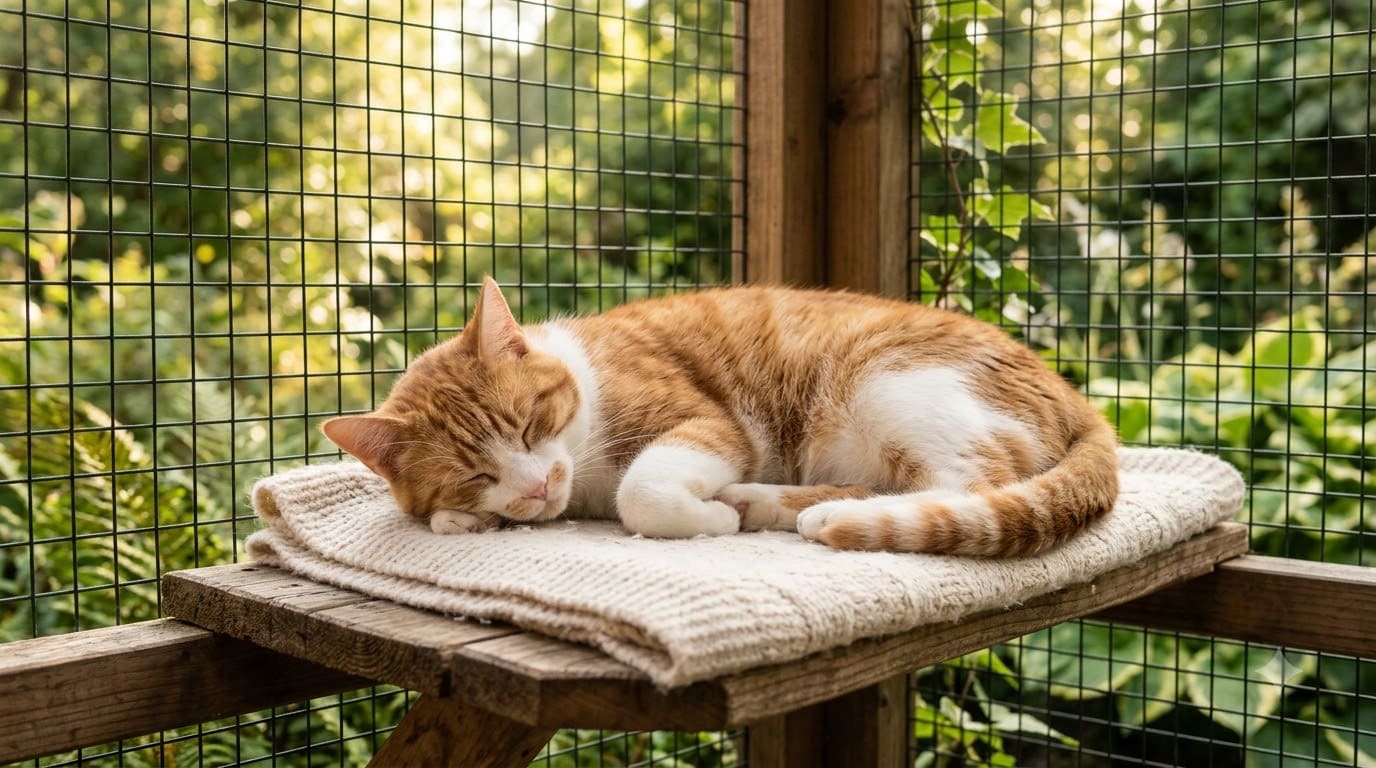
Not every cat needs or wants the same kind of outdoor access, and getting the containment method wrong is where most cat-friendly yard projects actually fail.
Quick answer: A cat-friendly backyard needs three things most decor galleries skip: real containment, cat-safe planting, and an honest read on whether your specific cat wants outdoor access at all.
Katenna Jones, an Associate Certified Applied Animal Behaviorist, notes that curious, playful cats (the ones getting into bags, purses, or carrying off your shoes) tend to be the best catio candidates, while anxious or skittish cats may not benefit from the same setup.
For containment, cat-proof fence roller systems like Oscillot require a minimum 6-foot existing fence height and work best angled inward, but the real failure point isn’t the roller itself, it’s escape aids like tree branches, stacked planters, or trash cans left near the fence line that give a determined cat a launch point.
On the planting side, the ASPCA flags lilies as the single most dangerous common backyard plant, ingesting or even grooming the pollen off fur can cause kidney failure, so treat any lily variety as a hard no near cat-accessible space.

Two more things worth knowing before you build anything.
First, HOA rules rarely mention cats specifically, but a permanent catio structure or fence modification may fall under the same architectural-review requirements as a shed or fence change, worth a quick check before building.
Second, predator risk (hawks, owls, coyotes, and off-leash dogs) is a real, separate safety concern from simple escape-proofing, a fully secure enclosure protects against both, but a cat left loose in an “escape-proof” yard is still exposed to whatever can come over or through the fence from the outside.
Answer 4 quick questions and get matched to the exact fix for your yard — drainage, budget, layout, or something else entirely.
Take the Free QuizCatio, Fence Roller, Supervised Time, or Free-Roam: Which Is Actually Safest?
| Approach | Predator/Escape Safety | Typical Cost | Space Needed | Best For |
|---|---|---|---|---|
| Catio (attached or freestanding) | Highest, fully enclosed on all sides | Moderate to bigger investment | Small footprint, works on a patio or window | Any cat, especially anxious ones that still want fresh air |
| Cat-proof fence roller system | High if fence meets 6ft minimum and escape aids are cleared | Bigger investment | Requires an existing full-yard fence | Confident, curious cats wanting more roaming room |
| Supervised harness/leash time | Moderate, depends entirely on supervision | DIY-cheap | Flexible, no permanent structure | Cats not suited to unsupervised outdoor access |
| Free-roam with no containment | Lowest, real predator and traffic risk | Free | Not applicable | Not recommended regardless of cat temperament |
Which Containment and Safety Ideas Work Best?
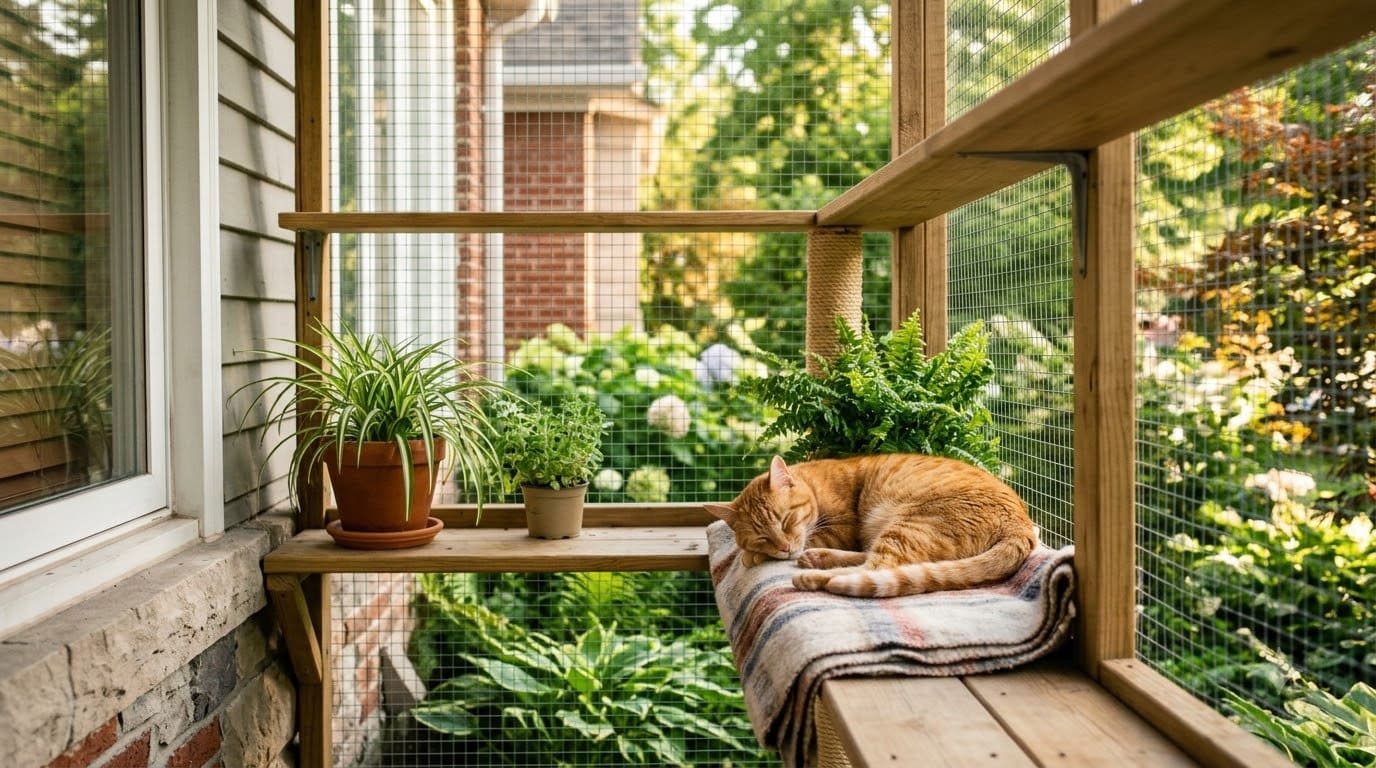
1. A window-attached catio
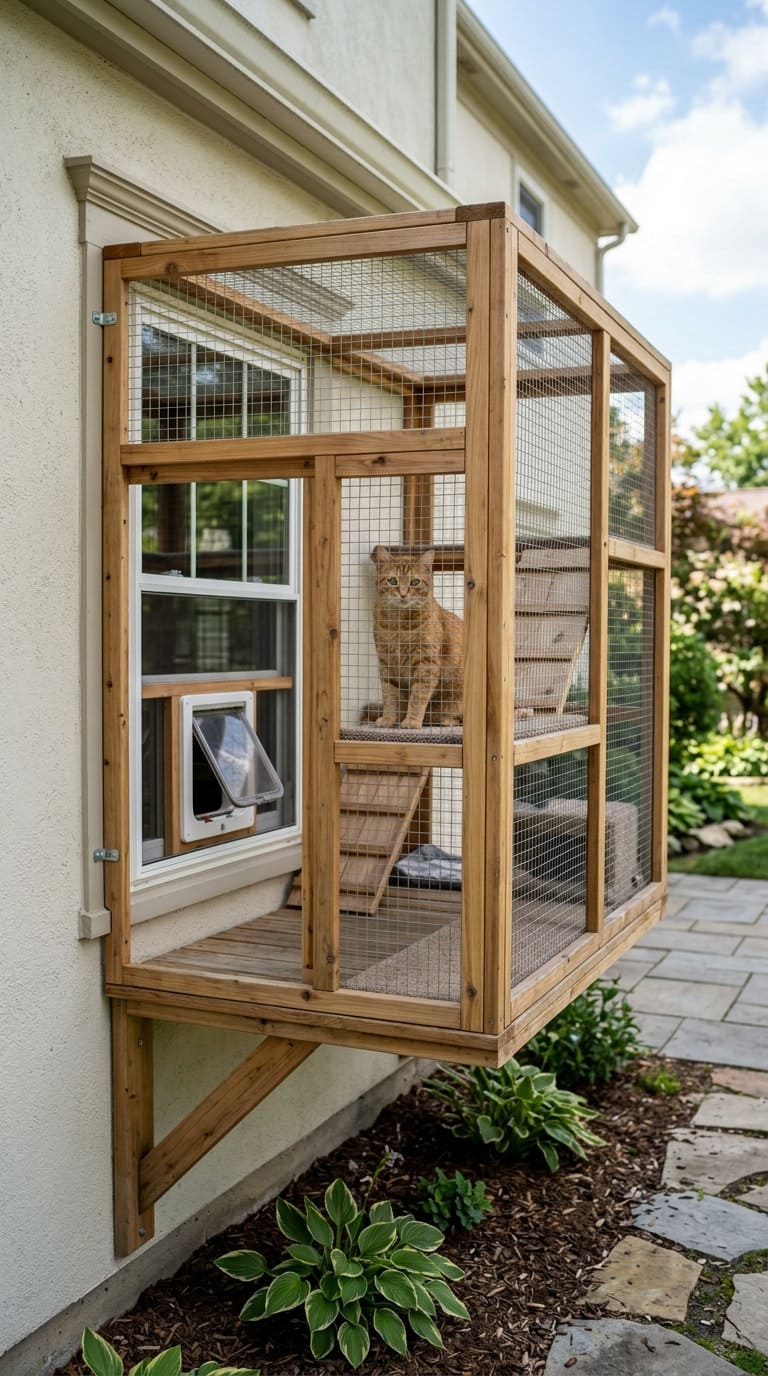
Built directly off a window with a cat door, typically a 3-4 foot deep enclosure spanning the window’s width, this is the easiest catio style to retrofit onto an existing house since it doesn’t require a full structure from the ground up.
Keep the frame line clear of nearby tree branches or trellises within about 3 feet, a cat can use either as a launch point to climb over the top even on a fully enclosed structure. Budget tier: moderate.
2. A freestanding catio
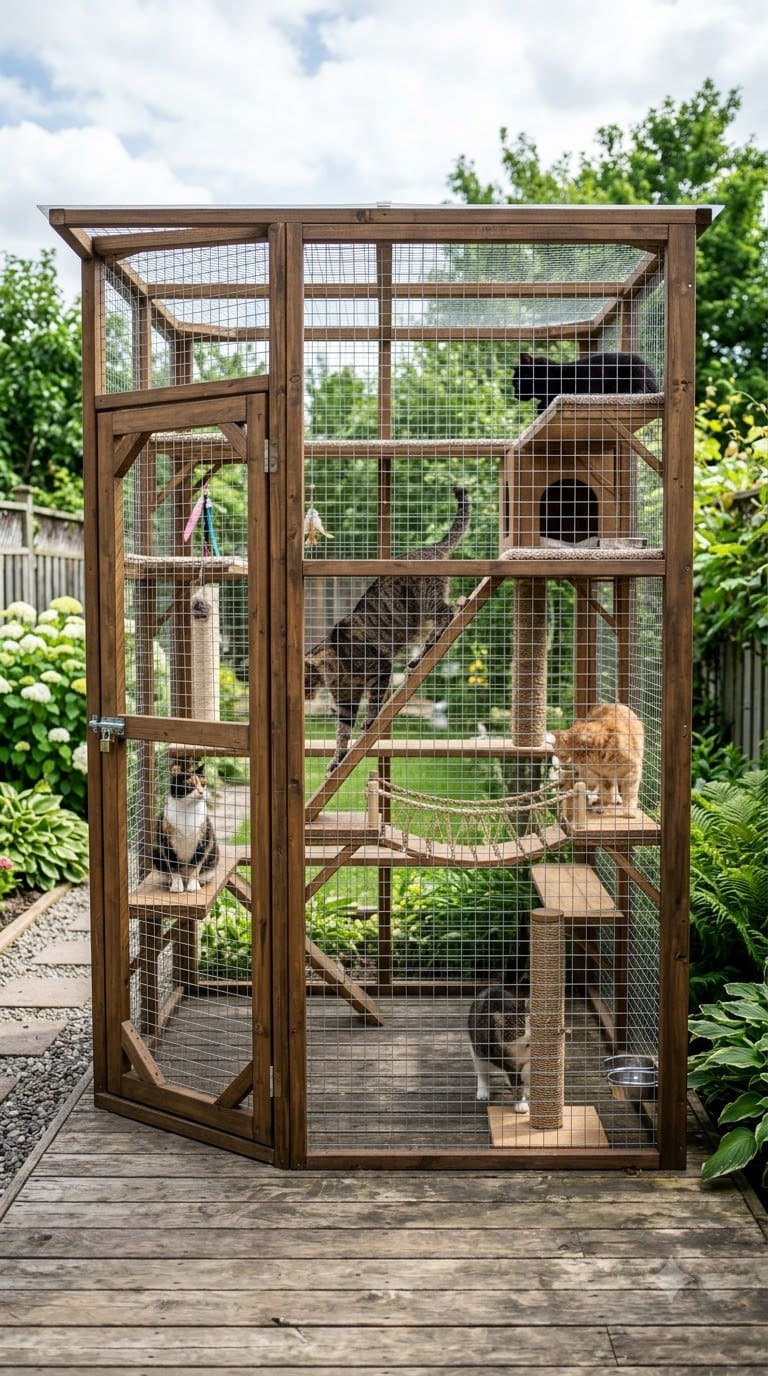
A fully separate enclosed structure, commonly built in 6×8 or 8×10 foot footprints for a multi-cat household, gives more room for shelves, ramps, and multiple cats at once, and works well when there’s no good window location to attach to.

Direct product match for idea 3, the real containment fix described in Before You Start, live-verified, 5.0 stars / 2 ratings
Shop NowThis post contains affiliate links. We may earn a commission on qualifying purchases at no extra cost to you.
Growing catnip inside the enclosure itself gives cats something to actually engage with instead of just a caged view of the yard. Budget tier: bigger investment.
3. A cat-proof fence roller system
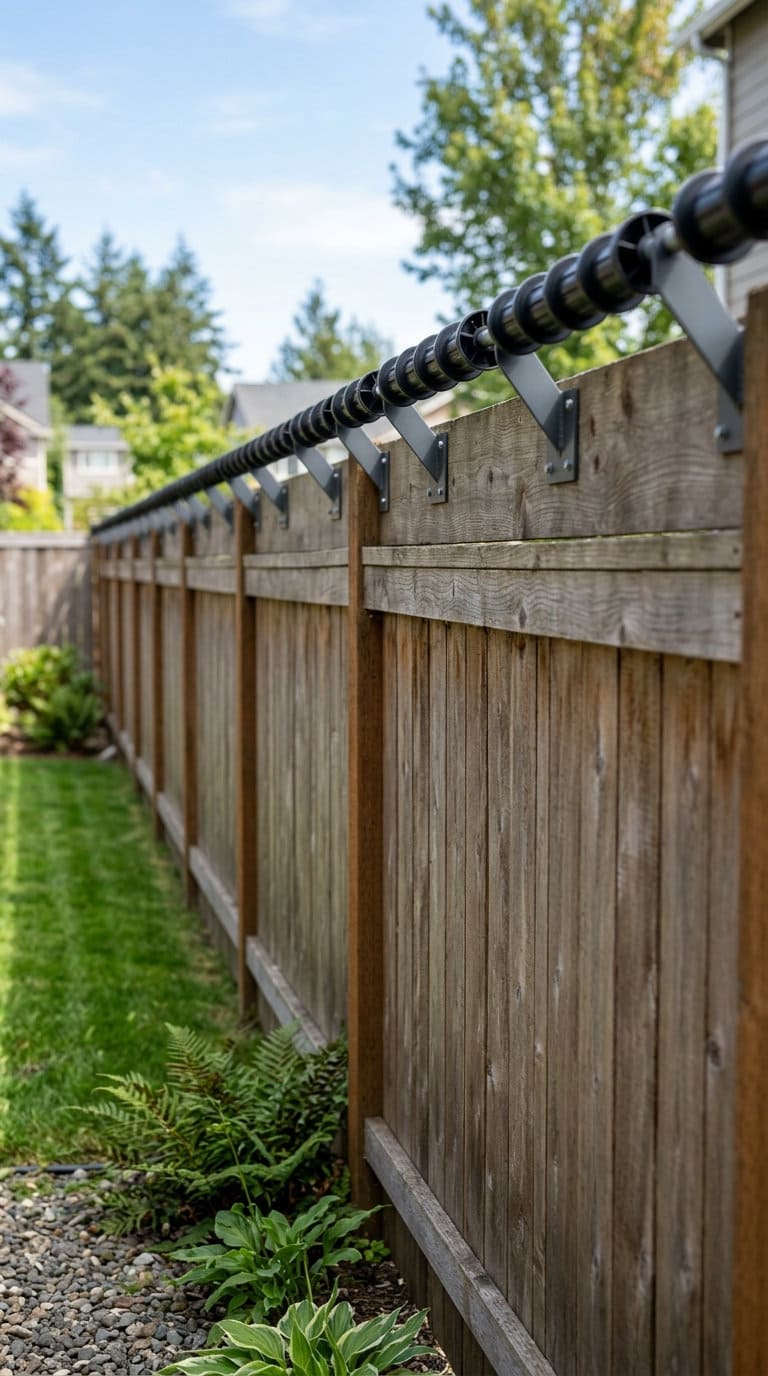
For yards with an existing 6-foot (or taller) fence, a roller system, typically sold in 4-foot paddle sections that mount end to end along the entire fence run, installed along the top and angled inward lets a cat feel the fence but not get purchase to climb over it.
Most yard problems trace back to one specific, fixable cause. Find yours in 4 quick questions.
Take the Free QuizThe real key to making this work isn’t the roller itself, it’s clearing furniture, trees, and trash cans within 3-4 feet of the fence line, since those are what actually give most cats their escape route. Budget tier: bigger investment.
4. Cat-proof netting over an existing fence
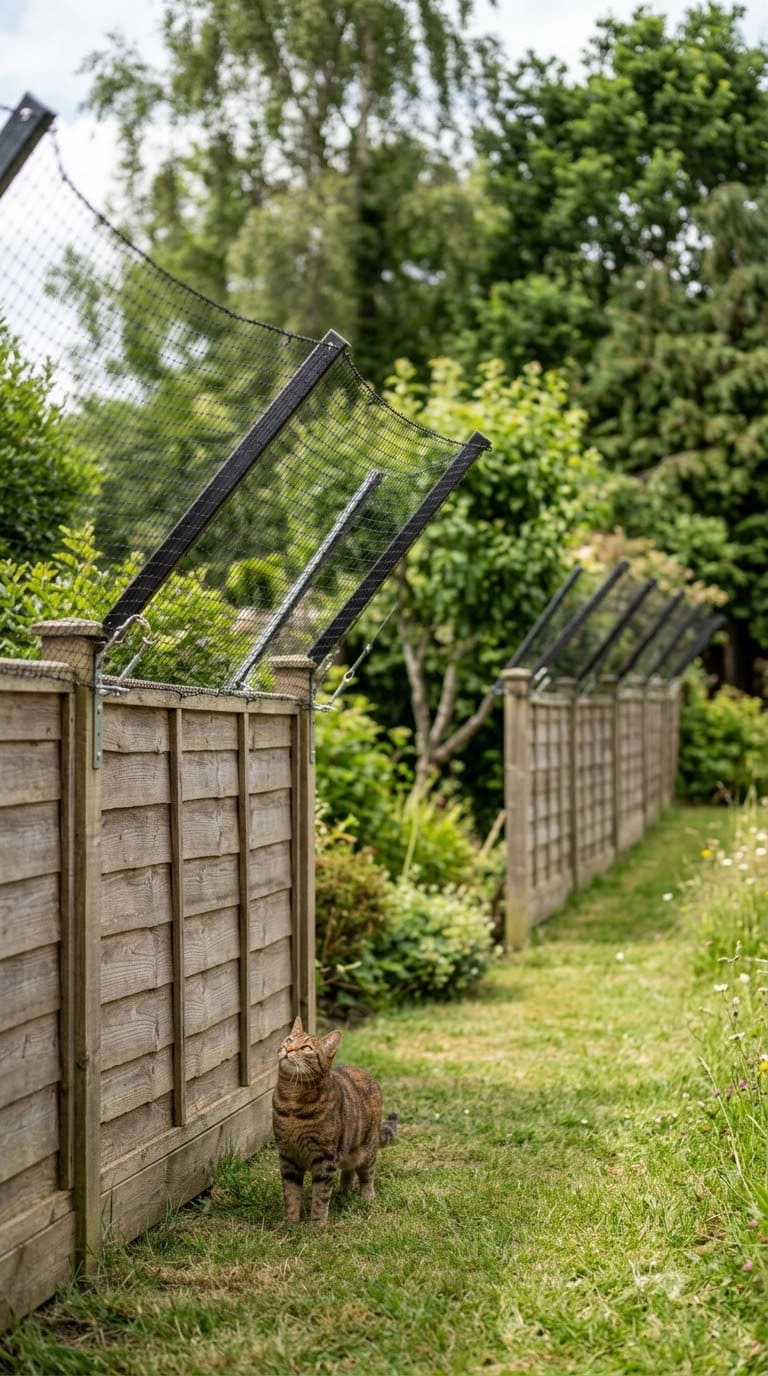
A cheaper alternative to a roller system, running roughly half the material cost per linear foot, netting angled 45 degrees over the top of an existing fence blocks climbing without the same engineering, though it’s generally considered less durable (netting typically needs replacement every 3-5 years versus a roller’s 15-20 year lifespan) and more visually obvious than a roller.
Budget tier: moderate.
5. A screened-in porch conversion
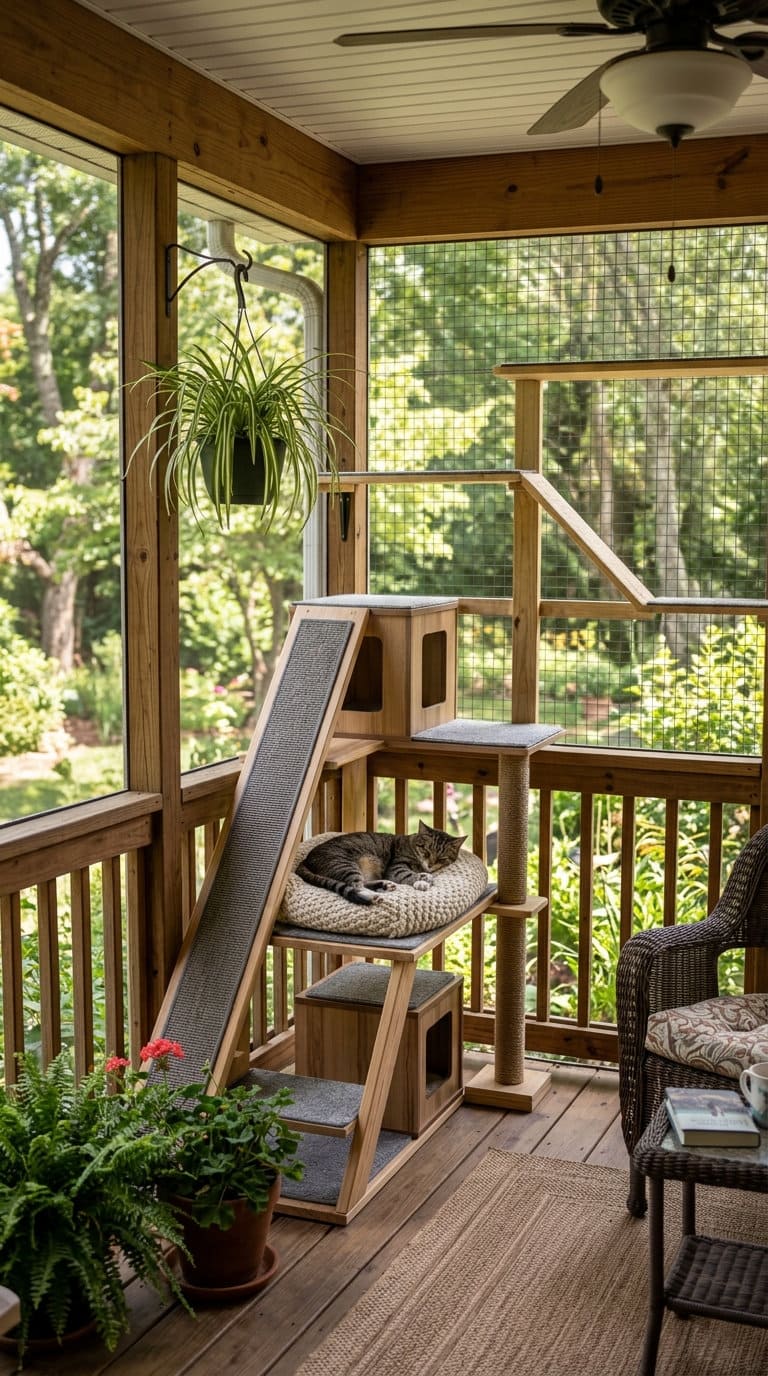
Converting an existing screened porch into cat-accessible space reuses a structure you likely already have instead of building new, and standard porch screening (18×14 mesh count) already blocks a cat from pushing through, though check for any gaps at the base where screening meets the floor.
There’s more on styling a screened porch for a dual-purpose human-and-cat space elsewhere on the site. Budget tier: DIY-cheap to moderate if the porch structure already exists.
Which Plants Are Actually Safe to Grow Near a Cat-Friendly Yard?
6. A cat-safe flower border
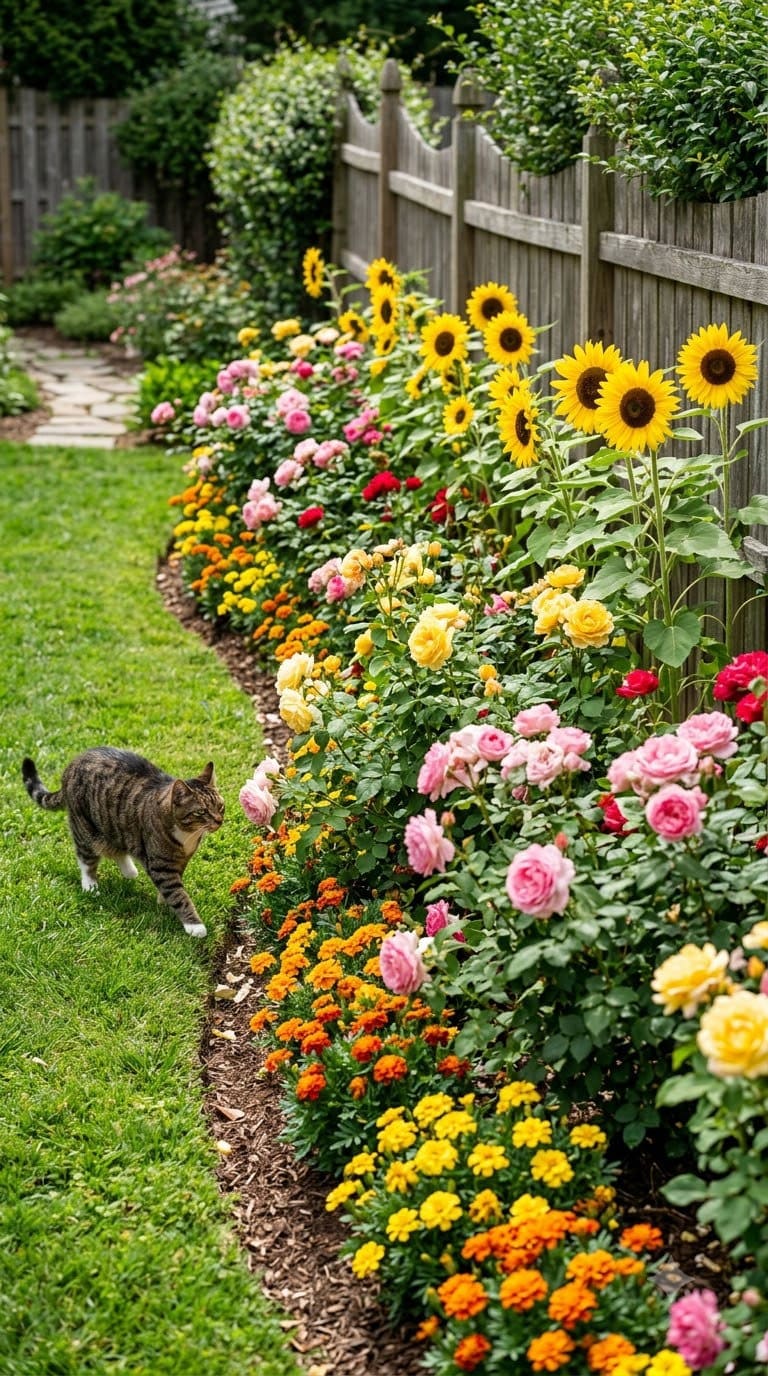
Skip lilies entirely, per the ASPCA’s most urgent warning, and build the border instead from cat-safe options like roses, sunflowers, and marigolds, all three confirmed non-toxic on the ASPCA’s own plant list.


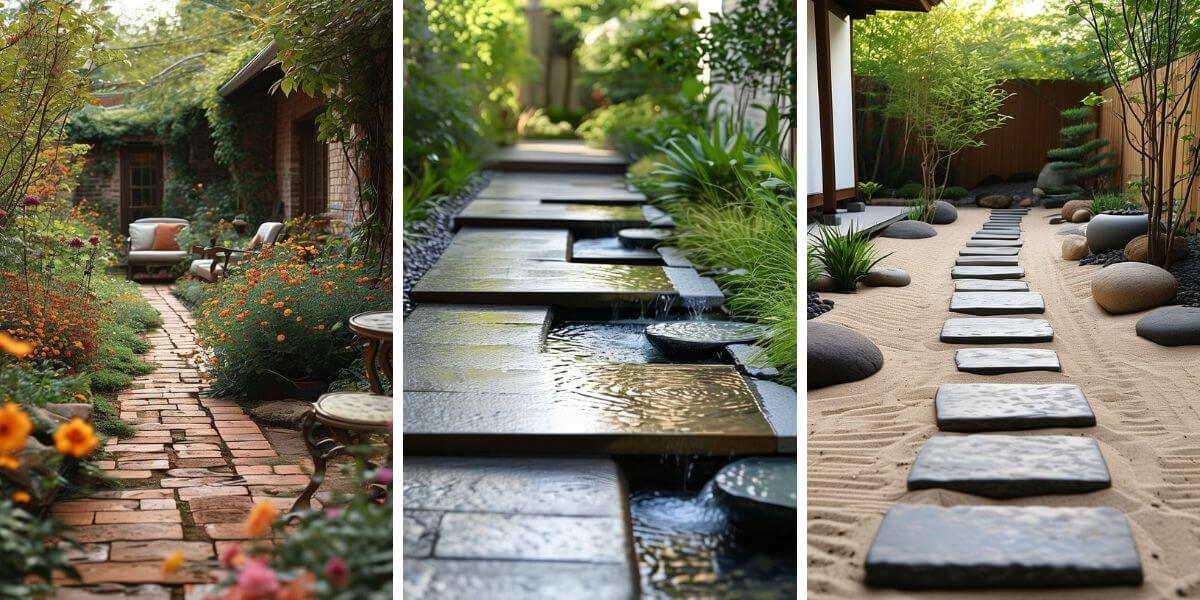
Space taller sunflowers 18-24 inches apart and marigolds 8-10 inches apart for a filled-in border within one growing season. Budget tier: DIY-cheap.
7. A dedicated catnip patch
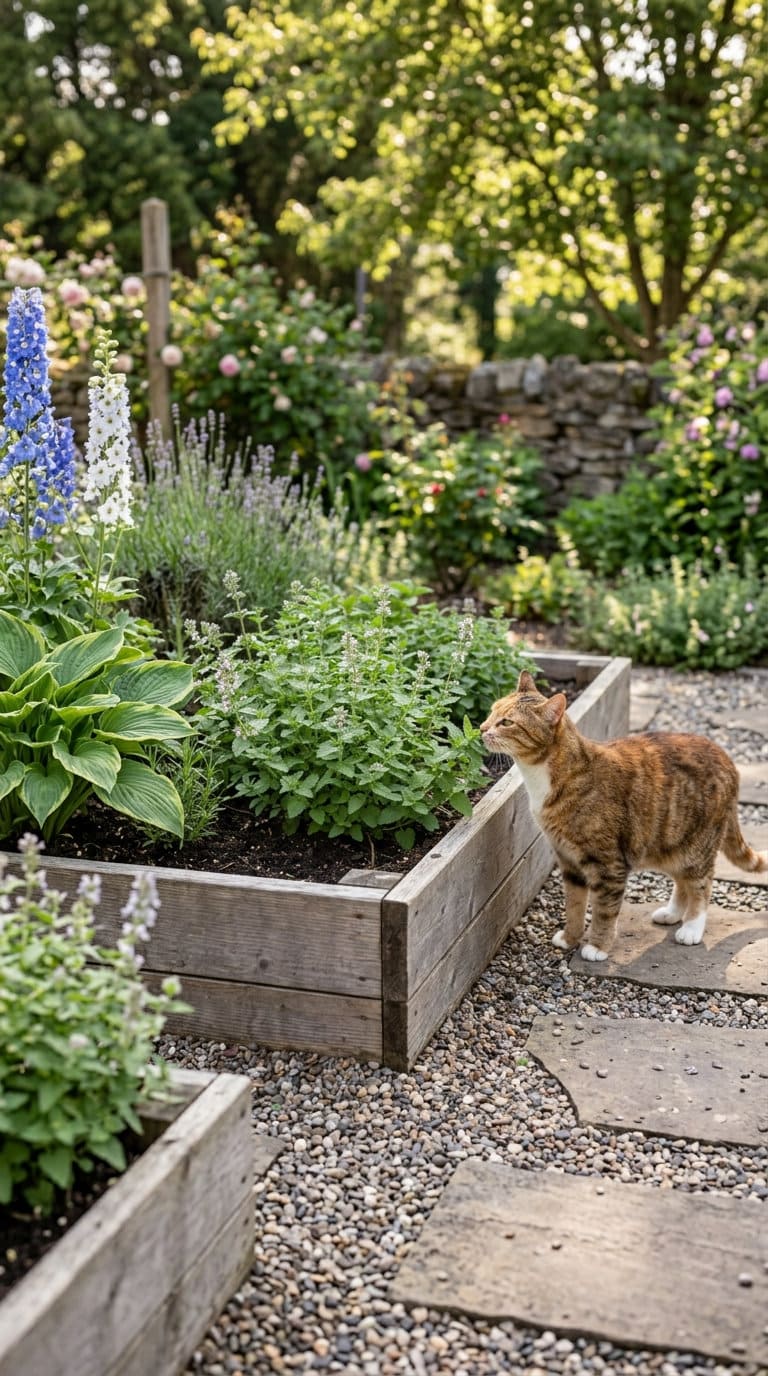
A patch of real catnip, spaced about 18 inches apart if planting more than one, planted just outside a catio’s edge or along a supervised area gives cats a genuine outdoor activity beyond just sitting.
It spreads readily by both seed and root runners, so plant it somewhere containment (a raised bed or a buried plastic barrier sunk 8-10 inches deep) keeps it from taking over the whole yard. Budget tier: DIY-cheap.
8. A cat grass window box
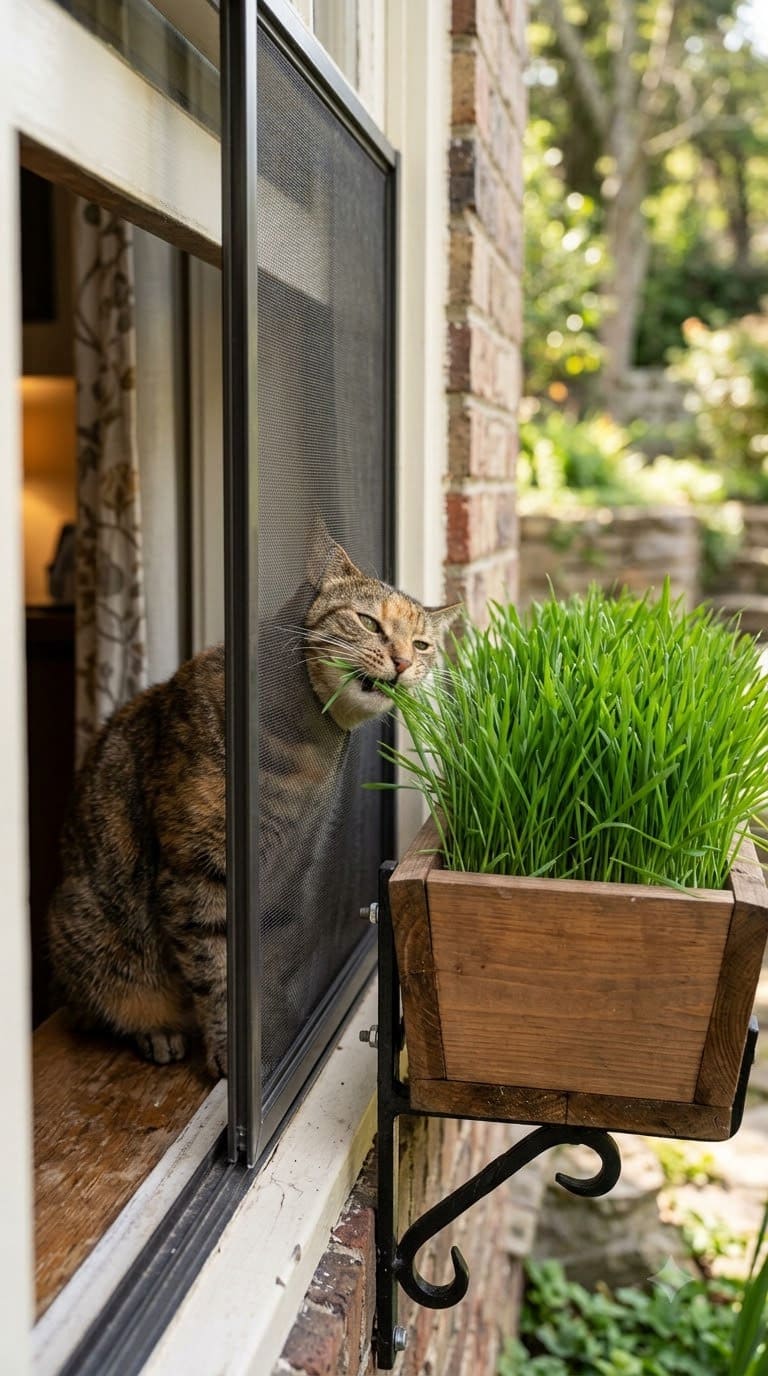
A small window box, 6-8 inches deep to give roots real room, of wheatgrass or oat grass, placed where an indoor-only cat can nibble it through a screen, gives a safe chewing outlet without any outdoor access at all.
Wheatgrass typically germinates in 5-7 days and stays chewable for 2-3 weeks before it needs resowing. There’s more on sizing and mounting a window box worth checking if this is a new build. Budget tier: DIY-cheap.
The average homeowner spends $616/year on yard fixes that don't address the real problem. Find out what yours actually is — before you spend another dollar.
Take the Free Quiz9. Pet-safe mulch instead of cocoa mulch
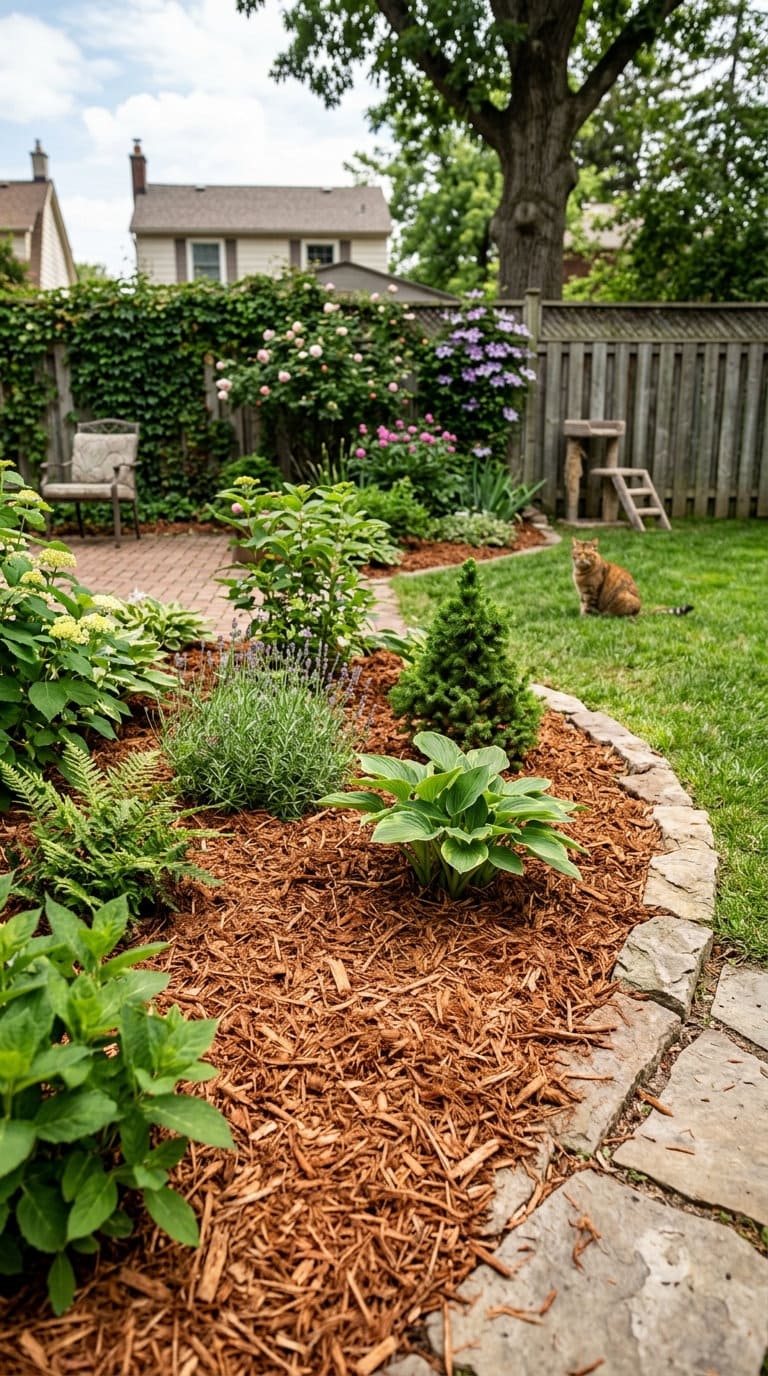
Cocoa shell mulch smells appealing to some pets but contains theobromine, the same toxic compound found in chocolate, ingestion of even a modest handful can cause vomiting, elevated heart rate, or worse in a small cat, swap it for cedar or pine mulch anywhere a cat has yard access.
Budget tier: DIY-cheap, no cost difference from standard mulch.
10. Raised beds to protect vegetable gardens from digging
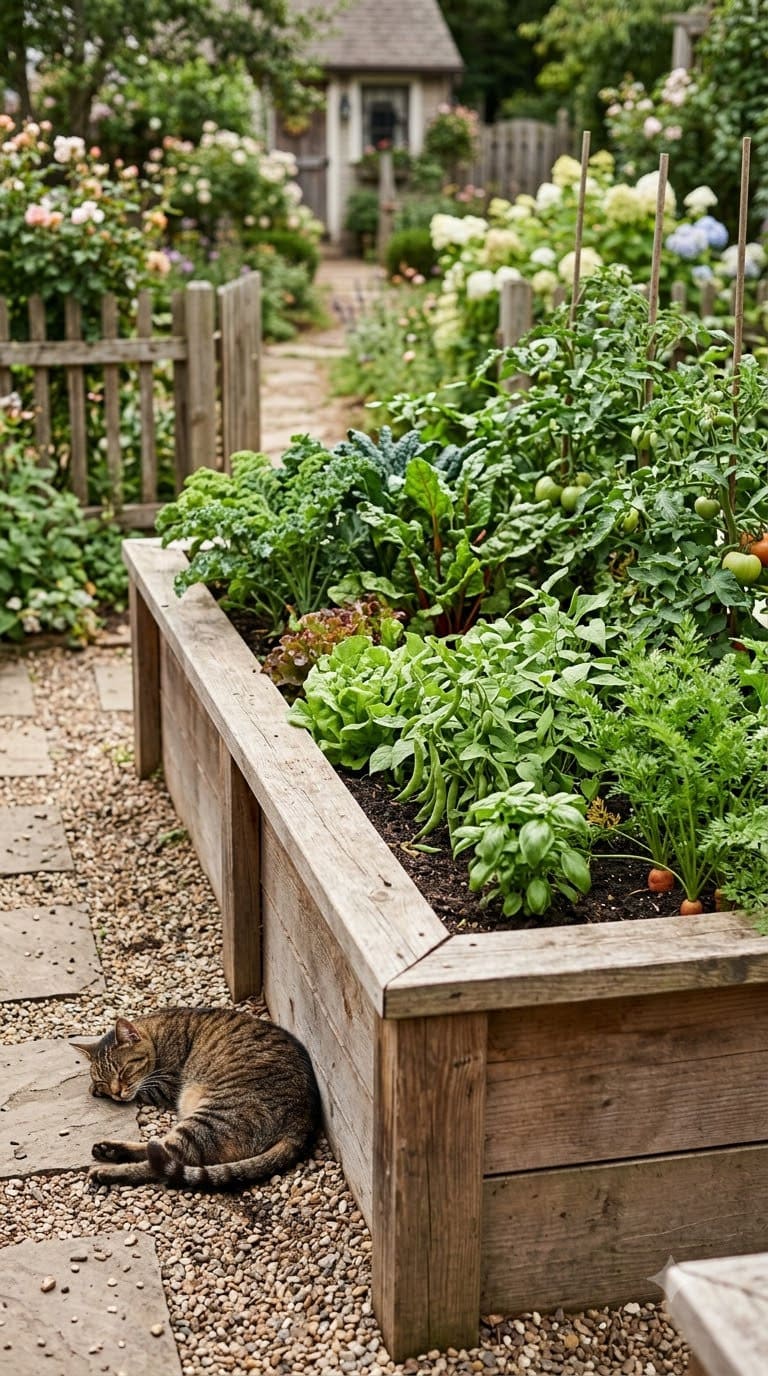
Cats often treat loose garden soil as a litter box substitute, a raised bed with a lip at least 10-12 inches tall (taller than a typical 6-8 inch bed edge) discourages this while keeping vegetables producing normally. Budget tier: moderate.
Which Climbing and Enrichment Features Do Cats Actually Use?
11. An outdoor cat tree or perch
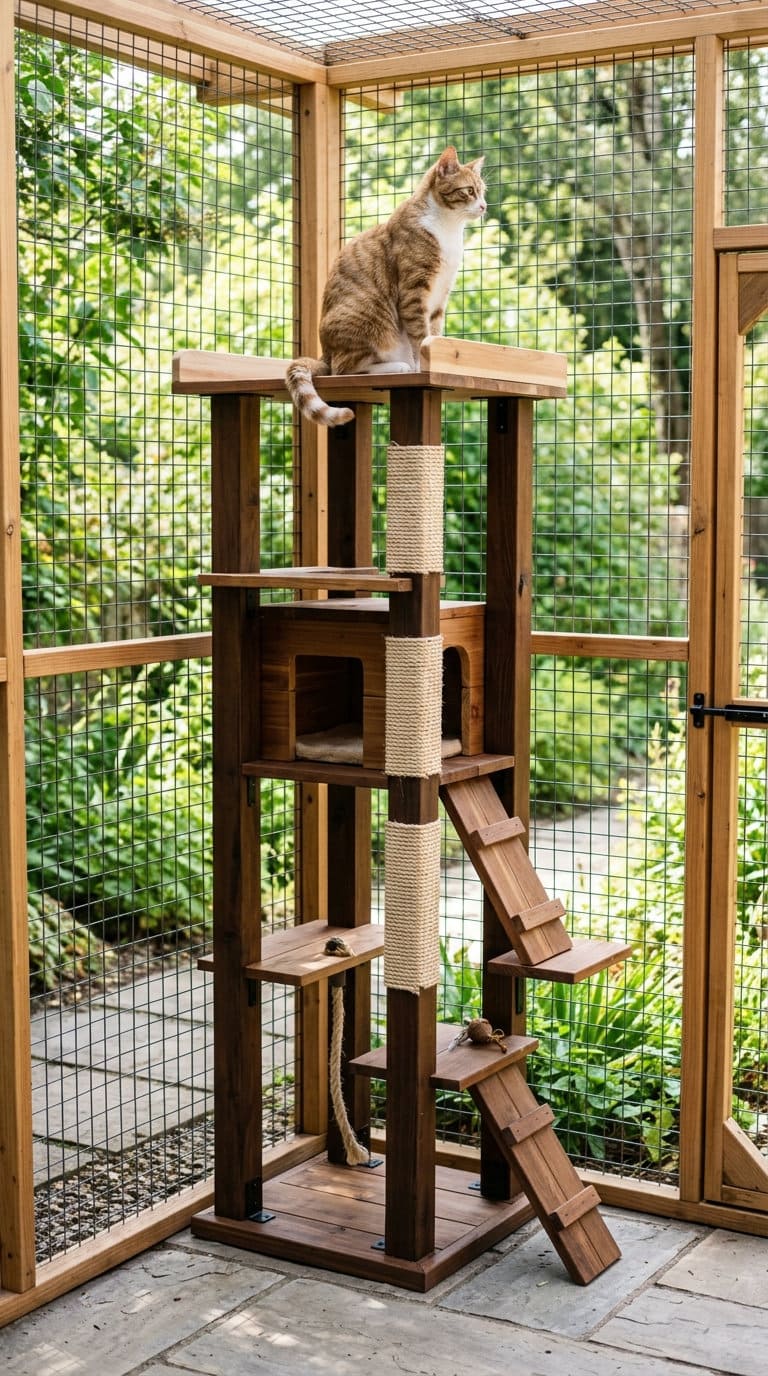
A weatherproof cat tree, typically 4-6 feet tall with at least 2-3 platform levels, placed inside a catio or a fully enclosed area gives real vertical territory, cats naturally want height for both play and a sense of security.
Look for marine-grade rope or all-weather carpet on the scratching posts, standard sisal breaks down fast in outdoor humidity. Budget tier: moderate.
12. A tunnel system between structures
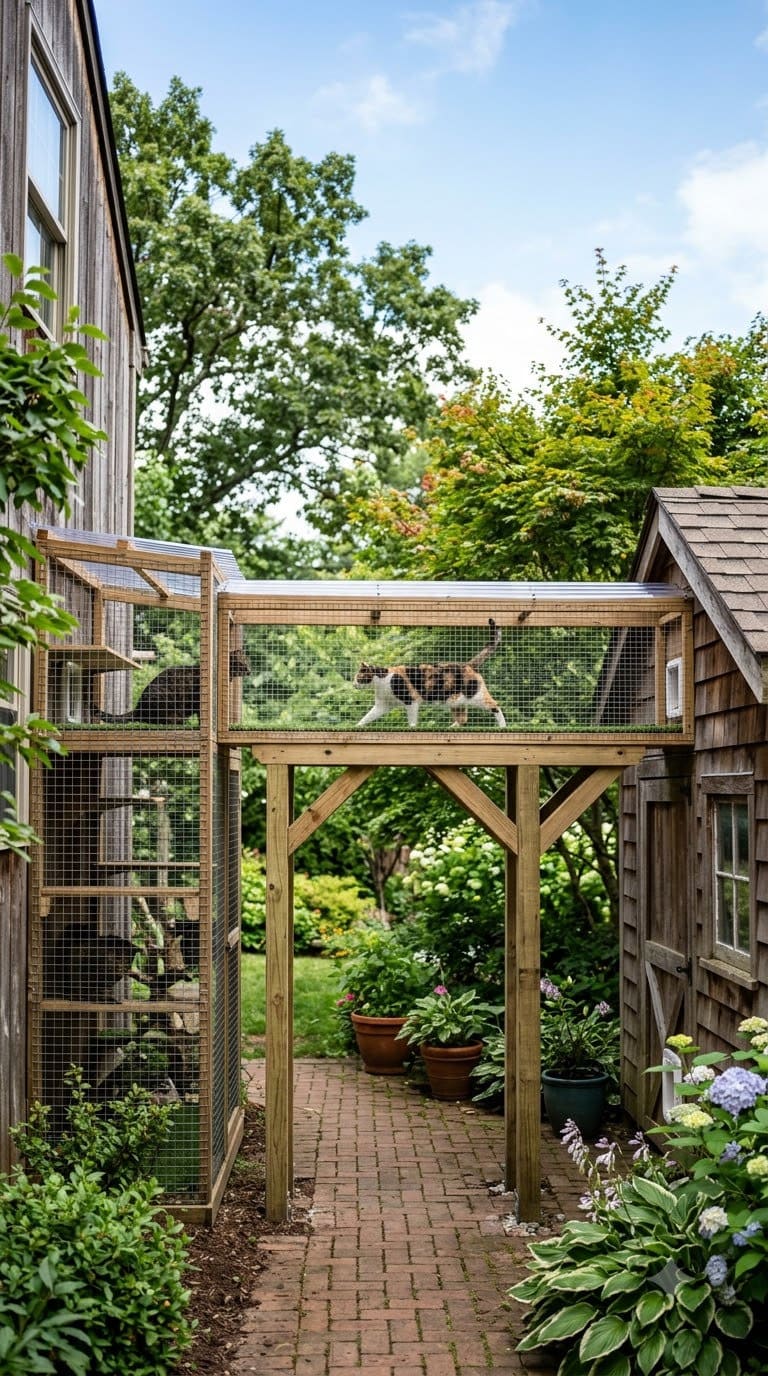
Connecting a catio to a shed, garage, or second enclosure with an elevated tunnel, typically 12-18 inches in diameter, gives a cat more explorable square footage without expanding the footprint of any single structure. Budget tier: bigger investment.
13. A sunning shelf or window ledge extension
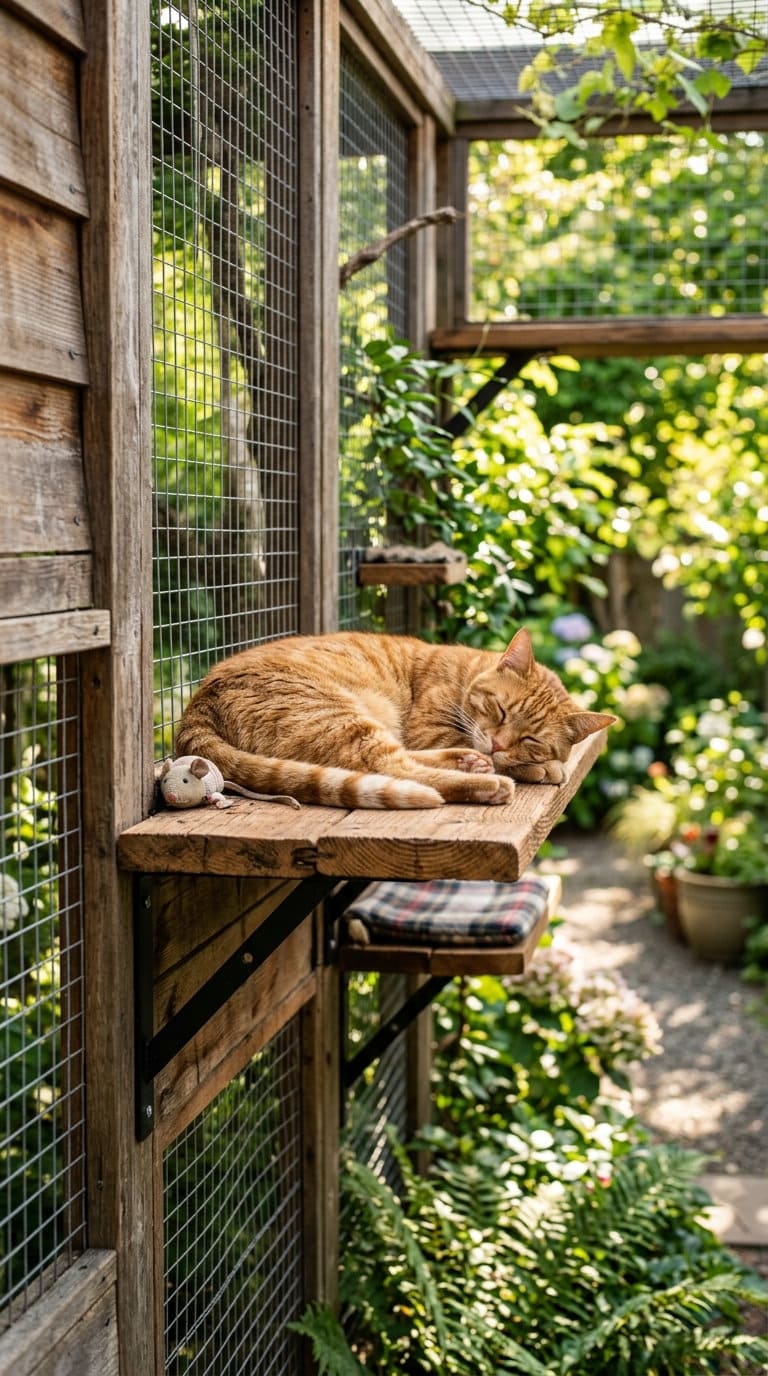
A simple shelf, roughly 12-16 inches deep and rated to hold at least 15-20 pounds, built onto the outside of a catio wall, positioned to catch afternoon sun, becomes one of the most-used spots in any outdoor cat space, cats prioritize warm, elevated resting spots over almost anything else. Budget tier: DIY-cheap.
14. A dedicated scratching post area
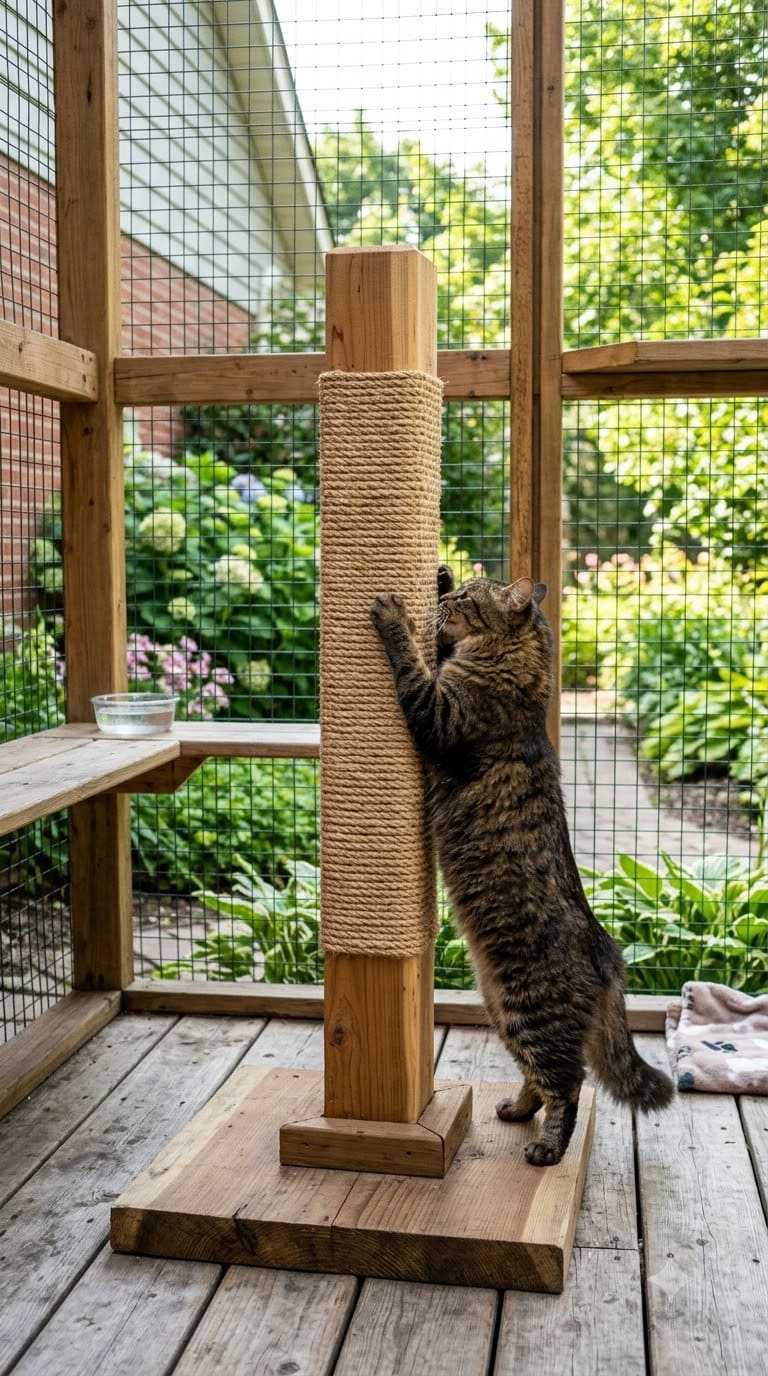
An outdoor-rated scratching post or log section, at least 28-32 inches tall so a cat can fully extend while scratching, inside the enclosure protects any nearby wood structure (including the catio itself) from becoming the default scratching target. Budget tier: DIY-cheap.
15. An elevated catwalk along the fence line
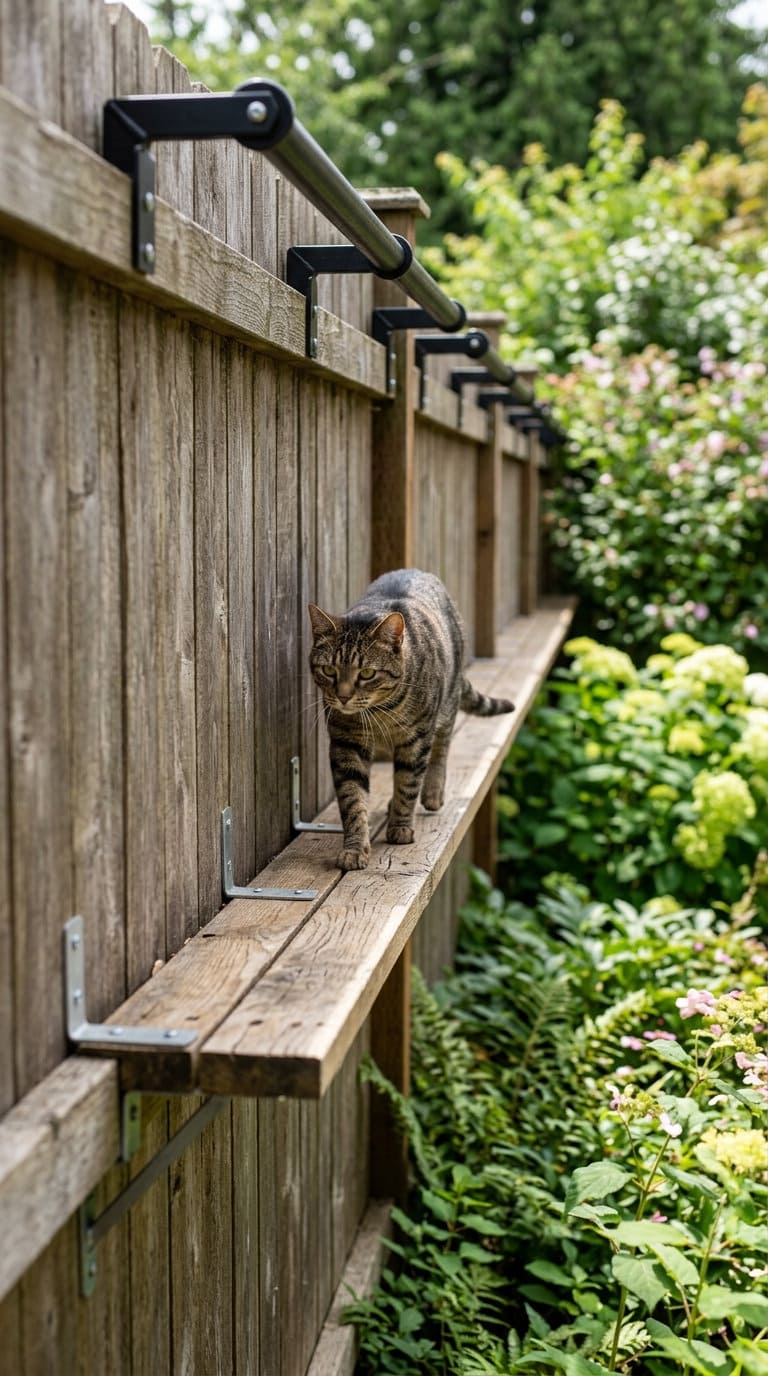
A narrow 6-8 inch wide shelf or plank system running along the inside of a fence, mounted a foot or so below any roller or netting system so it doesn’t interfere with the containment hardware, gives a walking path that keeps a cat’s attention on the yard itself rather than the fence line as an escape route. Budget tier: moderate.
Which Comfort and Shelter Features Round Out the Space?
16. A shaded resting nook
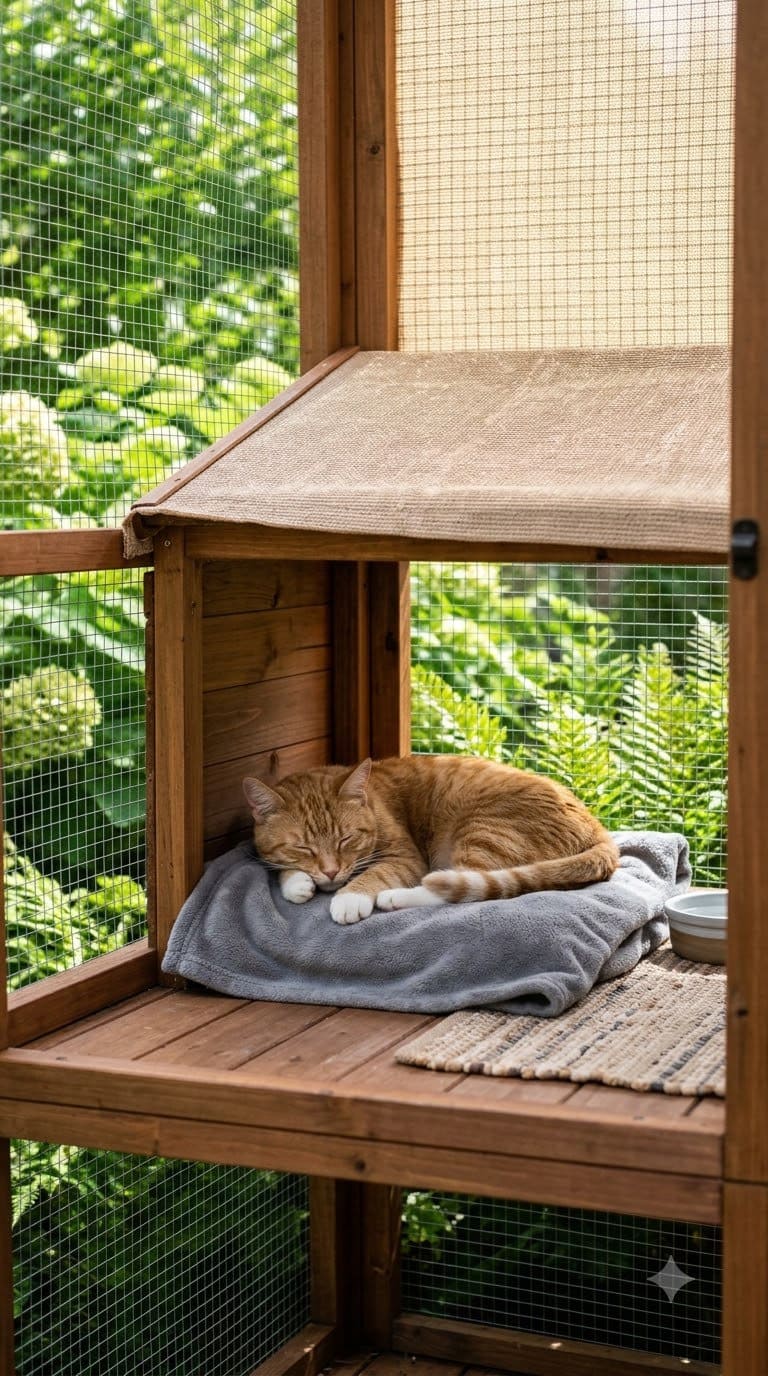
A simple shade cloth (80-90% UV block is typical for pet-safe outdoor shade fabric) or small roofed section within any outdoor cat space matters more than it sounds, cats overheat faster than most people expect and need a genuine retreat from direct sun, especially in a fully enclosed catio with limited airflow. Budget tier: DIY-cheap.
17. A shallow, cat-safe water feature
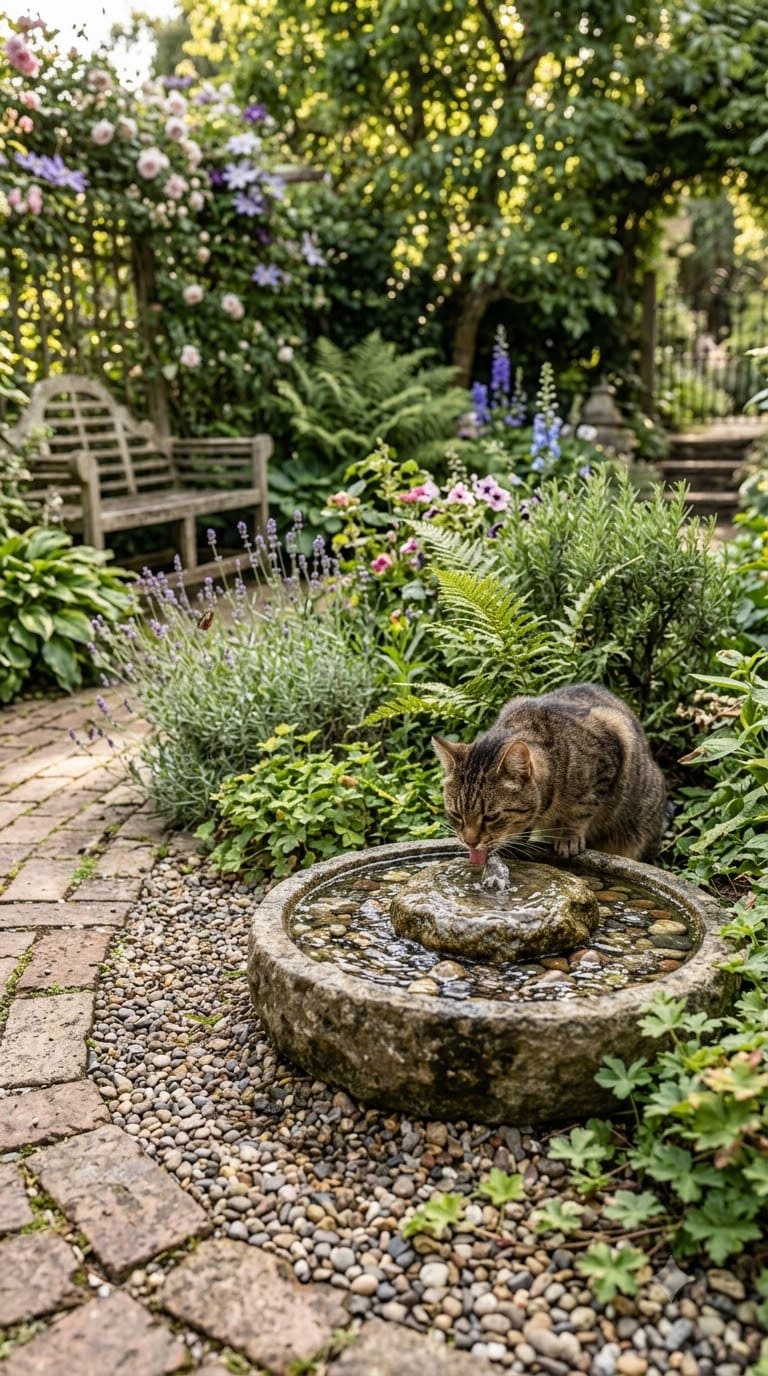
A small, shallow fountain or dish-style water feature, kept to no more than 1-2 inches of standing water depth, encourages hydration (many cats prefer moving water to a still bowl) without the drowning risk of anything deeper. Budget tier: moderate.
18. An outdoor litter box station
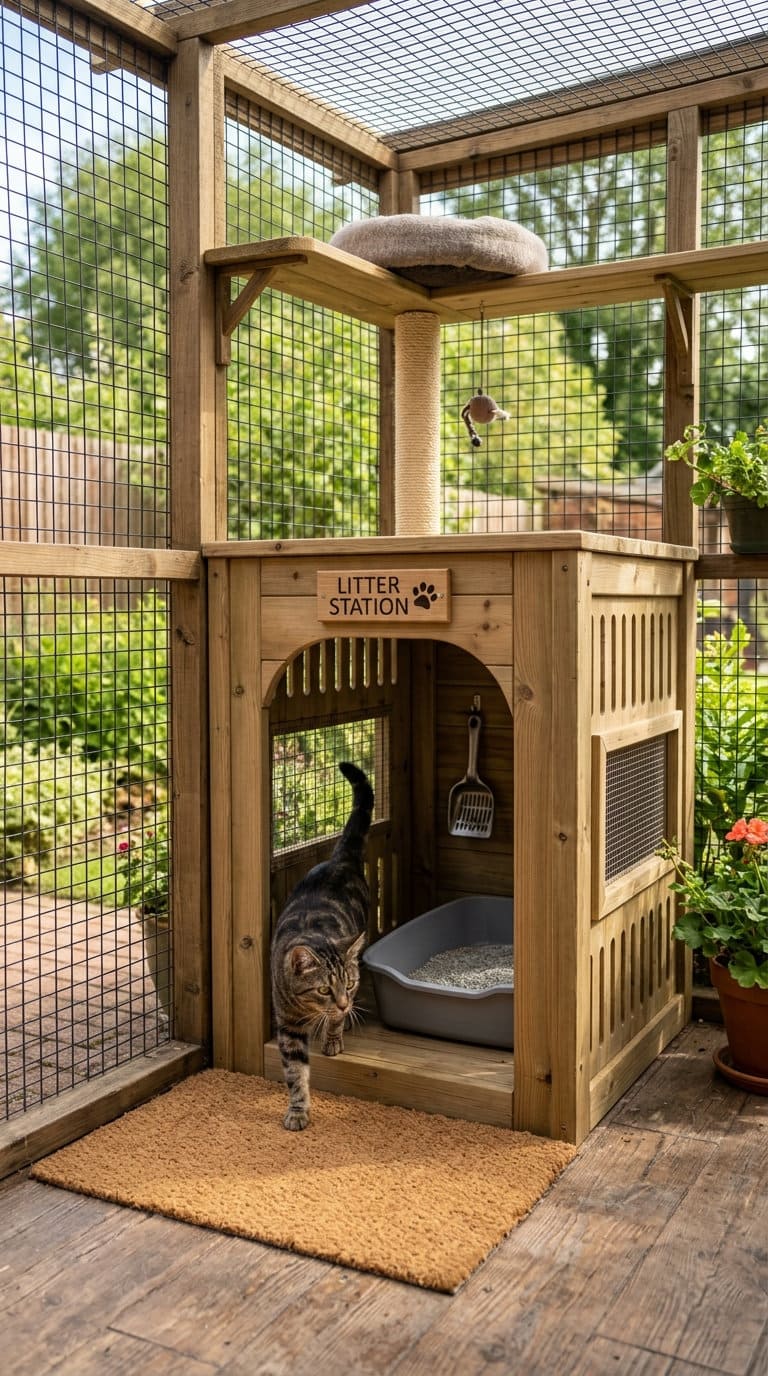
A covered, ventilated litter station, sized at least 24×18 inches for a standard-size cat to turn around comfortably, placed within a catio keeps a cat from needing to go back inside constantly, and keeps litter smell and mess contained to one corner of the enclosure. Budget tier: DIY-cheap to moderate.
19. A weatherproof outdoor cat shelter
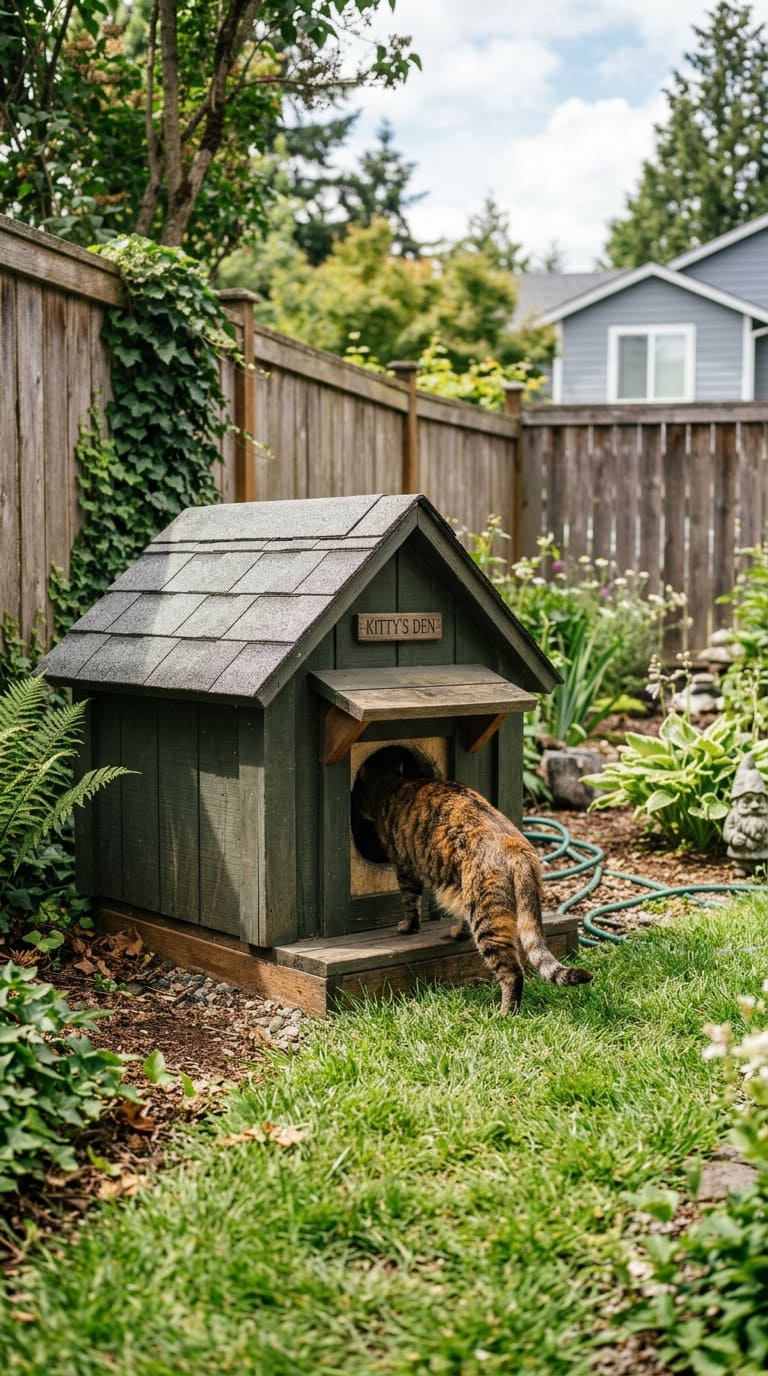
Even with full yard access via a roller-fenced system, a small insulated shelter, big enough for a cat to fully turn around in but not so large it can’t hold body heat (a common sizing rule is roughly 2×1.5 feet of floor space), gives a cat somewhere to retreat from sudden weather without heading all the way back inside. Budget tier: moderate.
20. A sensory garden path with varied textures
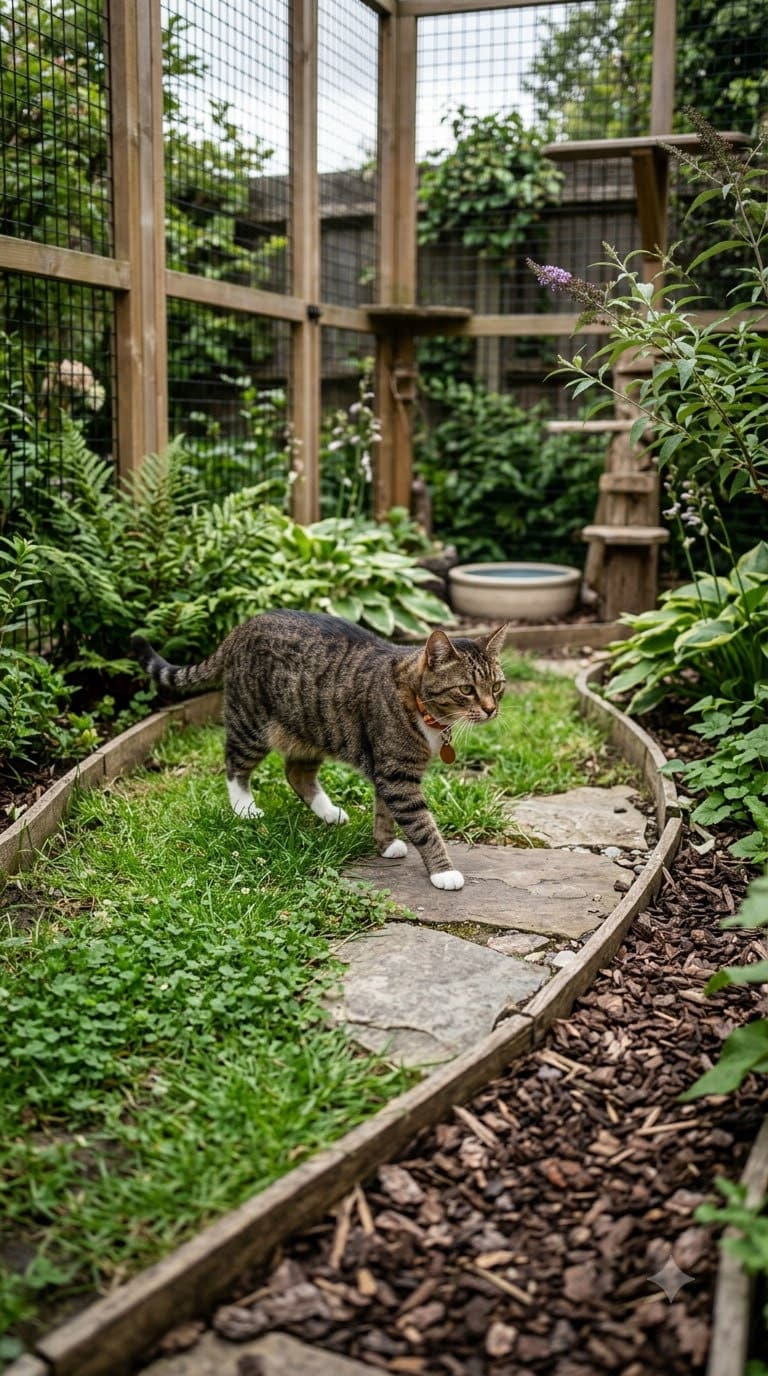
A short path, even just 6-8 feet long, mixing grass, smooth stone, and mulch inside a contained cat space adds genuine sensory enrichment, cats notice and engage with texture changes underfoot more than most owners expect. Budget tier: DIY-cheap.
What We Learned the Hard Way
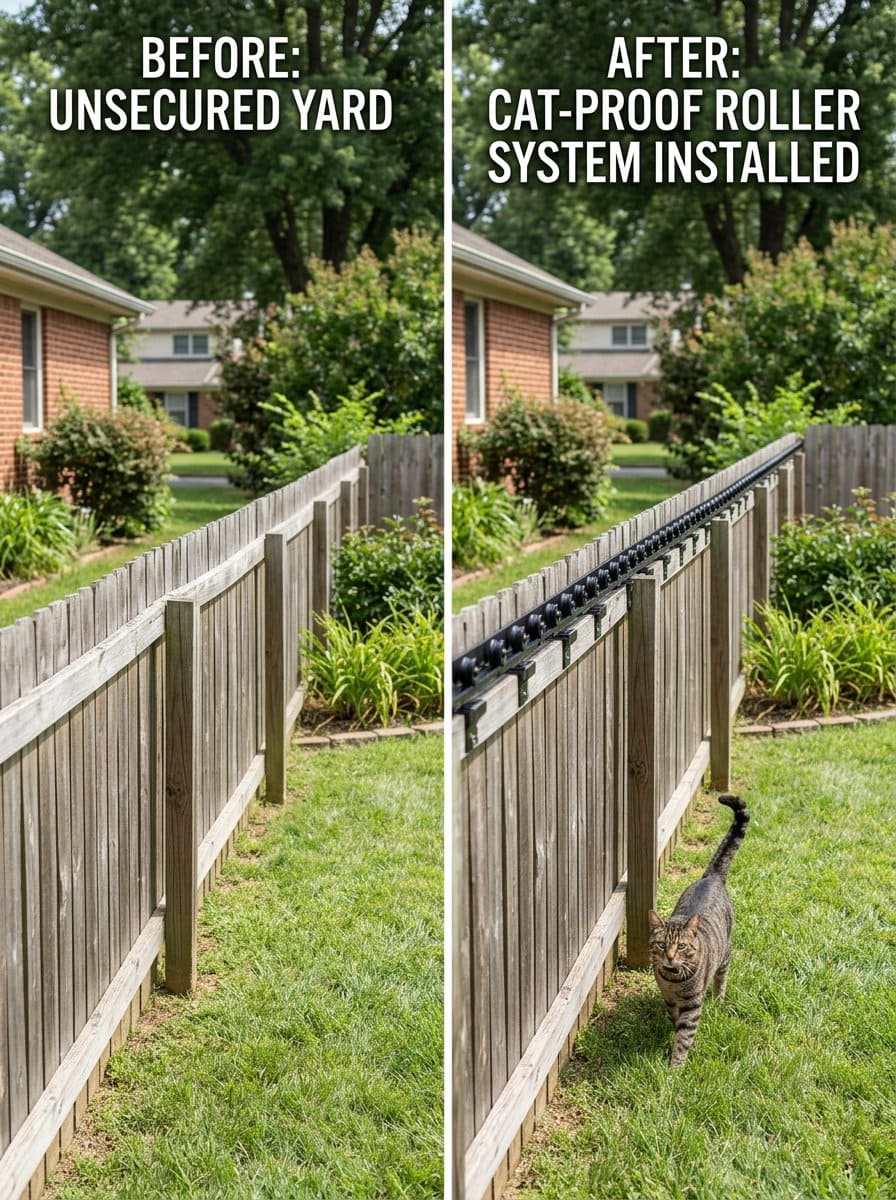
The most common failure isn’t a bad containment product, it’s forgetting what’s near the fence. A roller system or netting installed exactly to spec still fails if a tree branch, a stack of planters, or even a parked trash can gives a cat a boost within reach of the top of the fence.
If there’s one thing worth double-checking before calling a project done, it’s walking the entire fence line and clearing anything a cat could climb, not just trusting the containment product itself.
The second mistake is planting first and checking toxicity later. We’ve seen backyards redesigned around a beautiful lily border only to have it flagged as a serious risk after the fact, lilies are dangerous enough that even grooming pollen off fur can cause kidney failure in cats, not just direct ingestion.
Check the ASPCA’s plant list before finalizing any planting plan, not after the border is already in the ground.
And the one that surprises people most: not every cat actually wants this. An anxious or easily startled cat may find even a well-built catio stressful rather than enriching, while a bold, curious cat (the kind that gets into bags and purses) usually takes to one immediately. Watch your specific cat’s temperament rather than assuming every cat benefits equally from the same setup.
FAQs
Is a catio actually necessary, or can a cat just be supervised outside? Supervised time works for some cats, but it depends entirely on consistent supervision. A catio or properly cat-proofed fence gives real unsupervised access without the predator, traffic, and toxic-plant risks of a fully open yard.
What’s the single most dangerous plant for a cat-friendly yard? Lilies, per the ASPCA. Both true lilies and daylilies can cause kidney failure in cats from ingestion or even from grooming pollen off their fur, keep them out of any yard a cat can access.
How tall does a fence need to be for a cat-proof roller system to work? At least 6 feet, per manufacturer specs like Oscillot’s. Shorter fences aren’t recommended for roller installation regardless of the roller brand.
Do cat-proof fence systems also protect against predators? Not on their own. A roller or netting system stops a cat from climbing out, but predators like hawks or coyotes can still be a risk from outside the fence line depending on your area, a fully enclosed catio offers more complete protection from both directions.
What’s the cheapest way to start making a backyard cat-friendly? Clearing escape aids away from an existing fence line and swapping to cat-safe mulch and plants cost close to nothing, both worth doing before any bigger structural project.
There’s a companion look at the same pet-friendly-yard problem from the dog side elsewhere on the site, and additional planting guidance that applies across pets, not just cats is covered separately. If containment fencing beyond the roller-and-netting options above is the goal, styles that adapt well to a mixed-pet household are worth a look too.
Related Posts
Products We Recommend
This post contains affiliate links. We may earn a commission on qualifying purchases at no extra cost to you.
Oscillot Ball Cat-Proof Fence Roller (4ft paddle, set of 2)
Direct product match for idea 3, the real containment fix described in Before You Start, live-verified, 5.0 stars / 2 ratings
Shop Now
INTURN Catio Outdoor Cat Enclosure (Compact Kit)
Direct product match for idea 1/2, 4.1 stars / 264 ratings, live-verified and in stock
Shop Now
GIOTOHUN Stainless Steel Cat Water Fountain (74oz)
Direct product match for idea 17, Amazon's Choice, 4.2 stars / 16,085 ratings, live-verified
Shop NowNever miss an update — choose FarmFoodFamily as your preferred source on Google.
How it works: Tap the button below to open Google's settings page, then check the box next to FarmFoodFamily.
Tap the checkbox to turn it blue — that's how you know it's set.