20 Craft Supply Storage Ideas That Actually Keep Paint and Small Parts Safe
Twenty real ways to organize craft supplies, plus the flammable-storage rules and choking-hazard specs most craft room galleries never mention.

Never miss an update — choose FarmFoodFamily as your preferred source on Google.
How it works: Tap the button below to open Google’s settings page, then check the box next to FarmFoodFamily.
Tap the checkbox to turn it blue — that’s how you know it’s set.
A craft supply collection grows the way most hobbies do: a few paints and a glue gun turn into a closet of vinyl rolls, embellishments, half-used adhesives, and fabric scraps nobody quite has a system for.
The good news: a real craft stash can be genuinely organized, but a few of the supplies sitting in that closet, solvent-based paints, spray adhesive, small beads and buttons, need a different kind of storage thinking than the rest.
Are Any of My Craft Supplies Actually a Fire or Safety Risk?
Most craft storage galleries focus entirely on pretty labeled bins and skip the handful of supplies that need real safety handling, not just a cute container.
Quick answer: Most craft supplies just need a good bin and a label, but a few genuinely need safer storage. Per OSHA’s flammable liquids standard (29 CFR 1926.152), solvent-based paints, spray adhesives, and similar craft chemicals belong in a rated flammable-storage cabinet, and any enclosed storage space holding them needs ventilation providing a full air change at least 6 times per hour.
Solvent-soaked rags are a separate, real risk, they can spontaneously combust without any external spark, so they belong in a self-closing metal waste can emptied daily, not tossed in a regular trash bin.
On the choking-hazard side, the CPSC’s small-parts standard defines anything that fits inside a 1.25-inch test cylinder as a choking risk for kids under 3, which covers exactly the beads, buttons, and sequins most craft rooms store at easy reach height.
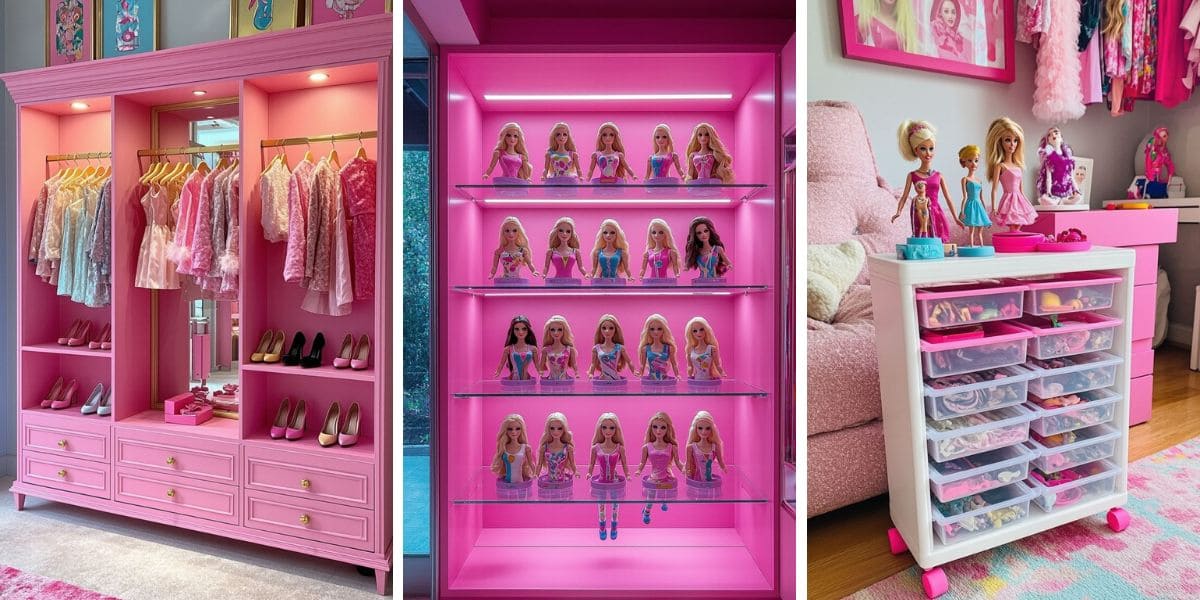

Two more things worth knowing before you organize anything. First, professional organizer Ben Soreff, Partner at House to Home Organizing, recommends zoning supplies by actual frequency of use rather than by category alone: daily tools within arm’s reach of your main work surface, specialty or seasonal items further away, even if they’d otherwise be grouped together by type.
Second, once flammable and choking-hazard items are handled safely, the rest of the organization problem (bins, labels, drawers) is genuinely just a preference, not a safety issue, so don’t over-engineer storage for supplies that were never actually risky in the first place.
Open Shelving, Bins, Rolling Cart, or Built-In: Which Storage Fits a Craft Room Best?
| Approach | Typical Cost | Access Speed | Best For | Safety Note |
|---|---|---|---|---|
| Open shelving or pegboard | DIY-cheap to moderate | Fastest, everything visible | Daily-use tools and frequently grabbed supplies | Keep flammables and small parts off open shelving entirely |
| Clear bins and totes | DIY-cheap | Fast if labeled well | Bulk supplies (paint bottles, fabric scraps, paper) | Fine for most supplies, not a substitute for a rated flammable cabinet |
| Rolling cart with drawers | Moderate | Fast, fully mobile | Small workspaces, shared or multi-room crafting | Good for small-parts drawers if placed out of a toddler’s reach |
| Built-in cabinet with doors | Bigger investment | Moderate, doors add a step | Dust protection, hiding a large collection, kid-safe closure | Best option for both flammables (with a rated insert) and choking-hazard items |
Which Vertical and Wall Storage Ideas Work Best?
1. A pegboard tool wall
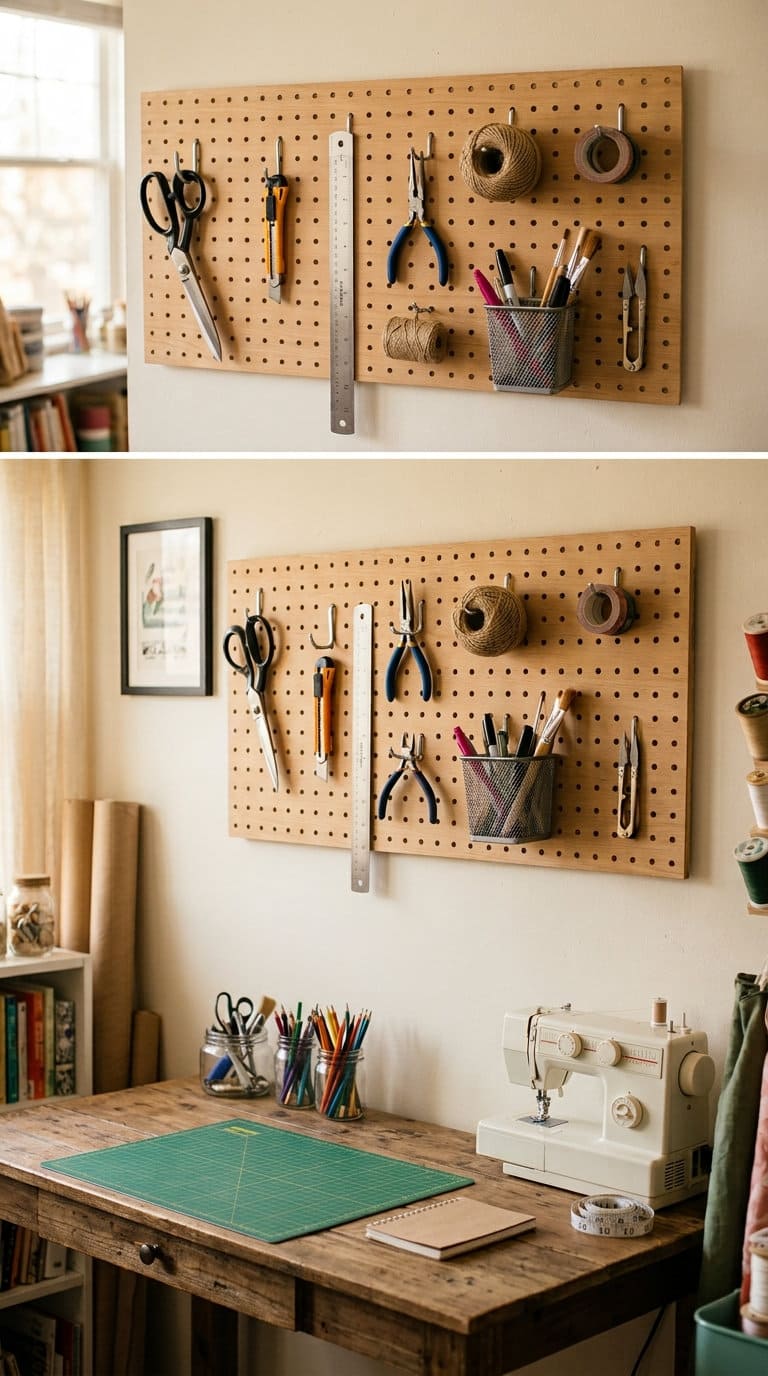
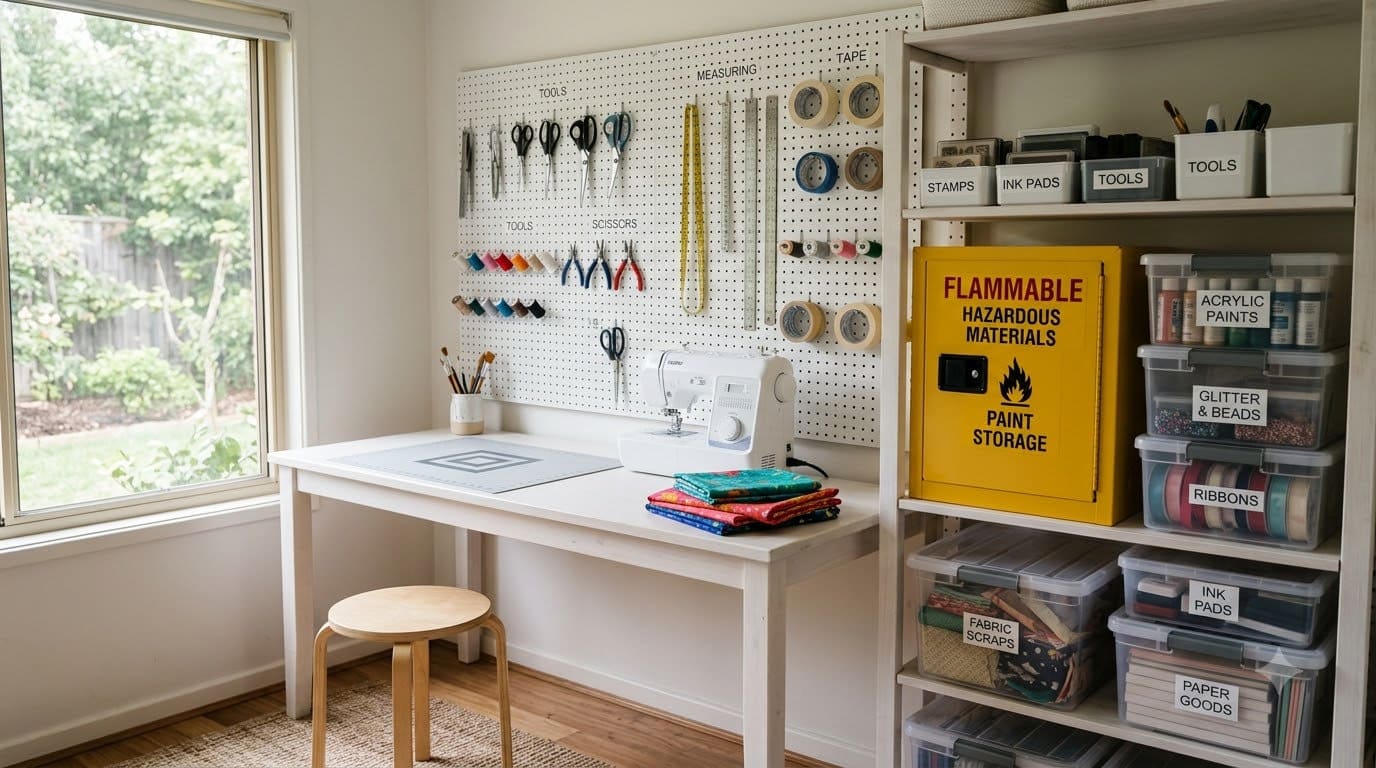
A standard 4×2 foot pegboard panel, hung with a half-inch standoff for hook clearance, holds scissors, cutting tools, and frequently used supplies in full view within arm’s reach of a work desk, directly applying Ben Soreff’s frequency-of-use principle.
Budget tier: DIY-cheap. Diving deeper into pegboard layouts covers hook spacing and panel-mounting options in more depth.
2. Wall-mounted cube shelving
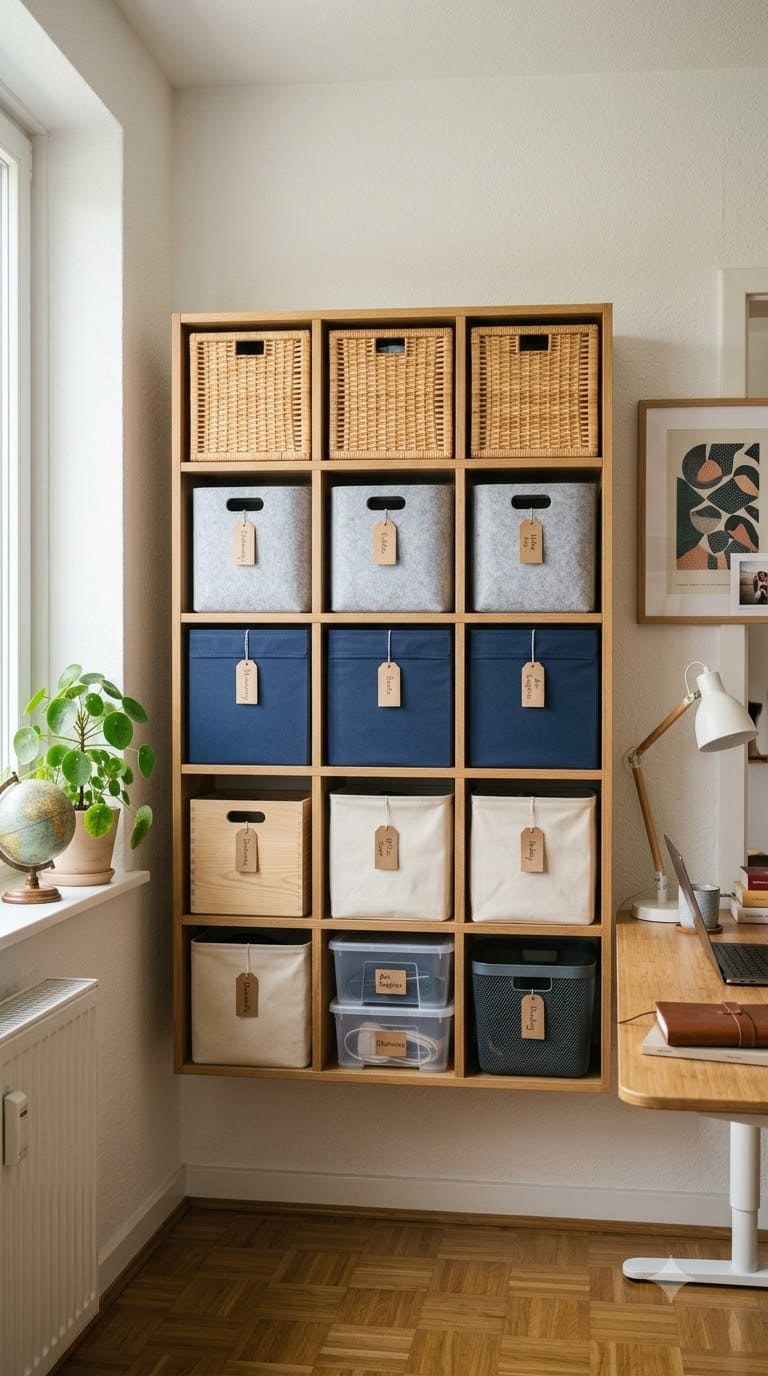
Modular cube units, typically 12-13 inch cubes, stacked and mounted to the wall keep bulk bins organized without eating floor space, and each cube’s opening is sized to fit most standard shoebox-style bins without gaps.
Budget tier: moderate.
3. A hanging drawer unit
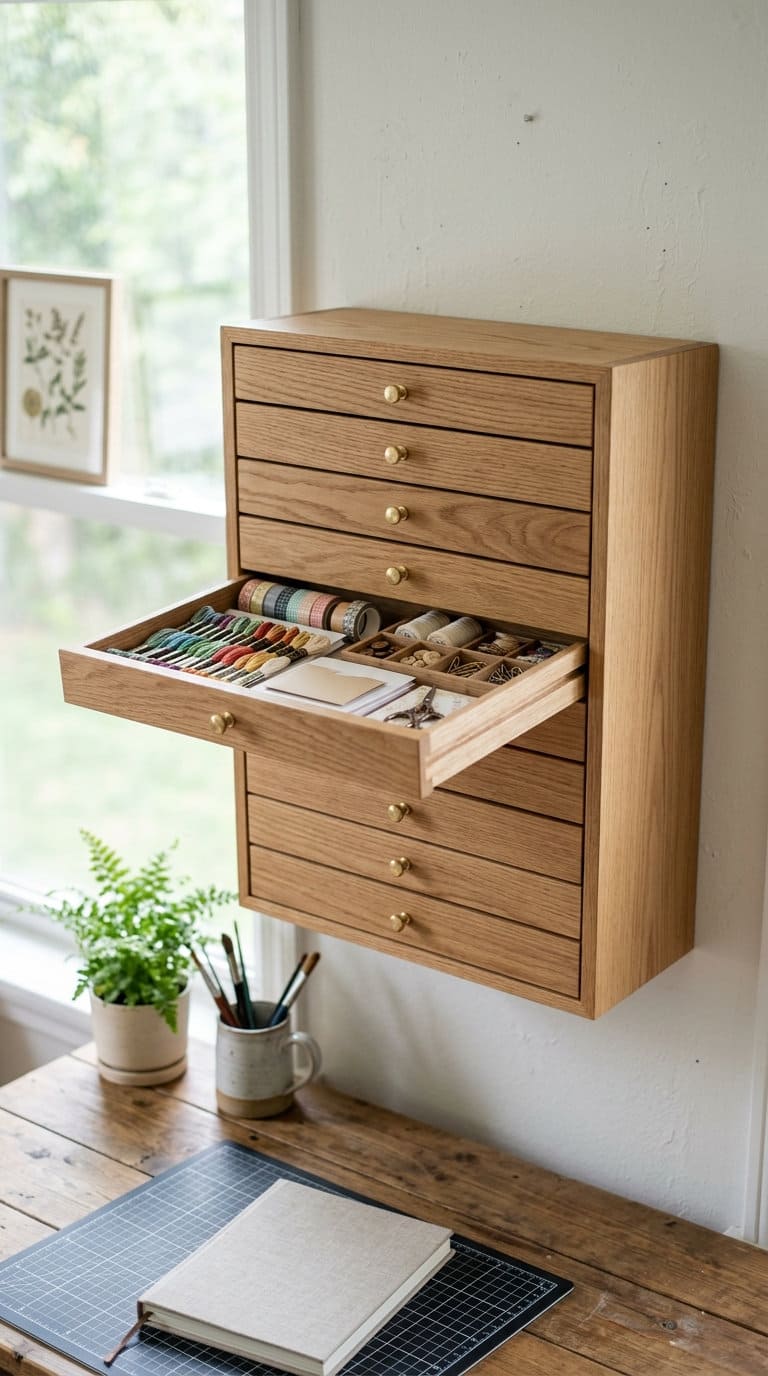
A wall-mounted unit with 3-6 shallow drawers (2-3 inches deep works for flat items like stickers, washi tape, or ribbon) keeps small flat supplies dust-free and out of a toddler’s reach if mounted above 48 inches.

Direct product match for idea 15, the real OSHA-aligned fix described in Before You Start, Amazon's Choice, 4.0 stars / 27 ratings, live-verified
Shop NowThis post contains affiliate links. We may earn a commission on qualifying purchases at no extra cost to you.
Budget tier: moderate.
4. A floating shelf row for labeled jars
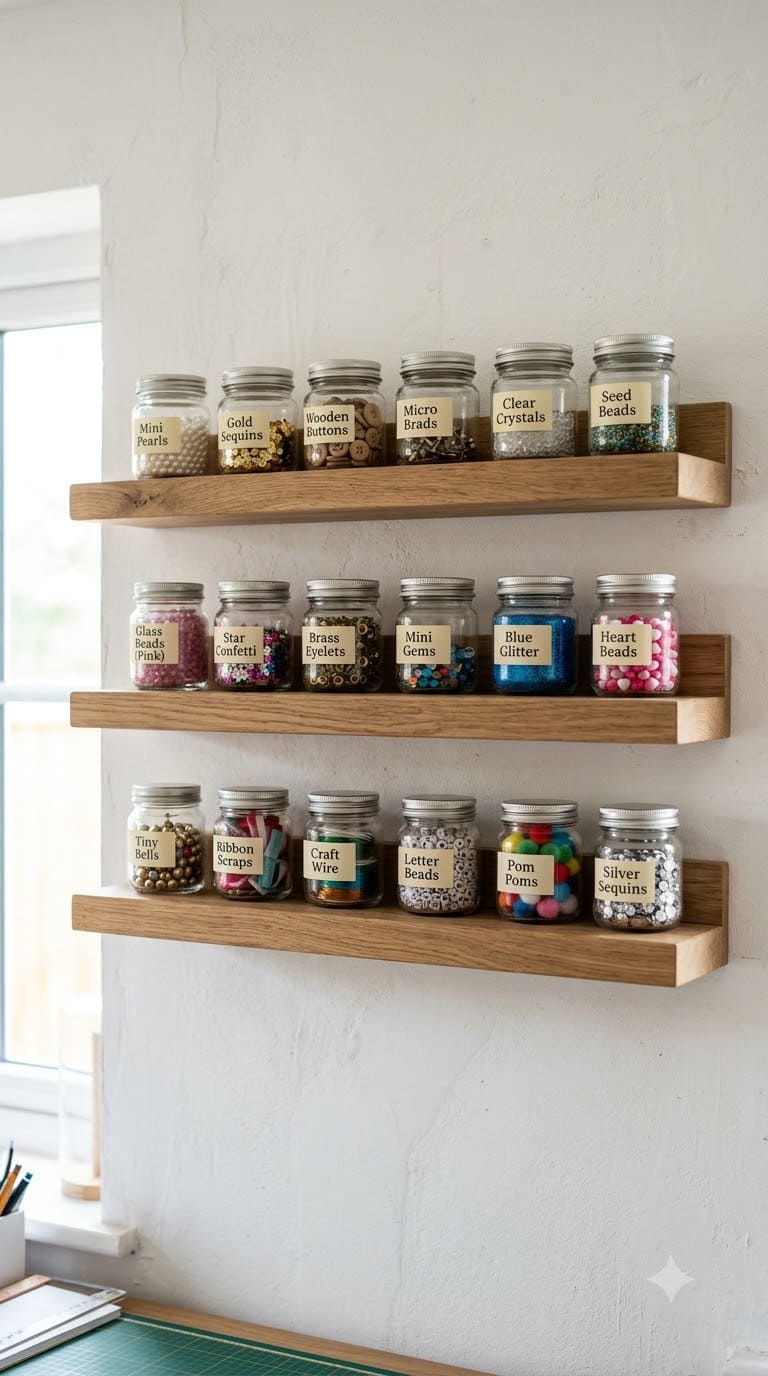
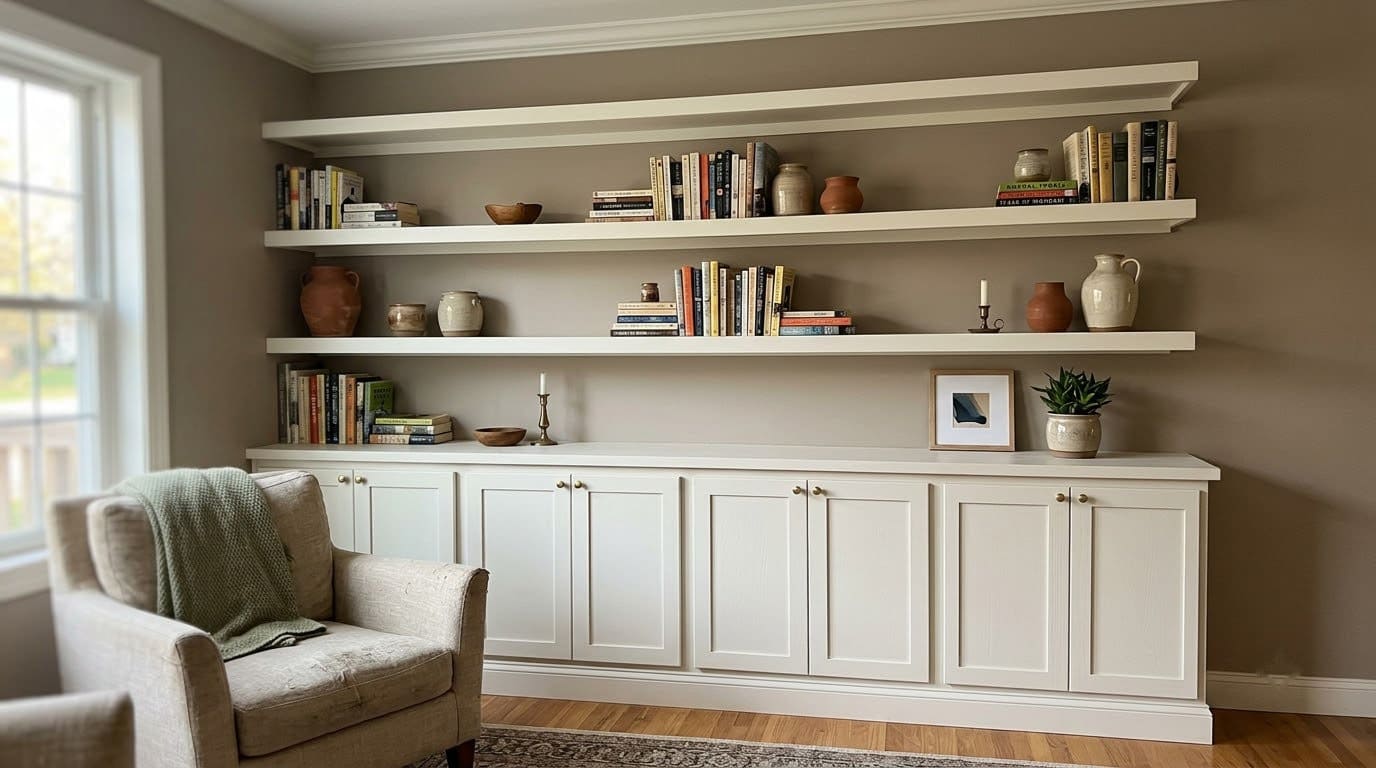
A row of floating shelves, each rated for at least 15-20 lbs to hold a run of filled glass or plastic jars, displays small embellishments in clear, labeled containers, useful for supplies you want visible but not open to small hands, keep this option at 54 inches or higher if choking-hazard items like beads are involved.
Budget tier: DIY-cheap to moderate.
5. Over-the-door hook storage
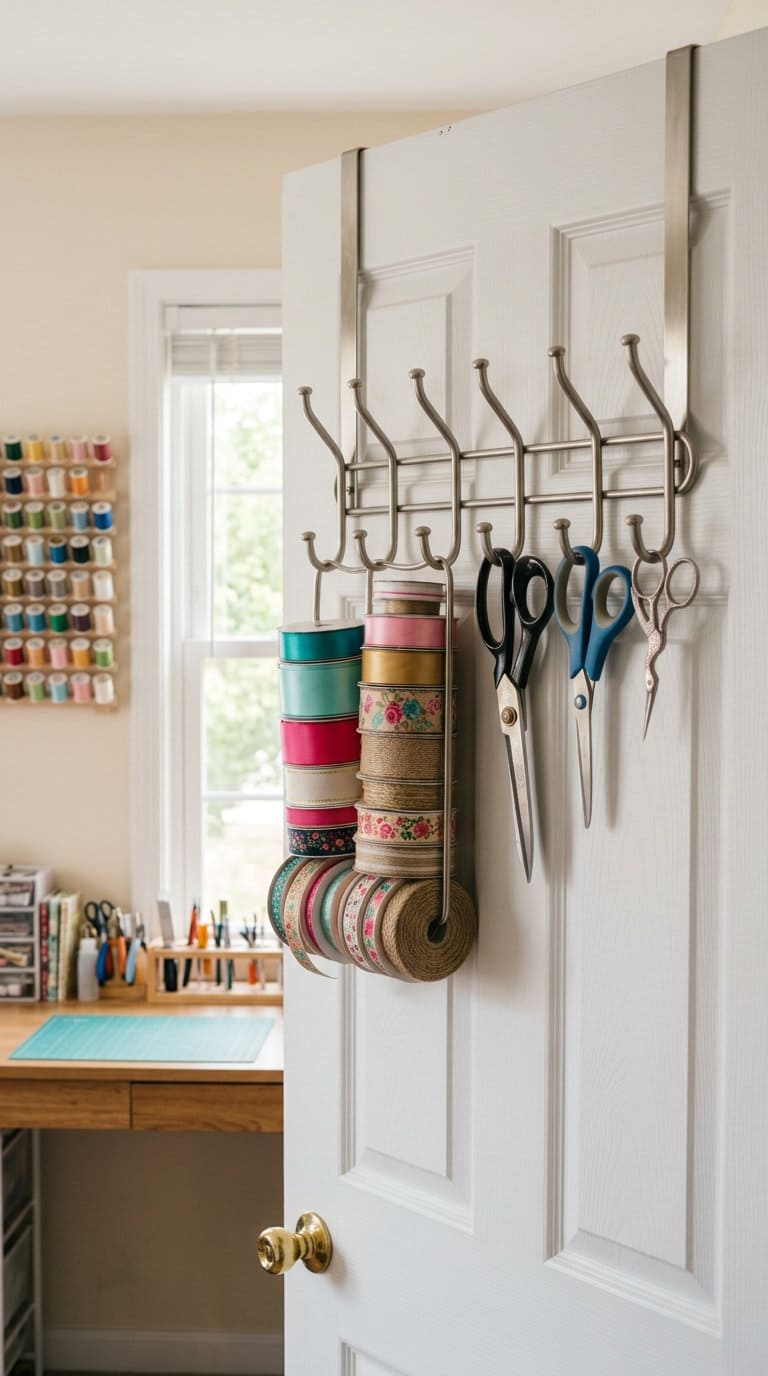
A set of over-the-door hooks or a hanging organizer uses a door’s entire surface, typically holding rolls of ribbon, scissors, or small tool caddies, in a closet that otherwise wastes that space entirely.
Budget tier: DIY-cheap.
Which Container Systems Work Best by Material Type?
6. Clear stackable bins for bulk supplies
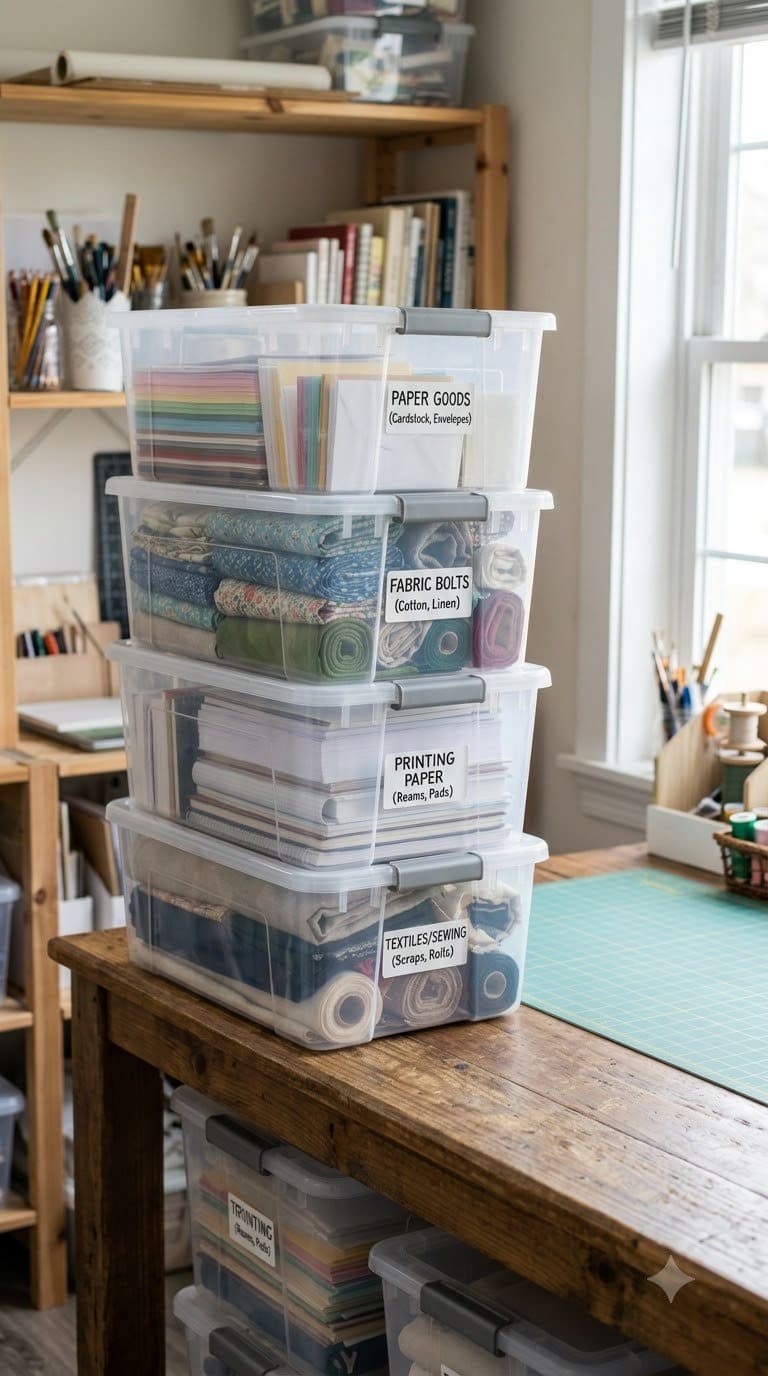
Clear bins, roughly shoebox-sized (about 6x12x4 inches) for small supplies or larger 15-20 quart bins for bulk paper and fabric, let you see contents without opening every container, label the short end (visible from the shelf front) so you’re not pulling bins to find one item.
Budget tier: DIY-cheap.
7. A rolling cart with labeled drawers
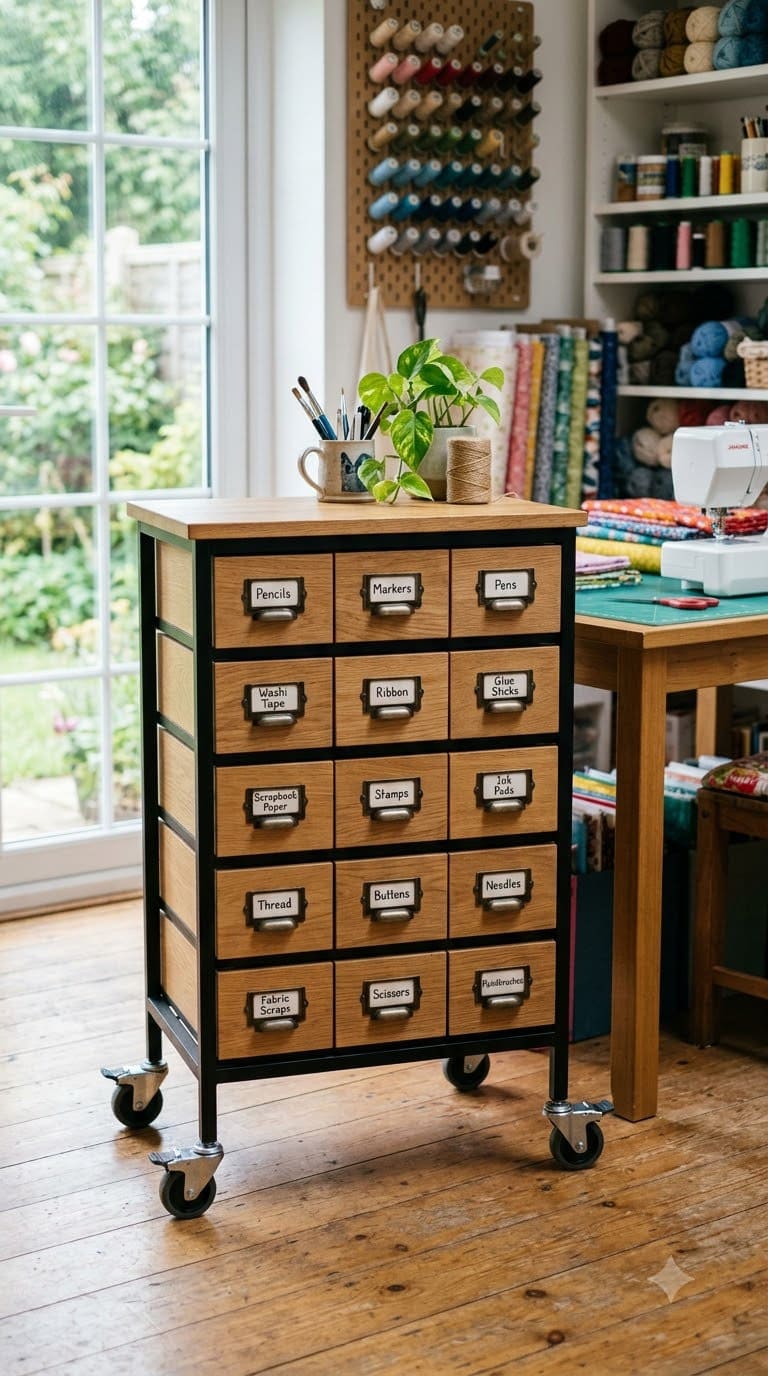
A cart with 3-5 tiers of shallow drawers, each labeled by category, gives a mobile system that can move between a craft room and a kitchen table, useful for smaller spaces without a dedicated room.
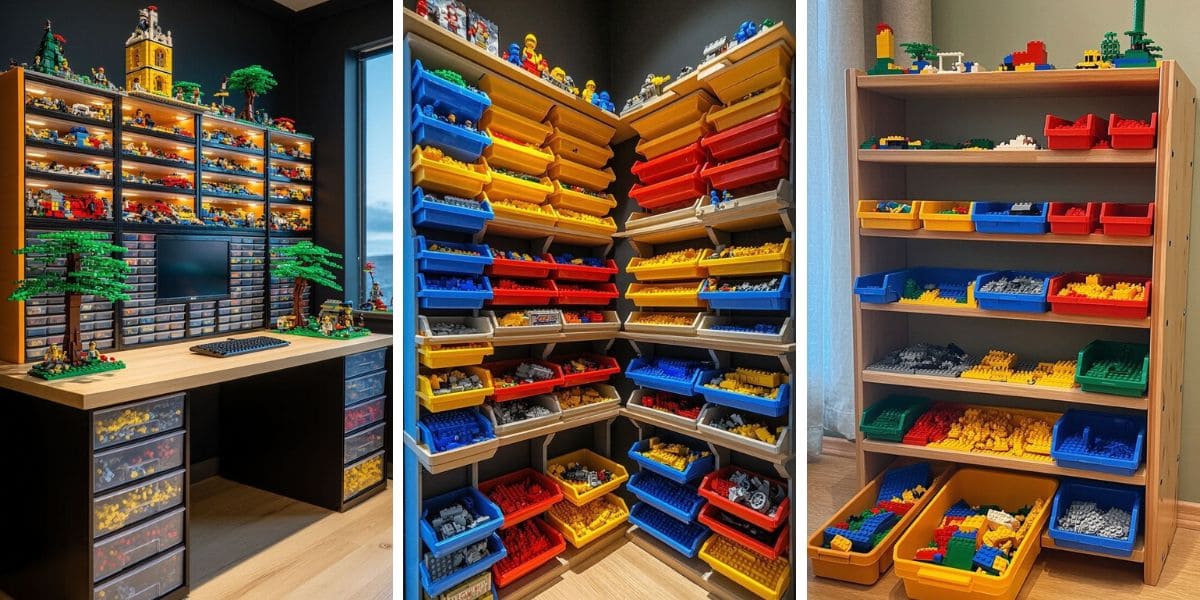
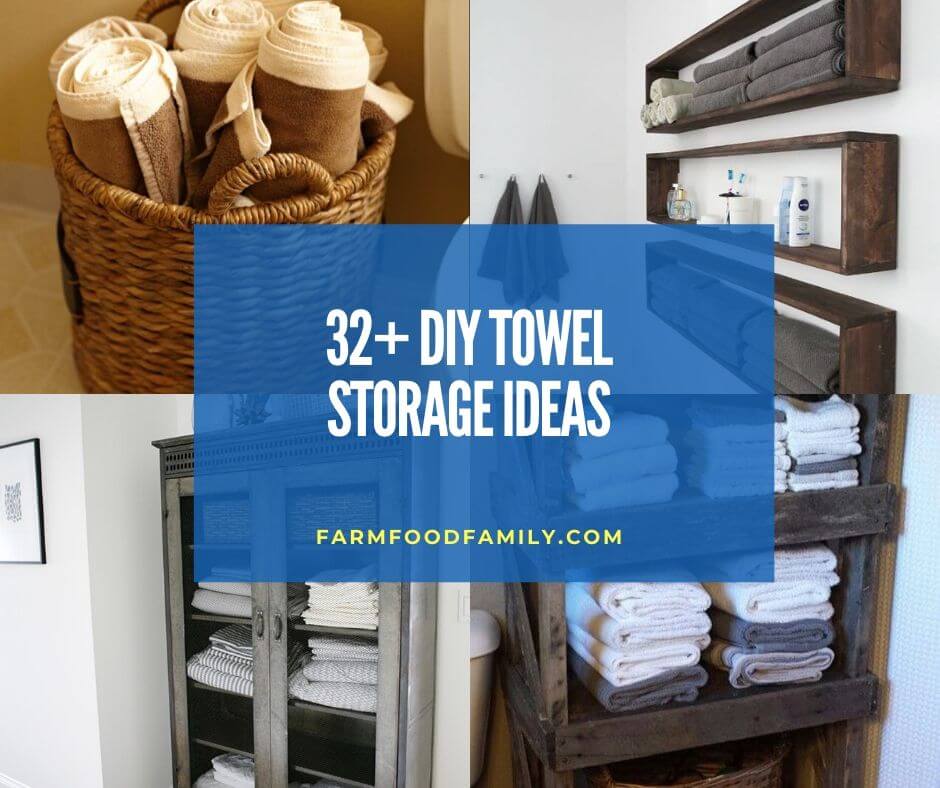
Keep any drawer holding small parts positioned above 48 inches or in a drawer with a child-safety latch if young kids are in the house.
Budget tier: moderate.
8. Glass apothecary jars for small embellishments
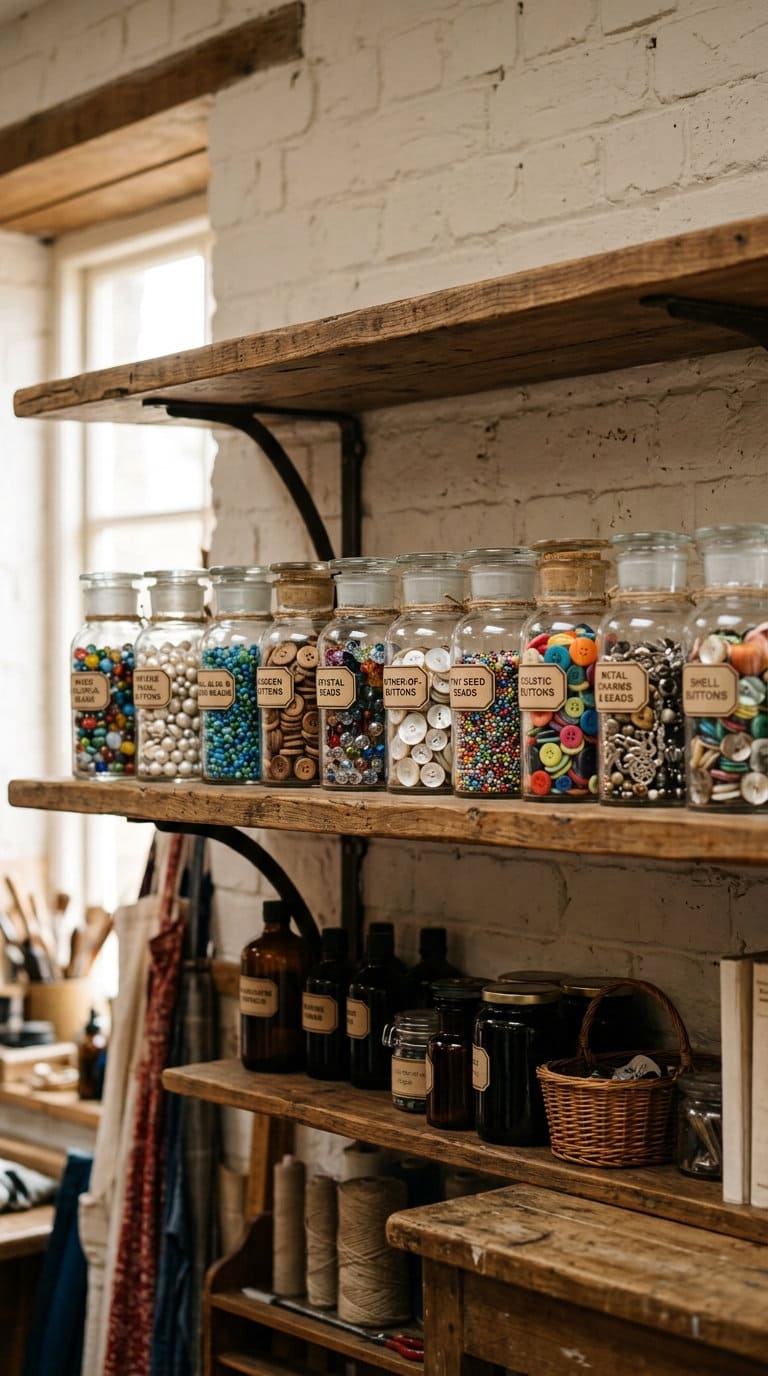
Uniform glass jars, typically 4-6 inches tall, display buttons, beads, and sequins attractively while keeping them visible for quick identification, position these on a shelf at least 54 inches up given the real choking-hazard classification these items carry under CPSC’s small-parts standard.
Budget tier: moderate.
9. A tiered lazy Susan for tabletop items
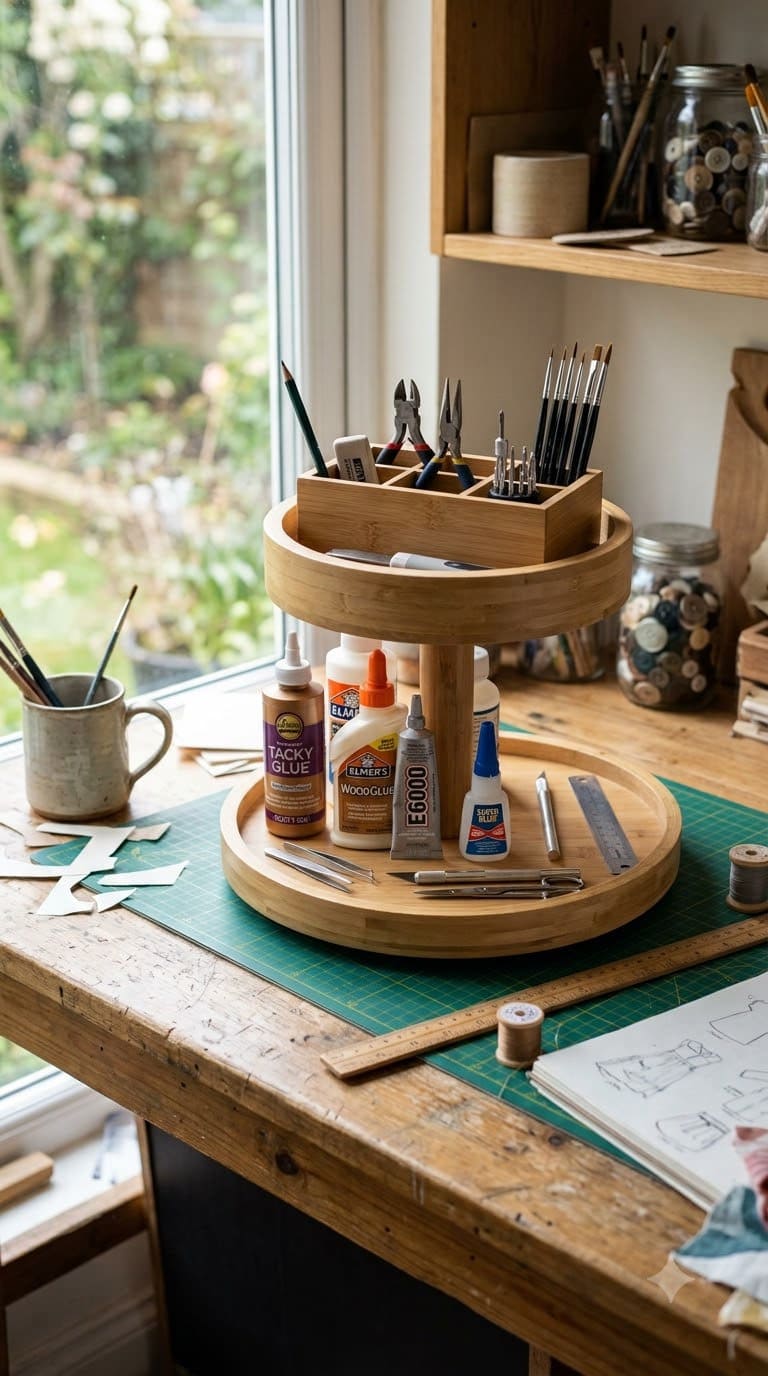
A rotating two- or three-tier lazy Susan, sized to fit within arm’s reach of a work desk (typically 10-14 inches in diameter per tier), keeps frequently used glues, tapes, and small tools accessible without digging, directly matching Ben Soreff’s daily-use-within-reach principle.
Budget tier: DIY-cheap.
10. Magazine holders for paper and vinyl sheets
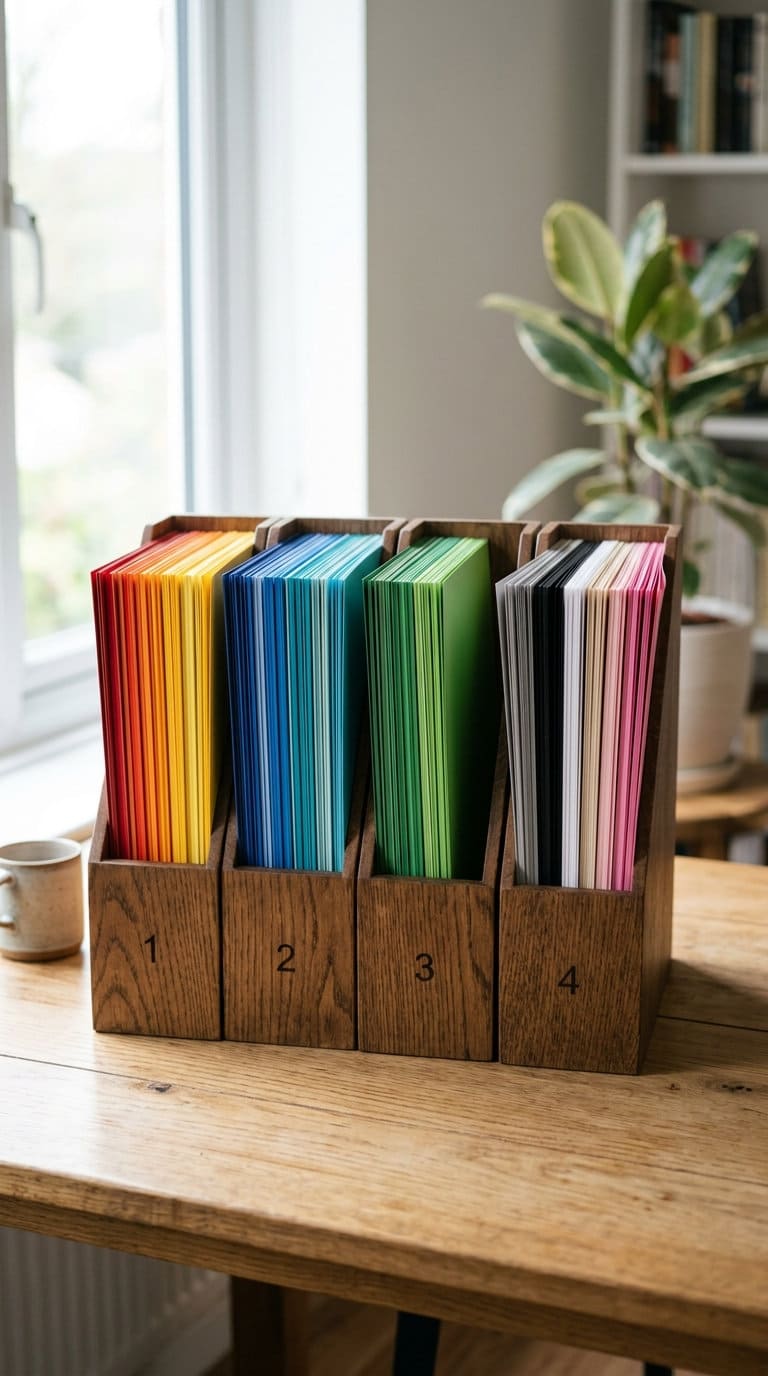
Standard magazine holders (roughly 4x9x11 inches) stand flat paper, cardstock, or vinyl sheets upright by size or color, preventing the curling and creasing that happens when sheets are stacked flat in a drawer.
Budget tier: DIY-cheap.
Which Specialty Storage Ideas Fit Odd-Shaped Materials?
11. A rolled vinyl and paper storage tube rack
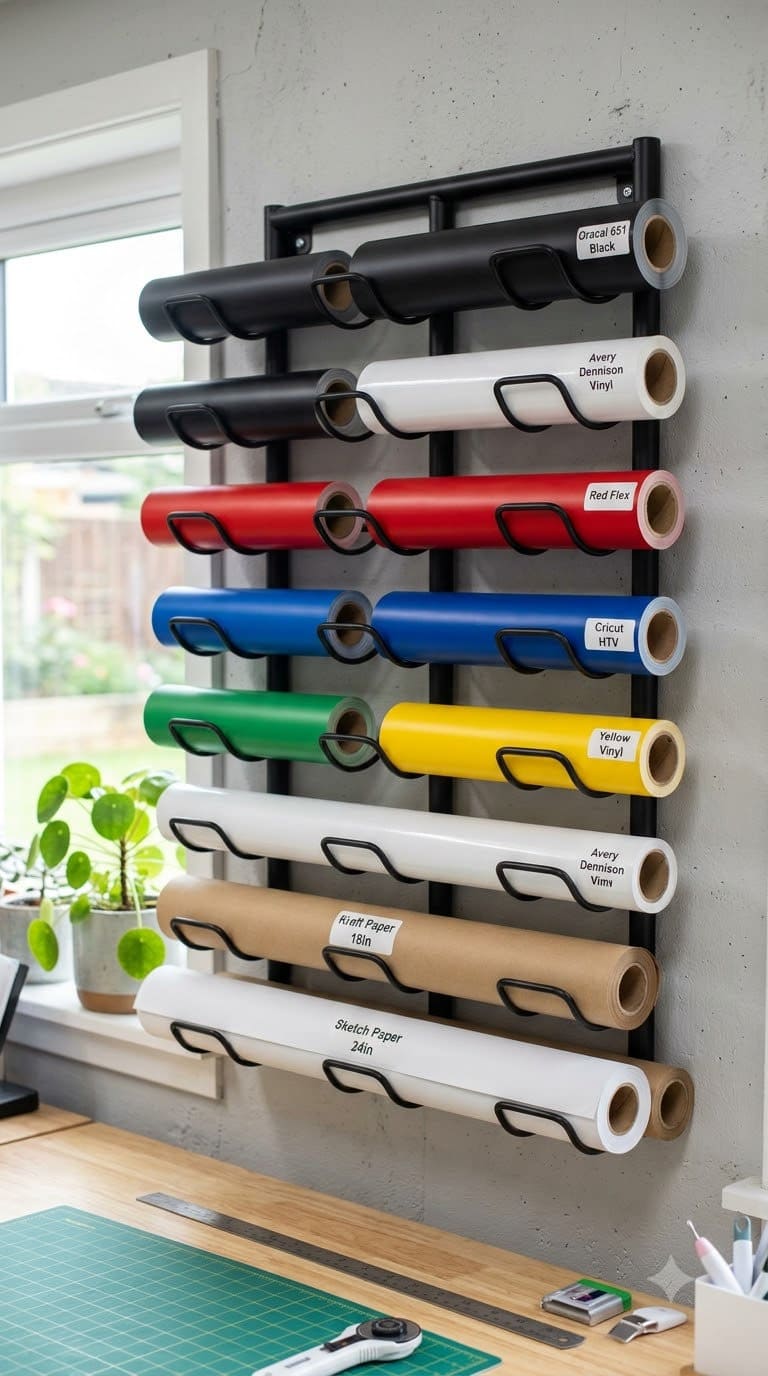
A wall-mounted rack of open-ended tubes, each 3-4 inches in diameter and long enough to fit a rolled 12×12 or larger sheet, keeps rolled vinyl and specialty paper from creasing the way flat storage does.
Budget tier: moderate.
12. A ribbon and washi tape dowel organizer
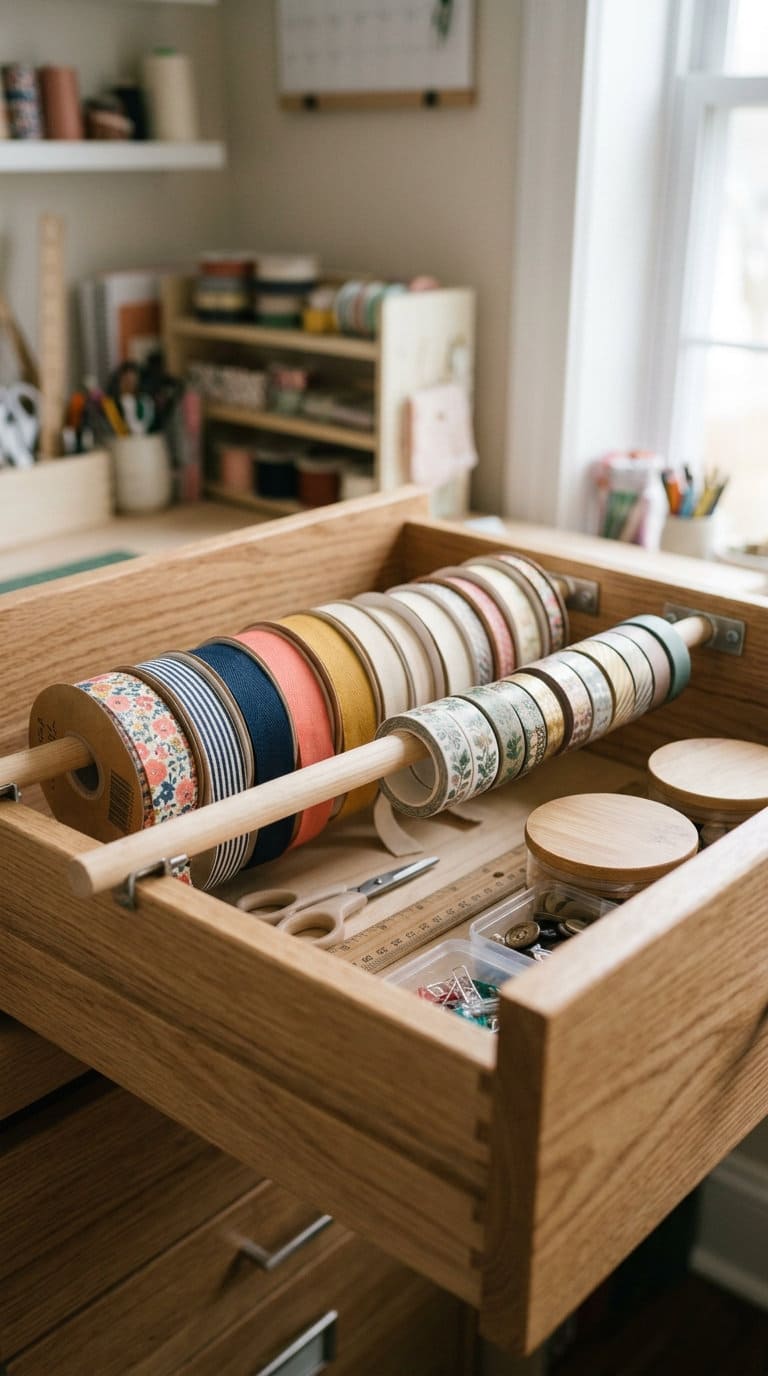
A simple dowel rod, 3/8 to 1/2 inch in diameter, mounted horizontally across a drawer or cubby, lets ribbon spools and washi tape rolls spin freely for dispensing instead of tangling loose in a bin.
Budget tier: DIY-cheap.
13. A vertical paintbrush holder

A caddy or repurposed can, at least 4-5 inches tall, holding brushes bristle-up (never bristle-down, which permanently bends the bristles) keeps brush shapes intact between uses.
Budget tier: DIY-cheap.
14. A thread and embroidery floss organizer
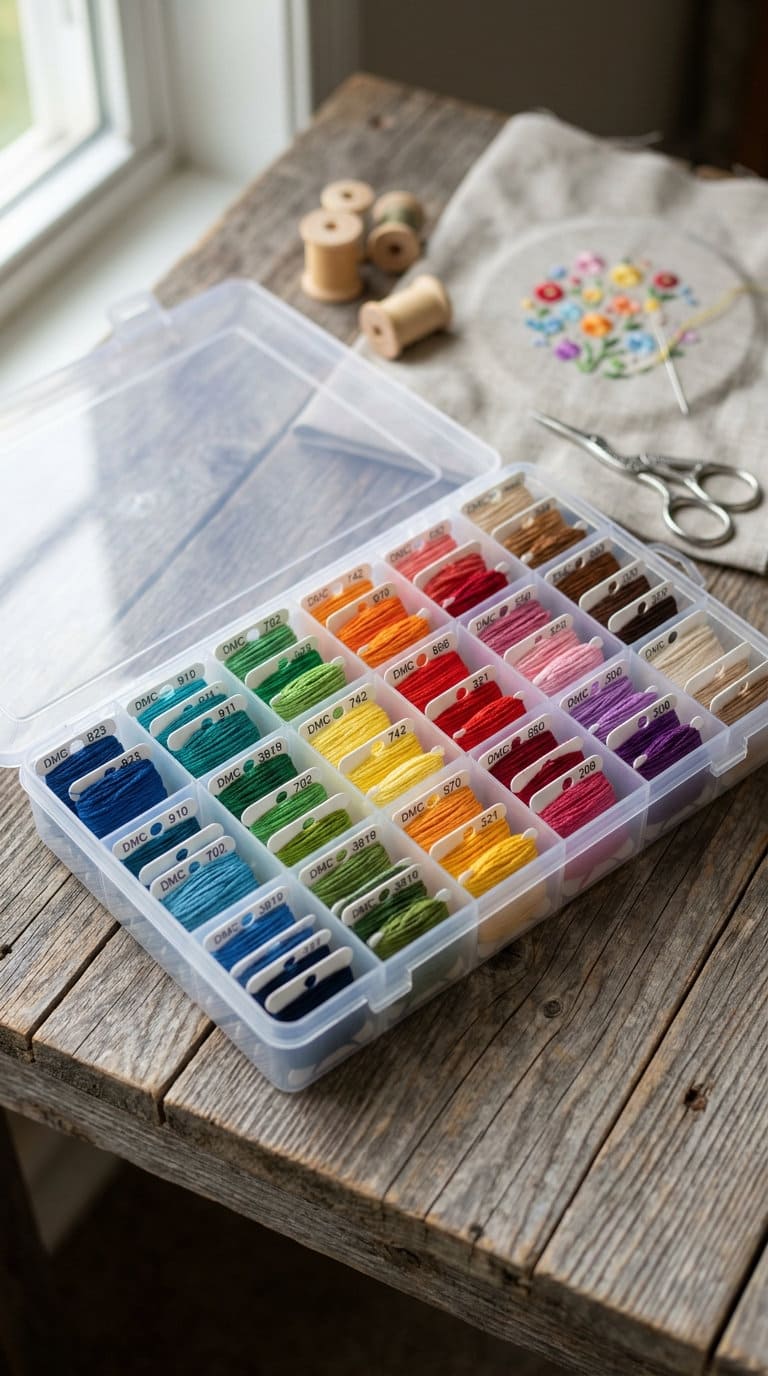
A dedicated card or bobbin system, typically holding 30-100+ spools in a single compact box, keeps floss colors visible and untangled, genuinely useful once a collection passes even a dozen colors loose in a bag.
Budget tier: DIY-cheap to moderate.
Which Safety-Specific Storage Fixes Matter Most?
15. A mini flammable-storage cabinet for paints and solvents
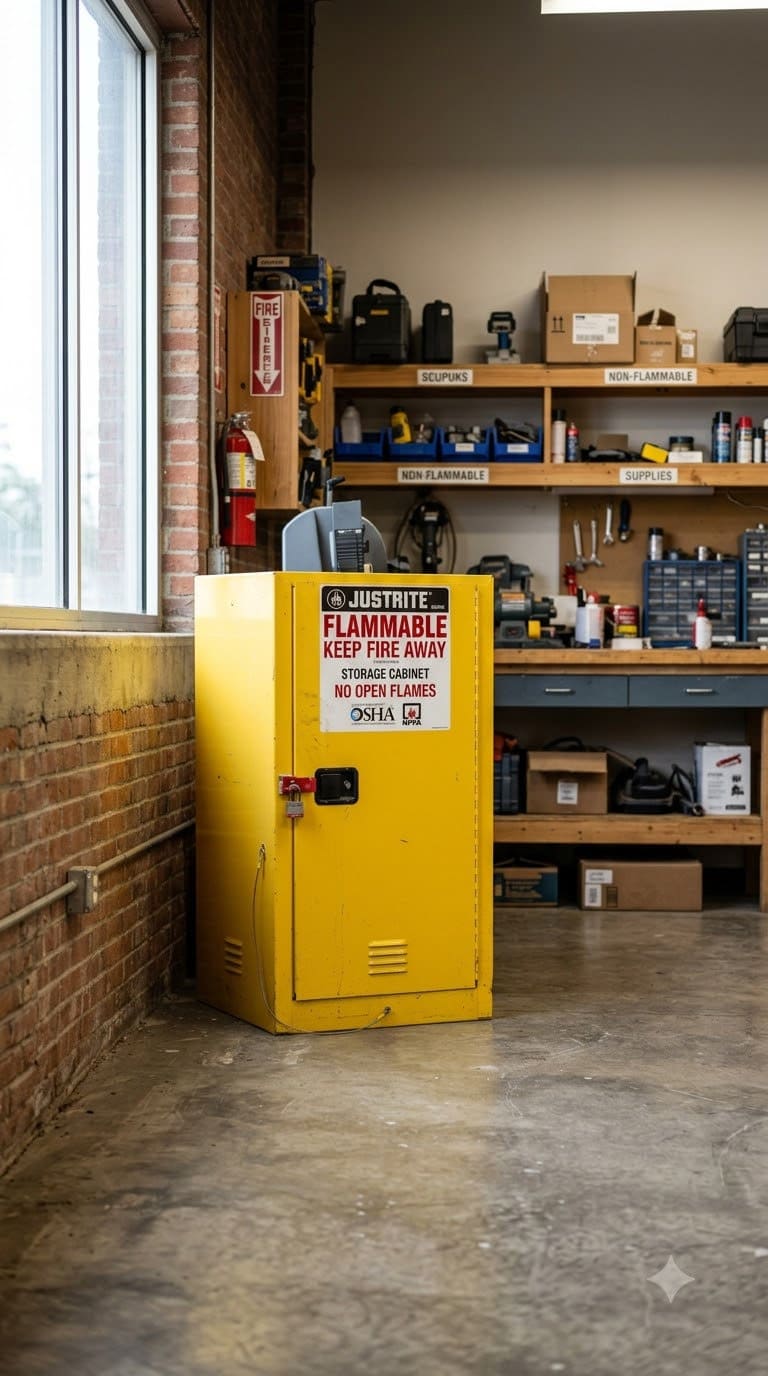
A small, OSHA-style flammable-rated cabinet, even a compact under-20-gallon unit, gives solvent-based paints, spray adhesives, and similar chemicals the enclosed, rated storage the standard calls for, genuinely different from an open shelf or plastic bin.
Budget tier: moderate.
16. A self-closing metal can for solvent-soaked rags
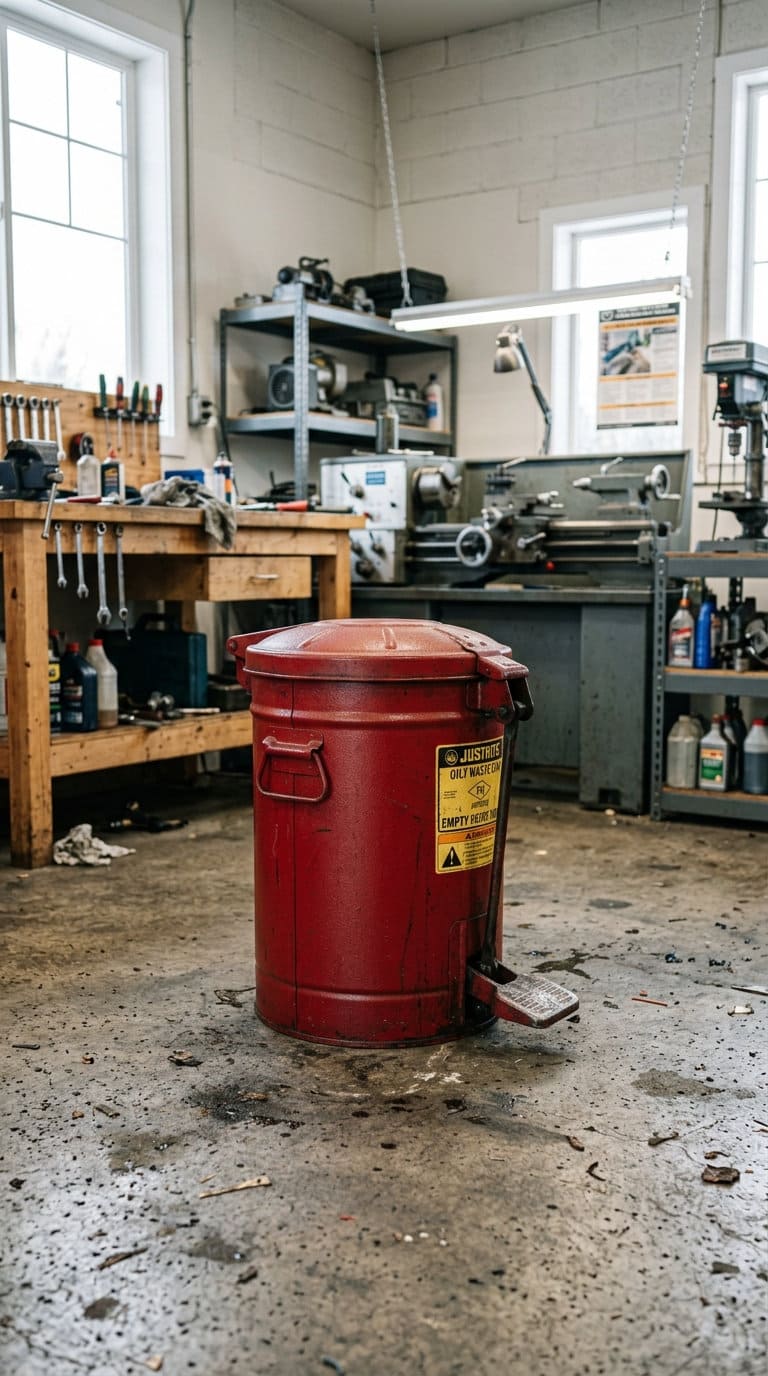
A small, lidded metal waste can (a 1-2 gallon size is enough for most home craft use), emptied daily when in active use, addresses the real spontaneous-combustion risk of solvent-soaked rags left balled up in a regular trash bin or forgotten in a drawer.
Budget tier: DIY-cheap.
17. A locked or high-shelf zone for choking-hazard small parts
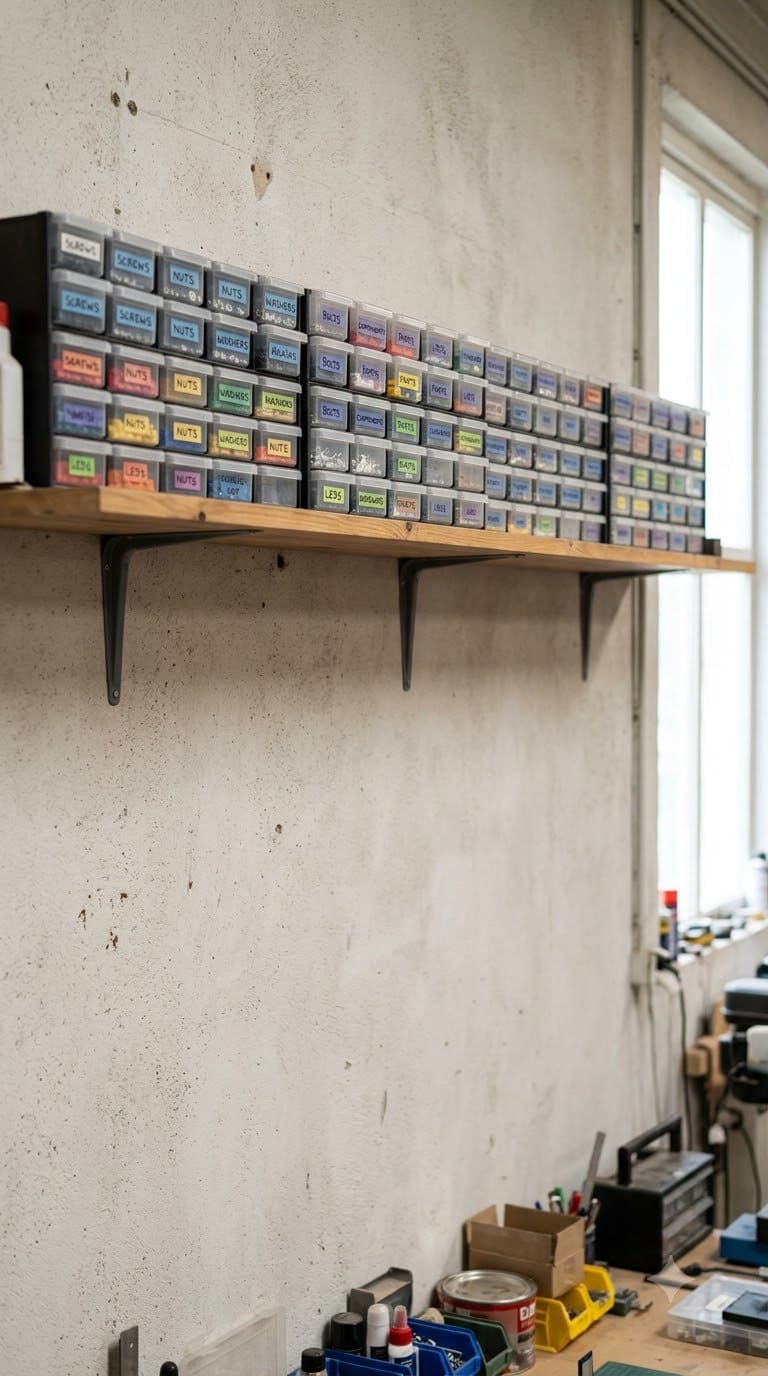
A dedicated storage zone, either a shelf at 54 inches or higher or a low cabinet with a child-safety latch, for beads, buttons, sequins, and other items that meet the CPSC’s small-parts choking-hazard definition keeps them genuinely out of a toddler’s reach rather than just visually tidy.
Budget tier: DIY-cheap.
Which Workspace-Integrated Solutions Are Worth the Investment?
18. A craft desk with built-in storage
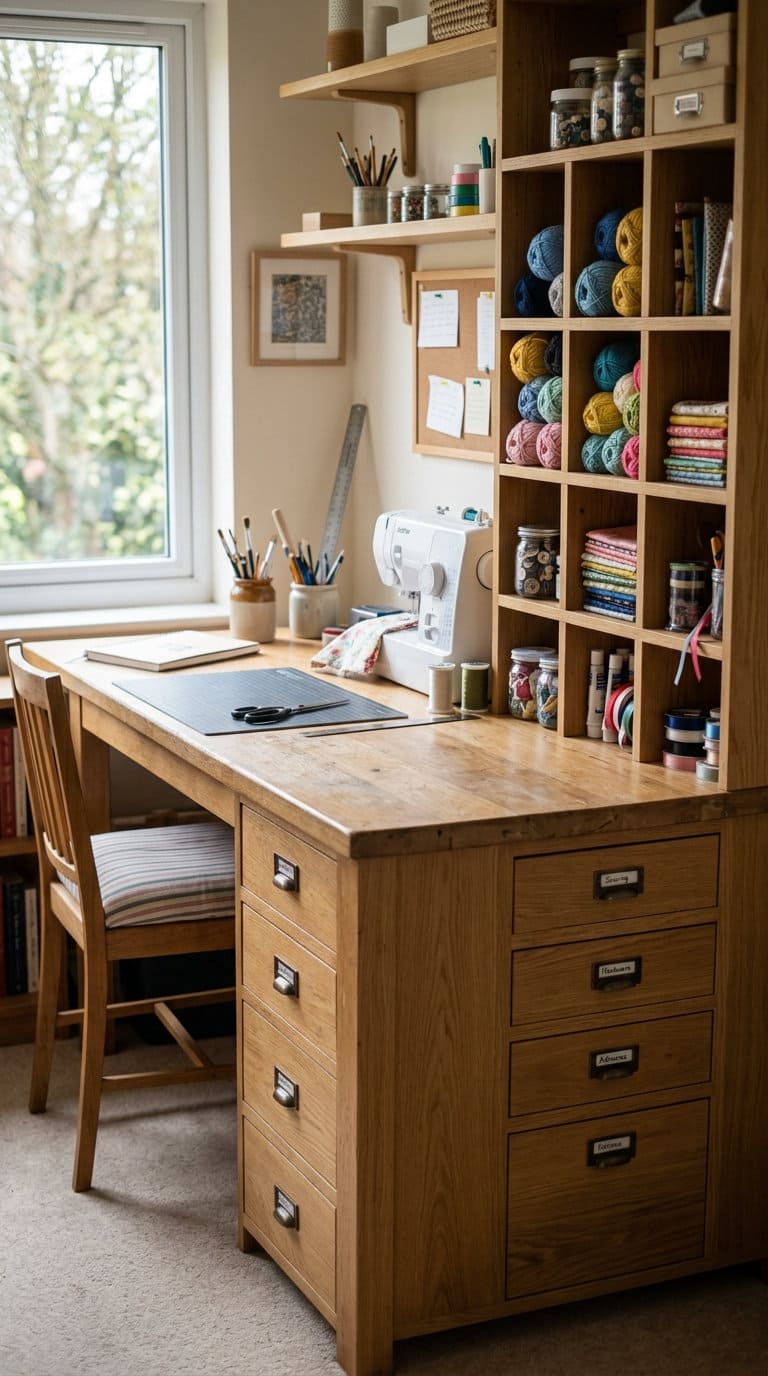
A desk with integrated drawers and cubbies (look for at least 2-3 drawers plus open cubby space) keeps daily-use supplies within the same arm’s reach zone Ben Soreff recommends, without needing a separate storage unit at all.
Budget tier: bigger investment.
19. A closet converted into a craft station
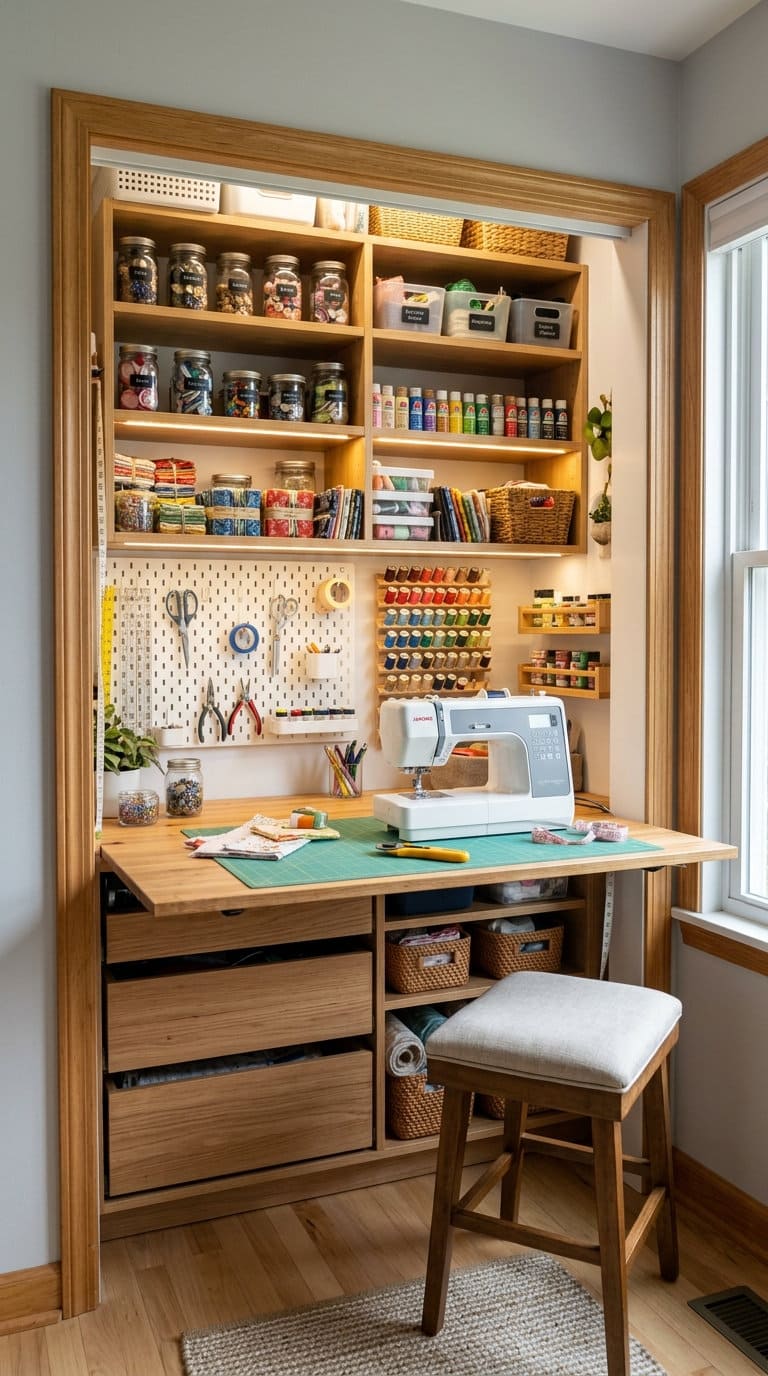
Removing a closet’s hanging rod and adding shelving, a small fold-down work surface, and task lighting turns unused closet depth (typically 24 inches, plenty for most craft storage) into a self-contained station that closes up completely when not in use.
Budget tier: moderate to bigger investment.
20. A mobile craft caddy for tabletop work
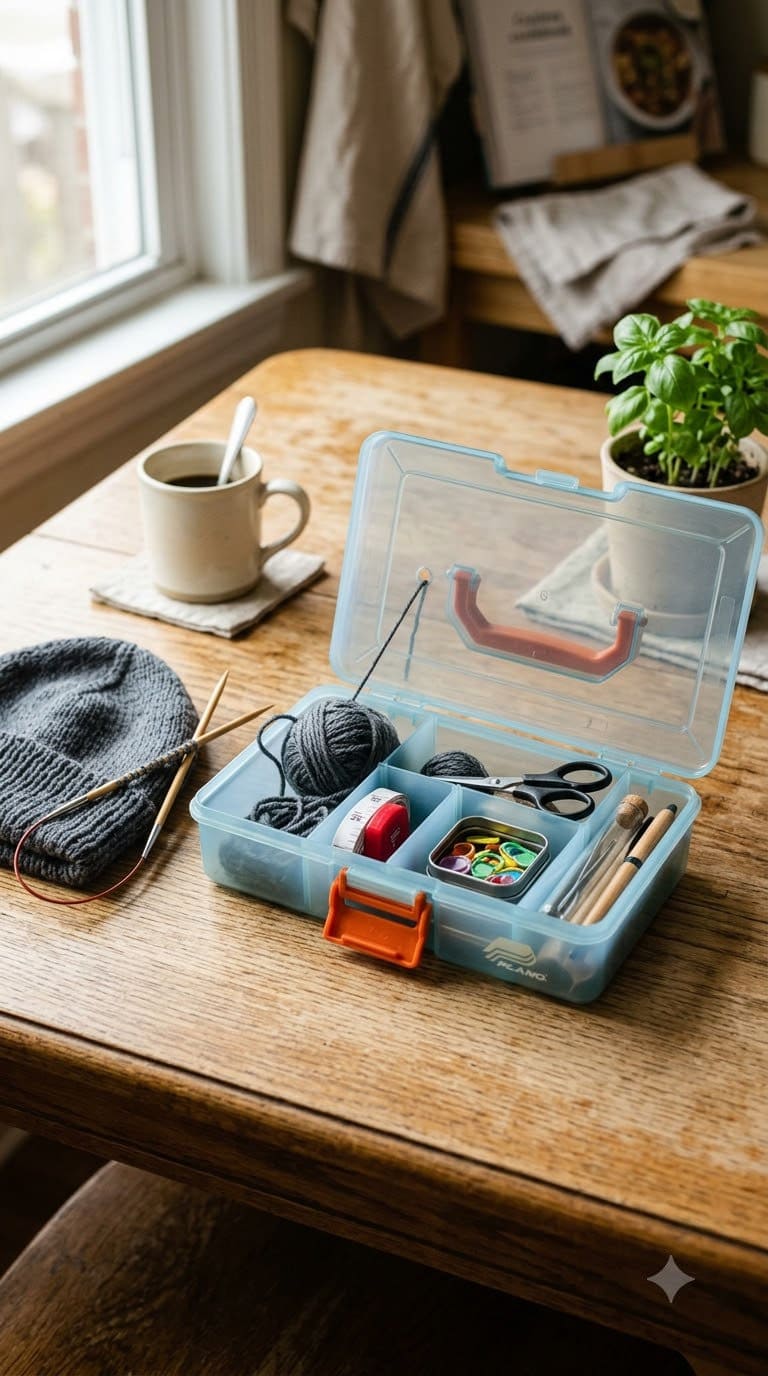
A compact caddy or tackle-box-style organizer, sized to hold just a single project’s active supplies, lets you work at a kitchen table or shared surface without setting up a whole workspace, and packs away completely between sessions.
Budget tier: DIY-cheap.
What We Learned the Hard Way
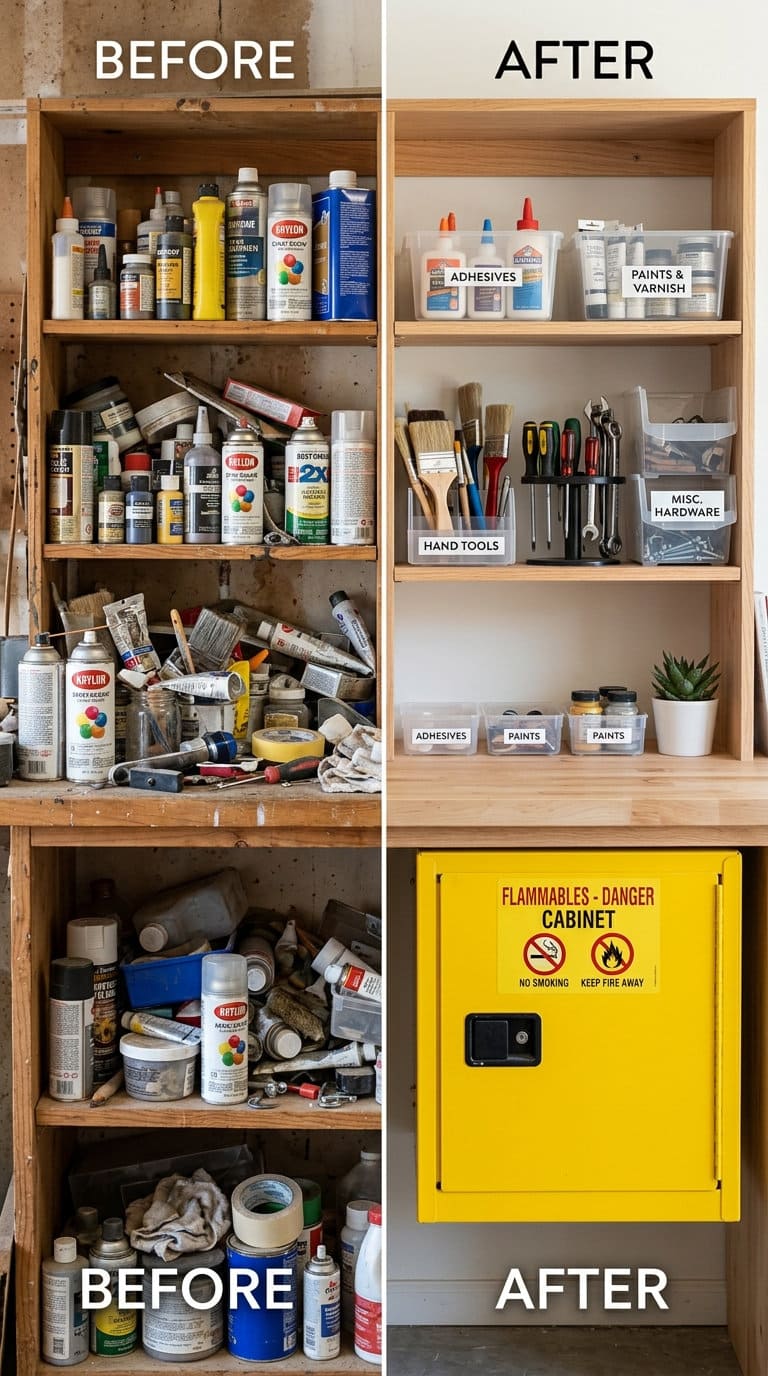
The most common mistake isn’t messy bins, it’s treating every craft supply as equally low-risk. We’ve seen craft closets with spray adhesive and solvent-based paint stored on an open shelf right next to fabric and paper, exactly the setup OSHA’s flammable-storage guidance exists to prevent.
If there’s one thing worth checking before organizing anything else, it’s whether any of your supplies are actually flammable, and giving those a rated cabinet instead of just a prettier shelf.
The second mistake is the one that shows up slowly: solvent-soaked rags balled up in a regular trash bin. These can combust on their own without any spark at all, a real risk that has nothing to do with how organized the rest of the room looks. A cheap self-closing metal can, emptied daily, solves this completely.
And the one that catches households with young kids off guard: beads and buttons stored at easy reach because they’re “just craft supplies.” Under the CPSC’s actual small-parts standard, items that size are a genuine choking hazard for kids under 3, the same category as small toy parts, not something to store on a low, open shelf just because it looks pretty in a jar.
FAQs
Do craft paints and adhesives actually need special storage? Solvent-based paints, spray adhesives, and similar chemical products do, per OSHA’s flammable liquids standard. Store them in a rated flammable-storage cabinet with adequate ventilation, not just an open shelf.
Are solvent-soaked rags actually dangerous? Yes. They can spontaneously combust without any external ignition source. Store them in a self-closing metal waste can and empty it daily rather than tossing them in a regular trash bin.
What craft supplies count as a choking hazard for young kids? Anything that fits inside a 1.25-inch test cylinder under the CPSC’s small-parts standard, which covers most beads, buttons, and sequins. Store these at least 54 inches up or behind a child-safety latch if young kids are in the house.
What’s the best way to organize craft supplies I use every day? Keep daily-use tools and supplies within arm’s reach of your main work surface, per professional organizer Ben Soreff’s frequency-of-use principle, and save further-away storage for specialty or seasonal items.
What’s the cheapest way to start organizing a craft supply collection? Clear stackable bins with labels and a repurposed can for paintbrushes cost almost nothing and solve the two most common everyday frustrations before any bigger furniture purchase.
If a full room redesign (not just storage) is the goal, general craft room design ideas covers the decor and layout side separately. For fiber-specific supplies, organizing fabric scraps and yardage and storing a yarn stash both go deeper than this piece does on those specific materials. And if the craft space shares a closet with everything else in the house, budget-friendly closet organization rounds out the rest of the space.
Related Posts
Products We Recommend
This post contains affiliate links. We may earn a commission on qualifying purchases at no extra cost to you.
LOYALHEARTDY 12 Gallon Flammable Storage Cabinet
Direct product match for idea 15, the real OSHA-aligned fix described in Before You Start, Amazon's Choice, 4.0 stars / 27 ratings, live-verified
Shop Now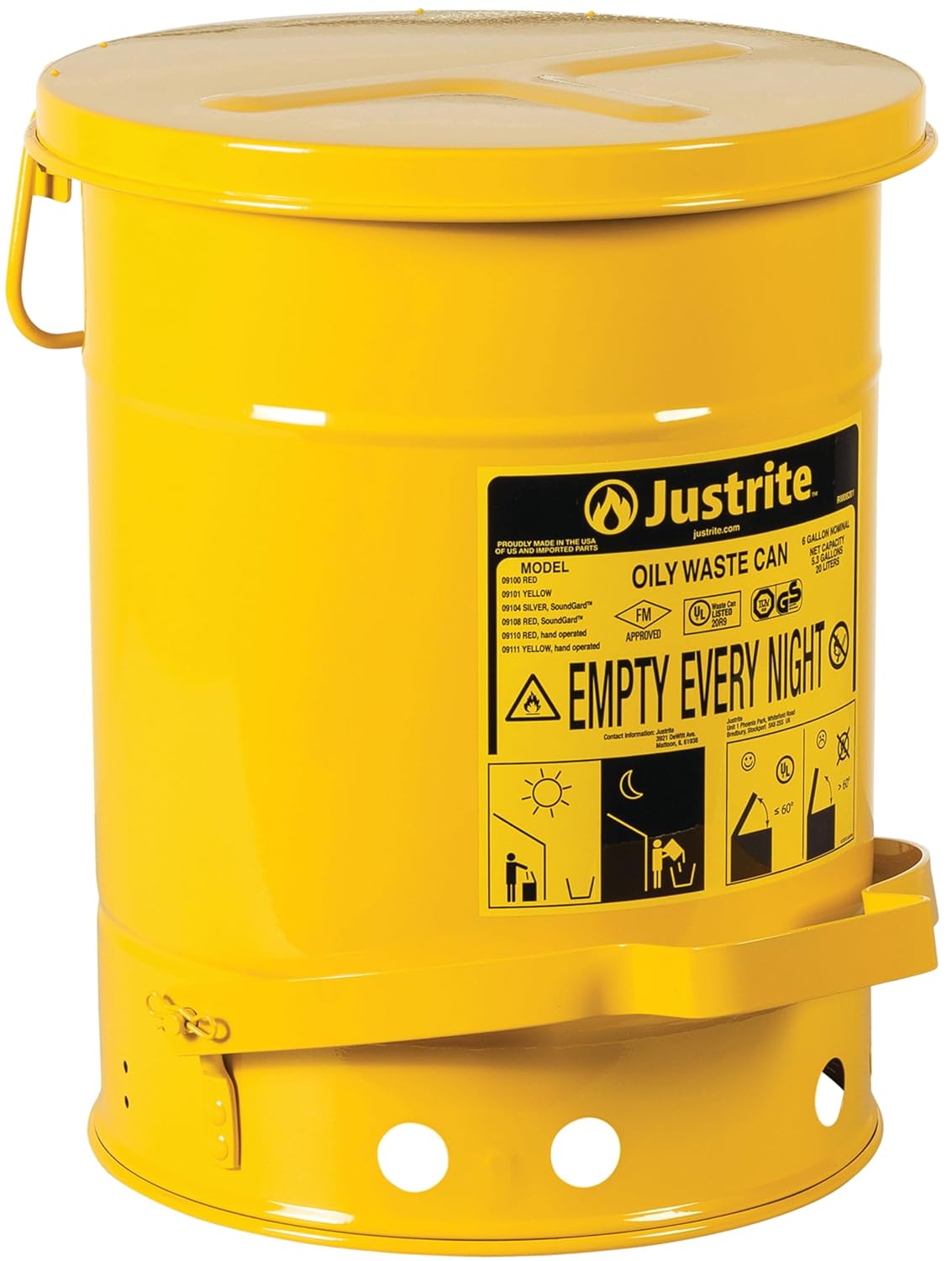
Justrite 6 Gallon Galvanized Steel Oily Waste Can (foot-operated self-closing lid)
Direct product match for idea 16, made in the USA, Amazon's Choice, 4.7 stars / 1,676 ratings, live-verified
Shop Now
Simple Houseware 12-Drawer Rolling Utility Cart
Direct product match for idea 7, Amazon's Choice, 4.4 stars / 3,863 ratings, live-verified
Shop NowNever miss an update — choose FarmFoodFamily as your preferred source on Google.
How it works: Tap the button below to open Google's settings page, then check the box next to FarmFoodFamily.
Tap the checkbox to turn it blue — that's how you know it's set.