10 Smart Fruit and Vegetable Storage Ideas, Sorted by Where Each Food Belongs
Good produce storage starts with knowing which foods want the counter, the fridge or a cool dark shelf, and then giving each one the right container.

Never miss an update — choose FarmFoodFamily as your preferred source on Google.
How it works: Tap the button below to open Google's settings page, then check the box next to FarmFoodFamily.
Tap the checkbox to turn it blue — that's how you know it's set.
Good produce storage starts with knowing which foods want the counter, the fridge or a cool dark shelf, and then giving each one the right container.
Products We Recommend
This post contains affiliate links. We may earn a commission on qualifying purchases at no extra cost to you.

Totally Bamboo Banana Holder with Stand and Stainless Steel Hanging Hook
A bamboo stand that holds a bunch off the counter so it ripens without bruising. Keep it away from your apple bowl.
Shop Now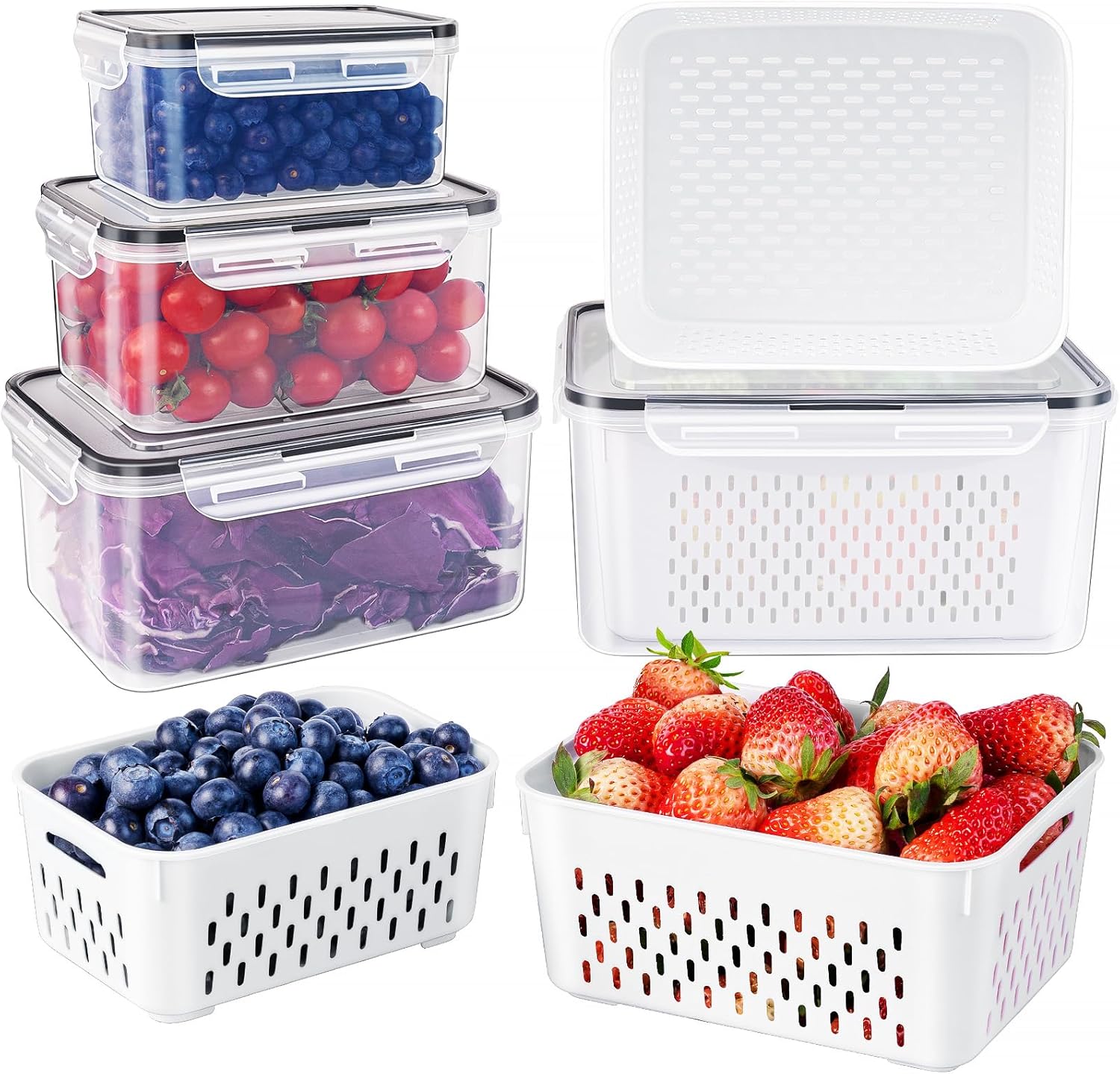
Freshmage Fruit Storage Containers for Fridge with Removable Colander, 4 Pcs
Vented containers with a colander insert for berries. Dry the fruit well before it goes in, and wash only when you're ready to eat.
Shop Now
Ahyuan Hanging Mesh Storage Bags, 5 Pack
Reusable net bags that let air reach onions and garlic. Hang them away from the potato bin, in a cool dark spot.
Shop NowMost produce doesn’t spoil because of bad luck. It spoils because it sits in the wrong place. Potatoes sprout in the light, berries mold when they’re wet, and one ripe apple can speed up everything near it.
So this guide sorts ideas by zone. Counter, cool pantry, fridge and wall each get a few storage ideas built for the foods that live there. If you also need shelf space, our pantry shelving ideas cover the bigger picture.
Quick Answer
Store produce by what it needs.
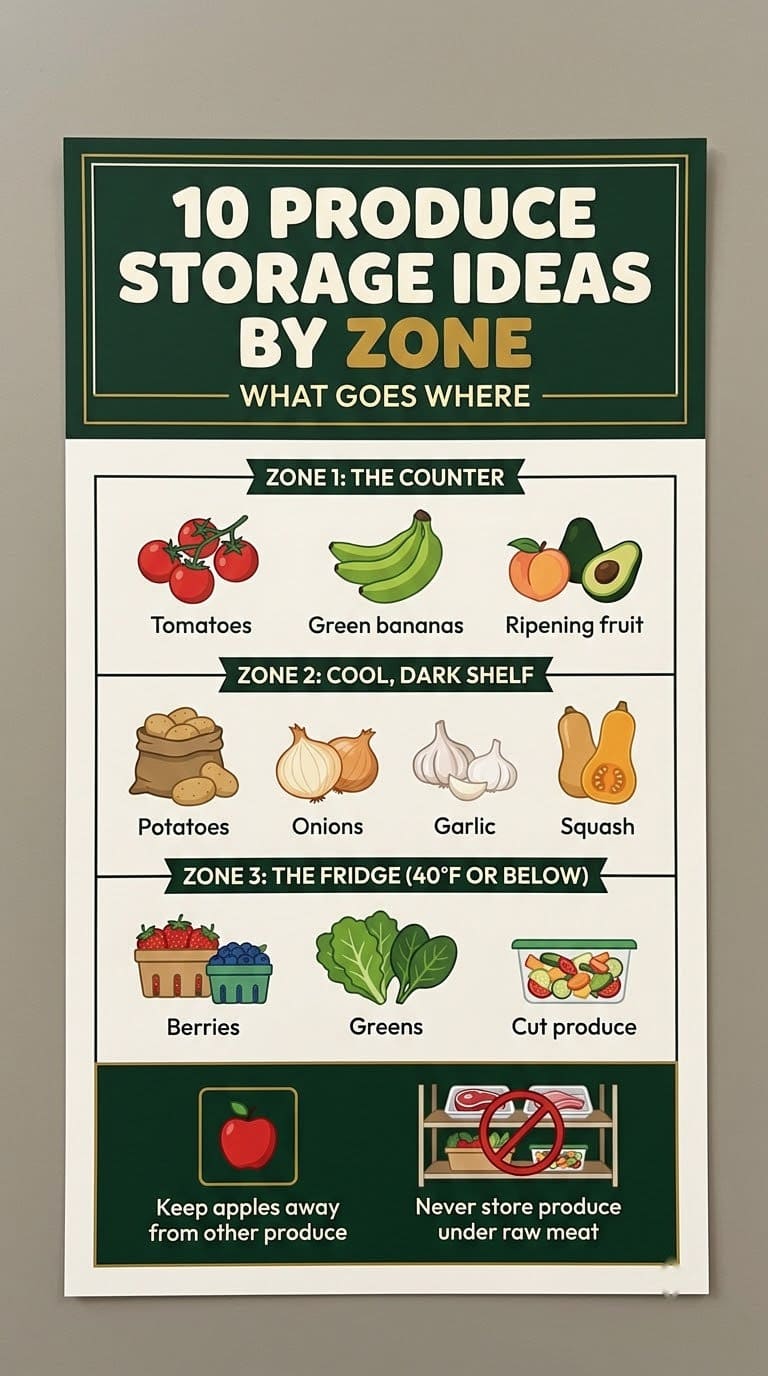
Keep tomatoes, bananas and ripening fruit on the counter. Keep potatoes, onions, garlic and winter squash in a cool, dark, dry place. Keep berries, greens and cut produce in the fridge at 40°F or below.
Keep apples away from other produce, because they give off ethylene gas that speeds up ripening and rot. Don’t wash berries before storing. Never keep produce below raw meat.
Then pick storage that fits the zone. Use hangers and bowls on the counter, ventilated bins in the pantry, and dry covered containers in the fridge.
But don’t overbuy gear first. Sort your food into three piles, then add one container per pile. That small step fixes most of the waste.



It costs almost nothing to try this week. You can finish it in one short afternoon.
Which Produce Goes Where?
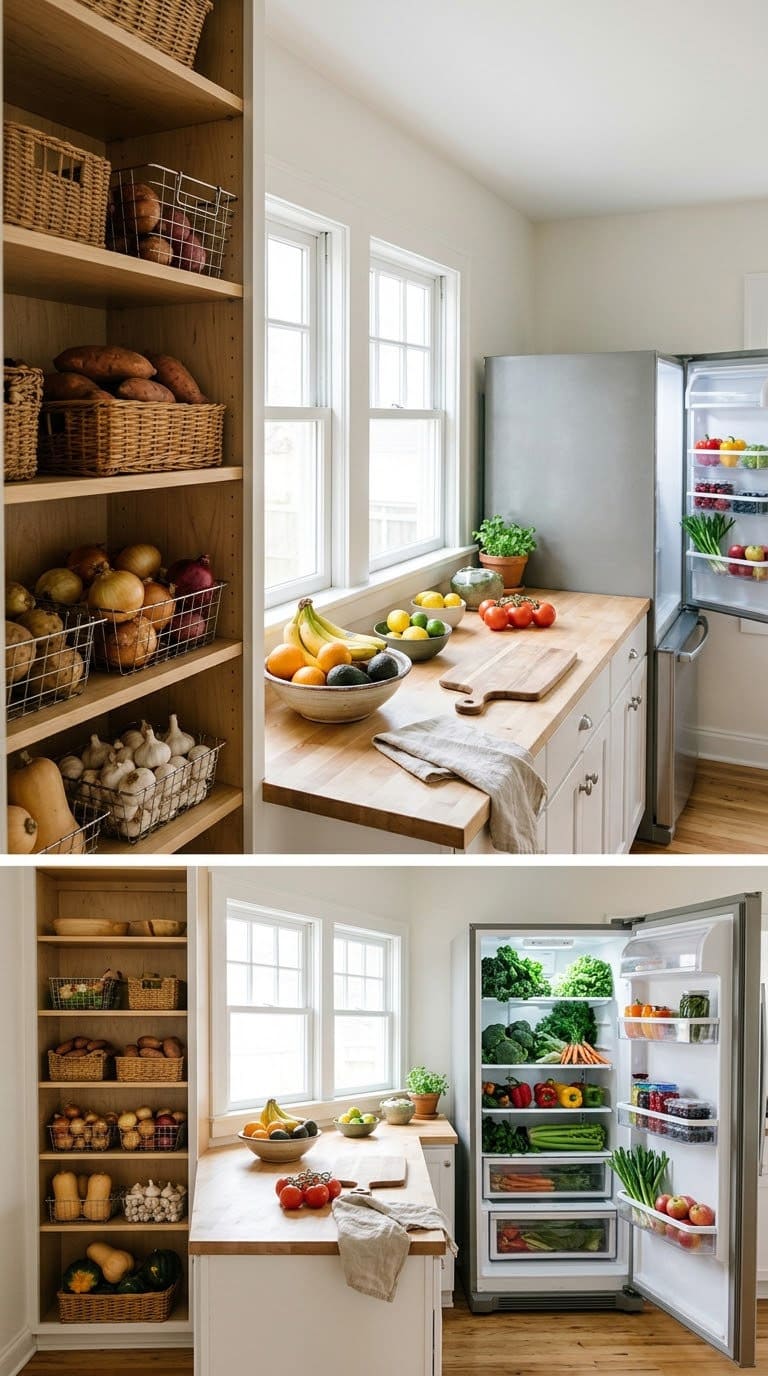
The American Heart Association, or AHA, gives a simple frame.
Some produce keeps in the fridge at 40°F or below. Other produce keeps on the counter. It also says to refrigerate all produce that you buy pre-cut or peeled.
Use this table as your map.
| Zone | What goes there | Why |
|---|---|---|
| Counter | Tomatoes, green bananas, avocados and stone fruit until ripe | Cold slows ripening and can dull flavor |
| Cool, dark, dry shelf | Potatoes, sweet potatoes, winter squash, onions, garlic | Light and cold both cause problems |
| Fridge | Berries, greens, carrots, beets, radishes, cucumbers, mushrooms | They need cold and low moisture on the surface |
| Separate spot | Apples | They give off ethylene gas |
Sources differ on a few foods, like tomatoes and citrus. This guide follows the AHA and the extension sources below.
What Is Ethylene and Why Does It Matter?
Some fruits give off ethylene gas. The AHA says this gas can make other produce ripen and rot faster. Apples are its main example, so it says to store them away from other produce.
Broccoli and cauliflower are ethylene-sensitive. The same source says to keep them in separate fridge drawers or a sealed container, away from ethylene producers.
Clemson Extension agrees in simpler terms. It says to keep fruits separate from vegetables, since some fruits release ethylene gas that can spoil vegetables.
A bamboo stand that holds a bunch off the counter so it ripens without bruising. Keep it away from your apple bowl.
Shop NowThis post contains affiliate links. We may earn a commission on qualifying purchases at no extra cost to you.
So every idea below has a built-in rule: give apples their own bowl, and give sensitive vegetables their own drawer.
Counter Ideas for Ripening and Daily Fruit
Use the counter for foods that need warmth to ripen. Keep it out of direct sun, and keep it tidy.
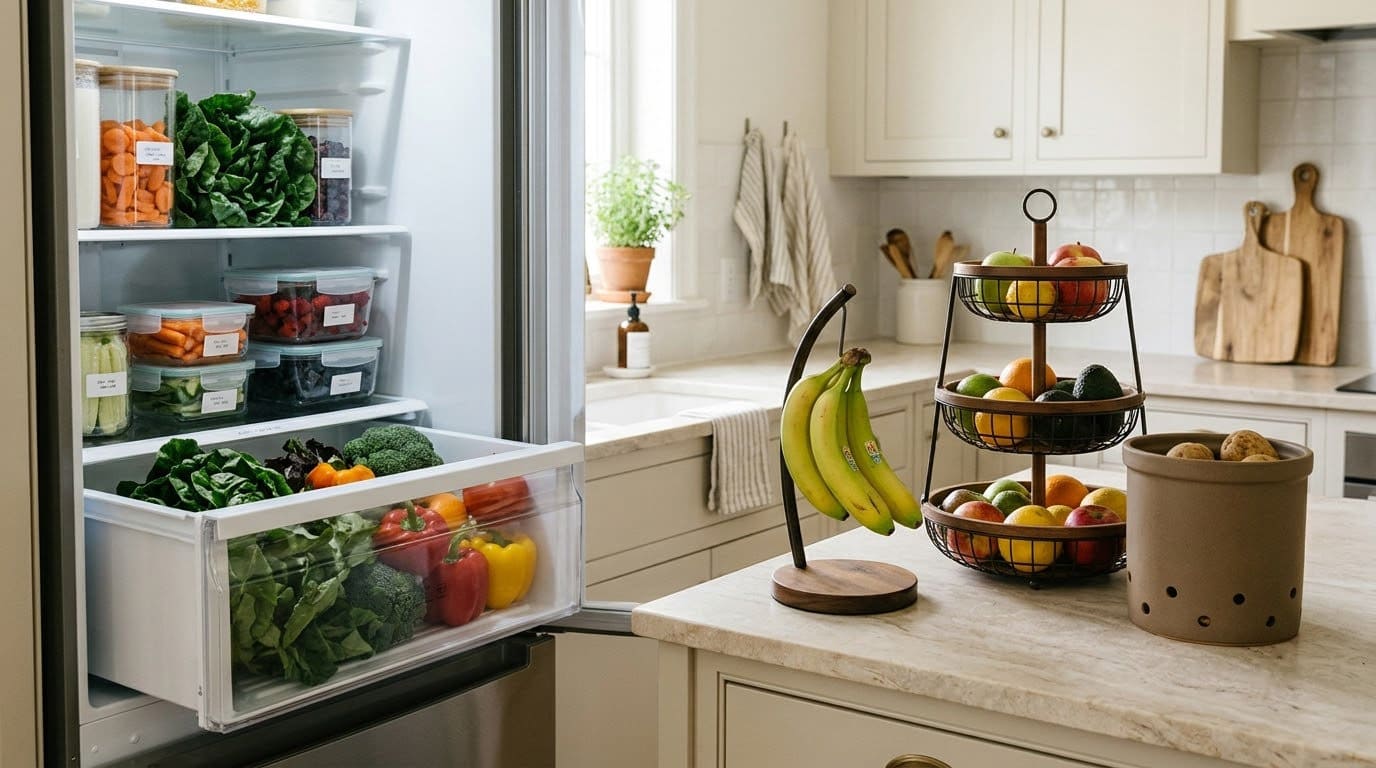
1. A Banana Hanger
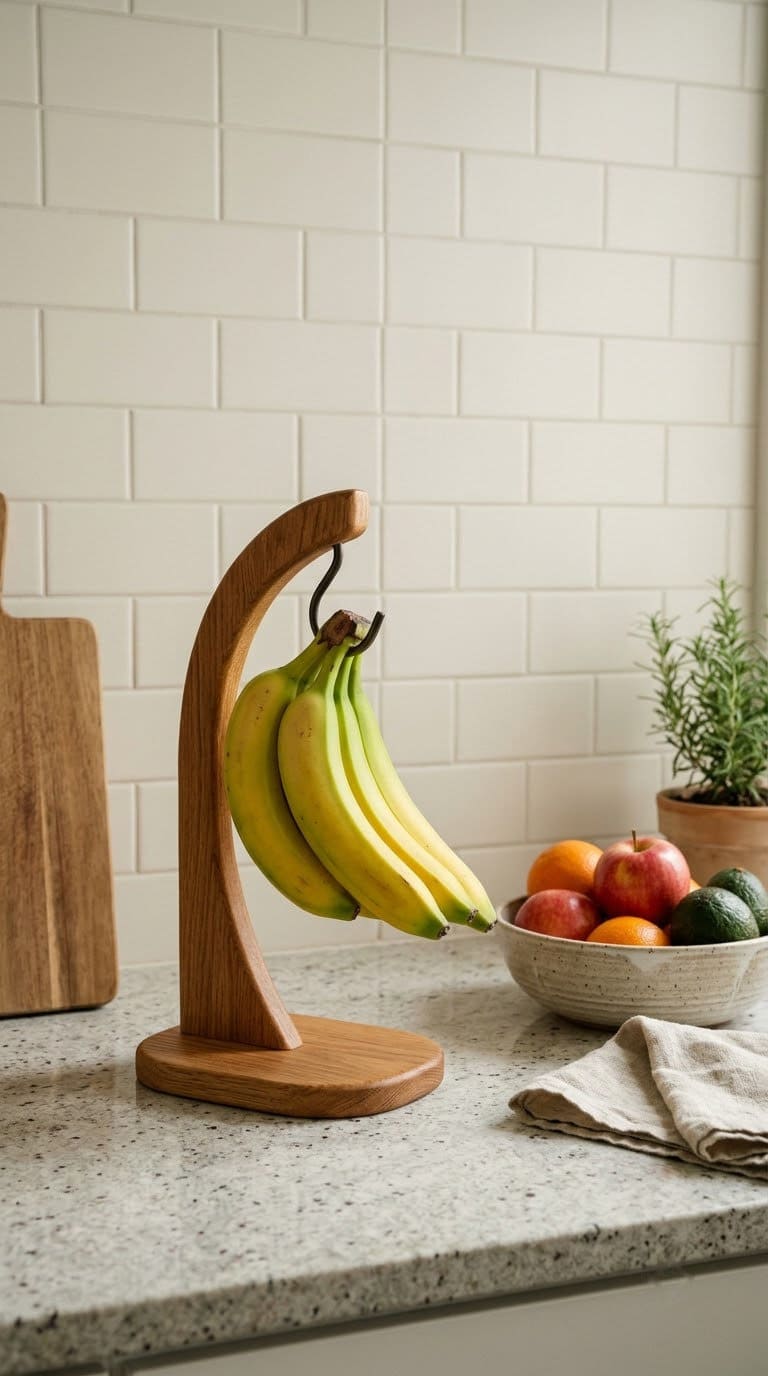
The AHA says to keep green bananas out of the fridge. It suggests letting them ripen on the counter or on a banana hanger.
A hanger lifts the bunch so the fruit doesn’t bruise on one side. It also frees counter space. Place it where you pass often, so you eat the bananas as they ripen.
Keep the hanger away from your apple bowl. Bananas and apples both affect nearby produce.
2. A Tiered Bowl for Tomatoes
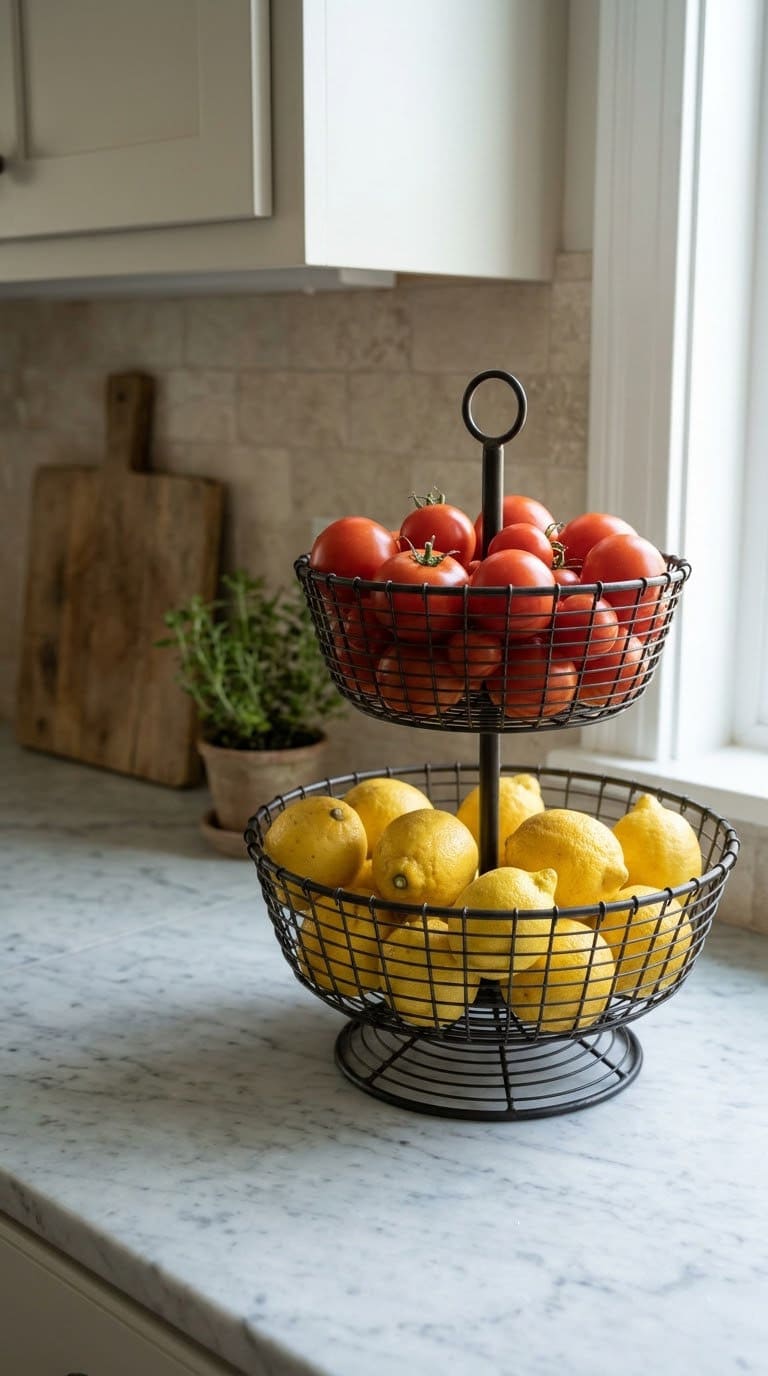
The AHA says tomatoes keep at room temperature for one to two weeks. It says to keep them loose in a bowl away from the sun.
Loose is the key word. Don’t pile tomatoes in a bag. Lay them in a single layer with the stem side up, and use the top tier for them.
Use the lower tier for something that likes the counter, like lemons for a few days. Citrus can stay at room temperature for a week, according to the same source.


3. A Paper-Bag Ripening Station
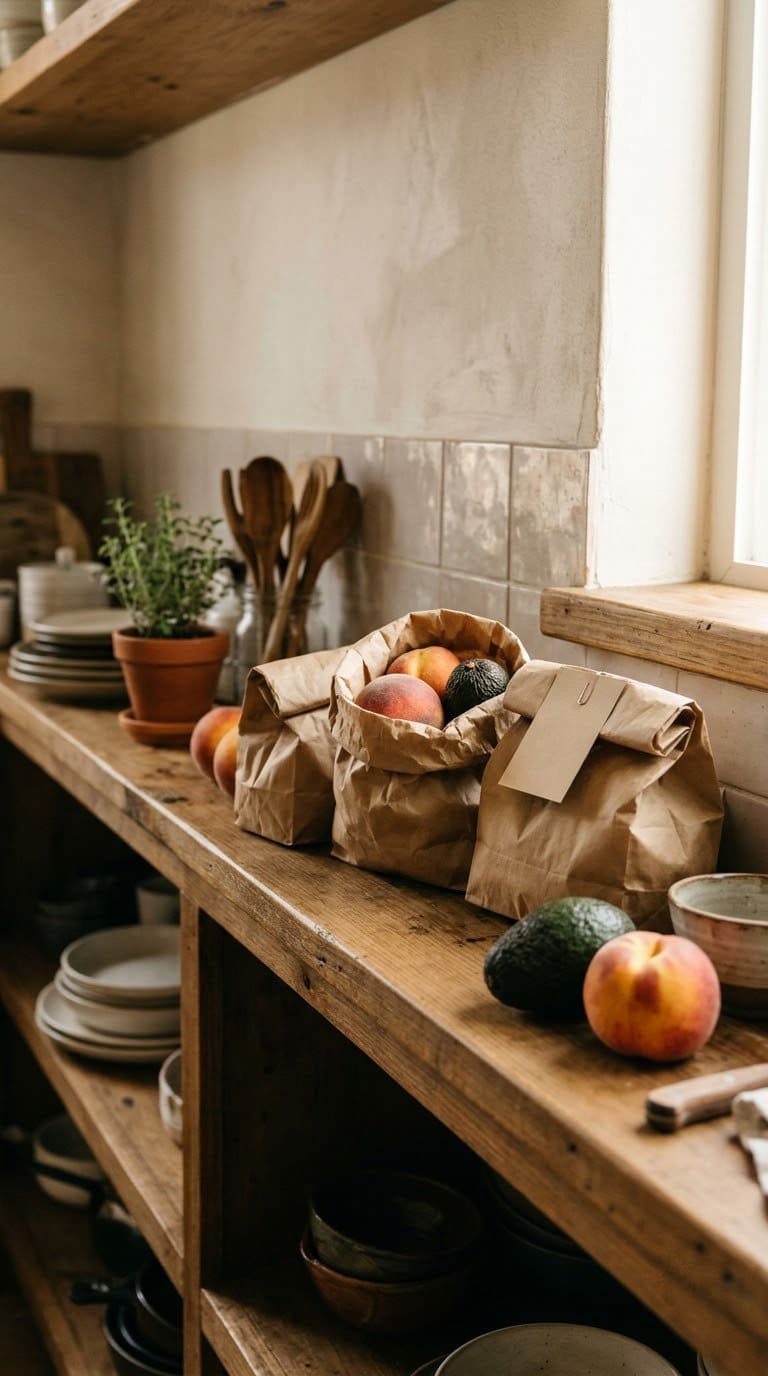
For stone fruit, the AHA says to keep nectarines, peaches and plums in a paper bag on the counter until ripe. Then move them to the fridge, where they last a few more days.
Avocados follow a similar path. Ripen them on the counter, then store them in the fridge.
Set up a small shelf or tray just for this. Label each bag with the date you bought it. Check daily, because ripening happens fast once it starts.
Pantry Ideas for Cool, Dark and Dry Storage
Roots and onions need a cool, dark, dry place. A pantry, a cellar or a dark cabinet all work.
4. A Ventilated Potato Bin
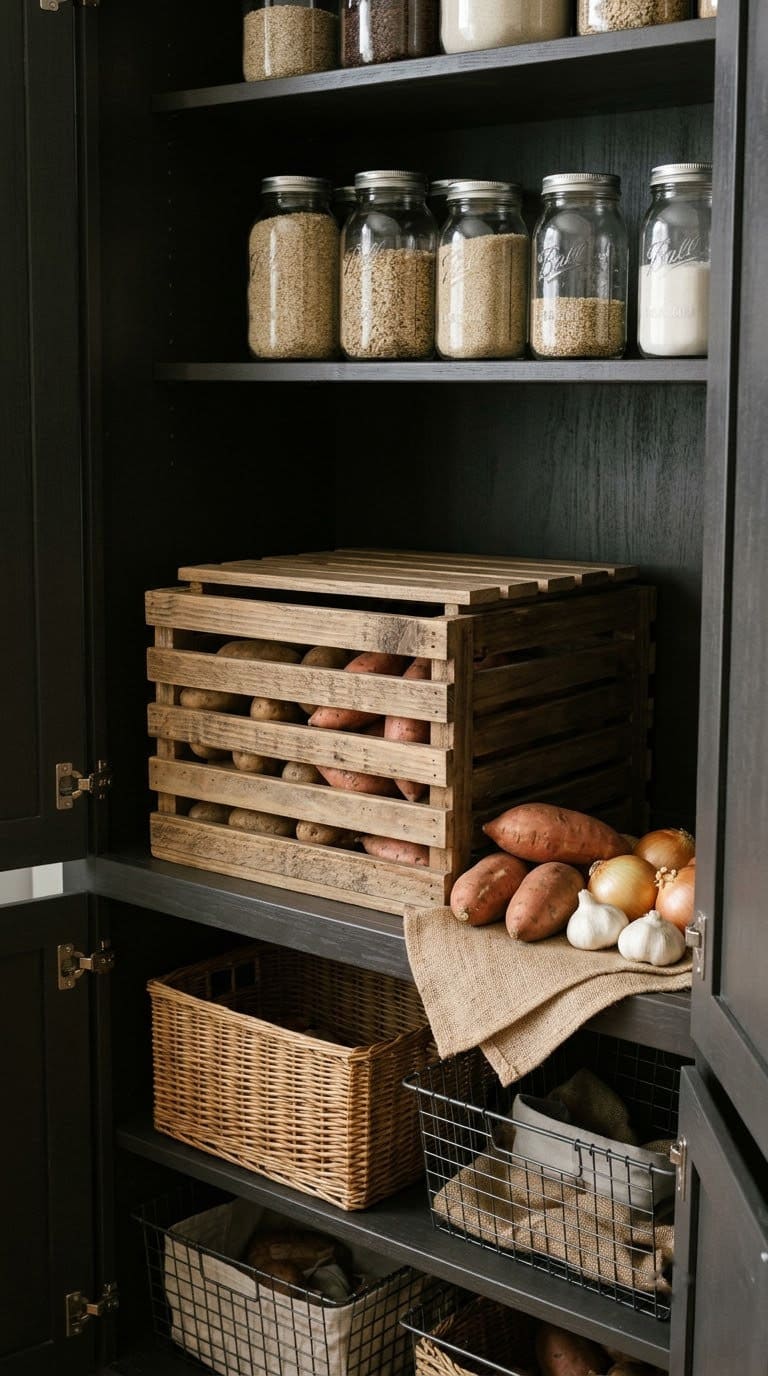
The AHA says to store potatoes, sweet potatoes and winter squash in a cool, dark, dry place such as a pantry or cellar. CollectiveCrop adds that light is the main enemy of stored potatoes, because it turns the skin green and bitter.
It lists 45 to 50°F for potatoes and says to use mesh, paper, cardboard or a wooden crate. Avoid plastic bags, since they trap moisture. It also says not to refrigerate them, because cold turns the starch to sugar.
A slatted wooden bin with a lid is a good build. Leave gaps between slats for airflow, and keep it away from heat sources like the oven.
5. An Onion and Garlic Basket, Kept Apart
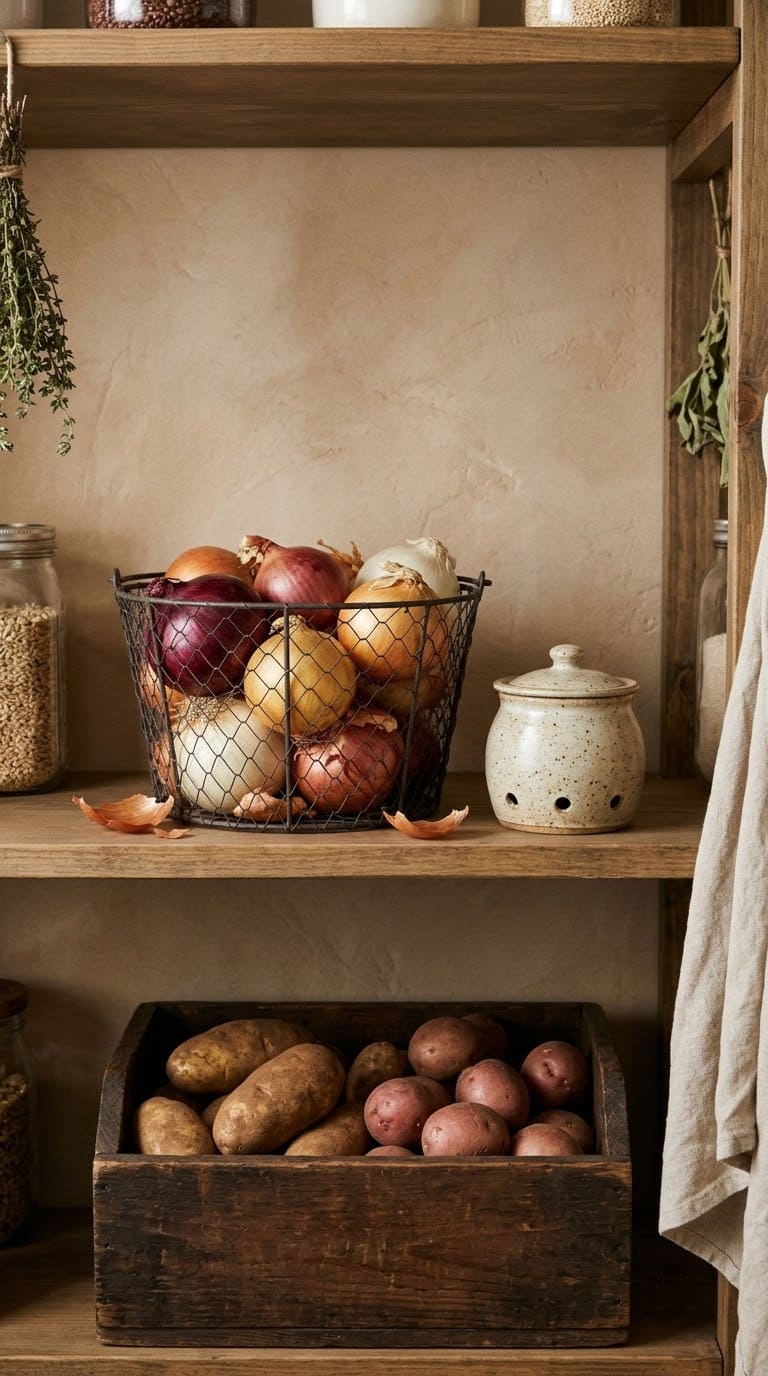
CollectiveCrop says to keep potatoes and onions apart, ideally several feet. Onions give off a ripening gas that speeds up potato sprouting, and potato moisture promotes onion mold. The AHA also says to keep onions and garlic away from potatoes.
Use an open basket or a mesh bag for onions so air can move. Use a ceramic keeper or a mesh bag for garlic. The source says garlic can sit near onions.
Put the onion basket on a different shelf from the potato bin. If you have one cabinet, use opposite ends.
6. Stackable Crates for Squash and Sweet Potatoes
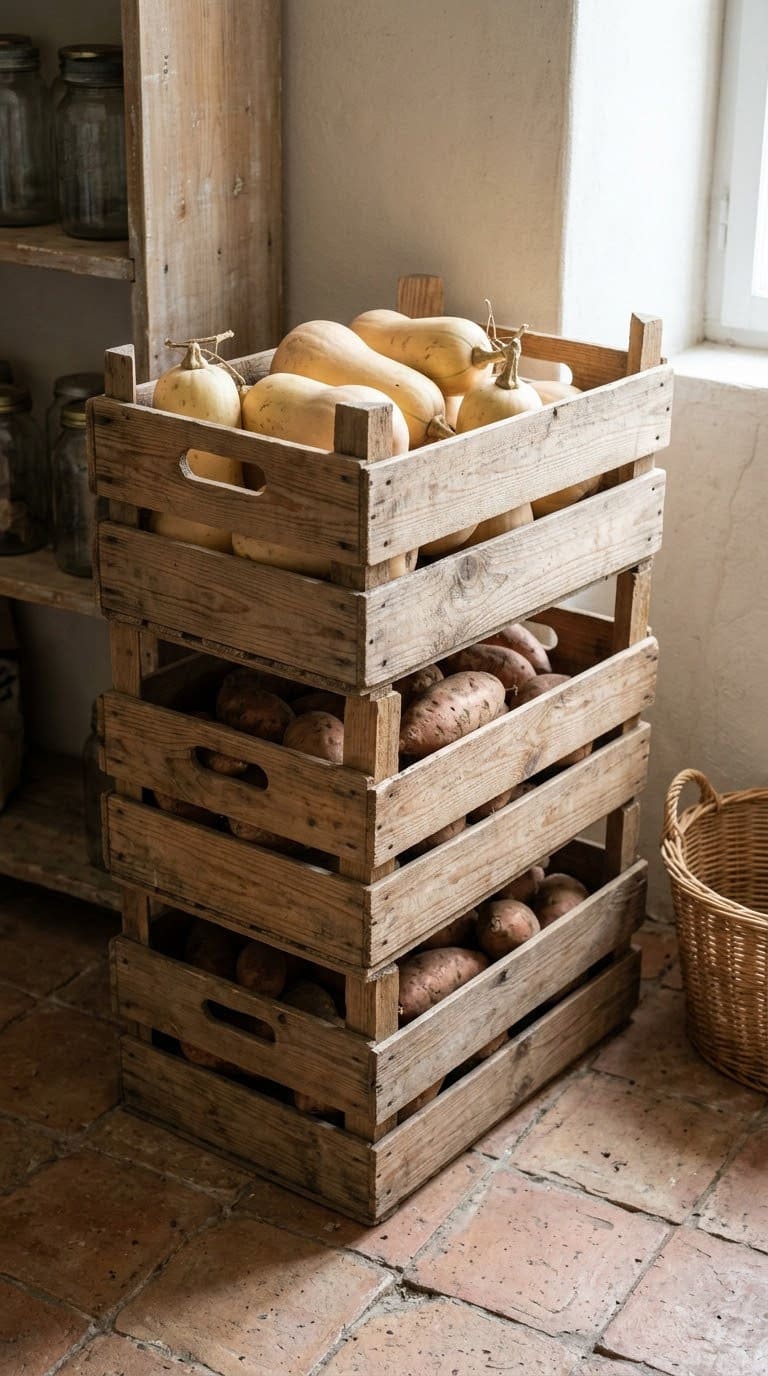
Open crates are simple and sturdy. The AHA lists sweet potatoes and winter squash for cool, dark, dry storage, so they suit a crate stack in a closet or a basement corner.
Stack two or three crates and leave a hand’s width of air around them. Lay squash in a single layer so one soft spot doesn’t spoil its neighbor. Check them every week.
Never stack crates over damp floors. Set them on a pallet or a few boards.
7. A Pull-Out Vegetable Bin Cabinet
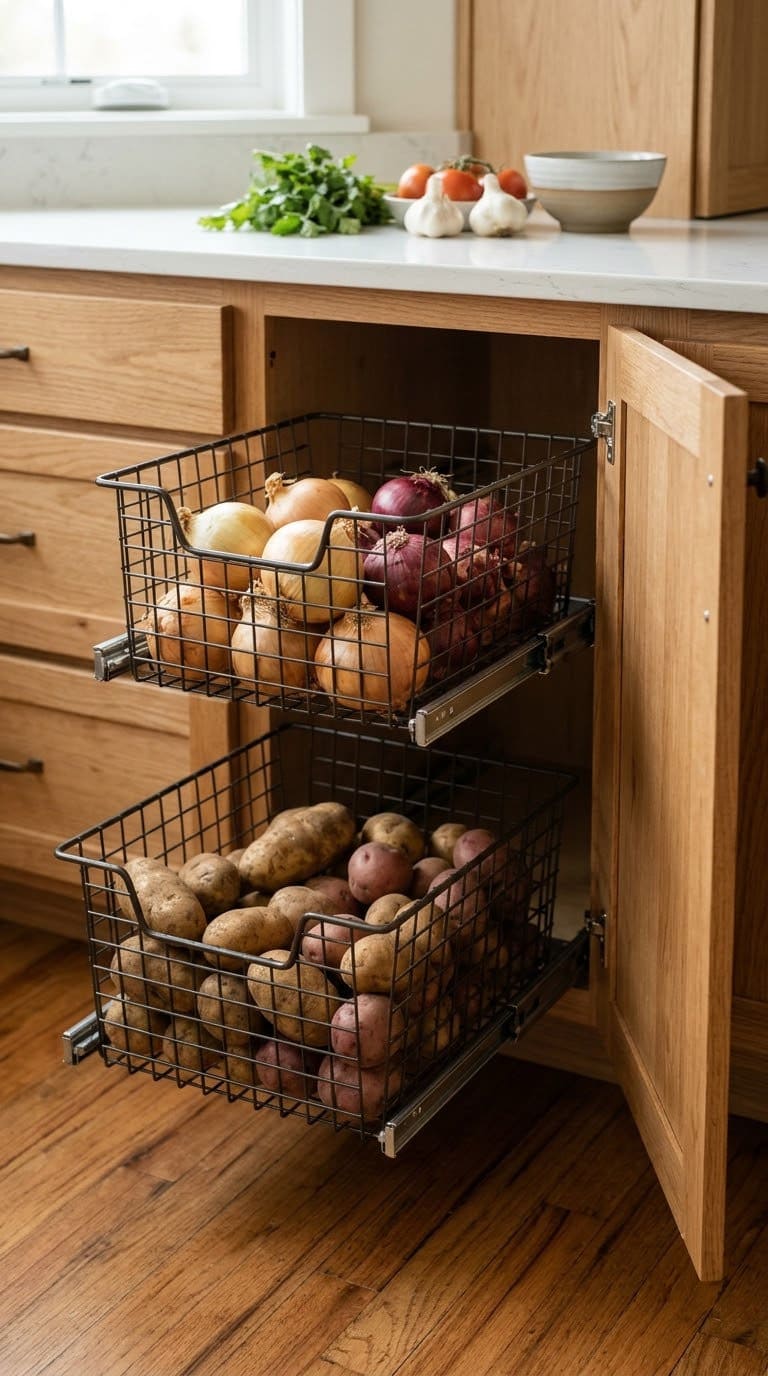
A pull-out cabinet keeps food in the dark and within easy reach. Use a base cabinet away from the stove and dishwasher, since heat shortens the life of roots and onions.
Give each bin one food. Use one bin for potatoes and another for onions, and keep them in different parts of the cabinet. Drill or choose bins with air holes.
Wipe the bins out each month. A single rotten potato can spread mold fast.
Fridge Ideas for Berries, Greens and Cut Produce
The fridge is where most food safety rules apply. Keep it at 40°F or below, and use a thermometer to check.
8. Drawer Dividers for Ethylene Producers and Sensitive Foods
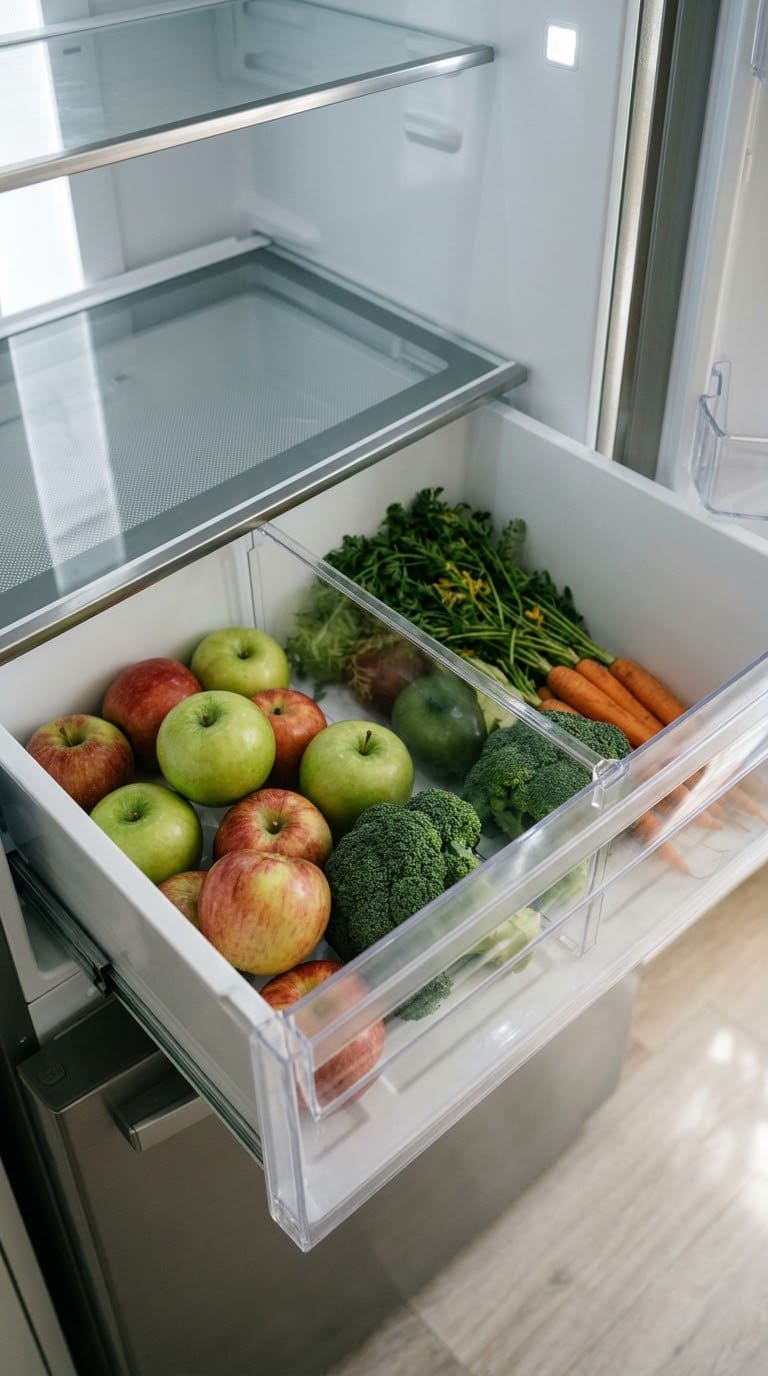
The AHA says to keep broccoli and cauliflower in separate drawers or a sealed container, away from gas-producing fruit. Apples can stay on the counter up to a week or in the fridge for more than a week.
Use a clear divider or two drawers. Put apples, melons and other producers on one side. Put broccoli, cauliflower and cucumbers on the other.
Whole peppers keep in a low-humidity drawer up to seven days, according to the same source. Cut peppers belong in an airtight container for three days.
9. Dry, Covered Containers for Berries and Greens
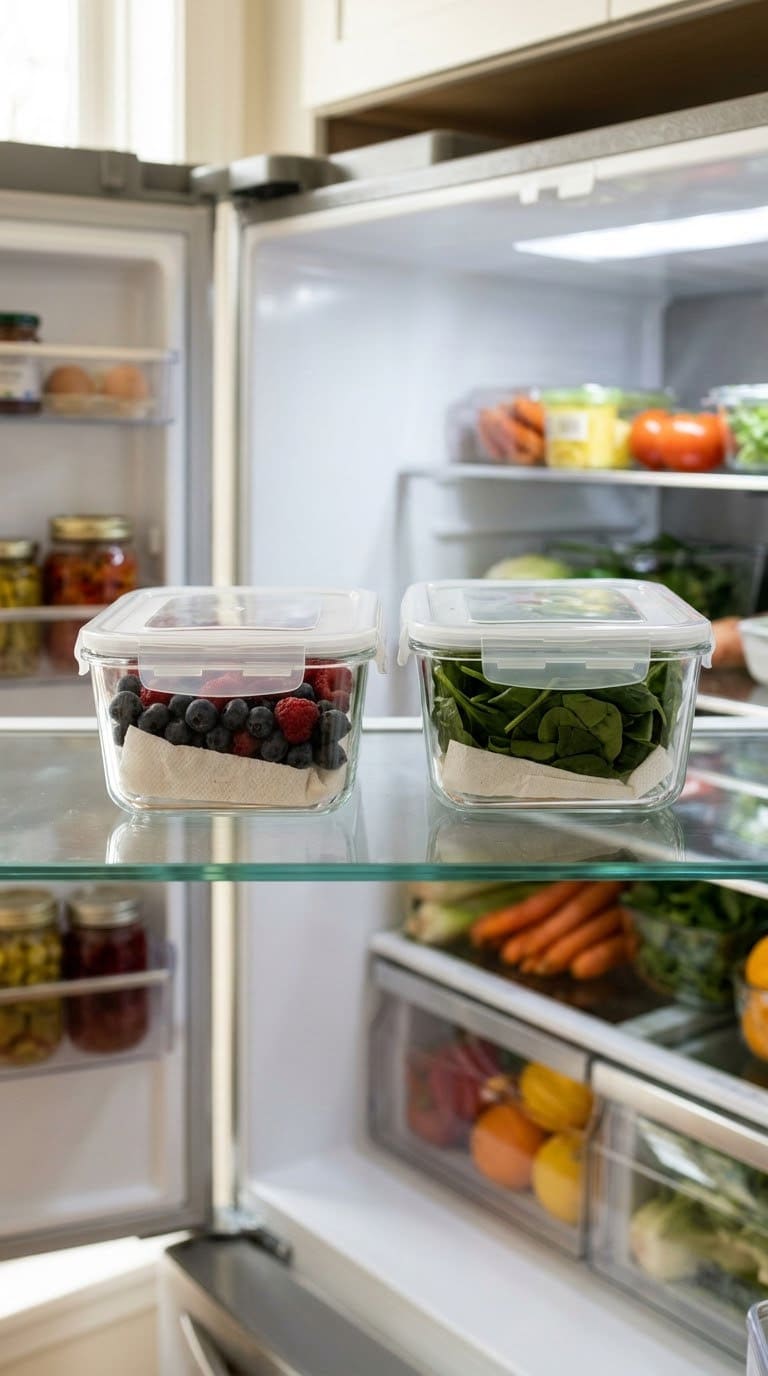
Berries are delicate. The AHA says not to wash blueberries, blackberries, strawberries or raspberries until you’re ready to eat them. Keep them in dry, covered containers in the fridge.
Line each container with a paper towel to absorb moisture. Store greens loosely, as the same source advises for lettuce, kale and spinach. Don’t pack them tight.
Clemson suggests perforated plastic bags for whole produce, which keep moisture in while letting air flow. Mushrooms stay unwashed in the fridge, since moisture makes them slimy.
Wall Idea for Small Kitchens
10. A Hanging Wire Basket for Citrus
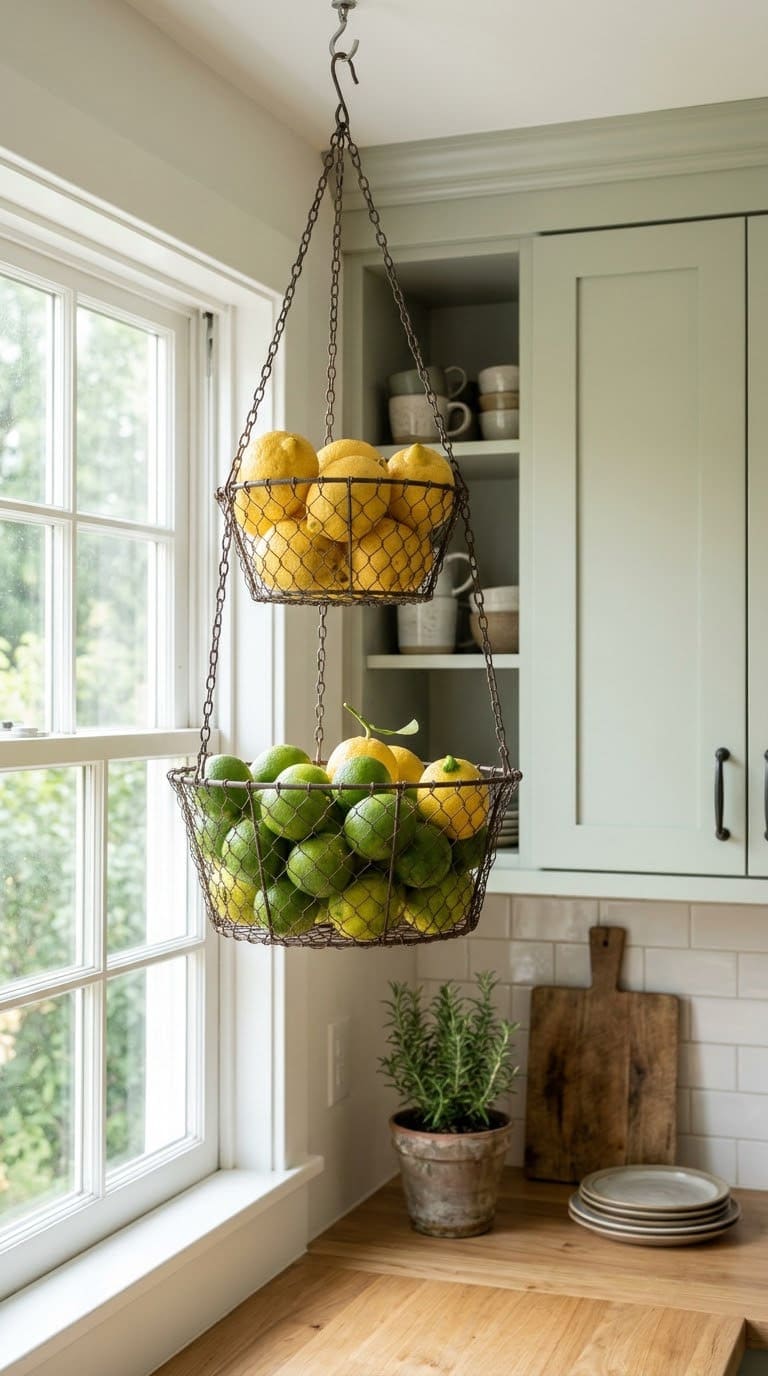
The AHA says citrus can stay at room temperature for a week. To extend the life of clementines, grapefruit, lemons, limes and oranges, it says to store them in the crisper drawer or a mesh bag in the fridge.
A hanging basket suits small kitchens and short-term citrus. Use it for the fruit you’ll eat this week, and move the rest to the fridge in a mesh bag.
Hang it away from the stove and from sunny windows. Anchor it to a stud or use a rated ceiling hook.
Which Storage Idea Fits Your Kitchen?
| Idea | Zone | Best for | Skill level |
|---|---|---|---|
| Banana hanger | Counter | Bananas | Beginner |
| Tiered tomato bowl | Counter | Tomatoes, lemons | Beginner |
| Paper-bag station | Counter | Stone fruit, avocados | Beginner |
| Ventilated potato bin | Pantry | Potatoes, sweet potatoes | Intermediate |
| Onion and garlic baskets | Pantry | Onions, garlic | Beginner |
| Stackable crates | Pantry | Squash, sweet potatoes | Beginner |
| Pull-out cabinet bins | Pantry | Roots and onions | Advanced |
| Drawer dividers | Fridge | Ethylene separation | Beginner |
| Covered containers | Fridge | Berries, greens | Beginner |
| Hanging wire basket | Wall | Citrus | Beginner |
How Do You Keep Produce Safe?
Storage is also about safety. Follow these steps from the extension sources.
- Step 1: Keep the fridge at 40°F or below, as Clemson advises for perishable produce.
- Step 2: Refrigerate pre-cut or peeled produce within two hours. Clemson and NDSU both give the two-hour rule.
- Step 3: Never store produce below raw meat, poultry or seafood. Drips can carry harmful bacteria.
- Step 4: Wash produce under running water just before you eat, cut or cook it.
- Step 5: Scrub firm produce with a clean brush. Skip soap and produce washes.
Food specialist Julie Garden-Robinson at NDSU Extension adds one more rule. Keep produce away from raw meat that could drip on it.
Clean your bins and drawers often. Clemson says to wash surfaces with hot soapy water.
Common Mistakes to Avoid
- Washing berries early. The AHA says to wait until you’re ready to eat them.
- Storing potatoes and onions together. CollectiveCrop says they should be kept several feet apart.
- Putting potatoes in the fridge. The same source says cold turns the starch to sugar.
- Using plastic bags for roots. CollectiveCrop says they trap moisture.
- Mixing apples with sensitive produce. Their gas speeds up rot, according to the AHA.
- Storing produce under raw meat. Clemson warns drips can carry harmful bacteria.
Frequently Asked Questions
Should tomatoes go in the fridge?
The AHA says to store tomatoes at room temperature, loose in a bowl away from the sun. They can last one to two weeks.
Can I store potatoes and onions together?
No. CollectiveCrop says to keep them apart, because onions speed up potato sprouting and potato moisture promotes onion mold.
Do I wash produce before putting it away?
Mostly no. The AHA says to hold off washing berries and cucumbers until you’re ready to eat them. Clemson says to wash under running water just before eating, cutting or cooking.
Where should apples go?
Away from other produce. The AHA says apples produce ripening gas. They keep on the counter for up to a week or in the fridge longer.
How long can cut produce sit out?
Two hours. NDSU and Clemson both say to refrigerate cut or peeled produce within that time.
Your Weekend Plan
- Friday: sort your produce into counter, pantry and fridge piles.
- Saturday: set up one counter idea and one pantry idea.
- Sunday: reorganize the fridge drawers and label each container.
Start with the potato and onion split. It stops two of the most common kitchen losses.
Never miss an update — choose FarmFoodFamily as your preferred source on Google.
How it works: Tap the button below to open Google's settings page, then check the box next to FarmFoodFamily.
Tap the checkbox to turn it blue — that's how you know it's set.