9 Bag Storage Ideas That Won’t Ruin Your Bags in Storage
Most bag storage articles show you a cute shelf display and call it done. What they skip is the part that actually determines whether your bags survive being stored at all: trapped moisture leads to mold on leather and canvas, and unsupported bags lose their shape faster than most people realize. A pretty display that…

Never miss an update — choose FarmFoodFamily as your preferred source on Google.
How it works: Tap the button below to open Google’s settings page, then check the box next to FarmFoodFamily.
Tap the checkbox to turn it blue — that’s how you know it’s set.
Most bag storage articles show you a cute shelf display and call it done.
What they skip is the part that actually determines whether your bags survive being stored at all: trapped moisture leads to mold on leather and canvas, and unsupported bags lose their shape faster than most people realize.
A pretty display that ruins your bags in six months isn’t actually a storage solution.
Nine ideas below, the first several are about display and access, the last two are about the part that actually protects the bags long-term.
1. Wall Hooks for a Simple and Elegant Display
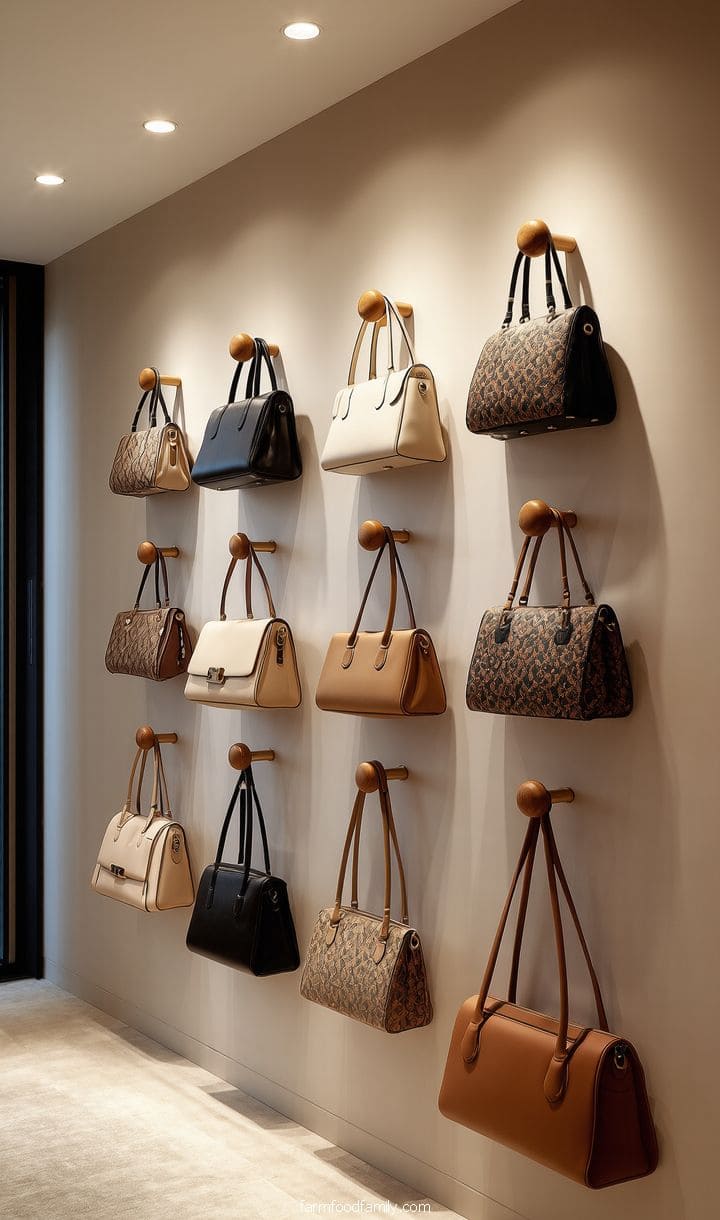
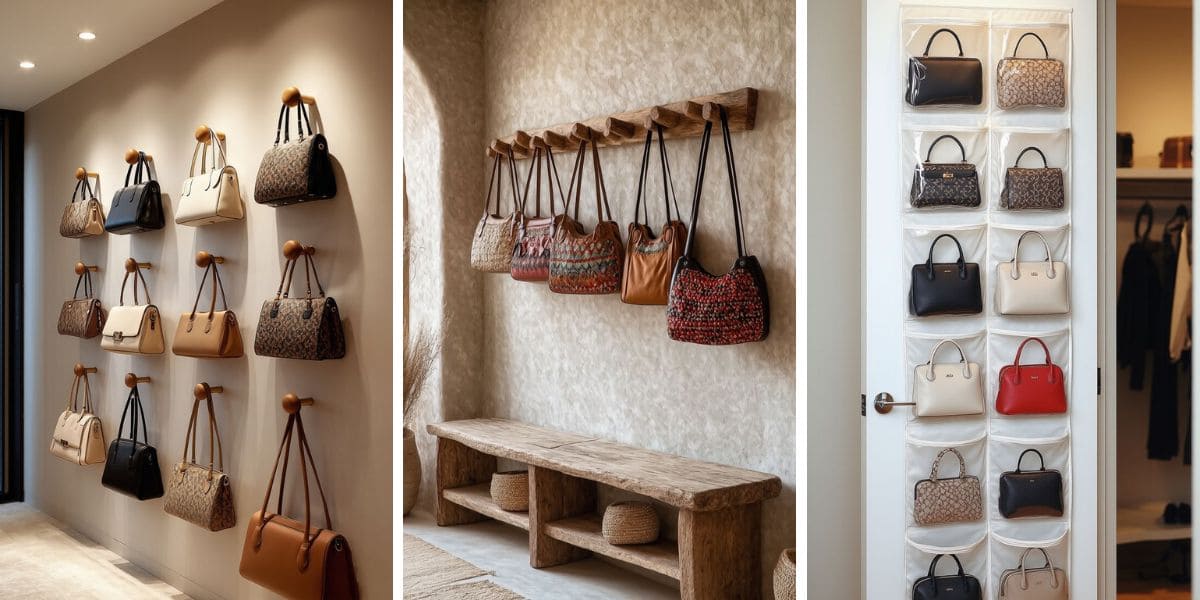
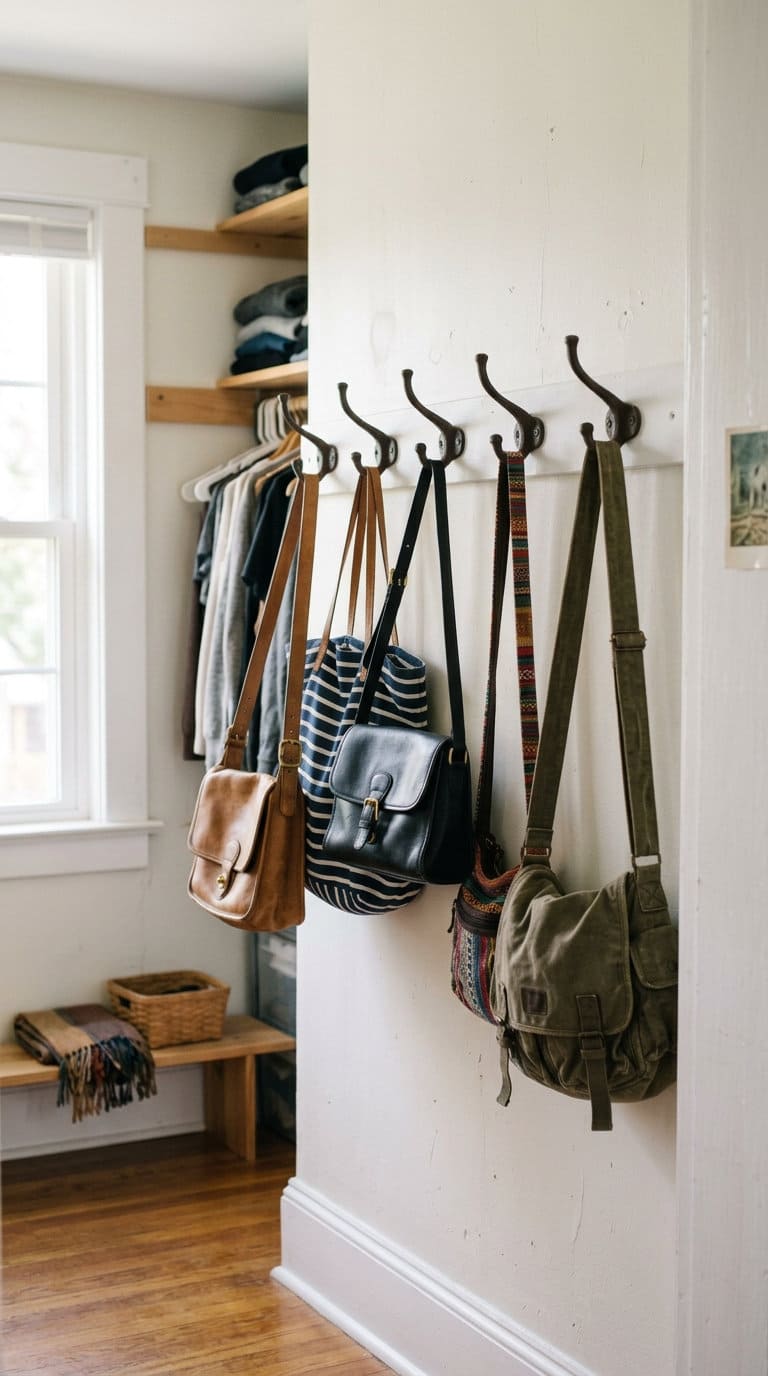
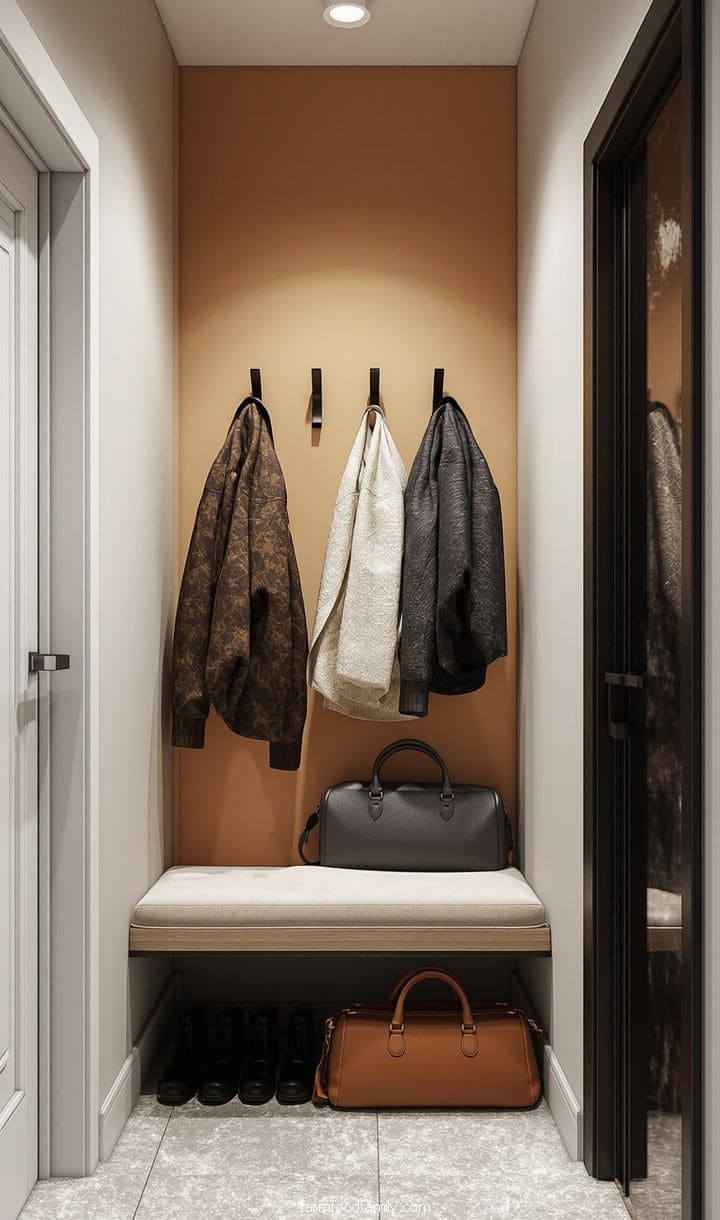
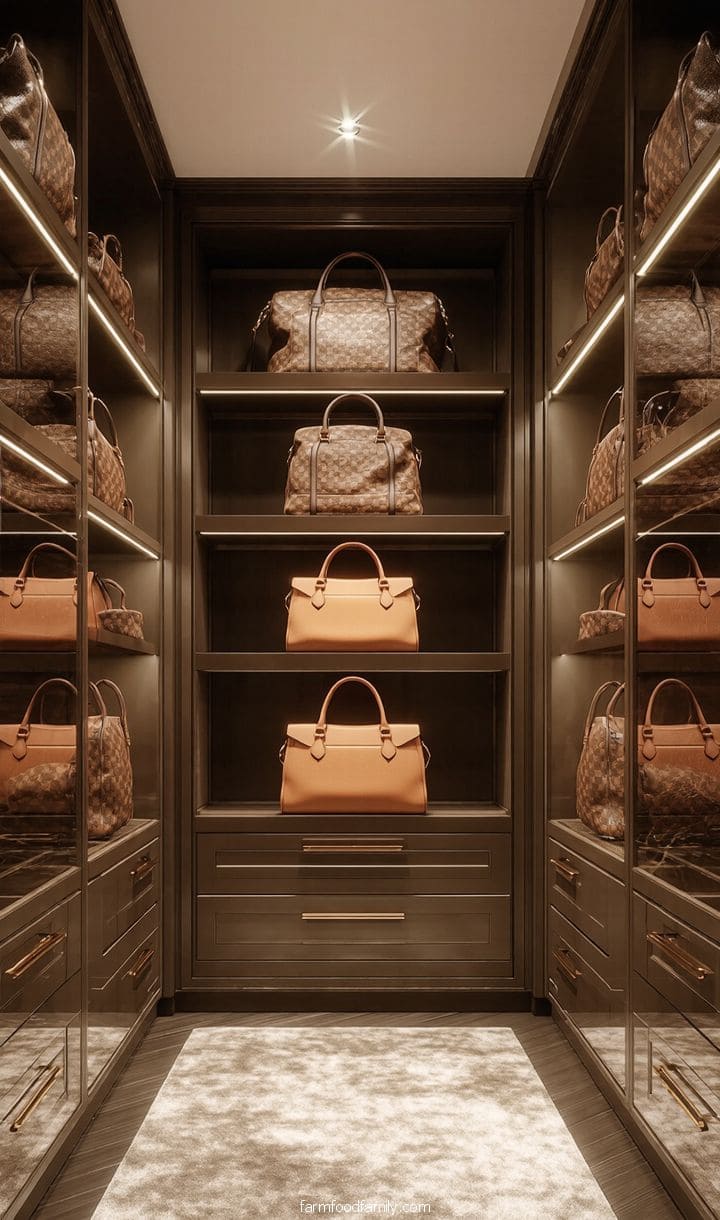
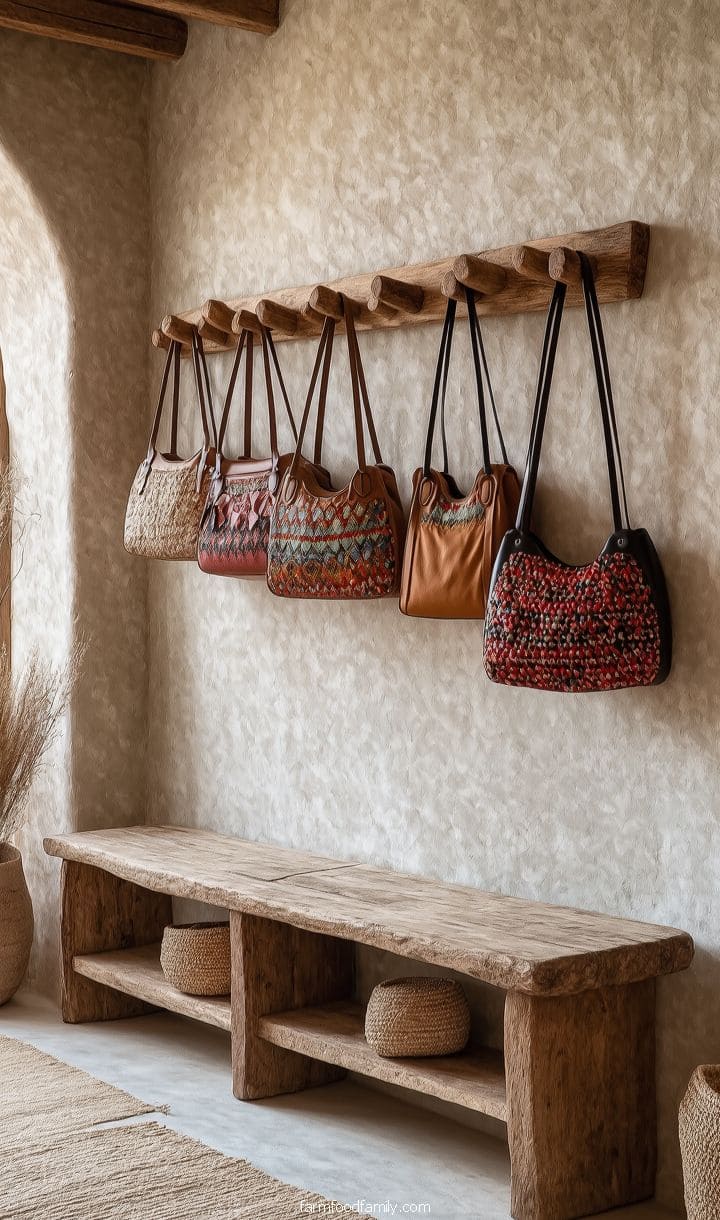
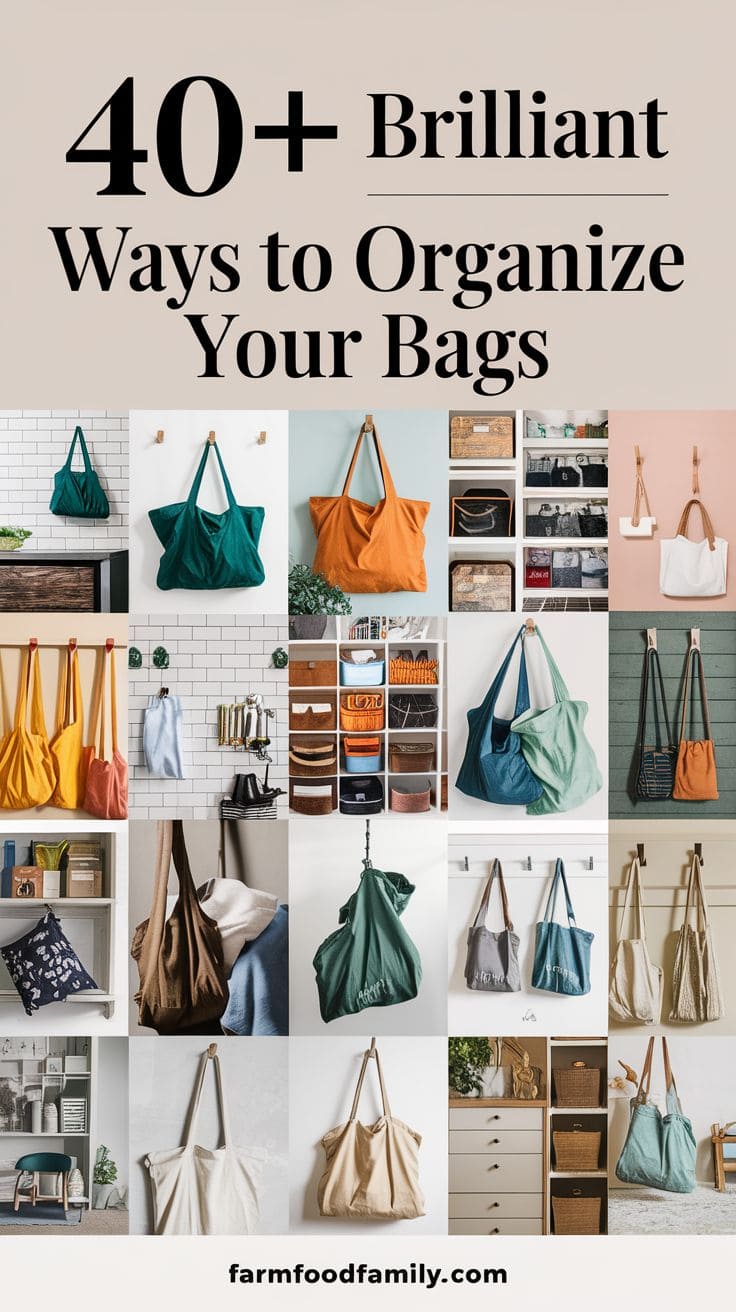
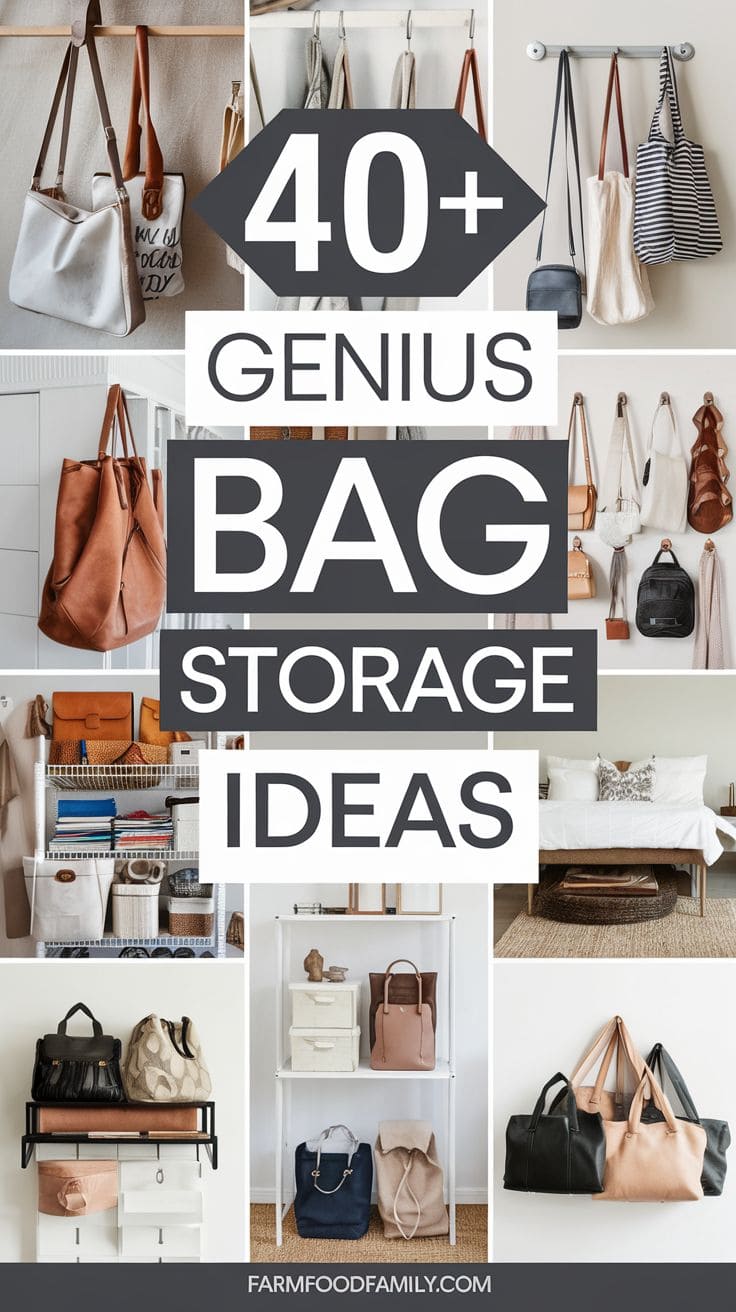
Wall hooks are a simple and visually beautiful method to display handbags while keeping them accessible.


Installing strong hooks on a bedroom or closet wall allows luggage to hang neatly without taking up floor space.
This strategy keeps bags from crushing in a pile and adds a visual touch, especially when stacked in a smart layout.
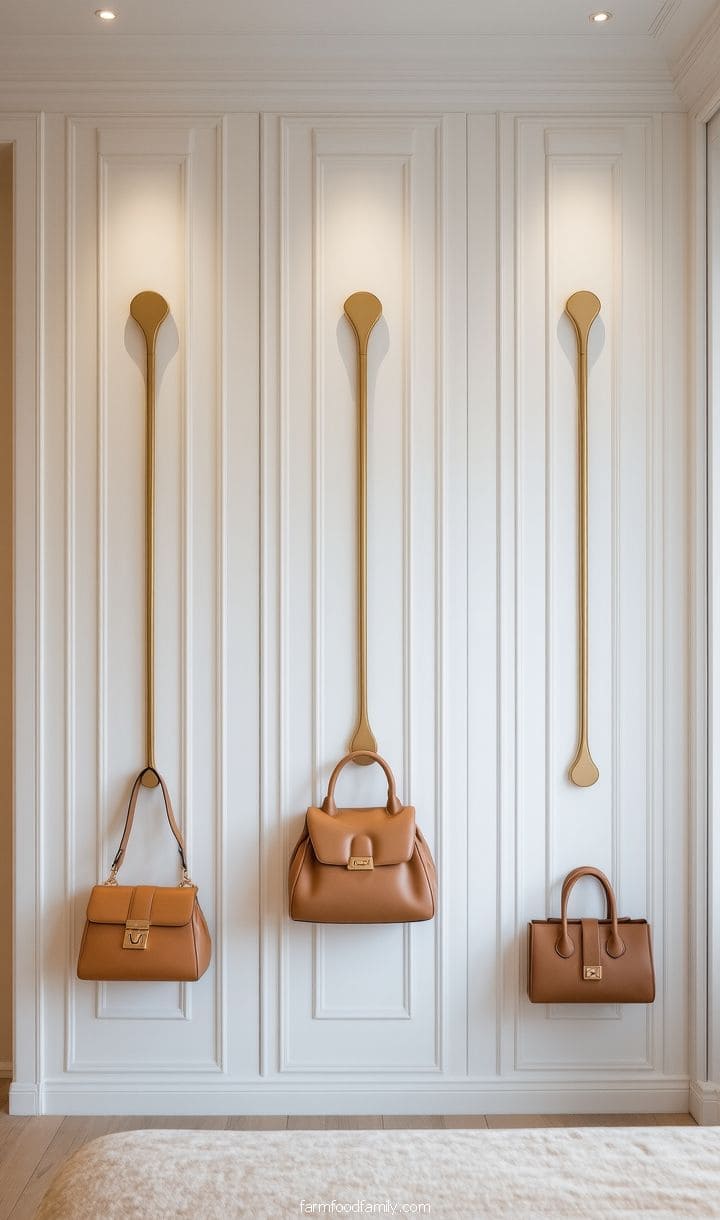
For a sleek and modern effect, choose uniform hooks in metallic or wood tones.
If you prefer a more whimsical look, combine several hook styles or use decorative knobs.
To make regularly used bags more accessible, place hooks near the entryway or behind a door. This idea will help you get the bag you need when you need to move quickly.
2. Over-the-Door Storage for Small Rooms
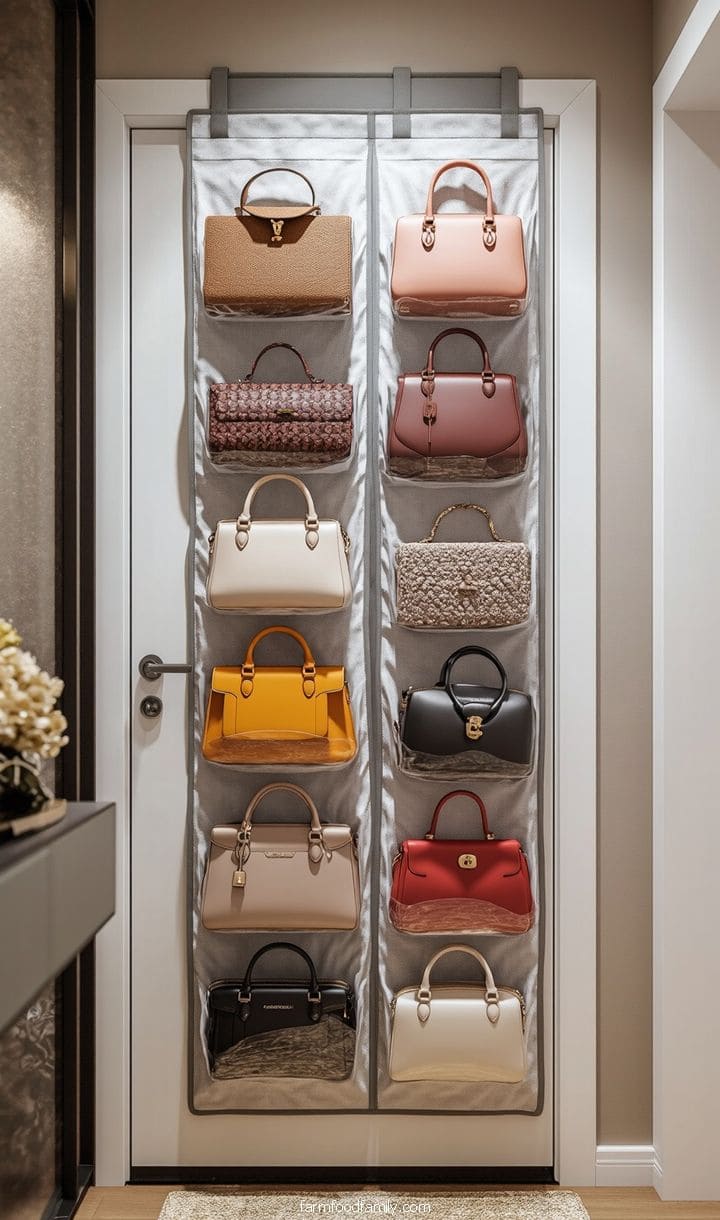
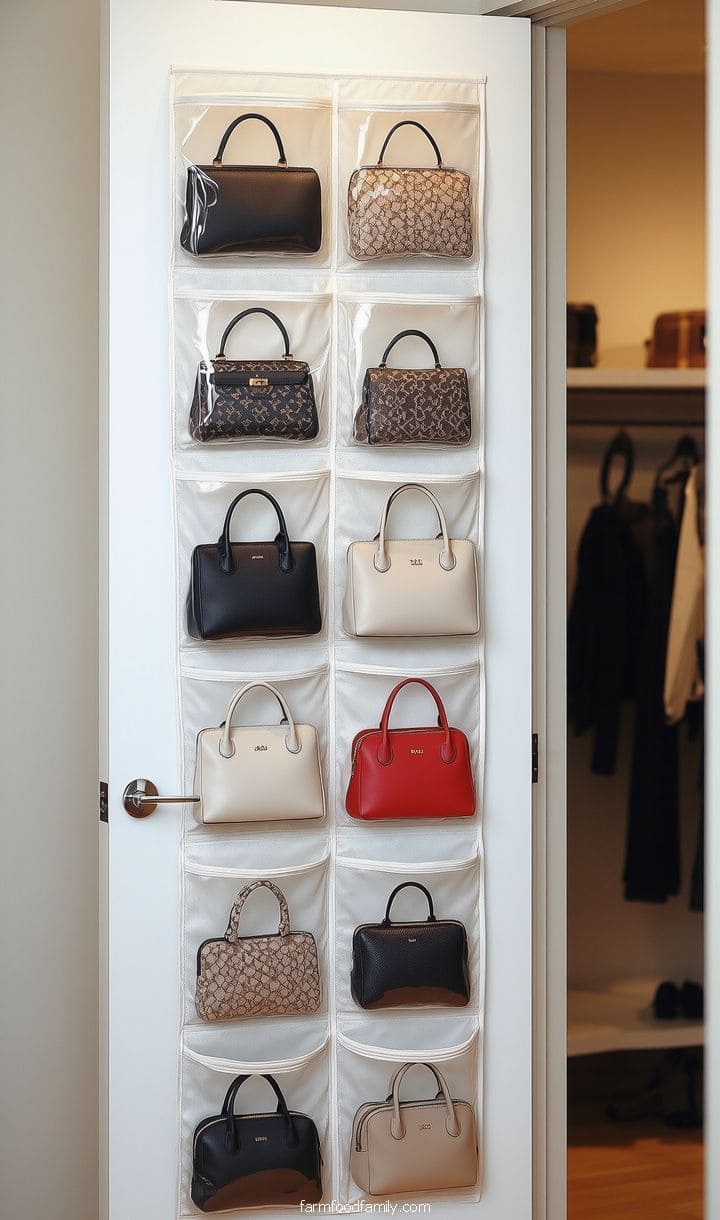
Over-the-door storage is a space-saving alternative for bag storage, particularly in tiny homes or apartments.
Simple hooks on the door make it easy to keep your bag visible and prevent you from forgetting it when you’re set to go.
This solution optimizes vertical space and keeps bags tidy without occupying closet shelves.
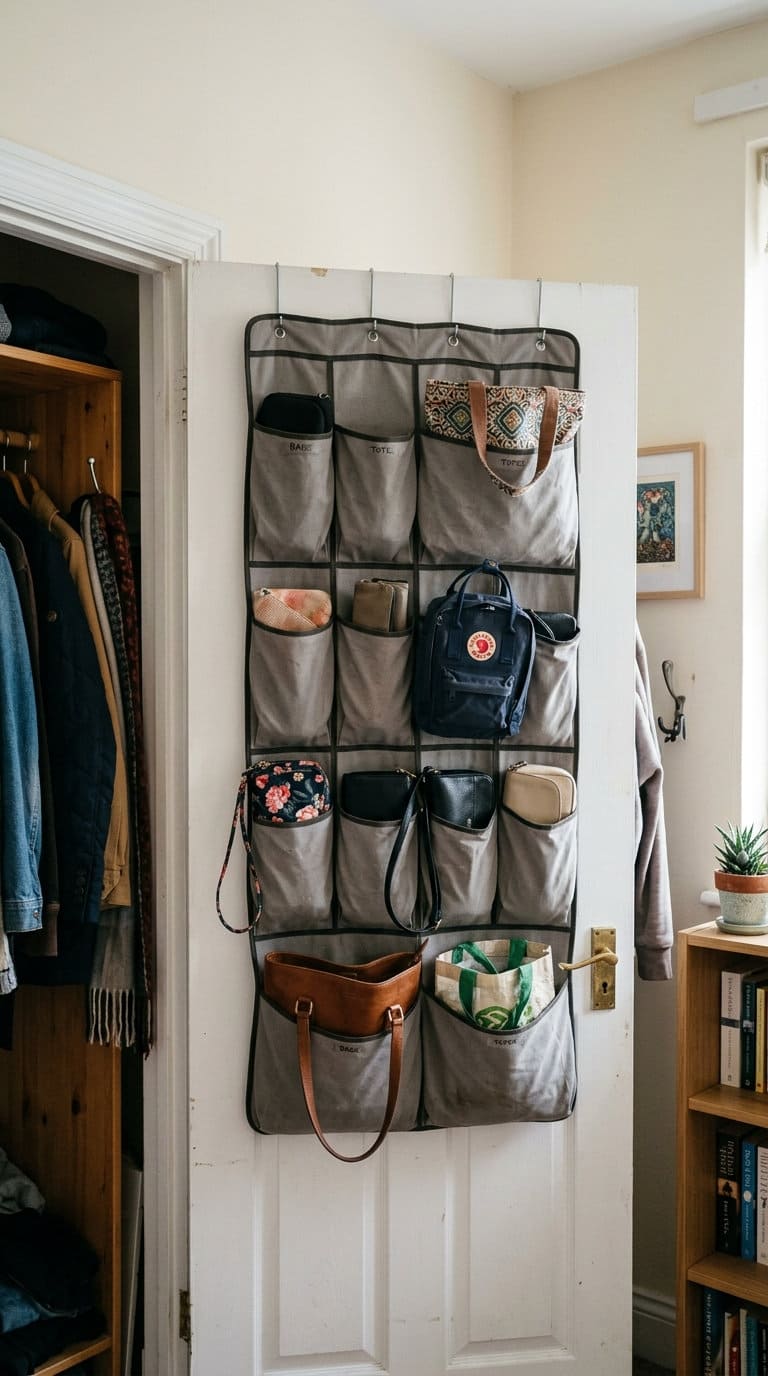
For a more personalized design, use an organizer with adjustable compartments or reinforced portions for heavy baggage.
Placing an over-the-door organizer inside a closet door keeps the area appearing neat while making bags easy to get when needed.
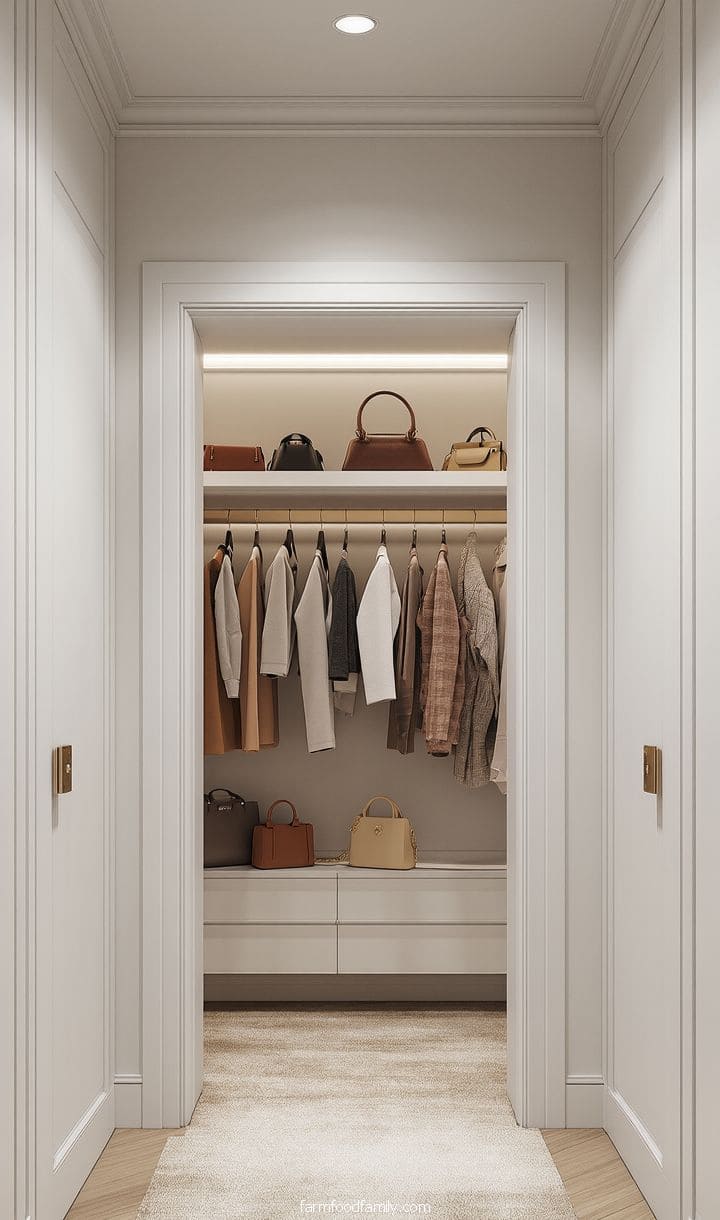
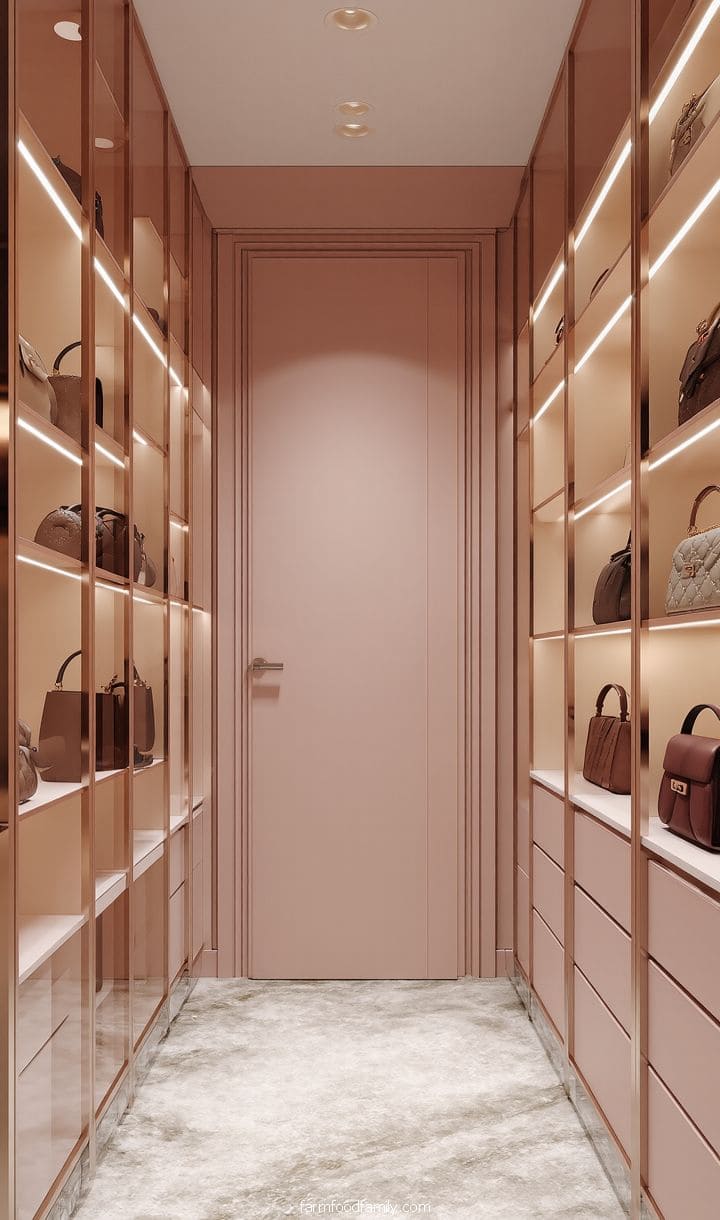
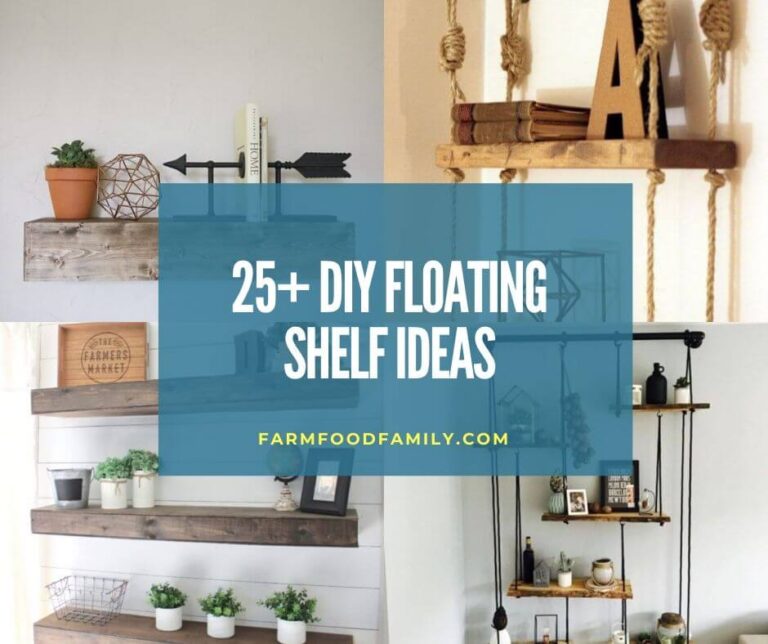
3. Floating Shelves for Organized Display
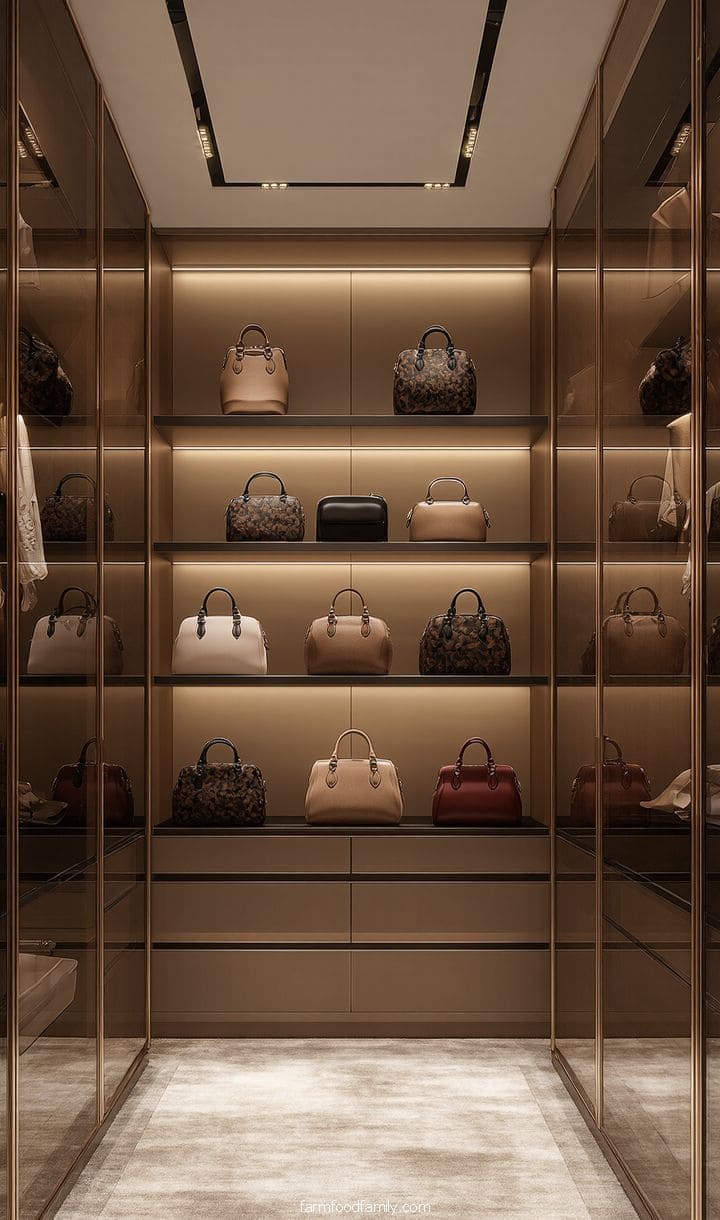
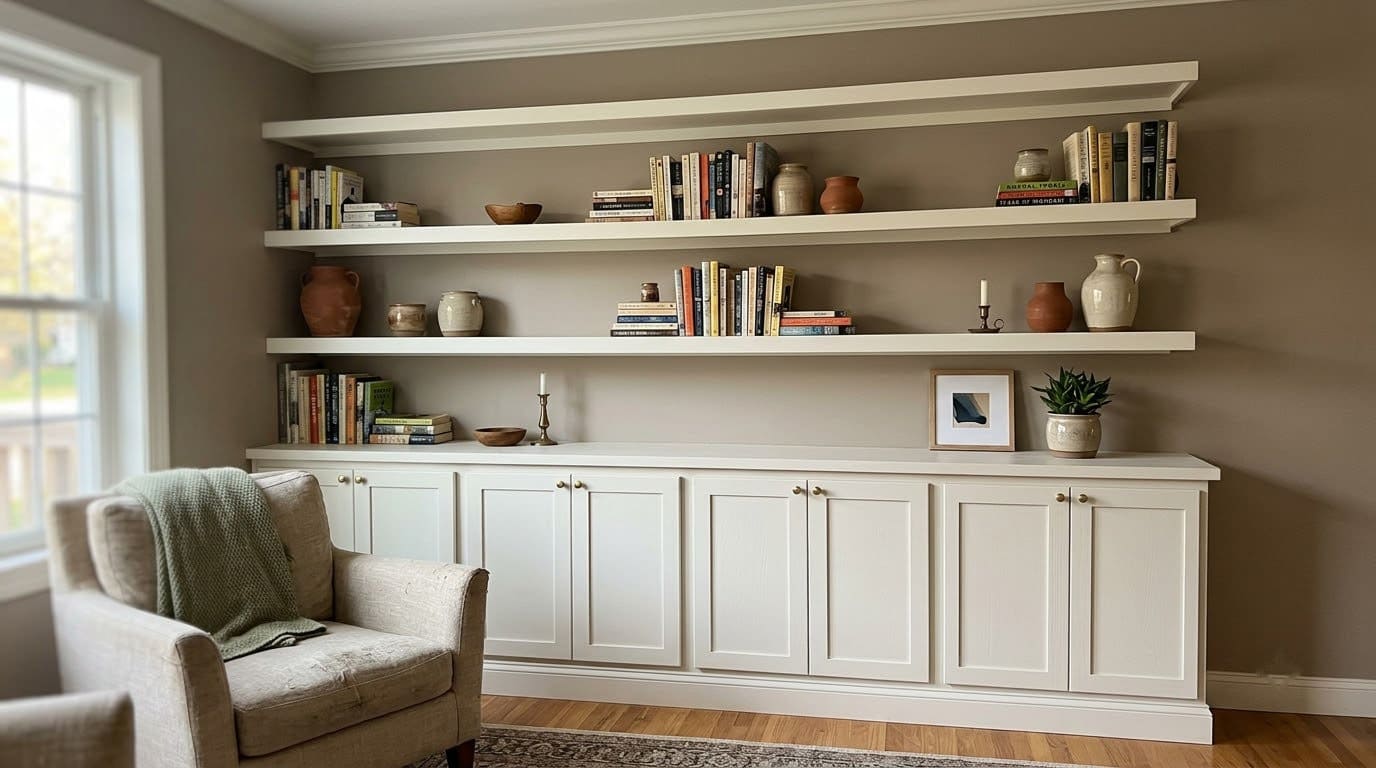
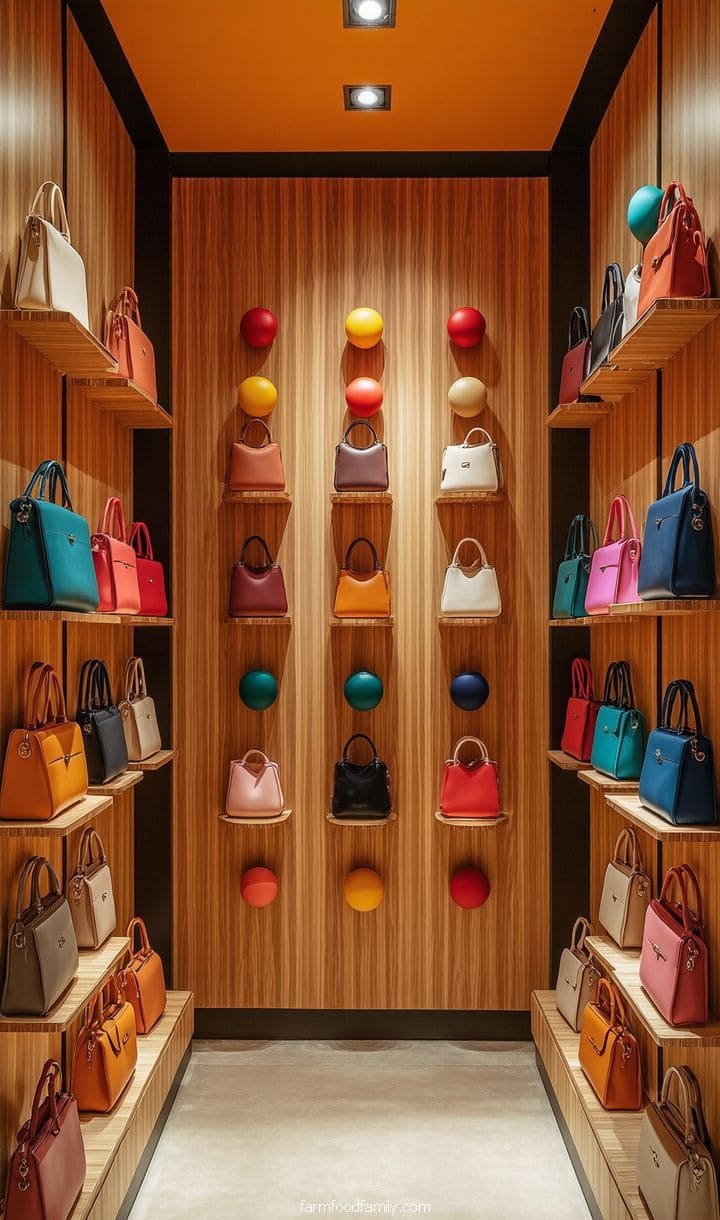
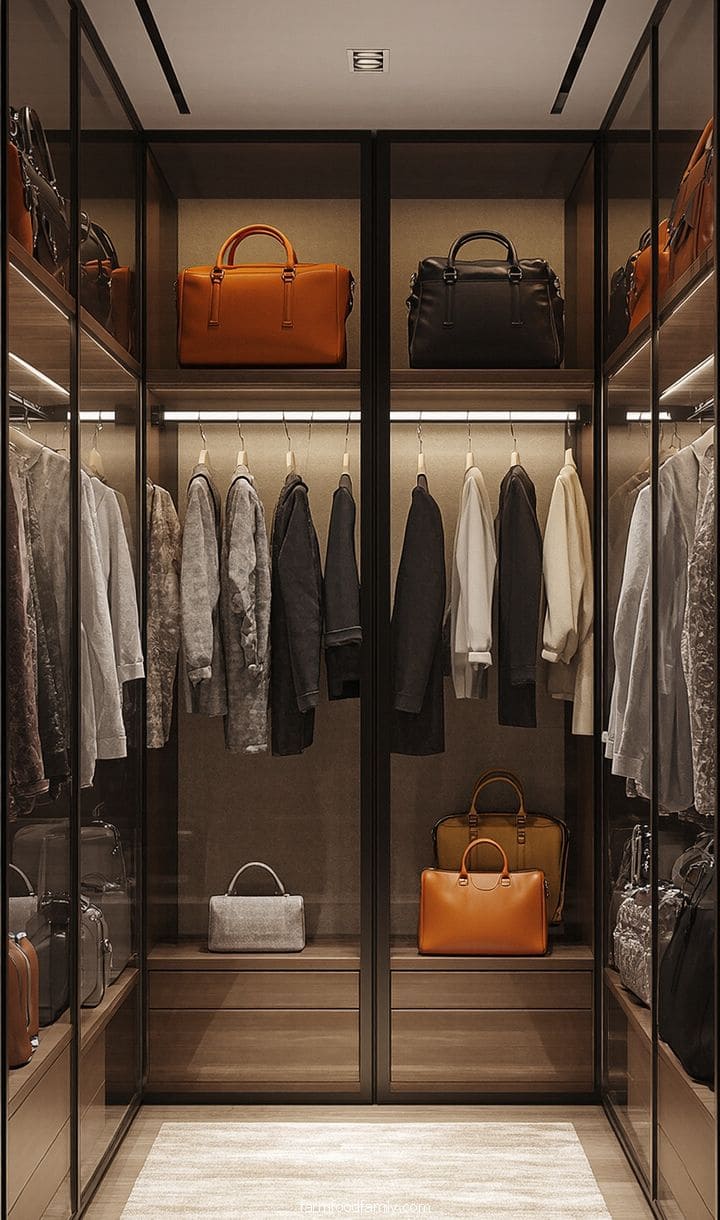
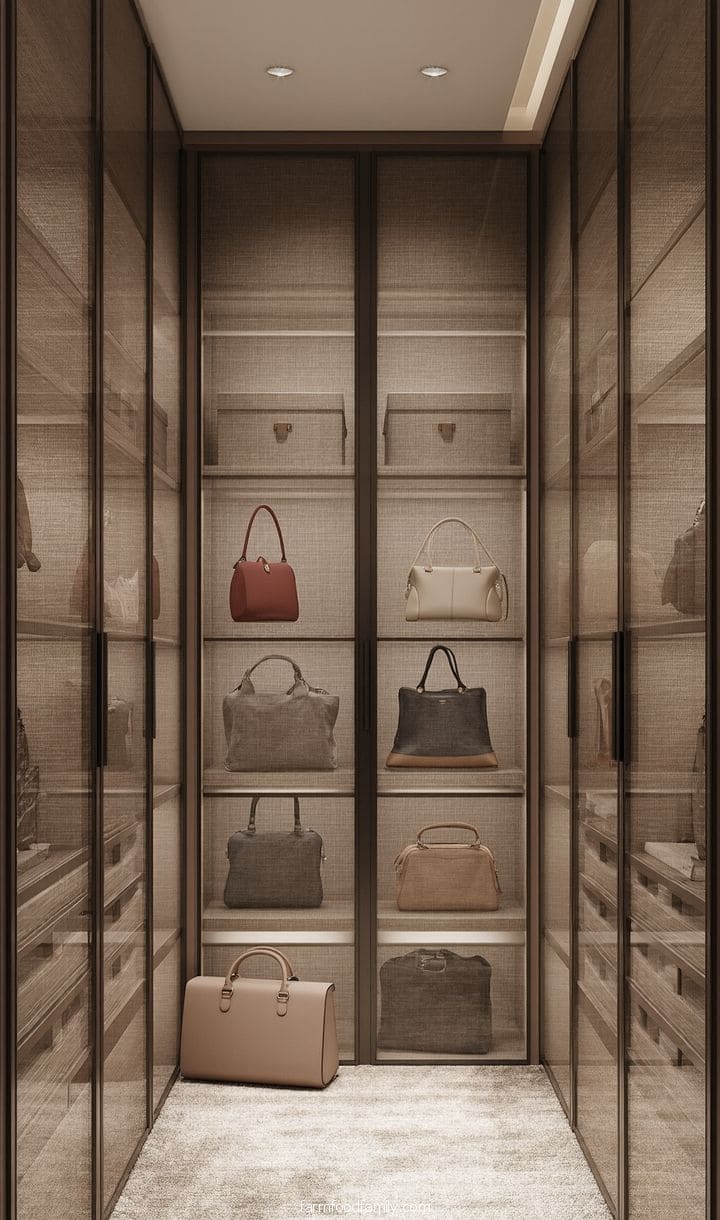
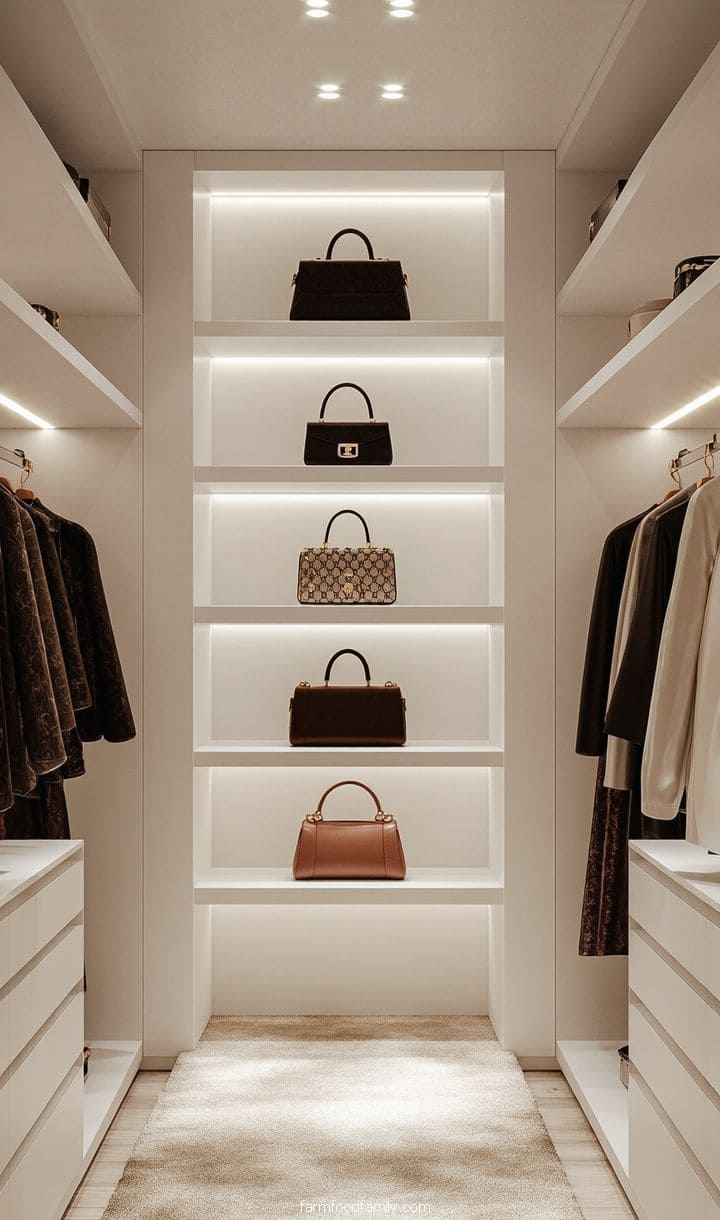
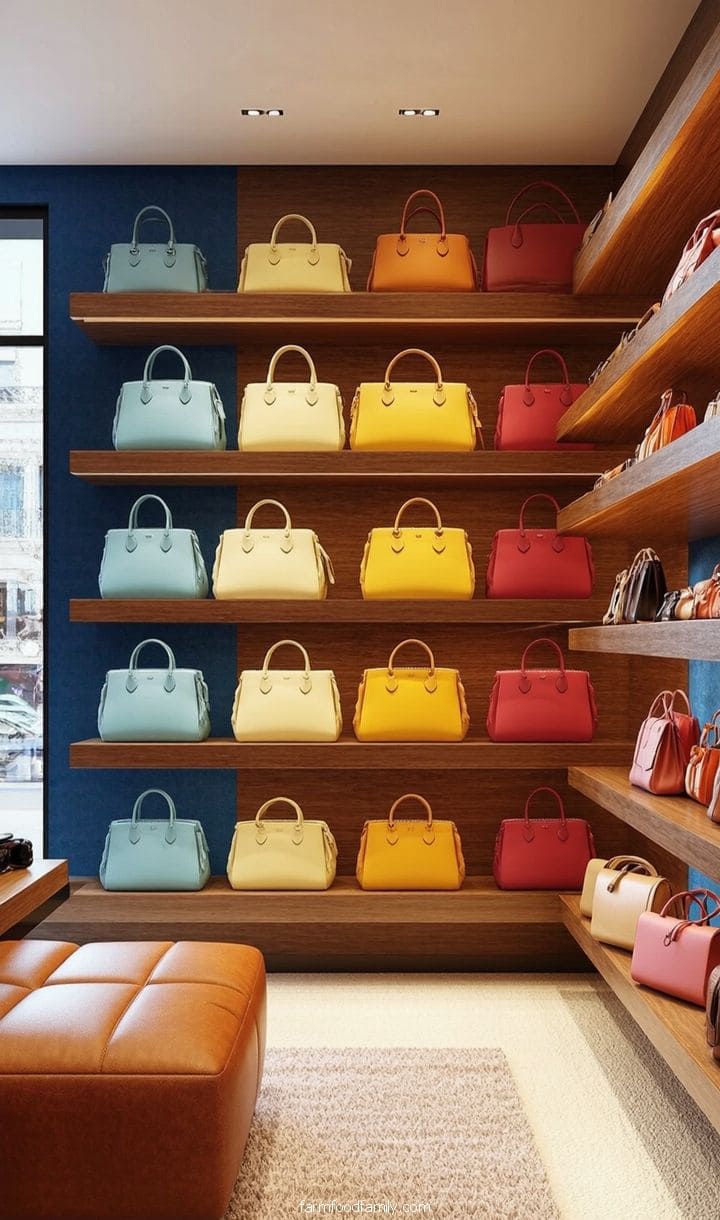
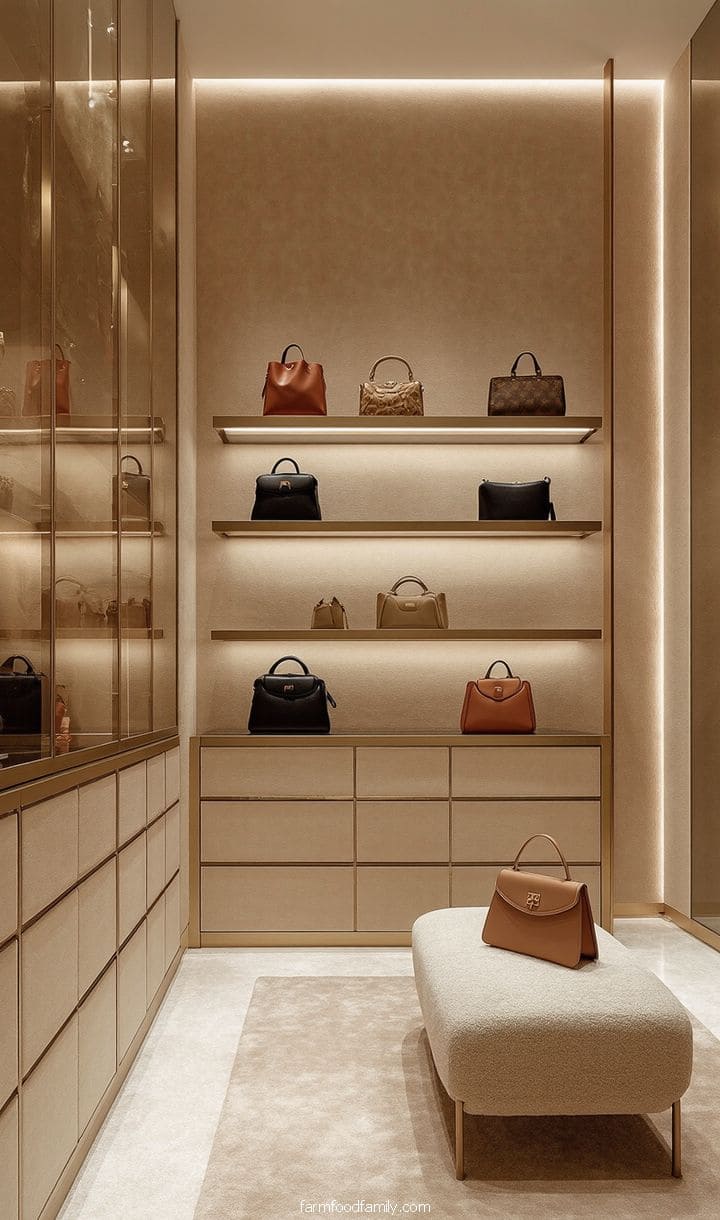
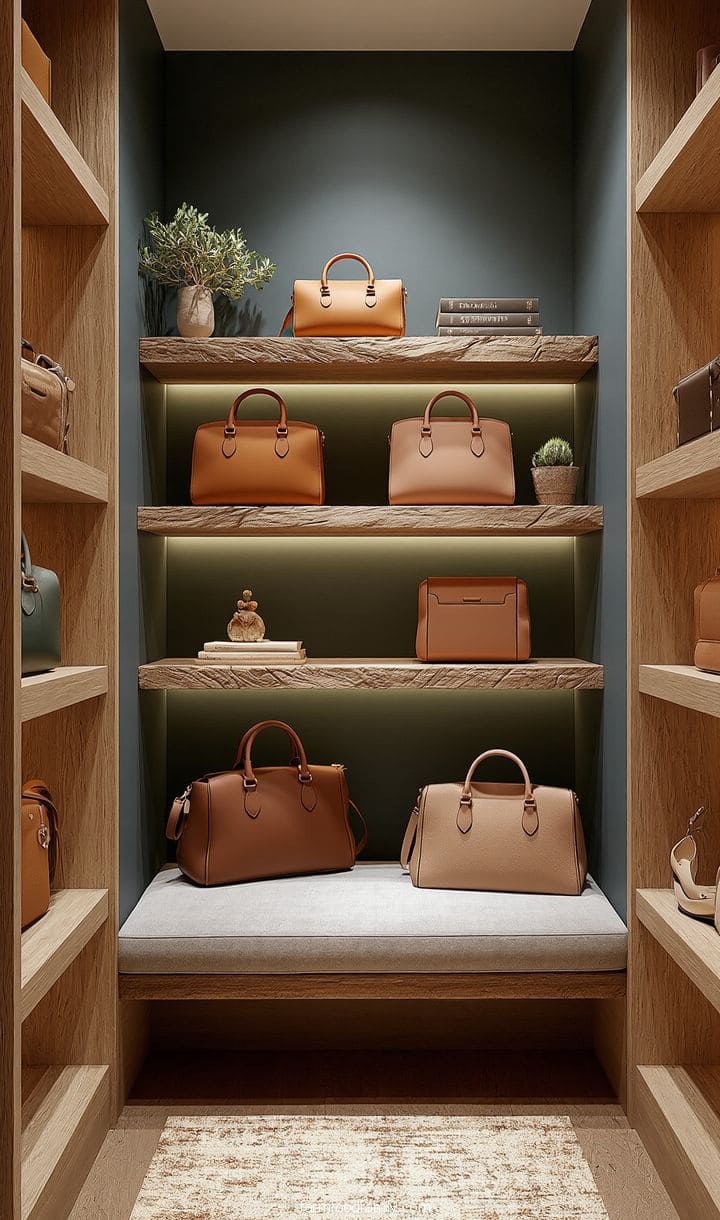
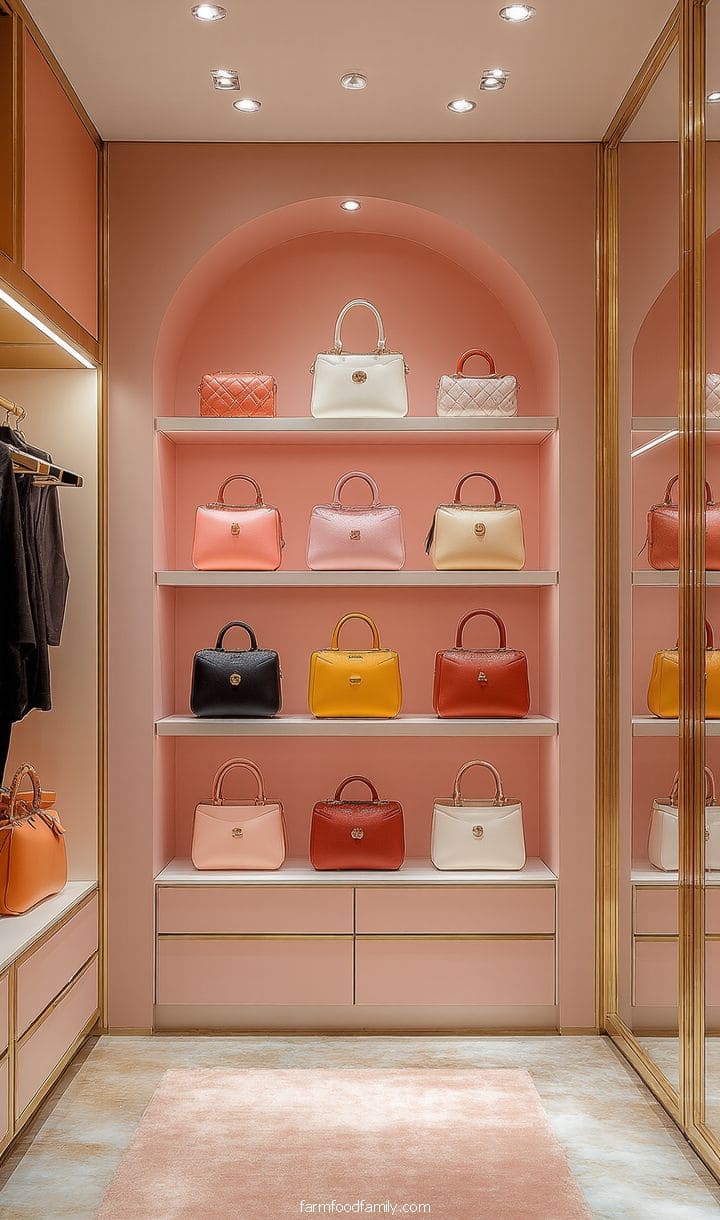
Floating shelves are a fashionable and functional method to store handbags, transforming them into a decorative piece in your home.
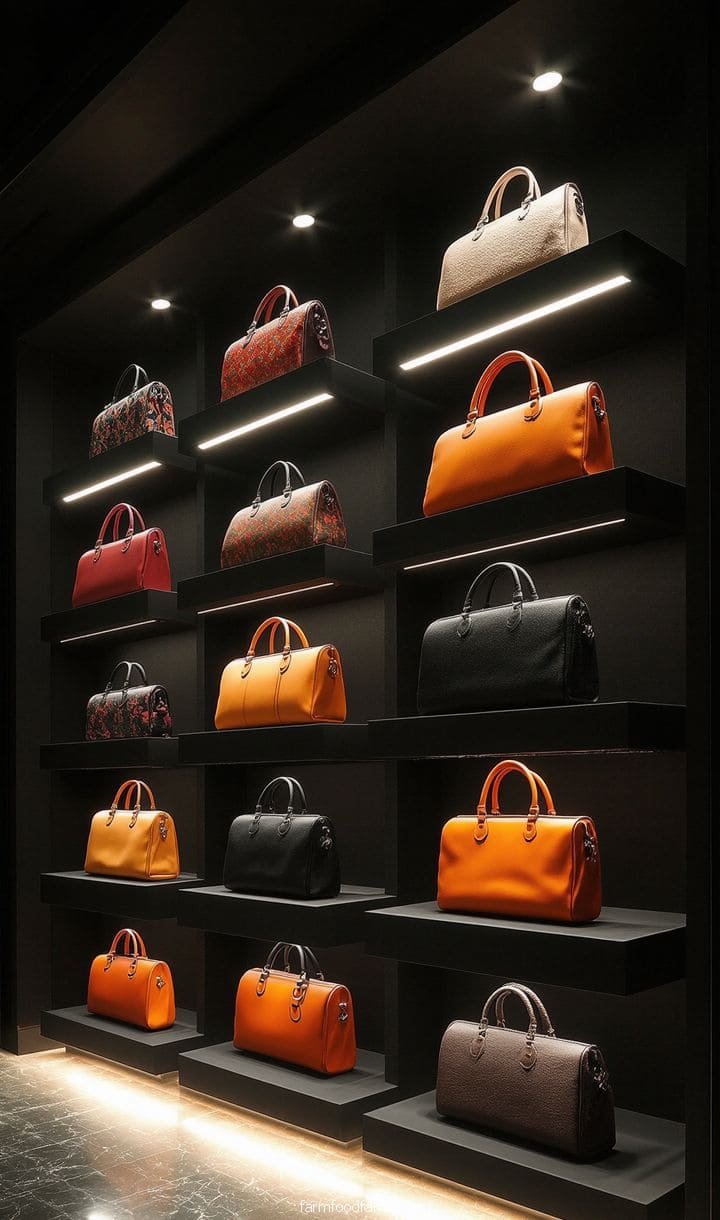
Staggering shelves at varying heights allows for a visually appealing arrangement, letting your bag collection appear to be part of the decor.
This configuration is especially useful for structural purses that can stand upright without losing shape.
You can have a sturdy spot to store your bags while being accessible.
Arrange bags by color, size, or style to keep them looking tidy.
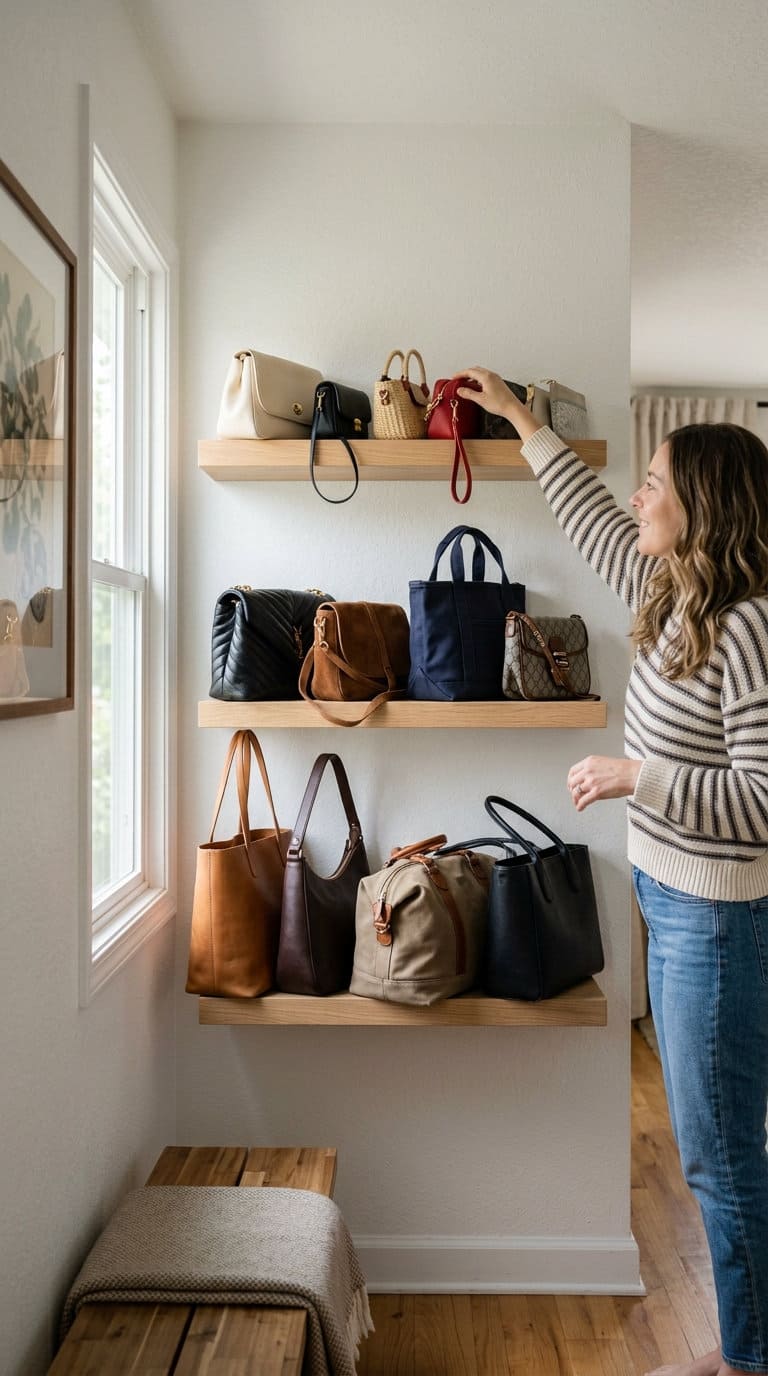
Using small separators or acrylic shelf risers will help you maximize space while keeping each bag securely in place.

To create a boutique-like atmosphere, use LED strip lights under each shelf to highlight your collection.
4. Cube Storage for an Organized and Modular Look
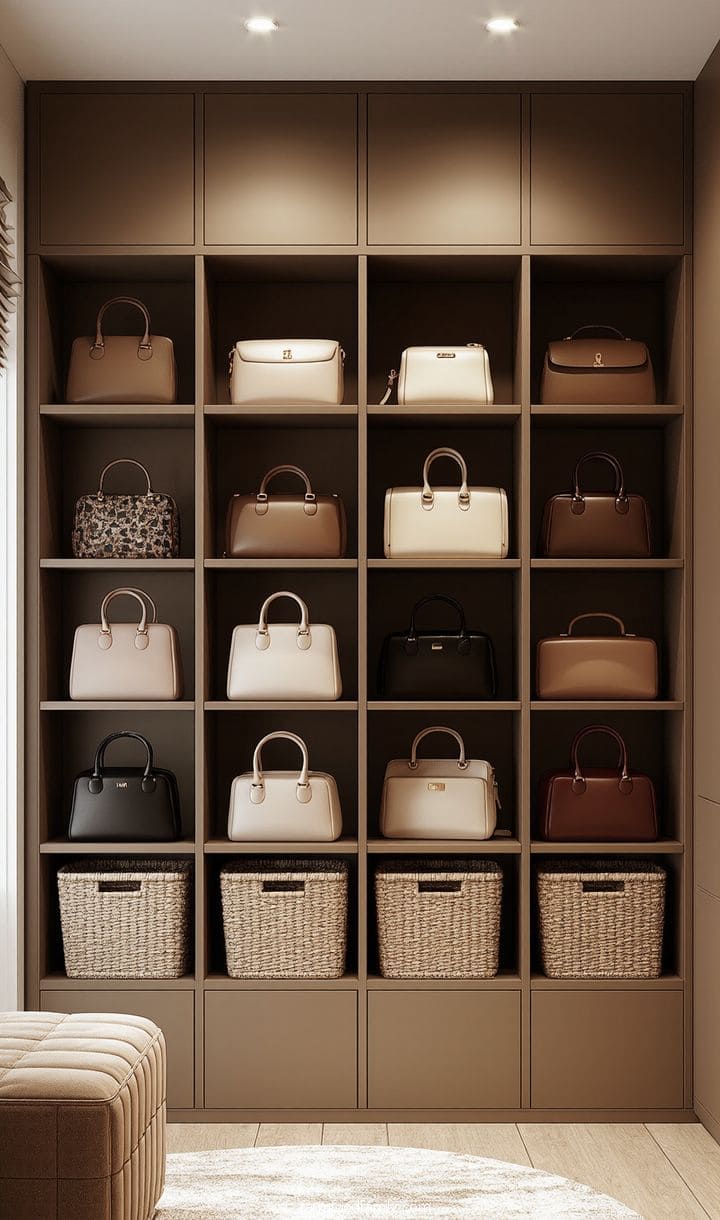
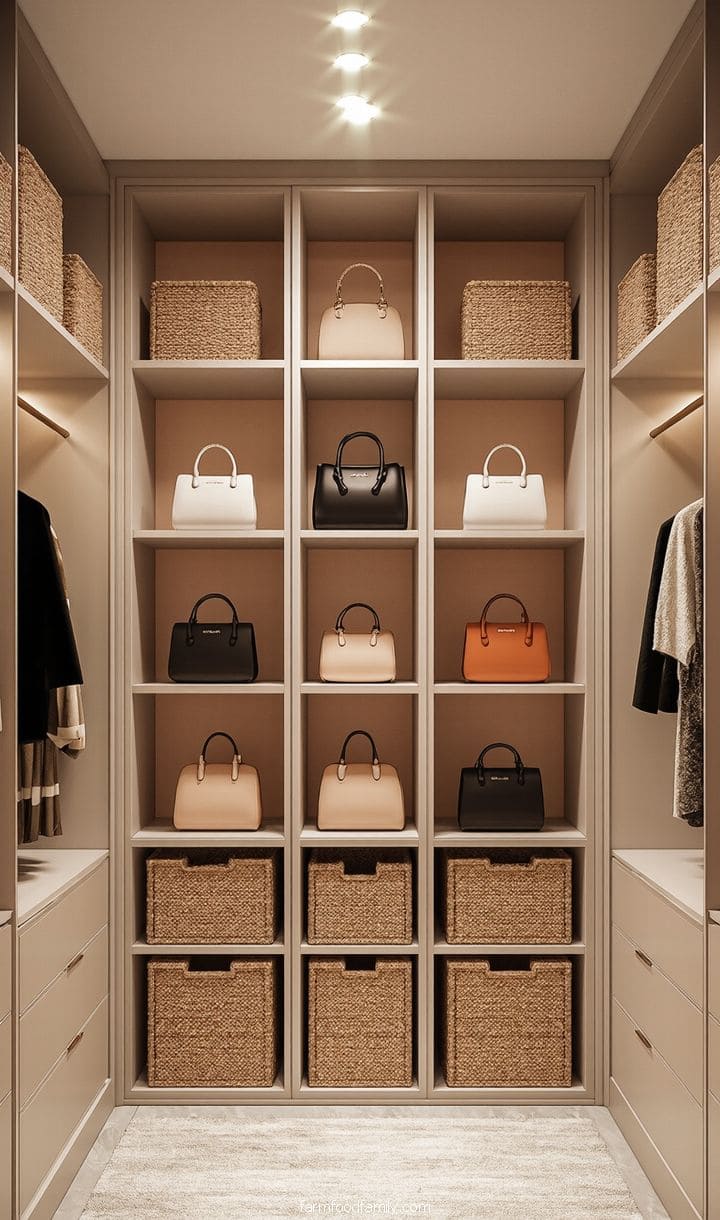
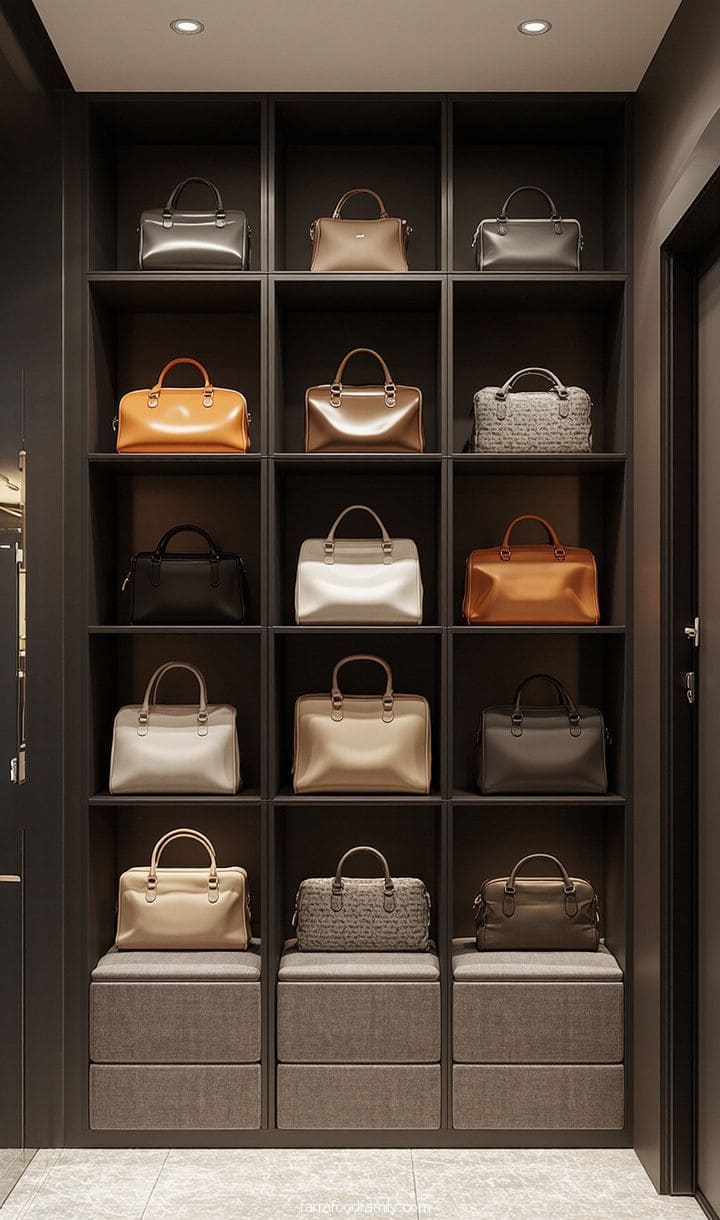
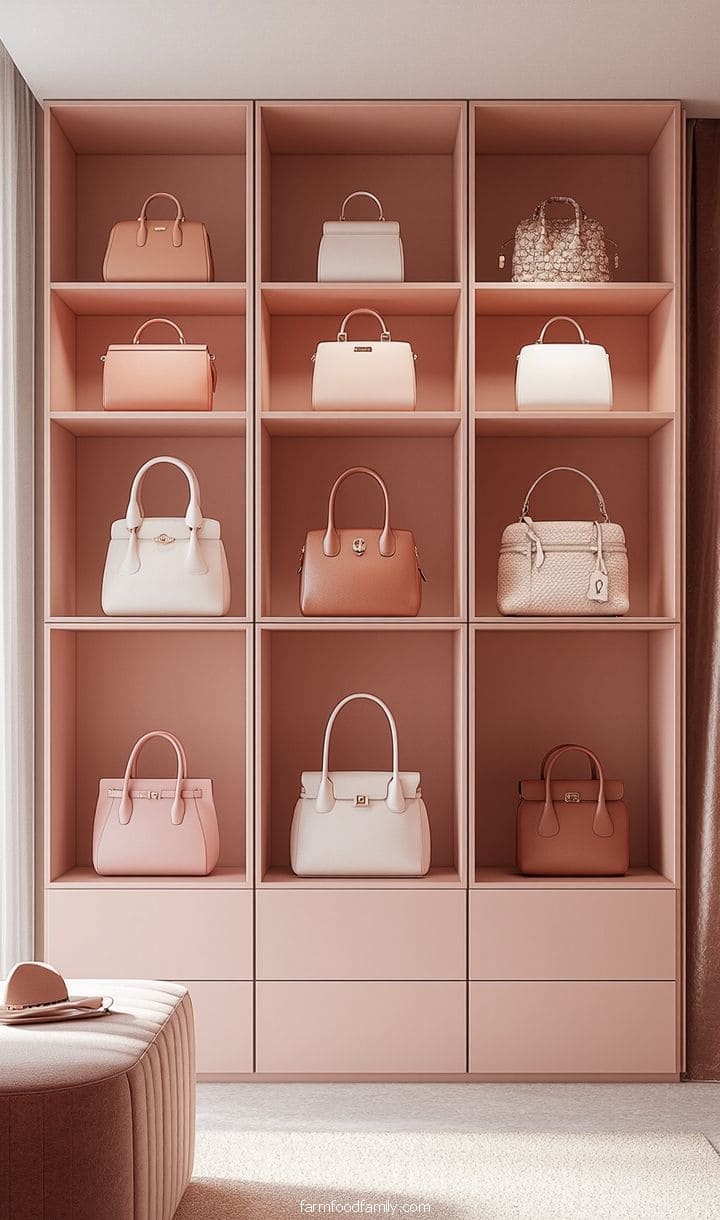
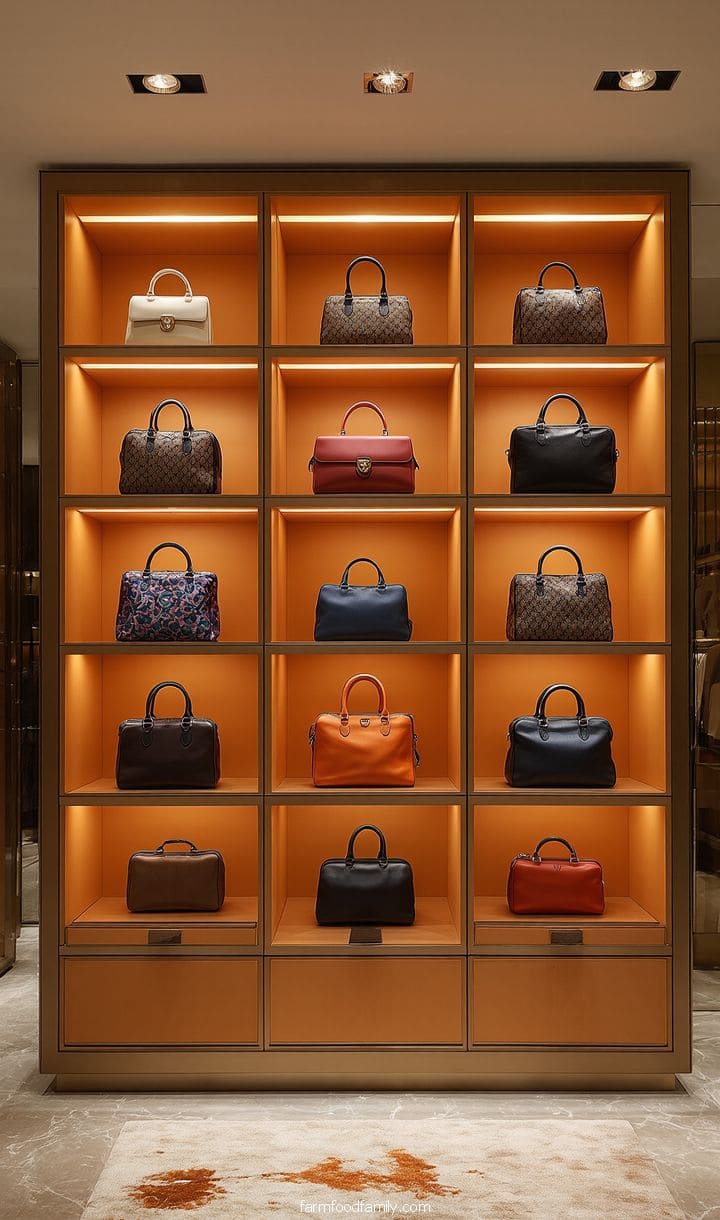
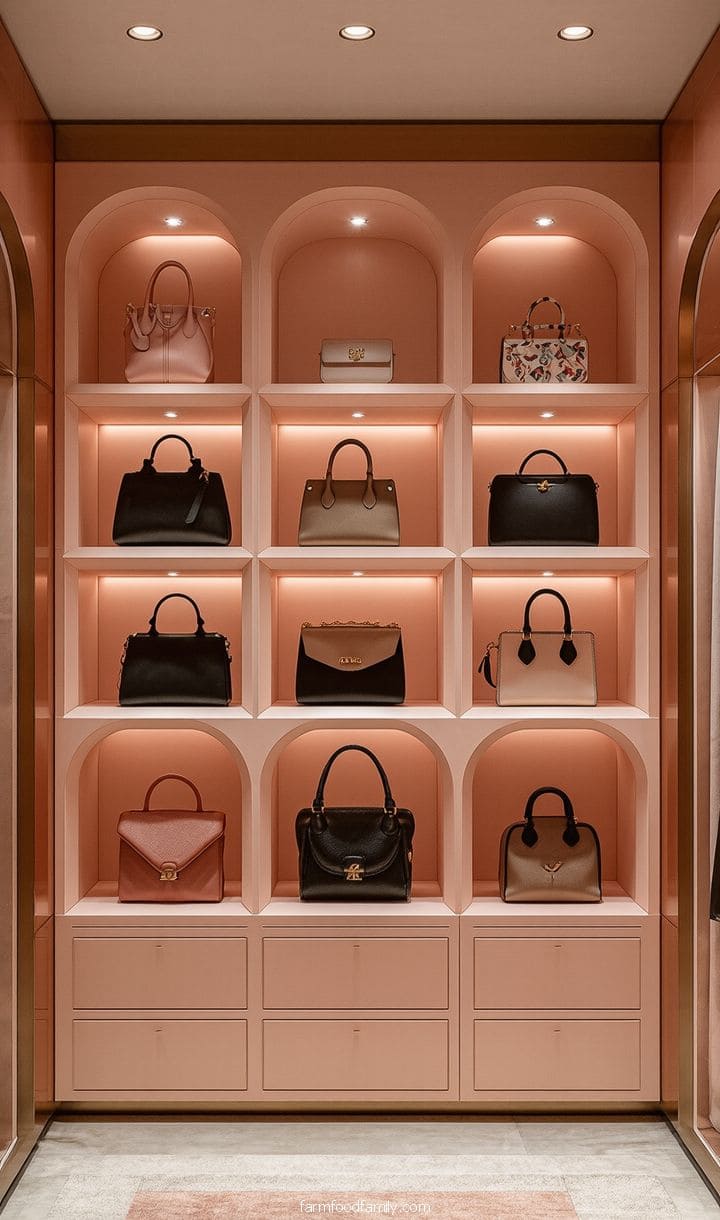
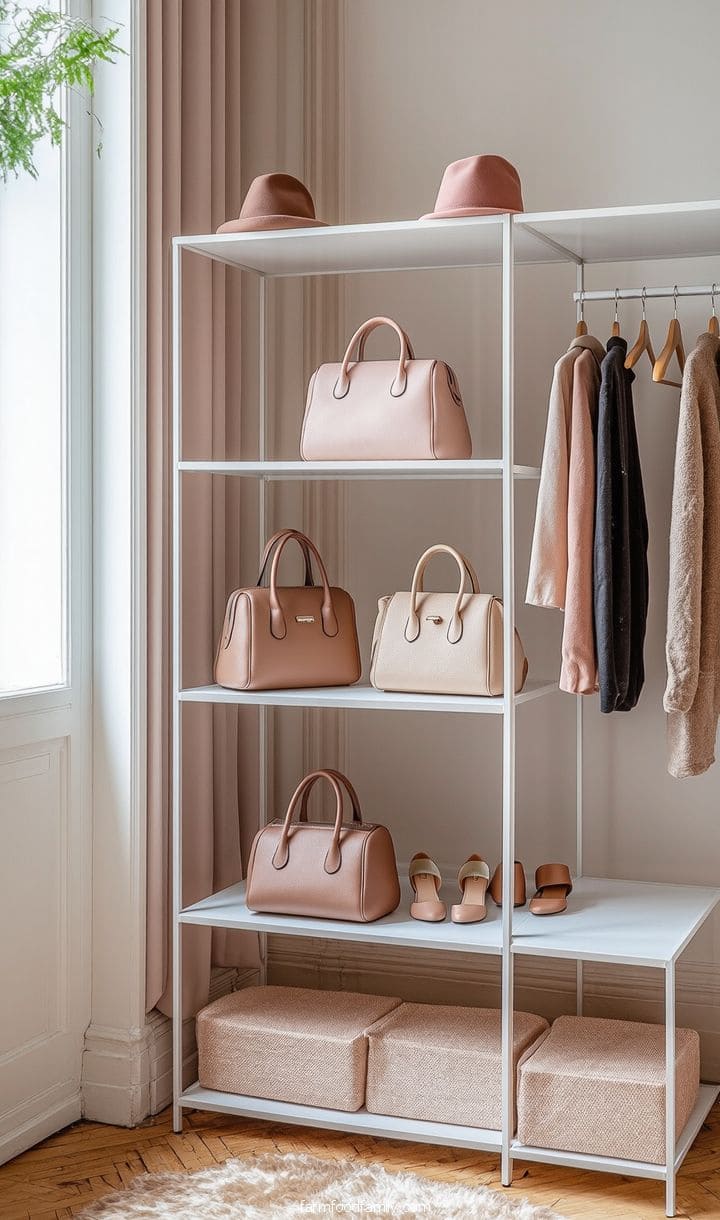
Cube storage containers allow you to store your baggage in a modular and customized fashion that keeps them visible and accessible.
These containers can be placed in a closet, bedroom, or doorway to provide specialized storage for various sorts of baggage.
Fabric or woven bins within the cubes are ideal for soft or flexible bags, while open cubes are ideal for rigid handbags.
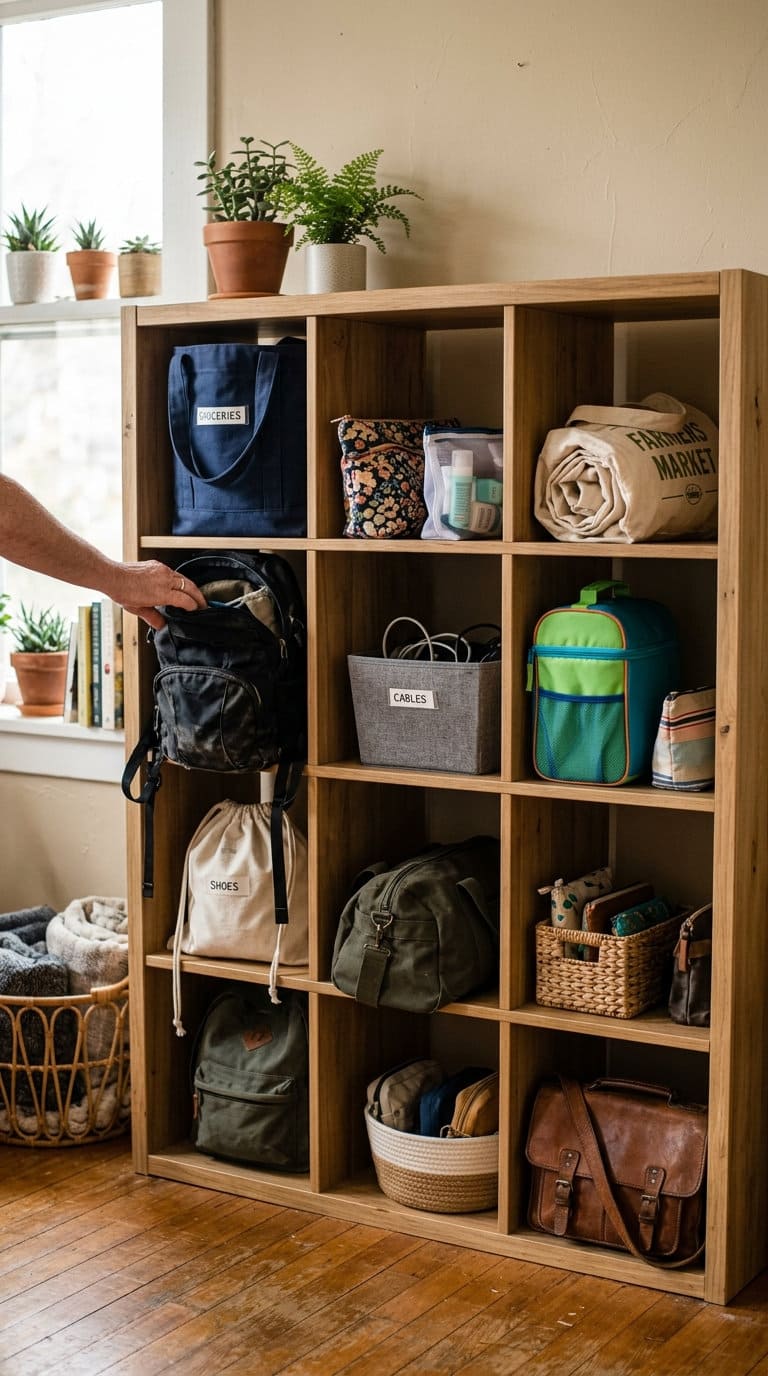
Stackable cube organizers provide versatile storage solutions, making it simple to expand as your collection expands.
Alternating between open and closed storage provides variation while keeping the space orderly for a more aesthetically pleasing appearance.
5. Garment Racks for Boutique-Inspired Displays
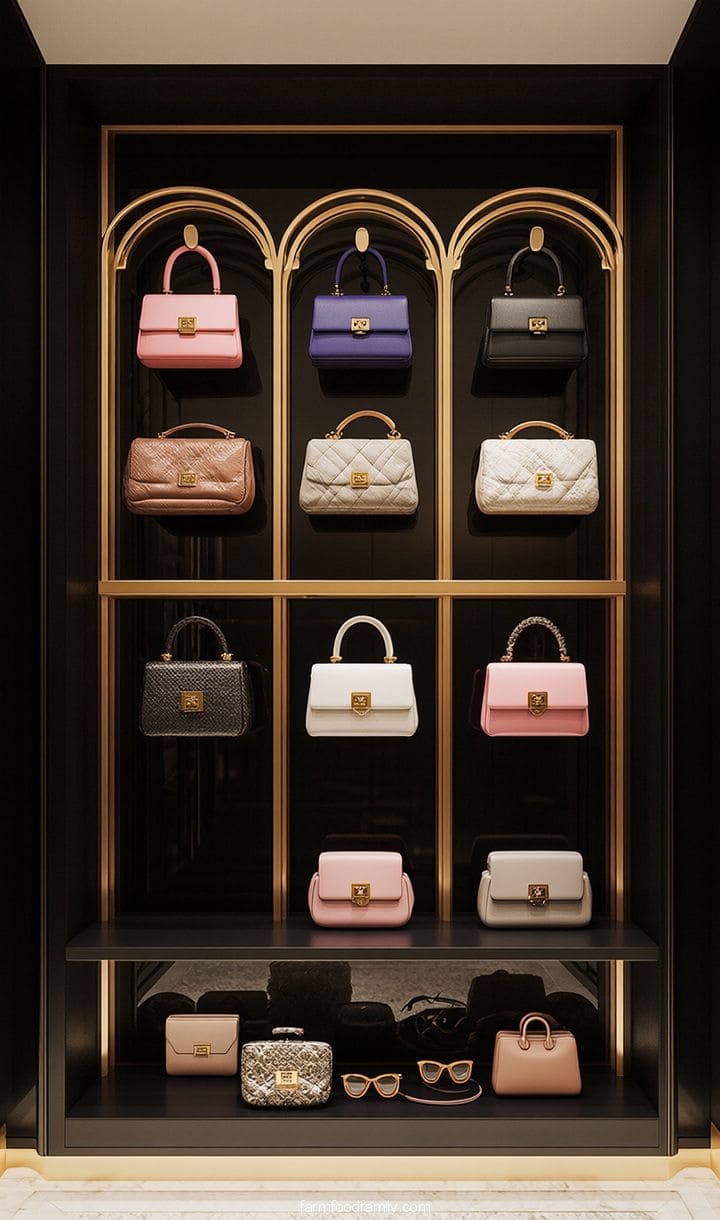
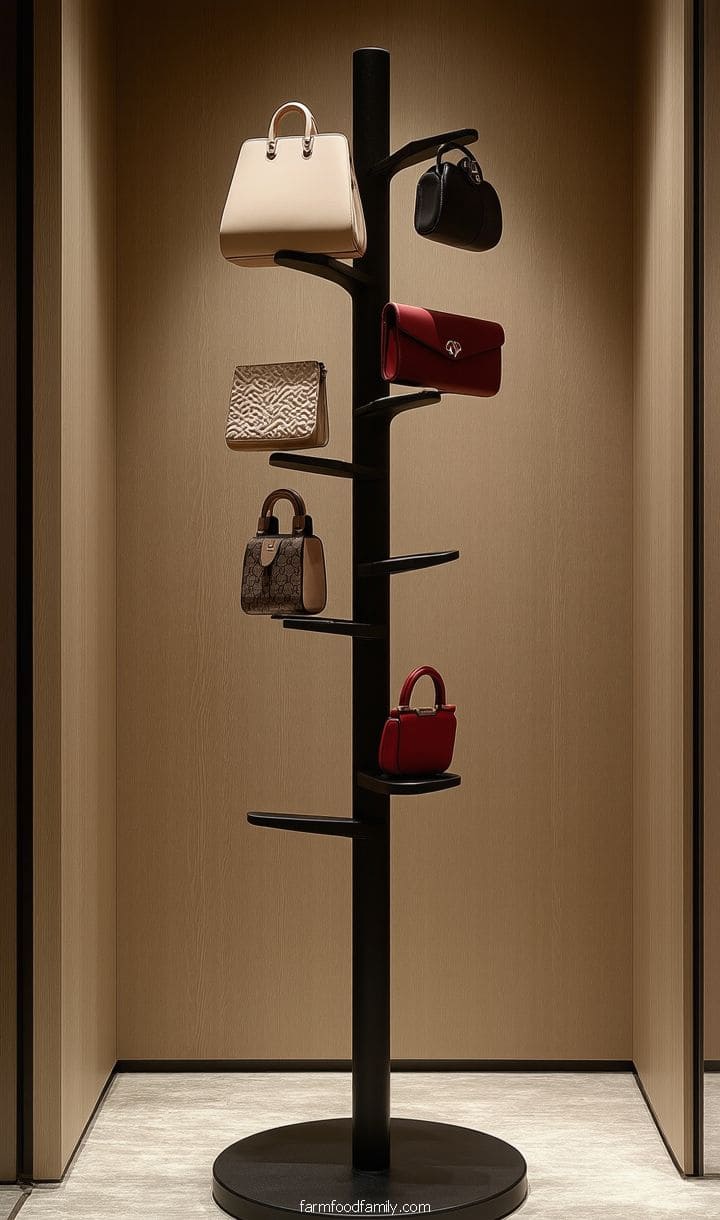
A freestanding clothing rack adds a sleek and efficient method to store handbags, providing a boutique-inspired effect in a bedroom or dressing room.
Hanging bags on robust hangers or S-hooks displays them attractively while preventing harm.
Arrange bags by color or style to create a curated look, much like a store display.
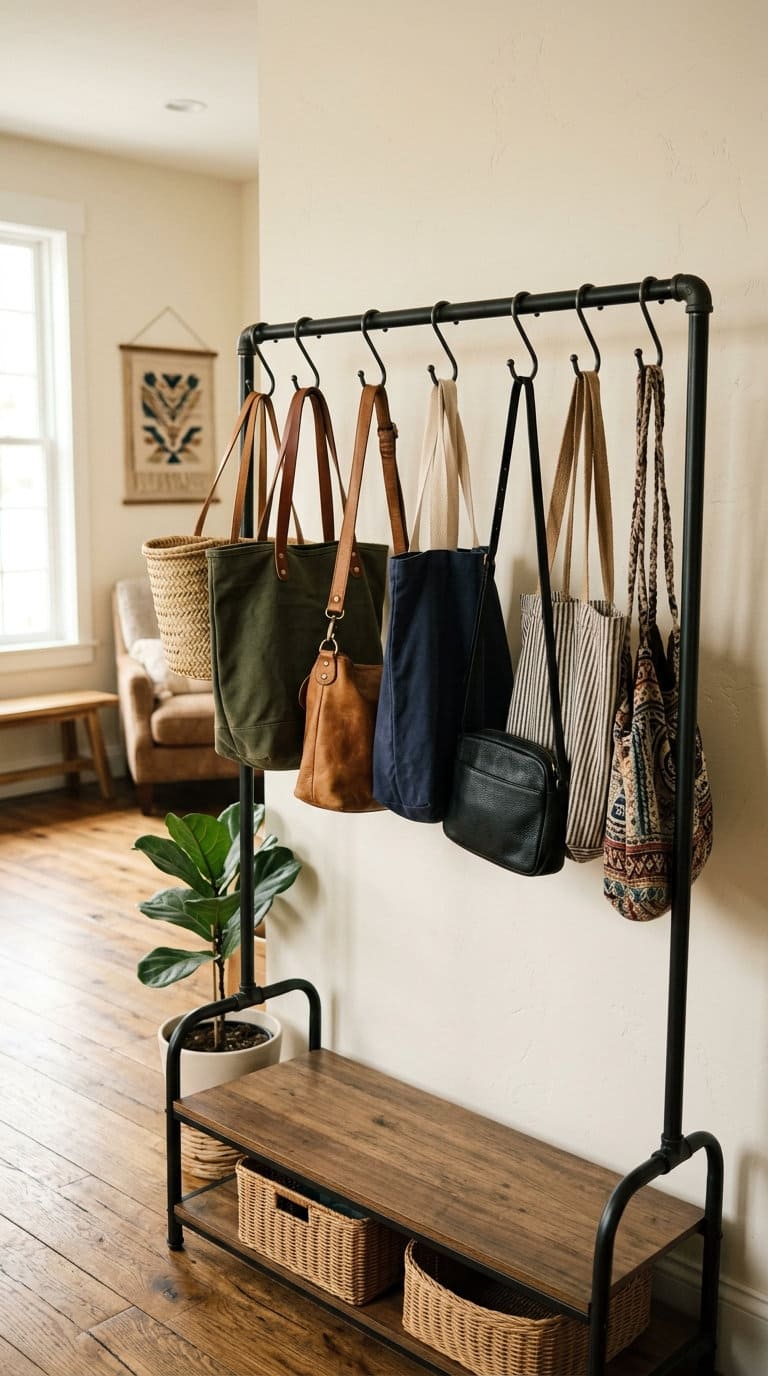
Combining the rack with a tiny shelf or tray for smaller accessories, such as wallets or sunglasses, improves the overall appearance while keeping everything easily accessible.
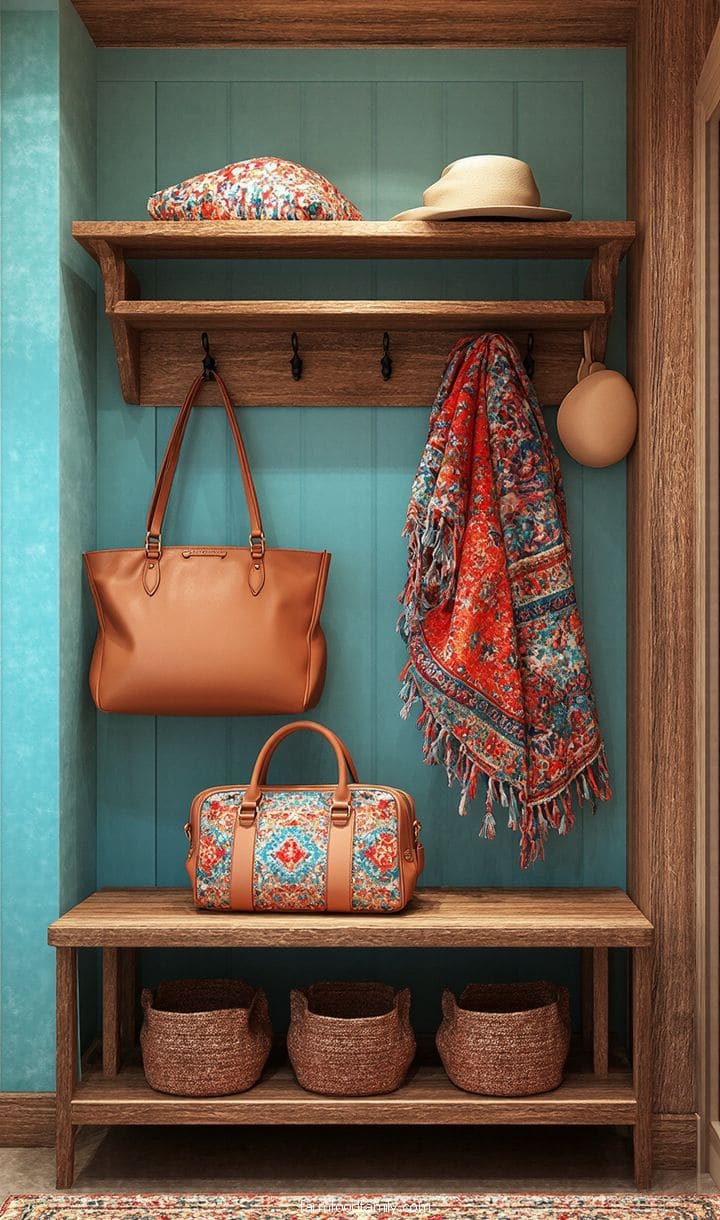
6. Clear bins or acrylic boxes for dust protection done right
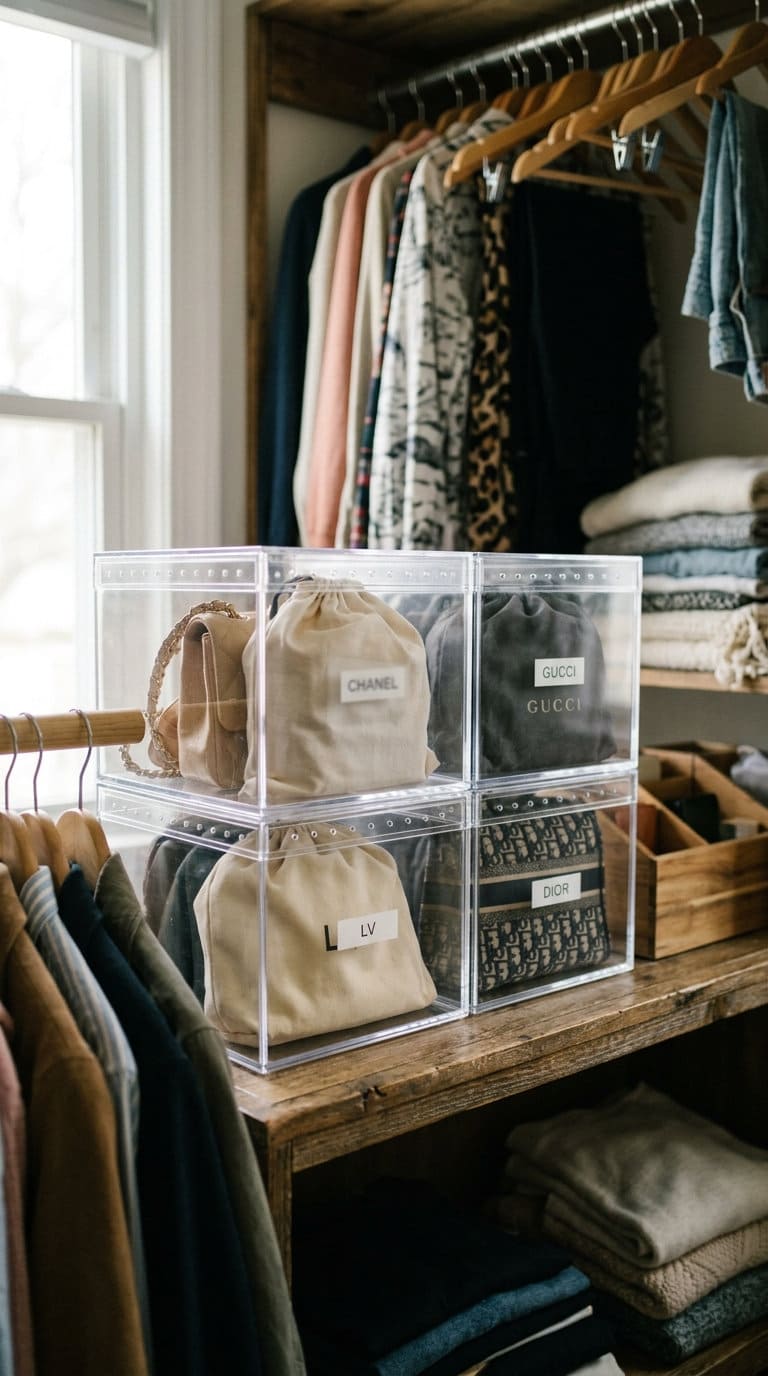
Clear acrylic or plastic bins let you see what’s inside without opening every box, useful for a closet with a lot of bags stacked out of daily rotation. But this is exactly where the moisture problem shows up if you’re not careful: a fully sealed bin with no airflow can trap humidity against leather or canvas the same way a sealed plastic garment bag does, creating the conditions mold actually needs.
Look for bins with small ventilation holes, or crack the lid slightly instead of sealing it airtight, and check on bags stored this way every few months rather than assuming a clear box means a maintenance-free box.
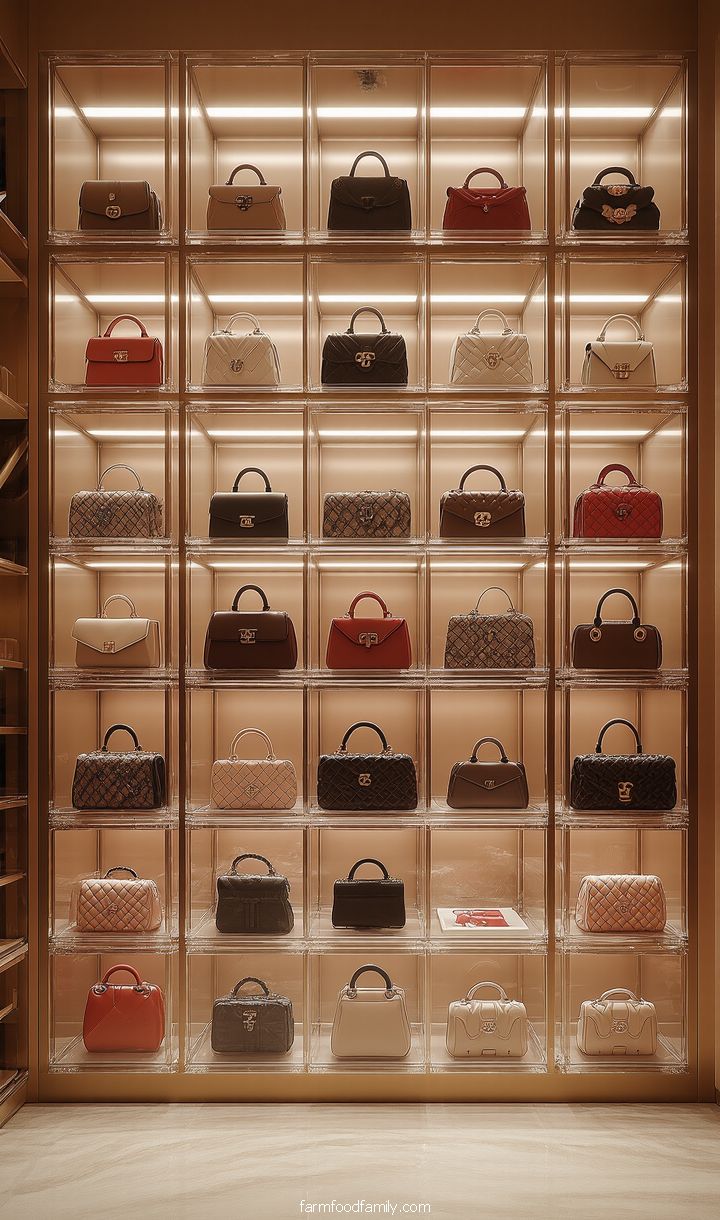
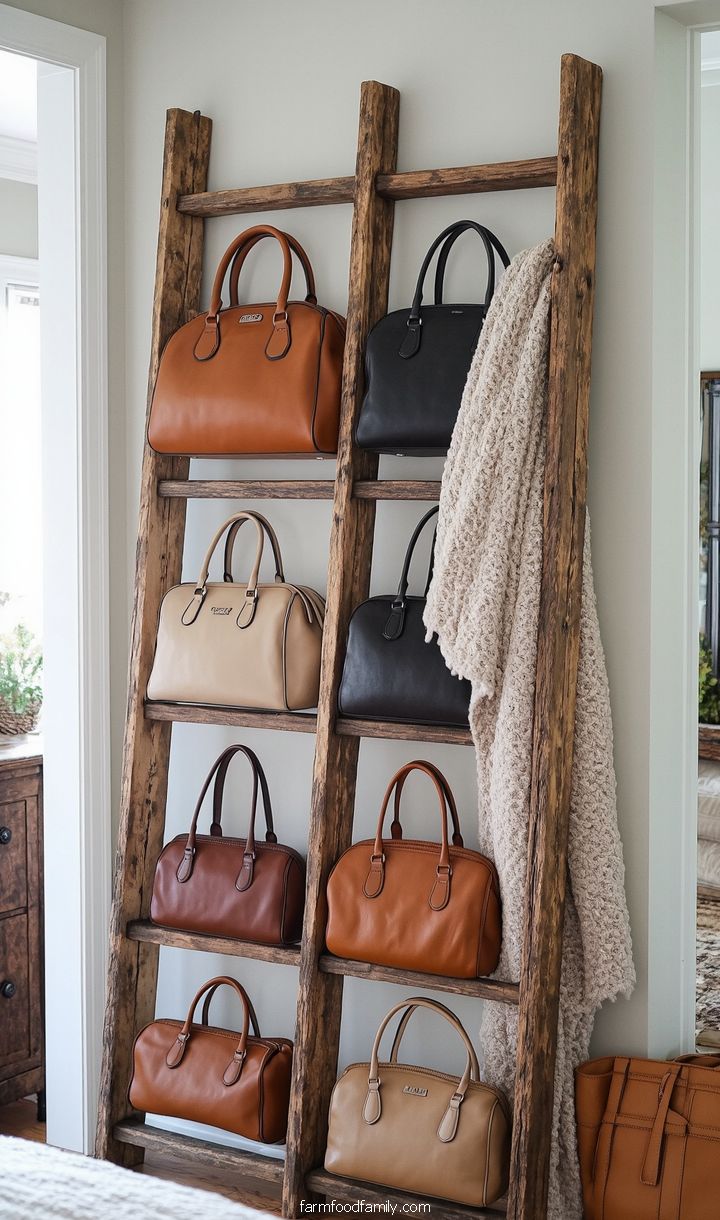
7. Repurposed Vintage Ladder for Rustic Charm
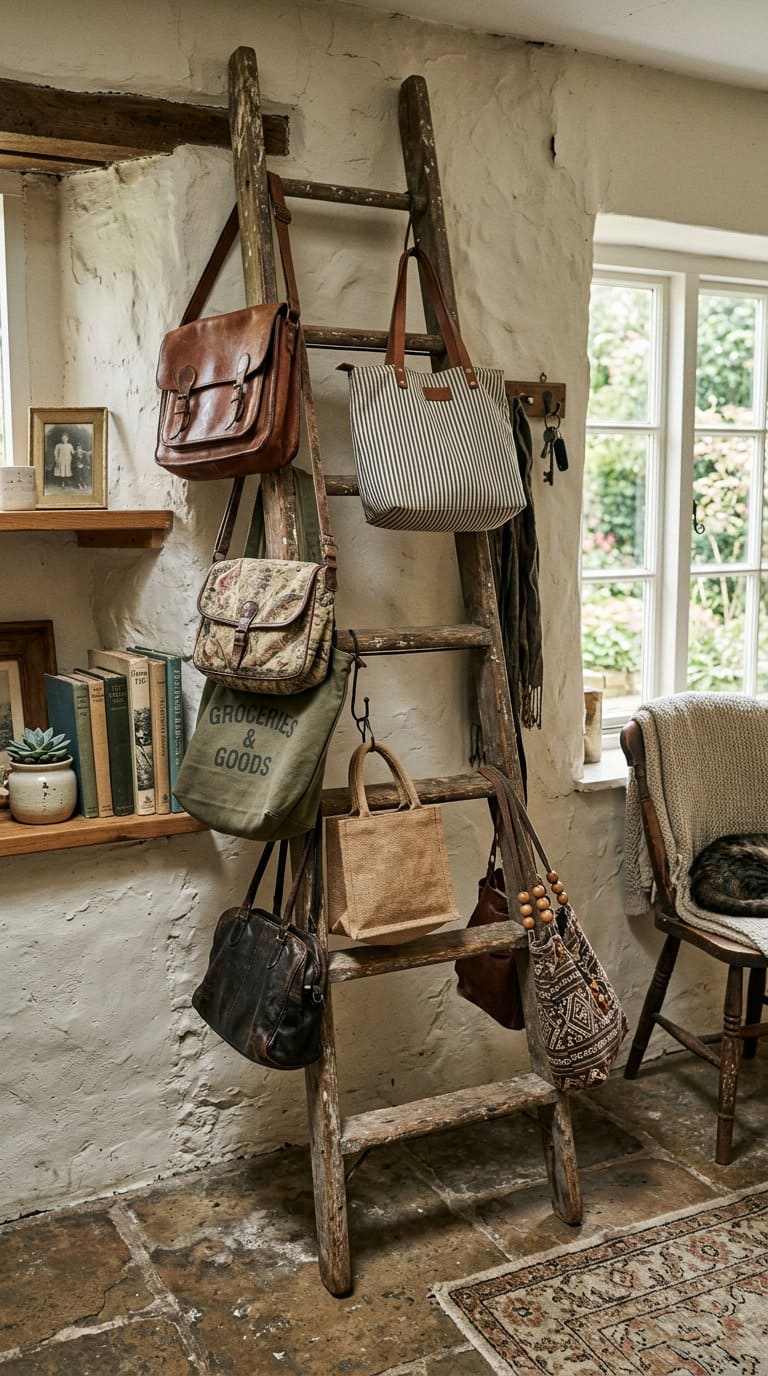
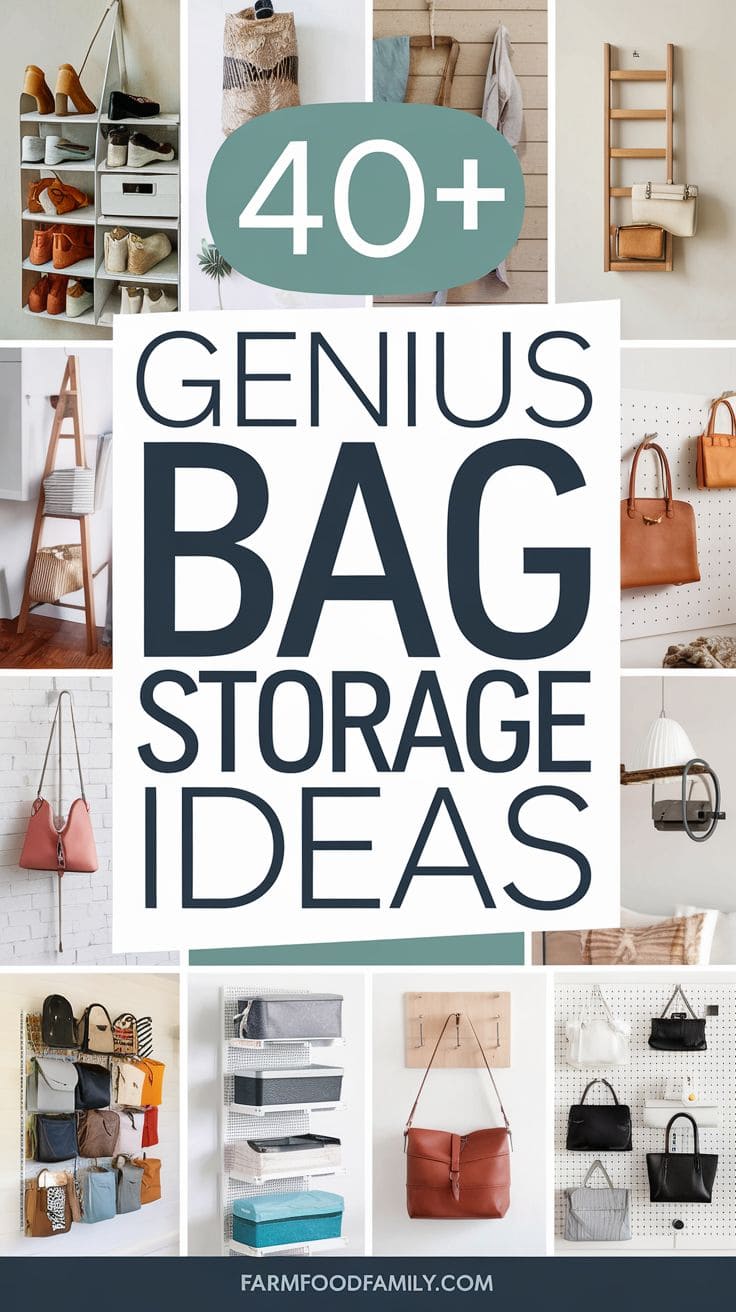
An old wooden ladder, leaned against a wall or hung horizontally, gives bags a rustic, lived-in display that a standard shelf or hook can’t replicate.
Rungs work well for bags with adjustable straps that can loop over and cinch down without slipping off.
This is a decorative-first solution, it doesn’t protect bags from dust or light the way a closed storage option does, so it’s a better fit for daily-use bags you’re rotating through than for anything you want preserved long-term. For more ideas along these lines, vintage storage pieces covers other repurposed furniture used for storage beyond just bags.
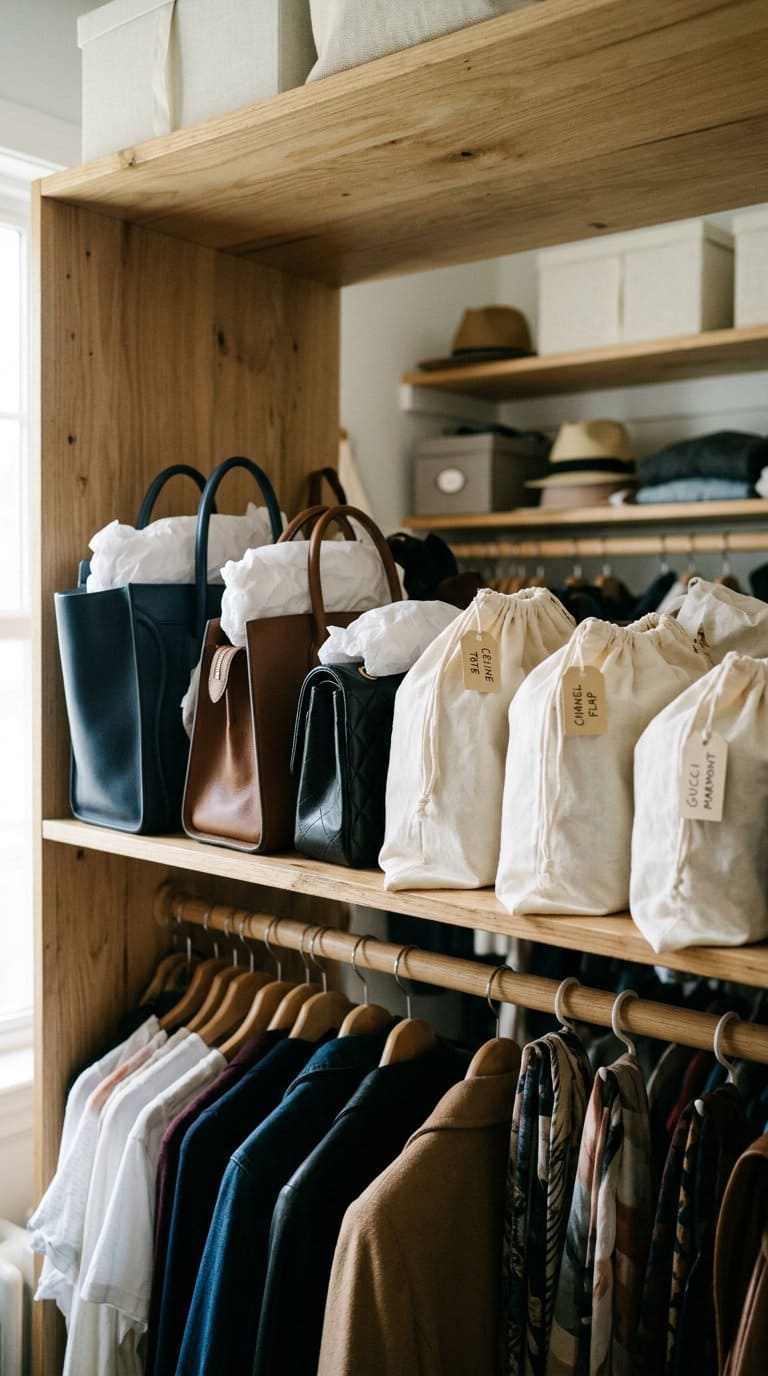
8. Dust bags and shelf storage for designer or occasion bags
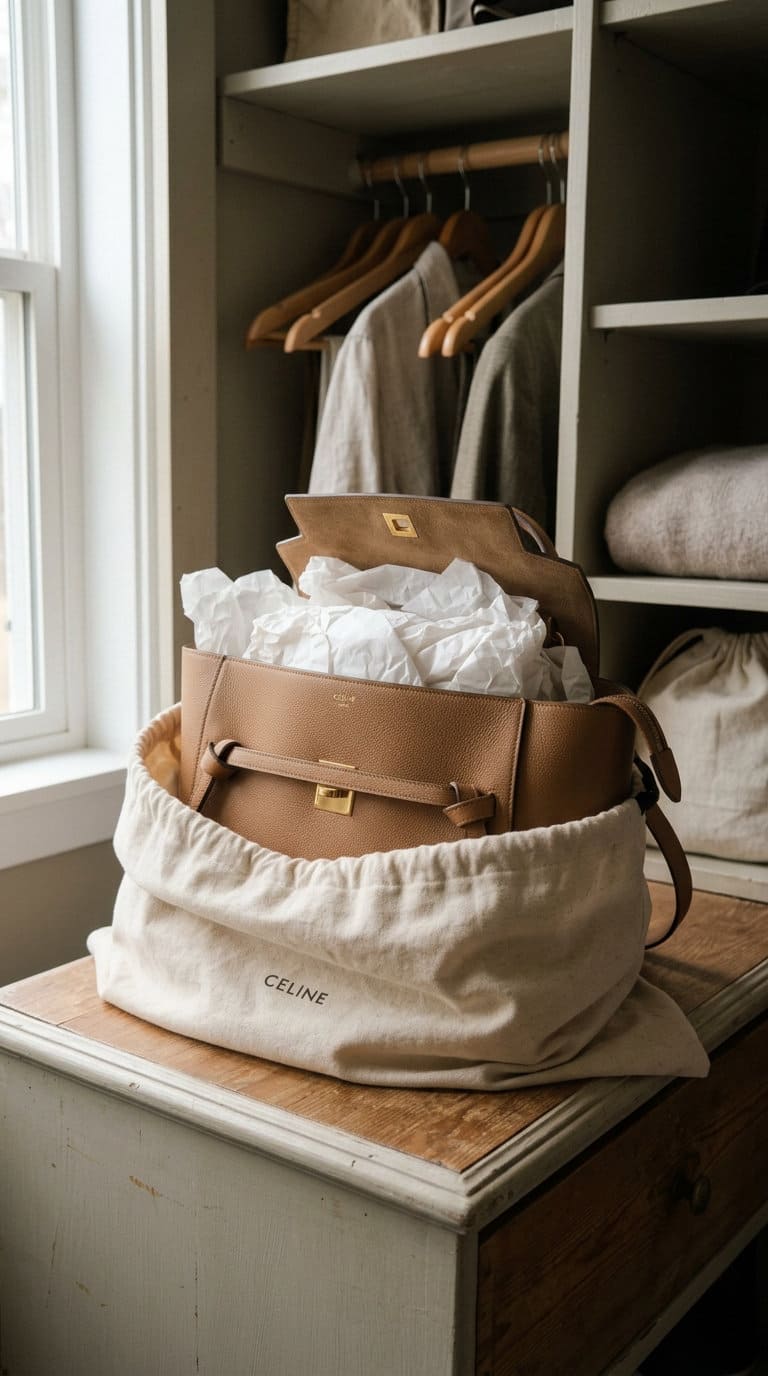
This is the idea most bag storage articles skip entirely, and it’s the one that actually determines whether a nicer bag survives months of storage intact.
Breathable cloth dust bags are the standard recommendation over sealed plastic specifically because plastic traps moisture, and trapped moisture against leather or canvas is what causes mold and mildew in the first place.
Stuff the bag with acid-free tissue paper or a soft cloth to hold its shape while stored, not newspaper, which can transfer ink onto light-colored linings. And don’t hang a structured bag by its straps for long-term storage, the weight distorts the strap and handle shape over time in a way that’s hard to reverse. Nonnahs Driskill, a professional organizer and founder of Get Organized Already, recommends exactly this kind of upright, supported shelf storage over anything that leaves a structured bag hanging or unsupported for extended periods.
9. Seasonal rotation for bags you don’t use daily
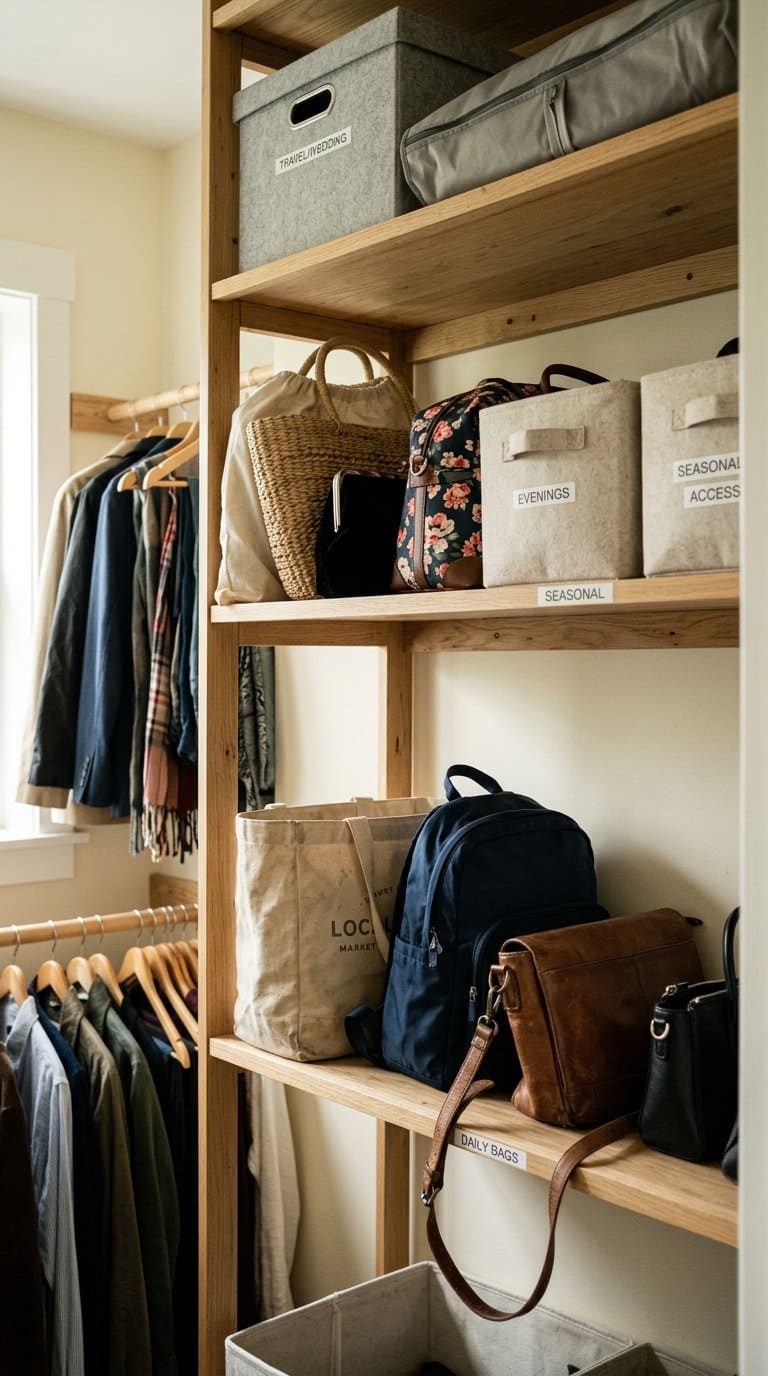
Keep two or three daily-use bags at easy reach near the entryway or closet door, and rotate everything else, seasonal colors, occasion bags, anything you use less than monthly, into higher or less accessible storage.
This isn’t just a tidiness trick, it also means your least-used bags get looked at less often, so it’s worth actually checking on them every couple of months rather than forgetting they exist until next season.
When you do check on rotated bags, that’s the moment to catch early signs of moisture or must before they become a real mold problem, not after you pull the bag out for the first time in six months and it’s already too late.
A few more things worth planning around
If bags are just one part of a bigger closet reorganization, hidden storage ideas covers other ways to reclaim space you’re not using, and types of closet doors is worth a look if the door itself is limiting how much over-the-door storage (idea 2) you can actually fit.
FAQs
How do I stop my stored bags from getting moldy?
Use breathable cloth dust bags instead of sealed plastic, keep storage areas cool and dry rather than a damp basement or garage, and check stored bags periodically rather than leaving them untouched for months. Nonnahs Driskill’s approach of upright, supported shelf storage with breathable covering addresses both the mold risk and the shape-retention problem at the same time.
Should I store bags in plastic bins or dust bags?
Cloth dust bags are generally the better default because they let the bag breathe; sealed plastic traps humidity against leather or canvas, which is exactly what creates mold in the first place. If you do use a clear plastic bin for the display and organization benefits, leave some ventilation rather than sealing it completely airtight.
What’s the best way to keep a handbag from losing its shape in storage?
Stuff the bag with acid-free tissue paper or a soft cloth, not newspaper, which can transfer ink. Store it upright and supported rather than crushed against other bags, and avoid hanging a structured bag by its straps for long stretches, since the sustained weight distorts the strap and handle shape over time.
With so many creative storage options, keeping your bag collection organized doesn’t have to be overwhelming. Whether you prefer wall hooks for easy access, floating shelves for a stylish display, or baskets for hidden organization, there’s a solution for every space and style.
By choosing the right storage method, you can keep your bags protected, accessible, and beautifully arranged, making it easier to find the perfect one for any occasion. If these ideas have helped you store your bags efficiently, leave a comment and share it with your friends!

Never miss an update — choose FarmFoodFamily as your preferred source on Google.
How it works: Tap the button below to open Google's settings page, then check the box next to FarmFoodFamily.
Tap the checkbox to turn it blue — that's how you know it's set.