20 Board Game Storage Ideas (That Won’t Sag, Tip, or Warp Your Cards)
Twenty real ways to organize a board game collection, plus the shelf weight ratings and tip-over safety numbers most storage galleries never mention.

Never miss an update — choose FarmFoodFamily as your preferred source on Google.
How it works: Tap the button below to open Google’s settings page, then check the box next to FarmFoodFamily.
Tap the checkbox to turn it blue — that’s how you know it’s set.
A growing board game collection has a way of outpacing whatever shelf it started on, boxes stacked sideways, expansions separated from their base games, a closet that used to hold three games now holding thirty.
The good news: a real collection can look genuinely organized, but only if the shelf underneath it is actually built for the weight sitting on it.
Is My Shelf Actually Strong Enough for a Board Game Collection?
Most board game storage galleries show a pretty shelf. Almost none mention whether that shelf can actually hold the weight of a real collection without sagging, or worse, tipping.
Quick answer: A shelf built for board games needs two things most storage guides skip: a real per-tier weight rating and a wall anchor. A standard board game box runs roughly 11.5×11.5 inches, and a shelf holding a genuine collection (even a modest 20-30 games) should be rated for at least 30-50 pounds per tier, well above what a typical decorative bookshelf carries, or the shelf will visibly sag over time.
The bigger risk is tip-over: per the CPSC’s Anchor It! campaign, 459 children died from furniture and TV tip-overs in the U.S. between 2000 and 2018, 93 percent of them age 5 or younger, and a densely packed, top-heavy game shelf is exactly the kind of load that makes an unanchored bookcase dangerous.
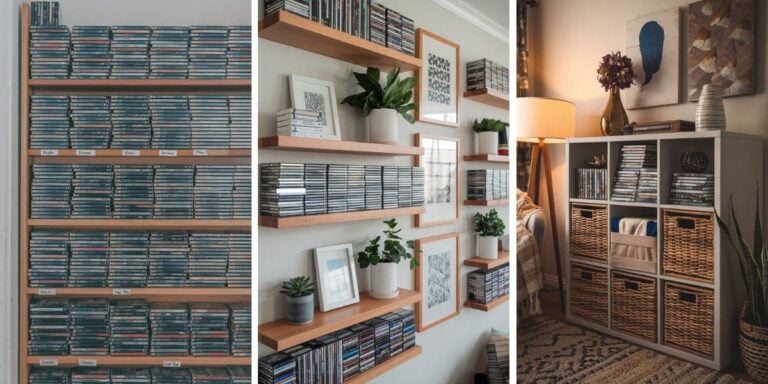
Professional organizer Ashley Hines, founder of Thee Tailored Life, recommends storing games upright like books rather than stacked flat, both for visibility and so you can pull one title without triggering an avalanche of everything stacked on top.
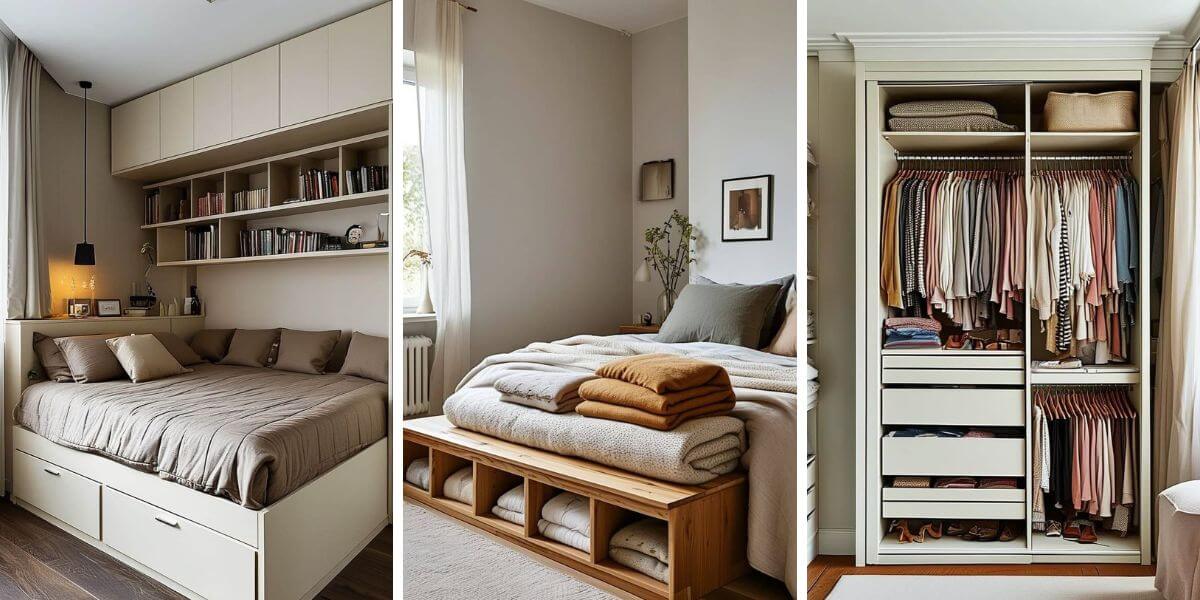

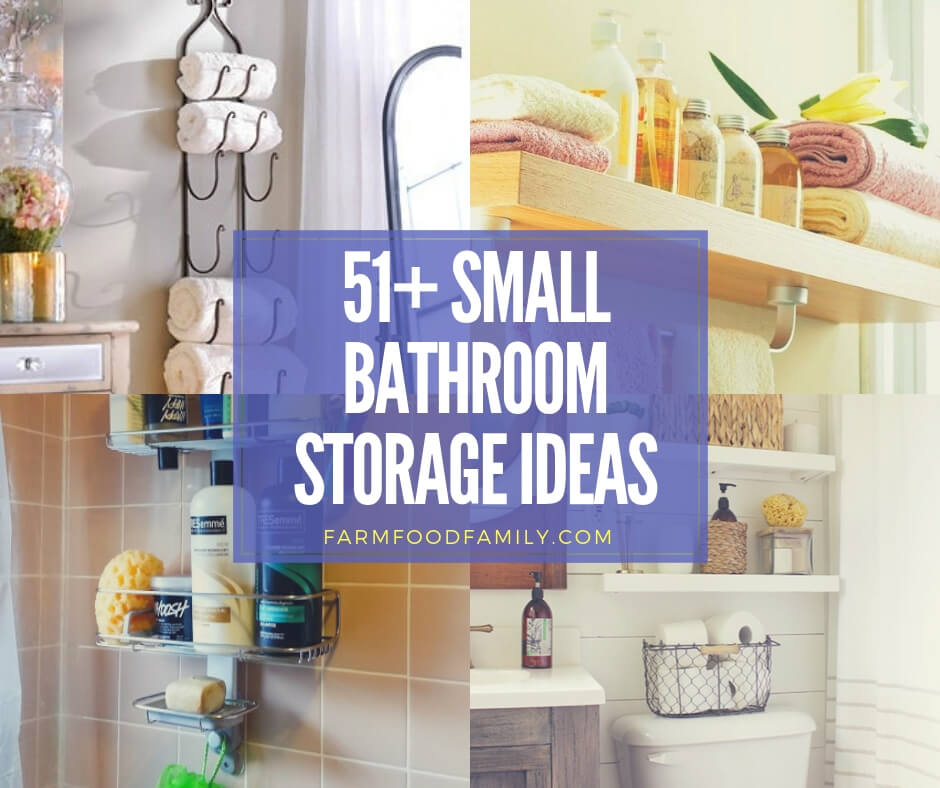
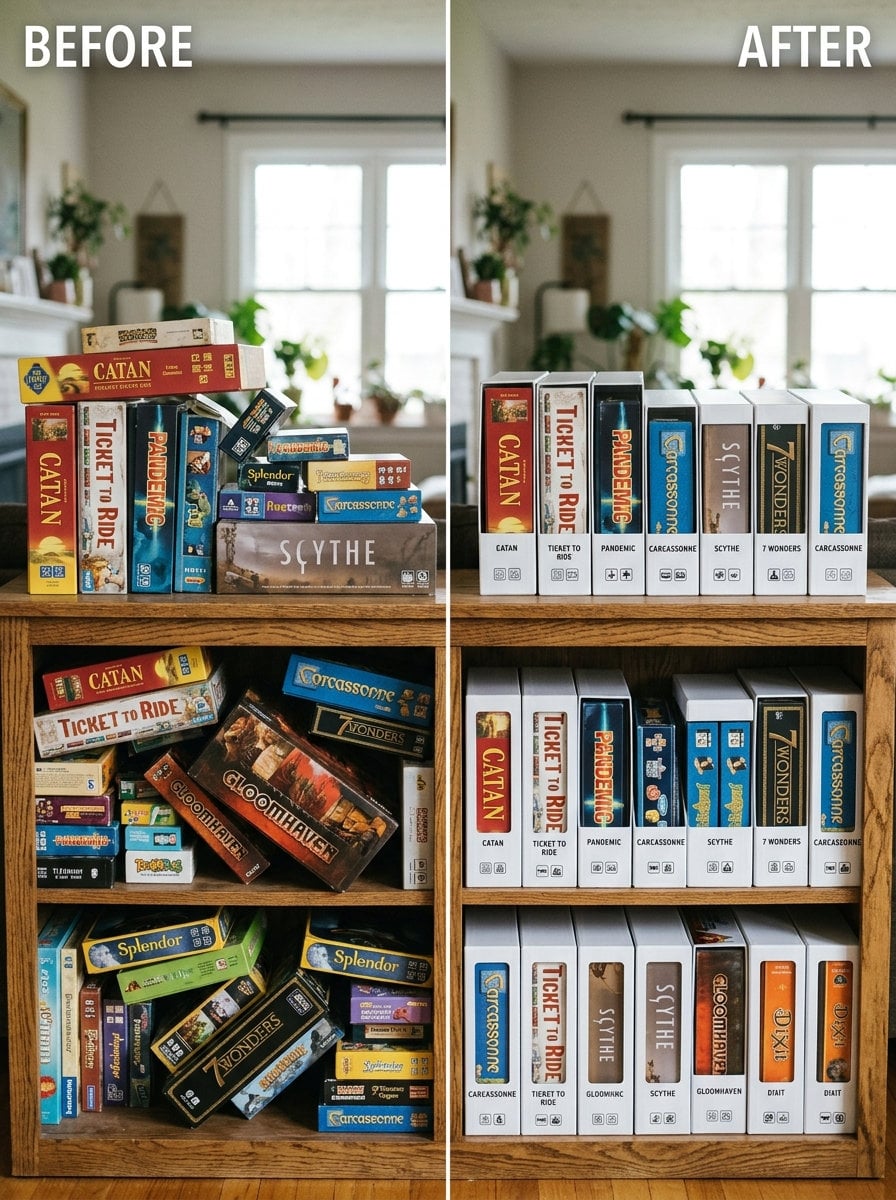
Two more things worth knowing before you build a system. First, matching box heights within a shelf section genuinely changes how much you can fit, a row of mismatched heights wastes the air space above every shorter box, while a row of same-height boxes packs edge to edge with nothing lost.
Second, heat and humidity are a real risk for cardboard components and cards specifically, an attic, garage, or any space with real temperature swings can warp cardboard and degrade printed ink over time, a genuinely different failure mode than simple dust or mess.
Bookcase, Bins, Built-In, or Rolling Cart: Which Storage Fits Your Collection Best?
| Approach | Typical Cost | Capacity | Access Speed | Best For |
|---|---|---|---|---|
| Bookcase or open shelving | DIY-cheap to moderate | High if shelves are rated for the weight | Fast, everything visible | Collections of 20+ games on display |
| Bins and totes | DIY-cheap | Moderate, depends on stacking | Slower, may need to dig | Overflow, seasonal, or rarely played games |
| Built-in cabinet with doors | Bigger investment | High, plus dust protection | Fast once opened | Living rooms where a clean look matters |
| Multi-tiered rolling cart | Moderate | Lower, best for an active-play subset | Fastest, fully mobile | Small collections or a “currently playing” rotation |
Which Shelf Systems Actually Hold Up?
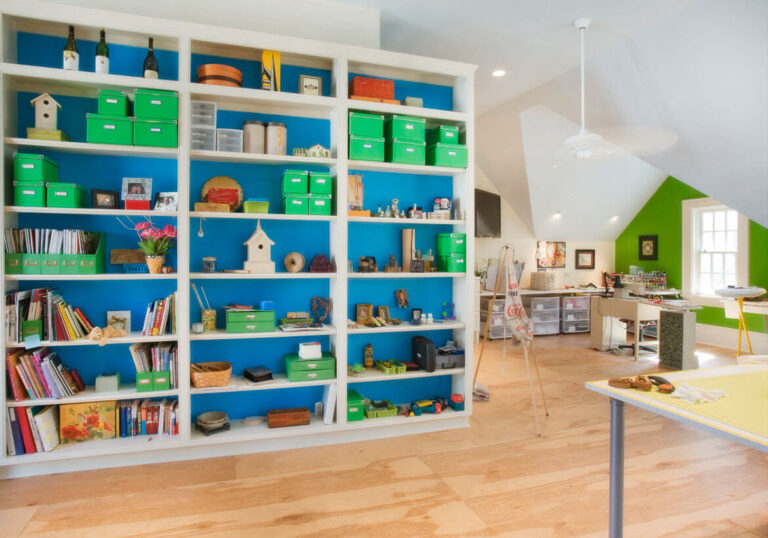
1. A matched box-height shelf system
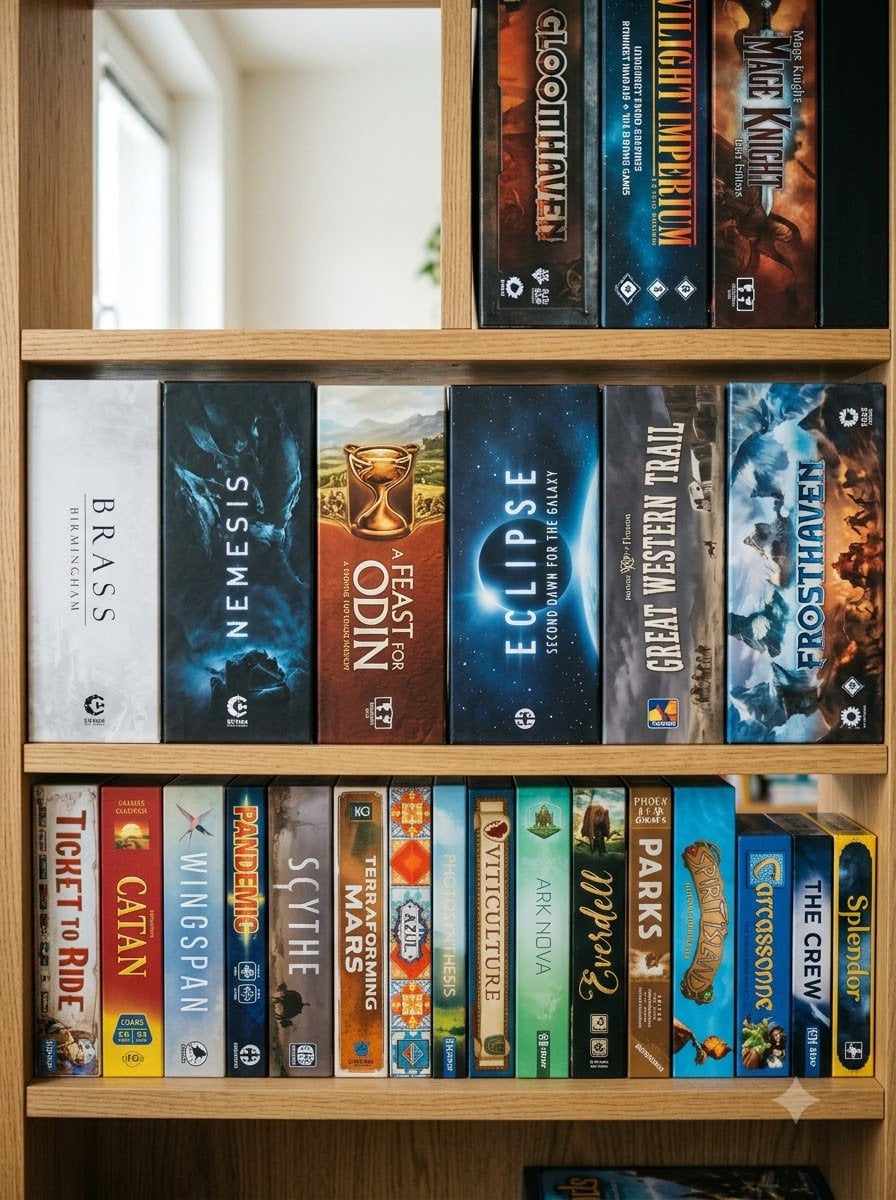
Grouping games by box height within each shelf section, rather than shelving them in whatever order they were bought, means a shelf that would otherwise waste 2-3 inches of dead air above every mismatched box instead packs solid.
Standard box heights cluster around 2.5-3 inches for typical games, so even a modest 12-inch-tall shelf tier holds 4 rows deep if boxes are shelved on their side, or a single row of roughly 10-12 games stood upright side by side.
Budget tier: DIY-cheap, just a reorganization of what you already own.
2. A rated bookcase built for real weight
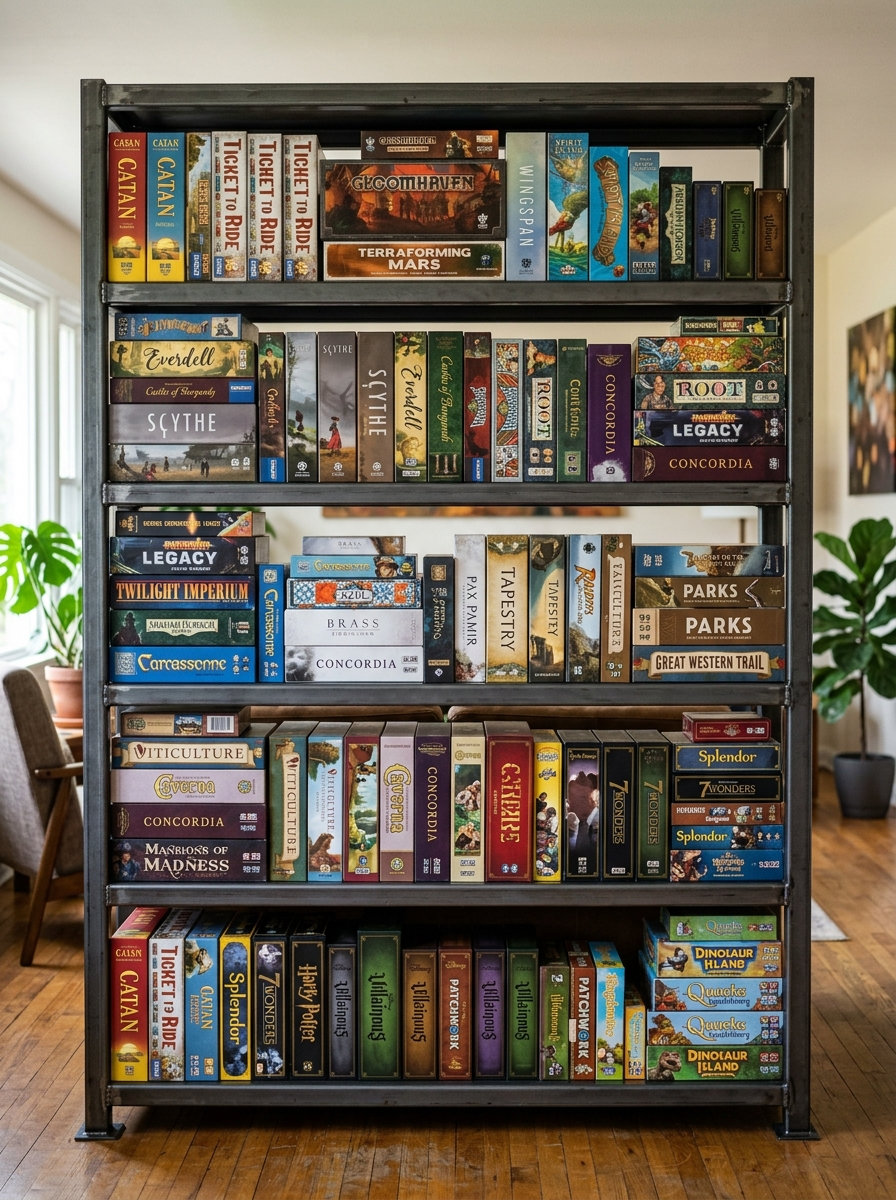
Look specifically for a bookcase rated at least 30-50 pounds per shelf tier, not just “sturdy” in the marketing copy, since a shelf full of games (a single game can run 2-4 pounds, so a 15-game shelf section can easily hit 40-60 pounds) will expose an underrated shelf’s sag within months.
Budget tier: moderate.

Direct product match for idea 2, the real weight-rating fix described in Before You Start, Amazon's Choice, 4.4 stars / 259 ratings, live-verified
Shop NowThis post contains affiliate links. We may earn a commission on qualifying purchases at no extra cost to you.
3. A tilt-able shoe-shelf-style system
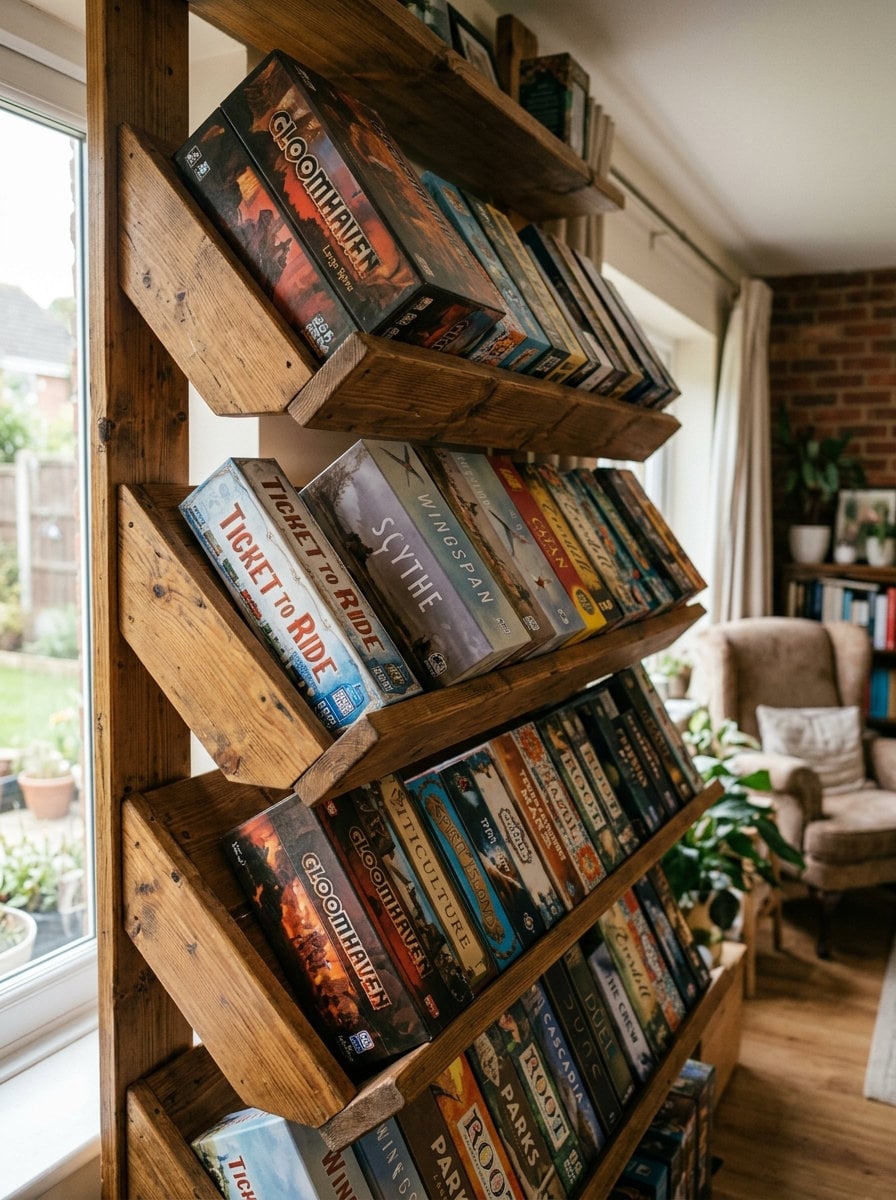
Shelving systems originally designed for angled shoe display work well repurposed for games, since the slight forward tilt keeps titles from sliding while still standing upright for full spine visibility.
Budget tier: moderate to bigger investment depending on the system.
4. Adjustable-depth modular shelving
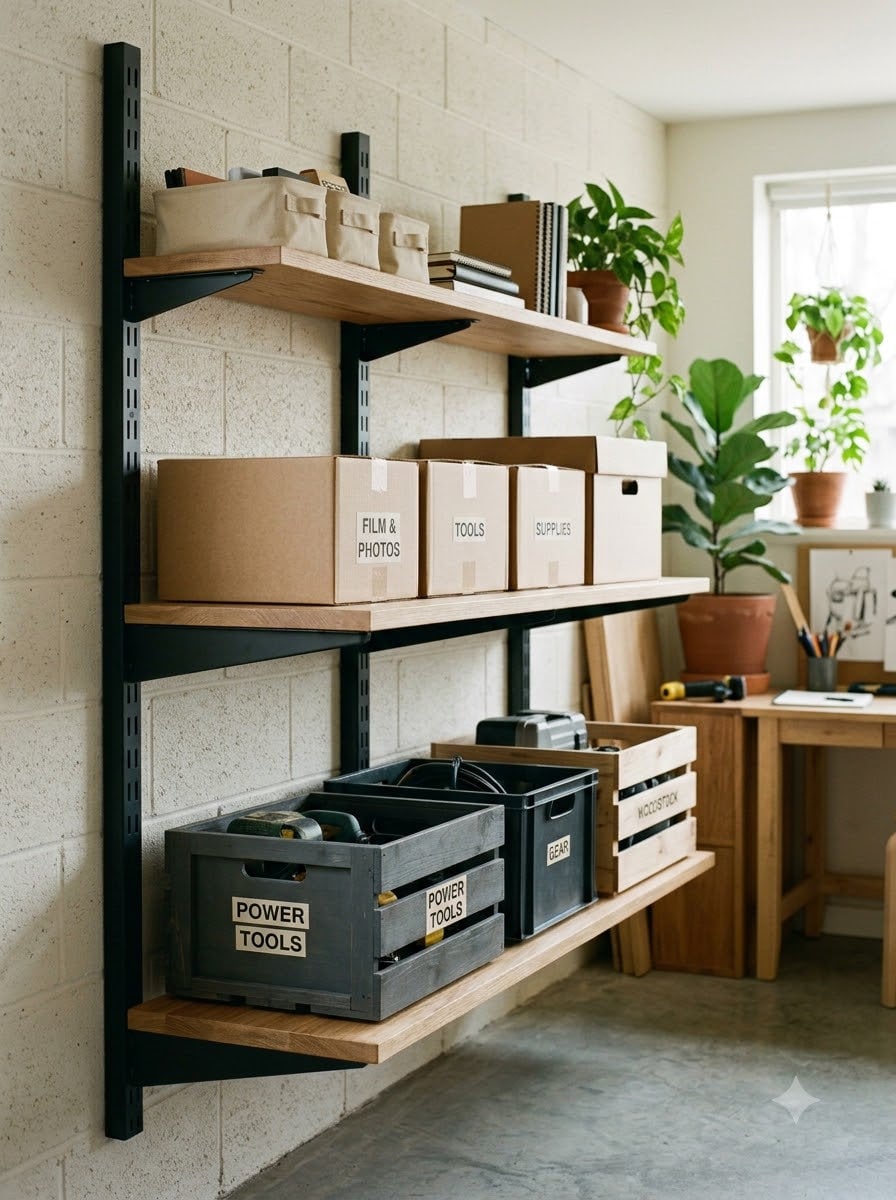
Modular shelf systems with adjustable-depth brackets let you match shelf depth to your actual deepest boxes (deluxe editions can run 3-4 inches deep versus a standard 2-2.5 inches) instead of over-building every shelf to fit the single largest box you own.
Budget tier: moderate to bigger investment.
5. A wall-mounted floating shelf row
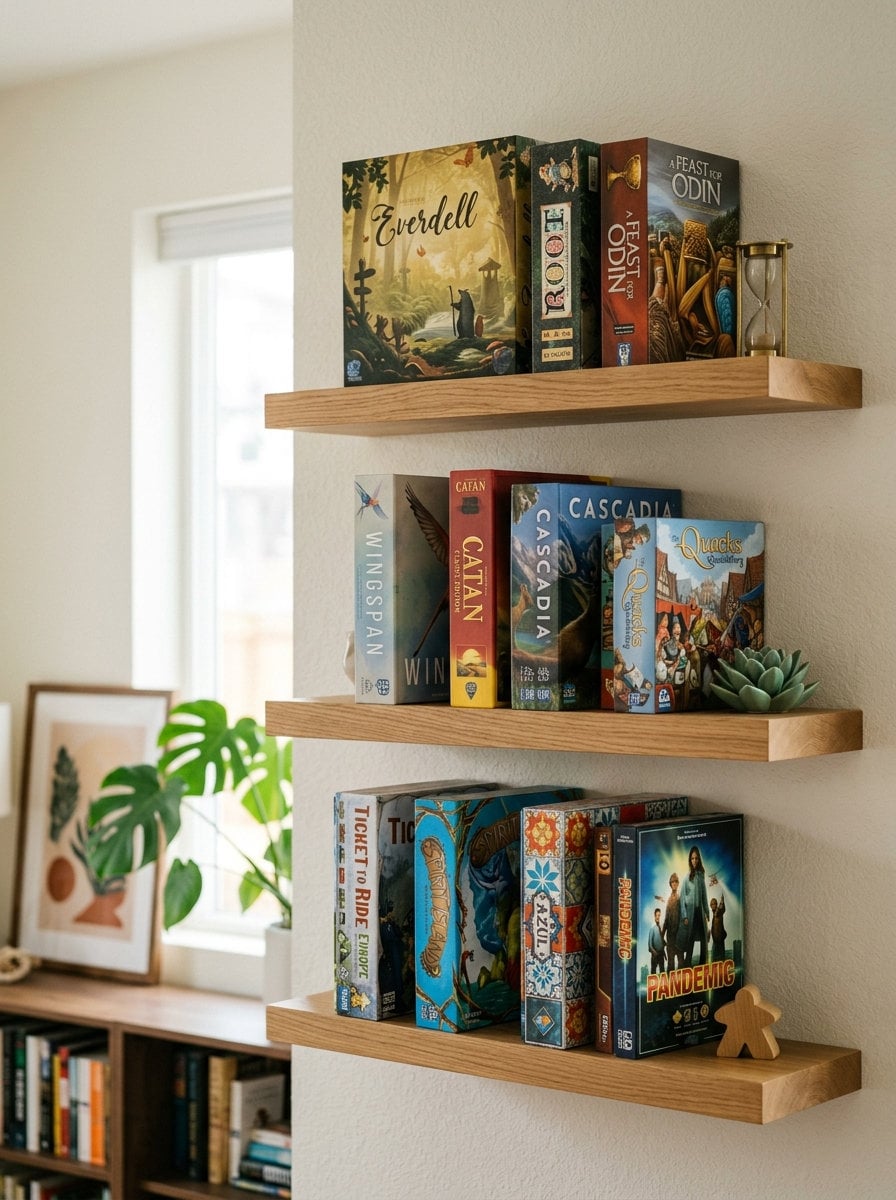
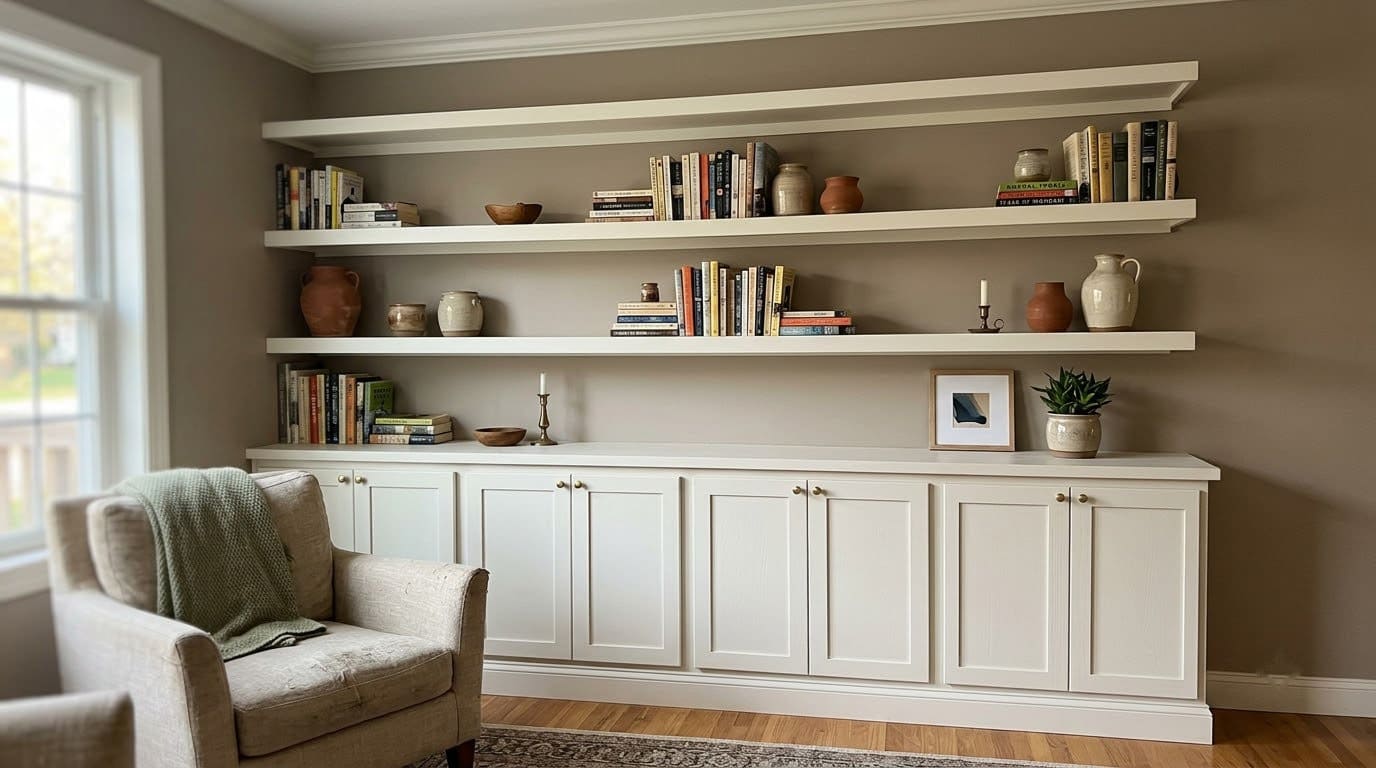
For a smaller, curated collection, a row of floating shelves (each individually rated, so check the same 30-50 lb-per-shelf threshold per shelf, not just per unit) displays games as intentional decor rather than bulk storage.
Budget tier: DIY-cheap to moderate.
Which Containers Work Best for Small or Oddly-Shaped Games?
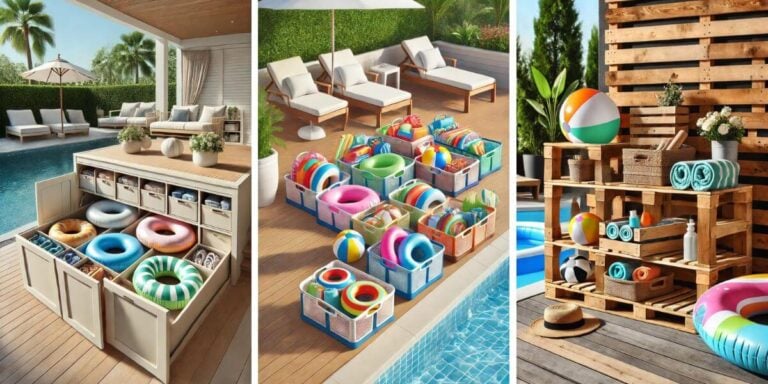
6. Clear bins for card games and small boxes
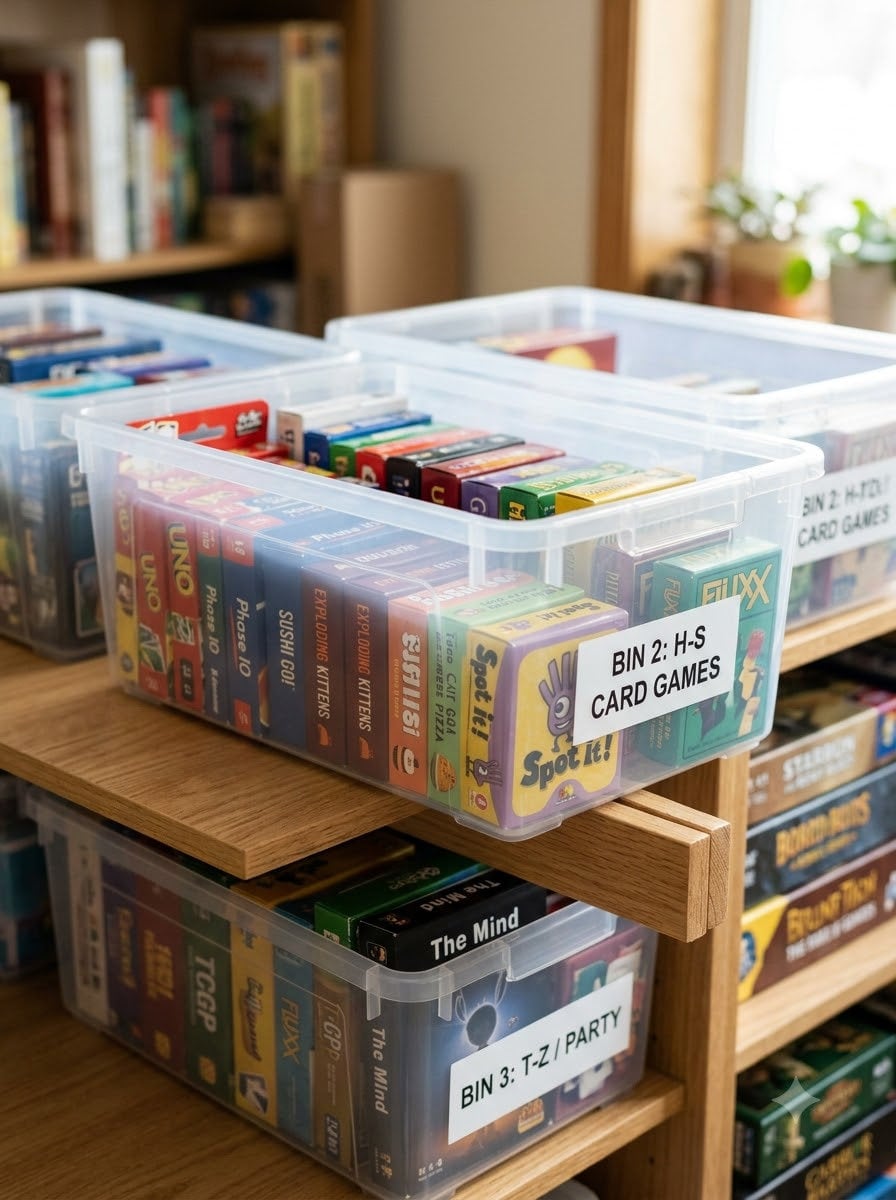
Small, clear plastic bins (roughly shoebox-sized, 6x12x4 inches works for most card-game boxes) keep compact titles from getting lost behind larger boxes, and labeling each bin’s contents on the short end (visible from the shelf front) means you’re not pulling every bin to find one title. Budget tier: DIY-cheap.
7. An over-the-door shoe organizer for cards and expansions
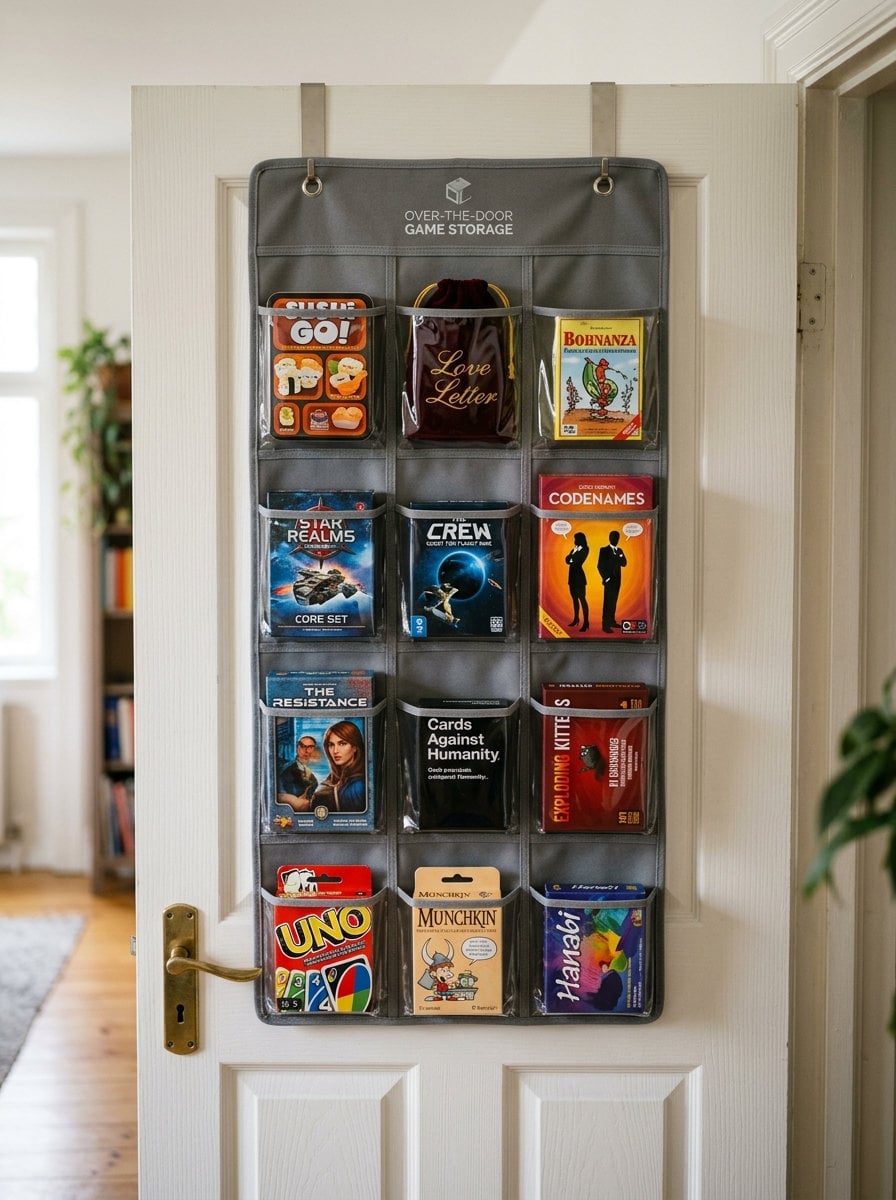
A standard 24-pocket over-the-door shoe organizer, each pocket roughly 6×12 inches, holds small card games, expansion sets, and loose dice or tokens in a closet that would otherwise waste that door’s entire surface.

Budget tier: DIY-cheap.
8. Stackable bins for oddly-shaped games
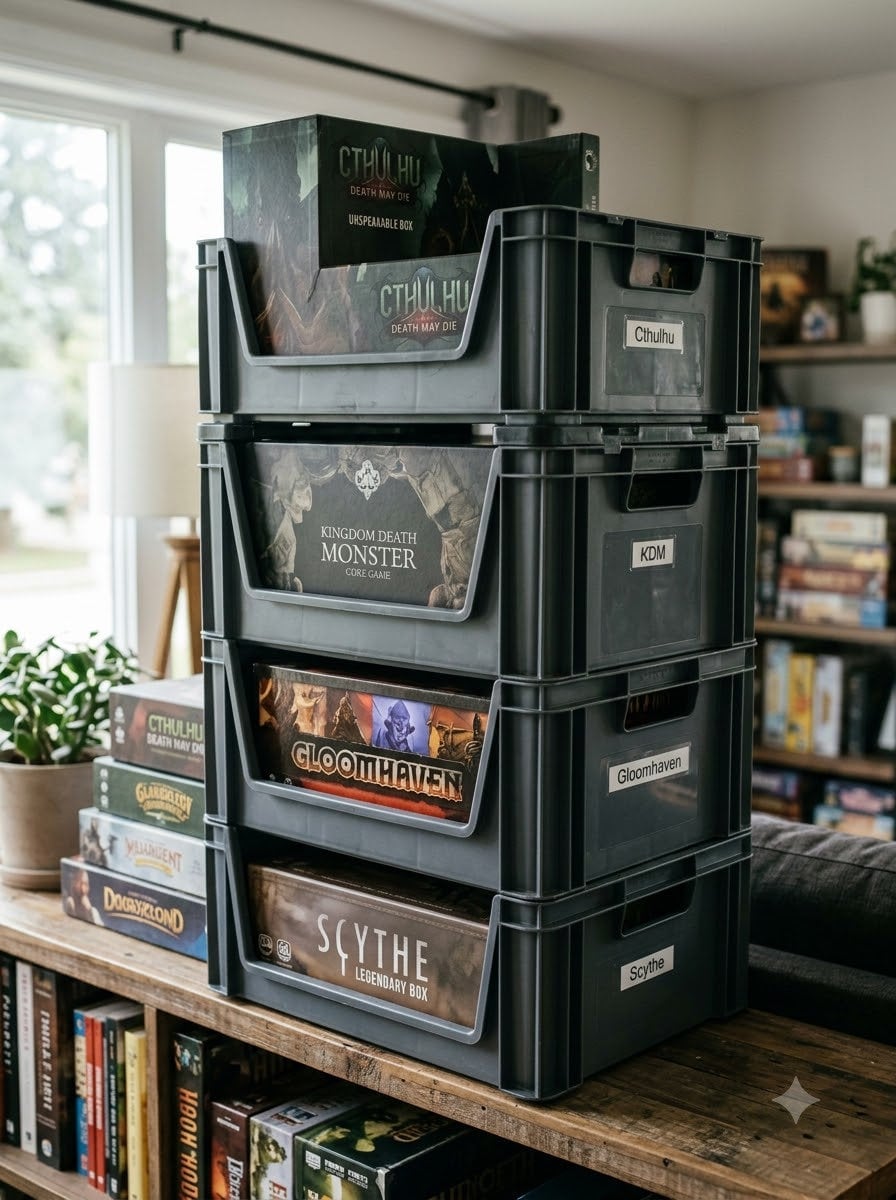
Games with unusual box shapes or dimensions (a tall vertical box, an oversized deluxe edition) rarely fit a standard shelf row cleanly, stackable modular bins sized to the specific outlier let you contain them without forcing an entire shelf’s depth or height to accommodate one odd box.
Budget tier: DIY-cheap to moderate.
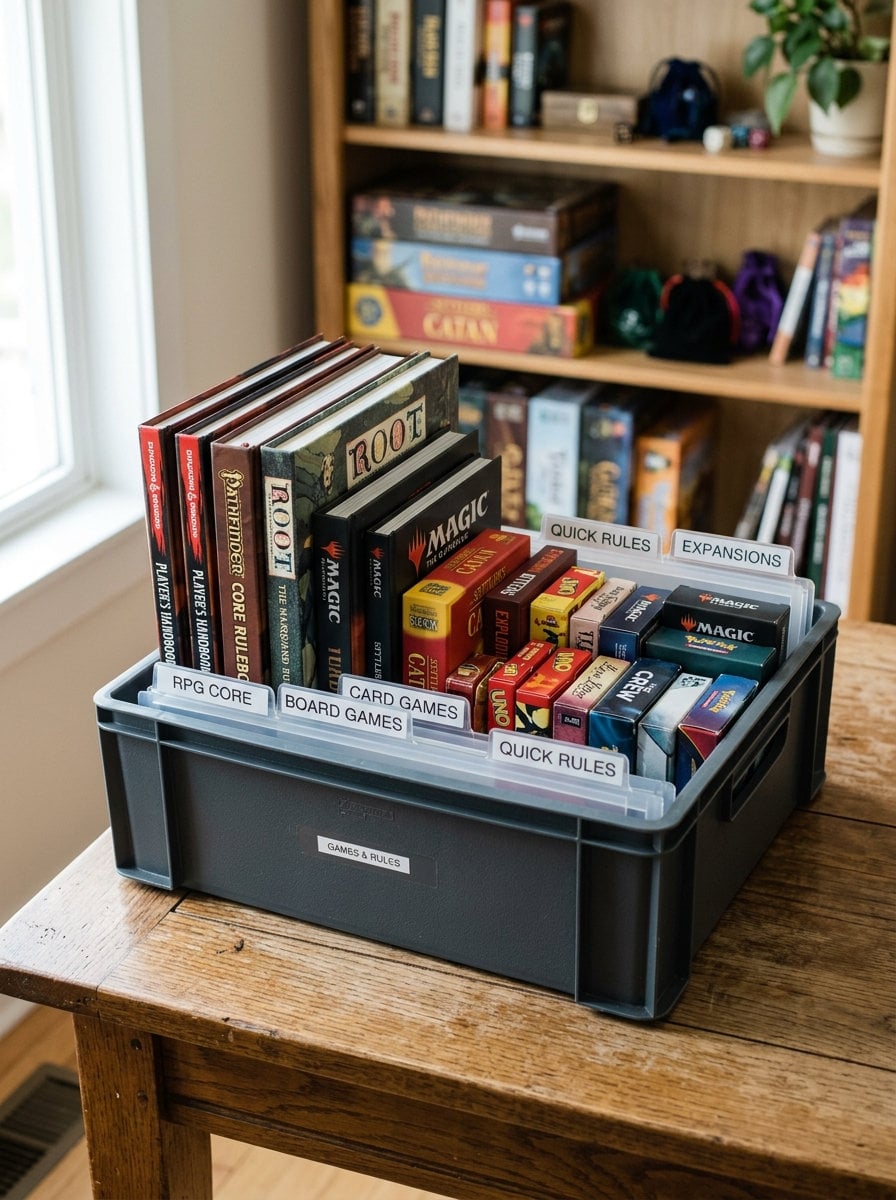
9. A labeled file-box system for rulebooks and thin games
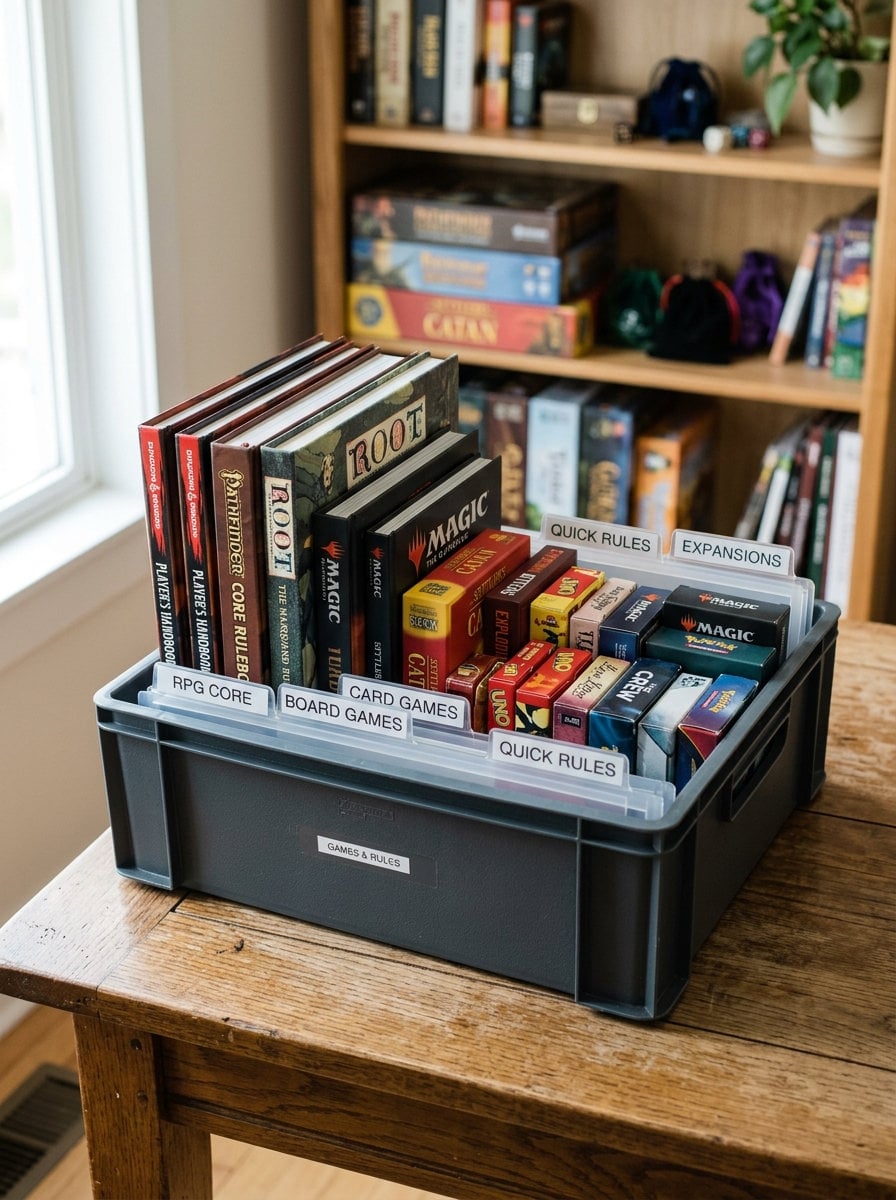
A standard letter-size file box or magazine holder (roughly 4x9x11 inches) stores rulebooks separately from bulky boxes, and doubles as storage for genuinely thin games (a 30-40 page rulebook and a deck of cards) that would otherwise slide sideways in a standard shelf slot.
Budget tier: DIY-cheap.
10. Zippered component bags inside each box
Before shelving a box vertically at all, bag loose tokens, cards, and small pieces in zippered plastic bags and set the rulebook flat on top, this single step is what actually prevents a spill every time an upright box gets pulled and tilted.
Budget tier: DIY-cheap, essentially the cost of a box of storage bags.
Which Display and Access Ideas Make a Collection More Usable?
11. An active-play rotating shelf
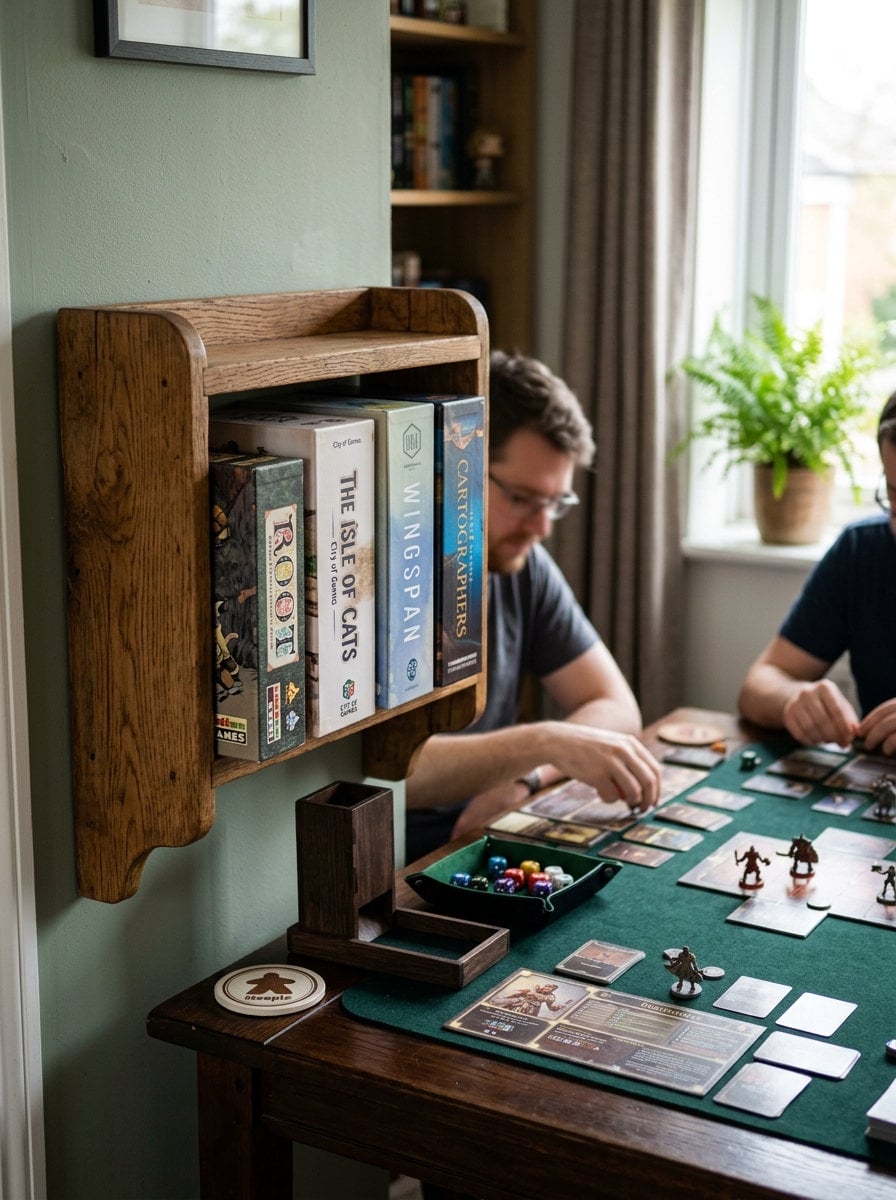
A small, dedicated 2-4 game shelf near the table where you actually play, restocked every week or two from the main collection, keeps current favorites visible and accessible without requiring the whole collection to be within arm’s reach.
Budget tier: DIY-cheap.
12. A kid-height lower shelf
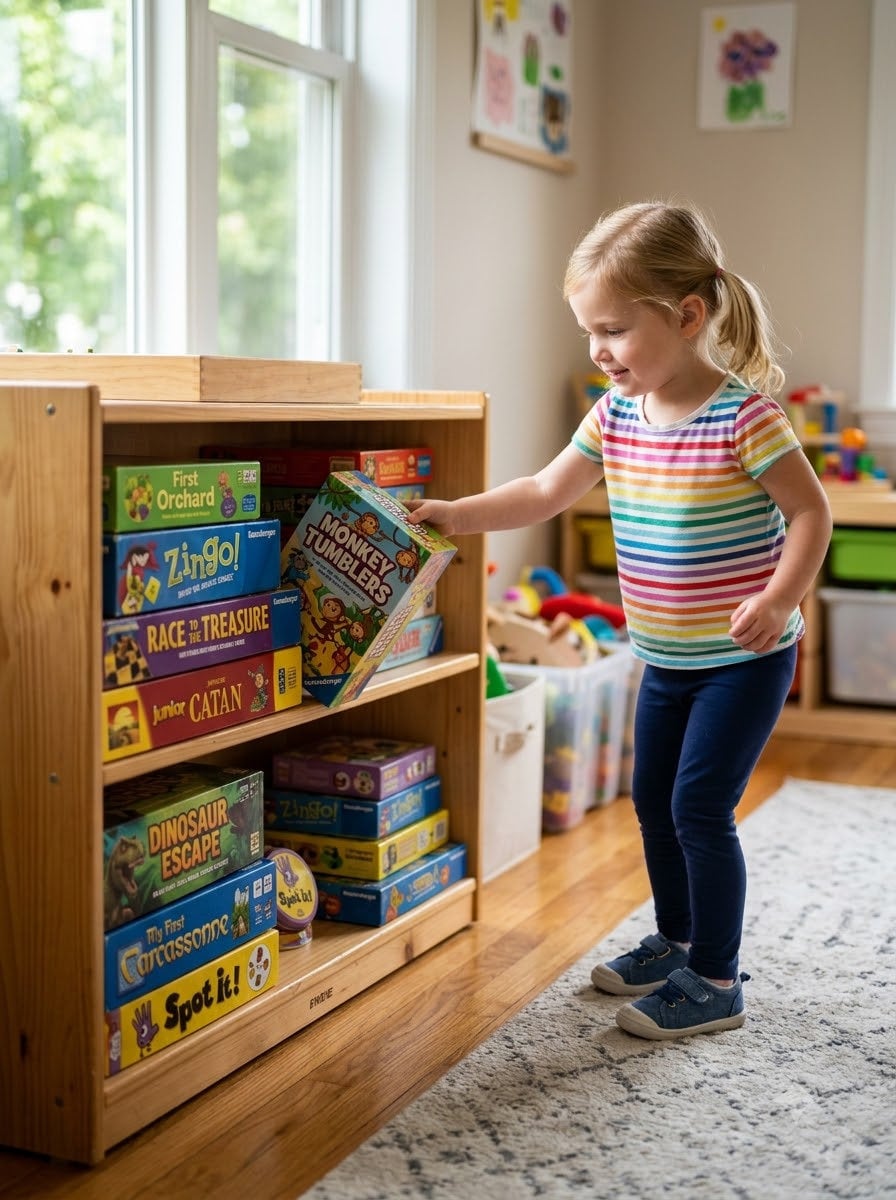
Placing a genuinely kid-appropriate subset of games on a shelf 24-36 inches off the floor (versus the 48-60 inch range most adult shelving defaults to) measurably increases how often kids actually pull a game to play independently instead of needing an adult to reach the top shelf. Budget tier: DIY-cheap.
13. Genre or color-coded labeling
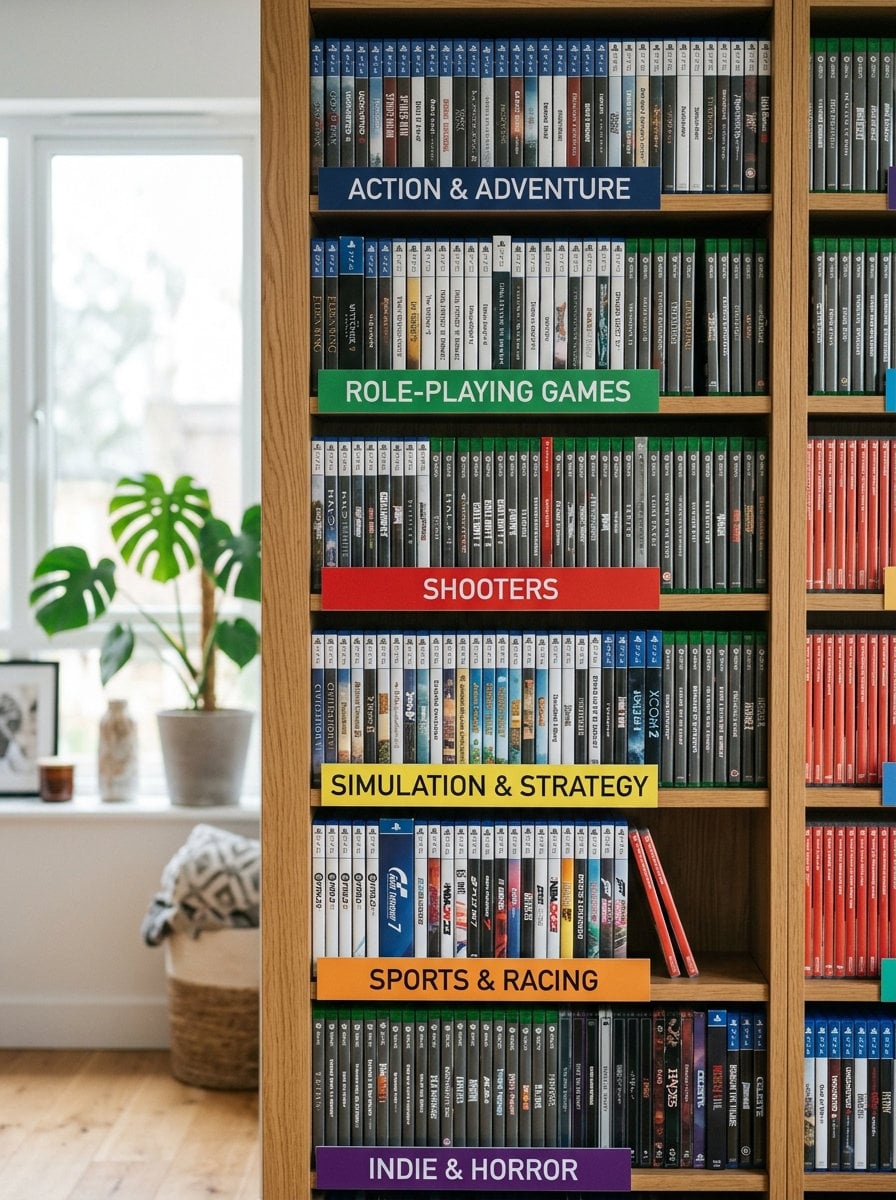
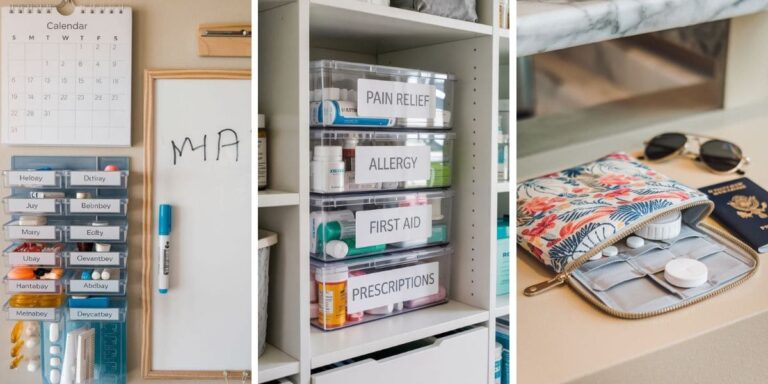
Small colored labels or a label-maker system sorting games by genre (party, strategy, cooperative, two-player) or difficulty turns a wall of identical box spines into something actually scannable in a few seconds, rather than reading every title in a row.
Budget tier: DIY-cheap.
14. Wall-mounted display for flat or unique games
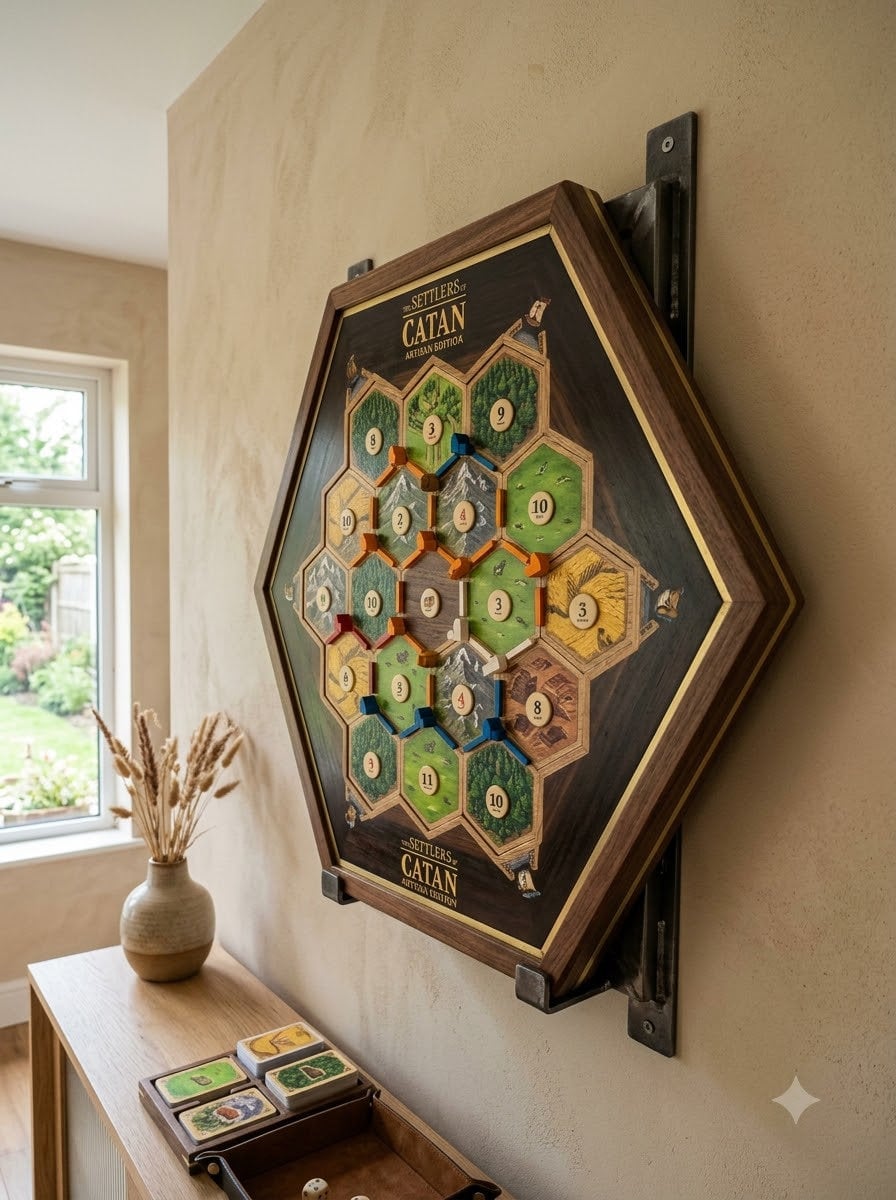
Games with genuinely flat, artful boxes or boards (Crokinole, a wooden puzzle board, a vintage game with striking cover art) can be wall-mounted as functional art on a simple cleat or bracket, using wall space a standard shelf never would.
Budget tier: DIY-cheap to moderate.
Which Furniture-Integrated Solutions Are Worth the Investment?
15. A game-storage ottoman or coffee table
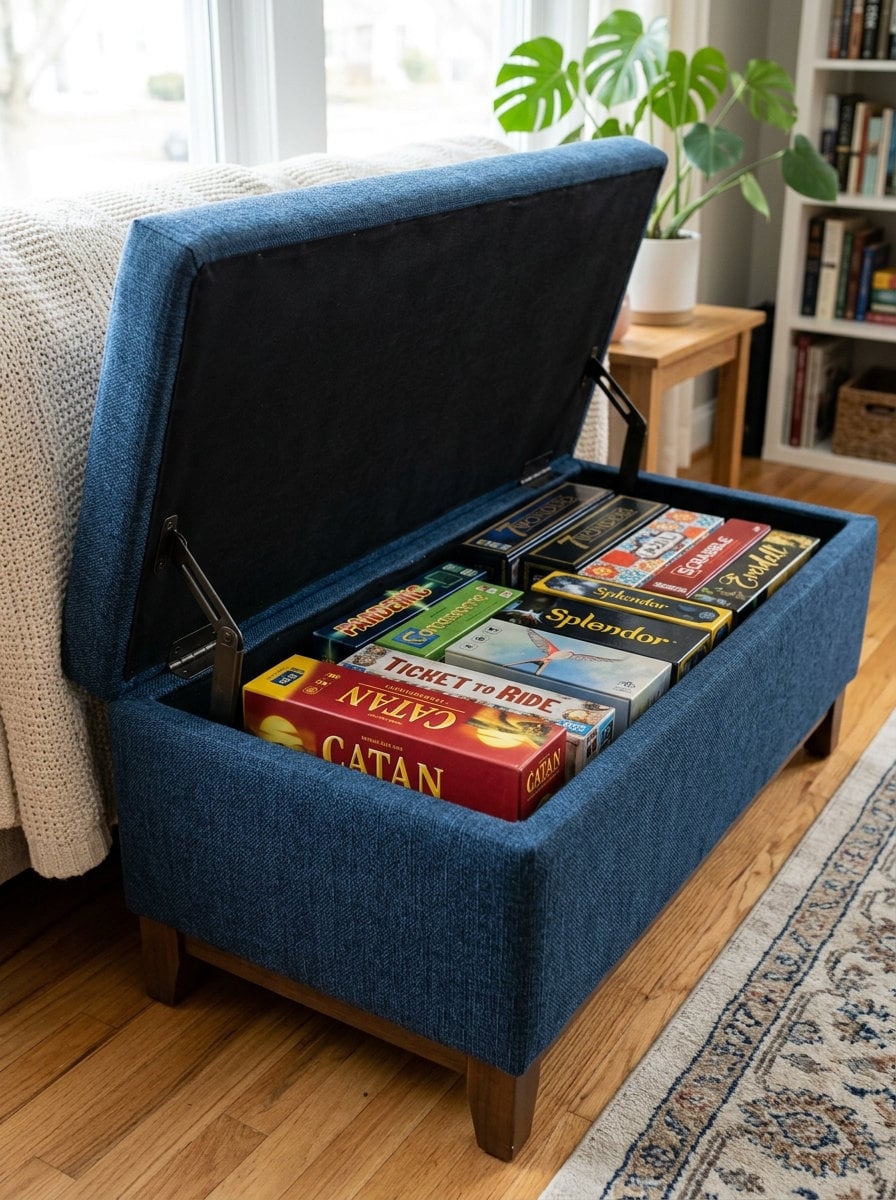
A hinged ottoman or lift-top coffee table with a cavity sized to a stack of games (at least 12×12 inches of clear interior footprint for standard boxes) doubles as seating or a surface while keeping a small rotating collection out of sight.
Budget tier: moderate.
16. A built-in cabinet with drawers
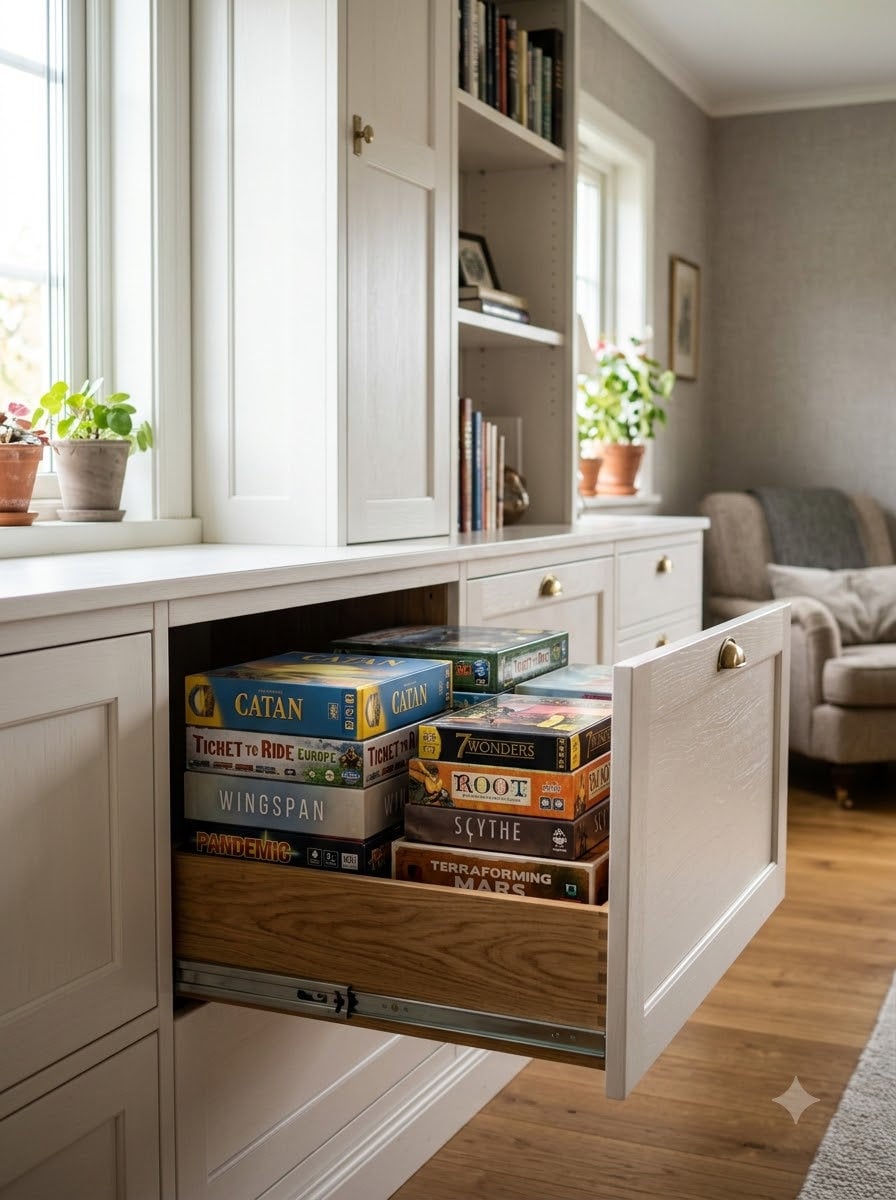
Custom or semi-custom cabinetry with drawers sized to game box height (drawers around 3-4 inches deep hold games flat, stacked 2-3 deep per drawer) gives full dust protection and a clean look for a living-room-adjacent collection.
Budget tier: bigger investment.
17. A multi-tiered rolling cart
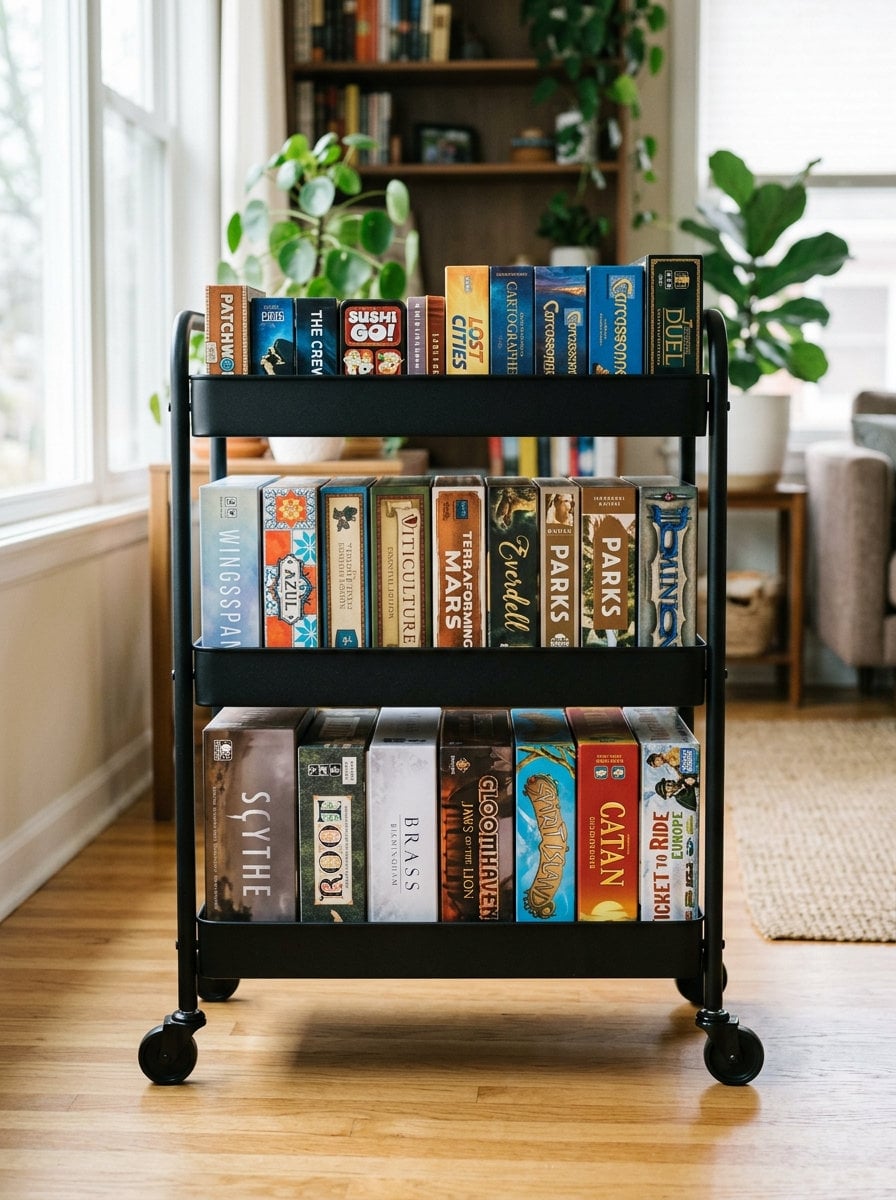
A cart with 2-3 tiers, each individually weight-rated (check for at least 15-20 lbs per tier on a typical utility cart), lets you sort games by size or frequency of use and roll the whole collection to wherever game night actually happens.
Budget tier: moderate.
Which Safety and Preservation Fixes Matter Most?
18. Anchoring a loaded bookcase to the wall
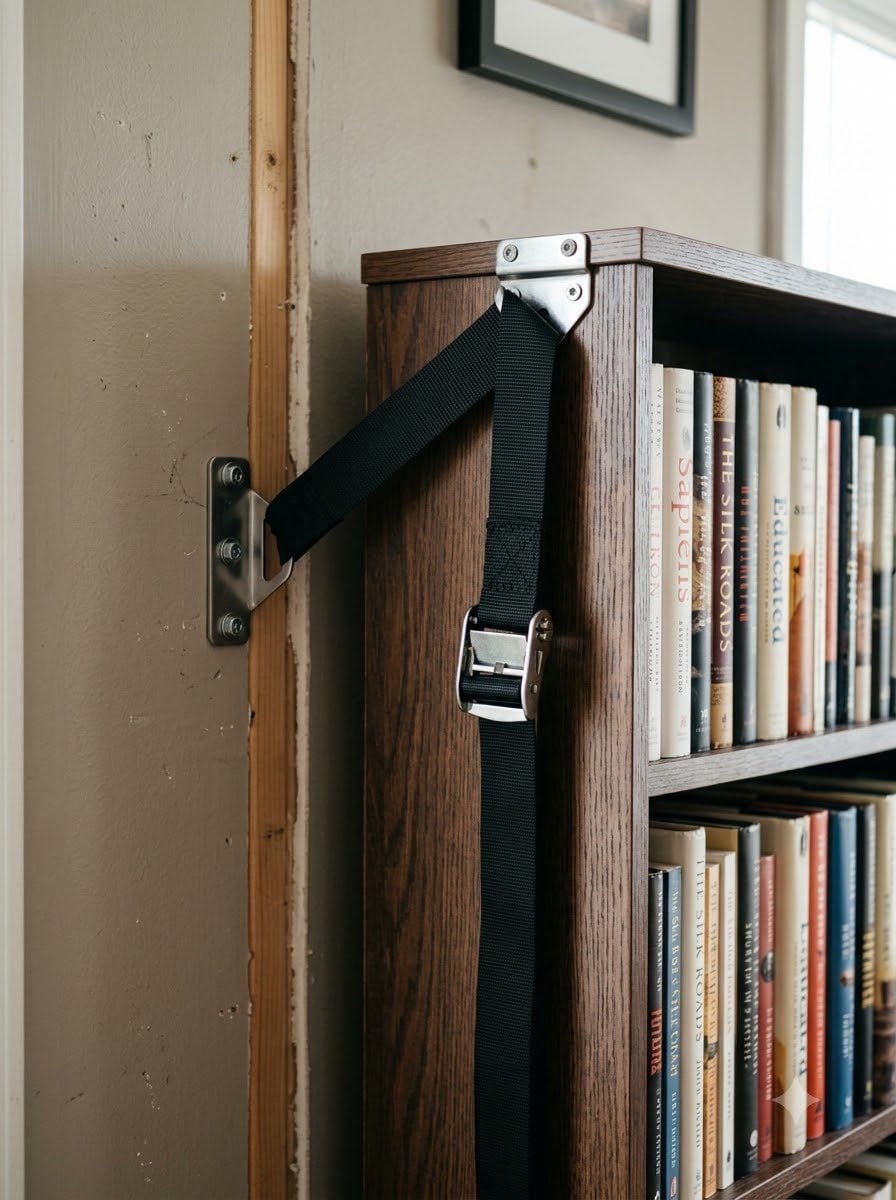
Any bookcase holding a genuine game collection, easily 100+ pounds once fully loaded, needs a real anti-tip anchor strap or bracket into a wall stud, not just a freestanding placement, per the CPSC’s real tip-over data.
This is a five-minute, low-cost step that directly addresses the single biggest safety gap in board game storage that decor-focused galleries never mention.
Budget tier: DIY-cheap.
19. Climate-controlled storage away from attics and garages
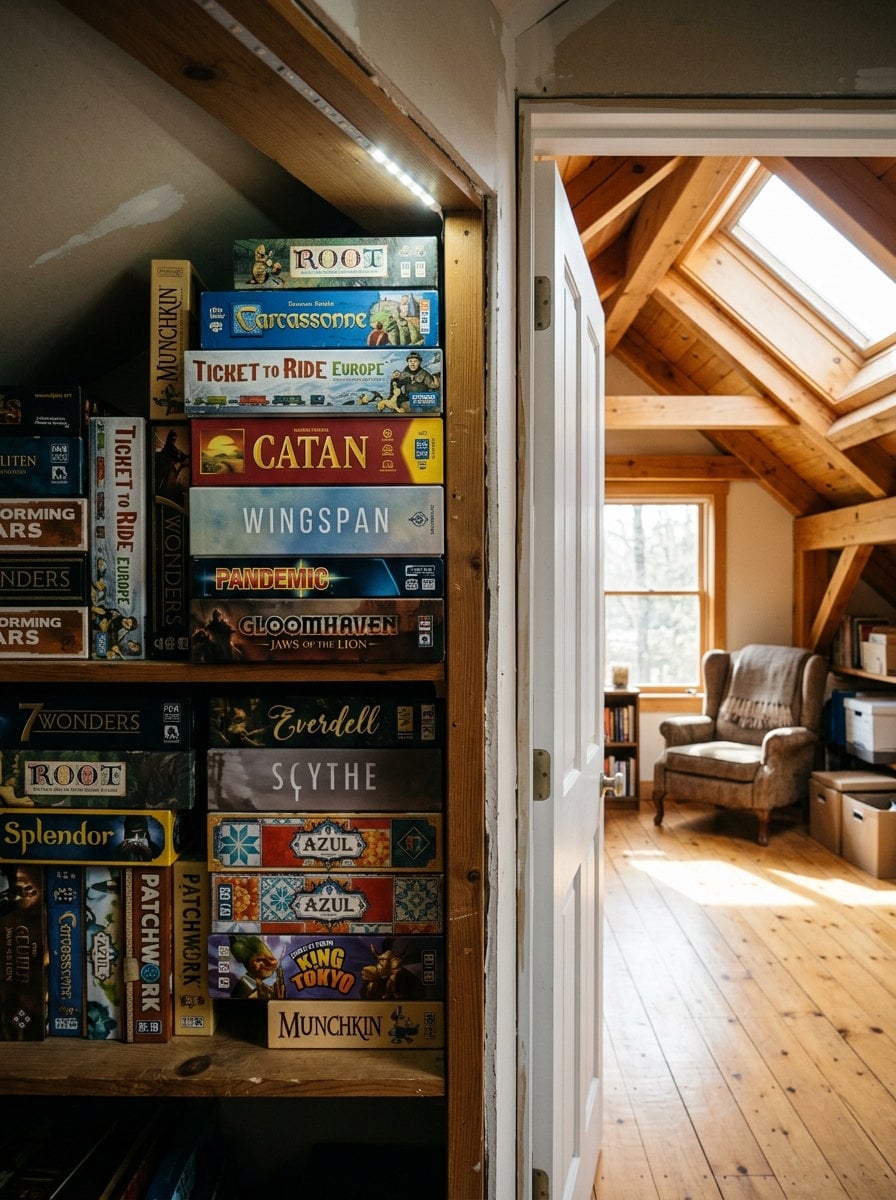
Storing games somewhere with stable temperature and humidity, a closet or interior room rather than an attic or garage, protects cardboard components and printed cards from the warping and ink degradation that heat and humidity swings genuinely cause over time.
Budget tier: free, just a location choice.
20. A dedicated gaming table with under-table storage
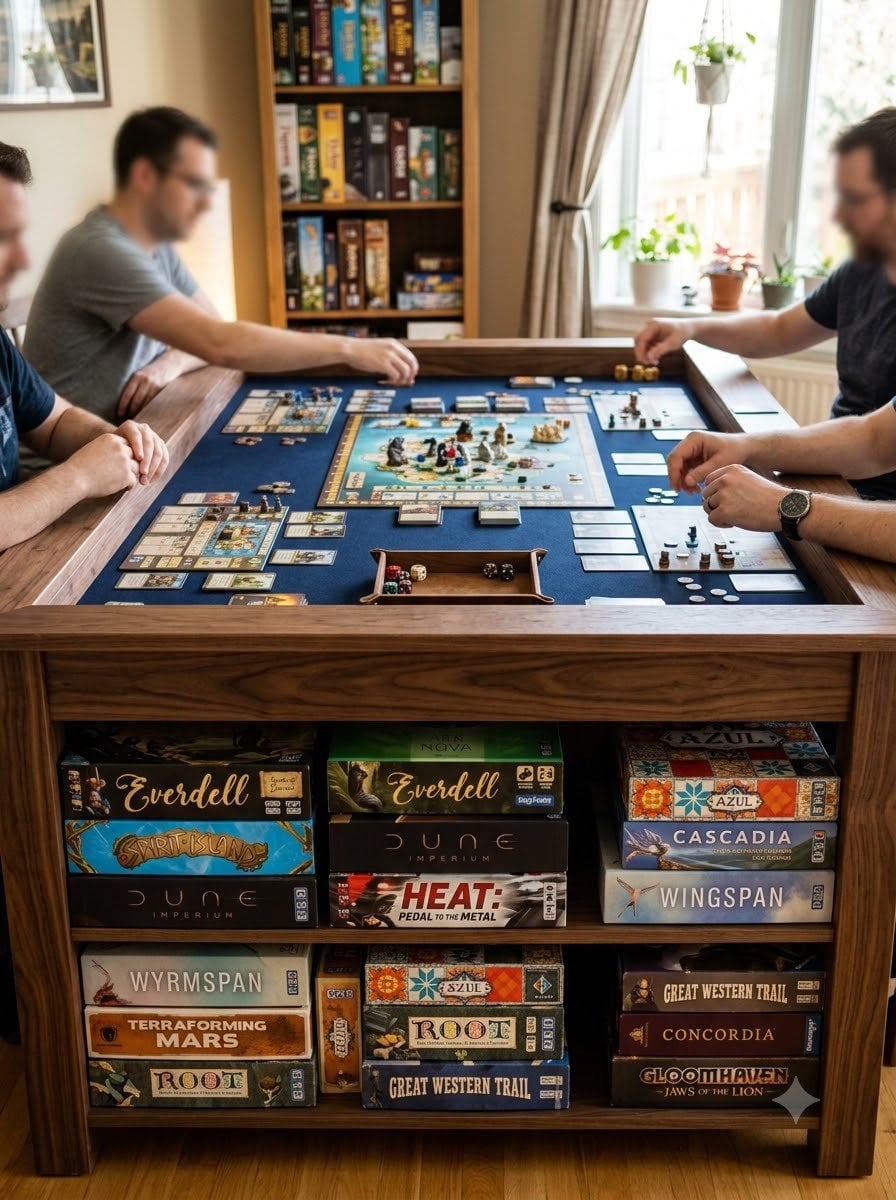
A table built or bought specifically for gaming, with an under-table shelf or drawer sized for your most-played titles, keeps the actual currently-in-rotation games within reach of where they’re used, cutting the walk to a separate shelf entirely.
Budget tier: bigger investment.
What We Learned the Hard Way
The most common mistake isn’t a messy shelf, it’s an underrated one. A bookcase that looks sturdy in a showroom can visibly sag within a few months once it’s actually carrying the weight of 20-30 games, since most decorative shelving is never rated for anything close to that density.
If there’s one thing worth checking before loading a single game onto a new shelf, it’s the manufacturer’s actual per-tier weight rating, not just how solid it feels when empty.
The second mistake is skipping the wall anchor. A fully loaded game bookcase is genuinely heavy and top-loaded in exactly the way CPSC’s tip-over data describes, and the anchor strap that prevents it takes minutes and costs almost nothing.
We’ve seen collections built up over years on a shelf that was never anchored, simply because it never occurred to anyone that a bookcase full of board games was the same category of risk as a dresser or a TV stand.
And the one that shows up slowly: cardboard warping. Games stored in a garage or attic for a season or two start showing soft, curled box corners and cards that don’t sit flat anymore, damage that’s often permanent by the time it’s noticed. Check where a collection is actually being stored, not just how it’s organized.
FAQs
How much weight can a board game shelf actually hold? Look for a shelf rated at least 30-50 pounds per tier for a genuine collection. A single game can weigh 2-4 pounds, so a modest 15-20 game section can easily reach 40-80 pounds total.
Do I really need to anchor a board game bookcase to the wall? Yes, if it’s fully loaded. Per CPSC data, furniture tip-overs caused 459 child deaths between 2000-2018, and a densely packed game shelf is exactly the kind of top-heavy load that makes an unanchored bookcase dangerous.
What’s the standard size of a board game box? Roughly 11.5×11.5 inches for a typical box, though the range runs from small card-game boxes to oversized deluxe editions, measure your actual collection’s outliers before sizing shelf depth.
Can heat or humidity actually damage board games? Yes. Cardboard components and printed cards can warp and degrade in an attic or garage with real temperature and humidity swings, store a collection somewhere climate-stable instead.
What’s the cheapest way to start organizing a board game collection? Matching box heights within existing shelves and bagging loose components inside each box cost nothing beyond a box of storage bags, and solve two of the most common real problems before any new furniture purchase.
There’s more on building shelving sized to your actual collection if a custom bookcase is the direction, and if the games are going in a dedicated family space, organizing a basement playroom covers the surrounding room too. For a game-night space built around adults instead, setting up a basement man cave has more on the furniture and layout side of things.
Related Posts
Products We Recommend
This post contains affiliate links. We may earn a commission on qualifying purchases at no extra cost to you.
LyAosdFu Heavy Duty Metal Bookshelf (5-tier, 69" tall)
Direct product match for idea 2, the real weight-rating fix described in Before You Start, Amazon's Choice, 4.4 stars / 259 ratings, live-verified
Shop Now
QuakeHold! Furniture Strap Kit (anti-tip wall anchors)
Direct product match for idea 18, the safety fix tied to CPSC data, Amazon's Choice, 4.6 stars / 325 ratings, live-verified
Shop Now
Amazon Basics Stackable Storage Containers (32 quart, set of 6)
Direct product match for idea 6/8, 4.2 stars / 1,200 ratings, live-verified
Shop NowNever miss an update — choose FarmFoodFamily as your preferred source on Google.
How it works: Tap the button below to open Google's settings page, then check the box next to FarmFoodFamily.
Tap the checkbox to turn it blue — that's how you know it's set.