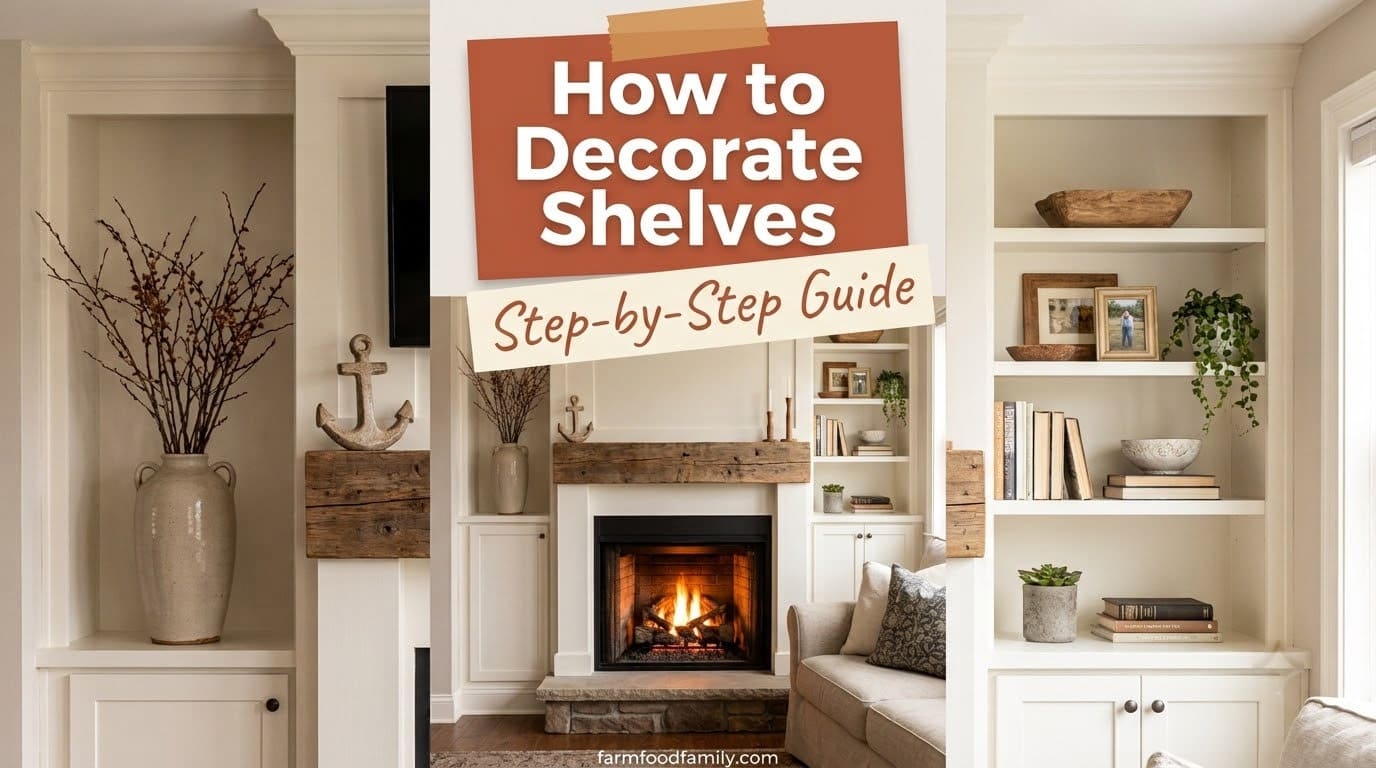
6 Feng Shui Living Room Rules That Will Make Your Space Feel Naturally More Welcoming
The living room is the one space in a home built entirely around gathering, feng shui treats getting its layout wrong as a real drag on how welcoming the room feels, and a couple of these rules turn out to be protecting your furniture and your neck, not just your energy.

Never miss an update — choose FarmFoodFamily as your preferred source on Google.
How it works: Tap the button below to open Google’s settings page, then check the box next to FarmFoodFamily.
Tap the checkbox to turn it blue — that’s how you know it’s set.
Dato Joey Yap, Founder of the Mastery Academy of Chinese Metaphysics and Chief Consultant of Joey Yap Consulting Group, treats the living room as the household’s social and energetic center, its layout is thought to shape how comfortable people feel gathering there more than almost any other room.
Here are the six rules that matter most, paired with the real ergonomic and material-science facts that back a couple of them up beyond symbolism.
1. Give the sofa a commanding position
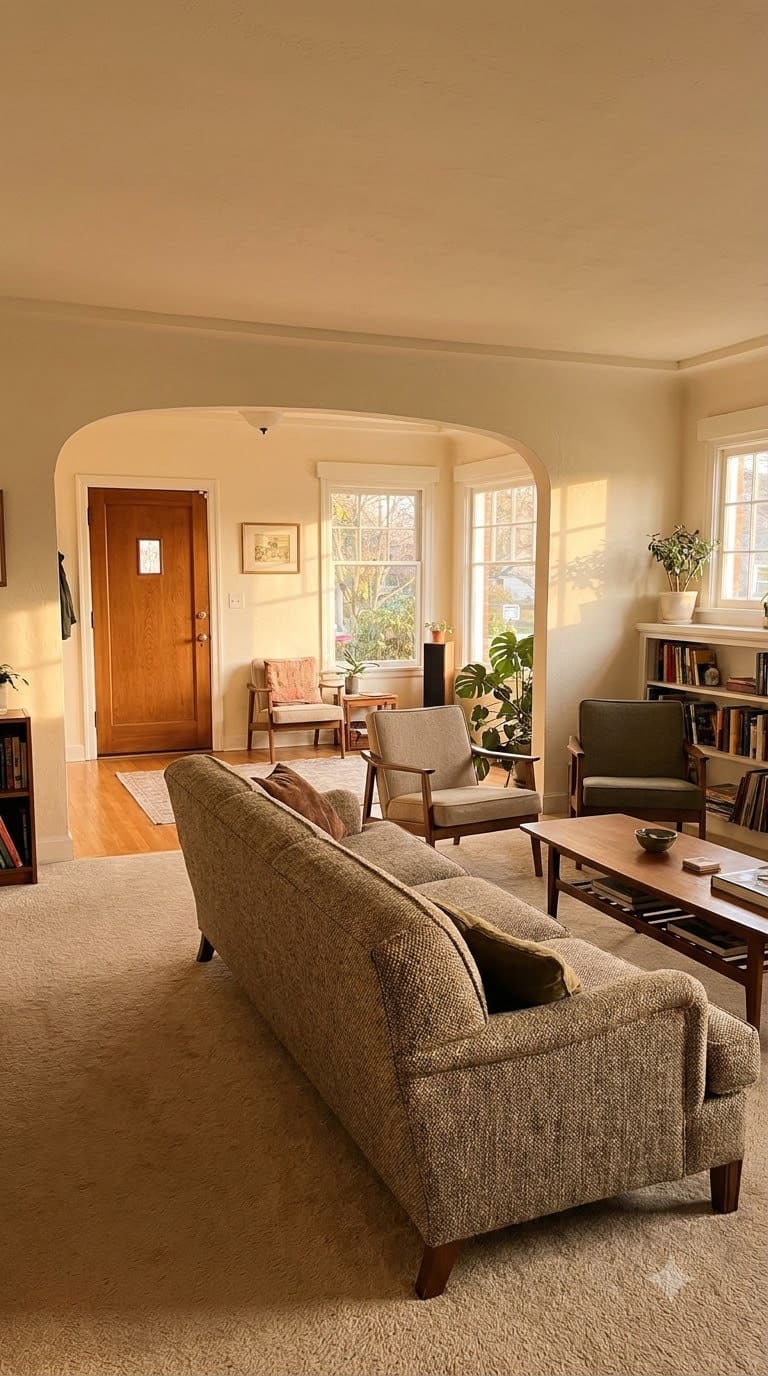
The sofa should be positioned so people sitting on it can see the room’s main entrance, ideally angled or placed diagonally rather than directly in line with the doorway.
This is the same “commanding position” principle applied to beds, desks, and dining tables elsewhere in feng shui, and it’s considered the single most important placement decision in the room.
If your layout only allows a straight sightline to the door, flushing the sofa against a solid wall behind it adds a sense of backing and support that softens the concern.

2. Does a sofa near a window really lose “chi,” or does it just fade faster?
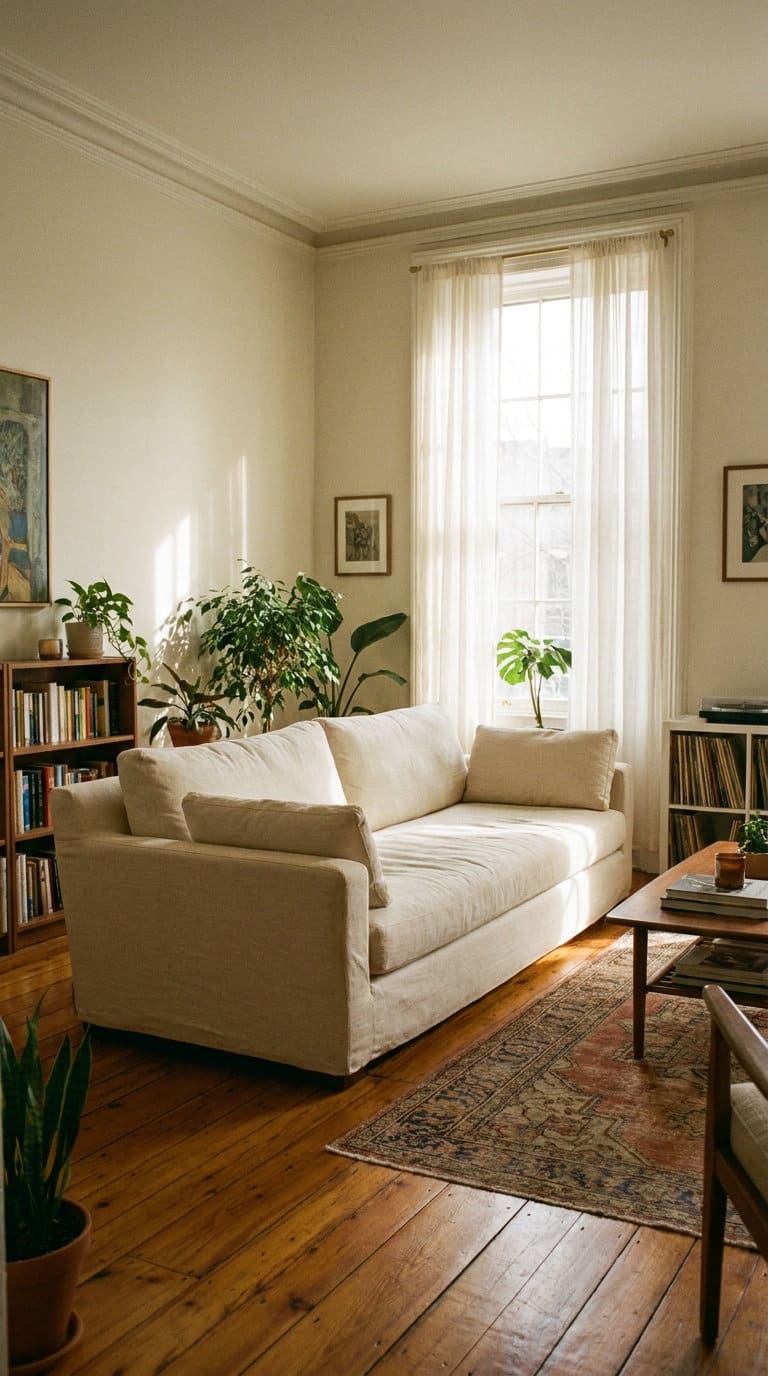
Feng shui treats a sofa placed directly against or in front of a window as unstable, chi is thought to leak out through the glass, leaving the seating area without the settled, grounded feeling it needs.
There’s a real material reason to take this seriously beyond symbolism: standard window glass blocks roughly 97% of UVB rays but only about 37% of UVA rays, and UVA is the wavelength most responsible for fading fabric dyes and making natural fibers or leather brittle over time.
A sofa sitting in direct window exposure for years genuinely fades and degrades faster than one set back from the glass, “chi instability” and “real UV damage” point toward the same fix for different reasons. If repositioning isn’t possible, UV-filtering window film or heavier curtains meaningfully slow the damage.
3. Balance the TV and fireplace, and get the actual viewing ergonomics right
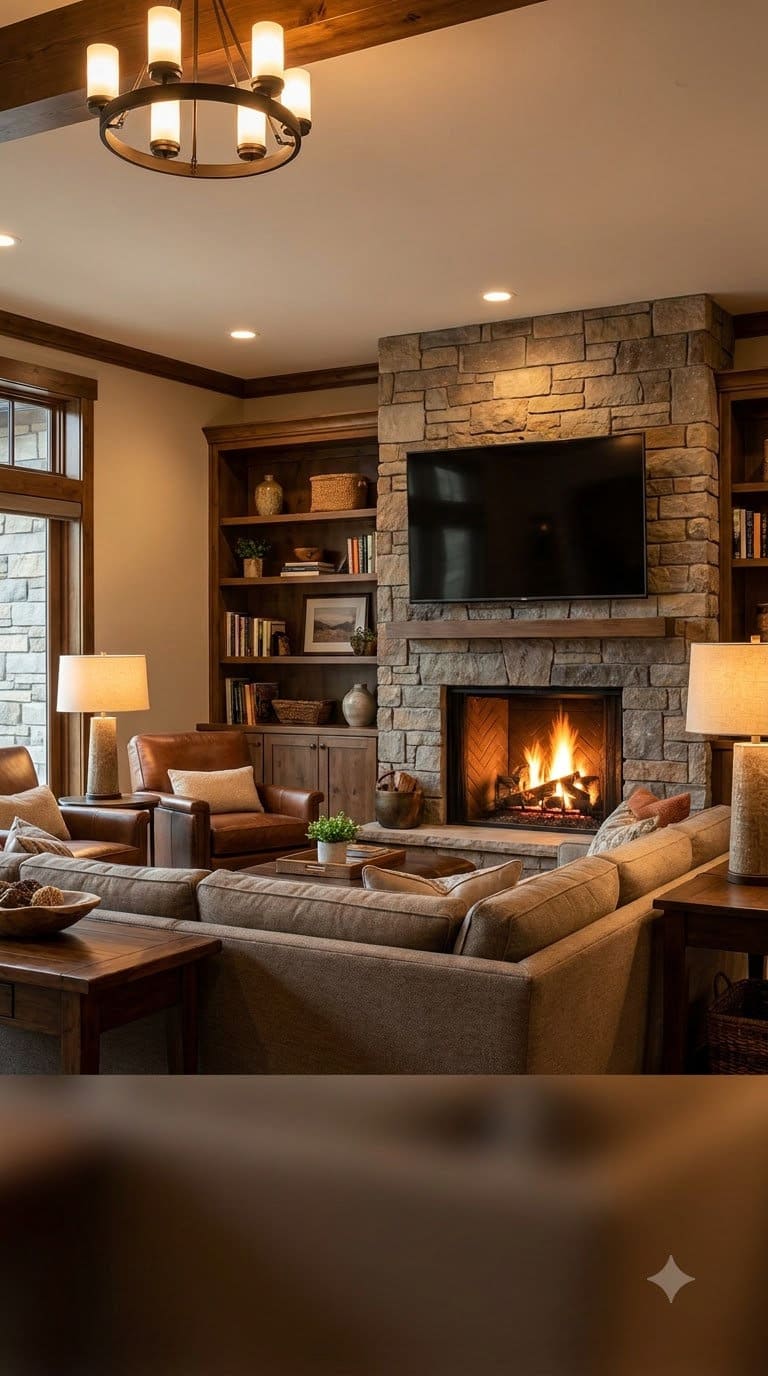
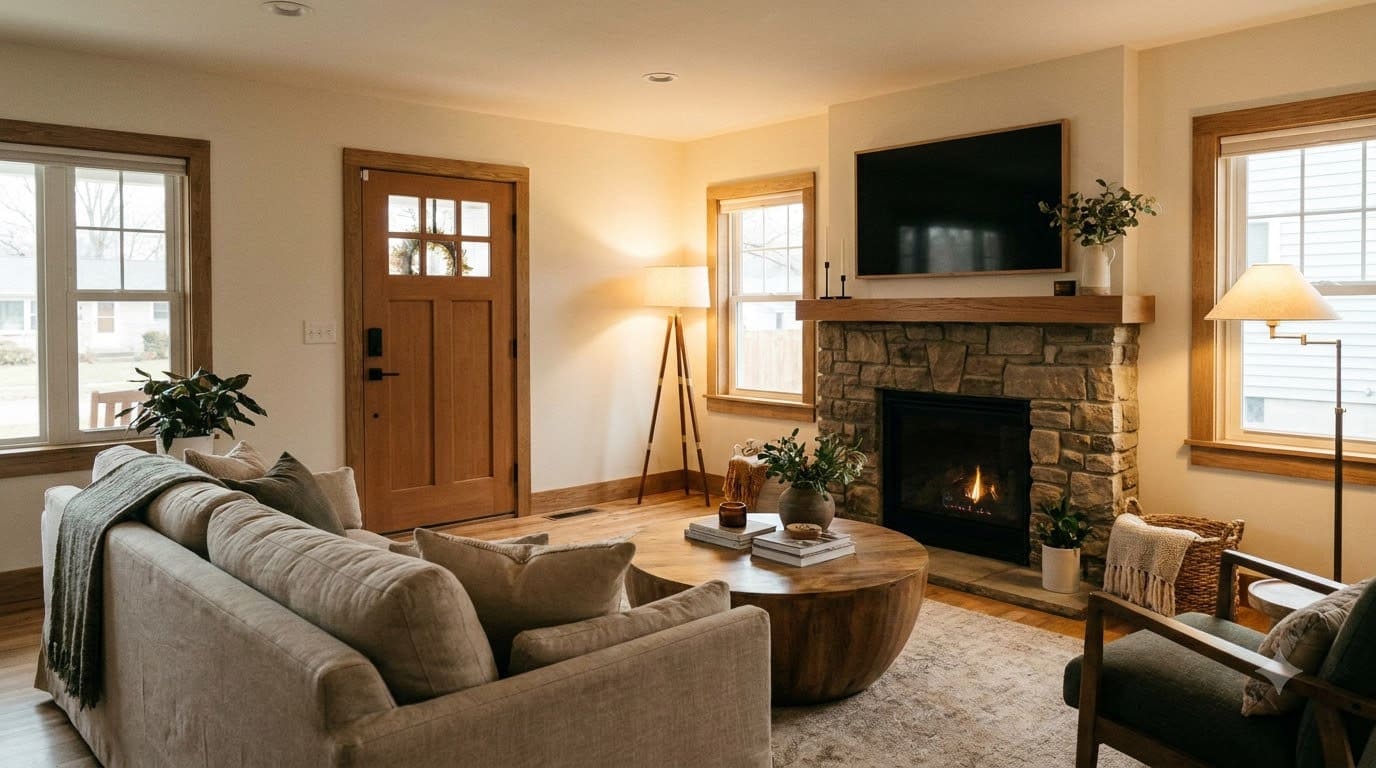
Fireplaces represent yang (active, warm) energy, and TVs represent yin (passive, receptive) energy, feng shui recommends placing them off to the side of each other or using a media console for separation, rather than treating the TV as the room’s dominant focal point.
Our guide on where to put your TV in a living room with a fireplace covers this specific layout question in more depth.
Beyond the symbolic balance, there’s a real ergonomic reason to get TV placement right regardless of what’s beside it: the screen’s center should sit at roughly seated eye level, generally 42 to 48 inches from the floor in a living room, and the ideal viewing distance runs about 1.2 to 1.5 times the screen’s diagonal measurement.
A TV mounted too high for aesthetic reasons, a common mistake when it’s centered over a fireplace, forces a craned neck position that adds up to real strain over a season of regular viewing.
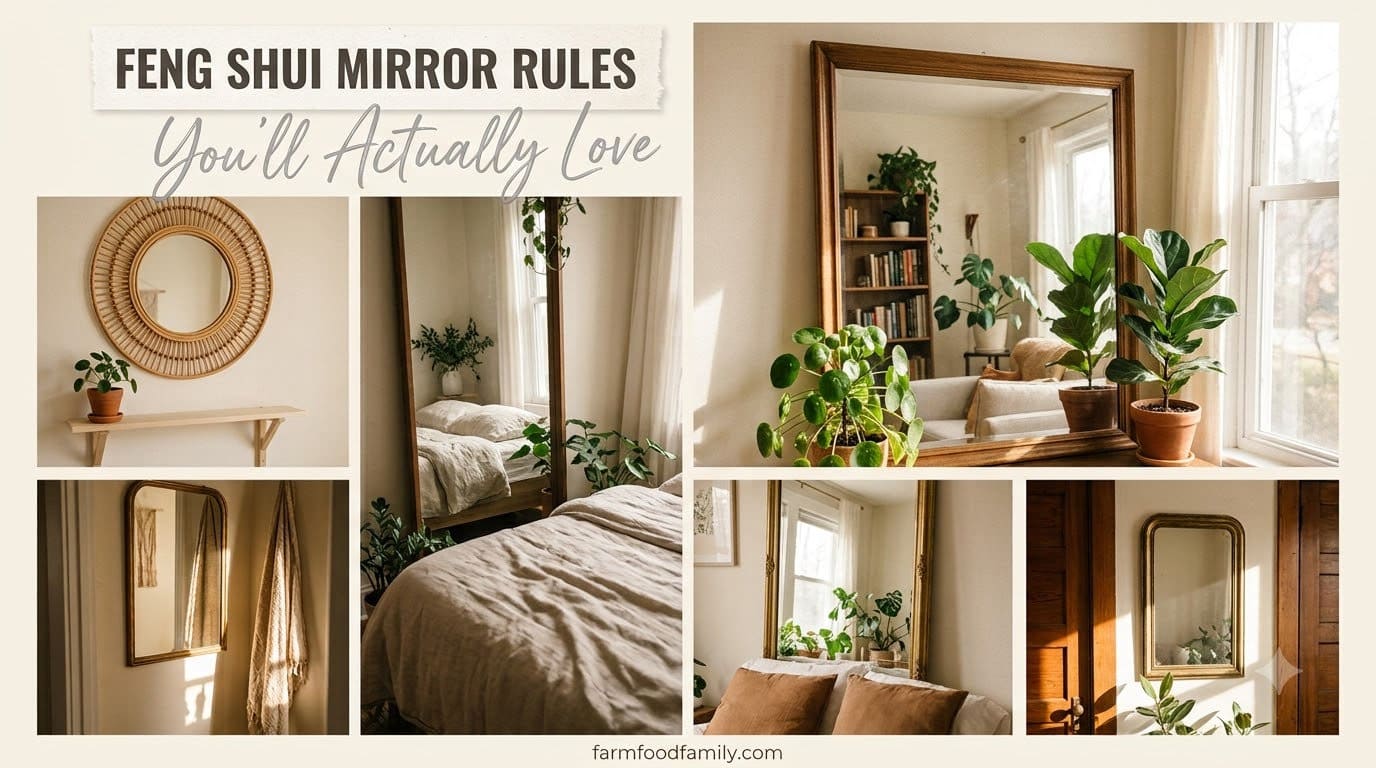
4. Place mirrors carefully, never facing the door or hanging over the sofa
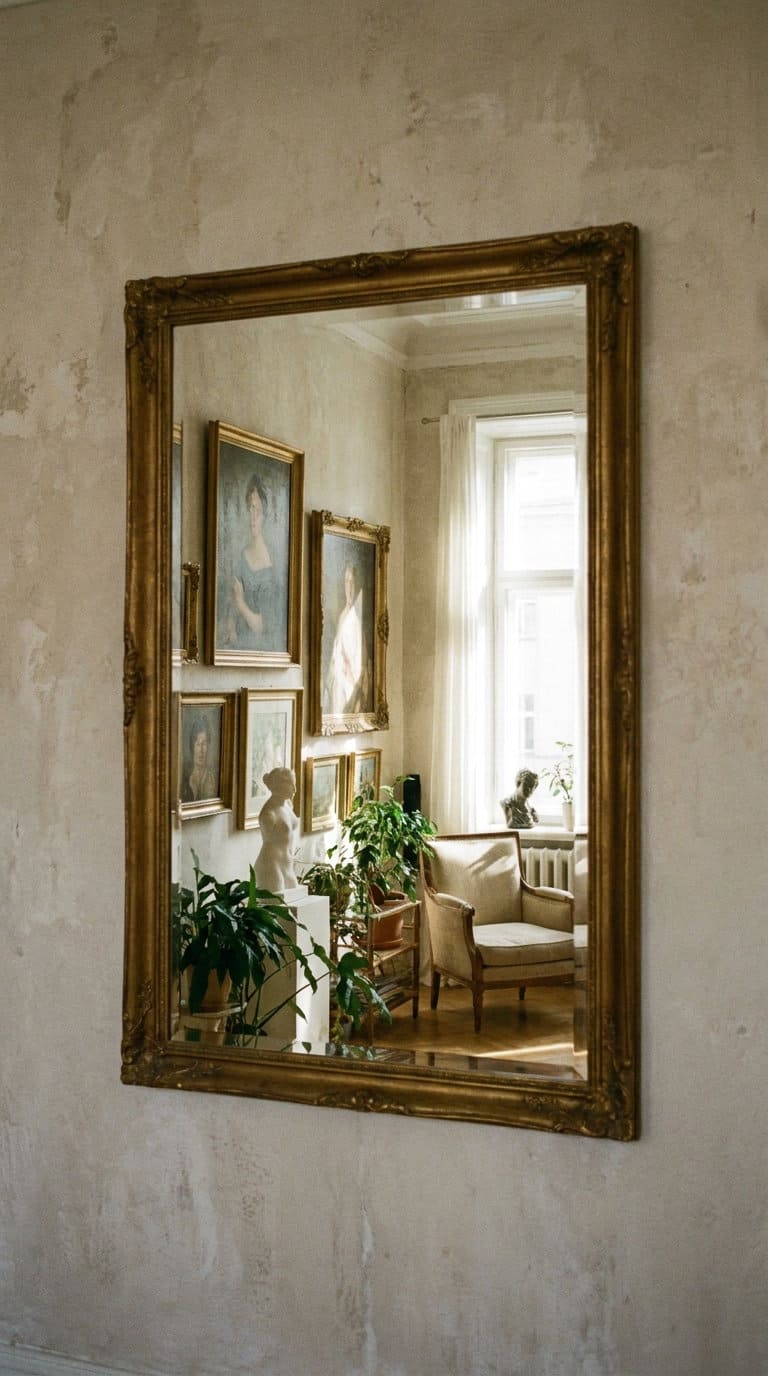
A mirror positioned directly opposite the main entrance is considered to bounce incoming energy right back out before it settles into the room.
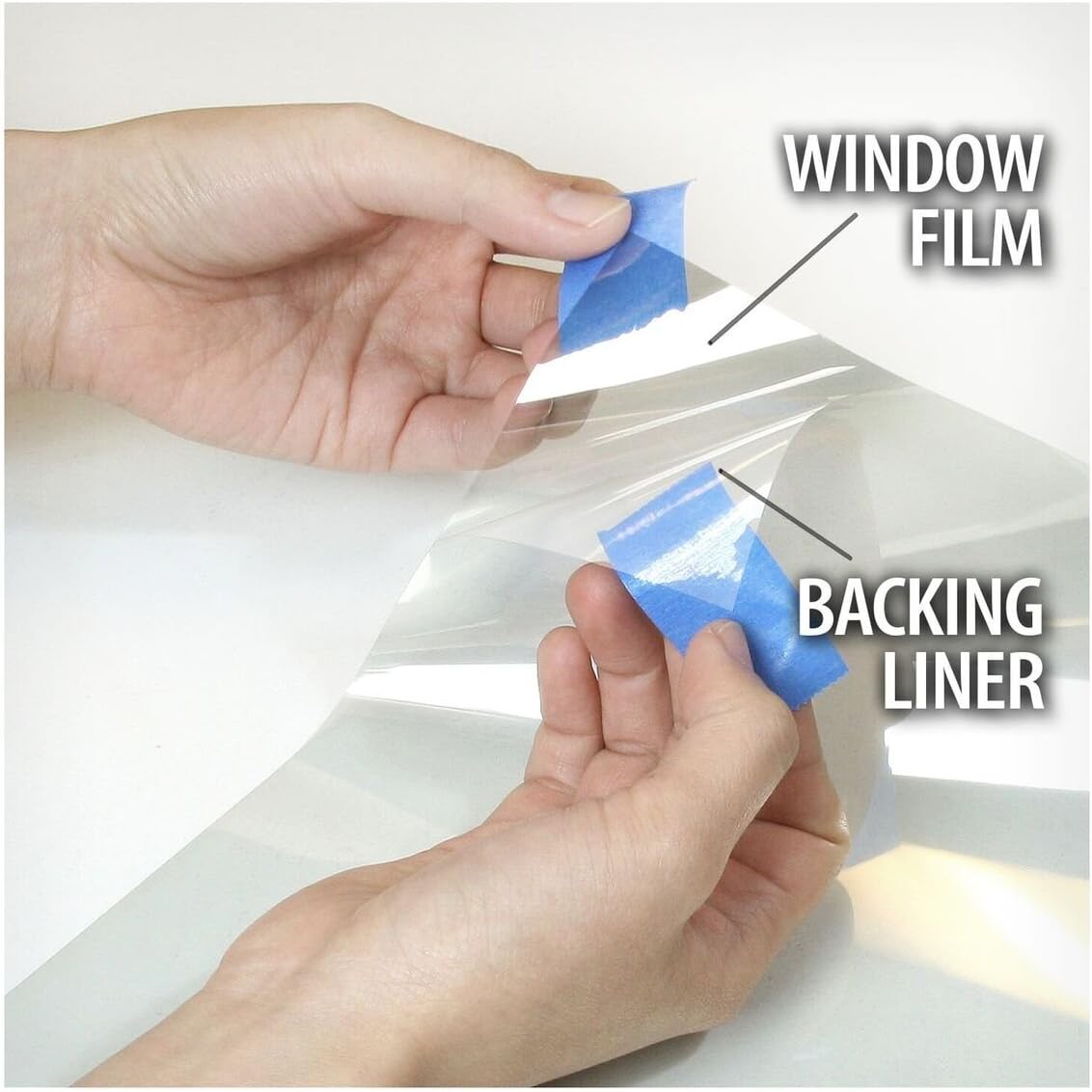
Directly addresses rule #2's real fabric-fading concern
Shop NowThis post contains affiliate links. We may earn a commission on qualifying purchases at no extra cost to you.
Mirrors are better placed on a perpendicular wall, reflecting light or artwork rather than the door itself. Separately, hanging a mirror directly above or behind a sofa is discouraged, the weight of an object above a seated space is thought to undermine the sense of safety and security feng shui wants a gathering spot to have.
Our living room mirror decorating ideas guide has real placement examples that avoid both mistakes.
5. Choose rounded furniture over sharp edges
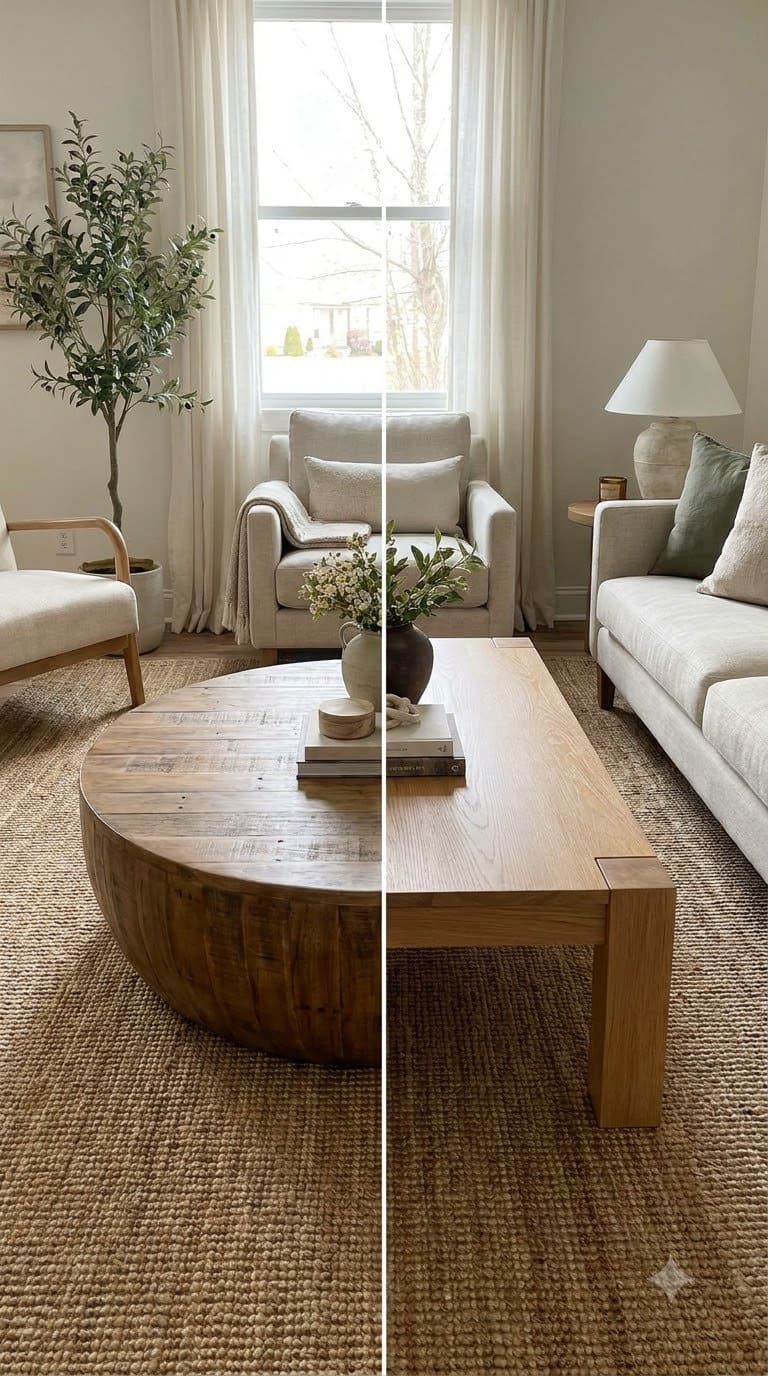
Circular or softly-edged coffee tables and furniture pieces are favored over sharp-cornered ones, which are read as projecting “poison arrow” energy at anyone seated nearby.
This is one of the clearest overlaps between symbolism and plain practicality on this whole list: a rounded coffee table corner is also a genuine injury-reduction choice in any household with small children, pets, or anyone with mobility concerns navigating the room.
The feng shui preference and the safety preference are, for once, exactly the same recommendation.
6. Keep the space genuinely clutter-free, with only thriving plants
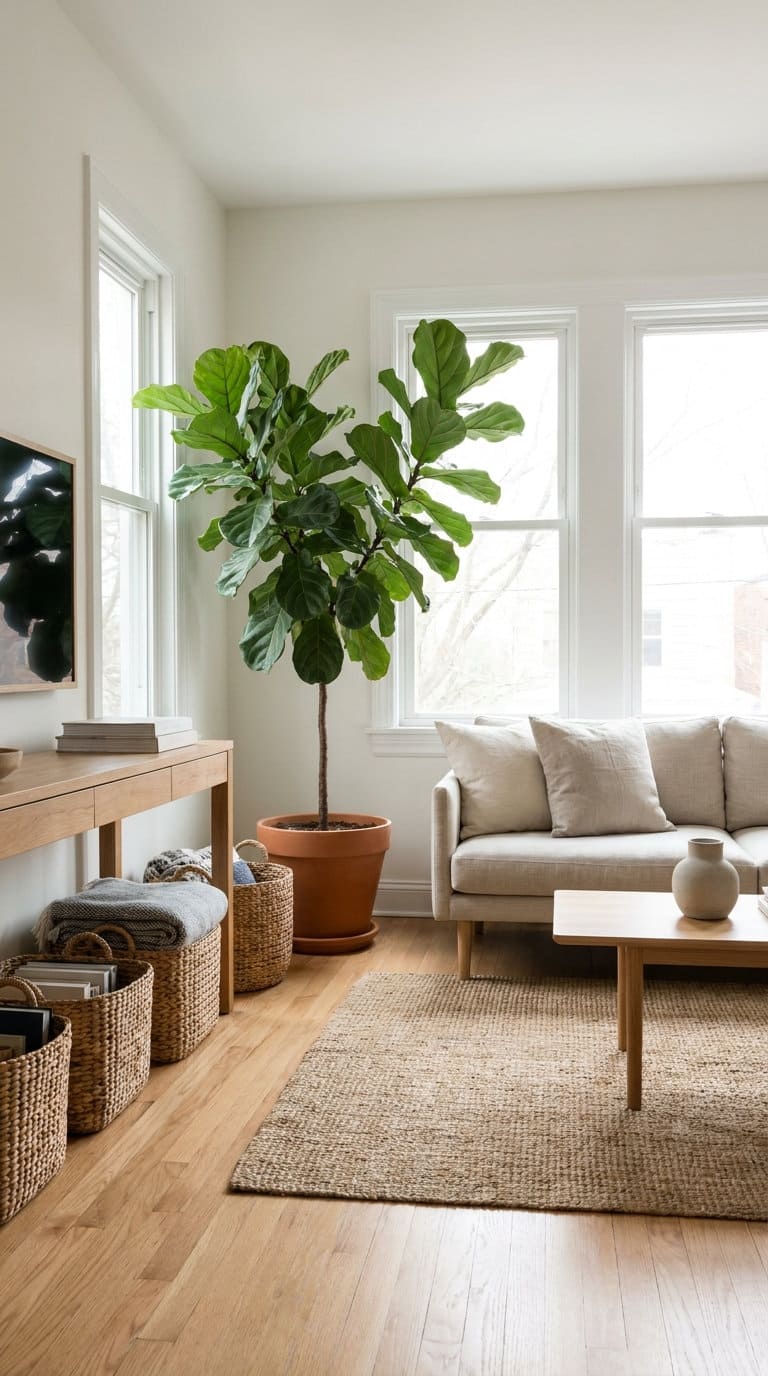
Unnecessary items, stacks of mail, or general clutter are treated as blocking the room’s energy circulation the same way physical clutter blocks foot traffic, real storage solutions (baskets, shelving, furniture with built-in storage) are the standard fix.
Plants are a favored addition for bringing living energy into the room, but only healthy, thriving ones, a wilting or dying plant with dead leaves is considered to work against the room rather than for it, and is worth replacing rather than propping up.
Our living room storage ideas guide covers real storage options that keep clutter contained without sacrificing the room’s look.


The 6 rules at a glance
| Rule | Real-world backing | Fastest fix |
|---|---|---|
| Commanding position | Same logic as beds/desks/dining tables | Angle the sofa diagonal to the door, back to a wall |
| Away from window exposure | Window glass blocks only ~37% of UVA, fading fabric | UV-filtering window film or heavier curtains |
| TV/fireplace balance | Ideal screen height 42-48″ from floor for seated eye level | Adjustable mount instead of centering over the fireplace |
| Mirror placement | Weight over a seated space undermines security | Perpendicular wall, never facing the door or over the sofa |
| Rounded furniture | Real injury-reduction for kids/pets/mobility | Round coffee table corners |
| Clutter-free with healthy plants | Wilting plants read as decline | Real storage + replace struggling plants |
What we learned the hard way
The window-placement rule is the one people ignore longest because the damage is so gradual.
A sofa fabric that looked fine when a room was arranged can show real, uneven fading within just a couple of years of consistent afternoon sun, by which point reupholstering or replacing the piece costs far more than repositioning it (or adding UV film) would have from the start.
The TV-height mistake is the other one people don’t notice until it’s already a habit. Mounting a TV above a fireplace for a clean, symmetrical look feels fine during a quick test, but months of regularly craning your neck upward adds up in a way that’s easy to dismiss until it’s a real recurring discomfort.
FAQs
My sofa has to go in front of a window in my room’s layout. What can I do? Add UV-filtering window film or heavier curtains to reduce fading, and place plants or furniture on the windowsill as a visual buffer, both help offset the feng shui and the real material-damage concern.
Is mounting the TV above the fireplace always a mistake? Not always, but check the resulting viewing height against your actual seated eye level before committing to it. If the mounted height forces you to look up more than slightly, it’s worth reconsidering the layout even if the symmetry looks appealing.
Do I need to avoid sharp-edged furniture entirely? Not entirely, but prioritizing rounded corners for pieces in high-traffic areas (like a central coffee table) gets you most of both the feng shui and the real safety benefit without limiting your whole style.
How do I know if a plant is helping or hurting the room’s feng shui? The standard rule is simple: if it’s visibly healthy and growing, it counts as a positive addition. A struggling or dying plant should be revived, relocated to better light, or replaced rather than left in a prominent spot.
Related reading on farmfoodfamily.com: for more layout-specific inspiration once these fundamentals are in place, see our living room ideas with fireplace and TV and a look at the worst living room design mistakes to make sure you’re not compounding any of these issues.
Related Posts
- Where to Put Your TV in Living Room with a Fireplace
- Living Room Mirror Decorating Ideas
- Living Room Storage Ideas
- Worst Living Room Design Mistakes
- Living Room Trends to Avoid
- Living Room Colors to Avoid
Products We Recommend
This post contains affiliate links. We may earn a commission on qualifying purchases at no extra cost to you.


MOUNTUP Height-Adjustable Full-Motion TV Wall Mount
Lets you correct rule #3's real ergonomic viewing height even above a fireplace
Shop NowNever miss an update — choose FarmFoodFamily as your preferred source on Google.
How it works: Tap the button below to open Google's settings page, then check the box next to FarmFoodFamily.
Tap the checkbox to turn it blue — that's how you know it's set.