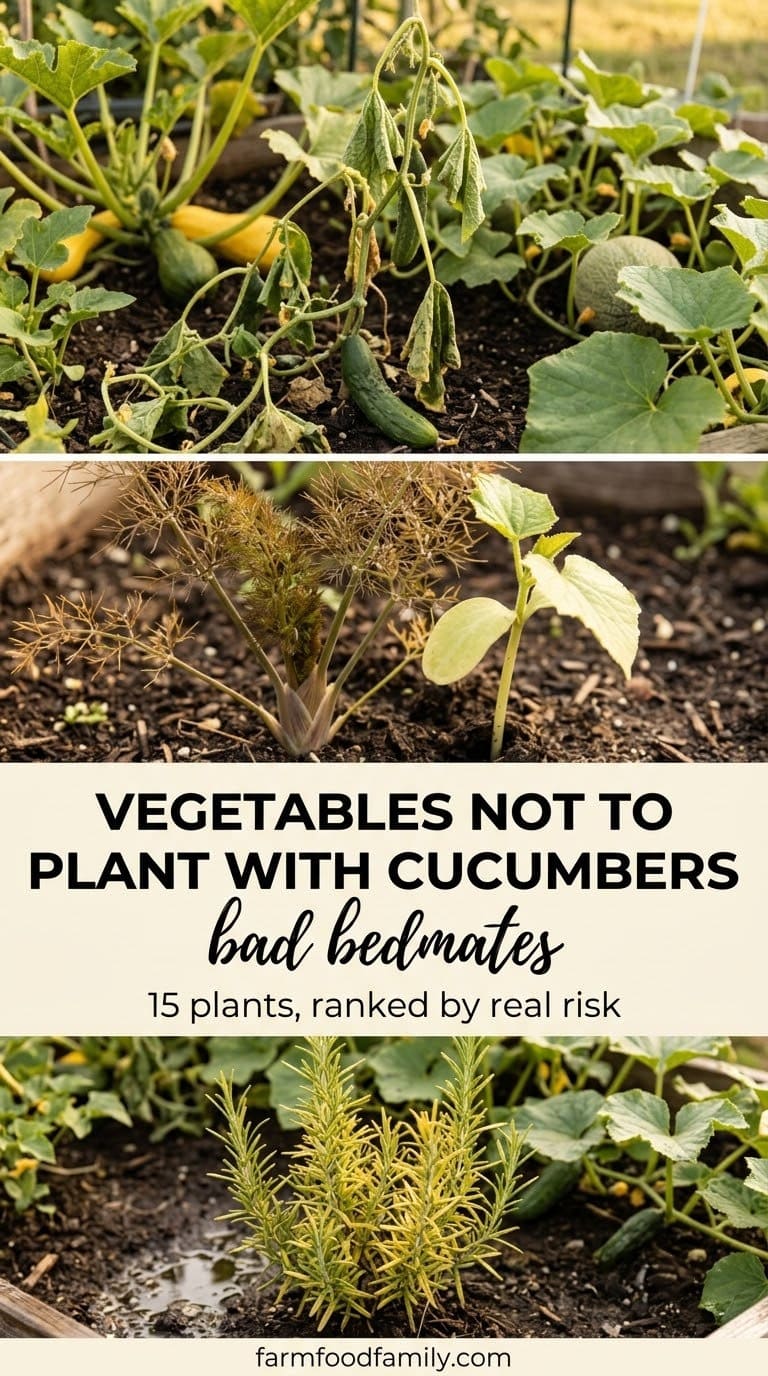
15 Vegetables That Shouldn’t Share a Garden Bed With Cucumbers
A few of these spread cucumber beetles and mildew straight into your vines, and a few just lose the fight for water and sun. Two of the reasons you’ll see on every other list, cross-pollination and herbs “making cucumbers bitter,” are myths, and this clears those up first.


Never miss an update — choose FarmFoodFamily as your preferred source on Google.
How it works: Tap the button below to open Google’s settings page, then check the box next to FarmFoodFamily.
Tap the checkbox to turn it blue — that’s how you know it’s set.
Cucumbers are greedy. They feed hard, drink hard, and sprawl over everything within reach.
So most bad-neighbor trouble comes down to two things. Either the other plant feeds the same pests and diseases, or it loses the competition for water, food, and light.
Two myths clutter every companion list. Cucumbers do not cross-pollinate with squash or melons, and a sprig of sage does not make your cucumbers bitter.
We’ll deal with both. Then we’ll get to the 15 plants, sorted by how much they actually matter.
Quick Answer
Four things make a plant a bad cucumber neighbor. Other cucurbits share the striped cucumber beetle, the bacterial wilt it carries, and mildew. Fennel, sunflowers, and sunchokes release growth-inhibiting compounds.

Mediterranean herbs like sage and rosemary want dry soil while cucumbers want it wet. And heavy feeders like potatoes, brassicas, and tomatoes strip the same nutrients and crowd the vines.
Answer 4 quick questions and get matched to the exact fix for your yard — drainage, budget, layout, or something else entirely.
Take the Free QuizThree groups matter most: other cucurbits in a tight block, fennel, and the dry-soil herbs. The rest are lower risk if you give the bed room and airflow.
Ignore two myths. Cucumbers do not cross with squash or melons, per Iowa State Extension, and even a true cross only matters for saved seed.
Herbs do not cause bitterness either. That is cucurbitacin, a stress compound. So trellis the vines, space the cucurbits, and cover seedlings until they flower.
What makes a plant a bad cucumber neighbor?
Four mechanisms cover all 15. Which one you’re dealing with decides whether you move a plant, add a trellis, or just water differently.
Cucurbit pest and disease amplification. Cucumbers, squash, melons, and pumpkins all feed the striped cucumber beetle, which spreads bacterial wilt. They all catch powdery mildew, downy mildew, and cucumber mosaic virus. Cluster them and you build a bigger pest population and a faster-spreading disease.
Allelopathy and aggressive spread. Fennel, sunflowers, and Jerusalem artichokes release compounds that slow nearby plants. Mint doesn’t poison the soil, but its runners take the bed.
Water and soil mismatch. Cucumbers want steady moisture and rich soil. Sage, rosemary, lavender, and thyme want lean, dry ground. One watering schedule can’t serve both.
Most yard problems trace back to one specific, fixable cause. Find yours in 4 quick questions.
Take the Free Quiz
Gets the vines off the ground for airflow, the single best defense against the mildew and bacterial wilt that shared cucurbit beds spread. Folds flat for storage.
Shop NowThis post contains affiliate links. We may earn a commission on qualifying purchases at no extra cost to you.
Crowding and competition. Cucumber vines sprawl and shade low plants. Heavy feeders like potatoes, cabbage, and tomatoes pull the same nutrients. Slow crops like carrots get buried before they size up.
Two cucumber companion myths worth clearing up first
Cucumbers do not cross-pollinate with squash, zucchini, or melons. Iowa State University Extension puts it plainly: “the female flowers of each crop can be fertilized only by pollen from male flowers of the same species.”
Cucumber is Cucumis sativus, squash is a Cucurbita, and melon is Cucumis melo. Three different species, so they can’t cross.
Even a true cross, cucumber to cucumber, changes nothing this year. Iowa State notes that “the genome of the plant determines the qualities of the fruit.” It only matters if you save that fruit’s seed.
Herbs do not make cucumbers bitter. Bitterness in a cucumber is cucurbitacin. The plant makes more of it under heat and drought stress, and some varieties carry more by nature.
A basil or sage plant three feet away has nothing to do with it. The real reason to keep those herbs out of the bed is water, not flavor.
The 15 vegetables at a glance
| Plant | Main mechanism | Risk level | The fix |
|---|---|---|---|
| Squash, pumpkins, zucchini, melons | Cucumber beetle, bacterial wilt, mildew | High | Separate blocks, trellis, row cover early |
| Potatoes | Heavy feeder, shared blight, root disturbance | Moderate to high | Different bed, dig carefully |
| Fennel | Allelopathy | High | Its own bed, well away |
| Sage | Dry-soil herb, wet-soil crop | Low to moderate | Keep sage in its own dry pot |
| Rosemary, lavender, thyme | Water and soil mismatch | Low to moderate | Separate dry bed or containers |
| Mint | Rhizome invasion, water hog | Moderate to high | Buried container only |
| Broccoli, cabbage, cauliflower, kale | Nutrient competition, temperature clash, shade | Moderate | Different bed and season |
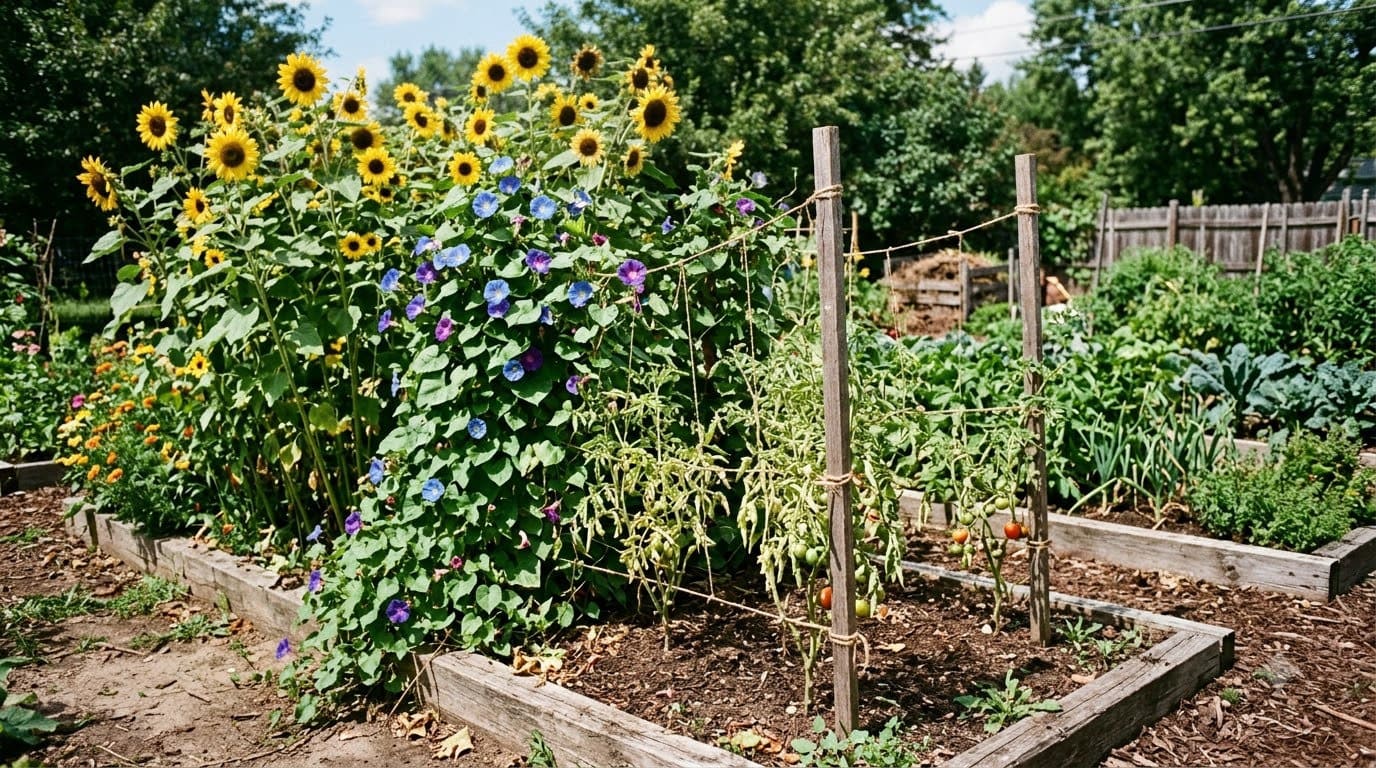
| Sunflowers | Allelopathy, shade, deep taproot | Moderate | North edge, or 4+ ft away |
| Jerusalem artichokes | Aggressive spread, shade, allelopathy | Moderate to high | A contained bed far from the garden |
| Tomatoes | Heavy feeder, shared virus, airflow loss | Moderate | Space them, trellis both |
| Peppers | Different water needs, shared minor pests | Low | Fine with spacing, water each to its need |
| Eggplant | Shared spider mites, aphids, flea beetles | Low | Fine with spacing and pest scouting |
| Onions, garlic, shallots | Mostly folklore | Low | Interplant freely, it’s fine |
| Carrots and slow root crops | Wet surface, shade, harvest disturbance | Low to moderate | Grow in a separate row |
| Late lettuce and tender greens | Smothered and shaded by the vines | Moderate | Plant only as an early catch crop |
1. Squash, pumpkins, zucchini, and melons
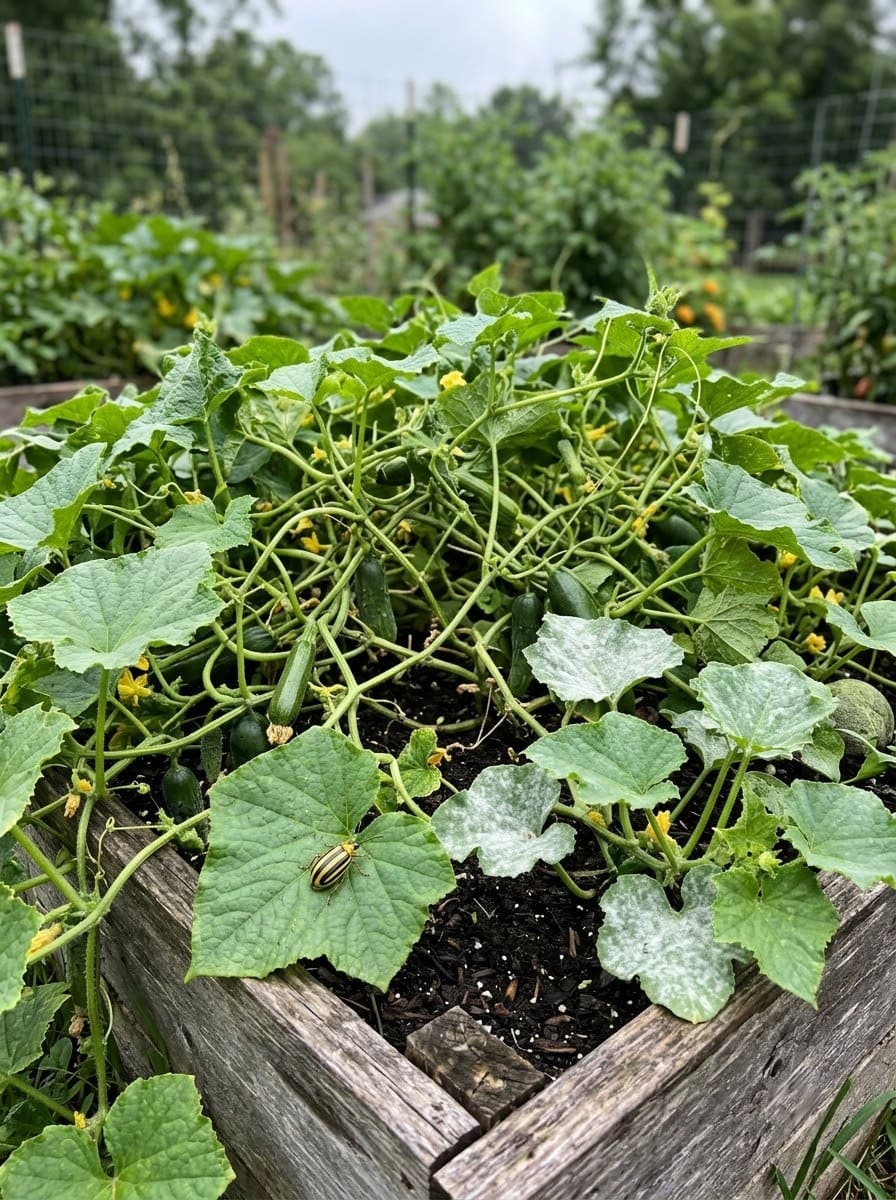
This is the group that actually costs you a crop. Cucumbers, squash, melons, and pumpkins are all cucurbits, and they pool their pests and diseases.
The worst of it is bacterial wilt. University of Maryland Extension explains that striped cucumber beetles carry the bacterium in their feces. It moves into leaf feeding wounds with rain or dew.
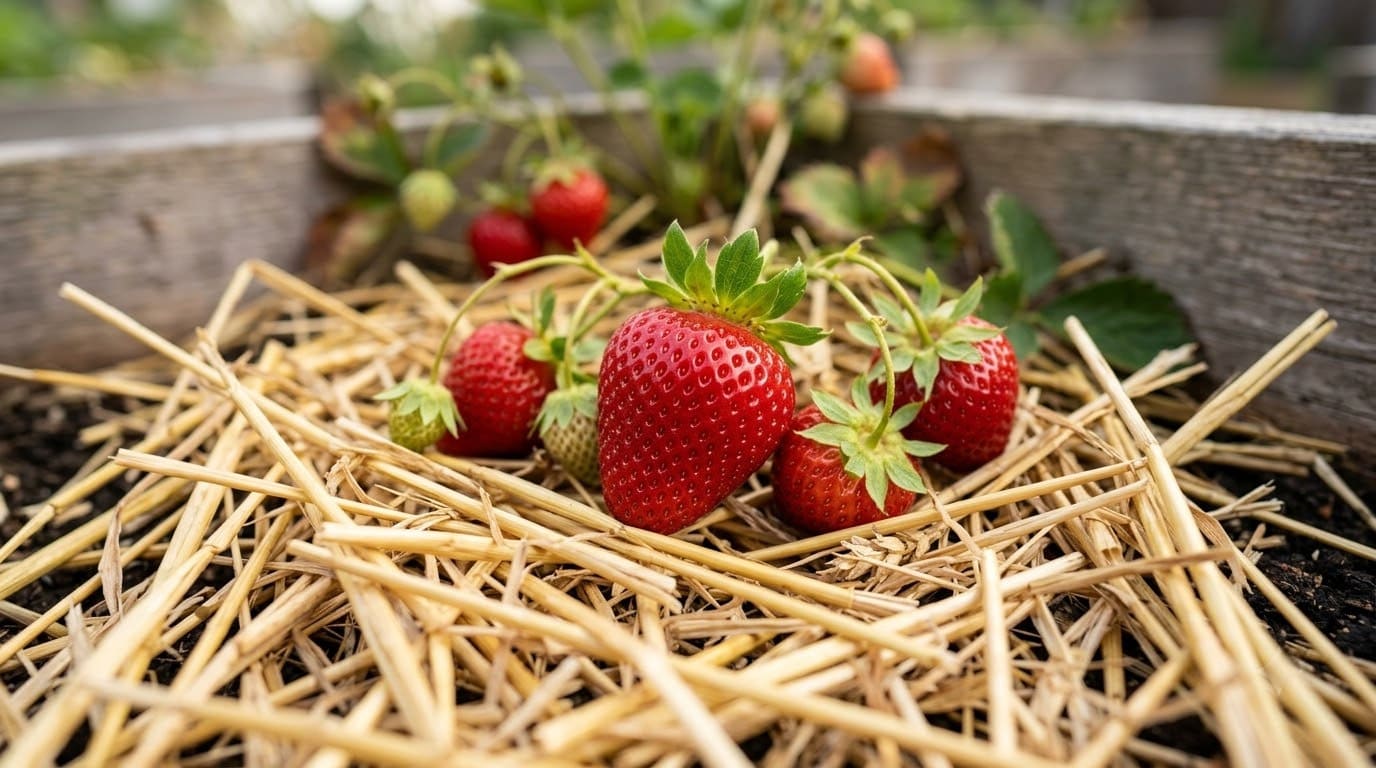


Once it’s in the plant, “vines and the entire plant wilting down can take 2 to 6 weeks.” Not every cucurbit is equally at risk, though.
The average homeowner spends $616/year on yard fixes that don't address the real problem. Find out what yours actually is — before you spend another dollar.
Take the Free QuizMaryland Extension says “cucumbers and cantaloupes are highly vulnerable,” squash and pumpkin are in the middle, and “watermelon is almost immune.” So a bed of cucumbers and melons is the high-danger mix.
Crowded cucurbits also trade powdery and downy mildew fast. UMass Amherst Extension notes powdery mildew “is most severe in crowded, shady, and poorly ventilated areas.”
The fix: grow one cucurbit type per bed, or space the blocks several feet apart with a trellis so air moves through. Cover young plants with floating row cover until they flower, then pull it so bees can work.
Already planted: if one vine wilts and doesn’t recover after a deep watering, cut it at the base and bag it. Don’t compost it. Get row cover on the healthy plants and scout daily for beetles.
2. Potatoes
Potatoes and cucumbers are both hungry, and digging one wrecks the other.

Potatoes are heavy feeders that pull hard on the same nutrients a fruiting cucumber needs. Both are also prone to fungal problems in humid weather, so a shared bed holds more disease pressure. And when you dig potatoes, you tear through the shallow feeder roots of any cucumber next to them.
The fix: keep potatoes in their own bed, ideally on the other side of the garden. If space is tight, at least put the cucumber where you won’t have to dig near it.
Already planted: harvest the potatoes carefully, lifting from well outside the cucumber’s root spread. Side-dress the cucumber with compost afterward to make up for the competition.
3. Fennel
Fennel is the one herb almost nothing wants to grow near, and cucumbers are no exception.

Fennel releases allelopathic compounds through its roots and its decaying leaves. A study on the allelopathic potential of fennel found its extracts sharply cut germination and seedling growth.
The crop plants in that test were more sensitive than the weeds. Penn State Extension treats this kind of chemical interference as a real garden problem, not just tree-and-turf lore.
The fix: grow fennel in its own bed or a large container, as far from the cucumbers as your garden allows. Treat it as a solo plant.
Already planted: move one of the two. Don’t spend weeks adjusting water and fertilizer first. Our fennel growing guide covers the container-versus-bed call.
4. Sage
Sage isn’t a pest or disease threat to cucumbers. It’s a watering problem.
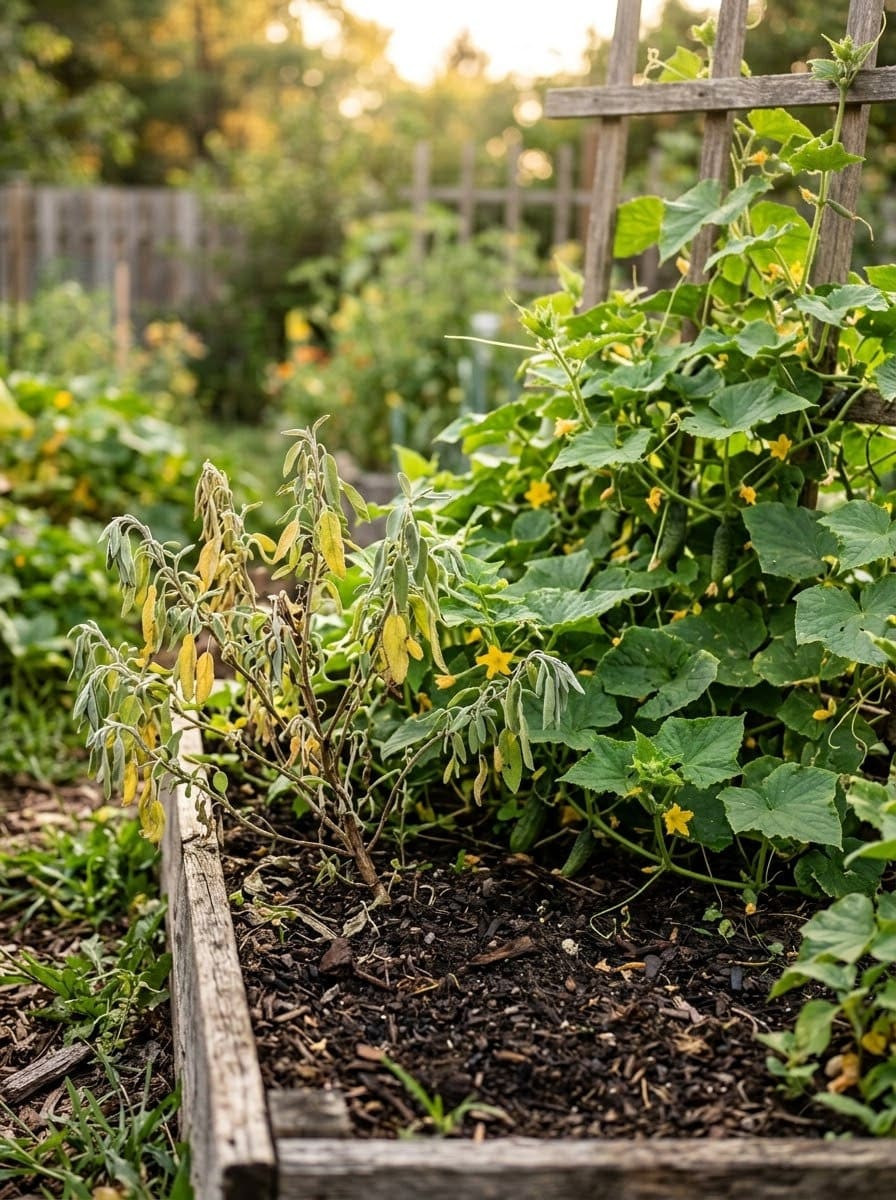
Sage is a Mediterranean herb. It wants lean, gritty soil, and it wants to dry out between waterings.
A cucumber wants rich soil and steady moisture. Water the bed for the cucumber and the sage sits wet and rots at the root.
Ignore the common claim that sage makes cucumbers taste bitter. That’s cucurbitacin from heat and water stress, covered above. Sage has nothing to do with flavor.
The fix: keep sage in its own pot with sharp drainage, or in a dry herb bed. Dill and nasturtium are better low companions for a cucumber.
Already planted: if the sage looks yellow and limp in a well-watered bed, it’s drowning. Lift it into a gritty container.
5. Rosemary, lavender, and thyme
Same problem as sage, and often worse, because these are woody perennials you plant once and leave.
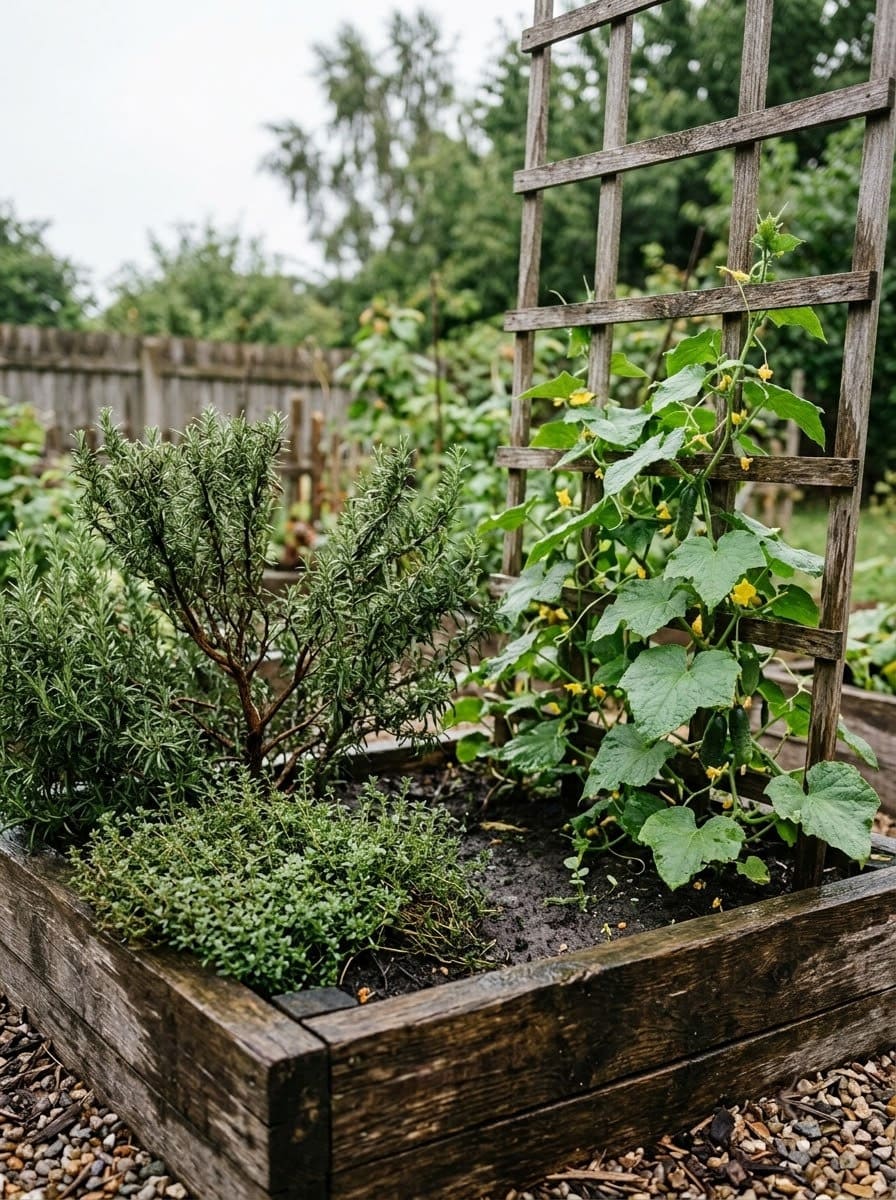
Rosemary, lavender, and thyme all evolved in dry, rocky ground. They rot in soil kept as wet as a cucumber needs it. Because they’re permanent plants, you can’t just pull them at the end of the season, so the mismatch runs for years.
The fix: give the woody herbs their own dry, sharply drained bed or a row of pots. Don’t build a cucumber bed around an established rosemary.
Already planted: move the herb, not the cucumber. A rosemary transplanted into gritty soil in fall usually recovers. This is the same water clash we covered with rosemary in the herb garden.
6. Mint
Mint doesn’t compete with a cucumber so much as it takes the bed out from under it.
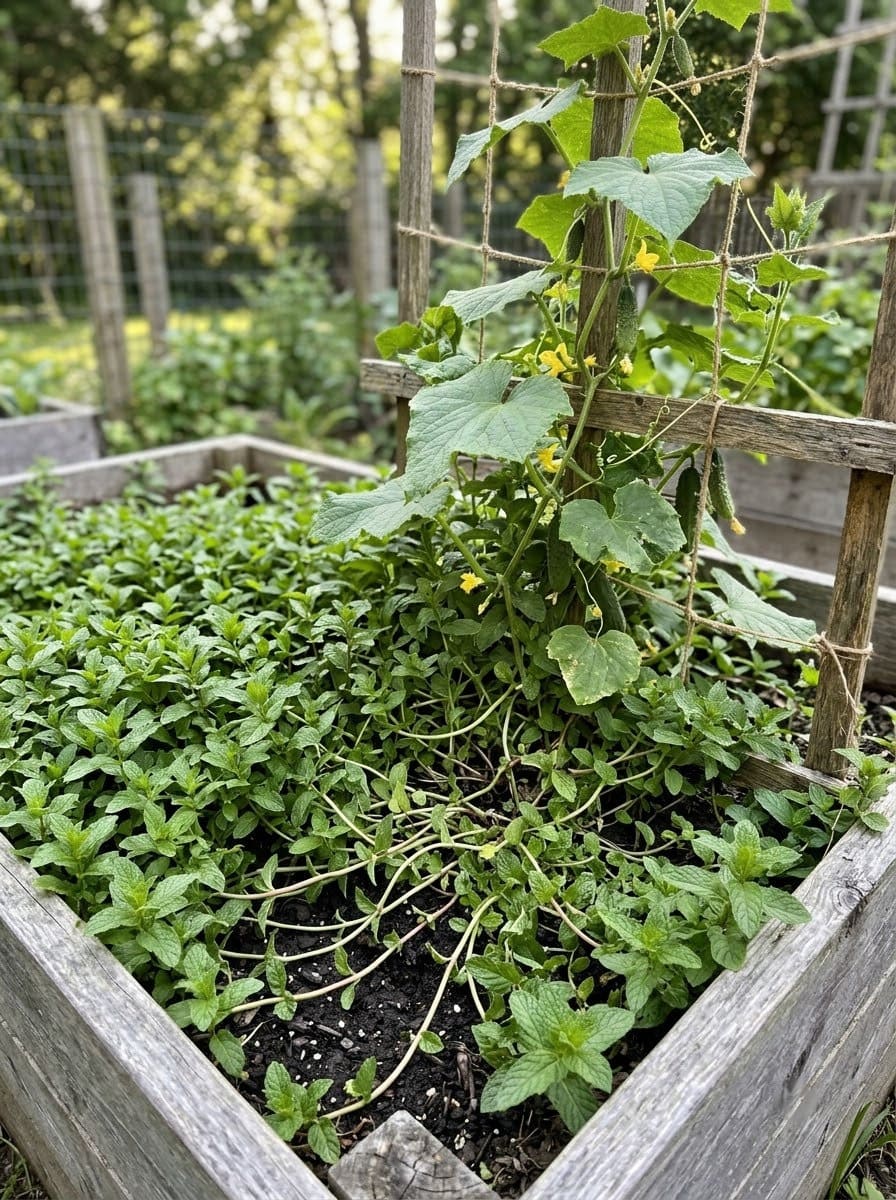
Mint spreads by rhizomes. These are underground stems that push sideways and root wherever they land.
Utah State University Extension says containing it takes a barrier “3 to 4 inches above and 10 to 15 inches below the soil surface.” Mint is also a heavy drinker, so it competes hard for the water the vines need.
The fix: never plant mint in the ground near vegetables. Grow it in a container on a hard surface, since runners escape through drainage holes into soil below.
Already planted: plan on a full season of pulling every runner and root piece, because mint regrows from fragments. Growing mint the right way means starting it in a pot.
7. Broccoli, cabbage, cauliflower, and kale
Brassicas and cucumbers want different weather, different water, and the same nutrients.
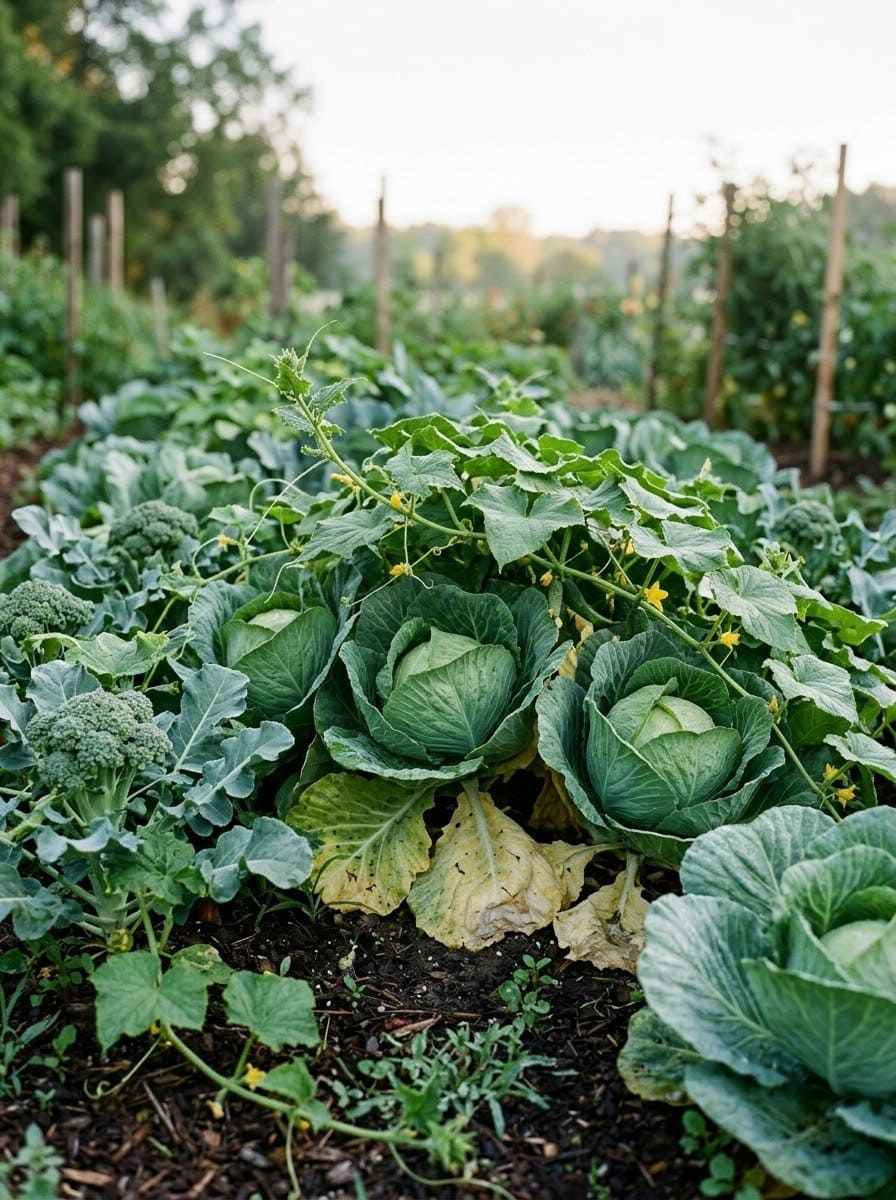
The cabbage family are cool-season crops that peak in spring and fall. Cucumbers want summer heat. Grow them together and one is always out of its comfort zone.
They’re also both heavy feeders that pull hard on nitrogen, and brassicas want plenty of water too.
On top of that, cucumber vines sprawl right over low brassicas and shade them. That cuts the airflow that keeps mildew and rot down on both crops.
The fix: grow brassicas and cucumbers in different beds and, really, different parts of the season. They rotate well in sequence, just not side by side.
Already planted: train the cucumber vines up a trellis and off the brassicas. Feed both crops, since they’re splitting one bed’s nutrients. Building up vegetable-bed soil helps when a bed is doing double duty.
8. Sunflowers
Sunflowers work against cucumbers two ways: chemistry and shade.

Penn State Extension lists sunflowers among garden plants that release allelopathic compounds, which slow the germination and growth of sensitive neighbors. Spent hulls and leaf litter carry the effect too.
The bigger day-to-day issue is light. Sunflowers grow tall fast and cast heavy shade, and a cucumber wants full sun to set fruit well. A deep sunflower taproot also competes for water.
The fix: plant sunflowers on the north side of the garden, where the shadow falls away from your crops. Or keep them at least four feet from the cucumber row. Rake up dropped hulls.
Already planted: if the cucumbers are leggy and light on fruit, the shade is the likely cause. Cut the lowest sunflower leaves, or move next year’s planting.
9. Jerusalem artichokes
Jerusalem artichokes, or sunchokes, are the most aggressive edible in most gardens.
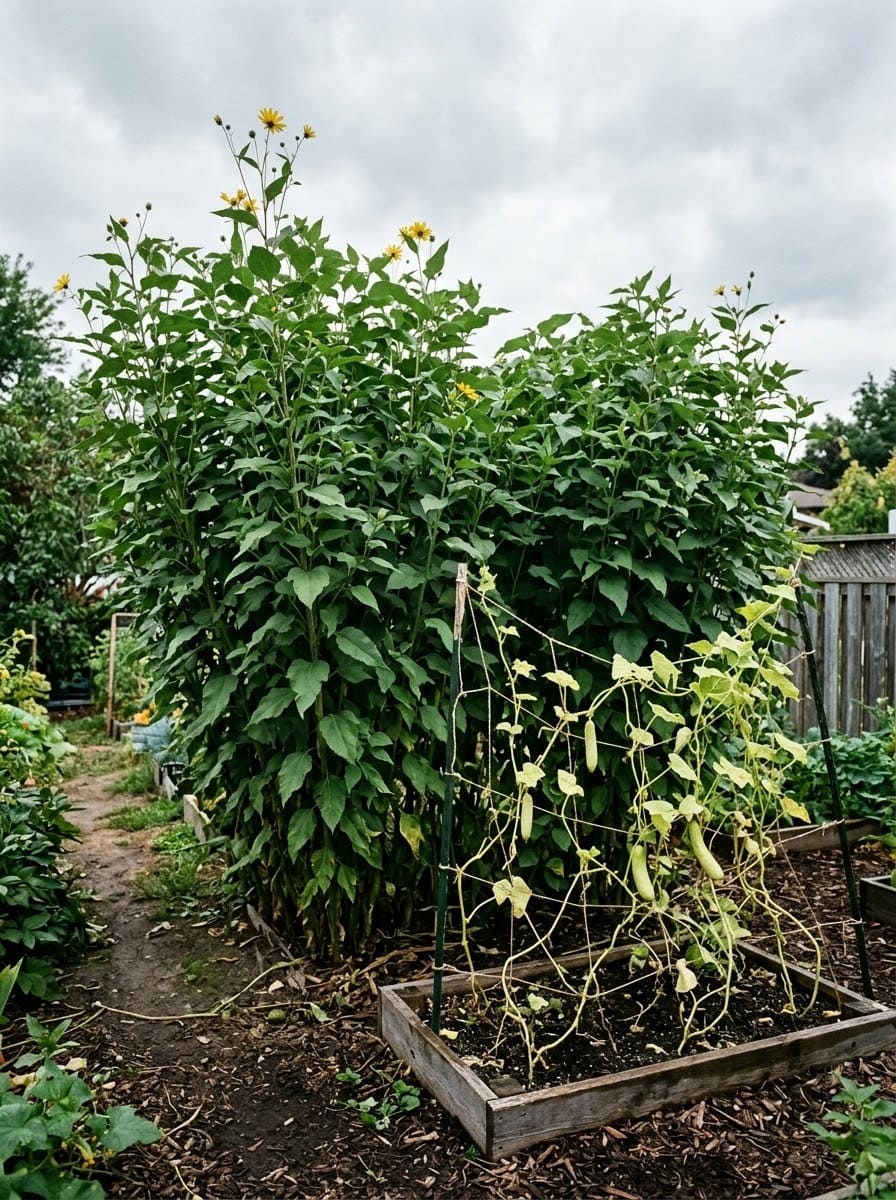
They’re a perennial sunflower relative that spreads by tubers. Miss one tuber at harvest and it’s back next year, thicker. A stand reaches 6 to 10 feet, shades everything around it, and carries the same allelopathic tendency as other Helianthus plants.
The fix: grow sunchokes in a contained bed, like a buried stock tank, well away from the vegetable garden. Never put them at the edge of a cucumber bed.
Already planted: the cucumber is losing. Move it to open sun this season. If you want that ground back, plan to dig the sunchoke patch out completely, which takes a couple of years of pulling regrowth.
10. Tomatoes
Tomatoes and cucumbers can share a garden, but not a crowded bed.
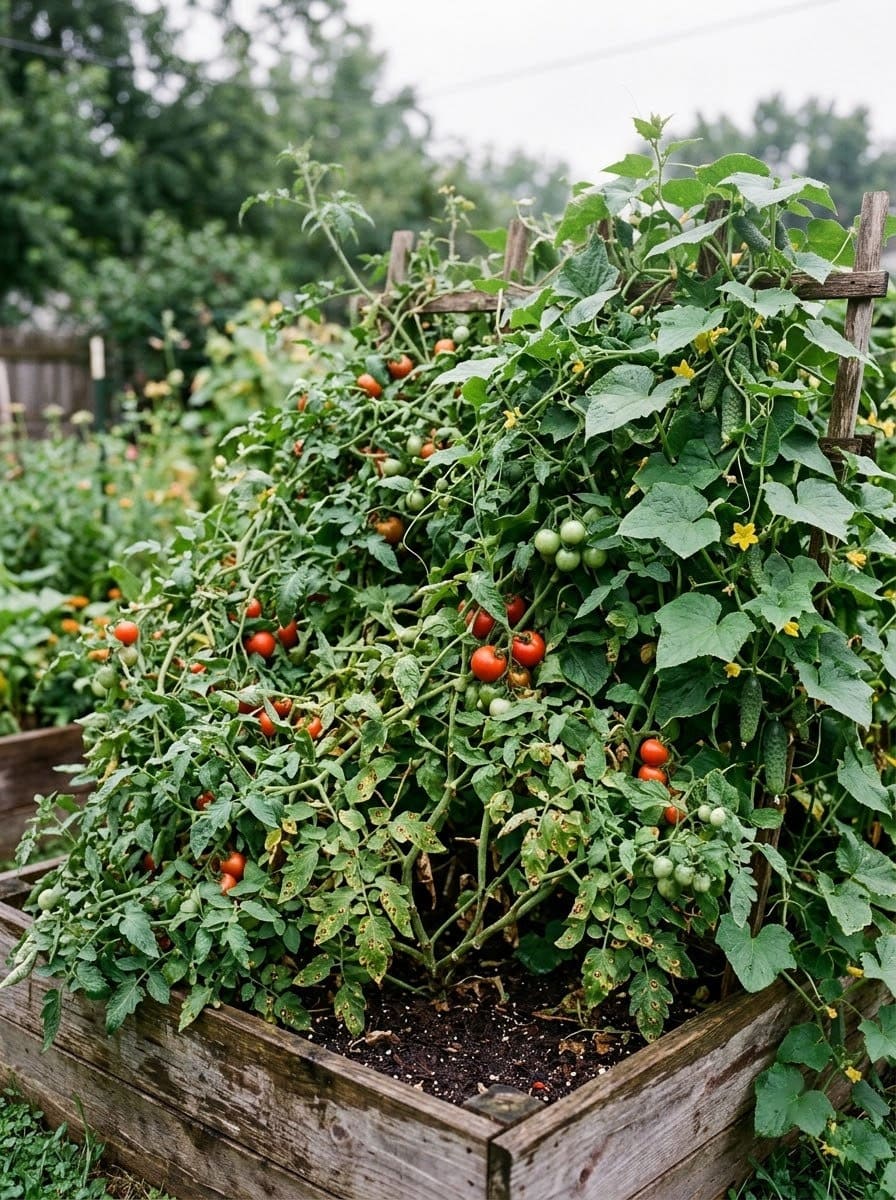
Both are heavy feeders and both are thirsty, so a tight bed leaves each one short. They also both host cucumber mosaic virus, which aphids move between them.
The practical problem is airflow. Tangled tomato and cucumber foliage traps humidity and cuts the air movement that holds off mildew and blight.
The fix: give them space and grow both vertically, tomatoes caged or staked, cucumbers on a trellis, with open air between. That alone solves most of it.
Already planted: thin the foliage where they overlap and strip the lowest leaves on both. Mulch the soil so it isn’t bare and wet under dense growth. Our rundown of what not to plant next to tomatoes covers the tomato side of this pairing.
11. Peppers
Peppers are a low-risk neighbor that shows up on avoid lists mostly out of habit.

The real friction is water. Peppers want the soil to dry a little between waterings, and cucumbers want it consistently moist.
They also share aphids, whiteflies, and cucumber mosaic virus. None of that is severe.
The fix: it’s fine to grow them in the same bed. Keep the pepper on the drier edge, water toward the cucumber’s needs, and watch for aphids on both.
Already planted: no action needed. Just keep an eye on aphid buildup, since it can carry virus between the two.
12. Eggplant
Eggplant is another low-risk pairing that gets more caution than it deserves.
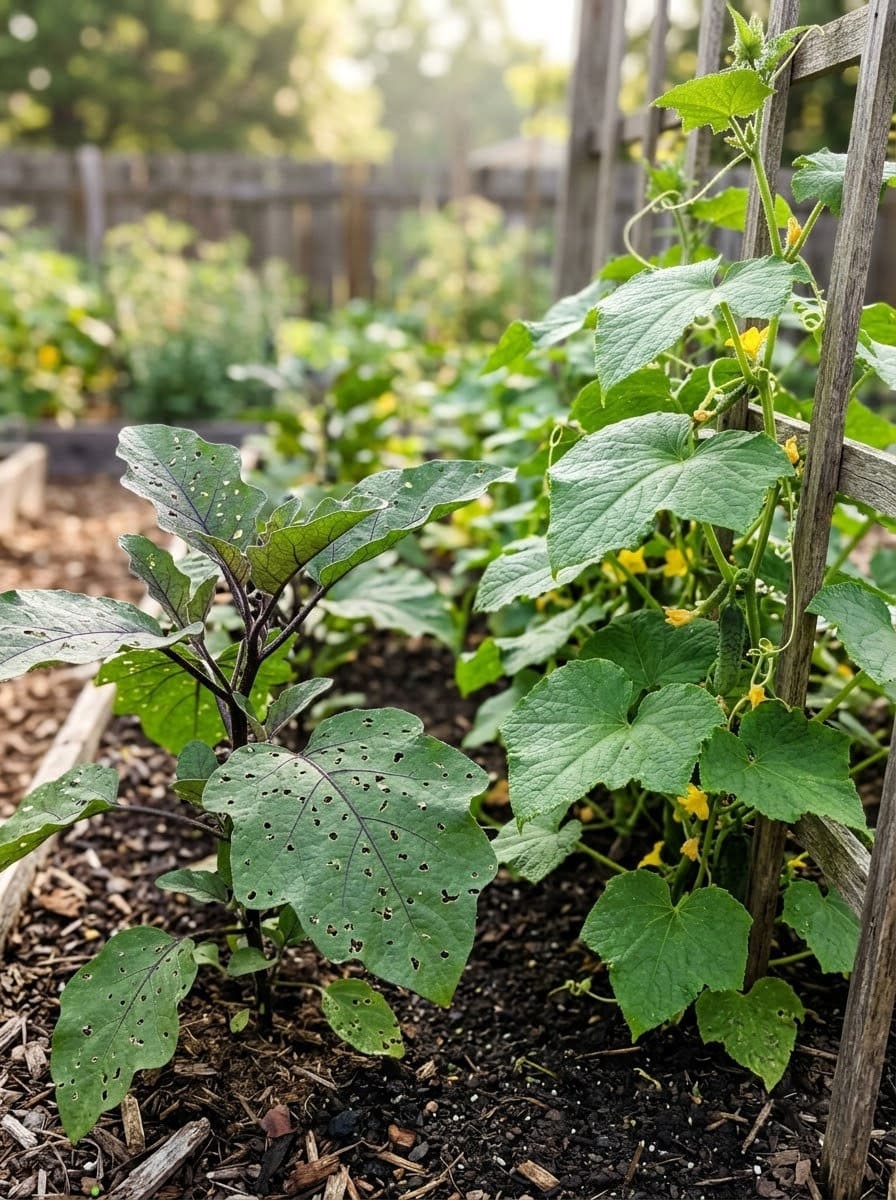
Eggplant and cucumbers share spider mites, aphids, and flea beetles, and eggplant draws flea beetles harder than most crops. But eggplant isn’t a heavy competitor for a cucumber, and there’s no allelopathy or major disease bridge.
The fix: grow them together if you want, and scout for flea beetles and mites, especially in hot dry spells. Row cover on young eggplant helps both crops.
Already planted: fine to leave. Keep the plants watered in heat, since drought stress is what turns a light mite population into an infestation.
13. Onions, garlic, and shallots
This one is almost pure folklore. Old companion charts warn that alliums stunt cucumbers, and there’s little behind it.
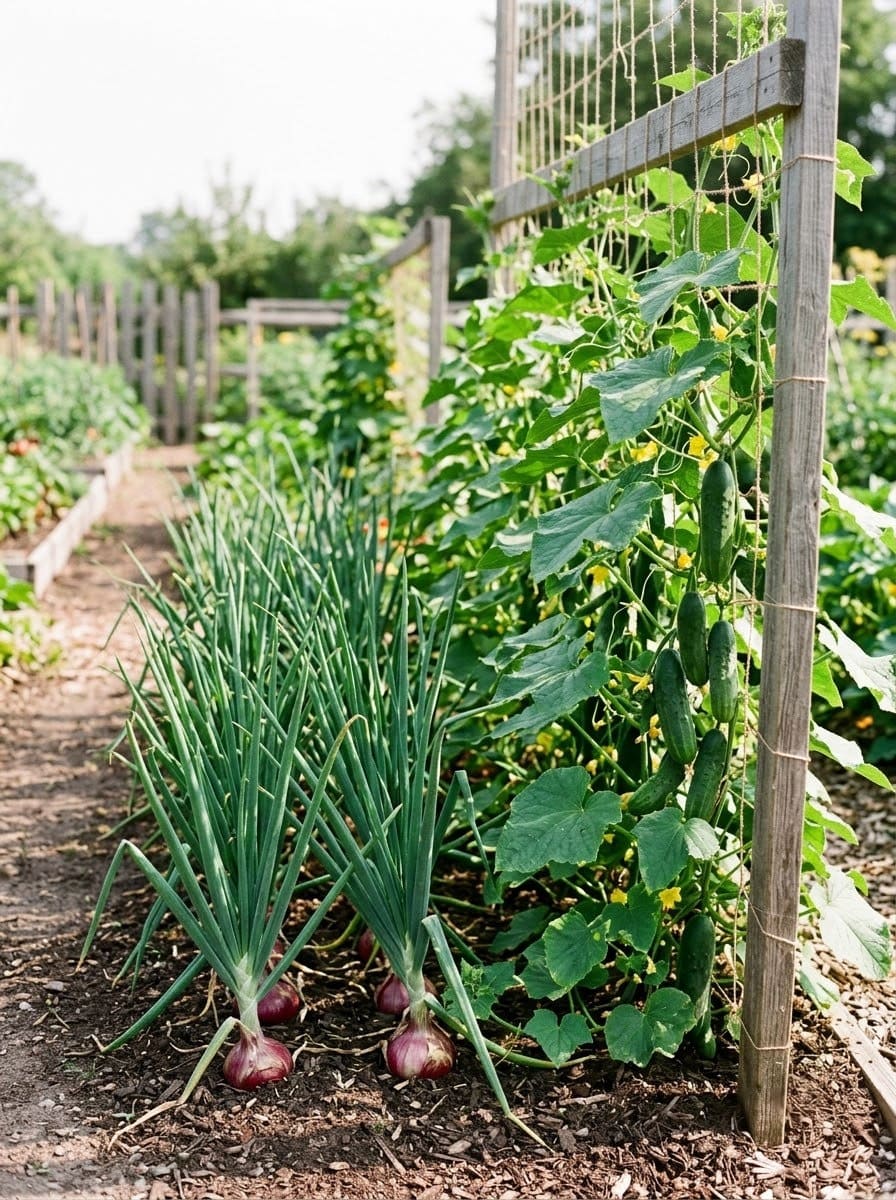
There is real evidence that alliums can interfere with the nitrogen-fixing bacteria on bean and pea roots. Cucumbers don’t fix nitrogen, so that mechanism doesn’t apply. Plenty of gardeners interplant onions and garlic with cucurbits with no problem at all, and the strong scent may even confuse some pests.
The fix: plant them together freely. Alliums take up almost no room and won’t hurt a cucumber.
Already planted: nothing to do. This is one companion-planting rule you can ignore.
14. Carrots and other slow root crops
Carrots and cucumbers aren’t enemies, but they make each other’s job harder.
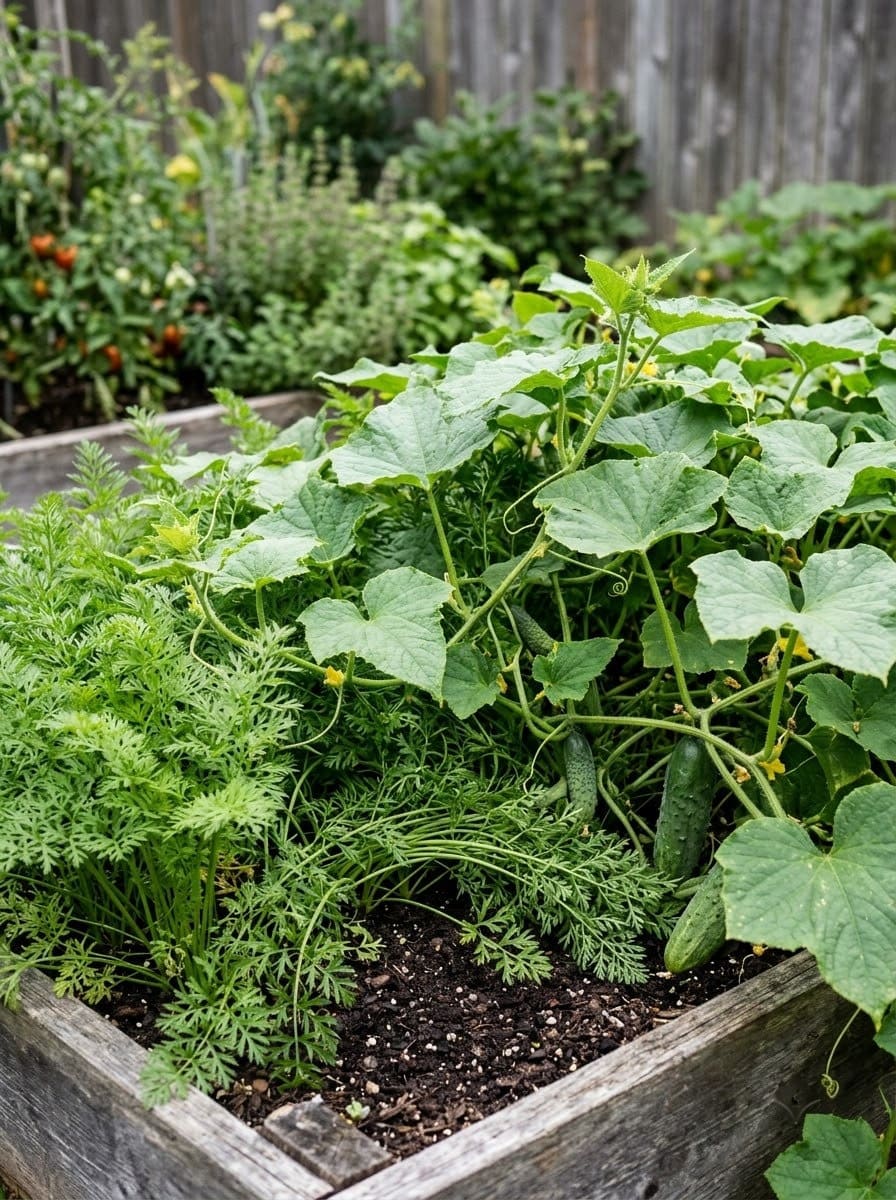
Cucumbers need frequent deep watering, which keeps the soil surface wet. Carrots germinate and size up better when that surface dries a little between waterings.
Cucumber vines also sprawl over low carrot tops and shade them. And carrots take two to three times as long to mature, so they’re stuck under the vines for months.
The fix: grow carrots in their own row or bed where you can water them on their own schedule. The same goes for beets, parsnips, and other slow roots.
Already planted: lift the cucumber vines onto a trellis to get them off the carrots. The carrots may still come out smaller than usual this year.
15. Late lettuce and tender greens
This is the one where the cucumber is the bully. Lettuce sown next to cucumbers in early summer usually loses.
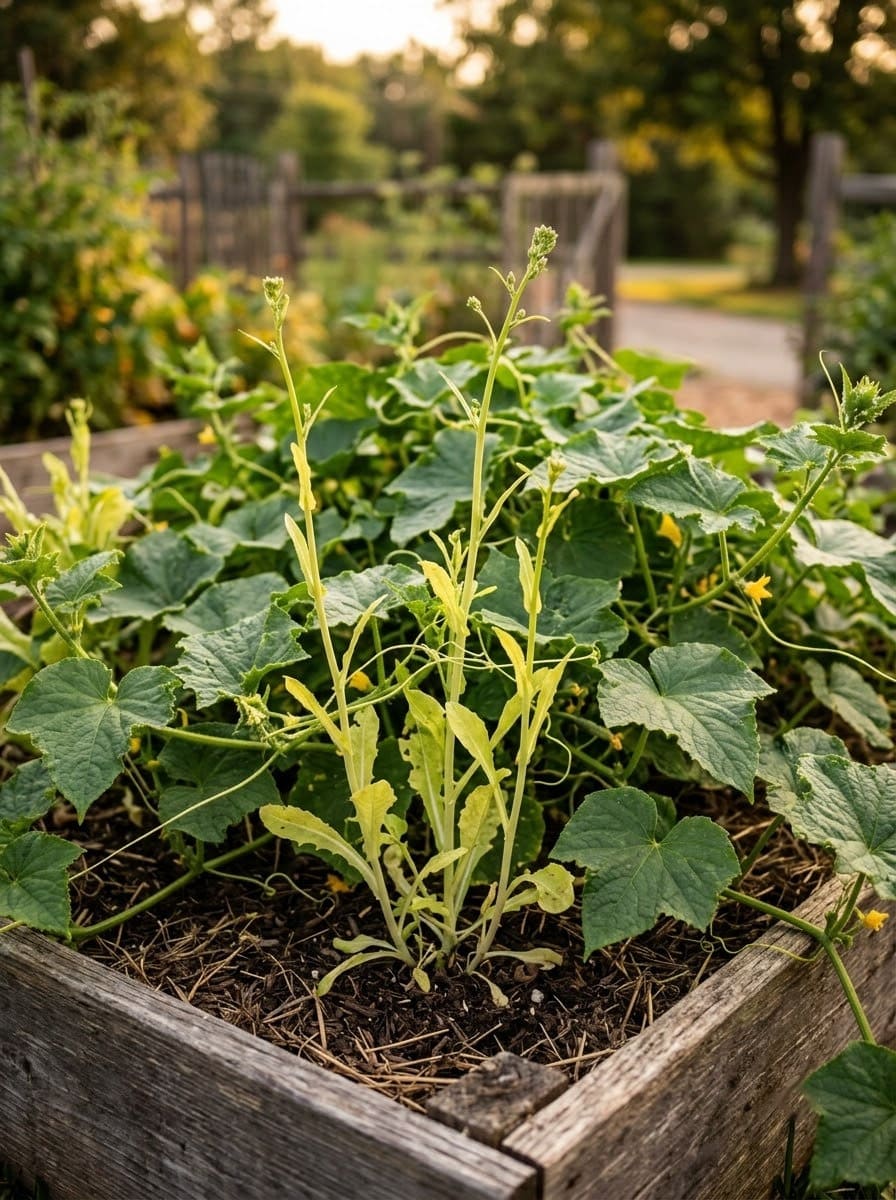
Cucumber vines spread fast and cover low greens, cutting their light. The heat and steady moisture cucumbers thrive in also push lettuce and spinach to bolt, turning them bitter and tough.
There’s a timing exception. Lettuce planted early, as a quick catch crop, is fine, since it’s harvested before the cucumber vines run. It’s the mid-season sowing right beside an established vine that fails.
The fix: grow summer greens in a separate cooler spot. Or use lettuce only as an early catch crop before the vines take over. Lettuce that keeps producing needs its own space once the heat arrives.
Already planted: harvest the greens young, before they bolt, and give up the spot to the cucumber. Start a new lettuce patch somewhere shadier.
What to plant with cucumbers instead
Cucumbers do have good neighbors. These earn their spot in or beside the bed.
| Plant | Why it works |
|---|---|
| Beans and peas | Fix nitrogen, share no pests with cucumbers |
| Corn | A living trellis and light shade, tolerates any allelopathy |
| Radishes | Fast trap crop for cucumber beetles, gone before the vines run |
| Nasturtium | Trap crop that pulls aphids and beetles off the cucumbers |
| Dill, kept young | Draws in the wasps that prey on cucumber beetles, and it’s the classic pickling pair |
| French marigold | Suppresses root-knot nematodes in the soil |
| Borage | Brings in pollinators, which cucumbers need for fruit set |
What we’d do differently: real talk from the research
Trellis every cucumber, every time. Airflow is the single best defense against the mildew and wilt that take cucumber beds down. A vine off the ground dries faster after rain, shows beetles sooner, and takes up a third of the space. We stopped ground-growing cucumbers years ago and the disease problems mostly went with it.
Give each cucurbit type its own patch, or grow just one. The worst cucumber year we had was a single bed of cucumbers, zucchini, and cantaloupe planted a foot apart.
Bacterial wilt took the cucumbers and the melons by mid-July. Now the squash goes on the far fence and the melons get their own row.
Row-cover the seedlings, then remember to pull it. Covering young plants keeps beetles off through the vulnerable stage. But cucumbers need bees, so the cover has to come off the day the first flowers open. A covered plant in bloom just drops its fruit.
When someone says their cucumber “crossed with a zucchini,” it didn’t. That bitter, oddly shaped fruit is cucurbitacin stress. It’s almost always uneven watering in a heat wave. Mulch the bed, water deeply on a schedule, and the problem usually disappears.
Frequently asked questions
Can cucumbers and tomatoes grow together?
Yes, if you give them space and grow both vertically. Both are heavy feeders and thirsty, and both host cucumber mosaic virus.
A crowded shared bed strains each plant and traps the humidity that feeds disease. Caged tomatoes and trellised cucumbers with open air between them do fine.
Do cucumbers cross-pollinate with squash or zucchini?
No. Iowa State Extension is clear that a flower can only be pollinated by pollen from the same species, and cucumber, squash, and melon are all different species.
Even a cucumber-to-cucumber cross doesn’t change the current year’s fruit. It only affects seed you save and replant.
What makes cucumbers taste bitter?
A compound called cucurbitacin. The plant makes more of it under heat and drought stress, and some varieties carry more of it naturally.
It concentrates at the stem end and just under the skin. Even watering and mulch prevent most of it, and neighboring herbs have nothing to do with it.
Can I plant cucumbers next to peppers?
Yes, with minor care. The main difference is water: peppers like the soil to dry a bit between waterings and cucumbers want it steadily moist. Keep the pepper on the drier edge of the bed and watch both for aphids, which spread virus between them.
Why shouldn’t I plant cucumbers with melons?
They share the striped cucumber beetle and the bacterial wilt it carries. University of Maryland Extension rates both cucumbers and cantaloupes as highly vulnerable to that wilt.
A mixed bed builds a bigger beetle population and loses more plants. Grow melons in their own row several feet away.
What is the best companion plant for cucumbers?
Beans or peas for nitrogen, radishes and nasturtium as trap crops for cucumber beetles, and dill kept young to draw in predatory wasps. Corn works as a living trellis. Borage and marigold round it out.
Related Posts
- Vegetable Garden Layouts
- Herbs That Control Vegetable Garden Pests
- 6 Herbs You Should Never Plant Next to Each Other
Products We Recommend
This post contains affiliate links. We may earn a commission on qualifying purchases at no extra cost to you.
UrGROWA Foldable A-Frame Cucumber Trellis, 2-pack
Gets the vines off the ground for airflow, the single best defense against the mildew and bacterial wilt that shared cucurbit beds spread. Folds flat for storage.
Shop Now
Agfabric Floating Row Cover, 10 ft x 50 ft, 1.2 oz
Breathable fabric to cover cucumber and cucurbit seedlings and keep striped cucumber beetles off through the vulnerable stage, then pulled at first flower for pollination.
Shop Now
Gouevn Soil Moisture Meter, 2-pack (no batteries)
Takes the guesswork out of even watering, which is what actually prevents the cucurbitacin bitterness people blame on cross-pollination, and helps you avoid drowning a dry-soil herb in the same bed.
Shop NowNever miss an update — choose FarmFoodFamily as your preferred source on Google.
How it works: Tap the button below to open Google's settings page, then check the box next to FarmFoodFamily.
Tap the checkbox to turn it blue — that's how you know it's set.