Growing Strawberries: Why Straw Mulch Is the Underrated Trick to Clean, Slug-Free Berries
Straw mulch is the cheapest thing you can do for a strawberry bed, and it does three jobs at once. But a layer that is too deep or too damp turns into a slug motel, so the trick is all in how you lay it.

Never miss an update — choose FarmFoodFamily as your preferred source on Google.
How it works: Tap the button below to open Google’s settings page, then check the box next to FarmFoodFamily.
Tap the checkbox to turn it blue — that’s how you know it’s set.
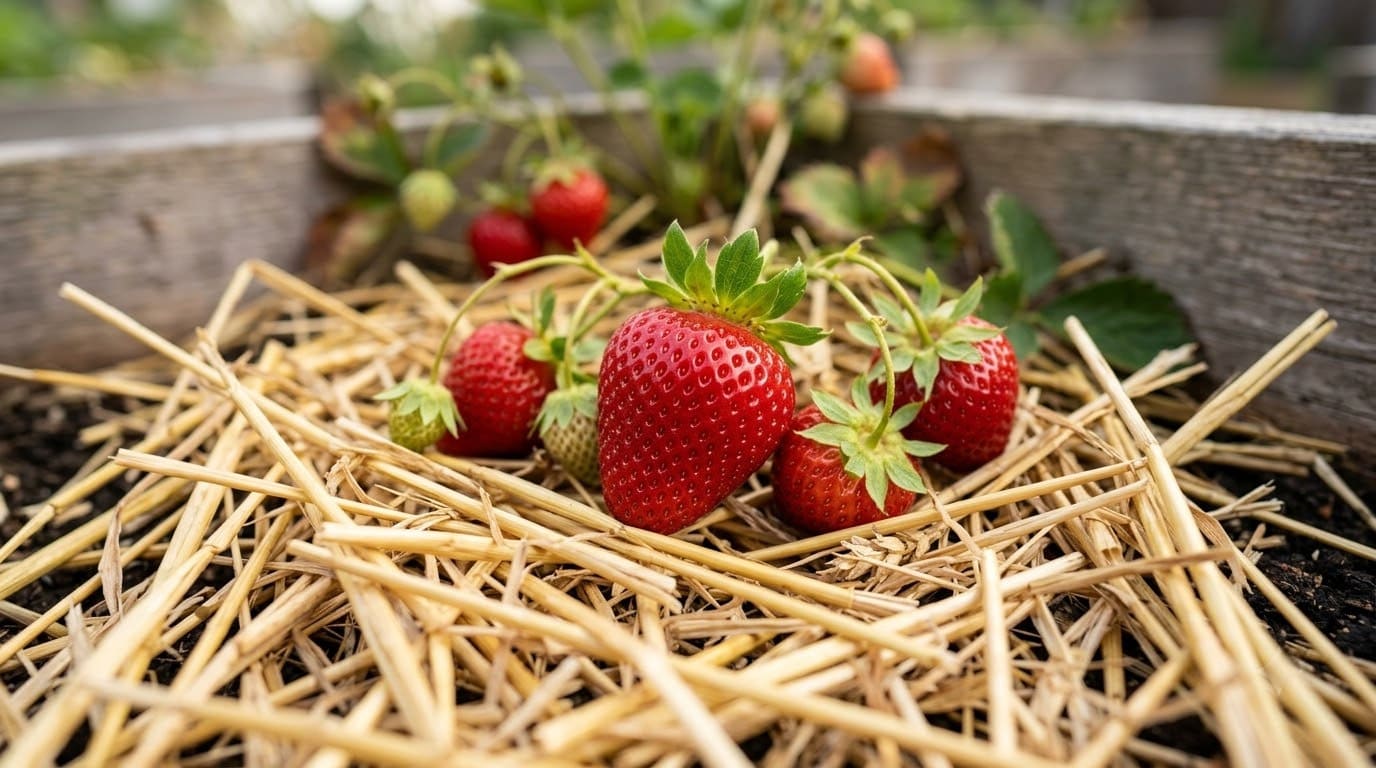
Most strawberry disappointment shows up on the fruit, not the plant. You get grit baked onto the skin, a patch of gray fuzz on the side that touched the ground, or a clean round hole where a slug got there first.
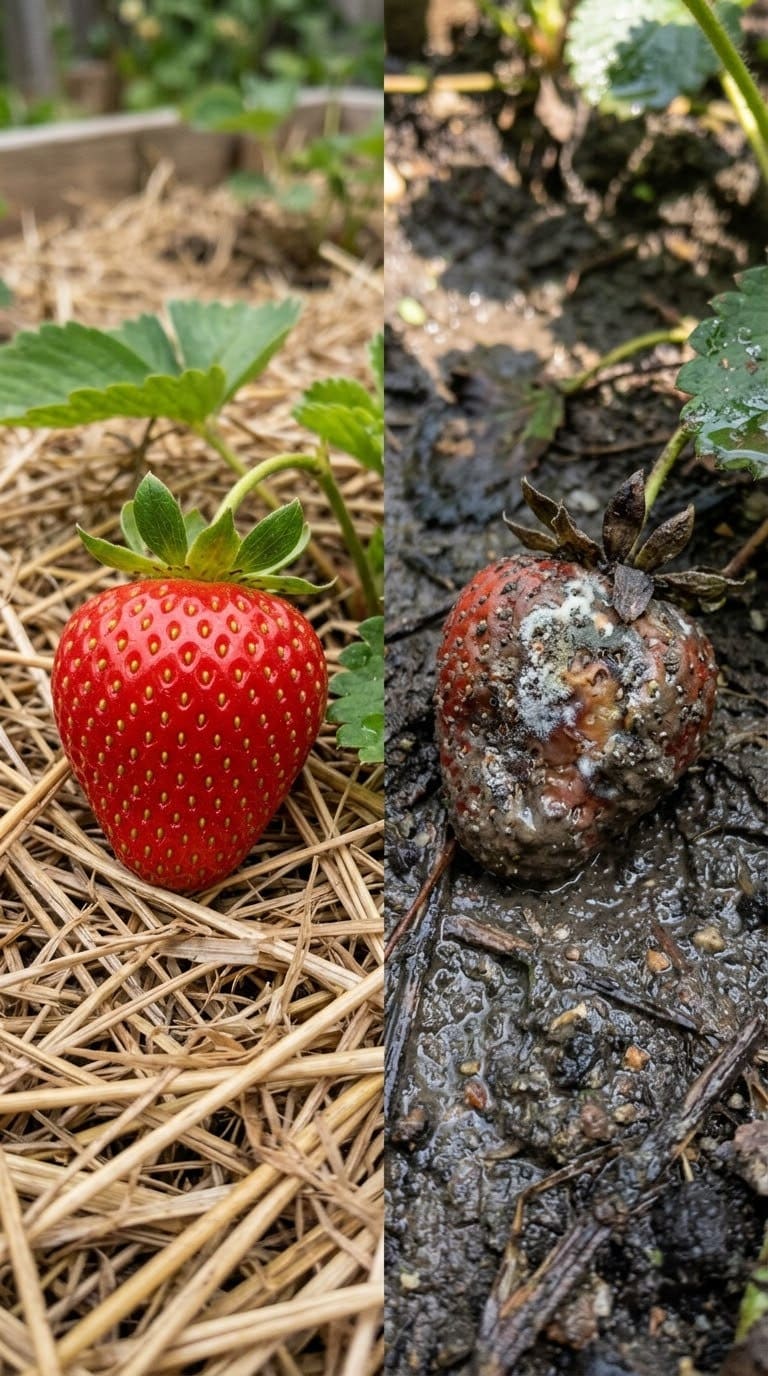
The reason is simple. A ripening strawberry hangs down and rests right on wet soil. Straw lifts it off that soil, and the berries come in clean and whole.
And here is the honest catch most articles skip. Lay the straw too thick or let it stay soggy, and you build the exact damp, dark shelter that slugs and voles want. Straw only works when you do it right.
Quick Answer
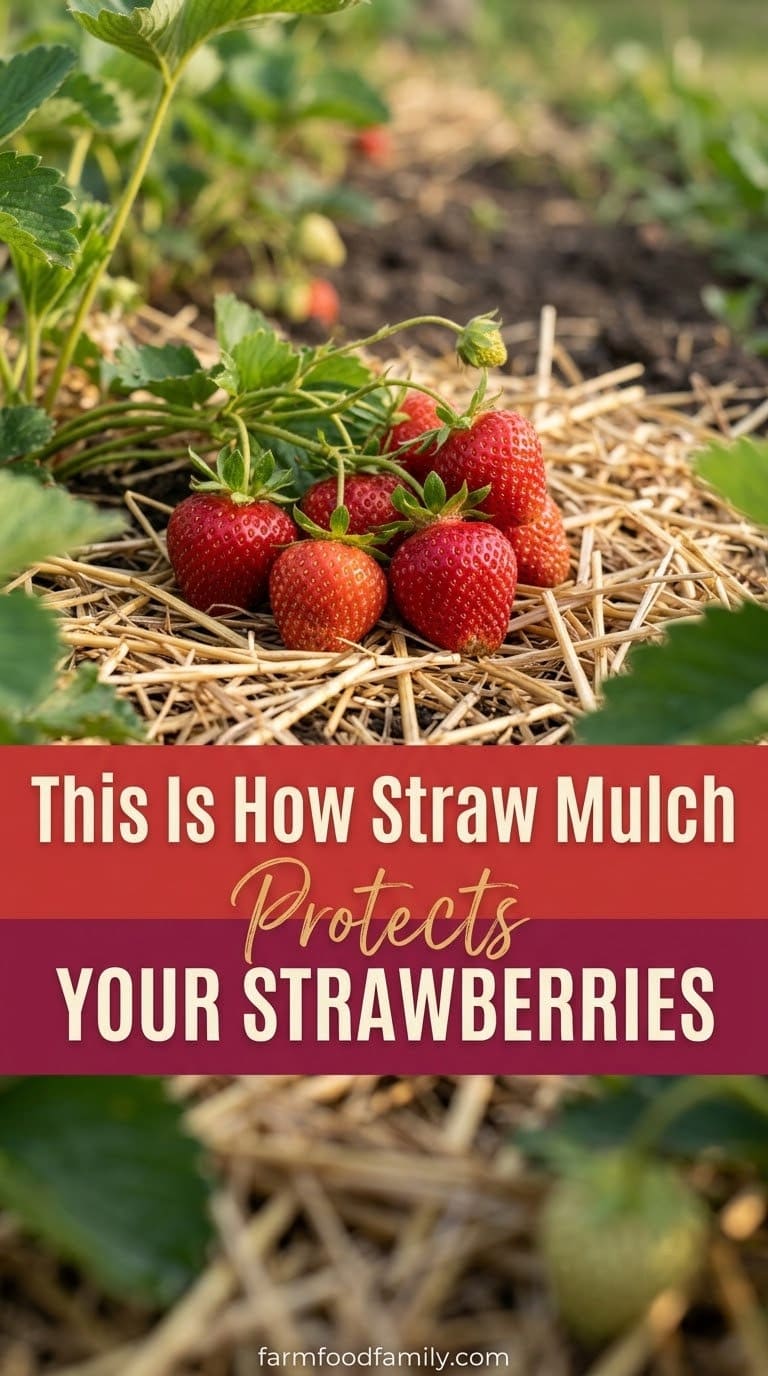
Straw mulch keeps ripening strawberries up off wet ground. That means cleaner fruit, less gray mold and anthracnose rot, and fewer slug-chewed berries, plus it blocks weeds and steadies soil moisture.
During the growing season you want a thin layer, about 1 to 2 inches of clean wheat, oat, or rye straw. Tuck it around the plants and along the paths, but keep it off the crowns. Clemson Extension suggests one bale per 100 square feet of bed.
The slug part comes with a condition. Only a thin, dry layer helps, because a deep or wet layer becomes a humid hideout that slugs and rodents move straight into. Water in the morning, and scatter iron phosphate bait in the evening if damage keeps up.
Answer 4 quick questions and get matched to the exact fix for your yard — drainage, budget, layout, or something else entirely.
Take the Free QuizWinter mulching is a separate job. Put down 3 to 5 inches over the whole bed once nights near 20°F, then rake it off at about 25 percent new growth.
What does straw mulch actually do for strawberries?
Straw does three things at once, and none of them is feeding the plant.
The first job is clean, dry fruit. A strawberry truss bends to the ground as the berries swell, so without a barrier every berry ripens lying in mud. University of Maryland Extension puts it plainly, saying to use an organic mulch “to keep fruit lying on the ground cleaner.”
The second job is slowing fruit rot. When a berry never touches wet soil and rain does not splash grit and spores up onto it, two of the most common diseases lose their opening. Clemson Cooperative Extension says a straw layer helps “slow the spread of anthracnose.”
The same logic applies to gray mold. UC Statewide IPM notes that using mulch “to prevent berry-soil contact also reduces disease.”
The third job is weed control and moisture. A covered bed sprouts far fewer weeds, and the soil under straw dries out more slowly between waterings. If you want the fuller picture, our guide to what mulch does in any bed covers the mechanics.
That last point matters more than it sounds. Strawberries are shallow-rooted and stall in dry spells, and a straw layer buys you a day or two of margin between waterings in summer heat. It also keeps hard rain from packing the soil surface into a crust.
Most yard problems trace back to one specific, fixable cause. Find yours in 4 quick questions.
Take the Free QuizStraw or hay, and what to never use
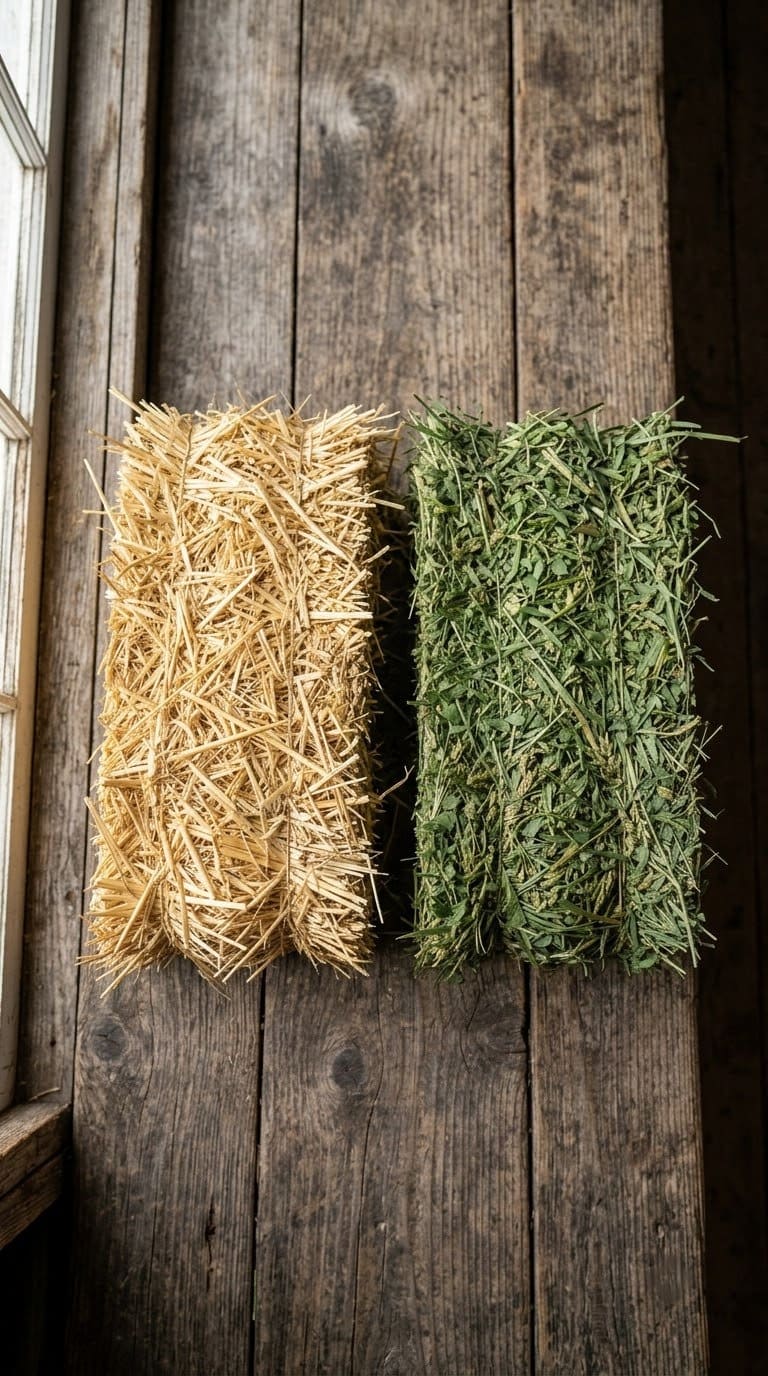
Straw and hay look alike in the bale and behave nothing alike in the bed.
Straw is the hollow stalk left after grain is threshed out, so it carries very few seeds. Hay is the whole plant, cut and dried for animal feed, and it is packed with grass and weed seed.
Spread hay on a strawberry bed and you plant a lawn in it. We go deeper on the difference between straw and hay in a separate piece.
Wheat, oat, and rye straw all work well. Pine straw is fine too, and Clemson lists it alongside the cereal straws.
Skip grass clippings. Clemson warns they “can smother plants and promote disease” because they pack into a wet, airless mat.
Skip thick layers of whole leaves as well. Iowa State University Extension says flatly that “leaves are not a good winter mulch for strawberries,” and in summer a leaf mat holds moisture against the crowns and shelters slugs.
How much straw, and where does it go?
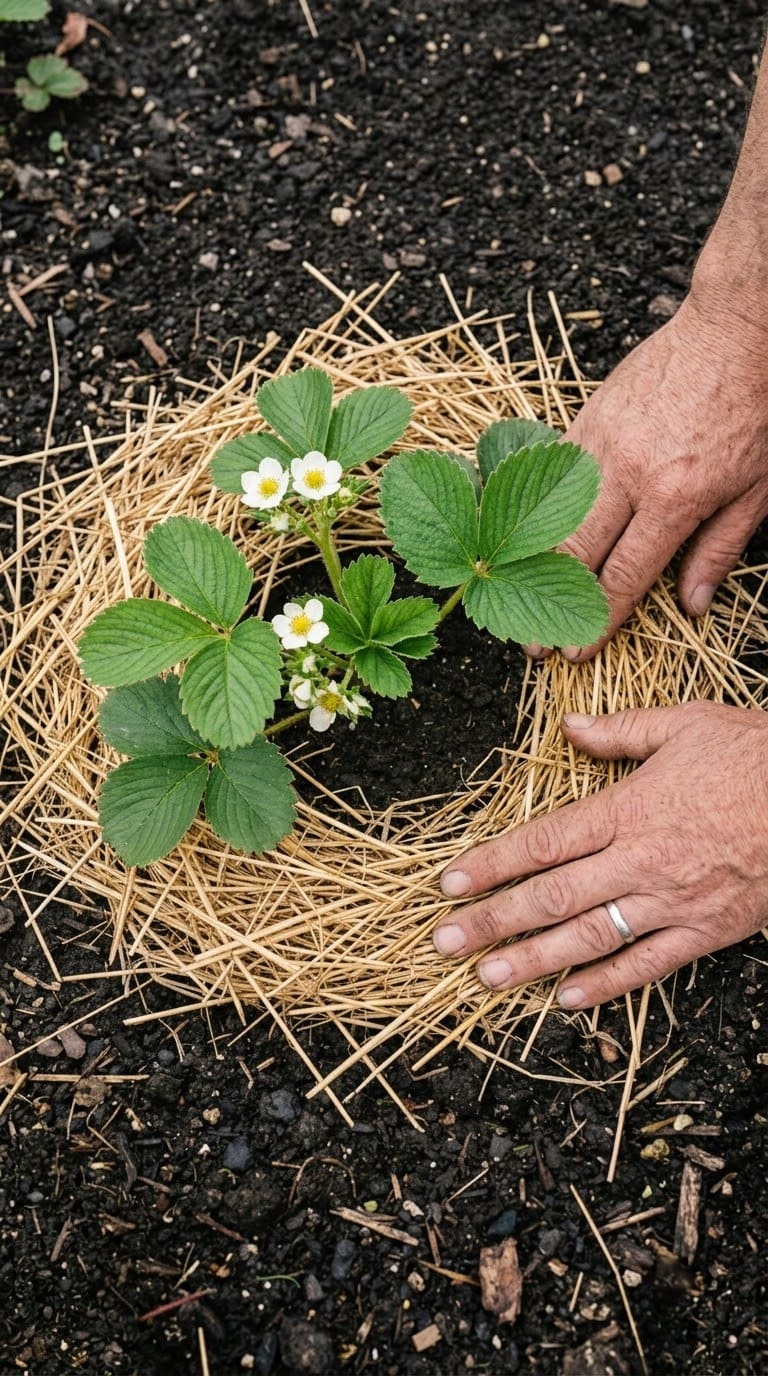
For the growing season the answer is: not much. A layer of 1 to 2 inches is plenty, and Clemson’s rule of thumb is one bale per 100 square feet of bed.
Put it where the fruit lands and where weeds start. Tuck straw under and around each plant so the flower trusses fall onto straw instead of dirt, and run a thicker band down the paths between rows to keep them walkable and weed-free.
Leave a gap the width of a finger around every crown. The crown is the short stem where the leaves emerge, and if you bury it under damp straw it rots. A buried crown is one of the quiet ways a strawberry bed dies over a season.
When do I put the growing-season mulch down?
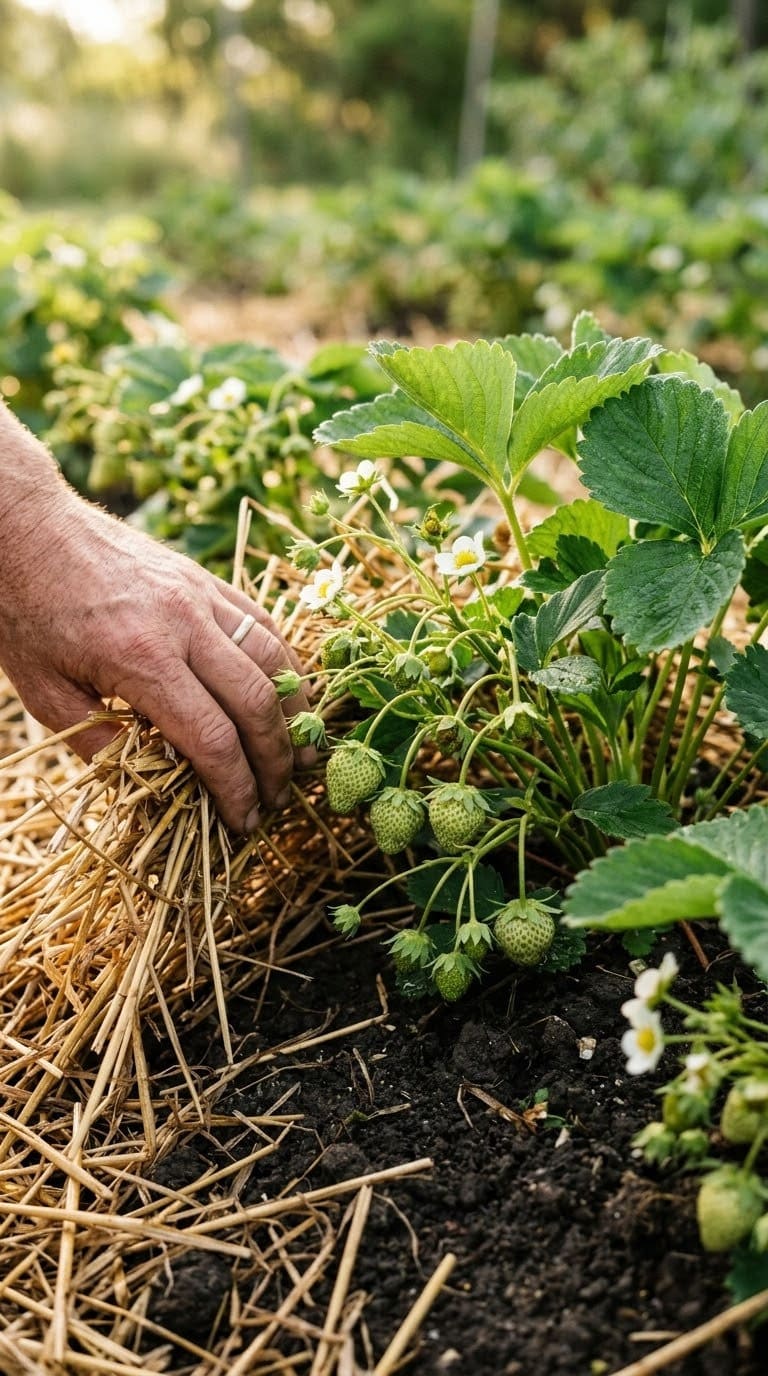
Wait until the plants are established and clearly growing, then mulch as the first flower trusses start to lean over, before any berry touches soil.
In a matted-row June-bearing bed, the natural second window is right after summer renovation, when you can top up the straw in the paths and around the thinned rows. For day-neutral and everbearing plants that fruit through the season, just keep an eye on thin spots.
The average homeowner spends $616/year on yard fixes that don't address the real problem. Find out what yours actually is — before you spend another dollar.
Take the Free QuizStraw breaks down and settles, so a layer that was 2 inches in May can be bare patches by July. Add a handful wherever you can see soil under the berries.
Does straw mulch really keep slugs off the berries?
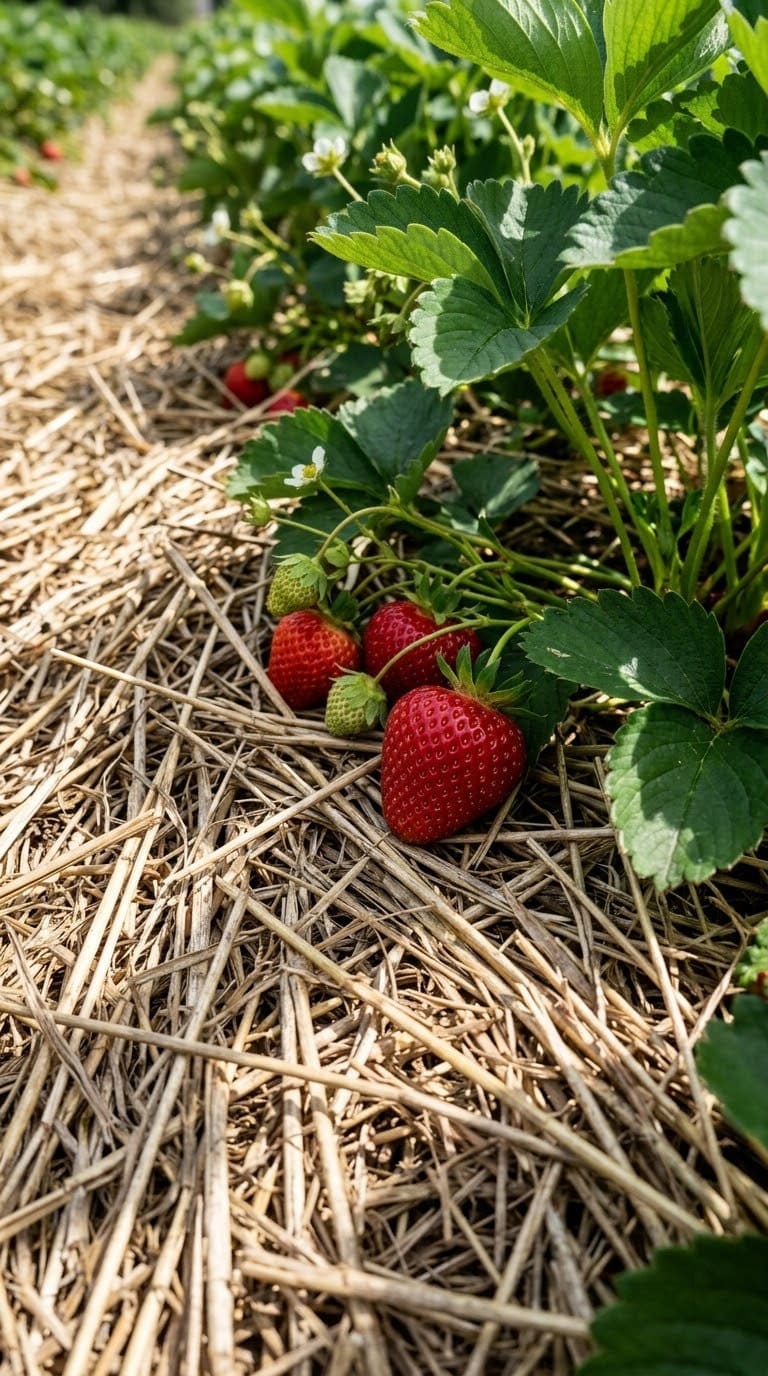
Here is the straight answer. A thin, dry straw layer gives slugs fewer moist hiding spots right against the fruit, so you see less damage. A deep or damp layer does the opposite and becomes their daytime shelter.
UC IPM describes slugs sheltering “under the plastic or other mulch during the day,” and notes they are “sensitive to dryness” and seek out “the humid environment under the mulch.” Pile the straw thick and water it every evening, and you have built them a home next to their food.
So the real slug plan has several parts working together. Keep the straw thin and let its surface dry between waterings, and water in the morning, not the evening, so the bed is dry by nightfall when slugs feed.
Scatter an iron phosphate bait in the evening if damage continues, since UC IPM notes it can be used around edible crops. Pick ripe berries promptly rather than leaving them to sit, and keep a dry gap between the straw and each stem.
How is winter mulching different?
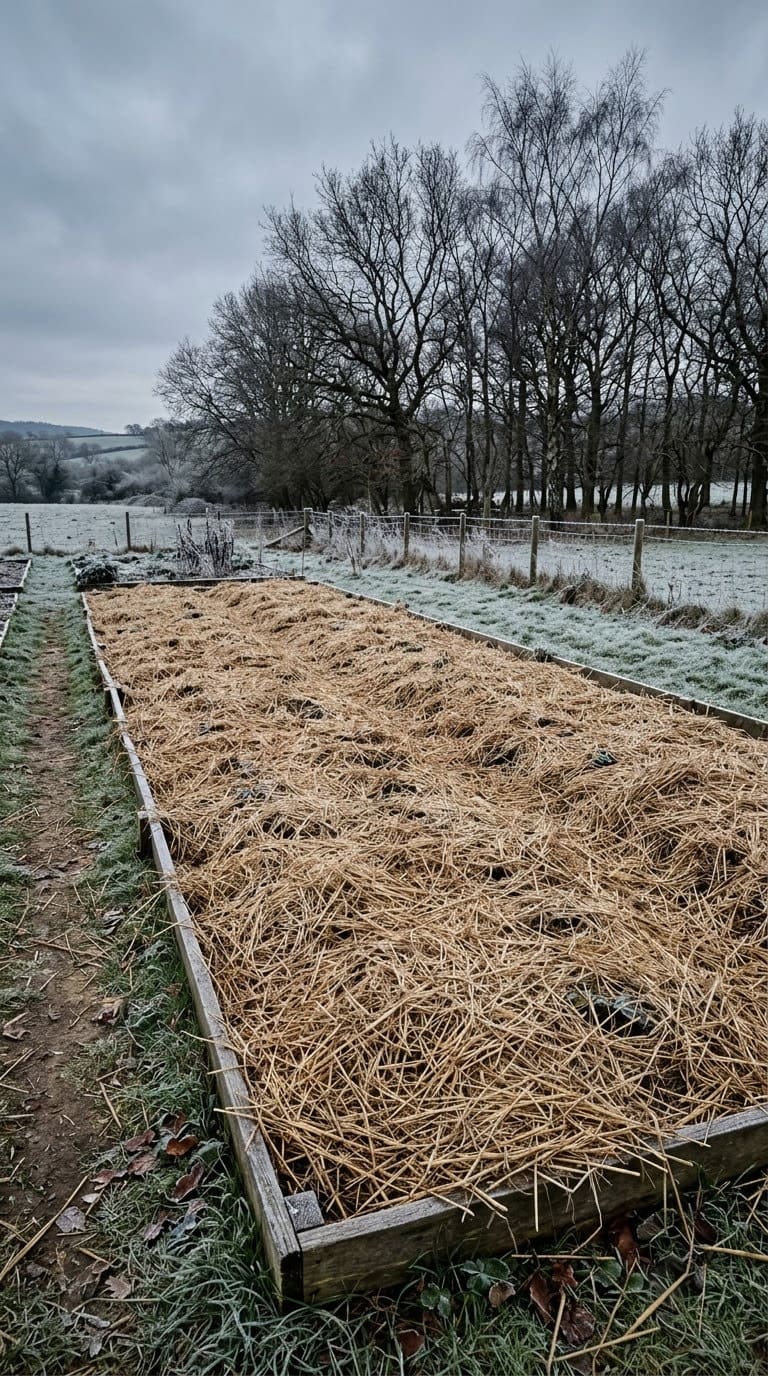
Winter mulch is a different depth, a different time, and different coverage. Its job is protecting the crowns from cold and from freeze-thaw heaving, not keeping fruit clean.
Depth goes up to 3 to 5 inches, and it goes over the whole planting, crowns included, not just the paths. Iowa State calls for “3 to 5 inches at the time of application” of clean, weed-free oat, wheat, or soybean straw.
Timing is driven by temperature. Iowa State says to mulch “before temperatures drop below 20°F,” once “soil temperatures consistently below 40°F for several consecutive days.” Maryland Extension gives the same window as “late fall when night temperatures approach 20℉.”
Put it down too early, during a warm spell, and you smother plants that are still growing.
The damage winter mulch prevents is mostly mechanical. When wet soil freezes and thaws over and over, it lifts and drops, and that heaving can push shallow strawberry crowns partly out of the ground where they dry out and die. A straw blanket keeps the soil temperature steadier so it freezes once and stays frozen.
This is also why leaves and grass clippings fail here. They mat down into a wet, airless sheet that traps moisture against the crowns through a winter thaw, which is exactly the rot risk you are trying to avoid. Loose straw keeps air moving.
When do I take the winter mulch off in spring?
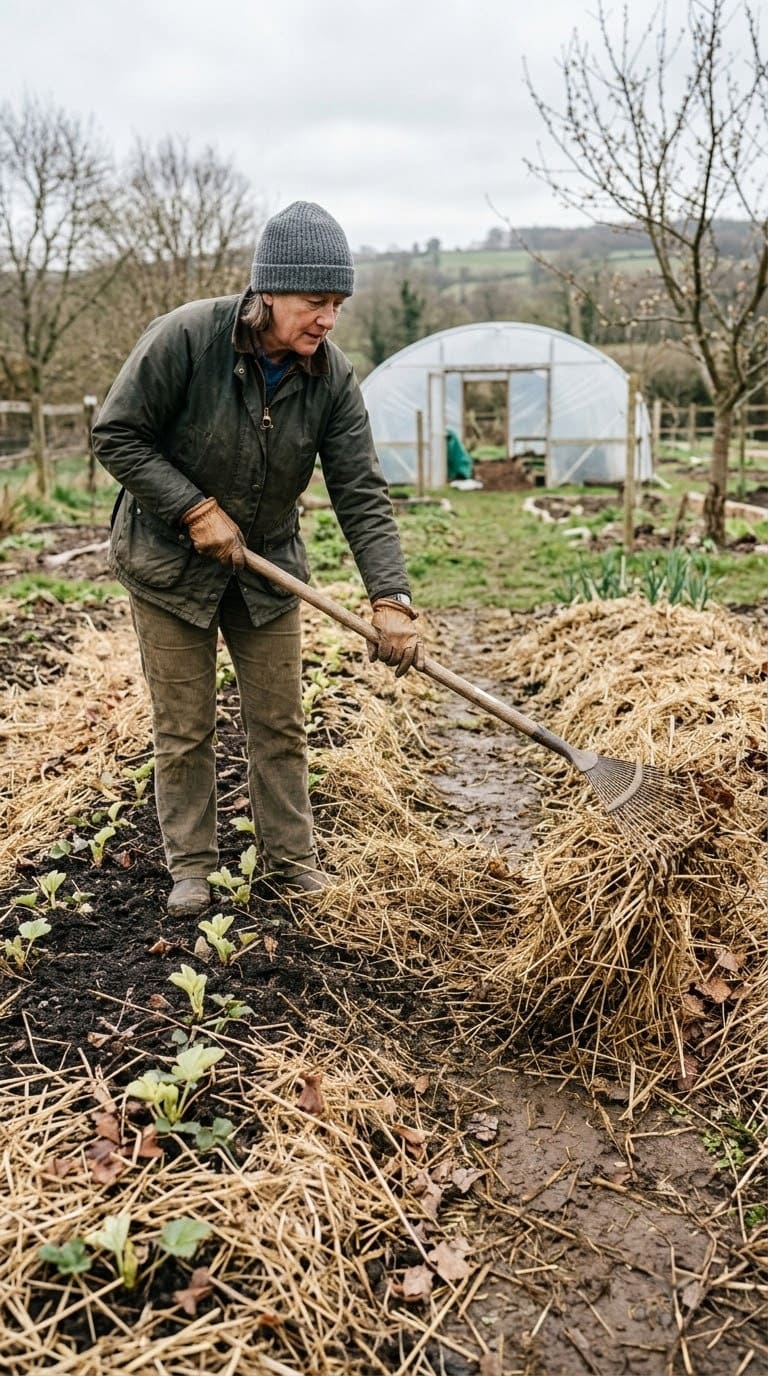
Iowa State’s cue is clear: pull the mulch back “when approximately 25% of the plants have started producing new growth.”
Rake it off the crowns and into the paths. Leave a thin layer sitting between the rows, because that becomes your growing-season fruit mulch with no extra work.
Keep the raked straw within reach, though. Iowa State advises that “if there is a threat of a frost or freeze later in the season during bloom,” you should “lightly rake the mulch over the strawberry plants” for the night. Our notes on protecting blooms on a frost night cover the wider approach.
Common straw-mulch mistakes
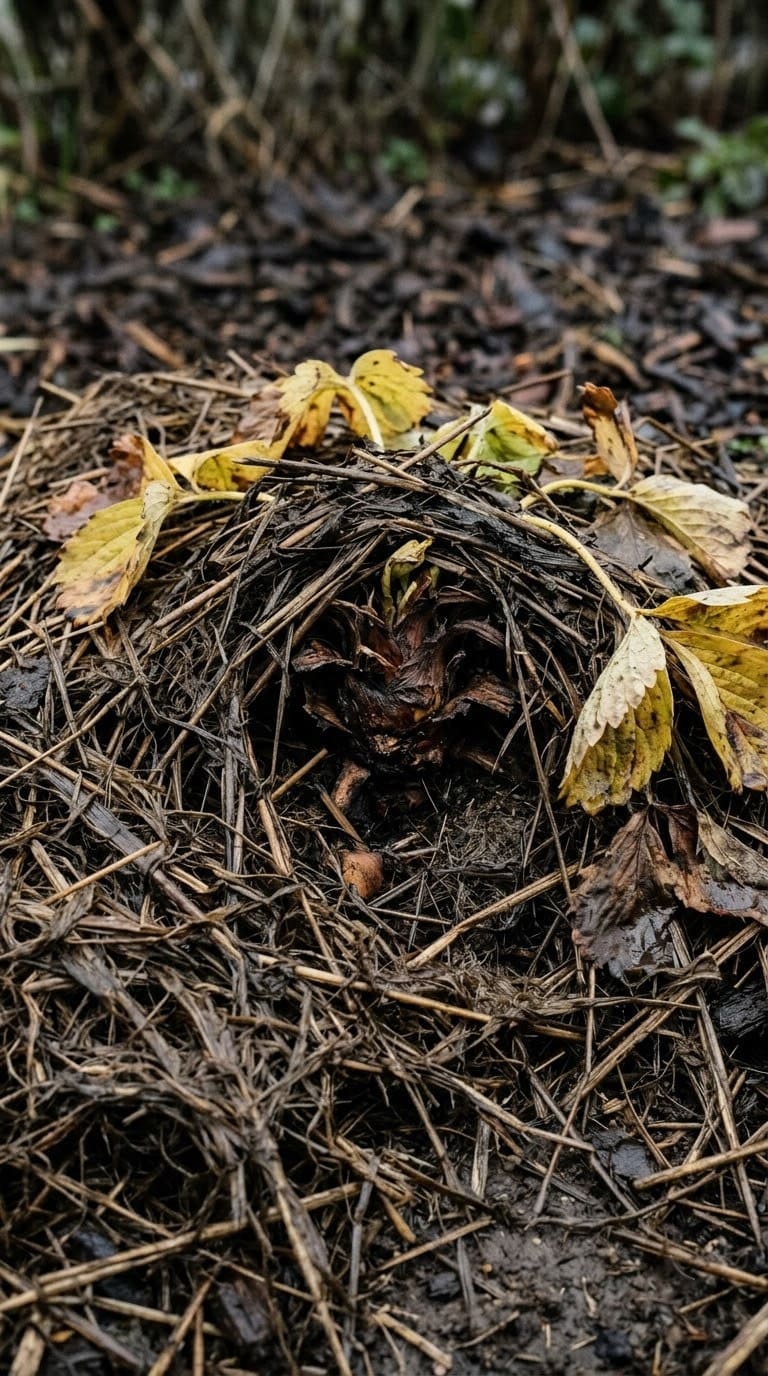
Most straw problems come down to a short list of habits.
Piling it deep for “extra protection” in summer. A 4-inch summer layer buries crowns, traps moisture, and gives slugs and voles a covered run right through the bed.
Reaching for hay because it was cheaper or closer. You save a few dollars and spend the next two years pulling grass out of the strawberries.
Watering the bed overhead every evening. That keeps the straw permanently soggy, which is the condition slugs want. Switching to watering at the base instead of overhead fixes it.
Leaving winter mulch on too long. Growth under a thick spring layer comes up pale and leggy, and crowns can rot.
Mulching a brand-new bare-root planting over the crowns before the plants have rooted in. Wait until you see new leaves.
The strawberry straw-mulch cheat sheet
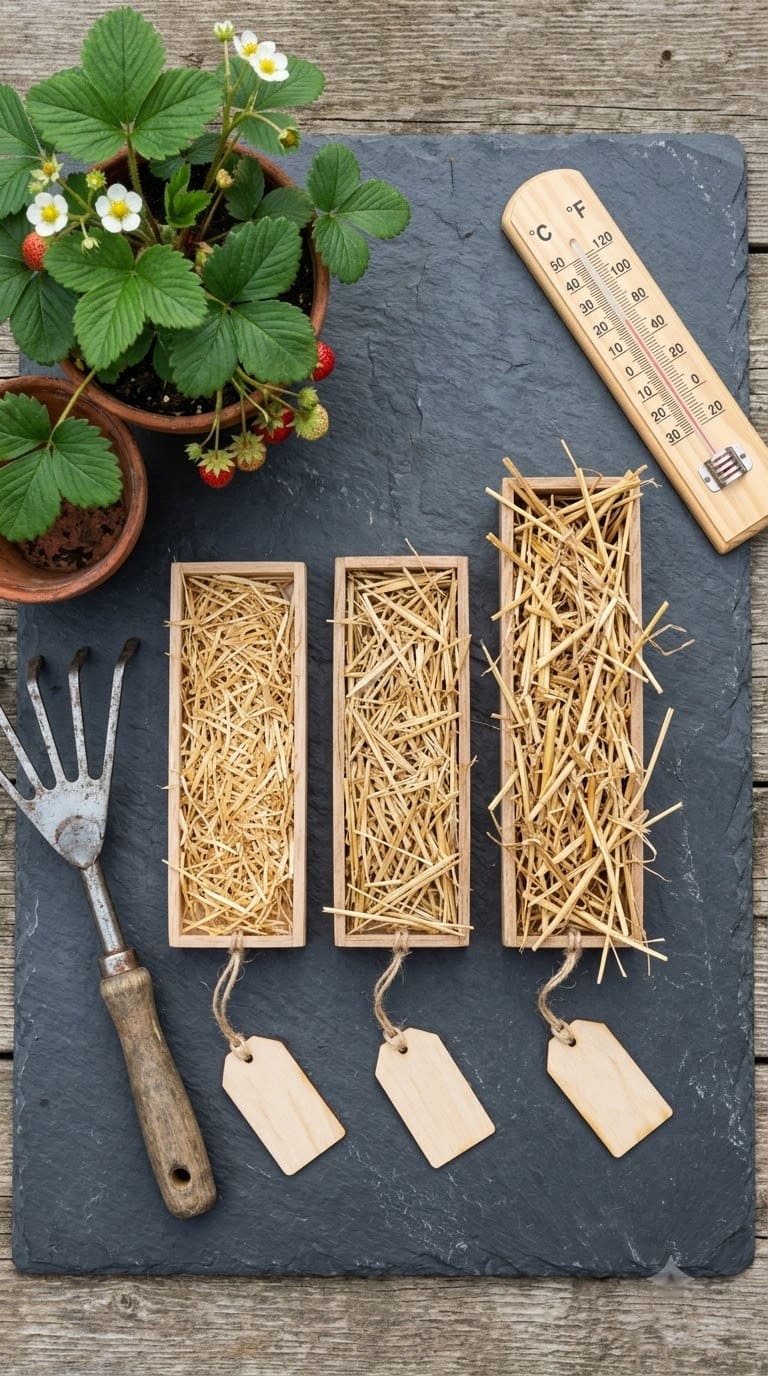
Three jobs, three different sets of numbers.
| Job | When | Material | Depth | Where | Watch for |
|---|---|---|---|---|---|
| Growing-season fruit mulch | As plants establish, before berries touch soil | Clean wheat, oat, or rye straw | 1 to 2 inches | Around plants and between rows, a finger-width off each crown | Deep or soggy straw shelters slugs and voles |
| Winter crown protection | Late fall, nights near 20°F and soil below 40°F for several days | Clean, weed-free straw | 3 to 5 inches over the whole bed | Over the crowns, entire planting | Applying too early smothers plants in a warm spell |
| Spring removal | When about 25 percent of plants show new growth | Rake off the tops, leave a thin path layer | Thin | Off the crowns, thin layer stays between rows | Leaving it on into spring causes pale growth and crown rot |
A real slug-year story
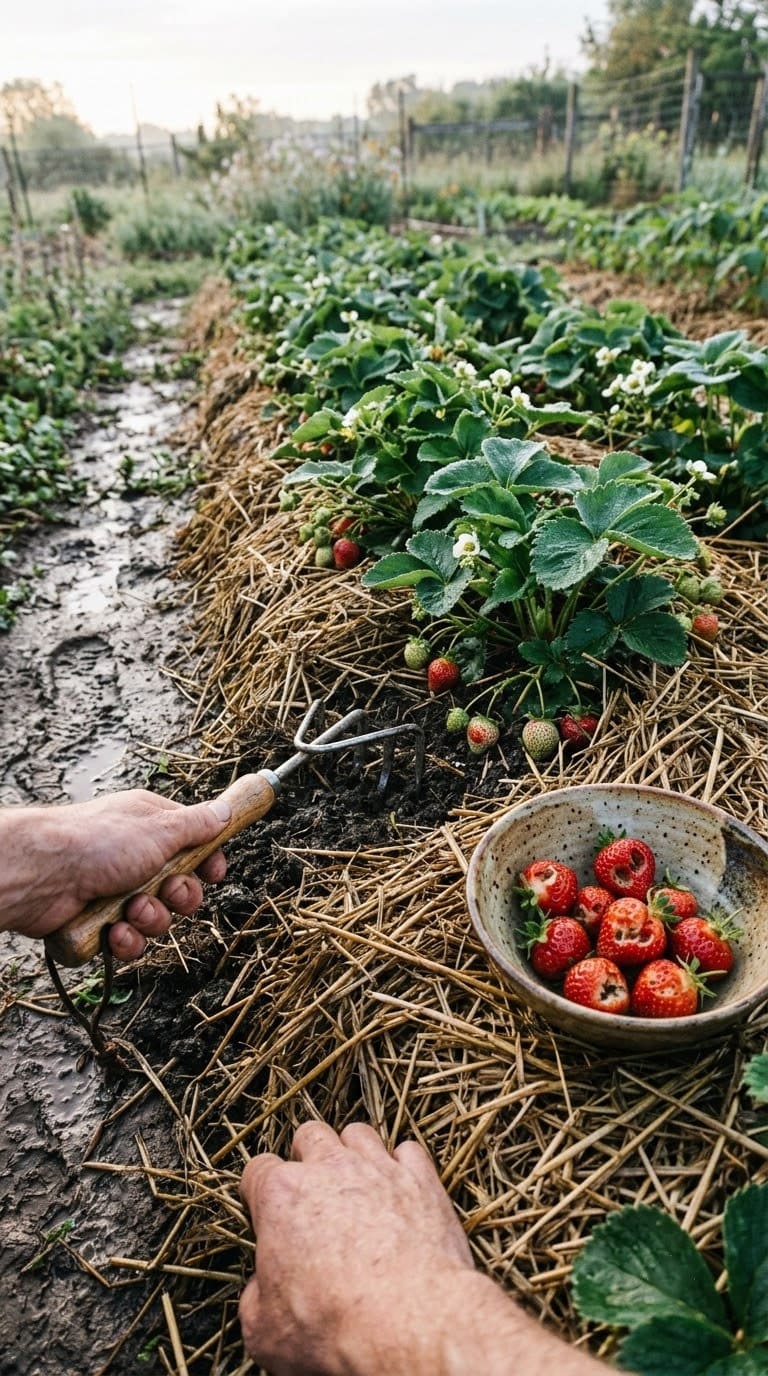
One June I mulched thick with half-rotted straw from a bale that had sat out through a wet week. It felt generous, a good 4 inches, soft and damp.
The berries were fine for about two weeks. Then almost every ripe one had a slug hole in it, and in the morning I could lift the straw and find the slugs curled up underneath, right against the fruit.
I raked most of the straw off into the paths so the layer over the plants was barely an inch, and I moved watering to six in the morning. And I scattered iron phosphate bait two evenings running. Damage dropped to a berry or two a week within about ten days.
The lesson stuck. Straw is a tool with a setting.
Thin and dry protects the fruit. Thick and wet feeds the thing eating it.
FAQ
How thick should straw mulch be around strawberries? About 1 to 2 inches during the growing season, and 3 to 5 inches as a winter cover over the whole bed. Either way, keep a finger-width gap clear around each crown so it does not sit in damp straw and rot.
Does straw mulch attract slugs to strawberries? Only when it is deep or wet. A thin, dry layer actually reduces slug damage by keeping fruit off the soil. A thick, soggy layer becomes a daytime shelter, so pair thin straw with morning watering and evening iron phosphate bait.
Can I use hay instead of straw on strawberries? No. Hay is full of grass and weed seed and will seed your bed heavily. Use threshed cereal straw, which carries very few seeds.
When should I mulch strawberries for winter? Once night temperatures approach 20°F and the soil has stayed below 40°F for several consecutive days, per Iowa State and Maryland Extension. That is usually late fall. Earlier than that risks smothering plants during a warm spell.
When do I remove strawberry winter mulch in spring? When about 25 percent of the plants show new growth, per Iowa State. Rake it into the paths rather than hauling it away, and keep it handy to pull back over the plants on a frost night during bloom.
Will straw mulch stop strawberries rotting? It reduces rot but does not cure it. By keeping berries off the soil and cutting rain splash, straw slows anthracnose and gray mold, per Clemson and UC IPM. Pair it with prompt picking, good airflow, and cleaning up spoiled fruit.
Related Posts
- Growing Strawberries in an Organic Garden
- Growing Strawberries in a Small Garden
- Grow a Vertical Strawberry Garden
Never miss an update — choose FarmFoodFamily as your preferred source on Google.
How it works: Tap the button below to open Google's settings page, then check the box next to FarmFoodFamily.
Tap the checkbox to turn it blue — that's how you know it's set.