Why Privacy Trees Aren’t Growing as Fast as Promised
Slow top growth in the first two or three years is exactly what a healthy privacy tree should do, but a truly stalled one usually has a fixable problem you can spot in ten minutes.

Never miss an update — choose FarmFoodFamily as your preferred source on Google.
How it works: Tap the button below to open Google’s settings page, then check the box next to FarmFoodFamily.
Tap the checkbox to turn it blue — that’s how you know it’s set.
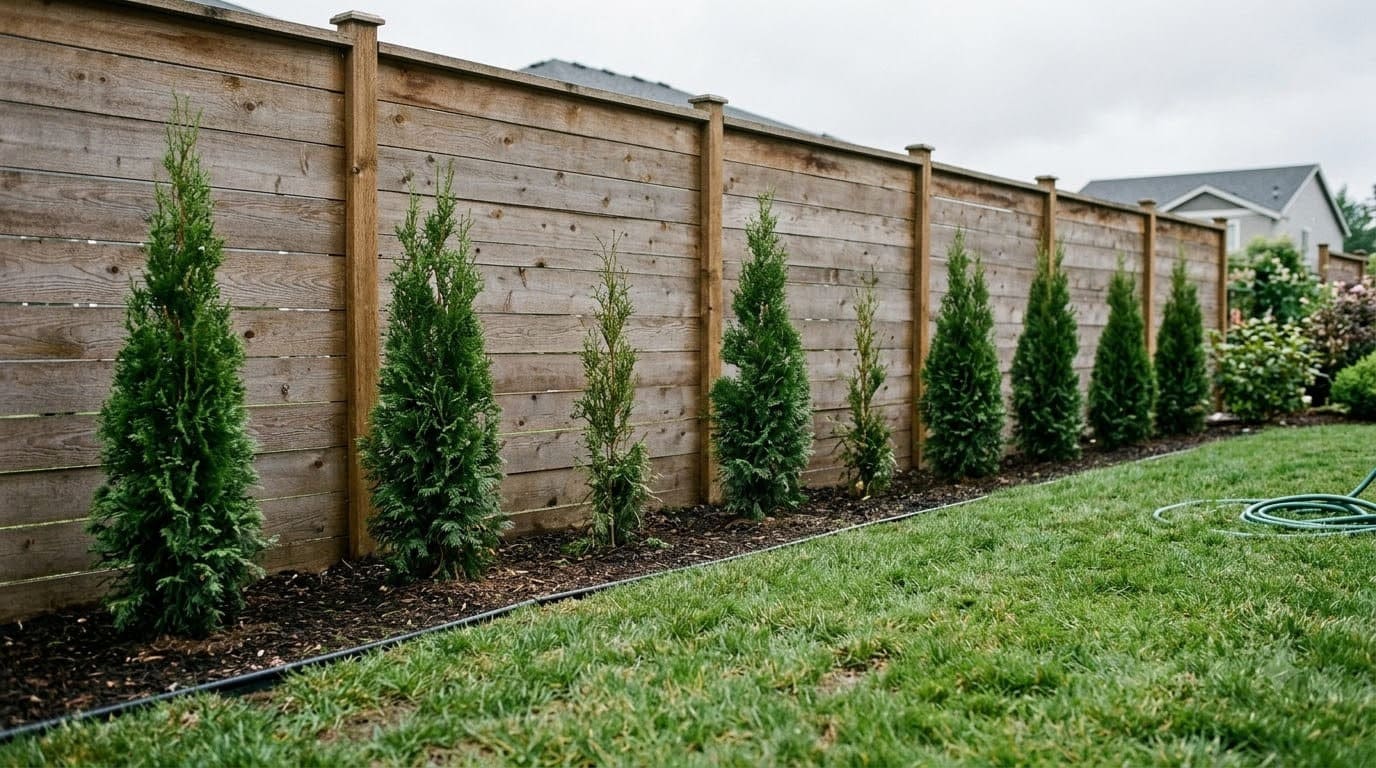
The tag said 3 to 5 feet a year. You planted a row of Green Giants or Leyland cypress two summers ago, and they’ve put on maybe a foot total. It feels like you got sold a story.
The tag leaves out the part that matters. That growth rate is a mature-tree number, on a good site, with the right water. Even the nurseries’ own care sheets admit the first year is 1 to 2 feet, because the tree is spending its energy underground building a root system.
So the real question isn’t whether the number was a lie. It’s whether your tree is establishing normally and about to take off, or whether it’s genuinely stuck. These eight reasons cover both.
Quick Answer
Privacy trees grow slowly for the first two to three seasons because they’re establishing roots, not because the tag lied. University of Florida’s Ed Gilman notes that during establishment, “shoots and trunk grow slower than they did before transplanting,” and that it takes roughly 6 months of establishment time per inch of trunk caliper in warmer zones, or a year or more per inch in cooler ones. A 1.5-inch caliper tree in a cold climate can spend two full years just settling in.
A slow-but-healthy tree is green, holding its needles, and its leader is intact. A genuinely stalled tree usually has a buried root flare, roots still circling in the shape of the pot, the wrong species for the site, or a pest quietly eating the new growth. Check those four before you reach for fertilizer.
What growth should actually look like, year by year
Match your trees against this before you decide anything is wrong. These are realistic ranges for well-sited, well-watered plants, not the tag’s best case, and they vary quite a bit by which arborvitae or cypress you planted.
Answer 4 quick questions and get matched to the exact fix for your yard — drainage, budget, layout, or something else entirely.
Take the Free Quiz| Tree | Year 1 (sleep) | Year 2 (creep) | Year 3 and on (leap) |
|---|---|---|---|
| Thuja Green Giant | 6 to 18 in | 1 to 2 ft | 2 to 4 ft |
| Emerald Green arborvitae | 3 to 8 in | 6 to 12 in | 8 to 14 in |
| Leyland cypress | 8 to 18 in | 1.5 to 3 ft | 2 to 3 ft, if disease-free |
If you’re in year one or two and near the bottom of the range but the tree looks healthy, that’s normal. If it’s below the range and looking thin or off-color, keep reading.
1. The growth rate on the tag is a best-case number, not a promise for your yard
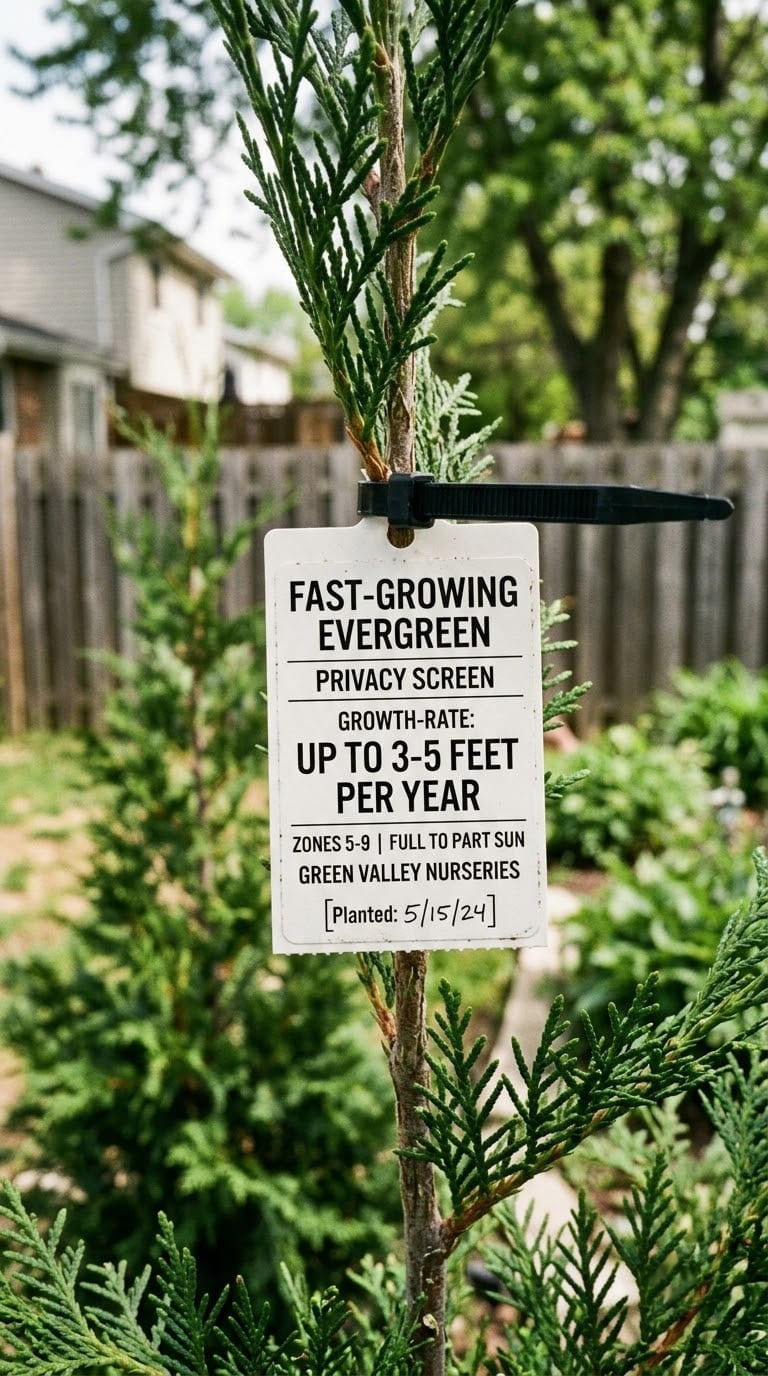
Nursery growth rates are measured on trees grown in ideal field conditions, deep loose soil, full sun, irrigation, and fertilizer, then reported at the established rate, not the establishment rate. Your yard has compacted builder’s soil, a fence casting afternoon shade, and whatever rain shows up.
None of that means the tree is defective. It means the number was always a ceiling, and most yards land well under it, especially in the first few years.
Quick fix: Reset your expectations to the year-by-year table above, then focus on the things you actually control: planting depth, water, mulch, and keeping competition off the roots. Those are what move a tree from the bottom of the range toward the top.
2. You’re still in the establishment window, so roots come first and the top waits
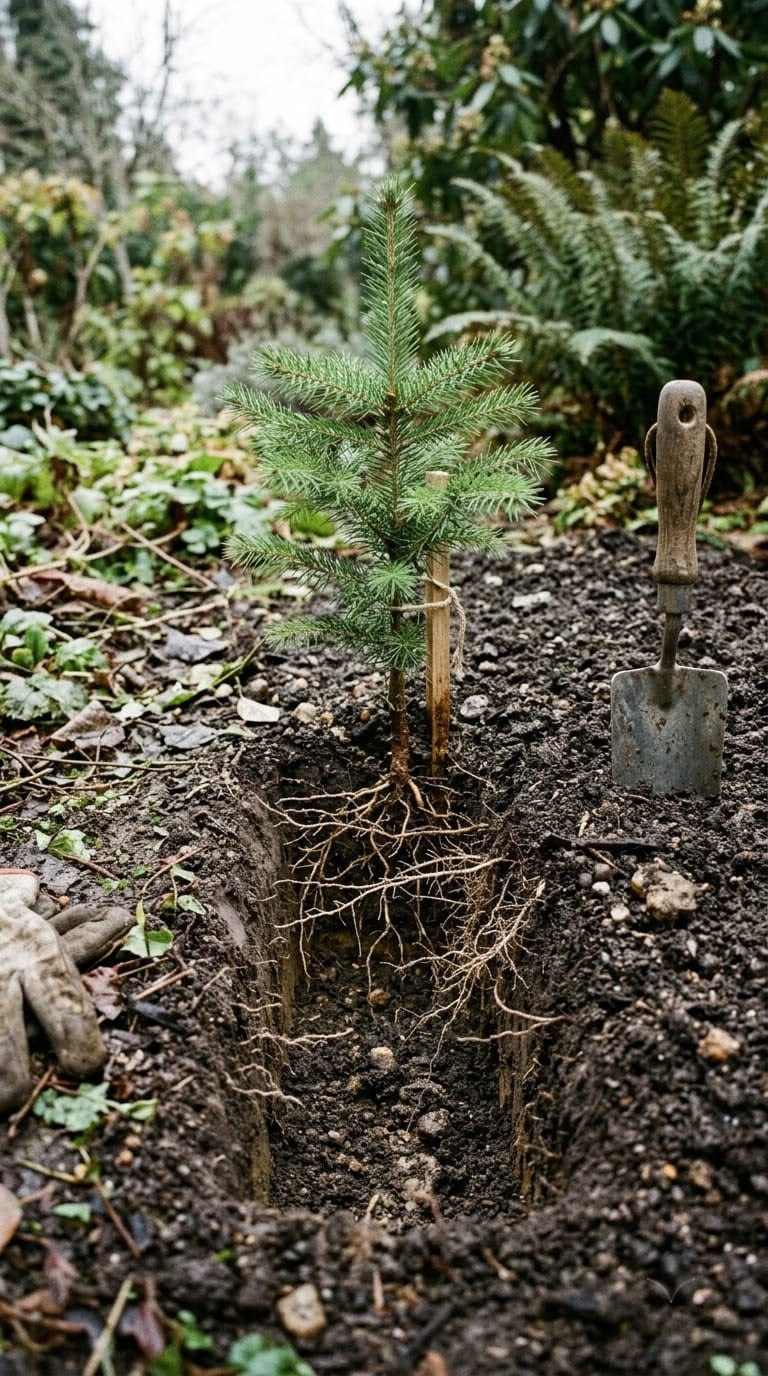
Gilman’s research describes a tree as established only when its growth rate becomes consistent year to year, and its roots have spread to about three times the distance from the trunk to the branch tips. Until then, the canopy is on hold while the roots catch up.
Iowa State Extension puts the establishment period at roughly 12 months per inch of trunk diameter in cooler zones. A 2-inch caliper tree needs about two years before it even starts growing like the tag promises.
Quick fix: There is no shortcut here, but you can shorten it. Water deeply and regularly through the first two growing seasons, keep a wide mulch ring so the roots aren’t fighting grass, and do not fertilize heavily, which pushes weak top growth the roots can’t support yet.
Most yard problems trace back to one specific, fixable cause. Find yours in 4 quick questions.
Take the Free Quiz3. The tree was planted too deep, or the root flare is buried under mulch
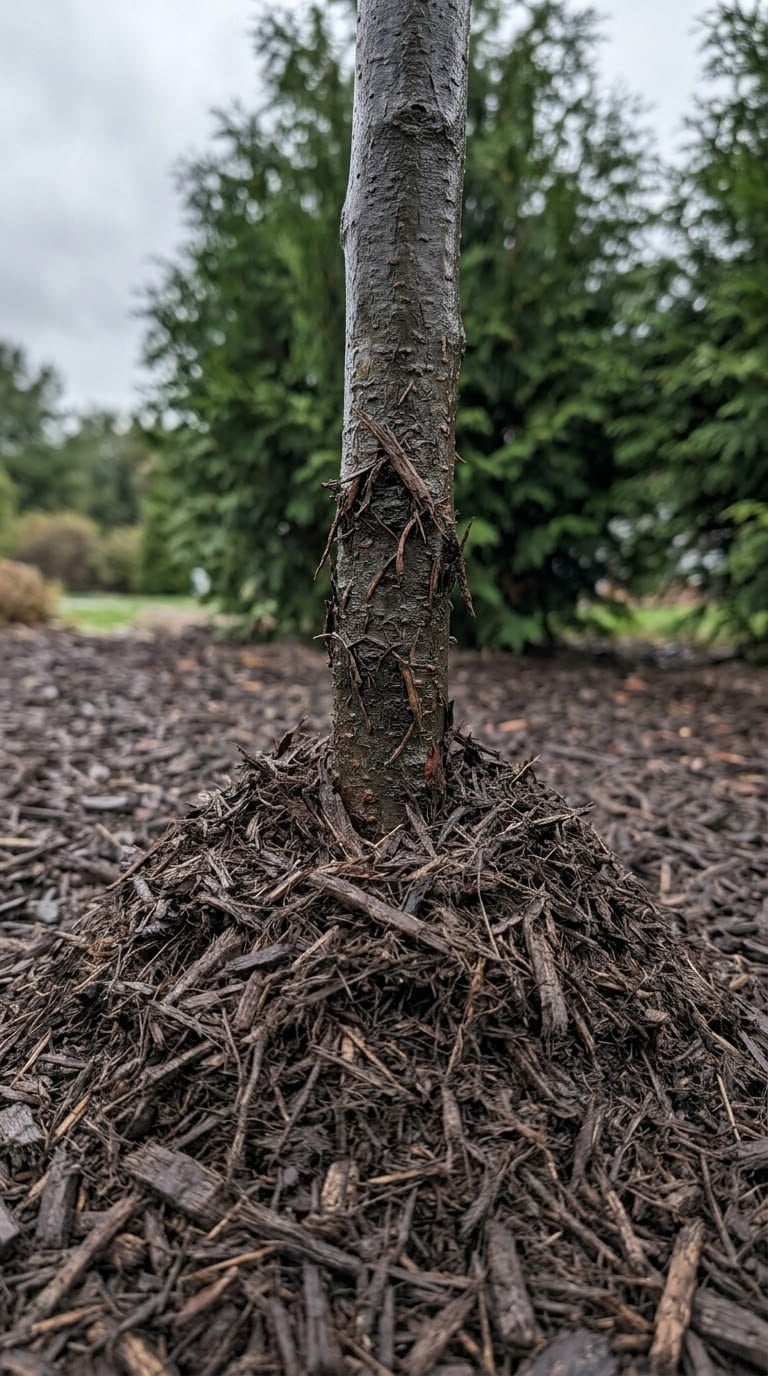
This is the most common real stall. If the root flare, the spot where the trunk widens into roots, is under soil or piled mulch, the tree is effectively planted in a hole that stays too wet and too low on oxygen. Growth flatlines and can slowly reverse.
It usually happens one of two ways: the tree was set in the ground with the top of the root ball below grade, or years of mulch got piled against the trunk. Iowa State is specific that mulch should be feathered up to but never covering the trunk flare, and kept about 6 inches off the trunk.
Quick fix: Clear soil and mulch away from the base until you find the flare and the first structural roots. If the whole tree sits too low, and it’s still small, lift it and replant with the flare an inch above grade. On a bigger tree, at least excavate the flare so it can breathe. Then mulch a wide flat ring, not a cone against the trunk.
4. The pot-bound roots were never cut, so they’re still circling
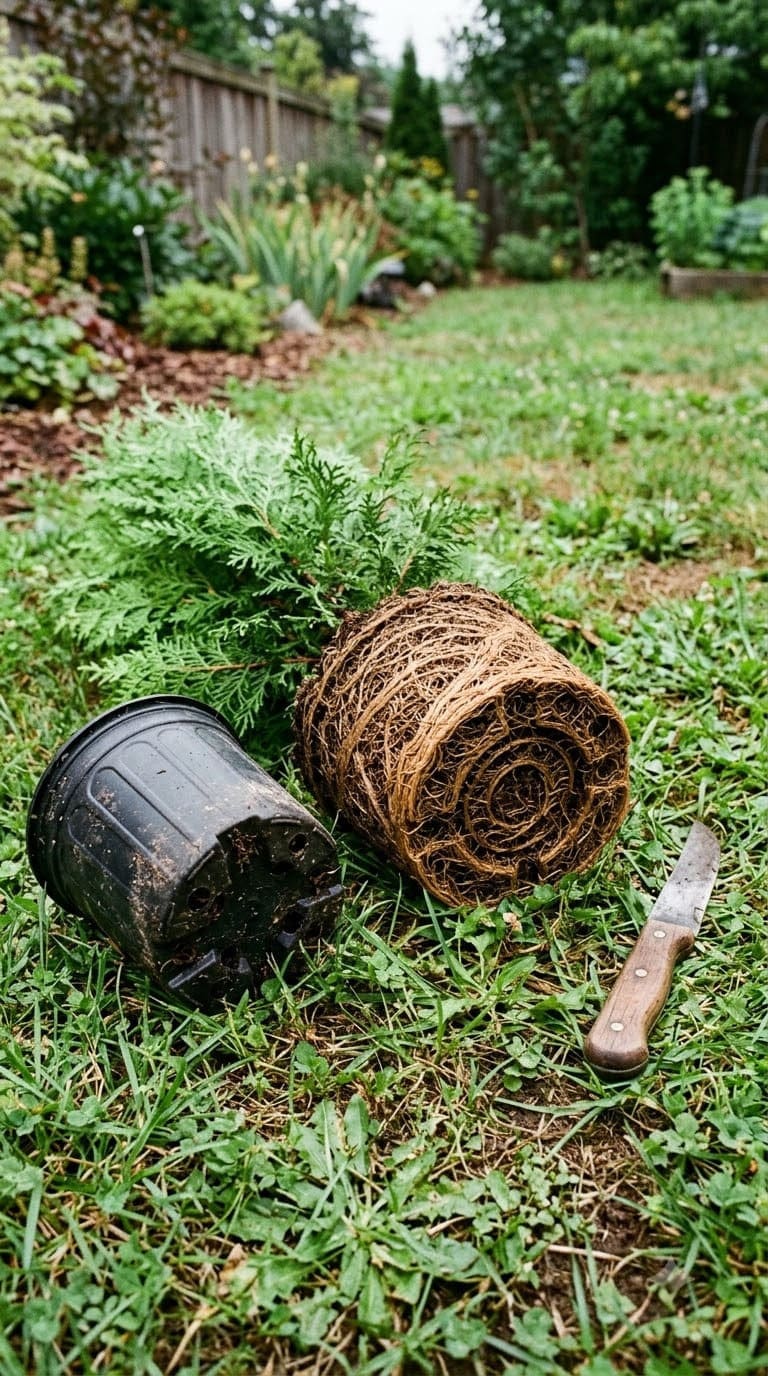
A tree that sat too long in its nursery pot has roots wound around the inside in a tight spiral. Drop that root ball straight into a hole without cutting it, and the roots keep circling. They never push out into the yard soil, so the tree stays on pot-sized life support for years.
You often can’t see this without digging, but the tells are a tree that rocks in the wind at the base, or one that leafs out fine every spring and then just sits there.
Quick fix: On any tree you’re planting now, slice the root ball vertically in three or four places with a knife and tease the outer roots loose before it goes in. On a struggling tree already in the ground, if it’s small, lift it, cut the circling roots, and replant. If it’s established and just slow, mulch and water well and give it another season before deciding.
5. It’s the wrong species for your soil, water, or sun
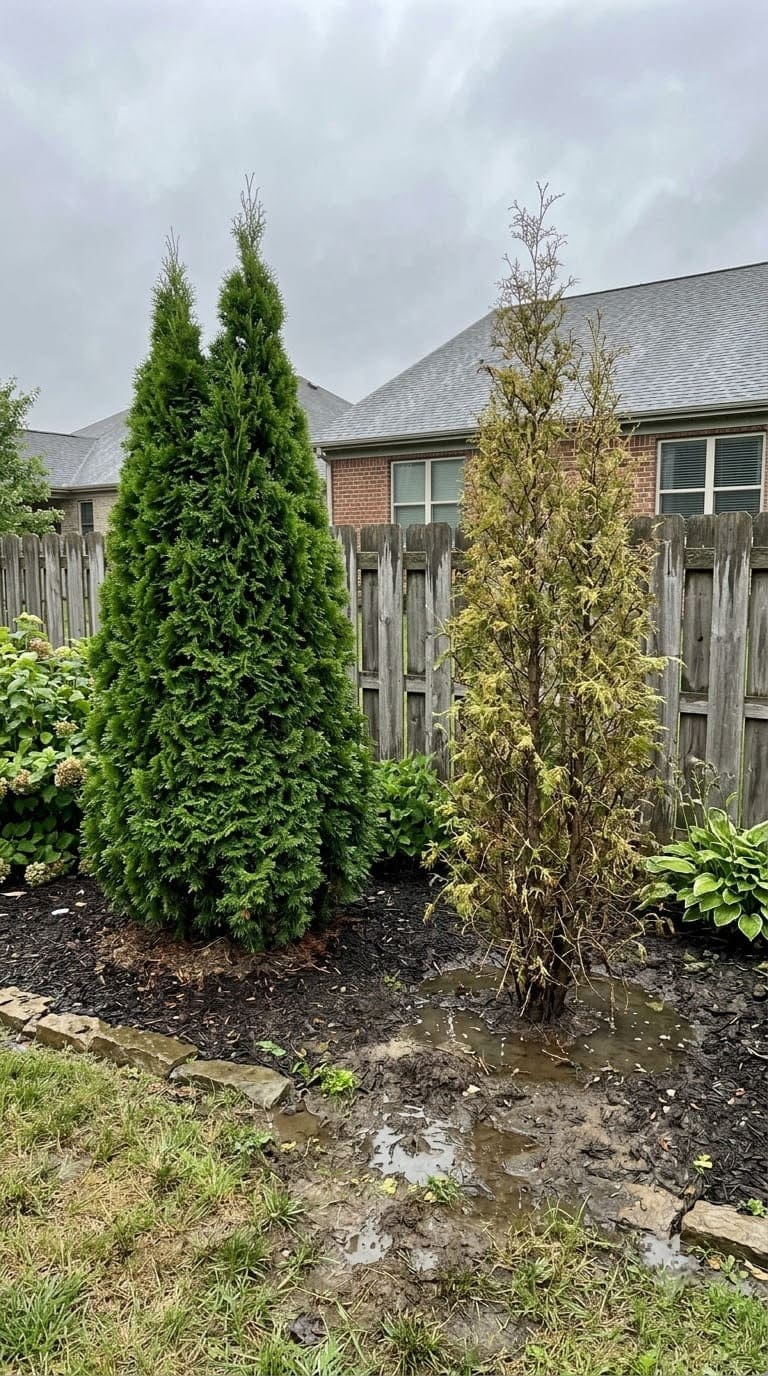
Fast-growing screens are picky about site. Leyland cypress wants well-drained soil and sulks in wet clay, and Emerald Green arborvitae scorches in reflected heat and dry wind.
Nothing in this group does well in deep shade, and a screen along a north fence often has one end that barely grows.
NC State Extension recommends Green Giant arborvitae as a Leyland-form replacement specifically for “moist, but well drained, fertile sites in full sun,” which is a narrower window than most people plant into.
Quick fix: Check the table below against your actual conditions. If a tree is in standing-wet ground or heavy shade, more water and fertilizer won’t save it, and replacing it with a species that fits the spot is faster than nursing the wrong one for a decade. Improving drainage and soil before you replant matters more than the tree you pick.
6. They’re spaced too close and competing with each other
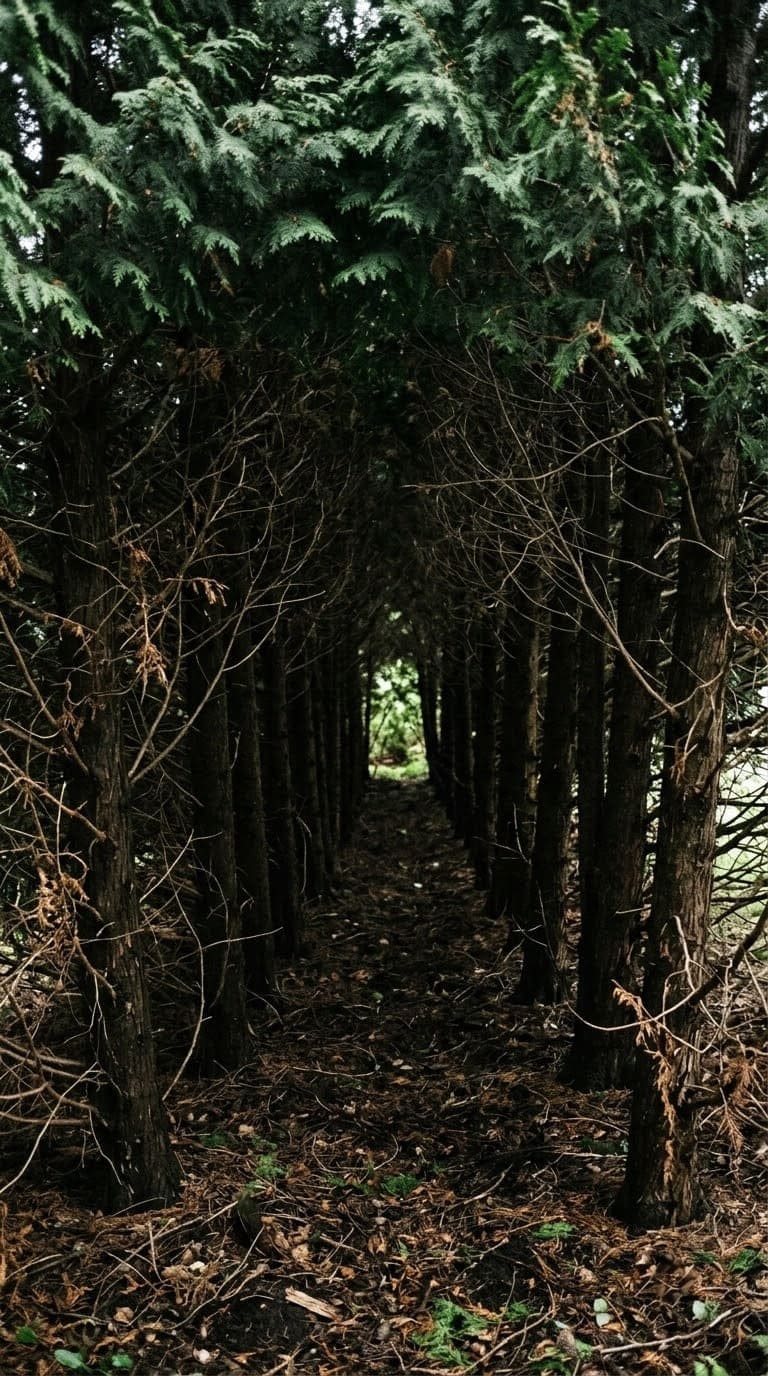
Tight spacing fills the gap sooner, which is why people do it. But once the canopies touch, the trees shade each other’s lower branches, the roots crowd into the same soil volume, and total growth slows because every tree is fighting for the same light and water.
The average homeowner spends $616/year on yard fixes that don't address the real problem. Find out what yours actually is — before you spend another dollar.
Take the Free QuizA row planted 3 feet apart looks great at year three and thin at the bottom by year eight. It also traps humidity, which invites the exact diseases these trees are prone to.
Quick fix: For a solid screen, Green Giant wants about 5 to 6 feet apart, full-size arborvitae 3 to 4 feet, Leyland cypress 6 to 8 feet. If yours are already in tight, you usually can’t move them, so keep them well watered and fed, thin nothing, and accept a slightly slower fill for a healthier screen. Planting a staggered double row at proper spacing beats a single crammed row.
7. Grass, weeds, and string-trimmer damage right at the base
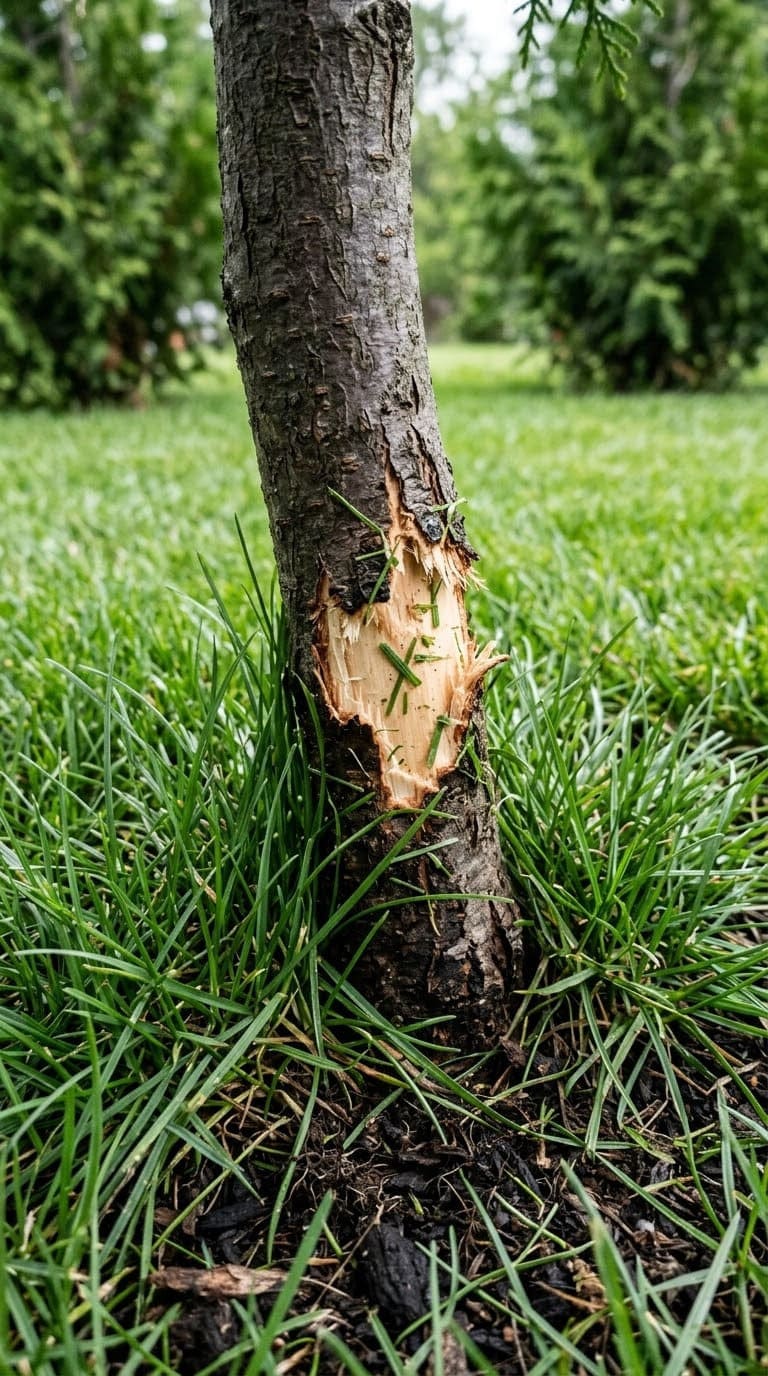
Turf grass is a ferocious competitor for water and nitrogen in the top few inches of soil, which is exactly where a young tree’s feeder roots are. A tree ringed by lawn grows measurably slower than the same tree in a mulched bed.
Then there’s the string trimmer. One careless pass nicks the thin bark at the base, and repeated hits over a couple of seasons girdle the trunk, choking off the flow between roots and canopy. This kills more young privacy trees than any disease.
Quick fix: Keep a mulched, grass-free ring at least 2 to 3 feet wide around each trunk, or a continuous mulched strip down the whole row. That removes the grass competition and keeps the trimmer away from the bark entirely. Running the screen along the fence line as one bed is easier to maintain than mowing around individual trees.
8. A pest or canker is quietly stealing the growth
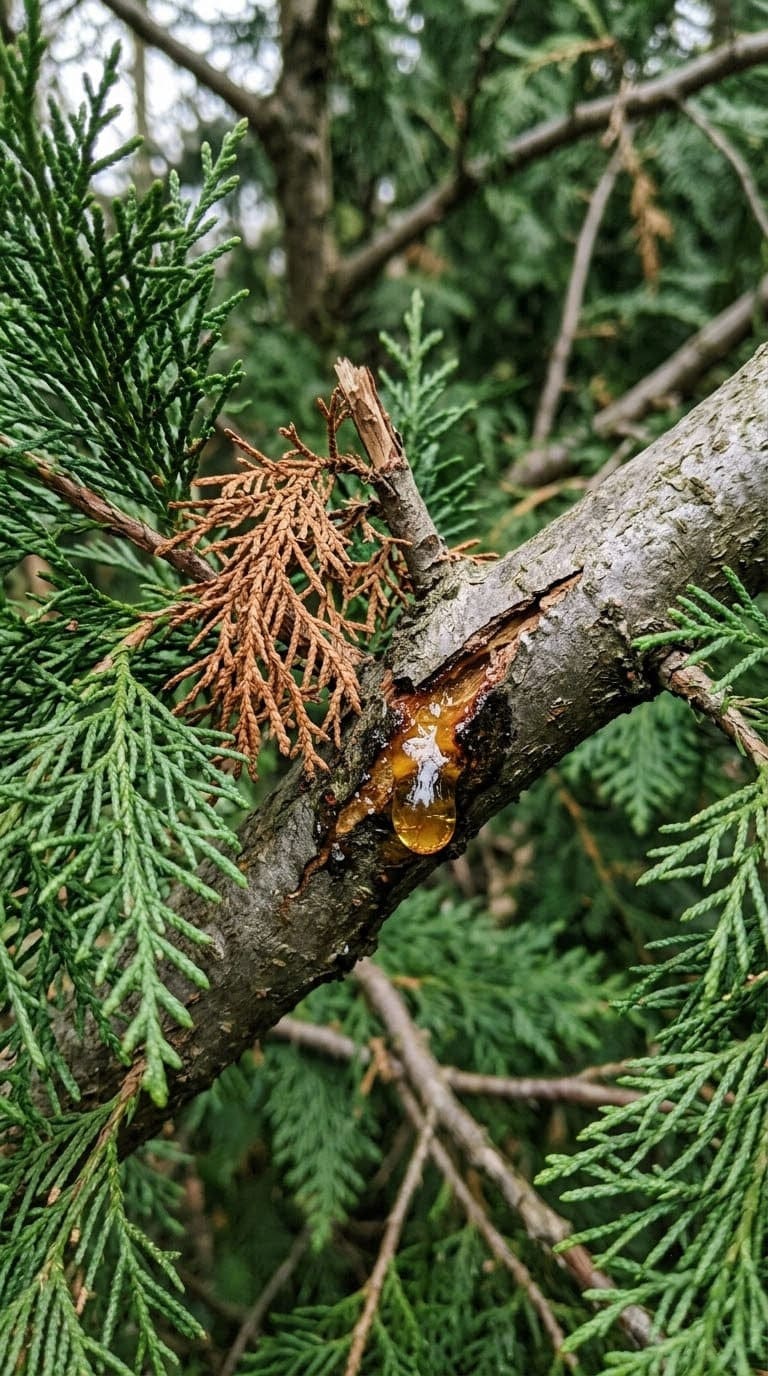
On Leyland cypress especially, Clemson Extension reports Seiridium canker as a major problem: dieback of the leading and lateral shoots, resin oozing from cracks in the bark, and dark brown or purplish patches. That’s the tree literally losing the new growth you’re waiting for.
Bagworms are the other big one, called the most serious insect pest of these trees. A bagworm bag looks like a small ornament made of the tree’s own needles, and a heavy load can strip a young tree bare. Spider mites cause a fine bronzing and stippling, usually in hot dry spells.
Quick fix: Walk the row monthly. Hand-pick bagworm bags before mid-June or spray with Bt while the larvae are small. Prune canker-infected branches well below the damage, disinfecting the pruners between cuts, and do not replant Leyland where one has already died of canker. For a widespread problem on a maturing screen, get an arborist to confirm the cause before you spend on treatment.
Did you pick the right tree for your site?
Most slow-screen complaints trace back to a species-site mismatch. Find your conditions here.
| Tree | Zones | Best soil | Mature size | Screen spacing | Main weakness |
|---|---|---|---|---|---|
| Thuja Green Giant | 5 to 8 | Moist, well-drained, fertile | 30 to 50 ft x 8 to 15 ft | 5 to 6 ft | Deer browse when young |
| Emerald Green arborvitae | 3 to 7 | Moist, well-drained | 12 to 15 ft x 3 to 4 ft | 3 to 4 ft | Heat and dry wind scorch, deer |
| Leyland cypress | 6 to 10 | Well-drained, hates wet clay | 40 to 60 ft x 15 to 25 ft | 6 to 8 ft | Seiridium canker, bagworms |
| Italian cypress | 7 to 10 | Dry, well-drained, hot | 40 to 60 ft x 3 to 6 ft | 3 to 5 ft | Rots in humidity and wet soil |
| Eastern red cedar | 3 to 9 | Almost anything, tolerates dry | 30 to 40 ft x 8 to 20 ft | 6 to 8 ft | Slower, cedar-apple rust |
| Cryptomeria ‘Radicans’ | 6 to 9 | Moist, rich, wind-sheltered | 30 to 40 ft x 10 to 15 ft | 5 to 6 ft | Winter burn in exposed cold sites |
How much water do privacy trees need the first two years?
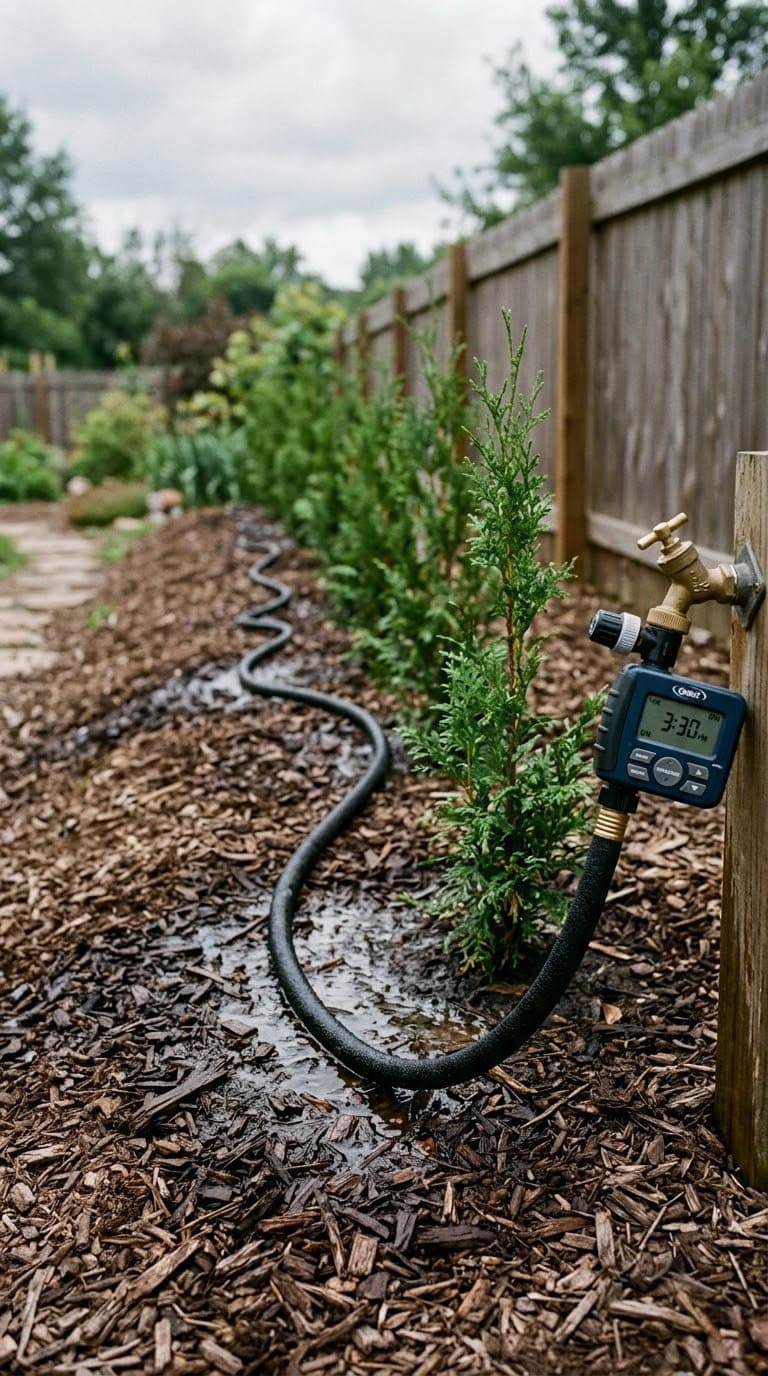
Water is the single biggest lever on how fast a young screen actually grows, and most slow rows are underwatered.
Through the first growing season, soak each root ball two or three times a week when it isn’t raining, more in heat. You want the water going down slowly right at the base, not a quick sprinkle that wets the mulch and runs off.
A soaker hose laid along the row and run for 45 to 60 minutes a couple of times a week is the low-effort way to do it. A drip line on a timer is even better because it doesn’t depend on you remembering.
In the second season, back off to about once a week, still deep. Iowa State notes that in dry spells, periodic watering can help for 3 to 5 years, so don’t cut it off entirely the moment year two ends.
The signs to watch: needles going dull gray-green or dropping from the inside means too little. Needles yellowing from the bottom up, with soggy soil, means too much, and that tree may be in a spot that stays wet.
What we learned the hard way
A few things that only became clear after a couple of slow years.
The too-deep tree got passed by its smaller neighbor. We planted a row of Green Giants the same day, same size, except one went in about three inches low because the hole was soft. Three years on, that one is a foot shorter than the rest, and the flare was buried the whole time.
The mulch volcano hid the problem. We kept adding mulch every spring for the tidy look, and by year three there was 8 inches of it packed against the trunks. Pulling it back to the flare and widening the rings, flat, was the single biggest change, and growth picked up the next season.
Bagworms took the leaders and never gave them back. One end of a Leyland row got a bagworm load we didn’t catch until August. We cleaned them off, but the trees had lost their central leaders and grew back bushy and stunted, never matching the clean end of the row.
And fertilizer did nothing on a root-bound tree. A neighbor told us to just feed them, so we spent a season on evergreen spikes with zero change, because the roots were still circling in the pot shape and couldn’t use it.
Cutting the roots on a replacement, and planting it right, did more in one year than the fertilizer did in two.
Frequently asked questions
How long until my privacy screen actually fills in? For Green Giant on a good site with water, plan on a usable screen in 3 to 5 years and full height in 7 to 10. Slower species like Emerald Green arborvitae take longer. If you need privacy now, that’s a case for a fence with trees behind it, not trees alone.
Should I fertilize to speed them up? Only if growth is genuinely poor 2 to 3 years after planting and the basics are right, which is Iowa State’s guidance. On a tree that’s stressed, planted too deep, or root-bound, fertilizer pushes weak growth and can make things worse. Fix the cause first.
Is it too late to fix a tree that was planted too deep? On a small tree, no, lift it this dormant season and replant with the flare an inch high. On a large established tree, you usually can’t replant, but excavating the soil and mulch off the flare so it can exchange air still helps, and it’s worth doing.
Why is one tree growing and the others aren’t? Look at the slow one’s base for a buried flare or trimmer damage, check whether it sits in a wetter or drier micro-spot, and check for pests. Same-day, same-size plantings that diverge almost always come down to planting depth or root condition in the pot.
Do bigger trees fill in a screen faster? Usually not. A larger caliper tree has a longer establishment period, so a 6-foot tree and a 3-foot tree planted the same day often end up the same height by year four or five, and the smaller one can pass it. Bigger trees cost more and stall longer.
Green Giant or Leyland cypress? For most yards, Green Giant. It grows nearly as fast, tolerates a wider range of soils, and doesn’t carry Leyland’s canker and bagworm baggage. NC State and other extension services now recommend Green Giant as the Leyland replacement. Leyland still makes sense on a large, well-drained, sunny site where you want maximum speed and accept the disease risk.
Related Posts
Never miss an update — choose FarmFoodFamily as your preferred source on Google.
How it works: Tap the button below to open Google's settings page, then check the box next to FarmFoodFamily.
Tap the checkbox to turn it blue — that's how you know it's set.