
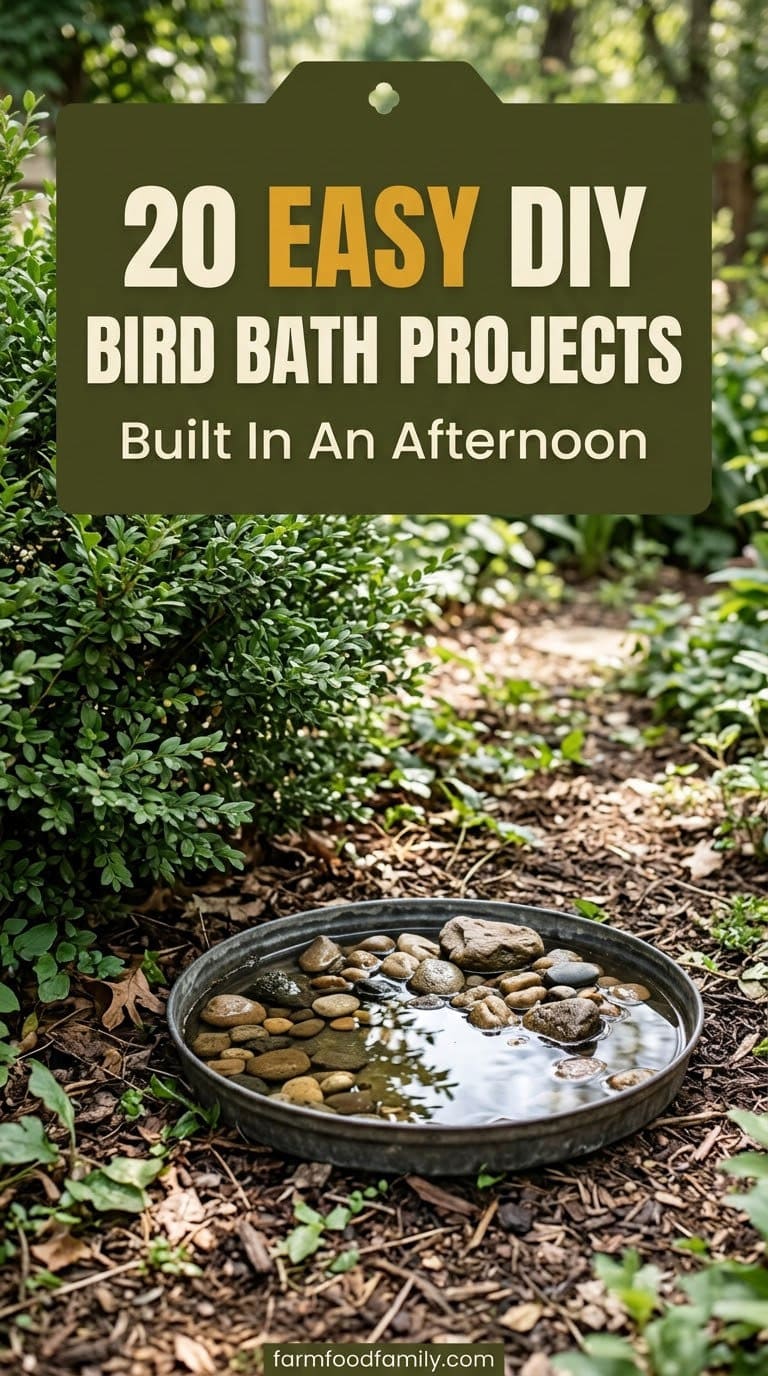
20 Charming DIY Bird Bath Ideas That Are Shallow, Safe and Easy to Clean
A good DIY bird bath is shallow, rough underfoot, close to cover but not to cats and easy to scrub, and the best builds use moving water and a bowl you can wash every day or two.

Never miss an update — choose FarmFoodFamily as your preferred source on Google.
How it works: Tap the button below to open Google's settings page, then check the box next to FarmFoodFamily.
Tap the checkbox to turn it blue — that's how you know it's set.
A good DIY bird bath is shallow, rough underfoot, close to cover but not to cats and easy to scrub, and the best builds use moving water and a bowl you can wash every day or two.
Products We Recommend
This post contains affiliate links. We may earn a commission on qualifying purchases at no extra cost to you.

AISITIN 3.5W Solar Fountain Pump for Bird Bath, Separated Design with 8 Nozzles
A floating solar pump that adds moving water, which Audubon says helps against mosquitoes. Place the panel in full sun and keep the bowl shallow.
Shop Now
GESAIL Bird Bath Heater, Thermostatically Controlled, Cast Aluminum
A thermostat heater for winter bowls. Use an outdoor-rated outlet, keep cords out of walkways and never add antifreeze to the water.
Shop Now
Bleuhome 2 Pack 12 inch Plant Saucer, Bird Bath Bowl
Wide shallow saucers sized for the flower pot stack and stump builds. The listing shows a terracotta color, so check the material and add flat stones for grip and shallow depth.
Shop NowA bird bath is the easiest way to bring life to a garden. Birds drink and bathe daily, and fresh water is harder to find than food.
The hard part isn’t building one. It’s building one that is safe. Deep or slippery bowls, dirty water and exposed spots cause more trouble than any missing decoration.
This guide gives you 20 DIY bird bath ideas, from a flower pot stack to a wheelbarrow garden. Each one shows what to use, how to build it and how to keep it clean. If you’d rather buy one, see our bird bath buying guide.
Answer 4 quick questions and get matched to the exact fix for your yard — drainage, budget, layout, or something else entirely.
Take the Free QuizQuick Answer
Keep the water shallow. The Chicago Bird Alliance says a basin should be about one inch deep at the edge and two inches at the center, with a gentle slope. Deep water can drown birds.
Add rocks or sticks for perches, and choose a rough surface. Set the bath near bushes for cover, but not in a hiding spot for cats.
Change the water every one to two days. The Alliance says to scrub it every two to four days with water and vinegar, not soap.
But use moving water if you can. Audubon says mosquitoes avoid laying eggs in running water, and a drip or small fountain also attracts more birds.


Pick a spot near shrubs but away from cat hiding places and windows. Build with a washable bowl, even if the stand is concrete or stone. Add a heater or a plastic bowl swap for winter, and never use antifreeze.
Most yard problems trace back to one specific, fixable cause. Find yours in 4 quick questions.
Take the Free QuizWhat Makes a Safe Bird Bath?
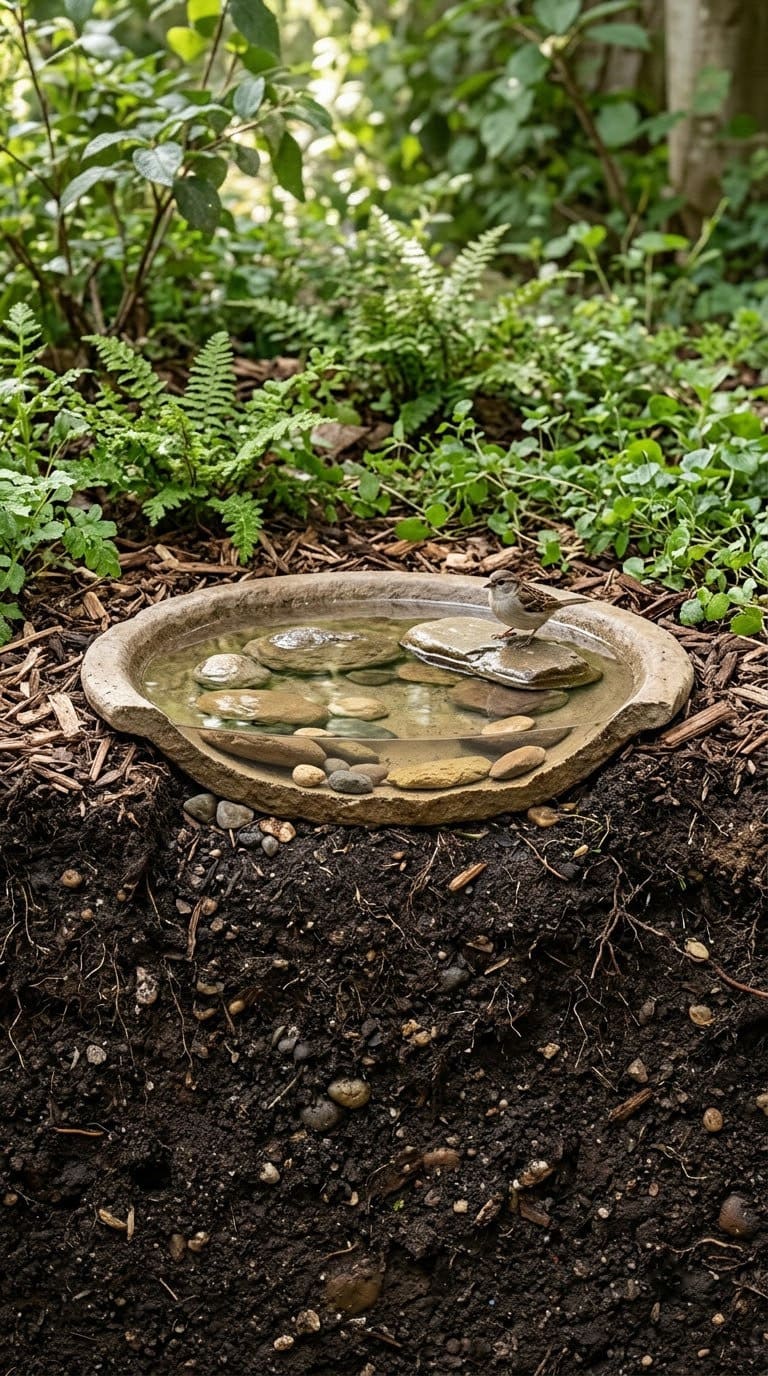
Four basics matter more than style.
- Shallow water. The Chicago Bird Alliance says to keep the basin about one inch deep at the edge and two inches in the center.
- Grip. It suggests adding rocks or sticks so birds can perch and judge the depth. A rough bowl also helps feet grip.
- Cover nearby. Small birds need bushes or trees close enough to dart into. The Alliance says to keep the bath out of open areas, and to set it on the ground or no more than a couple of feet up.
- A bowl you can clean. The Alliance recommends avoiding concrete, because it is hard to sanitize.
Our take: if a bowl is too deep, fill the bottom with flat stones. That makes it shallow and adds grip at the same time.
How Do You Keep a Bird Bath Clean?
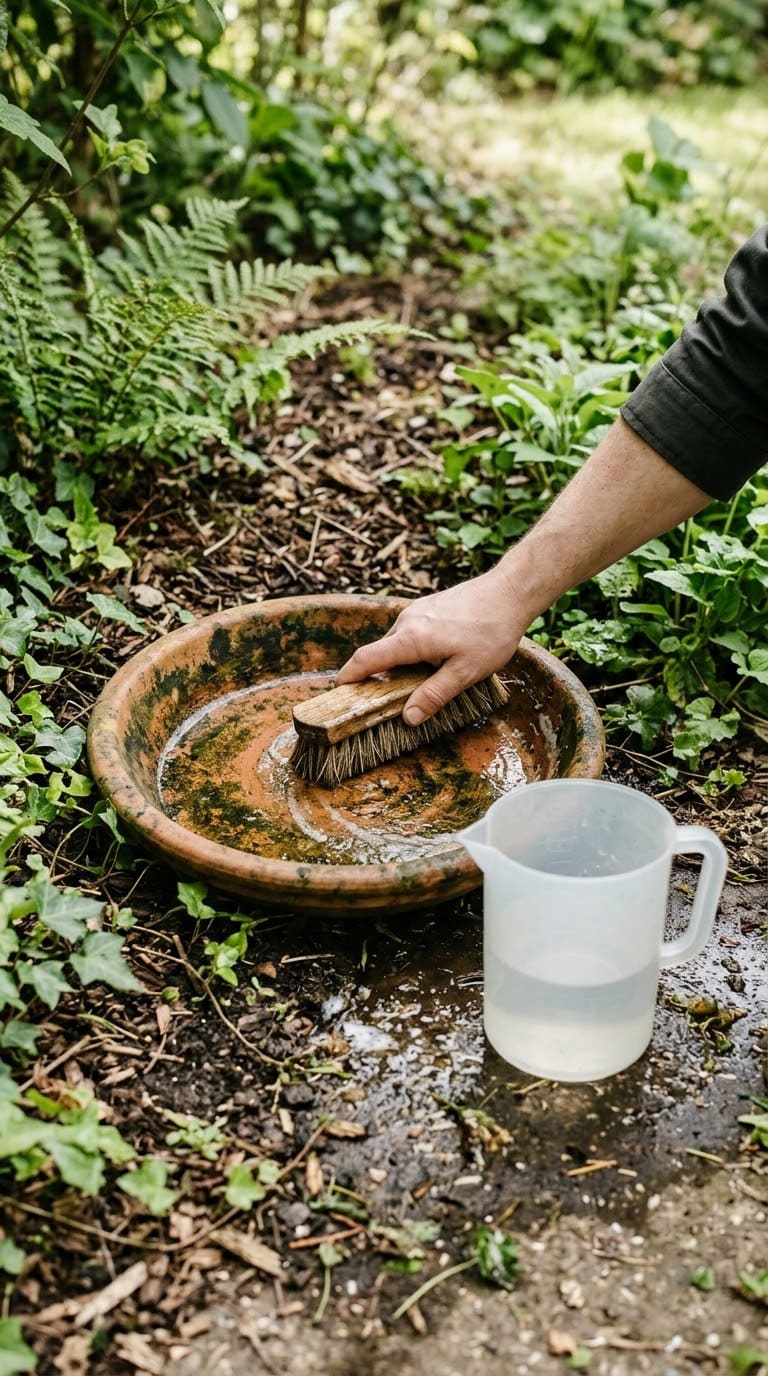
A dirty bath can hurt birds. Cleaning is not optional, but it is quick.
Audubon says to refill the water every other day. It says to rinse and scrub the bowl with about nine parts water to one part vinegar. It also advises against synthetic soaps and cleansers, because they can strip the natural oils from feathers.
The Chicago Bird Alliance gives a schedule. It says to change the water every one to two days and scrub the basin every two to four days.
Here’s a simple routine.
- Dump and refill the water every day or two.
- Scrub the bowl every few days with a brush and diluted vinegar.
- Rinse well so no vinegar smell stays.
- Let the bowl dry in the sun before refilling, when you can.
Our take: keep a dedicated brush and jug by the hose. If cleaning takes two minutes, you will do it.
A floating solar pump that adds moving water, which Audubon says helps against mosquitoes. Place the panel in full sun and keep the bowl shallow.
Shop NowThis post contains affiliate links. We may earn a commission on qualifying purchases at no extra cost to you.
How Do You Stop Mosquitoes?
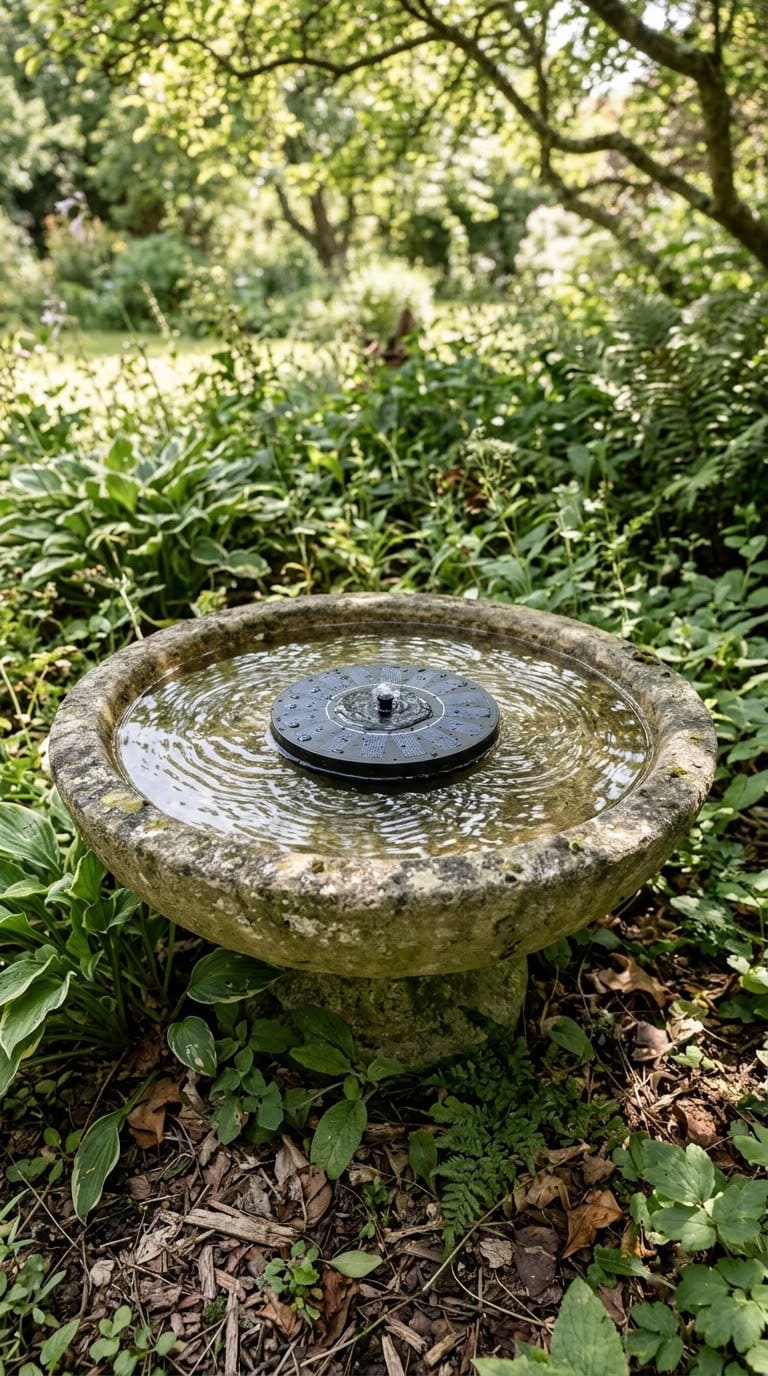
Still water breeds mosquitoes. Audubon says the problem is bigger in summer and fall, and that a fountain or moving stream helps because mosquitoes avoid laying eggs in running water.
The CDC says to empty and scrub, turn over, cover or throw out items that hold water once a week. A bird bath that you refill every day or two meets that rule.
The average homeowner spends $616/year on yard fixes that don't address the real problem. Find out what yours actually is — before you spend another dollar.
Take the Free Quiz- Refill often, since fresh water gives mosquito larvae no time to grow.
- Add a bubbler, dripper or small fountain.
- Empty and turn over any spare bowls.
Our take: moving water is the single best upgrade. It stops mosquitoes, attracts birds and keeps the water fresher.
Where Should You Put a Bird Bath?
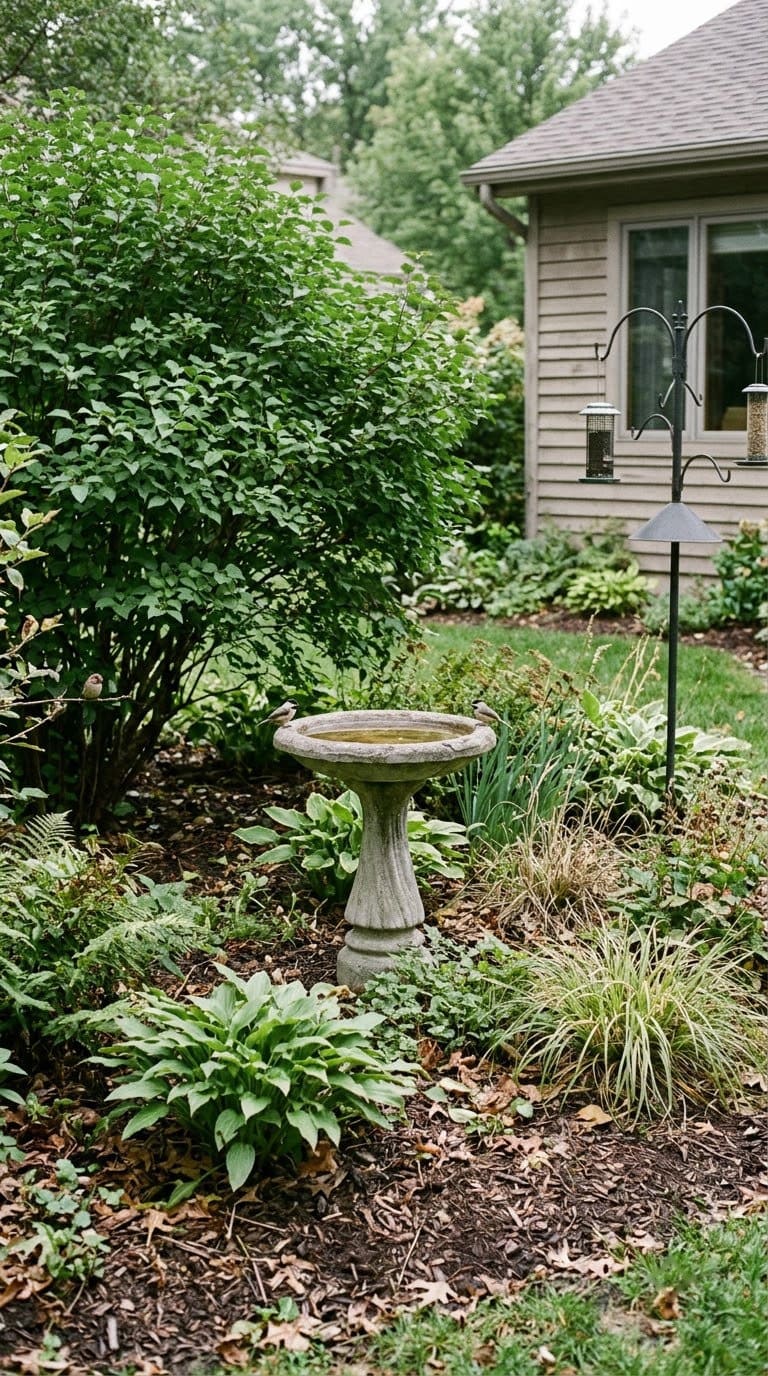
Placement affects whether birds use it and whether they stay safe.
- Near cover, but not in it. The Chicago Bird Alliance says small birds need nearby trees or bushes for cover. Audubon says to set the bath near woody brush and feeders, but not directly beneath them, because falling debris can foul the water.
- Shade on warm days. The Alliance suggests shade in hot weather, which keeps water cooler.
- Clear of cat hiding spots. Avoid thick low plants right at the edge of the bath.
- Away from windows. Birds can strike glass, so see our guide on birds hitting windows.
Our take: stand where the bath will be and ask, “Where would a cat hide?” Move it, or trim the plants, until there is no easy answer.
What Materials and Safety Checks Matter?
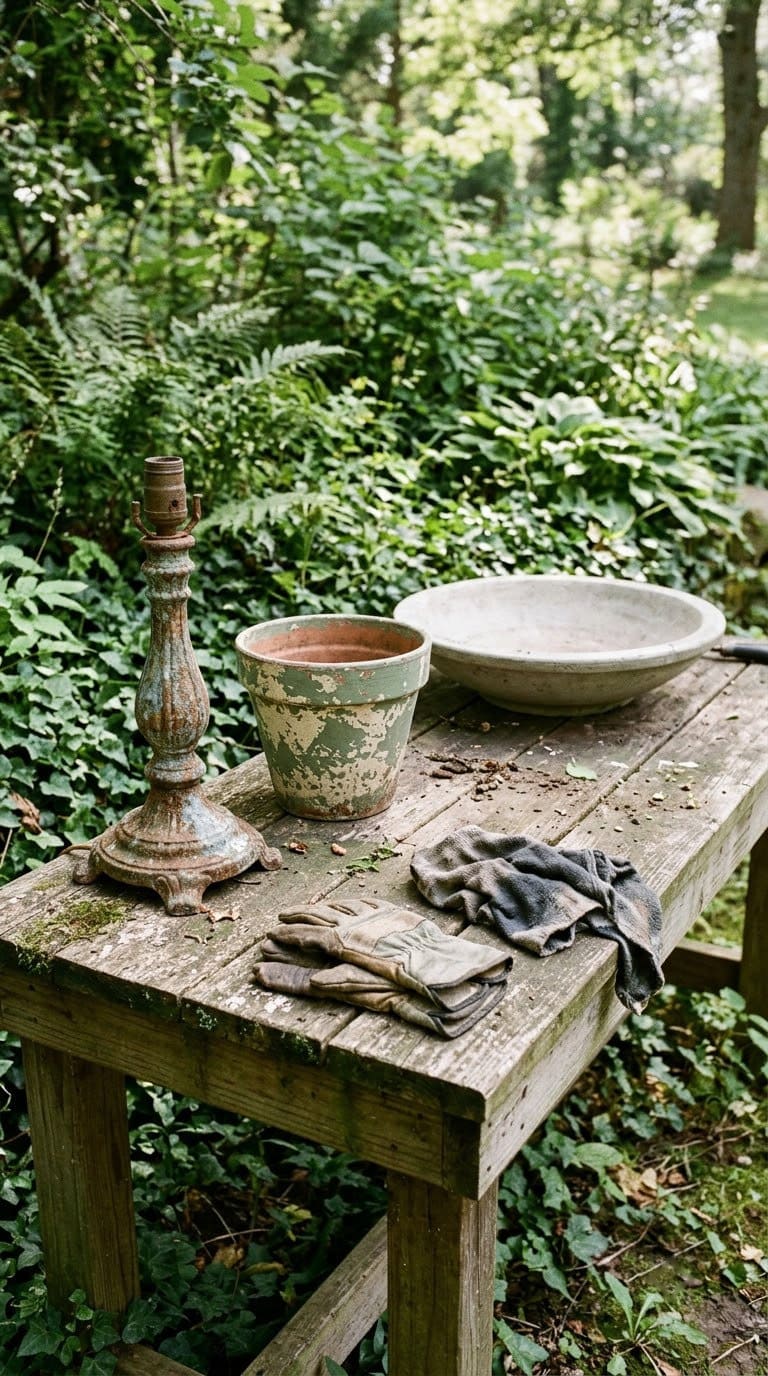
Most DIY materials are fine. A few need care.
- Old painted pieces. The EPA says old or worn lead paint creates chips and dust. Skip old lamps, pots or pedestals with flaking paint.
- Concrete. The Chicago Bird Alliance says to avoid it because it is hard to sanitize. If you cast concrete, seal it, keep it for stands and decor and use a glazed bowl for the water.
- Antifreeze and additives. Never add antifreeze to water. The Alliance says it is poisonous. It also says never to add glycerin, which can seep into feathers and cause hypothermia.
- Sharp edges. Sand cut metal and chipped ceramic.
- Mixing tools. Wear gloves and a dust mask when mixing concrete or grout.
Our take: when you’re unsure about an old piece, use it for the stand and put a new bowl on top.
20 DIY Bird Bath Ideas
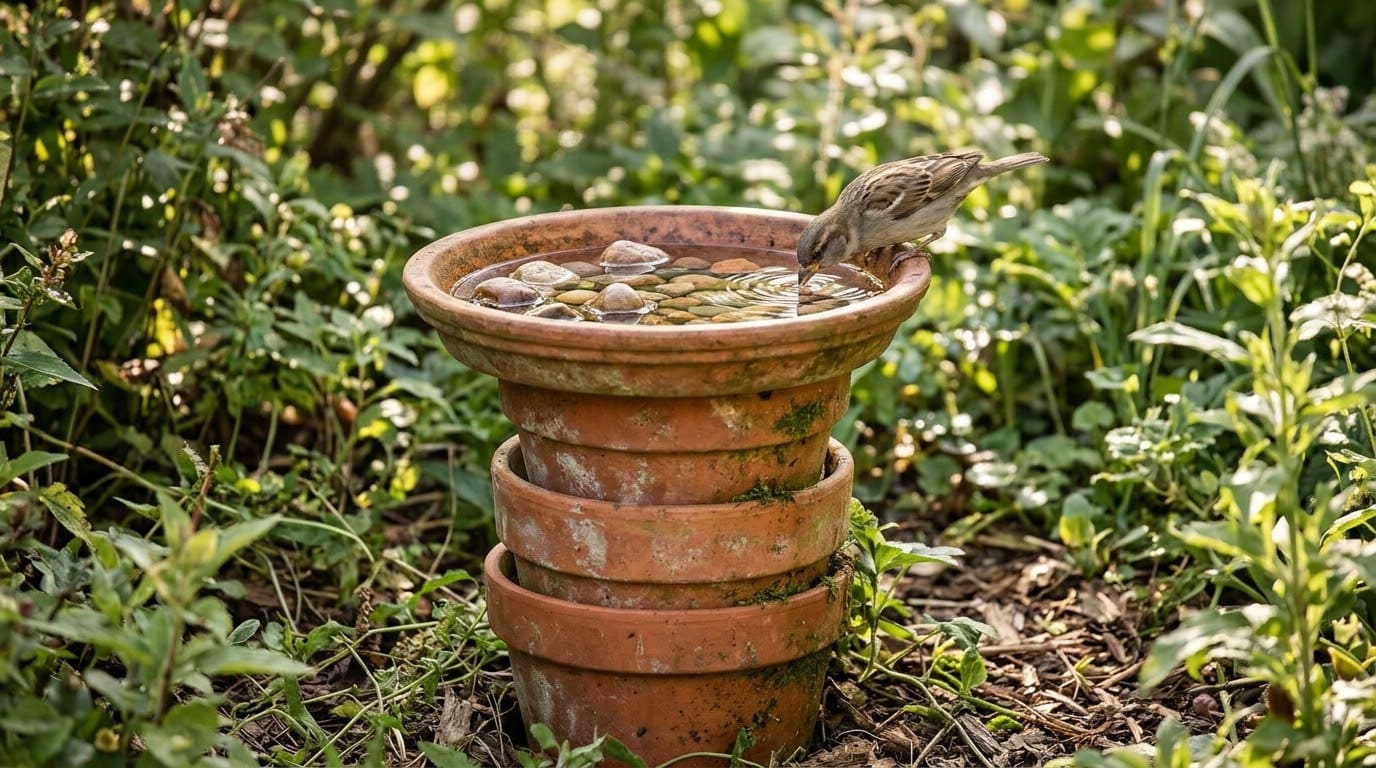
1. Flower Pot Stack Bath
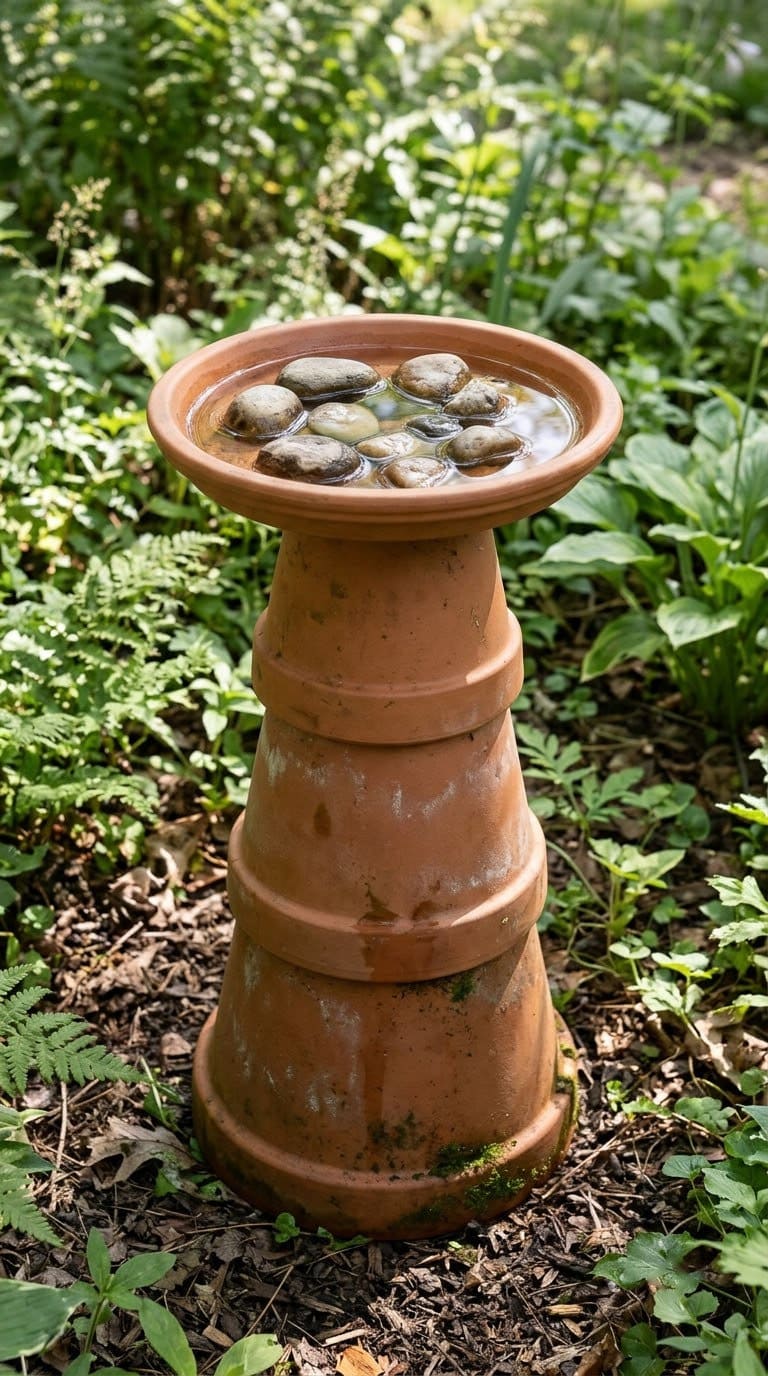
This is the classic. It costs little and takes ten minutes.

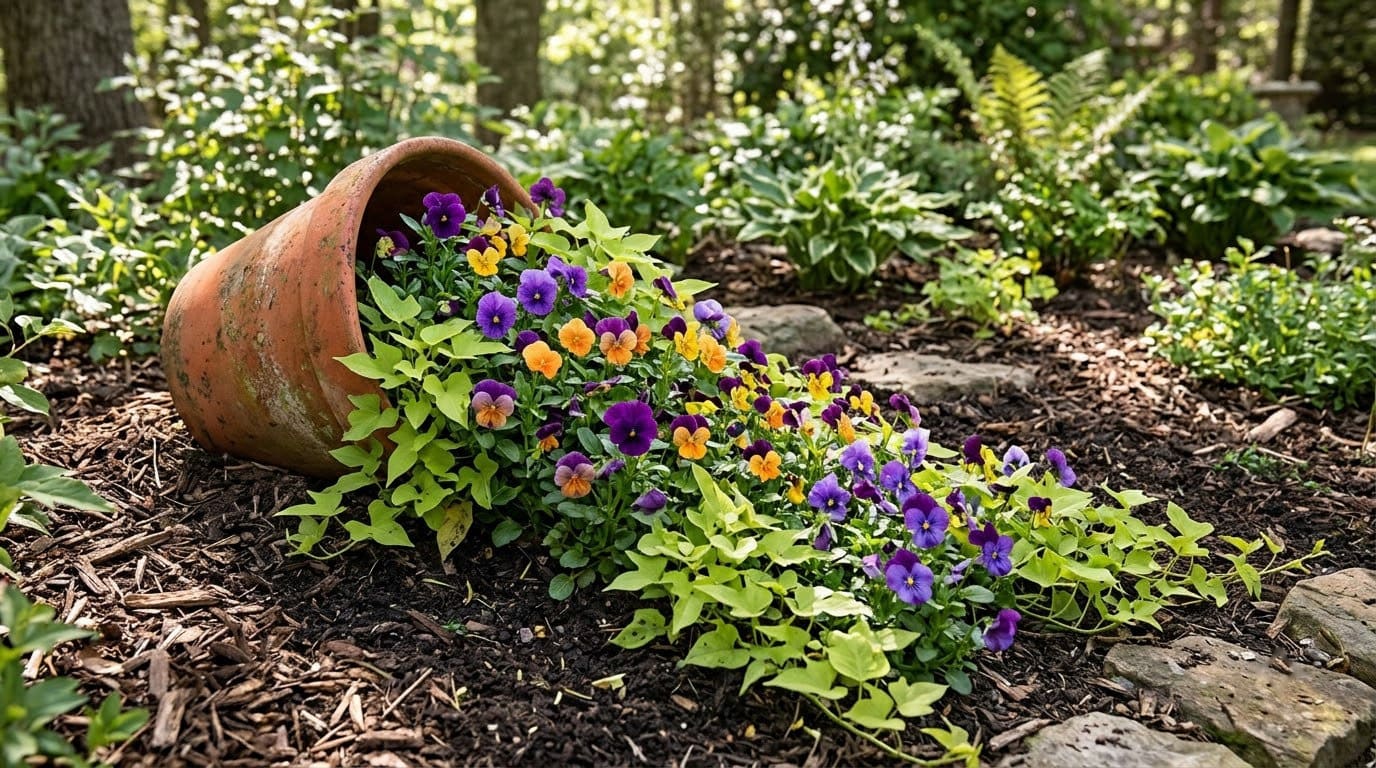

- Fits: Any garden bed or patio corner.
- What you need: Two or three clay pots, a large terracotta saucer, waterproof outdoor adhesive and flat stones.
- Build: Stack the pots upside down, with the largest on the bottom. Glue each layer so it can’t tip. Set the saucer on top and glue it too. Add flat stones to make the water shallow.
- Depth check: The saucer should hold about an inch at the edge. Add stones until it does.
- Clean: Lift the saucer off to scrub it and refill.
- Watch: Wobble and glazed saucers. Use unglazed, rough clay, and test the stack before you add water.
Our take: wipe the saucer with vinegar water every few days. Unglazed clay stains, but birds don’t mind.
2. Log Stump Saucer Bath
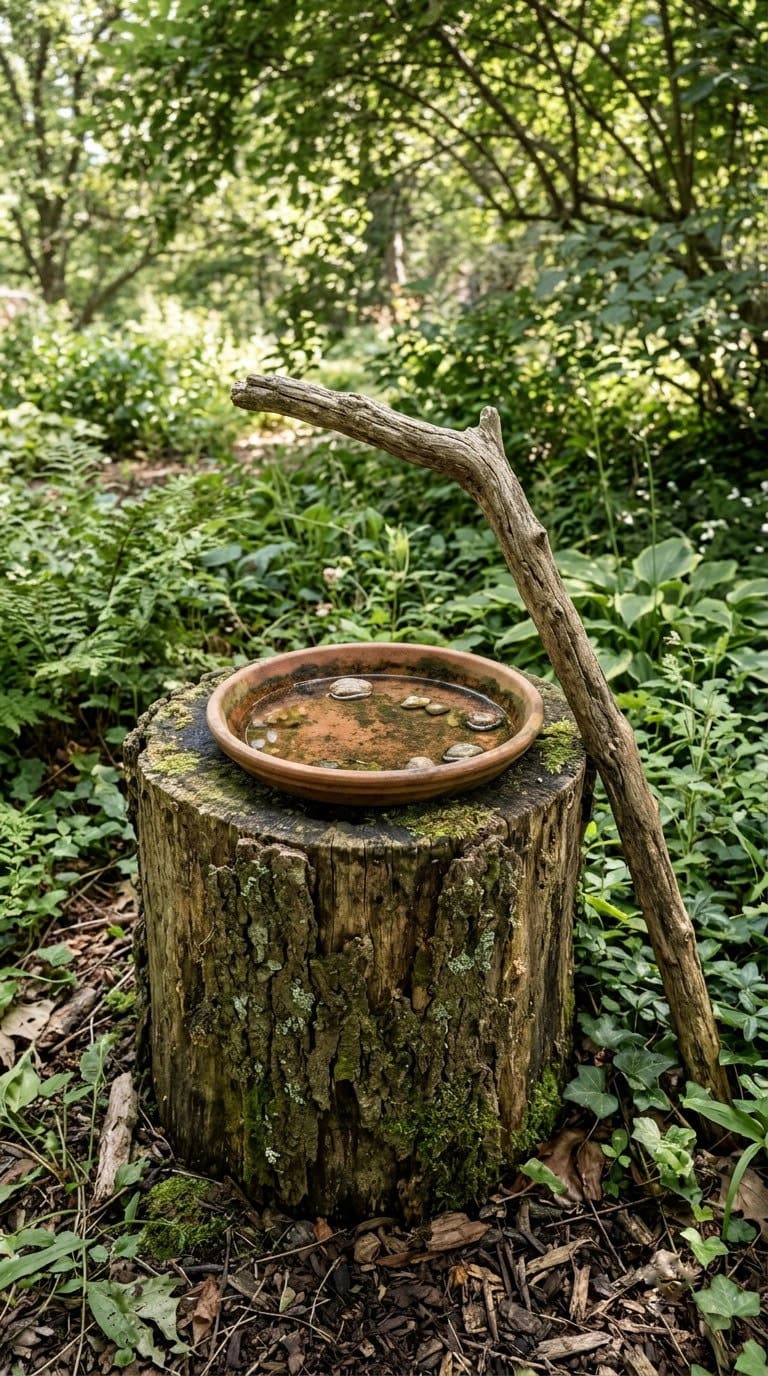
A stump looks natural and sits low.
- Fits: Woodland and wildlife gardens.
- What you need: A flat-topped stump, a shallow dish or saucer, small stones and a perch branch.
- Build: Level the top of the stump. Press a shallow dish into the top or set it on a flat patch. Add stones and lay a branch beside it as a perch.
- Depth check: One inch at the edge, no more than two in the center.
- Clean: Lift the dish out and scrub it every few days.
- Watch: Rot and ants. Check the wood each season, and keep it from touching damp soil if you can.
Our take: the Chicago Bird Alliance says a bath can sit on the ground or up to a couple of feet high. A stump fits that range.
3. Hanging Bowl Bath
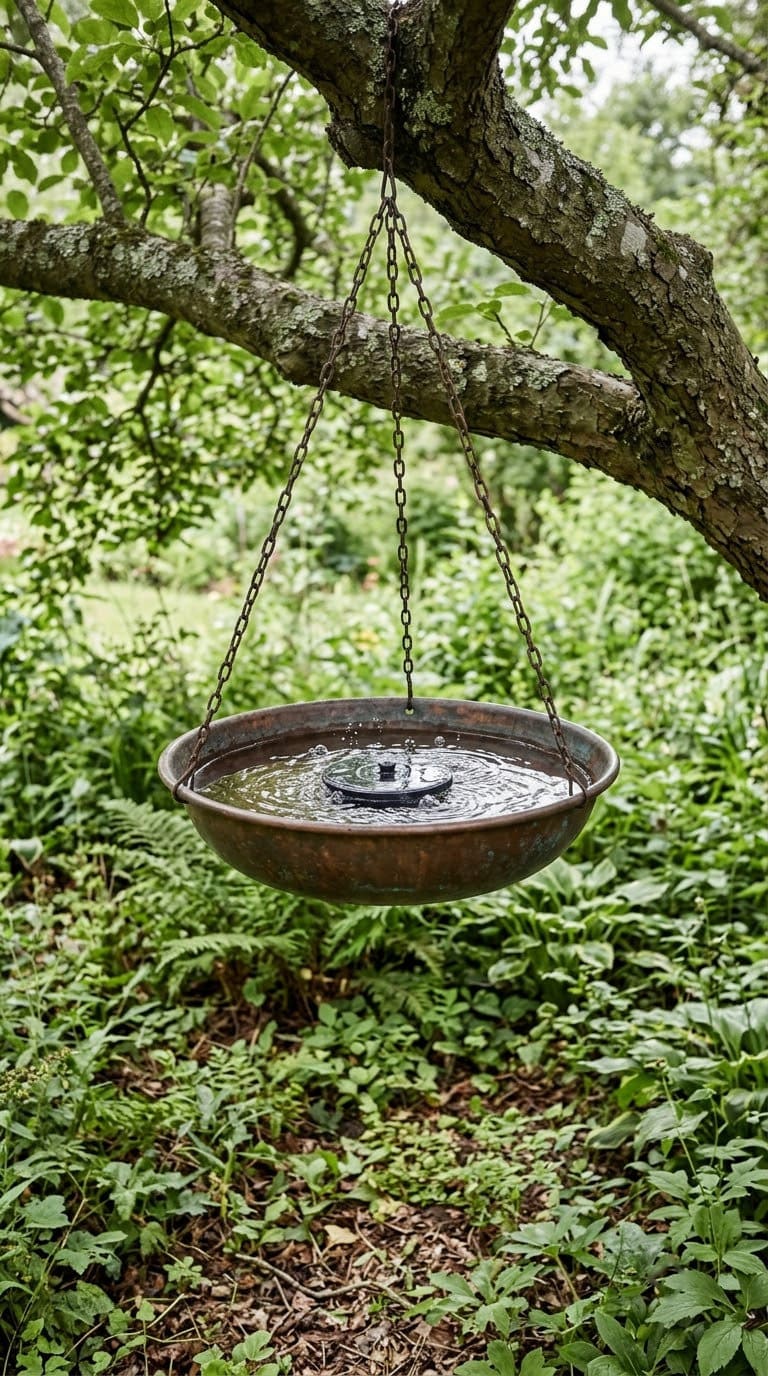
A hanging bath keeps water above easy cat reach.
- Fits: Trees with a strong low branch.
- What you need: A shallow bowl, three lengths of chain or coated wire, a ring and a hook.
- Build: Drill three evenly spaced holes near the rim, or use a bowl with handles. Attach the chains and gather them at the top ring. Hang from a strong branch.
- Depth check: Fill to about one inch, since a swinging bowl can spill deeper water.
- Clean: Unhook and scrub weekly, and tip out water daily in hot weather.
- Watch: Tipping and swing. Use three chains, not two.
Our take: hang it a few feet off the ground and away from jump-off points like fences. Cats are good at ambushes.
4. Stacked Stone Bath
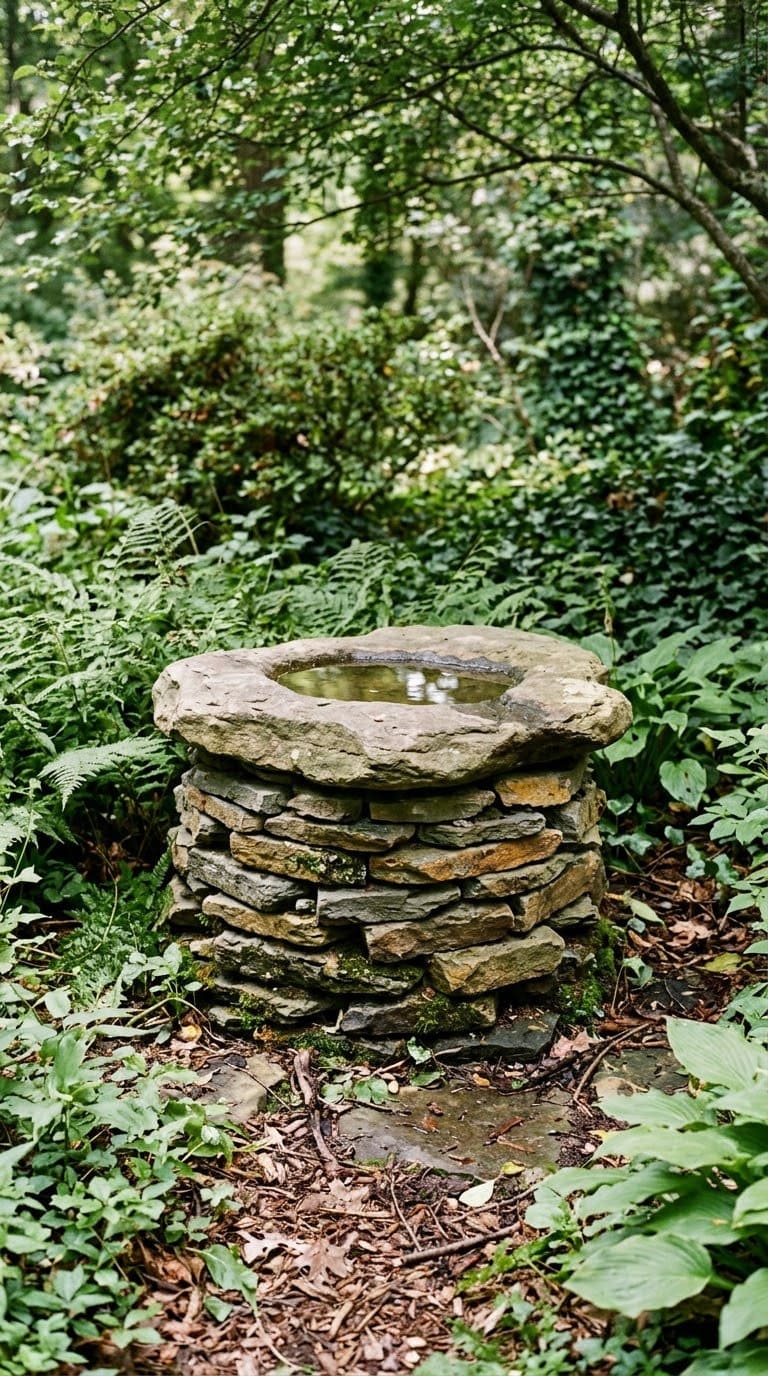
Stone looks wild and holds up for years.
- Fits: Rock gardens and shady beds.
- What you need: A flat base stone, a bowl-shaped stone or a shallow glazed dish and some flat stones.
- Build: Stack the base stones in a level tower. Set a hollow stone on top, or sink a shallow dish into the top stone with mortar.
- Depth check: If the hollow is deep, lay a flat stone in it.
- Clean: Scrub the hollow with a stiff brush and diluted vinegar.
- Watch: Stability and slippery moss. Wedge each layer and scrub off algae.
Our take: choose stones with a rough texture. Polished stone is slick when wet.
5. Mosaic Tile Bird Bath
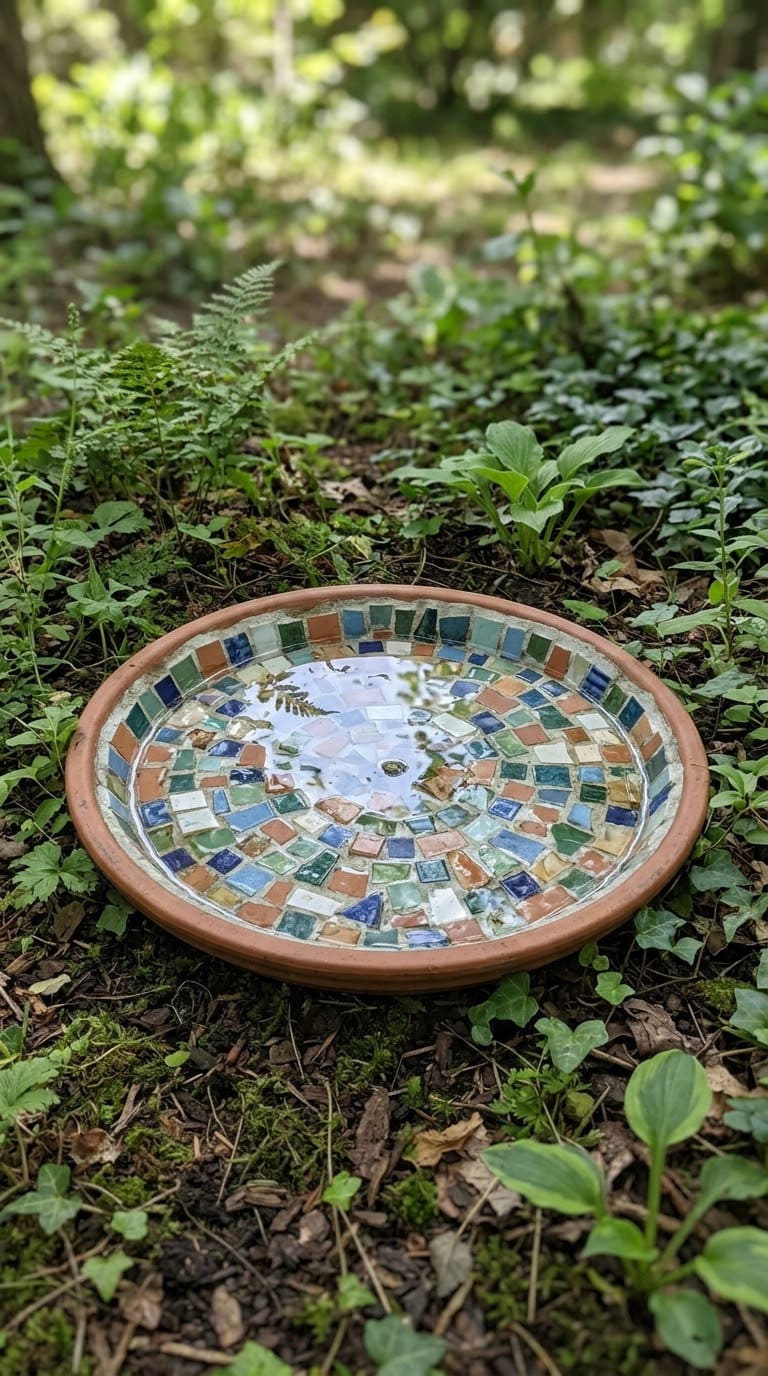
A mosaic turns a plain saucer into garden art.
- Fits: Sunny patios and beds.
- What you need: A saucer, outdoor tile pieces, waterproof tile adhesive, sanded grout, a sealer and a sponge.
- Build: Clean the saucer and plan your pattern dry. Glue the tiles and let the adhesive cure. Grout the gaps, wipe the surface and seal.
- Depth check: Keep the center bare or flat so the water stays shallow.
- Clean: Scrub gently, since tile edges can lift if you press hard.
- Watch: Slippery glazed tile and sharp edges. Use matte tile and sand any rough edges.
Our take: leave the inside of the bowl unglazed or textured. Decorate the rim and the outside.
6. Leaf-Shaped Cast Bath

A cast leaf looks sculptural and natural.
- Fits: Cottage and woodland beds.
- What you need: A large leaf like rhubarb or hosta, a sand mound, concrete mix, gloves, a dust mask and a sealer.
- Build: Shape a damp sand mound and cover it with plastic. Lay the leaf vein-side up. Press a layer of concrete over it, let it cure, then lift the cast and remove the leaf. Seal the surface.
- Depth check: The dish should be shallow, with a gentle slope.
- Clean: The Chicago Bird Alliance says concrete is hard to sanitize, so scrub it often. Or place a glazed saucer in the cast and use that for the water.
- Watch: Dust and alkali. Wear gloves and a dust mask while mixing.
Our take: treat the cast as a stand and keep the water in a washable dish.
7. Lamp Stand Bath
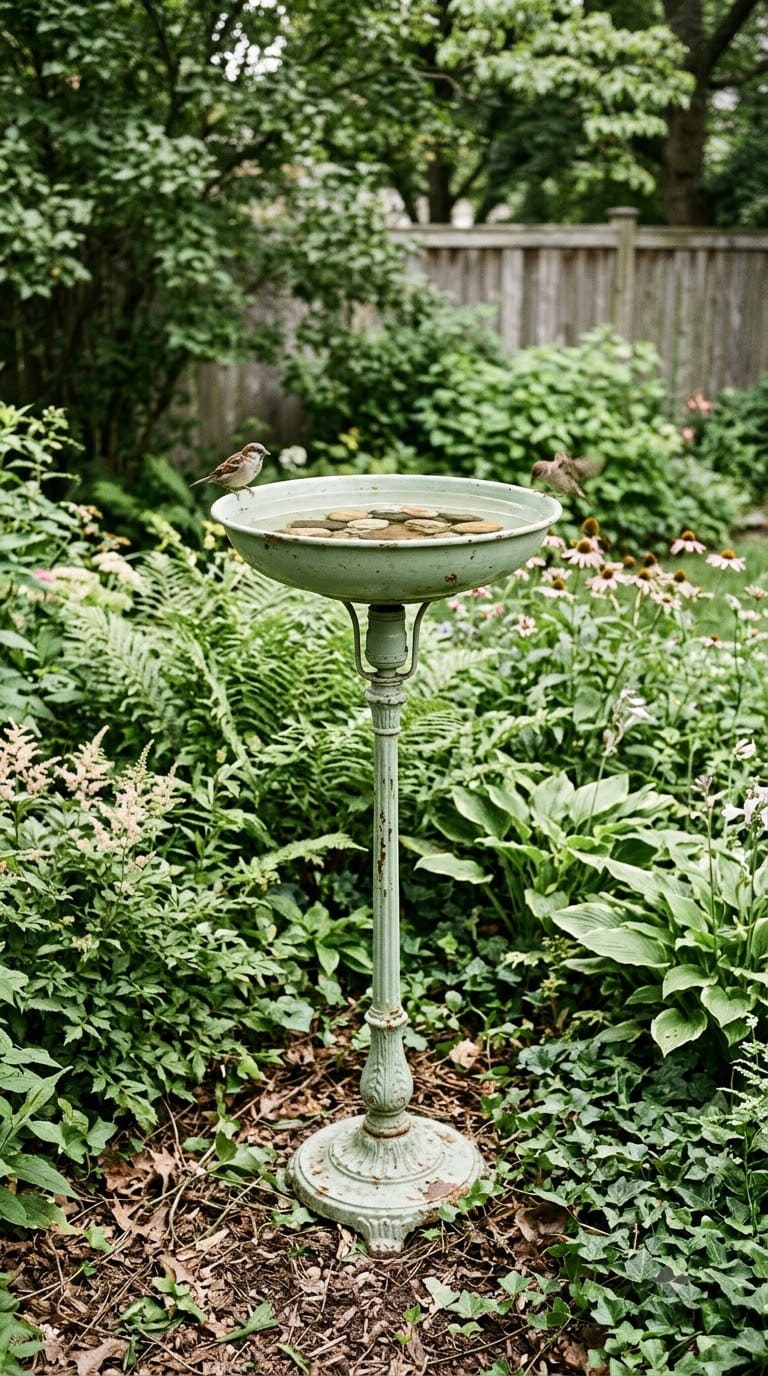
An old lamp base makes a ready pedestal.
- Fits: Open lawns with nearby shrubs.
- What you need: A lamp base or metal pole, a shallow bowl, rust-proof paint, outdoor adhesive and a base that won’t tip.
- Build: Strip the wiring from the lamp. Clean and paint the base with exterior paint. Fix a bowl on top with strong outdoor glue and bolts if possible.
- Depth check: Add stones to the bowl until the water is about an inch at the edge.
- Clean: Lift the bowl or scrub in place.
- Watch: Old paint and wobble. The EPA warns about lead paint on old pieces, so skip any with flaking paint. Weight the base with stones or concrete.
Our take: keep the height low. A shorter pedestal is more stable and fits the Alliance’s advice to stay within a couple of feet.
8. Trash Can Lid Ground Bath
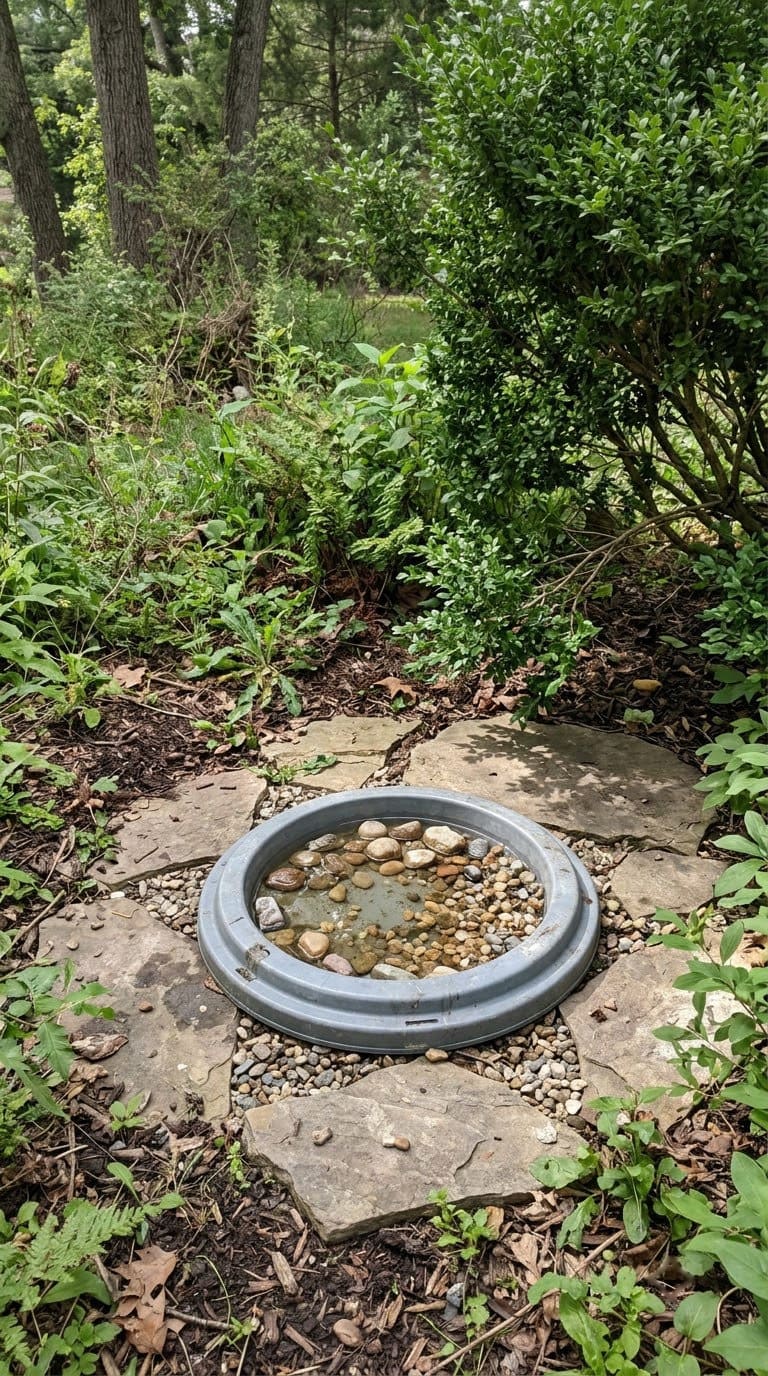
A lid makes a wide, shallow bowl for almost nothing.
- Fits: Ground-level bird gardens.
- What you need: A clean plastic or metal lid, flat stones and sand to level it.
- Build: Wash the lid with water and vinegar. Set it upside down on a level spot, wedge it with stones and fill the center with pebbles.
- Depth check: The lid is naturally shallow. Add pebbles so water is about an inch at the deepest point.
- Clean: Rinse daily and scrub every few days.
- Watch: Slippery plastic and predators. Add pebbles for grip and place it near cover.
Our take: this is the lowest-cost idea on the list. It also suits small birds that feel safer at ground level.
9. Bucket Drip Bath
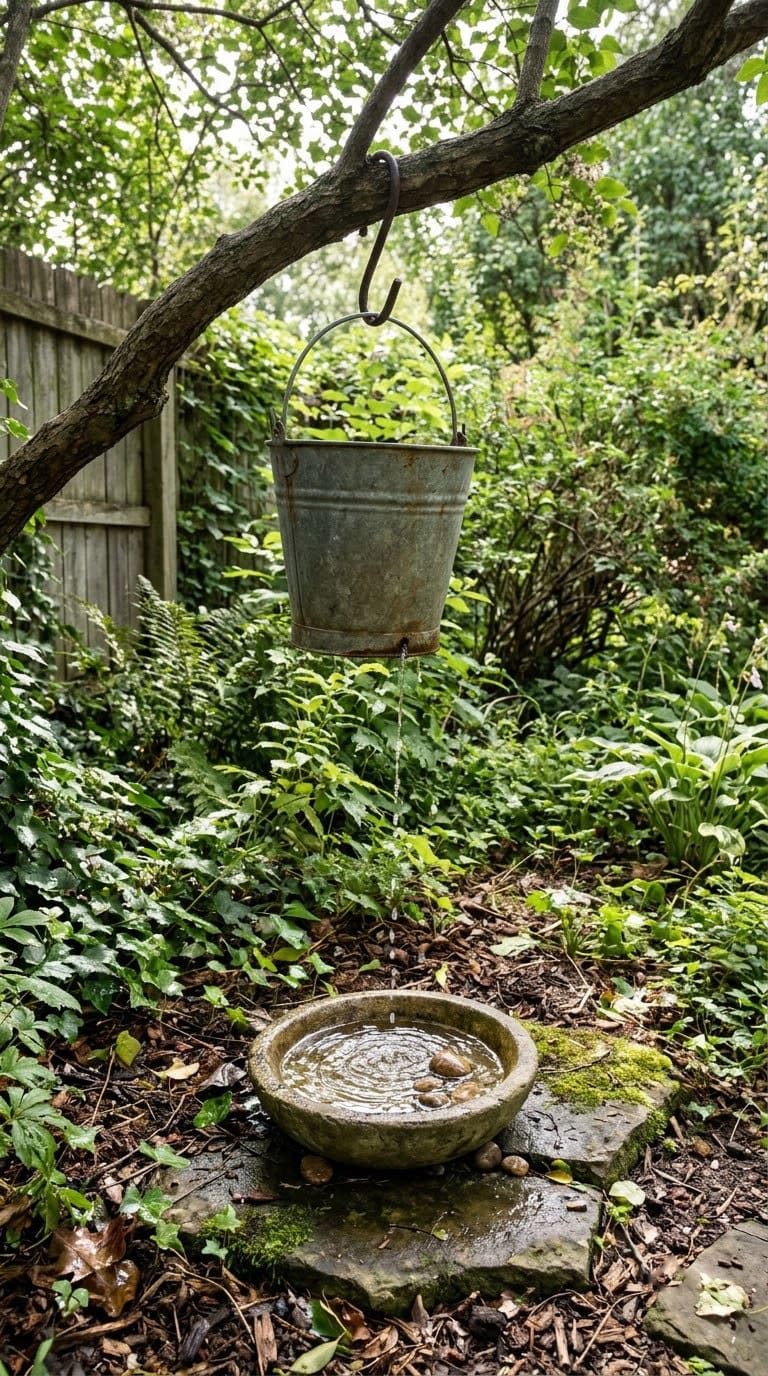
A drip adds the sound and motion birds love.
- Fits: Anywhere with a branch or hook.
- What you need: A bucket, a small nail or drill bit, a hook and a shallow bowl.
- Build: Punch one tiny hole near the base of the bucket. Hang it above the bowl and fill it with water. Adjust the hole size with tape for a slower drip.
- Depth check: Keep the bowl shallow so the drip does not overflow.
- Clean: Refill the bucket and scrub the bowl as usual.
- Watch: Clogging and dry-outs. Check the drip every day or two.
Our take: the Chicago Bird Alliance lists a DIY drip made from a bucket or bottle with a hole as an easy option. It works well.
10. Solar Bubbler Bath
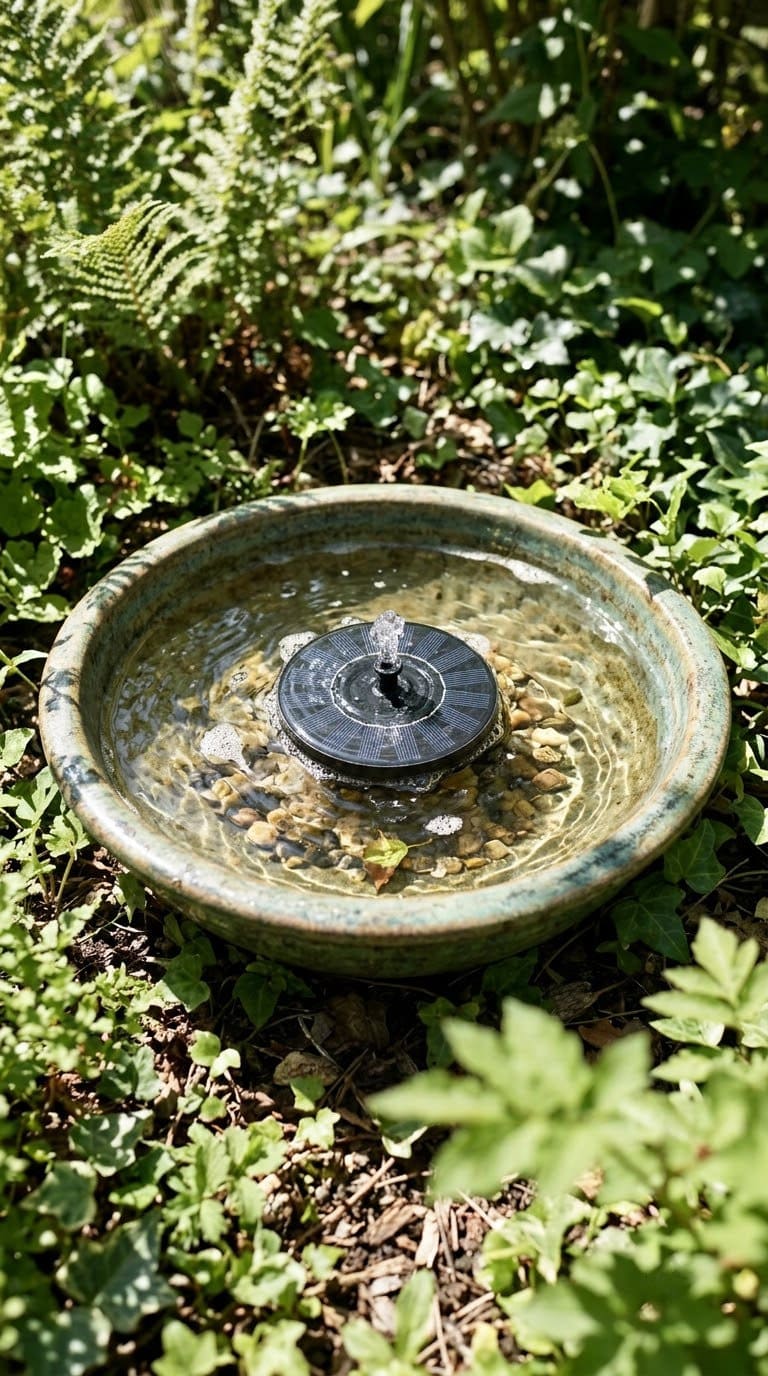
A bubbler keeps the water moving all day.
- Fits: Sunny spots.
- What you need: A small solar fountain pump, a shallow bowl and flat stones.
- Build: Place the pump in the center of the bowl. Set the solar panel in full sun, and stack stones so the water stays shallow.
- Depth check: One inch at the edge, with the pump below the surface.
- Clean: Lift the pump and scrub the bowl. Rinse the pump filter.
- Watch: Shade over the panel and a dry pump. Refill every day or two.
Our take: Audubon notes moving water helps against mosquitoes. A bubbler is the simplest way to get it.
11. Rain Chain Bath
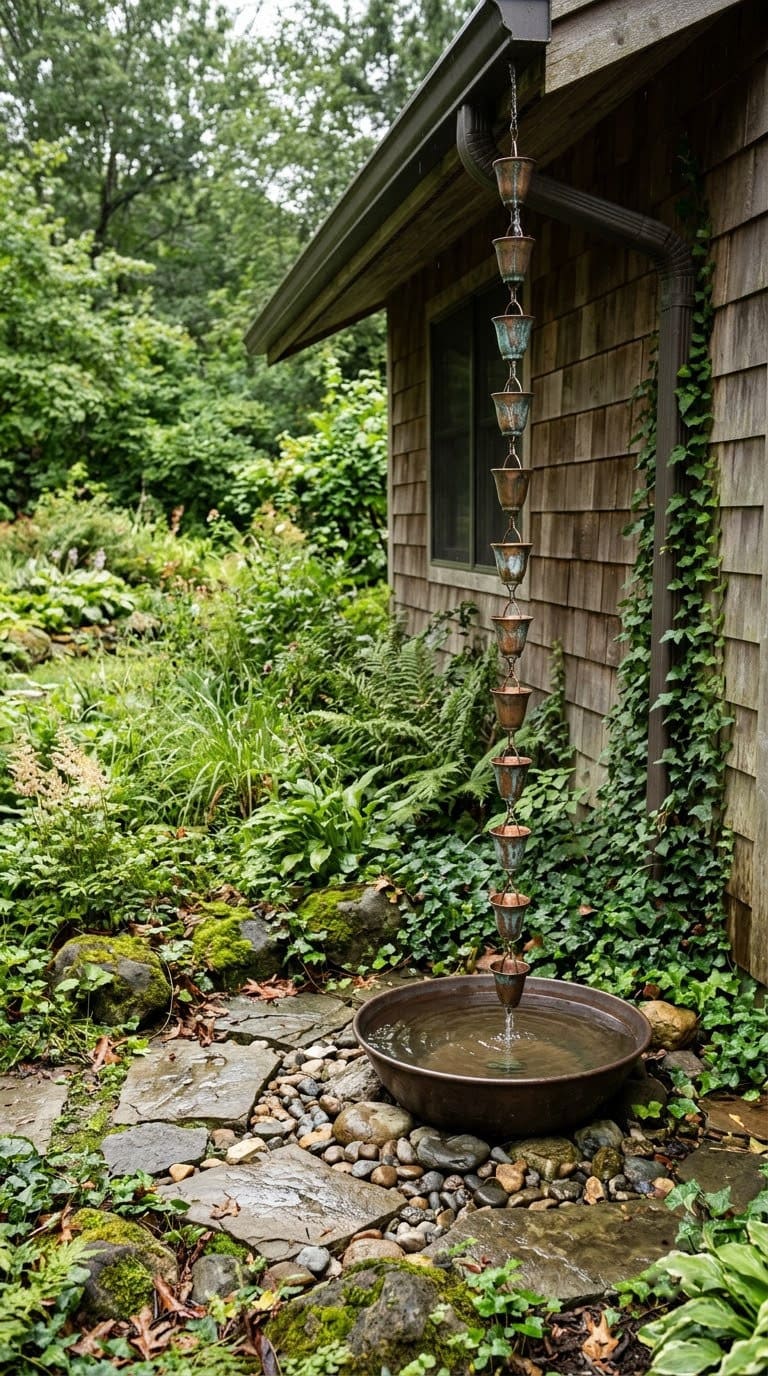
A rain chain turns roof water into a fountain.
- Fits: A gutter corner.
- What you need: A rain chain, a gutter hook, a wide shallow bowl and stones.
- Build: Replace a downspout section with a rain chain. Set a shallow bowl below with stones to slow the splash.
- Depth check: Let the bowl overflow safely onto gravel.
- Clean: Scrub the bowl as usual, and remove leaves.
- Watch: Overflow and roof debris. Use a screen on the gutter, and keep it away from the house wall.
Our take: only run this in rain. It is a seasonal feature, not a daily one.
12. Cake Pan Pedestal Bath
Old cookware has a built-in shallow shape.
- Fits: Patios and gardens.
- What you need: An old pan or pie dish, a plant stand or stool and stones.
- Build: Place the pan on a stand, wedge it with a few stones and add pebbles for grip.
- Depth check: Pans are usually shallow already. Check the center depth.
- Clean: Wash with vinegar water. Skip soap.
- Watch: Coatings. Avoid non-stick pans, which can flake.
Our take: cast iron and enamel are good choices. They sit steady and last.
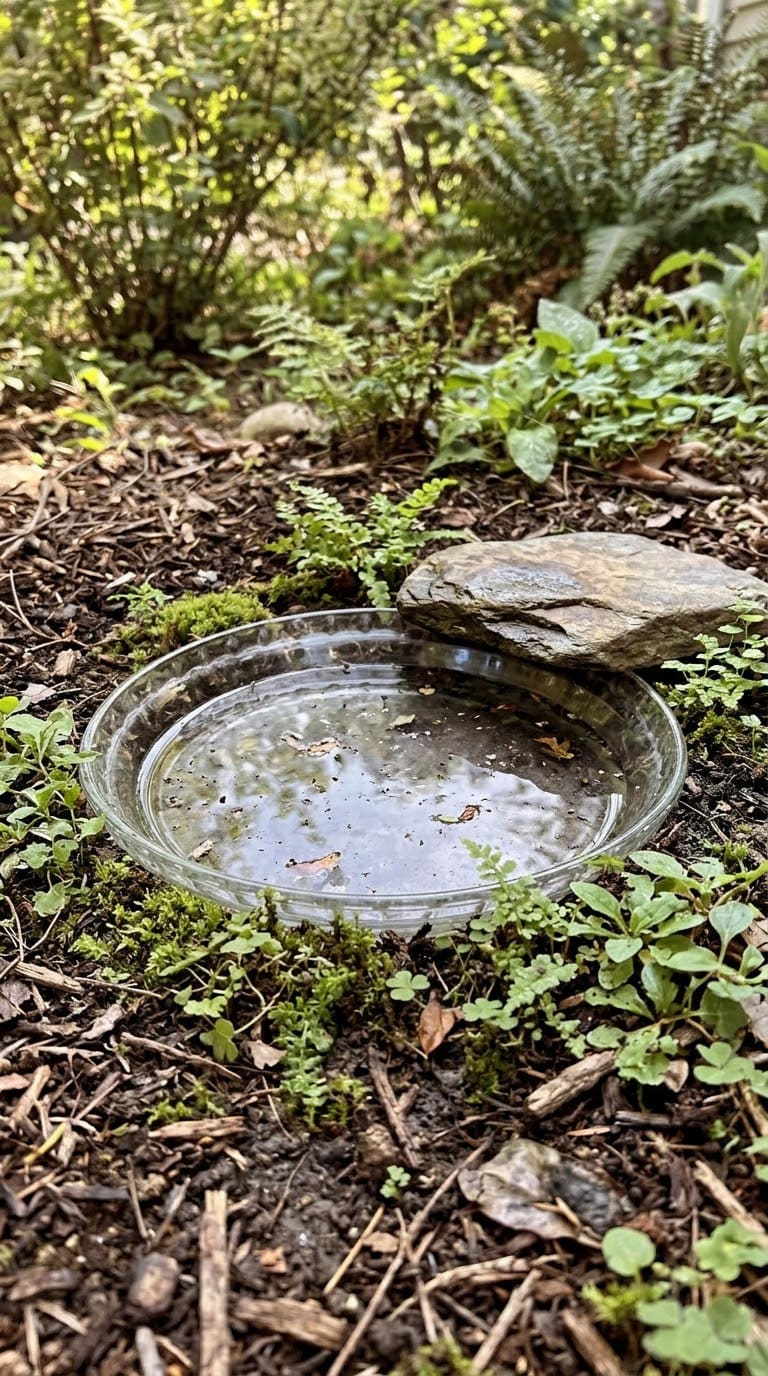
13. Pie Dish Ground Bath
A sunken dish feels like a puddle.
- Fits: Ground-feeding birds and shy visitors.
- What you need: A shallow dish, a trowel and flat stones.
- Build: Dig a hole just deeper than the dish. Set the dish level with the soil and press soil around it. Add a flat stone as a ramp.
- Depth check: Fill to one inch.
- Clean: Lift out the dish and scrub it.
- Watch: Cats. Keep it where you can see it, with cover nearby and a clear view around it.
Our take: add a perch stick. Even ground birds like a safe place to stand.
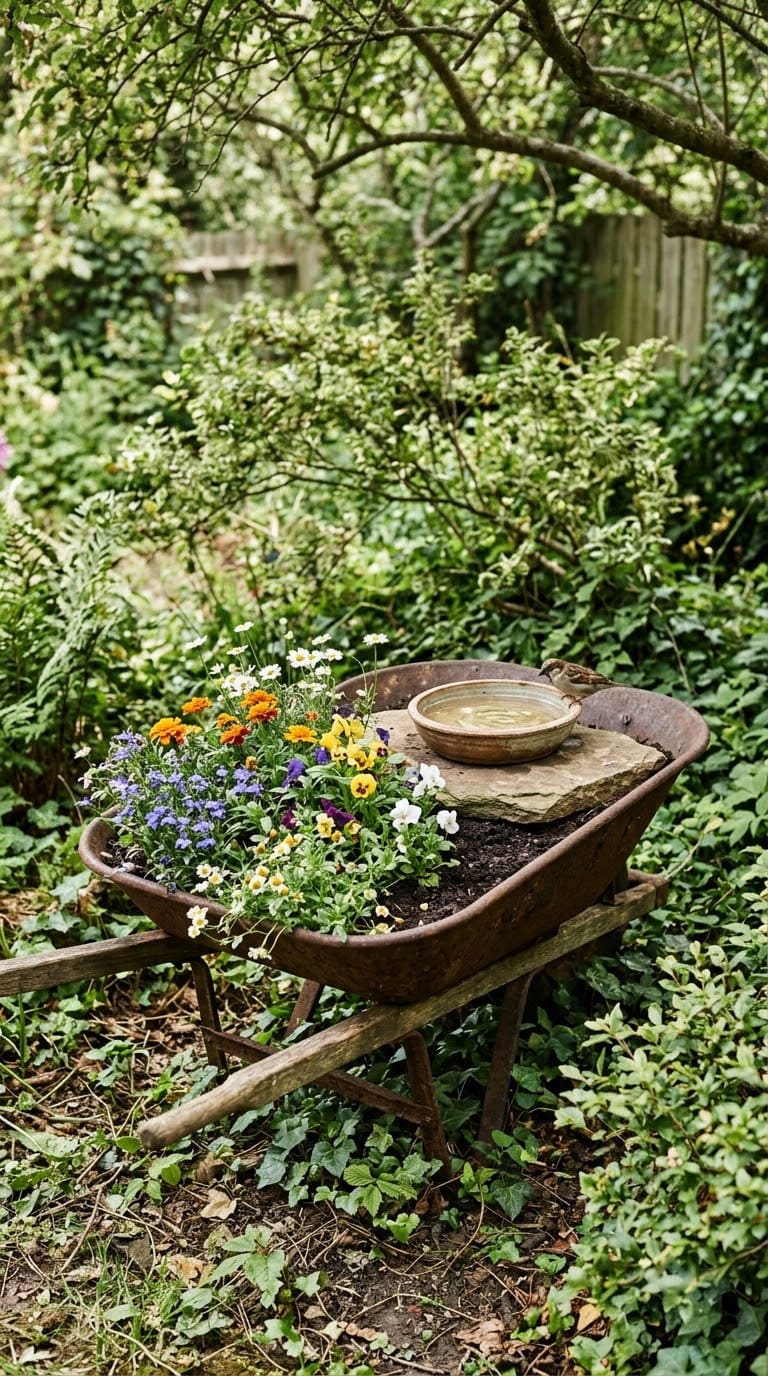
14. Wheelbarrow Garden Bath
A wheelbarrow gives you a mini garden on wheels.
- Fits: Large gardens and play areas.
- What you need: An old wheelbarrow, potting mix, native flowers, a shallow bowl and stones.
- Build: Add drainage holes to the tray. Plant flowers in half and set a shallow bowl on a stone in the other half.
- Depth check: One inch of water in the bowl.
- Clean: Lift out the bowl daily.
- Watch: Weight and tipping. Park it level and chock the wheel.
Our take: pick plants that give birds cover, like grasses and sturdy flowers. See our shrubs that attract songbirds for ideas.
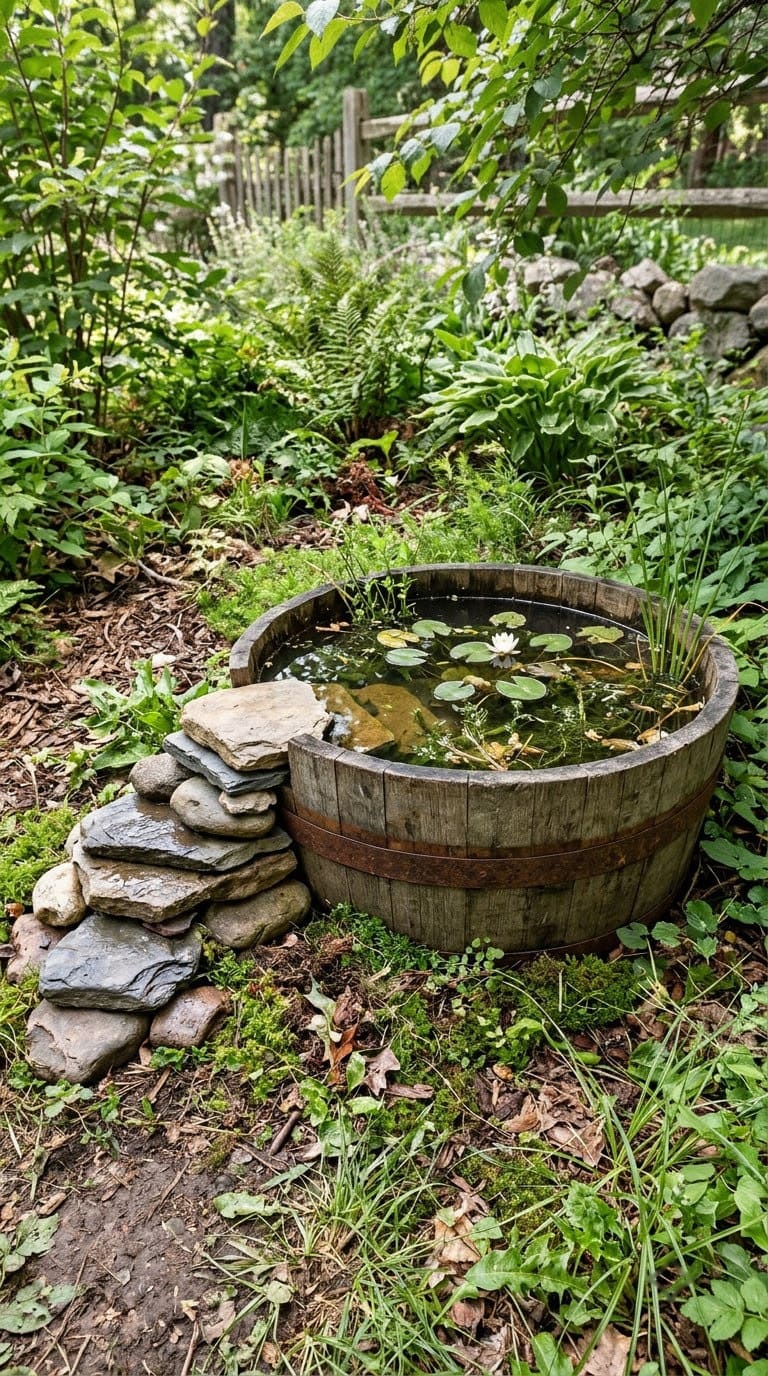
15. Half Barrel Wildlife Pool
A half barrel makes a bigger bath with room for several birds.
- Fits: Large gardens.
- What you need: A half barrel, a pond liner, flat stones and a small solar bubbler.
- Build: Line the barrel if it leaks. Stack stones on one side to make a ramp and a shallow zone. Add a bubbler.
- Depth check: Make the stone ramp so birds can stand with only an inch or two of water.
- Clean: Empty and scrub weekly, and replace the water often.
- Watch: Drowning risk. Add enough stones for escape, and keep the water shallow.
Our take: deep water can drown birds, so only build this if you add a full ramp.
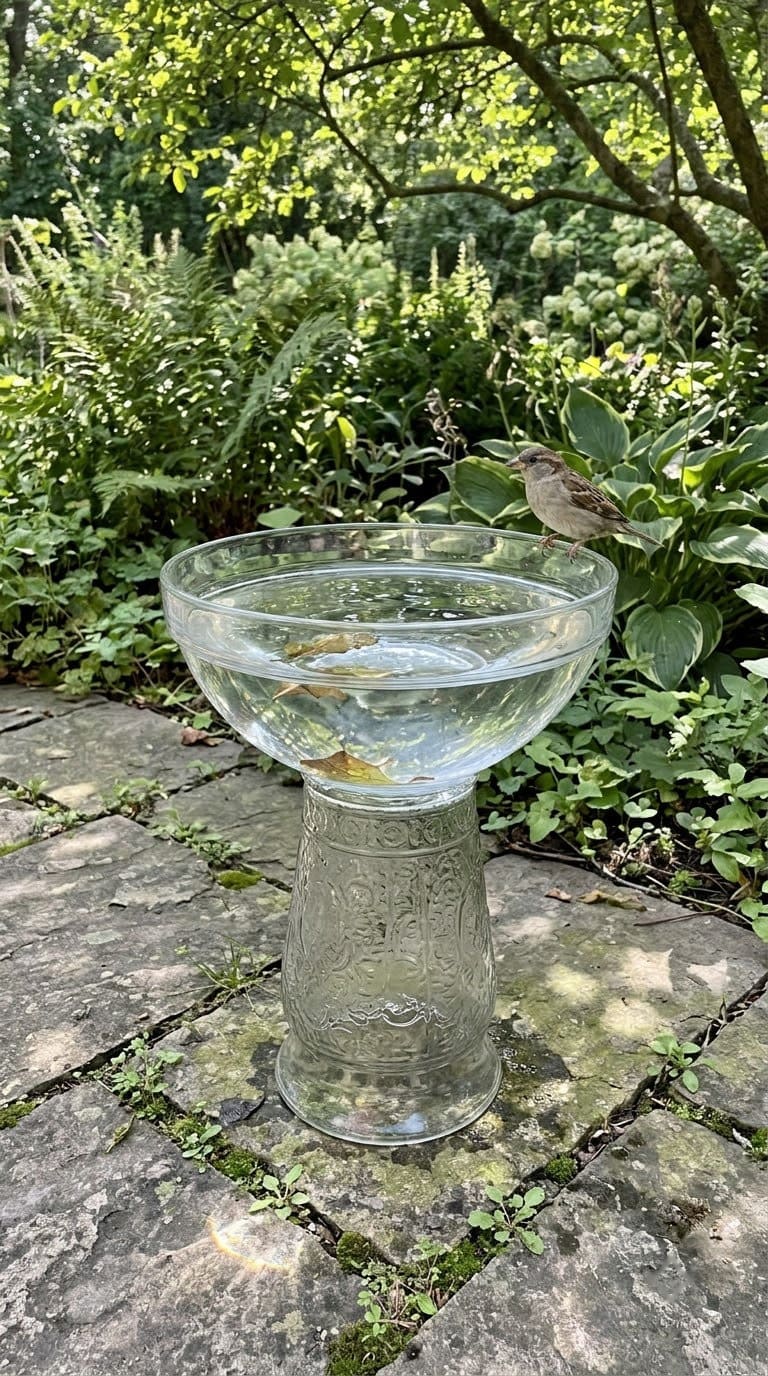
16. Glass Bowl Pedestal Bath
Glass catches the light and is easy to clean.
- Fits: Sunny patios.
- What you need: A glass vase, a glass bowl, clear outdoor adhesive and sand for grip.
- Build: Turn the vase upside down on a level surface. Glue a bowl on top and let it cure. Rough the inside with stones or a layer of sand.
- Depth check: Add stones to keep the water shallow.
- Clean: Glass wipes clean. Use vinegar water.
- Watch: Slippery glass and breakage. Add stones for grip and use it on a calm, low spot.
Our take: glass is slippery, so make the inside rough with stones.
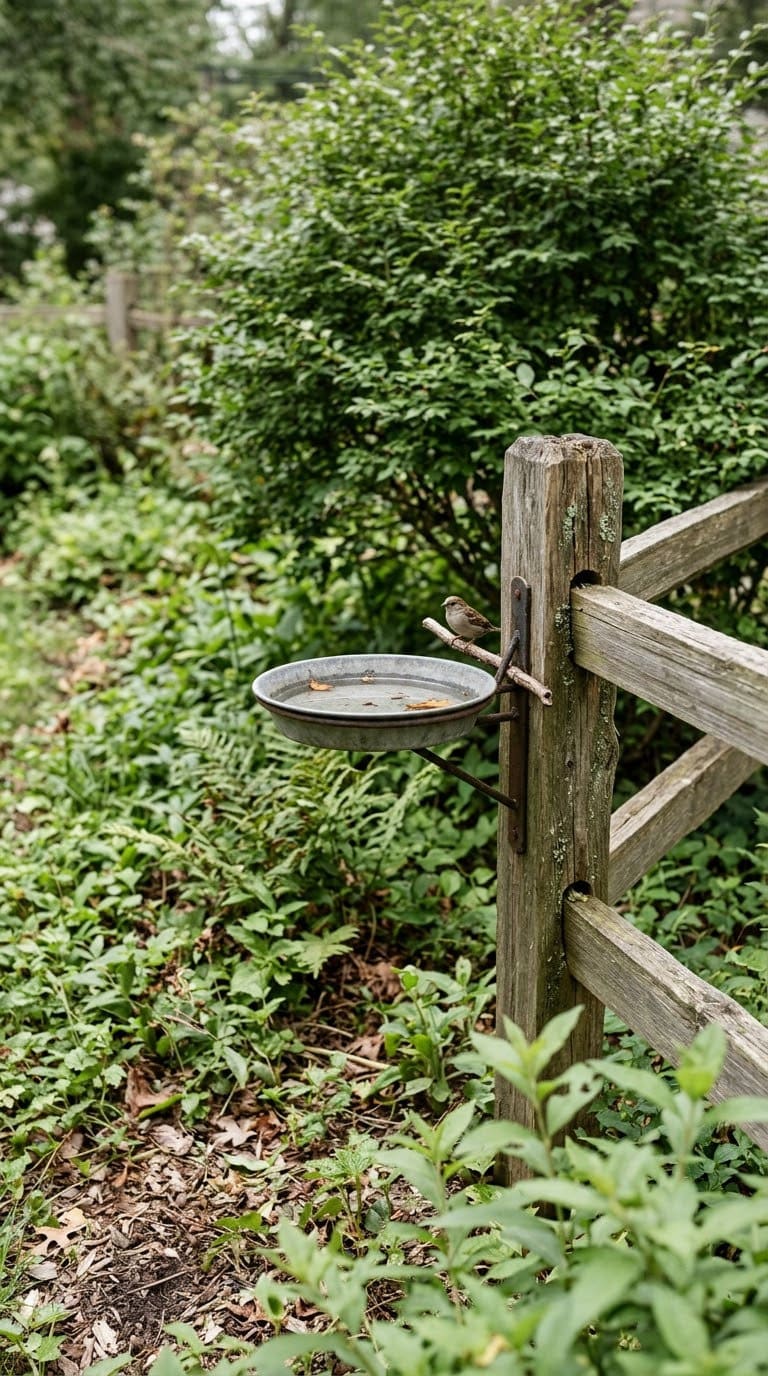
17. Fence Post Dish Bath
A mounted dish makes a neat, tidy bath.
- Fits: Fence lines near cover.
- What you need: A shallow dish, a metal bracket, screws and a perch stick.
- Build: Fasten a bracket to a post at about knee or waist height. Set the dish on it and add a stick perch.
- Depth check: One inch of water.
- Clean: Lift the dish out to scrub it.
- Watch: Cat jump-offs. Keep the post clear of boxes or planters beside it. See our garden fence decoration ideas for mounting tips.
Our take: choose a post away from a thick hedge so cats can’t stalk the bath.
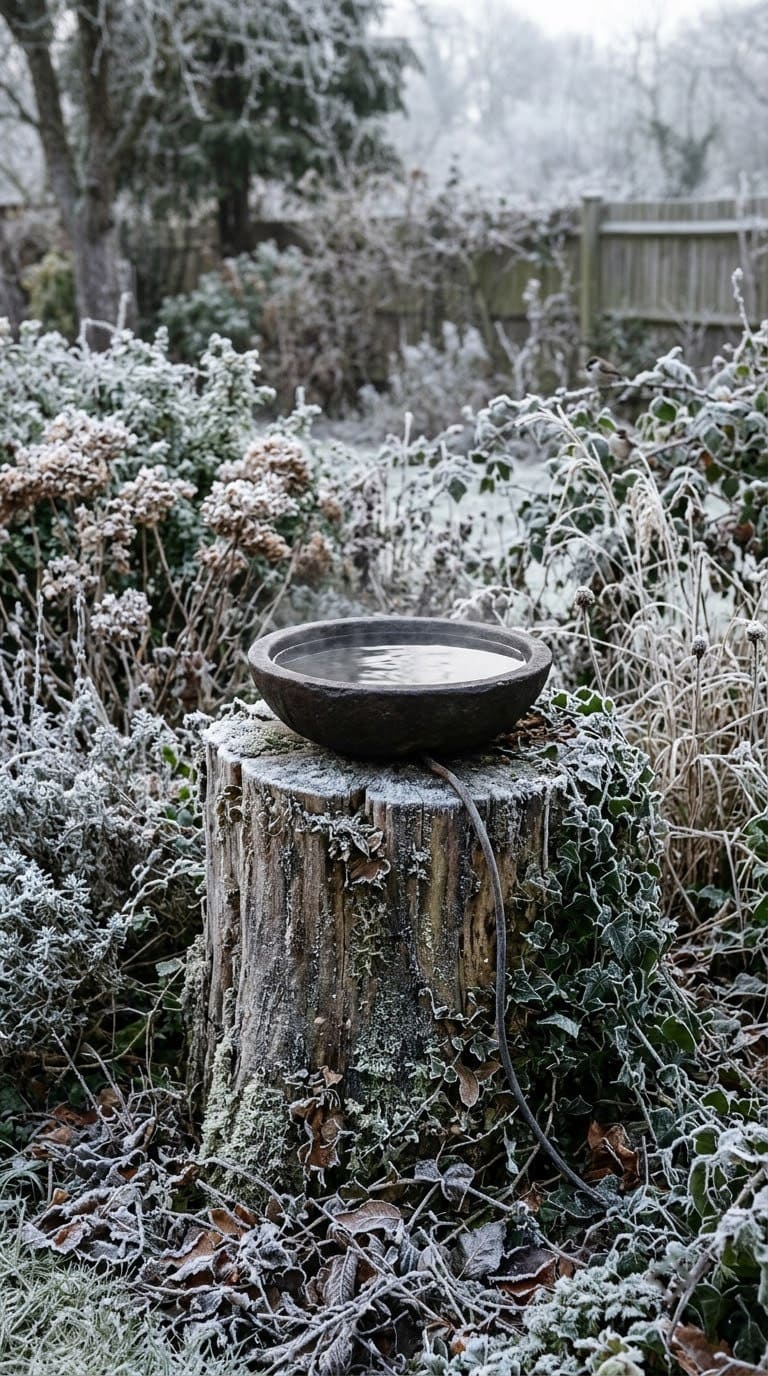
18. Heated Winter Bath
Water in winter is as important as water in summer.
- Fits: Cold climates.
- What you need: A heated bird bath or a bird-bath de-icer, a safe outdoor outlet and a shallow dark bowl.
- Build: Place the heater according to its instructions. Use a dark bowl, which absorbs warmth. Keep cords out of walkways.
- Depth check: Keep it shallow. Frozen water is a hazard.
- Clean: Scrub on thaw days and keep the heater free of debris.
- Watch: Additives. The Chicago Bird Alliance says never to add antifreeze, which is poisonous, or glycerin, which can cause hypothermia. If you don’t use a heater, bring a plastic bowl in when it freezes.
Our take: Audubon notes you can buy a heater or build a solar one. Choose a heater made for birds.
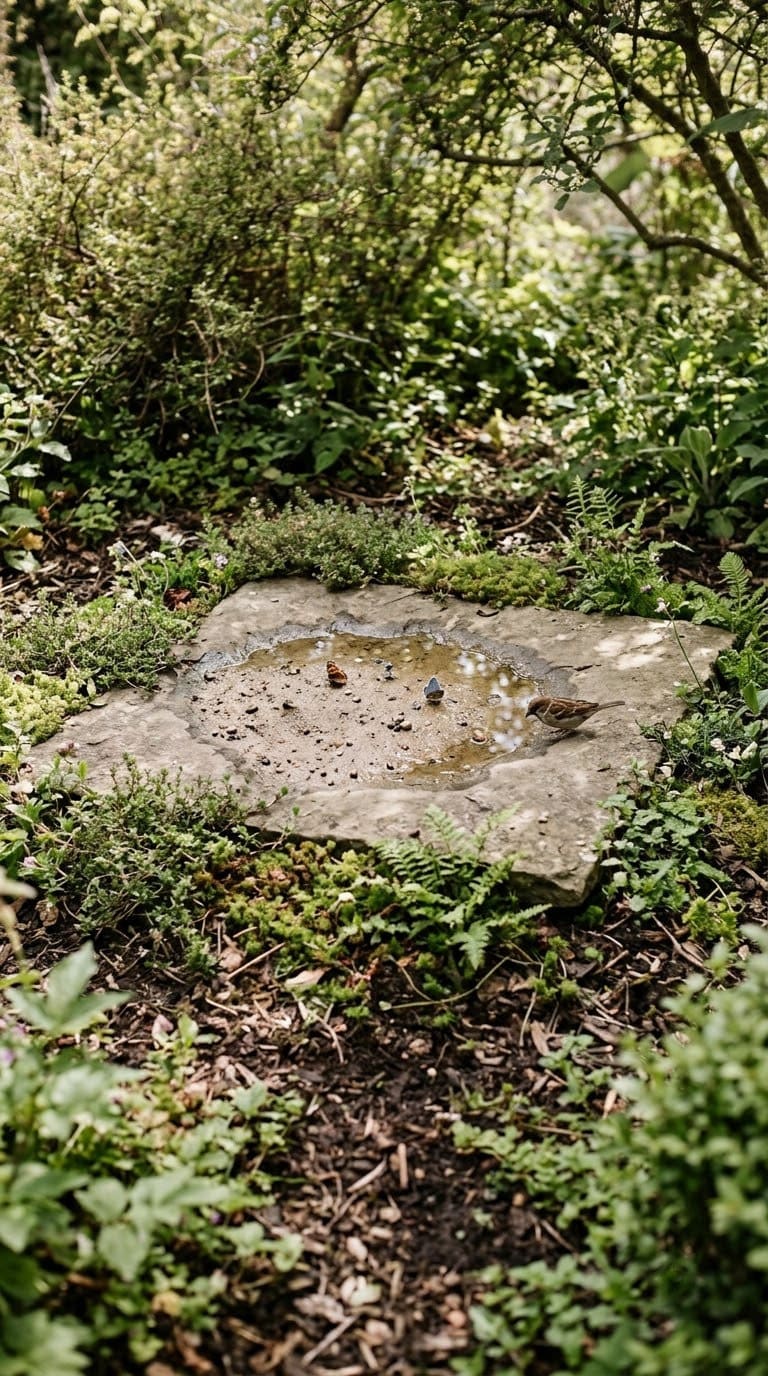
19. Puddling Stone Station
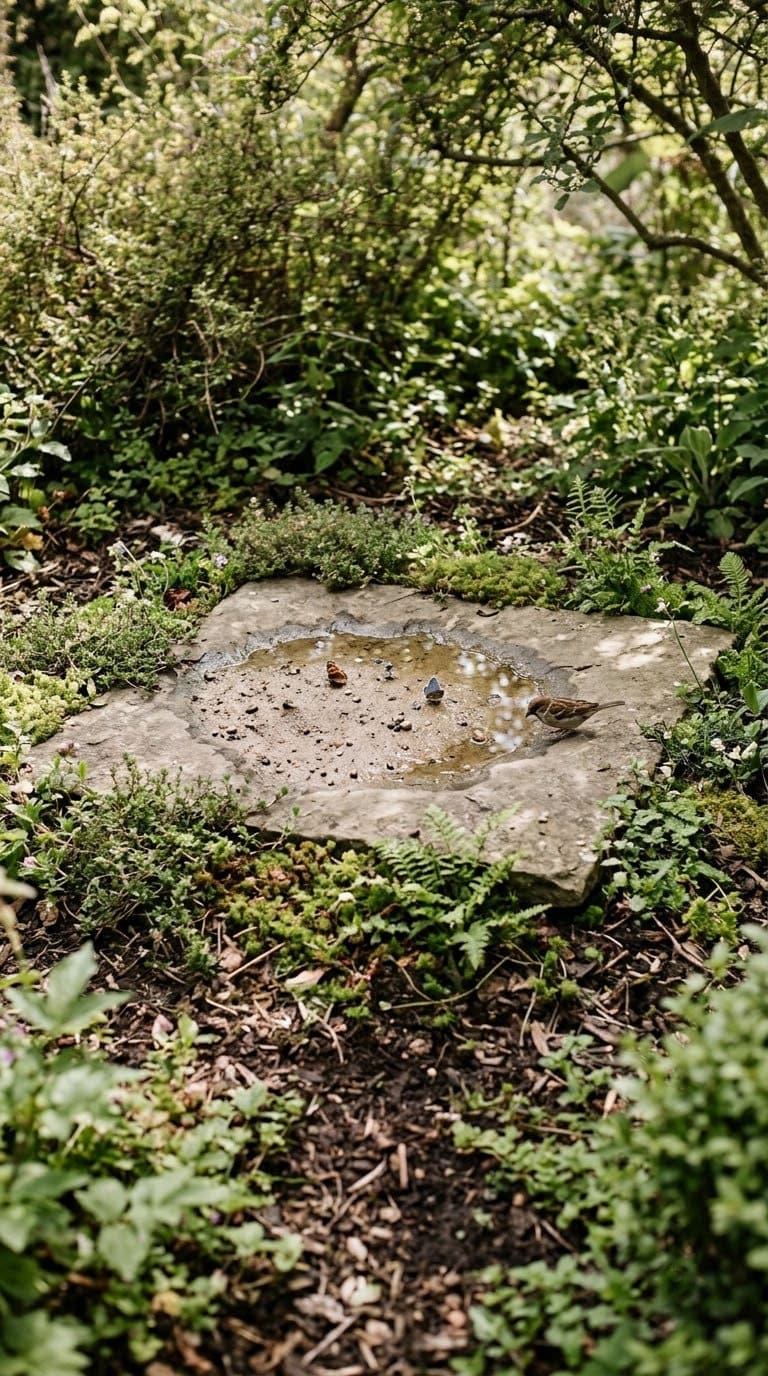
A wet patch of stone helps small birds and insects.
- Fits: Wildlife gardens.
- What you need: A flat stone slab with a shallow dip, sand and small stones.
- Build: Set the slab level. Add a little sand and keep it damp with a thin layer of water.
- Depth check: A film of water, not a pool.
- Clean: Rinse and refresh daily.
- Watch: Drying out in the sun. Check it each day.
Our take: this is an easy bonus next to a main bath. It gives smaller visitors a shallower choice.
20. Bird Bath Garden Bed
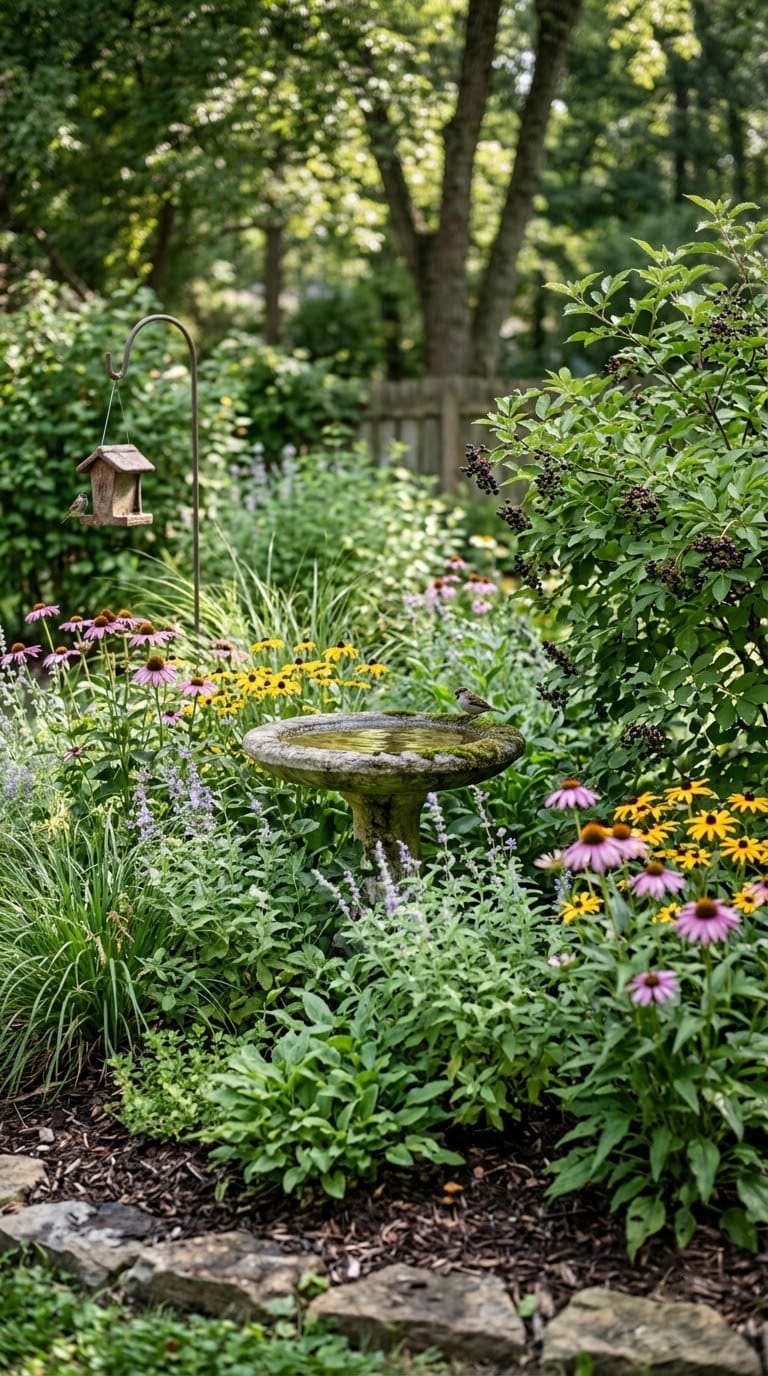
Build a whole corner around the bath.
- Fits: Any yard.
- What you need: One main bath, native flowering plants, a shrub for cover and a feeder pole.
- Build: Place the bath in the middle of a bed. Plant low plants around it and a shrub a few steps away. Put a feeder nearby but not directly above.
- Depth check: One inch at the edge.
- Clean: Rake leaves away and scrub the bath on schedule.
- Watch: Hiding spots. Keep a clear view around the bath so birds can see danger coming.
Our take: see our bird feeding basics for what to put out, and our types of bird feeders to pick a design.
What Mistakes Should You Avoid?
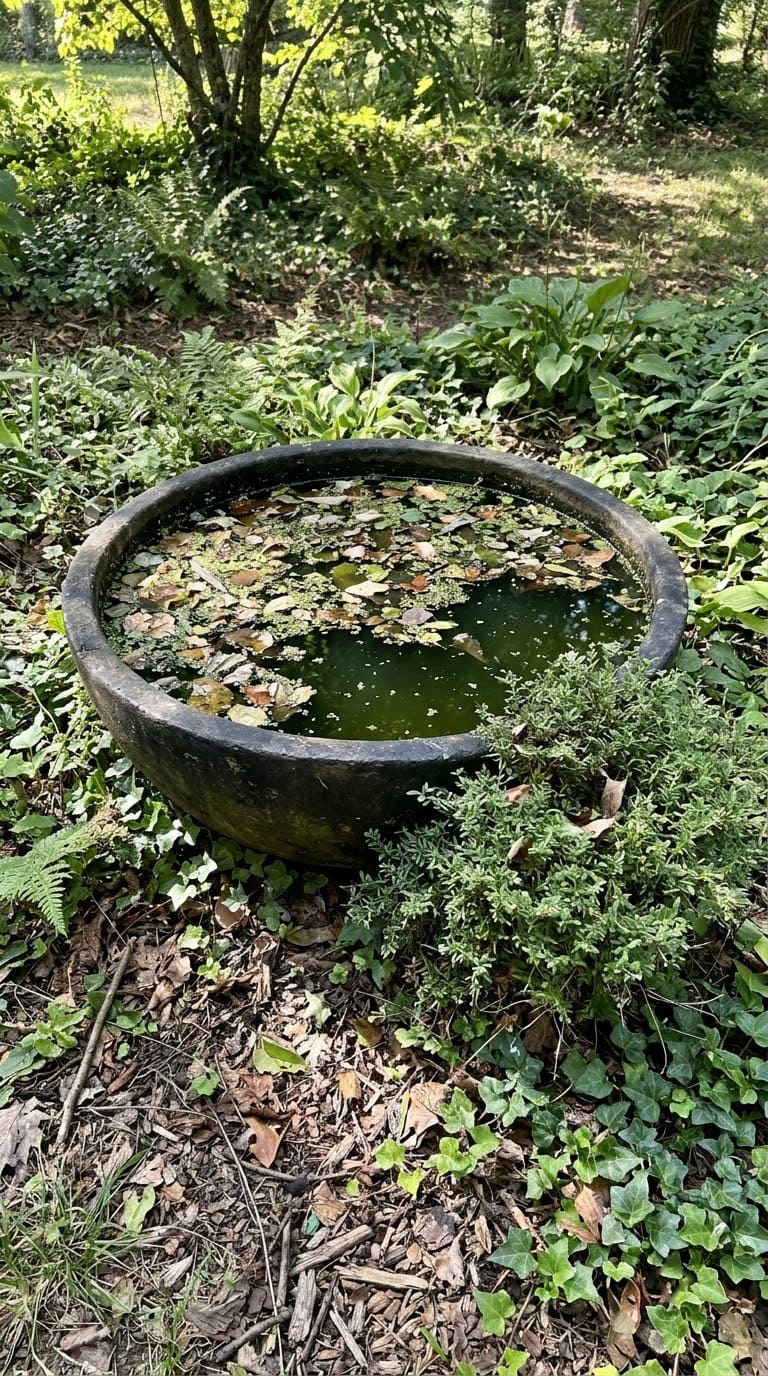
Most problems come from depth, dirt and exposure.
- Water too deep. Aim for about an inch at the edge.
- Dirty water. Change it every day or two, and scrub on schedule.
- Using soap. Use vinegar water instead.
- Putting it in the open. Birds need cover close by.
- Stagnant water. Add a drip, a bubbler or a fountain.
- Adding antifreeze. It is poisonous to birds.
Frequently Asked Questions
How deep should a DIY bird bath be?
About an inch deep at the edge and no more than two inches in the center, according to the Chicago Bird Alliance. Add flat stones to make a deep bowl shallower.
How often should I clean a bird bath?
Change the water every one to two days and scrub the basin every two to four days. Use water and vinegar, not soap. Rinse well before refilling.
How do I keep mosquitoes out of a bird bath?
Refill often and add moving water. Audubon says mosquitoes avoid laying eggs in running water, and the CDC advises emptying and scrubbing water-holding items once a week.
Can I use concrete for a bird bath?
You can use it for the stand or decor. The Chicago Bird Alliance says to avoid concrete for the water bowl because it is hard to sanitize, so use a glazed or ceramic dish instead.
Your Bird Bath Build Plan
- Day 1: Pick a spot near cover, clear of cat hiding places and windows.
- Day 2: Choose one idea from the list and gather safe materials.
- Day 3: Build it, add stones for depth and grip, and test it for wobble.
- Day 4: Add a drip or bubbler, and set a daily refill reminder.
- Every week: Scrub with vinegar water, and empty spare bowls.
Start with a shallow dish, add stones and keep the water fresh. That is the whole recipe for a bird bath that birds will use.
Never miss an update — choose FarmFoodFamily as your preferred source on Google.
How it works: Tap the button below to open Google's settings page, then check the box next to FarmFoodFamily.
Tap the checkbox to turn it blue — that's how you know it's set.








great ideas I love them all