45+ Brilliant Hosta Landscaping Ideas (Plus a Real Pet Safety Note)
My sister-in-law’s beagle got into her hosta bed two summers ago and spent an unpleasant evening throwing up, which is how she found out (the hard way) that hostas aren’t actually harmless. Every hosta roundup shows you gorgeous shade gardens and none of them mention that this plant everyone treats as foolproof is honestly toxic…

Never miss an update — choose FarmFoodFamily as your preferred source on Google.
How it works: Tap the button below to open Google’s settings page, then check the box next to FarmFoodFamily.
Tap the checkbox to turn it blue — that’s how you know it’s set.
My sister-in-law’s beagle got into her hosta bed two summers ago and spent an unpleasant evening throwing up, which is how she found out (the hard way) that hostas aren’t actually harmless.
Every hosta roundup shows you gorgeous shade gardens and none of them mention that this plant everyone treats as foolproof is honestly toxic to dogs and cats.
A real safety note before you plant
Hostas contain saponins, and per the ASPCA, they’re toxic to both dogs and cats, causing vomiting, diarrhea, and lethargy if a pet eats enough of the leaves.
This matters more for some of the ideas below than others, ground-level plantings like island beds, pathway edging, and small-garden borders put hostas right where a curious dog can reach them, while a container placed up on a table or ledge is a genuinely safer option if you have a chewer at home. And if you suspect a pet has eaten hosta leaves, the ASPCA Animal Poison Control line is (888) 426-4435.
Hosta Landscaping Ideas
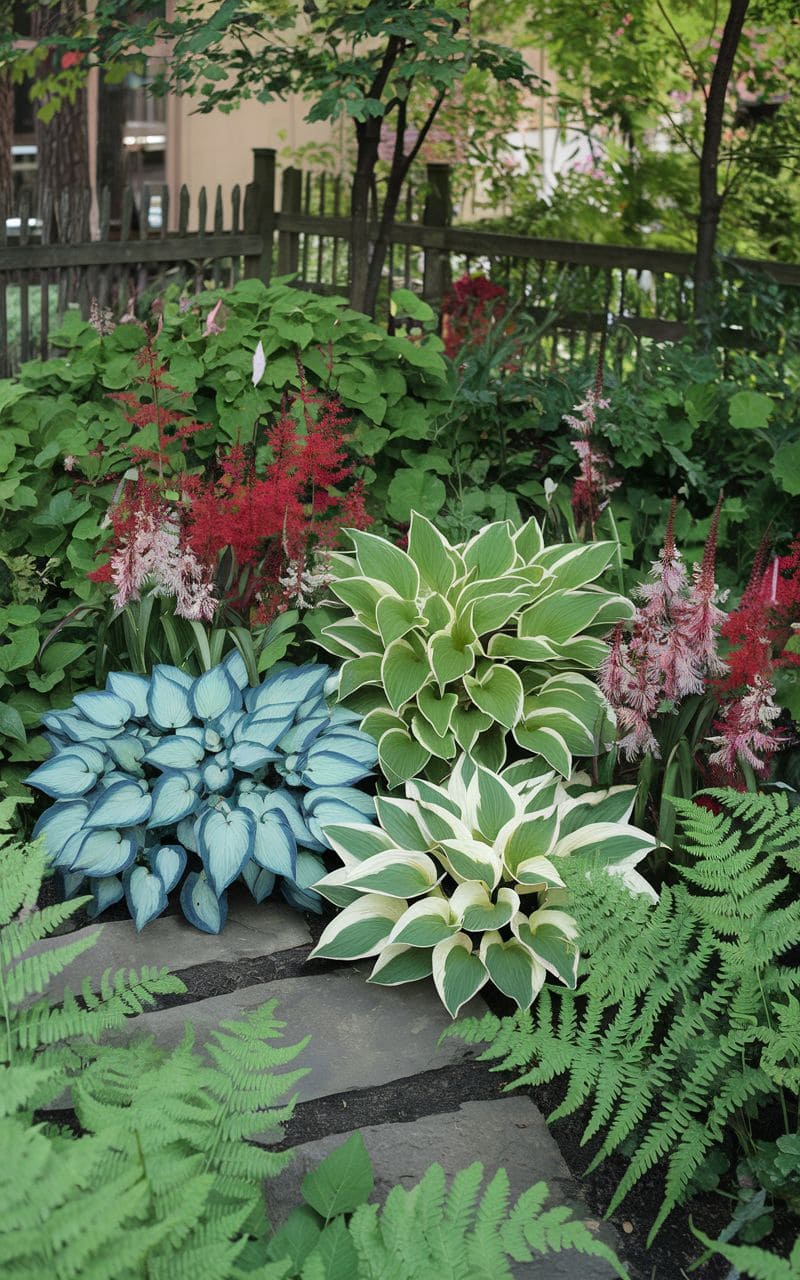
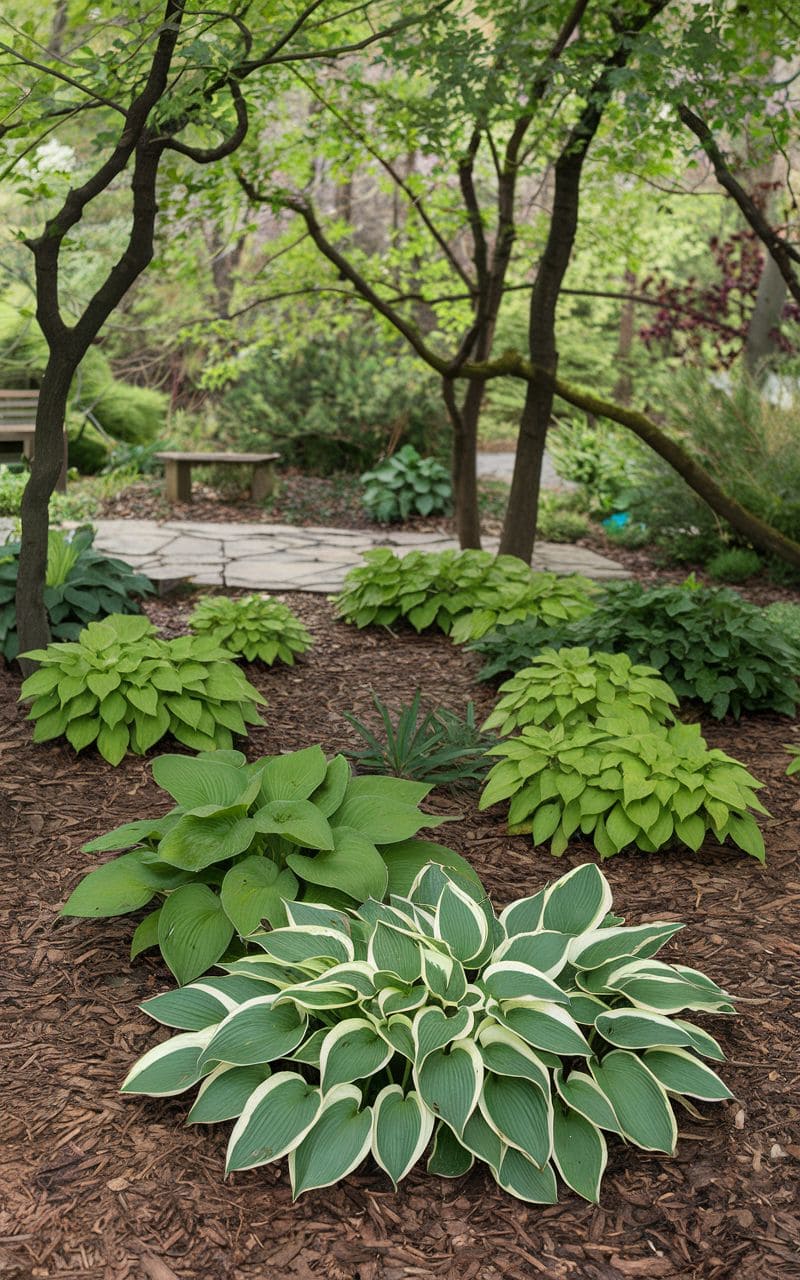
1. Woodland-inspired Border Garden
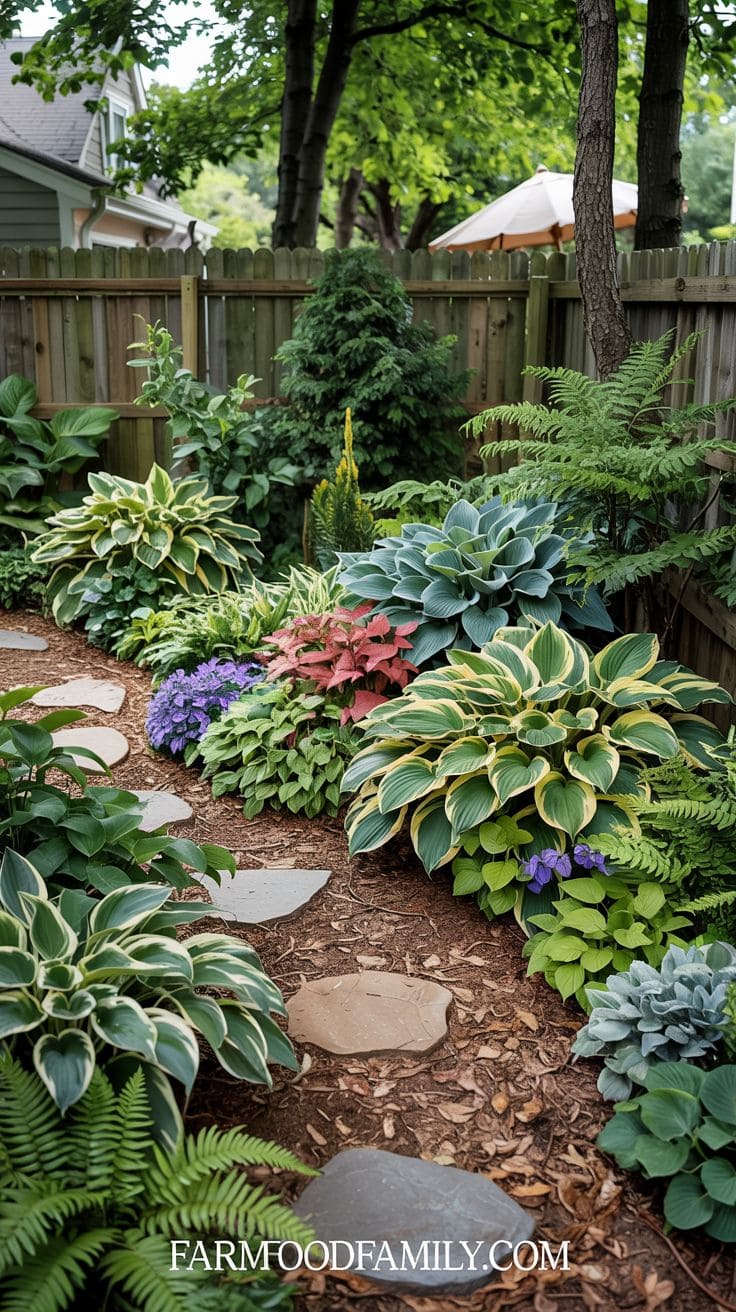
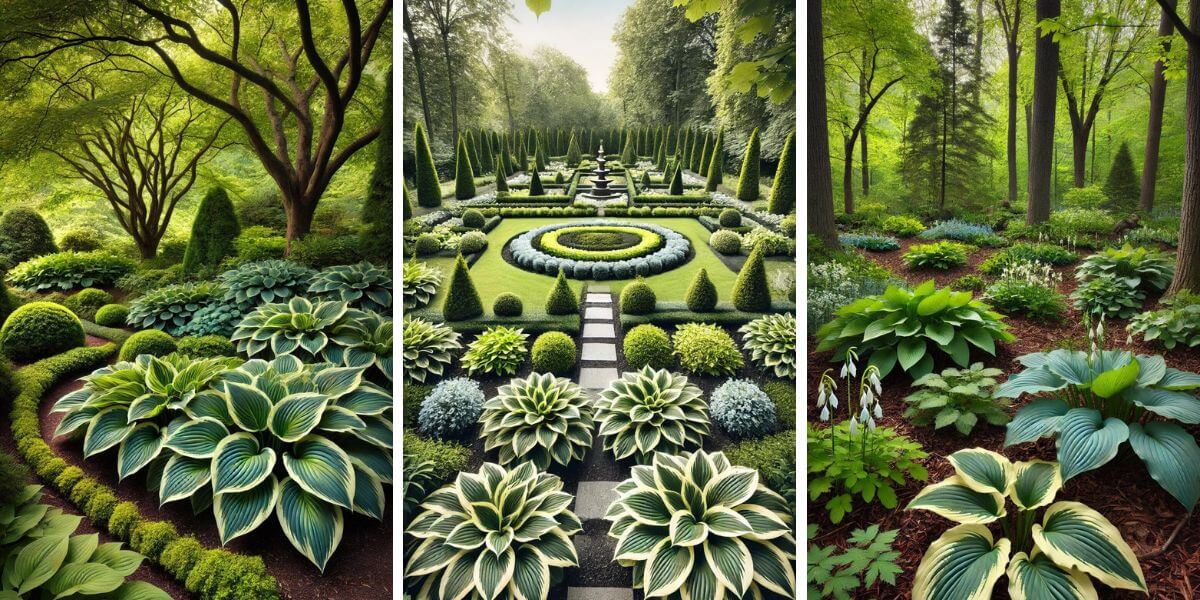
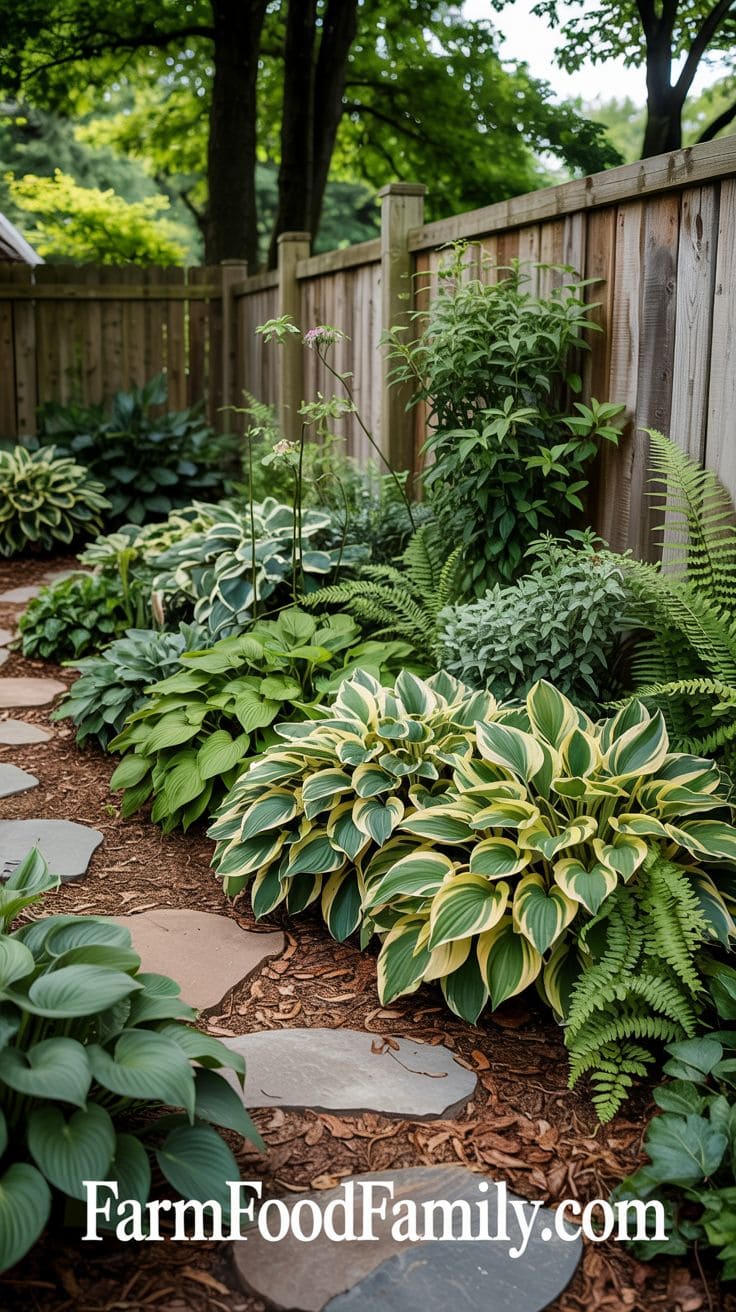
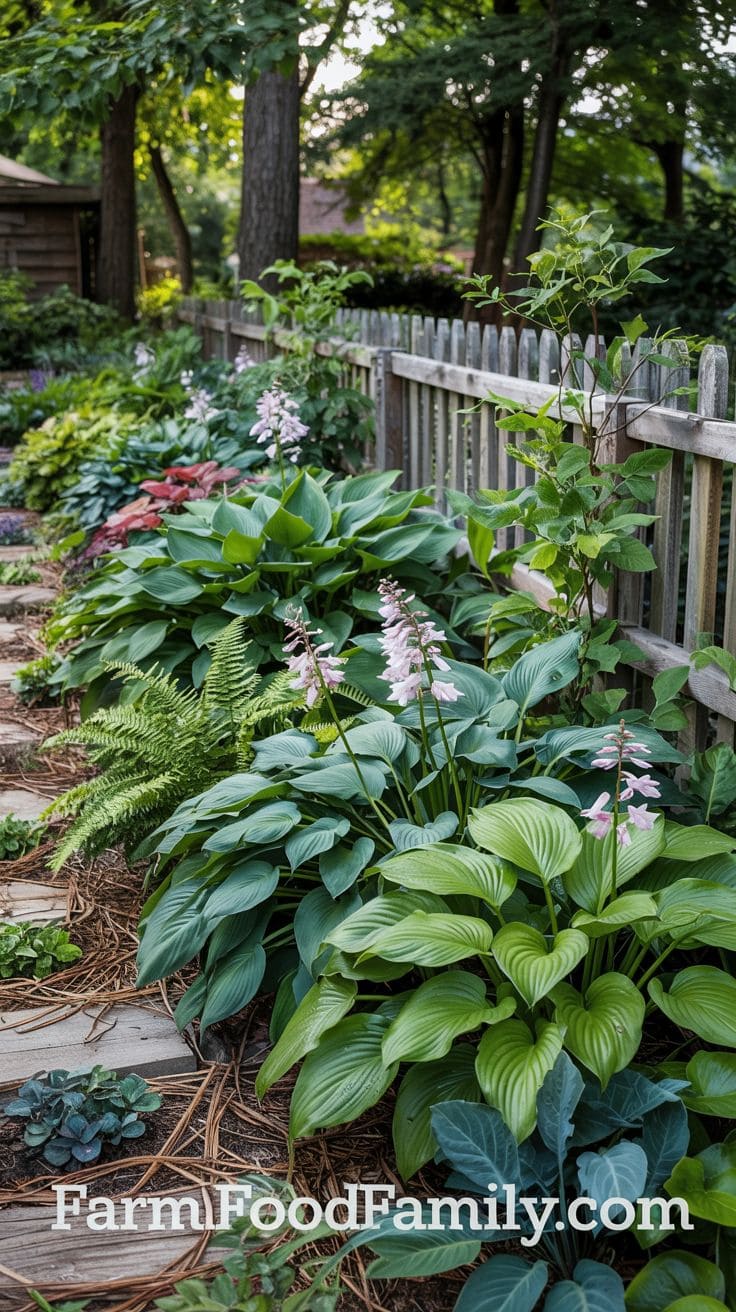
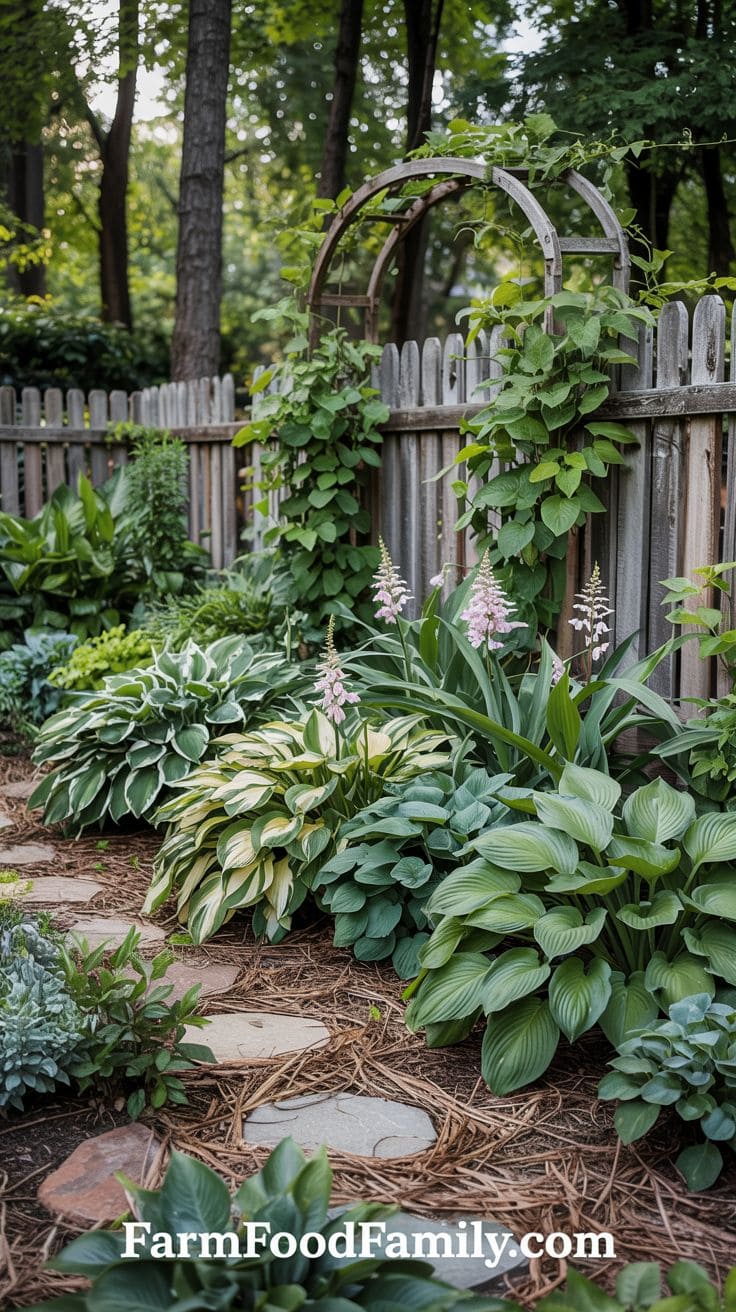
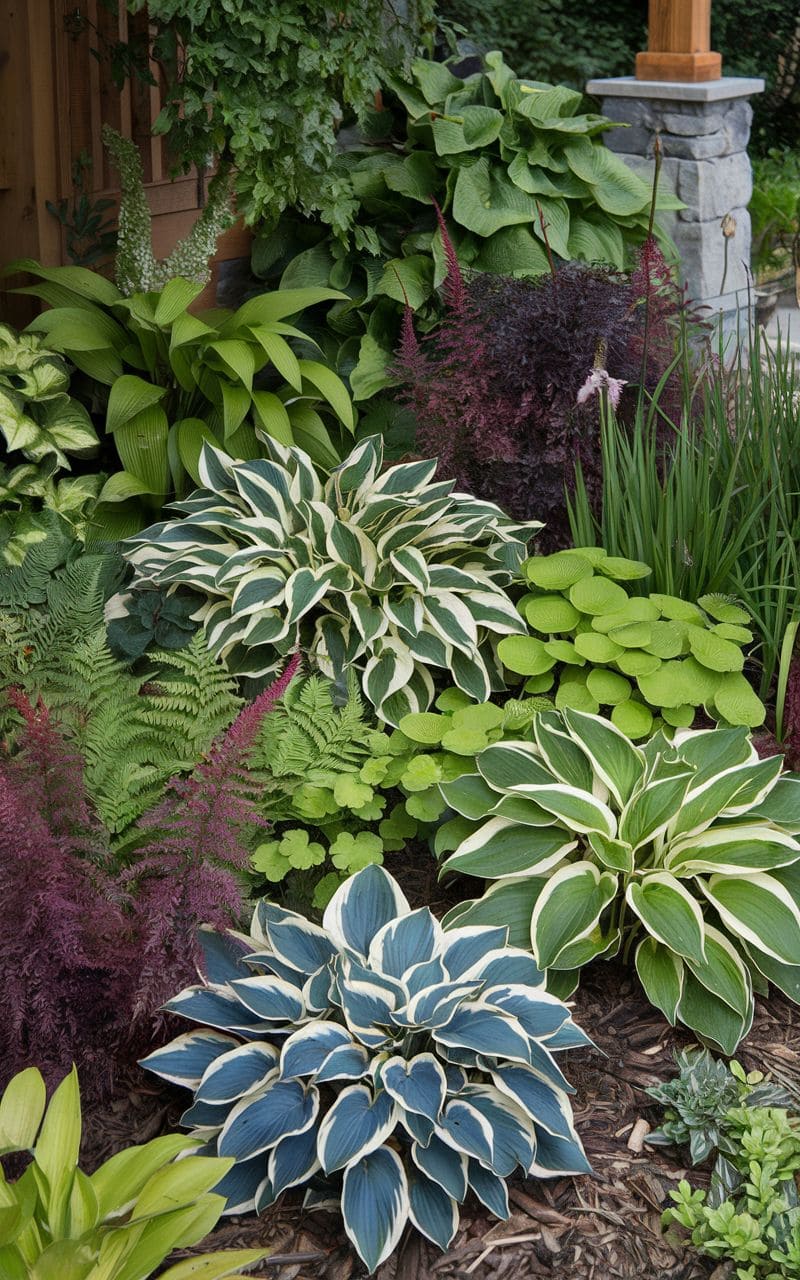
Create a shaded border that resembles a secret woodland refuge with hostas as the foundation.

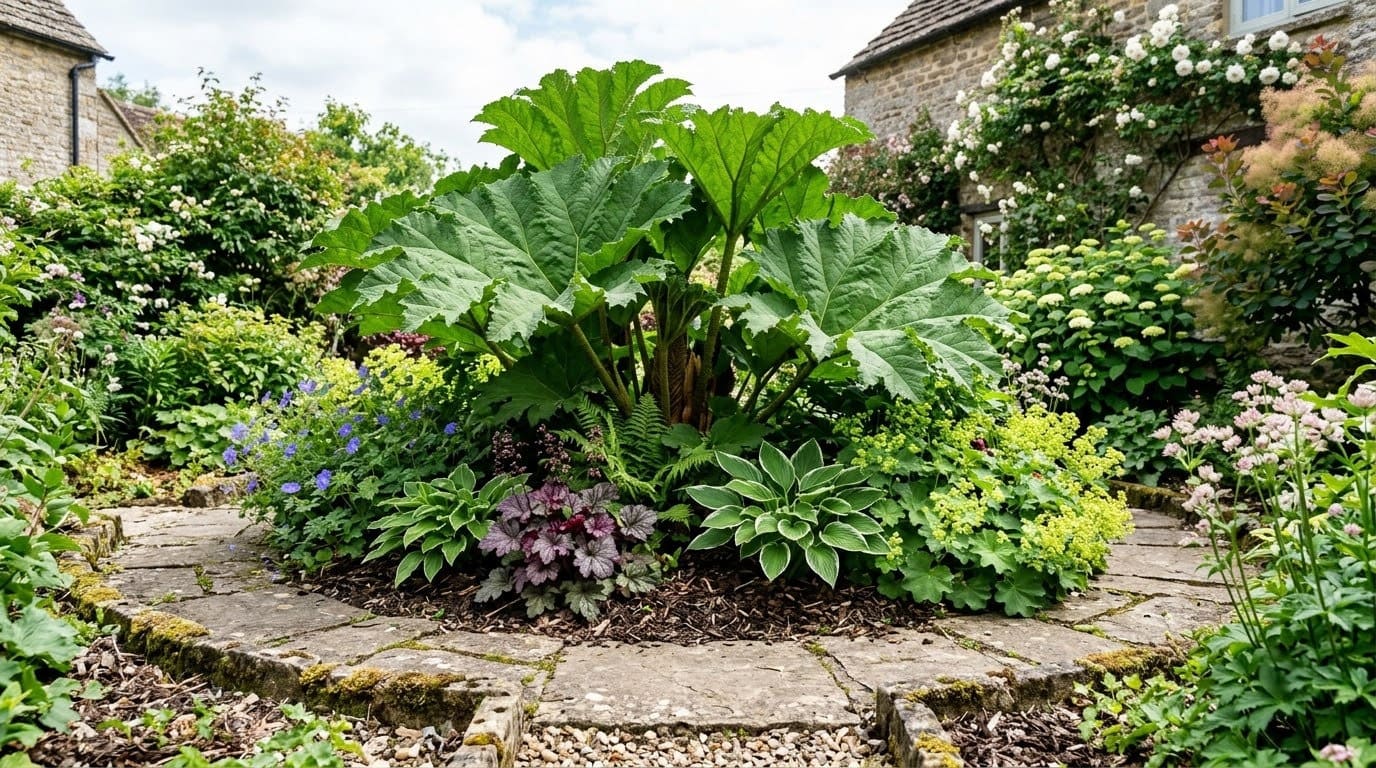
Combine several types to add visual depth and texture. Plant them in sweeping curves alongside ferns, astilbe, and coral bells to create a delicate, layered look.
Answer 4 quick questions and get matched to the exact fix for your yard — drainage, budget, layout, or something else entirely.
Take the Free QuizMulch with bark or pine straw to improve the forest floor appearance, and try adding small natural stepping stones that meander through the vegetation.
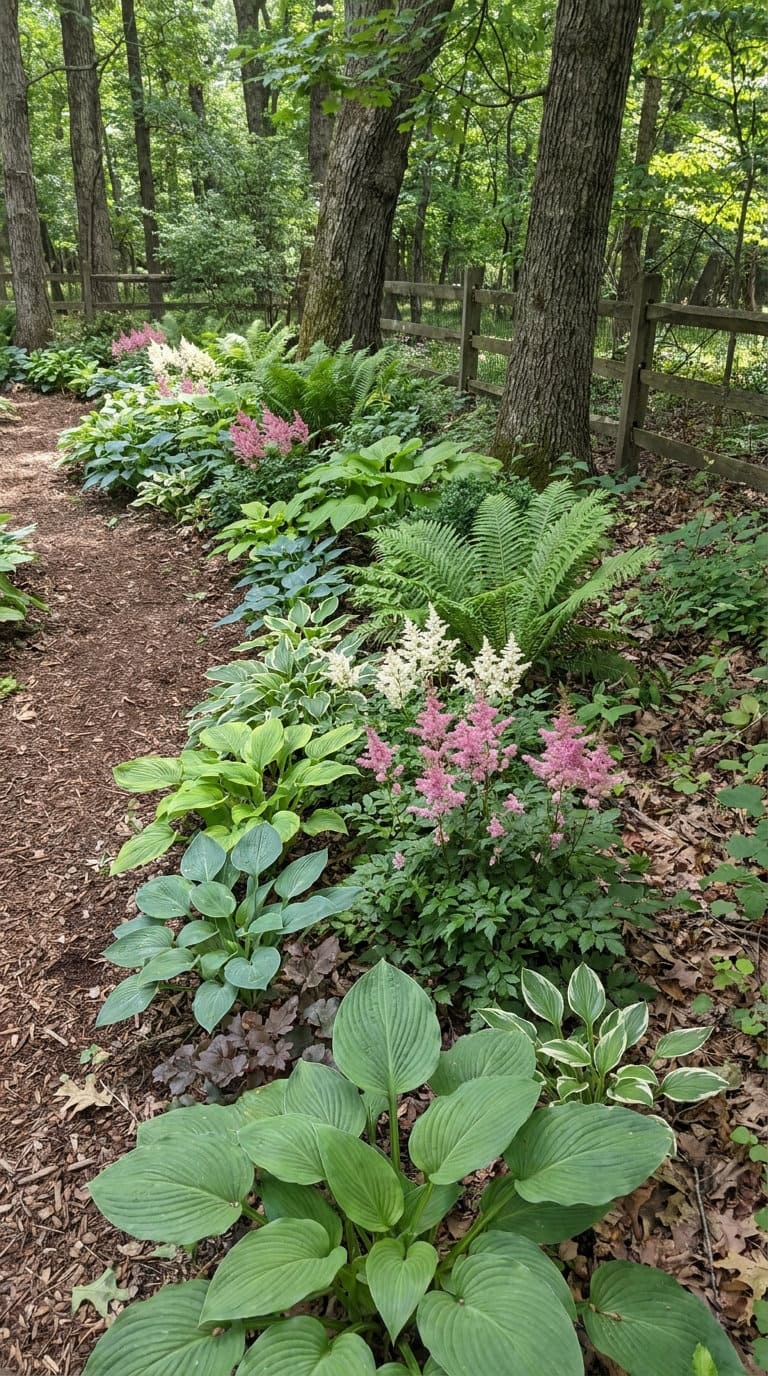
This method works well behind fences, beneath big trees, or beside a shaded patio.
It produces a cool, peaceful visual flow that makes your yard feel tucked away and serene, yet it requires minimal upkeep once established.
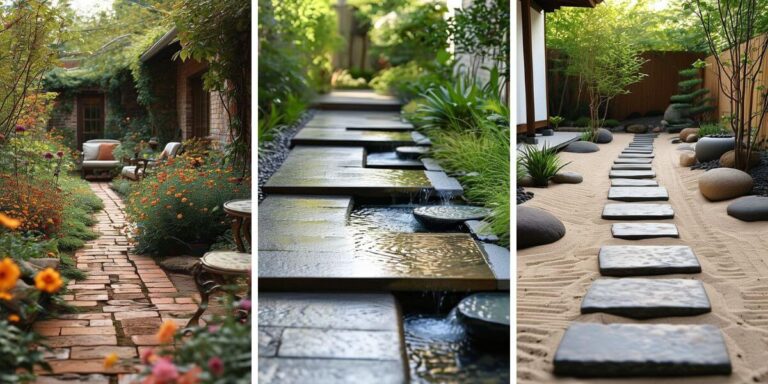
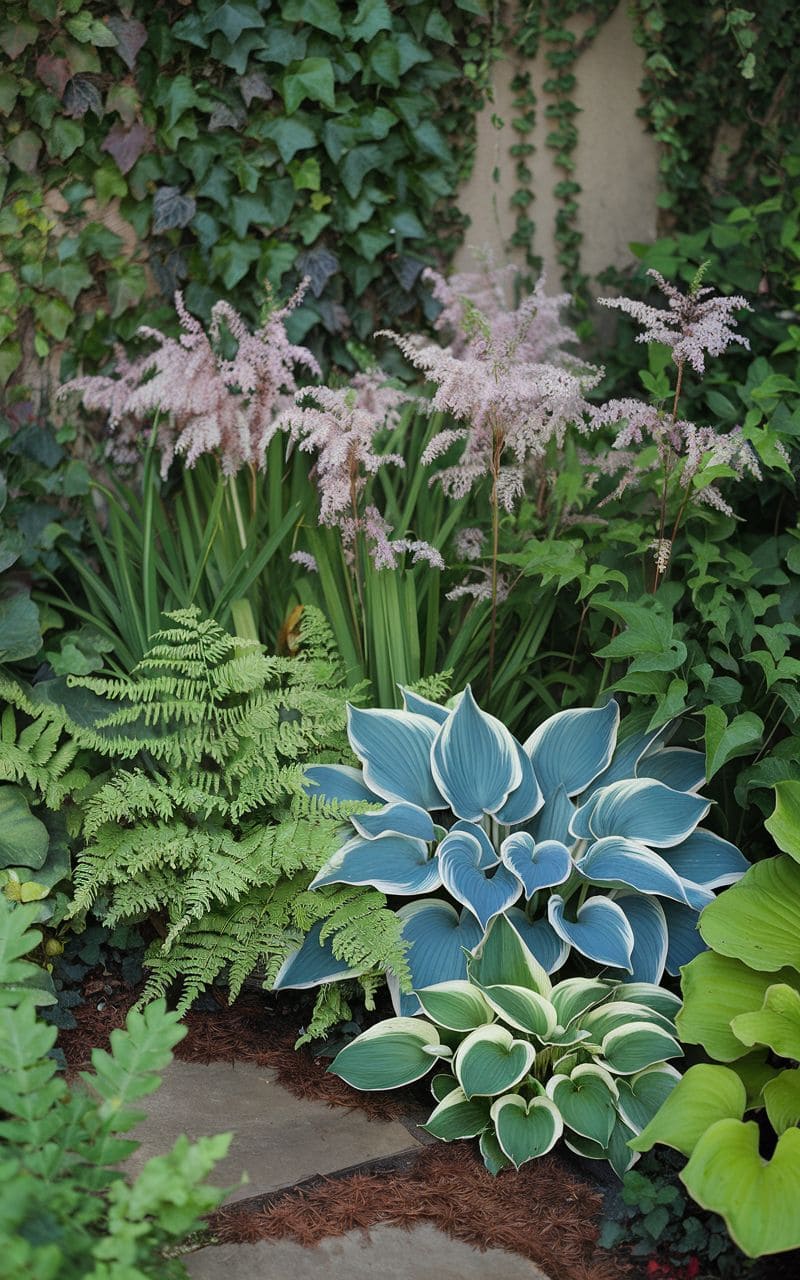
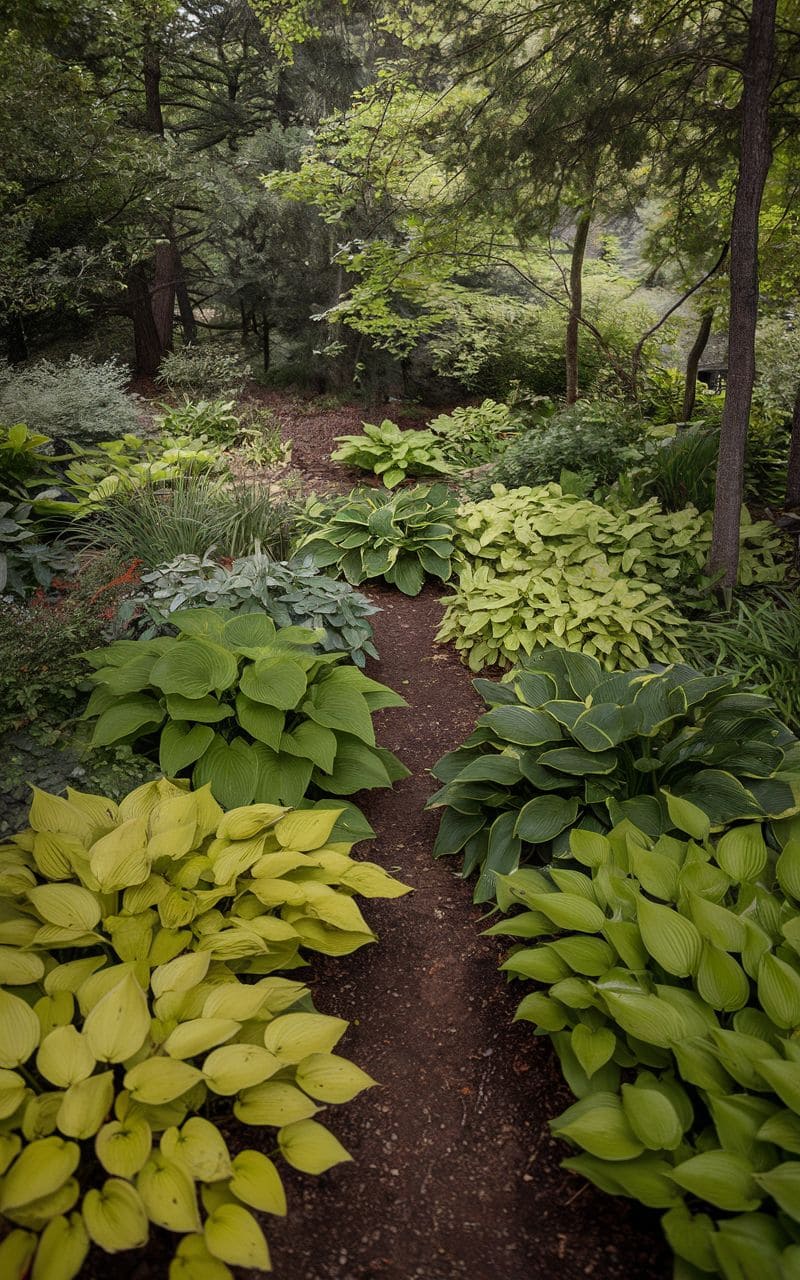
2. Hostas as Pathway Edging
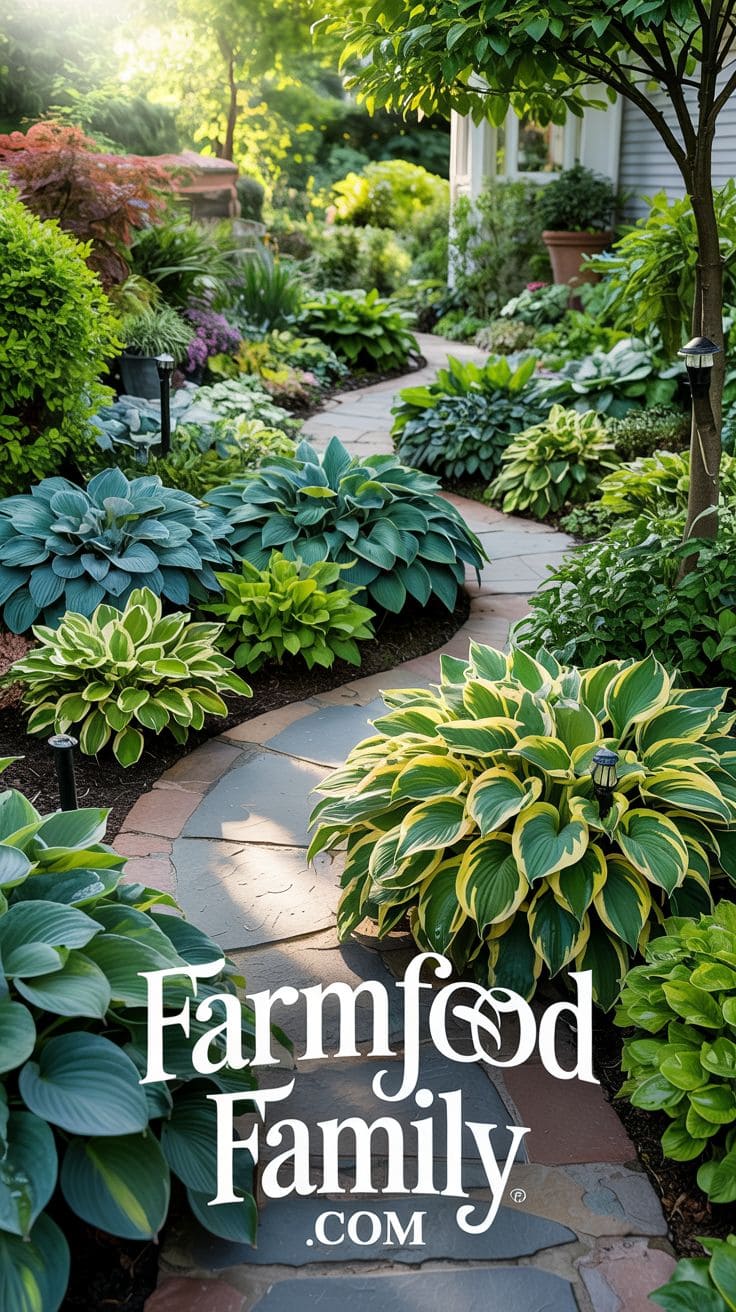
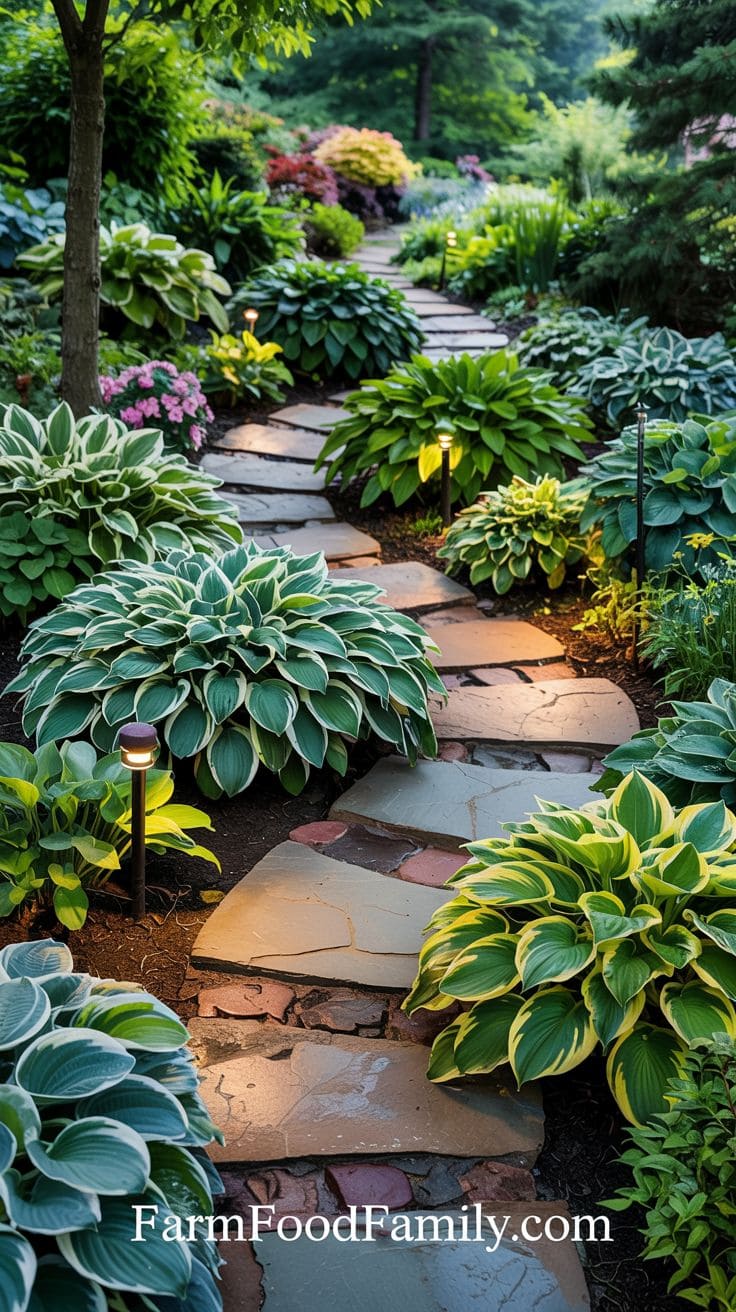
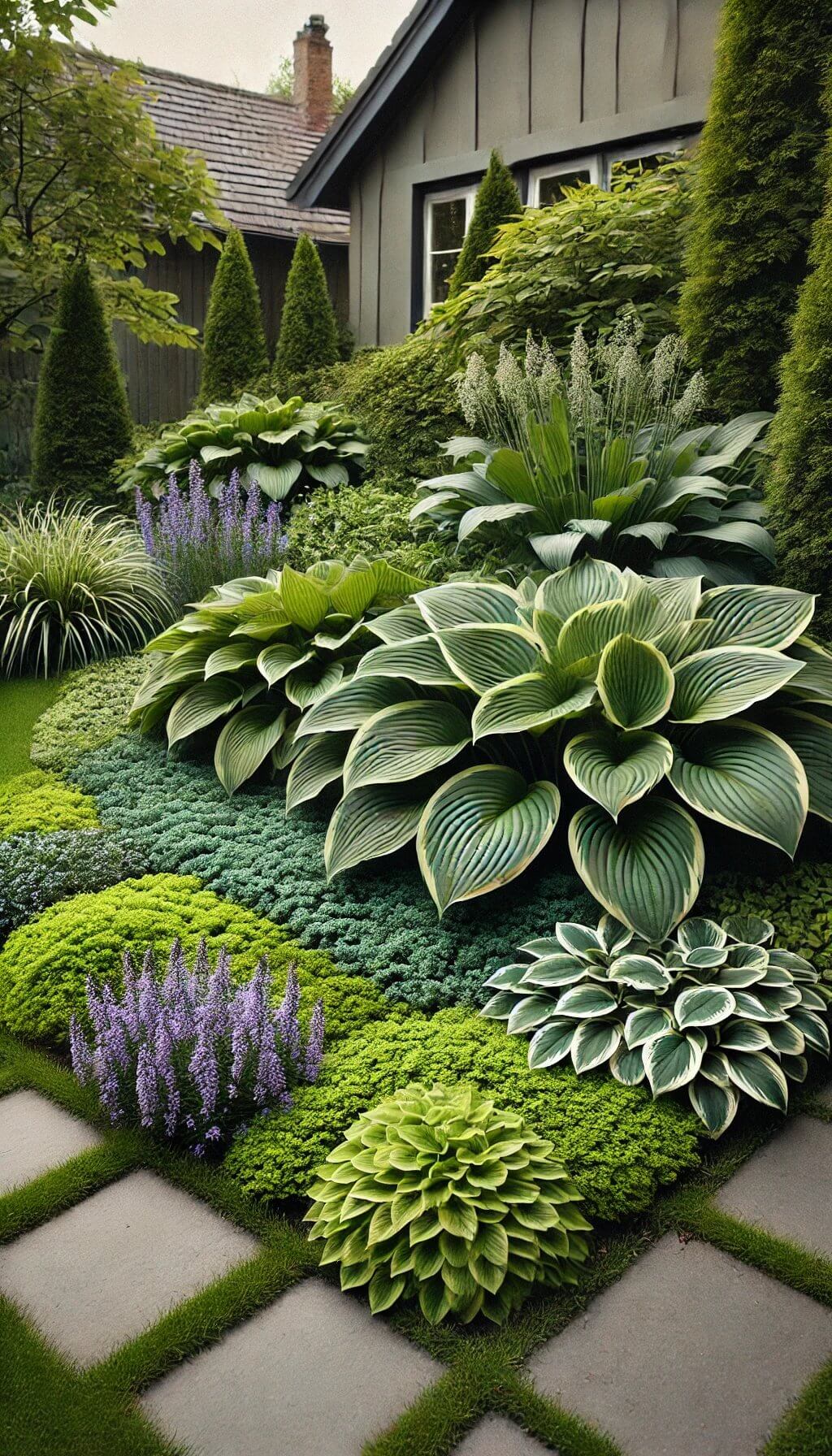
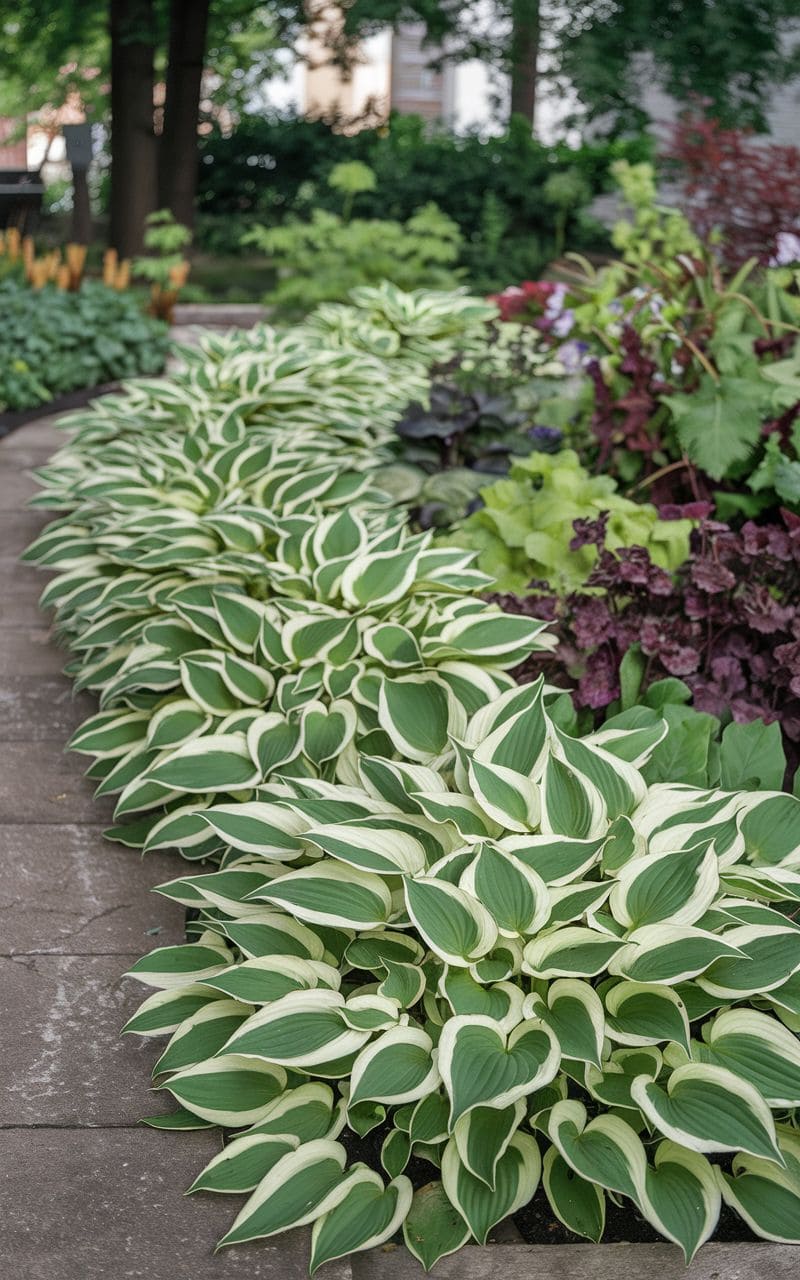
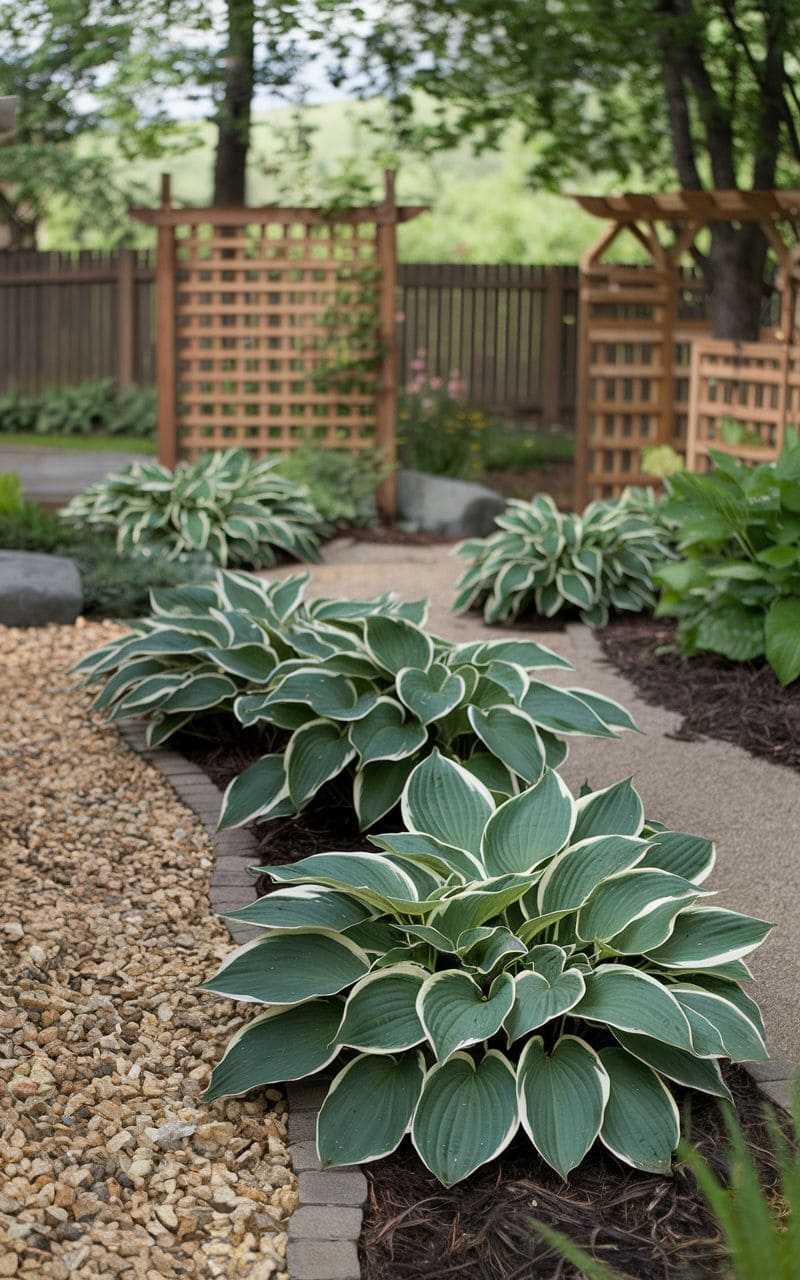
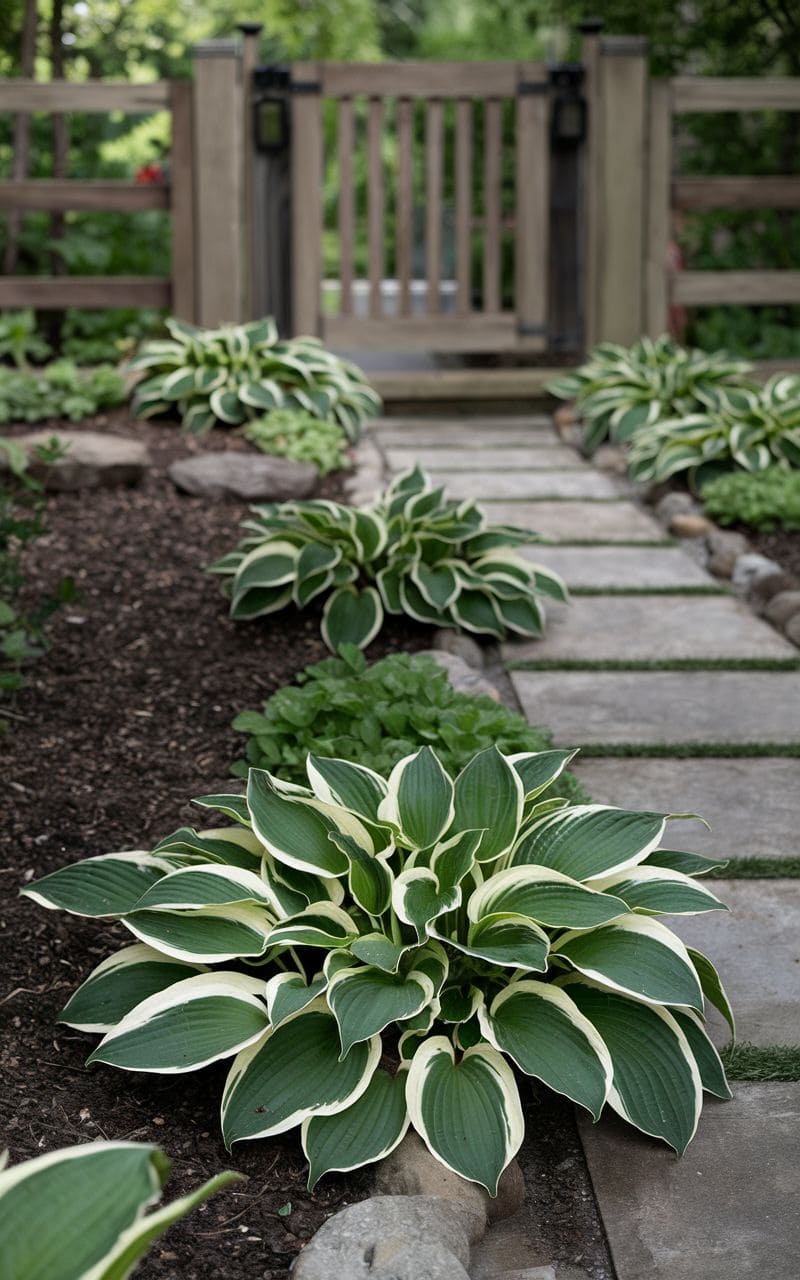
Hostas are wonderful edging plants, particularly when used to soften the lines of a path.
Their mounding shape flows smoothly over borders, enticing you to walk beside them. Use a single variety for a clean, beautiful appearance, or vary between types for additional visual movement.
To add contrast, pair large-leafed hostas with fine-textured plants such as decorative grasses or dwarf ferns.
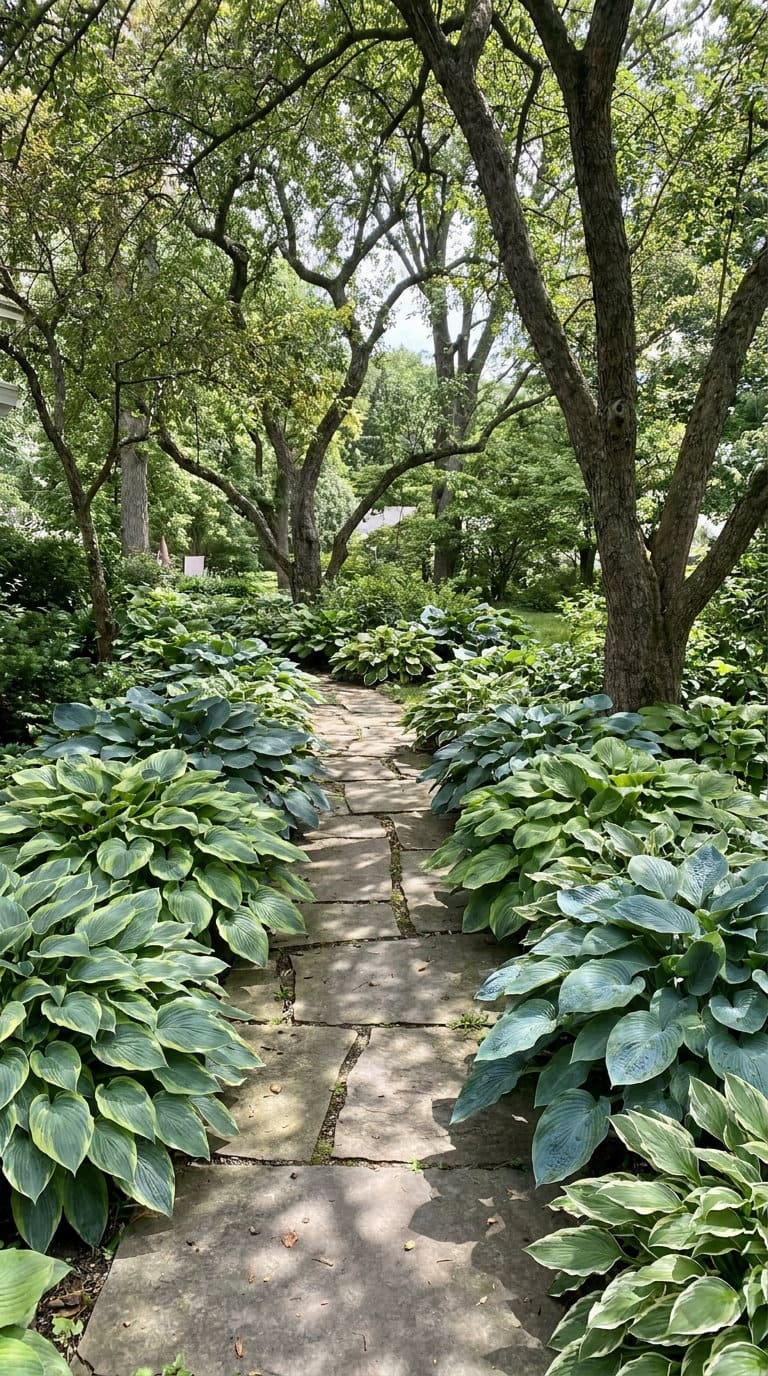
This concept works best in slightly shaded walks that meander through gardens or lead to dining spots.
Most yard problems trace back to one specific, fixable cause. Find yours in 4 quick questions.
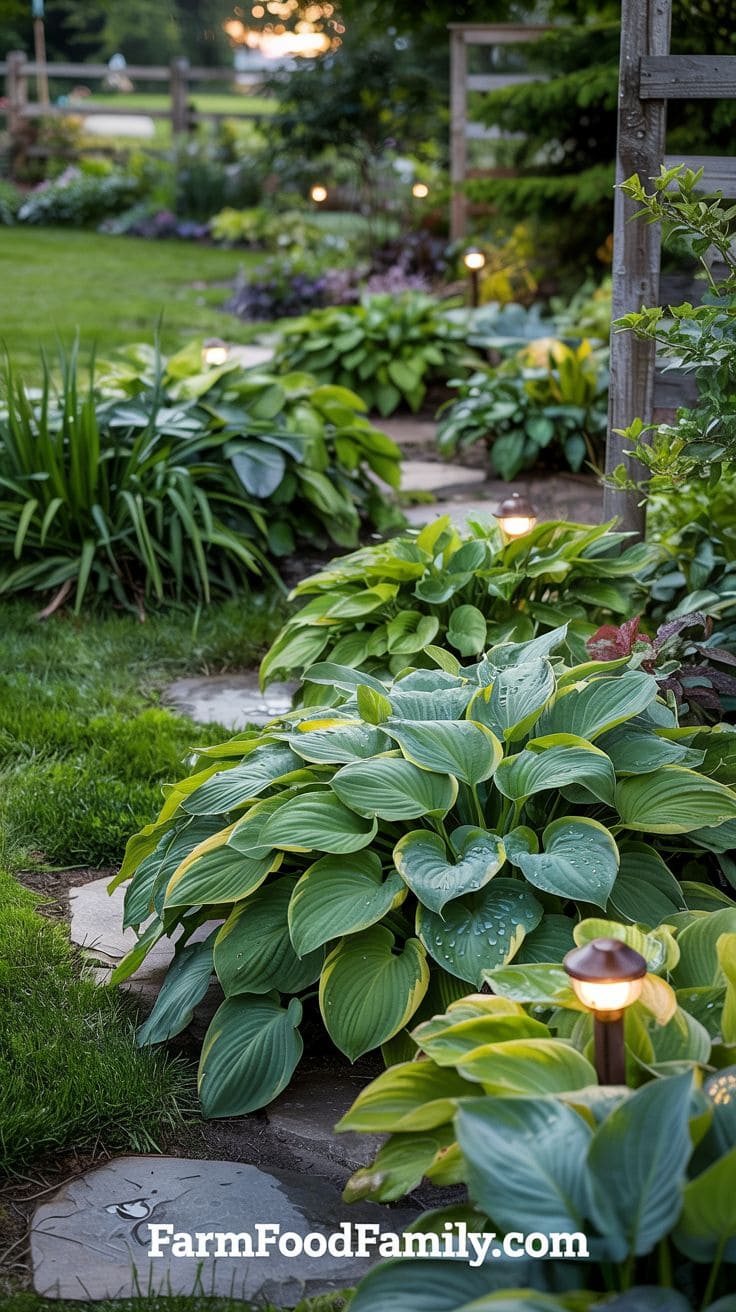
Take the Free QuizYou may even use solar lights to accent the route at twilight, giving the glossy leaves a subtle shine.
The end effect is a garden feature that feels thoughtful, tranquil, and welcoming as you walk through it.
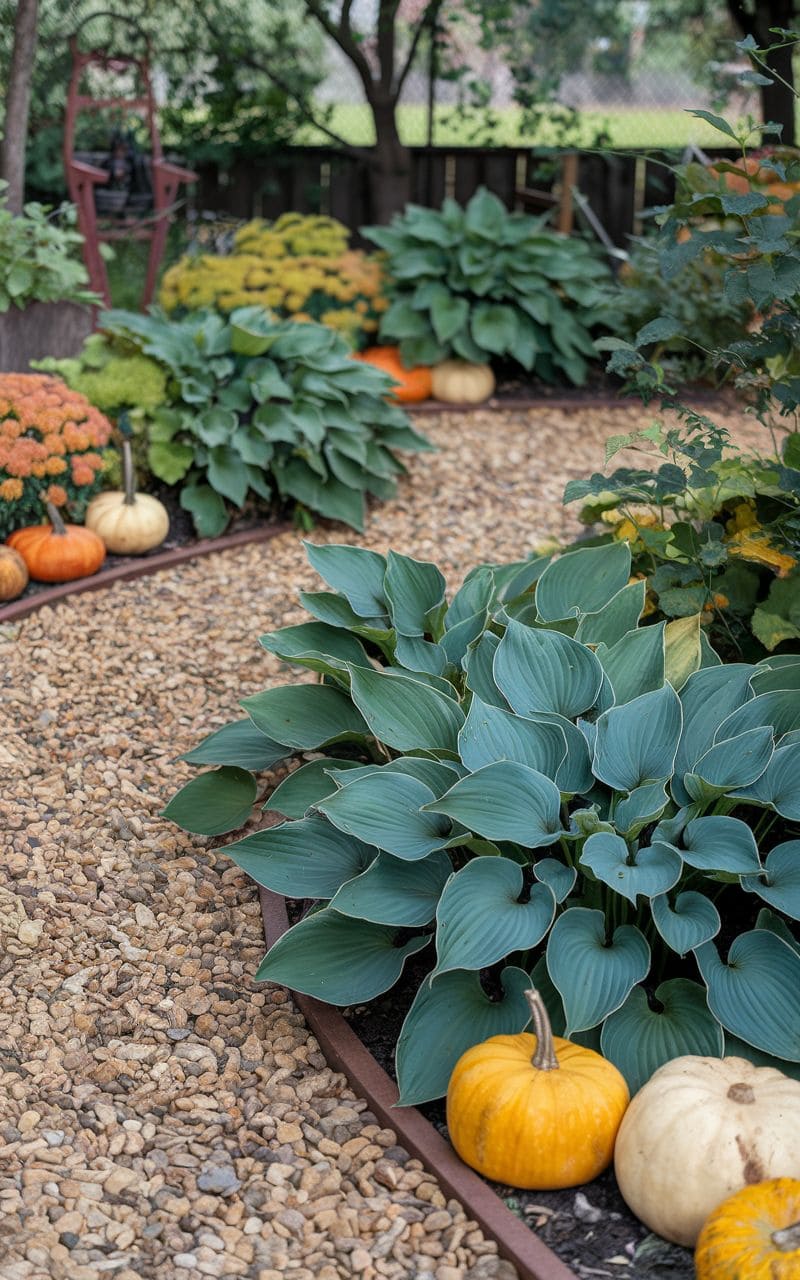
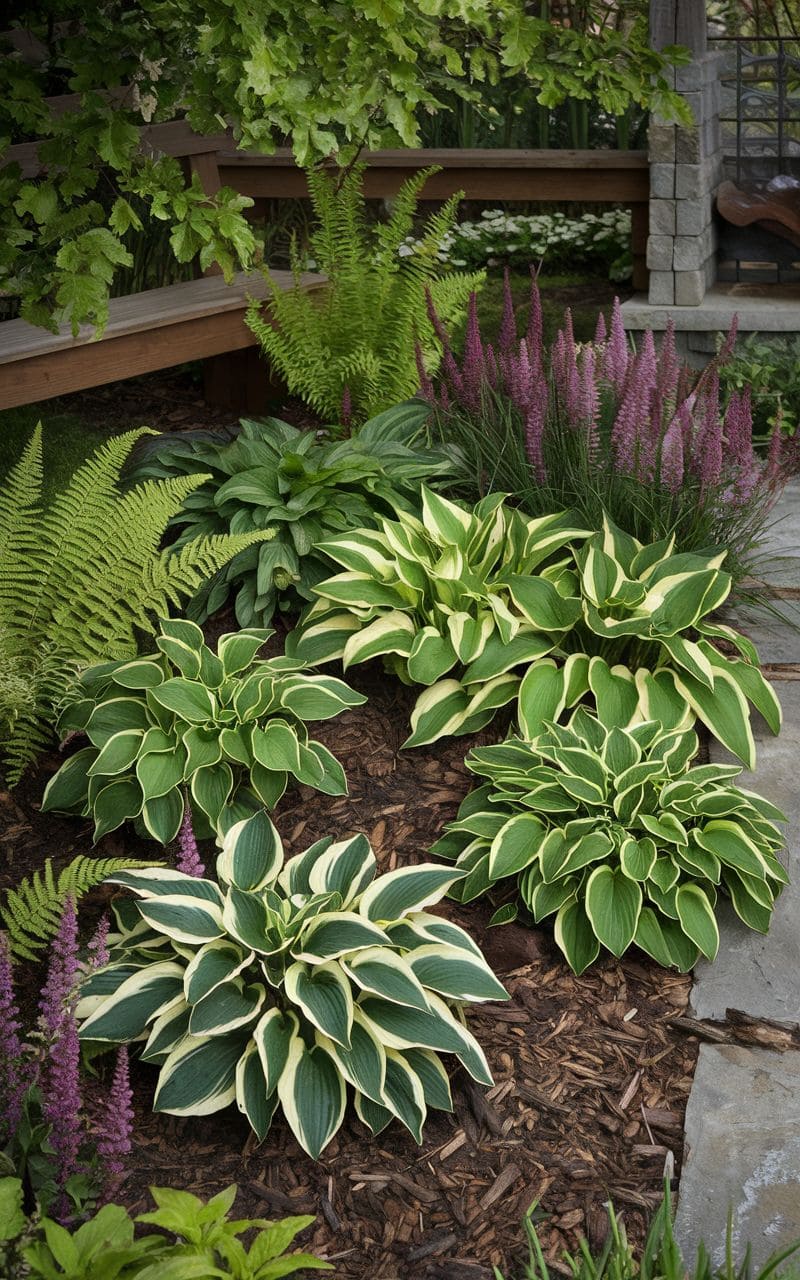
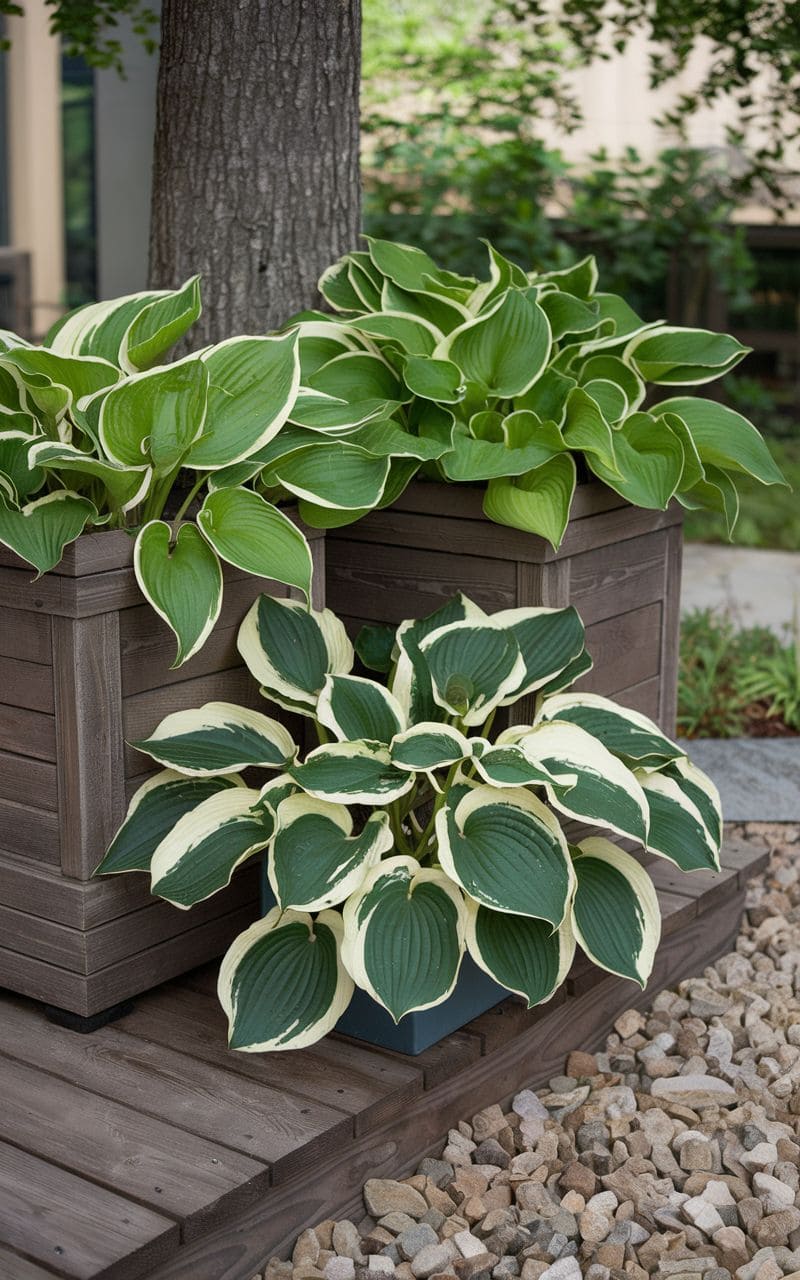
3. Seasonal Focal Point Using Variegated Hostas
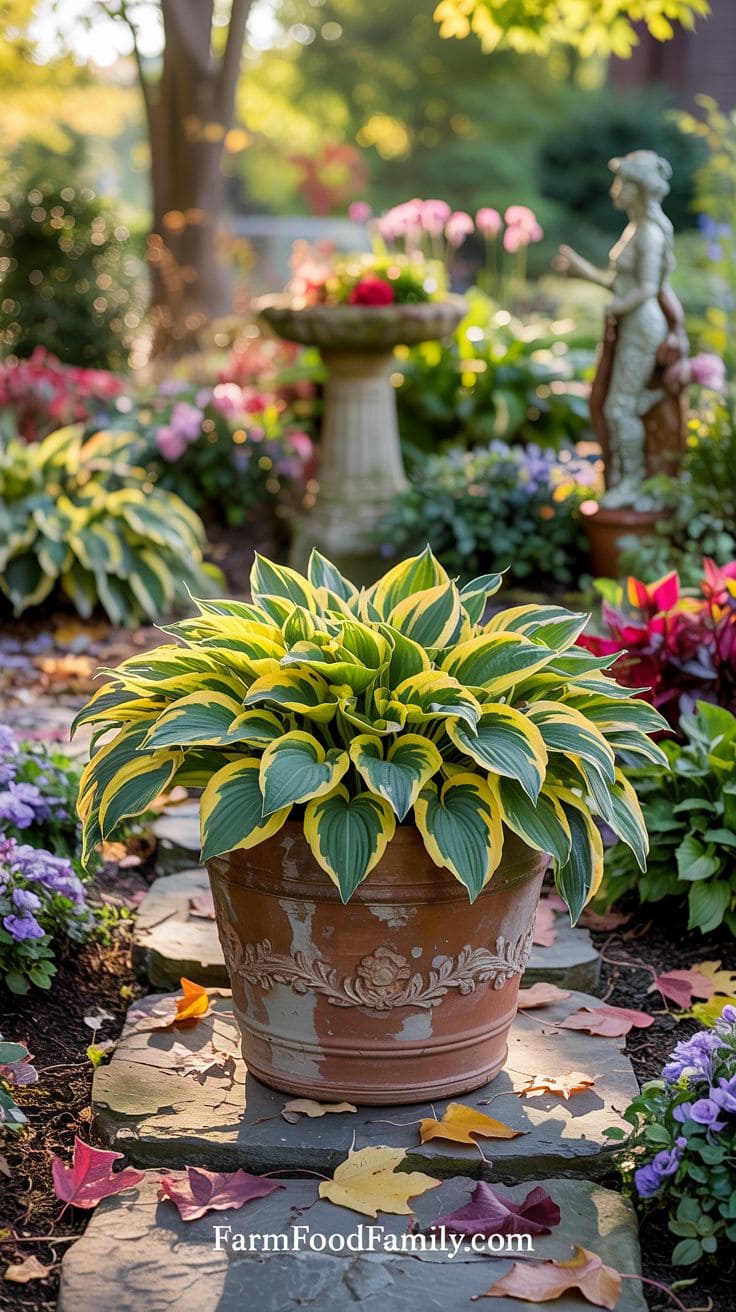
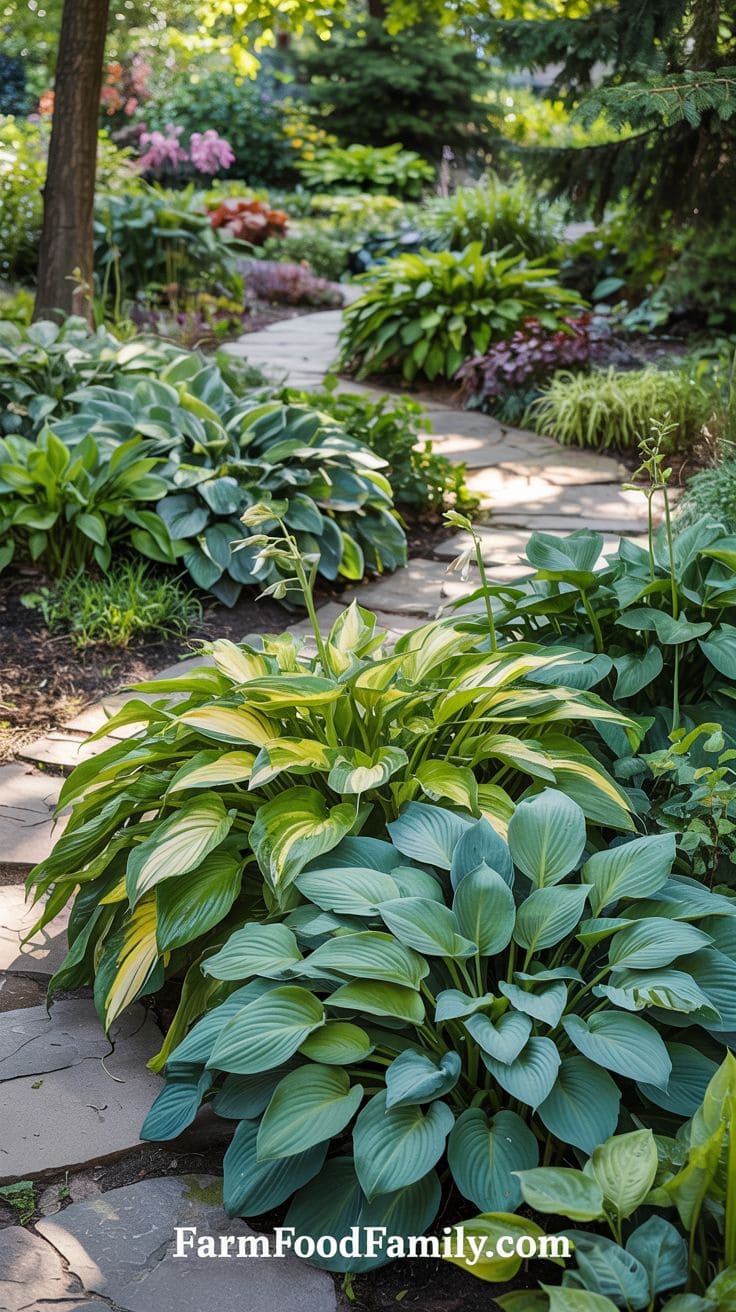
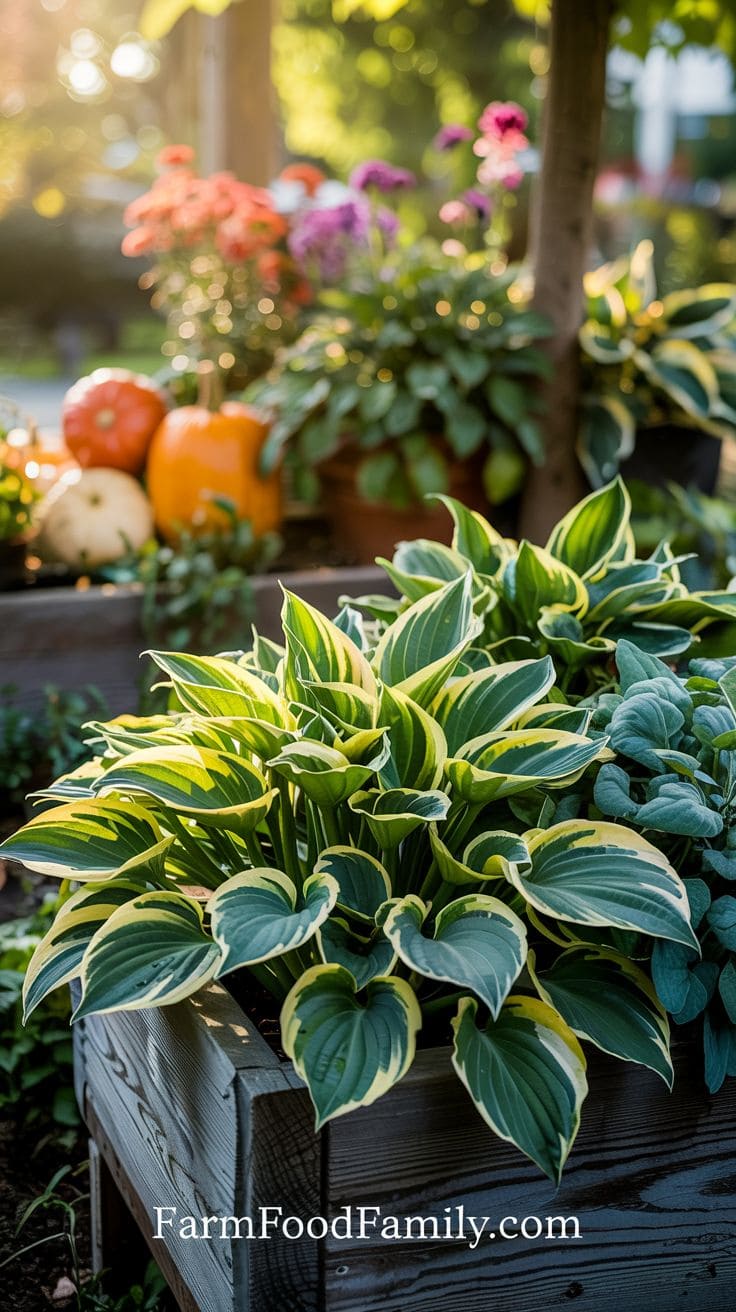
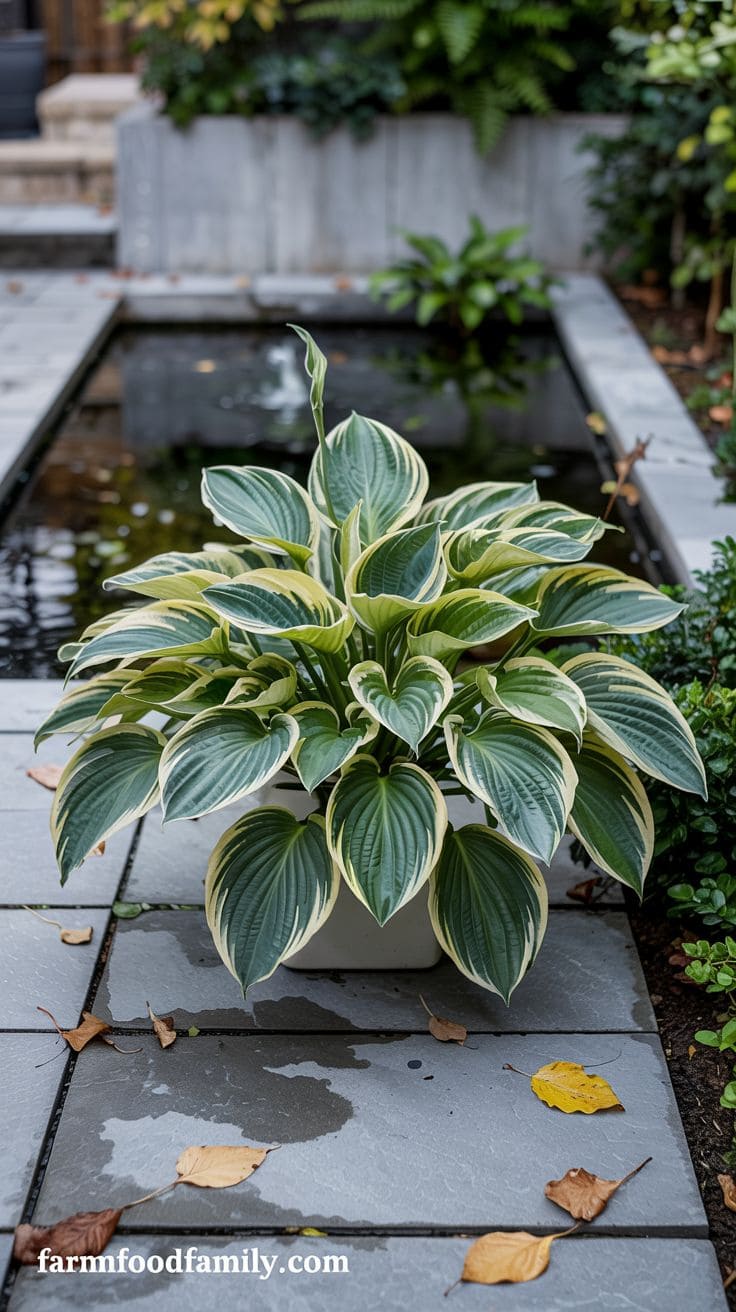
Make variegated hostas the star of a seasonal display by planting them in eye-catching containers or around seasonal flowers.
Their bright, creamy margins pop against summer blooms and even hold their own through fall.
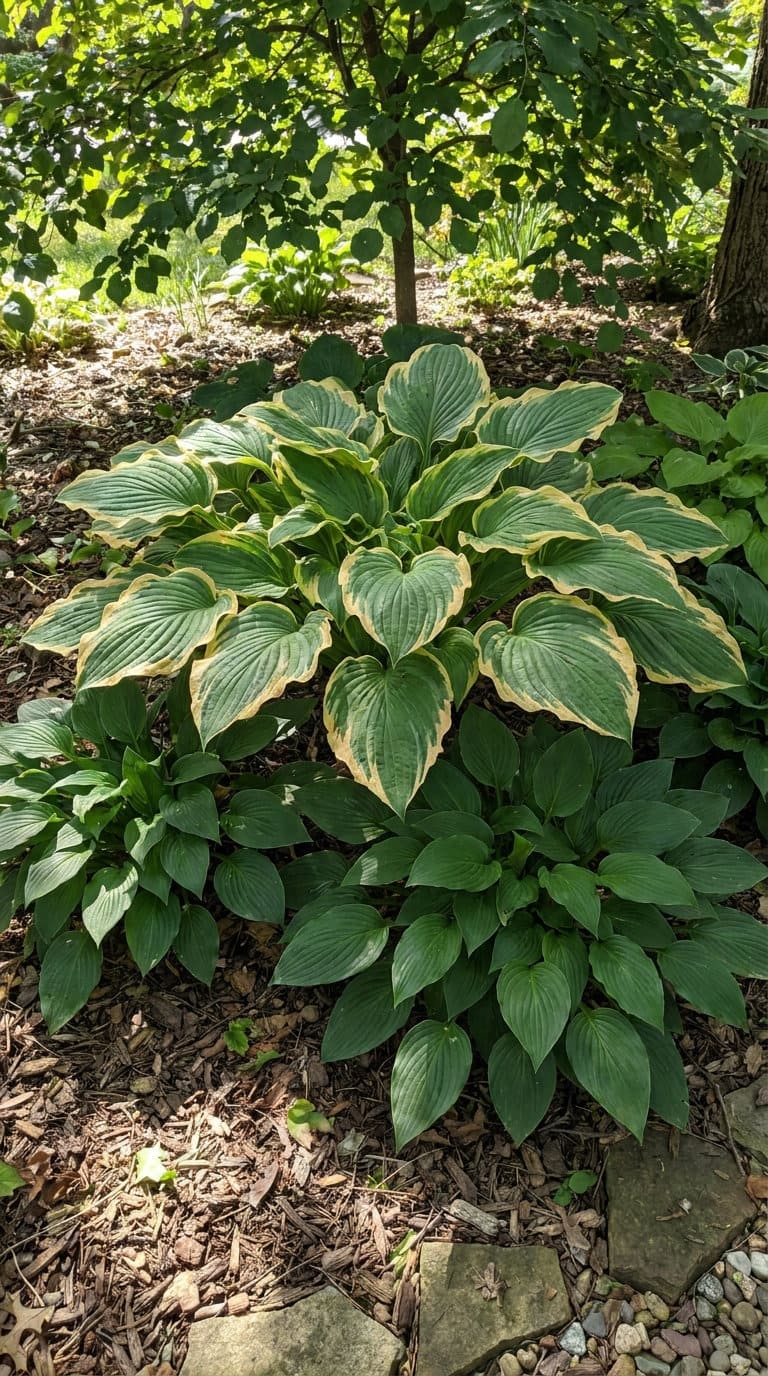
You can spotlight a single massive hosta in a container by itself or use a ring of them to frame a decorative garden item like a birdbath or statue.
This gives your garden dynamic focal points without overwhelming the space.
It’s a great way to bring variety into a shade garden that might otherwise rely on green alone.
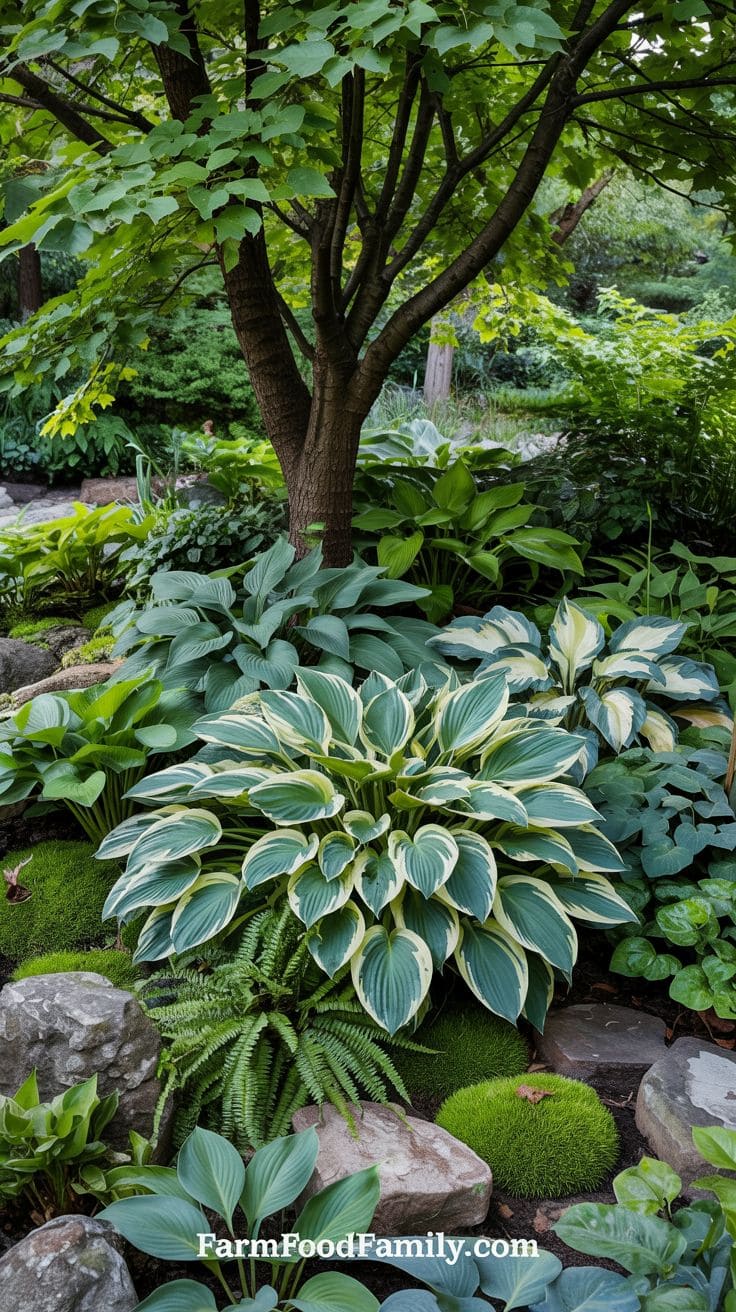
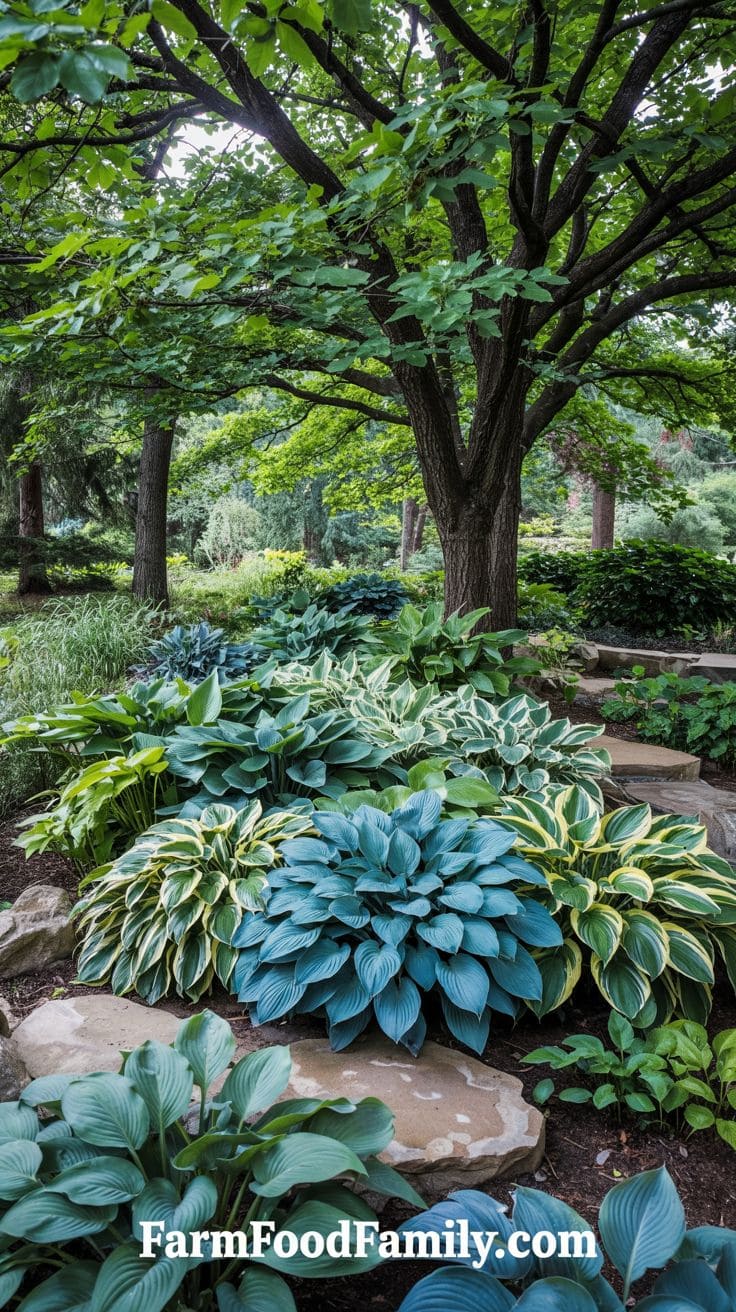
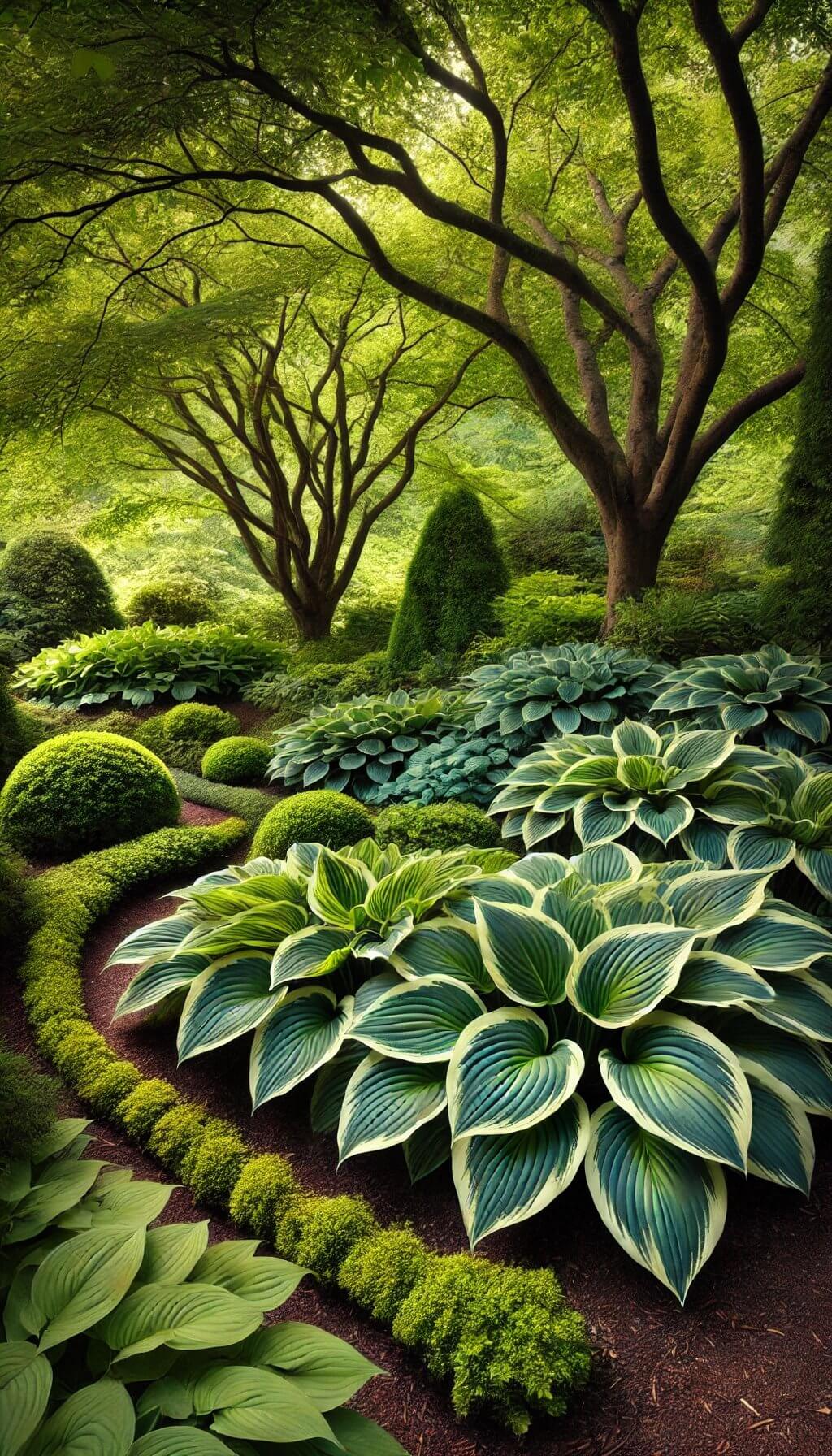
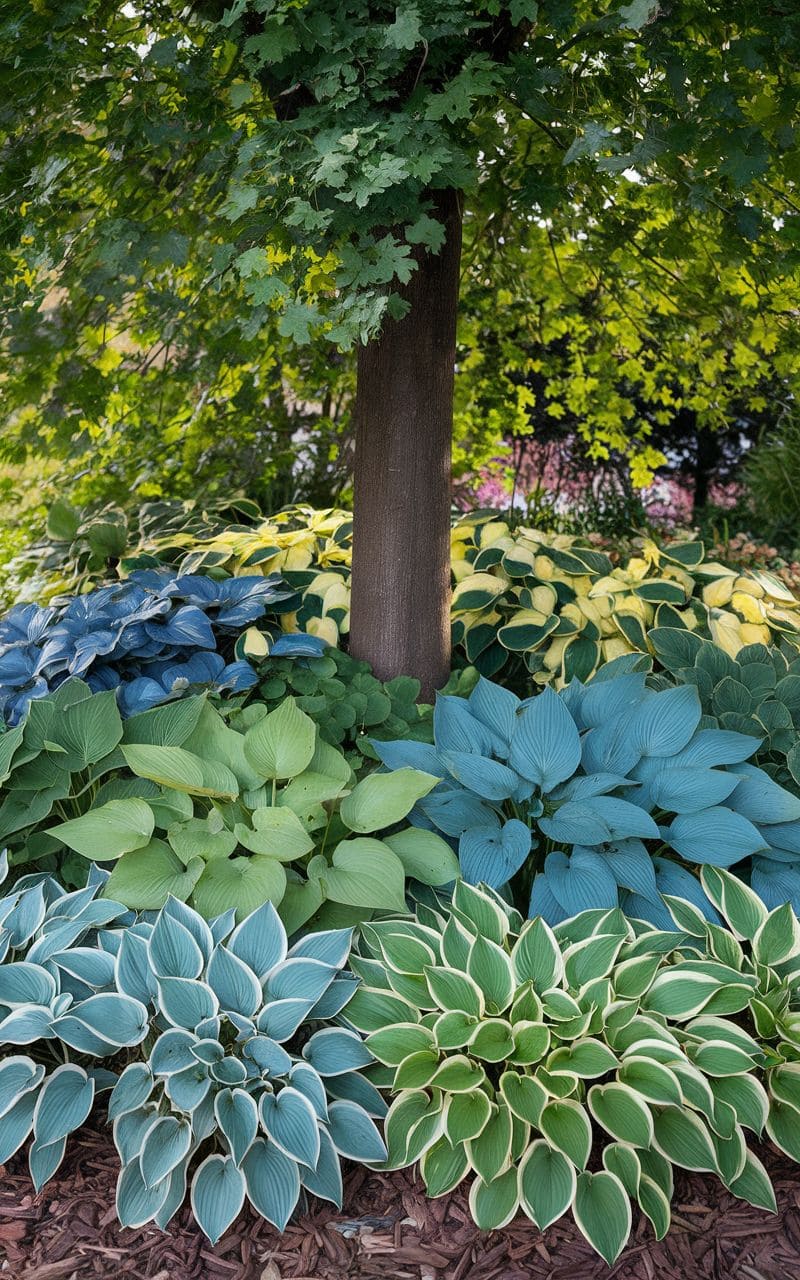
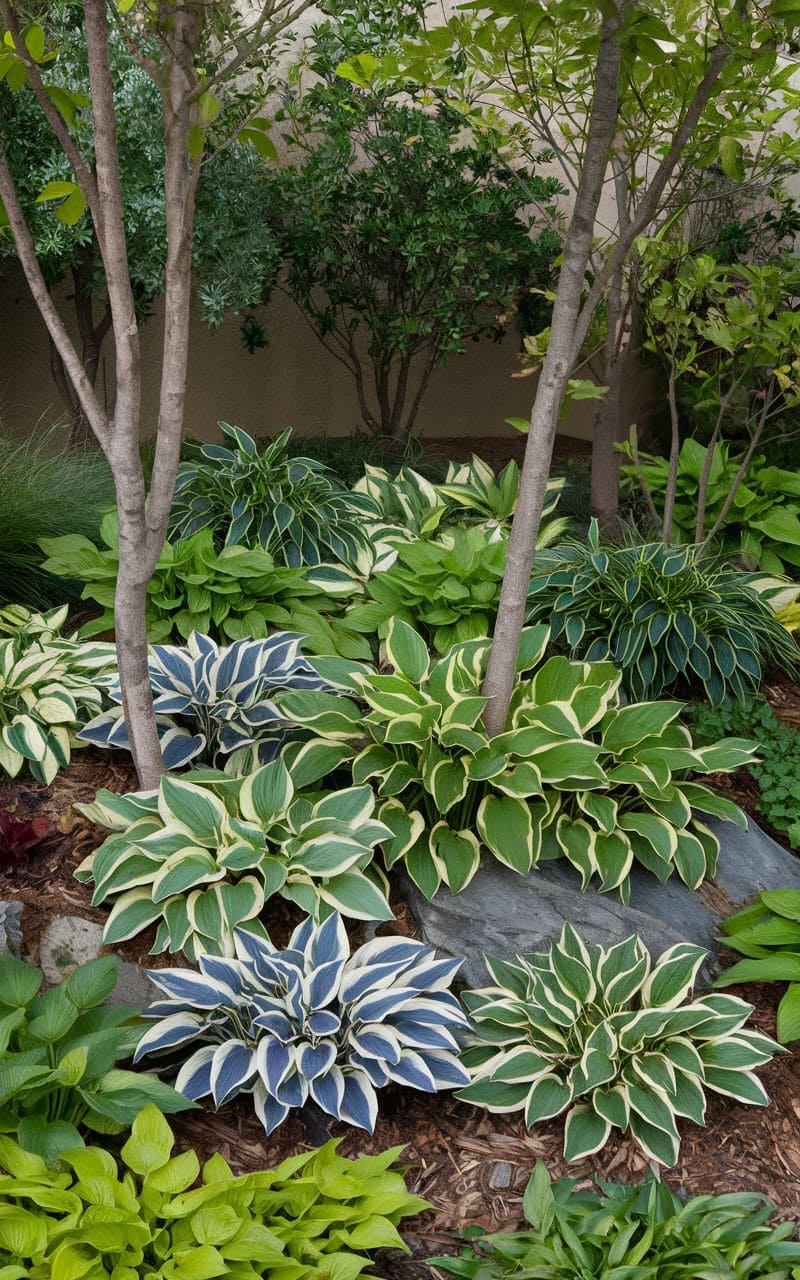
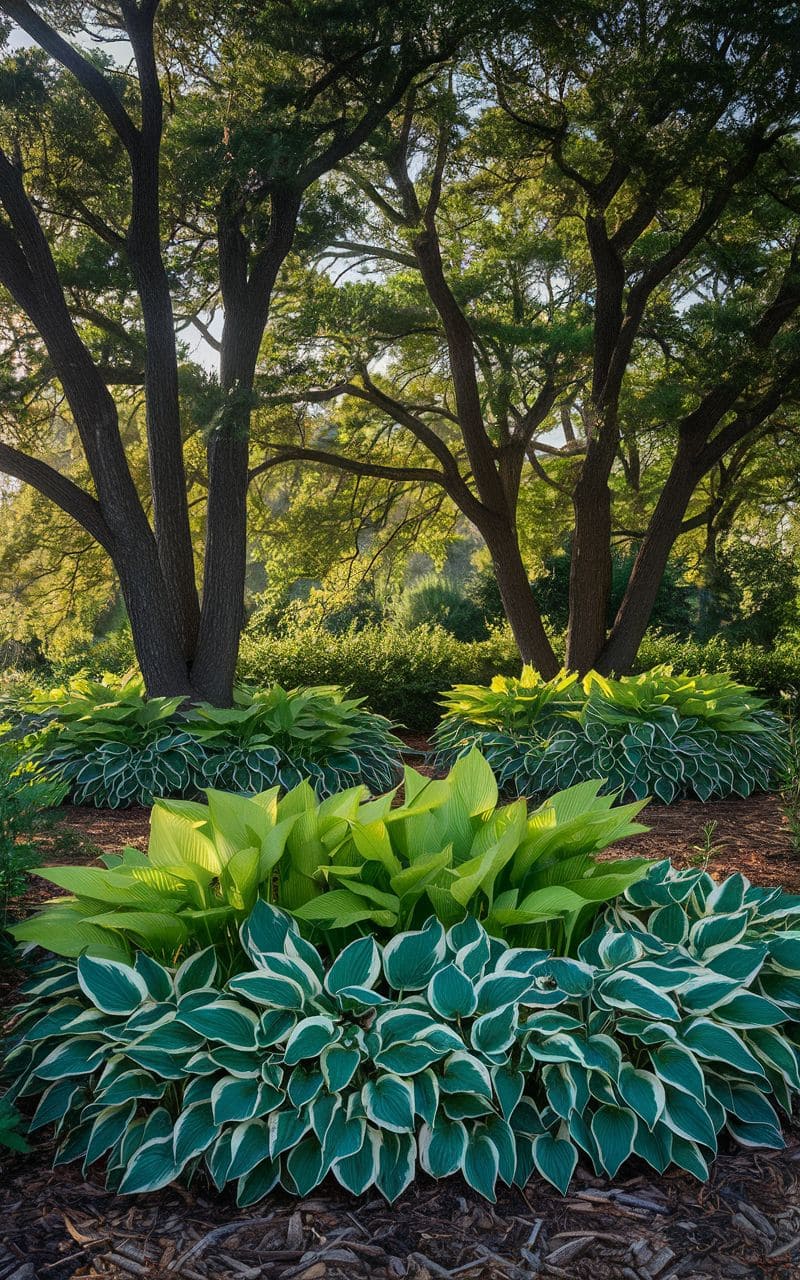
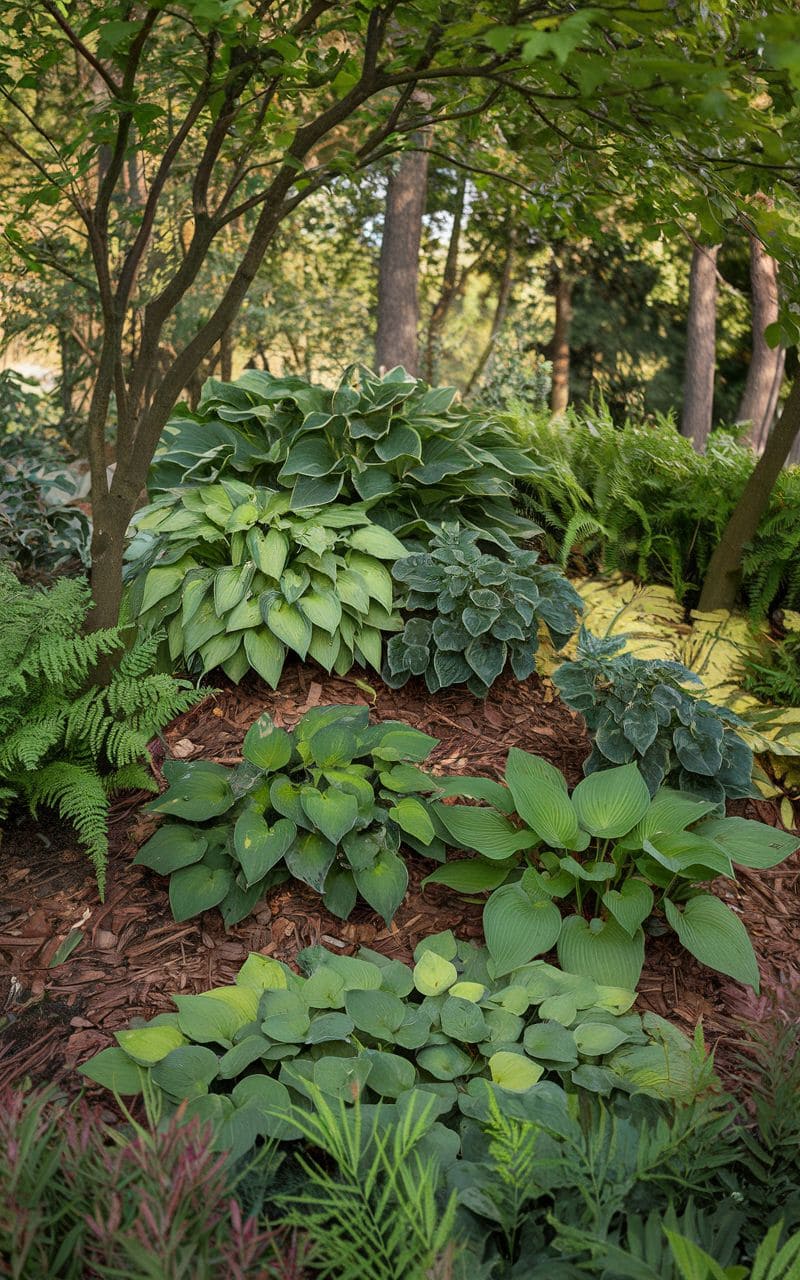
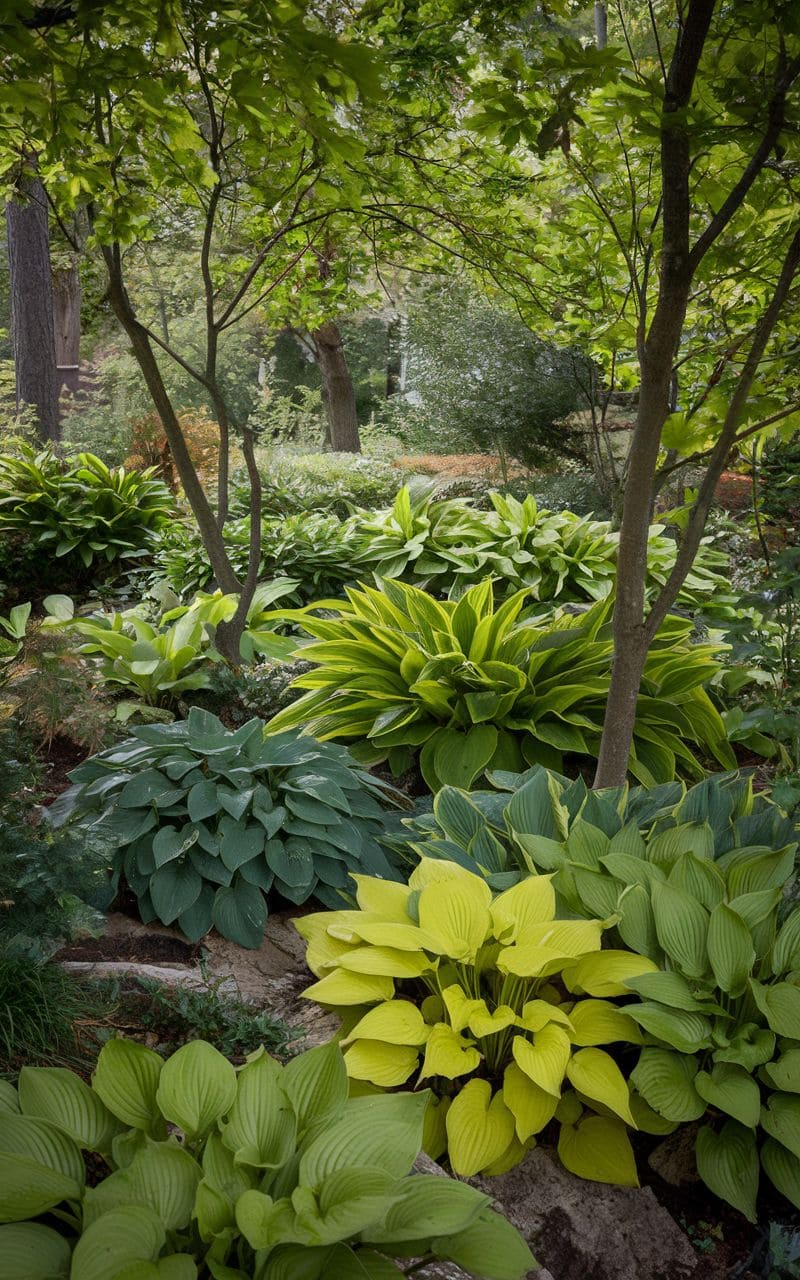
4. Planting Hostas Under Trees
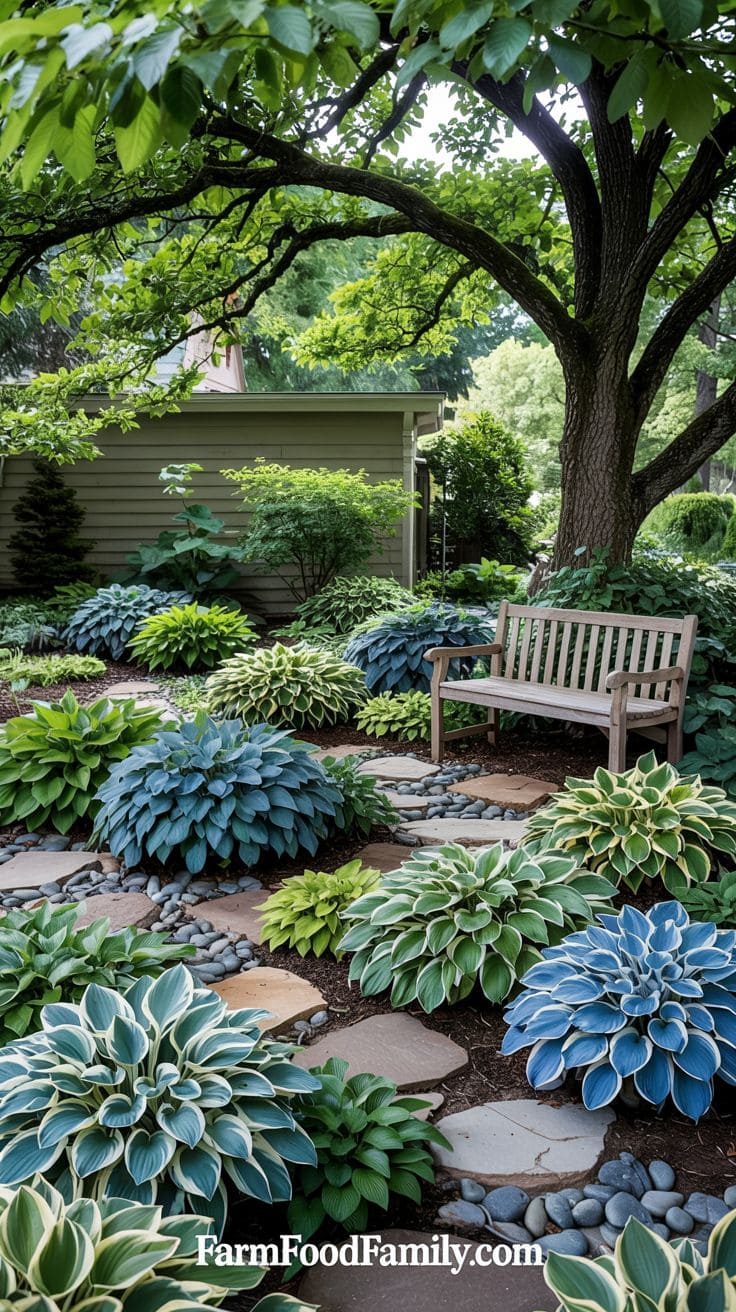
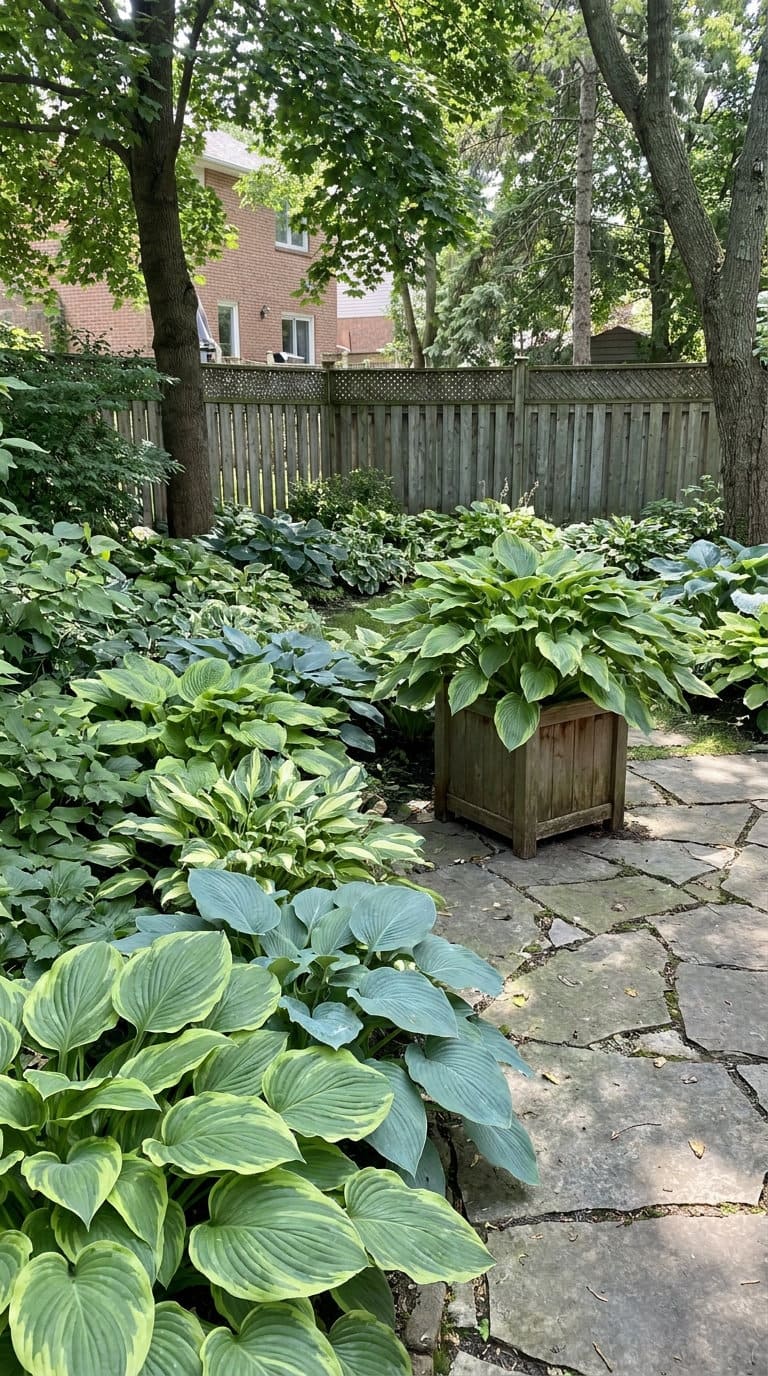
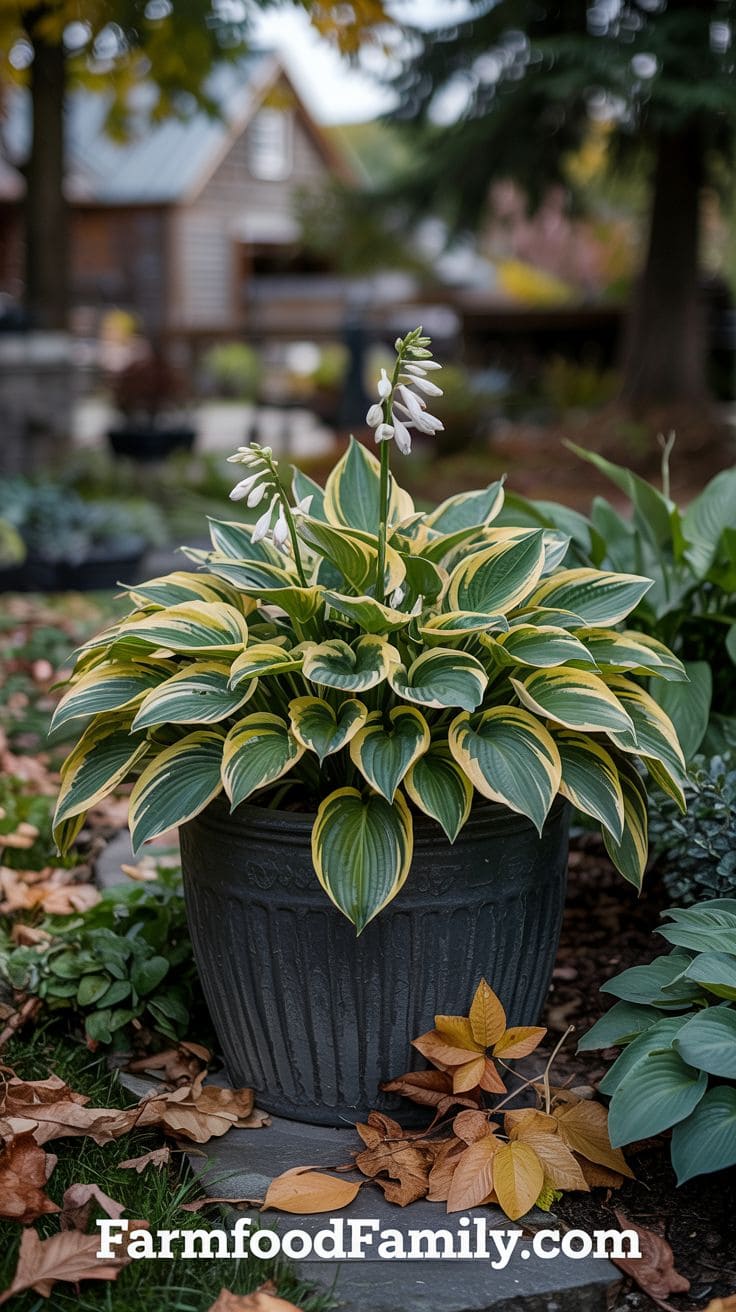
The shady region beneath older trees can be challenging to plant, yet hostas thrive where grass and sun-loving flowers fail.


Begin by removing any residual turf, then replenish the soil with compost to assist the roots compete with the tree.
Plant hostas in clusters to create an overlapping leaf mat beneath the canopy.
Use contrasting tones, such as rich greens, powdered blues, or cream-edged whites, to break up the visual mass and provide dimension.
The average homeowner spends $616/year on yard fixes that don't address the real problem. Find out what yours actually is — before you spend another dollar.
Take the Free Quiz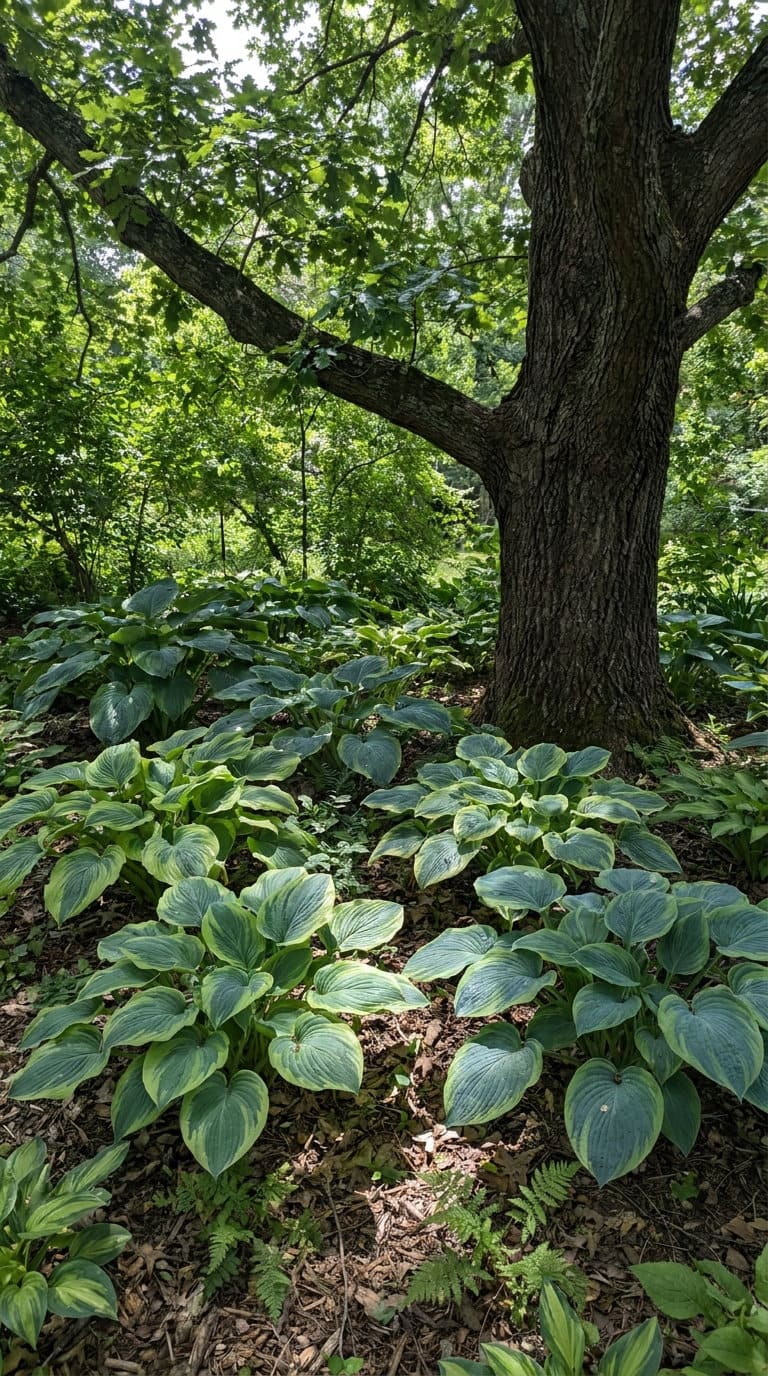
Grounding items, such as huge stones or rustic garden sculptures, can offer flair.
This setup is both polished and organic, transforming a problem area into one of the most attractive focus spots in your yard.
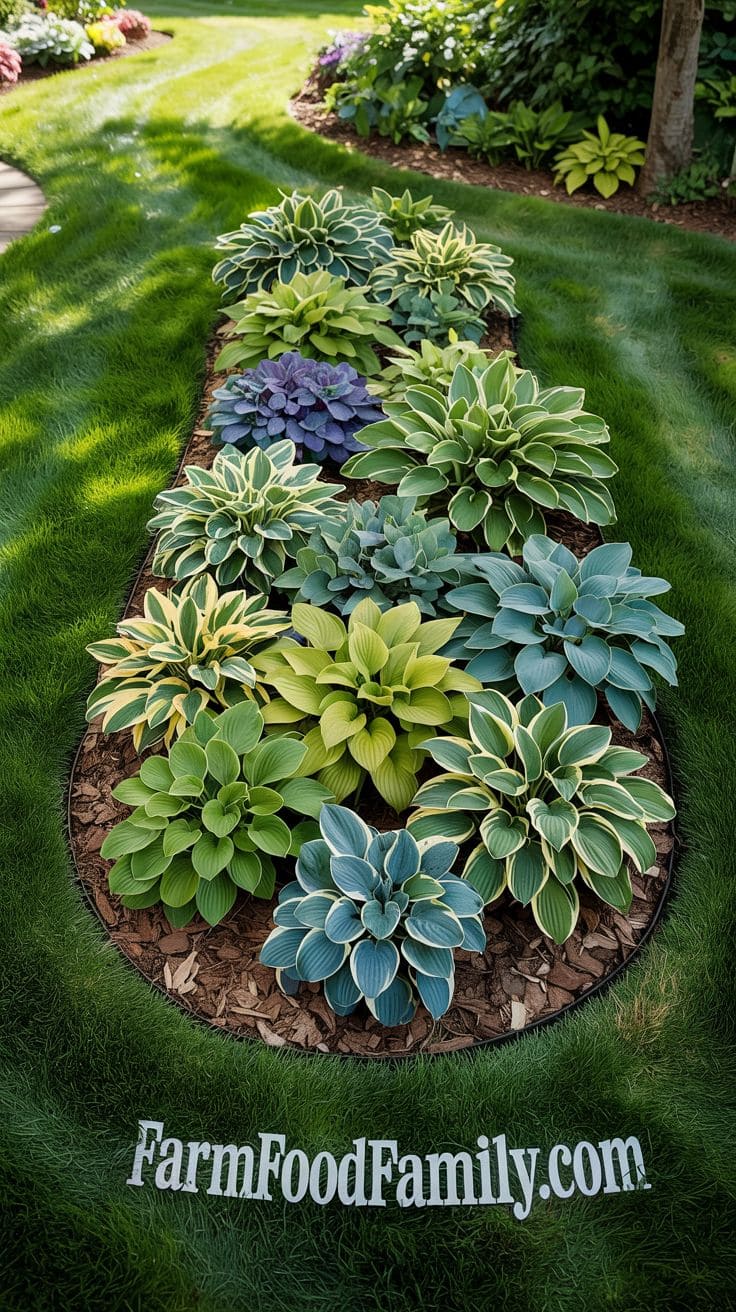
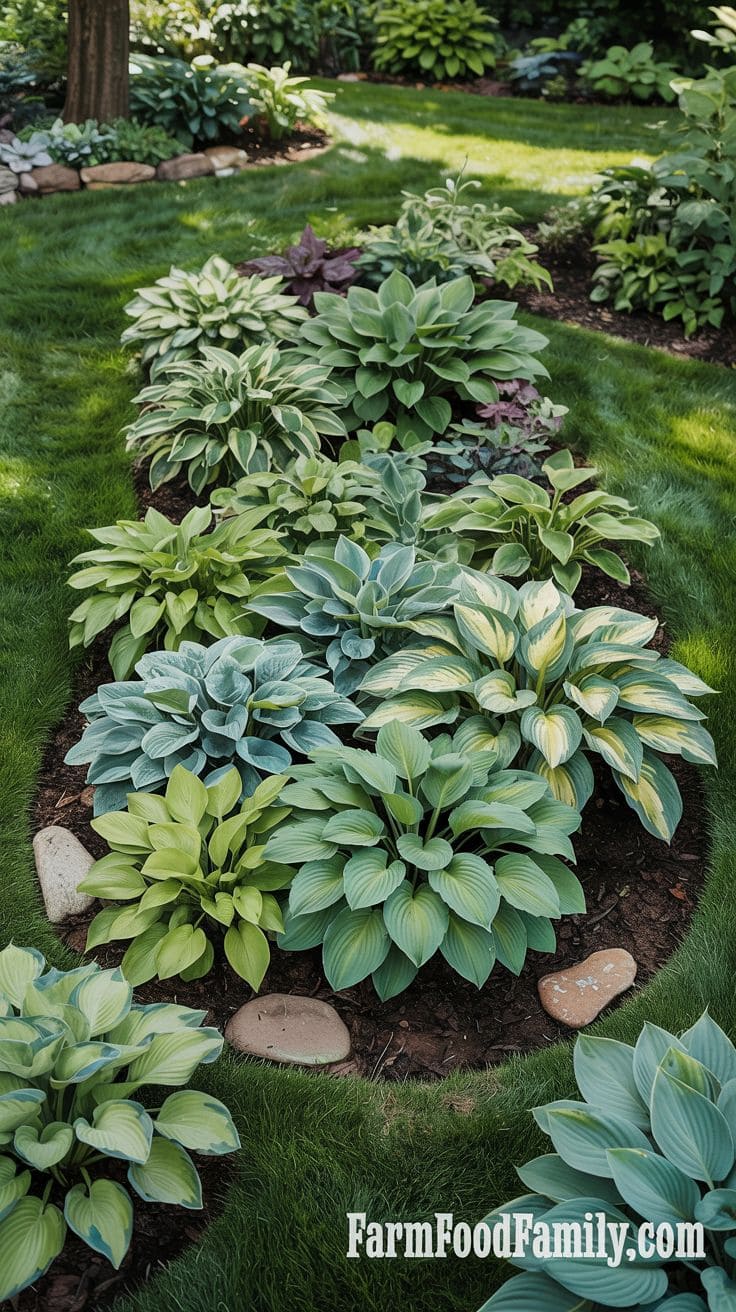
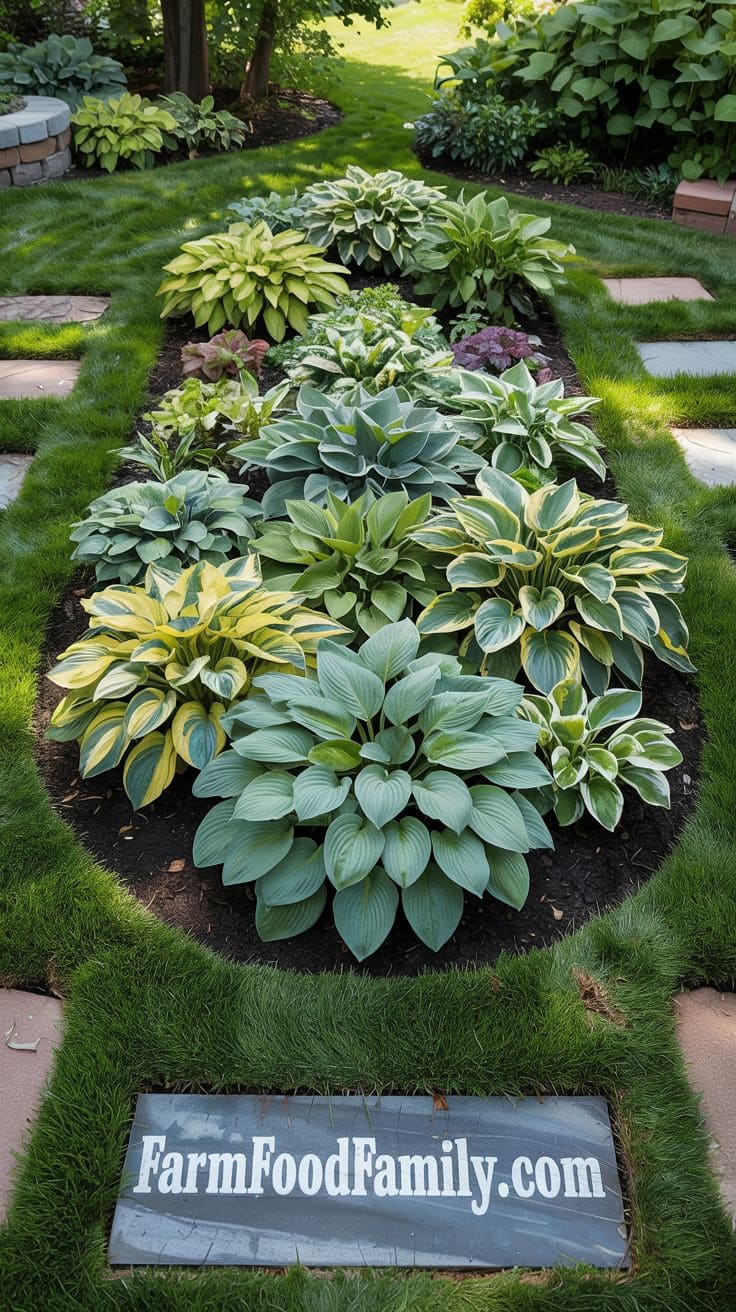
5. Hosta Island Beds for Open Lawns
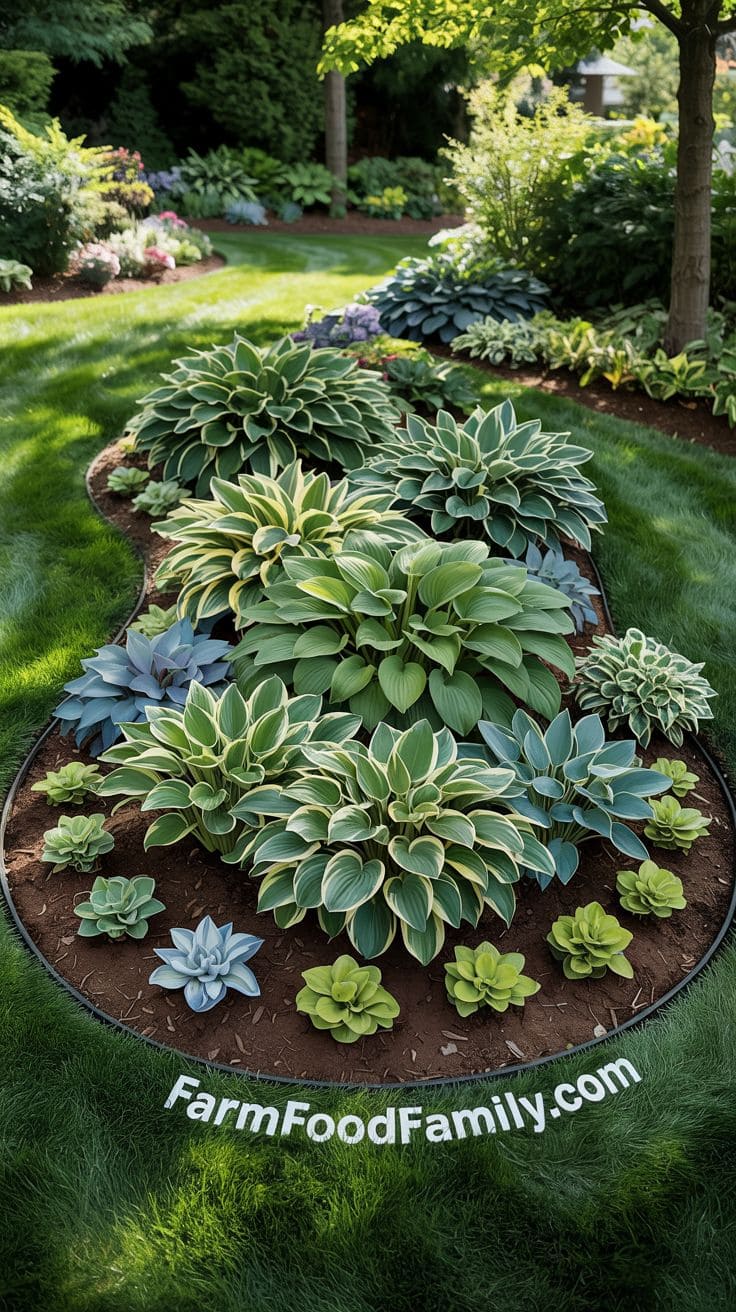
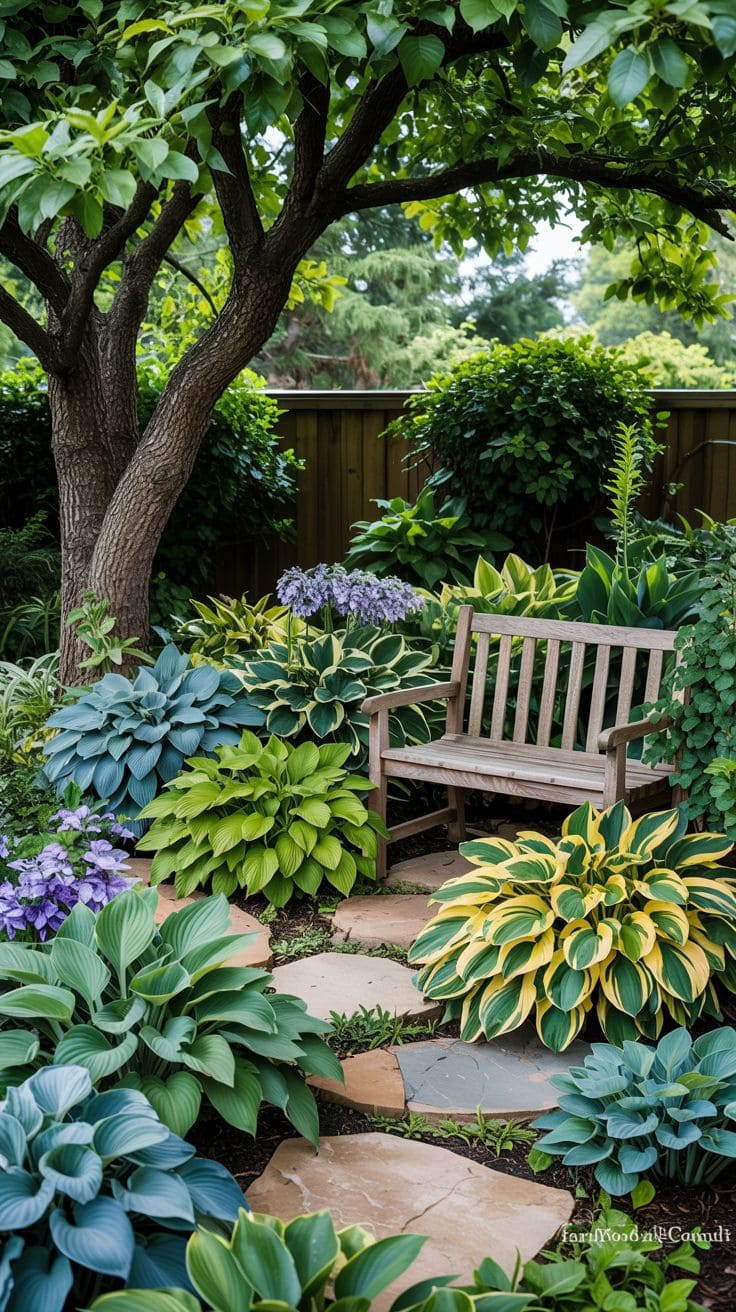
Plant a hosta island in the center of a lawn to form a sculptural garden bed.
Choose a spherical or oval form and fill it with numerous layers of hostas, using taller varieties like ‘Sum and Substance’ in the center and more compact ones along the sides.
To add seasonal color, use shade-tolerant blooming plants such as bleeding heart or Japanese forest grass.
This technique works nicely in front yards or large open spaces that require softening without blocking the view.
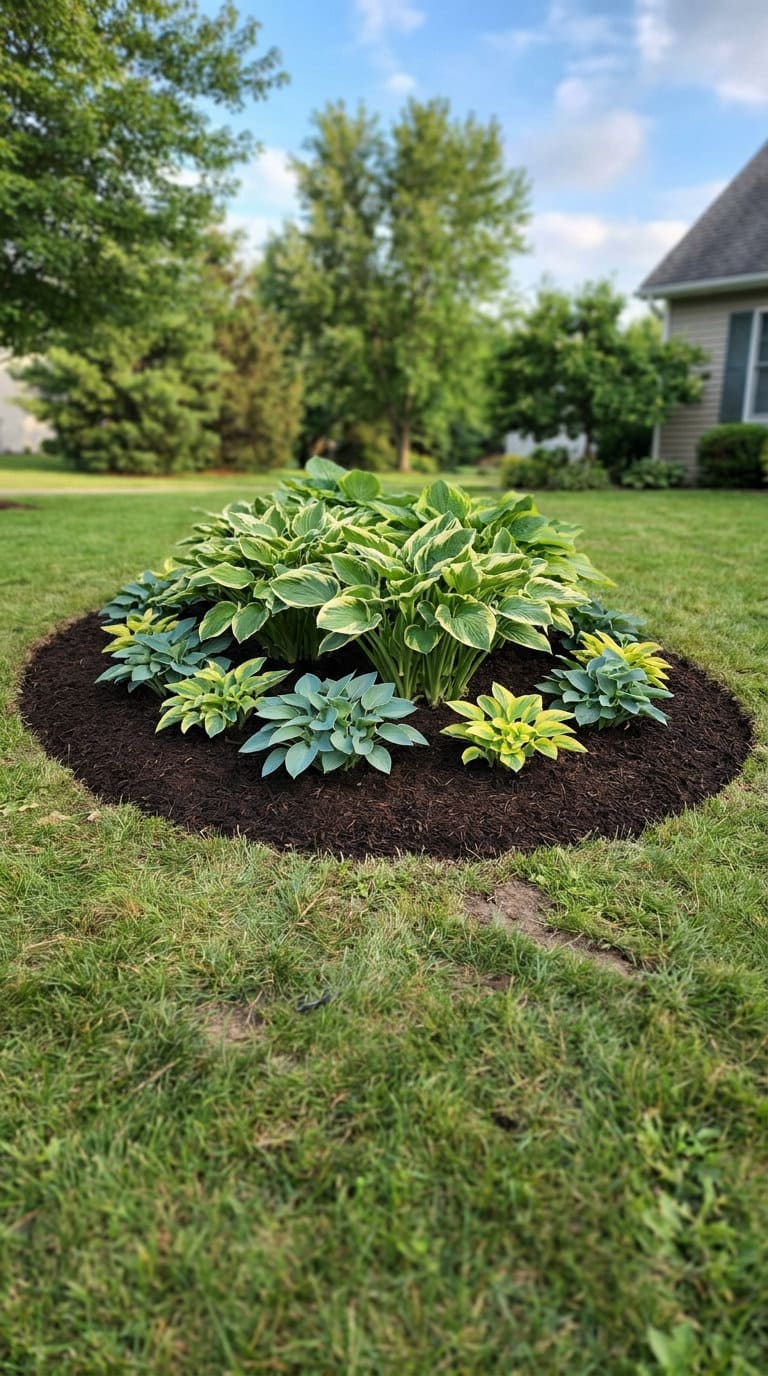
For neat definition, ring the bed with mulch or stone, then trim the grass around it to maintain balance.
It catches the eye and gives your grass a more purposeful, planted appearance.
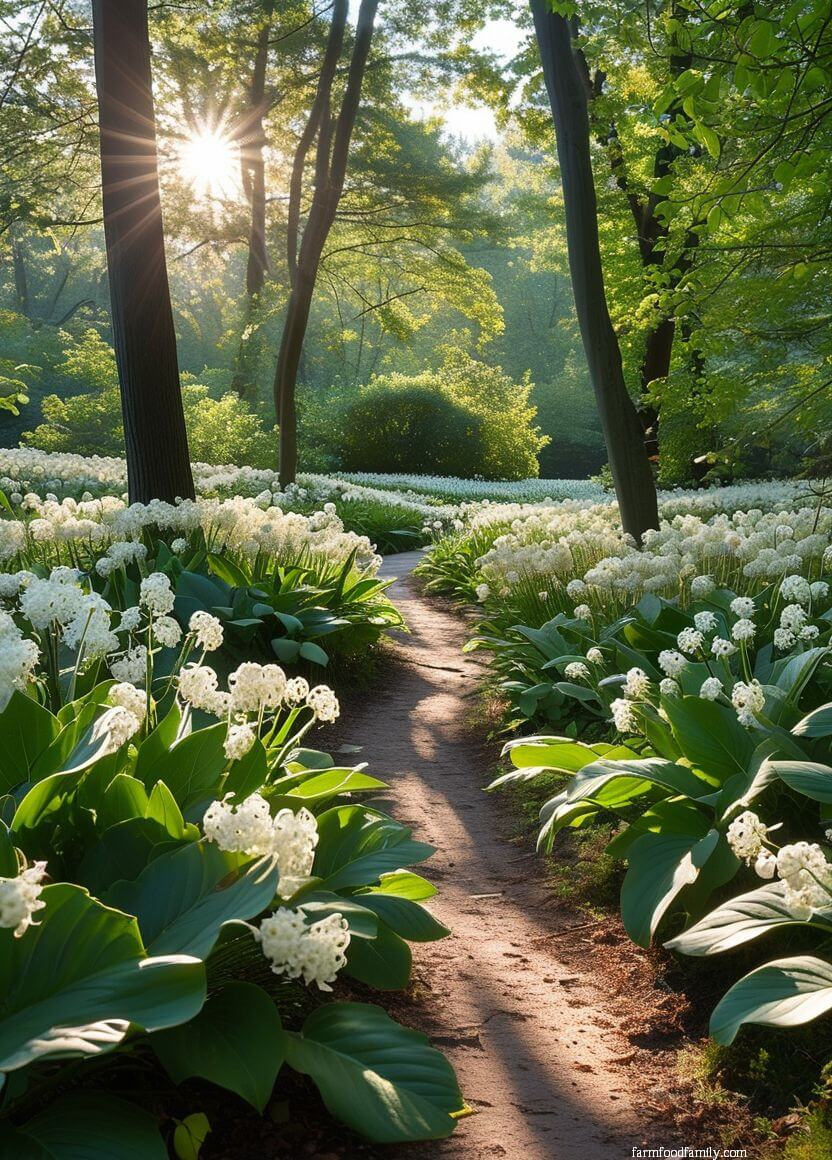
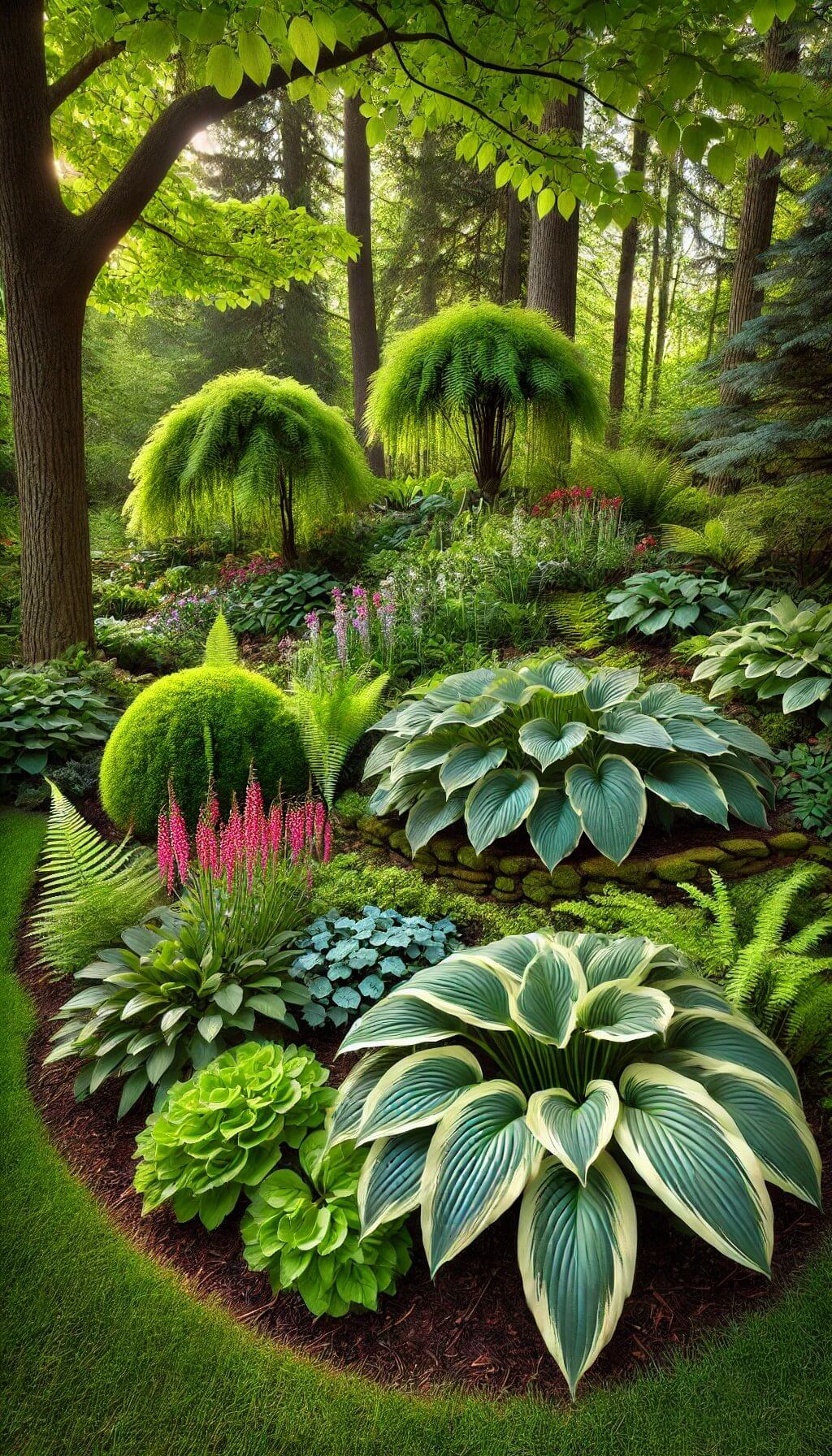
6. Shade garden oasis
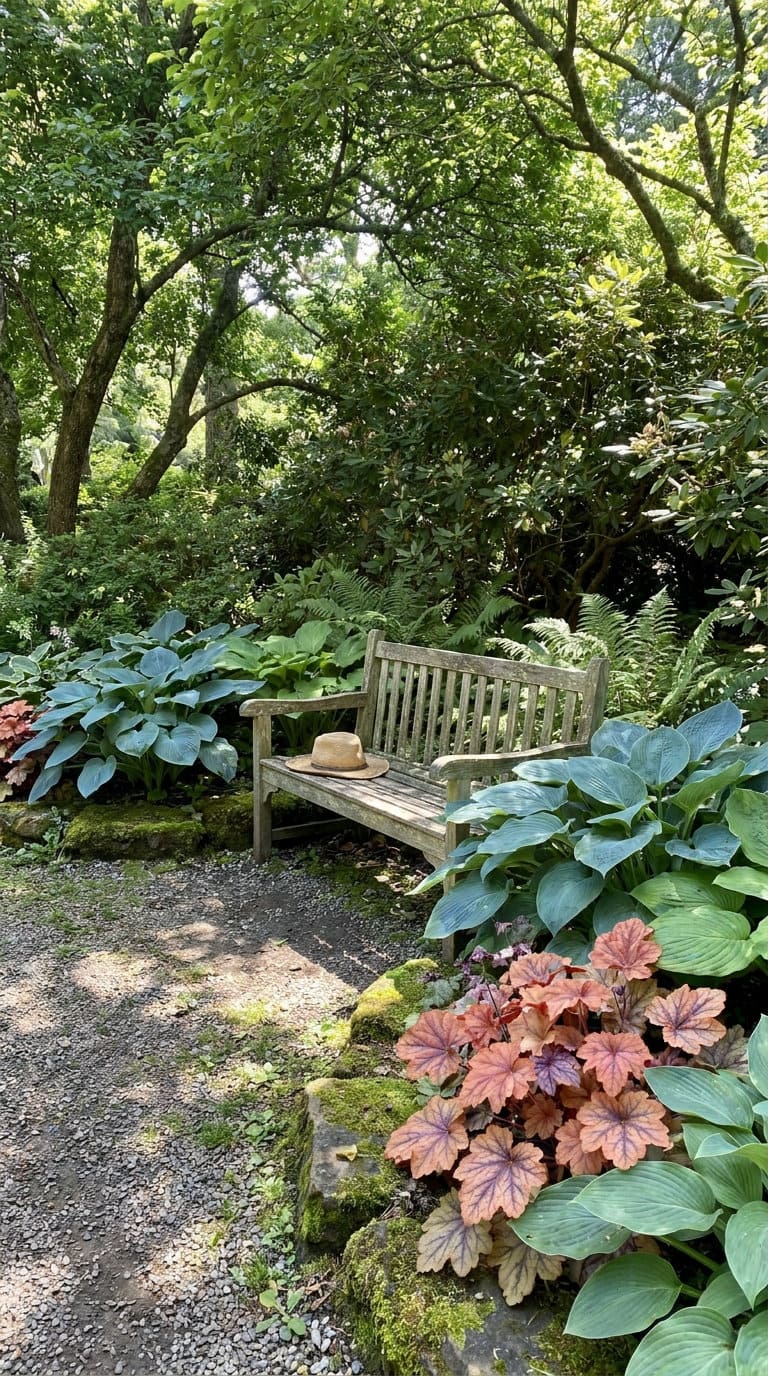
Combine hostas with other shade-loving plants (ferns, hellebores, heuchera) and a bench or small seating area to turn a shady, often-neglected corner into a genuine destination rather than just a plant-filled gap.
See our shade garden ideas article for more plant pairings that thrive in low light beyond hostas alone.
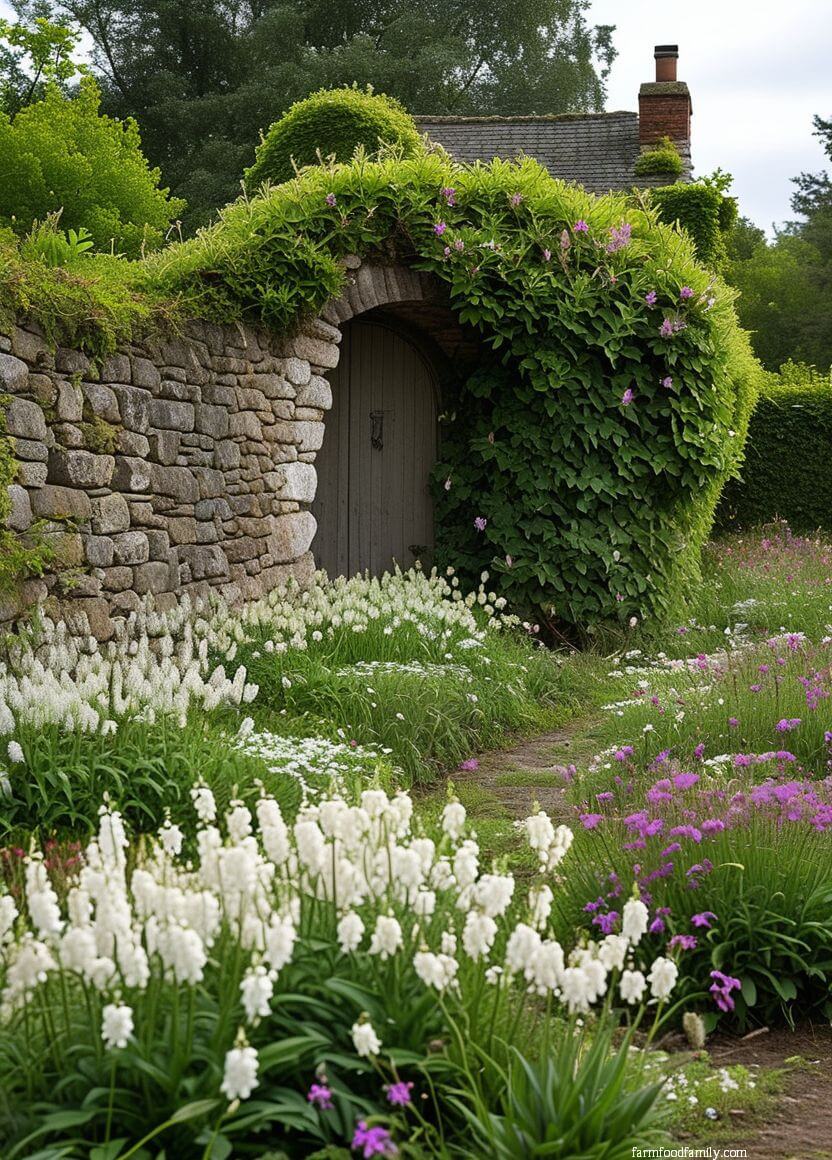
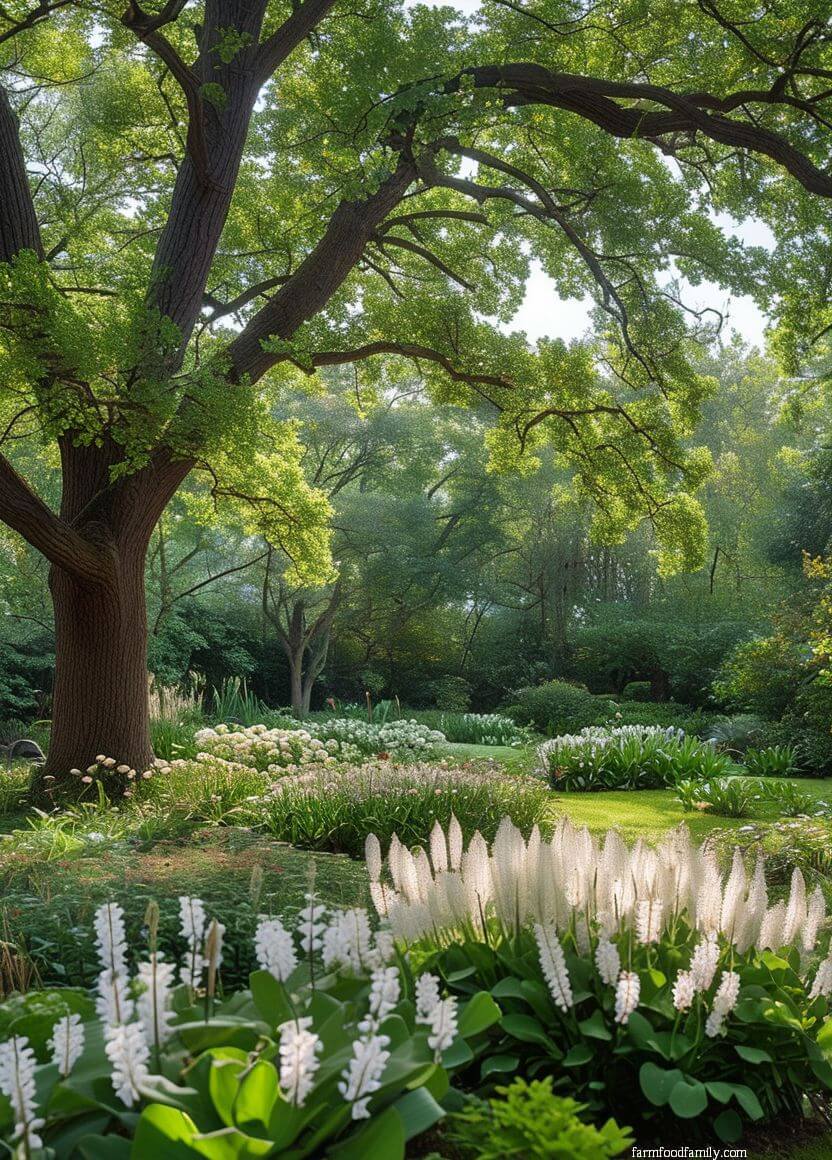
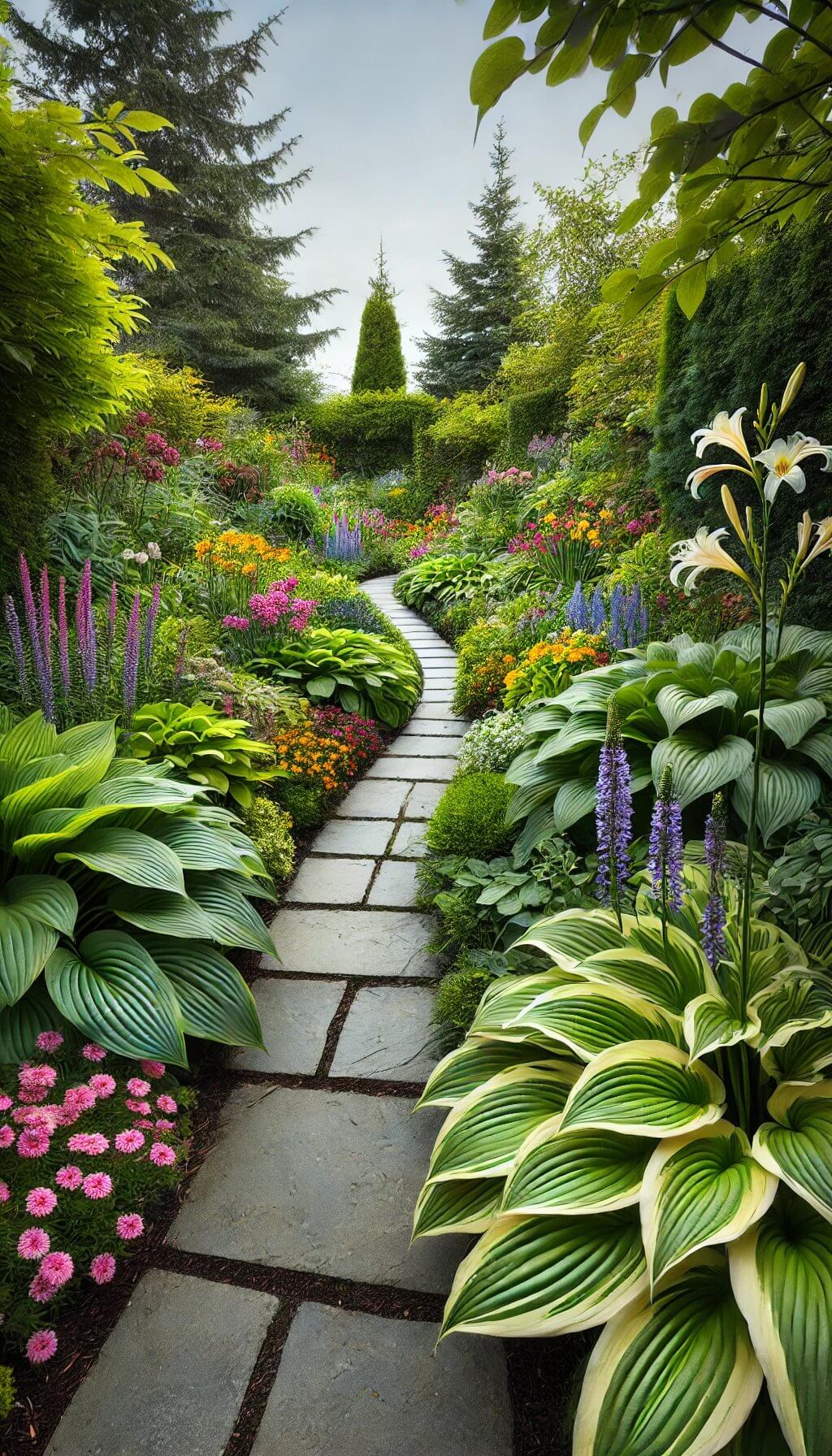
7. Hosta border edging
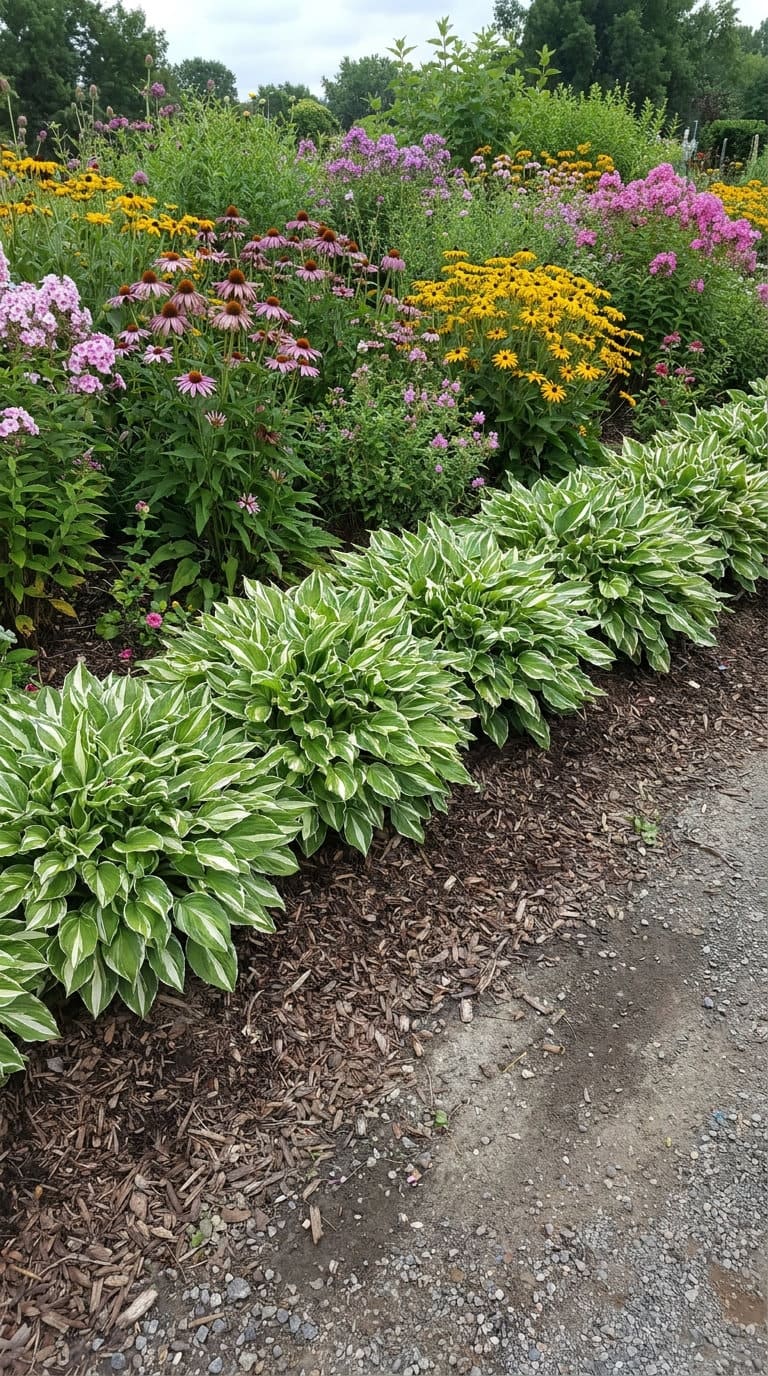
Different from the pathway edging idea above (#2): this is about lining the front edge of a larger mixed flower or shrub bed, rather than a walking path, using a single low-growing hosta variety in a consistent, repeated row for a clean, unified border line.
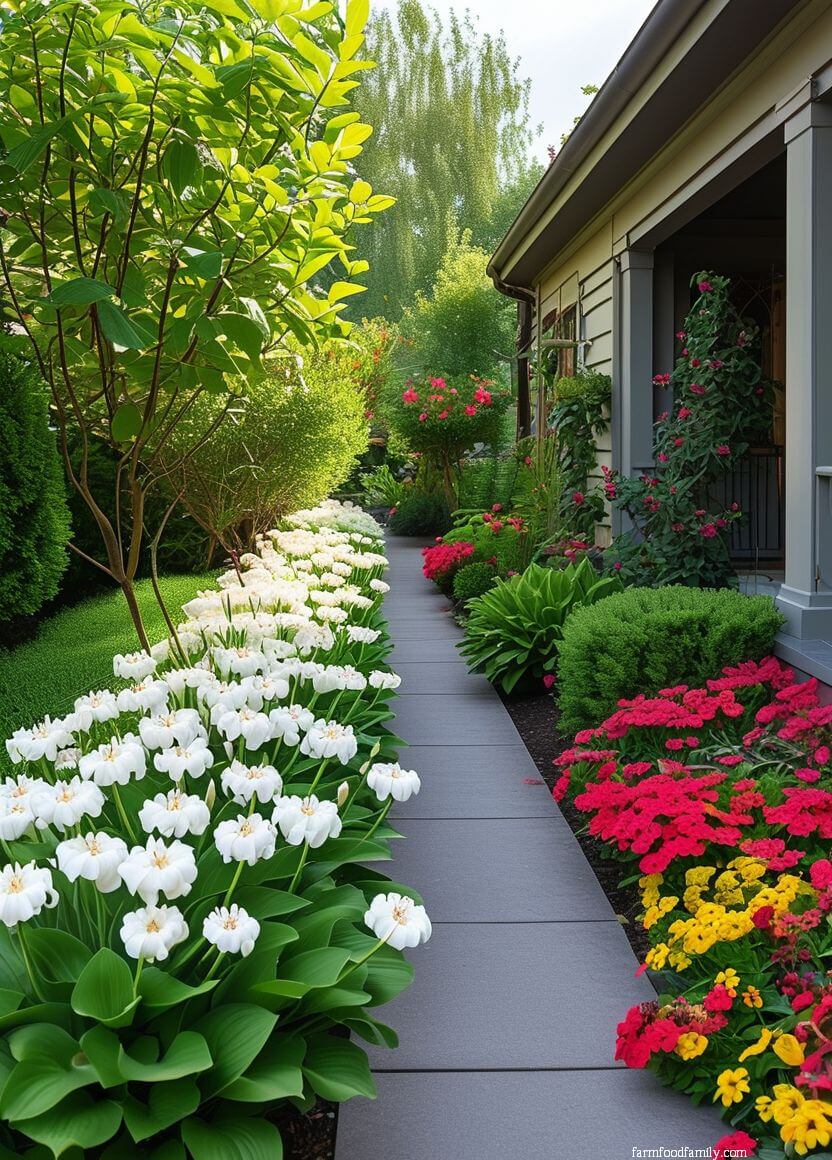
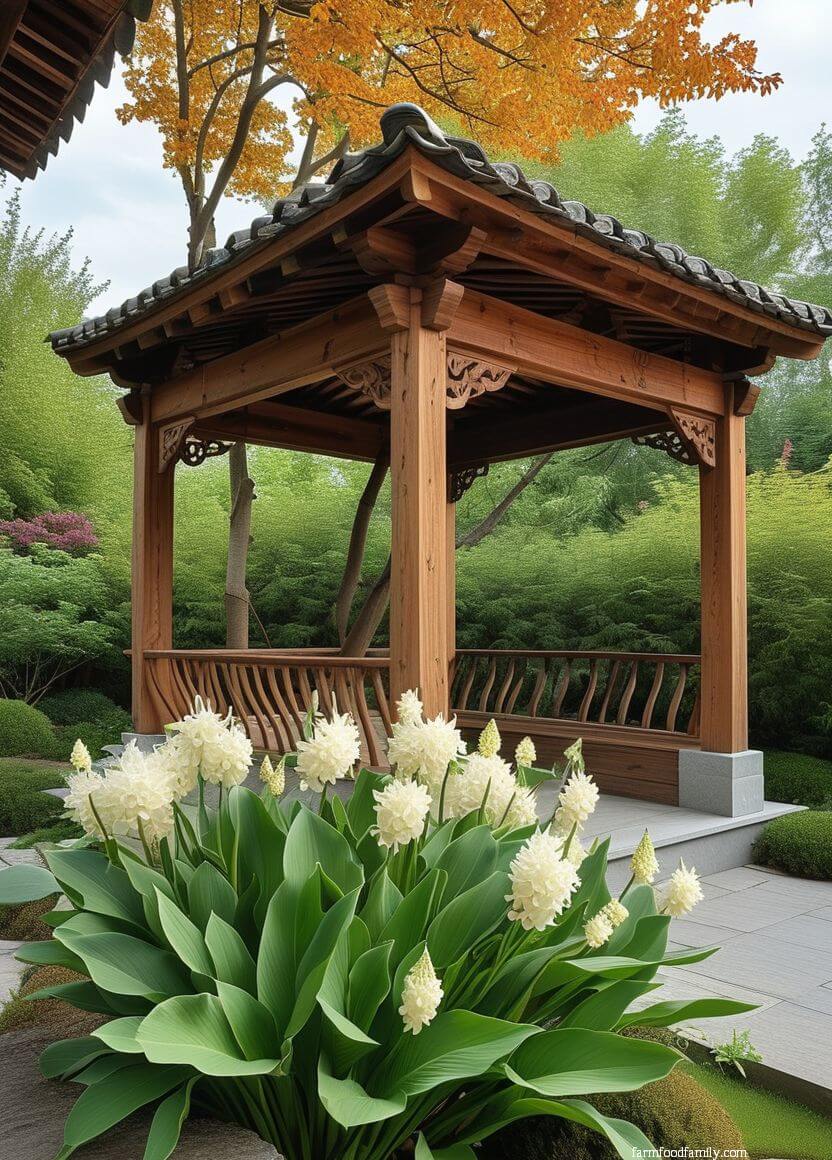
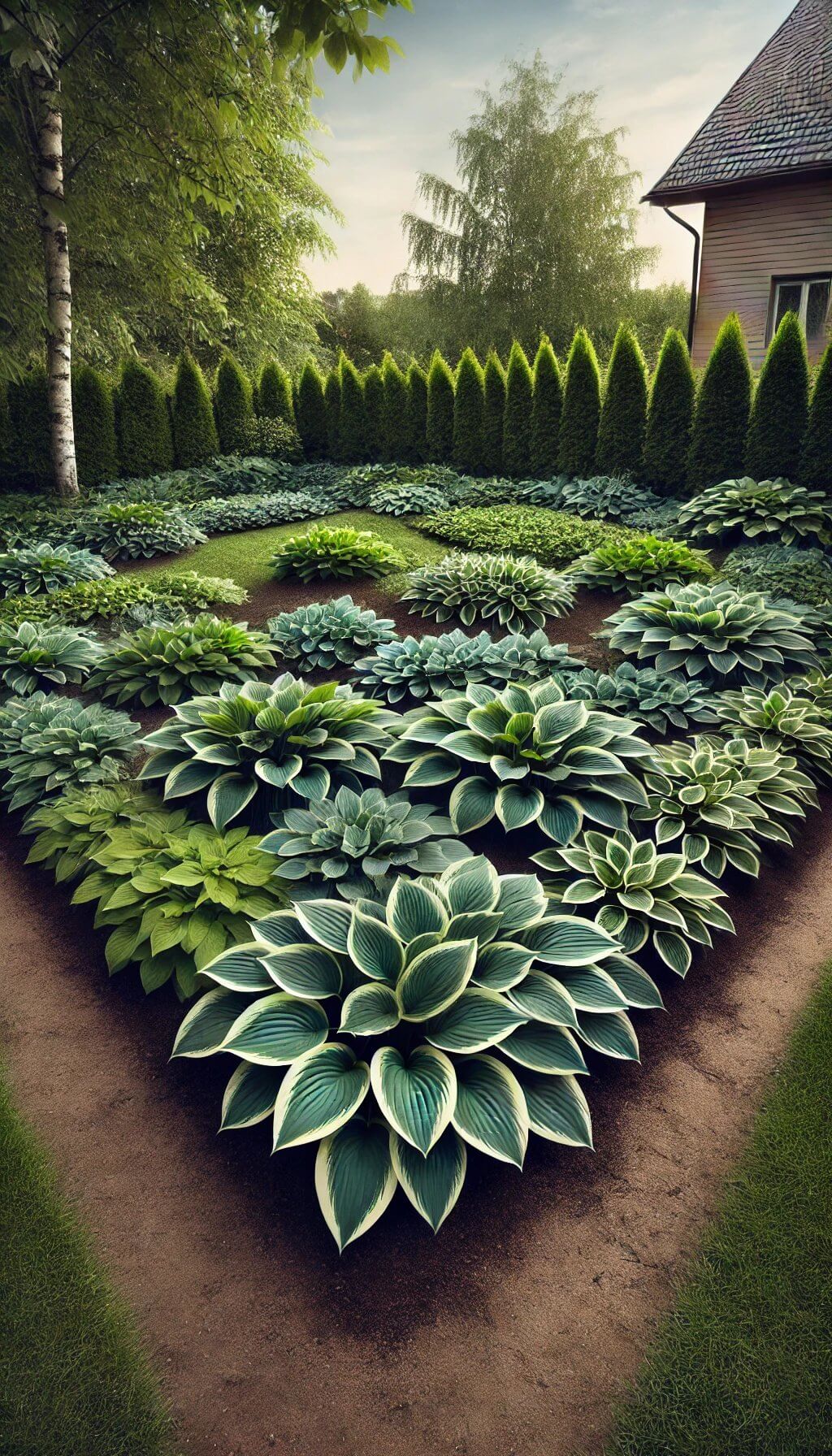
8. Hosta ground cover
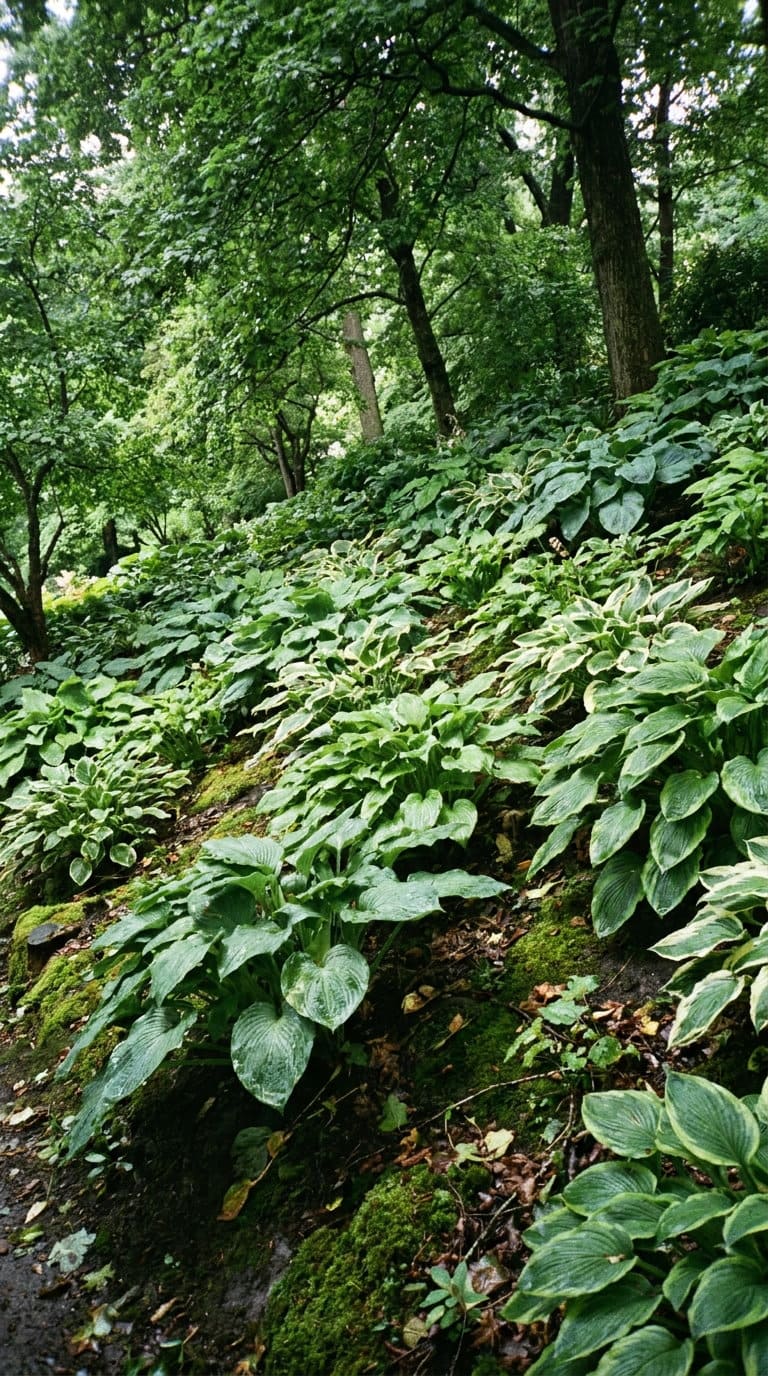
Hostas work genuinely well as living ground cover in a shaded area too steep, rocky, or root-filled for grass, especially spreading, lower-growing varieties planted close enough together that their leaves eventually overlap into a solid canopy.
This suppresses weeds naturally once established, since little light reaches the soil underneath the leaf cover.
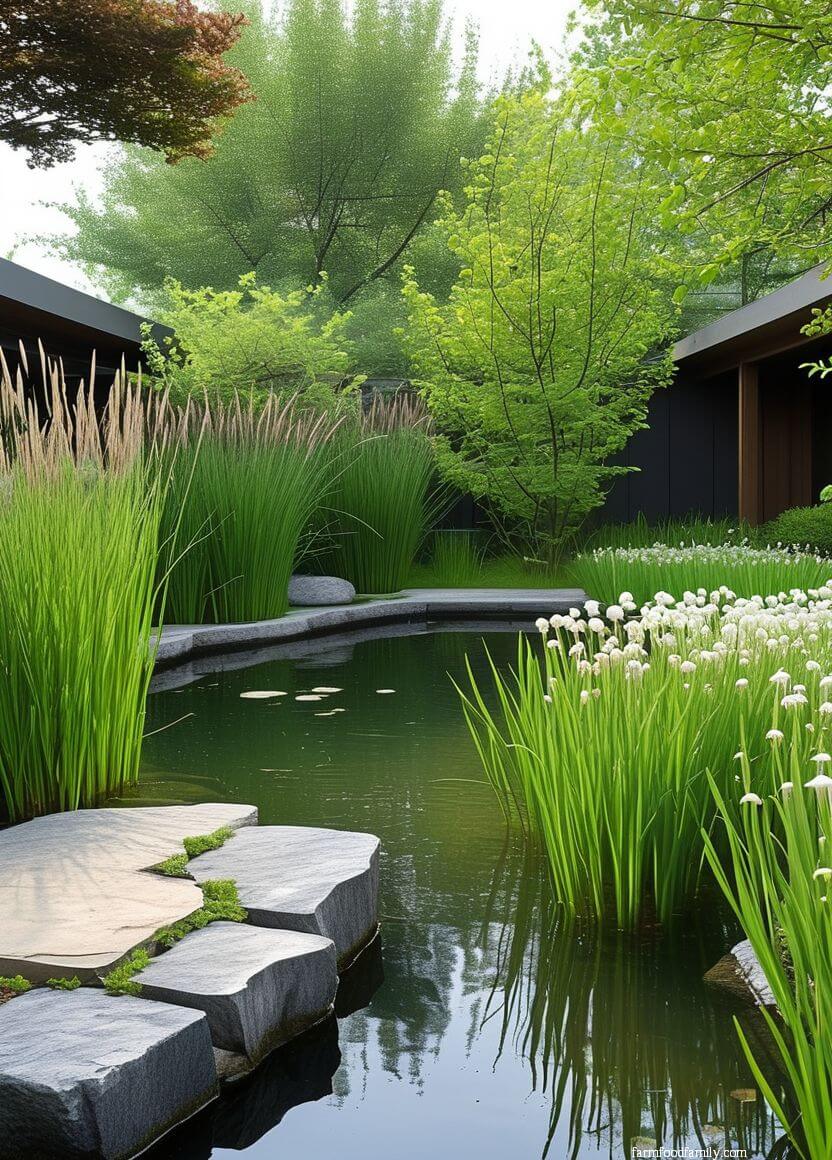
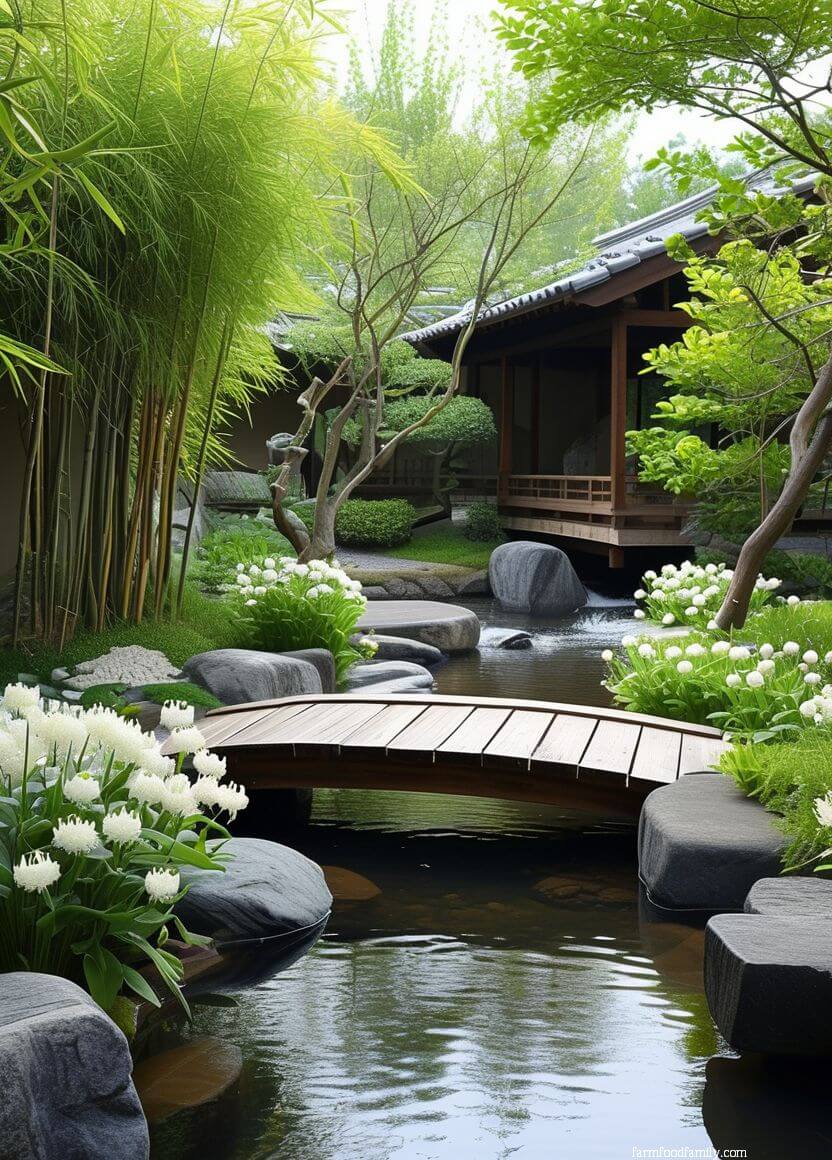
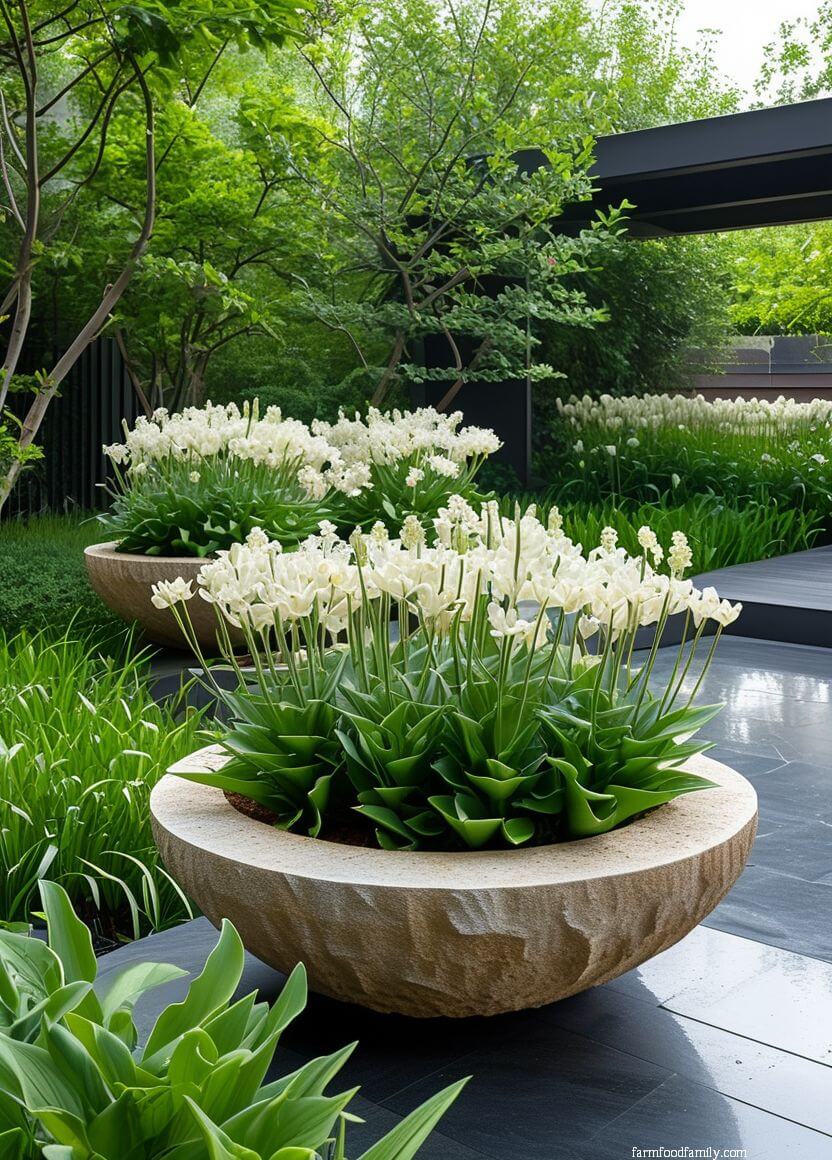
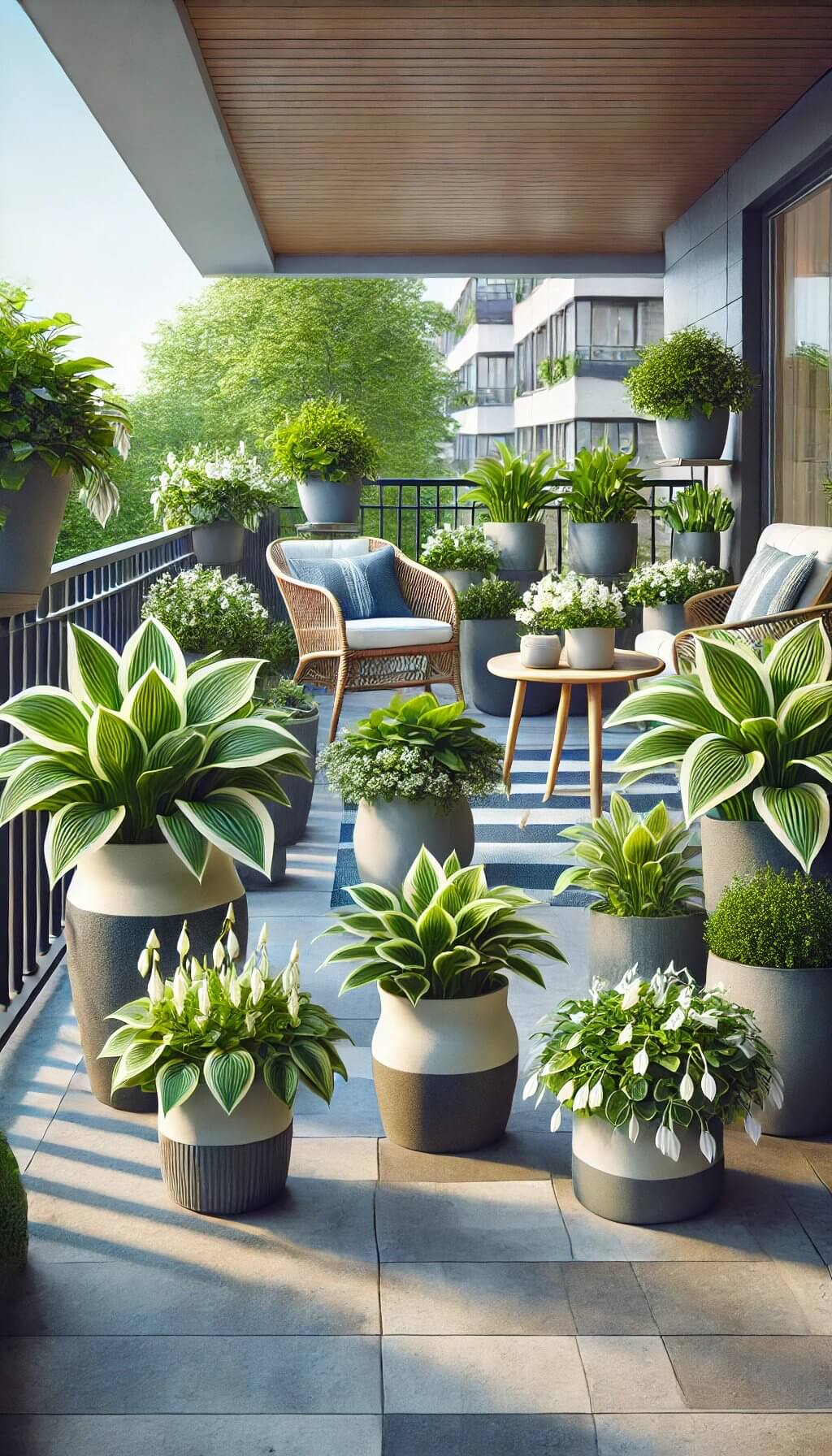
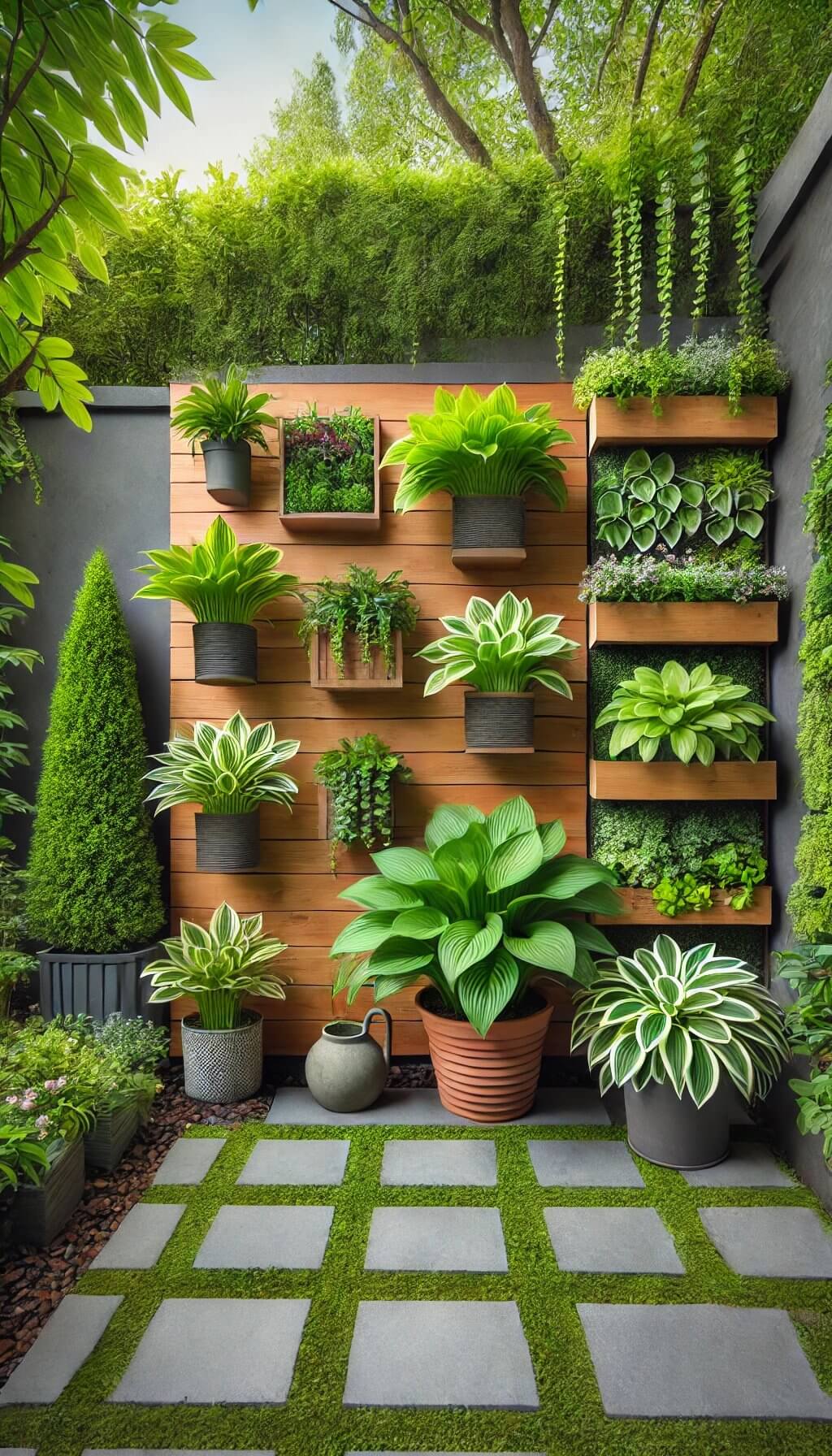
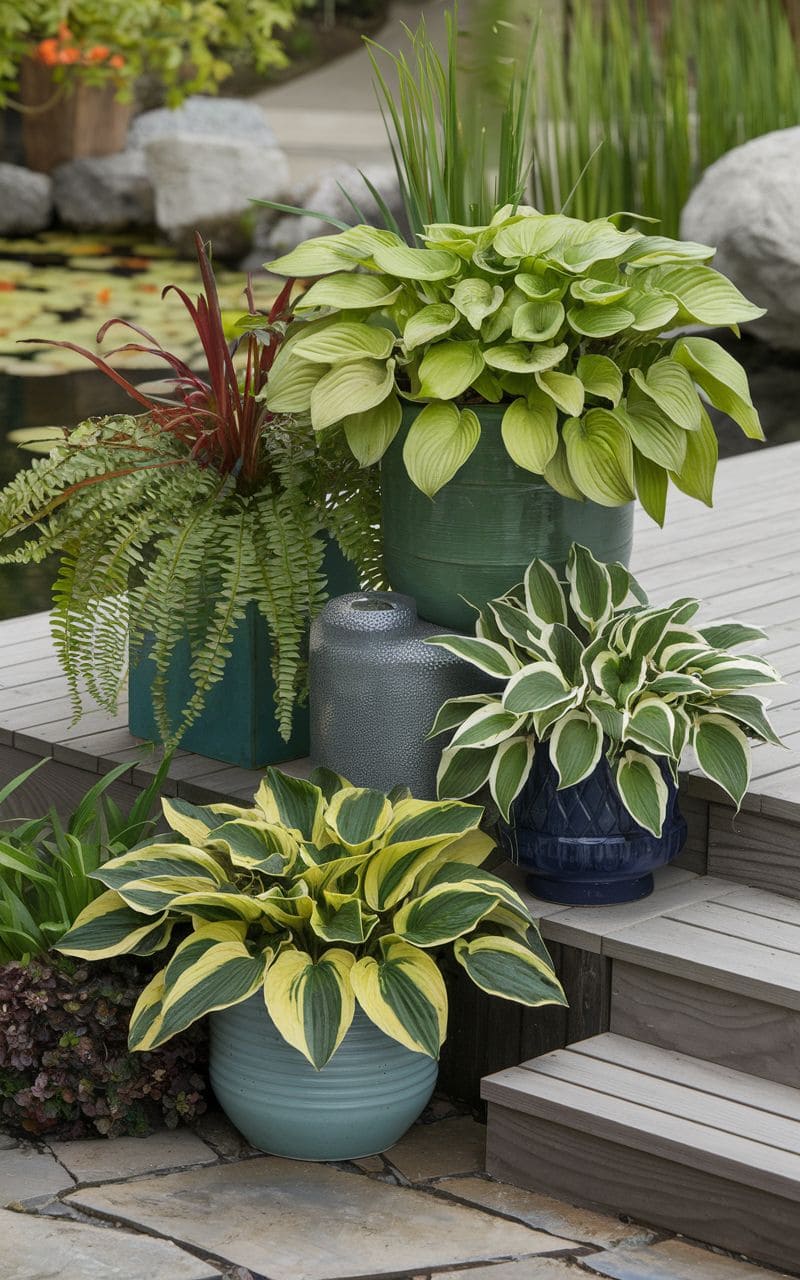
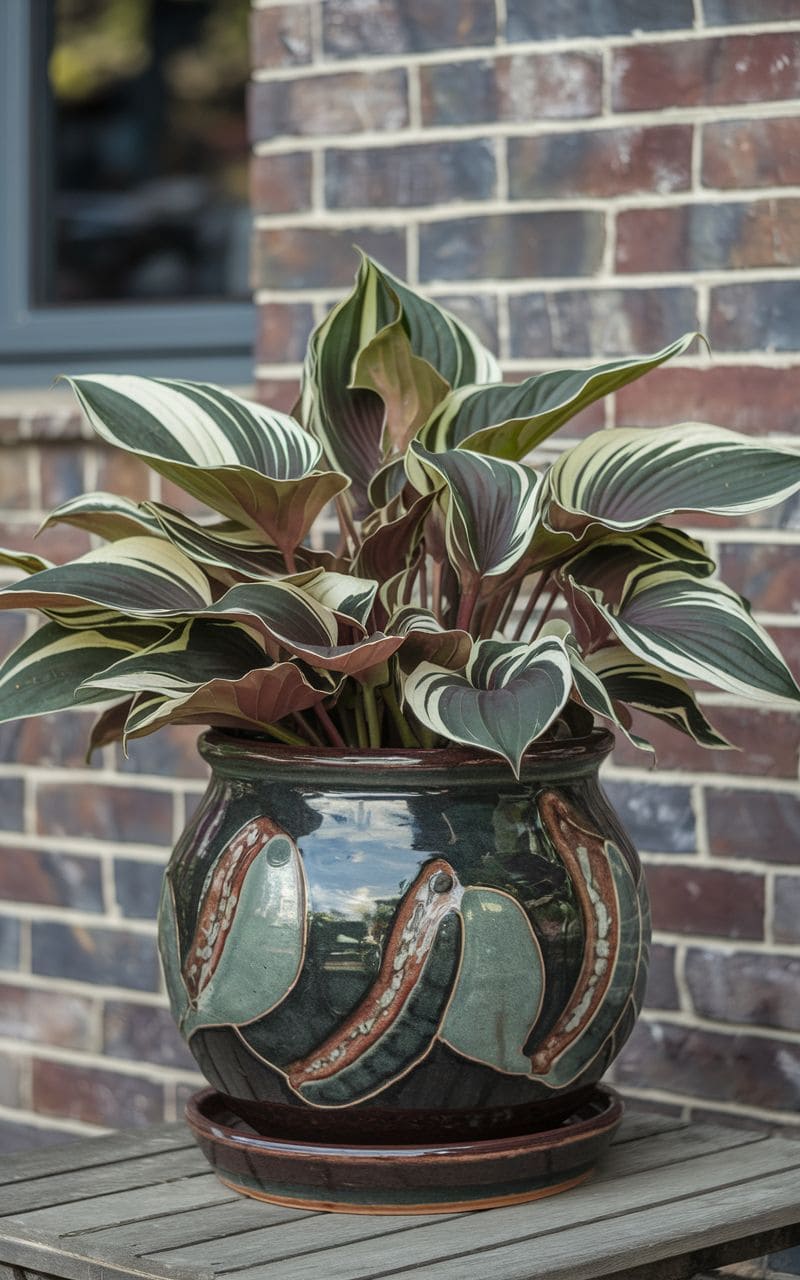
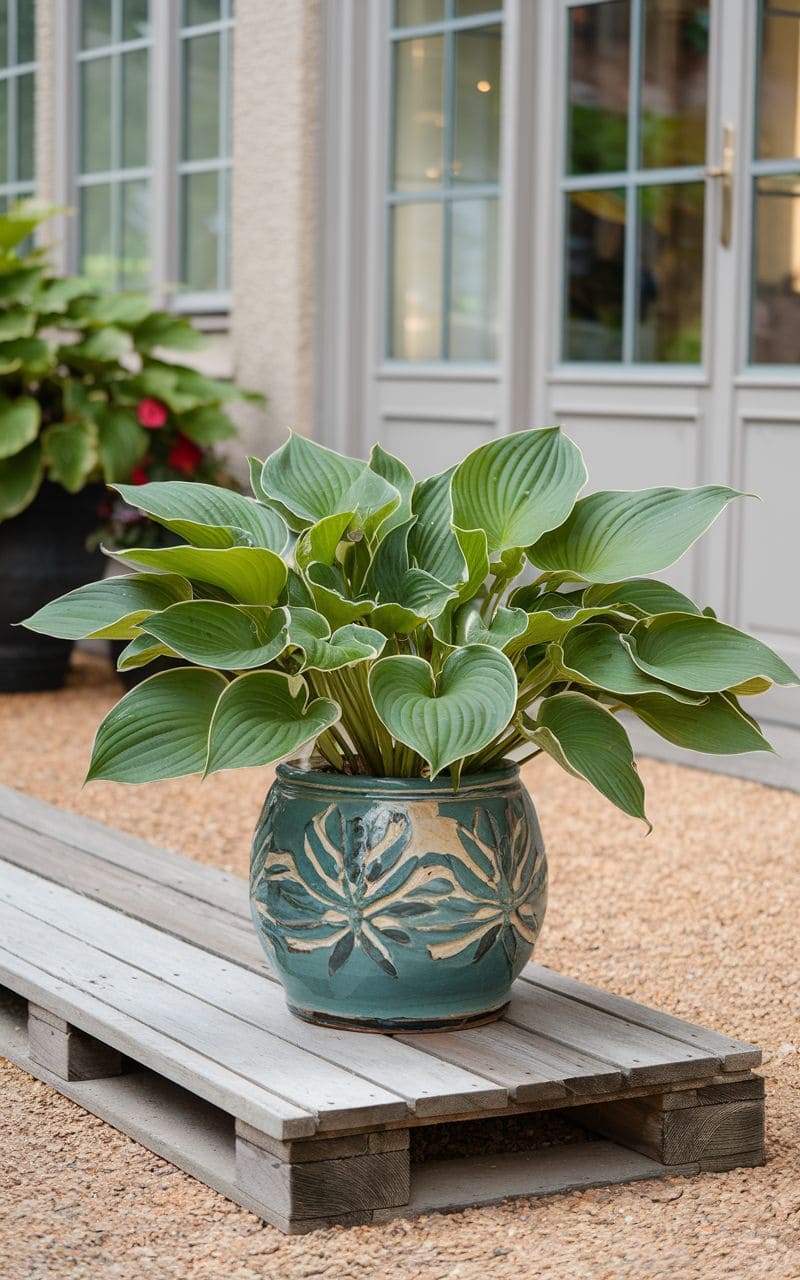
9. Container gardening with hostas
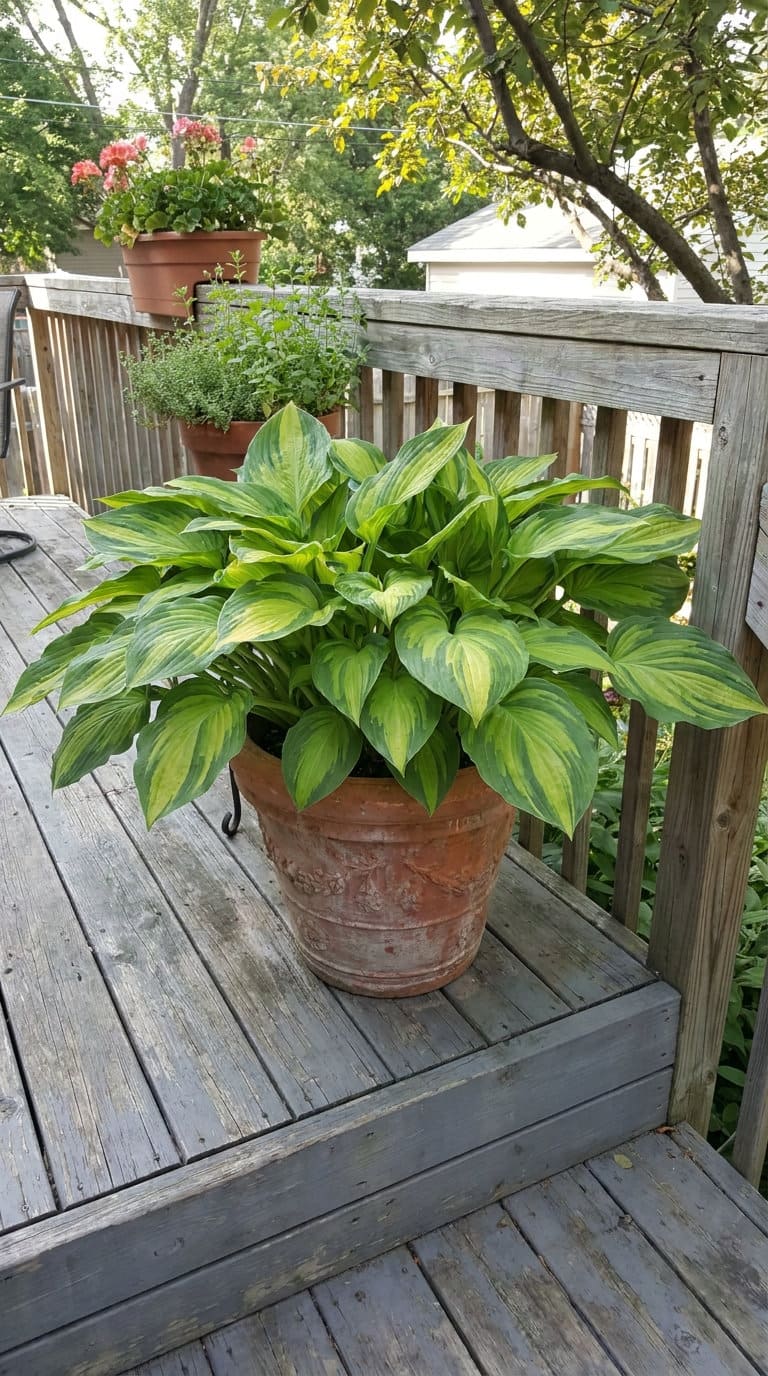
Hostas do genuinely well in large containers, and it’s one of the safer placements if you have a pet that might otherwise reach a ground-level planting, raised up on a porch, deck, or patio table.
See our garden container ideas article for more on choosing the right container size and drainage for a plant like hosta that prefers consistent moisture.
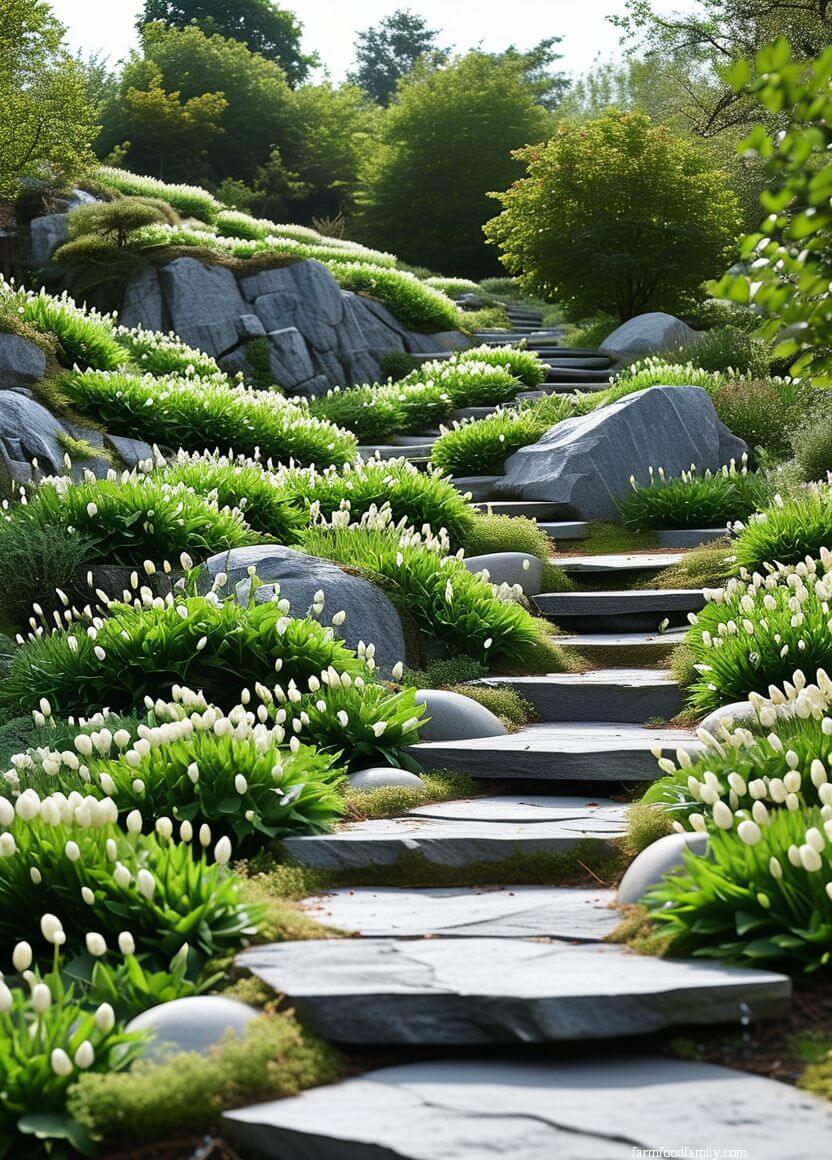
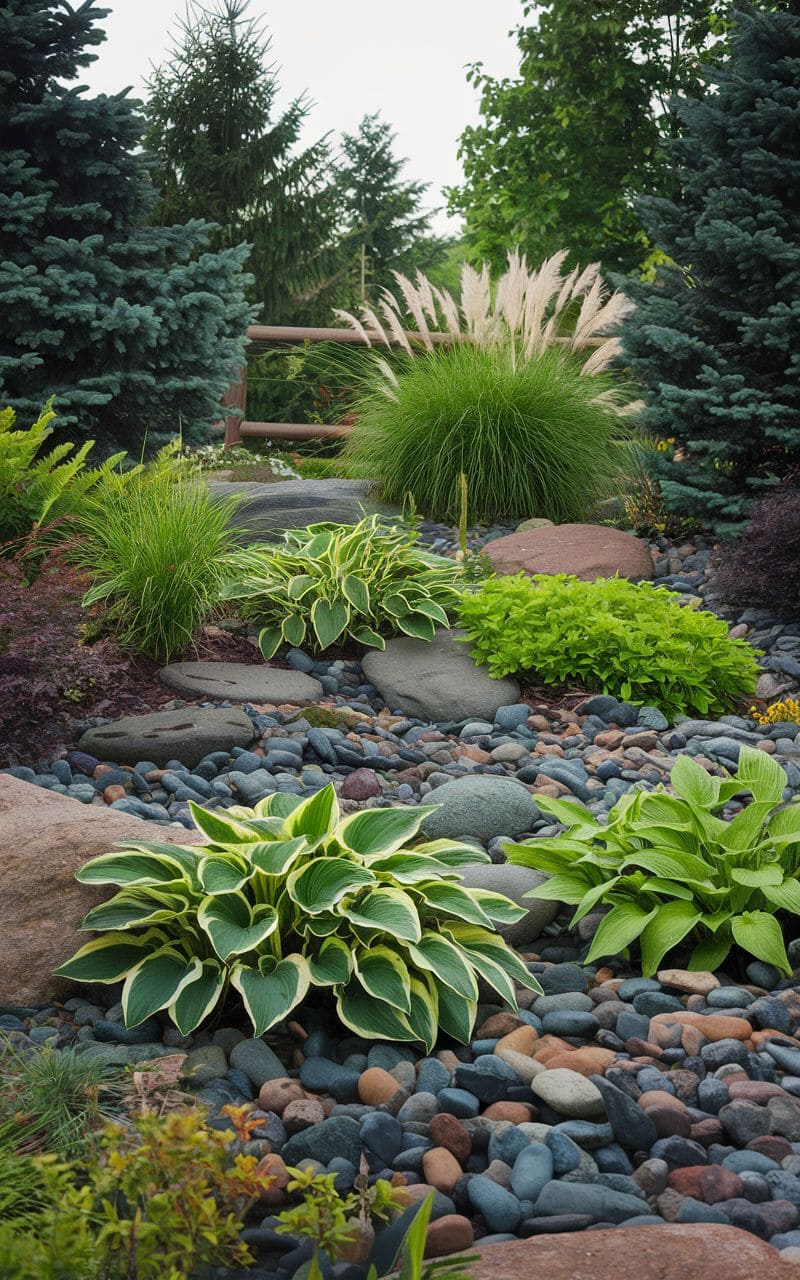
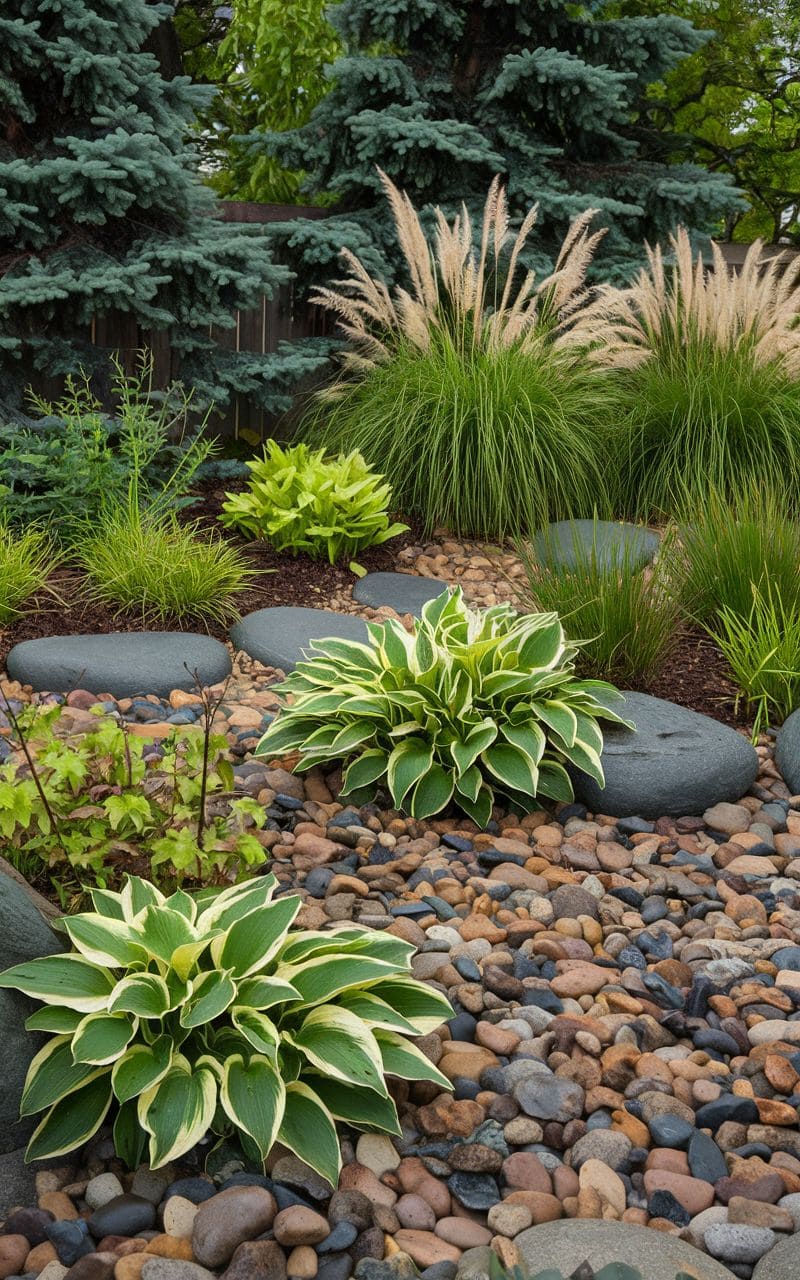
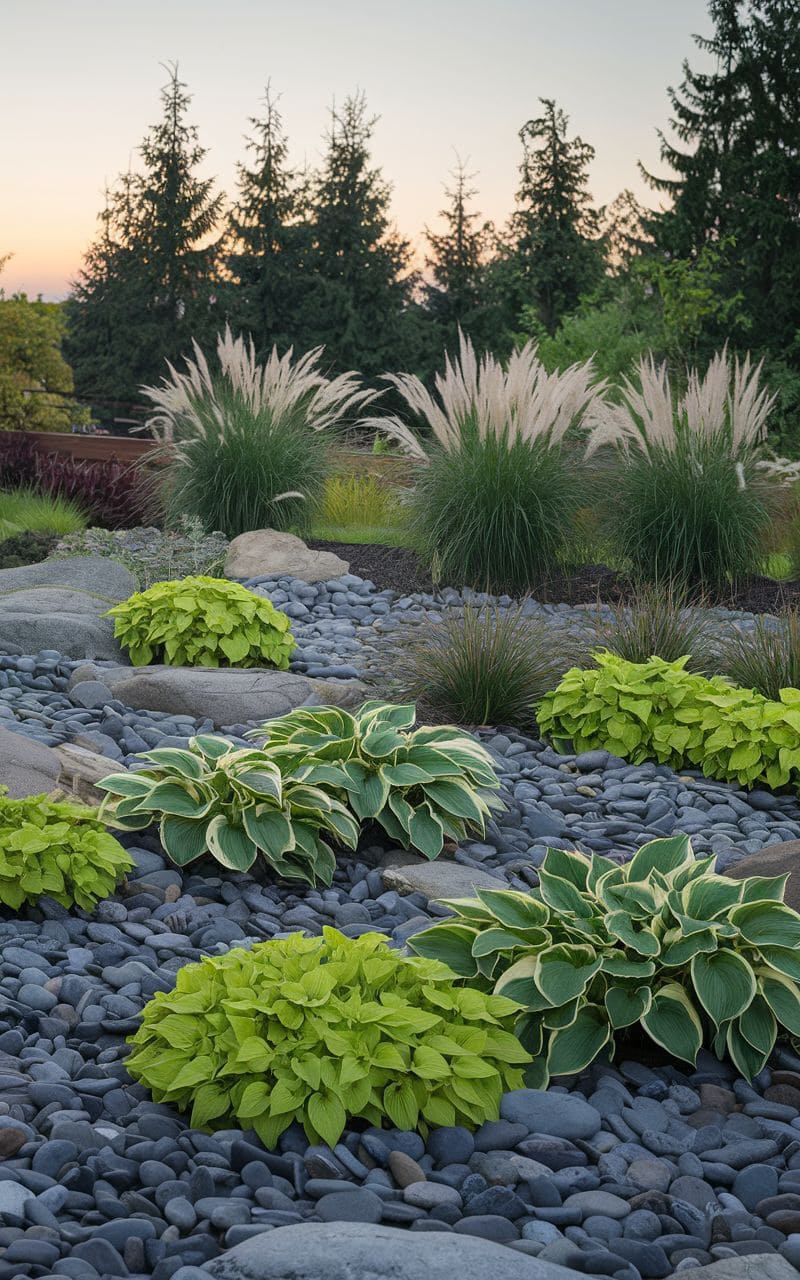
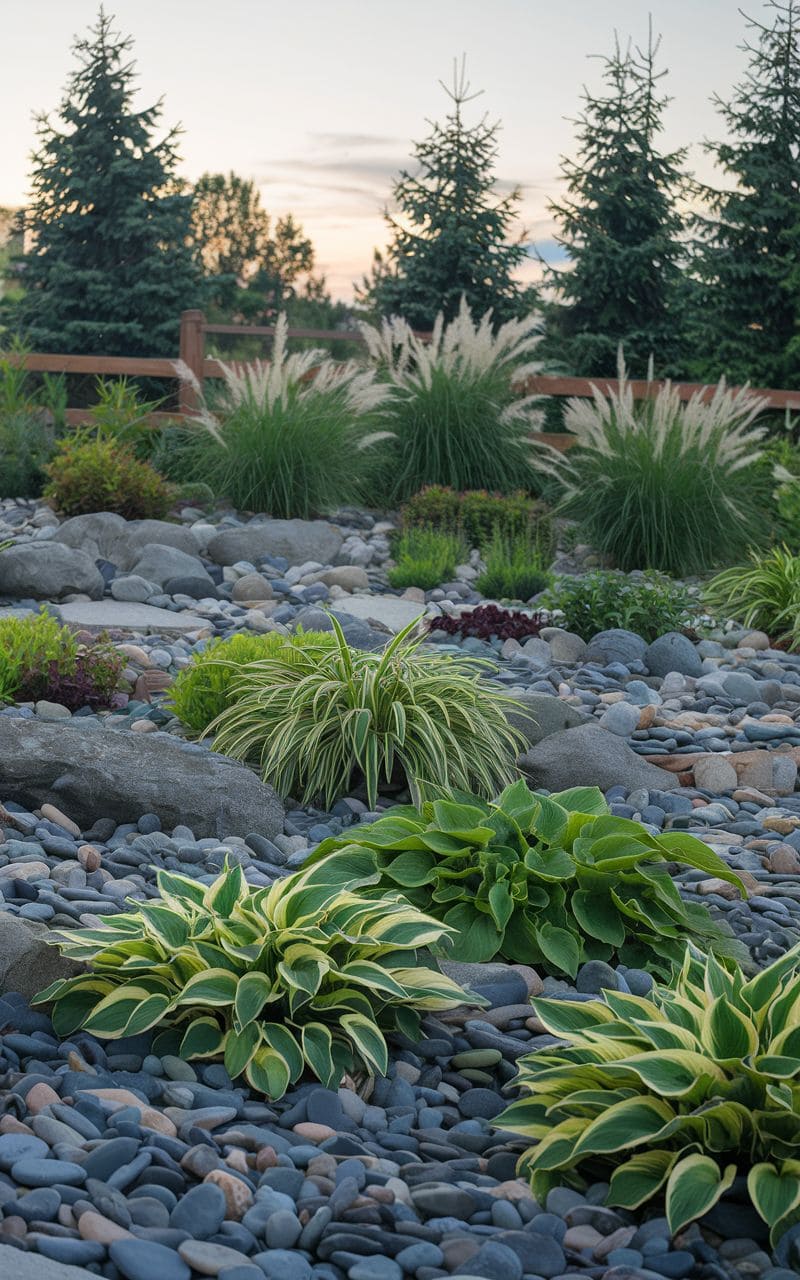
10. Hosta rock garden
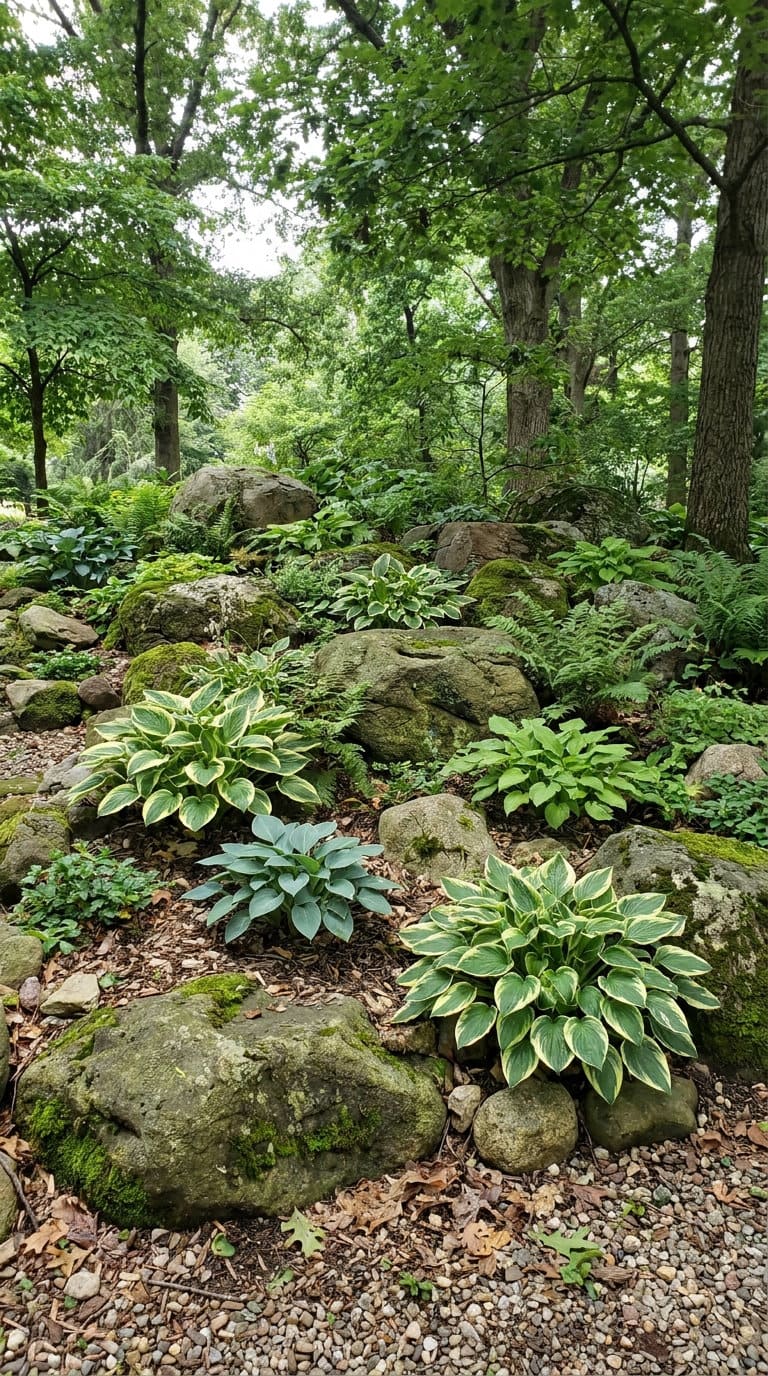
Tuck smaller, compact hosta varieties between and around larger rocks or boulders in a shaded rock garden, where the cool, moisture-retentive soil pockets between stones actually suit hostas better than a fully exposed rock garden would suit most sun-loving alpine plants.
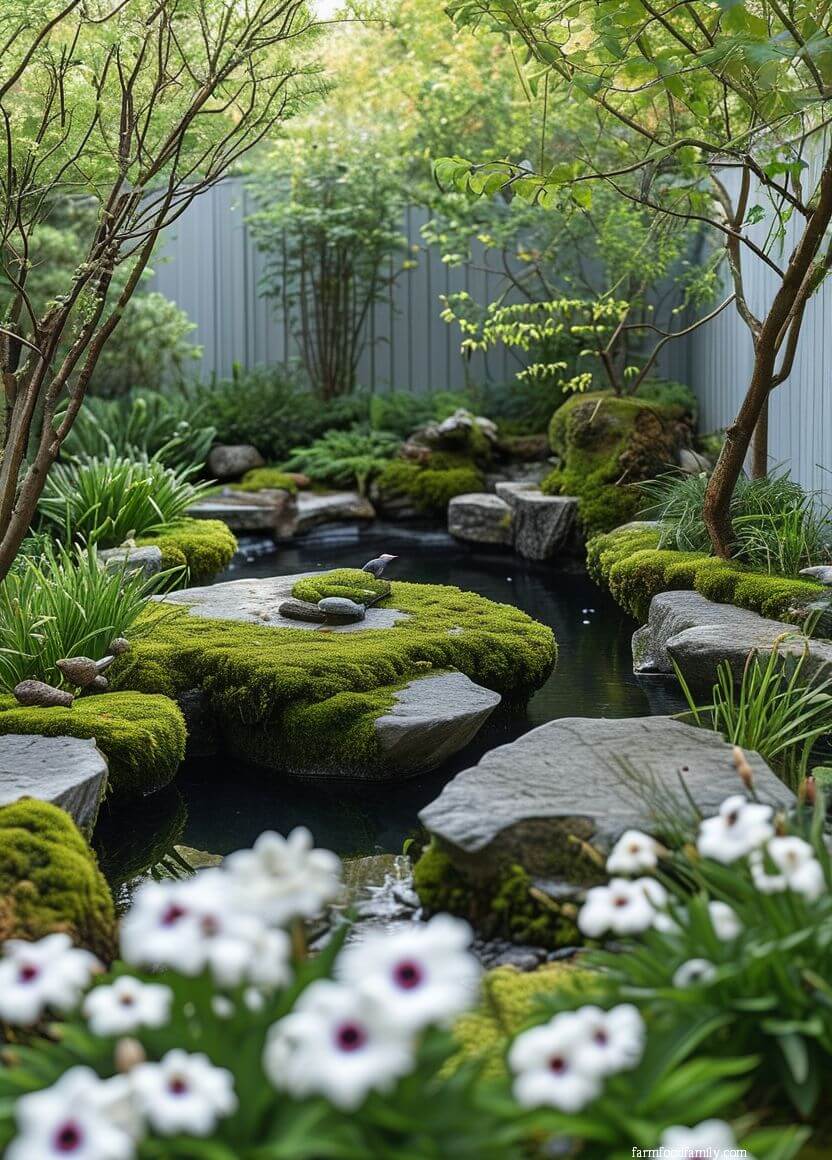
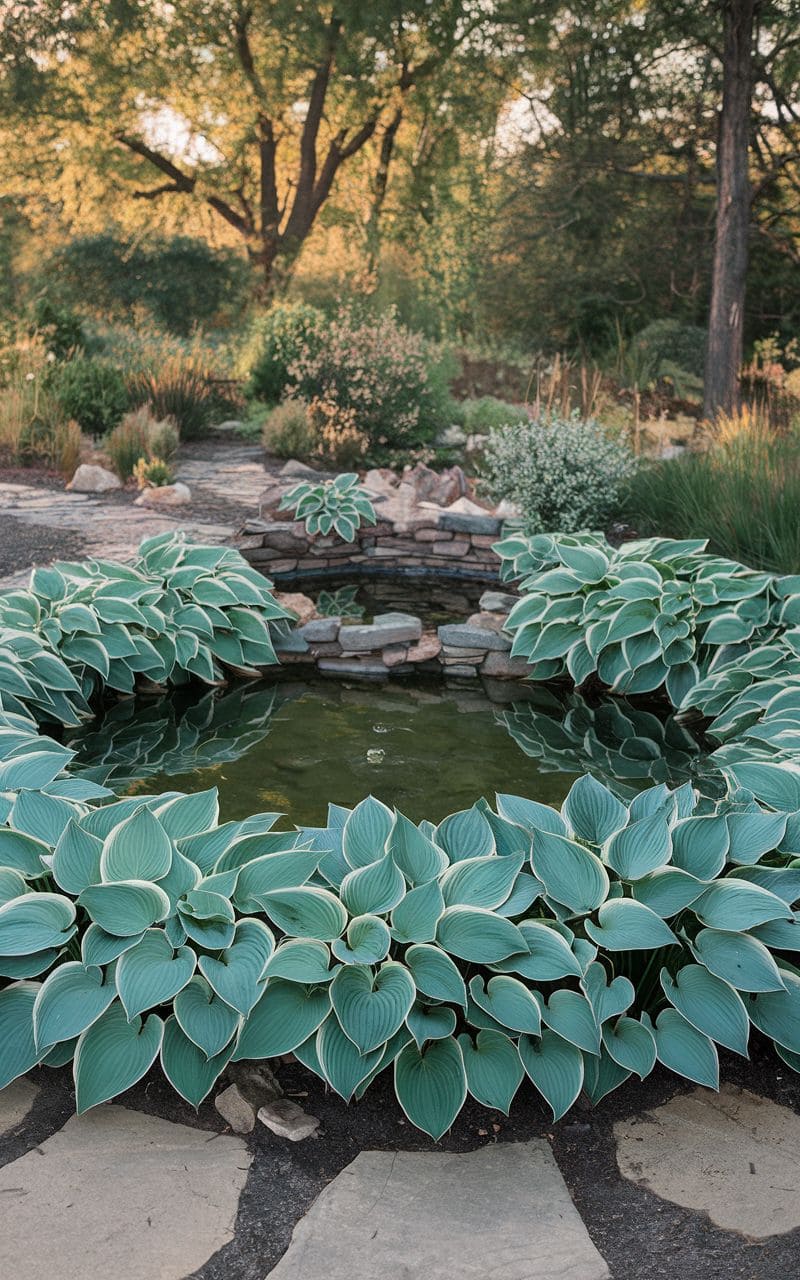
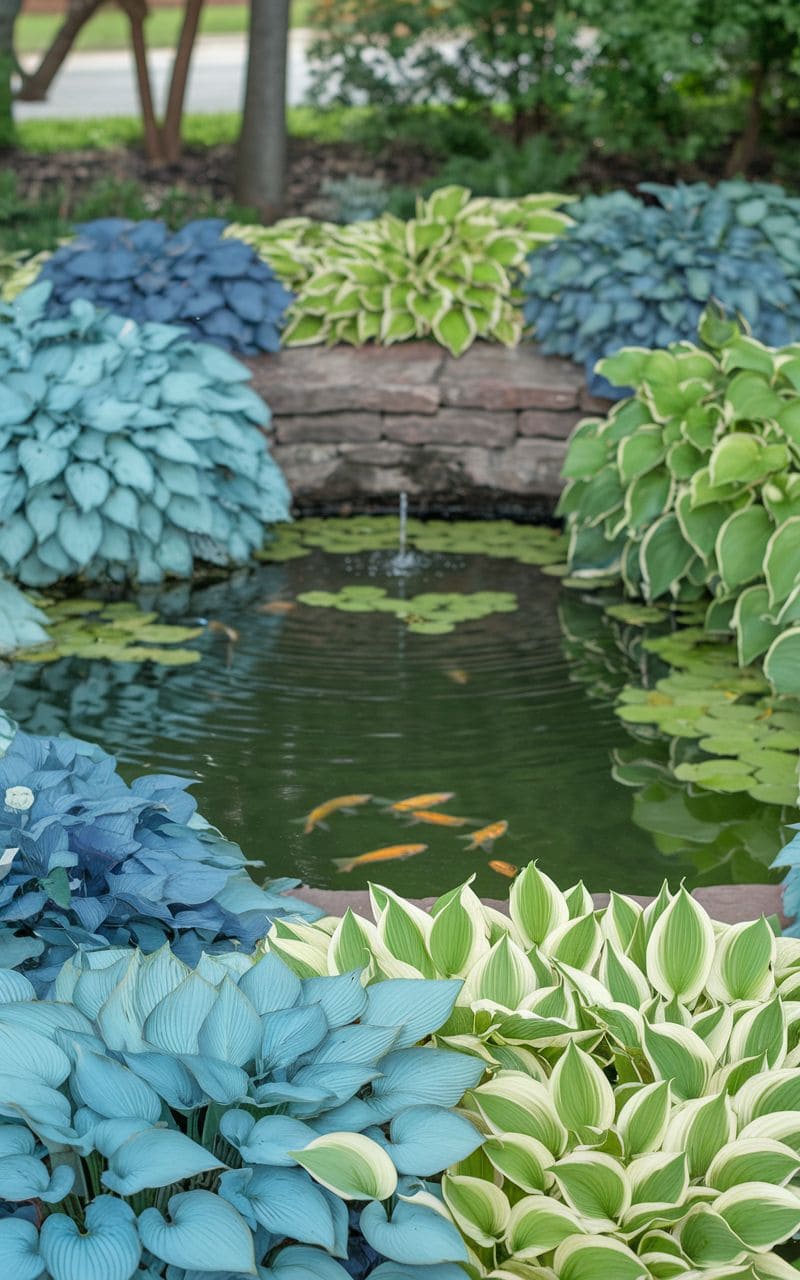
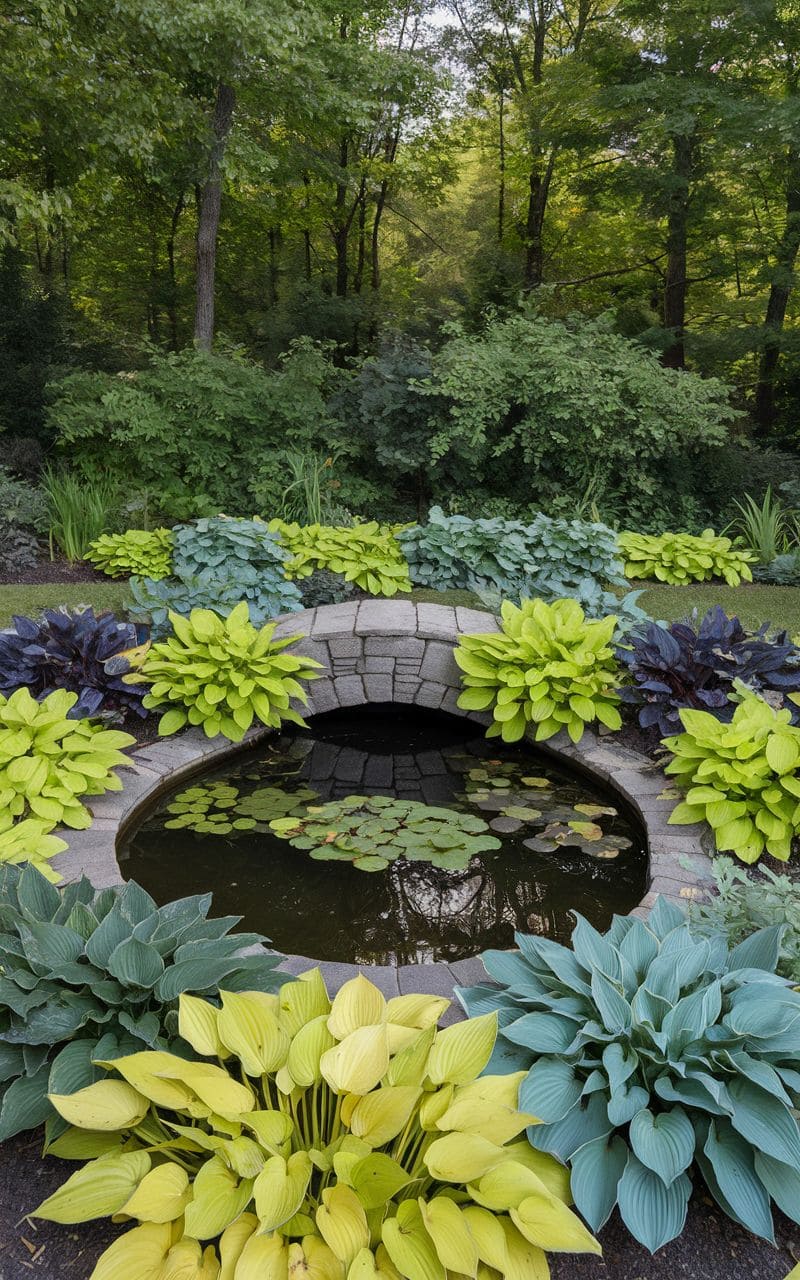
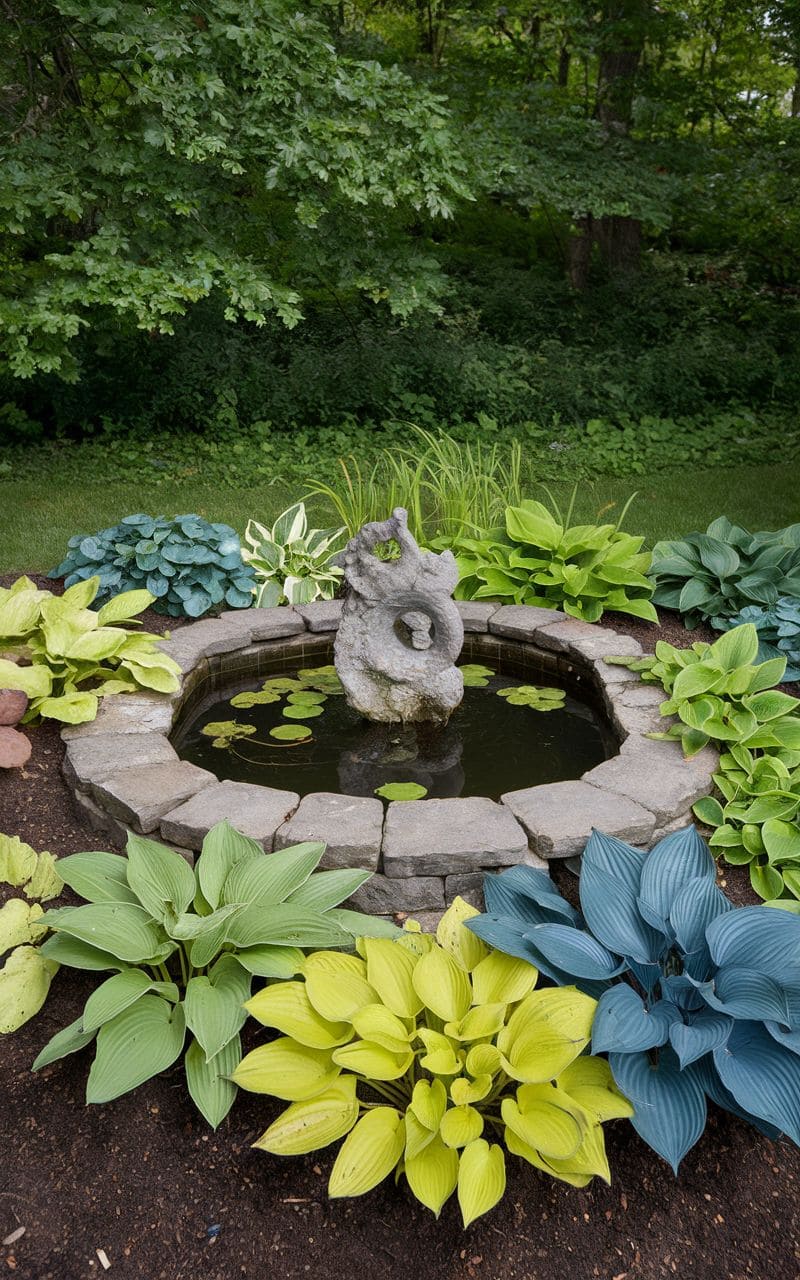
11. Hosta water feature
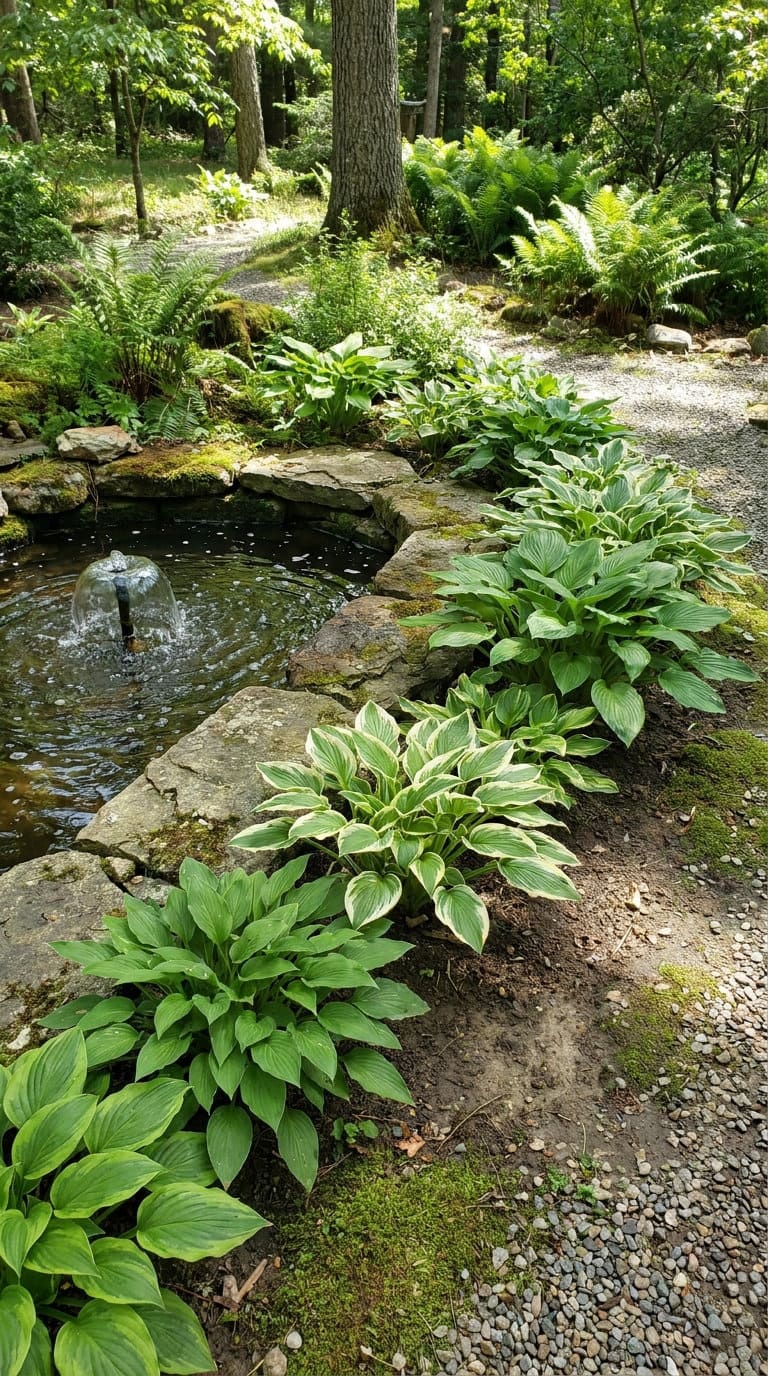
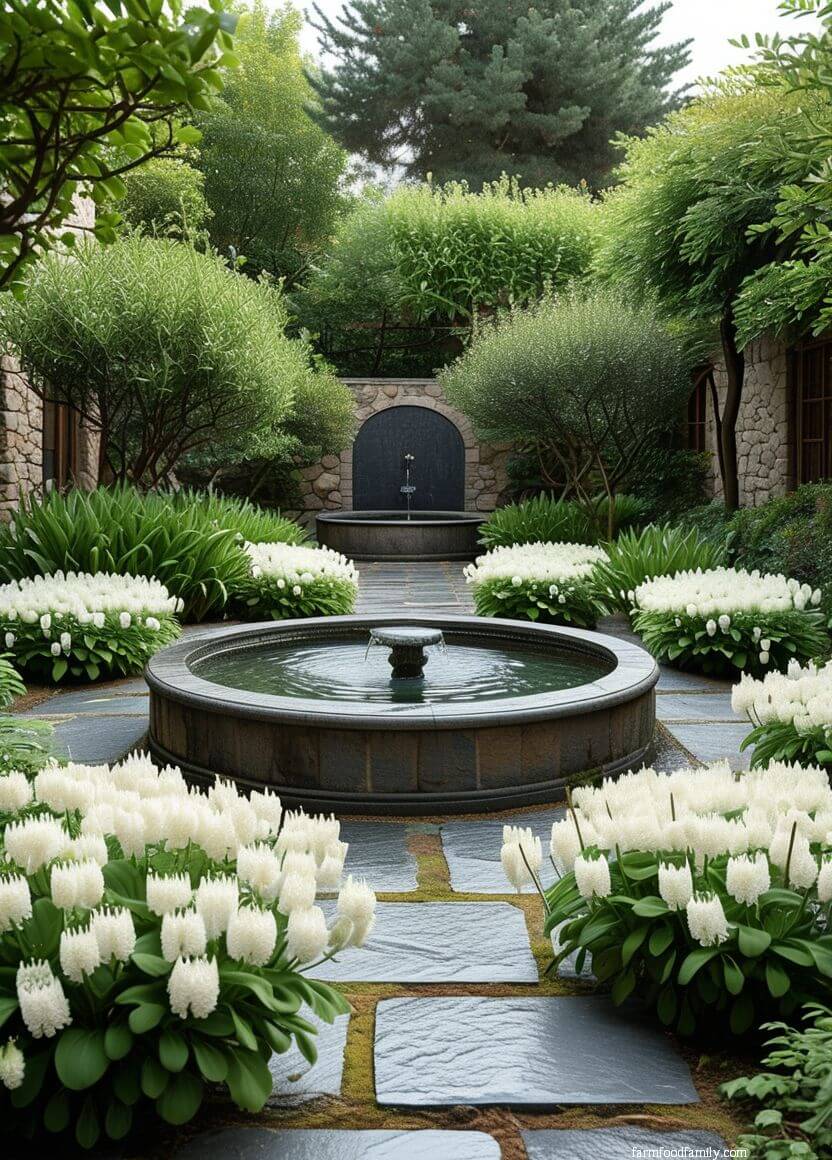
Plant moisture-loving hosta varieties directly around the edge of a small pond, fountain, or water feature, where the naturally higher humidity and consistent soil moisture near water genuinely benefits the plant.
Keep hostas back far enough from a fountain’s direct spray zone, constant direct water contact on the leaves (rather than the soil) can encourage rot.
12. Hosta woodland garden
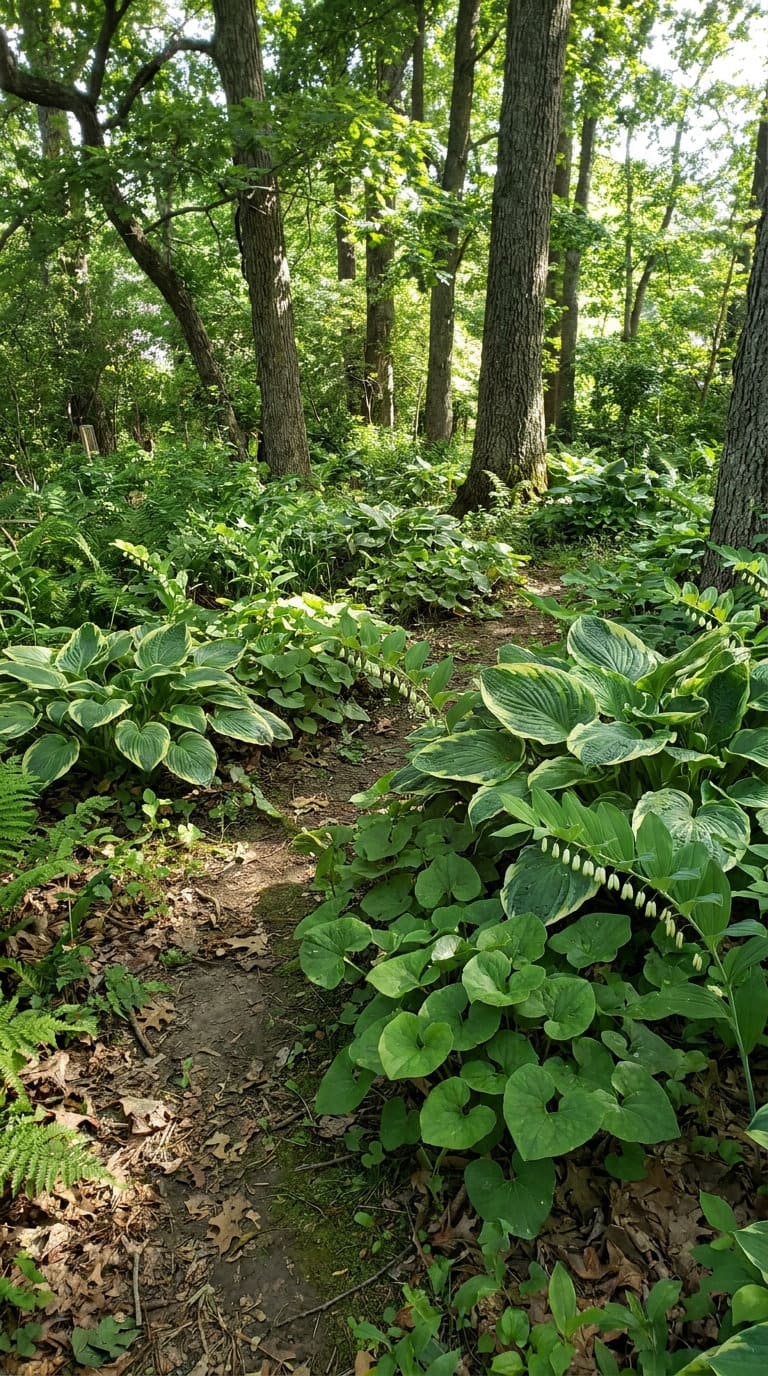
Different in scope from the woodland-inspired border above (#1): this is a full dedicated woodland garden area, not just one border, layering hostas with native woodland understory plants (trillium, wild ginger, Solomon’s seal) across a larger shaded footprint for a genuinely immersive, forest-floor feel.
13. Hosta in mixed borders
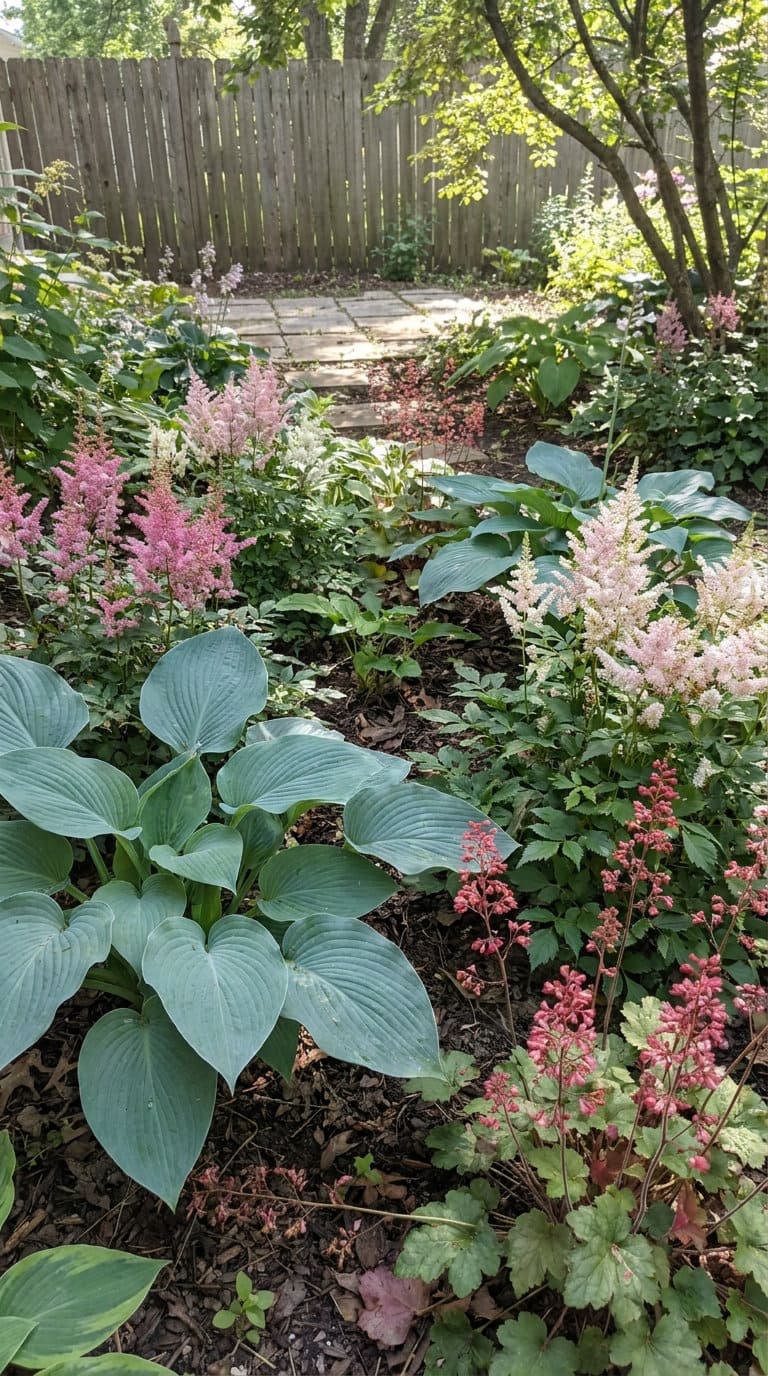
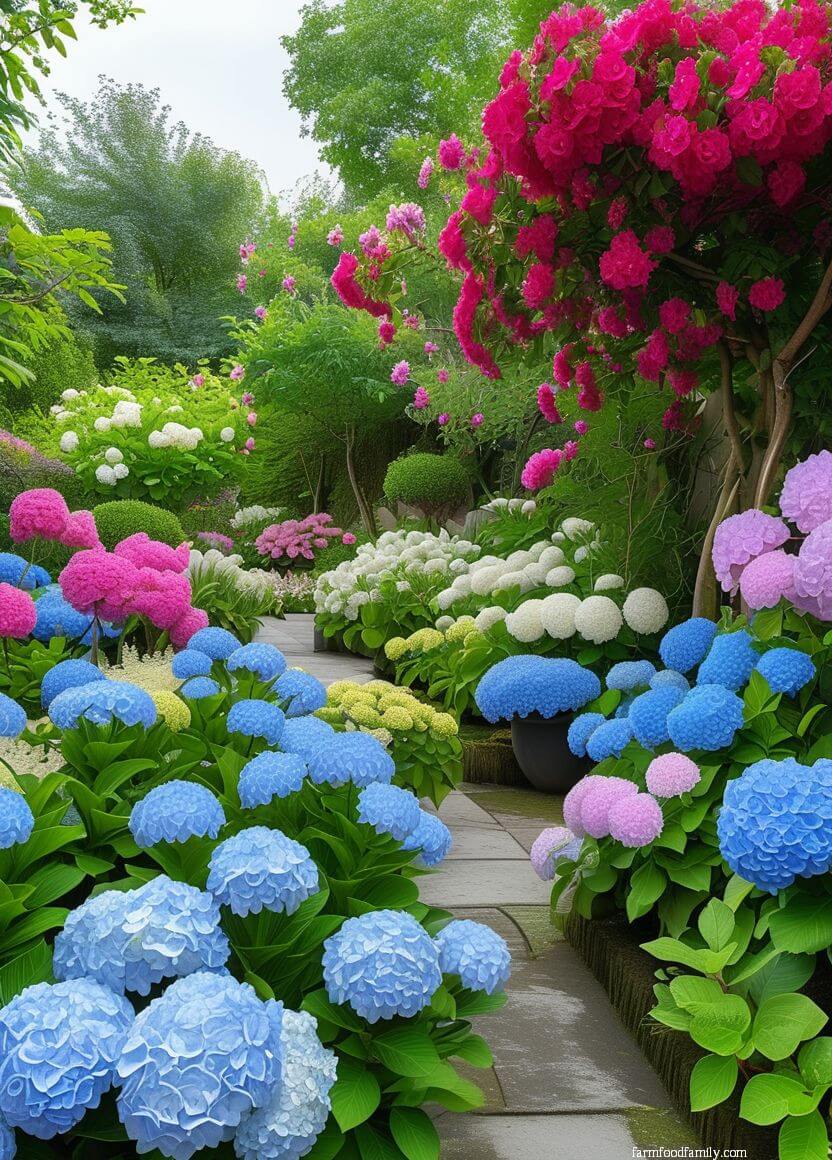
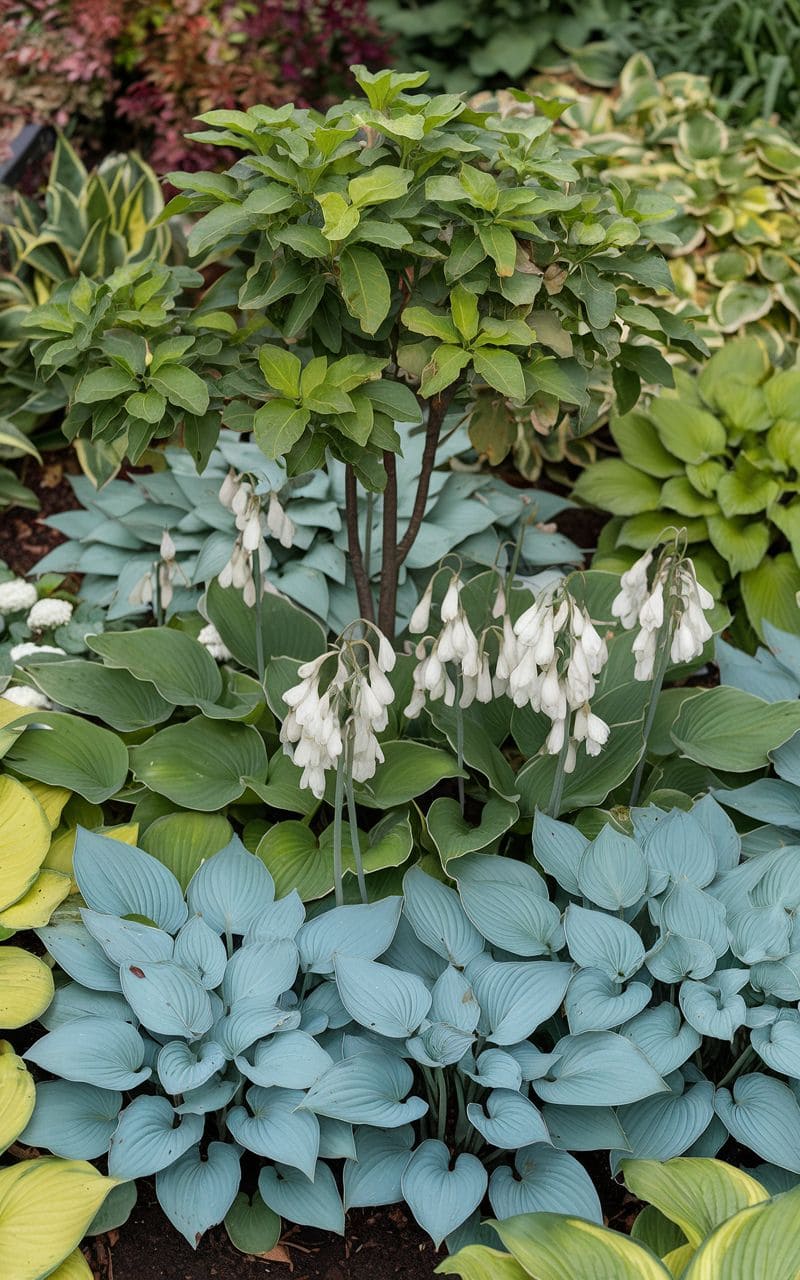
Combine hostas with flowering perennials that share similar light and moisture needs (astilbe, bleeding heart, coral bells) in a single mixed border, using the hostas’ bold, solid foliage as a visual anchor between the finer-textured flowering plants around them.
14. Hosta hedge
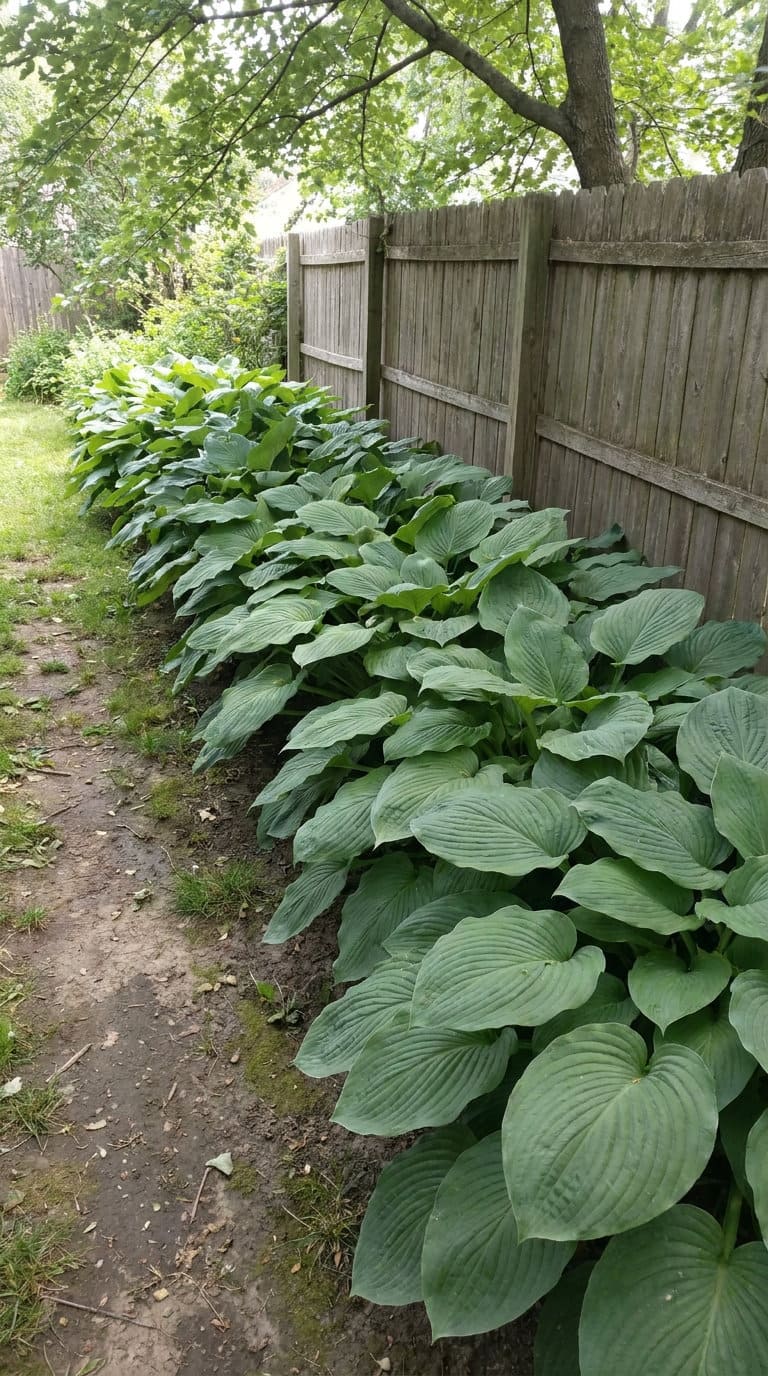
A continuous row of a single large hosta variety, planted close enough that mature plants merge into one unbroken green mass, works as a genuine low hedge alternative in shade where a traditional boxwood or privet hedge would struggle without enough sun.
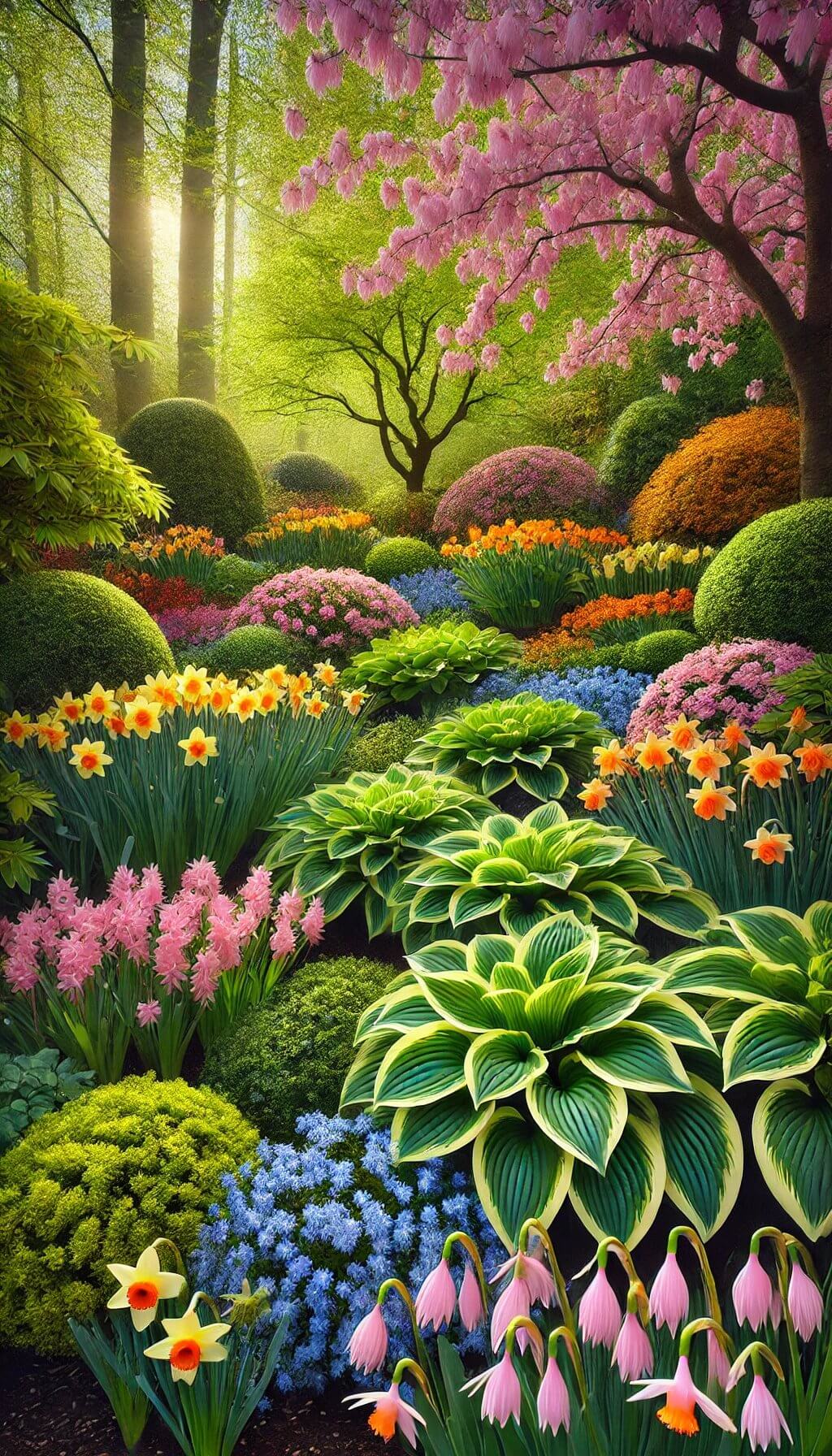
15. Hosta with spring bulbs
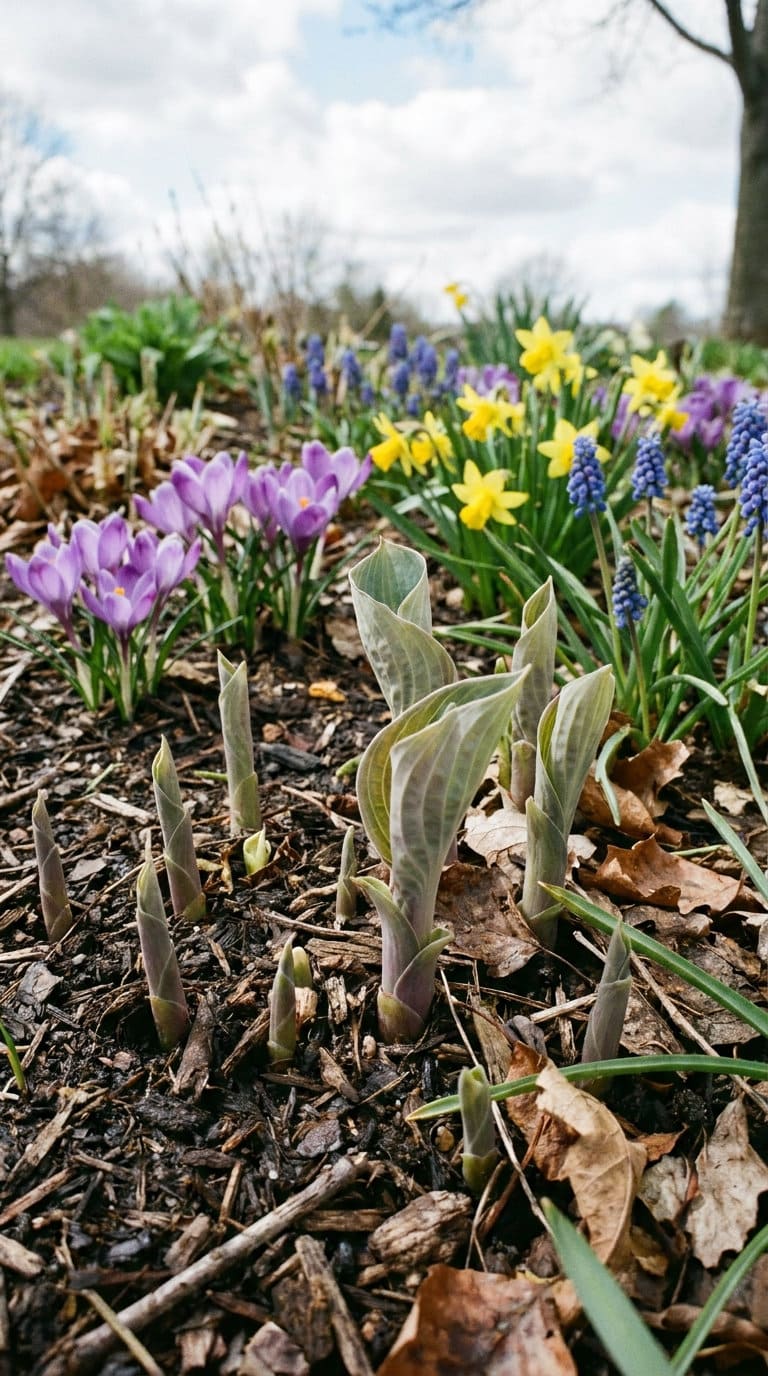
Interplant hostas with spring-blooming bulbs (daffodils, crocuses, snowdrops) in the same bed.
The bulbs bloom and fade before hostas fully leaf out in late spring, so the bed has real color early in the season, and the emerging hosta leaves then hide the bulb foliage as it dies back, solving the usual “ugly fading bulb leaves” problem other perennials don’t fix as neatly.
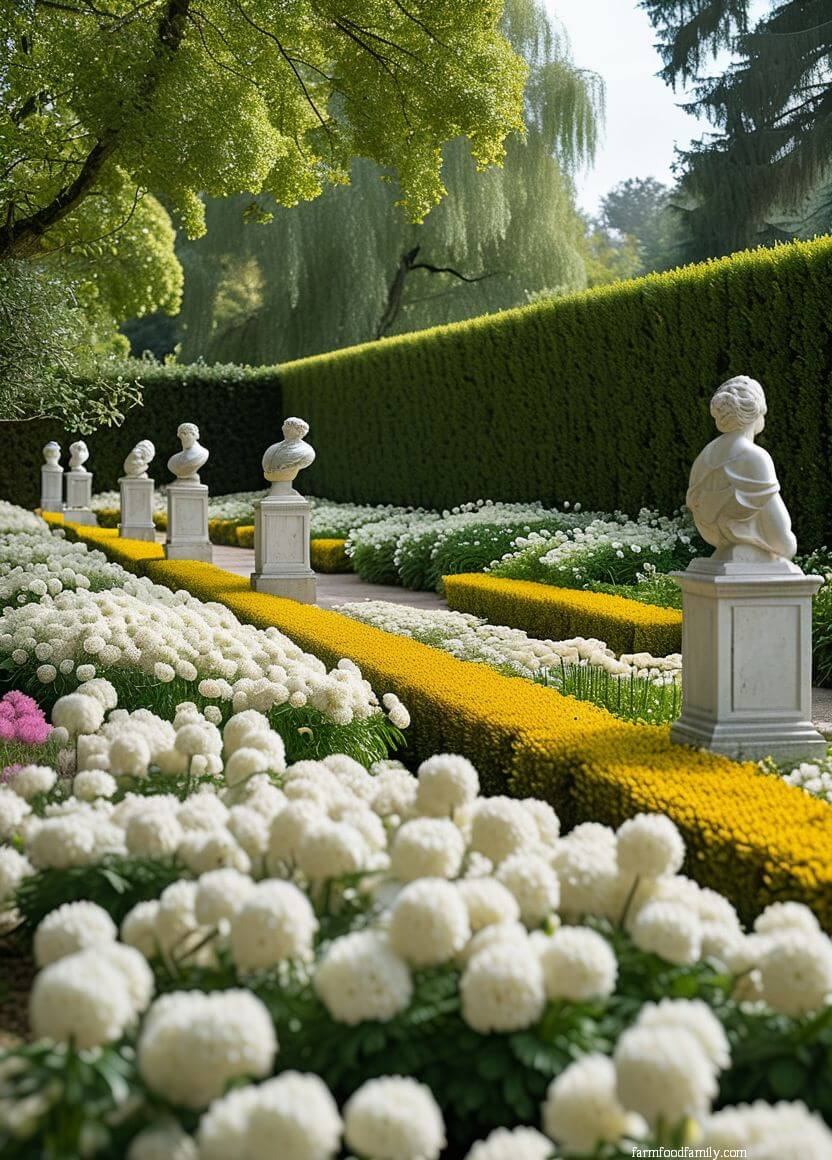
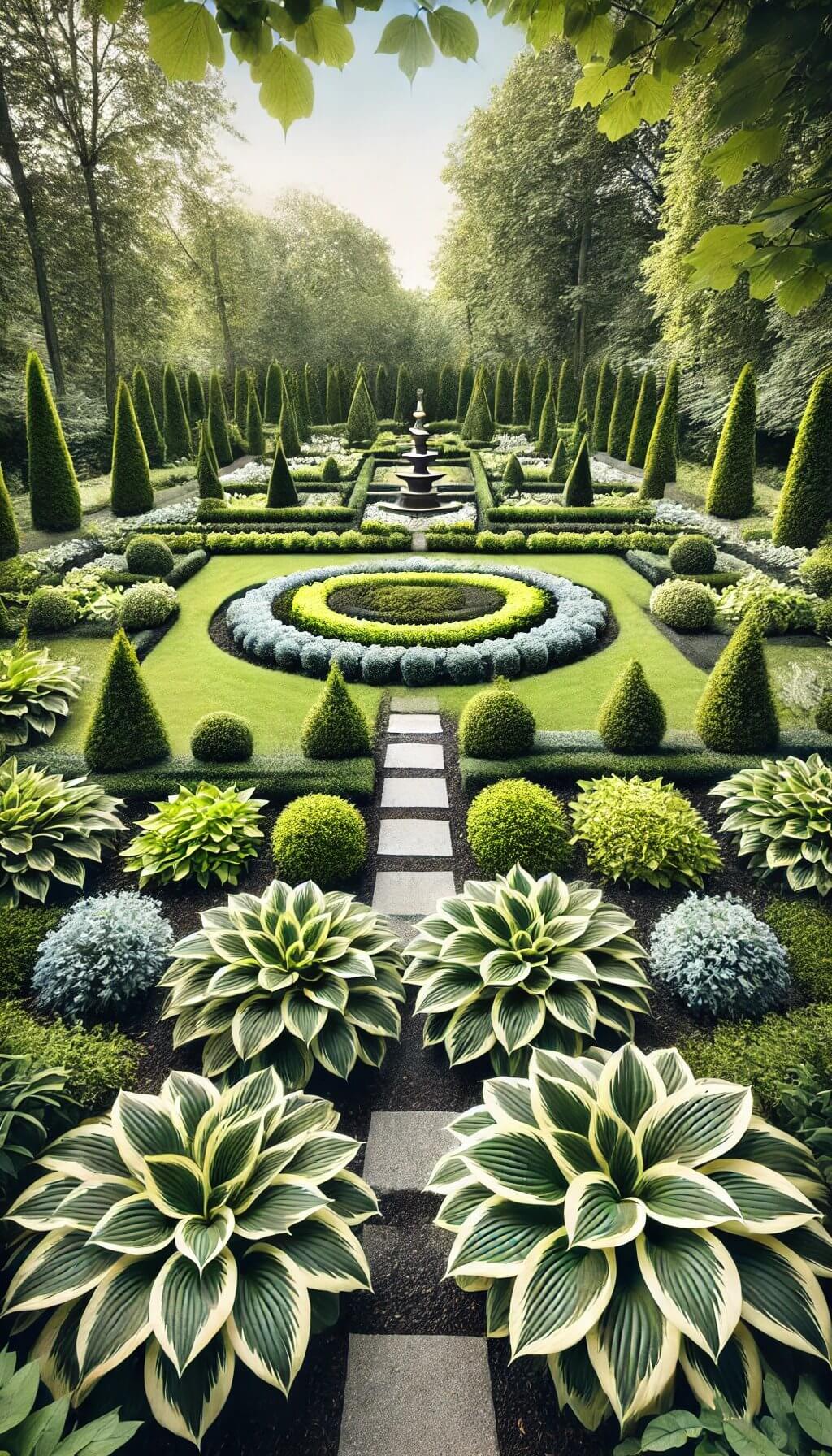
16. Hosta in formal gardens
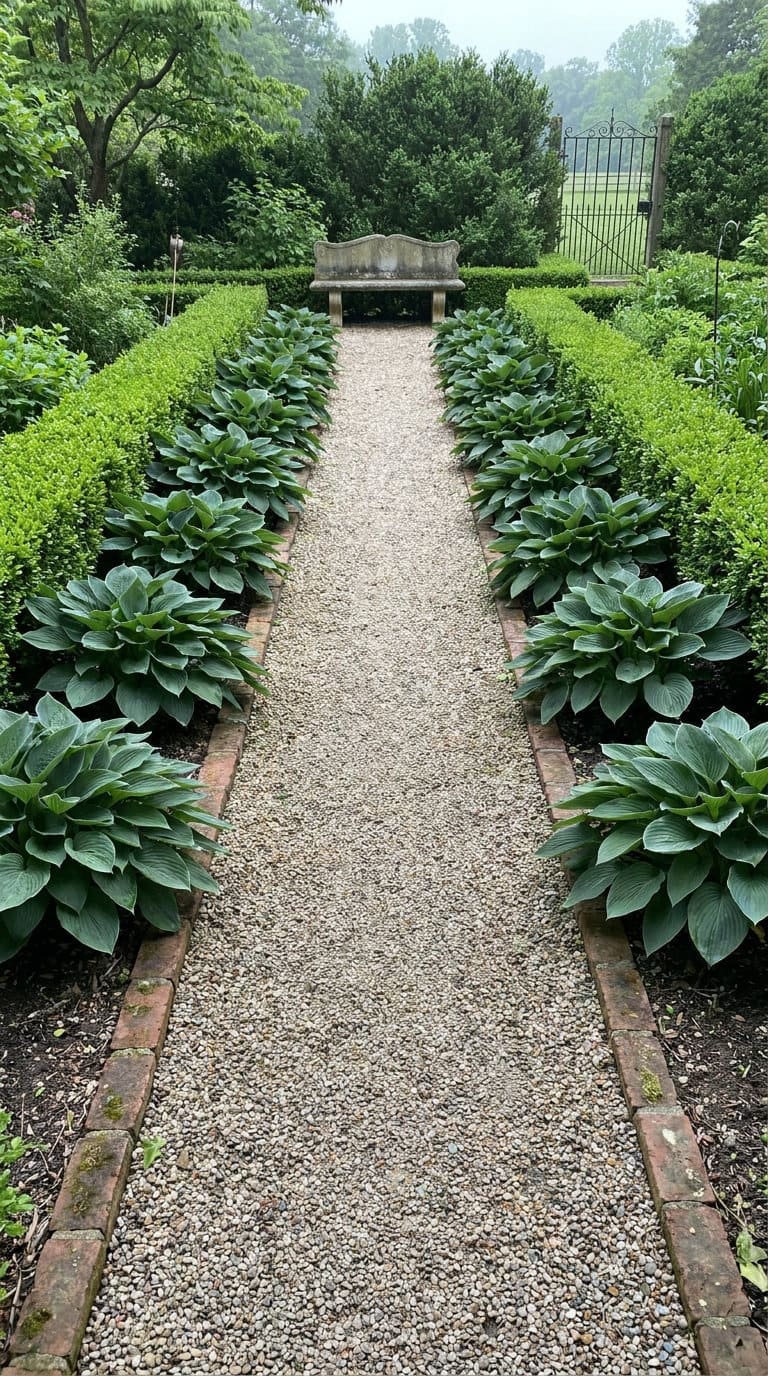
Use a single hosta variety, repeated in a symmetrical, evenly-spaced pattern along a formal garden’s structured lines, rather than the looser, mixed-variety look most hosta plantings go for. The repetition and uniformity read as intentional and formal rather than naturalistic.
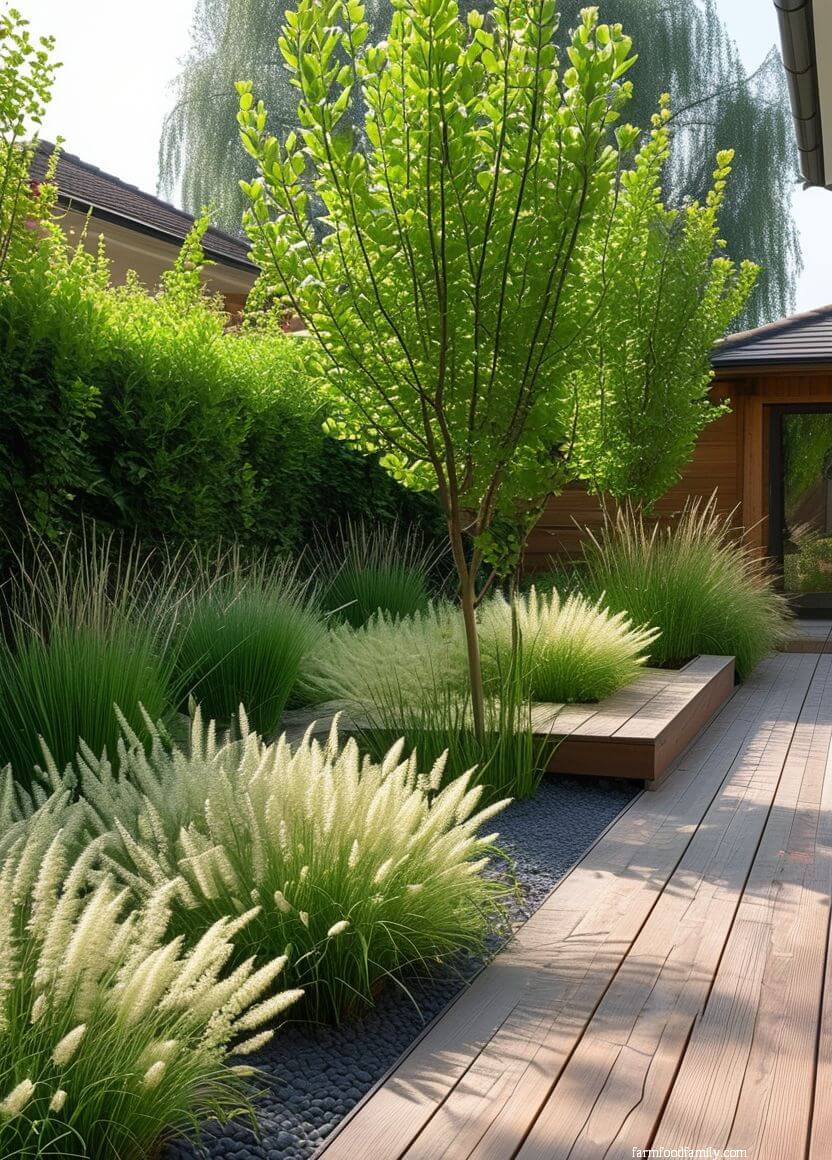
17. Hosta in small gardens
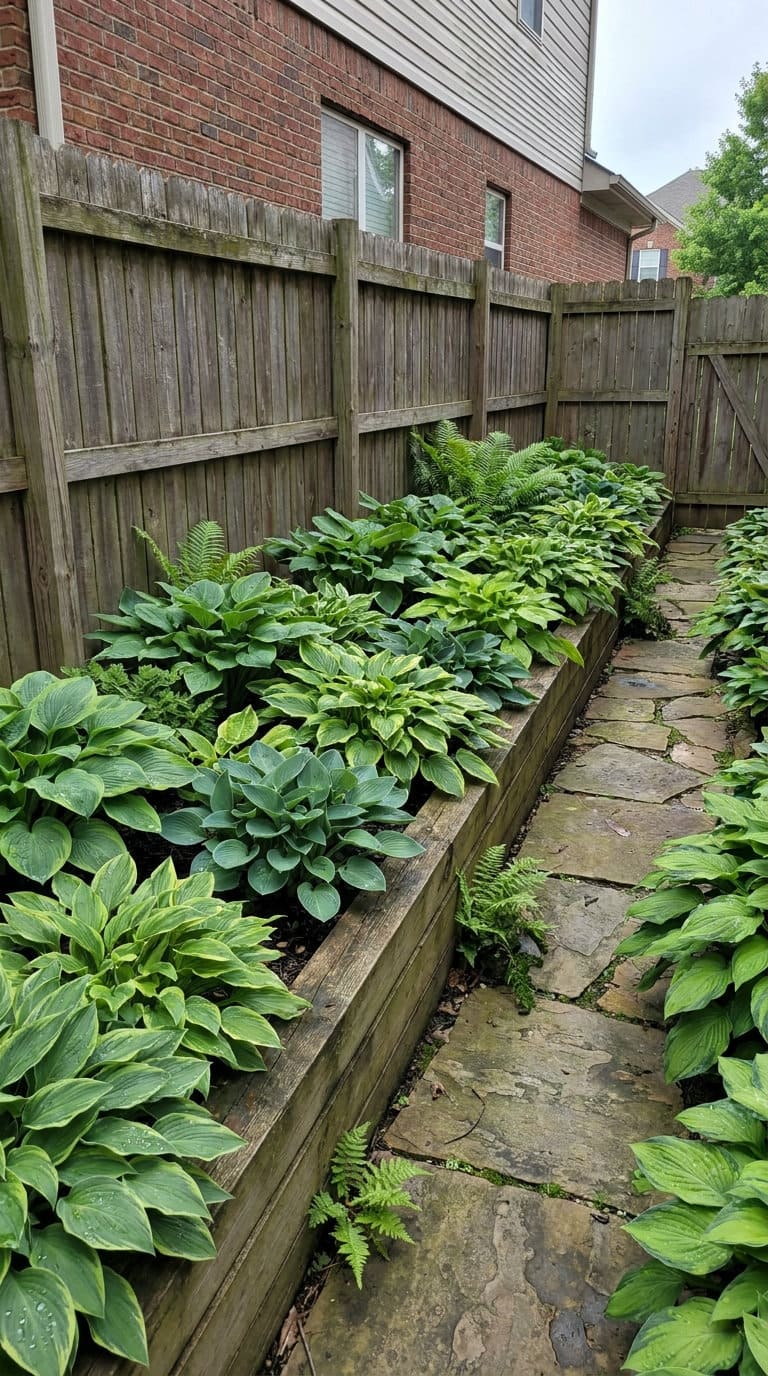
In a tight space, a few well-chosen compact hosta varieties (rather than the giant types like ‘Sum and Substance’) genuinely punch above their size, since hosta foliage reads as lush and full even in a small footprint, unlike thin-leafed plants that need real volume to look intentional.
18. Hosta and shrub combinations
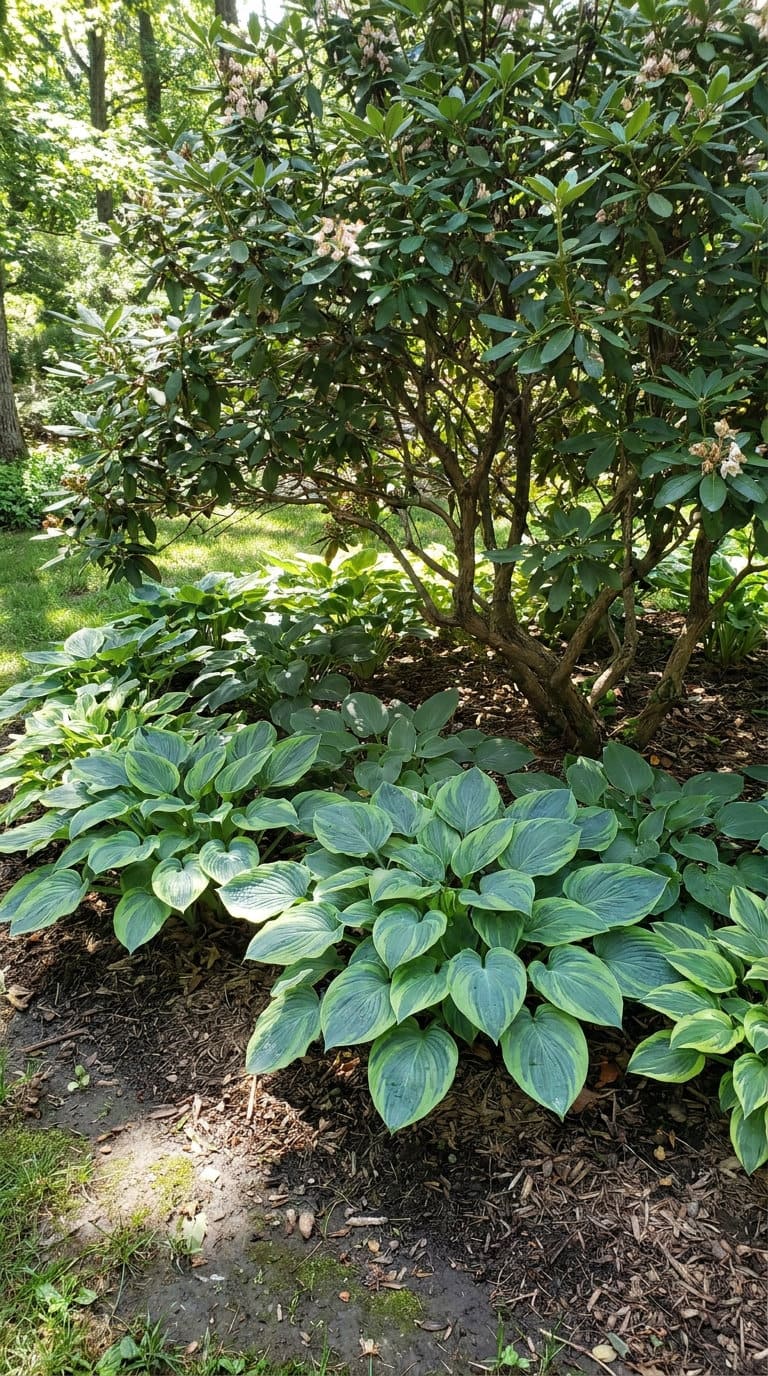
Underplant flowering or evergreen shrubs with hostas at their base, filling the bare, often-shaded ground beneath a shrub’s canopy that would otherwise just be mulch. This also visually softens the transition between a shrub’s woody structure and the ground.
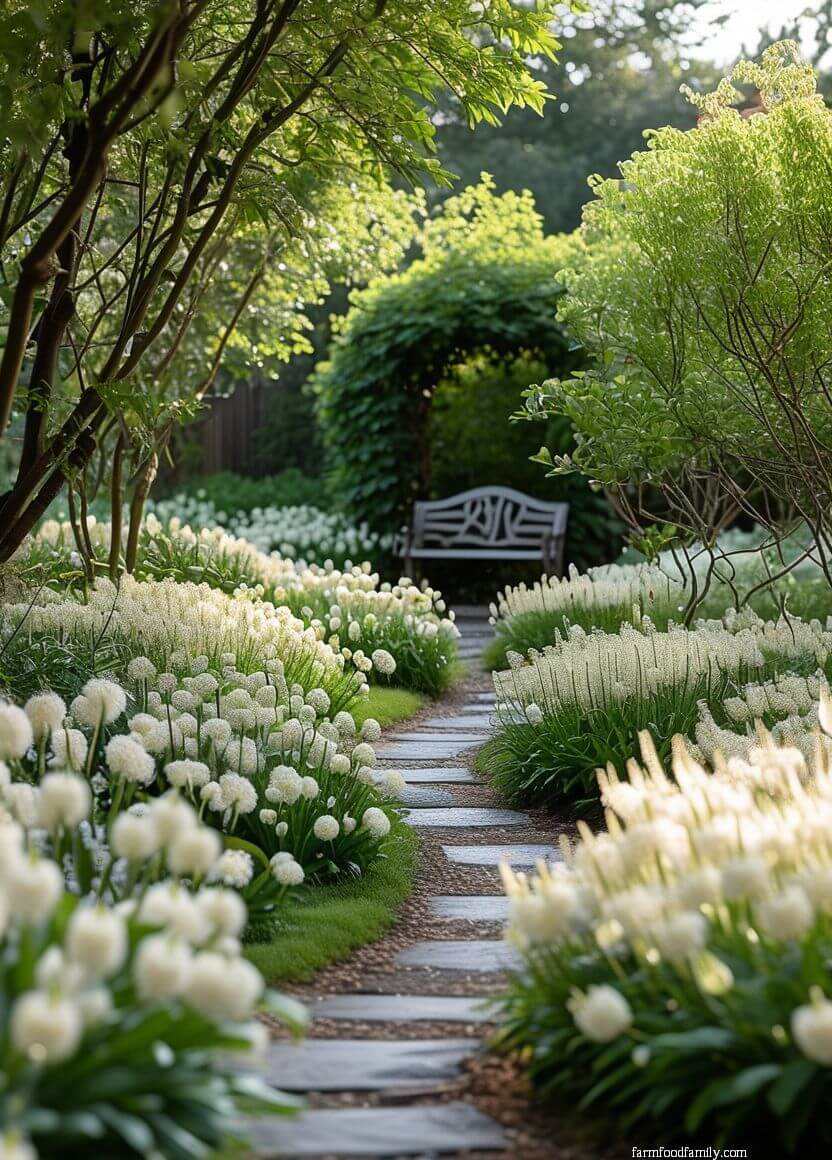
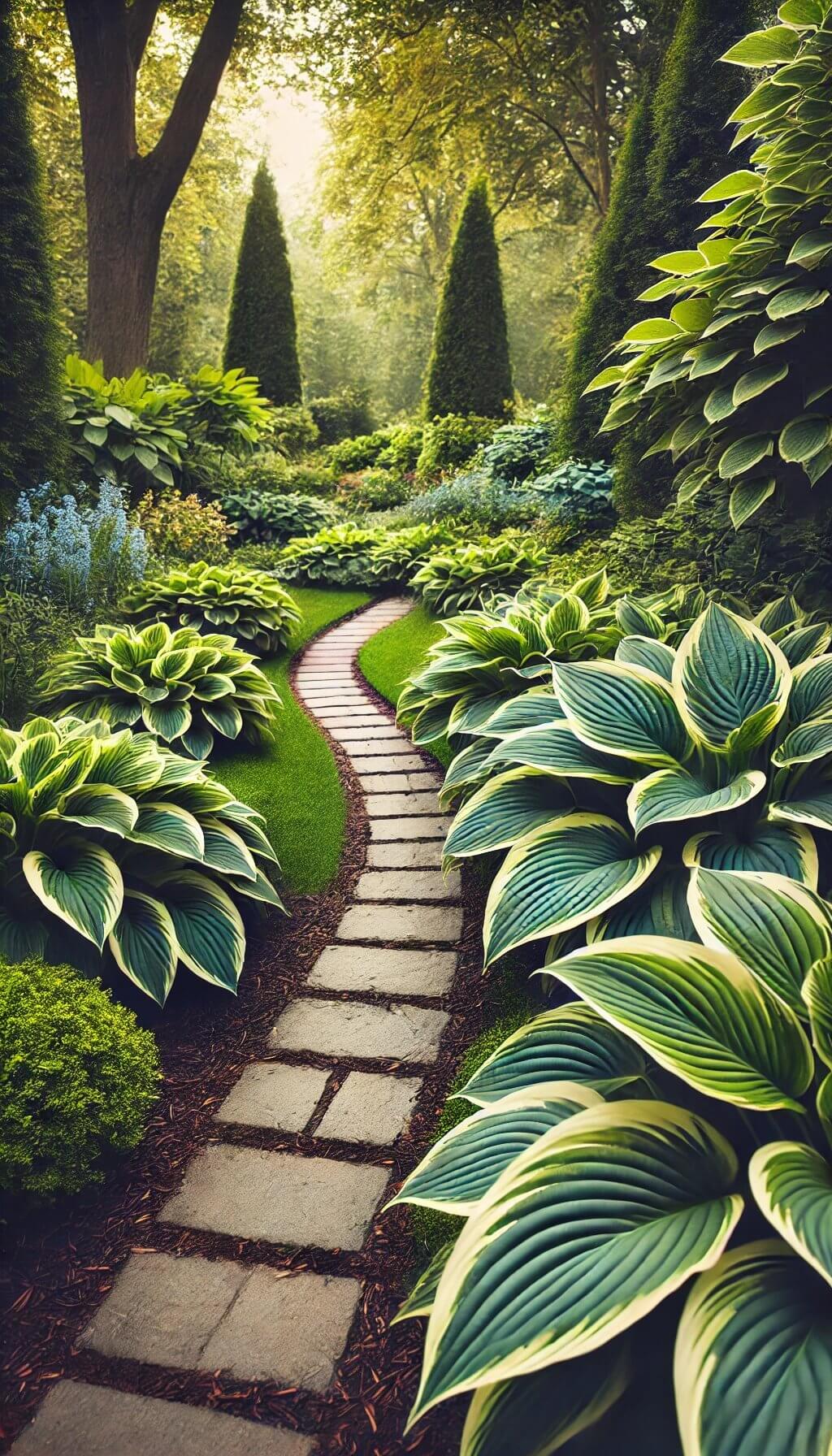
19. Hosta pathways
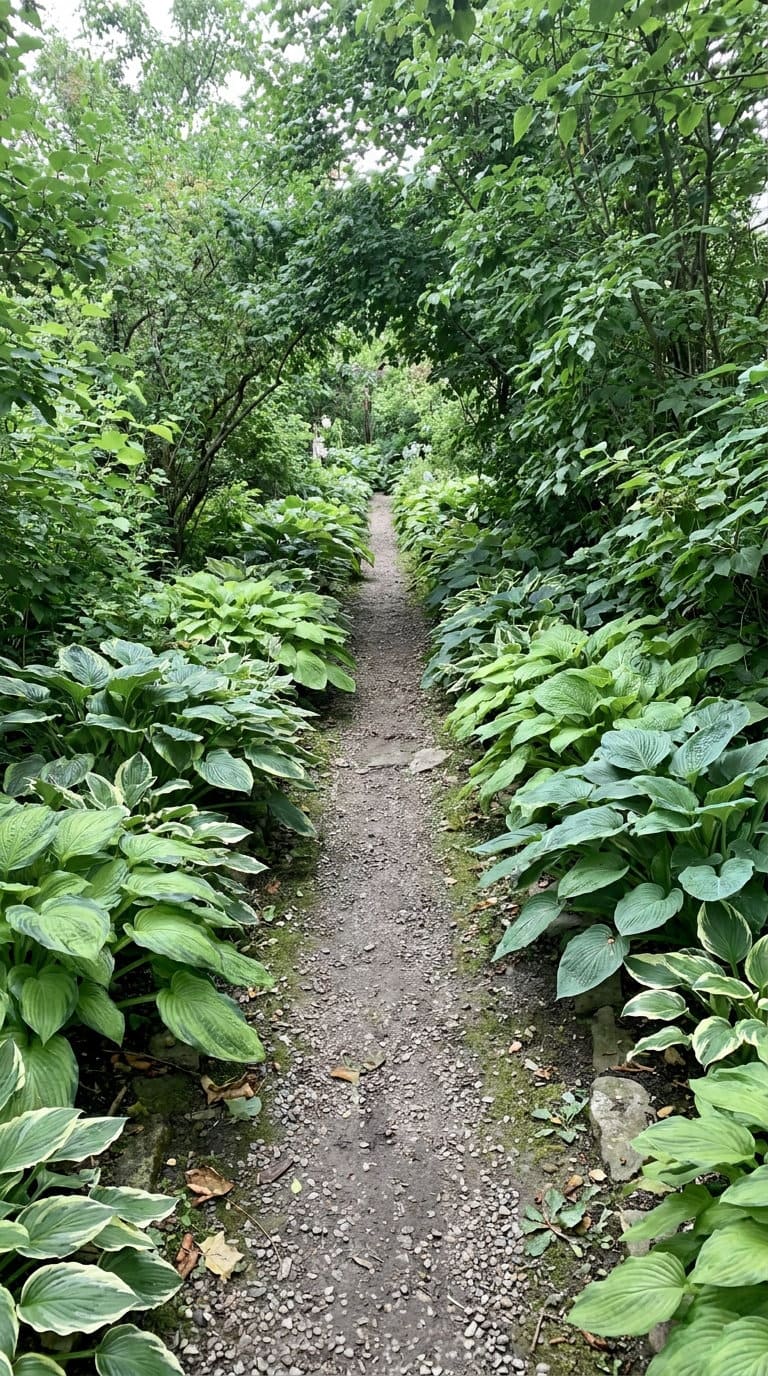
Line both sides of a walking path with hostas, rather than edging just one side, to create a genuine green corridor effect, especially dramatic on a longer path through a shaded side yard or backyard connector.
Related reading: our repurposed garden container ideas article has more container options beyond standard pots if idea #9 appeals to you.
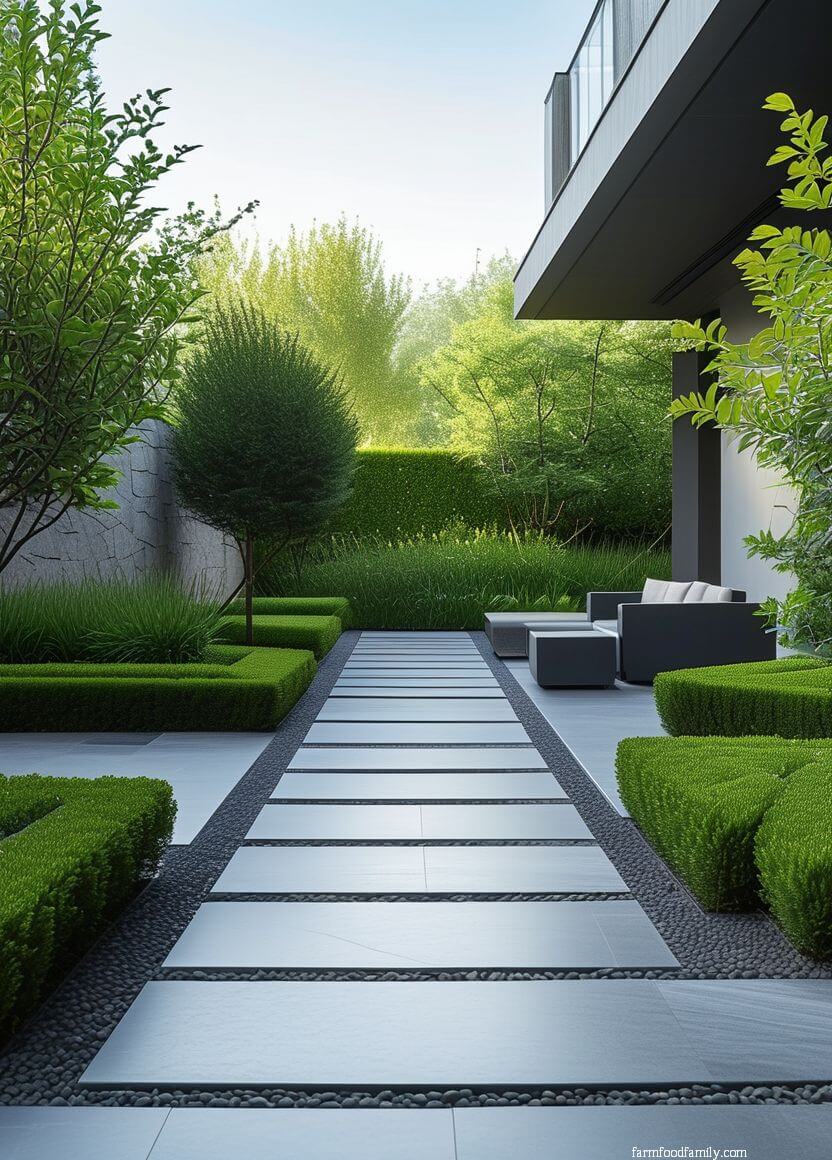
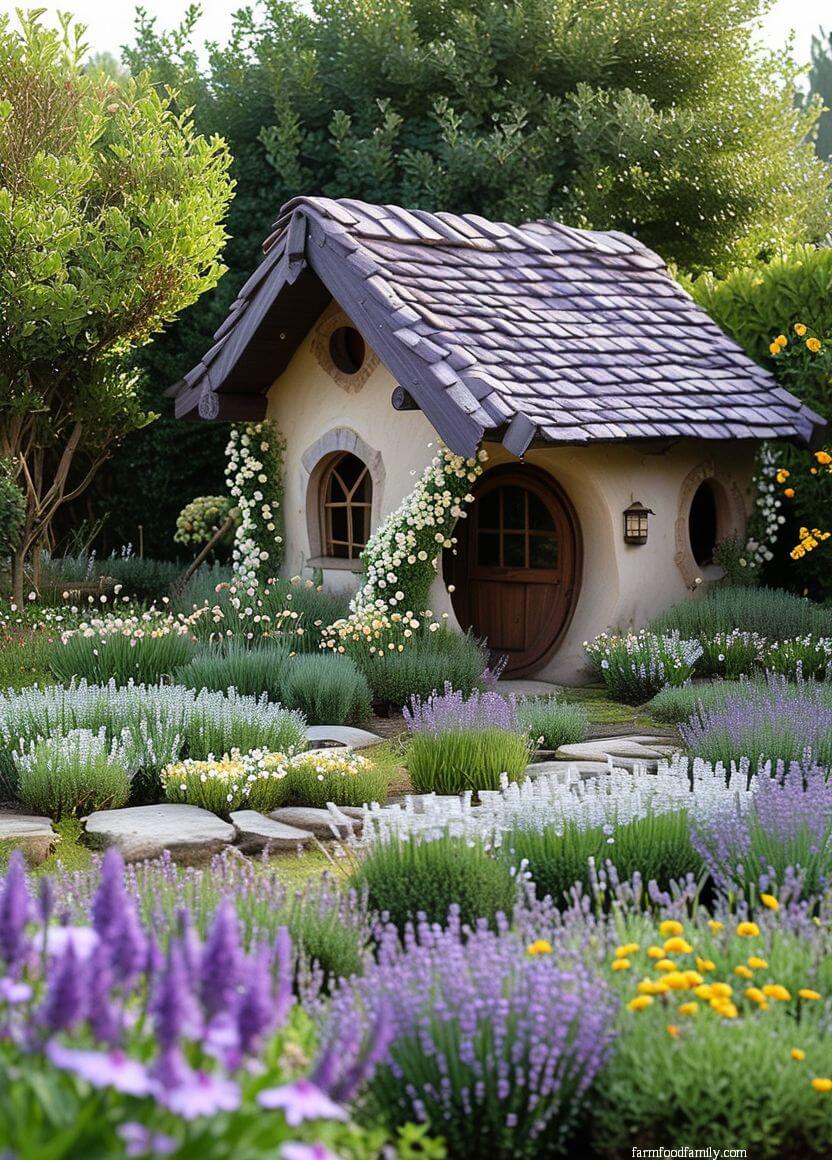
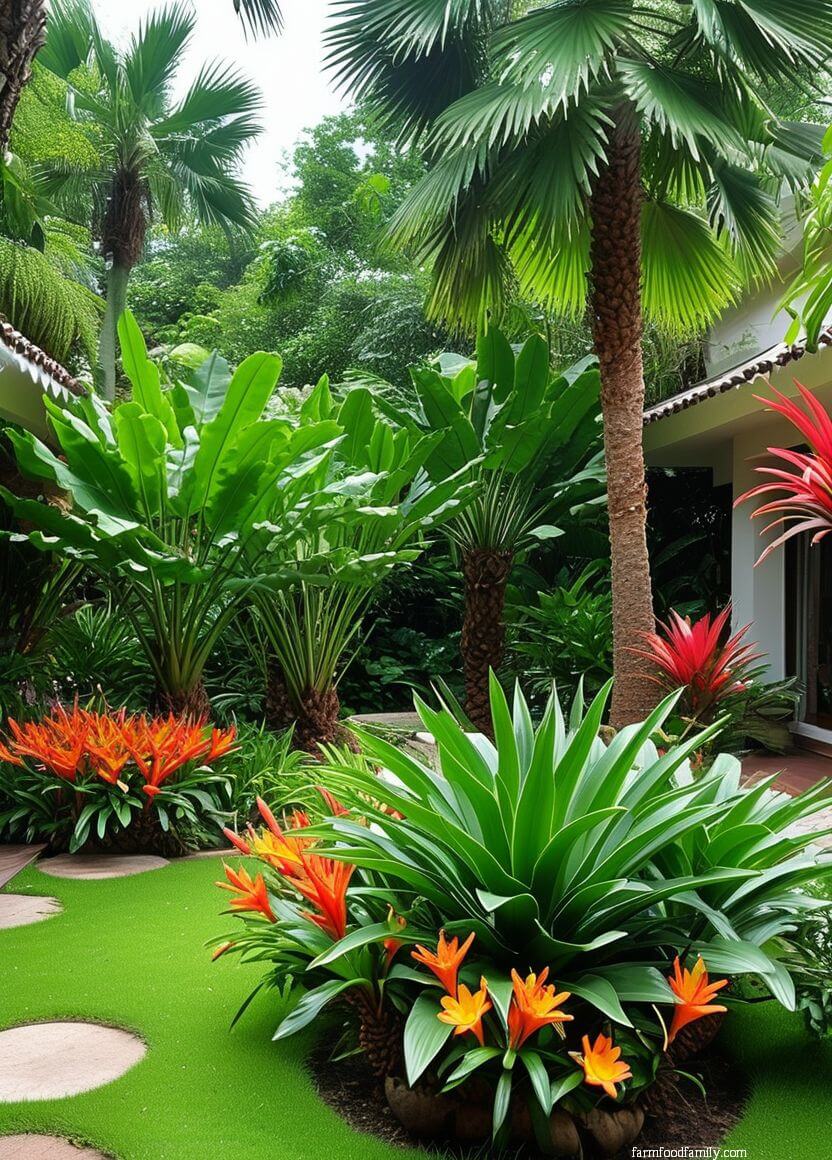
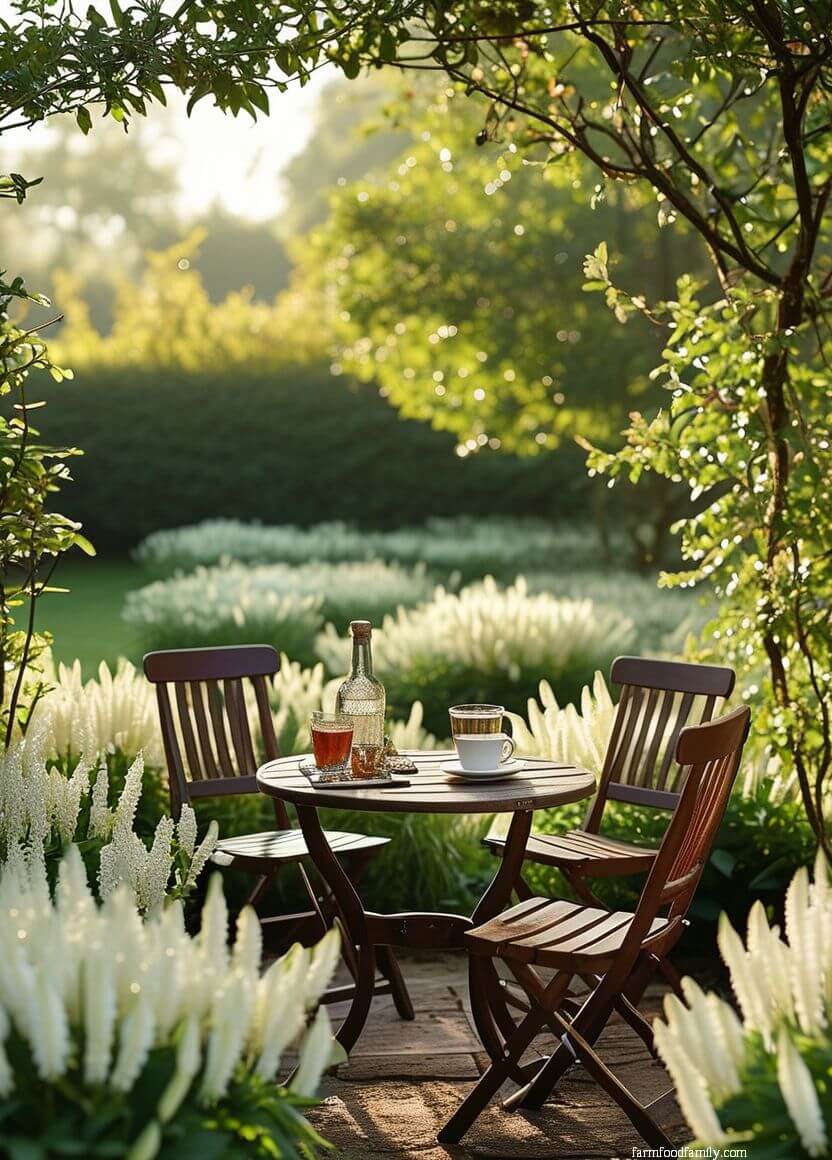
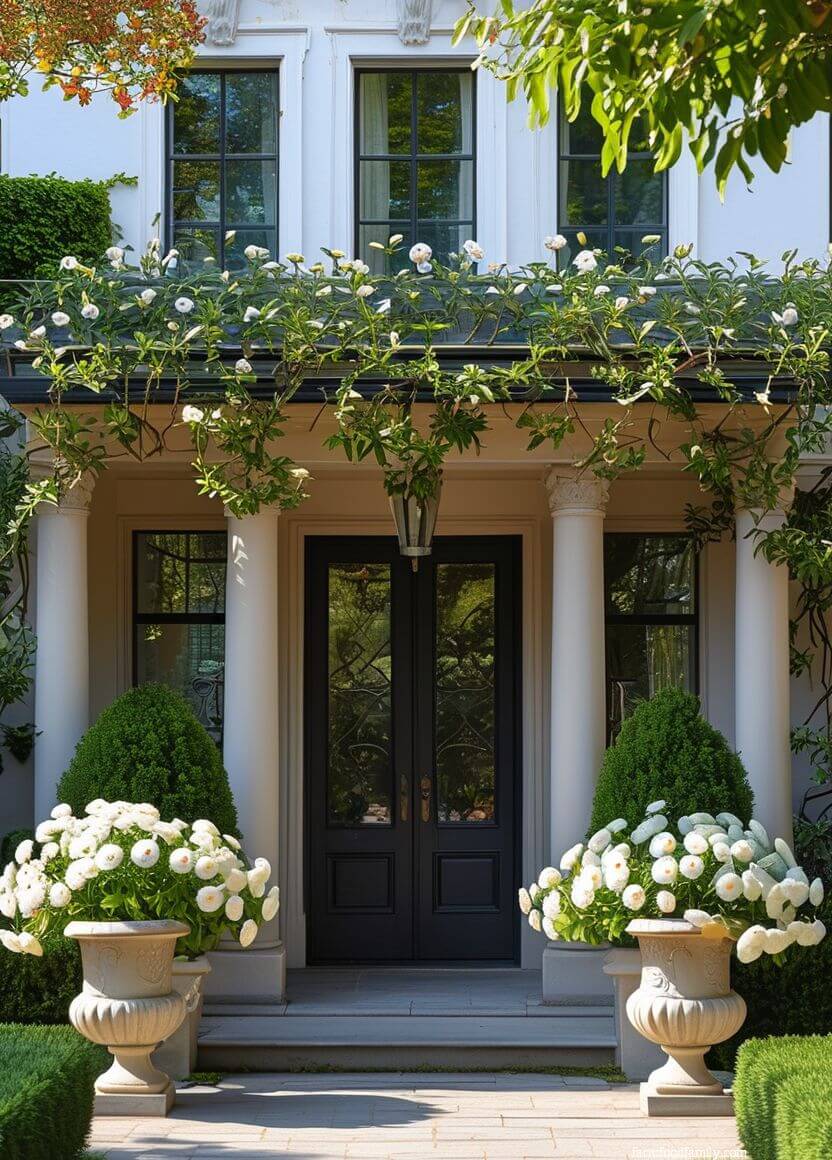
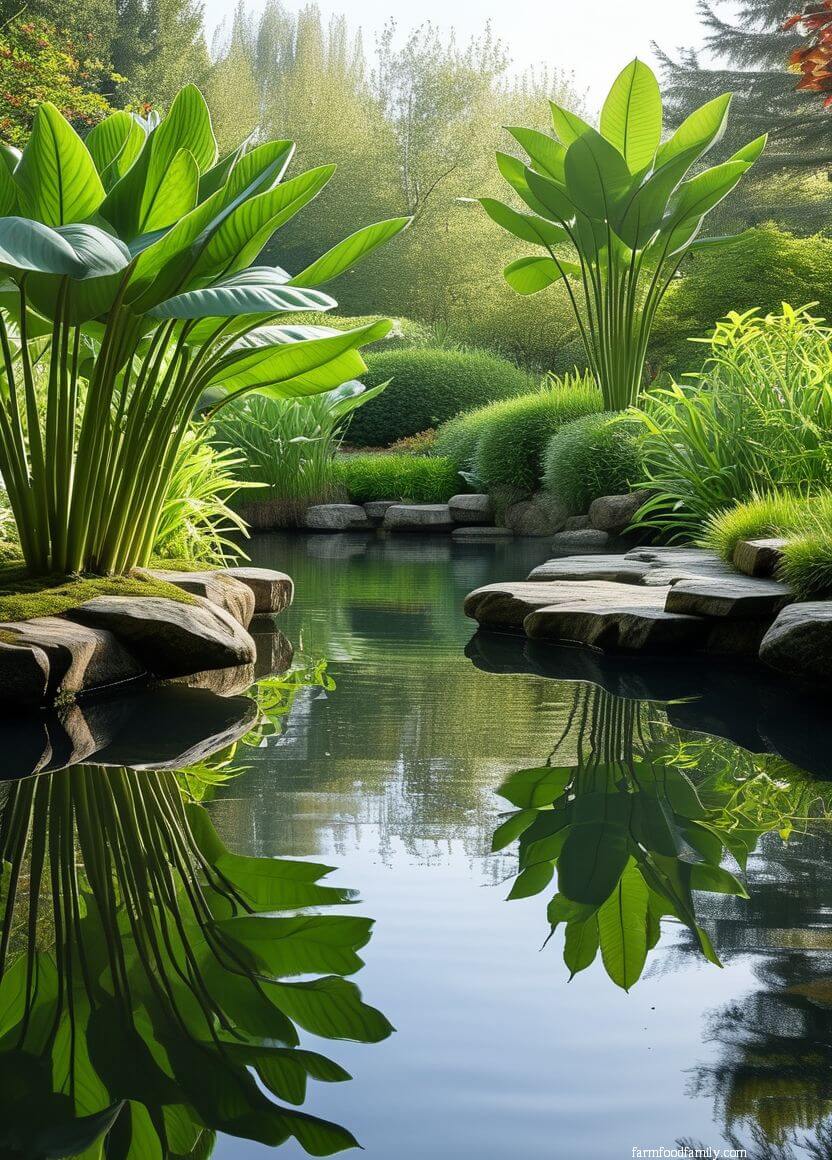
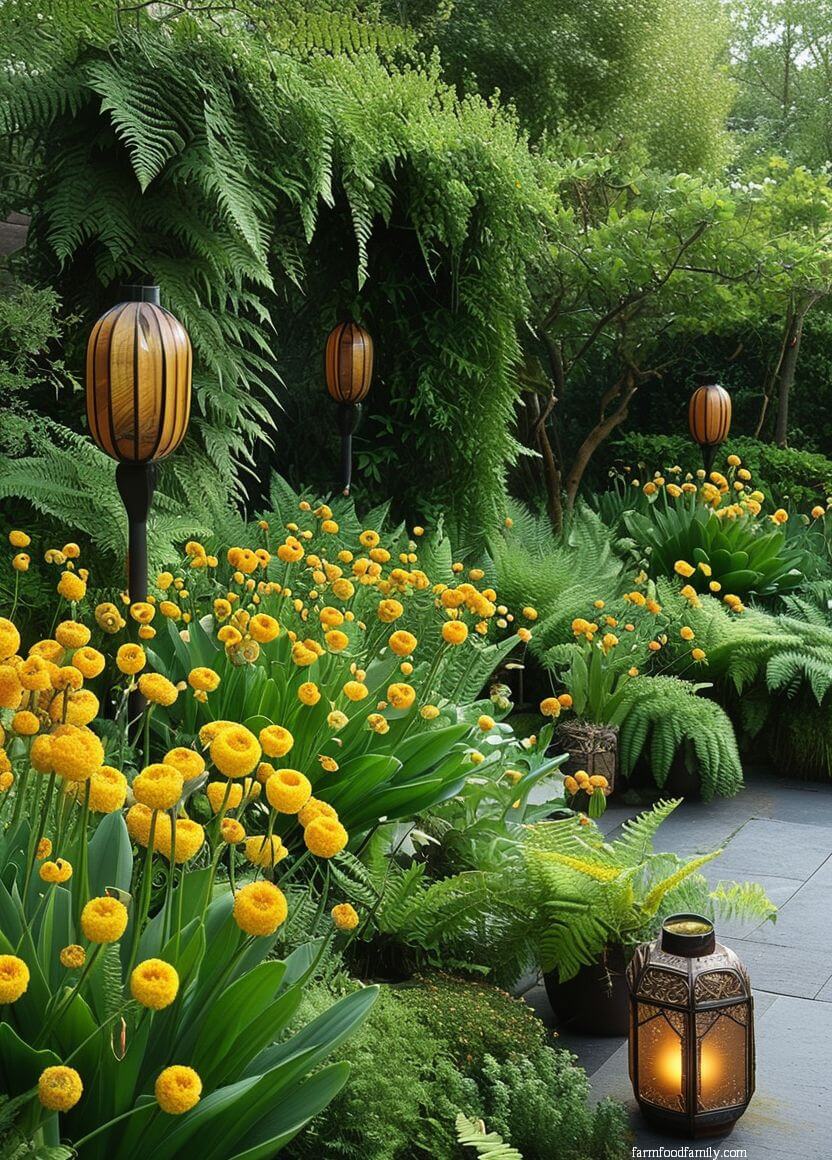
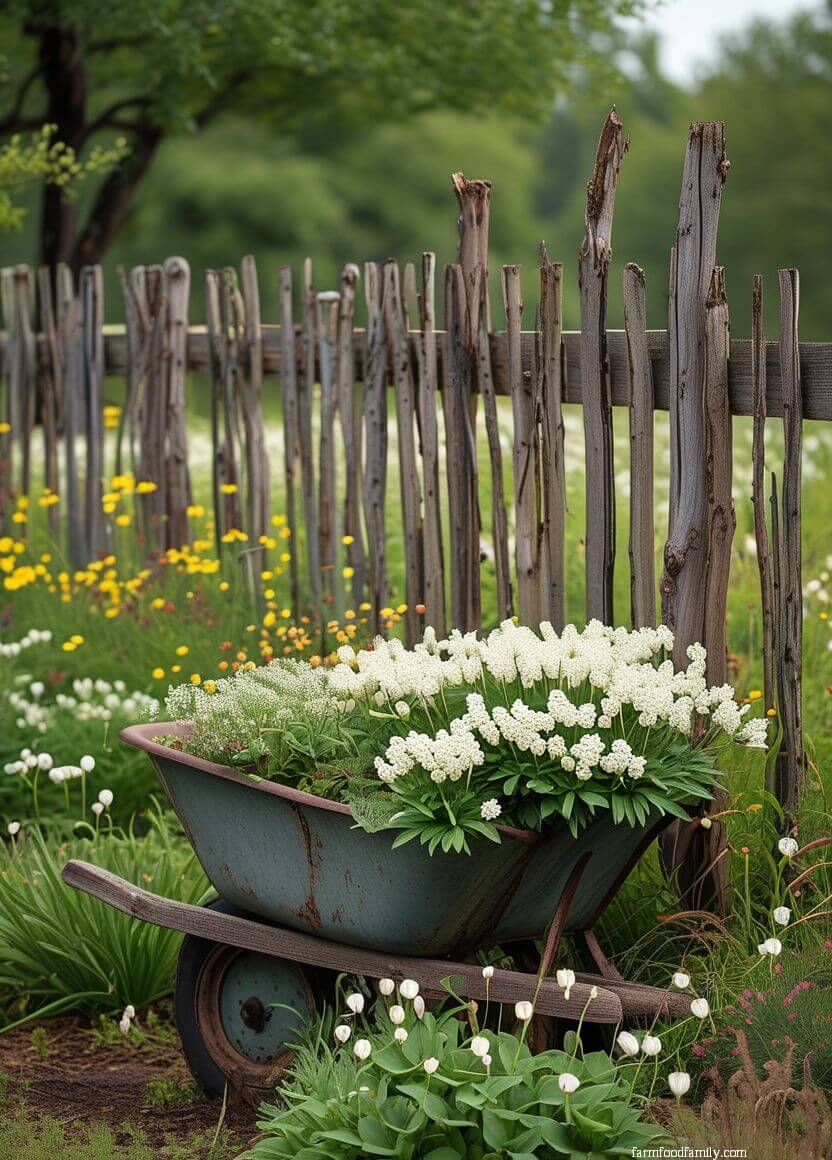
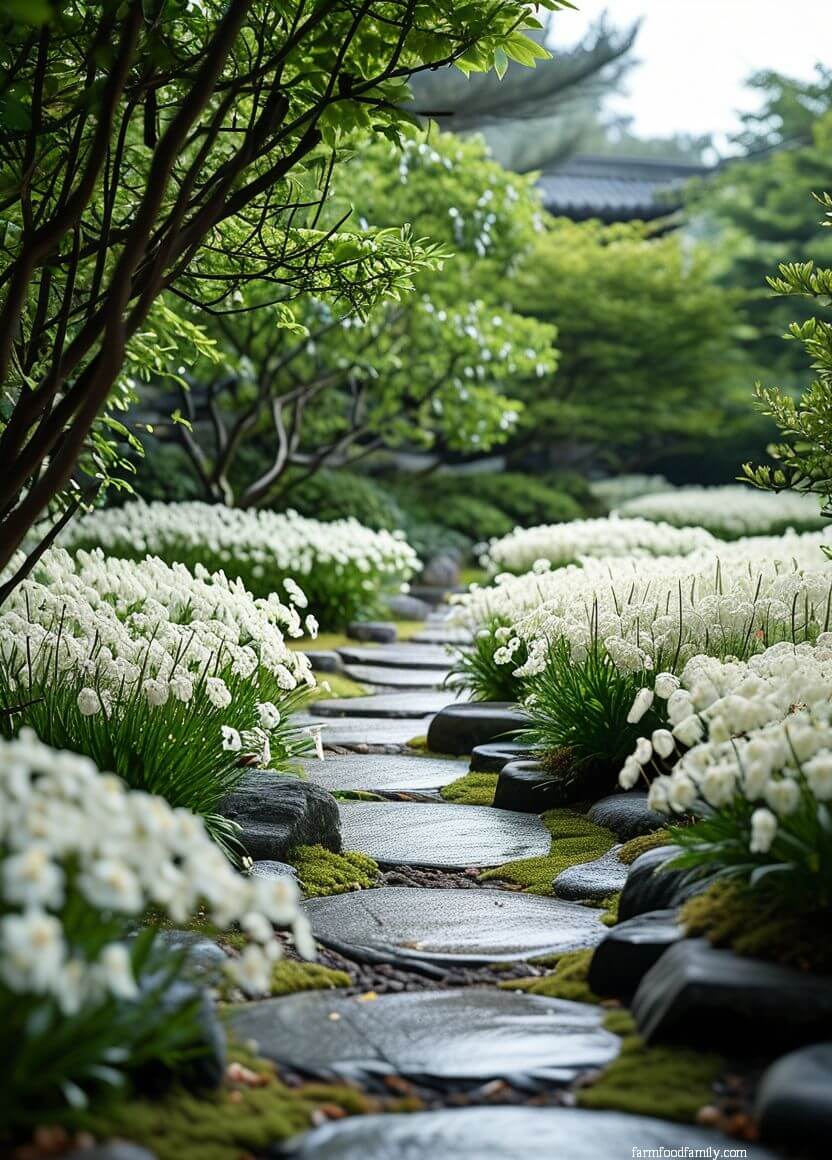
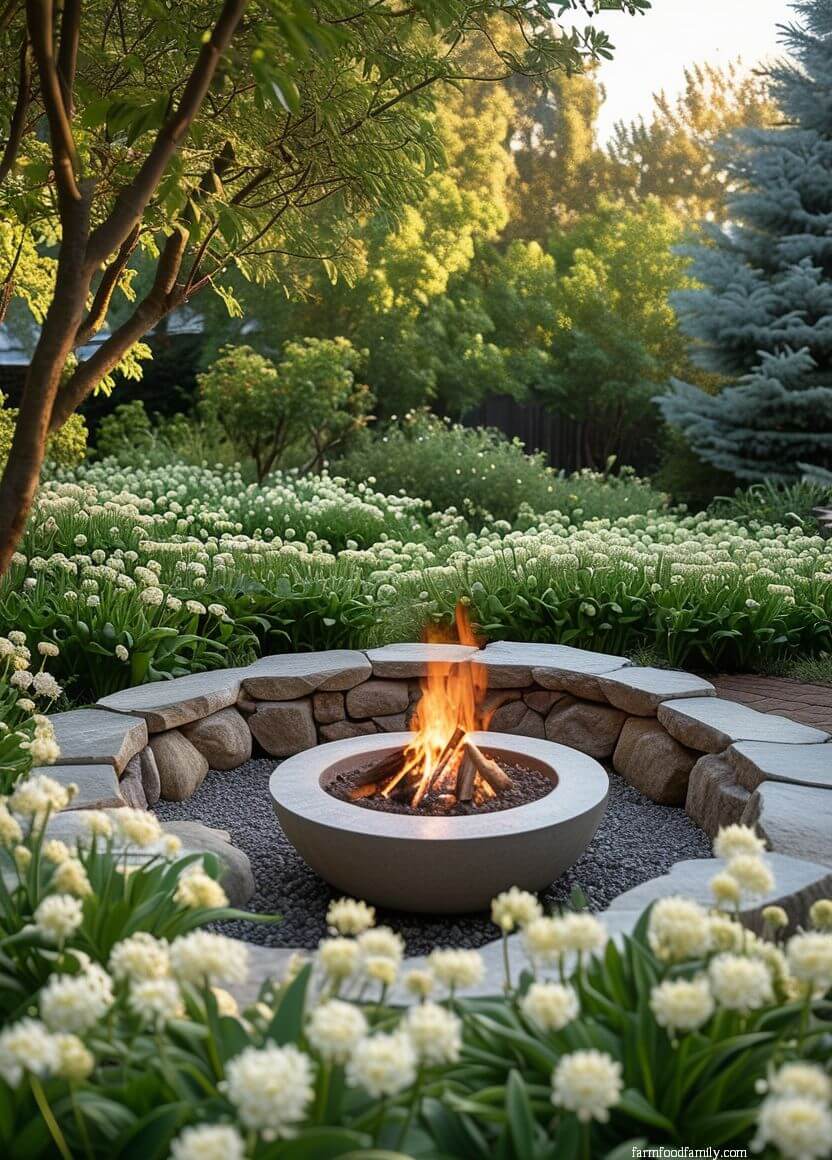
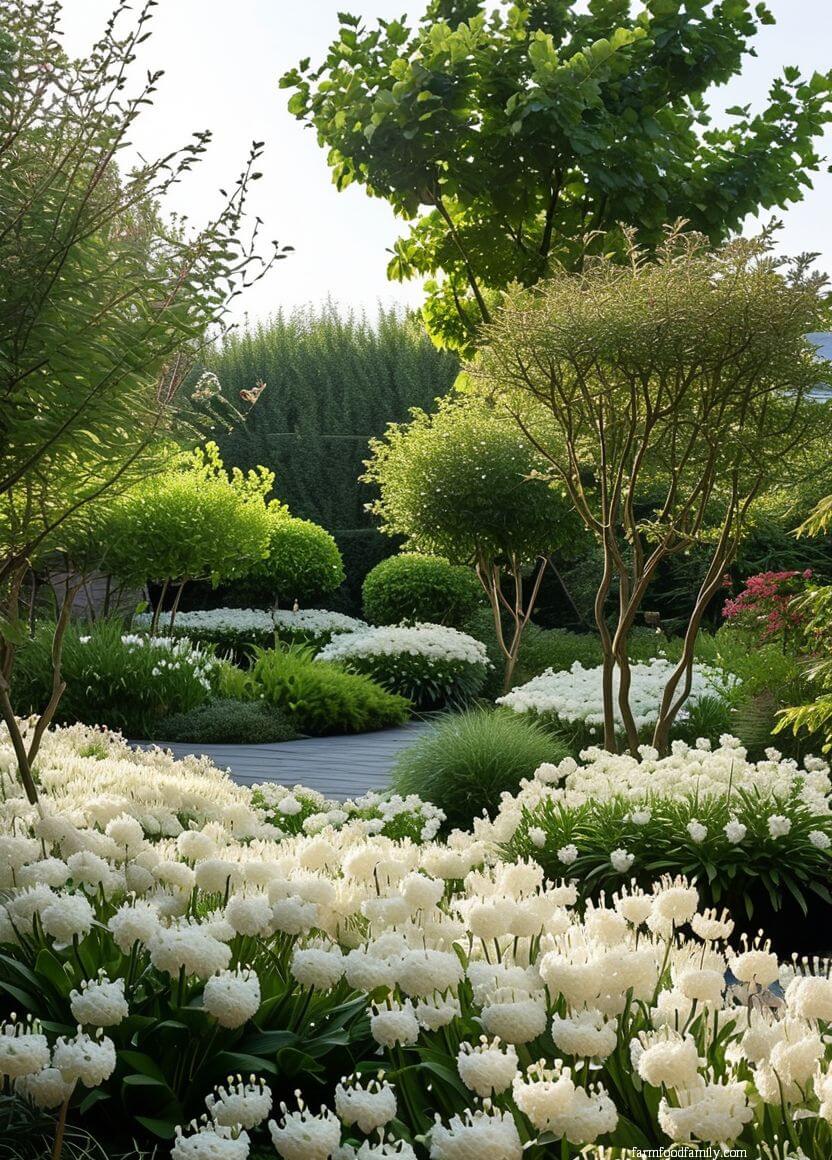
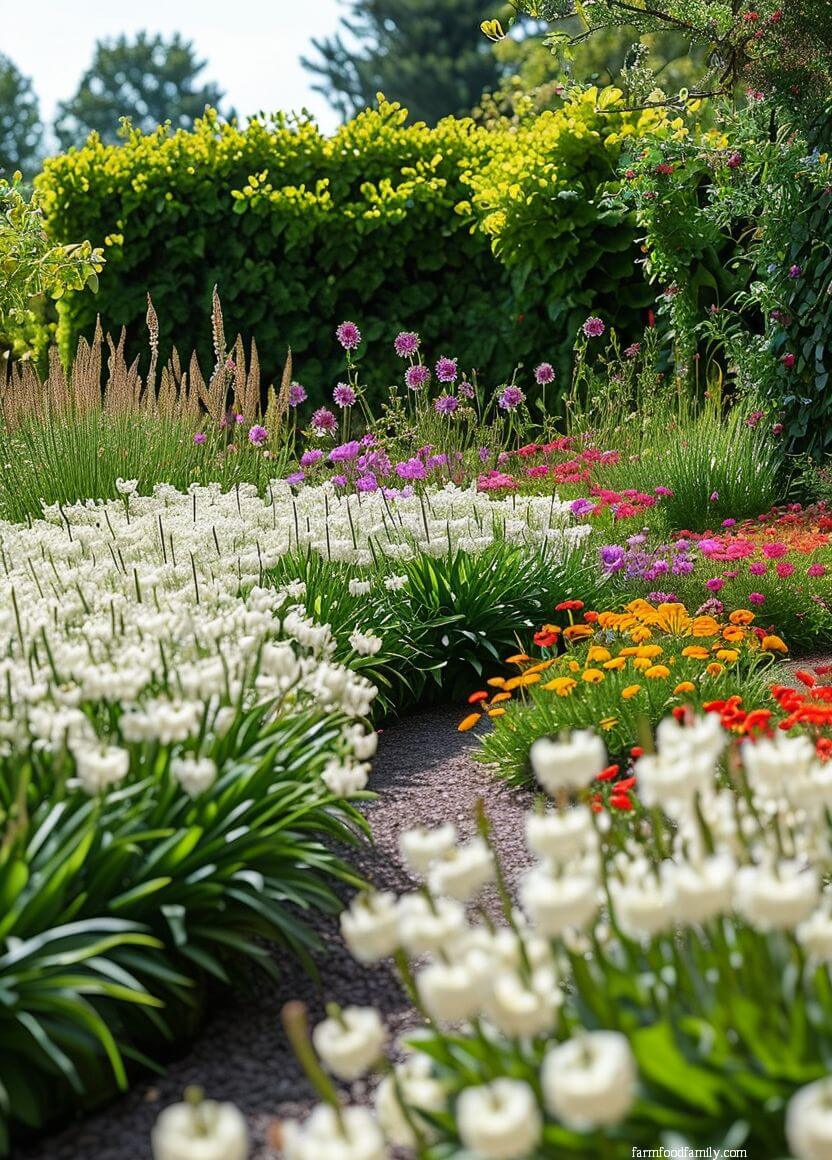
6. Shade Garden Oasis
7. Hosta Border Edging
8. Hosta Ground Cover
9. Container Gardening with Hostas
10. Hosta Rock Garden
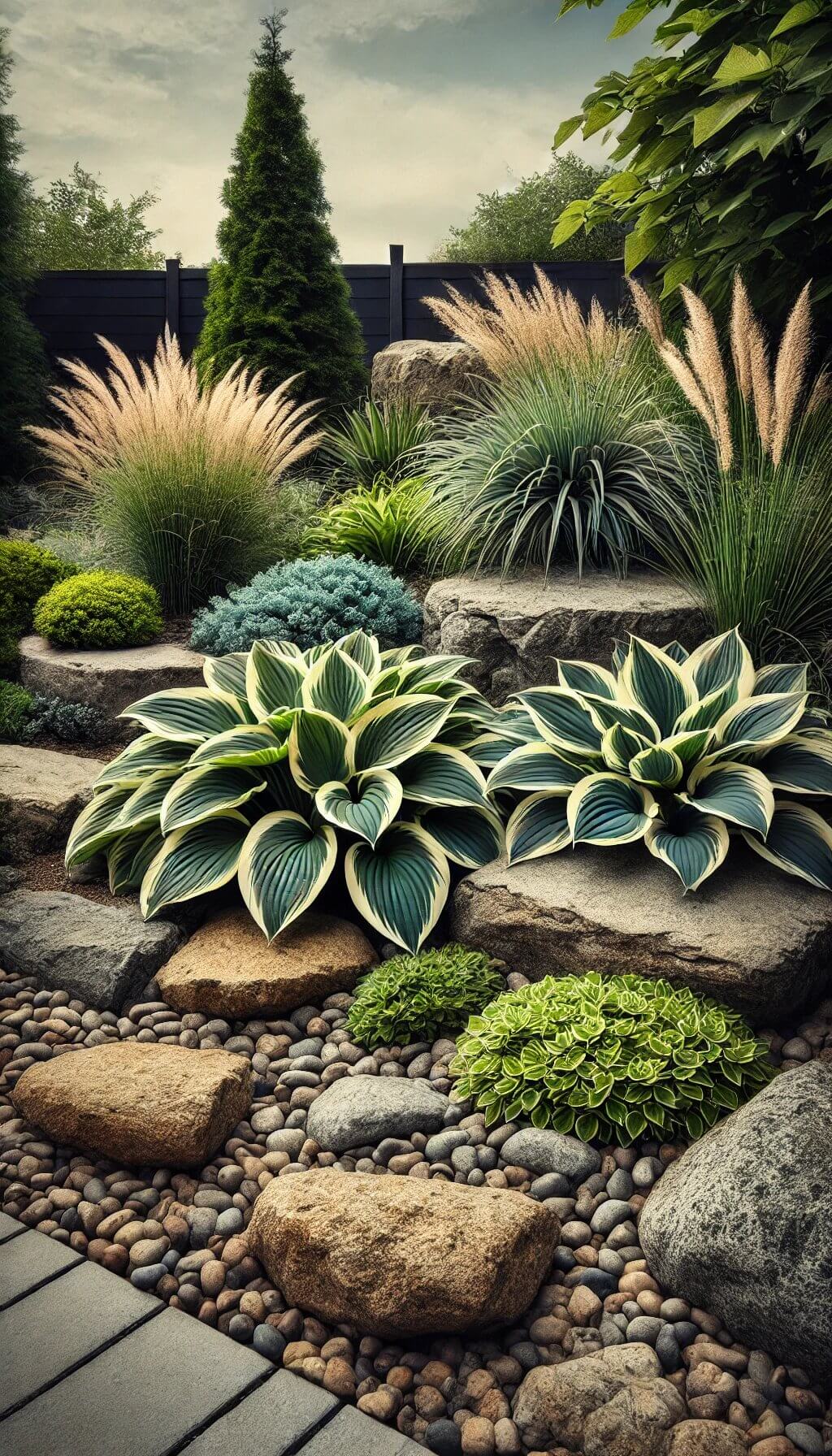
11. Hosta Water Feature
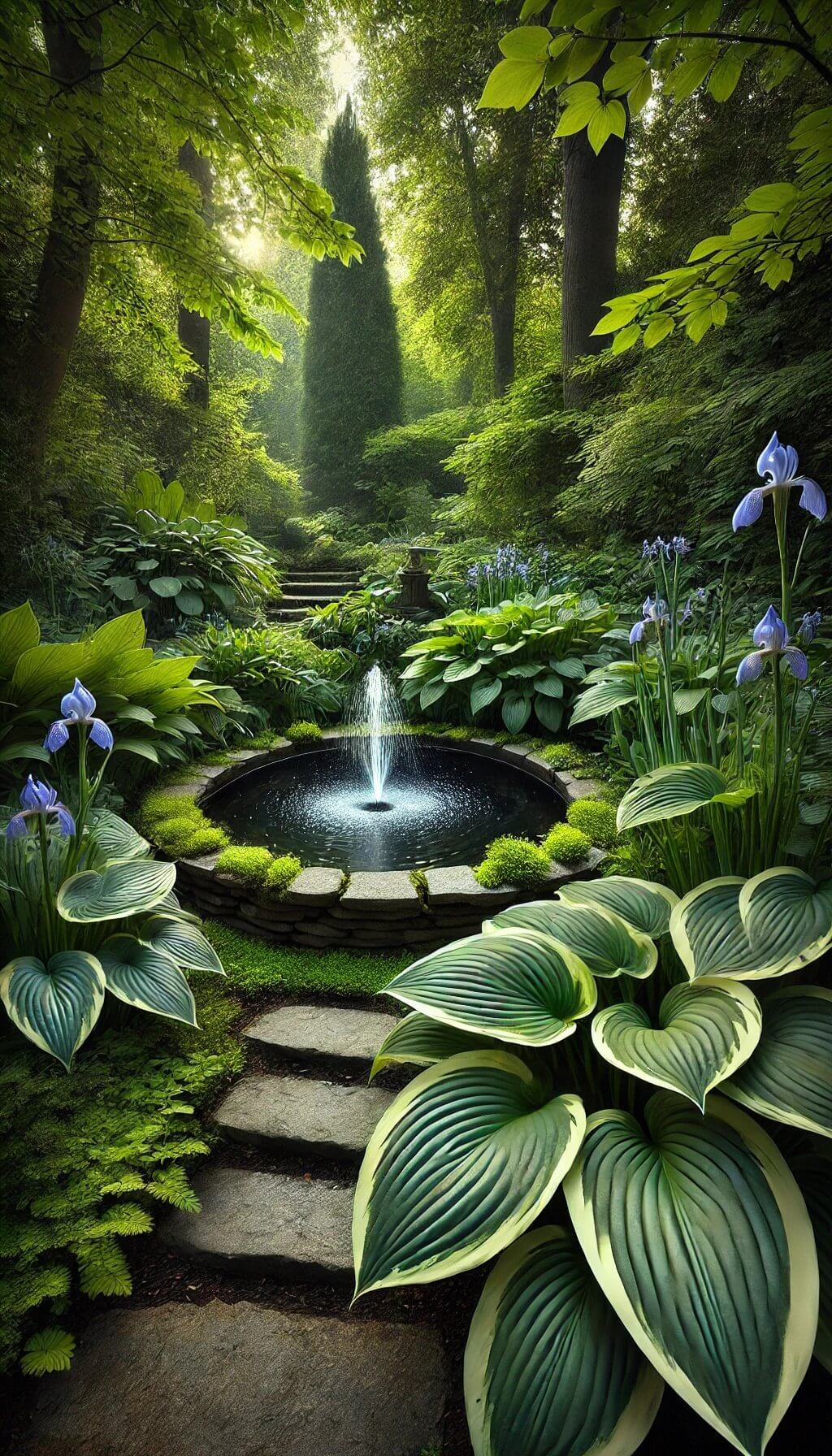
12. Hosta Woodland Garden
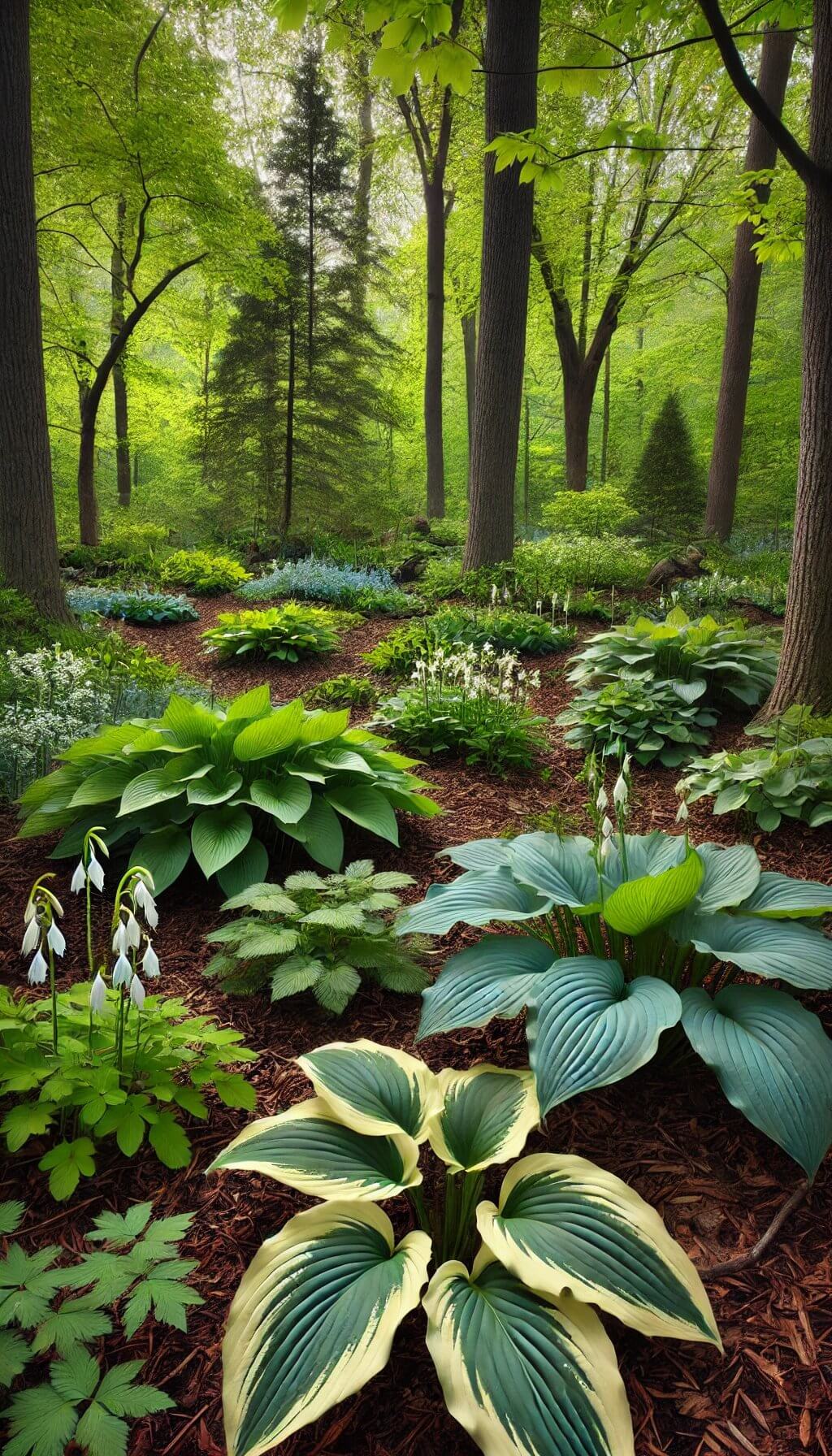
13. Hosta in Mixed Borders
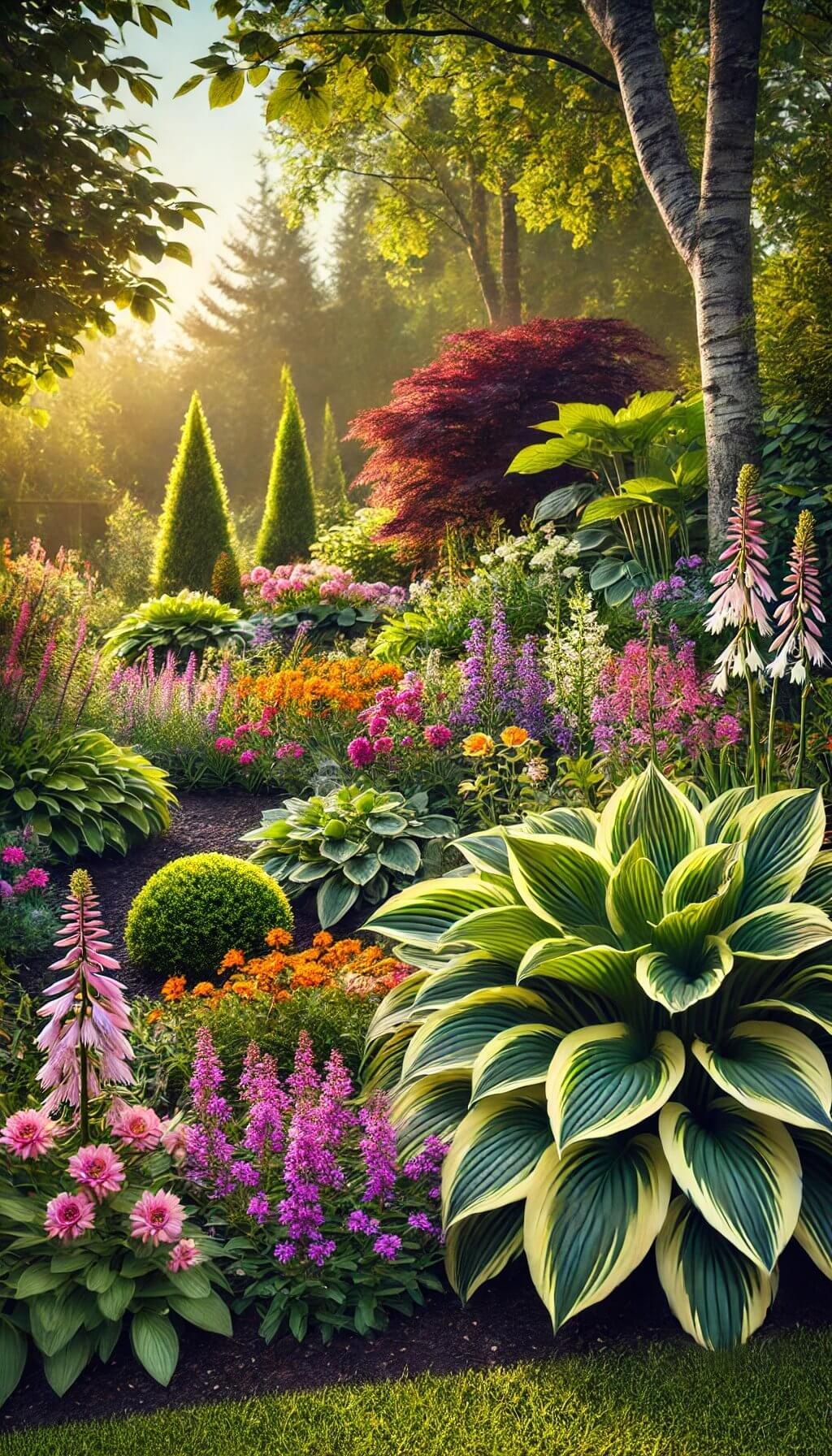
14. Hosta Hedge

15. Hosta with Spring Bulbs
16. Hosta and Groundcovers
17. Hosta in Formal Gardens
18. Hosta in Small Gardens
19. Hosta and Shrub Combinations
20. Hosta Pathways
FAQs on hosta landscaping
Are hostas toxic to pets?
Yes. Per the ASPCA, hostas contain saponins and are toxic to both dogs and cats, causing vomiting, diarrhea, and lethargy if a pet eats the leaves. If you have a dog or cat that gets into plants, keep hostas in a raised container rather than a ground-level bed, and call the ASPCA Animal Poison Control line at (888) 426-4435 if you suspect ingestion.
Which hosta varieties resist slugs and deer best?
Thick-leafed, waxy-coated varieties hold up best against both. ‘Halcyon’ and ‘Sum and Substance’ have dense, tough foliage that resists slug damage better than thin-leafed types, while ‘Blue Angel’ and ‘Elegans’ carry a heavy blue-waxy coating that deer tend to avoid browsing. Per the American Hosta Society, no hosta variety is fully deer-proof, but texture and coating meaningfully reduce how much damage you’ll actually see.
Are hostas really low-maintenance?
Mostly, yes, once established. They need consistent moisture (especially the first season while roots establish) and benefit from a yearly mulch refresh, but they don’t need regular fertilizing or aggressive pruning the way many flowering perennials do. The real maintenance issue for most gardeners isn’t the plant itself, it’s slug and deer damage, which is why variety selection (see above) matters more for hostas than for most low-maintenance plants.
Conclusion
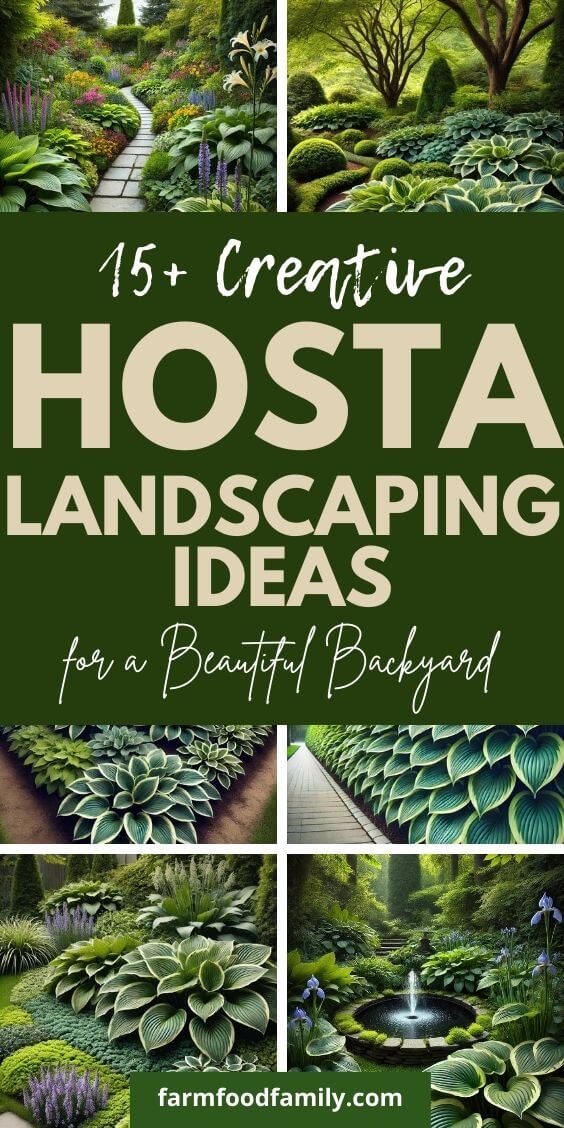
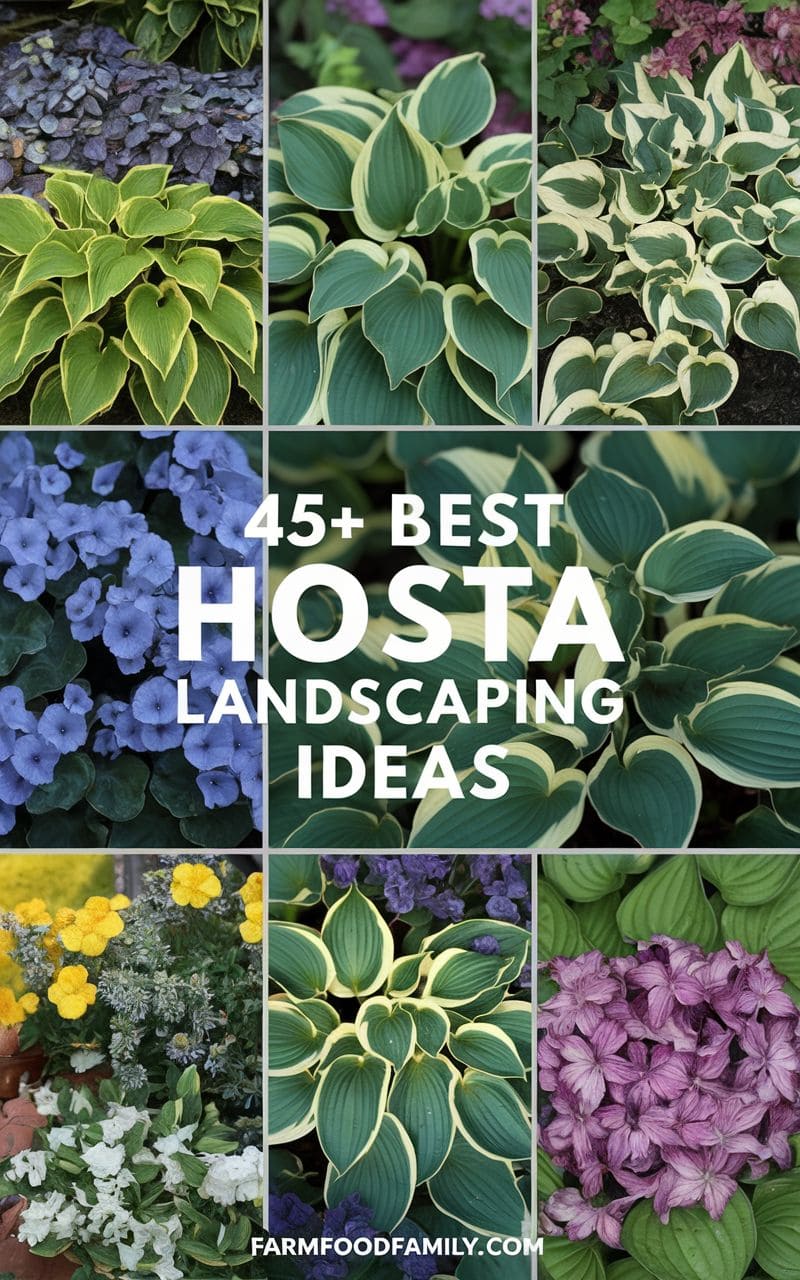
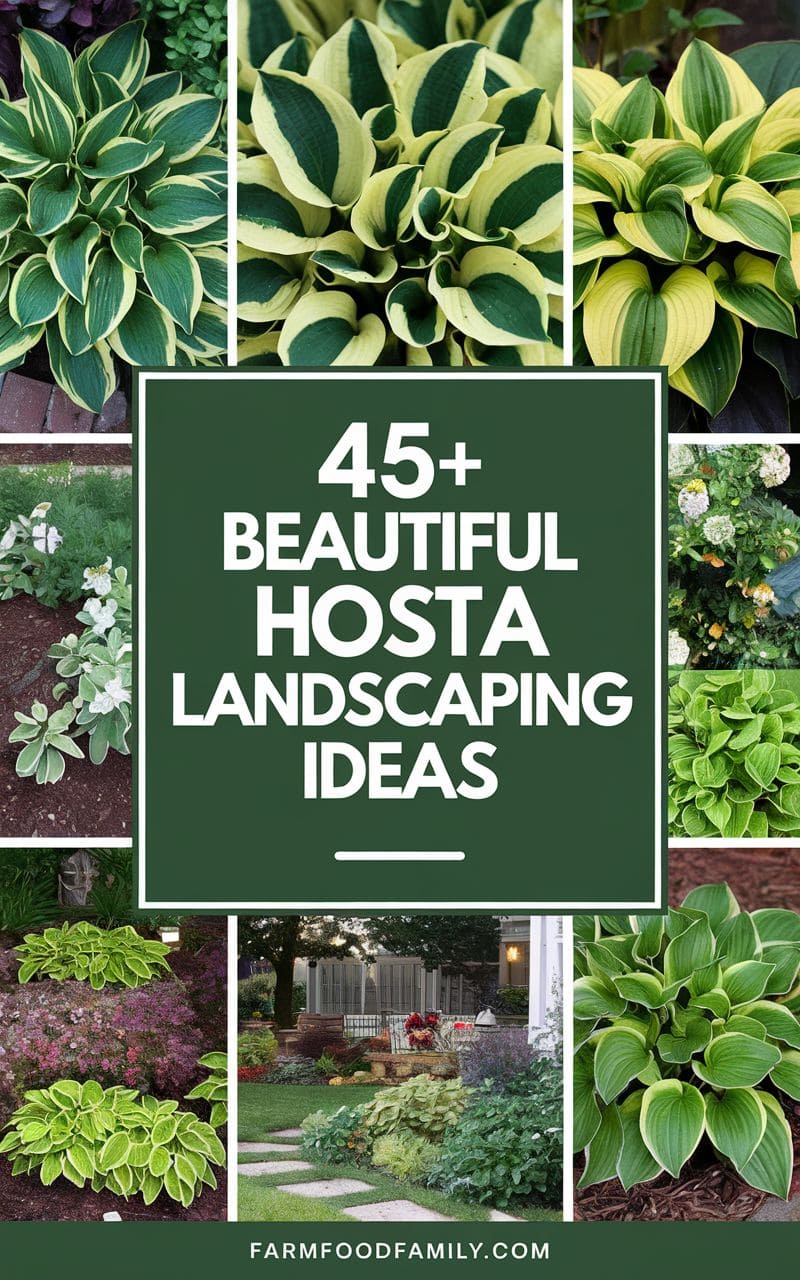
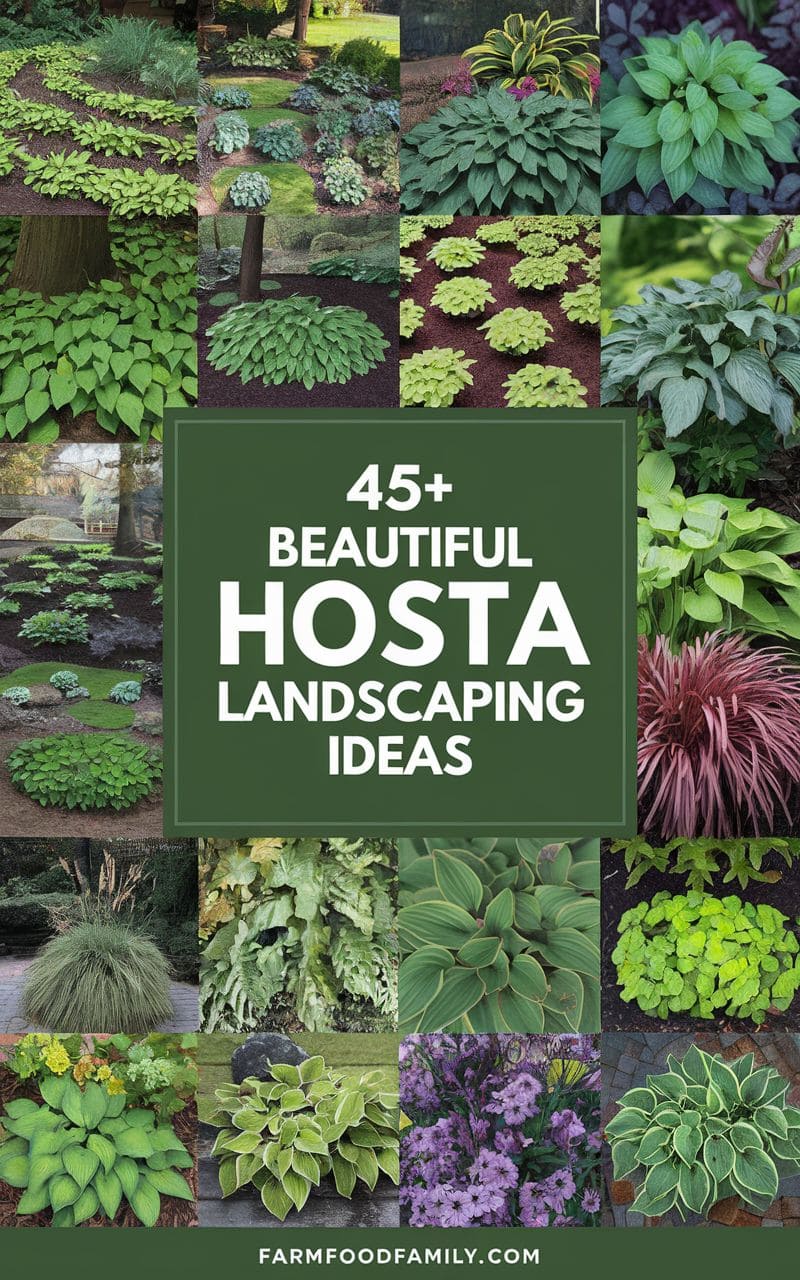
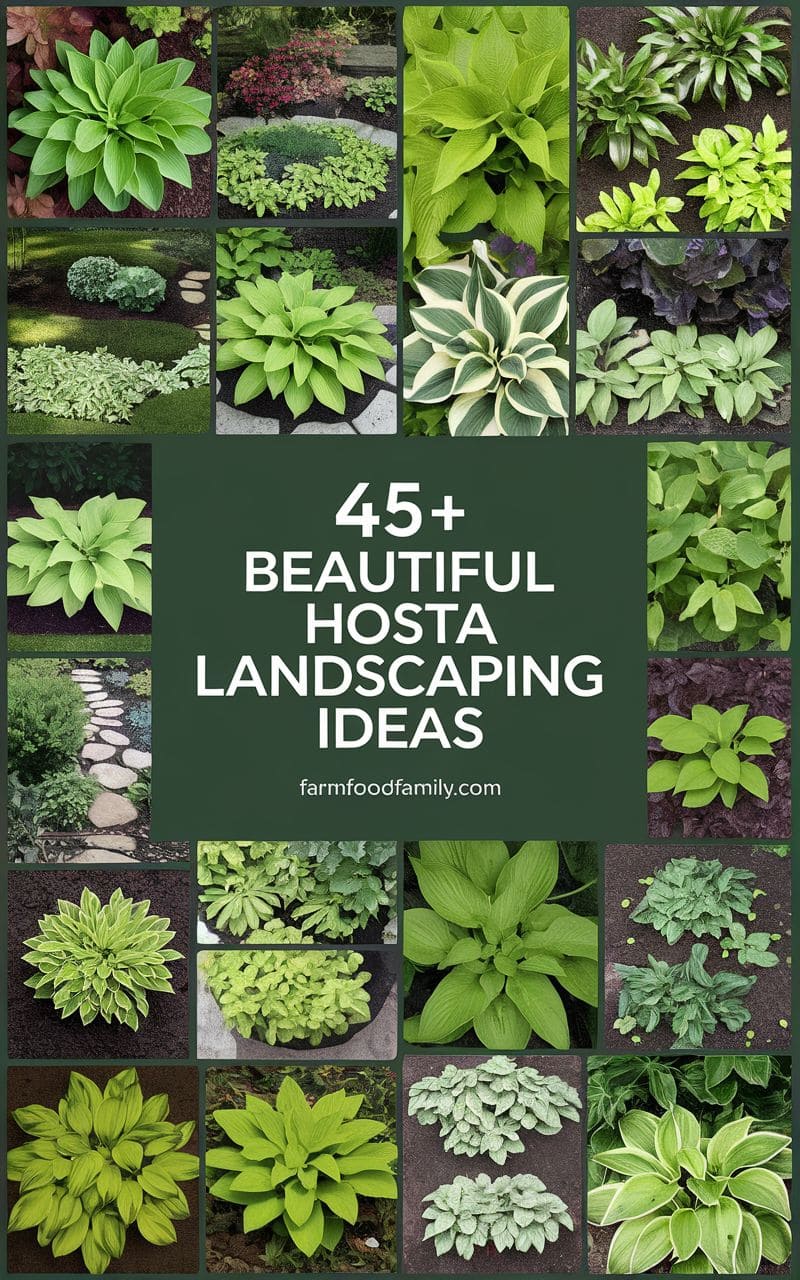
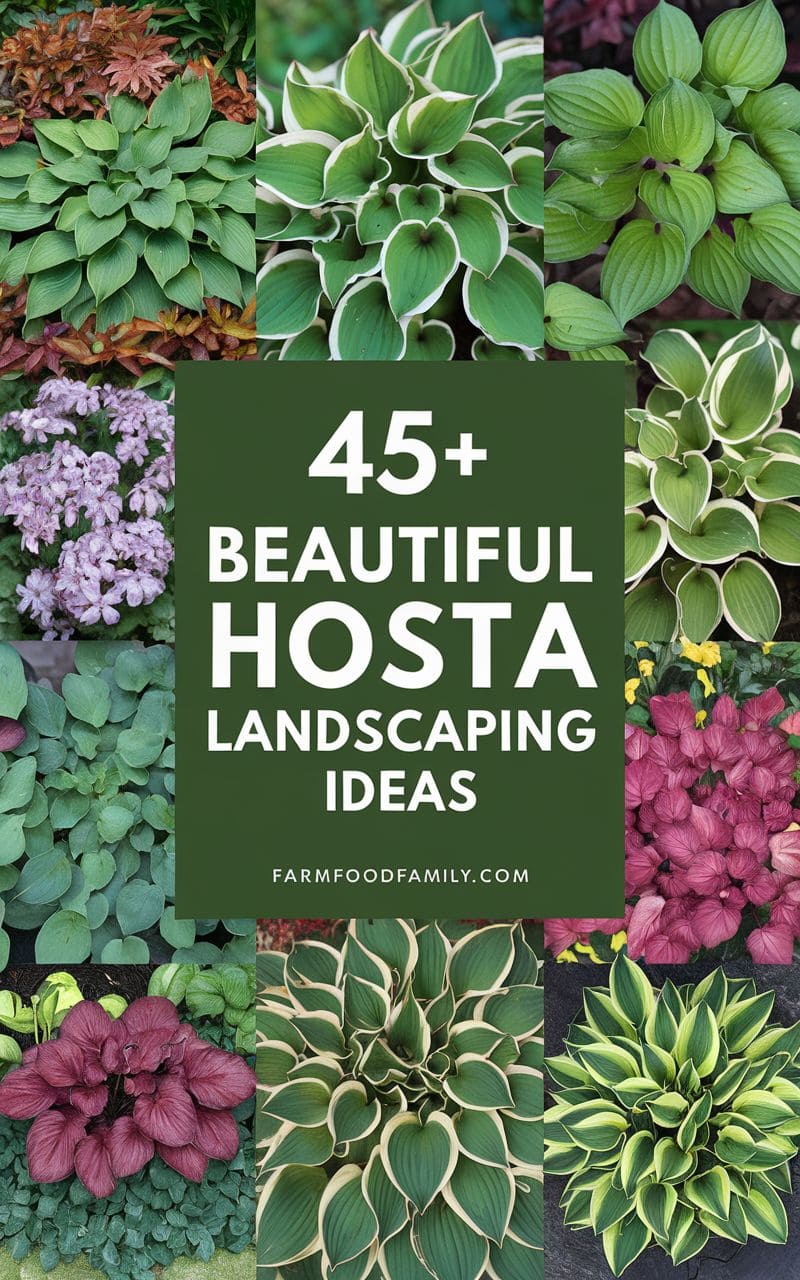
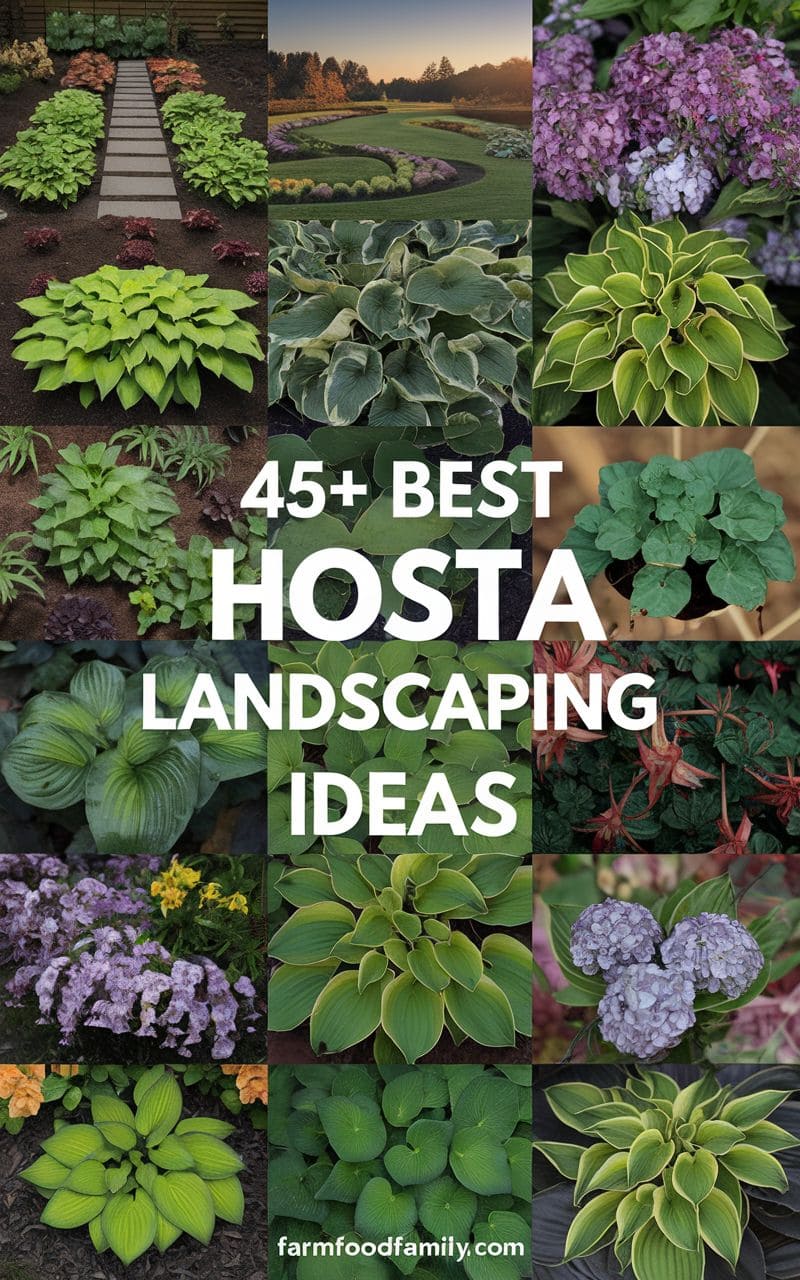
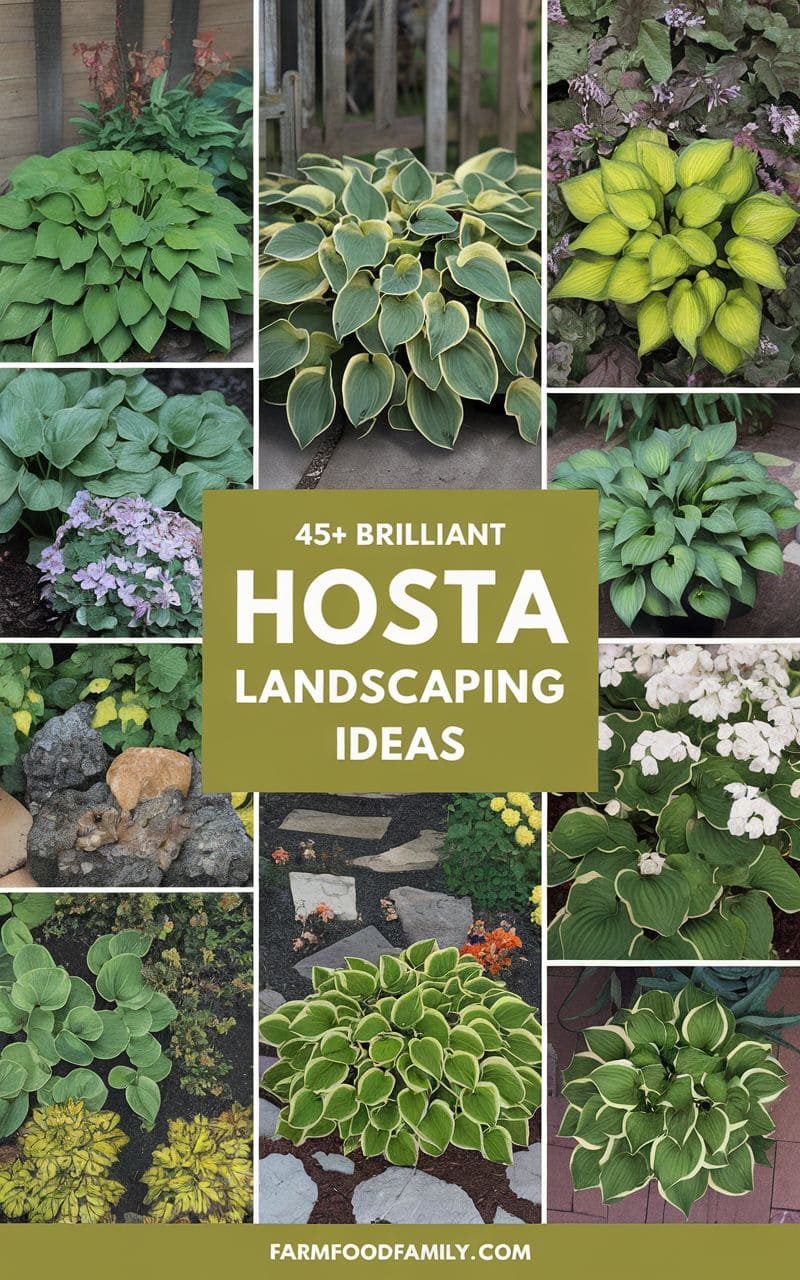
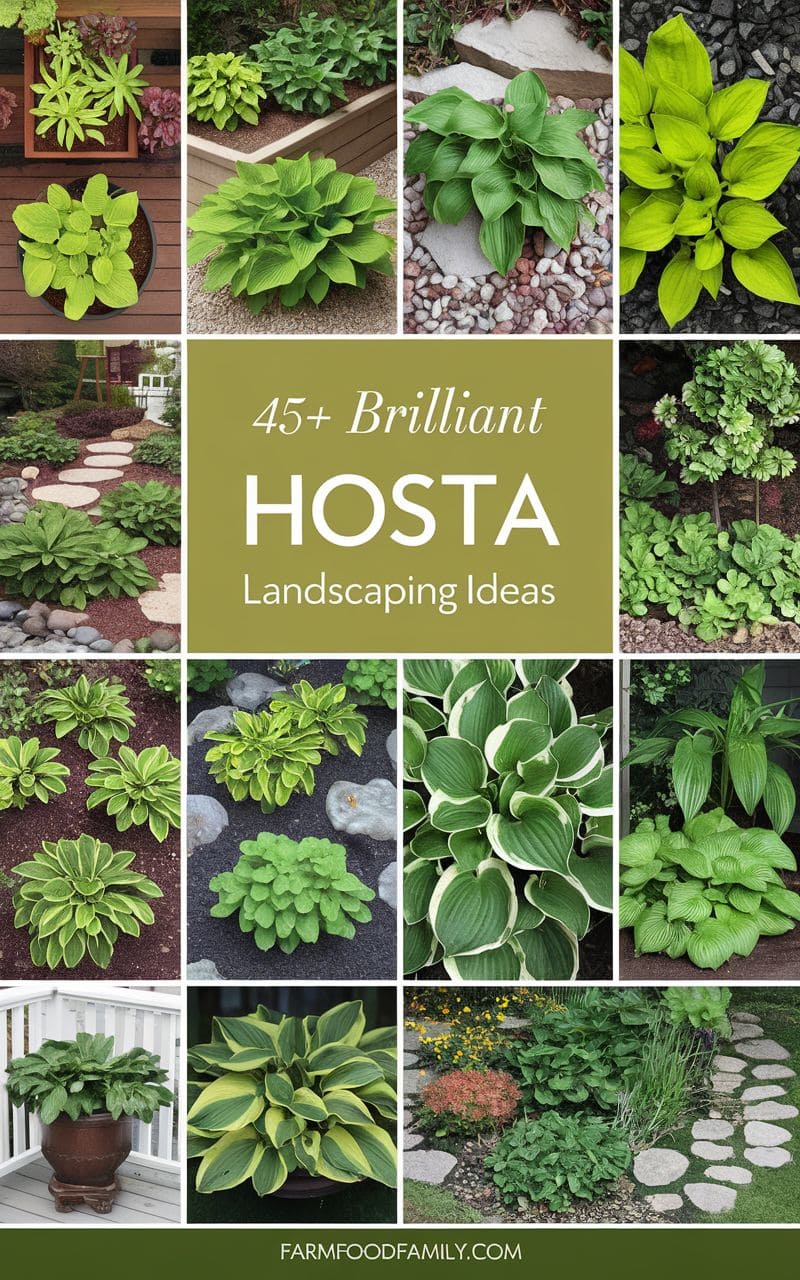
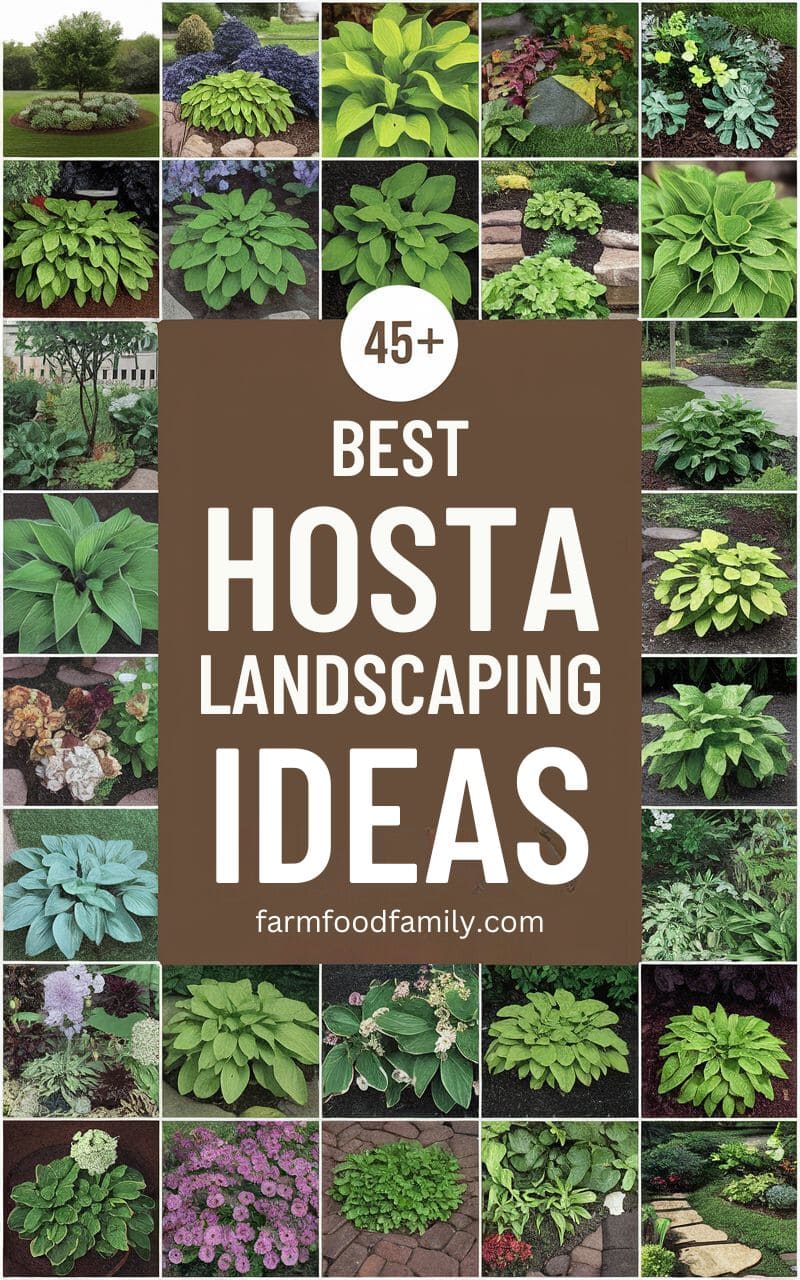
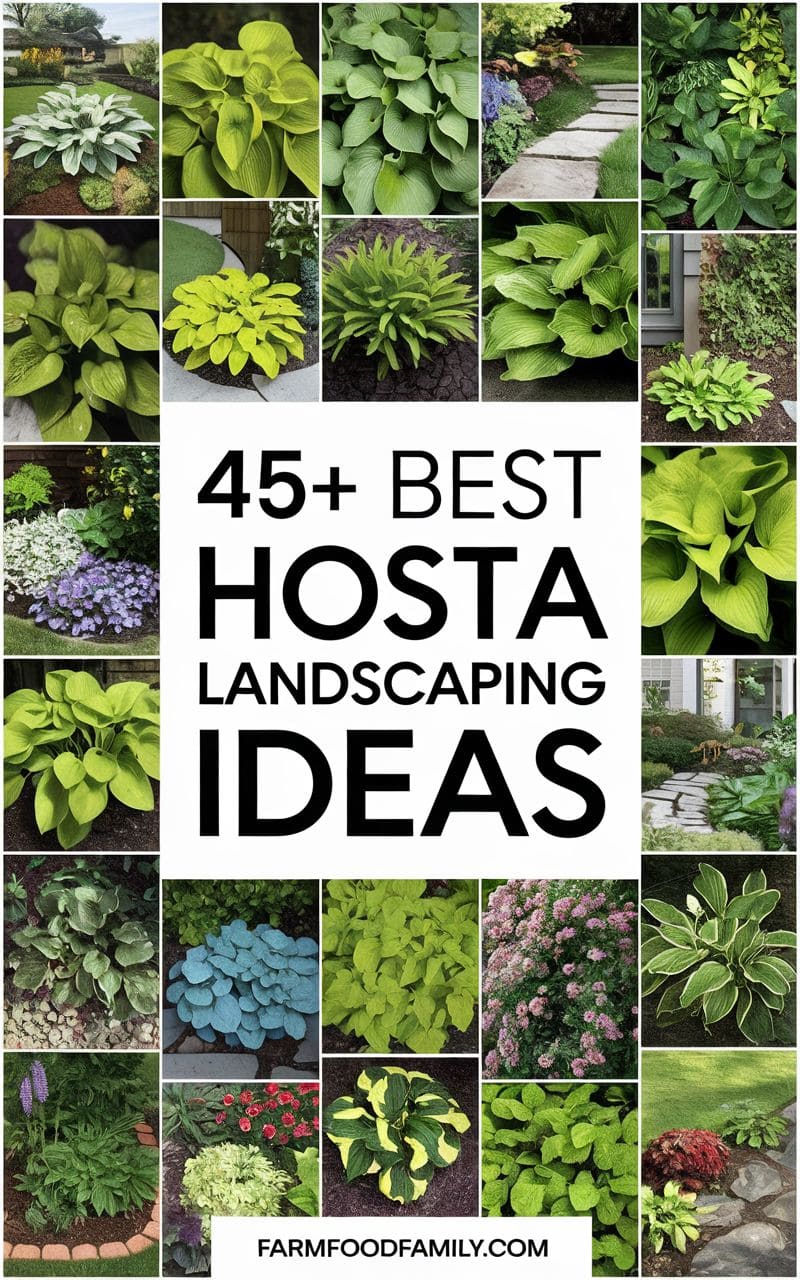
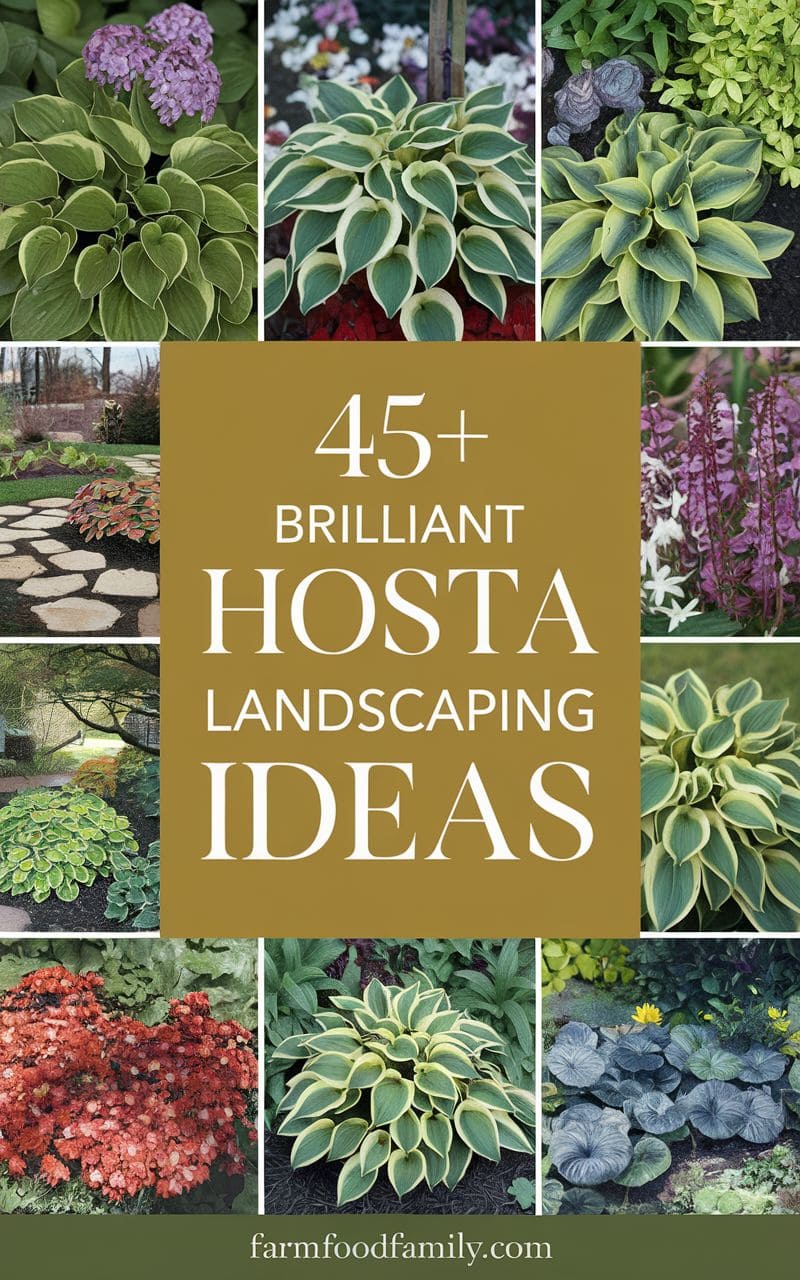
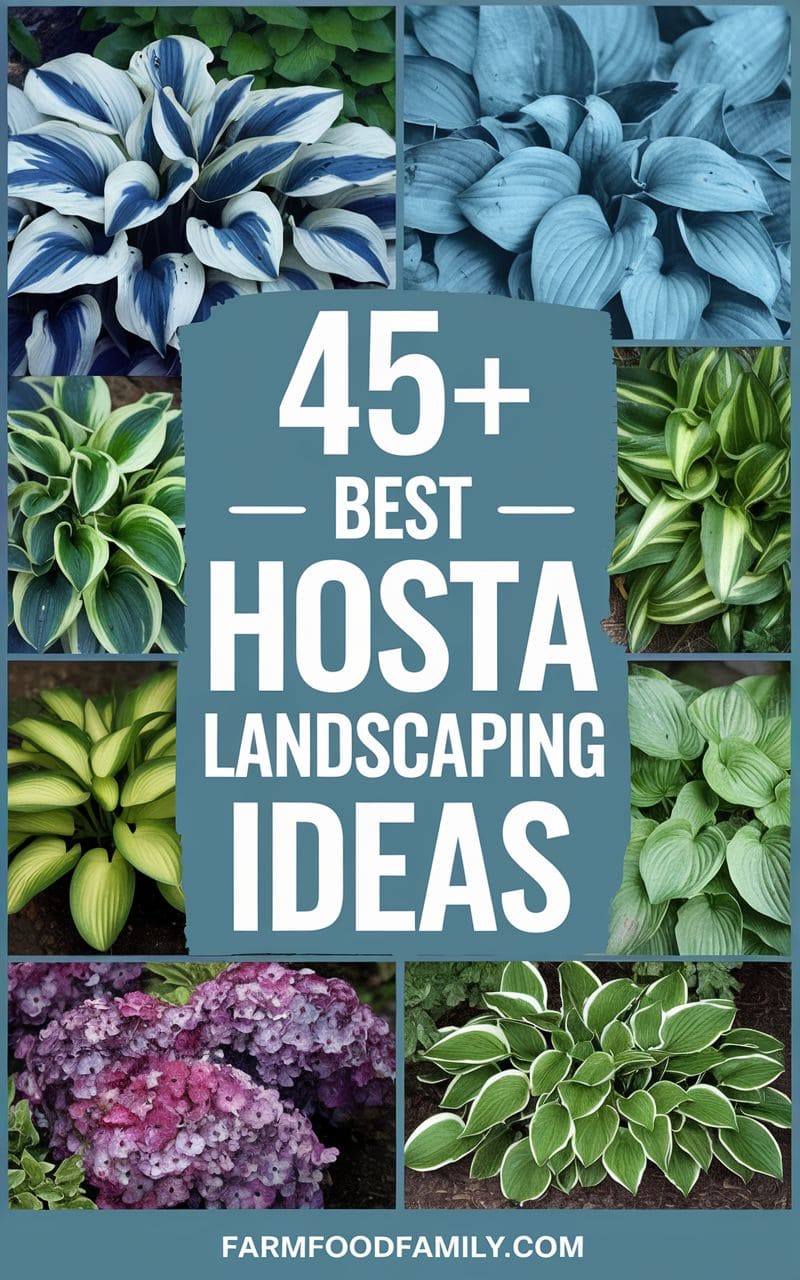
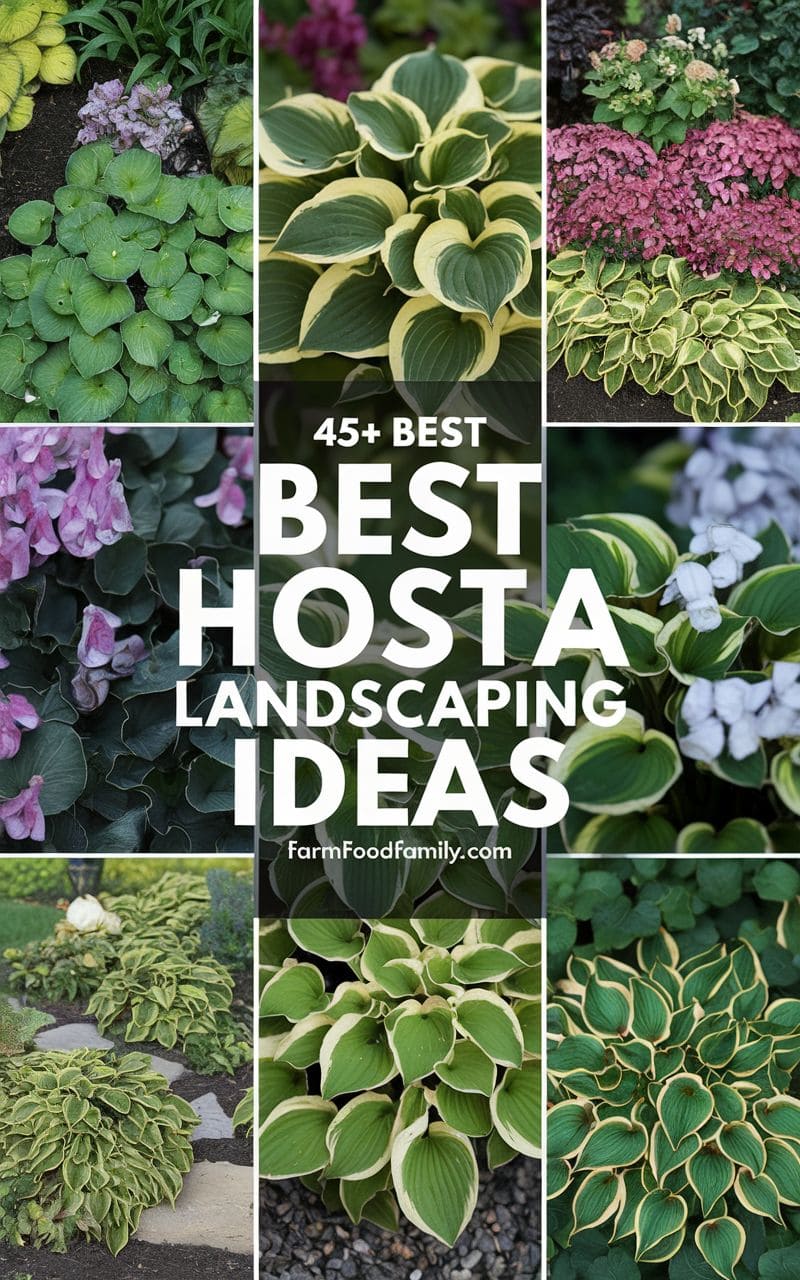
From borders to containers, and woodland paths to backyard focal points, hostas prove they’re more than just filler plants. Their timeless shape, soothing palette, and versatility give you endless design opportunities, no matter the layout you’re going for.
With just a few thoughtful combinations and placements, hostas can turn even the shadiest corners of your yard into something stunning.
If this list helped you out, leave a comment with your thoughts below and make sure to share it with your family and friends!
Never miss an update — choose FarmFoodFamily as your preferred source on Google.
How it works: Tap the button below to open Google's settings page, then check the box next to FarmFoodFamily.
Tap the checkbox to turn it blue — that's how you know it's set.