20+ Best Texas Landscaping Ideas by Region, Plus the Water Rules and Rights Most Guides Skip
Texas is too big and too climatically different from one end to the other for one generic landscaping list to actually work. What thrives in humid, flood-prone Houston will struggle in the Hill Country’s thin, rocky soil, and what looks great in North Texas’s cooler winters can scorch in South Texas’s arid summers. Below is…


Never miss an update — choose FarmFoodFamily as your preferred source on Google.
How it works: Tap the button below to open Google’s settings page, then check the box next to FarmFoodFamily.
Tap the checkbox to turn it blue — that’s how you know it’s set.
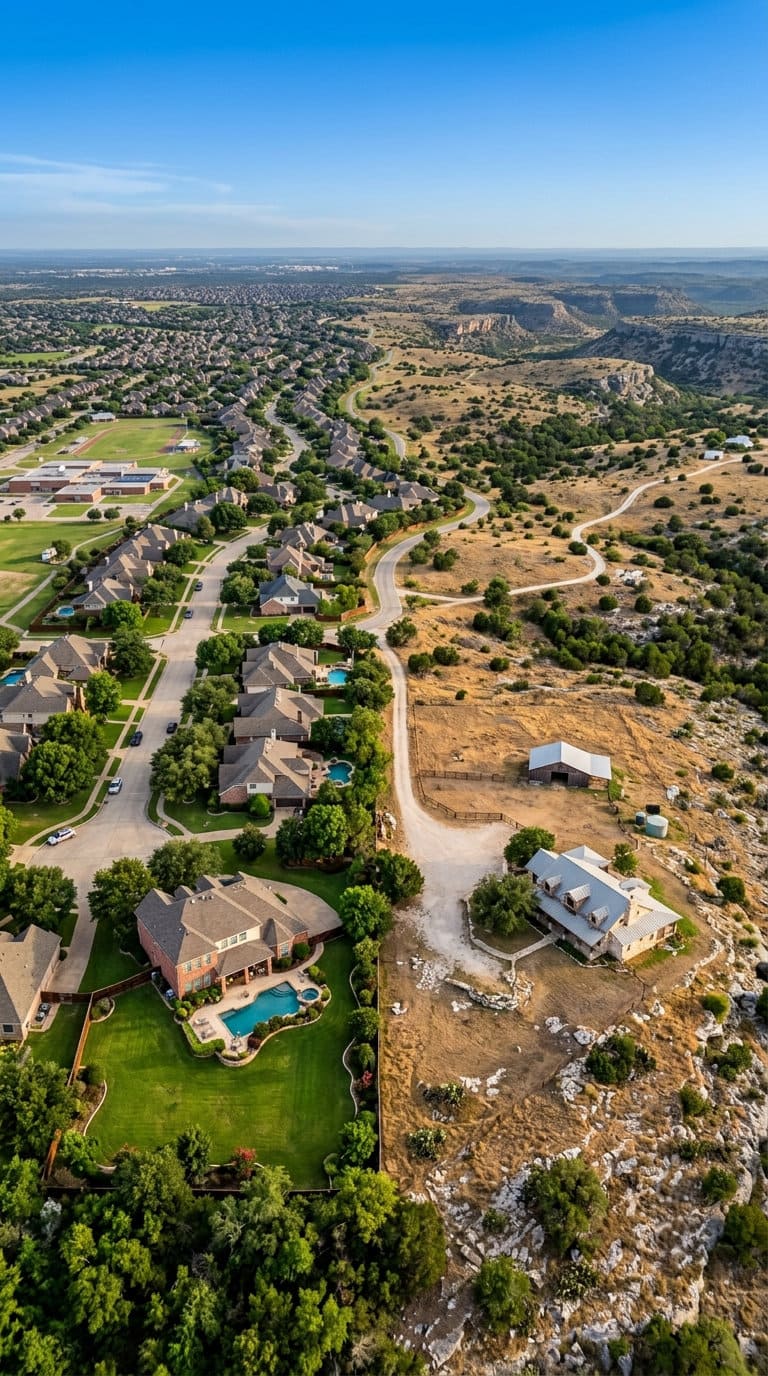
Texas is too big and too climatically different from one end to the other for one generic landscaping list to actually work.
What thrives in humid, flood-prone Houston will struggle in the Hill Country’s thin, rocky soil, and what looks great in North Texas’s cooler winters can scorch in South Texas’s arid summers.
Below is a region-by-region breakdown, plus two things almost no landscaping guide covers: the real watering restrictions Texas cities actually enforce, and the real state law that protects your right to xeriscape even if your HOA doesn’t love the look.

Related:
- 25+ Cheap and Low-Maintenance Florida Landscape Ideas For Small Yards
- 25+ Best Las Vegas Backyard Landscape Ideas
- 25+ Arizona Backyard Landscaping Ideas
North Texas landscaping ideas
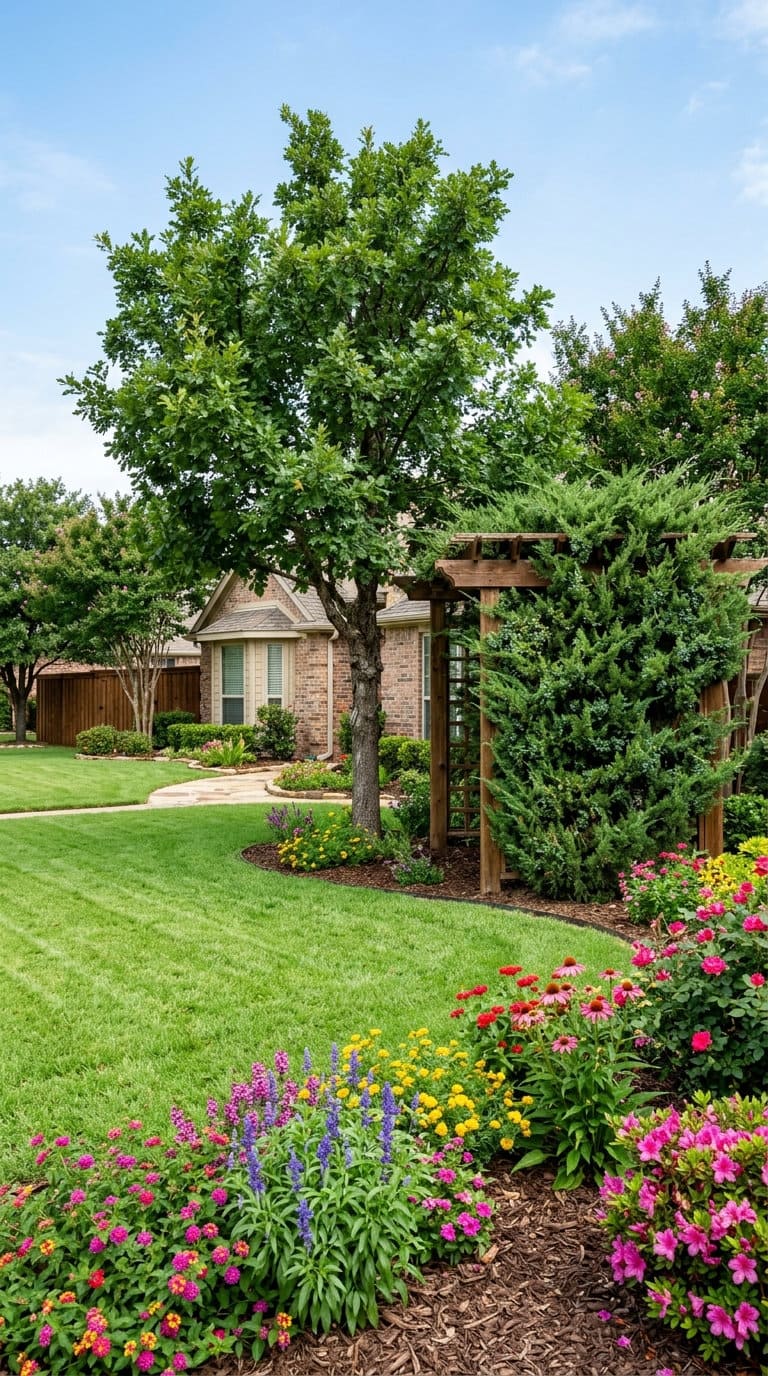
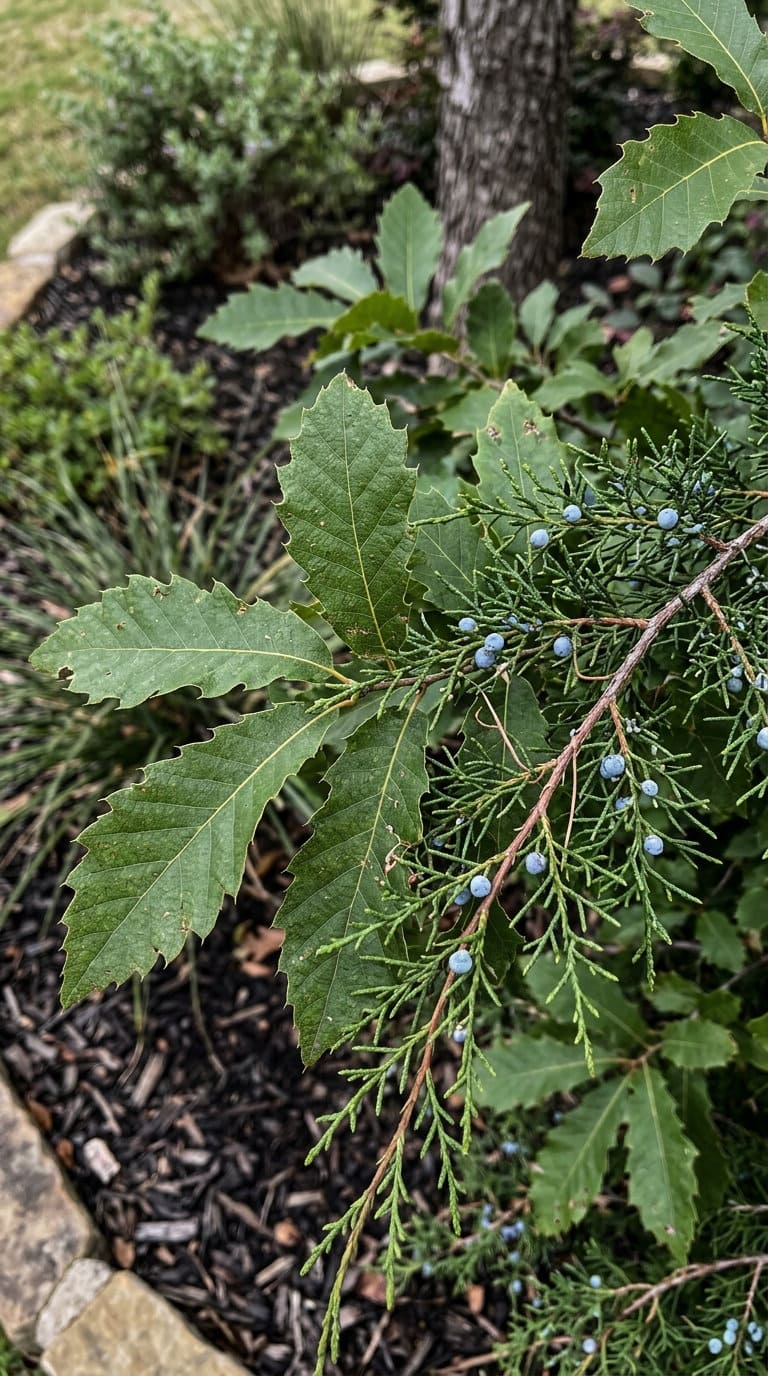
This side of Texas is where you could find Dallas and southern Oklahoma. With their booming balance of suburbia and metropolises, as well as colder winters and more temperate summers, North Texas landscaping could benefit a lot from bright green turfs, colorful flowers, shrubs and trees like Chinquapin oak, vines like juniper, and light tones.


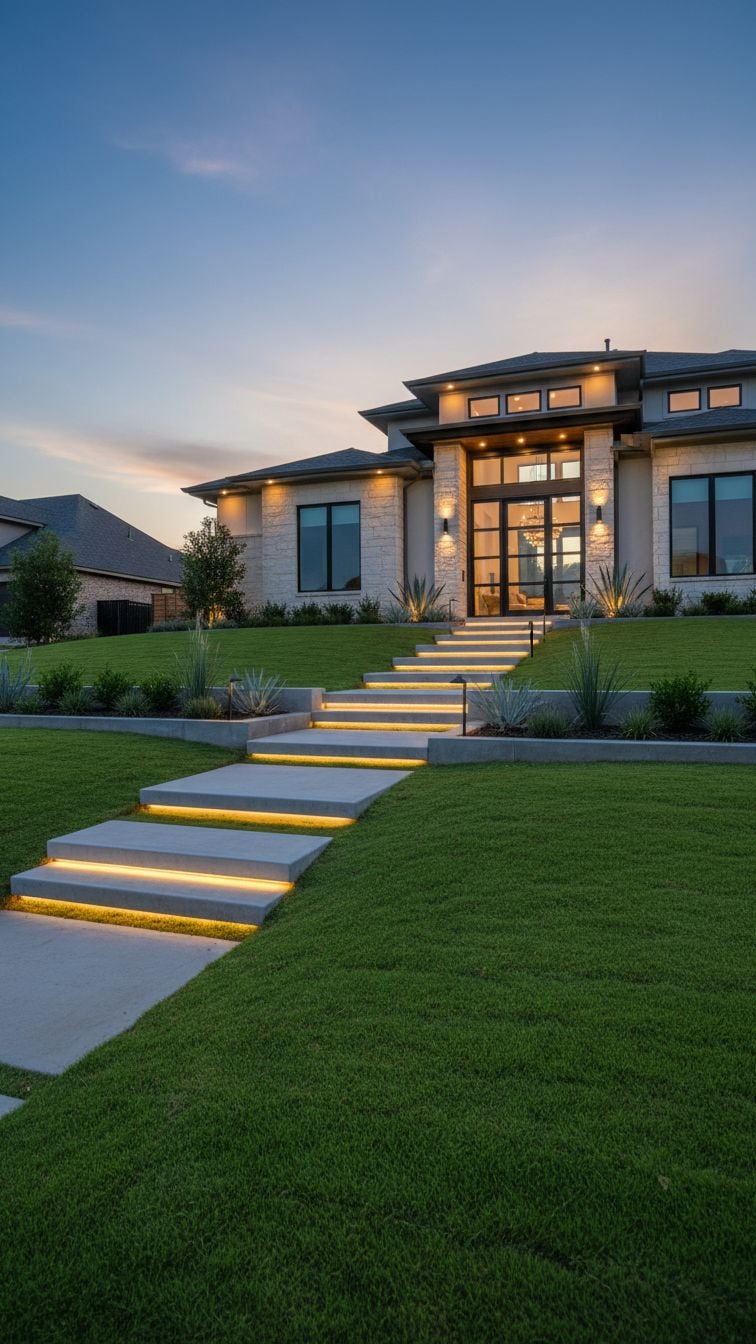
This upscale property is in Dallas. It capitalized on its sloped terrain and created a sophisticated and clean concrete stair that goes straight to the front door. Minimal yet specific hardy plants are used as accents and borders to the wide grass turf. The addition of warm lights by the stairs gives it a more upscale look.
Answer 4 quick questions and get matched to the exact fix for your yard — drainage, budget, layout, or something else entirely.
Take the Free Quiz
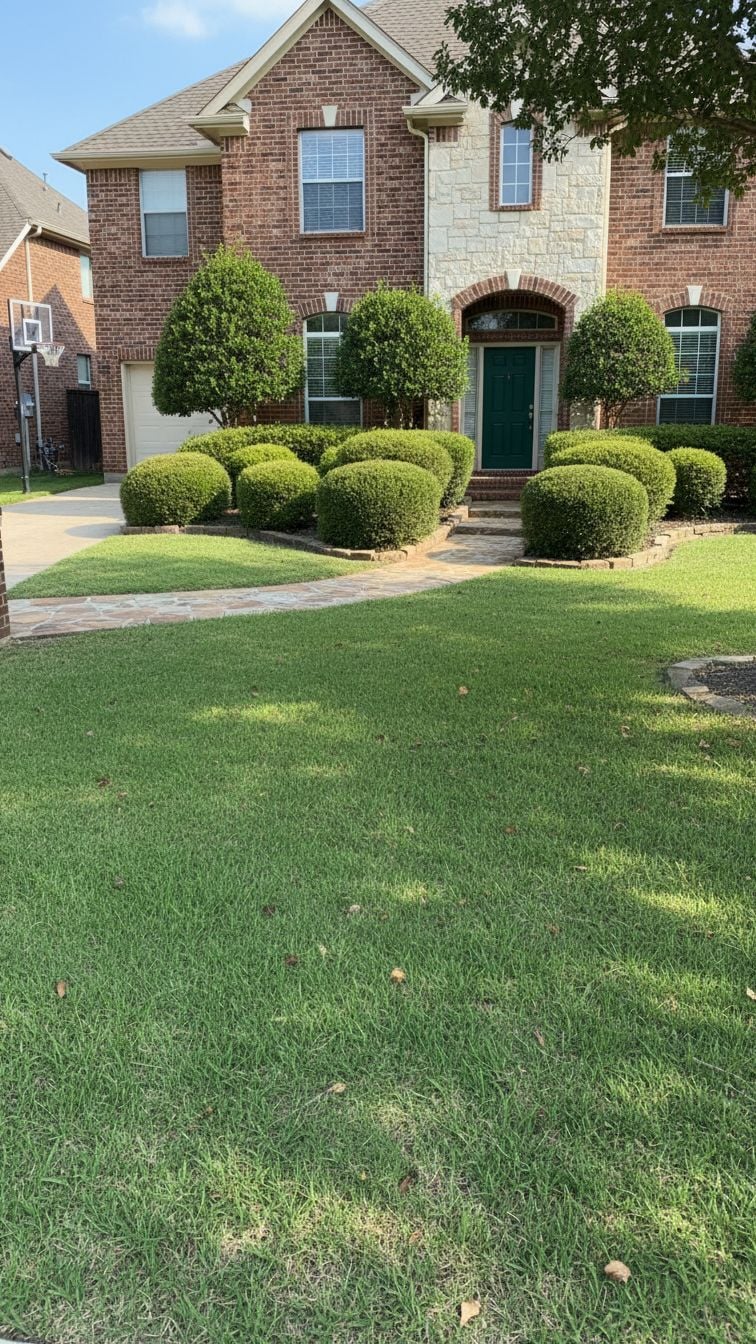
This one in Fort Worth is the perfect balance of dense shrubs and fine grass turfs. It makes a beautiful entrance view to this brick stone house. The contrast is on point and the earthy tone of the house makes it a beautiful landscape overall.
The Texas A&M AgriLife Extension’s Texas Native Shrubs database is worth a look before you plant here specifically, since North Texas’s clay-heavy soil (the same clay that causes the cracking and drainage headaches covered in the watering section below) rewards species that tolerate poor drainage better than water-hungry ornamentals do.
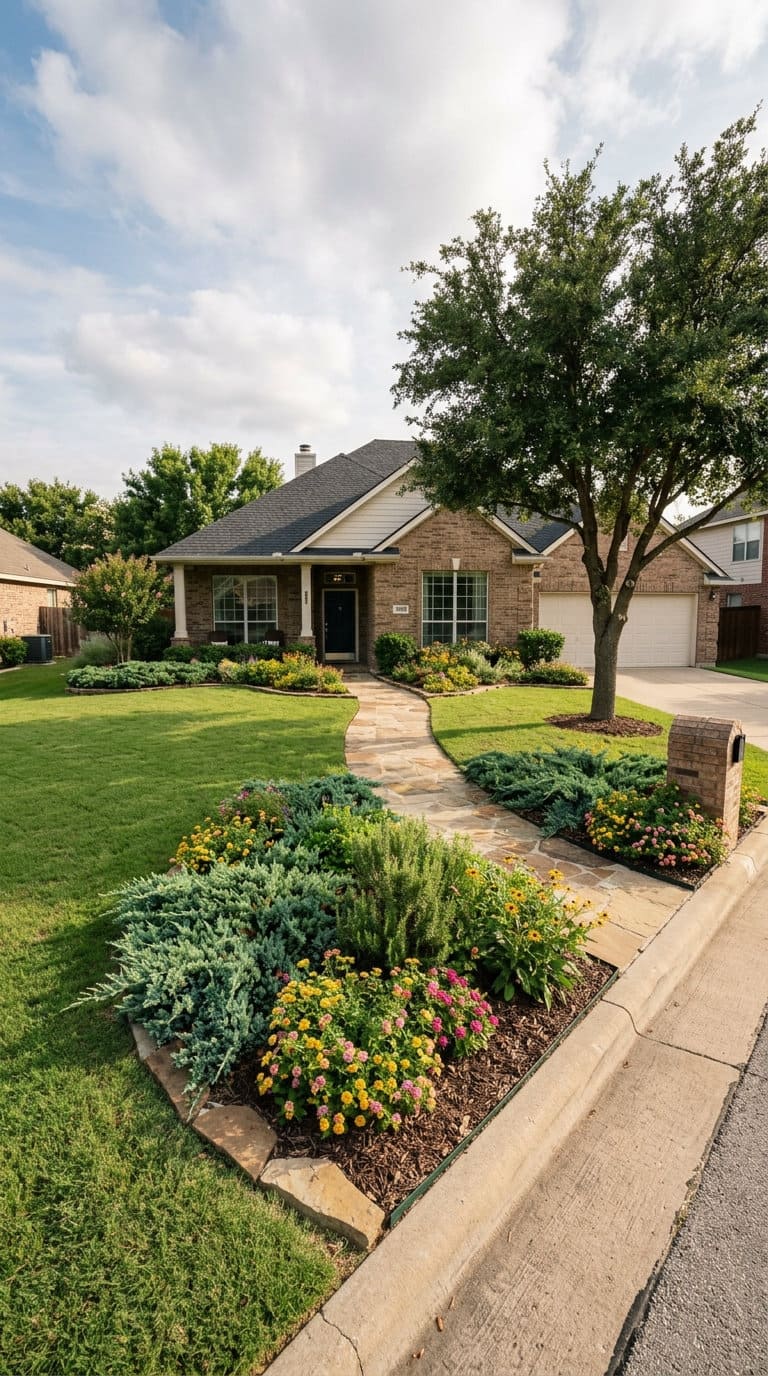
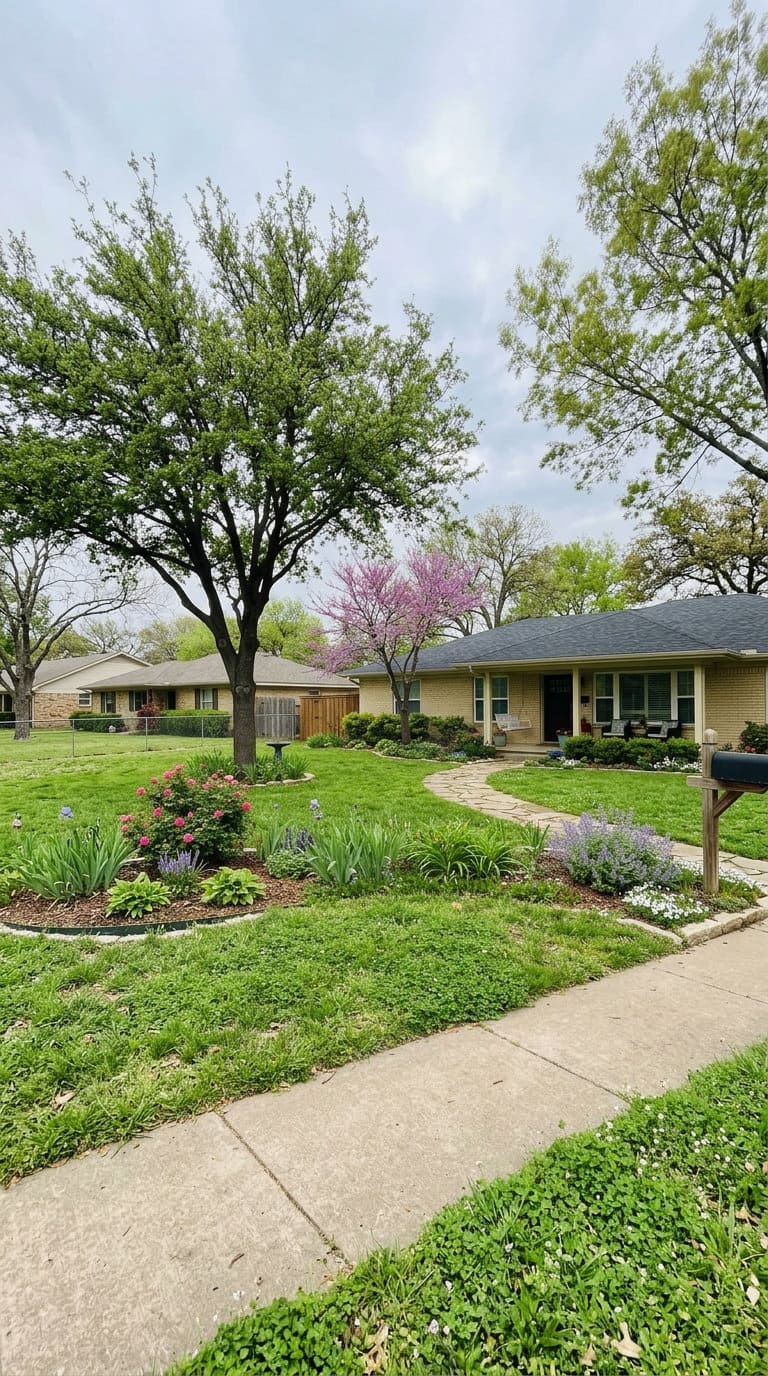
South Texas landscaping ideas
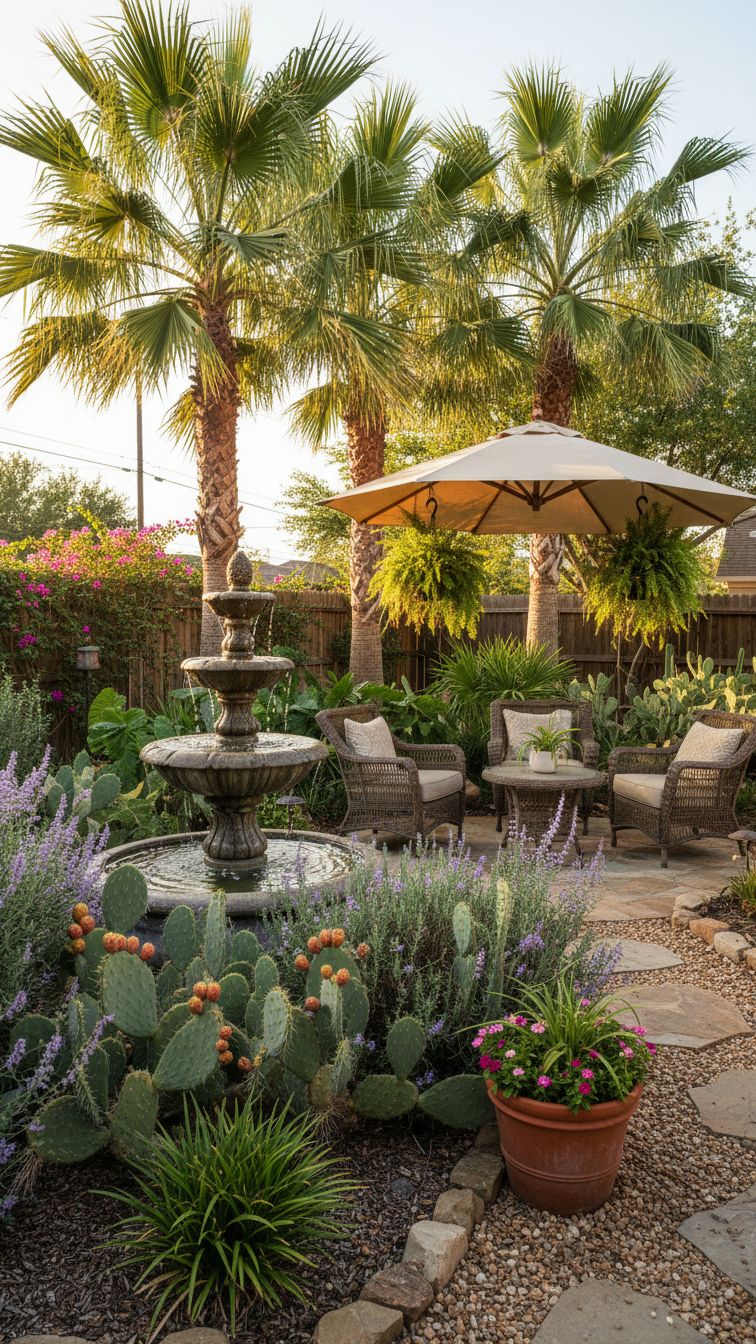
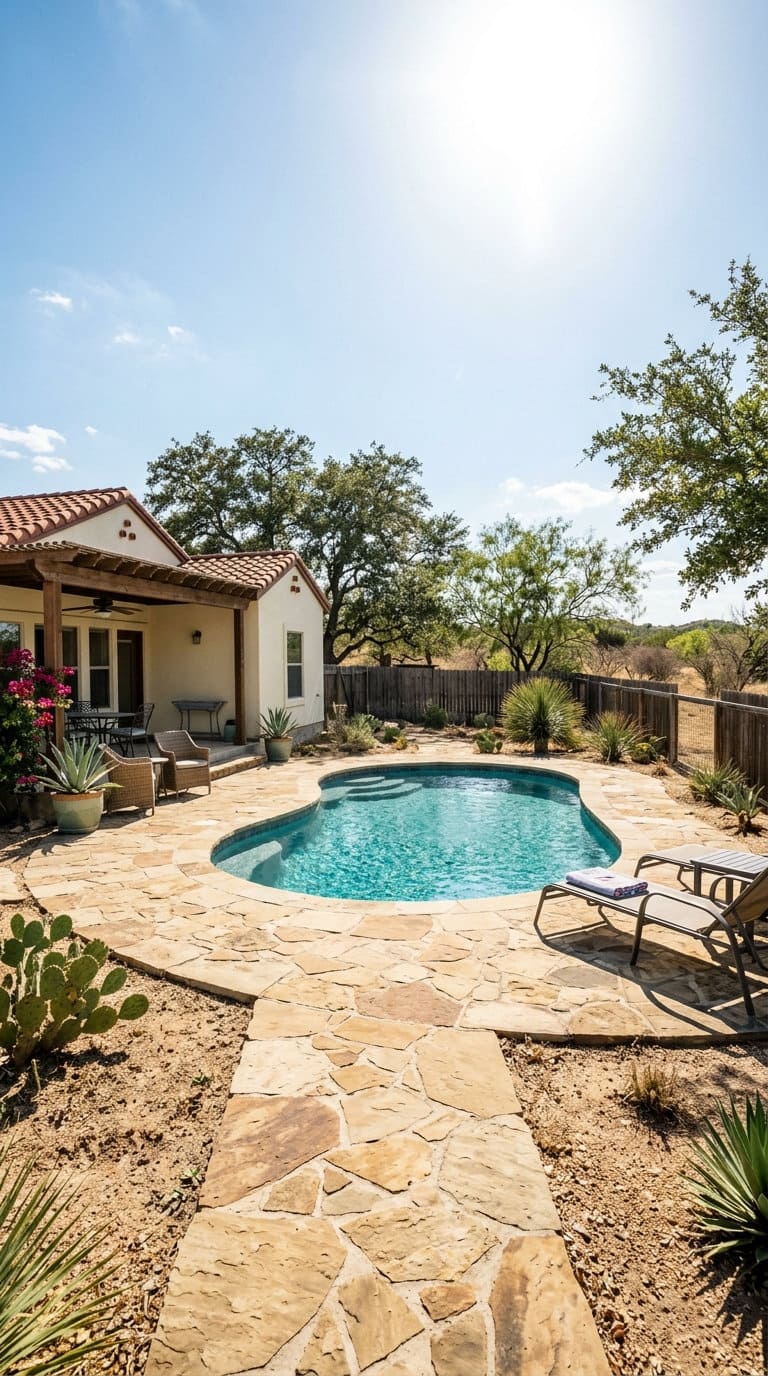
Southern Texas has a more tropical climate but also tends to have harsher summers, and more arid ones for that matter. As such, landscaping in South Texas benefits a lot in having water features like fountains and swimming pools.
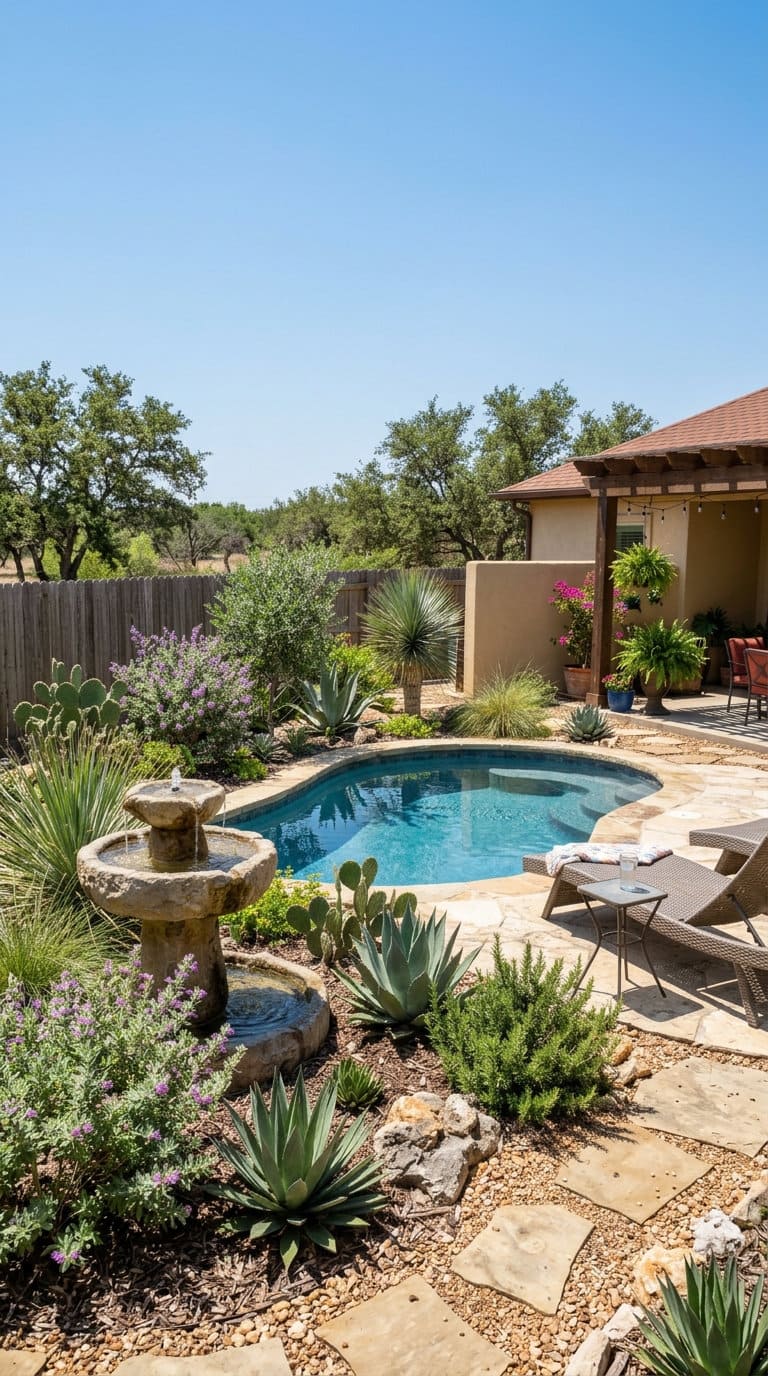
The use of the right plants such as the Texas palmetto, Texas sage and Texas prickly pear among others could enhance its lush and refreshing look. This one here looks very cool to chill on even in hot summer days.
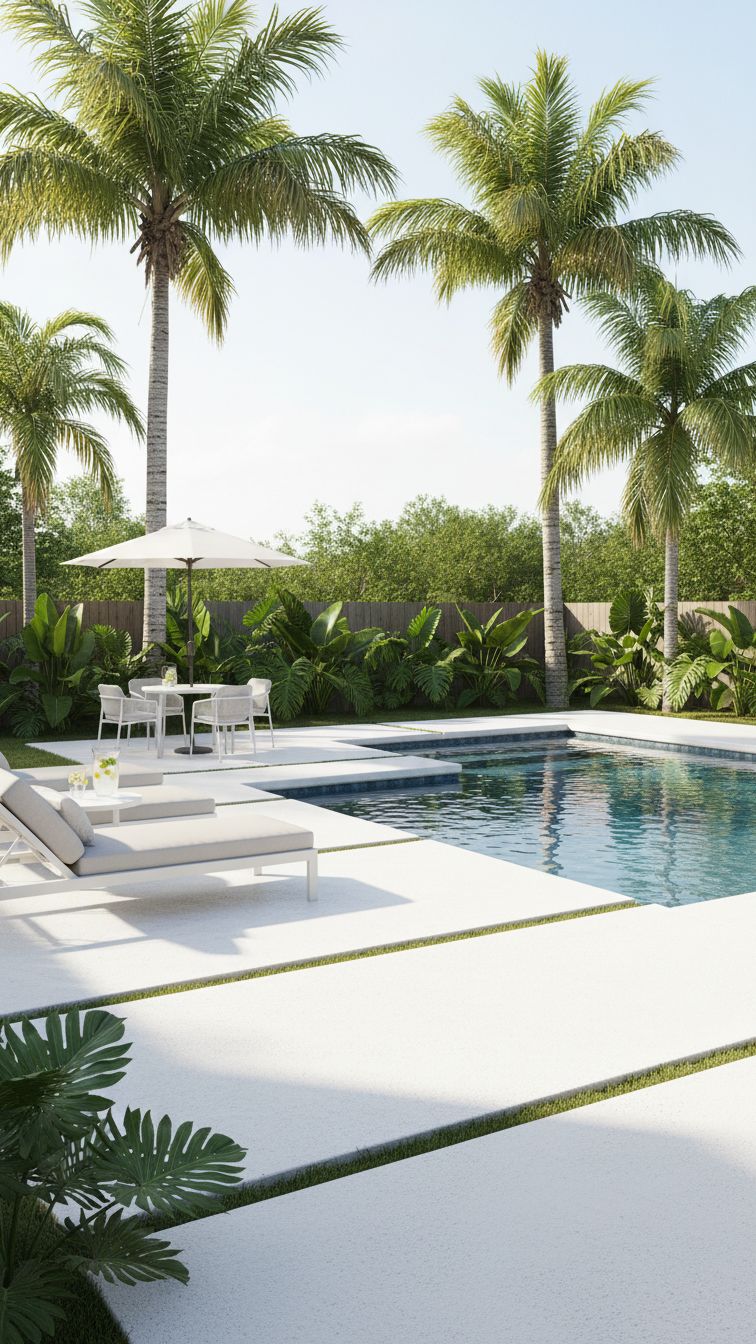
This one sports a small pool positioned at the edge instead of the usual center arrangement. The tropical vibe is completed with large greens, palms, and concrete pavers. It blends well with the white monochrome of the area.
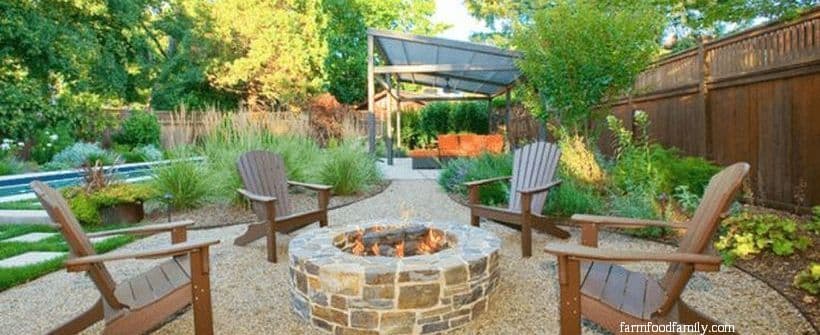
Complete with a long, narrow pool, stained gravel walkway that leads to a central firepit and wooden seating, lattice fencing and a beautiful display of perennials, grass and cobblestone path to the pool, this one is a very complete landscaping look for a South Texas home.
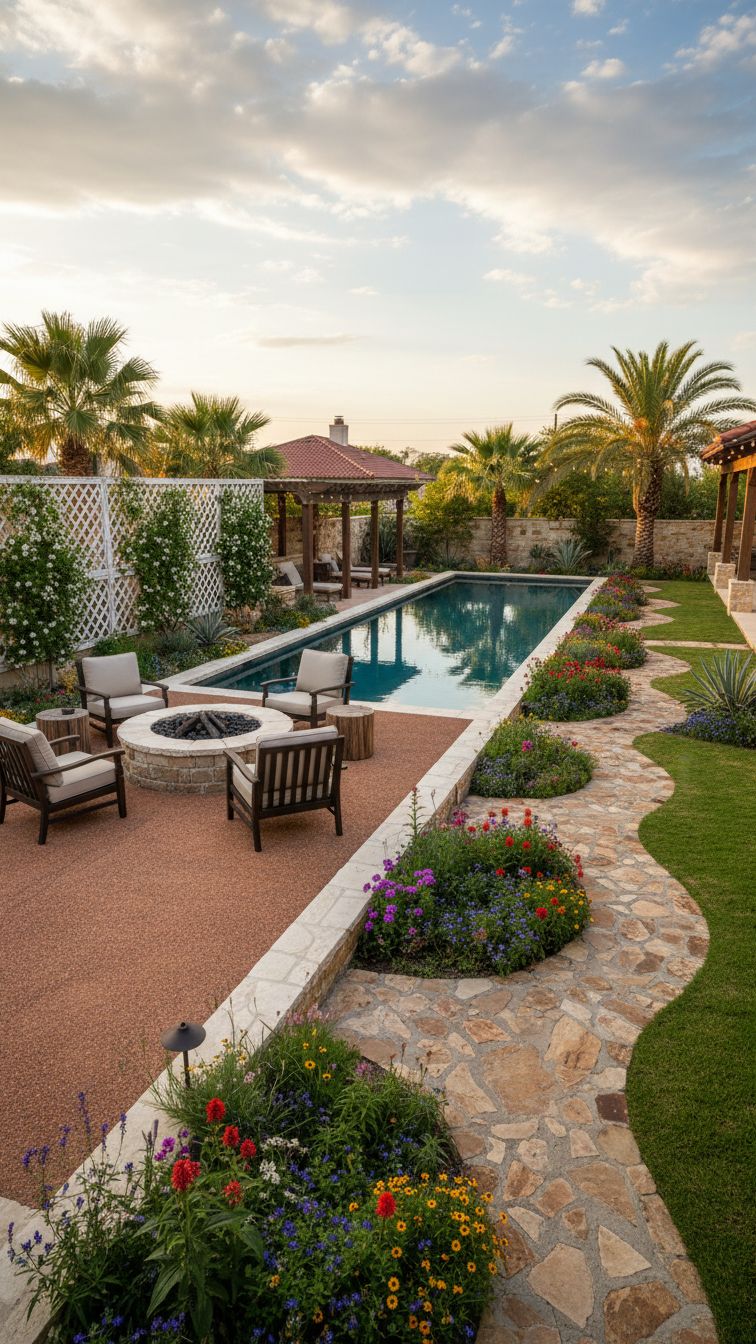
This is also the part of the state where San Antonio’s water utility, SAWS, enforces some of the state’s most active drought-stage restrictions, worth checking before you commit to a water feature or a thirsty plant palette here.
Most yard problems trace back to one specific, fixable cause. Find yours in 4 quick questions.
Take the Free Quiz
Drought-tolerant blend of native annual and perennial flowers, including Texas bluebonnet, suited to full sun and well-drained soil — a direct match for the native-plant sections above
Shop NowThis post contains affiliate links. We may earn a commission on qualifying purchases at no extra cost to you.
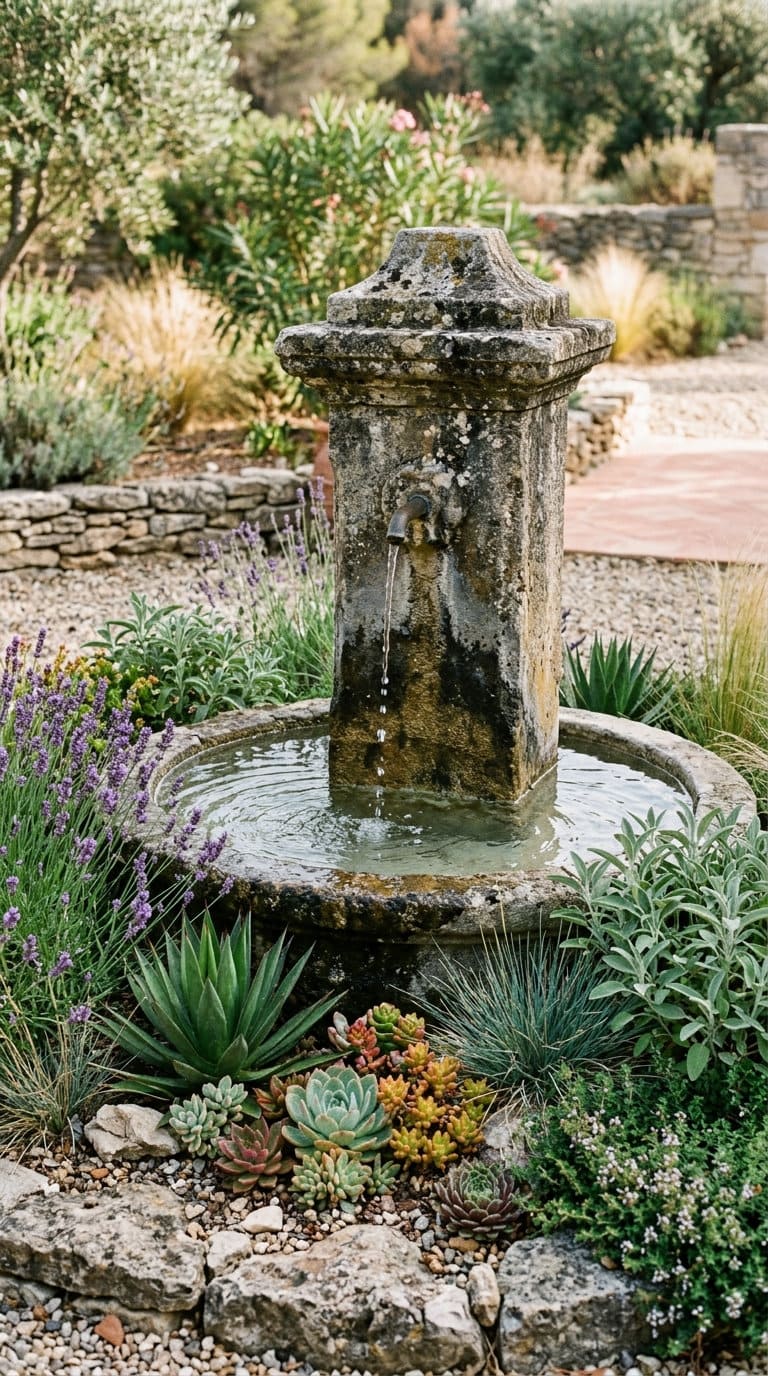
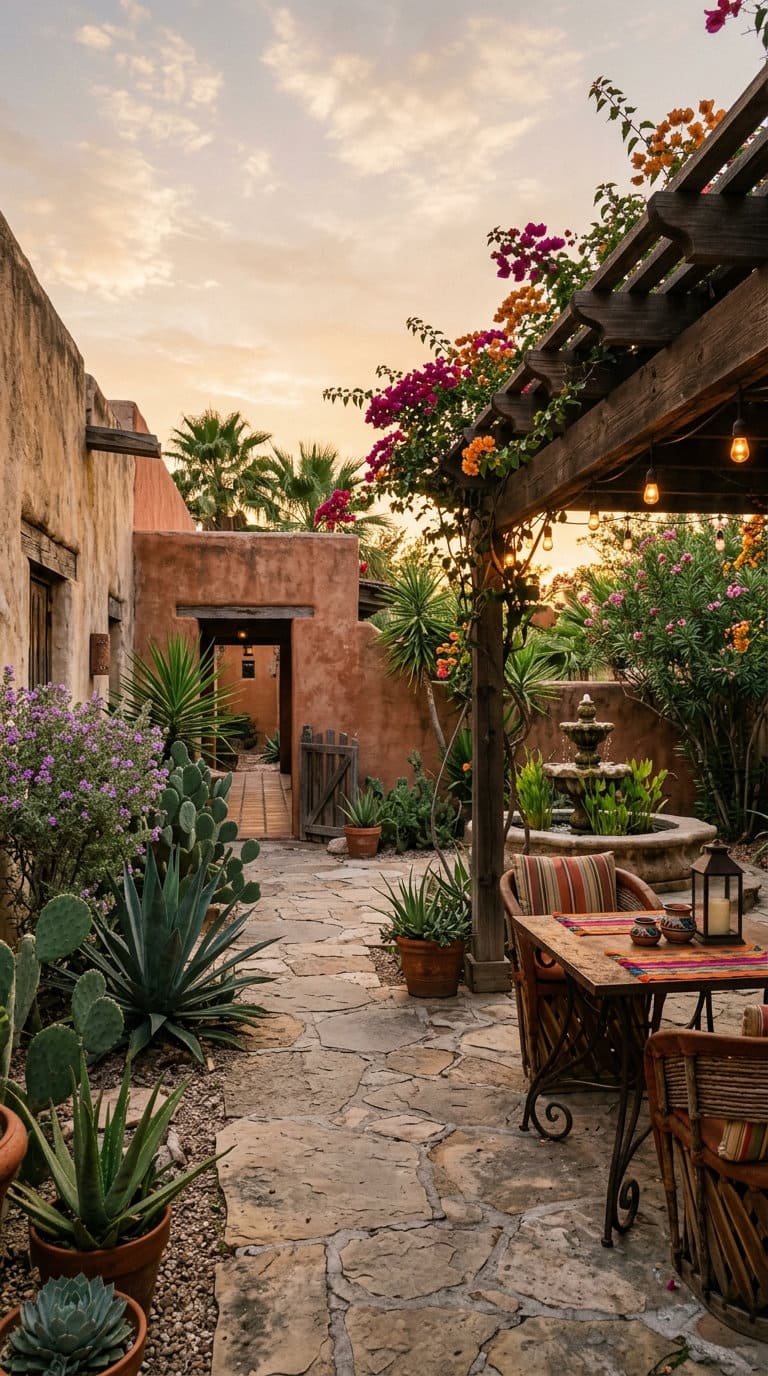
Central Texas landscaping ideas
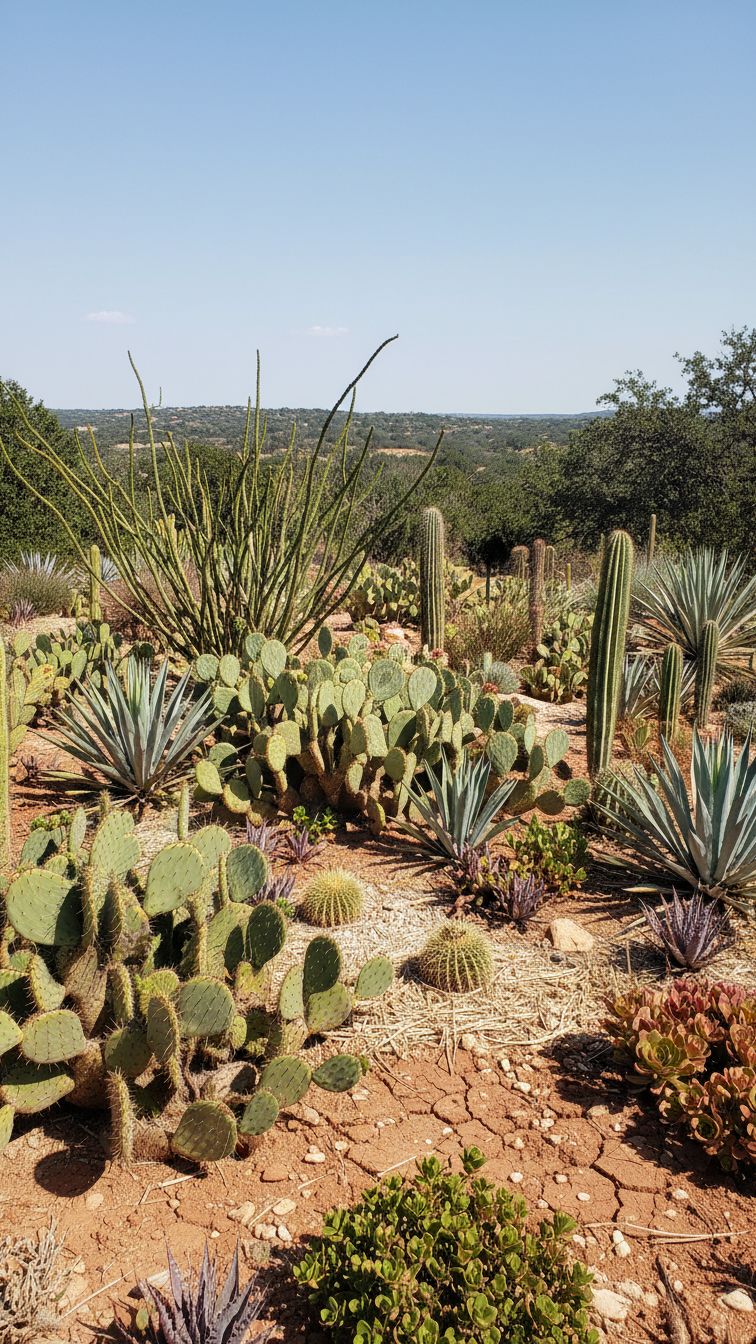
Central Texas is a tri-boundary among the three largest cities of the state: Dallas, Houston, and San Antonio. It is a beautiful location for hard xeriscaping because of its natural elevation and hilly landscape.
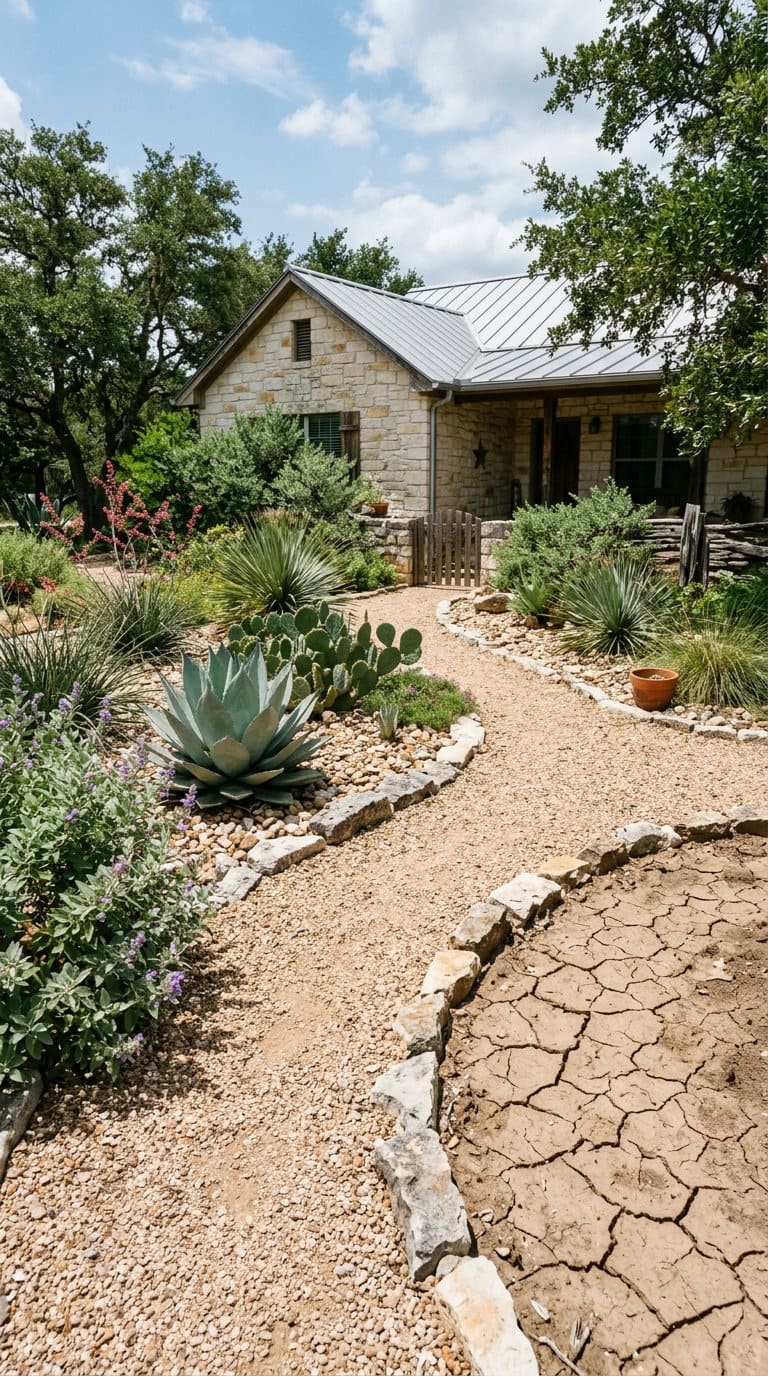
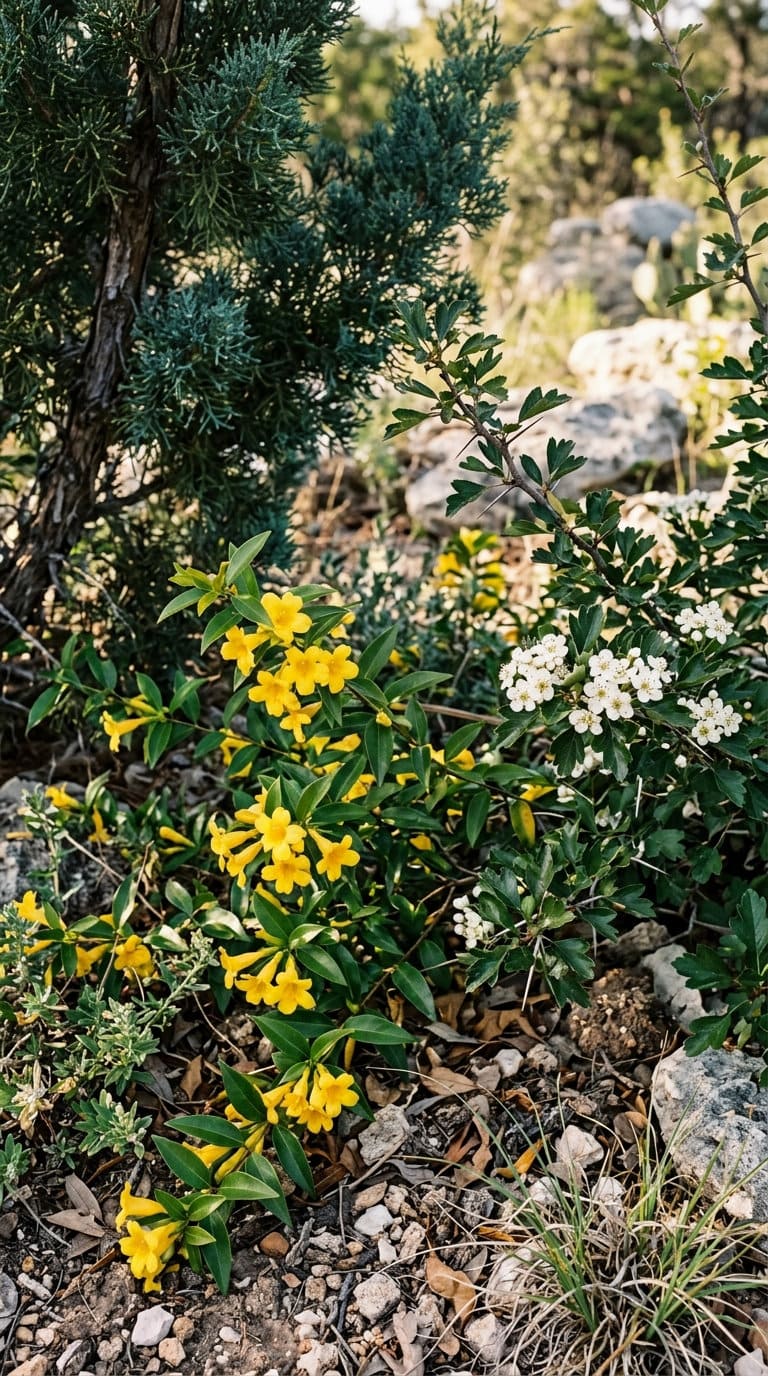
It could benefit well from a lot of hardy plants and succulents or in tree and shrub-based landscapes (such as juniper, jasmine, and Hawthorne) when the property is near lakes which Central Texas has a lot of.
This one is 100% a cacti palooza. It passes into a native landscape with the use of clay soil, minimum ground cover and all native plants to the area. It looks dense but alluring. And the parade of colors from the succulents give it an interesting look.
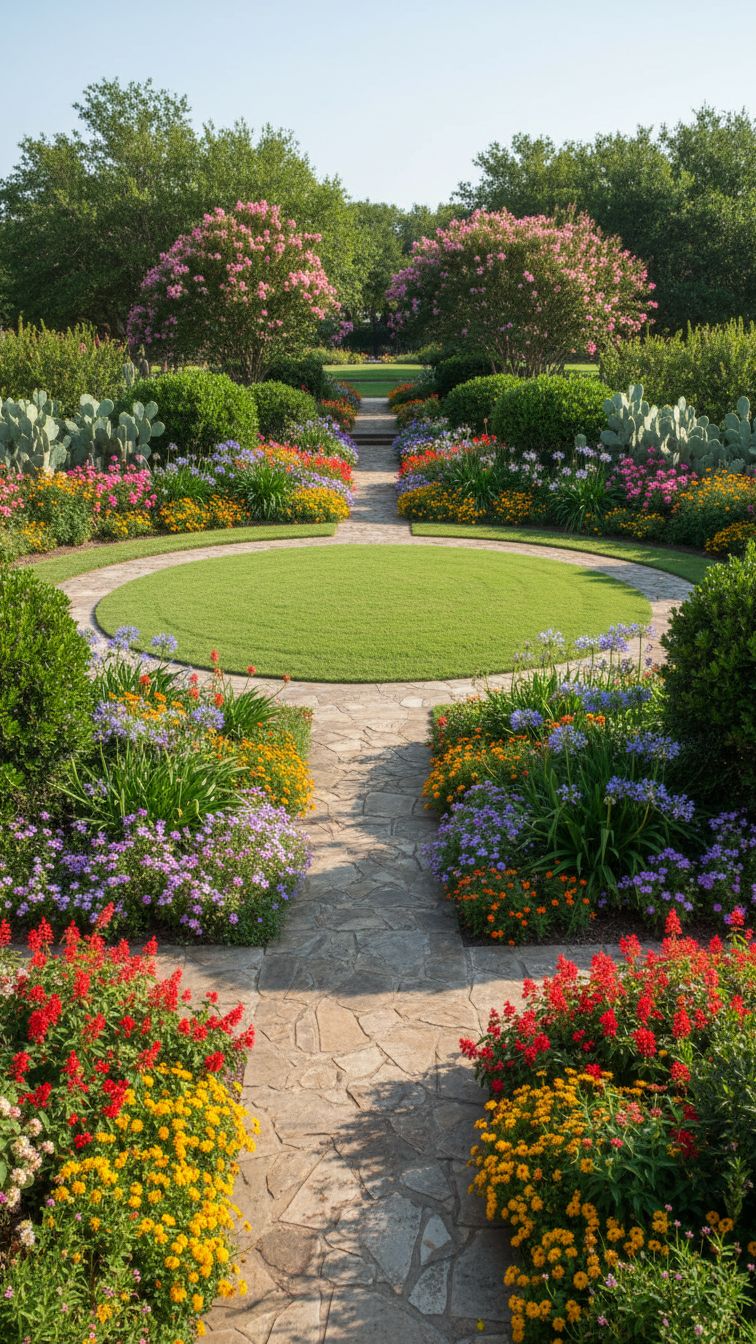
This one look neat and well-organized. The bright flowering plants are positioned on the walkway’s entrance, and it rounds out on a grass focal point. More shrubs are shelved in a dense arrangement on the edges, providing bright borders to the area.
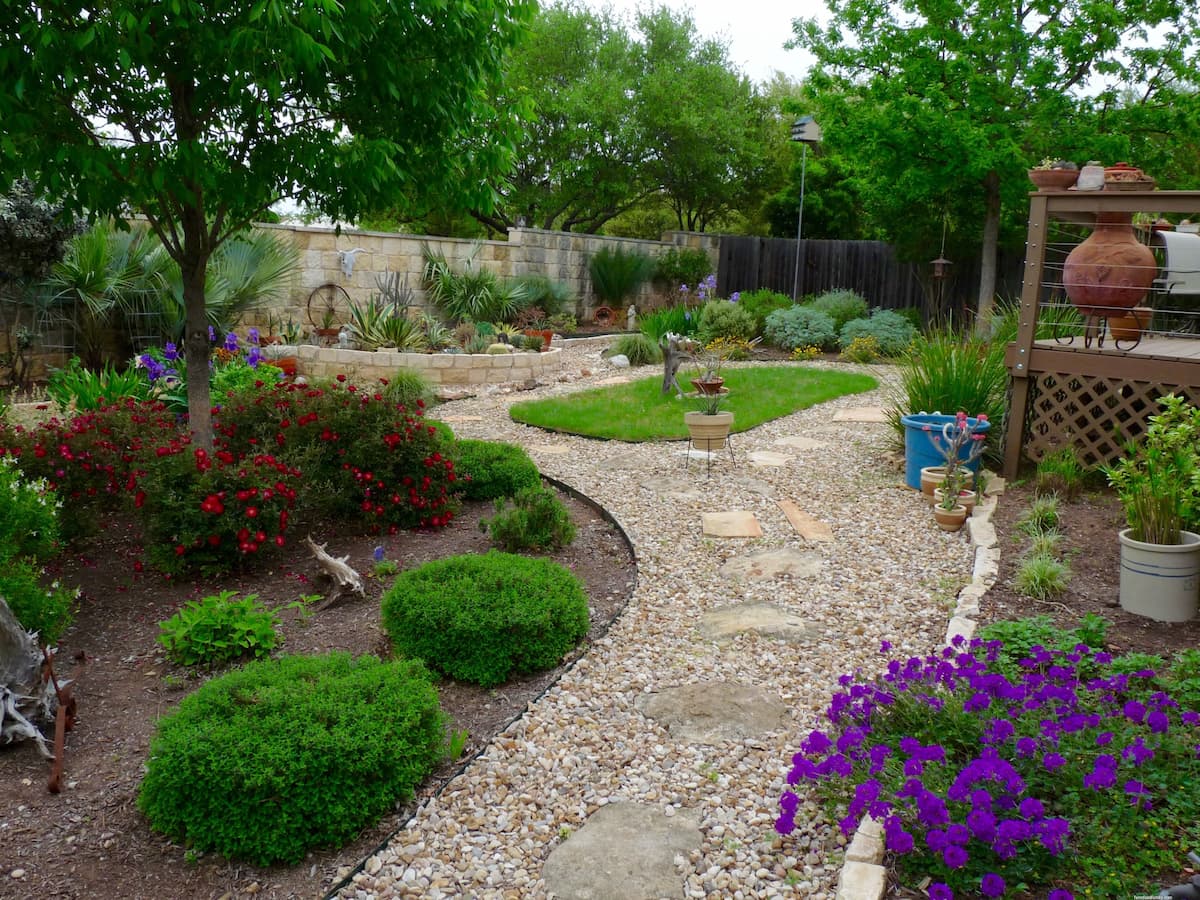
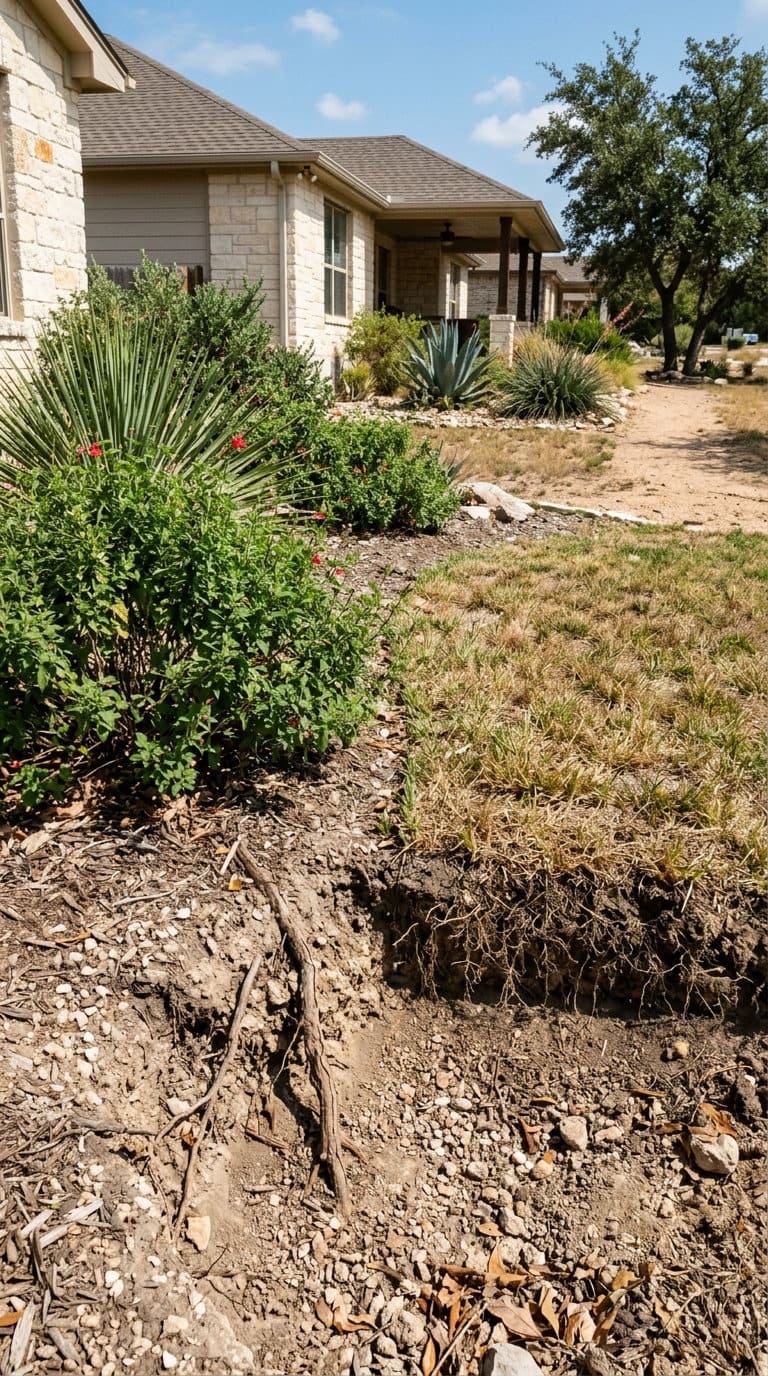
If you’re dealing with a drought here, a real, common first-time-homeowner question is whether cracked, dried-out clay soil is permanently damaged, it generally isn’t: clay rehydrates and re-swells once regular watering or rainfall resumes, though deep cracks can damage shallow roots in the meantime, so established, deep-rooted native plants handle a Central Texas drought far better than a shallow-rooted lawn does.
Houston landscaping ideas
Although a rising city, Houston is prone to harsh summers which is not very good for most plants. It is also vulnerable to torrential rains and flooding as well as clay soils.
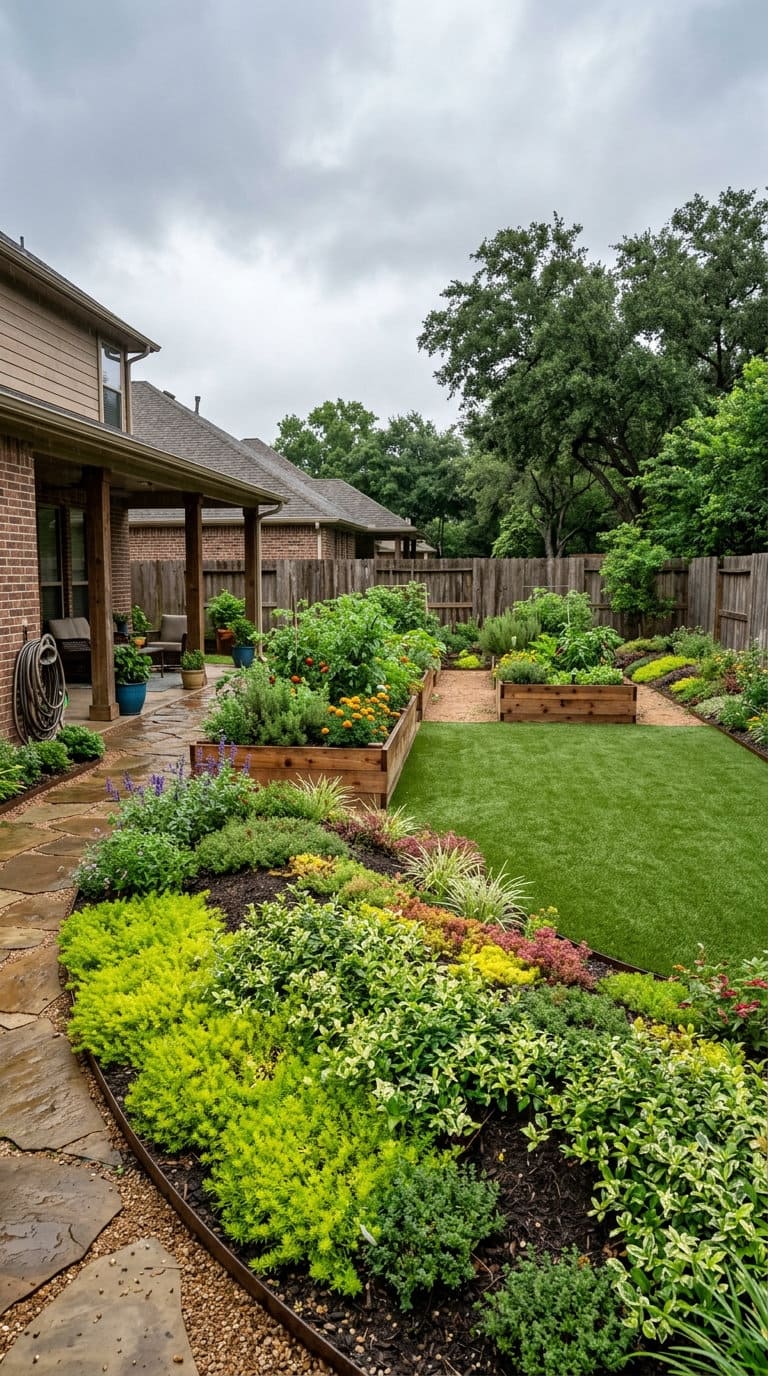
If you are planning on Houston landscaping, make sure that it is as low maintenance as it could get. Some tips to consider would be hardscapes, bright groundcovers, artificial grass turf, perennials, and evergreen trees.
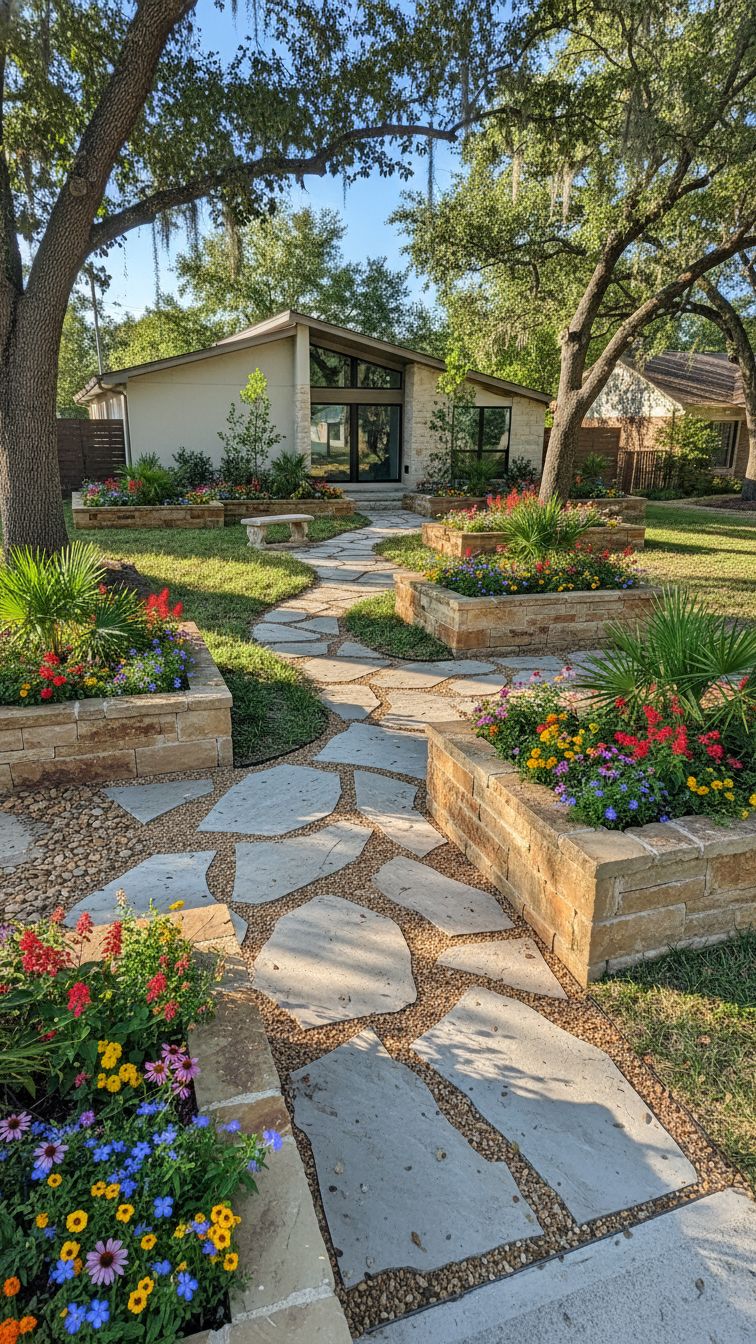
This one features smaller walkways that branch out from a larger one. Well curated bright flowering perennials are spread on above ground stone planters. The dwarf palmettos on the side adds a fine touch.
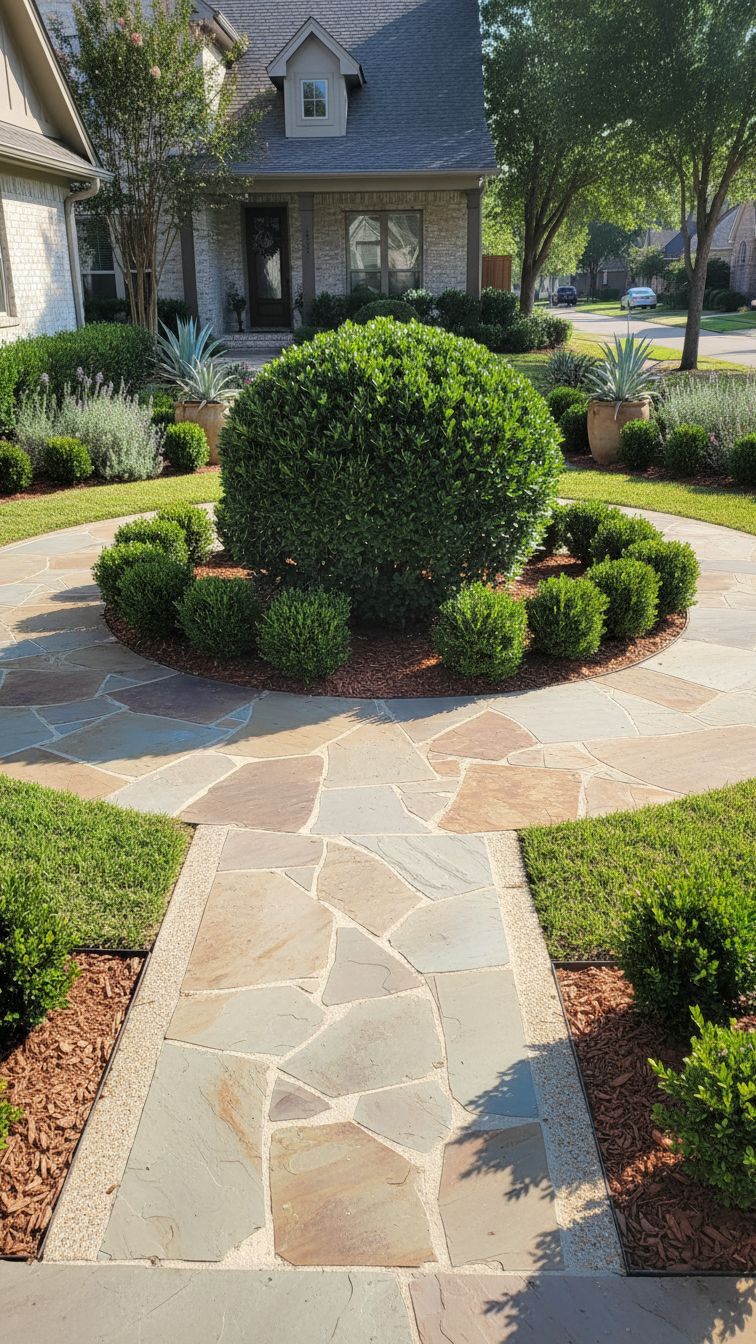
This one has a classier touch with just the accent of Bermuda grass, hardscapes and trimmed shrubs enclosing another shrub. The only challenge here is to maintain that turf. Overall, it is a perfectly low maintenance Houston front landscape.
The average homeowner spends $616/year on yard fixes that don't address the real problem. Find out what yours actually is — before you spend another dollar.
Take the Free Quiz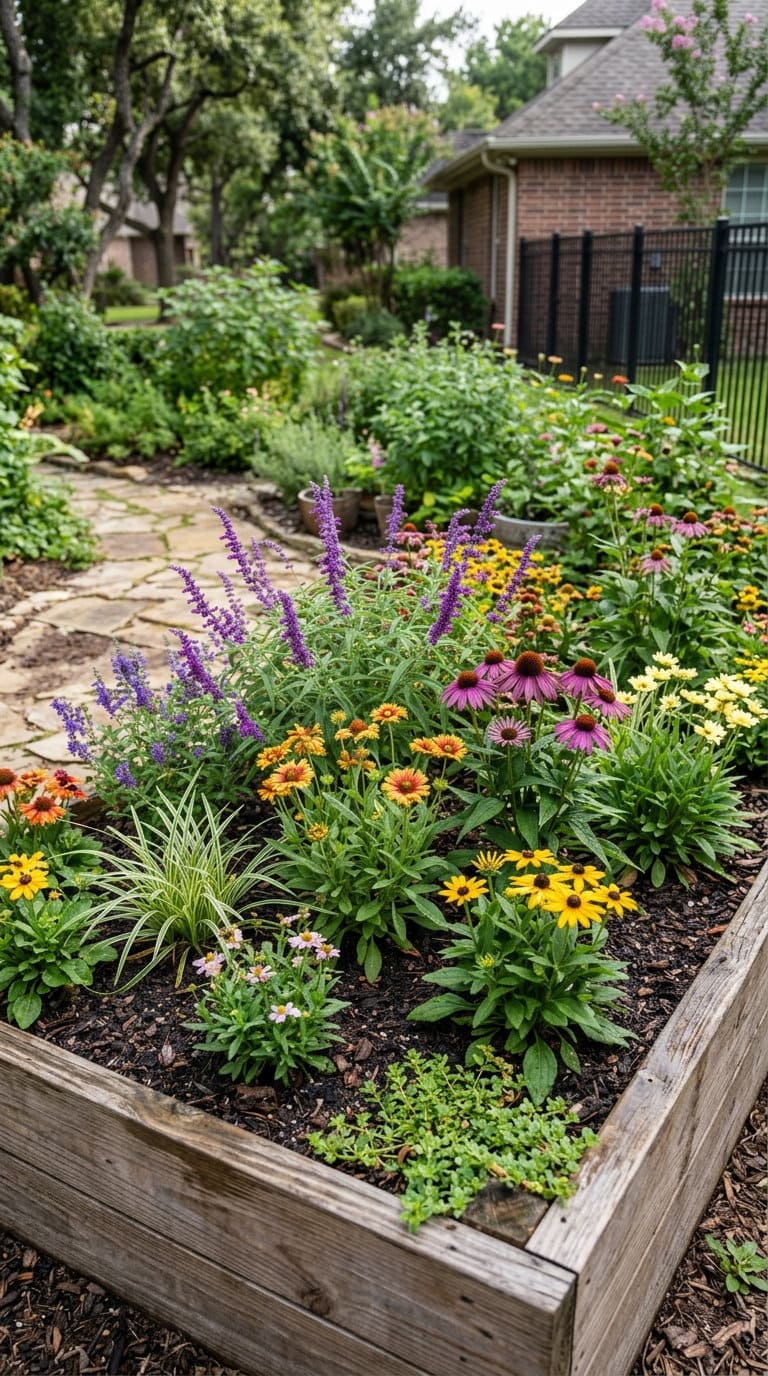
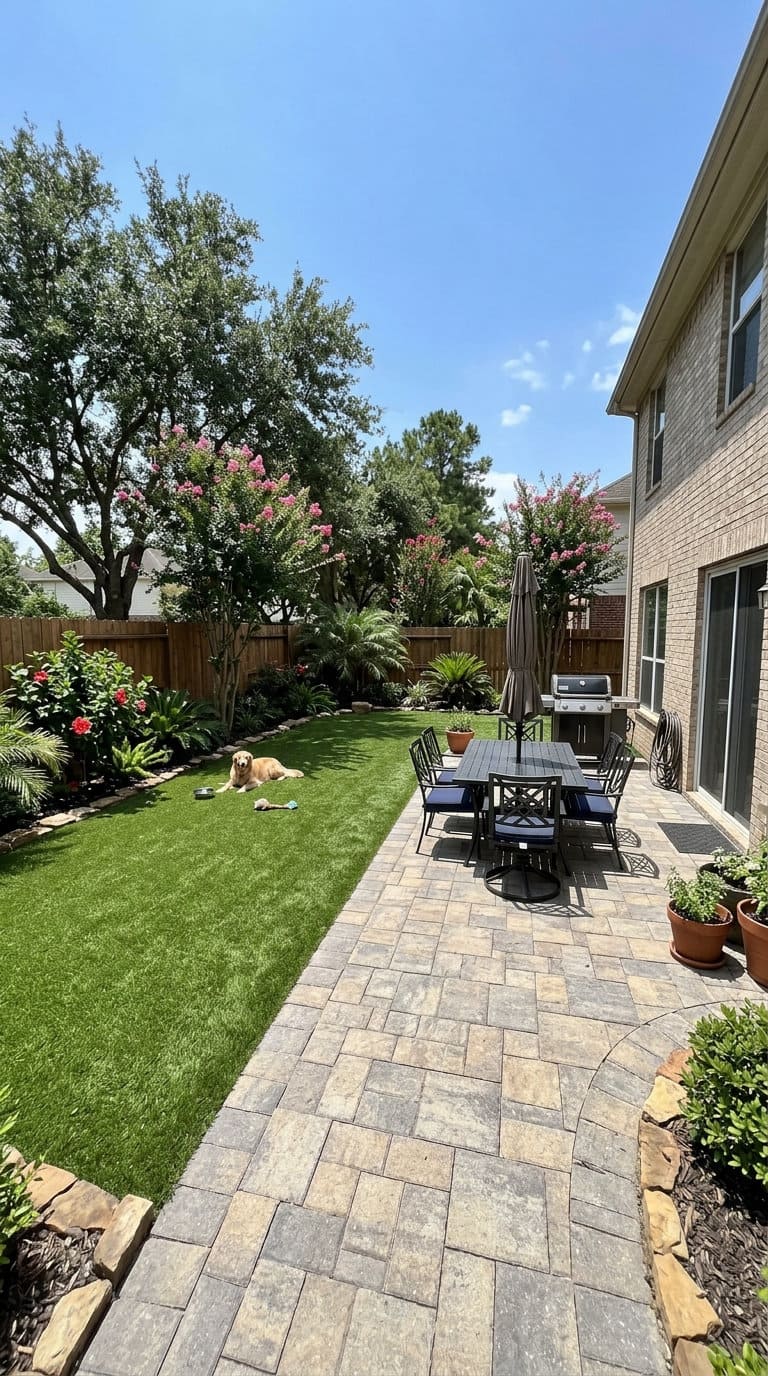
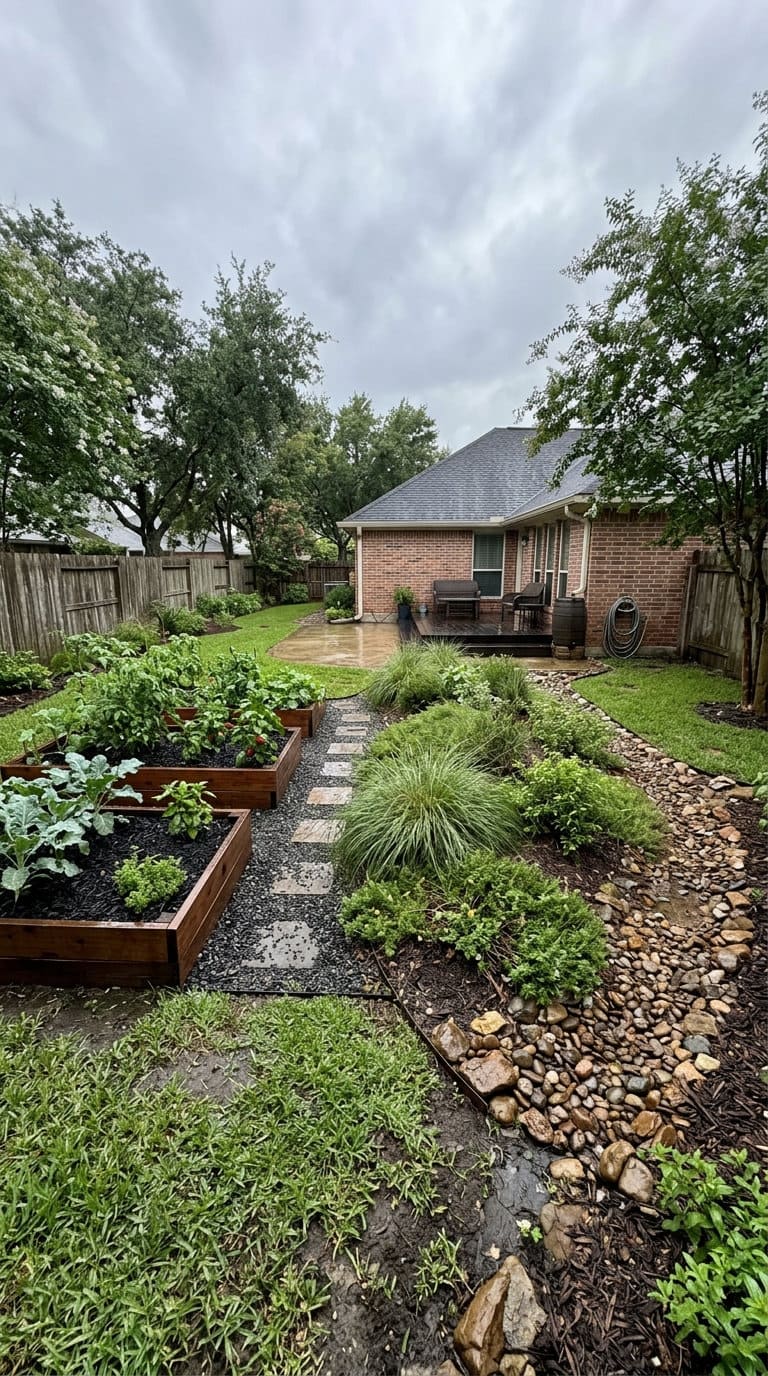
Texas landscaping ideas for front yard
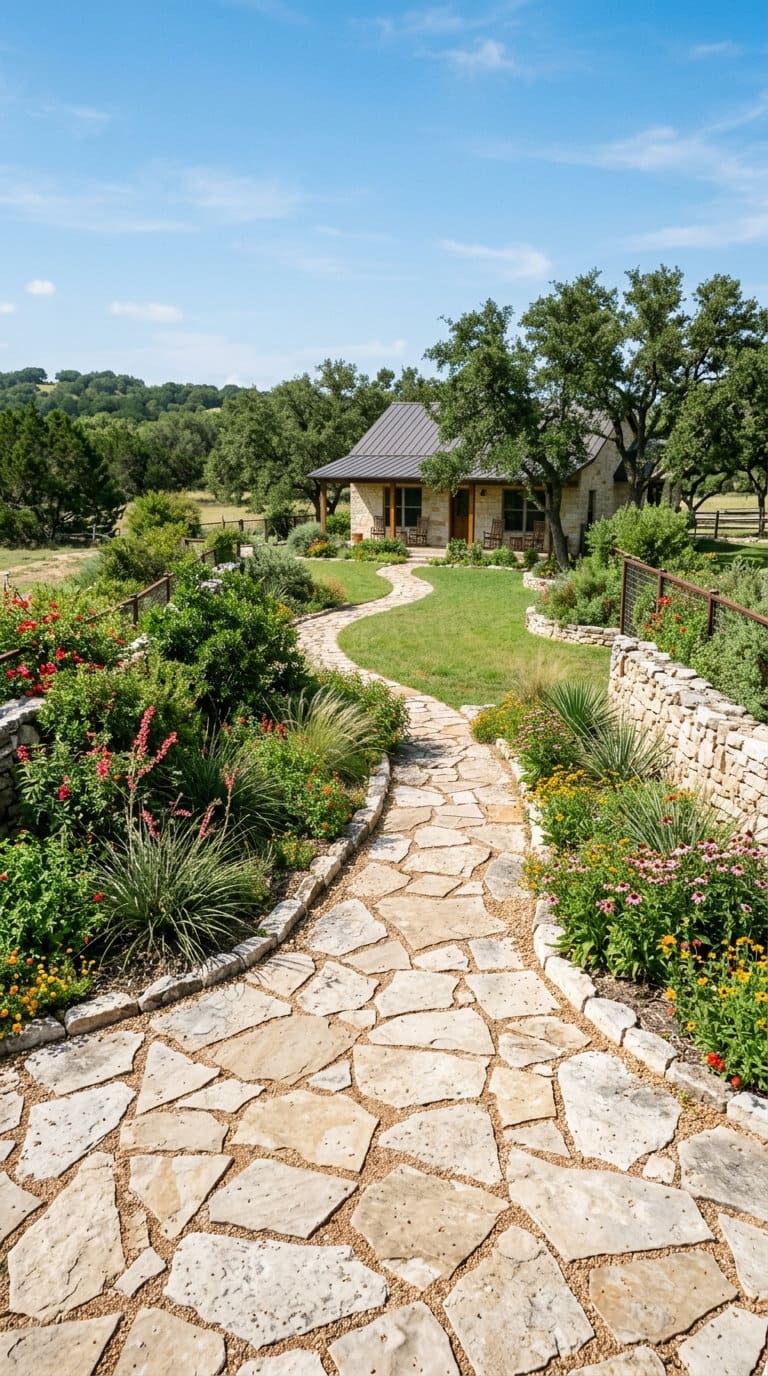
Given Texas’ climate and general topography, landscaping the front yard depends on hardscapes like pebbles and pea gravel, shrubs, flowers like begonia, marigold or English lavender, and grass like Bent grass, Bermuda grass and rye grass.
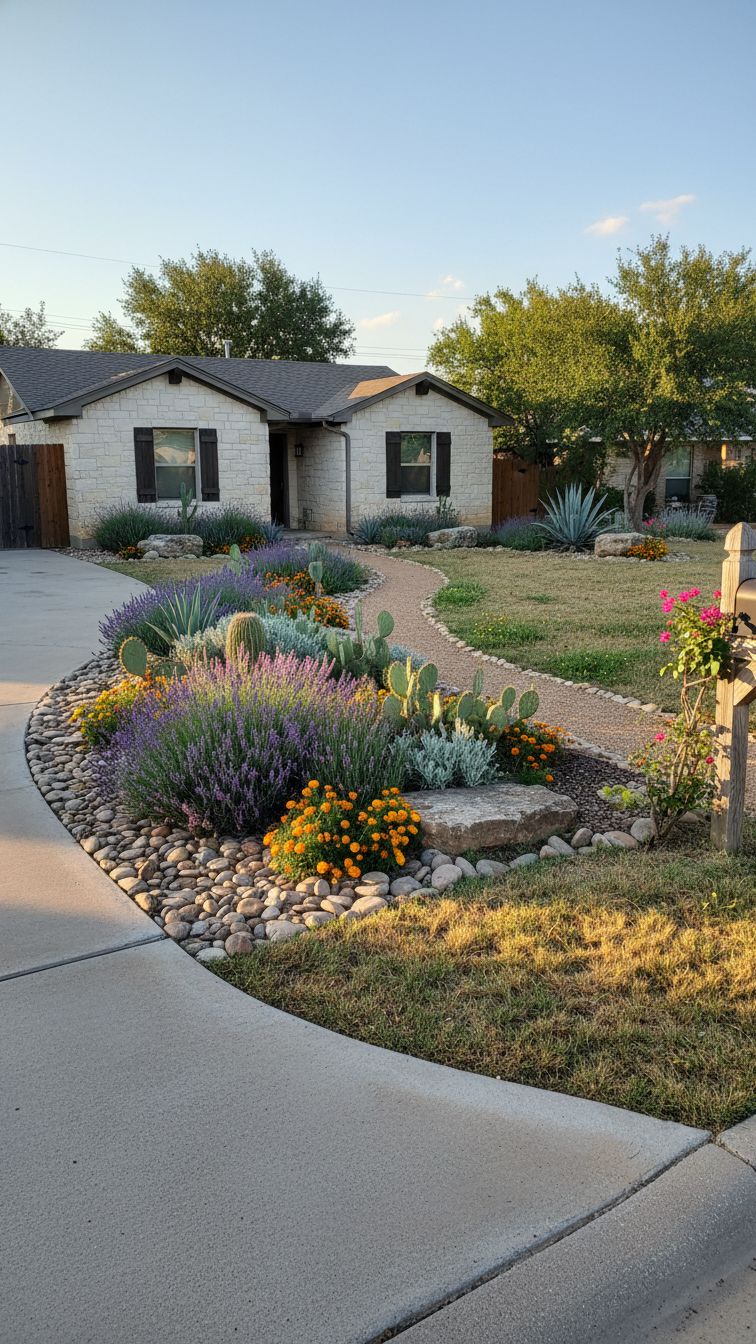
This front yard garden provides a natural edging to the simple concrete driveway in this Central Texas home. It has a pebble bed and a flush of lavender and marigold, among others.
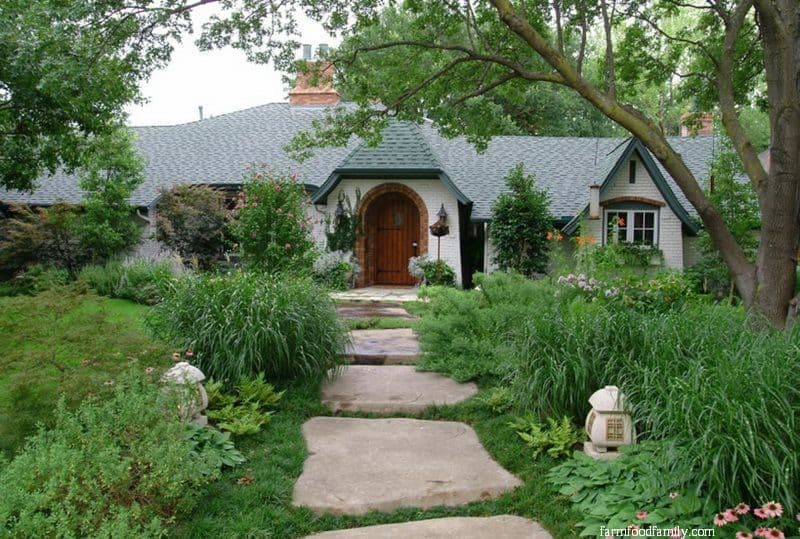
You can also create a lush shrubbery for a cottage style home like this one. It is complete with a cobblestone pathway which walks straight to the front door.
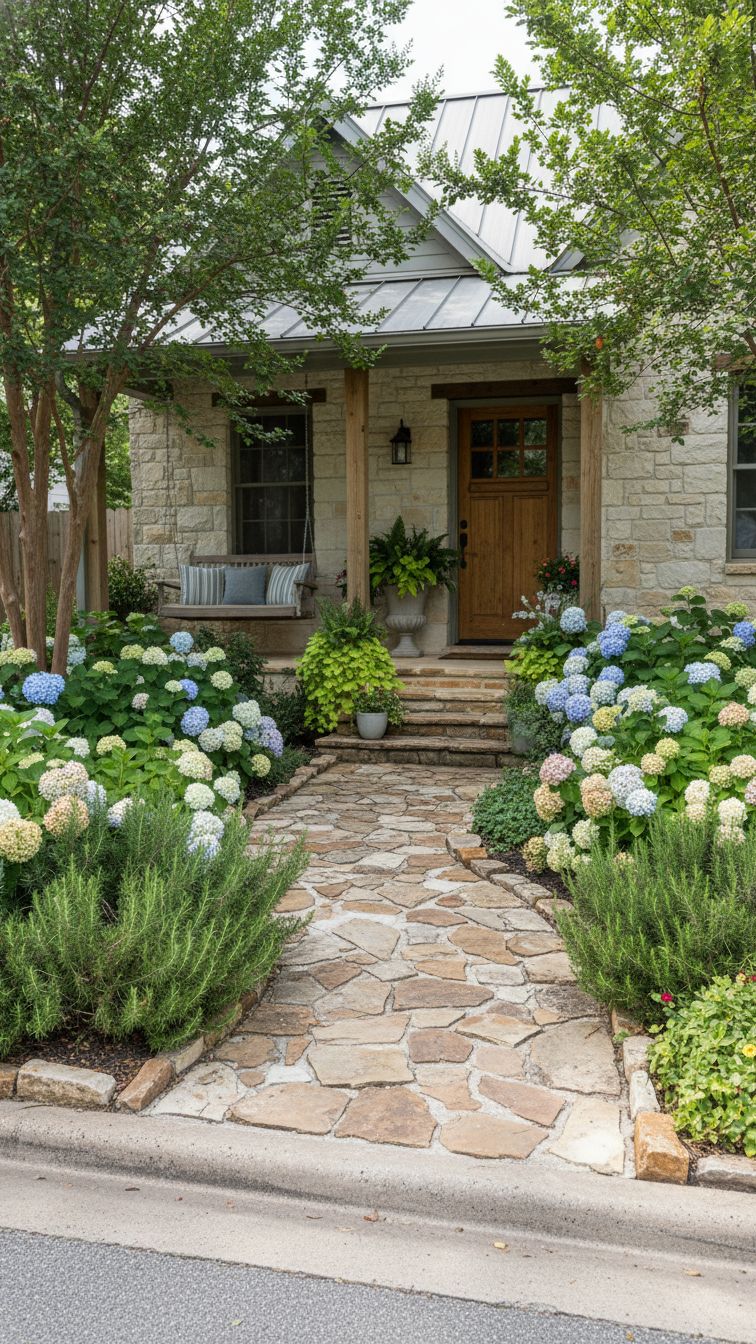
The clay-soil drainage problem here is worth taking seriously rather than fighting: raised beds and berms that lift plantings above standing water solve more of Houston’s real landscaping headaches than any single plant choice does.
Texas Landscaping Ideas for Front Yards
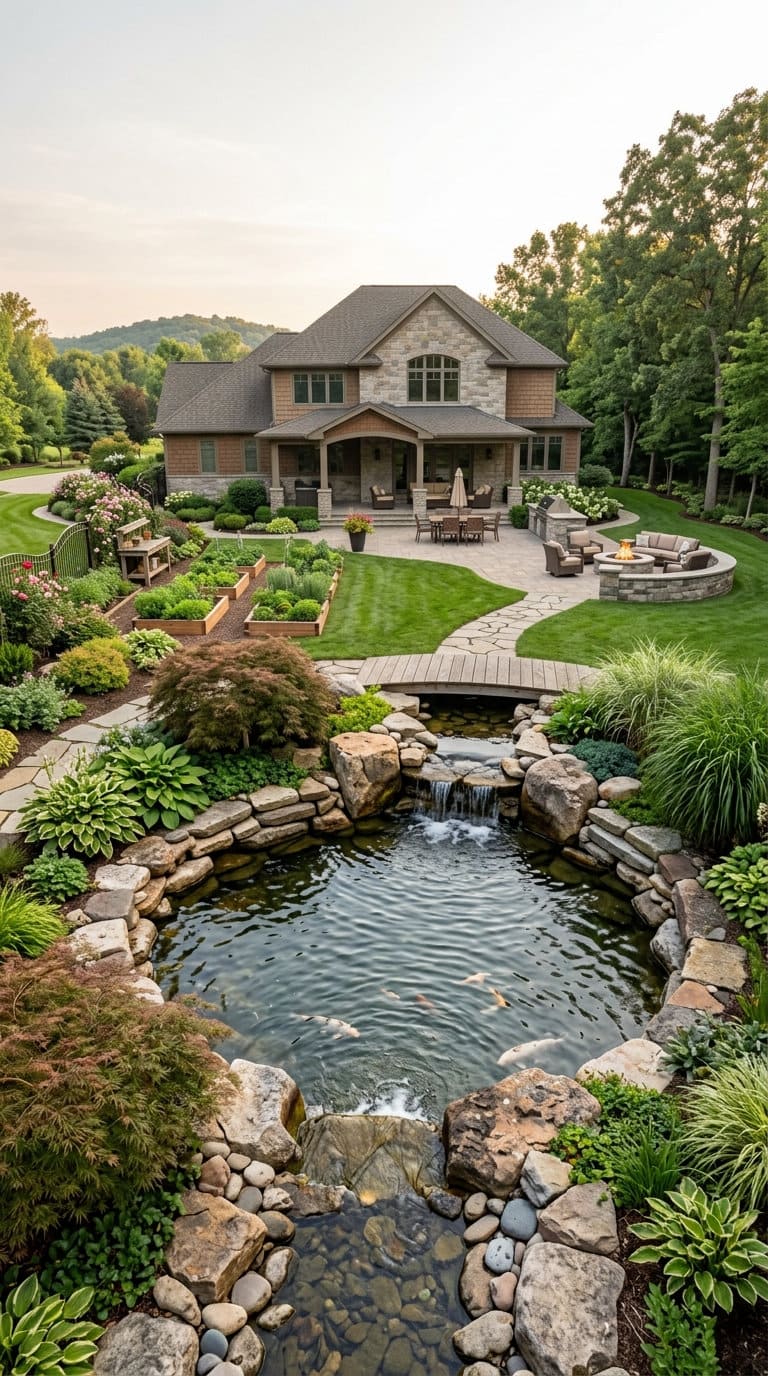
Front yard landscaping across most of Texas leans on hardscapes like pebbles and pea gravel, flowering shrubs like begonia, marigold, or English lavender, and grasses like Bermuda, Bent, and rye.
A gravel-edged bed framing a plain concrete driveway is a low-cost, low-maintenance way to add real visual structure without committing to a full lawn replacement, and it holds up well against Texas’s swings between drought and downpour.
Pool landscaping ideas
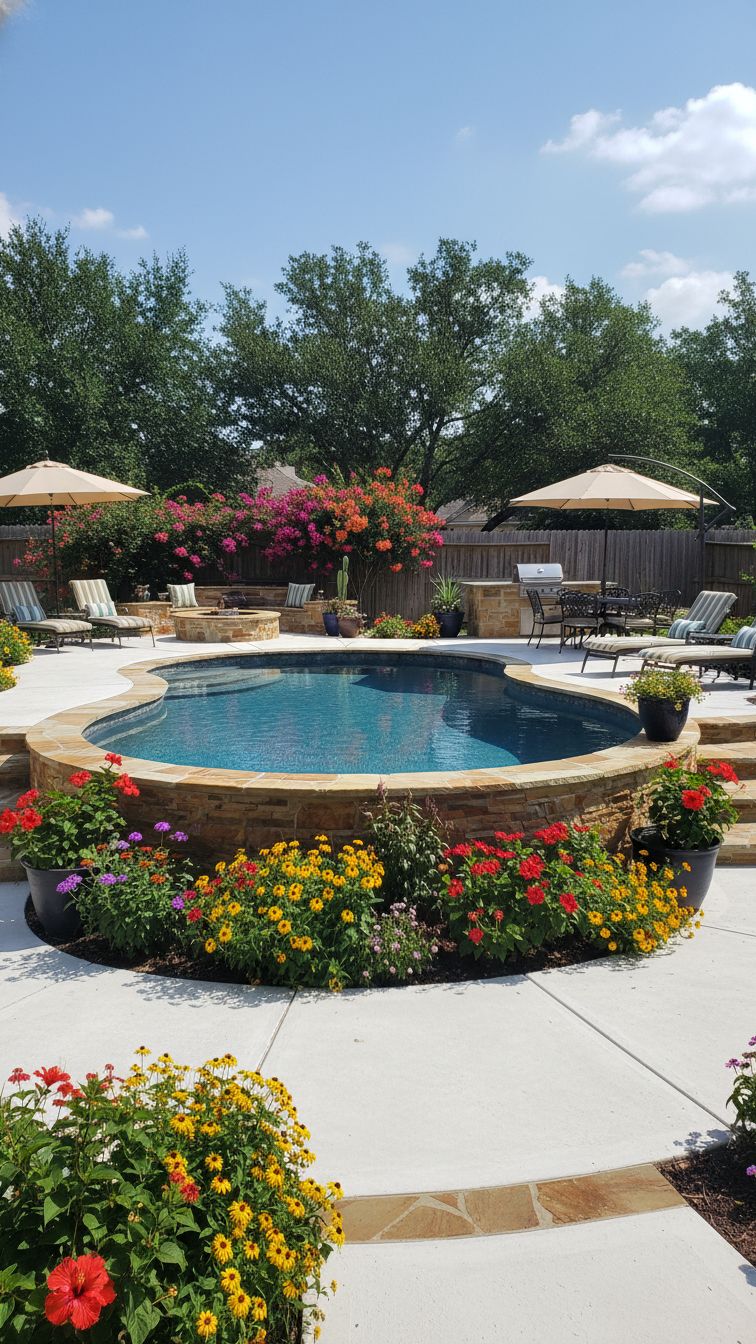
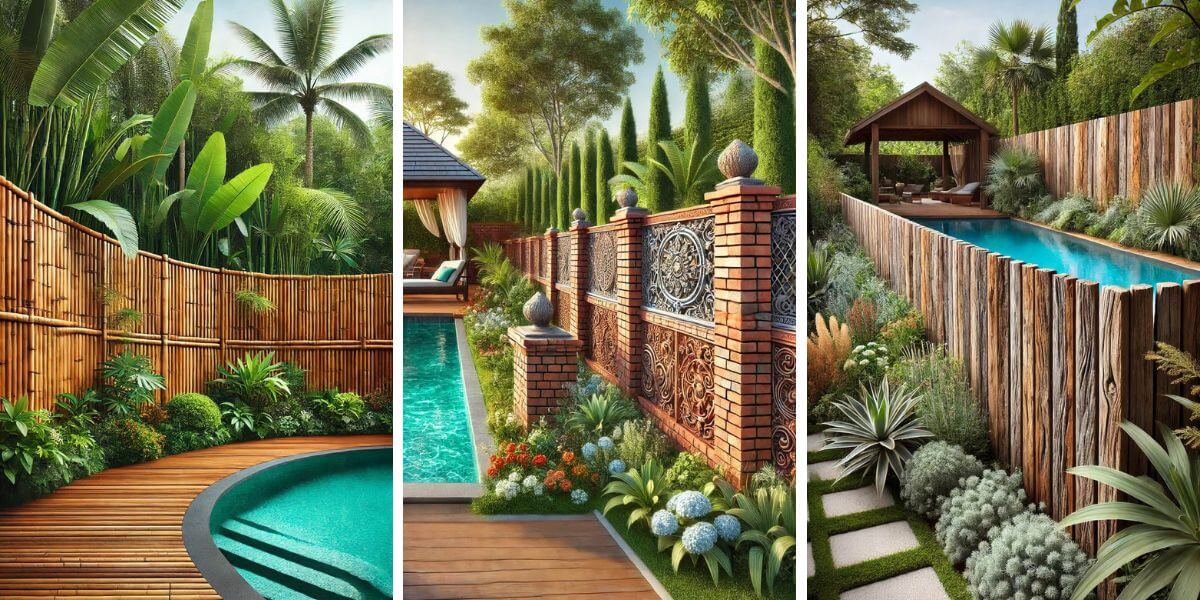
As has been said, the climatic conditions of Texas need water features like pools. It need not be colossal, but it should be properly placed and surrounded with the right elements for it to quench the aridity of the Texas summers.
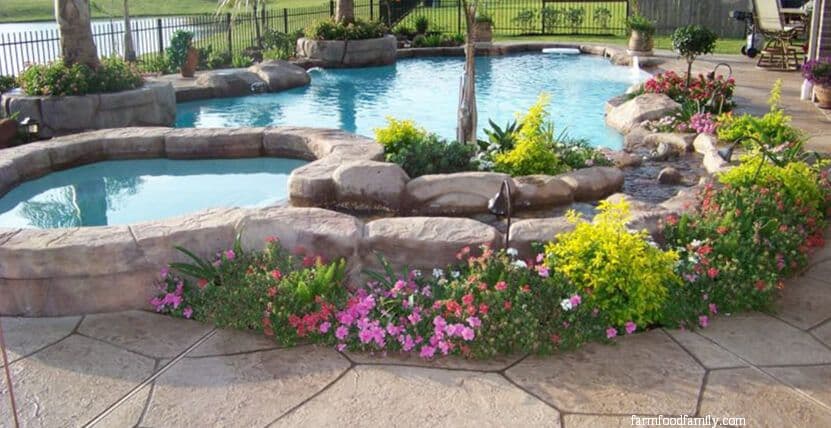
This one is a true hardscape pool and a vibrant one for that matter. The focal point is its above ground twisty pool, flagstones, concrete pavers, and surrounding flowering plants that enlivens it.
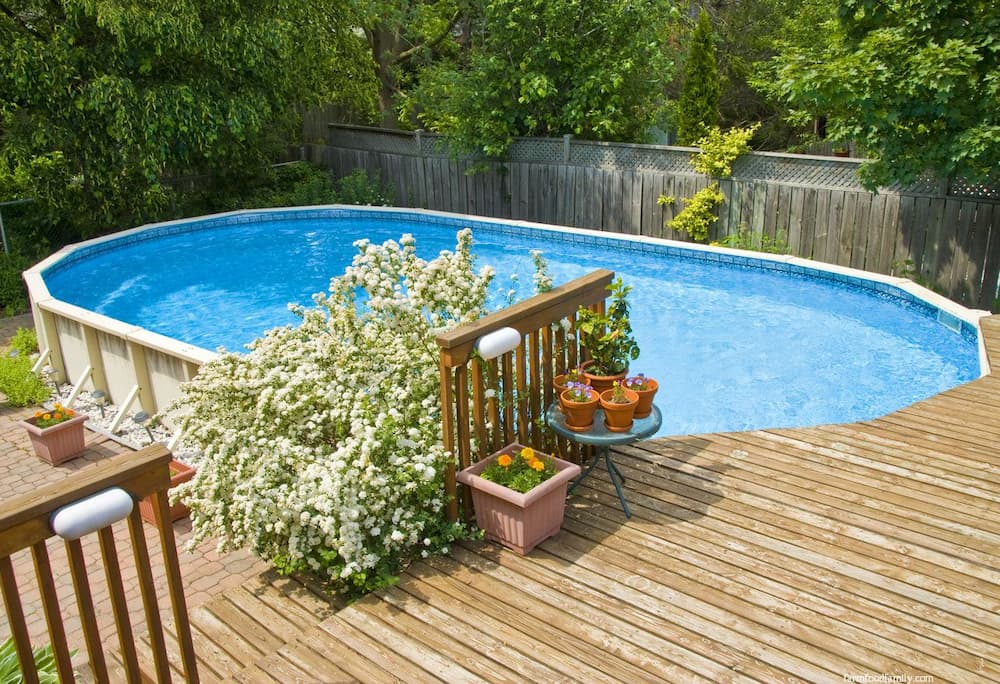
This remodeled pool landscaping in Houston is everything you need for a summer day. The use of wood makes it lighter and more refreshing. The towers of shrubs and trees surrounding the area adds to its coolness.
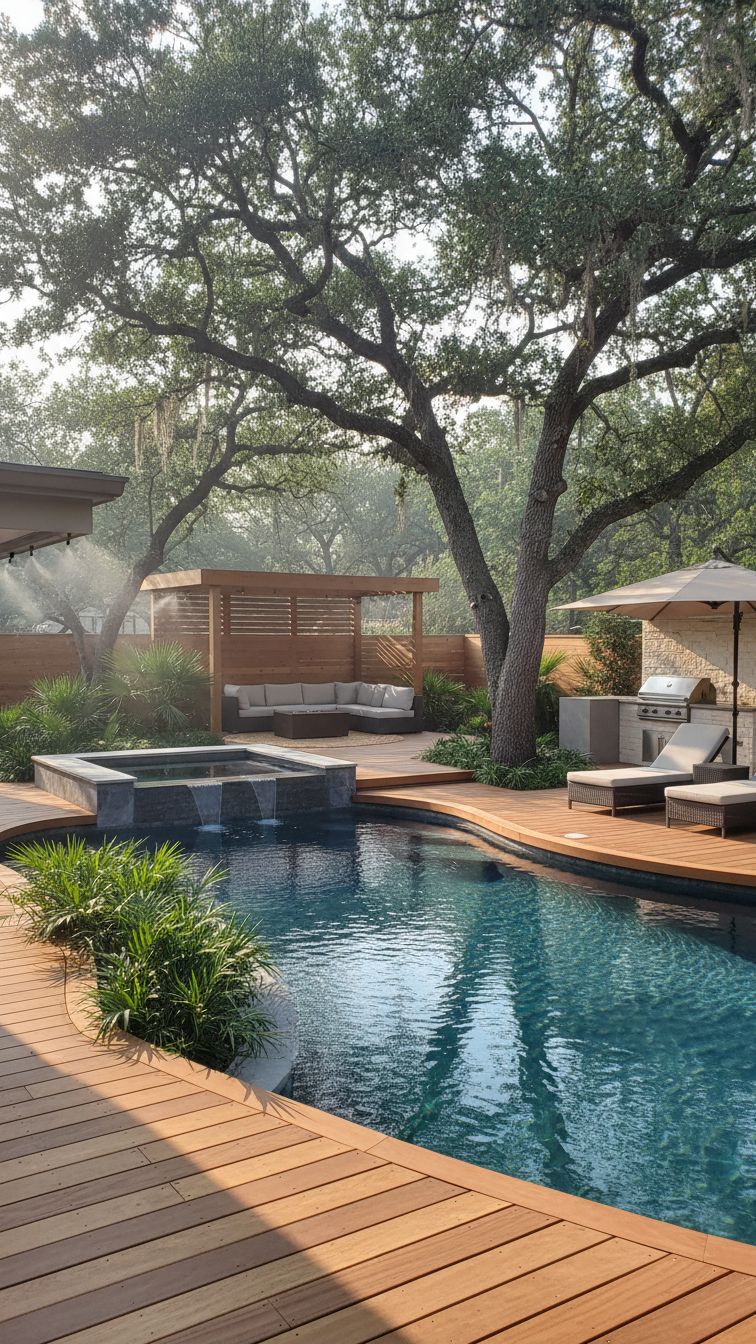
Texas landscaping ideas for small yards
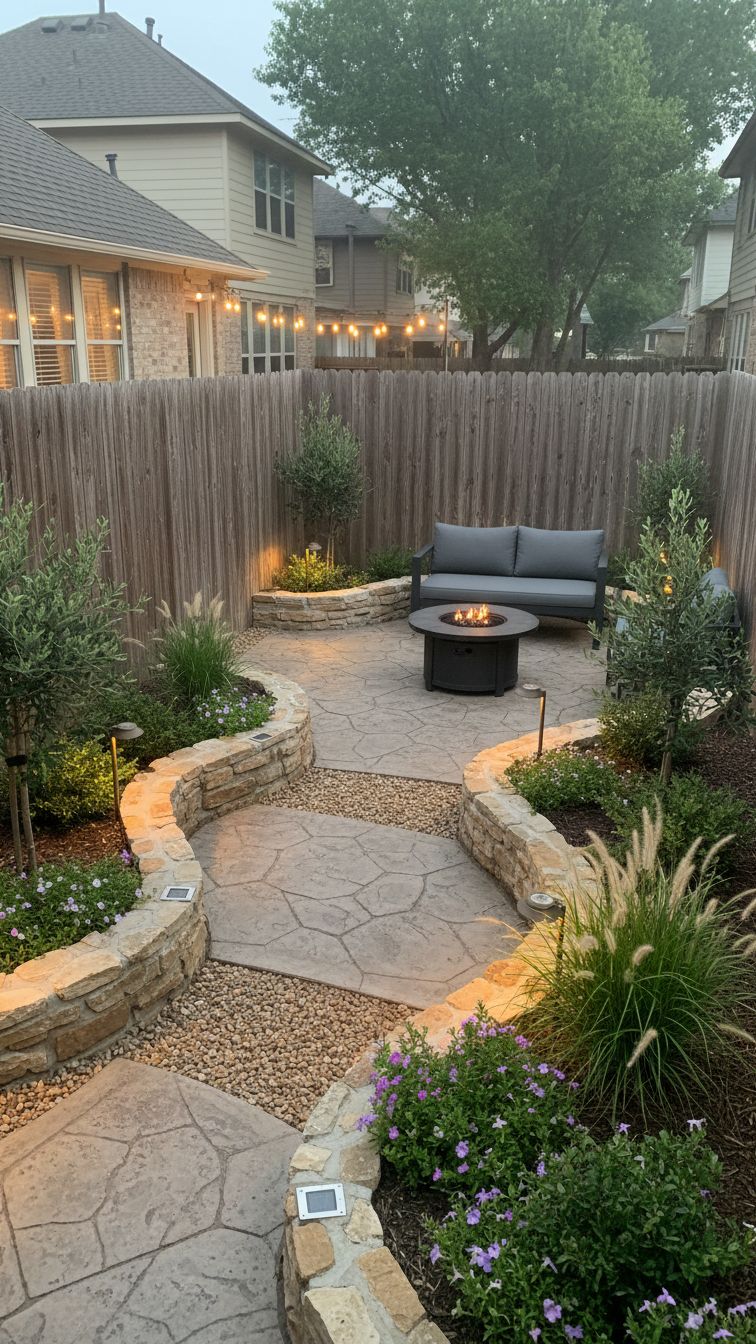
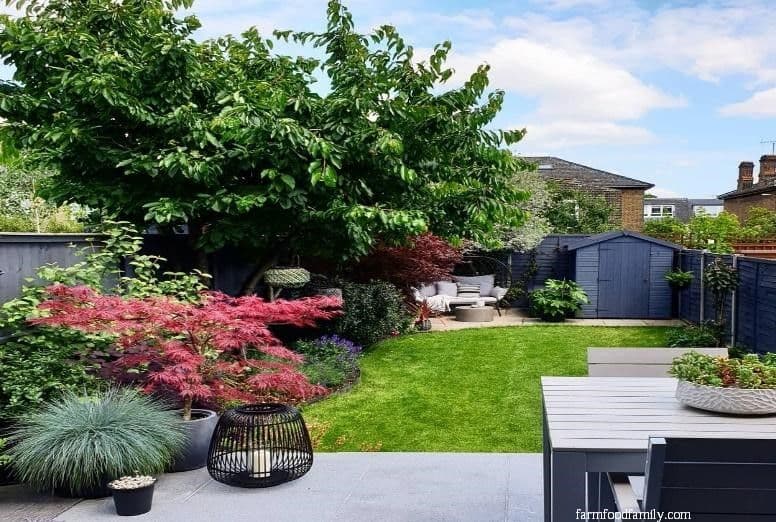
Compact yards have a certain allure and Texas landscaping can benefit well from dense plants, grass, and shrubberies. Stone edges and wood planters are also essential if you want to whip up a comprehensive look for your small Texas yard.

This wood-fenced yard from Austin is shaped by its twisted above ground stone planters. It is made of stamped concrete and adorned with a small spread of pea gravel, shrubs and a line of solar powered garden lights.
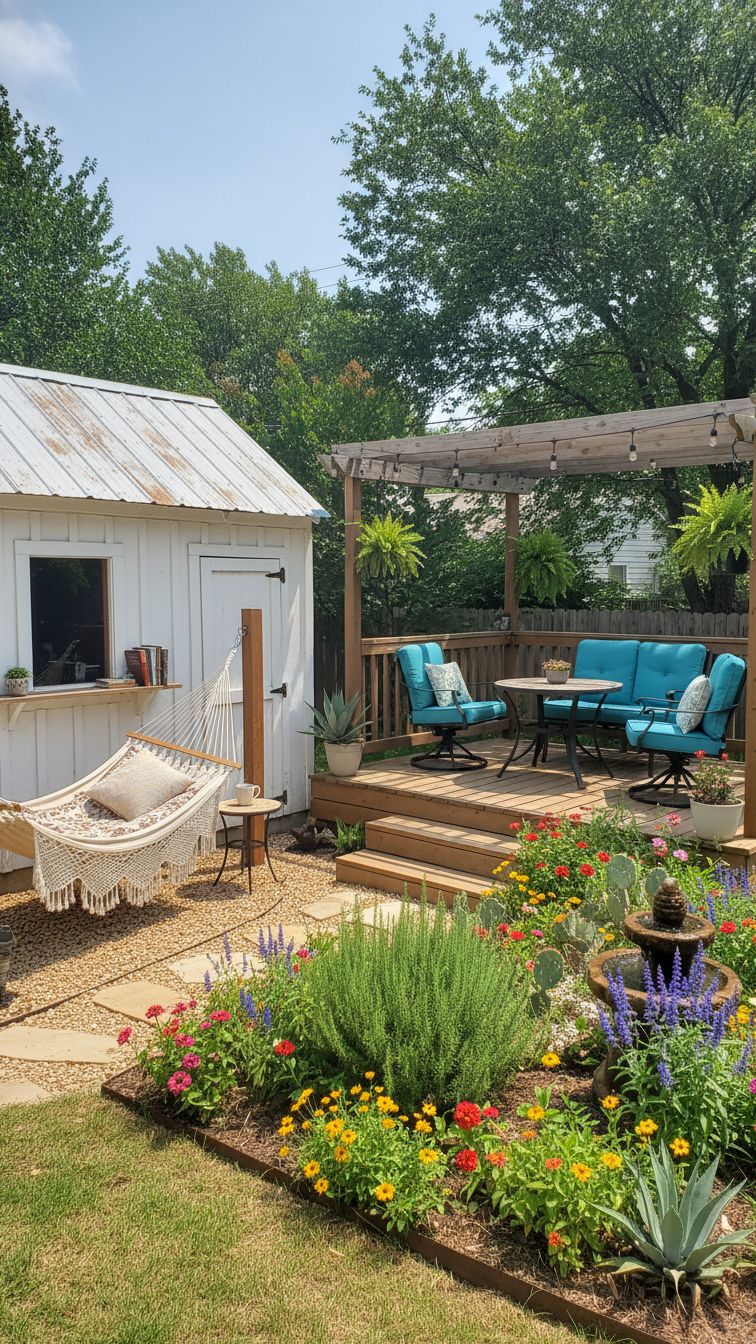
This neat design proves that there is no small yard when it comes to a neat and refreshing design. It has an elevated patio with small seating. A reading nook near the shed. The whole thing is made alive by bright flowers and medium size shrubs.
Texas drought tolerant landscaping ideas
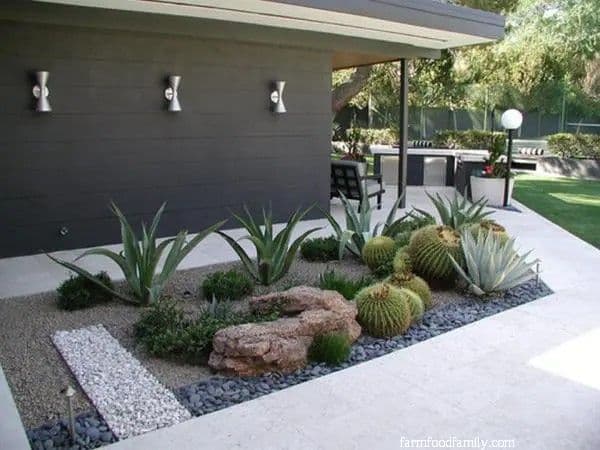
You would really need a lot of succulents and hardy plants if you are going for a drought tolerant landscape. The use of stones, concrete, and other hardscape elements would also make it a beautiful focal point in your Texas home.
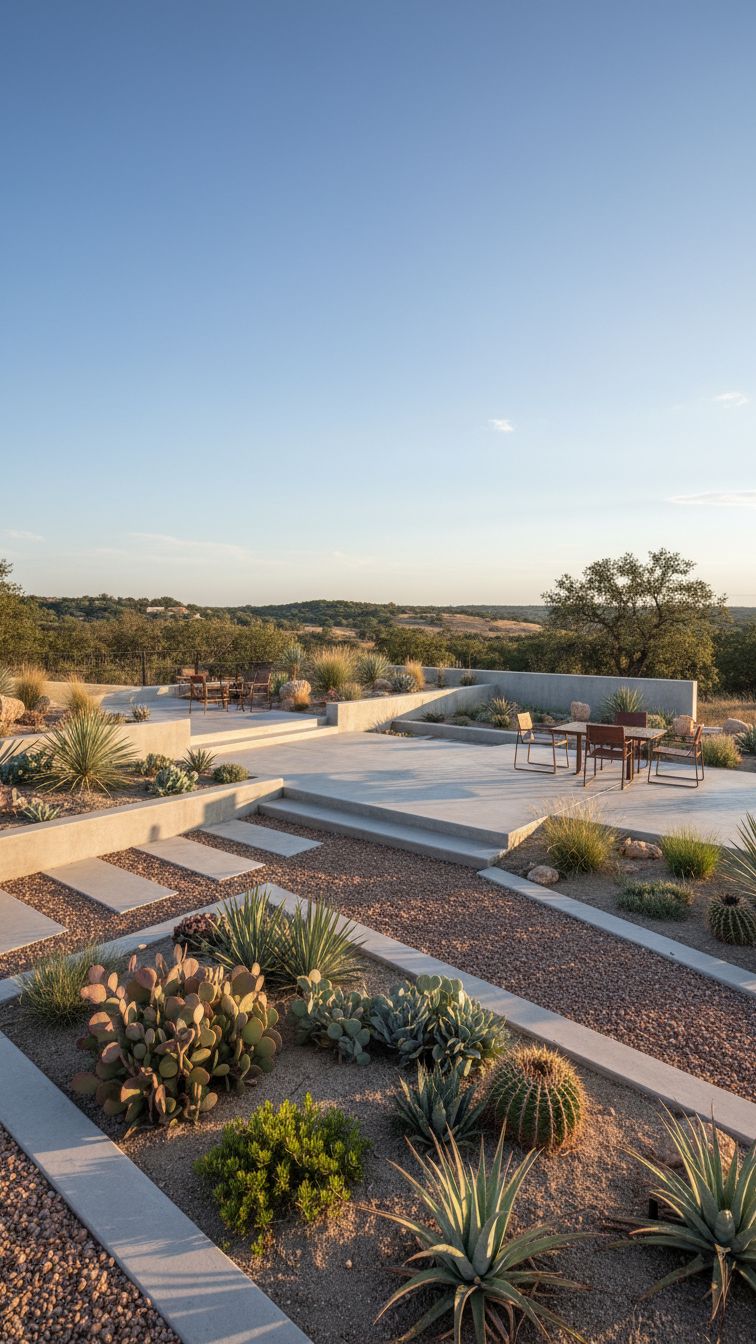
You do not need an all-succulent yard. Sometimes, you just have to angle your yard well so that you can have segments of succulent spreads.

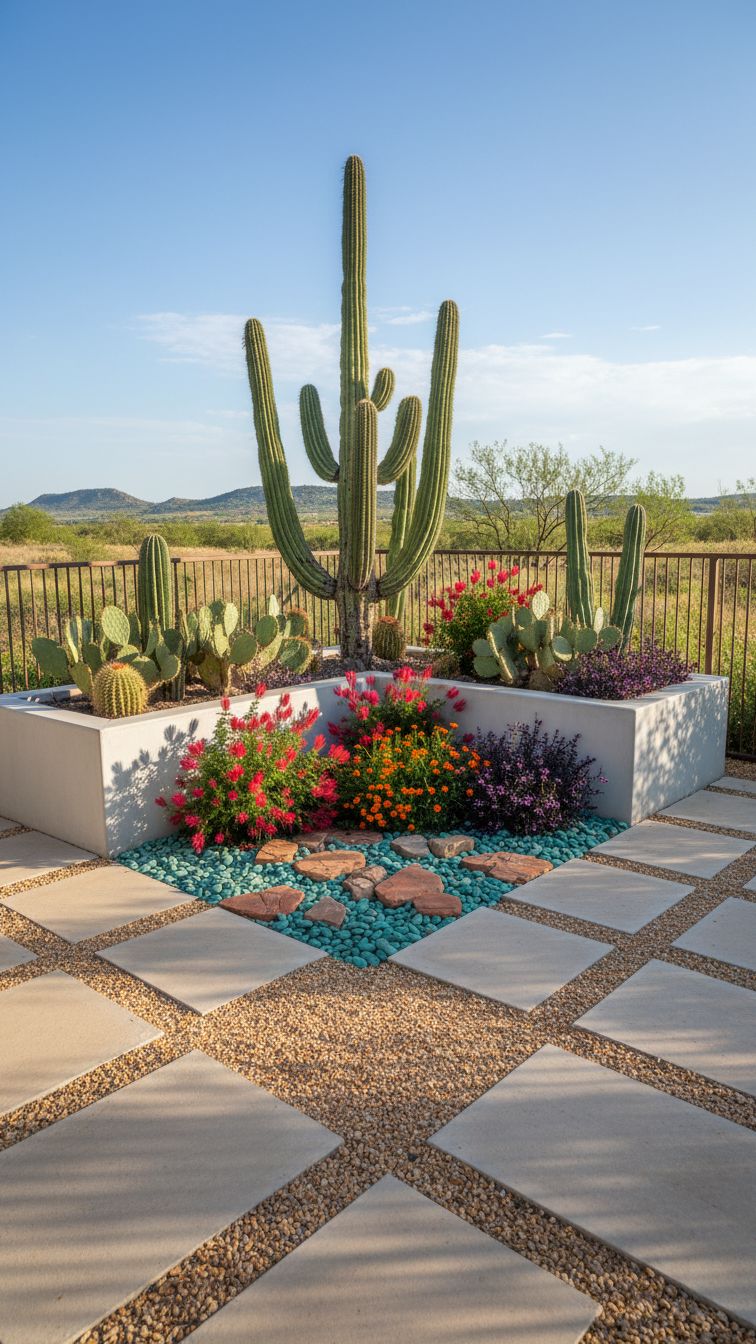
For a cleaner, angled design on a compact yard, you can setup raised concrete planters and there, neatly arrange large cacti as the focal point and at the base, use bright colored plants and stones.
Texas hill country landscaping ideas
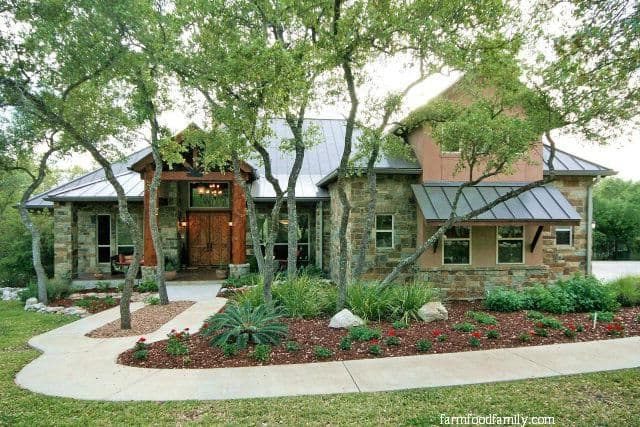
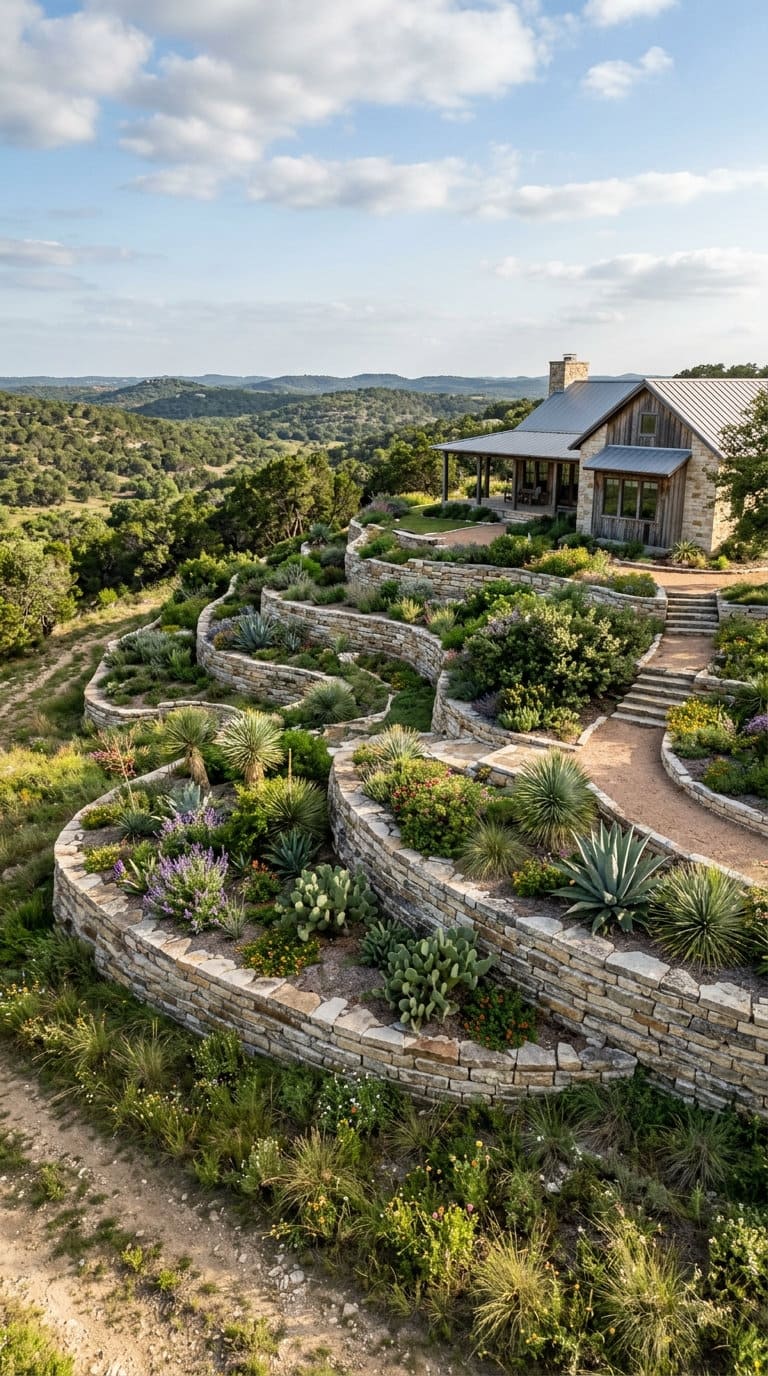
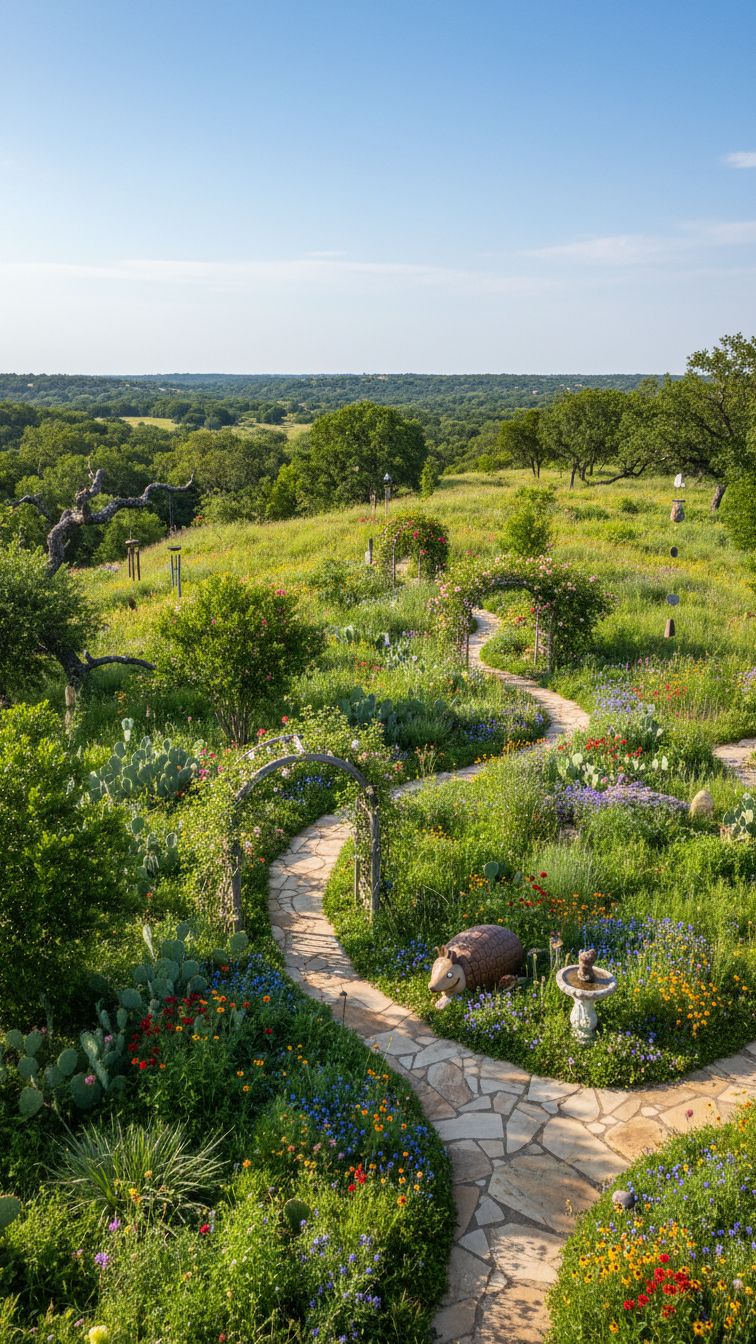
For a layered Texas home, you must infuse a combo of plants, stones and water features if possible. Just sticking with stones and bright plants could also be a good idea for tighter budgets but want low maintenance landscapes.
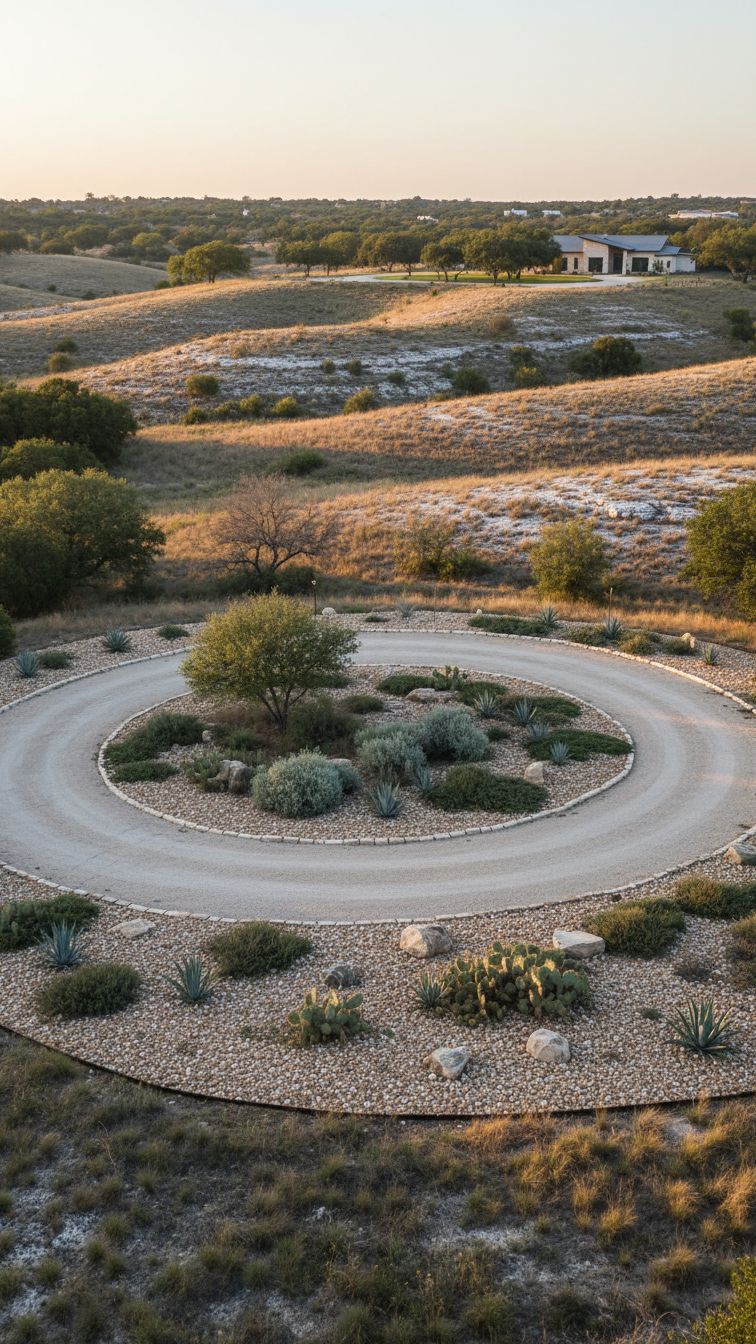
You would not even suspect that this is a hilly landscape if it were not for its winding driveway loop. It is made more comprehensive by the proper arrangement of shrubs, the gravel bed, and some low growing succulents. The spread of thin grass also makes it look neat.
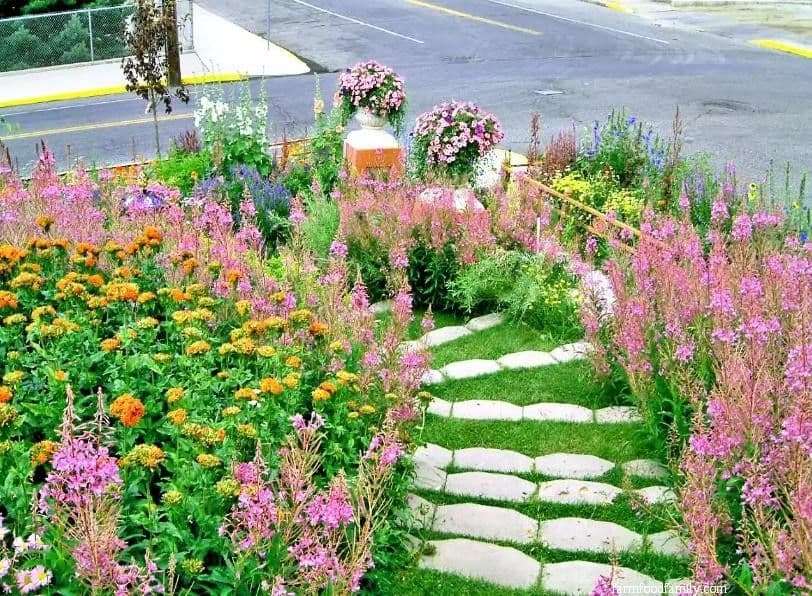
Who says you cannot turn your landscape into a garden walk? If you have a hilly Texas home, you can make it whimsical by adorning it with dense grass and flowering plants like this one.
Related: 50+ Sloped Backyard Ideas On A Budget
Native Texas landscaping ideas
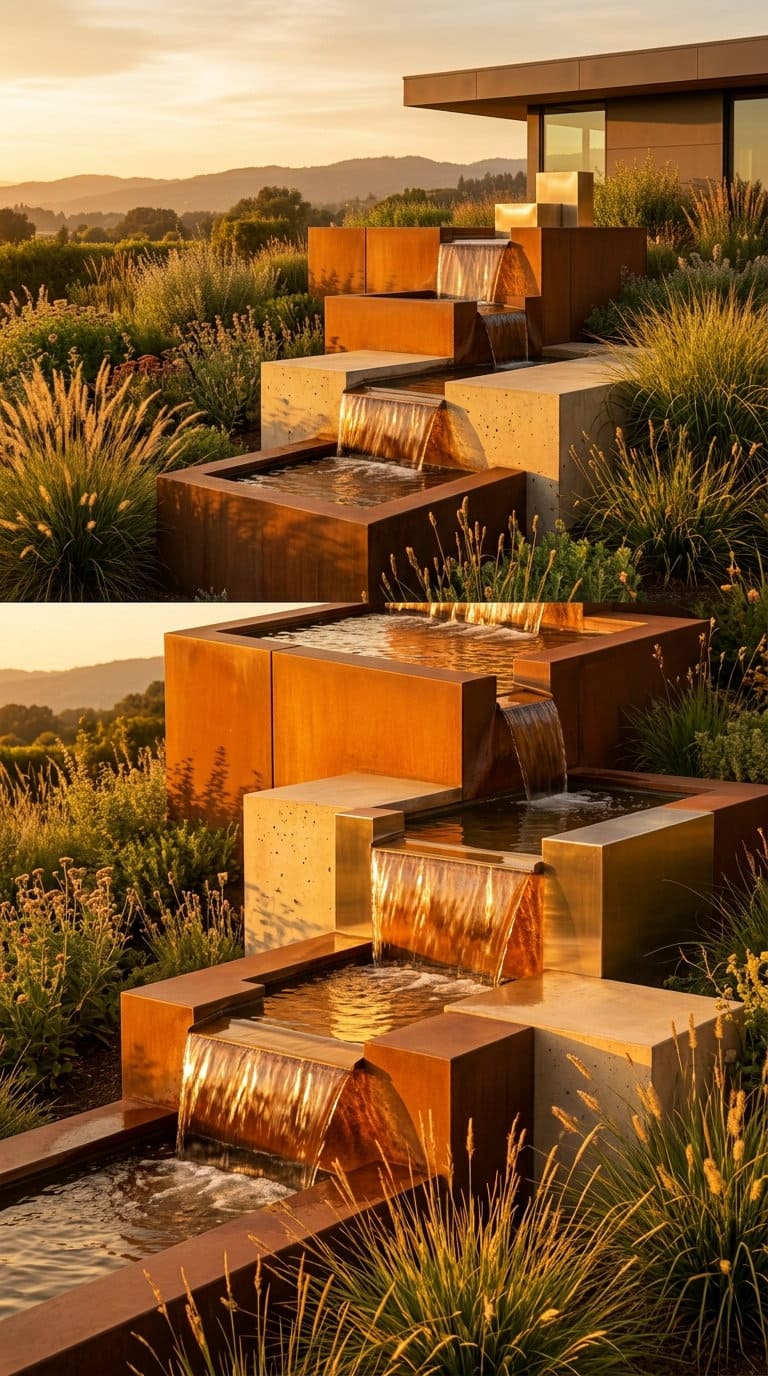
This type of landscape makes use of plants, shrubs, trees, and groundcover that are native to the area. A proper know-how of what indigenously grows in Texas could provide great allure to your native landscaping. These two here make use of the clay soils of Texas, succulents, and low growing shrubs that are native to Texas.
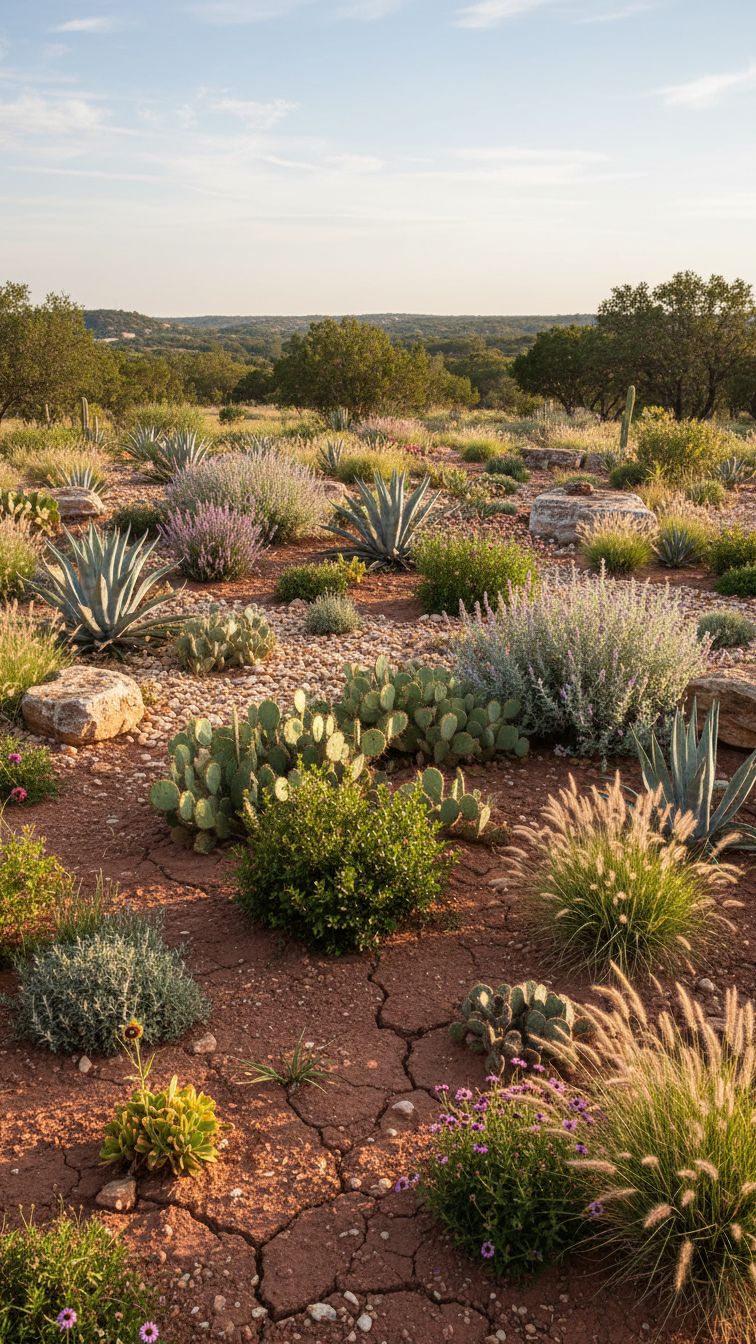
You can exclusively depend on plants to cover everything. This means that you need to make a raised soil bed and use the right flowers or plants to be used as edging. A turf grass is still needed for more depth and a slight feature of cacti gives it more texture.
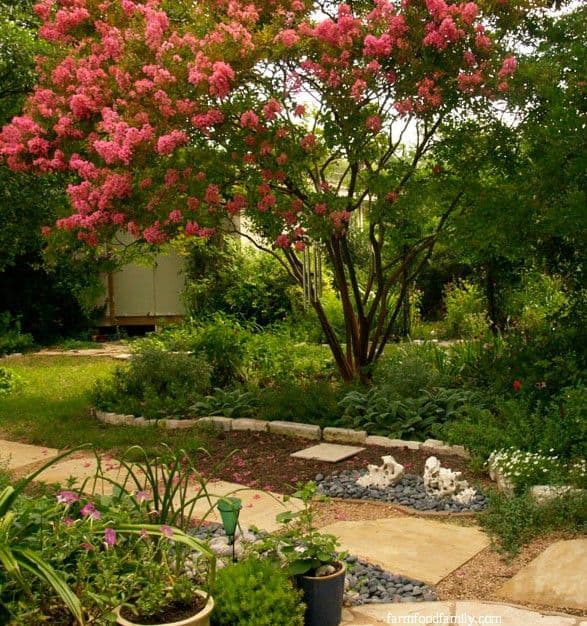
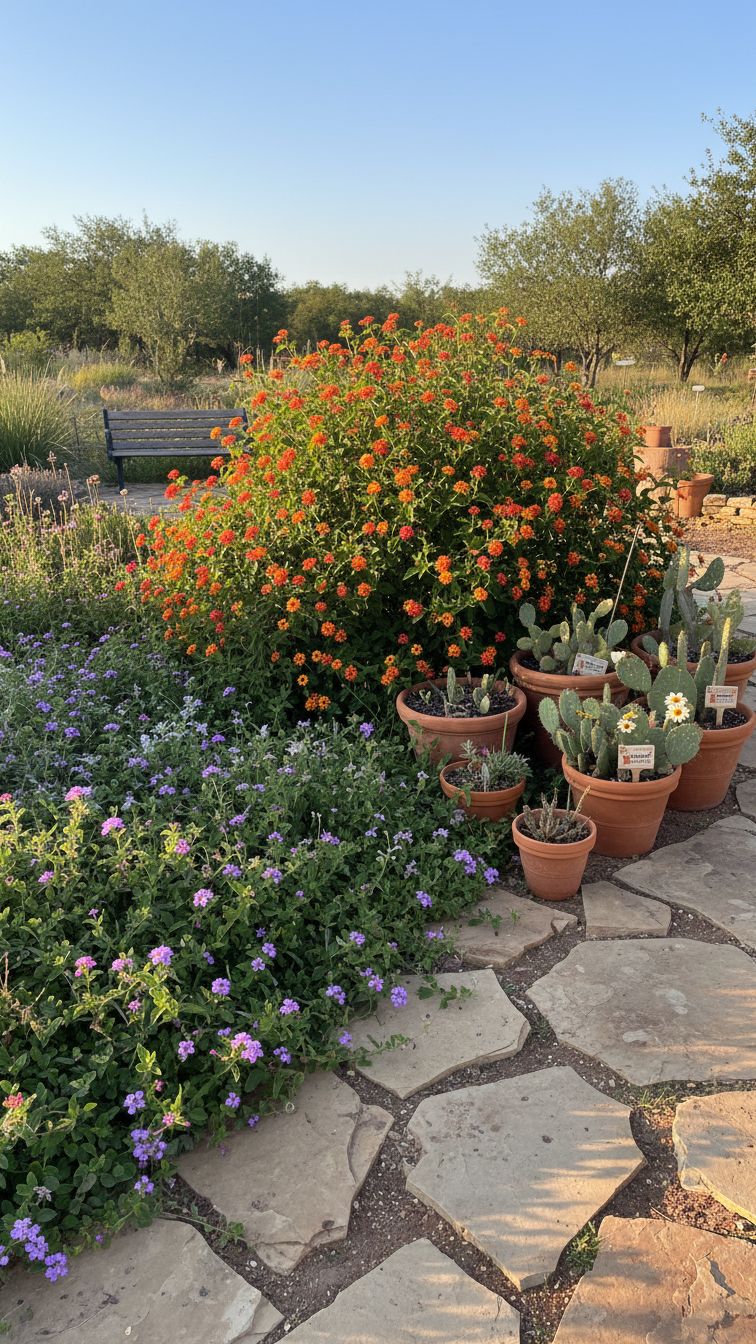
This one from Central Texas makes use of a bright flowering shrub as the focal point of the yard. One side is composed of thickets of dense ground cover while the other side is arranged with native potted plants. The walkway makes use of irregular shaped flagstone. It looks like a traditional summer yard with all the greens and its raw vibe.
Watering Restrictions, Rebates, and Your Rights
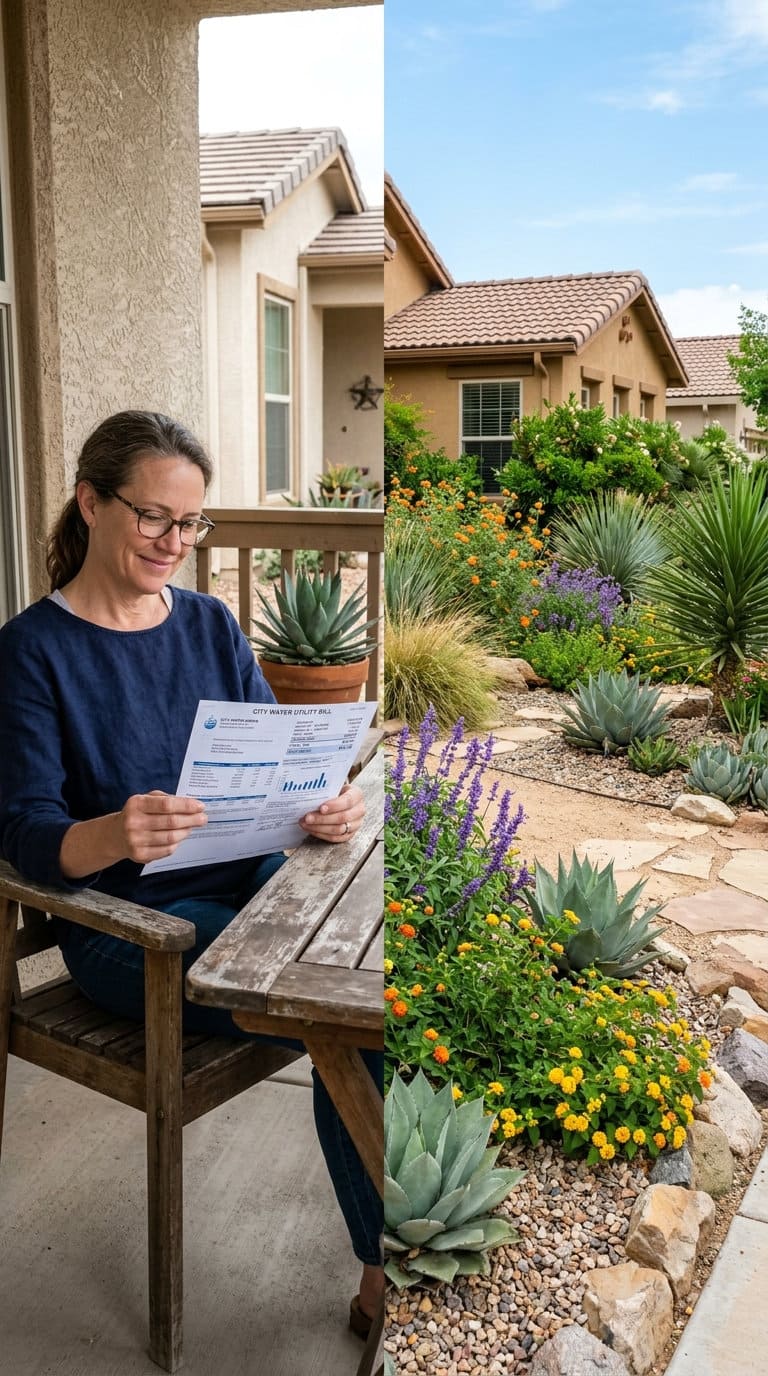
This is the part almost no Texas landscaping guide covers, and it’s arguably more useful than another plant list.
Real watering restrictions exist, and they’re enforced.
San Antonio Water System (SAWS) runs a staged drought-restriction system, and it isn’t just a suggestion: at Stage 3, single-family accounts face a real surcharge of $10.37 per thousand gallons used above 20,000 gallons a month, and Stage 4 can trigger further restrictions when Edwards Aquifer supply runs short even after lesser restrictions are already in place.
Other major Texas utilities, including Austin Water, run their own staged drought-restriction systems with their own specific rules, so don’t assume SAWS’s numbers apply outside San Antonio.
If you live in or near a major Texas metro, check your local utility’s current stage before you commit to a thirsty plant palette or a large lawn, not after your water bill arrives.
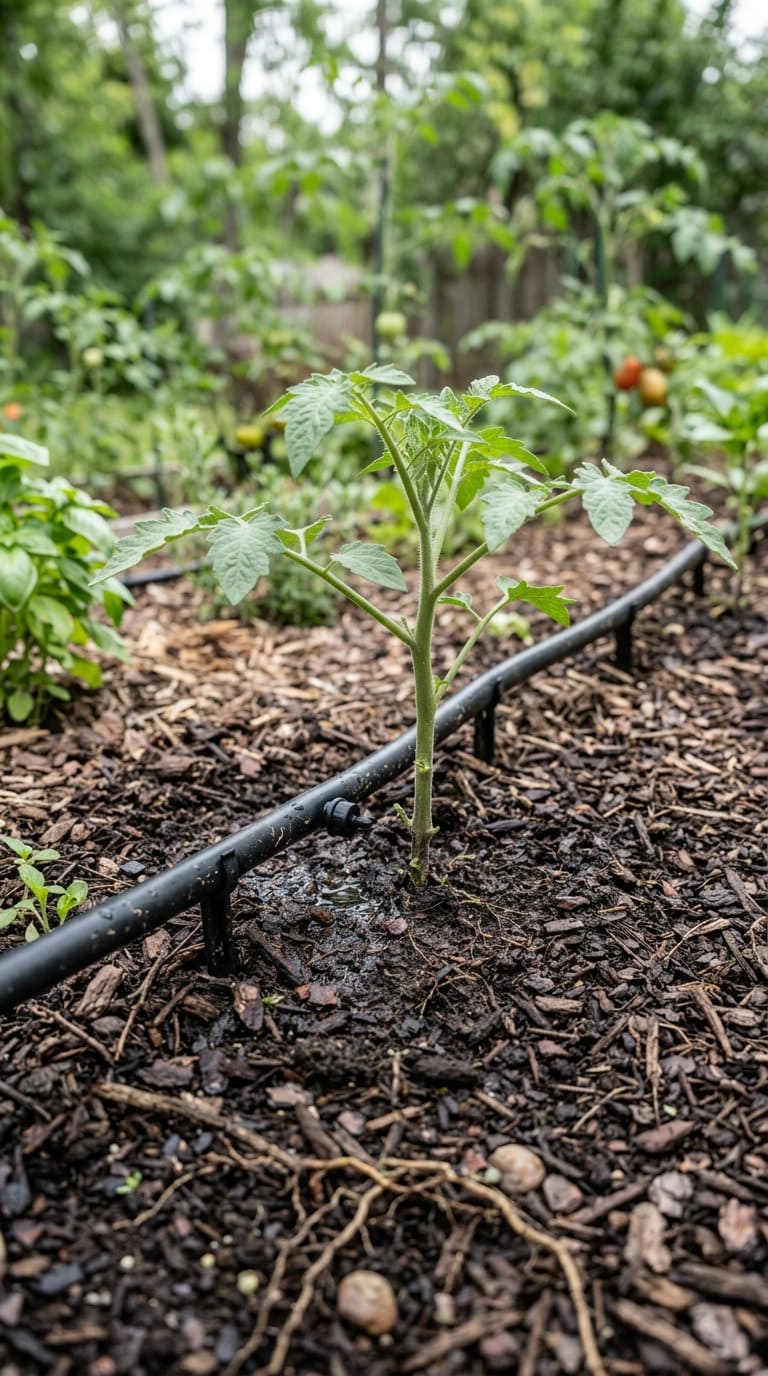
There’s a real rebate for switching, not just a restriction for staying put.
SAWS’s WaterSaver Landscape Coupon offers up to $250 for residential customers who replace water-intensive turf with approved drought-tolerant plants, mulch, or permeable hardscape, part of a program that has paid out more than $15 million since the 1990s.
SAWS also offers free residential irrigation audits, where a certified auditor checks your system’s distribution and flags waste sources before you spend money guessing at the problem yourself.
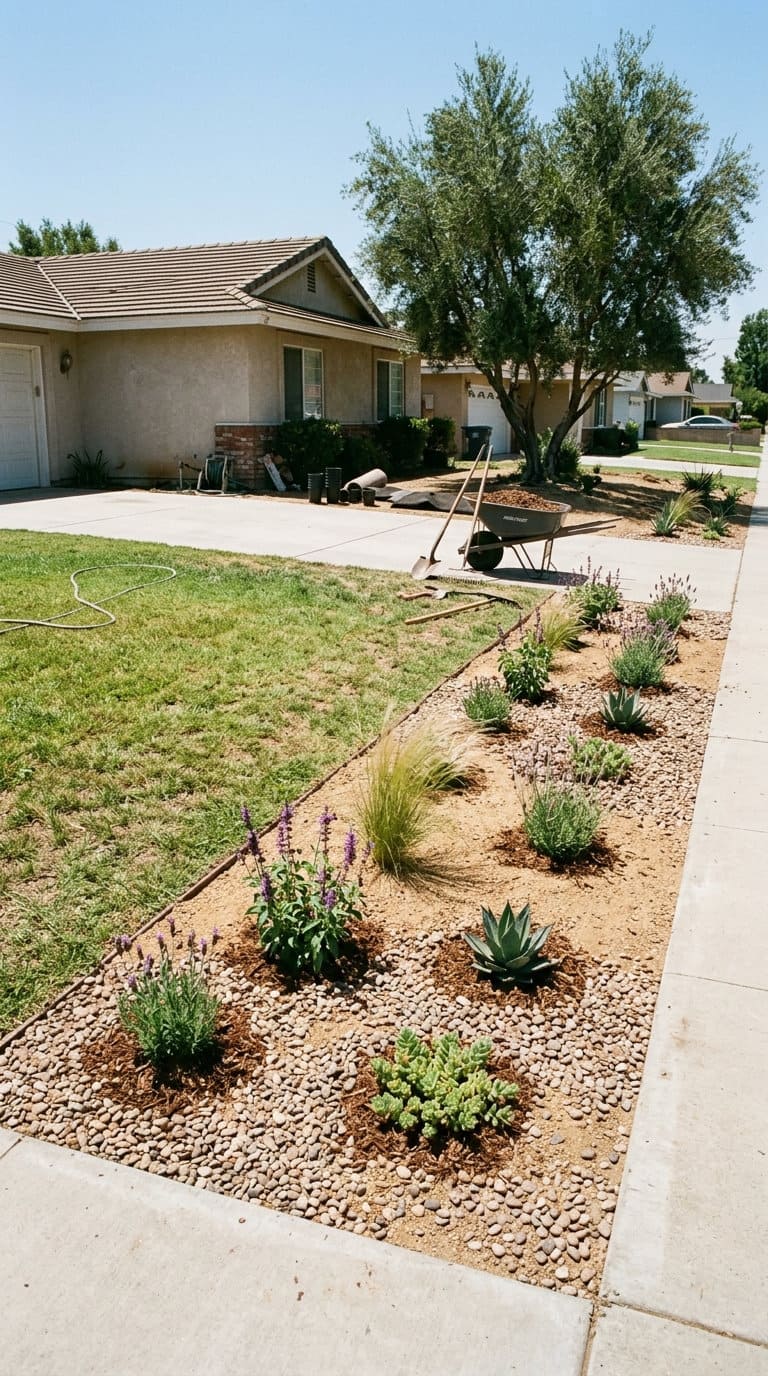
Your HOA cannot legally ban xeriscaping in Texas.
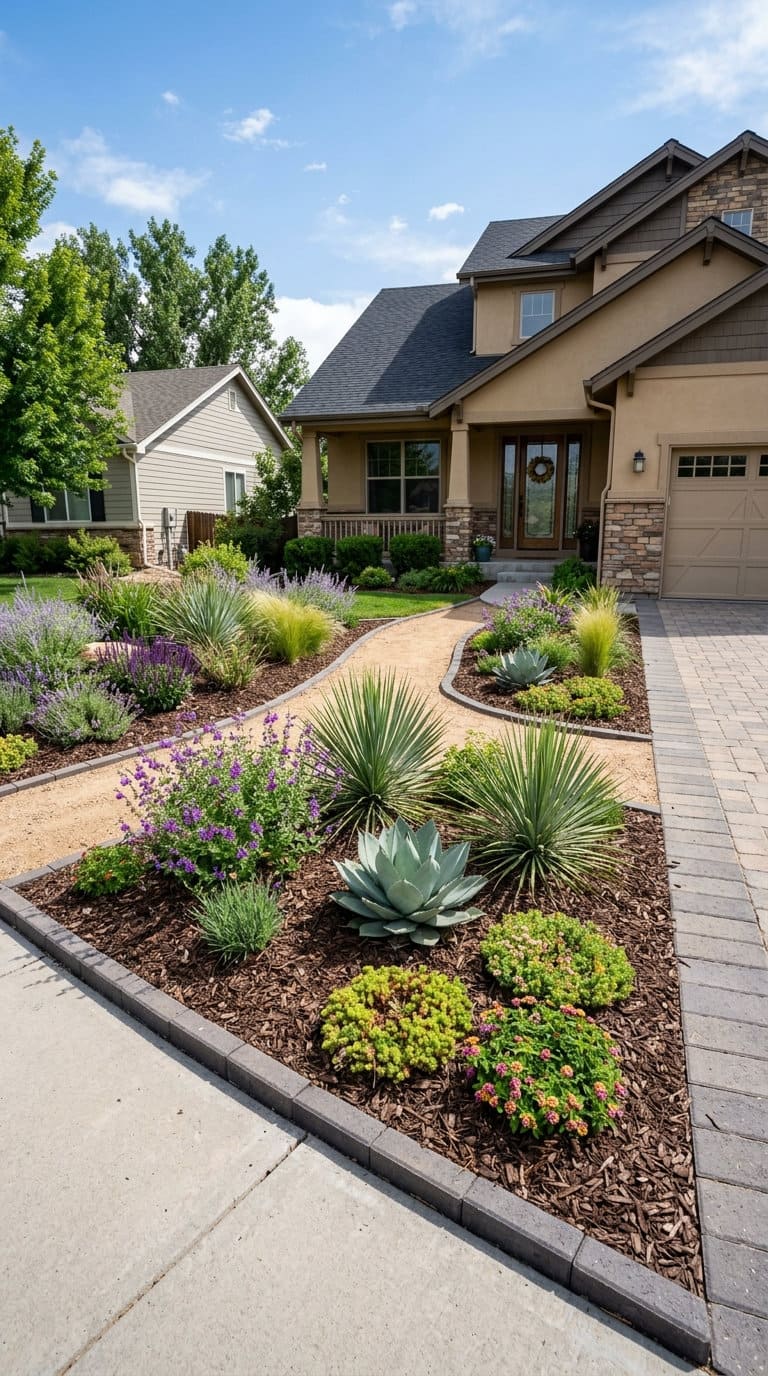
This is the single most useful thing in this section and the thing most homeowners genuinely don’t know: Texas Property Code §202.007 prohibits homeowners associations from restricting drought-resistant landscaping, xeriscaping, rain barrels and rainwater harvesting systems, efficient irrigation (including drip systems), or composting of vegetation.
A provision in an HOA’s rules that violates this is legally void. A 2025 update, HB 517, closed a real loophole some HOAs had been using: rejecting a specific xeriscape design under vague “appearance standards” that only a traditional lawn could satisfy, even though the underlying use of xeriscaping itself was technically allowed.
Your HOA can still require that xeriscaping look maintained rather than abandoned, set reasonable standards for edging, mulch depth, and plant spacing, and require irrigation while new plantings establish, none of that is the same as banning the practice outright.
One practical placement caveat beyond HOA rules
If you’re planting ornamental grasses or dense shrubs, check clearance requirements around any utility transformer box on your property first.
Some power companies require removing plantings that grow too close to a transformer, a real, easy-to-miss constraint that has nothing to do with your HOA at all.
One misconception worth correcting
Xeriscaping doesn’t mean an all-rock, no-plant yard. It refers specifically to landscaping designed around minimal water use, which usually means more drought-tolerant plants, not fewer plants overall.
A yard that’s genuinely water-wise can look as full and green as a thirsty one, it’s just built from a different plant palette.
What Can You Plant in Front of Your House in Texas?
Native plant options vary meaningfully by region. This isn’t a complete list, but it’s a solid regional starting point, cross-check anything you’re seriously considering against the Earth-Kind® Plant Selector or your local AgriLife extension office for your specific county.
Central Texas: Bald cypress, black-eyed Susan, buckeye, red yucca, holly, rock rose.
North Texas: Ashe juniper, Chinquapin oak, crossvine, palmetto, beebalm, cornflower.
East Texas: Sugar maple, beautyberry, lantana, paintbrush, winecup, trumpet creeper.
South Texas: Coral bean, rosemallow, mountain laurel, prickly pear, sage.
West Texas: Desert willow, agave, yucca, and other true xeric species built for the state’s driest region.
Texas Landscape Design Guide
Beyond plant choice, Texas’s own transportation department has published real, detailed guidance worth knowing, not just for highway projects but for the same underlying principles that apply to a home yard.
The TxDOT Landscape and Aesthetics Design Manual covers proper space allocation for plantings, correct tree and shrub placement near roads and sightlines (a real consideration if your property borders a street or driveway), a working knowledge of which species are actually native to your area rather than just marketed as “Texas-friendly,” and the logic behind non-mow zones, areas deliberately left unmowed to reduce both water use and maintenance labor.
The same space-allocation and sightline principles the manual lays out for public roadways translate directly to keeping a driveway or corner lot legible and safe, not just attractive.
Conclusion
The only limiting thing about landscaping in Texas is not knowing which plants you should use for certain regions. To be sure, you can build on hardscapes and basic xeriscaping, or you can just choose from a wide range of hardy plants and shrubs.
You can choose from different ideas but remember that knowing your terrain and the vulnerabilities of your property always do the trick.
Related: 21+ Best Desert Backyard Ideas On A Budget
FAQs
Can my HOA stop me from xeriscaping in Texas? No, not legally. Texas Property Code §202.007 prohibits an HOA from restricting drought-resistant landscaping, xeriscaping, rain barrels, efficient irrigation, or composting, and a 2025 update (HB 517) closed a loophole some HOAs used to reject xeriscape designs under vague appearance standards. Your HOA can still require the space look maintained and meet reasonable edging/mulch/spacing standards, but it cannot ban the underlying practice.
What are Texas’s drought watering restrictions? It depends on your city and its current drought stage. San Antonio’s SAWS, for example, runs a staged system where Stage 3 adds a real surcharge ($10.37 per thousand gallons above 20,000 gallons a month for single-family accounts) and Stage 4 can trigger further restrictions during severe shortages. Check your local water utility’s current stage before planning a water-heavy landscape.
Does drought permanently damage clay soil? Generally, no. Texas’s clay-heavy soils crack and dry out visibly during drought, but they rehydrate and re-swell once regular watering or rainfall resumes. The real risk during the dry period is to shallow-rooted plants like turf grass, which can suffer more than deep-rooted native shrubs and trees while the soil is cracked.
Products We Recommend
This post contains affiliate links. We may earn a commission on qualifying purchases at no extra cost to you.
Outsidepride Texas & Oklahoma Wildflower Seed Mix (5 lbs)
Drought-tolerant blend of native annual and perennial flowers, including Texas bluebonnet, suited to full sun and well-drained soil — a direct match for the native-plant sections above
Shop Now
Rain Bird GARDENKIT Drip Irrigation Kit
Complete drip irrigation kit for up to a 4'x8' raised bed with pressure-compensating emitters — the efficient irrigation approach referenced in the watering-restrictions section
Shop Now
VINGLI 50 Gallon Collapsible Rain Barrel
Downspout-mounted rainwater collection barrel with filter, spigot, and overflow kit — a real rain-harvesting option explicitly protected under Texas Property Code §202.007
Shop NowNever miss an update — choose FarmFoodFamily as your preferred source on Google.
How it works: Tap the button below to open Google's settings page, then check the box next to FarmFoodFamily.
Tap the checkbox to turn it blue — that's how you know it's set.